AB 3102: Vehicles: motorcycle license.
- Session Year: 2023-2024
- House: Assembly
- Latest Version Date: 2024-02-16
Current Status:
Failed
(2024-08-15: In committee: Held under submission.)
Introduced
In Committee
First Chamber
In Committee
Second Chamber
Enacted
Existing law prohibits a person from operating a motorcycle on a highway unless that person holds a valid drivers license or endorsement for a motorcycle. Existing law requires an applicant for a license or endorsement to operate a motorcycle to submit to an examination including a demonstration of the applicants ability to exercise ordinary and reasonable control in operating a motorcycle.
Existing law establishes a motorcyclist safety program within the Department of the California Highway Patrol, administered by the Commissioner of the California Highway Patrol. Existing law authorizes the commissioner to adopt standards, as specified, for a novice rider motorcycle training course and for a premier motorcyclist safety training program. Existing law authorizes the Department of Motor Vehicles to accept a certificate of satisfactory completion of the rider motorcycle training course in lieu of the driving test for a motorcycle drivers license.
This bill would authorize the operator of a motorcyclist training program described above to issue a certificate of satisfactory completion to a person at least 21 years of age who has opted to complete only the skills testing portion of the training program and has successfully passed the skills test. The bill would require the motorcyclist training program operator to, in a manner prescribed by the Department of Motor Vehicles, note on the certificate that the person has completed only the skills testing portion of the program. The bill would authorize the department to accept a certificate issued pursuant to these provisions from an applicant who is at least 21 years of age in lieu of a driving test for a motorcycle drivers license if the applicant has met the other examination requirements for the license for which the applicant is applying.
(a)(1)The examination shall include all of the following:
(A)A test of the applicants knowledge and understanding of the provisions of this code governing the operation of vehicles upon the highways.
(B)A test of the applicants ability to read and understand simple English used in highway traffic and directional signs.
(C)A test of the applicants understanding of traffic signs and signals, including the bikeway signs, markers, and traffic control devices established by the Department of Transportation.
(D)An actual demonstration of the applicants ability to exercise ordinary and reasonable control in operating a motor vehicle by driving it under the supervision of an examining officer. The applicant shall submit to an examination appropriate to the type of motor vehicle or combination of vehicles the applicant desires a license to drive, except that the department may waive the driving test part of the examination for any applicant who submits a license issued by another state, territory, or possession of the United States, the District of Columbia, or the Commonwealth of Puerto Rico if the department verifies through any acknowledged national driver record data source that there are no stops, holds, or other impediments to its issuance. The examining officer may request to see evidence of financial responsibility for the vehicle before supervising the demonstration of the applicants ability to operate the vehicle. The examining officer may refuse to examine an applicant who is unable to provide proof of financial responsibility for the vehicle, unless proof of financial responsibility is not required by this code.
(E)A test of the hearing and eyesight of the applicant, and of other matters that may be necessary to determine the mental and physical fitness of the applicant to operate a motor vehicle upon the highways, and whether any grounds exist for refusal of a license under this code.
(2)(A)Before a class A or class B drivers license, or class C drivers license with a commercial endorsement, may be issued or renewed, the applicant shall have in the applicants driver record a valid report of a medical examination of the applicant given not more than two years before the date of the application by a health care professional. As used in this paragraph, health care professional means a person who is licensed, certified, or registered in accordance with applicable state laws and regulations to practice medicine and perform physical examinations in the United States. Health care professionals are doctors of medicine, doctors of osteopathy, physician assistants, and registered advanced practice nurses, or doctors of chiropractic who are clinically competent to perform the medical examination presently required of motor carrier drivers by the United States Department of Transportation. The report shall be on a form approved by the department. In establishing the requirements, consideration may be given to the standards presently required of motor carrier drivers by the Federal Motor Carrier Safety Administration.
(B)The department may accept a federal waiver of one or more physical qualification standards if the waiver is accompanied by a report of a nonqualifying medical examination for a class A or class B drivers license, or class C drivers license with a commercial endorsement, pursuant to Section 391.41(a)(3)(ii) of Subpart E of Part 391 of Title 49 of the Code of Federal Regulations.
(3)A physical defect of the applicant that, in the opinion of the department, is compensated for to ensure safe driving ability, shall not prevent the issuance of a license to the applicant.
(b)In accordance with the following classifications, an applicant for a drivers license shall be required to submit to an examination appropriate to the type of motor vehicle or combination of vehicles the applicant desires a license to drive:
(1)Class A includes the following:
(A)Except as provided in subparagraph (H) of paragraph (3), a combination of vehicles, if a vehicle being towed has a gross vehicle weight rating or gross vehicle weight of more than 10,000 pounds.
(B)A vehicle towing more than one vehicle.
(C)A trailer bus.
(D)The operation of all vehicles under class B and class C.
(2)Class B includes the following:
(A)Except as provided in subparagraph (H) of paragraph (3), a single vehicle with a gross vehicle weight rating or gross vehicle weight of more than 26,000 pounds.
(B)A single vehicle with three or more axles, except any three-axle vehicle weighing less than 6,000 pounds.
(C)A bus with a gross vehicle weight rating or gross vehicle weight of more than 26,000 pounds, except a trailer bus.
(D)A farm labor vehicle.
(E)A single vehicle with three or more axles or a gross vehicle weight rating or gross vehicle weight of more than 26,000 pounds towing another vehicle with a gross vehicle weight rating or gross vehicle weight of 10,000 pounds or less.
(F)A house car over 40 feet in length, excluding safety devices and safety bumpers.
(G)The operation of all vehicles covered under class C.
(3)Class C includes the following:
(A)A two-axle vehicle with a gross vehicle weight rating or gross vehicle weight of 26,000 pounds or less, including when the vehicle is towing a trailer or semitrailer with a gross vehicle weight rating or gross vehicle weight of 10,000 pounds or less.
(B)Notwithstanding subparagraph (A), a two-axle vehicle weighing 4,000 pounds or more unladen when towing a trailer coach not exceeding 9,000 pounds gross.
(C)A house car of 40 feet in length or less.
(D)A three-axle vehicle weighing 6,000 pounds gross or less.
(E)A house car of 40 feet in length or less or a vehicle towing another vehicle with a gross vehicle weight rating of 10,000 pounds or less, including when a tow dolly is used. A person driving a vehicle may not tow another vehicle in violation of Section 21715.
(F)(i)A two-axle vehicle weighing 4,000 pounds or more unladen when towing either a trailer coach or a fifth-wheel travel trailer not exceeding 10,000 pounds gross vehicle weight rating, when the towing of the trailer is not for compensation.
(ii)A two-axle vehicle weighing 4,000 pounds or more unladen when towing a fifth-wheel travel trailer exceeding 10,000 pounds, but not exceeding 15,000 pounds, gross vehicle weight rating, when the towing of the trailer is not for compensation, and if the person has passed a specialized written examination provided by the department relating to the knowledge of this code and other safety aspects governing the towing of recreational vehicles upon the highway.
(iii)The authority to operate combinations of vehicles under this subparagraph may be granted by endorsement on a class C license upon completion of that written examination.
(G)A vehicle or combination of vehicles with a gross combination weight rating or a gross vehicle weight rating, as those terms are defined in subdivisions (j) and (k), respectively, of Section 15210, of 26,000 pounds or less, if all of the following conditions are met:
(i)Is operated by a farmer, an employee of a farmer, or an instructor credentialed in agriculture as part of an instructional program in agriculture at the high school, community college, or university level.
(ii)Is used exclusively in the conduct of agricultural operations.
(iii)Is not used in the capacity of a for-hire carrier or for compensation.
(H)Firefighting equipment, provided that the equipment is operated by a person who holds a firefighter endorsement pursuant to Section 12804.11.
(I)A motorized scooter.
(J)A bus with a gross vehicle weight rating or gross vehicle weight of 26,000 pounds or less, except a trailer bus.
(K)Class C does not include a two-wheel motorcycle or a two-wheel motor-driven cycle.
(4)Class M1. A two-wheel motorcycle or a motor-driven cycle. Authority to operate a vehicle included in a class M1 license may be granted by endorsement on a class A, B, or C license upon completion of an appropriate examination.
(5)(A)Class M2 includes a motorized bicycle or moped, or a bicycle with an attached motor, except an electric bicycle as described in subdivision (a) of Section 312.5.
(B)Authority to operate vehicles included in class M2 may be granted by endorsement on a class A, B, or C license upon completion of an appropriate examination. Persons holding a class M1 license or endorsement may operate vehicles included in class M2 without further examination.
(c)A drivers license or driver certificate is not valid for operating a commercial motor vehicle, as defined in subdivision (b) of Section 15210, any other motor vehicle defined in paragraph (1) or (2) of subdivision (b), or any other vehicle requiring a driver to hold any driver certificate or any drivers license endorsement under Section 15275, unless a medical certificate approved by the department that has been issued within two years of the date of the operation of that vehicle and a copy of the medical examination report from which the certificate was issued is on file with the department. Otherwise, the license is valid only for operating class C vehicles that are not commercial vehicles, as defined in subdivision (b) of Section 15210, and for operating class M1 or M2 vehicles, if so endorsed, that are not commercial vehicles, as defined in subdivision (b) of Section 15210.
(d)A license or driver certificate issued before the enactment of Chapter 7 (commencing with Section 15200) is valid to operate the class or type of vehicles specified under the law in existence before that enactment until the license or certificate expires or is otherwise suspended, revoked, or canceled. Upon application for renewal or replacement of a drivers license, endorsement, or certificate required to operate a commercial motor vehicle, a valid medical certificate on a form approved by the department shall be submitted to the department.
(e)The department may accept a certificate of driving skill that is issued by an employer, authorized by the department to issue a certificate under Section 15250, of the applicant, in lieu of a driving test, on class A or B applications, if the applicant has first qualified for a class C license and has met the other examination requirements for the license for which the applicant is applying. The certificate may be submitted as evidence of the applicants skill in the operation of the types of equipment covered by the license for which the applicant is applying.
(f)The department may accept a certificate of competence in lieu of a driving test on class M1 or M2 applications, when the certificate is issued by a law enforcement agency for its officers who operate class M1 or M2 vehicles in their duties, if the applicant has met the other examination requirements for the license for which the applicant is applying.
(g)(1)The department may accept a certificate of satisfactory completion of a motorcyclist training program approved by the commissioner pursuant to Section 2932 in lieu of a driving test on class M1 or M2 applications, if the applicant has met the other examination requirements for the license for which the applicant is applying. The department shall review and approve the written and driving test used by a program to determine whether the program may issue a certificate of completion.
(2)The operator of a motorcyclist training program described in paragraph (1) may issue a certificate of satisfactory completion to a person at least 21 years of age who has opted to complete only the skills testing portion of the training program and has successfully passed the skills test. The motorcyclist training program operator shall, in a manner prescribed by the Department of Motor Vehicles, note on the certificate that the person has completed only the skills testing portion of the program. The department may accept a certificate issued pursuant to this paragraph from an applicant who is at least 21 years of age in lieu of a driving test on class M1 or M2 applications, if the applicant has met the other examination requirements for the license for which the applicant is applying.
(h)Notwithstanding subdivision (b), a person holding a valid California drivers license of any class may operate a short-term rental motorized bicycle without taking any special examination for the operation of a motorized bicycle, and without having a class M2 endorsement on that license. As used in this subdivision, short-term means 48 hours or less.
(i)A person under 21 years of age shall not be issued a class M1 or M2 license or endorsement unless the person provides evidence satisfactory to the department of completion of a novice motorcycle safety training program that is operated pursuant to Article 2 (commencing with Section 2930) of Chapter 5 of Division 2.
(j)A driver of a vanpool vehicle may operate with a class C license but shall possess evidence of a medical examination required for a class B license when operating vanpool vehicles. In order to be eligible to drive the vanpool vehicle, the driver shall keep in the vanpool vehicle a statement, signed under penalty of perjury, that the driver has not been convicted of reckless driving, drunk driving, or a hit-and-run offense in the last five years.
(k)This section shall remain in effect only until January 1, 2027, and as of that date is repealed.
SEC. 2.Section 12804.9 of the Vehicle Code, as added by Section 2 of Chapter 610 of the Statutes of 2021, is amended to read:12804.9.(a)(1)The examination shall include all of the following:
(A)A test of the applicants knowledge and understanding of the provisions of this code governing the operation of vehicles upon the highways.
(B)A test of the applicants ability to read and understand simple English used in highway traffic and directional signs.
(C)A test of the applicants understanding of traffic signs and signals, including the bikeway signs, markers, and traffic control devices established by the Department of Transportation.
(D)An actual demonstration of the applicants ability to exercise ordinary and reasonable control in operating a motor vehicle by driving it under the supervision of an examining officer. The applicant shall submit to an examination appropriate to the type of motor vehicle or combination of vehicles the applicant desires a license to drive, except that the department may waive the driving test part of the examination for any applicant who submits a license issued by another state, territory, or possession of the United States, the District of Columbia, or the Commonwealth of Puerto Rico if the department verifies through any acknowledged national driver record data source that there are no stops, holds, or other impediments to its issuance. The examining officer may request to see evidence of financial responsibility for the vehicle before supervising the demonstration of the applicants ability to operate the vehicle. The examining officer may refuse to examine an applicant who is unable to provide proof of financial responsibility for the vehicle, unless proof of financial responsibility is not required by this code.
(E)A test of the hearing and eyesight of the applicant, and of other matters that may be necessary to determine the mental and physical fitness of the applicant to operate a motor vehicle upon the highways, and whether any grounds exist for refusal of a license under this code.
(2)(A)Before a class A or class B drivers license, or class C drivers license with a commercial endorsement, may be issued or renewed, the applicant shall have in the applicants driver record a valid report of a medical examination of the applicant given not more than two years before the date of the application by a health care professional. As used in this paragraph, health care professional means a person who is licensed, certified, or registered in accordance with applicable state laws and regulations to practice medicine and perform physical examinations in the United States. Health care professionals are doctors of medicine, doctors of osteopathy, physician assistants, and registered advanced practice nurses, or doctors of chiropractic who are clinically competent to perform the medical examination presently required of motor carrier drivers by the United States Department of Transportation. The report shall be on a form approved by the department. In establishing the requirements, consideration may be given to the standards presently required of motor carrier drivers by the Federal Motor Carrier Safety Administration.
(B)The department may accept a federal waiver of one or more physical qualification standards if the waiver is accompanied by a report of a nonqualifying medical examination for a class A or class B drivers license, or class C drivers license with a commercial endorsement, pursuant to Section 391.41(a)(3)(ii) of Subpart E of Part 391 of Title 49 of the Code of Federal Regulations.
(3)A physical defect of the applicant that, in the opinion of the department, is compensated for to ensure safe driving ability, shall not prevent the issuance of a license to the applicant.
(b)In accordance with the following classifications, an applicant for a drivers license shall be required to submit to an examination appropriate to the type of motor vehicle or combination of vehicles the applicant desires a license to drive:
(1)Class A includes the following:
(A)Except as provided in subparagraph (H) of paragraph (3), a combination of vehicles, if a vehicle being towed has a gross vehicle weight rating or gross vehicle weight of more than 10,000 pounds.
(B)A vehicle towing more than one vehicle.
(C)A trailer bus.
(D)The operation of all vehicles under class B and class C.
(2)Class B includes the following:
(A)Except as provided in subparagraph (H) of paragraph (3), a single vehicle with a gross vehicle weight rating or gross vehicle weight of more than 26,000 pounds.
(B)A single vehicle with three or more axles, except any three-axle vehicle weighing less than 6,000 pounds.
(C)A bus with a gross vehicle weight rating or gross vehicle weight of more than 26,000 pounds, except a trailer bus.
(D)A farm labor vehicle.
(E)A single vehicle with three or more axles or a gross vehicle weight rating or gross vehicle weight of more than 26,000 pounds towing another vehicle with a gross vehicle weight rating or gross vehicle weight of 10,000 pounds or less.
(F)A house car over 40 feet in length, excluding safety devices and safety bumpers.
(G)The operation of all vehicles covered under class C.
(3)Class C includes the following:
(A)A two-axle vehicle with a gross vehicle weight rating or gross vehicle weight of 26,000 pounds or less, including when the vehicle is towing a trailer or semitrailer with a gross vehicle weight rating or gross vehicle weight of 10,000 pounds or less.
(B)Notwithstanding subparagraph (A), a two-axle vehicle weighing 4,000 pounds or more unladen when towing a trailer coach not exceeding 9,000 pounds gross.
(C)A house car of 40 feet in length or less.
(D)A three-axle vehicle weighing 6,000 pounds gross or less.
(E)A house car of 40 feet in length or less or a vehicle towing another vehicle with a gross vehicle weight rating of 10,000 pounds or less, including when a tow dolly is used. A person driving a vehicle may not tow another vehicle in violation of Section 21715.
(F)(i)A two-axle vehicle when towing a trailer exceeding 10,000 pounds, but not exceeding 15,000 pounds gross vehicle weight rating or gross vehicle weight, if all of the following conditions are met:
(I)The towing of the trailer is not for compensation or commercial purposes.
(II)The trailer is coupled to the towing vehicle by a bed-mounted gooseneck hitch or a fifth-wheel and kingpin connection.
(III)The trailer is used exclusively for recreational purposes.
(IV)The trailer is used for the transportation of property or human habitation, or both.
(V)The person has passed a specialized written examination provided by the department relating to the knowledge of this code and other safety aspects governing the towing of recreational vehicles upon the highway.
(ii)A vehicle towing a fifth-wheel travel trailer exceeding 10,000 pounds, but not exceeding 15,000 pounds, gross vehicle weight rating or gross vehicle weight, when the towing of the trailer is not for compensation, and if the person has passed a specialized written examination provided by the department relating to the knowledge of this code and other safety aspects governing the towing of recreational vehicles upon the highway.
(iii)The authority to operate combinations of vehicles under this subparagraph may be granted by endorsement on a class C license upon completion of that written examination.
(G)A vehicle or combination of vehicles with a gross combination weight rating or a gross vehicle weight rating, as those terms are defined in subdivisions (j) and (k), respectively, of Section 15210, of 26,000 pounds or less, if all of the following conditions are met:
(i)Is operated by a farmer, an employee of a farmer, or an instructor credentialed in agriculture as part of an instructional program in agriculture at the high school, community college, or university level.
(ii)Is used exclusively in the conduct of agricultural operations.
(iii)Is not used in the capacity of a for-hire carrier or for compensation.
(H)Firefighting equipment, provided that the equipment is operated by a person who holds a firefighter endorsement pursuant to Section 12804.11.
(I)A motorized scooter.
(J)A bus with a gross vehicle weight rating or gross vehicle weight of 26,000 pounds or less, except a trailer bus.
(K)Class C does not include a two-wheel motorcycle or a two-wheel motor-driven cycle.
(4)Class M1. A two-wheel motorcycle or a motor-driven cycle. Authority to operate a vehicle included in a class M1 license may be granted by endorsement on a class A, B, or C license upon completion of an appropriate examination.
(5)(A)Class M2 includes a motorized bicycle or moped, or a bicycle with an attached motor, except an electric bicycle as described in subdivision (a) of Section 312.5.
(B)Authority to operate vehicles included in class M2 may be granted by endorsement on a class A, B, or C license upon completion of an appropriate examination. Persons holding a class M1 license or endorsement may operate vehicles included in class M2 without further examination.
(c)A drivers license or driver certificate is not valid for operating a commercial motor vehicle, as defined in subdivision (b) of Section 15210, any other motor vehicle defined in paragraph (1) or (2) of subdivision (b), or any other vehicle requiring a driver to hold any driver certificate or any drivers license endorsement under Section 15275, unless a medical certificate approved by the department that has been issued within two years of the date of the operation of that vehicle and a copy of the medical examination report from which the certificate was issued is on file with the department. Otherwise, the license is valid only for operating class C vehicles that are not commercial vehicles, as defined in subdivision (b) of Section 15210, and for operating class M1 or M2 vehicles, if so endorsed, that are not commercial vehicles, as defined in subdivision (b) of Section 15210.
(d)A license or driver certificate issued before the enactment of Chapter 7 (commencing with Section 15200) is valid to operate the class or type of vehicles specified under the law in existence before that enactment until the license or certificate expires or is otherwise suspended, revoked, or canceled. Upon application for renewal or replacement of a drivers license, endorsement, or certificate required to operate a commercial motor vehicle, a valid medical certificate on a form approved by the department shall be submitted to the department.
(e)The department may accept a certificate of driving skill that is issued by an employer, authorized by the department to issue a certificate under Section 15250, of the applicant, in lieu of a driving test, on class A or B applications, if the applicant has first qualified for a class C license and has met the other examination requirements for the license for which the applicant is applying. The certificate may be submitted as evidence of the applicants skill in the operation of the types of equipment covered by the license for which the applicant is applying.
(f)The department may accept a certificate of competence in lieu of a driving test on class M1 or M2 applications, when the certificate is issued by a law enforcement agency for its officers who operate class M1 or M2 vehicles in their duties, if the applicant has met the other examination requirements for the license for which the applicant is applying.
(g)(1)The department may accept a certificate of satisfactory completion of a motorcyclist training program approved by the commissioner pursuant to Section 2932 in lieu of a driving test on class M1 or M2 applications, if the applicant has met the other examination requirements for the license for which the applicant is applying. The department shall review and approve the written and driving test used by a program to determine whether the program may issue a certificate of completion.
(2)The operator of a motorcyclist training program described in paragraph (1) may issue a certificate of satisfactory completion to a person at least 21 years of age who has opted to complete only the skills testing portion of the training program and has successfully passed the skills test. The motorcyclist training program operator shall, in a manner prescribed by the Department of Motor Vehicles, note on the certificate that the person has completed only the skills testing portion of the program. The department may accept a certificate issued pursuant to this paragraph from an applicant who is at least 21 years of age in lieu of a driving test on class M1 or M2 applications, if the applicant has met the other examination requirements for the license for which the applicant is applying.
(h)Notwithstanding subdivision (b), a person holding a valid California drivers license of any class may operate a short-term rental motorized bicycle without taking any special examination for the operation of a motorized bicycle, and without having a class M2 endorsement on that license. As used in this subdivision, short-term means 48 hours or less.
(i)A person under 21 years of age shall not be issued a class M1 or M2 license or endorsement unless the person provides evidence satisfactory to the department of completion of a novice motorcycle safety training program that is operated pursuant to Article 2 (commencing with Section 2930) of Chapter 5 of Division 2.
(j)A driver of a vanpool vehicle may operate with a class C license but shall possess evidence of a medical examination required for a class B license when operating vanpool vehicles. In order to be eligible to drive the vanpool vehicle, the driver shall keep in the vanpool vehicle a statement, signed under penalty of perjury, that the driver has not been convicted of reckless driving, drunk driving, or a hit-and-run offense in the last five years.
(k)This section shall become operative on January 1, 2027.
|
Date
|
Status
|
|---|---|
| Aug 15, 2024 | In committee: Held under submission. |
| Aug 5, 2024 | In committee: Referred to APPR suspense file. |
| Jun 26, 2024 | From committee: Do pass and re-refer to Com. on APPR with recommendation: To Consent Calendar. (Ayes 15. Noes 0.) (June 25). Re-referred to Com. on APPR. |
| Jun 5, 2024 | Referred to Com. on TRANS. |
| May 23, 2024 | In Senate. Read first time. To Com. on RLS. for assignment. |
| May 22, 2024 | Read third time. Passed. Ordered to the Senate. (Ayes 69. Noes 1. Page 5527.) |
| May 20, 2024 | Read second time. Ordered to third reading. |
| May 16, 2024 | From committee: Do pass. (Ayes 15. Noes 0.) (May 16). |
| May 1, 2024 | In committee: Set, first hearing. Referred to APPR. suspense file. |
| Apr 9, 2024 | From committee: Do pass and re-refer to Com. on APPR. with recommendation: To Consent Calendar. (Ayes 15. Noes 0.) (April 8). Re-referred to Com. on APPR. |
| Mar 11, 2024 | Referred to Com. on TRANS. |
| Feb 17, 2024 | From printer. May be heard in committee March 18. |
| Feb 16, 2024 | Read first time. To print. |
|
Date
|
Description
|
Location
|
Votes
|
|
|---|---|---|---|---|
| Aug 5, 2024 | Placed on suspense file | Senate Standing Committee on Appropriations |
Passed |
|
| Jun 25, 2024 | Do pass, but first be re-referred to the Committee on [Appropriations] with the recommendation: To Consent Calendar | Senate Standing Committee on Transportation |
Passed |
|
| May 22, 2024 | AB 3102 Hoover Assembly Third Reading | Assembly Floor |
Passed |
|
| May 16, 2024 | Do pass. | Assembly Standing Committee on Appropriations |
Passed |
|
| Apr 8, 2024 | Do pass and be re-referred to the Committee on [Appropriations] with recommendation: To Consent Calendar | Assembly Standing Committee on Transportation |
Passed |
This list shows positions taken on this bill by organizations on the date displayed, which is linked to the original source.
Positions by individuals are not included.
|
Organization
|
Position
|
Date
|
|---|---|---|
| ABATE of California | ** Support | |
| American Motorcyclist Association | ** Support | |
| Bay Area Riders Forum | ** Support | |
| California Motorcycle Dealers Association | ** Support |
SENATE COMMITTEE ON
Senator Anna Caballero, Chair
2023 - 2024 Regular Session
AB 3102 (Hoover) - Vehicles: motorcycle license
Version: | Policy Vote: |
Urgency: | Mandate: |
Hearing Date: | Consultant: |
Bill Summary:
AB 3102 would authorize the operator of a motorcyclist training program to issue a certificate of completion to a person at least 21 years of age who has opted to only complete the skills portion of the training program, and allow the Department of Motor Vehicles (DMV) to accept the certificate of completion in lieu of completing the DMV-administered driving test for a motorcycle license, as specified.
Fiscal Impact:
- DMV estimates one-time costs of $156,000 to promulgate regulations and establish a new form providing for acceptance of a certificate of completion of only the skills portion of a motorcyclist training program. (Motor Vehicle Account)
- DMV does not anticipate significant ongoing costs or savings related to impacts on field office operations. DMV currently administers less than 10,000 motorcyclist skills tests annually. (Motor Vehicle Account).
- CHP indicates that costs to incorporate any necessary changes into the current California Motorcyclist Safety Program (CMSP) would be minor and absorbable. (Motor Vehicle Account)
Background:
Existing law places several requirements upon applicants for a motorcycle license, including a written test of knowledge and understanding of the relevant vehicle code provisions and traffic signs and signals, a vision test, and a driving test that demonstrates an ability to operate a vehicle, as specified. Existing law authorizes DMV to accept a certificate of satisfactory completion of a CHP-approved motorcyclist training program in lieu of a driving test, and requires a motorcycle driver’s license applicant who is under 21 to complete a novice motorcycle safety training program as a condition of licensure.
Under existing law, CHP administers two courses as part of the CMSP. The standard Motorcycle Training Course (MTC), which is mandatory for any Class M1 license applicant under the age of 21, consists of 5 hours of classroom instruction and 10 hours of riding. The second course, known as the Premier Program, has more advanced training, including 7.5 hours of classroom instruction and 13.5 hours of riding. Upon completion of the training, participants receive a Certificate of Completion of Motorcycle Training (DL 389 waiver), which can be presented with a motorcycle license application to waive the DMV-administered motorcycle skills test. For applicants 21 years of age and older, the standard fee for the MTC is currently $350, while applicants under 21 pay a reduced fee of $295. Many insurance companies offer a discount on motorcycle policies if a person has successfully completed a motorcycle training course.
Proposed Law:
AB 3102 would allow the operator of a motorcyclist training program to issue a certificate of satisfactory completion to a person at least 21 years of age who has opted to complete only the skills testing portion of the training program and has successfully passed the skills test. The training program operator must note on the certificate of completion that the applicant has completed only the skills testing portion of the program. The bill authorizes DMV to accept a certificate of completion of the skills testing portion of a training program in lieu of completing a DMV-administered driving test for a motorcycle license, if the applicant has met the other examination requirements for the license.
Related Legislation:
AB 2125 (Fong), which was held on this Committee’s Suspense File in 2022, would have required DMV to establish a two-year pilot program to evaluate the use of motorcycle safety program service providers to administer the motorcycle skills test required to obtain a Class M1 motorcycle license, as specified, including DMV oversight and site inspection authority, and a report evaluating the pilot program.
Staff Comments:
Currently, applicants for a Class M1 license who are 21 or older have the option of taking the driving portion of the examination (motorcycle skills test) at a DMV field office, which is administered by a DMV examiner, or to successfully complete a CHP-approved training course, which allows for a waiver of the skills test. Those who are under 21 are required to take the MTC, and do not take the DMV-administered skills test. AB 3102 would provide a third option for applicants who are 21 or older to complete only the skills test administered by a CHP-approved training provider in lieu of taking the DMV-administered driving test. The demand for the option provided through this bill would likely depend upon whether appointments for a DMV-administered skills test are available and convenient, and the amount charged by a training provider for the “skills only” training (DMV does not charge a separate fee for the skills tests it administers). The policy committee analyses of this bill note that DMV appointments are currently readily available.
The Legislative Analyst’s Office (LAO) recently published a report as part of its analysis of the Governor’s proposed 2024-25 Budget entitled “Insolvency Risks for Environmental and Transportation Special Funds” that includes an evaluation of the MVA. The report notes that between 2018-19 and 2023-24, MVA revenues have increased by $714 million while expenditures have increased by about $1 billion, and since 2021-22, annual expenditures have exceeded yearly revenues, resulting in a structural imbalance. The MVA is expected to fully exhaust its reserves and become insolvent in 2025-26 (Budget Year +1). Specifically, the administration projects expenditures will exceed available resources by roughly $140 million in 2025-26. Absent actions to address the MVA fund condition, approving any new proposals that would increase MVA expenditures would exacerbate the structural imbalance and hasten the insolvency timeline. As such, the LAO recommends that “the Legislature set a high bar for considering approval of any proposals that create additional MVA cost pressures and accelerate the risk of insolvency.” This bill would result in increases in MVA expenditures that would exacerbate the fund’s structural imbalance.
-- END --
SENATE COMMITTEE ON TRANSPORTATION
Senator Dave Cortese, Chair
2023 - 2024 Regular
Bill No: Hearing Date: 6/25/2024
Author: | Hoover | ||
Version: | 2/16/2024 Introduced | ||
Urgency: | No | Fiscal: | Yes |
Consultant: | Benjamin O'Brien-Hokanson | ||
SUBJECT:
DIGEST: This bill authorizes the operator of a Motorcyclist Training Program (MTP) to issue a certificate of satisfactory completion to a person at least 21 years of age who has opted to complete only the skills testing portion of the training program and has successfully passed the skills test for the purposes of satisfying the Department of Motor Vehicles’ (DMV) driving test for a class M1 or M2 driver’s license (DL).
ANALYSIS:
Existing law:
- Requires a class M1 license in order to operate a motorcycle. (Vehicle Code Section 12804.9)
- Requires a class M2 or M1 license to operate a motorized bicycle or moped, or a bicycle with an attached motor that is not an electric bicycle.
- Authorizes DMV to accept a certificate of satisfactory completion of a MTP approved by the California Highway Patrol (CHP) in lieu of a driving test for applicants applying for a class M1 license.
- Authorizes CHP to adopt standards for a novice motorcycle rider training course and a premier motorcyclist training program, as specified.
- Requires a person under 21 years of age to show proof of completion of a MTP administered by CHP before receiving a motorcycle license.
This bill:
- Allows the operator of a MTP, as specified, to issue a certificate of satisfactory completion to a person at least 21 years of age who has opted to complete only the skills testing portion of the training program and has successfully passed the skills test.
- Requires a MTP operator, in a manner prescribed by the DMV, to note on the certificate that the person has completed only the skills testing portion of the program.
- Allows the DMV to accept a certificate, described above, from an applicant who is at least 21 years of age in lieu of a driving test on class M1 or M2 applications, if the applicant has met the other examination requirements for the license.
COMMENTS:
- This bill does. According to the author, “One of the major challenges experienced by individuals when going to the DMV is extended wait-times and congestion. AB 3102 is a measure that will ease both appointments for individuals when visiting the DMV and staff hours by reducing demand. Additionally, with more available appointments, individuals can access DMV services more quickly that will effectively increase compliance. By permitting the DMV to accept a certificate of satisfactory completion to an individual that is 21 years or older who completes the skills testing portion of the Motorcyclist Training Program, California roads will be safer as those who wish to extend their motorcycle license will have a more streamlined process to do so.”
- Motorcycle-involved crash data. As of 2023, there are over 930,000 registered motorcycles in the state. According to the CHP, via the California’s Statewide Integrated Traffic Records System (SWITRS), in 2023 there were 449 deaths from motorcycle-involved crashes. Additionally, the CHP has provided the committee with motorcycle-involved crash data reflecting only CHP reported crashes, not obtained via SWITRS. This data reported that in 2021 there were 7,035 motorcycle-involved crashes and 1,853 of those involved individuals that were unlicensed. This means about one-fourth of the motorcycle-involved crashes in 2021 involved an unlicensed driver.
- Motorcycle licenses. A valid motorcycle DL is required to operate a motorcycle in California. There are two motorcycle license classes. Class M1 authorizes an individual to operate any two-wheeled motorcycle and all vehicles under class M2 and class M2 authorizes an individual to operate any motorized bicycle, moped, or bicycle with an attached motor.
Under existing law, to get a license, an individual may either complete a CHP approved MTP training course or pass a motorcycle driving test at a DMV office. The specific testing requirements for obtaining an M1 or M2 license in California depend on the applicant’s age. However, all applicants must complete written and visual tests. Applicants under 21 are required to take a CHP approved MTP training course, which provides both classroom and hands-on motorcycle training. Currently the motorcycle training course (MTC) is a 15 hour course split into 10 hours of riding and 5 hours of in-class instruction, as well as an extended MTC called the Premier Program, which features an additional 3.5 hours of riding and 2.5 hours of in-class instruction. The CHP Commissioner is responsible for administrating the MTC and currently it is contracted out through a primary contractor.
Upon completion of the entire training, the applicant receives a Certificate of Completion of Motorcycle Training (DL 389 waiver) which can then be used to waive the DMV motorcycle skills test. Applicants 21 and older are not required to take the MTC and can complete the DMV motorcycle skills test instead, in addition to the written and vision tests. The skills test demonstrates handling ability, requiring the rider to weave through cones, ride in a circle, ride slowly, ride in a tracked path, and shift gears. If the applicant does not already have a driver’s license, they must also complete an observation road test. For applicants over 21, the standard price for the MTC course is $350 and for applicants under 21, the cost is $295.
Requirements | Under 21 years of age | Over 21 years of age |
Certificate of Completion of Motorcycle Training (DL 389) | X | Not required |
Complete a Driver License or Identification Card application | X | X |
Pass a vision exam | X | X |
Have an instructional permit for at least 6 months | X | Not required |
Pass the applicable knowledge and skills tests | X | X |
Parent or guardian signature (if a minor) | X | Not required |
Photograph and fingerprints taken | X | X |
Payment of fees | X | X |
This bill would authorize California MTPs to issue certificates of completion to persons over 21 years of age who complete only the skills testing portion of the training program for the purposes of satisfying the DMV’s driving test requirement for class M1 or M2 DLs. Simply, this would allow individuals over 21 pursing these licenses the ability to complete the skills test requirement at the DMV or an approved MTP. The individual would still need to go to the DMV to receive their license and complete vision and written tests.
- Costs, benefits and need. The author contends that currently those pursuing an M1 or M2 motorcycle license are faced with “extended wait-times and congestion” at DMV offices leading to delays in the ability to schedule necessary licensing appointments. However, booking an appointment with DMV for this purpose is not difficult, the Senate Transportation Committee was successfully able to book an appointment at a local DMV office to take the driving test for an M1 license within 10 days of request. With that being said, appointments must be made in advance and might be difficult to schedule for individuals who work a full time job.
It is likely that the inability of applicants to book appointments was felt more significantly during the height of the COVID-19 closures when the state had shut down for anything aside from essential work. Additionally, the DMV has since implemented policies to process simple transactions online reducing office visits by an estimated 200,000 per month. These changes should open up many appointments for issues like motorcycle licensing and address the concerns about wait time moving forward.
In the short run, this bill would require DMV to promulgate regulations to implement this bill, which would incur some cost. However, in the long run this bill may reduce DMV workload and expenses by providing an alternative place for a motorcyclist to take the driving examination.
Related Legislation:
AB 2125 (Fong of 2022) - Was nearly identical to this bill except that bill established a pilot program for the authorization this bill has and required a report to the Legislature on the benefits of the program. That bill was held on suspense in Senate Appropriations Committee.
AB 1027 (Acosta, Chapter 204, Statutes of 2017) - Authorized DMV to accept a certificate of completion of an approved motorcyclist training program of any difficulty in lieu of a driving test and specifies that persons under 21 must complete a novice program.
FISCAL EFFECT: Appropriation: No Fiscal Com.: Yes Local: No
According to the Assembly Appropriations Committee:
Implementation of this bill would require DMV to promulgate regulations and establish a new form. DMV anticipates one-time costs of $156,000 for these efforts.
The ongoing costs of this bill to the department should be roughly neutral.
According to the Legislative Analyst’s Office (LAO), the Motor Vehicle Account (MVA)—the main funding source for DMV—is expected to fully exhaust its reserves and become insolvent in fiscal year 2025‑26. The LAO further warns that the MVA, absent corrective action, such as revenue increases or spending reductions, will experience a negative fund balance of $1.4 billion in fiscal year 2028‑29.
POSITIONS: (Communicated to the committee before noon on Wednesday, June 19, 2024.)
SUPPORT:
Abate of California - Motorcyclists Rights & Safety Organization
American Motorcyclist Association
Bay Area Riders Forum
CMDA-California Motorcycle Dealers Association
OPPOSITION:
None received
ASSEMBLY THIRD READING
ATR Bill Id:AB 3102
Author:(Hoover)
As Introduced Ver:February 16, 2024
Majority vote
SUMMARY
Authorizes a California Motorcyclist Safety Program (CMSP) to issue a certificate of satisfactory completion to a person at least 21 years of age who has opted to complete only the skills testing portion of the training program and has successfully passed the skill's test for the purposes of satisfying the Department of Motor Vehicles' (DMV) driving test for a class M1 or M2 driver's license (DL).
Major Provisions
- Requires the CMSP to note on the certificate that the person has completed only the skills testing portion of the program.
- Allows the DMV to accept the certificate the CMSP issues from the applicant who is at least 21 years of age in lieu of a driving test for a class M1 or M2 DL if the applicant has met other examination requirements for the license for which the applicant is applying.
COMMENTS
A valid motorcycle DL is required to operate a motorcycle in California. There are two motorcycle license classes:
- Class M1: Authorizes you to operate any two-wheeled motorcycle and all vehicles listed under class M2.
- Class M2: Authorizes you to operate a motorized bicycle, moped, or any bicycle with an attached motor.
Under existing law, to get a license, you may either complete a CHP approved CMSP training course or pass a motorcycle driving test at a DMV office. The CHP administers CMSP through a primary contractor. The program includes two courses: the Motorcyclist Training Course which is a basic course consisting of five hours of classroom instruction and 10 hours of actual riding that is mandatory for persons under the age of 21 and recommended for others seeking a motorcycle endorsement; and the optional Premier Program consists of 7.5 hours of classroom instruction and 13.5 hours of riding. When applying for a motorcycle license, an applicant may show proof of completion of the Motorcyclist Training Course to waive the driving test otherwise required of applicants.
According to the Author
"One of the major challenges experienced by individuals when going to the DMV is extended wait-times and congestion. AB 3102 is a measure that will ease both appointments for individuals when visiting the DMV and staff hours by reducing demand. Additionally, with more available appointments, individuals can access DMV services more quickly that will effectively increase compliance. By permitting the DMV to accept a certificate of satisfactory completion to an individual that is 21 years or older who completes the skills testing portion of the Motorcyclist Training Program, California roads will be safer as those who wish to extend their motorcycle license will have a more streamlined process to do so."
Individuals over the age of 21 are currently not required to take a CMSP classroom training course in order to get a class M1 or M2 license and can instead go to DMV to take the driving examination. They may, however, opt to take a CMSP course and driving test in lieu of the DMV driving exam. Under this bill they would be authorized to bypass the CMSP class and simply pass the CMSP skills test.
Arguments in Support
ABATE of California, writing in support of this bill, argues "Passage of this bill will prevent motorcyclists illegally riding (shadow riders) without a License and give those that require license the opportunity to supplement DMV appointments. Also, riders who keep extending their permits due to not being able to schedule a DMV Field test will have option to take only the field portion of exam at a CHP approved CMSP Range, with testing quality control by the CHP which currently oversees over 80% of the M1's issued in our State yearly. Furthermore this will free up DMV Appointments and funding with more available appointments, individuals can access DMV services more quickly, reducing wait times and streamlining processes.
Arguments in Opposition
None on file
FISCAL COMMENTS
According to the Assembly Appropriations Committee:
Implementation of this bill would require DMV to promulgate regulations and establish a new form. DMV anticipates one-time costs of $156,000 for these efforts.
The ongoing costs of this bill to the department should be roughly neutral.
According to the Legislative Analyst's Office (LAO), the Motor Vehicle Account (MVA)—the main funding source for DMV—is expected to fully exhaust its reserves and become insolvent in fiscal year 2025‑26. The LAO further warns that the MVA, absent corrective action, such as revenue increases or spending reductions, will experience a negative fund balance of $1.4 billion in fiscal year 2028‑29.
VOTES
ASM TRANSPORTATION: 15-0-0
YES: Wilson, Davies, Aguiar-Curry, Berman, Juan Carrillo, Hart, Hoover, Jackson, Lowenthal, Papan, Sanchez, Ting, Wallis, Ward, Wicks
ASM APPROPRIATIONS: 15-0-0
YES: Wicks, Sanchez, Arambula, Bryan, Calderon, Wendy Carrillo, Dixon, Mike Fong, Grayson, Haney, Hart, Jim Patterson, Pellerin, Ta, Villapudua
UPDATED
VERSION: February 16, 2024
CONSULTANT: David Sforza / TRANS. / (916) 319-2093 FN: 0002987
Date of Hearing: May 1, 2024
ASSEMBLY COMMITTEE ON APPROPRIATIONS
Buffy Wicks, Chair
ABPCA Bill Id:AB 3102
Author:(Hoover) – As Introduced Ver:February 16, 2024
Policy Committee: | Transportation | Vote: | 15 - 0 |
|
| ||
|
|
Urgency: No State Mandated Local Program: No Reimbursable: No
SUMMARY:
This bill makes it possible for a person to get a license to operate a motorcycle without completing written motorcycle safety training and, instead, completing only the skills-based motorcycle safety training.
Specifically, this bill allows the operator of a motorcyclist training program to issue a certificate of satisfactory completion to a person at least 21 years of age who has opted to complete only the skills testing portion of the motorcyclist training program and has successfully passed the skills test.
The bill further authorizes the Department of Motor Vehicles (DMV) to accept a certificate described above from an applicant who is at least 21 years of age in lieu of a driving test on class M1 or M2 driver license applications, if the applicant has met the other examination requirements for the license for which the applicant is applying
FISCAL EFFECT:
Implementation of this bill would require DMV to promulgate regulations and establish a new form. DMV anticipates one-time costs of $156,000 for these efforts.
The ongoing costs of this bill to the department should be roughly neutral.
According to the Legislative Analyst’s Office (LAO), the Motor Vehicle Account (MVA)—the main funding source for DMV—is expected to fully exhaust its reserves and become insolvent in fiscal year 2025‑26. The LAO further warns that the MVA, absent corrective action, such as revenue increases or spending reductions, will experience a negative fund balance of $1.4 billion in fiscal year 2028‑29.
COMMENTS:
An individual who wishes to operate a motorcycle on California roadways must obtain a class M1 license from DMV. To do so, such a person must pass a driving test administered by DMV or present to DMV a certificate of satisfactory completion of a motorcyclist training program approved by the California Highway Patrol (CHP), which consists of a written component and a physical skills test. This bill allows a person to obtain an M1 license from DMV after having completed the skills test only, and showing proof of completion to DMV. According to the author, this change will reduce workload at DMV, thereby increasing the likelihood a person needing to renew their M1 license will actually do so. According to the author:
AB 3102 is a measure that will ease both appointments for individuals when visiting the DMV and staff hours by reducing demand. Additionally, with more available appointments, individuals can access DMV services more quickly that will effectively increase compliance. By permitting the DMV to accept a certificate of satisfactory completion to an individual that is 21 years or older who completes the skills testing portion of the Motorcyclist Training Program, California roads will be safer as those who wish to extend their motorcycle license will have a more streamlined process to do so.
If the written portion of an M1 training program improves the driving behavior of those operating motorcycles, then it is not clear how allowing M1 driver license applicants to forgo the written portion of the training program will make the road safer. And the author has presented no evidence to the committee to demonstrate the lack of value provided by the written portion of the training program. In any case, the CHP, which must certify such training programs, did not express any concerns with the proposal to the committee.
This bill is supported by several motorcycle rider advocacy organizations. The committee is unaware of any opposition.
This bill is very similar to AB 5 (Fong), of the 2021-22 Legislative Session, except that bill would have authorized the changes this bill proposes as a pilot program. AB 5 successfully passed the Assembly but was subsequently held on the suspense file of the Senate Appropriations Committee.
Analysis Prepared by: Jay Dickenson / APPR. / (916) 319-2081
Date of Hearing: April 8, 2024
ASSEMBLY COMMITTEE ON TRANSPORTATION
Lori D. Wilson, Chair
ABPCA Bill Id:AB 3102 (
Author:Hoover) – As Introduced Ver:February 16, 2024
SUBJECT: Vehicles: motorcycle license
SUMMARY: Authorizes a California Motorcyclist Safety Program (CMSP) to issue a certificate of satisfactory completion to a person at least 21 years of age who has opted to complete only the skills testing portion of the training program and has successfully passed the skill’s test for the purposes of satisfying the Department of Motor Vehicles’ (DMV) driving test for a class M1 or M2 driver’s license (DL). Specifically, this bill:
- Requires the CMSP to note on the certificate that the person has completed only the skills testing portion of the program.
- Allows the DMV to accept the certificate the CMSP issues from the applicant who is at least 21 years of age in lieu of a driving test for a class M1 or M2 DL if the applicant has met other examination requirements for the license for which the applicant is applying.
EXISTING LAW:
- Requires a class M1 license in order to operate a motorcycle. (Vehicle Code Section 12804.9)
- Requires a class M2 or M1 license to operate a motorized bicycle or moped, or a bicycle with an attached motor that is not an electric bicycle. (VEH 12804.9)
- Authorizes DMV to accept a certificate of satisfactory completion of a motorcyclist training program approved by the California Highway Patrol (CHP) in lieu of a driving test for applicants applying for a class M1 license. (VEH 12804.9)
- Authorizes CHP to adopt standards for a novice motorcycle rider training course and a premier motorcyclist training program, as specified. (VEH 12804.9)
- Requires a person under 21 years of age to show proof of completion of a CMSP motorcycle training program administered by CHP before receiving a motorcycle license. (VEH 12804.9)
FISCAL EFFECT: Unknown
COMMENTS: A valid motorcycle DL is required to operate a motorcycle in California. There are two motorcycle license classes:
- Class M1: Authorizes you to operate any two-wheeled motorcycle and all vehicles listed under class M2.
- Class M2: Authorizes you to operate a motorized bicycle, moped, or any bicycle with an attached motor.
Under existing law, to get a license, you may either complete a CHP approved CMSP training course or pass a motorcycle driving test at a DMV office. The CHP administers CMSP through a primary contractor. The program includes two courses: the Motorcyclist Training Course which is a basic course consisting of five hours of classroom instruction and 10 hours of actual riding that is mandatory for persons under the age of 21 and recommended for others seeking a motorcycle endorsement; and the optional Premier Program consists of 7.5 hours of classroom instruction and 13.5 hours of riding. When applying for a motorcycle license, an applicant may show proof of completion of the Motorcyclist Training Course to waive the driving test otherwise required of applicants.
According to the author, “One of the major challenges experienced by individuals when going to the DMV is extended wait-times and congestion. AB 3102 is a measure that will ease both appointments for individuals when visiting the DMV and staff hours by reducing demand. Additionally, with more available appointments, individuals can access DMV services more quickly that will effectively increase compliance. By permitting the DMV to accept a certificate of satisfactory completion to an individual that is 21 years or older who completes the skills testing portion of the Motorcyclist Training Program, California roads will be safer as those who wish to extend their motorcycle license will have a more streamlined process to do so.”
Individuals over the age of 21 are currently not required to take a CMSP classroom training course in order to get a class M1 or M2 license and can instead go to DMV to take the driving examination. They may, however, opt to take a CMSP course and driving test in lieu of the DMV driving exam. Under this bill they would be authorized to bypass the CMSP class and simply pass the CMSP skills test.
ABATE of California, writing in support of this bill, argues “Passage of this bill will prevent motorcyclists illegally riding (shadow riders) without a License and give those that require license the opportunity to supplement DMV appointments. Also, riders who keep extending their permits due to not being able to schedule a DMV Field test will have option to take only the field portion of exam at a CHP approved CMSP Range, with testing quality control by the CHP which currently oversees over 80% of the M1's issued in our State yearly. Furthermore this will free up DMV Appointments and funding with more available appointments, individuals can access DMV services more quickly, reducing wait times and streamlining processes.
Committee Comments: According to the Legislative Analyst Office (LAO), The Motor Vehicle Account (MVA), the primary funding source for DMV, is expected to fully exhaust its reserves and become insolvent in 2025-26. The LAO recommends the Legislature should consider MVA cost pressures when evaluating new proposals. LAO argues that “Until a plan is put in place to address MVA’s structural deficit, we recommend the Legislature set a high bar for considering approval of any proposals that create additional MVA cost pressures and accelerate the risk of insolvency.”
In the short run, this bill would require DMV to promulgate regulations to implement this bill. In the longer run this bill may reduce DMV workload by providing an alternative place for motorcyclist to take the driving examination.
Previous Legislation: AB 1027 (Acosta) Chapter 204, Statutes of 2017 authorized DMV to accept a certificate of completion of an approved motorcyclist training program of any difficulty in lieu of a driving test and specifies that persons under 21 must complete a novice program.
AB 2125 (Fong) of 2022 was nearly identical to this bill except that bill established a pilot program for the authorization this bill has and required a report to the Legislature on the benefits of the program. That bill was held on suspense in Senate Appropriations Committee.
REGISTERED SUPPORT / OPPOSITION:
Support
ABATE of California
American Motorcyclist Association
Bay Area Riders Forum
California Motorcycle Dealers Association
Opposition
None on file
Analysis Prepared by: David Sforza / TRANS. / (916) 319-2093
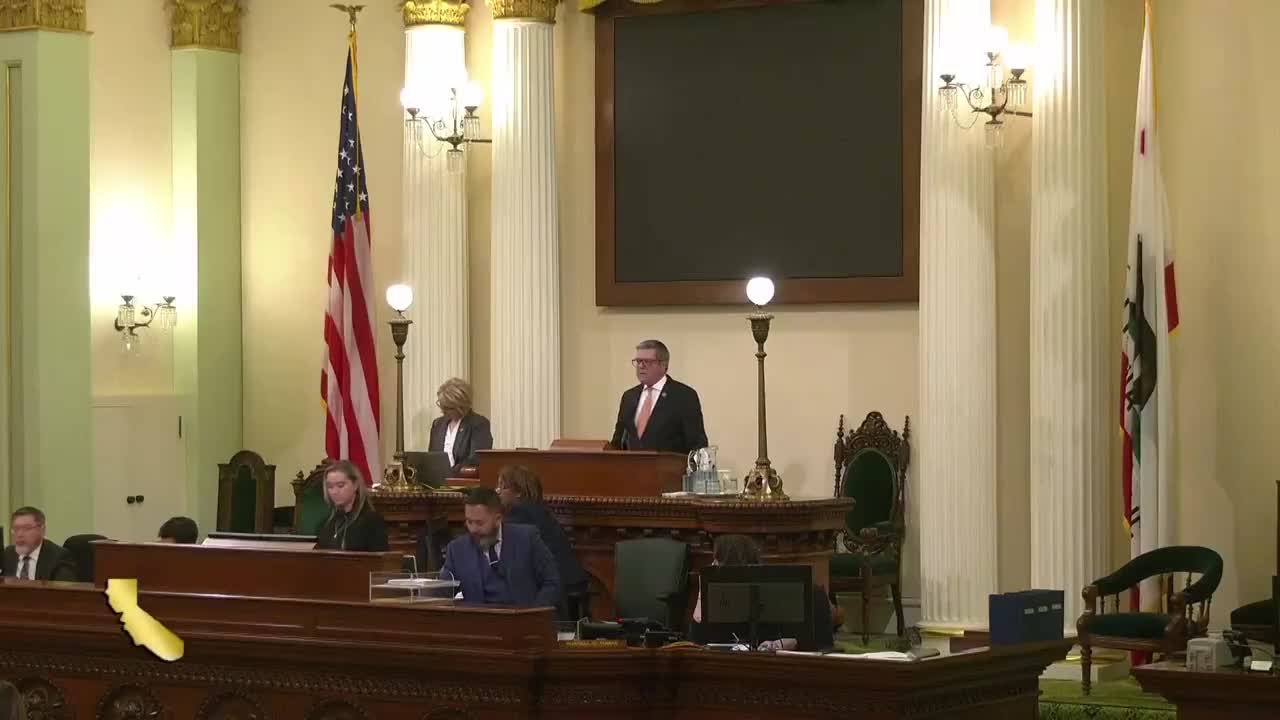
Bill Author

Bill Co-Author(s):