AJR 16: Sunscreen: ingredients and filters.
- Session Year: 2023-2024
- House: Assembly
- Latest Version Date: 2024-08-28
Current Status:
Passed
(2024-08-28: Chaptered by Secretary of State - Res. Chapter 199, Statutes of 2024.)
Introduced
In Committee
First Chamber
In Committee
Second Chamber
Enacted
This measure would urge the United States Congress to explore policy options to improve the timeliness of the United States Food and Drug Administrations approval pathways for sunscreen ingredients and filters.
This measure would urge the United States Congress to explore policy options to improve the timeliness of the United States Food and Drug Administrations approval pathways for sunscreen ingredients and filters.
This measure would urge the United States Congress to explore policy options to improve the timeliness of the United States Food and Drug Administrations approval pathways for sunscreen ingredients and filters.
WHEREAS, The United States Food and Drug Administration (FDA) has not approved a new ingredient or filter for use in sunscreen in over 20 years. Consequently, there has been little improvement or innovation in the United States sunscreen composition for decades, leaving Americans vulnerable to skin cancer, which remains, by far, the most common form of cancer in the United States; and
WHEREAS, In the United States, sunscreen manufacturers currently have access to 16 ultraviolet (UV) filters to create sunscreen products. Comparatively, European nations have up to 30 approved UV filters for consumer product companies to formulate a variety of sunscreen products; and
WHEREAS, The lack of approved UV filters in America severely hampers the ability to bring forward a broader selection of sunscreen products that help protect Americans from skin cancer and the harmful effects of overexposure to the sun. With more ingredients and filters to choose from, overseas sunscreen manufacturers are able to create more innovative and stronger forms of protection against harmful ultraviolet rays. Americans have fewer choices in their sunscreen options, and, therefore, notably poorer protection from ultraviolet rays; and
WHEREAS, In 2014, Congress passed the Sunscreen Innovation Act to address the regulatory backlog preventing Americans from accessing advanced, effective sunscreens that are widely available in the rest of the world, and have been for years. Still, the FDA is taking too long to approve nonprescription (OTC) ingredients and filters that are safe and widely available to the rest of the world; and
WHEREAS, Current requirements require a significant amount of time and resources, akin to a new drug application, to complete and do not allow for the use of 21st century nonanimal testing or alternatives for assessing the safety and effectiveness of products that are currently utilized by the FDAs Center for Food Safety and Applied Nutrition, and other countries throughout the world; now, therefore, be it
Resolved by the Assembly and the Senate of the State of California, jointly, That the Legislature of the State of California urges the United States Congress to explore policy options to improve the timeliness of the FDAs approval pathways for sunscreen ingredients and filters; and be it further
Resolved, That the Chief Clerk of the Assembly transmit copies of this resolution to the President and Vice President of the United States, to the Speaker of the House of Representatives, to the Majority Leader of the Senate, and to each Senator and Representative from California in the Congress of the United States.
|
Date
|
Status
|
|---|---|
| Aug 28, 2024 | Chaptered by Secretary of State - Res. Chapter 199, Statutes of 2024. |
| Aug 28, 2024 | Enrolled and filed with the Secretary of State at 4 p.m. |
| Aug 22, 2024 | In Assembly. Ordered to Engrossing and Enrolling. |
| Aug 22, 2024 | Adopted and to Assembly. (Ayes 33. Noes 0. Page 5295.) |
| Aug 15, 2024 | Read second time. Ordered to Consent Calendar. |
| Aug 14, 2024 | From committee: Be adopted. To Consent Calendar. (Ayes 9. Noes 0.) (August 14). |
| Aug 7, 2024 | Referred to Com. on HEALTH. |
| Jul 2, 2024 | In Senate. To Com. on RLS. |
| Jul 1, 2024 | Adopted and to Senate. (Ayes 72. Noes 0. Page 6116.) |
| Jul 1, 2024 | Coauthors revised. |
| Jun 26, 2024 | From committee: Be adopted. To Consent Calendar. (Ayes 16. Noes 0.) (June 25). |
| Jun 3, 2024 | Referred to Com. on HEALTH. |
| Apr 19, 2024 | From printer. |
| Apr 18, 2024 | Introduced. To print. |
|
Date
|
Description
|
Location
|
Votes
|
|
|---|---|---|---|---|
| Aug 22, 2024 | Consent Calendar 2nd AJR16 Low et al. | Senate Floor |
Passed |
|
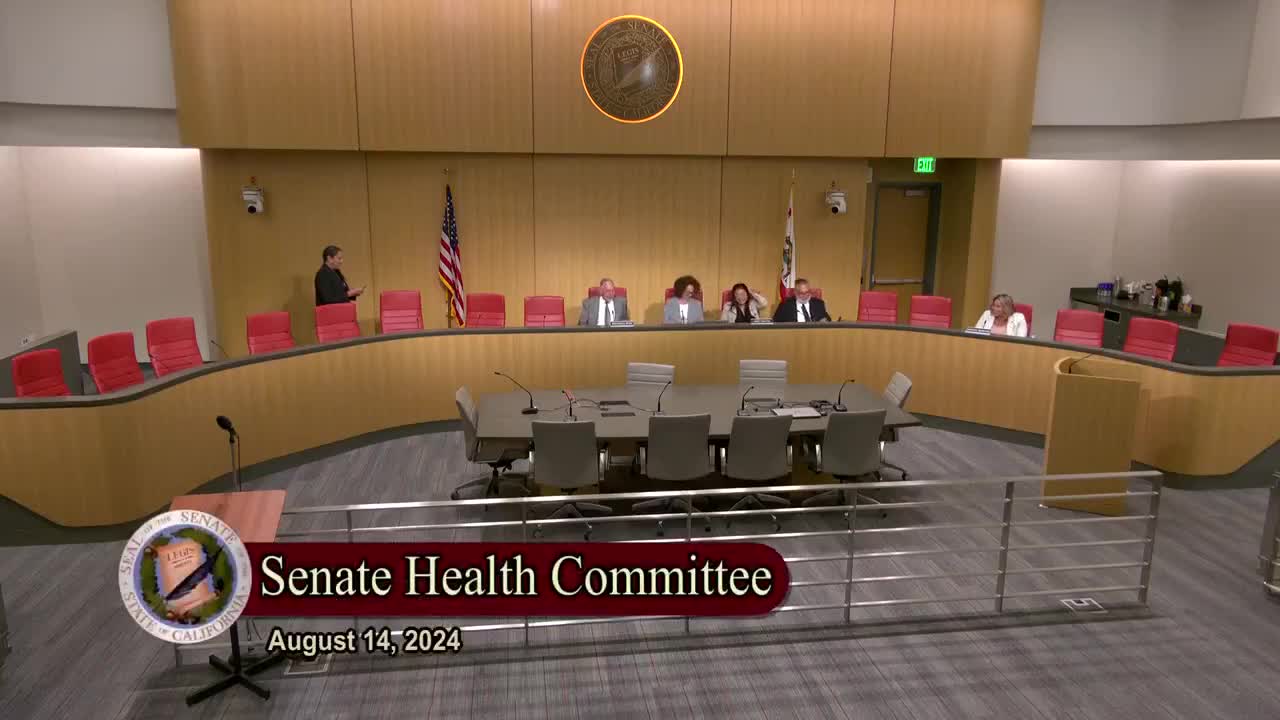
| Aug 14, 2024 | Be adopted and be ordered to the Consent Calendar | Senate Standing Committee on Health |
Passed |
|
| Jul 1, 2024 | AJR 16 Low Consent Calendar Second Day | Assembly Floor |
Passed |
|
| Jun 25, 2024 | Be adopted. To Consent Calendar. | Assembly Standing Committee on Health |
Passed |
This list shows positions taken on this bill by organizations on the date displayed, which is linked to the original source.
Positions by individuals are not included.
|
Organization
|
Position
|
Date
|
|---|---|---|
| Personal Care Products Council | ** Support |
SENATE RULES COMMITTEE Office of Senate Floor Analyses (916) 651-1520 Fax: (916) 327-4478 | AJR 16 |
CONSENT
Bill No: AJR 16
Author: Low (D), et al.
Introduced: 4/18/24
Vote: 21
SENATE HEALTH COMMITTEE: 9-0, 8/14/24
AYES: Roth, Nguyen, Gonzalez, Grove, Hurtado, Limón, Menjivar, Rubio, Wiener
NO VOTE RECORDED: Glazer, Smallwood-Cuevas
ASSEMBLY FLOOR: 72-0, 7/1/24 (Consent) - See last page for vote
SUBJECT: Sunscreen: ingredients and filters
SOURCE: Author
DIGEST:
This resolution urges Congress, on behalf of the California State Assembly and Senate, to explore policy options to improve the timeliness of the FDA’s approval pathways for sunscreen ingredients and filters.
ANALYSIS:
Existing federal law:
- Establishes the Federal Food, Drug, and Cosmetic Act (FD&C Act), administered and enforced by the Food and Drug Administration (FDA). [21 USC §301 et seq.]
- Regulates “sunburn prevention and treatment products” as an over-the-counter (OTC) drug under the FD&C Act, and requires these products to meet requirements to be determined as “generally recognized as safe and effective” (GRASE), or otherwise be considered misbranded and liable to regulatory action. [21 USC §330.1, §330.5(g)]
This resolution:
- Declares that the FDA has not approved a new ingredient or filter for use in sunscreen in over 20 years. Consequently, there has been little improvement or innovation in the United States sunscreen composition for decades, leaving Americans vulnerable to skin cancer, which remains, by far, the most common form of cancer in the United States.
- Declares that in the United States, sunscreen manufacturers currently have access to 16 ultraviolet (UV) filters to create sunscreen products. Comparatively, European nations have up to 30 approved UV filters for consumer product companies to formulate a variety of sunscreen products.
- Declares that the lack of approved UV filters in America severely hampers the ability to bring forward a broader selection of sunscreen products that help protect Americans from skin cancer and the harmful effects of overexposure to the sun. With more ingredients and filters to choose from, overseas sunscreen manufacturers are able to create more innovative and stronger forms of protection against harmful ultraviolet rays. Americans have fewer choices in their sunscreen options, and, therefore, notably poorer protection from ultraviolet rays.
- Declares that in 2014, Congress passed the Sunscreen Innovation Act to address the regulatory backlog preventing Americans from accessing advanced, effective sunscreens that are widely available in the rest of the world, and have been for years. Still, the FDA is taking too long to approve nonprescription (OTC) ingredients and filters that are safe and widely available to the rest of the world.
- Declares that current requirements require a significant amount of time and resources, akin to a new drug application, to complete and do not allow for the use of 21st century non-animal testing or alternatives for assessing the safety and effectiveness of products that are currently utilized by the FDA’s Center for Food Safety and Applied Nutrition, and other countries throughout the world.
- Urges, on behalf of the Assembly and the Senate, that the United States Congress explores policy options to improve the timeliness of the FDA’s approval pathways for sunscreen ingredients and filters.
- Calls upon the Chief Clerk of the Assembly to transmit copies of this resolution to the President and Vice President of the United States, to the Speaker of the House of Representatives, to the Majority Leader of the Senate, and to each Senator and Representative from California in the Congress of the United Sttes.
Background
- Background on regulation of sunscreen. While some countries regulate sunscreen as a cosmetic, in the United States sunscreen is regulated as an over-the-counter drug, which subjects these products to a higher level of regulation. The ultraviolet (UV) filters and their protective abilities are considered “active ingredients,” and only FDA-approved UV filters can be included in U.S. sunscreen products. The FDA maintains an OTC Monograph, which it describes as a “rule book” for each therapeutic category that establishes conditions, such as active ingredients, uses, doses, labeling, and testing. If an ingredient is in the OTC Monograph, the OTC drug is GRASE (generally recognized as safe and effective), and can then be marketed without a new drug application and FDA pre-market approval. The following 16 sunscreen active ingredients have been approved as GRASE and are part of the OTC Monograph:
- Aminobenzoic acid (PABA) up to 15%;
- Avobenzone up to 3%;
- Cinoxate up to 3%;
- Dioxybenzone up to 3%;
- Hemosalate up to 15%;
- Menthyl anthranilate up to 5%;
- Octocrylene up to 10%;
- Octyl methoxycinnamate up to 7.5%;
- Octyl salicylate up to 5%;
- Oxybenzone up to 6%;
- Padimate up to 8%;
- Phenylbenzimidazole sulfonic acid up to 4%;
- Sulisobenzone up to 10%;
- Titanium dioxide up to 25%;
- Trolamine salicylate up to 12%; and,
- Zinc oxide up to 25%.
- Federal regulation of OTC drugs. There are two regulatory pathways to bring a nonprescription drug to market in the U.S.: a review using the OTC Monograph process; or, through a new drug application (NDA). As described above, the FDA publishes an OTC monograph, which establishes conditions under which an OTC drug is generally recognized as safe and effective and can be marketed without an NDA or pre-market approval. If approval is sought for an OTC drug that contains active ingredients that are not part of the OTC Monograph, then a NDA is required, which includes pre-market approval by the FDA. Getting approval of a new UV filter through a NDA can be time-consuming and expensive, requiring extensive safety, toxicology, and efficacy testing, utilizing both animal and human clinical studies.
- More sunscreen options available in other countries. In the U.S., only some physical and chemical filters are permitted, as they tend to either leave chalky residues or make the skin feel greasy. Consumers have noted that many additional types of sunscreens are available in other countries, including the European Union (EU), Australia, and Japan. According to the Environmental Working Group (EWG), the EU regulates sunscreen as a cosmetic, which allows more flexibility in which active ingredients manufacturers can use to protect against harmful rays. According to EWG, the EU has 34 UV filters approved for use in sunscreens. Additionally, EU-approved sunscreens have been shown to be more effective in blocking the more harmful UVA rays.
- The Sunscreen Innovation Act (SIA). The SIA was enacted on November 26, 2014, to provide an alternative process for reviewing the safety and effectiveness of nonprescription sunscreen active ingredients. The SIA supplemented the regulation of the FDA’s Time and Extent Application (TEA) with new statutory procedures. TEAs are responsible for assessing marketing timelines and scopes to determine eligibility. The SIA also required the FDA to establish timeframes to review TEAs for OTC drugs other than sunscreen active ingredients. The SIA sunsetted at the end of Fiscal Year 2022, and is no longer in effect.
- Coronavirus Aid, Relief, and Economic Security Act (CARES Act) requirements related to sunscreens. The CARES Act, enacted in March 2020 in response to COVID-19, primarily focused on economic relief to individuals, families, businesses, and other groups. However, the CARES Act also reformed and modernized how the FDA regulates certain OTC Monograph drugs, including sunscreens. The CARES Act replaced the rulemaking process for OTC Monograph drugs with an administrative order process for issuing, revising, and amending the OTC Monographs. The administrative order process gives the FDA new tools to help revise the OTC Monographs if science changes, innovation progresses, new data becomes available, or emerging safety signals arise.
Pursuant to requirements in the CARES Act, in September of 2021, the FDA released a “deemed final order” as well as a “proposed revised order.” The deemed final order essentially preserved the status quo for sunscreens. However, the proposed revised order, among other provisions, would only keep two of the 16 ingredients as GRASE: titanium dioxide and zinc oxide. The remaining ingredients would no longer be considered GRASE, and therefore would no longer be permitted for use in sunscreens. However, this proposed, revised order has not taken effect, and it is unclear if or when the FDA will adopt it as a final order.
Comments
Author’s statement. According to the author,” it is time for the FDA to provide Californians and all Americans with the resources needed to protect themselves and their families from the harmful effects of the sun. By advocating for policy changes, we can ensure Americans have access to the best possible protection against the sun's harmful rays and safeguard public health and the health of future generations.”
FISCAL EFFECT: Appropriation: No Fiscal Com.: No Local: No
SUPPORT: (Verified 8/14/24)
Personal Care Products Council
OPPOSITION: (Verified 8/14/24)
None received
ARGUMENTS IN SUPPORT: The Personal Care Products Council (PCPC) states in support that it shares the concerns regarding the significant delay in approvals for new active sunscreen ingredients, noting that the FDA has not approved new UV filters since 1999. PCPC states that sunscreens are a crucial and well-recognized tool in the fight against skin cancer, and this resolution is a pivotal step in raising awareness and urging dialogue among lawmakers on this critical public health issue.
ASSEMBLY FLOOR: 72-0, 7/1/24
AYES: Addis, Aguiar-Curry, Alanis, Alvarez, Arambula, Bains, Bauer-Kahan, Bennett, Berman, Boerner, Bonta, Bryan, Calderon, Juan Carrillo, Wendy Carrillo, Chen, Connolly, Megan Dahle, Davies, Dixon, Essayli, Flora, Mike Fong, Friedman, Gabriel, Gallagher, Garcia, Gipson, Grayson, Haney, Hart, Holden, Hoover, Irwin, Jackson, Kalra, Lackey, Lee, Low, Lowenthal, Maienschein, McKinnor, Muratsuchi, Stephanie Nguyen, Ortega, Pacheco, Papan, Jim Patterson, Joe Patterson, Pellerin, Petrie-Norris, Quirk-Silva, Ramos, Reyes, Luz Rivas, Rodriguez, Blanca Rubio, Sanchez, Santiago, Schiavo, Soria, Ta, Ting, Valencia, Villapudua, Wallis, Ward, Wicks, Wilson, Wood, Zbur, Robert Rivas
NO VOTE RECORDED: Cervantes, Jones-Sawyer, Mathis, McCarty, Rendon, Waldron, Weber
Prepared by: Vincent D. Marchand / HEALTH / (916) 651-4111
8/16/24 12:47:43
**** END ****
SENATE COMMITTEE ON HEALTH
Senator Richard Roth, Chair
BILL NO: AJR 16
AUTHOR: | Low | ||
VERSION: | April 18, 2024 | ||
HEARING DATE: | August 14, 2024 | ||
CONSULTANT: | Vincent D. Marchand | ||
SUBJECT: Sunscreen: ingredients and filters
SUMMARY:
Urges Congress, on behalf of the California State Assembly and Senate, to explore policy options to improve the timeliness of the FDA’s approval pathways for sunscreen ingredients and filters.
Existing federal law:
- Establishes the Federal Food, Drug, and Cosmetic Act (FD&C Act), administered and enforced by the Food and Drug Administration (FDA). [21 USC §301 et seq.]
- Regulates “sunburn prevention and treatment products” as an over-the-counter (OTC) drug under the FD&C Act, and requires these products to meet requirements to be determined as “generally recognized as safe and effective” (GRASE), or otherwise be considered misbranded and liable to regulatory action. [21 USC §330.1, §330.5(g)]
This resolution:
- Declares that the FDA has not approved a new ingredient or filter for use in sunscreen in over 20 years. Consequently, there has been little improvement or innovation in the United States sunscreen composition for decades, leaving Americans vulnerable to skin cancer, which remains, by far, the most common form of cancer in the United States.
- Declares that in the United States, sunscreen manufacturers currently have access to 16 ultraviolet (UV) filters to create sunscreen products. Comparatively, European nations have up to 30 approved UV filters for consumer product companies to formulate a variety of sunscreen products.
- Declares that the lack of approved UV filters in America severely hampers the ability to bring forward a broader selection of sunscreen products that help protect Americans from skin cancer and the harmful effects of overexposure to the sun. With more ingredients and filters to choose from, overseas sunscreen manufacturers are able to create more innovative and stronger forms of protection against harmful ultraviolet rays. Americans have fewer choices in their sunscreen options, and, therefore, notably poorer protection from ultraviolet rays.
- Declares that in 2014, Congress passed the Sunscreen Innovation Act to address the regulatory backlog preventing Americans from accessing advanced, effective sunscreens that are widely available in the rest of the world, and have been for years. Still, the FDA is taking too long to approve nonprescription (OTC) ingredients and filters that are safe and widely available to the rest of the world.
- Declares that current requirements require a significant amount of time and resources, akin to a new drug application, to complete and do not allow for the use of 21st century non-animal testing or alternatives for assessing the safety and effectiveness of products that are currently utilized by the FDA’s Center for Food Safety and Applied Nutrition, and other countries throughout the world.
- Urges, on behalf of the Assembly and the Senate, that the United States Congress explores policy options to improve the timeliness of the FDA’s approval pathways for sunscreen ingredients and filters.
- Calls upon the Chief Clerk of the Assembly to transmit copies of this resolution to the President and Vice President of the United States, to the Speaker of the House of Representatives, to the Majority Leader of the Senate, and to each Senator and Representative from California in the Congress of the United States.
FISCAL EFFECT:
This resolution is keyed non-fiscal.
PRIOR VOTES:
Assembly Floor: | 72 - 0 |
Assembly Health Committee: | 16 - 0 |
COMMENTS:
- Author’s statement. According to the author, it is time for the FDA to provide Californians and all Americans with the resources needed to protect themselves and their families from the harmful effects of the sun. By advocating for policy changes, we can ensure Americans have access to the best possible protection against the sun's harmful rays and safeguard public health and the health of future generations.
- Background on regulation of sunscreen. While some countries regulate sunscreen as a cosmetic, in the United States sunscreen is regulated as an over-the-counter drug, which subjects these products to a higher level of regulation. The ultraviolet (UV) filters and their protective abilities are considered “active ingredients,” and only FDA-approved UV filters can be included in U.S. sunscreen products. The FDA maintains an OTC Monograph, which it describes as a “rule book” for each therapeutic category that establishes conditions, such as active ingredients, uses, doses, labeling, and testing. If an ingredient is in the OTC Monograph, the OTC drug is GRASE (generally recognized as safe and effective), and can then be marketed without a new drug application and FDA pre-market approval. The following 16 sunscreen active ingredients have been approved as GRASE and are part of the OTC Monograph:
- Aminobenzoic acid (PABA) up to 15%;
- Avobenzone up to 3%;
- Cinoxate up to 3%;
- Dioxybenzone up to 3%;
- Hemosalate up to 15%;
- Menthyl anthranilate up to 5%;
- Octocrylene up to 10%;
- Octyl methoxycinnamate up to 7.5%;
- Octyl salicylate up to 5%;
- Oxybenzone up to 6%;
- Padimate up to 8%;
- Phenylbenzimidazole sulfonic acid up to 4%;
- Sulisobenzone up to 10%;
- Titanium dioxide up to 25%;
- Trolamine salicylate up to 12%; and,
- Zinc oxide up to 25%.
- Federal regulation of OTC drugs. There are two regulatory pathways to bring a nonprescription drug to market in the U.S.: a review using the OTC Monograph process; or, through a new drug application (NDA). As described above, the FDA publishes an OTC monograph, which establishes conditions under which an OTC drug is generally recognized as safe and effective and can be marketed without an NDA or pre-market approval. If approval is sought for an OTC drug that contains active ingredients that are not part of the OTC Monograph, then a NDA is required, which includes pre-market approval by the FDA. Getting approval of a new UV filter through a NDA can be time-consuming and expensive, requiring extensive safety, toxicology, and efficacy testing, utilizing both animal and human clinical studies.
- More sunscreen options available in other countries. In the U.S., only some physical and chemical filters are permitted, as they tend to either leave chalky residues or make the skin feel greasy. Consumers have noted that many additional types of sunscreens are available in other countries, including the European Union (EU), Australia, and Japan. According to the Environmental Working Group (EWG), the EU regulates sunscreen as a cosmetic, which allows more flexibility in which active ingredients manufacturers can use to protect against harmful rays. According to EWG, the EU has 34 UV filters approved for use in sunscreens. Additionally, EU-approved sunscreens have been shown to be more effective in blocking the more harmful UVA rays.
- The Sunscreen Innovation Act (SIA). The SIA was enacted on November 26, 2014, to provide an alternative process for reviewing the safety and effectiveness of nonprescription sunscreen active ingredients. The SIA supplemented the regulation of the FDA’s Time and Extent Application (TEA) with new statutory procedures. TEAs are responsible for assessing marketing timelines and scopes to determine eligibility. The SIA also required the FDA to establish timeframes to review TEAs for OTC drugs other than sunscreen active ingredients. The SIA sunsetted at the end of Fiscal Year 2022, and is no longer in effect.
- Coronavirus Aid, Relief, and Economic Security Act (CARES Act) requirements related to sunscreens. The CARES Act, enacted in March 2020 in response to COVID-19, primarily focused on economic relief to individuals, families, businesses, and other groups. However, the CARES Act also reformed and modernized how the FDA regulates certain OTC Monograph drugs, including sunscreens. The CARES Act replaced the rulemaking process for OTC Monograph drugs with an administrative order process for issuing, revising, and amending the OTC Monographs. The administrative order process gives the FDA new tools to help revise the OTC Monographs if science changes, innovation progresses, new data becomes available, or emerging safety signals arise.
Pursuant to requirements in the CARES Act, in September of 2021, the FDA released a “deemed final order” as well as a “proposed revised order.” The deemed final order essentially preserved the status quo for sunscreens. However, the proposed revised order, among other provisions, would only keep two of the 16 ingredients as GRASE: titanium dioxide and zinc oxide. The remaining ingredients would no longer be considered GRASE, and therefore would no longer be permitted for use in sunscreens. However, this proposed, revised order has not taken effect, and it is unclear if or when the FDA will adopt it as a final order. - Support. The Personal Care Products Council (PCPC) states in support that it shares the concerns regarding the significant delay in approvals for new active sunscreen ingredients, noting that the FDA has not approved new UV filters since 1999. PCPC states that sunscreens are a crucial and well-recognized tool in the fight against skin cancer, and this resolution is a pivotal step in raising awareness and urging dialogue among lawmakers on this critical public health issue.
SUPPORT AND OPPOSITION:
Support: Personal Care Products Council
Oppose: None received
-- END --
Date of Hearing: June 25, 2024
ASSEMBLY COMMITTEE ON HEALTH
Mia Bonta, Chair
ABPCA Bill Id:AJR 16
Author:(Low) – As Introduced Ver:April 18, 2024
SUBJECT: Sunscreen: ingredients and filters.
SUMMARY: Urges the United States (U.S.) Congress to explore policy options to improve the timeliness of the U.S. Food and Drug Administration (FDA)’s approval pathways for sunscreen ingredients and filters. Specifically, this resolution:
- States the following:
- The FDA has not approved a new ingredient or filter for use in sunscreen in over 20 years. Consequently, there has been little improvement or innovation in the U.S. sunscreen composition for decades, leaving Americans vulnerable to skin cancer, which remains, by far, the most common form of cancer in the U.S.;
- In the U.S., sunscreen manufacturers currently have access to 16 ultraviolet (UV) filters to create sunscreen products. Comparatively, European nations have up to 30 approved UV filters for consumer product companies to formulate a variety of sunscreen products;
- The lack of approved UV filters in America severely hampers the ability to bring forward a broader selection of sunscreen products that help protect Americans from skin cancer and the harmful effects of overexposure to the sun. With more ingredients and filters to choose from, overseas sunscreen manufacturers are able to create more innovative and stronger forms of protection against harmful ultraviolet rays. Americans have fewer choices in their sunscreen options, and, therefore, notably poorer protection from ultraviolet rays;
- In 2014, Congress passed the Sunscreen Innovation Act to address the regulatory backlog preventing Americans from accessing advanced, effective sunscreens that are widely available in the rest of the world, and have been for years. Still, the FDA is taking too long to approve nonprescription (OTC) ingredients and filters that are safe and widely available to the rest of the world; and,
- Current requirements require a significant amount of time and resources, akin to a new drug application, to complete and do not allow for the use of 21st century nonanimal testing or alternatives for assessing the safety and effectiveness of products that are currently utilized by the FDA’s Center for Food Safety and Applied Nutrition, and other countries throughout the world.
- The FDA has not approved a new ingredient or filter for use in sunscreen in over 20 years. Consequently, there has been little improvement or innovation in the U.S. sunscreen composition for decades, leaving Americans vulnerable to skin cancer, which remains, by far, the most common form of cancer in the U.S.;
- Resolves the following:
- That the Assembly and the Senate of the State of California, jointly, That the Legislature of the State of California urges the United States Congress to explore policy options to improve the timeliness of the FDA’s approval pathways for sunscreen ingredients and filters; and,
- That the Chief Clerk of the Assembly transmit copies of this resolution to the President and Vice President of the U.S., to the Speaker of the House of Representatives, to the Majority Leader of the Senate, and to each Senator and Representative from California in the Congress of the United States.
- That the Assembly and the Senate of the State of California, jointly, That the Legislature of the State of California urges the United States Congress to explore policy options to improve the timeliness of the FDA’s approval pathways for sunscreen ingredients and filters; and,
FEDERAL LAW defines “sunscreen” to mean a drug containing one or more sunscreen active ingredients; and defines “sunscreen active ingredient” to mean an active ingredient that is intended for application to the skin of humans for purposes of absorbing, reflecting, or scattering ultraviolet radiation. [Title 21, United States Code § 360fff]
FISCAL EFFECT: None.
COMMENTS:
- PURPOSE OF THIS RESOLUTION. According to the author, it is time for the FDA to provide Californians and all Americans with the resources needed to protect themselves and their families from the harmful effects of the sun. The author contends that by advocating for policy changes, we can ensure Americans have access to the best possible protection against the sun's harmful rays and safeguard public health and the health of future generations.
- BACKGROUND.
- UV Rays. According to the University of Texas MD Anderson Cancer Center, Most UV radiation from sunlight is absorbed by the atmosphere, but two kinds of UV rays do break through. They are called Ultraviolet A (UVA) and Ultraviolet B (UVB) radiation. UVA radiation makes up 95% of the all the UV rays that make it to the Earth’s surface. UVA penetrates deep into our skin and can even pass through glass. UVA damages the collagen and elastin in the skin and also generates free radicals. Free radicals avidly attack macromolecules such as protein, lipid, RNA and DNA, altering their structure and interfering with their function. UVB radiation makes up only 5% of the UV rays from the sun, but it is very high energy. UVB damages skin cells and causes DNA mutations that can eventually lead to melanoma and other types of skin cancer.
- Sunscreen filters. Sunscreen UV filters are the active ingredients in sunscreen that prevent sunburn, decrease the risk of skin cancer, and mitigate early skin aging. Skin cancer is the most common form of cancer in the U.S. According to the American Academy of Dermatology Association, it is estimated that 9,500 Americans are diagnosed with skin cancer every day and one in five Americans will develop skin cancer in their lifetime. Effective and long-lasting sunscreen can decrease the risk of skin cancers, with regular daily use reducing the risk of developing skin cancer by up to 50%.
- FDA regulation of sunscreen. Sunscreens have been regulated by FDA since the 1970s. Sunscreens are classified by the FDA as over-the-counter drug products, which means sunscreens require more stringent safety, stability, compatibility, and efficacy testing than what is required for cosmetics products like skincare and makeup. The UV filters that give sunscreens their protective abilities are considered “active ingredients.” Only FDA-approved UV filters can be included in U.S. sunscreen products and the FDA’s UV filter OTC Monograph of active sunscreen ingredients. OTC Monograph is a “rule book” for each therapeutic category that establishes conditions, such as active ingredients, uses, doses, labeling, and testing. Approving a UV filter as an active ingredient can be time-consuming and expensive. It requires extensive safety, toxicology, and efficacy testing, which is done either on animals or on humans. Once products have passed all necessary tests and are deemed FDA-approved UV filters, only then can they be labeled as sunscreens.
- Progress on the approval of sunscreen ingredients and filters.
- The Sunscreen Innovation Act. The Sunscreen Innovation Act (SIA) was enacted on November 26, 2014, to provide an alternative process for reviewing the safety and effectiveness of nonprescription sunscreen active ingredients. The SIA supplemented the regulation of the FDA’s Time and Extent Application (TEA) with new statutory procedures. TEAs are responsible for assessing marketing timelines and scopes to determine eligibility. The SIA also required the FDA to establish timeframes to review TEAs for OTC drugs other than sunscreen active ingredients. The SIA ended at the end of Fiscal Year 2022.
- 2019 FDA proposed rule. In 2019, FDA issued a proposed rule on sunscreens, which proposed to revise the requirements for sunscreen active ingredients; maximum sun protection factor (SPF) levels; broad spectrum requirements (protection against both ultraviolet A and B rays); and dosage forms (for example, cream, lotion, or spray), among other things. The proposed rule also included updates on how sunscreens are labeled to make it easier for consumers to identify key information. The 2019 proposal aimed to bring sunscreens up to date with the latest science, including new information showing that certain sunscreen ingredients can be absorbed through the skin into the body. The FDA is now using this proposed order to efficiently transition our ongoing consideration of the appropriate requirements for OTC sunscreens from the previous rulemaking process to the new order process that the 2020 Coronavirus Aid, Relief, and Economic Security Act (CARES) Act created.
- The CARES Act. In response to the COVID-19 pandemic, Congress enacted the CARES Act. Most of its provisions focused on economic relief to individuals, families, businesses, and other groups. However, the CARES Act also reformed and modernized how the FDA regulates certain OTC Monograph drugs, specifically sunscreen. The CARES Act replaced the rulemaking process for OTC Monograph drugs with an administrative order process for issuing, revising, and amending the OTC Monographs. The administrative order process gives the FDA new tools to help revise the OTC Monographs if science changes, innovation progresses, new data becomes available, or emerging safety signals arise.
- 2021 FDA actions. On September 24, 2021, FDA took steps aimed at improving the quality, safety, and efficacy of sunscreens as part of its implementation of new authorities for certain OTC drugs. FDA posted the deemed final order for sunscreens which sets the current requirements for marketing OTC sunscreen products. FDA also posted the proposed order for sunscreens to amend and revise this deemed final order for OTC sunscreens products. The proposed order reflects FDA’s proposed requirements for OTC sunscreen products for the future. The proposed order is a proposal and does not “take effect” until it is finalized. A 45-day public comment period began when FDA issued the proposed order. After reviewing and considering the comments, FDA will issue a final order that will include an effective date. The CARES Act specifies that the effective date for the final order cannot be earlier than one year after issuance of the final order.
This resolution urges Congress to explore policy options to improve the timeliness of the FDA’s approval pathways for sunscreen ingredients and filters.
- Comparisons to sunscreens in other countries. . Many consumers have reported sunscreens available in other countries, primarily countries within European Union (EU), Australia, and Japan, are more effective and less expensive. The European Commission regulates sunscreens as cosmetics, which allows more flexibility in which active ingredients sunscreen manufacturers can use to protect against UVA rays. The EU has 34 UV filters approved for use in sunscreens, compared to 16 in the U.S. In countries subject to European Commission regulations, manufacturers voluntarily comply with a recommendation that all sunscreens offer UVA protection at least one-third as potent as the SPF. For example, if a product advertises SPF 30, its UVA protection must be at least SPF 10.
REGISTERED SUPPORT / OPPOSITION:
Support
None on file.
Opposition
None on file.
Analysis Prepared by: Eliza Brooks / HEALTH / (916) 319-2097
Bill Author

Bill Co-Author(s):