SB 1059: Cannabis: local taxation: gross receipts.
- Session Year: 2023-2024
- House: Senate
- Latest Version Date: 2024-09-28
Current Status:
Passed
(2024-09-28: Chaptered by Secretary of State. Chapter 874, Statutes of 2024.)
Introduced
In Committee
First Chamber
In Committee
Second Chamber
Enacted
What does this bill do?
This bill bars cities and counties, including charter cities, from counting any state cannabis excise tax or state sales and use taxes as part of a licensed cannabis retailer’s “gross receipts” (total sales) when setting local taxes or fees. In short, local taxes or fees based on gross receipts must exclude those state tax amounts.
The summary is provided by generative AI which can make mistakes. For original language, please view the details in the table below.
The Control, Regulate and Tax Adult Use of Marijuana Act (AUMA), an initiative measure, authorizes a person who obtains a state license under AUMA to engage in commercial adult-use cannabis activity pursuant to that license and applicable local ordinances. The Medicinal and Adult-Use Cannabis Regulation and Safety Act (MAUCRSA), among other things, consolidates the licensure and regulation of commercial medicinal and adult-use cannabis activities.
Existing law, the Cannabis Tax Law, imposes an excise tax upon purchasers of cannabis or cannabis products sold in this state at the rate of 15% of the gross receipts of any retail sale by a cannabis retailer, and prior to July 1, 2022, a cultivation tax on all harvested cannabis that entered the commercial market, as specified. Existing law provides that taxes imposed under the Cannabis Tax Law are in addition to any other tax imposed by a city or county. Existing law defines gross receipts for purposes of the Cannabis Tax Law as it is defined under the Sales and Use Tax Law.
This bill would prohibit a city or county from including in the definition of gross receipts, for purposes of any local tax or fee on a licensed cannabis retailer, the amount of any cannabis excise tax imposed under the Cannabis Tax Law or any sales and use taxes. By imposing new requirements on local governments with respect to their taxes and fees, the bill would impose a state-mandated local program.
The bill would include findings that changes proposed by this bill address a matter of statewide concern rather than a municipal affair and, therefore, apply to all cities, including charter cities.
The California Constitution requires the state to reimburse local agencies and school districts for certain costs mandated by the state. Statutory provisions establish procedures for making that reimbursement.
This bill would provide that, if the Commission on State Mandates determines that the bill contains costs mandated by the state, reimbursement for those costs shall be made pursuant to the statutory provisions noted above.
The Control, Regulate and Tax Adult Use of Marijuana Act (AUMA), an initiative measure, authorizes a person who obtains a state license under AUMA to engage in commercial adult-use cannabis activity pursuant to that license and applicable local ordinances. The Medicinal and Adult-Use Cannabis Regulation and Safety Act (MAUCRSA), among other things, consolidates the licensure and regulation of commercial medicinal and adult-use cannabis activities.
Existing law, the Cannabis Tax Law, imposes an excise tax upon purchasers of cannabis or cannabis products sold in this state at the rate of 15% of the gross receipts of any retail sale by a cannabis retailer, and prior to July 1, 2022, a cultivation tax on all harvested cannabis that entered the commercial market, as specified. Existing law provides that taxes imposed under the Cannabis Tax Law are in addition to any other tax imposed by a city or county. Existing law defines gross receipts for purposes of the Cannabis Tax Law as it is defined under the Sales and Use Tax Law.
This bill would prohibit a city or county from including in the definition of gross receipts, for purposes of any local tax or fee on a licensed cannabis retailer, the amount of any cannabis excise tax imposed under the Cannabis Tax Law or any sales and use taxes. By imposing new requirements on local governments with respect to their taxes and fees, the bill would impose a state-mandated local program.
The bill would include findings that changes proposed by this bill address a matter of statewide concern rather than a municipal affair and, therefore, apply to all cities, including charter cities.
The California Constitution requires the state to reimburse local agencies and school districts for certain costs mandated by the state. Statutory provisions establish procedures for making that reimbursement.
This bill would provide that, if the Commission on State Mandates determines that the bill contains costs mandated by the state, reimbursement for those costs shall be made pursuant to the statutory provisions noted above.
The Control, Regulate and Tax Adult Use of Marijuana Act (AUMA), an initiative measure, authorizes a person who obtains a state license under AUMA to engage in commercial adult-use cannabis activity pursuant to that license and applicable local ordinances. The Medicinal and Adult-Use Cannabis Regulation and Safety Act (MAUCRSA), among other things, consolidates the licensure and regulation of commercial medicinal and adult-use cannabis activities.
Existing law, the Cannabis Tax Law, imposes an excise tax upon purchasers of cannabis or cannabis products sold in this state at the rate of 15% of the gross receipts of any retail sale by a cannabis retailer, and prior to July 1, 2022, a cultivation tax on all harvested cannabis that entered the commercial market, as specified. Existing law provides that taxes imposed under the Cannabis Tax Law are in addition to any other tax imposed by a city or county. Existing law defines gross receipts for purposes of the Cannabis Tax Law as it is defined under the Sales and Use Tax Law.
This bill would prohibit a city or county from including in the definition of gross receipts, for purposes of any local tax or fee on a licensed cannabis retailer, the amount of any cannabis excise tax imposed under the Cannabis Tax Law or any sales and use taxes. By imposing new requirements on local governments with respect to their taxes and fees, the bill would impose a state-mandated local program.
AUMA imposes a monetary penalty, among other things, on a licensee who fails to pay the above-described excise or cultivation tax of at least 1/2 of the amount of taxes not paid. AUMA requires these taxes and penalties, among other amounts collected, to be deposited in the California Cannabis Tax Fund, a continuously appropriated fund, for specified purposes required under AUMA.This bill would remove the monetary penalty imposed on a licensee who fails to pay the excise or cultivation tax enacted by AUMA.The bill would include findings that changes proposed by this bill address a matter of statewide concern rather than a municipal affair and, therefore, apply to all cities, including charter cities.
The California Constitution requires the state to reimburse local agencies and school districts for certain costs mandated by the state. Statutory provisions establish procedures for making that reimbursement.
This bill would provide that, if the Commission on State Mandates determines that the bill contains costs mandated by the state, reimbursement for those costs shall be made pursuant to the statutory provisions noted above.
AUMA authorizes the Legislature to amend its provisions with a 2/3 vote of both houses to further its purposes and intent.This bill would declare that its provisions further specified purposes and intent of the act.The Control, Regulate and Tax Adult Use of Marijuana Act (AUMA), an initiative measure, authorizes a person who obtains a state license under AUMA to engage in commercial adult-use cannabis activity pursuant to that license and applicable local ordinances. The Medicinal and Adult-Use Cannabis Regulation and Safety Act (MAUCRSA), among other things, consolidates the licensure and regulation of commercial medicinal and adult-use cannabis activities.
Existing law, the Cannabis Tax Law, imposes an excise tax upon purchasers of cannabis or cannabis products sold in this state at the rate of 15% of the gross receipts of any retail sale by a cannabis retailer, and prior to July 1, 2022, a cultivation tax on all harvested cannabis that entered the commercial market, as specified. Existing law provides that taxes imposed under the Cannabis Tax Law are in addition to any other tax imposed by a city or county. Existing law defines gross receipts for purposes of the Cannabis Tax Law as it is defined under the Sales and Use Tax Law.
This bill would prohibit a city or county from including in the definition of gross receipts, for purposes of any local tax or fee on a licensed cannabis retailer, the amount of any cannabis excise tax imposed under the Cannabis Tax Law or any sales and use taxes. By imposing new requirements on local governments with respect to their taxes and fees, the bill would impose a state-mandated local program.
AUMA imposes a monetary penalty, among other things, on a licensee who fails to pay the above-described excise or cultivation tax of at least 1/2 of the amount of taxes not paid. AUMA requires these taxes and penalties, among other amounts collected, to be deposited in the California Cannabis Tax Fund, a continuously appropriated fund, for specified purposes required under AUMA.
This bill would remove the monetary penalty imposed on a licensee who fails to pay the excise or cultivation tax enacted by AUMA.
The bill would include findings that changes proposed by this bill address a matter of statewide concern rather than a municipal affair and, therefore, apply to all cities, including charter cities.
The California Constitution requires the state to reimburse local agencies and school districts for certain costs mandated by the state. Statutory provisions establish procedures for making that reimbursement.
This bill would provide that, if the Commission on State Mandates determines that the bill contains costs mandated by the state, reimbursement for those costs shall be made pursuant to the statutory provisions noted above.
AUMA authorizes the Legislature to amend its provisions with a 2/3 vote of both houses to further its purposes and intent.
This bill would declare that its provisions further specified purposes and intent of the act.
The Control, Regulate and Tax Adult Use of Marijuana Act (AUMA), an initiative measure approved as Proposition 64 at the November 8, 2016, statewide general election, among other things, imposes a cannabis excise tax upon purchasers of cannabis or cannabis products at a specified rate. That law specifies a timeline for a cannabis retailer to pay specified amounts owed to a distributor in connection with the collection of the cannabis excise tax.This bill would make nonsubstantive changes to that provision.The Control, Regulate and Tax Adult Use of Marijuana Act (AUMA), an initiative measure approved as Proposition 64 at the November 8, 2016, statewide general election, among other things, imposes a cannabis excise tax upon purchasers of cannabis or cannabis products at a specified rate. That law specifies a timeline for a cannabis retailer to pay specified amounts owed to a distributor in connection with the collection of the cannabis excise tax.
This bill would make nonsubstantive changes to that provision.
(a)A city shall not include in the definition of gross receipts, for purposes of any local tax or fee imposed by the city on a cannabis retailer licensed under Division 10 (commencing with Section 26000), the amount of any cannabis excise tax imposed under Section 34011.2 of, or any sales and use taxes imposed under Part 1 (commencing with Section 6001) of, Part 1.5 (commencing with Section 7200) of, or Part 1.6 (commencing with Section 7251) of, Division 2 of the Revenue and Taxation Code, or Section 35 of Article XIII of the California Constitution.
(b)For purposes of this section, city includes a charter city and a city and county.
SEC. 2.Section 16106 is added to the Business and Professions Code, to read:16106.A county shall not include in the definition of gross receipts, for purposes of any local tax or fee imposed by the county on a cannabis retailer licensed under Division 10 (commencing with Section 26000), the amount of any cannabis excise tax imposed under Section 34011.2 of, or any sales and use taxes imposed under Part 1 (commencing with Section 6001) of, Part 1.5 (commencing with Section 7200) of, or Part 1.6 (commencing with Section 7251) of, Division 2 of the Revenue and Taxation Code, or Section 35 of Article XIII of the California Constitution.
SEC. 3.Section 37101 of the Government Code is amended to read:37101.(a)The legislative body may license, for revenue and regulation, and fix the license tax upon, every kind of lawful business transacted in the city, including shows, exhibitions, and games. It may provide for collection of the license tax by suit or otherwise. If the legislative body levies a sales tax under the authority of this section, it may impose a complementary tax at the same rate upon use or other consumption of tangible personal property.
If the legislative body imposes a sales or use tax, it shall do so in the same manner and use the same tax base as prescribed in Part 1.5 (commencing with Section 7200) of Division 2 of the Revenue and Taxation Code.
(b)Any legislative body, including the legislative body of a charter city, that levies a license tax pursuant to subdivision (a) upon a business operating both within and outside the legislative bodys taxing jurisdiction, shall levy the tax so that the measure of tax fairly reflects that proportion of the taxed activity actually carried on within the taxing jurisdiction.
(c)No license tax levied pursuant to subdivision (a) that is measured by the licensees income or gross receipts, whether levied by a charter or general law city, shall apply to any nonprofit organization that is exempted from taxes by Chapter 4 (commencing with Section 23701) of Part 11 of Division 2 of the Revenue and Taxation Code or Subchapter F (commencing with Section 501) of Chapter 1 of Subtitle A of the Internal Revenue Code of 1986, or the successor of either, or to any minister, clergyperson, Christian Science practitioner, rabbi, or priest of any religious organization that has been granted an exemption from federal income tax by the United States Commissioner of Internal Revenue as an organization described in Section 501(c)(3) of the Internal Revenue Code or a successor to that section.
(d)A county shall not include in the definition of gross receipts, for purposes of any local tax or fee imposed by the county on a cannabis retailer licensed under Division 10 (commencing with Section 26000) of the Business and Professions Code, the amount of any cannabis excise tax imposed under Section 34011.2 of, or any sales and use taxes imposed under Part 1 (commencing with Section 6001) of, Part 1.5 (commencing with Section 7200) of, or Part 1.6 (commencing with Section 7251) of, Division 2 of the Revenue and Taxation Code, or Section 35 of Article XIII of the California Constitution.
SEC. 4.The Legislature finds and declares that Section 1 of this act adding Section 16005 to the Business and Professions Code, addresses a matter of statewide concern rather than a municipal affair as that term is used in Section 5 of Article XI of the California Constitution. Therefore, Section 1 of this act applies to all cities, including charter cities.
SEC. 5.If the Commission on State Mandates determines that this act contains costs mandated by the state, reimbursement to local agencies and school districts for those costs shall be made pursuant to Part 7 (commencing with Section 17500) of Division 4 of Title 2 of the Government Code.
(a)A city shall not include in the definition of gross receipts, for purposes of any local tax or fee imposed by the city on a cannabis retailer licensed under Division 10 (commencing with Section 26000), the amount of any cannabis excise tax imposed under Section 34011.2 of, or any sales and use taxes imposed under Part 1 (commencing with Section 6001) of, Part 1.5 (commencing with Section 7200) of, or Part 1.6 (commencing with Section 7251) of, Division 2 of the Revenue and Taxation Code, or Section 35 of Article XIII of the California Constitution.
(b)For purposes of this section, city includes a charter city and a city and county.
SEC. 2.Section 16106 is added to the Business and Professions Code, to read:16106.A county shall not include in the definition of gross receipts, for purposes of any local tax or fee imposed by the county on a cannabis retailer licensed under Division 10 (commencing with Section 26000), the amount of any cannabis excise tax imposed under Section 34011.2 of, or any sales and use taxes imposed under Part 1 (commencing with Section 6001) of, Part 1.5 (commencing with Section 7200) of, or Part 1.6 (commencing with Section 7251) of, Division 2 of the Revenue and Taxation Code, or Section 35 of Article XIII of the California Constitution.
SEC. 3.Section 37101 of the Government Code is amended to read:37101.(a)The legislative body may license, for revenue and regulation, and fix the license tax upon, every kind of lawful business transacted in the city, including shows, exhibitions, and games. It may provide for collection of the license tax by suit or otherwise. If the legislative body levies a sales tax under the authority of this section, it may impose a complementary tax at the same rate upon use or other consumption of tangible personal property.
If the legislative body imposes a sales or use tax, it shall do so in the same manner and use the same tax base as prescribed in Part 1.5 (commencing with Section 7200) of Division 2 of the Revenue and Taxation Code.
(b)Any legislative body, including the legislative body of a charter city, that levies a license tax pursuant to subdivision (a) upon a business operating both within and outside the legislative bodys taxing jurisdiction, shall levy the tax so that the measure of tax fairly reflects that proportion of the taxed activity actually carried on within the taxing jurisdiction.
(c)No license tax levied pursuant to subdivision (a) that is measured by the licensees income or gross receipts, whether levied by a charter or general law city, shall apply to any nonprofit organization that is exempted from taxes by Chapter 4 (commencing with Section 23701) of Part 11 of Division 2 of the Revenue and Taxation Code or Subchapter F (commencing with Section 501) of Chapter 1 of Subtitle A of the Internal Revenue Code of 1986, or the successor of either, or to any minister, clergyperson, Christian Science practitioner, rabbi, or priest of any religious organization that has been granted an exemption from federal income tax by the United States Commissioner of Internal Revenue as an organization described in Section 501(c)(3) of the Internal Revenue Code or a successor to that section.
(d)A county shall not include in the definition of gross receipts, for purposes of any local tax or fee imposed by the county on a cannabis retailer licensed under Division 10 (commencing with Section 26000) of the Business and Professions Code, the amount of any cannabis excise tax imposed under Section 34011.2 of, or any sales and use taxes imposed under Part 1 (commencing with Section 6001) of, Part 1.5 (commencing with Section 7200) of, or Part 1.6 (commencing with Section 7251) of, Division 2 of the Revenue and Taxation Code, or Section 35 of Article XIII of the California Constitution.
SEC. 4.The Legislature finds and declares that Section 1 of this act adding Section 16005 to the Business and Professions Code, addresses a matter of statewide concern rather than a municipal affair as that term is used in Section 5 of Article XI of the California Constitution. Therefore, Section 1 of this act applies to all cities, including charter cities.
SEC. 5.If the Commission on State Mandates determines that this act contains costs mandated by the state, reimbursement to local agencies and school districts for those costs shall be made pursuant to Part 7 (commencing with Section 17500) of Division 4 of Title 2 of the Government Code.
(a)A city shall not include in the definition of gross receipts, for purposes of any local tax or fee imposed by the city on a cannabis retailer licensed under Division 10 (commencing with Section 26000), the amount of any cannabis excise tax imposed under Section 34011.2 of, or any sales and use taxes imposed under Part 1 (commencing with Section 6001) of, Part 1.5 (commencing with Section 7200) of, or Part 1.6 (commencing with Section 7251) of, Division 2 of the Revenue and Taxation Code, or Section 35 of Article XIII of the California Constitution.
(b)For purposes of this section, city includes a charter city and a city and county.
SEC. 2.Section 16106 is added to the Business and Professions Code, to read:16106.A county shall not include in the definition of gross receipts, for purposes of any local tax or fee imposed by the county on a cannabis retailer licensed under Division 10 (commencing with Section 26000), the amount of any cannabis excise tax imposed under Section 34011.2 of, or any sales and use taxes imposed under Part 1 (commencing with Section 6001) of, Part 1.5 (commencing with Section 7200) of, or Part 1.6 (commencing with Section 7251) of, Division 2 of the Revenue and Taxation Code, or Section 35 of Article XIII of the California Constitution.
SEC. 3.Section 37101 of the Government Code is amended to read:37101.(a)The legislative body may license, for revenue and regulation, and fix the license tax upon, every kind of lawful business transacted in the city, including shows, exhibitions, and games. It may provide for collection of the license tax by suit or otherwise. If the legislative body levies a sales tax under the authority of this section, it may impose a complementary tax at the same rate upon use or other consumption of tangible personal property.
If the legislative body imposes a sales or use tax, it shall do so in the same manner and use the same tax base as prescribed in Part 1.5 (commencing with Section 7200) of Division 2 of the Revenue and Taxation Code.
(b)Any legislative body, including the legislative body of a charter city, that levies a license tax pursuant to subdivision (a) upon a business operating both within and outside the legislative bodys taxing jurisdiction, shall levy the tax so that the measure of tax fairly reflects that proportion of the taxed activity actually carried on within the taxing jurisdiction.
(c)No license tax levied pursuant to subdivision (a) that is measured by the licensees income or gross receipts, whether levied by a charter or general law city, shall apply to any nonprofit organization that is exempted from taxes by Chapter 4 (commencing with Section 23701) of Part 11 of Division 2 of the Revenue and Taxation Code or Subchapter F (commencing with Section 501) of Chapter 1 of Subtitle A of the Internal Revenue Code of 1986, or the successor of either, or to any minister, clergyperson, Christian Science practitioner, rabbi, or priest of any religious organization that has been granted an exemption from federal income tax by the United States Commissioner of Internal Revenue as an organization described in Section 501(c)(3) of the Internal Revenue Code or a successor to that section.
(d)A county shall not include in the definition of gross receipts, for purposes of any local tax or fee imposed by the county on a cannabis retailer licensed under Division 10 (commencing with Section 26000) of the Business and Professions Code, the amount of any cannabis excise tax imposed under Section 34011.2 of, or any sales and use taxes imposed under Part 1 (commencing with Section 6001) of, Part 1.5 (commencing with Section 7200) of, or Part 1.6 (commencing with Section 7251) of, Division 2 of the Revenue and Taxation Code, or Section 35 of Article XIII of the California Constitution.
SEC. 4.Section 34013 of the Revenue and Taxation Code is amended to read:34013.(a) The department shall administer and collect the taxes imposed by this part pursuant to the Fee Collection Procedures Law (Part 30 (commencing with Section 55001)). For purposes of this part, the references in the Fee Collection Procedures Law to fee shall include the taxes imposed by this part, and references to feepayer shall include a person required to pay or collect the taxes imposed by this part.(b)(1)A person licensed to engage in commercial cannabis activity under Division 10 (commencing with Section 26000) of the Business and Professions Code that failed to remit amounts due by means of electronic funds transfer on and after January 1, 2022, and before January 1, 2023, is not subject to or is relieved of any of the penalties imposed by Section 55050 for that failure.(2)On or after January 1, 2022, subdivision (a) of Section 55050 shall not apply to a person required to pay or collect the taxes imposed by this part on a person licensed to engage in commercial cannabis activity under Division 10 (commencing with Section 26000) of the Business and Professions Code if the department deems it necessary to facilitate the collection of amounts due.(c)The department may prescribe, adopt, and enforce regulations relating to the administration and enforcement of this part, including, but not limited to, collections, reporting, refunds, and appeals.(d)The department shall adopt necessary rules and regulations to administer the taxes in this part. Such rules and regulations may include methods or procedures to tag cannabis or cannabis products, or the packages thereof, to designate prior tax payment.(e)Until January 1, 2024, the department may prescribe, adopt, and enforce any emergency regulations as necessary to implement, administer, and enforce its duties under this division. Any emergency regulation prescribed, adopted, or enforced pursuant to this section shall be adopted in accordance with Chapter 3.5 (commencing with Section 11340) of Part 1 of Division 3 of Title 2 of the Government Code, and, for purposes of that chapter, including Section 11349.6 of the Government Code, the adoption of the regulation is an emergency and shall be considered by the Office of Administrative Law as necessary for the immediate preservation of the public peace, health and safety, and general welfare. Notwithstanding any other law, the emergency regulations adopted by the department may remain in effect for two years from adoption, and may be readopted in accordance with subdivision (h) of Section 11346.1 of the Government Code.(f)Any person required to be licensed pursuant to Division 10 (commencing with Section 26000) of the Business and Professions Code who fails to pay the taxes imposed under this part, in addition to owing the taxes not paid, shall be subject to having its license revoked pursuant to Section 26031 of the Business and Professions Code.(g)The department may bring such legal actions as are necessary to collect any deficiency in the tax required to be paid, and, upon the departments request, the Attorney General shall bring the actions.SEC. 5.SEC. 4.The Legislature finds and declares that Section 1 of this act adding Section 16005 to the Business and Professions Code, addresses a matter of statewide concern rather than a municipal affair as that term is used in Section 5 of Article XI of the California Constitution. Therefore, Section 1 of this act applies to all cities, including charter cities.
SEC. 6.SEC. 5.If the Commission on State Mandates determines that this act contains costs mandated by the state, reimbursement to local agencies and school districts for those costs shall be made pursuant to Part 7 (commencing with Section 17500) of Division 4 of Title 2 of the Government Code.
SEC. 7.The Legislature finds and declares that this act furthers the purposes and intent of the Control, Regulate and Tax Adult Use of Marijuana Act, enacted as Proposition 64 at the November 8, 2016, statewide general election.(a)A city shall not include in the definition of gross receipts, for purposes of any local tax or fee imposed by the city on a cannabis retailer licensed under Division 10 (commencing with Section 26000), the amount of any cannabis excise tax imposed under Section 34011.2 of, or any sales and use taxes imposed under Part 1 (commencing with Section 6001) of, Part 1.5 (commencing with Section 7200) of, or Part 1.6 (commencing with Section 7251) of, Division 2 of the Revenue and Taxation Code, or Section 35 of Article XIII of the California Constitution.
(b)For purposes of this section, city includes a charter city and a city and county.
SEC. 2.Section 16106 is added to the Business and Professions Code, to read:16106.A county shall not include in the definition of gross receipts, for purposes of any local tax or fee imposed by the county on a cannabis retailer licensed under Division 10 (commencing with Section 26000), the amount of any cannabis excise tax imposed under Section 34011.2 of, or any sales and use taxes imposed under Part 1 (commencing with Section 6001) of, Part 1.5 (commencing with Section 7200) of, or Part 1.6 (commencing with Section 7251) of, Division 2 of the Revenue and Taxation Code, or Section 35 of Article XIII of the California Constitution.
SEC. 3.Section 37101 of the Government Code is amended to read:37101.(a)The legislative body may license, for revenue and regulation, and fix the license tax upon, every kind of lawful business transacted in the city, including shows, exhibitions, and games. It may provide for collection of the license tax by suit or otherwise. If the legislative body levies a sales tax under the authority of this section, it may impose a complementary tax at the same rate upon use or other consumption of tangible personal property.
If the legislative body imposes a sales or use tax, it shall do so in the same manner and use the same tax base as prescribed in Part 1.5 (commencing with Section 7200) of Division 2 of the Revenue and Taxation Code.
(b)Any legislative body, including the legislative body of a charter city, that levies a license tax pursuant to subdivision (a) upon a business operating both within and outside the legislative bodys taxing jurisdiction, shall levy the tax so that the measure of tax fairly reflects that proportion of the taxed activity actually carried on within the taxing jurisdiction.
(c)No license tax levied pursuant to subdivision (a) that is measured by the licensees income or gross receipts, whether levied by a charter or general law city, shall apply to any nonprofit organization that is exempted from taxes by Chapter 4 (commencing with Section 23701) of Part 11 of Division 2 of the Revenue and Taxation Code or Subchapter F (commencing with Section 501) of Chapter 1 of Subtitle A of the Internal Revenue Code of 1986, or the successor of either, or to any minister, clergyman, clergyperson, Christian Science practitioner, rabbi, or priest of any religious organization that has been granted an exemption from federal income tax by the United States Commissioner of Internal Revenue as an organization described in Section 501(c)(3) of the Internal Revenue Code or a successor to that section.
(d)A county shall not include in the definition of gross receipts, for purposes of any local tax or fee imposed by the county on a cannabis retailer licensed under Division 10 (commencing with Section 26000) of the Business and Professions Code, the amount of any cannabis excise tax imposed under Section 34011.2 of, or any sales and use taxes imposed under Part 1 (commencing with Section 6001) of, Part 1.5 (commencing with Section 7200) of, or Part 1.6 (commencing with Section 7251) of, Division 2 of the Revenue and Taxation Code, or Section 35 of Article XIII of the California Constitution.
SEC. 4.Section 34013 of the Revenue and Taxation Code is amended to read:34013.(a) The department shall administer and collect the taxes imposed by this part pursuant to the Fee Collection Procedures Law (Part 30 (commencing with Section 55001)). For purposes of this part, the references in the Fee Collection Procedures Law to fee shall include the taxes imposed by this part, and references to feepayer shall include a person required to pay or collect the taxes imposed by this part.
(b)(1)A person licensed to engage in commercial cannabis activity under Division 10 (commencing with Section 26000) of the Business and Professions Code that failed to remit amounts due by means of electronic funds transfer on and after January 1, 2022, and before January 1, 2023, is not subject to or is relieved of any of the penalties imposed by Section 55050 for that failure.
(2)On or after January 1, 2022, subdivision (a) of Section 55050 shall not apply to a person required to pay or collect the taxes imposed by this part on a person licensed to engage in commercial cannabis activity under Division 10 (commencing with Section 26000) of the Business and Professions Code if the department deems it necessary to facilitate the collection of amounts due.
(c)The department may prescribe, adopt, and enforce regulations relating to the administration and enforcement of this part, including, but not limited to, collections, reporting, refunds, and appeals.
(d)The department shall adopt necessary rules and regulations to administer the taxes in this part. Such rules and regulations may include methods or procedures to tag cannabis or cannabis products, or the packages thereof, to designate prior tax payment.
(e)Until January 1, 2024, the department may prescribe, adopt, and enforce any emergency regulations as necessary to implement, administer, and enforce its duties under this division. Any emergency regulation prescribed, adopted, or enforced pursuant to this section shall be adopted in accordance with Chapter 3.5 (commencing with Section 11340) of Part 1 of Division 3 of Title 2 of the Government Code, and, for purposes of that chapter, including Section 11349.6 of the Government Code, the adoption of the regulation is an emergency and shall be considered by the Office of Administrative Law as necessary for the immediate preservation of the public peace, health and safety, and general welfare. Notwithstanding any other law, the emergency regulations adopted by the department may remain in effect for two years from adoption, and may be readopted in accordance with subdivision (h) of Section 11346.1 of the Government Code.
(f)Any person required to be licensed pursuant to Division 10 (commencing with Section 26000) of the Business and Professions Code who fails to pay the taxes imposed under this part shall, part, in addition to owing the taxes not paid, be subject to a penalty of at least one-half the amount of the taxes not paid, and shall be subject to having its license revoked pursuant to Section 26031 of the Business and Professions Code.
(g)The department may bring such legal actions as are necessary to collect any deficiency in the tax required to be paid, and, upon the departments request, the Attorney General shall bring the actions.
SEC. 5.The Legislature finds and declares that Section 1 of this act adding Section 16005 to the Business and Professions Code, addresses a matter of statewide concern rather than a municipal affair as that term is used in Section 5 of Article XI of the California Constitution. Therefore, Section 1 of this act applies to all cities, including charter cities.
SEC. 6.If the Commission on State Mandates determines that this act contains costs mandated by the state, reimbursement to local agencies and school districts for those costs shall be made pursuant to Part 7 (commencing with Section 17500) of Division 4 of Title 2 of the Government Code.
SEC. 7.The Legislature finds and declares that this act furthers the purposes and intent of the Control, Regulate and Tax Adult Use of Marijuana Act, enacted as Proposition 64 at the November 8, 2016, statewide general election.
SECTION 1.Section 34011.01 of the Revenue and Taxation Code is amended to read:34011.01.(a)Any amount owed by a cannabis retailer to a distributor in connection with the collection of cannabis excise tax owed prior to January 1, 2023, shall be paid by the retailer to the distributor on or before April 1, 2023. This section does not require the department to enforce this obligation.(b)A cannabis retailer may claim a credit on the cannabis excise tax return for cannabis excise tax amounts paid to a distributor, pursuant to Section 34011, before January 1, 2023, on cannabis or cannabis products sold to a purchaser on or after January 1, 2023, for which the cannabis retailer is responsible for remitting to the department.(a)Any amount owed by a cannabis retailer to a distributor in connection with the collection of cannabis excise tax owed prior to January 1, 2023, shall be paid by the retailer to the distributor on or before April 1, 2023. This section shall not be construed to does not require the department to enforce this obligation.
(b)A cannabis retailer may claim a credit on the cannabis excise tax return for cannabis excise tax amounts paid to a distributor, pursuant to Section 34011, before January 1, 2023, on cannabis or cannabis products sold to a purchaser on or after January 1, 2023, for which the cannabis retailer is responsible for remitting to the department.
|
Date
|
Status
|
|---|---|
| Sep 28, 2024 | Chaptered by Secretary of State. Chapter 874, Statutes of 2024. |
| Sep 28, 2024 | Approved by the Governor. |
| Sep 9, 2024 | Enrolled and presented to the Governor at 3 p.m. |
| Aug 30, 2024 | In Senate. Ordered to engrossing and enrolling. |
| Aug 29, 2024 | Read third time. Passed. (Ayes 75. Noes 0. Page 6891.) Ordered to the Senate. |
| Aug 19, 2024 | Read second time. Ordered to third reading. |
| Aug 15, 2024 | From committee: Do pass. (Ayes 13. Noes 0.) (August 15). |
| Aug 7, 2024 | August 7 set for first hearing. Placed on suspense file. |
| Jun 25, 2024 | From committee: Do pass and re-refer to Com. on APPR. (Ayes 18. Noes 0.) (June 25). Re-referred to Com. on APPR. |
| Jun 25, 2024 | From committee: Do pass and re-refer to Com. on B. & P. (Ayes 5. Noes 0.) (June 24). Re-referred to Com. on B. & P. |
| Jun 20, 2024 | Assembly Rule 56 suspended. |
| Jun 3, 2024 | Referred to Coms. on REV. & TAX. and B. & P. |
| May 23, 2024 | In Assembly. Read first time. Held at Desk. |
| May 22, 2024 | Read third time. Passed. (Ayes 35. Noes 0. Page 4150.) Ordered to the Assembly. |
| May 16, 2024 | Read second time. Ordered to third reading. |
| May 16, 2024 | From committee: Do pass. (Ayes 6. Noes 1. Page 3969.) (May 16). |
| May 10, 2024 | Set for hearing May 16. |
| May 6, 2024 | May 6 hearing: Placed on APPR suspense file. |
| Apr 26, 2024 | Set for hearing May 6. |
| Apr 24, 2024 | Read second time and amended. Re-referred to Com. on APPR. |
| Apr 23, 2024 | From committee: Do pass as amended and re-refer to Com. on APPR. (Ayes 11. Noes 0. Page 3698.) (April 22). |
| Apr 12, 2024 | Set for hearing April 22. |
| Apr 10, 2024 | From committee: Do pass and re-refer to Com. on B., P. & E. D. (Ayes 7. Noes 0. Page 3563.) (April 10). Re-referred to Com. on B., P. & E. D. |
| Apr 4, 2024 | Set for hearing April 10. |
| Apr 3, 2024 | Re-referred to Coms. on REV. & TAX. and B., P. & E. D. |
| Mar 18, 2024 | From committee with author's amendments. Read second time and amended. Re-referred to Com. on RLS. |
| Feb 21, 2024 | Referred to Com. on RLS. |
| Feb 9, 2024 | From printer. May be acted upon on or after March 10. |
| Feb 8, 2024 | Introduced. Read first time. To Com. on RLS. for assignment. To print. |
|
Date
|
Description
|
Location
|
Votes
|
|
|---|---|---|---|---|
| Aug 29, 2024 | SB 1059 Bradford Senate Third Reading By Bonta | Assembly Floor |
Passed |
|
| Aug 15, 2024 | Do pass. | Assembly Standing Committee on Appropriations |
Passed |
|
| Jun 25, 2024 | Do pass and be re-referred to the Committee on [Appropriations] | Assembly Standing Committee on Business and Professions |
Passed |
|
| Jun 24, 2024 | Do pass and be re-referred to the Committee on [Business and Professions] | Assembly Standing Committee on Revenue and Taxation |
Passed |
|
| May 22, 2024 | Senate 3rd Reading SB1059 Bradford | Senate Floor |
Passed |
|
| May 16, 2024 | Do pass | Senate Standing Committee on Appropriations |
Passed |
|
| May 6, 2024 | Placed on suspense file | Senate Standing Committee on Appropriations |
Passed |
|
| Apr 22, 2024 | Do pass as amended, but first amend, and re-refer to the Committee on [Appropriations] | Senate Standing Committee on Business, Professions and Economic Development |
Passed |
|
| Apr 10, 2024 | Do pass, but first be re-referred to the Committee on [Business, Professions and Economic Development] | Senate Standing Committee on Revenue and Taxation |
Passed |
This list shows positions taken on this bill by organizations on the date displayed, which is linked to the original source.
Positions by individuals are not included.
|
Organization
|
Position
|
Date
|
|---|---|---|
| Americans for Safe Access | ** Support | |
| Angeles Emeralds | ** Support | |
| Big Sur Farmers Association | ** Support | |
| California Cannabis Industry Association | * Support | Jun 26, 2024 |
| California Cannabis Manufacturers Association | ** Support | |
| California Minority Alliance | ** Support | |
| California Norml | * Support | Jun 25, 2024 |
| California Retailers Association | * Support | Jun 24, 2024 |
| Cannabis Distribution Association | * Support | Jun 24, 2024 |
| CannaCraft | * Support | Jun 26, 2024 |
| Coachella valley cannabis alliance network | ** Support | |
| Good Farmers Great Neigbors | * Support | Jun 25, 2024 |
| Good Farmers Great Neighbors | * Support | Jun 24, 2024 |
| Humboldt County Growers Alliance | ** Support | |
| Lompoc Valley Cannabis Association, Santa Barbara County | ** Support | |
| Long Beach Collective Association | ** Support | |
| March and Ash | * Support | Jun 26, 2024 |
| Mendocino Cannabis Alliance | ** Support | |
| Nevada County Cannabis Alliance | ** Support | |
| Origins Council | ** Support | |
| San Francisco Cannabis Retailers Alliance | ** Support | |
| Silicon Valley Cannabis Alliance | ** Support | |
| Social Equity LA | ** Support | |
| SPARC | * Support | Jun 26, 2024 |
| Trinity County Agriculture Alliance | ** Support | |
| Ufcw Western States Council | * Support | Jun 24, 2024 |
| United Cannabis Business Association | * Support | Jun 25, 2024 |
| Weed Maps | * Support | Jun 26, 2024 |
| WeedMaps | * Support | Jun 26, 2024 |
SENATE THIRD READING
STR Bill Id:SB 1059
Author:(Bradford)
As Amended Ver:April 24, 2024
Majority vote
SUMMARY
Prohibits local jurisdictions, for the purposes of any local cannabis business tax or fee levied on a licensed cannabis retailer, from including in the definition of "gross receipts" the amount of any tax imposed under certain tax laws.
Major Provisions
- Prohibits a city or a county, for the purposes of any local cannabis business tax or fee levied on a cannabis retailer, from including in the definition of "gross receipts" any amount of cannabis excise tax under the Cannabis Tax Law, or any amount of tax under the Sales and Use Tax (SUT) Law, or the Transactions and Use Tax (TUT) Law.
- Finds and declares that this bill's prohibition on cities addresses a matter of statewide concern rather than a municipal affair as that term is used in Section 5 of Article XI of the California Constitution, and, therefore, this bill applies to all cities, including charter cities.
- Requires the state to reimburse costs to local jurisdictions if the Commission on State Mandates determines that this bill contains costs mandated by the state.
COMMENTS
- Local taxing authority: Cities and counties are either general law or chartered. Counties, regardless of general law or charter, may only impose those taxes for which counties are explicitly authorized in statute. The same is true for general law cities as they also may only impose those taxes that statute authorizes. Charter cities, on the other hand, derive their taxing power not from legislative authorization but by direct constitutional stipulation that provides charter cities with broad powers over their municipal affairs. Under the municipal affairs doctrine, charter cities can levy taxes that have not been preempted by the state or federal governments. The state may preempt charter cities, but that preemption must be based on a matter of statewide concern.
- Cannabis taxation: Two taxes on cannabis were stipulated in Prop. 64, the excise tax and the cultivation tax. The excise tax is imposed at a rate of 15% on the gross receipts from the retail sale of any cannabis or cannabis products. Prop. 64 defined "gross receipts" by way of cross-reference to that term's definition under the SUT Law. The cultivation tax was a flat tax on each ounce of cannabis flowers or leaves.
- Restructuring state cannabis taxes: In 2022, the Legislature approved AB 195, which reformed the state's cannabis tax structure. Specifically, AB 195 suspended the cultivation tax, and shifted the point-of-collection and remittance for the cannabis excise tax to the retailer. Thus, a 15% cannabis excise tax rate was applied to the gross receipts of the retail sale of cannabis or cannabis product, and California Department of Tax and Fee Administration's (CDTFA) enforcement authority was increased. Additionally, AB 195 authorized the Legislature, beginning on July 1, 2025, to adjust the cannabis excise tax rate by a percentage that would generate an amount of revenue equivalent to the forgone revenue of the suspended cultivation tax, but not more than a total rate of 19%.
- The problem: Prop. 64 defined, for the purposes of cannabis tax law, gross receipts by way of cross-reference to the SUT Law and provided that the cannabis excise tax be included when calculating the amount owed under the SUT Law. In turn, local jurisdictions that use the definition of gross receipts would also incorporate amounts of cannabis excise tax in the base of their local cannabis business taxes and fees. This results in compounding taxation, where the amount from the imposition of one tax is included in the base for a subsequent tax, generally countering sound tax policy.
- Too taxing: Proponents contend that the cannabis industry is in crisis as the legal market is so heavily taxed that consumers are driven into the illicit market, and the ability of cannabis businesses' to make a return is undercut. Proponents point to an article that notes California cannabis companies owe $732 million in unpaid taxes, with 72% of that amount incurred by shuttered businesses. Those data, however, were analyzed by Greenwave Advisors, a cannabis investment consulting firm, and were not made available for Committee staff analysis, raising questions as to how that data was analyzed. For instance, is that amount for a given year or over the entire course of adult-use cannabis legalization?
On the other hand, data published by the CDTFA on revenues from the taxation of cannabis sales suggest that this narrative may not be true. First, taxable sales appeared to increase significantly as the COVID-19 virus proliferated and quarantines were imposed. In the fourth quarter of 2019, total taxable sales were just under $800 million. In the first quarter of 2020, taxable sales rose to $877 million. The second quarter of 2020 saw an increase to $1.15 billion in taxable cannabis sales. One year later, in the second quarter of 2021, taxable cannabis sales had significantly risen to $1.5 billion. Comparing total tax revenues collected under the SUT Law, the cannabis excise tax, and the cannabis cultivation tax, the state gained $182 million, $217 million, $270 million, and $360 million, respectively, for the years listed above. Moreover, the contention that AB 195 raised cannabis taxes appears to be erroneous. The second quarter of 2020 saw taxable sales of $1.15 billion and total revenue of $270 million. The first quarter of this year, with the cultivation tax suspended, saw taxable sales of $1.2 billion, with $259 million in revenue. In other words, after the passage of AB 195, with $50 million more in taxable sales, the state is realizing $10 million less in revenue.
Thus, the spike during the pandemic was likely an anomaly as the vast majority of Californians were quarantined with little to do, and the drop in taxable sales may be a regression to the mean for the cannabis market, not necessarily consumers abandoning the legal, for the illicit, market. Additionally, it appears that the contention that AB 195 increased state taxes is false, and the opposite appears to be true.
- This bill: As currently drafted, this bill would prohibit local jurisdictions from including in their definition of gross receipts amounts of tax imposed under the Cannabis Tax Law, the SUT Law, and the TUT Law, for the purposes of local cannabis business taxes and fees. In effect, this modification would reduce the base upon which local jurisdictions may levy a tax or fee when licensing cannabis businesses.
As noted above, this bill finds and declares that its provisions are a matter of statewide concern such that preemption of charter cities' police power is warranted. The author and sponsor point to the local cannabis tax structure in one jurisdiction that is the impetus for this bill, namely, the City of Los Angeles, a charter city. One might question whether this bill's rationale is of sufficient concern to be statewide if one jurisdiction is defining gross receipts in the manner prevented by this bill as the evidence presented by the author and proponents would suggest. Moreover, guidance issued by the City of Los Angeles to cannabis businesses regarding the calculation of local cannabis business taxes specifically directs retailers to exclude SUT amounts from the local base, in compliance with the CDTFA's guidance directing the same. Committee staff is unclear as to why this bill's provisions excluding amounts of tax under the SUT Law from a local definition of gross receipts is necessary in this context.
Moreover, the contention that cannabis businesses are buckling in the face of onerous taxes may be overstated. To be sure, there appears to be an incidence of compounding taxation occurring. This compounding, however, may not be of sufficient statewide concern to warrant preemption of charter cities' taxing power, especially considering that the expansion of the illicit market may be due to factors beyond cannabis taxation.
According to the Author
SB 1059 will assist the legal cannabis industry by alleviating some of the tremendous tax burdens placed on this industry. This bill would eliminate a local government's collection of a tax on a tax. This calculation method is unfair to consumers, and disadvantages licensed retailers that continue to struggle against a thriving illicit market. SB 1059 addresses this issue and ensures taxes are based on the actual goods being sold.
Arguments in Support
SB 1059 clarifies that the sales and use tax is the final tax. In some jurisdictions, including the City of Los Angeles, local cannabis taxes or fees are being calculated after the state excise tax is applied. This is in direct conflict with guidance provided by the CDTFA. Additional changes are needed to existing cannabis tax laws, as this conflict between state and local tax regulations makes it impossible for legal operators to properly calculate and remit their taxes.
Arguments in Opposition
None on file
FISCAL COMMENTS
In its analysis of this bill, the Assembly Appropriations Committee notes:
- Revenue loss of an unknown, but potentially significant, amount due to reduced cannabis excise tax and SUT collection (California Cannabis Tax Fund and General Fund (GF)). To the extent a city or county excludes state-authorized taxes in gross receipts to calculate a local tax, the total local tax due would be a lower amount than if state-authorized taxes are included. CDTFA guidance regarding the formula for gross receipts to calculate the cannabis excise tax includes the price of the cannabis product and all related charges, such as a delivery fee or local tax. Thus, a lower local tax will result in a lower amount of cannabis excise tax due, which in turn leads to a lower amount of SUT and TUT due.
The Department of Health Care Services (DHCS) notes allocations of California Cannabis Tax Fund monies into the Youth Education, Prevention, Early Intervention and Treatment Account (YEPEITA) have decreased since the passage of AB 195 (Committee on Budget), Chapter 56, Statutes of 2022, which reformed the state's cannabis tax structure. If this bill exacerbates this decrease, DHCS notes the potential loss of YEPEITA-funded DHCS staff positions that monitor YEPEITA-funded programs.
- By requiring a city or county to impose local taxes or fees in a certain manner, this bill may create a state-mandated local program. If the Commission on State Mandates determines the provisions of this bill create a new program or impose a higher level of service for which the state must reimburse local costs, local agencies could seek reimbursement from the state (GF).
According to the Department of Cannabis Control, retail cannabis businesses are allowable in 231 cities and counties, but this committee does not know how many of those localities impose a local tax or fee in a manner contradictory to this bill. However, supporters of this bill note, "In some jurisdictions, including the City of Los Angeles, local cannabis taxes or fees are being calculated after the state excise tax is applied." Thus, while the magnitude of potentially reimbursable costs is unknown, costs may exceed $150,000 across localities to the extent multiple cities and counties must revise tax and fee rules, reprogram information technology systems, and conduct outreach.
VOTES
SENATE FLOOR: 35-0-5
YES: Alvarado-Gil, Ashby, Atkins, Becker, Blakespear, Bradford, Caballero, Cortese, Dahle, Dodd, Durazo, Eggman, Glazer, Gonzalez, Grove, Jones, Laird, Limón, McGuire, Menjivar, Min, Newman, Niello, Ochoa Bogh, Padilla, Portantino, Roth, Seyarto, Skinner, Smallwood‑Cuevas, Stern, Umberg, Wahab, Wiener, Wilk
ABS, ABST OR NV: Allen, Archuleta, Hurtado, Nguyen, Rubio
ASM REVENUE AND TAXATION: 5-0-2
YES: Irwin, Bains, Haney, Grayson, Luz Rivas
ABS, ABST OR NV: Ta, Jim Patterson
ASM BUSINESS AND PROFESSIONS: 18-0-0
YES: Berman, Flora, Alanis, Bains, Juan Carrillo, Chen, Dixon, Grayson, Irwin, Jackson, Low, Lowenthal, McKinnor, Stephanie Nguyen, Pellerin, Sanchez, Soria, Zbur
ASM APPROPRIATIONS: 13-0-2
YES: Wicks, Sanchez, Arambula, Bryan, Calderon, Wendy Carrillo, Dixon, Mike Fong, Grayson, Haney, Hart, Pellerin, Villapudua
ABS, ABST OR NV: Jim Patterson, Ta
UPDATED
VERSION: April 24, 2024
CONSULTANT: Harrison Bowlby / REV. & TAX. / (916) 319-2098 FN: 0003971
Date of Hearing: August 7, 2024
ASSEMBLY COMMITTEE ON APPROPRIATIONS
Buffy Wicks, Chair
SBPCA Bill Id:SB 1059
Author:(Bradford) – As Amended Ver:April 24, 2024
Policy Committee: | Revenue and Taxation | Vote: | 5 - 0 |
Business and Professions | 18 - 0 | ||
|
|
Urgency: No State Mandated Local Program: Yes Reimbursable: Yes
SUMMARY:
This bill prohibits a city or county from including the amount of certain state-authorized taxes in the definition of gross receipts for purposes of imposing a local tax or fee on a cannabis retailer.
Excluded taxes are amounts of cannabis excise tax imposed under the Cannabis Tax Law or tax imposed under the Sales and Use Tax (SUT) Law or Transaction and Use Tax (TUT) Law.
FISCAL EFFECT:
- Revenue loss of an unknown, but potentially significant, amount due to reduced cannabis excise tax and SUT collection (California Cannabis Tax Fund and General Fund (GF)). To the extent a city or county excludes state-authorized taxes in gross receipts to calculate a local tax, the total local tax due would be a lower amount than if state-authorized taxes are included. California Department of Tax and Fee Administration (CDTFA) guidance regarding the formula for gross receipts to calculate the cannabis excise tax includes the price of the cannabis product and all related charges, such as a delivery fee or local tax. Thus, a lower local tax will result in a lower amount of cannabis excise tax due, which in turn leads to a lower amount of SUT and TUT due.
The Department of Health Care Services (DHCS) notes allocations of California Cannabis Tax Fund monies into the Youth Education, Prevention, Early Intervention and Treatment Account (YEPEITA) have decreased since the passage of AB 195 (Committee on Budget), Chapter 56, Statutes of 2022, which reformed the state’s cannabis tax structure. If this bill exacerbates this decrease, DHCS notes the potential loss of YEPEITA-funded DHCS staff positions that monitor YEPEITA-funded programs.
- By requiring a city or county to impose local taxes or fees in a certain manner, this bill may create a state-mandated local program. If the Commission on State Mandates determines the provisions of this bill create a new program or impose a higher level of service for which the state must reimburse local costs, local agencies could seek reimbursement from the state (GF).
According to the Department of Cannabis Control, retail cannabis businesses are allowable in 231 cities and counties, but this committee does not know how many of those localities impose a local tax or fee in a manner contradictory to this bill. However, supporters of this bill note, “In some jurisdictions, including the City of Los Angeles, local cannabis taxes or fees are being calculated after the state excise tax is applied.” Thus, while the magnitude of potentially reimbursable costs is unknown, costs may exceed $150,000 across localities to the extent multiple cities and counties must revise tax and fee rules, reprogram information technology systems, and conduct outreach.
According to the Legislative Analyst’s Office, the GF faces a structural deficit in the tens of billions of dollars over the next several fiscal years.
COMMENTS:
- Purpose. According to the author:
SB 1059 will assist the legal cannabis industry by alleviating some of the tremendous tax burdens placed on this industry. This bill would eliminate a local government’s collection of a tax on a tax. This calculation method is unfair to consumers, and disadvantages licensed retailers that continue to struggle against a thriving illicit market. SB 1059 addresses this issue and ensures taxes are based on the actual goods being sold.
This bill is supported by numerous cannabis access and industry associations.
- Cannabis Excise Tax. AB 195 reformed the state’s cannabis tax structure by suspending the cultivation tax and shifting the point-of-collection and remittance for the cannabis excise tax from the distributor to the retailer, thus applying the 15% cannabis excise tax to the gross receipts of the retail sale of cannabis and increasing CDTFA’s enforcement authority. AB 195 also authorized the Legislature, beginning July 1, 2025, to adjust the cannabis excise tax rate by a percentage that would generate an amount of revenue equivalent to foregone cultivation tax revenue, but set a total maximum rate of 19%.
Existing law provides that the cannabis excise tax be included in gross receipts when calculating the amount of SUT due. In turn, local jurisdictions administering their own local cannabis business taxes that choose to use the same definition of gross receipts would also incorporate amounts of cannabis excise tax in the base of their local taxes and fees. This results in compounding taxation, where the amount from the imposition of one tax is included in the base for a subsequent tax, which is generally counter to sound tax policy. This bill prohibits a local jurisdiction from including taxes imposed under the Cannabis Tax Law, SUT law, or TUT Law in their definition of gross receipts for purposes of local cannabis taxes and fees imposed on a retailer.
- Related Legislation. SB 512 (Bradford) is similar to this bill, but additionally excludes the cannabis excise tax and the amount of a local cannabis business tax or fee from the SUT Law’s definition of gross receipts. SB 512 was held on the Assembly Revenue and Taxation Committee’s suspense file.
Analysis Prepared by: Irene Ho / APPR. / (916) 319-2081
Date of Hearing: June 24, 2024
ASSEMBLY COMMITTEE ON REVENUE AND TAXATION
Jacqui Irwin, Chair
SBPCA Bill Id:SB 1059
Author:(Bradford) – As Amended Ver:April 24, 2024
Majority vote. Fiscal committee.
SENATE VOTE: 35-0
SUBJECT: Cannabis: local taxation: gross receipts
SUMMARY: Prohibits local jurisdictions, for the purposes of any local cannabis business tax or fee levied on a licensed cannabis retailer, from including in the definition of "gross receipts" the amount of any tax imposed under certain tax laws. Specifically, this bill:
- Prohibits a city or a county, for the purposes of any local cannabis business tax or fee levied on a cannabis retailer, from including in the definition of "gross receipts" any amount of cannabis excise tax under the Cannabis Tax Law, or any amount of tax under the Sales and Use Tax (SUT) Law, or the Transactions and Use Tax (TUT) Law.
- Finds and declares that this bill's prohibition on cities addresses a matter of statewide concern rather than a municipal affair as that term is used in Section 5 of Article XI of the California Constitution, and, therefore, this bill applies to all cities, including charter cities.
- Requires the state to reimburse costs to local jurisdictions if the Commission on State Mandates determines that this bill contains costs mandated by the state.
EXISTING LAW:
- Grants broad powers to charter cities over their municipal affairs, and authorizes charter cities to levy taxes which have not been preempted by state or federal government. (California Constitution, Article XI, Section 5).
- Enacts the SUT Law, which imposes a sales tax on retailers at a rate of 7.25% on the "gross receipts" from retail sales of tangible personal property (TPP), or, if the sales tax does not apply, a use tax on a purchaser at a rate of 7.25% on the "sales price" of TPP for the storage, use, or other consumption of that property. (Revenue and Taxation Code (R&TC) Sections 6051 and 6021, respectively.)
- Defines "gross receipts" and "sales price," for the purposes of the SUT Law, as the total amount of the sale, lease, or rental price without deducting the cost of the property sold, the materials used, labor or services, interest paid, losses, or any other expenses related to the sale. (R&TC Sections 6012 and 6011, respectively.)
- Enacts the Medicinal and Adult-Use Cannabis Regulation and Safety Act (MAUCRSA) to implement and consolidate Prop. 64, which authorized the licensure and regulation of commercial adult-use cannabis, and the Medical Marijuana Regulation and Safety Act (MMRSA), which established a regulatory scheme for the cultivation, manufacture, distribution, sale, and product safety of medicinal-use cannabis. (Business and Professions Code (B&PC) Section 26000 et seq.)
- Enacts the Cannabis Tax Law, which imposes a cannabis excise tax on cannabis purchasers at a rate of 15% on the "gross receipts" of any retail sale by a cannabis retailer, who is responsible for collecting and remitting that tax. The Cannabis Tax Law explicitly requires that the cannabis excise tax is included in "gross receipts" under the SUT Law, and defines "gross receipts" by way of cross reference to that term's definition under the SUT Law. (R&TC Section 34010 et seq.)
- Authorizes counties (R&TC Section 7284 and B&PC Section 16000 et seq.) and general law cities (Government Code Section 37101 and B&PC Section 1600 et seq.) to license any kind of business operating within that locality's jurisdiction, if not otherwise prohibited by law.
FISCAL EFFECT: According to its analysis of this bill, the Senate Appropriations Committee states:
This bill would not result in an increase in state administrative costs, nor would it impact state revenues.
By changing what localities can include in their local cannabis tax base (thus impacting tax administration at the local level), Legislative Counsel has keyed this bill as a state-mandated local program. To the extent the Commission on State Mandates determines that the provisions of this bill create a new program or impose a higher level of service on local agencies, local agencies could claim reimbursement of those costs. The one-time magnitude is unknown.
COMMENTS:
- The author has provided the following statement in support of this bill:
SB 1059 will assist the legal cannabis industry by alleviating some of the tremendous tax burdens placed on this industry. This bill would eliminate a local government's collection of a tax on a tax. This calculation method is unfair to consumers, and disadvantages licensed retailers that continue to struggle against a thriving illicit market. SB 1059 addresses this issue and ensures taxes are based on the actual goods being sold.
- A coalition of cannabis business and labor associations, writing in support of this bill, state, in part:
SB 1059 clarifies that the sales and use tax is the final tax. In some jurisdictions, including the City of Los Angeles, local cannabis taxes or fees are being calculated after the state excise tax is applied. This is in direct conflict with guidance provided by the California Department of Tax and Fee Administration (CDTFA). Additional changes are needed to existing cannabis tax laws, as this conflict between state and local tax regulations makes it impossible for legal operators to properly calculate and remit their taxes.
- Committee Staff Comments:
- State cannabis regulation: In 2015, the Legislature enacted the MMRSA, commencing the regulation of cannabis at the state level. The MMRSA was composed of numerous proposals that regulated the cultivation, manufacturing, transportation, distribution, sale, and product safety of medicinal-use cannabis.
In November 2016, California voters approved Proposition 64, which legalized adult-use cannabis for people 21 years of age or older. Prop. 64 provided for the licensure and regulation of commercial adult-use cannabis and medicinal-use cannabis by various state agencies and permitted local jurisdictions to apply additional taxes and regulate cannabis businesses through local zoning, land-use requirements, and business license requirements.
To implement Prop. 64, the Legislature enacted the MAUCRSA in June 2017. MAUCRSA integrated the licensing and regulation of adult-use and medicinal-use cannabis activities. Enacted by SB 94 (Committee on Budget and Fiscal Review), Chapter 27, Statutes of 2017, MAUCRSA replaced references to "marijuana" with "cannabis" in existing law. Subsequently, in 2021, the Legislature consolidated the various state agencies responsible for administering the licensure and regulation of cannabis into the Department of Cannabis Control (DCC) by authorizing AB 141 (Committee on Budget), Chapter 70, Statutes of 2021.
- Local taxing authority: Cities and counties are either general law or chartered. Counties, regardless of general law or charter, may only impose those taxes for which counties are explicitly authorized in statute. The same is true for general law cities as they also may only impose those taxes that statute authorizes. Charter cities, on the other hand, derive their taxing power not from legislative authorization but by direct constitutional stipulation that provides charter cities with broad powers over their municipal affairs. Under the municipal affairs doctrine, charter cities can levy taxes that have not been preempted by the state or federal governments. The state may preempt charter cities, but that preemption must be based on a matter of statewide concern.
- Cannabis taxation: Two taxes on cannabis were stipulated in Prop. 64, the excise tax and the cultivation tax. The excise tax is imposed at a rate of 15% on the gross receipts from the retail sale of any cannabis or cannabis products. Prop. 64 defined "gross receipts" by way of cross-reference to that term's definition under the SUT Law. The cultivation tax was a flat tax on each ounce of cannabis flowers or leaves.
- Restructuring state cannabis taxes: In 2022, the Legislature approved AB 195, which reformed the state's cannabis tax structure by suspending the cultivation tax and shifting the point-of-collection and remittance for the cannabis excise tax to the retailer, applying the 15% cannabis excise tax to the gross receipts of the retail sale of cannabis or cannabis product and increasing CDTFA's enforcement authority. Additionally, AB 195 authorized the Legislature, beginning on July 1, 2025, to adjust the cannabis excise tax rate by a percentage that would generate an amount of revenue equivalent to the forgone revenue of the suspended cultivation tax, but not more than a total rate of 19%.
- The problem: Prop. 64 defined, for the purposes of cannabis tax law, gross receipts by way of cross-reference to the SUT Law and provided that the cannabis excise tax be included when calculating the amount owed under the SUT Law. In turn, local jurisdictions that use the definition of gross receipts would also incorporate amounts of cannabis excise tax in the base of their local cannabis business taxes and fees. This results in compounding taxation, where the amount from the imposition of one tax is included in the base for a subsequent tax, generally countering sound tax policy.
- Too taxing: Proponents contend that the cannabis industry is in crisis as the legal market is so heavily taxed that consumers are driven into the illicit market, and the ability of cannabis businesses' to make a return is undercut. Proponents point to an article that notes California cannabis companies owe $732 million in unpaid taxes, with 72% of that amount incurred by shuttered businesses. Those data, however, were analyzed by Greenwave Advisors, a cannabis investment consulting firm, and were not made available for Committee staff analysis, raising questions as to how that data was analyzed. For instance, is that amount for a given year or over the entire course of adult-use cannabis legalization?
On the other hand, data published by the CDTFA on revenues from the taxation of cannabis sales suggest that this narrative may not be true. First, taxable sales appeared to increase significantly as the COVID-19 virus proliferated and quarantines were imposed. In the fourth quarter of 2019, total taxable sales were just under $800 million. In the first quarter of 2020, taxable sales rose to $877 million. The second quarter of 2020 saw an increase to $1.15 billion in taxable cannabis sales. One year later, in the second quarter of 2021, taxable cannabis sales had significantly risen to $1.5 billion. Comparing total tax revenues collected under the SUT Law, the cannabis excise tax, and the cannabis cultivation tax, the state gained $182 million, $217 million, $270 million, and $360 million, respectively, for the years listed above. Moreover, the contention that AB 195 raised cannabis taxes appears to be erroneous. The second quarter of 2020 saw taxable sales of $1.15 billion and total revenue of $270 million. The first quarter of this year, with the cultivation tax suspended, saw taxable sales of $1.2 billion, with $259 million in revenue. In other words, after the passage of AB 195, with $50 million more in taxable sales, the state is realizing $10 million less in revenue.
Thus, the spike during the pandemic was likely an anomaly as the vast majority of Californians were quarantined with little to do, and the drop in taxable sales may be a regression to the mean for the cannabis market, not necessarily consumers abandoning the legal, for the illicit, market. Additionally, it appears that the contention that AB 195 increased state taxes is false, and the opposite appears to be true.
- Is that you General McClellan? Prop. 64 divided the licensing, regulation, and enforcement authority over cannabis among three different agencies, overseen by the Bureau of Marijuana Control (BMC). The BMC was housed in the Department of Consumer Affairs (DCA); the DCA had authority over the transportation, storage unrelated to manufacturing, distribution, and sale of cannabis. The Department of Food and Agriculture was assigned authority over cultivation of cannabis. Finally, the California Department of Public Health was assigned authority over the manufacturing and testing of cannabis. Critics of Prop. 64 have argued that the fragmented administration and oversight of cannabis enforcement prevented the state from creating an environment that stymied the illicit market while the nascent cannabis industry began to bud. Thus, in 2021, the state consolidated these responsibilities into one authority, the DCC. As a result, 2022 saw a 150% year-over-year (YOY) increase in DCC-led search warrant executions, increasing from 62 to 155, and a 246% YOY increase in seized illegal cannabis from 41,726 to 144,524 pounds.
Prop. 64 also deferred to local jurisdictions regarding cannabis business prohibition, and cities and counties may prohibit the operation of cannabis businesses within their jurisdictions. According to the DCC, 56% of cities and counties allow no type of cannabis business, and 60% prohibit cannabis retailers. Local jurisdictions where cannabis businesses are prohibited would not realize revenue resulting from that economic activity, and would likely have fewer resources to engage in enforcement of illegal cannabis activity.
- This bill: As currently drafted, this bill would prohibit local jurisdictions from including in their definition of gross receipts amounts of tax imposed under the Cannabis Tax Law, the SUT Law, and the TUT Law, for the purposes of local cannabis business taxes and fees. In effect, this modification would reduce the base upon which local jurisdictions may levy a tax or fee when licensing cannabis businesses.
As noted above, this bill finds and declares that its provisions are a matter of statewide concern such that preemption of charter cities' police power is warranted. The author and sponsor point to the local cannabis tax structure in one jurisdiction that is the impetus for this bill, namely, the City of Los Angeles, a charter city. One might question whether this bill's rationale is of sufficient concern to be statewide if one jurisdiction is defining gross receipts in the manner prevented by this bill as the evidence presented by the author and proponents would suggest. Moreover, guidance issued by the City of Los Angeles to cannabis businesses regarding the calculation of local cannabis business taxes specifically directs retailers to exclude SUT amounts from the local base, in compliance with the CDTFA's guidance directing the same. Committee staff is unclear as to why this bill's provisions excluding amounts of tax under the SUT Law from a local definition of gross receipts is necessary in this context.
Moreover, the contention that cannabis businesses are buckling in the face of onerous taxes may be overstated. To be sure, there appears to be an incidence of compounding taxation occurring. This compounding, however, may not be of sufficient statewide concern to warrant preemption of charter cities' taxing power, especially considering that the expansion of the illicit market may be due to factors beyond cannabis taxation.
REGISTERED SUPPORT / OPPOSITION:
Support
Angeles Emeralds
Americans for Safe Access
Big Sur Farmers Association
California Cannabis Industry Association
California Minority Alliance
California NORML
Capitol Compliance Management
Coachella Valley Cannabis Alliance Network
Humboldt County Growers Alliance
Jeeter
Long Beach Collective Association
Mendocino Cannabis Alliance
Nevada County Cannabis Alliance
Origins Council
Parent Company, The
San Francisco Cannabis Retailers Alliance
Silicon Valley Cannabis Alliance
Social Equity LA
Trinity County Agriculture Alliance
UFCW – Western States Council
United Cannabis Business Alliance
Opposition
None on file
Analysis Prepared by: Harrison Bowlby / REV. & TAX. / (916) 319-2098
Date of Hearing: June 25, 2024
ASSEMBLY COMMITTEE ON BUSINESS AND PROFESSIONS
Marc Berman, Chair
SBPCA Bill Id:SB 1059
Author:(Bradford) – As Amended Ver:April 24, 2024
NOTE: This bill is double referred and previously heard in the Assembly Revenue and Taxation Committee.
SENATE VOTE: 35-0
SUBJECT: Cannabis: local taxation: gross receipts
SUMMARY: Prohibits a city or county from including any state cannabis excise tax or sales and use tax in the definition of gross receipts for purposes of a local tax or fee imposed on a licensed cannabis retailer.
EXISTING LAW:
- Regulates the cultivation, distribution, transport, storage, manufacturing, processing, and sale of medicinal and adult-use cannabis under the Medicinal and Adult-Use Cannabis Regulation and Safety Act (MAUCRSA) and establishes the DCC to administer and enforce the act. (Business and Professions Code (BPC) §§ 26000-26260)
- Defines “retailer” as a person authorized to engage in the retail sale and delivery of cannabis or cannabis products to customers. (BPC § 26001(ax))
- Imposes a cannabis excise tax upon purchasers of cannabis or cannabis products sold in this state at 15% of the gross receipts of any retail sale by a cannabis retailer under the Cannabis Tax Law. (Revenue and Taxation Code (RTC) §§ 34010-34021.5)
- Imposes a sales tax on retailers on the gross receipts from retail sales of tangible personal property under the Sales and Use Tax Law. (RTC §§ 6001-7176)
- Defines a “retail sale” or “sale at retail” as a sale for a purpose other than resale in the regular course of business in the form of tangible personal property. (RTC § 6007)
- Defines “gross receipts” as the total amount of the sale or lease or rental price of the retail sales of retailers. (RTC § 6012)
- Authorizes any county by action of its board of supervisors to adopt a sales and use tax in accordance with the “Bradley-Burns Uniform Local Sales and Use Tax Law.” (RTC §§ 7200-7226)
THIS BILL:
- Prohibits a city or county from including in the definition of gross receipts, for purposes of any local tax or fee imposed by the city on a licensed cannabis retailer, the amount of any state cannabis excise or sales and use tax.
- Defines, for purposes of this bill, “city” to include a charter city and a city and county.
FISCAL EFFECT: According to the Senate Appropriations Committee:
- This bill would not result in an increase in state administrative costs, nor would it impact state revenues.
- By changing what localities can include in their local cannabis tax base (thus impacting tax administration at the local level), Legislative Counsel has keyed this bill as a state-mandated local program. To the extent the Commission on State Mandates determines that the provisions of this bill create a new program or impose a higher level of service on local agencies, local agencies could claim reimbursement of those costs. The one-time magnitude is unknown, but potentially in excess of $50,000 annually (General Fund).
COMMENTS:
Purpose. This bill is sponsored by the author. According to the author, “[This bill] will assist the legal cannabis industry by alleviating some of the tremendous tax burdens placed on this industry. This bill would eliminate a local government’s collection of a tax on a tax. This calculation method is unfair to consumers, and disadvantages licensed retailers that continue to struggle against a thriving illicit market. [This bill] addresses this issue and ensures taxes are based on the actual goods being sold.”
Background. The retail sale of non-medicinal cannabis is subject to multiple taxes. At the state level, it is subject to the Sales and Use Tax Law, which imposes a sales tax on retailers engaged in business in this state that sell tangible personal property. Retailers must register with the California Department of Tax and Fee Administration (CDTFA) and collect and remit the tax to the CDTFA.
It is also subject to the Cannabis Tax Law, which requires retailers to collect a 15% cannabis excise tax from purchasers of cannabis based on the gross receipts of every sale of cannabis. Gross receipts include the sale price of the cannabis and all charges related to the sale, including delivery fees and any local cannabis taxes listed separately on an invoice or receipt. Sales tax is not counted as part of that total.
Taxes at the local level vary, but may include business license fees or retail taxes measured by gross receipts. According to the author, some jurisdictions calculate local cannabis taxes or fees after the state taxes are applied, resulting in a local tax on state taxes. This bill seeks to exclude state taxes from the calculation of retail cost of cannabis.
Unlicensed Market. Regulators and stakeholders continue to raise significant concerns over cannabis operations that do business outside of the regulatory scheme. They can avoid fees and taxes while competing with lawful businesses. They also create the potential for consumer and environmental harm, avoiding testing and agricultural requirements.
As noted by the author, one of the goals of this bill is to reduce duplicative taxation of legal cannabis, which may lower its cost. Lower cost may make legal cannabis more appealing to consumers.
Prior Related Legislation. SB 512 (Bradford) of 2023 was substantially similar to this bill. SB 512 was held in the Assembly Revenue and Taxation Committee.
ARGUMENTS IN SUPPORT:
A coalition that includes the California Cannabis Industry Association, California Cannabis Manufacturers Association, California Norml, the California Retailers Association, the Cannabis Distributors Association¸ Good Farmers Great Neighbors, UFCW - Western States Council, and Weedmaps writes in support:
In some jurisdictions, including the City of Los Angeles, local cannabis taxes or fees are being calculated after the state excise tax is applied. This is in direct conflict with guidance provided by the CDTFA. Additional changes are needed to existing cannabis tax laws, as this conflict between state and local tax regulations makes it impossible for legal operators to properly calculate and remit their taxes.
The current taxation framework significantly contributes to the dominance of the illicit cannabis market, despite the intentions of Proposition 64 to establish a regulated and safer marketplace for cannabis products. High taxes at both the state and local levels inflate the prices of licensed cannabis products, driving consumers towards cheaper alternatives in the unlicensed, untested, and untaxed market. In summary, [this bill] represents a necessary step towards addressing the challenges faced by California's legal cannabis industry. By promoting fair taxation and chipping away at the significant competitive advantage of the illicit market, [this bill] aligns with the goals of Proposition 64 and the interests of both businesses and consumers.
A coalition that includes Angeles Emeralds, the California Minority Alliance, the Coachella Valley Cannabis Alliance Network, the Long Beach Collective Association, the San Francisco Cannabis Retailers Alliance, the Silicon Valley Cannabis Alliance, Social Equity Los Angeles, and the United Cannabis Business Association writes in support, “In many notable jurisdictions, most noticeably Los Angeles which has over 25% of the state’s legal cannabis retailers, local cannabis tax law states that they shall tax the state excise taxes, while the CDTFA maintains that the state’s excise tax shall tax the local tax. This conflict between state and local makes it impossible for operators to properly calculate and remit their taxes, which will lead to unfair penalties and the inability to renew a license.”
ARGUMENTS IN OPPOSITION:
None on file
REGISTERED SUPPORT:
Americans for Safe Access
Angeles Emeralds
Big Sur Farmers Association
California Cannabis Industry Association
California Cannabis Manufacturers Association
California Minority Alliance
California Norml
California Retailers Association
Cannabis Distributors Association
Coachella Valley Cannabis Alliance Network
Good Farmers Great Neighbors
Humboldt County Growers Alliance
Lompoc Valley Cannabis Association, Santa Barbara County
Long Beach Collective Association
Mendocino Cannabis Alliance
Nevada County Cannabis Alliance
Origins Council
San Francisco Cannabis Retailers Alliance
Silicon Valley Cannabis Alliance
Social Equity LA
Trinity County Agriculture Alliance
UFCW - Western States Council
United Cannabis Business Association
Weedmaps
REGISTERED OPPOSITION:
None on file
Analysis Prepared by: Vincent Chee / B. & P. / (916) 319-3301
SENATE RULES COMMITTEE Office of Senate Floor Analyses (916) 651-1520 Fax: (916) 327-4478 | SB 1059 |
THIRD READING
Bill No: SB 1059
Author: Bradford (D)
Amended: 4/24/24
Vote: 21
SENATE REVENUE AND TAXATION COMMITTEE: 7-0, 4/10/24
AYES: Glazer, Dahle, Ashby, Bradford, Dodd, Padilla, Skinner
SENATE BUS., PROF. & ECON. DEV. COMMITTEE: 11-0, 4/22/24
AYES: Ashby, Alvarado-Gil, Archuleta, Becker, Dodd, Eggman, Glazer, Niello, Roth, Smallwood-Cuevas, Wilk
NO VOTE RECORDED: Nguyen, Menjivar
SENATE APPROPRIATIONS COMMITTEE: 6-1, 5/16/24
AYES: Caballero, Jones, Ashby, Becker, Bradford, Seyarto
NOES: Wahab
SUBJECT: Cannabis: local taxation: gross receipts
SOURCE: Author
DIGEST:
This bill excludes the amount of any state cannabis excise tax or sales and use tax from the definition of gross receipts for purposes of a local tax or fee imposed on a cannabis retailer.
ANALYSIS:
Existing law:
- Imposes the sales tax on every retailer “engaged in business in this state” as a percentage of the gross receipts from the sale of tangible personal property, including cannabis and cannabis products, and requires them to register with the California Department of Tax and Fee Administration (CDTFA), and remit any tax collected to CDFTA.
- Permits cities, counties, and specified special districts to increase the sales and use tax within their jurisdictions with voter approval.
- Enacts the Control, Regulate and Tax Adult Use of Marijuana Act, which legalized commercial adult-use cannabis for adults age 21 and older (Proposition 64, 2016) which contained two specific state taxes on cannabis: the excise tax and the cultivation tax.
- Allows for the licensure and regulation of both commercial adult-use and medicinal use cannabis activities by various state agencies.
- Allows, explicitly, counties to impose a tax on the privilege of cultivating, manufacturing, producing, processing, preparing, storing, providing, donating, selling, or distributing marijuana or marijuana products by a state cannabis licensee.
- Allows cities and counties to license any legal business conducted within its jurisdiction, and impose license fees and taxes, some of which are measured by a business’s gross receipts, and can be applied to cannabis retailers.
This bill:
- Amends three sections of law authorizing cities and counties to impose business license fees and taxes to exclude the amount of any cannabis excise tax or sales and use tax from the definition of gross receipts for purposes of these taxes.
- Makes a grammatical change.
- Applies its provisions to charter cities.
- States that it furthers the purposes and intent of the Control, Regulate and Tax Adult Use of Marijuana Act.
Background
Many local agencies that permit cannabis businesses in their jurisdictions impose local cannabis taxes. These taxes vary, but can often be business license or retail taxes measured by gross receipts, in addition to other taxes based on per square foot of area used for cultivation. Local agencies have imposed license taxes measured by gross receipts at several points along the production chain, such as cultivation, distribution, and retail, which can cause a cascade effect as each point on the chain embeds the tax in the price paid at the next point. The Legislative Analyst’s Office (LAO) estimated in 2019 that local taxes in California are equivalent to a 14% tax on retail cannabis sales.
Generally, local cannabis taxes apply to the sales price of cannabis before the state cannabis excise tax and the sales and use tax are applied. For example, a cannabis sale of $50 is subject to an 8% local tax, for a new total of $54 ($50 + ($50 x 0.08)). The 15% cannabis excise tax produces a new total of $62.10 ($54 + ($54 x 0.15), which is then subject to the sales and use tax rate applicable in that jurisdiction. However, some cities, including the City of Los Angeles, defines the tax base for its gross receipts tax to include all receipts, which includes the state excise tax but not the sales and use tax, in its tax base if the retailer passes through the tax to the consumer. As a result, the overall amount subject to tax, the price to the consumer, and the revenue generated for the city increases. SB 1059 would preclude local agencies, including charter cities like the City of Los Angeles, from including either the state cannabis excise tax or the sales and use tax in the base of its tax on cannabis operators.
Related/Prior Legislation
SB 512 (Bradford, 2024) contains an identical changes as the one proposed by SB 1059. The Senate approved the measure, which was subsequently held on the Assembly Revenue and Taxation Committee’s suspense file.
FISCAL EFFECT: Appropriation: No Fiscal Com.: Yes Local: Yes
According to the Senate Appropriations Committee:
- This bill would not result in an increase in state administrative costs, nor would it impact state revenues.
- By changing what localities can include in their local cannabis tax base (thus impacting tax administration at the local level), Legislative Counsel has keyed this bill as a state-mandated local program. To the extent the Commission on State Mandates determines that the provisions of this bill create a new program or impose a higher level of service on local agencies, local agencies could claim reimbursement of those costs. The one-time magnitude is unknown, but potentially in excess of $50,000 annually (General Fund).
SUPPORT: (Verified 5/16/24)
Americans for Safe Access
Angeles Emeralds
Big Sur Farmers Association
California Cannabis Industry Association
California Minority Alliance
California Norml
Coachella Valley Cannabis Alliance Network
Humboldt County Growers Alliance
Lompoc Valley Cannabis Association, Santa Barbara County
Long Beach Collective Association
Mendocino Cannabis Alliance
Nevada County Cannabis Alliance
Origins Council
San Francisco Cannabis Retailers Alliance
Silicon Valley Cannabis Alliance
Social Equity LA
Trinity County Agriculture Alliance
United Cannabis Business Association
OPPOSITION: (Verified 5/16/24)
None received
ARGUMENTS IN SUPPORT: According to the California Cannabis Industry Association, “The current taxation framework significantly contributes to the dominance of the illicit cannabis market, despite the intentions of Proposition 64 to establish a regulated and safer marketplace for cannabis products. High taxes at both the state and local levels inflate the prices of licensed cannabis products, driving consumers towards cheaper alternatives in the unlicensed, untested, and untaxed market. In summary, SB 1059 represents a necessary step towards addressing the challenges faced by California's legal cannabis industry. By promoting fairness in taxation, eliminating excessive penalties, and fostering a
competitive marketplace, SB 1059 aligns with the goals of Proposition 64 and the interests of both businesses and consumers.”
Prepared by: Colin Grinnell / REV. & TAX. / (916) 651-4117
5/17/24 16:07:54
**** END ****
SENATE COMMITTEE ON APPROPRIATIONS
Senator Anna Caballero, Chair
2023 - 2024 Regular Session
SB 1059 (Bradford) - Cannabis: local taxation: gross receipts
Version: April 24, 2024 | Policy Vote: REV. & TAX. 7 - 0, B., P. & E.D. 11 - 0 |
Urgency: No | Mandate: Yes |
Hearing Date: May 6, 2024 | Consultant: Robert Ingenito |
Bill Summary:
SB 1059 would exclude the amount of any cannabis excise tax or sales and use tax from the definition of gross receipts for purposes of local cannabis taxation.
Fiscal Impact:
- This bill would not result in an increase in state administrative costs, nor would it impact state revenues.
- By changing what localities can include in their local cannabis tax base (thus impacting tax administration at the local level), Legislative Counsel has keyed this bill as a state-mandated local program. To the extent the Commission on State Mandates determines that the provisions of this bill create a new program or impose a higher level of service on local agencies, local agencies could claim reimbursement of those costs. The one-time magnitude is unknown, but potentially in excess of $50,000 annually (General Fund).
Background:
State law (1) imposes the sales tax on every retailer “engaged in business in this state” that sells tangible personal property, and (2) requires them to register with the California Department of Tax and Fee Administration (CDTFA), and remit taxes collected from purchasers to CDFTA. Sales tax applies whenever a retail sale occurs, which is generally any sale other than one for resale in the regular course of business. Prop. 64 specifically exempts retail sales of cannabis and cannabis products for medicinal use from the sales and use tax when a patient or primary caregiver provides his or her identification card and a valid government issued identification card. However, sales and use tax applies to all other retail sales of cannabis, which is collected by the retailer and remitted to CDTFA, and includes the cannabis excise tax in the tax base. Prop. 64 explicitly provides that gross receipts from the sale of marijuana or marijuana products for sales and use tax purposes includes the cannabis excise tax. Prop. 64 defines “gross receipts,” which serves as the base for the cannabis excise, by reference to the sales and use tax.
Additionally, many local agencies that permit cannabis businesses in their jurisdictions impose local cannabis taxes. These taxes vary, but can often be business license or retail taxes measured by gross receipts, in addition to other taxes based on per square foot of area used for cultivation. Local agencies have imposed license taxes measured by gross receipts at several points along the production chain, such as cultivation, distribution, and retail, which can cause a cascade effect as each point on the chain embeds the tax in the price paid at the next point. The Legislative Analyst’s Office (LAO) estimated in 2019 that local taxes in California are equivalent to a 14 percent tax on retail cannabis sales.
Proposed Law:
This bill would amend current law authorizing cities and counties to impose business license taxes on licensed cannabis retailers to exclude the amount of any cannabis excise tax or sales and use tax from the definition of gross receipts for purposes of these taxes. The measure would apply this change to charter cities.
Related Legislation:
SB 512 (Bradford), among other things, contained the same provisions to exclude the amount of any cannabis excise tax or sales and use tax from the definition of gross receipts for purposes of local cannabis excise taxes. The bill was held under submission on the Suspense File of the Assembly Revenue and Taxation Committee.
Staff Comments:
As noted previously, this bill would not result in increased administrative costs to the State, nor would it affect state revenues. Administrative costs could be borne by local governments related to tax administration, such as updating manuals, training staff, and IT programming changes. Any fiscal impact to the State resulting from this bill would result from the Commission on State Mandates determining that such local costs are state-reimbursable.
-- END --
SENATE COMMITTEE ON
BUSINESS, PROFESSIONS AND ECONOMIC DEVELOPMENT
Senator Angelique Ashby, Chair
2023 - 2024 Regular
Bill No: SB 1059 Hearing Date: April 22, 2024
Author: | Bradford | ||
Version: |
| ||
Urgency: | Fiscal: | ||
Consultant: | |||
Subject: Cannabis: local taxation: gross receipts
SUMMARY:
Excludes the amount of any cannabis excise tax or sales and use tax from the definition of gross receipts for purposes of local cannabis taxes and repeals the current penalty in Proposition 64 for underpayment of tax of at least one-half the amount of the cannabis taxes not paid.
NOTE: This bill was previously heard in the Senate Committee on Revenue and Taxation. The bill passed 7-0 on April 10, 2024.
Existing law:
- Establishes the Medicinal and Adult-Use Cannabis Regulation and Safety Act (MAUCRSA) to regulate the cultivation, distribution, transport, storage, manufacturing, processing, and sale of both medicinal cannabis and adult-use cannabis. (Business and Professions Code (BPC) §§ 26000 et seq.)
- Establishes the Department of Cannabis Control (DCC) within the Business, Consumer Services, and Housing Agency to administer and enforce MAUCRSA. (BPC § 26010)
- Defines “commercial cannabis activity” to include the cultivation, possession, manufacture, distribution, processing, storing, laboratory testing, packaging, labeling, transportation, delivery, or sale of cannabis and cannabis products as provided for in this division, or acting as a cannabis event organizer for temporary cannabis events. (BPC § 26001(m))
- Defines “retailer” to mean a person authorized to engage in the retail sale and delivery of cannabis or cannabis products to customers. (BPC § 26001(ax))
- Requires every sale or transport of cannabis or cannabis products from one licensee to another, to be recorded on a sales receipt or invoice. Authorizes sales receipts or invoices to be maintained electronically and filed in a manner as to be readily accessible for examination by employees of the Department of Tax and Fee Administration (DTFA), and cannot be comingled with invoices covering other commodities. (BPC § 26161(a))
- Establishes the “cannabis tax law” as specified. (Revenue and Taxation Code (Revenue and Taxation Code (RTC) § 34010 et seq.)
- States that effective on and after January 1, 2023, a cannabis excise tax shall be imposed upon purchasers of cannabis or cannabis products sold in this state at 15 percent of the gross receipts of any retail sale by a cannabis retailer. (RTC § 34011.2(a))
- Requires the Department of Finance (DOF) to estimate annually the revenues received from the cannabis excise tax and provide those estimates to the Controller no later than June 15 of each year, which are to be used to distribute the funds, as specified. (RTC § 34019(a))
- Requires the DTFA to administer and collect the taxes imposed by the cannabis tax pursuant to the Fee Collection Procedures Law, as specified. (RTC 34013 § (a))
- State the DTFA may prescribe, adopt, and enforce regulations relating to the administration and enforcement of this part, including, but not limited to, collections, reporting, refunds, and appeals. (RTC 34013 § (c))
- Requires the DTFA to adopt necessary rules and regulations to administer the taxes in this part. Such rules and regulations may include methods or procedures to tag cannabis or cannabis products, or the packages thereof, to designate prior tax payment. (RTC § 34013(d))
- Authorizes the DTFA until January 1, 2024, to prescribe, adopt, and enforce any emergency regulations as necessary to implement, administer, and enforce its duties under cannabis tax law, as specified, and states that the emergency regulations adopted by the DTFA may remain in effect for two years from adoption, and may be readopted in accordance with subdivision (h) of Section 11346.1 of the Government Code. (RTC § 34013(e))
- States that any person required to be licensed pursuant to MAUCRSA, who fails to pay the taxes, as specified by the cannabis tax law, shall, in addition to owing the taxes not paid, be subject to a penalty of at least one-half the amount of the taxes not paid and be subject to having its license revoked, as authorized under MAUCRSA. (RTC § 34013(f))
- Authorizes the DTFA to bring such legal actions as are necessary to collect any deficiency in the tax required to be paid, and upon the department’s request, the Attorney General shall bring the actions. (RTC 34013 § (g))
- Provides that before any of the excise tax funds are dispersed to the appropriate entities, the Controller is required to disperse those tax funds for the reasonable costs of the DCC, the DTFA, the Department of Fish and Wildlife (DFW), the Governor’s Office of Business and Economic Development (GO-BIZ), the Controller, the DOF, the Legislative Analyst’s Office, and the Division of Labor Standards Enforcement and the Division of Occupational Safety and Health within the Department of Industrial Relations (DIR), except the Controller may not disburse those tax funds for Fiscal Years 2022-23 2023-24 for DTFA, DCC, DFW, SWCB, the Controller, or those within DIR. (RTC § 34019(a)(1))
This bill:
- Prohibits a city, county or city and county from including in the definition of gross receipts, for purposes of any local tax or fee imposed by the city on a licensed cannabis retailer, the amount of any cannabis excise tax imposed, or any sales and use taxes, as specified.
- Removes a provision from Proposition 64 that makes a licensee subject to a penalty of at least one-half the amount of the taxes not paid, as specified.
- Makes a finding and declaration, “…that this act furthers the purposes and intent of the Control, Regulate and Tax Adult Use of Marijuana Act, enacted as Proposition 64 at the November 8, 2016, statewide general election.”
FISCAL EFFECT:
Unknown. This bill is keyed fiscal by the Legislative Counsel.
COMMENTS:
- Purpose. The United Cannabis Business Association is the sponsor of this bill. According to the Author, “in some jurisdictions, including the City of Los Angeles, local cannabis taxes or fees are being calculated after the state excise tax is applied, resulting in a tax being applied on a tax. SB 1059 would explicitly prohibit local government from applying a tax on a tax.
Existing law also authorizes [DTFA] to impose a 10 percent penalty on a cannabis licensee for the late payment of taxes and a 50 percent penalty of the amount of tax owed for the failure to pay or the late payment of taxes. SB 1059 would eliminate the authorization for CDTFA to impose a 50 percent penalty on delinquent taxes.”
- Background.
Cannabis Regulation. In 2015, Governor Brown signed three bills into law that created a comprehensive state licensing and regulatory framework governing the commercial cultivation, manufacture, retail sale, transport, distribution, delivery, and testing of medical cannabis in California. AB 243 (Wood, Chapter 688, Statutes of 2015), AB 266 (Bonta, Chapter 689, Statutes of 2015), and SB 643 (McGuire, Chapter 719, Statutes of 2015) collectively established the Medical Marijuana Regulation and Safety Act (later renamed to the Medical Cannabis Regulation and Safety Act (MCRSA)), to be administered by a number of state agencies: a Bureau of Cannabis Control (BCC) within the Department of Consumer Affairs (DCA); the California Department of Public Health (CDPH); and the California Department of Food and Agriculture (CDFA).
Shortly following the passage of MCRSA, in November 2016, California voters passed Proposition 64, the “Control, Regulate and Tax Adult Use of Marijuana Act” (Prop 64), which decriminalized and legalized adult-use cannabis. Less than a year later in June 2017, the California State Legislature passed a budget trailer bill, SB 94 (Committee on Budget and Fiscal Review, Chapter 27, Statutes of 2017), that integrated MCRSA with Prop 64 to create the Medical and Adult-Use Cannabis Regulation and Safety Act (MAUCRSA), the current regulatory structure for both medicinal and adult-use cannabis.
Beginning in 2018, Prop 64 permitted adults 21 years of age or older to legally grow, possess, and use cannabis for nonmedical purposes, with certain restrictions. Additionally, in 2018, because of Prop 64 and as codified in MAUCRSA, the state implemented a cannabis cultivation and excise tax, which imposes a weight-based tax on production of cannabis and a 15% tax on those who purchase cannabis or cannabis products that are sold in the state.
Cannabis Taxation. As required by Prop 64, a customer who purchases cannabis or cannabis products in the state is subject to the cannabis excise tax, which is equal to 15% of the gross receipts of any cannabis or cannabis product’s retail sale. Prop 64 also specifically imposed a penalty of at least one-half the amount of any underpaid cannabis taxes in whole or in part, in addition to triggering license revocation. Under the provisions of the Fee Collections Procedures Law, there are additional penalties of 10% for failure to file a return, make a timely payment, and negligence, as well as a 25% penalty for fraud or intent to evade regulations.
Under current law, cannabis retailers are required to collect a 15% cannabis excise tax from purchasers of cannabis or cannabis products, based on the gross receipts from the sale or retail sale of cannabis. AB 195 (Committee on Budget, Chapter 56, Statutes of 2022) moved collection of the excise tax from the distributor to the point-of-sale (retailers). Gross receipts include the sale price of the cannabis and all charges related to the sale, including delivery fees and any local cannabis taxes listed separately on an invoice or receipt. For purposes of gross receipts, sales tax is not counted as part of that total. Because the excise tax is collected on top of any local business tax, the excise tax can be a significant amount of a transaction. An example noted on the DFTA’s website demonstrates that a $35 cannabis retail sale can result in close to $7 in excise tax, after local business tax, service fees, and delivery charges are added to the original $35 purchase. DTFA’s website provides substantial guidance on the collection of cannabis taxes. In many instances, local cannabis taxes are applied to the sale price, before the cannabis tax is applied to that new amount.
Generally, local taxes apply to the sales price of cannabis before the 15% excise tax is imposed and the sales and use tax are applied. However, as noted by the author, some cities are defining the tax base for gross receipts tax to include all receipts, which includes the 15% state excise tax (but not the sales and use tax).
This bill seeks to remedy this tax collection structure by prohibiting a local jurisdiction from including the 15% excise tax in a local jurisdiction’s definition of “gross receipts”. Although jurisdictions have different local taxes that may be included in gross receipt calculations, this bill would clarify for all jurisdictions that they cannot include the current excise tax in the calculation of “gross receipts”. This change would standardize this prohibition on calculating the excise tax as part of gross receipts for purposes of calculating gross receipts across local jurisdictions. It is unclear how much additional revenue a local jurisdiction is currently accruing because of including the excise tax in the definition of gross receipts and how much revenue would be lost. It is also unclear the number of jurisdictions that are doing this. The author notes the City of Los Angeles as an example.
As noted by the author, “compounding taxes simply leads to an artificially inflated purchase price and incentives consumers to purchase cannabis from the unlicensed and untaxed market.” This bill seeks to ensure that local jurisdictions are not able to tax on the current 15% excise tax.
Prop 64 set up the Cannabis Tax Fund for the collection of the cannabis excise tax. The allocation for this funding is specified in statute. The allocations from the Fund, as established under Prop 64, are dedicated for specific purposes including supporting academic research grants, youth education, prevention, early intervention and treatment; environmental protection; and public safety-related activities. Lastly, monies are directed to the DFW and the Department of Parks and Recreation for cleanup, remediation, and restoration of environmental damage from cannabis cultivation, including facilitating the investigation, enforcement, and prosecution of illegal activities.
The Non-regulated Cannabis Market. Discussions surrounding changes in the tax structure stem from the continued downward trend of the legal, licensed market and the uptick in the illicit market. As noted in an April 5, 2024, NPR news story, Black Market Cannabis Thrives in California Despite Legalization, it was noted, “California is the biggest example of the unfulfilled promise of a legitimate cannabis market. Some entrepreneurs blame high taxes and start-up costs for licensed producers and retailers. Smaller operators often have trouble getting access to capital, as the continued federal prohibition on the marijuana business makes it virtually impossible for them to tap into traditional financial services.”
Proposition 64 Tax Penalty. Prop 64 also specifically imposed a penalty of at least one-half the amount of any underpaid cannabis taxes in whole or in part, in addition to triggering a possible license revocation. This bill would amend Prop 64 and strike the penalty that requires a licensee to pay at least one-half of the amount of any underpaid cannabis taxes. Any changes to the cannabis tax collection structure has to carefully balance the need to ensure a safe, successful regulated market and those local jurisdictions that have an important role in regulating cannabis within their jurisdictional boundaries.
- Arguments in Support. The Origins Council writes in support, “While SB 1059 would not modify tax rates or eliminate taxation at the state or local level, it would eliminate the compounding of local tax and sales tax on top of excise tax, lowering the burden on the legal industry and helping licensed operators to compete against the illicit market.”
California Cannabis Industry Association writes in support and notes, “SB 1059 clarifies that the sales and use tax is the final tax. In some jurisdictions, including the City of Los Angeles, local cannabis taxes or fees are being calculated after the state excise tax is applied. This is in direct conflict with guidance provided by the CDTFA. Additional changes are needed to existing cannabis tax laws, as this conflict between state and local tax regulations makes it impossible for legal operators to properly calculate and remit their taxes. Another crucial aspect addressed by SB 1059 is the elimination of the excessive penalty imposed on cannabis licensees. Currently, all delinquent or partial payments are subject to a mandatory 50-percent penalty, unlike traditional businesses, which face a 10-percent penalty for similar circumstances. By removing this disproportionate penalty, SB 1059 aligns the cannabis industry with other businesses in California while still preserving licensing authorities' ability to enforce compliance and address non-compliance through license suspension or revocation.”
California NORML writes in support and notes, “By ending the double taxation of licensed cannabis, SB 1059 would bring much-needed tax relief to an already over-taxed industry. It would also eliminate a confusing circular definition in the current tax regime, whereby the base for the state sales tax computation includes local revenue taxes, while the base for local revenue taxes includes the state sales tax.”
Good Farmers Great Neighbors writes in support and notes, “High taxes and regulatory hurdles, a lack of legal retail access, an oversupply of legal cannabis, a thriving illicit market and influx of dangerous intoxicating hemp products have forced many in the legal industry to dramatically scale down, eliminate jobs or shutter operations altogether.”
The United Cannabis Business Associations, Long Beach Collective Association, The Coachella Valley Cannabis Alliance Network, San Francisco Cannabis Retailers Association, Silicon Valley Cannabis Alliance, Angeles Emeralds, California Minority Alliance, and Social Equity Los Angeles, write in support and note, “SB 1059 clarifies that the state tax is the final tax. In many notable jurisdictions, most noticeably Los Angeles which has over 25% of the state’s legal cannabis retailers, local cannabis tax law states that they shall tax the state excise taxes, while the CDTFA maintains that the state’s excise tax shall tax the local tax. This conflict between state and local makes it impossible for operators to properly calculate and remit their taxes, which will lead to unfair penalties and the inability to renew a license. SB 1059 also treats cannabis businesses as typically businesses applying the same penalties for being late on tax payments for non-cannabis businesses, by removing the excessive 50% penalty that is exclusive to the cannabis industry.”
The California Cannabis Industry Association, CalNorml, United Food and Commercial Workers International Union, Cannabis Distribution Association, California Retailers Association, Good Farmers Great Neighbors, California Cannabis Manufacturers Association, and Weedmaps write, “SB 1059 represents a necessary step towards addressing the challenges faced by California's legal cannabis industry. By promoting fairness in taxation, eliminating excessive penalties, and fostering a competitive marketplace, SB 1059 aligns with the goals of Proposition 64 and the interests of both businesses and consumers.”
- Policy Considerations. Should this bill amend the tax penalty, which was included as a part of Prop 64? There have been many discussions surrounding enforcement and compliance with the provisions of Prop 64. It is well known that there are both foundational and structural challenges with the framework of Prop 64 that hinder the success of the legal cannabis market. The changes this bill is proposing would benefit from a comprehensive discussion, with significant stakeholder, public, and regulatory entity engagement in order to analyze the framework in its entirety rather than striking just one provision approved by voters and creating a patchwork for compliance. Further, removing a penalty for a licensed operator may not be the best mechanism to address the rampant unlicensed cannabis market place in this state. The author should amend the bill on Page 5 in lines 39-40 to strike the changes and revert to current law.
SUPPORT AND OPPOSITION:
Support:
United Cannabis Business Association
Americans for Safe Access
Angeles Emeralds
Big Sur Farmers Association
California Cannabis Industry Association
California Cannabis Manufacturers Association
California Minority Alliance
California Norml
California Retailers Association
Cannabis Distribution Association
Coachella Valley Cannabis Alliance Network
Good Farmers Great Neighbors
Humboldt County Growers Alliance
Lompoc Valley Cannabis Association, Santa Barbara County
Long Beach Collective Association
Mendocino Cannabis Alliance
Nevada County Cannabis Alliance
Origins Council
San Francisco Cannabis Retailers Alliance
Silicon Valley Cannabis Alliance
Social Equity LA
Trinity County Agriculture Alliance
United Food and Commercial Workers Western States Council
Weedmaps
Opposition:
None received
-- END --
SENATE COMMITTEE ON REVENUE AND TAXATION
Senator Steven Glazer, Chair
2023 - 2024 Regular
Bill No: | SB 1059 | Hearing Date: | 4/10/24 |
Author: | Bradford | Tax Levy: | No |
Version: | 3/18/24 | Fiscal: | Yes |
Consultant: | Grinnell | ||
Cannabis: local taxation: gross receipts
Excludes the amount of any cannabis excise tax or sales and use tax from the definition of gross receipts for purposes of local cannabis taxes; repeals Proposition 64’s penalty for underpayment of tax of at least one-half the amount of the cannabis taxes not paid.
Background
Federal law relating to cannabis. Federal law prohibits the manufacture, possession, sale, or distribution of cannabis. In 1970, Congress enacted the Controlled Substances Act (CSA) which sets forth five schedules of specified drugs. For a drug to be designated a Schedule I controlled substance, CSA states the substance must have “a high potential for abuse,” and have “no currently accepted medical use” in the United States. Federal law lists cannabis as a Schedule I controlled substance.
Cannabis licensing. In 1996, California voters approved Proposition 215, known as the Compassionate Use Act of 1996 (CUA). Under CUA, qualified patients with specified illnesses, and their primary caregivers, cannot be prosecuted for possessing or cultivating medical cannabis upon the written or oral recommendation or approval of an attending physician.
The medical cannabis industry remained largely unregulated at the state level until 2015, when the Legislature enacted the Medical Marijuana Regulation and Safety Act (MMRSA). MMRSA comprised a package of legislation that comprehensively regulated many aspects of medicinal use cannabis including cultivation, manufacturing, transportation, distribution, sale, and product safety. In 2016, several bills made slight changes to MMRSA, including renaming MMRSA to the Medical Cannabis Regulation and Safety Act.
On November 8, 2016, California voters approved Proposition 64 (Prop. 64), the Control, Regulate and Tax Adult Use of Marijuana Act, which legalized commercial adult-use cannabis for adults age 21 and older. The Act allows for the licensure and regulation of both commercial adult-use and medicinal use cannabis activities by various state agencies.
Less than a year later in June 2017, the Legislature enacted SB 94 (Committee on Budget and Fiscal Review), which integrated MMRSA with the Act to create the Medicinal and Adult Use Cannabis Regulation and Safety Act (MAUCRSA). Among other things, MAUCRSA consolidated the licensure and regulation of both commercial adult-use and medicinal use cannabis activities. It established a system of over 20 license categories, which includes distributor, retailer, and microbusiness, among others.
Cannabis taxes. Prop. 64 contained two specific taxes on cannabis: the excise tax and the cultivation tax. A customer who purchases cannabis or cannabis products in the state is subject to the cannabis excise tax, which is equal to 15% of the gross receipts of any cannabis or cannabis products retail sale.
Prop. 64 also specifically imposed a penalty of at least one-half the amount of any underpaid cannabis taxes in whole or in part, in addition to triggering license revocation. The Fee Collections Procedures Law (FCPL), which guides tax administration for several state taxes and fees including cannabis taxes, additionally imposes penalties of 10% for failure to file a return, make a timely payment, and negligence, as well as a 25% penalty for fraud or intent to evade regulations. A $500 penalty also applies for failure to furnish a return or report. The Californria Department of Fee & Tax Administration (CDTFA) can abate penalties upon demonstration of reasonable cause. Interest also applies when taxpayers fail to remit taxes timely.
In 2022, the Legislature comprehensively reformed cannabis taxation, including suspending the cultivation tax, and shifting the point of collection of the excise tax from cannabis distributors to retailers (AB 195, Committee on Budget, 2022). Among other provisions, AB 195:
- Maintains the previous excise tax rate at 15% until July 1, 2025, at which point CDTFA must adjust the excise tax every two years by a rate, not to exceed 19%, that would generate an amount of revenue equivalent to what would have been collected from the cultivation tax.
- Allows equity retailers who have received an equity fee waiver from the Department of Cannabis Control to retain 20% of the excise tax they collect.
- Allows cannabis equity operators to claim tax credits of up to $10,000 beginning in the 2023 taxable year, for a program total of $20 million.
- Allows high-road cannabis employers to claim tax credits of up to $250,000 beginning in the 2023 taxable year, for a program total of $20 million.
Sales and use taxes. State law imposes the sales tax on every retailer “engaged in business in this state” that sells tangible personal property, and requires them to register with CDTFA, and remit taxes collected from purchasers to CDFTA. Sales tax applies whenever a retail sale occurs, which is generally any sale other than one for resale in the regular course of business. Prop. 64 specifically exempts retail sales of cannabis and cannabis products for medicinal use from the sales and use tax when a patient or primary caregiver provides his or her identification card and a valid government issued identification card. However, sales and use tax applies to all other retail sales of cannabis, which is collected by the retailer and remitted to CDTFA, and includes the cannabis excise tax in the tax base. Prop. 64 explicitly provides that gross receipts from the sale of marijuana or marijuana products for sales and use tax purposes includes the cannabis excise tax. Prop. 64 defines “gross receipts,” which serves as the base for the cannabis excise, by reference to the sales and use tax.
Local cannabis taxes. Additionally, many local agencies that permit cannabis businesses in their jurisdictions impose local cannabis taxes. These taxes vary, but can often be business license or retail taxes measured by gross receipts, in addition to other taxes based on per square foot of area used for cultivation. Local agencies have imposed license taxes measured by gross receipts at several points along the production chain, such as cultivation, distribution, and retail, which can cause a cascade effect as each point on the chain embeds the tax in the price paid at the next point. The Legislative Analyst’s Office (LAO) estimated in 2019 that local taxes in California are equivalent to a 14% tax on retail cannabis sales.
The author wants to repeal Prop. 64’s 50% cannabis excise tax underpayment penalty, and also exclude the amount of any cannabis excise tax or sales and use tax from the definition of gross receipts for purposes of these taxes.
Proposed Law
Senate Bill 1059 amends three sections of law authorizing cities and counties to impose business license taxes on licensed cannabis retailers to exclude the amount of any cannabis excise tax or sales and use tax from the definition of gross receipts for purposes of these taxes. The measure applies this change to charter cities, and makes technical and conforming changes
SB 1059 also repeals Prop, 64’s penalty for underpayment of tax of at least one-half the amount of cannabis taxes not paid.
State Revenue Impact
CDTFA states that SB 1059 would result in revenue losses of an unknown amount due to its repeal of the 50% cannabis tax underpayment penalty.
Comments
1. Purpose of the bill. According to the California Cannabis Industry Association, “The current taxation framework significantly contributes to the dominance of the illicit cannabis market, despite the intentions of Proposition 64 to establish a regulated and safer marketplace for cannabis products. High taxes at both the state and local levels inflate the prices of licensed cannabis products, driving consumers towards cheaper alternatives in the unlicensed, untested, and untaxed market. In summary, SB 1059 represents a necessary step towards addressing the challenges faced by California's legal cannabis industry. By promoting fairness in taxation, eliminating excessive penalties, and fostering a competitive marketplace, SB 1059 aligns with the goals of Proposition 64 and the interests of both businesses and consumers.”
2. Local control. Generally, local cannabis taxes apply to the sales price of cannabis before the state cannabis excise tax and the sales and use tax are applied. For example, a cannabis sale of $50 is subject to an 8% local tax, for a new total of $54 ($50 + ($50 x 0.08)). The 15% cannabis excise tax produces a new total of $62.10 ($54 + ($54 x 0.15), which is then subject to the sales and use tax rate applicable in that jurisdiction. However, some cities, including the City of Los Angeles, defines the tax base for its gross receipts tax to include all receipts, which includes the state excise tax but not the sales and use tax, in its tax base if the retailer passes through the tax to the consumer. As a result, the overall amount subject to tax, the price to the consumer, and the revenue generated for the city increases. The City’s Cannabis Tax Compliance Guide States:
This cannabis tax is a privilege tax imposed on the business. This cannabis tax is not a tax on the consumer or purchaser. If this tax is charged to the customer, the amount collected will be considered as taxable gross receipts to the business.
Local governments generally administer their taxes the way that best suits their needs consistent with state law; however, regulated cannabis businesses have struggled against black market competition, with relatively high taxes being a significant part of their disadvantage. SB 1059 would preempt local control in the interest of lower prices in the regulated market. The Committee may wish to consider whether the competitive disadvantage cannabis retailers experience merits SB 1059’s preemption of local control.
3. Intent? Prop. 64 permits the Legislature to amend its provisions by 2/3 vote, so long as the amendments “further the intent and purpose of the initiative.” SB 1059 includes a finding and declaration that it furthers the purpose and intent of the initiative; however, it’s possible that courts may disagree. Prop. 64 explicitly applies the 50% penalty for underpaid tax, which SB 1059 would delete. While this measure does require a 2/3 vote, and little case law exists as yet to specify the initiative’s limits on legislative amendment, the Committee may wish to consider whether and how SB 1059 furthers the intent and purpose of Prop. 64.
4. Compliance. Like many aspects of Prop. 64, its 50% penalty has proven unworkable. According to CDTFA, “approximately 1,900 cannabis retailers are registered with CDTFA. CDTFA has relieved 18 percent of the penalty amounts assessed on those retailers in the last three years. Taxpayers have paid 10 percent of the amounts assessed, and approximately 71 percent of the total amount assessed in the last three years remains due.” Data regarding the assessments, adjustments, payments and account receivable (A/R) balances for the penalty in the last three calendar years (CY) is provided in the table below:
Cannabis Tax Law Penalty Assessments - by Filing Year |
CY | Assessments | Penalty Amount Assessed | Penalty Adjustments | Penalty Payments | Penalty A/R Balances |
2021 | 944 | $78,709,140.33 | $(20,356,020.63) | $(16,048,015.76) | $42,263,179.41 |
2022 | 962 | $83,587,189.27 | $(10,270,115.48) | $(2,854,690.88) | $70,462,382.91 |
2023 | 1591 | $43,340,990.25 | $(7,073,676.85) | $(2,379,316.28) | $33,688,292.12 |
Total | 3497 | $205,637,319.85 | $(37,699,812.96) | $(21,282,022.92) | $146,413,854.44 |
Unless the taxpayer’s failure to remit tax is due to reasonable cause, CDTFA cannot abate the 50% penalty, unlike the other penalties in the FCPL. CDTFA has no discretion whether to impose the penalty even if the taxpayer is cooperative and was not negligent or fraudulent. While penalties ensure timely payment of taxes, there are very few 50% penalties in tax law. The Committee may wish to consider whether Prop. 64’s penalty is truly increasing compliance.
5. Have we met before? Last year, the Committee on Governance and Finance approved SB 512 (Bradford) by a vote of 6 to 0. That bill contained the same provisions in SB 1059 that exclude the amount of any cannabis excise tax or sales and use tax from the definition of gross receipts for purposes of local cannabis excise taxes. While SB 512 did not include the repeal of the 50% underpayment penalty for cannabis excise taxes, it contained a different change to state law that excluded both the state cannabis excise tax and any local taxes from the sales price for state sales tax purposes. The Assembly Revenue and Taxation Committee held SB 512 on its suspense file.
6. Charter city. The California Constitution allows cities that adopt charters to control their own “municipal affairs.” In all other matters, charter cities must follow the general, statewide laws. Because the Constitution does not define “municipal affairs,” the courts determine whether a topic is a municipal affair or an issue of statewide concern. SB 1059 states that its statutory provisions apply to charter cities, but does not contain a legislative finding supporting this application.
7. Double-referred. The Senate Rules Committee ordered a double referral for SB 1059: first, the Committee on Revenue and Taxation, and second to the Committee on Business, Professions, and Economic Development.
Support and Opposition
(4/5/24)
Support: California Cannabis Industry Association
California NORML
Opposition: None submitted.
-- END --
Discussed in Hearing
 2MIN
Assembly Floor
 6MIN
Assembly Standing Committee on Business and Professions
 9MIN
Assembly Standing Committee on Revenue and Taxation
 2MIN
Senate Floor
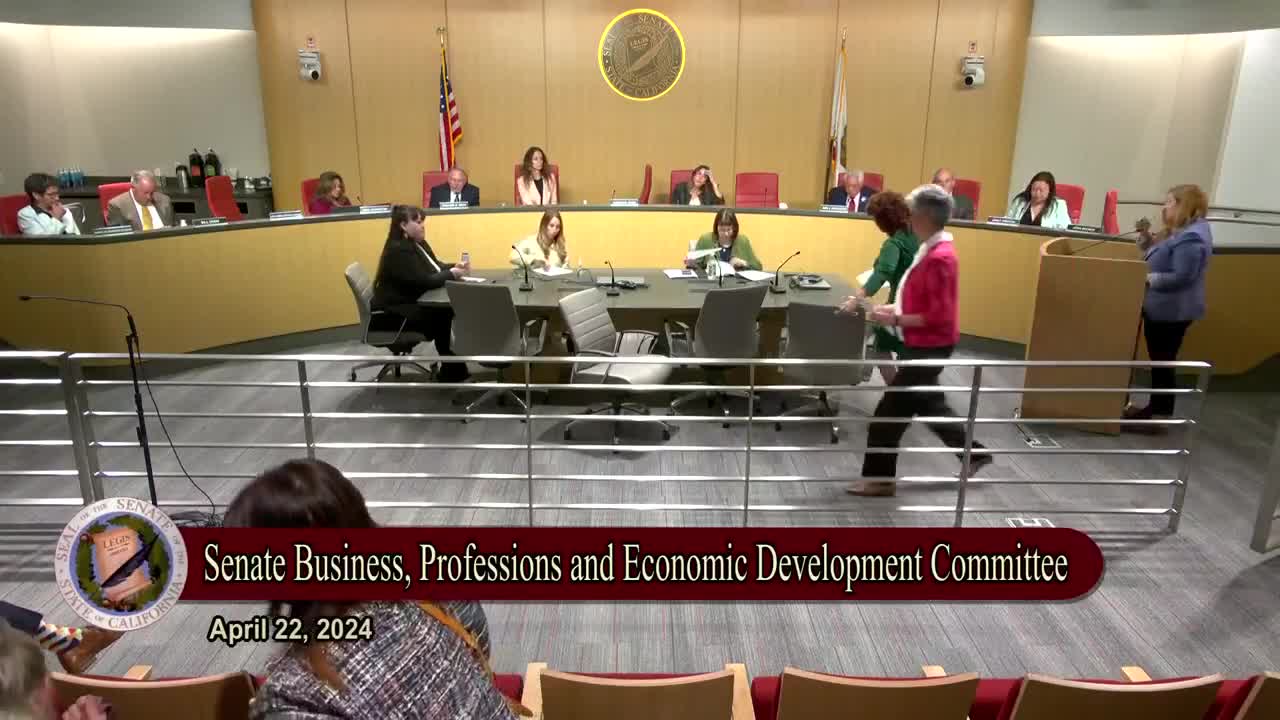 51SEC
Senate Standing Committee on Business, Professions and Economic Development
19SEC
Senate Standing Committee on Business, Professions and Economic Development
 8MIN
Senate Standing Committee on Revenue and Taxation
Bill Author

Bill Co-Author(s):