SB 1070: Health care district: County of Imperial.
- Session Year: 2023-2024
- House: Senate
- Latest Version Date: 2024-09-30
Current Status:
Passed
(2024-09-30: Chaptered by Secretary of State. Chapter 1013, Statutes of 2024.)
Introduced
In Committee
First Chamber
In Committee
Second Chamber
Enacted
What does this bill do?
The bill lets the initial board, the later elected board, or a combination of both recommend a permanent funding source for the Imperial Valley Healthcare District and requires that funding measure be placed on the ballot by the November 2026 election, affecting voters in Imperial County.
The summary is provided by generative AI which can make mistakes. For original language, please view the details in the table below.
Existing law establishes a local health care district in the County of Imperial, designated as the Imperial Valley Healthcare District, that includes all of the County of Imperial. Existing law requires the initial board of directors of the Imperial Valley Healthcare District to be appointed from and by specified bodies, including, among others, the Imperial County Board of Supervisors, the Pioneers Memorial Healthcare District Board of Directors, and the Heffernan Memorial Healthcare District Board of Directors. Existing law requires the initial board of directors to recommend a permanent funding source mechanism to be presented to and approved by voters via ballot measure and requires the permanent funding source mechanism to be placed on the ballot for the March 2024 or November 2024 election.
This bill would instead require the initial board of directors, the elected board of directors, or a combination of the initial and elected board of directors to recommend a permanent funding source mechanism to be presented to voters via ballot measure and would require the permanent funding source mechanism to be placed on the ballot on or before the November 2026 election.
This bill would make legislative findings and declarations as to the necessity of a special statute for the County of Imperial.
Existing law, the State Civil Service Act, authorizes the State Personnel Board to prescribe rules governing the temporary assignment or loan of employees within an agency or between agencies, or between jurisdictions, for purposes that include enabling an agency to obtain expertise needed to meet a compelling program or management need. For the purpose of these provisions, public and private colleges and universities are considered educational agencies or jurisdictions. Existing law requires a temporary assignment or loan between educational agencies or jurisdictions to be extended for up to 2 additional years upon a finding by the Superintendent of Public Instruction or the Chancellor of the California Community Colleges, and with the approval of the executive officer of the State Personnel Board, that the extension is necessary, as specified.This bill would revise the above-described provision to specify that it applies to a temporary assignment or loan between 2 educational agencies or jurisdictions.This bill would also require institutions of higher education, as defined, to be considered jurisdictions for the purposes of temporarily assigning or loaning employees to a government agency or temporarily receiving employees of a government agency. The bill would limit the period of an assignment or loan of employees under this provision to 2 years, subject to an additional 2-year extension, and would require the employee temporarily assigned or loaned to complete and file an ethics form with the State Personnel Board and the receiving agency, as specified. The bill would impose various limitations on the temporary assignment or loan of an employee, including, among other things, prohibiting an agency that receives an employee from an institution of higher education from authorizing that employee to control a civil service employee or their duties, position, or classification, as specified. The bill would require the State Personnel Board to develop uniform terms for temporary assignment or loan in consultation with the exclusive representative of employees. The bill would require a state agency that participates in a temporary assignment or loan with an institution of higher education to report specified information to the Department of Human Resources and would require the department to make that information publicly available on its internet website, as specified.This bill would repeal its provisions on January 1, 2028.Existing law, the State Civil Service Act, authorizes the State Personnel Board to prescribe rules governing the temporary assignment or loan of employees within an agency or between agencies, or between jurisdictions, for purposes that include enabling an agency to obtain expertise needed to meet a compelling program or management need. For the purpose of these provisions, public and private colleges and universities are considered educational agencies or jurisdictions. Existing law requires a temporary assignment or loan between educational agencies or jurisdictions to be extended for up to 2 additional years upon a finding by the Superintendent of Public Instruction or the Chancellor of the California Community Colleges, and with the approval of the executive officer of the State Personnel Board, that the extension is necessary, as specified.
This bill would revise the above-described provision to specify that it applies to a temporary assignment or loan between 2 educational agencies or jurisdictions.
This bill would also require institutions of higher education, as defined, to be considered jurisdictions for the purposes of temporarily assigning or loaning employees to a government agency or temporarily receiving employees of a government agency. The bill would limit the period of an assignment or loan of employees under this provision to 2 years, subject to an additional 2-year extension, and would require the employee temporarily assigned or loaned to complete and file an ethics form with the State Personnel Board and the receiving agency, as specified. The bill would impose various limitations on the temporary assignment or loan of an employee, including, among other things, prohibiting an agency that receives an employee from an institution of higher education from authorizing that employee to control a civil service employee or their duties, position, or classification, as specified. The bill would require the State Personnel Board to develop uniform terms for temporary assignment or loan in consultation with the exclusive representative of employees. The bill would require a state agency that participates in a temporary assignment or loan with an institution of higher education to report specified information to the Department of Human Resources and would require the department to make that information publicly available on its internet website, as specified.
This bill would repeal its provisions on January 1, 2028.
Existing law, the State Civil Service Act, authorizes the State Personnel Board to prescribe rules governing the temporary assignment or loan of employees within an agency or between agencies, or between jurisdictions, for purposes that include enabling an agency to obtain expertise needed to meet a compelling program or management need. For the purpose of these provisions, public and private colleges and universities are considered educational agencies or jurisdictions. Existing law requires a temporary assignment or loan between educational agencies or jurisdictions to be extended for up to 2 additional years upon a finding by the Superintendent of Public Instruction or the Chancellor of the California Community Colleges, and with the approval of the executive officer of the State Personnel Board, that the extension is necessary, as specified.
This bill would revise the above-described provision to specify that it applies to a temporary assignment or loan between 2 educational agencies or jurisdictions.
This bill would also require institutions of higher education, as defined, to be considered jurisdictions for the purposes of temporarily assigning or loaning employees to a government agency or temporarily receiving employees of a government agency. The bill would limit the period of an assignment or loan of employees under this provision to 2 years, subject to an additional 2-year extension, and would require the employee temporarily assigned or loaned to complete and file an ethics form with the State Personnel Board and the receiving agency, as specified. The bill would require an eligible employee of an institution of higher education, for purposes of participating in an assignment or loan, to be an academic appointee of that institution of higher education, as prescribed.
Existing law, the State Civil Service Act, authorizes the State Personnel Board to prescribe rules governing the temporary assignment or loan of employees within an agency or between agencies, or between jurisdictions, for purposes that include enabling an agency to obtain expertise needed to meet a compelling program or management need. For the purpose of these provisions, public and private colleges and universities are considered educational agencies or jurisdictions. Existing law requires a temporary assignment or loan between educational agencies or jurisdictions to be extended for up to 2 additional years upon a finding by the Superintendent of Public Instruction or the Chancellor of the California Community Colleges, and with the approval of the executive officer of the State Personnel Board, that the extension is necessary, as specified.
This bill would revise the above-described provision to specify that it applies to a temporary assignment or loan between 2 educational agencies or jurisdictions.
This bill would also require institutions of higher education, as defined, to be considered jurisdictions for the purposes of temporarily assigning or loaning employees to a government agency or temporarily receiving employees of a government agency. The bill would limit the period of an assignment or loan of employees under this provision to 2 years, subject to an additional 2-year extension. extension, and would require the employee temporarily assigned or loaned to complete and file an ethics form with the State Personnel Board and the receiving agency, as specified. The bill would require an eligible employee of an institution of higher education, for purposes of participating in an assignment or loan, to be an academic appointee of that institution of higher education, as prescribed.
Existing law, the State Civil Service Act, authorizes the State Personnel Board to prescribe rules governing the temporary assignment or loan of employees within an agency or between agencies, or between jurisdictions, for purposes that include enabling an agency to obtain expertise needed to meet a compelling program or management need. For the purpose of these provisions, public and private colleges and universities are considered educational agencies or jurisdictions. Existing law requires a temporary assignment or loan between educational agencies or jurisdictions to be extended for up to 2 additional years upon a finding by the Superintendent of Public Instruction or the Chancellor of the California Community Colleges, and with the approval of the executive officer of the State Personnel Board, that the extension is necessary, as specified.
This bill would revise the above-described provision to specify that it applies to a temporary assignment or loan between 2 educational agencies or jurisdictions.
This bill would also require institutions of higher education, as defined, to be considered jurisdictions for the purposes of temporarily assigning or loaning employees to a government agency or temporarily receiving employees of a government agency. The bill would limit the period of an assignment or loan of employees under this provision to 2 years, subject to an additional 2-year extension. The bill would require an eligible employee of an institution of higher education, for purposes of participating in an assignment or loan, to be an academic appointee of that institution of higher education, as prescribed.
This bill would state the intent of the Legislature to subsequently amend the bill to support the states efforts in meeting the challenges posed by specified urgent and critical issues, to strengthen the exchange of expertise and research between the state and its world-leading institutions of higher education to advance the states global leadership in technology and innovation, and to partner with the states world-leading institutions of higher education to identify solutions to responsibly spur innovation, support the state workforce, and improve the lives of all Californians.Existing law, the State Civil Service Act, authorizes the State Personnel Board to prescribe rules governing the temporary assignment or loan of employees within an agency or between agencies, or between jurisdictions, for purposes that include enabling an agency to obtain expertise needed to meet a compelling program or management need. For the purpose of these provisions, public and private colleges and universities are considered educational agencies or jurisdictions.
This bill would state the intent of the Legislature to subsequently amend the bill to support the states efforts in meeting the challenges posed by specified urgent and critical issues, to strengthen the exchange of expertise and research between the state and its world-leading institutions of higher education to advance the states global leadership in technology and innovation, and to partner with the states world-leading institutions of higher education to identify solutions to responsibly spur innovation, support the state workforce, and improve the lives of all Californians.
(a)(1)The initial board of directors of the district shall be composed of the following members:
(A)One member from and appointed by the Pioneers Memorial Healthcare District Board of Directors.
(B)One member from and appointed by the Heffernan Memorial Healthcare District Board of Directors.
(C)One member from the City of El Centro and appointed by the public health director for the County of Imperial. This member shall be a resident of the City of El Centro, but not a City of El Centro employee, an elected official of the City of El Centro, or an employee or board member or former board member of the El Centro Regional Medical Center.
(D)One member of the public appointed by the Imperial County Board of Supervisors. This member shall be a resident of the unincorporated areas in the areas of Seely or Ocotillo, or a county board supervisor that represents that area.
(E)One tribal member from and appointed by the Quechan tribe. If a member is not appointed by the tribe within the 60-day timeframe, then the county board of supervisors may appoint a member of the public from the Winterhaven area.
(F)One member from the City of Imperial and appointed by the City of Imperial.
(G)One member from the City of Holtville and appointed by the City of Holtville.
(2)With the exception of the Pioneers Memorial Healthcare District and Heffernan Memorial Healthcare District appointments, any member appointed to the initial Imperial Valley Healthcare District Board of Directors cannot be a current or former employee of the El Centro Regional Medical Center, the Pioneers Memorial Hospital, or Pioneers Memorial Healthcare District.
(b)The appointing bodies shall have 60 days from the effective date of this chapter to appoint members of the initial board of directors. If a board position is not filled within this timeframe, the Imperial County Board of Supervisors shall appoint the remaining members of the initial board of directors.
(c)(1)The initial board of directors, appointed pursuant to this section, shall create a staggered board of directors by choosing a number of board members to remain on the board following the first district election occurring pursuant to subdivision (a) of Section 32499.7.
(2)The initial board of directors, in collaboration with the Imperial County Local Agency Formation Commission (LAFCO), shall determine the years that the voting districts and associated board positions will be up for election by July 1, 2024.
(3)The initial board of directors, elected board of directors, or a combination of the initial and elected board of directors shall recommend a permanent funding source mechanism to be presented to voters via ballot measure. The funding source mechanism shall be placed on the ballot on or before the November 2026 election. The initial board of directors, elected board of directors, or a combination of the initial and elected board of directors, in collaboration with the Imperial County LAFCO, shall use the financial feasibility studies conducted by the Imperial County LAFCO and Kaufman Hall to determine the funding source mechanism.
(4)(A)The initial board of directors shall enter negotiations with the El Centro Regional Medical Center to decide the terms of the acquisition of the hospital. Upon reviewing the financial feasibility studies conducted by the Imperial County LAFCO and Kaufman Hall and confirming the financial viability of integrating the El Centro Regional Medical Center into the district, the initial board of directors shall determine the terms of the acquisition of the hospital. If the initial board of directors chooses to acquire the El Centro Regional Medical Center, the hospital shall be acquired with all of its assets and liabilities. All existing hospital licenses and certifications of the Pioneers Memorial Hospital and Healthcare District shall be transferred to the Imperial Valley Healthcare District when applicable in order to avoid a disruption in providing health care services. The initial board of directors shall initiate the process of applying for any licenses and certifications that cannot be transferred to the Imperial Valley Healthcare District within a year of formation. The initial board of directors shall finalize the terms of acquiring the hospital by November 5, 2024. The City of El Centro shall negotiate in good faith with the district, but is not required to sell the hospital to the district or agree to the terms that the initial board of directors finalizes.
(B)The terms of the acquisition shall include the district or any successor entity assuming the duties and obligations of El Centro Regional Medical Centers collective bargaining agreements and retirement plans, at the El Regional Medical Center. This paragraph does not require any successor entity to adopt the collective bargaining agreement and retirement plan across to other facilities owned by the same operator.
(5)(A)The initial board of directors shall recommend to the Imperial County LAFCO a date for the dissolution of the Pioneers Memorial Healthcare District. The dissolution date shall be between July 1, 2024, and January 1, 2025. The initial board of directors may recommend a date that differs from the dissolution date of the Heffernan Memorial Healthcare District.
(B)The initial board of directors shall recommend to the Imperial County LAFCO a date for the dissolution of the Heffernan Memorial Healthcare District. The dissolution date shall be between July 1, 2024, and January 1, 2025. The initial board of directors may recommend a date that differs from the dissolution date of the Pioneers Memorial Healthcare District.
(6)The board of directors shall hold a minimum of three public meetings between the effective date of this chapter and January 1, 2025, as follows:
(A)During the first public meeting, the board of directors shall inform the public of the establishment of the Imperial Valley Healthcare District, the cost savings of having one countywide health care district, and the findings of the financial feasibility studies conducted by the Imperial County LAFCO and Kaufman Hall. The first public meeting shall be held by March 1, 2024.
(B)During the second public meeting, the board of directors shall inform the public of the recommended permanent funding source mechanism for the Imperial Valley Healthcare District.
(C)During the third public meeting, the board of directors shall inform the public about the acquisition of the El Centro Regional Medical Center.
(D)If the board of directors votes to acquire the El Centro Regional Medical Center, the board of directors shall hold a fourth meeting. During this meeting, the board of directors shall disclose the terms of the acquisition to the public and present a financial plan to finance the acquisition and ongoing operations of hospitals in the district.
(E)At each public meeting held pursuant to this paragraph, the board of directors shall allow time for public comment.
(d)(1)Until both the Heffernan Memorial Healthcare District and Pioneers Memorial Healthcare District are dissolved, the Heffernan Memorial Healthcare District shall hold a temporary clerical role to the Board of Directors of the Imperial Valley Healthcare District.
(2)For purposes of this subdivision, Heffernan Memorial Healthcare Districts clerical responsibilities shall be limited to:
(A)Providing administrative employees or the financial means to hire administrative employees.
(B)Providing financial resources to complete clerical tasks for board meetings and public meetings. These tasks include:
(i)Creating agendas for public meetings and board meetings.
(ii)Setting meeting locations, dates, and times.
(iii)Upon direction of the Board of Directors of the Imperial Valley Healthcare District and the Imperial County LAFCO, ensuring the transfer of the existing health care districts into the Imperial Valley Healthcare District with minimal interruptions to ongoing health care services.
(C)Providing a venue for the board meetings and public meetings to take place or providing the financial means for a venue.
(D)Providing the financial means to hire legal counsel.
(3)It is the intent of the Legislature that Heffernan Memorial Healthcare District will hold a purely clerical role to the Board of Directors of the Imperial Valley Healthcare District. It is further the intent of the Legislature that Heffernan Memorial Healthcare District will not hold a CEO or CFO role.
(e)The board of directors shall consist of all elected members by the conclusion of the 2028 general election.
(f)A vacancy in a board position shall be filled by the methods prescribed in Section 1780 of the Government Code, and, after the board of directors consists of all elected members, shall be filled by the methods prescribed in Section 32499.7.
(g)(1)The board of directors may establish a nonvoting community advisory committee consisting of at least seven community members of the County of Imperial in the health care industry, including:
(A)A member with an active medical license who is employed by a hospital or clinic in the County of Imperial.
(B)A promotor or promotora.
(C)A health care worker from a federally qualified health center in the County of Imperial.
(D)A member from a health related or environmental justice nonprofit group in the County of Imperial.
(2)The nonvoting advisory board may be dissolved at the discretion of the board of directors.
SEC. 2.The Legislature finds and declares that a special statute is necessary and that a general statute cannot be made applicable within the meaning of Section 16 of Article IV of the California Constitution because of the unique community needs in the County of Imperial served by the Imperial Valley Healthcare District which includes all of the County of Imperial, providing health care services for an underserved population that suffers from a higher than average prevalence of preventable disease.
(a)(1)The initial board of directors of the district shall be composed of the following members:
(A)One member from and appointed by the Pioneers Memorial Healthcare District Board of Directors.
(B)One member from and appointed by the Heffernan Memorial Healthcare District Board of Directors.
(C)One member from the City of El Centro and appointed by the public health director for the County of Imperial. This member shall be a resident of the City of El Centro, but not a City of El Centro employee, an elected official of the City of El Centro, or an employee or board member or former board member of the El Centro Regional Medical Center.
(D)One member of the public appointed by the Imperial County Board of Supervisors. This member shall be a resident of the unincorporated areas in the areas of Seely or Ocotillo, or a county board supervisor that represents that area.
(E)One tribal member from and appointed by the Quechan tribe. If a member is not appointed by the tribe within the 60-day timeframe, then the county board of supervisors may appoint a member of the public from the Winterhaven area.
(F)One member from the City of Imperial and appointed by the City of Imperial.
(G)One member from the City of Holtville and appointed by the City of Holtville.
(2)With the exception of the Pioneers Memorial Healthcare District and Heffernan Memorial Healthcare District appointments, any member appointed to the initial Imperial Valley Healthcare District Board of Directors cannot be a current or former employees employee of the El Centro Regional Medical Center, the Pioneers Memorial Hospital, or Pioneers Memorial Healthcare District.
(b)The appointing bodies shall have 60 days from the effective date of this chapter to appoint members of the initial board of directors. If a board position is not filled within this timeframe, the Imperial County Board of Supervisors shall appoint the remaining members of the initial board of directors.
(c)(1)The initial board of directors, appointed pursuant to this section, shall create a staggered board of directors by choosing a number of board members to remain on the board following the first district election occurring pursuant to subdivision (a) of Section 32499.7.
(2)The initial board of directors, in collaboration with the Imperial County Local Agency Formation Commission (LAFCO), shall determine the years that the voting districts and associated board positions will be up for election by July 1, 2024.
(3)The initial board of directors, elected board of directors, or a combination of the initial and elected board of directors shall recommend a permanent funding source mechanism to be presented to and approved by voters via ballot measure. The funding source mechanism shall be placed on the ballot for the March 2024 or on or before the November 2024 2026 election. The initial board of directors, elected board of directors, or a combination of the initial and elected board of directors, in collaboration with the Imperial County LAFCO, shall use the financial feasibility studies conducted by the Imperial County LAFCO and Kaufman Hall to determine the funding source mechanism.
(4)(A)The initial board of directors shall enter negotiations with the El Centro Regional Medical Center to decide the terms of the acquisition of the hospital. Upon reviewing the financial feasibility studies conducted by the Imperial County LAFCO and Kaufman Hall and confirming the financial viability of integrating the El Centro Regional Medical Center into the district, the initial board of directors shall determine the terms of the acquisition of the hospital. If the initial board of directors chooses to acquire the El Centro Regional Medical Center, the hospital shall be acquired with all of its assets and liabilities. All existing hospital licenses and certifications of the Pioneers Memorial Hospital and Healthcare District shall be transferred to the Imperial Valley Healthcare District when applicable in order to avoid a disruption in providing health care services. The initial board of directors shall initiate the process of applying for any licenses and certifications that cannot be transferred to the Imperial Valley Healthcare District within a year of formation. The initial board of directors shall finalize the terms of acquiring the hospital by November 5, 2024. The City of El Centro shall negotiate in good faith with the district, but is not required to sell the hospital to the district or agree to the terms that the initial board of directors finalizes.
(B)The terms of the acquisition shall include the district or any successor entity assuming the duties and obligations of El Centro Regional Medical Centers collective bargaining agreements and retirement plans, at the El Regional Medical Center. This paragraph does not require any successor entity to adopt the collective bargaining agreement and retirement plan across to other facilities owned by the same operator.
(5)(A)The initial board of directors shall recommend to the Imperial County LAFCO a date for the dissolution of the Pioneers Memorial Healthcare District. The dissolution date shall be between July 1, 2024, and January 1, 2025. The initial board of directors may recommend a date that differs from the dissolution date of the Heffernan Memorial Healthcare District.
(B)The initial board of directors shall recommend to the Imperial County LAFCO a date for the dissolution of the Heffernan Memorial Healthcare District. The dissolution date shall be between July 1, 2024, and January 1, 2025. The initial board of directors may recommend a date that differs from the dissolution date of the Pioneers Memorial Healthcare District.
(6)The board of directors shall hold a minimum of three public meetings between the effective date of this chapter and January 1, 2025, as follows:
(A)During the first public meeting, the board of directors shall inform the public of the establishment of the Imperial Valley Healthcare District, the cost savings of having one countywide health care district, and the findings of the financial feasibility studies conducted by the Imperial County LAFCO and Kaufman Hall. The first public meeting shall be held by March 1, 2024.
(B)During the second public meeting, the board of directors shall inform the public of the recommended permanent funding source mechanism for the Imperial Valley Healthcare District.
(C)During the third public meeting, the board of directors shall inform the public about the acquisition of the El Centro Regional Medical Center.
(D)If the board of directors votes to acquire the El Centro Regional Medical Center, the board of directors shall hold a fourth meeting. During this meeting, the board of directors shall disclose the terms of the acquisition to the public and present a financial plan to finance the acquisition and ongoing operations of hospitals in the district.
(E)At each public meeting held pursuant to this paragraph, the board of directors shall allow time for public comment.
(d)(1)Until both the Heffernan Memorial Healthcare District and Pioneers Memorial Healthcare District are dissolved, the Heffernan Memorial Healthcare District shall hold a temporary clerical role to the Board of Directors of the Imperial Valley Healthcare District.
(2)For purposes of this subdivision, Heffernan Memorial Healthcare Districts clerical responsibilities shall be limited to:
(A)Providing administrative employees or the financial means to hire administrative employees.
(B)Providing financial resources to complete clerical tasks for board meetings and public meetings. These tasks include:
(i)Creating agendas for public meetings and board meetings.
(ii)Setting meeting locations, dates, and times.
(iii)Upon direction of the Board of Directors of the Imperial Valley Healthcare District and the Imperial County LAFCO, ensuring the transfer of the existing health care districts into the Imperial Valley Healthcare District with minimal interruptions to ongoing health care services.
(C)Providing a venue for the board meetings and public meetings to take place or providing the financial means for a venue.
(D)Providing the financial means to hire legal counsel.
(3)It is the intent of the Legislature that Heffernan Memorial Healthcare District will hold a purely clerical role to the Board of Directors of the Imperial Valley Healthcare District. It is further the intent of the Legislature that Heffernan Memorial Healthcare District will not hold a CEO or CFO role.
(e)The board of directors shall consist of all elected members by the conclusion of the 2028 general election.
(f)A vacancy in a board position shall be filled by the methods prescribed in Section 1780 of the Government Code, and, after the board of directors consists of all elected members, shall be filled by the methods prescribed in Section 32499.7.
(g)(1)The board of directors may establish a nonvoting community advisory committee consisting of at least seven community members of the County of Imperial in the health care industry, including:
(A)A member with an active medical license who is employed by a hospital or clinic in the County of Imperial.
(B)A promotor or promotora.
(C)A health care worker from a federally qualified health center in the County of Imperial.
(D)A member from a health related or environmental justice nonprofit group in the County of Imperial.
(2)The nonvoting advisory board may be dissolved at the discretion of the board of directors.
SEC. 2.The Legislature finds and declares that a special statute is necessary and that a general statute cannot be made applicable within the meaning of Section 16 of Article IV of the California Constitution because of the unique community needs in the County of Imperial served by the Imperial Valley Healthcare District which includes all of the County of Imperial, providing health care services for an underserved population that suffers from a higher than average prevalence of preventable disease.
SECTION 1.Section 19050.8 of the Government Code is amended to read:19050.8.(a)The board may prescribe rules governing the temporary assignment or loan of employees within an agency or between agencies for a period not to exceed two years or between jurisdictions for a period not to exceed four years for any of the following purposes:(1)To provide training to employees.(2)To enable an agency to obtain expertise needed to meet a compelling program or management need.(3)To facilitate the return of injured employees to work.(b)(1)Institutions of higher education shall be considered jurisdictions for the purposes of temporarily assigning or loaning employees to a government agency or temporarily receiving employees of a government agency under this section. Institutions of higher education shall be authorized to engage in the temporary assignment or loan of employees under this section only for the purposes specified in paragraph (1) or (2) of subdivision (a).(2)The period of an assignment or loan of employees between an institution of higher education and a government agency shall not exceed two years, except the employee, the institution of higher education, and the government agency may agree to extend the assignment or loan for up to an additional two years.(3)(A)Before participating in an assignment or loan under this section, an eligible employee of an institution of higher education shall complete and file with the board and the receiving government agency an ethics disclosure form.(B)The board shall develop the form to include, at minimum, all of the following:(i)Identifying information on the source of funding of the employees position at the institution of higher education.(ii)Identifying information on any private industry support the employee receives through positions held outside of the institution of higher education.(iii)Any other information required by the board to ensure against the employee affecting public policy in a manner that inures to the employees benefit.(iv)Acceptance of ethics requirements applicable to corresponding state employees.(C)The board shall develop a process to provide public access to the disclosed information in a reasonable manner.(4)For purposes of this subdivision, institutions of higher education means public colleges, public universities, and independent institutions of higher education, as defined in subdivision (b) of Section 66010 of the Education Code.(c)(1)These temporary assignments or loans within an agency, between agencies, or between jurisdictions shall be deemed to be in accord with this part limiting employees to duties consistent with their class and may be used to meet minimum requirements for promotional as well as open examinations. An employee participating in that arrangement shall have the absolute right to return to their former position. Any temporary assignment or loan of an employee made for the purpose specified in paragraph (2) of subdivision (a) shall be made only with the voluntary consent of the employee.(2)In addition, out-of-class experience obtained in a manner not described in this section may be used to meet minimum requirements for promotional as well as open examinations, only if it was obtained by the employee in good faith and was properly verified under standards prescribed by board rule.(3)Satisfactory performance of duties or experience gained through the temporary assignment or loan of an employee pursuant to subdivision (b) may be used by the employee to meet minimum requirements for promotional as well as open examinations, provided that appointments shall be considered and made in a manner strictly consistent with existing laws, rules, or regulations governing civil service examination and appointment, including that performance and experience gained through the temporary assignment or loan shall not be sufficient to replace service in an entry-level position required for eligibility for a promotional examination.(d)For purposes of this section, a temporary assignment or loan between two educational agencies or jurisdictions shall be extended for up to two additional years upon a finding by the Superintendent of Public Instruction or the Chancellor of the California Community Colleges, and with the approval of the executive officer of the State Personnel Board, that the extension is necessary in order to substantially complete work on an educational improvement project. However, the temporary assignment of any local educator who is performing the duties of a nonrepresented classification while on loan to a state educational agency may be extended for as many successive two-year intervals as necessary by the Superintendent of Public Instruction or the Chancellor of the California Community Colleges with the concurrence of the educational agency or jurisdiction. Public and private colleges and universities shall be considered educational agencies or jurisdictions within the meaning of this subdivision.(e)A temporary assignment within an agency or between agencies may be extended by the board for up to two additional years in order for an employee to complete an apprenticeship program.(f)Notwithstanding subdivision (b) and Section 19050.2, an agency that receives an employee in an assignment or loan from an institution of higher education shall not require, authorize, or permit the employee to, in any manner, direct, supervise, manage, or otherwise control a civil service employee or the duties of a civil service employee, position, or classification.(g)The board or department shall not construe, implement, or utilize this section in any manner to do any of the following:(1)Supplant, reduce, or eliminate an existing civil service position or classification.(2)Supplant, reduce, or eliminate the duties of a civil service position or classification.(3)Reassign, lay off, relocate, terminate, or otherwise displace a civil service employee, nor affect a reassignment, layoff, relocation, termination, or other displacement of a civil service employee.(h)The board shall develop uniform terms for the temporary assignment or loan of employees within an agency, between agencies, or between jurisdictions in consultation with the exclusive representative of employees.(i)(1)On or before July 1, 2025, and every even-numbered year thereafter, each agency participating in a temporary assignment or loan of employees with an institution of higher education pursuant to subdivision (b) shall provide a report to the department that includes, but is not limited to, all of the following:(A)The number of employees of an institution of higher education received by the agency.(B)The number of employees loaned by the agency to an institution of higher education.(C)The specific institutions of higher education from which the agency has received employees.(D)The specific institutions of higher education to which an employee of the agency is loaned, categorized by exempt, nonexempt, confidential, excluded, or civil service status.(E)The number of temporary assignments or loans that have been extended pursuant to paragraph (2) of subdivision (b).(F)The number of employees who participated in a temporary assignment or loan from an institution of higher education who have entered into the civil service, categorized by full-time, part-time, intermittent, temporary or seasonal basis, the agency of employment, and the classifications of employment.(G)The number of civil service employees who participated in a temporary assignment or loan with an institution of higher education who voluntarily terminated employment within at least 15 business days, but no more than 30 calendar days, before the conclusion of the temporary assignment or loan, or within 30 calendar days immediately following the conclusion of the temporary assignment or loan.(2)No later than 90 calendar days after receipt of the reports required by paragraph (1), the department shall compile a report with the information from each agency, and shall make the report publicly available on its internet website. The department shall inform the Assembly Committee on Public Employment and Retirement and the Senate Committee on Labor, Public Employment, and Retirement in writing that the report has been made publicly available and where it is located on the departments internet website.(j)For purposes of this section, agency means any department, board, office, authority, commission, or other agency of state government.(k)This section shall remain in effect only until January 1, 2028, and as of that date is repealed.SEC. 2.Section 19050.8 is added to the Government Code, to read:19050.8.(a)The board may prescribe rules governing the temporary assignment or loan of employees within an agency or between agencies for a period not to exceed two years or between jurisdictions for a period not to exceed four years for any of the following purposes:(1)To provide training to employees.(2)To enable an agency to obtain expertise needed to meet a compelling program or management need.(3)To facilitate the return of injured employees to work.(b)(1)These temporary assignments or loans shall be deemed to be in accord with this part limiting employees to duties consistent with their class and may be used to meet minimum requirements for promotional as well as open examinations. An employee participating in that arrangement shall have the absolute right to return to their former position. Any temporary assignment or loan of an employee made for the purpose specified in paragraph (2) of subdivision (a) shall be made only with the voluntary consent of the employee.(2)In addition, out-of-class experience obtained in a manner not described in this section may be used to meet minimum requirements for promotional as well as open examinations, only if it was obtained by the employee in good faith and was properly verified under standards prescribed by board rule.(c)For purposes of this section, a temporary assignment or loan between educational agencies or jurisdictions shall be extended for up to two additional years upon a finding by the Superintendent of Public Instruction or the Chancellor of the California Community Colleges, and with the approval of the executive officer of the State Personnel Board, that the extension is necessary in order to substantially complete work on an educational improvement project. However, the temporary assignment of any local educator who is performing the duties of a nonrepresented classification while on loan to a state educational agency may be extended for as many successive two-year intervals as necessary by the Superintendent of Public Instruction or the Chancellor of the California Community Colleges with the concurrence of the educational agency or jurisdiction. Public and private colleges and universities shall be considered educational agencies or jurisdictions within the meaning of this section.(d)A temporary assignment within an agency or between agencies may be extended by the board for up to two additional years in order for an employee to complete an apprenticeship program.(e)This section shall become operative on January 1, 2028.(a)The board may prescribe rules governing the temporary assignment or loan of employees within an agency or between agencies for a period not to exceed two years or between jurisdictions for a period not to exceed four years for any of the following purposes purposes:
(1)To provide training to employees.
(2)To enable an agency to obtain expertise needed to meet a compelling program or management need.
(3)To facilitate the return of injured employees to work.
(b)(1)Institutions of higher education shall be considered jurisdictions for the purposes of temporarily assigning or loaning employees to a government agency or temporarily receiving employees of a government agency under this section. Institutions of higher education shall be authorized to engage in the temporary assignment or loan of employees under this section only for the purposes specified in paragraph (1) or (2) of subdivision (a).
(2)The period of an assignment or loan of employees between an institution of higher education and a government agency shall not exceed two years, except the employee, the institution of higher education, and the government agency may agree to extend the assignment or loan for up to an additional two years.
(3)(A)Before participating in an assignment or loan under this section, an eligible employee of an institution of higher education shall complete and file with the board and the receiving government agency an ethics disclosure form.
(B)The board shall develop the form to include, at minimum, all of the following:
(i)Identifying information on the source of funding of the employees position at the institution of higher education.
(ii)Identifying information on any private industry support the employee receives through positions held outside of the institution of higher education.
(iii)Any other information required by the board to ensure against the employee affecting public policy in a manner that inures to the employees benefit.
(iv)Acceptance of ethics requirements applicable to corresponding state employees.
(C)The board shall develop a process to provide public access to the disclosed information in a reasonable manner.
(4)For purposes of this subdivision, institutions of higher education means public colleges, public universities, and independent institutions of higher education, as defined in subdivision (b) of Section 66010 of the Education Code.
(c)(1)These temporary assignments or loans within an agency, between agencies, or between jurisdictions shall be deemed to be in accord with this part limiting employees to duties consistent with their class and may be used to meet minimum requirements for promotional as well as open examinations. An employee participating in that arrangement shall have the absolute right to return to their former position. Any temporary assignment or loan of an employee made for the purpose specified in paragraph (2) of subdivision (a) shall be made only with the voluntary consent of the employee.
(d)(2)In addition, out-of-class experience obtained in a manner not described in this section may be used to meet minimum requirements for promotional as well as open examinations, only if it was obtained by the employee in good faith and was properly verified under standards prescribed by board rule.
(3)Satisfactory performance of duties or experience gained through the temporary assignment or loan of an employee pursuant to subdivision (b) may be used by the employee to meet minimum requirements for promotional as well as open examinations, provided that appointments shall be considered and made in a manner strictly consistent with existing laws, rules, or regulations governing civil service examination and appointment, including that performance and experience gained through the temporary assignment or loan shall not be sufficient to replace service in an entry-level position required for eligibility for a promotional examination.
(e)(d)For purposes of this section, a temporary assignment or loan between two educational agencies or jurisdictions shall be extended for up to two additional years upon a finding by the Superintendent of Public Instruction or the Chancellor of the California Community Colleges, and with the approval of the executive officer of the State Personnel Board, that the extension is necessary in order to substantially complete work on an educational improvement project. However, the temporary assignment of any local educator who is performing the duties of a nonrepresented classification while on loan to a state educational agency may be extended for as many successive two-year intervals as necessary by the Superintendent of Public Instruction or the Chancellor of the California Community Colleges with the concurrence of the educational agency or jurisdiction. Public and private colleges and universities shall be considered educational agencies or jurisdictions within the meaning of this subdivision.
(f)(e)A temporary assignment within an agency or between agencies may be extended by the board for up to two additional years in order for an employee to complete an apprenticeship program.
(f)Notwithstanding subdivision (b) and Section 19050.2, an agency that receives an employee in an assignment or loan from an institution of higher education shall not require, authorize, or permit the employee to, in any manner, direct, supervise, manage, or otherwise control a civil service employee or the duties of a civil service employee, position, or classification.
(g)The board or department shall not construe, implement, or utilize this section in any manner to do any of the following:
(1)Supplant, reduce, or eliminate an existing civil service position or classification.
(2)Supplant, reduce, or eliminate the duties of a civil service position or classification.
(3)Reassign, lay off, relocate, terminate, or otherwise displace a civil service employee, nor affect a reassignment, layoff, relocation, termination, or other displacement of a civil service employee.
(h)The board shall develop uniform terms for the temporary assignment or loan of employees within an agency, between agencies, or between jurisdictions in consultation with the exclusive representative of employees.
(i)(1)On or before July 1, 2025, and every even-numbered year thereafter, each agency participating in a temporary assignment or loan of employees with an institution of higher education pursuant to subdivision (b) shall provide a report to the department that includes, but is not limited to, all of the following:
(A)The number of employees of an institution of higher education received by the agency.
(B)The number of employees loaned by the agency to an institution of higher education.
(C)The specific institutions of higher education from which the agency has received employees.
(D)The specific institutions of higher education to which an employee of the agency is loaned, categorized by exempt, nonexempt, confidential, excluded, or civil service status.
(E)The number of temporary assignments or loans that have been extended pursuant to paragraph (2) of subdivision (b).
(F)The number of employees who participated in a temporary assignment or loan from an institution of higher education who have entered into the civil service, categorized by full-time, part-time, intermittent, temporary or seasonal basis, the agency of employment, and the classifications of employment.
(G)The number of civil service employees who participated in a temporary assignment or loan with an institution of higher education who voluntarily terminated employment within at least 15 business days, but no more than 30 calendar days, before the conclusion of the temporary assignment or loan, or within 30 calendar days immediately following the conclusion of the temporary assignment or loan.
(2)No later than 90 calendar days after receipt of the reports required by paragraph (1), the department shall compile a report with the information from each agency, and shall make the report publicly available on its internet website. The department shall inform the Assembly Committee on Public Employment and Retirement and the Senate Committee on Labor, Public Employment, and Retirement in writing that the report has been made publicly available and where it is located on the departments internet website.
(j)For purposes of this section, agency means any department, board, office, authority, commission, or other agency of state government.
(k)This section shall remain in effect only until January 1, 2028, and as of that date is repealed.
SEC. 2.Section 19050.8 is added to the Government Code, to read:19050.8.(a)The board may prescribe rules governing the temporary assignment or loan of employees within an agency or between agencies for a period not to exceed two years or between jurisdictions for a period not to exceed four years for any of the following purposes:
(1)To provide training to employees.
(2)To enable an agency to obtain expertise needed to meet a compelling program or management need.
(3)To facilitate the return of injured employees to work.
(b)(1)These temporary assignments or loans shall be deemed to be in accord with this part limiting employees to duties consistent with their class and may be used to meet minimum requirements for promotional as well as open examinations. An employee participating in that arrangement shall have the absolute right to return to their former position. Any temporary assignment or loan of an employee made for the purpose specified in paragraph (2) of subdivision (a) shall be made only with the voluntary consent of the employee.
(2)In addition, out-of-class experience obtained in a manner not described in this section may be used to meet minimum requirements for promotional as well as open examinations, only if it was obtained by the employee in good faith and was properly verified under standards prescribed by board rule.
(c)For purposes of this section, a temporary assignment or loan between educational agencies or jurisdictions shall be extended for up to two additional years upon a finding by the Superintendent of Public Instruction or the Chancellor of the California Community Colleges, and with the approval of the executive officer of the State Personnel Board, that the extension is necessary in order to substantially complete work on an educational improvement project. However, the temporary assignment of any local educator who is performing the duties of a nonrepresented classification while on loan to a state educational agency may be extended for as many successive two-year intervals as necessary by the Superintendent of Public Instruction or the Chancellor of the California Community Colleges with the concurrence of the educational agency or jurisdiction. Public and private colleges and universities shall be considered educational agencies or jurisdictions within the meaning of this section.
(d)A temporary assignment within an agency or between agencies may be extended by the board for up to two additional years in order for an employee to complete an apprenticeship program.
(e)This section shall become operative on January 1, 2028.
(a)The board may prescribe rules governing the temporary assignment or loan of employees within an agency or between agencies for a period not to exceed two years or between jurisdictions for a period not to exceed four years for any of the following purposes
(1)To provide training to employees.
(2)To enable an agency to obtain expertise needed to meet a compelling program or management need.
(3)To facilitate the return of injured employees to work.
(b)(1)Institutions of higher education shall be considered jurisdictions for the purposes of temporarily assigning or loaning employees to a government agency or temporarily receiving employees of a government agency under this section. Institutions of higher education shall be authorized to engage in the temporary assignment or loan of employees under this section only for the purposes specified in paragraph (1) or (2) of subdivision (a).
(2)The period of an assignment or loan of employees between an institution of higher education and a government agency shall not exceed two years, except the employee, the institution of higher education, and the government agency may agree to extend the assignment or loan for up to an additional two years.
(3)For the purpose of participating in an assignment or loan under this section, an eligible employee of an institution of higher education shall be an academic appointee of that institution of higher education.(4)(3)(A)Before participating in an assignment or loan under this section, an eligible employee of an institution of higher education shall complete and file with the board and the receiving government agency an ethics disclosure form.
(B)The board shall develop the form to include, at minimum, all of the following:(i)Identifying information on the source of funding of the employees position at the institution of higher education.(ii)Identifying information on any private industry support the employee receives through positions held outside of the institution of higher education.(iii)Any other information required by the board to ensure against the employee affecting public policy in a manner that inures to the employees benefit.(iv)Acceptance of ethics requirements applicable to corresponding state employees.(C)The board shall develop a process to provide public access to the disclosed information in a reasonable manner.(5)For purposes of this subdivision, the following definitions apply:(A)Academic appointee of an institution of higher education means someone in an employment relationship with an institution of higher education who is primarily engaged in teaching or research and whose duties are closely related to the instructional or research functions of the institution of higher education. Faculty, graduate student researchers, and staff researchers affiliated with an institution of higher education are ordinarily academic appointees.(B)Institutions of(4)For purposes of this subdivision, institutions of higher education means public colleges, public universities, and independent institutions of higher education, as defined in subdivision (b) of Section 66010 of the Education Code.
(c)These temporary assignments or loans shall be deemed to be in accord with this part limiting employees to duties consistent with their class and may be used to meet minimum requirements for promotional as well as open examinations. An employee participating in that arrangement shall have the absolute right to return to their former position. Any temporary assignment or loan of an employee made for the purpose specified in paragraph (2) of subdivision (a) shall be made only with the voluntary consent of the employee.
(d)In addition, out-of-class experience obtained in a manner not described in this section may be used to meet minimum requirements for promotional as well as open examinations, only if it was obtained by the employee in good faith and was properly verified under standards prescribed by board rule.
(e)For purposes of this section, a temporary assignment or loan between two educational agencies or jurisdictions shall be extended for up to two additional years upon a finding by the Superintendent of Public Instruction or the Chancellor of the California Community Colleges, and with the approval of the executive officer of the State Personnel Board, that the extension is necessary in order to substantially complete work on an educational improvement project. However, the temporary assignment of any local educator who is performing the duties of a nonrepresented classification while on loan to a state educational agency may be extended for as many successive two year two-year intervals as necessary by the Superintendent of Public Instruction or the Chancellor of the California Community Colleges with the concurrence of the educational agency or jurisdiction. Public and private colleges and universities shall be considered educational agencies or jurisdictions within the meaning of this subdivision.
(f)A temporary assignment within an agency or between agencies may be extended by the board for up to two additional years in order for an employee to complete an apprenticeship program.
(a)The board may prescribe rules governing the temporary assignment or loan of employees within an agency or between agencies for a period not to exceed two years or between jurisdictions for a period not to exceed four years for any of the following purposes
(1)To provide training to employees.
(2)To enable an agency to obtain expertise needed to meet a compelling program or management need.
(3)To facilitate the return of injured employees to work.
(b)(1)Institutions of higher education shall be considered jurisdictions for the purposes of temporarily assigning or loaning employees to a government agency or temporarily receiving employees of a government agency under this section. Institutions of higher education shall be authorized to engage in the temporary assignment or loan of employees under this section only for the purposes specified in paragraph (1) or (2) of subdivision (a).
(2)The period of an assignment or loan of employees between an institution of higher education and a government agency shall not exceed two years, except the employee, the institution of higher education, and the government agency may agree to extend the assignment or loan for up to an additional two years.
(3)For the purpose of participating in an assignment or loan under this section, an eligible employee of an institution of higher education shall be an academic appointee of that institution of higher education.
(4)(A)Before participating in an assignment or loan under this section, an eligible employee of an institution of higher education shall complete and file with the board and the receiving government agency an ethics disclosure form.
(B)The board shall develop the form to include, at minimum, all of the following:
(i)Identifying information on the source of funding of the employees position at the institution of higher education.
(ii)Identifying information on any private industry support the employee receives through positions held outside of the institution of higher education.
(iii)Any other information required by the board to ensure against the employee affecting public policy in a manner that inures to the employees benefit.
(iv)Acceptance of ethics requirements applicable to corresponding state employees.
(C)The board shall develop a process to provide public access to the disclosed information in a reasonable manner.
(4)(5)For purposes of this subdivision, the following definitions apply:
(A)Academic appointee of an institution of higher education means someone in an employment relationship with an institution of higher education who is primarily engaged in teaching or research and whose duties are closely related to the instructional or research functions of the institution of higher education. Faculty, graduate student researchers, and staff researchers affiliated with an institution of higher education are ordinarily academic appointees.
(B)Institutions of higher education means public colleges, public universities, and independent institutions of higher education, as defined in subdivision (b) of Section 66010 of the Education Code.
(c)These temporary assignments or loans shall be deemed to be in accord with this part limiting employees to duties consistent with their class and may be used to meet minimum requirements for promotional as well as open examinations. An employee participating in that arrangement shall have the absolute right to return to their former position. Any temporary assignment or loan of an employee made for the purpose specified in paragraph (2) of subdivision (a) shall be made only with the voluntary consent of the employee.
(d)In addition, out-of-class experience obtained in a manner not described in this section may be used to meet minimum requirements for promotional as well as open examinations, only if it was obtained by the employee in good faith and was properly verified under standards prescribed by board rule.
(e)For purposes of this section, a temporary assignment or loan between two educational agencies or jurisdictions shall be extended for up to two additional years upon a finding by the Superintendent of Public Instruction or the Chancellor of the California Community Colleges, and with the approval of the executive officer of the State Personnel Board, that the extension is necessary in order to substantially complete work on an educational improvement project. However, the temporary assignment of any local educator who is performing the duties of a nonrepresented classification while on loan to a state educational agency may be extended for as many successive two year intervals as necessary by the Superintendent of Public Instruction or the Chancellor of the California Community Colleges with the concurrence of the educational agency or jurisdiction. Public and private colleges and universities shall be considered educational agencies or jurisdictions within the meaning of this subdivision.
(f)A temporary assignment within an agency or between agencies may be extended by the board for up to two additional years in order for an employee to complete an apprenticeship program.
(a)The board may prescribe rules governing the temporary assignment or loan of employees within an agency or between agencies for a period not to exceed two years or between jurisdictions for a period not to exceed four years for any of the following purposes:
(a)(1)To provide training to employees.
(b)(2)To enable an agency to obtain expertise needed to meet a compelling program or management need.
(c)(3)To facilitate the return of injured employees to work.
(b)(1)Institutions of higher education shall be considered jurisdictions for the purposes of temporarily assigning or loaning employees to a government agency or temporarily receiving employees of a government agency under this section. Institutions of higher education shall be authorized to engage in the temporary assignment or loan of employees under this section only for the purposes specified in paragraph (1) or (2) of subdivision (a).
(2)The period of an assignment or loan of employees between an institution of higher education and a government agency shall not exceed two years, except the employee, the institution of higher education, and the government agency may agree to extend the assignment or loan for up to an additional two years.
(3)For the purpose of participating in an assignment or loan under this section, an eligible employee of an institution of higher education shall be an academic appointee of that institution of higher education.
(4)For purposes of this subdivision, the following definitions apply:
(A)Academic appointee of an institution of higher education means someone in an employment relationship with an institution of higher education who is primarily engaged in teaching or research and whose duties are closely related to the instructional or research functions of the institution of higher education. Faculty, graduate student researchers, and staff researchers affiliated with an institution of higher education are ordinarily academic appointees.
(B)Institutions of higher education means public colleges, public universities, and independent institutions of higher education, as defined in subdivision (b) of Section 66010 of the Education Code.
These
(c)These temporary assignments or loans shall be deemed to be in accord with this part limiting employees to duties consistent with their class and may be used to meet minimum requirements for promotional as well as open examinations. An employee participating in that arrangement shall have the absolute right to return to his or her their former position. Any temporary assignment or loan of an employee made for the purpose specified in subdivision (b) paragraph (2) of subdivision (a) shall be made only with the voluntary consent of the employee.
In
(d)In addition, out-of-class experience obtained in a manner not described in this section may be used to meet minimum requirements for promotional as well as open examinations, only if it was obtained by the employee in good faith and was properly verified under standards prescribed by board rule.
For
(e)For purposes of this section, a temporary assignment or loan between two educational agencies or jurisdictions shall be extended for up to two additional years upon a finding by the Superintendent of Public Instruction or the Chancellor of the California Community Colleges, and with the approval of the Executive Officer executive officer of the State Personnel Board, that the extension is necessary in order to substantially complete work on an educational improvement project. However, the temporary assignment of any local educator who is performing the duties of a nonrepresented classification while on loan to a state educational agency may be extended for as many successive two year intervals as necessary by the Superintendent of Public Instruction or the Chancellor of the California Community Colleges with the concurrence of the educational agency or jurisdiction. Public and private colleges and universities shall be considered educational agencies or jurisdictions within the meaning of this section. subdivision.
A
(f)A temporary assignment within an agency or between agencies may be extended by the board for up to two additional years in order for an employee to complete an apprenticeship program.
(d)This section shall become operative on January 1, 2017.SECTION 1.It is the intent of the Legislature to subsequently amend this act to do the following:(a)Support the states efforts in meeting the challenges posed by urgent and critical issues such as climate change, cybersecurity, artificial intelligence, and workforce shortages.(b)Strengthen the exchange of expertise and research between the state and its world-leading institutions of higher education to advance the states global leadership in technology and innovation.(c)Partner with the states world-leading institutions of higher education to identify solutions to responsibly spur innovation, support the state workforce, and improve the lives of all Californians.It is the intent of the Legislature to subsequently amend this act to do the following:
(a)Support the states efforts in meeting the challenges posed by urgent and critical issues such as climate change, cybersecurity, artificial intelligence, and workforce shortages.
(b)Strengthen the exchange of expertise and research between the state and its world-leading institutions of higher education to advance the states global leadership in technology and innovation.
(c)Partner with the states world-leading institutions of higher education to identify solutions to responsibly spur innovation, support the state workforce, and improve the lives of all Californians.
|
Date
|
Status
|
|---|---|
| Sep 30, 2024 | Chaptered by Secretary of State. Chapter 1013, Statutes of 2024. |
| Sep 30, 2024 | Approved by the Governor. |
| Sep 12, 2024 | Enrolled and presented to the Governor at 3 p.m. |
| Aug 31, 2024 | Assembly amendments concurred in. (Ayes 31. Noes 8. Page 5791.) Ordered to engrossing and enrolling. |
| Aug 31, 2024 | In Senate. Concurrence in Assembly amendments pending. |
| Aug 31, 2024 | Read third time. Passed. (Ayes 61. Noes 15. Page 7044.) Ordered to the Senate. |
| Aug 29, 2024 | Read second time. Ordered to third reading. |
| Aug 28, 2024 | From committee: Do pass. (Ayes 7. Noes 2.) (August 28). |
| Aug 27, 2024 | Joint Rule 62(a) suspended. |
| Aug 22, 2024 | Read third time and amended. |
| Aug 22, 2024 | Re-referred to Com. on L. GOV. pursuant to Assembly Rule 77.2. |
| Aug 22, 2024 | Ordered to third reading. |
| Aug 19, 2024 | Read second time. Ordered to third reading. |
| Aug 15, 2024 | From committee: Do pass. (Ayes 14. Noes 0.) (August 15). |
| Aug 7, 2024 | August 7 set for first hearing. Placed on suspense file. |
| Jun 20, 2024 | Read second time and amended. Re-referred to Com. on APPR. |
| Jun 19, 2024 | From committee: Do pass as amended and re-refer to Com. on APPR. (Ayes 7. Noes 0.) (June 19). |
| Jun 3, 2024 | Referred to Com. on P.E. & R. |
| May 24, 2024 | In Assembly. Read first time. Held at Desk. |
| May 23, 2024 | Read third time. Passed. (Ayes 37. Noes 0. Page 4188.) Ordered to the Assembly. |
| May 21, 2024 | Read second time. Ordered to third reading. |
| May 20, 2024 | Read third time and amended. |
| May 20, 2024 | Ordered to second reading. |
| May 16, 2024 | Read second time. Ordered to third reading. |
| May 16, 2024 | From committee: Do pass. (Ayes 7. Noes 0. Page 3970.) (May 16). |
| May 14, 2024 | Set for hearing May 16. |
| May 13, 2024 | May 13 hearing: Placed on APPR suspense file. |
| May 3, 2024 | Set for hearing May 13. |
| Apr 29, 2024 | Read second time and amended. Re-referred to Com. on APPR. |
| Apr 25, 2024 | From committee: Do pass as amended and re-refer to Com. on APPR. (Ayes 5. Noes 0. Page 3757.) (April 24). |
| Apr 16, 2024 | Set for hearing April 24. |
| Apr 3, 2024 | Re-referred to Com. on L., P.E. & R. |
| Mar 14, 2024 | From committee with author's amendments. Read second time and amended. Re-referred to Com. on RLS. |
| Feb 21, 2024 | Referred to Com. on RLS. |
| Feb 13, 2024 | From printer. May be acted upon on or after March 14. |
| Feb 12, 2024 | Introduced. Read first time. To Com. on RLS. for assignment. To print. |
|
Date
|
Description
|
Location
|
Votes
|
|
|---|---|---|---|---|
| Aug 31, 2024 | SB 1070 Padilla Senate Third Reading By Garcia | Assembly Floor |
Passed |
|
| Aug 31, 2024 | Unfinished Business SB1070 Padilla et al. Concurrence | Senate Floor |
Passed |
|
| Aug 28, 2024 | Do pass. | Assembly Standing Committee on Local Government |
Passed |
|
| Aug 15, 2024 | Do pass. | Assembly Standing Committee on Appropriations |
Passed |
|
| Jun 19, 2024 | Do pass as amended and be re-referred to the Committee on [Appropriations] | Assembly Standing Committee on Public Employment and Retirement |
Passed |
|
| May 23, 2024 | Senate 3rd Reading SB1070 Padilla et al. | Senate Floor |
Passed |
|
| May 16, 2024 | Do pass | Senate Standing Committee on Appropriations |
Passed |
|
| May 13, 2024 | Placed on suspense file | Senate Standing Committee on Appropriations |
Passed |
|
| Apr 24, 2024 | Do pass as amended, but first amend, and re-refer to the Committee on [Appropriations] | Senate Standing Committee on Labor, Public Employment and Retirement |
Passed |
This list shows positions taken on this bill by organizations on the date displayed, which is linked to the original source.
Positions by individuals are not included.
|
Organization
|
Position
|
Date
|
|---|---|---|
| Abundance Network | ** Support | |
| America Forward | ** Support | |
| Association of California Healthcare Districts | ** Against | |
| Association of Independent California Colleges and Universities | * Support | Jun 21, 2024 |
| Association of Independent Colleges and Universities | * Support | Apr 24, 2024 |
| California Institute of Technology | ** Support | |
| CAPS UAW | * Indeterminate | Jun 21, 2024 |
| County Of Santa Clara | * Support | Apr 24, 2024 |
| Federation of American Scientists | ** Support | |
| From individuals | ** Support | |
| Imperial Valley Coalition for Sustainable Healthcare Facilities | ** Against | |
| Imperial Valley Healthcare District | ** Support | |
| Partnership for Public Service | ** Support | |
| Pioneer Healthcare Districts | ** Against | |
| Stanford RegLab | * Support | Apr 24, 2024 |
| Stanford RegLab | * Support | Jun 19, 2024 |
| Stanford University | ** Support | |
| University of Southern California | ** Support |
SENATE RULES COMMITTEE Office of Senate Floor Analyses (916) 651-1520 Fax: (916) 327-4478 | SB 1070 |
UNFINISHED BUSINESS
Bill No: SB 1070
Author: Padilla (D), et al.
Amended: 8/22/24
Vote: 21
PRIOR SENATE VOTES NOT RELEVANT
ASSEMBLY FLOOR: 42-11, 8/31/24 – Roll call not available
SUBJECT: Health care district: County of Imperial
SOURCE: Author
DIGEST:
This bill extends the deadline for Imperial Valley Healthcare District to place a permanent funding mechanism on the ballot from March or November 2024 to November 2026.
Assembly Amendments
delete the contents of the bill approved by the Senate on 5/23/24 and insert the current language.
ANALYSIS:
Existing law:
- Enacts the Cortese-Knox-Hertzberg Local Government Reorganization Act of 2000 (CKH Act), which controls how local officials change the boundaries of cities and special districts, putting local agency formation commissions (LAFCOs) in charge of the proceedings.
- Enacts the Local Healthcare District Law, which:
- Controls how healthcare districts can be formed according to specified procedures, the District Organization Law, and LAFCO Law. These procedures include: an impartial analysis by the LAFCO of the proposed formation; a determination that the district is “feasible, economically sound, and for the public interest,” and a requirement that a majority of voters approve of the formation of the district.
- Allows healthcare districts to exercise various powers, including to lease or own property, build and operate healthcare facilities and services, to provide assistance to other entities to carry out those services, and to sell their assets.
- Forms the Imperial Valley Healthcare District (IVHD) in Imperial County. Its territory includes all of Imperial County, including areas under the jurisdiction of Pioneers Memorial Healthcare District (PMHD) and Heffernan Memorial Healthcare District (HMHD). Following IVHD’s formation, the CKH Act governs any change of organization.
- Establishes an initial board of directors with the following members:
- One member PMHD appoints;
- One member HMHD appoints;
- One member from the City of El Centro the public health director for the County of Imperial appoints. This member must reside in El Centro, but cannot be an elected official or employee from the city, a current or former board member of El Centro Regional Medical Center (ECRMC), or an ECRMC employee;
- One member of the public the Imperial County Board of Supervisors appoints, who must be a resident of the unincorporated areas of Seely or Ocotillo, or a county board supervisor who represents that area;
- One tribal member from and appointed by the Quechan tribe. If a member is not appointed by the tribe within 60 days, the county board of supervisors can appoint a member of the public form the Winterhaven area;
- One member from and appointed by the City of Imperial; and
- One member from and appointed by the City of Holtville.
- Provides that, with the exception of the PMHD and HMHD appointees, appointees cannot be current or former employees of ECRMC, PMHD, or HMHD.
- Provides that these appointing bodies have 60 days, starting on January 1, 2024, to appoint the initial board members. If they do not appoint board members within 60 days, the Imperial County Board of Supervisors must appoint the remaining members. The initial board must create a staggered board of directors by choosing a number of board members to remain on the board following the first district election.
- Gives the initial board various responsibilities including:
- Collaborate with the Imperial County LAFCO to determine the years that the voting districts and associated board positions will be up for election by July 1, 2024.
- Recommend a permanent funding source mechanism to be presented to, and approved by, voters at the March 2024 or November 2024 election. The initial board, in collaboration with the Imperial County LAFCO, must use feasibility studies from the Kaufman Hall and the Imperial County LAFCO to determine the funding source mechanism.
- Enter negotiations with the ECRMC to decide the terms of acquisition of the hospital. Upon reviewing the financial feasibility studies, and confirming the financial viability of integrating ECRMC into IVHD, the initial board must determine the terms of acquisition of ECRMC.
- Provides that, if the initial board chooses to acquire ECRMC, the hospital must be acquired that with all its assets and liabilities.
- Requires the initial board to finalize the terms of acquiring the hospital by November 5, 2024. The City of El Centro must negotiate in good faith with IVHD, but is not required to sell the hospital or agree to the terms that the initial board of directors finalizes.
- Decide a date for the dissolution of PMHD and HMHD. The date must be between July 1, 2024, and January 1, 2025, but can be different for each district.
- Requires the initial board to hold three public meetings between AB 918’s effective date and January 1, 2025.
- Provides that the IVHD board must consist of all elected members by the conclusion of the 2028 general election. Following their appointment, and notwithstanding the existing procedures for healthcare districts to establish zones, the initial board must adopt a resolution to divide the IVHD into seven voting districts, and elect the new board by voting district beginning with the next election after January 1, 2024. The board must collaborate with Imperial County LAFCO to establish the voting districts.
- Provides that these voting districts must be effective for subsequent district elections, starting with the next district election after January 1, 2024. At the expiration of the terms of the members of the board, board members must be elected by voting districts. Each of the voting districts must elect one board member. Only those who have been a resident of the voting district for 30 days next preceding the date of election are eligible. Initial board members are ineligible to serve on the district’s elected board for the first round of elections for each respective board seat.
- Dissolves HMHD and PMHD effective the date IVHD’s initial board determines. Effective on that date, the measure transfers all assets, rights, and responsibilities of these districts to IVHD. From that date on, IVHD owns, possesses, and controls all these districts’ property, documents, moneys, funds, licenses, permits, and other assets. The dissolving districts must also transfer accounts payable and other contractual obligations.
- Extends the terms of the PMHD and HMHD board members serving as of the effective date of this bill until January 1, 2025, or until each respective district is dissolved, whichever occurs first.
This bill:
- Modifies the requirement for the initial IVHD board to recommend a permanent funding mechanism to be presented and approved by voters at the March or November 2024 elections. Specifically, the measure extends the deadline to the November 2026 election.
- Removes requirement for the permanent funding mechanism to be presented and approved by voters. Instead, it requires IVHD to place a measure on the ballot.
- Allows the initial board, elected board, or a combination of the two to place the measure on the ballot.
Background
Healthcare districts. Near the end of World War II, California faced a severe shortage of hospital beds. To respond to the inadequacy of acute care services in rural areas, the Legislature enacted the Local Hospital District Law to provide medically underserved areas without access to hospital facilities the ability to form special districts that could be a source of tax dollars for constructing and operating community hospitals. SB 1169 (Maddy, Chapter 696, Statutes of 1994) changed the name of the law to “The Local Healthcare District Law” to better reflect the shift in the provision of healthcare services outside hospital settings.
The powers and duties granted to healthcare districts under existing law have remained largely unchanged since 1994 while the demographics of areas the districts serve, access and provision of healthcare services, and the districts themselves have vastly changed. After 1994, 14 healthcare districts have filed for bankruptcy, and over one-third of the healthcare districts in California have either closed or sold their hospital, thus moving away from the original legislative intent of “hospital districts.”
Imperial County healthcare. Various entities exist to provide healthcare to Imperial County’s nearly 180,000 residents.
Pioneers Memorial Healthcare District (PMHD) was formed on July 8, 1974. PMHD has a five-member board of directors and operates a 107-bed hospital located in Brawley, California. Pioneers received $28 million from the Distressed Hospital Loan Program.
Heffernan Memorial Healthcare District (HMHD) was formed as a hospital district in 1947 and is located in Calexico, serving a population of approximately 40,000. HMHD filed for bankruptcy in 1995 and HMHD’s hospital closed in 1998. HMHD’s business plan update from April, 2021, states it is “focused on implementing and sponsoring programs that increase awareness to healthcare services and education for the Calexico community…”
El Centro Regional Medical Center (ECRMC) is owned by the City of El Centro, and operates a 161-bed hospital. The City appoints a board to operate the hospital. ECRMC has had a series of financial challenges that led to the closure of its maternal and child services ward. ECRMC also has to pay back $125 million in bonds it issued to finance seismic upgrades on the hospital. ECRMC received $28 million from the Distressed Hospital Loan Program.
IVHD formation. On April 10, 2024, PMHD filed a lawsuit against IVHD arguing that the authority AB 918 provided the district violated state and federal law. On August 19, 2024, the United States District Court for the Southern District of California remanded the case back to the Superior Court of Imperial County.
Since the measure went into effect, IVHD has taken various actions to meet the deadlines in AB 918. On June 13, 2024, the IVHD board created the board districts. On June 13, 2024, the IVHD board initially recommended Imperial County LAFCO to dissolve HMHD on October 1, 2024 and PMHD on December 1, 2024. On June 24, 2024, IVHD, the City of El Centro, and ECRMC entered into a non-binding letter of intent setting out the preliminary terms and conditions for IVHD to acquire the assets and liabilities of ECRMC, including assuming responsibility for repayment of $125 million in outstanding bond payments. The agreement specifies the parties intend to sign an asset transfer agreement by November 5, 2024. On July 11, 2024, the board moved up the dissolution date to July 25, 2024, due to “…certain recent and disruptive actions taken by [HMHD].”
Despite meeting some of AB 918’s deadlines, IVHD did not meet AB 918’s requirement to recommend a permanent funding source mechanism to be presented to, and approved by, voters at the March 2024 or November 2024 election.
Comments
- Purpose of the bill. According to the author, “With only two hospitals serving patients in Imperial County, the region faces serious challenges connecting residents with healthcare providers. This urgent disparity prompted the creation of the Imperial Valley Healthcare District (District), a countywide healthcare system to stabilize healthcare in one of the state's most underserved communities. This measure would extend the District's deadline to recommend and present a permanent funding source mechanism to voters on or before the November 2026 election.”
- Not on the same page. SB 1070 gives IVHD two more years to recommend a permanent funding source for the nascent healthcare district. While IVHD cites unanticipated obstacles as the reason for failing to place a measure on the 2024 ballot, this means the district will not have additional revenues for at least another two years. While IVHD claims it can take all necessary actions including absorbing the assets and liabilities of the two dissolving districts without a new permanent funding mechanism, PMHD does not agree. According to PMHD, “As SB 1070 is proof of, IVHD is not yet […] ready or able to meet the deadlines in the bill and certainly (especially without funding), are unable to take over the operations of the hospital…come December 1, 2024, no supportive funding will exist for our hospital at a time when we will be forced to re-license and [re-negotiate] contracts under a new entity.” PMHD suggests moving back their dissolution date from between July 1, 2024, and January 1, 2025, to between July 1, 2026, and January 1, 2027. IVHD claims that it missed the funding mechanism deadline due to unanticipated obstacles, including not receiving information it needs from PMHD, and does not believe the revised deadline will interfere with future actions. While IVHD does not incur penalties for missing the 2024 deadline, IVHD believes moving back the deadline is necessary. However, without additional information on what IVHD plans to accomplish before it can place a permanent funding mechanism on the 2026 ballot, and how it plans to fund those activities, whether the Legislature needs to made additional changes to AB 918 is unclear.
FISCAL EFFECT: Appropriation: No Fiscal Com.: No Local: No
SUPPORT: (Verified 8/31/24)
Imperial Valley Healthcare District
OPPOSITION: (Verified 8/31/24)
Association of California Healthcare Districts
Imperial Valley Coalition for Sustainable Healthcare Facilities
Pioneer Healthcare District
Prepared by: Jonathan Peterson / L. GOV. / (916) 651-4119
8/31/24 17:53:57
**** END ****
SENATE THIRD READING
STR Bill Id:SB 1070
Author:(Padilla)
As Amended Ver:August 22, 2024
Majority vote
SUMMARY
Authorizes the Imperial Valley Healthcare District (IVHD) to place a permanent funding source mechanism on the ballot on or before the November 2026 election instead of the March 2024 or November 2024 election, as specified in existing law.
Major Provisions
- Specifies that the initial board of directors, elected board of directors, or a combination of the initial and elected board of directors of the IVHD shall recommend a permanent funding source mechanism to be presented to the voters via ballot measure, and requires the funding source mechanism to be placed on the ballot on or before the November 2026 election, instead of the March 2024 or November 2024 election, as specified in existing law.
- Finds and declares that a special statute is necessary and that a general statute cannot be made applicable because of the unique community needs in Imperial County served by IVHD which includes all of Imperial County, providing health care services for an underserved population that suffers from a higher than average prevalence of preventable disease.
- Makes other technical and conforming changes.
COMMENTS
- Background. Near the end of World War II, California faced a severe shortage of hospital beds. To respond to the inadequacy of acute care services in rural areas, the Legislature enacted the Local Hospital District Law, to provide medically underserved areas without access to hospital facilities a source of tax dollars that could be used to construct and operate community hospitals. SB 1169 (Maddy), Chapter 696, Statutes of 1994, changed the name of the principal act to "The Local Healthcare District Law" to better reflect the shift in the provision of healthcare services outside hospital settings.
The powers and duties granted to healthcare districts under existing law have remained largely unchanged while the demographics of areas being served by the districts, access and provision of healthcare services, and the districts themselves have vastly changed. For example, following the change in law in 1994, at least 14 healthcare districts have filed for bankruptcy, and over one-third of the healthcare districts in California have either closed or sold their hospital. State law allows healthcare districts to exercise various powers, including to lease or own property; build and operate healthcare facilities and services, including emergency services, free clinics, diagnostic and testing centers, health education programs, wellness and prevention programs, rehabilitation, and aftercare; to provide assistance to other entities to carry out those services; and to sell their assets.
- Pioneers Memorial Healthcare District (PMHD). According to the Imperial Local Agency Formation Commission (LAFCO), PMHD was formed on July 8, 1974 and serves an estimated population of 181,000, as of this year, in Imperial County. PMHD has a five member board of directors and operates a 107-bed hospital located in Brawley, California. According to PMHD, "Pioneers was developed in the 1940s by community leaders with a vision for expanded health services in the northern part of Imperial County. Through their foresight and devotion to this worthy cause Pioneers Memorial Hospital and the Pioneers Memorial Healthcare District were created."
- Heffernan Memorial Healthcare District (HMHD). According to the district Executive Officer's report to the Imperial LAFCO in 2021, HMHD was formed as a hospital district in 1947 and is located in Calexico, serving a population of approximately 40,000. HMHD filed for bankruptcy in 1995 and HMHD's hospital closed in 1998. The board consists of five members, who are elected by HMHD's residents. HMHD's business plan update from April, 2021, stated it is "focused on implementing and sponsoring programs that increase awareness to healthcare services and education for the Calexico community..."
- El Centro Regional Medical Center (ECRMC). ECRMC is owned by the City of El Centro, and operates a 161-bed hospital. The City appoints a board to operate the hospital. ECRMC has had a series of financial challenges that led to the closure of its maternal and child services ward. ECRMC also has to pay back $125 million in bonds it issued to finance seismic upgrades on the hospital.
To respond to financial challenges that hospitals face in California, AB 112 (Committee on Budget), Chapter 6, Statutes of 2023, gave up to $150 million to the newly created Distressed Hospital Loan Program, which offers interest-free, working capital loans to financially distressed hospitals while they implement turnaround strategies to regain financial viability. ECRMC received $28 million from the Distressed Hospital Loan Program.
- Imperial Valley Healthcare District. AB 918 (Garcia), Chapter 549, Statute of 2023, created the IVHD which includes the entirety of Imperial County, including the jurisdictions of the PMHD and HMHD. The initial board of directors includes the following members:
- One member from and appointed by PMHD.
- One member from and appointed by HMHD.
- One member from the City of El Centro appointed by the public health director of Imperial County. This member must be a resident of the City of El Centro, but cannot be a City of El Centro employee, an elected official of the City of El Centro, or an employee or board member or former board member of the ECRMC.
- One member of the public appointed by the Board of Supervisors of Imperial County who must be a resident of the unincorporated areas of Seely or Ocotillo, or a county board supervisor that represents that area.
- One tribal member from and appointed by the Quechan tribe. If a member is not appointed by the tribe within the 60-day timeframe, then the county board of supervisors may appoint a member of the public from the Winterhaven area.
- One member from the City of Imperial appointed by the City.
- One member from the City of Holtville appointed by the City.
The appointing bodies had 60 days to appoint members to the initial board of directors and all seven members have been appointed. The initial board of directors was required to determine and adopt voting districts for the board of directors by July 1, 2024 for future elections, and the board must consist of all elected members by the conclusion of the 2028 general election. The initial board of directors was also required to do the following:
- Create a staggered board of directors by choosing a number of board members to remain on the board following the first specified election.
- Recommend a permanent funding source mechanism to be presented to and approved by voters via ballot measure. The funding source mechanism must be placed on the ballot for the March 2024 or November 2024 election. The initial board of directors, in collaboration with the Imperial County LAFCO, must use the financial feasibility studies conducted by the Imperial County LAFCO and Kaufman Hall to determine the funding source mechanism.
- Enter negotiations with the ECRMC to decide the terms of the acquisition of the hospital. Upon reviewing the financial feasibility studies conducted by the Imperial County LAFCO and Kaufman Hall and confirming the financial viability of integrating the ECRMC into the district, the initial board of directors must determine the terms of the acquisition of the hospital. If the initial board of directors chooses to acquire the ECRMC, the hospital shall be acquired with all of its assets and liabilities. The initial board of directors must finalize the terms of acquiring the hospital by November 5, 2024. The City of El Centro is required to negotiate in good faith with IVHD, but is not required to sell the hospital to IVHD or agree to the terms that the initial board of directors finalizes.
- Recommend to the Imperial County LAFCO a date for the dissolution of the PMHD and HMHD. The dissolution date must be between July 1, 2024, and January 1, 2025. The initial board of directors is not required to recommend the same date for dissolution for both districts.
- Hold a minimum of three public meetings prior to January 1, 2025 to discuss the establishment of IVHD, the cost savings of having one countywide healthcare district, and the findings of the financial feasibility studies conducted by Imperial County LAFCO and Kaufman Hall. The second meeting must inform the public of the recommended permanent funding source mechanism, and the third meeting must inform the public about the acquisition of the ECRMC.
- If the board votes to acquire the ECRMC, a fourth meeting is required to be held to disclose the terms of the acquisition to the public and present a financial plan to finance the acquisition and ongoing operations of hospitals in IVHD.
After receiving the recommendations from the IVHD board of directors, the Imperial County LAFCO was required to determine the appropriate dates to dissolve HMHD and PMHD. AB 918 required both HMHD and PMHD to be dissolved by January 1, 2025. According to the Imperial County LAFCO website, the LAFCO approved IVHD's recommendation to dissolve HMHD on July 25 of this year. IVHD recommended the dissolution of PMHD on December 1, 2024, which is awaiting LAFCO approval.
- Funding Source Mechanism. AB 918 required IVHD to recommend a permanent funding source mechanism to be presented to and approved by voters via ballot measure. The funding source mechanism was required be placed on the ballot for the March 2024 or November 2024 election, and the initial board of directors, in collaboration with the Imperial County LAFCO, was obligated to use the financial feasibility studies conducted by the Imperial County LAFCO and Kaufman Hall to determine the funding source mechanism. IVHD failed to place a measure on either ballot.
In a resolution adopted by IVHD on August 8th, IVHD proclaims that the, "IVHD Board of Directors have encountered unanticipated obstacles relating to the funding source mechanism which currently prevent it from making a responsible and fully informed recommendation; for example, and despite its best efforts, IVHD has been unable to secure the requisite participation from Pioneers Memorial Healthcare District ("PMHD") in updating the Kaufman Hall study, PMHD has been unwilling to sign a nondisclosure agreement to facilitate the production of critical financial data, PMHD has provided an estimated production date of August 30, 2024 in response to demands for records which were sent in April 2024, and PMHD has sued IVHD and Imperial LAFCO over the implementation of AB 918, which has strained community relations, contributed to massive misinformation of the Imperial Valley community, and financially burdened both IVHD and LAFCO.
"...altogether, these actions have hampered the IVHD Board of Directors' ability
to make a sound, fully informed and reasoned determination regarding a funding mechanism within the time frame contemplated by AB 918...the IVHD Board of Directors has requested from the Legislature an extension of time to gather and evaluate current and essential data, ensuring that the IVHD Board of Directors can make a well-informed and compelling recommendation that will not adversely impact the financial well-being of Imperial County voters...the IVHD Board of Directors intends to update the Kaufman Hall study as soon as PMHD produces the required information and records and thereafter present a permanent funding source mechanism to considered and approved by voters via ballot measure pursuant to Health and Safety Code § 32203, as appropriate."
According to the Author
"With only two hospitals serving patients in Imperial County, the region faces serious challenges connecting residents with healthcare providers. This urgent disparity prompted the creation of the Imperial Valley Healthcare District (District), a countywide healthcare system to stabilize healthcare in one of the state's most underserved communities. This measure would extend the District's deadline to recommend and present a permanent funding source mechanism to voters on or before the November 2026 election."
Arguments in Support
According to IVHD, "This bill is critical for extending the deadline for the IVHD to recommend and present a permanent funding source mechanism to voters on or before the November 2026 election.
"...we have encountered significant challenges in identifying a permanent funding source mechanism due to delays in obtaining crucial financial data from PMHD. Despite our efforts, PMHD has not provided the necessary participation in the Kaufman Hall financial feasibility study and has delayed the provision of essential data.
"These challenges have made it impossible for us to responsibly recommend a funding mechanism by the original August 9, 2024 deadline required by law to consolidate the District's election with the statewide election (Elec. Code §10403(a)). SB 1070's proposed extension to the November 2026 election is essential to allow us the time needed to gather and analyze the required data, ensuring a well-informed recommendation that will secure the financial stability of healthcare services in Imperial Valley."
Arguments in Opposition
According to the Association of California Healthcare Districts, "Specifically, SB 1070 extends the provision of AB 918 (Garcia, 2023) that required the Imperial Valley Healthcare District (IVHD) to place a tax initiative on the March or November 2024 ballot to March or November 2026. ACHD firmly supports and has attempted to preserve existing local processes when appropriate. In this case IVHD did fail to meet the statutorily provided deadlines. It is not our organizations position that the legislature, should continue to circumvent existing law, especially given the truncated timeline for feedback and review on this legislation.
"While we are hopeful that IVHD will be a fully functioning healthcare district, helping to uplift the health of the Imperial Valley, AB 918 was not without consequences that have resulted in continued and ongoing litigation at the federal and state level. These issues surrounding the legality of AB 918 and implementation of IVHD are currently being litigated. ACHD asks that not only the local process be respected, but also the ongoing discussion in the courts be allowed to play out.
"SB 1070 circumvents the local process with 5-days remaining in the legislative session for meaningful discussion, there is simply not enough time to ensure this is the appropriate approach to preserving and expanding access to care."
FISCAL COMMENTS
None.
VOTES
SENATE FLOOR: 37-0-3
YES: Alvarado-Gil, Ashby, Atkins, Becker, Blakespear, Bradford, Caballero, Cortese, Dahle, Dodd, Durazo, Eggman, Glazer, Gonzalez, Grove, Hurtado, Jones, Laird, Limón, McGuire, Menjivar, Min, Nguyen, Niello, Ochoa Bogh, Padilla, Portantino, Roth, Rubio, Seyarto, Skinner, Smallwood-Cuevas, Stern, Umberg, Wahab, Wiener, Wilk
ABS, ABST OR NV: Allen, Archuleta, Newman
ASM PUBLIC EMPLOYMENT AND RETIREMENT: 7-0-0
YES: McKinnor, Lackey, Alanis, Boerner, Hart, Stephanie Nguyen, Luz Rivas
ASM APPROPRIATIONS: 14-0-1
YES: Wicks, Sanchez, Arambula, Bryan, Calderon, Wendy Carrillo, Dixon, Mike Fong, Grayson, Haney, Hart, Pellerin, Ta, Villapudua
ABS, ABST OR NV: Jim Patterson
ASM LOCAL GOVERNMENT: 7-2-0
YES: Juan Carrillo, Haney, Kalra, Pacheco, Ramos, Ward, Wilson
NO: Waldron, Essayli
UPDATED
VERSION: August 22, 2024
CONSULTANT: Jimmy MacDonald / L. GOV. / (916) 319-3958 FN: 0004955
Date of Hearing: August 28, 2024
ASSEMBLY COMMITTEE ON LOCAL GOVERNMENT
Juan Carrillo, Chair
SBPCA Bill Id:SB 1070
Author:(Padilla) – As Amended Ver:August 22, 2024
SENATE VOTE: 37-0
SUBJECT: Health care district: County of Imperial.
SUMMARY: Authorizes the Imperial Valley Healthcare District (IVHD) to place a permanent funding source mechanism on the ballot on or before the November 2026 election instead of the March 2024 or November 2024 election, as specified in existing law. Specifically, this bill:
- Specifies that the initial board of directors, elected board of directors, or a combination of the initial and elected board of directors of the IVHD shall recommend a permanent funding source mechanism to be presented to the voters via ballot measure, and requires the funding source mechanism to be placed on the ballot on or before the November 2026 election, instead of the March 2024 or November 2024 election, as specified in existing law.
- Finds and declares that a special statute is necessary and that a general statute cannot be made applicable because of the unique community needs in Imperial County served by IVHD which includes all of Imperial County, providing health care services for an underserved population that suffers from a higher than average prevalence of preventable disease.
- Makes other technical and conforming changes.
FISCAL EFFECT: None.
COMMENTS:
- Background. Near the end of World War II, California faced a severe shortage of hospital beds. To respond to the inadequacy of acute care services in rural areas, the Legislature enacted the Local Hospital District Law, to provide medically underserved areas without access to hospital facilities a source of tax dollars that could be used to construct and operate community hospitals. SB 1169 (Maddy), Chapter 696, Statutes of 1994, changed the name of the principal act to "The Local Healthcare District Law" to better reflect the shift in the provision of healthcare services outside hospital settings.
The powers and duties granted to healthcare districts under existing law have remained largely unchanged while the demographics of areas being served by the districts, access and provision of healthcare services, and the districts themselves have vastly changed. For example, following the change in law in 1994, at least 14 healthcare districts have filed for bankruptcy, and over one-third of the healthcare districts in California have either closed or sold their hospital. State law allows healthcare districts to exercise various powers, including to lease or own property; build and operate healthcare facilities and services, including emergency services, free clinics, diagnostic and testing centers, health education programs, wellness and prevention programs, rehabilitation, and aftercare; to provide assistance to other entities to carry out those services; and to sell their assets.
- Pioneers Memorial Healthcare District (PMHD). According to the Imperial Local Agency Formation Commission (LAFCO), PMHD was formed on July 8, 1974 and serves an estimated population of 181,000, as of this year, in Imperial County. PMHD has a five member board of directors and operates a 107-bed hospital located in Brawley, California. According to PMHD, "Pioneers was developed in the 1940s by community leaders with a vision for expanded health services in the northern part of Imperial County. Through their foresight and devotion to this worthy cause Pioneers Memorial Hospital and the Pioneers Memorial Healthcare District were created.”
- Heffernan Memorial Healthcare District (HMHD). According to the district Executive Officer's report to the Imperial LAFCO in 2021, HMHD was formed as a hospital district in 1947 and is located in Calexico, serving a population of approximately 40,000. HMHD filed for bankruptcy in 1995 and HMHD's hospital closed in 1998. The board consists of five members, who are elected by HMHD's residents. HMHD's business plan update from April, 2021, stated it is "focused on implementing and sponsoring programs that increase awareness to healthcare services and education for the Calexico community..."
- El Centro Regional Medical Center (ECRMC). ECRMC is owned by the City of El Centro, and operates a 161-bed hospital. The City appoints a board to operate the hospital. ECRMC has had a series of financial challenges that led to the closure of its maternal and child services ward. ECRMC also has to pay back $125 million in bonds it issued to finance seismic upgrades on the hospital.
To respond to financial challenges that hospitals face in California, AB 112 (Committee on Budget), Chapter 6, Statutes of 2023, gave up to $150 million to the newly created Distressed Hospital Loan Program, which offers interest-free, working capital loans to financially distressed hospitals while they implement turnaround strategies to regain financial viability. ECRMC received $28 million from the Distressed Hospital Loan Program.
- Imperial Valley Healthcare District. AB 918 (Garcia), Chapter 549, Statute of 2023, created the IVHD which includes the entirety of Imperial County, including the jurisdictions of the PMHD and HMHD. The initial board of directors includes the following members:
- One member from and appointed by PMHD.
- One member from and appointed by HMHD.
- One member from the City of El Centro appointed by the public health director of Imperial County. This member must be a resident of the City of El Centro, but cannot be a City of El Centro employee, an elected official of the City of El Centro, or an employee or board member or former board member of the ECRMC.
- One member of the public appointed by the Board of Supervisors of Imperial County who must be a resident of the unincorporated areas of Seely or Ocotillo, or a county board supervisor that represents that area.
- One tribal member from and appointed by the Quechan tribe. If a member is not appointed by the tribe within the 60-day timeframe, then the county board of supervisors may appoint a member of the public from the Winterhaven area.
- One member from the City of Imperial appointed by the City.
- One member from the City of Holtville appointed by the City.
- One member from and appointed by PMHD.
The appointing bodies had 60 days to appoint members to the initial board of directors and all seven members have been appointed. The initial board of directors was required to determine and adopt voting districts for the board of directors by July 1, 2024 for future elections, and the board must consist of all elected members by the conclusion of the 2028 general election. The initial board of directors was also required to do the following:
- Create a staggered board of directors by choosing a number of board members to remain on the board following the first specified election.
- Recommend a permanent funding source mechanism to be presented to and approved by voters via ballot measure. The funding source mechanism must be placed on the ballot for the March 2024 or November 2024 election. The initial board of directors, in collaboration with the Imperial County LAFCO, must use the financial feasibility studies conducted by the Imperial County LAFCO and Kaufman Hall to determine the funding source mechanism.
- Enter negotiations with the ECRMC to decide the terms of the acquisition of the hospital. Upon reviewing the financial feasibility studies conducted by the Imperial County LAFCO and Kaufman Hall and confirming the financial viability of integrating the ECRMC into the district, the initial board of directors must determine the terms of the acquisition of the hospital. If the initial board of directors chooses to acquire the ECRMC, the hospital shall be acquired with all of its assets and liabilities. The initial board of directors must finalize the terms of acquiring the hospital by November 5, 2024. The City of El Centro is required to negotiate in good faith with IVHD, but is not required to sell the hospital to IVHD or agree to the terms that the initial board of directors finalizes.
- Recommend to the Imperial County LAFCO a date for the dissolution of the PMHD and HMHD. The dissolution date must be between July 1, 2024, and January 1, 2025. The initial board of directors is not required to recommend the same date for dissolution for both districts.
- Hold a minimum of three public meetings prior to January 1, 2025 to discuss the establishment of IVHD, the cost savings of having one countywide healthcare district, and the findings of the financial feasibility studies conducted by Imperial County LAFCO and Kaufman Hall. The second meeting must inform the public of the recommended permanent funding source mechanism, and the third meeting must inform the public about the acquisition of the ECRMC.
- If the board votes to acquire the ECRMC, a fourth meeting is required to be held to disclose the terms of the acquisition to the public and present a financial plan to finance the acquisition and ongoing operations of hospitals in IVHD.
- Create a staggered board of directors by choosing a number of board members to remain on the board following the first specified election.
After receiving the recommendations from the IVHD board of directors, the Imperial County LAFCO was required to determine the appropriate dates to dissolve HMHD and PMHD. AB 918 required both HMHD and PMHD to be dissolved by January 1, 2025. According to the Imperial County LAFCO website, the LAFCO approved IVHD’s recommendation to dissolve HMHD on July 25 of this year. IVHD recommended the dissolution of PMHD on December 1, 2024, which is awaiting LAFCO approval.
- Funding Source Mechanism. AB 918 required IVHD to recommend a permanent funding source mechanism to be presented to and approved by voters via ballot measure. The funding source mechanism was required be placed on the ballot for the March 2024 or November 2024 election, and the initial board of directors, in collaboration with the Imperial County LAFCO, was obligated to use the financial feasibility studies conducted by the Imperial County LAFCO and Kaufman Hall to determine the funding source mechanism. IVHD failed to place a measure on either ballot.
In a resolution adopted by IVHD on August 8th, IVHD proclaims that the, “IVHD Board of Directors have encountered unanticipated obstacles relating to the funding source mechanism which currently prevent it from making a responsible and fully informed recommendation; for example, and despite its best efforts, IVHD has been unable to secure the requisite participation from Pioneers Memorial Healthcare District (“PMHD”) in updating the Kaufman Hall study, PMHD has been unwilling to sign a nondisclosure agreement to facilitate the production of critical financial data, PMHD has provided an estimated production date of August 30, 2024 in response to demands for records which were sent in April 2024, and PMHD has sued IVHD and Imperial LAFCO over the implementation of AB 918, which has strained community relations, contributed to massive misinformation of the Imperial Valley community, and financially burdened both IVHD and LAFCO.
“...altogether, these actions have hampered the IVHD Board of Directors’ ability
to make a sound, fully informed and reasoned determination regarding a funding mechanism within the time frame contemplated by AB 918...the IVHD Board of Directors has requested from the Legislature an extension of time to gather and evaluate current and essential data, ensuring that the IVHD Board of Directors can make a well-informed and compelling recommendation that will not adversely impact the financial well-being of Imperial County voters...the IVHD Board of Directors intends to update the Kaufman Hall study as soon as PMHD produces the required information and records and thereafter present a permanent funding source mechanism to considered and approved by voters via ballot measure pursuant to Health and Safety Code § 32203, as appropriate.”
- Bill Summary and Author’s Statement. This bill authorizes IVHD to place a permanent funding source mechanism on the ballot on or before the November 2026 election instead of the March 2024 or November 2024 election, as specified in existing law. The author is the sponsor of this bill.
According to the author, “With only two hospitals serving patients in Imperial County, the region faces serious challenges connecting residents with healthcare providers. This urgent disparity prompted the creation of the Imperial Valley Healthcare District (District), a countywide healthcare system to stabilize healthcare in one of the state's most underserved communities. This measure would extend the District's deadline to recommend and present a permanent funding source mechanism to voters on or before the November 2026 election.”
- Arguments in Support. None on file.
- Arguments in Opposition. According to the Association of California Healthcare Districts, “Specifically, SB 1070 extends the provision of AB 918 (Garcia, 2023) that required the Imperial Valley Healthcare District (IVHD) to place a tax initiative on the March or November 2024 ballot to March or November 2026. ACHD firmly supports and has attempted to preserve existing local processes when appropriate. In this case IVHD did fail to meet the statutorily provided deadlines. It is not our organizations position that the legislature, should continue to circumvent existing law, especially given the truncated timeline for feedback and review on this legislation.
“While we are hopeful that IVHD will be a fully functioning healthcare district, helping to uplift the health of the Imperial Valley, AB 918 was not without consequences that have resulted in continued and ongoing litigation at the federal and state level. These issues surrounding the legality of AB 918 and implementation of IVHD are currently being litigated. ACHD asks that not only the local process be respected, but also the ongoing discussion in the courts be allowed to play out.
“SB 1070 circumvents the local process with 5-days remaining in the legislative session for meaningful discussion, there is simply not enough time to ensure this is the appropriate approach to preserving and expanding access to care.”
REGISTERED SUPPORT / OPPOSITION:
Support
None on file
Opposition
Association of California Healthcare Districts
Imperial Valley Coalition for Sustainable Healthcare Facilities (unless amended)
Pioneers Healthcare District (unless amended)
Analysis Prepared by: Jimmy MacDonald / L. GOV. / (916) 319-3958
SENATE THIRD READING
STR Bill Id:SB 1070
Author:(Padilla)
As Amended Ver:August 22, 2024
Majority vote
SUMMARY
Authorizes the Imperial Valley Healthcare District (IVHD) to place a permanent funding source mechanism on the ballot on or before the November 2026 election instead of the March 2024 or November 2024 election as specified in existing law.
Major Provisions
- Specify that the initial board of directors, elected board of directors, or a combination of the initial and elected board of directors of the IHVD shall recommend a permanent funding source mechanism to be presented to the voters via ballot measure, and require the funding source mechanism to be placed on the ballot on or before the November 2026 election, instead of the March 2024 or November 2024 election as specified in existing law.
- Find and declare that a special statute is necessary and that a general statute cannot be made applicable because of the unique community needs in Imperial County served by IHVD which includes all of Imperial County, providing health care services for an underserved population that suffers from a higher than average prevalence of preventable disease.
- Make other technical and conforming changes.
COMMENTS
Background. Near the end of World War II, California faced a severe shortage of hospital beds. To respond to the inadequacy of acute care services in rural areas, the Legislature enacted the Local Hospital District Law, to provide medically underserved areas without access to hospital facilities a source of tax dollars that could be used to construct and operate community hospitals. SB 1169 (Maddy), Chapter 696, Statutes of 1994, changed the name of the principal act to "The Local Healthcare District Law" to better reflect the shift in the provision of healthcare services outside hospital settings.
The powers and duties granted to healthcare districts under existing law have remained largely unchanged while the demographics of areas being served by the districts, access and provision of healthcare services, and the districts themselves have vastly changed. For example, following the change in law in 1994, at least 14 healthcare districts have filed for bankruptcy, and over one-third of the healthcare districts in California have either closed or sold their hospital. State law allows healthcare districts to exercise various powers, including to lease or own property; build and operate healthcare facilities and services, including emergency services, free clinics, diagnostic and testing centers, health education programs, wellness and prevention programs, rehabilitation, and aftercare; to provide assistance to other entities to carry out those services; and to sell their assets.
Pioneers Memorial Healthcare District (PMHD). According to the Imperial Local Agency Formation Commission (LAFCO), PMHD was formed on July 8, 1974 and serves an estimated population of 181,000, as of this year, in Imperial County. PMHD has a five member board of directors and operates a 107-bed hospital located in Brawley, California. According to PMHD, "Pioneers was developed in the 1940s by community leaders with a vision for expanded health services in the northern part of Imperial County. Through their foresight and devotion to this worthy cause Pioneers Memorial Hospital and the Pioneers Memorial Healthcare District were created."
Heffernan Memorial Healthcare District (HMHD). According to the district Executive Officer's report to the Imperial Local Agency Formation Commission (LAFCO) in 2021, HMHD was formed as a hospital district in 1947 and is located in Calexico, serving a population of approximately 40,000. HMHD filed for bankruptcy in 1995 and HMHD's hospital closed in 1998. The board consists of five members, who are elected by HMHD's residents. HMHD's business plan update from April, 2021, states it is "focused on implementing and sponsoring programs that increase awareness to healthcare services and education for the Calexico community..."
El Centro Regional Medical Center (ECRMC). ECRMC is owned by the City of El Centro, and operates a 161-bed hospital. The City appoints a board to operate the hospital. ECRMC has had a series of financial challenges that led to the closure of its maternal and child services ward. ECRMC also has to pay back $125 million in bonds it issued to finance seismic upgrades on the hospital.
To respond to financial challenges that hospitals face in California, AB 112 (Committee on Budget), Chapter 6, Statutes of 2023, gave up to $150 million to the newly created Distressed Hospital Loan Program, which offers interest-free, working capital loans to financially distressed hospitals while they implement turnaround strategies to regain financial viability. ECRMC received $28 million from the Distressed Hospital Loan Program.
Imperial Valley Healthcare District. AB 918 (Garcia), Chapter 549, Statute of 2023, created the IVHD which includes the entirety of Imperial County, including the jurisdictions of the PMHD and HMHD. The initial board of directors includes the following members:
- One member from and appointed by PMHD.
- One member from and appointed by HMHD.
- One member from the City of El Centro appointed by the public health director of Imperial County. This member must be a resident of the City of El Centro, but cannot be a City of El Centro employee, an elected official of the City of El Centro, or an employee or board member or former board member of the ECRMC.
- One member of the public appointed by the Board of Supervisors of Imperial County who must be a resident of the unincorporated areas of Seely or Ocotillo, or a county board supervisor that represents that area.
- One tribal member from and appointed by the Quechan tribe. If a member is not appointed by the tribe within the 60-day timeframe, then the county board of supervisors may appoint a member of the public from the Winterhaven area.
- One member from the City of Imperial appointed by the City.
- One member from the City of Holtville appointed by the City.
The appointing bodies had 60 days to appoint members to the initial board of directors and all seven members have been appointed. The initial board of directors was required to determine and adopt voting districts for the board of directors by July 1, 2024 for future elections, and the board must consist of all elected members by the conclusion of the 2028 general election. The initial board of directors was also required to do the following:
- Create a staggered board of directors by choosing a number of board members to remain on the board following the first specified election.
- Recommend a permanent funding source mechanism to be presented to and approved by voters via ballot measure. The funding source mechanism must be placed on the ballot for the March 2024 or November 2024 election. The initial board of directors, in collaboration with the Imperial County LAFCO, must use the financial feasibility studies conducted by the Imperial County LAFCO and Kaufman Hall to determine the funding source mechanism.
- Enter negotiations with the ECRMC to decide the terms of the acquisition of the hospital. Upon reviewing the financial feasibility studies conducted by the Imperial County LAFCO and Kaufman Hall and confirming the financial viability of integrating the ECRMC into the district, the initial board of directors must determine the terms of the acquisition of the hospital. If the initial board of directors chooses to acquire the ECRMC, the hospital shall be acquired with all of its assets and liabilities. The initial board of directors must finalize the terms of acquiring the hospital by November 5, 2024. The City of El Centro is required to negotiate in good faith with IVHD, but is not required to sell the hospital to IVHD or agree to the terms that the initial board of directors finalizes.
- Recommend to the Imperial County LAFCO a date for the dissolution of the PMHD and HMHD. The dissolution date must be between July 1, 2024, and January 1, 2025. The initial board of directors is not required to recommend the same date for dissolution for both districts.
- Hold a minimum of three public meetings prior to January 1, 2025 to discuss the establishment of IVHD, the cost savings of having one countywide healthcare district, and the findings of the financial feasibility studies conducted by Imperial County LAFCO and Kaufman Hall. The second meeting must inform the public of the recommended permanent funding source mechanism, and the third meeting must inform the public about the acquisition of the ECRMC.
- If the board votes to acquire the ECRMC, a fourth meeting is required to be held to disclose the terms of the acquisition to the public and a financial plan to finance the acquisition and ongoing operations of hospital in IVHD must be presented.
After receiving the recommendations from the IVHD board of directors, the Imperial County LAFCO was required to determine the appropriate dates to dissolve HMHD and PMHD. AB 918 required that dissolution of both HMHD and PMHD to be dissolved by January 1, 2025. According to the Imperial County LAFCO website, the LAFCO approved IVHD's recommendation to dissolve HMHD on July 25 of this year. IVHD recommended the dissolution of PMHD on December 1, 2024, which is awaiting LAFCO approval.
According to the Author
"With only two hospitals serving patients in Imperial County, the region faces serious challenges connecting residents with healthcare providers. This urgent disparity prompted the creation of the Imperial Valley Healthcare District (District), a countywide healthcare system to stabilize healthcare in one of the state's most underserved communities. This measure would extend the District's deadline to recommend and present a permanent funding source mechanism to voters on or before the November 2026 election."
Arguments in Support
None on file.
Arguments in Opposition
None on file.
FISCAL COMMENTS
None.
VOTES
SENATE FLOOR: 37-0-3
YES: Alvarado-Gil, Ashby, Atkins, Becker, Blakespear, Bradford, Caballero, Cortese, Dahle, Dodd, Durazo, Eggman, Glazer, Gonzalez, Grove, Hurtado, Jones, Laird, Limón, McGuire, Menjivar, Min, Nguyen, Niello, Ochoa Bogh, Padilla, Portantino, Roth, Rubio, Seyarto, Skinner, Smallwood-Cuevas, Stern, Umberg, Wahab, Wiener, Wilk
ABS, ABST OR NV: Allen, Archuleta, Newman
ASM PUBLIC EMPLOYMENT AND RETIREMENT: 7-0-0
YES: McKinnor, Lackey, Alanis, Boerner, Hart, Stephanie Nguyen, Luz Rivas
ASM APPROPRIATIONS: 14-0-1
YES: Wicks, Sanchez, Arambula, Bryan, Calderon, Wendy Carrillo, Dixon, Mike Fong, Grayson, Haney, Hart, Pellerin, Ta, Villapudua
ABS, ABST OR NV: Jim Patterson
UPDATED
VERSION: August 22, 2024
CONSULTANT: Jimmy MacDonald / L. GOV. / (916) 319-3958 FN: 0004443
SENATE THIRD READING
STR Bill Id:SB 1070
Author:(Padilla)
As Amended Ver:June 20, 2024
Majority vote
SUMMARY
Makes changes to existing law relating to the temporary assignment or loan of employees within an agency or between agencies for a specified period, among other provisions.
Major Provisions
This bill, until January 1, 2028:
- Prohibits the California Department of Human Resources (CalHR) and the State Personnel Board (SPB) from implementing sections of law that allow for the temporary assignment or loan of employees within a state agency or between state agencies to: (a) supplant, reduce, or eliminate an existing civil service position or classification or its duties; or, (b) to reassign, lay off, relocate, terminate, or otherwise displace a civil service employee, or affect a reassignment, layoff, relocation, termination, or other displacement of a civil service employee.
- Requires SPB to develop uniform terms for the temporary assignment or loan of employees within an agency, between agencies, or between jurisdictions in consultation with the exclusive representative of employees.
- Allows private institutions of higher education to engage in the temporary assignment or loan of academic employees to state agencies. Current law already allows public institutions of higher education to engage in the temporary assignment or loan of employees to state agencies. However, this bill applies the following requirements to both public and private institutions of higher education to govern the temporary assignment or loan of academic employees to state agencies:
- An academic employee may only be temporarily assigned or loaned to a state agency to provide training to employees or enable an agency to obtain expertise needed to meet a compelling program or management need.
- The temporary assignment or loan is limited to two years with a possible extension of two additional years, as is current law for all other temporary assignments or loans of employees to state agencies.
- An academic employee must complete and file with SPB and the receiving government agency an ethics disclosure form.
- Requires SPB to develop the ethics disclosure form required by item 3), above, and include certain disclosure requirements on the form. The bill also requires SPB to develop a process to provide public access to the disclosed information.
- Requires, beginning July 1, 2025, and every even-numbered year thereafter, each agency participating in a temporary assignment or loan of employees with a public or private institution of higher education to report to CalHR information about its use of the authorization, and the CalHR, within 90 days of the receipt of the reports, to compile the information from the reports and post the information on its website.
COMMENTS
Background: The Merit Principle in the State Civil Service
State constitutional law, SPB rules, and the State Civil Service Act require that only state civil services employees selected through a merit system may perform state government work, except in very limited exceptions.
Enacted by the Legislature in 1913, the historical rationale for the merit system is to combat the "spoils system" by removing patronage where state jobs were awarded based on political fealty, gender, ethnicity, economic/financial status, or personal relationships, rather than on technical skill and dispassionate public service.
This Bill
This bill seeks to broaden a narrow statutory exception that allows state agencies to temporarily assign or loan their employees to, or receive employees from, public or private institutions of higher education. The original exception provides opportunities for public employees to transfer among different state agencies or between different levels of government to provide or receive technical experience without formally leaving their position for a new position. Thus, for example, the California Department of Education may send employees to and receive employees from local public schools and state colleges and universities.
This proposed statute, in this educational context, attempts to authorize public or private California university employees to also participate in what some refer to as talent exchanges, and accomplishes this by broadening the ability of these institutions of higher education temporarily assign or loan their employees to state governmental agencies, modeling a long-time federal program that allows private universities to place their employees in federal agencies. Non-California public and private universities are not included in this bill.
Potential Usurping of the State Civil Service Employment Process and Dilution of the Merit Principle?
As previously discussed, the Civil Service Act exists to combat the "spoils system" that preceded the act where most state jobs were doled based on factors that were not associated with an individual's ability to perform the job. The act exists to curtail such activity to ensure that all individuals, regardless of non-job performance factors, have equal opportunity for civil service employment.
Further, as part of the Civil Service Act, the merit principle exists to ensure that only a person's ability to perform the job is considered when making hiring and promotional decisions. Factors other than the individual's merit and job qualifications, such as political affiliation, ethnicity, gender, etc., may not be considered when making such decisions for appointment to the state Civil Service. The basis of this merit-based system also serves to ensure that individuals hired and promoted within the civil service and that selections are free from illegal discrimination and political patronage.
To the extent that this bill encourages and incentivizes transfers from a public or private higher educational institution for select of favored individuals and not equal treatment of all individuals from such institutions, this may impugn the integrity of the civil service process and dilute the merit principle.
Please see the policy committee analysis for a full discussion of this bill.
According to the Author
"State agencies often cannot compete for the top technical talent, particularly in emerging science and technology fields. However, talent exchanges that allow university researchers to temporarily serve in state government have a proven track record at the federal level for building agency expertise, promoting collaboration between government and academia, and facilitating recruitment pipelines into public service. Current law impedes the development of a robust talent exchange program because the regulations only allow public universities to engage in talent exchange programs. Therefore, nonprofit private universities are shut out of potential productive partnerships with state agencies. This bill clarifies existing law to ensure California's elite higher learning programs can better share their talents with government."
Arguments in Support
Among other things, Stanford University states that, "[access] to technical talent is crucial for California's government and the economic growth of the state. For example, the COVID-19 pandemic demonstrated the urgency of incorporating public health and clinical experts into government decision-making. Similarly, emerging science and technology policy in spaces like artificial intelligence (AI) and cybersecurity demand unique technical expertise. Much of that expertise is concentrated in our universities and private companies—not our government. In 2023, nearly eight-in-ten state chief information officers said they lacked the workforce necessary to meet their current needs. [This bill] would enable similar talent exchanges with California agencies to serve the people of California. With temporary exchanges, agencies in California would similarly gain access to skills and expertise, in turn facilitating state staff upskilling and building opportunities for future collaboration. Because many experts assigned into agencies are tenured professors, agencies likely could not benefit from their expertise except through such an exchange. This model also protects the employee benefits of academics temporarily working in state government. These exchanges are thus a "triple win": agencies receive expertise that they otherwise would have difficulty accessing; experts receive a unique opportunity for public service; and higher education institutions benefit from the expert's experiences serving in government."
Additional supporters offer statements similar to those of the author and other supporters of this bill.
Arguments in Opposition
None.
FISCAL COMMENTS
According to the Assembly Appropriations Committee, this bill would result in ongoing General Fund costs of $250,000, until the provisions of the bill expire January 1, 2028, for two positions at the SPB to develop the ethics form and provide the information to the public, develop uniform terms for the temporary assignment or loan of employees in consultation with the exclusive representative of employees, and compile and post certain information.
VOTES
SENATE FLOOR: 37-0-3
YES: Alvarado-Gil, Ashby, Atkins, Becker, Blakespear, Bradford, Caballero, Cortese, Dahle, Dodd, Durazo, Eggman, Glazer, Gonzalez, Grove, Hurtado, Jones, Laird, Limón, McGuire, Menjivar, Min, Nguyen, Niello, Ochoa Bogh, Padilla, Portantino, Roth, Rubio, Seyarto, Skinner, Smallwood-Cuevas, Stern, Umberg, Wahab, Wiener, Wilk
ABS, ABST OR NV: Allen, Archuleta, Newman
ASM PUBLIC EMPLOYMENT AND RETIREMENT: 7-0-0
YES: McKinnor, Lackey, Alanis, Boerner, Hart, Stephanie Nguyen, Luz Rivas
ASM APPROPRIATIONS: 14-0-1
YES: Wicks, Sanchez, Arambula, Bryan, Calderon, Wendy Carrillo, Dixon, Mike Fong, Grayson, Haney, Hart, Pellerin, Ta, Villapudua
ABS, ABST OR NV: Jim Patterson
UPDATED
VERSION: June 20, 2024
CONSULTANT: Michael Bolden / P. E. & R. / (916) 319-3957 FN: 0003968
Date of Hearing: August 7, 2024
ASSEMBLY COMMITTEE ON APPROPRIATIONS
Buffy Wicks, Chair
SBPCA Bill Id:SB 1070
Author:(Padilla) – As Amended Ver:June 20, 2024
Policy Committee: | Public Employment and Retirement | Vote: | 7 - 0 |
|
| ||
|
|
Urgency: No State Mandated Local Program: No Reimbursable: No
SUMMARY:
This bill, until January 1, 2028, makes various changes to existing law relating to the temporary assignment or loan of employees within a state agency or between state agencies. Among other changes, this bill authorizes private institutions of higher education to engage in the temporary assignment or loan of academic employees to state agencies, if certain conditions are met.
Specifically, this bill, until January 1, 2028:
- Prohibits the California Department of Human Resources (CalHR) and the State Personnel Board (SPB) from implementing sections of law that allow for the temporary assignment or loan of employees within a state agency or between state agencies to (a) supplant, reduce, or eliminate an existing civil service position or classification or its duties or (b) to reassign, lay off, relocate, terminate, or otherwise displace a civil service employee, or affect a reassignment, layoff, relocation, termination, or other displacement of a civil service employee.
- Requires SPB to develop uniform terms for the temporary assignment or loan of employees within an agency, between agencies, or between jurisdictions in consultation with the exclusive representative of employees.
- Allows private institutions of higher education to engage in the temporary assignment or loan of academic employees to state agencies. Current law already allows public institutions of higher education to engage in the temporary assignment or loan of employees to state agencies. However, this bill applies the following requirements to both public and private institutions of higher education to govern the temporary assignment or loan of academic employees to state agencies:
- An academic employee may only be temporarily assigned or loaned to a state agency to provide training to employees or enable an agency to obtain expertise needed to meet a compelling program or management need.
- The temporary assignment or loan is limited to two years with a possible extension of two additional years, as is current law for all other temporary assignments or loans of employees to state agencies.
- An academic employee must complete and file with SPB and the receiving government agency an ethics disclosure form.
- Requires SPB to develop the ethics disclosure form required by item 3, above, and include certain disclosure requirements on the form. The bill also requires SPB to develop a process to provide public access to the disclosed information.
- Requires, beginning July 1, 2025, and every even-numbered year thereafter, each agency participating in a temporary assignment or loan of employees with a public or private institution of higher education to report to CalHR information about its use of the authorization. The bill requires CalHR, within 90 days of the receipt of the reports, to compile the information from the reports and post the information on its website.
FISCAL EFFECT:
Ongoing General Fund costs of $250,000, until the provisions of the bill expire January 1, 2028, for two positions at SPB to develop the ethics form and provide the information to the public, develop uniform terms for the temporary assignment or loan of employees in consultation with the exclusive representative of employees, and compile and post certain information.
COMMENTS:
- Purpose. This bill is supported by various private universities, in addition to other organizations. According to Stanford University, a supporter of this bill:
SB 1070 (Padilla) would help facilitate exchanges between private nonprofit institutions of higher education and California state government to the benefit of the State, the universities, and the exchanged employees who gain insight into state policy and programs while contributing to meeting an often urgent and specialized need in government.
- Background. Current law requires only state civil services employees selected through a merit system may perform state government work, with limited exceptions. Specifically, current law allows the temporary assignment or loan of an employee within a state agency or between state agencies. Current law limits the use of temporary assignments or loan of employees between jurisdictions to the following purposes: to provide training to employees, to enable an agency to obtain expertise needed to meet a compelling program or management need, or to facilitate the return of an injured employee. Current law allows public institutions of higher education to participate in the aforementioned temporary assignments or loan of employees between jurisdictions.
In addition to placing certain restrictions on temporary assignments or loan of employees between jurisdictions, this bill allows private institutions of higher education to temporarily assign or loan an employee to a state agency. The provisions of this bill expire January 1, 2028.
Analysis Prepared by: Natasha Collins / APPR. / (916) 319-2081
Date of Hearing: June 19, 2024
ASSEMBLY COMMITTEE ON PUBLIC EMPLOYMENT AND RETIREMENT
Tina S. McKinnor, Chair
SBPCA Bill Id:SB 1070
Author:(Padilla) – As Amended Ver:May 20, 2024
SENATE VOTE: 37-0
SUBJECT: State civil service: temporary assignments or loans
SUMMARY: Makes changes to existing law relating to the temporary assignment or loan of employees within an agency or between agencies for a specified period, among other provisions. Specifically, this bill:
- Adds, and requires, institutions of higher education to be considered jurisdictions for purposes of temporarily assignment or loaning employee to, or receiving employees of, a government agency.
- Authorizes institutions of higher education to engage in the temporary assignment or loan of employees only to: (a) provide training to employees, or (b) enable an agency to obtain expertise needed to meet a compelling program or management need.
- Limits the assignment or loan of employees between an institution of higher education and a government agency to two years, except the employee, institution of higher education, and government agency may agree to an extension up to an additional two years.
- Requires eligible employees of an institution of higher education to complete and file with the State Personnel Board (SPB) and the receiving government entity, an ethics disclosure form before participating in the assignment or loan.
- Requires the SPB to develop a form to include, at minimum, all of the following:
- Identifying information on the source of funding of the employee’s position at the institution of higher education;
- Identifying information on any private industry support the employee receives through positions held outside of the institution of higher education;
- Any other information required by the SPB to ensure against the employee affecting public policy in a manner that inures to the employee’s benefit;
- Acceptance of ethics requirements applicable to corresponding state employees.
- Requires the SPB to develop a process to provide public access to the disclosed information in a reasonable manner.
- Establishes that any temporary assignment or loan of an employee to enable an agency to obtain expertise needed to meet a compelling program or management need must be made only with the voluntary consent of the employee.
- Defines “institutions of higher education” to mean public colleges and universities, and independent institutions of higher education.[1]
- Removes from existing law, the operative provision of January 1, 2017.
- Makes other technical changes for these purposes.
EXISTING LAW:
- Requires that every officer and employee of the state be included in the civil service unless the state constitution specifically provides an exemption, and every civil service permanent appointment and promotion be made under a general system based on merit ascertained by competitive examination.[2]
- Establishes the State Personnel Board (SPB) to enforce civil service statutes, prescribe probationary periods and classifications, adopt other rules authorized by statute, and review disciplinary actions.[3]
- Designates a limited number of specific state government positions that are exempt from the civil service.[4]
- Authorizes temporary appointments to a position for which there is no employment list but prohibits any person from serving in one or more positions under temporary appointment longer than 9 months in 12 consecutive months.[5]
- Establishes the State Civil Service Act to: (a) facilitate the operation of Article VII of the Constitution; promote and increase economy and efficiency in the state service; and, provide a comprehensive personnel system for the state civil service.[6]
- Requires the following for the civil service:[7]
- Positions involving comparable duties and responsibilities are similarly classified and compensated;
- Appointments be based upon merit and fitness ascertained through practical and competitive examination;
- State civil service employment is made a career by providing for security of tenure and the advancement of employees within the service insofar as consistent with the best interests of the state;
- The rights and interests of the state civil service employee are given consideration insofar as consistent with the best interests of the state;
- Applicants and employees are treated in an equitable manner without regard to political affiliation, race, color, sex, religious creed, national origin, ancestry, marital status, age, sexual orientation, disability, political or religious opinions or nonjob-related factors; and,
- Tenure of civil service employment is subject to good behavior, efficiency, the necessity of the performance of the work, and the appropriation of sufficient funds.
- Creates the California Department of Human Resources (CalHR) and vests the department with the powers, duties, and authorities necessary to operate the state civil service system pursuant to Article VII of the California Constitution, the Government Code, the merit principle, and applicable rules duly adopted by the SPB.[8]
- Requires the appointing power (i.e., state agency or department officials with authority to make appointments to the civil service) in all cases not excepted or exempted by virtue of Article VII of the Constitution to fill positions by appointment, including cases of transfers, reinstatements, promotions, and demotions, in strict accordance with the State Civil Service Act and the rules prescribed from time to time under the Act, and not otherwise, and except as specified in the State Civil Service Act, that appointments to vacant positions be made from employment lists.[9]
- Permits an appointing authority, subject to approval by the SPB, to enter into arrangements with personnel agencies in other jurisdictions for the purpose of exchanging services and effecting transfers of employees.[10]
- Defines the following terms:
- “Between jurisdictions” to mean situations where an employee is on a temporary assignment or loan to a federal, county, city, or local agency, board, commission, department, district or similar non-state governmental entity.[11]
- “Transfer” to mean both: (a) the appointment of an employee to another position in the same class but under another appointing power, and (b) the appointment of an employee to a different class to which the employee satisfies the minimum qualifications and that has substantially the same level of duties, responsibility, and salary as determined by board rule.[12]
- Permits the SPB to prescribe rules governing the temporary assignment or loan of an employee (TAL) within an agency or between agencies for a period not to exceed two years or between jurisdictions for a period not to exceed four years to: (a) provide training to employees; (2) enable an agency to obtain expertise needed to meet a compelling program or management need; or, (3) facilitate the return of injured employees to work.[13] The TAL statute also does the following:
- Deems TALs to be in accord with the State Civil Service Act limiting employees to duties consistent with their class and permits employees to use TAL experience to meet minimum requirements for promotional as well as open examinations.
- Guarantees TAL employees the absolute right to return to their former position.
- Requires the employee’s consent for any temporary assignment or loan.
- Provides that the employee may use out-of-class experience, as specified, to meet minimum requirements for promotional as well as open examinations only if the employee obtained the experience in good faith properly verified under SPB prescribed standards.
- Authorizes an appointing authority to extend a TAL between educational agencies or jurisdictions for up to two additional years upon a finding by the Superintendent of Public Instruction (SPI) or the Chancellor of the California Community Colleges (CCC), and with the approval of SPB’s Executive Officer that the extension is necessary in order to substantially complete work on an educational improvement project.
- Authorizes the SPI or the CCC to extend a TAL of any local educator who is performing the duties of a nonrepresented classification while on loan to a state educational agency for as many successive two-year intervals as necessary with the concurrence of the educational agency or jurisdiction. Public and private colleges and universities shall be considered educational agencies or jurisdictions within the meaning of this section.
- Authorizes SPB to extend a TAL within an agency or between agencies for up to two additional years in order for an employee to complete an apprenticeship program.
FISCAL EFFECT: According to the Senate Appropriations Committee, this bill would result in administrative costs to the CalHR, related to coordinating with the University of California, California State University, and the California Community Colleges, have yet to be determined, but could potentially reach the hundreds of thousands of dollars (General Fund). Reciprocal costs to… higher education institutions could potentially exceed $50,000 (General Fund).
COMMENTS:
- Background: The Merit Principle in the State Civil Service
State constitutional law, SPB rules, and the State Civil Service Act require that only state civil services employees selected through a merit system may perform state government work, except in very limited exceptions.
Enacted by the Legislature in 1913, the historical rationale for the merit system is to combat the “spoils system” by removing patronage where state jobs were awarded based on political fealty, gender, ethnicity, economic/financial status, or personal relationships, rather than on technical skill and dispassionate public service.
- This Bill
This bill seeks to broaden a narrow statutory exception that allows state agencies to temporarily assign or loan their employees to, or receive employees from, public or private institutions of higher education. The original exception provides opportunities for public employees to transfer among different state agencies or between different levels of government to provide or receive technical experience without formally leaving their position for a new position. Thus, for example, the California Department of Education may send employees to and receive employees from local public schools and state colleges and universities.
This proposed statute, in this educational context, attempts to authorize public or private California university employees to also participate in what some refer to as talent exchanges, and accomplishes this by broadening the ability of these institutions of higher education temporarily assign or loan their employees to state governmental agencies, modeling a long-time federal program that allows private universities to place their employees in federal agencies. Non-California public and private universities are not included in this bill.
- Talent Exchanges with California Public and Private Higher Education Institutions into State Jobs: Another Form of Government Outsourcing?
It is acknowledges that talent exchanges may be a useful and helpful tool to share ideas, information, processes, and other valuable resources for support or improvement purposes, among other benefits. As stated under “Existing Law” and discussed immediately above, such exchanges currently are authorized, and also exist at the federal level. This bill proposes to similarly model the federal program, but applicable to state government entities.
Nevertheless, the committee is reminded of its informational hearing on May 10, 2023, titled “Strengthening California through the Public Sector and Its Workforce,” which focused on various subjects, including contracting out of public employee work.
During that hearing, the committee heard from a number of panelists, including experts from the University of California at Berkeley Labor Center, where data was provided and substantial concerns were expressed by other panelists about the ongoing and increasing reliance by public employers, including the state – as an employer, on a contingent, part-time, temporary, contracted out, or retired annuitant workforce to fill public sector vacancies, or to perform the duties of willing and capable existing and prospective public employees. These concerns also detailed how public employers are increasingly relying on these forms of employment and in a manner that has deleterious effects on wage growth, employee morale, employer-employee relations, and the need to ensure operational consistency and quality in the provision of services to the public that could be performed by permanent employees.
These concerns also detailed how public employers are increasingly relying on these forms of employment and in a manner that has deleterious effects on wage growth, employee morale, employer-employee relations, and the need to ensure operational consistency and quality in the provision of services to the public that could be performed by permanent employees.
Following the committee’s hearing last year, on April 17, 2024, the committee held another information relating to that subject titled: “Public Service Delivery and Workforce Wellbeing – Addressing the Vacancy Crisis in Local Government,” where civil service vacancies, impacts of vacancies on the civil service workforce and services, and collaborative solutions to address civil service vacancies, were discussed.
Although this bill proposes to add California public and private higher education institutions to the jurisdictions that may participate in talent exchanges in limited fashion and for a limited duration, it also may be viewed by some as a surreptitious form of state governmental outsourcing of those limited functions to a non-government agency/non-civil service employee; thereby, circumventing the traditional Civil Service employment process and potentially diluting the merit principle. In addition, this also may be more acute given the Governor’s Budget May Revise pronouncement of, and proposals to, “streamline government,” including through the elimination of functions by certain agencies or departments, as well as thousands of vacant positions.
- Potential Usurping of the State Civil Service Employment Process and Dilution of the Merit Principle?
As previously discussed, the Civil Service Act exists to combat the “spoils system” that preceded the act where most state jobs were doled based on factors that were not associated with an individual’s ability to perform the job. The act exists to curtail such activity to ensure that all individuals, regardless of non-job performance factors, have equal opportunity for civil service employment.
Further, as part of the Civil Service Act, the merit principle exists to ensure that only a person’s ability to perform the job is considered when making hiring and promotional decisions. Factors other than the individual’s merit and job qualifications, such as political affiliation, ethnicity, gender, etc., may not be considered when making such decisions for appointment to the state Civil Service. The basis of this merit-based system also serves to ensure that individuals hired and promoted within the civil service and that selections are free from illegal discrimination and political patronage.
To the extent that this bill encourages and incentivizes transfers from a public or private higher educational institution for select of favored individuals and not equal treatment of all individuals from such institutions, this may impugn the integrity of the civil service process and dilute the merit principle.
- Lack of Clarity and Potential Complicating Factors: Which Jurisdiction Would Pay the Costs, e.g., Wages, for Employees Participating in TAL Arrangements, as Proposed by this Bill?
Here, it is noted that the provisions of this bill are silent as to which jurisdiction (i.e., government agency, or public or private higher education institution) would be responsible for the payment of wages, etc., to higher education institution employees participating in TAL arrangements, or whether incurring such costs are reimbursable.
Because this bill lacks any prescription as to another basic consideration, it may result in ambiguity, confusion, subjective interpretation, and perhaps, litigation that ultimately may negatively affect how and when participating TAL employees would be compensated, and by which entity. Moreover, to the extent that public or private higher education employees participating in TAL arrangements are not compensated by their higher education employer during that arrangement, this may present a material shifting of costs from those institutions onto the state via the state General Fund or other state fund source, unless the state is reimbursed for such costs. Further, if the higher education employer were required to compensate an employee participating in a TAL arrangement instead of through government financial coffers, this may raise questions as to ethics, integrity, and influence by such entities in state government processes and decision-making. Likewise, these questions and concerns similarly exist for agency employees who participate in a TAL arrangement by working at an institution of higher education.
Nevertheless, it is acknowledged that perhaps, such provisions may be included in TAL agreement between institutions of higher education and a government agency.
- Committee’s Proposed Amendments
To address concerns by guarding against potential circumvention of the constitutional and statutory precepts governing the foundation and operative requirements of the Civil Service Act, including statutes, rules, or regulations governing the state civil service employment process; dilution of the merit principle; and the potential outsourcing of government jobs, the committee proposes the following generally-described amendments:
- Clarifying Existing Law Regarding the TAL
To address concerns discussed regarding what is proposed by this bill and the civil service act, merit principle, and civil service process, the proposed amendment to existing law regarding TALs add clarity with respect to such arrangements with an agency, within an agency, or between jurisdictions.
- Clarifying the Authority of TAL Participants from Higher Education Institutions
The proposed amendments establish that TAL participants from higher education institutions must not direct, supervise, manage, or control a civil service employee or the functions of a civil service employee, position, or classification.
- Protecting Civil Service Employees, Positions, and Classifications
The proposed amendments expressly prohibit the board or department from construing, implementing, or utilizing the TAL to: (i) supplant, reduce, or eliminate an existing civil service position or classification; (ii) supplant, reduce, or eliminate the duties of a civil service position or classification; or, (iii) reassign, layoff, relocate, terminate, or otherwise displace a civil service employee, not cause to affect such actions.
- Maintaining Civil Service Requirements, Processes, and the Tenets of the Merit Principle
The proposed amendments expressly authorize public or private higher education employees participating in TAL arrangements to utilize experience gained from the arrangement for entry and career growth within the state civil service; require appointing authorities to consider such experience, towards meeting minimum requirements for entry-level and promotional open examinations and appointments; and, further establish that such appointments must be considered and made in a manner strictly consistent with existing laws, rules, or regulations that govern civil service examinations or appointment.
This helps to maintain integrity in the selection and appointment of candidates for state civil service positions.
- Collaborating with Labor Organizations
The proposed amendments require the board or department to develop uniform terms for the TAL with an agency, within agencies, between agencies, or between an agency and a higher education institution in consultation with the exclusive representative of employees.
- Establishing the Higher Education Institution TAL as a Four-Year Program: Need for Review to Ensure Public Confidence and Effective and Efficient Use of Precious Taxpayer Resources, Among Other Important Necessities
To guard against potential state General Fund cost increases; ensure effective and efficient use of precious taxpayer resources; ensure that requirements, processes, and tenets of the civil service act and merit principle are upheld and adhered to; and, to monitor utilization of higher education TAL arrangements in these regards, the proposed amendments limit the duration of the changes proposed by this bill to four years rather than in perpetuity, as proposed, without appropriate performance evaluation in which outcomes, data, and other relevant matters can be reviewed and considered prior to future attempts to extend the higher education institution TAL project.
- Ensuring Legislative Oversight: Reporting Requirement
The proposed amendments require, commencing July 1, 2025, and every even numbered year thereafter, each agency participating in a TAL arrangement with a public or private higher education institution to provide a report to the Department of Human Resources (CalHR) prescribed information, but not limited to that information, regarding TAL utilization and outcomes; further requires the CalHR to publicly provide this information on its internet website; and, the CalHR to inform this committee and the Senate Labor, Public Employment and Retirement Committee in writing that the information is publicly available and where to locate it on its internet website.
- Defining Certain Terms for These Purposes
The proposed amendments define “agency” or “state agency” to mean any department, board, office, authority, commission, or other agency of state government, for these purposes.
- Statement by the Author
The author states that, “[state] agencies often cannot compete for the top technical talent, particularly in emerging science and technology fields. However, talent exchanges that allow university researchers to temporarily serve in state government have a proven track record at the federal level for building agency expertise, promoting collaboration between government and academia, and facilitating recruitment pipelines into public service. Current law impedes the development of a robust talent exchange program because the regulations only allow public universities to engage in talent exchange programs. Therefore, nonprofit private universities are shut out of potential productive partnerships with state agencies. This bill clarifies existing law to ensure California’s elite higher learning programs can better share their talents with government.”
- Comments by Supporters
Among other things, Stanford University states that, “[access] to technical talent is crucial for California’s government and the economic growth of the state. For example, the COVID-19 pandemic demonstrated the urgency of incorporating public health and clinical experts into government decision-making. Similarly, emerging science and technology policy in spaces like artificial intelligence (AI) and cybersecurity demand unique technical expertise. Much of that expertise is concentrated in our universities and private companies—not our government. In 2023, nearly eight-in-ten state chief information officers said they lacked the workforce necessary to meet their current needs. [This bill] would enable similar talent exchanges with California agencies to serve the people of California. With temporary exchanges, agencies in California would similarly gain access to skills and expertise, in turn facilitating state staff upskilling and building opportunities for future collaboration. Because many experts assigned into agencies are tenured professors, agencies likely could not benefit from their expertise except through such an exchange. This model also protects the employee benefits of academics temporarily working in state government. These exchanges are thus a “triple win”: agencies receive expertise that they otherwise would have difficulty accessing; experts receive a unique opportunity for public service; and higher education institutions benefit from the expert’s experiences serving in government.”
Additional supporters offer statements similar to those of the author and other supporters of this bill.
- Comments by Opponents
None on file.
- Prior, Similar, or Related Legislation
Chapter 310, Statutes of 2013 (Senate Bill 105, Steinberg) implemented the Governor’s plan for immediate population reductions in California State Correctional facilities and, among other things, temporarily made the private California City Correctional Center in California City an agency or jurisdiction for the purpose of exchanging services pursuant to the TAL statute and related rules.
Chapter 316, Statutes of 1987 (Senate Bill 290, McCorquodale) authorized an appointing authority, subject to SPB approval, to enter into arrangements with personnel agencies in other jurisdictions for the purposes of exchanging services and effecting transfers of employees.
REGISTERED SUPPORT / OPPOSITION:
Support
Abundance Network
America Forward
Association of Independent California Colleges and Universities
California Institute of Technology
Federation of American Scientists
Partnership for Public Service
Stanford University
University of Southern California
Opposition
None on file.
Analysis Prepared by: Michael Bolden / P. E. & R. / (916) 319-3957
Independent institutions of higher education, as defined in Section 66010 of the Education Code, are nonpublic higher education institutions that grant undergraduate or graduate degrees, or both, and are formed as nonprofit corporations in California and are accredited by an agency recognized by the United States Department of Education. ↑
Section 1, art. VII., Cal. Const. ↑
Sections 2 and 3, art. VII, Cal. Const. ↑
Section 4, art. VII, Cal. Const. ↑
Section 5, art. VII, Cal. Const. ↑
Sections 18500 et seq. of the Government (Gov.) Code. ↑
Section 18500 (c) of the Gov. Code. ↑
Section 18502 of the Gov. Code. ↑
Section 19050 of the Gov. Code. ↑
Section 19050.2 of the Gov. Code. ↑
Section 1 (c), Title 2, Cal. Code of Regs. (2024). ↑
Section 18525.3 of the Gov. Code. ↑
Section 19050.8 of the Gov. Code. ↑
SENATE RULES COMMITTEE Office of Senate Floor Analyses (916) 651-1520 Fax: (916) 327-4478 | SB 1070 |
THIRD READING
Bill No: SB 1070
Author: Padilla (D), et al.
Amended: 5/20/24
Vote: 21
SENATE LABOR, PUB. EMP. & RET. COMMITTEE: 5-0, 4/24/24
AYES: Smallwood-Cuevas, Wilk, Cortese, Durazo, Laird
SENATE APPROPRIATIONS COMMITTEE: 7-0, 5/16/24
AYES: Caballero, Jones, Ashby, Becker, Bradford, Seyarto, Wahab
SUBJECT: State civil service: temporary assignments or loans
SOURCE: Author
DIGEST:
This bill authorizes state agencies to accept employees from private California institutions of higher education in temporary assignments or loans of employees to the government agency or to temporarily assign or loan state employees to private California institutions of higher education
Senate Floor Amendments of 5/20/24 conform the bill to existing law, which does not restrict talent exchanges between public colleges and state agencies to academic employees. Without the amendments, this bill would inadvertently interfere with the current ability of non-academic employees from public colleges and universities to participate in exchanges with state agencies
ANALYSIS:
Existing law:
- Requires that every officer and employee of the state be included in the civil service unless the state constitution specifically provides an exemption and requires every civil service permanent appointment and promotion to be made under a general system based on merit ascertained by competitive examination. (CA CONST. art. VII, § 1)
- Establishes the State Personnel Board (SPB) and charges SPB to enforce the civil service statutes, prescribe probationary periods and classifications, adopt other rules authorized by statute, and review disciplinary actions. (CA CONST. art. VII, §§ 2 - 3)
- Designates a limited number of specific state government positions that are exempt from the civil service. (CA CONST. art. VII, § 4)
- Authorizes temporary appointments to a position for which there is no employment list but prohibits any person from serving in one or more positions under temporary appointment longer than 9 months in 12 consecutive months. (CA CONST. art. VII, § 5)
- Establishes the State Civil Service Act for the following purpose:
- To facilitate the operation of Article VII of the Constitution.
- To promote and increase economy and efficiency in the state service.
- To provide a comprehensive personnel system for the state civil service. (Government Code (GC) § 18500 et seq.)
- Requires the following for the civil service:
- Positions involving comparable duties and responsibilities are similarly classified and compensated.
- Appointments are based upon merit and fitness ascertained through practical and competitive examination.
- State civil service employment is made a career by providing for security of tenure and the advancement of employees within the service insofar as consistent with the best interests of the state.
- The rights and interests of the state civil service employee are given consideration insofar as consistent with the best interests of the state.
- Applicants and employees are treated in an equitable manner without regard to political affiliation, race, color, sex, religious creed, national origin, ancestry, marital status, age, sexual orientation, disability, political or religious opinions or nonjob-related factors.
- Tenure of civil service employment is subject to good behavior, efficiency, the necessity of the performance of the work, and the appropriation of sufficient funds. (GC § 18500 (c))
- Creates the California Department of Human Resources (CalHR) and vests the department with the powers, duties, and authorities necessary to operate the state civil service system pursuant to Article VII of the California Constitution, the Government Code, the merit principle, and applicable rules duly adopted by SPB. (GC § 18502)
- Requires the appointing power (i.e., state agency or department officials with authority to make appointments to the civil service) in all cases not excepted or exempted by virtue of Article VII of the Constitution to fill positions by appointment, including cases of transfers, reinstatements, promotions, and demotions, in strict accordance with the State Civil Service Act and the rules prescribed from time to time under the Act, and not otherwise. (GC § 19050)
- Requires, except as specified in the State Civil Service Act, that appointments to vacant positions be made from employment lists. (GC § 19050)
- Permits an appointing authority, subject to SPB approval, to enter into arrangements with personnel agencies in other jurisdictions for the purpose of exchanging services and effecting transfers of employees. (GC § 19050.2)
- Defines “between jurisdiction” to mean situations where an employee is on a temporary assignment or loan to a federal, county, city, or local agency, board, commission, department, district, or similar non-state governmental entity. (CAL. CODE REGS., tit. 2, § 438. 1 (c) (2024))
- Defines “transfer” to mean both (a) the appointment of an employee to another position in the same class but under another appointing power and (b) the appointment of an employee to a different class to which the employee satisfies the minimum qualifications and that has substantially the same level of duties, responsibility, and salary as determined by board rule. (GC § 18525.3)
- Permits SPB to prescribe rules governing the temporary assignment or loan of an employee (TAL, known as, talent exchange) within an agency or between agencies for a period not to exceed two years or between jurisdictions for a period not to exceed four years for any of the following purposes: (a) to provide training to employees; (b) to enable an agency to obtain expertise needed to meet a compelling program or management need; or (c) to facilitate the return of injured employees to work. The talent exchange statute also does the following:
- Deems talent exchanges to be in accord with the State Civil Service Act limiting employees to duties consistent with their class and permits employees to use talent exchange experience to meet minimum requirements for promotional as well as open examinations.
- Guarantees talent exchange employees the absolute right to return to their former position.
- Requires the employee’s consent for any temporary assignment or loan.
- Provides that the employee may use out-of-class experience, as specified, to meet minimum requirements for promotional as well as open examinations only if the employee obtained the experience in good faith properly verified under SPB prescribed standards.
- Authorizes an appointing authority to extend a talent exchange between educational agencies or jurisdictions for up to two additional years upon a finding by the Superintendent of Public Instruction (SPI) or the Chancellor of the California Community Colleges (CCC), and with the approval of SPB’s Executive Officer that the extension is necessary in order to substantially complete work on an educational improvement project.
- Authorizes the SPI or the CCC to extend a talent exchange of any local educator who is performing the duties of a nonrepresented classification while on loan to a state educational agency for as many successive two-year intervals as necessary with the concurrence of the educational agency or jurisdiction. Public and private colleges and universities shall be considered educational agencies or jurisdictions within the meaning of this section.
- Authorizes SPB to extend a talent exchange within an agency or between agencies for up to two additional years in order for an employee to complete an apprenticeship program. (GC § 19050.8)
This bill:
- Includes higher education institutions as “jurisdictions” for the purposes of temporarily assigning or loaning employees to a government agency or temporarily receiving employees of a government agency under the talent exchange statute.
- Clarifies that higher education institutions may engage in talent exchanges only for two of the three statutory purposes (i.e., to provide training to employees or to enable an agency to obtain expertise needed to meet a compelling program or management need; not to facilitate the return of injured employees to work).
- Prohibits a talent exchange between an institution of higher education and a government agency from exceeding two years, except the parties may agree to extend the talent exchange for up to an additional two years.
- Defines “institutions of higher education” to mean the following:
- The California Community Colleges; the California State University and each campus, branch, and function thereof; and each campus, branch, and function of the University of California.
- Nonpublic higher education institutions that grant undergraduate degrees, graduate degrees, or both, and that are formed as nonprofit corporations in California and are accredited by an agency recognized by the United States Department of Education.
Background
State constitutional law, SPB rules, and the State Civil Service Act require that only state civil services employees selected through a merit system may perform state government work except for very limited exceptions. The historical rationale for our current system is to avoid a patronage system where powerful special interests award state jobs based on political fealty or economic interdependence rather than on technical skill and dispassionate analysis.
This bill seeks to broaden a narrow statutory exception that allows state agencies to temporarily assign or loan their employees to, or receive employees from, other state agencies and departments and other non-state governmental agencies, including local governments and public institutions of higher education. The original exception provides opportunities for public employees to transfer among different state agencies or between different levels of government to provide or receive technical experience without formally leaving their position for a new position. Thus, the California Department of Education may send employees to and receive employees from local public schools and state colleges and universities. Additionally, the existing statute, in this educational context, attempts to authorize private California university employees to also participate in what some refer to as talent exchanges.
This bill appears to broaden the ability of California private universities to loan their academic employees to all state governmental agencies, modeling a long-time federal program that allows private universities to place their employees in federal agencies. Non-California public and private universities are not included in this bill.
According to the author:
State agencies often cannot compete for the top technical talent, particularly in emerging science and technology fields. But talent exchanges that allow university researchers to temporarily serve in state government have a proven track record at the federal level for building agency expertise, promoting collaboration between government and academia, and facilitating recruitment pipelines into government service.
Current law impedes the development of a robust talent exchange program. While Government Code Section 19050.8 seems to say that both public and private universities are eligible to engage in talent exchanges with California state agencies, regulations implementing that provision of law only allow public universities to engage in talent exchange programs. As the law currently stands, therefore, nonprofit private universities are shut out of potential productive partnerships with state agencies.
FISCAL EFFECT: Appropriation: No Fiscal Com.: Yes Local: No
According to the Senate Appropriations Committee:
Administrative costs to the California Department of Human Resources (CalHR), related to coordinating with the University of California, California State University, and the California Community Colleges, have yet to be determined, but could potentially reach the hundreds of thousands of dollars (General Fund). Reciprocal costs to the aftermentioned higher education institutions could potentially exceed $50,000 (General Fund).
SUPPORT: (Verified 5/17/24)
Abundance Network
America Forward
Association of Independent California Colleges & Universities
California Institute of Technology
Federation of American Scientists
Partnership for Public Service
Stanford University
University of Southern California
7 individuals
OPPOSITION: (Verified 5/17/24)
None received
ARGUMENTS IN SUPPORT: According to the University of Southern California:
[SB 1070] would leverage an existing model of talent exchanges between government and higher education institutions to provide state agencies with access to the deep wells of expertise housed in California’s world-class universities and community colleges. It would do so by clarifying existing law while ensuring that talent exchanges complement and do not compete with the civil service system.
Access to talent, especially in emerging science and technology fields, is crucial for California’s government and the economic growth of the state. California has taken important strides in technology regulation, but there continue to be challenges. According to a recent report, while 60% of new PhD graduates specializing in AI chose to work in industry and about a quarter entered academia, less than 2% decided to work in government. In 2023, nearly eight in ten state chief information officers said they lacked the workforce necessary to meet their current needs. In short, technological expertise is concentrated in our universities and our companies—not in our government.
According to Stanford University:
Stanford University was founded almost 150 years ago with a mission to contribute to the world by educating students for lives of leadership and contribution with integrity; advancing fundamental knowledge and cultivating creativity; leading in pioneering research for effective clinical therapies; and accelerating solutions and amplifying their impact. Stanford advances that mission when its researchers and faculty lend their expertise to government to better serve the public interest. SB 1070 (Padilla) is an important tool that can elevate, expedite, and formalize voluntary partnerships between higher education institutions like Stanford and state government.
Access to technical talent is crucial for California’s government and the economic growth of the state. For example, the COVID-19 pandemic demonstrated the urgency of incorporating public health and clinical experts into government decision-making. Similarly, emerging science and technology policy in spaces like artificial intelligence (AI) and cybersecurity demand unique technical expertise. Much of that expertise is concentrated in our universities and private companies—not our government. In 2023, nearly eight-in-ten state chief information officers said they lacked the workforce necessary to meet their current needs.
Talent exchanges have existed at the federal level for over fifty years, with the federal Intergovernmental Personnel Act (IPA) enabling government agencies to build expertise, benefit from collaboration between government and academia, and facilitate recruitment pipelines into government service. The IPA has allowed numerous Stanford affiliates to serve the public by offering their skills and deep expertise to the federal government.
Prepared by: Glenn Miles / L., P.E. & R. / (916) 651-1556
5/21/24 18:07:46
**** END ****
SENATE RULES COMMITTEE Office of Senate Floor Analyses (916) 651-1520 Fax: (916) 327-4478 | SB 1070 |
THIRD READING
Bill No: SB 1070
Author: Padilla (D), et al.
Amended: 4/29/24
Vote: 21
SENATE LABOR, PUB. EMP. & RET. COMMITTEE: 5-0, 4/24/24
AYES: Smallwood-Cuevas, Wilk, Cortese, Durazo, Laird
SENATE APPROPRIATIONS COMMITTEE: 7-0, 5/16/24
AYES: Caballero, Jones, Ashby, Becker, Bradford, Seyarto, Wahab
SUBJECT: State civil service: temporary assignments or loans
SOURCE: Author
DIGEST:
This bill authorizes state agencies to accept academic appointees from private California institutions of higher education in temporary assignments or loans of employees to the government agency or to temporarily assign or loan state employees to private California institutions of higher education.
ANALYSIS:
Existing law:
- Requires that every officer and employee of the state be included in the civil service unless the state constitution specifically provides an exemption and requires every civil service permanent appointment and promotion to be made under a general system based on merit ascertained by competitive examination. (CA CONST. art. VII, § 1)
- Establishes the State Personnel Board (SPB) and charges SPB to enforce the civil service statutes, prescribe probationary periods and classifications, adopt other rules authorized by statute, and review disciplinary actions. (CA CONST. art. VII, §§ 2 - 3)
- Designates a limited number of specific state government positions that are exempt from the civil service. (CA CONST. art. VII, § 4)
- Authorizes temporary appointments to a position for which there is no employment list but prohibits any person from serving in one or more positions under temporary appointment longer than 9 months in 12 consecutive months. (CA CONST. art. VII, § 5)
- Establishes the State Civil Service Act for the following purpose:
- To facilitate the operation of Article VII of the Constitution.
- To promote and increase economy and efficiency in the state service.
- To provide a comprehensive personnel system for the state civil service. (Government Code (GC) § 18500 et seq.)
- Requires the following for the civil service:
- Positions involving comparable duties and responsibilities are similarly classified and compensated.
- Appointments are based upon merit and fitness ascertained through practical and competitive examination.
- State civil service employment is made a career by providing for security of tenure and the advancement of employees within the service insofar as consistent with the best interests of the state.
- The rights and interests of the state civil service employee are given consideration insofar as consistent with the best interests of the state.
- Applicants and employees are treated in an equitable manner without regard to political affiliation, race, color, sex, religious creed, national origin, ancestry, marital status, age, sexual orientation, disability, political or religious opinions or nonjob-related factors.
- Tenure of civil service employment is subject to good behavior, efficiency, the necessity of the performance of the work, and the appropriation of sufficient funds. (GC § 18500 (c))
- Creates the California Department of Human Resources (CalHR) and vests the department with the powers, duties, and authorities necessary to operate the state civil service system pursuant to Article VII of the California Constitution, the Government Code, the merit principle, and applicable rules duly adopted by SPB. (GC § 18502)
- Requires the appointing power (i.e., state agency or department officials with authority to make appointments to the civil service) in all cases not excepted or exempted by virtue of Article VII of the Constitution to fill positions by appointment, including cases of transfers, reinstatements, promotions, and demotions, in strict accordance with the State Civil Service Act and the rules prescribed from time to time under the Act, and not otherwise. (GC § 19050)
- Requires, except as specified in the State Civil Service Act, that appointments to vacant positions be made from employment lists. (GC § 19050)
- Permits an appointing authority, subject to SPB approval, to enter into arrangements with personnel agencies in other jurisdictions for the purpose of exchanging services and effecting transfers of employees. (GC § 19050.2)
- Defines “between jurisdiction” to mean situations where an employee is on a temporary assignment or loan to a federal, county, city, or local agency, board, commission, department, district, or similar non-state governmental entity. (CAL. CODE REGS., tit. 2, § 438. 1 (c) (2024))
- Defines “transfer” to mean both (a) the appointment of an employee to another position in the same class but under another appointing power and (b) the appointment of an employee to a different class to which the employee satisfies the minimum qualifications and that has substantially the same level of duties, responsibility, and salary as determined by board rule. (GC § 18525.3)
- Permits SPB to prescribe rules governing the temporary assignment or loan of an employee (TAL) within an agency or between agencies for a period not to exceed two years or between jurisdictions for a period not to exceed four years for any of the following purposes: (1) to provide training to employees; (2) to enable an agency to obtain expertise needed to meet a compelling program or management need; or (3) to facilitate the return of injured employees to work. The TAL statute also does the following:
- Deems TALs to be in accord with the State Civil Service Act limiting employees to duties consistent with their class and permits employees to use TAL experience to meet minimum requirements for promotional as well as open examinations.
- Guarantees TAL employees the absolute right to return to their former position.
- Requires the employee’s consent for any temporary assignment or loan.
- Provides that the employee may use out-of-class experience, as specified, to meet minimum requirements for promotional as well as open examinations only if the employee obtained the experience in good faith properly verified under SPB prescribed standards.
- Authorizes an appointing authority to extend a TAL between educational agencies or jurisdictions for up to two additional years upon a finding by the Superintendent of Public Instruction (SPI) or the Chancellor of the California Community Colleges (CCC), and with the approval of SPB’s Executive Officer that the extension is necessary in order to substantially complete work on an educational improvement project.
- Authorizes the SPI or the CCC to extend a TAL of any local educator who is performing the duties of a nonrepresented classification while on loan to a state educational agency for as many successive two-year intervals as necessary with the concurrence of the educational agency or jurisdiction. Public and private colleges and universities shall be considered educational agencies or jurisdictions within the meaning of this section.
- Authorizes SPB to extend a TAL within an agency or between agencies for up to two additional years in order for an employee to complete an apprenticeship program. (GC § 19050.8)
This bill:
- Includes higher education institutions as “jurisdictions” for the purposes of temporarily assigning or loaning employees to a government agency or temporarily receiving employees of a government agency under the TAL statute.
- Clarifies that higher education institutions may engage in TAL only for two of the three TAL statute purposes (i.e., to provide training to employees or to enable an agency to obtain expertise needed to meet a compelling program or management need; not to facilitate the return of injured employees to work).
- Prohibits a TAL between an institution of higher education and a government agency from exceeding two years, except the parties may agree to extend the TAL for up to an additional two years.
- Requires that employees from an institution of higher education participating in TAL be academic appointees of that institution of higher education.
- Defines an “academic appointee of an institution of higher education” to mean someone in an employment relationship with an institution of higher education who is primarily engaged in teaching or research and whose duties are closely related to the instructional or research functions of the institution of higher education. Faculty, graduate student researchers, and staff researchers affiliated with an institution of higher education are ordinarily academic appointees.
- Defines “institutions of higher education” to mean the following:
- The California Community Colleges; the California State University, and each campus, branch, and function thereof; and each campus, branch, and function of the University of California.
- Nonpublic higher education institutions that grant undergraduate degrees, graduate degrees, or both, and that are formed as nonprofit corporations in California and are accredited by an agency recognized by the United States Department of Education.
Background
State constitutional law, SPB rules, and the State Civil Service Act require that only state civil services employees selected through a merit system may perform state government work except for very limited exceptions. The historical rationale for our current system is to avoid a patronage system where powerful special interests award state jobs based on political fealty or economic interdependence rather than on technical skill and dispassionate analysis.
This bill seeks to broaden a narrow statutory exception that allows state agencies to temporarily assign or loan their employees to, or receive employees from, other state agencies and departments and other non-state governmental agencies, including local governments and public institutions of higher education. The original exception provides opportunities for public employees to transfer among different state agencies or between different levels of government to provide or receive technical experience without formally leaving their position for a new position. Thus, the California Department of Education may send employees to and receive employees from local public schools and state colleges and universities. Additionally, the existing statute, in this educational context, attempts to authorize private California university employees to also participate in what some refer to as talent exchanges.
This bill appears to broaden the ability of California private universities to loan their academic employees to all state governmental agencies, modeling a long-time federal program that allows private universities to place their employees in federal agencies. Non-California public and private universities are not included in the bill.
According to the author:
State agencies often cannot compete for the top technical talent, particularly in emerging science and technology fields. But talent exchanges that allow university researchers to temporarily serve in state government have a proven track record at the federal level for building agency expertise, promoting collaboration between government and academia, and facilitating recruitment pipelines into government service.
Current law impedes the development of a robust talent exchange program. While Government Code Section 19050.8 seems to say that both public and private universities are eligible to engage in talent exchanges with California state agencies, regulations implementing that provision of law only allow public universities to engage in talent exchange programs. As the law currently stands, therefore, nonprofit private universities are shut out of potential productive partnerships with state agencies.
FISCAL EFFECT: Appropriation: No Fiscal Com.: Yes Local: No
According to the Senate Appropriations Committee:
“Administrative costs to CalHR, related to coordinating with the University of California, California State University, and the California Community Colleges, have yet to be determined, but could potentially reach the hundreds of thousands of dollars (General Fund). Reciprocal costs to the aftermentioned higher education institutions could potentially exceed $50,000 (General Fund).”
SUPPORT: (Verified 5/16/24)
Abundance Network
America Forward
Association of Independent California Colleges & Universities
California Institute of Technology
Federation of American Scientists
Partnership for Public Service
Stanford University
University of Southern California
7 individuals
OPPOSITION: (Verified 5/16/24)
None received
ARGUMENTS IN SUPPORT: According to the University of Southern California:
“[SB 1070] would leverage an existing model of talent exchanges between government and higher education institutions to provide state agencies with access to the deep wells of expertise housed in California’s world-class universities and community colleges. It would do so by clarifying existing law while ensuring that talent exchanges complement and do not compete with the civil service system.
“Access to talent, especially in emerging science and technology fields, is crucial for California’s government and the economic growth of the state. California has taken important strides in technology regulation, but there continue to be challenges. According to a recent report, while 60% of new PhD graduates specializing in AI chose to work in industry and about a quarter entered academia, less than 2% decided to work in government. In 2023, nearly eight in ten state chief information officers said they lacked the workforce necessary to meet their current needs. In short, technological expertise is concentrated in our universities and our companies—not in our government.”
According to Stanford University:
“Stanford University was founded almost 150 years ago with a mission to contribute to the world by educating students for lives of leadership and contribution with integrity; advancing fundamental knowledge and cultivating creativity; leading in pioneering research for effective clinical therapies; and accelerating solutions and amplifying their impact. Stanford advances that mission when its researchers and faculty lend their expertise to government to better serve the public interest. SB 1070 (Padilla) is an important tool that can elevate, expedite, and formalize voluntary partnerships between higher education institutions like Stanford and state government.
“Access to technical talent is crucial for California’s government and the economic growth of the state. For example, the COVID-19 pandemic demonstrated the urgency of incorporating public health and clinical experts into government decision-making. Similarly, emerging science and technology policy in spaces like artificial intelligence (AI) and cybersecurity demand unique technical expertise. Much of that expertise is concentrated in our universities and private companies—not our government. In 2023, nearly eight-in-ten state chief information officers said they lacked the workforce necessary to meet their current needs.
“Talent exchanges have existed at the federal level for over fifty years, with the federal Intergovernmental Personnel Act (IPA) enabling government agencies to build expertise, benefit from collaboration between government and academia, and facilitate recruitment pipelines into government service. The IPA has allowed numerous Stanford affiliates to serve the public by offering their skills and deep expertise to the federal government.”
Prepared by: Glenn Miles / L., P.E. & R. / (916) 651-1556
5/17/24 15:28:58
**** END ****
SENATE COMMITTEE ON
Senator Anna Caballero, Chair
2023 - 2024 Regular Session
SB 1070 (Padilla) - State civil service: temporary assignments or loans
Version: | Policy Vote: |
Urgency: | Mandate: |
Hearing Date: | Consultant: |
Bill Summary:
SB 1070 would authorize state agencies to accept academic appointees from private California institutions of higher education in temporary assignments or loans of employees to the government agency or to temporarily assign or loan state employees to private California institutions of higher education.
Fiscal Impact:
Administrative costs to the California Department of Human Resources (CalHR), related to coordinating with the University of California, California State University, and the California Community Colleges, have yet to be determined, but could potentially reach the hundreds of thousands of dollars (General Fund). Reciprocal costs to the aftermentioned higher education institutions could potentially exceed $50,000 (General Fund).
Background:
State constitutional law, State Personnel Board (SPB) rules, and the State Civil Service Act, require that only state civil services employees selected through a merit system may perform state government work except for very limited exceptions. The historical rationale for our current system is to avoid a patronage system where powerful special interests award state jobs based on political fealty or economic interdependence rather than on technical skill and dispassionate analysis.
This bill seeks to broaden a narrow statutory exception that allows state agencies to temporarily assign or loan their employees to, or receive employees from, other state agencies and departments and other non-state governmental agencies, including local governments and public institutions of higher education. The original exception provides opportunities for public employees to transfer among different state agencies or between different levels of government to provide or receive technical experience without formally leaving their position for a new position. Thus, the California Department of Education may send employees to and receive employees from local public schools and state colleges and universities. Additionally, the existing statute, in this educational context, attempts to authorize private California university employees to also participate in what some refer to as talent exchanges.
This bill appears to broaden the ability of California private universities to loan their academic employees to all state governmental agencies, modeling a long-time federal program that allows private universities to place their employees in federal agencies. Non-California public and private universities are not included in the bill.
Proposed Law:
This bill would, among other things, do the following:
- Require institutions of higher education, as defined, to be considered jurisdictions for the purposes of temporarily assigning or loaning employees to a government agency or temporarily receiving employees of a government agency.
- Limit the period of an assignment or loan of employees under this provision to two years, subject to an additional two-year extension, and would require the employee temporarily assigned or loaned to complete and file an ethics form with SPB and the receiving agency, as specified.
- Require an eligible employee of an institution of higher education, for purposes of participating in an assignment or loan, to be an academic appointee of that institution of higher education, as prescribed.
Related Legislation:
- SB 105 (Steinberg, Chapter 310, Statutes of 2013) implemented the Governor’s plan for immediate population reductions in California State Correctional facilities .and, among other things, temporarily made the private California City Correctional Center in California City an agency or jurisdiction for the purpose of exchanging services pursuant to the TAL statute and related rules.
- SB 290 (McCorquodale, Chapter 316, Statutes of 1987) authorized an appointing authority, subject to SPB approval, to enter into arrangements with personnel agencies in other jurisdictions for the purposes of exchanging services and effecting transfers of employees.
-- END --
SENATE COMMITTEE ON LABOR, PUBLIC EMPLOYMENT AND RETIREMENT
Senator Lola Smallwood-Cuevas, Chair
2023 - 2024 Regular
Bill No: SB 1070 Hearing Date: April 24, 2024
Author: | Padilla | ||
Version: | March 14, 2024 | ||
Urgency: | No | Fiscal: | Yes |
Consultant: | Glenn Miles | ||
SUBJECT: State civil service: temporary assignments or loans
KEY ISSUE
This bill would authorize state agencies to accept academic appointees from private California institutions of higher education in temporary assignments or loans of employees to the government agency or to temporarily assign or loan state employees to private California institutions of higher education.
ANALYSIS
Existing law:
- Requires that every officer and employee of the state be included in the civil service unless the state constitution specifically provides an exemption and requires every civil service permanent appointment and promotion to be made under a general system based on merit ascertained by competitive examination. (CA CONST. art. VII, § 1)
- Establishes the State Personnel Board (SPB) and charges SPB to enforce the civil service statutes, prescribe probationary periods and classifications, adopt other rules authorized by statute, and review disciplinary actions. (CA CONST. art. VII, §§ 2 - 3)
- Designates a limited number of specific state government positions that are exempt from the civil service. (CA CONST. art. VII, § 4)
- Authorizes temporary appointments to a position for which there is no employment list but prohibits any person from serving in one or more positions under temporary appointment longer than 9 months in 12 consecutive months. (CA CONST. art. VII, § 5)
- Establishes the State Civil Service Act for the following purpose:
- To facilitate the operation of Article VII of the Constitution.
- To promote and increase economy and efficiency in the state service.
- To provide a comprehensive personnel system for the state civil service.
(Government Code (GC) § 18500 et seq.)
- Requires the following for the civil service:
- Positions involving comparable duties and responsibilities are similarly classified and compensated.
- Appointments are based upon merit and fitness ascertained through practical and competitive examination.
- State civil service employment is made a career by providing for security of tenure and the advancement of employees within the service insofar as consistent with the best interests of the state.
- The rights and interests of the state civil service employee are given consideration insofar as consistent with the best interests of the state.
- Applicants and employees are treated in an equitable manner without regard to political affiliation, race, color, sex, religious creed, national origin, ancestry, marital status, age, sexual orientation, disability, political or religious opinions or nonjob-related factors.
- Tenure of civil service employment is subject to good behavior, efficiency, the necessity of the performance of the work, and the appropriation of sufficient funds.
(GC § 18500 (c))
- Creates the California Department of Human Resources (CalHR) and vests the department with the powers, duties, and authorities necessary to operate the state civil service system pursuant to Article VII of the California Constitution, the Government Code, the merit principle, and applicable rules duly adopted by SPB. (GC § 18502)
- Requires the appointing power (i.e., state agency or department officials with authority to make appointments to the civil service) in all cases not excepted or exempted by virtue of Article VII of the Constitution to fill positions by appointment, including cases of transfers, reinstatements, promotions, and demotions, in strict accordance with the State Civil Service Act and the rules prescribed from time to time under the Act, and not otherwise. (GC) § 19050)
- Requires, except as specified in the State Civil Service Act, that appointments to vacant positions be made from employment lists. (GC § 19050)
- Permits an appointing authority, subject to SPB approval, to enter into arrangements with personnel agencies in other jurisdictions for the purpose of exchanging services and effecting transfers of employees. (GC § 19050.2)
- Defines “between jurisdiction” to mean situations where an employee is on a temporary assignment or loan to a federal, county, city, or local agency, board, commission, department, district or similar non-state governmental entity. (CAL. CODE REGS., tit. 2, § 438. 1 (c) (2024))
- Defines “transfer” to mean both (a) the appointment of an employee to another position in the same class but under another appointing power and (b) the appointment of an employee to a different class to which the employee satisfies the minimum qualifications and that has substantially the same level of duties, responsibility, and salary as determined by board rule. (GC § 18525.3)
- Permits SPB to prescribe rules governing the temporary assignment or loan of an employee (TAL) within an agency or between agencies for a period not to exceed two years or between jurisdictions for a period not to exceed four years for any of the following purposes: (1) to provide training to employees; (2) to enable an agency to obtain expertise needed to meet a compelling program or management need; or (3) to facilitate the return of injured employees to work. The TAL statute also does the following:
- Deems TALs to be in accord with the State Civil Service Act limiting employees to duties consistent with their class and permits employees to use TAL experience to meet minimum requirements for promotional as well as open examinations.
- Guarantees TAL employees the absolute right to return to their former position.
- Requires the employee’s consent for any temporary assignment or loan.
- Provides that the employee may use out-of-class experience, as specified, to meet minimum requirements for promotional as well as open examinations only if the employee obtained the experience in good faith properly verified under SPB prescribed standards.
- Authorizes an appointing authority to extend a TAL between educational agencies or jurisdictions for up to two additional years upon a finding by the Superintendent of Public Instruction (SPI) or the Chancellor of the California Community Colleges (CCC), and with the approval of SPB’s Executive Officer that the extension is necessary in order to substantially complete work on an educational improvement project.
- Authorizes the SPI or the CCC to extend a TAL of any local educator who is performing the duties of a nonrepresented classification while on loan to a state educational agency for as many successive two-year intervals as necessary with the concurrence of the educational agency or jurisdiction. Public and private colleges and universities shall be considered educational agencies or jurisdictions within the meaning of this section.
- Authorizes SPB to extend a TAL within an agency or between agencies for up to two additional years in order for an employee to complete an apprenticeship program.
(GC § 19050.8)
This bill:
- Includes higher education institutions as “jurisdictions” for the purposes of temporarily assigning or loaning employees to a government agency or temporarily receiving employees of a government agency under the TAL statute.
- Clarifies that higher education institutions may engage in TAL only for two of the three TAL statute purposes (i.e., to provide training to employees or to enable an agency to obtain expertise needed to meet a compelling program or management need; not to facilitate the return of injured employees to work).
- Prohibits a TAL between an institution of higher education and a government agency from exceeding two years, except the parties may agree to extend the TAL for up to an additional two years.
- Requires that employees from an institution of higher education participating in TAL be academic appointees of that institution of higher education.
- Defines an “academic appointee of an institution of higher education” to mean someone in an employment relationship with an institution of higher education who is primarily engaged in teaching or research and whose duties are closely related to the instructional or research functions of the institution of higher education. Faculty, graduate student researchers, and staff researchers affiliated with an institution of higher education are ordinarily academic appointees.
- Defines “institutions of higher education” to mean the following:
- (1) the California Community Colleges, (2) the California State University, and each campus, branch, and function thereof, and (3) each campus, branch, and function of the University of California.
- Nonpublic higher education institutions that grant undergraduate degrees, graduate degrees, or both, and that are formed as nonprofit corporations in California and are accredited by an agency recognized by the United States Department of Education.
COMMENTS
- Background
State constitutional law, SPB rules, and the State Civil Service Act, require that only state civil services employees selected through a merit system may perform state government work except for very limited exceptions. The historical rationale for our current system is to avoid a patronage system where powerful special interests award state jobs based on political fealty or economic interdependence rather than on technical skill and dispassionate analysis.
This bill seeks to broaden a narrow statutory exception that allows state agencies to temporarily assign or loan their employees to, or receive employees from, other state agencies and departments and other non-state governmental agencies, including local governments and public institutions of higher education. The original exception provides opportunities for public employees to transfer among different state agencies or between different levels of government to provide or receive technical experience without formally leaving their position for a new position. Thus, the California Department of Education may send employees to and receive employees from local public schools and state colleges and universities. Additionally, the existing statute, in this educational context, attempts to authorize private California university employees to also participate in what some refer to as talent exchanges.
This bill appears to broaden the ability of California private universities to loan their academic employees to all state governmental agencies, modeling a long-time federal program that allows private universities to place their employees in federal agencies. Non-California public and private universities are not included in the bill.
Committee Concerns
- Despite supporters’ admirable intentions to provide meaningful expertise from elite educational institutions to incorporate their employees’ latest research to applied governance, it is not clear that the bill in its current draft meets constitutional requirements as discussed above. However, SPB could provide guidance on how to ensure that the program conforms to constitutional norms through specific statutory drafting or regulatory rulemaking.
- It is unclear what management responsibilities talent exchange participants would have over state civil service employees and whether those relationships would conform to collective bargaining agreements regarding public employees’ working conditions and disciplinary protections. The author could address these concerns by requiring SPB, in consultation with state employee representatives, to develop uniform terms in the talent exchange agreements.
- The existing TAL statute appears to allow talent exchange participants to use their temporary assignment or loan experience to qualify for open and promotional exams and civil service positions in state government. If this is the case, agencies and participants could use this provision to circumvent civil service exam and state appointment processes and provide privileged opportunities to favored candidates to secure permanent positions in state government. This appears to run counter to the merit principle as required by the constitution. The author could partially address this concern by limiting the application of TAL experience to entry-level positions.
- The existing TAL statute permits public college and university employees who are not academic appointees to participate in the program (though it is not clear whether they actually do). This bill would eliminate that authorization by requiring that college and university employees, private and public, be academic appointees in order to participate. Thus, college and university classified employees, including administrative managers, would not be able to participate. The author could address this concern by clarifying that non-academic employees continue to be eligible to participate in the program.
- It is unclear whether limiting participation to private California colleges and universities could implicate federal constitutional issues related to equal protection or other federal laws prohibiting states from giving preference to their residents over those from other states. The bill is less likely to implicate federal legal issues if the program is limited exclusively to California governmental institutions or open to all public and private universities.
- Under the TAL statute, multiple funding sources may support the talent exchanges, including private foundation support of individual academic professorships. Such support raises concerns of undue or inappropriate influence in the formation of government policy. The author could address this concern by adopting appropriate ethics rules, disclosure requirements, and other methods as developed through the experience of the federal government’s program.
- The bill’s supporters appear to assume a one-way exchange of university employees going to the state government despite the bill’s authorization that state employees may participate at the universities. It is unclear how balanced the exchange is and how much opportunity is actually available for state employees to work at the universities. This author could address this concern by requiring participating agencies and institutions to report data to CalHR and SPB regarding the actual number, origin, and destination of the participants and other data relevant to ensuring an equitable participation rate at universities by state employees. Centralizing the program at SPB or CalHR could also ensure that participants do not misuse the program to skirt the civil service system to obtain state government positions for favored candidates.
Notwithstanding the above-mentioned concerns, the committee recognizes the immense potential that the proposed talent exchanges could provide to state agencies facing multiple challenges including staffing and retention issues, modernization concerns, and the immediate need to adapt to technical and environmental change.
- Recommended Committee Amendments:
While the author may wish to address several concerns above if the bill moves forward, the committee recommends the following amendment to address a key issue regarding ethics disclosure:
19050.8. (b)…
(3) Prior to any assignment or loan, employees of institutions of higher education who are temporarily assigned or loaned pursuant to paragraph (1) of this subdivision (b) shall complete and file an ethics disclosure form with the State Personnel Board and the receiving government agency that the State Personnel Board shall develop and that shall provide at a minimum the following:
- Identifying information on the source of funding of the employee’s position at the institution of higher education.
- Identifying information on any private industry support the employee receives through positions held outside of the institution of higher education.
- Any other information the State Personnel Department requires to ensure against the employee affecting public policy in a manner that inures to the employee’s personal benefit.
- Inclusion of corresponding state ethics requirements for state employees.
- A reasonable manner that provides public access to the disclosed information.
- Need for this bill?
According to the author:
“State agencies often cannot compete for the top technical talent, particularly in emerging science and technology fields. But talent exchanges that allow university researchers to temporarily serve in state government have a proven track record at the federal level for building agency expertise, promoting collaboration between government and academia, and facilitating recruitment pipelines into government service.”
“Current law impedes the development of a robust talent exchange program. While Government Code Section 19050.8 seems to say that both public and private universities are eligible to engage in talent exchanges with California state agencies, regulations implementing that provision of law only allow public universities to engage in talent exchange programs. As the law currently stands, therefore, nonprofit private universities are shut out of potential productive partnerships with state agencies.”
3. Proponent Arguments
According to the University of Southern California:
“[SB 1070] would leverage an existing model of talent exchanges between government and higher education institutions to provide state agencies with access to the deep wells of expertise housed in California’s world-class universities and community colleges. It would do so by clarifying existing law while ensuring that talent exchanges complement and do not compete with the civil service system.”
Access to talent, especially in emerging science and technology fields, is crucial for California’s government and the economic growth of the state. California has taken important strides in technology regulation, but there continue to be challenges. According to a recent report, while 60% of new PhD graduates specializing in AI chose to work in industry and about a quarter entered academia, less than 2% decided to work in government. In 2023, nearly eight in ten state chief information officers said they lacked the workforce necessary to meet their current needs. In short, technological expertise is concentrated in our universities and our companies—not in our government.”
According to Stanford University:
“Stanford University was founded almost 150 years ago with a mission to contribute to the world by educating students for lives of leadership and contribution with integrity; advancing fundamental knowledge and cultivating creativity; leading in pioneering research for effective clinical therapies; and accelerating solutions and amplifying their impact. Stanford advances that mission when its researchers and faculty lend their expertise to government to better serve the public interest. SB 1070 (Padilla) is an important tool that can elevate, expedite, and formalize voluntary partnerships between higher education institutions like Stanford and state government.”
“Access to technical talent is crucial for California’s government and the economic growth of the state. For example, the COVID-19 pandemic demonstrated the urgency of incorporating public health and clinical experts into government decision-making. Similarly, emerging science and technology policy in spaces like artificial intelligence (AI) and cybersecurity demand unique technical expertise. Much of that expertise is concentrated in our universities and private companies—not our government. In 2023, nearly eight-in-ten state chief information officers said they lacked the workforce necessary to meet their current needs.”
“Talent exchanges have existed at the federal level for over fifty years, with the federal
Intergovernmental Personnel Act (IPA) enabling government agencies to build expertise, benefit from collaboration between government and academia, and facilitate recruitment pipelines into government service. The IPA has allowed numerous Stanford affiliates to serve the public by offering their skills and deep expertise to the federal government.”
4. Opponent Arguments:
None received.
5. Prior Legislation:
SB 105 (Steinberg, Chapter 310, Statutes of 2013) implemented the Governor’s plan for immediate population reductions in California State Correctional facilities .and, among other things, temporarily made the private California City Correctional Center in California City an agency or jurisdiction for the purpose of exchanging services pursuant to the TAL statute and related rules.
SB 290 (McCorquodale, Chapter 316, Statutes of 1987) authorized an appointing authority, subject to SPB approval, to enter into arrangements with personnel agencies in other jurisdictions for the purposes of exchanging services and effecting transfers of employees.
SUPPORT
Abundance Network
America Forward
Association of Independent California Colleges & Universities
California Institute of Technology
Federation of American Scientists
Partnership for Public Service
Stanford University
University of Southern California
From individuals (7)
OPPOSITION
None received.
-- END --
Discussed in Hearing
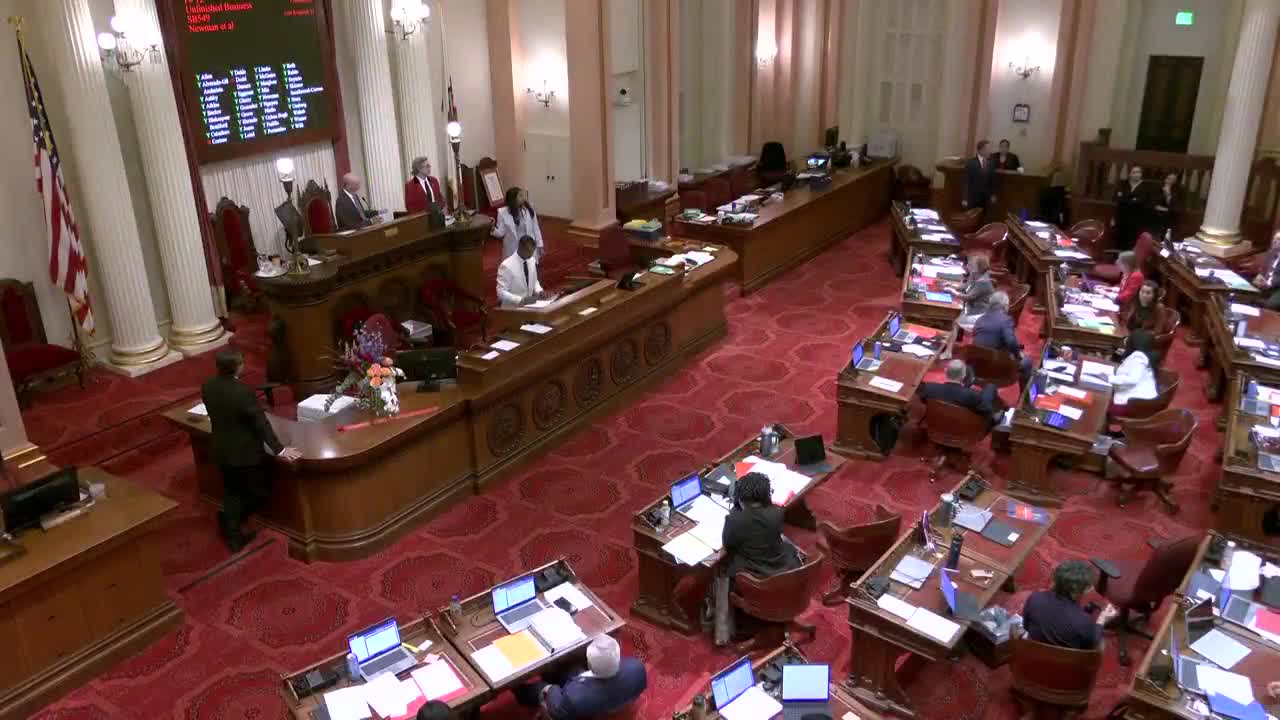 3MIN
Senate Floor
 1MIN
Assembly Floor
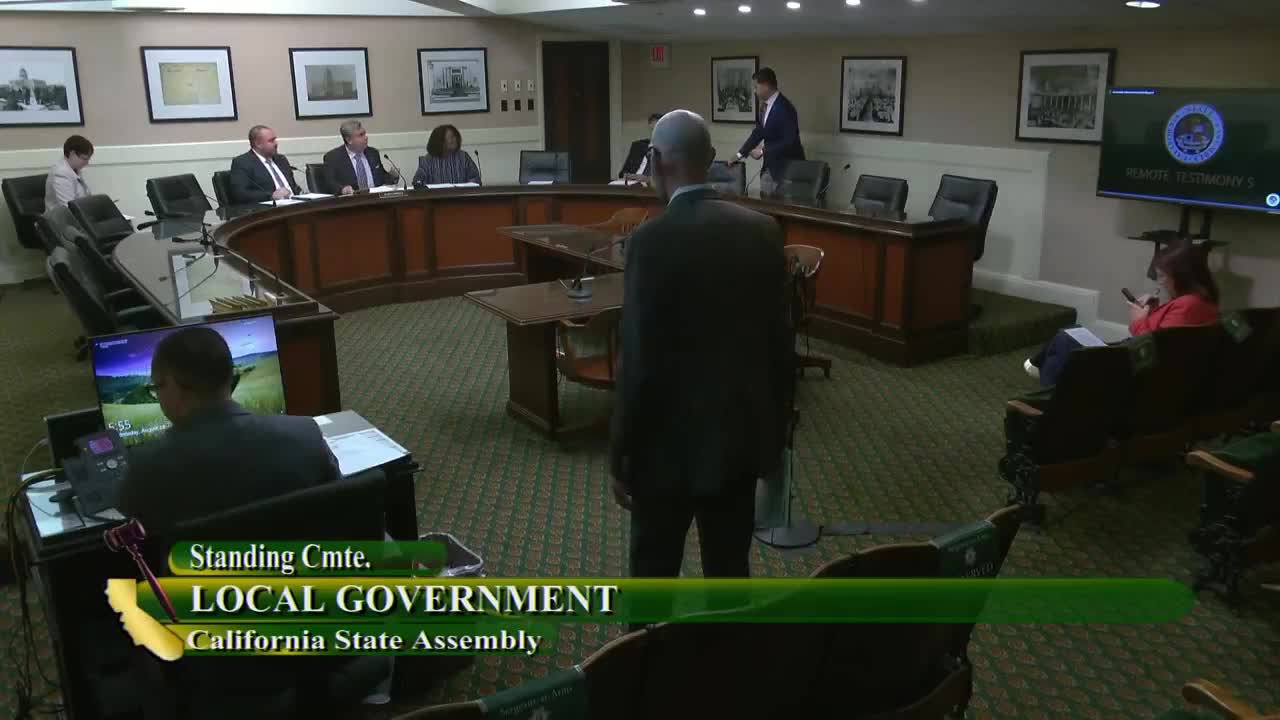 16MIN
Assembly Standing Committee on Local Government
 1MIN
Assembly Floor
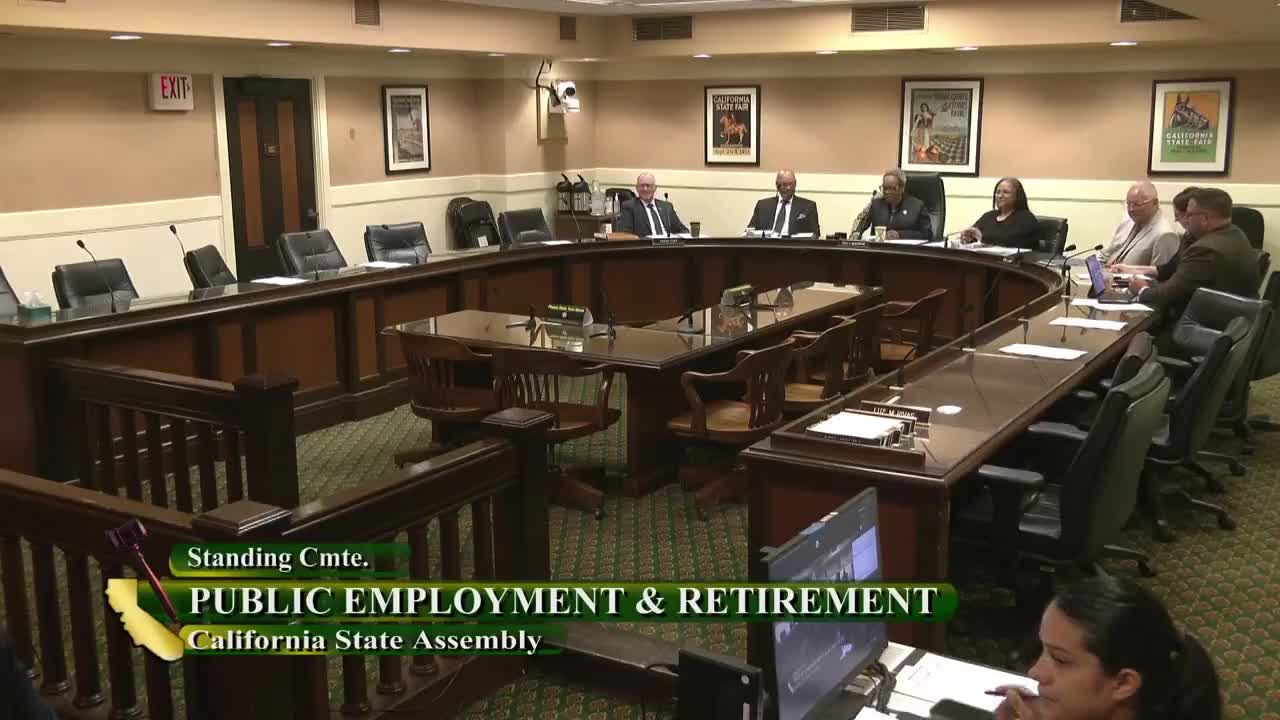 10MIN
Assembly Standing Committee on Public Employment and Retirement
 4MIN
Senate Floor
 10MIN
Senate Standing Committee on Labor, Public Employment and Retirement
Bill Author