SB 1109: Cannabis: demographic information of license applicants.
- Session Year: 2023-2024
- House: Senate
- Latest Version Date: 2024-09-28
Current Status:
Passed
(2024-09-28: Chaptered by Secretary of State. Chapter 878, Statutes of 2024.)
Introduced
In Committee
First Chamber
In Committee
Second Chamber
Enacted
Existing law, the Control, Regulate and Tax Adult Use of Marijuana Act (AUMA), an initiative measure approved by the voters, authorizes a person who obtains a state license under AUMA to engage in commercial adult-use cannabis activity pursuant to that license and applicable local ordinances. Existing law, the Medicinal and Adult-Use Cannabis Regulation and Safety Act (MAUCRSA), among other things, consolidates the licensure and regulation of commercial medicinal and adult-use cannabis activities, and requires the Department of Cannabis Control to administer its provisions, except as specified. Existing law requires the department to provide on its internet website information regarding the status of every license issued by the department, as described.
This bill would require the department to collect and consolidate the demographic information, as defined, about every license applicant. The bill would require the department to publish the aggregate demographic data that it collects on its internet website. The bill would require the department to maintain the confidentiality of the information it receives, as specified, and to only release the information in an aggregate form that cannot be used to identify an individual. The bill would specify that a licensee or applicant is not required to provide the demographic information, as described above, as a condition of licensure or license renewal, and is not subject to discipline for not providing the demographic information. The bill would make its provisions operative only if the department unifies its licensing system under MAUCRSA.
Existing constitutional provisions require that a statute that limits the right of access to the meetings of public bodies or the writings of public officials and agencies be adopted with findings demonstrating the interest protected by the limitation and the need for protecting that interest.
This bill would make legislative findings to that effect.
Existing law, the Control, Regulate and Tax Adult Use of Marijuana Act (AUMA), an initiative measure approved by the voters, authorizes a person who obtains a state license under AUMA to engage in commercial adult-use cannabis activity pursuant to that license and applicable local ordinances. Existing law, the Medicinal and Adult-Use Cannabis Regulation and Safety Act (MAUCRSA), among other things, consolidates the licensure and regulation of commercial medicinal and adult-use cannabis activities, and requires the Department of Cannabis Control to administer its provisions, except as specified. Existing law requires the department to provide on its internet website information regarding the status of every license issued by the department, as described. Existing law requires an applicant for a state license to conduct commercial cannabis activity, as specified, to provide a complete list of every person with a financial interest in the applicant, as described.
This bill would require the department to collect and consolidate the demographic information, as defined, about every person with a financial interest in a license applicant, as described. applicant. The bill would require the department to publish the aggregate demographic data that it collects on its internet website. The bill would require the department to maintain the confidentiality of the information it receives, as specified, and to only release the information in an aggregate form that cannot be used to identify an individual. The bill would specify that a licensee or applicant is not required to provide the demographic information, as described above, as a condition of licensure or license renewal, and is not subject to discipline for not providing the demographic information. The bill would make its provisions operative only if the department unifies its licensing system under MAUCRSA.
Existing constitutional provisions require that a statute that limits the right of access to the meetings of public bodies or the writings of public officials and agencies be adopted with findings demonstrating the interest protected by the limitation and the need for protecting that interest.
This bill would make legislative findings to that effect.
Existing law, the Control, Regulate and Tax Adult Use of Marijuana Act (AUMA), an initiative measure approved by the voters, authorizes a person who obtains a state license under AUMA to engage in commercial adult-use cannabis activity pursuant to that license and applicable local ordinances. Existing law, the Medicinal and Adult-Use Cannabis Regulation and Safety Act (MAUCRSA), among other things, consolidates the licensure and regulation of commercial medicinal and adult-use cannabis activities, and requires the Department of Cannabis Control to administer its provisions, except as specified. Existing law requires the department to provide on its internet website information regarding the status of every license issued by the department, as described. Existing law requires an applicant for a state license to conduct commercial cannabis activity, as specified, to provide a complete list of every person with a financial interest in the applicant, as described.
This bill would require the department to collect and consolidate the demographic information, as defined, about every person with a financial interest in a license applicant, as described. The bill would require the department to make the data collected and consolidated available to the public in accordance with state and federal law, including by posting the data on the internet website of the department, except for personal identifying information, which the bill would deem confidential and prohibit its disclosure. publish the aggregate demographic data that it collects on its internet website. The bill would require the department to maintain the confidentiality of the information it receives, as specified, and to only release the information in an aggregate form that cannot be used to identify an individual. The bill would specify that a licensee or applicant is not required to provide the demographic information, as described above, as a condition of licensure or license renewal, and is not subject to discipline for not providing the demographic information. The bill would make its provisions operative only if the department unifies its licensing system under MAUCRSA.
Existing constitutional provisions require that a statute that limits the right of access to the meetings of public bodies or the writings of public officials and agencies be adopted with findings demonstrating the interest protected by the limitation and the need for protecting that interest.
This bill would make legislative findings to that effect.
Existing law, the Control, Regulate and Tax Adult Use of Marijuana Act (AUMA), an initiative measure approved by the voters, authorizes a person who obtains a state license under AUMA to engage in commercial adult-use cannabis activity pursuant to that license and applicable local ordinances. Existing law, the Medicinal and Adult-Use Cannabis Regulation and Safety Act (MAUCRSA), among other things, consolidates the licensure and regulation of commercial medicinal and adult-use cannabis activities. activities, and requires the Department of Cannabis Control to administer its provisions, except as specified. Existing law requires the department to provide on its internet website information regarding the status of every license issued by the department, as described. Existing law requires an applicant for a state license to conduct commercial cannabis activity, as specified, to provide a complete list of every person with a financial interest in the applicant, as described.
Existing law generally requires that all commercial cannabis activity be conducted between licensees and, among other things, requires that each applicant or licensee apply for, and, if approved, obtain, a separate license for each location where the applicant or licensee engages in commercial cannabis activity.This bill would make nonsubstantive changes to those provisions.This bill would require the department to collect and consolidate the demographic information, as defined, about every person with a financial interest in a license applicant, as described. The bill would require the department to make the data collected and consolidated available to the public in accordance with state and federal law, including by posting the data on the internet website of the department, except for personal identifying information, which the bill would deem confidential and prohibit its disclosure. The bill would make its provisions operative only if the department unifies its licensing system under MAUCRSA.
Existing constitutional provisions require that a statute that limits the right of access to the meetings of public bodies or the writings of public officials and agencies be adopted with findings demonstrating the interest protected by the limitation and the need for protecting that interest.
This bill would make legislative findings to that effect.
Existing law, the Control, Regulate and Tax Adult Use of Marijuana Act (AUMA), an initiative measure approved by the voters, authorizes a person who obtains a state license under AUMA to engage in commercial adult-use cannabis activity pursuant to that license and applicable local ordinances. Existing law, the Medicinal and Adult-Use Cannabis Regulation and Safety Act (MAUCRSA), among other things, consolidates the licensure and regulation of commercial medicinal and adult-use cannabis activities.
Existing law generally requires that all commercial cannabis activity be conducted between licensees and, among other things, requires that each applicant or licensee apply for, and, if approved, obtain, a separate license for each location where the applicant or licensee engages in commercial cannabis activity.
This bill would make nonsubstantive changes to those provisions.
(a)For purposes of this section, demographic data includes, but is not limited to, race, ethnicity, gender, sexual orientation, income level, education level, prior convictions, and veteran status.
(b)(1)The department shall collect demographic data about every person applying for a license.
(2)The demographic data may be requested when an initial license is issued or at the time of license renewal.
(c)The department shall consolidate the demographic data received as described in subdivision (b) and shall publish the aggregate demographic data that it collects on its internet website.
(d)The department shall maintain the confidentiality of the information it receives from an applicant or licensee under this section and shall only release the information in an aggregate form that cannot be used to identify an individual.
(e)A licensee or applicant shall not be required to provide the information specified in subdivision (b) as a condition of licensure or license renewal, and a licensee shall not be subject to discipline for not providing the information specified in subdivision (b).
SEC. 2.This act shall become operative only if the Department of Cannabis Control unifies its licensing system for commercial cannabis activity under the Medicinal and Adult-Use Cannabis Regulation and Safety Act (Division 10 (commencing with Section 26000) of the Business and Professions Code).
SEC. 3.The Legislature finds and declares that Section 1 of this act, which adds Section 26012.6 to the Business and Professions Code, imposes a limitation on the publics right of access to the meetings of public bodies or the writings of public officials and agencies within the meaning of Section 3 of Article I of the California Constitution. Pursuant to that constitutional provision, the Legislature makes the following findings to demonstrate the interest protected by this limitation and the need for protecting that interest:
In order to protect the privacy of cannabis license applicants, while also gathering and publicizing useful demographic data, it is necessary that personal identifying information remain confidential.
(a)For purposes of this section, demographic data includes, but is not limited to, race, ethnicity, gender, sexual orientation, income level, education level, prior convictions, and veteran status.
(b)(1)The department shall collect demographic data about every person with a financial interest in a person applying for a license, as described in subdivision (d) of Section 26051.5. license.
(2)The demographic data may be requested when an initial license is issued or at the time of license renewal.
(c)The department shall consolidate the demographic data received as described in subdivision (b) and shall publish the aggregate demographic data that it collects on its internet website.
(d)The department shall maintain the confidentiality of the information it receives from an applicant or licensee under this section and shall only release the information in an aggregate form that cannot be used to identify an individual.
(e)A licensee or applicant shall not be required to provide the information specified in subdivision (b) as a condition of licensure or license renewal, and a licensee shall not be subject to discipline for not providing the information specified in subdivision (b).
SEC. 2.This act shall become operative only if the Department of Cannabis Control unifies its licensing system for commercial cannabis activity under the Medicinal and Adult-Use Cannabis Regulation and Safety Act (Division 10 (commencing with Section 26000) of the Business and Professions Code).
SEC. 3.The Legislature finds and declares that Section 1 of this act, which adds Section 26012.6 to the Business and Professions Code, imposes a limitation on the publics right of access to the meetings of public bodies or the writings of public officials and agencies within the meaning of Section 3 of Article I of the California Constitution. Pursuant to that constitutional provision, the Legislature makes the following findings to demonstrate the interest protected by this limitation and the need for protecting that interest:
In order to protect the privacy of persons with a financial interest in cannabis license applicants, while also gathering and publicizing useful demographic data, it is necessary that personal identifying information remain confidential.
(a)For purposes of this section, demographic data includes, but is not limited to, race, ethnicity, gender, sexual orientation, income level, education level, prior convictions, and veteran status.
(b)(1)The department shall collect and consolidate the demographic data about every person with a financial interest in a person applying for a license, as described in subdivision (d) of Section 26051.5.
(2)The demographic data may be requested when an initial license is issued or at the time of license renewal.
(c)The department shall consolidate the demographic data received as described in subdivision (b) and shall publish the aggregate demographic data that it collects on its internet website.
(d)The department shall maintain the confidentiality of the information it receives from an applicant or licensee under this section and shall only release the information in an aggregate form that cannot be used to identify an individual.
(e)A licensee or applicant shall not be required to provide the information specified in subdivision (b) as a condition of licensure or license renewal, and a licensee shall not be subject to discipline for not providing the information specified in subdivision (b).
(c)The department shall make the demographic data collected and consolidated as described in subdivision (b) available to the public in accordance with state and federal law, including by posting the data on the internet website of the department, except for personal identifying information, which shall be deemed confidential and shall not be disclosed.SEC. 2.This act shall become operative only if the Department of Cannabis Control unifies its licensing system for commercial cannabis activity under the Medicinal and Adult-Use Cannabis Regulation and Safety Act (Division 10 (commencing with Section 26000) of the Business and Professions Code).
SEC. 3.The Legislature finds and declares that Section 1 of this act, which adds Section 26012.6 to the Business and Professions Code, imposes a limitation on the publics right of access to the meetings of public bodies or the writings of public officials and agencies within the meaning of Section 3 of Article I of the California Constitution. Pursuant to that constitutional provision, the Legislature makes the following findings to demonstrate the interest protected by this limitation and the need for protecting that interest:
In order to protect the privacy of persons with a financial interest in cannabis license applicants, while also gathering and publicizing useful demographic data, it is necessary that personal identifying information remain confidential.
(a)For purposes of this section, demographic data includes, but is not limited to, race, ethnicity, gender, sexual orientation, income level, education level, prior convictions, and veteran status.
(b)The department shall collect and consolidate the demographic data about every person with a financial interest in a person applying for a license, as described in subdivision (d) of Section 26051.5.
(c)The department shall make the demographic data collected and consolidated as described in subdivision (b) available to the public in accordance with state and federal law, including by posting the data on the internet website of the department, except for personal identifying information, which shall be deemed confidential and shall not be disclosed.
SEC. 2.This act shall become operative only if the Department of Cannabis Control unifies its licensing system for commercial cannabis activity under the Medicinal and Adult-Use Cannabis Regulation and Safety Act (Division 10 (commencing with Section 26000) of the Business and Professions Code).
SEC. 3.The Legislature finds and declares that Section 1 of this act, which adds Section 26012.6 to the Business and Professions Code, imposes a limitation on the publics right of access to the meetings of public bodies or the writings of public officials and agencies within the meaning of Section 3 of Article I of the California Constitution. Pursuant to that constitutional provision, the Legislature makes the following findings to demonstrate the interest protected by this limitation and the need for protecting that interest:
In order to protect the privacy of persons with a financial interest in cannabis license applicants, while also gathering and publicizing useful demographic data, it is necessary that personal identifying information remain confidential.
SECTION 1.Section 26053 of the Business and Professions Code is amended to read:26053.(a)All commercial cannabis activity shall be conducted between licensees, except as otherwise provided in this division.(b)(1)A person that holds a state testing laboratory license under this division is prohibited from licensure for any other activity, except testing, as authorized under this division. A person that holds a state testing laboratory license shall not employ an individual who is also employed by any other licensee that does not hold a state testing laboratory license.(2)A person with a financial interest in a state testing laboratory license under this division is prohibited from holding a financial interest in any other type of cannabis license.(c)Except as provided in subdivision (b), a person may apply for and be issued more than one license under this division.(d)Each applicant or licensee shall apply for, and, if approved, shall obtain, a separate license for each location where the applicant or licensee engages in commercial cannabis activity.(a)All commercial cannabis activity shall be conducted between licensees, except as otherwise provided in this division.
(b)(1)A person that holds a state testing laboratory license under this division is prohibited from licensure for any other activity, except testing, as authorized under this division. A person that holds a state testing laboratory license shall not employ an individual who is also employed by any other licensee that does not hold a state testing laboratory license.
(2)A person with a financial interest in a state testing laboratory license under this division is prohibited from holding a financial interest in any other type of cannabis license.
(c)Except as provided in subdivision (b), a person may apply for and be issued more than one license under this division.
(d)Each applicant or licensee shall apply for, and and, if approved, shall obtain, a separate license for each location where it the applicant or licensee engages in commercial cannabis activity.
|
Date
|
Status
|
|---|---|
| Sep 28, 2024 | Chaptered by Secretary of State. Chapter 878, Statutes of 2024. |
| Sep 28, 2024 | Approved by the Governor. |
| Sep 3, 2024 | Enrolled and presented to the Governor at 3 p.m. |
| Aug 28, 2024 | In Senate. Ordered to engrossing and enrolling. |
| Aug 27, 2024 | Read third time. Passed. (Ayes 75. Noes 0. Page 6654.) Ordered to the Senate. |
| Aug 8, 2024 | Read second time. Ordered to third reading. |
| Aug 7, 2024 | From committee: Do pass. (Ayes 13. Noes 0.) (August 7). |
| Jun 25, 2024 | From committee: Do pass and re-refer to Com. on APPR. (Ayes 11. Noes 0.) (June 25). Re-referred to Com. on APPR. |
| Jun 11, 2024 | From committee: Do pass and re-refer to Com. on JUD. (Ayes 17. Noes 0.) (June 11). Re-referred to Com. on JUD. |
| Jun 3, 2024 | Referred to Coms. on B. & P. and JUD. |
| May 23, 2024 | In Assembly. Read first time. Held at Desk. |
| May 22, 2024 | Read third time. Passed. (Ayes 31. Noes 1. Page 4151.) Ordered to the Assembly. |
| May 20, 2024 | Read second time. Ordered to third reading. |
| May 16, 2024 | From committee: Do pass as amended. (Ayes 5. Noes 2. Page 3972.) (May 16). |
| May 16, 2024 | Read second time and amended. Ordered to second reading. |
| May 14, 2024 | Set for hearing May 16. |
| May 13, 2024 | May 13 hearing: Placed on APPR suspense file. |
| May 3, 2024 | Set for hearing May 13. |
| May 2, 2024 | May 6 hearing postponed by committee. |
| Apr 26, 2024 | Set for hearing May 6. |
| Apr 24, 2024 | From committee: Do pass and re-refer to Com. on APPR. (Ayes 10. Noes 1. Page 3725.) (April 23). Re-referred to Com. on APPR. |
| Apr 16, 2024 | From committee: Do pass and re-refer to Com. on JUD. (Ayes 11. Noes 0. Page 3605.) (April 15). Re-referred to Com. on JUD. |
| Apr 16, 2024 | From committee with author's amendments. Read second time and amended. Re-referred to Com. on JUD. |
| Apr 9, 2024 | Set for hearing April 23 in JUD. pending receipt. |
| Apr 5, 2024 | Set for hearing April 15. |
| Apr 3, 2024 | Re-referred to Coms. on B., P. & E. D. and JUD. |
| Mar 18, 2024 | From committee with author's amendments. Read second time and amended. Re-referred to Com. on RLS. |
| Feb 21, 2024 | Referred to Com. on RLS. |
| Feb 14, 2024 | From printer. May be acted upon on or after March 15. |
| Feb 13, 2024 | Introduced. Read first time. To Com. on RLS. for assignment. To print. |
|
Date
|
Description
|
Location
|
Votes
|
|
|---|---|---|---|---|
| Aug 27, 2024 | SB 1109 Bradford Senate Third Reading By Kalra | Assembly Floor |
Passed |
|
| Aug 7, 2024 | Do pass. | Assembly Standing Committee on Appropriations |
Passed |
|
| Jun 25, 2024 | Do pass and be re-referred to the Committee on [Appropriations] | Assembly Standing Committee on Judiciary |
Passed |
|
| Jun 11, 2024 | Do pass and be re-referred to the Committee on [Judiciary] | Assembly Standing Committee on Business and Professions |
Passed |
|
| May 22, 2024 | Senate 3rd Reading SB1109 Bradford | Senate Floor |
Passed |
|
| May 16, 2024 | Do pass as amended | Senate Standing Committee on Appropriations |
Passed |
|
| May 13, 2024 | Placed on suspense file | Senate Standing Committee on Appropriations |
Passed |
|
| Apr 23, 2024 | Do pass, but first be re-referred to the Committee on [Appropriations] | Senate Standing Committee on Judiciary |
Passed |
|
| Apr 15, 2024 | Do pass, but first be re-referred to the Committee on [Judiciary] | Senate Standing Committee on Business, Professions and Economic Development |
Passed |
This list shows positions taken on this bill by organizations on the date displayed, which is linked to the original source.
Positions by individuals are not included.
SENATE THIRD READING
STR Bill Id:SB 1109
Author:(Bradford)
As Amended Ver:May 16, 2024
Majority vote
SUMMARY
Requires the Department of Cannabis Control (DCC) to collect voluntarily provided demographic data about individuals applying for an initial license or license renewal.
Major Provisions
- Defines "demographic data" as including, but not limited to, race, ethnicity, gender, sexual orientation, income level, education level, prior convictions, and veteran status.
- Requires the DCC to collect demographic data about every person applying for a license.
- Authorizes the demographic data to be requested when an initial license is issued or at the time of license renewal.
- Requires the DCC to consolidate the demographic data it receives and publish the aggregate demographic data that it collects on its internet website.
- Provides that the DCC shall maintain the confidentiality of the information it receives from an applicant or licensee and only release the information in an aggregate form that cannot be used to identify an individual.
- Prohibits the DCC from requiring a licensee or applicant to provide the demographic information as a condition of licensure or license renewal, and provides that a licensee shall not be subject to discipline for not providing the information.
- Provides that the provisions of the bill shall become operative only if the DCC unifies its licensing system for commercial cannabis activity under the Medicinal and Adult-Use Cannabis Regulation and Safety Act (MAUCRSA).
- Exempts disaggregated, personally identifying demographic data received from the California Public Records Act (CPRA).
COMMENTS
Equity Programs. Proponents of the Adult Use of Marijuana Act (AUMA) argued that the state's legalization of recreational cannabis should recognize and address the devastating impact of prohibition on low-income and minority populations as a lawful industry begins to profit from the newly regulated marketplace. Throughout the decades in which the sale and use of cannabis was largely illegal, innumerable individuals—the majority of whom are people of color—were incarcerated for engaging in activities made lawful by Proposition 64. Many purport that with the passage of the AUMA representing the state's comfort with allowing for legal sales of cannabis to occur, those communities who were aggressively penalized by the product's previous illegality should be afforded an opportunity to participate in the marketplace.
However, many have pointed out that compliance with the requirements of MAUCRSA, in addition to standard business start-up costs, creates significant barriers to entering into the cannabis industry for populations without capital or financing. In response, many have advocated for programs specifically aimed at assisting economically disadvantaged communities enter into the cannabis industry through financial assistance. SB 1294 (Bradford), Chapter 794, Statutes of 2018—cited as the California Cannabis Equity Act of 2018—was chaptered to codify the state's recognition of local equity programs designed to enable populations or neighborhoods that were negatively or disproportionately impacted by cannabis criminalization to become approved participants in the cannabis marketplace.
Under the California Cannabis Equity Act, local jurisdictions may apply for and receive grant funding for purposes of providing assistance to local equity applicants or licensees seeking to gain entry to the state's regulated cannabis marketplace. Subsequent trailer bill language relating to cannabis modified the Act to provide that a local jurisdiction must make an "equity assessment" to inform the creation of a local program. These equity assessments include the following:
- Reference to local historical rates of arrests or convictions for cannabis law violations.
- Identification of the impacts that cannabis-related policies have had historically on communities and populations within that local jurisdiction.
- Other information that demonstrates how individuals and communities within the local jurisdiction have been disproportionately or negatively impacted by the War on Drugs.
Once a local equity program has been established, the jurisdiction may receive grant funding to fund the administration of its local equity program. Under such a program, the local jurisdiction may provide assistance to applicants comprised of low-interest or no-interest loans to fund startup and ongoing costs such as rent, legal assistance, furniture, capital improvements, training, regulatory compliance, and the testing of cannabis. Equity funding may also be used by local jurisdictions to fund the provision of technical assistance and expenses associated with supporting efforts to provide sources of capital and assist in the development or administration of programs.
The Budget Act of 2021 included $20 million to fund the California Cannabis Equity Act. It also changed the grantmaking agency from the DCC to GO-Biz. The Budget additionally authorized the newly established DCC to appoint a Deputy Director of Equity and Inclusion to further the Department's mission to implement inclusive cannabis policies.
In 2019, SB 595 (Bradford), Chapter 852 was enacted to provide further relief to local equity applicants and licensees seeking to enter the cannabis marketplace by allowing the DCC to waive or defer fees. This bill provided another form of financial support for individuals seeking to become successful cannabis licensees who are already seeking or who are receiving support through a local equity program. SB 595 was conditioned on the allocation of funds to backfill lost revenue associated with the fee waiver or deferral prior to it being offered by the DCC. The Budget Act of 2021 allocated $30 million to implement the fee waiver and deferral programs and required the DCC to develop and implement a fee waiver program by January 1, 2022, and a fee deferral program by January 1, 2023, for all social equity applicants and who meet certain criteria.
In June of 2022, the DCC modified its interpretation of statute's definition for the term "equity applicants and licensees," increasing the gross revenue threshold applied in its previous regulations from $1.5 million to $5 million. The DCC's regulations also provided that an applicant or licensee may be eligible if they have an immediate family member that was arrested or convicted of a cannabis related offense. In support of this change, the DCC argued that "when an immediate family member was arrested for, or convicted of, an offense related to cannabis activity, the disproportionate impact affected the entire family."
Collection of Demographic Information. Currently, applicants for licensure or license renewal must submit a range of information to the DCC as part of their application. The DCC issues an annual report to the Legislature containing various data about the number of licenses received and approved. However, the DCC is not currently required to collect or report demographic information about the licensees applying for and receiving licenses. As a result, it is difficult to assess whether cannabis licenses are being awarded equitably across the state. It is similarly difficult to evaluate the success of programs like the California Cannabis Equity Act, which is intended to increase opportunity in the cannabis marketplace among communities that have historically not had access to similar opportunities or who were disproportionately impacted by the criminalization of cannabis.
This bill would require the DCC to collect demographic information from applicants and licensees such as race, ethnicity, gender, sexual orientation, income level, education level, prior convictions, and veteran status. This information would not be required as a condition of licensure, nor would licensees be punished for failing to provide that information. The author contends that whatever information is collected can be used to more effectively ascertain whether cannabis licensing in California is meeting the goals for fairness and equity that were promised to the voters when they approved Proposition 64.
According to the Author
"SB 1109 will require the Department of Cannabis Control to collect and report demographic information of every applicant for licensure. Since the passage of Prop 64, entrepreneurs have continued to face difficulty entering and staying in the retail market, especially if they are Black or brown. California has a responsibility to make sure that our cannabis industry is equitable and fair to all. When their businesses succeed, not only does that help our communities but it also helps combat the illicit market. This measure will provide necessary transparency about California's cannabis industry."
Arguments in Support
None on file.
Arguments in Opposition
None on file.
FISCAL COMMENTS
According to the Assembly Committee on Appropriations, minor and absorbable costs to the DCC.
VOTES
SENATE FLOOR: 31-1-8
YES: Alvarado-Gil, Ashby, Atkins, Becker, Blakespear, Bradford, Caballero, Cortese, Dodd, Durazo, Eggman, Glazer, Gonzalez, Hurtado, Laird, Limón, McGuire, Menjivar, Min, Newman, Padilla, Portantino, Roth, Rubio, Skinner, Smallwood-Cuevas, Stern, Umberg, Wahab, Wiener, Wilk
NO: Seyarto
ABS, ABST OR NV: Allen, Archuleta, Dahle, Grove, Jones, Nguyen, Niello, Ochoa Bogh
ASM BUSINESS AND PROFESSIONS: 17-0-1
YES: Berman, Flora, Alanis, Bains, Juan Carrillo, Chen, Dixon, Irwin, Jackson, Low, Lowenthal, McKinnor, Stephanie Nguyen, Pellerin, Sanchez, Soria, Zbur
ABS, ABST OR NV: Grayson
ASM JUDICIARY: 11-0-1
YES: Kalra, Dixon, Bauer-Kahan, Bryan, Connolly, Haney, Maienschein, McKinnor, Pacheco, Reyes, Sanchez
ABS, ABST OR NV: Joe Patterson
ASM APPROPRIATIONS: 13-0-2
YES: Wicks, Sanchez, Arambula, Bryan, Calderon, Wendy Carrillo, Dixon, Mike Fong, Grayson, Haney, Hart, Jim Patterson, Pellerin
ABS, ABST OR NV: Ta, Villapudua
UPDATED
VERSION: May 16, 2024
CONSULTANT: Robert Sumner / B. & P. / (916) 319-3301 FN: 0003771
Date of Hearing: August 7, 2024
ASSEMBLY COMMITTEE ON APPROPRIATIONS
Buffy Wicks, Chair
SBPCA Bill Id:SB 1109
Author:(Bradford) – As Amended Ver:May 16, 2024
Policy Committee: | Business and Professions | Vote: | 17 - 0 |
Judiciary | 11 - 0 | ||
|
|
Urgency: No State Mandated Local Program: No Reimbursable: No
SUMMARY:
This bill requires the Department of Cannabis Control (DCC) to collect voluntarily provided demographic data about every person applying for a license, and to publish the aggregated demographic data on its website.
Specifically, this bill:
- For the purposes of this bill, defines “demographic data” to include race, ethnicity, gender, sexual orientation, income level, education level, prior convictions, and veteran status.
- Requires DCC to collect demographic data about every person applying for a license.
- Requires DCC to aggregate the data and publish the aggregated data on its website, and ensure the published data cannot be used to identify an individual.
- Prohibits DCC from requiring an applicant provide demographic information as a condition or licensure or renewal or disciplining a licensee for not providing the information.
- Conditions the implementation of this bill on DCC unifying its licensing system for commercial cannabis activity under Medicinal and Adult-Use Cannabis Regulation and Safety Act (MAUCRSA).
- Exempts from the California Public Records Act disaggregated, personally identifying demographic data received from cannabis license applicants.
FISCAL EFFECT:
Minor and absorbable costs to DCC.
COMMENTS:
- Purpose. According to the author:
In recent years, the Legislature has focused on ensuring that California’s cannabis market is inclusive and supportive of individuals impacted by the War on Drugs, as intended when the voters passed Prop 64. Many of these individuals have experienced difficulty entering the market and contend that the market continues to lack in diversity. California has a responsibility to make sure that our cannabis industry is equitable and fair to all. SB 1109 will help provide necessary transparency about California’s cannabis industry.
- Background. When the sale and use of cannabis was illegal, innumerable individuals—the majority of whom were people of color—were incarcerated for engaging in activities made lawful by Proposition 64, the Adult Use of Marijuana Act (AUMA). With the passage of the AUMA in 2016 representing the state’s comfort with allowing legal sales of cannabis, proponents of the AUMA argued communities who were aggressively penalized under the previous illegality of cannabis should be afforded an opportunity to participate in the legal marketplace. One of the stated goals of SB 1294 (Bradford), Chapter 794, Statutes of 2018, known as the Cannabis Equity Act, was to ensure persons most harmed by cannabis criminalization and poverty be offered assistance to enter the legal cannabis industry. Without clear data, the state remains unable to refine cannabis licensing policies to truly achieve the goals of the Cannabis Equity Act.
DCC issues to the Legislature an annual report containing various data about the number of licenses received and approved. However, DCC is not required to collect or report demographic information about the licensees applying for and receiving licenses. As a result, it is difficult to assess whether cannabis licenses are being awarded equitably across the state. It is also difficult to evaluate the success of programs like the Cannabis Equity Act.
- Related Legislation. SB 51 (Bradford), Chapter 593, Statutes of 2023, authorizes DCC to issue and renew provisional licenses to local equity applicants engaged in cannabis retail activities until 2031.
- Prior Legislation.
- SB 1294 (Bradford), Chapter 794, Statutes of 2018, authorized local jurisdictions to request technical assistance and grant funding from the DCC to establish local equity programs.
- SB 94 (Committee on Budget and Fiscal Review), Chapter 27, Statutes of 2017 enacted MAUCRSA.
- SB 1294 (Bradford), Chapter 794, Statutes of 2018, authorized local jurisdictions to request technical assistance and grant funding from the DCC to establish local equity programs.
Analysis Prepared by: Allegra Kim / APPR. / (916) 319-2081
Date of Hearing: June 25, 2024
ASSEMBLY COMMITTEE ON JUDICIARY
Ash Kalra, Chair
SBPCA Bill Id:SB 1109
Author:(Bradford) – As Amended Ver:May 16, 2024
SENATE VOTE: 31-1
SUBJECT: Cannabis: demographic information of license applicants
KEY ISSUE: Should the department of cannabis control collect demographic data on licensees and post ThE aggregated data on its website; and Should the individualized demographic data regarding licensees be exempt from disclosure under the California public records act?
SYNOPSIS
When California voters legalized recreational cannabis use with the passage of Proposition 64 in 2016, one of the primary goals of legalizing cannabis was to undo the harms wrought on communities of color by the “War on Drugs.” To that end, the Legislature enacted the Cannabis Equity Act in 2018 (SB 1294 (Bradford) Chap. 794, Stats. 2018.), with the goal of promoting cannabis-based business opportunities for Black and brown Californians. Despite this laudable goal, the lack of demographic data regarding persons licensed to operate a cannabis business by the Department of Cannabis Control significantly undermines the state’s ability to determine if the goals of the Cannabis Equity Act are being met.
This bill would require the Department of Cannabis Control to collect demographic information from licensees and report the aggregated data on its website. The bill clarifies that an individual licensee can decline to share demographic data with the Department without penalty. Of note to this Committee, the bill provides that the individualized demographic data collected by the Department of Cannabis Control is not subject to disclosure pursuant to the California Public Records Act. This exemption regarding individual data is similar to numerous other exemptions to the California Public Records Act designed to protect highly sensitive personal information from public disclosure.
This common sense measure is author-sponsored and has no registered support or opposition. This measure was previously heard and approved by the Committee on Business and Professions by a vote of 17-0.
SUMMARY: Requires the Department of Cannabis Control to collect and consolidate voluntarily provided demographic data regarding persons receiving licenses issues by the Department. Specifically, this bill:
- Requires the Department of Cannabis Control to collect demographic data regarding every person applying for a license issued by the Department.
- Defines “demographic data” for the purpose of 1) to include but not be limited to a licensee’s race, ethnicity, gender, sexual orientation, income level, education level, prior convictions, and veteran status.
- Requires the Department of Cannabis Control to consolidate the demographic data received pursuant to 1) and publish that information on the Department’s website.
- Requires the Department of Cannabis Control to maintain the confidentiality of the information provided pursuant to 1) and only release the information in a manner that prevents the identification of any individual licensee.
- Provides that a licensee is not required to submit demographic data to the Department of Cannabis Control as a condition of licensure and the Department cannot discipline a licensee for refusing to submit demographic data.
- Provides that this bill does not take effect until the Department of Cannabis Control unifies its licensing system for commercial cannabis activity under the Medicinal and Adult-Use Cannabis Regulation and Safety Act.
- Makes necessary findings to justify the bill’s limitation on the public’s right of access to the meetings of public bodies or the writings of public officials and agencies within the meaning of the California Public Records Act.
EXISTING LAW:
- Regulates the cultivation, distribution, transport, storage, manufacturing, processing, and sale of medicinal and adult-use cannabis under the Medicinal and Adult-Use Cannabis Regulation and Safety Act and establishes the Department of Cannabis Control to administer and enforce the act. (Business and Professions Code Sections 26000 - 26260.)
- Authorizes the Department of Cannabis Control to appoint a deputy director for equity and inclusion. (Business and Professions Code Section 26010.)
- Authorizes the Department of Cannabis Control to issue twenty-two different types of cannabis licenses including licenses for cultivation, manufacturing, testing, retail, distribution, processing, event organization, and microbusiness. (Business and Professions Code Section 26050.)
- Prohibits an applicant for a license from the Department of Cannabis Control from being denied a license solely based on a prior conviction that was subsequently dismissed or for which the applicant has obtained a certificate of rehabilitation. (Business and Professions Code Section 26059.)
- Establishes the Cannabis Equity Act to ensure that persons most harmed by prior cannabis criminalization and poverty be offered assistance to enter the cannabis industry. (Business and Professions Code Section 26240, et seq.)
- Defines for the purpose of the Cannabis Equity Act, “equity assessment” to mean an assessment conducted by a local jurisdiction to create a local cannabis equity program, as specified. (Business and Professions Code Section 26240 (e).)
- Requires the Department of Cannabis Control to provide grants and technical assistance to local agencies deploying a local cannabis equity program. (Business and Professions Code Sections 26242, 26244.)
- Governs the disclosure of information collected and maintained by public agencies pursuant to the California Public Records Act. (Government Code Sections 7920.00, et seq.)
- Provides that all public records are accessible to the public upon request, unless the record requested is exempt from public disclosure. (Government Code Section 7922.525.)
- Defines “public records” as any writing containing information relating to the conduct of the public’s business prepared, owned, used, or retained by any state or local agency regardless of physical form or characteristics. (Government Code Section 7920.530.)
- Defines “public agency” as any state or local agency. (Government Code Section 7920.525.)
- Defines “state agency” as every state office, officer, department, division, bureau, board, and commission or other state body or agency, except those agencies provided for in Article IV (except Section 20 thereof) or Article VI of the California Constitution. (Government Code Section 7920.540.)
- Provides that nothing in the California Public Records Act requires the disclosure of specified personal information including but not limited to the following:
- The residence or mailing address of any person in any record of the Department of Motor Vehicles (Government Code Section 7924.405.);
- The name, credit history, utility usage data, home address, or telephone number of a utility customer of a local agency (Government Code Section 7927.410.); and
- Records related to statements of personal worth or personal financial data, including, but not limited to, wills, trusts, account statements, earnings statements, dates of birth, social security numbers, bank account numbers, or other similar records. (Government Code Section 7927.425.)
FISCAL EFFECT: As currently in print this bill is keyed fiscal.
COMMENTS: As California seeks to stabilize and grow the legal cannabis market in this state, one critical area of focus is ensuring that those most impacted by the “War on Drugs” are able to reap the benefits of legal cannabis. However, too many Black and brown Californians have been left behind by the boon of legalized cannabis. Seeking to better understand the full scope of the issue, this bill tasks the Department of Cannabis Control with compiling demographic data on licensees. In support of this bill, the author states:
SB 1109 will require the Department of Cannabis Control to collect and report demographic information of every applicant for licensure. Since the passage of Prop 64, entrepreneurs have continued to face difficulty entering and staying in the retail market, especially if they are Black or brown. California has a responsibility to make sure that our cannabis industry is equitable and fair to all. When their businesses succeed, not only does that help our communities but it also helps combat the illicit market. This measure will provide necessary transparency about California’s cannabis industry.
The long history of cannabis regulation in California. The use of cannabis in California was first authorized for medical patients, with a valid prescription from a doctor, with the approval of Proposition 215 known as the Compassionate Use Act. In the early years of the permissible use of medical marijuana, there was little oversight or regulation of the practice. In 2003, the Legislature stepped into the fray and enacted the state’s Medical Marijuana Program by passing aptly numbered SB 420 (Vasconcellos) Chap. 875, Stats. 2003. The Medical Marijuana Program provided for a voluntary medical marijuana patient card, which could be used to verify that the patient or their caregiver had state authorization to cultivate, possess, transport, or use medicinal cannabis.
Despite the passage of SB 420, the medical marijuana industry still remained largely unregulated. Clinics began to open whereby doctors could prescribe cannabis for a host of conditions, some of which were considered to be generally innocuous. Further, with the adoption of the medical marijuana cards, forgeries began to proliferate throughout the state. Frustrated with the state-level oversight, many local agencies stepped up enforcement against medical marijuana dispensaries and passed several harsh ordinances regulating the medical marijuana industry. The battle between the medical marijuana industry and local governments came to an apex at the California Supreme Court, which held that state law did not expressly or implicitly limit the inherent authority of a local jurisdiction to pass ordinances or enact land use measures to regulate the industry. (Riverside v. Inland Empire Patients (2013) 56 Cal. 4th 729.)
Following the ruling in Inland Empire Patients, the Legislature was once against forced to confront how to regulate the marijuana industry in California. After several attempts, in 2015 the Legislature enacted a comprehensive package of bills to implement the Medical Marijuana Regulation and Safety Act. (AB 243 (Wood) Chap. 668, Stats. 2015, AB 266 (Bonta et al.) Chap 669, Stats. 2018, and SB 643 (McGuire) Chap. 719, Stats. 2015.) These bills established the Bureau of Cannabis Control within the Department of Consumer Affairs and, along with the Departments of Public Health and Food and Agriculture, tasked the Bureau with developing a system for regulating the cultivation, manufacture, transportation, testing, distribution, and sale of medicinal cannabis.
The next year, California voters enacted Proposition 64, the Adult Use of Marijuana Act. That Act built upon the existing regulations developed pursuant to the Medical Marijuana Regulation and Safety Act, and retained the Bureau of Cannabis Control as the primary regulator of cannabis in California. Subsequent to the passage of Proposition 64, the Legislature enacted SB 94 (Committee on Budget and Fiscal Review, Chap. 27, Stats. 2017), which reconciled the differences between the medical marijuana regulatory structure and the adult recreational use regulations. SB 94 vested licensing authority for the various aspects of the cannabis business system with the Bureau of Cannabis Control, the Department of Public Health, and the Department of Food and Agriculture. Additionally, other state agencies, including the Department of the Transportation, the Department of Forestry and Fire Protection, and the State Water Resources Control Board, were tasked with participating in various regulatory processes regarding cannabis in those agencies’ area of jurisdiction. Several of the participating agencies have limited enforcement powers of their own to enforce the state’s cannabis regulations.
The state’s regulatory framework is now overseen by the Department of Cannabis Control. The Department’s mission is twofold: properly regulate cannabis and promote the establishment and ownership of legal cannabis businesses by the communities most impacted by the “War on Drugs.” With the establishment of the Cannabis Equity Act in 2018 (SB 1294 (Bradford) Chap. 794, Stats. 2018.), the Department of Cannabis Control now administers grant programs to incentivize local agencies to approve licenses in Black and brown communities. However, despite the state’s flurry of activity over the past 20 years to permit and regulate cannabis use, those who experienced the most harm from the prior legal framework banning cannabis are now struggling to reap the benefits of the legal market. Indeed, the Cannabis Policy Lab notes that minority owned cannabis businesses, “generally face more challenges and barriers than their peers, but the number one challenge is financing.” (Cannabis Policy Lab, California Cannabis Report: Licensing and Market Access-How to Improve the State’s Cannabis Laws and Regulating Framework (Feb 2024) at p. 17.)
This bill seeks to better understand who is applying for licenses for legal cannabis businesses. One of the stated goals of the Cannabis Equity Act was to promote minority ownership in licensed cannabis businesses. Despite this goal, there is a general consensus that too few cannabis business are actually owned and financially benefitting those most harmed by the “War on Drugs.” However, without clear data, this remains conjecture and the state remains unable to refine cannabis licensing policies to truly achieve the goals of the Cannabis Equity Act. This bill would require the Department to collect demographic data on licensees. The licensee would be permitted but not required to share their demographic data with the Department. Any data collected by the Department of Cannabis Control would then be aggregated and reported on the agency’s website. Recognizing that some parties may be reluctant to share personal information, this bill provides that the individualized demographic data submitted to the Department of Cannabis Control is not subject to disclosure as a public record.
Although this bill limits the public’s access to government records, the bill’s provisions are in keeping with existing exemptions in the California Public Records Act. The provisions of the California Public Records Act generally recognize the people of this state’s fundamental right to access information concerning conduct of their government. As sweeping as the public right to know about governmental activity is, there is also a compelling government interest in protecting the privacy rights of government employees and those doing business with the state. Accordingly, existing law generally restricts the right of access to public records when those records contain sensitive personal information. Indeed, the existing law restricts disclosure of a wide range of highly personal information including a state employee’s social security number and the credit history of customers of municipal utility companies. This bill’s provisions prohibiting the disclosure of individualized demographic data collected by the Department of Cannabis Control is in keeping with the tradition of the existing exemptions to the California Public Records Act, especially given that the more useful aggregated data will be provided to the public.
REGISTERED SUPPORT / OPPOSITION:
Support
None on file
Opposition
None on file
Analysis Prepared by: Nicholas Liedtke / JUD. / (916) 319-2334
Date of Hearing: June 11, 2024
ASSEMBLY COMMITTEE ON BUSINESS AND PROFESSIONS
Marc Berman, Chair
SBPCA Bill Id:SB 1109
Author:(Bradford) – As Amended Ver:May 16, 2024
SENATE VOTE: 31-2
SUBJECT: Cannabis: demographic information of license applicants
SUMMARY: Requires the Department of Cannabis Control (DCC) to collect voluntarily provided demographic data about individuals applying for an initial license or license renewal.
EXISTING LAW:
- Enacts the Medicinal and Adult-Use Cannabis Regulation and Safety Act (MAUCRSA) to provide for a comprehensive regulatory framework for the cultivation, distribution, transport, storage, manufacturing, processing, and sale of medicinal and adult-use cannabis. (Business and Professions Code (BPC) §§ 26000 et seq.)
- Establishes the DCC within the Business, Consumer Services, and Housing Agency (previously established as the Bureau of Cannabis Control, the Bureau of Marijuana Control, the Bureau of Medical Cannabis Regulation, and the Bureau of Medical Marijuana Regulation), for purposes of administering and enforcing MAUCRSA. (BPC § 26010)
- Authorizes the director of the DCC to appoint a deputy director of equity and inclusion. (BPC § 26010.5)
- Provides the DCC with authority for issuing twenty-two types of cannabis licenses, including license subtypes for cultivation, manufacturing, testing, retail, distribution, processing, event organization, and microbusiness. (BPC § 26050)
- Establishes various requirements regarding the information that must be submitted to the DCC as part of an application for a state license. (BPC § 26051.5)
- Requires the DCC to deny applications of state licensure under specified circumstances. (BPC § 26057)
- Provides that an applicant shall not be denied a state license if the denial is based solely on a prior conviction that was subsequently dismissed or for which the applicant has obtained a certificate of rehabilitation. (BPC § 26059)
- Requires the DCC to prepare and submit to the Legislature an annual report on its activities, including the number of state licenses issued, renewed, denied, suspended, and revoked, by state license category. (BPC § 26190)
- Establishes the California Cannabis Equity Act, enacted to ensure that persons most harmed by cannabis criminalization and poverty be offered assistance to enter the cannabis industry. (BPC §§ 26240 et seq.)
- Defines “equity assessment” as an assessment conducted by a local jurisdiction that was used to inform the creation of a local equity program, and that assessment may include the following:
- Reference to local historical rates of arrests or convictions for cannabis law violations.
- Identification of the impacts that cannabis-related policies have had historically on communities and populations within that local jurisdiction.
- Other information that demonstrates how individuals and communities within the local jurisdiction have been disproportionately or negatively impacted by the War on Drugs.
(BPC § 26240)
- Authorizes the DCC to provide technical assistance to a local equity program that helps local equity applicants or local equity licensees. (BPC § 26242)
- Establishes a grant program wherein local jurisdictions may apply to the Governor’s Office of Business and Economic Development (GO-Biz) for a grant to assist with the development of an equity program or to assist local equity applicants and local equity licensees through that local jurisdiction’s equity program. (BPC § 26244)
- Requires the DCC to serve as a point of contact for local equity programs and to publish on its internet website local equity ordinances that have been enacted by the legislative body of the respective local jurisdiction, and model local equity ordinances created by advocacy groups and experts. (BPC § 26246)
- Requires the DCC to develop and implement programs to provide waivers and deferrals for application fees, licensing fees, and renewal fees for equity applicants and licensees whose businesses are no less than 50 percent owned by persons who satisfy one of the following:
- They have previously been convicted of an offense related to the sale, possession, use, manufacture, or cultivation of cannabis, under past criminal justice policies implementing cannabis prohibition.
- They have previously been arrested for an offense related to the sale, possession, use, manufacture, or cultivation of cannabis, under past criminal justice policies implementing cannabis prohibition.
- Residence in a household with a household income less than or equal to 60 percent of the area median income for the applicable local jurisdiction.
- Residence in an area with a population disproportionately impacted by past criminal justice policies implementing cannabis prohibition.
(BPC § 26249)
- Enacts the California Public Records Act (CPRA), which gives every person a right to inspect any public record, except as exempted. (Government Code §§ 6250 et seq.)
THIS BILL:
- Defines “demographic data” as including, but not limited to, race, ethnicity, gender, sexual orientation, income level, education level, prior convictions, and veteran status.
- Requires the DCC to collect demographic data about every person applying for a license.
- Authorizes the demographic data to be requested when an initial license is issued or at the time of license renewal.
- Requires the DCC to consolidate the demographic data it receives and publish the aggregate demographic data that it collects on its internet website.
- Provides that the DCC shall maintain the confidentiality of the information it receives from an applicant or licensee and only release the information in an aggregate form that cannot be used to identify an individual.
- Prohibits the DCC from requiring a licensee or applicant to provide the demographic information as a condition of licensure or license renewal, and provides that a licensee shall not be subject to discipline for not providing the information.
- Provides that the provisions of the bill shall become operative only if the DCC unifies its licensing system for commercial cannabis activity under MAUCRSA.
- Exempts disaggregated, personally identifying demographic data received from the CPRA.
FISCAL EFFECT: According to the Senate Committee on Appropriations, unknown, possibly absorbable costs to develop and implement the demographic data collection system and processes, with possible additional project cost pressures to the extent that the bill’s mandates increase contracting costs to incorporate the functionality.
COMMENTS:
Purpose. This bill is sponsored by the author. According to the author:
“SB 1109 will require the Department of Cannabis Control to collect and report demographic information of every applicant for licensure. Since the passage of Prop 64, entrepreneurs have continued to face difficulty entering and staying in the retail market, especially if they are Black or brown. California has a responsibility to make sure that our cannabis industry is equitable and fair to all. When their businesses succeed, not only does that help our communities but it also helps combat the illicit market. This measure will provide necessary transparency about California’s cannabis industry.
Background.
Brief History of Cannabis Regulation in California. Consumption of cannabis was first made lawful in California in 1996 when voters approved Proposition 215, or the Compassionate Use Act. Proposition 215 protected qualified patients and caregivers from prosecution relating to the possession and cultivation of cannabis for medicinal purposes, if recommended by a physician. This regulatory scheme was further refined by SB 420 (Vasconcellos) in 2003, which established the state’s Medical Marijuana Program. After several years of lawful cannabis cultivation and consumption under state law, a lack of a uniform regulatory framework led to persistent problems across the state. Cannabis’s continued illegality under the federal Controlled Substances Act, which classifies cannabis as a Schedule I drug ineligible for prescription, generated periodic enforcement activities by the United States Department of Justice. Threat of action by the federal government created persistent apprehension within California’s cannabis community.
After several prior attempts to improve the state’s regulation of cannabis, the Legislature passed the Medical Marijuana Regulation and Safety Act—subsequently retitled the Medical Cannabis Regulation and Safety Act (MCRSA)—in 2015. MCRSA established, for the first time, a comprehensive statewide licensing and regulatory framework for the cultivation, manufacture, transportation, testing, distribution, and sale of medicinal cannabis. While entrusting state agencies to promulgate extensive regulations governing the implementation of the state’s cannabis laws, MCRSA fully preserved local control. Under MCRSA, local governments may establish their own ordinances to regulate medicinal cannabis activity. Local jurisdictions could also choose to ban cannabis establishments altogether.
Not long after the Legislature enacted MCRSA, California voters passed Proposition 64, the Adult Use of Marijuana Act (AUMA). The passage of the AUMA legalized cannabis for non-medicinal adult use in a private home or licensed business; allowed adults 21 and over to possess and give away up to approximately one ounce of cannabis and up to eight grams of concentrate; and permitted the personal cultivation of up to six plants. The proponents of the AUMA sought to make use of much of the regulatory framework and authorities set out by MCRSA while making a few notable changes to the structure still being implemented.
In the spring of 2017, SB 94 (Committee on Budget and Fiscal Review) was passed to reconcile the distinct systems for the regulation, licensing, and enforcement of legal cannabis that had been established under the respective authorities of MCRSA and the AUMA. The single consolidated system established by the bill—known as the Medicinal and Adult-Use Cannabis Regulation and Safety Act (MAUCRSA)—created a unified series of cannabis laws. On January 16, 2019, the state’s three cannabis licensing authorities—the Bureau of Cannabis Control, the California Department of Food and Agriculture, and the California Department of Public Health—officially announced that the Office of Administrative Law had approved final cannabis regulations promulgated by the three agencies respectively.
In early 2021, the Department of Finance released trailer bill language to create a new Department with centralized authority for cannabis licensing and enforcement activities. This new department was created through a consolidation of the three prior licensing authorities’ cannabis programs. As of July 1, 2021, the Department has been the single entity responsible for administering and enforcing the majority of MAUCRSA. New regulations went into effect on January 1, 2023 to effectuate the organizational consolidation and make other changes to cannabis regulation.
Equity Programs. Proponents of the AUMA argued that the state’s legalization of recreational cannabis should recognize and address the devastating impact of prohibition on low-income and minority populations as a lawful industry begins to profit from the newly regulated marketplace. Throughout the decades in which the sale and use of cannabis was largely illegal, innumerable individuals—the majority of whom are people of color—were incarcerated for engaging in activities made lawful by Proposition 64. Many purport that with the passage of the AUMA representing the state’s comfort with allowing for legal sales of cannabis to occur, those communities who were aggressively penalized by the product’s previous illegality should be afforded an opportunity to participate in the marketplace.
However, many have pointed out that compliance with the requirements of MAUCRSA, in addition to standard business start-up costs, creates significant barriers to entering into the cannabis industry for populations without capital or financing. In response, many have advocated for programs specifically aimed at assisting economically disadvantaged communities enter into the cannabis industry through financial assistance. SB 1294 (Bradford)—cited as the California Cannabis Equity Act of 2018—was chaptered to codify the state’s recognition of local equity programs designed to enable populations or neighborhoods that were negatively or disproportionately impacted by cannabis criminalization to become approved participants in the cannabis marketplace.
Under the California Cannabis Equity Act, local jurisdictions may apply for and receive grant funding for purposes of providing assistance to local equity applicants or licensees seeking to gain entry to the state’s regulated cannabis marketplace. Subsequent trailer bill language relating to cannabis modified the Act to provide that a local jurisdiction must make an “equity assessment” to inform the creation of a local program. These equity assessments include the following:
- Reference to local historical rates of arrests or convictions for cannabis law violations.
- Identification of the impacts that cannabis-related policies have had historically on communities and populations within that local jurisdiction.
- Other information that demonstrates how individuals and communities within the local jurisdiction have been disproportionately or negatively impacted by the War on Drugs.
Once a local equity program has been established, the jurisdiction may receive grant funding to fund the administration of its local equity program. Under such a program, the local jurisdiction may provide assistance to applicants comprised of low-interest or no-interest loans to fund startup and ongoing costs such as rent, legal assistance, furniture, capital improvements, training, regulatory compliance, and the testing of cannabis. Equity funding may also be used by local jurisdictions to fund the provision of technical assistance and expenses associated with supporting efforts to provide sources of capital and assist in the development or administration of programs.
The Budget Act of 2021 included $20 million to fund the California Cannabis Equity Act. It also changed the grantmaking agency from the DCC to GO-Biz. The Budget additionally authorized the newly established DCC to appoint a Deputy Director of Equity and Inclusion to further the Department’s mission to implement inclusive cannabis policies.
In 2019, SB 595 (Bradford) was enacted to provide further relief to local equity applicants and licensees seeking to enter the cannabis marketplace by allowing the DCC to waive or defer fees. This bill provided another form of financial support for individuals seeking to become successful cannabis licensees who are already seeking or who are receiving support through a local equity program. SB 595 was conditioned on the allocation of funds to backfill lost revenue associated with the fee waiver or deferral prior to it being offered by the DCC. The Budget Act of 2021 allocated $30 million to implement the fee waiver and deferral programs and required the DCC to develop and implement a fee waiver program by January 1, 2022, and a fee deferral program by January 1, 2023, for all social equity applicants and who meet certain criteria.
In June of 2022, the DCC modified its interpretation of statute’s definition for the term “equity applicants and licensees,” increasing the gross revenue threshold applied in its previous regulations from $1.5 million to $5 million. The DCC’s regulations also provided that an applicant or licensee may be eligible if they have an immediate family member that was arrested or convicted of a cannabis related offense. In support of this change, the DCC argued that “when an immediate family member was arrested for, or convicted of, an offense related to cannabis activity, the disproportionate impact affected the entire family.”
Collection of Demographic Information. Currently, applicants for licensure or license renewal must submit a range of information to the DCC as part of their application. The DCC issues an annual report to the Legislature containing various data about the number of licenses received and approved. However, the DCC is not currently required to collect or report demographic information about the licensees applying for and receiving licenses. As a result, it is difficult to assess whether cannabis licenses are being awarded equitably across the state. It is similarly difficult to evaluate the success of programs like the California Cannabis Equity Act, which is intended to increase opportunity in the cannabis marketplace among communities that have historically not had access to similar opportunities or who were disproportionately impacted by the criminalization of cannabis.
This bill would require the DCC to collect demographic information from applicants and licensees such as race, ethnicity, gender, sexual orientation, income level, education level, prior convictions, and veteran status. This information would not be required as a condition of licensure, nor would licensees be punished for failing to provide that information. The author contends that whatever information is collected can be used to more effectively ascertain whether cannabis licensing in California is meeting the goals for fairness and equity that were promised to the voters when they approved Proposition 64.
Prior Related Legislation.
SB 51 (Bradford, Chapter 593, Statutes of 2023) authorized the DCC to issue and renew provisional licenses to local equity applicants engaged in cannabis retailer activities until 2031.
SB 595 (Bradford, Chapter 852, Statutes of 2019) required the DCC to develop and implement a program that provides a license fee deferral or waiver for needs-based applicants and licensees.
SB 1294 (Bradford, Chapter 794, Statutes of 2018) authorized local jurisdictions to request technical assistance and grant funding from the DCC to establish local equity programs.
SB 94 (Committee on Budget and Fiscal Review, Chapter 27, Statutes of 2017) enacted MAUCRSA.
REGISTERED SUPPORT:
None on file.
REGISTERED OPPOSITION:
None on file.
Analysis Prepared by: Robert Sumner / B. & P. / (916) 319-3301
SENATE RULES COMMITTEE Office of Senate Floor Analyses (916) 651-1520 Fax: (916) 327-4478 | SB 1109 |
THIRD READING
Bill No: SB 1109
Author: Bradford (D)
Amended: 5/16/24
Vote: 21
SENATE BUS., PROF. & ECON. DEV. COMMITTEE: 11-0, 4/15/24
AYES: Ashby, Alvarado-Gil, Archuleta, Becker, Dodd, Eggman, Glazer, Menjivar, Roth, Smallwood-Cuevas, Wilk
NO VOTE RECORDED: Nguyen, Niello
SENATE JUDICIARY COMMITTEE: 10-1, 4/23/24
AYES: Umberg, Wilk, Allen, Ashby, Caballero, Durazo, Gonzalez, Laird, Min, Wahab
NOES: Niello
SENATE APPROPRIATIONS COMMITTEE: 5-2, 5/16/24
AYES: Caballero, Ashby, Becker, Bradford, Wahab
NOES: Jones, Seyarto
SUBJECT: Cannabis: demographic information of license applicants
SOURCE: Author
DIGEST:
This bill requires the Department of Cannabis Control (DCC) to collect demographic data about a person applying for a state license, as specified.
ANALYSIS:
Existing law:
- Establishes the Medicinal and Adult-Use Cannabis Regulation and Safety Act (MAUCRSA) to regulate the cultivation, distribution, transport, storage, manufacturing, processing, and sale of both medicinal cannabis and adult-use cannabis. (Business and Professions Code (BPC) § 26000)
- Prohibits a person from engaging in commercial cannabis activity without a state license issued by the DCC, as specified. (BPC § 26037.5)
- Requires the DCC to provide information on its website information regarding the status of every license issued by the DCC, including information and suspensions but not personal information including home address, home telephone numbers, birthdates or social security numbers. (BPC § 26012.5)
- Requires the DCC to make and prescribe reasonable rules and regulations as may be necessary to implement, administer and enforce its duties under MAUCRSA.
- Sets 22 licensing classifications, including 14 cultivation, two manufacturing, and one each of a testing laboratory, retailer, distributor, microbusiness, cannabis event organizer, and processor. (BPC 26050(a))
- Requires an applicant for a state cannabis license to provide a complete list of every person with a financial interest in the person applying for the license; a “person with a financial interest” does not include persons whose only interest in a licensee is an interest in a diversified mutual fund, blind trust, or similar instrument. (BPC 26051.5(d))
This bill:
- Requires the DCC to collect and consolidate the demographic data about an applicant applying for a state license, as specified.
- Requires the DCC to make the demographic data collected as specified in 1) above available to the public in accordance with state and federal law, including by posting the data on the DCC’s website, except for personal identifying information which is deemed confidential and is prohibited from being disclosed.
- States that the above requirements only become operative if the DCC unifies its licensing system for commercial cannabis activity.
- Defines “demographic data” for purposes of this bill to include, but is not limited to, race, ethnicity, gender, sexual orientation, income level, education level, prior convictions, and veteran status.
- States the following finding and declaration in order to protect the privacy of persons with a financial interest in cannabis license applicants, while also gathering and publicizing useful demographic data, it is necessary that person identifying information remain confidential.
Background
Beginning in 2018, Proposition 64 permitted adults 21 years of age or older to legally grow, possess, and use cannabis for nonmedical purposes, with certain restrictions. In 2021, the DCC was delegated licensing, regulatory and enforcement authority. DCC aimed to centralize and align critical licensing, compliance and enforcement responsibilities to help build a sustainable and successful legal cannabis market by creating a single point of contact for cannabis applicant, licensees and local governments. The goal was to ultimately simplify and centralize state regulatory efforts; improve coordination, including enforcement; reduce barriers to participation in the legal market; and incentivize greater local participation.
Applicants for a state cannabis license are required to provide a substantial amount of information to the DCC, and depending on the classification, there may be additional information required including local water compliance. All applicants are required to provide:
- Fingerprints to the DOJ
- Legal name
- Every business trade name
- EIN or social security number
- Iinformation stating that the applicant has the legal right to occupy the space
- Labor peace agreement compliance terms, (if necessary)
- Valid sellers permit
- Compliance statements that the applicant will comply with OSHA training requirements
- Detailed description of specified operating procedures
- Business structure and type
- Evidence of CEQA compliance,
- List of every owner of the of the commercial cannabis business
- List of all financial interest holders in the commercial cannabis business (excluding, a person whose only financial interest in a licensee is an interest in a diversified mutual fund, blind trust, or similar instrument).
Currently, the DCC does not collect any demographic information about licensees.
This bill requires the DCC to collect specified demographic data from a cannabis applicant license and make that data available on its website.
Currently, there are two separate licensing systems used by the DCC, a licensing system for cultivator applicants and a system for all other license types. The DCC is working to consolidate its licensing systems to create a unified licensing structure, but currently there is not an estimated timeframe for that transition. This bill will only take effect when the DCC combines it separate licensing systems into one uniform system.
FISCAL EFFECT: Appropriation: No Fiscal Com.: Yes Local: No
According to the Senate Appropriations Committee, this bill will result in unknown costs to develop and implement the demographic data collection system and processes.
SUPPORT: (Verified 5/16/24)
None received
OPPOSITION: (Verified 5/16/24)
None received
Prepared by: Elissa Silva / B., P. & E.D. / 916*651-4104
5/18/24 16:20:49
**** END ****
SENATE COMMITTEE ON
Senator Anna Caballero, Chair
2023 - 2024 Regular Session
SB 1109 (Bradford) - Cannabis: demographic information of persons with financial interests in license applicants
Version: | Policy Vote: |
Urgency: | Mandate: |
Hearing Date: | Consultant: |
Bill Summary:
SB 1109 requires the Department of Cannabis Control (DCC) to collect demographic data about every person with a financial interest in a person applying for a license and consolidate and publish the aggregate data on its website.
*********** ANALYSIS ADDENDUM – SUSPENSE FILE ***********
The following information is revised to reflect amendments
adopted by the committee on May 16, 2024
Fiscal Impact:
Unknown costs to develop and implement the demographic data collection system and processes. While a fiscal estimate from DCC was not available at the time of this analysis, DCC reported on the previous version of the bill that it may absorb costs through its ongoing planned IT infrastructure work to build its unified licensing system (Cannabis Control Fund).
The bill specifies that the collection of demographic information on cannabis license applicants is contingent on the DCC creating a unified licensing system for commercial cannabis activity. To the extent that this bill’s mandates increase contracting costs to incorporate this functionality, there may be additional project cost pressures.
Author Amendments:
Apply DCC demographic collection requirements to cannabis license applicants, instead of persons with a financial interest in a cannabis licensee.
-- END --
SENATE COMMITTEE ON APPROPRIATIONS
Senator Anna Caballero, Chair
2023 - 2024 Regular Session
SB 1109 (Bradford) - Cannabis: demographic information of persons with financial interests in license applicants
Version: April 16, 2024 | Policy Vote: B., P. & E.D. 11 - 0, JUD. 10 - 1 |
Urgency: No | Mandate: No |
Hearing Date: May 13, 2024 | Consultant: Janelle Miyashiro |
Bill Summary:
SB 1109 requires the Department of Cannabis Control (DCC) to collect demographic data about every person with a financial interest in a person applying for a license and consolidate and publish the aggregate data on its website.
Fiscal Impact:
Unknown costs to develop and implement the demographic data collection system and processes. However, DCC reports that it may absorb costs through its ongoing planned IT infrastructure work to build its unified licensing system (Cannabis Control Fund).
Background:
Current DCC regulations specify who is to be considered a “financial interest holder” in a cannabis business for purposes of licensure and includes the following:
- A person with an aggregate ownership interest of less than 20 percent.
- A person providing a loan to the commercial cannabis business.
- A person entitled to receive 10 percent or more of the profits of the commercial cannabis business, including:
- An employee who has entered into a profit share plan with the commercial cannabis business.
- A landlord who has entered into a lease agreement with the commercial cannabis business for a share of the profits.
- A consultant who is providing services to the commercial cannabis business for a share of the profits.
- A person acting as an agent, such as an accountant or attorney, for the commercial cannabis business for a share of the profits.
- A broker who is engaging in activities for the commercial cannabis business for a share of the profits.
- A salesperson who earns a commission.
- A person who has entered into an intellectual property licensing agreement for a share of the profits.
Financial interest holders do not include a bank or financial institution whose interest constitutes a loan; persons whose only financial interest in the commercial cannabis business is through an interest in a diversified mutual fund, blind trust, or similar instrument; or persons whose only financial interest is a security interest, lien, or encumbrance on property that will be used by the commercial cannabis business; and, person who hold a share of stock that is less than 10 percent of the total shares in a publicly traded or privately held company.
To date, the only information about financial interest holders required by the DCC to be collected is the first and last name, phone number, email address, government issued identification number. If the financial interest holder is a business entity, the legal business name, federal taxpayer identification number and a name, phone number, and email address of the primary contact.
Currently, there are two separate licensing systems used by the DCC, a licensing system for cultivator applicants and a system for all other license types. The DCC is working to consolidate its licensing systems to create a unified licensing structure, but currently there is not an estimated timeframe for that transition.
Proposed Law:
- Requires DCC to collect demographic data about every person with a financial interest in a person applying for a license.
- Specifies that “demographic data” includes but is not limited to, race, ethnicity, gender, sexual orientation, income level, education level, prior convictions, and veteran status.
- Authorizes data to be requested when an initial license is issued or at the time of license renewal.
- Requires DCC to consolidate the data received and publish the aggregate data it collects on its website.
- Requires DCC to maintain the confidentiality of information it receives and only release the information in an aggregate form that cannot be used to identify an individual.
- Provides that a licensee or applicant is not required to provide demographic information as a condition of licensure or renewal.
- Provides that data collection requirements become operative only if the DCC unifies its licensing system for commercial cannabis activity under the Medicinal and Adult-Use Cannabis Regulation and Safety Act.
Staff Comments:
The bill specifies that the collection of demographic information on cannabis licensee financial interest holders is contingent on the DCC creating a unified licensing system for commercial cannabis activity. DCC reports costs to incorporate this data collection capability to be absorbable as it continues its IT infrastructure work and planning. To the extent that this bill’s mandates increase contracting costs to incorporate this functionality, there may be additional project cost pressures.
-- END --
Senator Thomas Umberg, Chair
2023-2024 Regular Session
Bill No: SB 1109 (Author:Bradford)
Version: April 16, 2024
Hearing Date: April 23, 2024
Fiscal: Yes
Urgency: No
Consultant: AM
SUBJECT
Cannabis: demographic information of persons with financial interests in license applicants
DIGEST
This bill requires the Department of Cannabis Control (DCC) to collect demographic data about every person with a financial interest in a person applying for a license under the Control, Regulate and Tax Adult Use of Marijuana Act, and specifies that the information is to be maintained as confidential; however, the bill requires the DCC to publish the information in the aggregate on its website.
EXECUTIVE SUMMARY
This bill seeks to give the Department of Cannabis Control (DCC) the authority to request, but not require, demographic data from every person with a financial interest in a person applying for a license. These provisions would only become operable if DCC unifies its licensing system. The bill ensures that the information provided remains confidential and is only released in the aggregate. The idea for this bill comes from a policy recommendation by the Cannabis Policy Lab.[1] This bill is author sponsored. No timely support or opposition was received by the Committee. This bill passed the Senate Business, Professions and Economic Development Committee on a vote of 11 to 0.
PROPOSED CHANGES TO THE LAW
Existing law:
- Establishes the Medicinal and Adult-Use Cannabis Regulation and Safety Act (MAUCRSA), which establishes a comprehensive system to control and regulate the cultivation, distribution, transport, storage, manufacturing, processing, and sale of medical cannabis and recreational cannabis for adults aged 21 years and older. (Bus. & Prof. Code, div. 10, §§ 26000 et seq.)
- Establishes the DCC, which has licensing and regulatory authority under MAUCRSA, except where the authority is expressly delegated to another agency or department. (Bus. & Prof. Code, §§ 26010, 26012.)
- Establishes 20 types of licenses for various commercial cannabis activities, including cultivation, manufacturing, testing, retail, distribution, and microbusiness; a licensee must designate whether the license is for adult-use or medicinal cannabis, except for the testing laboratory license. (Bus. & Prof. Code, § 26050.)
- Prohibits a person from engaging in commercial cannabis license without a valid license issued by the DCC. (Bus. & Prof. Code, § 26037.5.)
- Requires an applicant for licensure to provide a complete list of every person with a financial interest in the person applying for the license as required by the department.
- A “persons with a financial interest” does not include persons whose only interest in a licensee is an interest in a diversified mutual fund, blind trust, or similar instrument. (Bus. & Prof. Code, § 26051.5(d).)
- Provides, pursuant to the California Constitution, that the people have the right of access to information concerning the conduct of the people’s business, and, therefore, the meetings of public bodies and the writings of public officials and agencies are required to be open to public scrutiny. (Cal. const. art. I, § 3(b)(1).)
- Requires a statute to be broadly construed if it furthers the people’s right of access, and narrowly construed if it limits the right of access. (Cal. const. art. I, § 3(b)(1).)
- Requires a statute that limits the public’s right of access to be adopted with findings demonstrating the interest protected by the limitation and the need for protecting that interest. (Cal. const. art. I, § 3(b)(1).)
- Governs the disclosure of information collected and maintained by public agencies pursuant to the CPRA. (Gov. Code §§ 7920.000 et seq.)
- States that the Legislature, mindful of the individual right to privacy, finds and declares that access to information concerning the conduct of the people’s business is a fundamental and necessary right of every person in this state. (Gov. Code § 7921.000.)
- Defines “public records” as any writing containing information relating to the conduct of the public’s business prepared, owned, used, or retained by any state or local agency regardless of physical form or characteristics. (Gov. Code § 7920.530.)
- Provides that all public records are accessible to the public upon request, unless the record requested is exempt from public disclosure. (Gov. Code § 7922.530.)
This bill:
- Requires DCC to collect demographic data about every person with a financial interest in a person applying for a license, as described in subdivision (d) of Section 26051.5 of the Business and Professions Code.
- Provides that “demographic data” includes, but is not limited to, race, ethnicity, gender, sexual orientation, income level, education level, prior convictions, and veteran status.
- Provides that the data may be requested upon initial licensure or at time of license renewal.
- Requires DCC to consolidate the received data and requires them to publish the data, in the aggregate, on the DCC’s website.
- Requires DCC to maintain the confidentiality of the data it receives, and specifies it can only be released in the aggregate and cannot be used to identify an individual.
- Specifies that a licensee or applicant is not required to provide the information as a condition of licensure or license renewal, and a licensee cannot be subject to discipline for not providing the information.
- Provides that the bill is not to become operative unless DCC unifies its licensing system for commercial cannabis activity.
COMMENTS
- Stated need for the bill
The author writes:
SB 1109 will require the Department of Cannabis Control to collect and report demographic information of every person with a financial interest in an applicant for licensure. Since the passage of Prop 64, entrepreneurs have continued to face difficulty entering and staying in the retail market, especially if they are Black or Brown. California has a responsibility to make sure that our cannabis industry is equitable and fair to all. When their businesses succeed, not only does that help our communities but it also helps combat the illicit market. This measure will provide necessary transparency about California’s cannabis industry.
- Cannabis legalization and equity
While cannabis remains a Schedule I narcotic under federal law,[2] California has permitted medical cannabis use since 1996.[3] Adult recreational cannabis use was approved by the voters in 2016,[4] and the Legislature subsequently enacted MAUCRSA to streamline and synthesize the licensing and regulatory regimes for medical and recreational cannabis.[5] The state’s legalization of recreational cannabis comes after decades of harsh penalties for the sale and possession of cannabis under state (and federal) law. Between 2006 and 2015 alone, there were nearly half a million cannabis-related arrests in the state, and while white and Black people in California use cannabis at similar rates, Black people were approximately four times as likely to be arrested for cannabis offenses.[6] The state has taken some steps to undo the harm of decades of unequal cannabis enforcement: Proposition 64 allowed persons with certain possession, cultivation, and transport convictions to apply for conviction relief, [7] and the California Cannabis Equity Act of 2018 established equity grants to help reduce barriers to entry into the legal market.[8] Yet the financial benefits of legal cannabis have overwhelmingly inured to the benefit of white people.[9] The Cannabis Policy Lab, a nonpartisan organization, released a report in February 2024 on California’s cannabis laws and made several policy proposals, one of which is to allow DCC to collect owner demographic information so California can “measure its progress towards achieving an equitable marketplace.”[10]
- Limiting disclosure of public records
California generally recognizes that public access to information concerning the conduct of the people’s business is a fundamental and necessary right.[11] At the same time, the state recognizes that this right must be balanced against the right to privacy.[12] The general right of access to public records may, therefore, be limited where records include personal information. In recognition of this, the bill states that in order to protect the privacy of licensees, while also gathering useful workforce data, it is necessary that some information collected from licensees only be released in aggregate form. In light of the personal nature of the information being collected, the bill’s findings appear consistent with the state’s right to privacy and limits on disclosure of public records.
SUPPORT
None received
OPPOSITION
None received
RELATED LEGISLATION
Pending Legislation: None known.
Prior Legislation:
AB 342 (Valencia, Ch. 200, Stats. 2023) authorized the California Architects Board and the Bureau of Real Estate Appraisers to request a licensee identify their race, ethnicity, gender, or gender identity at initial licensure or at the time of license renewal, and provided that a licensee is not required to provide this information as a condition of licensure or license renewal.
AB 133 (Assembly Budget Committee, Ch. 143, Stats. 2021), among other things, required certain healing arts boards to collect specified workforce data, including gender or gender identify and race or ethnicity, from their respective licensees and registrants for future workforce planning at least biennially.
PRIOR VOTES
Senate Business, Professions and Economic Development Committee (11 Ayes, 0 Noes)
**************
Cannabis Policy Lab, How to Improve the State’s Cannabis Laws and Regulating Framework, (Feb, 2024), https://www.cannabispolicylab.com/research-and-analysis/2024-02/california-cannabis-report-licensing-and-market-access. ↑
21 U.S.C. § 812. Drugs designated as Schedule I ostensibly have a high potential for abuse, no currently accepted medical use in treatment in the United States, and a lack of accepted safety for use of the drug or other substance under medical supervision. (Id., § 812(b)(1).) Opium and fentanyl, by contrast, are designated as Schedule II. (Id., § 812, Schedule II.) ↑
Compassionate Use Act (Prop. 215), as approved by voters, Gen. Elec. (Nov. 5, 1996). ↑
The Control, Regulate, and Tax Adult Use of Marijuana Act (Prop. 64), as approved by voters, Gen. Elec. (Nov. 8, 20216). ↑
SB 94 (Senate Committee on Budget and Fiscal Review, Ch. 27, Stats. 2017). ↑
Ingraham, California arrested nearly half a million people for pot over the past decade, Washington Post (Aug. 18, 2016), https://www.washingtonpost.com/news/wonk/wp/2016/08/18/california-arrested-nearly-half-a-million-people-for-pot-over-the-past-decade/ [last visited Jul. 2, 2021]. ↑
The Control, Regulate, and Tax Adult Use of Marijuana Act (Prop. 64), as approved by voters, Gen. Elec. (Nov. 8, 20216). ↑
SB 1294 (Bradford, Ch. 794, Stats. 2018). ↑
Yzola, The legal cannabis industry is exploding, but overwhelmingly run by white owners, Insider (Apr. 17, 2020), https://www.insider.com/how-big-weed-became-rich-white-business-2019-12 [last visited Jul. 2, 2021]. ↑
Cannabis Policy Lab, How to Improve the State’s Cannabis Laws and Regulating Framework, (Feb, 2024), https://www.cannabispolicylab.com/research-and-analysis/2024-02/california-cannabis-report-licensing-and-market-access at p. 18. ↑
Cal. Const., art. I, § 3; Gov. Code, § 7921.000. ↑
Cal. Const., art. I, § 1; Gov. Code § 7921.000. ↑
SENATE COMMITTEE ON
BUSINESS, PROFESSIONS AND ECONOMIC DEVELOPMENT
Senator Angelique Ashby, Chair
2023 - 2024 Regular
Bill No: SB 1109 Hearing Date: April 15, 2024
Author: | Bradford | ||
Version: |
| ||
Urgency: | Fiscal: | ||
Consultant: | |||
Subject: Cannabis: demographic information of persons with financial interests in license applicants.
SUMMARY:
Requires the Department of Cannabis Control (DCC) to collect demographic data about every person with a financial interest in a person applying for state licensure, as specified.
NOTE:
This measure is double-referred to the Senate Committee on Judiciary, second.
Existing law:
- Establishes the Medicinal and Adult-Use Cannabis Regulation and Safety Act (MAUCRSA) to regulate the cultivation, distribution, transport, storage, manufacturing, processing, and sale of both medicinal cannabis and adult-use cannabis. (Business and Professions Code (BPC) § 26000)
- Establishes the DCC to administer and regulate provisions of MAUCRSA. (BPC § 26010)
- Prohibits a person from engaging in commercial cannabis activity without a state license issued by the DCC, as specified. (BPC § 26037.5)
- Requires the DCC to provide information on its website information regarding the status of every license issued by the DCC, including information and suspensions but not personal information including home address, home telephone numbers, birthdates or social security numbers. (BPC § 26012.5)
- Requires the DCC to make and prescribe reasonable rules and regulations as may be necessary to implement, administer and enforce its duties under MAUCRSA.
- Sets 22 licensing classifications, including 14 cultivation, two manufacturing, and one each of a testing laboratory, retailer, distributor, microbusiness, cannabis event organizer, and processor. (BPC 26050(a))
- Requires an applicant for a state cannabis license to conduct commercial cannabis activity to do all of the following:
- Require each owner to electronically submit to the Department of Justice (DOJ) for the purpose of obtaining information as to the existence and content of a record of state or federal convictions and state and federal arrests, and also information as to the existence and content of a record of state or federal convictions and arrests for which the DOJ establishes the person is free on bail or on their own recognizance pending trial, as specified;
- Provide evidence of the legal right to occupy and use the proposed location and provide a statement from the landowner of real property or that landowner’s agent where the commercial cannabis activity will occur;
- Provide evidence that the location is not located near a k-12 school, daycare center, or youth center;
- Provide a statement, under penalty of perjury, that information on the application is complete, true, and accurate;
- Provide a notarized statement that the applicant will enter into or demonstrate that is has already entered into a labor peace agreement (LPA) for applicants with 20 or more employees or 10 or more employees after July 1, 2024;
- For an applicant with 10 or more employees but less than 20 employees that has yet to enter into a LPA, provide a notarized statement as part of its application, indicating that it will enter into and abide by the terms of a LPA within 60 days of employing its 20th employee on or before July 1, 2024; and,
- For an applicant with less than 10 employees that has not yet entered into a LPA, provide a notarized statement as part of its application indicating that the applicant will enter into an abide by the terms of a LPA within 60 days of employing its 10th employee on for before July 1, 2024, whichever is later.
- Provide the applicant’s valid seller’s permit;
- Provide a statement declaring the applicant an “agriculture employer” of seeking a cultivation license;
- Pay all applicable fees and provide proof of a bond to cover the costs of destruction of cannabis or cannabis products, if necessary;
- Provide a statement, upon initial application and renewal that the applicant will employ within one year of receiving or renewing a license, one supervisor and one employee who have successfully completed a CAL-OSHA 30-hour general industry outreach course, unless they have only one employee. (BPC § 26051.5(a)
- Requires an applicant to additionally include a detailed description of the applicant’s operating procedures for all of the following, as required by the DCC:
- Cultivation;
- Extraction and infusion methods;
- The transportation process;
- Inventory procedures;
- Quality control procedures;
- Security protocols; and,
- For applicants seeking a license to cultivate, the source or sources of water the applicant will use for cultivation, as specified. (BPC § 26051.5(b))
- Requires an applicant to provide a complete detailed diagram of the proposed premises wherein the license privileges will be exercised, as specified. (BPC 26051.5(c))
- Requires an applicant for a state cannabis license to provide a complete list of every person with a financial interest in the person applying for the license; a “person with a financial interest” does not include persons whose only interest in a licensee is an interest in a diversified mutual fund, blind trust, or similar instrument. (BPC 26051.5(d))
Existing Regulations:
- Requires an applicant for a commercial cannabis license or a licensee to disclose all financial interest holders. (4, California Code of Regulations (CCR) § 15004(a)
- States that a financial interest holder includes all of the following:
- A person with an aggregate ownership interest of less than 20%;
- A person providing a loan to the commercial cannabis business;
- A person entitled to receive 10% or more of the profits of the commercial cannabis business, including:
- An employee who has entered into a profit sharing plan with the commercial cannabis business;
- A landlord who has entered into a lease agreement with the commercial cannabis business;
- A consultant who is providing services to the commercial cannabis business for a share of the profits;
- A person acting as an agent, such as an accountant or attorney, for the commercial cannabis business for a share of the profits;
- A broker who is engaging in activities for the commercial cannabis business for a share of the profits;
- A salesperson who earns a commission;
- A person who has entered into an intellectual property licensing agreement for a share of the profits. (4, CCR § 15004(a)(1))
- States that financial interest holders do not include any of the following:
- A bank or financial institution;
- Persons whose only financial interest in the commercial cannabis business is through an interest in a diversified mutual fund, blind trust, or similar instrument;
- Persons whose only financial interest is a security interest, lien, or encumbrance on the property that will be used by the commercial cannabis business, and;
- Persons who hold a share of stock that is less than 10% of the total shares in a publicly traded or privately held company. (4, CCR § 15004(b))
This bill:
- Requires the DCC to collect and consolidate the demographic data about every person with a financial interest in applying for a license, as specified.
- Requires the DCC to make the demographic data collected as specified in 1) above available to the public in accordance with state and federal law, including by posting the data on the DCC’s website, except for personal identifying information which is deemed confidential and is prohibited from being disclosed.
- States that the above requirements only become operative if the DCC unifies its licensing system for commercial cannabis activity.
- Defines “demographic data” for purposes of this bill to include, but is not limited to, race, ethnicity, gender, sexual orientation, income level, education level, prior convictions, and veteran status.
- States the following finding and declaration in order to protect the privacy of persons with a financial interest in cannabis license applicants, while also gathering and publicizing useful demographic data, it is necessary that person identifying information remain confidential.
FISCAL EFFECT:
Unknown. This bill is keyed fiscal by the Legislative Counsel.
COMMENTS:
- Purpose. The Author is the sponsor of this bill. According to the Author, “The problem in existing law, as specified above, is that little is known about the demographic composition of those with a financial interest in a cannabis business as this information is not disclosed to the public. In recent years, there has a focus on ensuring that California’s cannabis market is inclusive and supportive of individuals and communities impacted by the War on Drugs. However, many of these individuals have experienced difficulty entering the market and contend that the market continues to lack in diversity.”
- Background.
Cannabis Regulatory Background. Beginning in 2018, Proposition 64 permitted adults 21 years of age or older to legally grow, possess, and use cannabis for nonmedical purposes, with certain restrictions. In 2021, with the establishment of the DCC, it was granted licensing, regulatory and enforcement authority. DCC aimed to centralize and align critical licensing, compliance and enforcement responsibilities to help build a sustainable and successful legal cannabis market by creating a single point of contact for cannabis applicant, licensees and local governments. The goal was to ultimately simplify and centralize state regulatory efforts; improve coordination, including enforcement; reduce barriers to participation in the legal market; and incentivize greater local participation.
Cannabis State Licensing Requirements. Applicants for a state cannabis license are required to provide a substantial amount of information to the DCC, and depending on the classification, there may be additional information required including local water compliance. All applicants are required to provide:
- fingerprints to the DOJ
- legal name
- every business trade name
- EIN or social security number
- information stating that the applicant has the legal right to occupy the space
- labor peace agreement compliance terms, (if necessary)
- valid sellers permit
- compliance statements that the applicant will comply with OSHA training requirements
- detailed description of specified operating procedures
- business structure and type
- evidence of CEQA compliance,
- list of every owner of the of the commercial cannabis business
- list of all financial interest holders in the commercial cannabis business (excluding, a person whose only financial interest in a licensee is an interest in a diversified mutual fund, blind trust, or similar instrument). Currently, the DCC does not collect any demographic information about licensees.
Currently, as part of the application process, there is no requirement for the DCC to collect, nor is there any authority for the DCC to request, any type of demographic information about any of its licensees or applicants. Demographic data might include personal identifying information such as race, ethnicity, gender, sexual orientation, prior convictions, etc.
This bill would require the DCC to collect specified demographic data about every person with a financial interest in a cannabis applicant license and make that data available on its website. Under current regulations, 4, CCR § 15004 specifies who is to be considered a “financial interest holder” in a cannabis business for purposes of licensure and includes the following:
- A person with an aggregate ownership interest of less than 20 percent.
- A person providing a loan to the commercial cannabis business.
- A person entitled to receive 10 percent or more of the profits of the commercial cannabis business, including:
- An employee who has entered into a profit share plan with the commercial cannabis business.
- A landlord who has entered into a lease agreement with the commercial cannabis business for a share of the profits.
- A consultant who is providing services to the commercial cannabis business for a share of the profits.
- A person acting as an agent, such as an accountant or attorney, for the commercial cannabis business for a share of the profits.
- A broker who is engaging in activities for the commercial cannabis business for a share of the profits.
- A salesperson who earns a commission.
- A person who has entered into an intellectual property licensing agreement for a share of the profits.
Financial interest holders do not include a bank or financial institution whose interest constitutes a loan; persons whose only financial interest in the commercial cannabis business is through an interest in a diversified mutual fund, blind trust, or similar instrument; or persons whose only financial interest is a security interest, lien, or encumbrance on property that will be used by the commercial cannabis business; and, person who hold a share of stock that is less than 10 percent of the total shares in a publicly traded or privately held company.
To date, the only information about financial interest holders required by the DCC to be collected is the first and last name, phone number, email address, government issued identification number. If the financial interest holder is a business entity, the legal business name, federal taxpayer identification number and a name, phone number, and email address of the primary contact.
Currently, there are two separate licensing systems used by the DCC, a licensing system for cultivator applicants and a system for all other license types. The DCC is working to consolidate its licensing systems to create a unified licensing structure, but currently there is not an estimated timeframe for that transition. This bill will only take effect when the DCC combines it separate licensing systems into one uniform system. The delay provided in this bill is both cost effective and administratively efficient for the DCC. As noted by the DCC, “The Department of Cannabis Control was created on July 12, 2021 by merging three existing state programs. Each of those former programs had its own online licensing system. We anticipate creating one licensing system for all businesses, but it will take time to do that.”
The Cannabis Policy Lab released a report in February of 2024, titled California Cannabis Report: Licensing and Marketing Access, which reviewed and provided suggestions on ways to improve California’s current cannabis laws and regulatory framework. In that report, there were a number of recommendations aiming to improve the overall system of cannabis licensing and regulatory structure in California. One of the recommendations contained in that report is to require the collection of owner demographic information. According to the report, “Currently, those who own or have financial interest in a cannabis business must be disclosed when the business applies for a license. Nevertheless, no demographic information is collected about these individuals. If California wishes to measure its progress toward achieving an equitable marketplace – or even better understand the current composition of the industry – it must collect this data.” This bill aims to implement this recommendation.
Importance of Collecting Demographic Data. The collection of demographic data can be a valuable tool used to understand more than just the size of a population. Demographic information can provide insight into the breakdown of genders, ethnicity, military experience or age, to name a few. Demographic information can be used to determine whether a program is meeting its intended target population, if certain groups are being excluded or are not participating. Specifically related to cannabis, millions of Californians were negatively impacted by the criminalization of cannabis and the War on Drugs. After the passage of Proposition 64, an industry that was loosely regulated by the state, and federally illegal, had an opportunity to integrate into a legal market but faced challenges. Individuals and families that faced criminal charges were negatively impacted by criminalization in a variety of ways, and the effects can still make it harder to achieve licensure and maintain a business in a highly regulated and competitive legal market. Without collecting and analyzing demographic data of licensees, including those with financial interests in a cannabis licensee, it will be challenging to fully recognize the participants in the cannabis industry to ensure the diverse access that was likely envisioned as part of the originating proposition and legislation. Collecting demographic data by state government agencies is routine in California. From state agencies to licensing entities such as the Department of Public Health (related to various programs), the Board of Architecture, the Bureau of Real Estate Appraisers, the Department of Health Care Services, the Department of Public Health, the Department of Social Services, the Department of Aging, the Employment Development Department, the Board of Registered Nursing, the Board of Vocational Nursing and Psychiatric Technicians, the Physician Assistant Board, the Respiratory Care Board of California, among others are all authorized to collect demographic data and make the information available in a manor not to identify any individual and ensure privacy. Additionally, the collection of demographic data is voluntarily collected and not required by any individual to provide.
- Policy Considerations and Suggested Amendments.
Voluntary or Mandatory. As currently drafted, this bill requires the DCC to collect demographic information from applicants. While well intended, this bill could unintentionally result in the DCC taking some form of enforcement action against an applicant for not complying or providing data. Collecting demographic data should remain a voluntary contribution, as not all individuals may feel comfortable sharing personal identifying information, such as sexual orientation or education level. In addition, because the licensure applicant, as opposed to the financial interest holder, provides the information pertaining to the financial interest holder as part of the application process, it may not be appropriate for an applicant to be required to provide demographic data to which they may not know. The bill should be amended to make the collection of demographic information voluntary.
Collect Demographic Information at the Time of Renewal. As currently drafted, this bill requires the DCC to collect information from an applicant; however, to ensure a more robust collection of data, it may be prudent to authorize the DCC to also collect demographic data at the time of renewal to ensure that current license holders are providing demographic data to capture the full landscape of license holders. The bill should be amended to ensure that the data is collected at the time of license renewal as well.
Conforming to Current Statutory Provisions. AB 342, Chapter, 200 Statutes of 2023, authorized the Architects Board and the Bureau of Real Estate Appraisers to collect voluntary demographic data while ensuring the appropriate privacy of individuals and maintain the public’s right to access This bill is double referred to Senate Committee on Judiciary, where that committee will consider many of the privacy protections and information disclosure requirements. In an effort to be consistent with past efforts to ensure the appropriate disclosure of data while maintaining required personal information, the bill should be amended to mirror the privacy and disclosure requirements as most recently required by previous legislative efforts.
(b) The department shall collect demographic data about every person with a financial interest in a person applying for a license, as described in subdivision (d) of Section 26051.5. The data may be requested when an initial license is issued or at the time of license renewal.
(b)(c) The department shall collect and consolidate the demographic data received as described in subdivision (b) and the department shall publish the aggregate demographic data that it collects on its internet website.
(c)(d) The department shall maintain the confidentiality of the information it receives from an applicant or licensee under this section and shall only release the information in an aggregate form that cannot be used to identify an individual. The department shall make the demographic data collected and consolidated as described in subdivision (b) available to the public in accordance with state and federal law, including by posting the data on the internet website of the department, except for personal identifying information, which shall be deemed confidential and shall not be disclosed.
(c) A licensee or applicant shall not be required to provide the information specified in subdivision (b) as a condition of licensure or license renewal, and a licensee shall not be subject to discipline for not providing the information specified in subdivision (b).
SUPPORT AND OPPOSITION:
Support:
None received
Opposition:
None received
-- END --
Discussed in Hearing
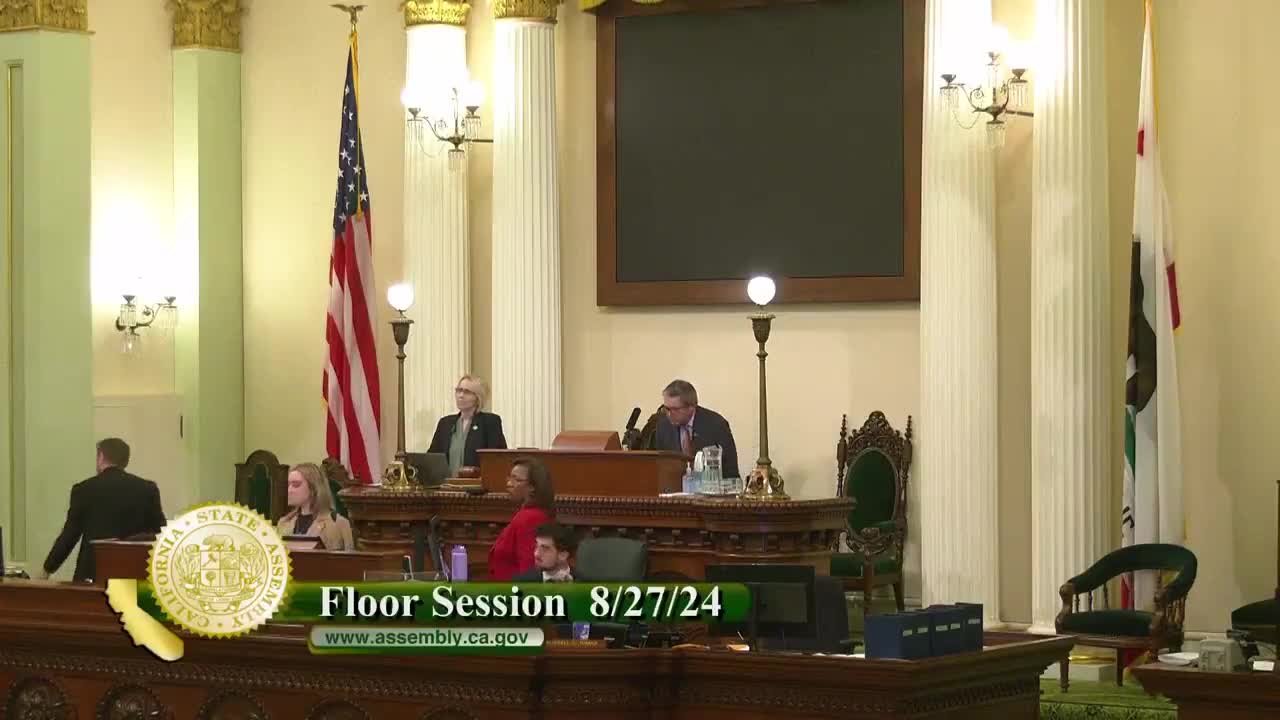 1MIN
Assembly Floor
 1MIN
Assembly Standing Committee on Appropriations
 1MIN
Assembly Standing Committee on Judiciary
 3MIN
Assembly Standing Committee on Business and Professions
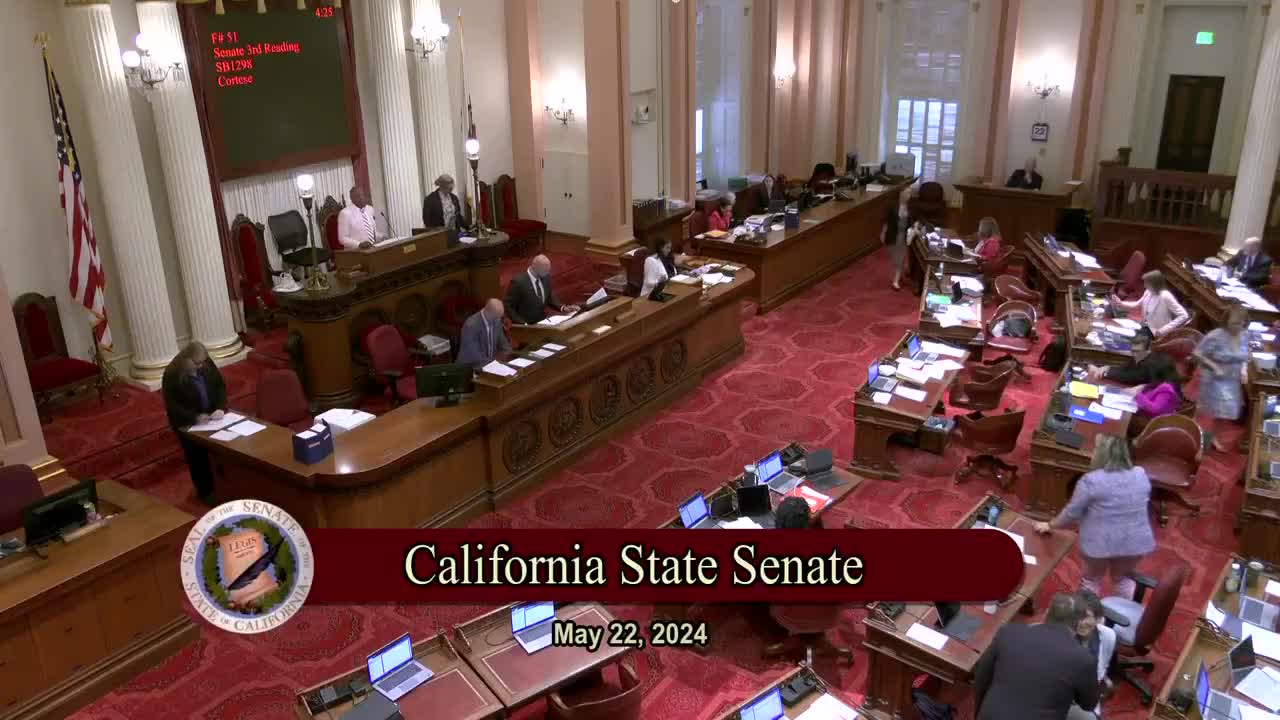 2MIN
Senate Floor
 3MIN
Senate Standing Committee on Judiciary
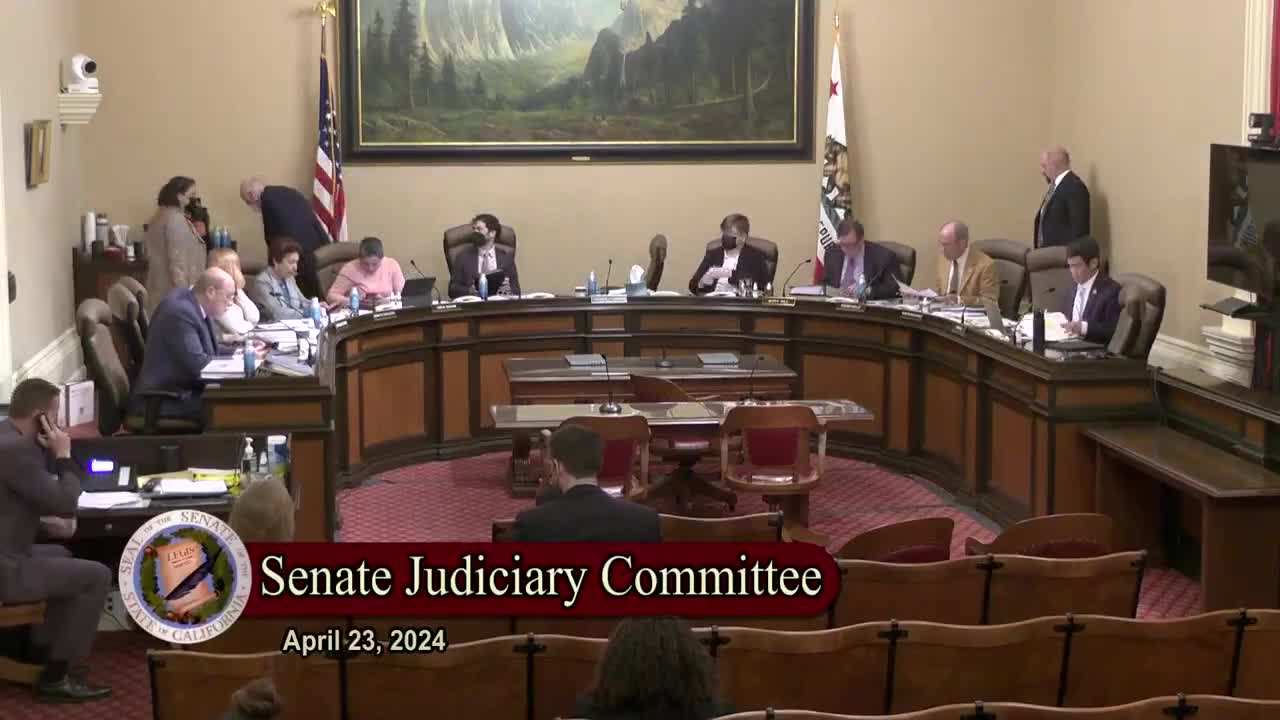 1MIN
Senate Standing Committee on Judiciary
27SEC
Senate Standing Committee on Judiciary
Bill Author

Bill Co-Author(s):