SB 1132: County health officers.
- Session Year: 2023-2024
- House: Senate
- Latest Version Date: 2024-08-19
Current Status:
Passed
(2024-08-19: Chaptered by Secretary of State. Chapter 183, Statutes of 2024.)
Introduced
In Committee
First Chamber
In Committee
Second Chamber
Enacted
Existing law requires a county or city health officer to annually investigate health and sanitary conditions in a county jail, publicly operated detention facility in the county, and private work furlough facility, as specified. Existing law authorizes a county or city health officer to make additional investigations of a county jail or detention facility as they determine necessary.
This bill would additionally authorize a county or city health officer to investigate a private detention facility, as defined, as they determine necessary.
(a)The county health officer shall, at least annually, investigate health and sanitary conditions in a county jail, publicly operated detention facility in the county, and private work furlough facility and program established pursuant to Section 1208 of the Penal Code. A private work furlough facility and program shall pay an annual fee to the county health officer commensurate with the annual cost of those investigations, as determined by the county health officer. The county health officer may make additional investigations of a county jail, private detention facility, or other detention facility of the county as they determine necessary. The county health officer shall submit a report to the Board of State and Community Corrections, the sheriff or other person in charge of the jail or detention facility, and to the board of supervisors. In a city having a health officer, the city health officer shall, at least annually, investigate health and sanitary conditions in a city jail and other detention facility. The city health officer may make additional investigations of a city jail, private detention facility, or other detention facility as they determine necessary. The city health officer shall submit a report to the Board of State and Community Corrections, the person in charge of the jail or detention facility, and to the city governing body.
(b)Whenever requested by the sheriff, the chief of police, local legislative body, or the Board of State and Community Corrections, but not more often than twice annually, the county health officer or, in cities having a city health officer, the city health officer, shall investigate health and sanitary conditions in a jail or detention facility described in this section, and submit a report to each of the officers and agencies authorized in this section to request the investigation and to the Board of State and Community Corrections.
(c)The investigating officer shall determine if the food, clothing, and bedding is of sufficient quantity and quality that at least shall equal minimum standards and requirements prescribed by the Board of State and Community Corrections for the feeding, clothing, and care of prisoners in local jails and detention facilities, and if the sanitation requirements required by Article 1 (commencing with Section 114250) of Chapter 8 of Part 7 of Division 104 for restaurants have been maintained.
(d)For purposes of this section, private detention facility has the same meaning as in Section 7320 of the Government Code.
(a)The county health officer shall, at least annually, investigate health and sanitary conditions in a county jail, publicly operated detention facility in the county, and private work furlough facility and program established pursuant to Section 1208 of the Penal Code. A private work furlough facility and program shall pay an annual fee to the county health officer commensurate with the annual cost of those investigations, as determined by the county health officer. The county health officer may make additional investigations of a county jail, private detention facility, or other detention facility of the county as they determine necessary. The county health officer shall submit a report to the Board of State and Community Corrections, the sheriff or other person in charge of the jail or detention facility, and to the board of supervisors. In a city having a health officer, the city health officer shall, at least annually, investigate health and sanitary conditions in a city jail and other detention facility. The city health officer may make additional investigations of a city jail, private detention facility, or other detention facility as they determine necessary. The city health officer shall submit a report to the Board of State and Community Corrections, the person in charge of the jail or detention facility, and to the city governing body.
(b)Whenever requested by the sheriff, the chief of police, local legislative body, or the Board of State and Community Corrections, but not more often than twice annually, the county health officer or, in cities having a city health officer, the city health officer, shall investigate health and sanitary conditions in a jail or detention facility described in this section, and submit a report to each of the officers and agencies authorized in this section to request the investigation and to the Board of State and Community Corrections.
(c)The investigating officer shall determine if the food, clothing, and bedding is of sufficient quantity and quality that at least shall equal minimum standards and requirements prescribed by the Board of State and Community Corrections for the feeding, clothing, and care of prisoners in local jails and detention facilities, and if the sanitation requirements required by Article 1 (commencing with Section 114250) of Chapter 8 of Part 7 of Division 104 for restaurants have been maintained.
(d)For the purposes of this section, private detention facility has the same meaning as in Section 7320 of the Government Code.
|
Date
|
Status
|
|---|---|
| Aug 19, 2024 | Chaptered by Secretary of State. Chapter 183, Statutes of 2024. |
| Aug 19, 2024 | Approved by the Governor. |
| Aug 13, 2024 | Enrolled and presented to the Governor at 2 p.m. |
| Aug 8, 2024 | In Senate. Ordered to engrossing and enrolling. |
| Aug 8, 2024 | Read third time. Passed. (Ayes 70. Noes 0. Page 6248.) Ordered to the Senate. |
| Aug 5, 2024 | Read second time. Ordered to third reading. |
| Jul 3, 2024 | From committee: Do pass. (Ayes 8. Noes 0.) (July 2). |
| Jun 5, 2024 | From committee: Do pass and re-refer to Com. on PUB. S. (Ayes 15. Noes 0.) (June 4). Re-referred to Com. on PUB. S. |
| May 28, 2024 | Referred to Coms. on HEALTH and PUB. S. |
| May 21, 2024 | In Assembly. Read first time. Held at Desk. |
| May 20, 2024 | Read third time. Passed. (Ayes 36. Noes 0. Page 4014.) Ordered to the Assembly. |
| Apr 24, 2024 | Read second time. Ordered to third reading. |
| Apr 23, 2024 | From committee: Do pass. (Ayes 5. Noes 0. Page 3730.) (April 23). |
| Apr 9, 2024 | From committee with author's amendments. Read second time and amended. Re-referred to Com. on PUB S. |
| Apr 5, 2024 | Set for hearing April 23. |
| Apr 4, 2024 | From committee: Do pass and re-refer to Com. on PUB S. (Ayes 8. Noes 1. Page 3468.) (April 3). Re-referred to Com. on PUB S. |
| Mar 14, 2024 | Set for hearing April 3. |
| Feb 21, 2024 | Referred to Coms. on HEALTH and PUB S. |
| Feb 14, 2024 | From printer. May be acted upon on or after March 15. |
| Feb 13, 2024 | Introduced. Read first time. To Com. on RLS. for assignment. To print. |
|
Date
|
Description
|
Location
|
Votes
|
|
|---|---|---|---|---|
| Aug 8, 2024 | SB 1132 Durazo Senate Third Reading By Gipson | Assembly Floor |
Passed |
|
| Jul 2, 2024 | Do pass. | Assembly Standing Committee on Public Safety |
Passed |
|
| Jun 4, 2024 | Do pass and be re-referred to the Committee on [Public Safety] | Assembly Standing Committee on Health |
Passed |
|
| May 20, 2024 | Senate 3rd Reading SB1132 Durazo et al. | Senate Floor |
Passed |
|
| Apr 23, 2024 | Do pass | Senate Standing Committee on Public Safety |
Passed |
|
| Apr 3, 2024 | Do pass, but first be re-referred to the Committee on [Public Safety] | Senate Standing Committee on Health |
Passed |
This list shows positions taken on this bill by organizations on the date displayed, which is linked to the original source.
Positions by individuals are not included.
|
Organization
|
Position
|
Date
|
|---|---|---|
| All of Us or None | * Support | Apr 23, 2024 |
| Alliance for Boys and Men of Color | ** Support | |
| American Civil Liberties Union California Action | ** Support | |
| Amnesty International USA | ** Support | |
| APLA Health | ** Support | |
| Asian Americans Advancing Justice of Southern California | * Support | Jul 2, 2024 |
| Buen Vecino | ** Support | |
| California Coalition for Women Prisoners | ** Support | |
| California Collaborative for Immigrant Justice | ** Support | |
| California Immigrant Policy Center | * Support | Jul 2, 2024 |
| California Pan-Ethnic Health Network | * Support | Jun 5, 2024 |
| California Public Defenders Association | ** Support | |
| Center for Gender & Refugee Studies | ** Support | |
| Communities United for Restorative Youth Justice | ** Support | |
| Courage California | ** Support | |
| Disability Rights California | ** Support | |
| Ella Baker Center | * Support | Jul 2, 2024 |
| Friends Committee On Legislation Of California | ** Support | |
| Health Officers Association Of California | * Support | Jul 2, 2024 |
| Immigrant Defense Advocates | * Support | Jun 4, 2024 |
| Indivisible California: Statestrong | ** Support | |
| Initiate Justice | ** Support | |
| Inland Coalition for Immigrant Justice | ** Support | |
| Interfaith Movement for Human Integrity | * Support | Jul 2, 2024 |
| Justice & Diversity Center of the Bar Association of San Francisco | ** Support | |
| Lawyers Committee for Civil Rights of the San Francisco Bay Area | ** Support | |
| Legal Services for Prisoners with Children | * Support | Apr 23, 2024 |
| Next Gen California | ** Support | |
| Norcal Resist | ** Support | |
| Oakland Privacy | ** Support | |
| Orale: Organizing Rooted in Abolition, Liberation, and Empowerment | ** Support | |
| Planned Parenthood Affiliates Of California | * Support | Jun 4, 2024 |
| Public Counsel | ** Support | |
| Riverside Sheriffs' Association | * Support | Apr 23, 2024 |
| san francisco marin medical society | ** Support | |
| Secure Justice | ** Support | |
| Smart Justice California | * Support | Jul 2, 2024 |
SENATE THIRD READING
STR Bill Id:SB 1132
Author:(Durazo)
As Amended Ver:April 9, 2024
Majority vote
SUMMARY
Clarifies that "private detention facilities," as defined under existing law, are subject to inspection by local health officers (LHOs).
Major Provisions
COMMENTS
- Private Detention Facilities. The federal government contracts with private detention facilities across the country to house immigration detainees. There are currently six private detention facilities operating in California in four counties—San Bernardino County, Kern County, San Diego County, and Imperial County.
- Inspection of Detention Facilities. LHOs serve a number of public health functions at the local level, including managing infectious disease control, implementing emergency preparedness and response, and overseeing public health services. There are 61 appointed physician LHOs in California—one for each of the 58 counties and the cities of Berkeley, Long Beach, and Pasadena.
County jails, city jails, and other publicly operated detention facilities are subject to biennial inspections by the Board of State and Community Corrections (BSCC). Those biennial inspections include the annual health and safety inspections that LHOs are required to conduct annually, and which LHOs are authorized to conduct more frequently if necessary. The BSCC is required to publicly post the inspection reports as well as submit a report every two years to the Legislature which includes information pertaining to the inspection of those local detention facilities that have not complied with the minimum standards, specifying the areas in which the facility has failed to comply and the estimated cost to the facility in order to comply with the minimum standards.
- Jurisdiction Over Private Detention Facilities. According to a 2021 CalMatters article, during the COVID-19 pandemic, there were reports that there was confusion about the role of state and local health authorities with regard to federal detention facilities. Immigrant rights organizations sent a letter to public health officials in Kern County asking about LHO oversight, including how it planned to ensure detainees were being tested for COVID-19. In response, the county's director of public health services said they did not have jurisdiction over the center. CalMatters indicated that there were similar instances of confusion over jurisdiction in other counties. This bill clarifies that LHOs have authority to inspect private detention facilities as deemed necessary. This bill would not impose an annual inspection requirement.
According to the Author
The ability of LHOs to enter and inspect private detention facilities is not clearly addressed under current California law. As it stands, the relevant statutes empower LHOs to enter public detention facilities and private work furlough facilities. The author continues that the lack of clarity on oversight of private detention facilities poses a unique and critical public health challenge. Conditions in these facilities not only affect the lives of those detained, but also impacts the surrounding communities. The author states that during the COVID-19 pandemic, an outbreak at Otay Mesa Detention Facility resulted in more than 300 staff and detained individuals becoming infected. The author concludes that in order to ensure public health regulations and standards are upheld in private detention facilities for the health and safety of people detained and working in these facilities, this bill clarifies that LHOs have authority to inspect private detention facilities as deemed necessary.
Arguments in Support
According to Immigrant Defense Advocates, California Collaborative of Immigrant Justice, California Immigrant Policy Center, and Next Gen California, cosponsors of this bill, private detention facilities continue to pose challenges with respect to health, safety, and sanitary conditions. Detained individuals in these facilities continue to file numerous grievances. The cosponsors state that these grievances primarily revolve around detainees facing challenges in accessing timely medical attention, enduring prolonged waits for treatment of persistent conditions, often stretching to months, and encountering difficulties in obtaining essential medications. The cosponsors continue that one specific detainee recounted losing multiple teeth due to a two-year delay in receiving dental cavity fillings. During inspections, a prison dentist reportedly proposed that detainees could improve their dental hygiene by using strings from their shoes for flossing their teeth. The cosponsors conclude that bill does not impose an annual inspection requirement to county health officials, but empowers them to ensure that these private facilities adhere to public health orders and guidelines that are necessary to keep our state safe.
Arguments in Opposition
None on file.
FISCAL COMMENTS
None.
VOTES
SENATE FLOOR: 36-0-4
YES: Allen, Alvarado-Gil, Archuleta, Ashby, Atkins, Becker, Blakespear, Bradford, Caballero, Cortese, Dodd, Durazo, Eggman, Glazer, Gonzalez, Hurtado, Jones, Laird, Limón, McGuire, Menjivar, Newman, Niello, Ochoa Bogh, Padilla, Portantino, Roth, Rubio, Seyarto, Skinner, Smallwood-Cuevas, Stern, Umberg, Wahab, Wiener, Wilk
ABS, ABST OR NV: Dahle, Grove, Min, Nguyen
ASM HEALTH: 15-0-1
YES: Bonta, Aguiar-Curry, Arambula, Wendy Carrillo, Flora, Haney, Jones-Sawyer, Maienschein, McCarty, Joe Patterson, Rodriguez, Sanchez, Santiago, Schiavo, Weber
ABS, ABST OR NV: Waldron
ASM PUBLIC SAFETY: 8-0-0
YES: McCarty, Alanis, Lackey, Stephanie Nguyen, Reyes, Ting, Wilson, Zbur
UPDATED
VERSION: April 9, 2024
CONSULTANT: Eliza Brooks / HEALTH / (916) 319-2097 FN: 0003719
Date of Hearing: July 2, 2024
Chief Counsel: Gregory Pagan
ASSEMBLY COMMITTEE ON PUBLIC SAFETY
Kevin McCarty, Chair
SBPCA Bill Id:SB 1132
Author:(Durazo) – As Amended Ver:April 9, 2024
SUMMARY: Clarifies that local county health officers (LHO) are authorized to inspect health and sanitary conditions in private detention facilities.
EXISTING LAW:
- Requires each county board of supervisors (board) to appoint a LHO. Requires LHOs to enforce and observe orders of the board pertaining to public health and sanitary matters, including regulations prescribed by the California Department of Public Health (DPH), and statutes relating to public health. (Health & Saf., Code, § § 101000 and 101030.)
- Requires LHOs to investigate health and sanitary conditions in every publicly operated detention facility in the county or city (including county and city jails), and all private work furlough facilities and programs, at least annually. Requires private work furlough facilities and programs to pay an annual fee commensurate with the annual cost of investigations. Permits LHOs to make additional investigations of any detention facility as determined necessary. Requires LHOs to submit a report to the Board of State and Community Corrections (BSCC), the person in charge of the jail or detention facility, and to the board or city governing board (in the case of a city that has an LHO). (Health & Saf. Code, § 101045, subd. (a).)
- Requires LHOs, whenever requested by the sheriff, the chief of police, local legislative body, or the BSCC, but not more often than twice annually, to investigate health and sanitary conditions in any jail or detention facility, and submit a report to the officer and agency requesting the investigation and to the BSCC. (Health & Saf. Code, § 101045, subd. (b).)
- Requires the investigating LHO to determine if the food, clothing, and bedding is of sufficient quantity and quality that at least equal minimum standards and requirements of the BSCC for the feeding, clothing, and care of prisoners in all local jails and detention facilities, and if the sanitation requirements under the California Retail Food Code, have been maintained. (Health & Saf. Code, § 101045, subd. (c).)
- Defines a “detention facility” as a facility in which persons are incarcerated or otherwise involuntarily confined for purposes of execution of a punitive sentence imposed by a court or detention pending a trial hearing or other judicial or administrative proceeding. Defines a “private detention facility” as a detention facility that is operated by a private, nongovernmental, for-profit entity pursuant to a contract or agreement with a governmental entity. Specifies that a “detention facility” does not include:
- A facility providing rehabilitative, counseling, treatment, mental health, educational, or medical services to a juvenile that is under the jurisdiction of the juvenile court;
- A facility providing evaluation or treatment services to a person who has been detained, or is subject to an order of commitment by a court;
- A facility providing educational, vocational, medical, or other ancillary services to an inmate in the custody of, and under the direct supervision of, the Department of Corrections and Rehabilitation or a county sheriff or other law enforcement agency;
- A residential care facility;
- A school facility used for the disciplinary detention of a pupil;
- A facility used for the quarantine or isolation of persons for public health reasons; or,
- A facility used for the temporary detention of a person detained or arrested by a merchant, private security guard, or other private person. (Gov. Code, § 7320.)
FISCAL EFFECT: Unknown
COMMENTS:
- Author's Statement: According to the author, "“The ability of county public health officers to enter and inspect private detention facilities is not clearly addressed under current California law. As it stands the relevant statutes empower county health officials to enter public detention facilities and private work furlough facilities. The lack of clarity on oversight of private detention facilities poses a unique and critical public health challenge. Conditions in these facilities not only affect the lives of those detained, but also impacts the surrounding communities. During the COVID-19 pandemic, an outbreak at Otay Mesa Detention Facility resulted in more than 300 staff and detained individuals becoming infected.”
- Private Detention Facilities. The federal government contracts with private detention facilities across the country to house immigration detainees. There are currently six private detention facilities operating in California in four counties—San Bernardino County, Kern County, San Diego County, and Imperial County. Federal, state, and local laws, including county public health orders, govern all immigration detention facilities operating in California. According to the California Department of Justice, facilities that contract to hold detained noncitizens are also required to comply with national detention standards, which establish requirements for emergency planning, security protocols, detainee classification, discipline, medical care, food service, activities and programming, detainee grievances, and access to legal services. The standards set the expectation that the Centers for Disease Control and Prevention guidelines for the prevention and control of infectious and communicable diseases are to be followed and directs each facility have written plans that address the management of infectious and communicable diseases.
- Inspection of Detention Facilities. LHOs serve a number of public health functions at the local level, including managing infectious disease control, implementing emergency preparedness and response, and overseeing public health services. There are 61 appointed physician LHOs in California—one for each of the 58 counties and the cities of Berkeley, Long Beach, and Pasadena. Regulations establish minimum standards for local detention facilities, including standards for the administration and operation of the facilities, medical and mental health care, nutritional quality of food, and environmental standards. Regulations define “local detention facility” to mean “any city, county, city and county, or regional jail, camp, court holding facility, or other correctional facility, whether publicly or privately operated, used for confinement of adults or of both adults and minors, but does not include that portion of a facility for confinement of both adults and minors which is devoted only to the confinement of minors.”
County jails, city jails, and other publicly operated detention facilities are subject to biennial inspections by the BSCC. Those biennial inspections include the annual health and safety inspections that LHOs are required to conduct annually, and which LHOs are authorized to conduct more frequently if necessary. The BSCC is required to publicly post the inspection reports as well as submit a report every two years to the Legislature which includes information pertaining to the inspection of those local detention facilities that have not complied with the minimum standards, specifying the areas in which the facility has failed to comply and the estimated cost to the facility in order to comply with the minimum standards.
- Jurisdiction Over Private Detention Facilities. According to the National Center for Immunization and Respiratory Diseases, communicable disease can easily spread in congregate living facilities or other housing where people who are not related reside in close proximity and share at least one common room. According to a 2021 CalMatters article, during the COVID-19 pandemic, there were reports that there was confusion about the role of state and local health authorities with regard to federal detention facilities, which may have led to delays for vaccine distribution. For example, immigrant rights organizations sent a letter to public health officials in Kern County asking about LHO oversight, including how it planned to ensure detainees were being tested for COVID-19. In response, the county’s director of public health services said they did not have jurisdiction over the center. CalMatters indicated that there were similar instances of confusion over jurisdiction in other counties. This bill clarifies that LHOs have authority to inspect private detention facilities as deemed necessary. This bill would not impose an annual inspection requirement.
- Health Concerns in Private Detention Facilities. According to a January 2023 article published in the Los Angeles (LA) Times, an investigation by the California Division of Occupational Safety and Health found six violations of state code by a private detention facility operator, which appealed. The LA Times reported that the complaint was filed by Immigrant Defense Advocates and the California Collaborative for Immigrant Justice on behalf of several detainees, alleging safety violations including failures by the facility administrators to provide personal protective equipment, maintain sanitary work spaces, prevent the spread of COVID-19 and safeguard against workplace-related illnesses and injuries.
- Argument in Support: According to the Ella Baker Center for Human Rights, “Detention facilities pose a unique challenge with respect to public health and sanitary conditions, and as such, are typically inspected by public health officials. Detention facilities can pose a public health risk to individuals held inside, as well as those who work, visit, or live near these sites.
“In the past, the majority of private detention facilities in California operated pursuant to joint contracts with counties, but have since shifted to direct contracts with the federal government. Despite this change, according to their federal contracts these private facilities remain subject to California state and local public health oversight.
“While public health oversight laws empower inspections of “publicly operated detention facilities and all private work furlough facilities” they do not explicitly cover private detention facilities. [See California Code, Health and Safety Code - HSC § 101045].
“Poor health conditions in these facilities have been widely documented, with reports by Disability Rights noting that the Adelanto Detention facility, “... has an inadequate mental health care and medical care system, made worse by the facility’s harsh and counter-therapeutic practices.”
“Private detention facilities continue to pose challenges with respect to health, safety and sanitary conditions. Detained individuals in these facilities continue to file numerous grievances in private facilities. These grievances primarily revolve around detainees facing challenges in accessing timely medical attention, enduring prolonged waits for treatment of persistent conditions—stretching to months—and encountering difficulties in obtaining essential medications. One specific detainee recounted losing multiple teeth due to a two-year delay in receiving dental cavity fillings. During inspections, a prison dentist reportedly proposed that detainees could improve their dental hygiene by using strings from their shoes for flossing their teeth.
“The goal of SB 1132 is to ensure that county health officials have the ability to enter these facilities when necessary. The bill does not impose an annual inspection requirement to county health officials, but empowers them to ensure that these private facilities adhere to public health orders and guidelines that are necessary to keep our state safe.”
- Prior Legislation:
- AB 263 (Arambula), Chapter 294, Statutes of 2021, requires a private detention facility operator to comply with, and adhere to, all local and state public health orders and occupational safety and health regulations.
- AB 3228 (Bonta, Ch. 190, Stats. 2020) requires a private detention facility operator to comply with, and adhere to, the detention standards of care and confinement agreed upon in the facility’s contract for operations. This bill also provides a private right of action for an individual injured by noncompliance with the above standards, as specified, and allows the court to award a prevailing plaintiff reasonable attorney’s fees and costs.
- AB 263 (Arambula), Chapter 294, Statutes of 2021, requires a private detention facility operator to comply with, and adhere to, all local and state public health orders and occupational safety and health regulations.
REGISTERED SUPPORT / OPPOSITION:
Support
ACLU California Action
Advancing Justice - Asian Law Caucus
Alliance for Boys & Men of Color
Amnesty International USA
Asian Americans Advancing Justice - California
California Coalition for Women Prisoners
California Collaborative for Immigrant Justice
California Immigrant Policy Center
California Pan - Ethnic Health Network
California Public Defenders Association
California Rural Legal Assistance Foundation (crla Foundation)
California Voices for Progress
Center for Gender & Refugee Studies
Center for Immigration Law & Policy At Ucla School of Law
Central Valley Immigrant Integration Collaborative
Communities United for Restorative Youth Justice (CURYJ)
Disability Rights California
Dolores Huerta Foundation
Ella Baker Center for Human Rights
Friends Committee on Legislation of California
Health Officers Association of California
Human Impact Partners
Immigrant Defense Advocates
Immigrant Legal Defense
Indivisible CA Statestrong
Initiate Justice
Inland Coalition for Immigrant Justice
Interfaith Movement for Human Integrity
Keck Human Rights Clinic
Kern Welcoming and Extending Solidarity to Immigrant
LA Cosecha
Latin Advocacy Network
Lawyers Committee for Civil Rights of The San Francisco Bay Area
National Lawyers Guild San Francisco Bay Area Chapter
Nextgen California
Norcal Resist
Oakland Privacy
Orale: Organizing Rooted in Abolition Liberation and Empowerment
Public Counsel
San Francisco Marin Medical Society
Secure Justice
Smart Justice California, a Project of Tides Advocacy
Social Justice Collaborative
Southeast Asia Resource Action Center
The Immigrant Health Equity and Legal Partnership
The Justice & Diversity Center of The Bar Association of San Francisco
Worksafe
Analysis Prepared by: Gregory Pagan / PUB. S. / (916) 319-3744
Date of Hearing: June 4, 2024
ASSEMBLY COMMITTEE ON HEALTH
Mia Bonta, Chair
SBPCA Bill Id:SB 1132
Author:(Durazo) – As Amended Ver:April 9, 2024
SENATE VOTE: 36-0
SUBJECT: County health officers.
SUMMARY: Clarifies that “private detention facilities,” as defined under existing law, are subject to inspection by local health officers (LHOs).
EXISTING LAW:
- Requires each county board of supervisors (board) to appoint a LHO. Requires LHOs to enforce and observe orders of the board pertaining to public health and sanitary matters, including regulations prescribed by the California Department of Public Health (DPH), and statutes relating to public health. [Health and Safety Code (HSC) §101000 and §101030]
- Requires LHOs to investigate health and sanitary conditions in every publicly operated detention facility in the county or city (including county and city jails), and all private work furlough facilities and programs, at least annually. Requires private work furlough facilities and programs to pay an annual fee commensurate with the annual cost of investigations. Permits LHOs to make additional investigations of any detention facility as determined necessary. Requires LHOs to submit a report to the Board of State and Community Corrections (BSCC), the person in charge of the jail or detention facility, and to the board or city governing board (in the case of a city that has an LHO). [HSC §101045]
- Requires LHOs, whenever requested by the sheriff, the chief of police, local legislative body, or the BSCC, but not more often than twice annually, to investigate health and sanitary conditions in any jail or detention facility, and submit a report to the officer and agency requesting the investigation and to the BSCC. [HSC §101045]
- Requires the investigating LHO to determine if the food, clothing, and bedding is of sufficient quantity and quality that at least equal minimum standards and requirements of the BSCC for the feeding, clothing, and care of prisoners in all local jails and detention facilities, and if the sanitation requirements under the California Retail Food Code, have been maintained. [HSC §101045]
- Defines a “detention facility” as a facility in which persons are incarcerated or otherwise involuntarily confined for purposes of execution of a punitive sentence imposed by a court or detention pending a trial hearing or other judicial or administrative proceeding. Defines a “private detention facility” as a detention facility that is operated by a private, nongovernmental, for-profit entity pursuant to a contract or agreement with a governmental entity. Specifies that a “detention facility” does not include:
- A facility providing rehabilitative, counseling, treatment, mental health, educational, or medical services to a juvenile that is under the jurisdiction of the juvenile court;
- A facility providing evaluation or treatment services to a person who has been detained, or is subject to an order of commitment by a court;
- A facility providing educational, vocational, medical, or other ancillary services to an inmate in the custody of, and under the direct supervision of, the Department of Corrections and Rehabilitation or a county sheriff or other law enforcement agency;
- A residential care facility;
- A school facility used for the disciplinary detention of a pupil;
- A facility used for the quarantine or isolation of persons for public health reasons; or,
- A facility used for the temporary detention of a person detained or arrested by a merchant, private security guard, or other private person. [Government Code §7320]
FISCAL EFFECT: None.
COMMENTS:
- PURPOSE OF THIS BILL. According to the author, the ability of LHOs to enter and inspect private detention facilities is not clearly addressed under current California law. As it stands, the relevant statutes empower LHOs to enter public detention facilities and private work furlough facilities. The author continues that the lack of clarity on oversight of private detention facilities poses a unique and critical public health challenge. Conditions in these facilities not only affect the lives of those detained, but also impacts the surrounding communities. The author states that during the COVID-19 pandemic, an outbreak at Otay Mesa Detention Facility resulted in more than 300 staff and detained individuals becoming infected. The author concludes that in order to ensure public health regulations and standards are upheld in private detention facilities for the health and safety of people detained and working in these facilities, this bill clarifies that LHOs have authority to inspect private detention facilities as deemed necessary.
- BACKGROUND.
- Private Detention Facilities. The federal government contracts with private detention facilities across the country to house immigration detainees. There are currently six private detention facilities operating in California in four counties—San Bernardino County, Kern County, San Diego County, and Imperial County.
Federal, state, and local laws, including county public health orders, govern all immigration detention facilities operating in California. According to the California Department of Justice, facilities that contract to hold detained noncitizens are also required to comply with national detention standards, which establish requirements for emergency planning, security protocols, detainee classification, discipline, medical care, food service, activities and programming, detainee grievances, and access to legal services. The standards set the expectation that the Centers for Disease Control and Prevention guidelines for the prevention and control of infectious and communicable diseases are to be followed and directs each facility have written plans that address the management of infectious and communicable diseases.
- Inspection of Detention Facilities. LHOs serve a number of public health functions at the local level, including managing infectious disease control, implementing emergency preparedness and response, and overseeing public health services. There are 61 appointed physician LHOs in California—one for each of the 58 counties and the cities of Berkeley, Long Beach, and Pasadena. Regulations establish minimum standards for local detention facilities, including standards for the administration and operation of the facilities, medical and mental health care, nutritional quality of food, and environmental standards. Regulations define “local detention facility” to mean “any city, county, city and county, or regional jail, camp, court holding facility, or other correctional facility, whether publicly or privately operated, used for confinement of adults or of both adults and minors, but does not include that portion of a facility for confinement of both adults and minors which is devoted only to the confinement of minors.”
County jails, city jails, and other publicly operated detention facilities are subject to biennial inspections by the BSCC. Those biennial inspections include the annual health and safety inspections that LHOs are required to conduct annually, and which LHOs are authorized to conduct more frequently if necessary. The BSCC is required to publicly post the inspection reports as well as submit a report every two years to the Legislature which includes information pertaining to the inspection of those local detention facilities that have not complied with the minimum standards, specifying the areas in which the facility has failed to comply and the estimated cost to the facility in order to comply with the minimum standards.
- Jurisdiction Over Private Detention Facilities. According to the National Center for Immunization and Respiratory Diseases, communicable disease can easily spread in congregate living facilities or other housing where people who are not related reside in close proximity and share at least one common room. According to a 2021 CalMatters article, during the COVID-19 pandemic, there were reports that there was confusion about the role of state and local health authorities with regard to federal detention facilities, which may have led to delays for vaccine distribution. For example, immigrant rights organizations sent a letter to public health officials in Kern County asking about LHO oversight, including how it planned to ensure detainees were being tested for COVID-19. In response, the county’s director of public health services said they did not have jurisdiction over the center. CalMatters indicated that there were similar instances of confusion over jurisdiction in other counties. This bill clarifies that LHOs have authority to inspect private detention facilities as deemed necessary. This bill would not impose an annual inspection requirement.
- Health Concerns in Private Detention Facilities. According to a January 2023 article published in the Los Angeles (LA) Times, an investigation by the California Division of Occupational Safety and Health found six violations of state code by a private detention facility operator, which appealed. The LA Times reported that the complaint was filed by Immigrant Defense Advocates and the California Collaborative for Immigrant Justice on behalf of several detainees, alleging safety violations including failures by the facility administrators to provide personal protective equipment, maintain sanitary work spaces, prevent the spread of COVID-19 and safeguard against workplace-related illnesses and injuries.
- SUPPORT. According to Immigrant Defense Advocates, California Collaborative of Immigrant Justice, California Immigrant Policy Center, and Next Gen California, cosponsors of this bill, private detention facilities continue to pose challenges with respect to health, safety, and sanitary conditions. Detained individuals in these facilities continue to file numerous grievances. The cosponsors state that these grievances primarily revolve around detainees facing challenges in accessing timely medical attention, enduring prolonged waits for treatment of persistent conditions, often stretching to months, and encountering difficulties in obtaining essential medications. The cosponsors continue that one specific detainee recounted losing multiple teeth due to a two-year delay in receiving dental cavity fillings. During inspections, a prison dentist reportedly proposed that detainees could improve their dental hygiene by using strings from their shoes for flossing their teeth. The cosponsors conclude that bill does not impose an annual inspection requirement to county health officials, but empowers them to ensure that these private facilities adhere to public health orders and guidelines that are necessary to keep our state safe.
- PREVIOUS LEGISLATION. AB 263 (Arambula), Chapter 294, Statutes of 2021, requires a private detention facility operator to comply with, and adhere to, all local and state public health orders and occupational safety and health regulations.
- DOUBLE REFERRAL. This bill is double referred; upon passage in this Committee, this bill will be referred to the Assembly Committee on Public Safety.
REGISTERED SUPPORT / OPPOSITION:
Support
California Collaborative of Immigrant Justice (cosponsor)
California Immigrant Policy Center (cosponsor)
Immigrant Defense Advocates (cosponsor)
Nextgen California (cosponsor)
Aaaj- Asian Law Caucus
ACLU California Action
All Rise Alameda
Alliance for Boys and Men of Color
Amnesty International USA
Apla Health
Asian Americans Advancing Justice-Southern California
Bravo & Bravo
Buen Vecino
California Coalition for Women Prisoners
California Pan-ethnic Health Network
California Public Defenders Association
California Rural Legal Assistance Foundation (CRLA Foundation)
California Voices for Progress
Center for Gender and Refugee Studies-California
Center for Immigration Law and Policy At UCLA Law
Central Valley Immigrant Integration Collaborative
Communities United for Restorative Youth Justice (CURYJ)
Courage California
Disability Rights California
Dolores Huerta Foundation
Ella Baker Center for Human Rights
Friends Committee on Legislation of California
Health Officers Association of California
Human Impact Partners
Immigrant Health Equity and Legal Partnership
Immigrant Legal Defense
Indivisible CA Statestrong
Initiate Justice
Inland Coalition for Immigrant Justice
Interfaith Movement for Human Integrity
Keck Human Rights Clinic
Kern Welcoming and Extending Solidarity to Immigrant
LA Cosecha
Latin Advocacy Network
Lawyers' Committee for Civil Rights of The San Francisco Bay Area
National Lawyers Guild San Francisco Bay Area Chapter
Norcal Resist
Oakland Privacy
Orale: Organizing Rooted in Abolition Liberation and Empowerment
Public Counsel
San Francisco Marin Medical Society
Secure Justice
Social Justice Collaborative
Southeast Asia Resource Action Center
The Justice & Diversity Center of The Bar Association of San Francisco
Voices for Progress
Worksafe
Opposition
None on file.
Analysis Prepared by: Eliza Brooks / HEALTH / (916) 319-2097
SENATE RULES COMMITTEE Office of Senate Floor Analyses (916) 651-1520 Fax: (916) 327-4478 | SB 1132 |
THIRD READING
Bill No: SB 1132
Author: Durazo (D), et al.
Amended: 4/9/24
Vote: 21
SENATE HEALTH COMMITTEE: 8-1, 4/3/24
AYES: Roth, Gonzalez, Hurtado, Limón, Menjivar, Rubio, Smallwood-Cuevas, Wiener
NOES: Nguyen
NO VOTE RECORDED: Glazer, Grove
SENATE PUBLIC SAFETY COMMITTEE: 5-0, 4/23/24
AYES: Wahab, Seyarto, Bradford, Skinner, Wiener
SUBJECT: County health officers
SOURCE: California Collaborative for Immigrant Justice
California Immigrant Policy Center
Immigrant Defense Advocates
Next Gen California
DIGEST:
This bill clarifies that “private detention facilities,” as defined, are subject to inspection by local health officers.
ANALYSIS:
Existing law:
- Requires each county board of supervisors to appoint a local health officer (LHO). Requires LHOs to enforce and observe orders of the board pertaining to public health and sanitary matters, including regulations prescribed by the California Department of Public Health (CDPH), and statutes relating to public health. [HSC §101000 and §101030]
- Requires LHOs to investigate health and sanitary conditions in every publicly operated detention facility in the county or city (including county and city jails), and all private work furlough facilities and programs, at least annually. Requires private work furlough facilities and programs to pay an annual fee commensurate with the annual cost of investigations. Permits LHOs to make additional investigations of any detention facility as determined necessary. Requires LHOs to submit a report to the Board of State and Community Corrections (BSCC), the person in charge of the jail or detention facility, and to the board of supervisors or city governing board (in the case of a city that has an LHO). [HSC §101045]
- Requires LHOs, whenever requested by the sheriff, the chief of police, local legislative body, or the BSCC, but not more often than twice annually, to investigate health and sanitary conditions in any jail or detention facility, and submit a report to the officer and agency requesting the investigation and to the BSCC. [HSC §101045]
- Requires the investigating LHO to determine if the food, clothing, and bedding is of sufficient quantity and quality that at least equal minimum standards and requirements of the BSCC for the feeding, clothing, and care of prisoners in all local jails and detention facilities, and if the sanitation requirements under the California Retail Food Code (CalCode), have been maintained. [HSC §101045]
- Defines a “detention facility” as a facility in which persons are incarcerated or otherwise involuntarily confined for purposes of execution of a punitive sentence imposed by a court or detention pending a trial hearing or other judicial or administrative proceeding. Defines a “private detention facility” as a detention facility that is operated by a private, nongovernmental, for-profit entity pursuant to a contract or agreement with a governmental entity. Specifies that a “detention facility” does not include:
- A facility providing rehabilitative, counseling, treatment, mental health, educational, or medical services to a juvenile that is under the jurisdiction of the juvenile court;
- A facility providing evaluation or treatment services to a person who has been detained, or is subject to an order of commitment by a court;
- A facility providing educational, vocational, medical, or other ancillary services to an inmate in the custody of, and under the direct supervision of, the Department of Corrections and Rehabilitation or a county sheriff or other law enforcement agency;
- A residential care facility;
- A school facility used for the disciplinary detention of a pupil;
- A facility used for the quarantine or isolation of persons for public health reasons; or,
- A facility used for the temporary detention of a person detained or arrested by a merchant, private security guard, or other private person. [GOV §7320]
This bill clarifies that “private detention facilities,” as defined under existing law, are subject to inspection by LHOs.
Comments
Author’s statement. According to the author, the ability of LHOs to enter and inspect private detention facilities is not clearly addressed under current California law. As it stands the relevant statutes empower LHOs to enter public detention facilities and private work furlough facilities. The lack of clarity on oversight of private detention facilities poses a unique and critical public health challenge. Conditions in these facilities not only affect the lives of those detained, but also impacts the surrounding communities. During the COVID-19 pandemic, an outbreak at Otay Mesa Detention Facility resulted in more than 300 staff and detained individuals becoming infected. In order to ensure public health regulations and standards are upheld in private detention facilities for the health and safety of people detained and working in these facilities, this bill clarifies that LHOs have authority to inspect private detention facilities as deemed necessary.
Background
- The federal government contracts with private detention facilities across the country to house federal inmates and immigration detainees. According to information provided by the sponsor of this bill, there are currently six private detention facilities operating in California:
- San Bernardino County: Adelanto ICE Processing Center (capacity 1,940) and Desert View Annex (capacity 750);
- Kern County: Golden State Annex (700 capacity) and Mesa Verde ICE Processing Center (capacity 400);
- San Diego County: Otay Mesa Detention Center (1,994 capacity); and,
- Imperial County: Imperial Regional Detention Facility (704 capacity).
According to a July 2022 California Department of Justice (DOJ) report on immigration detention in California; federal, state, and local laws (including county public health orders) govern all immigration detention facilities operating in California. Facilities that contract to hold detained noncitizens are also bound by national detention standards, which establish requirements for emergency planning, security protocols, detainee classification, discipline, medical care, food service, activities and programming, detainee grievances, and access to legal services. The standards set the expectation that the Center for Disease Control and Prevention (CDC) guidelines “for the prevention and control of infectious and communicable diseases shall be followed,” and directs that each facility have written plans that “address the management of infectious and communicable diseases.” The standards also require “written plans that address the management of infectious and communicable diseases, including, but not limited to, testing, isolation, prevention, and education” as well as “reporting and collaboration with local or state health departments in accordance with state and local laws and recommendations.
- Reports of confusion over jurisdiction during COVID pandemic. According to the CDC, communicable disease can easily spread in congregate living facilities (such as detention facilities, emergency/homeless shelters, dormitories, group homes, and nursing homes) or other housing where people who are not related reside in close proximity and share at least one common room, such as a sleeping room, kitchen, bathroom, or living room. Federal and state government officials convened working groups and issued guidance to public health officials and facility administrators on how to minimize outbreaks of COVID-19. However, according to a February 22, 2021 CalMatters article, throughout the pandemic there was confusion about the role state and local health authorities play within federal detention facilities, which lead to problems with COVID testing and vaccine distribution. For example, immigrant rights organizations sent a letter to public health officials in Kern County asking about LHO oversight, including how it planned to ensure detainees were being tested for COVID. In response, the county’s director of public health services said they did not have jurisdiction over the center. According to the article, there were similar instances of confusion over jurisdiction in other counties.
- LHO inspections of detention facilities in California. LHOs serve a number of public health functions at the local level, including to implement infectious disease control, emergency preparedness and response, and maternal, child, and adolescent health, through 61 legally-appointed physician LHOs in California (one from each of the 58 counties and the three cities of Berkeley, Long Beach, and Pasadena). Annual inspections of health and sanitary conditions in a county jail (or in the case of a city jail, where there is a city health officer) and publicly operated detention facilities, inspection checklists for minimum standards are determined by the Title 15 California Code of Regulations and CalCode. The checklists are divided by Adult Court and Temporary Holding Facilities, Adult Jail Facilities, and Juvenile Facilities; and, into three sections: environmental, nutritional, and medical/mental health. All three sections must be completed at each inspection. The BSCC follows up on items of noncompliance, as LHOs have no enforcement duties. The BSCC publicly posts the inspection reports, and existing law (Penal Code 6031.2) also requires the BSCC to submit a report to the Legislature showing results of its biennial facility inspections and monitoring of compliance with training standards (including non-compliance items from LHO investigations).
Related/Prior Legislation
AB 263 (Arambula, Chapter 294, Statutes of 2021) requires a private detention facility operator to comply with, and adhere to, all local and state public health orders and occupational safety and health regulations.
FISCAL EFFECT: Appropriation: No Fiscal Com.: No Local: No
SUPPORT: (Verified 4/23/24)
California Collaborative for Immigrant Justice (co-source)
California Immigrant Policy Center (co-source)
Immigrant Defense Advocates (co-source)
Next Gen California (co-source)
Alliance for Boys and Men of Color
American Civil Liberties Union California Action
Amnesty International USA
APLA Health
Asian Americans Advancing Justice Southern California
Buen Vecino
California Coalition for Women Prisoners
California Public Defenders Association
Center for Gender & Refugee Studies
Communities United for Restorative Youth Justice
Courage California
Disability Rights California
Ella Baker Center for Human Rights
Friends Committee on Legislation of California
Health Officers Association of California
Indivisible California: Statestrong
Initiate Justice
Inland Coalition for Immigrant Justice
Justice & Diversity Center of the Bar Association of San Francisco
Lawyers’ Committee for Civil Rights of the San Francisco Bay Area
NorCal Resist
Oakland Privacy
ORALE: Organizing Rooted in Abolition, Liberation, and Empowerment
Public Counsel
San Francisco Marin Medical Society
Secure Justice
One individual
OPPOSITION: (Verified 4/23/24)
None received
ARGUMENTS IN SUPPORT: The sponsors of this bill write that detention facilities can pose a public health risk to individuals held inside, as well as those who work, visit, or live near these sites. In the past, the majority of private detention facilities in California operated pursuant to joint contracts with counties, but have since shifted to direct contracts with the federal government. According to their federal contracts, these private facilities remain subject to California state and local public health oversight. However, advocates have documented a lack of clarity with respect to how these facilities are viewed by public health officials. All public detention facilities have mechanisms to review poor health and safety outcomes. However, oversight of health conditions in private detention facilities is limited. The federal government contracts with the Nakamoto Group Inc. to conduct annual inspections of private civil facilities in California, while the Office of Detention Oversight inspects facilities every three years. A recent report by the Department of Homeland Security (DHS) Office of Inspector General stated that Nakamoto’s inspections “do not fully examine actual conditions or identify all compliance deficiencies,” while the Office of Detention Oversight inspections are “too infrequent to ensure the facilities implement all corrections.” Poor health conditions in these facilities have been widely documented, with reports by Disability Rights noting that the Adelanto Detention facility, “... has an inadequate mental health care and medical care system, made worse by the facility’s harsh and counter-therapeutic practices.” This bill’s sponsors state that private detention facilities continue to pose challenges with respect to health, safety, and sanitary conditions. Detained individuals in these facilities continue to file numerous grievances in private facilities, which primarily revolve around detainees facing challenges in accessing timely medical attention, enduring prolonged waits for treatment of persistent conditions—stretching to months—and encountering difficulties in obtaining essential medications. One specific detainee recounted losing multiple teeth due to a two-year delay in receiving dental cavity fillings. During inspections, a prison dentist reportedly proposed that detainees could improve their dental hygiene by using strings from their shoes for flossing their teeth. The sponsors write that the goal of this bill is to ensure that county health officials have the ability to enter these facilities when necessary. The bill does not impose an annual inspection requirement to county health officials, but empowers them to ensure that these private facilities adhere to public health orders and guidelines that are necessary to keep our state safe.
Prepared by: Melanie Moreno / HEALTH / (916) 651-4111
4/24/24 11:16:20
**** END ****
SENATE COMMITTEE ON PUBLIC SAFETY
Senator Aisha Wahab, Chair
2023 - 2024 Regular
Bill No: SB 1132 Hearing Date: April 23, 2024
Author: | Durazo | ||
Version: | April 9, 2024 | ||
Urgency: | No | Fiscal: | No |
Consultant: | SJ | ||
Subject: County health officers
HISTORY
Source: California Collaborative for Immigrant Justice
California Immigrant Policy Center
Immigrant Defense Advocates
Next Gen California
Prior Legislation: SB 334 (Durazo), Ch. 298, Stats. 2021
AB 263 (Arambula), Ch. 294, Stats. 2021
AB 3228 (Bonta), Ch. 190, Stats. 2020
AB 32 (Bonta), Ch. 739, Stats. 2019
AB 1320 (Bonta), vetoed in 2017
Support: ACLU California Action; All Rise Alameda; Alliance for Boys and Men of Color; Amnesty International USA; APLA Health; Asian Americans Advancing Justice-Southern California; Buen Vecino; California Coalition for Women Prisoners; California Pan-Ethnic Health Network; California Public Defenders Association; California Rural Legal Assistance Foundation; Center for Gender & Refugee Studies; Center for Immigration Law and Policy, UCLA Law; Central Valley Immigrant Integration Collaborative; Communities United for Restorative Youth Justice; Courage California; Disability Rights California; Ella Baker Center for Human Rights; Friends Committee on Legislation of California; Human Impact Partners; Immigrant Health Equity and Legal Partnership; Immigrant Legal Defense; Indivisible CA: Statestrong; Initiate Justice; Inland Coalition for Immigrant Justice; Interfaith Movement for Human Integrity; Justice & Diversity Center of the Bar Association of San Francisco; Keck Human Rights Clinic; Kern Welcoming and Extending Solidarity to Immigrant; La Cosecha; Latin Advocacy Network; Lawyers’ Committee for Civil Rights of the San Francisco Bay Area; National Lawyers Guild- SF Bay Area Chapter; NorCal Resist; Oakland Privacy; Orale: Organizing Rooted in Abolition Liberation and Empowerment; Public Counsel; Secure Justice; Southeast Asia Resource Action Center; Voices for Progress
Opposition: None known
PURPOSE
The purpose of this bill is to clarify that “private detention facilities” are subject to inspection by local health officers.
Existing law requires each county board of supervisors to appoint a local health officer (LHO). Provides that in the unincorporated territory of the county, LHOs are required to enforce and observe orders of the board pertaining to public health and sanitary matters, including regulations prescribed by the California Department of Public Health (CDPH), and statutes relating to public health. (Health & Saf. Code, §§ 101000, 101030.)
Existing law requires the LHO to investigate health and sanitary conditions in every county jail, every other publicly operated detention facility in the county, and all private work furlough facilities and programs at least annually. Requires private work furlough facilities and programs to pay an annual fee commensurate with the annual cost of investigations. Authorizes LHOs to make additional investigations of any county jail or other detention facility of the county as determined necessary. Requires LHOs to submit a report to the Board of State and Community Corrections (BSCC), the person in charge of the jail or detention facility, and to the board of supervisors or city governing board. Requires the city LHO to investigate health and sanitary conditions in every city jail and other detention facility at least annually in any city having a health officer. Authorizes the city LHP to make additional investigations of any city jail or detention facility as determined necessary. Requires the city LHO to submit a report to the BSCC, the person in charge of the jail or detention facility, and to the city governing body. (Health & Saf. Code, § 101045.)
Existing law requires LHOs, whenever requested by the sheriff, the chief of police, local legislative body, or the BSCC, but not more often than twice annually, to investigate health and sanitary conditions in any jail or detention facility, and submit a report to the officer and agency requesting the investigation and to the BSCC. (Health & Saf. Code, § 101045.)
Existing law requires the investigating LHO to determine if the food, clothing, and bedding is of sufficient quantity and quality that at least equal minimum standards and requirements of the BSCC for the feeding, clothing, and care of prisoners in all local jails and detention facilities, and if the sanitation requirements for restaurants have been maintained. (Health & Saf. Code, § 101045.)
Existing law requires a private detention facility operator to comply with, and adhere to, the detention standards of care and confinement agreed upon in the facility’s contract for operations. (Gov. Code, § 7320, subd. (a).)
Existing law defines a “detention facility” as a facility in which persons are incarcerated or otherwise involuntarily confined for purposes of execution of a punitive sentence imposed by a court or detention pending a trial hearing or other judicial or administrative proceeding. Specifies that a “detention facility” does not include:
- A facility providing rehabilitative, counseling, treatment, mental health, educational, or medical services to a juvenile that is under the jurisdiction of the juvenile court;
- A facility providing evaluation or treatment services to a person who has been detained, or is subject to an order of commitment by a court;
- A facility providing educational, vocational, medical, or other ancillary services to an inmate in the custody of, and under the direct supervision of, the Department of Corrections and Rehabilitation or a county sheriff or other law enforcement agency;
- A residential care facility;
- A school facility used for the disciplinary detention of a pupil;
- A facility used for the quarantine or isolation of persons for public health reasons; or,
- A facility used for the temporary detention of a person detained or arrested by a merchant, private security guard, or other private person.
(Gov. Code, § 7320, subd. (b)(1).)
Existing law defines a “private detention facility” as a detention facility that is operated by a private, nongovernmental, for-profit entity pursuant to a contract or agreement with a governmental entity. (Gov. Code, § 7320, subd. (b)(2).)
Existing law defines a “private detention facility operator” as any private person, corporation, or business entity that operates a private detention facility. (Gov. Code, § 7320, subd. (b)(3).)
This bill adds private detention facility to the statute authorizing the LHO to make additional investigations of a county jail or other detention facility of the county as necessary.
This bill provides that “private detention facilities” has the same meaning as it does in the Government Code.
COMMENTS
- Need For This Bill
According to the author:
The ability of county public health officers to enter and inspect private detention facilities is not clearly addressed under current California law. As it stands the relevant statutes empower county health officials to enter public detention facilities and private work furlough facilities. The lack of clarity on oversight of private detention facilities poses a unique and critical public health challenge. Conditions in these facilities not only affect the lives of those detained, but also impacts the surrounding communities. During the COVID-19 pandemic, an outbreak at Otay Mesa Detention Facility resulted in more than 300 staff and detained individuals becoming infected.
In order to ensure public health regulations and standards are upheld in private detention facilities for the health and safety of people detained and working in these facilities, SB 1132 clarifies that county health officers have authority to inspect private detention facilities as deemed necessary.
- Private Detention Facilities
The federal government contracts with private detention facilities across the country to house immigration detainees. There are currently six private detention facilities operating in California in four counties—San Bernardino County, Kern County, San Diego County, and Imperial County.
Federal, state, and local laws, including county public health orders, govern all immigration detention facilities operating in California. (California Department of Justice, Immigration Detention in California: A Review of Detention Facilities’ Response to COVID-19 as of Fall 2021 (Jul. 2022), p. 6 available at <https://oag.ca.gov/system/files/media/immigration-detention-2022.pdf?>.) Facilities that contract to hold detained noncitizens are also required to comply with national detention standards, which establish requirements for emergency planning, security protocols, detainee classification, discipline, medical care, food service, activities and programming, detainee grievances, and access to legal services. (Id. at p. 7.) The standards set the expectation that the Centers for Disease Control and Prevention (CDC) guidelines “for the prevention and control of infectious and communicable diseases shall be followed,” and directs each facility have written plans that “address the management of infectious and communicable diseases.” (Ibid.)
- Inspection of Detention Facilities
LHOs serve a number of public health functions at the local level, including managing infectious disease control, implementing emergency preparedness and response, and overseeing public health services. There are 61 appointed physician LHOs in California—one for each of the 58 counties and the cities of Berkeley, Long Beach, and Pasadena. Regulations establish minimum standards for local detention facilities, including standards for the administration and operation of the facilities, medical and mental health care, nutritional quality of food, and environmental standards. Regulations define “local detention facility” to mean “any city, county, city and county, or regional jail, camp, court holding facility, or other correctional facility, whether publicly or privately operated, used for confinement of adults or of both adults and minors, but does not include that portion of a facility for confinement of both adults and minors which is devoted only to the confinement of minors.” (Cal. Code of Regs., tit. 15, § 1006.)
County jails, city jails, and other publicly operated detention facilities are subject to biennial inspections by the BSCC. (Pen. Code, § 6031.1.) Those biennial inspections include the annual health and safety inspections that LHOs are required to conduct annually, and which LHOs are authorized to conduct more frequently if necessary. (Pen. Code, § 6031.1, Health & Saf. Code, § 101045.) The BSCC is required to publicly posts the inspection reports as well as submit a report every two years to the Legislature which includes information pertaining to the inspection of those local detention facilities that have not complied with the minimum standards, specifying the areas in which the facility has failed to comply and the estimated cost to the facility in order to comply with the minimum standards. (Pen. Code, §§ 6031.1, 6031.2.)
- Jurisdiction Over Private Detention Facilities
Communicable disease can easily spread in congregate living facilities or other housing where people who are not related reside in close proximity and share at least one common room. (National Center for Immunization and Respiratory Diseases (U.S.), Division of Viral Diseases, COVID-19 Guidance for Shared or Congregate Housing (Aug. 22, 2020), p. 1 available at <https://stacks.cdc.gov/view/cdc/92388>.) During the COVID-19 pandemic, there were reports that there was confusion about the role of state and local health authorities with regard to federal detention facilities, which may have led to delays for vaccine distribution. (Ana Ibarra, Immigration detention centers showcase California’s vaccine chaos (Feb. 22, 2021) available at <https://calmatters.org/health/coronavirus/2021/02/imigrants-detention-centers-vaccine/.>) For example, immigrant rights organizations sent a letter to public health officials in Kern County asking about LHO oversight, including how it planned to ensure detainees were being tested for COVID. (Ibid.) In response, the county’s director of public health services said they did not have jurisdiction over the center. (Ibid.) The article indicated that there were similar instances of confusion over jurisdiction in other counties. (Ibid.)
This bill provides that private detention facilities are subject to inspection by local health officers.
- Argument in Support
According to a coalition of organizations, including the co-sponsors of the bill:
In the past, the majority of private detention facilities in California operated pursuant to joint contracts with counties, but have since shifted to direct contracts with the federal government. Despite this change, according to their federal contracts, these private facilities remain subject to California state and local public health oversight.
While public health oversight laws empower inspections of “publicly operated detention facilities and all private work furlough facilities,” they do not explicitly cover private detention facilities. [See California Code, Health and Safety Code- HSC § 101045].
…[A]dvocates have documented a lack of clarity with respect to how these facilities are viewed by public health officials. On Aug. 24, 2020, immigrant rights organizations sent a letter to public health officials in Kern County, home to the Mesa Verde Detention Center, seeking information related to COVID-19 testing. In response, the county’s director of public health services said their department did not have jurisdiction over the center.
…
All public detention facilities have mechanisms to review poor health and safety outcomes. However, oversight of health conditions in private detention facilities is limited. The federal government contracts with the Nakamoto Group Inc. to conduct annual inspections of private civil facilities in California … A recent report by the Department of Homeland Security Office of Inspector General stated that Nakamoto’s inspections “do not fully examine actual conditions or identify all compliance deficiencies,” while Office of Detention Oversight inspections are “too infrequent to ensure the facilities implement all corrections.”
…
Private detention facilities continue to pose challenges with respect to health, safety, and sanitary conditions. …
The goal of SB 1132 is to ensure that county health officials have the ability to enter these facilities when necessary. The bill does not impose an annual inspection requirement to county health officials, but empowers them to ensure that these private facilities adhere to public health orders and guidelines that are necessary to keep our state safe.
-- END --
SENATE COMMITTEE ON HEALTH
Senator Richard Roth, Chair
BILL NO: SB 1132
AUTHOR: | Durazo | ||
VERSION: | February 13, 2024 | ||
HEARING DATE: | April 3, 2024 | ||
CONSULTANT: | Melanie Moreno | ||
SUBJECT: County health officers
SUMMARY:
Clarifies that “private detention facilities,” as defined, are subject to inspection by local health officers.
Existing law:
- Requires each county board of supervisors to appoint a local health officer (LHO). Requires LHOs to enforce and observe orders of the board pertaining to public health and sanitary matters, including regulations prescribed by the California Department of Public Health (CDPH), and statutes relating to public health. [HSC §101000 and §101030]
- Requires LHOs to investigate health and sanitary conditions in every publicly operated detention facility in the county or city (including county and city jails), and all private work furlough facilities and programs, at least annually. Requires private work furlough facilities and programs to pay an annual fee commensurate with the annual cost of investigations. Permits LHOs to make additional investigations of any detention facility as determined necessary. Requires LHOs to submit a report to the Board of State and Community Corrections (BSCC), the person in charge of the jail or detention facility, and to the board of supervisors or city governing board (in the case of a city that has an LHO). [HSC §101045]
- Requires LHOs, whenever requested by the sheriff, the chief of police, local legislative body, or the BSCC, but not more often than twice annually, to investigate health and sanitary conditions in any jail or detention facility, and submit a report to the officer and agency requesting the investigation and to the BSCC. [HSC §101045]
- Requires the investigating LHO to determine if the food, clothing, and bedding is of sufficient quantity and quality that at least equal minimum standards and requirements of the BSCC for the feeding, clothing, and care of prisoners in all local jails and detention facilities, and if the sanitation requirements under the California Retail Food Code (CalCode), have been maintained. [HSC §101045]
- Defines a “detention facility” as a facility in which persons are incarcerated or otherwise involuntarily confined for purposes of execution of a punitive sentence imposed by a court or detention pending a trial hearing or other judicial or administrative proceeding. Defines a “private detention facility” as a detention facility that is operated by a private, nongovernmental, for-profit entity pursuant to a contract or agreement with a governmental entity. Specifies that a “detention facility” does not include:
- A facility providing rehabilitative, counseling, treatment, mental health, educational, or medical services to a juvenile that is under the jurisdiction of the juvenile court;
- A facility providing evaluation or treatment services to a person who has been detained, or is subject to an order of commitment by a court;
- A facility providing educational, vocational, medical, or other ancillary services to an inmate in the custody of, and under the direct supervision of, the Department of Corrections and Rehabilitation or a county sheriff or other law enforcement agency;
- A residential care facility;
- A school facility used for the disciplinary detention of a pupil;
- A facility used for the quarantine or isolation of persons for public health reasons; or,
- A facility used for the temporary detention of a person detained or arrested by a merchant, private security guard, or other private person. [GOV §7320]
This bill: Clarifies that “private detention facilities,” as defined under existing law, are subject to inspection by LHOs.
FISCAL EFFECT:
This bill has not been analyzed by a fiscal committee.
COMMENTS:
- Author’s statement. According to the author, the ability of LHOs to enter and inspect private detention facilities is not clearly addressed under current California law. As it stands the relevant statutes empower LHOs to enter public detention facilities and private work furlough facilities. The lack of clarity on oversight of private detention facilities poses a unique and critical public health challenge. Conditions in these facilities not only affect the lives of those detained, but also impacts the surrounding communities. During the COVID-19 pandemic, an outbreak at Otay Mesa Detention Facility resulted in more than 300 staff and detained individuals becoming infected. In order to ensure public health regulations and standards are upheld in private detention facilities for the health and safety of people detained and working in these facilities, this bill clarifies that LHOs have authority to inspect private detention facilities as deemed necessary.
- Background. The federal government contracts with private detention facilities across the country to house federal inmates and immigration detainees. According to information provided by the sponsor of this bill, there are currently six private detention facilities operating in California:
- San Bernardino County: Adelanto ICE Processing Center (capacity 1,940) and Desert View Annex (capacity 750);
- Kern County: Golden State Annex (700 capacity) and Mesa Verde ICE Processing Center (capacity 400);
- San Diego County: Otay Mesa Detention Center (1,994 capacity); and,
- Imperial County: Imperial Regional Detention Facility (704 capacity).
According to a July 2022 California Department of Justice (DOJ) report on immigration detention in California; federal, state, and local laws (including county public health orders) govern all immigration detention facilities operating in California. Facilities that contract to hold detained noncitizens are also bound by national detention standards, which establish requirements for emergency planning, security protocols, detainee classification, discipline, medical care, food service, activities and programming, detainee grievances, and access to legal services. The standards set the expectation that the Center for Disease Control and Prevention (CDC) guidelines “for the prevention and control of infectious and communicable diseases shall be followed,” and directs that each facility have written plans that “address the management of infectious and communicable diseases.” The standards also require “written plans that address the management of infectious and communicable diseases, including, but not limited to, testing, isolation, prevention, and education” as well as “reporting and collaboration with local or state health departments in accordance with state and local laws and recommendations.
- Reports of confusion over jurisdiction during COVID pandemic. According to the CDC, communicable disease can easily spread in congregate living facilities (such as detention facilities, emergency/homeless shelters, dormitories, group homes, and nursing homes) or other housing where people who are not related reside in close proximity and share at least one common room, such as a sleeping room, kitchen, bathroom, or living room. Federal and state government officials convened working groups and issued guidance to public health officials and facility administrators on how to minimize outbreaks of COVID-19. However, according to a February 22, 2021 CalMatters article, throughout the pandemic there was confusion about the role state and local health authorities play within federal detention facilities, which lead to problems with COVID testing and vaccine distribution. For example, immigrant rights organizations sent a letter to public health officials in Kern County asking about LHO oversight, including how it planned to ensure detainees were being tested for COVID. In response, the county’s director of public health services said they did not have jurisdiction over the center. According to the article, there were similar instances of confusion over jurisdiction in other counties.
- LHO inspections of detention facilities in California. LHOs serve a number of public health functions at the local level, including to implement infectious disease control, emergency preparedness and response, and maternal, child, and adolescent health, through 61 legally-appointed physician LHOs in California (one from each of the 58 counties and the three cities of Berkeley, Long Beach, and Pasadena). Annual inspections of health and sanitary conditions in a county jail (or in the case of a city jail, where there is a city health officer) and publicly operated detention facilities, inspection checklists for minimum standards are determined by the Title 15 California Code of Regulations and CalCode. The checklists are divided by Adult Court and Temporary Holding Facilities, Adult Jail Facilities, and Juvenile Facilities; and, into three sections: environmental, nutritional, and medical/mental health. All three sections must be completed at each inspection. The BSCC follows up on items of noncompliance, as LHOs have no enforcement duties. The BSCC publicly posts the inspection reports, and existing law (Penal Code 6031.2) also requires the BSCC to submit a report to the Legislature showing results of its biennial facility inspections and monitoring of compliance with training standards (including non-compliance items from LHO investigations).
- Double referral. This bill has been double referred. Should it pass out of this Committee, it will be referred to the Committee on Public Safety.
- Prior legislation. AB 263 (Arambula, Chapter 294, Statutes of 2021) requires a private detention facility operator to comply with, and adhere to, all local and state public health orders and occupational safety and health regulations.
- Support. The sponsors of this bill write that detention facilities can pose a public health risk to individuals held inside, as well as those who work, visit, or live near these sites. In the past, the majority of private detention facilities in California operated pursuant to joint contracts with counties, but have since shifted to direct contracts with the federal government. According to their federal contracts, these private facilities remain subject to California state and local public health oversight. However, advocates have documented a lack of clarity with respect to how these facilities are viewed by public health officials. All public detention facilities have mechanisms to review poor health and safety outcomes. However, oversight of health conditions in private detention facilities is limited. The federal government contracts with the Nakamoto Group Inc. to conduct annual inspections of private civil facilities in California, while the Office of Detention Oversight inspects facilities every three years. A recent report by the Department of Homeland Security (DHS) Office of Inspector General stated that Nakamoto’s inspections “do not fully examine actual conditions or identify all compliance deficiencies,” while the Office of Detention Oversight inspections are “too infrequent to ensure the facilities implement all corrections.” Poor health conditions in these facilities have been widely documented, with reports by Disability Rights noting that the Adelanto Detention facility, “... has an inadequate mental health care and medical care system, made worse by the facility’s harsh and counter-therapeutic practices.” This bill’s sponsors state that private detention facilities continue to pose challenges with respect to health, safety, and sanitary conditions. Detained individuals in these facilities continue to file numerous grievances in private facilities, which primarily revolve around detainees facing challenges in accessing timely medical attention, enduring prolonged waits for treatment of persistent conditions—stretching to months—and encountering difficulties in obtaining essential medications. One specific detainee recounted losing multiple teeth due to a two-year delay in receiving dental cavity fillings. During inspections, a prison dentist reportedly proposed that detainees could improve their dental hygiene by using strings from their shoes for flossing their teeth. The sponsors write that the goal of this bill is to ensure that county health officials have the ability to enter these facilities when necessary. The bill does not impose an annual inspection requirement to county health officials, but empowers them to ensure that these private facilities adhere to public health orders and guidelines that are necessary to keep our state safe.
SUPPORT AND OPPOSITION:
Support: California Collaborative for Immigrant Justice (co-sponsor)
California Immigrant Policy Center (co-sponsor)
Immigrant Defense Advocates (co-sponsor)
Next Gen California (co-sponsor)
Alliance for Boys and Men of Color
American Civil Liberties Union California Action
APLA Health
Asian Americans Advancing Justice Southern California
California Coalition for Women Prisoners
Center for Gender & Refugee Studies
Communities United for Restorative Youth Justice
Courage California
Indivisible California: Statestrong
Initiate Justice
Inland Coalition for Immigrant Justice
Lawyers’ Committee for Civil Rights of the San Francisco Bay Area
Oakland Privacy
ORALE: Organizing Rooted in Abolition, Liberation, and Empowerment
Secure Justice
Oppose: None received
-- END --
Discussed in Hearing
 1MIN
Assembly Floor
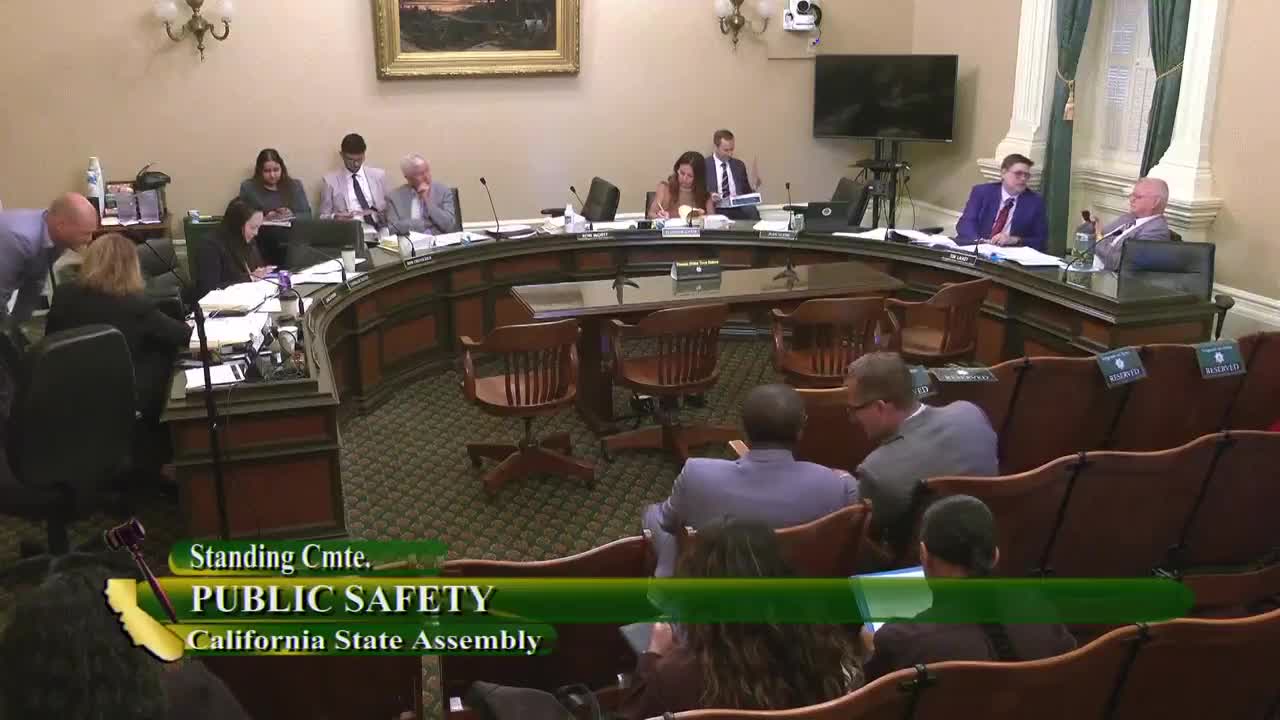 6MIN
Assembly Standing Committee on Public Safety
 5MIN
Assembly Standing Committee on Health
 2MIN
Senate Floor
 6MIN
Senate Standing Committee on Public Safety
 12SEC
Senate Standing Committee on Public Safety
 8MIN
Senate Standing Committee on Health
Bill Author