SB 1183: Community colleges: registered nursing programs.
- Session Year: 2023-2024
- House: Senate
- Latest Version Date: 2024-09-27
Current Status:
Passed
(2024-09-27: Chaptered by Secretary of State. Chapter 786, Statutes of 2024.)
Introduced
In Committee
First Chamber
In Committee
Second Chamber
Enacted
Existing law authorizes a community college registered nursing program that determines that the number of applicants to the program exceeds its capacity to admit students using a multicriteria screening process, a random selection process, or a blended combination of random selection and a multicriteria screening process, as specified. Existing law requires that the criteria applied in a multicriteria screening process include, among other criteria, consideration of the life experiences or special circumstances of an applicant, as listed, and proficiency or advanced level coursework in languages other than English, as provided. Existing law requires credit to be received for languages identified by the Chancellor of the California Community Colleges as high-frequency languages. Existing law requires the chancellor to report annually to the Legislature and the Governor on students admitted to community college registered nursing programs through a multicriteria screening process, as provided. Existing law repeals these provisions relating to admission to community college registered nursing programs on January 1, 2025.
This bill would add living in a medically underserved area or population, as designated by the federal Health Resources and Services Administration, to the list of life experiences or special circumstances specified for consideration in a multicriteria screening process. The bill would explicitly reference the various languages of the African continent as languages that may be identified by the chancellor as high-frequency languages. The bill would extend operation of these provisions relating to admission to community college registered nursing programs until January 1, 2030.
Existing law authorizes a community college registered nursing program, if it determines that the number of applicants to the program exceeds its capacity, to admit students to the program using a multicriteria screening process, a random selection process, or a blended combination of random selection and a multicriteria screening process, as specified. Existing law requires that the criteria applied in a multicriteria screening process include include, among other criteria, consideration of the life experiences or special circumstances of an applicant, as listed. listed, and proficiency or advanced level coursework in languages other than English, as provided. Existing law requires credit to be received for languages identified by the Chancellor of the California Community Colleges as high-frequency languages. Existing law requires the Chancellor of the California Community Colleges chancellor to report annually to the Legislature and the Governor on students admitted to community college registered nursing programs through a multicriteria screening process, as provided. Existing law repeals these provisions relating to admission to community college nursing programs on January 1, 2025.
This bill would add living in a medically underserved area or population, as designated by the federal Health Resources and Services Administration, to the list of life experiences or special circumstances specified for consideration in a multicriteria screening process. The bill would explicitly reference the various languages of the African continent as languages that may be identified by the chancellor as high-frequency languages. The bill would extend operation of these provisions relating to admission to community college nursing programs until January 1, 2030.
Existing law authorizes a community college registered nursing program, if it determines that the number of applicants to the program exceeds its capacity, to admit students to the program using a multicriteria screening process, a random selection process, or a blended combination of random selection and a multicriteria screening process, as specified. Existing law requires that the criteria applied in a multicriteria screening process include consideration of the life experiences or special circumstances of an applicant, as listed. Existing law requires the Chancellor of the California Community Colleges to report annually to the Legislature and the Governor on students admitted to community college registered nursing programs through a multicriteria screening process, as provided. Existing law repeals these provisions relating to admission to community college nursing programs on January 1, 2025.
This bill would add living in a medically underserved area or population, as designated by the federal Health Resources and Services Administration, to the list of life experiences or special circumstances specified for consideration in a multicriteria screening process. The bill would extend operation of these provisions relating to admission to community college nursing programs until January 1, 2030.
(a)A community college registered nursing program that determines that the number of applicants to that program exceeds its capacity may admit students in accordance with any of the following procedures:
(1)Administration of a multicriteria screening process, as authorized by Section 78261.3, in a manner that is consistent with the standards set forth in subdivision (b).
(2)A random selection process.
(3)A blended combination of random selection and a multicriteria screening process.
(b)A community college registered nursing program that elects, on or after January 1, 2008, to use a multicriteria screening process to evaluate applicants pursuant to this article shall apply those measures in accordance with all of the following:
(1)The criteria applied in a multicriteria screening process under this article shall include, but shall not be limited to, all of the following:
(A)Academic degrees or diplomas, or relevant certificates, held by an applicant.
(B)Grade-point average in relevant coursework.
(C)Any relevant work or volunteer experience.
(D)Life experiences or special circumstances of an applicant, including, but not limited to, the following experiences or circumstances:
(i)Disabilities.
(ii)Low family income.
(iii)First generation of family to attend college.
(iv)Need to work.
(v)Disadvantaged social or educational environment.
(vi)Difficult personal and family situations or circumstances.
(vii)Refugee or veteran status.
(viii)Living in a medically underserved area or population, as designated by the federal Health Resources and Services Administration.
(E)Proficiency or advanced level coursework in languages other than English. Credit for languages other than English shall be received for languages that are identified by the chancellor as high-frequency languages, as based on census data. These languages may include, but are not limited to, any of the following:
(i)American Sign Language.
(ii)Arabic.
(iii)Chinese, including its various dialects.
(iv)Farsi.
(v)Russian.
(vi)Spanish.
(vii)Tagalog.
(viii)The various languages of the Indian subcontinent and Southeast Asia.
(ix)The various languages of the African continent.
(2)Additional criteria, such as a personal interview, a personal statement, letter of recommendation, or the number of repetitions of prerequisite classes, or other criteria, as approved by the chancellor, may be used, but are not required.
(3)A community college registered nursing program using a multicriteria screening process under this article may use an approved diagnostic assessment tool, in accordance with Section 78261.3, before, during, or after the multicriteria screening process.
(4)As used in this section:
(A)Disabilities has the same meaning as used in Section 2626 of the Unemployment Insurance Code.
(B)Disadvantaged social or educational environment includes, but is not limited to, the status of a student who has participated in Extended Opportunity Programs and Services (EOPS).
(C)Grade-point average refers to the same fixed set of required prerequisite courses that all applicants to the nursing program administering the multicriteria screening process are required to complete.
(D)Low family income shall be measured by a community college registered nursing program in terms of a students eligibility for, or receipt of, financial aid under a program that may include, but is not limited to, a fee waiver from the board of governors under Section 76300, the Cal Grant Program under Chapter 1.7 (commencing with Section 69430) of Part 42 of Division 5, the federal Pell Grant program, or CalWORKs.
(E)Need to work means that the student is working at least part time while completing academic work that is a prerequisite for admission to the nursing program.
(5)A community college registered nursing program that uses a multicriteria screening process pursuant to this article shall report its nursing program admissions policies to the chancellor annually, in writing. The admissions policies reported under this paragraph shall include the weight given to any criteria used by the program, and shall include demographic information relating to the persons admitted to the program and the persons of that group who successfully completed that program.
(c)The chancellor is encouraged to develop, and make available to community college registered nursing programs by July 1, 2008, a model admissions process based on this section.
(d)(1)The chancellor shall submit a report on or before March 1, 2015, and on or before each March 1 thereafter, to the Legislature and the Governor that examines and includes, but is not necessarily limited to, both of the following:
(A)The participation, retention, and completion rates in community college registered nursing programs of students admitted through a multicriteria screening process, as described in this section, disaggregated by the age, gender, ethnicity, and the language spoken at the home of those students.
(B)Information on the annual impact, if any, the Seymour-Campbell Student Success Act of 2012 had on the matriculation services for students admitted through the multicriteria screening process, as described in this section.
(2)The chancellor shall submit the annual report required in paragraph (1) in conjunction with its annual report on associate degree nursing programs required by subdivision (h) of Section 78261.
(e)This section shall remain in effect only until January 1, 2030, and as of that date is repealed, unless a later enacted statute, that is enacted before January 1, 2030, deletes or extends that date.
(a)A community college registered nursing program that determines that the number of applicants to that program exceeds its capacity may admit students in accordance with any of the following procedures:
(1)Administration of a multicriteria screening process, as authorized by Section 78261.3, in a manner that is consistent with the standards set forth in subdivision (b).
(2)A random selection process.
(3)A blended combination of random selection and a multicriteria screening process.
(b)A community college registered nursing program that elects, on or after January 1, 2008, to use a multicriteria screening process to evaluate applicants pursuant to this article shall apply those measures in accordance with all of the following:
(1)The criteria applied in a multicriteria screening process under this article shall include, but shall not necessarily be limited to, all of the following:
(A)Academic degrees or diplomas, or relevant certificates, held by an applicant.
(B)Grade-point average in relevant coursework.
(C)Any relevant work or volunteer experience.
(D)Life experiences or special circumstances of an applicant, including, but not necessarily limited to, the following experiences or circumstances:
(i)Disabilities.
(ii)Low family income.
(iii)First generation of family to attend college.
(iv)Need to work.
(v)Disadvantaged social or educational environment.
(vi)Difficult personal and family situations or circumstances.
(vii)Refugee or veteran status.
(viii)Living in a medically underserved area or population, as designated by the federal Health Resources and Services Administration.
(E)Proficiency or advanced level coursework in languages other than English. Credit for languages other than English shall be received for languages that are identified by the chancellor as high-frequency languages, as based on census data. These languages may include, but are not necessarily limited to, any of the following:
(i)American Sign Language.
(ii)Arabic.
(iii)Chinese, including its various dialects.
(iv)Farsi.
(v)Russian.
(vi)Spanish.
(vii)Tagalog.
(viii)The various languages of the Indian subcontinent and Southeast Asia.
(ix)The various languages of the African continent.
(2)Additional criteria, such as a personal interview, a personal statement, letter of recommendation, or the number of repetitions of prerequisite classes, or other criteria, as approved by the chancellor, may be used, but are not required.
(3)A community college registered nursing program using a multicriteria screening process under this article may use an approved diagnostic assessment tool, in accordance with Section 78261.3, before, during, or after the multicriteria screening process.
(4)As used in this section:
(A)Disabilities has the same meaning as used in Section 2626 of the Unemployment Insurance Code.
(B)Disadvantaged social or educational environment includes, but is not necessarily limited to, the status of a student who has participated in Extended Opportunity Programs and Services (EOPS).
(C)Grade-point average refers to the same fixed set of required prerequisite courses that all applicants to the nursing program administering the multicriteria screening process are required to complete.
(D)Low family income shall be measured by a community college registered nursing program in terms of a students eligibility for, or receipt of, financial aid under a program that may include, but is not necessarily limited to, a fee waiver from the board of governors under Section 76300, the Cal Grant Program under Chapter 1.7 (commencing with Section 69430) of Part 42 of Division 5, the federal Pell Grant program, or CalWORKs.
(E)Need to work means that the student is working at least part time while completing academic work that is a prerequisite for admission to the nursing program.
(5)A community college registered nursing program that uses a multicriteria screening process pursuant to this article shall report its nursing program admissions policies to the chancellor annually, in writing. The admissions policies reported under this paragraph shall include the weight given to any criteria used by the program, and shall include demographic information relating to both the persons admitted to the program and the persons of that group who successfully completed that program.
(c)The chancellor is encouraged to develop, and make available to community college registered nursing programs by July 1, 2008, a model admissions process based on this section.
(d)(1)The chancellor shall submit a report on or before March 1, 2015, and on or before each March 1 thereafter, to the Legislature and the Governor that examines and includes, but is not necessarily limited to, both of the following:
(A)The participation, retention, and completion rates in community college registered nursing programs of students admitted through a multicriteria screening process, as described in this section, disaggregated by the age, gender, ethnicity, and the language spoken at the home of those students.
(B)Information on the annual impact, if any, the Seymour-Campbell Student Success Act of 2012 had on the matriculation services for students admitted through the multicriteria screening process, as described in this section.
(2)The chancellor shall submit the annual report required in paragraph (1) in conjunction with its annual report on associate degree nursing programs required by subdivision (h) of Section 78261.
(e)This section shall remain in effect only until January 1, 2030, and as of that date is repealed, unless a later enacted statute, that is enacted before January 1, 2030, deletes or extends that date.
(a)A community college registered nursing program that determines that the number of applicants to that program exceeds its capacity may admit students in accordance with any of the following procedures:
(1)Administration of a multicriteria screening process, as authorized by Section 78261.3, in a manner that is consistent with the standards set forth in subdivision (b).
(2)A random selection process.
(3)A blended combination of random selection and a multicriteria screening process.
(b)A community college registered nursing program that elects, on or after January 1, 2008, to use a multicriteria screening process to evaluate applicants pursuant to this article shall apply those measures in accordance with all of the following:
(1)The criteria applied in a multicriteria screening process under this article shall include, but shall not necessarily be limited to, all of the following:
(A)Academic degrees or diplomas, or relevant certificates, held by an applicant.
(B)Grade-point average in relevant coursework.
(C)Any relevant work or volunteer experience.
(D)Life experiences or special circumstances of an applicant, including, but not necessarily limited to, the following experiences or circumstances:
(i)Disabilities.
(ii)Low family income.
(iii)First generation of family to attend college.
(iv)Need to work.
(v)Disadvantaged social or educational environment.
(vi)Difficult personal and family situations or circumstances.
(vii)Refugee or veteran status.
(viii)Living in a medically underserved area or population, as designated by the federal Health Resources and Services Administration.
(E)Proficiency or advanced level coursework in languages other than English. Credit for languages other than English shall be received for languages that are identified by the chancellor as high-frequency languages, as based on census data. These languages may include, but are not necessarily limited to, any of the following:
(i)American Sign Language.
(ii)Arabic.
(iii)Chinese, including its various dialects.
(iv)Farsi.
(v)Russian.
(vi)Spanish.
(vii)Tagalog.
(viii)The various languages of the Indian subcontinent and Southeast Asia.
(2)Additional criteria, such as a personal interview, a personal statement, letter of recommendation, or the number of repetitions of prerequisite classes, or other criteria, as approved by the chancellor, may be used, but are not required.
(3)A community college registered nursing program using a multicriteria screening process under this article may use an approved diagnostic assessment tool, in accordance with Section 78261.3, before, during, or after the multicriteria screening process.
(4)As used in this section:
(A)Disabilities has the same meaning as used in Section 2626 of the Unemployment Insurance Code.
(B)Disadvantaged social or educational environment includes, but is not necessarily limited to, the status of a student who has participated in Extended Opportunity Programs and Services (EOPS).
(C)Grade-point average refers to the same fixed set of required prerequisite courses that all applicants to the nursing program administering the multicriteria screening process are required to complete.
(D)Low family income shall be measured by a community college registered nursing program in terms of a students eligibility for, or receipt of, financial aid under a program that may include, but is not necessarily limited to, a fee waiver from the board of governors under Section 76300, the Cal Grant Program under Chapter 1.7 (commencing with Section 69430) of Part 42 of Division 5, the federal Pell Grant program, or CalWORKs.
(E)Need to work means that the student is working at least part time while completing academic work that is a prerequisite for admission to the nursing program.
(5)A community college registered nursing program that uses a multicriteria screening process pursuant to this article shall report its nursing program admissions policies to the chancellor annually, in writing. The admissions policies reported under this paragraph shall include the weight given to any criteria used by the program, and shall include demographic information relating to both the persons admitted to the program and the persons of that group who successfully completed that program.
(c)The chancellor is encouraged to develop, and make available to community college registered nursing programs by July 1, 2008, a model admissions process based on this section.
(d)(1)The chancellor shall submit a report on or before March 1, 2015, and on or before each March 1 thereafter, to the Legislature and the Governor that examines and includes, but is not necessarily limited to, both of the following:
(A)The participation, retention, and completion rates in community college registered nursing programs of students admitted through a multicriteria screening process, as described in this section, disaggregated by the age, gender, ethnicity, and the language spoken at the home of those students.
(B)Information on the annual impact, if any, the Seymour-Campbell Student Success Act of 2012 had on the matriculation services for students admitted through the multicriteria screening process, as described in this section.
(2)The chancellor shall submit the annual report required in paragraph (1) in conjunction with its annual report on associate degree nursing programs required by subdivision (h) of Section 78261.
(e)This section shall remain in effect only until January 1, 2025, 2030, and as of that date is repealed, unless a later enacted statute, that is enacted before January 1, 2025, 2030, deletes or extends that date.
|
Date
|
Status
|
|---|---|
| Sep 27, 2024 | Chaptered by Secretary of State. Chapter 786, Statutes of 2024. |
| Sep 27, 2024 | Approved by the Governor. |
| Sep 4, 2024 | Enrolled and presented to the Governor at 4 p.m. |
| Aug 28, 2024 | Assembly amendments concurred in. (Ayes 39. Noes 0. Page 5614.) Ordered to engrossing and enrolling. |
| Aug 27, 2024 | Ordered to special consent calendar. |
| Aug 26, 2024 | In Senate. Concurrence in Assembly amendments pending. |
| Aug 26, 2024 | Read third time. Passed. (Ayes 77. Noes 0. Page 6530.) Ordered to the Senate. |
| Aug 19, 2024 | Read second time. Ordered to third reading. |
| Aug 15, 2024 | From committee: Do pass. (Ayes 14. Noes 0.) (August 15). |
| Aug 7, 2024 | August 7 set for first hearing. Placed on suspense file. |
| Jun 20, 2024 | Read second time and amended. Re-referred to Com. on APPR. |
| Jun 19, 2024 | From committee: Do pass as amended and re-refer to Com. on APPR. (Ayes 8. Noes 0.) (June 18). |
| Apr 29, 2024 | Referred to Com. on HIGHER ED. |
| Apr 18, 2024 | In Assembly. Read first time. Held at Desk. |
| Apr 18, 2024 | Read third time. Passed. (Ayes 39. Noes 0. Page 3672.) Ordered to the Assembly. |
| Apr 16, 2024 | Read second time. Ordered to consent calendar. |
| Apr 15, 2024 | From committee: Be ordered to second reading pursuant to Senate Rule 28.8 and ordered to consent calendar. |
| Apr 5, 2024 | Set for hearing April 15. |
| Apr 3, 2024 | From committee: Do pass and re-refer to Com. on APPR with recommendation: To consent calendar. (Ayes 6. Noes 0. Page 3466.) (April 3). Re-referred to Com. on APPR. |
| Mar 5, 2024 | Set for hearing April 3. |
| Feb 21, 2024 | Referred to Com. on ED. |
| Feb 15, 2024 | From printer. May be acted upon on or after March 16. |
| Feb 14, 2024 | Introduced. Read first time. To Com. on RLS. for assignment. To print. |
|
Date
|
Description
|
Location
|
Votes
|
|
|---|---|---|---|---|
| Aug 28, 2024 | Special Consent SB1183 Hurtado | Senate Floor |
Passed |
|
| Aug 26, 2024 | SB 1183 Hurtado Senate Third Reading By Weber | Assembly Floor |
Passed |
|
| Aug 15, 2024 | Do pass. | Assembly Standing Committee on Appropriations |
Passed |
|
| Jun 18, 2024 | Do pass as amended and be re-referred to the Committee on [Appropriations] | Assembly Standing Committee on Higher Education |
Passed |
|
| Apr 18, 2024 | Consent Calendar 2nd SB1183 Hurtado | Senate Floor |
Passed |
|
| Apr 3, 2024 | Do pass, but first be re-referred to the Committee on [Appropriations] with the recommendation: To Consent Calendar | Senate Standing Committee on Education |
Passed |
This list shows positions taken on this bill by organizations on the date displayed, which is linked to the original source.
Positions by individuals are not included.
|
Organization
|
Position
|
Date
|
|---|---|---|
| Adventist Health System West | ** Support | |
| Altura Centers For Health | ** Support | |
| American Nurses Association/California | ** Support | |
| College of the Sequoias | ** Support | |
| San Jose-Evergreen Community College District | ** Support | |
| Sierra View Medical Center | ** Support | |
| West Hills College District | ** Support |
SENATE RULES COMMITTEE Office of Senate Floor Analyses (916) 651-1520 Fax: (916) 327-4478 | SB 1183 |
UNFINISHED BUSINESS
Bill No: SB 1183
Author: Hurtado (D)
Amended: 6/20/24
Vote: 21
SENATE EDUCATION COMMITTEE: 6-0, 4/3/24
AYES: Newman, Ochoa Bogh, Cortese, Gonzalez, Smallwood-Cuevas, Wilk
NO VOTE RECORDED: Glazer
SENATE APPROPRIATIONS COMMITTEE: Senate Rule 28.8
SENATE FLOOR: 39-0, 4/18/24 (Consent)
AYES: Allen, Alvarado-Gil, Archuleta, Ashby, Atkins, Becker, Blakespear, Bradford, Caballero, Cortese, Dahle, Dodd, Durazo, Eggman, Glazer, Gonzalez, Grove, Jones, Laird, Limón, McGuire, Menjivar, Min, Newman, Nguyen, Niello, Ochoa Bogh, Padilla, Portantino, Roth, Rubio, Seyarto, Skinner, Smallwood-Cuevas, Stern, Umberg, Wahab, Wiener, Wilk
NO VOTE RECORDED: Hurtado
ASSEMBLY FLOOR: 77-0, 8/26/24 - See last page for vote
SUBJECT: Community colleges: registered nursing programs
SOURCE: College of the Sequoias
DIGEST:
This bill adds living in a medically underserved area or population as a factor for consideration in the multicriteria screening tool used for admission into an impacted registered nursing program at a California Community College (CCC). It also extends the sunset date by five years for provisions relating to admission procedures.
Assembly Amendments
explicitly reference languages of the African continent as languages that may be identified by the Chancellor as high-frequency languages.
ANALYSIS:
Existing law:
- Authorizes a CCC registered nursing program, if it determines that the number of applicants to the program exceeds its capacity, to admit students to the program using a multicriteria screening process, a random selection process, or a blended combination of random selection and a multicriteria screening process, as specified. (Education Code (EC) § 78261.3)
- Requires a CCC that elects to use a multicriteria screening process to evaluate applicants to apply those measures in accordance with all of the following:
- The criteria applied in a multicriteria screening process will include, but are not limited to:
- Academic degrees or diplomas held by an applicant;
- Grade-point average in relevant coursework;
- Any relevant work or volunteer experience;
- Life experiences or special circumstances of the applicants as defined; and
- Proficiency in advanced-level coursework in languages other than English, as defined.
- Additional criteria such as a personal interview, a personal statement, a letter of recommendation, or a number of repetitions of prerequisite classes may be included but are not required.
- Additional criteria may include the use of a diagnostic test. (EC § 78261.5(a) and (b))
- The criteria applied in a multicriteria screening process will include, but are not limited to:
- Sunsets these provisions relating to admission to community college nursing programs on January 1, 2025. (EC § 78261.5(e))
- It further requires that the CCC Chancellor report annually to the Legislature and the Governor on students admitted to community college registered nursing programs through a multicriteria screening process, as provided. (EC § 78261.3 and § 78261.5)
This bill:
- Adds living in a medically underserved area or population, as designated by the federal health resources and services administration, to the list of life experiences or special circumstances specified for consideration in a multicriteria screening tool used for admission into an impacted registered nursing program at a CCC.
- Explicitly references the various languages of the African continent as languages that may be identified by the Chancellor as high-frequency languages.
- Extends the sunset date relating to admission procedures by five years, from January 1, 2025, to January 1, 2030.
Comments
- Need for the bill. According to the author, “SB 1183 seeks to address disparities in access to nursing education by acknowledging and accommodating the unique circumstances faced by individuals residing in medically underserved areas or populations, while also ensuring continued access to nursing education opportunities beyond the existing sunset date. I've had the privilege of hearing the stories of individuals whose dreams of becoming nurses have been hindered by systemic barriers. Through conversations with aspiring nurses from medically underserved areas, I've come to understand the challenges they face—limited access to quality healthcare, educational resources, and opportunities for advancement. We're opening doors that were once closed, paving the way for a more diverse and inclusive healthcare workforce that reflects the communities it serves. Extending the provisions until 2030 is more than just a legislative decision; it's a commitment to the future of healthcare in California. It's a promise to generations of aspiring nurses that their dreams are valid and achievable, regardless of where they come from or the challenges they've overcome. With SB 1183, we're not just addressing healthcare workforce shortages; we're building a brighter, more equitable future for all Californians.”
- Enrollment management. When more applicants qualify for admission than there are enrollment slots, CCC nursing programs must decide which applicants to admit. Current law allows a college to admit students through a random selection process or a multicriteria screening process. CCCs that elect to use a multi-criteria screening process to evaluate applicants must do so based on specified criteria. Those criteria relate to the academic performance, work or volunteer experience, foreign language skills, life experiences, and special circumstances of the applicant. This evaluative screening process is meant to reduce program attrition rates at the CCCs while maintaining diversity. In the coming year, the requirement to use specified criteria to evaluate applicants will expire. This bill proposes an extension of the sunset date.
- Medically underserved area or population designated by a federal agency. This bill proposes the inclusion of living in a medically underserved area or population as a factor in the evaluation process. These students may offer a unique perspective based on where they live and experience accessing health care that could help serve communities lacking adequate health care. Underserved areas are to be identified using the federal health resources and services administration’s designations for medically underserved areas or populations. This federal agency holds data on geographic areas and populations that lack access to primary care services. Its purpose, as stated on their official website, is to provide equitable health care to the nation’s highest-need communities.
- Related/Prior Legislation.
SB 895 (Roth, 2024) requires the CCC Chancellor’s office to develop, until January 1, 2031, a CCC Baccalaureate Degree in Nursing Pilot Program that authorizes 15 CCC districts selected by the CCC Chancellor’s office to offer a Bachelor of Science in Nursing degree. The bill further requires the Legislative Analyst’s Office to conduct and submit to the legislature an evaluation of the pilot program, as specified. SB 895 is scheduled to be heard in this committee on April 24, 2023.
FISCAL EFFECT: Appropriation: No Fiscal Com.: Yes Local: No
According to the Assembly Appropriations Committee analysis, this bill would have the following fiscal impact:
- Minor, one-time Proposition 98 General Fund costs in the thousands of dollars for the 53 colleges that currently utilize a multicriteria screening admissions process for their nursing programs. These costs would include updating policies and procedures, revising student forms, and updating communication materials to include living in a medically underserved area or population and proficiency in the languages of the African continent as part of the eligible criteria in the multicriteria screening process.
- One-time Proposition 98 General Fund costs in the thousands of dollars for the 53 colleges that currently utilize a multicriteria screening admissions process to establish a priority admissions process for students living in a medically underserved area or population and those with proficiency in the languages of the African continent. Costs could be $2,000 per college, or $106,000 for all 53 colleges. Costs could be lower to the extent fewer colleges decide to not provide students living in a medically underserved area or population or those with proficiency in the languages of the African continent with priority admission.
- Minor General Fund costs of about $50,000 to the CCC Chancellor’s Office to update regulations, update its model multicriteria screening form, and issue guidance.
SUPPORT: (Verified 8/27/24)
College of the Sequoias (source)
Adventist Health System West
Altura Centers for Health
American Nurses Association/California
San Jose-Evergreen Community College District
Sierra View Medical Center
West Hills College District
OPPOSITION: (Verified 8/27/24)
None received
ASSEMBLY FLOOR: 77-0, 8/26/24
AYES: Addis, Aguiar-Curry, Alanis, Alvarez, Arambula, Bains, Bauer-Kahan, Bennett, Berman, Boerner, Bonta, Bryan, Calderon, Juan Carrillo, Wendy Carrillo, Chen, Connolly, Megan Dahle, Davies, Dixon, Essayli, Flora, Mike Fong, Friedman, Gabriel, Gallagher, Garcia, Gipson, Grayson, Haney, Hart, Holden, Hoover, Irwin, Jackson, Jones-Sawyer, Kalra, Lackey, Lee, Low, Lowenthal, Maienschein, Mathis, McCarty, McKinnor, Muratsuchi, Stephanie Nguyen, Pacheco, Papan, Jim Patterson, Joe Patterson, Pellerin, Petrie-Norris, Quirk-Silva, Ramos, Rendon, Reyes, Luz Rivas, Rodriguez, Blanca Rubio, Sanchez, Santiago, Schiavo, Soria, Ta, Ting, Valencia, Villapudua, Waldron, Wallis, Ward, Weber, Wicks, Wilson, Wood, Zbur, Robert Rivas
NO VOTE RECORDED: Cervantes, Ortega
Prepared by: Olgalilia Ramirez / ED. / (916) 651-4105
8/27/24 12:40:27
**** END ****
SENATE THIRD READING
STR Bill Id:SB 1183
Author:(Hurtado)
As Amended Ver:June 20, 2024
Majority vote
SUMMARY
Adds "living in a medically underserved area or population area" and proficiency in the various languages of the African continent to the criteria for consideration under the multicriteria screening tool for impacted nursing programs at community colleges and extends the sunset date for the nursing program multicriteria screening tool to January 1, 2030.
Major Provisions
- Adds "living in a medically underserved area or population", as defined, to the "life experiences or special circumstances" criteria used in multicriteria screening tool to select applicants for enrollment in impacted nursing programs at community colleges.
- Defines "medically underserved area or population" as areas or populations designated by the federal Health Resources and Services Administration.
- Adds "proficiency or advance coursework in the various languages of the African continent", as defined, to the criteria used in multicriteria screening tool to select applicants for enrollment in impacted nursing programs at community colleges.
- Extends the availability of the multicriteria screening tool by five years, until January 1, 2030.
- Makes clarifying and technical amendments.
COMMENTS
Nursing programs at the California Community Colleges (CCC). Prior to AB 1559 (Berryhill), Chapter 712, Statutes of 2007 the CCC Board of Governors had established a prohibition on merit-based criteria in response to equity concerns. A local CCC district could only introduce a merit-based screening tool for nursing applicants, if the CCC district had conducted research to ensure the admission's criteria was implemented in a manner that did not disproportionately impact a particular group of students. Due to the restrictive regulations and emphases on data analyses, community college districts elected to use lotteries and first-come, first serve wait lists for admission to the nursing programs. An unintended consequence of this action was the turning away of qualified nursing students as well as higher than expected drop-out rates ultimately resulting in a nursing workforce shortage.
To address impaction and to reduce the dropout rates, AB 1559 (Berryhill) codified a multicriteria screening tool that permitted community colleges the ability to screen and admit potential candidates by taking into account the student's lived experiences along with their academic qualifications.
Each year, the Chancellor's Office is required to publish data on the outcomes of students who enroll in nursing programs in order to determine whether the multicriteria screening tool is fulfilling its intended goals of:
- Increasing successful completion rates of the program:
- Producing qualified nursing candidates who pass the National Council Licensure Examination for Registered Nurses (NCLEX); and,
- Increasing the diversity of qualified nursing candidates in the State of California.
As previously mentioned 53 community colleges use the multicriteria screening tool to select potential nursing students from a waitlist. The colleges using the multicriteria screening had a 91.5% completion rate, which is higher than programs who use a different admission process. Community colleges who utilize the multicriteria screening tool also have greater diversity among nursing students when compared with colleges who elect to use a different selection process. By all data points, the use of a multicriteria screening is having the intended effect of increasing diversity and ensuring students are successfully completing the nursing programs.
The measure would extend the ability for community colleges to use the multicriteria screening tool until 2030 and would add additional criteria for consideration, proficiency in the languages spoken on the African continent and whether the student is living in a medically underserved area of population.
Medically underserved area or population as designated by the federal Health Resources and Services Administration. The federal Health Resources and Services Administration (administration) defines a "medically underserved area" as a geographic area, such as a county, that lacks access to primary care services. Whereas a "medically underserved population", is a shortage of primary health care for a specific population within a geographic area. The population may face economic, cultural, or language barriers to healthcare. Populations who fall into the category of medically underserved populations include low-income individuals, the homeless, and migrant farm workers.
In the federal database containing the underserved areas and population, only three California Counties are not represented as containing either a medically underserved area or a medically underserved population. The majority of the counties listed have medically underserved areas or specific regions within the county that are considered medically underserved areas. For a few regions in California the entire county qualifies. Other counties only had specific populations that received the designation of medically underserved population. The data contained in the federal database included data from the early 1990s through 2018.
According to the Author
As stated by the author, "SB 1183 seeks to address disparities in access to nursing education by acknowledging and accommodating the unique circumstances faced by individuals residing in medically underserved areas or populations, while also ensuring continued access to nursing education opportunities beyond the existing sunset date. I've had the privilege of hearing the stories of individuals whose dreams of becoming nurses have been hindered by systemic barriers. Through conversations with aspiring nurses from medically underserved areas, I've come to understand the challenges they face—limited access to quality healthcare, educational resources, and opportunities for advancement. We're opening doors that were once closed, paving the way for a more diverse and inclusive healthcare workforce that reflects the communities it serves. Extending the provisions until 2030 is more than just a legislative decision; it's a commitment to the future of healthcare in California. It's a promise to generations of aspiring nurses that their dreams are valid and achievable, regardless of where they come from or the challenges they've overcome. With SB 1183, we're not just addressing healthcare workforce shortages; we're building a brighter, more equitable future for all Californians."
Arguments in Support
The California Community College Chancellor's Office states the need for SB 1183 because, "while multicriteria screening has resulted in greater diversity of students admitted into our nursing programs, some parts of the state continue to face barriers to accessing quality health care. Students from these regions may offer a unique perspective that could help serve their local communities. SB 1183 would allow, for another five years, community college nursing programs to continue to enroll students with a diverse range of professional and life experiences. Today, 53 of 77 of community college nursing programs have implemented multicriteria screening. These students are more likely to persist, graduate, and complete licensure requirements. SB 1183 also retains the focus on equity by allowing nursing programs to consider whether a student resides in a medically underserved area. I thank you for your leadership on this vitally important issue."
Arguments in Opposition
None on file.
FISCAL COMMENTS
According to the Assembly Committee on Appropriations:
- Minor, one-time Proposition 98 General Fund costs in the thousands of dollars for the 53 colleges that currently utilize a multicriteria screening admissions process for their nursing programs. These costs would include updating policies and procedures, revising student forms, and updating communication materials to include living in a medically underserved area or population and proficiency in the languages of the African continent as part of the eligible criteria in the multicriteria screening process.
- One-time Proposition 98 General Fund costs in the thousands of dollars for the 53 colleges that currently utilize a multicriteria screening admissions process to establish a priority admissions process for students living in a medically underserved area or population and those with proficiency in the languages of the African continent. Costs could be $2,000 per college, or $106,000 for all 53 colleges. Costs could be lower to the extent fewer colleges decide to not provide students living in a medically underserved area or population or those with proficiency in the languages of the African continent with priority admission.
- Minor General Fund costs of about $50,000 to the CCC Chancellor's Office to update regulations, update its model multicriteria screening form, and issue guidance.
VOTES
SENATE FLOOR: 39-0-1
YES: Allen, Alvarado-Gil, Archuleta, Ashby, Atkins, Becker, Blakespear, Bradford, Caballero, Cortese, Dahle, Dodd, Durazo, Eggman, Glazer, Gonzalez, Grove, Jones, Laird, Limón, McGuire, Menjivar, Min, Newman, Nguyen, Niello, Ochoa Bogh, Padilla, Portantino, Roth, Rubio, Seyarto, Skinner, Smallwood-Cuevas, Stern, Umberg, Wahab, Wiener, Wilk
ABS, ABST OR NV: Hurtado
ASM HIGHER EDUCATION: 8-0-3
YES: Mike Fong, Ta, Arambula, Boerner, Essayli, Irwin, Jackson, Quirk-Silva
ABS, ABST OR NV: Chen, Low, Muratsuchi
ASM APPROPRIATIONS: 14-0-1
YES: Wicks, Sanchez, Arambula, Bryan, Calderon, Wendy Carrillo, Dixon, Mike Fong, Grayson, Haney, Hart, Pellerin, Ta, Villapudua
ABS, ABST OR NV: Jim Patterson
UPDATED
VERSION: June 20, 2024
CONSULTANT: Ellen Cesaretti-Monroy / HIGHER ED. / (916) 319-3960 FN: 0003984
Date of Hearing: August 7, 2024
ASSEMBLY COMMITTEE ON APPROPRIATIONS
Buffy Wicks, Chair
SBPCA Bill Id:SB 1183
Author:(Hurtado) – As Amended Ver:June 20, 2024
Policy Committee: | Higher Education | Vote: | 8 - 0 |
|
| ||
|
|
Urgency: No State Mandated Local Program: No Reimbursable: No
SUMMARY:
This bill adds living in a medically underserved area or population and proficiency in the various languages of the African continent to the list of life experiences or special circumstances that may be considered during a multicriteria screening process for impacted nursing programs at California Community Colleges (CCC). The bill also extends the sunset date for the nursing program multicriteria screening process from January 1, 2025, to January 1, 2030.
FISCAL EFFECT:
- Minor, one-time Proposition 98 General Fund costs in the thousands of dollars for the 53 colleges that currently utilize a multicriteria screening admissions process for their nursing programs. These costs would include updating policies and procedures, revising student forms, and updating communication materials to include living in a medically underserved area or population and proficiency in the languages of the African continent as part of the eligible criteria in the multicriteria screening process.
- One-time Proposition 98 General Fund costs in the thousands of dollars for the 53 colleges that currently utilize a multicriteria screening admissions process to establish a priority admissions process for students living in a medically underserved area or population and those with proficiency in the languages of the African continent. Costs could be $2,000 per college, or $106,000 for all 53 colleges. Costs could be lower to the extent fewer colleges decide to not provide students living in a medically underserved area or population or those with proficiency in the languages of the African continent with priority admission.
- Minor General Fund costs of about $50,000 to the CCC Chancellor’s Office to update regulations, update its model multicriteria screening form, and issue guidance.
COMMENTS:
- Purpose. According to the author:
SB 1183 seeks to address disparities in access to nursing education by acknowledging and accommodating the unique circumstances faced by individuals residing in medically underserved areas or populations, while also ensuring continued access to nursing education opportunities beyond the existing sunset date.
- Background. AB 1559 (Berryhill), Chapter 712, Statutes of 2007, authorized CCCs to use a multicriteria screening process for admitting applicants into impacted registered nursing programs. A multicriteria screening process allows CCCs to consider academic qualifications and lived experience when admitting an applicant to impacted registered nursing programs, such as proficiency in languages other than English and family circumstances. Data suggests a multicriteria screening process has improved graduation outcomes and diversity of nursing students. Current law authorizes multicriteria screening until January 1, 2025.
This bill adds living in a medically underserved area or population, as designated by the federal Health Resources and Services Administration, to the multicriteria screening process. The federal Health Resources and Services Administration identifies geographic areas and populations with a lack of access to primary care services as medically underserved areas or populations and publishes this information by census track. The vast majority of counties in California, if not all, have census tracks identified as medically underserved.
The bill also adds to the existing proficiency in languages other than English criteria proficiency in the various languages of the African continent. The bill also extends the deadline for use of multicriteria screening until January 1, 2030.
- Related Legislation. AB 2532 (Mathis) adds “being a resident of the community college district” to the criteria for consideration under the multicriteria screening process for impacted nursing programs at California Community Colleges (CCC) and extends the sunset date for the nursing program multicriteria screening process from January 1, 2025, to January 1, 2030. An earlier version of the bill instead added “residing within a medically underserved area” to the multicriteria screening process. The bill is pending in the Senate Education Committee.
Analysis Prepared by: Natasha Collins / APPR. / (916) 319-2081
Date of Hearing: June 18, 2024
ASSEMBLY COMMITTEE ON HIGHER EDUCATION
Mike Fong, Chair
SBPCA Bill Id:SB 1183
Author:(Hurtado) – As Introduced Ver:February 14, 2024
SENATE VOTE: 39-0
SUBJECT: Community colleges: registered nursing programs
SUMMARY: Adds “living in a medically underserved area or population area” to the criteria for consideration under the multicriteria screening tool for impacted nursing programs at community colleges and extends the sunset date for the nursing program multicriteria screening tool to January 1, 2030. Specifically, this bill:
- Adds “living in a medically underserved area or population”, as defined, to the “life experiences or special circumstances” section of the multicriteria screening tool used by impacted nursing programs at community college districts to select applicants for enrollment.
- Defines “medically underserved area or population” as areas or populations designated by the federal Health Resources and Services Administration.
- Extends the availability of the multicriteria screening tool by five years, until January 1, 2030.
- Makes clarifying and technical amendments.
EXISTING LAW:
- Stipulates that if a community college registered nursing program is impacted, the nursing program may select which students to admit through the following methods:
- A multicriteria screening tool that will apply measures of evaluation in accordance with the following:
- The criteria applied in a multicriteria screening tool will include, but is not limited to:
- Academic degrees or diplomas, held by an applicant;
- Grade-point average in relevant coursework;
- Any relevant work or volunteer experience;
- Life experiences or special circumstances of the applicants as defined;
- Proficiency in advance level coursework in languages other than English, as defined;
- Additional criteria such as a personal interview, a personal statement, a letter of recommendation, or a number of repetitions of prerequisite classes may be included but are not required; and,
- Additional criteria may include the use of a diagnostic test.
- The criteria applied in a multicriteria screening tool will include, but is not limited to:
- A random selection process; and,
- A blend of a random selection process or a multicriteria screening.
- A multicriteria screening tool that will apply measures of evaluation in accordance with the following:
Requires a community college that uses a multicriteria screening to report its nursing program admission policies to the Chancellor of the CCC annually, in writing. The policy will include how each criteria is factored into the college’s decision in terms of admission.
Requires the Chancellor’s Office of the CCC to submit a report on or before March 1, 2015, and by March 1 each year thereafter that examines the following:
- The participation, retention, and completion rates in a community college registered nursing program of students admitted through a multicriteria screening as described, disaggregated by the age, gender, ethnicity, and language spoken at the home of the students admitted;
- Information on the annual impact, if any, of the Seymour-Campbell Student Success Act had on the matriculation services for students, admitted through the multicriteria screening.
Permits the above report to be submitted annually in conjunction with another report on nursing programs.
Repeals all of the above on January 1, 2025, unless another statute extends the date (Education Code Section 78261.5).
FISCAL EFFECT: According to the Senate Appropriations Committee, pursuant to Joint Rule 28.8, the measure has negligible state costs.
COMMENTS: Need for the measure. As stated by the author, “SB 1183 seeks to address disparities in access to nursing education by acknowledging and accommodating the unique circumstances faced by individuals residing in medically underserved areas or populations, while also ensuring continued access to nursing education opportunities beyond the existing sunset date. I've had the privilege of hearing the stories of individuals whose dreams of becoming nurses have been hindered by systemic barriers. Through conversations with aspiring nurses from medically underserved areas, I've come to understand the challenges they face—limited access to quality healthcare, educational resources, and opportunities for advancement. We're opening doors that were once closed, paving the way for a more diverse and inclusive healthcare workforce that reflects the communities it serves. Extending the provisions until 2030 is more than just a legislative decision; it's a commitment to the future of healthcare in California. It's a promise to generations of aspiring nurses that their dreams are valid and achievable, regardless of where they come from or the challenges they've overcome. With SB 1183, we're not just addressing healthcare workforce shortages; we're building a brighter, more equitable future for all Californians.”
Nursing programs at the California Community Colleges (CCC). The California Board of Registered Nursing authorizes three pathways that a student may complete a pre-licensure nursing program, of which only one is available at the community colleges, the associate degree in nursing. To become a licensed vocational nurse, a student must complete two to three years of course work at one of the 77 community colleges that offer a nursing program.[1] Of the 77 community colleges offering nursing degrees, 53 use the multicriteria screening tool to help determine which applicant should be admitted due to impaction.1
Impaction occurs when there is more applicants than slots available for students to receive academic instruction. Due to a high-volume of applicants and a lack of clinical placements, almost every nursing program at the CCC is impacted. A recent article by CalMatters found that the wait list for Ventura College is four and half years.[2] To address impaction and to ensure candidates who enter the program have the greatest likelihood of becoming nurses, the Legislature required the CCC to introduce a multicriteria screening through the passing of AB 1559 (Berryhill), Chapter 712, Statute of 2007.
Prior to AB 1559 (Berryhill), the Board of Governors had established a prohibition on merit-based criteria in response to equity concerns. A local CCC district could only introduce a merit-based screening tool for nursing applicants, if the CCC district had conducted research to ensure the admission’s criteria was implemented in a manner that did not disproportionately impact a particular group of students. Due to the restrictive regulations and emphases on data analyses, community college districts elected to use lotteries and first-come, first serve wait lists for admission to the nursing programs. An unintended consequence of this action was the turning away of qualified nursing students as well as higher than expected drop-out rates ultimately resulting in a nursing workforce shortage.
To address impaction and to reduce the dropout rates, AB 1559 (Berryhill) codified a multicriteria screening tool that permitted community colleges the ability to screen and admit potential candidates by taking into account the student’s lived experiences along with their academic qualifications. The criteria for the screening tool is listed in the existing law section of this analysis.
Each year, the Chancellor’s Office is required to publish data on the outcomes of students who enroll in nursing programs in order to determine whether the multicriteria screening tool is fulfilling its intended goals of:
- Increasing successful completion rates of the program:
- Producing qualified nursing candidates who pass the National Council Licensure Examination for Registered Nurses (NCLEX); and,
- Increasing the diversity of qualified nursing candidates in the State of California.
As previously mentioned 53 community colleges use the multicriteria screening tool to select their nursing students from waitlist. The colleges using multicriteria screening had a 91.5% completion rate, which is higher than programs who use a different admission process. Community colleges who utilize the multicriteria screening tool also have greater diversity among candidates when compared with colleges who elect to use a different selection process. By all data points, the multicriteria screening is having the intended effect of increasing diversity and ensuring students are successfully completing the nursing programs. SB 1183 (Hurtado) would extend the ability for community colleges to use the multicriteria screening tool until 2030 and would add another criteria for consideration, whether the student is living in a medically underserved area of population.
Medically underserved area or population as designated by the federal Health Resources and Services Administration. The federal Health Resources and Services Administration (administration) defines a “medically underserved area” as a geographic area, such as a county, that lacks access to primary care services. Whereas a “medically underserved population”, is a shortage of primary health care for a specific population within a geographic area. The population may face economic, cultural, or language barriers to healthcare. Populations who fall into the category of medically underserved populations include low-income individuals, the homeless, and migrant farm workers.
In the federal database containing the underserved areas and population, only three California Counties are not represented as containing either an medically underserved area or a medically underserved population.3 The majority of the counties listed have medically underserved areas or specific regions within the county that are considered medically underserved areas. For a few regions in California the entire county qualifies. Other counties only had specific populations that received the designation of medically underserved population. The data contained in the federal database included data from the early 1990s through 2018.[3]
Based on the language of SB 1183 (Hurtado) one can reasonably understand that as long as the student was living in an area or in the county with the specific population designation as listed in the database, then the student would receive an additional consideration where as a student not living in the area or in the county with the specific designation would not.
Arguments in support. The California Community College Chancellor’s Office states the need for SB 1183 because, “while multicriteria screening has resulted in greater diversity of students admitted into our nursing programs, some parts of the state continue to face barriers to accessing quality health care. Students from these regions may offer a unique perspective that could help serve their local communities. SB 1183 would allow, for another five years, community college nursing programs to continue to enroll students with a diverse range of professional and life experiences. Today, 53 of 77 of community college nursing programs have implemented multicriteria screening. These students are more likely to persist, graduate, and complete licensure requirements. SB 1183 also retains the focus on equity by allowing nursing programs to consider whether a student resides in a medically underserved area. I thank you for your leadership on this vitally important issue.”
Committee comments. In the current legislative year, there are three bills moving through the legislative process that address the multicriteria screening tool. AB 1891 (Weber) of 2024, would extend the multicriteria screening tool to the allied health programs at the CCC and would add “the various languages from the African continent” to the list of criteria under proficiency in a language other than English. AB 1891 (Weber) has been referred to the suspense file in the Senate Appropriations Committee and passed out of this Committee with a vote of 10-0.
AB 2532 (Mathis) would extend the sunset for the nursing program multicriteria screening tool to 2030 and would establish the criteria of “being a resident of the community college district” as a factor to be considered for enrollment. AB 2532 (Mathis) is awaiting a hearing in the Senate Education Committee and passed out of this Committee with a vote of 10-0.
The authors of AB 2532 (Mathis) and SB 1183 (Hurtado) share intent for the changes to the multi-criteria screening tool to provide additional “points” or consideration for local students over non-local students. EDC Section 78261.3 states, a community college district is not permitted to adopt a policy, procedure, or system that would permit a local applicant priority over a nonlocal applicant. The intention of this section is to preserve the open enrollment policy of the community colleges. SB 1183 (Hurtado) would provide additional points to local students during the application process while also preserving the open enrollment policy of the community colleges. SB 1183 (Hurtado) uses data from a federal agency whose primary mission is to “provide equitable health care to the nation’s highest needs communities.”[4]
To align the bill with AB 1891 (Weber) so that the multicriteria screening tools for both allied health programs and nursing programs are identical, the Committee has proposed, and the author has accepted, amendments to add “the various languages from the African continent” to the criteria for the multicriteria screening tool for nursing program. The proposed amendment is as follows:
(E) Proficiency or advanced level coursework in languages other than English. Credit for languages other than English shall be received for languages that are identified by the chancellor as high-frequency languages, as based on census data. These languages may include, but are not necessarily limited to, any of the following:
(i) American Sign Language.
(ii) Arabic.
(iii) Chinese, including its various dialects.
(iv) Farsi.
(v) Russian.
(vi) Spanish.
(vii) Tagalog.
(viii) The various languages of the Indian subcontinent and Southeast Asia.
(ix) The various languages of the African continent.
REGISTERED SUPPORT / OPPOSITION:
Support
Adventist Health System West
Altura Centers for Health
American Nurses Association/california
California Community Colleges Chancellor's Office
College of The Sequoias
Porterville Chamber of Commerce
San Jose-evergreen Community College District
Sierra View Medical Center
West Hills College District
Opposition
None on file.
Analysis Prepared by: Ellen Cesaretti-Monroy / HIGHER ED. / (916) 319-3960
https://www.cccco.edu/-/media/CCCCO-Website/docs/nursing-allied-health/2021-22-multicriteria-selection-process-update-2-26-24-a11y.pdf?la=en&hash=50DE437EDC35611A102689F27A1F0B573BC703A6 ↑
https://calmatters.org/education/higher-education/college-beat/2023/03/california-nursing-school/ ↑
https://data.hrsa.gov/tools/shortage-area/mua-find ↑
https://www.hrsa.gov/ ↑
SENATE RULES COMMITTEE Office of Senate Floor Analyses (916) 651-1520 Fax: (916) 327-4478 | SB 1183 |
CONSENT
Bill No: SB 1183
Author: Hurtado (D)
Introduced: 2/14/24
Vote: 21
SENATE EDUCATION COMMITTEE: 6-0, 4/3/24
AYES: Newman, Ochoa Bogh, Cortese, Gonzalez, Smallwood-Cuevas, Wilk
NO VOTE RECORDED: Glazer
SENATE APPROPRIATIONS COMMITTEE: Senate Rule 28.8
SUBJECT: Community colleges: registered nursing programs
SOURCE: College of the Sequoias
DIGEST:
This bill adds living in a medically underserved area or population as a factor for consideration in the multicriteria screening tool used for admission into an impacted registered nursing program at a California Community College (CCC). It also extends the sunset date by five years for provisions relating to admission procedures.
ANALYSIS:
Existing law:
- Authorizes a CCC registered nursing program, if it determines that the number of applicants to the program exceeds its capacity, to admit students to the program using a multicriteria screening process, a random selection process, or a blended combination of random selection and a multicriteria screening process, as specified. (Education Code (EC) § 78261.3)
- Requires a CCC that elects to use a multicriteria screening process to evaluate applicants to apply those measures in accordance with all of the following:
- The criteria applied in a multicriteria screening process will include, but are not limited to:
- Academic degrees or diplomas held by an applicant;
- Grade-point average in relevant coursework;
- Any relevant work or volunteer experience;
- Life experiences or special circumstances of the applicants as defined; and
- Proficiency in advanced-level coursework in languages other than English, as defined.
- Additional criteria such as a personal interview, a personal statement, a letter of recommendation, or a number of repetitions of prerequisite classes may be included but are not required.
- Additional criteria may include the use of a diagnostic test. (EC § 78261.5(a) and (b))
- The criteria applied in a multicriteria screening process will include, but are not limited to:
- Sunsets these provisions relating to admission to community college nursing programs on January 1, 2025. (EC § 78261.5(e))
- It further requires that the CCC Chancellor report annually to the Legislature and the Governor on students admitted to community college registered nursing programs through a multicriteria screening process, as provided. (EC § 78261.3 and § 78261.5)
This bill:
- Adds living in a medically underserved area or population, as designated by the federal health resources and services administration, to the list of life experiences or special circumstances specified for consideration in a multicriteria screening tool used for admission into an impacted registered nursing program at a CCC.
- Extends the sunset date relating to admission procedures by five years, from January 1, 2025, to January 1, 2030.
Comments
- Need for the bill. According to the author, “SB 1183 seeks to address disparities in access to nursing education by acknowledging and accommodating the unique circumstances faced by individuals residing in medically underserved areas or populations, while also ensuring continued access to nursing education opportunities beyond the existing sunset date. I've had the privilege of hearing the stories of individuals whose dreams of becoming nurses have been hindered by systemic barriers. Through conversations with aspiring nurses from medically underserved areas, I've come to understand the challenges they face—limited access to quality healthcare, educational resources, and opportunities for advancement. We're opening doors that were once closed, paving the way for a more diverse and inclusive healthcare workforce that reflects the communities it serves. Extending the provisions until 2030 is more than just a legislative decision; it's a commitment to the future of healthcare in California. It's a promise to generations of aspiring nurses that their dreams are valid and achievable, regardless of where they come from or the challenges they've overcome. With SB 1183, we're not just addressing healthcare workforce shortages; we're building a brighter, more equitable future for all Californians.”
- Enrollment management. When more applicants qualify for admission than there are enrollment slots, CCC nursing programs must decide which applicants to admit. Current law allows a college to admit students through a random selection process or a multicriteria screening process. CCCs that elect to use a multi-criteria screening process to evaluate applicants must do so based on specified criteria. Those criteria relate to the academic performance, work or volunteer experience, foreign language skills, life experiences, and special circumstances of the applicant. This evaluative screening process is meant to reduce program attrition rates at the CCCs while maintaining diversity. In the coming year, the requirement to use specified criteria to evaluate applicants will expire. This bill proposes an extension of the sunset date.
- Medically underserved area or population designated by a federal agency. This bill proposes the inclusion of living in a medically underserved area or population as a factor in the evaluation process. These students may offer a unique perspective based on where they live and experience accessing health care that could help serve communities lacking adequate health care. Underserved areas are to be identified using the federal health resources and services administration’s designations for medically underserved areas or populations. This federal agency holds data on geographic areas and populations that lack access to primary care services. Its purpose, as stated on their official website, is to provide equitable health care to the nation’s highest-need communities.
Related/Prior Legislation
SB 895 (Roth, 2024) requires the CCC Chancellor’s office to develop, until January 1, 2031, a CCC Baccalaureate Degree in Nursing Pilot Program that authorizes 15 CCC districts selected by the CCC Chancellor’s office to offer a Bachelor of Science in Nursing degree. The bill further requires the Legislative Analyst’s Office to conduct and submit to the legislature an evaluation of the pilot program, as specified. SB 895 is scheduled to be heard in this committee on April 24, 2023.
FISCAL EFFECT: Appropriation: No Fiscal Com.: Yes Local: No
SUPPORT: (Verified 4/17/24)
College of the Sequoias (source)
Adventist Health System West
Altura Centers for Health
American Nurses Association/California
San Jose-Evergreen Community College District
Sierra View Medical Center
West Hills College District
OPPOSITION: (Verified 4/17/24)
None received
Prepared by: Olgalilia Ramirez / ED. / (916) 651-4105
4/17/24 13:55:21
**** END ****
SENATE COMMITTEE ON EDUCATION
Senator Josh Newman, Chair
2023 - 2024 Regular
Bill No: SB 1183 Hearing Date: April 3, 2024
Author: | |||
Version: | February 14, 2024 | ||
Urgency: | No | Fiscal: | Yes |
Consultant: | Olgalilia Ramirez | ||
Subject: Community colleges: registered nursing programs.
SUMMARY
This bill adds living in a medically underserved area or population as a factor for consideration in the multicriteria screening tool used for admission into an impacted registered nursing program at a California Community College (CCC). It also extends the sunset date by five years for provisions relating to admission procedures.
BACKGROUND
Existing law:
- Authorizes a CCC registered nursing program, if it determines that the number of applicants to the program exceeds its capacity, to admit students to the program using a multicriteria screening process, a random selection process, or a blended combination of random selection and a multicriteria screening process, as specified. (Education Code (EC) § 78261.3)
- Requires a CCC that elects to use a multicriteria screening process to evaluate applicants to apply those measures in accordance with all of the following:
- The criteria applied in a multicriteria screening process will include, but are not limited to:
- Academic degrees or diplomas held by an applicant.
- Grade-point average in relevant coursework.
- Any relevant work or volunteer experience.
- Life experiences or special circumstances of the applicants as defined.
- Proficiency in advanced-level coursework in languages other than English, as defined.
- Additional criteria such as a personal interview, a personal statement, a letter of recommendation, or a number of repetitions of prerequisite classes may be included but are not required.
- Additional criteria may include the use of a diagnostic test. (EC § 78261.5(a) and (b))
- The criteria applied in a multicriteria screening process will include, but are not limited to:
- Sunsets these provisions relating to admission to community college nursing programs on January 1, 2025. (EC § 78261.5(e))
- It further requires that the CCC Chancellor report annually to the Legislature and the Governor on students admitted to community college registered nursing programs through a multicriteria screening process, as provided. (EC § 78261.3 and § 78261.5)
ANALYSIS
This bill:
- Adds living in a medically underserved area or population, as designated by the federal health resources and services administration, to the list of life experiences or special circumstances specified for consideration in a multicriteria screening tool used for admission into an impacted registered nursing program at a CCC.
- Extends the sunset date relating to admission procedures by five years, from January 1, 2025, to January 1, 2030.
STAFF COMMENTS
- Need for the bill. According to the author, “SB 1183 seeks to address disparities in access to nursing education by acknowledging and accommodating the unique circumstances faced by individuals residing in medically underserved areas or populations, while also ensuring continued access to nursing education opportunities beyond the existing sunset date. I've had the privilege of hearing the stories of individuals whose dreams of becoming nurses have been hindered by systemic barriers. Through conversations with aspiring nurses from medically underserved areas, I've come to understand the challenges they face—limited access to quality healthcare, educational resources, and opportunities for advancement. We're opening doors that were once closed, paving the way for a more diverse and inclusive healthcare workforce that reflects the communities it serves. Extending the provisions until 2030 is more than just a legislative decision; it's a commitment to the future of healthcare in California. It's a promise to generations of aspiring nurses that their dreams are valid and achievable, regardless of where they come from or the challenges they've overcome. With SB 1183, we're not just addressing healthcare workforce shortages; we're building a brighter, more equitable future for all Californians.”
- Enrollment management. When more applicants qualify for admission than there are enrollment slots, CCC nursing programs must decide which applicants to admit. Current law allows a college to admit students through a random selection process or a multicriteria screening process. CCCs that elect to use a multi-criteria screening process to evaluate applicants must do so based specified criteria. Those criteria relate to the academic performance, work or volunteer experience, foreign language skills, life experiences, and special circumstances of the applicant. This evaluative screening process is meant to reduce program attrition rates at the CCCs while maintaining diversity. In the coming year, the requirement to use specified criteria to evaluate applicants will expire. This bill proposes an extension of the sunset date.
- Medically underserved area or population designated by a federal agency. This bill proposes the inclusion of living in a medically underserved area or population as a factor in the evaluation process. These students may offer a unique perspective based on where they live and experience accessing health care that could help serve communities lacking adequate health care. Underserved areas are to be identified using the federal health resources and services administration’s designations for medically underserved areas or populations. This federal agency holds data on geographic areas and populations that lack access to primary care services. Its purpose, as stated on their official website, is to provide equitable health care to the nation’s highest-need communities.
- Related legislation.
SB 895 (Roth, 2024) would require the CCC Chancellor’s office to develop, until January 1, 2031, a CCC Baccalaureate Degree in Nursing Pilot Program that authorizes 15 CCC districts selected by the CCC Chancellor’s office to offer a Bachelor of Science in Nursing degree. The bill further requires the Legislative Analyst’s Office to conduct and submit to the legislature an evaluation of the pilot program, as specified. SB 895 is scheduled to be heard in this committee on April 10, 2023.
SUPPORT
College of the Sequoias (sponsor)
Adventist Health System West
Altura Centers for Health
American Nurses Association/California
San Jose-Evergreen Community College District
West Hills College District
OPPOSITION
None received
-- END --
Discussed in Hearing
View Older Hearings
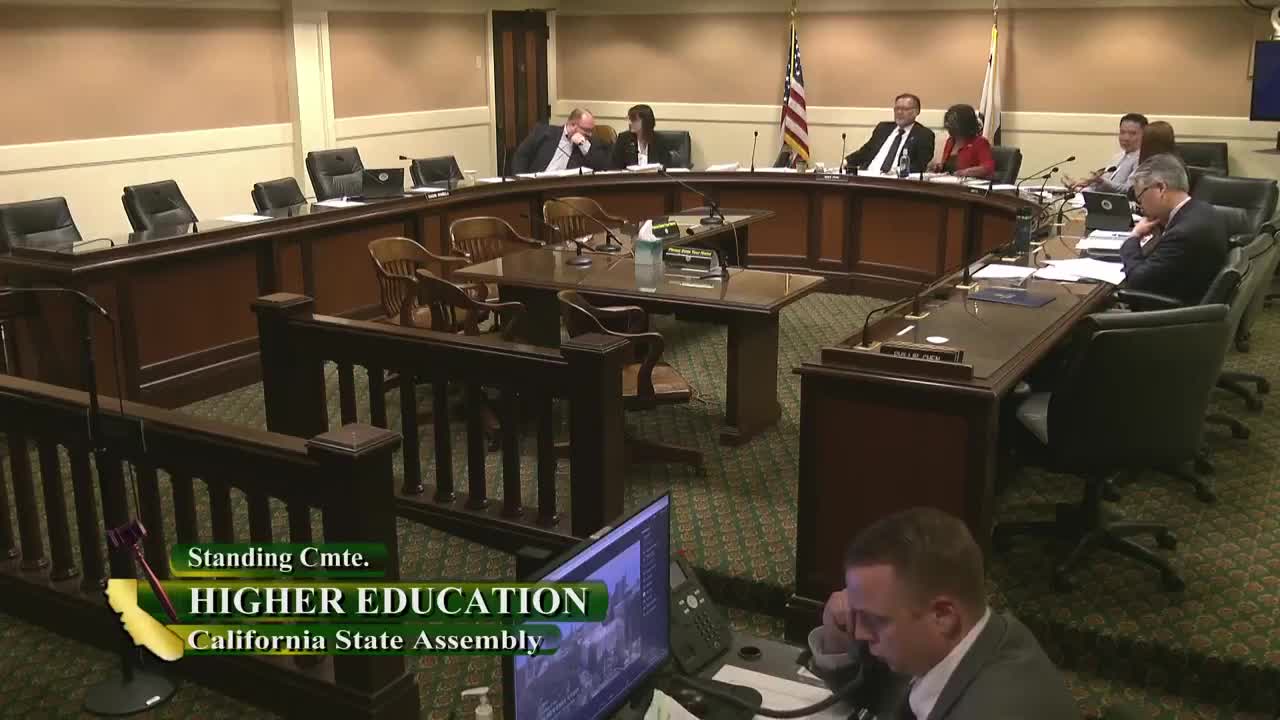
Bill Author
Bill Co-Author(s):