SB 1188: Drinking water: technical, managerial, and financial standards.
- Session Year: 2023-2024
- House: Senate
- Latest Version Date: 2024-09-24
Current Status:
Passed
(2024-09-24: Chaptered by Secretary of State. Chapter 507, Statutes of 2024.)
Introduced
In Committee
First Chamber
In Committee
Second Chamber
Enacted
What does this bill do?
The bill requires the State Water Resources Control Board to create minimum technical, managerial, and financial standards for small community water systems (those serving fewer than 10,000 people or 3,300 connections) and for water systems at K–12 schools. Those systems must show they meet the standards within timelines the board sets, new systems must show compliance when applying for a permit, and the board may require proof such as annual reports to monitor current capacity.
The summary is provided by generative AI which can make mistakes. For original language, please view the details in the table below.
Existing law, the California Safe Drinking Water Act, imposes on the State Water Resources Control Board various responsibilities and duties relating to providing a dependable, safe supply of drinking water. Existing law requires the state board to directly enforce the provisions of the act for all public water systems, except as specified. The act prohibits a person from operating a public water system unless the person first submits an application to the state board and receives a permit to operate the system, as specified. Existing law authorizes the state board to impose permit conditions, requirements for system improvements, technical, financial, or managerial requirements, and time schedules as it deems necessary to ensure a reliable and adequate supply of water at all times that is pure, wholesome, potable, and does not endanger the health of consumers.
Existing law makes it a crime to knowingly make any false statement or representation in any application, record, report, or other document submitted, maintained, or used for purposes of compliance with the act.
This bill would require the state board to develop and adopt minimum standards related to the technical, managerial, and financial capacity of community water systems serving fewer than 10,000 people or 3,300 service connections and nontransient noncommunity water systems that serve K12 schools. The bill would require community water systems serving fewer than 10,000 people or 3,300 service connections and nontransient noncommunity water systems that serve K12 schools to demonstrate compliance with those standards, as provided. The bill would require new community water systems serving fewer than 10,000 persons or 3,300 service connections and nontransient noncommunity water systems that serve K12 schools to demonstrate, as part of a permit application, compliance with the minimum technical, managerial, and financial standards.
This bill would authorize the state board to require a community water system serving fewer than 10,000 people or 3,300 service connections and a nontransient noncommunity water system that serves K12 schools subject to the minimum standards to show proof that it has the technical, managerial, and financial capacity to comply with the standards, including, but not limited to, annual reporting of information necessary and appropriate to monitor its current capacity status. Because knowingly making a false statement or representation in that report would be a crime under the California Safe Drinking Water Act, the bill would impose a state-mandated local program by expanding the scope of a crime.
The California Constitution requires the state to reimburse local agencies and school districts for certain costs mandated by the state. Statutory provisions establish procedures for making that reimbursement.
This bill would provide that no reimbursement is required by this act for a specified reason.
Existing law, the California Safe Drinking Water Act, imposes on the State Water Resources Control Board various responsibilities and duties relating to providing a dependable, safe supply of drinking water. Existing law requires the state board to directly enforce the provisions of the act for all public water systems, except as specified. The act prohibits a person from operating a public water system unless the person first submits an application to the state board and receives a permit to operate the system, as specified. Existing law authorizes the state board to impose permit conditions, requirements for system improvements, technical, financial, or managerial requirements, and time schedules as it deems necessary to ensure a reliable and adequate supply of water at all times that is pure, wholesome, potable, and does not endanger the health of consumers.
Existing law makes it a crime to knowingly make any false statement or representation in any application, record, report, or other document submitted, maintained, or used for purposes of compliance with the act.
This bill would require the state board to develop and adopt minimum standards related to the technical, managerial, and financial capacity of public community water systems serving fewer than 10,000 people or 3,300 service connections. connections and nontransient noncommunity water systems that serve K12 schools. The bill would require public community water systems serving fewer than 10,000 people or 3,300 service connections and nontransient noncommunity water systems that serve K12 schools to demonstrate compliance with those standards, as provided. The bill would require new community water systems serving fewer than 10,000 persons or 3,300 service connections and nontransient noncommunity water systems that serve K12 schools to demonstrate, as part of a permit application, compliance with the minimum technical, managerial, and financial standards.
This bill would require the state board and the Department of Water Resources to consider a public water systems compliance with the technical, managerial, and financial standards when reviewing an application to grant or loan state funds. The bill would authorize the state board or the department to deny funding to a public water system serving fewer than 10,000 people or 3,300 service connections that fails to comply with the bill unless the state board or department makes a finding regarding at least one of 4 specified conditions. The bill would authorize the state board to require a public water system community water system serving fewer than 10,000 people or 3,300 service connections and a nontransient noncommunity water system that serves K12 schools subject to the minimum standards to show proof that it has the technical, managerial, and financial capacity to comply with the standards, including, but not limited to, annual reporting of information necessary and appropriate to monitor a public water systems its current capacity status. Because knowingly making a false statement or representation in that report would be a crime under the California Safe Drinking Water Act, the bill would impose a state-mandated local program by expanding the scope of a crime.
The California Constitution requires the state to reimburse local agencies and school districts for certain costs mandated by the state. Statutory provisions establish procedures for making that reimbursement.
This bill would provide that no reimbursement is required by this act for a specified reason.
Existing law, the California Safe Drinking Water Act, imposes on the State Water Resources Control Board various responsibilities and duties relating to providing a dependable, safe supply of drinking water. Existing law requires the state board to directly enforce the provisions of the act for all public water systems, except as specified. The act prohibits a person from operating a public water system unless the person first submits an application to the state board and receives a permit to operate the system, as specified. Existing law authorizes the state board to impose permit conditions, requirements for system improvements, technical, financial, or managerial requirements, and time schedules as it deems necessary to ensure a reliable and adequate supply of water at all times that is pure, wholesome, potable, and does not endanger the health of consumers.
Existing law makes it a crime to knowingly make any false statement or representation in any application, record, report, or other document submitted, maintained, or used for purposes of compliance with the act.
This bill would require the state board to develop and adopt minimum standards related to the technical, managerial, and financial capacity of public water systems with serving fewer than 10,000 people or 3,300 service connections. The bill would require public water systems with serving fewer than 10,000 people or 3,300 service connections to have the capacity to demonstrate compliance with those standards, as provided.
This bill would prohibit require the state board and the Department of Water Resources from granting or loaning to consider a public water systems compliance with the technical, managerial, and financial standards when reviewing an application to grant or loan state funding funds. The bill would authorize the state board or the department to deny funding to a public water system serving fewer than 10,000 people or 3,300 service connections that fails to comply with the bill unless the state board or department makes a finding regarding at least one of 3 4 specified conditions. The bill would authorize the state board to require a public water system subject to the minimum standards to show proof that it has the technical, managerial, and financial capacity to comply with the standards, including, but not limited to, annual reporting of information necessary and appropriate to monitor a public water systems current capacity status. Because knowingly making a false statement or representation in that report would be a crime under the California Safe Drinking Water Act, the bill would impose a state-mandated local program by expanding the scope of a crime.
The California Constitution requires the state to reimburse local agencies and school districts for certain costs mandated by the state. Statutory provisions establish procedures for making that reimbursement.
This bill would provide that no reimbursement is required by this act for a specified reason.
Existing law, the California Safe Drinking Water Act, imposes on the State Water Resources Control Board various responsibilities and duties relating to providing a dependable, safe supply of drinking water. Existing law requires the state board to directly enforce the provisions of the act for all public water systems, except as specified. The act prohibits a person from operating a public water system unless the person first submits an application to the state board and receives a permit to operate the system, as specified. Existing law authorizes the state board to impose permit conditions, requirements for system improvements, technical, financial, or managerial requirements, and time schedules as it deems necessary to ensure a reliable and adequate supply of water at all times that is pure, wholesome, potable, and does not endanger the health of consumers.
Existing law makes it a crime to knowingly make any false statement or representation in any application, record, report, or other document submitted, maintained, or used for purposes of compliance with the act.
This bill would require the state board to develop and adopt minimum standards related to the technical, managerial, and financial capacity of public water systems with fewer than 10,000 service connections. The bill would require public water systems with fewer than 10,000 service connections to have the capacity to demonstrate compliance with those standards, as provided.
This bill would prohibit the state board and the Department of Water Resources from granting or loaning state funding to a public water system that fails to comply with the bill unless the state board or department makes a finding regarding at least one of 3 specified conditions. The bill would authorize the state board to require a public water system subject to the minimum standards to show proof that it has the technical, managerial, and financial capacity to comply with the standards, including, but not limited to, annual reporting of information necessary and appropriate to monitor a public water systems current capacity status. Because knowingly making a false statement or representation in that report would be a crime under the California Safe Drinking Water Act, the bill would impose a state-mandated local program by expanding the scope of a crime.
The California Constitution requires the state to reimburse local agencies and school districts for certain costs mandated by the state. Statutory provisions establish procedures for making that reimbursement.
This bill would provide that no reimbursement is required by this act for a specified reason.
Existing law finds and declares, among other things, that the failure to properly repair and maintain commercial and industrial facilities or structures may pose a threat to public health or safety or to the environment that could be prevented through expeditious and coordinated agency action.This bill would make nonsubstantive changes to those findings and declarations.Existing law finds and declares, among other things, that the failure to properly repair and maintain commercial and industrial facilities or structures may pose a threat to public health or safety or to the environment that could be prevented through expeditious and coordinated agency action.
This bill would make nonsubstantive changes to those findings and declarations.
(a)The state board shall develop and adopt minimum standards in accordance with the Administrative Procedure Act (Chapter 3.5 (commencing with Section 11340) of Part 1 of Division 3 of Title 2 of the Government Code) related to the technical, managerial, and financial capacity of community water systems serving fewer than 10,000 people or 3,300 service connections and nontransient noncommunity water systems that serve K12 schools. The standards shall review and consider the most recent technical, managerial, and financial assessment published by the state board, and may include, but not be limited to, all of the following:
(1)Source water adequacy, related to both supply and quality.
(2)Infrastructure adequacy, including source, treatment, distribution, and storage.
(3)Adequacy of organizational staffing levels and staff technical knowledge, including internal management of outside contractors.
(4)Adequate staffing and organization governance structures enabling transparent and informed decisions.
(5)Effectiveness of external contracts, contractors, or other agreements.
(6)Revenue sufficiency, including adequate financial reserves to plan, operate, maintain, and restore or replace the systems water infrastructure as it reaches the end of its useful life.
(7)Credit worthiness.
(8)Fiscal management and controls.
(9)Adequate management and technical staffing.
(10)Governance and public processes.
(b)In developing the standards, the state board shall review and consider documents, standards, and practices produced by other government and water industry organizations, including, but not limited to, all of the following:
(1)United States Environmental Protection Agency reports related to the agencys technical, managerial, and financial capacity standards, including the 2001 report titled State Programs to Ensure Demonstration of Technical, Managerial, and Financial Capacity of New Water Systems.
(2)The American Water Works Associations G410-18 Business Practices for Operation and Management and M1 Principles of Water Rates, Fees, and Charges.
(3)The Rural Community Assistance Partnerships document titled The Basics of Financial Management for Small-community Utilities.
(4)Statutes, regulations, or reports from other state governments subject to the federal Safe Drinking Water Act (42 U.S.C. Sec. 300f et seq.).
(5)The most recent California Capacity Development Strategy For Public Water Systems document published by the state board.
(c)In developing the standards, the state board may consider proposed or adopted regulations required by Section 116375.
(d)Before adopting the standards, the state board shall convene at least two virtual statewide public workshops regarding the proposed standards.
(e)This article does not limit the Public Utilities Commissions authority in relation to the regulation of water corporations.
116601.(a)Community water systems serving fewer than 10,000 people or 3,300 service connections and nontransient noncommunity water systems that serve K12 schools shall demonstrate compliance with the minimum technical, managerial, and financial standards adopted pursuant to Section 116600 within timelines adopted by the state board. The timelines adopted by the state board shall not require compliance with the minimum technical, managerial, and financial standards sooner than two years after the adoption of the standards. The board may grant an extension for compliance with the technical, managerial, and financial standards for good cause when an explanation of the need for an extension is included in a compliance plan submitted by a water system and is approved by the state board.
(b)Notwithstanding subdivision (a), new community water systems serving fewer than 10,000 persons or 3,300 service connections and nontransient noncommunity water systems that serve K12 schools shall demonstrate, as part of a permit application, compliance with the minimum technical, managerial, and financial standards adopted pursuant to Section 116600.
(c)The state board may require a community water system serving fewer than 10,000 people or 3,300 service connections and a nontransient noncommunity water system that serves K12 schools subject to the minimum standards adopted pursuant to Section 116600 to show proof that it has the technical, managerial, and financial capacity to comply with the standards, including, but not limited to, annual reporting of information necessary and appropriate to monitor its current capacity status.
(d)Nothing in this article shall be construed as limiting the state boards authority under other laws, including the authority to order consolidation pursuant to Section 116682 or to request a technical report under Section 116530.
SEC. 2.No reimbursement is required by this act pursuant to Section 6 of Article XIIIB of the California Constitution because the only costs that may be incurred by a local agency or school district will be incurred because this act creates a new crime or infraction, eliminates a crime or infraction, or changes the penalty for a crime or infraction, within the meaning of Section 17556 of the Government Code, or changes the definition of a crime within the meaning of Section 6 of Article XIIIB of the California Constitution.
(a)The state board shall develop and adopt minimum standards in accordance with the Administrative Procedure Act (Chapter 3.5 (commencing with Section 11340) of Part 1 of Division 3 of Title 2 of the Government Code) related to the technical, managerial, and financial capacity of community water systems serving fewer than 10,000 people or 3,300 service connections and nontransient noncommunity water systems that serve K12 schools. The standards shall review and consider the most recent technical, managerial, and financial assessment published by the state board, and may include, but not be limited to, all of the following:
(1)Source water adequacy, related to both supply and quality.
(2)Infrastructure adequacy, including source, treatment, distribution, and storage.
(3)Adequacy of organizational staffing levels and staff technical knowledge, including internal management of outside contractors.
(4)Adequate staffing and organization governance structures enabling transparent and informed decisions.
(5)Effectiveness of external contracts, contractors, or other agreements.
(6)Revenue sufficiency, including adequate financial reserves to plan, operate, maintain, and restore or replace the systems water infrastructure as it reaches the end of its useful life.
(7)Credit worthiness.
(8)Fiscal management and controls.
(9)Adequate management and technical staffing.
(10)Governance and public processes.
(b)In developing the standards, the state board shall review and consider documents, standards, and practices produced by other government and water industry organizations, including, but not limited to, all of the following:
(1)United States Environmental Protection Agency reports related to the agencys technical, managerial, and financial capacity standards, including the 2001 report titled State Programs to Ensure Demonstration of Technical, Managerial, and Financial Capacity of New Water Systems.
(2)The American Water Works Associations G410-18 Business Practices for Operation and Management and M1 Principles of Water Rates, Fees, and Charges.
(3)The Rural Community Assistance Partnerships document titled The Basics of Financial Management for Small-community Utilities.
(4)Statutes, regulations, or reports from other state governments subject to the federal Safe Drinking Water Act (42 U.S.C. Sec. 300f et seq.).
(5)The most recent California Capacity Development Strategy For Public Water Systems document published by the state board.
(c)In developing the standards, the state board may consider proposed or adopted regulations required by Section 116375.
(d)Before adopting the standards, the state board shall convene at least two virtual statewide public workshops regarding the proposed standards.
(e)This article does not limit the Public Utilities Commissions authority in relation to the regulation of water corporations.
116601.(a)Community water systems serving fewer than 10,000 people or 3,300 service connections and nontransient noncommunity water systems that serve K12 schools shall demonstrate compliance with the minimum technical, managerial, and financial standards adopted pursuant to Section 116600 within timelines adopted by the state board, which shall not be sooner than two years from the adoption of minimum technical, managerial, and financial standards. board. The timelines adopted by the state board shall not require compliance with the minimum technical, managerial, and financial standards sooner than two years after the adoption of the standards. The board may grant an extension for compliance with the technical, managerial, and financial standards for good cause when an explanation of the need for an extension is included in a compliance plan submitted by a water system and is approved by the state board.
(b)Notwithstanding subdivision (a), new community water systems serving fewer than 10,000 persons or 3,300 service connections and nontransient noncommunity water systems that serve K12 schools shall demonstrate, as part of a permit application, compliance with the minimum technical, managerial, and financial standards adopted pursuant to Section 116600.
(c)The state board may require a community water system serving fewer than 10,000 people or 3,300 service connections and a nontransient noncommunity water system that serves K12 schools subject to the minimum standards adopted pursuant to Section 116600 to show proof that it has the technical, managerial, and financial capacity to comply with the standards, including, but not limited to, annual reporting of information necessary and appropriate to monitor its current capacity status.
(d)Nothing in this article shall be construed as limiting the state boards authority under other laws, including the authority to order consolidation pursuant to Section 116682 or to request a technical report under Section 116530.
SEC. 2.No reimbursement is required by this act pursuant to Section 6 of Article XIIIB of the California Constitution because the only costs that may be incurred by a local agency or school district will be incurred because this act creates a new crime or infraction, eliminates a crime or infraction, or changes the penalty for a crime or infraction, within the meaning of Section 17556 of the Government Code, or changes the definition of a crime within the meaning of Section 6 of Article XIIIB of the California Constitution.
(a)The state board shall develop and adopt minimum standards in accordance with the Administrative Procedure Act (Chapter 3.5 (commencing with Section 11340) of Part 1 of Division 3 of Title 2 of the Government Code) related to the technical, managerial, and financial capacity of public community water systems serving fewer than 10,000 people or 3,300 service connections. connections and nontransient noncommunity water systems that serve K12 schools. The standards shall be consistent with review and consider the most recent technical, managerial, and financial assessment published by the state board, and may include, but not be limited to, all of the following:
(1)Source water adequacy, related to both supply and quality.
(2)Infrastructure adequacy, including source, treatment, distribution, and storage.
(3)Adequacy of organizational staffing levels and staff technical knowledge, including internal management of outside contractors.
(4)Adequate staffing and organization governance structures enabling transparent and informed decisions.
(5)Effectiveness of external contracts, contractors, or other agreements.
(6)Revenue sufficiency, including adequate financial reserves to plan, operate, maintain, and restore or replace the systems water infrastructure as it reaches the end of its useful life.
(7)Credit worthiness.
(8)Fiscal management and controls.
(9)Adequate management and technical staffing.
(10)Governance and public processes.
(b)In developing the standards, the state board shall review and consider documents, standards, and practices produced by other government and water industry organizations, including, but not limited to, all of the following:
(1)United States Environmental Protection Agency reports related to the agencys technical, managerial, and financial capacity standards, including the 2001 report titled State Programs to Ensure Demonstration of Technical, Managerial, and Financial Capacity of New Water Systems.
(2)The American Water Works Associations G410-18 Business Practices for Operation and Management and M1 Principles of Water Rates, Fees, and Charges.
(3)The Rural Community Assistance Partnerships document titled The Basics of Financial Management for Small-community Utilities.
(4)Statutes, regulations, or reports from other state governments subject to the federal Safe Drinking Water Act (42 U.S.C. Sec. 300f et seq.).
(5)The most recent California Capacity Development Strategy For Public Water Systems document published by the state board.
(c)In developing the standards, the state board may consider proposed or adopted regulations required by Section 116375.
(d)Before adopting the standards, the state board shall convene at least two virtual statewide public workshops regarding the proposed standards.
(e)This article does not limit the Public Utilities Commissions authority in relation to the regulation of water corporations.
116601.(a)Public Community water systems serving fewer than 10,000 people or 3,300 service connections and nontransient noncommunity water systems that serve K12 schools shall demonstrate compliance with the minimum technical, managerial, and financial standards adopted pursuant to Section 116600 within two years of the adoption of those standards. timelines adopted by the state board, which shall not be sooner than two years from the adoption of minimum technical, managerial, and financial standards. The board may grant an extension for good cause included in a compliance plan submitted by a water system and approved by the state board.
(b)The state board and the Department of Water Resources shall consider a public water systems compliance with the technical, managerial, and financial standards adopted pursuant to Section 116600 when reviewing an application to grant or loan state funds. The state board or Department of Water Resources may deny funding to a public water system serving fewer than 10,000 people or 3,300 service connections that fails to comply with this article unless the state board or the Department of Water Resources makes a finding regarding one or more of the following:(1)An urgent need to provide interim measures to ensure the safe drinking water of the public water systems customers.(2)The public water system initiates a voluntary physical or managerial consolidation proceeding with a public water system that has adequate technical, managerial, and financial capacity within six months, or a regional consolidation proceeding of multiple public water systems.(3)The state boards Division of Drinking Water has approved a plan developed and submitted by the public water system that demonstrates commitment and capacity to achieve compliance.(4)The state board has ordered the public water system to consolidate pursuant to Section 116682 or has appointed an administrator pursuant to Section 116686, or the public water system has been placed in receivership.(b)Notwithstanding subdivision (a), new community water systems serving fewer than 10,000 persons or 3,300 service connections and nontransient noncommunity water systems that serve K12 schools shall demonstrate, as part of a permit application, compliance with the minimum technical, managerial, and financial standards adopted pursuant to Section 116600.
(c)The state board may require a public water system community water system serving fewer than 10,000 people or 3,300 service connections and a nontransient noncommunity water system that serves K12 schools subject to the minimum standards adopted pursuant to Section 116600 to show proof that it has the technical, managerial, and financial capacity to comply with the standards, including, but not limited to, annual reporting of information necessary and appropriate to monitor a public water systems its current capacity status.
(d)Nothing in this section article shall be construed as limiting the state boards authority under other laws, including the authority to order consolidation pursuant to Section 116682. 116682 or to request a technical report under Section 116530.
SEC. 2.No reimbursement is required by this act pursuant to Section 6 of Article XIIIB of the California Constitution because the only costs that may be incurred by a local agency or school district will be incurred because this act creates a new crime or infraction, eliminates a crime or infraction, or changes the penalty for a crime or infraction, within the meaning of Section 17556 of the Government Code, or changes the definition of a crime within the meaning of Section 6 of Article XIIIB of the California Constitution.
(a)The state board shall develop and adopt minimum standards in accordance with the Administrative Procedure Act (Chapter 3.5 (commencing with Section 11340) of Part 1 of Division 3 of Title 2 of the Government Code) related to the technical, managerial, and financial capacity of public water systems with serving fewer than 10,000 people or 3,300 service connections. The standards shall be consistent with the most recent technical, managerial, and financial assessment published by the state board, and may include, but not be limited to, all of the following:
(1)Source water adequacy, related to both supply and quality.
(2)Infrastructure adequacy, including source, treatment, distribution, and storage.
(3)Adequacy of organizational staffing levels and staff technical knowledge, including internal management of outside contractors.
(4)Ownership accountability.(5)(4)Adequate staffing and organization governance structures enabling transparent and informed decisions.
(6)(5)Effectiveness of external contracts, contractors, or other agreements.
(7)(6)Revenue sufficiency, including adequate financial reserves to plan, operate, maintain, and restore or replace the systems water infrastructure as it reaches the end of its useful life.
(8)(7)Credit worthiness.
(9)(8)Fiscal management and controls.
(b)In developing the standards, the state board shall review and consider documents, standards, and practices produced by other government and water industry organizations, including, but not limited to, all of the following:
(1)United States Environmental Protection Agency reports related to the agencys technical, managerial, and financial capacity standards, including the 2001 report titled State Programs to Ensure Demonstration of Technical, Managerial, and Financial Capacity of New Water Systems.
(2)The American Water Works Associations G410-18 Business Practices for Operation and Management and M1 Principles of Water Rates, Fees, and Charges.
(3)The Rural Community Assistance Partnerships document titled The Basics of Financial Management for Small-community Utilities.
(4)Statutes, regulations, or reports from other state governments subject to the federal Safe Drinking Water Act (42 U.S.C. Sec. 300f et seq.).
(5)The most recent California Capacity Development Strategy For Public Water Systems document published by the state board.
(c)In developing the standards, the state board may consider proposed or adopted regulations required by Section 116375.
(d)Before adopting the standards, the state board shall convene at least two virtual statewide public workshops regarding the proposed standards.
(e)This article does not limit the Public Utilities Commissions authority in relation to the regulation of water corporations.
116601.(a)Public water systems with serving fewer than 10,000 people or 3,300 service connections shall have the capacity to demonstrate compliance with the minimum technical, managerial, and financial standards adopted pursuant to Section 116600 within two years of the adoption of those standards.
(b)Neither the The state board nor and the Department of Water Resources shall consider a public water systems compliance with the technical, managerial, and financial standards adopted pursuant to Section 116600 when reviewing an application to grant or loan state funding funds. The state board or Department of Water Resources may deny funding to a public water system serving fewer than 10,000 people or 3,300 service connections that fails to comply with this article unless the state board or the Department of Water Resources makes a finding regarding one or more of the following:
(1)An urgent need to provide interim measures to ensure the safe drinking water of the public water systems customers.
(2)The public water system initiates a voluntary physical or managerial consolidation proceeding with a public water agency system that has adequate technical, managerial, and financial capacity within six months. months, or a regional consolidation proceeding of multiple public water systems.
(3)The state boards Division of Drinking Water has approved a plan developed and submitted by the public water system that demonstrates commitment and capacity to achieve compliance, if consolidation is not a feasible option. compliance.
(4)The state board has ordered the public water system to consolidate pursuant to Section 116682 or has appointed an administrator pursuant to Section 116686, or the public water system has been placed in receivership.
(c)The state board may require a public water system subject to the minimum standards adopted pursuant to Section 116600 to show proof that it has the technical, managerial, and financial capacity to comply with the standards, including, but not limited to, annual reporting of information necessary and appropriate to monitor a public water systems current capacity status.
(d)Nothing in this section shall be construed as limiting the state boards authority to order consolidation pursuant to Section 116682.
SEC. 2.No reimbursement is required by this act pursuant to Section 6 of Article XIIIB of the California Constitution because the only costs that may be incurred by a local agency or school district will be incurred because this act creates a new crime or infraction, eliminates a crime or infraction, or changes the penalty for a crime or infraction, within the meaning of Section 17556 of the Government Code, or changes the definition of a crime within the meaning of Section 6 of Article XIIIB of the California Constitution.
(a)The state board shall develop and adopt minimum standards in accordance with the Administrative Procedure Act (Chapter 3.5 (commencing with Section 11340) of Part 1 of Division 3 of Title 2 of the Government Code) related to the technical, managerial, and financial capacity of public water systems with fewer than 10,000 service connections. The standards shall include, but not be limited to, all of the following:
(1)Source water adequacy, related to both supply and quality.
(2)Infrastructure adequacy, including source, treatment, distribution, and storage.
(3)Adequacy of organizational staffing levels and staff technical knowledge, including internal management of outside contractors.
(4)Ownership accountability.
(5)Adequate staffing and organization governance structures enabling transparent and informed decisions.
(6)Effectiveness of external contracts, contractors, or other agreements.
(7)Revenue sufficiency, including adequate financial reserves to plan, operate, maintain, and restore or replace the systems water infrastructure as it reaches the end of its useful life.
(8)Credit worthiness.
(9)Fiscal management and controls.
(b)In developing the standards, the state board shall review and consider documents, standards, and practices produced by other government and water industry organizations, including, but not limited to, all of the following:
(1)United States Environmental Protection Agency reports related to the agencys technical, managerial, and financial capacity standards, including the 2001 report titled State Programs to Ensure Demonstration of Technical, Managerial, and Financial Capacity of New Water Systems.
(2)The American Water Works Associations G410-18 Business Practices for Operation and Management and M1 Principles of Water Rates, Fees, and Charges.
(3)The Rural Community Assistance Partnerships document titled The Basics of Financial Management for Small-community Utilities.
(4)Statutes, regulations, or reports from other state governments subject to the federal Safe Drinking Water Act (42 U.S.C. Sec. 300f et seq.).
(c)In developing the standards, the state board may consider proposed or adopted regulations required by Section 116375.
(d)Before adopting the standards, the state board shall convene at least two virtual statewide public workshops regarding the proposed standards.
(e)This article does not limit the Public Utilities Commissions authority in relation to the regulation of water corporations.
116601.(a)Public water systems with fewer than 10,000 service connections shall have the capacity to demonstrate compliance with the minimum technical, managerial, and financial standards adopted pursuant to Section 116600 within two years of the adoption of those standards.
(b)Neither the state board nor the Department of Water Resources shall grant or loan state funding to a public water system that fails to comply with this article unless the state board or the Department of Water Resources makes a finding regarding one or more of the following:
(1)An urgent need to provide interim measures to ensure the safe drinking water of the public water systems customers.
(2)The public water system initiates a voluntary consolidation proceeding with a public water agency that has adequate technical, managerial, and financial capacity within six months.
(3)The state boards Division of Drinking Water has approved a plan developed and submitted by the public water system that demonstrates commitment and capacity to achieve compliance, if consolidation is not a feasible option.
(c)The state board may require a public water system subject to the minimum standards adopted pursuant to Section 116600 to show proof that it has the technical, managerial, and financial capacity to comply with the standards, including, but not limited to, annual reporting of information necessary and appropriate to monitor a public water systems current capacity status.
(d)Nothing in this section shall be construed as limiting the state boards authority to order consolidation pursuant to Section 116682.
SEC. 2.No reimbursement is required by this act pursuant to Section 6 of Article XIIIB of the California Constitution because the only costs that may be incurred by a local agency or school district will be incurred because this act creates a new crime or infraction, eliminates a crime or infraction, or changes the penalty for a crime or infraction, within the meaning of Section 17556 of the Government Code, or changes the definition of a crime within the meaning of Section 6 of Article XIIIB of the California Constitution.
SECTION 1.Section 57050 of the Health and Safety Code is amended to read:57050.The Legislature hereby finds and declares all of the following:(a) The failure to properly repair and maintain commercial and industrial facilities or structures may pose a threat to public health or safety or to the environment that could be prevented through expeditious and coordinated agency action.(b) There is an urgent need to implement repair or maintenance projects, as defined in subdivision (g) of Section 57051, as quickly and as effectively as possible to avoid potential threats to public health or safety or to the environment.(c) It is the intent of this division to provide, at the request of a responsible party, a mechanism that may ensure that the permits required to carry out necessary repair or maintenance projects at commercial or industrial facilities or structures will be issued in an expeditious, timely, and coordinated manner and will be consistent with one another.The Legislature hereby finds and declares all of the following:
(a) The failure to properly repair and maintain commercial and industrial facilities or structures can may pose a threat to public health or safety or to the environment that can could be prevented through expeditious and coordinated agency action.
(b) There is an urgent need to implement repair or maintenance projects, as defined in subdivision (g) of Section 57051 57051, as quickly and as effectively as possible to avoid potential threats to public health or safety or to the environment.
(c) It is the intent of this division to provide, at the request of a responsible party, a mechanism that can may ensure that the permits required to carry out necessary repair or maintenance projects at commercial or industrial facilities or structures will be issued in an expeditious, timely, and coordinated manner and will be consistent with one another.
|
Date
|
Status
|
|---|---|
| Sep 24, 2024 | Chaptered by Secretary of State. Chapter 507, Statutes of 2024. |
| Sep 24, 2024 | Approved by the Governor. |
| Sep 3, 2024 | Enrolled and presented to the Governor at 3 p.m. |
| Aug 27, 2024 | Assembly amendments concurred in. (Ayes 31. Noes 9. Page 5508.) Ordered to engrossing and enrolling. |
| Aug 26, 2024 | In Senate. Concurrence in Assembly amendments pending. |
| Aug 26, 2024 | Read third time. Passed. (Ayes 64. Noes 5. Page 6531.) Ordered to the Senate. |
| Aug 19, 2024 | Read second time. Ordered to third reading. |
| Aug 15, 2024 | From committee: Do pass. (Ayes 11. Noes 3.) (August 15). |
| Aug 7, 2024 | August 7 set for first hearing. Placed on suspense file. |
| Jun 26, 2024 | From committee: Do pass and re-refer to Com. on APPR. (Ayes 6. Noes 1.) (June 25). Re-referred to Com. on APPR. |
| Jun 20, 2024 | From committee with author's amendments. Read second time and amended. Re-referred to Com. on E.S. & T.M. |
| Jun 17, 2024 | From committee with author's amendments. Read second time and amended. Re-referred to Com. on E.S. & T.M. |
| Jun 3, 2024 | Referred to Com. on E.S. & T.M. |
| May 22, 2024 | In Assembly. Read first time. Held at Desk. |
| May 21, 2024 | Read third time. Passed. (Ayes 29. Noes 8. Page 4102.) Ordered to the Assembly. |
| May 20, 2024 | Read second time. Ordered to third reading. |
| May 16, 2024 | Read second time and amended. Ordered to second reading. |
| May 16, 2024 | From committee: Do pass as amended. (Ayes 5. Noes 2. Page 3974.) (May 16). |
| May 10, 2024 | Set for hearing May 16. |
| Apr 29, 2024 | April 29 hearing: Placed on APPR suspense file. |
| Apr 22, 2024 | Set for hearing April 29. |
| Apr 17, 2024 | From committee: Do pass and re-refer to Com. on APPR. (Ayes 5. Noes 2. Page 3661.) (April 17). Re-referred to Com. on APPR. |
| Apr 5, 2024 | Set for hearing April 17. |
| Apr 3, 2024 | Re-referred to Com. on E.Q. |
| Mar 18, 2024 | From committee with author's amendments. Read second time and amended. Re-referred to Com. on RLS. |
| Feb 21, 2024 | Referred to Com. on RLS. |
| Feb 15, 2024 | From printer. May be acted upon on or after March 16. |
| Feb 14, 2024 | Introduced. Read first time. To Com. on RLS. for assignment. To print. |
|
Date
|
Description
|
Location
|
Votes
|
|
|---|---|---|---|---|
| Aug 27, 2024 | Unfinished Business SB1188 Laird Concurrence | Senate Floor |
Passed |
|
| Aug 26, 2024 | SB 1188 Laird Senate Third Reading By Pellerin | Assembly Floor |
Passed |
|
| Aug 15, 2024 | Do pass. | Assembly Standing Committee on Appropriations |
Passed |
|
| Jun 25, 2024 | Do pass and be re-referred to the Committee on [Appropriations] | Assembly Standing Committee on Environmental Safety and Toxic Materials |
Passed |
|
| May 21, 2024 | Senate 3rd Reading SB1188 Laird | Senate Floor |
Passed |
|
| May 16, 2024 | Do pass as amended | Senate Standing Committee on Appropriations |
Passed |
|
| Apr 29, 2024 | Placed on suspense file | Senate Standing Committee on Appropriations |
Passed |
|
| Apr 17, 2024 | Do pass, but first be re-referred to the Committee on [Appropriations] | Senate Standing Committee on Environmental Quality |
Passed |
This list shows positions taken on this bill by organizations on the date displayed, which is linked to the original source.
Positions by individuals are not included.
|
Organization
|
Position
|
Date
|
|---|---|---|
| Association Of California Water Agencies | ** Against | |
| California Democratic Party | ** Support | |
| California Municipal Utilities Association | ** Against | |
| Clean Water Action | ** Support | |
| cleanearth4kids.org | ** Support | |
| Community Water Center | ** Support | |
| Santa Cruz County Board of Supervisors | ** Support |
SENATE RULES COMMITTEE Office of Senate Floor Analyses (916) 651-1520 Fax: (916) 327-4478 | SB 1188 |
UNFINISHED BUSINESS
Bill No: SB 1188
Author: Laird (D)
Amended: 6/20/24
Vote: 21
SENATE ENVIRONMENTAL QUALITY COMMITTEE: 5-2, 4/17/24
AYES: Allen, Archuleta, Gonzalez, Menjivar, Skinner
NOES: Dahle, Nguyen
SENATE APPROPRIATIONS COMMITTEE: 5-2, 5/16/24
AYES: Caballero, Ashby, Becker, Bradford, Wahab
NOES: Jones, Seyarto
SENATE FLOOR: 29-8, 5/21/24
AYES: Archuleta, Ashby, Atkins, Becker, Blakespear, Bradford, Caballero, Cortese, Dodd, Durazo, Eggman, Glazer, Gonzalez, Laird, Limón, McGuire, Menjivar, Min, Newman, Padilla, Portantino, Roth, Rubio, Skinner, Smallwood-Cuevas, Stern, Umberg, Wahab, Wiener
NOES: Dahle, Grove, Jones, Nguyen, Niello, Ochoa Bogh, Seyarto, Wilk
NO VOTE RECORDED: Allen, Alvarado-Gil, Hurtado
ASSEMBLY FLOOR: 64-5, 8/26/24 - See last page for vote
SUBJECT: Drinking water: technical, managerial, and financial standards
SOURCE: Author
DIGEST:
This bill requires the State Water Resources Control Board (State Water Board) to develop and adopt minimum technical, managerial, and financial (TMF) capacity standards for specified water systems and requires those water systems to comply with the TMF standards.
Assembly Amendments
additionally require the State Water Board to develop and adopt minimum standards related to the technical, managerial, and financial capacity of community water systems serving fewer than 10,000 people or 3,300 services for nontransient noncommunity water systems that serve K–12 schools. Further, the amendments require new community water systems serving such water systems to demonstrate, as part of a permit application, compliance with the minimum technical, managerial, and financial standards.
ANALYSIS:
Existing law:
- Authorizes, pursuant to the federal Safe Drinking Water Act (SDWA), the United States Environmental Protection Agency (U.S. EPA) to set standards for drinking water quality and to oversee the states, localities, and water suppliers who implement those standards. (42 United States Code (USC) § 300(f) et seq.)
- Requires, pursuant to the California SDWA, the State Water Board to regulate drinking water and to enforce the federal SDWA and other regulations. (Health and Safety Code (HSC) § 116275 et seq.)
- Requires the State Water Board to directly enforce the provisions of the SDWA for all public water systems, except as specified. The SDWA prohibits a person from operating a public water system unless the person first submits an application to the state board and receives a permit to operate the system, as specified.
- Authorizes the State Water Board to impose permit conditions, requirements for system improvements, technical, financial, or managerial requirements, and time schedules as it deems necessary to ensure a reliable and adequate supply of water at all times that is pure, wholesome, potable, and does not endanger the health of consumers.
- Makes it a crime to knowingly make any false statement or representation in any application, record, report, or other document submitted, maintained, or used for purposes of compliance with the SDWA.
This bill:
- Requires the State Water Board to develop, as specified, and adopt, as specified, minimum standards related to the TMF capacity of community water systems serving fewer than 10,000 people or 3,300 service connections and of nontransient noncommunity water systems that serve K–12 schools.
- Requires the State Water Board, before developing the standards, to convene at least two virtual statewide public workshops regarding the proposed standards.
- Requires community water systems serving fewer than 10,000 people or 3,300 service connections and nontransient noncommunity water systems that serve K–12 schools to demonstrate compliance with the minimum TMF standards adopted pursuant to this bill within timelines adopted by the State Water Board and as part of a permit application.
- Prohibits the timelines adopted by the State Water Board from requiring compliance with the minimum TMF standards sooner than two years after the adoption of the standards and authorizes the State Water Board to grant an extension for compliance with the TMF standards for good cause, as specified.
Background
- Regulation of drinking water. The State Water Board has the primary authority to enforce federal and state drinking water statutes and is responsible for the regulatory oversight of nearly 8,000 public water systems throughout the state. While the majority of the state receives drinking water that meets federal and state drinking water standards, there are many public water systems, particularly those serving small disadvantaged communities, that fail to provide safe drinking water to residents that rely on them.
- Failing and at-risk water systems and TMF. In 2022, the State Water Board released the web-based Safe and Affordable Funding for Equity and Resilience (SAFER) Dashboard. The SAFER Dashboard displays the current list of failing and at-risk public water systems and how they perform in the following risk categories: water quality, accessibility, affordability, and technical, managerial, and financial (TMF) capacity.
As of March 2024, California has 369 failing water systems that serve over 900,000 residents, and 620 at-risk systems that serve approximately 1.5 million residents. Though there can be various reasons for systems failing to provide safe water, a water system’s TMF capacity is a reliable indicator of a system’s ability to meet drinking water standards and supply adequacy, according to the State Water Board (California Capacity Development Strategy For Public Water Systems, 2022). “Based on the State Water Board’s engagement with failing water systems, it has become clear that TMF capacity limitations are a key driver towards a water system’s inability to stay in compliance.”
- Capacity Development program. The Capacity Development program was established as a key component of the 1996 federal (SDWA) Amendments. The Amendments were passed by Congress in part because of the significant problems small public water systems were having providing safe and reliable drinking water to their customers. The federal SDWA emphasizes prevention and assistance, both financial and technical, to resolve the problems. The Amendments have provided incentives (including funding) for each state to develop a Capacity Development program to assist public water systems in building technical, managerial, and financial capacity. The SDWA allows the states the flexibility to develop their own strategy to meet the individual needs of the state. California’s initial Capacity Development Strategy was adopted in 2000.
- Revised California Capacity Development Strategy (2022). Two key drivers that led to a revision of California’s Capacity Development Strategy. First, after its adoption in 2000, the Legislature established the Human Right to Water (HR2W). To advance the goals of the HR2W, the Legislature passed SB 200 (Monning, Chapter 120, Statutes of 2019), which enabled the State Water Board to establish the SAFER Program. SB 200 established a set of tools, funding sources, and regulatory authorities that the State Water Board harnesses through the SAFER Program to help struggling public water systems build capacity to sustainably and affordably provide safe drinking water.
Next, in 2018, America’s Water infrastructure Act amended the federal SDWA to require state Capacity Development Strategies to include: a description of how the state will: encourage development by PWS of asset management plans that include best practices for asset management; and assist, including through the provision of technical assistance, public water systems in training operators or other relevant and appropriate persons in implementing such asset management plans.
In 2022, the State Water Board hosted two public workshops to seek feedback and recommendations on the revised Capacity Development Strategy. Stakeholders helped identify barriers to capacity development and shaped the Strategy’s core Elements. Many existing Elements have been revised to incorporate the activities implemented through the SAFER Program. However, to date, no regulations have been adopted.
- Elements of TMF. To achieve TMF capacity, a PWS should have the plan for achieving and maintaining long-term compliance with drinking water standards, thereby ensuring the quality and adequacy of the water supply. These three areas of capacity are interrelated:
- Technical Capacity: The ability of a public water system to effectively treat and deliver safe drinking water with appropriately certified operators that meets state and federal water quality standards.
- Managerial Capacity: A public water system’s ability to conduct its affairs in a manner enabling it to achieve and maintain compliance with the California SDWA requirements while maintaining best practices in accountability and interactions with customers and regulatory agencies.
- Financial Capacity: A public water system’s ability to generate sufficient revenue for current and future budget needs, maintain creditworthiness, and
manage funds through budgeting, accounting and other methods of fiscal control.
Comments
- Purpose of Bill. According to the author, “Access to safe and affordable water is a human right that over 900,000 Californians lack. A water system’s technical, managerial, and financial (TMF) capacity is a reliable indicator of a water system’s ability to meet drinking water standards and supply adequacy, and TMF deficiencies are a key reason water systems fail. This is especially true for small water systems that often lack the financial base and expertise to meet safe water standards.
“Senate Bill 1188 requires the Water Board to establish minimum standards for technical, managerial, and financial capacity of small water systems, and requires compliance with TMF standards. SB 1188 helps safeguard Californian’s fundamental right to safe water by empowering the state to proactively identify and assist small water systems struggling with operational capacity that threatens access to safe, reliable drinking water.”
FISCAL EFFECT: Appropriation: No Fiscal Com.: Yes Local: Yes
According to the Assembly Appropriations Committee, the State Water Board reports that, should this bill be enacted, it would incur costs from the Safe Drinking Water Account (SDWA) estimated at $250,000 in one-time contracting costs and $900,000 annually for two years for permanent staff to update systems and develop regulations -- $2,050,000 total. In addition, the State Water Board reports, once regulations are adopted, additional one-time contracting costs of $250,000 from the SDWA and ongoing costs of $1,575,000 for staff to implement the regulations and make future updates to the regulations, which will involve reviewing compliance plans and annual compliance reports from water systems.
SUPPORT: (Verified 8/26/24)
Clean Water Action
Community Water Center
Santa Cruz County Board of Supervisors
OPPOSITION: (Verified 8/26/24)
None received
ASSEMBLY FLOOR: 64-5, 8/26/24
AYES: Addis, Aguiar-Curry, Alanis, Alvarez, Arambula, Bains, Bauer-Kahan, Bennett, Berman, Boerner, Bonta, Bryan, Calderon, Juan Carrillo, Wendy Carrillo, Connolly, Mike Fong, Friedman, Gabriel, Garcia, Gipson, Grayson, Haney, Hart, Holden, Hoover, Irwin, Jackson, Jones-Sawyer, Kalra, Lee, Low, Lowenthal, Maienschein, McCarty, McKinnor, Muratsuchi, Stephanie Nguyen, Pacheco, Papan, Pellerin, Petrie-Norris, Quirk-Silva, Ramos, Rendon, Reyes, Luz Rivas, Rodriguez, Blanca Rubio, Santiago, Schiavo, Soria, Ting, Valencia, Villapudua, Waldron, Wallis, Ward, Weber, Wicks, Wilson, Wood, Zbur, Robert Rivas
NOES: Megan Dahle, Dixon, Essayli, Gallagher, Sanchez
NO VOTE RECORDED: Cervantes, Chen, Davies, Flora, Lackey, Mathis, Ortega, Jim Patterson, Joe Patterson, Ta
Prepared by: Gabrielle Meindl / E.Q. / (916) 651-4108
8/27/24 11:36:43
**** END ****
SENATE THIRD READING
STR Bill Id:SB 1188
Author:(Laird)
As Amended Ver:June 20, 2024
Majority vote
SUMMARY
Requires the State Water Resources Control Board (State Water Board) to develop and adopt minimum technical, managerial, and financial (TMF) capacity standards for specified water systems and requires those water systems to comply with the TMF standards.
Major Provisions
- Requires the State Water Board to develop, as specified, and adopt, as specified, minimum standards related to the TMF capacity of community water systems serving fewer than 10,000 people or 3,300 service connections and of nontransient noncommunity water systems that serve K–12 schools.
- Requires the State Water Board, before developing the standards, to convene at least two virtual statewide public workshops regarding the proposed standards.
- Requires community water systems serving fewer than 10,000 people or 3,300 service connections and nontransient noncommunity water systems that serve K–12 schools to demonstrate compliance with the minimum TMF standards adopted pursuant to this bill within timelines adopted by the State Water Board and as part of a permit application.
- Prohibits the timelines adopted by the State Water Board from requiring compliance with the minimum TMF standards sooner than two years after the adoption of the standards and authorizes the State Water Board to grant an extension for compliance with the TMF standards for good cause, as specified.
COMMENTS
Drinking water contamination in California: While most drinking water in California meets requirements for health and safety, surface waters and aquifers used for drinking water can be contaminated by various chemicals, microbes, and radionuclides. The California State Auditor's July 2022 audit found that as of December 2021, more than 370 failing water systems in California providing water to more than 920,000 people were not meeting water quality standards. More than two‑thirds of these failing systems were located in disadvantaged communities with significant financial need, which illustrates the fact that people in disadvantaged communities and rural areas are exposed to contaminants in their drinking water more often than people in other parts of the state.
There are a broad range of health effects associated with exposure to drinking water contaminants. Ingestion or exposure to pathogens at sufficient doses can result in gastrointestinal illness with symptoms such as diarrhea, nausea, stomach cramps, and vomiting. Exposure to higher doses of chemicals, metals, or radionuclides through drinking water can produce biological responses, toxicological effects, and more severe health impacts including cancer, developmental or reproductive effects, neurological effects, and organ damage.
Providing safe, affordable drinking water to disadvantaged communities: For sources of drinking water contamination, such as arsenic and nitrates, expensive systems must be installed and operated to treat water to meet drinking water standards. In many cases, technological advances have not yet been sufficient to make such treatment systems affordable, especially to small, disadvantaged communities that lack the economies of scale to raise sufficient funds. In addition, many small, disadvantaged communities do not have the TMF capacity to maintain and operate what are sometimes complex drinking water systems.
Technical, managerial, and financial (TMF) capacity: The November 2022 State Water Board report, California Capacity Development Strategy for Public Water Systems (2022 Capacity Strategy), asserts that all public water systems should have the TMF capacity to plan for, achieve, and maintain long term compliance with drinking water standards, thereby ensuring the quality and adequacy of the water supply. Technical, managerial, and financial capacity are interrelated and described in the 2022 Capacity Strategy as follows:
- Technical capacity: A public water system's ability to effectively treat and deliver safe drinking water with appropriately certified operators that meets state and federal water quality standards.
- Managerial capacity: A public water system's ability to conduct its affairs in a manner enabling it to achieve and maintain compliance with the California Safe Drinking Water Act requirements while maintaining best practices in accountability and interactions with customers and regulatory agencies.
- Financial capacity: A public water system's ability to generate sufficient revenue for current and future budget needs, maintain creditworthiness, and manage funds through budgeting, accounting and other methods of fiscal control.
Capacity Development Program in California: According to the State Water Board's dashboard, which tracks failing water systems (SAFER Dashboard), as of August 12, 2024, California had 382 failing water systems that serve more than 723,230 residents, and 607 at-risk water systems that serve approximately 1.6 million residents. The SAFER Dashboard indicates that currently 15% of the water systems failing or at risk of failing fall into these categories due to TMF capacity risk. TMF capacity risk signifies a water system's TMF capacity to plan for, achieve, and maintain long term compliance with drinking water standards, thereby ensuring the quality and adequacy of the water supply. According to the 2022 Capacity Strategy, "Based on the State Water Board's engagement with failing water systems, it has become clear that TMF capacity limitations are a key driver towards a water system's inability to stay in compliance." The 2022 Capacity Strategy also states that, "At present, there are no specific requirements for TMF capacity for water systems in California regulations."
This bill: This bill requires the State Water Board to develop and adopt minimum TMF capacity standards for community water systems serving fewer than 10,000 people or 3,300 service connections and for nontransient noncommunity water systems that serve K-12 schools. It also requires those water systems to comply with the TMF standards.
According to the Author
"Access to safe and affordable water is a human right that over 900,000 Californians lack. A water system's [TMF] capacity is a reliable indicator of a water system's ability to meet drinking water standards and supply adequacy, and TMF deficiencies are a key reason water systems fail. This is especially true for small water systems that often lack the financial base and expertise to meet safe water standards… Senate Bill 1188 requires the [State] Water Board to establish minimum standards for [TMF] capacity of small water systems, and requires compliance with TMF standards. SB 1188 helps safeguard Californian's fundamental right to safe water by empowering the state to proactively identify and assist small water systems struggling with operational capacity that threatens access to safe, reliable drinking water."
Arguments in Support
According to Clean Water Action and the Community Water Center, "Access to safe and affordable drinking [water] is a human right (AB 685, Eng, Statutes of 2012) that over 900,000 Californians still lack access to. [TMF] capacity in water systems serve as indicators of a water system's ability to plan for, achieve, and maintain long-term compliance with drinking water standards. Small water systems often have trouble with TMF capacity because they lack economies of scale to invest in their water infrastructure and also may lack the staffing to properly maintain their systems… According to the Water Board, TMF capacity limitations are a key driver towards a water system's inability to stay in compliance. While the Drinking Water Needs Assessment currently includes some risk factors and metrics for TMF, the state lacks regulations that define adequate TMF capacity and the State Water Board has identified additional regulation may be warranted… SB 1188 requires the Water Board to adopt minimum TMF standards for water systems serving fewer than 10,000 connections, and requires small water systems to demonstrate compliance with those standards, or otherwise demonstrate an emergency need or progress towards consolidation or compliance when seeking state funding. SB 1188 will equip the state to better identify and address TMF deficiencies in small water systems and advance the Human Right to Water goal."
Arguments in Opposition
None on file.
FISCAL COMMENTS
According to the Assembly Appropriations Committee, the State Water Board reports that, should this bill be enacted, it would incur costs from the Safe Drinking Water Account (SDWA) estimated at $250,000 in one-time contracting costs and $900,000 annually for two years for permanent staff to update systems and develop regulations -- $2,050,000 total. In addition, the State Water Board reports, once regulations are adopted, additional one-time contracting costs of $250,000 from the SDWA and ongoing costs of $1,575,000 for staff to implement the regulations and make future updates to the regulations, which will involve reviewing compliance plans and annual compliance reports from water systems.
VOTES
SENATE FLOOR: 29-8-3
YES: Archuleta, Ashby, Atkins, Becker, Blakespear, Bradford, Caballero, Cortese, Dodd, Durazo, Eggman, Glazer, Gonzalez, Laird, Limón, McGuire, Menjivar, Min, Newman, Padilla, Portantino, Roth, Rubio, Skinner, Smallwood-Cuevas, Stern, Umberg, Wahab, Wiener
NO: Dahle, Grove, Jones, Nguyen, Niello, Ochoa Bogh, Seyarto, Wilk
ABS, ABST OR NV: Allen, Alvarado-Gil, Hurtado
ASM ENVIRONMENTAL SAFETY AND TOXIC MATERIALS: 6-1-0
YES: Garcia, Hoover, Connolly, McKinnor, Papan, Reyes
NO: Ta
ASM APPROPRIATIONS: 11-3-1
YES: Wicks, Arambula, Bryan, Calderon, Wendy Carrillo, Mike Fong, Grayson, Haney, Hart, Pellerin, Villapudua
NO: Sanchez, Dixon, Ta
ABS, ABST OR NV: Jim Patterson
UPDATED
VERSION: June 20, 2024
CONSULTANT: Shannon McKinney / E.S. & T.M. / (916) 319-3965 FN: 0003914
Date of Hearing: August 7, 2024
ASSEMBLY COMMITTEE ON APPROPRIATIONS
Buffy Wicks, Chair
SBPCA Bill Id:SB 1188
Author:(Laird) – As Amended Ver:June 20, 2024
Policy Committee: | Environmental Safety and Toxic Materials | Vote: | 6 - 1 |
|
| ||
|
|
Urgency: No State Mandated Local Program: Yes Reimbursable: No
SUMMARY:
This bill requires the State Water Resources Control Board (SWRCB) to develop and adopt minimum technical, managerial, and financial (TMF) capacity standards for specified small water systems and requires those water systems to comply with the TMF standards.
Specifically, this bill:
- Requires the SWRCB, in accordance with the Administrative Procedure Act, to adopt regulations with minimum standards related to the TMF capacity of community water systems serving fewer than 10,000 people or 3,300 service connections and nontransient noncommunity water systems that serve K–12 schools (small water systems).
- Authorizes the TMF standards to include supply and quality of source water adequacy, infrastructure adequacy, staffing levels and staff technical knowledge, revenue sufficiency, fiscal management and controls, and management, among others.
- Requires the SWRCB, in developing TMF standards, to consider its most recent TMF assessment and other specified documents, standards, and practices of other government and water industry entities, and Safe Drinking Water Act regulations.
- Requires the SWRCB to hold at least two virtual public workshops on proposed standards.
- Requires small water systems to demonstrate compliance with TMF standards within timelines the SWRCB adopts, but no sooner than two years after adoption, and authorizes the SWRCB to grant an extension for compliance for good cause and with a compliance plan.
- Requires new small water systems to demonstrate compliance with TMF standards in permit applications and authorizes the SWRCB to require annual reporting to monitor compliance.
FISCAL EFFECT:
The SWRCB reports costs from the Safe Drinking Water Account (SDWA) estimated at $250,000 in one-time contracting costs and $900,000 annually for two years for permanent staff to update systems and develop regulations -- $2,050,000 total.
In addition, SWRCB reports, once regulations are adopted, additional one-time contracting costs of $250,000 from the SDWA and ongoing costs of $1,575,000 for staff to implement the regulations and make future updates to the regulations, which will involve reviewing compliance plans and annual compliance reports from water systems.
COMMENTS:
- Purpose. According to the author:
Access to safe and affordable water is a human right that over 900,000 Californians lack. A water system’s [TMF] capacity is a reliable indicator of a water system’s ability to meet drinking water standards and supply adequacy, and TMF deficiencies are a key reason water systems fail. This is especially true for small water systems that often lack the financial base and expertise to meet safe water standards. Senate Bill 1188 requires the [State] Water Board to establish minimum standards for [TMF] capacity of small water systems, and requires compliance with TMF standards. SB 1188 helps safeguard Californian’s fundamental right to safe water by empowering the state to proactively identify and assist small water systems struggling with operational capacity that threatens access to safe, reliable drinking water.
- Background. While most drinking water in California meets requirements for health and safety, surface waters and aquifers used for drinking water can be contaminated by various chemicals, microbes, and radionuclides. According to the Office of the Environmental Health Hazard Assessment, disadvantaged communities and people in rural areas are exposed to drinking water contaminants more often than people in other parts of the state. The California State Auditor’s July 2022 audit found that more than 370 water systems providing water to more than 920,000 people were not meeting water quality standards, exposing nearly a million Californians to possible long-term, negative health outcomes such as increased risk of liver and kidney problems and cancer. More than two‑thirds of these failing systems are located in disadvantaged communities with significant financial need.
Federal law require states to incorporate TMF capacity into public water system operations to ensure long-term sustainability and compliance with all applicable drinking water laws and regulations. California’s TMF capacity program tracks failing water systems. As of June 15, 2024, California had 392 failing water systems that serve more than 960,000 residents and 546 at-risk water systems that serve approximately 1.8 million residents. The SWRCB dashboard indicates that currently 15% of the water systems failing or at risk of failing fall into these categories due to TMF capacity risk. The November 2022 SWRCB report, California Capacity Development Strategy for Public Water Systems (2022 Capacity Strategy), asserts that all public water systems should have the TMF capacity to plan for, achieve, and maintain long term compliance with drinking water standards, thereby ensuring the quality and adequacy of the water supply.
This bill seeks to achieve greater TMF capacity in small water systems through adoption of enforceable regulations. This, in turn, is expected to increase small water systems’ eligibility for various grants that require TMF capacity, thereby increasing their financial position and ability to improve service for customers.
Analysis Prepared by: Jacqueline Kinney / APPR. / (916) 319-2081
Date of Hearing: June 25, 2024
ASSEMBLY COMMITTEE ON ENVIRONMENTAL SAFETY AND TOXIC MATERIALS
Eduardo Garcia, Chair
SBPCA Bill Id:SB 1188
Author:(Laird) – As Amended Ver:June 20, 2024
SENATE VOTE: 29-8
SUBJECT: Drinking water: technical, managerial, and financial standards
SUMMARY: Requires the State Water Resources Control Board (State Water Board) to develop and adopt minimum technical, managerial, and financial (TMF) capacity standards for specified water systems and requires those water systems to comply with the TMF standards. Specifically, this bill:
- Requires the State Water Board, in accordance with the Administrative Procedure Act, to develop and adopt minimum standards related to the TMF capacity of community water systems serving fewer than 10,000 people or 3,300 service connections and of nontransient noncommunity water systems that serve K–12 schools.
- Requires the standards to review and consider the most recent TMF assessment published by the State Water Board, and authorizes the standards to include, but not be limited to, all of the following, among other criteria:
- Source water adequacy, related to both supply and quality;
- Infrastructure adequacy, including source, treatment, distribution, and storage;
- Adequacy of organizational staffing levels and staff technical knowledge;
- Revenue sufficiency;
- Fiscal management and controls; and,
- Adequate management and technical staffing.
- Requires the State Water Board, in developing the standards, to review and consider specified documents, standards, and practices produced by other government and water industry organizations.
- Authorizes the State Water Board, in developing the standards, to consider proposed or adopted regulations required by the Safe Drinking Water Act (SDWA).
- Requires the State Water Board, before developing the standards, to convene at least two virtual statewide public workshops regarding the proposed standards.
- Provides that this bill does not limit the Public Utilities Commission’s (PUC’s) authority in relation to the regulation of water corporations.
- Requires community water systems serving fewer than 10,000 people or 3,300 service connections and nontransient noncommunity water systems that serve K–12 schools to demonstrate compliance with the minimum TMF standards adopted pursuant to this bill within timelines adopted by the State Water Board.
- Provides that the timelines adopted by the State Water Board shall not require compliance with the minimum TMF standards sooner than two years after the adoption of the standards.
- Authorizes the State Water Board to grant an extension for compliance with the TMF standards for good cause when an explanation of the need for an extension is included in a compliance plan submitted by a water system and is approved by the State Water Board.
- Requires new community water systems serving fewer than 10,000 persons or 3,300 service connections and nontransient noncommunity water systems that serve K–12 schools to demonstrate, as part of a permit application, compliance with the minimum TMF standards adopted pursuant to this bill.
- Authorizes the State Water Board to require a community water system serving fewer than 10,000 people or 3,300 service connections and a nontransient noncommunity water system that serves K–12 schools subject to the minimum standards adopted pursuant to this bill to show proof that the system has the TMF capacity to comply with the standards, including, but not limited to, annual reporting of information necessary and appropriate to monitor its current capacity status.
- Provides that this bill does not limit the State Water Board’s authority under other laws, including the authority to order consolidation.
EXISTING LAW:
- Pursuant to the federal SDWA, authorizes the United States Environmental Protection Agency (US EPA) to set standards for drinking water quality and to oversee the states, localities, and water suppliers who implement those standards. (42 United States Code (U.S.C.) § 300 (f) et seq.)
- Establishes, under the federal SDWA Amendments of 1996, the Capacity Development Program, with the following three major components:
- Requires states, under penalty of Drinking Water State Revolving Fund (DWSRF) withholding, to establish a program to ensure that all new community water systems and nontransient, noncommunity water systems commencing operations demonstrate TMF capacity with respect to each national primary drinking water regulation in effect, or likely to be in effect, on the date of commencement of operations.
- Requires states, under penalty of DWSRF withholding, to develop and implement a strategy to assist public water systems in acquiring and maintaining TMF capacity.
- Prohibits states from providing DWSRF loan assistance to systems that lack the TMF capability to ensure compliance, or to systems in significant noncompliance with any drinking water standard or variance. Authorizes states to provide assistance if the use of such assistance will ensure the system’s compliance, and the system has agreed to make the necessary changes in operation to ensure that it has the TMF capacity to comply over the long term. (42 U.S.C. § 300 (g) et seq.)
- Declares that it is the established policy of the state that every human being has the right to safe, clean, affordable, and accessible water adequate for human consumption, cooking, and sanitary purposes. (Water Code § 106.3)
- Requires, pursuant to the California SDWA, the State Water Board to regulate drinking water and to enforce the federal SDWA and other drinking water regulations. (Health and Safety Code (HSC) § 116275 et seq.)
- Defines "community water system" as a public water system that serves at least 15 service connections used by yearlong residents or that regularly serves at least 25 yearlong residents of the area served by the system. (HSC § 116275 (i))
- Defines "nontransient noncommunity water system" as a public water system that is not a community water system and that regularly serves at least 25 of the same persons over six months per year. (HSC § 116275 (k))
- Requires the State Water Board to adopt regulations it determines to be necessary to carry out the SDWA, including but not limited to, minimum acceptable financial assurances that a public water system is required to submit as a demonstration of its capability to provide for the ongoing operation, maintenance, and upgrading of the system, including compliance with monitoring and treatment requirements and contingencies. (HSC § 116375 (g))
- Authorizes the State Water Board to impose permit conditions for the operation of a public water system, including requirements for system improvements, TMF requirements, and time schedules that it deems necessary to ensure a reliable and adequate supply of water at all times that is pure, wholesome, potable, and does not endanger the health of consumers. (HSC § 116540 (a))
- Prohibits a public water system that was not in existence on January 1, 1998, from being granted a permit unless the public water system demonstrates to the State Water Board that the water supplier possesses adequate TMF capability to ensure the delivery of pure, wholesome, and potable drinking water. Provides that this prohibition shall also apply to any change of ownership of a public water system. (HSC § 116540 (b))
- Requires the State Water Board, before ordering consolidation or extension of service, to make seven findings, including that consolidation of the receiving water system and subsumed water system or extension of service is appropriate and technically and economically feasible. (HSC §116682 (d))
- Authorizes the State Water Board, in order to provide an adequate supply of affordable, safe drinking water to disadvantaged communities and to prevent fraud, waste, and abuse, to, if sufficient funding is available, contract with, or provide a grant to, an administrator to provide administrative, technical, operational, or managerial services, or any combination of those services, to a designated water system to assist the designated water system with the provision of an adequate supply of affordable, safe drinking water. (HSC § 116686 (a)(1)(A)(i))
- Authorizes the State Water Board to order the designated water system to accept administrative, technical, operational, or managerial services from an administrator appointed by the State Water Board for full oversight of construction or development projects related to a consolidation or extension of service. (HSC § 116686 (a)(1)(C))
FISCAL EFFECT: Unknown.
COMMENTS:
Need for the bill: According to the author, "Access to safe and affordable water is a human right that over 900,000 Californians lack. A water system’s [TMF] capacity is a reliable indicator of a water system’s ability to meet drinking water standards and supply adequacy, and TMF deficiencies are a key reason water systems fail. This is especially true for small water systems that often lack the financial base and expertise to meet safe water standards.
Senate Bill 1188 requires the [State] Water Board to establish minimum standards for [TMF] capacity of small water systems, and requires compliance with TMF standards. SB 1188 helps safeguard Californian’s fundamental right to safe water by empowering the state to proactively identify and assist small water systems struggling with operational capacity that threatens access to safe, reliable drinking water."
Human right to water: By enacting Assembly Bill (AB) 685 (Eng, Chapter 524, Statutes of 2012), California became the first state with a Human Right to Water law. AB 685 established state policy that every human being has the right to safe, clean, affordable, and accessible water adequate for human consumption, cooking, and sanitation. It also requires all relevant state agencies to consider this state policy when revising, adopting, or establishing policies, regulations, and grant criteria. To date, water supply issues; contaminants; costs of treatment and distribution systems; climate change; the number and nature of small public water systems, especially in disadvantaged communities; and, many other factors continue to challenge the State’s progress in implementing the Human Right to Water.
Drinking water contamination: While most drinking water in California meets requirements for health and safety, surface waters and aquifers used for drinking water can be contaminated by various chemicals, microbes, and radionuclides. According to the US EPA, common sources of drinking water contaminants include:
- Industry and agriculture. Organic solvents, petroleum products, and heavy metals from disposal sites or storage facilities can migrate into aquifers. Pesticides and fertilizers can be carried into lakes and streams by rainfall runoff or snowmelt, or can percolate into aquifers.
- Human and animal waste. Human wastes from sewage and septic systems can carry harmful microbes into drinking water sources, as can wastes from animal feedlots and wildlife. Major contaminants resulting from human and animal waste include Giardia, Cryptosporidium, and E. coli.
- Treatment and distribution. While treatment can remove many contaminants, it can also leave behind byproducts (such as trihalomethanes) that may themselves be harmful. Water can also become contaminated after it enters the distribution system, from a breach in the piping system or from corrosion of plumbing materials made from lead or copper.
- Natural sources. Some ground water is unsuitable or challenging to use for drinking because the local underground conditions include high levels of certain contaminants. For example, as ground water travels through rock and soil, it can pick up naturally occurring arsenic, other heavy metals, or radionuclides.
Drinking water contamination in California: According to the Office of the Environmental Health Hazard Assessment, disadvantaged communities and people in rural areas are exposed to contaminants in their drinking water more often than people in other parts of the state. The California State Auditor’s July 2022 audit found that as of December 2021, more than 370 failing water systems providing water to more than 920,000 people were not meeting water quality standards. The audit report explained that this means that nearly a million Californians face possible long-term, negative health outcomes—including an increased risk of liver and kidney problems, as well as cancer—because they receive unsafe drinking water from a failing water system. The report noted that more than two‑thirds of these failing systems are located in disadvantaged communities with significant financial need.
Health effects of drinking contaminated water: The US EPA reports that there is a broad range of health effects associated with exposure to drinking water contaminants. Ingestion or exposure to pathogens at sufficient doses can result in gastrointestinal illness with symptoms such as diarrhea, nausea, stomach cramps, and vomiting. Exposure to higher doses of chemicals, metals, or radionuclides through drinking water can produce biological responses, toxicological effects, and more severe health impacts including cancer, developmental or reproductive effects, neurological effects, and organ damage.
Providing safe, affordable drinking water to disadvantaged communities: According to the State Water Board, for common sources of drinking water contamination, such as arsenic and nitrates, expensive systems must be installed and operated to treat the water to meet drinking water standards. In many cases, technological advances have not yet been sufficient to make such treatment systems affordable, especially to small, disadvantaged communities. In addition, many small, disadvantaged communities do not have the TMF capacity to maintain and operate what are sometimes complex drinking water systems.
Technical, managerial, and financial (TMF) capacity: The November 2022 State Water Board report, California Capacity Development Strategy for Public Water Systems (2022 Capacity Strategy), asserts that all public water systems should have the TMF capacity to plan for, achieve, and maintain long term compliance with drinking water standards, thereby ensuring the quality and adequacy of the water supply. Technical, managerial, and financial capacity are interrelated and described in the 2022 Capacity Strategy as follows:
- Technical capacity: A public water system’s ability to effectively treat and deliver safe drinking water with appropriately certified operators that meets state and federal water quality standards.
- Managerial capacity: A public water system’s ability to conduct its affairs in a manner enabling it to achieve and maintain compliance with the California SDWA requirements while maintaining best practices in accountability and interactions with customers and regulatory agencies.
- Financial capacity: A public water system’s ability to generate sufficient revenue for current and future budget needs, maintain creditworthiness, and manage funds through budgeting, accounting and other methods of fiscal control.
Safe Drinking Water Act of 1996 (federal SDWA): Congress enacted the federal SDWA in 1974 to protect the quality of drinking water in the United States. The federal SDWA covers all waters actually or potentially designed for drinking use, whether from above ground or underground sources. The federal SWDA authorizes the US EPA to establish minimum standards to protect tap water and requires all owners or operators of public water systems to comply with these primary (health-related) standards.
In 1996, Congress passed, and President Bill Clinton signed, amendments to the SDWA (1996 Amendments), which require states to incorporate TMF capacity into public water system operations. The 1996 Amendments require states to prevent the permitting of new non-viable water systems and to develop and implement a comprehensive capacity development strategy to assist existing public water systems in obtaining adequate TMF capacity. These requirements help ensure that public water systems have long-term sustainability and are able to maintain compliance with all applicable drinking water laws and regulations.
Capacity Development Program in California: A key component of the 1996 Amendments is the Capacity Development Program. The 1996 Amendments provide incentives, including funding through the DWSRF, for each state to develop and implement a Capacity Development program to assist public water systems in building TMF capacity. California’s initial Capacity Development Strategy was adopted in 2000, and has since developed and evolved. California’s most recent capacity development strategy is the 2022 Capacity Strategy.
According to the State Water Board’s dashboard, which tracks failing water systems (SAFER Dashboard), as of June 15, 2024, California had 392 failing water systems that serve more than 960,000 residents, and 546 at-risk water systems that serve approximately 1.8 million residents. The SAFER Dashboard indicates that currently 15% of the water systems failing or at risk of failing fall into these categories due to TMF capacity risk. TMF capacity risk signifies a water system’s TMF capacity to plan for, achieve, and maintain long term compliance with drinking water standards, thereby ensuring the quality and adequacy of the water supply. According to the 2022 Capacity Strategy, "Based on the State Water Board’s engagement with failing water systems, it has become clear that TMF capacity limitations are a key driver towards a water system’s inability to stay in compliance." The 2022 Capacity Strategy also states that, "At present, there are no specific requirements for TMF capacity for water systems in California regulations."
This bill: This bill requires the State Water Board to develop and adopt minimum TMF capacity standards for community water systems serving fewer than 10,000 people or 3,300 service connections and for nontransient noncommunity water systems that serve K-12 schools. It also requires those water systems to comply with the TMF standards. The author’s office argues that, "establishing TMF standards will ensure that small water systems know what capacity standards need to be met, and also set up a framework for the state to more efficiently evaluate TMF capacity for individual water systems, foresee problems within systems, and prioritize targeted assistance."
Arguments in support: According to Clean Water Action and the Community Water Center,
"Access to safe and affordable drinking [water] is a human right (AB 685, Eng, Statutes of 2012) that over 900,000 Californians still lack access to. [TMF] capacity in water systems serve as indicators of a water system’s ability to plan for, achieve, and maintain long-term compliance with drinking water standards. Small water systems often have trouble with TMF capacity because they lack economies of scale to invest in their water infrastructure and also may lack the staffing to properly maintain their systems.
The State Water Resources Control Board has, since 2021, published an annual Drinking Water Needs Assessment. In addition to identifying whether systems are out of compliance with one or more primary drinking water standards and are therefore considered to be failing, the Needs Assessment attempts to identify systems that are at risk of failure. According to the Water Board, TMF capacity limitations are a key driver towards a water system’s inability to stay in compliance. While the Drinking Water Needs Assessment currently includes some risk factors and metrics for TMF, the state lacks regulations that define adequate TMF capacity and the State Water Board has identified additional regulation may be warranted.
SB 1188 requires the Water Board to adopt minimum TMF standards for water systems serving fewer than 10,000 connections, and requires small water systems to demonstrate compliance with those standards, or otherwise demonstrate an emergency need or progress towards consolidation or compliance when seeking state funding. SB 1188 will equip the state to better identify and address TMF deficiencies in small water systems and advance the Human Right to Water goal."
Arguments in opposition: None on file.
Related legislation:
SB 200 (Monning, Chapter 120, Statutes of 2019). Establishes the Safe and Affordable Drinking Water Fund (Fund) to help water systems provide an adequate and affordable supply of safe drinking water in both the near and the long terms. Transfers to the Fund annually, until June 30, 2030, 5% of the proceeds of the Greenhouse Gas Reduction Fund, up to $130 million.
AB 2501 (Chu, Chapter 871, Statutes of 2018). Updates the authority of the State Water Board to contract with, or provide a grant to, an administrator to provide administrative, technical, operational, or managerial services, or any combination of those services, to a designated water system to assist with the provision of an adequate supply of affordable, safe drinking water. Requires the State Water Board to develop standards, terms, and procedures for the management of the designated water system by the administrator.
SB 552 (Wolk, Chapter 773, Statutes of 2016). Authorizes the State Water Board to contract with an administrator to provide administrative and managerial services to a designated public water system to assist with the provision of an adequate and affordable supply of safe drinking water. Authorizes the State Water Board to order the failing water system to accept administrative and managerial services, including full management and control, from an administrator selected by the State Water Board.
SB 1263 (Wieckowski, Chapter 843, Statutes of 2016). Requires a person submitting an application for a permit for a proposed new public water system to first submit a preliminary technical report to the State Water Board at least six months before initiating construction of any water-related improvement.
SB 88 (Budget Committee, Chapter 27, Statutes of 2015). Authorizes the State Water Board to require water systems that serve disadvantaged communities and that consistently fail to provide safe drinking water to consolidate with (physical or managerial consolidation), or receive and extension of service from, another public water system with safe, reliable, and adequate drinking water.
AB 685 (Eng, Chapter 524, Statutes of 2012). Establishes as policy of the state that every human being has the right to clean, affordable, and accessible water adequate for human consumption, cooking, and sanitary purposes, and requires relevant state agencies to consider this policy when revising, adopting, or establishing policies, regulations, and grant criteria pertinent to the human uses of water.
REGISTERED SUPPORT / OPPOSITION:
Support
California Democratic Party
Clean Water Action
Cleanearth4kids.org
Community Water Center
Santa Cruz County Board of Supervisors
Opposition
None on file.
Analysis Prepared by: Shannon McKinney / E.S. & T.M. /
SENATE RULES COMMITTEE Office of Senate Floor Analyses (916) 651-1520 Fax: (916) 327-4478 | SB 1188 |
THIRD READING
Bill No: SB 1188
Author: Laird (D)
Amended: 5/16/24
Vote: 21
SENATE ENVIRONMENTAL QUALITY COMMITTEE: 5-2, 4/17/24
AYES: Allen, Archuleta, Gonzalez, Menjivar, Skinner
NOES: Dahle, Nguyen
SENATE APPROPRIATIONS COMMITTEE: 5-2, 5/16/24
AYES: Caballero, Ashby, Becker, Bradford, Wahab
NOES: Jones, Seyarto
SUBJECT: Drinking water: technical, managerial, and financial standards
SOURCE: Author
DIGEST:
This requires the State Water Resources Control Board (State Water Board) to develop and adopt minimum standards related to the technical, managerial, and financial (TMF) capacity of public water systems serving fewer than 10,000 people or 3,300 service connections.
ANALYSIS:
Existing law:
- Authorizes, pursuant to the federal Safe Drinking Water Act (SDWA), the United States Environmental Protection Agency (U.S. EPA) to set standards for drinking water quality and to oversee the states, localities, and water suppliers who implement those standards. (42 United States Code (USC) § 300(f) et seq.)
- Requires, pursuant to the California SDWA, the State Water Board to regulate drinking water and to enforce the federal SDWA and other regulations. (Health and Safety Code (HSC) § 116275 et seq.)
- Requires the State Water Board to directly enforce the provisions of the SDWA for all public water systems, except as specified. The SDWA prohibits a person from operating a public water system unless the person first submits an application to the state board and receives a permit to operate the system, as specified.
- Authorizes the State Water Board to impose permit conditions, requirements for system improvements, technical, financial, or managerial requirements, and time schedules as it deems necessary to ensure a reliable and adequate supply of water at all times that is pure, wholesome, potable, and does not endanger the health of consumers.
- Makes it a crime to knowingly make any false statement or representation in any application, record, report, or other document submitted, maintained, or used for purposes of compliance with the SDWA.
This bill:
- Requires the State Water Board to develop and adopt minimum standards related to the TMF capacity of public water systems serving fewer than 10,000 people or 3,300 service connections.
- Specifies such public water systems demonstrate compliance with those standards.
- Specifies such public water systems demonstrate compliance with those standards.
- Specifies that the standards be consistent with the most recent TMF assessment published by the State Water Board, and may include all of the following:
- Source water adequacy, related to both supply and quality;
- Infrastructure adequacy, including source, treatment, distribution, and storage;
- Adequacy of organizational staffing levels and staff technical knowledge, including internal management of outside contractors;
- Adequate staffing and organization governance structures enabling transparent and informed decisions;
- Effectiveness of external contracts, contractors, or other agreements;
- Revenue sufficiency, including adequate financial reserves to plan, operate, maintain, and restore or replace the system’s water infrastructure as it reaches the end of its useful life;
- Credit worthiness; and
- Fiscal management and controls.
- Requires, in developing the standards, the State Water Board review and consider documents, standards, and practices produced by other government and water industry organizations, as specified. Before adopting the standards, requires the State Water Board to convene at least two virtual statewide public workshops regarding the proposed standards.
- Requires public water systems serving fewer than 10,000 people or 3,300 service connections to demonstrate compliance with those standards within two years of the adopted standards.
- Requires the State Water Board and the Department of Water Resources (DWR) to consider a public water system’s compliance with the TMF standards when reviewing an application to grant or loan state funds.
- Authorizes the State Water Board and DWR to deny funding to a public water system serving fewer than 10,000 people or 3,300 service connections that fails to comply with the bill unless the State Water Board or department makes a finding regarding one or more of following:
- An urgent need to provide interim measures to ensure the safe drinking water of the public water system’s customers;
- The public water system initiates a voluntary physical or managerial consolidation proceeding with a public water system that has adequate TMF capacity within six months;
- The State Water Board’s Division of Drinking Water has approved a plan developed and submitted by the public water system that demonstrates commitment and capacity to achieve compliance.
- The State Water Board has ordered the public water system to consolidate or has appointed an administrator, or the public water system has been placed in receivership.
- Authorize the State Water Board to require a public water system subject to the minimum standards to show proof that it has the TMF capacity to comply with the standards, including, but not limited to, annual reporting of information necessary and appropriate to monitor a public water system’s current capacity status.
Background
- Regulation of drinking water. The State Water Board has the primary authority to enforce federal and state drinking water statutes and is responsible for the regulatory oversight of nearly 8,000 public water systems throughout the state. While the majority of the state receives drinking water that meets federal and state drinking water standards, there are many public water systems, particularly those serving small disadvantaged communities, that fail to provide safe drinking water to residents that rely on them.
- Failing and at-risk water systems and TMF. In 2022, the State Water Board released the web-based Safe and Affordable Funding for Equity and Resilience (SAFER) Dashboard. The SAFER Dashboard displays the current list of failing and at-risk public water systems and how they perform in the following risk categories: water quality, accessibility, affordability, and technical, managerial, and financial (TMF) capacity.
As of March 2024, California has 369 failing water systems that serve over 900,000 residents, and 620 at-risk systems that serve approximately 1.5 million residents. Though there can be various reasons for systems failing to provide safe water, a water system’s TMF capacity is a reliable indicator of a system’s ability to meet drinking water standards and supply adequacy, according to the State Water Board (California Capacity Development Strategy For Public Water Systems, 2022). “Based on the State Water Board’s engagement with failing water systems, it has become clear that TMF capacity limitations are a key driver towards a water system’s inability to stay in compliance.”
- Capacity Development program. The Capacity Development program was established as a key component of the 1996 federal (SDWA) Amendments. The Amendments were passed by Congress in part because of the significant problems small public water systems were having providing safe and reliable drinking water to their customers. The federal SDWA emphasizes prevention and assistance, both financial and technical, to resolve the problems. The Amendments have provided incentives (including funding) for each state to develop a Capacity Development program to assist public water systems in building technical, managerial, and financial capacity. The SDWA allows the states the flexibility to develop their own strategy to meet the individual needs of the state. California’s initial Capacity Development Strategy was adopted in 2000.
- Revised California Capacity Development Strategy (2022). Two key drivers that led to a revision of California’s Capacity Development Strategy. First, after its adoption in 2000, the Legislature established the Human Right to Water (HR2W). To advance the goals of the HR2W, the Legislature passed SB 200 (Monning, Chapter 120, Statutes of 2019), which enabled the State Water Board to establish the SAFER Program. SB 200 established a set of tools, funding sources, and regulatory authorities that the State Water Board harnesses through the SAFER Program to help struggling public water systems build capacity to sustainably and affordably provide safe drinking water.
Next, in 2018, America’s Water infrastructure Act amended the federal SDWA to require state Capacity Development Strategies to include: a description of how the state will: encourage development by PWS of asset management plans that include best practices for asset management; and assist, including through the provision of technical assistance, public water systems in training operators or other relevant and appropriate persons in implementing such asset management plans.
In 2022, the State Water Board hosted two public workshops to seek feedback and recommendations on the revised Capacity Development Strategy. Stakeholders helped identify barriers to capacity development and shaped the Strategy’s core Elements. Many existing Elements have been revised to incorporate the activities implemented through the SAFER Program. However, to date, no regulations have been adopted.
- Elements of TMF. To achieve TMF capacity, a PWS should have the plan for achieving and maintaining long-term compliance with drinking water standards, thereby ensuring the quality and adequacy of the water supply. These three areas of capacity are interrelated:
- Technical Capacity: The ability of a public water system to effectively treat and deliver safe drinking water with appropriately certified operators that meets state and federal water quality standards.
- Managerial Capacity: A public water system’s ability to conduct its affairs in a manner enabling it to achieve and maintain compliance with the California SDWA requirements while maintaining best practices in accountability and interactions with customers and regulatory agencies.
- Financial Capacity: A public water system’s ability to generate sufficient revenue for current and future budget needs, maintain creditworthiness, and
manage funds through budgeting, accounting and other methods of fiscal control.
Comments
- Purpose of Bill. According to the author, “Access to safe and affordable water is a human right that over 900,000 Californians lack. A water system’s technical, managerial, and financial (TMF) capacity is a reliable indicator of a water system’s ability to meet drinking water standards and supply adequacy, and TMF deficiencies are a key reason water systems fail. This is especially true for small water systems that often lack the financial base and expertise to meet safe water standards.
“Senate Bill 1188 requires the Water Board to establish minimum standards for technical, managerial, and financial capacity of small water systems, and requires compliance with TMF standards. SB 1188 helps safeguard Californian’s fundamental right to safe water by empowering the state to proactively identify and assist small water systems struggling with operational capacity that threatens access to safe, reliable drinking water.”
FISCAL EFFECT: Appropriation: No Fiscal Com.: Yes Local: Yes
According to the Senate Appropriations Committee analysis, the fiscal impact is “Unknown one-time costs, likely in the low hundreds of thousands of dollars, and ongoing costs, likely in the hundreds of thousands of dollars annually (Safe Drinking Water Account [SDWA]) for the State Water Board to update systems and promulgate regulations. Upon completion of regulation development, the State Water Board anticipates unknown one-time contracting costs (SDWA) as well as additional ongoing costs (SDWA and Safe and Affordable Drinking Water Fund) for implementation of the regulations.
SUPPORT: (Verified 5/16/24)
Clean Water Action
Community Water Center
Santa Cruz County Board of Supervisors
OPPOSITION: (Verified 5/16/24)
Association of California Water Agencies
California Municipal Utilities Association
Prepared by: Gabrielle Meindl / E.Q. / (916) 651-4108
5/18/24 18:25:03
**** END ****
SENATE COMMITTEE ON
Senator Anna Caballero, Chair
2023 - 2024 Regular Session
SB 1188 (Laird) - Drinking water: technical, managerial, and financial standards
Version: | Policy Vote: |
Urgency: | Mandate: |
Hearing Date: | Consultant: |
Bill Summary:
This bill would require the State Water Resources Control Board (State Water Board) to develop and adopt minimum standards related to the technical, managerial, and financial (TMF) capacity of public water systems with fewer than 10,000 service connections.
*********** ANALYSIS ADDENDUM – SUSPENSE FILE ***********
The following information is revised to reflect amendments
adopted by the committee on May 16, 2024
Fiscal Impact:
- Unknown one-time costs, likely in the low hundreds of thousands of dollars, and ongoing costs, likely in the hundreds of thousands of dollars annually (Safe Drinking Water Account [SDWA]) for the State Water Board to update systems and promulgate regulations. Upon completion of regulation development, the State Water Board anticipates unknown one-time contracting costs (SDWA) as well as additional ongoing costs (SDWA and Safe and Affordable Drinking Water Fund) for implementation of the regulations.
Author Amendments:
These amendments would better align language in the bill with definitions used by the U.S. Environmental Protection Agency, thereby narrowing the number of water systems that would be captured by this bill.
-- END --
SENATE COMMITTEE ON
Senator Anna Caballero, Chair
2023 - 2024 Regular Session
SB 1188 (Laird) - Drinking water: technical, managerial, and financial standards
Version: | Policy Vote: |
Urgency: | Mandate: |
Hearing Date: | Consultant: |
Bill Summary:
This bill would require the State Water Resources Control Board (State Water Board) to develop and adopt minimum standards related to the technical, managerial, and financial (TMF) capacity of public water systems with fewer than 10,000 service connections.
Fiscal Impact:
- Unknown, potentially significant costs (special fund) for the State Water Board to develop and adopt minimum standards as specified by this bill.
Background:
Human right to water. In 2012, California became the first state to enact a Human Right to Water (HR2W) law, (AB 685, Eng, Chapter 524, Statutes of 2012). Public policy continues to focus on the right of every human being to have safe, clean, affordable, and accessible water adequate for human consumption, cooking, and sanitation. Yet there are many challenges to addressing the HR2W. These include the need for an adequate supply of water suitable for drinking, the removal of various contaminants, the costs of constructing and maintaining treatment and distribution systems, and the number and nature of small public water systems (PWS), especially those in economically disadvantaged communities.
Regulation of drinking water. The State Water Board has the primary authority to enforce federal and state drinking water statutes and is responsible for the regulatory oversight of nearly 8,000 public water systems throughout the state. While the majority of the state receives drinking water that meets federal and state drinking water standards, there are many public water systems, particularly those serving small disadvantaged communities, that fail to provide safe drinking water to residents that rely on them.
Failing and at-risk water systems and TMF. In 2022, the State Water Board released the web-based Dashboard. The SAFER Dashboard displays the current list of failing and at-risk public water systems and how they perform in the following risk categories: water quality, accessibility, affordability, and technical, managerial, and financial (TMF) capacity.
As of March 2024, California has 369 failing water systems that serve over 900,000 residents, and 620 at-risk systems that serve approximately 1.5 million residents. Though there can be various reasons for systems failing to provide safe water, a water system’s TMF capacity is a reliable indicator of a system’s ability to meet drinking water standards and supply adequacy, according to the State Water Board (California Capacity Development Strategy For Public Water Systems, 2022). “Based on the State Water Board’s engagement with failing water systems, it has become clear that TMF capacity limitations are a key driver towards a water system’s inability to stay in compliance.”
Capacity Development program. The Capacity Development program was established as a key component of the 1996 federal (SDWA) Amendments. The Amendments were passed by Congress in part because of the significant problems small public water systems were having providing safe and reliable drinking water to their customers. The federal SDWA emphasizes prevention and assistance, both financial and technical, to resolve the problems. The Amendments have provided incentives (including funding) for each state to develop a Capacity Development program to assist public water systems in building technical, managerial, and financial capacity. The SDWA allows the states the flexibility to develop their own strategy to meet the individual needs of the state. California’s initial Capacity Development Strategy was adopted in 2000.
Revised California Capacity Development Strategy (2022). Two key drivers that led to a revision of California’s Capacity Development Strategy. First, after its adoption in 2000, the Legislature established the Human Right to Water (HR2W). To advance the goals of the HR2W, the Legislature passed SB 200 (Monning, 2019), which enabled the State Water Board to establish the Safe and Affordable Funding for Equity and Resilience (SAFER) Program. SB 200 established a set of tools, funding sources, and regulatory authorities that the State Water Board harnesses through the SAFER Program to help struggling public water systems build capacity to sustainably and affordably provide safe drinking water.
Next, in 2018, America’s Water infrastructure Act amended the federal SDWA to require state Capacity Development Strategies to include: a description of how the state will: encourage development by PWS of asset management plans that include best practices for asset management; and assist, including through the provision of technical assistance, public water systems in training operators or other relevant and appropriate persons in implementing such asset management plans.
In 2022, the State Water Board hosted two public workshops to seek feedback and recommendations on the revised Capacity Development Strategy. Stakeholders helped identify barriers to capacity development and shaped the Strategy’s core Elements. Many existing Elements have been revised to incorporate the activities implemented through the SAFER Program. However, to date, no regulations have been adopted.
Elements of TMF. To achieve TMF capacity, a PWS should have the plan for achieving and maintaining long-term compliance with drinking water standards, thereby ensuring the quality and adequacy of the water supply. These three areas of capacity are interrelated:
- Technical Capacity: The ability of a public water system to effectively treat and deliver safe drinking water with appropriately certified operators that meets state and federal water quality standards.
- Managerial Capacity: A public water system’s ability to conduct its affairs in a manner enabling it to achieve and maintain compliance with the California SDWA requirements while maintaining best practices in accountability and interactions with customers and regulatory agencies.
- Financial Capacity: A public water system’s ability to generate sufficient revenue for current and future budget needs, maintain creditworthiness, and manage funds through budgeting, accounting and other methods of fiscal control.
Proposed Law:
This bill would require the State Water Board to develop and adopt minimum standards related to the TMF capacity of public water systems with fewer than 10,000 service connections. Specifically, this bill would:
- Require the State Water Board to develop and adopt minimum standards related to the TMF capacity of public water systems with fewer than 10,000 service connections. Specifies that the standards include all of the following:
- Source water adequacy, related to both supply and quality;
- Infrastructure adequacy, including source, treatment, distribution, and storage;
- Adequacy of organizational staffing levels and staff technical knowledge, including internal management of outside contractors;
- Ownership accountability;
- Adequate staffing and organization governance structures enabling transparent and informed decisions;
- Effectiveness of external contracts, contractors, or other agreements;
- Revenue sufficiency, including adequate financial reserves to plan, operate, maintain, and restore or replace the system’s water infrastructure as it reaches the end of its useful life;
- Credit worthiness; and
- Fiscal management and controls.
- In developing the standards, requires the State Water Board review and consider documents, standards, and practices produced by other government and water industry organizations, as specified. Before adopting the standards, requires the State Water Board to convene at least two virtual statewide public workshops regarding the proposed standards.
- Requires public water systems with fewer than 10,000 service connections to have the capacity to demonstrate compliance with those standards within two years of the adopted standards.
- Prohibits the State Water Board and the Department of Water Resources (DWR) from granting or loaning state funding to a public water system that fails to comply with the bill unless the State Water Board or department makes a finding regarding at least one of three following conditions:
- An urgent need to provide interim measures to ensure the safe drinking water of the public water system’s customers;
- The public water system initiates a voluntary consolidation proceeding with a public water agency that has adequate technical, managerial, and financial capacity within six months;
- The State Water Board’s Division of Drinking Water has approved a plan developed and submitted by the public water system that demonstrates commitment and capacity to achieve compliance, if consolidation is not a feasible option.
- Authorize the State Water Board to require a public water system subject to the minimum standards to show proof that it has the TMF capacity to comply with the standards, including, but not limited to, annual reporting of information necessary and appropriate to monitor a public water system’s current capacity status.
Related Legislation:
SB 200 (Monning, Chapter 120, Statutes of 2019) establishes the Safe and Affordable Drinking Water Fund (Fund) to help water systems provide an adequate and affordable supply of safe drinking water in both the near and the long terms. Transfers to the Fund annually, until June 30, 2030, five percent of the proceeds of the Greenhouse Gas Reduction Fund, up to $130 million.
SB 552 (Wolk, Chapter 773, Statutes of 2016) authorizes the State Water Board to contract with an administrator to provide administrative and managerial services to a designated public water system to assist with the provision of an adequate and affordable supply of safe drinking water. Authorizes the State Water Board to order the failing water system to accept administrative and managerial services, including full management and control, from an administrator selected by the State Water Board.
SB 88 (Budget Committee, Chapter 27, Statutes of 2015) authorizes the State Water Board to require water systems that are serving disadvantaged communities with unreliable and unsafe drinking water to consolidate with, or receive service from, public water systems with safe, reliable, and adequate drinking water.
AB 685 (Eng, Chapter 524, Statutes of 2012) declares that it is the established policy of the state that every human being has the right to clean, affordable, and accessible water adequate for human consumption, cooking, and sanitary purposes and requires that relevant state agencies, including the Department of Water Resources, the State Water Board, and the State Department of Public Health consider this policy when revising, adopting, or establishing policies, regulations, and grant criteria pertinent to the human uses of water.
-- END --
SENATE COMMITTEE ON ENVIRONMENTAL QUALITY
Senator Allen, Chair
2023 - 2024 Regular
Bill No: SB 1188
Author: | Laird | ||
Version: | 3/18/2024 | Hearing Date: | 4/17/2024 |
Urgency: | No | Fiscal: | Yes |
Consultant: | Gabrielle Meindl | ||
SUBJECT: Drinking water: technical, managerial, and financial standards
DIGEST: Requires the State Water Resources Control Board (State Water Board) to develop and adopt minimum standards related to the technical, managerial, and financial (TMF) capacity of public water systems with fewer than 10,000 service connections.
ANALYSIS:
Existing law:
- Declares that it is the established policy of the state that every human being has the right to safe, clean, affordable, and accessible water adequate for human consumption, cooking, and sanitary purposes. (Water Code (WC) § 106.3)
- Pursuant to the federal Safe Drinking Water Act (SDWA), authorizes the United States Environmental Protection Agency (U.S. EPA) to set standards for drinking water quality and to oversee the states, localities, and water suppliers who implement those standards. (42 United States Code (USC) § 300(f) et seq.)
- Requires, pursuant to the California SDWA, the State Water Board to regulate drinking water and to enforce the federal SDWA and other regulations. (Health and Safety Code (HSC) § 116275 et seq.)
- Requires the State Water Board to directly enforce the provisions of the SDWA for all public water systems, except as specified. The SDWA prohibits a person from operating a public water system unless the person first submits an application to the state board and receives a permit to operate the system, as specified.
- Authorizes the State Water Board to impose permit conditions, requirements for system improvements, technical, financial, or managerial requirements, and time schedules as it deems necessary to ensure a reliable and adequate supply of water at all times that is pure, wholesome, potable, and does not endanger the health of consumers.
- Makes it a crime to knowingly make any false statement or representation in any application, record, report, or other document submitted, maintained, or used for purposes of compliance with the SDWA.
This bill:
- Require the State Water Board to develop and adopt minimum standards related to the TMF capacity of public water systems with fewer than 10,000 service connections. Specifies that the standards include all of the following:
- Source water adequacy, related to both supply and quality;
- Infrastructure adequacy, including source, treatment, distribution, and storage;
- Adequacy of organizational staffing levels and staff technical knowledge, including internal management of outside contractors;
- Ownership accountability;
- Adequate staffing and organization governance structures enabling transparent and informed decisions;
- Effectiveness of external contracts, contractors, or other agreements;
- Revenue sufficiency, including adequate financial reserves to plan, operate, maintain, and restore or replace the system’s water infrastructure as it reaches the end of its useful life;
- Credit worthiness; and
- Fiscal management and controls.
- In developing the standards, requires the State Water Board review and consider documents, standards, and practices produced by other government and water industry organizations, as specified. Before adopting the standards, requires the State Water Board to convene at least two virtual statewide public workshops regarding the proposed standards.
- Requires public water systems with fewer than 10,000 service connections to have the capacity to demonstrate compliance with those standards within two years of the adopted standards.
- Prohibits the State Water Board and the Department of Water Resources (DWR) from granting or loaning state funding to a public water system that fails to comply with the bill unless the State Water Board or department makes a finding regarding at least one of three following conditions:
- An urgent need to provide interim measures to ensure the safe drinking water of the public water system’s customers;
- The public water system initiates a voluntary consolidation proceeding with a public water agency that has adequate technical, managerial, and financial capacity within six months;
- The State Water Board’s Division of Drinking Water has approved a plan developed and submitted by the public water system that demonstrates commitment and capacity to achieve compliance, if consolidation is not a feasible option.
- Authorize the State Water Board to require a public water system subject to the minimum standards to show proof that it has the TMF capacity to comply with the standards, including, but not limited to, annual reporting of information necessary and appropriate to monitor a public water system’s current capacity status.
Background
- Human right to water. In 2012, California became the first state to enact a Human Right to Water (HR2W) law, (AB 685, Eng, Chapter 524, Statutes of 2012). Public policy continues to focus on the right of every human being to have safe, clean, affordable, and accessible water adequate for human consumption, cooking, and sanitation. Yet there are many challenges to addressing the HR2W. These include the need for an adequate supply of water suitable for drinking, the removal of various contaminants, the costs of constructing and maintaining treatment and distribution systems, and the number and nature of small public water systems (PWS), especially those in economically disadvantaged communities.
- Regulation of drinking water. The State Water Board has the primary authority to enforce federal and state drinking water statutes and is responsible for the regulatory oversight of nearly 8,000 public water systems throughout the state. While the majority of the state receives drinking water that meets federal and state drinking water standards, there are many public water systems, particularly those serving small disadvantaged communities, that fail to provide safe drinking water to residents that rely on them.
- Failing and at-risk water systems and TMF. In 2022, the State Water Board released the web-based Dashboard. The SAFER Dashboard displays the current list of failing and at-risk public water systems and how they perform in the following risk categories: water quality, accessibility, affordability, and technical, managerial, and financial (TMF) capacity.
As of March 2024, California has 369 failing water systems that serve over 900,000 residents, and 620 at-risk systems that serve approximately 1.5 million residents. Though there can be various reasons for systems failing to provide safe water, a water system’s TMF capacity is a reliable indicator of a system’s ability to meet drinking water standards and supply adequacy, according to the State Water Board (California Capacity Development Strategy For Public Water Systems, 2022). “Based on the State Water Board’s engagement with failing water systems, it has become clear that TMF capacity limitations are a key driver towards a water system’s inability to stay in compliance.”
- Capacity Development program. The Capacity Development program was established as a key component of the 1996 federal (SDWA) Amendments. The Amendments were passed by Congress in part because of the significant problems small public water systems were having providing safe and reliable drinking water to their customers. The federal SDWA emphasizes prevention and assistance, both financial and technical, to resolve the problems. The Amendments have provided incentives (including funding) for each state to develop a Capacity Development program to assist public water systems in building technical, managerial, and financial capacity. The SDWA allows the states the flexibility to develop their own strategy to meet the individual needs of the state. California’s initial Capacity Development Strategy was adopted in 2000.
- Revised California Capacity Development Strategy (2022). Two key drivers that led to a revision of California’s Capacity Development Strategy. First, after its adoption in 2000, the Legislature established the Human Right to Water (HR2W). To advance the goals of the HR2W, the Legislature passed SB 200 (Monning, 2019), which enabled the State Water Board to establish the Safe and Affordable Funding for Equity and Resilience (SAFER) Program. SB 200 established a set of tools, funding sources, and regulatory authorities that the State Water Board harnesses through the SAFER Program to help struggling public water systems build capacity to sustainably and affordably provide safe drinking water.
Next, in 2018, America’s Water infrastructure Act amended the federal SDWA to require state Capacity Development Strategies to include: a description of how the state will: encourage development by PWS of asset management plans that include best practices for asset management; and assist, including through the provision of technical assistance, public water systems in training operators or other relevant and appropriate persons in implementing such asset management plans.
In 2022, the State Water Board hosted two public workshops to seek feedback and recommendations on the revised Capacity Development Strategy. Stakeholders helped identify barriers to capacity development and shaped the Strategy’s core Elements. Many existing Elements have been revised to incorporate the activities implemented through the SAFER Program. However, to date, no regulations have been adopted.
- Elements of TMF. To achieve TMF capacity, a PWS should have the plan for achieving and maintaining long-term compliance with drinking water standards, thereby ensuring the quality and adequacy of the water supply. These three areas of capacity are interrelated:
- Technical Capacity: The ability of a public water system to effectively treat and deliver safe drinking water with appropriately certified operators that meets state and federal water quality standards.
- Managerial Capacity: A public water system’s ability to conduct its affairs in a manner enabling it to achieve and maintain compliance with the California SDWA requirements while maintaining best practices in accountability and interactions with customers and regulatory agencies.
- Financial Capacity: A public water system’s ability to generate sufficient revenue for current and future budget needs, maintain creditworthiness, and
manage funds through budgeting, accounting and other methods of fiscal control.
Comments
- Purpose of Bill. According to the author, “Access to safe and affordable water is a human right that over 900,000 Californians lack. A water system’s technical, managerial, and financial (TMF) capacity is a reliable indicator of a water system’s ability to meet drinking water standards and supply adequacy, and TMF deficiencies are a key reason water systems fail. This is especially true for small water systems that often lack the financial base and expertise to meet safe water standards.
“Senate Bill 1188 requires the Water Board to establish minimum standards for technical, managerial, and financial capacity of small water systems, and requires compliance with TMF standards. SB 1188 helps safeguard Californian’s fundamental right to safe water by empowering the state to proactively identify and assist small water systems struggling with operational capacity that threatens access to safe, reliable drinking water.”
- Importance of TMF capacity. TMF capacity is important to securing funding for capital improvements as well as retaining access to federal funding. Small PWS are especially susceptible to drinking water quality violations because they frequently lack TMF capacity to operate and maintain their systems. Although there are state and federal funding sources available to make capital improvements for treatment facilities to bring water systems into compliance with water quality standards, small PWS often lack the TMF capacity to secure rate relief and have an insufficient number of customers to properly fund infrastructure improvements.
The federal SDWA requires states to incorporate TMF capacity into PWS operations, and requires the U.S. EPA Administrator to withhold a portion of a state’s Drinking Water State Revolving Fund (DWSRF) monies if a state does not implement a program or other means to ensure that all new public water systems demonstrate TMF capacity.
Currently, California lacks clear and enforceable standards for TMF capacity of water systems. While the State Water Board has a Capacity Development Strategy and a few references to TMF capacity exist in statute, there are no regulations that standardize TMF requirements for PWS.
To remedy this, SB 1188 would require the State Water Board to develop and adopt minimum standards of TMF capacity for small water systems with less than 10,000 connections. Small water systems would be required to demonstrate compliance with the TMF standards within two years of adoption. Further, the bill would prohibit the state from providing funding to a small PWS if minimum standards are not met. The bill grants exceptions for: an urgent need to ensure the supply of safe drinking water; the public system develops a plan, with Water Board approval, to come into compliance with the minimum standards; or a consolidation proceeding is initiated with another public water system that has sufficient TMF capacity.
Establishing TMF standards could help ensure small PWS know what capacity standards need to be met, and also set up a framework for the state to more efficiently evaluate TMF capacity for individual water systems, foresee problems within systems, and prioritize targeted assistance.
- Technical assistance. The proposed standards could be complicated for some small systems, like the City of Needles, which has 2,000 connections and is not a candidate for consolidation. Systems like Needles may be healthy and capable, but they also typically have small staffs due to limited rate revenue and other factors. This doesn’t necessarily mean such a system is incapable of providing safe drinking water sustainably. Going forward, the author may wish to consider requiring the State Water Board provide the affected agencies with some technical assistance to put their submissions together.
- Technical issues. Moving forward, in Section 116600 (a) (4), the author may wish to further define what is meant by requiring a demonstration of “ownership accountability.” Also, in Section 116601 (a), the author should consider striking the phrase “have the capacity to” and instead simply require PWS subject to the bill to demonstrate compliance with the minimum TMF standards adopted within two years.
Related/Prior Legislation
SB 200 (Monning, Chapter 120, Statutes of 2019) establishes the Safe and Affordable Drinking Water Fund (Fund) to help water systems provide an adequate and affordable supply of safe drinking water in both the near and the long terms. Transfers to the Fund annually, until June 30, 2030, five percent of the proceeds of the Greenhouse Gas Reduction Fund, up to $130 million.
SB 552 (Wolk, Chapter 773, Statutes of 2016) authorizes the State Water Board to contract with an administrator to provide administrative and managerial services to a designated public water system to assist with the provision of an adequate and affordable supply of safe drinking water. Authorizes the State Water Board to order the failing water system to accept administrative and managerial services, including full management and control, from an administrator selected by the State Water Board.
SB 88 (Budget Committee, Chapter 27, Statutes of 2015) authorizes the State Water Board to require water systems that are serving disadvantaged communities with unreliable and unsafe drinking water to consolidate with, or receive service from, public water systems with safe, reliable, and adequate drinking water.
AB 685 (Eng, Chapter 524, Statutes of 2012) declares that it is the established policy of the state that every human being has the right to clean, affordable, and accessible water adequate for human consumption, cooking, and sanitary purposes and requires that relevant state agencies, including the Department of Water Resources, the State Water Board, and the State Department of Public Health consider this policy when revising, adopting, or establishing policies, regulations, and grant criteria pertinent to the human uses of water.
SOURCE:
Author
SUPPORT:
Clean Water Action
Community Water Center
OPPOSITION:
California Municipal Utilities Association
ARGUMENTS IN SUPPORT:
According to Clean Water Action and Community Water Center, “Access to safe and affordable drinking is a human right (AB 685, Eng, Statutes of 2012) that over 900,000 Californians still lack access to. Technical, managerial, and financial (TMF) capacity in water systems serve as indicators of a water system’s ability to plan for, achieve, and maintain long-term compliance with drinking water standards. Small water systems often have trouble with TMF capacity because they lack economies of scale to invest in their water infrastructure and also may lack the staffing to properly maintain their systems.
“The State Water Resources Control Board has, since 2021, published an annual Drinking Water Needs Assessment. In addition to identifying whether systems are out of compliance with one or more primary drinking water standards and are therefore considered to be failing, the Needs Assessment attempts to identify systems that are at risk of failure. According to the Water Board, TMF capacity limitations are a key driver towards a water system’s inability to stay in compliance. While the Drinking Water Needs Assessment currently includes some risk factors and metrics for TMF, the state lacks regulations that define adequate TMF capacity and the State Water Board has identified additional regulation may be warranted.
“SB 1188 requires the Water Board to adopt minimum TMF standards for water systems serving fewer than 10,000 connections, and requires small water systems to demonstrate compliance with those standards, or otherwise demonstrate an emergency need or progress towards consolidation or compliance when seeking state funding. SB 1188 will equip the state to better identify and address TMF deficiencies in small water systems and advance the Human Right to Water goal.”
ARGUMENTS IN OPPOSITION:
According to California Municipal Utilities Association (CMUA), “CMUA understands the intent of the bill and agrees that water systems should be able to meet certain standards to ensure they can provide a safe and reliable water supply. However, the State Water Board is already working through several avenues to bring failing systems into compliance and dedicating resources to the “at risk” systems that may not meet the current or proposed TMF standards, most notably through the Safe and Affordable Funding for Equity and Resilience (SAFER) Program. We believe more closely aligning the bill’s language to the elements of this effort would be appropriate.
“In addition, the State Water Board already has a TMF assessment form that they use for systems pursuing a financing project, establishing a new system or a change of ownership. The criteria the Board uses include source capacity, operations plan, consolidation feasibility, organization chart and emergency response plan. We encourage the author to review this document to align the bill with its sections.
“Lastly, under the federal Safe Drinking Water Act, small water systems are characterized as systems serving 10,000 or fewer customers. We believe it would be more appropriate to limit the provisions in SB 1188 to those systems that serve 10,000 or fewer customers, rather than connections, to be consistent with federal law.”
-- END --
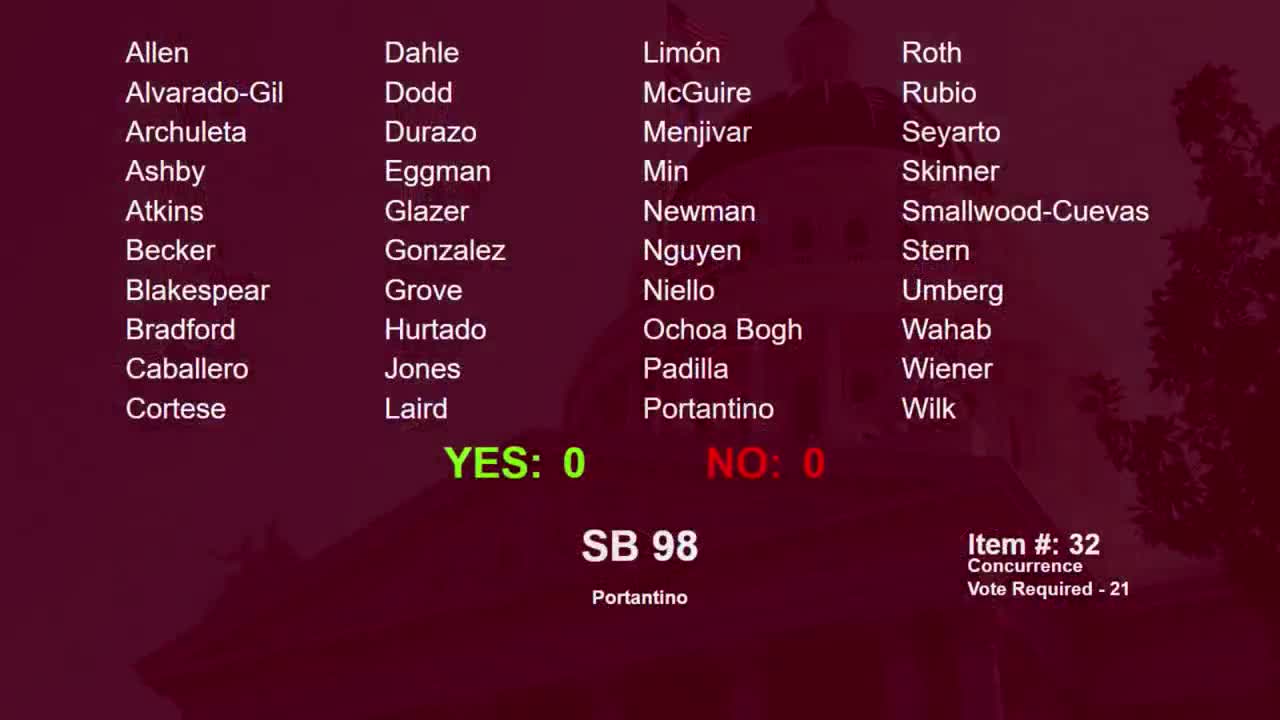
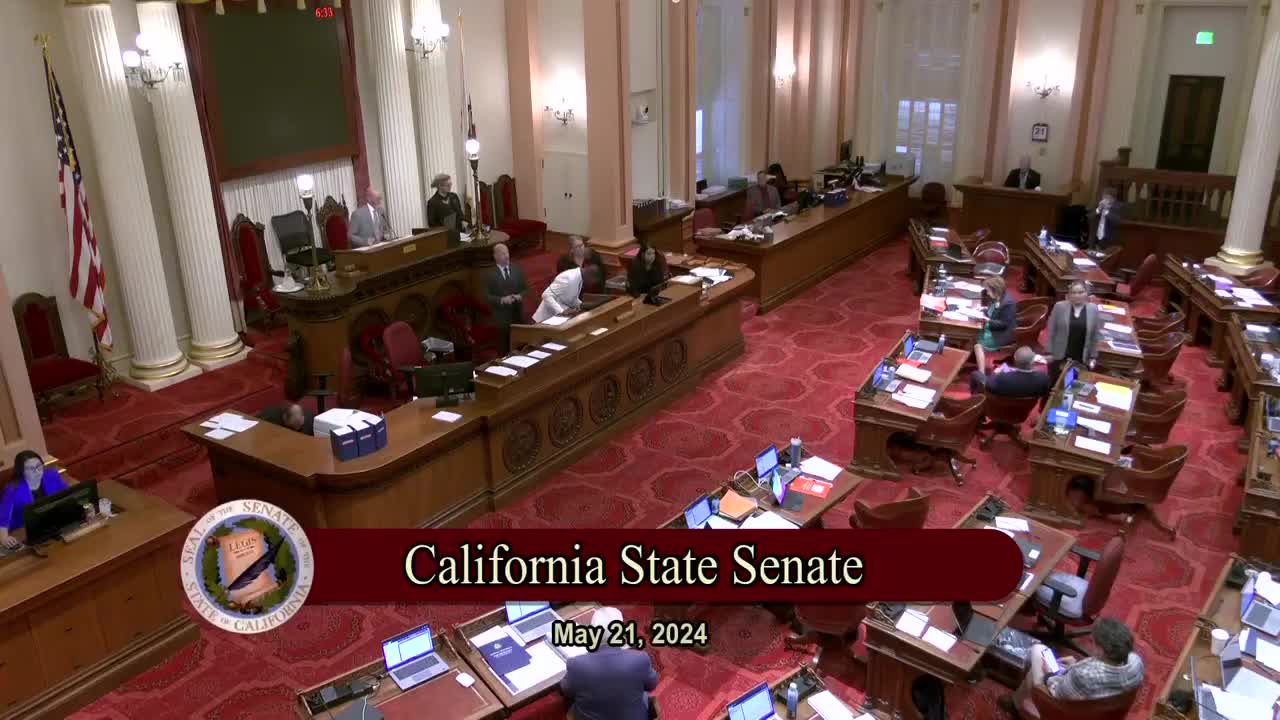
Bill Author

Bill Co-Author(s):