SB 1277: Pupil instruction: genocide education: the Holocaust.
- Session Year: 2023-2024
- House: Senate
- Latest Version Date: 2024-09-28
Current Status:
Passed
(2024-09-28: Chaptered by Secretary of State. Chapter 890, Statutes of 2024.)
Introduced
In Committee
First Chamber
In Committee
Second Chamber
Enacted
Existing law requires the State Department of Education to incorporate age-appropriate materials relating to, among other things, genocide and the Holocaust into publications that provide examples of curriculum resources for teacher use, consistent with the subject frameworks on history and social science. Under existing law, the Legislature encourages the incorporation of survivor, rescuer, liberator, and witness oral testimony into the teaching of genocide and the Holocaust.
This bill would establish the California Teachers Collaborative for Holocaust and Genocide Education, to be responsible for establishing a statewide teacher professional development program on genocide, including the Holocaust, for school district, county office of education, and charter school teachers. The bill would require the collaborative to consist of leading genocide and Holocaust education organizations and institutions, genocide survivors, educators, and community leaders. The bill would provide that the collaboratives mission is to ensure that genocide, including Holocaust, education is taught consistent with, among other things, the content standards, curriculum frameworks, and instructional materials adopted by the State Board of Education, in ways that are interdisciplinary and age-appropriate to pupils of different grade levels. The bill would prescribe the duties of the collaborative, including, among others, developing and providing curriculum resources on genocide and Holocaust education. The bill would authorize other duties of the collaborative, subject to available funding, including, among others, providing, as determined by the department, annual verbal or written reports to the department and the Legislature on the collaboratives achievement of its mission. The bill would make the implementation of these provisions contingent upon an appropriation.
Existing law requires the State Department of Education to incorporate age-appropriate materials relating to, among other things, genocide and the Holocaust into publications that provide examples of curriculum resources for teacher use, consistent with the subject frameworks on history and social science. Under existing law, the Legislature encourages the incorporation of survivor, rescuer, liberator, and witness oral testimony into the teaching of genocide and the Holocaust.
This bill would establish the California Teachers Collaborative for Holocaust and Genocide Education, to be responsible for establishing a statewide teacher professional development program on genocide, including the Holocaust, for school district, county office of education, and charter school teachers. The bill would require the collaborative, under the State Department of Educations direction, collaborative to consist of leading genocide and Holocaust education organizations and institutions, genocide survivors, and community leaders. The bill would provide that the collaboratives mission is to ensure that genocide, including Holocaust, education is taught consistent with, among other things, the content standards, curriculum frameworks, and instructional materials adopted by the State Board of Education, in ways that are interdisciplinary and age-appropriate to pupils of different grade levels. The bill would prescribe the duties of the collaborative, including, among others, developing and providing curriculum resources on genocide and Holocaust education. The bill would authorize other duties of the collaborative, subject to available funding, including, among others, providing, as determined by the department, annual verbal or written reports to the department and the Legislature on the collaboratives achievement of its mission. The bill would make the implementation of these provisions contingent upon an appropriation.
Existing law requires the State Department of Education to incorporate age-appropriate materials relating to, among other things, genocide and the Holocaust into publications that provide examples of curriculum resources for teacher use, consistent with the subject frameworks on history and social science. Under existing law, the Legislature encourages the incorporation of survivor, rescuer, liberator, and witness oral testimony into the teaching of genocide and the Holocaust.
This bill would establish the California Teachers Collaborative for Holocaust and Genocide Education, to be responsible for establishing a statewide teacher professional development program on genocide, including the Holocaust, for school district, county office of education, and charter school teachers. The bill would require the collaborative, under the State Department of Educations direction, to consist of leading genocide and Holocaust education organizations and institutions, genocide survivors, and community leaders. The bill would provide that the collaboratives mission is to ensure that genocide, including Holocaust, education is taught consistent with, among other things, the content standards, curriculum frameworks, and instructional materials adopted by the State Board of Education, in ways that are interdisciplinary and age-appropriate to pupils of different grade levels. The bill would prescribe the duties of the collaborative, including, among others, providing, as determined by the department, annual verbal or written reports to the department and the Legislature on the collaboratives achievement of its mission. The bill would make the implementation of these provisions contingent upon an appropriation.
Existing law requires the State Department of Education to incorporate age-appropriate materials relating to, among other things, genocide and the Holocaust into publications that provide examples of curriculum resources for teacher use, consistent with the subject frameworks on history and social science. Under existing law, the Legislature encourages the incorporation of survivor, rescuer, liberator, and witness oral testimony into the teaching of genocide and the Holocaust.
This bill would establish the California Teachers Collaborative for Holocaust and Genocide Education, to be responsible for establishing a statewide teacher professional development program on genocide, including the Holocaust, for school district, county office of education, and charter school teachers. The bill would require the collaborative, under the State Department of Educations direction, to consist of leading genocide and Holocaust education organizations and institutions, genocide survivors, and community leaders. The bill would provide that the collaboratives mission is to ensure that genocide, including Holocaust, education is taught to fidelity in schools as part of the required social studies curriculum, with the content of this education being aligned with history-social science content standards adopted by the State Board of Education and included consistent with, among other things, the content standards, curriculum frameworks, and instructional materials adopted by the State Board of Education, in ways that are interdisciplinary and age-appropriate to pupils of different grade levels. The bill would prescribe the duties of the collaborative, including, among others, providing, as determined by the department, annual verbal or written reports to the department and the Legislature on the collaboratives achievement of its mission.
Existing law requires the State Department of Education to incorporate age-appropriate materials relating to, among other things, genocide and the Holocaust into publications that provide examples of curriculum resources for teacher use, consistent with the subject frameworks on history and social science. Under existing law, the Legislature encourages the incorporation of survivor, rescuer, liberator, and witness oral testimony into the teaching of genocide and the Holocaust.
This bill would establish the California Teachers Collaborative for Holocaust and Genocide Education, to be responsible for establishing a statewide teacher professional development program on genocide, including the Holocaust, for school district, county office of education, and charter school teachers. The bill would require the collaborative, under the State Department of Educations direction, to consist of leading genocide and Holocaust education organizations and institutions, genocide survivors, and community leaders. The bill would provide that the collaboratives mission is to ensure that genocide, including Holocaust, education is taught to fidelity in schools as part of the required social studies curriculum, with the content of this education being aligned with state history-social science content standards adopted by the State Board of Education and included in ways that are interdisciplinary and age-appropriate to pupils of different grade levels. The bill would prescribe the duties of the collaborative, including, among others, providing, as determined by the department, annual verbal or written reports to the department and the Legislature on the collaboratives achievement of its mission.
Existing law requires the State Department of Education to incorporate age-appropriate materials relating to, among other things, genocide and the Holocaust into publications that provide examples of curriculum resources for teacher use, consistent with the subject frameworks on history and social science. Under existing law, the Legislature encourages the incorporation of survivor, rescuer, liberator, and witness oral testimony into the teaching of genocide and the Holocaust.
This bill would establish the California Teachers Collaborative for Holocaust and Genocide Education, to be responsible for establishing a statewide teacher professional development program on genocide, including the Holocaust, for school district, county office of education, and charter school teachers. The bill would require the collaborative, under the State Department of Educations direction, to consist of leading genocide and Holocaust education organizations and institutions, genocide survivors, and community leaders. The bill would provide that the collaboratives mission is to ensure that genocide, including Holocaust, education is taught to fidelity in schools as part of the required social studies curriculum, with the content of this education being aligned with state standards and included in ways that are interdisciplinary and age-appropriate to pupils of different grade levels. The bill would prescribe the duties of the collaborative, including, among others, providing, as determined by the department, annual verbal or written reports to the department and the Legislature on the collaboratives achievement of its mission.
The Legislature finds and declares all of the following:
(a)Holocaust and genocide education can help develop a more empathetic, morally courageous, and socially responsible next generation. This mission is central to Californias status as a welcoming, diverse, and dynamic state.
(b)Holocaust and genocide education is urgently needed to meet the ever-evolving challenges California faces in sustaining a civic life and a public discourse that values and protects all of its citizens.
(c)Since 1985, California has required Holocaust and genocide education to be taught in public schools, as required pursuant to subdivision (b) of Section 51220 of the Education Code.
(d)Section 51220 of the Education Code prescribes that the adopted course of study for grades 7 to 12, inclusive, include age-appropriate instruction on human rights issues, with particular attention to the study of the inhumanity of genocide and the Holocaust.
(e)Currently, there is no systematic teacher training on Holocaust and genocide education.
(f)Establishment of the California Teachers Collaborative for Holocaust and Genocide Education would enable training for teachers in school districts, county offices of education, and charter schools, on an ongoing basis, on how to effectively provide Holocaust and genocide education using the states history-social science content standards-based curricula and best practices, thereby setting a national standard for Holocaust and genocide education that other states can follow.
SEC. 2.Section 51221.1 is added to the Education Code, to read:51221.1.(a)As used in this section, the following definitions apply:
(1)Collaborative means the California Teachers Collaborative for Holocaust and Genocide Education.
(2)Genocide means, as defined by the United Nations Convention on the Prevention and Punishment of the Crime of Genocide, any of the following acts committed with the intent to destroy, in whole or in part, a national, ethnic, racial, or religious group:
(A)Killing members of the group.
(B)Causing serious bodily or mental harm to members of the group.
(C)Deliberately inflicting on the group conditions of life calculated to bring about, in whole or in part, its physical destruction.
(D)Imposing measures intended to prevent births within the group.
(E)Forcibly transferring children of the group to another group.
(3)Holocaust, as described by the United States Holocaust Memorial Museum, was the systematic, bureaucratic, state-sponsored persecution and murder of 6,000,000 European Jews by the Nazi regime and its allies and collaborators; the Nazis also targeted other groups for persecution and murder, including Roma, people with disabilities, some Slavic peoples, especially Poles and Russians, Black people, communists, socialists, Jehovahs Witnesses, gay men, and people the Nazis called asocials and professional criminals.
(b)The California Teachers Collaborative for Holocaust and Genocide Education is hereby established. The collaborative shall be responsible for establishing a statewide teacher professional development program on genocide, including the Holocaust, for school district, county office of education, and charter school teachers.
(c)The collaborative shall consist of leading genocide and Holocaust education organizations and institutions, genocide survivors, educators, and community leaders.
(d)The collaboratives mission is to ensure that genocide, including Holocaust, education is taught consistent with the current content standards, curriculum frameworks, and instructional materials adopted by the state board, and any other requirements of this code, including, but not limited to, Sections 51204.5 and 60040, in ways that are interdisciplinary and age-appropriate to pupils of different grade levels.
(e)In addition to focusing on education regarding the Holocaust and other genocides, including, but not limited to, those of the Armenian, Bosnian, Cambodian, Guatemalan, Indigenous American, Rwandan, and Uyghur peoples, the collaborative shall focus on education to identify and confront antisemitism and hate in modern society.
(f)The duties of the collaborative shall include, but are not limited to, both of the following:
(1)Developing and providing curriculum resources on genocide and Holocaust education.
(2)Providing a statewide teacher professional development program on genocide and Holocaust education.
(g)Subject to available funding, the collaborative duties may include all of the following:
(1)Distributing grants to genocide and Holocaust education organizations and institutions to provide teacher training programs, and developing innovative academic standards-based curricula and digital tools, consistent with the purposes of this section.
(2)Creating a robust digital library of lesson plans and resources on genocide, including Holocaust, education that align with the academic standards, distributing these lesson plans to school districts, county offices of education, and charter schools statewide, and supporting teachers with the successful implementation of the lesson plans through workshops, conferences, and digital tools.
(3)Organizing statewide and regional workshops, and providing participating teachers with transportation and accommodation.
(4)Launching and maintaining an internet website that serves as a central hub for sharing the latest educational resources, including curricula and other materials, and best practices on genocide education to provide access to all California teachers of pupils in any of grades 6 to 12, inclusive, and increasing the use of high-quality resources, in school districts, county offices of education, and charter schools.
(5)Evaluating the implementation and administration of this section annually to assess whether teaching about genocide, including the Holocaust, has improved, and whether the mission of the collaborative, as described in subdivision (d), has been met.
(6)Providing, as determined by the department, annual verbal or written reports to the department and the Legislature, pursuant to Section 9795 of the Government Code, on the collaboratives achievement of its mission, as described in subdivision (d).
(h)The implementation of this section is contingent upon an appropriation for its purposes in the annual Budget Act or another statute.
The Legislature finds and declares all of the following:
(a)Holocaust and genocide education can help develop a more empathetic, morally courageous, and socially responsible next generation. This mission is central to Californias status as a welcoming, diverse, and dynamic state.
(b)Holocaust and genocide education is urgently needed to meet the ever-evolving challenges California faces in sustaining a civic life and a public discourse that values and protects all of its citizens.
(c)Since 1985, California has required Holocaust and genocide education to be taught in public schools, as required pursuant to subdivision (b) of Section 51220 of the Education Code.
(d)Section 51220 of the Education Code prescribes that the adopted course of study for grades 7 to 12, inclusive, include age-appropriate instruction on human rights issues, with particular attention to the study of the inhumanity of genocide and the Holocaust.
(e)Currently, there is no systematic teacher training on Holocaust and genocide education.
(f)Establishment of the California Teachers Collaborative for Holocaust and Genocide Education as a permanent collaborative under the direction of the State Department of Education would enable the state to train training for teachers in every school district, districts, county office offices of education, and charter school, schools, on an ongoing basis, on how to effectively provide Holocaust and genocide education using the states history-social science content standards-based curricula and best practices, thereby setting a national standard for Holocaust and genocide education that other states can follow.
SEC. 2.Section 51221.1 is added to the Education Code, to read:51221.1.(a)As used in this section, the following definitions apply:
(1)Collaborative means the California Teachers Collaborative for Holocaust and Genocide Education.
(2)Genocide means, as defined by the United Nations Convention on the Prevention and Punishment of the Crime of Genocide, any of the following acts committed with the intent to destroy, in whole or in part, a national, ethnic, racial, or religious group:
(A)Killing members of the group.
(B)Causing serious bodily or mental harm to members of the group.
(C)Deliberately inflicting on the group conditions of life calculated to bring about, in whole or in part, its physical destruction.
(D)Imposing measures intended to prevent births within the group.
(E)Forcibly transferring children of the group to another group.
(3)Holocaust means, Holocaust, as described by the United States Holocaust Memorial Museum, was the systematic, bureaucratic, state-sponsored persecution and murder of 6,000,000 European Jews by the Nazi regime and its allies and collaborators. collaborators; the Nazis also targeted other groups for persecution and murder, including Roma, people with disabilities, some Slavic peoples, especially Poles and Russians, Black people, communists, socialists, Jehovahs Witnesses, gay men, and people the Nazis called asocials and professional criminals.
(b)The California Teachers Collaborative for Holocaust and Genocide Education is hereby established. The collaborative shall be responsible for establishing a statewide teacher professional development program on genocide, including the Holocaust, for school district, county office of education, and charter school teachers.
(c)The collaborative, under the departments direction, collaborative shall consist of leading genocide and Holocaust education organizations and institutions, genocide survivors, educators, and community leaders.
(d)The collaboratives mission is to ensure that genocide, including Holocaust, education is taught consistent with the current content standards, curriculum frameworks, and instructional materials adopted by the state board, and any other requirements of this code, including, but not limited to, Sections 51204.5 and 60040, in ways that are interdisciplinary and age-appropriate to pupils of different grade levels.
(e)In addition to focusing on education regarding the Holocaust and other genocides, including, but not limited to, those of the Armenian, Bosnian, Cambodian, Guatemalan, Indigenous American, Rwandan, and Uyghur peoples, the collaborative shall focus on education to identify and confront antisemitism and hate in modern society.
(f)The duties of the collaborative shall include, but are not limited to, all both of the following:
(1)Developing and providing curriculum resources on genocide and Holocaust education.
(2)Providing a statewide teacher professional development program on genocide and Holocaust education.
(g)Subject to available funding, the collaborative duties may include all of the following:
(1)Distributing grants to genocide and Holocaust education organizations and institutions to provide teacher training programs, and developing innovative academic standards-based curricula and digital tools, consistent with the purposes of this section.
(2)Creating a robust digital library of lesson plans and resources on genocide, including Holocaust, education that align with the academic standards, distributing these lesson plans to school districts, county offices of education, and charter schools statewide, and supporting teachers with the successful implementation of the lesson plans through workshops, conferences, and digital tools.
(3)Organizing statewide and regional workshops, and providing participating teachers with transportation and accommodation.
(4)Launching and maintaining an internet website that serves as a central hub for sharing the latest educational resources, including curricula and other materials, and best practices on genocide education to provide access to all California teachers of pupils in any of grades 6 to 12, inclusive, and increasing the use of high-quality resources, in school districts, county offices of education, and charter schools.
(5)Evaluating the implementation and administration of this section annually to assess whether teaching about genocide, including the Holocaust, has improved, and whether the mission of the collaborative, as described in subdivision (d), has been met.
(6)Providing, as determined by the department, annual verbal or written reports to the department and the Legislature, pursuant to Section 9795 of the Government Code, on the collaboratives achievement of its mission, as described in subdivision (d).
(g)(h)The implementation of this section is contingent upon an appropriation for its purposes in the annual Budget Act or another statute.
The Legislature finds and declares all of the following:
(a)Holocaust and genocide education can help develop a more empathetic, morally courageous, and socially responsible next generation. This mission is central to Californias status as a welcoming, diverse, and dynamic state.
(b)Holocaust and genocide education is urgently needed to meet the ever-evolving challenges California faces in sustaining a civic life and a public discourse that values and protects all of its citizens.
(c)Since 1985, California has required Holocaust and genocide education to be taught in public schools, as required pursuant to subdivision (b) of Section 51220 of the Education Code.
(d)Section 51220 of the Education Code prescribes that the adopted course of study for grades 7 to 12, inclusive, include age-appropriate instruction on human rights issues, with particular attention to the study of the inhumanity of genocide and the Holocaust.
(e)Currently, there is no systematic teacher training on Holocaust and genocide education.
(f)Establishment of the California Teachers Collaborative for Holocaust and Genocide Education as a permanent collaborative under the direction of the State Department of Education would enable the state to train teachers in every school district, county office of education, and charter school, on an ongoing basis, on how to effectively provide Holocaust and genocide education using the states history-social science content standards-based curricula and best practices, thereby setting a national standard for Holocaust and genocide education that other states can follow.
SEC. 2.Section 51221.1 is added to the Education Code, to read:51221.1.(a)As used in this section, the following definitions apply:
(1)Collaborative means the California Teachers Collaborative for Holocaust and Genocide Education.
(2)Genocide means, as defined by the United Nations Convention on the Prevention and Punishment of the Crime of Genocide, any of the following acts committed with the intent to destroy, in whole or in part, a national, ethnic, racial, or religious group:
(A)Killing members of the group.
(B)Causing serious bodily or mental harm to members of the group.
(C)Deliberately inflicting on the group conditions of life calculated to bring about, in whole or in part, its physical destruction.
(D)Imposing measures intended to prevent births within the group.
(E)Forcibly transferring children of the group to another group.
(3)Holocaust means, as described by the United States Holocaust Memorial Museum, the systematic, bureaucratic, state-sponsored persecution and murder of 6,000,000 European Jews by the Nazi regime and its allies and collaborators.
(b)The California Teachers Collaborative for Holocaust and Genocide Education is hereby established. The collaborative shall be responsible for establishing a statewide teacher professional development program on genocide, including the Holocaust, for school district, county office of education, and charter school teachers.
(c)The collaborative, under the departments direction, shall consist of leading genocide and Holocaust education organizations and institutions, genocide survivors, and community leaders.
(d)The collaboratives mission is to ensure that genocide, including Holocaust, education is taught consistent with the current content standards, curriculum frameworks, and instructional materials adopted by the state board, and any other requirements of this code, including, but not limited to, Sections 51204.5 and 60040, in ways that are interdisciplinary and age-appropriate to pupils of different grade levels.
(e)In addition to focusing on education regarding the Holocaust and other genocides, including, but not limited to, those of the Armenian, Bosnian, Cambodian, Guatemalan, Indigenous American, Rwandan, and Uyghur peoples, the collaborative shall focus on education to identify and confront anti-Semitism antisemitism and hate in modern society.
(f)The duties of the collaborative shall include, but are not limited to, all of the following:
(1)Distributing grants to genocide and Holocaust education organizations and institutions to provide teacher training programs, and developing innovative academic standards-based curricula and digital tools, consistent with the purposes of this section.
(2)Creating a robust digital library of lesson plans and resources on genocide, including Holocaust, education that align with the academic standards, distributing these lesson plans to school districts, county offices of education, and charter schools statewide, and supporting teachers with the successful implementation of the lesson plans through workshops, conferences, and digital tools.
(3)Organizing statewide and regional workshops, and providing participating teachers with transportation and accommodation.
(4)Launching and maintaining an internet website that serves as a central hub for sharing the latest educational resources, including curricula and other materials, and best practices on genocide education to provide access to all California teachers of pupils in any of grades 6 to 12, inclusive, and increasing the use of high-quality resources, in school districts, county offices of education, and charter schools.
(5)Evaluating the implementation and administration of this section annually to assess the degree to which teachers efficacy on whether teaching about genocide, including the Holocaust, has improved, and whether the mission of the collaborative, as described in subdivision (d), has been met.
(6)Providing, as determined by the department, annual verbal or written reports to the department and the Legislature, pursuant to Section 9795 of the Government Code, on the collaboratives achievement of its mission, as described in subdivision (d).
(g)The implementation of this section is contingent upon an appropriation for its purposes in the annual Budget Act or another statute.
The Legislature finds and declares all of the following:
(a)Holocaust and genocide education can help develop a more empathetic, morally courageous, and socially responsible next generation. This mission is central to Californias status as a welcoming, diverse, and dynamic state.
(b)Holocaust and genocide education is urgently needed to meet the ever-evolving challenges California faces in sustaining a civic life and a public discourse that values and protects all of its citizens.
(c)Since 1985, California has required Holocaust and genocide education to be taught in public schools, as required pursuant to subdivision (b) of Section 51220 of the Education Code.
(d)Section 51220 of the Education Code prescribes that the adopted course of study for grades 7 to 12, inclusive, include age-appropriate instruction on human rights issues, with particular attention to the study of the inhumanity of genocide and the Holocaust.
(e)Currently, there is no systematic teacher training on Holocaust and genocide education.
(f)Establishment of the California Teachers Collaborative for Holocaust and Genocide Education as a permanent collaborative under the direction of the State Department of Education would enable the state to train teachers in every school district, county office of education, and charter school, on an ongoing basis, on how to effectively provide Holocaust and genocide education using the states history-social science content standards-based curricula and best practices, thereby setting a national standard for Holocaust and genocide education that other states can follow.
SEC. 2.Section 51221.1 is added to the Education Code, to read:51221.1.(a)As used in this section, the following definitions apply:
(1)Collaborative means the California Teachers Collaborative for Holocaust and Genocide Education.
(2)Genocide means, as defined by the United Nations Convention on the Prevention and Punishment of the Crime of Genocide, any of the following acts committed with the intent to destroy, in whole or in part, a national, ethnic, racial, or religious group:
(A)Killing members of the group.
(B)Causing serious bodily or mental harm to members of the group.
(C)Deliberately inflicting on the group conditions of life calculated to bring about, in whole or in part, its physical destruction.
(D)Imposing measures intended to prevent births within the group.
(E)Forcibly transferring children of the group to another group.
(3)Holocaust means, as described by the United States Holocaust Memorial Museum, the systematic, bureaucratic, state-sponsored persecution and murder of 6,000,000 European Jews by the Nazi regime and its allies and collaborators.
(b)The California Teachers Collaborative for Holocaust and Genocide Education is hereby established. The collaborative shall be responsible for establishing a statewide teacher professional development program on genocide, including the Holocaust, for school district, county office of education, and charter school teachers.
(c)The collaborative, under the departments direction, shall consist of leading genocide and Holocaust education organizations and institutions, genocide survivors, and community leaders.
(d)The collaboratives mission is to ensure that genocide, including Holocaust, education is taught consistent with the current content standards, curriculum frameworks, and instructional materials adopted by the state board, and any other requirements of this code, including, but not limited to, Sections 51204.5 and 60040, in ways that are interdisciplinary and age-appropriate to pupils of different grade levels.
(e)In addition to focusing on education regarding the Holocaust and the genocides other genocides, including, but not limited to, those of the Armenian, Bosnian, Cambodian, Guatemalan, Indigenous American, Rwandan, and Uyghur peoples, the collaborative shall focus on education to identify and confront anti-Semitism and hate in modern society.
(f)The duties of the collaborative shall include, but are not limited to, all of the following:
(1)Distributing grants to genocide and Holocaust education organizations and institutions to provide teacher training programs, and developing innovative academic standards-based curricula and digital tools, consistent with the purposes of this section.
(2)Creating a robust digital library of lesson plans and resources on genocide, including Holocaust, education that align with the academic standards, distributing these lesson plans to school districts, county offices of education, and charter schools statewide, and supporting teachers with the successful implementation of the lesson plans through workshops, conferences, and digital tools.
(3)Organizing statewide and regional workshops, and providing participating teachers with transportation and accommodation.
(4)Launching and maintaining an internet website that serves as a central hub for sharing the latest educational resources, including curricula and other materials, and best practices on genocide education to provide access to all California teachers of pupils in any of grades 6 to 12, inclusive, and increasing the use of high-quality resources, in school districts, county offices of education, and charter schools.
(5)Evaluating the implementation and administration of this section annually to assess the degree to which teachers efficacy on teaching about genocide, including the Holocaust, has improved, and the mission of the collaborative, as described in subdivision (d), has been met.
(6)Providing, as determined by the department, annual verbal or written reports to the department and the Legislature, pursuant to Section 9795 of the Government Code, on the collaboratives achievement of its mission, as described in subdivision (d).
(g)The implementation of this section is contingent upon an appropriation for its purposes in the annual Budget Act or another statute.
The Legislature finds and declares all of the following:
(a)Holocaust and genocide education can help develop a more empathetic, morally courageous, and socially responsible next generation. This mission is central to Californias status as a welcoming, diverse, and dynamic state.
(b)Holocaust and genocide education is urgently needed to meet the ever-evolving challenges California faces in sustaining a civic life and a public discourse that values and protects all of its citizens.
(c)Since 1985, California has required Holocaust and genocide education to be taught in public schools, as required pursuant to subdivision (b) of Section 51220 of the Education Code.
(d)Section 51220 of the Education Code prescribes that the adopted course of study for grades 7 to 12, inclusive, include age-appropriate instruction on human rights issues, with particular attention to the study of the inhumanity of genocide and the Holocaust.
(e)Currently, there is no systematic teacher training on Holocaust and genocide education.
(f)Establishment of the California Teachers Collaborative for Holocaust and Genocide Education as a permanent collaborative under the direction of the State Department of Education would enable the state to train teachers in every school district, county office of education, and charter school, on an ongoing basis, on how to effectively provide Holocaust and genocide education using the states history-social science content standards-based curricula and best practices, thereby setting a national standard for Holocaust and genocide education that other states can follow.
SEC. 2.Section 51221.1 is added to the Education Code, to read:51221.1.(a)As used in this section, the following definitions apply:
(1)Collaborative means the California Teachers Collaborative for Holocaust and Genocide Education.
(2)Genocide means, as defined by the United Nations Convention on the Prevention and Punishment of the Crime of Genocide, any of the following acts committed with the intent to destroy, in whole or in part, a national, ethnic, racial, or religious group:
(A)Killing members of the group.
(B)Causing serious bodily or mental harm to members of the group.
(C)Deliberately inflicting on the group conditions of life calculated to bring about, in whole or in part, its physical destruction.
(D)Imposing measures intended to prevent births within the group.
(E)Forcibly transferring children of the group to another group.
(3)Holocaust means, as described by the United States Holocaust Memorial Museum, the systematic, bureaucratic, state-sponsored persecution and murder of 6,000,000 European Jews by the Nazi regime and its allies and collaborators.
(b)The California Teachers Collaborative for Holocaust and Genocide Education is hereby established. The collaborative shall be responsible for establishing a statewide teacher professional development program on genocide, including the Holocaust, for school district, county office of education, and charter school teachers.
(c)The collaborative, under the departments direction, shall consist of leading genocide and Holocaust education organizations and institutions, genocide survivors, and community leaders.
(d)The collaboratives mission is to ensure that genocide, including Holocaust, education is taught consistent with the current content standards, curriculum frameworks, and instructional materials adopted by the state board, and any other requirements of this code, including, but not limited to, Sections 51204.5 and 60040, in ways that are interdisciplinary and age-appropriate to pupils of different grade levels.
(e)In addition to focusing on education regarding the Holocaust and the genocides of the Armenian, Bosnian, Cambodian, Guatemalan, Indigenous American, Rwandan, and Uyghur peoples, the collaborative shall focus on education to identify and confront anti-Semitism and hate in modern society.
(f)The duties of the collaborative shall include, but are not limited to, all of the following:
(1)Distributing grants to genocide and Holocaust education organizations and institutions to provide teacher training programs, and developing innovative academic standards-based curricula and digital tools, consistent with the purposes of this section.
(2)Creating a robust digital library of lesson plans and resources on genocide, including Holocaust, education that align with the academic standards, distributing these lesson plans to school districts, county offices of education, and charter schools statewide, and supporting teachers with the successful implementation of the lesson plans through workshops, conferences, and digital tools.
(3)Organizing statewide and regional workshops, and providing participating teachers with transportation and accommodation.
(4)Launching and maintaining an internet website that serves as a central hub for sharing the latest educational resources, including curricula and other materials, and best practices on genocide education to provide access to all California teachers of pupils in any of grades 6 to 12, inclusive, and increasing the use of high-quality resources, in school districts, county offices of education, and charter schools.
(5)Evaluating the implementation and administration of this section annually to assess the degree to which teachers efficacy on teaching about genocide, including the Holocaust, has improved, and the mission of the collaborative, as described in subdivision (d), has been met.
(6)Providing, as determined by the department, annual verbal or written reports to the department and the Legislature, pursuant to Section 9795 of the Government Code, on the collaboratives achievement of its mission, as described in subdivision (d).
(g)The implementation of this section is contingent upon an appropriation for its purposes in the annual Budget Act or another statute.
The Legislature finds and declares all of the following:
(a)Holocaust and genocide education can help develop a more empathetic, morally courageous, and socially responsible next generation. This mission is central to Californias status as a welcoming, diverse, and dynamic state.
(b)Holocaust and genocide education is urgently needed to meet the ever-evolving challenges California faces in sustaining a civic life and a public discourse that values and protects all of its citizens.
(c)Since 1985, California has required Holocaust and genocide education to be taught in public schools, as required pursuant to subdivision (b) of Section 51220 of the Education Code.
(d)Section 51220 of the Education Code prescribes that the adopted course of study for grades 7 to 12, inclusive, include age-appropriate instruction on human rights issues, with particular attention to the study of the inhumanity of genocide and the Holocaust.
(e)Currently, there is no systematic teacher training on Holocaust and genocide education.
(f)Establishment of the California Teachers Collaborative for Holocaust and Genocide Education as a permanent collaborative under the direction of the State Department of Education would enable the state to train teachers in every school district, county office of education, and charter school, on an ongoing basis, on how to effectively provide Holocaust and genocide education using the states history-social science content standards-based curricula and best practices, thereby setting a national standard for Holocaust and genocide education that other states can follow.
SEC. 2.Section 51221.1 is added to the Education Code, to read:51221.1.(a)As used in this section, the following definitions apply:
(1)Academic standards means the history-social science content standards adopted by the state board.(2)(1)Collaborative means the California Teachers Collaborative for Holocaust and Genocide Education.
(3)(2)Genocide means, as defined by the United Nations Convention on the Prevention and Punishment of the Crime of Genocide, any of the following acts committed with the intent to destroy, in whole or in part, a national, ethnic, racial, or religious group:
(A)Killing members of the group.
(B)Causing serious bodily or mental harm to members of the group.
(C)Deliberately inflicting on the group conditions of life calculated to bring about, in whole or in part, its physical destruction.
(D)Imposing measures intended to prevent births within the group.
(E)Forcibly transferring children of the group to another group.
(4)(3)Holocaust means, as described by the United States Holocaust Memorial Museum, the systematic, bureaucratic, state-sponsored persecution and murder of 6,000,000 European Jews by the Nazi regime and its allies and collaborators.
(b)The California Teachers Collaborative for Holocaust and Genocide Education is hereby established. The collaborative shall be responsible for establishing a statewide teacher professional development program on genocide, including the Holocaust, for school district, county office of education, and charter school teachers.
(c)The collaborative, under the departments direction, shall consist of leading genocide and Holocaust education organizations and institutions, genocide survivors, and community leaders.
(d)The collaboratives mission is to ensure that genocide, including Holocaust, education is taught to fidelity in California schools as part of the required social studies curriculum, with the content of this education being aligned with the academic standards and included consistent with the current content standards, curriculum frameworks, and instructional materials adopted by the state board, and any other requirements of this code, including, but not limited to, Sections 51204.5 and 60040, in ways that are interdisciplinary and age-appropriate to pupils of different grade levels.
(e)In addition to focusing on education regarding the Holocaust and the genocides of the Armenian, Bosnian, Cambodian, Guatemalan, Indigenous American, Rwandan, and Uyghur peoples, the collaborative shall focus on education to identify and confront anti-Semitism and hate in modern society.
(f)The duties of the collaborative shall include, but are not limited to, all of the following:
(1)Distributing grants to the collaboratives genocide and Holocaust education organizations and institutions to provide teacher training programs, and developing innovative academic standards-based curricula and digital tools, consistent with the purposes of this section.
(2)Creating a robust digital library of lesson plans and resources on genocide, including Holocaust, education that align with the academic standards, distributing these lesson plans to school districts, county offices of education, and charter schools statewide, and supporting teachers with the successful implementation of the lesson plans through workshops, conferences, and digital tools.
(3)Organizing statewide and regional workshops, and providing participating teachers with transportation and accommodation.
(4)Launching and maintaining an internet website that serves as a central hub for sharing the latest educational resources, including curricula and other materials, and best practices on genocide education to provide access to all California teachers of pupils in any of grades 6 to 12, inclusive, and increasing the use of high-quality resources, in school districts, county offices of education, and charter schools.
(5)Evaluating the implementation and administration of this section annually to assess the degree to which teachers efficacy on teaching about genocide, including the Holocaust, has improved, and the mission of the collaborative, as described in subdivision (d), has been met.
(6)Providing, as determined by the department, annual verbal or written reports to the department and the Legislature, pursuant to Section 9795 of the Government Code, on the collaboratives achievement of its mission, as described in subdivision (d).
The Legislature finds and declares all of the following:
(a)Holocaust and genocide education can help develop a more empathetic, morally courageous, and socially responsible next generation. This mission is central to Californias status as a welcoming, diverse, and dynamic state.
(b)Holocaust and genocide education is urgently needed to meet the ever-evolving challenges California faces in sustaining a civic life and a public discourse that values and protects all of its citizens.
(c)Since 1985, California has required Holocaust and genocide education to be taught in public schools, as required pursuant to subdivision (b) of Section 51220 of the Education Code.
(d)Section 51220 of the Education Code prescribes that the adopted course of study for grades 7 to 12, inclusive, include age-appropriate instruction on human rights issues, with particular attention to the study of the inhumanity of genocide and the Holocaust.
(e)Currently, there is no systematic teacher training on Holocaust and genocide education.
(f)Establishment of the California Teachers Collaborative for Holocaust and Genocide Education as a permanent collaborative under the direction of the State Department of Education would enable the state to train teachers in every school district, county office of education, and charter school, on an ongoing basis, on how to properly effectively provide Holocaust and genocide education using the states history-social science content standards-based curricula and best practices, thereby setting a national standard for Holocaust and genocide education that other states can follow.
SEC. 2.Section 51221.1 is added to the Education Code, to read:51221.1.(a)As used in this section, the following definitions apply:
(1)Academic standards means the history-social science content standards adopted by the state board.
(1)(2)Collaborative means the California Teachers Collaborative for Holocaust and Genocide Education.
(2)(3)Genocide means means, as defined by the United Nations Convention on the Prevention and Punishment of the Crime of Genocide, any of the following acts committed with the intent to destroy, in whole or in part, a national, ethnic, racial, or religious group:
(A)Killing members of the group.
(B)Causing serious bodily or mental harm to members of the group.
(C)Deliberately inflicting on the group conditions of life calculated to bring about, in whole or in part, its physical destruction.
(D)Imposing measures intended to prevent births within the group.
(E)Forcibly transferring children of the group to another group.
(3)(4)Holocaust means means, as described by the United States Holocaust Memorial Museum, the systematic, bureaucratic, state-sponsored persecution and murder of approximately 6,000,000 European Jews and 5,000,000 other individuals by the Nazi regime and its collaborators. allies and collaborators.
(b)The California Teachers Collaborative for Holocaust and Genocide Education is hereby established. The collaborative shall be responsible for establishing a statewide teacher professional development program on genocide, including the Holocaust, for school district, county office of education, and charter school teachers.
(c)The collaborative, under the departments direction, shall consist of leading genocide and Holocaust education organizations and institutions, genocide survivors, and community leaders.
(d)The collaboratives mission is to ensure that genocide, including Holocaust, education is taught to fidelity in California schools as part of the required social studies curriculum, with the content of this education being aligned with state the academic standards and included in ways that are interdisciplinary and age-appropriate to pupils of different grade levels.
(e)In addition to focusing on education regarding the Holocaust and the genocides of the Armenian, Bosnian, Cambodian, Guatemalan, Indigenous American, Rwandan, and Uyghur peoples, the collaborative shall focus on education to identify and confront anti-Semitism and hate in modern society.
(f)The duties of the collaborative shall include, but are not limited to, all of the following:
(1)Distributing grants to the collaboratives genocide and Holocaust education organizations and institutions to provide teacher training programs, and developing innovative academic standards-based curricula and digital tools, consistent with the purposes of this section.
(2)Creating a robust digital library of lesson plans and resources on genocide, including Holocaust, education that align with common core the academic standards, distributing these lesson plans to school districts, county offices of education, and charter schools statewide, and supporting school district, county office of education, and charter school teachers in using with the successful implementation of the lesson plans through workshops, conferences, and digital tools.
(3)Organizing statewide and regional workshops, and providing participating teacher-leaders teachers with transportation and accommodation to reduce the financial barrier of attending these workshops. accommodation.
(4)Launching and maintaining an internet website that serves as a central hub for sharing the latest educational resources, including curricula and other materials, and best practices on genocide education to reach more teachers, provide access to all California teachers of pupils in any of grades 6 to 12, inclusive, and increasing the use of high-quality resources, in school districts, county offices of education, and charter schools.
(5)Evaluating the implementation and administration of this section annually to assess the degree to which teachers efficacy on teaching about genocide, including the Holocaust, has improved, and the mission of the collaborative, as described in subdivision (d), has been met.
(6)Providing, as determined by the department, annual verbal or written reports to the department and the Legislature, pursuant to Section 9795 of the Government Code, on the collaboratives achievement of its mission, as described in subdivision (d).
The Legislature finds and declares all of the following:
(a)Holocaust and genocide education can help develop a more empathetic, morally courageous, and socially responsible next generation. This mission is central to Californias status as a welcoming, diverse, and dynamic state.
(b)Holocaust and genocide education is urgently needed to meet the ever-evolving challenges California faces in sustaining a civic life and a public discourse that values and protects all of its citizens.
(c)Since 1985, California has required Holocaust and genocide education to be taught in public schools, as required pursuant to subdivision (b) of Section 51220 of the Education Code.
(d)Section 51220 of the Education Code prescribes that the adopted course of study for grades 7 to 12, inclusive, include age-appropriate instruction on human rights issues, with particular attention to the study of the inhumanity of genocide and the Holocaust.
(e)Currently, there is no systematic teacher training on Holocaust and genocide education.
(f)Establishment of the California Teachers Collaborative for Holocaust and Genocide Education would enable the state to train teachers in every school district, county office of education, and charter school, on an ongoing basis, on how to properly provide Holocaust and genocide education using best practices, thereby setting a national standard for Holocaust and genocide education that other states can follow.
SEC. 2.Section 51221.1 is added to the Education Code, to read:51221.1.(a)As used in this section, the following definitions apply:
(1)Collaborative means the California Teachers Collaborative for Holocaust and Genocide Education.
(2)Genocide means any of the following acts committed with the intent to destroy, in whole or in part, a national, ethnic, racial, or religious group:
(A)Killing members of the group.
(B)Causing serious bodily or mental harm to members of the group.
(C)Deliberately inflicting on the group conditions of life calculated to bring about, in whole or in part, its physical destruction.
(D)Imposing measures intended to prevent births within the group.
(E)Forcibly transferring children of the group to another group.
(3)Holocaust means the systematic, bureaucratic, state-sponsored persecution and murder of approximately 6,000,000 Jews and 5,000,000 other individuals by the Nazi regime and its collaborators.
(b)The California Teachers Collaborative for Holocaust and Genocide Education is hereby established. The collaborative shall be responsible for establishing a statewide teacher professional development program on genocide, including the Holocaust, for school district, county office of education, and charter school teachers.
(c)The collaborative, under the departments direction, shall consist of leading genocide and Holocaust education organizations and institutions, genocide survivors, and community leaders.
(d)The collaboratives mission is to ensure that genocide, including Holocaust, education is taught to fidelity in California schools as part of the required social studies curriculum, with the content of this education being aligned with state standards and included in ways that are interdisciplinary and age-appropriate to pupils of different grade levels.
(e)In addition to focusing on education regarding the Holocaust and the genocides of the Armenian, Bosnian, Cambodian, Indigenous American, and Uyghur peoples, the collaborative shall focus on education to identify and confront anti-Semitism and hate in modern society.
(f)The duties of the collaborative shall include, but are not limited to, all of the following:
(1)Distributing grants to the collaboratives genocide and Holocaust education organizations and institutions to provide teacher training programs, and developing innovative curricula and digital tools, consistent with the purposes of this section.
(2)Creating a robust library of lesson plans on genocide, including Holocaust, education that align with common core academic standards, distributing these lesson plans to school districts, county offices of education, and charter schools statewide, and supporting school district, county office of education, and charter school teachers in using the lesson plans through workshops, conferences, and digital tools.
(3)Organizing statewide and regional workshops, and providing participating teacher-leaders with transportation and accommodation to reduce the financial barrier of attending these workshops.
(4)Launching and maintaining an internet website that serves as a central hub for sharing the latest educational resources, including curricula and other materials, and best practices on genocide education to reach more teachers, and increasing the use of high-quality resources, in school districts, county offices of education, and charter schools.
(5)Evaluating the implementation and administration of this section annually to assess the degree to which teachers efficacy on teaching about genocide, including the Holocaust, has improved, and the mission of the collaborative, as described in subdivision (d), has been met.
(6)Providing, as determined by the department, annual verbal or written reports to the department and the Legislature, pursuant to Section 9795 of the Government Code, on the collaboratives achievement of its mission, as described in subdivision (d).
|
Date
|
Status
|
|---|---|
| Sep 28, 2024 | Chaptered by Secretary of State. Chapter 890, Statutes of 2024. |
| Sep 28, 2024 | Approved by the Governor. |
| Sep 11, 2024 | Enrolled and presented to the Governor at 3 p.m. |
| Aug 30, 2024 | Assembly amendments concurred in. (Ayes 40. Noes 0. Page 5731.) Ordered to engrossing and enrolling. |
| Aug 30, 2024 | (Corrected September 5). |
| Aug 30, 2024 | In Senate. Concurrence in Assembly amendments pending. |
| Aug 29, 2024 | Read third time. Passed. (Ayes 76. Noes 0. Page 6885.) Ordered to the Senate. |
| Aug 22, 2024 | Read third time and amended. |
| Aug 22, 2024 | Ordered to third reading. |
| Aug 20, 2024 | Read second time. Ordered to third reading. |
| Aug 19, 2024 | Read second time and amended. Ordered to second reading. |
| Aug 15, 2024 | From committee: Do pass as amended. (Ayes 11. Noes 0.) (August 15). |
| Aug 7, 2024 | August 7 set for first hearing. Placed on suspense file. |
| Jun 27, 2024 | Read second time and amended. Re-referred to Com. on APPR. |
| Jun 26, 2024 | From committee: Do pass as amended and re-refer to Com. on APPR. (Ayes 7. Noes 0.) (June 26). |
| Jun 3, 2024 | Referred to Com. on ED. |
| May 23, 2024 | In Assembly. Read first time. Held at Desk. |
| May 22, 2024 | Read third time. Passed. (Ayes 38. Noes 0. Page 4148.) Ordered to the Assembly. |
| May 20, 2024 | Read second time. Ordered to third reading. |
| May 16, 2024 | Read second time and amended. Ordered to second reading. |
| May 16, 2024 | From committee: Do pass as amended. (Ayes 7. Noes 0. Page 3978.) (May 16). |
| May 10, 2024 | Set for hearing May 16. |
| Apr 29, 2024 | April 29 hearing: Placed on APPR suspense file. |
| Apr 22, 2024 | Set for hearing April 29. |
| Apr 11, 2024 | Read second time and amended. Re-referred to Com. on APPR. |
| Apr 10, 2024 | From committee: Do pass as amended and re-refer to Com. on APPR with recommendation: To consent calendar. (Ayes 7. Noes 0. Page 3559.) (April 10). |
| Mar 28, 2024 | Set for hearing April 10. |
| Mar 19, 2024 | From committee with author's amendments. Read second time and amended. Re-referred to Com. on ED. |
| Feb 29, 2024 | Referred to Com. on ED. |
| Feb 16, 2024 | From printer. May be acted upon on or after March 17. |
| Feb 15, 2024 | Introduced. Read first time. To Com. on RLS. for assignment. To print. |
|
Date
|
Description
|
Location
|
Votes
|
|
|---|---|---|---|---|
| Aug 30, 2024 | Unfinished Business SB1277 Stern et al. Concurrence | Senate Floor |
Passed |
|
| Aug 29, 2024 | SB 1277 Stern Senate Third Reading By Ramos | Assembly Floor |
Passed |
|
| Aug 15, 2024 | Do pass as amended. | Assembly Standing Committee on Appropriations |
Passed |
|
| Jun 26, 2024 | Do pass as amended and be re-referred to the Committee on [Appropriations] | Assembly Standing Committee on Education |
Passed |
|
| May 22, 2024 | Senate 3rd Reading SB1277 Stern et al. | Senate Floor |
Passed |
|
| May 16, 2024 | Do pass as amended | Senate Standing Committee on Appropriations |
Passed |
|
| Apr 29, 2024 | Placed on suspense file | Senate Standing Committee on Appropriations |
Passed |
|
| Apr 10, 2024 | Do pass as amended, but first amend, and re-refer to the Committee on [Appropriations] with the recommendation: To Consent Calendar | Senate Standing Committee on Education |
Passed |
This list shows positions taken on this bill by organizations on the date displayed, which is linked to the original source.
Positions by individuals are not included.
|
Organization
|
Position
|
Date
|
|---|---|---|
| 30years After | ** Support | |
| Activist San Diego | * Support | Apr 29, 2024 |
| AJC San Francisco | ** Support | |
| American Jewish Committee San Diego | ** Support | |
| American Jewish Committee – Los Angeles | ** Support | |
| Anti Defamation League | ** Support | |
| Avenues for Change: Holocaust and Genocide Education | ** Support | |
| California Coalition for Liberated Ethnic Studies | ** Against | |
| California State PTA | ** Support | |
| California Teachers Association | ** Support | |
| Cambodian Genocide Resource Center | ** Support | |
| Central Valley Holocaust Educators Network | ** Support | |
| CFT | * Support | Jun 26, 2024 |
| Council on American Islamic Relations | * Against Unless Amend | Jun 26, 2024 |
| Democrats for Israel - CA | ** Support | |
| Democrats for Israel Los Angeles | ** Support | |
| Elk Grove Unified School District | * Support | Jun 26, 2024 |
| End Uyghur Genocide | ** Support | |
| ETTA | ** Support | |
| Facing History and Ourselves | ** Support | |
| Genocide Survivors, Members of The JFCS Holocaust Center William J. Lowenberg Speakers Bureau | ** Support | |
| Hadassah | ** Support | |
| Hias | ** Support | |
| Hillel of San Diego | ** Support | |
| Hillel of Silicon Valley | ** Support | |
| Holocaust Museum LA | ** Support | |
| JCRC Bay Area | ** Support | |
| Jewish Center for Justice | ** Support | |
| Jewish Community Federation and Endowment Fund | ** Support | |
| jewish community relations council of sacramento | ** Support | |
| Jewish Community Relations Council, Santa Barbara | ** Support | |
| Jewish Democratic Club of Marin | ** Support | |
| Jewish Democratic Club of Solano County | ** Support | |
| Jewish Democratic Club of the Bay Area | ** Support | |
| Jewish Democratic Coalition of the Bay Area | ** Support | |
| Jewish Democrats of San Diego County | ** Support | |
| Jewish Family & Community Services East Bay | ** Support | |
| Jewish Family and Children's Services of San Francisco, the Peninsula, Marin and Sonoma Counties | ** Support | |
| Jewish Family and Children’s Service of Long Beach and Orange County | ** Support | |
| Jewish Family Service of Los Angeles | ** Support | |
| Jewish Family Services of San Francisco | ** Support | |
| Jewish Family Services of Silicon Valley | ** Support | |
| Jewish Federation of Greater Los Angeles | ** Support | |
| Jewish Federation of Greater Santa Barbara | ** Support | |
| Jewish Federation of The Greater San Gabriel and Pomona Valleys | ** Support | |
| Jewish Federation Of The Sacramento Region | ** Support | |
| Jewish Free Loan Association | ** Support | |
| Jewish Long Beach | ** Support | |
| Jewish Partisan Educational Foundation | ** Support | |
| Jewish Public Affairs Committee | ** Support | |
| Jewish Silicon Valley | ** Support | |
| Jewish Voice for Peace California | ** Against | |
| Jewish Voice for Peace, Bay Area Chapter | ** Against | |
| JVS SoCal | ** Support | |
| Los Angeles County Office Of Education | ** Support | |
| Los Angeles Unified School District | ** Support | |
| Marin County Office of Education | ** Support | |
| North County Equity and Justice Coalition | * Support | Apr 29, 2024 |
| Progressive Zionists of California | ** Support | |
| Raoul Wallenberg Jewish Democratic Club | ** Support | |
| Redbud Resource Group | ** Support | |
| StandWithUs | ** Support | |
| The Genocide Education Project | ** Support | |
| The Habematolel Pomo of Upper Lake Tribe | ** Support |
SENATE RULES COMMITTEE Office of Senate Floor Analyses (916) 651-1520 Fax: (916) 327-4478 | SB 1277 |
UNFINISHED BUSINESS
Bill No: SB 1277
Author: Stern (D), et al.
Amended: 8/22/24
Vote: 21
SENATE EDUCATION COMMITTEE: 7-0, 4/10/24
AYES: Newman, Ochoa Bogh, Cortese, Glazer, Gonzalez, Smallwood-Cuevas, Wilk
SENATE APPROPRIATIONS COMMITTEE: 7-0, 5/16/24
AYES: Caballero, Jones, Ashby, Becker, Bradford, Seyarto, Wahab
SENATE FLOOR: 38-0, 5/22/24
AYES: Alvarado-Gil, Ashby, Atkins, Becker, Blakespear, Bradford, Caballero, Cortese, Dahle, Dodd, Durazo, Eggman, Glazer, Gonzalez, Grove, Hurtado, Jones, Laird, Limón, McGuire, Menjivar, Min, Newman, Nguyen, Niello, Ochoa Bogh, Padilla, Portantino, Roth, Rubio, Seyarto, Skinner, Smallwood-Cuevas, Stern, Umberg, Wahab, Wiener, Wilk
NO VOTE RECORDED: Allen, Archuleta
ASSEMBLY FLOOR: 76-0, 8/29/24 - See last page for vote
SUBJECT: Pupil instruction: genocide education: the Holocaust
SOURCE: Jewish Family and Children’s Services of San Francisco, the Peninsula, Marin and Sonoma Counties
DIGEST:
This bill establishes the California Teachers Collaborative for Holocaust and Genocide Education (Collaborative), to establish a statewide professional development program on genocide for school district, county office of education (COE), and charter school teachers.
Assembly Amendments
- Make the duties of the Collaborative contingent upon appropriation and clarifies that the Collaborative would not be permanent under the California Department of Education (CDE).
- Include in the definition of “Holocaust” collaborators; the Nazis also targeted other groups for persecution and murder, including Roma, people with disabilities, some Slavic peoples, especially Poles and Russians, Black people, communists, socialists, Jehovah’s Witnesses, gay men, and people the Nazis called “asocials” and “professional criminals,” and makes technical changes to the list of other genocides, in addition to the Holocaust.
- Specify the duties of the Collaborative include developing and providing curriculum resources on genocide and Holocaust education and providing a statewide teacher professional development program on genocide and Holocaust education.
ANALYSIS:
Existing law:
- Students in grades 7-12 studying social sciences must learn about human rights issues, including genocide, slavery, and the Holocaust. (Education Code (EC) § 51220)
- Requires the CDE to incorporate into publications that provide examples of curriculum resources for teacher use those materials developed by publishers of nonfiction, trade books, and primary sources, or other public or private organizations, that are age appropriate and consistent with the subject frameworks on history and social science that deal with civil rights, human rights violations, genocide, slavery, and the Holocaust. (EC § 51226.3 (a))
- The Legislature encourages all state and local professional development activities to provide teachers with content background and resources to assist them in teaching about civil rights, human rights violations, genocide, slavery, the Armenian Genocide, and the Holocaust. (EC § 51226.3 (c))
This bill:
- Establishes the Collaborative, to be responsible for establishing a statewide teacher professional development program on genocide, including the Holocaust, for school district, COE, and charter school teachers.
- Requires the Collaborative to consist of leading genocide and Holocaust education organizations and institutions, genocide survivors, educators, and community leaders.
- States that the Collaborative’s mission is to ensure that genocide, including the Holocaust, education is taught consistent with the current content standards, curriculum frameworks, and instructional materials adopted by the State Board of Education (SBE) and any other requirements of the Education Code, in ways that are interdisciplinary and age-appropriate to students of different grade levels.
- Requires that the Collaborative, in addition to focusing on education regarding the Holocaust and other genocides, including but not limited to those of the Armenian, Bosnian, Cambodian, Guatemalan, Indigenous American, Rwandan, and Uyghur peoples, focus on education to identify and confront anti-Semitism and hate in modern society.
- Establishes the duties of the Collaborative to include, but not be limited to, both of the following:
- Developing and providing curriculum resources on genocide and Holocaust education; and
- Providing a statewide teacher professional development program on genocide and Holocaust education.
- Authorizes the Collaborative’s duties, subject to available funding, to include the following:
- Distributing grants to genocide and Holocaust education organizations and institutions to provide teacher training programs, and developing innovative academic standards-based curricula and digital tools;
- Creating a robust digital library of lesson plans and resources on genocide, including the Holocaust, that align with the academic standards, distributing these lesson plans to school districts, COEs, and charter schools statewide, and supporting teachers with the successful implementation of the lesson plans through workshops, conferences, and digital tools;
- Organizing statewide and regional workshops, and providing participating teachers with transportation and accommodation;
- Launching and maintaining a website that serves as a central hub for sharing the latest educational resources, including curricula and other materials, and best practices on genocide education to provide access to all California teachers of students in any of grades six to 12, and increasing the use of high-quality resources, in school districts, COEs, and charter schools;
- Evaluating the implementation and administration annually to assess whether teaching about genocide, including the Holocaust, has improved, and whether the mission of the Collaborative has been met; and
- Providing, as determined by the CDE, annual verbal or written reports to the CDE and the Legislature, on the Collaborative’s achievement of its mission.
- Establishes the following definitions:
- “Collaborative” means the California Teachers Collaborative for Holocaust and Genocide Education; and
- “Genocide” means, as defined by the United Nations Convention on the Prevention and Punishment of the Crime of Genocide, any of the following acts committed with the intent to destroy, in whole or in part, a national, ethnic, racial, or religious group:
- Killing members of the group;
- Causing serious bodily or mental harm to members of the group;
- Deliberately inflicting on the group conditions of life calculated to bring about, in whole or in part, its physical destruction;
- Imposing measures intended to prevent births within the group;
- Forcibly transferring children of the group to another group; and
- “Holocaust” means, as described by the United States Holocaust Memorial Museum, the systematic, bureaucratic, state-sponsored persecution and murder of six million European Jews by the Nazi regime and its allies and collaborators; the Nazis also targeted other groups for persecution and murder, including Roma, people with disabilities, some Slavic peoples, especially Poles and Russians, Black people, communists, socialists, Jehovah’s Witnesses, gay men, and people the Nazis called “asocials” and “professional criminals.”
- Makes implementation contingent upon an appropriation for its purposes in the annual Budget Act or another statute.
Comments
Need for the bill. According to the author, “As hate incidents surge in California schools, addressing this disheartening trend is imperative. As a Jewish senator and author of SB 1277, I advocate for standardized teacher training in Holocaust and genocide education statewide. The Teachers Collaborative equips educators with vital knowledge and tools, fostering empathy, critical thinking, and historical understanding. This effort combats hate and fosters inclusivity. SB1277 enables teachers to handle incidents with restorative justice, guiding students and staff through issues instead of resorting to unexplained disciplinary actions. Together, we build a more compassionate society, one that confronts hate through education and understanding.”
The Council on Holocaust and Genocide Education. In 2021, Governor Gavin Newsom launched the Governor’s Council on Holocaust and Genocide Education (Council). The Council is tasked with identifying instructional resources to teach students across California about the Holocaust and other acts of genocide and provide young people with the tools necessary to recognize and respond to on-campus instances of antisemitism and bigotry. Working with the Jewish Caucus and Legislature, the Newsom Administration successfully secured millions of dollars. The state has made the following investments in this area:
- $10 million to fund the Anti-Bias Education Grant Program to prevent and address racism and bias in all California public schools and promote inclusivity.
- $1.9 million to establish the Collaborative to bring together all groups who teach this subject matter in order to share information, create a statewide central website, and establish best teaching practices
- $1.4 million for the Governor’s Council on Holocaust and Genocide Education.
The California Teachers Collaborative for Holocaust and Genocide Education. The Jewish Family and Children Services (JFCS) Holocaust Center established the Collaborative in 2021 with support from a $1.9 million grant from the Marin County Office of Education and the State of California. In the 2023-24 budget, the Legislature included $1.5 million in renewed funding for the Collaborative.
The Collaborative works in close partnership with the Governor’s Council for Holocaust and Genocide Education in a statewide effort to elevate such education for the benefit of all of California’s children and our society as a whole. Research demonstrates that young people who receive Holocaust education report a deeper understanding of the Jewish community. The Collaborative goals include:
- To create new, standards-aligned lessons on the Holocaust and genocide for all 6-12th grade students in California.
- To empower and unify educators in teaching the lessons of history and about what happens when bias goes unchecked.
- To combat rising antisemitism and hate by creating more respectful and empathetic next generations.
The Collaborative plans to launch a pivotal new website to hold a library of best-practice curriculum material from members of the Collaborative, available for use in all California schools.
Existing Resources on Genocide and The Holocaust. The Holocaust and other genocides are currently referenced in several CDE curriculum documents, including (1) the Model Curriculum for Human Rights and Genocide, which was originally developed in 1987, is posted on the CDE website as a PDF file, and addresses the Armenian, Cambodian, and Rwandan Genocides; and (2) the History-Social Science Framework, which underwent a major revision in 2016 and contains extensive content on the Armenian Genocide and the Holocaust, and mentions several other examples of genocide. Genocide is also addressed in the Ethnic Studies Model Curriculum that was recently adopted development.
FISCAL EFFECT: Appropriation: No Fiscal Com.: Yes Local: No
According to the Assembly Appropriations Committee, “Ongoing General Fund costs of $293,000 to CDE for two positions to oversee the Collaborative’s work to develop curricular resources and establish a statewide teacher professional development program. Ongoing General Fund or Proposition 98 General Fund cost pressures in the range of the mid hundreds of thousands of dollars to $1 million annually to provide funding to the Collaborative to meet the requirements of this bill. If funds were provided through a local educational agency to pass through to the Collaborative, the funds would be Proposition 98 General Fund. If funds were provided directly to the Collaborative, the funds would be General Fund.”
“The Budget Act of 2024 provides $5 million in one-time Proposition 98 General Fund to the Marin County Office of Education to provide to the Collaborative. The funds may be spent or encumbered over the next five years.”
SUPPORT: (Verified 8/28/24)
Jewish Family and Children’s Services of San Francisco, the Peninsula, Marin and Sonoma Counties (source)
30years After
AJC San Francisco
American Jewish Committee - Los Angeles
American Jewish Committee San Diego
Anti Defamation League
Avenues for Change: Holocaust and Genocide Education
California State PTA
California Teachers Association
Cambodian Genocide Resource Center
Central Valley Holocaust Educators’ Network
Democrats for Israel - CA
Democrats for Israel Los Angeles
End Uyghur Genocide
ETTA
Facing History and Ourselves
Genocide Survivors, Members of The JFCS Holocaust Center William J. Lowenberg Speakers Bureau
Hadassah
HIAS
Hillel of San Diego
Hillel of Silicon Valley
Holocaust Museum LA
JCRC Bay Area
Jewish Center for Justice
Jewish Community Federation and Endowment Fund
Jewish Community Relations Council - Sacramento
Jewish Community Relations Council, Santa Barbara
Jewish Democratic Club of Marin
Jewish Democratic Club of Solano County
Jewish Democratic Club of the Bay Area
Jewish Democratic Coalition of The Bay Area
Jewish Democrats of San Diego County
Jewish Family & Community Services East Bay
Jewish Family and Children’s Service of Long Beach and Orange County
Jewish Family Service of Los Angeles
Jewish Family Services of San Francisco
Jewish Family Services of Silicon Valley
Jewish Federation of Greater Los Angeles
Jewish Federation of Greater Santa Barbara
Jewish Federation of the Greater San Gabriel and Pomona Valleys
Jewish Federation of the Sacramento Region
Jewish Free Loan Association
Jewish Long Beach
Jewish Partisan Educational Foundation
Jewish Public Affairs Committee
Jewish Silicon Valley
JVS SoCal
Los Angeles County Office of Education
Los Angeles Unified School District
Marin County Office of Education
Progressive Zionists of California
Raoul Wallenberg Jewish Democratic Club
Redbud Resource Group
StandWithUs
The Genocide Education Project
The Habematolel Pomo of Upper Lake Tribe
1 individual
OPPOSITION: (Verified 8/28/24)
California Coalition for Liberated Ethnic Studies
Jewish Voice for Peace California
Jewish Voice for Peace, Bay Area Chapter
ASSEMBLY FLOOR: 76-0, 8/29/24
AYES: Addis, Aguiar-Curry, Alanis, Alvarez, Arambula, Bains, Bauer-Kahan, Bennett, Berman, Boerner, Bonta, Bryan, Calderon, Juan Carrillo, Wendy Carrillo, Chen, Connolly, Megan Dahle, Davies, Dixon, Essayli, Flora, Mike Fong, Friedman, Gabriel, Gallagher, Garcia, Gipson, Grayson, Haney, Hart, Holden, Hoover, Irwin, Jackson, Jones-Sawyer, Kalra, Lackey, Lee, Low, Lowenthal, Maienschein, Mathis, McCarty, McKinnor, Muratsuchi, Stephanie Nguyen, Pacheco, Papan, Jim Patterson, Joe Patterson, Pellerin, Petrie-Norris, Quirk-Silva, Ramos, Rendon, Reyes, Luz Rivas, Rodriguez, Blanca Rubio, Sanchez, Santiago, Schiavo, Soria, Ta, Ting, Valencia, Villapudua, Waldron, Wallis, Ward, Weber, Wicks, Wilson, Wood, Robert Rivas
NO VOTE RECORDED: Cervantes, Ortega, Zbur
Prepared by: Kordell Hampton / ED. / (916) 651-4105
8/29/24 19:38:40
**** END ****
SENATE THIRD READING
STR Bill Id:SB 1277
Author:(Stern)
As Amended Ver:August 22, 2024
Majority vote
SUMMARY
Establishes the California Teachers Collaborative for Holocaust and Genocide Education (Collaborative), to establish a statewide professional development program on genocide for school district, county office of education (COE), and charter school teachers.
Major Provisions
- Establishes the Collaborative, to be responsible for establishing a statewide teacher professional development program on genocide, including the Holocaust, for school district, COE, and charter school teachers.
- Requires the Collaborative to consist of leading genocide and Holocaust education organizations and institutions, genocide survivors, educators, and community leaders.
- States that the Collaborative's mission is to ensure that genocide, including the Holocaust, education is taught consistent with the current content standards, curriculum frameworks, and instructional materials adopted by the State Board of Education (SBE) and any other requirements of the Education Code, in ways that are interdisciplinary and age-appropriate to students of different grade levels.
- Requires that the Collaborative, in addition to focusing on education regarding the Holocaust and other genocides, including but not limited to those of the Armenian, Bosnian, Cambodian, Guatemalan, Indigenous American, Rwandan, and Uyghur peoples, focus on education to identify and confront anti-Semitism and hate in modern society.
- Establishes the duties of the Collaborative to include, but not be limited to, both of the following:
- Developing and providing curriculum resources on genocide and Holocaust education; and
- Providing a statewide teacher professional development program on genocide and Holocaust education.
- Authorizes the Collaborative's duties, subject to available funding, to include the following:
- Distributing grants to genocide and Holocaust education organizations and institutions to provide teacher training programs, and developing innovative academic standards-based curricula and digital tools;
- Creating a robust digital library of lesson plans and resources on genocide, including the Holocaust, that align with the academic standards, distributing these lesson plans to school districts, COEs, and charter schools statewide, and supporting teachers with the successful implementation of the lesson plans through workshops, conferences, and digital tools;
- Organizing statewide and regional workshops, and providing participating teachers with transportation and accommodation;
- Launching and maintaining a website that serves as a central hub for sharing the latest educational resources, including curricula and other materials, and best practices on genocide education to provide access to all California teachers of students in any of grades six to 12, and increasing the use of high-quality resources, in school districts, COEs, and charter schools;
- Evaluating the implementation and administration annually to assess whether teaching about genocide, including the Holocaust, has improved, and whether the mission of the Collaborative has been met; and
- Providing, as determined by the CDE, annual verbal or written reports to the CDE and the Legislature, on the Collaborative's achievement of its mission.
- Establishes the following definitions:
- "Collaborative" means the California Teachers Collaborative for Holocaust and Genocide Education; and
- "Genocide" means, as defined by the United Nations Convention on the Prevention and Punishment of the Crime of Genocide, any of the following acts committed with the intent to destroy, in whole or in part, a national, ethnic, racial, or religious group:
- Killing members of the group;
- Causing serious bodily or mental harm to members of the group;
- Deliberately inflicting on the group conditions of life calculated to bring about, in whole or in part, its physical destruction;
- Imposing measures intended to prevent births within the group;
- Forcibly transferring children of the group to another group; and
- "Holocaust" means, as described by the United States Holocaust Memorial Museum, the systematic, bureaucratic, state-sponsored persecution and murder of six million European Jews by the Nazi regime and its allies and collaborators; the Nazis also targeted other groups for persecution and murder, including Roma, people with disabilities, some Slavic peoples, especially Poles and Russians, Black people, communists, socialists, Jehovah's Witnesses, gay men, and people the Nazis called "asocials" and "professional criminals."
- Makes implementation contingent upon an appropriation for its purposes in the annual Budget Act or another statute.
COMMENTS
The California Teachers Collaborative for Holocaust and Genocide Education. This bill proposes to codify California Teachers Collaborative for Holocaust and Genocide Education.
The Collaborative was established in 2021 with a $1.9 million appropriation in the state budget. In the 2023-24 budget, the Legislature included $1.5 million in additional funding for the Collaborative. The Budget Act of 2024 includes an additional $5 million for the Collaborative.
The Collaborative works in close partnership with the Governor's Council for Holocaust and Genocide Education in a statewide effort to elevate this education. According to the author, research demonstrates that young people who receive Holocaust education report a deeper understanding of the Jewish community, a more pluralistic attitude, and a greater willingness to challenge intolerant behavior in others. The Collaborative goals include:
- To create new, standards-aligned lessons on the Holocaust and genocide for all 6-12th grade students in California;
- To empower and unify educators in teaching the lessons of history and about what happens when bias goes unchecked; and
- To combat rising antisemitism and hate by creating more respectful and empathetic next generations.
The Collaborative plans to launch a new website to hold a library of best-practice curriculum material from members of the Collaborative, available for use in all California schools. According to the author, to date, the Collaborative has organized two statewide conferences for educators, as well as regional professional development workshops with participants from local educational agencies (LEAs), independent and parochial schools, and university pre-service teacher programs.
Members are creating a library of California Common Core-aligned lesson plans, distributing these materials statewide, and supporting teachers in implementing the curricula through workshops, conferences, and digital tools. The Collaborative has distributed grant funds to members to develop this curriculum and provide teacher training, and is in the process of developing a website to serve as a central hub for sharing high quality instructional resources on Holocaust and genocide education.
By 2027, the Collaborative plans to train 8,500 teachers through professional development workshops and institutes, serve all California school districts with students in grades six to 12, and reach 1,062,500 California students.
Existing instructional resources on genocide. Content on genocide is included in a number of state curriculum documents, including:
- The Model Curriculum for Human Rights and Genocide, which was originally developed in 1987, is posted on the CDE website, and addresses the Armenian, Cambodian, and Rwandan Genocides;
- The History–Social Science Framework adopted in 2016 contains extensive content on the Armenian Genocide and the Holocaust, and mentions several other examples of genocide;
- The History-Social Science content standards, adopted in 1998, include standards relating to the Holocaust and Armenian Genocide in grades 10;
- Genocide is addressed in the Ethnic Studies Model Curriculum adopted in 2021; and
The Cambodian American Studies Model Curriculum, currently under development, will contain content related to the Cambodian genocide.
According to the Author
"As hate incidents surge in California schools, addressing this disheartening trend is imperative. As a Jewish senator and author of SB 1277, I advocate for standardized teacher training in Holocaust and genocide education statewide. The Teachers Collaborative equips educators with vital knowledge and tools, fostering empathy, critical thinking, and historical understanding. This effort combats hate and fosters inclusivity. SB 1277 enables teachers to handle incidents with restorative justice, guiding students and staff through issues instead of resorting to unexplained disciplinary actions. Together, we build a more compassionate society, one that confronts hate through education and understanding."
Arguments in Support
The Anti-Defamation League (ADL) writes, "Since 1985, the State of California has required Holocaust and genocide education to be taught in public schools, as stated in California Education Code Section 51220. While the code mandates that all school districts incorporate age-appropriate lessons about the Holocaust and genocide, no systematic teacher training on the subject matter currently exists.
Moreover, Holocaust and genocide education changes the lives of students in numerous constructive ways. Multiple surveys have found that the positive outcomes for high school students not only reflect gains in historical knowledge, but also manifest in cultivating more empathetic, tolerant, and engaged students generally. The results also indicate that exposure to Holocaust survivor testimony is strongly associated with numerous positive outcomes in early adulthood. For example, these students develop more pluralistic attitudes, are 27% more likely to recognize the dangers of antisemitism, 28% more likely to challenge incorrect or biased information, report a greater willingness to confront intolerant behavior in others, and are more likely (50%) to offer help when presented with a bullying scenario. In an era where preserving the memory of the Holocaust is becoming paramount, as more and more survivors who experienced the Holocaust first-hand are passing away, ADL's research suggests that Holocaust learning also plays an important role in combatting antisemitism.
While the data is clear that Holocaust and genocide education increases empathy, openness to differing viewpoints, critical thinking skills, and comfortability with the 'other,' it can also backfire when taught improperly. Therefore, it is vital that educators be trained by subject matter experts who are also expert in instructional best practices. SB 1277 will enable the state to train teachers in every LEA and standardize training and best practices to achieve the most effective results. In doing so, it will also set a high standard that other states can follow. Under the purview of the California Department of Education, the Collaborative will focus on the Holocaust and genocides of the Indigenous American, Guatemalan, Rwandan, Armenian, Bosnian, Cambodian, and Uyghur peoples, as well as identify and confront hate and antisemitism in present-day society."
Arguments in Opposition
Jewish Voice for Peace, California writes, "While we recognize the worthy intent of the bill to further formalize education on what genocide is and why it is wrong, this bill enshrines a group dominated by private Israel-aligned organizations as the authority on grades 7-12 genocide education.
The majority of the 14 organizations in the Collaborative are primarily or exclusively focused on the Jewish victims of the Holocaust, and most of them are political partisans for Israel. The remaining organizations are respectively associated with the subject matter of seven other genocides.
SB 1277, proposed Education Code Section 51221.1, leaves out any reference to 'human rights' or 'slavery' as part of genocide education. Of the many references to "genocide" in the proposed new section, almost every one is followed by 'the Holocaust' as the example of that term. Subsection (a)(4) is devoted entirely to a definition of the Holocaust, which is the only genocide that is defined. Similarly, the only form of 'hate' that is specified is 'anti-semitism.' Subsection (e) lists the names of seven genocides other than the Holocaust to be included in genocide education, without further explanation. This list comports with genocides that the Collaborative members specialize in.
Genocide education in California must not be framed to meet the political biases and composition of a particular Collaborative positioning itself to be the statewide authority in this crucial area of study."
FISCAL COMMENTS
According to the Assembly Appropriations Committee:
- Ongoing General Fund costs of $293,000 to CDE for two positions to oversee the Collaborative's work to develop curricular resources and establish a statewide teacher professional development program.
- Ongoing General Fund or Proposition 98 General Fund cost pressures in the range of the mid hundreds of thousands of dollars to $1 million annually to provide funding to the Collaborative to meet the requirements of this bill. If funds were provided through a local educational agency to pass through to the Collaborative, the funds would be Proposition 98 General Fund. If funds were provided directly to the Collaborative, the funds would be General Fund.
The Budget Act of 2024 provides $5 million in one-time Proposition 98 General Fund to the Marin County Office of Education to provide to the Collaborative. The funds may be spent or encumbered over the next five years.
VOTES
SENATE FLOOR: 38-0-2
YES: Alvarado-Gil, Ashby, Atkins, Becker, Blakespear, Bradford, Caballero, Cortese, Dahle, Dodd, Durazo, Eggman, Glazer, Gonzalez, Grove, Hurtado, Jones, Laird, Limón, McGuire, Menjivar, Min, Newman, Nguyen, Niello, Ochoa Bogh, Padilla, Portantino, Roth, Rubio, Seyarto, Skinner, Smallwood-Cuevas, Stern, Umberg, Wahab, Wiener, Wilk
ABS, ABST OR NV: Allen, Archuleta
ASM EDUCATION: 7-0-0
YES: Muratsuchi, Addis, Alvarez, Bonta, Flora, Hoover, McCarty
ASM APPROPRIATIONS: 11-0-4
YES: Wicks, Arambula, Bryan, Calderon, Wendy Carrillo, Mike Fong, Grayson, Haney, Hart, Pellerin, Villapudua
ABS, ABST OR NV: Sanchez, Dixon, Jim Patterson, Ta
UPDATED
VERSION: August 22, 2024
CONSULTANT: Tanya Lieberman / ED. / (916) 319-2087 FN: 0004539
SENATE THIRD READING
STR Bill Id:SB 1277
Author:(Stern)
As Amended Ver:August 19, 2024
Majority vote
SUMMARY
Establishes the California Teachers Collaborative for Holocaust and Genocide Education (Collaborative) to be responsible for establishing a statewide teacher professional development program on genocide.
Major Provisions
- Establishes the Collaborative, to be responsible for establishing a statewide teacher professional development program on genocide, including the Holocaust, for school district, county office of education (COE), and charter school teachers.
- Requires the Collaborative, under the direction of the California Department of Education (CDE), to consist of leading genocide and Holocaust education organizations and institutions, genocide survivors, and community leaders.
- States that the Collaborative's mission is to ensure that genocide, including the Holocaust, education is taught consistent with the current content standards, curriculum frameworks, and instructional materials adopted by the State Board of Education (SBE) and any other requirements of the Education Code, in ways that are interdisciplinary and age-appropriate to students of different grade levels.
- Requires that the Collaborative, in addition to focusing on education regarding the Holocaust and other genocides, including but not limited to those of the Armenian, Bosnian, Cambodian, Guatemalan, Indigenous American, Rwandan, and Uyghur peoples, focus on education to identify and confront anti-Semitism and hate in modern society.
- Establishes the duties of the Collaborative to include, but not be limited to, all of the following:
- Distributing grants to genocide and Holocaust education organizations and institutions to provide teacher training programs, and developing innovative academic standards-based curricula and digital tools, consistent with the purposes of this section;
- Creating a robust digital library of lesson plans and resources on genocide, including the Holocaust, that align with the academic standards, distributing these lesson plans to school districts, COEs, and charter schools statewide, and supporting teachers with the successful implementation of the lesson plans through workshops, conferences, and digital tools;
- Organizing statewide and regional workshops, and providing participating teachers with transportation and accommodation;
- Launching and maintaining a website that serves as a central hub for sharing the latest educational resources, including curricula and other materials, and best practices on genocide education to provide access to all California teachers of students in any of grades 6 to 12, and increasing the use of high-quality resources, in school districts, COEs, and charter schools;
- Evaluating the implementation and administration annually to assess whether teaching about genocide, including the Holocaust, has improved, and whether the mission of the Collaborative has been met; and
- Providing, as determined by the CDE, annual verbal or written reports to the CDE and the Legislature, on the Collaborative's achievement of its mission.
- Establishes the following definitions:
- "Collaborative" means the California Teachers Collaborative for Holocaust and Genocide Education; and
- "Genocide" means, as defined by the United Nations Convention on the Prevention and Punishment of the Crime of Genocide, any of the following acts committed with the intent to destroy, in whole or in part, a national, ethnic, racial, or religious group:
- Killing members of the group;
- Causing serious bodily or mental harm to members of the group;
- Deliberately inflicting on the group conditions of life calculated to bring about, in whole or in part, its physical destruction;
- Imposing measures intended to prevent births within the group;
- Forcibly transferring children of the group to another group; and
- "Holocaust" means, as described by the United States Holocaust Memorial Museum, the systematic, bureaucratic, state-sponsored persecution and murder of 6 million European Jews by the Nazi regime and its allies and collaborators.
- Makes implementation contingent upon an appropriation for its purposes in the annual Budget Act or another statute.
COMMENTS
The California Teachers Collaborative for Holocaust and Genocide Education. This bill proposes to codify California Teachers Collaborative for Holocaust and Genocide Education.
The Collaborative was established in 2021 with a $1.9 million appropriation in the state budget. In the 2023-24 budget, the Legislature included $1.5 million in additional funding for the Collaborative. The Budget Act of 2024 includes an additional $5 million for the Collaborative.
The Collaborative works in close partnership with the Governor's Council for Holocaust and Genocide Education in a statewide effort to elevate this education. According to the author, research demonstrates that young people who receive Holocaust education report a deeper understanding of the Jewish community, a more pluralistic attitude, and a greater willingness to challenge intolerant behavior in others. The Collaborative goals include:
- To create new, standards-aligned lessons on the Holocaust and genocide for all 6-12th grade students in California;
- To empower and unify educators in teaching the lessons of history and about what happens when bias goes unchecked; and
- To combat rising antisemitism and hate by creating more respectful and empathetic next generations.
The Collaborative plans to launch a new website to hold a library of best-practice curriculum material from members of the Collaborative, available for use in all California schools. According to the author, to date, the Collaborative has organized two statewide conferences for educators, as well as regional professional development workshops with participants from local educational agencies (LEAs), independent and parochial schools, and university pre-service teacher programs.
Members are creating a library of California Common Core-aligned lesson plans, distributing these materials statewide, and supporting teachers in implementing the curricula through workshops, conferences, and digital tools. The Collaborative has distributed grant funds to members to develop this curriculum and provide teacher training, and is in the process of developing a website to serve as a central hub for sharing high quality instructional resources on Holocaust and genocide education.
By 2027, the Collaborative plans to train 8,500 teachers through professional development workshops and institutes, serve all California school districts with students in grades 6-12, and reach 1,062,500 California students.
Existing instructional resources on genocide. Content on genocide is included in a number of state curriculum documents, including:
- The Model Curriculum for Human Rights and Genocide, which was originally developed in 1987, is posted on the CDE website, and addresses the Armenian, Cambodian, and Rwandan Genocides;
- The History–Social Science Framework adopted in 2016 contains extensive content on the Armenian Genocide and the Holocaust, and mentions several other examples of genocide;
- The History-Social Science content standards, adopted in 1998, include standards relating to the Holocaust and Armenian Genocide in grades 10;
- Genocide is addressed in the Ethnic Studies Model Curriculum adopted in 2021; and
- The Cambodian American Studies Model Curriculum, currently under development, will contain content related to the Cambodian genocide.
According to the Author
"As hate incidents surge in California schools, addressing this disheartening trend is imperative. As a Jewish senator and author of SB 1277, I advocate for standardized teacher training in Holocaust and genocide education statewide. The Teachers Collaborative equips educators with vital knowledge and tools, fostering empathy, critical thinking, and historical understanding. This effort combats hate and fosters inclusivity. SB 1277 enables teachers to handle incidents with restorative justice, guiding students and staff through issues instead of resorting to unexplained disciplinary actions. Together, we build a more compassionate society, one that confronts hate through education and understanding."
Arguments in Support
The Anti-Defamation League (ADL) writes, "Since 1985, the State of California has required Holocaust and genocide education to be taught in public schools, as stated in California Education Code Section 51220. While the code mandates that all school districts incorporate age-appropriate lessons about the Holocaust and genocide, no systematic teacher training on the subject matter currently exists.
Moreover, Holocaust and genocide education changes the lives of students in numerous constructive ways. Multiple surveys have found that the positive outcomes for high school students not only reflect gains in historical knowledge, but also manifest in cultivating more empathetic, tolerant, and engaged students generally. The results also indicate that exposure to Holocaust survivor testimony is strongly associated with numerous positive outcomes in early adulthood. For example, these students develop more pluralistic attitudes, are 27% more likely to recognize the dangers of antisemitism, 28% more likely to challenge incorrect or biased information, report a greater willingness to confront intolerant behavior in others, and are more likely (50%) to offer help when presented with a bullying scenario. In an era where preserving the memory of the Holocaust is becoming paramount, as more and more survivors who experienced the Holocaust first-hand are passing away, ADL's research suggests that Holocaust learning also plays an important role in combatting antisemitism.
While the data is clear that Holocaust and genocide education increases empathy, openness to differing viewpoints, critical thinking skills, and comfortability with the 'other,' it can also backfire when taught improperly. Therefore, it is vital that educators be trained by subject matter experts who are also expert in instructional best practices. SB 1277 will enable the state to train teachers in every LEA and standardize training and best practices to achieve the most effective results. In doing so, it will also set a high standard that other states can follow. Under the purview of the California Department of Education, the Collaborative will focus on the Holocaust and genocides of the Indigenous American, Guatemalan, Rwandan, Armenian, Bosnian, Cambodian, and Uyghur peoples, as well as identify and confront hate and antisemitism in present-day society."
Arguments in Opposition
Jewish Voice for Peace, California writes, "While we recognize the worthy intent of the bill to further formalize education on what genocide is and why it is wrong, this bill enshrines a group dominated by private Israel-aligned organizations as the authority on grades 7-12 genocide education.
The majority of the 14 organizations in the Collaborative are primarily or exclusively focused on the Jewish victims of the Holocaust, and most of them are political partisans for Israel. The remaining organizations are respectively associated with the subject matter of seven other genocides.
SB 1277, proposed Education Code Section 51221.1, leaves out any reference to 'human rights' or
'slavery' as part of genocide education. Of the many references to "genocide" in the proposed new section, almost every one is followed by 'the Holocaust' as the example of that term. Subsection (a)(4) is devoted entirely to a definition of the Holocaust, which is the only genocide that is defined. Similarly, the only form of 'hate' that is specified is 'anti-semitism.' Subsection (e) lists the names of seven genocides other than the Holocaust to be included in genocide education, without further explanation. This list comports with genocides that the Collaborative members specialize in.
Genocide education in California must not be framed to meet the political biases and composition of a particular Collaborative positioning itself to be the statewide authority in this crucial area of study."
FISCAL COMMENTS
According to the Assembly Appropriations Committee:
- Ongoing General Fund costs of $293,000 to CDE for two positions to oversee the Collaborative's work to develop curricular resources and establish a statewide teacher professional development program.
- Ongoing General Fund or Proposition 98 General Fund cost pressures in the range of the mid hundreds of thousands of dollars to $1 million annually to provide funding to the Collaborative to meet the requirements of this bill. If funds were provided through a local educational agency to pass through to the Collaborative, the funds would be Proposition 98 General Fund. If funds were provided directly to the Collaborative, the funds would be General Fund.
The Budget Act of 2024 provides $5 million in one-time Proposition 98 General Fund to the Marin County Office of Education to provide to the Collaborative. The funds may be spent or encumbered over the next five years.
VOTES
SENATE FLOOR: 38-0-2
YES: Alvarado-Gil, Ashby, Atkins, Becker, Blakespear, Bradford, Caballero, Cortese, Dahle, Dodd, Durazo, Eggman, Glazer, Gonzalez, Grove, Hurtado, Jones, Laird, Limón, McGuire, Menjivar, Min, Newman, Nguyen, Niello, Ochoa Bogh, Padilla, Portantino, Roth, Rubio, Seyarto, Skinner, Smallwood-Cuevas, Stern, Umberg, Wahab, Wiener, Wilk
ABS, ABST OR NV: Allen, Archuleta
ASM EDUCATION: 7-0-0
YES: Muratsuchi, Addis, Alvarez, Bonta, Flora, Hoover, McCarty
ASM APPROPRIATIONS: 11-0-4
YES: Wicks, Arambula, Bryan, Calderon, Wendy Carrillo, Mike Fong, Grayson, Haney, Hart, Pellerin, Villapudua
ABS, ABST OR NV: Sanchez, Dixon, Jim Patterson, Ta
UPDATED
VERSION: August 19, 2024
CONSULTANT: Tanya Lieberman / ED. / (916) 319-2087 FN: 0004094
Date of Hearing: August 7, 2024
ASSEMBLY COMMITTEE ON APPROPRIATIONS
Buffy Wicks, Chair
SBPCA Bill Id:SB 1277
Author:(Stern) – As Amended Ver:June 27, 2024
Policy Committee: | Education | Vote: | 7 - 0 |
|
| ||
|
|
Urgency: No State Mandated Local Program: No Reimbursable: No
SUMMARY:
This bill, contingent on appropriation, establishes the California Teachers Collaborative for Holocaust and Genocide Education (Collaborative) to be responsible for establishing a statewide teacher professional development program on genocide, including the Holocaust.
Specifically, this bill codifies the Collaborative, under the California Department of Education’s (CDE) direction and tasks it with the following:
- Distributing grants to genocide and Holocaust education organizations and institutions to provide teacher training programs, and developing innovative academic standards-based curricula and digital tools.
- Creating a digital library of lesson plans and resources on genocide, including Holocaust, education that align with the academic standards, distributing these lesson plans to local educational agencies statewide, and supporting teachers with the successful implementation of the lesson plans through workshops, conferences, and digital tools.
- Organizing statewide and regional workshops, and providing participating teachers with transportation and accommodation.
- Launching and maintaining a website that serves as a central hub for sharing the latest educational resources, including curricula and other materials, and best practices on genocide education to provide access to California teachers and increasing the use of high-quality resources at local educational agencies.
- Evaluating the implementation and administration of its statutory tasks annually to assess the degree to which teachers’ efficacy on teaching about genocide, including the Holocaust, has improved, and the mission of the Collaborative’s mission has been met.
- Providing, as determined by CDE, annual verbal or written reports to CDE and the Legislature on the Collaborative’s achievement of its mission.
FISCAL EFFECT:
- Ongoing General Fund costs of $293,000 to CDE for two positions to oversee the Collaborative’s work to develop curricular resources and establish a statewide teacher professional development program.
- Ongoing General Fund or Proposition 98 General Fund cost pressures in the range of the mid hundreds of thousands of dollars to $1 million annually to provide funding to the Collaborative to meet the requirements of this bill. If funds were provided through a local educational agency to pass through to the Collaborative, the funds would be Proposition 98 General Fund. If funds were provided directly the Collaborative, the funds would be General Fund.
The Budget Act of 2024 provides $5 million in one-time Proposition 98 General Fund to the Marin County Office of Education to provide to the Collaborative. The funds may be spent or encumbered over the next five years.
COMMENTS:
- Background. Current law requires all students in grades seven through 12 studying social sciences learn about human rights issues, including genocide, slavery, and the Holocaust. Current law further encourages all state and local professional development activities to provide teachers with content background and resources to assist them in teaching about civil rights, human rights violations, genocide, slavery, the Armenian Genocide, and the Holocaust.
The Jewish Family and Children Services Holocaust Center established the Collaborative in 2021 with support from a $1.9 million grant from the Marin County Office of Education. The 2023-24 budget provided an additional $1.5 million for the Collaborative. The Collaborative works in close partnership with the Governor’s Council for Holocaust and Genocide Education and develops curriculum resources and professional development training on genocide and Holocaust education.
The Budget Act of 2024 (SB 108 (Wiener), Chapter 35, Statutes of 2024,) provides $5 million in one-time Proposition 98 General Fund to the Marin County Office of Education for the Collaborative to continue doing its work in both of the following, (a) developing and providing curriculum resources related to genocide and Holocaust education and (b) providing professional development, including educator trainings on genocide and Holocaust education. The budget allows encumbrance and expenditure of these funds until June 30, 2029. The budget also provides no more than 5% of funds are to be available for reimbursement to the Marin County Office of Education for administrative costs.
This bill codifies the Collaborative under the CDE’s direction and establishes its duties and other parameters.
- Support and Opposition. This bill is supported by various groups and is sponsored by Jewish Public Affairs Committee of California, a coalition of over 30 Jewish community organizations in California, who write:
Currently, there is no systematic teacher training on Holocaust and genocide education. Establishing a Teachers Collaborative for Holocaust and Genocide Education would enable the state to train teachers in every local educational agency on an ongoing basis to properly teach the subject matter and incorporate best practices, setting a national standard for Holocaust and genocide education that other states will follow.
The bill is opposed by Jewish Voice for Peace, who write:
On behalf of Jewish Voice for Peace California chapters, we write in opposition to SB 1277…While we recognize the worthy intent of the bill to further formalize education on what genocide is and why it is wrong, this bill enshrines a group dominated by private Israel-aligned organizations as the authority on grades 7-12 genocide education.
Analysis Prepared by: Natasha Collins / APPR. / (916) 319-2081
Date of Hearing: June 26, 2024
ASSEMBLY COMMITTEE ON EDUCATION
Al Muratsuchi, Chair
SBPCA Bill Id:SB 1277
Author:(Stern) – As Amended Ver:May 16, 2024
SENATE VOTE:
SUBJECT: Pupil instruction: genocide education: the Holocaust
SUMMARY: Establishes the California Teachers Collaborative for Holocaust and Genocide Education (Collaborative) to be responsible for establishing a statewide teacher professional development program on genocide, including the Holocaust. Specifically, this bill:
- Establishes the Collaborative, to be responsible for establishing a statewide teacher professional development program on genocide, including the Holocaust, for school district, county office of education (COE), and charter school teachers.
- Requires the Collaborative, under the direction of the California Department of Education (CDE), to consist of leading genocide and Holocaust education organizations and institutions, genocide survivors, and community leaders.
- States that the Collaborative’s mission is to ensure that genocide, including the Holocaust, education is taught consistent with the current content standards, curriculum frameworks, and instructional materials adopted by the State Board of Education (SBE) and any other requirements of the Education Code, in ways that are interdisciplinary and age-appropriate to students of different grade levels.
- Requires that the Collaborative, in addition to focusing on education regarding the Holocaust and the genocides of the Armenian, Bosnian, Cambodian, Guatemalan, Indigenous American, Rwandan, and Uyghur peoples, focus on education to identify and confront anti-Semitism and hate in modern society.
- Establishes the duties of the Collaborative to include, but not be limited to, all of the following:
- Distributing grants to genocide and Holocaust education organizations and institutions to provide teacher training programs, and developing innovative academic standards-based curricula and digital tools, consistent with the purposes of this section;
- Creating a robust digital library of lesson plans and resources on genocide, including the Holocaust, that align with the academic standards, distributing these lesson plans to school districts, COEs, and charter schools statewide, and supporting teachers with the successful implementation of the lesson plans through workshops, conferences, and digital tools;
- Organizing statewide and regional workshops, and providing participating teachers with transportation and accommodation;
- Launching and maintaining a website that serves as a central hub for sharing the latest educational resources, including curricula and other materials, and best practices on genocide education to provide access to all California teachers of students in any of grades 6 to 12, and increasing the use of high-quality resources, in school districts, COEs, and charter schools;
- Evaluating the implementation and administration annually to assess the degree to which teachers’ efficacy in teaching about genocide, including the Holocaust, has improved, and the mission of the Collaborative has been met; and
- Providing, as determined by the CDE, annual verbal or written reports to the CDE and the Legislature, on the Collaborative’s achievement of its mission.
- Establishes the following definitions:
- “Collaborative” means the California Teachers Collaborative for Holocaust and Genocide Education; and
- “Genocide” means, as defined by the United Nations Convention on the Prevention and Punishment of the Crime of Genocide, any of the following acts committed with the intent to destroy, in whole or in part, a national, ethnic, racial, or religious group:
- Killing members of the group;
- Causing serious bodily or mental harm to members of the group;
- Deliberately inflicting on the group conditions of life calculated to bring about, in whole or in part, its physical destruction;
- Imposing measures intended to prevent births within the group;
- Forcibly transferring children of the group to another group; and
- “Holocaust” means, as described by the United States Holocaust Memorial Museum, the systematic, bureaucratic, state-sponsored persecution and murder of 6 million European Jews by the Nazi regime and its allies and collaborators.
- Makes implementation contingent upon an appropriation for its purposes in the annual Budget Act or another statute.
EXISTING LAW:
- Students in grades 7-12 studying social sciences must learn about human rights issues, including genocide, slavery, and the Holocaust. (Education Code (EC) 51220)
- Requires the CDE to incorporate into publications that provide examples of curriculum resources materials developed by publishers of nonfiction, trade books, and primary sources, or other public or private organizations that are age appropriate and consistent with the subject frameworks on History and Social Science that deal with civil rights, human rights violations, genocide, slavery, and the Holocaust. (EC 51226.3 (a))
- Encourages all state and local professional development activities to provide teachers with content background and resources to assist them in teaching about civil rights, human rights violations, genocide, slavery, the Armenian Genocide, and the Holocaust. (EC 51226.3 (c))
- Encourages all of the following:
- Instruction in the origins of genocide as a phenomenon throughout history that continues to the present day;
- Content providers and teachers to promote pupil analysis of genocide, including the ethnic, religious, and political causes;
- Content providers and teachers to incorporate instructional materials for pupils that examine the possible means of preventing and halting genocide policies or interventions by the United Nations, other groups of nations, or the United States; and
- Examinations of interventions to prevent genocide should include arguments and evidence for and against intervention, the role of public support for the intervention, and the possible consequences of such interventions. (EC 51226.4)
- Requires that instruction in Social Sciences include the early history of California and a study of the role and contributions of people of all genders, Native Americans, African Americans, Latino Americans, Asian Americans, Pacific Islanders, European Americans, LGBTQ+ Americans, persons with disabilities, and members of other ethnic, cultural, religious, and socioeconomic status groups, to the economic, political, and social development of California and the United States, with particular emphasis on portraying the role of these groups in contemporary society. (EC 51204.5)
- Requires, when adopting instructional materials for use in the schools, governing boards to include only instructional materials that, in their determination, accurately portray the cultural and racial diversity of our society, including the role and contributions of Native Americans, African Americans, Latino Americans, Asian Americans, Pacific Islanders, European Americans, LGBTQ+ Americans, persons with disabilities, and members of other ethnic, cultural, religious, and socioeconomic status groups to the total development of California and the United States. (EC 60040(b))
FISCAL EFFECT: According to the Senate Appropriations Committee:
- The bill’s requirement to establish the Collaborative in statute would be contingent upon an appropriation, resulting in General Fund cost pressures in the hundreds of thousands of dollars each year to support its existence on a permanent basis. This estimate is based on the amount that the Collaborative has received in recent years. However, depending on how the Collaborative’s duties are implemented such as the number and size of grants that are distributed to teacher training programs as well as the frequency of statewide and regional workshops, the costs could be higher.
- The California Department of Education (CDE) indicates that convening the Collaborative and overseeing its work to develop curricular resources and establish a statewide teacher professional development program and train teachers “in every school district, county office of education, and charter school, on an ongoing basis” in Holocaust and genocide education would likely require the work of 2.0 positions and General Fund costs of $293,000 each year. There could be additional, unknown staffing costs for CDE depending on whether it would need to absorb any operational or administrative costs for the Collaborative which is unclear based on the existing language. The bill currently provides that the Collaborative is “under the direction of the State Department of Education.”
COMMENTS:
Need for the bill. The author states, “As hate incidents surge in California schools, addressing this disheartening trend is imperative. As a Jewish senator and author of SB 1277, I advocate for standardized teacher training in Holocaust and genocide education statewide. The Teachers Collaborative equips educators with vital knowledge and tools, fostering empathy, critical thinking, and historical understanding. This effort combats hate and fosters inclusivity. SB 1277 enables teachers to handle incidents with restorative justice, guiding students and staff through issues instead of resorting to unexplained disciplinary actions. Together, we build a more compassionate society, one that confronts hate through education and understanding.”
The California Teachers Collaborative for Holocaust and Genocide Education. This bill proposes to codify California Teachers Collaborative for Holocaust and Genocide Education.
The Collaborative was established the Collaborative in 2021 with a $1.9 million appropriation in the state budget. In the 2023-24 budget, the Legislature included $1.5 million in additional funding for the Collaborative. The Legislative budget for 2024-25 includes an additional $2 million for the Collaborative.
The Collaborative works in close partnership with the Governor’s Council for Holocaust and Genocide Education in a statewide effort to elevate this education. According to the author, research demonstrates that young people who receive Holocaust education report a deeper understanding of the Jewish community, a more pluralistic attitude, and a greater willingness to challenge intolerant behavior in others. The Collaborative goals include:
- To create new, standards-aligned lessons on the Holocaust and genocide for all 6-12th grade students in California;
- To empower and unify educators in teaching the lessons of history and about what happens when bias goes unchecked; and
- To combat rising antisemitism and hate by creating more respectful and empathetic next generations.
The Collaborative plans to launch a new website to hold a library of best-practice curriculum material from members of the Collaborative, available for use in all California schools.
According to the author, to date, the Collaborative has organized two statewide conferences for educators, as well as regional professional development workshops with participants from local educational agencies (LEAs), independent and parochial schools, and university pre-service teacher programs.
Members are creating a library of California Common Core-aligned lesson plans, distributing these materials statewide, and supporting teachers in implementing the curricula through workshops, conferences, and digital tools. The Collaborative has distributed grant funds to members to develop this curricula and provide teacher training, and is in the process of developing a website to serve as a central hub for sharing high quality instructional resources on Holocaust and genocide education. According to materials provided by the author:
- The Collaborative has reached 1,164 teachers from 155 California public school districts and dozens of parochial and independent schools through statewide teacher institutes, and regional teacher workshops.
- The Collaborative has collectively produced more than 40 new curricula that align with the State Board of Education Adopted California Common Core State Standards.
- To date, CA Collaborative partners have hosted 45 regional and virtual teacher workshops. The following are some outcomes from the regional workshops:
- The Anti-Defamation League has facilitated 13 regional and virtual workshops over the past 12 months. Per teacher surveys, 96% report an increased knowledge of the Holocaust; 96% report an increased knowledge of antisemitism; and 97% report an increase in effective practices to teach about the Holocaust.
- Redbud Resource group has taught five regional and virtual workshops. Per teacher surveys, 90% of teachers who participated left feeling confident to teach about the California Indian Genocide.
- 87% of teachers participating in California Teachers Collaborative programs report an increased knowledge and confidence in implementing lessons on the Holocaust and patterns of genocide in their classrooms.
By 2027, the Collaborative plans to train 8,500 teachers through professional development workshops and institutes, serve all California school districts with students in grades 6-12, and reach 1,062,500 California students.
The Collaborative reports that an estimated 17% of those participating in CA Collaborative programs are educators working in California independent and parochial schools. An estimated 3% teach in CA Institutions of Higher Education. The Committee may wish to consider that this bill establishes the Collaborative specifically to serve public school teachers (employed by school districts, COEs, and charter schools).
Existing resources on genocide. Content on genocide is included in a number of state curriculum documents, including:
- The Model Curriculum for Human Rights and Genocide, which was originally developed in 1987, is posted on the CDE website, and addresses the Armenian, Cambodian, and Rwandan Genocides;
- The History–Social Science Framework adopted in 2016 contains extensive content on the Armenian Genocide and the Holocaust, and mentions several other examples of genocide;
- The History-Social Science content standards, adopted in 1998, include standards relating to the Holocaust and Armenian Genocide in grades 10;
- Genocide is addressed in the Ethnic Studies Model Curriculum adopted in 2021; and
- The Cambodian American Studies Model Curriculum, currently under development, will contain content related to the Cambodian genocide.
Arguments in support. The Anti-Defamation League (ADL) writes, “Since 1985, the State of California has required Holocaust and genocide education to be taught in public schools, as stated in California Education Code Section 51220. While the code mandates that all school districts incorporate age-appropriate lessons about the Holocaust and genocide, no systematic teacher training on the subject matter currently exists.
Moreover, Holocaust and genocide education changes the lives of students in numerous constructive ways. Multiple surveys have found that the positive outcomes for high school students not only reflect gains in historical knowledge, but also manifest in cultivating more empathetic, tolerant, and engaged students generally. The results also indicate that exposure to Holocaust survivor testimony is strongly associated with numerous positive outcomes in early adulthood. For example, these students develop more pluralistic attitudes, are 27% more likely to recognize the dangers of antisemitism, 28% more likely to challenge incorrect or biased information, report a greater willingness to confront intolerant behavior in others, and are more likely (50%) to offer help when presented with a bullying scenario. In an era where preserving the memory of the Holocaust is becoming paramount, as more and more survivors who experienced the Holocaust first-hand are passing away, ADL’s research suggests that Holocaust learning also plays an important role in combatting antisemitism.
While the data is clear that Holocaust and genocide education increases empathy, openness to differing viewpoints, critical thinking skills, and comfortability with the ‘other,’ it can also backfire when taught improperly. Therefore, it is vital that educators be trained by subject matter experts who are also expert in instructional best practices. SB 1277 will enable the state to train teachers in every LEA and standardize training and best practices to achieve the most effective results. In doing so, it will also set a high standard that other states can follow. Under the purview of the California Department of Education, the Collaborative will focus on the Holocaust and genocides of the Indigenous American, Guatemalan, Rwandan, Armenian, Bosnian, Cambodian, and Uyghur peoples, as well as identify and confront hate and antisemitism in present-day society.”
Arguments in opposition. Jewish Voice for Peace, California writes, “While we recognize the worthy intent of the bill to further formalize education on what genocide is and why it is wrong, this bill enshrines a group dominated by private Israel-aligned organizations as the authority on grades 7-12 genocide education.
The majority of the 14 organizations in the Collaborative are primarily or exclusively focused on the Jewish victims of the Holocaust, and most of them are political partisans for Israel. The remaining organizations are respectively associated with the subject matter of seven other genocides.
SB 1277, proposed Education Code § 51221.1, leaves out any reference to ‘human rights’ or
‘slavery’ as part of genocide education. Of the many references to “genocide” in the proposed
new section, almost every one is followed by ‘the Holocaust’ as the example of that term. Subsection (a)(4) is devoted entirely to a definition of the Holocaust, which is the only genocide
that is defined. Similarly, the only form of ‘hate’ that is specified is ‘anti-semitism.’ Subsection (e) lists the names of seven genocides other than the Holocaust to be included in genocide education, without further explanation. This list comports with genocides that the Collaborative members specialize in.
Genocide education in California must not be framed to meet the political biases and composition of a particular Collaborative positioning itself to be the statewide authority in this crucial area of study.”
Recommended Committee amendments. In recognition that the list of genocides included in the measure is not exhaustive, staff recommends that the bill be amended as shown below:
51221.1(e): In addition to focusing on education regarding the Holocaust and the other genocides including but not limited to those of the Armenian, Bosnian, Cambodian, Guatemalan, Indigenous American, Rwandan, and Uyghur peoples, the collaborative shall focus on education to identify and confront anti-Semitism and hate in modern society.
Related Legislation. SB 693 (Stern) of the 2021-22 Session would have 1) established the Governor’s Council on Genocide and Holocaust Education and required the council to develop best practices to facilitate the instruction on genocide and the Holocaust, identify available resources that are aligned to the best practices, and identify programs and resources to train teachers to provide education on genocide and the Holocaust; and 2) required the CDE to make available the best practices and approved lessons, resources, and materials to support the integration of instruction on genocide and the Holocaust, and to conduct a voluntary study to assess the impact of the instruction based on the best practices. This bill was held in the Senate Appropriations Committee.
SB 141 (Committee on Budget and Fiscal Review), Chapter 194, Statutes of 2023, appropriated $1.5 million to the Superintendent of Public Instruction (SPI) for allocation to the California Teachers Collaborative for Holocaust and Genocide Education to continue work developing and providing curriculum resources related to genocide and Holocaust education; and providing professional development, including educator trainings, on genocide and Holocaust education.
AB 130 (Committee on Budget), Chapter 44, Statutes of 2021, appropriated $2 million to the SPI for allocation to the Marin County Office of Education to contract with nonprofit organizations with subject matter expertise in genocide and Holocaust education to develop and provide curriculum resources related to genocide and Holocaust education; and provide professional development, including educator trainings, on genocide and Holocaust education.
SB 895 (Nguyen) Chapter 686, Statutes of 2018, requires the Instructional Quality Commission (IQC) to develop and submit to the SBE, on or before December 31, 2022, and the SBE to adopt, modify, or revise, on or before March 31, 2023, a model curriculum relative to the Vietnamese American refugee experience, a model curriculum relative to the Cambodian genocide, and a model curriculum in Hmong history and cultural studies for use in elementary schools, middle schools, and high schools.
AB 1399 (Nazarian) of the 2017-18 Session would have created a recognition of study in genocide, atrocities, and human rights teacher education program which could have been offered as part of an initial teacher preparation program or as a separate program for teachers who possess a valid single subject teaching credential. The Governor vetoed this bill with the following message:
The State Board of Education has already recognized the study of genocide and human rights in California's History-Social Science Framework. This framework specifically includes the subject of the Armenian Genocide.
In addition, the 2017 Budget Act includes $10 million of professional development and training for teachers, administrators and paraprofessionals on the Framework, which will include the Armenian Genocide.
REGISTERED SUPPORT / OPPOSITION:
Support
30 Years After
American Jewish Committee, San Francisco
American Jewish Committee, Los Angeles
American Jewish Committee, San Diego
Anti Defamation League
Avenues for Change: Holocaust and Genocide Education
California State PTA
California Teachers Association
Cambodian Genocide Resource Center
Central Valley Holocaust Educators' Network
Democrats for Israel - California
Democrats for Israel Los Angeles
ETTA
Facing History and Ourselves
Hadassah
HIAS
Hillel of San Diego
Hillel of Silicon Valley
Holocaust Museum Los Angeles
Jewish Center for Justice
Jewish Community Federation and Endowment Fund
Jewish Community Relations Council, Bay Area
Jewish Community Relations Council, Sacramento
Jewish Community Relations Council, Santa Barbara
Jewish Democratic Club of Marin
Jewish Democratic Club of Solano County
Jewish Democratic Club of the Bay Area
Jewish Democratic Coalition of the Bay Area
Jewish Democrats of San Diego County
Jewish Family and Community Services East Bay
Jewish Family and Children’s Services Holocaust Center Genocide Survivors
Jewish Family and Children’s Services of Long Beach and Orange County
Jewish Family and Children’s Services of San Francisco, the Peninsula, Marin and Sonoma Counties
Jewish Family Service of Los Angeles
Jewish Family Services of San Francisco
Jewish Family Services of Silicon Valley
Jewish Federation of Greater Los Angeles
Jewish Federation of Greater Santa Barbara
Jewish Federation of the Greater San Gabriel and Pomona Valleys
Jewish Federation of the Sacramento Region
Jewish Free Loan Association
Jewish Long Beach
Jewish Partisan Educational Foundation
Jewish Public Affairs Committee
Jewish Silicon Valley
JVS SoCal
Los Angeles County Office of Education
Los Angeles Unified School District
Marin County Office of Education
Progressive Zionists of California
Raoul Wallenberg Jewish Democratic Club
Redbud Resource Group
StandWithUs Holocaust Education Center
The Genocide Education Project
2 individuals
Oppose
Jewish Voice for Peace California
Jewish Voice for Peace, Bay Area Chapter
Analysis Prepared by: Tanya Lieberman / ED. / (916) 319-2087
SENATE RULES COMMITTEE Office of Senate Floor Analyses (916) 651-1520 Fax: (916) 327-4478 | SB 1277 |
THIRD READING
Bill No: SB 1277
Author: Stern (D), et al.
Amended: 5/16/24
Vote: 21
SENATE EDUCATION COMMITTEE: 7-0, 4/10/24
AYES: Newman, Ochoa Bogh, Cortese, Glazer, Gonzalez, Smallwood-Cuevas, Wilk
SENATE APPROPRIATIONS COMMITTEE: 7-0, 5/16/24
AYES: Caballero, Jones, Ashby, Becker, Bradford, Seyarto, Wahab
SUBJECT: Pupil instruction: genocide education: the Holocaust
SOURCE: Jewish Family and Children's Services of San Francisco, the Peninsula, Marin and Sonoma Counties
DIGEST:
This bill establishes the California Teachers Collaborative for Holocaust and Genocide Education (Collaborative), as specified, under the California Department of Education’s (CDE) direction, to be responsible for establishing a statewide teacher professional development program on genocide, including the Holocaust, for local educational agencies (LEA), county office of education (COE), and charter school teachers.
ANALYSIS:
Existing law:
- Students in grades 7-12 studying social sciences learn about human rights issues, including genocide, slavery, and the Holocaust. (Education Code (EC) § 51220)
- Requires the CDE to incorporate into publications that provide examples of curriculum resources for teacher use those materials developed by publishers of nonfiction, trade books, and primary sources, or other public or private organizations, that are age appropriate and consistent with the subject frameworks on history and social science that deal with civil rights, human rights violations, genocide, slavery, and the Holocaust. (EC § 51226.3 (a))
- The Legislature encourages all state and local professional development activities to provide teachers with content background and resources to assist them in teaching about civil rights, human rights violations, genocide, slavery, the Armenian Genocide, and the Holocaust. (EC § 51226.3 (c))
- Requires instruction in social sciences shall include the early history of California and a study of the role and contributions of people of all genders, Native Americans, African Americans, Latino Americans, Asian Americans, Pacific Islanders, European Americans, LGBTQ+ Americans, persons with disabilities, and members of other ethnic, cultural, religious, and socioeconomic status groups, to the economic, political, and social development of California and the United States of America, with particular emphasis on portraying the role of these groups in contemporary society. (EC § 51204.5)
This bill:
Establishment and Mission of the Collaborative
- Upon appropriation, establishes the Collaborative, consisting of leading genocide and Holocaust education organizations and institutions, genocide survivors, and community leaders to be responsible for establishing a statewide teacher professional development program on genocide, including the Holocaust, for LEA, COE, and charter school teachers, under the direction of CDE.
- States it is the mission of the Collaborative to ensure that genocide, including the Holocaust, education is taught consistent with the current content standards, curriculum frameworks, and instructional materials adopted by the state board in California schools as part of the required social studies curriculum, with the content of this education being aligned with state standards and included in ways that are interdisciplinary and age-appropriate to pupils of different grade levels.
- Requires the Collaborative to focus on education to identify and confront antisemitism and hate in modern society, in addition to focusing on education regarding the Holocaust and the genocides of the Armenian, Bosnian, Cambodian, Guatemalan, Indigenous American, Rwandan, and Uyghur peoples.
Duties of The Collaborative
The duties of the Collaborative are to include, but are not limited to, all of the following:
- Distributing grants to the Collaborative genocide and Holocaust education organizations and institutions to provide teacher training programs, and developing innovative curricula and digital tools.
- Creating a robust library of lesson plans on genocide, including Holocaust, education that align with common core academic standards, distributing these lesson plans to LEAs, COEs, and charter schools statewide, and supporting LEA, COE, and charter school teachers in using the lesson plans through workshops, conferences, and digital tools.
- Organizing statewide and regional workshops, and providing participating teachers with transportation and accommodation.
- Launching and maintaining an internet website that serves as a central hub for sharing the latest educational resources, including curricula and other materials, and best practices on genocide education to provide access to all California teachers of pupils in any of grades 6 to 12, inclusive, and increasing the use of high-quality resources, in LEAs, COEs, and charter schools.
- Evaluating the implementation and administration of this section annually to assess the degree to which teachers’ efficacy on teaching about genocide, including the Holocaust, has improved, and the mission of the Collaborative has been met.
- Providing, as determined by the department, annual verbal or written reports to the department and the Legislature, on the Collaborative’s achievement of its mission.
Other Provisions
- Makes findings and declarations related to Holocaust and genocide education can help develop a more empathetic, morally courageous, and socially responsible next generation.
- “Collaborative” means the California Teachers Collaborative for Holocaust and Genocide Education.
- “Genocide” means, as defined by the United Nations Convention on the Prevention and Punishment of the Crime of Genocide, any of the following acts committed with the intent to destroy, in whole or in part, a national, ethnic, racial, or religious group:
- Killing members of the group.
- Causing serious bodily or mental harm to members of the group.
- Deliberately inflicting on the group conditions of life calculated to bring about, in whole or in part, its physical destruction.
- Imposing measures intended to prevent births within the group.
- Forcibly transferring children of the group to another group.
- “Holocaust” means the systematic, bureaucratic, state-sponsored persecution and murder of approximately 6,000,000 Jews and 5,000,000 other individuals by the Nazi regime and its collaborators.
Comments
- Need for the bill. According to the author, “As hate incidents surge in California schools, addressing this disheartening trend is imperative. As a Jewish senator and author of SB 1277, I advocate for standardized teacher training in Holocaust and genocide education statewide. The Teachers Collaborative equips educators with vital knowledge and tools, fostering empathy, critical thinking, and historical understanding. This effort combats hate and fosters inclusivity. SB1277 enables teachers to handle incidents with restorative justice, guiding students and staff through issues instead of resorting to unexplained disciplinary actions. Together, we build a more compassionate society, one that confronts hate through education and understanding.”
- The Council on Holocaust and Genocide Education. In 2021, Governor Gavin Newsom launched the Governor’s Council on Holocaust and Genocide Education (Council). The Council is tasked with identifying instructional resources to teach students across California about the Holocaust and other acts of genocide and provide young people with the tools necessary to recognize and respond to on-campus instances of antisemitism and bigotry.
Working with the Jewish Caucus and Legislature, the Newsom Administration successfully secured millions of dollars in this year’s budget to ensure that future generations of Californians never forget the lessons of past genocides, including millions of dollars to develop curriculum resources related to Holocaust and genocide education. The state has made the following investments in this area:
- $10 million to fund the Anti-Bias Education Grant Program to prevent and address racism and bias in all California public schools and promote inclusivity.
- $1.9 million to establish the Collaborative to bring together all groups who teach this subject matter in order to share information, create a statewide central website, and establish best teaching practices
- $1.4 million for the Governor’s Council on Holocaust and Genocide Education.
In October 2022, the Governor appointed nine leading academic experts and advocates to serve on the Governor’s Council on Holocaust and Genocide Education. The Council is co-chaired by State Senator Henry Stern, Attorney General Rob Bonta, State Superintendent of Public Instruction Tony Thurmond, and Dr. Anita Friedman, Executive Director, Jewish Family and Childrenʼs Services/Northern California.
- The California Teachers Collaborative for Holocaust and Genocide Education. The Jewish Family and Children Services (JFCS) Holocaust Center established the Collaborative in 2021 with support from a $1.9 million grant from the Marin County Office of Education and the State of California. In the 2023-24 budget, the Legislature included $1.5 million in renewed funding for the Collaborative. This bill codifies the Collaborative, under the direction of the CDE, established by the JFCS Holocaust Center.
The Collaborative works in close partnership with the Governor’s Council for Holocaust and Genocide Education in a statewide effort to elevate such education for the benefit of all of California’s children and our society as a whole. According to the Collaborative’s website, antisemitic incidents rose by a shocking 41% in California in 2022—the highest number on record. Research demonstrates that young people who receive Holocaust education report a deeper understanding of the Jewish community, a more pluralistic attitude, and a greater willingness to challenge intolerant behavior in others.
FISCAL EFFECT: Appropriation: No Fiscal Com.: Yes Local: No
According the Senate Appropriations Committee, “The bill’s requirement to establish the Collaborative in statute would be contingent upon an appropriation, resulting in General Fund cost pressures in the hundreds of thousands of dollars each year to support its existence on a permanent basis. This estimate is based on the amount that the Collaborative has received in recent years. However, depending on how the Collaborative’s duties are implemented such as the number and size of grants that are distributed to teacher training programs as well as the frequency of statewide and regional workshops, the costs could be higher. The California Department of Education (CDE) indicates that convening the Collaborative and overseeing its work to develop curricular resources and establish a statewide teacher professional development program and train teachers “in every school district, county office of education, and charter school, on an ongoing basis” in Holocaust and genocide education would likely require the work of 2.0 positions and General Fund costs of $293,000 each year. There could be additional, unknown staffing costs for CDE depending on whether it would need to absorb any operational or administrative costs for the Collaborative which is unclear based on the existing language. The bill currently provides that the Collaborative is “under the direction of the State Department of Education.”
SUPPORT: (Verified 5/17/24)
Jewish Family and Children's Services of San Francisco, the Peninsula, Marin and Sonoma Counties (source)
30years After
AJC San Francisco
American Jewish Committee - Los Angeles
American Jewish Committee San Diego
Anti Defamation League
California Teachers Association
Democrats for Israel - CA
Democrats for Israel Los Angeles
ETTA
Facing History and Ourselves
Genocide Survivors, Members of The JFCS Holocaust Center William J. Lowenberg Speakers Bureau
Hadassah
HIAS
Hillel of San Diego
Hillel of Silicon Valley
Holocaust Museum LA
JCRC Bay Area
Jewish Center for Justice
Jewish Community Federation and Endowment Fund
Jewish Community Relations Council - Sacramento
Jewish Community Relations Council, Santa Barbara
Jewish Democratic Club of Marin
Jewish Democratic Club of Solano County
Jewish Democratic Club of the Bay Area
Jewish Democratic Coalition of the Bay Area
Jewish Democrats of San Diego County
Jewish Family & Community Services East Bay
Jewish Family and Children's Service of Long Beach and Orange County
Jewish Family Service of Los Angeles
Jewish Family Services of San Francisco
Jewish Family Services of Silicon Valley
Jewish Federation of Greater Los Angeles
Jewish Federation of Greater Santa Barbara
Jewish Federation of the Greater San Gabriel and Pomona Valleys
Jewish Federation of the Sacramento Region
Jewish Free Loan Association
Jewish Long Beach
Jewish Partisan Educational Foundation
Jewish Public Affairs Committee
Jewish Silicon Valley
JVS SoCal
Los Angeles County Office of Education
Marin County Office of Education
Progressive Zionists of California
Raoul Wallenberg Jewish Democratic Club
StandWithUs
The Genocide Education Project
1 individual
OPPOSITION: (Verified 5/17/24)
Jewish Voice for Peace, Bay Area Chapter
1 individual
ARGUMENTS IN SUPPORT: According to the Jewish Family and Children's Services of San Francisco, the Peninsula, Marin and Sonoma Counties, “The JFCS Holocaust Center launched the Teachers Collaborative in 2021 with 14 leading genocide education institutions, genocide survivors, educators, and community leaders. The Collaborative is now in its third year of a successful and continuing statewide initiative to educate all California youth on the Holocaust and genocide. To accomplish this goal, the Collaborative has established a teacher training and support program that brings together all key stakeholders in California. To-date, the Collaborative has: organized successful statewide conferences and regional professional development workshops for educators; distributed grants to Collaborative members to provide teacher training and develop innovative curricula; begun to create a robust digital library of California Common Core-aligned lesson plans; and will soon launch a state-of-the-art website to serve as a central hub for Holocaust and genocide education resources. To build on these early successes and enable the state to meet its mandate under Education Code Section 51220, the establishment of a permanent program is vital. I therefore request your strong support of SB 1277.”
ARGUMENTS IN OPPOSITION: According to the Jewish Voice for Peace Bay Area and Sacramento chapters, “The text of the bill itself makes clear that all instances of genocide and hate will not be treated equally, by repeatedly invoking the Holocaust and antisemitism, and by listing seven other genocides, which not coincidentally correspond to the other seven organizations in the Collaborative. All of these are worthy of study, but any particular list of genocides inevitably excludes others, and experts differ on which current and historical events should be considered genocide. We have every reason to expect that this body will ignore or de-emphasize Israel’s ongoing assault on the Palestinian people of Gaza, even though it has been deemed a plausible instance of genocide by the International Court of Justice, which applied the same international law definition of genocide as that cited in the bill. 2 We in the California chapters of Jewish Voice for Peace strongly support genocide education that honors the suffering of all victims, without exceptionalizing any for special attention or treatment. The topic of genocide, including the Holocaust, is already a required subject in California K-12 education, and we must not hand authority over its instruction to a group with a questionable agenda. We are committed to ending ongoing genocide, and to preventing it from ever happening again, to anyone.”
Prepared by: Kordell Hampton / ED. / (916) 651-4105
5/18/24 12:28:51
SENATE COMMITTEE ON
Senator Anna Caballero, Chair
2023 - 2024 Regular Session
SB 1277 (Stern) - Pupil instruction: genocide education: the Holocaust
Version: | Policy Vote: |
Urgency: | Mandate: |
Hearing Date: | Consultant: |
Bill Summary:
This bill would establish the California Teachers Collaborative for Holocaust and Genocide Education (Collaborative) to be responsible for establishing a statewide teacher professional development program on genocide, including the Holocaust.
*********** ANALYSIS ADDENDUM – SUSPENSE FILE ***********
The following information is revised to reflect amendments
adopted by the committee on May 16, 2024
Fiscal Impact:
- The bill’s requirement to establish the Collaborative in statute would be contingent upon an appropriation, resulting in General Fund cost pressures in the hundreds of thousands of dollars each year to support its existence on a permanent basis. This estimate is based on the amount that the Collaborative has received in recent years. However, depending on how the Collaborative’s duties are implemented such as the number and size of grants that are distributed to teacher training programs as well as the frequency of statewide and regional workshops, the costs could be higher.
- The California Department of Education (CDE) indicates that convening the Collaborative and overseeing its work to develop curricular resources and establish a statewide teacher professional development program and train teachers “in every school district, county office of education, and charter school, on an ongoing basis” in Holocaust and genocide education would likely require the work of 2.0 positions and General Fund costs of $293,000 each year. There could be additional, unknown staffing costs for CDE depending on whether it would need to absorb any operational or administrative costs for the Collaborative which is unclear based on the existing language. The bill currently provides that the Collaborative is “under the direction of the State Department of Education.”
Author Amendments:
Provide that the establishment of the Collaborative would be contingent upon an appropriation.
-- END --
SENATE COMMITTEE ON
Senator Anna Caballero, Chair
2023 - 2024 Regular Session
SB 1277 (Stern) - Pupil instruction: genocide education: the Holocaust
Version: | Policy Vote: |
Urgency: | Mandate: |
Hearing Date: | Consultant: |
Bill Summary:
This bill would establish the California Teachers Collaborative for Holocaust and Genocide Education (Collaborative) to be responsible for establishing a statewide teacher professional development program on genocide, including the Holocaust.
Fiscal Impact:
- By establishing the Collaborative in statute, this bill could result in General Fund costs in the hundreds of thousands of dollars each year to support its existence on a permanent basis. This estimate is based on the amount that the Collaborative has received in recent years. However, depending on how the Collaborative’s duties are implemented such as the number and size of grants that are distributed to teacher training programs as well as the frequency of statewide and regional workshops, the bill’s cost could be higher.
- The California Department of Education (CDE) indicates that convening the Collaborative and overseeing its work to develop curricular resources and establish a statewide teacher professional development program and train teachers “in every school district, county office of education, and charter school, on an ongoing basis” in Holocaust and genocide education would likely require the work of 2.0 positions and General Fund costs of $293,000 each year. There could be additional, unknown staffing costs for CDE depending on whether it would need to absorb any operational or administrative costs for the Collaborative which is unclear based on the existing language. The bill currently provides that the Collaborative is “under the direction of the State Department of Education.”
Background:
Existing law provides that students in grades 7-12 studying social sciences must learn about human rights issues, including genocide, slavery, and the Holocaust. It requires the CDE to incorporate into publications that provide examples of curriculum resources for teacher use those materials developed by publishers of nonfiction, trade books, and primary sources, or other public or private organizations, that are age appropriate and consistent with the subject frameworks on history and social science that deal with civil rights, human rights violations, genocide, slavery, and the Holocaust.
Existing law provides that the Legislature encourages all state and local professional development activities to provide teachers with content background and resources to assist them in teaching about civil rights, human rights violations, genocide, slavery, the Armenian Genocide, and the Holocaust.
Proposed Law:
This bill establishes the Collaborative, consisting of leading genocide and Holocaust education organizations and institutions, genocide survivors, and community leaders to be responsible for establishing a statewide teacher professional development program on genocide, including the Holocaust, for local educational agencies (LEAs). The Collaborative would fall under the direction of the CDE.
This bill states that it is the mission of the Collaborative to ensure that genocide, including the Holocaust, education is taught to fidelity in California schools as part of the required social studies curriculum, with the content of this education being aligned with state standards and included in ways that are interdisciplinary and age-appropriate to pupils of different grade levels.
This bill requires the Collaborative to focus on education to identify and confront antisemitism and hate in modern society, in addition to focusing on education regarding the Holocaust and the genocides of the Armenian, Bosnian, Cambodian, Guatemalan, Indigenous American, Rwandan, and Uyghur peoples.
This bill specifies the duties of the Collaborative are to include, but are not limited to, all of the following:
- Distributing grants to the Collaborative’s genocide and Holocaust education organizations and institutions to provide teacher training programs, and developing innovative curricula and digital tools.
- Creating a robust library of lesson plans on genocide, including Holocaust, education that align with common core academic standards, distributing these lesson plans to LEAs, COEs, and charter schools statewide, and supporting LEA, COE, and charter school teachers in using the lesson plans through workshops, conferences, and digital tools.
- Organizing statewide and regional workshops, and providing participating teachers with transportation and accommodation.
- Launching and maintaining an internet website that serves as a central hub for sharing the latest educational resources, including curricula and other materials, and best practices on genocide education to provide access to all California teachers of pupils in any of grades 6 to 12, inclusive, and increasing the use of high-quality resources, in LEAs, COEs, and charter schools.
- Evaluating the implementation and administration of this section annually to assess the degree to which teachers’ efficacy on teaching about genocide, including the Holocaust, has improved, and the mission of the Collaborative’s has been met.
- Providing, as determined by the department, annual verbal or written reports to the department and the Legislature, on the Collaborative’s achievement of its mission.
Related Legislation:
SB 693 (Stern, 2021) would have established the Governor’s Council on Genocide and Holocaust Education and require the council to develop best practices to facilitate the instruction on genocide and the Holocaust, identify available resources that are aligned to the best practices, and identify programs and resources to train teachers to provide education on genocide and the Holocaust. This bill was held on the Suspense File in the Assembly Appropriations Committee.
Staff Comments:
The Jewish Family and Children Services Holocaust Center established the Collaborative in 2021 with support from a $1.9 million grant from the Marin County Office of Education, and an additional $1.5 million as part of the 2023-24 Budget. The Collaborative works in close partnership with the Governor’s Council for Holocaust and Genocide Education in a statewide effort to elevate such education for the benefit of all of California’s children and our society as a whole. This bill codifies the Collaborative that has been established by the JFCS Holocaust Center under the direction of the CDE.
-- END --
SENATE COMMITTEE ON EDUCATION
Senator Josh Newman, Chair
2023 - 2024 Regular
Bill No: SB 1277 Hearing Date: April 10, 2024
Author: | |||
Version: | February 15, 2024 | ||
Urgency: | No | Fiscal: | Yes |
Consultant: | Kordell Hampton | ||
Subject: Pupil instruction: genocide education: the Holocaust.
SUMMARY
This bill would establish the California Teachers Collaborative for Holocaust and Genocide Education (Collaborative), as specified, under the California Department of Education’s (CDE) direction, to be responsible for establishing a statewide teacher professional development program on genocide, including the Holocaust, for local educational agencies (LEA), county office of education (COE), and charter school teachers.
BACKGROUND
Existing Law:
Education Code (EC)
- Students in grades 7-12 studying social sciences must learn about human rights issues, including genocide, slavery, and the Holocaust. (EC § 51220)
- Requires the CDE to incorporate into publications that provide examples of curriculum resources for teacher use those materials developed by publishers of nonfiction, trade books, and primary sources, or other public or private organizations, that are age appropriate and consistent with the subject frameworks on history and social science that deal with civil rights, human rights violations, genocide, slavery, and the Holocaust. (EC § 51226.3 (a))
- The Legislature encourages all state and local professional development activities to provide teachers with content background and resources to assist them in teaching about civil rights, human rights violations, genocide, slavery, the Armenian Genocide, and the Holocaust. (EC § 51226.3 (c))
- Requires instruction in social sciences shall include the early history of California and a study of the role and contributions of people of all genders, Native Americans, African Americans, Latino Americans, Asian Americans, Pacific Islanders, European Americans, LGBTQ+ Americans, persons with disabilities, and members of other ethnic, cultural, religious, and socioeconomic status groups, to the economic, political, and social development of California and the United States of America, with particular emphasis on portraying the role of these groups in contemporary society. (EC § 51204.5)
- Requires, when adopting instructional materials for use in the schools, governing boards to include only instructional materials that, in their determination, accurately portray the cultural and racial diversity of our society, including the role and contributions of Native Americans, African Americans, Latino Americans, Asian Americans, Pacific Islanders, European Americans, LGBTQ+ Americans, persons with disabilities, and members of other ethnic, cultural, religious, and socioeconomic status groups to the total development of California and the United States. (EC § 60040(b))
ANALYSIS
This bill:
Establishment and Mission of The Collaborative
- Establishes the Collaborative, consisting of leading genocide and Holocaust education organizations and institutions, genocide survivors, and community leaders to be responsible for establishing a statewide teacher professional development program on genocide, including the Holocaust, for LEA, COE, and charter school teachers, under the direction of CDE.
- States it is the mission of the Collaborative to ensure that genocide, including the Holocaust, education is taught to fidelity in California schools as part of the required social studies curriculum, with the content of this education being aligned with state standards and included in ways that are interdisciplinary and age-appropriate to pupils of different grade levels.
- Requires the Collaborative to focus on education to identify and confront antisemitism and hate in modern society, in addition to focusing on education regarding the Holocaust and the genocides of the Armenian, Bosnian, Cambodian, Guatemalan, Indigenous American, Rwandan, and Uyghur peoples.
Duties of The Collaborative
- Specifies the duties of the Collaborative are to include, but are not limited to, all of the following:
- Distributing grants to the Collaborative’s genocide and Holocaust education organizations and institutions to provide teacher training programs, and developing innovative curricula and digital tools.
- Creating a robust library of lesson plans on genocide, including Holocaust, education that align with common core academic standards, distributing these lesson plans to LEAs, COEs, and charter schools statewide, and supporting LEA, COE, and charter school teachers in using the lesson plans through workshops, conferences, and digital tools.
- Organizing statewide and regional workshops, and providing participating teachers with transportation and accommodation.
- Launching and maintaining an internet website that serves as a central hub for sharing the latest educational resources, including curricula and other materials, and best practices on genocide education to provide access to all California teachers of pupils in any of grades 6 to 12, inclusive, and increasing the use of high-quality resources, in LEAs, COEs, and charter schools.
- Evaluating the implementation and administration of this section annually to assess the degree to which teachers’ efficacy on teaching about genocide, including the Holocaust, has improved, and the mission of the Collaborative’s has been met.
- Providing, as determined by the department, annual verbal or written reports to the department and the Legislature, on the Collaborative’s achievement of its mission.
Other Provisions
- Makes findings and declarations related to Holocaust and genocide education can help develop a more empathetic, morally courageous, and socially responsible next generation.
- “Academic standards” means the history-social science content standards adopted by the state board.
- “Collaborative” means the California Teachers Collaborative for Holocaust and Genocide Education.
- “Genocide” means, as defined by the United Nations Convention on the Prevention and Punishment of the Crime of Genocide, any of the following acts committed with the intent to destroy, in whole or in part, a national, ethnic, racial, or religious group:
- Killing members of the group.
- Causing serious bodily or mental harm to members of the group.
- Deliberately inflicting on the group conditions of life calculated to bring about, in whole or in part, its physical destruction.
- Imposing measures intended to prevent births within the group.
- Forcibly transferring children of the group to another group.
- “Holocaust” means the systematic, bureaucratic, state-sponsored persecution and murder of approximately 6,000,000 Jews and 5,000,000 other individuals by the Nazi regime and its collaborators.
STAFF COMMENTS
- Need for the bill. According to the author “As hate incidents surge in California schools, addressing this disheartening trend is imperative. As a Jewish senator and author of SB 1277, I advocate for standardized teacher training in Holocaust and genocide education statewide. The Teachers Collaborative equips educators with vital knowledge and tools, fostering empathy, critical thinking, and historical understanding. This effort combats hate and fosters inclusivity. SB1277 enables teachers to handle incidents with restorative justice, guiding students and staff through issues instead of resorting to unexplained disciplinary actions. Together, we build a more compassionate society, one that confronts hate through education and understanding.”
- The Council on Holocaust and Genocide Education. In 2021, Governor Gavin Newsom launched the Governor’s Council on Holocaust and Genocide Education (Council). The Council is tasked with identifying instructional resources to teach students across California about the Holocaust and other acts of genocide and provide young people with the tools necessary to recognize and respond to on-campus instances of antisemitism and bigotry.
Working with the Jewish Caucus and Legislature, the Newsom Administration successfully secured millions of dollars in this year’s budget to ensure that future generations of Californians never forget the lessons of past genocides, including millions of dollars to develop curriculum resources related to Holocaust and genocide education. The state has made the following investments in this area:
- $10 million to fund the Anti-Bias Education Grant Program to prevent and address racism and bias in all California public schools and promote inclusivity.
- $1.9 million to establish the Collaborative to bring together all groups who teach this subject matter in order to share information, create a statewide central website, and establish best teaching practices
- $1.4 million for the Governor’s Council on Holocaust and Genocide Education.
In October 2022, the Governor appointed nine leading academic experts and advocates to serve on the Governor’s Council on Holocaust and Genocide Education. The Council is co-chaired by State Senator Henry Stern, Attorney General Rob Bonta, State Superintendent of Public Instruction Tony Thurmond, and Dr. Anita Friedman, Executive Director, Jewish Family and Childrenʼs Services/Northern California.
- The California Teachers Collaborative for Holocaust and Genocide Education. The Jewish Family and Children Services (JFCS) Holocaust Center established the Collaborative in 2021 with support from a $1.9 million grant from the Marin County Office of Education and the State of California. In the 2023-24 budget, the Legislature included $1.5 million in renewed funding for the Collaborative.
This bill codifies the Collaborative, under the direction of the CDE, established by the JFCS Holocaust Center.
The Collaborative works in close partnership with the Governor’s Council for Holocaust and Genocide Education in a statewide effort to elevate such education for the benefit of all of California’s children and our society as a whole. According to the Collaborative’s website, antisemitic incidents rose by a shocking 41% in California in 2022—the highest number on record. Research demonstrates that young people who receive Holocaust education report a deeper understanding of the Jewish community, a more pluralistic attitude, and a greater willingness to challenge intolerant behavior in others. The Collaborative goals include:
- To create new, standards-aligned lessons on the Holocaust and genocide for all 6-12th grade students in California.
- To empower and unify educators in teaching the lessons of history and about what happens when bias goes unchecked.
- To combat rising antisemitism and hate by creating more respectful and empathetic next generations.
The Collaborative plans to launch a pivotal new website to hold a library of best-practice curriculum material from members of the Collaborative, available for use in all California schools.
- Existing Resources on Genocide and The Holocaust. The Holocaust and other genocides are currently referenced in several CDE curriculum documents, including (1) the Model Curriculum for Human Rights and Genocide, which was originally developed in 1987, is posted on the CDE website as a PDF file, and addresses the Armenian, Cambodian, and Rwandan Genocides; and (2) the History–Social Science Framework, which underwent a major revision in 2016 and contains extensive content on the Armenian Genocide and the Holocaust, and mentions several other examples of genocide. Genocide is also addressed in the Ethnic Studies Model Curriculum that was recently adopted development.
- Committee Amendment. Committee staff recommends, and the author has agreed to accept, the following amendments:
- Rather than “teach in fidelity”, ensure that genocide, including the Holocaust, education is taught consistent with the current content standards, curriculum frameworks, instructional materials adopted by the state board, and any other requirements of education code, in ways that are interdisciplinary and age-appropriate to pupils of different grade levels.
- Allow the Collaborative to make grants to genocide and Holocaust education organizations and institutions, rather than to the Collaborative’s genocide and Holocaust education organizations and institution.
- Makes technical changes.
- Related Legislation.
SB 693 (Stern, 2021) would have established (1) the Governor’s Council on Genocide and Holocaust Education and requires the council to develop best practices to facilitate the instruction on genocide and the Holocaust, identify available resources that are aligned to the best practices, and identify programs and resources to train teachers to provide education on genocide and the Holocaust; and (2) requires the CDE to make available the best practices and approved lessons, resources, and materials to support the integration of instruction on genocide and the Holocaust, and to conduct a voluntary study to assess the impact of the instruction based on the best practices. This bill was held in the Senate Appropriations Committee.
SB 141 (Committee on Budget, Chapter 194, Statutes of 2023) provides for statutory changes necessary to enact the K-12 and child care-related provisions of the Budget Act of 2023.
SUPPORT
Jewish Family and Children's Services (sponsor)
Facing History and Ourselves
Holocaust Museum LA
Jewish Family Services of San Francisco
Jewish Partisan Educational Foundation
Los Angeles County Office of Education
Marin County Office of Education
The Genocide Education Project
1 Individual
OPPOSITION
None received
-- END --
Discussed in Hearing
 5MIN
Senate Floor
 2MIN
Assembly Floor
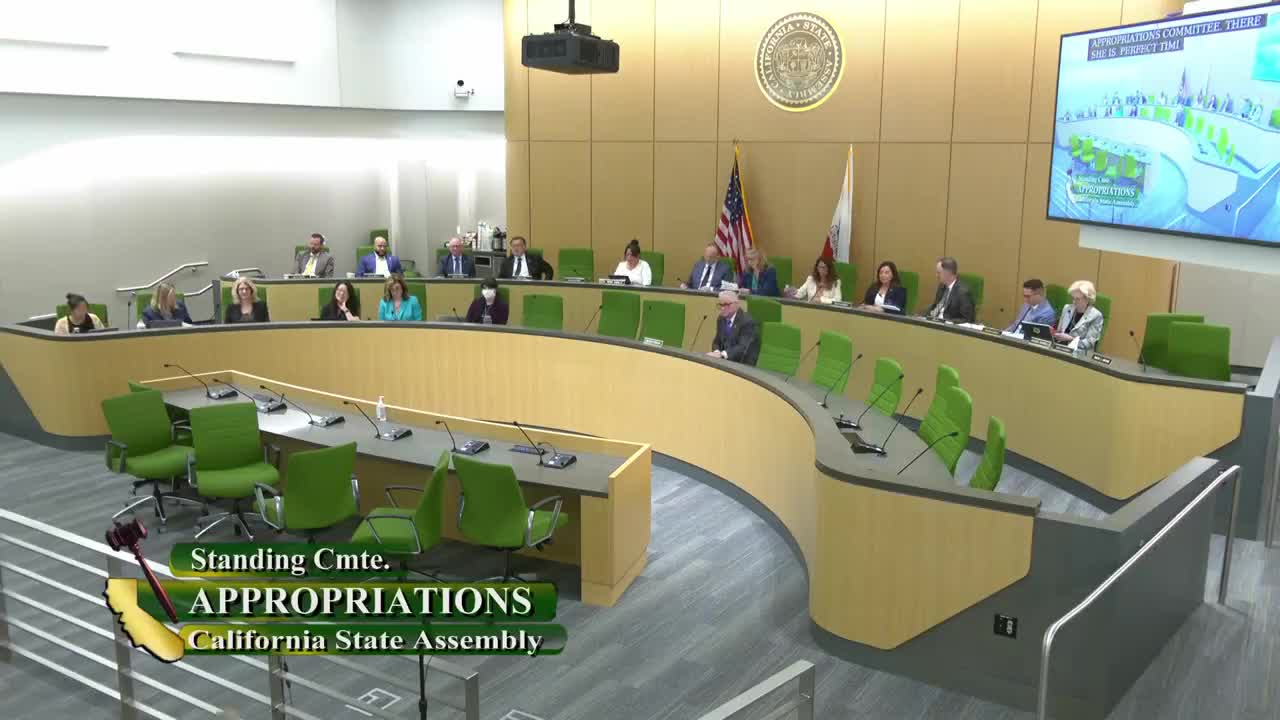 1MIN
Assembly Standing Committee on Appropriations
53SEC
Assembly Standing Committee on Appropriations
55SEC
Assembly Standing Committee on Appropriations
2MIN
Assembly Standing Committee on Appropriations
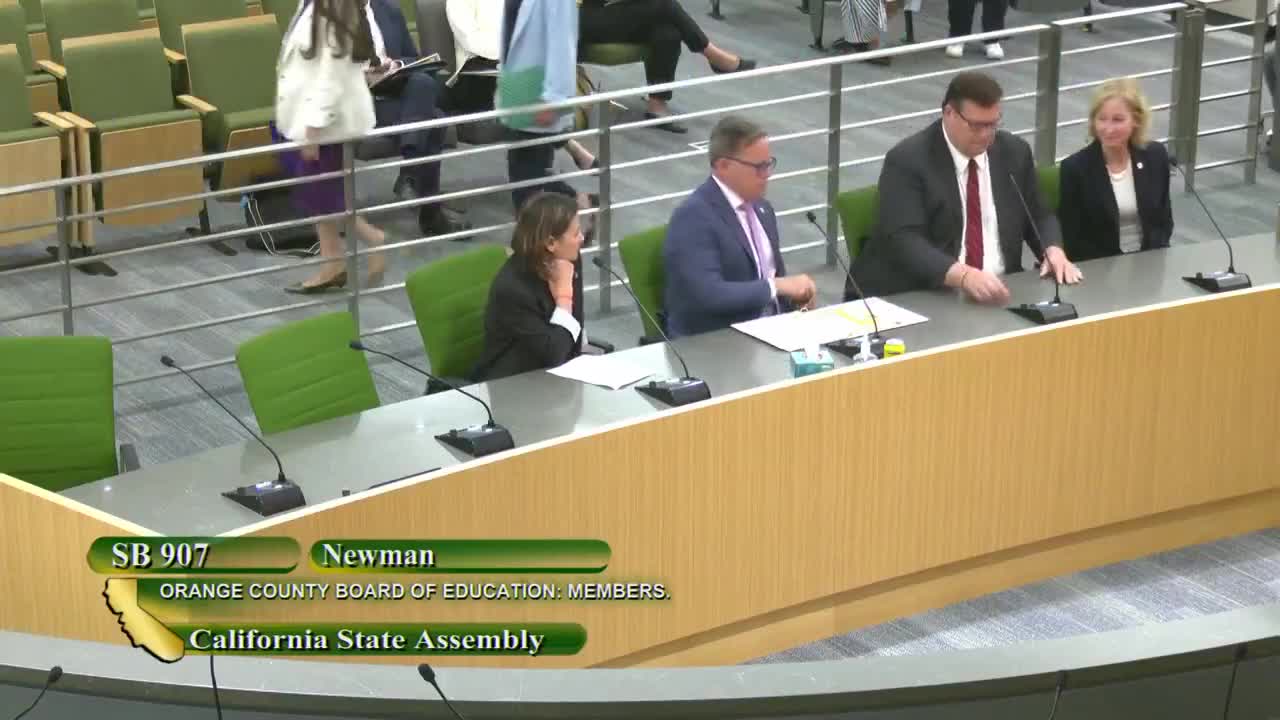 29MIN
Assembly Standing Committee on Education
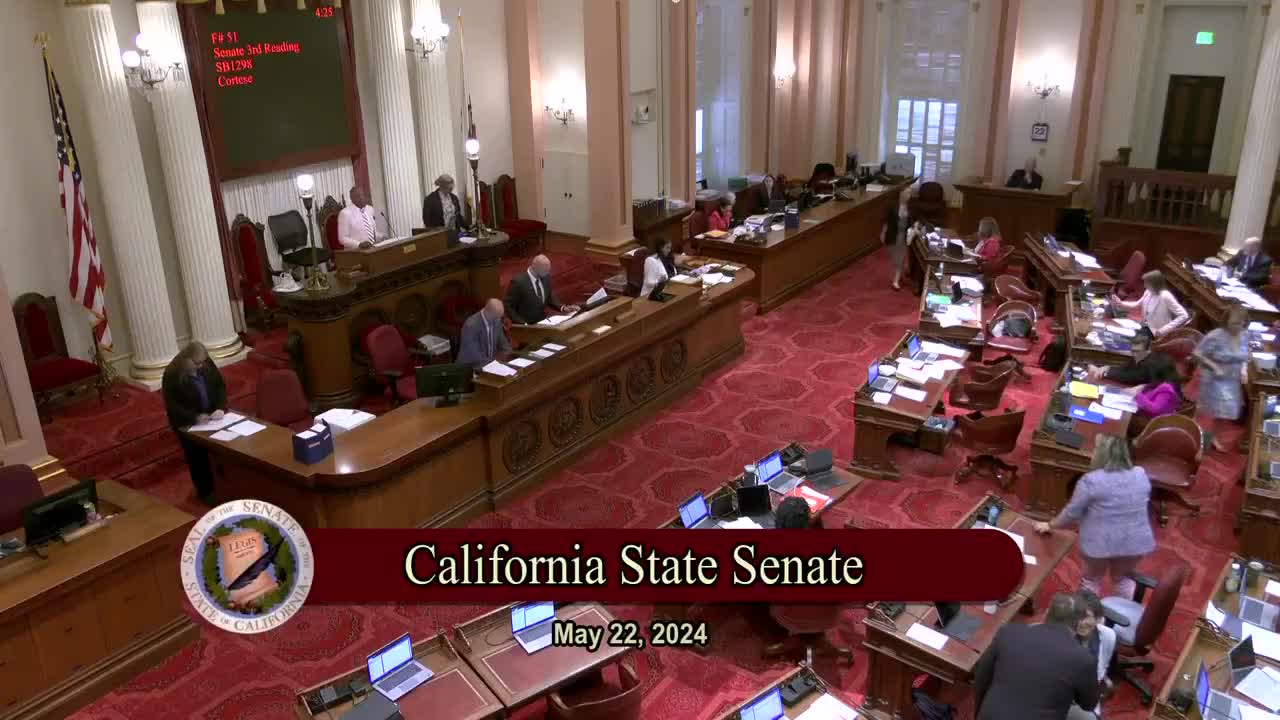 1MIN