SB 1350: Occupational safety and health: definitions.
- Session Year: 2023-2024
- House: Senate
- Latest Version Date: 2024-09-28
Current Status:
Passed
(2024-09-28: Chaptered by Secretary of State. Chapter 895, Statutes of 2024.)
Introduced
In Committee
First Chamber
In Committee
Second Chamber
Enacted
Existing law, the California Occupational Safety and Health Act of 1973, provides the Division of Occupational Safety and Health within the Department of Industrial Relations with the power, jurisdiction, and supervision over every employment and place of employment in this state which is necessary to enforce and administer all occupational health and safety laws and to protect employees. Existing law defines various terms for purposes of the act, including employment, and for purposes of that term, the definition excludes household domestic service. Under specified circumstances, a violation of the act is a crime.
Beginning July 1, 2025, this bill would delete the above-referenced exclusion and would, instead, expand the definition of employment to additionally include household domestic service performed on a permanent or temporary basis, except for specified household domestic service, including, among others, those where an individual who, in their own residence, privately employs persons to perform ordinary domestic household tasks, including housecleaning, cooking, and caregiving.
By expanding the application of criminal penalties under the act to household domestic service employers, this bill would impose a state-mandated local program.
The California Constitution requires the state to reimburse local agencies and school districts for certain costs mandated by the state. Statutory provisions establish procedures for making that reimbursement.
This bill would provide that no reimbursement is required by this act for a specified reason.
Existing law, the California Occupational Safety and Health Act of 1973, provides the Division of Occupational Safety and Health within the Department of Industrial Relations with the power, jurisdiction, and supervision over every employment and place of employment in this state which is necessary to enforce and administer all occupational health and safety laws and to protect employees. Existing law requires the chief of the division, or a representative of the chief, to convene an advisory committee for the purposes of creating voluntary guidance and making recommendations to the department and the Legislature on policies the state may adopt to protect the health and safety of privately funded household domestic service employees. Existing law requires the advisory committee to make recommendations, in consultation with specified entities, on what additional policies may be adopted by the department or the Legislature to protect the health and safety of household domestic service employees. Existing law defines various terms for purposes of the act, including employment, and for purposes of that term, the definition excludes household domestic service. Under specified circumstances, a violation of the act is a crime.
This bill would require the department to make recommendations to the Legislature on policies the state may adopt to protect domestic workers from work-related injuries and illnesses, and, in making these recommendations, to consider the recommendations made by the above-described advisory committee. The bill would require the department to release and publicly post the report of its recommendations on its internet website and submit a copy of the report to the Legislature. The bill would repeal these provisions on September 1, 2029.Beginning July 1, 2025, this bill would delete the above-referenced exclusion and would, instead, expand the definition of employment to additionally include household domestic service performed on a permanent or temporary basis, except for specified household domestic service, including, among others, those where an individual who, in their own residence, privately employs persons to perform ordinary domestic household tasks, including housecleaning, cooking, and caregiving.
By expanding the application of criminal penalties under the act to household domestic service employers, this bill would impose a state-mandated local program.
The California Constitution requires the state to reimburse local agencies and school districts for certain costs mandated by the state. Statutory provisions establish procedures for making that reimbursement.
This bill would provide that no reimbursement is required by this act for a specified reason.
Existing law, the California Occupational Safety and Health Act of 1973, provides the Division of Occupational Safety and Health within the Department of Industrial Relations with the power, jurisdiction, and supervision over every employment and place of employment in this state which is necessary to enforce and administer all occupational health and safety laws and to protect employees. Existing law requires the chief of the division, or a representative of the chief, to convene an advisory committee for the purposes of creating voluntary guidance and making recommendations to the department and the Legislature on policies the state may adopt to protect the health and safety of privately funded household domestic service employees. Existing law requires the advisory committee to make recommendations, in consultation with specified entities, on what additional policies may be adopted by the department or the Legislature to protect the health and safety of household domestic service employees.
This bill would make nonsubstantive changes to this provision. require the department to make recommendations to the Legislature on policies the state may adopt to protect domestic workers from work-related injuries and illnesses, and, in making these recommendations, to consider the recommendations made by the above-described advisory committee. The bill would require the department to release and publicly post the report of its recommendations on its internet website and submit a copy of the report to the Legislature. The bill would repeal these provisions on September 1, 2029.
Existing law, the California Occupational Safety and Health Act of 1973, provides the Division of Occupational Safety and Health with the power, jurisdiction, and supervision over every employment and place of employment in this state which is necessary to enforce and administer all occupational health and safety laws and to protect employees.
This bill would make nonsubstantive changes to this provision.
(a)Place of employment means any place, and the premises appurtenant thereto, where employment is carried on, except a place where the health and safety jurisdiction is vested by law in, and actively exercised by, any state or federal agency other than the division.
(b)Employment includes the carrying on of any trade, enterprise, project, industry, business, occupation, or work, including all excavation, demolition, and construction work, or any process or operation in any way related thereto, in which any person is engaged or permitted to work for hire. Employment includes household domestic service performed on a permanent or temporary basis, but does not include any of the following:
(1)Household domestic service that is publicly funded, including publicly funded household domestic service provided to a recipient, client, or beneficiary with a share of cost in that service.
(2)Employment in family daycare homes, as defined in subdivision (a) of Section 1596.78 of the Health and Safety Code.
(3)Individuals who, in their own residences, privately employ persons to perform for the benefit of such individuals what are commonly regarded as ordinary domestic household tasks, including housecleaning, cooking, and caregiving.
(c)(1)Employment, for purposes of this division only, also includes volunteer firefighting when covered by Division 4 (commencing with Section 3200) pursuant to Section 3361.
(2)This subdivision shall become operative on January 1, 2004.
(d)(1)The changes made to this section during the 202324 Regular Session of the Legislature shall become operative on July 1, 2025.
(2)The changes made to this section during the 202324 Regular Session of the Legislature do not change or otherwise modify the application of Sections 6310, 6311, and 6311.5 of this code or of Sections 3342 and 5199 of Title 8 of the California Code of Regulations.
SEC. 2.No reimbursement is required by this act pursuant to Section 6 of Article XIIIB of the California Constitution because the only costs that may be incurred by a local agency or school district will be incurred because this act creates a new crime or infraction, eliminates a crime or infraction, or changes the penalty for a crime or infraction, within the meaning of Section 17556 of the Government Code, or changes the definition of a crime within the meaning of Section 6 of Article XIIIB of the California Constitution.
(a)Place of employment means any place, and the premises appurtenant thereto, where employment is carried on, except a place where the health and safety jurisdiction is vested by law in, and actively exercised by, any state or federal agency other than the division.
(b)Employment includes the carrying on of any trade, enterprise, project, industry, business, occupation, or work, including all excavation, demolition, and construction work, or any process or operation in any way related thereto, in which any person is engaged or permitted to work for hire, except household domestic service. hire. Employment includes household domestic service performed on a permanent or temporary basis, but does not include any of the following:
(1)Household domestic service that is publicly funded, including publicly funded household domestic service provided to a recipient, client, or beneficiary with a share of cost in that service.
(2)Employment in family daycare homes, as defined in subdivision (a) of Section 1596.78 of the Health and Safety Code.
(3)Individuals who, in their own residences, privately employ persons to perform for the benefit of such individuals what are commonly regarded as ordinary domestic household tasks, including housecleaning, cooking, and caregiving.
(c)(1)Employment, for purposes of this division only, also includes volunteer firefighting when covered by Division 4 (commencing with Section 3200) pursuant to Section 3361.
(d)Subdivision (c)(2)This subdivision shall become operative on January 1, 2004.
(d)(1)The changes made to this section during the 202324 Regular Session of the Legislature shall become operative on July 1, 2025.
(2)The changes made to this section during the 202324 Regular Session of the Legislature do not change or otherwise modify the application of Sections 6310, 6311, and 6311.5 of this code or of Sections 3342 and 5199 of Title 8 of the California Code of Regulations.
SEC. 2.No reimbursement is required by this act pursuant to Section 6 of Article XIIIB of the California Constitution because the only costs that may be incurred by a local agency or school district will be incurred because this act creates a new crime or infraction, eliminates a crime or infraction, or changes the penalty for a crime or infraction, within the meaning of Section 17556 of the Government Code, or changes the definition of a crime within the meaning of Section 6 of Article XIIIB of the California Constitution.
SECTION 1.Section 6305.2 is added to the Labor Code, to read:6305.2.(a)The department shall make recommendations to the Legislature on policies the state may adopt to protect domestic workers from work-related injuries and illnesses.(b)In making these recommendations, the department shall consider the recommendations made by the advisory committee pursuant to Section 6305.1.(c)The department shall release and publicly post the report of its recommendations on its internet website and submit a copy of the report to the appropriate policy committees of the Legislature no later than September 1, 2025.(d)(1) A report to be submitted pursuant to subdivision (c) shall be submitted in compliance with Section 9795 of the Government Code.(2)Pursuant to Section 10231.5 of the Government Code, this section is repealed on September 1, 2029.(a)The department shall make recommendations to the Legislature on policies the state may adopt to protect domestic workers from work-related injuries and illnesses.
(b)In making these recommendations, the department shall consider the recommendations made by the advisory committee pursuant to Section 6305.1.
(c)The department shall release and publicly post the report of its recommendations on its internet website and submit a copy of the report to the appropriate policy committees of the Legislature no later than September 1, 2025.
(d)(1) A report to be submitted pursuant to subdivision (c) shall be submitted in compliance with Section 9795 of the Government Code.
(2)Pursuant to Section 10231.5 of the Government Code, this section is repealed on September 1, 2029.
SECTION 1.Section 6307 of the Labor Code is amended to read:6307.The division has the power, jurisdiction, and supervision over every employment and place of employment in this state, that is necessary to adequately enforce and administer all laws and lawful standards and orders, or special orders requiring employment and places of employment to be safe, and requiring the protection of the life, safety, and health of every employee in employment or places of employment.The division has the power, jurisdiction, and supervision over every employment and place of employment in this state, which that is necessary to adequately to enforce and administer all laws and lawful standards and orders, or special orders requiring such employment and place places of employment to be safe, and requiring the protection of the life, safety, and health of every employee in such employment or place places of employment.
|
Date
|
Status
|
|---|---|
| Sep 28, 2024 | Chaptered by Secretary of State. Chapter 895, Statutes of 2024. |
| Sep 28, 2024 | Approved by the Governor. |
| Sep 11, 2024 | Enrolled and presented to the Governor at 3 p.m. |
| Aug 31, 2024 | Assembly amendments concurred in. (Ayes 30. Noes 8. Page 5803.) Ordered to engrossing and enrolling. |
| Aug 31, 2024 | In Senate. Concurrence in Assembly amendments pending. |
| Aug 31, 2024 | Read third time. Passed. (Ayes 65. Noes 8. Page 7115.) Ordered to the Senate. |
| Aug 31, 2024 | Read second time. Ordered to third reading. |
| Aug 31, 2024 | Assembly Rule 63 suspended. (Ayes 54. Noes 17. Page 7099.) |
| Aug 30, 2024 | Joint Rule 62(a) suspended. |
| Aug 30, 2024 | From committee: Do pass. (Ayes 7. Noes 0.) (August 30). |
| Aug 22, 2024 | Read third time and amended. |
| Aug 22, 2024 | Re-referred to Com. on L. & E. pursuant to Assembly Rule 77.2. |
| Aug 22, 2024 | Ordered to third reading. |
| Aug 19, 2024 | Read second time. Ordered to third reading. |
| Aug 15, 2024 | From committee: Do pass. (Ayes 11. Noes 3.) (August 15). |
| Aug 7, 2024 | August 7 set for first hearing. Placed on suspense file. |
| Jul 2, 2024 | From committee: Do pass and re-refer to Com. on APPR. (Ayes 5. Noes 1.) (July 2). Re-referred to Com. on APPR. |
| May 28, 2024 | Referred to Com. on L. & E. |
| May 22, 2024 | In Assembly. Read first time. Held at Desk. |
| May 21, 2024 | Read third time. Passed. (Ayes 31. Noes 8. Page 4081.) Ordered to the Assembly. |
| May 7, 2024 | Read second time. Ordered to third reading. |
| May 6, 2024 | From committee: Do pass. (Ayes 5. Noes 2. Page 3849.) (May 6). |
| Apr 26, 2024 | Set for hearing May 6. |
| Apr 25, 2024 | April 29 hearing postponed by committee. |
| Apr 22, 2024 | Set for hearing April 29. |
| Apr 17, 2024 | From committee: Do pass and re-refer to Com. on APPR. (Ayes 4. Noes 1. Page 3662.) (April 17). Re-referred to Com. on APPR. |
| Apr 5, 2024 | Set for hearing April 17. |
| Apr 3, 2024 | Re-referred to Com. on L., P.E. & R. |
| Mar 18, 2024 | From committee with author's amendments. Read second time and amended. Re-referred to Com. on RLS. |
| Feb 29, 2024 | Referred to Com. on RLS. |
| Feb 20, 2024 | From printer. May be acted upon on or after March 18. |
| Feb 16, 2024 | Introduced. Read first time. To Com. on RLS. for assignment. To print. |
|
Date
|
Description
|
Location
|
Votes
|
|
|---|---|---|---|---|
| Aug 31, 2024 | SB 1350 Durazo Senate Third Reading By Bonta | Assembly Floor |
Passed |
|
| Aug 31, 2024 | Unfinished Business SB1350 Durazo Concurrence | Senate Floor |
Passed |
|
| Aug 30, 2024 | Do pass. | Assembly Standing Committee on Labor and Employment |
Passed |
|
| Aug 15, 2024 | Do pass. | Assembly Standing Committee on Appropriations |
Passed |
|
| Jul 2, 2024 | Do pass and be re-referred to the Committee on [Appropriations] | Assembly Standing Committee on Labor and Employment |
Passed |
|
| May 21, 2024 | Senate 3rd Reading SB1350 Durazo | Senate Floor |
Passed |
|
| May 6, 2024 | Do pass | Senate Standing Committee on Appropriations |
Passed |
|
| Apr 17, 2024 | Do pass, but first be re-referred to the Committee on [Appropriations] | Senate Standing Committee on Labor, Public Employment and Retirement |
Passed |
This list shows positions taken on this bill by organizations on the date displayed, which is linked to the original source.
Positions by individuals are not included.
|
Organization
|
Position
|
Date
|
|---|---|---|
| AAPIs for Civic Empowerment Education Fund | ** Support | |
| Alliance for A Better Community | ** Support | |
| Almas Libres | ** Support | |
| Amado Khaya Initiative | ** Support | |
| Asian Law Caucus | ** Support | |
| Beloved Community Church | ** Support | |
| Bet Tzedek | ** Support | |
| black women for wellness | ** Support | |
| California Alliance For Retired Americans | ** Support | |
| California Coalition For Worker Power | ** Support | |
| California Domestic Workers Coalition | ** Support | |
| California Employment Lawyers Association | ** Support | |
| California Immigrant Policy Center | ** Support | |
| California Pan - Ethnic Health Network | ** Support | |
| California Work and Family Coalition | ** Support | |
| Caring Across Generations | ** Support | |
| Chinese for Affirmative Action | ** Support | |
| Chinese Progressive Association | ** Support | |
| CLEAN Carwash Worker Center | ** Support | |
| Coalición de Trabajadoras | * Support | Jul 2, 2024 |
| Coalición de Trabajadoras | * Support | Jul 2, 2024 |
| Coalición de Trabajadoras | * Support | Jul 2, 2024 |
| Coalición de Trabajadoras del Hogar | * Support | Jul 2, 2024 |
| Coalition for Humane Immigrant Rights | ** Support | |
| Cooperacion Santa Ana | ** Support | |
| COSH | ** Support | |
| Courage California | ** Support | |
| Dolores Street Community Services | * Support | Jul 2, 2024 |
| El Centro Cultural de Mexico | ** Support | |
| El/la Para Trans Latinas | ** Support | |
| El/La Para TransLatinas | ** Support | |
| Equal Rights Advocates | ** Support | |
| Filam Arts | ** Support | |
| Filipino Advocates for Justice | ** Support | |
| Filipino Migrant Center | ** Support | |
| Filipino Workers Center | * Support | Jul 2, 2024 |
| Gabriela Oakland | ** Support | |
| Gray Panthers | ** Support | |
| Hand in Hand: The Domestic Employers Network | ** Support | |
| Hand in Hand: the National Domestic Employer Network | * Support | Jul 2, 2024 |
| IDEPSCA | * Support | Apr 17, 2024 |
| Inland Coalition for Immigrant Justice | ** Support | |
| Institute of Popular Education of Southern California | ** Support | |
| Jobs with Justice San Francisco | ** Support | |
| kiwa | ** Support | |
| La Colectiva de Mujeres | * Support | Jul 2, 2024 |
| La Colectiva de Mujeres de San Francisco | * Support | Jul 2, 2024 |
| LAANE | ** Support | |
| Labor Community Strategy Center | ** Support | |
| Legal Aid At Work | ** Support | |
| Malaya South Bay | ** Support | |
| Mission Action | ** Support | |
| Mujeres Unidas Y Activas | ** Support | |
| Multicultural Institute | ** Support | |
| National Cosh | ** Support | |
| national council for occupational safety and health | ** Support | |
| National Domestic Workers Alliance | ** Support | |
| National Employment Law Project | ** Support | |
| Nuestras Manos | ** Support | |
| Nuestros Manos | ** Support | |
| Orange County Communities Organized for Responsible Development | ** Support | |
| Parent Voices California | ** Support | |
| Pilipino Association of Workers and Immigrants | ** Support | |
| pilipino workers center | ** Support | |
| Pomona Economic Opportunity Center | ** Support | |
| San Francisco Day Labor Program | * Support | Apr 17, 2024 |
| san francisco senior & disability action | ** Support | |
| San Francisco, California | * Support | Apr 17, 2024 |
| Santa Clara County Wage Theft Coalition | ** Support | |
| Search To Involve Pilipino Americans | ** Support | |
| Senior Disability Action | ** Support | |
| Showing Up For Racial Justice - Bay Area | ** Support | |
| SoCalCOSH | ** Support | |
| Southern California Coalition for Occupational Health and Safety | ** Support | |
| Thai Community Development Center | ** Support | |
| Trabajadores Unidos Workers United | ** Support | |
| UC Berkeley Labor Occupational Health Program | ** Support | |
| UC Davis School of Law | ** Support | |
| UDW/AFSCME Local 3930 | ** Support | |
| Virtual Nursing Home Residents Council | ** Support | |
| Warehouse Worker Resource Center | ** Support | |
| Women of Temple Beth Hillel | ** Support | |
| Worksafe | ** Support |
SENATE RULES COMMITTEE Office of Senate Floor Analyses (916) 651-1520 Fax: (916) 327-4478 | SB 1350 |
UNFINISHED BUSINESS
Bill No: SB 1350
Author: Durazo (D)
Amended: 8/22/24
Vote: 21
PRIOR SENATE VOTES NOT RELEVANT
ASSEMBLY FLOOR: 52-4, 8/31/24 – Roll call not available
SUBJECT: Occupational safety and health: definitions
SOURCE: California Domestic Workers Coalition
California Employment Lawyers Association
Equal Rights Advocates
DIGEST:
This bill, beginning on July 1, 2025, removes the household domestic service exemption from the definition of “employment” for purposes of California’s Occupational Safety and Health Act’s health and safety protections to certain domestic workers whose service is not publicly funded, do not work in family daycare homes, and are not privately employed by individuals in their own residences, as specified.
Assembly Amendments
struck all previous contents of the bill that would have
required the Department of Industrial Relations (DIR) to make recommendations, by submitting to the Legislature and publicly posting on its website, a report on policies the state may adopt to protect domestic workers from work-related injuries and illnesses.
ANALYSIS: Existing federal law specifies, pursuant to the federal Occupational Safety and Health Act of 1970, regarding the policy as to domestic household employment activities in private residences, that as a matter of policy, individuals who, in their own residences, privately employ persons for the purpose of performing for the benefit of such individuals what are commonly regarded as ordinary domestic household tasks, such as house cleaning, cooking, and caring for children, shall not be subject to the requirements of the Act with respect to such employment. (OSHA regulation at 29 CFR §1975.6)
Existing state law:
- Assures, under the California Occupational Safety and Health Act (OSHA), assures safe and healthful working conditions for all California workers by authorizing the enforcement of effective standards, assisting and encouraging employers to maintain safe and healthful working conditions, and by providing for research, information, education, training, and enforcement in the field of occupational safety and health. (Labor Code §6300)
- Establishes the Division of Occupational Safety and Health (Cal/OSHA) within the Department of Industrial Relations (DIR) to, among other things, propose, administer, and enforce occupational safety and health standards. (Labor Code §6300 et seq.)
- Establishes that the jurisdictional reach of Cal/OSHA’s enforcement extends to “every employment and place of employment in this state, which is necessary adequately to enforce and administer all laws and lawful standards and orders, or special orders requiring such employment and place of employment to be safe, and requiring the protection of the life, safety, and health of every employee in such employment or place of employment.” (Labor Code §6307).
- Defines, for purposes of OSHA, “employment” to include the carrying on of any trade, enterprise, project, industry, business, occupation, or work, including all excavation, demolition, and construction work, or any process or operation in any way related thereto, in which any person is engaged or permitted to work for hire, except household domestic service. (Labor Code §6303)
- Defines “domestic work” as services related to the care of persons in private households or maintenance of private households or their premises. Domestic work occupations include childcare providers, caregivers of people with disabilities, sick, convalescing, or elderly persons, house cleaners, housekeepers, maids and other household occupations. (Labor Code §1451)
- Requires Cal/OSHA, if the division learns or has reason to believe that an employment or place of employment is not safe or is injurious to the welfare of an employee, it may, on its own motion, or upon complaint, summarily investigate the employment or place of employment, with or without notice or hearings. Certain timeframes exist if a complaint is deemed to allege a serious violation. (Labor Code §6309)
- Regulates, under the Domestic Worker Bill of Rights, regulates the hours of work of certain domestic work employees and provides an overtime compensation rate. Specifically, the law provides that a domestic work employee who is a personal attendant shall not be employed more than nine hours in any workday or more than 45 hours in any workweek unless the employee receives one and one-half times the employee's regular rate of pay for all hours worked over nine in a day and 45 in a workweek. (Labor Code §1450-1454)
This bill:
- Deletes, beginning on July 1, 2025, the household domestic service exemption from the definition of “employment” for purposes of OSHA and would, instead, expand the definition to include specified household domestic service employees, as specified.
- Expands the definition of “employment” to include household domestic service performed on a permanent or temporary basis, but does not include any of the following:
- Household domestic service that is publicly funded, including publicly funded household domestic service provided to a recipient, client, or beneficiary with a share of cost in that service.
- Employment in family daycare homes, as defined in subdivision (a) of Section 1596.78 of the Health and Safety Code.
- Individuals who, in their own residences, privately employ persons to perform for the benefit of such individuals what are commonly regarded as ordinary domestic household tasks, including housecleaning, cooking, and caregiving.
- Specifies that the changes made by this bill do not change or otherwise modify the application of Sections 6310, 6311, and 6311.5 of the Labor Code or of Sections 3342 and 5199 of Title 8 of the California Code of Regulations – provisions that currently protect a workers’ right to report unsafe working conditions without fear of discharge or retaliation.
Background
Historically domestic workers have been excluded from occupational safety and health laws as well as many other worker protections. Domestic workers are amongst one of the most vulnerable and unprotected categories of workers. Many domestic workers may lack decent working conditions, which is compounded with the fact that the sector often encompasses disadvantaged groups, including immigrants where language barriers pose additional challenges. A June 2020 report from the University of California, Los Angeles Labor and Occupational Safety and Health Program found that 85 percent of domestic workers surveyed experience musculoskeletal injuries that are associated with chronic pain. Many respondents reported continuing to work through their injuries for fear of job or financial loss.[1] Many of these injuries could be prevented by appropriate health and safety guidance that specifically targets this industry, both the domestic worker and the domestic worker employers.
Legislative Efforts to Right a Wrong: The concept of removing the domestic worker exclusion from the definition of “employment” for OSHA purposes has been the subject of several bills dating back to AB 889 (Ammiano) in 2011. The first successful change to the industry was in 2013, when AB 241 (Ammiano) enacted the Domestic Worker Bill of Rights to regulate the hours of work of certain domestic work employees and provide an overtime compensation rate for these workers who were not previously entitled to overtime compensation. AB 241 included a January 1, 2017 sunset date on its provisions that was later removed by SB 1015 (Leyva) in 2016, making the overtime requirements permanent.
More recently, in 2019, SB 83 (Committee on Budget and Fiscal Review) established, until July 1, 2024, the Domestic Worker and Employer Outreach and Education Program (DWEOP) within DLSE to promote awareness of, and compliance with, labor protections that affect the domestic work industry. Last year, AB 130 (Committee on Budget) removed the sunset date thereby making the program permanent. Additionally, the state budget included a $35 million funding allocation for grants to community-based organizations for domestic worker education and outreach.
In 2021, SB 321 (Durazo) required that Cal/OSHA convene an advisory committee to provide voluntary guidance and make recommendations on policies the state may adopt to protect the health and safety of privately funded household domestic service employees.
Concerning the removal of the domestic worker exclusion from OSHA, there have been two attempts through SB 1257 (Durazo) in 2020 and SB 686 (Durazo) in 2023. Last year’s bill would have removed the household domestic service exemption, required Cal/OSHA to adopt industry guidance to help household domestic service employers understand their legal obligations and required all household domestic services employers to comply with, and adhere to, all applicable occupational safety and health regulations by January 1, 2025. Governor Newsom vetoed both SB 1257 and SB 686.
Need for this bill?
As noted under existing law above, implementing regulations for the federal Occupational Safety and Health Act of 1970 and California’s Labor Code have conflicting provisions when it comes to household domestic service employees and their right to protections under OSHA. California’s Labor Code excludes household domestic service from all provisions and protections available under OSHA while the federal regulations appear to only exempt individuals who, in their own residences, privately employ persons for these purposes.
This means that, at the federal level, domestic workers hired through a service company or agency are not exempt from federal OSHA regulations and are therefore protected under its provisions. California law exempts all household domestic service workers. This bill would align California’s OSHA definitions with those of the federal government, thereby, extending protections under OSHA to agency-based domestic workers while excluding domestic workers hired by individuals in their private homes, those that are working under publicly funded programs, and those working in family daycare homes.
According to the author:
“Federal OSHA protections have a narrower exemption for household domestic work than the one contained in California statute. Unlike California law that does not distinguish between agency based employees and those directly hired by individuals in their own residences for purpose of the exclusion, federal law limits the exclusion to employees directly hired by “individuals who in their own residences privately employ persons to perform for the benefit of such individuals what are commonly regarded as ordinary domestic household task, including housecleaning, cooking and caregiving.”
Domestic workers are often put at severe risk of injury and illness, especially when public health emergencies and climate disasters strike. These workers provide front-line care to California’s most vulnerable, like seniors and people with compromised immune systems, yet they often remain without any health and safety protections. One year into the pandemic, domestic workers were three times more likely to have contracted COVID-19 than the general population in California, putting their lives at risk as well as their families and communities.
Senate Bill 1350 will bring California’s occupational health and safety standards into alignment with Federal law in regards to domestic work.”
[NOTE: Please see the Senate Labor, Public Employment and Retirement Committee analysis on this bill for more background information and information on prior and related legislation.]
FISCAL EFFECT: Appropriation: No Fiscal Com.: Yes Local: Yes
SUPPORT: (Verified 8/31/24)
California Domestic Workers Coalition (co-source)
California Employment Lawyers Association (co-source)
Equal Rights Advocates (co-source)
AAPIs for Civic Empowerment Education Fund
Alliance for A Better Community
ALMAS Libres
Amado Khaya Initiative
Asian Law Caucus
Beloved Community Church
Bet Tzedek
Black Women for Wellness
California Alliance for Retired Americans (CARA)
California Coalition for Worker Power
California Immigrant Policy Center
California Pan - Ethnic Health Network
California Work and Family Coalition
Caring Across Generations
Chinese for Affirmative Action
Chinese Progressive Association
Clean Carwash Worker Center
Coalition for Humane Immigrant Rights (CHIRLA)
Cooperacion Santa Ana
Courage California
El Centro Cultural de Mexico
El/La Para TransLatinas
FilAm Arts
Filipino Advocates for Justice
Filipino Migrant Center
Gabriela Oakland
Gray Panthers
Hand in Hand: the Domestic Employers Network
Inland Coalition for Immigrant Justice
Institute of Popular Education of Southern California (IDEPSCA)
Jobs with Justice San Francisco
KIWA
LAANE (Los Angeles Alliance for A New Economy)
Labor Community Strategy Center
Legal Aid At Work
Malaya South Bay
Mission Action
Mujeres Unidas Y Activas
Multicultural Institute
National Council for Occupational Safety and Health (National COSH)
National Domestic Workers Alliance
National Employment Law Project
Nuestras Manos
Orange County Communities Organized for Responsible Development
Parent Voices California
Pilipino Association of Workers and Immigrants
Pilipino Workers Center
Pomona Economic Opportunity Center
San Francisco Senior & Disability Action
Santa Clara County Wage Theft Coalition
Search to Involve Pilipino Americans
Senior Disability Action
Showing Up for Racial Justice (SURJ) Bay Area
Southern California Coalition for Occupational Health and Safety
Thai Community Development Center
Trabajadores Unidos Workers United
UC Berkeley Labor Occupational Health Program
UC Davis School of Law
UDW/AFSCME Local 3930
Virtual Nursing Home Residents Council
Warehouse Worker Resource Center
Women of Temple Beth Hillel
Worksafe
OPPOSITION: (Verified 8/31/24)
None received
ARGUMENTS IN SUPPORT: According to the sponsors of the measure, Equal Rights Advocates, the California Employment Lawyers Association and the California Domestic Workers Coalition: “SB 1350 would bring Cal/OSHA into compliance with Federal OSHA standards by ensuring Cal/OSHA coverage for agency based domestic workers. In the United States, domestic workers, largely women and people of color, have been historically excluded from the most basic labor protections. Some of our key federal labor laws – the National Labor Relations Act, the Fair Labor Standards Act, and the Occupational Safety and Health Act – have at some point, if not currently, excluded these workers, as a result of the ongoing legacy of slavery and historical discrimination against black women workers. In addition, the law’s failure to recognize domestic work as real work has left domestic service workers particularly vulnerable to workplace injuries and illness, with little recourse.”
Prepared by: Alma Perez-Schwab / L., P.E. & R. / (916) 651-1556
8/31/24 23:10:23
**** END ****
UCLA Labor and Occupational Safety and Health Program, “Hidden Work, Hidden Pain: Injury Experience of Domestic Workers in California,” June 2020. ↑
Date of Hearing: August 30, 2024
ASSEMBLY COMMITTEE ON LABOR AND EMPLOYMENT
Liz Ortega, Chair
SBPCA Bill Id:SB 1350
Author:(Durazo) – As Amended Ver:August 22, 2024
SENATE VOTE: 31-8
SUBJECT: Occupational safety and health: definitions
SUMMARY: Removes, beginning July 1, 2025, the "household domestic service" exemption from California's Occupational Safety and Health Act's definition of employment, thereby extending the Act's health and safety protections to certain domestic workers whose service is not publicly funded, do not work in family daycare homes, and are not privately employed by individuals in their own residences. Specifically, this bill:
- Removes the "household domestic service" exemption from California's Occupational Safety and Health Act's definition of employment, thereby extending the Act's health and safety protections to certain domestic workers, operative on July 1, 2025.
- Provides that household domestic service does not include any of the following:
- Household domestic service that is publicly funded, including publicly funded household domestic service provided to a recipient, client, or beneficiary with a share of cost in that service.
- Employment in family daycare homes, as defined.
- Individuals who, in their own residences, privately employ persons to perform for the benefit of such individuals what are commonly regarded as ordinary domestic household tasks, including housecleaning, cooking, and caregiving.
- States that the changes made to this section during the 2023–24 Regular Session of the Legislature do not change or otherwise modify the application of Labor Code Sections 6310, 6311, and 6311.5, regarding an employee’s right to be free from retaliation, refuse dangerous work, and leave or evacuate a workplace that poses a menace to the public health or safety. The changes also do not modify the application of the Aerosol Transmissible Disease and the Violence Prevention in Health Care General Industry Safety Orders.
EXISTING LAW:
State law
- Creates the California Occupational Safety and Health Act to assure the safe and healthful working conditions for all California workers by authorizing the enforcement of effective standards, assisting and encouraging employers to maintain safe and healthful working conditions, and by providing for education, training, and enforcement in the field of occupational safety and health. Labor Code §6300.
- Defines, for purposes of state health and safety law, “employment” to include the carrying on of any trade, enterprise, project, industry, business, occupation, or work, including all excavation, demolition, and construction work, or any process or operation in any way related thereto, in which any person is engaged or permitted to work for hire, except household domestic service. Labor Code §6303(b).
- Establishes the Division of Occupational Safety and Health (Cal/OSHA) within the DIR to, among other things, propose, administer, and enforce occupational safety and health standards. Labor Code §6308.
- Requires the Chief of Cal/OSHA, or a representative of the Chief, to convene an advisory committee for the purposes of creating voluntary guidance and making recommendations to the DIR and the Legislature on policies the state may adopt to protect the health and safety of privately funded household domestic service employees, except publicly funded household domestic service and family daycare homes, as specified. Labor Code §6305.1(a)(1).
- Requires the advisory committee to develop voluntary industry-specific occupational health and safety guidance for the purpose of the following:
- Educating household domestic service employees on how, to the extent possible, they may identify and evaluate workplace hazards and prevent or minimize work-related injuries and illnesses.
- Educating household domestic service employers on how they may create safer workplaces by identifying and evaluating workplace hazards and how to prevent or minimize work-related injuries and illnesses for their employees. Labor Code §6305.1(f).
- Requires the advisory committee, in consultation with various state entities, to make recommendations on what additional policies may be adopted by the DIR or the Legislature to protect the health and safety of household domestic service employees. Labor Code §6305.1(g).
- Requires the Labor Commissioner (LC), upon appropriation, to establish and maintain an outreach and education program. The purpose of the program shall be to promote awareness of, and compliance with, labor protections that affect the domestic work industry and to promote fair and dignified labor standards in this industry and other low-wage industries. Labor Code §1455(a)(1).
Federal law
- Enacts the Occupational Safety and Health Act of 1970 (Act) to, among other things, assure safe and healthful working conditions for working men and women and to assist and encourage the States in their efforts to assure safe and healthful working conditions. Public Law 91-596 84 STAT. 1590.
- Provides, as a matter of policy, that individuals who, in their own residences, privately employ persons for the purpose of performing for the benefit of such individuals what are commonly regarded as ordinary domestic household tasks, such as house cleaning, cooking, and caring for children, shall not be subject to the requirements of the Act with respect to such employment. 29 CFR §1975.6.
FISCAL EFFECT: No relevant fiscal analysis available.
COMMENTS:
According to the 2021 American Community Survey from the U.S. Census Bureau, household domestic workers are majority women, 2.5 times as likely to be immigrants than the typical worker, and generally older on average than other workers.[1] This workforce is comprised of personal care aides, maids and housekeepers, and childcare providers.[2]
California’s domestic workers are primarily personal care aides, also referred to as homecare attendants. There were approximately 325,000 domestic workers in California in 2018 and researchers believe the number to be higher due to undercounting, especially among house cleaners.[3] It is very hard to estimate how many of these workers are agency-based but also not employed by a public employer such as In Home Supportive Services (who are exempt from this bill). Based on American Community Survey data from 2014-2018, one can estimate that there are 175,000 agency-based homecare attendants but this includes those employed by public agencies.[4]
In recent years, advocates have introduced legislation at both the state and federal level to advance legal protections for household domestic workers, often framed as a “Domestic Workers Bill of Rights.” The push for comprehensive labor law protection reflects a number of characteristics of domestic work—these workers “tend to earn below-average wages, are excluded from certain labor protections, have little bargaining power (often working without formalized employment arrangements), and face a high risk of gender-based violence and harassment at work.”[5]
SB 1350, as recently amended, will extend health and safety protections to domestic workers whose service is not publicly funded, do not work in family daycare homes, and are not privately paid by the individual receiving services. In other words, a household domestic worker sent or referred by a private agency is covered by the bill. The bill’s exclusion of privately paid domestic workers mirrors the exclusion by federal OSHA which has been in place for decades. (See 29 C.F.R. §1975.6).
According to the author, “For too long, the workers we entrust to care for our loved ones and our homes have been marginalized and dehumanized by intentional exclusion from our work place health and safety laws. Yet these workers are regularly exposed to health and safety threats, like toxic cleaning products, extreme heat, wildfire smoke, and lifting injuries in the home workplace.
It is time for us to protect these workers, as we do all other workers, from occupational health and safety hazards.”
The author further states, “Domestic workers, who in California are largely low wage immigrant women of color, have been historically excluded from not just health and safety laws but, until recently, from most basic labor law protections. The intersection of race, gender, and class resulted in a devaluation of domestic labor that continues to reverberate today. While other workers gained labor protection at the turn of the twentieth century, domestic workers—by the 1930s numbering as many as those in “the railroads, coal mines, and automobile industry combined”—were categorically excluded, from the Fair Labor Standards Act, the National Labor Relations Act, the Social Security, and the Occupational Safety and Health Act. In the past decade, domestic workers have created a robust worker movement and sustained organizing to remove these historical exclusions and to have their work seen as “real work” and to be protected equally by labor laws that govern all other workers/employers.”
Arguments in Support
The California Domestic Workers Coalition, sponsor of the bill, states, “In the private home workplace, occupational risks and hazards for domestic workers include physical and ergonomic demands and exposure to infectious diseases and household cleaning chemicals. A June 2020 report from the UCLA Labor and Occupational Safety and Health Program found that 85% of domestic workers surveyed experience musculoskeletal injuries that are associated with chronic pain. Many respondents, 94% of whom were Latinx and Asian, reported continuing to work through their injuries for fear of job or financial loss. Such injuries could be prevented by appropriate health and safety guidance and subsequent enforcement. Domestic workers are also at risk of suffering from psychological stress, and are especially vulnerable to workplace violations. They are at risk of physical, emotional and sexual abuse by employers or clients, and those risks are heightened because they work alone, in informal workplace environments, without psychological support or physical assistance. COVID-19 further exposed the impacts of these inequalities in our labor laws: in a study by UC Davis Environmental Health Sciences Center in 2021, Domestic workers suffered triple the risk of getting COVID-19 compared with the general population in California.”
Arguments in Opposition
None on file.
Prior Legislation
SB 686 (Durazo) of 2023, for purposes of the California Occupational Safety and Health Act of 1973, would narrow the exclusion of household domestic service from the definition of “employment” to exclude only publicly funded household domestic service and family daycare homes, as specified. The bill would require the Division of Occupational Safety and Health, by January 1, 2025, to adopt industry guidance to assist household domestic service employers on their legal obligations under existing occupational safety and health laws and regulations that apply to the work activity of household domestic service employees. The bill was vetoed by Governor Newsom.
SB 321 (Durazo) Chapter 332, Statutes of 2021 required Cal/OSHA to convene an advisory committee for the purposes of creating voluntary guidance and making recommendations on policies the state my adopt to protect the health and safety of privately funded household domestic service employees and to make the guidance publicly available no later than January 1, 2023.
SB 1257 (Durazo) of 2020 removed the household domestic service exemption from California's Occupational Safety and Health Act to cover most domestic workers except those workers who are publicly funded unless they are subject to specified general industry safety orders. In addition, convenes an advisory committee to recommend for adoption regulations related to household domestic service by the Occupational Safety and Health Standards Board (OSHSB). This bill was vetoed by Governor Newsom.
AB 2658 (Burke) Chapter 288, Statutes of 2020 makes it a crime for a person, after receiving notice to evacuate or leave, to willfully and knowingly direct an employee to remain in, or enter, an area closed under prescribed provisions of law due to a menace to the public health or safety. The bill defined “employee” for this purpose to include a person receiving employment for household domestic service.
SB 1015 (Leyva) Chapter 315, Statutes of 2016, deleted the January 1, 2017 repeal date for the provisions under the Domestic Worker Bill of Rights, thereby making the requirement permanent.
AB 241 (Ammiano) Chapter 374, Statutes of 2013, enacted the “Domestic Worker Bill of Rights” to provide overtime compensation to domestic work employees who are personal attendants, but included a 1/1/17 sunset date.
AB 889 (Ammiano) of 2012 would have required, no later than January 1, 2014, the DIR to adopt regulations governing the working conditions of domestic work employees, as defined. The bill was vetoed by the Governor Brown.
REGISTERED SUPPORT / OPPOSITION:
Support
California Domestic Workers Coalition (Sponsor)
California Immigrant Policy Center (Co-Sponsor)
Equal Rights Advocates (Co-Sponsor)
Aapis for Civic Empowerment
Alliance for A Better Community
Almas Libres
Amado Khaya Initiative
Asian Law Caucus
Beloved Community Church
Bet Tzedek
Black Women for Wellness
California Alliance for Retired Americans
California Coalition for Worker Power
California Employment Lawyers Association
California Pan-ethnic Health Network
California Work and Family Coalition
Caring Across Generations
Chinese for Affirmative Action
Chinese Progressive Association
Clean Carwash Worker Center
Coalition for Humane Immigrant Rights
Cooperacion Santa Ana
COSH
Courage California
El/la Para Trans Latinas
Filam Arts
Filipino Advocates for Justice
Filipino Migrant Center
Gabriela Oakland
Gray Panthers
Hand in Hand: the Domestic Employers Network
Inland Coalition for Immigrant Justice
Institute of Popular Education of Southern California
KIWA
LAANE (Los Angeles Alliance for A New Economy)
Labor Community Strategy Center
Legal Aid At Work
Mission Action
Mujeres Unidas Y Activas
Multicultural Institute
National Cosh
National Domestic Workers Alliance
National Employment Law Project
Nuestros Manos
Parent Voices California
Pilipino Association of Workers and Immigrants
Pilipino Workers Center
Pomona Economic Opportunity Center
Santa Clara County Wage Theft Coalition
Search to Involve Pilipino Americans
Senior Disability Action
Showing Up for Racial Justice Bay Area
Socalcosh
Thai Community Development Center
Trabajadores Unidos Workers United
UC Davis School of Law
Udw/afscme Local 3930
Virtual Nursing Home Residents Council
Warehouse Worker Resource Center
Women of Temple Beth Hillel
Worksafe
Opposition
None on file.
Analysis Prepared by: Megan Lane / L. & E. /
Women’s Bureau of the U.S. Department of Labor, Fact Sheet: Domestic Workers in the United States,” March 2024, p.1. ↑
Ibid. ↑
Saba Waheed, Michele Wong, and Megan Whelan, Profile of Domestic Workers in California (UCLA Labor Center and California Domestic Workers Coalition, 2020), p. 3. ↑
Ibid. ↑
Women’s Bureau of the U.S. Department of Labor, Fact Sheet: Domestic Workers in the United States,” March 2024, p.1. ↑
SENATE THIRD READING
STR Bill Id:SB 1350
Author:(Durazo)
As Amended Ver:August 22, 2024
Majority vote
SUMMARY
Removes, beginning July 1, 2025, the "household domestic service" exemption from California's Occupational Safety and Health Act's definition of employment, thereby extending the Act's health and safety protections to certain domestic workers whose service is not publicly funded, do not work in family daycare homes, and are not privately employed by individuals in their own residences.
Major Provisions
- Removes the "household domestic service" exemption from California's Occupational Safety and Health Act's definition of employment, thereby extending the Act's health and safety protections to certain domestic workers, operative on July 1, 2025.
- Provides that household domestic service does not include any of the following:
- Household domestic service that is publicly funded, including publicly funded household domestic service provided to a recipient, client, or beneficiary with a share of cost in that service.
- Employment in family daycare homes, as defined.
- Individuals who, in their own residences, privately employ persons to perform for the benefit of such individuals what are commonly regarded as ordinary domestic household tasks, including housecleaning, cooking, and caregiving.
- States that the changes made to this section during the 2023–24 Regular Session of the Legislature do not change or otherwise modify the application of Labor Code Sections 6310, 6311, and 6311.5, regarding an employee's right to be free from retaliation, refuse dangerous work, and leave or evacuate a workplace that poses a menace to the public health or safety. The changes also do not modify the application of the Aerosol Transmissible Disease and the Violence Prevention in Health Care General Industry Safety Orders.
COMMENTS
According to the 2021 American Community Survey from the U.S. Census Bureau, household domestic workers are majority women, 2.5 times as likely to be immigrants than the typical worker, and generally older on average than other workers.[1] This workforce is comprised of personal care aides, maids and housekeepers, and childcare providers.[2] California's domestic workers are primarily personal care aides, also referred to as homecare attendants.
In recent years, advocates have introduced legislation at both the state and federal level to advance legal protections for household domestic workers, often framed as a "Domestic Workers Bill of Rights." The push for comprehensive labor law protection reflects a number of characteristics of domestic work—these workers "tend to earn below-average wages, are excluded from certain labor protections, have little bargaining power (often working without formalized employment arrangements), and face a high risk of gender-based violence and harassment at work."[3]
SB 1350, as recently amended, will extend health and safety protections to domestic workers whose service is not publicly funded, do not work in family daycare homes, and are not privately paid by the individual receiving services. In other words, a household domestic worker sent or referred by a private agency is covered by the bill. The bill's exclusion of privately paid domestic workers mirrors the exclusion by federal OSHA which has been in place for decades. (See 29 C.F.R. §1975.6).
According to the Author
"For too long, the workers we entrust to care for our loved ones and our homes have been marginalized and dehumanized by intentional exclusion from our work place health and safety laws. Yet these workers are regularly exposed to health and safety threats, like toxic cleaning products, extreme heat, wildfire smoke, and lifting injuries in the home workplace.
It is time for us to protect these workers, as we do all other workers, from occupational health and safety hazards."
The author further states, "Domestic workers, who in California are largely low wage immigrant women of color, have been historically excluded from not just health and safety laws but, until recently, from most basic labor law protections. The intersection of race, gender, and class resulted in a devaluation of domestic labor that continues to reverberate today. While other workers gained labor protection at the turn of the twentieth century, domestic workers—by the 1930s numbering as many as those in "the railroads, coal mines, and automobile industry combined"—were categorically excluded, from the Fair Labor Standards Act, the National Labor Relations Act, the Social Security, and the Occupational Safety and Health Act. In the past decade, domestic workers have created a robust worker movement and sustained organizing to remove these historical exclusions and to have their work seen as "real work" and to be protected equally by labor laws that govern all other workers/employers."
Arguments in Support
The California Domestic Workers Coalition, sponsor of the bill, states, "In the private home workplace, occupational risks and hazards for domestic workers include physical and ergonomic demands and exposure to infectious diseases and household cleaning chemicals. A June 2020 report from the UCLA Labor and Occupational Safety and Health Program found that 85% of domestic workers surveyed experience musculoskeletal injuries that are associated with chronic pain. Many respondents, 94% of whom were Latinx and Asian, reported continuing to work through their injuries for fear of job or financial loss. Such injuries could be prevented by appropriate health and safety guidance and subsequent enforcement. Domestic workers are also at risk of suffering from psychological stress, and are especially vulnerable to workplace violations. They are at risk of physical, emotional and sexual abuse by employers or clients, and those risks are heightened because they work alone, in informal workplace environments, without psychological support or physical assistance. COVID-19 further exposed the impacts of these inequalities in our labor laws: in a study by UC Davis Environmental Health Sciences Center in 2021, Domestic workers suffered triple the risk of getting COVID-19 compared with the general population in California."
Arguments in Opposition
None on file.
FISCAL COMMENTS
No relevant fiscal analysis available.
VOTES
SENATE FLOOR: 31-8-1
YES: Alvarado-Gil, Archuleta, Ashby, Atkins, Becker, Blakespear, Bradford, Caballero, Cortese, Dodd, Durazo, Eggman, Glazer, Gonzalez, Hurtado, Laird, Limón, McGuire, Menjivar, Min, Newman, Padilla, Portantino, Roth, Rubio, Skinner, Smallwood-Cuevas, Stern, Umberg, Wahab, Wiener
NO: Dahle, Grove, Jones, Nguyen, Niello, Ochoa Bogh, Seyarto, Wilk
ABS, ABST OR NV: Allen
ASM LABOR AND EMPLOYMENT: 5-1-1
YES: Ortega, Wendy Carrillo, Lee, Ward, Zbur
NO: Alanis
ABS, ABST OR NV: Flora
ASM APPROPRIATIONS: 11-3-1
YES: Wicks, Arambula, Bryan, Calderon, Wendy Carrillo, Mike Fong, Grayson, Haney, Hart, Pellerin, Villapudua
NO: Sanchez, Dixon, Ta
ABS, ABST OR NV: Jim Patterson
ASM LABOR AND EMPLOYMENT: 7-0-0
YES: Flora, Alanis, Wendy Carrillo, Lee, Reyes, Ward, Zbur
UPDATED
VERSION: August 22, 2024
CONSULTANT: Lorie Alvarez / L. & E. /(916) 319-2091 FN: 0005059
SENATE THIRD READING
STR Bill Id:SB 1350
Author:(Durazo)
As Amended Ver:March 18, 2024
Majority vote
SUMMARY
Requires the Department of Industrial Relations (DIR) to make recommendations to the Legislature on policies the state may adopt to protect domestic workers from work-related injuries and illnesses and to publicly post the report of its recommendations on its internet website.
Major Provisions
- Requires the DIR to make recommendations to the Legislature on policies the state may adopt to protect domestic workers from work-related injuries and illnesses. In making these recommendations, the DIR shall consider the recommendations made by the advisory committee on protecting the health and safety of privately funded domestic service employees.
- Requires the DIR to release and publicly post the report of its recommendations on its internet website and submit a copy of the report to the appropriate policy committees of the Legislature no later than September 1, 2025.
- Repeals these provisions on September 1, 2029.
COMMENTS
According to the 2021 American Community Survey from the U.S. Census Bureau, household domestic workers are majority women, 2.5 times as likely to be immigrants than the typical worker, and generally older on average than other workers.[1] This workforce is comprised of personal care aides, maids and housekeepers, and childcare providers.[2] California’s domestic workers are primarily personal care aides, also referred to as homecare attendants.
In recent years, advocates have introduced legislation at both the state and federal level to advance legal protections for household domestic workers, often framed as a “Domestic Workers Bill of Rights.” The push for comprehensive labor law protection reflects a number of characteristics of domestic work—these workers “tend to earn below-average wages, are excluded from certain labor protections, have little bargaining power (often working without formalized employment arrangements), and face a high risk of gender-based violence and harassment at work.”[3]
According to the Author
"For too long, the workers we entrust to care for our loved ones and our homes have been marginalized and dehumanized by intentional exclusion from our work place health and safety laws. Yet these workers are regularly exposed to health and safety threats, like toxic cleaning products, extreme heat, wildfire smoke, and lifting injuries in the home workplace.
It is time for us to protect these workers, as we do all other workers, from occupational health and safety hazards."
The author further states, "Domestic workers, who in California are largely low wage immigrant women of color, have been historically excluded from not just health and safety laws but, until recently, from most basic labor law protections. The intersection of race, gender, and class resulted in a devaluation of domestic labor that continues to reverberate today. While other workers gained labor protection at the turn of the twentieth century, domestic workers—by the 1930s numbering as many as those in "the railroads, coal mines, and automobile industry combined”—were categorically excluded, from the Fair Labor Standards Act, the National Labor Relations Act, the Social Security, and the Occupational Safety and Health Act. In the past decade, domestic workers have created a robust worker movement and sustained organizing to remove these historical exclusions and to have their work seen as "real work" and to be protected equally by labor laws that govern all other workers/employers."
Arguments in Support
The California Domestic Workers Coalition, sponsor of the bill, states, "In the private home workplace, occupational risks and hazards for domestic workers include physical and ergonomic demands and exposure to infectious diseases and household cleaning chemicals. A June 2020 report from the UCLA Labor and Occupational Safety and Health Program found that 85% of domestic workers surveyed experience musculoskeletal injuries that are associated with chronic pain. Many respondents, 94% of whom were Latinx and Asian, reported continuing to work through their injuries for fear of job or financial loss. Such injuries could be prevented by appropriate health and safety guidance and subsequent enforcement. Domestic workers are also at risk of suffering from psychological stress, and are especially vulnerable to workplace violations. They are at risk of physical, emotional and sexual abuse by employers or clients, and those risks are heightened because they work alone, in informal workplace environments, without psychological support or physical assistance. COVID-19 further exposed the impacts of these inequalities in our labor laws: in a study by UC Davis Environmental Health Sciences Center in 2021, Domestic workers suffered triple the risk of getting COVID-19 compared with the general population in California."
Arguments in Opposition
None on file.
FISCAL COMMENTS
According to the Assembly Appropriations Committee, "One-time costs of approximately $75,000 to DIR to produce the recommendations and report (Occupational Safety and Health Fund)."
VOTES
SENATE FLOOR: 31-8-1
YES: Alvarado-Gil, Archuleta, Ashby, Atkins, Becker, Blakespear, Bradford, Caballero, Cortese, Dodd, Durazo, Eggman, Glazer, Gonzalez, Hurtado, Laird, Limón, McGuire, Menjivar, Min, Newman, Padilla, Portantino, Roth, Rubio, Skinner, Smallwood-Cuevas, Stern, Umberg, Wahab, Wiener
NO: Dahle, Grove, Jones, Nguyen, Niello, Ochoa Bogh, Seyarto, Wilk
ABS, ABST OR NV: Allen
ASM LABOR AND EMPLOYMENT: 5-1-1
YES: Ortega, Wendy Carrillo, Lee, Ward, Zbur
NO: Alanis
ABS, ABST OR NV: Flora
ASM APPROPRIATIONS: 11-3-1
YES: Wicks, Arambula, Bryan, Calderon, Wendy Carrillo, Mike Fong, Grayson, Haney, Hart, Pellerin, Villapudua
NO: Sanchez, Dixon, Ta
ABS, ABST OR NV: Jim Patterson
UPDATED
VERSION: March 18, 2024
CONSULTANT: Megan Lane / L. & E. / (916) 319-2091 FN: 0003915
Date of Hearing: August 7, 2024
ASSEMBLY COMMITTEE ON APPROPRIATIONS
Buffy Wicks, Chair
SBPCA Bill Id:SB 1350
Author:(Durazo) – As Amended Ver:March 18, 2024
Policy Committee: | Labor and Employment | Vote: | 5 - 1 |
|
| ||
|
|
Urgency: No State Mandated Local Program: No Reimbursable: No
SUMMARY:
This bill requires, by September 1, 2025, the Department of Industrial Relations (DIR) to report recommendations to the Legislature on policies the state may adopt to protect domestic workers from work-related injuries and illnesses.
FISCAL EFFECT:
One-time costs of approximately $75,000 to DIR to produce the recommendations and report (Occupational Safety and Health Fund).
However, since the primary purpose of this bill is to create a report, this bill qualifies for this committee’s suspense file.
COMMENTS:
- Purpose. According to the author:
For too long, the workers we entrust to care for our loved ones and our homes have been marginalized and dehumanized by intentional exclusion from our work place health and safety laws. Yet these workers are regularly exposed to health and safety threats, like toxic cleaning products, extreme heat, wildfire smoke, and lifting injuries in the home workplace.
It is time for us to protect these workers, as we do all other workers, from occupational health and safety hazards.
This bill is sponsored by the California Domestic Workers Coalition.
- Advisory Committee. SB 321 (Durazo), Chapter 332, Statutes of 2021, required the Division of Occupational Safety and Health (Cal/OSHA) to convene an Advisory Committee to make policy recommendations and create voluntary guidance to protect the health and safety of privately funded household domestic service employees, such as house cleaners, nannies, gardeners and handypersons. The Advisory Committee was comprised of employers, workers, non-profit advocates, and health and safety experts who met over the course of nine months in 2022. The final policy recommendations were grouped into four categories: (a) legal responsibilities and enforcement, including removal of the household domestic services exclusion from the Labor Code, (b) support for employer compliance, (c) outreach and education, and (d) partnerships with community organizations. Additionally, the Advisory Committee published voluntary guidelines to describe how employers can make the home a safe workplace to protect workers from injury and illness. This bill requires DIR to consider the Advisory Committee’s recommendations and make its own recommendations to the Legislature on policies to protect domestic workers from work-related injuries and illnesses.
- Related Legislation. SB 686 (Durazo) revises the definition of employment under occupational safety and health laws to include household domestic service and requires Cal/OSHA to adopt industry guidance to assist employers with their new legal obligations. SB 686 was vetoed by Governor Newsom, who stated, “While I…share the spirit behind the legislation, new laws in this area must recognize that private households and families cannot be regulated in the exact same manner as traditional businesses.”
- Prior Legislation. SB 1257 (Durazo), of the 2019-20 Legislative Session, would have ended the exemption of household domestic services from Cal/OSHA jurisdiction, set a procedure for workplace complaints to be filed and investigated, and established an advisory committee to develop industry-specific regulations. SB 1257 was vetoed by Governor Newsom.
Analysis Prepared by: Irene Ho / APPR. / (916) 319-2081
Date of Hearing: July 2, 2024
ASSEMBLY COMMITTEE ON LABOR AND EMPLOYMENT
Liz Ortega, Chair
SBPCA Bill Id:SB 1350
Author:(Durazo) – As Amended Ver:March 18, 2024
SENATE VOTE: 31-8
SUBJECT: Private employment: domestic workers
SUMMARY: Requires the Department of Industrial Relations (DIR) to make recommendations to the Legislature on policies the state may adopt to protect domestic workers from work-related injuries and illnesses and to publicly post the report of its recommendations on its internet website. Specifically, this bill:
- Requires the DIR to make recommendations to the Legislature on policies the state may adopt to protect domestic workers from work-related injuries and illnesses. In making these recommendations, the DIR shall consider the recommendations made by the advisory committee on protecting the health and safety of privately funded domestic service employees.
- Requires the DIR to release and publicly post the report of its recommendations on its internet website and submit a copy of the report to the appropriate policy committees of the Legislature no later than September 1, 2025.
- Repeals these provisions on September 1, 2029.
EXISTING LAW:
- Creates the California Occupational Safety and Health Act to assure the safe and healthful working conditions for all California workers by authorizing the enforcement of effective standards, assisting and encouraging employers to maintain safe and healthful working conditions, and by providing for education, training, and enforcement in the field of occupational safety and health. Labor Code §6300.
- Establishes the Division of Occupational Safety and Health (Cal/OSHA) within the DIR to, among other things, propose, administer, and enforce occupational safety and health standards. Labor Code §6308.
- Requires the Chief of Cal/OSHA, or a representative of the Chief, to convene an advisory committee for the purposes of creating voluntary guidance and making recommendations to the DIR and the Legislature on policies the state may adopt to protect the health and safety of privately funded household domestic service employees, except publicly funded household domestic service and family daycare homes, as specified. Labor Code §6305.1(a)(1).
- Requires the advisory committee to develop voluntary industry-specific occupational health and safety guidance for the purpose of the following:
- Educating household domestic service employees on how, to the extent possible, they may identify and evaluate workplace hazards and prevent or minimize work-related injuries and illnesses.
- Educating household domestic service employers on how they may create safer workplaces by identifying and evaluating workplace hazards and how to prevent or minimize work-related injuries and illnesses for their employees. Labor Code §6305.1(f).
- Requires the advisory committee, in consultation with various state entities, to make recommendations on what additional policies may be adopted by the DIR or the Legislature to protect the health and safety of household domestic service employees. Labor Code §6305.1(g).
- Requires the Labor Commissioner (LC), upon appropriation, to establish and maintain an outreach and education program. The purpose of the program shall be to promote awareness of, and compliance with, labor protections that affect the domestic work industry and to promote fair and dignified labor standards in this industry and other low-wage industries. Labor Code §1455(a)(1).
- Provides that the outreach and education program shall continue until June 30, 2024, with an opportunity to expand or renew contingent on allocation of state funds or identification of other revenue sources. Labor Code §1455(b).
- Requires the LC to issue a competitive request to qualified community-based organizations (CBOs), as specified, to provide education and outreach services primarily focused on, but not limited to, domestic work employees and employers. Labor Code §1455(c).
- States that CBOs are responsible for developing, and consulting with the LC regarding, the core education and outreach materials regarding minimum wage, overtime, sick leave, record-keeping, retaliation, and the LC’s wage adjudication and retaliation process, including specific issues that affect certain industries, such as the domestic work industry, differently. The materials shall be translated into non-English languages as may be appropriate, as specified. Labor Code §1455(d).
- Requires the LC and the CBOs to meet at least biannually to coordinate efforts around outreach, education, and enforcement, including sharing information, in accordance with applicable privacy and confidentiality laws, that will shape and inform the overall enforcement strategy of the LC regarding low-wage industries, including the domestic work industry. Labor Code §1455(e).
- Repeals, as of January 1, 2025, the provisions related to the outreach and education program. Labor Code §1455(g).
FISCAL EFFECT: According to the Senate Appropriations Committee, “DIR indicates that it would incur a one-time cost of $75,000 to implement the provisions of the bill (Occupational Safety and Health Fund).”
COMMENTS: This bill directs the DIR to report to the Legislature on recommended policies to adopt on protecting the health and safety of household domestic service employees taking into account the work of the SB 321 Advisory Committee (Committee). The Committee, convened by the Chief of Cal/OSHA, met for nine months in 2022. It was made up of a diverse group of stakeholders, including employers, workers, non-profit advocates, and health and safety experts. The instructive policy recommendations released by the Committee are grouped into four categories: legal responsibilities and enforcement, support for employer compliance, outreach and education, and partnerships with community organizations. Of the many recommendations falling under the first category regarding enforcement, a key one relates to balancing the privacy concerns of household employers with protecting workers’ health. With this goal in mind, the Committee recommended a more informal approach to legal enforcement. It suggested that Cal/OSHA begin any domestic workplace inspection offsite by employing such strategies as letters or phone calls as a first warning and then referring employers to a mediation program to encourage compliance without issuing a citation.
Furthermore, in the area of outreach and education, the Committee centered its recommendations on the need for Cal/OSHA training for both household domestic service employers and workers. The Committee thought it important that an employer training program focus in particular on helping employers adjust to their new roles and responsibilities as it pertains to maintaining a healthy and safe workplace. In terms of worker training, the Committee suggested that Cal/OSHA work closely with CBOs to create training in multiple formats, including online, so as to offer flexibility to workers with time or travel constraints.
According to the author, “For too long, the workers we entrust to care for our loved ones and our homes have been marginalized and dehumanized by intentional exclusion from our work place health and safety laws. Yet these workers are regularly exposed to health and safety threats, like toxic cleaning products, extreme heat, wildfire smoke, and lifting injuries in the home workplace.
It is time for us to protect these workers, as we do all other workers, from occupational health and safety hazards.”
The author further states, “Domestic workers, who in California are largely low wage immigrant women of color, have been historically excluded from not just health and safety laws but, until recently, from most basic labor law protections. The intersection of race, gender, and class resulted in a devaluation of domestic labor that continues to reverberate today. While other workers gained labor protection at the turn of the twentieth century, domestic workers—by the 1930s numbering as many as those in “the railroads, coal mines, and automobile industry combined”—were categorically excluded, from the Fair Labor Standards Act, the National Labor Relations Act, the Social Security, and the Occupational Safety and Health Act. In the past decade, domestic workers have created a robust worker movement and sustained organizing to remove these historical exclusions and to have their work seen as “real work” and to be protected equally by labor laws that govern all other workers/employers.”
Arguments in Support
The California Domestic Workers Coalition, sponsor of the bill, states, “In the private home workplace, occupational risks and hazards for domestic workers include physical and ergonomic demands and exposure to infectious diseases and household cleaning chemicals. A June 2020 report from the UCLA Labor and Occupational Safety and Health Program found that 85% of domestic workers surveyed experience musculoskeletal injuries that are associated with chronic pain. Many respondents, 94% of whom were Latinx and Asian, reported continuing to work through their injuries for fear of job or financial loss. Such injuries could be prevented by appropriate health and safety guidance and subsequent enforcement. Domestic workers are also at risk of suffering from psychological stress, and are especially vulnerable to workplace violations. They are at risk of physical, emotional and sexual abuse by employers or clients, and those risks are heightened because they work alone, in informal workplace environments, without psychological support or physical assistance. COVID-19 further
exposed the impacts of these inequalities in our labor laws: in a study by UC Davis Environmental Health Sciences Center in 2021, Domestic workers suffered triple the risk of getting COVID-19 compared with the general population in California.”
Arguments in Opposition
None on file.
Prior Legislation
SB 686 (Durazo) of 2023, for purposes of the California Occupational Safety and Health Act of 1973, would narrow the exclusion of household domestic service from the definition of “employment” to exclude only publicly funded household domestic service and family daycare homes, as specified. The bill would require the Division of Occupational Safety and Health, by January 1, 2025, to adopt industry guidance to assist household domestic service employers on their legal obligations under existing occupational safety and health laws and regulations that apply to the work activity of household domestic service employees. The bill was vetoed by Governor Newsom.
SB 321 (Durazo) Chapter 332, Statutes of 2021 required Cal/OSHA to convene an advisory committee for the purposes of creating voluntary guidance and making recommendations on policies the state my adopt to protect the health and safety of privately funded household domestic service employees and to make the guidance publicly available no later than January 1, 2023.
SB 1257 (Durazo) of 2020 removed the household domestic service exemption from California's Occupational Safety and Health Act to cover most domestic workers except those workers who are publicly funded unless they are subject to specified general industry safety orders. In addition, convenes an advisory committee to recommend for adoption regulations related to household domestic service by the Occupational Safety and Health Standards Board (OSHSB). This bill was vetoed by Governor Newsom.
AB 2658 (Burke) Chapter 288, Statutes of 2020 makes it a crime for a person, after receiving notice to evacuate or leave, to willfully and knowingly direct an employee to remain in, or enter, an area closed under prescribed provisions of law due to a menace to the public health or safety. The bill defined “employee” for this purpose to include a person receiving employment for household domestic service.
SB 1015 (Leyva) Chapter 315, Statutes of 2016, deleted the January 1, 2017 repeal date for the provisions under the Domestic Worker Bill of Rights, thereby making the requirement permanent.
AB 241 (Ammiano) Chapter 374, Statutes of 2013, enacted the “Domestic Worker Bill of Rights” to provide overtime compensation to domestic work employees who are personal attendants, but included a 1/1/17 sunset date.
AB 889 (Ammiano) of 2012 would have required, no later than January 1, 2014, the DIR to adopt regulations governing the working conditions of domestic work employees, as defined. The bill was vetoed by the Governor Brown.
REGISTERED SUPPORT / OPPOSITION:
Support
California Domestic Workers Coalition (Sponsor)
Opposition
None on file.
Analysis Prepared by: Megan Lane / L. & E. /
SENATE RULES COMMITTEE Office of Senate Floor Analyses (916) 651-1520 Fax: (916) 327-4478 | SB 1350 |
THIRD READING
Bill No: SB 1350
Author: Durazo (D)
Amended: 3/18/24
Vote: 21
SENATE LABOR, PUB. EMP. & RET. COMMITTEE: 4-1, 4/17/24
AYES: Smallwood-Cuevas, Cortese, Durazo, Laird
NOES: Wilk
SENATE APPROPRIATIONS COMMITTEE: 5-2, 5/6/24
AYES: Caballero, Becker, Bradford, Wahab, Wiener
NOES: Jones, Seyarto
SUBJECT: Private employment: domestic workers
SOURCE: California Domestic Workers Coalition
DIGEST:
This bill requires the Department of Industrial Relations (DIR) to make recommendations, by submitting to the Legislature and publicly posting on its website, a report on policies the state may adopt to protect domestic workers from work-related injuries and illnesses.
ANALYSIS:
Existing law:
- Under the California Occupational Safety and Health Act (OSHA), assures safe and healthful working conditions for all California workers by authorizing the enforcement of effective standards, assisting and encouraging employers to maintain safe and healthful working conditions, and by providing for research, information, education, training, and enforcement in the field of occupational safety and health. (Labor Code §6300)
- Establishes the Division of Occupational Safety and Health (Cal/OSHA) within the Department of Industrial Relations (DIR) to, among other things, propose, administer, and enforce occupational safety and health standards. (Labor Code §6300 et seq.)
- Establishes that the jurisdictional reach of Cal/OSHA’s enforcement extends to “every employment and place of employment in this state, which is necessary adequately to enforce and administer all laws and lawful standards and orders, or special orders requiring such employment and place of employment to be safe, and requiring the protection of the life, safety, and health of every employee in such employment or place of employment.” (Labor Code §6307).
- Defines, for purposes of OSHA, “employment” to include the carrying on of any trade, enterprise, project, industry, business, occupation, or work, including all excavation, demolition, and construction work, or any process or operation in any way related thereto, in which any person is engaged or permitted to work for hire, except household domestic service. (Labor Code §6303)
- Defines “domestic work” as services related to the care of persons in private households or maintenance of private households or their premises. Domestic work occupations include childcare providers, caregivers of people with disabilities, sick, convalescing, or elderly persons, house cleaners, housekeepers, maids and other household occupations. (Labor Code §1451)
- Requires Cal/OSHA, if the division learns or has reason to believe that an employment or place of employment is not safe or is injurious to the welfare of an employee, it may, on its own motion, or upon complaint, summarily investigate the employment or place of employment, with or without notice or hearings. Certain timeframes exist if a complaint is deemed to allege a serious violation. (Labor Code §6309)
- Under the Domestic Worker Bill of Rights, regulates the hours of work of certain domestic work employees and provides an overtime compensation rate. Specifically, the law provides that a domestic work employee who is a personal attendant shall not be employed more than nine hours in any workday or more than 45 hours in any workweek unless the employee receives one and one-half times the employee's regular rate of pay for all hours worked over nine in a day and 45 in a workweek. (Labor Code §1450-1454)
- Requires the chief of Cal/OSHA, or a representative, to convene an advisory committee for the purposes of creating voluntary guidance and making recommendations to the Department of Industrial Relations and the Legislature on policies the state may adopt to protect the health and safety of privately-funded household domestic service employees. Requires the advisory committee to develop voluntary industry-specific occupational health and safety guidance for the purpose of the following:
- Educating household domestic service employees on how, to the extent possible, they may identify and evaluate workplace hazards and prevent or minimize work-related injuries and illnesses.
- Educating household domestic service employers on how they may create safer workplaces by identifying and evaluating workplace hazards and how to prevent or minimize work-related injuries and illnesses for their employees. (Labor Code §6305.1)
- In making these recommendations, the advisory group shall consider the following:
- How to protect the privacy of individuals who employ domestic workers in their private residences in the context of future potential enforcement of health and safety standards, orders, and regulations, including applicability to household domestic service employers of the existing civil monetary penalty structure for violations.
- Identifying and evaluating common workplace hazards specific to the industry.
- The scope and applicability of existing regulations to the industry.
- The need to develop industry-specific requirements.
- How to conduct training and outreach to employers and employees in the industry (Labor Code §6305.1)
- Required Cal/OSHA to release and publicly post the report of the advisory committee on its website and submit it to the Legislature by January 1, 2023. The report was completed and received by the Legislature. (Labor Code §6305.1)
- Establishes within DIR, the Division of Fair Labor Standards Enforcement (DLSE) lead by the Labor Commissioner, tasked with administering and enforcing labor code provisions concerning wages, hours, and working conditions. (Labor Code §56)
- Requires DLSE, upon appropriation and with an opportunity to expand or renew contingent on allocation of state funds or identification of other revenue sources, to establish and maintain an outreach and education program to promote awareness of, and compliance with, labor protections that affect the domestic work industry and to promote fair and dignified labor standards in this industry and other low-wage industries. As part of the program, authorizes:
- Cal/OSHA to issue competitive request to Community Based Organizations (CBOs) to provide education and outreach services, as specified.
- CBOs to be responsible for developing, and consulting with CalOSHA on, the core education and outreach materials regarding minimum wage, overtime, sick leave, record-keeping, retaliation, and the division wage adjudication and retaliation process, including specific issues that affect certain industries, such as the domestic work industry, differently.
- CBOs to be responsible for all costs related to the development, printing, advertising, or distribution of the education and outreach materials. The materials shall be translated into non-English languages as may be appropriate, as determined by the applicable CBO in consultation with the division. At the discretion of the division, the division shall have final approval over the education and outreach materials. (Labor Code §1455)
This bill:
- Requires the Department of Industrial Relations to make recommendations to the Legislature on policies the state may adopt to protect domestic workers from work-related injuries and illnesses.
- In making these recommendations, requires DIR to consider the recommendations previously made by the existing domestic worker advisory committee.
- Requires DIR to release and publicly post the report of its recommendations on its internet website and submit a copy of the report to the appropriate policy committees of the Legislature no later than September 1, 2025.
- Requires the report to be submitted pursuant to existing reporting requirements, as specified, and repeals these provisions on September 1, 2029.
Background
Historically, domestic workers have been excluded from occupational safety and health laws as well as many other worker protections. The reasons are related to the nature of the work, who performs the work, and a long history of treating these workers as an extension of the “household.” Domestic workers are amongst one of the most vulnerable and unprotected categories of workers. Many domestic workers may lack decent working conditions, which is compounded with the fact that the sector often encompasses disadvantaged groups, including immigrants where language barriers pose additional challenges.
Legislative Efforts to Right a Wrong: The concept of removing the domestic worker exclusion from the definition of “employment” for OSHA purposes has been the subject of several bills dating back to AB 889 (Ammiano) in 2011. The first successful change to the industry was in 2013, when AB 241 (Ammiano, Chapter 374, Statutes of 2013)) enacted the Domestic Worker Bill of Rights to regulate the hours of work of certain domestic work employees and provide an overtime compensation rate for these workers who were not previously entitled to overtime compensation. AB 241 included a January 1, 2017 sunset date on its provisions that was later removed by SB 1015 (Leyva, Chapter 315, Statutes of 2016) making the overtime requirements permanent.
More recently, in 2019, SB 83 (Committee on Budget and Fiscal Review, Chapter 24, Statutes of 2019) established, until July 1, 2024, the Domestic Worker and Employer Outreach and Education Program (DWEOP) within DLSE to promote awareness of, and compliance with, labor protections that affect the domestic work industry. Last year, AB 130 (Committee on Budget, Chapter 39, Statutes of 2023) removed the sunset date thereby making the program permanent. Additionally, the state budget included a $35 million funding allocation for grants to community-based organizations for domestic worker education and outreach.
In 2021, SB 321 (Durazo, Chapter 332, Statutes of 2021) required that Cal/OSHA convene an advisory committee to provide voluntary guidance and make recommendations on policies the state may adopt to protect the health and safety of privately funded household domestic service employees.
Concerning the removal of the domestic worker exclusion from OSHA, there have been two attempts through SB 1257 (Durazo) in 2020 and SB 686 (Durazo) in 2023. Last year’s bill would have removed the household domestic service exemption, required Cal/OSHA to adopt industry guidance to assist household domestic service employers understand their legal obligations and requiring all household domestic services employers to comply with, and adhere to, all applicable occupational safety and health regulations by January 1, 2025. Governor Newsom vetoed both SB 1257 and SB 686.
SB 321 Household Domestic Services Employment Safety Committee:
As noted above, in 2021, Governor Gavin Newsom signed into law SB 321 which required the Chief of Cal/OSHA to convene an advisory committee to provide policy recommendations to DIR and the California Legislature on policies the state may adopt to protect the health and safety of privately funded household domestic service employees. The advisory committee was also tasked with drafting voluntary industry-specific guidelines for the purpose of educating household domestic service employers and workers.
Among its recommendations for advancing the advisory committee’s view of the fundamental need for employers to have legal responsibility for the working conditions of domestic workers, the committee recommended removing the household domestic services exclusion from the CA Labor Code and once removed, DIR and Cal/OSHA could enforce health and safety regulations.
This bill would require DIR to make recommendations to the Legislature on policies the state may adopt to protect domestic workers from work-related injuries and illnesses, and, in making these recommendations, to consider the recommendations previously made by the advisory committee.
(NOTE: Please see the Senate Labor, Public Employment and Retirement Committee policy analysis for more background and the veto message for SB 686.)
Related/Prior Legislation
SB 686 (Durazo, 2023, Vetoed) would have made specified changes to occupational safety law as it pertains to domestic workers including removing the “household domestic service” exemption from the Occupational Safety and Health Act definition of employment; requiring Cal/OSHA to adopt industry guidance to assist household domestic service employers understand their legal obligations that would now apply to them; and requiring all household domestic services employers to comply with, and adhere to, all applicable occupational safety and health regulations by January 1, 2025.
AB 130 (Committee on Budget, Chapter 39, Statutes of 2023) made some changes to the domestic worker outreach and education program. Specifically, the bill removed previous provisions that would have made the program inoperative on July 1, 2024 and repealed as of January 1, 2025 thereby making the program permanent. Additionally, the state budget included a $35 million funding allocation for grants to community-based organizations for domestic worker education and outreach.
SB 321 (Durazo, Chapter 332, Statutes of 2021) required Cal/OSHA to convene an advisory committee to provide voluntary guidance and make recommendations on policies the state may adopt to protect the health and safety of privately funded household domestic service employees. This bill also required Cal/OSHA to release and publicly post a report of the advisory committee on its internet website and submit a copy to the Legislature.
SB 1257 (Durazo, 2020, Vetoed) would have a) removed the “household domestic service” exemption from the Occupational Safety and Health Act definition of employment (thereby applying all of its requirements and obligations on domestic service employers); b) required the Chief of Cal/OSHA to convene an advisory committee to make findings and recommendations to the Occupational Safety and Health Standards Board (Standards Board) for industry-specific regulations related to household domestic service; c) required the Standards Board to adopt such regulations by January 1, 2022; and d) authorized Cal/OSHA to enforce occupational safety and health laws to protect domestic service employees at private residential dwellings.
AB 2658 (Burke, Chapter 288, Statutes of 2020) made it a crime for a person, after receiving notice to evacuate or leave, to willfully and knowingly direct an employee to remain in, or enter, an area closed under prescribed provisions of law due to a menace to the public health or safety. The bill defined “employee” for this purpose to include a person receiving employment for household domestic service.
SB 83 (Committee on Budget and Fiscal Review, Chapter 24, Statutes of 2019), among other things, established DWEOP within DLSE to promote awareness of, and compliance with, labor protections that affect the domestic work industry and to promote fair and dignified labor standards in this industry
SB 1015 (Leyva, Chapter 315, Statutes of 2016) deleted the January 1, 2017 repeal date for the provisions under the Domestic Worker Bill of Rights, thereby making the requirement permanent.
AB 241 (Ammiano, Chapter 374, Statutes of 2013) enacted the Domestic Worker Bill of Rights to regulate the hours of work of certain domestic work employees and provide an overtime compensation rate for those employees, with a January 1, 2017 sunset date.
AB 889 (Ammiano, 2012, Vetoed) would have required, no later than January 1, 2014, the Department of Industrial Relations to adopt regulations governing the working conditions of domestic work employees, as defined. The bill was vetoed by the Governor Brown.
FISCAL EFFECT: Appropriation: No Fiscal Com.: Yes Local: No
According to the Senate Appropriations Committee:
DIR indicates that it would incur a one-time cost of $75,000 to implement the provisions of the bill (Occupational Safety and Health Fund).
SUPPORT: (Verified 5/6/24)
California Domestic Workers Coalition (source)
OPPOSITION: (Verified 5/6/24)
None received
ARGUMENTS IN SUPPORT:
According to the sponsors of the measure, the California Domestic Workers Coalition, “Without occupational safety and health protections, the over 300,000 domestic workers who work as housekeepers, nannies, and caregivers for seniors and people with disabilities, remain vulnerable to high rates of illness and injury at their workplace.” Furthermore, they argue, “such injuries could be prevented by appropriate health and safety guidance and subsequent enforcement. Domestic workers are also at risk of suffering from psychological stress, and are especially vulnerable to workplace violations. They are at risk of physical, emotional and sexual abuse by employers or clients, and those risks are heightened because they work alone, in informal workplace environments, without psychological support or physical assistance. COVID-19 further exposed the impacts of these inequalities in our labor laws: in a study by UC Davis Environmental Health Sciences Center in 2021, Domestic workers suffered triple the risk of getting COVID-19 compared with the general population in California.”Click here to enter text.
Prepared by: Alma Perez-Schwab / L., P.E. & R. / (916) 651-1556
5/7/24 12:00:00
SENATE COMMITTEE ON
Senator Anna Caballero, Chair
2023 - 2024 Regular Session
SB 1350 (Durazo) - Private employment: domestic workers
Version: | Policy Vote: |
Urgency: | Mandate: |
Hearing Date: | Consultant: |
Bill Summary:
SB 1350 would require the Department of Industrial Relations (DIR) to make recommendations on policies the State may adopt to protect domestic workers from work-related injuries and illnesses, as specified.
Fiscal Impact:
DIR indicates that it would incur a one-time cost of $75,000 to implement the provisions of the bill (Occupational Safety and Health Fund).
Background:
Under current law, every employer in the State has a legal obligation to provide and maintain a safe and healthful workplace for its employees. Specifically, employers must have a written Injury and Illness Prevention Program (IIPP) that must be developed and implemented. DIR’s Division of Occupational Safety and Health (Cal/OSHA) has the duty and authority to investigate workplaces for the safety and welfare of employees, either on its own motion or upon complaints. Additionally, Cal/OSHA is required to compile annual data pertaining to complaints received and citations issued and post it on its website.
Historically, domestic workers have been excluded from occupational safety and health laws as well as other worker protections. A June 2020 report from the University of California, Los Angeles found that 85 percent of domestic workers surveyed experience musculoskeletal injuries that are associated with chronic pain. Many of these injuries reportedly could be prevented by appropriate health and safety guidance that specifically targets this industry, both the domestic worker and the domestic worker employers.
Proposed Law:
This bill would do the following:
- Require DIR to make recommendations to the Legislature on policies the State may adopt to protect domestic workers from work-related injuries and illnesses, as specified.
- Require DIR to release and publicly post the report of its recommendations on its internet site and submit the report to the Legislature, as specified, by September 1, 2025.
- Repeal these provisions on September 1, 2029.
Related Legislation:
The subject of removing the domestic worker exclusion from the definition of “employment” for OSHA purposes has been the subject of several bills dating back to AB 889 (Ammiano, 2011):
- SB 686 (Durazo, 2023) would have made specified changes to occupational safety law as it pertains to domestic workers including removing the “household domestic service” exemption from the Occupational Safety and Health Act definition of employment; requiring Cal/OSHA to adopt industry guidance to assist household domestic service employers understand their legal obligations that would now apply to them; and requiring all household domestic services employers to comply with, and adhere to, all applicable occupational safety and health regulations by January 1, 2025. The bill was vetoed by the Governor.
- AB 130 (Committee on Budget, Chapter 39, Statutes of 2023) made some changes to the domestic worker outreach and education program. Specifically, the bill removed previous provisions that would have made the program inoperative on July 1, 2024 and repealed as of January 1, 2025 thereby making the program permanent. Additionally, the state budget included a $35 million funding allocation for grants to community-based organizations for domestic worker education and outreach.
- SB 321 (Durazo, Chapter 332, Statutes of 2021) required Cal/OSHA to convene an advisory committee to provide voluntary guidance and make recommendations on policies the state may adopt to protect the health and safety of privately funded household domestic service employees. This bill also required Cal/OSHA to release and publicly post a report of the advisory committee on its internet website and submit a copy to the Legislature.
- SB 1257 (Durazo, 2020) would have (1) removed the “household domestic service” exemption from the Occupational Safety and Health Act definition of employment (thereby applying all of its requirements and obligations on domestic service employers), (2) required the Chief of Cal/OSHA to convene an advisory committee to make findings and recommendations to the Occupational Safety and Health Standards Board (Standards Board) for industry-specific regulations related to household domestic service, (3) required the Standards Board to adopt such regulations by January 1, 2022, and (4) authorized Cal/OSHA to enforce occupational safety and health laws to protect domestic service employees at private residential dwellings. The bill was vetoed by the Governor.
- AB 2658 (Burke, Chapter 288, Statutes of 2020) made it a crime for a person, after receiving notice to evacuate or leave, to willfully and knowingly direct an employee to remain in, or enter, an area closed under prescribed provisions of law due to a menace to the public health or safety. The bill defined “employee” for this purpose to include a person receiving employment for household domestic service.
- SB 83 (Committee on Budget and Fiscal Review, Chapter 24, Statutes of 2019), among other things, established DWEOP within DLSE to promote awareness of, and compliance with, labor protections that affect the domestic work industry and to promote fair and dignified labor standards in this industry.
- SB 1015 (Leyva, Chapter 315, Statutes of 2016) deleted the January 1, 2017 repeal date for the provisions under the Domestic Worker Bill of Rights, thereby making the requirement permanent.
- AB 241 (Ammiano, Chapter 374, Statutes of 2013) enacted the Domestic Worker Bill of Rights to regulate the hours of work of certain domestic work employees and provide an overtime compensation rate for those employees, with a January 1, 2017 sunset date.
- AB 889 (Ammiano, 2012) would have required, no later than January 1, 2014, the Department of Industrial Relations to adopt regulations governing the working conditions of domestic work employees, as defined. The bill was vetoed by the Governor Brown. The bill was vetoed by the Governor.
-- END --
SENATE COMMITTEE ON LABOR, PUBLIC EMPLOYMENT AND RETIREMENT
Senator Lola Smallwood-Cuevas, Chair
2023 - 2024 Regular
Bill No: SB 1350 Hearing Date: April 17, 2024
Author: | Durazo | ||
Version: | March 18, 2024 | ||
Urgency: | No | Fiscal: | Yes |
Consultant: | Alma Perez-Schwab | ||
SUBJECT: Private employment: domestic workers
KEY ISSUE
This bill requires the Department of Industrial Relations (DIR) to make recommendations by submitting to the Legislature and publicly posting on its website, a report on policies the state may adopt to protect domestic workers from work-related injuries and illnesses.
ANALYSIS
Existing law:
- Under the California Occupational Safety and Health Act (OSHA), assures safe and healthful working conditions for all California workers by authorizing the enforcement of effective standards, assisting and encouraging employers to maintain safe and healthful working conditions, and by providing for research, information, education, training, and enforcement in the field of occupational safety and health. (Labor Code §6300)
- Establishes the Division of Occupational Safety and Health (Cal/OSHA) within the Department of Industrial Relations (DIR) to, among other things, propose, administer, and enforce occupational safety and health standards. (Labor Code §6300 et seq.)
- Establishes that the jurisdictional reach of Cal/OSHA’s enforcement extends to “every employment and place of employment in this state, which is necessary adequately to enforce and administer all laws and lawful standards and orders, or special orders requiring such employment and place of employment to be safe, and requiring the protection of the life, safety, and health of every employee in such employment or place of employment.” (Labor Code §6307).
- Defines, for purposes of OSHA, “employment” to include the carrying on of any trade, enterprise, project, industry, business, occupation, or work, including all excavation, demolition, and construction work, or any process or operation in any way related thereto, in which any person is engaged or permitted to work for hire, except household domestic service. (Labor Code §6303)
- Defines “domestic work” as services related to the care of persons in private households or maintenance of private households or their premises. Domestic work occupations include childcare providers, caregivers of people with disabilities, sick, convalescing, or elderly persons, house cleaners, housekeepers, maids and other household occupations. (Labor Code §1451)
- Requires Cal/OSHA, if the division learns or has reason to believe that an employment or place of employment is not safe or is injurious to the welfare of an employee, it may, on its own motion, or upon complaint, summarily investigate the employment or place of employment, with or without notice or hearings. Certain timeframes exist if a complaint is deemed to allege a serious violation. (Labor Code §6309)
- Under the Domestic Worker Bill of Rights, regulates the hours of work of certain domestic work employees and provides an overtime compensation rate. Specifically, the law provides that a domestic work employee who is a personal attendant shall not be employed more than nine hours in any workday or more than 45 hours in any workweek unless the employee receives one and one-half times the employee's regular rate of pay for all hours worked over nine in a day and 45 in a workweek. (Labor Code §1450-1454)
- Requires the chief of Cal/OSHA, or a representative, to convene an advisory committee for the purposes of creating voluntary guidance and making recommendations to the Department of Industrial Relations and the Legislature on policies the state may adopt to protect the health and safety of privately funded household domestic service employees. Requires the advisory committee to develop voluntary industry-specific occupational health and safety guidance for the purpose of the following:
- Educating household domestic service employees on how, to the extent possible, they may identify and evaluate workplace hazards and prevent or minimize work-related injuries and illnesses.
- Educating household domestic service employers on how they may create safer workplaces by identifying and evaluating workplace hazards and how to prevent or minimize work-related injuries and illnesses for their employees.
(Labor Code §6305.1)
- In making these recommendations, the advisory group shall consider the following:
- How to protect the privacy of individuals who employ domestic workers in their private residences in the context of future potential enforcement of health and safety standards, orders, and regulations, including applicability to household domestic service employers of the existing civil monetary penalty structure for violations.
- Identifying and evaluating common workplace hazards specific to the industry.
- The scope and applicability of existing regulations to the industry.
- The need to develop industry-specific requirements.
- How to conduct training and outreach to employers and employees in the industry.
(Labor Code §6305.1)
- Required Cal/OSHA to release and publicly post the report of the advisory committee on its website and submit it to the Legislature by January 1, 2023. The report was completed and received by the Legislature. (Labor Code §6305.1)
- Establishes within DIR, the Division of Fair Labor Standards Enforcement (DLSE) lead by the Labor Commissioner, tasked with administering and enforcing labor code provisions concerning wages, hours, and working conditions. (Labor Code §56)
- Requires DLSE, upon appropriation and with an opportunity to expand or renew contingent on allocation of state funds or identification of other revenue sources, to establish and maintain an outreach and education program to promote awareness of, and compliance with, labor protections that affect the domestic work industry and to promote fair and dignified labor standards in this industry and other low-wage industries. As part of the program, authorizes:
- Cal/OSHA to issue competitive request to Community Based Organizations (CBOs) to provide education and outreach services, as specified.
- CBOs to be responsible for developing, and consulting with CalOSHA on, the core education and outreach materials regarding minimum wage, overtime, sick leave, record-keeping, retaliation, and the division wage adjudication and retaliation process, including specific issues that affect certain industries, such as the domestic work industry, differently.
- CBOs to be responsible for all costs related to the development, printing, advertising, or distribution of the education and outreach materials. The materials shall be translated into non-English languages as may be appropriate, as determined by the applicable CBO in consultation with the division. At the discretion of the division, the division shall have final approval over the education and outreach materials
(Labor Code §1455)
This bill:
- Requires the Department of Industrial Relations to make recommendations to the Legislature on policies the state may adopt to protect domestic workers from work-related injuries and illnesses.
- In making these recommendations, requires DIR to consider the recommendations previously made by the existing domestic worker advisory committee.
- Requires DIR to release and publicly post the report of its recommendations on its internet website and submit a copy of the report to the appropriate policy committees of the Legislature no later than September 1, 2025.
- Requires the report to be submitted pursuant to existing reporting requirements, as specified, and repeals these provisions on September 1, 2029.
COMMENTS
1. Background:
In California, every employer has a legal obligation to provide and maintain a safe and healthful workplace for their employees. Under existing law, employers must have a written Injury and Illness Prevention Program (IIPP) that must be developed and implemented effectively by employers. Additionally, Cal/OSHA has the duty and authority to investigate workplaces for the safety and welfare of employees, either on its own motion or upon complaints. Additionally, Cal/OSHA is required to compile annual data pertaining to complaints received and citations issued and post it on its website.
Historically domestic workers have been excluded from occupational safety and health laws as well as many other worker protections. The reasons are related to the nature of the work, who performs the work, and a long history of treating these workers as an extension of the “household.” Domestic workers are amongst one of the most vulnerable and unprotected categories of workers. Many domestic workers may lack decent working conditions, which is compounded with the fact that the sector often encompasses disadvantaged groups, including immigrants where language barriers pose additional challenges. A June 2020 report from the University of California, Los Angeles Labor and Occupational Safety and Health Program found that 85 percent of domestic workers surveyed experience musculoskeletal injuries that are associated with chronic pain. Many respondents reported continuing to work through their injuries for fear of job or financial loss.[1] Many of these injuries could be prevented by appropriate health and safety guidance that specifically targets this industry, both the domestic worker and the domestic worker employers.
Legislative Efforts to Right a Wrong
The concept of removing the domestic worker exclusion from the definition of “employment” for OSHA purposes has been the subject of several bills dating back to AB 889 (Ammiano) in 2011. The first successful change to the industry was in 2013, when AB 241 (Ammiano) enacted the Domestic Worker Bill of Rights to regulate the hours of work of certain domestic work employees and provide an overtime compensation rate for these workers who were not previously entitled to overtime compensation. AB 241 included a January 1, 2017 sunset date on its provisions that was later removed by SB 1015 (Leyva) in 2016, making the overtime requirements permanent.
More recently, in 2019, SB 83 (Committee on Budget and Fiscal Review) established, until July 1, 2024, the Domestic Worker and Employer Outreach and Education Program (DWEOP) within DLSE to promote awareness of, and compliance with, labor protections that affect the domestic work industry. Last year, AB 130 (Committee on Budget) removed the sunset date thereby making the program permanent. Additionally, the state budget included a $35 million funding allocation for grants to community-based organizations for domestic worker education and outreach.
In 2021, SB 321 (Durazo) required that Cal/OSHA convene an advisory committee to provide voluntary guidance and make recommendations on policies the state may adopt to protect the health and safety of privately funded household domestic service employees.
Concerning the removal of the domestic worker exclusion from OSHA, there have been two attempts through SB 1257 (Durazo) in 2020 and SB 686 (Durazo) in 2023. Last year’s bill would have removed the household domestic service exemption, required Cal/OSHA to adopt industry guidance to assist household domestic service employers understand their legal obligations and requiring all household domestic services employers to comply with, and adhere to, all applicable occupational safety and health regulations by January 1, 2025. Governor Newsom vetoed both SB 1257 and SB 686. In his veto message for SB 686, the Governor stated:
“New laws in this area must recognize that private households and families cannot be regulated in the exact same manner as traditional businesses.
SB 686 as written would make private household employers immediately subject to the full set of existing workplace safety and health regulations governing businesses in the state, starting January 1, 2025. These obligations range from the requirement to establish an effective Injury and Illness Prevention Program to providing an eyewash station if household workers use chemicals like bleach, to implementing a Hazard Communication Program. Additionally, the current penalty scheme was meant for businesses and not private individuals. For a domestic employer covered by SB 686, these penalties could be up to $15,000 per violation depending on the circumstances.
That said, my Administration is committed to the wellbeing of domestic workers. I just signed a budget that includes $35 million in funding for grants to community-based organizations for domestic worker education and outreach. And two years ago, I signed SB 321, which established an advisory committee to make recommendations on how to protect the health and safety of domestic service employees. The committee discussed the importance of allowing employers the opportunity to learn about their obligations and correct any violations voluntarily before formal enforcement occurs. Unfortunately, SB 686 does not identify which specific standards domestic employers would be required to follow, nor does it outline an industry-specific system for investigation or enforcement as discussed and recommended by the Advisory Committee.
The households that employ domestic workers include middle- and low-income families and older Californians who require daily assistance, ranging from personal care to home cleaning to childcare. I am particularly concerned given that approximately 44% of the households that employ domestic workers are low-income themselves, that this bill creates severe cost burdens and penalties for many people who cannot afford them.”
2. SB 321 Household Domestic Services Employment Safety Committee (Advisory Committee):
As noted above, in 2021, Governor Gavin Newsom signed into law SB 321 (Durazo) which required the Chief of Cal/OSHA to convene an advisory committee composed of key stakeholders in this industry. The purpose of the advisory committee was to provide policy recommendations to DIR and the California Legislature on policies the state may adopt to protect the health and safety of privately funded household domestic service employees, along with drafting voluntary industry-specific guidelines for the purpose of educating household domestic service employers and workers.
The Advisory Committee was made up of individuals who represent key stakeholders, including employers, workers, non-profit advocates, and health and safety experts. The outputs of their meetings are the policy recommendations and industry guidelines put forth by the Advisory Committee based on their discussions, literature reviews, review of existing policies, and input from experts in the field, workers, employers, and the public. Both the guidelines (Voluntary Industry Guidelines to Protect the Health and Safety of Domestic Workers and Day Laborers[2]) and the report (SB 321 Committee Policy Recommendation to Protect the Health and Safety of Household Domestic Services Employees[3]) were released by DIR and made available on their website in December 2022.
Among its recommendations for advancing the Advisory Committee’s view of the fundamental need for employers to have legal responsibility for the working conditions of domestic workers, the committee recommended:
- Remove the household domestic services exclusion from the California Labor Code.
- Once removed, DIR and Cal/OSHA shall enforce health and safety regulations.
- Implement an industry-specific system for investigation and enforcement.
- Develop and fund a pilot mediation program.
- Maintain the existing civil monetary penalty structure for health and safety violations.
- Create a liaison position within Cal/OSHA and train Cal/OSHA staff.
- Uphold robust anti-retaliation protections for workers who speak out.
SB 1350 would require DIR to make recommendations to the Legislature on policies the state may adopt to protect domestic workers from work-related injuries and illnesses, and, in making these recommendations, to consider the recommendations previously made by the Advisory Committee.
3. Need for this bill?
According to the author, “These workers provide front-line care to California’s most vulnerable, like seniors and people with compromised immune systems, yet they often remain without any health and safety protections. One year into the pandemic, domestic workers were three times more likely to have contracted COVID-19 than the general population in California, putting their lives at risk as well as their families and communities.
Climate accelerated disasters have also magnified the vulnerability and dangers that domestic workers and day laborers face on a daily basis. During the wildfires that devastated California, domestic workers and other household workers, such as day laborers, were asked to stay behind to fight fires, guard homes or pets, work in smoky conditions, and clean up toxic ash. Workers were further put at risk when employers failed to tell them that the homes they work in were under mandatory evacuation. The growing frequency and intensity of wildfires, extreme weather events and other natural disasters make it imperative that legislators take immediate legislative action to protect the health and safety of these workers. Beyond these extreme dangers, domestic workers also face risk of injury and illness in their day-to-day work.”
4. Proponent Arguments:
According to the sponsors of the measure, the California Domestic Workers Coalition, “Without occupational safety and health protections, the over 300,000 domestic workers who work as housekeepers, nannies, and caregivers for seniors and people with disabilities, remain vulnerable to high rates of illness and injury at their workplace.” Furthermore, they argue, “such injuries could be prevented by appropriate health and safety guidance and subsequent enforcement. Domestic workers are also at risk of suffering from psychological stress, and are especially vulnerable to workplace violations. They are at risk of physical, emotional and sexual abuse by employers or clients, and those risks are heightened because they work alone, in informal workplace environments, without psychological support or physical assistance. COVID-19 further exposed the impacts of these inequalities in our labor laws: in a study by UC Davis Environmental Health Sciences Center in 2021, Domestic workers suffered triple the risk of getting COVID-19 compared with the general population in California.”
5. Opponent Arguments:
None received.
6. Prior Legislation:
SB 686 (Durazo, 2023, Vetoed) would have made specified changes to occupational safety law as it pertains to domestic workers including removing the “household domestic service” exemption from the Occupational Safety and Health Act definition of employment; requiring Cal/OSHA to adopt industry guidance to assist household domestic service employers understand their legal obligations that would now apply to them; and requiring all household domestic services employers to comply with, and adhere to, all applicable occupational safety and health regulations by January 1, 2025.
AB 130 (Committee on Budget, Chapter 39, Statutes of 2023) made some changes to the domestic worker outreach and education program. Specifically, the bill removed previous provisions that would have made the program inoperative on July 1, 2024 and repealed as of January 1, 2025 thereby making the program permanent. Additionally, the state budget included a $35 million funding allocation for grants to community-based organizations for domestic worker education and outreach.
SB 321 (Durazo, Chapter 332, Statutes of 2021) required Cal/OSHA to convene an advisory committee to provide voluntary guidance and make recommendations on policies the state may adopt to protect the health and safety of privately funded household domestic service employees. This bill also required Cal/OSHA to release and publicly post a report of the advisory committee on its internet website and submit a copy to the Legislature.
SB 1257 (Durazo, 2020, Vetoed) would have 1) removed the “household domestic service” exemption from the Occupational Safety and Health Act definition of employment (thereby applying all of its requirements and obligations on domestic service employers); 2) required the Chief of Cal/OSHA to convene an advisory committee to make findings and recommendations to the Occupational Safety and Health Standards Board (Standards Board) for industry-specific regulations related to household domestic service; 3) required the Standards Board to adopt such regulations by January 1, 2022; and 4) authorized Cal/OSHA to enforce occupational safety and health laws to protect domestic service employees at private residential dwellings.
AB 2658 (Burke, Chapter 288, Statutes of 2020) made it a crime for a person, after receiving notice to evacuate or leave, to willfully and knowingly direct an employee to remain in, or enter, an area closed under prescribed provisions of law due to a menace to the public health or safety. The bill defined “employee” for this purpose to include a person receiving employment for household domestic service.
SB 83 (Committee on Budget and Fiscal Review, Chapter 24, Statutes of 2019), among other things, established DWEOP within DLSE to promote awareness of, and compliance with, labor protections that affect the domestic work industry and to promote fair and dignified labor standards in this industry
SB 1015 (Leyva, Chapter 315, Statutes of 2016) deleted the January 1, 2017 repeal date for the provisions under the Domestic Worker Bill of Rights, thereby making the requirement permanent.
AB 241 (Ammiano, Chapter 374, Statutes of 2013) enacted the Domestic Worker Bill of Rights to regulate the hours of work of certain domestic work employees and provide an overtime compensation rate for those employees, with a January 1, 2017 sunset date.
AB 889 (Ammiano, 2012, Vetoed) would have required, no later than January 1, 2014, the Department of Industrial Relations to adopt regulations governing the working conditions of domestic work employees, as defined. The bill was vetoed by the Governor Brown.
SUPPORT
California Domestic Workers Coalition – Sponsors
OPPOSITION
None received
-- END --
UCLA Labor and Occupational Safety and Health Program, “Hidden Work, Hidden Pain: Injury Experience of Domestic Workers in California,” June 2020. ↑
SB 321 Advisory Committee Voluntary Industry Guidelines. https://www.dir.ca.gov/dosh/documents/Voluntary-Industry-Guidelines-SB-321.pdf ↑
SB321 Committee Policy Recommendations Report – December 2022. https://www.dir.ca.gov/dosh/documents/Policy-Recommendations-SB-321.pdf ↑
Discussed in Hearing
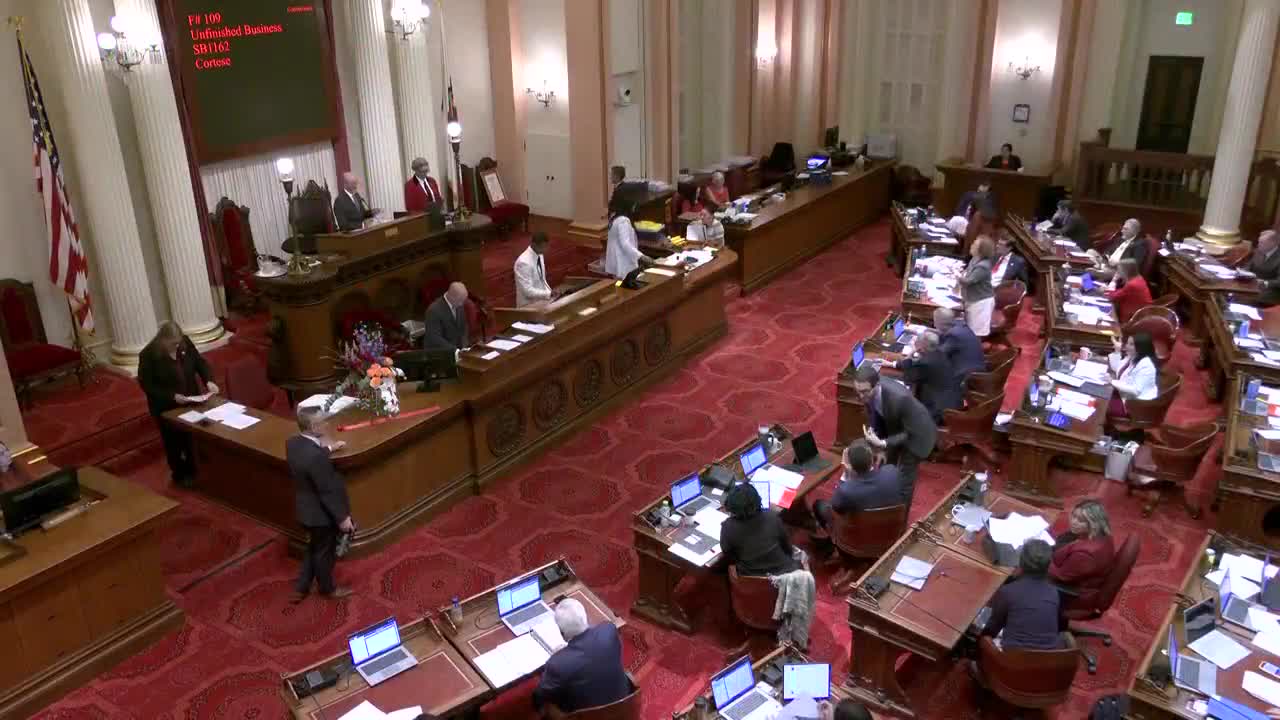 1MIN
Senate Floor
 3MIN
Assembly Floor
 3MIN
Assembly Standing Committee on Labor and Employment
 14MIN
Assembly Standing Committee on Labor and Employment
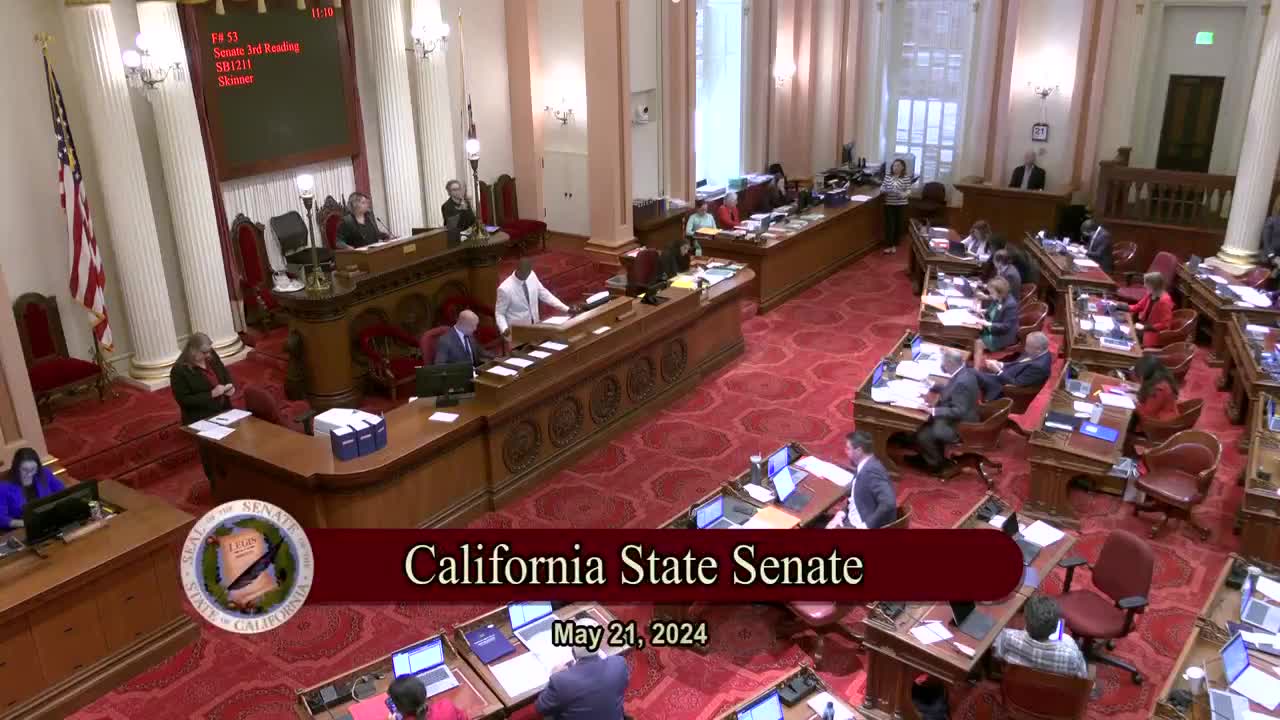 7MIN
Senate Floor
 5MIN
Senate Standing Committee on Appropriations
 12MIN
Senate Standing Committee on Labor, Public Employment and Retirement
Bill Author

Bill Co-Author(s):