SB 1353: Youth Bill of Rights.
- Session Year: 2023-2024
- House: Senate
- Latest Version Date: 2024-07-18
Current Status:
Passed
(2024-07-18: Chaptered by Secretary of State. Chapter 163, Statutes of 2024.)
Introduced
In Committee
First Chamber
In Committee
Second Chamber
Enacted
What does this bill do?
The bill adds “behavioral health” (services for behavior and emotional needs) to the Youth Bill of Rights for youth confined in juvenile facilities, so they have a right to receive those services. It requires those services to be adequate, appropriate, timely, and provided by qualified professionals.
The summary is provided by generative AI which can make mistakes. For original language, please view the details in the table below.
Existing law establishes the Youth Bill of Rights for all youth confined in a juvenile facility, which includes the right to receive adequate, appropriate, and timely mental health services, as specified.
This bill would also specify that the Youth Bill of Rights includes the right to receive adequate, appropriate, and timely behavioral health services, as specified.
Existing law establishes the Youth Bill of Rights for all youth confined in a juvenile facility, which includes the right to live in a safe, healthy, and clean environment conducive to treatment and rehabilitation, to contact attorneys, ombudspersons, and other advocates regarding conditions of confinement or violations of rights, and to receive a quality education. receive adequate, appropriate, and timely mental health services, as specified.
This bill would add to the Youth Bill of Rights the right to have timely access to mental and behavioral health services, including counselors and therapists, and any available related services. also specify that the Youth Bill of Rights includes the right to receive adequate, appropriate, and timely behavioral health services, as specified.
Existing law establishes the Youth Bill of Rights for all youth confined in a juvenile facility, which includes the right to live in a safe, healthy, and clean environment conducive to treatment and rehabilitation, to contact attorneys, ombudspersons, and other advocates regarding conditions of confinement or violations of rights, and to receive a quality education.
This bill would add to the Youth Bill of Rights the right to not be deprived of mental health resources, including daily access to counselors, therapists, mentors, or any related services necessary for mental well-being, rehabilitation, and the promotion of positive youth development while detained in a juvenile facility. have timely access to mental and behavioral health services, including counselors and therapists, and any available related services.
Existing law establishes the Youth Bill of Rights for all youth confined in a juvenile facility, which includes the right to live in a safe, healthy, and clean environment conducive to treatment and rehabilitation, to contact attorneys, ombudspersons, and other advocates regarding conditions of confinement or violations of rights, and to receive a quality education.
This bill would add to the Youth Bill of Rights the right to not be deprived of mental health resources, including daily access to counselors, therapists, mentors, or any related services necessary for mental well-being, rehabilitation, and the promotion of positive youth development while detained in a juvenile facility.
It is the policy of the state that all youth confined in a juvenile facility shall have the following rights, which are established by existing law and regulation:
(a)To live in a safe, healthy, and clean environment conducive to treatment, positive youth development, and healing and where they are treated with dignity and respect.
(b)To be free from physical, sexual, emotional, or other abuse, or corporal punishment.
(c)To receive adequate and healthy meals and snacks, clean water at any time, timely access to toilets, access to daily showers, sufficient personal hygiene items, clean bedding, and clean clothing in good repair, including clean undergarments on a daily basis, and new underwear that fits. Clothing, grooming, and hygiene products shall be adequate and respect the childs culture, ethnicity, and gender identity and expression.
(d)To receive adequate, appropriate, and timely medical, reproductive, dental, vision, behavioral health, and mental health services provided by qualified professionals and consistent with current professional standards of care.
(e)To refuse the administration of psychotropic and other medications consistent with applicable law or unless immediately necessary for the preservation of life or the prevention of serious bodily harm.
(f)To not be searched for the purpose of harassment or humiliation, a form of discipline or punishment, or to verify the youths gender. To searches that preserve the privacy and dignity of the person and to have access to a written search policy at any time, including the policy on who may perform searches.
(g)To maintain frequent and continuing contact with parents, guardians, siblings, children, and extended family members, through visits, telephone calls, and mail. Youth may be provided with access to computer technology and the internet for maintaining relationships with family as an alternative, but not as a replacement for, in-person visiting.
(h)To make and receive confidential telephone calls, send and receive confidential mail, and have confidential visits with attorneys and their authorized representatives, ombudspersons, including the Division of the Ombudsperson of the Office of Youth and Community Restoration, and other advocates, holders of public office, state and federal court personnel, and legal service organizations.
(i)To have fair and equal access to all available services, housing, care, treatment, and benefits, and to not be subjected to discrimination or harassment on the basis of actual or perceived race, ethnicity, ancestry, national origin, language, color, religion, sex, sexual orientation, gender identity, gender expression, mental or physical disability, immigration status, or HIV status.
(j)To have daily opportunities for age-appropriate physical exercise and recreation, including time spent outdoors and access to leisure reading, letter writing, and entertainment.
(k)To contact attorneys, ombudspersons, including the Division of the Ombudsperson of the Office of Youth and Community Restoration, and other advocates, and representatives of state or local agencies, regarding conditions of confinement or violations of rights, and to be free from retaliation for making these contacts or complaints.
(l)To exercise the religious or spiritual practice of their choice and to participate in or refuse to participate in religious services and activities.
(m)To not be deprived of any of the following as a disciplinary measure: food, contact with parents, guardians, family, or attorneys, sleep, exercise, education, bedding, clothing, access to religious services, a daily shower, clean water, a toilet, hygiene products, medical services, reading material, or the right to send and receive mail; to not be subject to room confinement as a disciplinary measure; to access written disciplinary policies, including the right to be informed of accusations against them, have an opportunity to be heard, present evidence and testimony, and their right to appeal disciplinary decisions.
(n)To receive a rigorous, quality education that complies with state law, and the abilities of students and prepares them for high school graduation, career entry, and postsecondary education; to attend appropriate level school classes and vocational training; to have access to postsecondary academic and career technical education courses and programs; to have access to computer technology and the internet for the purposes of education and to continue to receive educational services while on disciplinary or medical status; and to have access to information about the educational options available to youth.
(o)To information about their rights as parents, including available parental support, reunification advocacy, and opportunities to maintain or develop a connection with their children; to access educational information or programming about pregnancy, infant care, parenting, and breast-feeding, and childhood development; to proper prenatal care, diet, vitamins, nutrition, and medical treatment; to counseling for pregnant and postpartum youth; to not be restrained by the use of leg irons, waist chains, or handcuffs behind the body while pregnant or in recovery after delivery; to not be restrained during a medical emergency, labor, delivery, or recovery unless deemed necessary for their safety and security, and to have restraints removed when a medical professional determines removal is medically necessary; and to access written policies about pregnant, postpartum, and lactating youth.
(p)To attend all court hearings pertaining to them.
(q)To have counsel and a prompt probable cause hearing when detained on probation violations.
(r)To make at least two free telephone calls within an hour after initially being placed in a juvenile facility following an arrest.
It is the policy of the state that all youth confined in a juvenile facility shall have the following rights, which are established by existing law and regulation:
(a)To live in a safe, healthy, and clean environment conducive to treatment, positive youth development, and healing and where they are treated with dignity and respect.
(b)To be free from physical, sexual, emotional, or other abuse, or corporal punishment.
(c)To receive adequate and healthy meals and snacks, clean water at any time, timely access to toilets, access to daily showers, sufficient personal hygiene items, clean bedding, and clean clothing in good repair, including clean undergarments on a daily basis, and new underwear that fits. Clothing, grooming, and hygiene products shall be adequate and respect the childs culture, ethnicity, and gender identity and expression.
(d)To receive adequate, appropriate, and timely medical, reproductive, dental, vision, behavioral health, and mental health services provided by qualified professionals and consistent with current professional standards of care.
(e)To refuse the administration of psychotropic and other medications consistent with applicable law or unless immediately necessary for the preservation of life or the prevention of serious bodily harm.
(f)To not be searched for the purpose of harassment or humiliation, a form of discipline or punishment, or to verify the youths gender. To searches that preserve the privacy and dignity of the person and to have access to a written search policy at any time, including the policy on who may perform searches.
(g)To maintain frequent and continuing contact with parents, guardians, siblings, children, and extended family members, through visits, telephone calls, and mail. Youth may be provided with access to computer technology and the internet for maintaining relationships with family as an alternative, but not as a replacement for, in-person visiting.
(h)To make and receive confidential telephone calls, send and receive confidential mail, and have confidential visits with attorneys and their authorized representatives, ombudspersons, including the Division of the Ombudsperson of the Office of Youth and Community Restoration, and other advocates, holders of public office, state and federal court personnel, and legal service organizations.
(i)To have fair and equal access to all available services, housing, care, treatment, and benefits, and to not be subjected to discrimination or harassment on the basis of actual or perceived race, ethnicity, ancestry, national origin, language, color, religion, sex, sexual orientation, gender identity, gender expression, mental or physical disability, immigration status, or HIV status.
(j)To have daily opportunities for age-appropriate physical exercise and recreation, including time spent outdoors and access to leisure reading, letter writing, and entertainment.
(k)To contact attorneys, ombudspersons, including the Division of the Ombudsperson of the Office of Youth and Community Restoration, and other advocates, and representatives of state or local agencies, regarding conditions of confinement or violations of rights, and to be free from retaliation for making these contacts or complaints.
(l)To exercise the religious or spiritual practice of their choice and to participate in or refuse to participate in religious services and activities.
(m)To not be deprived of any of the following as a disciplinary measure: food, contact with parents, guardians, family, or attorneys, sleep, exercise, education, bedding, clothing, access to religious services, a daily shower, clean water, a toilet, hygiene products, medical services, reading material, or the right to send and receive mail; to not be subject to room confinement as a disciplinary measure; to access written disciplinary policies, including the right to be informed of accusations against them, have an opportunity to be heard, present evidence and testimony, and their right to appeal disciplinary decisions.
(n)To receive a rigorous, quality education that complies with state law, and the abilities of students and prepares them for high school graduation, career entry, and postsecondary education; to attend appropriate level school classes and vocational training; to have access to postsecondary academic and career technical education courses and programs; to have access to computer technology and the internet for the purposes of education and to continue to receive educational services while on disciplinary or medical status; and to have access to information about the educational options available to youth.
(o)To information about their rights as parents, including available parental support, reunification advocacy, and opportunities to maintain or develop a connection with their children; to access educational information or programming about pregnancy, infant care, parenting, and breast-feeding, and childhood development; to proper prenatal care, diet, vitamins, nutrition, and medical treatment; to counseling for pregnant and post partum postpartum youth; to not be restrained by the use of leg irons, waist chains, or handcuffs behind the body while pregnant or in recovery after delivery; to not be restrained during a medical emergency, labor, delivery, or recovery unless deemed necessary for their safety and security, and to have restraints removed when a medical professional determines removal is medically necessary; and to access written policies about pregnant, post partum, postpartum, and lactating youth.
(p)To attend all court hearings pertaining to them.
(q)To have counsel and a prompt probable cause hearing when detained on probation violations.
(r)To make at least two free telephone calls within an hour after initially being placed in a juvenile facility following an arrest.
(s)To have timely access to mental and behavioral health services, including counselors and therapists, and any available related services.It is the policy of the state that all youth confined in a juvenile facility shall have the following rights, which are established by existing law and regulation:
(a)To live in a safe, healthy, and clean environment conducive to treatment, positive youth development, and healing and where they are treated with dignity and respect.
(b)To be free from physical, sexual, emotional, or other abuse, or corporal punishment.
(c)To receive adequate and healthy meals and snacks, clean water at any time, timely access to toilets, access to daily showers, sufficient personal hygiene items, clean bedding, and clean clothing in good repair, including clean undergarments on a daily basis, and new underwear that fits. Clothing, grooming, and hygiene products shall be adequate and respect the childs culture, ethnicity, and gender identity and expression.
(d)To receive adequate, appropriate, and timely medical, reproductive, dental, vision, and mental health services provided by qualified professionals and consistent with current professional standards of care.
(e)To refuse the administration of psychotropic and other medications consistent with applicable law or unless immediately necessary for the preservation of life or the prevention of serious bodily harm.
(f)To not be searched for the purpose of harassment or humiliation, a form of discipline or punishment, or to verify the youths gender. To searches that preserve the privacy and dignity of the person and to have access to a written search policy at any time, including the policy on who may perform searches.
(g)To maintain frequent and continuing contact with parents, guardians, siblings, children, and extended family members, through visits, telephone calls, and mail. Youth may be provided with access to computer technology and the internet for maintaining relationships with family as an alternative, but not as a replacement for, in-person visiting.
(h)To make and receive confidential telephone calls, send and receive confidential mail, and have confidential visits with attorneys and their authorized representatives, ombudspersons, including the Division of the Ombudsperson of the Office of Youth and Community Restoration, and other advocates, holders of public office, state and federal court personnel, and legal service organizations.
(i)To have fair and equal access to all available services, housing, care, treatment, and benefits, and to not be subjected to discrimination or harassment on the basis of actual or perceived race, ethnicity, ancestry, national origin, language, color, religion, sex, sexual orientation, gender identity, gender expression, mental or physical disability, immigration status, or HIV status.
(j)To have daily opportunities for age-appropriate physical exercise and recreation, including time spent outdoors and access to leisure reading, letter writing, and entertainment.
(k)To contact attorneys, ombudspersons, including the Division of the Ombudsperson of the Office of Youth and Community Restoration, and other advocates, and representatives of state or local agencies, regarding conditions of confinement or violations of rights, and to be free from retaliation for making these contacts or complaints.
(l)To exercise the religious or spiritual practice of their choice and to participate in or refuse to participate in religious services and activities.
(m)To not be deprived of any of the following as a disciplinary measure: food, contact with parents, guardians, family, or attorneys, sleep, exercise, education, bedding, clothing, access to religious services, a daily shower, clean water, a toilet, hygiene products, medical services, reading material, or the right to send and receive mail; to not be subject to room confinement as a disciplinary measure; to access written disciplinary policies, including the right to be informed of accusations against them, have an opportunity to be heard, present evidence and testimony, and their right to appeal disciplinary decisions.
(n)To receive a rigorous, quality education that complies with state law, and the abilities of students and prepares them for high school graduation, career entry, and postsecondary education; to attend appropriate level school classes and vocational training; to have access to postsecondary academic and career technical education courses and programs; to have access to computer technology and the internet for the purposes of education and to continue to receive educational services while on disciplinary or medical status; and to have access to information about the educational options available to youth.
(o)To information about their rights as parents, including available parental support, reunification advocacy, and opportunities to maintain or develop a connection with their children; to access educational information or programming about pregnancy, infant care, parenting, and breast-feeding, and childhood development; to proper prenatal care, diet, vitamins, nutrition, and medical treatment; to counseling for pregnant and post partum youth; to not be restrained by the use of leg irons, waist chains, or handcuffs behind the body while pregnant or in recovery after delivery; to not be restrained during a medical emergency, labor, delivery, or recovery unless deemed necessary for their safety and security, and to have restraints removed when a medical professional determines removal is medically necessary; and to access written policies about pregnant, post partum, and lactating youth.
(p)To attend all court hearings pertaining to them.
(q)To have counsel and a prompt probable cause hearing when detained on probation violations.
(r)To make at least two free telephone calls within an hour after initially being placed in a juvenile facility following an arrest.
(s)To not be deprived of mental health resources, including daily access to counselors, therapists, mentors, or any related services necessary for mental well-being, rehabilitation, and the promotion of positive youth development while detained in a juvenile facility. have timely access to mental and behavioral health services, including counselors and therapists, and any available related services.
It is the policy of the state that all youth confined in a juvenile facility shall have the following rights, which are established by existing law and regulation:
(a)To live in a safe, healthy, and clean environment conducive to treatment, positive youth development, and healing and where they are treated with dignity and respect.
(b)To be free from physical, sexual, emotional, or other abuse, or corporal punishment.
(c)To receive adequate and healthy meals and snacks, clean water at any time, timely access to toilets, access to daily showers, sufficient personal hygiene items, clean bedding, and clean clothing in good repair, including clean undergarments on a daily basis, and new underwear that fits. Clothing, grooming, and hygiene products shall be adequate and respect the childs culture, ethnicity, and gender identity and expression.
(d)To receive adequate, appropriate, and timely medical, reproductive, dental, vision, and mental health services provided by qualified professionals and consistent with current professional standards of care.
(e)To refuse the administration of psychotropic and other medications consistent with applicable law or unless immediately necessary for the preservation of life or the prevention of serious bodily harm.
(f)To not be searched for the purpose of harassment or humiliation, a form of discipline or punishment, or to verify the youths gender. To searches that preserve the privacy and dignity of the person and to have access to a written search policy at any time, including the policy on who may perform searches.
(g)To maintain frequent and continuing contact with parents, guardians, siblings, children, and extended family members, through visits, telephone calls, and mail. Youth may be provided with access to computer technology and the internet for maintaining relationships with family as an alternative, but not as a replacement for, in-person visiting.
(h)To make and receive confidential telephone calls, send and receive confidential mail, and have confidential visits with attorneys and their authorized representatives, ombudspersons, including the Division of the Ombudsperson of the Office of Youth and Community Restoration, and other advocates, holders of public office, state and federal court personnel, and legal service organizations.
(i)To have fair and equal access to all available services, housing, care, treatment, and benefits, and to not be subjected to discrimination or harassment on the basis of actual or perceived race, ethnicity, ancestry, national origin, language, color, religion, sex, sexual orientation, gender identity, gender expression, mental or physical disability, immigration status, or HIV status.
(j)To have daily opportunities for age-appropriate physical exercise and recreation, including time spent outdoors and access to leisure reading, letter writing, and entertainment.
(k)To contact attorneys, ombudspersons, including the Division of the Ombudsperson of the Office of Youth and Community Restoration, and other advocates, and representatives of state or local agencies, regarding conditions of confinement or violations of rights, and to be free from retaliation for making these contacts or complaints.
(l)To exercise the religious or spiritual practice of their choice and to participate in or refuse to participate in religious services and activities.
(m)To not be deprived of any of the following as a disciplinary measure: food, contact with parents, guardians, family, or attorneys, sleep, exercise, education, bedding, clothing, access to religious services, a daily shower, clean water, a toilet, hygiene products, medical services, reading material, or the right to send and receive mail; to not be subject to room confinement as a disciplinary measure; to access written disciplinary policies, including the right to be informed of accusations against them, have an opportunity to be heard, present evidence and testimony, and their right to appeal disciplinary decisions.
(n)To receive a rigorous, quality education that complies with state law, and the abilities of students and prepares them for high school graduation, career entry, and postsecondary education; to attend appropriate level school classes and vocational training; to have access to postsecondary academic and career technical education courses and programs; to have access to computer technology and the internet for the purposes of education and to continue to receive educational services while on disciplinary or medical status; and to have access to information about the educational options available to youth.
(o)To information about their rights as parents, including available parental support, reunification advocacy, and opportunities to maintain or develop a connection with their children; to access educational information or programming about pregnancy, infant care, parenting, and breast-feeding, and childhood development; to proper prenatal care, diet, vitamins, nutrition, and medical treatment; to counseling for pregnant and post partum youth; to not be restrained by the use of leg irons, waist chains, or handcuffs behind the body while pregnant or in recovery after delivery; to not be restrained during a medical emergency, labor, delivery, or recovery unless deemed necessary for their safety and security, and to have restraints removed when a medical professional determines removal is medically necessary; and to access written policies about pregnant, post partum, and lactating youth.
(p)To attend all court hearings pertaining to them.
(q)To have counsel and a prompt probable cause hearing when detained on probation violations.
(r)To make at least two free telephone calls within an hour after initially being placed in a juvenile facility following an arrest.
(s)To not be deprived of mental health resources, including daily access to counselors, therapists, mentors, or any related services necessary for mental well-being, rehabilitation, and the promotion of positive youth development while detained in a juvenile facility.
|
Date
|
Status
|
|---|---|
| Jul 18, 2024 | Chaptered by Secretary of State. Chapter 163, Statutes of 2024. |
| Jul 18, 2024 | Approved by the Governor. |
| Jul 16, 2024 | Enrolled and presented to the Governor at 2:30 p.m. |
| Jul 3, 2024 | Assembly amendments concurred in. (Ayes 39. Noes 0. Page 4932.) Ordered to engrossing and enrolling. |
| Jul 1, 2024 | Ordered to special consent calendar. |
| Jun 25, 2024 | In Senate. Concurrence in Assembly amendments pending. |
| Jun 24, 2024 | Read third time. Passed. (Ayes 72. Noes 0. Page 5990.) Ordered to the Senate. |
| Jun 17, 2024 | Read third time and amended. |
| Jun 17, 2024 | Ordered to third reading. |
| Jun 5, 2024 | Read second time. Ordered to third reading. |
| Jun 4, 2024 | From committee: Do pass. (Ayes 7. Noes 0.) (June 4). |
| May 29, 2024 | From committee with author's amendments. Read second time and amended. Re-referred to Com. on PUB. S. |
| Apr 29, 2024 | Referred to Com. on PUB. S. |
| Apr 8, 2024 | In Assembly. Read first time. Held at Desk. |
| Apr 8, 2024 | Read third time. Passed. (Ayes 32. Noes 0. Page 3508.) Ordered to the Assembly. |
| Mar 20, 2024 | Read second time. Ordered to third reading. |
| Mar 19, 2024 | From committee: Do pass. (Ayes 4. Noes 0. Page 3351.) (March 19). |
| Mar 8, 2024 | Set for hearing March 19. |
| Feb 29, 2024 | Referred to Com. on PUB S. |
| Feb 20, 2024 | From printer. May be acted upon on or after March 18. |
| Feb 16, 2024 | Introduced. Read first time. To Com. on RLS. for assignment. To print. |
|
Date
|
Description
|
Location
|
Votes
|
|
|---|---|---|---|---|
| Jul 3, 2024 | Special Consent SB1353 Wahab et al. | Senate Floor |
Passed |
|
| Jun 24, 2024 | SB 1353 Wahab Senate Third Reading By Ting | Assembly Floor |
Passed |
|
| Jun 4, 2024 | Do pass. | Assembly Standing Committee on Public Safety |
Passed |
|
| Apr 8, 2024 | Senate 3rd Reading SB1353 Wahab | Senate Floor |
Passed |
|
| Mar 19, 2024 | Do pass | Senate Standing Committee on Public Safety |
Passed |
This list shows positions taken on this bill by organizations on the date displayed, which is linked to the original source.
Positions by individuals are not included.
|
Organization
|
Position
|
Date
|
|---|---|---|
| American Academy Of Pediatrics, California | ** Support | |
| California Academy of Child and Adolescent Psychiatry | * Support | Jun 4, 2024 |
| California Public Defenders Association | ** Support | |
| Californians for Safety and Justice | ** Support | |
| Chief Probation Officers Of California | * Against | Jun 4, 2024 |
| Communities United for Restorative Youth Justice | ** Support | |
| Disability Rights California | ** Support | |
| Ella Baker Center For Human Rights | ** Support | |
| Equality California | ** Support | |
| Friends Committee On Legislation Of California | ** Support | |
| Initiate Justice | ** Support | |
| LA Defensa | ** Support | |
| Legal Services for Prisoners with Children | ** Support | |
| Pacific Juvenile Defender Center | ** Support | |
| Prosecutors Alliance of California | ** Support | |
| Rubicon Programs | ** Support | |
| San Francisco Public Defender | ** Support | |
| Smart Justice California | ** Support | |
| Steinberg Institute | ** Support | |
| Young Women’s Freedom Center | ** Support |
SENATE RULES COMMITTEE Office of Senate Floor Analyses (916) 651-1520 Fax: (916) 327-4478 | SB 1353 |
UNFINISHED BUSINESS
Bill No: SB 1353
Author: Wahab (D), et al.
Amended: 6/17/24
Vote: 21
SENATE PUBLIC SAFETY COMMITTEE: 4-0, 3/19/24
AYES: Wahab, Bradford, Skinner, Wiener
NO VOTE RECORDED: Seyarto
SENATE FLOOR: 32-0, 4/8/24
AYES: Allen, Alvarado-Gil, Archuleta, Ashby, Atkins, Blakespear, Bradford, Caballero, Cortese, Dodd, Durazo, Eggman, Glazer, Gonzalez, Grove, Hurtado, Laird, Limón, McGuire, Menjivar, Min, Newman, Padilla, Portantino, Rubio, Skinner, Smallwood-Cuevas, Stern, Umberg, Wahab, Wiener, Wilk
NO VOTE RECORDED: Becker, Dahle, Jones, Nguyen, Niello, Ochoa Bogh, Roth, Seyarto
ASSEMBLY FLOOR: 72-0, 6/24/24 - See last page for vote
SUBJECT: Youth Bill of Rights
SOURCE: Author
DIGEST:
This bill adds to the Youth Bill of Rights the right to not be deprived of mental health resources, as specified.
Assembly Amendments
remove the provision that delineates a separate right to not be deprived of mental health resources, and instead adds the right to receive behavioral health services to the provision that lists the different types of healthcare that a youth has the right to receive.
ANALYSIS:
Existing law:
- Provides that the purpose of the juvenile court system is to provide for the protection and safety of the public and each minor under the jurisdiction of the juvenile court. Requires minors under the jurisdiction of the juvenile court as a consequence of delinquent conduct to receive care, treatment, and guidance that is consistent with their best interest, that holds them accountable for their behavior, and that is appropriate for their circumstances. (Welf. & Inst. Code, § 202, subds. (a) & (b).)
- Provides that juvenile halls shall not be deemed to be, nor be treated as, penal institutions. Requires that a juvenile hall be safe and supportive homelike environments. (Welf. & Inst. Code, § 851.)
- Establishes the Youth Bill of Rights, which applies to youth confined in a juvenile facility, and provides that these youth have the following rights, which are established by law and regulation:
- To live in a safe, healthy, and clean environment conducive to treatment, positive youth development, and healing and where they are treated with dignity and respect.
- To be free from physical, sexual, emotional, or other abuse, or corporal punishment.
- To receive adequate and healthy meals and snacks, clean water at any time, timely access to toilets, access to daily showers, sufficient personal hygiene items, clean bedding, and clean clothing in good repair, including clean undergarments on a daily basis, and new underwear that fits. Requires clothing, grooming, and hygiene products be adequate and respect the child’s culture, ethnicity, and gender identity and expression.
- To receive adequate, appropriate, and timely medical, reproductive, dental, vision, and mental health services provided by qualified professionals and consistent with current professional standards of care.
- To refuse the administration of psychotropic and other medications consistent with applicable law or unless immediately necessary for the preservation of life or the prevention of serious bodily harm.
- To not be searched for the purpose of harassment or humiliation, a form of discipline or punishment, or to verify the youth’s gender. To searches that preserve the privacy and dignity of the person and to have access to a written search policy at any time, including the policy on who may perform searches.
- To maintain frequent and continuing contact with parents, guardians, siblings, children, and extended family members, through visits, phone calls, and mail. Authorizes youth to be provided with access to computer technology and the internet for maintaining relationships with family as an alternative, but not as a replacement for, in-person visiting.
- To make and receive confidential phone calls, send and receive confidential mail, and have confidential visits with attorneys and their authorized representatives, ombudspersons, including the Division of the Ombudsperson of the Office of Youth and Community Restoration (OYCR), and other advocates, holders of public office, state and federal court personnel, and legal service organizations.
- To have fair and equal access to all available services, housing, care, treatment, and benefits, and to not be subjected to discrimination or harassment on the basis of actual or perceived race, ethnicity, ancestry, national origin, language, color, religion, sex, sexual orientation, gender identity, gender expression, mental or physical disability, immigration status, or HIV status.
- To have daily opportunities for age-appropriate physical exercise and recreation, including time spent outdoors and access to leisure reading, letter writing, and entertainment.
- To contact attorneys, ombudspersons, including the Division of the Ombudsperson of OYCR, and other advocates, and representatives of state or local agencies, regarding conditions of confinement or violations of rights, and to be free from retaliation for making these contacts or complaints.
- To exercise the religious or spiritual practice of their choice and to participate in or refuse to participate in religious services and activities.
- To not be deprived of any of the following as a disciplinary measure: food, contact with parents, guardians, family, or attorneys, sleep, exercise, education, bedding, clothing, access to religious services, a daily shower, clean water, a toilet, hygiene products, medical services, reading material, or the right to send and receive mail; to not be subject to room confinement as a disciplinary measure; to access written disciplinary policies, including the right to be informed of accusations against them, have an opportunity to be heard, present evidence and testimony, and their right to appeal disciplinary decisions.
- To receive a rigorous, quality education that complies with state law, and the abilities of students and prepares them for high school graduation, career entry, and postsecondary education; to attend appropriate level school classes and vocational training; to have access to postsecondary academic and career technical education courses and programs; to have access to computer technology and the internet for the purposes of education and to continue to receive educational services while on disciplinary or medical status; and to have access to information about the educational options available to youth.
- To information about their rights as parents, including available parental support, reunification advocacy, and opportunities to maintain or develop a connection with their children; to access educational information or programming about pregnancy, infant care, parenting, and breast-feeding, and childhood development; to proper prenatal care, diet, vitamins, nutrition, and medical treatment; to counseling for pregnant and post partum youth; to not be restrained by the use of leg irons, waist chains, or handcuffs behind the body while pregnant or in recovery after delivery; to not be restrained during a medical emergency, labor, delivery, or recovery unless deemed necessary for their safety and security, and to have restraints removed when a medical professional determines removal is medically necessary; and to access written policies about pregnant, post partum, and lactating youth.
- To attend all court hearings pertaining to them.
- To have counsel and a prompt probable cause hearing when detained on probation violations.
- To make at least two free phone calls within an hour after initially being placed in a juvenile facility following an arrest. (Welf. & Inst. Code, § 224.71)
This bill adds the right to receive behavioral health services.
Background
Under existing law, the Youth Bill of Rights enumerates several rights for individuals confined in any juvenile facility within the state, including the right to live in a safe, healthy, and clean environment; to be free from various forms of abuse; to receive adequate and healthy meals, clean water at any time, timely access to toilets, access to daily showers, sufficient personal hygiene items, clean bedding, and clean clothing in good repair; to receive adequate, appropriate, and timely medical, reproductive, dental, vision, and mental health services provided by qualified professionals; to not be searched for the purpose of harassment or humiliation, a form of discipline or punishment, or to verify the youth’s gender; to maintain frequent and continuing contact with family members; to receive a rigorous, quality education; and to have daily opportunities for age-appropriate physical exercise and recreation, among others.
This bill adds the right to behavioral health services.
FISCAL EFFECT: Appropriation: No Fiscal Com.: No Local: No
SUPPORT: (Verified 6/25/24)
American Academy of Pediatrics, California
California Public Defenders Association
Californians for Safety and Justice
Communities United for Restorative Youth Justice
Disability Rights California
Ella Baker Center for Human Rights
Equality California
Friends Committee on Legislation of California
Initiate Justice
La Defensa
Legal Services for Prisoner With Children
Pacific Juvenile Defender Center
Prosecutors Alliance of California
Rubicon Programs
San Francisco Public Defender
Smart Justice California
Steinberg Institute
Young Women’s Freedom Center
OPPOSITION: (Verified 6/25/24)
None received
ASSEMBLY FLOOR: 72-0, 6/24/24
AYES: Addis, Aguiar-Curry, Alanis, Alvarez, Arambula, Bains, Bauer-Kahan, Bennett, Berman, Boerner, Bonta, Bryan, Calderon, Juan Carrillo, Wendy Carrillo, Cervantes, Chen, Connolly, Davies, Dixon, Essayli, Flora, Mike Fong, Friedman, Gabriel, Garcia, Grayson, Haney, Hart, Holden, Hoover, Irwin, Jackson, Kalra, Lackey, Lee, Low, Lowenthal, Maienschein, McCarty, McKinnor, Muratsuchi, Stephanie Nguyen, Ortega, Pacheco, Papan, Jim Patterson, Pellerin, Petrie-Norris, Quirk-Silva, Ramos, Rendon, Reyes, Luz Rivas, Rodriguez, Blanca Rubio, Sanchez, Santiago, Schiavo, Soria, Ting, Valencia, Villapudua, Waldron, Wallis, Ward, Weber, Wicks, Wilson, Wood, Zbur, Robert Rivas
NO VOTE RECORDED: Megan Dahle, Gallagher, Gipson, Jones-Sawyer, Mathis, Joe Patterson, Ta
Prepared by: Stephanie Jordan / PUB. S. /
6/26/24 13:53:50
**** END ****
SENATE THIRD READING
STR Bill Id:SB 1353
Author:(Wahab)
As Amended Ver:June 17, 2024
Majority vote
SUMMARY
Adds behavioral health services to the list of medical and mental health rights of confined youth in the Youth Bill of Rights.
Major Provisions
COMMENTS
According to the Author
"Mental and behavioral health amongst our youth continues to be a high-priority, and we must make it a priority for youth whom the State of California is responsible for. Data shows that juvenile justice-involved youth have a higher prevalence of trauma and Adverse Childhood Experiences than their peers. Diagnoses often include behavior disorders, substance use disorders, anxiety disorder, attention deficit/hyperactivity disorder (ADHD), and mood disorders. We also know that African American and Hispanic children are least likely to be referred for services until they display major behavioral problems, meaning they go undiagnosed and untreated until their disorder becomes unmanageable and unbearable. Incarceration may be the first opportunity a youth has to receive the mental health support and services they need to live whole, healthy, and productive lives. If we want to reduce the long-term interactions youth have with the justice systems as adults, we have to prioritize mental and behavioral health."
Arguments in Support
According to The Prosecutor's Alliance, the Sponsor of this bill, "SB 1353 promotes public safety by adding to the Youth Bill of Rights the right to access mental health resources including timely access to counselors, therapists, mentors, and other services necessary for mental well-being and rehabilitation while detained in a juvenile facility. Addressing mental health issues will support these youth in leading whole, healthy, and productive lives upon release.
"A July 2020 policy statement published in Pediatrics (a publication from the American Academy of Pediatrics) estimates that between 50% and 80% of justice-involved youth have a mental health disorder. A 2017 review from the U.S. Office of Juvenile Justice and Delinquency Prevention concluded that, "having a mental health problem while involved in the system can increase youths' likelihood of recidivating or engaging in other problem behavior."
Arguments in Opposition
None Submitted.
FISCAL COMMENTS
Unknown. This bill is keyed non-fiscal by the Legislative Counsel.
VOTES
SENATE FLOOR: 32-0-8
YES: Allen, Alvarado-Gil, Archuleta, Ashby, Atkins, Blakespear, Bradford, Caballero, Cortese, Dodd, Durazo, Eggman, Glazer, Gonzalez, Grove, Hurtado, Laird, Limón, McGuire, Menjivar, Min, Newman, Padilla, Portantino, Rubio, Skinner, Smallwood-Cuevas, Stern, Umberg, Wahab, Wiener, Wilk
ABS, ABST OR NV: Becker, Dahle, Jones, Nguyen, Niello, Ochoa Bogh, Roth, Seyarto
ASM PUBLIC SAFETY: 7-0-1
YES: McCarty, Alanis, Stephanie Nguyen, Holden, Ting, Wilson, Zbur
ABS, ABST OR NV: Gallagher
UPDATED
VERSION: June 17, 2024
CONSULTANT: Elizabeth Potter / PUB. S. / (916) 319-3744 FN: 0003529
SENATE THIRD READING
STR Bill Id:SB 1353
Author:(Wahab)
As Amended Ver:May 29, 2024
Majority vote
SUMMARY
Adds mental health services to the list of rights of confined youth. Specifically, this bill would require a youth confined in a juvenile facility to have timely access to mental and behavioral health services, including counselors and therapists and any related services.
Major Provisions
COMMENTS
According to the Author
"Mental and behavioral health amongst our youth continues to be a high-priority, and we must make it a priority for youth whom the State of California is responsible for. Data shows that juvenile justice-involved youth have a higher prevalence of trauma and Adverse Childhood Experiences than their peers. Diagnoses often include behavior disorders, substance use disorders, anxiety disorder, attention deficit/hyperactivity disorder (ADHD), and mood disorders. We also know that African American and Hispanic children are least likely to be referred for services until they display major behavioral problems, meaning they go undiagnosed and untreated until their disorder becomes unmanageable and unbearable. Incarceration may be the first opportunity a youth has to receive the mental health support and services they need to live whole, healthy, and productive lives. If we want to reduce the long-term interactions youth have with the justice systems as adults, we have to prioritize mental and behavioral health."
Arguments in Support
According to The Prosecutor's Alliance, the Sponsor of this bill, "SB 1353 promotes public safety by adding to the Youth Bill of Rights the right to access mental health resources including timely access to counselors, therapists, mentors, and other services necessary for mental well-being and rehabilitation while detained in a juvenile facility. Addressing mental health issues will support these youth in leading whole, healthy, and productive lives upon release.
"A July 2020 policy statement published in Pediatrics (a publication from the American Academy of Pediatrics) estimates that between 50% and 80% of justice-involved youth have a mental health disorder. A 2017 review from the U.S. Office of Juvenile Justice and Delinquency Prevention concluded that, "having a mental health problem while involved in the system can increase youths' likelihood of recidivating or engaging in other problem behavior."
Arguments in Opposition
None Submitted.
FISCAL COMMENTS
Unknown. This bill is keyed non-fiscal by the Legislative Counsel.
VOTES
SENATE FLOOR: 32-0-8
YES: Allen, Alvarado-Gil, Archuleta, Ashby, Atkins, Blakespear, Bradford, Caballero, Cortese, Dodd, Durazo, Eggman, Glazer, Gonzalez, Grove, Hurtado, Laird, Limón, McGuire, Menjivar, Min, Newman, Padilla, Portantino, Rubio, Skinner, Smallwood-Cuevas, Stern, Umberg, Wahab, Wiener, Wilk
ABS, ABST OR NV: Becker, Dahle, Jones, Nguyen, Niello, Ochoa Bogh, Roth, Seyarto
ASM PUBLIC SAFETY: 7-0-1
YES: McCarty, Alanis, Stephanie Nguyen, Holden, Ting, Wilson, Zbur
ABS, ABST OR NV: Gallagher
UPDATED
VERSION: May 29, 2024
CONSULTANT: Elizabeth Potter / PUB. S. / (916) 319-3744 FN: 0003492
Date of Hearing: June 4, 2024
Consultant: Elizabeth Potter
ASSEMBLY COMMITTEE ON PUBLIC SAFETY
Kevin McCarty, Chair
SBPCA Bill Id:SB 1353
Author:(Wahab) – As Amended Ver:May 29, 2024
SUMMARY: Adds mental health services to the list of rights of confined youth. Specifically, this bill would require a youth confined in a juvenile facility to have timely access to mental and behavioral health services, including counselors and therapists and any related services.
EXISTING LAW:
- Grants all people certain inalienable rights, including pursing and obtaining safety, happiness, and privacy. (Cal. Const., art. I, § 1.)
- Prohibits the deprivation of life, liberty, or property without due process of law or the denial of equal protection of the laws. (U.S. Const., 5th & 14th Amends.; Cal. Const., art. I, § 7.)
- Prohibits the infliction of cruel and unusual punishment. (U.S. Const., 8th Amend.; Cal. Const., art. I, § 17.)
- States that the purpose of the juvenile court system is to provide for the protection and safety of the public and each minor under the jurisdiction of the juvenile court and that minors under the jurisdiction of the juvenile court who are in need of protective services shall receive care, treatment and guidance consistent with their best interest and the best interests of the public. (Welf. & Inst. Code, § 202, subds. (a) & (b).)
- Provides that juvenile halls shall not be deemed to be, nor be treated as, penal institutions and that juvenile halls shall be safe and supportive homelike environments. (Welf. & Inst. Code, § 851.)
- Establishes the Youth Bill of Rights, which applies to youth confined in a juvenile facility, and provides that these youth have the following rights, which are established by law and regulation:
- To live in a safe, healthy, and clean environment conducive to treatment, positive youth development, and healing and where they are treated with dignity and respect.
- To be free from physical, sexual, emotional, or other abuse, or corporal punishment.
- To receive adequate and healthy meals and snacks, clean water at any time, timely access to toilets, access to daily showers, sufficient personal hygiene items, clean bedding, and clean clothing in good repair, including clean undergarments on a daily basis, and new underwear that fits. Requires clothing, grooming, and hygiene products be adequate and respect the child’s culture, ethnicity, and gender identity and expression.
- To receive adequate, appropriate, and timely medical, reproductive, dental, vision, and mental health services provided by qualified professionals and consistent with current professional standards of care.
- To refuse the administration of psychotropic and other medications consistent with applicable law or unless immediately necessary for the preservation of life or the prevention of serious bodily harm.
- To not be searched for the purpose of harassment or humiliation, a form of discipline or punishment, or to verify the youth’s gender. To searches that preserve the privacy and dignity of the person and to have access to a written search policy at any time, including the policy on who may perform searches.
- To maintain frequent and continuing contact with parents, guardians, siblings, children, and extended family members, through visits, phone calls, and mail. Authorizes youth to be provided with access to computer technology and the internet for maintaining relationships with family as an alternative, but not as a replacement for, in-person visiting.
- To make and receive confidential phone calls, send and receive confidential mail, and have confidential visits with attorneys and their authorized representatives, ombudspersons, including the Division of the Ombudsperson of the Office of Youth and Community Restoration (OYCR), and other advocates, holders of public office, state and federal court personnel, and legal service organizations.
- To have fair and equal access to all available services, housing, care, treatment, and benefits, and to not be subjected to discrimination or harassment on the basis of actual or perceived race, ethnicity, ancestry, national origin, language, color, religion, sex, sexual orientation, gender identity, gender expression, mental or physical disability, immigration status, or HIV status.
- To have daily opportunities for age-appropriate physical exercise and recreation, including time spent outdoors and access to leisure reading, letter writing, and entertainment.
- To contact attorneys, ombudspersons, including the Division of the Ombudsperson of OYCR, and other advocates, and representatives of state or local agencies, regarding conditions of confinement or violations of rights, and to be free from retaliation for making these contacts or complaints.
- To exercise the religious or spiritual practice of their choice and to participate in or refuse to participate in religious services and activities.
- To not be deprived of any of the following as a disciplinary measure: food, contact with parents, guardians, family, or attorneys, sleep, exercise, education, bedding, clothing, access to religious services, a daily shower, clean water, a toilet, hygiene products, medical services, reading material, or the right to send and receive mail; to not be subject to room confinement as a disciplinary measure; to access written disciplinary policies, including the right to be informed of accusations against them, have an opportunity to be heard, present evidence and testimony, and their right to appeal disciplinary decisions.
- To receive a rigorous, quality education that complies with state law, and the abilities of students and prepares them for high school graduation, career entry, and postsecondary education; to attend appropriate level school classes and vocational training; to have access to postsecondary academic and career technical education courses and programs; to have access to computer technology and the internet for the purposes of education and to continue to receive educational services while on disciplinary or medical status; and to have access to information about the educational options available to youth.
- To information about their rights as parents, including available parental support, reunification advocacy, and opportunities to maintain or develop a connection with their children; to access educational information or programming about pregnancy, infant care, parenting, and breast-feeding, and childhood development; to proper prenatal care, diet, vitamins, nutrition, and medical treatment; to counseling for pregnant and post partum youth; to not be restrained by the use of leg irons, waist chains, or handcuffs behind the body while pregnant or in recovery after delivery; to not be restrained during a medical emergency, labor, delivery, or recovery unless deemed necessary for their safety and security, and to have restraints removed when a medical professional determines removal is medically necessary; and to access written policies about pregnant, post partum, and lactating youth.
- To attend all court hearings pertaining to them.
- To have counsel and a prompt probable cause hearing when detained on probation violations.
- To make at least two free phone calls within an hour after initially being placed in a juvenile facility following an arrest. (Welf. & Inst. Code, § 224.71)
- To live in a safe, healthy, and clean environment conducive to treatment, positive youth development, and healing and where they are treated with dignity and respect.
FISCAL EFFECT: Unknown.
COMMENTS:
- Author's Statement: According to the author, “Mental and behavioral health amongst our youth continues to be a high-priority, and we must make it a priority for youth whom the State of California is responsible for. Data shows that juvenile justice-involved youth have a higher prevalence of trauma and Adverse Childhood Experiences than their peers. Diagnoses often include behavior disorders, substance use disorders, anxiety disorder, attention deficit/hyperactivity disorder (ADHD), and mood disorders. We also know that African American and Hispanic children are least likely to be referred for services until they display major behavioral problems, meaning they go undiagnosed and untreated until their disorder becomes unmanageable and unbearable. Incarceration may be the first opportunity a youth has to receive the mental health support and services they need to live whole, healthy, and productive lives. If we want to reduce the long-term interactions youth have with the justice systems as adults, we have to prioritize mental and behavioral health.
- Juvenile Justice and Mental Health: According to the Office of Juvenile Justice and Delinquency Prevention, a federal agency overseen by U.S. Department of Justice, “Multiple studies confirm that a large proportion of youths in the juvenile justice system have a diagnosable mental health disorder. Studies have suggested that about two thirds of youth in detention or correctional settings have at least one diagnosable mental health problem, compared with an estimated 9 to 22 percent of the general youth population. The 2014 National Survey on Drug Use and Health found that 11.4 percent of adolescents aged 11 to 17 had a major depressive episode in the past year, although the survey did not provide an overall measure of mental illness among adolescents. Similarly, a systematic review…found that youths in detention and correctional facilities were almost 10 times more likely to suffer from psychosis than youths in the general population.
“These diagnoses commonly include behavior disorders, substance use disorders, anxiety disorder, attention deficit/hyperactivity disorder (ADHD), and mood disorders. The prevalence of each of these diagnoses, however, varies considerably among youths in the juvenile justice system. For example, the Pathways to Desistance study (which followed more than 1,300 youths who committed serious offenses for 7 years after their court involvement) found that the most common mental health problem was substance use disorder (76 percent), followed by high anxiety (33 percent), ADHD (14 percent), depression (12 percent), posttraumatic stress disorder (12 percent), and mania (7 percent). A multisite study… across three justice settings (system intake, detention, and secure post-adjudication) found that over half of all youths (51 percent) met the criteria for one or more psychiatric disorders. Specifically, one third of youths (34 percent) met the criteria for substance use disorder, 30 percent met the criteria for disruptive behavior disorders, 20 percent met the criteria for anxiety disorders, and 8 percent met the criteria for affective disorder.” [1]
This bills seeks to provide greater access to confined youth to mental health services including counselors, therapists, and mentors in a timely manner. - Argument in Support: According to The Prosecutor’s Alliance, the Sponsor of this bill, “SB 1353 promotes public safety by adding to the Youth Bill of Rights the right to access mental health resources including timely access to counselors, therapists, mentors, and other services necessary for mental well-being and rehabilitation while detained in a juvenile facility. Addressing mental health issues will support these youth in leading whole, healthy, and productive lives upon release.
“A July 2020 policy statement published in Pediatrics (a publication from the American Academy of Pediatrics) estimates that between 50% and 80% of justice-involved youth have a mental health disorder. A 2017 review from the U.S. Office of Juvenile Justice and Delinquency Prevention concluded that, “having a mental health problem while involved in the system can increase youths’ likelihood of recidivating or engaging in other problem behavior.” - Prior Legislation:
- AB 2417 (Ting), Chapter 786, Statutes of 2022, makes the Youth Bill of Rights applicable to youth confined in any juvenile justice facility.
- SB 518 (Migden), Chapter 649, Statutes of 2007, enacted the Youth Bill of Rights for youths confined at DJJ.
- AB 2417 (Ting), Chapter 786, Statutes of 2022, makes the Youth Bill of Rights applicable to youth confined in any juvenile justice facility.
REGISTERED SUPPORT / OPPOSITION:
Support
Prosecutors Alliance (Sponsor)
American Academy of Pediatrics, California
California Coalition for Youth
California Public Defenders Association
California Youth Empowerment Network
Californians for Safety and Justice
Communities United for Restorative Youth Justice (CURYJ)
Disability Rights California
Ella Baker Center for Human Rights
Equality California
Felony Murder Elimination Project
Friends Committee on Legislation of California
Initiate Justice
LA Defensa
Legal Services for Prisoner With Children
Los Angeles County District Attorney's Office
Pacific Juvenile Defender Center
Prosecutors Alliance of California, a Project of Tides Advocacy
Rubicon Programs
San Francisco Public Defender
San Mateo County Bar Association, Private Defender Program
Santa Clara County Office of Education
Smart Justice California, a Project of Tides Advocacy
Steinberg Institute
Young Women's Freedom Center
Opposition
None
Analysis Prepared by: Elizabeth Potter / PUB. S. / (916) 319-3744
(<Intersection between Mental Health and Juvenile Justice System Literature Review (ojp.gov)> as if May 28, 2024, at p. 3 [internal citations omitted].) ↑
SENATE RULES COMMITTEE Office of Senate Floor Analyses (916) 651-1520 Fax: (916) 327-4478 | SB 1353 |
THIRD READING
Bill No: SB 1353
Author: Wahab (D)
Introduced: 2/16/24
Vote: 21
SENATE PUBLIC SAFETY COMMITTEE: 4-0, 3/19/24
AYES: Wahab, Bradford, Skinner, Wiener
NO VOTE RECORDED: Seyarto
SUBJECT: Youth Bill of Rights
SOURCE: Author
DIGEST:
This bill adds to the Youth Bill of Rights the right to not be deprived of mental health resources, as specified.
ANALYSIS:
Existing law:
- Provides that the purpose of the juvenile court system is to provide for the protection and safety of the public and each minor under the jurisdiction of the juvenile court. Requires minors under the jurisdiction of the juvenile court as a consequence of delinquent conduct to receive care, treatment, and guidance that is consistent with their best interest, that holds them accountable for their behavior, and that is appropriate for their circumstances. (Welf. & Inst. Code, § 202, subds. (a) & (b).)
- Provides that juvenile halls shall not be deemed to be, nor be treated as, penal institutions. Requires that a juvenile hall be safe and supportive homelike environments. (Welf. & Inst. Code, § 851.)
- Establishes the Youth Bill of Rights, which applies to youth confined in a juvenile facility, and provides that these youth have the following rights, which are established by law and regulation:
- To live in a safe, healthy, and clean environment conducive to treatment, positive youth development, and healing and where they are treated with dignity and respect.
- To be free from physical, sexual, emotional, or other abuse, or corporal punishment.
- To receive adequate and healthy meals and snacks, clean water at any time, timely access to toilets, access to daily showers, sufficient personal hygiene items, clean bedding, and clean clothing in good repair, including clean undergarments on a daily basis, and new underwear that fits. Requires clothing, grooming, and hygiene products be adequate and respect the child’s culture, ethnicity, and gender identity and expression.
- To receive adequate, appropriate, and timely medical, reproductive, dental, vision, and mental health services provided by qualified professionals and consistent with current professional standards of care.
- To refuse the administration of psychotropic and other medications consistent with applicable law or unless immediately necessary for the preservation of life or the prevention of serious bodily harm.
- To not be searched for the purpose of harassment or humiliation, a form of discipline or punishment, or to verify the youth’s gender. To searches that preserve the privacy and dignity of the person and to have access to a written search policy at any time, including the policy on who may perform searches.
- To maintain frequent and continuing contact with parents, guardians, siblings, children, and extended family members, through visits, phone calls, and mail. Authorizes youth to be provided with access to computer technology and the internet for maintaining relationships with family as an alternative, but not as a replacement for, in-person visiting.
- To make and receive confidential phone calls, send and receive confidential mail, and have confidential visits with attorneys and their authorized representatives, ombudspersons, including the Division of the Ombudsperson of the Office of Youth and Community Restoration (OYCR), and other advocates, holders of public office, state and federal court personnel, and legal service organizations.
- To have fair and equal access to all available services, housing, care, treatment, and benefits, and to not be subjected to discrimination or harassment on the basis of actual or perceived race, ethnicity, ancestry, national origin, language, color, religion, sex, sexual orientation, gender identity, gender expression, mental or physical disability, immigration status, or HIV status.
- To have daily opportunities for age-appropriate physical exercise and recreation, including time spent outdoors and access to leisure reading, letter writing, and entertainment.
- To contact attorneys, ombudspersons, including the Division of the Ombudsperson of OYCR, and other advocates, and representatives of state or local agencies, regarding conditions of confinement or violations of rights, and to be free from retaliation for making these contacts or complaints.
- To exercise the religious or spiritual practice of their choice and to participate in or refuse to participate in religious services and activities.
- To not be deprived of any of the following as a disciplinary measure: food, contact with parents, guardians, family, or attorneys, sleep, exercise, education, bedding, clothing, access to religious services, a daily shower, clean water, a toilet, hygiene products, medical services, reading material, or the right to send and receive mail; to not be subject to room confinement as a disciplinary measure; to access written disciplinary policies, including the right to be informed of accusations against them, have an opportunity to be heard, present evidence and testimony, and their right to appeal disciplinary decisions.
- To receive a rigorous, quality education that complies with state law, and the abilities of students and prepares them for high school graduation, career entry, and postsecondary education; to attend appropriate level school classes and vocational training; to have access to postsecondary academic and career technical education courses and programs; to have access to computer technology and the internet for the purposes of education and to continue to receive educational services while on disciplinary or medical status; and to have access to information about the educational options available to youth.
- To information about their rights as parents, including available parental support, reunification advocacy, and opportunities to maintain or develop a connection with their children; to access educational information or programming about pregnancy, infant care, parenting, and breast-feeding, and childhood development; to proper prenatal care, diet, vitamins, nutrition, and medical treatment; to counseling for pregnant and post partum youth; to not be restrained by the use of leg irons, waist chains, or handcuffs behind the body while pregnant or in recovery after delivery; to not be restrained during a medical emergency, labor, delivery, or recovery unless deemed necessary for their safety and security, and to have restraints removed when a medical professional determines removal is medically necessary; and to access written policies about pregnant, post partum, and lactating youth.
- To attend all court hearings pertaining to them.
- To have counsel and a prompt probable cause hearing when detained on probation violations.
- To make at least two free phone calls within an hour after initially being placed in a juvenile facility following an arrest.(Welf. & Inst. Code, § 224.71)
This bill: adds the right to not be deprived of mental health resources, including daily access to counselors, therapists, mentors, or any related services necessary for mental well-being, rehabilitation, and the promotion of positive youth development while detained in a juvenile facility.
Background
Under existing law, the Youth Bill of Rights enumerates several rights for individuals confined in any juvenile facility within the state, including the right to live in a safe, healthy, and clean environment; to be free from various forms of abuse; to receive adequate and healthy meals, clean water at any time, timely access to toilets, access to daily showers, sufficient personal hygiene items, clean bedding, and clean clothing in good repair; to receive adequate, appropriate, and timely medical, reproductive, dental, vision, and mental health services provided by qualified professionals; to not be searched for the purpose of harassment or humiliation, a form of discipline or punishment, or to verify the youth’s gender; to maintain frequent and continuing contact with family members; to receive a rigorous, quality education; and to have daily opportunities for age-appropriate physical exercise and recreation, among others.
This bill adds the right to not be deprived of mental health resources. Although existing law provides the right to receive adequate, appropriate, and timely medical, reproductive, dental, vision, and mental health services provided by qualified professionals, this bill specifies that mental health resources include daily access to counselors, therapists, mentors, or any related services necessary for mental well-being, rehabilitation, and the promotion of positive youth development while detained in a juvenile facility.
FISCAL EFFECT: Appropriation: No Fiscal Com.: No Local: No
SUPPORT: (Verified 3/19/24)
American Academy of Pediatrics, California
California Public Defenders Association
Californians for Safety and Justice
Communities United for Restorative Youth Justice
Disability Rights California
Ella Baker Center for Human Rights
Equality California
Friends Committee on Legislation of California
LA Defensa
Legal Services for Prisoner With Children
Pacific Juvenile Defender Center
Prosecutors Alliance of California
San Francisco Public Defender
Steinberg Institute
Young Women’s Freedom Center
OPPOSITION: (Verified 3/19/24)
None received
Prepared by: Stephanie Jordan / PUB. S. /
3/20/24 13:54:29
**** END ****
SENATE COMMITTEE ON PUBLIC SAFETY
Senator Aisha Wahab, Chair
2023 - 2024 Regular
Bill No: SB 1353 Hearing Date: March 19, 2024
Author: | Wahab | ||
Version: | February 16, 2024 | ||
Urgency: | No | Fiscal: | No |
Consultant: | SJ | ||
Subject: Youth Bill of Rights
HISTORY
Source: Author
Prior Legislation: AB 2417 (Ting), Ch. 786, Stats. 2022
AB 811 (Gipson), vetoed 2017
SB 1250 (Yee), Ch. 522, Stats. 2008
SB 518 (Migden), Ch. 649, Stats. 2007
Support: American Academy of Pediatrics, California; California Public Defenders Association; Communities United for Restorative Youth Justice; Disability Rights California; Ella Baker Center for Human Rights; LA Defensa; The Steinberg Institute
Opposition: None known
PURPOSE
The purpose of this bill is to add to the Youth Bill of Rights the right to not be deprived of mental health resources, as specified.
Existing law provides that the purpose of the juvenile court system is to provide for the protection and safety of the public and each minor under the jurisdiction of the juvenile court. Requires minors under the jurisdiction of the juvenile court as a consequence of delinquent conduct to receive care, treatment, and guidance that is consistent with their best interest, that holds them accountable for their behavior, and that is appropriate for their circumstances. (Welf. & Inst. Code, § 202, subds. (a) & (b).)
Existing law provides that juvenile halls shall not be deemed to be, nor be treated as, penal institutions. Requires that a juvenile hall be safe and supportive homelike environments. (Welf. & Inst. Code, § 851.)
Existing law establishes the Youth Bill of Rights, which applies to youth confined in a juvenile facility, and provides that these youth have the following rights, which are established by law and regulation:
- To live in a safe, healthy, and clean environment conducive to treatment, positive youth development, and healing and where they are treated with dignity and respect.
- To be free from physical, sexual, emotional, or other abuse, or corporal punishment.
- To receive adequate and healthy meals and snacks, clean water at any time, timely access to toilets, access to daily showers, sufficient personal hygiene items, clean bedding, and clean clothing in good repair, including clean undergarments on a daily basis, and new underwear that fits. Requires clothing, grooming, and hygiene products be adequate and respect the child’s culture, ethnicity, and gender identity and expression.
- To receive adequate, appropriate, and timely medical, reproductive, dental, vision, and mental health services provided by qualified professionals and consistent with current professional standards of care.
- To refuse the administration of psychotropic and other medications consistent with applicable law or unless immediately necessary for the preservation of life or the prevention of serious bodily harm.
- To not be searched for the purpose of harassment or humiliation, a form of discipline or punishment, or to verify the youth’s gender. To searches that preserve the privacy and dignity of the person and to have access to a written search policy at any time, including the policy on who may perform searches.
- To maintain frequent and continuing contact with parents, guardians, siblings, children, and extended family members, through visits, phone calls, and mail. Authorizes youth to be provided with access to computer technology and the internet for maintaining relationships with family as an alternative, but not as a replacement for, in-person visiting.
- To make and receive confidential phone calls, send and receive confidential mail, and have confidential visits with attorneys and their authorized representatives, ombudspersons, including the Division of the Ombudsperson of the Office of Youth and Community Restoration (OYCR), and other advocates, holders of public office, state and federal court personnel, and legal service organizations.
- To have fair and equal access to all available services, housing, care, treatment, and benefits, and to not be subjected to discrimination or harassment on the basis of actual or perceived race, ethnicity, ancestry, national origin, language, color, religion, sex, sexual orientation, gender identity, gender expression, mental or physical disability, immigration status, or HIV status.
- To have daily opportunities for age-appropriate physical exercise and recreation, including time spent outdoors and access to leisure reading, letter writing, and entertainment.
- To contact attorneys, ombudspersons, including the Division of the Ombudsperson of OYCR, and other advocates, and representatives of state or local agencies, regarding conditions of confinement or violations of rights, and to be free from retaliation for making these contacts or complaints.
- To exercise the religious or spiritual practice of their choice and to participate in or refuse to participate in religious services and activities.
- To not be deprived of any of the following as a disciplinary measure: food, contact with parents, guardians, family, or attorneys, sleep, exercise, education, bedding, clothing, access to religious services, a daily shower, clean water, a toilet, hygiene products, medical services, reading material, or the right to send and receive mail; to not be subject to room confinement as a disciplinary measure; to access written disciplinary policies, including the right to be informed of accusations against them, have an opportunity to be heard, present evidence and testimony, and their right to appeal disciplinary decisions.
- To receive a rigorous, quality education that complies with state law, and the abilities of students and prepares them for high school graduation, career entry, and postsecondary education; to attend appropriate level school classes and vocational training; to have access to postsecondary academic and career technical education courses and programs; to have access to computer technology and the internet for the purposes of education and to continue to receive educational services while on disciplinary or medical status; and to have access to information about the educational options available to youth.
- To information about their rights as parents, including available parental support, reunification advocacy, and opportunities to maintain or develop a connection with their children; to access educational information or programming about pregnancy, infant care, parenting, and breast-feeding, and childhood development; to proper prenatal care, diet, vitamins, nutrition, and medical treatment; to counseling for pregnant and post partum youth; to not be restrained by the use of leg irons, waist chains, or handcuffs behind the body while pregnant or in recovery after delivery; to not be restrained during a medical emergency, labor, delivery, or recovery unless deemed necessary for their safety and security, and to have restraints removed when a medical professional determines removal is medically necessary; and to access written policies about pregnant, post partum, and lactating youth.
- To attend all court hearings pertaining to them.
- To have counsel and a prompt probable cause hearing when detained on probation violations.
- To make at least two free phone calls within an hour after initially being placed in a juvenile facility following an arrest.
(Welf. & Inst. Code, § 224.71)
This bill adds the right to not be deprived of mental health resources, including daily access to counselors, therapists, mentors, or any related services necessary for mental well-being, rehabilitation, and the promotion of positive youth development while detained in a juvenile facility.
COMMENTS
- Need For This Bill
According to the author:
Mental Health amongst our youth continues to be a high-priority, and we must make it a priority for youth whom the State of California is responsible for. Data shows that juvenile justice-involved youth have a higher prevalence of trauma and Adverse Childhood Experiences than their peers. Diagnoses often include behavior disorders, substance use disorders, anxiety disorder, attention deficit/hyperactivity disorder (ADHD), and mood disorders. We also know that African American and Hispanic children are least likely to be referred for services until they display major behavioral problems, meaning they go undiagnosed and untreated until their disorder becomes unmanageable and unbearable. Incarceration may be the first opportunity a youth has to receive the mental health support and services they need to live whole, healthy, and productive lives. If we want to reduce the long-term interactions youth have with the justice systems as adults, we have to prioritize their mental health.
- Youth Bill of Rights
Under existing law, the Youth Bill of Rights enumerates several rights for individuals confined in any juvenile facility within the state, including the right to live in a safe, healthy, and clean environment; to be free from various forms of abuse; to receive adequate and healthy meals, clean water at any time, timely access to toilets, access to daily showers, sufficient personal hygiene items, clean bedding, and clean clothing in good repair; to receive adequate, appropriate, and timely medical, reproductive, dental, vision, and mental health services provided by qualified professionals; to not be searched for the purpose of harassment or humiliation, a form of discipline or punishment, or to verify the youth’s gender; to maintain frequent and continuing contact with family members; to receive a rigorous, quality education; and to have daily opportunities for age-appropriate physical exercise and recreation, among others.
This bill adds the right to not be deprived of mental health resources. Although existing law provides the right to receive adequate, appropriate, and timely medical, reproductive, dental, vision, and mental health services provided by qualified professionals, this bill specifies that mental health resources include daily access to counselors, therapists, mentors, or any related services necessary for mental well-being, rehabilitation, and the promotion of positive youth development while detained in a juvenile facility.
- Argument in Support
Ella Baker Center for Human Rights writes:
SB 1353 empowers incarcerated youth and promotes public safety by adding to the Youth Bill of Rights the right to not be deprived of mental health resources, including daily access to counselors, therapists, mentors, or any related services necessary for mental well-being and rehabilitation while detained in a juvenile facility. Addressing mental health issues will support these youth in leading whole, healthy, and productive lives upon release.
A July 2020 policy statement published in Pediatrics (a publication from the American Academy of Pediatrics) estimates that between 50% and 80% of justice-involved youth have a mental health disorder. A 2017 review from the U.S. Office of Juvenile Justice and Delinquency Prevention concluded that, “having a mental health problem while involved in the system can increase youths’ likelihood of recidivating or engaging in other problem behavior.”
-- END --
Discussed in Hearing
 1MIN
Assembly Floor
 9MIN
Assembly Standing Committee on Public Safety
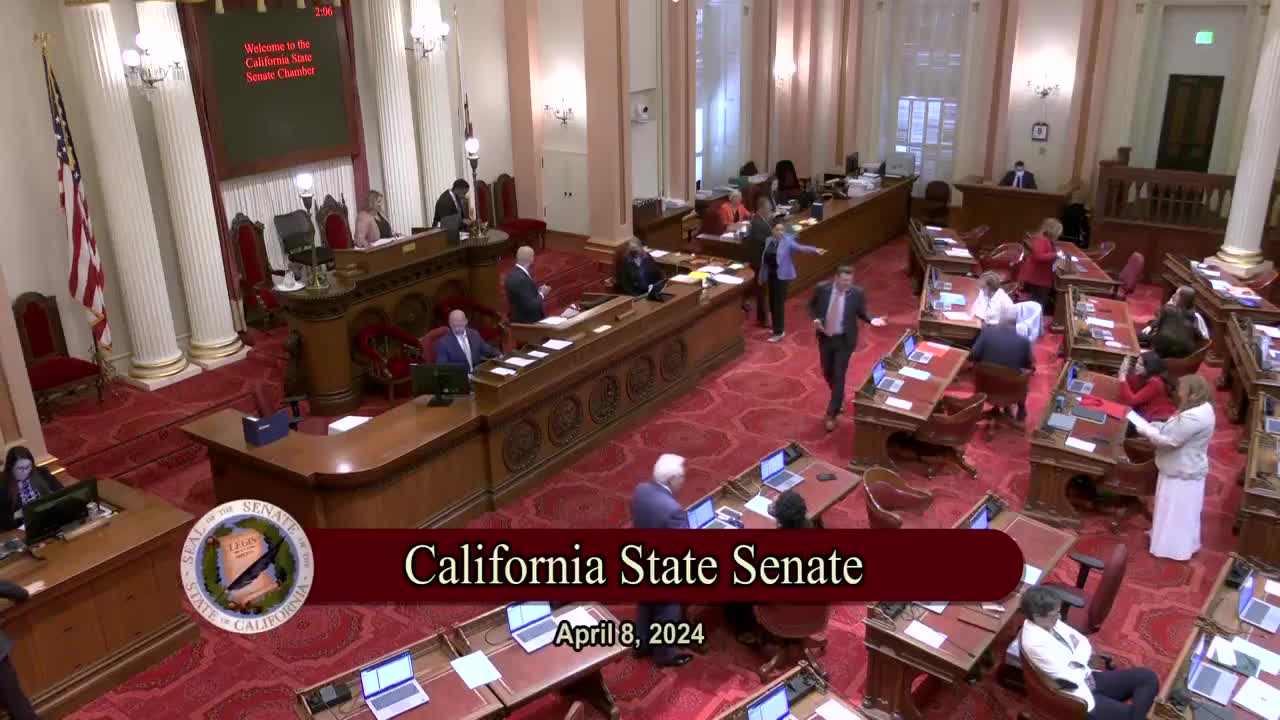 2MIN
Senate Floor
 8MIN
Senate Standing Committee on Public Safety
Bill Author

Bill Co-Author(s):