SB 1356: Judiciary: training: gender bias.
- Session Year: 2023-2024
- House: Senate
- Latest Version Date: 2024-08-19
Current Status:
Passed
(2024-08-19: Chaptered by Secretary of State. Chapter 187, Statutes of 2024.)
Introduced
In Committee
First Chamber
In Committee
Second Chamber
Enacted
What does this bill do?
This bill requires the Judicial Council to consider how gender and power differences affect court proceedings when it develops gender‑bias training for judges and subordinate judicial officers. It directs the Council to include ways to counter stereotypes and to meet the needs of people in especially vulnerable situations involved in cases.
The summary is provided by generative AI which can make mistakes. For original language, please view the details in the table below.
Existing law authorizes the Judicial Council to provide by rule of court for racial, ethnic, and gender bias, and sexual harassment training and training for any other bias based on sex, race, color, religion, ancestry, national origin, ethnic group identification, age, mental disability, physical disability, medical condition, genetic information, marital status, or sexual orientation for judges and subordinate judicial officers.
This bill would require the Judicial Council, when developing any training on gender bias, to consider the role of gender in court proceedings and meeting the needs of litigants in unique situations of vulnerability.
The bill would make related findings and declarations.
Existing law requires the Judicial Council to establish judicial training programs for individuals, including judicial officers and referees, who perform duties in domestic violence or child custody matters, including, among other topics, child sexual abuse and coercive control, as specified. Existing law requires the Judicial Council to submit an annual report on these training programs, commencing on or before January 1, 2025, to the Legislature and relevant policy committees, that includes the titles of the training courses being offered and the number of judicial officers that attended each training.This bill would expand the scope of these judicial training programs for individuals who perform duties in any case that may involve domestic violence or child custody matters. The bill would require the training program to include a domestic violence session in any orientation session conducted for newly appointed or elected judges, an annual training session in domestic violence, and periodic updates in all aspects of domestic violence, even when not alleged by a party to the proceeding. The bill would require the training program to include implicit and explicit bias related to parties involved in domestic violence cases, including potential discrimination that may result and efforts to eliminate stereotyping, and victim and perpetrator behavioral patterns and relationship dynamics, including inequities in power, and the importance of understanding groups in unique situations of vulnerability. The bill would require the training program to include the role that power and gender dynamics may have in cases outside those specifically related to child custody or alleged domestic violence.Existing law requires the Judicial Council to establish judicial training programs for individuals, including judicial officers and referees, who perform duties in domestic violence or child custody matters, including, among other topics, child sexual abuse and coercive control, as specified. Existing law requires the Judicial Council to submit an annual report on these training programs, commencing on or before January 1, 2025, to the Legislature and relevant policy committees, that includes the titles of the training courses being offered and the number of judicial officers that attended each training.
This bill would expand the scope of these judicial training programs for individuals who perform duties in any case that may involve domestic violence or child custody matters. The bill would require the training program to include a domestic violence session in any orientation session conducted for newly appointed or elected judges, an annual training session in domestic violence, and periodic updates in all aspects of domestic violence, even when not alleged by a party to the proceeding. The bill would require the training program to include implicit and explicit bias related to parties involved in domestic violence cases, including potential discrimination that may result and efforts to eliminate stereotyping, and victim and perpetrator behavioral patterns and relationship dynamics, including inequities in power, and the importance of understanding groups in unique situations of vulnerability. The bill would require the training program to include the role that power and gender dynamics may have in cases outside those specifically related to child custody or alleged domestic violence.
The Legislature finds and declares the following:
(a)There is an intersection between gender-based discrimination or gender-based violence and the rule of law. This is evidenced by the following:
(1)Forty-three percent of survey respondents of people incarcerated in womens prisons in California indicate intimate partner violence played a role in their criminalization or incarceration, with several respondents commenting the trauma of their own childhood abuse or witnessing abuse of their own children was also a factor.
(2)Of the 10 countries in the world with the highest rates of female incarcerations, the United States ranks first with the largest number of women and girls imprisoned.
(3)Though California is one of the few places in the United States where the number of people incarcerated in womens prisons is significantly decreasing, Black women make up 25 percent of the prison population in womens prisons in California, even though Black people make up only 6.5 percent of Californias population.
(4)Womens involvement in the commission of crimes is often due to factors related to limited economic mobility, a lack of educational opportunities, poverty, discrimination, violence, and drug use.
(5)One of the most wide-known examples of employment discrimination that intersects with gender is the persistent wage gap between men and women, where the median salary for women in 2022 was $52,360, while the median salary for men in 2022 was $62,350. An even deeper analysis reveals that the wage gap for Black, Latina, and Native American women is under $0.66 for every dollar that White, non-Hispanic men make.
(6)As of 2019, more women were earning college degrees than men, yet the wage gap has not substantively improved as a result.
(7)Analyses of the economic impacts of COVID-19 reveal disparate impacts along gender lines with women 2.4 times more likely than men to report losing paid work due to caretaking expectations. This exacerbated already existing workplace-related gender disparities.
(8)The United States Equal Employment Opportunity Commission (EEOC) indicates that between 2018 and 2021, they received 27,291 charges alleging sexual harassment, noting an increase in the two years following the #MeToo movement of 2017. Women filed 78.2 percent of these charges, however, more significantly, women filed 62.2 percent of the total harassment charges. The EEOC indicates that in 43.5 percent of the sexual harassment charges, a concurrent retaliation charge was filed.
(b)To ensure individuals have effective access to justice, courts have a responsibility to account for how power and gender relations may influence cases, including, but not limited to, assessing the risk to the victim, respect for the human rights of individuals, and countering discrimination and bias.
(c)To ensure equity in the justice system, the judiciary should receive training related to the role of gender in court proceedings, including the elimination of stereotypes, assessing inequities in power, and meeting the needs of groups in unique situations of vulnerability.
SEC. 2.Section 68088 of the Government Code is amended to read:68088.(a)The Judicial Council may provide by rule of court for racial, ethnic, and gender bias, and sexual harassment training and training for any other bias based on any characteristic listed or defined in Section 11135 for judges and subordinate judicial officers. In developing any training on gender bias pursuant to this section, the Judicial Council shall consider the role of gender in court proceedings, including strategies to counter stereotypes, taking into account inequities in power and their intersection with gender, and meeting the needs of litigants in unique situations of vulnerability.
(b)(1)The Judicial Council may also develop training on implicit bias with respect to the characteristics listed or defined in Section 11135. The course shall include, but not be limited to, all of the following:
(A)A survey of the social science on implicit bias, unconscious bias, and systemic implicit bias, including the ways that bias affects institutional policies and practices.
(B)A discussion of the historical reasons for, and the present consequences of, the implicit biases that people hold based on the characteristics listed in Section 11135.
(C)Examples of how implicit bias affects the perceptions, judgments, and actions of judges, subordinate judicial officers, and other court staff, and how those perceptions, judgments, and actions result in unacceptable disparities in access to justice.
(D)The administration of implicit association tests to increase awareness of ones unconscious biases based on the characteristics listed in Section 11135.
(E)Strategies for how to reduce the impact of implicit bias on parties before the court, members of the public, and court staff.
(F)Inquiry into how judges and subordinate judicial officers can counteract the effects of juror implicit bias on the outcome of cases.
(2)As of January 1, 2022, all court staff who are required, as part of their regular job duties, to interact with the public on matters before the court, shall complete two hours of any training program developed by the Judicial Council pursuant to this subdivision every two years.
(3)The Judicial Council may adopt a rule of court, effective January 1, 2021, to implement this subdivision.
The Legislature finds and declares the following:
(a)There is an intersection between gender-based discrimination or gender-based violence and the rule of law. This is evidenced by the following:
(1)Forty-three percent of survey respondents of people incarcerated in womens prisons in California indicate intimate partner violence played a role in their criminalization or incarceration, with several respondents commenting the trauma of their own childhood abuse or witnessing abuse of their own children was also a factor.
(2)Of the 10 countries in the world with the highest rates of female incarcerations, the United States ranks first with the largest number of women and girls imprisoned.
(3)Though California is one of the few places in the United States where the number of people incarcerated in womens prisons is significantly decreasing, Black women make up 25 percent of the prison population in womens prisons in California, even though Black people make up only 6.5 percent of Californias population.
(4)Womens involvement in the commission of crimes is often due to factors related to limited economic mobility, a lack of educational opportunities, poverty, discrimination, violence, and drug use.
(5)One of the most wide-known examples of employment discrimination that intersects with gender is the persistent wage gap between men and women, where the median salary for women in 2022 was $52,360, while the median salary for men in 2022 was $62,350. An even deeper analysis reveals that the wage gap for Black, Latina, and Native American women is under $0.66 for every dollar that White, non-Hispanic men make.
(6)As of 2019, more women were earning college degrees than men, yet the wage gap has not substantively improved as a result.
(7)Analyses of the economic impacts of COVID-19 reveal disparate impacts along gender lines with women 2.4 times more likely than men to report losing paid work due to caretaking expectations. This exacerbated already existing workplace-related gender disparities.
(8)The United States Equal Employment Opportunity Commission (EEOC) indicates that between 2018 and 2021, they received 27,291 charges alleging sexual harassment, noting an increase in the two years following the #MeToo movement of 2017. Women filed 78.2 percent of these charges, however, more significantly, women filed 62.2 percent of the total harassment charges. The EEOC indicates that in 43.5 percent of the sexual harassment charges, a concurrent retaliation charge was filed.
(b)To ensure individuals have effective access to justice, courts have an obligation a responsibility to account for how power and gender relations may influence cases, including, but not limited to, assessing the risk to the victim, respect for the human rights of individuals, and countering discrimination. discrimination and bias.
(c)To accomplish equality and nondiscrimination ensure equity in the justice system, the judiciary should receive training related to the role of gender in court proceedings, including the elimination of stereotypes, assessing inequities in power, and meeting the needs of groups in unique situations of vulnerability.
(d)Of the 10 countries in the world with the highest rates of female incarcerations, the United States is in first place.(e)While California is one of the few places in the United States where the number of people incarcerated in womens prisons is significantly decreasing, in womens prisons Black women are 25 percent of the prison population, even though Black people make up only 6.5 percent of Californias population.(f)Forty-three percent of survey respondents at Central California Womens Facility indicate intimate partner violence played a role in their criminalization or incarceration, with several respondents noting the trauma of their own childhood abuse or witnessing abuse of their own children were factors.(g)Womens involvement in the commission of crimes is often due to factors related to limited economic mobility, a lack of educational opportunities, poverty, discrimination, violence, and drug use. However, available data indicates these circumstances are not given appropriate legal consideration when assessing the context of risk faced by women, resulting in women facing biased criminal proceedings and possibly long prison terms.(h)Currently, only two countries across the Americas incorporate a gender perspective when evaluating the efficacy of their reentry programming.(i)One of the most wide-known examples of employment discrimination that intersects with gender is the persistent wage gap between men and women, where the median salary for women in 2022 was $52,360, while the median salary for men in 2022 was $62,350. An even deeper analysis reveals that the wage gap for Black, Latina, and Native American women is under $0.66 for every dollar that White, non-Hispanic men make.(j)As of 2019, more women were earning college degrees than men, yet the wage gap has not substantively improved as a result.(k)Analyses of the economic impacts of COVID-19 reveal disparate impacts along gender lines with women, with women 2.4 times more likely than men to report losing paid work due to caretaking expectations. This exacerbated already existing workplace related gender disparities.(l)The United States Equal Employment Opportunity Commission (EEOC) indicates that between 2018 and 2021, they received 27,291 charges alleging sexual harassment, noting an increase in the two years following the #MeToo movement of 2017. Women filed 78.2 percent of these charges, however more significantly, women filed 62.2 percent of the total harassment charges. The EEOC indicates that in 43.5 percent of the sexual harassment charges, a concurrent retaliation charge was filed.SEC. 2.Section 68088 of the Government Code is amended to read:68088.(a)The Judicial Council may provide by rule of court for racial, ethnic, and gender bias, and sexual harassment training and training for any other bias based on any characteristic listed or defined in Section 11135 for judges and subordinate judicial officers. In developing any training on gender bias pursuant to this section, the Judicial Council shall consider the role of gender in court proceedings, including strategies to counter stereotypes, taking into account inequities in power and their intersection with gender, and meeting the needs of litigants in unique situations of vulnerability.
(b)(1)The Judicial Council may also develop training on implicit bias with respect to the characteristics listed or defined in Section 11135. The course shall include, but not be limited to, all of the following:
(A)A survey of the social science on implicit bias, unconscious bias, and systemic implicit bias, including the ways that bias affects institutional policies and practices.
(B)A discussion of the historical reasons for, and the present consequences of, the implicit biases that people hold based on the characteristics listed in Section 11135.
(C)Examples of how implicit bias affects the perceptions, judgments, and actions of judges, subordinate judicial officers, and other court staff, and how those perceptions, judgments, and actions result in unacceptable disparities in access to justice.
(D)The administration of implicit association tests to increase awareness of ones unconscious biases based on the characteristics listed in Section 11135.
(E)Strategies for how to reduce the impact of implicit bias on parties before the court, members of the public, and court staff.
(F)Inquiry into how judges and subordinate judicial officers can counteract the effects of juror implicit bias on the outcome of cases.
(2)As of January 1, 2022, all court staff who are required, as part of their regular job duties, to interact with the public on matters before the court, shall complete two hours of any training program developed by the Judicial Council pursuant to this subdivision every two years.
(3)The Judicial Council may adopt a rule of court, effective January 1, 2021, to implement this subdivision.
REVISIONS: HeadingLine 2.The Legislature finds and declares the following:
(a)There is an intersection between gender-based violence and the rule of law.
(b)To ensure individuals have effective access to justice, courts have an obligation to account for how power and gender relations may influence cases, including, but not limited to, assessing the risk to the victim, respect for the human rights of individuals, and countering discrimination.
(c)To accomplish equality and nondiscrimination in the justice system, the judiciary should receive training related to the role of gender in court proceedings, including the elimination of stereotypes, assessing inequities in power, and meeting the needs of groups in unique situations of vulnerability.
(d)Of the 10 countries in the world with the highest rates of female incarcerations, the United States is in first place.
(e)While California is one of the few places in the United States where the number of people incarcerated in womens prisons is significantly decreasing, in womens prisons Black women are 25 percent of the prison population, even though Black people make up only 6.5 percent of Californias population.
(f)Forty-three percent of survey respondents at Central California Womens Facility indicate intimate partner violence played a role in their criminalization or incarceration, with several respondents noting the trauma of their own childhood abuse or witnessing abuse of their own children were factors.
(g)Womens involvement in the commission of crimes is often due to factors related to limited economic mobility, a lack of educational opportunities, poverty, discrimination, violence, and drug use. However, available data indicates these circumstances are not given appropriate legal consideration when assessing the context of risk faced by women, resulting in women facing biased criminal proceedings and possibly long prison terms.
(h)Currently, only two countries across the Americas incorporate a gender perspective when evaluating the efficacy of their reentry programming.
(i)One of the most wide-known examples of employment discrimination that intersects with gender is the persistent wage gap between men and women, where the median salary for women in 2022 was $52,360, while the median salary for men in 2022 was $62,350. An even deeper analysis reveals that the wage gap for Black, Latina, and Native American women is under $0.66 for every dollar that White, non-Hispanic men make.
(j)As of 2019, more women were earning college degrees than men, yet the wage gap has not substantively improved as a result.
(k)Analyses of the economic impacts of COVID-19 reveal disparate impacts along gender lines with women, with women 2.4 times more likely than men to report losing paid work due to caretaking expectations. This exacerbated already existing workplace related gender disparities.
(l)The United States Equal Employment Opportunity Commission (EEOC) indicates that between 2018 and 2021, they received 27,291 charges alleging sexual harassment, noting an increase in the two years following the #MeToo movement of 2017. Women filed 78.2 percent of these charges, however more significantly, women filed 62.2 percent of the total harassment charges. The EEOC indicates that in 43.5 percent of the sexual harassment charges, a concurrent retaliation charge was filed.
SEC. 2.Section 68555 of the Government Code is amended to read:68555.(a)The Judicial Council shall establish judicial training programs for individuals who perform duties in cases that may involve domestic violence or child custody matters, including, but not limited to, judicial officers, referees, commissioners, and if employed by the court, guardians ad litem, custody evaluators, mediators, and child custody recommending counselors, and others who are deemed appropriate by the Judicial Council.(b)(1)The training program described in this section shall be an ongoing training and education program designed to improve the ability of courts to recognize and respond to child physical abuse, child sexual abuse, domestic violence, and trauma in family victims, particularly children, and to make appropriate custody decisions that prioritize child safety and well-being and are culturally sensitive and appropriate for diverse communities.(2)The training program described in this section shall include a domestic violence session in any orientation session conducted for newly appointed or elected judges, an annual training session in domestic violence, and periodic updates in all aspects of domestic violence, even when not alleged by a party to the proceeding, including, but not limited to:(A)Child sexual abuse.(B)Physical abuse.(C)Emotional abuse.(D)Coercive control.(E)Implicit and explicit bias related to parties involved in domestic violence cases, including potential discrimination that may result and efforts to eliminate stereotyping.(F)Trauma.(G)Long- and short-term impacts of domestic violence and child abuse on children.(H)The detriment to children of residing with a person who perpetrates domestic violence.(I)That domestic violence can occur without a party seeking or obtaining a restraining order, without a substantiated child protective services finding, and without other documented evidence of abuse.(J)Victim and perpetrator behavioral patterns and relationship dynamics within the cycle of violence, including inequities in power.(K)The importance of understanding groups in unique situations of vulnerability.(3)The training program described in this section shall include the role power and gender dynamics may have in cases outside those specifically related to child custody or alleged domestic violence.SEC. 2.Section 68088 of the Government Code is amended to read:68088.(a)The Judicial Council may provide by rule of court for racial, ethnic, and gender bias, and sexual harassment training and training for any other bias based on any characteristic listed or defined in Section 11135 for judges and subordinate judicial officers. In developing any training on gender bias pursuant to this section, the Judicial Council shall consider the role of gender in court proceedings, including strategies to counter stereotypes, taking into account inequities in power and their intersection with gender, and meeting the needs of litigants in unique situations of vulnerability.
(b)(1)The Judicial Council may also develop training on implicit bias with respect to the characteristics listed or defined in Section 11135. The course shall include, but not be limited to, all of the following:
(A)A survey of the social science on implicit bias, unconscious bias, and systemic implicit bias, including the ways that bias affects institutional policies and practices.
(B)A discussion of the historical reasons for, and the present consequences of, the implicit biases that people hold based on the characteristics listed in Section 11135.
(C)Examples of how implicit bias affects the perceptions, judgments, and actions of judges, subordinate judicial officers, and other court staff, and how those perceptions, judgments, and actions result in unacceptable disparities in access to justice.
(D)The administration of implicit association tests to increase awareness of ones unconscious biases based on the characteristics listed in Section 11135.
(E)Strategies for how to reduce the impact of implicit bias on parties before the court, members of the public, and court staff.
(F)Inquiry into how judges and subordinate judicial officers can counteract the effects of juror implicit bias on the outcome of cases.
(2)As of January 1, 2022, all court staff who are required, as part of their regular job duties, to interact with the public on matters before the court, shall complete two hours of any training program developed by the Judicial Council pursuant to this subdivision every two years.
(3)The Judicial Council may adopt a rule of court, effective January 1, 2021, to implement this subdivision.
The Legislature finds and declares the following:
(a)There is an intersection between gender-based violence and the rule of law.
(b)To ensure individuals have effective access to justice, courts have an obligation to account for how power and gender relations may influence cases, including, but not limited to, assessing the risk to the victim, respect for the human rights of individuals, and countering discrimination.
(c)To accomplish equality and nondiscrimination in the justice system, the judiciary should receive training related to the role of gender in court proceedings, including the elimination of stereotypes, assessing inequities in power, and meeting the needs of groups in unique situations of vulnerability.
SEC. 2.Section 68555 of the Government Code is amended to read:68555.(a)The Judicial Council shall establish judicial training programs for individuals who perform duties in cases that may involve domestic violence or child custody matters, including, but not limited to, judicial officers, referees, commissioners, and if employed by the court, guardians ad litem, custody evaluators, mediators, and child custody recommending counselors, and others who are deemed appropriate by the Judicial Council.
(b)(1)The training program described in this section shall be an ongoing training and education program designed to improve the ability of courts to recognize and respond to child physical abuse, child sexual abuse, domestic violence, and trauma in family victims, particularly children, and to make appropriate custody decisions that prioritize child safety and well-being and are culturally sensitive and appropriate for diverse communities.
(2)The training program described in this section shall include a domestic violence session in any orientation session conducted for newly appointed or elected judges, an annual training session in domestic violence, and periodic updates in all aspects of domestic violence, violence, even when not alleged by a party to the proceeding, including, but not limited to:
(A)Child sexual abuse.
(B)Physical abuse.
(C)Emotional abuse.
(D)Coercive control.
(E)Implicit and explicit bias related to parties involved in domestic violence cases. cases, including potential discrimination that may result and efforts to eliminate stereotyping.
(F)Trauma.
(G)Long- and short-term impacts of domestic violence and child abuse on children.
(H)The detriment to children of residing with a person who perpetrates domestic violence.
(I)That domestic violence can occur without a party seeking or obtaining a restraining order, without a substantiated child protective services finding, and without other documented evidence of abuse.
(J)Victim and perpetrator behavioral patterns and relationship dynamics within the cycle of violence. violence, including inequities in power.
(K)The importance of understanding groups in unique situations of vulnerability.
(3)The training program described in this section shall include the role power and gender dynamics may have in cases outside those specifically related to child custody or alleged domestic violence.
|
Date
|
Status
|
|---|---|
| Aug 19, 2024 | Chaptered by Secretary of State. Chapter 187, Statutes of 2024. |
| Aug 19, 2024 | Approved by the Governor. |
| Aug 15, 2024 | Enrolled and presented to the Governor at 11:45 a.m. |
| Aug 12, 2024 | In Senate. Ordered to engrossing and enrolling. |
| Aug 12, 2024 | Read third time. Passed. (Ayes 67. Noes 0. Page 6278.) Ordered to the Senate. |
| Jul 3, 2024 | Read second time. Ordered to third reading. |
| Jul 2, 2024 | From committee: Do pass. (Ayes 11. Noes 0.) (July 2). |
| Jun 26, 2024 | June 26 hearing postponed by committee. |
| Jun 11, 2024 | From committee: Do pass and re-refer to Com. on APPR. (Ayes 10. Noes 0.) (June 11). Re-referred to Com. on APPR. |
| Jun 11, 2024 | Coauthors revised. |
| May 28, 2024 | Referred to Com. on JUD. |
| May 21, 2024 | In Assembly. Read first time. Held at Desk. |
| May 20, 2024 | Read third time. Passed. (Ayes 32. Noes 0. Page 4021.) Ordered to the Assembly. |
| May 14, 2024 | Read second time. Ordered to third reading. |
| May 13, 2024 | From committee: Be ordered to second reading pursuant to Senate Rule 28.8. |
| May 3, 2024 | Set for hearing May 13. |
| Apr 17, 2024 | From committee: Do pass and re-refer to Com. on APPR. (Ayes 9. Noes 0. Page 3636.) (April 16). Re-referred to Com. on APPR. |
| Apr 10, 2024 | From committee with author's amendments. Read second time and amended. Re-referred to Com. on JUD. |
| Apr 3, 2024 | Set for hearing April 16. |
| Apr 3, 2024 | From committee with author's amendments. Read second time and amended. Re-referred to Com. on JUD. |
| Feb 29, 2024 | Referred to Com. on JUD. |
| Feb 20, 2024 | From printer. May be acted upon on or after March 18. |
| Feb 16, 2024 | Introduced. Read first time. To Com. on RLS. for assignment. To print. |
|
Date
|
Description
|
Location
|
Votes
|
|
|---|---|---|---|---|
| Aug 12, 2024 | SB 1356 Wahab Senate Third Reading By Bauer-Kahan | Assembly Floor |
Passed |
|
| Jul 2, 2024 | Do pass. | Assembly Standing Committee on Appropriations |
Passed |
|
| Jun 11, 2024 | Do pass and be re-referred to the Committee on [Appropriations] | Assembly Standing Committee on Judiciary |
Passed |
|
| May 20, 2024 | Senate 3rd Reading SB1356 Wahab | Senate Floor |
Passed |
|
| Apr 16, 2024 | Do pass, but first be re-referred to the Committee on [Appropriations] | Senate Standing Committee on Judiciary |
Passed |
This list shows positions taken on this bill by organizations on the date displayed, which is linked to the original source.
Positions by individuals are not included.
|
Organization
|
Position
|
Date
|
|---|---|---|
| Board of Governors of the State Bar of California | * Support | Jul 2, 2024 |
| California Employment Lawyers Association | * Support | Jun 13, 2024 |
| California Partnership To End Domestic Violence | ** Support | |
| California Women Lawyers | * Support | Jun 11, 2024 |
| Commission on Judicial Nominees Evaluation | * Support | Apr 16, 2024 |
| Commission on Judicial Nominees Evaluation | * Support | Jul 2, 2024 |
| Consumer Attorneys Of California | ** Support | |
| Equal Rights Advocates | * Support | Jun 11, 2024 |
| Future Generations | * Indeterminate | Apr 16, 2024 |
| Judicial Council of the State of California | * Support | Apr 16, 2024 |
| Judicial Council of the State of California | * Support | Jul 2, 2024 |
| Silicon Valley Ethics Roundtable | * Support | Apr 16, 2024 |
| UC Berkeley Law School | * Support | Jul 2, 2024 |
| Valor | ** Support |
SENATE THIRD READING
STR Bill Id:SB 1356
Author:(Wahab)
As Amended Ver:April 10, 2024
Majority vote
SUMMARY
Requires the Judicial Council, in developing judicial training related to racial, ethnic, and gender bias, and sexual harassment, to consider the role of gender in court proceedings, including strategies to counter stereotypes, taking into account inequities in power and their intersection with gender, and meeting the needs of litigants in unique situations of vulnerability.
Major Provisions
- Requires the Judicial Council in developing any training on gender bias to consider the role of gender in court proceedings, including strategies to counter stereotypes, taking into account inequities in power and their intersection with gender, and meeting the needs of litigants in unique situations of vulnerability.
- Makes findings and declarations regarding the intersection between gender-based discrimination or gender-based violence and the rule of law.
COMMENTS
Historically the ranks of California's judicial officers have been heavily overrepresented by white males. Although the judicial appointments of the prior two governors have significantly increased the diversity of the bench, judicial training on bias plays an important role in educating jurists and ultimately ensuring fairness for those navigating California's courts. This bill strengthens existing gender bias training by requiring the Judicial Council, if and when it offers gender bias training, to consider the role of gender in court proceedings, including strategies to counter stereotypes, taking into account inequities in power and their intersection with gender, and meeting the needs of litigants in unique situations of vulnerability when developing such training.
Recognizing that judicial officers may be afflicted by implicit biases, in 2019, the Legislature authorized the Judicial Council to develop trainings to address biases on the bench. According to the National Institutes of Health, implicit bias reflects one's subconscious feelings, attitudes, prejudices, and stereotypes developed as a result of prior influences and imprints throughout one's life. Despite their lofty status in society, judicial officers are still human and remain susceptible to implicit bias. However, because of the important role that judicial officers play in the justice system, eliminating bias whenever possible is critical to the fair administration of justice to all Californians. To that end, in 2019, the Legislature approved AB 242 (Kamlager-Dove, Chapter 418, Statutes of 2019), to require implicit bias training for members of the State Bar and authorize the Judicial Council of California to develop a similar training for judicial officers. By 2021, the Judicial Council had developed a training program for its judicial officers to assist them in identifying their own implicit biases. (Cheryl Miller, Judicial Council Mandates Anti-Bias Training for State Judges, The Recorder (Sept. 25, 2020) available at: https://www.law.com/therecorder/2020/09/25/judicial-council-mandates-anti-bias-training-for-state-judges/?slreturn=20240503160206.) A similar training program was developed and provided for jurors commencing in 2023. (Fact Sheet: Jury Service and Fairness: Understanding the Challenges of Implicit Bias, Judicial Council of California (Nov. 2023) available at: https://www.courts.ca.gov/documents/bias_video_fact_sheet.pdf.) While important, these trainings still appear to be fairly general and may lack the specificity necessary to address individualized biases against specific subgroups.
Gender-driven biases still result in disparate treatment in the courts. In support of this measure, the author and proponents highlight several studies regarding implicit bias against women in the courts. One study noted that it was important for courts to adopt an “empathetic vision to detect scenarios of discrimination and subordination, derived from the reproduction of roles and stereotypes." (Revel et. al., Steps for judging with a gender perspective in electoral matters, Gender Equality Observatory of the Global Network on Electoral Justice, (Oct. 2022), available at: https://lac.unwomen.org/sites/default/files/2023-10/eng_4_pasos_para_juzgar_con_perspectiva_de_genero_en_materia_electoral_2022_compressed.pdf.) Such an empathetic approach may be especially necessary in cases regarding issues that disproportionately impact women. For example, sexual assault and domestic violence cases typically feature women as survivors. Understanding how to treat survivors with empathy is critical to achieving justice. Similarly, a study by the National Resource Center on Domestic Violence noted that the overwhelming majority of women defendants in the criminal justice system have extensive histories of childhood and adult abuse that may result in homelessness, substance abuse, and economic marginality that force them into survival by illegal means. (Mary Gilfus, Women's Experiences of Abuse as a Risk Factor for Incarceration, National Resource Center on Domestic Violence (Dec. 2022) available at: https://vawnet.org/material/womens-experiences-abuse-risk-factor-incarceration#:~:text=Research%20shows%20that%20the%20overwhelming,into%20survival%20by%20illegal%20means.) Understanding the interplay between prior victimization and potential offending is critical to offering these defendants a fair trial. This is why the Inter-American Commission on Human Rights argued that governments should take all “measures necessary to eradicate gender stereotypes in processes in the administration of criminal justice.” (Women Deprived of Liberty in the Americas, Inter-American Commission on Human Rights, (mar. 8, 2023), https://www.oas.org/en/iachr/reports/pdfs/2023/Informe-Mujeres-privadas-libertad_ENG.pdf.)
This bill. Recognizing that additional training may be necessary to address gender-based implicit bias in court proceedings, this bill strengthens the factors the Judicial Council must consider when developing implicit bias training. The bill tasks the Judicial Council with considering the role of gender in court proceedings, including strategies to counter stereotypes, taking into account inequities in power and their intersection with gender, and meeting the needs of litigants in unique situations of vulnerability in its training programs. In keeping with the need to respect the separation of powers underlying the original training edict of AB 242, this bill makes the training itself permissive and simply directs what the Judicial Council must consider if they choose to continue offering the judicial training.
According to the Author
Previously enacted laws regarding judicial trainings and criminal legal system reforms have created positive change in the landscape for women interacting with our justice system and incarcerated women. However, we can—and should—do better. The 2023 From Crisis to Care Report notes "43% of respondents reported that intimate partner violence played a role in their criminalization and/or incarceration, with several respondents noting the trauma of their own childhood abuse or witnessing abuse of their own children were factors." That these extenuating circumstances are not appropriately accounted for when assessing a case means that women who are victimized by the violence of their partners or caregivers are further victimized by our legal system.
One of the most wide-known examples of employment discrimination that intersects with gender is the persistent wage gap between men and women, where the median salary for women in 2022 was $52,360, while the median salary for men in 2022 was $62,350. Asian women earn $0.89 for every dollar paid to white, non-Hispanic men. An even deeper analysis reveals that the wage gap for Black, Latina, and Native American women is under $0.66 for every dollar white, non-Hispanic men make. As of 2019, more women were earning college degrees than men, yet the wage gap has not substantively improved as a result.
These are just a few ways systemic discrimination towards women—as well as gender non-conforming and LGBTQ people—manifests. As our state becomes more diverse, we must also ensure our judicial system understands the nuances of women's rights across varying cultures and the underlying fears regarding femicide. For all our efforts to improve and reform our systems, we are still failing Black women and women of color; we must do better. By incorporating a gender perspective into our judicial processes we can advance greater systemic change, fetter out the biases that remain in our legal system, and ensure an equitable application of the law. In doing so, we can more effectively use existing programming, better allocate resources and supportive services, and improve judicial outcomes to ensure women receive equitable treatment and justice under the law.
Arguments in Support
This measure is supported by a coalition of women's rights advocates and court users. Representative of the support coalition, the California Partnership to End Domestic Violence writes:
Judges and those working across our court system should receive training related to the role of gender in court proceedings, including the elimination of stereotypes, assessing inequities in power, and meeting the needs of groups in unique situations of vulnerability. While training regarding domestic violence is covered under existing law, and training on gender bias exists, there are still gender discrepancies in judicial decisions.
SB 1356 would require the Judicial Council, when developing any training on gender bias, to consider the role of gender in court proceedings and meeting the needs of litigants in unique situations of vulnerability.
Arguments in Opposition
No opposition on file.
FISCAL COMMENTS
According to the Assembly Appropriations analysis, minor and absorbable costs to Judicial Council to make additional considerations when developing trainings.
VOTES
SENATE FLOOR: 32-0-8
YES: Allen, Alvarado-Gil, Archuleta, Ashby, Atkins, Becker, Blakespear, Bradford, Caballero, Cortese, Dodd, Durazo, Eggman, Glazer, Gonzalez, Hurtado, Laird, Limón, McGuire, Menjivar, Newman, Padilla, Portantino, Roth, Rubio, Skinner, Smallwood-Cuevas, Stern, Umberg, Wahab, Wiener, Wilk
ABS, ABST OR NV: Dahle, Grove, Jones, Min, Nguyen, Niello, Ochoa Bogh, Seyarto
ASM JUDICIARY: 10-0-2
YES: Kalra, Bauer-Kahan, Bryan, Connolly, Haney, Maienschein, McKinnor, Pacheco, Joe Patterson, Reyes
ABS, ABST OR NV: Dixon, Sanchez
ASM APPROPRIATIONS: 11-0-4
YES: Wicks, Arambula, Bryan, Calderon, Wendy Carrillo, Mike Fong, Grayson, Haney, Hart, Pellerin, Villapudua
ABS, ABST OR NV: Sanchez, Dixon, Jim Patterson, Ta
UPDATED
VERSION: April 10, 2024
CONSULTANT: Nicholas Liedtke / JUD. / (916) 319-2334 FN: 0003702
Date of Hearing: July 2, 2024
ASSEMBLY COMMITTEE ON APPROPRIATIONS
Buffy Wicks, Chair
SBPCA Bill Id:SB 1356
Author:(Wahab) – As Amended Ver:April 10, 2024
Policy Committee: | Judiciary | Vote: | 10 - 0 |
|
| ||
|
|
Urgency: No State Mandated Local Program: No Reimbursable: No
SUMMARY:
This bill requires Judicial Council, when developing judicial training about sexual harassment and racial, ethnic, and gender bias, to consider the role of gender in court proceedings, including strategies to counter stereotypes, taking into account inequities in power and their intersection with gender, and meeting the needs of litigants in unique situations of vulnerability.
FISCAL EFFECT:
Minor and absorbable costs to Judicial Council to make additional considerations when developing trainings.
COMMENTS:
- Purpose. According to the author:
Previously enacted laws regarding judicial trainings and criminal legal system reforms have created positive change in the landscape for women interacting with our justice system and incarcerated women… As our state becomes more diverse, we must also ensure our judicial system understands the nuances of women’s rights across varying cultures and the underlying fears regarding femicide. For all our efforts to improve and reform our systems, we are still failing Black women and women of color; we must do better. By incorporating a gender perspective into our judicial processes we can advance greater systemic change, fetter out the biases that remain in our legal system, and ensure an equitable application of the law.
- Background. Implicit bias refers to a person’s unconscious preferences or associations based on stereotypes or attitudes about a social group. Research has shown that implicit bias can change the way a person feels and acts toward other people based on characteristics such as race, ethnicity, age, and appearance. Existing law authorizes Judicial Council to develop trainings for judges and subordinate judicial officers on implicit bias. This bill requires Judicial Council to consider additional factors when developing such a training related to sexual harassment and racial, ethnic, and gender bias.
Analysis Prepared by: Annika Carlson / APPR. / (916) 319-2081
Date of Hearing: June 11, 2024
ASSEMBLY COMMITTEE ON JUDICIARY
Ash Kalra, Chair
SBPCA Bill Id:SB 1356
Author:(Wahab) – As Amended Ver:April 10, 2024
SENATE VOTE: 32-0
SUBJECT: Judiciary: training: gender bias
KEY ISSUE: should the voluntary training offered by the judicial council related to racial, ethnic, and gender bias include discussions of the impact of gender in court proceedings and strategies to counter stereotypes?
SYNOPSIS
Implicit bias reflects one’s subconscious feelings, attitudes, prejudices, and stereotypes developed as a result of prior influences and imprints throughout one’s life. While the overwhelming majority of judicial officers in California courts undoubtedly strive to be balanced and fair jurists, due to the nature of implicit bias, judges may not realize how their past experiences may be impacting their courtroom decisionmaking. Seeking to address implicit bias in the legal system, in 2019, the Legislature passed AB 242 (Kamlager-Dove) Chap. 418, Stats. 2019 to, among other things, authorize the Judicial Council of California to offer implicit bias training to judicial officers. To the Judicial Council’s credit, implicit bias training for judges began in 2021.
This measure would strengthen the existing implicit bias training program for judicial officers as it relates to gender-based biases. The bill would require the Judicial Council, when developing implicit bias training, to consider the role of gender in court proceedings, including strategies to counter stereotypes, taking into account inequities in power and their intersection with gender, and meeting the needs of litigants in unique situations of vulnerability.
This non-controversial measure is supported by a coalition of women’s rights advocates and court users. The proponents of this measure highlight the unique circumstances of women who are both victims and alleged perpetrators in the justice system, and the need to ensure proper and impartial treatment of these women by judicial officers. This measure has no known opposition.
SUMMARY: Requires the Judicial Council, in developing judicial training related to racial, ethnic, and gender bias, and sexual harassment, to consider the role of gender in court proceedings, including strategies to counter stereotypes, taking into account inequities in power and their intersection with gender, and meeting the needs of litigants in unique situations of vulnerability. Specifically, this bill:
- Requires the Judicial Council in developing any training on gender bias to consider the role of gender in court proceedings, including strategies to counter stereotypes, taking into account inequities in power and their intersection with gender, and meeting the needs of litigants in unique situations of vulnerability.
- Makes findings and declarations regarding the intersection between gender-based discrimination or gender-based violence and the rule of law.
EXISTING LAW:
- Authorizes the Judicial Council to conduct institutes and seminars from time to time, either regionally or on a statewide basis, for the purpose of orienting judges to new judicial assignments, keeping them informed concerning new developments in the law and promoting uniformity in judicial procedure. (Government Code Section 68551.)
- Requires the Judicial Council to establish judicial training programs for judges, referees, commissioners, mediators, and others who are deemed appropriate who perform duties in family law matters. (Government Code Section 68553.)
- Requires, that to the extent resources are available, the Judicial Council to provide education on mental health and developmental disability issues affecting juveniles in delinquency proceedings to judicial officers and, as appropriate, to other public officers and entities that may be involved in the arrest, evaluation, prosecution, defense, disposition, and post disposition or placement phases of delinquency proceedings. (Government Code Section 68553.5.)
- Requires the Judicial Council to establish judicial training programs for individuals who perform duties in domestic violence matters, including, but not limited to, judges, referees, commissioners, mediators, and others as deemed appropriate. (Government Code Section 68555.)
- Authorizes the Judicial Council to develop racial, ethnic, and gender bias, and sexual harassment training programs for judges and subordinate judicial officers. (Government Code Section 68088.)
FISCAL EFFECT: As currently in print this bill is keyed fiscal.
COMMENTS: Historically the ranks of California’s judicial officers have been heavily overrepresented by white males. Although the judicial appointments of the prior two governors have significantly increased the diversity of the bench, judicial training on bias plays an important role in educating jurists and ultimately ensuring fairness for those navigating California’s courts. This bill would strengthen existing gender bias training by requiring the Judicial Council, if and when it offers gender bias training, to consider the role of gender in court proceedings, including strategies to counter stereotypes, taking into account inequities in power and their intersection with gender, and meeting the needs of litigants in unique situations of vulnerability when developing such training. In support of this bill, the author states:
Previously enacted laws regarding judicial trainings and criminal legal system reforms have created positive change in the landscape for women interacting with our justice system and incarcerated women. However, we can—and should—do better. The 2023 From Crisis to Care Report notes “43% of respondents reported that intimate partner violence played a role in their criminalization and/or incarceration, with several respondents noting the trauma of their own childhood abuse or witnessing abuse of their own children were factors.” That these extenuating circumstances are not appropriately accounted for when assessing a case means that women who are victimized by the violence of their partners or caregivers are further victimized by our legal system.
One of the most wide-known examples of employment discrimination that intersects with gender is the persistent wage gap between men and women, where the median salary for women in 2022 was $52,360, while the median salary for men in 2022 was $62,350. Asian women earn $0.89 for every dollar paid to white, non-Hispanic men. An even deeper analysis reveals that the wage gap for Black, Latina, and Native American women is under $0.66 for every dollar white, non-Hispanic men make. As of 2019, more women were earning college degrees than men, yet the wage gap has not substantively improved as a result.
These are just a few ways systemic discrimination towards women—as well as gender non-conforming and LGBTQ people—manifests. As our state becomes more diverse, we must also ensure our judicial system understands the nuances of women’s rights across varying cultures and the underlying fears regarding femicide. For all our efforts to improve and reform our systems, we are still failing Black women and women of color; we must do better. By incorporating a gender perspective into our judicial processes we can advance greater systemic change, fetter out the biases that remain in our legal system, and ensure an equitable application of the law. In doing so, we can more effectively use existing programming, better allocate resources and supportive services, and improve judicial outcomes to ensure women receive equitable treatment and justice under the law.
Recognizing that judicial officers may be afflicted by implicit biases, in 2019, the Legislature authorized the Judicial Council to develop trainings to address biases on the bench. According to the National Institutes of Health, implicit bias reflects one’s subconscious feelings, attitudes, prejudices, and stereotypes developed as a result of prior influences and imprints throughout one’s life. Despite their lofty status in society, judicial officers are still human and remain susceptible to implicit bias. However, because of the important role that judicial officers play in the justice system, eliminating bias whenever possible is critical to the fair administration of justice to all Californians. To that end, in 2019, the Legislature approved AB 242 ((Kamlager-Dove) Chap. 418, Stats. 2019), to require implicit bias training for members of the State Bar and authorize the Judicial Council of California to develop a similar training for judicial officers. By 2021, the Judicial Council had developed a training program for its judicial officers to assist them in identifying their own implicit biases. (Cheryl Miller, Judicial Council Mandates Anti-Bias Training for State Judges, The Recorder (Sept. 25, 2020) available at: https://www.law.com/therecorder/2020/09/25/judicial-council-mandates-anti-bias-training-for-state-judges/?slreturn=20240503160206.) A similar training program was developed and provided for jurors commencing in 2023. (Fact Sheet: Jury Service and Fairness: Understanding the Challenges of Implicit Bias, Judicial Council of California (Nov. 2023) available at: https://www.courts.ca.gov/documents/bias_video_fact_sheet.pdf.) While important, these trainings still appear to be fairly general and may lack the specificity necessary to address individualized biases against specific subgroups.
Gender-driven biases still result in disparate treatment in the courts. In support of this measure, the author and proponents highlight several studies regarding implicit bias against women in the courts. One study noted that it was important for courts to adopt an “empathetic vision to detect scenarios of discrimination and subordination, derived from the reproduction of roles and stereotypes.” (Revel et. al., Steps for judging with a gender perspective in electoral matters, Gender Equality Observatory of the Global Network on Electoral Justice, (Oct. 2022), available at: https://lac.unwomen.org/sites/default/files/2023-10/eng_4_pasos_para_juzgar_con_perspectiva_de_genero_en_materia_electoral_2022_compressed.pdf.) Such an empathetic approach may be especially necessary in cases regarding issues that disproportionately impact women. For example, sexual assault and domestic violence cases typically feature women as survivors. Understanding how to treat survivors with empathy is critical to achieving justice. Similarly, a study by the National Resource Center on Domestic Violence noted that the overwhelming majority of women defendants in the criminal justice system have extensive histories of childhood and adult abuse that may result in homelessness, substance abuse, and economic marginality that force them into survival by illegal means. (Mary Gilfus, Women's Experiences of Abuse as a Risk Factor for Incarceration, National Resource Center on Domestic Violence (Dec. 2022) available at: https://vawnet.org/material/womens-experiences-abuse-risk-factor-incarceration#:~:text=Research%20shows%20that%20the%20overwhelming,into%20survival%20by%20illegal%20means.) Understanding the interplay between prior victimization and potential offending is critical to offering these defendants a fair trial. This is why the Inter-American Commission on Human Rights argued that governments should take all “measures necessary to eradicate gender stereotypes in processes in the administration of criminal justice.” (Women Deprived of Liberty in the Americas, Inter-American Commission on Human Rights, (mar. 8, 2023), https://www.oas.org/en/iachr/reports/pdfs/2023/Informe-Mujeres-privadas-libertad_ENG.pdf.)
This bill. Recognizing that additional training may be necessary to address gender-based implicit bias in court proceedings, this bill strengthens the factors the Judicial Council must consider when developing implicit bias training. The bill would task the Judicial Council with considering the role of gender in court proceedings, including strategies to counter stereotypes, taking into account inequities in power and their intersection with gender, and meeting the needs of litigants in unique situations of vulnerability in its training programs. In keeping with the need to respect the separation of powers underlying the original training edict of AB 242, this bill makes the training itself permissive and simply directs what the Judicial Council must consider if they choose to continue offering the judicial training.
ARGUMENTS IN SUPPORT: This measure is supported by a coalition of women’s rights advocates and court users. Representative of the support coalition, the California Partnership to End Domestic Violence writes:
Judges and those working across our court system should receive training related to the role of gender in court proceedings, including the elimination of stereotypes, assessing inequities in power, and meeting the needs of groups in unique situations of vulnerability. While training regarding domestic violence is covered under existing law, and training on gender bias exists, there are still gender discrepancies in judicial decisions.
SB 1356 would require the Judicial Council, when developing any training on gender bias, to consider the role of gender in court proceedings and meeting the needs of litigants in unique situations of vulnerability.
REGISTERED SUPPORT / OPPOSITION:
Support
California Partnership to End Domestic Violence
Consumer Attorneys of California
Equal Rights Advocates
Valor California
Opposition
None on file
Analysis Prepared by: Nicholas Liedtke / JUD. / (916) 319-2334
SENATE RULES COMMITTEE Office of Senate Floor Analyses (916) 651-1520 Fax: (916) 327-4478 | SB 1356 |
THIRD READING
Bill No: SB 1356
Author: Wahab (D)
Amended: 4/10/24
Vote: 21
SENATE JUDICIARY COMMITTEE: 9-0, 4/16/24
AYES: Umberg, Allen, Ashby, Caballero, Durazo, Laird, Min, Stern, Wahab
NO VOTE RECORDED: Wilk, Niello
SENATE APPROPRIATIONS COMMITTEE: Senate Rule 28.8
SUBJECT: Judiciary: training: gender bias
SOURCE: Author
DIGEST:
This bill specifies that the Judicial Council is required to consider the role of gender in court proceedings in developing any training on gender bias, including strategies to counter stereotypes, taking into account inequities in power and their intersection with gender, and meeting the needs of litigants in unique situations of vulnerability.
ANALYSIS:
Existing law:
- Provides that no person in the state is to be unlawfully denied full and equal access to the benefits of, or be unlawfully subjected to discrimination under, any program or activity that is conducted, operated, or administered by the state or by any state agency, is funded directly by the state, or receives any financial assistance from the state on the basis of sex, race, color, religion, ancestry, national origin, ethnic group, identification, age, mental disability, physical disability, medical condition, genetic information, marital status, or sexual orientation. (Gov. Code § 11135.)
- Requires the California Supreme Court to make rules for the conduct of judges, both on and off the bench, and for judicial candidates in the conduct of their campaigns; and specifies that these rules shall be referred to as the Code of Judicial Ethics. (Cal. Const. art. VI, § 18 (m).)
- Authorizes the Judicial Council to provide by rule of court for racial, ethnic, gender bias, and sexual harassment training for judges, commissioners, and referees. (Gov. Code § 68088.)
- Authorizes the Judicial Council to develop training on implicit bias with respect to the characteristics listed in Section 11135 of the Government Code[1], and authorizes the Judicial Council to adopt a rule of court, effective January 1, 2021, to implement these provisions.
Requires all court staff who are required, as part of their regular job duties, to interact with the public on matters before the court to complete two hours of any training program developed by the Judicial Council on implicit bias every two years as of January 1, 2022. (Gov. Code § 68088.)
- Requires the training in 4), above, to include, but not be limited to, all of the following:
- A survey of the social science on implicit bias, unconscious bias, and systemic implicit bias, including the ways that bias affects institutional policies and practices.
- A discussion of the historical reasons for, and the present consequences of, the implicit biases that people hold based on the specified characteristics.
- Examples of how implicit bias affects the perceptions, judgments, and actions of judges, subordinate judicial officers, and other court staff, and how those perceptions, judgments, and actions result in unacceptable disparities in access to justice.
- The administration of implicit association tests to increase awareness of one’s unconscious biases based on the specified characteristics.
- Strategies for how to reduce the impact of implicit bias on parties before the court, members of the public, and court staff.
- Inquiry into how judges and subordinate judicial offices can counteract the effects of juror implicit bias on the outcome of cases.
- Requires the Judicial Council to establish training programs for individuals who perform duties in domestic violence or child custody matters, including, but not limited to, judicial officers, referees, commissioners, and if employed by the court, guardians ad litem, custody evaluators, mediators, and child custody recommending counselors, and others who are deemed appropriate by the Judicial Council.
The training program is to be an ongoing training and education program designed to improve the ability of courts to recognize and respond to child physical abuse, child sexual abuse, domestic violence, and trauma in family victims, particularly children, and to make appropriate custody decisions that prioritize child safety and well-being and are culturally sensitive and appropriate for diverse communities.
The training program is to include a domestic violence session in any orientation session conducted for newly appointed or elected judges, an annual training session in domestic violence, and periodic updates in all aspects of domestic violence. (Gov. Code § 68555; Cal. Rules of Court, Rule 10.464.)
This bill:
- Specifies, in regards to the training described in 4) and 5) above, that the Judicial Council is required to consider the role of gender in court proceedings in developing any training on gender bias, including strategies to counter stereotypes, taking into account inequities in power and their intersection with gender, and meeting the needs of litigants in unique situations of vulnerability.
- Makes various legislative findings and declarations including, among others:
- There is an intersection between gender-based discrimination or gender-based violence and the rule of law;
- To ensure individuals have effective access to justice, courts have an have a responsibility to account for how power and gender relations may influence cases, including, but not limited to, assessing the risk to the victim, respect for the human rights of individuals, and countering discrimination and bias; and,
- To ensure equity in the justice system, the judiciary should receive training related to the role of gender in court proceedings, including the elimination of stereotypes, assessing inequities in power, and meeting the needs of groups in unique situations of vulnerability.
Comments
The judiciary plays a vital role in our democracy. It is imperative that the judiciary ensure that all people interacting with the courts are treated fairly and impartially and are not discriminated against, whether explicitly or implicitly, based on protected characteristics such as race, gender, national origin, or sexual orientation. This belief is evidenced in the Preamble to the California Code of Judicial Ethics, which states:
Our legal system is based on the principle that an independent, fair, and competent judiciary will interpret and apply the laws that govern us. The role of the judiciary is central to American concepts of justice and the rule of law. Intrinsic to this code are the precepts that judges, individually and collectively, must respect and honor the judicial office as a public trust and must strive to enhance and maintain confidence in our legal system. The judge is an arbiter of facts and law for the resolution of disputes and is a highly visible member of government under the rule of law.
In order to ameliorate the effects of implicit bias, individuals have to recognize their own implicit biases. An article in the UCLA Law Review investigating the issue of implicit bias in the courtroom found:
Most judges view themselves as objective and especially talented at fair decisionmaking. For instance, Rachlinski et al. found in one survey that 97 percent of judges (thirty-five out of thirty-six) believed that they were in the top quartile in “avoid[ing] racial prejudice in decisionmaking”[2] relative to other judges attending the same conference. That is, obviously, mathematically impossible. . . In another survey, 97.2 percent of those administrative agency judges surveyed put themselves in the top half in terms of avoiding bias, again impossible.[3] Unfortunately, there is evidence that believing ourselves to be objective puts us at particular risk for behaving in ways that belie our self-conception.[4]
This bill augments existing training requirements for judicial officers by requiring Judicial Council to consider the role of gender in court proceedings when developing any training on gender bias, including strategies to counter stereotypes, taking into account inequities in power and their intersection with gender, and meeting the needs of litigants in unique situations of vulnerability. The author points to several studies for the need for this bill. One study is entitled, Steps for judging with a gender perspective in electoral matters from the Gender Equality Observatory of the Global Network on Electoral Justice, which seeks to establish a framework for judges making determinations regarding the political and electoral rights of women that “enables an empathetic vision to detect scenarios of discrimination and subordination, derived from the reproduction of roles and stereotypes” with the goal of achieving equality and protection of human rights.[5] Another is, Women Deprived of Liberty in the Americas from the Inter-American Commission on Human Rights, which argues that governments should take all “measures necessary to eradicate gender stereotypes in processes in the administration of criminal justice.”[6]
FISCAL EFFECT: Appropriation: No Fiscal Com.: Yes Local: No
SUPPORT: (Verified 5/13/24)
California Partnership to End Domestic Violence
Consumer Attorneys of California
Equal Rights Advocates
VALOR
OPPOSITION: (Verified 5/13/24)
None received
ARGUMENTS IN SUPPORT: The author writes:
Previously enacted laws regarding judicial trainings and criminal legal system reforms have created positive change in the landscape for women interacting with our justice system and incarcerated women. However, we can—and should—do better. The 2023 From Crisis to Care Report notes “43% of respondents reported that intimate partner violence played a role in their criminalization and/or incarceration, with several respondents noting the trauma of their own childhood abuse or witnessing abuse of their own children were factors.” That these extenuating circumstances are not appropriately accounted for when assessing a case means that women who are victimized by the violence of their partners or caregivers are further victimized by our legal system.
According to this same report, Black women make up 25% of the prison population while being only 6.5% of the general population of California. One of the most wide-known examples of employment discrimination that intersects with gender is the persistent wage gap between men and women, where the median salary for women in 2022 was $52,360, while the median salary for men in 2022 was $62,350. Asian women earn $0.89 for every dollar paid to white, non-Hispanic men. An even deeper analysis reveals that the wage gap for Black, Latina, and Native American women is under $0.66 for every dollar white, non-Hispanic men make. As of 2019, more women were earning college degrees than men, yet the wage gap has not substantively improved as a result.
These are just a few ways systemic discrimination towards women—as well as gender non-conforming and LGBTQ people—manifests. As our state becomes more diverse, we must also ensure our judicial system understands the nuances of women’s rights across varying cultures and the underlying fears regarding femicide. For all our efforts to improve and reform our systems, we are still failing Black women and women of color; we must do better. By incorporating a gender perspective into our judicial processes we can advance greater systemic change, fetter out the biases that remain in our legal system, and ensure an equitable application of the law. In doing so, we can more effectively use existing programming, better allocate resources and supportive services, and improve judicial outcomes to ensure women receive equitable treatment and justice under the law.
The California Partnership to End Domestic Violence writes in support stating:
Judges and those working across our court system should receive training related to the role of gender in court proceedings, including the elimination of stereotypes, assessing inequities in power, and meeting the needs of groups in unique situations of vulnerability. While training regarding domestic violence is covered under existing law, and training on gender bias exists, there are still gender discrepancies in judicial decisions.
SB 1356 would require the Judicial Council, when developing any training on gender bias, to consider the role of gender in court proceedings and meeting the needs of litigants in unique situations of vulnerability.
Prepared by: Amanda Mattson / JUD. / (916) 651-4113
5/14/24 11:57:04
**** END ****
The characteristics are sex, race, color, religion, ancestry, national origin, ethnic group identification, age, mental disability, physical disability, medical condition, genetic information, marital status, or sexual orientation. (Gov. Code § 11135.) ↑
Jeffrey J. Rachlinski et al., Does Unconscious Racial Bias Affect Trial Judges?, 84 Notre Dame
L. Rev. 1195, 1225 (2009). ↑
Chris Guthrie, Jeffrey J. Rachlinski & Andrew J. Wistrich, The “Hidden Judiciary”: An Empirical
Examination of Executive Branch Justice, 58 Duke L.J. 1477, 1519 (2009). ↑
Kang Jerry, et. al. Implicit Bias in the Courtroom, 59 UCLA L. Rev. 1124, 1172-73 (2012). ↑
Revel et. al., Steps for judging with a gender perspective in electoral matters, Gender Equality Observatory of the Global Network on Electoral Justice, (Oct. 2022), https://lac.unwomen.org/sites/default/files/2023-10/eng_4_pasos_para_juzgar_con_perspectiva_de_genero_en_materia_electoral_2022_compressed.pdf. ↑
Women Deprived of Liberty in the Americas, Inter-American Commission on Human Rights, (mar. 8, 2023), https://www.oas.org/en/iachr/reports/pdfs/2023/Informe-Mujeres-privadas-libertad_ENG.pdf at p. 156. ↑
Senator Thomas Umberg, Chair
2023-2024 Regular Session
Bill No: SB 1356 (Author:Wahab)
Version: April 10, 2024
Hearing Date: April 16, 2024
Fiscal: Yes
Urgency: No
AMConsultant:
SUBJECT
Judiciary: training: gender bias
DIGEST
This bill specifies that the Judicial Council is required to consider the role of gender in court proceedings in developing any training on gender bias, including strategies to counter stereotypes, taking into account inequities in power and their intersection with gender, and meeting the needs of litigants in unique situations of vulnerability.
EXECUTIVE SUMMARY
Existing law authorizes the Judicial Council to develop training on implicit bias with respect to specified characteristics, including gender. The California Rules of Court require each justice, judge, and subordinate judicial officer to regularly participate in education on fairness and access relating to: race and ethnicity; gender; sexual orientation; persons with disabilities; persons with limited economic means; and persons without stable housing. (Cal. Rules of Ct. 10.469(e).) The Rules further specify that each justice, judge, and subordinate judicial officer must participate in education on unconscious bias, as well as the prevention of harassment, discrimination, retaliation, and inappropriate workplace conduct at least once every three-years. (Ibid.) This bill seeks to supplement this training by specifying that the training should consider issues around the role of gender in court proceedings, including strategies to counter stereotypes, the intersection of gender and power dynamics, and the needs of litigants in unique situations of vulnerability. This bill is author sponsored and supported by the California Partnership to End Domestic Violence and the Consumer Attorneys of California. The Committee did not receive any timely opposition.
PROPOSED CHANGES TO THE LAW
Existing law:
- Provides that no person in the state is to be unlawfully denied full and equal access to the benefits of, or be unlawfully subjected to discrimination under, any program or activity that is conducted, operated, or administered by the state or by any state agency, is funded directly by the state, or receives any financial assistance from the state on the basis of sex, race, color, religion, ancestry, national origin, ethnic group, identification, age, mental disability, physical disability, medical condition, genetic information, marital status, or sexual orientation. (Gov. Code § 11135.)
- Requires the California Supreme Court to make rules for the conduct of judges, both on and off the bench, and for judicial candidates in the conduct of their campaigns; and specifies that these rules shall be referred to as the Code of Judicial Ethics. (Cal. Const. art. VI, § 18 (m).)
- Authorizes the Judicial Council to provide by rule of court for racial, ethnic, gender bias, and sexual harassment training for judges, commissioners, and referees. (Gov. Code § 68088.)
- Authorizes the Judicial Council to develop training on implicit bias with respect to the characteristics listed in Section 11135 of the Government Code[1], and authorizes the Judicial Council to adopt a rule of court, effective January 1, 2021, to implement these provisions.
- Requires all court staff who are required, as part of their regular job duties, to interact with the public on matters before the court to complete two hours of any training program developed by the Judicial Council on implicit bias every two years as of January 1, 2022. (Gov. Code § 68088.)
- Requires the training in 4), above, to include, but not be limited to, all of the following:
- A survey of the social science on implicit bias, unconscious bias, and systemic implicit bias, including the ways that bias affects institutional policies and practices.
- A discussion of the historical reasons for, and the present consequences of, the implicit biases that people hold based on the specified characteristics.
- Examples of how implicit bias affects the perceptions, judgments, and actions of judges, subordinate judicial officers, and other court staff, and how those perceptions, judgments, and actions result in unacceptable disparities in access to justice.
- The administration of implicit association tests to increase awareness of one’s unconscious biases based on the specified characteristics.
- Strategies for how to reduce the impact of implicit bias on parties before the court, members of the public, and court staff.
- Inquiry into how judges and subordinate judicial offices can counteract the effects of juror implicit bias on the outcome of cases.
- Requires the Judicial Council to establish training programs for individuals who perform duties in domestic violence or child custody matters, including, but not limited to, judicial officers, referees, commissioners, and if employed by the court, guardians ad litem, custody evaluators, mediators, and child custody recommending counselors, and others who are deemed appropriate by the Judicial Council.
- The training program is to be an ongoing training and education program designed to improve the ability of courts to recognize and respond to child physical abuse, child sexual abuse, domestic violence, and trauma in family victims, particularly children, and to make appropriate custody decisions that prioritize child safety and well-being and are culturally sensitive and appropriate for diverse communities.
- The training program is to include a domestic violence session in any orientation session conducted for newly appointed or elected judges, an annual training session in domestic violence, and periodic updates in all aspects of domestic violence. (Gov. Code § 68555; Cal. Rules of Court, Rule 10.464.)
This bill:
- Specifies, in regards to the training described in 4) and 5) above, that the Judicial Council is required to consider the role of gender in court proceedings in developing any training on gender bias, including strategies to counter stereotypes, taking into account inequities in power and their intersection with gender, and meeting the needs of litigants in unique situations of vulnerability.
- Makes various legislative findings and declarations including, among others,:
- there is an intersection between gender-based discrimination or gender-based violence and the rule of law;
- to ensure individuals have effective access to justice, courts have an have a responsibility to account for how power and gender relations may influence cases, including, but not limited to, assessing the risk to the victim, respect for the human rights of individuals, and countering discrimination and bias; and
- to ensure equity in the justice system, the judiciary should receive training related to the role of gender in court proceedings, including the elimination of stereotypes, assessing inequities in power, and meeting the needs of groups in unique situations of vulnerability.
COMMENTS
- Stated need for the bill
The author writes:
Previously enacted laws regarding judicial trainings and criminal legal system reforms have created positive change in the landscape for women interacting with our justice system and incarcerated women. However, we can—and should—do better. The 2023 From Crisis to Care Report notes “43% of respondents reported that intimate partner violence played a role in their criminalization and/or incarceration, with several respondents noting the trauma of their own childhood abuse or witnessing abuse of their own children were factors.” That these extenuating circumstances are not appropriately accounted for when assessing a case means that women who are victimized by the violence of their partners or caregivers are further victimized by our legal system.
According to this same report, Black women make up 25% of the prison population while being only 6.5% of the general population of California. One of the most wide-known examples of employment discrimination that intersects with gender is the persistent wage gap between men and women, where the median salary for women in 2022 was $52,360, while the median salary for men in 2022 was $62,350. Asian women earn $0.89 for every dollar paid to white, non-Hispanic men. An even deeper analysis reveals that the wage gap for Black, Latina, and Native American women is under $0.66 for every dollar white, non-Hispanic men make. As of 2019, more women were earning college degrees than men, yet the wage gap has not substantively improved as a result.
These are just a few ways systemic discrimination towards women—as well as gender non-conforming and LGBTQ people—manifests. As our state becomes more diverse, we must also ensure our judicial system understands the nuances of women’s rights across varying cultures and the underlying fears regarding femicide. For all our efforts to improve and reform our systems, we are still failing Black women and women of color; we must do better. By incorporating a gender perspective into our judicial processes we can advance greater systemic change, fetter out the biases that remain in our legal system, and ensure an equitable application of the law. In doing so, we can more effectively use existing programming, better allocate resources and supportive services, and improve judicial outcomes to ensure women receive equitable treatment and justice under the law.
- Implicit bias, gender, and the judicial branch
The judiciary plays a vital role in our democracy. It is imperative that the judiciary ensure that all people interacting with the courts are treated fairly and impartially and are not discriminated against, whether explicitly or implicitly, based on protected characteristics such as race, gender, national origin, or sexual orientation. This belief is evidenced in the Preamble to the California Code of Judicial Ethics, which states:
Our legal system is based on the principle that an independent, fair, and competent judiciary will interpret and apply the laws that govern us. The role of the judiciary is central to American concepts of justice and the rule of law. Intrinsic to this code are the precepts that judges, individually and collectively, must respect and honor the judicial office as a public trust and must strive to enhance and maintain confidence in our legal system. The judge is an arbiter of facts and law for the resolution of disputes and is a highly visible member of government under the rule of law.
In order to ameliorate the effects of implicit bias, individuals have to recognize their own implicit biases. An article in the UCLA Law Review investigating the issue of implicit bias in the courtroom found:
Most judges view themselves as objective and especially talented at fair decisionmaking. For instance, Rachlinski et al. found in one survey that 97 percent of judges (thirty-five out of thirty-six) believed that they were in the top quartile in “avoid[ing] racial prejudice in decisionmaking”[2] relative to other judges attending the same conference. That is, obviously, mathematically impossible. . . In another survey, 97.2 percent of those administrative agency judges surveyed put themselves in the top half in terms of avoiding bias, again impossible.[3] Unfortunately, there is evidence that believing ourselves to be objective puts us at particular risk for behaving in ways that belie our self-conception.[4]
This bill augments existing training requirements for judicial officers by requiring Judicial Council to consider the role of gender in court proceedings when developing any training on gender bias, including strategies to counter stereotypes, taking into account inequities in power and their intersection with gender, and meeting the needs of litigants in unique situations of vulnerability. The author points to several studies for the need for this bill. One study is entitled, Steps for judging with a gender perspective in electoral matters from the Gender Equality Observatory of the Global Network on Electoral Justice, which seeks to establish a framework for judges making determinations regarding the political and electoral rights of women that “enables an empathetic vision to detect scenarios of discrimination and subordination, derived from the reproduction of roles and stereotypes” with the goal of achieving equality and protection of human rights.[5] Another is, Women Deprived of Liberty in the Americas from the Inter-American Commission on Human Rights, which argues that governments should take all “measures necessary to eradicate gender stereotypes in processes in the administration of criminal justice.”[6]
- Statements in support
The California Partnership to End Domestic Violence writes in support stating:
Judges and those working across our court system should receive training related to the role of gender in court proceedings, including the elimination of stereotypes, assessing inequities in power, and meeting the needs of groups in unique situations of vulnerability. While training regarding domestic violence is covered under existing law, and training on gender bias exists, there are still gender discrepancies in judicial decisions.
SB 1356 would require the Judicial Council, when developing any training on gender bias, to consider the role of gender in court proceedings and meeting the needs of litigants in unique situations of vulnerability.
SUPPORT
California Partnership to End Domestic Violence
Consumer Attorneys of California
OPPOSITION
None received
RELATED LEGISLATION
Pending Legislation: None known.
Prior Legislation: AB 242 (Kamlager-Dove, Ch. 418, Stats. 2019) authorized the Judicial Council to develop training on implicit bias with respect to sex, race, color, religion, ancestry, national origin, ethnic group identification, age, mental disability, physical disability, medical condition, genetic information, marital status, or sexual orientation, as provided.
**************
The characteristics are sex, race, color, religion, ancestry, national origin, ethnic group identification, age, mental disability, physical disability, medical condition, genetic information, marital status, or sexual orientation. (Gov. Code § 11135.) ↑
Jeffrey J. Rachlinski et al., Does Unconscious Racial Bias Affect Trial Judges?, 84 Notre Dame
L. Rev. 1195, 1225 (2009). ↑
Chris Guthrie, Jeffrey J. Rachlinski & Andrew J. Wistrich, The “Hidden Judiciary”: An Empirical
Examination of Executive Branch Justice, 58 Duke L.J. 1477, 1519 (2009). ↑
Kang Jerry, et. al. Implicit Bias in the Courtroom, 59 UCLA L. Rev. 1124, 1172-73 (2012). ↑
Revel et. al., Steps for judging with a gender perspective in electoral matters, Gender Equality Observatory of the Global Network on Electoral Justice, (Oct. 2022), https://lac.unwomen.org/sites/default/files/2023-10/eng_4_pasos_para_juzgar_con_perspectiva_de_genero_en_materia_electoral_2022_compressed.pdf. ↑
Women Deprived of Liberty in the Americas, Inter-American Commission on Human Rights, (mar. 8, 2023), https://www.oas.org/en/iachr/reports/pdfs/2023/Informe-Mujeres-privadas-libertad_ENG.pdf at p. 156. ↑

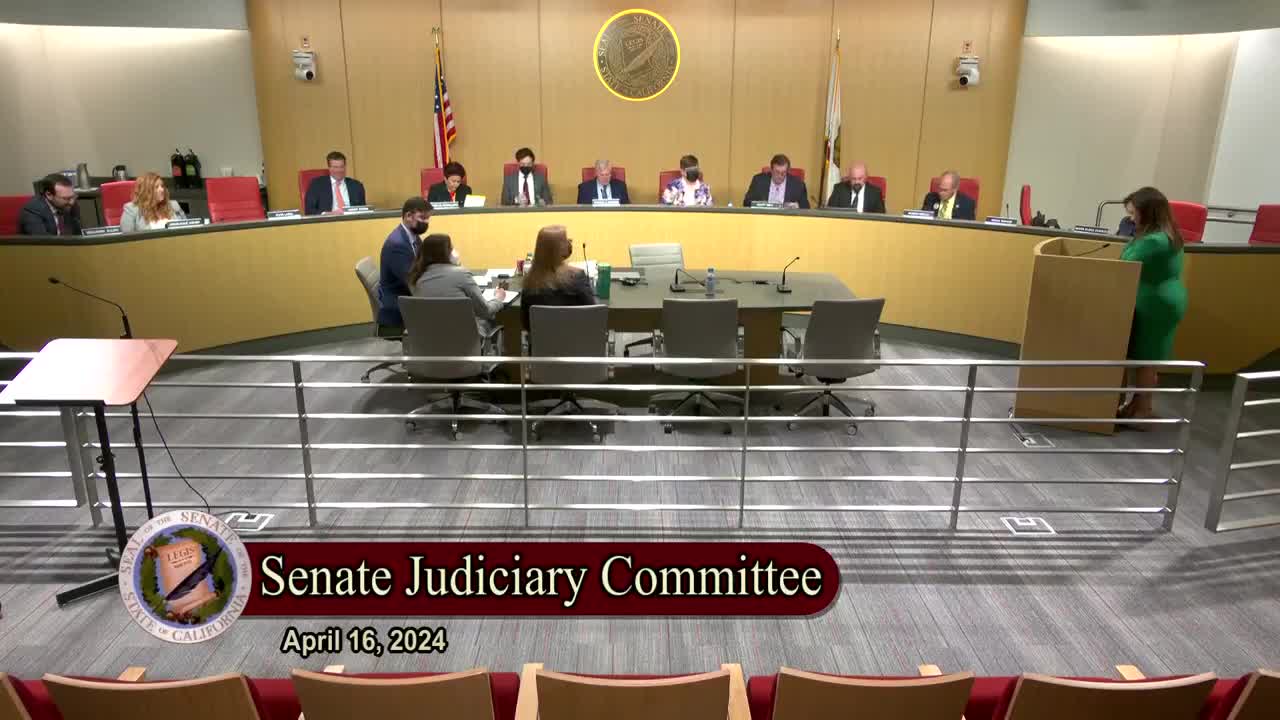
Bill Author

Bill Co-Author(s):