SB 1399: Transfer of real property: transfer fees.
- Session Year: 2023-2024
- House: Senate
- Latest Version Date: 2024-09-22
Current Status:
Passed
(2024-09-22: Chaptered by Secretary of State. Chapter 475, Statutes of 2024.)
Introduced
In Committee
First Chamber
In Committee
Second Chamber
Enacted
What does this bill do?
The bill keeps the ban on creating new transfer fees but creates an exception for certain private transfer‑fee covenants (rules in deeds or contracts that require a fee when property is sold) if they meet several conditions. To qualify, the covenant must come from an agreement made before June 1, 2009, apply to land identified in that agreement, be from a litigation settlement or approved by a government body, be recorded in each county with the land, specify the development area, and otherwise meet the requirements of Section 1098.5.
The summary is provided by generative AI which can make mistakes. For original language, please view the details in the table below.
Existing law generally regulates the transfer of real property, including by prohibiting, on or after January 1, 2019, the creation of a transfer fee, except as provided. Existing law defines transfer fee to mean, subject to certain exceptions, a fee payment requirement imposed within a covenant, restriction, or condition contained in a deed, contract, security instrument, or other document affecting the transfer or sale of, or any interest in, real property that requires a fee be paid as a result of transfer of the real property.
This bill would additionally exempt from that provision private transfer fee covenants if specified requirements are met, including that the covenants are created pursuant to an agreement entered into before June 1, 2009, the covenants are applicable to land that is identified in the agreement, and the agreement was in settlement of litigation or approved by a government agency or body.
Existing law generally regulates the transfer of real property, including by prohibiting, on or after January 1, 2019, the creation of a transfer fee, except as provided. Existing law defines transfer fee to mean, subject to certain exceptions, a fee payment requirement imposed within a covenant, restriction, or condition contained in a deed, contract, security instrument, or other document affecting the transfer or sale of, or any interest in, real property that requires a fee be paid as a result of transfer of the real property.
This bill would additionally exempt from that provision private transfer fee covenants if those covenants specified requirements are met, including that the covenants are created pursuant to an agreement entered into before January 1, 2019, June 1, 2009, the covenants are applicable to land that is identified in the agreement, and the agreement was in settlement of litigation or approved by a government agency or body.
Existing law generally regulates the transfer of real property, including by prohibiting, on or after January 1, 2019, the creation of a transfer fee, except as provided. Existing law defines transfer fee to mean, subject to certain exceptions, a fee payment requirement imposed within a covenant, restriction, or condition contained in a deed, contract, security instrument, or other document affecting the transfer or sale of, or any interest in, real property that requires a fee be paid as a result of transfer of the real property.
This bill would additionally exempt from that provision private transfer fee covenants if those covenants are created pursuant to an agreement entered into before January 1, 2019, applicable to land that is identified in the agreement, and the agreement was in settlement of litigation or approved by a government agency or body.
(a)(1)On or after January 1, 2019, a transfer fee shall not be created.
(2)This subdivision does not apply to excepted transfer fee covenants as defined by Section 1228.1 of Title 12 of the Code of Federal Regulations. Excepted transfer fee covenants are not required to comply with subparagraph (H) of paragraph (2) of subdivision (b) of Section 1098.5.
(3)This subdivision does not apply to a private transfer fee covenant if all of the following requirements are met:
(A)The covenant is created pursuant to an agreement entered into before June 1, 2009.
(B)The covenant is applicable to land that is identified in the agreement.
(C)The agreement was in settlement of litigation or approved by a government agency or body.
(D)The agreement was recorded in each county in which the land identified in the agreement is located.
(E)The agreement specifies the development area in which the covenant shall apply to any covered parcel to be created within that development area.
(F)The covenant complies with the requirements of Section 1098.5, except that the requirement of subparagraph (H) of paragraph (2) of subdivision (b) of Section 1098.5 does not apply.
(b)Any transfer fee created in violation of subdivision (a) is void as against public policy.
(c)For purposes of this section, transfer fee has the same meaning as that term is defined in Section 1098.
(a)(1)On or after January 1, 2019, a transfer fee shall not be created.
(2)This subdivision does not apply to excepted transfer fee covenants as defined by Section 1228.1 of Title 12 of the Code of Federal Regulations. Excepted transfer fee covenants are not required to comply with subparagraph (H) of paragraph (2) of subdivision (b) of Section 1098.5.
(3)This subdivision does not apply to a private transfer fee covenants if those covenants are covenant if all of the following requirements are met:
(A)The covenant is created pursuant to an agreement entered into before January 1, 2019, applicable June 1, 2009.
(B)The covenant is applicable to land that is identified in the agreement, and the agreement agreement.
(C)The agreement was in settlement of litigation or approved by a government agency or body.
(D)The agreement was recorded in each county in which the land identified in the agreement is located.
(E)The agreement specifies the development area in which the covenant shall apply to any covered parcel to be created within that development area.
(F)The covenant complies with the requirements of Section 1098.5, except that the requirement of subparagraph (H) of paragraph (2) of subdivision (b) of Section 1098.5 does not apply.
(b)Any transfer fee created in violation of subdivision (a) is void as against public policy.
(c)For purposes of this section, transfer fee has the same meaning as that term is defined in Section 1098.
(a)(1)On or after January 1, 2019, a transfer fee shall not be created.
(2)This subdivision does not apply to excepted transfer fee covenants as defined by Section 1228.1 of Title 12 of the Code of Federal Regulations. Excepted transfer fee covenants are not required to comply with subparagraph (H) of paragraph (2) of subdivision (b) of Section 1098.5.
(3)This subdivision does not apply to private transfer fee covenants if those covenants are created pursuant to an agreement entered into before January 1, 2019, applicable to land that is identified in the agreement, and the agreement was in settlement of litigation or approved by a government agency or body.
(b)Any transfer fee created in violation of subdivision (a) is void as against public policy.
(c)For purposes of this section, transfer fee has the same meaning as that term is defined in Section 1098.
|
Date
|
Status
|
|---|---|
| Sep 22, 2024 | Chaptered by Secretary of State. Chapter 475, Statutes of 2024. |
| Sep 22, 2024 | Approved by the Governor. |
| Aug 22, 2024 | Enrolled and presented to the Governor at 2 p.m. |
| Aug 15, 2024 | Assembly amendments concurred in. (Ayes 37. Noes 0. Page 5083.) Ordered to engrossing and enrolling. |
| Aug 13, 2024 | Ordered to special consent calendar. |
| Aug 8, 2024 | In Senate. Concurrence in Assembly amendments pending. |
| Aug 8, 2024 | Read third time. Passed. (Ayes 72. Noes 0. Page 6251.) Ordered to the Senate. |
| Jul 3, 2024 | Read second time. Ordered to consent calendar. |
| Jul 2, 2024 | From committee: Do pass. Ordered to consent calendar. (Ayes 11. Noes 0.) (July 2). |
| Jun 25, 2024 | From committee with author's amendments. Read second time and amended. Re-referred to Com. on JUD. |
| May 28, 2024 | Referred to Com. on JUD. |
| May 21, 2024 | In Assembly. Read first time. Held at Desk. |
| May 20, 2024 | Read third time. Passed. (Ayes 39. Noes 0. Page 4017.) Ordered to the Assembly. |
| May 2, 2024 | Read second time. Ordered to third reading. |
| May 1, 2024 | From committee: Do pass. (Ayes 11. Noes 0. Page 3820.) (April 30). |
| Apr 12, 2024 | Set for hearing April 30. |
| Feb 29, 2024 | Referred to Com. on JUD. |
| Feb 20, 2024 | From printer. May be acted upon on or after March 18. |
| Feb 16, 2024 | Introduced. Read first time. To Com. on RLS. for assignment. To print. |
|
Date
|
Description
|
Location
|
Votes
|
|
|---|---|---|---|---|
| Aug 15, 2024 | Special Consent SB1399 Stern | Senate Floor |
Passed |
|
| Aug 8, 2024 | SB 1399 Stern Consent Calendar Second Day Regular Session | Assembly Floor |
Passed |
|
| Jul 2, 2024 | Do pass. To Consent Calendar. | Assembly Standing Committee on Judiciary |
Passed |
|
| May 20, 2024 | Senate 3rd Reading SB1399 Stern | Senate Floor |
Passed |
|
| Apr 30, 2024 | Do pass | Senate Standing Committee on Judiciary |
Passed |
This list shows positions taken on this bill by organizations on the date displayed, which is linked to the original source.
Positions by individuals are not included.
|
Organization
|
Position
|
Date
|
|---|---|---|
| Audobon California | ** Support | |
| Endangered Habitats League | ** Support | |
| Natural Resources Defense Council | ** Support | |
| Natural Resources Defense Council (NRDC) | * Support | Apr 30, 2024 |
| Planning And Conservation League | ** Support | |
| Sequoia Riverlands Trust | ** Support | |
| Tejon Ranch Conservancy | ** Support | |
| Tejon Ranch Conservancy | * Support | Apr 30, 2024 |
SENATE RULES COMMITTEE Office of Senate Floor Analyses (916) 651-1520 Fax: (916) 327-4478 | SB 1399 |
UNFINISHED BUSINESS
Bill No: SB 1399
Author: Stern (D)
Amended: 6/25/24
Vote: 21
SENATE JUDICIARY COMMITTEE: 11-0, 4/30/24
AYES: Umberg, Wilk, Allen, Blakespear, Caballero, Dodd, Durazo, Laird, Min, Niello, Wiener
SENATE FLOOR: 39-0, 5/20/24
AYES: Allen, Alvarado-Gil, Archuleta, Ashby, Atkins, Becker, Blakespear, Bradford, Caballero, Cortese, Dahle, Dodd, Durazo, Eggman, Glazer, Gonzalez, Grove, Hurtado, Jones, Laird, Limón, McGuire, Menjivar, Newman, Nguyen, Niello, Ochoa Bogh, Padilla, Portantino, Roth, Rubio, Seyarto, Skinner, Smallwood-Cuevas, Stern, Umberg, Wahab, Wiener, Wilk
NO VOTE RECORDED: Min
ASSEMBLY FLOOR: 72-0, 8/8/24 (Consent) - See last page for vote
SUBJECT: Transfer of real property: transfer fees
SOURCE: Author
DIGEST:
This bill creates an exception to the prohibition on the creation of private transfer fees after January 1, 2019 for transfer fee covenants created pursuant to an agreement entered into before June 1, 2009, as specified.
Assembly Amendments
expand and narrow the requirements that must be met for the exception to the prohibition on private transfer fees, including by changing the date by which an agreement creating the private transfer fee must be entered into from January 1, 2019, to June 1, 2009.
ANALYSIS:
Existing federal law:
- Defines, for the purposes of federal regulations, the following terms:
- A “private transfer fee” as a transfer fee, including a charge or payment, imposed by a covenant, restriction, or other similar document, that is required to be paid in connection with or as a result of a transfer of title to real estate, and payable on a continuing basis each time a property is transferred for a period of time or indefinitely. Excepts from this definition fees, charges, payments, or other obligations imposed or payable to the Federal government or a State or local government, or that defray actual costs of the transfer of the property, including transfer of membership in the relevant covered association.
- A “private transfer fee covenant” as a covenant that purports to run with the land or to bind current owners of, and successors in title to, such real property, and obligates a transferee or transferor of all or part of the property to pay a private transfer fee upon transfer of an interest in all or part of the property, or in consideration for permitting such transfer.
- A “transfer” to mean the sale, gift, grant, conveyance, assignment, inheritance, or other transfer of an interest in the real property.
- An “excepted transfer fee covenant” as a private transfer fee covenant that requires payment of a private transfer fee to a covered association and limits the use of such transfer fees exclusively to purposes which provide a direct benefit to the real property encumbered by the private transfer fee covenant.
- A “direct benefit” as the proceeds of a private transfer fee that are used exclusively to support maintenance and improvements to encumbered properties, and acquisition, improvement, administration, and maintenance of property owned by the covered association of which the owners of the burdened property are members and used primarily for their benefit. Also includes as direct benefits cultural, educational, charitable, recreational, environmental, conservation or other similar activities, that are conducted in or protect the burdened community or adjacent or contiguous property; or are conducted on other property that is used primarily by residents of the burdened community. (12 CFR § 1228.1.)
- Prohibits Fannie Mae, Freddie Mac, and the Federal Home Loan Bank from purchasing, investing in, or otherwise dealing in any mortgages on properties encumbered by a private transfer fee covenant, securities backed by such mortgages, or securities backed by the income stream from such covenants, unless the covenants are excepted transfer fee covenants. Prohibits the Federal Home Loan Banks from accepting such mortgages or securities as collateral, unless such covenants are excepted transfer fee covenants. (12 CFR § 1228.2.)
- Provides that the prohibition in Section 1228.2, in (2) above, does not apply to mortgages on properties encumbered by private transfer fee covenants if those covenants were created before February 8, 2011, or if those covenants were created pursuant to an agreement entered into before February 8, 2011, applicable to land that is identified in the agreement, and the agreement was in settlement of litigation or was approved by a government agency or body. (12 CFR § 1228.3.)
Existing state law:
- Defines “transfer fee” to mean any fee payment requirement imposed within a covenant, restriction, or condition contained in any deed, contract, security instrument, or other document affecting the transfer or sale of, or any interest in, real property that requires a fee be paid as a result of transfer of the real property. Excludes from this definition any of the following:
- fees or taxes imposed by a governmental entity;
- fees pursuant to mechanics’ liens;
- fees pursuant to court-ordered transfers, payments, or judgments;
- fees pursuant to property agreements in connection with a legal separation or dissolution of marriage;
- fees, charges, or payments in connection with the administration of estates or trusts pursuant to certain sections of the Probate Code;
- fees, charges, or payments imposed by lenders or purchasers of loans;
- assessments, charges, penalties, or fees authorized under common interest development laws;
- fees, charges, or payments for failing to comply with, or for transferring the real property prior to satisfying, an obligation to construct residential improvements on the real property;
- any fee reflected in a single document recorded against the property on or before December 31, 2007, that is separate from any covenants, conditions, and restrictions, and that provides a prospective transferee notice of the following:
- payment of a transfer fee is required;
- the amount or method of calculation of the fee;
- the date or circumstances under which the transfer fee payment requirement expires, if any;
- the entity to which the fee will be paid; and
- the general purposes for which the fee will be used. (Civ. Code § 1098.)
- Provides that when a property transfer fee was imposed on real property prior to January 1, 2008, the receiver of the transfer fee, as a condition of payment of the fee on or after January 1, 2009, shall record, on or before December 31, 2008, against the property a separate document entitled “Payment of Transfer Fee Required” in at least 14 point bold face type that includes all of the following:
- the names of all current owners of the property subject to the transfer fee, a legal description and assessor’s parcel number of the property;
- the amount, if the fee is a flat amount, the percentage of the sale price constituting the fee, or the method for calculating the amount;
- for residential property, actual dollar-cost examples of the fee for specified prices;
- date or circumstance under which the transfer fee payment requirement expires;
- purpose for which the funds will be used;
- the entity which will receive funds from the fee, including contact information; and
- the signature of the authorized representative of the entity receiving the funds. (Civ. Code § 1098.5(a).)
- Provides that when a property transfer fee is imposed on real property on or after January 1, 2008, the person or entity imposing the transfer fee, as a condition of payment of the fee, shall concurrently record against the property a separate document entitled “Payment of Transfer Fee Required” in at least 14 point bold face type that includes all of the following:
- the names of all current owners of the property subject to the transfer fee, a legal description and assessor’s parcel number of the property;
- the amount, if the fee is a flat amount, the percentage of the sale price constituting the fee, or the method for calculating the amount;
- for residential property, actual dollar-cost examples of the fee for specified prices;
- date or circumstance under which the transfer fee payment requirement expires;
- purpose for which the funds will be used;
- entity which will receive funds from the fee, including contact information;
- the signature of the authorized representative of the entity receiving the funds. (Civ. Code § 1098.5(b).)
- Requires that, when a property transfer fee is imposed on or after February 8, 2011, if it does not fall within certain prospective exceptions, the “Payment of Transfer Fee Required” must also include a statement, in at least 14-point boldface font that: “the Federal Housing Finance Agency and the Federal Housing Administration are prohibited from dealing in mortgages on properties encumbered by private transfer fee covenants that do not provide a “direct benefit” to the real property encumbered by the covenant. As a result, if you purchase such a property, you or individuals you want to sell the property to may have difficulty obtaining financing.” (Civ. Code § 1098.5(b)(2)(H).)
- Provides that, on or after January 1, 2019, a transfer fee shall not be created. Exempts from this prohibition an excepted transfer fee, as defined in Section 1228.1 of Title 12 of the Code of Federal Regulations. Provides that an excepted transfer fee does not have to comply with the notice requirement in (7), at Civil Code Section 1098.5(b)(2)(H). Provides that a transfer fee created in violation of this prohibition is void as against public policy. (Civ. Code § 1098.6.)
This bill provides that the prohibition on the creation of private transfer fees (PTFs) does not apply to private transfer fee covenants, if:
- the covenant is created pursuant to an agreement entered into before June 1, 2009;
- the covenant is applicable to land identified in the agreement;
- the agreement was in settlement of litigation or approved by a government agency or body;
- the agreement was recorded in each county in which the land identified in the agreement is located;
- the agreement specifies the development area in which the covenant shall apply to any covered parcel to be created within the development area; and
- The covenant complies with the requirements of Civil Code Section 1098.5, other than subsection (b)(2)(H).
FISCAL EFFECT: Appropriation: No Fiscal Com.: No Local: No
SUPPORT: (Verified 8/9/24)
Audobon California
Endangered Habitats League
Natural Resources Defense Council
Planning and Conservation League
Sequoia Riverlands Trust
Tejon Ranch Conservancy
OPPOSITION: (Verified 8/9/24)
None received
ARGUMENTS IN SUPPORT: According to the Tejon Ranch Conservancy, which supports SB 1399:
This legislation seeks to eliminate an ambiguity created by California Civil Code § 1098.6, which prohibits the creation of transfer fees beginning January 1, 2019. Senate Bill 1399 will clarify that private transfer fee covenants required by contract or other agreements entered into prior to June 1, 2009, and which meet additional narrow and specific criteria, are not prohibited by state law. Senate Bill 1399 is essential to ensure that such pre-existing agreements, including those that support ongoing conservation and community development efforts, can be implemented as envisioned at the time of their signing.
Current state law prohibiting transfer fees became effective on January 1, 2019 -- the effective date of California Civil Code § 1098.6. Senate Bill 1399 remedies uncertainty in application of that statute by explicitly exempting from its prohibition the ongoing implementation and recordation of private transfer fee covenants that meet all of the following criteria:
- Required by an agreement entered into prior to June 1, 2009.
- Applicable to land identified in that pre-existing agreement.
- The agreement was in settlement of litigation or approved by a government agency or body.
- The agreement was recorded in each county in which the land identified in the agreement is located.
- The agreement specifies the development area to which the transfer fee covenant shall apply to any covered parcel to be created within such development area.
The ambiguity in the existing state law regarding its effect on agreements that pre-date the prohibition has resulted in unintended uncertainty in the ongoing recordation and implementation of private transfer fee covenants required by agreements that were legal at the time of their signing. Such agreements, including, for example, those focused on conservation, are important to the long-term funding of land protection and stewardship efforts that contribute to the state’s 30x30 goal to conserve and restore biodiversity, expand access to nature, and mitigate and build resilience to climate change.
By clarifying the law’s unintended impact on such pre-existing agreements, Senate Bill 1399 will ensure that pre-existing agreements that meet the specific articulated criteria will continue to be implemented as originally intended.
ASSEMBLY FLOOR: 72-0, 8/8/24
AYES: Addis, Aguiar-Curry, Alanis, Alvarez, Arambula, Bains, Bennett, Berman, Boerner, Bryan, Calderon, Juan Carrillo, Cervantes, Chen, Connolly, Megan Dahle, Davies, Dixon, Essayli, Flora, Mike Fong, Friedman, Gabriel, Gallagher, Gipson, Grayson, Haney, Hart, Holden, Hoover, Irwin, Jackson, Jones-Sawyer, Kalra, Lackey, Lee, Low, Lowenthal, Maienschein, Mathis, McCarty, McKinnor, Muratsuchi, Stephanie Nguyen, Ortega, Pacheco, Papan, Jim Patterson, Joe Patterson, Pellerin, Quirk-Silva, Ramos, Rendon, Reyes, Luz Rivas, Rodriguez, Blanca Rubio, Sanchez, Santiago, Schiavo, Soria, Ta, Ting, Villapudua, Waldron, Wallis, Ward, Wicks, Wilson, Wood, Zbur, Robert Rivas
NO VOTE RECORDED: Bauer-Kahan, Bonta, Wendy Carrillo, Garcia, Petrie-Norris, Valencia, Weber
Prepared by: Ian Dougherty / JUD. / (916) 651-4113
8/9/24 16:38:07
**** END ****
Date of Hearing: July 2, 2024
ASSEMBLY COMMITTEE ON JUDICIARY
Ash Kalra, Chair
SBPCA Bill Id:SB 1399
Author:(Stern) – As Amended Ver:June 25, 2024
PROPOSED CONSENT
SENATE VOTE: 39-0
SUBJECT: Transfer of real property: transfer fees
KEY ISSUE: IN ORDER TO ENSURE THE ABILITY FOR CONTINUED IMPLEMENTATION AND RECORDATION OF PRIVATE TRANSFER FEE COVENANTS IN AGREEMENTS THAT MEET SPECIFIC AND NARROW EXCEPTION CRITERIA, SHOULD THE LEGISLATURE EXEMPT CERTAIN PRIVATE TRANSFER FEE-ENCUMBERED AGREEMENTS FROM THE PROHIBITION ON PRIVATE TRANSFER FEES?
SYNOPSIS
Private transfer fees (PTF) are generally imposed by a developer and require a homebuyer— and any subsequent purchaser of a home— to pay the fee every time a property is re-sold, in an amount typically based on a percentage of the sale price. The money generated by the PTF is sometimes used for environmental mitigation or development of affordable housing, but in other cases it simply operates as a deferred profit for the developer or property owner who imposes the fee. In 2018, the California Legislature prohibited new PTFs from being formed after January 1, 2019 unless they provide a direct benefit to the home (AB 3041 (Cunningham) Chap. 306, Stats. 2018), consistent with federal regulations adopted earlier in the decade. In the aftermath of that legislation, ambiguity nevertheless arose regarding certain PTF-encumbered agreements entered into prior to January 1, 2019. Of particular concern was the validity of a 2008 Tejon Ranch Conservation and Land Use Agreement, which was signed in June 2008 and recorded in April 2009 against the entire 270,000 Tejon Ranch property. Among other provisions, the Agreement required the landowner, the Tejon Ranch Company, to subsequently record PTF covenants across the three areas identified for development on the Ranch by the Agreement for the purpose of ongoing conservation management and stewardship. While the agreement was signed and recorded more than 15 years ago, the required covenants have not yet been finalized and recorded against the development areas due to various unforeseen issues, including the Tejon Ranch’s ongoing permitting process for its developments and delays caused by necessary clarifications at the federal and now state level, as well as the global pandemic, leading to the ambiguity SB 1399 is intended to address. The author and sponsor, the Tejon Ranch Conservancy, bring SB 1399 to ensure that the ongoing implementation and the future recordation of its required covenants is clearly legal under state law. The California Association of Realtors (CAR), one of the key sponsors of AB 3041, raised concerns that the introduced version of the bill created a loophole that would have permitted previously invalidated PTFs (outside of the unique situation presented by the Tejon Ranch agreement) to be validated, contrary to the intent of AB 3041. The bill in print resolves CAR’s concerns, and exempts only agreements signed prior to June 1, 2009 that meet additional criteria, in order to specifically target the 2008 Tejon Ranch agreement. The sponsors have represented that they are unaware of any other agreement that would be affected by SB 1399. This bill has no known opposition.
SUMMARY: Provides that the prohibition on the creation of private transfer fees (PTFs) does not apply to private transfer fee covenants if certain conditions are met. Specifically, this bill:
- Establishes that the prohibition on PTFs does not apply to private transfer fee covenants if all of the following are met:
- The covenant is created pursuant to an agreement entered into before June 1, 2009.
- The covenant is not applicable to land that is identified in the agreement, provided that the agreement was made in settlement of litigation or was approved by a government agency or body, recorded in each county in which the land identified in the agreement is located, and the agreement specifies the development area in which the covenant must apply to any covered parcel to be created within that development area.
- The covenant complies with certain requirements relating to the mode of transfer fee, as provided.
EXISTING LAW:
1) Defines, for the purposes of federal regulations, the following terms:
a) A “private transfer fee” as a transfer fee, including a charge or payment, imposed by a covenant, restriction, or other similar document, that is required to be paid in connection with or as a result of a transfer of title to real estate, and payable on a continuing basis each time a property is transferred for a period of time or indefinitely. Excepts from this definition fees, charges, payments, or other obligations imposed or payable to the Federal government or a State or local government, or that defray actual costs of the transfer of the property, including transfer of membership in the relevant covered association. (12 Code of Federal Regulations Section 1288.1.)
b) A “private transfer fee covenant” as a covenant that purports to run with the land or to bind current owners of, and successors in title to, such real property, and obligates a transferee or transferor of all or part of the property to pay a private transfer fee upon transfer of an interest in all or part of the property, or in consideration for permitting such transfer. (Ibid.)
c) A “transfer” as the sale, gift, grant, conveyance, assignment, inheritance, or other transfer of an interest in the real property. (Ibid.)
d) An “excepted transfer fee covenant” as a private transfer fee covenant that requires payment of a private transfer fee to a covered association and limits the use of such transfer fees exclusively to purposes which provide a direct benefit to the real property encumbered by the private transfer fee covenant. (Ibid.)
e) A “direct benefit” as the proceeds of a private transfer fee that are used exclusively to support maintenance and improvements to encumbered properties, and acquisition, improvement, administration, and maintenance of property owned by the covered association of which the owners of the burdened property are members and used primarily for their benefit. Also includes as direct benefits cultural, educational, charitable, recreational, environmental, conservation or other similar activities, that are conducted in or protect the burdened community or adjacent or contiguous property; or are conducted on other property that is used primarily by residents of the burdened community. (Ibid.)
2) Prohibits Fannie Mae, Freddie Mac, and the Federal Home Loan Bank from purchasing, investing in, or otherwise dealing in any mortgages on properties encumbered by a private transfer fee covenant, securities backed by such mortgages, or securities backed by the income stream from such covenants, unless the covenants are excepted transfer fee covenants. Prohibits the Federal Home Loan Banks from accepting such mortgages or securities as collateral, unless such covenants are excepted transfer fee covenants. (12 Code of Federal Regulations Section 1288.1.)
3) Provides that the prohibition in Section 1228.2, in 2) above, does not apply to mortgages on properties encumbered by private transfer fee covenants if those covenants were created before February 8, 2011, or if those covenants were created pursuant to an agreement entered into before February 8, 2011, applicable to land that is identified in the agreement, and the agreement was in settlement of litigation or was approved by a government agency or body. (Ibid.)
4) Defines “transfer fee” to mean any fee payment requirement imposed within a covenant, restriction, or condition contained in any deed, contract, security instrument, or other document affecting the transfer or sale of, or any interest in, real property that requires a fee be paid as a result of transfer of the real property. Excludes from this definition any of the following:
a) Fees or taxes imposed by a governmental entity;
b) Fees pursuant to mechanics’ liens;
c) Fees pursuant to court-ordered transfers, payments, or judgments;
d) Fees pursuant to property agreements in connection with a legal separation or dissolution of marriage;
e) Fees, charges, or payments in connection with the administration of estates or trusts pursuant to certain sections of the Probate Code;
f) Fees, charges, or payments imposed by lenders or purchasers of loans;
g) Assessments, charges, penalties, or fees authorized under common interest development laws;
h) Fees, charges, or payments for failing to comply with, or for transferring the real property prior to satisfying, an obligation to construct residential improvements on the real property;
i) Any fee reflected in a single document recorded against the property on or before December 31, 2007, that is separate from any covenants, conditions, and restrictions, and that provides a prospective transferee notice of the following:
- Payment of a transfer fee is required;
- The amount or method of calculation of the fee;
- The date or circumstances under which the transfer fee payment requirement expires, if any;
- The entity to which the fee will be paid; and
- The general purposes for which the fee will be used. (Civil Code Section 1098.)
5) Provides that when a property transfer fee was imposed on real property prior to January 1, 2008, the receiver of the transfer fee, as a condition of payment of the fee on or after January 1, 2009, must record, on or before December 31, 2008, against the property a separate document entitled “Payment of Transfer Fee Required” in at least 14 point bold face type that includes all of the following:
a) The names of all current owners of the property subject to the transfer fee, a legal description and assessor’s parcel number of the property;
b) The amount, if the fee is a flat amount, the percentage of the sale price constituting the fee, or the method for calculating the amount;
c) For residential property, actual dollar-cost examples of the fee for specified prices;
d) Date or circumstance under which the transfer fee payment requirement expires;
e) Purpose for which the funds will be used;
f) The entity which will receive funds from the fee, including contact information; and
g) The signature of the authorized representative of the entity receiving the funds. (Civil Code Section 1098.5 (a).)
6) Provides that when a property transfer fee is imposed on real property on or after January 1, 2008, the person or entity imposing the transfer fee, as a condition of payment of the fee, must concurrently record against the property a separate document entitled “Payment of Transfer Fee Required” in at least 14 point bold face type that includes all of the following:
a) The names of all current owners of the property subject to the transfer fee, a legal description and assessor’s parcel number of the property;
b) The amount, if the fee is a flat amount, the percentage of the sale price constituting the fee, or the method for calculating the amount;
c) For residential property, actual dollar-cost examples of the fee for specified prices;
d) Date or circumstance under which the transfer fee payment requirement expires;
e) Purpose for which the funds will be used;
f) Entity which will receive funds from the fee, including contact information; and
g) The signature of the authorized representative of the entity receiving the funds. (Civil Code Section 1098.5 (b).)
7) Requires that, when a property transfer fee was imposed on or after February 8, 2011, if it does not fall within certain prospective exceptions, the “Payment of Transfer Fee Required” must also include a statement, in at least 14-point boldface font that: “the Federal Housing Finance Agency and the Federal Housing Administration are prohibited from dealing in mortgages on properties encumbered by private transfer fee covenants that do not provide a “direct benefit” to the real property encumbered by the covenant. As a result, if you purchase such a property, you or individuals you want to sell the property to may have difficulty obtaining financing.” (Civil Code Section 1098.5 (b)(2)(H).)
8) Provides that, on or after January 1, 2019, a transfer fee shall not be created. Exempts from this prohibition an excepted transfer fee, as defined in Section 1228.1 of Title 12 of the Code of Federal Regulations. Provides that an excepted transfer fee does not have to comply with the notice requirement in 7), at Civil Code Section 1098.5 (b)(2)(H). Provides that a transfer fee created in violation of this prohibition is void as against public policy. (Civil Code Section 1098.6.)
FISCAL EFFECT: As currently in print this bill is keyed non-fiscal.
COMMENTS: SB 1399 ensures the ability for continued implementation and recordation of private transfer fee (PTF) covenants required by agreements which meet specific and narrow exception criteria. The author explain the impetus for this measure:
Senate Bill 1399 introduces a necessary clarification to ensure that private transfer fee covenants required to implement previously recorded agreements, which comply with specific, narrow criteria outlined in the bill, are not prohibited by state law.
This bill addresses an ambiguity created by the law, California Civil Code §1098.6 (AB 3041 (Cunningham, Ch. 306, Statutes of 2018)), as to its impact to the ongoing implementation and recordation of private transfer fee covenants required by previously recorded agreements which (1) pre-date June 1, 2009, and (2) meet additional narrow and specific exception criteria. Clarification is needed to ensure such agreements may continue to be implemented as envisioned at the time of their signing, when private transfer fees were lawful in California.
The California Senate Judiciary Committee’s analysis for SB 1399 commented that, when considering agreements which pre-date the state prohibition on transfer fees, “[t]hose agreements and the [private transfer fees (PTFs)] they provided for were not unlawful at the time they were created, so fairness may well support an exception to provide that such agreements can still be implemented when the parties that entered into the agreement relied on the lawfulness of the PTFs they were creating when the agreement was made. These fees may thus fund worthy causes, and providing an exception for agreements that were entered into prior to a prohibition’s enactment serves an important equitable purpose.”
This ambiguity in the effect of state law hinders the consistent implementation of private transfer fee covenants and the agreements that require them. By providing clarity for the ongoing implementation of previously existing agreements, SB 1399 eliminates legal ambiguities and promotes consistent application of state law to previously existing agreements.
What are private transfer fees? Private transfer fees (PTF) are generally imposed by a developer and require a homebuyer— and any subsequent purchaser of a home— to pay the fee every time a property is re-sold, in an amount typically based on a percentage of the sale price. The money generated by the PTF is sometimes used for environmental mitigation or development of affordable housing, but in other cases simply operates as a deferred profit for the developer or property owner who imposes the fee. Effective February 2011, Federal Housing Finance Agency (FHFA) regulations established that Freddie Mac and Fannie Mae mortgages require funds generated by a PTF to provide a direct benefit (as defined) to the encumbered property. In other words, if the PTF provides no direct benefit to the property (which is common in many cases), the owner or prospective owner is effectively ineligible to obtain a Fannie or Freddie-backed mortgage—making it much more difficult to secure appropriate financing for the property. The Federal Housing Administration (FHA) implemented identical rules in 2016, making it practically impossible for homebuyers of PTF-encumbered properties to secure financing from federal housing agencies. In order to better align its laws with the federal regulations, the California Legislature prohibited new PTFs from being formed after January 1, 2019 unless they provide a direct benefit to the home, consistent with the FHFA and FHA requirements (AB 3041 (Cunningham) Chap. 306, Stats. 2018). In the aftermath of that legislation, ambiguity arose regarding certain PTF-encumbered agreements entered into prior to January 1, 2019.
Tejon Ranch’s PTF-encumbered agreement. This measure is sponsored by the Tejon Ranch Conservancy which raised concerns that AB 3041’s prohibition on PTFs might inadvertently invalidate their pre-2019 PTF-encumbered agreement. The specific agreement at issue is the 2008 Tejon Ranch Conservation and Land Use Agreement, which was signed in June 2008 and recorded in April 2009 against the entire 270,000 Tejon Ranch property. Among other provisions, the Agreement required the landowner, the Tejon Ranch Company, to subsequently record PTF covenants across the three areas identified for development on the Ranch by the Agreement. The fees will be paid to the independent, non-profit, Tejon Ranch Conservancy as a long-term funding source for the purpose of ongoing conservation management and stewardship of the conserved lands of the property, as well as providing for public enjoyment through education and public access programs. The sponsor explains that the conserved lands of Tejon Ranch and the Conservancy’s programs are an important part of the State’s “30 x 30 California” initiative, launched by the Governor in 2020 to conserve and restore biodiversity, expand access to nature, and mitigate and build resilience to climate change.
AB 3041’s prospective applicability was intended to leave such agreements in place. Indeed, the Assembly Committee on the Judiciary’s analysis of AB 3041 emphasizes the forward-looking nature of the PTF prohibition: “The bill does not seek to invalidate existing PTFs, nor could it realistically do so without interfering with existing contracts.” (AB 3041 Analysis (April 27, 2018), available at https://leginfo.legislature.ca.gov/faces/billAnalysisClient.xhtml?bill_id=201720180AB3041#, at p. 5.)
Nevertheless, ambiguity remains regarding the applicability of AB 3041’s prospective PTF ban on Tejon Ranch’s 2008 agreement because of the unique nature of that agreement. The bill’s sponsors explain:
Specifically, while the agreement was signed and recorded 15+ years ago, the required covenants have not yet been finalized and recorded against the development areas due to various unforeseen issues, including the Tejon Ranch’s ongoing permitting process for its developments and delays caused by necessary clarifications at the federal and now state level, as well as the global pandemic. It was envisioned in the agreement that when the entitlements are completed, the covenants would be recorded including to apply to specific Residential Lots once the development areas are subdivided.
The author and sponsors bring SB 1399 to ensure that the ongoing implementation and the future recordation of its required covenants is clearly legal under state law.
The California Association of Realtors (CAR), one of the key sponsors of AB 3041, raised concerns that the introduced version of the bill created a loophole that would have permitted previously invalidated PTFs (outside of the unique situation presented by the Tejon Ranch Agreement) to be validated, contrary to the intent of AB 3041. In order to address those concerns, the author and sponsors narrowed the bill. The bill in print resolves CAR’s concerns, and exempts only agreements signed prior to June 1, 2009 that meet additional criteria, in order to specifically target the 2008 Tejon Ranch agreement. The sponsors have represented that they are unaware of any other agreement that would be affected by SB 1399.
ARGUMENTS IN SUPPORT: A coalition support letter, spearheaded by bill’s sponsor, Tejon Ranch Conservancy, explains the need for this legislation:
The ambiguity in the existing state law regarding its effect on agreements that pre-date the prohibition has resulted in unintended uncertainty in the ongoing recordation and implementation of private transfer fee covenants required by agreements that were legal at the time of their signing. Such agreements, including, for example, those focused on conservation, are important to the long-term funding of land protection and stewardship efforts that contribute to the state’s 30x30 goal to conserve and restore biodiversity, expand access to nature, and mitigate and build resilience to climate change.
By clarifying the law’s unintended impact on such pre-existing agreements, Senate Bill 1399 will ensure that pre-existing agreements that meet the specific articulated criteria will continue to be implemented as originally intended.
REGISTERED SUPPORT / OPPOSITION:
Support
Tejon Ranch Conservancy (sponsor)
Audobon California
Endangered Habitats League
Natural Resources Defense Council
Planning and Conservation League
Sequoia Riverlands Trust
Opposition
None on file
Analysis Prepared by: Shiran Zohar / JUD. / (916) 319-2334
SENATE RULES COMMITTEE Office of Senate Floor Analyses (916) 651-1520 Fax: (916) 327-4478 | SB 1399 |
THIRD READING
Bill No: SB 1399
Author: Stern (D)
Introduced: 2/16/24
Vote: 21
SENATE JUDICIARY COMMITTEE: 11-0, 4/30/24
AYES: Umberg, Wilk, Allen, Blakespear, Caballero, Dodd, Durazo, Laird, Min, Niello, Wiener
SUBJECT: Transfer of real property: transfer fees
SOURCE: Author
DIGEST:
This bill creates an exception to the prohibition on the creation of private transfer fees after January 1, 2019 for transfer fee covenants created pursuant to an agreement entered into before January 1, 2019, as specified.
ANALYSIS:
Existing federal law:
- Defines, for the purposes of federal regulations, the following terms:
- A “private transfer fee” as a transfer fee, including a charge or payment, imposed by a covenant, restriction, or other similar document, that is required to be paid in connection with or as a result of a transfer of title to real estate, and payable on a continuing basis each time a property is transferred for a period of time or indefinitely. Excepts from this definition fees, charges, payments, or other obligations imposed or payable to the Federal government or a State or local government, or that defray actual costs of the transfer of the property, including transfer of membership in the relevant covered association.
- A “private transfer fee covenant” as a covenant that purports to run with the land or to bind current owners of, and successors in title to, such real property, and obligates a transferee or transferor of all or part of the property to pay a private transfer fee upon transfer of an interest in all or part of the property, or in consideration for permitting such transfer.
- A “transfer” to mean the sale, gift, grant, conveyance, assignment, inheritance, or other transfer of an interest in the real property.
- An “excepted transfer fee covenant” as a private transfer fee covenant that requires payment of a private transfer fee to a covered association and limits the use of such transfer fees exclusively to purposes which provide a direct benefit to the real property encumbered by the private transfer fee covenant.
- A “direct benefit” as the proceeds of a private transfer fee that are used exclusively to support maintenance and improvements to encumbered properties, and acquisition, improvement, administration, and maintenance of property owned by the covered association of which the owners of the burdened property are members and used primarily for their benefit. Also includes as direct benefits cultural, educational, charitable, recreational, environmental, conservation or other similar activities, that are conducted in or protect the burdened community or adjacent or contiguous property; or are conducted on other property that is used primarily by residents of the burdened community. (12 CFR § 1228.1.)
- Prohibits Fannie Mae, Freddie Mac, and the Federal Home Loan Bank from purchasing, investing in, or otherwise dealing in any mortgages on properties encumbered by a private transfer fee covenant, securities backed by such mortgages, or securities backed by the income stream from such covenants, unless the covenants are excepted transfer fee covenants. Prohibits the Federal Home Loan Banks from accepting such mortgages or securities as collateral, unless such covenants are excepted transfer fee covenants. (12 CFR § 1228.2.)
- Provides that the prohibition in Section 1228.2, in 2) above, does not apply to mortgages on properties encumbered by private transfer fee covenants if those covenants were created before February 8, 2011, or if those covenants were created pursuant to an agreement entered into before February 8, 2011, applicable to land that is identified in the agreement, and the agreement was in settlement of litigation or was approved by a government agency or body. (12 CFR § 1228.3.)
Existing state law:
- Defines “transfer fee” to mean any fee payment requirement imposed within a covenant, restriction, or condition contained in any deed, contract, security instrument, or other document affecting the transfer or sale of, or any interest in, real property that requires a fee be paid as a result of transfer of the real property. Excludes from this definition any of the following:
- Fees or taxes imposed by a governmental entity;
- Fees pursuant to mechanics’ liens;
- Fees pursuant to court-ordered transfers, payments, or judgments;
- Fees pursuant to property agreements in connection with a legal separation or dissolution of marriage;
- Fees, charges, or payments in connection with the administration of estates or trusts pursuant to certain sections of the Probate Code;
- Fees, charges, or payments imposed by lenders or purchasers of loans;
- Assessments, charges, penalties, or fees authorized under common interest development laws;
- Fees, charges, or payments for failing to comply with, or for transferring the real property prior to satisfying, an obligation to construct residential improvements on the real property;
- Any fee reflected in a single document recorded against the property on or before December 31, 2007, that is separate from any covenants, conditions, and restrictions, and that provides a prospective transferee notice of the following:
- payment of a transfer fee is required;
- the amount or method of calculation of the fee;
- the date or circumstances under which the transfer fee payment requirement expires, if any;
- the entity to which the fee will be paid; and
- the general purposes for which the fee will be used. (Civ. Code § 1098.)
- Provides that when a property transfer fee was imposed on real property prior to January 1, 2008, the receiver of the transfer fee, as a condition of payment of the fee on or after January 1, 2009, shall record, on or before December 31, 2008, against the property a separate document entitled “Payment of Transfer Fee Required” in at least 14 point bold face type that includes all of the following:
- The names of all current owners of the property subject to the transfer fee, a legal description and assessor’s parcel number of the property;
- The amount, if the fee is a flat amount, the percentage of the sale price constituting the fee, or the method for calculating the amount;
- For residential property, actual dollar-cost examples of the fee for specified prices;
- Date or circumstance under which the transfer fee payment requirement expires;
- Purpose for which the funds will be used;
- The entity which will receive funds from the fee, including contact information; and
- The signature of the authorized representative of the entity receiving the funds. (Civ. Code § 1098.5(a).)
- Provides that when a property transfer fee is imposed on real property on or after January 1, 2008, the person or entity imposing the transfer fee, as a condition of payment of the fee, shall concurrently record against the property a separate document entitled “Payment of Transfer Fee Required” in at least 14 point bold face type that includes all of the following:
- The names of all current owners of the property subject to the transfer fee, a legal description and assessor’s parcel number of the property;
- The amount, if the fee is a flat amount, the percentage of the sale price constituting the fee, or the method for calculating the amount;
- For residential property, actual dollar-cost examples of the fee for specified prices;
- Date or circumstance under which the transfer fee payment requirement expires;
- Purpose for which the funds will be used;
- Entity which will receive funds from the fee, including contact information; and
- The signature of the authorized representative of the entity receiving the funds. (Civ. Code § 1098.5(b).)
- Requires that, when a property transfer fee is imposed on or after February 8, 2011, if it does not fall within certain prospective exceptions, the “Payment of Transfer Fee Required” must also include a statement, in at least 14-point boldface font that: “the Federal Housing Finance Agency and the Federal Housing Administration are prohibited from dealing in mortgages on properties encumbered by private transfer fee covenants that do not provide a “direct benefit” to the real property encumbered by the covenant. As a result, if you purchase such a property, you or individuals you want to sell the property to may have difficulty obtaining financing.” (Civ. Code § 1098.5(b)(2)(H).)
- Provides that, on or after January 1, 2019, a transfer fee shall not be created. Exempts from this prohibition an excepted transfer fee, as defined in Section 1228.1 of Title 12 of the Code of Federal Regulations. Provides that an excepted transfer fee does not have to comply with the notice requirement in (7), at Civil Code Section 1098.5(b)(2)(H). Provides that a transfer fee created in violation of this prohibition is void as against public policy. (Civ. Code § 1098.6.)
This bill provides that the prohibition on the creation of private transfer fees does not apply to private transfer fee covenants, if those covenants are created pursuant to an agreement entered into before January 1, 2019, applicable to land that is identified in the agreement, if the agreement was made in settlement of litigation or was approved by a government agency or body.
FISCAL EFFECT: Appropriation: No Fiscal Com.: No Local: No
SUPPORT: (Verified 5/3/24)
Audobon California
Endangered Habitats League
Natural Resources Defense Council
Planning and Conservation League
Sequoia Riverlands Trust
Tejon Ranch Conservancy
OPPOSITION: (Verified 5/3/24)
None received
ARGUMENTS IN SUPPORT: According to a coalition of environmental and conservation organizations, which support this bill:
This legislation seeks to eliminate an ambiguity created by California Civil Code § 1098.6, which prohibits private transfer fee agreements beginning January 1, 2019. Senate Bill 1399 will clarify that, consistent with specific criteria narrowly defined by federal regulation, private transfer fee covenants required by contract or other agreements entered into prior to January 1, 2019 are not prohibited by state law. Senate Bill 1399 is essential to ensure that such pre-existing agreements, including those that support ongoing conservation and community development efforts, can be implemented as envisioned at the time of their signing.
Current state law prohibiting private transfer fees became effective on January 1, 2019 -- the effective date of California Civil Code § 1098.6. Senate Bill 1399 remedies uncertainty in application of that statute by explicitly exempting from its prohibition the ongoing implementation and recordation of private transfer fee covenants that (1) are required by an agreement entered into prior to that effective date, (2) are applicable to and identified in that pre-existing agreement, and (3) where that agreement was in settlement of litigation or approved by a government agency or body.
Senate Bill 1399 also eliminates the inconsistency between state law and federal regulations on this matter. Although California Civil Code §1098.6 references an exemption for private transfer fees covenants in the corresponding federal statute CFR Title 12 §1228.1, it fails to reference the “prospective” exemption provided in CFR Title 12 §1228.3 for transfer fees that meet the three narrow criteria described above. The practical (and likely unintended) effect of this inconsistency would be remedied by Senate Bill 1399.
The ambiguity in the existing state law has resulted in unintended uncertainty in the ongoing implementation of private transfer fee covenants required by agreements that meet the criteria for the “prospective” exception under federal law. Such agreements, including, for example, those focused on conservation, are important to the long-term funding of land protection and stewardship efforts that contribute to the state’s 30x30 goal to conserve and restore biodiversity, expand access to nature, and mitigate and build resilience to climate change.
By clarifying the law’s unintended impact on such pre-existing agreements and aligning California’s legislation with federal regulations, Senate Bill 1399 will ensure that pre-existing agreements that meet the specific articulated criteria will continue to be implemented as originally intended.
Prepared by: Ian Dougherty / JUD. / (916) 651-4113
5/3/24 14:26:10
Senator Thomas Umberg, Chair
2023-2024 Regular Session
Bill No: SB 1399 (Author:Stern)
Version: February 16, 2024
Hearing Date: April 30, 2024
Fiscal: No
Urgency: No
Consultant: ID
SUBJECT
Transfer of real property: transfer fees
DIGEST
This bill creates an exception to the prohibition on the creation of private transfer fees after January 1, 2019 for transfer fee covenants created pursuant to an agreement entered into before January 1, 2019, as specified.
EXECUTIVE SUMMARY
Private transfer fees are clauses, included in the conditions, covenants, and restrictions recorded on a particular parcel of land that require a payment of a fee every time title to the property is transferred. In 2012, the federal government prohibited the federal financial institutions Fannie Mae, Freddie Mac, and the Federal Home Loan Bank from purchasing or dealing with mortgages and securities backed by mortgages on properties encumbered by a private transfer fee. These 2012 regulations included a number of exceptions, including for transfer fees that provide a direct benefit to the land encumbered, as specified. The regulations also exempted private transfer fees created before the effective date of the regulations, or which were created pursuant to an agreement entered into prior to the effective date, as specified. In 2018, California prohibited private transfer fees created after January 1, 2019. Exempted from the state’s prohibition are private transfer fees that provide the encumbered land a direct benefit, as defined in the federal regulations. However, the prohibition did not exempt private transfer fees that meet the prospective exemptions in the federal regulations. To correct this, this bill creates an exemption, mirrored on the federal exemption, for private transfer fees created pursuant to an agreement entered into before January 1, 2019 that are applicable to the land identified in the agreement, when the agreement was in settlement of litigation or was approved by a government agency or body. SB 1399 is supported by the Tejon Ranch Conservancy and a number of environmental organizations, and the Committee has received no timely opposition.
PROPOSED CHANGES TO THE LAW
Existing law:
- Defines, for the purposes of federal regulations, the following terms:
- a “private transfer fee” as a transfer fee, including a charge or payment, imposed by a covenant, restriction, or other similar document, that is required to be paid in connection with or as a result of a transfer of title to real estate, and payable on a continuing basis each time a property is transferred for a period of time or indefinitely. Excepts from this definition fees, charges, payments, or other obligations imposed or payable to the Federal government or a State or local government, or that defray actual costs of the transfer of the property, including transfer of membership in the relevant covered association.
- A “private transfer fee covenant” as a covenant that purports to run with the land or to bind current owners of, and successors in title to, such real property, and obligates a transferee or transferor of all or part of the property to pay a private transfer fee upon transfer of an interest in all or part of the property, or in consideration for permitting such transfer.
- A “transfer” to mean the sale, gift, grant, conveyance, assignment, inheritance, or other transfer of an interest in the real property.
- An “excepted transfer fee covenant” as a private transfer fee covenant that requires payment of a private transfer fee to a covered association and limits the use of such transfer fees exclusively to purposes which provide a direct benefit to the real property encumbered by the private transfer fee covenant.
- A “direct benefit” as the proceeds of a private transfer fee that are used exclusively to support maintenance and improvements to encumbered properties, and acquisition, improvement, administration, and maintenance of property owned by the covered association of which the owners of the burdened property are members and used primarily for their benefit. Also includes as direct benefits cultural, educational, charitable, recreational, environmental, conservation or other similar activities, that are conducted in or protect the burdened community or adjacent or contiguous property; or are conducted on other property that is used primarily by residents of the burdened community.
- Prohibits Fannie Mae, Freddie Mac, and the Federal Home Loan Bank from purchasing, investing in, or otherwise dealing in any mortgages on properties encumbered by a private transfer fee covenant, securities backed by such mortgages, or securities backed by the income stream from such covenants, unless the covenants are excepted transfer fee covenants. Prohibits the Federal Home Loan Banks from accepting such mortgages or securities as collateral, unless such covenants are excepted transfer fee covenants. (12 CFR § 1228.2.)
- Provides that the prohibition in Section 1228.2, in (2) above, does not apply to mortgages on properties encumbered by private transfer fee covenants if those covenants were created before February 8, 2011, or if those covenants were created pursuant to an agreement entered into before February 8, 2011, applicable to land that is identified in the agreement, and the agreement was in settlement of litigation or was approved by a government agency or body. (12 CFR § 1228.3.)
- Defines “transfer fee” to mean any fee payment requirement imposed within a covenant, restriction, or condition contained in any deed, contract, security instrument, or other document affecting the transfer or sale of, or any interest in, real property that requires a fee be paid as a result of transfer of the real property. Excludes from this definition any of the following:
- fees or taxes imposed by a governmental entity;
- fees pursuant to mechanics’ liens;
- fees pursuant to court-ordered transfers, payments, or judgments;
- fees pursuant to property agreements in connection with a legal separation or dissolution of marriage;
- fees, charges, or payments in connection with the administration of estates or trusts pursuant to certain sections of the Probate Code;
- fees, charges, or payments imposed by lenders or purchasers of loans;
- assessments, charges, penalties, or fees authorized under common interest development laws;
- fees, charges, or payments for failing to comply with, or for transferring the real property prior to satisfying, an obligation to construct residential improvements on the real property;
- any fee reflected in a single document recorded against the property on or before December 31, 2007, that is separate from any covenants, conditions, and restrictions, and that provides a prospective transferee notice of the following:
- payment of a transfer fee is required;
- the amount or method of calculation of the fee;
- the date or circumstances under which the transfer fee payment requirement expires, if any;
- the entity to which the fee will be paid; and
- the general purposes for which the fee will be used. (Civ. Code § 1098.)
- Provides that when a property transfer fee was imposed on real property prior to January 1, 2008, the receiver of the transfer fee, as a condition of payment of the fee on or after January 1, 2009, shall record, on or before December 31, 2008, against the property a separate document entitled “Payment of Transfer Fee Required” in at least 14 point bold face type that includes all of the following:
- the names of all current owners of the property subject to the transfer fee, a legal description and assessor’s parcel number of the property;
- the amount, if the fee is a flat amount, the percentage of the sale price constituting the fee, or the method for calculating the amount;
- for residential property, actual dollar-cost examples of the fee for specified prices;
- date or circumstance under which the transfer fee payment requirement expires;
- purpose for which the funds will be used;
- the entity which will receive funds from the fee, including contact information; and
- the signature of the authorized representative of the entity receiving the funds. (Civ. Code § 1098.5(a).)
- Provides that when a property transfer fee is imposed on real property on or after January 1, 2008, the person or entity imposing the transfer fee, as a condition of payment of the fee, shall concurrently record against the property a separate document entitled “Payment of Transfer Fee Required” in at least 14 point bold face type that includes all of the following:
- the names of all current owners of the property subject to the transfer fee, a legal description and assessor’s parcel number of the property;
- the amount, if the fee is a flat amount, the percentage of the sale price constituting the fee, or the method for calculating the amount;
- for residential property, actual dollar-cost examples of the fee for specified prices;
- date or circumstance under which the transfer fee payment requirement expires;
- purpose for which the funds will be used;
- entity which will receive funds from the fee, including contact information;
- the signature of the authorized representative of the entity receiving the funds. (Civ. Code § 1098.5(b).)
- Requires that, when a property transfer fee was imposed on or after February 8, 2011, if it does not fall within certain prospective exceptions, the “Payment of Transfer Fee Required” must also include a statement, in at least 14-point boldface font that: “the Federal Housing Finance Agency and the Federal Housing Administration are prohibited from dealing in mortgages on properties encumbered by private transfer fee covenants that do not provide a “direct benefit” to the real property encumbered by the covenant. As a result, if you purchase such a property, you or individuals you want to sell the property to may have difficulty obtaining financing.” (Civ. Code § 1098.5(b)(2)(H).)
- Provides that, on or after January 1, 2019, a transfer fee shall not be created. Exempts from this prohibition an excepted transfer fee, as defined in Section 1228.1 of Title 12 of the Code of Federal Regulations. Provides that an excepted transfer fee does not have to comply with the notice requirement in (8), at Civil Code Section 1098.5(b)(2)(H). Provides that a transfer fee created in violation of this prohibition is void as against public policy. (Civ. Code § 1098.6.)
This bill:
- Provides that the prohibition on the creation of private transfer fees (PTFs) does not apply to private transfer fee covenants, if those covenants are created pursuant to an agreement entered into before January 1, 2019, applicable to land that is identified in the agreement, if the agreement was made in settlement of litigation or was approved by a government agency or body.
COMMENTS
- First Comment About the Bill
According to the author:
Senate Bill 1399 introduces a necessary clarification to ensure that private transfer fee covenants required to implement previously recorded agreements, which comply with specific, narrow criteria outlined in the bill, are not prohibited by state law.
This bill addresses an ambiguity created by the law, California Civil Code §1098.6 (AB 3041 (Cunningham, Ch. 306, Statutes of 2018)), as to its impact to the ongoing implementation and recordation of private transfer fee covenants required by previously recorded agreements which meet specific exception criteria provided in federal statute CFR Title 12 §1228.3. Clarification is needed to ensure such agreements may continue to be implemented, in addition to ensuring consistency of §1098.6 with all provisions of CFR Title 12 §1228.
Furthermore, while Cal. Civil Code §1098.6 references CFR Title 12 §1228.1, it does not reference CFR Title 12 §1228.3, though Cal. Civil Code §1098.5 references CFR Title 12 §1228.3 and not CFR Title 12 §1228.1. The practical effect of this inconsistency is remedied by Senate Bill 1399.
This ambiguity in the effect of state law and inconsistency between state and federal laws hinders the consistent implementation of private transfer fee covenants and the agreements which require them. By further aligning state law with federal guidelines, SB 1399 eliminates legal ambiguities and promotes harmony between state and federal regulations, thereby ensuring consistent application of state and federal rules to previously existing agreements.
- Prohibitions on Private Transfer Fees
A property transfer fee is a clause, included in the conditions, covenants, and restrictions recorded on a particular parcel of land that requires a payment of a fee every time title to the property is transferred. (Civ. Code § 1098.) Such fees may run with the land in perpetuity. In the past, private transfer fees (PTFs) have received criticism for not being equitable, since they are based on transactions and not use, and for increasing the price of homes as an added fee tacked onto every sale.[1]
In 2012, the Federal Housing Finance Agency (FHFA) promulgated regulations that prohibited Fannie Mae, Freddie Mac, and the Federal Home Loan Bank (FHLB) from acquiring mortgages on properties encumbered by PTFs unless the PTF conveys a “direct benefit” on the property subjected to the fee. (12 C.F.R. § 1228.2.) Direct benefits include “cultural, educational, charitable, recreational, environmental, conservation, or other similar activities that are conducted in or protect the burdened community or an adjacent or contiguous property, or that are conducted on other property that is used primarily by residents of the burdened community.” (Id.) Section 1228.1 of the regulations provided various definitions, including the definition of an excepted transfer fee covenant for transfer fees that directly benefit the encumbered property. (12 CFR § 1228.1.) The regulations also included prospective exemptions that explicitly exempted from its prohibition various mortgages and PTFs that were created before or by an agreement entered into before the date when the regulation was promulgated. Section 1228.3 states that the prohibition only applies to such mortgages if the PTF is created on or after February 8, 2011, or if the PTF is created pursuant to an agreement entered into before February 8, 2011, and the agreement is applicable to land identified in the agreement and was made in settlement of litigation or approved by a government agency or body. (12 CFR § 1228.3.) Since the majority of conventional, private mortgage loans end up being backed or purchased by Fannie Mae or Freddie Mac, this prohibition effectively made it very difficult for a homeowner of a property with a PTF to be able to obtain financing.[2]
In the years after the FHFA promulgated its rules, California enacted a number of laws relating to transparency for properties encumbered by PTFs. These included AB 980, which required anyone seeking payment of a PTF to record with the county recorder a notification providing the nature, purpose, duration, and amount of the fee. (AB 980, Calderon, Ch. 689, Stats. 2007.) In 2016, the Legislature enacted AB 1138, which mandated the inclusion of a notice alerting property owners or prospective buyers of the fact that property transfer fees that do not provide direct benefits to the encumbered property can make it difficult or impossible to obtain financing due to the 2012 federal regulations (AB 1138, Reyes, Ch. 148, Stats. 2017.) That bill exempted from its notice requirements properties that were exempt from the federal regulations under Section 1228.3 of Title 12 of the Code of Federal Regulations; in other words, properties where the PTF was created before February 8, 2011, or where the PTF was created pursuant to an agreement entered into before February 8, 2011, and the agreement was applicable to land identified in the agreement and was made in settlement of litigation or approved by a government agency or body. (Civ. Code § 1098.5(b)(2)(H).)
Considering the concerns with PTFs and the fact that the federal regulations could make obtaining financing for a property with a PTF difficult, the California Legislature ultimately prohibited PTFs with the passage of AB 3041 (Cunningham, Ch. 306, Stats. 2018). AB 3041 prohibited the creation of transfer fees on or after January 1, 2019, with an exception for the excepted transfer fee covenants included in the FHFA’s 2012 regulations. (Civ. Code § 1098.6.) AB 3041 referenced Section 1228.1 of the federal regulations for its exception, which contains the definition of the excepted transfer fee covenants for the federal regulations. As previously described, that exception exempts PTFs that have a direct benefit on the encumbered property. AB 3041 did not, however, reference or include the exception in the federal regulations for PTFs created before February 8, 2011 or created pursuant to an agreement entered into before that date (12 CFR § 1228.3.)
- SB 1399 aims to extend the prospective exceptions in the federal regulations to California’s prohibition on PTFs
Because California’s prohibition on PTFs only references the excepted transfer fee as defined in the federal regulations, it does not reference all exceptions included in the federal regulations. It does not include the exception at Section 1228.3 of Title 12 of the Code of Federal Regulations for PTFs entered into before the regulations’ effective date of February 8, 2011 or created because of an agreement entered into before the regulations’ effective date. Thus, California’s laws prohibit more PTFs than what the federal regulations prohibit Fannie Mae, Freddie Mac, and the FHLB from handling.
SB 1399 proposes to align these exceptions by adding into the respective Civil Code provisions language that mirrors the exception included in the federal regulations at Section 1228.3 of Title 12 of the Code of Federal Regulations. This language would exempt PTFs that were created pursuant to an agreement entered into before January 1, 2019 that is applicable to land that is identified in the agreement, if the agreement was in settlement of litigation or approved by a government agency or body. This language copies part of the exception in Section 1228.3 of Title 12 of the Code of Federal Regulations in all of its terms except for the dates. In the federal exception, the applicable date is the date on which the federal regulation was enacted: February 8, 2011. SB 1399 instead provides the effective date for California’s prohibition on PTFs: January 1, 2019.
The result of SB 1399’s change would be that certain PTFs would not be prohibited, if they were created pursuant to an agreement entered into before the passage of California’s prohibition on PTFs. Because of the difference in dates between SB 1399’s language and that of the federal regulation’s exception, there could, in theory, be PTFs not prohibited by California law that would nonetheless not fall within the federal regulations’ exception. It is also worth noting that, conversely, if SB 1399 is not enacted, the mismatch between California’s prohibition of PTFs and the federal regulations would mean that some properties with PTFs created pursuant to an agreement would qualify for the exception in the federal regulations and thus be able to receive financing through Fannie Mae and the other federal entities, but would nonetheless be prohibited by state law for having been created after the state’s prohibition of PTFs, if they are created after January 1, 2019 but arose out of an agreement entered into before February 8, 2011.
The author asserts that this bill is meant to clear up ambiguities in the state’s prohibition on PTFs. The state law prohibiting PTFs only mentions “excepted transfer fees” and the specific federal regulation that defines that term. Those excepted transfer fees are ones in which the fee provides a direct benefit to the property encumbered. There is otherwise no mention of other exceptions, and the reference in Civil Code Section 1098.5 to Section 1228.3 of Title 12 of the Code of Federal Regulation was added before the state’s prohibition on PTFs was enacted. Therefore, it is possible that the Legislature intended to only exclude PTFs that have a direct benefit on the property, and not those that fall within the other, prospective exceptions included in the federal regulations. Legislative Counsel’s Digest for SB 3041 and the Senate Judiciary Committee’s analysis of the bill only mention an exception for PTFs that have a direct benefit on the encumbered property.[3]
Nonetheless, SB 1399 aims to align the exceptions in the state’s prohibition on PTFs with the exceptions in the federal regulations, serving to provide a similar prospective exception to the state’s prohibition of PTFs as the one in the federal regulations. This clarification and exception is important, according to the author and sponsors, to ensure the implementation of agreements that provide for PTFs and which were entered into before California prohibited PTFs. According to the coalition in support of SB 1399, those agreements and the PTFs they create will help fund conservation efforts, community development, and environmental stewardship. Those agreements and the PTFs they provided for were not unlawful at the time they were created, so fairness may well support an exception to provide that such agreements can still be implemented when the parties that entered into the agreement relied on the lawfulness of the PTFs they were creating when the agreement was made. These fees may thus fund worthy causes, and providing an exception for agreements that were entered into prior to a prohibition’s enactment serves an important equitable purpose.
- Arguments in support
According to a coalition of environmental and conservation organizations, which support SB 1399:
This legislation seeks to eliminate an ambiguity created by California Civil Code § 1098.6, which prohibits private transfer fee agreements beginning January 1, 2019. Senate Bill 1399 will clarify that, consistent with specific criteria narrowly defined by federal regulation, private transfer fee covenants required by contract or other agreements entered into prior to January 1, 2019 are not prohibited by state law. Senate Bill 1399 is essential to ensure that such pre-existing agreements, including those that support ongoing conservation and community development efforts, can be implemented as envisioned at the time of their signing.
Current state law prohibiting private transfer fees became effective on January 1, 2019 -- the effective date of California Civil Code § 1098.6. Senate Bill 1399 remedies uncertainty in application of that statute by explicitly exempting from its prohibition the ongoing implementation and recordation of private transfer fee covenants that (1) are required by an agreement entered into prior to that effective date, (2) are applicable to and identified in that pre-existing agreement, and (3) where that agreement was in settlement of litigation or approved by a government agency or body.
Senate Bill 1399 also eliminates the inconsistency between state law and federal regulations on this matter. Although California Civil Code §1098.6 references an exemption for private transfer fees covenants in the corresponding federal statute CFR Title 12 §1228.1, it fails to reference the “prospective” exemption provided in CFR Title 12 §1228.3 for transfer fees that meet the three narrow criteria described above. The practical (and likely unintended) effect of this inconsistency would be remedied by Senate Bill 1399.
The ambiguity in the existing state law has resulted in unintended uncertainty in the ongoing implementation of private transfer fee covenants required by agreements that meet the criteria for the “prospective” exception under federal law. Such agreements, including, for example, those focused on conservation, are important to the long-term funding of land protection and stewardship efforts that contribute to the state’s 30x30 goal to conserve and restore biodiversity, expand access to nature, and mitigate and build resilience to climate change.
By clarifying the law’s unintended impact on such pre-existing agreements and aligning California’s legislation with federal regulations, Senate Bill 1399 will ensure that pre-existing agreements that meet the specific articulated criteria will continue to be implemented as originally intended.
SUPPORT
Tejon Ranch Conservancy
Audobon California
Endangered Habitats League
Natural Resources Defense Council
Planning and Conservation League
Sequoia Riverlands Trust
OPPOSITION
None received
RELATED LEGISLATION
Pending Legislation: None known.
Prior Legislation:
AB 3041 (Cunningham, Ch. 306, Stats. 2018) prohibited, on or after January 1, 2019, the creation of a private transfer fee, other than an excepted transfer fee as defined in federal regulation. Provided that any transfer fee created in violation of the prohibition is void as against public policy.
AB 1139 (Reyes, Ch. 148, Stats. 2017) obligated anyone seeking payment of a property transfer fee to record notice that the existence of the fee may make it more difficult for the property owner or a prospective buyer to obtain financing unless the transfer fee provides a “direct benefit” to the property in question. Exempt from this notice requirement are specified transfer fees exempted from federal regulations, as specified.
AB 807 (Stone, Ch. 634, Stats. 2015) clarified that property transfer fee disclosures must appear on a single document and cannot be incorporated by reference into other documents.
AB 980 (Calderon, Ch. 689, Stats. 2007) required anyone seeking payment of a property transfer fee to record, among the property documents on file with the applicable county recorder, a notification setting forth the nature, purpose, duration, and amount of the fee, as a precondition for receiving payment.
**************
See Analysis of AB 3041, Senate Judiciary Committee (Jul. 3, 2018). ↑
National Association of Realtors, Fannie Mae & Freddie Mac (GSEs) (accessed Apr. 22, 2024), available at https://www.nar.realtor/fannie-mae-freddie-mac-gses. ↑
See Analysis of AB 3041, Senate Judiciary Committee (Jul. 3, 2018). ↑
Discussed in Hearing
View Older Hearings
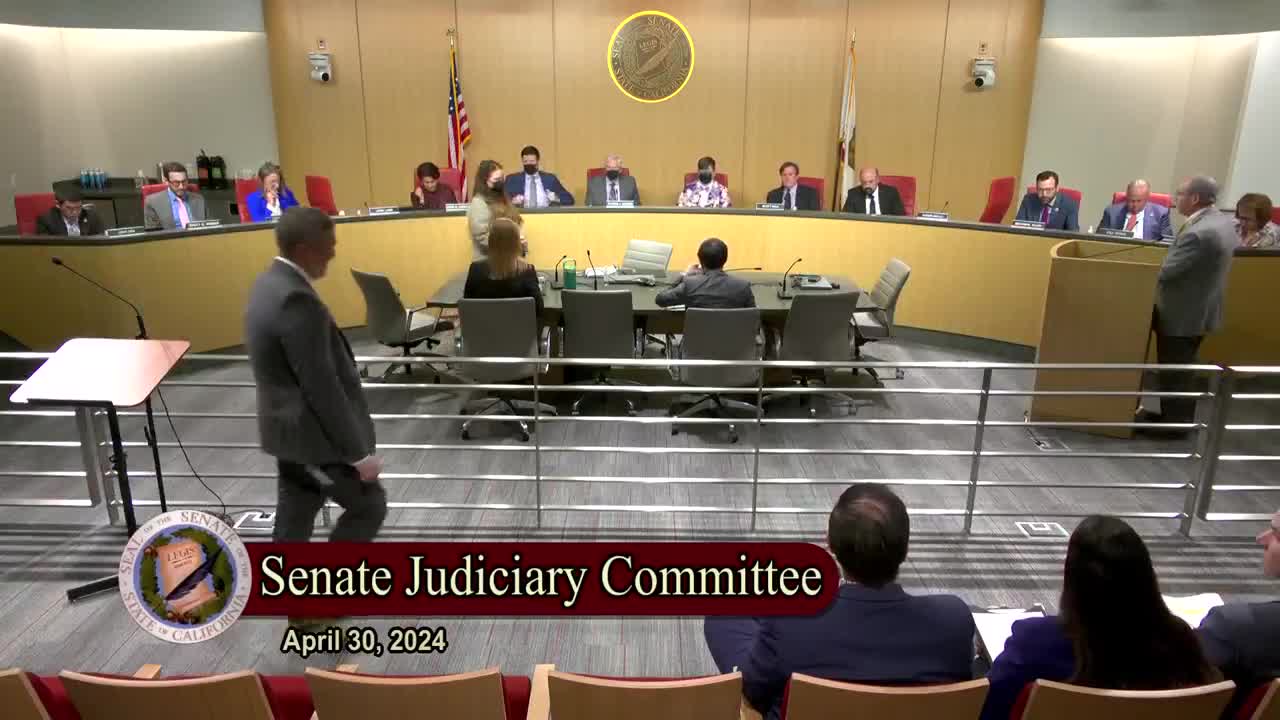
Bill Author

Bill Co-Author(s):