SB 242: California Hope, Opportunity, Perseverance, and Empowerment (HOPE) for Children Trust Account Program.
- Session Year: 2023-2024
- House: Senate
- Latest Version Date: 2024-09-30
Current Status:
Passed
(2024-09-30: Chaptered by Secretary of State. Chapter 1010, Statutes of 2024.)
Introduced
In Committee
First Chamber
In Committee
Second Chamber
Enacted
What does this bill do?
The bill protects money in California HOPE trust accounts—savings for eligible foster youth and children who lost a parent to COVID—by excluding those deposits and any earnings from being counted as income or assets for programs that check income, like CalWORKs, CalFresh, and Medi‑Cal, until the youth withdraws the funds, and it shields one‑time payments from most bank levies. It also requires the State Treasurer to verify eligibility, share limited data with the Franchise Tax Board and other agencies to help auto‑enroll eligible children, provide outreach and help transferring or withdrawing funds at age 18, expand board duties and reporting, and limit public disclosure of account records.
The summary is provided by generative AI which can make mistakes. For original language, please view the details in the table below.
Existing law, the California Hope, Opportunity, Perseverance, and Empowerment (HOPE) for Children Trust Account Act, establishes a program to provide a trust fund account to an eligible child, defined to include minor California residents who are specified dependents or wards under the jurisdiction of the juvenile court in foster care with reunification services terminated by court order, or who have a parent, Indian custodian, or legal guardian who died due to COVID-19 during the federally declared COVID-19 public health emergency and meet the specified family household income limit. Under the program, all assets of the fund and moneys allocated to individual HOPE trust accounts are considered to be owned by the state until an eligible youth withdraws or transfers money from their HOPE trust account.
This bill would, among other things, require the Treasurer to verify the cause of death of the parent, Indian custodian, or legal guardian and to verify the minors family household income prior to the death of the parent, Indian custodian, or legal guardian once the Treasurer receives government-issued documents or a statement signed by a person who is eligible to do so under penalty of perjury that establishes the identity of the child and that the person whose death certificate was provided was the childs parent, Indian custodian, or legal guardian. By expanding the crime of perjury, this bill would impose a state-mandated local program.
The bill would also state the intent of the Legislature that all eligible children will be automatically enrolled for a HOPE trust account to the extent possible, and would require the Treasurer to, in order to achieve this goal, collaborate with the State Department of Social Services and any other relevant governmental agencies to gather data to maximize participation in the HOPE Trust Account Program for eligible children and youth, as specified. Under the bill, individual records or source data associated with the establishment of a HOPE trust account would not be subject to disclosure under the California Public Records Act.
Existing law establishes various means-tested public social services programs administered by counties to provide eligible recipients with certain benefits, including, but not limited to, cash assistance under the California Work Opportunity and Responsibility to Kids (CalWORKs) program, nutrition assistance under the CalFresh program, and health care services under the Medi-Cal program.
This bill would, to the extent permitted by federal law, prohibit funds deposited and investment returns accrued in a HOPE trust account from being considered as income or assets when determining eligibility and benefit amount for any means-tested program until an eligible youth withdraws or transfers the funds from the HOPE trust account, as specified. The bill would make these provisions operative on July 1, 2025, or on the date that the State Department of Social Services notifies the Legislature that the Statewide Automated Welfare System or the California Automated Response and Engagement System (CARES) can perform the necessary automation to implement these provisions, whichever date is later. The bill would also require a one-time lump-sum payment made from a HOPE trust account to be exempt from enforcement of a money judgment by levy without making a claim, as specified. To the extent that the bill would expand county duties, the bill would impose a state-mandated local program.
The bill would also authorize a program enrollee who is also an eligible youth to withdraw or transfer funds from their HOPE trust account on and after their 18th birthday, and would require the Treasurer to assist an eligible youth in transferring funds from their HOPE trust account to other specified accounts. The bill would require the Treasurer to design and disseminate information for parents, Indian custodians, and legal guardians of children and youth who are potentially eligible for the HOPE Trust Account Program to facilitate their enrollment in the program and the transfer of funds, as specified, and to annually submit an audited financial report on the operations of the program by August 1 to the Governor, the Controller, the California State Auditor, and the Legislature, as specified.
The bill would expand the composition of the California HOPE for Children Trust Account Program Board, as specified, and would make other changes to board-related provisions.
Existing law sets forth various provisions relating to the disclosure of certain information in the administration of taxes. Under existing law, any unwarranted disclosure or use of the information by the administering person or receiving agency is a misdemeanor. Under existing law, it is generally a misdemeanor for the Franchise Tax Board (FTB) or certain persons to disclose or make known in any manner information as to the amount of income or any particulars set forth or disclosed therein.
This bill would require the Treasurer to disclose to the FTB certain information for the sole purpose of determining eligibility under the California HOPE for Children Trust Account Act. The bill would require the FTB to disclose to the Treasurer the amounts of the federal adjusted gross income, as specified. The bill would prohibit the Treasurer from disclosing or using any information obtained from the FTB under these provisions except for this purpose. The bill would require the FTB to return or destroy all information received from the Treasurer after completing the exchange of information under these provisions. By expanding the scope of a crime under the above-described disclosure provisions, the bill would impose a state-mandated local program.
Existing constitutional provisions require that a statute that limits the right of access to the meetings of public bodies or the writings of public officials and agencies be adopted with findings demonstrating the interest protected by the limitation and the need for protecting that interest.
This bill would make legislative findings to that effect.
This bill would incorporate additional changes to Section 11157 of the Welfare and Institutions Code proposed by AB 274 to be operative only if this bill and AB 274 are enacted and this bill is enacted last.
The California Constitution requires the state to reimburse local agencies and school districts for certain costs mandated by the state. Statutory provisions establish procedures for making that reimbursement.
This bill would provide that with regard to certain mandates no reimbursement is required by this act for a specified reason.
With regard to any other mandates, this bill would provide that, if the Commission on State Mandates determines that the bill contains costs so mandated by the state, reimbursement for those costs shall be made pursuant to the statutory provisions noted above.
Existing law establishes law, the California Hope, Opportunity, Perseverance, and Empowerment (HOPE) for Children Trust Account Program Act, establishes a program to provide a trust fund account to an eligible child, defined to include minor California residents who are specified dependents or wards under the jurisdiction of the juvenile court in foster care with reunification services terminated by court order, or who have a parent, Indian custodian, or legal guardian who died due to COVID-19 during the federally declared COVID-19 public health emergency and meet the specified family household income limit. Under the program, all assets of the fund and moneys allocated to individual HOPE trust accounts shall be are considered to be owned by the state until an eligible youth withdraws or transfers money from their HOPE trust account.
This bill would, among other things, require the Treasurer to verify the cause of death of the parent, Indian custodian, or legal guardian and to verify the minors family household income prior to the death of the parent, Indian custodian, or legal guardian once the Treasurer receives government-issued documents or a statement signed by a person who is eligible to do so under penalty of perjury that establishes the identity of the child and that the person whose death certificate was provided was the childs parent, Indian custodian, or legal guardian. By expanding the crime of perjury, this bill would impose a state-mandated local program.
The bill would also state the intent of the Legislature that all eligible children will be automatically enrolled for a HOPE trust account to the extent possible, and would require the Treasurer to, in order to achieve this goal, collaborate with the State Department of Social Services and any other relevant governmental agencies to gather deidentified data to maximize participation in the HOPE trust account program for eligible Trust Account Program for eligible children and youth, as specified. Under the bill, individual records or source data associated with the establishment of a HOPE trust account would not be subject to disclosure under the California Public Records Act.
Existing law establishes various means-tested public social services programs administered by counties to provide eligible recipients with certain benefits, including, but not limited to, cash assistance under the California Work Opportunity and Responsibility to Kids (CalWORKs) program, nutrition assistance under the CalFresh program, and health care services under the Medi-Cal program.
This bill would, to the extent permitted by federal law, prohibit funds deposited and investment returns accrued in a HOPE trust account from being considered as income or assets when determining eligibility and benefit amount for any means-tested program until an eligible youth withdraws or transfers the funds from the HOPE trust account, as specified. The bill would also require a one-time lump sum payment made from a HOPE trust account to be automatically exempt from a garnishment order, as specified. The bill would make these provisions operative on July 1, 2025, or on the date that the State Department of Social Services notifies the Legislature that the Statewide Automated Welfare System or the California Automated Response and Engagement System (CARES) can perform the necessary automation to implement these provisions, whichever date is later. The bill would also require a one-time lump-sum payment made from a HOPE trust account to be exempt from enforcement of a money judgment by levy without making a claim, as specified. To the extent this that the bill would expand county duties, the bill would impose a state-mandated local program.
The bill would also authorize a program enrollee who is also an eligible youth to withdraw or transfer funds from their HOPE trust account on and after their 18th birthday, and would require the Treasurer to assist an eligible youth in transferring funds from their HOPE trust account to other specified accounts. The bill would require the Treasurer to design and disseminate information for parents, Indian custodians, and legal guardians of children and youth who are potentially eligible for the HOPE Trust Account Program to facilitate their enrollment in the program and the transfer of funds, as specified, and to annually submit an audited financial report on the operations of the program by August 1 to the Governor, the Controller, the California State Auditor, and the Legislature, as specified.
The bill would expand the composition of the California HOPE for Children Trust Account Program Board, as specified, and would make other changes to board-related provisions.
Existing law sets forth various provisions relating to the disclosure of certain information in the administration of taxes. Under existing law, any unwarranted disclosure or use of the information by the administering person or receiving agency is a misdemeanor. Under existing law, it is generally a misdemeanor for the Franchise Tax Board (FTB) or certain persons to disclose or make known in any manner information as to the amount of income or any particulars set forth or disclosed therein.
This bill would require the Treasurer to disclose to the FTB certain information for the sole purpose of determining eligibility under the California HOPE for Children Trust Account Act. The bill would require the FTB to disclose to the Treasurer the amounts of the federal adjusted gross income, as specified. The bill would prohibit the Treasurer from disclosing or using any information obtained from the FTB under these provisions except for this purpose. The bill would require the FTB to return or destroy all information received from the Treasurer after completing the exchange of information under these provisions. By expanding the scope of a crime under the above-described disclosure provisions, the bill would impose a state-mandated local program.
Existing constitutional provisions require that a statute that limits the right of access to the meetings of public bodies or the writings of public officials and agencies be adopted with findings demonstrating the interest protected by the limitation and the need for protecting that interest.
This bill would make legislative findings to that effect.
The California Constitution requires the state to reimburse local agencies and school districts for certain costs mandated by the state. Statutory provisions establish procedures for making that reimbursement.
This bill would provide that with regard to certain mandates no reimbursement is required by this act for a specified reason.
With regard to any other mandates, this bill would provide that, if the Commission on State Mandates determines that the bill contains costs so mandated by the state, reimbursement for those costs shall be made pursuant to the statutory provisions noted above.
Existing law establishes the California Hope, Opportunity, Perseverance, and Empowerment (HOPE) for Children Trust Account Program to provide a trust fund account to an eligible child, defined to include minor California residents who are specified dependents or wards under the jurisdiction of juvenile court in foster care with reunification services terminated by court order, or who have a parent, Indian custodian, or legal guardian who died due to COVID-19 during the federally declared COVID-19 public health emergency and meet the specified family household income limit. Under the program, all assets of the fund and moneys allocated to individual HOPE trust accounts shall be considered to be owned by the state until an eligible youth withdraws or transfers money from their HOPE trust account.
This bill would, among other things, require the Treasurer to verify the cause of death of the parent, Indian custodian, or legal guardian and to verify the minors family household income prior to the death of the parent, Indian custodian, or legal guardian once the Treasurer receives government-issued documents or a statement signed by a person who is eligible to do so under penalty of perjury that establishes the identity of the child and that the person whose death certificate was provided was the childs parent, Indian custodian, or legal guardian. By expanding the crime of perjury, this bill would impose a state-mandated local program.
The bill would also state the intent of the Legislature that all eligible children will be automatically enrolled for a HOPE trust account to the extent possible, and would require the Treasurer to, in order to achieve this goal, collaborate with the State Department of Social Services and any other relevant governmental agencies to gather deidentified data to maximize participation in the HOPE trust account program for eligible youth, as specified.
Existing law establishes various means-tested public social services programs administered by counties to provide eligible recipients with certain benefits, including, but not limited to, cash assistance under the California Work Opportunity and Responsibility to Kids (CalWORKs) program, nutrition assistance under the CalFresh program, and health care services under the Medi-Cal program.
This bill would, to the extent permitted by federal law, prohibit funds deposited and investment returns accrued in a HOPE trust fund account from being considered as income or assets when determining eligibility and benefit amount for any means-tested program until an eligible youth withdraws or transfers the funds from the HOPE trust fund account, as specified. The bill would also require a one-time lump sum payment made from a HOPE trust account to be automatically exempt from a garnishment order, as specified. The bill would make these provisions operative on July 1, 2024, 2025, or on the date that the State Department of Social Services notifies the Legislature that the Statewide Automated Welfare System or the California Automated Response and Engagement System (CARES) can perform the necessary automation to implement these provisions or no automation is necessary, provisions, whichever date is later. To the extent this bill would expand county duties, the bill would impose a state-mandated local program.
The California Constitution requires the state to reimburse local agencies and school districts for certain costs mandated by the state. Statutory provisions establish procedures for making that reimbursement.This bill would provide that, if the Commission on State Mandates determines that the bill contains costs mandated by the state, reimbursement for those costs shall be made pursuant to the statutory provisions noted above.The bill would also authorize a program enrollee who is also an eligible youth to withdraw or transfer funds from their HOPE trust account on and after their 18th birthday, and would require the Treasurer to assist an eligible youth in transferring funds from their HOPE trust account to other specified accounts. The bill would require the Treasurer to design and disseminate information for parents, Indian custodians, and legal guardians of children and youth who are potentially eligible for the HOPE Trust Account Program to facilitate their enrollment in the program and the transfer of funds, as specified, and to annually submit an audited financial report on the operations of the program by August 1 to the Governor, the Controller, the California State Auditor, and the Legislature, as specified.
Existing constitutional provisions require that a statute that limits the right of access to the meetings of public bodies or the writings of public officials and agencies be adopted with findings demonstrating the interest protected by the limitation and the need for protecting that interest.
This bill would make legislative findings to that effect.
The California Constitution requires the state to reimburse local agencies and school districts for certain costs mandated by the state. Statutory provisions establish procedures for making that reimbursement.
This bill would provide that with regard to certain mandates no reimbursement is required by this act for a specified reason.
With regard to any other mandates, this bill would provide that, if the Commission on State Mandates determines that the bill contains costs so mandated by the state, reimbursement for those costs shall be made pursuant to the statutory provisions noted above.
Existing law establishes the California Hope, Opportunity, Perseverance, and Empowerment (HOPE) for Children Trust Account Program to provide a trust fund account to an eligible child, defined to include minor California residents who are specified dependents or wards under the jurisdiction of juvenile court in foster care with reunification services terminated by court order, or who have a parent, Indian custodian, or legal guardian who died due to COVID-19 during the federally declared COVID-19 public health emergency and meet the specified family household income limit. Under the program, all assets of the fund and moneys allocated to individual HOPE trust accounts shall be considered to be owned by the state until an eligible youth withdraws or transfers money from their HOPE trust account.
Existing law establishes various means-tested public social services programs administered by counties to provide eligible recipients with certain benefits, including, but not limited to, cash assistance under the California Work Opportunity and Responsibility to Kids (CalWORKs) program, nutrition assistance under the CalFresh program, and health care services under the Medi-Cal program.
This bill would, to the extent permitted by federal law, prohibit funds deposited and investment returns accrued in a HOPE trust fund account from being considered as income or assets when determining eligibility and benefit amount for any means-tested program until an eligible youth withdraws or transfers the funds from the HOPE trust fund account, as specified. The bill would make these provisions operative on July 1, 2024, or on the date that the State Department of Social Services notifies the Legislature that the Statewide Automated Welfare System can perform the necessary automation to implement these provisions or no automation is necessary, whichever date is later. To the extent this bill would expand county duties, the bill would impose a state-mandated local program.
The California Constitution requires the state to reimburse local agencies and school districts for certain costs mandated by the state. Statutory provisions establish procedures for making that reimbursement.
This bill would provide that, if the Commission on State Mandates determines that the bill contains costs mandated by the state, reimbursement for those costs shall be made pursuant to the statutory provisions noted above.
Existing law establishes the California Hope, Opportunity, Perseverance, and Empowerment (HOPE) for Children Trust Account Program to provide a trust fund account to an eligible child, defined to include minor California residents who are specified dependents or wards under the jurisdiction of juvenile court in foster care with reunification services terminated by court order, or who have a parent, Indian custodian, or legal guardian who died due to COVID-19 during the federally declared COVID-19 public health emergency and meet the specified family household income limit. Under the program, all assets of the fund and moneys allocated to individual HOPE trust accounts shall be considered to be owned by the state until an eligible youth withdraws or transfers money from their HOPE trust account.
Existing law establishes various means-tested public social services programs administered by counties to provide eligible recipients with certain benefits, including, but not limited to, cash assistance under the California Work Opportunity and Responsibility to Kids (CalWORKs) program, nutrition assistance under the CalFresh program, and health care services under the Medi-Cal program.
This bill would, to the extent permitted by federal law, prohibit funds deposited and investment returns accrued in a HOPE trust fund account from being considered as income or assets when determining eligibility and benefit amount for any means-tested program until an eligible youth withdraws or transfers the funds from the HOPE trust fund account, as specified. To the extent this bill would expand county duties, the bill would impose a state-mandated local program.
The California Constitution requires the state to reimburse local agencies and school districts for certain costs mandated by the state. Statutory provisions establish procedures for making that reimbursement.
This bill would provide that, if the Commission on State Mandates determines that the bill contains costs mandated by the state, reimbursement for those costs shall be made pursuant to the statutory provisions noted above.
It is the intent of the Legislature to enact legislation that would amend the HOPE Trust Account Program to support the implementation of the program, including clarifying language that the accounts are exempt from consideration as income or assets in means-tested programs and that the accounts shall not be subjected to a money judgment or Franchise Tax Board intercept.
SEC. 2.Section 704.235 is added to the Code of Civil Procedure, to read:704.235.(a)A one-time lump-sum payment made from a HOPE trust account, as defined in subdivision (a) of Section 18997.51 of the Welfare and Institutions Code, shall be exempt without making a claim, except as provided in subdivision (b).
(b)A one-time lump-sum payment described in subdivision (a) is not exempt from a levy in connection with child support, spousal support, family support, or a criminal restitution.
(c)A financial institution that receives a payment described in subdivision (a) directly from the state shall treat the payment as exempt from levy if it is designated HOPE trust account payment or if the payment is otherwise sufficiently identified to inform the financial institution that the payment is a HOPE trust account payment.
SEC. 3.Section 12419.3.4 is added to the Government Code, to read:12419.3.4.Notwithstanding any other provision of this article, the payments authorized pursuant to Chapter 16.1 (commencing with Section 18997.5) of Part 6 of Division 9 of the Welfare and Institutions Code shall not be used to offset any delinquent accounts.
SEC. 4.Section 19551.6 is added to the Revenue and Taxation Code, to read:19551.6.(a)(1)Notwithstanding any other law, the Treasurer shall disclose to the Franchise Tax Board, through information-sharing agreements or data interfaces, information described in paragraph (2) for the sole purpose of determining eligibility under the California Hope, Opportunity, Perseverance, and Empowerment (HOPE) for Children Trust Account Act (Chapter 16.1 (commencing with Section 18997.5) of Part 6 of Division 9 of the Welfare and Institutions Code).
(2)The information authorized to be disclosed pursuant to paragraph (1) is limited to information necessary to verify eligibility, including, but not limited to, name, individual taxpayer identification number (ITIN) or social security number, date of birth, and other information needed under the California Hope, Opportunity, Perseverance, and Empowerment (HOPE) for Children Trust Account Act (Chapter 16.1 (commencing with Section 18997.5) of Part 6 of Division 9 of the Welfare and Institutions Code) to verify the income of individuals.
(b)(1)The Franchise Tax Board, after receipt of the information described in subdivision (a), shall disclose to the Treasurer, through information-sharing agreements or data interfaces, the amounts of the federal adjusted gross income as reported by the taxpayer to the Franchise Tax Board.
(2)The Franchise Tax Board shall only provide the information described in paragraph (1) if available in the records of the Franchise Tax Board and with respect to taxpayers for whom the Treasurer provided the information under subdivision (a).
(3)The Franchise Tax Board shall provide the information described in paragraph (1) to the Treasurer for the most recent and preceding taxable year that the Franchise Tax Board has information available.
(4)The Franchise Tax Board shall not disclose or provide any federal tax information.
(c)(1)The information provided to the Treasurer under this section is subject to Section 19542.
(2)The Treasurer, or any current or former officer, employee, or agent of the Treasurer, shall not disclose or use any information obtained from the Franchise Tax Board pursuant to this section except for the purpose described in subdivision (a).
(d)The Franchise Tax Board shall return or destroy all information received from the Treasurer after completing the exchange of information under this section.
SEC. 5.Section 11157 of the Welfare and Institutions Code is amended to read:11157.(a)Notwithstanding Section 11008, all lump-sum income received by an applicant or recipient shall be regarded as income in the month received, except nonrecurring lump-sum social insurance payments, which shall include social security income, railroad retirement benefits, veterans benefits, workers compensation, and disability insurance.
(b)Except as otherwise provided in this part, for purposes of this chapter and Chapter 2 (commencing with Section 11200), income shall be deemed to be the same as applied under the Aid to Families with Dependent Children program on August 21, 1996, except that the following are exempt from consideration as income:
(1)Income that is received too infrequently to be reasonably anticipated, as exempted in federal Supplemental Nutrition Assistance Program (SNAP) regulations.
(2)Income from a college work-study program under Title IV of the federal Higher Education Act or Article 18 (commencing with Section 69950) of Chapter 2 of Part 42 of Division 5 of Title 3 of the Education Code or college work-study program, as established in the annual Budget Act, for individuals receiving aid under Chapter 2 (commencing with Section 11200).
(3)(A)Except as provided for in subparagraph (B), an award or scholarship provided by a public or private entity to or on behalf of a dependent child based on the childs academic or extracurricular achievement or participation in a scholastic, educational, or extracurricular competition.
(B)For purposes of Chapter 2 (commencing with Section 11200), an award or scholarship provided by a public or private entity to or on behalf of a dependent child.
(c)(1)For purposes of Chapter 2 (commencing with Section 11200), any income or stipend paid by the United States Census Bureau, a governmental entity, or a nonprofit organization for temporary work related to the decennial census shall not be considered income.
(2)Paragraph (1) shall be retroactive and shall apply to any income or stipend paid by the United States Census Bureau, a governmental entity, or a nonprofit organization for temporary work related to the most recent decennial census.
(3)Notwithstanding the rulemaking provisions of the Administrative Procedure Act (Chapter 3.5 (commencing with Section 11340) of Part 1 of Division 3 of Title 2 of the Government Code), the department may implement, interpret, or make specific this subdivision by means of all-county letters or similar instructions from the department until regulations are adopted. These all-county letters or similar written instructions shall have the same force and effect as regulations until the adoption of regulations.
(d)(1)Any federal pandemic unemployment compensation, as described under Subchapter 2 (commencing with Section 9021) of Chapter 116 of Title 15 of the United States Code, is exempt from consideration as income and resources for the purposes of determining initial and continued eligibility and grant amount for the CalWORKs program.
(2)The exemption described under paragraph (1) shall remain in effect so long as federal pandemic unemployment compensation is exempt as income for purposes of establishing eligibility for the CalFresh program (Chapter 10 (commencing with Section 18900) of Part 6), pursuant to the federal Consolidated Appropriations Act of 2021 or any other law.
(e)(1)Notwithstanding any other law, for the purposes of this chapter and Chapter 2 (commencing with Section 11200), guaranteed income payments shall be exempt from consideration as income and resources.
(2)Notwithstanding the rulemaking provisions of the Administrative Procedure Act (Chapter 3.5 (commencing with Section 11340) of Part 1 of Division 3 of Title 2 of the Government Code), the department may implement, interpret, or make specific this subdivision through all-county letters or similar instructions that shall have the same force and effect as regulations until regulations are adopted.
(f)This section shall become inoperative on July 1, 2025, or on the date that the department notifies the Legislature of either of the following, whichever is later, and as of January 1 of the following year, is repealed:
(1)The Statewide Automated Welfare System can perform the necessary automation to implement Section 11157, as added by the act that added this subdivision.
(2)The California Automated Response and Engagement System (CARES) can perform the necessary automation to implement Section 11157, as added by the act that added this subdivision.
SEC. 5.5.Section 11157 of the Welfare and Institutions Code is amended to read:11157.(a)Notwithstanding Section 11008, all lump-sum income received by an applicant or recipient shall be regarded as income in the month received, except nonrecurring lump-sum social insurance payments, which shall include social security income, railroad retirement benefits, veterans benefits, workers compensation, and disability insurance.
(b)Except as otherwise provided in this part, for purposes of this chapter and Chapter 2 (commencing with Section 11200), income shall be deemed to be the same as applied under the Aid to Families with Dependent Children program on August 21, 1996, except that the following are exempt from consideration as income:
(1)Income that is received too infrequently to be reasonably anticipated, as exempted in federal Supplemental Nutrition Assistance Program (SNAP) regulations.
(2)Income from a college work-study program under Title IV of the federal Higher Education Act or Article 18 (commencing with Section 69950) of Chapter 2 of Part 42 of Division 5 of Title 3 of the Education Code or college work-study program, as established in the annual Budget Act, for individuals receiving aid under Chapter 2 (commencing with Section 11200).
(3)(A)Except as provided for in subparagraph (B), an award or scholarship provided by a public or private entity to or on behalf of a dependent child based on the childs academic or extracurricular achievement or participation in a scholastic, educational, or extracurricular competition.
(B)For purposes of Chapter 2 (commencing with Section 11200), an award or scholarship provided by a public or private entity to or on behalf of a dependent child.
(c)For purposes of Chapter 2 (commencing with Section 11200), notwithstanding any other law, and to the extent permitted by federal law, any fellowship benefit that is not received monthly, and any grant, award, scholarship, or loan, that is provided to any assistance unit member shall be exempt from consideration as income for purposes of determining eligibility for benefits or calculating grant amounts pursuant to Chapter 2 (commencing with Section 11200). The funds described in this subdivision shall also be exempt as resources for purposes of determining eligibility for benefits or calculating grant amounts pursuant to Chapter 2 (commencing with Section 11200) for 12 months following the receipt of the funds.
(d)(1)For purposes of Chapter 2 (commencing with Section 11200), any income or stipend paid by the United States Census Bureau, a governmental entity, or a nonprofit organization for temporary work related to the decennial census shall not be considered income.
(2)Paragraph (1) shall be retroactive and shall apply to any income or stipend paid by the United States Census Bureau, a governmental entity, or a nonprofit organization for temporary work related to the most recent decennial census.
(3)Notwithstanding the rulemaking provisions of the Administrative Procedure Act (Chapter 3.5 (commencing with Section 11340) of Part 1 of Division 3 of Title 2 of the Government Code), the department may implement, interpret, or make specific this subdivision by means of all-county letters or similar instructions from the department until regulations are adopted. These all-county letters or similar written instructions shall have the same force and effect as regulations until the adoption of regulations.
(e)(1)Any federal pandemic unemployment compensation, as described under Subchapter 2 (commencing with Section 9021) of Chapter 116 of Title 15 of the United States Code, is exempt from consideration as income and resources for the purposes of determining initial and continued eligibility and grant amount for the CalWORKs program.
(2)The exemption described under paragraph (1) shall remain in effect so long as federal pandemic unemployment compensation is exempt as income for purposes of establishing eligibility for the CalFresh program (Chapter 10 (commencing with Section 18900) of Part 6), pursuant to the federal Consolidated Appropriations Act of 2021 or any other law.
(f)(1)Notwithstanding any other law, for the purposes of this chapter and Chapter 2 (commencing with Section 11200), guaranteed income payments shall be exempt from consideration as income and resources.
(2)Notwithstanding the rulemaking provisions of the Administrative Procedure Act (Chapter 3.5 (commencing with Section 11340) of Part 1 of Division 3 of Title 2 of the Government Code), the department may implement, interpret, or make specific this subdivision through all-county letters or similar instructions that shall have the same force and effect as regulations until regulations are adopted.
(g)This section shall become inoperative on July 1, 2025, or on the date that the department notifies the Legislature of either of the following, whichever is later, and as of January 1 of the following year, is repealed:
(1)The Statewide Automated Welfare System can perform the necessary automation to implement Section 11157, as added by the act that added this subdivision.
(2)The California Automated Response and Engagement System (CARES) can perform the necessary automation to implement Section 11157, as added by the act that added this subdivision.
SEC. 6.Section 11157 is added to the Welfare and Institutions Code, to read:11157.(a)Notwithstanding Section 11008, all lump-sum income received by an applicant or recipient shall be regarded as income in the month received, except nonrecurring lump-sum social insurance payments, which shall include social security income, railroad retirement benefits, veterans benefits, workers compensation, and disability insurance.
(b)Except as otherwise provided in this part, for purposes of this chapter and Chapter 2 (commencing with Section 11200), income shall be deemed to be the same as applied under the Aid to Families with Dependent Children program on August 21, 1996, except that the following are exempt from consideration as income:
(1)Income that is received too infrequently to be reasonably anticipated, as exempted in federal Supplemental Nutrition Assistance Program (SNAP) regulations.
(2)Income from a college work-study program under Title IV of the federal Higher Education Act or Article 18 (commencing with Section 69950) of Chapter 2 of Part 42 of Division 5 of Title 3 of the Education Code or college work-study program, as established in the annual Budget Act, for individuals receiving aid under Chapter 2 (commencing with Section 11200).
(3)(A)Except as provided for in subparagraph (B), an award or scholarship provided by a public or private entity to or on behalf of a dependent child based on the childs academic or extracurricular achievement or participation in a scholastic, educational, or extracurricular competition.
(B)For purposes of Chapter 2 (commencing with Section 11200), an award or scholarship provided by a public or private entity to or on behalf of a dependent child.
(c)(1)For purposes of Chapter 2 (commencing with Section 11200), any income or stipend paid by the United States Census Bureau, a governmental entity, or a nonprofit organization for temporary work related to the decennial census shall not be considered income.
(2)Paragraph (1) shall be retroactive and shall apply to any income or stipend paid by the United States Census Bureau, a governmental entity, or a nonprofit organization for temporary work related to the most recent decennial census.
(3)Notwithstanding the rulemaking provisions of the Administrative Procedure Act (Chapter 3.5 (commencing with Section 11340) of Part 1 of Division 3 of Title 2 of the Government Code), the department may implement, interpret, or make specific this subdivision by means of all-county letters or similar instructions from the department until regulations are adopted. These all-county letters or similar written instructions shall have the same force and effect as regulations until the adoption of regulations.
(d)(1)Any federal pandemic unemployment compensation, as described under Subchapter 2 (commencing with Section 9021) of Chapter 116 of Title 15 of the United States Code, is exempt from consideration as income and resources for the purposes of determining initial and continued eligibility and grant amount for the CalWORKs program.
(2)The exemption described under paragraph (1) shall remain in effect so long as federal pandemic unemployment compensation is exempt as income for purposes of establishing eligibility for the CalFresh program (Chapter 10 (commencing with Section 18900) of Part 6), pursuant to the federal Consolidated Appropriations Act of 2021 or any other law.
(e)(1)Notwithstanding any other law, for the purposes of this chapter and Chapter 2 (commencing with Section 11200), guaranteed income payments shall be exempt from consideration as income and resources.
(2)Notwithstanding the rulemaking provisions of the Administrative Procedure Act (Chapter 3.5 (commencing with Section 11340) of Part 1 of Division 3 of Title 2 of the Government Code), the department may implement, interpret, or make specific this subdivision through all-county letters or similar instructions that shall have the same force and effect as regulations until regulations are adopted.
(f)For purposes of this chapter and Chapter 2 (commencing with Section 11200), any funds deposited and investment returns accrued in a HOPE trust account established pursuant to Chapter 16.1 (commencing with Section 18997.5) of Part 6 shall be exempt from consideration as income and resources pursuant to Section 18997.56.
(g)This section shall become operative on July 1, 2025, or on the date that the department notifies the Legislature of either of the following, whichever is later:
(1)The Statewide Automated Welfare System can perform the necessary automation to implement this section.
(2)The California Automated Response and Engagement System (CARES) can perform the necessary automation to implement this section.
SEC. 6.5.Section 11157 is added to the Welfare and Institutions Code, to read:11157.(a)Notwithstanding Section 11008, all lump-sum income received by an applicant or recipient shall be regarded as income in the month received, except nonrecurring lump-sum social insurance payments, which shall include social security income, railroad retirement benefits, veterans benefits, workers compensation, and disability insurance.
(b)Except as otherwise provided in this part, for purposes of this chapter and Chapter 2 (commencing with Section 11200), income shall be deemed to be the same as applied under the Aid to Families with Dependent Children program on August 21, 1996, except that the following are exempt from consideration as income:
(1)Income that is received too infrequently to be reasonably anticipated, as exempted in federal Supplemental Nutrition Assistance Program (SNAP) regulations.
(2)Income from a college work-study program under Title IV of the federal Higher Education Act or Article 18 (commencing with Section 69950) of Chapter 2 of Part 42 of Division 5 of Title 3 of the Education Code or college work-study program, as established in the annual Budget Act, for individuals receiving aid under Chapter 2 (commencing with Section 11200).
(3)(A)Except as provided for in subparagraph (B), an award or scholarship provided by a public or private entity to or on behalf of a dependent child based on the childs academic or extracurricular achievement or participation in a scholastic, educational, or extracurricular competition.
(B)For purposes of Chapter 2 (commencing with Section 11200), an award or scholarship provided by a public or private entity to or on behalf of a dependent child.
(c)For purposes of Chapter 2 (commencing with Section 11200), notwithstanding any other law, and to the extent permitted by federal law, any fellowship benefit that is not received monthly, and any grant, award, scholarship, or loan, that is provided to any assistance unit member shall be exempt from consideration as income for purposes of determining eligibility for benefits or calculating grant amounts pursuant to Chapter 2 (commencing with Section 11200). The funds described in this subdivision shall also be exempt as resources for purposes of determining eligibility for benefits or calculating grant amounts pursuant to Chapter 2 (commencing with Section 11200) for 12 months following the receipt of the funds.
(d)(1)For purposes of Chapter 2 (commencing with Section 11200), any income or stipend paid by the United States Census Bureau, a governmental entity, or a nonprofit organization for temporary work related to the decennial census shall not be considered income.
(2)Paragraph (1) shall be retroactive and shall apply to any income or stipend paid by the United States Census Bureau, a governmental entity, or a nonprofit organization for temporary work related to the most recent decennial census.
(3)Notwithstanding the rulemaking provisions of the Administrative Procedure Act (Chapter 3.5 (commencing with Section 11340) of Part 1 of Division 3 of Title 2 of the Government Code), the department may implement, interpret, or make specific this subdivision by means of all-county letters or similar instructions from the department until regulations are adopted. These all-county letters or similar written instructions shall have the same force and effect as regulations until the adoption of regulations.
(e)(1)Any federal pandemic unemployment compensation, as described under Subchapter 2 (commencing with Section 9021) of Chapter 116 of Title 15 of the United States Code, is exempt from consideration as income and resources for the purposes of determining initial and continued eligibility and grant amount for the CalWORKs program.
(2)The exemption described under paragraph (1) shall remain in effect so long as federal pandemic unemployment compensation is exempt as income for purposes of establishing eligibility for the CalFresh program (Chapter 10 (commencing with Section 18900) of Part 6), pursuant to the federal Consolidated Appropriations Act of 2021 or any other law.
(f)(1)Notwithstanding any other law, for the purposes of this chapter and Chapter 2 (commencing with Section 11200), guaranteed income payments shall be exempt from consideration as income and resources.
(2)Notwithstanding the rulemaking provisions of the Administrative Procedure Act (Chapter 3.5 (commencing with Section 11340) of Part 1 of Division 3 of Title 2 of the Government Code), the department may implement, interpret, or make specific this subdivision through all-county letters or similar instructions that shall have the same force and effect as regulations until regulations are adopted.
(g)For purposes of this chapter and Chapter 2 (commencing with Section 11200), any funds deposited and investment returns accrued in a HOPE trust account established pursuant to Chapter 16.1 (commencing with Section 18997.5) of Part 6 shall be exempt from consideration as income and resources pursuant to Section 18997.56.
(h)This section shall become operative on July 1, 2025, or on the date that the department notifies the Legislature of either of the following, whichever is later:
(1)The Statewide Automated Welfare System can perform the necessary automation to implement this section.
(2)The California Automated Response and Engagement System (CARES) can perform the necessary automation to implement this section.
SEC. 7.Section 18997.51 of the Welfare and Institutions Code is amended to read:18997.51.For purposes of this chapter, the following definitions shall apply:
(a)Account, trust account, or HOPE trust account, means the California Hope, Opportunity, Perseverance, and Empowerment (HOPE) for Children Trust Account in the name of an eligible child or eligible youth.
(b)Board means the California Hope, Opportunity, Perseverance, and Empowerment (HOPE) for Children Trust Account Program Board established pursuant to Section 18997.52.
(c)Department means the State Department of Social Services.
(d)Eligible child means a minor resident of California who is under 18 years of age, is not emancipated from their parent, Indian custodian, or legal guardian, and meets one of the following qualifications:
(1)(A)They reside in California and their parent, Indian custodian, or legal guardian died during the federally declared COVID-19 public health emergency, and the cause of death for the parent, Indian custodian, or legal guardian is listed as COVID-19 on their death certificate or they died as a medically recognized consequence of having long-term COVID-19, and the minors family household income, considering the income prior to the death of the parent, Indian custodian, or legal guardian, is at or below the income that would make the child eligible for Medi-Cal benefits under Chapter 7 (commencing with Section 14000) of Part 3. For purposes of this paragraph, family household income is limited to the incomes of parents, Indian custodians, or legal guardians, and federal poverty level means the poverty guidelines updated periodically in the Federal Register by the United States Department of Health and Human Services under the authority of Section 9902(2) of Title 42 of the United States Code.
(B)The Treasurer shall verify the cause of death of the parent, Indian custodian, or legal guardian once they receive either of the following:
(i)A death certificate that lists the cause of death as COVID-19.
(ii)A death certificate that lists the cause of death as a medically recognized consequence of having long-term COVID-19 and documentation that the person was diagnosed or was in the process of being diagnosed with long-term COVID-19.
(C)The Treasurer shall verify the minors family household income prior to the death of the parent, Indian custodian, or legal guardian once they receive either of the following:
(i)Government-issued documents that establish the identity of the child and that the person whose death certificate was provided pursuant to subparagraph (B) was their parent, Indian custodian, or legal guardian with whom the child resided.
(ii)A statement signed by a person who is eligible to do so under penalty of perjury that establishes the identity of the child and that the person whose death certificate was provided pursuant to subparagraph (B) was the childs parent, Indian custodian, or legal guardian with whom the child resided. The Treasurers office, in consultation with the board, shall establish a process to challenge a statement submitted pursuant to this clause.
(2)(A)A foster child who resides in California, or is a California resident who is placed out of state by a juvenile or tribal court, and meets both of the following:
(i)The child has been adjudged a dependent child of the juvenile court on the grounds that the child is a person described by Section 300, or the child has been adjudged a ward of the juvenile court on the grounds that the child is a person described by Section 601 or 602, or the child is a dependent child of the court of an Indian tribe, consortium of tribes, or tribal organization who is the subject of a petition filed in the tribal court pursuant to the tribal courts jurisdiction in accordance with the tribes law and the tribe has notified the department or the HOPE Trust Account Program about the childs status as a dependent child under the tribal court. The department shall not require an Indian tribe, consortium of tribes, tribal organization, or tribal court representative to notify the department of any child who is a dependent of the tribal court.
(ii)The child meets one of the following:
(I)The child is subject to a foster care order, has been in foster care for at least 18 months, and reunification services have been terminated by an order of a juvenile or tribal court.
(II)The child is subject to a foster care order after 16 years of age, and reunification services have been terminated by an order of a juvenile or tribal court.
(B)Notwithstanding clause (ii) of subparagraph (A), if the child reunifies with their parent, Indian custodian, or legal guardian, is adopted, enters into a tribal customary adoption, or is placed into a legal guardianship, at any point in time subsequent to meeting the qualification specified in clause (i) of subparagraph (A), the child shall remain an eligible child and program enrollee and shall be able to access their HOPE trust account, but shall no longer be eligible for annual contributions effective 12 months following the date of reunification, adoption, or legal guardianship, or until the child reaches 18 years of age, whichever is sooner.
(e)Eligible youth means a program enrollee for whom a HOPE trust account was established and who is now eligible to withdraw or transfer funds from their HOPE trust account.
(f)Fund means the California Hope, Opportunity, Perseverance, and Empowerment (HOPE) for Children Trust Account Fund created pursuant to Section 18997.53.
(g)HOPE Trust Account Program or program means the California Hope, Opportunity, Perseverance, and Empowerment (HOPE) for Children Trust Account Program established pursuant to this chapter.
(h)Program enrollee means an eligible child who has been enrolled in the program and an eligible youth who was enrolled as an eligible child in the program and has not terminated their participation.
SEC. 8.Section 18997.52 of the Welfare and Institutions Code is amended to read:18997.52.(a)(1)There is hereby created within state government the California Hope, Opportunity, Perseverance, and Empowerment (HOPE) for Children Trust Account Program Board, which shall consist of 11 members, as follows:
(A)The Treasurer, or their designee, who shall serve as the chair.
(B)The Director of Finance, or their designee.
(C)The Controller, or their designee.
(D)An individual with expertise in poverty alleviation and the racial wealth gap appointed by the Senate Committee on Rules.
(E)An individual with investment expertise appointed by the Speaker of the Assembly.
(F)An individual with expertise on financial empowerment and consumer protection appointed by the Governor.
(G)A public member who has experienced childhood poverty appointed by the Governor.
(H)A public member who is 18 to 26 years of age, inclusive, and who was previously or is currently a foster youth with at least 18 months spent in the foster care system appointed by the Assembly.
(I)A public member who is 18 to 26 years of age, inclusive, and who has lost an immediate family member to death caused by or as a consequence of COVID-19 or long-term COVID-19, and has experienced poverty appointed by the Senate.
(J)Two additional nonvoting members appointed by the Governor.
(2)Members of the board appointed by the Governor, the Senate Committee on Rules, and the Speaker of the Assembly shall serve at the pleasure of the appointing authority.
(b)All members of the board shall serve without compensation. Members of the board shall be reimbursed for necessary travel expenses incurred in connection with their board duties.
(c)Board members and other staff of the board shall not do any of the following:
(1)Directly or indirectly have any interest in the making of any investment made for the program, or in the gains or profits accruing from any investment made for the program.
(2)Borrow any funds or deposits of the HOPE trust accounts, or use those funds or deposits in any manner, for themselves or as an agent or partner of others.
(3)Become an endorser, surety, or obligor on investments by the board.
(d)The board and staff, including contracted administrators and consultants, shall discharge their duties as fiduciaries with respect to the HOPE trust accounts solely in the interest of the program enrollees as follows:
(1)For the exclusive purposes of providing benefits to program enrollees and defraying reasonable expenses of administering the program.
(2)By investing with the care, skill, prudence, and diligence under the circumstances then prevailing that a prudent person acting in a like capacity and familiar with those matters would use in the conduct of an enterprise of a like character and with like aims.
(e)The board, subject to its authority and fiduciary duty, shall administer the program and the funds appropriated for the program in alignment with the intent of the Legislature to create opportunities, economic autonomy, and hope, and to promote wealth and asset building for an eligible child and eligible youth to address Californias record levels of inequality.
(f)The HOPE trust accounts are an instrumentality of the state. Any security issued, managed, or invested by the board within the HOPE trust accounts on behalf of a program enrollee shall be exempt from Sections 25110, 25120, and 25130 of the Corporations Code.
(g)To achieve the functions specified in this section, the board shall have the power and authority to do all of the following:
(1)Make and enter into contracts necessary for the administration of the program.
(2)Adopt a seal and change and amend it from time to time.
(3)Cause moneys in the HOPE trust accounts to be held and invested and reinvested.
(4)(A)Accept any grants, gifts, legislative appropriation, and other moneys from the state, any unit of federal, state, or local government, or any other person, firm, partnership, philanthropic entity, or corporation for deposit to the HOPE Trust Account Fund.
(B)The board shall provide a way for grants, gifts, appropriations, or other moneys to the HOPE Trust Account Program to be made in any amount and with the ability to have the funds targeted to specific subgroups, as defined by the entity giving, granting, or appropriating the funds, provided that they are not limited in such a way that would conflict with the intent of the Legislature in establishing the program.
(5)The Treasurer shall, on behalf of the board, appoint an executive director, who shall not be a member of the board and who shall serve at the pleasure of the Treasurer. The Treasurer shall determine the duties of the executive director and other staff, as appropriate, and set their compensation. The board may authorize the executive director to enter into contracts on behalf of the board or conduct any business necessary for the efficient operation of the board.
(6)Make provisions for the payment of costs of administration and operation of the program.
(7)Employ staff.
(8)Retain and contract with private financial institutions, other financial and service providers, consultants, actuaries, counsel, auditors, third-party administrators, and other professionals, as necessary.
(9)Procure insurance against any loss in connection with the property, assets, or activities of the trust.
(10)Procure insurance indemnifying each member of the board from personal loss or liability resulting from a members action or inaction as a member of the board.
(11)Cause expenses incurred to initiate, implement, maintain, and administer the program to be paid from deposits to, or investment returns or assets of, the program or arrangements established under the program, to the extent permitted under state and federal law.
(12)Carry out the duties and obligations of the program pursuant to this chapter and exercise any and all other powers as appropriate for the effectuation of the purposes, objectives, and provisions of this chapter pertaining to the program.
(h)The board may adopt regulations to implement this chapter consistent with the Administrative Procedure Act (Chapter 3.5 (commencing with Section 11340) of Part 1 of Division 3 of Title 2 of the Government Code). The adoption, amendment, repeal, or readoption of a regulation authorized by this section is deemed to address an emergency, for purposes of Sections 11346.1 and 11349.6 of the Government Code, and the board is hereby exempted for this purpose from the requirements of subdivision (b) of Section 11346.1 of the Government Code.
SEC. 9.Section 18997.53 of the Welfare and Institutions Code is amended to read:18997.53.(a)The California Hope, Opportunity, Perseverance, and Empowerment (HOPE) for Children Trust Account Fund is hereby established in the State Treasury. Notwithstanding Section 13340 of the Government Code, except for moneys derived from the federal American Rescue Plan Act of 2021 (Public Law 117-2), moneys in the fund shall be continuously appropriated, without regard to fiscal years, to the HOPE Trust Account Program Board and the Treasurer for implementation of the program.
(b)(1)The Treasurer may do both of the following:
(A)Invest moneys in the fund that are not required for its current needs in the eligible securities specified in Section 16430 of the Government Code.
(B)Deposit moneys in the fund for investment in the Surplus Money Investment Fund pursuant to Article 4 (commencing with Section 16470) of Chapter 3 of Part 2 of Division 4 of Title 2 of the Government Code.
(2)Notwithstanding Section 16305.7 of the Government Code, all interest or other increment resulting from the investment or deposit of moneys from the fund shall be deposited in the fund. Moneys in the fund shall not be subject to transfer to any other funds pursuant to any provision of Part 2 (commencing with Section 16300) of Division 4 of Title 2 of the Government Code, except to the Surplus Money Investment Fund.
(c)(1)Moneys in the fund shall be used to establish HOPE trust accounts for an eligible child and to provide initial deposits and any future deposits into the accounts. The amount of these deposits shall be determined by the HOPE Trust Account Program Board and may increase over time to address increased costs of living or research that suggests that the goals of the program are better met with larger deposits.
(2)With the approval of the HOPE Trust Account Program Board, the Treasurer may accept contributions of funds to existing trust accounts and the creation of new trust accounts from any federal, state, local, or philanthropic source to increase the amount of individual trust accounts for youth eligible pursuant to this chapter or to expand youth eligible for the program. These funds may target a subpopulation of youth or youth within a specific geographic region.
(d)Of the total moneys continuously appropriated for purposes of the program, up to 5 percent shall be available to administer the HOPE Trust Account Program, including the costs associated with convening the advisory committee and reporting to the Legislature. The board shall submit a written annual expenditure plan detailing proposed uses of funding to the Department of Finance and the Joint Legislative Budget Committee by October 1 of every year. To the extent the boards administrative costs will or are projected to exceed 5 percent, the board shall submit a written request, in addition to the annual expenditure plan, for the release of additional funding for administrative costs and the necessity to exceed 5 percent to the Department of Finance and the Joint Legislative Budget Committee. The Department of Finance may provide funds for administration of the program that exceed 5 percent, not sooner than 30 days after notifying, in writing, the Joint Legislative Budget Committee, or any lesser time determined by the chairperson of the joint committee, or the chairpersons designee.
(e)All assets of the fund and moneys allocated to individual HOPE trust accounts shall be considered to be owned by the state until an eligible youth withdraws or transfers money from their HOPE trust account.
(f)To the extent allowed under federal law, because it shall be considered an asset of the state until withdrawn or transferred by an eligible youth, all of the following apply to funds deposited and investment returns accrued in a HOPE trust account established pursuant to this chapter:
(1)It is nontransferable to any person other than the eligible youth, and only as permitted pursuant to this chapter.
(2)It shall not be pledged as collateral for any loan.
(3)It may be subject to a lien or levy.
SEC. 10.Section 18997.56 is added to the Welfare and Institutions Code, to read:18997.56.(a)(1)Notwithstanding any other law, and to the extent permitted by federal law, funds deposited and investment returns accrued in a HOPE trust account established pursuant to this chapter shall not be considered as income or assets when determining eligibility and benefit amount for any means-tested program, including, but not limited to, CalWORKs, CalFresh, General Assistance, Medi-Cal, Kinship Guardianship Assistance Payment (Kin-GAP), or Adoption Assistance Program (AAP), and Cash Assistance Program for Immigrants (CAPI), and any scholarships for public colleges and universities, including, but not limited to, Cal Grant awards, Chafee grant awards, Middle Class Scholarship Program awards, California College Promise Grants, California State University Educational Opportunity Program (EOP) grants, Community College Extended Opportunity Programs and Services (EOPS) grants, and grants from the University of California or California State University, until an eligible youth withdraws or transfers the funds from the HOPE trust fund account, at which point, the distribution of the funds shall be considered a lump-sum payment and the balance shall be counted to any extent that the balance of any savings account is counted as income or an asset in a program.
(2)To the extent permitted by federal statute, a one-time lump sum withdrawal made from a HOPE trust account shall be considered as exempt property for all programs established under this code.
(b)Notwithstanding the rulemaking provisions of the Administrative Procedure Act (Chapter 3.5 (commencing with Section 11340) of Part 1 of Division 3 of Title 2 of the Government Code), the department may implement and administer this section by means of all-county letters or similar instructions from the department until regulations are adopted.
(c)This section shall become operative on July 1, 2025, or on the date that the department notifies the Legislature of either of the following, whichever is later:
(1)The Statewide Automated Welfare System can perform the necessary automation to implement this section.
(2)The California Automated Response and Engagement System (CARES) can perform the necessary automation to implement this section.
SEC. 11.Section 18997.57 is added to the Welfare and Institutions Code, to read:18997.57.(a)The Treasurer shall, in consultation with the board, design and disseminate information for parents, Indian custodians, and legal guardians of children and youth who are potentially eligible for the HOPE Trust Account Program to facilitate their enrollment in the program and the transfer of funds.
(b)The information disseminated pursuant to this section shall include, but not be limited to, all of the following:
(1)The mechanics of how appropriations are made to the account and how to track the balance of the account.
(2)The process and timeline for withdrawing the funds from a HOPE trust account.
(3)The process and timeline for transferring the funds to an ABLE account, as defined in Section 4875, an account opened under the CalSavers Retirement Savings Program pursuant to Title 21 (commencing with Section 100000) of the Government Code, or an account opened under the California Kids Investment and Development Savings Program pursuant to Article 19.5 (commencing with Section 69996) of Chapter 2 of Part 42 of Division 5 of Title 3 of the Education Code.
(4)How to obtain additional information on the program.
(c)The information disseminated pursuant to this section shall include a method for the parent, Indian custodian, or legal guardian of an eligible child or an eligible youth to acknowledge that they have read all of the disclosures and understand their content.
(d)The information disseminated pursuant to this section with the disclosure form shall be made available to parents, Indian custodians, or legal guardians of eligible children and to eligible youth by the program and supplied to all parents, Indian custodians, or legal guardians of eligible children and to eligible youth gaining access to their HOPE trust account.
(e)The information disseminated pursuant to this section with the disclosure form shall be supplied to parents, Indian custodians, or legal guardians of eligible children and to eligible youth when the program is initially launched.
(f)If the Treasurer deems it necessary, the Treasurer may establish an enrollment period for eligible children who are not automatically enrolled, if this information is provided in the information disseminated pursuant to this section.
SEC. 12.Section 18997.58 is added to the Welfare and Institutions Code, to read:18997.58.(a)It is the intent of the Legislature that all eligible children will be automatically enrolled for a HOPE trust account to the extent possible. To achieve this goal, the Treasurer shall do both of the following:
(1)(A)Collaborate with the State Department of Social Services pursuant to a data-sharing agreement, and any other relevant governmental agencies or departments, to gather data to maximize participation in the HOPE Trust Account Program for eligible children and youth. For purposes of this subdivision, the information received by the Treasurer shall only be utilized to the extent allowable by federal and state law, regulation, and guidance and only for the purposes of facilitating enrollment in the HOPE Trust Account Program.
(B)Notwithstanding Sections 827 and 10850, the State Department of Social Services shall provide the Treasurer with information necessary to verify foster care status for the sole purpose of determining eligibility for a HOPE trust account.
(C)This paragraph shall be implemented only to the extent permitted by federal law.
(D)The State Department of Social Services shall seek any federal approvals that it deems necessary to implement this paragraph.
(2)Collaborate with the State Department of Public Health, and any other relevant governmental agencies or research institutions, to identify parents, Indian custodians, or legal guardians of children who have lost a parent, Indian custodian, or legal guardian as a result of a COVID-19-related death for the purpose of conducting outreach to those families about the HOPE Trust Account Program.
(b)The Treasurer shall comply with federal and state laws to protect individual privacy, including, but not limited to, the Information Practices Act of 1977 (Chapter 1 (commencing with Section 1798) of Title 1.8 of Part 4 of Division 3 of the Civil Code).
(c)Notwithstanding any other law, individual records or source data associated with the establishment of a HOPE trust account pursuant to this chapter shall not be subject to disclosure under the California Public Records Act (Division 10 (commencing with Section 7920.000) of Title 1 of the Government Code).
(d)Notwithstanding any other law, the Treasurer may share HOPE trust account data with the United States Department of Health and Human Services, Office of the Assistant Secretary for Planning and Evaluation (ASPE), and California research institutes supported by ASPE, including, but not limited to, the Center for Poverty and Inequality Research at the University of California, Davis, and the Stanford Center on Poverty and Inequality at Stanford University, to conduct and report on research related to the impact of the HOPE trust accounts. The Treasurer may only share data pursuant to this subdivision to the extent that it also complies with federal and state laws to protect individual privacy in accordance with subdivision (b).
SEC. 13.Section 18997.59 is added to the Welfare and Institutions Code, to read:18997.59.(a)(1)Except as provided in paragraph (2), a program enrollee who is also an eligible youth may, on and after their 18th birthday, withdraw or transfer funds from their HOPE trust account.
(2)A program enrollee who is a nonminor dependent, as defined in subdivision (v) of Section 11400, may withdraw or transfer funds from their HOPE trust account on and after their 18th birthday, or upon exit from foster care if exiting prior to 21 years of age.
(b)The Treasurer shall assist a nonminor dependent, as defined in subdivision (v) of Section 11400, who is eligible for an ABLE account, as defined in Section 4875, and their parent, Indian custodian, or legal guardian, in transferring funds from their HOPE trust account to the ABLE account.
(c)The Treasurer shall assist eligible youth in transferring funds from their HOPE trust account to an account opened under the CalSavers Retirement Savings Program pursuant to Title 21 (commencing with Section 100000) of the Government Code, an account opened under the California Kids Investment and Development Savings Program pursuant to Article 19.5 (commencing with Section 69996) of Chapter 2 of Part 42 of Division 5 of Title 3 of the Education Code, or an account opened under the CalAccount Program pursuant to Title 21.1 (commencing with Section 100100) of the Government Code, once that other account is established.
(d)The Treasurer shall maintain a publicly available internet website where program enrollees and, as determined appropriate by a policy set by the Treasurer in consultation with the board, their parents, Indian custodians, or legal guardians, may have password-protected online access to view information about the HOPE trust accounts growth and value, and eligible youth may be connected to banking services and financial coaching and financial literacy resources made available through the Department of Financial Protection and Innovation.
SEC. 14.Section 18997.60 is added to the Welfare and Institutions Code, to read:18997.60.(a)The Treasurer shall annually submit an audited financial report, prepared in accordance with generally accepted accounting principles, on the operations of the program by August 1 to the Governor, the Controller, the California State Auditor, and the Legislature. The annual audited financial report shall be prepared by an independent certified public accountant, and shall include, but not be limited to, direct and indirect costs attributable to the use of outside consultants, independent contractors, and any other persons who are not state employees.
(b)The annual audited financial report shall be supplemented by all of the following information prepared by the Treasurer:
(1)Any studies or evaluations prepared in the preceding year.
(2)A summary of the benefits provided by the program, including the number of participants in the trust.
(3)Any other information that is relevant in order to make a full, fair, and effective disclosure of the operations of the program.
(c)A report to be submitted to the Legislature pursuant to subdivision (a) shall be submitted in compliance with Section 9795 of the Government Code.
SEC. 15.Section 18997.61 is added to the Welfare and Institutions Code, to read:18997.61.The state shall not have any liability for the payment of the HOPE trust account benefits earned by program participants pursuant to this chapter. The state, and any of the funds of the state, shall have no obligation for payment of the benefits arising from this chapter.
SEC. 16.The Legislature finds and declares that Section 12 of this act, which adds Section 18997.58 to the Welfare and Institutions Code, imposes a limitation on the publics right of access to the meetings of public bodies or the writings of public officials and agencies within the meaning of Section 3 of Article I of the California Constitution. Pursuant to that constitutional provision, the Legislature makes the following findings to demonstrate the interest protected by this limitation and the need for protecting that interest:
To protect the confidential information of children who may be eligible for a HOPE trust account and their parents, Indian custodians, or legal guardians, it is necessary for this act to limit access to that information.
SEC. 17.Sections 5.5 and 6.5 of this bill incorporate amendments to Section 11157 of the Welfare and Institutions Code proposed by both this bill and Assembly Bill 274. Those sections of this bill shall only become operative if (1) both bills are enacted and become effective on or before January 1, 2025, (2) this bill amends, repeals, and adds Section 11157 of the Welfare and Institutions Code and Assembly Bill 274 amends Section 11157 of the Welfare and Institutions Code, and (3) this bill is enacted after Assembly Bill 274, in which case Sections 5 and 6 of this bill shall not become operative.
SEC. 18.No reimbursement is required by this act pursuant to Section 6 of Article XIIIB of the California Constitution for certain costs that may be incurred by a local agency or school district because, in that regard, this act creates a new crime or infraction, eliminates a crime or infraction, or changes the penalty for a crime or infraction, within the meaning of Section 17556 of the Government Code, or changes the definition of a crime within the meaning of Section 6 of Article XIIIB of the California Constitution.
However, if the Commission on State Mandates determines that this act contains other costs mandated by the state, reimbursement to local agencies and school districts for those costs shall be made pursuant to Part 7 (commencing with Section 17500) of Division 4 of Title 2 of the Government Code.
It is the intent of the Legislature to enact legislation that would amend the HOPE Trust Account Program to support the implementation of the program, including clarifying language that the accounts are exempt from consideration as income or assets in means-tested programs and that the accounts shall not be subjected to a money judgment or Franchise Tax Board intercept.
SEC. 2.Section 704.235 is added to the Code of Civil Procedure, to read:704.235.(a)A one-time lump-sum payment made from a HOPE trust account, as defined in subdivision (a) of Section 18997.51 of the Welfare and Institutions Code, shall be exempt without making a claim, except as provided in subdivision (b).
(b)A one-time lump-sum payment described in subdivision (a) is not exempt from a levy in connection with child support, spousal support, family support, or a criminal restitution.
(c)A financial institution that receives a payment described in subdivision (a) directly from the state shall treat the payment as exempt from levy if it is designated HOPE trust account payment or if the payment is otherwise sufficiently identified to inform the financial institution that the payment is a HOPE trust account payment.
SEC. 3.Section 12419.3.4 is added to the Government Code, to read:12419.3.4.Notwithstanding any other provision of this article, the payments authorized pursuant to Chapter 16.1 (commencing with Section 18997.5) of Part 6 of Division 9 of the Welfare and Institutions Code shall not be used to offset any delinquent accounts.
SEC. 4.Section 19551.6 is added to the Revenue and Taxation Code, to read:19551.6.(a)(1)Notwithstanding any other law, the Treasurer shall disclose to the Franchise Tax Board, through information-sharing agreements or data interfaces, information described in paragraph (2) for the sole purpose of determining eligibility under the California Hope, Opportunity, Perseverance, and Empowerment (HOPE) for Children Trust Account Act (Chapter 16.1 (commencing with Section 18997.5) of Part 6 of Division 9 of the Welfare and Institutions Code).
(2)The information authorized to be disclosed pursuant to paragraph (1) is limited to information necessary to verify eligibility, including, but not limited to, name, individual taxpayer identification number (ITIN) or social security number, date of birth, and other information needed under the California Hope, Opportunity, Perseverance, and Empowerment (HOPE) for Children Trust Account Act (Chapter 16.1 (commencing with Section 18997.5) of Part 6 of Division 9 of the Welfare and Institutions Code) to verify the income of individuals.
(b)(1)The Franchise Tax Board, after receipt of the information described in subdivision (a), shall disclose to the Treasurer, through information-sharing agreements or data interfaces, the amounts of the federal adjusted gross income as reported by the taxpayer to the Franchise Tax Board.
(2)The Franchise Tax Board shall only provide the information described in paragraph (1) if available in the records of the Franchise Tax Board and with respect to taxpayers for whom the Treasurer provided the information under subdivision (a).
(3)The Franchise Tax Board shall provide the information described in paragraph (1) to the Treasurer for the most recent and preceding taxable year that the Franchise Tax Board has information available.
(4)The Franchise Tax Board shall not disclose or provide any federal tax information.
(c)(1)The information provided to the Treasurer under this section is subject to Section 19542.
(2)The Treasurer, or any current or former officer, employee, or agent of the Treasurer, shall not disclose or use any information obtained from the Franchise Tax Board pursuant to this section except for the purpose described in subdivision (a).
(d)The Franchise Tax Board shall return or destroy all information received from the Treasurer after completing the exchange of information under this section.
SEC. 5.Section 11157 of the Welfare and Institutions Code is amended to read:11157.(a)Notwithstanding Section 11008, all lump-sum income received by an applicant or recipient shall be regarded as income in the month received, except nonrecurring lump-sum social insurance payments, which shall include social security income, railroad retirement benefits, veterans benefits, workers compensation, and disability insurance.
(b)Except as otherwise provided in this part, for purposes of this chapter and Chapter 2 (commencing with Section 11200), income shall be deemed to be the same as applied under the Aid to Families with Dependent Children program on August 21, 1996, except that the following are exempt from consideration as income:
(1)Income that is received too infrequently to be reasonably anticipated, as exempted in federal Supplemental Nutrition Assistance Program (SNAP) regulations.
(2)Income from a college work-study program under Title IV of the federal Higher Education Act or Article 18 (commencing with Section 69950) of Chapter 2 of Part 42 of Division 5 of Title 3 of the Education Code or college work-study program, as established in the annual Budget Act, for individuals receiving aid under Chapter 2 (commencing with Section 11200).
(3)(A)Except as provided for in subparagraph (B), an award or scholarship provided by a public or private entity to or on behalf of a dependent child based on the childs academic or extracurricular achievement or participation in a scholastic, educational, or extracurricular competition.
(B)For purposes of Chapter 2 (commencing with Section 11200), an award or scholarship provided by a public or private entity to or on behalf of a dependent child.
(c)(1)For purposes of Chapter 2 (commencing with Section 11200), any income or stipend paid by the United States Census Bureau, a governmental entity, or a nonprofit organization for temporary work related to the decennial census shall not be considered income.
(2)Paragraph (1) shall be retroactive and shall apply to any income or stipend paid by the United States Census Bureau, a governmental entity, or a nonprofit organization for temporary work related to the most recent decennial census.
(3)Notwithstanding the rulemaking provisions of the Administrative Procedure Act (Chapter 3.5 (commencing with Section 11340) of Part 1 of Division 3 of Title 2 of the Government Code), the department may implement, interpret, or make specific this subdivision by means of all-county letters or similar instructions from the department until regulations are adopted. These all-county letters or similar written instructions shall have the same force and effect as regulations until the adoption of regulations.
(d)(1)Any federal pandemic unemployment compensation, as described under Subchapter 2 (commencing with Section 9021) of Chapter 116 of Title 15 of the United States Code, is exempt from consideration as income and resources for the purposes of determining initial and continued eligibility and grant amount for the CalWORKs program.
(2)The exemption described under paragraph (1) shall remain in effect so long as federal pandemic unemployment compensation is exempt as income for purposes of establishing eligibility for the CalFresh program (Chapter 10 (commencing with Section 18900) of Part 6), pursuant to the federal Consolidated Appropriations Act of 2021 or any other law.
(e)(1)Notwithstanding any other law, for the purposes of this chapter and Chapter 2 (commencing with Section 11200), guaranteed income payments shall be exempt from consideration as income and resources.
(2)Notwithstanding the rulemaking provisions of the Administrative Procedure Act (Chapter 3.5 (commencing with Section 11340) of Part 1 of Division 3 of Title 2 of the Government Code), the department may implement, interpret, or make specific this subdivision through all-county letters or similar instructions that shall have the same force and effect as regulations until regulations are adopted.
(f)This section shall become inoperative on July 1, 2025, or on the date that the department notifies the Legislature of either of the following, whichever is later, and as of January 1 of the following year, is repealed:
(1)The Statewide Automated Welfare System can perform the necessary automation to implement Section 11157, as added by the act that added this subdivision.
(2)The California Automated Response and Engagement System (CARES) can perform the necessary automation to implement Section 11157, as added by the act that added this subdivision.
SEC. 5.5.Section 11157 of the Welfare and Institutions Code is amended to read:11157.(a)Notwithstanding Section 11008, all lump-sum income received by an applicant or recipient shall be regarded as income in the month received, except nonrecurring lump-sum social insurance payments, which shall include social security income, railroad retirement benefits, veterans benefits, workers compensation, and disability insurance.
(b)Except as otherwise provided in this part, for purposes of this chapter and Chapter 2 (commencing with Section 11200), income shall be deemed to be the same as applied under the Aid to Families with Dependent Children program on August 21, 1996, except that the following are exempt from consideration as income:
(1)Income that is received too infrequently to be reasonably anticipated, as exempted in federal Supplemental Nutrition Assistance Program (SNAP) regulations.
(2)Income from a college work-study program under Title IV of the federal Higher Education Act or Article 18 (commencing with Section 69950) of Chapter 2 of Part 42 of Division 5 of Title 3 of the Education Code or college work-study program, as established in the annual Budget Act, for individuals receiving aid under Chapter 2 (commencing with Section 11200).
(3)(A)Except as provided for in subparagraph (B), an award or scholarship provided by a public or private entity to or on behalf of a dependent child based on the childs academic or extracurricular achievement or participation in a scholastic, educational, or extracurricular competition.
(B)For purposes of Chapter 2 (commencing with Section 11200), an award or scholarship provided by a public or private entity to or on behalf of a dependent child.
(c)For purposes of Chapter 2 (commencing with Section 11200), notwithstanding any other law, and to the extent permitted by federal law, any fellowship benefit that is not received monthly, and any grant, award, scholarship, or loan, that is provided to any assistance unit member shall be exempt from consideration as income for purposes of determining eligibility for benefits or calculating grant amounts pursuant to Chapter 2 (commencing with Section 11200). The funds described in this subdivision shall also be exempt as resources for purposes of determining eligibility for benefits or calculating grant amounts pursuant to Chapter 2 (commencing with Section 11200) for 12 months following the receipt of the funds.
(c)(d)(1)For purposes of Chapter 2 (commencing with Section 11200), any income or stipend paid by the United States Census Bureau, a governmental entity, or a nonprofit organization for temporary work related to the decennial census shall not be considered income.
(2)Paragraph (1) shall be retroactive and shall apply to any income or stipend paid by the United States Census Bureau, a governmental entity, or a nonprofit organization for temporary work related to the most recent decennial census.
(3)Notwithstanding the rulemaking provisions of the Administrative Procedure Act (Chapter 3.5 (commencing with Section 11340) of Part 1 of Division 3 of Title 2 of the Government Code), the department may implement, interpret, or make specific this subdivision by means of all-county letters or similar instructions from the department until regulations are adopted. These all-county letters or similar written instructions shall have the same force and effect as regulations until the adoption of regulations.
(d)(e)(1)Any federal pandemic unemployment compensation, as described under Subchapter 2 (commencing with Section 9021) of Chapter 116 of Title 15 of the United States Code, is exempt from consideration as income and resources for the purposes of determining initial and continued eligibility and grant amount for the CalWORKs program.
(2)The exemption described under paragraph (1) shall remain in effect so long as federal pandemic unemployment compensation is exempt as income for purposes of establishing eligibility for the CalFresh program (Chapter 10 (commencing with Section 18900) of Part 6), pursuant to the federal Consolidated Appropriations Act of 2021 or any other law.
(e)(f)(1)Notwithstanding any other law, for the purposes of this chapter and Chapter 2 (commencing with Section 11200), guaranteed income payments shall be exempt from consideration as income and resources.
(2)Notwithstanding the rulemaking provisions of the Administrative Procedure Act (Chapter 3.5 (commencing with Section 11340) of Part 1 of Division 3 of Title 2 of the Government Code), the department may implement, interpret, or make specific this subdivision through all-county letters or similar instructions that shall have the same force and effect as regulations until regulations are adopted.
(g)This section shall become inoperative on July 1, 2025, or on the date that the department notifies the Legislature of either of the following, whichever is later, and as of January 1 of the following year, is repealed:
(1)The Statewide Automated Welfare System can perform the necessary automation to implement Section 11157, as added by the act that added this subdivision.
(2)The California Automated Response and Engagement System (CARES) can perform the necessary automation to implement Section 11157, as added by the act that added this subdivision.
SEC. 6.Section 11157 is added to the Welfare and Institutions Code, to read:11157.(a)Notwithstanding Section 11008, all lump-sum income received by an applicant or recipient shall be regarded as income in the month received, except nonrecurring lump-sum social insurance payments, which shall include social security income, railroad retirement benefits, veterans benefits, workers compensation, and disability insurance.
(b)Except as otherwise provided in this part, for purposes of this chapter and Chapter 2 (commencing with Section 11200), income shall be deemed to be the same as applied under the Aid to Families with Dependent Children program on August 21, 1996, except that the following are exempt from consideration as income:
(1)Income that is received too infrequently to be reasonably anticipated, as exempted in federal Supplemental Nutrition Assistance Program (SNAP) regulations.
(2)Income from a college work-study program under Title IV of the federal Higher Education Act or Article 18 (commencing with Section 69950) of Chapter 2 of Part 42 of Division 5 of Title 3 of the Education Code or college work-study program, as established in the annual Budget Act, for individuals receiving aid under Chapter 2 (commencing with Section 11200).
(3)(A)Except as provided for in subparagraph (B), an award or scholarship provided by a public or private entity to or on behalf of a dependent child based on the childs academic or extracurricular achievement or participation in a scholastic, educational, or extracurricular competition.
(B)For purposes of Chapter 2 (commencing with Section 11200), an award or scholarship provided by a public or private entity to or on behalf of a dependent child.
(c)(1)For purposes of Chapter 2 (commencing with Section 11200), any income or stipend paid by the United States Census Bureau, a governmental entity, or a nonprofit organization for temporary work related to the decennial census shall not be considered income.
(2)Paragraph (1) shall be retroactive and shall apply to any income or stipend paid by the United States Census Bureau, a governmental entity, or a nonprofit organization for temporary work related to the most recent decennial census.
(3)Notwithstanding the rulemaking provisions of the Administrative Procedure Act (Chapter 3.5 (commencing with Section 11340) of Part 1 of Division 3 of Title 2 of the Government Code), the department may implement, interpret, or make specific this subdivision by means of all-county letters or similar instructions from the department until regulations are adopted. These all-county letters or similar written instructions shall have the same force and effect as regulations until the adoption of regulations.
(d)(1)Any federal pandemic unemployment compensation, as described under Subchapter 2 (commencing with Section 9021) of Chapter 116 of Title 15 of the United States Code, is exempt from consideration as income and resources for the purposes of determining initial and continued eligibility and grant amount for the CalWORKs program.
(2)The exemption described under paragraph (1) shall remain in effect so long as federal pandemic unemployment compensation is exempt as income for purposes of establishing eligibility for the CalFresh program (Chapter 10 (commencing with Section 18900) of Part 6), pursuant to the federal Consolidated Appropriations Act of 2021 or any other law.
(e)(1)Notwithstanding any other law, for the purposes of this chapter and Chapter 2 (commencing with Section 11200), guaranteed income payments shall be exempt from consideration as income and resources.
(2)Notwithstanding the rulemaking provisions of the Administrative Procedure Act (Chapter 3.5 (commencing with Section 11340) of Part 1 of Division 3 of Title 2 of the Government Code), the department may implement, interpret, or make specific this subdivision through all-county letters or similar instructions that shall have the same force and effect as regulations until regulations are adopted.
(f)For purposes of this chapter and Chapter 2 (commencing with Section 11200), any funds deposited and investment returns accrued in a HOPE trust account established pursuant to Chapter 16.1 (commencing with Section 18997.5) of Part 6 shall be exempt from consideration as income and resources pursuant to Section 18997.56.
(g)This section shall become operative on July 1, 2025, or on the date that the department notifies the Legislature of either of the following, whichever is later:
(1)The Statewide Automated Welfare System can perform the necessary automation to implement this section.
(2)The California Automated Response and Engagement System (CARES) can perform the necessary automation to implement this section.
SEC. 6.5.Section 11157 is added to the Welfare and Institutions Code, to read:11157.(a)Notwithstanding Section 11008, all lump-sum income received by an applicant or recipient shall be regarded as income in the month received, except nonrecurring lump-sum social insurance payments, which shall include social security income, railroad retirement benefits, veterans benefits, workers compensation, and disability insurance.
(b)Except as otherwise provided in this part, for purposes of this chapter and Chapter 2 (commencing with Section 11200), income shall be deemed to be the same as applied under the Aid to Families with Dependent Children program on August 21, 1996, except that the following are exempt from consideration as income:
(1)Income that is received too infrequently to be reasonably anticipated, as exempted in federal Supplemental Nutrition Assistance Program (SNAP) regulations.
(2)Income from a college work-study program under Title IV of the federal Higher Education Act or Article 18 (commencing with Section 69950) of Chapter 2 of Part 42 of Division 5 of Title 3 of the Education Code or college work-study program, as established in the annual Budget Act, for individuals receiving aid under Chapter 2 (commencing with Section 11200).
(3)(A)Except as provided for in subparagraph (B), an award or scholarship provided by a public or private entity to or on behalf of a dependent child based on the childs academic or extracurricular achievement or participation in a scholastic, educational, or extracurricular competition.
(B)For purposes of Chapter 2 (commencing with Section 11200), an award or scholarship provided by a public or private entity to or on behalf of a dependent child.
(c)For purposes of Chapter 2 (commencing with Section 11200), notwithstanding any other law, and to the extent permitted by federal law, any fellowship benefit that is not received monthly, and any grant, award, scholarship, or loan, that is provided to any assistance unit member shall be exempt from consideration as income for purposes of determining eligibility for benefits or calculating grant amounts pursuant to Chapter 2 (commencing with Section 11200). The funds described in this subdivision shall also be exempt as resources for purposes of determining eligibility for benefits or calculating grant amounts pursuant to Chapter 2 (commencing with Section 11200) for 12 months following the receipt of the funds.
(d)(1)For purposes of Chapter 2 (commencing with Section 11200), any income or stipend paid by the United States Census Bureau, a governmental entity, or a nonprofit organization for temporary work related to the decennial census shall not be considered income.
(2)Paragraph (1) shall be retroactive and shall apply to any income or stipend paid by the United States Census Bureau, a governmental entity, or a nonprofit organization for temporary work related to the most recent decennial census.
(3)Notwithstanding the rulemaking provisions of the Administrative Procedure Act (Chapter 3.5 (commencing with Section 11340) of Part 1 of Division 3 of Title 2 of the Government Code), the department may implement, interpret, or make specific this subdivision by means of all-county letters or similar instructions from the department until regulations are adopted. These all-county letters or similar written instructions shall have the same force and effect as regulations until the adoption of regulations.
(e)(1)Any federal pandemic unemployment compensation, as described under Subchapter 2 (commencing with Section 9021) of Chapter 116 of Title 15 of the United States Code, is exempt from consideration as income and resources for the purposes of determining initial and continued eligibility and grant amount for the CalWORKs program.
(2)The exemption described under paragraph (1) shall remain in effect so long as federal pandemic unemployment compensation is exempt as income for purposes of establishing eligibility for the CalFresh program (Chapter 10 (commencing with Section 18900) of Part 6), pursuant to the federal Consolidated Appropriations Act of 2021 or any other law.
(f)(1)Notwithstanding any other law, for the purposes of this chapter and Chapter 2 (commencing with Section 11200), guaranteed income payments shall be exempt from consideration as income and resources.
(2)Notwithstanding the rulemaking provisions of the Administrative Procedure Act (Chapter 3.5 (commencing with Section 11340) of Part 1 of Division 3 of Title 2 of the Government Code), the department may implement, interpret, or make specific this subdivision through all-county letters or similar instructions that shall have the same force and effect as regulations until regulations are adopted.
(g)For purposes of this chapter and Chapter 2 (commencing with Section 11200), any funds deposited and investment returns accrued in a HOPE trust account established pursuant to Chapter 16.1 (commencing with Section 18997.5) of Part 6 shall be exempt from consideration as income and resources pursuant to Section 18997.56.
(h)This section shall become operative on July 1, 2025, or on the date that the department notifies the Legislature of either of the following, whichever is later:
(1)The Statewide Automated Welfare System can perform the necessary automation to implement this section.
(2)The California Automated Response and Engagement System (CARES) can perform the necessary automation to implement this section.
SEC. 7.Section 18997.51 of the Welfare and Institutions Code is amended to read:18997.51.For purposes of this chapter, the following definitions shall apply:
(a)Account, trust account, or HOPE trust account, means the California Hope, Opportunity, Perseverance, and Empowerment (HOPE) for Children Trust Account in the name of an eligible child or eligible youth.
(b)Board means the California Hope, Opportunity, Perseverance, and Empowerment (HOPE) for Children Trust Account Program Board established pursuant to Section 18997.52.
(c)Department means the State Department of Social Services.
(d)Eligible child means a minor resident of California who is under 18 years of age, is not emancipated from their parent, Indian custodian, or legal guardian, and meets one of the following qualifications:
(1)(A)They reside in California and their parent, Indian custodian, or legal guardian died during the federally declared COVID-19 public health emergency, and the cause of death for the parent, Indian custodian, or legal guardian is listed as COVID-19 on their death certificate or they died as a medically recognized consequence of having long-term COVID-19, and the minors family household income, considering the income prior to the death of the parent, Indian custodian, or legal guardian, is at or below the income that would make the child eligible for Medi-Cal benefits under Chapter 7 (commencing with Section 14000) of Part 3. For purposes of this paragraph, family household income is limited to the incomes of parents, Indian custodians, or legal guardians, and federal poverty level means the poverty guidelines updated periodically in the Federal Register by the United States Department of Health and Human Services under the authority of Section 9902(2) of Title 42 of the United States Code.
(B)The Treasurer shall verify the cause of death of the parent, Indian custodian, or legal guardian once they receive either of the following:
(i)A death certificate that lists the cause of death as COVID-19.
(ii)A death certificate that lists the cause of death as a medically recognized consequence of having long-term COVID-19 and documentation that the person was diagnosed or was in the process of being diagnosed with long-term COVID-19.
(C)The Treasurer shall verify the minors family household income prior to the death of the parent, Indian custodian, or legal guardian once they receive either of the following:
(i)Government-issued documents that establish the identity of the child and that the person whose death certificate was provided pursuant to subparagraph (B) was their parent, Indian custodian, or legal guardian with whom the child resided.
(ii)A statement signed by a person who is eligible to do so under penalty of perjury that establishes the identity of the child and that the person whose death certificate was provided pursuant to subparagraph (B) was the childs parent, Indian custodian, or legal guardian with whom the child resided. The Treasurers office, in consultation with the board, shall establish a process to challenge a statement submitted pursuant to this clause.
(2)(A)A foster child who resides in California, or is a California resident who is placed out of state by a juvenile or tribal court, and meets both of the following:
(i)The child has been adjudged a dependent child of the juvenile court on the grounds that the child is a person described by Section 300, or the child has been adjudged a ward of the juvenile court on the grounds that the child is a person described by Section 601 or 602, or the child is a dependent child of the court of an Indian tribe, consortium of tribes, or tribal organization who is the subject of a petition filed in the tribal court pursuant to the tribal courts jurisdiction in accordance with the tribes law and the tribe has notified the department or the HOPE Trust Account Program about the childs status as a dependent child under the tribal court. The department shall not require an Indian tribe, consortium of tribes, tribal organization, or tribal court representative to notify the department of any child who is a dependent of the tribal court.
(ii)The child meets one of the following:
(I)The child is subject to a foster care order, has been in foster care for at least 18 months, and reunification services have been terminated by an order of a juvenile or tribal court.
(II)The child is subject to a foster care order after 16 years of age, and reunification services have been terminated by an order of a juvenile or tribal court.
(B)Notwithstanding clause (ii) of subparagraph (A), if the child reunifies with their parent, Indian custodian, or legal guardian, is adopted, enters into a tribal customary adoption, or is placed into a legal guardianship, at any point in time subsequent to meeting the qualification specified in clause (i) of subparagraph (A), the child shall remain an eligible child and program enrollee and shall be able to access their HOPE trust account, but shall no longer be eligible for annual contributions effective 12 months following the date of reunification, adoption, or legal guardianship, or until the child reaches 18 years of age, whichever is sooner.
(e)Eligible youth means a program enrollee for whom a HOPE trust account was established and who is now eligible to withdraw or transfer funds from their HOPE trust account.
(f)Fund means the California Hope, Opportunity, Perseverance, and Empowerment (HOPE) for Children Trust Account Fund created pursuant to Section 18997.53.
(g)HOPE Trust Account Program or program means the California Hope, Opportunity, Perseverance, and Empowerment (HOPE) for Children Trust Account Program established pursuant to this chapter.
(h)Program enrollee means an eligible child who has been enrolled in the program and an eligible youth who was enrolled as an eligible child in the program and has not terminated their participation.
SEC. 8.Section 18997.52 of the Welfare and Institutions Code is amended to read:18997.52.(a)(1)There is hereby created within state government the California Hope, Opportunity, Perseverance, and Empowerment (HOPE) for Children Trust Account Program Board, which shall consist of 11 members, as follows:
(A)The Treasurer, or their designee, who shall serve as the chair.
(B)The Director of Finance, or their designee.
(C)The Controller, or their designee.
(D)An individual with expertise in poverty alleviation and the racial wealth gap appointed by the Senate Committee on Rules.
(E)An individual with investment expertise appointed by the Speaker of the Assembly.
(F)An individual with expertise on financial empowerment and consumer protection appointed by the Governor.
(G)A public member who has experienced childhood poverty appointed by the Governor.
(H)A public member who is 18 to 26 years of age, inclusive, and who was previously or is currently a foster youth with at least 18 months spent in the foster care system appointed by the Assembly.
(I)A public member who is 18 to 26 years of age, inclusive, and who has lost an immediate family member to death caused by or as a consequence of COVID-19 or long-term COVID-19, and has experienced poverty appointed by the Senate.
(J)Two additional nonvoting members appointed by the Governor.
(2)Members of the board appointed by the Governor, the Senate Committee on Rules, and the Speaker of the Assembly shall serve at the pleasure of the appointing authority.
(b)All members of the board shall serve without compensation. Members of the board shall be reimbursed for necessary travel expenses incurred in connection with their board duties.
(c)Board members and other staff of the board shall not do any of the following:
(1)Directly or indirectly have any interest in the making of any investment made for the program, or in the gains or profits accruing from any investment made for the program.
(2)Borrow any funds or deposits of the HOPE trust accounts, or use those funds or deposits in any manner, for themselves or as an agent or partner of others.
(3)Become an endorser, surety, or obligor on investments by the board.
(d)The board and staff, including contracted administrators and consultants, shall discharge their duties as fiduciaries with respect to the HOPE trust accounts solely in the interest of the program enrollees as follows:
(1)For the exclusive purposes of providing benefits to program enrollees and defraying reasonable expenses of administering the program.
(2)By investing with the care, skill, prudence, and diligence under the circumstances then prevailing that a prudent person acting in a like capacity and familiar with those matters would use in the conduct of an enterprise of a like character and with like aims.
(e)The board, subject to its authority and fiduciary duty, shall administer the program and the funds appropriated for the program in alignment with the intent of the Legislature to create opportunities, economic autonomy, and hope, and to promote wealth and asset building for an eligible child and eligible youth to address Californias record levels of inequality.
(f)The HOPE trust accounts are an instrumentality of the state. Any security issued, managed, or invested by the board within the HOPE trust accounts on behalf of a program enrollee shall be exempt from Sections 25110, 25120, and 25130 of the Corporations Code.
(g)To achieve the functions specified in this section, the board shall have the power and authority to do all of the following:
(1)Make and enter into contracts necessary for the administration of the program.
(2)Adopt a seal and change and amend it from time to time.
(3)Cause moneys in the HOPE trust accounts to be held and invested and reinvested.
(4)(A)Accept any grants, gifts, legislative appropriation, and other moneys from the state, any unit of federal, state, or local government, or any other person, firm, partnership, philanthropic entity, or corporation for deposit to the HOPE Trust Account Fund.
(B)The board shall provide a way for grants, gifts, appropriations, or other moneys to the HOPE Trust Account Program to be made in any amount and with the ability to have the funds targeted to specific subgroups, as defined by the entity giving, granting, or appropriating the funds, provided that they are not limited in such a way that would conflict with the intent of the Legislature in establishing the program.
(5)The Treasurer shall, on behalf of the board, appoint an executive director, who shall not be a member of the board and who shall serve at the pleasure of the Treasurer. The Treasurer shall determine the duties of the executive director and other staff, as appropriate, and set their compensation. The board may authorize the executive director to enter into contracts on behalf of the board or conduct any business necessary for the efficient operation of the board.
(6)Make provisions for the payment of costs of administration and operation of the program.
(7)Employ staff.
(8)Retain and contract with private financial institutions, other financial and service providers, consultants, actuaries, counsel, auditors, third-party administrators, and other professionals, as necessary.
(9)Procure insurance against any loss in connection with the property, assets, or activities of the trust.
(10)Procure insurance indemnifying each member of the board from personal loss or liability resulting from a members action or inaction as a member of the board.
(11)Cause expenses incurred to initiate, implement, maintain, and administer the program to be paid from deposits to, or investment returns or assets of, the program or arrangements established under the program, to the extent permitted under state and federal law.
(12)Carry out the duties and obligations of the program pursuant to this chapter and exercise any and all other powers as appropriate for the effectuation of the purposes, objectives, and provisions of this chapter pertaining to the program.
(h)The board may adopt regulations to implement this chapter consistent with the Administrative Procedure Act (Chapter 3.5 (commencing with Section 11340) of Part 1 of Division 3 of Title 2 of the Government Code). The adoption, amendment, repeal, or readoption of a regulation authorized by this section is deemed to address an emergency, for purposes of Sections 11346.1 and 11349.6 of the Government Code, and the board is hereby exempted for this purpose from the requirements of subdivision (b) of Section 11346.1 of the Government Code.
SEC. 9.Section 18997.53 of the Welfare and Institutions Code is amended to read:18997.53.(a)The California Hope, Opportunity, Perseverance, and Empowerment (HOPE) for Children Trust Account Fund is hereby established in the State Treasury. Notwithstanding Section 13340 of the Government Code, except for moneys derived from the federal American Rescue Plan Act of 2021 (Public Law 117-2), moneys in the fund shall be continuously appropriated, without regard to fiscal years, to the HOPE Trust Account Program Board and the Treasurer for implementation of the program.
(b)(1)The Treasurer may do both of the following:
(A)Invest moneys in the fund that are not required for its current needs in the eligible securities specified in Section 16430 of the Government Code.
(B)Deposit moneys in the fund for investment in the Surplus Money Investment Fund pursuant to Article 4 (commencing with Section 16470) of Chapter 3 of Part 2 of Division 4 of Title 2 of the Government Code.
(2)Notwithstanding Section 16305.7 of the Government Code, all interest or other increment resulting from the investment or deposit of moneys from the fund shall be deposited in the fund. Moneys in the fund shall not be subject to transfer to any other funds pursuant to any provision of Part 2 (commencing with Section 16300) of Division 4 of Title 2 of the Government Code, except to the Surplus Money Investment Fund.
(c)(1)Moneys in the fund shall be used to establish HOPE trust accounts for an eligible child and to provide initial deposits and any future deposits into the accounts. The amount of these deposits shall be determined by the HOPE Trust Account Program Board and may increase over time to address increased costs of living or research that suggests that the goals of the program are better met with larger deposits.
(2)With the approval of the HOPE Trust Account Program Board, the Treasurer may accept contributions of funds to existing trust accounts and the creation of new trust accounts from any federal, state, local, or philanthropic source to increase the amount of individual trust accounts for youth eligible pursuant to this chapter or to expand youth eligible for the program. These funds may target a subpopulation of youth or youth within a specific geographic region.
(d)Of the total moneys continuously appropriated for purposes of the program, up to 5 percent shall be available to administer the HOPE Trust Account Program, including the costs associated with convening the advisory committee and reporting to the Legislature. The board shall submit a written annual expenditure plan detailing proposed uses of funding to the Department of Finance and the Joint Legislative Budget Committee by October 1 of every year. To the extent the boards administrative costs will or are projected to exceed 5 percent, the board shall submit a written request, in addition to the annual expenditure plan, for the release of additional funding for administrative costs and the necessity to exceed 5 percent to the Department of Finance and the Joint Legislative Budget Committee. The Department of Finance may provide funds for administration of the program that exceed 5 percent, not sooner than 30 days after notifying, in writing, the Joint Legislative Budget Committee, or any lesser time determined by the chairperson of the joint committee, or the chairpersons designee.
(e)All assets of the fund and moneys allocated to individual HOPE trust accounts shall be considered to be owned by the state until an eligible youth withdraws or transfers money from their HOPE trust account.
(f)To the extent allowed under federal law, because it shall be considered an asset of the state until withdrawn or transferred by an eligible youth, all of the following apply to funds deposited and investment returns accrued in a HOPE trust account established pursuant to this chapter:
(1)It is nontransferable to any person other than the eligible youth, and only as permitted pursuant to this chapter.
(2)It shall not be pledged as collateral for any loan.
(3)It may be subject to a lien or levy.
SEC. 10.Section 18997.56 is added to the Welfare and Institutions Code, to read:18997.56.(a)(1)Notwithstanding any other law, and to the extent permitted by federal law, funds deposited and investment returns accrued in a HOPE trust account established pursuant to this chapter shall not be considered as income or assets when determining eligibility and benefit amount for any means-tested program, including, but not limited to, CalWORKs, CalFresh, General Assistance, Medi-Cal, Kinship Guardianship Assistance Payment (Kin-GAP), or Adoption Assistance Program (AAP), and Cash Assistance Program for Immigrants (CAPI), and any scholarships for public colleges and universities, including, but not limited to, Cal Grant awards, Chafee grant awards, Middle Class Scholarship Program awards, California College Promise Grants, California State University Educational Opportunity Program (EOP) grants, Community College Extended Opportunity Programs and Services (EOPS) grants, and grants from the University of California or California State University, until an eligible youth withdraws or transfers the funds from the HOPE trust fund account, at which point, the distribution of the funds shall be considered a lump-sum payment and the balance shall be counted to any extent that the balance of any savings account is counted as income or an asset in a program.
(2)To the extent permitted by federal statute, a one-time lump sum withdrawal made from a HOPE trust account shall be considered as exempt property for all programs established under this code.
(b)Notwithstanding the rulemaking provisions of the Administrative Procedure Act (Chapter 3.5 (commencing with Section 11340) of Part 1 of Division 3 of Title 2 of the Government Code), the department may implement and administer this section by means of all-county letters or similar instructions from the department until regulations are adopted.
(c)This section shall become operative on July 1, 2025, or on the date that the department notifies the Legislature of either of the following, whichever is later:
(1)The Statewide Automated Welfare System can perform the necessary automation to implement this section.
(2)The California Automated Response and Engagement System (CARES) can perform the necessary automation to implement this section.
SEC. 11.Section 18997.57 is added to the Welfare and Institutions Code, to read:18997.57.(a)The Treasurer shall, in consultation with the board, design and disseminate information for parents, Indian custodians, and legal guardians of children and youth who are potentially eligible for the HOPE Trust Account Program to facilitate their enrollment in the program and the transfer of funds.
(b)The information disseminated pursuant to this section shall include, but not be limited to, all of the following:
(1)The mechanics of how appropriations are made to the account and how to track the balance of the account.
(2)The process and timeline for withdrawing the funds from a HOPE trust account.
(3)The process and timeline for transferring the funds to an ABLE account, as defined in Section 4875, an account opened under the CalSavers Retirement Savings Program pursuant to Title 21 (commencing with Section 100000) of the Government Code, or an account opened under the California Kids Investment and Development Savings Program pursuant to Article 19.5 (commencing with Section 69996) of Chapter 2 of Part 42 of Division 5 of Title 3 of the Education Code.
(4)How to obtain additional information on the program.
(c)The information disseminated pursuant to this section shall include a method for the parent, Indian custodian, or legal guardian of an eligible child or an eligible youth to acknowledge that they have read all of the disclosures and understand their content.
(d)The information disseminated pursuant to this section with the disclosure form shall be made available to parents, Indian custodians, or legal guardians of eligible children and to eligible youth by the program and supplied to all parents, Indian custodians, or legal guardians of eligible children and to eligible youth gaining access to their HOPE trust account.
(e)The information disseminated pursuant to this section with the disclosure form shall be supplied to parents, Indian custodians, or legal guardians of eligible children and to eligible youth when the program is initially launched.
(f)If the Treasurer deems it necessary, the Treasurer may establish an enrollment period for eligible children who are not automatically enrolled, if this information is provided in the information disseminated pursuant to this section.
SEC. 12.Section 18997.58 is added to the Welfare and Institutions Code, to read:18997.58.(a)It is the intent of the Legislature that all eligible children will be automatically enrolled for a HOPE trust account to the extent possible. To achieve this goal, the Treasurer shall do both of the following:
(1)(A)Collaborate with the State Department of Social Services pursuant to a data-sharing agreement, and any other relevant governmental agencies or departments, to gather data to maximize participation in the HOPE Trust Account Program for eligible children and youth. For purposes of this subdivision, the information received by the Treasurer shall only be utilized to the extent allowable by federal and state law, regulation, and guidance and only for the purposes of facilitating enrollment in the HOPE Trust Account Program.
(B)Notwithstanding Sections 827 and 10850, the State Department of Social Services shall provide the Treasurer with information necessary to verify foster care status for the sole purpose of determining eligibility for a HOPE trust account.
(C)This paragraph shall be implemented only to the extent permitted by federal law.
(D)The State Department of Social Services shall seek any federal approvals that it deems necessary to implement this paragraph.
(2)Collaborate with the State Department of Public Health, and any other relevant governmental agencies or research institutions, to identify parents, Indian custodians, or legal guardians of children who have lost a parent, Indian custodian, or legal guardian as a result of a COVID-19-related death for the purpose of conducting outreach to those families about the HOPE Trust Account Program.
(b)The Treasurer shall comply with federal and state laws to protect individual privacy, including, but not limited to, the Information Practices Act of 1977 (Chapter 1 (commencing with Section 1798) of Title 1.8 of Part 4 of Division 3 of the Civil Code).
(c)Notwithstanding any other law, individual records or source data associated with the establishment of a HOPE trust account pursuant to this chapter shall not be subject to disclosure under the California Public Records Act (Division 10 (commencing with Section 7920.000) of Title 1 of the Government Code).
(d)Notwithstanding any other law, the Treasurer may share HOPE trust account data with the United States Department of Health and Human Services, Office of the Assistant Secretary for Planning and Evaluation (ASPE), and California research institutes supported by ASPE, including, but not limited to, the Center for Poverty and Inequality Research at the University of California, Davis, and the Stanford Center on Poverty and Inequality at Stanford University, to conduct and report on research related to the impact of the HOPE trust accounts. The Treasurer may only share data pursuant to this subdivision to the extent that it also complies with federal and state laws to protect individual privacy in accordance with subdivision (b).
SEC. 13.Section 18997.59 is added to the Welfare and Institutions Code, to read:18997.59.(a)(1)Except as provided in paragraph (2), a program enrollee who is also an eligible youth may, on and after their 18th birthday, withdraw or transfer funds from their HOPE trust account.
(2)A program enrollee who is a nonminor dependent, as defined in subdivision (v) of Section 11400, may withdraw or transfer funds from their HOPE trust account on and after their 18th birthday, or upon exit from foster care if exiting prior to 21 years of age.
(b)The Treasurer shall assist a nonminor dependent, as defined in subdivision (v) of Section 11400, who is eligible for an ABLE account, as defined in Section 4875, and their parent, Indian custodian, or legal guardian, in transferring funds from their HOPE trust account to the ABLE account.
(c)The Treasurer shall assist eligible youth in transferring funds from their HOPE trust account to an account opened under the CalSavers Retirement Savings Program pursuant to Title 21 (commencing with Section 100000) of the Government Code, an account opened under the California Kids Investment and Development Savings Program pursuant to Article 19.5 (commencing with Section 69996) of Chapter 2 of Part 42 of Division 5 of Title 3 of the Education Code, or an account opened under the CalAccount Program pursuant to Title 21.1 (commencing with Section 100100) of the Government Code, once that other account is established.
(d)The Treasurer shall maintain a publicly available internet website where program enrollees and, as determined appropriate by a policy set by the Treasurer in consultation with the board, their parents, Indian custodians, or legal guardians, may have password-protected online access to view information about the HOPE trust accounts growth and value, and eligible youth may be connected to banking services and financial coaching and financial literacy resources made available through the Department of Financial Protection and Innovation.
SEC. 14.Section 18997.60 is added to the Welfare and Institutions Code, to read:18997.60.(a)The Treasurer shall annually submit an audited financial report, prepared in accordance with generally accepted accounting principles, on the operations of the program by August 1 to the Governor, the Controller, the California State Auditor, and the Legislature. The annual audited financial report shall be prepared by an independent certified public accountant, and shall include, but not be limited to, direct and indirect costs attributable to the use of outside consultants, independent contractors, and any other persons who are not state employees.
(b)The annual audited financial report shall be supplemented by all of the following information prepared by the Treasurer:
(1)Any studies or evaluations prepared in the preceding year.
(2)A summary of the benefits provided by the program, including the number of participants in the trust.
(3)Any other information that is relevant in order to make a full, fair, and effective disclosure of the operations of the program.
(c)A report to be submitted to the Legislature pursuant to subdivision (a) shall be submitted in compliance with Section 9795 of the Government Code.
SEC. 15.Section 18997.61 is added to the Welfare and Institutions Code, to read:18997.61.The state shall not have any liability for the payment of the HOPE trust account benefits earned by program participants pursuant to this chapter. The state, and any of the funds of the state, shall have no obligation for payment of the benefits arising from this chapter.
SEC. 16.The Legislature finds and declares that Section 12 of this act, which adds Section 18997.58 to the Welfare and Institutions Code, imposes a limitation on the publics right of access to the meetings of public bodies or the writings of public officials and agencies within the meaning of Section 3 of Article I of the California Constitution. Pursuant to that constitutional provision, the Legislature makes the following findings to demonstrate the interest protected by this limitation and the need for protecting that interest:
To protect the confidential information of children who may be eligible for a HOPE trust account and their parents, Indian custodians, or legal guardians, it is necessary for this act to limit access to that information.
SEC. 17.Sections 5.5 and 6.5 of this bill incorporate amendments to Section 11157 of the Welfare and Institutions Code proposed by both this bill and Assembly Bill 274. Those sections of this bill shall only become operative if (1) both bills are enacted and become effective on or before January 1, 2025, (2) this bill amends, repeals, and adds Section 11157 of the Welfare and Institutions Code and Assembly Bill 274 amends Section 11157 of the Welfare and Institutions Code, and (3) this bill is enacted after Assembly Bill 274, in which case Sections 5 and 6 of this bill shall not become operative.
SEC. 17.SEC. 18.No reimbursement is required by this act pursuant to Section 6 of Article XIIIB of the California Constitution for certain costs that may be incurred by a local agency or school district because, in that regard, this act creates a new crime or infraction, eliminates a crime or infraction, or changes the penalty for a crime or infraction, within the meaning of Section 17556 of the Government Code, or changes the definition of a crime within the meaning of Section 6 of Article XIIIB of the California Constitution.
However, if the Commission on State Mandates determines that this act contains other costs mandated by the state, reimbursement to local agencies and school districts for those costs shall be made pursuant to Part 7 (commencing with Section 17500) of Division 4 of Title 2 of the Government Code.
It is the intent of the Legislature to enact legislation that would amend the HOPE Trust Account Program to support the implementation of the program, including clarifying language that the accounts are exempt from consideration as income or assets in means-tested programs and that the accounts shall not be subjected to a money judgment or Franchise Tax Board intercept.
SEC. 2.Section 704.235 is added to the Code of Civil Procedure, to read:704.235.(a)A one-time lump-sum payment made from a HOPE trust account, as defined in subdivision (a) of Section 18997.51 of the Welfare and Institutions Code, shall be exempt without making a claim, except as provided in subdivision (b).
(b)A one-time lump-sum payment described in subdivision (a) is not exempt from a levy in connection with child support, spousal support, family support, or a criminal restitution.
(c)A financial institution that receives a payment described in subdivision (a) directly from the state shall treat the payment as exempt from levy if it is designated HOPE trust account payment or if the payment is otherwise sufficiently identified to inform the financial institution that the payment is a HOPE trust account payment.
SEC. 2.SEC. 3.Section 12419.3.4 is added to the Government Code, to read:12419.3.4.Notwithstanding any other provision of this article, the payments authorized pursuant to Chapter 16.1 (commencing with Section 18997.5) of Part 6 of Division 9 of the Welfare and Institutions Code shall not be used to offset any delinquent accounts.
SEC. 4.Section 19551.6 is added to the Revenue and Taxation Code, to read:19551.6.(a)(1)Notwithstanding any other law, the Treasurer shall disclose to the Franchise Tax Board, through information-sharing agreements or data interfaces, information described in paragraph (2) for the sole purpose of determining eligibility under the California Hope, Opportunity, Perseverance, and Empowerment (HOPE) for Children Trust Account Act (Chapter 16.1 (commencing with Section 18997.5) of Part 6 of Division 9 of the Welfare and Institutions Code).
(2)The information authorized to be disclosed pursuant to paragraph (1) is limited to information necessary to verify eligibility, including, but not limited to, name, individual taxpayer identification number (ITIN) or social security number, date of birth, and other information needed under the California Hope, Opportunity, Perseverance, and Empowerment (HOPE) for Children Trust Account Act (Chapter 16.1 (commencing with Section 18997.5) of Part 6 of Division 9 of the Welfare and Institutions Code) to verify the income of individuals.
(b)(1)The Franchise Tax Board, after receipt of the information described in subdivision (a), shall disclose to the Treasurer, through information-sharing agreements or data interfaces, the amounts of the federal adjusted gross income as reported by the taxpayer to the Franchise Tax Board.
(2)The Franchise Tax Board shall only provide the information described in paragraph (1) if available in the records of the Franchise Tax Board and with respect to taxpayers for whom the Treasurer provided the information under subdivision (a).
(3)The Franchise Tax Board shall provide the information described in paragraph (1) to the Treasurer for the most recent and preceding taxable year that the Franchise Tax Board has information available.
(4)The Franchise Tax Board shall not disclose or provide any federal tax information.
(c)(1)The information provided to the Treasurer under this section is subject to Section 19542.
(2)The Treasurer, or any current or former officer, employee, or agent of the Treasurer, shall not disclose or use any information obtained from the Franchise Tax Board pursuant to this section except for the purpose described in subdivision (a).
(d)The Franchise Tax Board shall return or destroy all information received from the Treasurer after completing the exchange of information under this section.
SEC. 3.SEC. 5.Section 11157 of the Welfare and Institutions Code is amended to read:11157.(a)Notwithstanding Section 11008, all lump-sum income received by an applicant or recipient shall be regarded as income in the month received, except nonrecurring lump-sum social insurance payments, which shall include social security income, railroad retirement benefits, veterans benefits, workers compensation, and disability insurance.
(b)Except as otherwise provided in this part, for purposes of this chapter and Chapter 2 (commencing with Section 11200), income shall be deemed to be the same as applied under the Aid to Families with Dependent Children program on August 21, 1996, except that the following are exempt from consideration as income:
(1)Income that is received too infrequently to be reasonably anticipated, as exempted in federal Supplemental Nutrition Assistance Program (SNAP) regulations.
(2)Income from a college work-study program under Title IV of the federal Higher Education Act or Article 18 (commencing with Section 69950) of Chapter 2 of Part 42 of Division 5 of Title 3 of the Education Code or college work-study program, as established in the annual Budget Act, for individuals receiving aid under Chapter 2 (commencing with Section 11200).
(3)(A)Except as provided for in subparagraph (B), an award or scholarship provided by a public or private entity to or on behalf of a dependent child based on the childs academic or extracurricular achievement or participation in a scholastic, educational, or extracurricular competition.
(B)For purposes of Chapter 2 (commencing with Section 11200), an award or scholarship provided by a public or private entity to or on behalf of a dependent child.
(c)(1)For purposes of Chapter 2 (commencing with Section 11200), any income or stipend paid by the United States Census Bureau, a governmental entity, or a nonprofit organization for temporary work related to the decennial census shall not be considered income.
(2)Paragraph (1) shall be retroactive and shall apply to any income or stipend paid by the United States Census Bureau, a governmental entity, or a nonprofit organization for temporary work related to the most recent decennial census.
(3)Notwithstanding the rulemaking provisions of the Administrative Procedure Act (Chapter 3.5 (commencing with Section 11340) of Part 1 of Division 3 of Title 2 of the Government Code), the department may implement, interpret, or make specific this subdivision by means of all-county letters or similar instructions from the department until regulations are adopted. These all-county letters or similar written instructions shall have the same force and effect as regulations until the adoption of regulations.
(d)(1)Any federal pandemic unemployment compensation, as described under Subchapter 2 (commencing with Section 9021) of Chapter 116 of Title 15 of the United States Code, is exempt from consideration as income and resources for the purposes of determining initial and continued eligibility and grant amount for the CalWORKs program.
(2)The exemption described under paragraph (1) shall remain in effect so long as federal pandemic unemployment compensation is exempt as income for purposes of establishing eligibility for the CalFresh program (Chapter 10 (commencing with Section 18900) of Part 6), pursuant to the federal Consolidated Appropriations Act of 2021 or any other law.
(e)(1)Notwithstanding any other law, for the purposes of this chapter and Chapter 2 (commencing with Section 11200), guaranteed income payments shall be exempt from consideration as income and resources.
(2)Notwithstanding the rulemaking provisions of the Administrative Procedure Act (Chapter 3.5 (commencing with Section 11340) of Part 1 of Division 3 of Title 2 of the Government Code), the department may implement, interpret, or make specific this subdivision through all-county letters or similar instructions that shall have the same force and effect as regulations until regulations are adopted.
(f)This section shall become inoperative on July 1, 2025, or on the date that the department notifies the Legislature of either of the following, whichever is later, and as of January 1 of the following year, is repealed:
(1)The Statewide Automated Welfare System can perform the necessary automation to implement Section 11157, as added by the act that added this subdivision.
(2)The California Automated Response and Engagement System (CARES) can perform the necessary automation to implement Section 11157, as added by the act that added this subdivision.
SEC. 4.SEC. 6.Section 11157 is added to the Welfare and Institutions Code, to read:11157.(a)Notwithstanding Section 11008, all lump-sum income received by an applicant or recipient shall be regarded as income in the month received, except nonrecurring lump-sum social insurance payments, which shall include social security income, railroad retirement benefits, veterans benefits, workers compensation, and disability insurance.
(b)Except as otherwise provided in this part, for purposes of this chapter and Chapter 2 (commencing with Section 11200), income shall be deemed to be the same as applied under the Aid to Families with Dependent Children program on August 21, 1996, except that the following are exempt from consideration as income:
(1)Income that is received too infrequently to be reasonably anticipated, as exempted in federal Supplemental Nutrition Assistance Program (SNAP) regulations.
(2)Income from a college work-study program under Title IV of the federal Higher Education Act or Article 18 (commencing with Section 69950) of Chapter 2 of Part 42 of Division 5 of Title 3 of the Education Code or college work-study program, as established in the annual Budget Act, for individuals receiving aid under Chapter 2 (commencing with Section 11200).
(3)(A)Except as provided for in subparagraph (B), an award or scholarship provided by a public or private entity to or on behalf of a dependent child based on the childs academic or extracurricular achievement or participation in a scholastic, educational, or extracurricular competition.
(B)For purposes of Chapter 2 (commencing with Section 11200), an award or scholarship provided by a public or private entity to or on behalf of a dependent child.
(c)(1)For purposes of Chapter 2 (commencing with Section 11200), any income or stipend paid by the United States Census Bureau, a governmental entity, or a nonprofit organization for temporary work related to the decennial census shall not be considered income.
(2)Paragraph (1) shall be retroactive and shall apply to any income or stipend paid by the United States Census Bureau, a governmental entity, or a nonprofit organization for temporary work related to the most recent decennial census.
(3)Notwithstanding the rulemaking provisions of the Administrative Procedure Act (Chapter 3.5 (commencing with Section 11340) of Part 1 of Division 3 of Title 2 of the Government Code), the department may implement, interpret, or make specific this subdivision by means of all-county letters or similar instructions from the department until regulations are adopted. These all-county letters or similar written instructions shall have the same force and effect as regulations until the adoption of regulations.
(d)(1)Any federal pandemic unemployment compensation, as described under Subchapter 2 (commencing with Section 9021) of Chapter 116 of Title 15 of the United States Code, is exempt from consideration as income and resources for the purposes of determining initial and continued eligibility and grant amount for the CalWORKs program.
(2)The exemption described under paragraph (1) shall remain in effect so long as federal pandemic unemployment compensation is exempt as income for purposes of establishing eligibility for the CalFresh program (Chapter 10 (commencing with Section 18900) of Part 6), pursuant to the federal Consolidated Appropriations Act of 2021 or any other law.
(e)(1)Notwithstanding any other law, for the purposes of this chapter and Chapter 2 (commencing with Section 11200), guaranteed income payments shall be exempt from consideration as income and resources.
(2)Notwithstanding the rulemaking provisions of the Administrative Procedure Act (Chapter 3.5 (commencing with Section 11340) of Part 1 of Division 3 of Title 2 of the Government Code), the department may implement, interpret, or make specific this subdivision through all-county letters or similar instructions that shall have the same force and effect as regulations until regulations are adopted.
(f)For purposes of this chapter and Chapter 2 (commencing with Section 11200), any funds deposited and investment returns accrued in a HOPE trust account established pursuant to Chapter 16.1 (commencing with Section 18997.5) of Part 6 shall be exempt from consideration as income and resources pursuant to Section 18997.56.
(g)This section shall become operative on July 1, 2025, or on the date that the department notifies the Legislature of either of the following, whichever is later:
(1)The Statewide Automated Welfare System can perform the necessary automation to implement this section.
(2)The California Automated Response and Engagement System (CARES) can perform the necessary automation to implement this section.
SEC. 5.SEC. 7.Section 18997.51 of the Welfare and Institutions Code is amended to read:18997.51.For purposes of this chapter, the following definitions shall apply:
(a)Account, trust account, or HOPE trust account, means the California Hope, Opportunity, Perseverance, and Empowerment (HOPE) for Children Trust Account in the name of an eligible child or eligible youth.
(b)Board means the California Hope, Opportunity, Perseverance, and Empowerment (HOPE) for Children Trust Account Program Board established pursuant to Section 18997.52.
(c)Department means the State Department of Social Services.
(d)Eligible child means a minor resident of California who is under 18 years of age, has is not emancipated from their parent, Indian custodian, or legal guardian, and meets one of the following qualifications:
(1)(A)They reside in California and their parent, Indian custodian, or legal guardian died during the federally declared COVID-19 public health emergency, and the cause of death for the parent, Indian custodian, or legal guardian is listed as COVID-19 on their death certificate or they died as a medically recognized consequence of having long-term COVID-19, and the minors family household income, considering the income prior to the death of the parent, Indian custodian, or legal guardian, is at or below the income that would make the child eligible for Medi-Cal benefits under Chapter 7 (commencing with Section 14000) of Part 3. For purposes of this paragraph, family household means one or more persons, all of whom are related by marriage, birth, adoption, or guardianship, household income is limited to the incomes of parents, Indian custodians, or legal guardians, and federal poverty level means the poverty guidelines updated periodically in the Federal Register by the United States Department of Health and Human Services under the authority of Section 9902(2) of Title 42 of the United States Code.
(B)The Treasurer shall verify the cause of death of the parent, Indian custodian, or legal guardian once they receive either of the following:
(i)A death certificate that lists the cause of death as COVID-19.
(ii)A death certificate that lists the cause of death as a medically recognized consequence of having long-term COVID-19 and documentation that the person was diagnosed or was in the process of being diagnosed with long-term COVID-19.
(C)The Treasurer shall verify the minors family household income prior to the death of the parent, Indian custodian, or legal guardian once they receive either of the following:
(i)Government-issued documents that establish the identity of the child and that the person whose death certificate was provided pursuant to subparagraph (B) was their parent, Indian custodian, or legal guardian with whom the child resided.
(ii)A statement signed by a person who is eligible to do so under penalty of perjury that establishes the identity of the child and that the person whose death certificate was provided pursuant to subparagraph (B) was the childs parent, Indian custodian, or legal guardian with whom the child resided. The Treasurers office, in consultation with the board, shall establish a process to challenge a statement submitted pursuant to this subparagraph. clause.
(2)(A)A foster child who resides in California, or is a California resident who is placed out of state by a juvenile or tribal court, and meets both of the following:
(i)The child has been adjudged a dependent child of the juvenile court on the grounds that the child is a person described by Section 300, or the child has been adjudged a ward of the juvenile court on the grounds that the child is a person described by Section 601 or 602, or the child is a dependent child of the court of an Indian tribe, consortium of tribes, or tribal organization who is the subject of a petition filed in the tribal court pursuant to the tribal courts jurisdiction in accordance with the tribes law and the tribe has notified the department or the HOPE Trust Account Program about the childs status as a dependent child under the tribal court. The department shall not require an Indian tribe, consortium of tribes, tribal organization, or tribal court representative to notify the department of any child who is a dependent of the tribal court.
(ii)The child meets one of the following:
(I)The child is subject to a foster care order, has been in foster care for at least 18 months, and reunification services have been terminated by an order of a juvenile or tribal court.
(II)The child is subject to a foster care order after 16 years of age, and reunification services have been terminated by an order of a juvenile or tribal court.
(B)Notwithstanding clause (ii) of subparagraph (A), if the child reunifies with their parent, Indian custodian, or legal guardian, is adopted, enters into a tribal customary adoption, or is placed into a legal guardianship, at any point in time subsequent to meeting the qualification specified in clause (i) of subparagraph (A), the child shall remain an eligible child and program enrollee and shall be able to access their HOPE trust account, but shall no longer be eligible for annual contributions effective 12 months following the date of reunification, adoption, or legal guardianship, or until the child reaches 18 years of age, whichever is sooner.
(e)Eligible youth means a program enrollee for whom a HOPE trust account was established and who is now eligible to withdraw or transfer funds from their HOPE trust account.
(f)Fund means the California Hope, Opportunity, Perseverance, and Empowerment (HOPE) for Children Trust Account Fund created pursuant to Section 18997.53.
(g)HOPE Trust Account Program or program means the California Hope, Opportunity, Perseverance, and Empowerment (HOPE) for Children Trust Account Program established pursuant to this chapter.
(h)Program enrollee means an eligible child who has been enrolled in the program and an eligible youth who was enrolled as an eligible child in the program and has not terminated their participation.
SEC. 6.SEC. 8.Section 18997.52 of the Welfare and Institutions Code is amended to read:18997.52.(a)(1)There is hereby created within state government the California Hope, Opportunity, Perseverance Perseverance, and Empowerment (HOPE) for Children Trust Account Program Board, which shall consist of 11 members, as follows:
(A)The Treasurer, or their designee, who shall serve as the chair.
(B)The Director of Finance, or their designee.
(C)The Controller, or their designee.
(D)An individual with expertise in poverty alleviation and the racial wealth gap appointed by the Senate Committee on Rules.
(E)An individual with investment expertise appointed by the Speaker of the Assembly.
(F)An individual with expertise on financial empowerment and consumer protection appointed by the Governor.
(G)A public member who has experienced childhood poverty appointed by the Governor.
(H)A public member who is 18 to 26 years of age, inclusive, and who was previously or is currently a foster youth with at least 18 months spent in the foster care system appointed by the Assembly.
(I)A public member who is 18 to 26 years of age, inclusive, and who has lost an immediate family member to death caused by or as a consequence of COVID-19 or long-term COVID-19, and has experienced poverty appointed by the Senate.
(J)Two additional nonvoting members appointed by the Governor.
(2)Members of the board appointed by the Governor, the Senate Committee on Rules, and the Speaker of the Assembly shall serve at the pleasure of the appointing authority.
(b)All members of the board shall serve without compensation. Members of the board shall be reimbursed for necessary travel expenses incurred in connection with their board duties.
(c)Board members and other staff of the board shall not do any of the following:
(1)Directly or indirectly have any interest in the making of any investment made for the program, or in the gains or profits accruing from any investment made for the program.
(2)Borrow any funds or deposits of the HOPE trust accounts, or use those funds or deposits in any manner, for themselves or as an agent or partner of others.
(3)Become an endorser, surety, or obligor on investments by the board.
(d)The board and staff, including contracted administrators and consultants, shall discharge their duties as fiduciaries with respect to the HOPE trust accounts solely in the interest of the program enrollees as follows:
(1)For the exclusive purposes of providing benefits to program enrollees and defraying reasonable expenses of administering the program.
(2)By investing with the care, skill, prudence, and diligence under the circumstances then prevailing that a prudent person acting in a like capacity and familiar with those matters would use in the conduct of an enterprise of a like character and with like aims.
(e)The board, subject to its authority and fiduciary duty, shall administer the program and the funds appropriated for the program in alignment with the intent of the Legislature to create opportunities, economic autonomy, and hope, and to promote wealth and asset building for an eligible child and eligible youth to address Californias record levels of inequality.
(f)The HOPE trust accounts are an instrumentality of the state. Any security issued, managed, or invested by the board within the HOPE trust accounts on behalf of a program enrollee shall be exempt from Sections 25110, 25120, and 25130 of the Corporations Code.
(g)To achieve the functions specified in this section, the board shall have the power and authority to do all of the following:
(1)Make and enter into contracts necessary for the administration of the program.
(2)Adopt a seal and change and amend it from time to time.
(3)Cause moneys in the HOPE trust accounts to be held and invested and reinvested.
(4)(A)Accept any grants, gifts, legislative appropriation, and other moneys from the state, any unit of federal, state, or local government, or any other person, firm, partnership, philanthropic entity, or corporation for deposit to the HOPE Trust Account Fund.
(B)The board shall provide a way for grants, gifts, appropriations appropriations, or other moneys to the HOPE Trust Account Program to be made in any amount and with the ability to have the funds targeted to specific subgroups, as defined by the entity giving, granting, or appropriating the funds, provided that they are not limited in such a way that would conflict with the intent of the Legislature in establishing the program.
(5)The Treasurer shall, on behalf of the board, appoint an executive director, who shall not be a member of the board and who shall serve at the pleasure of the Treasurer. The Treasurer shall determine the duties of the executive director and other staff, as appropriate, and set their compensation. The board may authorize the executive director to enter into contracts on behalf of the board or conduct any business necessary for the efficient operation of the board.
(6)Make provisions for the payment of costs of administration and operation of the program.
(7)Employ staff.
(8)Retain and contract with private financial institutions, other financial and service providers, consultants, actuaries, counsel, auditors, third-party administrators, and other professionals, as necessary.
(9)Procure insurance against any loss in connection with the property, assets, or activities of the trust.
(10)Procure insurance indemnifying each member of the board from personal loss or liability resulting from a members action or inaction as a member of the board.
(11)Cause expenses incurred to initiate, implement, maintain, and administer the program to be paid from deposits to, or investment returns or assets of, the program or arrangements established under the program, to the extent permitted under state and federal law.
(12)Carry out the duties and obligations of the program pursuant to this chapter and exercise any and all other powers as appropriate for the effectuation of the purposes, objectives, and provisions of this chapter pertaining to the program.
(h)The board may adopt regulations to implement this chapter consistent with the Administrative Procedure Act (Chapter 3.5 (commencing with Section 11340) of Part 1 of Division 3 of Title 2 of the Government Code). The adoption, amendment, repeal, or readoption of a regulation authorized by this section is deemed to address an emergency, for purposes of Sections 11346.1 and 11349.6 of the Government Code, and the board is hereby exempted for this purpose from the requirements of subdivision (b) of Section 11346.1 of the Government Code.
SEC. 7.SEC. 9.Section 18997.53 of the Welfare and Institutions Code is amended to read:18997.53.(a)The California Hope, Opportunity, Perseverance, and Empowerment (HOPE) for Children Trust Account Fund is hereby established in the State Treasury. Notwithstanding Section 13340 of the Government Code, except for moneys derived from the federal American Rescue Plan Act of 2021 (Public Law 117-2), moneys in the fund shall be continuously appropriated, without regard to fiscal years, to the HOPE Trust Account Program Board and the Treasurer for implementation of the program.
(b)(1)The Treasurer may do both of the following:
(A)Invest moneys in the fund that are not required for its current needs in the eligible securities specified in Section 16430 of the Government Code.
(B)Deposit moneys in the fund for investment in the Surplus Money Investment Fund pursuant to Article 4 (commencing with Section 16470) of Chapter 3 of Part 2 of Division 4 of Title 2 of the Government Code.
(2)Notwithstanding Section 16305.7 of the Government Code, all interest or other increment resulting from the investment or deposit of moneys from the fund shall be deposited in the fund. Moneys in the fund shall not be subject to transfer to any other funds pursuant to any provision of Part 2 (commencing with Section 16300) of Division 4 of Title 2 of the Government Code, except to the Surplus Money Investment Fund.
(c)(1)Moneys in the fund shall be used to establish HOPE trust accounts for an eligible child and to provide initial deposits and any future deposits into the accounts. The amount of these deposits shall be determined by the HOPE Trust Account Program Board and may increase over time to address increased costs of living or research that suggests that the goals of the program are better met with larger deposits.
(2)With the approval of the HOPE Trust Account Program Board, the Treasurer may accept contributions of funds to existing trust accounts and the creation of new trust accounts from any federal, state, local, or philanthropic source to increase the amount of individual trust accounts for youth eligible pursuant to this chapter or to expand youth eligible for the program. These funds may target a subpopulation of youth or youth within a specific geographic region.
(d)Of the total moneys continuously appropriated for purposes of the program, up to 5 percent shall be available to administer the HOPE Trust Account Program, including the costs associated with convening the advisory committee and reporting to the Legislature. The board shall submit a written annual expenditure plan detailing proposed uses of funding to the Department of Finance and the Joint Legislative Budget Committee by October 1 of every year. To the extent the boards administrative costs will or are projected to exceed 5 percent, the board shall submit a written request, in addition to the annual expenditure plan, for the release of additional funding for administrative costs and the necessity to exceed 5 percent to the Department of Finance and the Joint Legislative Budget Committee. The Department of Finance may provide funds for administration of the program that exceed 5 percent, not sooner than 30 days after notifying, in writing, the Joint Legislative Budget Committee, or any lesser time determined by the chairperson of the joint committee, or the chairpersons designee.
(e)All assets of the fund and moneys allocated to individual HOPE trust accounts shall be considered to be owned by the state until an eligible youth withdraws or transfers money from their HOPE trust account.
(f)To the extent allowed under federal law, because it shall be considered an asset of the state until withdrawn or transferred by an eligible youth, all of the following apply to funds deposited and investment returns accrued in a HOPE trust account established pursuant to this chapter:
(1)It is nontransferable to any person other than the eligible youth, and only as permitted pursuant to this chapter.
(2)It shall not be pledged as collateral for any loan.
(3)It may be subject to a lien or levy.
SEC. 8.SEC. 10.Section 18997.56 is added to the Welfare and Institutions Code, to read:18997.56.(a)(1)Notwithstanding any other law, and to the extent permitted by federal law, funds deposited and investment returns accrued in a HOPE trust account established pursuant to this chapter shall not be considered as income or assets when determining eligibility and benefit amount for any means-tested program, including, but not limited to, CalWORKs, CalFresh, General Assistance, Medi-Cal, Kinship Guardianship Assistance Payment (Kin-GAP), or Adoption Assistance Program (AAP), and Cash Assistance Program for Immigrants (CAPI), and any scholarships for public colleges and universities, including, but not limited to, Cal Grant awards, Chafee grant awards, Middle Class Scholarship Program awards, California College Promise Grants, California State University Educational Opportunity Program (EOP) grants, Community College Extended Opportunity Programs and Services (EOPS) grants, and grants from the University of California or California State University, until an eligible youth withdraws or transfers the funds from the HOPE trust fund account, at which point, the distribution of the funds shall be considered a lump-sum payment and the balance shall be counted to any extent that the balance of any savings account is counted as income or an asset in a program.
(2)To the extent permitted by federal statute, a one-time lump sum withdrawal made from a HOPE trust account shall be considered as exempt property for all programs established under the Welfare and Institutions Code. this code.
(b)(1)(A)A one-time lump sum payment made from a HOPE trust account pursuant to this chapter shall be automatically exempt from a garnishment order.(B)This paragraph does not apply to a garnishment order in connection with an action for, or a judgment awarding, child support, spousal support, family support, or a criminal restitution payable to victims.(2)Notwithstanding any other law, a financial institution receiving directly from the state the payments described in paragraph (1) shall exempt those payments from any garnishment order if the payment is marked by the state as a HOPE trust account payment or includes some other industry-standard unique identifier that is reasonably sufficient to allow the financial institution to identify the funds as a HOPE trust account payment.(3)(A)In exempting a HOPE trust account payment from a garnishment order, a financial institution shall identify an exempt deposit using a lookback period during an account review.(B)The financial institution shall perform a one-time account review consistent with the requirements described in subsection (a) of Section 212.5 of Title 31 of the Code of Federal Regulations.(4)A financial institution that attempts in good faith to comply with this section shall not be subject to liability or regulatory action under a federal or state law, regulation, court or other order, or regulatory interpretation for actions concerning applicable payments.(5)As used in this section, the following definitions shall apply:(A)Account review means the process of examining deposits in an account to determine if a benefit agency has deposited a benefit payment into the account during the lookback period.(B)Garnishment order means a writ, order, notice, summons, judgment, levy, or similar written instruction issued by a court, the state or a state agency, or a municipality or municipal corporation, including an order to freeze the assets in an account, to effect a garnishment against a debtor.(C)Lookback period means the two-month period that begins on the date preceding the date of account review and ends on the corresponding date of the month two months earlier or on the last date of the month two months earlier if the corresponding date does not exist.(c)(b)Notwithstanding the rulemaking provisions of the Administrative Procedure Act (Chapter 3.5 (commencing with Section 11340) of Part 1 of Division 3 of Title 2 of the Government Code), the department may implement and administer this section by means of all-county letters or similar instructions from the department until regulations are adopted.
(d)(c)This section shall become operative on July 1, 2025, or on the date that the department notifies the Legislature of either of the following, whichever is later:
(1)The Statewide Automated Welfare System can perform the necessary automation to implement this section.
(2)The California Automated Response and Engagement System (CARES) can perform the necessary automation to implement this section.
SEC. 9.SEC. 11.Section 18997.57 is added to the Welfare and Institutions Code, to read:18997.57.(a)The Treasurer shall, in consultation with the board, design and disseminate information for parents, Indian custodians, and legal guardians of children and youth who are potentially eligible for the HOPE Trust Account Program to facilitate their enrollment in the program and the transfer of funds.
(b)The information disseminated pursuant to this section shall include, but not be limited to, all of the following:
(1)The mechanics of how appropriations are made to the account and how to track the balance of the account.
(2)The process and timeline for withdrawing the funds from a HOPE trust account.
(3)The process and timeline for transferring the funds to an ABLE account, as defined in Section 4875, an account opened under the CalSavers Retirement Savings Program pursuant to Title 21 (commencing with Section 100000) of the Government Code, or an account opened under the California Kids Investment and Development Savings Program pursuant to Article 19.5 (commencing with Section 69996) of Chapter 2 of Part 42 of Division 5 of Title 3 of the Education Code.
(4)How to obtain additional information on the program.
(c)The information disseminated pursuant to this section shall include a method for the parent, Indian custodian, or legal guardian of an eligible child or an eligible youth to acknowledge that they have read all of the disclosures and understand their content.
(d)The information disseminated pursuant to this section with the disclosure form shall be made available to parents, Indian custodians, or legal guardians of eligible children and to eligible youth by the program and supplied to all parents, Indian custodians, or legal guardians of eligible children and to eligible youth gaining access to their HOPE trust account.
(e)The information disseminated pursuant to this section with the disclosure form shall be supplied to parents, Indian custodians, or legal guardians of eligible children and to eligible youth when the program is initially launched.
(f)If the Treasurer deems it necessary, the Treasurer may establish an enrollment period for eligible children who are not automatically enrolled, if this information is provided in the information disseminated pursuant to this section.
SEC. 10.SEC. 12.Section 18997.58 is added to the Welfare and Institutions Code, to read:18997.58.(a)It is the intent of the Legislature that all eligible children will be automatically enrolled for a HOPE trust account to the extent possible. To achieve this goal, the Treasurer shall do both of the following:
(1)(A)Collaborate with the State Department of Social Services pursuant to a data sharing data-sharing agreement, and any other relevant governmental agencies or departments, to gather deidentified data to maximize participation in the HOPE trust account program Trust Account Program for eligible children and youth. For purposes of this subdivision, any information provided by the State Department of Social Services to the Treasurer shall be disclosed only to the extent permitted under state and federal confidentiality laws and regulations, and the information received by the Treasurer shall only be utilized to the extent allowable by federal and state law, regulation, and guidance and only for the purposes of facilitating enrollment in the HOPE trust account program. Trust Account Program.
(B)Notwithstanding Sections 827 and 10850, the State Department of Social Services shall provide the Treasurer with information necessary to verify foster care status for the sole purpose of determining eligibility for a HOPE trust account.
(C)This paragraph shall be implemented only to the extent permitted by federal law.
(D)The State Department of Social Services shall seek any federal approvals that it deems necessary to implement this paragraph.
(2)Collaborate with the State Department of Public Health, and any other relevant governmental agencies or research institutions, to identify parents, Indian custodians, or legal guardians of children who have lost a parent, Indian custodian, or legal guardian as a result of a COVID-19-related death for the purpose of conducting outreach to those families about the HOPE Trust Account Program.
(b)The Treasurer shall comply with federal and state laws to protect individual privacy, including, but not limited to, the Information Practices Act of 1977 (Chapter 1 (commencing with Section 1798) of Title 1.8 of Part 4 of Division 3 of the Civil Code).
(c)Notwithstanding any other law, individual records or source data associated with the establishment of a HOPE trust account pursuant to this chapter shall not be subject to disclosure under the California Public Records Act (Division 10 (commencing with Section 7920.000) of Title 1 of the Government Code).
(d)Notwithstanding any other law, the Treasurer may share HOPE trust account data with the United States Department of Health and Human Services, Office of the Assistant Secretary for Planning and Evaluation (ASPE), and California research institutes supported by ASPE, including, but not limited to, the Center for Poverty and Inequality Research at the University of California, Davis, and the Stanford Center on Poverty and Inequality at Stanford University, to conduct and report on research related to the impact of the HOPE trust accounts. The Treasurer may only share data pursuant to this subdivision to the extent that it also complies with federal and state laws to protect individual privacy in accordance with subdivision (b).
SEC. 11.SEC. 13.Section 18997.59 is added to the Welfare and Institutions Code, to read:18997.59.(a)(1)Except as provided in paragraph (2), a program enrollee who is also an eligible youth may, on and after their 18th birthday, withdraw or transfer funds from their HOPE trust account.
(2)A program enrollee who is a nonminor dependent, as defined in subdivision (v) of Section 11400, may withdraw or transfer funds from their HOPE trust account on and after their 18th birthday, or upon exit from foster care if exiting prior to 21 years of age.
(b)The Treasurer shall assist a nonminor dependent, as defined in subdivision (v) of Section 11400, who is eligible for an ABLE account, as defined in Section 4875, and their parent, Indian custodian, or legal guardian, in transferring funds from their HOPE trust account to the ABLE account.
(c)The Treasurer shall assist eligible youth in transferring funds from their HOPE trust account to an account opened under the CalSavers Retirement Savings Program pursuant to Title 21 (commencing with Section 100000) of the Government Code, an account opened under the California Kids Investment and Development Savings Program pursuant to Article 19.5 (commencing with Section 69996) of Chapter 2 of Part 42 of Division 5 of Title 3 of the Education Code, or an account opened under the CalAccount Program pursuant to Title 21.1 (commencing with Section 100100) of the Government Code, once that other account is established.
(d)The Treasurer shall maintain a publicly available internet website where program enrollees and, as determined appropriate by a policy set by the Treasurer in consultation with the board, their parents, Indian custodians, or legal guardians, may have password-protected online access to view information about the HOPE trust accounts growth and value, and eligible youth may be connected to banking services and financial coaching and financial literacy resources made available through the Department of Financial Protection and Innovation.
SEC. 12.SEC. 14.Section 18997.60 is added to the Welfare and Institutions Code, to read:18997.60.(a)The Treasurer shall annually submit an audited financial report, prepared in accordance with generally accepted accounting principles, on the operations of the program by August 1 to the Governor, the Controller, the California State Auditor, and the Legislature. The annual audited financial report shall be prepared by an independent certified public accountant, and shall include, but not be limited to, direct and indirect costs attributable to the use of outside consultants, independent contractors, and any other persons who are not state employees.
(b)The annual audited financial report shall be supplemented by all of the following information prepared by the Treasurer:
(1)Any studies or evaluations prepared in the preceding year.
(2)A summary of the benefits provided by the program, including the number of participants in the trust.
(3)Any other information that is relevant in order to make a full, fair, and effective disclosure of the operations of the program.
(c)A report to be submitted to the Legislature pursuant to subdivision (a) shall be submitted in compliance with Section 9795 of the Government Code.
SEC. 13.SEC. 15.Section 18997.61 is added to the Welfare and Institutions Code, to read:18997.61.The state shall not have any liability for the payment of the HOPE trust account benefits earned by program participants pursuant to this chapter. The state, and any of the funds of the state, shall have no obligation for payment of the benefits arising from this chapter.
SEC. 14.SEC. 16.The Legislature finds and declares that Section 10 12 of this act, which adds Section 18997.58 to the Welfare and Institutions Code, imposes a limitation on the publics right of access to the meetings of public bodies or the writings of public officials and agencies within the meaning of Section 3 of Article I of the California Constitution. Pursuant to that constitutional provision, the Legislature makes the following findings to demonstrate the interest protected by this limitation and the need for protecting that interest:
To protect the confidential information of children who may be eligible for a HOPE trust account and their parents, Indian custodians, or legal guardians, it is necessary for this act to limit access to that information.
SEC. 15.SEC. 17.No reimbursement is required by this act pursuant to Section 6 of Article XIIIB of the California Constitution for certain costs that may be incurred by a local agency or school district because, in that regard, this act creates a new crime or infraction, eliminates a crime or infraction, or changes the penalty for a crime or infraction, within the meaning of Section 17556 of the Government Code, or changes the definition of a crime within the meaning of Section 6 of Article XIIIB of the California Constitution.
However, if the Commission on State Mandates determines that this act contains other costs mandated by the state, reimbursement to local agencies and school districts for those costs shall be made pursuant to Part 7 (commencing with Section 17500) of Division 4 of Title 2 of the Government Code.
It is the intent of the Legislature to enact legislation that would amend the HOPE Trust Account Program to support the implementation of the program, including clarifying language that the accounts are exempt from consideration as income or assets in means-tested programs and that the accounts shall not be subjected to a money judgment or Franchise Tax Board intercept.
SEC. 2.Section 12419.3.4 is added to the Government Code, to read:12419.3.4.Notwithstanding any other provision of this article, the payments authorized pursuant to Chapter 16.1 (commencing with Section 18997.5) of Part 6 of Division 9 of the Welfare and Institutions Code shall not be used to offset any delinquent accounts.
SEC. 3.Section 11157 of the Welfare and Institutions Code is amended to read:11157.(a)Notwithstanding Section 11008, all lump-sum income received by an applicant or recipient shall be regarded as income in the month received, except nonrecurring lump-sum social insurance payments, which shall include social security income, railroad retirement benefits, veterans benefits, workers compensation, and disability insurance.
(b)Except as otherwise provided in this part, for purposes of this chapter and Chapter 2 (commencing with Section 11200), income shall be deemed to be the same as applied under the Aid to Families with Dependent Children program on August 21, 1996, except that the following are exempt from consideration as income:
(1)Income that is received too infrequently to be reasonably anticipated, as exempted in federal Supplemental Nutrition Assistance Program (SNAP) regulations.
(2)Income from a college work-study program under Title IV of the federal Higher Education Act or Article 18 (commencing with Section 69950) of Chapter 2 of Part 42 of Division 5 of Title 3 of the Education Code or college work-study program, as established in the annual Budget Act, for individuals receiving aid under Chapter 2 (commencing with Section 11200).
(3)(A)Except as provided for in subparagraph (B), an award or scholarship provided by a public or private entity to or on behalf of a dependent child based on the childs academic or extracurricular achievement or participation in a scholastic, educational, or extracurricular competition.
(B)For purposes of Chapter 2 (commencing with Section 11200), an award or scholarship provided by a public or private entity to or on behalf of a dependent child.
(c)(1)For purposes of Chapter 2 (commencing with Section 11200), any income or stipend paid by the United States Census Bureau, a governmental entity, or a nonprofit organization for temporary work related to the decennial census shall not be considered income.
(2)Paragraph (1) shall be retroactive and shall apply to any income or stipend paid by the United States Census Bureau, a governmental entity, or a nonprofit organization for temporary work related to the most recent decennial census.
(3)Notwithstanding the rulemaking provisions of the Administrative Procedure Act (Chapter 3.5 (commencing with Section 11340) of Part 1 of Division 3 of Title 2 of the Government Code), the department may implement, interpret, or make specific this subdivision by means of all-county letters or similar instructions from the department until regulations are adopted. These all-county letters or similar written instructions shall have the same force and effect as regulations until the adoption of regulations.
(d)(1)Any federal pandemic unemployment compensation, as described under Subchapter 2 (commencing with Section 9021) of Chapter 116 of Title 15 of the United States Code, is exempt from consideration as income and resources for the purposes of determining initial and continued eligibility and grant amount for the CalWORKs program.
(2)The exemption described under paragraph (1) shall remain in effect so long as federal pandemic unemployment compensation is exempt as income for purposes of establishing eligibility for the CalFresh program (Chapter 10 (commencing with Section 18900) of Part 6), pursuant to the federal Consolidated Appropriations Act of 2021 or any other law.
(e)(1)Notwithstanding any other law, for the purposes of this chapter and Chapter 2 (commencing with Section 11200), guaranteed income payments shall be exempt from consideration as income and resources.
(2)Notwithstanding the rulemaking provisions of the Administrative Procedure Act (Chapter 3.5 (commencing with Section 11340) of Part 1 of Division 3 of Title 2 of the Government Code), the department may implement, interpret, or make specific this subdivision through all-county letters or similar instructions that shall have the same force and effect as regulations until regulations are adopted.
(f)This section shall become inoperative on July 1, 2025, or on the date that the department notifies the Legislature of either of the following, whichever is later, and as of January 1 of the following year, is repealed:
(1)The Statewide Automated Welfare System can perform the necessary automation to implement Section 11157, as added by the act that added this subdivision.
(2)The California Automated Response and Engagement System (CARES) can perform the necessary automation to implement Section 11157, as added by the act that added this subdivision.
SEC. 4.Section 11157 is added to the Welfare and Institutions Code, to read:11157.(a)Notwithstanding Section 11008, all lump-sum income received by an applicant or recipient shall be regarded as income in the month received, except nonrecurring lump-sum social insurance payments, which shall include social security income, railroad retirement benefits, veterans benefits, workers compensation, and disability insurance.
(b)Except as otherwise provided in this part, for purposes of this chapter and Chapter 2 (commencing with Section 11200), income shall be deemed to be the same as applied under the Aid to Families with Dependent Children program on August 21, 1996, except that the following are exempt from consideration as income:
(1)Income that is received too infrequently to be reasonably anticipated, as exempted in federal Supplemental Nutrition Assistance Program (SNAP) regulations.
(2)Income from a college work-study program under Title IV of the federal Higher Education Act or Article 18 (commencing with Section 69950) of Chapter 2 of Part 42 of Division 5 of Title 3 of the Education Code or college work-study program, as established in the annual Budget Act, for individuals receiving aid under Chapter 2 (commencing with Section 11200).
(3)(A)Except as provided for in subparagraph (B), an award or scholarship provided by a public or private entity to or on behalf of a dependent child based on the childs academic or extracurricular achievement or participation in a scholastic, educational, or extracurricular competition.
(B)For purposes of Chapter 2 (commencing with Section 11200), an award or scholarship provided by a public or private entity to or on behalf of a dependent child.
(c)(1)For purposes of Chapter 2 (commencing with Section 11200), any income or stipend paid by the United States Census Bureau, a governmental entity, or a nonprofit organization for temporary work related to the decennial census shall not be considered income.
(2)Paragraph (1) shall be retroactive and shall apply to any income or stipend paid by the United States Census Bureau, a governmental entity, or a nonprofit organization for temporary work related to the most recent decennial census.
(3)Notwithstanding the rulemaking provisions of the Administrative Procedure Act (Chapter 3.5 (commencing with Section 11340) of Part 1 of Division 3 of Title 2 of the Government Code), the department may implement, interpret, or make specific this subdivision by means of all-county letters or similar instructions from the department until regulations are adopted. These all-county letters or similar written instructions shall have the same force and effect as regulations until the adoption of regulations.
(d)(1)Any federal pandemic unemployment compensation, as described under Subchapter 2 (commencing with Section 9021) of Chapter 116 of Title 15 of the United States Code, is exempt from consideration as income and resources for the purposes of determining initial and continued eligibility and grant amount for the CalWORKs program.
(2)The exemption described under paragraph (1) shall remain in effect so long as federal pandemic unemployment compensation is exempt as income for purposes of establishing eligibility for the CalFresh program (Chapter 10 (commencing with Section 18900) of Part 6), pursuant to the federal Consolidated Appropriations Act of 2021 or any other law.
(e)(1)Notwithstanding any other law, for the purposes of this chapter and Chapter 2 (commencing with Section 11200), guaranteed income payments shall be exempt from consideration as income and resources.
(2)Notwithstanding the rulemaking provisions of the Administrative Procedure Act (Chapter 3.5 (commencing with Section 11340) of Part 1 of Division 3 of Title 2 of the Government Code), the department may implement, interpret, or make specific this subdivision through all-county letters or similar instructions that shall have the same force and effect as regulations until regulations are adopted.
(f)For purposes of this chapter and Chapter 2 (commencing with Section 11200), any funds deposited and investment returns accrued in a HOPE trust account established pursuant to Chapter 16.1 (commencing with Section 18997.5) of Part 6 shall be exempt from consideration as income and resources pursuant to Section 18997.56.
(g)This section shall become operative on July 1, 2025, or on the date that the department notifies the Legislature of either of the following, whichever is later:
(1)The Statewide Automated Welfare System can perform the necessary automation to implement this section.
(2)The California Automated Response and Engagement System (CARES) can perform the necessary automation to implement this section.
SEC. 5.Section 18997.51 of the Welfare and Institutions Code is amended to read:18997.51.For purposes of this chapter, the following definitions shall apply:
(a)Account, trust account, or HOPE trust account, means the California Hope, Opportunity, Perseverance, and Empowerment (HOPE) for Children Trust Account in the name of an eligible child or eligible youth.
(b)Board means the California Hope, Opportunity, Perseverance, and Empowerment (HOPE) for Children Trust Account Program Board established pursuant to Section 18997.52.
(c)Department means the State Department of Social Services.
(d)Eligible child means a minor resident of California who is under 18 years of age, has not emancipated from their parent, Indian custodian, or legal guardian, and meets one of the following qualifications:
(1)(A)They reside in California and their parent, Indian custodian, or legal guardian died during the federally declared COVID-19 public health emergency, and the cause of death for the parent, Indian custodian, or legal guardian is listed as COVID-19 on their death certificate or they died as a medically recognized consequence of having long-term COVID-19, and the minors family household income, considering the income prior to the death of the parent, Indian custodian, or legal guardian, is at or below the income that would make the child eligible for Medi-Cal benefits under Chapter 7 (commencing with Section 14000) of Part 3. For purposes of this paragraph, family household means one or more persons, all of whom are related by marriage, birth, adoption, or guardianship, and federal poverty level means the poverty guidelines updated periodically in the Federal Register by the United States Department of Health and Human Services under the authority of Section 9902(2) of Title 42 of the United States Code.
(B)The Treasurer shall verify the cause of death of the parent, Indian custodian, or legal guardian once they receive either of the following:
(i)A death certificate that lists the cause of death as COVID-19.
(ii)A death certificate that lists the cause of death as a medically recognized consequence of having long-term COVID-19 and documentation that the person was diagnosed or was in the process of being diagnosed with long-term COVID-19.
(C)The Treasurer shall verify the minors family household income prior to the death of the parent, Indian custodian, or legal guardian once they receive either of the following:
(i)Government-issued documents that establish the identity of the child and that the person whose death certificate was provided pursuant to subparagraph (B) was their parent, Indian custodian, or legal guardian with whom the child resided.
(ii)A statement signed by a person who is eligible to do so under penalty of perjury that establishes the identity of the child and that the person whose death certificate was provided pursuant to subparagraph (B) was the childs parent, Indian custodian, or legal guardian with whom the child resided. The Treasurers office, in consultation with the board, shall establish a process to challenge a statement submitted pursuant to this subparagraph.
(2)(A)A foster child who resides in California, or is a California resident who is placed out of state by a juvenile or tribal court, and meets both of the following:
(i)The child has been adjudged a dependent child of the juvenile court on the grounds that the child is a person described by Section 300, or the child has been adjudged a ward of the juvenile court on the grounds that the child is a person described by Section 601 or 602, or the child is a dependent child of the court of an Indian tribe, consortium of tribes, or tribal organization who is the subject of a petition filed in the tribal court pursuant to the tribal courts jurisdiction in accordance with the tribes law and the tribe has notified the department or the HOPE Trust Account Program about the child's childs status as a dependent child under the tribal court. The department shall not require an Indian tribe, consortium of tribes, tribal organization, or tribal court representative to notify the department of any child who is a dependent of the tribal court.
(ii)The child meets one of the following:
(I)The child is subject to a foster care order, has been in foster care for at least 18 months, and reunification services have been terminated by an order of a juvenile or tribal court.
(II)The child is subject to a foster care order after 16 years of age, and reunification services have been terminated by an order of a juvenile or tribal court.
(B)Notwithstanding clause (ii) of subparagraph (A), if the child reunifies with their parent parent, Indian custodian, or legal guardian, is adopted, enters into a tribal customary adoption, or is placed into a legal guardianship, at any point in time subsequent to meeting the qualification specified in clause (i) of subparagraph (A), the child shall remain an eligible child and program enrollee and shall be able to access their HOPE trust account, but shall no longer be eligible for annual contributions effective 12 months following the date of reunification, adoption, or legal guardianship, or until the child reaches 18 years of age, whichever is sooner.
(e)Eligible youth means a program enrollee for whom a HOPE trust account was established and who is now eligible to withdraw or transfer funds from their HOPE trust account.
(f)Fund means the California Hope, Opportunity, Perseverance, and Empowerment (HOPE) for Children Trust Account Fund created pursuant to Section 18997.53.
(g)HOPE Trust Account Program or program means the California Hope, Opportunity, Perseverance, and Empowerment (HOPE) for Children Trust Account Program established pursuant to the this chapter.
(h)Program enrollee means an eligible child who has been enrolled in the program and whose parent, Indian custodian, or legal guardian has not opted the child out of program participation, and an eligible youth who was enrolled as an eligible child in the program and has not terminated their participation.
SEC. 6.Section 18997.52 of the Welfare and Institutions Code is amended to read:18997.52.(a)(1)There is hereby created within state government the California Hope, Opportunity, Perseverance and Empowerment (HOPE) for Children Trust Account Program Board, which shall consist of nine 11 members, as follows:
(A)The Treasurer, or their designee, who shall serve as the chair.
(B)The Director of Finance, or their designee.
(C)The Controller, or their designee.
(D)An individual with expertise in poverty alleviation and the racial wealth gap appointed by the Senate Committee on Rules.
(E)An individual with investment expertise appointed by the Speaker of the Assembly.
(F)An individual with expertise on financial empowerment and consumer protection appointed by the Governor.
(G)A public member who has experienced childhood poverty appointed by the Governor.
(H)A public member who is 18 to 26 years of age, inclusive, and who was previously or is currently a foster youth with at least 18 months spent in the foster care system appointed by the Assembly.
(I)A public member who is 18 to 26 years of age, inclusive, and who has lost an immediate family member to death caused by or as a consequence of COVID-19 or long-term COVID-19, and has experienced poverty appointed by the Senate.
(H)(J)Two additional nonvoting members appointed by the Governor.
(2)Members of the board appointed by the Governor, the Senate Committee on Rules, and the Speaker of the Assembly shall serve at the pleasure of the appointing authority.
(b)All members of the board shall serve without compensation. Members of the board shall be reimbursed for necessary travel expenses incurred in connection with their board duties.
(c)Board members and other staff of the board shall not do any of the following:
(1)Directly or indirectly have any interest in the making of any investment made for the program, or in the gains or profits accruing from any investment made for the program.
(2)Borrow any funds or deposits of the HOPE trust accounts, or use those funds or deposits in any manner, for themselves or as an agent or partner of others.
(3)Become an endorser, surety, or obligor on investments by the board.
(d)The board and staff, including contracted administrators and consultants, shall discharge their duties as fiduciaries with respect to the HOPE trust accounts solely in the interest of the program enrollees as follows:
(1)For the exclusive purposes of providing benefits to program enrollees and defraying reasonable expenses of administering the program.
(2)By investing with the care, skill, prudence, and diligence under the circumstances then prevailing that a prudent person acting in a like capacity and familiar with those matters would use in the conduct of an enterprise of a like character and with like aims.
(e)The board, subject to its authority and fiduciary duty, and in consultation with the advisory workgroup established pursuant to Section 18997.54, shall administer the program and the funds appropriated for the program in alignment with the intent of the Legislature to create opportunities, economic autonomy, and hope, and to promote wealth and asset building for an eligible child and eligible youth to address Californias record levels of inequality.
(f)The HOPE trust accounts are an instrumentality of the state. Any security issued, managed, or invested by the board within the HOPE trust accounts on behalf of a program enrollee shall be exempt from Sections 25110, 25120, and 25130 of the Corporations Code.
(g)To achieve the functions specified in this section, the board shall have the power and authority to do all of the following:
(1)Make and enter into contracts necessary for the administration of the program.
(2)Adopt a seal and change and amend it from time to time.
(3)Cause moneys in the HOPE trust accounts to be held and invested and reinvested.
(4)(A)Accept any grants, gifts, legislative appropriation, and other moneys from the state, any unit of federal, state, or local government, or any other person, firm, partnership, philanthropic entity, or corporation for deposit to the HOPE Trust Account Fund.
(B)The board shall provide a way for grants, gifts, appropriations or other moneys to the HOPE Trust Account Program to be made in any amount and with the ability to have the funds targeted to specific subgroups, as defined by the entity giving, granting, or appropriating the funds, provided that they are not limited in such a way that would conflict with the intent of the Legislature in establishing the program.
(5)The Treasurer shall, on behalf of the board, appoint an executive director, who shall not be a member of the board and who shall serve at the pleasure of the Treasurer. The Treasurer shall determine the duties of the executive director and other staff, as appropriate, and set their compensation. The board may authorize the executive director to enter into contracts on behalf of the board or conduct any business necessary for the efficient operation of the board.
(6)Make provisions for the payment of costs of administration and operation of the program.
(7)Employ staff.
(8)Retain and contract with private financial institutions, other financial and service providers, consultants, actuaries, counsel, auditors, third-party administrators, and other professionals, as necessary.
(9)Procure insurance against any loss in connection with the property, assets, or activities of the trust.
(10)Procure insurance indemnifying each member of the board from personal loss or liability resulting from a members action or inaction as a member of the board.
(11)Cause expenses incurred to initiate, implement, maintain, and administer the program to be paid from deposits to, or investment returns or assets of, the program or arrangements established under the program, to the extent permitted under state and federal law.
(12)Carry out the duties and obligations of the program pursuant to this chapter and exercise any and all other powers as appropriate for the effectuation of the purposes, objectives, and provisions of this chapter pertaining to the program.
(h)The board may adopt regulations to implement this chapter consistent with the Administrative Procedure Act (Chapter 3.5 (commencing with Section 11340) of Part 1 of Division 3 of Title 2 of the Government Code). The adoption, amendment, repeal, or readoption of a regulation authorized by this section is deemed to address an emergency, for purposes of Sections 11346.1 and 11349.6 of the Government Code, and the board is hereby exempted for this purpose from the requirements of subdivision (b) of Section 11346.1 of the Government Code.
SEC. 7.Section 18997.53 of the Welfare and Institutions Code is amended to read:18997.53.(a)The California Hope, Opportunity, Perseverance, and Empowerment (HOPE) for Children Trust Account Fund is hereby established in the State Treasury. Notwithstanding Section 13340 of the Government Code, except for moneys derived from the federal American Rescue Plan Act of 2021 (Public Law 117-2), moneys in the fund shall be continuously appropriated, without regard to fiscal years, to the HOPE Trust Account Program Board and the Treasurer for implementation of the program.
(b)(1)The Treasurer may do both of the following:
(A)Invest moneys in the fund that are not required for its current needs in the eligible securities specified in Section 16430 of the Government Code.
(B)Deposit moneys in the fund for investment in the Surplus Money Investment Fund pursuant to Article 4 (commencing with Section 16470) of Chapter 3 of Part 2 of Division 4 of Title 2 of the Government Code.
(2)Notwithstanding Section 16305.7 of the Government Code, all interest or other increment resulting from the investment or deposit of moneys from the fund shall be deposited in the fund. Moneys in the fund shall not be subject to transfer to any other funds pursuant to any provision of Part 2 (commencing with Section 16300) of Division 4 of Title 2 of the Government Code, except to the Surplus Money Investment Fund.
(c)(1)Moneys in the fund shall be used to establish HOPE trust accounts for an eligible child and to provide initial deposits and any future deposits into the accounts. The amount of these deposits shall be determined by the HOPE Trust Account Program Board and may increase over time to address increased costs of living or research that suggests that the goals of the program are better met with larger deposits.
(2)With the approval of the HOPE Trust Account Program Board, the Treasurer may accept contributions of funds to existing trust accounts and the creation of new trust accounts from any federal, state, local, or philanthropic source to increase the amount of individual trust accounts for youth eligible pursuant to this chapter or to expand youth eligible for the program. These funds may target a subpopulation of youth or youth within a specific geographic region.
(d)Of the total moneys continuously appropriated for purposes of the program, up to 5 percent shall be available to administer the HOPE Trust Account program, Program, including the costs associated with convening the advisory committee and reporting to the Legislature. The board shall submit a written annual expenditure plan detailing proposed uses of funding to the Department of Finance and the Joint Legislative Budget Committee by October 1 of every year. To the extent the boards administrative costs will or are projected to exceed 5 percent, the board shall submit a written request, in addition to the annual expenditure plan, for the release of additional funding for administrative costs and the necessity to exceed 5 percent to the Department of Finance and the Joint Legislative Budget Committee. The Department of Finance may provide funds for administration of the program that exceed 5 percent, not sooner than 30 days after notifying, in writing, the Joint Legislative Budget Committee, or any lesser time determined by the chairperson of the joint committee, or the chairpersons designee.
(e)All assets of the fund and moneys allocated to individual HOPE trust accounts shall be considered to be owned by the state until an eligible youth withdraws or transfers money from their HOPE trust account.
(f)To the extent allowed under federal law, because it shall be considered an asset of the state until withdrawn or transferred by an eligible youth, all of the following apply to funds deposited and investment returns accrued in a HOPE trust account established pursuant to this chapter:
(1)It is nontransferable to any person other than the eligible youth, and only as permitted pursuant to this chapter.
(2)It shall not be pledged as collateral for any loan.
(3)It may be subject to a lien. lien or levy.
SEC. 2.SEC. 8.Section 18997.56 is added to the Welfare and Institutions Code, to read:18997.56.(a)(1)Notwithstanding any other law, and to the extent permitted by federal law, funds deposited and investment returns accrued in a HOPE trust fund account established pursuant to this chapter shall not be considered as income or assets when determining eligibility and benefit amount for any means-tested program, including, but not limited to, CalWORKs, CalFresh, General Assistance, Medi-Cal, Kinship Guardianship Assistance Payment (Kin-GAP), or Adoption Assistance Program (AAP), and Cash Assistance Program for Immigrants (CAPI), and any scholarships for public colleges and universities, including, but not limited to, Cal Grant awards, Chafee grant awards, Middle Class Scholarship Program awards, California College Promise Grants, California State University Educational Opportunity Program (EOP) grants, Community College Extended Opportunity Programs and Services (EOPS) grants, and grants from the University of California or California State University, until an eligible youth withdraws or transfer transfers the funds from the HOPE trust fund account, at which point, the distribution of the funds shall be considered a lump-sum payment and the balance shall be counted to any extent that the balance of any savings account is counted as income or an asset in a program.
(b)Notwithstanding any other law or guidance, funds deposited and investment returns accrued in a HOPE trust fund account paid to an eligible youth shall not be subject to any money judgment or a Franchise Tax Board intercept.(2)To the extent permitted by federal statute, a one-time lump sum withdrawal made from a HOPE trust account shall be considered as exempt property for all programs established under the Welfare and Institutions Code.
(b)(1)(A)A one-time lump sum payment made from a HOPE trust account pursuant to this chapter shall be automatically exempt from a garnishment order.
(B)This paragraph does not apply to a garnishment order in connection with an action for, or a judgment awarding, child support, spousal support, family support, or a criminal restitution payable to victims.
(2)Notwithstanding any other law, a financial institution receiving directly from the state the payments described in paragraph (1) shall exempt those payments from any garnishment order if the payment is marked by the state as a HOPE trust account payment or includes some other industry-standard unique identifier that is reasonably sufficient to allow the financial institution to identify the funds as a HOPE trust account payment.
(3)(A)In exempting a HOPE trust account payment from a garnishment order, a financial institution shall identify an exempt deposit using a lookback period during an account review.
(B)The financial institution shall perform a one-time account review consistent with the requirements described in subsection (a) of Section 212.5 of Title 31 of the Code of Federal Regulations.
(4)A financial institution that attempts in good faith to comply with this section shall not be subject to liability or regulatory action under a federal or state law, regulation, court or other order, or regulatory interpretation for actions concerning applicable payments.
(5)As used in this section, the following definitions shall apply:
(A)Account review means the process of examining deposits in an account to determine if a benefit agency has deposited a benefit payment into the account during the lookback period.
(B)Garnishment order means a writ, order, notice, summons, judgment, levy, or similar written instruction issued by a court, the state or a state agency, or a municipality or municipal corporation, including an order to freeze the assets in an account, to effect a garnishment against a debtor.
(C)Lookback period means the two-month period that begins on the date preceding the date of account review and ends on the corresponding date of the month two months earlier or on the last date of the month two months earlier if the corresponding date does not exist.
(c)Notwithstanding the rulemaking provisions of the Administrative Procedure Act (Chapter 3.5 (commencing with Section 11340) of Part 1 of Division 3 of Title 2 of the Government Code), the department may implement and administer this section by means of all-county letters or similar instructions from the department until regulations are adopted.
(d)This section shall become operative on July 1, 2024, 2025, or on the date that the department notifies the Legislature of either of the following, whichever is later:
(1)The Statewide Automated Welfare System can perform the necessary automation to implement this section.
(2)No automation in the Statewide Automated Welfare System is necessary to implement this section.(2)The California Automated Response and Engagement System (CARES) can perform the necessary automation to implement this section.
SEC. 3.If the Commission on State Mandates determines that this act contains costs mandated by the state, reimbursement to local agencies and school districts for those costs shall be made pursuant to Part 7 (commencing with Section 17500) of Division 4 of Title 2 of the Government Code.SEC. 9.Section 18997.57 is added to the Welfare and Institutions Code, to read:18997.57.(a)The Treasurer shall, in consultation with the board, design and disseminate information for parents, Indian custodians, and legal guardians of children and youth who are potentially eligible for the HOPE Trust Account Program to facilitate their enrollment in the program and the transfer of funds.
(b)The information disseminated pursuant to this section shall include, but not be limited to, all of the following:
(1)The mechanics of how appropriations are made to the account and how to track the balance of the account.
(2)The process and timeline for withdrawing the funds from a HOPE trust account.
(3)The process and timeline for transferring the funds to an ABLE account, as defined in Section 4875, an account opened under the CalSavers Retirement Savings Program pursuant to Title 21 (commencing with Section 100000) of the Government Code, or an account opened under the California Kids Investment and Development Savings Program pursuant to Article 19.5 (commencing with Section 69996) of Chapter 2 of Part 42 of Division 5 of Title 3 of the Education Code.
(4)How to obtain additional information on the program.
(c)The information disseminated pursuant to this section shall include a method for the parent, Indian custodian, or legal guardian of an eligible child or an eligible youth to acknowledge that they have read all of the disclosures and understand their content.
(d)The information disseminated pursuant to this section with the disclosure form shall be made available to parents, Indian custodians, or legal guardians of eligible children and to eligible youth by the program and supplied to all parents, Indian custodians, or legal guardians of eligible children and to eligible youth gaining access to their HOPE trust account.
(e)The information disseminated pursuant to this section with the disclosure form shall be supplied to parents, Indian custodians, or legal guardians of eligible children and to eligible youth when the program is initially launched.
(f)If the Treasurer deems it necessary, the Treasurer may establish an enrollment period for eligible children who are not automatically enrolled, if this information is provided in the information disseminated pursuant to this section.
SEC. 10.Section 18997.58 is added to the Welfare and Institutions Code, to read:18997.58.(a)It is the intent of the Legislature that all eligible children will be automatically enrolled for a HOPE trust account to the extent possible. To achieve this goal, the Treasurer shall do both of the following:
(1)Collaborate with the State Department of Social Services pursuant to a data sharing agreement, and any other relevant governmental agencies or departments, to gather deidentified data to maximize participation in the HOPE trust account program for eligible youth. For purposes of this subdivision, any information provided by the State Department of Social Services to the Treasurer shall be disclosed only to the extent permitted under state and federal confidentiality laws and regulations, and the information received by the Treasurer shall only be utilized to the extent allowable by federal and state law, regulation, and guidance and only for the purposes of facilitating enrollment in the HOPE trust account program.
(2)Collaborate with the State Department of Public Health, and any other relevant governmental agencies or research institutions, to identify parents, Indian custodians, or legal guardians of children who have lost a parent, Indian custodian, or legal guardian as a result of a COVID-19-related death for the purpose of conducting outreach to those families about the HOPE Trust Account Program.
(b)The Treasurer shall comply with federal and state laws to protect individual privacy, including, but not limited to, the Information Practices Act of 1977 (Chapter 1 (commencing with Section 1798) of Title 1.8 of Part 4 of Division 3 of the Civil Code).
(c)Notwithstanding any other law, individual records or source data associated with the establishment of a HOPE trust account pursuant to this chapter shall not be subject to disclosure under the California Public Records Act (Division 10 (commencing with Section 7920.000) of Title 1 of the Government Code).
(d)Notwithstanding any other law, the Treasurer may share HOPE trust account data with the United States Department of Health and Human Services, Office of the Assistant Secretary for Planning and Evaluation (ASPE), and California research institutes supported by ASPE, including, but not limited to, the Center for Poverty Research at the University of California, Davis, and the Stanford Center on Poverty and Inequality at Stanford University, to conduct and report on research related to the impact of the HOPE trust accounts. The Treasurer may only share data pursuant to this subdivision to the extent that it also complies with federal and state laws to protect individual privacy in accordance with subdivision (b).
SEC. 11.Section 18997.59 is added to the Welfare and Institutions Code, to read:18997.59.(a)(1)Except as provided in paragraph (2), a program enrollee who is also an eligible youth may, on and after their 18th birthday, withdraw or transfer funds from their HOPE trust account.
(2)A program enrollee who is a nonminor dependent, as defined in subdivision (v) of Section 11400, may withdraw or transfer funds from their HOPE trust account on and after their 18th birthday, or upon exit from foster care if exiting prior to 21 years of age.
(b)The Treasurer shall assist a nonminor dependent, as defined in subdivision (v) of Section 11400, who is eligible for an ABLE account, as defined in Section 4875, and their parent, Indian custodian, or legal guardian, in transferring funds from their HOPE trust account to the ABLE account.
(c)The Treasurer shall assist eligible youth in transferring funds from their HOPE trust account to an account opened under the CalSavers Retirement Savings Program pursuant to Title 21 (commencing with Section 100000) of the Government Code, an account opened under the California Kids Investment and Development Savings Program pursuant to Article 19.5 (commencing with Section 69996) of Chapter 2 of Part 42 of Division 5 of Title 3 of the Education Code, or an account opened under the CalAccount Program pursuant to Title 21.1 (commencing with Section 100100) of the Government Code, once that other account is established.
(d)The Treasurer shall maintain a publicly available internet website where program enrollees and, as determined appropriate by a policy set by the Treasurer in consultation with the board, their parents, Indian custodians, or legal guardians, may have password-protected online access to view information about the HOPE trust accounts growth and value, and eligible youth may be connected to banking services and financial coaching and financial literacy resources made available through the Department of Financial Protection and Innovation.
SEC. 12.Section 18997.60 is added to the Welfare and Institutions Code, to read:18997.60.(a)The Treasurer shall annually submit an audited financial report, prepared in accordance with generally accepted accounting principles, on the operations of the program by August 1 to the Governor, the Controller, the California State Auditor, and the Legislature. The annual audited financial report shall be prepared by an independent certified public accountant, and shall include, but not be limited to, direct and indirect costs attributable to the use of outside consultants, independent contractors, and any other persons who are not state employees.
(b)The annual audited financial report shall be supplemented by all of the following information prepared by the Treasurer:
(1)Any studies or evaluations prepared in the preceding year.
(2)A summary of the benefits provided by the program, including the number of participants in the trust.
(3)Any other information that is relevant in order to make a full, fair, and effective disclosure of the operations of the program.
(c)A report to be submitted to the Legislature pursuant to subdivision (a) shall be submitted in compliance with Section 9795 of the Government Code.
SEC. 13.Section 18997.61 is added to the Welfare and Institutions Code, to read:18997.61.The state shall not have any liability for the payment of the HOPE trust account benefits earned by program participants pursuant to this chapter. The state, and any of the funds of the state, shall have no obligation for payment of the benefits arising from this chapter.
SEC. 14.The Legislature finds and declares that Section 10 of this act, which adds Section 18997.58 to the Welfare and Institutions Code, imposes a limitation on the publics right of access to the meetings of public bodies or the writings of public officials and agencies within the meaning of Section 3 of Article I of the California Constitution. Pursuant to that constitutional provision, the Legislature makes the following findings to demonstrate the interest protected by this limitation and the need for protecting that interest:
To protect the confidential information of children who may be eligible for a HOPE trust account and their parents, Indian custodians, or legal guardians, it is necessary for this act to limit access to that information.
SEC. 15.No reimbursement is required by this act pursuant to Section 6 of Article XIIIB of the California Constitution for certain costs that may be incurred by a local agency or school district because, in that regard, this act creates a new crime or infraction, eliminates a crime or infraction, or changes the penalty for a crime or infraction, within the meaning of Section 17556 of the Government Code, or changes the definition of a crime within the meaning of Section 6 of Article XIIIB of the California Constitution.
However, if the Commission on State Mandates determines that this act contains other costs mandated by the state, reimbursement to local agencies and school districts for those costs shall be made pursuant to Part 7 (commencing with Section 17500) of Division 4 of Title 2 of the Government Code.
(a)The Legislature finds and declares all of the following:
(1)According to the Public Policy Institute of California (PPIC), California is one of the most socioeconomically unequal states in the country, and inequality is at record levels.
(2)The COVID-19 pandemic has only served to increase inequality, and those who have fallen farthest behind are Black, Indigenous, Latino, and Asian-Pacific Islander children.
(3)According to Hidden Pain: Children Who Lost a Parent or Caregiver to COVID-19 and What the Nation Can Do to Help Them, a report released in May, 2022, over 32,500 children in California lost at least one parent or primary caregiver to COVID-19 and are left with significantly reduced financial support.
(4)In 2022, California passed legislation to establish and fund the largest existing baby bonds program in the nation, the California Hope, Opportunity, Perseverance, and Empowerment (HOPE) for Children Trust Account Program, in order to create opportunities and hope for intergenerational wealth and asset building as one of the many strategies to reverse the states cruel level of inequality.
(5)One hundred million dollars in one-time funds will establish HOPE trust fund accounts that will grow over time, and $15 million dollars in ongoing funds will help to administer HOPE trust fund accounts.
(6)The HOPE Trust Account Program will be administered by the program board, which includes the Treasurer, with the support of an advisory workgroup.
(b)It is the intent of the Legislature to enact legislation that would amend the HOPE Trust Account Program to support the implementation of the program, including clarifying language that the accounts are exempt from consideration as income or assets in means-tested programs and shall not be subjected to a money judgment or Franchise Tax Board intercept.
SEC. 2.Section 18997.56 is added to the Welfare and Institutions Code, to read:18997.56.(a)Notwithstanding any other law, and to the extent permitted by federal law, funds deposited and investment returns accrued in a HOPE trust fund account established pursuant to this chapter shall not be considered as income or assets when determining eligibility and benefit amount for any means-tested program, including, but not limited to, CalWORKs, CalFresh, General Assistance, Medi-Cal, Kinship Guardianship Assistance Payment (Kin-GAP), or Adoption Assistance Program (AAP), and Cash Assistance Program for Immigrants (CAPI), and any scholarships for public colleges and universities, including, but not limited to, Cal Grant awards, Chafee grant awards, Middle Class Scholarship Program awards, California College Promise Grants, California State University Educational Opportunity Program (EOP) grants, Community College Extended Opportunity Programs and Services (EOPS) grants, and grants from the University of California or California State University, until an eligible youth withdraws or transfer the funds from the HOPE trust fund account, at which point, the distribution of the funds shall be considered a lump-sum payment and the balance shall be counted to any extent that the balance of any savings account is counted as income or an asset in a program.
(b)Notwithstanding any other law or guidance, funds deposited and investment returns accrued in a HOPE trust fund account paid to an eligible youth shall not be subject to any money judgment or a Franchise Tax Board intercept.
(c)Notwithstanding the rulemaking provisions of the Administrative Procedure Act (Chapter 3.5 (commencing with Section 11340) of Part 1 of Division 3 of Title 2 of the Government Code), the department may implement and administer this section by means of all-county letters or similar instructions from the department until regulations are adopted.
(d)This section shall become operative on July 1, 2024, or on the date that the department notifies the Legislature of either of the following, whichever is later:
(1)The Statewide Automated Welfare System can perform the necessary automation to implement this section.
(2)No automation in the Statewide Automated Welfare System is necessary to implement this section.
SEC. 3.If the Commission on State Mandates determines that this act contains costs mandated by the state, reimbursement to local agencies and school districts for those costs shall be made pursuant to Part 7 (commencing with Section 17500) of Division 4 of Title 2 of the Government Code.
(a)The Legislature finds and declares all of the following:
(1)According to the Public Policy Institute of California (PPIC), California is one of the most socioeconomically unequal states in the country, and inequality is at record levels.
(2)The COVID-19 pandemic has only served to increase inequality, and those who have fallen farthest behind are Black, Indigenous, Latino, and Asian-Pacific Islander children.
(3)According to Hidden Pain: Children Who Lost a Parent or Caregiver to COVID-19 and What the Nation Can Do to Help Them, a report released in May, 2022, over 32,500 children in California lost at least one parent or primary caregiver to COVID-19 and are left with significantly reduced financial support.
(4)In 2022, California passed legislation to establish and fund the largest existing baby bonds program in the nation, the California Hope, Opportunity, Perseverance, and Empowerment (HOPE) for Children Trust Account Program, in order to create opportunities and hope for intergenerational wealth and asset building as one of the many strategies to reverse the states cruel level of inequality.
(5)One hundred million dollars in one-time funds will establish HOPE trust fund accounts that will grow over time, and $15 million dollars in ongoing funds will help to administer HOPE trust fund accounts.
(6)The HOPE Trust Account Program will be administered by the program board, which includes the Treasurer, with the support of an advisory workgroup.
(b)It is the intent of the Legislature to enact legislation that would amend the HOPE Trust Account Program to support the implementation of the program, including clarifying language that the accounts are exempt from consideration as income or assets in means-tested programs and shall not be subjected to a money judgment or Franchise Tax Board intercept.
SEC. 2.Section 18997.56 is added to the Welfare and Institutions Code, to read:18997.56.(a)Notwithstanding any other law, and to the extent permitted by federal law, funds deposited and investment returns accrued in a HOPE trust fund account established pursuant to this chapter shall not be considered as income or assets when determining eligibility and benefit amount for any means-tested program, including, but not limited to, CalWORKs, CalFresh, General Assistance, Medi-Cal, Kinship Guardianship Assistance Payment (Kin-GAP), or Adoption Assistance Program (AAP), and Cash Assistance Program for Immigrants (CAPI), and any scholarships for public colleges and universities, including, but not limited to, Cal Grant awards, Chafee grant awards, Middle Class Scholarship Program awards, California College Promise Grants, California State University Educational Opportunity Program (EOP) grants, Community College Extended Opportunity Programs and Services (EOPS) grants, and grants from the University of California or California State University, until an eligible youth withdraws or transfer the funds from the HOPE trust fund account, at which point, the distribution of the funds shall be considered a lump-sum payment and the balance shall be counted to any extent that the balance of any savings account is counted as income or an asset in a program.
(b)Notwithstanding any other law or guidance, funds deposited and investment returns accrued in a HOPE trust fund account paid to an eligible youth shall not be subject to any money judgment or a Franchise Tax Board intercept.
SEC. 3.If the Commission on State Mandates determines that this act contains costs mandated by the state, reimbursement to local agencies and school districts for those costs shall be made pursuant to Part 7 (commencing with Section 17500) of Division 4 of Title 2 of the Government Code.
|
Date
|
Status
|
|---|---|
| Sep 30, 2024 | Chaptered by Secretary of State. Chapter 1010, Statutes of 2024. |
| Sep 30, 2024 | Approved by the Governor. |
| Sep 3, 2024 | Enrolled and presented to the Governor at 3 p.m. |
| Aug 27, 2024 | Assembly amendments concurred in. (Ayes 40. Noes 0. Page 5505.) Ordered to engrossing and enrolling. |
| Aug 26, 2024 | In Senate. Concurrence in Assembly amendments pending. |
| Aug 26, 2024 | Read third time. Passed. (Ayes 76. Noes 0. Page 6542.) Ordered to the Senate. |
| Aug 23, 2024 | Read third time and amended. |
| Aug 23, 2024 | Ordered to third reading. |
| Aug 20, 2024 | Read second time. Ordered to third reading. |
| Aug 19, 2024 | Read second time and amended. Ordered to second reading. |
| Aug 15, 2024 | From committee: Do pass as amended. (Ayes 11. Noes 0.) (August 15). |
| Jul 2, 2024 | July 2 set for first hearing. Placed on suspense file. |
| Jun 12, 2024 | From committee: Do pass and re-refer to Com. on APPR. (Ayes 6. Noes 0.) (June 11). Re-referred to Com. on APPR. |
| May 30, 2024 | From committee with author's amendments. Read second time and amended. Re-referred to Com. on HUM. S. |
| Jun 8, 2023 | Referred to Com. on HUM. S. |
| May 26, 2023 | In Assembly. Read first time. Held at Desk. |
| May 26, 2023 | Read third time. Passed. (Ayes 35. Noes 0. Page 1329.) Ordered to the Assembly. |
| May 22, 2023 | Read second time. Ordered to third reading. |
| May 18, 2023 | Read second time and amended. Ordered to second reading. |
| May 18, 2023 | From committee: Do pass as amended. (Ayes 5. Noes 1. Page 1162.) (May 18). |
| May 12, 2023 | Set for hearing May 18. |
| Apr 10, 2023 | April 10 hearing: Placed on APPR suspense file. |
| Mar 28, 2023 | Set for hearing April 10. |
| Mar 21, 2023 | From committee: Do pass and re-refer to Com. on APPR. (Ayes 5. Noes 0. Page 425.) (March 20). Re-referred to Com. on APPR. |
| Feb 27, 2023 | Set for hearing March 20. |
| Feb 1, 2023 | Referred to Com. on HUMANS S. |
| Jan 26, 2023 | From printer. May be acted upon on or after February 25. |
| Jan 25, 2023 | Introduced. Read first time. To Com. on RLS. for assignment. To print. |
|
Date
|
Description
|
Location
|
Votes
|
|
|---|---|---|---|---|
| Aug 27, 2024 | Unfinished Business SB242 Skinner Concurrence | Senate Floor |
Passed |
|
| Aug 26, 2024 | SB 242 Skinner Senate Third Reading By Quirk-Silva | Assembly Floor |
Passed |
|
| Aug 15, 2024 | Do pass as amended. | Assembly Standing Committee on Appropriations |
Passed |
|
| Jun 11, 2024 | Do pass and be re-referred to the Committee on [Appropriations] | Assembly Standing Committee on Human Services |
Passed |
|
| May 26, 2023 | Senate 3rd Reading SB242 Skinner | Senate Floor |
Passed |
|
| May 18, 2023 | Do pass as amended | Senate Standing Committee on Appropriations |
Passed |
|
| Apr 10, 2023 | Placed on suspense file | Senate Standing Committee on Appropriations |
Passed |
|
| Mar 20, 2023 | Do pass, but first be re-referred to the Committee on [Appropriations] | Senate Standing Committee on Human Services |
Passed |
This list shows positions taken on this bill by organizations on the date displayed, which is linked to the original source.
Positions by individuals are not included.
|
Organization
|
Position
|
Date
|
|---|---|---|
| Access Reproductive Justice | ** Support | |
| Agee Global Solutions LLC | ** Support | |
| Amity Foundation | ** Support | |
| ASPIRANET | ** Support | |
| California Alliance Of Child And Family Services | ** Support | |
| California Alternative Payment Program Association | ** Support | |
| California Association Of Food Banks | ** Support | |
| California Catholic Conference | ** Support | |
| California Court Appointed Special Advocate Association | ** Support | |
| California Family Resource Association | ** Support | |
| California Immigrant Policy Center | * Support | Jun 11, 2024 |
| Catholic Charities of Santa Clara County | ** Support | |
| Center For Public Interest LawChildrenS Advocacy InstituteUniversity Of San Diego | ** Support | |
| Chicano Federation Of San Diego County | ** Support | |
| Child Abuse Prevention Center | ** Support | |
| Children Now | ** Support | |
| City of Alameda | * Support | Jun 11, 2024 |
| Coalition of California Welfare Rights Organizations | ** Support | |
| Consumer Watchdog | ** Support | |
| County of Santa Clara | ** Support | |
| County Welfare Directors Association of California | ** Support | |
| Courage California | ** Support | |
| Covid Survivors for Change | ** Support | |
| Dolores Huerta Foundation | ** Support | |
| End Poverty in California | ** Support | |
| Equal Rights Advocates | ** Support | |
| Friends Committee On Legislation Of California | ** Support | |
| GRACE End Child Poverty Institute | ** Support | |
| Grace Institute - End Child Poverty in Ca | ** Support | |
| Head Start California | ** Support | |
| Health Net | ** Support | |
| Health Net And Its Affiliated Companies | ** Support | |
| John Burton Advocates for Youth | ** Support | |
| Liberation in A Generation | ** Support | |
| Los Angeles Regional Food Bank | ** Support | |
| Maryvale | ** Support | |
| Maternal and Child Health Access | ** Support | |
| National Association for Social Workers, California Chapter | * Support | Mar 20, 2023 |
| National Association Of Social Workers, California Chapter | ** Support | |
| National Council of Jewish Women, CA | ** Support | |
| Nourish California | * Support | Mar 20, 2023 |
| Parent Voices California | ** Support | |
| Santa Clara County Board of Supervisors | * Support | Jun 13, 2024 |
| SHIELDS for Families | ** Support | |
| The Children's Partnership | ** Support | |
| The Salvador E. Alvarez Institute for Non-violence | ** Support | |
| The Western Center on Law and Poverty | * Support | Jun 13, 2024 |
SENATE RULES COMMITTEE Office of Senate Floor Analyses (916) 651-1520 Fax: (916) 327-4478 | SB 242 |
UNFINISHED BUSINESS
Bill No: SB 242
Author: Skinner (D)
Amended: 8/23/24
Vote: 21
SENATE HUMAN SERVICES COMMITTEE: 5-0, 3/20/23
AYES: Alvarado-Gil, Ochoa Bogh, Hurtado, Menjivar, Wahab
SENATE APPROPRIATIONS COMMITTEE: 5-1, 5/18/23
AYES: Portantino, Ashby, Bradford, Wahab, Wiener
NOES: Jones
NO VOTE RECORDED: Seyarto
SENATE FLOOR: 35-0, 5/26/23
AYES: Allen, Alvarado-Gil, Archuleta, Ashby, Atkins, Becker, Blakespear, Bradford, Cortese, Dahle, Dodd, Durazo, Eggman, Glazer, Gonzalez, Grove, Hurtado, Laird, Limón, McGuire, Menjivar, Min, Newman, Nguyen, Niello, Ochoa Bogh, Padilla, Portantino, Roth, Skinner, Smallwood-Cuevas, Umberg, Wahab, Wiener, Wilk
NO VOTE RECORDED: Caballero, Jones, Rubio, Seyarto, Stern
ASSEMBLY FLOOR: 76-0, 8/26/24 - See last page for vote
SUBJECT: California Hope, Opportunity, Perseverance, and Empowerment (HOPE) for Children Trust Account Program
SOURCE: Grace Institute - End Child Poverty in California
DIGEST:
This bill revises the HOPE Trust Account Program to exempt funds in trust accounts from means-tested programs and money judgments, imposes specified verifications, expands the HOPE Trust Account Program Board (Board), and specifies notification requirements.
Assembly Amendments
adds additional protections to payments in HOPE trust accounts, makes changes to composition of the HOPE Board, adds requirements for the Treasurer and incorporates additional changes to Section 11157 of the Welfare and Institutions Code proposed by AB 274 (Bryan) to be operative only if this bill and AB 274 are enacted and this bill is enacted last.
ANALYSIS:
Existing law:
- Establishes the California HOPE Trust Account Program to provide a trust fund account to an eligible child, defined to include minor California residents who are specified dependents or wards under the jurisdiction of juvenile court in foster care with reunification services terminated by court order, or who have a parent, Indian custodian, or legal guardian who died due to COVID-19 during the federally declared COVID-19 public health emergency and meet the specified family household income limit. (WIC 18997.5)
- Provides that all assets of the fund and moneys allocated to individual HOPE Accounts are considered to be owned by the state until an eligible youth withdraws or transfers money from their HOPE Account. (WIC 18997.53)
- Establishes in federal law the Social Security Old-Age, Survivors, and Disability Insurance (OASDI) benefits, as well as insurance benefits for wives, husbands and widowers of an individual entitled to old-age or disability insurance benefits, as provided. (42 United States Code (USC) 402)
- Establishes the Social Security Act, a system of federal benefits for aged and low-income people. (42 USC 7 et seq.)
- Establishes in federal law the Child’s Insurance Benefits (CIB) program, within OASDI, to provide every child, as defined, of an individual entitled to old-age or disability insurance benefits, or of an individual who dies a fully or currently insured individual, if such child:
- Has filed an application for the CIB program;
- Was unmarried at the time the application was filed and either had not yet attained the age of 18, or was a full-time elementary or secondary school student and had not year attained the age of 19, or is under a disability, as defined, which began before the child attained the age of 22; and,
- Was dependent upon the insured individual if: such individual is living, at the time the application was filed; if such individual has died, at the time of such death; or, if the individual had a period of disability which continued until they became entitled to old-age or disability insurance benefits, or until the month of their death, at the beginning of such period of disability or at the time they became entitled to such benefits. (42 USC 402(d)(1)(A)-(C))
- Terminates a child’s receipt of the CIB in the following circumstances, among others: when the child dies; when the child marries; or, in the case of a child who is not under a disability, when the child attains the age of 18 and is not a full-time elementary or secondary school student. (42 USC 402(d)(1)(D)-(E))
- Establishes the federal Earned Income Tax Credit (EITC) for eligible taxpayers based on the taxpayer’s income. (26 USC Section 32)
- Establishes the Medicaid program, under which health care services are provided to qualified, low-income persons. (42 USC 1396 et seq.)
- States that the purpose of foster care law is to provide maximum safety and protection for children who are being physically, sexually or emotionally abused, neglected, or exploited and to ensure the safety, protection, and physical and emotional well-being of children at risk of such harm. (WIC 300.2)
- Establishes the Medi-Cal program as California’s Medicaid program and administered by the Department of Health Care Services (DHCS), under which health care services are provided to qualified, low-income persons. (WIC 14000 et seq.)
- Establishes the state EITC for eligible taxpayers based on certain eligibility criteria, administered by the Franchise Tax Board. (Revenue and Taxation Code 17052)
This bill:
Exempts a one-time lump-sum payment made from a HOPE trust account from a money judgment without making a claim, but does not exempt a one-time lump sum payment from a levy, in connection with child support, spousal support, family support, or a criminal restitution.
Requires the State Treasurer to disclose to the Franchise Tax Board (FTB), through information-sharing agreements or data interfaces, authorized information for the sole purpose of determining eligibility under the HOPE for Children Trust Account Act.
Requires FTB, after receipt of the authorized information to disclose to the State Treasurer, through information-sharing agreements or data interfaces, the amounts of the federal adjusted and modified gross income for the most recent and preceding taxable year, as reported by the taxpayer to FTB.
Requires, commencing July 1, 2025, or on the date that the California Department of Social Services (CDSS) notifies the Legislature that the Statewide Automated Welfare System (CalSAWS) and the California Automated Response and Engagement System (CARES) can perform the necessary automation, whichever is later, any funds deposited and investment returns accrued in a HOPE trust account to be exempt from consideration as income and resources.
Requires, for purposes of determining an "eligible child," the State Treasurer to verify the cause of death of the parent, Indian custodian, or legal guardian, as specified, and to verify the minor's family household income prior to the death of parent, Indian custodian, or legal guardian, as specified.
Expands the HOPE Board from nine to 11 members by adding two members between 18 to 26 years of age, as specified.
Requires initial deposits and any future deposits into HOPE trust accounts for an eligible child be determined by the Board and allows these deposits to increase over time to address increased costs of living or research that suggests that the goals of the HOPE Program are better met with larger deposits.
Permits, with the approval of the Board, the State Treasurer to accept contributions of funds to existing trust accounts and the creation of new trust accounts from any federal, state, local, or philanthropic source, as specified.
Requires the Board submit a written annual expenditure plan detailing proposed uses of funding to the Department of Finance and the Joint Legislative Budget Committee by October 1 of every year.
Requires, notwithstanding any other law, and to the extent permitted by federal law, funds deposited and investment returns accrued in a HOPE trust account to not be considered as income or assets when determining eligibility and benefit amount for any means-tested program, as specified.
Requires, to the extent permitted by federal statute, a one-time lump sum withdrawal made from a HOPE trust account to be considered as exempt property for all programs established under existing law, as specified.
Requires the State Treasurer, in consultation with the Board, to design and disseminate information for parents, Indian custodians, and legal guardians of children and youth who are potentially eligible for the HOPE Program to facilitate their enrollment in the program and transfer of funds, as specified.
Requires the State Treasurer, with the intent that all eligible children be automatically enrolled for a HOPE trust account to the extent possible, to collaborate with CDSS and other relevant agencies, to maximize participation in the HOPE Program, while protecting individual privacy, as specified.
Requires, notwithstanding any other law, individual records or source data associated with the establishment of a HOPE trust account not to be subject to disclosure under the California Public Records Act.
Authorizes a program enrollee to withdraw or transfer funds from their HOPE trust account on and after their 18th birthday, and requires the State Treasurer to assist an eligible youth in transferring funds from their HOPE trust account to other specified accounts.
Requires the State Treasurer to maintain a publicly available internet website where program enrollees and specified others may have password-protected online access to view information about the HOPE trust account's growth and value, and allows eligible youth to be connected to banking services and financial coaching and financial literacy resources made available through the Department of Financial Protection and Innovation.
Requires the State Treasurer to annually submit an audited financial report on the operations of the HOPE Program by August 1 to the Governor, the Controller, the California State Auditor, and the Legislature, as specified.
Requires, notwithstanding any other provision of the Controller's duties, the payments authorized pursuant to the HOPE Act to not be used to offset any delinquent accounts.
Background:
According to the author, “I’m so pleased that we were able to launch the HOPE Trust Fund Program in last year’s Budget Act. It will offer a more secure future to children who lost a parent to the deadly pandemic and to youth who are long-term wards of California’s foster care system. HOPE Accounts, also known as baby bonds, are a hopeful new policy that will help children facing economic hardship by providing them with resources they can count on when they turn 18. SB 242 provides an important update to the HOPE Program law by ensuring that having a HOPE trust fund account opened in your name won’t harm the ability of low-income youth to also receive other public benefit programs.”
HOPE Account Program As of September 2022, 37,856 children in California lost a primary or secondary caregiver from COVID-19.[1] The HOPE Account program was created to address economic instability of children who have lost a parent in two different ways. First, it created HOPE Accounts for those youth who have lost a parent to COVID-19 and who meet income eligibility requirements, to attempt to address the long-term financial stability of the child. Second, it created a state survivor benefit modeled after federal Social Security survivor benefits, for children who lose a parent and are ineligible for federal OASDI. These changes, while not limited to those who lost a parent to COVID-19, would help to make up for potential lost income of those parents or caretakers in a more immediate sense.
This bill would prohibit funds deposited and investment returns accrued in a HOPE Account from being considered as income or assets when determining eligibility and benefit amount for any means-tested program, any scholarships for public colleges and universities, or any grants from a CSU or UC, until an eligible youth withdraws or transfers the funds from the HOPE Account.
HOPE Trust Account Program Board The HOPE Act created the HOPE for Children Trust Account Program Board (Board) to promote wealth and asset building for eligible children and youth. The Board consists of the following nine members:
- The Treasurer, or their designee, who shall serve as the chair.
- The Director of Finance, or their designee.
- The Controller, or their designee.
- An individual with expertise in poverty alleviation and the racial wealth gap appointed by the Senate Committee on Rules.
- An individual with investment expertise appointed by the Speaker of the Assembly.
- An individual with expertise on financial empowerment and consumer protection appointed by the Governor.
- A public member who has experienced childhood poverty appointed by the Governor.
- Two additional nonvoting members appointed by the Governor.
Members of the Board appointed by the Governor, the Senate Committee on Rules, and the Speaker of the Assembly serve at the pleasure of the appointing authority.
The HOPE Act requires the Board to develop investment policies, oversee the administration of the HOPE Account program, and advise the State Treasurer on data related to ongoing program enrollment. The Advisory Workgroup met on January 31 of this year, and the Board met on February 28. The HOPE Act also requires the Board to report to the Legislature by February 1, 2024 information about statutory and budget allocations necessary to meet the goals of the HOPE Account program and discuss the potential to expand the program to all foster youth and children born into low-income circumstances.
Related/Prior Legislation:
AB 156 (Committee on Budget, Chapter 569, Statutes of 2022) among other things, establishes the HOPE Account Program, and incorporated language from SB 854 (Skinner, 2022).
SB 854 (Skinner, 2022) would have established the HOPE Account program to provide eligible children, qualifying wards or dependents of the Juvenile Court and lower income children who have lost a parent or guardian to COVID-19, with state-funded trust fund accounts in an effort to address financial disparities and long-term economic outcomes. This bill was held in Senate Appropriations Committee. The policy of this bill was adopted in the budget through AB 156.
FISCAL EFFECT: Appropriation: No Fiscal Com.: Yes Local: Yes
According to the Assembly Appropriations Committee:
- Potential General Fund (GF) costs of an unknown amount for increased caseload and benefit costs resulting from exempting HOPE trust account funds for purposes of eligibility for various means-tested social services programs. Actual costs would depend on various factors, including the number of youth receiving HOPE trust accounts who would be eligible for various means-tested programs but for their HOPE trust account funds. These costs will likely vary over time and by program.
- The California Department of Social Services estimates one-time GF automation costs of approximately $264,000 for changes to CalSAWS and CARES necessary to implement eligibility changes in the means-tested programs.
- Costs to counties (local funds, GF) of an unknown amount for expanded workload associated with the income exemptions for HOPE trust account funds for means-tested programs and garnishment orders. These costs are potentially reimbursable by the state, subject to a determination by the Commission on State Mandates.
- The State Treasurer’s Office estimates minor and absorbable costs.
According to the Legislative Analyst’s Office, the General Fund faces a structural deficit in the tens of billions of dollars over the next several fiscal years.
SUPPORT: (8/27/24)
Access Reproductive Justice
Agee Global Solutions, LLC (UNREG)
Amity Foundation
Aspiranet
California Alliance of Child and Family Services
California Alternative Payment Program Association
California Association of Food Banks
California Catholic Conference
California Court Appointed Special Advocate Association
California Family Resource Association
Catholic Charities of Santa Clara County
Center for Public Interest Law/children's Advocacy Institute/university of San Diego
Chicano Federation of San Diego County
Child Abuse Prevention Center
Children Now
Coalition of California Welfare Rights Organizations
Consumer Watchdog
County of Santa Clara
County Welfare Directors Association of California (CWDA)
Courage California
Covid Survivors for Change
Dolores Huerta Foundation
End Poverty in California (EPIC)
Equal Rights Advocates
Friends Committee on Legislation of California
Grace End Child Poverty Institute
Grace Institute - End Child Poverty in Ca
Head Start California
Health Net
Health Net and Its Affiliated Companies
John Burton Advocates for Youth
Liberation in A Generation
Los Angeles Regional Food Bank
Maryvale
Maternal and Child Health Access
National Association of Social Workers, California Chapter
National Council of Jewish Women CA
Parent Voices California
Shields for Families
The Children's Partnership
The Salvador E. Alvarez Institute for Non-violence
OPPOSITION: (8/27/24)
None received
ASSEMBLY FLOOR: 76-0, 8/26/24
AYES: Addis, Aguiar-Curry, Alanis, Alvarez, Arambula, Bains, Bauer-Kahan, Bennett, Berman, Boerner, Bonta, Bryan, Calderon, Juan Carrillo, Wendy Carrillo, Connolly, Megan Dahle, Davies, Dixon, Essayli, Flora, Mike Fong, Friedman, Gabriel, Gallagher, Garcia, Gipson, Grayson, Haney, Hart, Holden, Hoover, Irwin, Jackson, Jones-Sawyer, Kalra, Lackey, Lee, Low, Lowenthal, Maienschein, Mathis, McCarty, McKinnor, Muratsuchi, Stephanie Nguyen, Pacheco, Papan, Jim Patterson, Joe Patterson, Pellerin, Petrie-Norris, Quirk-Silva, Ramos, Rendon, Reyes, Luz Rivas, Rodriguez, Blanca Rubio, Sanchez, Santiago, Schiavo, Soria, Ta, Ting, Valencia, Villapudua, Waldron, Wallis, Ward, Weber, Wicks, Wilson, Wood, Zbur, Robert Rivas
NO VOTE RECORDED: Cervantes, Chen, Ortega
Prepared by: Heather Hopkins / HUMAN S. / (916) 651-1524
8/27/24 11:33:53
**** END ****
https://imperialcollegelondon.github.io/orphanhood_USA/ ↑
SENATE THIRD READING
STR Bill Id:SB 242
Author:(Skinner)
As Amended Ver:August 23, 2024
Majority vote
SUMMARY
Revises the California Hope, Opportunity, Perseverance, and Empowerment (HOPE) Trust Account Program (HOPE Program) to exempt funds in trust accounts from means-tested programs and money judgments, imposes specified verifications, expands the HOPE Trust Account Program Board (Board), and specifies notification requirements.
Major Provisions
- Exempts a one-time lump-sum payment made from a HOPE trust account from a money judgment without making a claim, but does not exempt a one-time lump sum payment from a levy, in connection with child support, spousal support, family support, or a criminal restitution.
- Requires the State Treasurer to disclose to the Franchise Tax Board (FTB), through information-sharing agreements or data interfaces, authorized information for the sole purpose of determining eligibility under the HOPE for Children Trust Account Act.
- Requires FTB, after receipt of the authorized information to disclose to the State Treasurer, through information-sharing agreements or data interfaces, the amounts of the federal adjusted and modified gross income for the most recent and preceding taxable year, as reported by the taxpayer to FTB.
- Requires, commencing July 1, 2025, or on the date that the California Department of Social Services (CDSS) notifies the Legislature that the Statewide Automated Welfare System (CalSAWS) and the California Automated Response and Engagement System (CARES) can perform the necessary automation, whichever is later, any funds deposited and investment returns accrued in a HOPE trust account to be exempt from consideration as income and resources.
- Requires, for purposes of determining an "eligible child," the State Treasurer to verify the cause of death of the parent, Indian custodian, or legal guardian, as specified, and to verify the minor's family household income prior to the death of parent, Indian custodian, or legal guardian, as specified.
- Expands the HOPE Board from nine to 11 members by adding two members between 18 to 26 years of age, as specified.
- Requires initial deposits and any future deposits into HOPE trust accounts for an eligible child be determined by the Board and allows these deposits to increase over time to address increased costs of living or research that suggests that the goals of the HOPE Program are better met with larger deposits.
- Permits, with the approval of the Board, the State Treasurer to accept contributions of funds to existing trust accounts and the creation of new trust accounts from any federal, state, local, or philanthropic source, as specified.
- Requires the Board submit a written annual expenditure plan detailing proposed uses of funding to the Department of Finance and the Joint Legislative Budget Committee by October 1 of every year.
- Requires, notwithstanding any other law, and to the extent permitted by federal law, funds deposited and investment returns accrued in a HOPE trust account to not be considered as income or assets when determining eligibility and benefit amount for any means-tested program, as specified.
- Requires, to the extent permitted by federal statute, a one-time lump sum withdrawal made from a HOPE trust account to be considered as exempt property for all programs established under existing law, as specified.
- Requires the State Treasurer, in consultation with the Board, to design and disseminate information for parents, Indian custodians, and legal guardians of children and youth who are potentially eligible for the HOPE Program to facilitate their enrollment in the program and transfer of funds, as specified.
- Requires the State Treasurer, with the intent that all eligible children be automatically enrolled for a HOPE trust account to the extent possible, to collaborate with CDSS and other relevant agencies, to maximize participation in the HOPE Program, while protecting individual privacy, as specified.
- Requires, notwithstanding any other law, individual records or source data associated with the establishment of a HOPE trust account not to be subject to disclosure under the California Public Records Act.
- Authorizes a program enrollee to withdraw or transfer funds from their HOPE trust account on and after their 18th birthday, and requires the State Treasurer to assist an eligible youth in transferring funds from their HOPE trust account to other specified accounts.
- Requires the State Treasurer to maintain a publicly available internet website where program enrollees and specified others may have password-protected online access to view information about the HOPE trust account's growth and value, and allows eligible youth to be connected to banking services and financial coaching and financial literacy resources made available through the Department of Financial Protection and Innovation.
- Requires the State Treasurer to annually submit an audited financial report on the operations of the HOPE Program by August 1 to the Governor, the Controller, the California State Auditor, and the Legislature, as specified.
- Requires, notwithstanding any other provision of the Controller's duties, the payments authorized pursuant to the HOPE Act to not be used to offset any delinquent accounts.
COMMENTS
Background: The California HOPE for Children Trust Account Act. California created the HOPE for Children Trust Account Program, through AB 156 (Committee on Budget), Chapter 569, Statutes of 2022, which is the second state-sponsored baby bonds program in the country (after Connecticut) to offer publicly funded trust accounts for children from low-wealth families that they can access once they become adults as a way to address the racial wealth gap and intergenerational poverty.
Set to officially launch in 2025, a one-time budget appropriation of $100 million plus $15 million in ongoing annual appropriations was allocated to fund trust accounts for an estimated 58,500 COVID-bereaved and long-term foster children through annual deposits that adjust for inflation, with the goal of reaching $4,500 or more by the time they reach 18 years of age. Existing law defines eligible children as: 1) children under 18 whose parent, Indian custodian, or legal guardian died during the federally declared COVID-19 public health emergency and COVID-19 is listed on their death certificate or they died as a consequence of having long-term COVID-19; and the household income before the death of that parent, Indian custodian, or legal guardian, would have qualified the child for Medi-Cal benefits; and, 2) children under 18 years of age who have been in foster care for at least 18 months or were placed into foster care after 16 years of age and parent reunification services have been terminated.
Under the program, all assets of the fund and moneys allocated to individual HOPE trust accounts are considered to be owned by the state until an eligible youth withdraws or transfers money from their HOPE trust account. The amount of funds each participant accrues may vary based on when they turn 18 years of age. For example, a youth turning 18 years of age in 2025 will receive $4,500, while younger children with more time before they reach their 18th birthday will receive smaller initial deposits. Participants who reach 18 years of age have the option to withdraw the funds or leave them invested for up to another eight years. Each account must be withdrawn by the time a child reaches 26 years of age, or else funds left in the accounts after 26 years of age will be forfeited and returned to help capitalize other participant accounts. In addition to receiving funds, every beneficiary will receive age-appropriate financial planning and related supported services via partnerships with state and local government and community-based partners, from enrollment through 30 years of age.
This bill exempts funds in the trust account from money judgments without making a claim, as specified, and from being considered as income or assets when determining eligibility for other means-tested programs. This bill authorizes the State Treasurer to accept contributions of funds from various sources to enhance existing trust accounts or create new ones.
According to the Author
"I'm so pleased that we were able to launch the HOPE Trust Fund Program in the Budget Act of 2022. It will offer a more secure future to children who lost a parent to the deadly pandemic and to youth who are long-term wards of California's foster care system. HOPE Accounts, also known as baby bonds, are a hopeful new policy that will help these children facing economic hardship by providing them with resources they can count on when they turn 18."
Arguments in Support
Liberation in a Generation, End Poverty in California, and GRACE writes, "Empowering individuals with funding they can utilize while they transition into adulthood can lead to long-term financial mobility. HOPE beneficiaries are especially vulnerable to financial instability due to the absence of multiple primary caregivers. Research shows that the future financial success of a child relies heavily on the wealth of their parents, with 20% to 80% of a person's wealth being the result of an intergenerational transfer. [This bill] provides children impacted by the foster system and COVID-19 with opportunities they otherwise wouldn't have, leveling the playing field with their peers."
Arguments in Opposition
No opposition on file.
FISCAL COMMENTS
According to the Assembly Appropriations Committee on August 15, 2024:
- Potential General Fund (GF) costs of an unknown amount for increased caseload and benefit costs resulting from exempting HOPE trust account funds for purposes of eligibility for various means-tested social services programs. Actual costs would depend on various factors, including the number of youth receiving HOPE trust accounts who would be eligible for various means-tested programs but for their HOPE trust account funds. These costs will likely vary over time and by program.
- The California Department of Social Services estimates one-time GF automation costs of approximately $264,000 for changes to CalSAWS and CARES necessary to implement eligibility changes in the means-tested programs.
- Costs to counties (local funds, GF) of an unknown amount for expanded workload associated with the income exemptions for HOPE trust account funds for means-tested programs and garnishment orders. These costs are potentially reimbursable by the state, subject to a determination by the Commission on State Mandates.
- The State State Treasurer's Office estimates minor and absorbable costs.
According to the Legislative Analyst's Office, the General Fund faces a structural deficit in the tens of billions of dollars over the next several fiscal years.
VOTES
SENATE FLOOR: 35-0-5
YES: Allen, Alvarado-Gil, Archuleta, Ashby, Atkins, Becker, Blakespear, Bradford, Cortese, Dahle, Dodd, Durazo, Eggman, Glazer, Gonzalez, Grove, Hurtado, Laird, Limón, McGuire, Menjivar, Min, Newman, Nguyen, Niello, Ochoa Bogh, Padilla, Portantino, Roth, Skinner, Smallwood-Cuevas, Umberg, Wahab, Wiener, Wilk
ABS, ABST OR NV: Caballero, Jones, Rubio, Seyarto, Stern
ASM HUMAN SERVICES: 6-0-1
YES: Lee, Essayli, Calderon, Gipson, Jackson, Ortega
ABS, ABST OR NV: Mathis
ASM APPROPRIATIONS: 11-0-4
YES: Wicks, Arambula, Bryan, Calderon, Wendy Carrillo, Mike Fong, Grayson, Haney, Hart, Pellerin, Villapudua
ABS, ABST OR NV: Sanchez, Dixon, Jim Patterson, Ta
UPDATED
VERSION: August 23, 2024
CONSULTANT: Bri-Ann Hernandez / HUM. S. / (916) 319-2089 FN: 0004497
SENATE THIRD READING
STR Bill Id:SB 242
Author:(Skinner)
As Amended Ver:August 19, 2024
Majority vote
SUMMARY
Revises the California Hope, Opportunity, Perseverance, and Empowerment (HOPE) Trust Account Program (HOPE Program) to exempt funds in trust accounts from means-tested programs and money judgments, imposes specified verifications, expands the HOPE Trust Account Program Board (Board), and specifies notification requirements.
Major Provisions
- Exempts a one-time lump-sum payment made from a HOPE trust account from a money judgment without making a claim, but does not exempt a one-time lump sum payment from a levy, in connection with child support, spousal support, family support, or a criminal restitution.
- Requires the State Treasurer to disclose to the Franchise Tax Board (FTB), through information-sharing agreements or data interfaces, authorized information for the sole purpose of determining eligibility under the HOPE for Children Trust Account Act.
- Requires FTB, after receipt of the authorized information to disclose to the State Treasurer, through information-sharing agreements or data interfaces, the amounts of the federal adjusted and modified gross income for the most recent and preceding taxable year, as reported by the taxpayer to FTB.
- Requires, commencing July 1, 2025, or on the date that the California Department of Social Services (CDSS) notifies the Legislature that the Statewide Automated Welfare System (CalSAWS) and the California Automated Response and Engagement System (CARES) can perform the necessary automation, whichever is later, any funds deposited and investment returns accrued in a HOPE trust account to be exempt from consideration as income and resources.
- Requires, for purposes of determining an "eligible child," the State Treasurer to verify the cause of death of the parent, Indian custodian, or legal guardian, as specified, and to verify the minor's family household income prior to the death of parent, Indian custodian, or legal guardian, as specified.
- Expands the HOPE Board from nine to 11 members by adding two members between 18 to 26 years of age, as specified.
- Requires initial deposits and any future deposits into HOPE trust accounts for an eligible child be determined by the Board and allows these deposits to increase over time to address increased costs of living or research that suggests that the goals of the HOPE Program are better met with larger deposits.
- Permits, with the approval of the Board, the State Treasurer to accept contributions of funds to existing trust accounts and the creation of new trust accounts from any federal, state, local, or philanthropic source, as specified.
- Requires the Board submit a written annual expenditure plan detailing proposed uses of funding to the Department of Finance and the Joint Legislative Budget Committee by October 1 of every year.
- Requires, notwithstanding any other law, and to the extent permitted by federal law, funds deposited and investment returns accrued in a HOPE trust account to not be considered as income or assets when determining eligibility and benefit amount for any means-tested program, as specified.
- Requires, to the extent permitted by federal statute, a one-time lump sum withdrawal made from a HOPE trust account to be considered as exempt property for all programs established under existing law, as specified.
- Requires the State Treasurer, in consultation with the Board, to design and disseminate information for parents, Indian custodians, and legal guardians of children and youth who are potentially eligible for the HOPE Program to facilitate their enrollment in the program and transfer of funds, as specified.
- Requires the State Treasurer, with the intent that all eligible children be automatically enrolled for a HOPE trust account to the extent possible, to collaborate with CDSS and other relevant agencies, to maximize participation in the HOPE Program, while protecting individual privacy, as specified.
- Requires, notwithstanding any other law, individual records or source data associated with the establishment of a HOPE trust account not to be subject to disclosure under the California Public Records Act.
- Authorizes a program enrollee to withdraw or transfer funds from their HOPE trust account on and after their 18th birthday, and requires the State Treasurer to assist an eligible youth in transferring funds from their HOPE trust account to other specified accounts.
- Requires the State Treasurer to maintain a publicly available internet website where program enrollees and specified others may have password-protected online access to view information about the HOPE trust account's growth and value, and allows eligible youth to be connected to banking services and financial coaching and financial literacy resources made available through the Department of Financial Protection and Innovation.
- Requires the State Treasurer to annually submit an audited financial report on the operations of the HOPE Program by August 1 to the Governor, the Controller, the California State Auditor, and the Legislature, as specified.
- Requires, notwithstanding any other provision of the Controller's duties, the payments authorized pursuant to the HOPE Act to not be used to offset any delinquent accounts.
COMMENTS
Background: The California HOPE for Children Trust Account Act. California created the HOPE for Children Trust Account Program, through AB 156 (Committee on Budget), Chapter 569, Statutes of 2022, which is the second state-sponsored baby bonds program in the country (after Connecticut) to offer publicly funded trust accounts for children from low-wealth families that they can access once they become adults as a way to address the racial wealth gap and intergenerational poverty.
Set to officially launch in 2025, a one-time budget appropriation of $100 million plus $15 million in ongoing annual appropriations was allocated to fund trust accounts for an estimated 58,500 COVID-bereaved and long-term foster children through annual deposits that adjust for inflation, with the goal of reaching $4,500 or more by the time they reach 18 years of age. Existing law defines eligible children as: 1) children under 18 whose parent, Indian custodian, or legal guardian died during the federally declared COVID-19 public health emergency and COVID-19 is listed on their death certificate or they died as a consequence of having long-term COVID-19; and the household income before the death of that parent, Indian custodian, or legal guardian, would have qualified the child for Medi-Cal benefits; and, 2) children under 18 years of age who have been in foster care for at least 18 months or were placed into foster care after 16 years of age and parent reunification services have been terminated.
Under the program, all assets of the fund and moneys allocated to individual HOPE trust accounts are considered to be owned by the state until an eligible youth withdraws or transfers money from their HOPE trust account. The amount of funds each participant accrues may vary based on when they turn 18 years of age. For example, a youth turning 18 years of age in 2025 will receive $4,500, while younger children with more time before they reach their 18th birthday will receive smaller initial deposits. Participants who reach 18 years of age have the option to withdraw the funds or leave them invested for up to another eight years. Each account must be withdrawn by the time a child reaches 26 years of age, or else funds left in the accounts after 26 years of age will be forfeited and returned to help capitalize other participant accounts. In addition to receiving funds, every beneficiary will receive age-appropriate financial planning and related supported services via partnerships with state and local government and community-based partners, from enrollment through 30 years of age.
This bill exempts funds in the trust account from money judgments without making a claim, as specified, and from being considered as income or assets when determining eligibility for other means-tested programs. This bill authorizes the State Treasurer to accept contributions of funds from various sources to enhance existing trust accounts or create new ones.
According to the Author
"I'm so pleased that we were able to launch the HOPE Trust Fund Program in the Budget Act of 2022. It will offer a more secure future to children who lost a parent to the deadly pandemic and to youth who are long-term wards of California's foster care system. HOPE Accounts, also known as baby bonds, are a hopeful new policy that will help these children facing economic hardship by providing them with resources they can count on when they turn 18."
Arguments in Support
Liberation in a Generation, End Poverty in California, and GRACE writes, "Empowering individuals with funding they can utilize while they transition into adulthood can lead to long-term financial mobility. HOPE beneficiaries are especially vulnerable to financial instability due to the absence of multiple primary caregivers. Research shows that the future financial success of a child relies heavily on the wealth of their parents, with 20% to 80% of a person's wealth being the result of an intergenerational transfer. [This bill] provides children impacted by the foster system and COVID-19 with opportunities they otherwise wouldn't have, leveling the playing field with their peers."
Arguments in Opposition
No opposition on file.
FISCAL COMMENTS
According to the Assembly Appropriations Committee on August 15, 2024:
- Potential General Fund (GF) costs of an unknown amount for increased caseload and benefit costs resulting from exempting HOPE trust account funds for purposes of eligibility for various means-tested social services programs. Actual costs would depend on various factors, including the number of youth receiving HOPE trust accounts who would be eligible for various means-tested programs but for their HOPE trust account funds. These costs will likely vary over time and by program.
- The California Department of Social Services estimates one-time GF automation costs of approximately $264,000 for changes to CalSAWS and CARES necessary to implement eligibility changes in the means-tested programs.
- Costs to counties (local funds, GF) of an unknown amount for expanded workload associated with the income exemptions for HOPE trust account funds for means-tested programs and garnishment orders. These costs are potentially reimbursable by the state, subject to a determination by the Commission on State Mandates.
- The State State Treasurer's Office estimates minor and absorbable costs.
According to the Legislative Analyst's Office, the General Fund faces a structural deficit in the tens of billions of dollars over the next several fiscal years.
VOTES
SENATE FLOOR: 35-0-5
YES: Allen, Alvarado-Gil, Archuleta, Ashby, Atkins, Becker, Blakespear, Bradford, Cortese, Dahle, Dodd, Durazo, Eggman, Glazer, Gonzalez, Grove, Hurtado, Laird, Limón, McGuire, Menjivar, Min, Newman, Nguyen, Niello, Ochoa Bogh, Padilla, Portantino, Roth, Skinner, Smallwood-Cuevas, Umberg, Wahab, Wiener, Wilk
ABS, ABST OR NV: Caballero, Jones, Rubio, Seyarto, Stern
ASM HUMAN SERVICES: 6-0-1
YES: Lee, Essayli, Calderon, Gipson, Jackson, Ortega
ABS, ABST OR NV: Mathis
ASM APPROPRIATIONS: 11-0-4
YES: Wicks, Arambula, Bryan, Calderon, Wendy Carrillo, Mike Fong, Grayson, Haney, Hart, Pellerin, Villapudua
ABS, ABST OR NV: Sanchez, Dixon, Jim Patterson, Ta
UPDATED
VERSION: August 19, 2024
CONSULTANT: Bri-Ann Hernández / HUM. S. / (916) 319-2089 FN: 0004144
Date of Hearing: July 2, 2024
ASSEMBLY COMMITTEE ON APPROPRIATIONS
Buffy Wicks, Chair
SBPCA Bill Id:SB 242
Author:(Skinner) – As Amended Ver:May 30, 2024
Policy Committee: | Human Services | Vote: | 6 - 0 |
|
| ||
|
|
Urgency: No State Mandated Local Program: Yes Reimbursable: Yes
SUMMARY:
This bill exempts funds in a California Hope, Opportunity, Perseverance, and Empowerment (HOPE) for Children Trust Account (trust account) from means-tested public social services programs and garnishment orders, and requires the state Treasurer to facilitate enrollment in the HOPE program, among other revisions to the program.
Specifically, this bill:
- Requires funds deposited and investment returns accrued in a HOPE trust account be exempt as consideration as income or assets when determining eligibility and benefit amount for any means-tested program, including California Work Opportunity and Responsibility to Kids (CalWORKs), CalFresh, and Medi-Cal, among others. Specifies this exemption begins July 1, 2025, or on the date the California Department of Social Services (CDSS) notifies the Legislature the Statewide Automated Welfare System (CalSAWs) and the California Automated Response and Engagement System (CARES) can perform the necessary automation, whichever is later.
- Specifies, that when an eligible youth withdraws or transfers the funds from the HOPE trust account the distribution of the funds is considered a lump-sum payment and the balance is counted to any extent the balance of any savings account is counted as income or an asset in a program.
- Requires a one-time lump sum payment made from a HOPE trust account be automatically exempt from a garnishment order, as specified.
- Requires, for purposes of determining an “eligible child,” the Treasurer to verify the cause of death of the parent, Indian custodian, or legal guardian, as specified, and to verify the minor’s family household income prior to the death of parent, Indian custodian, or legal guardian, as specified.
- Expands the HOPE for Children Trust Account Program Board (board) to 11 members by adding two members aged 18 to 26 years, as specified.
- Requires the HOPE program board to determine the amount of initial and future deposits into the HOPE trust accounts of eligible children and allows these deposits to increase over time to address increased costs of living or research that suggests the goals of the program are better met with larger deposits.
- Allows the Treasurer, with the approval of the HOPE program board, to accept contributions of funds to existing trust accounts and the creation of new accounts from any federal, state, local, or philanthropic source, as specified.
- Deletes, among other requirements, the requirement the HOPE program board submit a written annual expenditure plan detailing proposed uses of funding to the Department of Finance (DOF) and the Joint Legislative Budget Committee by October 1 of every year.
- Requires the Treasurer, in consultation with the HOPE program board, to design and disseminate information for parents, Indian custodians, and legal guardians of children and youth who are potentially eligible for the HOPE program to facilitate enrollment in the program and the transfer of funds, as specified.
- Requires the Treasurer, with the intent that all eligible children be automatically enrolled for a HOPE trust account to the extent possible, to collaborate with CDSS, the state Department of Public Health, and other relevant agencies, to maximize participation in the HOPE program, while protecting individual privacy, as specified.
- Specifies individual records or source data associated with the establishment of a HOPE trust account are not subject to disclosure under the California Public Records Act.
- Authorizes a program enrollee to withdraw or transfer funds from their HOPE trust account on and after their 18th birthday, and requires the Treasurer to assist an eligible youth in transferring funds from their HOPE trust account to other specified accounts.
- Requires the Treasurer to maintain a publicly available internet website where program enrollees and specified others may have password-protected online access to view information about the HOPE trust account’s growth and value, and eligible youth may be connected to banking services and financial coaching and financial literacy resources made available through the Department of Financial Protection and Innovation.
- Requires the Treasurer to annually submit an audited financial report on the operations of the HOPE program by August 1 to the Governor, the Controller, the California State Auditor, and the Legislature, as specified.
FISCAL EFFECT:
- Potential General Fund (GF) costs of an unknown amount for increased caseload and benefit costs resulting from exempting HOPE trust account funds for purposes of eligibility for various means-tested social services programs. Actual costs would depend on various factors, including the number of youth receiving HOPE trust accounts who would be eligible for various means-tested programs but for their HOPE trust account funds. These costs will likely vary over time and by program.
- The California Department of Social Services estimates one-time GF automation costs of approximately $264,000 for changes to CalSAWS and CARES necessary to implement eligibility changes in the means-tested programs.
- Costs to counties (local funds, GF) of an unknown amount for expanded workload associated with the income exemptions for HOPE trust account funds for means-tested programs and garnishment orders. These costs are potentially reimbursable by the state, subject to a determination by the Commission on State Mandates.
- The State Treasurer’s Office estimates minor and absorbable costs.
According to the Legislative Analyst’s Office, the General Fund faces a structural deficit in the tens of billions of dollars over the next several fiscal years.
COMMENTS:
- Purpose. This bill implements changes to the HOPE program recommended in a required report by the HOPE program board. According to the author:
I’m so pleased that we were able to launch the HOPE Trust Fund Program in the Budget Act of 2022. It will offer a more secure future to children who lost a parent to the deadly pandemic and to youth who are long-term wards of California’s foster care system. HOPE accounts, also known as baby bonds, are a hopeful new policy that will help these children facing economic hardship by providing them with resources they can count on when they turn 18.
- Background. Existing law establishes the HOPE program to create trust accounts for children who have lost a parent or primary caregiver to COVID-19 and for children in long-term foster care. Recipients must meet specified family household income limits. Assets of the fund and moneys allocated to individual HOPE trust accounts are considered owned by the state until an eligible youth withdraws or transfers money from their account when they reach 18 years of age. A recipient may use the funds in their account for any purpose.
The Budget Act of 2022 included $100 million (General Fund) to establish the HOPE program, and an ongoing GF appropriation of $15 million annually specifically to aid children in foster care. The program is anticipated to launch in 2025.
Existing law creates the HOPE program board, chaired by the State Treasurer, to develop investment policies, oversee the administration of the HOPE program, and advise the State Treasurer on data related to ongoing program enrollment. The board is required to submit a report to the Legislature by February 1, 2024, that includes a detailed implementation plan, best practices to administer the program, and recommendations on how to engage community partners for optimal, ongoing program enrollment with the goal of expanding the HOPE program to all California children born into poverty.
This bill includes the board’s recommended statutory changes needed prior to launching the program in 2025, as well as other revisions to strengthen the program.
- Related Legislation. SB 854 (Skinner), of the 2021-22 Legislative Session, would have established the HOPE program. SB 854 was held on the Senate Appropriations Committee’s suspense file and its contents were instead adopted in the budget through AB 156 (Committee on Budget), Chapter 569, Statutes of 2022.
Analysis Prepared by: Jennifer Swenson / APPR. / (916) 319-2081
Date of Hearing: June 11, 2024
ASSEMBLY COMMITTEE ON HUMAN SERVICES
Alex Lee, Chair
SBPCA Bill Id:SB 242
Author:(Skinner) – As Amended Ver:May 30, 2024
SENATE VOTE: 35-0
SUBJECT: California Hope, Opportunity, Perseverance, and Empowerment (HOPE) for Children Trust Account Program
SUMMARY: Revises the California Hope, Opportunity, Perseverance, and Empowerment (HOPE) Trust Account Program (HOPE Program) to exempt funds in trust accounts from means-tested programs and garnishment orders, imposes specified verifications, expands the HOPE Trust Account Program Board (Board), and specifies notifications requirements. Specifically, this bill:
- Requires, commencing July 1, 2025, or on the date that the California Department of Social Services (CDSS) notifies the Legislature that the Statewide Automated Welfare System (CalSAWs) and the California Automated Response and Engagement System (CARES) can perform the necessary automation, whichever is later, any funds deposited and investment returns accrued in a HOPE trust account to be exempt from consideration as income and resources.
- Revises criteria to determine an “eligible child” to include the following:
- Provides that a child’s parent, Indian custodian, or legal guardian who died as a medically recognized consequence of having long-term COVID-19 is eligible for the HOPE Program;
- Requires the California State Treasurer (Treasurer) to verify the cause of death of the parent, Indian custodian, or legal guardian once they receive either of the following:
- A death certificate that lists the cause of death as COVID-19; or,
- A death certificate that lists the cause of death as a medically recognized consequence of having long-term COVID-19 and documentation that the person was diagnosed or was in the process of being diagnosed with long-term COVID-19;
- Requires the Treasurer to verify the minor’s family household income prior to the death of the parent, Indian custodian, or legal guardian once they receive either of the following:
- Government-issued documents that establish the identity of the child and the person whose death certificate was provided was their parent, Indian custodian, or legal guardian with whom the child resided; or,
- A statement signed by a person who is eligible to do so under penalty of perjury that establishes the identity of the child and that the person whose death certificate was provided was the child’s parent, Indian custodian, or legal guardian with whom the child resided. Requires the Treasurer’s office, in consultation with the Board, to establish a process to challenge a statement submitted pursuant to this subparagraph.
- Provides that a tribe that has notified the HOPE Program about the child’s status as a dependent child under the tribal court is eligible for the HOPE Program; and,
- Requires, if the child reunifies with their Indian custodian, is adopted, enters into a tribal customary adoption, or is placed into a legal guardianship, at any point in time, the child to remain an eligible child and program enrollee and shall be able to access their HOPE trust account.
- Strikes the provision that an eligible child whose parent, Indian custodian, or legal guardian has not opted the child out of program participation is considered a “program enrollee.”
- Adds two additional members to the Board for a total of 11 members, including:
- A public member who is 18 to 26 years of age, inclusive, and who was previously or is currently a foster youth with at least 18 months spent in the foster care system appointed by the Assembly; and,
- A public member who is 18 to 26 years of age, inclusive, and who has not lost an immediate family member to death caused by or, as a consequence of, COVID-19 or long-term COVID-19, and has experienced poverty appointed by the Senate.
- Strikes the requirement that the Board consult with the advisory workgroup, as established, to administer the program and the funds appropriated for the program in alignment with the intent of the Legislature to create opportunities, economic autonomy, and hope, and to promote wealth and asset building for an eligible child and eligible youth to address California’s record levels of inequality.
- Deems the adoption, amendments, repeal, or re-adoption of a regulation authorized by the Board to address an emergency, and exempts the Board for this purpose from the requirements that authorize an agency that is considering adopting, amending, or repealing a regulation to consult with interested persons before initiating regulatory action.
- Requires moneys in the HOPE for Children Trust Account Fund to be continuously appropriated, without regard to fiscal year, to the Treasurer for implementation of the program.
- Requires initial deposits and any future deposits into HOPE trust accounts for an eligible child be determined by the Board and allows these deposits to increase over time to address increased costs of living or research that suggests that the goals of the HOPE Program are better met with larger deposits.
- Permits, with the approval of the Board, the Treasurer to accept contributions of funds to existing trust accounts and the creation of new trust accounts from any federal, state, local, or philanthropic source to increase the amount of individual trust accounts for eligible youth or to extend youth eligible for the HOPE Program. Allows these funds to target a subpopulation of youth or youth within a specific geographic region.
- Strikes the requirement that the Board submit a written annual expenditure plan detailing proposed uses of funding to the Department of Finance (DOF) and the Joint Legislative Budget Committee by October 1 of every year. Further strikes the requirement that the Board, to the extent the Board’s administrative costs will or are projected to exceed 5%, to submit a written request, in addition to the annual expenditure plan, for the release of additional funding for administrative costs and the necessity to exceed 5% to DOF and the Joint Legislative Budget Committee. Strikes the DOF’s authority to provide funds for administration of the HOPE Program that exceed 5%, not sooner than 30 days after notifying, in writing, the Joint Legislative Budget Committee, or any lesser time determined by the chairperson of the joint committee, or the chairperson’s designee.
- Permits, to the extent allowed under federal law, funds deposited and investment returns accrued in a HOPE trust account to be subject to a levy.
- Requires, notwithstanding any other law, and to the extent permitted by federal law, funds deposited and investment returns accrued in a HOPE trust account to not be considered as income or assets when determining eligibility and benefit amount for any means-tested program, including, but not limited to, California Work Opportunity and Responsibility to Kids (CalWORKs), CalFresh (known federally as the Supplemental Nutrition Assistance Program), General Assistance, Medi-Cal, Kindship Guardianship Assistance Payment (Kin-GAP), or Adoption Assistance Program, and Cash Assistance Program for Immigrants, and any scholarships for public colleges and universities, including, but not limited to, Cal Grant awards, Chafee grant awards, Middle Class Scholarship Program awards, California College Promise Grants, California State University Educational Opportunity Program grants, Community College Extended Opportunity Programs and Services grants, and grants from the University of California or California State University, until an eligible youth withdraws or transfers the funds from the HOPE trust fund account, at which point, the distribution of the funds shall be considered a lump-sum payment and requires the balance be counted to any extent that the balance of any savings account is counted as income or an asset in a program.
- Requires, to the extent permitted by federal statute, a one-time lump sum withdrawal made from a HOPE trust account to be considered as exempt property for all programs established under the Welfare and Institutions Code (WIC).
- Requires a one-time lump sum payment made from a HOPE trust account to be automatically exempt from a garnishment order. This does not apply to a garnishment order in connection with an action for, or a judgment awarding, child support, spousal support, family support, or a criminal restitution payable to victims.
- Requires, notwithstanding any other law, a financial institution receiving directly from the state the payments described in 14) above to exempt those payments from any garnishment order if the payment is marked by the state as a “HOPE trust account payment” or includes some other industry-standard unique identifier that is reasonably sufficient to allow the financial institution to identify the funds as a HOPE trust account payment.
- Requires, in exempting a HOPE trust account payment from a garnishment order, a financial institution to identify an exempt deposit using a lookback period during an account review.
- Requires the financial institution to perform a one-time account review consistent with requirements described in specified federal regulations.
- Exempts a financial institution that attempts in good faith to comply with 12) above through 21) below to be subject to liability or regulatory action under a federal or state law, regulation, court or other order, or regulatory interpretation for actions concerning applicable payments.
- Defines the following:
- “Account review” to mean the process of examining deposits in an account to determine if a benefit agency has deposited a benefit payment into the account during the lookback period;
- “Garnishment order” to mean a writ, order, notice, summons, judgment, levy, or similar written instruction issued by a court, the state or a state agency, or a municipality or municipal corporation, including an order to freeze the assets in an account, to effect a garnishment against a debtor; and,
- “Lookback period” to mean the two-month period that begins on the date preceding the date of account review and ends on the corresponding date of the month two months earlier or on the last date of the month two months earlier if the corresponding date does not exist.
- Permits, notwithstanding the rulemaking provisions of the Administrative Procedure Act, CDSS to implement and administer the garnishment order provisions by means of all-county letters or similar instructions from CDSS until regulations are adopted.
- Requires the garnishment order provisions to be operative on July 1, 2025, or on the date that CDSS notifies the Legislature of either of the following, whichever is later:
- CalSAWs can perform the necessary automation to implement this section; or,
- CARES can perform the necessary automation to implement this section.
- Requires the Treasurer, in consultation with the Board, to design and disseminate information for parents, Indian custodians, and legal guardians of children and youth who are potentially eligible for the HOPE Program to facilitate their enrollment in the program and transfer of funds.
- Requires the disseminated information to include, but not be limited to, all of the following:
- The mechanics of how appropriations are made to the account and how to track the balance of the account;
- The process and timeline for withdrawing the funds from a HOPE trust account;
- The process and timeline for transferring the funds to an Achieving a Better Life Experience (ABLE) account, an account opened under the CalSavers Retirement Savings Program, or an account opened under the California Kids Investment and Development Savings Program; and,
- How to obtain additional information on the HOPE Program.
- Requires the disseminated information to include a method for the parent, Indian custodian, or legal guardian of an eligible child or an eligible youth to acknowledge that they have read all of the disclosures and understand their content.
- Requires the disseminated information with the disclosure form to be made available to parents, Indian custodians, or legal guardians of eligible children and to eligible youth by the HOPE Program and supplied to all parents, Indian custodians, or legal guardians of eligible children and to eligible youth gaining access to their HOPE trust account.
- Requires the disseminated information with the disclosure form to be supplied to parents, Indian custodians, or legal guardians of eligible children and to eligible youth when the HOPE Program is initially launched.
- Authorizes, if the Treasurer deems it necessary, the Treasurer to establish an enrollment period for eligible children who are not automatically enrolled, if this information is provided in the disseminated information.
- States legislative intent that all eligible children will be automatically enrolled for a HOPE trust account to the extent possible. To achieve this goal, the Treasurer shall do both of the following:
- Collaborate with CDSS pursuant to a data sharing agreement, and any other relevant governmental agencies or departments, to gather de-identified data to maximize participation in the HOPE Program for eligible youth. For purposes of this subdivision, any information provided by CDSS to the Treasurer shall be disclosed only to the extent permitted under state and federal confidentiality laws and regulations, and the information received by the Treasurer shall only be utilized to the extent allowable by federal and state law, regulation, and guidance and only for the purposes of facilitating enrollment in the HOPE Program; and,
- Collaborate with the California Department of Public Health, and any other relevant governmental agencies or research institutions, to identify parents, Indian custodians, or legal guardians of children who have lost a parent, Indian custodian, or legal guardian as a result of a COVID-19-related death for the purpose of conducting outreach to those families about the HOPE Program.
- Requires the Treasurer to comply with federal and state laws to protect individuals privacy, including, but not limited to, the Information Practices Act of 1977.
- Requires, notwithstanding any other law, individual records or source data associated with the establishment of a HOPE trust account to not be subject to disclosure under the California Public Records Act.
- Allows, notwithstanding any other law, the Treasurer to share HOPE trust account data with the United States (U.S.) Department of Health and Human Services, Office of the Assistant Secretary for Planning and Evaluation (ASPE), and California research institutes supported by ASPE, including, but not limited to, the Center for Poverty Research at the University of California, Davis, and the Stanford Center on Poverty and Inequality at Stanford University, to conduct and report on research related to the impact of the HOPE trust accounts. Allows the Treasurer to only share data to the extent that it also complies with federal and state laws to protect individual privacy in accordance with 29) above.
- Authorizes, except as provided in 33) below, a program enrollee who is also an eligible youth to, on and after their 18th birthday, withdraw or transfer funds from their HOPE trust account.
- Authorizes a program enrollee who is a nonminor dependent, as defined, to withdraw or transfer funds from their HOPE trust account on and after their 18th birthday, or upon exit from foster care if exiting foster care prior to 21 years of age.
- Requires the Treasurer to assist a nonminor dependent, as defined, who is eligible for an ABLE account, as defined, and their parent, Indian custodian, or legal guardian, in transferring funds from their HOPE trust account to the ABLE account.
- Requires the Treasurer to assist eligible youth in transferring funds from their HOPE trust account to an account opened under the CalSavers Retirement Savings Program, as defined, an account opened under the California Kids Investment and Development Savings Program as defined, or an account opened under the CalAccount Program, as defined, once that other account is established.
- Requires the Treasurer to maintain a publicly available internet website where program enrollees and, as determined appropriate by a policy set by the Treasurer in consultation with the Board, their parents, Indian custodians, or legal guardians, may have password-protected online access to view information about the HOPE trust account’s growth and value, and allows eligible youth to be connected to banking services and financial coaching and financial literacy resources made available through the Department of Financial Protection and Innovation.
- Requires the Treasurer to annually submit an audited financial report, prepared in accordance with generally accepted accounting principles, on the operations of the HOPE Program by August 1 to the Governor, the California State Controller, the California State Auditor, and the Legislature. Requires the annual audited financial report to be prepared by an independent certified public accountant, and shall include, but not be limited to, direct and indirect costs attributable to the use of outside consultants, independent contractors, and any other persons who are not state employees.
- Requires the annual audited financial report to be supplemented by all of the following information prepared by the Treasurer:
- Any studies or evaluations prepared in the preceding year;
- A summary of the benefits provided by the HOPE Program, including the number of participants in the trust; and,
- Any other information that is relevant in order to make a full, fair, and effective disclosure of the operations of the HOPE Program.
- Requires the state to not have any liability for the payment of the HOPE trust account benefits earned by program participants pursuant to this chapter. Requires the state, and any of the funds of the state, to have no obligation for payment of the benefits arising from this chapter.
- Makes legislative findings and declarations that 28) through 31) above, imposes a limitation on the public’s right of access to the meetings of public bodies or the writings of public officials and agencies within the meaning of Section 3 of Article I of the California Constitution. Pursuant to that constitutional provision, the Legislature makes the following finding to demonstrate the interest protected by this limitation and the need for protecting that interest: to protect the confidential information of children who may be eligible for a HOPE trust account and their parents, Indian custodians, or legal guardians, it is necessary for this act to limit access to that information.
- Requires, notwithstanding any other provision of the Controller’s duties, the payments authorized pursuant to the HOPE Act to not be used to offset any delinquent accounts.
- States legislative intent amending the HOPE Program to support the implementation of the program, including clarifying language that the accounts are exempt from consideration as income or assets in means-tested programs and that the accounts shall not be subjected to a money judgment or Franchise Tax Board intercept.
- Makes technical and conforming amends.
EXISTING LAW:
- Establishes the California HOPE for Children Trust Account Act. (WIC § 18997.5)
- Defines the following:
- “Account,” “trust account,” or “HOPE trust account,” to mean the California HOPE for Children Trust Account in the name of an eligible child or eligible youth;
- “Board” to mean the California HOPE for Children Trust Account Program Board;
- “Department” to mean CDSS; and,
- “Eligible child” to mean a minor resident of California who is under 18 years of age, has not emancipated from their parent, Indian custodian, or legal guardian, and meets one of the following qualifications:
- They reside in California and their parent, Indian custodian, or legal guardian died during the federally declared COVID-19 public health emergency, and the cause of death for the parent, Indian custodian, or legal guardian is listed as COVID-19 on their death certificate or they died as a consequence of having long-term COVID-19, and the minor’s family household income, considering the income prior to the death of the parent, is at or below the income that would make the child eligible for Medi-Cal benefits, as defined. For purposes of this paragraph, “family household” means one or more persons, all of whom are related by marriage, birth, adoption, or guardianship, and “federal poverty level” means the poverty guidelines updated periodically in the Federal Register by the United States Department of Health and Human Services; or,
- A foster child who resides in California, or is a California resident who is placed out of state by a juvenile or tribal court, and meets both of the following:
- The child has been adjudged a dependent child of the juvenile court on the grounds that the child is a dependent child of the court, or the child has been adjudged a ward of the juvenile court, as described, or the child is a dependent child of the court of an Indian tribe, consortium of tribes, or tribal organization who is the subject of a petition filed in the tribal court pursuant to the tribal court’s jurisdiction in accordance with the tribe’s law and the tribe has notified the department about the child's status as a dependent child under the tribal court. The department shall not require an Indian tribe, consortium of tribes, tribal organization, or tribal court representative to notify the department of any child who is a dependent of the tribal court; and,
- The child meets one of the following:
- The child is subject to a foster care order, has been in foster care for at least 18 months, and reunification services have been terminated by an order of a juvenile or tribal court; or,
- The child is subject to a foster care order after 16 years of age, and reunification services have been terminated by an order of a juvenile or tribal court;
- Requires, notwithstanding clause 2) of ii) of d) above, if the child reunifies with their parent or legal guardian, is adopted, enters into a tribal customary adoption, or is placed into a legal guardianship, at any point in time subsequent to meeting specified qualifications, the child to remain an eligible child and program enrollee and to be able to access their HOPE trust account, but shall no longer be eligible for annual contributions effective 12 months following the date of reunification, adoption, or legal guardianship, or until the child reaches 18 years of age, whichever is sooner.
- “Eligible youth” to mean a program enrollee for whom a HOPE trust account was established and who is now eligible to withdraw or transfer funds from their HOPE trust account;
- “Fund” means the California HOPE for Children Trust Account Fund;
- “HOPE Trust Account Program” or “program” to mean the California HOPE for Children Trust Account Program; and,
- “Program enrollee” to mean an eligible child who has not enrolled in the program and whose parent, Indian custodian, or legal guardian has not opted the child out of program participation, and an eligible youth who was enrolled as an eligible child in the program and has not terminated their participation. (WIC § 18997.51)
- Creates within state government the Board, which shall consists of nine members, as follows:
- The Treasurer, or their designee, who shall serve as the chair;
- The Director of Finance, or their designee;
- The Controller, or their designee;
- An individual with expertise in poverty alleviation and the racial wealth gap appointed by the Senate Committee on Rules;
- An individual with investment expertise appointed by the Speaker of the Assembly;
- An individual with expertise on financial empowerment and consumer protection appointed by the Governor;
- A public member who has experienced childhood poverty appointed by the Governor; and,
- Two additional nonvoting members appointed by the Governor. (WIC § 18997.52(a)(1))
- Requires the HOPE Advisory Group, convened by the Treasurer, to specifically focus on, but need not be limited to: who is included as an “eligible child” or “eligible youth,” including the ability to include individuals without social security numbers or individual tax identification numbers, the responsible agency for determining eligibility, and estimates or likely program enrollees by year. (WIC 18997.54(c)(1))
- Requires moneys in the Fund to be used to establish HOPE trust accounts for an eligible child and to provide initial deposits and any future deposits into accounts. (WIC § 18997.53(c))
- Requires the Board to submit a written annual expenditure plan detailing proposed uses of funding to DOF and the Joint Legislative Budget Committee by October 1 of every year. Requires, to the extent the Board’s administrative costs will or are projected to exceed 5%, the Board to submit a written request, in addition to the annual expenditure plan, for the release of additional funding for administrative costs and the necessity to exceed 5% to the DOF and the Joint Legislative Budget Committee. (WIC § 18997.53(d))
- Requires all assets of the fund and moneys allocated to individual HOPE trust accounts to be considered to be owned by the state until an eligible youth withdraws or transfers money from their HOPE trust account. (WIC § 18997.53(e))
- Requires, to the extent allowed under federal law, because funds are considered an asset of the state until withdrawn or transferred by an eligible youth, all of the following to apply to funds deposited and investment returns accrued in a HOPE trust account:
- It is nontransferable to any person other than the eligible youth, and only as permitted pursuant to this chapter;
- It shall not be pledged as collateral for any loan; and,
- It may be subject to a lien. (WIC § 18997.53(f))
- Allows a CalWORKs applicant or recipient, to the extent permitted by federal law, to retain countable resources in an amount not to exceed $10,000 for assistance units that do not include at least one member 60 years of age or older or a disabled member, and in an amount not to exceed $15,000 for assistance units that include at least one member 60 years of age or older or a disabled member. (WIC § 11155(a))
- Allows the child or nonminor to retain cash savings, not to exceed $10,000, including interest. (WIC § 11390 (f)(2))
FISCAL EFFECT: According to the Senate Appropriations Committee analysis on May 18, 2023:
- Unknown potential General Fund (GF) costs, for increased caseload and benefit costs resulting from the treatment of HOPE account funds for purposes of eligibility for various means-tested programs. Any potential costs would depend on various factors, including the number of youth receiving HOPE accounts and the amount of the accounts.
- Unknown potential GF costs for state administration for implementing eligibility changes in the means-tested programs.
- Cost to counties for administration would be potentially reimbursable by the state, subject to a determination by the Commission on State Mandates.
COMMENTS:
Background: Childhood Poverty. Access to wealth is the most significant predictor of a child’s future financial success, even more so than making higher wages. Yet, building wealth remains out of reach for children growing up in poverty. Despite decades of statewide economic growth, nearly one-third of Californians, including over 1.5 million children, are living in or near poverty. This lack of wealth disproportionately affects Black and Latinx children who experience poverty at rates of 17.8% and 19.5% respectively, compared to 7.2% for non-Hispanic white children. Similarly, non-citizens (24.4%) face disproportionately high rates of poverty, more than twice that of the U.S.-born population (11.2%). Research shows that living in poverty has a wide range of negative effects on the physical and mental health of children at home, in school, and in their communities. Chronic stress associated with living in poverty has been shown to adversely affect children’s educational outcomes, which contributes to the cycle of poverty by making it more difficult for low-income children to lift themselves and future generations out of poverty.
During the COVID-19 pandemic, child poverty surged from 5.2% to 12.4% from 2021 and 2022, marking the largest one-year increase ever reported. The pandemic disproportionately affected Latinx/Hispanic and African Americans 18 to 34 year of age, as well as women and immigrants in low-wage jobs. These groups, already facing long-standing wealth and income inequalities, had fewer resources to rely on when the pandemic abruptly cut their incomes due to illness, mandated shutdowns, or both. Children who lost a parent or primary caregiver are particularly vulnerable. It is estimated that 8,000 to 10,000 children who have lost one of their parents or legal guardians to COVID-19 and whose household income, prior to that person’s death, was low enough to qualify them for enrollment in Medi-Cal for Kids. For these children, their low household income and lack of wealth are further compounded by the loss of a parent. Studies indicate that bereaved children are at higher risk of academic failure, depression, alcohol and substance misuse, violent crime, suicide attempts, suicide, and premature death from any cause, and a higher likelihood of becoming incarcerated.
Another population significantly impacted by lack of wealth is the foster youth community. In California, the high cost of living creates an additional barrier to success for the 70.4% of foster youth who live below the poverty line. These systemic barriers contribute to 31% of transition-age foster youth experiencing homelessness. Without adequate support, foster youth are also vulnerable to incarceration. A study by the Children’s Data Network and the California Department of Justice found that 43% of individuals arrested or booked before 25 years of age had faced childhood abuse or neglect. Additionally, Black and Native American youth are disproportionately represented in foster care, with their proportions being around four times larger than their share of the California youth population overall. Children who remain in foster care for over 18 months and no longer receive parental reunification services (i.e. “long-term foster children”) are least likely to be adopted, making them more likely to transition from foster care into adulthood. Statistically, they are more likely to have 50% lower earnings and 20% lower employment rates by 26 years of age compared to young adults with similar levels of education, with one-third experiencing homelessness.
Safety Net. According to End Poverty in California (EPIC), the safety net aims to counteract the poverty and disparities created by other institutions by providing financial and programmatic support to those in economic need. In California, the safety net comprises various programs that provide a combination of supports and services, including cash grants, nutritional assistance, housing aid, and tax credits. These programs include CalFresh, CalWORKs, school lunch programs, the Women, Infants and Children Nutrition Program, state and federal Earned Income Tax Credit (EITC), the child tax credit, General Assistance, and Supplemental Security Income/State Supplementary Payment.
These programs help millions of Californians each year. According to the Public Policy Institute of California, the federal EITC lowered poverty rates the most in 2023 by 1.1 points overall. CalFresh kept 1.1 million Californians out of poverty, up from 1 million in fall 2021. In 2022-23, about 5.1 million Californians received a total of $14.5 billion in federally funded CalFresh benefits and approximately 331,000 families relied on CalWORKs. EPIC and other advocates highlight that, despite the safety net lifting millions of Californians out of poverty each year, many individuals still do not receive the assistance they need due to these means-tested programs often requiring that individuals meet strict eligibility criteria. This is particularly true for immigrants in California, especially undocumented immigrants, as indicated by their higher poverty rates.
While these programs primarily address immediate needs, they do not necessarily encourage long-term wealth accumulation and economic independence, as most have income and asset limits. For example, as a result of SB 80 (Committee on Budget and Fiscal Review), Chapter 27, Statutes of 2019, the maximum asset limit for CalWORKs households increased from $2,250 to $10,000, which means a CalWORKs applicant or recipient would not qualify for CalWORKs if their assets surpassed the $10,000 limit. Similarly, a child or nonminor recipient of Kin-GAP benefits may retain cash savings, but not to exceed $10,000, including interest. Federal law requires assets to not exceed $2,750 for CalFresh households that do not have a member 60 years of age or who has a disability, and less than $4,250 in assets for households with such a member. A monumental change from the norm, Medi-Cal is no longer considering assets like bank accounts, cash, property or vehicles as of 2024, but will continue to consider income.
Baby Bonds are government-funded trust accounts, often established at the federal level and provided to every newborn infant as a way to provide significant financial assets to young adults who would otherwise not have the financial means to pursue things like education or home ownership without incurring substantial debt. Baby bonds are typically seen as establishing a “minimum wealth floor,” to address inequalities exacerbated by wealth gaps that disproportionately impact people of color. EPIC’s report, Ending Poverty in California: A Blueprint for a Just and Inclusive Economy, emphasizes that “wealth buys opportunity…” meaning some Californians “grow up in a world rich with opportunity, while others don’t have access to the capital needed to realize their dreams.”
The concept gained traction in the early 2000s with the United Kingdom’s Child Trust Fund program initiated by former Prime Minister Gordon Brown, which endowed £250 to every baby born from September 2002 and onwards, and up to £500 for children from low-income families who also qualified for a child tax credit. This program allowed for private contributions to the account of up to £1,200 annually and placed no restrictions on the use of funds upon withdrawal at 18 years of age. However, this program ended in 2010 under Chancellor George Osborne.
In the U.S., the idea of child trust accounts or baby bonds has been discussed by academics and politicians for years. Hillary Clinton proposed a $5,000 baby bond during her 2008 presidential campaign and revisited the idea in her 2016 campaign. More recently, U.S. Senator Cory Booker and U.S. Congresswoman Ayana Pressley advocated for American Opportunity Accounts, providing $1,000 at birth to every child, with annual contributions up to $2,000 based on family income. These funds would be accessible at 18 years of age, restricting the fund’s use to pay for college, buying a house, or saving for retirement. This proposal aims to address worsening wealth inequality in the U.S., highlighted by a 2020 Brookings Institution article noting the stark contrast in median net worth between White families ($171,000) and Black families ($17,150), with the Forbes 400 owning more wealth than all Black families in the U.S. combined. At this time, neither Congress nor the Biden-Harris Administration has taken action on this proposal.
The California HOPE for Children Trust Account Act. While baby bonds have yet to be achieved at the national scale in the U.S., California created the HOPE for Children Trust Account Program, established through AB 156 (Committee on Budget), Chapter 569, Statutes of 2022, which is the second state-sponsored baby bonds program in the country (after Connecticut) to offer publicly funded trust accounts for children from low-wealth families that they can access once they become adults as a way to address the racial wealth gap and intergenerational poverty.
Set to officially launch in 2025, a one-time budget appropriation of $100 million plus $15 million in ongoing annual appropriations was allocated to fund trust accounts for an estimated 58,500 COVID-bereaved and long-term foster children through annual deposits that adjust for inflation, with the goal of reaching $4,500 or more by the time they reach 18 years of age. Existing law defines eligible children as: 1) children under 18 whose parent, Indian custodian, or legal guardian died during the federally declared COVID-19 public health emergency and COVID-19 is listed on their death certificate or they died as a consequence of having long-term COVID-19; and the household income before the death of that parent, Indian custodian, or legal guardian, would have qualified the child for Medi-Cal benefits; and, 2) children under 18 years of age who have been in foster care for at least 18 months or were placed into foster care after 16 years of age and parent reunification services have been terminated.
Under the program, all assets of the fund and moneys allocated to individual HOPE trust accounts are considered to be owned by the state until an eligible youth withdraws or transfers money from their HOPE trust account. The amount of funds each participant accrues may vary based on when they turn 18 years of age. For example, a youth turning 18 years of age in 2025 will receive $4,500, while younger children with more time before they reach 18 will receive smaller initial deposits. Participants who reach 18 years of age have the option to withdraw the funds or leave them invested for up to another eight years. Each account must be withdrawn by the time a child reaches 26 years of age, or else funds left in the accounts after age 26 will be forfeited and returned to help capitalize other participant accounts. In addition to receiving funds, every beneficiary will receive age-appropriate financial planning and related supported services via partnerships with state and local government and community-based partners, from enrollment through 30 years of age.
HOPE Trust Account Program Board. The HOPE Act created the Board to develop investment policies, oversee the administration of the HOPE Program, and advise the Treasurer on relevant data related to ongoing program enrollment. The HOPE Act required the Board to coordinate with the HOPE Advisory Workgroup comprised of various experts and deliver a report to the Legislature by February 1, 2024, which includes an implementation plan, best practices to administer the program, and how to engage community partners for optimal, ongoing program enrollment with the goal of expanding the HOPE Program to all California children born into poverty. The report calls on the following statutory changes that will be needed prior to launching the program in 2025, all of which are included in this bill:
- Exempt distributions from counting as income or resources for any purposes;
- Clarify that COVID-bereaved children are eligible when COVID or long-COVID are listed as an underlying cause of death on a death certificate;
- Allow signed attestation to establish eligibility for enrollment where official documents are unavailable;
The report also details recommended statutory changes that would help strengthen the HOPE Program before launch, which include:
- Expand eligibility to include income-qualified COVID-19 bereaved children who lose their primary caregiver;
- Expand eligibility to include unaccompanied refugee minors;
- Create a way to identify children who might be eligible for the HOPE Program by adding a checkbox on death certificates to indicate when death is a result of COVID-19 or long COVID and the deceased is survived by minor children;
- Add a voting seat on the Board for youth who have been in foster care for 18 months, has lost a parent, guardian, or primary caregiver to death caused by or as a consequence of COVID-19 or long-term COVID, or are experiencing poverty;
- Allow unexpended administrative funds to be returned to the HOPE Fund; and,
- Change the name from HOPE, as a CalHOPE program already exists.
Existing law requires the HOPE Advisory Group to focus on who is included as an “eligible child” and “eligible youth”, including the ability to include individuals without current social security numbers or individual tax identification numbers. According to the report, these children were extended eligibility “to ensure the HOPE program does not unintentionally create wide gaps exacerbated by federal survivor benefits program, whose strict eligibility requirements have left behind many of the children the HOPE Program is attempting to reach, including but is not limited to children whose deceased parents were immigrants or had much less time working in a job that offered benefits.”
This bill includes one of the above listed recommendations, which adds two new members to the Board representing youth who are a current or former foster youth 18 to 26 years of age and another public member 18 to 26 years of age who has experienced poverty, but has not lost a family to COVID-19. In addition to adopting the aforementioned report’s recommendations, this bill requires the Treasurer to verify the cause of death of the parent, Indian custodian, or legal guardian through a death certificate that lists COVID-19 as the cause of death or as a medically recognized consequence of long-term COVID-19, as well as verify the minor’s family household income prior to the death of the parent or guardian.
This bill exempts funds in the trust account from garnishment, except in cases related to child support, spousal support, family support, or criminal restitution payable to victims, and requires funds to not be considered income or assets when determining eligibility for other means-tested programs, such as CalWORKs, CalFresh, and Medi-Cal. This bill further exempts a one-time lump sum withdrawal made from a HOPE trust account to be considered as property for all programs under WIC. This bill requires funds in the HOPE Trust Account Fund to be continuously appropriated, without regard to fiscal year to the Treasurer to ensure uninterrupted implementation of the program, as well as authorizes the Treasurer to accept contributions of funds from various sources to enhance existing trust accounts or create new ones.
This bill authorizes the Treasurer to share data with federal and state agencies for research purposes related to the impact of the HOPE trust accounts, as well as requires the Treasurer to collaborate with state agencies or departments to gather data to maximize participation in the HOPE Program in accordance with federal and state privacy laws. This bill requires the Treasurer, in consultation with the Board, to design and disseminate information to eligible families about the program, as well as requires the Treasurer to maintain a publicly available website where program enrollees and their guardians can access information about the trust accounts, such as viewing account balances and tracking the growth of the funds. Moreover, this bill requires the Treasurer to annually submit an audited financial report detailing the program’s operations and financial status to ensure that the program is managed efficiently and effectively.
Author’s Statement: According to the Author, “I’m so pleased that we were able to launch the HOPE Trust Fund Program in the Budget Act of 2022. It will offer a more secure future to children who lost a parent to the deadly pandemic and to youth who are long-term wards of California’s foster care system. HOPE Accounts, also known as baby bonds, are a hopeful new policy that will help these children facing economic hardship by providing them with resources they can count on when they turn 18.”
Equity Implications: The HOPE Act creates an unprecedented investment of wealth into two of our state’s most financially vulnerable children: children in the foster care system who are no longer receiving parental reunification services and have not been adopted after 18 months; and, children who have lost a parent, Indian custodian, or legal guardian to COVID-19 or long COVID whose household income was low enough prior to the parent’s death to qualify the child for Medi-Cal – both of which disproportionately impacts children of color.
For what may be the first time, these children will have an asset in their own name, that only they will be able to control. As a result, they will be able to exercise economic autonomy and build wealth with their own assets, which enables them to pay for a college education, purchase a home, and transfer wealth intergenerationally, among other benefits. Overall, this bill has the potential to address equity by working to reverse the trends of racial economic inequality and close the racial wealth gap.
RELATED AND PRIOR LEGISLATION:
AB 156 (Committee on Budget), Chapter 569, Statutes of 2022, see comments above.
SB 854 (Skinner) of 2022, would have established the HOPE Account Program to provide eligible children, qualifying wards or dependents of the Juvenile Court and lower income children who have lost a parent or guardian to COVID-19, with state-funded trust fund accounts in an effort to address financial disparities and long-term economic outcomes. SB 854 was held on the Senate Appropriations Committee suspense file and adopted in the budget through AB 156.
SB 80 (Committee on Budget and Fiscal Review), Chapter 27, Statutes of 2019, see comments above.
REGISTERED SUPPORT / OPPOSITION:
Support
End Poverty in California (EPIC) (Co-Sponsor)
Grace Institute - End Child Poverty in CA (Co-Sponsor)
Liberation in A Generation (Co-Sponsor)
Agee Global Solutions, LLC (UNREG)
Aspiranet
California Alliance of Child and Family Services
California Catholic Conference
California Immigrant Policy Center
City of Alameda
CleanEarth4Kids.org
County of Santa Clara
ETTA
Hadassah
Health Net and its Affiliated Companies
Jewish Center for Justice
Jewish Community Relations Council (SACRAMENTO)
Jewish Democratic Club of Silicon Valley
Jewish Democratic Club of Solano County
Jewish Family & Community Services East Bay
Jewish Family and Children's Service of Long Beach and Orange County
Jewish Family and Children's Services of San Francisco, the Peninsula, Marin and Sonoma Counties
Jewish Family Service of Los Angeles
Jewish Family Service of San Diego
Jewish Family Service of the Desert
Jewish Family Services of Silicon Valley
Jewish Federation of Greater Los Angeles
Jewish Federation of Greater Santa Barbara
Jewish Federation of the Greater San Gabriel and Pomona Valleys
Jewish Federation of the Sacramento Region
Jewish Long Beach
Jewish Public Affairs Committee
Jewish Silicon Valley
JVS SoCal
Milpa Collective
Progressive Zionists of California
Opposition
None on file.
Analysis Prepared by: Bri-Ann Hernández / HUM. S. / (916) 319-2089
SENATE RULES COMMITTEE Office of Senate Floor Analyses (916) 651-1520 Fax: (916) 327-4478 | SB 242 |
THIRD READING
Bill No: SB 242
Author: Skinner (D)
Amended: 5/18/23
Vote: 21
SENATE HUMAN SERVICES COMMITTEE: 5-0, 3/20/23
AYES: Alvarado-Gil, Ochoa Bogh, Hurtado, Menjivar, Wahab
SENATE APPROPRIATIONS COMMITTEE: 5-1, 5/18/23
AYES: Portantino, Ashby, Bradford, Wahab, Wiener
NOES: Jones
NO VOTE RECORDED: Seyarto
SUBJECT: California Hope, Opportunity, Perseverance, and Empowerment (HOPE) for Children Trust Account Program
SOURCE: Grace Institute – End Child Poverty in California
DIGEST:
This bill prohibits funds in California HOPE Children Trust Fund Account Program from being considered income or assets when determining eligibility and benefit amounts for any means-tested program.
ANALYSIS:
Existing law:
- Establishes the California HOPE for Children Trust Account Program (HOPE Account) to provide a trust fund account to an eligible child, defined to include minor California residents who are specified dependents or wards under the jurisdiction of juvenile court in foster care with reunification services terminated by court order, or who have a parent, Indian custodian, or legal guardian who died due to COVID-19 during the federally declared COVID-19 public health emergency and meet the specified family household income limit. (WIC 18997.5)
- Provides that all assets of the fund and moneys allocated to individual HOPE Accounts are considered to be owned by the state until an eligible youth withdraws or transfers money from their HOPE Account. (WIC 18997.53)
- Establishes in federal law the Social Security Old-Age, Survivors, and Disability Insurance (OASDI) benefits, as well as insurance benefits for wives, husbands and widowers of an individual entitled to old-age or disability insurance benefits, as provided. (42 United States Code (USC) 402)
- Establishes the Social Security Act, a system of federal benefits for aged and low-income people. (42 USC 7 et seq.)
- Establishes in federal law the Child’s Insurance Benefits (CIB) program, within OASDI, to provide every child, as defined, of an individual entitled to old-age or disability SB 242 (Skinner) Page 2 of 6 insurance benefits, or of an individual who dies a fully or currently insured individual, if such child: a. Has filed an application for the CIB program; b. Was unmarried at the time the application was filed and either had not yet attained the age of 18, or was a full-time elementary or secondary school student and had not year attained the age of 19, or is under a disability, as defined, which began before the child attained the age of 22; and, c. Was dependent upon the insured individual if: such individual is living, at the time the application was filed; if such individual has died, at the time of such death; or, if the individual had a period of disability which continued until they became entitled to old-age or disability insurance benefits, or until the month of their death, at the beginning of such period of disability or at the time they became entitled to such benefits. (42 USC 402(d)(1)(A)-(C))
- Terminates a child’s receipt of the CIB in the following circumstances, among others: when the child dies; when the child marries; or, in the case of a child who is not under a disability, when the child attains the age of 18 and is not a full-time elementary or secondary school student. (42 USC 402(d)(1)(D)-(E))
- Establishes the federal Earned Income Tax Credit (EITC) for eligible taxpayers based on the taxpayer’s income. (26 USC Section 32)
- Establishes the Medicaid program, under which health care services are provided to qualified, low-income persons. (42 USC 1396 et seq.)
- States that the purpose of foster care law is to provide maximum safety and protection for children who are being physically, sexually or emotionally abused, neglected, or exploited and to ensure the safety, protection, and physical and emotional well-being of children at risk of such harm. (WIC 300.2)
- Establishes the Medi-Cal program as California’s Medicaid program and administered by the Department of Health Care Services (DHCS), under which health care services are provided to qualified, low-income persons. (WIC 14000 et seq.)
- Establishes the state EITC for eligible taxpayers based on certain eligibility criteria, administered by the Franchise Tax Board. (Revenue and Taxation Code 17052)
This bill:
- Makes a series of legislative findings and declarations regarding socioeconomic inequity in California, how the pandemic has exacerbated that problem, and the history and goals of the HOPE Account program, as well as its funding.
- Declares Legislative intent to amend the HOPE Account program to support the implementation of the program.
- Prohibits, to the extent permitted by federal law, funds deposited and investment returns accrued in a HOPE Account from being considered as income or assets when determining eligibility and benefit amount for any means-tested program as provided, any scholarships for public colleges and universities, or any grants from the University of California (UC) or California State University (CSU) until an eligible youth withdraws or transfers the funds from the HOPE Account, as specified.
- Prohibits funds deposited and investment returns accrued in a HOPE Account paid to an eligible youth from being subject to any money judgment or a Franchise Tax Board (FTB) intercept, as specified.
- Provides that the Department of Social Services (DSS) may implement and administer this section by means of all-county letters or similar instructions until regulations are adopted.
- Provides that this bill becomes operative on July 1, 2024 or when DSS notifies the legislature that specified conditions have been met regarding implementation.
- Provides that if the Commission on State Mandates determines that this act contains costs mandated by the state that reimbursement to local agencies and school districts for the costs be made, as provided.
Comments
According to the author, “I’m so pleased that we were able to launch the HOPE Trust Fund Program in last year’s Budget Act. It will offer a more secure future to children who lost a parent to the deadly pandemic and to youth who are long-term wards of California’s foster care system. HOPE Accounts, also known as baby bonds, are a hopeful new policy that will help children facing economic hardship by providing them with resources they can count on when they turn 18. SB 242 provides an important update to the HOPE Program law by ensuring that having a HOPE trust fund account opened in your name won’t harm the ability of low-income youth to also receive other public benefit programs.”
HOPE Account Program As of September 2022, 37,856 children in California lost a primary or secondary caregiver from COVID-19. The HOPE Account program was created to address economic instability of children who have lost a parent in two different ways. First, it created HOPE Accounts for those youth who have lost a parent to COVID-19 and who meet income eligibility requirements, to attempt to address the long-term financial stability of the child. Second, it created a state survivor benefit modeled after federal Social Security survivor benefits, for children who lose a parent and are ineligible for federal OASDI. These changes, while not limited to those who lost a parent to COVID-19, would help to make up for potential lost income of those parents or caretakers in a more immediate sense.
This bill would prohibit funds deposited and investment returns accrued in a HOPE Account from being considered as income or assets when determining eligibility and benefit amount for any means-tested program, any scholarships for public colleges and universities, or any grants from a CSU or UC, until an eligible youth withdraws or transfers the funds from the HOPE Account.
HOPE Trust Account Program Board The HOPE Act created the HOPE for Children Trust Account Program Board (Board) to promote wealth and asset building for eligible children and youth. The HOPE Act requires the Board to develop investment policies, oversee the administration of the HOPE Account program, and advise the State Treasurer on data related to ongoing program enrollment. The Advisory Workgroup met on January 31 of this year, and the Board met on February 28. The HOPE Act also requires the Board to report to the Legislature by February 1, 2024 information about statutory and budget allocations necessary to meet the goals of the HOPE Account program and discuss the potential to expand the program to all foster youth and children born into low-income circumstances.
This bill prohibits the funds deposited and investment returns accrued in a HOPE Account from being subject to any money judgment or FTB intercept, as provided.
Related/Prior Legislation
AB 156 (Committee on Budget, Chapter 569, Statutes of 2022) among other things, established the HOPE Account Program, and incorporated language from SB 854 (Skinner, 2022).
SB 854 (Skinner, 2022) would have established the HOPE Account program to provide eligible children, qualifying wards or dependents of the Juvenile Court and lower income children who have lost a parent or guardian to COVID-19, with state-funded trust fund accounts in an effort to address financial disparities and long-term economic outcomes. This bill was held in Senate Appropriations Committee. The policy of this bill was adopted in the budget through AB 156.
FISCAL EFFECT: Appropriation: No Fiscal Com.: Yes Local: Yes
According to the Senate Appropriations Committee, unknown potential General Fund costs, for increased caseload and benefit costs resulting from the treatment of HOPE account funds for purposes of eligibility for various means-tested programs. Any potential costs would depend on various factors, including the number of youth receiving HOPE accounts and the amount of the accounts. Unknown potential General Fund costs for state administration for implementing eligibility changes in the means-tested programs. Cost to counties for administration would be potentially reimbursable by the state, subject to a determination by the Commission on State Mandates.
SUPPORT: (Verified 5/19/23)
Grace Institute - End Child Poverty in California (source)
Access Reproductive Justice
Agee Global Solutions, LLC
Amity Foundation
Aspiranet
California Alliance of Child and Family Services
California Alternative Payment Program Association
California Association of Food Banks
California Catholic Conference
California Court Appointed Special Advocate Association
California Family Resource Association
Catholic Charities of Santa Clara County
Center for Public Interest Law/children's Advocacy Institute/University of San Diego
Chicano Federation of San Diego County
Child Abuse Prevention Center
Children Now
Coalition of California Welfare Rights Organizations
Consumer Watchdog
County of Santa Clara
County Welfare Directors Association of California
Courage California
Covid Survivors for Change
Dolores Huerta Foundation
End Poverty in California
Equal Rights Advocates
Friends Committee on Legislation of California
Head Start California
Health Net
Health Net and Its Affiliated Companies
John Burton Advocates for Youth
Los Angeles Regional Food Bank
Maryvale
Maternal and Child Health Access
National Association of Social Workers, California Chapter
National Council of Jewish Women CA
Parent Voices California
Shields for Families
The Children's Partnership
The Salvador E. Alvarez Institute for Non-violence
OPPOSITION: (Verified 5/19/23)
None received
Prepared by: Heather Hopkins / HUMAN S. / (916) 651-1524
5/23/23 11:55:25
SENATE COMMITTEE ON APPROPRIATIONS
Senator Anthony Portantino, Chair
2023 - 2024 Regular Session
SB 242 (Skinner) - California Hope, Opportunity, Perseverance, and Empowerment (HOPE) for Children Trust Account Program
Version: January 25, 2023 | Policy Vote: HUMAN S. 5 - 0 |
Urgency: No | Mandate: Yes |
Hearing Date: May 18, 2023 | Consultant: Agnes Lee |
Bill Summary:
SB 242 would prohibit funds in the California HOPE Children Trust Account Program from being considered income or assets when determining eligibility and benefit amounts for any means-tested program.
*********** ANALYSIS ADDENDUM – SUSPENSE FILE ***********
The following information is revised to reflect amendments
adopted by the committee on May 18, 2023
Fiscal Impact:
- Unknown potential General Fund costs, for increased caseload and benefit costs resulting from the treatment of HOPE account funds for purposes of eligibility for various means-tested programs. Any potential costs would depend on various factors, including the number of youth receiving HOPE accounts and the amount of the accounts.
- Unknown potential General Fund costs for state administration for implementing eligibility changes in the means-tested programs.
- Cost to counties for administration would be potentially reimbursable by the state, subject to a determination by the Commission on State Mandates.
Author Amendments:
Author amendments authorize the Department of Social Services to implement the provisions by means of all-county letters or similar instructions until regulations are adopted; and make the provisions operative on July 1, 2024, or on the date that the Department of Social Services notifies the Legislature that the Statewide Automated Welfare System can perform the necessary automation or no automation is necessary, whichever date is later.
-- END --
SENATE COMMITTEE ON
Senator Anthony Portantino, Chair
2023 - 2024 Regular Session
SB 242 (Skinner) - California Hope, Opportunity, Perseverance, and Empowerment (HOPE) for Children Trust Account Program
Version: | Policy Vote: |
Urgency: | Mandate: |
Hearing Date: | Consultant: |
Bill Summary:
SB 242 would prohibit funds in the California HOPE Children Trust Account Program from being considered income or assets when determining eligibility and benefit amounts for any means-tested program.
Fiscal Impact:
- Unknown potential General Fund costs, for increased caseload and benefit costs resulting from the treatment of HOPE account funds for purposes of eligibility for various means-tested programs. Any potential costs would depend on various factors, including the number of youth receiving HOPE accounts and the amount of the accounts.
- Unknown potential General Fund costs for state administration for implementing eligibility changes in the means-tested programs.
- Cost to counties for administration would be potentially reimbursable by the state, subject to a determination by the Commission on State Mandates.
Background:
Current law establishes the California HOPE for Children Trust Account Program (HOPE Account) to provide a trust fund account to an eligible child, defined to include minor California residents who are specified dependents or wards under the jurisdiction of juvenile court in foster care with reunification services terminated by court order, or who have a parent, Indian custodian, or legal guardian who died due to COVID-19 during the federally declared COVID-19 public health emergency and meet the specified family household income limit. Assets of the fund and moneys allocated to individual HOPE Accounts are considered to be owned by the state until an eligible youth withdraws or transfers money from their HOPE Account.
Existing law creates the HOPE for Children Trust Account Program Board, chaired by the State Treasurer, to develop investment policies, oversee the administration of the HOPE Account program, and advise the State Treasurer on data related to ongoing program enrollment. The board is required to submit a report to the Legislature by February 1, 2024 that includes recommendations on a detailed plan for implementation, including the anticipated number of HOPE trust accounts to be opened and initial deposit amounts.
The Budget Act of 2022 included $100 million (General Fund) for the HOPE Children Trust Account Program.
Proposed Law:
SB 242 would prohibit funds deposited and investment returns accrued in a HOPE Account from being considered as income or assets when determining eligibility and benefit amount for any means-tested program, including, but not limited to, CalWORKs, CalFresh, Medi-Cal, and scholarships for public colleges and universities until an eligible youth withdraws or transfers the funds from the HOPE Account. At the point when the youth withdraws/transfers the funds, the distribution of the funds would be considered a lump-sum payment and the balance would be counted to any extent that the balance of any savings account is counted as income or an asset in a program. The bill would also prohibit the funds deposited and investment returns accrued in a HOPE Account from being subject to any money judgment or Franchise Tax Board intercept, as provided.
Staff Comments: The fiscal impacts of the bill may vary by program. For example, the California Department of Social Services (CDSS) does not currently anticipate an increase or decrease in the number of individuals eligible for CDSS programs, such as CalWORKs and CalFresh. However, CDSS does identify potential automation costs of $100,000 to $500,000 (General Fund and/or federal funds) related to administering the eligibility changes.
-- END --
SENATE COMMITTEE ON HUMAN SERVICES
Senator Alvarado-Gil, Chair
2023 - 2024 Regular
Bill No: | SB 242 | ||
Author: | Skinner | ||
Version: | January 25, 2023 | Hearing Date: | March 20, 2023 |
Urgency: | No | Fiscal: | Yes |
Consultant: | Heather Hopkins | ||
Subject: California Hope, Opportunity, Perseverance, and Empowerment (HOPE) for Children Trust Account Program
SUMMARY
This bill prohibits funds in California HOPE Children Trust Fund Account Program from being considered income or assets when determining eligibility and benefit amounts for any means-tested program.
ABSTRACT
Existing Law:
- Establishes the California HOPE for Children Trust Account Program (HOPE Account) to provide a trust fund account to an eligible child, defined to include minor California residents who are specified dependents or wards under the jurisdiction of juvenile court in foster care with reunification services terminated by court order, or who have a parent, Indian custodian, or legal guardian who died due to COVID-19 during the federally declared COVID-19 public health emergency and meet the specified family household income limit. (WIC 18997.5)
- Provides that all assets of the fund and moneys allocated to individual HOPE Accounts are considered to be owned by the state until an eligible youth withdraws or transfers money from their HOPE Account. (WIC 18997.53)
- Establishes in federal law the Social Security Old-Age, Survivors, and Disability Insurance (OASDI) benefits, as well as insurance benefits for wives, husbands and widowers of an individual entitled to old-age or disability insurance benefits, as provided. (42 United States Code (USC) 402)
- Establishes the Social Security Act, a system of federal benefits for aged and low-income people. (42 USC 7 et seq.)
- Establishes in federal law the Child’s Insurance Benefits (CIB) program, within OASDI, to provide every child, as defined, of an individual entitled to old-age or disability insurance benefits, or of an individual who dies a fully or currently insured individual, if such child:
- Has filed an application for the CIB program;
- Was unmarried at the time the application was filed and either had not yet attained the age of 18, or was a full-time elementary or secondary school student and had not year attained the age of 19, or is under a disability, as defined, which began before the child attained the age of 22; and,
- Was dependent upon the insured individual if: such individual is living, at the time the application was filed; if such individual has died, at the time of such death; or, if the individual had a period of disability which continued until they became entitled to old-age or disability insurance benefits, or until the month of their death, at the beginning of such period of disability or at the time they became entitled to such benefits. (42 USC 402(d)(1)(A)-(C))
- Terminates a child’s receipt of the CIB in the following circumstances, among others: when the child dies; when the child marries; or, in the case of a child who is not under a disability, when the child attains the age of 18 and is not a full-time elementary or secondary school student. (42 USC 402(d)(1)(D)-(E))
- Establishes the federal Earned Income Tax Credit (EITC) for eligible taxpayers based on the taxpayer’s income. (26 USC Section 32)
- Establishes the Medicaid program, under which health care services are provided to qualified, low-income persons. (42 USC 1396 et seq.)
- States that the purpose of foster care law is to provide maximum safety and protection for children who are being physically, sexually or emotionally abused, neglected, or exploited and to ensure the safety, protection, and physical and emotional well-being of children at risk of such harm. (WIC 300.2)
- Establishes the Medi-Cal program as California’s Medicaid program and administered by the Department of Health Care Services (DHCS), under which health care services are provided to qualified, low-income persons. (WIC 14000 et seq.)
- Establishes the state EITC for eligible taxpayers based on certain eligibility criteria, administered by the Franchise Tax Board. (Revenue and Taxation Code 17052)
This Bill:
- Makes a series of legislative findings and declarations regarding socioeconomic inequity in California, how the pandemic has exacerbated that problem, and the history and goals of the HOPE Account program, as well as its funding.
- Declares Legislative intent to amend the HOPE Account program to support the implementation of the program.
- Prohibits, to the extent permitted by federal law, funds deposited and investment returns accrued in a HOPE Account from being considered as income or assets when determining eligibility and benefit amount for any means-tested program as provided, any scholarships for public colleges and universities, or any grants from the University of California (UC) or California State University (CSU) until an eligible youth withdraws or transfers the funds from the HOPE Account, as specified.
- Prohibits funds deposited and investment returns accrued in a HOPE Account paid to an eligible youth from being subject to any money judgment or a Franchise Tax Board (FTB) intercept, as specified.
- Provides that if the Commission on State Mandates determines that this act contains costs mandated by the state that reimbursement to local agencies and school districts for the costs be made, as provided.
FISCAL IMPACT
This bill has not yet been analyzed by a fiscal committee.
BACKGROUND AND DISCUSSION
Purpose of the Bill:
According to the author, “I’m so pleased that we were able to launch the HOPE Trust Fund Program in last year’s Budget Act. It will offer a more secure future to children who lost a parent to the deadly pandemic and to youth who are long-term wards of California’s foster care system. HOPE Accounts, also known as baby bonds, are a hopeful new policy that will help children facing economic hardship by providing them with resources they can count on when they turn 18. SB 242 provides an important update to the HOPE Program law by ensuring that having a HOPE trust fund account opened in your name won’t harm the ability of low-income youth to also receive other public benefit programs.”
HOPE Account Program
As of September 2022, 37,856 children in California lost a primary or secondary caregiver from COVID-19.[1] The HOPE Account program was created to address economic instability of children who have lost a parent in two different ways. First, it created HOPE Accounts for those youth who have lost a parent to COVID-19 and who meet income eligibility requirements, to attempt to address the long-term financial stability of the child. Second, it created a state survivor benefit modeled after federal Social Security survivor benefits, for children who lose a parent and are ineligible for federal OASDI. These changes, while not limited to those who lost a parent to COVID-19, would help to make up for potential lost income of those parents or caretakers in a more immediate sense.
This bill would prohibit funds deposited and investment returns accrued in a HOPE Account from being considered as income or assets when determining eligibility and benefit amount for any means-tested program, any scholarships for public colleges and universities, or any grants from a CSU or UC, until an eligible youth withdraws or transfers the funds from the HOPE Account.
HOPE Trust Account Program Board
The HOPE Act created the HOPE for Children Trust Account Program Board (Board) to promote wealth and asset building for eligible children and youth. The Board consists of the following nine members:
- The Treasurer, or their designee, who shall serve as the chair.
- The Director of Finance, or their designee.
- The Controller, or their designee.
- An individual with expertise in poverty alleviation and the racial wealth gap appointed by the Senate Committee on Rules.
- An individual with investment expertise appointed by the Speaker of the Assembly.
- An individual with expertise on financial empowerment and consumer protection appointed by the Governor.
- A public member who has experienced childhood poverty appointed by the Governor.
- Two additional nonvoting members appointed by the Governor.
Members of the Board appointed by the Governor, the Senate Committee on Rules, and the Speaker of the Assembly serve at the pleasure of the appointing authority.
The HOPE Act requires the Board to develop investment policies, oversee the administration of the HOPE Account program, and advise the State Treasurer on data related to ongoing program enrollment. The Advisory Workgroup met on January 31 of this year, and the Board met on February 28. The HOPE Act also requires the Board to report to the Legislature by February 1, 2024 information about statutory and budget allocations necessary to meet the goals of the HOPE Account program and discuss the potential to expand the program to all foster youth and children born into low-income circumstances.
This bill would prohibit the funds deposited and investment returns accrued in a HOPE Account from being subject to any money judgment or FTB intercept, as provided.
Related/Prior Legislation:
AB 156 (Committee on Budget, Chapter 569, Statutes of 2022) among other things, establishes the HOPE Account Program, and incorporated language from SB 854 (Skinner, 2022).
SB 854 (Skinner, 2022) would have established the HOPE Account program to provide eligible children, qualifying wards or dependents of the Juvenile Court and lower income children who have lost a parent or guardian to COVID-19, with state-funded trust fund accounts in an effort to address financial disparities and long-term economic outcomes. This bill was held in Senate Appropriations Committee. The policy of this bill was adopted in the budget through AB 156.
COMMENTS
California’s safety net is comprised of three main programs: CalFresh, Medi-Cal and CalWORKs. The HOPE Accounts were added as an additional safety net program through last year’s budget. This bill would establish that when youth who comes of age and transfer the balance from their HOPE state-held trust account to their own account, that money will be counted as a lump-sum payment rather than income. Other nonrecurring lump-sum payments could include payments such as Social Security disability, retirement benefits, survivor benefits, income tax refunds, and insurance settlement payments. For purposes of determining CalFresh, CalWORKs and Medi-Cal eligibility, these lump-sums are excluded from the household’s income. This bill is a clean-up measure and would make this program in alignment with how existing safety net programs treat lump-sum payments.
POSITIONS
Support:
Grace Institute - End Child Poverty in Ca (Sponsor)
Access Reproductive Justice
Aspiranet
California Alliance of Child and Family Services
California Association of Food Banks
California Catholic Conference
Catholic Charities of Santa Clara County
Center for Public Interest Law/children's Advocacy Institute/university of San Diego
Chicano Federation of San Diego County
Consumer Watchdog
County of Santa Clara
County Welfare Directors Association of California (CWDA)
Courage California
Covid Survivors for Change
Dolores Huerta Foundation
Equal Rights Advocates
Friends Committee on Legislation of California
Head Start California
Health Net
Health Net and Its Affiliated Companies
John Burton Advocates for Youth
Los Angeles Regional Food Bank
Maryvale
Maternal and Child Health Access
National Association of Social Workers, California Chapter
National Council of Jewish Women CA
Parent Voices California
Shields for Families
The Children's Partnership
The Salvador E. Alvarez Institute for Non-violence
Oppose:
None received
-- END --
https://imperialcollegelondon.github.io/orphanhood_USA/ ↑
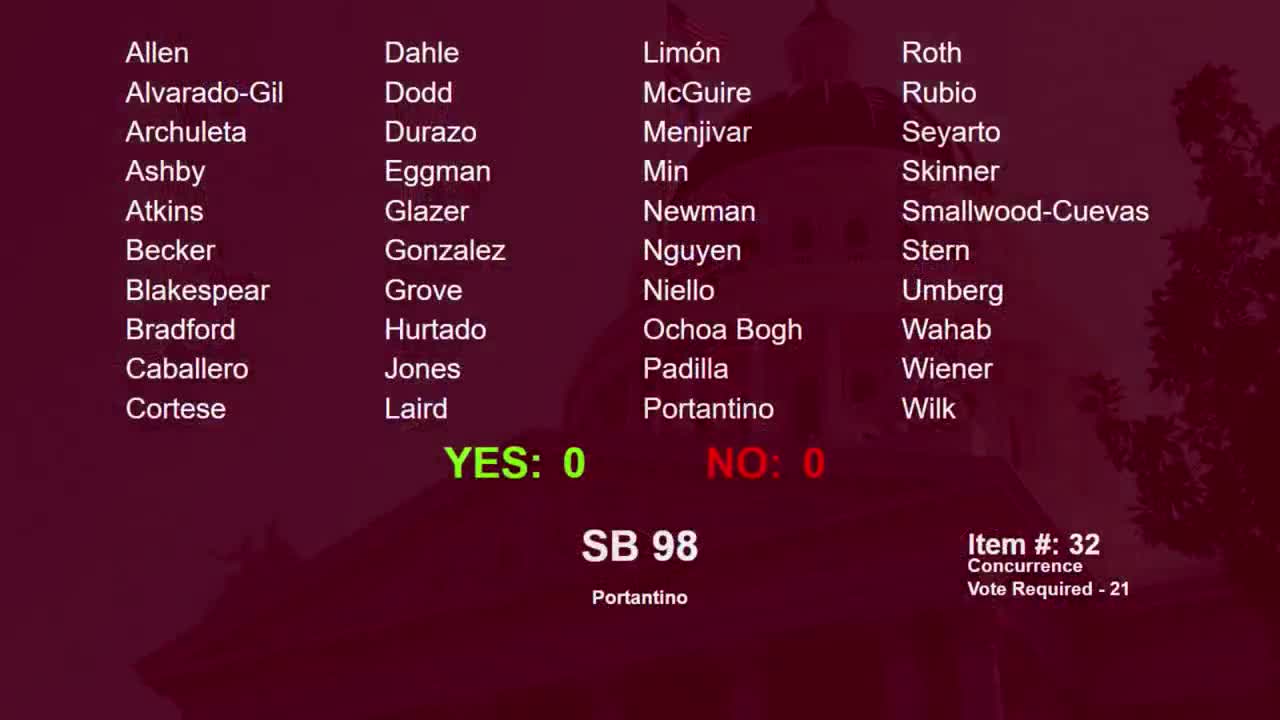

Bill Author

Bill Co-Author(s):