SB 347: Subdivision Map Act: exemption: hydrogen fueling stations and electric vehicle charging stations.
- Session Year: 2023-2024
- House: Senate
- Latest Version Date: 2024-09-25
Current Status:
Passed
(2024-09-25: Chaptered by Secretary of State. Chapter 591, Statutes of 2024.)
Introduced
In Committee
First Chamber
In Committee
Second Chamber
Enacted
The Subdivision Map Act vests the authority to regulate and control the design and improvement of subdivisions in the legislative body of a local agency and sets forth procedures governing the local agencys processing, approval, conditional approval or disapproval, and filing of tentative, final, and parcel maps, and the modification of those maps. The act excludes various projects from its provisions, including the leasing of, or the granting of an easement to, a parcel of land, or any portion of the land, in conjunction with the financing, erection, and sale or lease of a solar electrical generation device on the land, if the project is subject to review under other local agency ordinances regulating design and improvement or if the project is subject to discretionary action by the advisory agency or legislative body.
This bill would also exempt from the requirements of the Subdivision Map Act, the leasing of, or the granting of an easement to, a parcel of land or any portion of the land in conjunction with a hydrogen fueling station or an electric vehicle charging station, as those terms are defined, if the project is subject to discretionary action by the advisory agency or legislative body.
The Subdivision Map Act vests the authority to regulate and control the design and improvement of subdivisions in the legislative body of a local agency and sets forth procedures governing the local agencys processing, approval, conditional approval or disapproval, and filing of tentative, final, and parcel maps, and the modification of those maps. The act excludes various projects from its provisions, including the leasing of, or the granting of an easement to, a parcel of land, or any portion of the land, in conjunction with the financing, erection, and sale or lease of a solar electrical generation device on the land, if the project is subject to review under other local agency ordinances regulating design and improvement or if the project is subject to discretionary action by the advisory agency or legislative body.
This bill would also exempt from the requirements of the Subdivision Map Act, the leasing of, or the granting of an easement to, a parcel of land or any portion of the land in conjunction with a hydrogen fueling station or electrical an electric vehicle charging station, as specified, from the requirements of the Subdivision Map Act. those terms are defined, if the project is subject to discretionary action by the advisory agency or legislative body.
The Subdivision Map Act vests the authority to regulate and control the design and improvement of subdivisions in the legislative body of a local agency and sets forth procedures governing the local agencys processing, approval, conditional approval or disapproval, and filing of tentative, final, and parcel maps, and the modification of those maps. The act excludes various projects from its provisions, including the leasing of, or the granting of an easement to, a parcel of land, or any portion of the land, in conjunction with the financing, erection, and sale or lease of a solar electrical generation device on the land, if the project is subject to review under other local agency ordinances regulating design and improvement or if the project is subject to discretionary action by the advisory agency or legislative body.
This bill would also exempt a hydrogen fueling station or electrical charging station, as specified, from the requirements of the Subdivision Map Act.
Existing law requires the Commission on Teacher Credentialing to establish professional standards, assessments, and examinations for entry and advancement in the education profession, as provided, and to reduce and streamline the credential system to ensure teacher competence in the subject field or fields, while allowing greater flexibility in staffing local schools. Existing law requires the commission to awards various types of credentials to applicants whose preparation and competence satisfy those standards, including, among other credentials, basic teaching credentials in kindergarten or any of grades 1 to 12, inclusive, in public schools in the state, and credentials for teaching specialties, including bilingual education, early childhood education, and special education.This bill would require the commission to also award basic teaching credentials for preschool in public schools in the state.Existing law requires the Commission on Teacher Credentialing to establish professional standards, assessments, and examinations for entry and advancement in the education profession, as provided, and to reduce and streamline the credential system to ensure teacher competence in the subject field or fields, while allowing greater flexibility in staffing local schools. Existing law requires the commission to awards various types of credentials to applicants whose preparation and competence satisfy those standards, including, among other credentials, basic teaching credentials in kindergarten or any of grades 1 to 12, inclusive, in public schools in the state, and credentials for teaching specialties, including bilingual education, early childhood education, and special education.
This bill would require the commission to also award basic teaching credentials for preschool in public schools in the state.
Existing law establishes a provisional licensing program, and requires the Department of Motor Vehicles (DMV) to issue a drivers license to a person at least 16 years of age, but under 18 years of age, pursuant to that provisional licensing program after the person meets certain requirements, including satisfactory completion of approved courses in automobile driver education and driver training, as specified. Existing law also provides for the licensing and regulation of driving schools and driving instructors.This bill would require the DMV to establish a grant program to provide vouchers for high school students to attend automobile driver education and driver training by a driving school or independent driving instructor.Existing law establishes a provisional licensing program, and requires the Department of Motor Vehicles (DMV) to issue a drivers license to a person at least 16 years of age, but under 18 years of age, pursuant to that provisional licensing program after the person meets certain requirements, including satisfactory completion of approved courses in automobile driver education and driver training, as specified. Existing law also provides for the licensing and regulation of driving schools and driving instructors.
This bill would require the DMV to establish a grant program to provide vouchers for high school students to attend automobile driver education and driver training by a driving school or independent driving instructor.
This division shall be inapplicable to any of the following:
(a)The financing or leasing of apartments, offices, stores, or similar space within apartment buildings, industrial buildings, commercial buildings, mobilehome parks, or trailer parks.
(b)Mineral, oil, or gas leases.
(c)Land dedicated for cemetery purposes under the Health and Safety Code.
(d)A lot line adjustment between four or fewer existing adjoining parcels, where the land taken from one parcel is added to an adjoining parcel, and where a greater number of parcels than originally existed is not thereby created, if the lot line adjustment is approved by the local agency, or advisory agency. A local agency or advisory agency shall limit its review and approval to a determination of whether or not the parcels resulting from the lot line adjustment will conform to the local general plan, any applicable specific plan, any applicable coastal plan, and zoning and building ordinances. An advisory agency or local agency shall not impose conditions or exactions on its approval of a lot line adjustment except to conform to the local general plan, any applicable specific plan, any applicable coastal plan, and zoning and building ordinances, to require the prepayment of real property taxes prior to the approval of the lot line adjustment, or to facilitate the relocation of existing utilities, infrastructure, or easements. No tentative map, parcel map, or final map shall be required as a condition to the approval of a lot line adjustment. The lot line adjustment shall be reflected in a deed, which shall be recorded. No record of survey shall be required for a lot line adjustment unless required by Section 8762 of the Business and Professions Code. A local agency shall approve or disapprove a lot line adjustment pursuant to the Permit Streamlining Act (Chapter 4.5 (commencing with Section 65920) of Division 1).
(e)Boundary line or exchange agreements to which the State Lands Commission or a local agency holding a trust grant of tide and submerged lands is a party.
(f)Any separate assessment under Section 2188.7 of the Revenue and Taxation Code.
(g)The conversion of a community apartment project, as defined in Section 4105 of the Civil Code, to a condominium, as defined in Section 783 of the Civil Code, but only if all of the following requirements are met:
(1)The property was subdivided before January 1, 1982, as evidenced by a recorded deed creating the community apartment project.
(2)Subject to compliance with Sections 4290 and 4295 of the Civil Code, all conveyances and other documents necessary to effectuate the conversion shall be executed by the required number of owners in the project as specified in the bylaws or other organizational documents. If the bylaws or other organizational documents do not expressly specify the number of owners necessary to execute the conveyances and other documents, a majority of owners in the project shall be required to execute the conveyances or other documents. Conveyances and other documents executed under the foregoing provisions shall be binding upon and affect the interests of all parties in the project.
(3)If subdivision, as defined in Section 66424, of the property occurred after January 1, 1964, both of the following requirements are met:
(A)A final or parcel map of that subdivision was approved by the local agency and recorded, with all of the conditions of that map remaining in effect after the conversion.
(B)No more than 49 percent of the units in the project were owned by any one person as defined in Section 17, including an incorporator or director of the community apartment project, on January 1, 1982.
(4)The local agency certifies that the above requirements were satisfied if the local agency, by ordinance, provides for that certification.
(h)The conversion of a stock cooperative, as defined in Section 4190 or 6566 of the Civil Code, to a condominium, as defined in Section 783 of the Civil Code, but only if all of the following requirements are met:
(1)The property was subdivided before January 1, 1982, as evidenced by a recorded deed creating the stock cooperative, an assignment of lease, or issuance of shares to a stockholder.
(2)A person renting a unit in a cooperative shall be entitled at the time of conversion to all tenant rights in state or local law, including, but not limited to, rights respecting first refusal, notice, and displacement and relocation benefits.
(3)Subject to compliance with Sections 4290 and 4295, or with Sections 6626 and 6628, of the Civil Code, all conveyances and other documents necessary to effectuate the conversion shall be executed by the required number of owners in the cooperative as specified in the bylaws or other organizational documents. If the bylaws or other organizational documents do not expressly specify the number of owners necessary to execute the conveyances and other documents, a majority of owners in the cooperative shall be required to execute the conveyances or other documents. Conveyances and other documents executed under the foregoing provisions shall be binding upon and affect the interests of all parties in the cooperative.
(4)If subdivision, as defined in Section 66424, of the property occurred after January 1, 1980, both of the following requirements are met:
(A)A final or parcel map of that subdivision was approved by the local agency and recorded, with all of the conditions of that map remaining in effect after the conversion.
(B)No more than 49 percent of the shares in the project were owned by any one person as defined in Section 17, including an incorporator or director of the cooperative, on January 1, 1982.
(5)The local agency certifies that the above requirements were satisfied if the local agency, by ordinance, provides for that certification.
(i)The leasing of, or the granting of an easement to, a parcel of land, or any portion or portions thereof, in conjunction with the financing, erection, and sale or lease of a wind powered electrical generation device on the land, if the project is subject to discretionary action by the advisory agency or legislative body.
(j)The leasing or licensing of a portion of a parcel, or the granting of an easement, use permit, or similar right on a portion of a parcel, to a telephone corporation as defined in Section 234 of the Public Utilities Code, exclusively for the placement and operation of cellular radio transmission facilities, including, but not limited to, antennae support structures, microwave dishes, structures to house cellular communications transmission equipment, power sources, and other equipment incidental to the transmission of cellular communications, if the project is subject to discretionary action by the advisory agency or legislative body.
(k)Leases of agricultural land for agricultural purposes. As used in this subdivision, agricultural purposes means the cultivation of food or fiber, or the grazing or pasturing of livestock.
(l)The leasing of, or the granting of an easement to, a parcel of land, or any portion or portions thereof, in conjunction with the financing, erection, and sale or lease of a solar electrical generation device on the land, if the project is subject to review under other local agency ordinances regulating design and improvement or, if the project is subject to other discretionary action by the advisory agency or legislative body.
(m)The leasing of, or the granting of an easement to, a parcel of land or any portion or portions of the land in conjunction with a biogas project that uses, as part of its operation, agricultural waste or byproducts from the land where the project is located and reduces overall emissions of greenhouse gases from agricultural operations on the land if the project is subject to review under other local agency ordinances regulating design and improvement or if the project is subject to discretionary action by the advisory agency or legislative body.
(n)The leasing of, or the granting of an easement to, a parcel of land, or any portion or portions thereof, in conjunction with the financing, erection, and sale or lease of an electrical energy storage system on the land, if the project is subject to discretionary action by the advisory agency or legislative body. For the purposes of this subdivision, energy storage system has the same meaning as defined in Section 2835 of the Public Utilities Code.
(o)The leasing of, or the granting of an easement to, a parcel of land or any portion or portions of the land in conjunction with a hydrogen fueling station or an electric vehicle charging station, if the project is subject to discretionary action by the advisory agency or legislative body. For purposes of this subdivision, hydrogen fueling station and electric vehicle charging station have the same meanings as defined in Section 65850.7.
This division shall be inapplicable to any of the following:
(a)The financing or leasing of apartments, offices, stores, or similar space within apartment buildings, industrial buildings, commercial buildings, mobilehome parks, or trailer parks.
(b)Mineral, oil, or gas leases.
(c)Land dedicated for cemetery purposes under the Health and Safety Code.
(d)A lot line adjustment between four or fewer existing adjoining parcels, where the land taken from one parcel is added to an adjoining parcel, and where a greater number of parcels than originally existed is not thereby created, if the lot line adjustment is approved by the local agency, or advisory agency. A local agency or advisory agency shall limit its review and approval to a determination of whether or not the parcels resulting from the lot line adjustment will conform to the local general plan, any applicable specific plan, any applicable coastal plan, and zoning and building ordinances. An advisory agency or local agency shall not impose conditions or exactions on its approval of a lot line adjustment except to conform to the local general plan, any applicable specific plan, any applicable coastal plan, and zoning and building ordinances, to require the prepayment of real property taxes prior to the approval of the lot line adjustment, or to facilitate the relocation of existing utilities, infrastructure, or easements. No tentative map, parcel map, or final map shall be required as a condition to the approval of a lot line adjustment. The lot line adjustment shall be reflected in a deed, which shall be recorded. No record of survey shall be required for a lot line adjustment unless required by Section 8762 of the Business and Professions Code. A local agency shall approve or disapprove a lot line adjustment pursuant to the Permit Streamlining Act (Chapter 4.5 (commencing with Section 65920) of Division 1).
(e)Boundary line or exchange agreements to which the State Lands Commission or a local agency holding a trust grant of tide and submerged lands is a party.
(f)Any separate assessment under Section 2188.7 of the Revenue and Taxation Code.
(g)The conversion of a community apartment project, as defined in Section 4105 of the Civil Code, to a condominium, as defined in Section 783 of the Civil Code, but only if all of the following requirements are met:
(1)The property was subdivided before January 1, 1982, as evidenced by a recorded deed creating the community apartment project.
(2)Subject to compliance with Sections 4290 and 4295 of the Civil Code, all conveyances and other documents necessary to effectuate the conversion shall be executed by the required number of owners in the project as specified in the bylaws or other organizational documents. If the bylaws or other organizational documents do not expressly specify the number of owners necessary to execute the conveyances and other documents, a majority of owners in the project shall be required to execute the conveyances or other documents. Conveyances and other documents executed under the foregoing provisions shall be binding upon and affect the interests of all parties in the project.
(3)If subdivision, as defined in Section 66424, of the property occurred after January 1, 1964, both of the following requirements are met:
(A)A final or parcel map of that subdivision was approved by the local agency and recorded, with all of the conditions of that map remaining in effect after the conversion.
(B)No more than 49 percent of the units in the project were owned by any one person as defined in Section 17, including an incorporator or director of the community apartment project, on January 1, 1982.
(4)The local agency certifies that the above requirements were satisfied if the local agency, by ordinance, provides for that certification.
(h)The conversion of a stock cooperative, as defined in Section 4190 or 6566 of the Civil Code, to a condominium, as defined in Section 783 of the Civil Code, but only if all of the following requirements are met:
(1)The property was subdivided before January 1, 1982, as evidenced by a recorded deed creating the stock cooperative, an assignment of lease, or issuance of shares to a stockholder.
(2)A person renting a unit in a cooperative shall be entitled at the time of conversion to all tenant rights in state or local law, including, but not limited to, rights respecting first refusal, notice, and displacement and relocation benefits.
(3)Subject to compliance with Sections 4290 and 4295, or with Sections 6626 and 6628, of the Civil Code, all conveyances and other documents necessary to effectuate the conversion shall be executed by the required number of owners in the cooperative as specified in the bylaws or other organizational documents. If the bylaws or other organizational documents do not expressly specify the number of owners necessary to execute the conveyances and other documents, a majority of owners in the cooperative shall be required to execute the conveyances or other documents. Conveyances and other documents executed under the foregoing provisions shall be binding upon and affect the interests of all parties in the cooperative.
(4)If subdivision, as defined in Section 66424, of the property occurred after January 1, 1980, both of the following requirements are met:
(A)A final or parcel map of that subdivision was approved by the local agency and recorded, with all of the conditions of that map remaining in effect after the conversion.
(B)No more than 49 percent of the shares in the project were owned by any one person as defined in Section 17, including an incorporator or director of the cooperative, on January 1, 1982.
(5)The local agency certifies that the above requirements were satisfied if the local agency, by ordinance, provides for that certification.
(i)The leasing of, or the granting of an easement to, a parcel of land, or any portion or portions thereof, in conjunction with the financing, erection, and sale or lease of a wind powered electrical generation device on the land, if the project is subject to discretionary action by the advisory agency or legislative body.
(j)The leasing or licensing of a portion of a parcel, or the granting of an easement, use permit, or similar right on a portion of a parcel, to a telephone corporation as defined in Section 234 of the Public Utilities Code, exclusively for the placement and operation of cellular radio transmission facilities, including, but not limited to, antennae support structures, microwave dishes, structures to house cellular communications transmission equipment, power sources, and other equipment incidental to the transmission of cellular communications, if the project is subject to discretionary action by the advisory agency or legislative body.
(k)Leases of agricultural land for agricultural purposes. As used in this subdivision, agricultural purposes means the cultivation of food or fiber, or the grazing or pasturing of livestock.
(l)The leasing of, or the granting of an easement to, a parcel of land, or any portion or portions thereof, in conjunction with the financing, erection, and sale or lease of a solar electrical generation device on the land, if the project is subject to review under other local agency ordinances regulating design and improvement or, if the project is subject to other discretionary action by the advisory agency or legislative body.
(m)The leasing of, or the granting of an easement to, a parcel of land or any portion or portions of the land in conjunction with a biogas project that uses, as part of its operation, agricultural waste or byproducts from the land where the project is located and reduces overall emissions of greenhouse gases from agricultural operations on the land if the project is subject to review under other local agency ordinances regulating design and improvement or if the project is subject to discretionary action by the advisory agency or legislative body.
(n)The leasing of, or the granting of an easement to, a parcel of land, or any portion or portions thereof, in conjunction with the financing, erection, and sale or lease of an electrical energy storage system on the land, if the project is subject to discretionary action by the advisory agency or legislative body. For the purposes of this subdivision, energy storage system has the same meaning as defined in Section 2835 of the Public Utilities Code.
(o)A hydrogen fueling station or electrical charging station that satisfies the requirements of subdivision (b) of Section 65850.7.(o)The leasing of, or the granting of an easement to, a parcel of land or any portion or portions of the land in conjunction with a hydrogen fueling station or an electric vehicle charging station, if the project is subject to discretionary action by the advisory agency or legislative body. For purposes of this subdivision, hydrogen fueling station and electric vehicle charging station have the same meanings as defined in Section 65850.7.
This division shall be inapplicable to any of the following:
(a)The financing or leasing of apartments, offices, stores, or similar space within apartment buildings, industrial buildings, commercial buildings, mobilehome parks, or trailer parks.
(b)Mineral, oil, or gas leases.
(c)Land dedicated for cemetery purposes under the Health and Safety Code.
(d)A lot line adjustment between four or fewer existing adjoining parcels, where the land taken from one parcel is added to an adjoining parcel, and where a greater number of parcels than originally existed is not thereby created, if the lot line adjustment is approved by the local agency, or advisory agency. A local agency or advisory agency shall limit its review and approval to a determination of whether or not the parcels resulting from the lot line adjustment will conform to the local general plan, any applicable specific plan, any applicable coastal plan, and zoning and building ordinances. An advisory agency or local agency shall not impose conditions or exactions on its approval of a lot line adjustment except to conform to the local general plan, any applicable specific plan, any applicable coastal plan, and zoning and building ordinances, to require the prepayment of real property taxes prior to the approval of the lot line adjustment, or to facilitate the relocation of existing utilities, infrastructure, or easements. No tentative map, parcel map, or final map shall be required as a condition to the approval of a lot line adjustment. The lot line adjustment shall be reflected in a deed, which shall be recorded. No record of survey shall be required for a lot line adjustment unless required by Section 8762 of the Business and Professions Code. A local agency shall approve or disapprove a lot line adjustment pursuant to the Permit Streamlining Act (Chapter 4.5 (commencing with Section 65920) of Division 1).
(e)Boundary line or exchange agreements to which the State Lands Commission or a local agency holding a trust grant of tide and submerged lands is a party.
(f)Any separate assessment under Section 2188.7 of the Revenue and Taxation Code.
(g)The conversion of a community apartment project, as defined in Section 4105 of the Civil Code, to a condominium, as defined in Section 783 of the Civil Code, but only if all of the following requirements are met:
(1)The property was subdivided before January 1, 1982, as evidenced by a recorded deed creating the community apartment project.
(2)Subject to compliance with Sections 4290 and 4295 of the Civil Code, all conveyances and other documents necessary to effectuate the conversion shall be executed by the required number of owners in the project as specified in the bylaws or other organizational documents. If the bylaws or other organizational documents do not expressly specify the number of owners necessary to execute the conveyances and other documents, a majority of owners in the project shall be required to execute the conveyances or other documents. Conveyances and other documents executed under the foregoing provisions shall be binding upon and affect the interests of all parties in the project.
(3)If subdivision, as defined in Section 66424, of the property occurred after January 1, 1964, both of the following requirements are met:
(A)A final or parcel map of that subdivision was approved by the local agency and recorded, with all of the conditions of that map remaining in effect after the conversion.
(B)No more than 49 percent of the units in the project were owned by any one person as defined in Section 17, including an incorporator or director of the community apartment project, on January 1, 1982.
(4)The local agency certifies that the above requirements were satisfied if the local agency, by ordinance, provides for that certification.
(h)The conversion of a stock cooperative, as defined in Section 4190 or 6566 of the Civil Code, to a condominium, as defined in Section 783 of the Civil Code, but only if all of the following requirements are met:
(1)The property was subdivided before January 1, 1982, as evidenced by a recorded deed creating the stock cooperative, an assignment of lease, or issuance of shares to a stockholder.
(2)A person renting a unit in a cooperative shall be entitled at the time of conversion to all tenant rights in state or local law, including, but not limited to, rights respecting first refusal, notice, and displacement and relocation benefits.
(3)Subject to compliance with Sections 4290 and 4295, or with Sections 6626 and 6628, of the Civil Code, all conveyances and other documents necessary to effectuate the conversion shall be executed by the required number of owners in the cooperative as specified in the bylaws or other organizational documents. If the bylaws or other organizational documents do not expressly specify the number of owners necessary to execute the conveyances and other documents, a majority of owners in the cooperative shall be required to execute the conveyances or other documents. Conveyances and other documents executed under the foregoing provisions shall be binding upon and affect the interests of all parties in the cooperative.
(4)If subdivision, as defined in Section 66424, of the property occurred after January 1, 1980, both of the following requirements are met:
(A)A final or parcel map of that subdivision was approved by the local agency and recorded, with all of the conditions of that map remaining in effect after the conversion.
(B)No more than 49 percent of the shares in the project were owned by any one person as defined in Section 17, including an incorporator or director of the cooperative, on January 1, 1982.
(5)The local agency certifies that the above requirements were satisfied if the local agency, by ordinance, provides for that certification.
(i)The leasing of, or the granting of an easement to, a parcel of land, or any portion or portions thereof, in conjunction with the financing, erection, and sale or lease of a wind powered electrical generation device on the land, if the project is subject to discretionary action by the advisory agency or legislative body.
(j)The leasing or licensing of a portion of a parcel, or the granting of an easement, use permit, or similar right on a portion of a parcel, to a telephone corporation as defined in Section 234 of the Public Utilities Code, exclusively for the placement and operation of cellular radio transmission facilities, including, but not limited to, antennae support structures, microwave dishes, structures to house cellular communications transmission equipment, power sources, and other equipment incidental to the transmission of cellular communications, if the project is subject to discretionary action by the advisory agency or legislative body.
(k)Leases of agricultural land for agricultural purposes. As used in this subdivision, agricultural purposes means the cultivation of food or fiber, or the grazing or pasturing of livestock.
(l)The leasing of, or the granting of an easement to, a parcel of land, or any portion or portions thereof, in conjunction with the financing, erection, and sale or lease of a solar electrical generation device on the land, if the project is subject to review under other local agency ordinances regulating design and improvement or, if the project is subject to other discretionary action by the advisory agency or legislative body.
(m)The leasing of, or the granting of an easement to, a parcel of land or any portion or portions of the land in conjunction with a biogas project that uses, as part of its operation, agricultural waste or byproducts from the land where the project is located and reduces overall emissions of greenhouse gases from agricultural operations on the land if the project is subject to review under other local agency ordinances regulating design and improvement or if the project is subject to discretionary action by the advisory agency or legislative body.
(n)The leasing of, or the granting of an easement to, a parcel of land, or any portion or portions thereof, in conjunction with the financing, erection, and sale or lease of an electrical energy storage system on the land, if the project is subject to discretionary action by the advisory agency or legislative body. For the purposes of this subdivision, energy storage system has the same meaning as defined in Section 2835 of the Public Utilities Code.
(o)A hydrogen fueling station or electrical charging station that satisfies the requirements of subdivision (b) of Section 65850.7.
SECTION 1.Section 44225 of the Education Code is amended to read:44225.The commission shall do all of the following:(a)Establish professional standards, assessments, and examinations for entry and advancement in the education profession. While the Legislature recognizes that the commission will exercise its prerogative to determine those requirements, it is the intent of the Legislature that standards, assessments, and examinations be developed and implemented for the following:(1)(A)The preliminary teaching credential, to be granted upon possession of a baccalaureate degree from a regionally accredited institution of higher education, completion of an accredited program of professional preparation, and either successful passage of an examination or assessment that has been adopted or approved by the commission in the subject or subjects appropriate to the grade level to be taught, to include college-level reading, writing, and mathematics skills, or completion of an accredited program of subject matter preparation and successful passage of the basic skills proficiency test as provided for in Article 4 (commencing with Section 44250). The commission shall uniformly consider the results of the basic skills proficiency test in conjunction with other pertinent information about the qualifications of each candidate for a preliminary credential, and may award the credential on the basis of the overall performance of a candidate as measured by several criteria of professional competence if the candidate meets minimum standards set by the commission on each criterion. Upon application by a regionally accredited institution of higher education, the commission may categorically grant credit to coursework completed in an accredited program of professional preparation, as specified by this paragraph, by undergraduates of that institution, if the commission finds there are adequate assurances of the quality of necessary undergraduate instruction in the liberal arts and in the subject area or areas to be taught.(B)Notwithstanding subparagraph (A), for single subject teaching credentials, the baccalaureate degree shall not be in the subject of professional education.(2)The professional teaching credential, to be granted upon successful passage of a state examination or assessment in the subject or subjects appropriate to the grade level to be taught, to include college-level basic reading, writing, and mathematics skills, and completion of a period of beginning teacher support that includes assessments of ability to teach subject matter to pupils, ability to work well with pupils, classroom management, and instructional skills. A candidate who successfully passes the examination or assessment pursuant to paragraph (1) shall be deemed to have passed the state examination or assessment in the subject or subjects to be taught pursuant to this paragraph.(b)(1)Reduce and streamline the credential system to ensure teacher competence in the subject field or fields, while allowing greater flexibility in staffing local schools. The commission shall award the following types of credentials to applicants whose preparation and competence satisfy its standards:(A)Basic teaching credentials for teaching in preschool, kindergarten, or any of grades 1 to 12, inclusive, in public schools in the state.(B)Credentials for teaching adult education classes and vocational education classes.(C)Credentials for teaching specialties, including, but not necessarily limited to, bilingual education, early childhood education, and special education. The commission may grant credentials to any candidate who concurrently meets the commissions standards of preparation and competence for the preliminary basic teaching credential and the preliminary specialty credential.(D)Credentials for school services, for positions including, but not necessarily limited to, administrators, school counselors, speech-language therapists, audiologists, school psychologists, library media teachers, supervisors of attendance, and school nurses.(2)The commission may establish standards and requirements for preliminary and professional credentials of each type.(c)Review and, if necessary, revise the code of ethics for the teaching profession.(d)Establish standards for the issuance and renewal of credentials, certificates, and permits. In setting standards, the commission shall seek to ensure, through its credentialing of teachers, that public school teachers satisfy all of the following criteria:(1)Are academically talented.(2)Are knowledgeable of the subjects to be taught in the classroom.(3)Are creative and energetic.(4)Have the human skills to motivate and inspire pupils to achieve their goals.(5)Have the sensitivity to foster self-esteem in pupils through recognition that each pupil has their own goals, talents, and levels of development.(6)Are willing to relate the educational process and their instructional strategies to meet the needs of pupils.(7)Are able to work effectively with and motivate pupils from a variety of ethnic, socioeconomic, cultural, academic, and linguistic backgrounds.(8)Have an understanding of principles and laws related to educational equity, and the equitable practice of the profession of education among all pupils regardless of their ethnicity, race, gender, age, religious background, primary language, or disabling condition.(e)Determine the scope and authorization of credentials to ensure competence in teaching and other educational services, and establish sanctions for the misuse of credentials and the misassignment of credentialholders. The commission may grant an added or supplementary authorization to a credentialholder who has met the requirements and standards of the commission for the added or supplementary authorization. The commission shall exempt the holder of a teaching credential obtained before January 1, 1974, who adds an authorization by successfully completing a commission-approved subject matter examination, from the requirements of subdivision (e) of Section 44259 and Section 44261.(f)Collect, compile, and disseminate information regarding exemplary practices in supporting and assessing beginning teachers.(g)Establish alternative methods for entry into the teaching profession, and into other certificated roles in the schools, by persons in varying circumstances, including persons who have been educated outside of California, provided that each applicant satisfies all of the requirements established by the commission. One alternative method shall be the successful completion of at least two years of classroom instruction under a district intern certificate pursuant to Article 7.5 (commencing with Section 44325). In establishing alternative methods for entry into the teaching profession, the commission shall develop strategies to encourage classroom aides to become credentialed teachers.(h)Adopt a framework and general standards for the accreditation of preparation programs for teachers and other certificated educators pursuant to Article 7 (commencing with Section 44320).(i)Appoint classroom teachers, school administrators, other school services personnel, representatives of the public, and public or private higher education representatives to one or more standing committees, which shall be given authority to recommend to the commission standards relating to examinations, performance assessments, program accreditation, and licensing. The commission shall establish criteria for membership on those committees, and shall determine the terms of committee members. Appointments to standing committees by the commission shall reflect, to the extent feasible, the ethnic and cultural diversity of the California public schools.(j)Consult with classroom teachers, faculty members from institutions of higher education that maintain accredited programs of professional preparation for teachers, administrators or other school services personnel, and other experts to aid in the development of examinations and assessments, and to study the impact of examinations and assessments on the teaching profession. To increase the fairness of its certification decisions, the commission may uniformly consider the results of tests, subtests, and assessments in conjunction with each other, and in conjunction with other pertinent information about the qualifications of each candidate. The commission may award credentials on the basis of average overall performances by candidates on several criteria of professional competence if the candidate meets minimum standards set by the commission on each criterion.(k)Adopt standards for all examinations and assessments that shall ensure that all prospective teachers demonstrate an understanding of the history and cultures of the major ethnic populations of this state and of teaching strategies for the acquisition of English language skills by non-English-speaking pupils.(l)Determine the terms of credentials, certificates, and permits, except that no credential, certificate, or permit shall be valid for more than five years from the date of issuance. This article shall govern the issuance of any credential, certificate, or permit, except as follows:(1)A credential, certificate, or permit shall remain in force as long as it is valid and continues to be valid under the laws and regulations that were in effect when it was issued.(2)The commission shall grant teaching credentials pursuant to statutes that were in effect on December 31, 1988, to candidates who, before the effective date of regulations to implement subdivision (a), were in the process of meeting the requirements for teaching credentials that were in effect on December 31, 1988, except that neither enrollment as an undergraduate student nor receipt of a baccalaureate degree from a regionally accredited institution of higher education before the effective date of the regulations shall, by itself, exempt a candidate from the requirements of subdivision (a). Enrollment in a preparation program for teachers before the effective date of the regulations shall not exempt a candidate from the requirements of paragraph (2) of subdivision (a), if the preliminary credential of the candidate was granted after the effective date of the regulations.(m)(1)Review requests from school districts, county offices of education, private schools, and postsecondary institutions for the waiver of one or more of the provisions of this chapter or other provisions governing the preparation or licensing of educators. The commission may grant a waiver upon finding that the professional preparation equivalent to that prescribed under the provision or provisions to be waived will be, or has been, completed by the credential candidate or candidates affected, or that a waiver is necessary to accomplish any of the following:(A)Give a local educational agency one semester or less to address unanticipated, immediate, short-term shortages of fully qualified educators by assigning a teacher who holds a basic teaching credential to teach outside of the teachers credential authorization, with the teachers consent.(B)Provide credential candidates additional time to complete a credential requirement.(C)Allow local school districts or schools to implement an education reform or restructuring plan.(D)Temporarily exempt from a specified credential requirement small, geographically isolated regions with a severely limited ability to develop personnel.(E)Provide other temporary exemptions when deemed appropriate by the commission.(2)No provision in this chapter shall be waived under Sections 33050 and 33051, after June 30, 1994, by the state board.(n)It is the intent of the Legislature that the commission develop models for voluntary use by California colleges and universities that do not have these models in place, to assist in the screening of applications for admission to teacher education programs. The models shall give emphasis to the following qualifications of the applicants: academic talent, knowledge of subjects to be taught, basic academic skills, creativity, experience in working with children and adolescents, ability to motivate and inspire pupils, and willingness to relate education to pupils with a wide variety of cultural, ethnic, and academic backgrounds. The commission may continue to administer the state basic skills proficiency test, in order (1) to use the results of this test in awarding preliminary teaching credentials and emergency permits, and (2) to enable colleges and universities to use this test in conjunction with other appropriate sources of information in teacher preparation admission decisions. However, it is the intent of the Legislature that applicants for admission to teacher preparation programs shall not be denied admission solely on the basis of state basic skills proficiency test results. The commission may recover the costs of administering and developing the test by charging examinees a fee for taking the test.(o)It is the intent of the Legislature that the commission encourage colleges and universities to design and implement, by August 1, 1990, concentrated internship programs for persons who have attained a baccalaureate degree in the field in which they intend to teach. Those programs would be targeted at subject area shortages, would substitute for conventional training programs, and would include a full summer session of college-level coursework, a one-year internship, or the equivalent, a seminar throughout the internship, and a summer session following the internship. Educator preparation through internship programs shall be subject to Article 10 (commencing with Section 44370).(p)Grant a field placement certificate to a candidate who has been admitted to an accredited program of professional preparation, and who must complete a supervised practicum in public elementary or secondary schools as a condition for completion of the program. The commission shall establish standards for the issuance of field placement certificates.(q)Propose appropriate rules and regulations to implement Chapter 1355 of the Statutes of 1988.(r)Adopt subject matter assessments for teaching credentials after developing those assessments jointly with the Superintendent.The commission shall do all of the following:
(a)Establish professional standards, assessments, and examinations for entry and advancement in the education profession. While the Legislature recognizes that the commission will exercise its prerogative to determine those requirements, it is the intent of the Legislature that standards, assessments, and examinations be developed and implemented for the following:
(1)(A)The preliminary teaching credential, to be granted upon possession of a baccalaureate degree from a regionally accredited institution of higher education, completion of an accredited program of professional preparation, and either successful passage of an examination or assessment that has been adopted or approved by the commission in the subject or subjects appropriate to the grade level to be taught, to include college-level reading, writing, and mathematics skills, or completion of an accredited program of subject matter preparation and successful passage of the basic skills proficiency test as provided for in Article 4 (commencing with Section 44250). The commission shall uniformly consider the results of the basic skills proficiency test in conjunction with other pertinent information about the qualifications of each candidate for a preliminary credential, and may award the credential on the basis of the overall performance of a candidate as measured by several criteria of professional competence if the candidate meets minimum standards set by the commission on each criterion. Upon application by a regionally accredited institution of higher education, the commission may categorically grant credit to coursework completed in an accredited program of professional preparation, as specified by this paragraph, by undergraduates of that institution, if the commission finds there are adequate assurances of the quality of necessary undergraduate instruction in the liberal arts and in the subject area or areas to be taught.
(B)Notwithstanding subparagraph (A), for single subject teaching credentials, the baccalaureate degree shall not be in the subject of professional education.
(2)The professional teaching credential, to be granted upon successful passage of a state examination or assessment in the subject or subjects appropriate to the grade level to be taught, to include college-level basic reading, writing, and mathematics skills, and completion of a period of beginning teacher support that includes assessments of ability to teach subject matter to pupils, ability to work well with pupils, classroom management, and instructional skills. A candidate who successfully passes the examination or assessment pursuant to paragraph (1) shall be deemed to have passed the state examination or assessment in the subject or subjects to be taught pursuant to this paragraph.
(b)(1)Reduce and streamline the credential system to ensure teacher competence in the subject field or fields, while allowing greater flexibility in staffing local schools. The commission shall award the following types of credentials to applicants whose preparation and competence satisfy its standards:
(A)Basic teaching credentials for teaching in preschool, kindergarten, or any of grades 1 to 12, inclusive, in public schools in the state.
(B)Credentials for teaching adult education classes and vocational education classes.
(C)Credentials for teaching specialties, including, but not necessarily limited to, bilingual education, early childhood education, and special education. The commission may grant credentials to any candidate who concurrently meets the commissions standards of preparation and competence for the preliminary basic teaching credential and the preliminary specialty credential.
(D)Credentials for school services, for positions including, but not necessarily limited to, administrators, school counselors, speech-language therapists, audiologists, school psychologists, library media teachers, supervisors of attendance, and school nurses.
(2)The commission may establish standards and requirements for preliminary and professional credentials of each type.
(c)Review and, if necessary, revise the code of ethics for the teaching profession.
(d)Establish standards for the issuance and renewal of credentials, certificates, and permits. In setting standards, the commission shall seek to ensure, through its credentialing of teachers, that public school teachers satisfy all of the following criteria:
(1)Are academically talented.
(2)Are knowledgeable of the subjects to be taught in the classroom.
(3)Are creative and energetic.
(4)Have the human skills to motivate and inspire pupils to achieve their goals.
(5)Have the sensitivity to foster self-esteem in pupils through recognition that each pupil has their own goals, talents, and levels of development.
(6)Are willing to relate the educational process and their instructional strategies to meet the needs of pupils.
(7)Are able to work effectively with and motivate pupils from a variety of ethnic, socioeconomic, cultural, academic, and linguistic backgrounds.
(8)Have an understanding of principles and laws related to educational equity, and the equitable practice of the profession of education among all pupils regardless of their ethnicity, race, gender, age, religious background, primary language, or disabling condition.
(e)Determine the scope and authorization of credentials to ensure competence in teaching and other educational services, and establish sanctions for the misuse of credentials and the misassignment of credentialholders. The commission may grant an added or supplementary authorization to a credentialholder who has met the requirements and standards of the commission for the added or supplementary authorization. The commission shall exempt the holder of a teaching credential obtained before January 1, 1974, who adds an authorization by successfully completing a commission-approved subject matter examination, from the requirements of subdivision (e) of Section 44259 and Section 44261.
(f)Collect, compile, and disseminate information regarding exemplary practices in supporting and assessing beginning teachers.
(g)Establish alternative methods for entry into the teaching profession, and into other certificated roles in the schools, by persons in varying circumstances, including persons who have been educated outside of California, provided that each applicant satisfies all of the requirements established by the commission. One alternative method shall be the successful completion of at least two years of classroom instruction under a district intern certificate pursuant to Article 7.5 (commencing with Section 44325). In establishing alternative methods for entry into the teaching profession, the commission shall develop strategies to encourage classroom aides to become credentialed teachers.
(h)Adopt a framework and general standards for the accreditation of preparation programs for teachers and other certificated educators pursuant to Article 7 (commencing with Section 44320).
(i)Appoint classroom teachers, school administrators, other school services personnel, representatives of the public, and public or private higher education representatives to one or more standing committees, which shall be given authority to recommend to the commission standards relating to examinations, performance assessments, program accreditation, and licensing. The commission shall establish criteria for membership on those committees, and shall determine the terms of committee members. Appointments to standing committees by the commission shall reflect, to the extent feasible, the ethnic and cultural diversity of the California public schools.
(j)Consult with classroom teachers, faculty members from institutions of higher education that maintain accredited programs of professional preparation for teachers, administrators or other school services personnel, and other experts to aid in the development of examinations and assessments, and to study the impact of examinations and assessments on the teaching profession. To increase the fairness of its certification decisions, the commission may uniformly consider the results of tests, subtests, and assessments in conjunction with each other, and in conjunction with other pertinent information about the qualifications of each candidate. The commission may award credentials on the basis of average overall performances by candidates on several criteria of professional competence if the candidate meets minimum standards set by the commission on each criterion.
(k)Adopt standards for all examinations and assessments that shall ensure that all prospective teachers demonstrate an understanding of the history and cultures of the major ethnic populations of this state and of teaching strategies for the acquisition of English language skills by non-English-speaking pupils.
(l)Determine the terms of credentials, certificates, and permits, except that no credential, certificate, or permit shall be valid for more than five years from the date of issuance. This article shall govern the issuance of any credential, certificate, or permit, except as follows:
(1)A credential, certificate, or permit shall remain in force as long as it is valid and continues to be valid under the laws and regulations that were in effect when it was issued.
(2)The commission shall grant teaching credentials pursuant to statutes that were in effect on December 31, 1988, to candidates who, before the effective date of regulations to implement subdivision (a), were in the process of meeting the requirements for teaching credentials that were in effect on December 31, 1988, except that neither enrollment as an undergraduate student nor receipt of a baccalaureate degree from a regionally accredited institution of higher education before the effective date of the regulations shall, by itself, exempt a candidate from the requirements of subdivision (a). Enrollment in a preparation program for teachers before the effective date of the regulations shall not exempt a candidate from the requirements of paragraph (2) of subdivision (a), if the preliminary credential of the candidate was granted after the effective date of the regulations.
(m)(1)Review requests from school districts, county offices of education, private schools, and postsecondary institutions for the waiver of one or more of the provisions of this chapter or other provisions governing the preparation or licensing of educators. The commission may grant a waiver upon finding that the professional preparation equivalent to that prescribed under the provision or provisions to be waived will be, or has been, completed by the credential candidate or candidates affected, or that a waiver is necessary to accomplish any of the following:
(A)Give a local educational agency one semester or less to address unanticipated, immediate, short-term shortages of fully qualified educators by assigning a teacher who holds a basic teaching credential to teach outside of the teachers credential authorization, with the teachers consent.
(B)Provide credential candidates additional time to complete a credential requirement.
(C)Allow local school districts or schools to implement an education reform or restructuring plan.
(D)Temporarily exempt from a specified credential requirement small, geographically isolated regions with a severely limited ability to develop personnel.
(E)Provide other temporary exemptions when deemed appropriate by the commission.
(2)No provision in this chapter shall be waived under Sections 33050 and 33051, after June 30, 1994, by the state board.
(n)It is the intent of the Legislature that the commission develop models for voluntary use by California colleges and universities that do not have these models in place, to assist in the screening of applications for admission to teacher education programs. The models shall give emphasis to the following qualifications of the applicants: academic talent, knowledge of subjects to be taught, basic academic skills, creativity, experience in working with children and adolescents, ability to motivate and inspire pupils, and willingness to relate education to pupils with a wide variety of cultural, ethnic, and academic backgrounds. The commission may continue to administer the state basic skills proficiency test, in order (1) to use the results of this test in awarding preliminary teaching credentials and emergency permits, and (2) to enable colleges and universities to use this test in conjunction with other appropriate sources of information in teacher preparation admission decisions. However, it is the intent of the Legislature that applicants for admission to teacher preparation programs shall not be denied admission solely on the basis of state basic skills proficiency test results. The commission may recover the costs of administering and developing the test by charging examinees a fee for taking the test.
(o)It is the intent of the Legislature that the commission encourage colleges and universities to design and implement, by August 1, 1990, concentrated internship programs for persons who have attained a baccalaureate degree in the field in which they intend to teach. Those programs would be targeted at subject area shortages, would substitute for conventional training programs, and would include a full summer session of college-level coursework, a one-year internship, or the equivalent, a seminar throughout the internship, and a summer session following the internship. Educator preparation through internship programs shall be subject to Article 10 (commencing with Section 44370).
(p)Grant a field placement certificate to a candidate who has been admitted to an accredited program of professional preparation, and who must complete a supervised practicum in public elementary or secondary schools as a condition for completion of the program. The commission shall establish standards for the issuance of field placement certificates.
(q)Propose appropriate rules and regulations to implement Chapter 1355 of the Statutes of 1988.
(r)Adopt subject matter assessments for teaching credentials after developing those assessments jointly with the Superintendent.
SECTION 1.Section 1657.5 is added to the Vehicle Code, to read:1657.5.The department shall establish a grant program to provide vouchers for high school students to attend automobile driver education and driver training by a driving school or independent driving instructor licensed under Chapter 1 (commencing with Section 11100) of Division 5.The department shall establish a grant program to provide vouchers for high school students to attend automobile driver education and driver training by a driving school or independent driving instructor licensed under Chapter 1 (commencing with Section 11100) of Division 5.
|
Date
|
Status
|
|---|---|
| Sep 25, 2024 | Chaptered by Secretary of State. Chapter 591, Statutes of 2024. |
| Sep 25, 2024 | Approved by the Governor. |
| Sep 9, 2024 | Enrolled and presented to the Governor at 3 p.m. |
| Aug 29, 2024 | Assembly amendments concurred in. (Ayes 40. Noes 0. Page 5656.) Ordered to engrossing and enrolling. |
| Aug 27, 2024 | From committee: That the Assembly amendments be concurred in. (Ayes 5. Noes 0. Page 5516.) |
| Aug 26, 2024 | Set for hearing August 27. |
| Aug 19, 2024 | Re-referred to Com. on RLS pursuant to Senate Rule 29.10(d). |
| Aug 19, 2024 | From committee: Be re-referred to Com. on L. GOV. pursuant to Senate Rule 29.10(d). (Ayes 5. Noes 0. Page 5165.) Re-referred to Com. on L. GOV. |
| Aug 15, 2024 | In Senate. Concurrence in Assembly amendments pending. |
| Aug 15, 2024 | Read third time. Passed. (Ayes 75. Noes 0. Page 6316.) Ordered to the Senate. |
| Jul 1, 2024 | Read second time. Ordered to third reading. |
| Jun 27, 2024 | Read second time and amended. Ordered to second reading. |
| Jun 26, 2024 | From committee: Do pass as amended. (Ayes 8. Noes 0.) (June 26). |
| Jun 13, 2024 | Re-referred to Com. on L. GOV. pursuant to Assembly Rule 96. |
| Jun 4, 2024 | From committee with author's amendments. Read second time and amended. Re-referred to Com. on ED. |
| Apr 29, 2024 | Referred to Com. on ED. |
| Jan 22, 2024 | In Assembly. Read first time. Held at Desk. |
| Jan 22, 2024 | Read third time. Passed. (Ayes 39. Noes 0. Page 3020.) Ordered to the Assembly. |
| Jan 17, 2024 | Read second time. Ordered to third reading. |
| Jan 16, 2024 | From committee: Be ordered to second reading pursuant to Senate Rule 28.8. |
| Jan 11, 2024 | Set for hearing January 16. |
| Jan 10, 2024 | From committee: Do pass and re-refer to Com. on APPR. (Ayes 7. Noes 0. Page 2969.) (January 10). Re-referred to Com. on APPR. |
| Jan 5, 2024 | Set for hearing January 10. |
| Jan 3, 2024 | Withdrawn from committee. |
| Jan 3, 2024 | Re-referred to Com. on RLS. |
| Jan 3, 2024 | Re-referred to Com. on ED. |
| Jan 3, 2024 | From committee with author's amendments. Read second time and amended. Re-referred to Com. on TRANS. |
| Apr 18, 2023 | April 25 set for first hearing canceled at the request of author. |
| Apr 3, 2023 | Set for hearing April 25. |
| Feb 15, 2023 | Referred to Com. on TRANS. |
| Feb 8, 2023 | From printer. May be acted upon on or after March 10. |
| Feb 7, 2023 | Introduced. Read first time. To Com. on RLS. for assignment. To print. |
|
Date
|
Description
|
Location
|
Votes
|
|
|---|---|---|---|---|
| Aug 29, 2024 | Unfinished Business SB347 Newman Concurrence | Senate Floor |
Passed |
|
| Aug 27, 2024 | That the Assembly amendments be concurred in | Senate Standing Committee on Local Government |
Passed |
|
| Aug 15, 2024 | SB 347 Newman Senate Third Reading By Juan Carrillo | Assembly Floor |
Passed |
|
| Jun 26, 2024 | Do pass as amended. | Assembly Standing Committee on Local Government |
Passed |
|
| Jan 22, 2024 | Senate 3rd Reading SB347 Newman | Senate Floor |
Passed |
|
| Jan 10, 2024 | Do pass, but first be re-referred to the Committee on [Appropriations] | Senate Standing Committee on Education |
Passed |
This list shows positions taken on this bill by organizations on the date displayed, which is linked to the original source.
Positions by individuals are not included.
|
Organization
|
Position
|
Date
|
|---|---|---|
| Air Products and Chemicals, Inc. | ** Support | |
| California Electric Transportation Coalition | * Support | Jun 26, 2024 |
| California Hydrogen Business Council | * Support | Jun 26, 2024 |
| California Hydrogen Coalition | ** Support | |
| Calstart INC. | ** Support | |
| Center for Transportation and Environment | * Support | Jun 26, 2024 |
| Protection of The Educational Rights of Kids | ** Support |
SENATE RULES COMMITTEE Office of Senate Floor Analyses (916) 651-1520 Fax: (916) 327-4478 | SB 347 |
UNFINISHED BUSINESS
Bill No: SB 347
Author: Newman (D)
Amended: 6/27/24
Vote: 21
PRIOR SENATE VOTES NOT RELEVANT
SENATE LOCAL GOVERNMENT COMMITTEE: 5-0, 8/27/24 (Pursuant to Senate Rule 29.10)
AYES: Durazo, Seyarto, Skinner, Wahab, Wiener
NO VOTE RECORDED: Dahle, Glazer
ASSEMBLY FLOOR: 75-0, 8/15/24 - See last page for vote
SUBJECT: Subdivision Map Act: exemption: hydrogen fueling stations and electric vehicle charging stations
SOURCE: Author
DIGEST:
This bill exempts leases or easements for electric vehicle charging stations and hydrogen-fueling stations from the Subdivision Map Act.
Assembly Amendments
deleted the contents of the bill and inserted the current provisions.
ANALYSIS:
Existing law:
- Requires, under the Planning and Zoning Law, every city and county to adopt a general plan that sets out planned uses for all of the area covered by the plan, and requires the general plan to include seven mandatory elements, including a land use element.
- Requires major land use decisions by cities and counties, such as development permitting and subdivisions of land, to be consistent with their adopted general plans.
- Provides, pursuant to the Subdivision Map Act, the following related to the subdivision of land:
- Vests the authority to regulate and control the design and improvement of subdivisions in the legislative body of a local agency and sets forth procedures governing the local agency’s processing, approval, conditional approval or disapproval, and filing of tentative, final, and parcel maps, and the modification of those maps.
- Exempts specified types of projects, including, among others, the leasing of, or the granting of an easement to, a parcel of land, or any portion or portions thereof, in conjunction with the financing, erection, and sale or lease of:
- A wind powered electrical generation device on the land, if the project is subject to discretionary action by the advisory agency or legislative body.
- A solar electrical generation device on the land, if the project is subject to review under other local agency ordinances regulating design and improvement or, if the project is subject to other discretionary action by the advisory agency or legislative body.
- A biogas project that uses, as part of its operation, agricultural waste or byproducts from the land where the project is located and reduces overall emissions of greenhouse gases from agricultural operations on the land if the project is subject to review under other local agency ordinances regulating design and improvement or if the project is subject to discretionary action by the advisory agency or legislative body.
- The leasing of, or the granting of an easement to, a parcel of land, or any portion or portions thereof, in conjunction with the financing, erection, and sale or lease of an electrical energy storage system, as defined, on the land, if the project is subject to discretionary action by the advisory agency or legislative body.
This bill exempts from the Subdivision Map Act the leasing of, or the granting of an easement to, a parcel of land or any portion or portions of the land in conjunction with a hydrogen fueling station or an EV charging station, if the project is subject to discretionary action by the advisory agency or legislative body.
Background
As an alternative to gasoline-based vehicles, California has more electric vehicles (EVs)—and the stations used to charge and fuel them—than any other state in the nation. EVs include both battery powered EVs that are refueled at charging stations, and fuel cell EVs (FCEVs) that are fueled by hydrogen dispensed at hydrogen-fueling stations. California has established ambitious EV infrastructure and vehicle targets for the state—250,000 shared EV chargers, including 10,000 direct current fast chargers, by 2025. These targets were set to put California on the path to host 5 million EVs by 2030.
The state currently has over 1.1 million battery EVs on the roads and over 105,000 publicly-available chargers to support them, according to the California Energy Commission. In January 2018, Governor Brown signed Executive Order B-48-18, setting targets of 200 hydrogen-fueling stations and 250,000 electric vehicle chargers to support 1.5 million EVs on California roads by 2025, on the path to 5 million EVs by 2030 and 100 percent of in-state sales of new passenger cars and trucks as EVs by 2035. Although the vast majority of those EVs are projected to be battery EVs supported by EV chargers, the state currently has approximately 12,000 fuel cell EVs (FCEVs), which use hydrogen as a fuel source, on the roads and 71 hydrogen-fueling stations, according to the California Energy Commission’s (CEC’s) Zero Emission Vehicle and Infrastructure Statistics dashboard. Because requiring approval of subdivision maps can cause delays in the station development process, the author wants to create an exemption for EV charging and hydrogen-fueling stations similar to those for other sources of energy.
Comments
- Purpose of the bill. According to the author, “California has set some of the most aggressive transportation decarbonization goals in the nation, with targets for up to 1.2 million EV chargers by the year 2030, and 200 hydrogen refueling stations by the year 2025. If California hopes to make any meaningful progress toward these goals, it must do more to address the administrative and local permitting barriers that have plagued the development of zero-emission vehicle (ZEV) infrastructure. SB 347 would address one such source of delays by exempting ZEV infrastructure from California’s Subdivision Map Act. By streamlining this step of the development process, SB 347 would help to control costs and delays, stimulate private investment, and accelerate infrastructure buildout as the State works to ensure every Californian can participate in our clean energy transition.”
- What’s covered? This bill exempts EV charging stations and hydrogen-fueling stations from getting approval from a city or county under the Map Act. However, the bill’s exemption only applies if the stations have received some other discretionary approval from a local agency (such as a planning approval by the city council or board of supervisors). In recent years, the Legislature has streamlined the development of EV charging stations and hydrogen-fueling stations, such that most EV charging stations, and many hydrogen-fueling stations are no longer subject to discretionary review. Specifically, AB 1236 (Chiu, 2015) requires, with certain exceptions, counties and cities to administratively approve an application to install EV charging stations by issuing a building permit or similar nondiscretionary permit and limits review to whether the station meets all health and safety requirements of local, state, and federal law. SB 1291 (Archuleta, 2022) requires the same nondiscretionary review of permits for hydrogen-fueling stations if the station is located on a parcel that is zoned for industrial or commercial use or that had a gas station on it. Local governments can require discretionary review for when a building official identifies a specific, adverse impact to public health or safety. But stations that have such an impact (or, in the case of hydrogen-fueling stations, are located in zones other than commercial or industrial) are few and far between. Because most permits are processed without discretionary review, the vast majority won’t qualify for this bill’s provisions, and therefore will still have to go through the Map Act if the project involves a subdivision. Accordingly, it is unclear whether this bill will significantly help station development.
FISCAL EFFECT: Appropriation: No Fiscal Com.: No Local: No
SUPPORT: (Verified 8/27/24)
Air Products and Chemicals, INC.
California Hydrogen Coalition
Calstart INC.
OPPOSITION: (Verified 8/27/24)
None received
ASSEMBLY FLOOR: 75-0, 8/15/24
AYES: Addis, Aguiar-Curry, Alanis, Arambula, Bains, Bauer-Kahan, Bennett, Berman, Boerner, Bonta, Bryan, Calderon, Juan Carrillo, Wendy Carrillo, Cervantes, Connolly, Megan Dahle, Davies, Dixon, Essayli, Flora, Mike Fong, Friedman, Gabriel, Garcia, Gipson, Grayson, Haney, Hart, Hoover, Irwin, Jackson, Jones-Sawyer, Kalra, Lackey, Lee, Low, Lowenthal, Maienschein, Mathis, McCarty, McKinnor, Muratsuchi, Stephanie Nguyen, Ortega, Pacheco, Papan, Jim Patterson, Joe Patterson, Pellerin, Petrie-Norris, Quirk-Silva, Ramos, Rendon, Reyes, Luz Rivas, Rodriguez, Blanca Rubio, Sanchez, Santiago, Schiavo, Soria, Ta, Ting, Valencia, Villapudua, Waldron, Wallis, Ward, Weber, Wicks, Wilson, Wood, Zbur, Robert Rivas
NO VOTE RECORDED: Alvarez, Chen, Gallagher, Holden
Prepared by: Anton Favorini-Csorba / L. GOV. / (916) 651-4119
8/27/24 19:55:27
**** END ****
SENATE COMMITTEE ON LOCAL GOVERNMENT
Senator María Elena Durazo, Chair
2023 - 2024 Regular
Pursuant to Rule 29.10(d)
Bill No: | SB 347 | Hearing Date: | 8/27/24 |
Author: | Newman | Fiscal: | No |
Version: | 6/27/24 | Consultant: | Favorini-Csorba |
Subdivision Map Act: exemption: hydrogen fueling stations and electric vehicle charging stations
Exempts leases or easements for electric vehicle charging stations and hydrogen-fueling stations from the Subdivision Map Act.
Background
Subdivision Map Act. The Subdivision Map Act governs how local officials regulate the division of real property into smaller parcels for sale, lease, or financing. Cities and counties adopt local subdivision ordinances to carry out the Map Act and local requirements. City councils and county boards of supervisors use the Map Act to control a subdivision's design and improvements. Local subdivision approvals must be consistent with city and county general plans.
Under the Subdivision Map Act, cities and counties can attach scores of conditions. The Map Act allows local officials to require, as a condition of approving a proposed subdivision, the dedication of property within a subdivision for streets, alleys, drainage, utility easements, and other public easements and improvements. Once subdividers comply with those conditions, local officials must issue final maps. For smaller subdivisions that create four or fewer parcels, local officials usually use parcel maps, but they can require tentative parcel maps followed by final parcel maps. The Map Act also constrains the dedications and improvements that local cities and counties can require as a condition of a subdivision of four or fewer lots to only the dedication of rights-of-way, easements, and the construction of reasonable offsite and onsite improvements for the parcels being created.
Over a dozen types of land divisions are exempt from the Map Act, including leases and easements for wind-powered electrical generation devices and electrical energy storage systems, provided the project is subject to local discretionary approval. The Map Act also exempts leases and easements for solar electrical generation and certain biogas projects, provided the project is subject to local discretionary approval or a local ordinance regulating design and improvement (AB 1510, Plescia, 2008).
Electric vehicles. As an alternative to gasoline-based vehicles, California has more electric vehicles (EVs)—and the stations used to charge and fuel them—than any other state in the nation. EVs include both battery powered EVs that are refueled at charging stations, and fuel cell EVs (FCEVs) that are fueled by hydrogen dispensed at hydrogen-fueling stations. California has established ambitious EV infrastructure and vehicle targets for the state—250,000 shared EV chargers, including 10,000 direct current fast chargers, by 2025. These targets were set to put California on the path to host 5 million EVs by 2030. The state currently has over 1.1 million battery EVs on the roads and over 105,000 publicly-available chargers to support them, according to the California Energy Commission. In January 2018, Governor Brown signed Executive Order B-48-18, setting targets of 200 hydrogen-fueling stations and 250,000 electric vehicle chargers to support 1.5 million EVs on California roads by 2025, on the path to 5 million EVs by 2030 and 100 percent of in-state sales of new passenger cars and trucks as EVs by 2035. Although the vast majority of those EVs are projected to be battery EVs supported by EV chargers, the state currently has approximately 12,000 fuel cell EVs (FCEVs), which use hydrogen as a fuel source, on the roads and 71 hydrogen-fueling stations, according to the California Energy Commission’s (CEC’s) Zero Emission Vehicle and Infrastructure Statistics dashboard.
Because requiring approval of subdivision maps can cause delays in the station development process, the author wants to create an exemption for EV charging and hydrogen-fueling stations similar to those for other sources of energy.
Proposed Law
Senate Bill 347 exempts from the Map Act the leasing of, or the granting of an easement to, a parcel of land or any portion or portions of the land in conjunction with a hydrogen fueling station or an EV charging station, if the project is subject to discretionary action by the advisory agency or legislative body.
Comments
1. Purpose of the bill. According to the author, “California has set some of the most aggressive transportation decarbonization goals in the nation, with targets for up to 1.2 million EV chargers by the year 2030, and 200 hydrogen refueling stations by the year 2025. If California hopes to make any meaningful progress toward these goals, it must do more to address the administrative and local permitting barriers that have plagued the development of zero-emission vehicle (ZEV) infrastructure. SB 347 would address one such source of delays by exempting ZEV infrastructure from California’s Subdivision Map Act. By streamlining this step of the development process, SB 347 would help to control costs and delays, stimulate private investment, and accelerate infrastructure buildout as the State works to ensure every Californian can participate in our clean energy transition.”
2. What’s covered? SB 347 exempts EV charging stations and hydrogen-fueling stations from getting approval from a city or county under the Map Act. However, the bill’s exemption only applies if the stations have received some other discretionary approval from a local agency (such as a planning approval by the city council or board of supervisors). In recent years, the Legislature has streamlined the development of EV charging stations and hydrogen-fueling stations, such that most EV charging stations, and many hydrogen-fueling stations are no longer subject to discretionary review. Specifically, AB 1236 (Chiu, 2015) requires, with certain exceptions, counties and cities to administratively approve an application to install EV charging stations by issuing a building permit or similar nondiscretionary permit and limits review to whether the station meets all health and safety requirements of local, state, and federal law. SB 1291 (Archuleta, 2022) requires the same nondiscretionary review of permits for hydrogen-fueling stations if the station is located on a parcel that is zoned for industrial or commercial use or that had a gas station on it. Local governments can require discretionary review for when a building official identifies a specific, adverse impact to public health or safety. But stations that have such an impact (or, in the case of hydrogen-fueling stations, are located in zones other than commercial or industrial) are few and far between. Because most permits are processed without discretionary review, the vast majority won’t qualify for SB 347’s provisions, and therefore will still have to go through the Map Act if the project involves a subdivision. Accordingly, it is unclear whether SB 347 will significantly help station development.
3. Stop picking on me. Both EV charging stations and hydrogen-fueling stations face challenges that go well beyond local governments. Electrify America, which operates a network of EV charging stations, notes in its 2024 Q1 quarterly report that electric utilities in California take on average 59 weeks to connect a charging station to the electric grid, compared to about 17 weeks for the local permitting process. Additionally, AB 8 (Perea, 2013) requires an annual report on progress toward establishing a hydrogen-fueling network. The most recent report, for 2023, notes that progress on building out a FCEV fueling network is proceeding more slowly than expected. The report states:
“As in prior reporting, securing site access, permitting timelines, utility connection timelines, and other site-specific issues appear to remain barriers to rapidly deploying hydrogen fueling stations. In addition, station developers increasingly report difficulty with securing skilled and affordable contractors, longer commissioning processes to ensure properly functioning station equipment, and other financial and logistical concerns affecting station build times. Some of these issues may be due to the currently small scale of the hydrogen refueling industry, while others appear due to broader economic concerns, such as high inflation. …
“The recent cancellation of Shell’s planned hydrogen station development also contributes to a long-term two-year delay in planned network development and a significant decrease in the total number of planned hydrogen fueling stations. One year ago, station developer projections indicated as many as 130 stations could be open by the end of 2024; current projections now point to 129 stations no sooner than 2026. The total number of station projects tracked by CARB and CEC has also decreased from 176 to 129.”
Accordingly, many other obstacles to developing EV charging and hydrogen-fueling stations exist, including those listed above, as well as limited demand for FCEVs and increased hydrogen prices at the pump that prove necessary to recoup the cost of station development. SB 347 modifies the process by which local governments permit a (likely small) subset of stations, but doesn’t address the larger challenges that EV charging and hydrogen-fueling stations face.
4. Gut and amend. As introduced in February 2023, SB 327 required the Department of Motor Vehicles to create a grant program for driver education. On January 3rd, 2024, the author amended the bill to remove those contents and insert provisions pertaining to teacher credentialing. On June 4th, the author amended SB 327 again to delete those provisions and insert its current provisions pertaining to the Map Act. Because this topic was never heard in the Senate, the Senate Rules Committee referred the amended bill under Senate Rule 29.10(d) to the Senate Local Government Committee for a hearing on the Assembly’s amendments. At its hearing, the Committee has four choices:
- Send the bill back to the Senate Floor, recommending concurrence.
- Send the bill back to the Senate Floor, recommending nonconcurrence.
- Send the bill back to the Senate Floor, without recommendation.
- Hold the bill.
5. Related legislation. This year, the Senate Local Government Committee heard two measures related to permitting of EV chargers and hydrogen-fueling stations:
- SB 1418 (Archuleta), which the Committee approved at its April 3rd hearing on a vote of 4-0, requires cities and counties to adopt an ordinance that creates an expedited, streamlined permitting process for hydrogen-fueling stations. SB 1418 is pending on the Assembly Floor.
- AB 2427 (McCarty), which the Committee approved at its June 11th hearing on a vote of 5-0, requires local agencies to undertake specified actions regarding the permitting of EV charging stations in the public right-of-way. AB 2427 is pending on the Senate Floor.
Assembly Actions
Assembly Local Government Committee: 8-0
Assembly Floor: 75-0
Support and Opposition
(8/22/42)
Support: Air Products and Chemicals, INC.
California Hydrogen Coalition
Calstart INC.
Opposition: None received.
-- END --
SENATE THIRD READING
STR Bill Id:SB 347
Author:(Newman)
As Amended Ver:June 27, 2024
Majority vote
SUMMARY
Adds an exemption to the Subdivision Map Act (SMA) for a hydrogen fueling station or an electric vehicle (EV) charging station.
Major Provisions
Adds an exemption to the SMA for the leasing of, or the granting of an easement to, a parcel of land or any portion or portions of the land in conjunction with a hydrogen fueling station or EV charging station, if the project is subject to discretionary action by the advisory agency or legislative body.
Provides the following definitions for the purposes of this bill:
- "Electric vehicle charging station" or "charging station" means any level of electric vehicle supply equipment station that is designed and built in compliance with Article 625 of the California Electrical Code, as it reads on the effective date of this section, and delivers electricity from a source outside an electric vehicle into a plug-in electric vehicle.
- "Hydrogen-fueling station" means the equipment used to store and dispense hydrogen fuel to vehicles according to industry codes and standards that is open to the public.
COMMENTS
The SMA establishes a statewide regulatory framework for subdividing land, which generally requires a land owner who wishes to subdivide land to submit a tentative map showing the planned subdivision to the city or county where the land is located. Cities and counties approve tentative maps that are consistent with their general plans, and may attach scores of conditions when doing so. Once a land owner complies with those conditions, local officials must issue final maps. Approving tentative maps is a discretionary action. However, once the conditions of a tentative map are met, a final map is typically approved on a ministerial basis.
For smaller subdivisions (lot splits), the level of improvements local governments can require for the subdivisions are statutorily limited and local officials issue parcel maps rather than tentative and final maps. Parcel maps may be approved via a ministerial process, as well as through a one-step discretionary process. However, local governments may, at their discretion, require a tentative parcel map followed by a final parcel map for these subdivisions.
The SMA defines a subdivision as the division of land for the purpose of sale, lease, or financing. About a dozen types of land uses and divisions are exempt from the SMA, such as leases and easements for wind powered electrical generation devices, solar electrical generation and certain biogas projects. Most of these exemptions, especially those approved by the Legislature in recent years, have stipulated that the action or project itself must be subject to local discretionary approval or a local ordinance regulating design and improvement.
Most recently, the Legislature approved SB 2625 (Ting), Chapter 212, Statutes of 2022, which provided an exemption from the SMA for the leasing of, or the granting of an easement to, a parcel of land, or any portion or portions thereof, in conjunction with the financing, erection, and sale or lease of an electrical energy storage system on the land.
According to the Author
California has set some of the most aggressive transportation decarbonization goals in the nation, with targets for up to 1.2 million EV chargers by the year 2030, and 200 hydrogen refueling stations by the year 2025. If California hopes to make any meaningful progress toward these goals, it must do more to address the administrative and local permitting barriers that have plagued the development of zero-emission vehicle (ZEV) infrastructure.
SB 347 would address one such source of delays by exempting ZEV infrastructure from California's Subdivision Map Act. By streamlining this step of the development process, SB 347 would help to control costs and delays, stimulate private investment, and accelerate infrastructure buildout as the State works to ensure every Californian can participate in our clean energy transition.
Arguments in Support
Air Products writes, "California's Map Act rightfully ensures the proper coordination of land use that prevents land subdivision that could negatively impact public services, environmental safety or local infrastructure. However, its detailed requirements for land subdivision – including mapping, design and improvement standards – is a multistep process that includes layers of review, potential appeals and legal challenges that can significantly delay the timely approval of a hydrogen fueling or electric vehicle charging station. These stations must already comply with myriad other state and local regulations such as zoning laws, building codes, rigorous environmental regulations, technological standards to ensure stations are equipped to handle hydrogen safely and efficiently, and regular inspections to ensure continuous compliance with safety and environmental standards and mitigate risks.
"When planning for the placement of hydrogen fueling stations, Air Products considers public spaces and amenities such as shopping centers, corporate campuses, office buildings and other low-impact locations with current and projected market demand and proximity to production sources. Combined with the existing rigorous oversight of the building and operation of such stations, Air Products believes exempting these projects from the Map Act will streamline the development of these stations and support California's targets for reducing greenhouse gas emissions and improving air quality."
Arguments in Opposition
None on file.
FISCAL COMMENTS
None.
VOTES
SENATE FLOOR: 39-0-1
YES: Allen, Alvarado-Gil, Archuleta, Ashby, Atkins, Becker, Blakespear, Bradford, Caballero, Cortese, Dahle, Dodd, Durazo, Eggman, Glazer, Gonzalez, Grove, Hurtado, Jones, Laird, Limón, McGuire, Menjivar, Min, Newman, Nguyen, Niello, Ochoa Bogh, Padilla, Portantino, Roth, Rubio, Seyarto, Skinner, Stern, Umberg, Wahab, Wiener, Wilk
ABS, ABST OR NV: Smallwood-Cuevas
ASM LOCAL GOVERNMENT: 8-0-1
YES: Juan Carrillo, Waldron, Haney, Kalra, Pacheco, Ramos, Ward, Wilson
ABS, ABST OR NV: Essayli
UPDATED
VERSION: June 27, 2024
CONSULTANT: Angela Mapp / L. GOV. / (916) 319-3958 FN: 0003669
Date of Hearing: June 26, 2024
ASSEMBLY COMMITTEE ON LOCAL GOVERNMENT
Juan Carrillo, Chair
SBPCA Bill Id:SB 347
Author:(Newman) – As Amended Ver:June 4, 2024
SENATE VOTE: Not relevant
SUBJECT: Subdivision Map Act: exemption: hydrogen fueling stations and electrical charging stations.
SUMMARY: Adds an exemption to the Subdivision Map Act (SMA) for a hydrogen fueling station or electrical charging station on a parcel that is zoned for industrial or commercial development and does not contain any residential units, or on a parcel that was previously developed with a service station, as specified.
EXISTING LAW:
- Requires, pursuant to Planning and Zoning Law, every city and county to adopt a general plan that sets out planned uses for all of the area covered by the plan, and requires the general plan to include seven mandatory elements, including a land use element. [Government Code (GOV) Section 65302]
- Requires major land use decisions by cities and counties, such as development permitting and subdivisions of land, to be consistent with their adopted general plans. (GOV Section 65300.5)
- Requires, under the California Environmental Quality Act (CEQA), lead agencies with the principal responsibility for carrying out or approving a proposed project to prepare a negative declaration, mitigated negative declaration, or an environmental impact report (EIR) for this action, unless the project is exempt from CEQA. [Public Resources Code (PRC) Section 21080]
- Provides, pursuant to the SMA, the following related to the subdivision of land (GOV 66410- 66499.41):
- Requires a city or county to require a tentative and a final map for all subdivisions of land creating five or more parcels, except for subdivisions which meet specified conditions.
- Requires a city or county to require a parcel map for subdivisions meeting specified conditions.
- Allows a city or county to require a tentative map where only a parcel map is required.
- Limits the improvements a city or county may require for a subdivision of land that is less than five parcels.
- Requires a legislative body of a city or county to deny approval of a tentative map or a parcel map if it makes any of the following findings:
- That the proposed map is not consistent with applicable general and specific plans.
- That the design or improvement of the proposed subdivision is not consistent with applicable general and specific plans.
- That the site is not physically suitable for the type of development.
- That the site is not physically suitable for the proposed density of development.
- That the design of the subdivision or the proposed improvements are likely to cause environmental damage, injure wildlife, or are likely to cause serious public health problems.
- That the design of the subdivision or the type of improvements will conflict with certain easements providing access through or use of property within the proposed subdivision.
- Provides a number of exemptions from the SMA for specified land uses and actions related to the subdivision of land. Among these are the following:
- The leasing of, or the granting of an easement to, a parcel of land, or any portion or portions thereof, in conjunction with the financing, erection, and sale or lease of a wind powered electrical generation device on the land, if the project is subject to discretionary action by the advisory agency or legislative body. [GOV Section 66412(i)]
- The leasing or licensing of a portion of a parcel, or the granting of an easement, use permit, or similar right on a portion of a parcel, to a telephone corporation as defined in Section 234 of the Public Utilities Code, exclusively for the placement and operation of cellular radio transmission facilities, including, but not limited to, antennae support structures, microwave dishes, structures to house cellular communications transmission equipment, power sources, and other equipment incidental to the transmission of cellular communications, if the project is subject to discretionary action by the advisory agency or legislative body. [GOV Section 66412(j)]
- The leasing of, or the granting of an easement to, a parcel of land, or any portion or portions thereof, in conjunction with the financing, erection, and sale or lease of a solar electrical generation device on the land, if the project is subject to review under other local agency ordinances regulating design and improvement or, if the project is subject to other discretionary action by the advisory agency or legislative body. [GOV Section 66412(l)]
- The leasing of, or the granting of an easement to, a parcel of land or any portion or portions of the land in conjunction with a biogas project that uses, as part of its operation, agricultural waste or byproducts from the land where the project is located and reduces overall emissions of greenhouse gases from agricultural operations on the land if the project is subject to review under other local agency ordinances regulating design and improvement or if the project is subject to discretionary action by the advisory agency or legislative body. [GOV Section 66412(m)]
- The leasing of, or the granting of an easement to, a parcel of land, or any portion or portions thereof, in conjunction with the financing, erection, and sale or lease of an electrical energy storage system on the land, if the project is subject to discretionary action by the advisory agency or legislative body, as specified. [GOV Section 66412(n)]
- Requires counties and cities to administratively approve an application to install EV charging stations and hydrogen-fueling stations through the issuance of a building permit or similar nondiscretionary permit, and limits review to whether the station meets all health and safety requirements of local, state, and federal law. (GOV Section 65850.7)
- Specifies that administrative approval of hydrogen-fueling stations pursuant to 6), above, shall only apply to an application to install a hydrogen-fueling station on a parcel that satisfies either of the following:
- It is zoned for industrial or commercial development and does not contain any residential units.
- It was previously developed with a service station. For purposes of this requirement, “service station” means any establishment which offers for sale or sells gasoline or other motor vehicle fuel to the public. (GOV Section 65850.7)
- Authorizes a county or city to require an applicant to apply for a use permit if the building official makes a finding, based on substantial evidence, that the EV charging station or hydrogen-fueling station could have a specific, adverse impact upon the public health and safety. (GOV Section 65850.7)
- Establishes, under Executive Order B-48-18 a goal of 200 hydrogen-fueling stations, 250,000 EV chargers, and 10,000 EV fast chargers by 2025.
- Establishes, under Executive Order N-79-20 a goal that 100 percent of in-state sales of new passenger cars and trucks be zero-emission by 2035 and that 100 percent of medium- and heavy-duty vehicles in the State be zero-emission by 2045.
- Establishes the Clean Transportation Program (CTP) to be administered by the CEC in order to develop and deploy zero-emission technology and fuels in the marketplace where feasible and near-zero-emission technology and fuels elsewhere through competitive grants, revolving loans, loan guarantees, loans, or other appropriate funding measures. (Health and Safety Code (HSC) 44271 and 44272)
- Requires the CEC to allocate at least 15% of annual CTP funds appropriated by Legislature to co-fund the development of hydrogen-refueling stations. (HSC 44271 and 43018.9(e)(1))
- Requires the CEC and CARB, on or before December 31, 2015 and annually thereafter, to jointly review and report on progress toward establishing a sufficient hydrogen-fueling network that provides the coverage and capacity to fuel vehicles requiring hydrogen fuel that are being placed into operation in the state, including, but not limited to, the available plans of automobile manufacturers to deploy hydrogen-fueled vehicles in California and their progress toward achieving those plans, the rate of deployment of hydrogen-fueled vehicles, the length of time required to permit and construct hydrogen-fueling stations, the coverage, capacity, and public accessibility of the existing hydrogen-fueling station network, and the amount and timing of growth in the fueling network to ensure fuel is available to these vehicles. (HSC 43018.9(e)(8))
FISCAL EFFECT: None
COMMENTS:
- Bill Summary. This bill adds an exemption to the SMA for a hydrogen fueling station or an electrical charging station that meet either of the following conditions:
- Be on a parcel that is zoned for industrial or commercial development and does not contain any residential units.
- Be on a parcel that was previously developed with a service station.
This bill is sponsored by the author.
- Author’s Statement. According to the author, “California has set some of the most aggressive transportation decarbonization goals in the nation, with targets for up to 1.2 million EV chargers by the year 2030, and 200 hydrogen refueling stations by the year 2025. If California hopes to make any meaningful progress toward these goals, it must do more to address the administrative and local permitting barriers that have plagued the development of zero-emission vehicle (ZEV) infrastructure.
“SB 347 would address one such source of delays by exempting ZEV infrastructure from California’s Subdivision Map Act. By streamlining this step of the development process, SB 347 would help to control costs and delays, stimulate private investment, and accelerate infrastructure buildout as the State works to ensure every Californian can participate in our clean energy transition.”
- Background. California has been steadily expanding its policies supporting the adoption of EV technology and infrastructure, beginning with incentives for purchasing EVs and requirements on automakers to manufacture specified percentages of EVs in relation to their production of conventional cars. This was followed by statutes governing the degree of authority Common Interest Developments (CIDs) can exercise over the installation of EV charging infrastructure, and prohibitions against specified membership and fee requirements for the privilege of using an EV charging station.
In 2012, the Governor issued an Executive Order directing the California Air Resources Board (CARB), the California Energy Commission, the PUC, and other relevant agencies working with the California Plug-In Electric Vehicle Collaborative and the Fuel Cell Partnership to develop benchmarks to help support and facilitate the rapid commercialization of zero emission vehicles (ZEVs). The order directed these agencies to establish benchmarks to help the state's ZEV infrastructure support 1.5 million EVs by 2025. Furthering this goal, the Governor’s Office of Planning and Research and the State Architect published guidelines to address physical accessibility standards and design guidelines for the installation of EV charging stations throughout California.
To further these efforts, at the end of 2020, Governor Newsom issued Executive Order (EO) N-79-20, which requires 100% of in-state sales of new passenger cars and trucks to be zero-emission by 2035. This EO tasks CARB with developing and proposing passenger vehicle and truck regulations requiring increasing volumes of new zero-emission vehicles sold in the State towards that goal. The EO also directs CEC to update the biennial statewide assessment of zero-emission vehicle infrastructure required by AB 2127 (Ting) Chapter 365, Statutes of 2018, to support the level of EV adoption required by the EO.
- AB 1236 of 2015. Responding to the patchwork of California’s EV permitting structure and the uncertainty it posed to installers, AB 1236 (Chiu), Chapter 598, Statutes of 2015, placed significant new requirements into law regarding applications to install EV charging stations. AB 1236 required counties and cities to administratively approve an application to install EV charging stations through the issuance of a building permit or similar nondiscretionary permit, and limited review of an application to whether it meets all health and safety requirements of local, state, and federal law. Requirements of local law were limited to those standards and regulations necessary to ensure that the EV charging station will not have a specific, adverse impact upon the public health or safety. AB 1236 allowed a county or city to require an applicant to apply for a use permit under certain circumstances.
AB 1236 also required local agencies to adopt an ordinance that creates an expedited, streamlined permitting process for EV charging stations. Local agencies must adopt a checklist of all requirements with which EV charging stations must comply to be eligible for expedited review. An application that satisfies the information requirements in the checklist is deemed complete. A local agency must approve the application and issue all required permits once the local agency confirms the application and supporting documents are complete and meet the requirements of the checklist. If a local agency receives an incomplete application, it must issue a written correction notice detailing all deficiencies in the application and any additional information required to be eligible for expedited permit issuance.
- SB 1291 of 2022. SB 1291 (Archuleta), Chapter 373, Statutes of 2022, added hydrogen-fueling stations to the provisions of AB 1236, requiring administrative approval of applications to install hydrogen-fueling stations. This was limited to parcels that are zoned for industrial or commercial development and do not contain any residential units, or to parcels that were previously developed with a service station. Notably, SB 1291 did not extend the expedited, streamlined permitting process to hydrogen-fueling stations. SB 1291 contained a sunset date of January 1, 2030.
- Hydrogen Fueling. As an alternative to gasoline-based vehicles, California has more fuel cell electric vehicles (FCEVs) – and the hydrogen-fueling stations necessary to fuel them – than any other state in the nation. In January 2018, Governor Brown signed Executive Order B-48-18, setting targets of 200 hydrogen-fueling stations and 250,000 EV chargers to support 1.5 million zero-emission vehicles (ZEVs) on California roads by 2025. The 2025 target is an interim goal on the state’s path to 5 million ZEVs by 2030 and 100 percent of in-state sales of new passenger cars and trucks as ZEVs by 2035. Although the vast majority of those vehicles are projected to be battery EVs supported by EV chargers, the state currently has approximately 8,000 FCEVs on the roads and 61 hydrogen-fueling stations, according to the CEC’s Zero Emission Vehicle and Infrastructure Statistics dashboard.
FCEVs contain a fuel cell, which converts energy stored as hydrogen to electricity to power the vehicle. Similar to refueling a conventional internal combustion engine, a FCEV can be refueled in less than four minutes and have a range of around 300 miles. These characteristics create the potential for FCEVs to replace conventional medium- and heavy-duty trucks and complement battery EVs by providing vehicles that have advantages pertaining to long-range travel.
The numbers of FCEVs and hydrogen stations have grown in recent years due to various state policies that support the adoption of FCEV technology and infrastructure, beginning with rebates for purchasing FCEVs. Additionally, AB 8 (Perea) Chapter 401, Statutes of 2013, requires the CEC to allocate $20 million annually, as specified, until there are at least 100 publicly available hydrogen-fueling stations in California. The bill also requires the CEC and the California Air Resources Board (CARB) to annually review and report on progress toward establishing a hydrogen-fueling network that provides the coverage and capacity to fuel vehicles requiring hydrogen fuel that are being placed into operation in the state.
In its analysis of AB 2147 (Mathis) of this year, the Assembly Transportation Committee notes:
“The construction of hydrogen-fueling stations has been slower than anticipated. At the end of 2023, there were 68 active hydrogen-fueling stations statewide. In the latest 2023 Annual Hydrogen Evaluation Report, previous projections that 100 stations would be fully operational by the end of 2023 have now been pushed back to 2025, based on input from station developers. Several planned fueling stations have been canceled by station developers, and there have been closures of some existing stations for light-duty passenger vehicles by station operators.
“Station developers cite many factors for the reduced roll-out and closures of hydrogen-fueling stations, including political and economic uncertainty as well as practical challenges with construction, operation, and hydrogen fuel sourcing. On the construction side, the 2023 Report notes that ‘securing site access, permitting timelines, utility connection timelines, and other site-specific issues appear to remain barriers to rapidly deploying hydrogen-fueling stations.’ There also appear to be hiring difficulties related to the tight labor market, e.g., the limited availability of skilled contractors with specialized experience in hydrogen permitting and construction as well as personnel trained to work with high-pressure hydrogen. Station equipment reliability also remains a challenge. Across operational fueling stations, consumers frequently experience long wait times and occasional equipment failures. Station owners are evaluating strategies ranging from equipment improvements to changes in operational strategies and even workforce development to improve consumer experiences with hydrogen-fueling.
“Looking ahead, California’s efforts to deploy hydrogen-fueling infrastructure will be further bolstered by federal funds. In October 2023, the U.S. Department of Energy awarded $1.2 billion to California’s Alliance for Renewable Clean Hydrogen Energy Systems (ARCHES) through the Regional Clean Hydrogen Hub Program created under the Bipartisan Infrastructure Law. ARCHES is a statewide public-private partnership led by the Governor’s Office of Business and Economic Development (GO-Biz), the University of California, the California State Building Trades Council and the Renewables 100 Policy Institute Energy to produce and create a market for renewable hydrogen. The program is expected to focus on hydrogen infrastructure projects in support of three hard-to-decarbonize sectors: heavy-duty vehicles, power plants, and ports.”
- The Subdivision of Land. The SMA establishes a statewide regulatory framework for subdividing land, which generally requires a land owner who wishes to subdivide land to submit a tentative map showing the planned subdivision to the city or county where the land is located. Cities and counties approve tentative maps that are consistent with their general plans, and may attach scores of conditions when doing so. Once a land owner complies with those conditions, local officials must issue final maps. Approving tentative maps is a discretionary action. However, once the conditions of a tentative map are met, a final map is typically approved on a ministerial basis.
For smaller subdivisions (lot splits), the level of improvements local governments can require for the subdivisions are statutorily limited and local officials issue parcel maps rather than tentative and final maps. Parcel maps may be approved via a ministerial process, as well as through a one-step discretionary process. However, local governments may, at their discretion, require a tentative parcel map followed by a final parcel map for these subdivisions.
- SMA Exemptions. The SMA defines a subdivision as the division of land for the purpose of sale, lease, or financing. About a dozen types of land uses and divisions are exempt from the SMA, such as leases and easements for wind powered electrical generation devices, solar electrical generation and certain biogas projects. Most of these exemptions, especially those approved by the Legislature in recent years, have stipulated that the action or project itself must be subject to local discretionary approval or a local ordinance regulating design and improvement.
Most recently, the Legislature approved SB 2625 (Ting), Chapter 212, Statutes of 2022, which provided an exemption from the SMA for the leasing of, or the granting of an easement to, a parcel of land, or any portion or portions thereof, in conjunction with the financing, erection, and sale or lease of an electrical energy storage system (EESS) on the land. This Committee specifically amended SB 2625 to require that the project itself be subject to discretionary action by the advisory agency or legislative body, in order for the SMA exemption to apply.
- Policy Considerations. The Committee may wish to consider the following:
- Maintaining Consistency. As noted above, the Legislature has approved a number of SMA exemptions that have specified that the exemption applies only if the project is subject to discretionary action by the advisory agency or legislative body. This ensures that the underlying project itself remains subject to some discretionary review by the local agency, since the discretionary review that would usually accompany a subdivision would no longer occur under an SMA exemption. This would also be especially relevant for this particular exemption, given the ministerial permitting that these projects enjoy under current and proposed law. The Committee may wish to consider if similar language should be added to this bill to maintain consistency with prior SMA exemptions.
- Terminology. This bill uses the term “electrical charging station,” whereas existing law generally uses the term “electric vehicle charging station.” The Committee may wish to consider if this bill should be amended to maintain consistency in terminology with existing law.
- Committee Amendments. To address the policy considerations noted above, the Committee may wish to amend the bill as follows:
66412 (o) A The leasing of, or the granting of an easement to, a parcel of land or any portion or portions of the land in conjunction with a hydrogen fueling station or electrical charging station that satisfies the requirements of subdivision (b) of Section 65850.7 electric vehicle charging station, if the project is subject to discretionary action by the advisory agency or legislative body. For the purposes of this subdivision, “hydrogen fueling station” and “electric vehicle charging station” shall have the same meanings as defined in Section 65850.7.
- Related Legislation. SB 1418 requires cities and counties to create an expedited, streamlined permitting process for hydrogen-fueling stations. SB 1418 is pending in this Committee.
AB 2427 (McCarty) requires local agencies to undertake specified actions regarding the permitting of EV charging stations in the public right-of-way. AB 2427 is pending in the Senate Appropriations Committee.
SB 1123 (Caballero) Requires local agencies to ministerially approve the subdivision of vacant, single- family lots to allow for up to 10 parcels and 10 units, as specified, and makes other changes to SB 684 (Caballero), Chapter 783, Statutes of 2023. SB 1123 is pending in this Committee.
- Previous Legislation. SB 1291 (Archuleta), Chapter 373, Statutes of 2022, added hydrogen-fueling stations to the provisions of AB 1236.
AB 970 (McCarty), Chapter 710, Statutes of 2021, established specific time frames in which local agencies must approve permits for EV charging stations.
AB 2168 (McCarty) of 2020 was nearly identical to AB 970. AB 2168 was held in this Committee.
AB 1236 (Chiu), Chapter 598, Statutes of 2015, required counties and cities to administratively approve applications to install EV charging stations, and create an expedited, streamlined permitting process for EV charging stations.
AB 2127 (Ting), Chapter 365, Statutes of 2017, required the CEC to conduct a statewide assessment of the EV charging infrastructure needed to support the levels of EV adoption required for the state to meet its goals of putting at least five million ZEVs on California roads by 2030 and of reducing emissions of GHG to 40% below 1990 levels by 2030.
AB 1510 (Plescia), Chapter 658, Statutes of 2008, exempted solar and biogas projects from the requirements of the SMA under specified conditions.
- Arguments in Support. Air Products writes, “California’s Map Act rightfully ensures the proper coordination of land use that prevents land subdivision that could negatively impact public services, environmental safety or local infrastructure. However, its detailed requirements for land subdivision – including mapping, design and improvement standards – is a multistep process that includes layers of review, potential appeals and legal challenges that can significantly delay the timely approval of a hydrogen fueling or electric vehicle charging station. These stations must already comply with myriad other state and local regulations such as zoning laws, building codes, rigorous environmental regulations, technological standards to ensure stations are equipped to handle hydrogen safely and efficiently, and regular inspections to ensure continuous compliance with safety and environmental standards and mitigate risks.
“When planning for the placement of hydrogen fueling stations, Air Products considers public spaces and amenities such as shopping centers, corporate campuses, office buildings and other low-impact locations with current and projected market demand and proximity to production sources. Combined with the existing rigorous oversight of the building and operation of such stations, Air Products believes exempting these projects from the Map Act will streamline the development of these stations and support California’s targets for reducing greenhouse gas emissions and improving air quality.”
- Arguments in Opposition. None on file.
REGISTERED SUPPORT / OPPOSITION:
Support
Air Products and Chemicals, INC.
California Hydrogen Coalition
California Transportation Electrification Coalition
CALSTART
Opposition
None on file
Analysis Prepared by: Angela Mapp / L. GOV. / (916) 319-3958
SENATE RULES COMMITTEE Office of Senate Floor Analyses (916) 651-1520 Fax: (916) 327-4478 | SB 347 |
THIRD READING
Bill No: SB 347
Author: Newman (D)
Amended: 1/3/24
Vote: 21
SENATE EDUCATION COMMITTEE: 7-0, 1/10/24
AYES: Newman, Wilk, Cortese, Glazer, Grove, Laird, Smallwood-Cuevas
SENATE APPROPRIATIONS COMMITTEE: Senate Rule 28.8
SUBJECT: Teacher credentialing: basic teaching credentials: preschool
SOURCE: Author
DIGEST:
This bill requires the Commission on Teacher Credentialing (CTC) to award basic teaching credentials for preschool in public schools in the state.
ANALYSIS:
Existing law:
- Requires the CTC to award the following types of credentials to applicants whose preparation and competence satisfy its standards:
- Basic teaching credentials for teaching in kindergarten, or any of grades 1 to 12, inclusive, in public schools in the state.
- Credentials for teaching adult education classes and vocational education classes.
- Credentials for teaching specialties, including, but not necessarily limited to, bilingual education, early childhood education (ECE), and special education. The CTC may grant credentials to any candidate who concurrently meets the CTC’s standards of preparation and competence for the preliminary basic teaching credential and the preliminary specialty credential.
- Credentials for school services, for positions including, but not necessarily limited to, administrators, school counselors, speech-language therapists, audiologists, school psychologists, library media teachers, supervisors of attendance, and school nurses.
- Authorizes the CTC to issue single subject teaching credentials in agriculture, art, biological sciences, business, chemistry, dance, English, geosciences, health science, home economics, industrial and technology education (ITE), mathematics, music, physics, physical education, science (various subjects), social science, theater, and world languages (English language development and languages other than English).
- Authorizes the CTC to issue a multiple or single subject teaching credential with a specified concentration in a particular subject based upon the depth of an applicant’s preparation in an important subject of the school curriculum in order to ensure excellence in teaching in specific subjects.
- Authorizes the CTC to issue credentials for teaching specialties, including bilingual education, ECE, and special education (education specialist). Requires education specialist teaching credentials to be based upon a baccalaureate degree from an accredited institution, completion of a program of professional preparation, and standards that the CTC may establish.
This bill requires the CTC to award basic teaching credentials for preschool in public schools in the state.
Comments
- Need for this bill. According to the author, “SB 347 would implement a recommendation made by the Commission on Teacher Credentialing after their review of the statutes, specifically making a change that acknowledges the revision of the ECE Specialist Instruction Credential to now be a PK 3 Credential.”
- Recently established PK-3 Specialist Instruction Credential. Over the past few years, the CTC has prioritized expansion efforts in ECE, with updates provided in agenda items and reports of its meetings. In October 2020, California's Health and Human Services Agency introduced the Master Plan for Early Learning and Care, outlining a comprehensive vision for the physical, emotional, and educational well-being of children in their early years. The plan includes initiatives such as the establishment of a PK-3 credential and budget allocations for universal transitional kindergarten (TK) and phased implementation of universal preschool. The statewide programs anticipate a significant demand for qualified early childhood teachers, with estimates ranging from 7,000-16,000 additional educators required to provide developmentally appropriate learning opportunities and support children's growth, development, and learning collaboratively.
At its August 2022 meeting, the CTC approved proposed regulations to establish the PK-3 Specialist Instruction Credential. This credential is a reoriented ECE Specialist Credential designed to authorize service in grades PK-3 to meet the needs of universal TK and preschool teachers. The new credential is structured to provide expedited pathways for individuals with a bachelor's degree and relevant experience in ECE, including those from diverse programs such as the California State Preschool Program and Head Start. Accelerated pathways are also outlined for Multiple Subject Credential holders and Child Development Teacher Permit holders with a Bachelor of Arts degree.
Currently, CTC staff are in the process of submitting the credential regulations to the state’s Office of Administrative Law for approval. Teacher preparation programs cannot be approved to start offering preparation to candidates until the credential has been established in state regulations. The earliest programs may be available in the 2023-24 academic year.
- Learning Policy Institute (LPI) report. The LPI’s 2016 report, “Addressing California’s Emerging Teacher Shortage: An Analysis of Sources and Solutions” included the following summary: “After many years of teacher layoffs in California, school districts around the state are hiring again. With the influx of new K-12 funding, districts are looking to lower student-teacher ratios and reinstate classes and programs that were reduced or eliminated during the Great Recession. However, mounting evidence indicates that teacher supply has not kept pace with the increased demand.” The report included the following findings:
- Enrollment in educator preparation programs has dropped by more than 70 percent over the last decade.
- In 2014-15, provisional and short-term permits nearly tripled from the number issued two years earlier, growing from about 850 to more than 2,400.
- The number of teachers hired on substandard permits and credentials nearly doubled in the last two years, to more than 7,700 comprising a third of all the new credentials issued in 2014-15.
- Estimated teacher hires for the 2015-16 school year increased by 25 percent from the previous year while enrollment in the University of California and the California State University teacher education programs increased by only about 3.8 percent.
The LPI report offered several policy recommendations for consideration, including the creation of more innovative pipelines into teaching.
- Legislative Analyst Office (LAO) assessment. As part of the Proposition 98 Education Analysis for the 2016-17 Governor’s Budget released in February 2016, the LAO included a section on teacher workforce trends in which it examined evidence for teacher shortages in specific areas, identified and assessed past policy responses to these shortages, and raised issues for the Legislature to consider going forward in terms of new policy responses. In the report, the LAO indicated that the statewide teacher market will help alleviate existing shortages over time and that the shortages may decrease without direct state action. However, the LAO noted there are perennial staffing difficulties in specific areas, such as special education, math, and science, for which they encouraged the Legislature to address with narrowly tailored policies rather than with broad statewide policies.
- Already weak teaching pipeline further damaged by COVID-19 education disruptions. A March 2021 report by the LPI raised concerns about the effects of the COVID-19 pandemic on the teacher shortage in California:
- Teacher shortages remain a critical problem. Most districts have found teachers to be in short supply, especially for math, science, special education, and bilingual education. Shortages are especially concerning as a return to in-person instruction will require even more teachers to accommodate physical distancing requirements. Most districts are filling hiring needs with teachers on substandard credentials and permits, reflecting a statewide trend of increasing reliance on underprepared teachers.
- Teacher pipeline problems are exacerbated by teacher testing policies and inadequate financial aid for completing preparation. Many districts attributed shortages to having a limited pool of fully credentialed applicants, with more than half reporting that testing requirements and lack of financial support for teacher education pose barriers to entry into teaching.
- Teacher workload and burnout are major concerns. The transition to online and hybrid learning models has had a steep learning curve and poses ongoing challenges that have been a primary contributor to some teachers’ decisions to retire earlier than previously planned. With district leaders estimating that teacher workloads have at least doubled, many were concerned that the stressors of managing the challenges of the pandemic on top of the challenges of an increased workload could lead to teacher burnout and increased turnover rates.
- Growing retirements and resignations further reduce supply. In some districts, retirements and resignations are contributing to shortages, while in others, these retirements and resignations offset the need for anticipated layoffs due to expected budget cuts this school year. District leaders anticipate higher retirement rates next year, which could exacerbate teacher shortages.
FISCAL EFFECT: Appropriation: No Fiscal Com.: Yes Local: No
SUPPORT: (Verified 1/16/24)
Protection of the Educational Rights of Kids
OPPOSITION: (Verified 1/16/24)
Prepared by: Ian Johnson / ED. / (916) 651-4105
1/17/24 14:34:07
**** END ****
SENATE COMMITTEE ON EDUCATION
Senator Josh Newman, Chair
2023 - 2024 Regular
Bill No: Hearing Date: January 10, 2024
Author: | Newman | ||
Version: | 4 | ||
Urgency: | Fiscal: | ||
Consultant: | |||
Subject: Teacher credentialing: basic teaching credentials: preschool
SUMMARY
This bill requires the Commission on Teacher Credentialing (CTC) to award basic teaching credentials for preschool in public schools in the state.
BACKGROUND
Existing law:
- Requires the CTC to award the following types of credentials to applicants whose preparation and competence satisfy its standards:
- Basic teaching credentials for teaching in kindergarten, or any of grades 1 to 12, inclusive, in public schools in the state.
- Credentials for teaching adult education classes and vocational education classes.
- Credentials for teaching specialties, including, but not necessarily limited to, bilingual education, early childhood education (ECE), and special education. The CTC may grant credentials to any candidate who concurrently meets the CTC’s standards of preparation and competence for the preliminary basic teaching credential and the preliminary specialty credential.
- Credentials for school services, for positions including, but not necessarily limited to, administrators, school counselors, speech-language therapists, audiologists, school psychologists, library media teachers, supervisors of attendance, and school nurses.
- Authorizes the CTC to issue single subject teaching credentials in agriculture, art, biological sciences, business, chemistry, dance, English, geosciences, health science, home economics, industrial and technology education (ITE), mathematics, music, physics, physical education, science (various subjects), social science, theater, and world languages (English language development and languages other than English).
- Authorizes the CTC to issue a multiple or single subject teaching credential with a specified concentration in a particular subject based upon the depth of an applicant’s preparation in an important subject of the school curriculum in order to ensure excellence in teaching in specific subjects.
- Authorizes the CTC to issue credentials for teaching specialties, including bilingual education, ECE, and special education (education specialist). Requires education specialist teaching credentials to be based upon a baccalaureate degree from an accredited institution, completion of a program of professional preparation, and standards that the CTC may establish.
ANALYSIS
This bill requires the CTC to award basic teaching credentials for preschool in public schools in the state.
STAFF COMMENTS
- Need for the bill. According to the author, “SB 347 would implement a recommendation made by the Commission on Teacher Credentialing after their review of the statutes, specifically making a change that acknowledges the revision of the ECE Specialist Instruction Credential to now be a PK 3 Credential.”
- Recently established PK-3 Specialist Instruction Credential. Over the past few years, the CTC has prioritized expansion efforts in ECE, with updates provided in agenda items and reports of its meetings. In October 2020, California's Health and Human Services Agency introduced the Master Plan for Early Learning and Care, outlining a comprehensive vision for the physical, emotional, and educational well-being of children in their early years. The plan includes initiatives such as the establishment of a PK-3 credential and budget allocations for universal transitional kindergarten (TK) and phased implementation of universal preschool. The statewide programs anticipate a significant demand for qualified early childhood teachers, with estimates ranging from 7,000-16,000 additional educators required to provide developmentally appropriate learning opportunities and support children's growth, development, and learning collaboratively.
At its August 2022 meeting, the CTC approved proposed regulations to establish the PK-3 Specialist Instruction Credential. This credential is a reoriented ECE Specialist Credential designed to authorize service in grades PK-3 to meet the needs of universal TK and preschool teachers. The new credential is structured to provide expedited pathways for individuals with a bachelor's degree and relevant experience in ECE, including those from diverse programs such as the California State Preschool Program and Head Start. Accelerated pathways are also outlined for Multiple Subject Credential holders and Child Development Teacher Permit (CDP) holders with a BA degree.
Currently, CTC staff are in the process of submitting the credential regulations to the state’s Office of Administrative Law for approval. Teacher preparation programs cannot be approved to start offering preparation to candidates until the credential has been established in state regulations. The earliest programs may be available in the 2023-24 academic year.
- Learning Policy Institute (LPI) report. The LPI’s 2016 report, “Addressing California’s Emerging Teacher Shortage: An Analysis of Sources and Solutions” included the following summary: “After many years of teacher layoffs in California, school districts around the state are hiring again. With the influx of new K-12 funding, districts are looking to lower student-teacher ratios and reinstate classes and programs that were reduced or eliminated during the Great Recession. However, mounting evidence indicates that teacher supply has not kept pace with the increased demand.” The report included the following findings:
- Enrollment in educator preparation programs has dropped by more than 70 percent over the last decade.
- In 2014-15, provisional and short-term permits nearly tripled from the number issued two years earlier, growing from about 850 to more than 2,400.
- The number of teachers hired on substandard permits and credentials nearly doubled in the last two years, to more than 7,700 comprising a third of all the new credentials issued in 2014-15.
- Estimated teacher hires for the 2015-16 school year increased by 25 percent from the previous year while enrollment in the University of California and the California State University teacher education programs increased by only about 3.8 percent.
The LPI report offered several policy recommendations for consideration, including the creation of more innovative pipelines into teaching.
- Legislative Analyst Office (LAO) assessment. As part of the Proposition 98 Education Analysis for the 2016-17 Governor’s Budget released in February 2016, the LAO included a section on teacher workforce trends in which it examined evidence for teacher shortages in specific areas, identified and assessed past policy responses to these shortages, and raised issues for the Legislature to consider going forward in terms of new policy responses. In the report, the LAO indicated that the statewide teacher market will help alleviate existing shortages over time and that the shortages may decrease without direct state action. However, the LAO noted there are perennial staffing difficulties in specific areas, such as special education, math, and science, for which they encouraged the Legislature to address with narrowly tailored policies rather than with broad statewide policies.
- Already weak teaching pipeline further damaged by COVID-19 education disruptions. A March 2021 report by the LPI raised concerns about the effects of the COVID-19 pandemic on the teacher shortage in California:
- Teacher shortages remain a critical problem. Most districts have found teachers to be in short supply, especially for math, science, special education, and bilingual education. Shortages are especially concerning as a return to in-person instruction will require even more teachers to accommodate physical distancing requirements. Most districts are filling hiring needs with teachers on substandard credentials and permits, reflecting a statewide trend of increasing reliance on underprepared teachers.
- Teacher pipeline problems are exacerbated by teacher testing policies and inadequate financial aid for completing preparation. Many districts attributed shortages to having a limited pool of fully credentialed applicants, with more than half reporting that testing requirements and lack of financial support for teacher education pose barriers to entry into teaching.
- Teacher workload and burnout are major concerns. The transition to online and hybrid learning models has had a steep learning curve and poses ongoing challenges that have been a primary contributor to some teachers’ decisions to retire earlier than previously planned. With district leaders estimating that teacher workloads have at least doubled, many were concerned that the stressors of managing the challenges of the pandemic on top of the challenges of an increased workload could lead to teacher burnout and increased turnover rates.
- Growing retirements and resignations further reduce supply. In some districts, retirements and resignations are contributing to shortages, while in others, these retirements and resignations offset the need for anticipated layoffs due to expected budget cuts this school year. District leaders anticipate higher retirement rates next year, which could exacerbate teacher shortages.
SUPPORT
None received
OPPOSITION
None received
-- END --
Discussed in Hearing
 1MIN
Senate Floor
 9MIN
Senate Standing Committee on Local Government
 1MIN
Assembly Floor
 7MIN
Assembly Standing Committee on Local Government
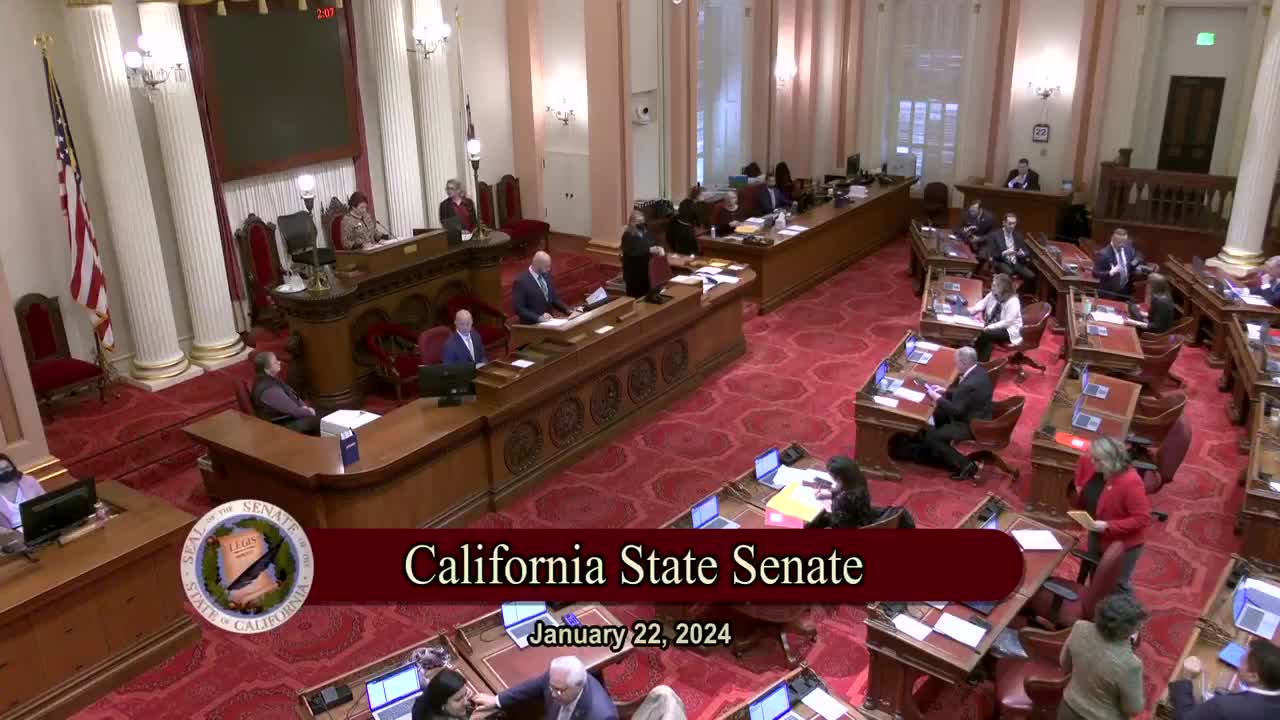 1MIN
Senate Floor
 2MIN
Senate Standing Committee on Education
Bill Author

Bill Co-Author(s):