SB 536: Surplus state real property: Heman G. Stark Youth Correctional Facility.
- Session Year: 2023-2024
- House: Senate
- Latest Version Date: 2024-09-27
Current Status:
Passed
(2024-09-27: Chaptered by Secretary of State. Chapter 768, Statutes of 2024.)
Introduced
In Committee
First Chamber
In Committee
Second Chamber
Enacted
What does this bill do?
The bill lets the Director of General Services sell about 130 acres of the Heman G. Stark Youth Correctional Facility in Chino to the City of Chino, generally at fair market value. The director may sell below market to support housing for low‑ or moderate‑income people, but must report the financial terms to the chairs of the Legislature’s fiscal committees 30 days before such a sale. Sale proceeds must cover related bond and review costs, are deposited into the state’s Special Fund for Economic Uncertainties, and the sale is exempt from the California Environmental Quality Act (CEQA).
The summary is provided by generative AI which can make mistakes. For original language, please view the details in the table below.
Existing law requires a state agency to review all proprietary state lands under its jurisdiction, as specified, to determine what land is in excess of its needs, and to report on these lands to the Department of General Services. Existing law prescribes a process for the disposition of surplus state property.
This bill would authorize the Director of General Services to sell or lease property, of approximately 130 acres, known as the Department of Corrections and Rehabilitation Heman G. Stark Youth Correctional Facility, located in the City of Chino, in the County of San Bernardino, to the City of Chino at fair market value upon terms and conditions the director determines are in the best interests of the state.
This bill would require that the proceeds of the sale or lease be expended on bond payments, as specified, and other costs, including costs for the review of the sale of the property and bond counsel. The bill would authorize the director, notwithstanding those provisions, to sell the property below fair market value for purposes of providing housing to persons and families of low or moderate income, subject to reporting specified information 30 days before the sale to the chairpersons of the fiscal committees of the Legislature. The bill, after December 31, 2028, would authorize the director to dispose of the property in accordance with specified procedures and priorities otherwise applicable to the disposal of surplus property by the department.
This bill would exempt the sale of the property from the California Environmental Quality Act, and would require the net proceeds of the sale to be deposited into the Special Fund for Economic Uncertainties, a continuously appropriated fund. By authorizing the deposit of proceeds into a continuously appropriated fund, the bill would make an appropriation.
Existing law requires a state agency to review all proprietary state lands under its jurisdiction, as specified, to determine what land is in excess of its needs, and to report on these lands to the Department of General Services. Existing law prescribes a process for the disposition of surplus state property.
This bill would authorize the Director of General Services to sell or lease property, of an unspecified acreage, known as the Department of Corrections and Rehabilitation Heman G. Stark Youth Correctional Facility, located in the City of Chino, in the County of San Bernardino, to the City of Chino at fair market value upon terms and conditions the director determines are in the best interests of the state.
This bill would require that the proceeds of the sale or lease be expended on bond payments, as specified, and other costs, including costs for the review of the sale of the property and bond counsel. The bill would authorize the director, notwithstanding those provisions, to sell the property below fair market value for purposes of providing housing to persons and families of low or moderate income, subject to reporting specified information 30 days before the sale to the chairpersons of the fiscal committees of the Legislature. The bill, after December 31, 2028, would authorize the director to dispose of the property in accordance with specified procedures and priorities otherwise applicable to the disposal of surplus property by the department.
This bill would exempt the sale of the property from the California Environmental Quality Act. The bill would require the net proceeds of the sale to be deposited into the Special Fund for Economic Uncertainties, a continuously appropriated fund. By authorizing the deposit of proceeds into a continuously appropriated fund, the bill would make an appropriation.
Existing law requires a state agency to review all proprietary state lands under its jurisdiction, as specified, to determine what land is in excess of its needs, and to report on these lands to the Department of General Services. Existing law prescribes a process for the disposition of surplus state property.
This bill would authorize the Director of General Services to sell or lease property, of an unspecified acreage, known as the Department of Corrections and Rehabilitation Heman G. Stark Youth Correctional Facility, located in the City of Chino, in the County of San Bernardino, to the City of Chino at fair market value upon terms and conditions the director determines are in the best interests of the state.
This bill would require that the proceeds of the sale or lease be expended on bond payments, as specified, and other costs, including costs for the review of the sale of the property and bond counsel. The bill would authorize the director, notwithstanding those provisions, to sell the property below fair market value for purposes of providing housing to persons and families of low or moderate income, subject to reporting specified information 30 days before the sale to the chairpersons of the fiscal committees of the Legislature.
This bill would exempt the sale of the property from the California Environmental Quality Act. The bill would require the net proceeds of the sale to be deposited into the Special Fund for Economic Uncertainties, a continuously appropriated fund. By authorizing the deposit of proceeds into a continuously appropriated fund, the bill would make an appropriation.
The Horse Racing Law authorizes a thoroughbred racing association or fair to distribute the audiovisual signal and accept wagers on the results of out-of-state thoroughbred races conducted in the United States during the calendar period the association or fair is conducting a race meeting, including days on which there is no live racing being conducted by the association or fair, without the consent of the organization that represents horsemen and horsewomen participating in the race meeting and without regard to the amount of purses. Under that law, the total number of thoroughbred races imported by associations or fairs on a statewide basis under these provisions is required to not exceed 50 per day on days when live thoroughbred or fair racing is being conducted in the state, with the exception of prescribed races.This bill would exempt from the 50 imported race per day limitation races imported that are part of the race card of the Delaware Handicap.The Horse Racing Law authorizes a thoroughbred racing association or fair to distribute the audiovisual signal and accept wagers on the results of out-of-state thoroughbred races conducted in the United States during the calendar period the association or fair is conducting a race meeting, including days on which there is no live racing being conducted by the association or fair, without the consent of the organization that represents horsemen and horsewomen participating in the race meeting and without regard to the amount of purses. Under that law, the total number of thoroughbred races imported by associations or fairs on a statewide basis under these provisions is required to not exceed 50 per day on days when live thoroughbred or fair racing is being conducted in the state, with the exception of prescribed races.
This bill would exempt from the 50 imported race per day limitation races imported that are part of the race card of the Delaware Handicap.
Existing law requires a state agency to review all proprietary state lands under its jurisdiction, as specified, to determine what land is in excess of its needs, and to report on these lands to the Department of General Services . Existing law prescribes a process for the disposition of surplus state property.This bill would authorize the Director of General Services to sell or lease property, of an unspecified acreage, known as the California Department of Corrections and Rehabilitation Herman G. Stark Youth Correctional Facility, located in the City of Chino, in the County of San Bernardino, to the City of Chino at fair market value upon terms and conditions the director determines are in the best interests of the state.This bill would require that the proceeds of the sale or lease be expended on bond payments, as specified, and other costs, including costs for the review of the sale of the property and bond counsel. The bill would authorize the director, notwithstanding those provisions, to sell the property below fair market value for purposes of providing housing to persons and families of low or moderate income, subject to reporting specified information 30 days before the sale to the chairpersons of the fiscal committees of the Legislature.This bill would exempt the sale of the property from the California Environmental Quality Act. The bill would require the net proceeds of the sale to be deposited into the Special Fund for Economic Uncertainties, a continuously appropriated fund. By authorizing the deposit of proceeds into a continuously appropriated fund, the bill would make an appropriation.Existing law requires a state agency to review all proprietary state lands under its jurisdiction, as specified, to determine what land is in excess of its needs, and to report on these lands to the Department of General Services . Existing law prescribes a process for the disposition of surplus state property.
This bill would authorize the Director of General Services to sell or lease property, of an unspecified acreage, known as the California Department of Corrections and Rehabilitation Herman G. Stark Youth Correctional Facility, located in the City of Chino, in the County of San Bernardino, to the City of Chino at fair market value upon terms and conditions the director determines are in the best interests of the state.
This bill would require that the proceeds of the sale or lease be expended on bond payments, as specified, and other costs, including costs for the review of the sale of the property and bond counsel. The bill would authorize the director, notwithstanding those provisions, to sell the property below fair market value for purposes of providing housing to persons and families of low or moderate income, subject to reporting specified information 30 days before the sale to the chairpersons of the fiscal committees of the Legislature.
This bill would exempt the sale of the property from the California Environmental Quality Act. The bill would require the net proceeds of the sale to be deposited into the Special Fund for Economic Uncertainties, a continuously appropriated fund. By authorizing the deposit of proceeds into a continuously appropriated fund, the bill would make an appropriation.
(a)Notwithstanding Section 11011.1, the Director of General Services may sell, at fair market value, to the City of Chino, upon those terms and conditions the director determines are in the best interests of the state, all or any part of the following real property:
Approximately 130 acres of property, known as the Department of Corrections and Rehabilitation Heman G. Stark Youth Correctional Facility, located in the City of Chino, in the County of San Bernardino.
(b)To the extent bonds issued by the State Public Works Board involve the property to be sold or leased pursuant to this section, all issuer-related and trustee-related costs associated with the review of any proposed sale or lease, together with the costs related to the defeasance or retirement of any bonds, which may include the cost of nationally recognized bond counsel, shall be paid from the proceeds of any sale or lease authorized by this section.
(c)Notwithstanding subdivision (a), in setting the purchase price for the property, the director may permit a sales price at less than fair market value if the director determines that such a discount will enable the provision of additional housing for persons and families of low or moderate income. For the purposes of this section, fair market value is established by an appraisal or economic evaluation conducted by the department and approved by the department.
(d)Thirty days prior to executing a transaction for a sale of the surplus state real property for less than fair market value for affordable housing, the director shall report to the chairpersons of the fiscal committees of the Legislature all of the following:
(1)The financial terms of the transaction.
(2)A comparison of fair market value for the surplus state real property and the terms listed in paragraph (1).
(3)The basis for agreeing to terms and conditions other than fair market value.
(e)Any sale of the property to the City of Chino pursuant to this section is exempt from Division 13 (commencing with Section 21000) of the Public Resources Code.
(f)Net proceeds of the sale shall be deposited pursuant to subdivision (g) of Section 11011.
(g)If the property has not been sold to the City of Chino by December 31, 2028, the director may pursue the disposition of the property pursuant to Section 11011.1.
(a)Notwithstanding Section 11011.1, the Director of General Services may sell, at fair market value, to the City of Chino, upon those terms and conditions the director determines are in the best interests of the state, all or any part of the following real property:
Approximately 130 acres of property, known as the Department of Corrections and Rehabilitation Heman G. Stark Youth Correctional Facility, located in the City of Chino, in the County of San Bernardino.
(b)To the extent bonds issued by the State Public Works Board involve the property to be sold or leased pursuant to this section, all issuer-related and trustee-related costs associated with the review of any proposed sale or lease, together with the costs related to the defeasance or retirement of any bonds, which may include the cost of nationally recognized bond counsel, shall be paid from the proceeds of any sale or lease authorized by this section.
(c)Notwithstanding subdivision (a), in setting the purchase price for the property, the director may permit a sales price at less than fair market value if the director determines that such a discount will enable the provision of additional housing for persons and families of low or moderate income. For the purposes of this section, fair market value is established by an appraisal or economic evaluation conducted by the department and approved by the department.
(d)Thirty days prior to executing a transaction for a sale of the surplus state real property for less than fair market value for affordable housing, the director shall report to the chairpersons of the fiscal committees of the Legislature all of the following:
(1)The financial terms of the transaction.
(2)A comparison of fair market value for the surplus state real property and the terms listed in paragraph (1).
(3)The basis for agreeing to terms and conditions other than fair market value.
(e)Any sale of the property to the City of Chino pursuant to this section is exempt from Division 13 (commencing with Section 21000) of the Public Resources Code.
(f)Net proceeds of the sale shall be deposited pursuant to subdivision (g) of Section 11011.
SECTION 1.Section 19596.2 of the Business and Professions Code is amended to read:19596.2.(a)Notwithstanding any other law and except as provided in Section 19596.4, a thoroughbred racing association or fair may distribute the audiovisual signal and accept wagers on the results of out-of-state thoroughbred races conducted in the United States during the calendar period the association or fair is conducting a race meeting, including days on which there is no live racing being conducted by the association or fair, without the consent of the organization that represents horsemen and horsewomen participating in the race meeting and without regard to the amount of purses. Further, the total number of thoroughbred races imported by associations or fairs on a statewide basis under this section shall not exceed 50 per day on days when live thoroughbred or fair racing is being conducted in the state. The limitation of 50 imported races per day does not apply to any of the following:(1)Races imported for wagering purposes pursuant to subdivision (c).(2)Races imported that are part of the race card of the Kentucky Derby, the Kentucky Oaks, the Preakness Stakes, the Belmont Stakes, the Jockey Club Gold Cup, the Travers Stakes, the Arlington Million, the Breeders Cup, the Dubai World Cup, the Arkansas Derby, the Delaware Handicap, the Apple Blossom Handicap, the Blue Grass Stakes, or the Haskell Invitational.(3)Races imported into the northern zone when there is no live thoroughbred or fair racing being conducted in the northern zone.(4)Races imported into the combined central and southern zones when there is no live thoroughbred or fair racing being conducted in the combined central and southern zones.(b)Any thoroughbred association or fair accepting wagers pursuant to subdivision (a) shall conduct the wagering in accordance with the applicable provisions of Sections 19601, 19616, 19616.1, and 19616.2.(c)No thoroughbred association or fair may accept wagers pursuant to this section on out-of-state races commencing after 7 p.m., Pacific standard time, without the consent of the harness or quarter horse racing association that is then conducting a live racing meeting in the Counties of Orange or Sacramento. REVISIONS: Heading--Line 2.(a)Notwithstanding any other law and except as provided in Section 19596.4, a thoroughbred racing association or fair may distribute the audiovisual signal and accept wagers on the results of out-of-state thoroughbred races conducted in the United States during the calendar period the association or fair is conducting a race meeting, including days on which there is no live racing being conducted by the association or fair, without the consent of the organization that represents horsemen and horsewomen participating in the race meeting and without regard to the amount of purses. Further, the total number of thoroughbred races imported by associations or fairs on a statewide basis under this section shall not exceed 50 per day on days when live thoroughbred or fair racing is being conducted in the state. The limitation of 50 imported races per day does not apply to any of the following:
(1)Races imported for wagering purposes pursuant to subdivision (c).
(2)Races imported that are part of the race card of the Kentucky Derby, the Kentucky Oaks, the Preakness Stakes, the Belmont Stakes, the Jockey Club Gold Cup, the Travers Stakes, the Arlington Million, the Breeders Cup, the Dubai World Cup, the Arkansas Derby, the Delaware Handicap, the Apple Blossom Handicap, the Blue Grass Stakes, or the Haskell Invitational.
(3)Races imported into the northern zone when there is no live thoroughbred or fair racing being conducted in the northern zone.
(4)Races imported into the combined central and southern zones when there is no live thoroughbred or fair racing being conducted in the combined central and southern zones.
(b)Any thoroughbred association or fair accepting wagers pursuant to subdivision (a) shall conduct the wagering in accordance with the applicable provisions of Sections 19601, 19616, 19616.1, and 19616.2.
(c)No thoroughbred association or fair may accept wagers pursuant to this section on out-of-state races commencing after 7 p.m., Pacific standard time, without the consent of the harness or quarter horse racing association that is then conducting a live racing meeting in the Counties of Orange or Sacramento.
SECTION 1.Section 11011.31 is added to the Government Code, to read:11011.31.(a)Notwithstanding Section 11011.1, the Director of General Services may sell, at fair market value, to the City of Chino, upon those terms and conditions the director determines are in the best interests of the state, all or any part of the following real property:Approximately ____ acres of property, known as the California Department of Corrections and Rehabilitation Herman G. Stark Youth Correctional Facility, located in the City of Chino, in the County of San Bernardino.(b)To the extent bonds issued by the State Public Works Board involve the property to be sold or leased pursuant to this section, all issuer-related and trustee-related costs associated with the review of any proposed sale or lease, together with the costs related to the defeasance or retirement of any bonds, which may include the cost of nationally recognized bond counsel, shall be paid from the proceeds of any sale or lease authorized by this section.(c)Notwithstanding subdivision (a), in setting the purchase price for the property, the director may permit a sales price at less than fair market value if the director determines that such a discount will enable the provision of additional housing for persons and families of low or moderate income. For the purposes of this section, fair market value is established by an appraisal or economic evaluation conducted by the department and approved by the department.(d)Thirty days prior to executing a transaction for a sale of the surplus state real property for less than fair market value for affordable housing, the director shall report to the chairpersons of the fiscal committees of the Legislature all of the following:(1)The financial terms of the transaction.(2)A comparison of fair market value for the surplus state real property and the terms listed in paragraph (1).(3)The basis for agreeing to terms and conditions other than fair market value.(e)Any sale of the property to the City of Chino pursuant to this section is exempt from Division 13 (commencing with Section 21000) of the Public Resources Code.(f)Net proceeds of the sale shall be deposited pursuant to subdivision (g) of Section 11011.(a)Notwithstanding Section 11011.1, the Director of General Services may sell, at fair market value, to the City of Chino, upon those terms and conditions the director determines are in the best interests of the state, all or any part of the following real property:
Approximately ____ acres of property, known as the California Department of Corrections and Rehabilitation Herman G. Stark Youth Correctional Facility, located in the City of Chino, in the County of San Bernardino.
(b)To the extent bonds issued by the State Public Works Board involve the property to be sold or leased pursuant to this section, all issuer-related and trustee-related costs associated with the review of any proposed sale or lease, together with the costs related to the defeasance or retirement of any bonds, which may include the cost of nationally recognized bond counsel, shall be paid from the proceeds of any sale or lease authorized by this section.
(c)Notwithstanding subdivision (a), in setting the purchase price for the property, the director may permit a sales price at less than fair market value if the director determines that such a discount will enable the provision of additional housing for persons and families of low or moderate income. For the purposes of this section, fair market value is established by an appraisal or economic evaluation conducted by the department and approved by the department.
(d)Thirty days prior to executing a transaction for a sale of the surplus state real property for less than fair market value for affordable housing, the director shall report to the chairpersons of the fiscal committees of the Legislature all of the following:
(1)The financial terms of the transaction.
(2)A comparison of fair market value for the surplus state real property and the terms listed in paragraph (1).
(3)The basis for agreeing to terms and conditions other than fair market value.
(e)Any sale of the property to the City of Chino pursuant to this section is exempt from Division 13 (commencing with Section 21000) of the Public Resources Code.
(f)Net proceeds of the sale shall be deposited pursuant to subdivision (g) of Section 11011.
|
Date
|
Status
|
|---|---|
| Sep 27, 2024 | Chaptered by Secretary of State. Chapter 768, Statutes of 2024. |
| Sep 27, 2024 | Approved by the Governor. |
| Sep 10, 2024 | Enrolled and presented to the Governor at 4 p.m. |
| Aug 30, 2024 | Assembly amendments concurred in. (Ayes 40. Noes 0. Page 5746.) Ordered to engrossing and enrolling. |
| Aug 29, 2024 | Ordered to special consent calendar. |
| Aug 28, 2024 | From committee: That the Assembly amendments be concurred in. (Ayes 14. Noes 0. Page 5621.) |
| Aug 28, 2024 | Set for hearing August 28. |
| Aug 26, 2024 | Re-referred to Com. on RLS pursuant to Senate Rule 29.10(d). |
| Aug 26, 2024 | In Senate. Concurrence in Assembly amendments pending. |
| Aug 26, 2024 | From committee: Be re-referred to Com. on G.O. pursuant to Senate Rule 29.10(d). (Ayes 5. Noes 0. Page 5416.) Re-referred to Com. on G.O. |
| Aug 26, 2024 | Read third time. Passed. (Ayes 76. Noes 0. Page 6515.) Ordered to the Senate. |
| Aug 19, 2024 | Read third time and amended. |
| Aug 19, 2024 | Read second time. Ordered to third reading. |
| Aug 19, 2024 | Ordered to third reading. |
| Aug 15, 2024 | From committee: Do pass. (Ayes 14. Noes 0.) (August 15). |
| Aug 7, 2024 | August 7 set for first hearing. Placed on suspense file. |
| Jul 2, 2024 | From committee: Do pass and re-refer to Com. on APPR. with recommendation: To consent calendar. (Ayes 21. Noes 0.) (July 2). Re-referred to Com. on APPR. |
| Jul 2, 2024 | Coauthors revised. |
| Jun 3, 2024 | Referred to Com. on G.O. |
| Jun 3, 2024 | From committee with author's amendments. Read second time and amended. Re-referred to Com. on G.O. |
| Jan 22, 2024 | In Assembly. Read first time. Held at Desk. |
| Jan 22, 2024 | Read third time. Passed. (Ayes 39. Noes 0. Page 3019.) Ordered to the Assembly. |
| Jan 11, 2024 | Read second time. Ordered to third reading. |
| Jan 10, 2024 | Withdrawn from committee. |
| Jan 10, 2024 | Ordered to second reading. |
| Jan 9, 2024 | From committee: Do pass and re-refer to Com. on E.Q. with recommendation: To consent calendar. (Ayes 15. Noes 0. Page 2957.) (January 9). Re-referred to Com. on E.Q. |
| Jan 5, 2024 | Set for hearing January 9. |
| Jan 3, 2024 | From committee with author's amendments. Read second time and amended. Re-referred to Com. on G.O. |
| Feb 22, 2023 | Referred to Coms. on G.O. and E.Q. |
| Feb 15, 2023 | From printer. May be acted upon on or after March 17. |
| Feb 14, 2023 | Introduced. Read first time. To Com. on RLS. for assignment. To print. |
|
Date
|
Description
|
Location
|
Votes
|
|
|---|---|---|---|---|
| Aug 30, 2024 | Special Consent SB536 Rubio et al. | Senate Floor |
Passed |
|
| Aug 28, 2024 | That the Assembly amendments be concurred in | Senate Standing Committee on Governmental Organization |
Passed |
|
| Aug 26, 2024 | SB 536 Rubio Senate Third Reading By Rodriguez | Assembly Floor |
Passed |
|
| Aug 15, 2024 | Do pass. | Assembly Standing Committee on Appropriations |
Passed |
|
| Jul 2, 2024 | Do pass and be re-referred to the Committee on [Appropriations] with recommendation: To Consent Calendar | Assembly Standing Committee on Governmental Organization |
Passed |
|
| Jan 22, 2024 | Senate 3rd Reading SB536 Rubio | Senate Floor |
Passed |
|
| Jan 9, 2024 | Do pass, but first be re-referred to the Committee on [Environmental Quality] with the recommendation: To Consent Calendar | Senate Standing Committee on Governmental Organization |
Passed |
This list shows positions taken on this bill by organizations on the date displayed, which is linked to the original source.
Positions by individuals are not included.
|
Organization
|
Position
|
Date
|
|---|---|---|
| Chaffey College | ** Support | |
| Chino Valley Chamber of Commerce | ** Support | |
| City of Chino | ** Support | |
| City of Chino Hills | ** Support | |
| City Of Eastvale | ** Support | |
| City Of Ontario | ** Support | |
| San Bernardino County Board of Supervisors | ** Support | |
| San Bernardino County Supervisor Curt Hagman | ** Support |
SENATE RULES COMMITTEE Office of Senate Floor Analyses (916) 651-1520 Fax: (916) 327-4478 | SB 536 |
UNFINISHED BUSINESS
Bill No: SB 536
Author: Rubio (D), et al.
Amended: 8/19/24
Vote: 27
PRIOR SENATE VOTE NOT RELEVANT
SUBJECT: Surplus state real property: Heman G. Stark Youth Correctional Facility
SOURCE: City of Chino
DIGEST:
This bill authorizes the Department of General Services (DGS) to sell, at fair market value, to the City of Chino, the Herman G. Stark Youth Correctional Facility, located in the City of Chino, as specified.
Assembly Amendments
deleted the prior language in the bill and instead authorized DGS to sell or lease, the Herman G. Stark property to the City of Chino, as specified.
ANALYSIS:
Existing law:
- Establishes DGS, which is under the control of the Director of DGS, within the Government Operations Agency, and requires the director to perform various functions and duties with respect to property within the state, including entering into lease agreements.
- Authorizes DGS, subject to legislative approval, to sell, lease, exchange, or transfer various specified properties for current market value, upon such other terms and conditions DGS determines are in the best interest of the state.
- Authorizes DGS, with the consent of the state agency concerned, to, among other things, let for a period not to exceed five years, any real personal property that belongs to the state, unless otherwise prohibited or excepted.
- Authorizes DGS, with the consent of the state agency concerned, to let for any period of time any real property or interest in real property that belongs to the state, when DGS deems the letting serves a beneficial public purpose limited to the development of housing, including permanent supportive or traditional housing and emergency shelters or park and recreation facilities. Under this section, DGS is authorized to enter into leases at less than market value provided that the cost of administering the lease is recovered. (Government Code 14671.2)
- Authorizes DGS to sell or lease the Southern Youth Correctional Reception Center and Clinic, to the County of Los Angeles by January 1, 2015, at market value upon terms and conditions and subject to reservations and exceptions DGS determines are in the best interests of the state, and after January 1, 2015, authorizes DGS to sell the property to any other party at market value through a competitive bid process.
- Requires DGS to create a digitized inventory of all excess state land, create screening tools for prioritizing affordable housing development on excess state land, and issue requests for proposals and select affordable housing developments on excess state land, as described.
- Establishes criteria for state agencies to use in determining and reporting excess lands. A state agency must report land as surplus that is:
- Not currently utilized, or is underutilized, for any existing or ongoing programs;
- Land for which the agency cannot identify a specific utilization relative to future needs; and,
- Land not identified by the state agency within its master plan for facility development.
This bill:
- Authorizes DGS to sell, at fair market value, the Herman G. Stark Youth Correctional Facility to the City of Chino, upon those terms and conditions the director determines are in the best interest of the state, as specified.
- Authorizes DGS to sell the property at less than fair market value if the director determines that such a discount will enable additional housing for persons and families of low or moderate income.
- Requires DGS, thirty days prior to executing a transaction for a sale of the surplus state real property for less than fair market value for affordable housing, to report to the chairpersons of the fiscal committees of the Legislature all of the following:
- The financial terms of the transaction.
- A comparison of fair market value for the surplus state real property and the terms of the transaction.
- The basis for agreeing to terms and conditions other than fair market value.
- Provides that if the property has not been sold to the City of Chino by December 31, 2028, DGS may pursue the disposition of the property pursuant to the current process of disposal of surplus property.
Background
Author Statement. According to the author’s office, “for too long, the Herman G. Stark Youth Correctional Facility has sat closed and unused within the City of Chino. SB 536 represents the opportunity for the City to acquire this surplus state property and transform it into a community asset that will benefit the residents of Chino. This bill will officially begin the process for the City of Chino to engage with state and community stakeholders to reimagine this land that once housed troubled youth into a place where Chino’s history can be honored and its future can be vibrant, full of children and families coming together to live and play.”
Herman G. Stark Youth Correctional Facility. In February 2010, the California Department of Corrections and Rehabilitation (CDCR) officially closed the doors of the Heman G Stark Youth Correctional Facility, after 50 years of operation. The facility in the City of Chino, within the County of San Bernardino, closed in response to budget constraints and laws placing youth offenders in county facilities. The facility housed as many of 2,000 youth who were in state custody. After the facility closed, it was used as a reception center for the California Institution for Men. The facility is not currently in use, but the CDCR keeps the utilities running in case the site needs to be reactivated.
In February 2023, the Chino City Council initiated the effort to acquire the former Heman G. Stark Youth Correctional Facility on Euclid Avenue, south of Merrill Avenue. The property is located south of a residential neighborhood and near the Planes of Fame Air Museum, an aviation museum featuring a collection of aircraft and memorabilia with a youth education center. The city council voted unanimously to adopt a resolution to support legislation that would initiate the negotiation process for the state-owned property. Pursuant to the resolution, the City will engage with community stakeholders to develop a plan for community-oriented uses of the property. Possible uses of the site could include affordable housing, a commercial area, and an agricultural/farm area where people have access to freshly grown produce to reflect the City of Chino’s agricultural roots.
Process for Surplus Property. The DGS is currently responsible for the disposition of state-owned property that has been declared surplus to future state needs. The Legislature must declare the property to be surplus and must authorize the Director of DGS to sell, exchange, lease, or transfer the surplus property according to specified procedures set forth in law.
Generally, current law requires surplus property to be transferred or sold at market value, or upon such other terms and conditions that DGS determines are in the best interest of the state. Current law gives right of first refusal on any surplus property to a local agency and then to a nonprofit affordable housing sponsor, prior to being offered for sale to private entities or individuals in the open market. In addition, DGS is authorized to sell surplus property to a local agency or to a nonprofit affordable housing sponsor at a sales price less than fair market value if DGS determines that such a discount will enable housing for individuals or families of low or moderate income.
In 2019, Governor Newsom, issued Executive Order N-06-19 (EO) which reoriented DGS’s priorities to focus on facilitating conversion of excess property to affordable housing. Within the required three months, DGS reviewed over 44,000 parcels, and identified 92 properties potentially suitable for housing. As of March 2022, DGS had offered 19 of these properties for affordable housing development, each of which is proceeding through the planning, development, or construction phase. These properties are expected to provide approximately 1,700 units of affordable housing. The contents of the EO were later codified by SB 561 (Dodd, Chapter 446, Statutes of 2022) and AB 2233 (Quirk-Silva, Chapter 438, Statutes of 2022).
Additionally, current law, under Government Code section 14671.2, authorizes DGS, with the consent of the state agency concerned, to let for any period of time any real property or interest in real property that belongs to the state, when DGS deems the letting serves a beneficial public purpose limited to the development of housing, including permanent supportive or traditional housing and emergency shelters or park and recreation facilities.
This bill, until January 1, 2028, authorizes DGS to sell the Herman G. Stark property to the City of Chino, at fair market value. However, the bill does allow DGS to sell the property for less than fair market value if the director determines that such a discount will enable additional housing for persons and families of low or moderate income. After January 1, 2028, the bill would authorize DGS to sell the property according to the above-described process for the disposal of surplus property.
Related/Prior Legislation
SB 958 (Dodd, 2024) authorizes DGS to sell or exchange, at fair market value, the property known as Camp Coombs in the County of Napa to the County of Napa or the Napa County Regional and Open Space District by January 1, 2026, as specified. (Pending on the Assembly Floor)
SB 1336 (Archuleta, 2024) authorizes DGS, with the consent of the Department of State Hospitals, to lease to a nonprofit corporation or local government, seven buildings located at Metropolitan State Hospital in the City of Norwalk for the purposes of providing housing or facilities, including adult and youth interim housing. (Pending on the Assembly Floor)
AB 1635 (Ward, 2024) requires DGS, in consultation with the Department of Motor Vehicles, to enter into good faith negotiations to lease the Hillcrest Property in the City of San Diego. (Pending on the Senate Floor)
AB 349 (Ramos, Chapter 325, Statutes of 2023) authorizes DGS, with the consent of DSH, to lease a building at Patton State Hospital to a nonprofit corporation or local government for purpose of providing services to elderly persons and providing housing to homeless individuals and providing mental health services to those individuals.
SB 561 (Dodd, Chapter 446, Statutes of 2022) requires DGS, in consultation with the California Department of Housing and Community Development, to develop criteria to evaluate the suitability of excess state-owned parcels for affordable housing, as specified.
AB 2233 (Quirk Silva, Chapter 438, Statutes of 2022) required DGS to prepare and report to the Legislature a streamlined plan to transition underutilized multi-story state buildings into housing, as specified.
AB 2385 (Ramos, 2020) would have authorized DGS to lease the PSH for the purpose of providing transitional housing services. (Never Heard in the Assembly Accountability and Administrative Review Committee)
AB 518 (Calderon, Chapter 43, Statutes of 2020) authorized DGS, until January 1, 2025, to sell the Southern Youth Correctional Reception Center and Clinic to the City of Norwalk at fair market value upon terms and conditions DGS determines are in the best interest of the state.
SB 281 (Wiener, 2019) would have required the property known as the Cow Palace to be transferred to a newly established Cow Palace Authority for the purpose of managing, developing or disposing of the property. (Gutted and amended to an unrelated issue)
SB 501 (Hurtado, 2019) would have rescinded the authorization for DGS to sell the Reedly Armory. (Pending in the Assembly Veterans Committee)
AB 653 (Bloom, Chapter 263, Statutes of 2019) authorized DGS, with the approval of the Adjutant General, to lease, for a term of 25 years, approximately 1.3 acres of the real property of the real property located at 1300 Federal Avenue, Los Angeles, California, known as the West Los Angeles National Guard Armory to the County of Los Angeles.
AB 869 (Cunningham, 2019) would have required DGS to notify other state agencies of an excess property and take action on a transfer of jurisdiction request for the property within 150 days. (Vetoed by Governor Newsom)
AB 1164 (Gloria, 2019) authorized DGS to dispose all or any part of the property known as the San Diego State Office Building in San Diego County.
FISCAL EFFECT: Appropriation: Yes Fiscal Com.: Yes Local: No
According to the Assembly Appropriations Committee, one-time revenue gain of an unknown amount, but likely in excess of $150,000, to the state from selling the property (Property Acquisition Law and SFEU). However, revenue gain from the sale would be significantly reduced if the property is sold for less than fair market value. DGS would incur costs of an unknown amount to conduct the sale, including staff workload to appraise the property and prepare title reports, with such costs reimbursed from sale proceeds before net proceeds are deposited into the SFEU.
Additionally, annual cost savings of approximately $1 million to CDCR if DGS sells the property to the City of Chino, as CDCR would no longer incur expenses from maintaining and securing the property (General Fund). However, to the extent there is already another interested buyer through the surplus state property process, this bill may delay the sale of the property, resulting in continued CDCR maintenance costs.
SUPPORT: (Verified 8/16/24)
City of Chino (Source)
Chaffey College
Chino Valley Chamber of Commerce
City of Chino Hills
City of Eastvale
City of Ontario
San Bernardino County Board of Supervisors
OPPOSITION: (Verified 8/16/24)
None received
ARGUMENTS IN SUPPORT: According to the City of Chino, “our goal is develop the former youth correctional facility into a place that gives children the opportunity to learn about urban agriculture, sustainability, and self-reliance and develop an appreciation for farming and the outdoors from local agricultural instructions and mentors. SB 536 will open the doors to this process of engaging the community to develop this important site into something that provides hope and reflects the region’s past and bright future.”
Click here to enter text.
Prepared by: Felipe Lopez / G.O. / (916) 651-1530, Brian Duke / G.O. / (916) 651-1530
8/28/24 21:36:40
**** END ****
SENATE THIRD READING
STR Bill Id:SB 536
Author:(Rubio)
As Amended Ver:June 3, 2024
2/3 vote
SUMMARY
This bill authorizes the Department of General Services (DGS) to sell the Heman G. Stark Youth Correctional Facility (Stark) to the City of Chino.
Major Provisions
- Provides the Director of DGS may sell, at fair market value, to the City of Chino, upon those terms and conditions the Director determines are in the best interests of the state, all or any part of the following real property: Approximately 130 acres of property, known as the Department of Corrections and Rehabilitation Heman G. Stark Youth Correctional Facility, located in the City of Chino, in the County of San Bernardino.
- States to the extent bonds issued by the State Public Works Board involve the property to be sold or leased, all issuer-related and trustee-related costs associated with the review of any proposed sale or lease, together with the costs related to the defeasance or retirement of any bonds, which may include the cost of nationally recognized bond counsel, shall be paid from the proceeds of any sale or lease.
- Provides that in setting the purchase price for the property, the Director may permit a sales price at less than fair market value if the Director determines that such a discount will enable the provision of additional housing for persons and families of low or moderate income. Fair market value is established by an appraisal or economic evaluation conducted and approved by the DGS.
- Provides thirty days prior to executing a transaction for a sale of the surplus state real property for less than fair market value for affordable housing, the Director shall report to the chairpersons of the fiscal committees of the Legislature all of the following:
a) The financial terms of the transaction.
b) A comparison of fair market value for the surplus state real property and the terms listed, as defined.
c) The basis for agreeing to terms and conditions other than fair market value.
- Requires the net proceeds of the sale to be deposited, as specified.
- Exempts the sale of the property from the California Environmental Quality Act (Public Resources Code Section 21000)
COMMENTS
Background.
The Heman G. Stark Youth Correctional Facility. In February 2010, the California Department of Corrections and Rehabilitation (CDCR) officially closed the doors of the Heman G Stark Youth Correctional Facility, after 50 years of operation. The facility in the City of Chino, within the County of San Bernardino, closed in response to budget constraints and laws placing youth offenders in county facilities. The facility housed as many of 2,000 youth who were in state custody. After the facility closed, it was used as a reception center for the California Institution for Men. The facility is not currently in use, but the CDCR keeps the utilities running in case the site needs to be reactivated.
In February 2023, the Chino City Council initiated the effort to acquire the former Heman G. Stark Youth Correctional Facility on Euclid Avenue, south of Merrill Avenue. The property is located south of a residential neighborhood and near the Planes of Fame Air Museum, an aviation museum featuring a collection of aircraft and memorabilia with a youth education center. The Chino City Council voted to adopt a resolution to support legislation that would initiate the negotiation process to acquire Stark from the state. Pursuant to the resolution, the city will engage community stakeholders to develop a plan for community-oriented uses for the property, such as affordable housing or an agricultural area where people can access freshly grown produce.
Current law requires all state agencies to annually review and report to the DGS if any lands under their jurisdiction are in excess to the programmatic needs of the controlling department. The DGS may then determine if any of these properties can be used by another state agency. If not, the property is included in the annual omnibus surplus bill, which authorizes the DGS to dispose of the property by sale, lease, or exchange.
The DGS must first offer each surplus property to the relevant local governmental agencies and next to nonprofit affordable housing sponsors prior to offering the property to private entities through a bidding process. Local agencies may acquire surplus property for open space, public parks, development of local government-owned facilities, or affordable housing. Local agencies pay fair market value as determined by the DGS, however property being acquired for parks or open space may be sold at less than fair market value at the DGS’s discretion.
All net proceeds from the sale of surplus properties are deposited into the Special Fund for Economic Uncertainties (SFEU). The SFEU ensures the ability of the State to meet General Fund obligations in the event of declining revenues or unanticipated expenditures. However, changes made by AB 127 (Committee on Budget, Chapter 45, Statutes of 2023) now authorize the DGS to deposit some or all of the net proceeds from the sale of surplus properties into the Property Acquisition Law Money Account (PALMA) to maintain an operating reserve sufficient to continue developing excess state lands into affordable housing. If not all net proceeds from a surplus property sale are deposited into the PALMA, then the excess is deposited into the SFEU.
According to the author’s office, the DGS has authorized numerous state property lease agreements with nonprofit corporations and local governments to provide services to Californians that are in the best interest of the state. This bill would authorize the Director of DGS to sell or lease the designated property. Nothing in the bill requires the DGS to enter into a transaction of this kind, and any deal must be signed upon terms and conditions the DGS determines are in the best interests of the state.
Executive Order N-06-19. In January 2019, Governor Newsom issued Executive Order (EO) N-06-19, which directed DGS and the Department of Housing and Community Development to identify and inventory excess state-owned property for affordable housing projects. Within the required three months, DGS reviewed over 44,000 parcels, and identified 92 properties that were potentially suitable for housing. As of March 2022, DGS had offered 19 of these properties for affordable housing development, each of which is proceeding through the planning, development, or construction phase. The properties will provide approximately 1,700 affordable housing units.
The State Public Works Board (Board). The Board was created by the Legislature to oversee the fiscal matters associated with construction of projects for state agencies, and to select and acquire real property for state facilities and programs. The Board is also the issuer of lease-revenue bonds, which is a form of long term financing that is used to pay for capital projects. The Legislature appropriates funds for capital outlay projects such as acquiring land, planning and constructing new buildings, expanding or modifying existing buildings, and/or purchasing equipment related to such construction. Through review and approval processes, the Board ensures that capital outlay projects adhere to the Legislature's appropriation intents.
According to the Author
According to the author, "For too long, the Heman G. Stark Youth Correctional Facility has sat closed and unused within the City of Chino. SB 536 represents the opportunity for the City to acquire this surplus state property and transform it into a community asset that will benefit the residents of Chino. This bill will officially begin the process for the City to engage with state and community stakeholders to reimagine this land that once housed troubled youth into a place where Chino's history can be honored and its future can be vibrant, full of children and families coming together to live and play."
Arguments in Support
The City of Eastvale writes, "SB 536 will begin the process to allow the City of Chino to acquire surplus state property located within its jurisdiction and redevelop it for community-oriented uses such as affordable housing, recreation, and education. Possible uses of the site include farm-centered master-planned communities with affordable housing, agricultural training facilities with youth education and engagement, an agricultural heritage museum, a commercial component, a youth and an agricultural/farm area where people have access to freshly grown produce to reflect the City of Chino's agricultural roots."
The City of Chino Hills writes, "We support the City of Chino's efforts to rehabilitate this blighted state property and transform it into a vibrant, community-oriented site."
Arguments in Opposition
None on file
FISCAL COMMENTS
According to the Assembly Appropriations Committee analysis,
- One-time revenue gain of an unknown amount, but likely in excess of $150,000, to the state from selling Stark (Property Acquisition Law Money Account and SFEU). However, revenue gain from the sale would be significantly reduced if the property is sold for less than fair market value. DGS would incur costs of an unknown amount to conduct the sale, including staff workload to appraise the property and prepare title reports, with such costs reimbursed from sale proceeds before net proceeds are deposited into the SFEU.
- Annual cost savings of approximately $1 million to CDCR if DGS sells Stark to the City of Chino, as CDCR would no longer incur expenses from maintaining and securing the property (General Fund (GF)). However, to the extent there is already another interested buyer through the surplus state property process, this bill may delay the sale of the property, resulting in continued CDCR maintenance costs.
VOTES
SENATE FLOOR: 39-0-1
YES: Allen, Alvarado-Gil, Archuleta, Ashby, Atkins, Becker, Blakespear, Bradford, Caballero, Cortese, Dahle, Dodd, Durazo, Eggman, Glazer, Gonzalez, Grove, Hurtado, Jones, Laird, Limón, McGuire, Menjivar, Min, Newman, Nguyen, Niello, Ochoa Bogh, Padilla, Portantino, Roth, Rubio, Seyarto, Skinner, Stern, Umberg, Wahab, Wiener, Wilk
ABS, ABST OR NV: Smallwood-Cuevas
ASM GOVERNMENTAL ORGANIZATION: 21-0-1
YES: Blanca Rubio, Addis, Bains, Bryan, Cervantes, Davies, Dixon, Gabriel, Gipson, Haney, Hart, Low, McKinnor, Pacheco, Papan, Jim Patterson, Ramos, Soria, Ta, Valencia, Wallis
ABS, ABST OR NV: Lackey
ASM APPROPRIATIONS: 14-0-1
YES: Wicks, Sanchez, Arambula, Bryan, Calderon, Wendy Carrillo, Dixon, Mike Fong, Grayson, Haney, Hart, Pellerin, Ta, Villapudua
ABS, ABST OR NV: Jim Patterson
UPDATED
VERSION: June 3, 2024
CONSULTANT: Eric Johnson / G.O. / (916) 319-2531 FN: 0004088
SENATE THIRD READING
STR Bill Id:SB 536
Author:(Rubio)
As Amended Ver:August 19, 2024
2/3 vote
SUMMARY
This bill authorizes the Department of General Services (DGS) to sell the Heman G. Stark Youth Correctional Facility to the City of Chino, as specified.
Major Provisions
- Provides the Director of DGS may sell, at fair market value, to the City of Chino, upon those terms and conditions the Director determines are in the best interests of the state, all or any part of the following real property: Approximately 130 acres of property, known as the Department of Corrections and Rehabilitation Heman G. Stark Youth Correctional Facility, located in the City of Chino, in the County of San Bernardino.
- States to the extent bonds issued by the State Public Works Board involve the property to be sold or leased, all issuer-related and trustee-related costs associated with the review of any proposed sale or lease, together with the costs related to the defeasance or retirement of any bonds, which may include the cost of nationally recognized bond counsel, shall be paid from the proceeds of any sale or lease.
- Provides that in setting the purchase price for the property, the Director may permit a sales price at less than fair market value if the Director determines that such a discount will enable the provision of additional housing for persons and families of low or moderate income. Fair market value is established by an appraisal or economic evaluation conducted and approved by the DGS.
- Provides thirty days prior to executing a transaction for a sale of the surplus state real property for less than fair market value for affordable housing, the Director shall report to the chairpersons of the fiscal committees of the Legislature all of the following:
- The financial terms of the transaction.
- A comparison of fair market value for the surplus state real property and the terms listed, as defined.
- The basis for agreeing to terms and conditions other than fair market value.
- Requires the net proceeds of the sale to be deposited, as specified.
- Exempts the sale of the property from the California Environmental Quality Act (Public Resources Code Section 21000)
- Provides if the property has not been sold to the City of Chino by December 31, 2028, the Director of DGS may pursue the disposition of the property in accordance with specified procedures and priorities otherwise applicable to the disposal of surplus property by the department.
COMMENTS
Background.
The Heman G. Stark Youth Correctional Facility. In February 2010, the California Department of Corrections and Rehabilitation (CDCR) officially closed the doors of the Heman G Stark Youth Correctional Facility, after 50 years of operation. The facility in the City of Chino, within the County of San Bernardino, closed in response to budget constraints and laws placing youth offenders in county facilities. The facility housed as many of 2,000 youth who were in state custody. After the facility closed, it was used as a reception center for the California Institution for Men. The facility is not currently in use, but the CDCR keeps the utilities running in case the site needs to be reactivated.
In February 2023, the Chino City Council initiated the effort to acquire the former Heman G. Stark Youth Correctional Facility on Euclid Avenue, south of Merrill Avenue. The property is located south of a residential neighborhood and near the Planes of Fame Air Museum, an aviation museum featuring a collection of aircraft and memorabilia with a youth education center. The Chino City Council voted to adopt a resolution to support legislation that would initiate the negotiation process to acquire Stark from the state. Pursuant to the resolution, the city will engage community stakeholders to develop a plan for community-oriented uses for the property, such as affordable housing or an agricultural area where people can access freshly grown produce.
Current law requires all state agencies to annually review and report to the DGS if any lands under their jurisdiction are in excess to the programmatic needs of the controlling department. The DGS may then determine if any of these properties can be used by another state agency. If not, the property is included in the annual omnibus surplus bill, which authorizes the DGS to dispose of the property by sale, lease, or exchange.
The DGS must first offer each surplus property to the relevant local governmental agencies and next to nonprofit affordable housing sponsors prior to offering the property to private entities through a bidding process. Local agencies may acquire surplus property for open space, public parks, development of local government-owned facilities, or affordable housing. Local agencies pay fair market value as determined by the DGS, however property being acquired for parks or open space may be sold at less than fair market value at the DGS's discretion.
All net proceeds from the sale of surplus properties are deposited into the Special Fund for Economic Uncertainties (SFEU). The SFEU ensures the ability of the State to meet General Fund obligations in the event of declining revenues or unanticipated expenditures. However, changes made by AB 127 (Committee on Budget), Chapter 45, Statutes of 2023 now authorize the DGS to deposit some or all of the net proceeds from the sale of surplus properties into the Property Acquisition Law Money Account (PALMA) to maintain an operating reserve sufficient to continue developing excess state lands into affordable housing. If not all net proceeds from a surplus property sale are deposited into the PALMA, then the excess is deposited into the SFEU.
According to the author's office, the DGS has authorized numerous state property lease agreements with nonprofit corporations and local governments to provide services to Californians that are in the best interest of the state. This bill would authorize the Director of DGS to sell or lease the designated property. Nothing in the bill requires the DGS to enter into a transaction of this kind, and any deal must be signed upon terms and conditions the DGS determines are in the best interests of the state.
Executive Order N-06-19. In January 2019, Governor Newsom issued Executive Order (EO) N-06-19, which directed DGS and the Department of Housing and Community Development to identify and inventory excess state-owned property for affordable housing projects. Within the required three months, DGS reviewed over 44,000 parcels, and identified 92 properties that were potentially suitable for housing. As of March 2022, DGS had offered 19 of these properties for affordable housing development, each of which is proceeding through the planning, development, or construction phase. The properties will provide approximately 1,700 affordable housing units.
The State Public Works Board (Board). The Board was created by the Legislature to oversee the fiscal matters associated with construction of projects for state agencies, and to select and acquire real property for state facilities and programs. The Board is also the issuer of lease-revenue bonds, which is a form of long term financing that is used to pay for capital projects. The Legislature appropriates funds for capital outlay projects such as acquiring land, planning and constructing new buildings, expanding or modifying existing buildings, and/or purchasing equipment related to such construction. Through review and approval processes, the Board ensures that capital outlay projects adhere to the Legislature's appropriation intents.
According to the Author
According to the author, "For too long, the Heman G. Stark Youth Correctional Facility has sat closed and unused within the City of Chino. SB 536 represents the opportunity for the City to acquire this surplus state property and transform it into a community asset that will benefit the residents of Chino. This bill will officially begin the process for the City to engage with state and community stakeholders to reimagine this land that once housed troubled youth into a place where Chino's history can be honored and its future can be vibrant, full of children and families coming together to live and play."
Arguments in Support
The City of Eastvale writes, "SB 536 will begin the process to allow the City of Chino to acquire surplus state property located within its jurisdiction and redevelop it for community-oriented uses such as affordable housing, recreation, and education. Possible uses of the site include farm-centered master-planned communities with affordable housing, agricultural training facilities with youth education and engagement, an agricultural heritage museum, a commercial component, a youth and an agricultural/farm area where people have access to freshly grown produce to reflect the City of Chino's agricultural roots."
The City of Chino Hills writes, "We support the City of Chino's efforts to rehabilitate this blighted state property and transform it into a vibrant, community-oriented site."
Arguments in Opposition
None on file.
FISCAL COMMENTS
According to the Assembly Appropriations Committee analysis, "1) One-time revenue gain of an unknown amount, but likely in excess of $150,000, to the state from selling Stark (Property Acquisition Law Money Account and SFEU). However, revenue gain from the sale would be significantly reduced if the property is sold for less than fair market value. DGS would incur costs of an unknown amount to conduct the sale, including staff workload to appraise the property and prepare title reports, with such costs reimbursed from sale proceeds before net proceeds are deposited into the SFEU.
2) Annual cost savings of approximately $1 million to CDCR if DGS sells Stark to the City of Chino, as CDCR would no longer incur expenses from maintaining and securing the property (General Fund (GF)). However, to the extent there is already another interested buyer through the surplus state property process, this bill may delay the sale of the property, resulting in continued CDCR maintenance costs.
VOTES
SENATE FLOOR: 39-0-1
YES: Allen, Alvarado-Gil, Archuleta, Ashby, Atkins, Becker, Blakespear, Bradford, Caballero, Cortese, Dahle, Dodd, Durazo, Eggman, Glazer, Gonzalez, Grove, Hurtado, Jones, Laird, Limón, McGuire, Menjivar, Min, Newman, Nguyen, Niello, Ochoa Bogh, Padilla, Portantino, Roth, Rubio, Seyarto, Skinner, Stern, Umberg, Wahab, Wiener, Wilk
ABS, ABST OR NV: Smallwood-Cuevas
ASM GOVERNMENTAL ORGANIZATION: 21-0-1
YES: Blanca Rubio, Addis, Bains, Bryan, Cervantes, Davies, Dixon, Gabriel, Gipson, Haney, Hart, Low, McKinnor, Pacheco, Papan, Jim Patterson, Ramos, Soria, Ta, Valencia, Wallis
ABS, ABST OR NV: Lackey
ASM APPROPRIATIONS: 14-0-1
YES: Wicks, Sanchez, Arambula, Bryan, Calderon, Wendy Carrillo, Dixon, Mike Fong, Grayson, Haney, Hart, Pellerin, Ta, Villapudua
ABS, ABST OR NV: Jim Patterson
UPDATED
VERSION: August 19, 2024
CONSULTANT: Eric Johnson / G.O. / (916) 319-2531 FN: 0004166
Date of Hearing: August 7, 2024
ASSEMBLY COMMITTEE ON APPROPRIATIONS
Buffy Wicks, Chair
SBPCA Bill Id:SB 536
Author:(Rubio) – As Amended Ver:June 3, 2024
Policy Committee: | Governmental Organization | Vote: | 21 - 0 |
|
| ||
|
|
Urgency: No State Mandated Local Program: No Reimbursable: No
SUMMARY:
This bill authorizes the Department of General Services (DGS) to sell the Heman G. Stark Youth Correctional Facility (Stark) to the City of Chino.
Specifically, this bill:
- Authorizes the DGS director to sell all or any part of Stark, operated by Department of Corrections and Rehabilitation (CDCR), to the City of Chino at fair market value upon terms and conditions the director determines are in the best interest of the state.
- Authorizes the DGS director to sell the property below fair market value if the director determines such a discount will enable the provision of low or moderate income housing. The DGS director must report specified financial information to the Legislature thirty days prior to executing a sales transaction for less than fair market value.
- Requires the proceeds of the sale to cover specified bond payments related to the property, with net proceeds deposited into the Special Fund for Economic Uncertainties (SFEU).
- Exempts the sale of the property from the California Environmental Quality Act.
FISCAL EFFECT:
- One-time revenue gain of an unknown amount, but likely in excess of $150,000, to the state from selling Stark (Property Acquisition Law Money Account and SFEU). However, revenue gain from the sale would be significantly reduced if the property is sold for less than fair market value.
DGS would incur costs of an unknown amount to conduct the sale, including staff workload to appraise the property and prepare title reports, with such costs reimbursed from sale proceeds before net proceeds are deposited into the SFEU.
- Annual cost savings of approximately $1 million to CDCR if DGS sells Stark to the City of Chino, as CDCR would no longer incur expenses from maintaining and securing the property (General Fund (GF)). However, to the extent there is already another interested buyer through the surplus state property process, this bill may delay the sale of the property, resulting in continued CDCR maintenance costs.
According to the Legislative Analyst’s Office, the GF faces a structural deficit in the tens of billions of dollars over the next several fiscal years.
COMMENTS:
- Purpose. According to the author, “For too long, [Stark] has sat closed and unused within the City of Chino. SB 536 represents the opportunity for the City to acquire this surplus state property and transform it into a community asset that will benefit the residents of Chino.” This bill is sponsored by the City of Chino and supported by other neighboring local governments and community partners.
- Background.
Surplus State Property. Existing law requires every state agency to annually review and report to DGS if any land under the agency’s jurisdiction is in excess of programmatic needs. DGS may then determine if any such property can be used by another state agency, and if not, the property is included in an annual omnibus surplus lands bill, which authorizes DGS to dispose of the property by sale, lease, or exchange. DGS must first offer each surplus property to the relevant local governmental agencies and then to nonprofit affordable housing developers, prior to letting private entities bid on the property. Local agencies must pay fair market value for the property, unless the property is being acquired for parks or open space.
Stark. After 50 years of operation, CDCR closed Stark in February 2010 due to budget constraints and laws placing youth offenders in county facilities. The facility had housed as many as 2,000 youth. After ceasing operations as a youth facility, CDCR used the facility as a reception center for the California Institution for Men. The facility is not currently in use, but CDCR maintains the property in case the site needs to be reactivated. In February 2023, the Chino City Council voted to adopt a resolution to support legislation that would initiate the negotiation process to acquire Stark from the state. Pursuant to the resolution, the city will engage community stakeholders to develop a plan for community-oriented uses for the property, such as affordable housing or an agricultural area where people can access freshly grown produce. This bill authorizes DGS to sell Stark to the City of Chino outside the surplus state property process. The property must be sold at fair market value, unless the DGS director determines selling the property for less will enable the development of affordable housing.
Analysis Prepared by: Irene Ho / APPR. / (916) 319-2081
Date of Hearing: July 2, 2024
ASSEMBLY COMMITTEE ON GOVERNMENTAL ORGANIZATION
Blanca Rubio, Chair
SBPCA Bill Id:SB 536
Author:(Rubio) – As Amended Ver:June 3, 2024
SENATE VOTE: Not Relevant
SUBJECT: Surplus state real property: Heman G. Stark Youth Correctional Facility
SUMMARY: This bill would authorize the Director of General Services (DGS) to sell or lease property, known as the Department of Corrections and Rehabilitation Heman G. Stark Youth Correctional Facility, located in the City of Chino, in the County of San Bernardino, to the City of Chino at fair market value upon terms and conditions the Director determines are in the best interests of the state. Specifically, this bill:
1) Provides the Director of DGS may sell, at fair market value, to the City of Chino, upon those terms and conditions the Director determines are in the best interests of the state, all or any part of the following real property: Approximately 130 acres of property, known as the Department of Corrections and Rehabilitation Heman G. Stark Youth Correctional Facility, located in the City of Chino, in the County of San Bernardino.
2) States to the extent bonds issued by the State Public Works Board involve the property to be sold or leased, all issuer-related and trustee-related costs associated with the review of any proposed sale or lease, together with the costs related to the defeasance or retirement of any bonds, which may include the cost of nationally recognized bond counsel, shall be paid from the proceeds of any sale or lease.
3) Provides that in setting the purchase price for the property, the Director may permit a sales price at less than fair market value if the Director determines that such a discount will enable the provision of additional housing for persons and families of low or moderate income. Fair market value is established by an appraisal or economic evaluation conducted and approved by the DGS.
4) Provides thirty days prior to executing a transaction for a sale of the surplus state real property for less than fair market value for affordable housing, the Director shall report to the chairpersons of the fiscal committees of the Legislature all of the following:
a) The financial terms of the transaction.
b) A comparison of fair market value for the surplus state real property and the terms listed, as defined.
c) The basis for agreeing to terms and conditions other than fair market value.
5) Requires the net proceeds of the sale to be deposited, as specified.
6) Exempts the sale of the property from the California Environmental Quality Act (Public Resources Code Section 21000)
EXISTING LAW:
1) Establishes the DGS, which is under the control of the Director of DGS, within the Government Operations Agency, and requires the Director to perform various functions and duties with respect to property within the state, including entering into lease agreements.
2) Authorizes the DGS, subject to legislative approval, to sell, lease, exchange, or transfer various specified properties for current market value, upon such other terms and conditions DGS determines are in the best interest of the state.
3) Authorizes the DGS, with the consent of the state agency concerned, to, among other things, let for a period not to exceed five years, any real personal property that belongs to the state, under otherwise prohibited or excepted.
4) Requires the DGS to create a digitized inventory of all excess state land, create screening tools for prioritizing affordable housing development on excess state land, and issue requests for proposals and select affordable housing developments on excess state land, as described.
5) Establishes criteria for state agencies to use in determining and reporting excess lands. A state agency must report land as surplus that is:
a) Not currently utilized, or is underutilized, for any existing or ongoing programs;
b) Land for which the agency cannot identify a specific utilization relative to future needs; and,
c) Land not identified by the state agency within its master plan for facility development.
6) Authorizes the DGS to sell surplus real property to a local agency or to a nonprofit affordable housing sponsor for affordable housing projects at a sales price less than fair market value if DGS determines that such a discount will enable housing for persons and families of low or moderate income.
7) Requires the DGS, in consultation with the California Department of Housing and Community Development, to develop criteria to evaluate the suitability of excess state-owned parcels for affordable housing, as specified.
8) Exempts the sale of surplus property sold “as is” from designated provisions of the California Environmental Act (CEQA). However, the buyer or transferee of a parcel is subject to CEQA as well as any local governmental entitlement or land use approval requirements.
9) Authorizes the DGS, with the consent of the California Department of Corrections and Rehabilitation, to lease a specified property located within the Medical Facility at Vacaville to a nonprofit corporation for the purpose of conducting an educational and work program for persons with intellectual disabilities, for a period not to exceed 50 years, and for the property not to exceed 10 acres.
10) Authorizes the DGS, until January 1, 2025, to sell the Southern Youth Correctional Reception Center and Clinic to the City of Norwalk at fair market value upon terms and conditions the DGS determines are in the best interest of the state. The property is now slated for housing, retail use, and open space.
FISCAL EFFECT: This bill is keyed fiscal by Legislative Counsel.
COMMENTS:
Purpose of the bill. According to the author, “For too long, the Heman G. Stark Youth Correctional Facility has sat closed and unused within the City of Chino. SB 536 represents the opportunity for the City to acquire this surplus state property and transform it into a community asset that will benefit the residents of Chino. This bill will officially begin the process for the City to engage with state and community stakeholders to reimagine this land that once housed troubled youth into a place where Chino’s history can be honored and its future can be vibrant, full of children and families coming together to live and play.”
Background.
The Heman G. Stark Youth Correctional Facility. In February 2010, the California Department of Corrections and Rehabilitation (CDCR) officially closed the doors of the Heman G Stark Youth Correctional Facility, after 50 years of operation. The facility in the City of Chino, within the County of San Bernardino, closed in response to budget constraints and laws placing youth offenders in county facilities. The facility housed as many of 2,000 youth who were in state custody. After the facility closed, it was used as a reception center for the California Institution for Men. The facility is not currently in use, but the CDCR keeps the utilities running in case the site needs to be reactivated.
In February 2023, the Chino City Council initiated the effort to acquire the former Heman G. Stark Youth Correctional Facility on Euclid Avenue, south of Merrill Avenue. The property is located south of a residential neighborhood and near the Planes of Fame Air Museum, an aviation museum featuring a collection of aircraft and memorabilia with a youth education center. The city council voted unanimously to adopt a resolution to support legislation that would initiate the negotiation process for the state-owned property. Pursuant to the resolution, the City will engage with community stakeholders to develop a plan for community-oriented uses of the property. Possible uses of the site could include affordable housing, a commercial area, and an agricultural/farm area where people have access to freshly grown produce to reflect the City of Chino’s agricultural roots.
Current law requires all state agencies to annually review and report to the DGS if any lands under their jurisdiction are in excess to the programmatic needs of the controlling department. The DGS may then determine if any of these properties can be used by another state agency. If not, the property is included in the annual omnibus surplus bill, which authorizes the DGS to dispose of the property by sale, lease, or exchange.
The DGS must first offer each surplus property to the relevant local governmental agencies and next to nonprofit affordable housing sponsors prior to offering the property to private entities through a bidding process. Local agencies may acquire surplus property for open space, public parks, development of local government-owned facilities, or affordable housing. Local agencies pay fair market value as determined by the DGS, however property being acquired for parks or open space may be sold at less than fair market value at the DGS’s discretion.
All net proceeds from the sale of surplus properties are deposited into the Special Fund for Economic Uncertainties (SFEU). The SFEU ensures the ability of the State to meet General Fund obligations in the event of declining revenues or unanticipated expenditures. However, changes made by AB 127 (Committee on Budget, Chapter 45, Statutes of 2023) now authorize the DGS to deposit some or all of the net proceeds from the sale of surplus properties into the Property Acquisition Law Money Account (PALMA) to maintain an operating reserve sufficient to continue developing excess state lands into affordable housing. If not all net proceeds from a surplus property sale are deposited into the PALMA, then the excess is deposited into the SFEU.
According to the author’s office, the DGS has authorized numerous state property lease agreements with nonprofit corporations and local governments to provide services to Californians that are in the best interest of the state. This bill would authorize the Director of DGS to sell or lease the designated property. Nothing in the bill requires the DGS to enter into a transaction of this kind, and any deal must be signed upon terms and conditions the DGS determines are in the best interests of the state.
Executive Order N-06-19. In January 2019, Governor Newsom issued Executive Order (EO) N-06-19, which directed DGS and the Department of Housing and Community Development to identify and inventory excess state-owned property for affordable housing projects. Within the required three months, DGS reviewed over 44,000 parcels, and identified 92 properties that were potentially suitable for housing. As of March 2022, DGS had offered 19 of these properties for affordable housing development, each of which is proceeding through the planning, development, or construction phase. The properties will provide approximately 1,700 affordable housing units.
The State Public Works Board (Board). The Board was created by the Legislature to oversee the fiscal matters associated with construction of projects for state agencies, and to select and acquire real property for state facilities and programs. The Board is also the issuer of lease-revenue bonds, which is a form of long term financing that is used to pay for capital projects. The Legislature appropriates funds for capital outlay projects such as acquiring land, planning and constructing new buildings, expanding or modifying existing buildings, and/or purchasing equipment related to such construction. Through review and approval processes, the Board ensures that capital outlay projects adhere to the Legislature’s appropriation intents.
In Support. The City of Eastvale writes, “SB 536 will begin the process to allow the City of Chino to acquire surplus state property located within its jurisdiction and redevelop it for community-oriented uses such as affordable housing, recreation, and education. Possible uses of the site include farm-centered master-planned communities with affordable housing, agricultural training facilities with youth education and engagement, an agricultural heritage museum, a commercial component, a youth and an agricultural/farm area where people have access to freshly grown produce to reflect the City of Chino’s agricultural roots.”
The City of Chino Hills writes, “We support the City of Chino’s efforts to rehabilitate this blighted state property and transform it into a vibrant, community-oriented site.”
Related legislation. SB 958 (Dodd) of 2024. This bill would delete a current exemption in law for the property known as Camp Coombs, thereby authorizing the Director of DGS to sell or exchange that property by January 1, 2026, but would require that the sale or exchange of the property be separate from and subsequent to the any defined sale or exchange in law. (Pending in the Assembly Committee on Appropriations)
SB 1336 (Archuleta) of 2024. This bill would authorize the Director of DGS, with the consent of the Department of State Hospitals, to lease to a nonprofit corporation or local government, seven buildings located at Metropolitan State Hospital in the City of Norwalk for the purposes of providing housing or facilities, including adult and youth interim housing. (Pending in the Assembly Committee on Appropriations)
Prior legislation. AB 349 (Ramos), Chapter 325, Statutes of 2023. Authorized the DGS, with the consent of DSH, to lease a building at Patton State Hospital (PSH) to a nonprofit corporation or local government for purpose of providing services to elderly persons and providing housing to homeless individuals and providing mental health services to those individuals.
AB 2385 (Ramos) of 2020. This bill would have authorized the DGS to lease the PSH for the purpose of providing transitional housing services. (Never Heard in the Assembly Accountability and Administrative Review Committee)
AB 518 (Calderon), Chapter 43, Statutes of 2020. Authorized the DGS to sell the former Southern Youth Correctional Reception Center and Clinic property (32 acres), located in the City of Norwalk, to the City by January 1, 2025. The bill would exempt the sale of the property from the CEQA.
SB 1120 (Wolk), Chapter 482, Statutes of 2016. Authorized the DGS, with the consent of the California Department of Corrections and Rehabilitation, to renew an existing lease agreement with the Solano County Office of Education for the operation of the Irene Larsen Education Center for persons with intellectual disabilities on land located within the ground of the Medical Facility at Vacaville for a period not to exceed 50 years.
SB 528 (Pan) of 2015. This bill would have increased the maximum term for the DGS to enter into lease agreements for the acquisition of property from five to 11 years without requiring Legislative oversight. (Never Heard in the Senate Governmental Organization Committee)
AB 166 (Gaines), Chapter 211, Statutes of 2015. Authorized the DGS, with the consent of CDCR, to enter into a long-term lease for land on the grounds of the California State Prison at Folsom for a non-state funded peace officers memorial and museum.
AB 1503 (Gaines) of 2014. This bill would have required the DGS, with the consent of CDCR, to lease vacant real property on the grounds of Folsom State Prison to the Old Guard Foundation, Inc., or a similar and related nonprofit entity, for the construction and operation of a peace officers memorial and museum facility. (Vetoed by the Governor)
SB 1217 (Dutton), Chapter 707, Statutes of 2012. Reauthorized a statute that expressly allows the Director of DGS, with the consent of the Department of State Hospitals, to lease a building located at Patton State Hospital to a nonprofit corporation or local government, for a period not to exceed 20 years, for the purpose of providing services to elderly persons.
REGISTERED SUPPORT / OPPOSITION:
Support
Chaffey College
City of Chino Hills
Chino Valley Chamber of Commerce
City of Chino
City of Eastvale
City of Ontario
San Bernardino County Supervisor Curt Hagman
Opposition
None on file
Analysis Prepared by: Eric Johnson / G.O. / (916) 319-2531
SENATE RULES COMMITTEE Office of Senate Floor Analyses (916) 651-1520 Fax: (916) 327-4478 | SB 536 |
THIRD READING
Bill No: SB 536
Author: Rubio (D)
Amended: 1/3/24
Vote: 21
SENATE GOVERNMENTAL ORG. COMMITTEE: 15-0, 1/9/24
AYES: Dodd, Wilk, Alvarado-Gil, Archuleta, Ashby, Bradford, Glazer, Jones, Nguyen, Niello, Padilla, Portantino, Roth, Rubio, Seyarto
SUBJECT: Horse racing: out-of-state thoroughbred races: Delaware Handicap
SOURCE: Author
DIGEST:
This bill adds the Delaware Handicap to the group of out-of-state horseraces that are exempt from the 50 races-per-day limit on imported races in California.
ANALYSIS:
Existing law:
- Authorizes the Legislature, through Article IV, Section 19(b) of the Constitution of the State of California, to provide for the regulation of horse races and grants the California Horse Racing Board (CHRB) the authority to regulate the various forms of horse racing authorized in this state.
- Authorizes thoroughbred racing associations or fairs to distribute the audiovisual signal and accept wagers on the results of out-of-state and international thoroughbred races during the calendar period the association or fair is conducting live racing, including days on which there is no live racing being conducted by the association or fair.
- Limits the number of races that may be imported by associations and fairs to no more than 50 races-per-day on days when live thoroughbred or fair racing is being conducted in this state, with specified exceptions.
- Exempts from that 50 races-per-day limit any imported horse races that are part of the race card of the Kentucky Derby, the Kentucky Oaks, the Preakness Stakes, the Belmont Stakes, the Jockey Club Gold Cup, the Travers Stakes, the Arlington Million, the Breeders’ Cup, the Dubai World Cup, the Arkansas Derby, the Apple Blossom Handicap, the Blue Grass Stakes, and the Haskell Invitational.
This bill adds the Delaware Handicap to the existing list of out-of-state horseraces that are exempt from the 50 races-per-day importation limit.
Background
The Delaware Handicap. The Delaware Handicap is a Grade 2 race open to fillies and mares three years-old and up. It is run at a distance of 1 3/16th miles in mid-July and is sometimes referred to as the “Del Cap.” The race is held at Delaware Park in Stanton, Delaware, which is located about 10 miles from Wilmington, the largest city in the state. The race was run for the first time in 1937 – the inaugural year of the track – as the New Castle Handicap. It has run under its current name since 1955. In 1953, it became the first-ever $100,000 race for fillies and mares, making it the richest race in the world for female racers. In 2023, Delaware Park management announced the race would be shorted from 1 1/4 to 1 3/16th miles.
Existing law limits the number of out-of-state horse races that may be imported into California for wagering to 50 races-per-day. Over the years, the Legislature has occasionally exempted premier horse races from the daily limit of 50. Today, the race cards of 13 premier out-of-state horse races are exempted from the limitation. This bill adds the Delaware Handicap to the existing list of out-of-state horseraces that are exempt from the 50 races-per-day limit.
Satellite Wagering. Satellite wagering via an off-track facility has been legal in California since the 1980s when California racetracks were beginning to experience declining attendance and handle figures. The industry believed that making the product easier to access not only would expose and market horse racing to potential customers, but also would make it more convenient for the existing patrons to wager more often.
Simulcasting. Simulcasting is the process of transmitting the audio and video signal of a live racing performance from one facility to a satellite for re-transmission to other locations or venues where pari-mutuel wagering is permitted. Simulcasting provides racetracks with the opportunity to increase revenues by exporting their live racing content to as many wagering locations as possible, such as other racetracks, fair satellite facilities, and Indian casinos. Revenues increase because simulcasting provides racetracks that export their live content with additional customers in multiple locations who would not have otherwise been able to place wagers on the live racing event.
Racetrack Attendance. Prior to the COVID-19 Pandemic, and closure of non-essential businesses in California, the horse racing industry had been witnessing a general decline in the number of people attending and wagering at live tracks in California for more than three decades due to a number of factors including; increased competition from other forms of gaming, unwillingness of customers to travel a significant distance to racetracks, and the availability of off-track wagering. The declining attendance at live horse racing events has prompted racetracks to rely on revenues from in-state and out-of-state satellite wagering and account wagering.
Related/Prior Legislation
AB 1074 (Alanis, Chapter 275, Statutes of 2023) provided that if the CHRB does not license a thoroughbred race meet at a racetrack (Golden Gate Fields) located in the cities of Berkeley and Albany after July 1, 2024, and no live horse racing is being conducted in the northern zone, the bill deemed a thoroughbred racing association or racing fair in the southern or central zone, as specified, to be operating in the northern zone for the purpose of conducting all permissible forms of wagering in the northern zone and making and receiving required distributions from those wagers.
AB 1768 (Committee on Governmental Organization, 2023) adds the Pegasus World Cup to the group of races which are exempt from the 50 races-per-day limitation on imported races in California. (On the Senate Inactive File)
SB 494 (Dodd, 2021) would have added the Delaware Handicap to the existing list of out-of-state horseraces that are exempt from the 50 races-per-day import limitation. (Gutted and amended into an unrelated bill)
ACA 119 (Hornblower, Resolution Chapter 101, Statutes of 1933) placed Proposition 3 on the June 1933 ballot, which was approved by the voters and authorized the Legislature to provide for the regulation of horse races and horse race meetings and wagering on the results thereof.
FISCAL EFFECT: Appropriation: No Fiscal Com.: No Local: No
SUPPORT: (Verified 1/9/24)
None received
OPPOSITION: (Verified 1/9/24)
None received
Prepared by: Brian Duke / G.O. / (916) 651-1530
1/11/24 11:12:36
SENATE COMMITTEE ON GOVERNMENTAL ORGANIZATION
Senator Bill Dodd
Chair
2023 - 2024 Regular
Bill No: 536 Hearing Date: 1/9/2024
Author: | |||
Version: | 1/3/2024 Amended | ||
Urgency: | No | Fiscal: | No |
Consultant: | Brian Duke | ||
SUBJECT: Horse racing: out-of-state thoroughbred races: Delaware Handicap.
DIGEST: This bill adds the Delaware Handicap to the group of out-of-state horseraces that are exempt from the 50 races-per-day limit on imported races in California.
ANALYSIS:
Existing law:
- Article IV, Section 19(b) of the Constitution of the State of California authorizes the Legislature to provide for the regulation of horse races and grants the California Horse Racing Board (CHRB) the authority to regulate the various forms of horse racing authorized in this state.
- Authorizes thoroughbred racing associations or fairs to distribute the audiovisual signal and accept wagers on the results of out-of-state and international thoroughbred races during the calendar period the association or fair is conducting live racing, including days on which there is no live racing being conducted by the association or fair.
- Limits the number of races that may be imported by associations and fairs to no more than 50 races-per-day on days when live thoroughbred or fair racing is being conducted in this state, with specified exceptions.
- Exempts from that 50 races-per-day limit any imported horse races that are part of the race card of the Kentucky Derby, the Kentucky Oaks, the Preakness Stakes, the Belmont Stakes, the Jockey Club Gold Cup, the Travers Stakes, the Arlington Million, the Breeders’ Cup, the Dubai World Cup, the Arkansas Derby, the Apple Blossom Handicap, the Blue Grass Stakes, and the Haskell Invitational.
This bill adds the Delaware Handicap to the existing list of out-of-state horseraces that are exempt from the 50 races-per-day importation limit.
Background
The Delaware Handicap. The Delaware Handicap is a Grade 2 race open to fillies and mares three years-old and up. It is run at a distance of 1 3/16th miles in mid-July and is sometimes referred to as the “Del Cap.” The race is held at Delaware Park in Stanton, Delaware, which is located about ten miles from Wilmington, the largest city in the state. The race was run for the first time in 1937 – the inaugural year of the track – as the New Castle Handicap. It has run under its current name since 1955. In 1953, it became the first-ever $100,000 race for fillies and mares, making it the richest race in the world for female racers. In 2023, Delaware Park management announced the race would be shorted from 1 1/4 to 1 3/16th miles.
Existing law limits the number of out-of-state horse races that may be imported into California for wagering to 50 races-per-day. Over the years, the Legislature has occasionally exempted premier horse races from the daily limit of 50. Today, the race cards of 13 premier out-of-state horse races are exempted from the limitation. This bill adds the Delaware Handicap to the existing list of out-of-state horseraces that are exempt from the 50 races-per-day limit.
Satellite Wagering. Satellite wagering via an off-track facility has been legal in California since the 1980s when California racetracks were beginning to experience declining attendance and handle figures. The industry believed that making the product easier to access not only would expose and market horse racing to potential customers, but also would make it more convenient for the existing patrons to wager more often.
Simulcasting. Simulcasting is the process of transmitting the audio and video signal of a live racing performance from one facility to a satellite for re-transmission to other locations or venues where pari-mutuel wagering is permitted. Simulcasting provides racetracks with the opportunity to increase revenues by exporting their live racing content to as many wagering locations as possible, such as other racetracks, fair satellite facilities, and Indian casinos. Revenues increase because simulcasting provides racetracks that export their live content with additional customers in multiple locations who would not have otherwise been able to place wagers on the live racing event.
Racetrack Attendance. Prior to the COVID-19 Pandemic, and closure of non-essential businesses in California, the horse racing industry had been witnessing a general decline in the number of people attending and wagering at live tracks in California for more than three decades due to a number of factors including; increased competition from other forms of gaming, unwillingness of customers to travel a significant distance to racetracks, and the availability of off-track wagering. The declining attendance at live horse racing events has prompted racetracks to rely on revenues from in-state and out-of-state satellite wagering and account wagering.
Prior/Related Legislation
AB 1074 (Alanis, Chapter 275, Statutes of 2023) provides that if the CHRB does not license a thoroughbred race meet at a racetrack (Golden Gate Fields) located in the cities of Berkeley and Albany after July 1, 2024, and no live horse racing is being conducted in the northern zone, this bill deems a thoroughbred racing association or racing fair in the southern or central zone, as specified, to be operating in the northern zone for the purpose of conducting all permissible forms of wagering in the northern zone and making and receiving required distributions from those wagers.
AB 1768 (Committee on Governmental Organization, 2023) adds the Pegasus World Cup to the group of races which are exempt from the 50 races-per-day limitation on imported races in California. (On the Senate Inactive File)
SB 494 (Dodd, 2021) would have added the Delaware Handicap to the existing list of out-of-state horseraces that are exempt from the 50 races-per-day import limitation. (Gutted and amended into an unrelated bill)
ACA 119 (Hornblower, Resolution Chapter 101, Statutes of 1933) placed Proposition 3 on the June 1933 ballot, which was approved by the voters and authorized the Legislature to provide for the regulation of horse races and horse race meetings and wagering on the results thereof.
FISCAL EFFECT: Appropriation: Fiscal Com.: Local:
SUPPORT:
None received
OPPOSITION:
None received
Discussed in Hearing
 2MIN
Senate Standing Committee on Governmental Organization
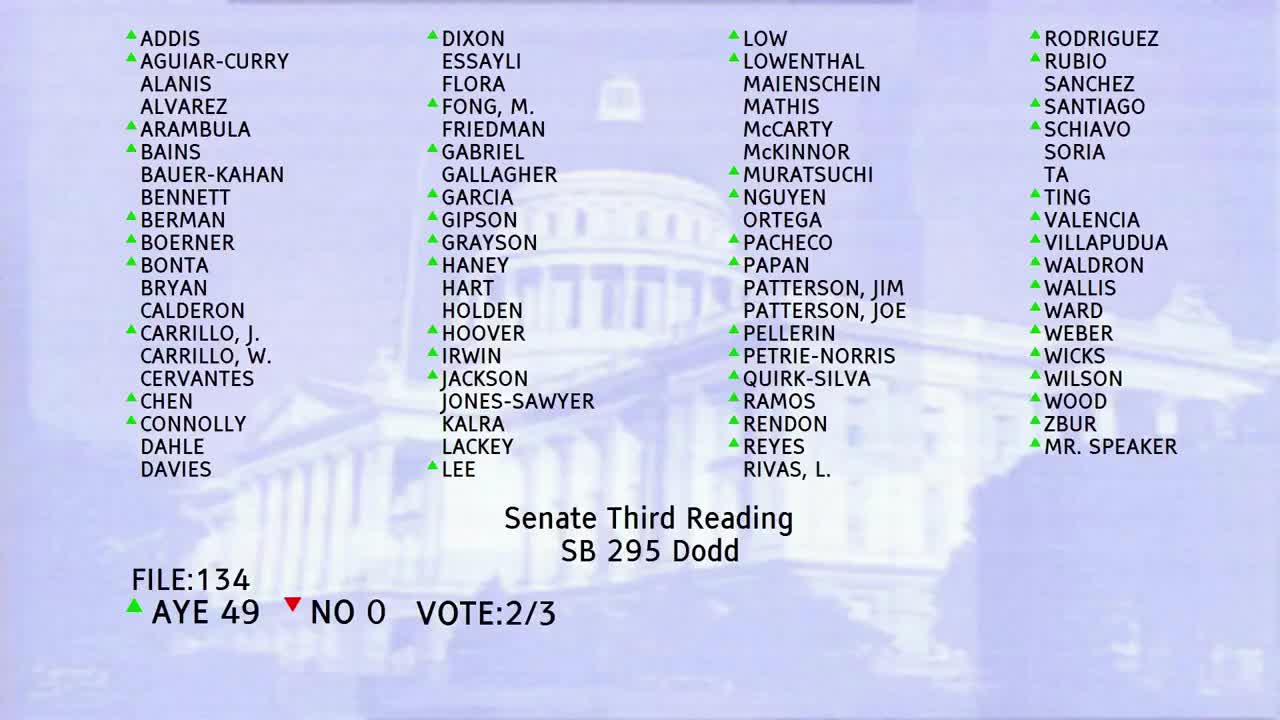 1MIN
Assembly Floor
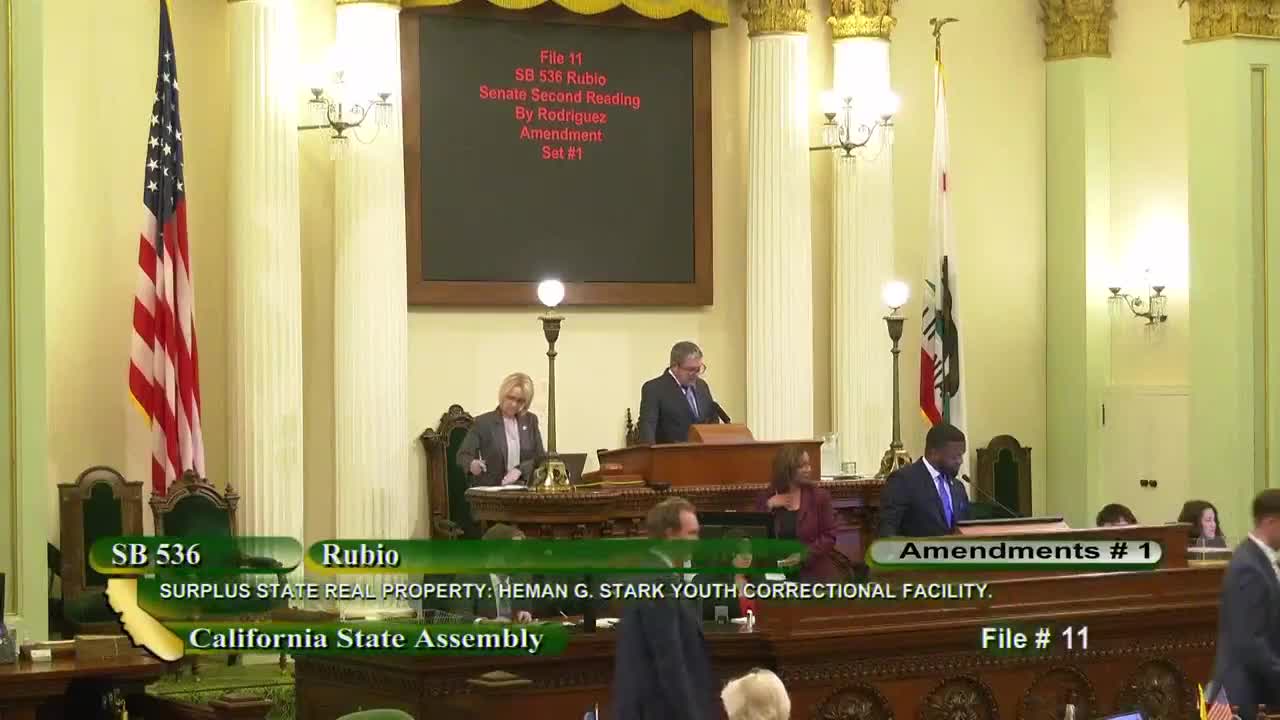 1MIN
Assembly Floor
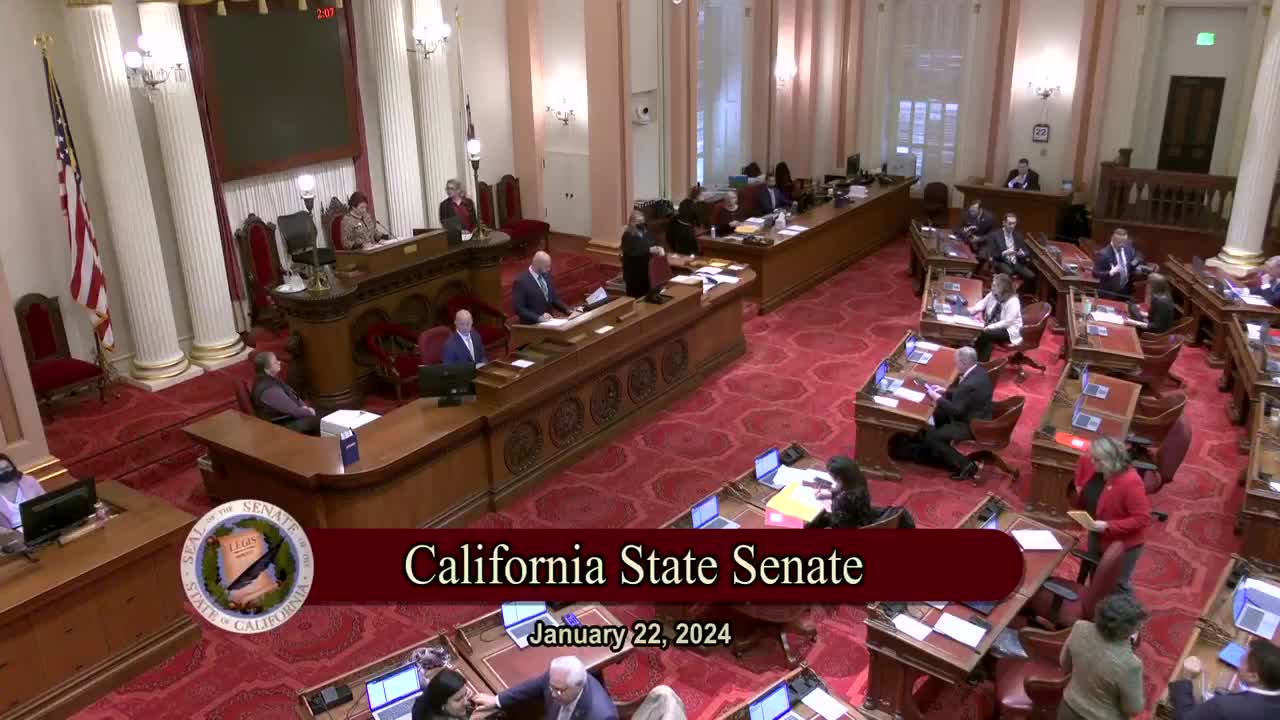 40SEC
Senate Floor
Bill Author

Bill Co-Author(s):
