SB 571: Fire safety: ingress and egress route recommendations: report.
- Session Year: 2023-2024
- House: Senate
- Latest Version Date: 2024-09-04
Current Status:
Failed
(2024-09-22: In Senate. Consideration of Governor's veto pending.)
Introduced
In Committee
First Chamber
In Committee
Second Chamber
Enacted
What does this bill do?
The bill directs the state Office of Planning and Research to study and recommend changes to standards for how new housing, commercial, and industrial developments provide access, exits, and evacuation routes during natural disasters such as earthquakes, floods, and wildfires. The report must consider impacts on housing cost and rebuilding, regional transportation, evacuation planning and timing, wildfire behavior, travel and emergency vehicle capacity, needs of vulnerable people, and other local factors, and the office must consult a working group of fire, emergency, housing, transportation, and local government representatives.
The summary is provided by generative AI which can make mistakes. For original language, please view the details in the table below.
Existing law establishes the Office of Planning and Research in the Governors office. Existing law requires the Office of Planning and Research, by July 1, 2020, in consultation with the Department of Forestry and Fire Protection, the State Board of Forestry and Fire Protection, and other fire and safety experts, to update the guidance document entitled Fire Hazard Planning, General Plan Technical Advice Series. Existing law requires the guidance document to include specific land use strategies to reduce fire risk to buildings, infrastructure, and communities.
This bill would require the office to conduct a study and prepare a report, including recommendations, that evaluates potential improvements to state standards for ingress and egress and evacuation routes for development, as defined, in the event of a natural disaster, as provided. For purposes of assisting with and informing the development of the report, the bill would require the office to convene and consult with a working group that includes specified voluntary representatives, including from the Office of the State Fire Marshal. The bill would require the Office of Planning and Research, on or before January 1, 2027, to submit the report to the appropriate fiscal and policy committees of the Legislature and the Governor.
Existing law establishes the Office of Planning and Research in the Governors office. Existing law requires the Office of Planning and Research, by July 1, 2020, in consultation with the Department of Forestry and Fire Protection, the State Board of Forestry and Fire Protection, and other fire and safety experts, to update the guidance document entitled Fire Hazard Planning, General Plan Technical Advice Series. Existing law requires the guidance document to include specific land use strategies to reduce fire risk to buildings, infrastructure, and communities.
This bill would require the office to conduct a study and prepare a report, including recommendations, that evaluates potential improvements to state standards for ingress and egress and evacuation routes for development, as defined, in the event of a wildfire, natural disaster, as provided. For purposes of assisting with and informing the development of the report, the bill would require the office to convene and consult with a working group that includes specified voluntary representatives, including from the Office of the State Fire Marshal. The bill would require the Office of Planning and Research, on or before January 1, 2027, to submit the report to the appropriate fiscal and policy committees of the Legislature and the Governor.
Existing law establishes the Office of Planning and Research in the Governors office. Existing law requires the Office of Planning and Research, by July 1, 2020, in consultation with the Department of Forestry and Fire Protection, the State Board of Forestry and Fire Protection, and other fire and safety experts, to update the guidance document entitled Fire Hazard Planning, General Plan Technical Advice Series. Existing law requires the guidance document to include specific land use strategies to reduce fire risk to buildings, infrastructure, and communities.
This bill would require the office to conduct a study and prepare a report, including recommendations, that evaluates potential improvements to state standards for ingress and egress and evacuation routes for development, as defined, in the event of a wildfire, as provided. For purposes of assisting with and informing the development of the report, the bill would require the office to convene and consult with a working group that includes specified voluntary representatives, including from the Office of the State Fire Marshal. The bill would require the Office of Planning and Research, on or before January 1, 2027, to submit the report to the appropriate fiscal and policy committees of the Legislature and the Governor.
Existing law establishes the Department of Forestry and Fire Protection in the Natural Resources Agency and establishes the State Board of Forestry and Fire Protection within the department. Existing law requires the state board to adopt regulations implementing minimum fire safety standards, as provided.This bill would require the state board, on or before January 1, 2027, to create, and provide to the Legislature, a report relating to standards for ingress and egress routes in new development, as provided. The bill would require the state board to do certain things when creating the report, including provide opportunities for input from the public, as specified. The bill would prohibit the state board from adopting any regulations incorporating the standards described in the report until at least 6 months after completing that report.Existing law establishes the Department of Forestry and Fire Protection in the Natural Resources Agency and establishes the State Board of Forestry and Fire Protection within the department. Existing law requires the state board to adopt regulations implementing minimum fire safety standards, as provided.
This bill would require the state board, on or before January 1, 2027, to adopt minimum fire safety standards create, and provide to the Legislature, a report relating to standards for ingress and egress routes for in new development, as defined, proposed to be constructed in high and very high fire hazard severity zones, as provided. development, as provided. The bill would require the state board to do certain things when creating the report, including provide opportunities for input from the public, as specified. The bill would prohibit the state board from adopting any regulations incorporating the standards described in the report until at least 6 months after completing that report.
Existing law establishes the Department of Forestry and Fire Protection in the Natural Resources Agency and establishes the State Board of Forestry and Fire Protection within the department. Existing law requires the state board to adopt regulations implementing minimum fire safety standards, as provided.
This bill would require the state board, on or before January 1, 2027, to adopt minimum fire safety standards relating to ingress and egress routes for new development, as defined, proposed to be constructed in high and very high fire hazard severity zones, as provided.
Existing law, the Planning and Zoning Law, requires the legislative body of a city or county to adopt a comprehensive general plan that includes various elements, including among others, a land use element and a safety element. Existing law requires the safety element to be revised at a specified time period, or as necessary to address the risk of fire for land classified as state responsibility areas and land classified as very high fire hazard severity zones. Existing law requires the safety element to include, among other things, a set of goals, policies, and objectives for the protection of the community from the unreasonable risk of wildfire and a set of feasible implementation measures designed to carry out those goals, policies, and objectives.This bill would require a proponent of a new development that would require the evacuation of 40 or more vehicles at any given time that is located within a state responsibility area or local responsibility area and within a high or very high fire hazard severity zone to include an evacuation plan with its application submitted to the local government for the development. The bill would subject the evacuation plan to the independent approval of the local government, as defined, the respective law enforcement and fire agencies that have jurisdictional response authority over the relevant area, and the California Highway Patrol if the proposed evacuation routing utilizes state or federal highways. The bill would require the evacuation plan to consist of specified information, including a wildfire behavior study, a traffic engineering study, and the best available routes for evacuation egress by populations within the development when threatened by wildfire. By imposing new duties on local governments in reviewing and approving developments in high and very high fire hazard severity zones, the bill would impose a state-mandated local program. This bill would require all data elements of the evacuation plan to be preserved and maintained by the respective city or county and consolidated in a countywide evacuation database for local fire, law, and emergency service agencies to execute efficient evacuations and mass notifications, as specified. The bill would require the applicable county to, among other things, review and update evacuation plan information in its system on an annual basis and as new information becomes available. By imposing new duties on counties in maintaining and updating evacuation plans, the bill would impose a state-mandated local program. This bill would authorize any person to maintain an action for declaratory and equitable relief to restrain any violation of these provisions.The bill would include findings that changes proposed by this bill address a matter of statewide concern rather than a municipal affair and, therefore, apply to all cities, including charter cities.The California Constitution requires the state to reimburse local agencies and school districts for certain costs mandated by the state. Statutory provisions establish procedures for making that reimbursement.This bill would provide that with regard to certain mandates no reimbursement is required by this act for a specified reason.With regard to any other mandates, this bill would provide that, if the Commission on State Mandates determines that the bill contains costs so mandated by the state, reimbursement for those costs shall be made pursuant to the statutory provisions noted above.Existing law, the Planning and Zoning Law, requires the legislative body of a city or county to adopt a comprehensive general plan that includes various elements, including among others, a land use element and a safety element. Existing law requires the safety element to be revised at a specified time period, or as necessary to address the risk of fire for land classified as state responsibility areas and land classified as very high fire hazard severity zones. Existing law requires the safety element to include, among other things, a set of goals, policies, and objectives for the protection of the community from the unreasonable risk of wildfire and a set of feasible implementation measures designed to carry out those goals, policies, and objectives.
This bill would require a proponent of a new development that would require the evacuation of 40 or more vehicles at any given time that is located within a state responsibility area or local responsibility area that is and within a high or very high fire hazard severity zone to include an evacuation plan with its application submitted to the local government for the development. The bill would subject the evacuation plan to the independent approval of the local government, as defined, the respective law enforcement and fire agencies that have jurisdictional response authority over the relevant area, and the California Highway Patrol if the proposed evacuation routing utilizes state or federal highways. The bill would require the evacuation plan to consist of specified information, including a wildfire behavior study, a traffic engineering study, and the best available routes for evacuation egress by populations within the development when threatened by wildfire. By imposing new duties on local governments in reviewing and approving developments in high and very high fire hazard severity zones, the bill would impose a state-mandated local program.
This bill would require all data elements of the evacuation plan to be preserved and maintained by the respective city or county and consolidated in a countywide evacuation database for local fire, law, and emergency service agencies to execute efficient evacuations and mass notifications, as specified. The bill would require the applicable county to, among other things, review and update evacuation plan information in its system on an annual basis and as new information becomes available. By imposing new duties on counties in maintaining and updating evacuation plans, the bill would impose a state-mandated local program.
This bill would authorize any person to maintain an action for declaratory and equitable relief to restrain any violation of these provisions.
The bill would include findings that changes proposed by this bill address a matter of statewide concern rather than a municipal affair and, therefore, apply to all cities, including charter cities.
The California Constitution requires the state to reimburse local agencies and school districts for certain costs mandated by the state. Statutory provisions establish procedures for making that reimbursement.
This bill would provide that with regard to certain mandates no reimbursement is required by this act for a specified reason.
With regard to any other mandates, this bill would provide that, if the Commission on State Mandates determines that the bill contains costs so mandated by the state, reimbursement for those costs shall be made pursuant to the statutory provisions noted above.
Existing law, the Planning and Zoning Law, requires the legislative body of a city or county to adopt a comprehensive general plan that includes various elements, including among others, a land use element and a safety element. Existing law requires the safety element to be revised at a specified time period, or as necessary to address the risk of fire for land classified as state responsibility areas and land classified as very high fire hazard severity zones. Existing law requires the safety element to include, among other things, a set of goals, policies, and objectives for the protection of the community from the unreasonable risk of wildfire and a set of feasible implementation measures designed to carry out those goals, policies, and objectives.
This bill would require a proponent of a new development within a state responsibility area or local responsibility area that is within a high or very high fire hazard severity zone to include an evacuation plan with its application submitted to the local government for the development. The bill would subject the evacuation plan to the independent approval of the local government, as defined, the respective law enforcement and fire agencies that have jurisdictional response authority over the relevant area, and the California Highway Patrol if the proposed evacuation routing utilizes state or federal highways. The bill would require the evacuation plan to consist of specified information, including a wildfire behavior study, a traffic engineering study, and the best available routes for evacuation egress by populations within the development when threatened by wildfire. By imposing new duties on local governments in reviewing and approving developments in high and very high fire hazard severity zones, the bill would impose a state-mandated local program.
This bill would require all data elements of the evacuation plan to be preserved and maintained by the respective city or county and consolidated in a countywide evacuation database for local fire, law, and emergency service agencies to execute efficient evacuations and mass notifications, as specified. The bill would require the applicable county to, among other things, review and update evacuation plan information in its system on an annual basis and as new information becomes available. By imposing new duties on counties in maintaining and updating evacuation plans, the bill would impose a state-mandated local program.
The bill would include findings that changes proposed by this bill address a matter of statewide concern rather than a municipal affair and, therefore, apply to all cities, including charter cities.
The California Constitution requires the state to reimburse local agencies and school districts for certain costs mandated by the state. Statutory provisions establish procedures for making that reimbursement.
This bill would provide that with regard to certain mandates no reimbursement is required by this act for a specified reason.
With regard to any other mandates, this bill would provide that, if the Commission on State Mandates determines that the bill contains costs so mandated by the state, reimbursement for those costs shall be made pursuant to the statutory provisions noted above.
(a)Unless the context otherwise requires, for purposes of this section, development means all new residential, commercial, or industrial development.
(b)The office shall conduct a study and prepare a report, including recommendations, that evaluates potential improvements to state standards for ingress and egress and evacuation routes for development in the event of a natural disaster, including seismic activity and related hazards, flooding, and wildland and urban fires, for which local governments plan in accordance with paragraph (1) of subdivision (g) of Section 65302. The report and recommendations shall consider, at minimum, all of the following:
(1)The potential effect that a change to state standards, described in this subdivision, could have on all of the following:
(A)The cost and affordability of housing, including any potential impact on the ability of cities and counties to meet their obligations under Article 10.6 (commencing with Section 65580) of Chapter 3.
(B)Interactions, if any, with regional transportation planning requirements.
(C)The ability for individuals and communities to rebuild after a disaster.
(2)Existing evacuation planning guidance and best practices, including, but not limited to, minimum fire safety standards.
(3)The role of wildfire behavior, fire modeling, and potential wildfire impacts affecting evacuation routes and temporary refuge area locations.
(4)Recommended feasible timeframes after notification of a natural disaster to accommodate travel by the developments population to a point of safety, such as to a temporary refuge area, when appropriate, using designated evacuation routes.
(5)Scaling and tiering of feasible standards based on the developments size, population density, motor vehicle volume, and other appropriate factors, including strategies and performance criteria to address safety needs.
(6)The needs of vulnerable populations.
(7)Travel capacity needs for designated evacuation routes and needs for concurrent emergency vehicle access, including considerations of current use of existing routes by local populations and potential reductions of travel capacity posed by new development.
(8)The existence of evacuation routes, and the size, population density, motor vehicle volume, and other appropriate factors, of the community or development that those existing routes support, in relation to the new development.
(c)To assist with and inform the development of the report and recommendations required by this section, the office shall convene and consult with a working group that includes, but is not limited to, voluntary representatives from all of the following entities:
(1)The Office of the State Fire Marshal.
(2)The State Board of Forestry and Fire Protection.
(3)The Department of Housing and Community Development.
(4)The Office of Emergency Services.
(5)The Transportation Agency.
(6)The Seismic Safety Commission.
(7)The Department of Water Resources.
(8)Local fire chiefs and local law enforcement or statewide associations representing those entities.
(9)The building industry.
(10)Local governments and statewide organizations representing urban, suburban, and rural local governments.
(11)Environmental, housing, and other nongovernmental stakeholder organizations.
(d)When developing the report pursuant to this section, the office shall include public outreach and engagement by providing regular opportunities for input from and dialogue with the public.
(e)On or before January 1, 2027, the office shall submit the report required by this section to the appropriate fiscal and policy committees of the Legislature, consistent with Section 9795, and to the Governor.
(f)Pursuant to Section 10231.5, this section is repealed on January 1, 2031.
(a)Unless the context otherwise requires, for purposes of this section, development means all new residential, commercial, or industrial development.
(b)The office shall conduct a study and prepare a report, including recommendations, that evaluates potential improvements to state standards for ingress and egress and evacuation routes for development in the event of a natural disaster, including seismic activity and related hazards, flooding, and wildland and urban fires, for which local governments plan in accordance with paragraph (1) of subdivision (g) of Section 65302. The report and recommendations shall consider, at minimum, all of the following:
(1)The potential effect that a change to state standards, described in this subdivision, could have on all of the following:
(A)The cost and affordability of housing, including any potential impact on the ability of cities and counties to meet their obligations under Article 10.6 (commencing with Section 65580) of Chapter 3.
(B)Interactions, if any, with regional transportation planning requirements.
(C)The ability for individuals and communities to rebuild after a disaster.
(2)Existing evacuation planning guidance, guidance and best practices, including, but not limited to, minimum fire safety standards.
(3)The role of wildfire behavior, fire modeling, and potential wildfire impacts affecting evacuation routes and temporary refuge area locations.
(4)Recommended feasible timeframes after notification of a natural disaster to accommodate travel by the developments population to a point of safety, such as to a temporary refuge area, when appropriate, using designated evacuation routes.
(5)Scaling and tiering of feasible standards based on the developments size, population density, motor vehicle volume, and other appropriate factors, including strategies and performance criteria to address safety needs.
(6)The needs of vulnerable populations.
(7)Travel capacity needs for designated evacuation routes and needs for concurrent emergency vehicle access, including considerations of current use of existing routes by local populations and potential reductions of travel capacity posed by new development.
(8)The existence of evacuation routes, and the size, population density, motor vehicle volume, and other appropriate factors, of the community or development that those existing routes support, in relation to the new development.
(c)To assist with and inform the development of the report and recommendations required by this section, the office shall convene and consult with a working group that includes, but is not limited to, voluntary representatives from all of the following entities:
(1)The Office of the State Fire Marshal.
(2)The State Board of Forestry and Fire Protection.
(3)The Department of Housing and Community Development.
(4)The Office of Emergency Services.
(5)The Transportation Agency.
(6)The State Air Resources Board.(7)(6)The Seismic Safety Commission.
(8)(7)The Department of Water Resources.
(9)(8)Local fire chiefs and local law enforcement or statewide associations representing those entities.
(10)(9)The building industry.
(11)(10)Local governments and statewide organizations representing urban, suburban, and rural local governments.
(12)(11)Environmental, housing, and other nongovernmental stakeholder organizations.
(d)When developing the report pursuant to this section, the office shall include public outreach and engagement by providing regular opportunities for input from and dialogue with the public.
(e)On or before January 1, 2027, the office shall submit the report required by this section to the appropriate fiscal and policy committees of the Legislature, consistent with Section 9795, and to the Governor.
(f)Pursuant to Section 10231.5, this section is repealed on January 1, 2031.
(a)Unless the context otherwise requires, for purposes of this section, development means all new residential, commercial, and or industrial development.
(b)The office shall conduct a study and prepare a report, including recommendations, that evaluates potential improvements to state standards for ingress and egress and evacuation routes for development in the event of a wildfire. natural disaster, including seismic activity and related hazards, flooding, and wildland and urban fires, for which local governments plan in accordance with paragraph (1) of subdivision (g) of Section 65302. The report and recommendations shall consider, at minimum, all of the following:
(1)The potential effect that a change to state standards, described in this subdivision, could have on all of the following:
(A)The cost and affordability of housing, including any potential impact on the ability of cities and counties to meet their obligations under Article 10.6 (commencing with Section 65580) of Chapter 3.
(B)Interactions Interactions, if any, with state climate goals. regional transportation planning requirements.
(C)The ability for individuals and communities to rebuild after a disaster.
(2)Existing evacuation planning guidance, best practices, and including, but not limited to, minimum fire safety standards.
(3)The role of wildfire behavior, fire modeling, and potential wildfire impacts affecting evacuation routes and temporary refuge area locations.
(4)Recommended feasible timeframes after notification of a fire natural disaster to accommodate travel by the developments population to a point of safety, such as to a temporary refuge area, when appropriate, using designated evacuation routes.
(5)Scaling and tiering of feasible standards based on the developments size, population density, motor vehicle volume, and other appropriate factors, including strategies and performance criteria to address safety needs.
(6)The needs of vulnerable populations.
(7)Travel capacity needs for designated evacuation routes and needs for concurrent emergency vehicle access, including considerations of current use of existing routes by local populations and potential reductions of travel capacity posed by new development.
(8)Feasible mitigation for a developments traffic impacts that address any unmet local travel and infrastructure capacity needs of identified evacuation routes.(8)The existence of evacuation routes, and the size, population density, motor vehicle volume, and other appropriate factors, of the community or development that those existing routes support, in relation to the new development.
(c)To assist with and inform the development of the report and recommendations required by this section, the office shall convene and consult with a working group that includes, but is not limited to, voluntary representatives from all of the following entities:
(1)The Office of the State Fire Marshal.
(2)The State Board of Forestry and Fire Protection.
(3)The Department of Housing and Community Development.
(4)The Office of Emergency Services.
(5)The Transportation Agency.
(6)The State Air Resources Board.
(7)The Seismic Safety Commission.
(8)The Department of Water Resources.
(7)(9)Local fire chiefs and local law enforcement or statewide associations representing those entities.
(8)(10)The building industry.
(9)Organizations(11)Local governments and statewide organizations representing urban, suburban, and rural local governments.
(10)(12)Environmental, housing, and other nongovernmental stakeholder organizations.
(d)When developing the report pursuant to this section, the office shall include public outreach and engagement by providing regular opportunities for input from and dialogue with the public.
(e)On or before January 1, 2027, the office shall submit the report required by this section to the appropriate fiscal and policy committees of the Legislature, consistent with Section 9795, and to the Governor.
(f)Pursuant to Section 10231.5, this section is repealed on January 1, 2031.
(a)Unless the context otherwise requires, for purposes of this section, development means all new residential, commercial, and industrial development.
(b)The office shall conduct a study and prepare a report, including recommendations, that evaluates potential improvements to state standards for ingress and egress and evacuation routes for development in the event of a wildfire. The report and recommendations shall consider, at minimum, all of the following:
(1)The potential effect that a change to state standards, described in this subdivision, could have on all of the following:
(A)The cost and affordability of housing, including any potential impact on the ability of cities and counties to meet their obligations under Article 10.6 (commencing with Section 65580) of Chapter 3.
(B)Interactions with state climate goals.
(C)The ability for individuals and communities to rebuild after a disaster.
(2)Existing evacuation planning guidance, best practices, and fire safety standards.
(3)The role of wildfire behavior, fire modeling, and potential wildfire impacts affecting evacuation routes and temporary refuge area locations.
(4)Recommended feasible timeframes after notification of a fire to accommodate travel by the developments population to a point of safety, such as to a temporary refuge area, when appropriate, using designated evacuation routes.
(5)Scaling and tiering of feasible standards based on the developments size, population density, motor vehicle volume, and other appropriate factors, including strategies and performance criteria to address safety needs.
(6)The needs of vulnerable populations.
(7)Travel capacity needs for designated evacuation routes and needs for concurrent emergency vehicle access, including considerations of current use of existing routes by local populations and potential reductions of travel capacity posed by new development.
(8)Feasible mitigation for a developments traffic impacts that address any unmet local travel and infrastructure capacity needs of identified evacuation routes.
(c)To assist with and inform the development of the report and recommendations required by this section, the office shall convene and consult with a working group that includes, but is not limited to, voluntary representatives from all of the following entities:
(1)The Office of the State Fire Marshal.
(2)The State Board of Forestry and Fire Protection.
(3)The Department of Housing and Community Development.
(4)The Office of Emergency Services.
(5)The Transportation Agency.
(6)The State Air Resources Board.
(7)Local fire chiefs and local law enforcement or statewide associations representing those entities.
(8)The building industry.
(9)Organizations representing urban, suburban, and rural local governments.
(10)Environmental, housing, and other nongovernmental stakeholder organizations.
(d)When developing the report pursuant to this section, the office shall include public outreach and engagement by providing regular opportunities for input from and dialogue with the public.
(e)On or before January 1, 2027, the office shall submit the report required by this section to the appropriate fiscal and policy committees of the Legislature, consistent with Section 9795, and to the Governor.
(f)Pursuant to Section 10231.5, this section is repealed on January 1, 2031.
SECTION 1.Section 4290 of the Public Resources Code is amended to read:4290.(a)The board shall adopt regulations implementing minimum fire safety standards related to defensible space that are applicable to state responsibility area lands under the authority of the department, and to lands classified and designated as very high fire hazard severity zones, as defined in subdivision (i) of Section 51177 of the Government Code. These regulations apply to the perimeters and access to all residential, commercial, and industrial building construction within state responsibility areas approved after January 1, 1991, and within lands classified and designated as very high fire hazard severity zones, as defined in subdivision (i) of Section 51177 of the Government Code after July 1, 2021. The board shall not adopt building standards, as defined in Section 18909 of the Health and Safety Code, under the authority of this section. As an integral part of fire safety standards, the State Fire Marshal has the authority to adopt regulations for roof coverings and openings into the attic areas of buildings specified in Section 13108.5 of the Health and Safety Code. The regulations apply to the placement of mobile homes as defined by National Fire Protection Association standards. These regulations do not apply where an application for a building permit was filed before January 1, 1991, or to parcel or tentative maps or other developments approved before January 1, 1991, if the final map for the tentative map is approved within the time prescribed by the local ordinance. The regulations shall include all of the following:(1)Road standards for fire equipment access.(2)Standards for signs identifying streets, roads, and buildings.(3)Minimum private water supply reserves for emergency fire use.(4)Fuel breaks and greenbelts.(b)The board shall, on and after July 1, 2021, periodically update regulations for fuel breaks and greenbelts near communities to provide greater fire safety for the perimeters to all residential, commercial, and industrial building construction within state responsibility areas and lands classified and designated as very high fire hazard severity zones, as defined in subdivision (i) of Section 51177 of the Government Code, after July 1, 2021. These regulations shall include measures to preserve undeveloped ridgelines to reduce fire risk and improve fire protection. The board shall, by regulation, define ridgeline for purposes of this subdivision.(c)(1)On or before January 1, 2027, the board shall create, and provide to the Legislature, a report relating to standards for ingress and egress routes in new development that would be suitable for subsequent adoption by the board into the state minimum fire safe standards (Articles 1 (commencing with Section 1220) to 5 (commencing with Section 1260), inclusive, of Chapter 7 of Division 1.5 of Title 14 of the California Code of Regulations). The board shall do all of the following when creating the report:(A)Provide opportunities for input from the public, including performing outreach to potentially interested parties.(B)Provide an opportunity for public comment on the proposed standards and publicly respond to those comments in the final report.(C)Propose standards applicable to state responsibility area lands under the jurisdiction of the department and lands in high and very high fire hazard severity zones as identified pursuant to Section 51178 or 51179 of the Government Code.(D)Develop standards to facilitate enforcement by the board while avoiding unnecessary duplication of existing applicable requirements.(E)Propose standards that meet an appropriate minimum standard for new developments of varying size in different locations within the applicable areas. These standards shall include consideration of the traffic impact to existing communities; address the safety needs of vulnerable populations within existing communities; scaling or tiering of the standards with development size, population density, and motor vehicle volume; and other applicable factors. Proposed standards may include providing two or more ingress and egress routes for new developments that meet designated criteria.(2)(A)A report submitted to the Legislature pursuant to paragraph (1) shall be submitted in compliance with Section 9795 of the Government Code.(B)The requirement for submitting a report to the Legislature pursuant to paragraph (1) is inoperative on January 1, 2031, pursuant to Section 10231.5 of the Government Code.(3)Notwithstanding any other law, the board shall not adopt any regulations incorporating the standards described in the report pursuant to paragraph (1) until at least six months after completing that report.(d)These regulations do not supersede local regulations that equal or exceed minimum regulations adopted by the state.(e)The board may enter into contracts with technical experts to meet the requirements of this section.(a)The board shall adopt regulations implementing minimum fire safety standards related to defensible space that are applicable to state responsibility area lands under the authority of the department, and to lands classified and designated as very high fire hazard severity zones, as defined in subdivision (i) of Section 51177 of the Government Code. These regulations apply to the perimeters and access to all residential, commercial, and industrial building construction within state responsibility areas approved after January 1, 1991, and within lands classified and designated as very high fire hazard severity zones, as defined in subdivision (i) of Section 51177 of the Government Code after July 1, 2021. The board shall not adopt building standards, as defined in Section 18909 of the Health and Safety Code, under the authority of this section. As an integral part of fire safety standards, the State Fire Marshal has the authority to adopt regulations for roof coverings and openings into the attic areas of buildings specified in Section 13108.5 of the Health and Safety Code. The regulations apply to the placement of mobile homes as defined by National Fire Protection Association standards. These regulations do not apply where an application for a building permit was filed before January 1, 1991, or to parcel or tentative maps or other developments approved before January 1, 1991, if the final map for the tentative map is approved within the time prescribed by the local ordinance. The regulations shall include all of the following:
(1)Road standards for fire equipment access.
(2)Standards for signs identifying streets, roads, and buildings.
(3)Minimum private water supply reserves for emergency fire use.
(4)Fuel breaks and greenbelts.
(b)The board shall, on and after July 1, 2021, periodically update regulations for fuel breaks and greenbelts near communities to provide greater fire safety for the perimeters to all residential, commercial, and industrial building construction within state responsibility areas and lands classified and designated as very high fire hazard severity zones, as defined in subdivision (i) of Section 51177 of the Government Code, after July 1, 2021. These regulations shall include measures to preserve undeveloped ridgelines to reduce fire risk and improve fire protection. The board shall, by regulation, define ridgeline for purposes of this subdivision.
(c)(1)On or before January 1, 2027, the board shall adopt minimum fire safety standards relating to ingress and egress routes for new development proposed to be constructed in high and very high fire hazard severity zones, as identified pursuant to Section 51178 of the Government Code or locally adopted equivalent. The board shall take all of the following into consideration when establishing the regulations:(A)The size of the development. The regulations may be scaled, and individual ingress and egress routes required in a new development may be tiered, based on the size of the development.(B)Traffic impact to existing communities.(C)Points of ignition for potential wildfires.(2)For purposes of this subdivision, development means any residential, commercial, or other development that would require the evacuation of 40 or more vehicles at any given time.(c)(1)On or before January 1, 2027, the board shall create, and provide to the Legislature, a report relating to standards for ingress and egress routes in new development that would be suitable for subsequent adoption by the board into the state minimum fire safe standards (Articles 1 (commencing with Section 1220) to 5 (commencing with Section 1260), inclusive, of Chapter 7 of Division 1.5 of Title 14 of the California Code of Regulations). The board shall do all of the following when creating the report:
(A)Provide opportunities for input from the public, including performing outreach to potentially interested parties.
(B)Provide an opportunity for public comment on the proposed standards and publicly respond to those comments in the final report.
(C)Propose standards applicable to state responsibility area lands under the jurisdiction of the department and lands in high and very high fire hazard severity zones as identified pursuant to Section 51178 or 51179 of the Government Code.
(D)Develop standards to facilitate enforcement by the board while avoiding unnecessary duplication of existing applicable requirements.
(E)Propose standards that meet an appropriate minimum standard for new developments of varying size in different locations within the applicable areas. These standards shall include consideration of the traffic impact to existing communities; address the safety needs of vulnerable populations within existing communities; scaling or tiering of the standards with development size, population density, and motor vehicle volume; and other applicable factors. Proposed standards may include providing two or more ingress and egress routes for new developments that meet designated criteria.
(2)(A)A report submitted to the Legislature pursuant to paragraph (1) shall be submitted in compliance with Section 9795 of the Government Code.
(B)The requirement for submitting a report to the Legislature pursuant to paragraph (1) is inoperative on January 1, 2031, pursuant to Section 10231.5 of the Government Code.
(3)Notwithstanding any other law, the board shall not adopt any regulations incorporating the standards described in the report pursuant to paragraph (1) until at least six months after completing that report.
(d)These regulations do not supersede local regulations that equal or exceed minimum regulations adopted by the state.
(e)The board may enter into contracts with technical experts to meet the requirements of this section.
(a)The board shall adopt regulations implementing minimum fire safety standards related to defensible space that are applicable to state responsibility area lands under the authority of the department, and to lands classified and designated as very high fire hazard severity zones, as defined in subdivision (i) of Section 51177 of the Government Code. These regulations apply to the perimeters and access to all residential, commercial, and industrial building construction within state responsibility areas approved after January 1, 1991, and within lands classified and designated as very high fire hazard severity zones, as defined in subdivision (i) of Section 51177 of the Government Code after July 1, 2021. The board may shall not adopt building standards, as defined in Section 18909 of the Health and Safety Code, under the authority of this section. As an integral part of fire safety standards, the State Fire Marshal has the authority to adopt regulations for roof coverings and openings into the attic areas of buildings specified in Section 13108.5 of the Health and Safety Code. The regulations apply to the placement of mobile homes as defined by National Fire Protection Association standards. These regulations do not apply where an application for a building permit was filed prior to before January 1, 1991, or to parcel or tentative maps or other developments approved prior to before January 1, 1991, if the final map for the tentative map is approved within the time prescribed by the local ordinance. The regulations shall include all of the following:
(1)Road standards for fire equipment access.
(2)Standards for signs identifying streets, roads, and buildings.
(3)Minimum private water supply reserves for emergency fire use.
(4)Fuel breaks and greenbelts.
(b)The board shall, on and after July 1, 2021, periodically update regulations for fuel breaks and greenbelts near communities to provide greater fire safety for the perimeters to all residential, commercial, and industrial building construction within state responsibility areas and lands classified and designated as very high fire hazard severity zones, as defined in subdivision (i) of Section 51177 of the Government Code, after July 1, 2021. These regulations shall include measures to preserve undeveloped ridgelines to reduce fire risk and improve fire protection. The board shall, by regulation, define ridgeline for purposes of this subdivision.
(c)(1)On or before January 1, 2027, the board shall adopt minimum fire safety standards relating to ingress and egress routes for new development proposed to be constructed in high and very high fire hazard severity zones, as identified pursuant to Section 51178 of the Government Code or locally adopted equivalent. The board shall take all of the following into consideration when establishing the regulations:
(A)The size of the development. The regulations may be scaled, and individual ingress and egress routes required in a new development may be tiered, based on the size of the development.
(B)Traffic impact to existing communities.
(C)Points of ignition for potential wildfires.
(2)For purposes of this subdivision, development means any residential, commercial, or other development that would require the evacuation of 40 or more vehicles at any given time.
(c)(d)These regulations do not supersede local regulations which that equal or exceed minimum regulations adopted by the state.
(d)(e)The board may enter into contracts with technical experts to meet the requirements of this section.
All matter omitted in this version of the bill appears in the bill as amended in the Senate, March 21, 2023. (JR11)The Legislature finds and declares all of the following:
(a)As the worsening threat of wildfires continues to harm the State of California and its people, it is a matter of statewide concern to ensure the safety of residents and employees through the requirement of proper, timely planning for emergency events for new developments in areas of highest risk to fire, namely high and very high fire hazard severity zones.
(b)Inadequate planning has been proven to cost the lives of residents in these areas, while additionally posing a grave threat to first responders attempting to save lives under highly uncertain circumstances.
(c)This chapter addresses a matter of statewide concern rather than a municipal affair as that term is used in Section 5 of Article XI of the California Constitution. Therefore, this chapter applies to all cities, including charter cities.
65999.65999.1.For purposes of this chapter:
(a)Development means any residential, commercial, or other development that would require the evacuation of 40 or more vehicles at any given time.
(1)In residential developments, it is assumed that there are two vehicles on average per household.
(2)For purposes of paragraph (1), vehicle includes passenger vehicles, as defined by Section 465 of the Vehicle Code, and commercial vehicles, as defined by Section 260 of the Vehicle Code.
(a)(b)High or very high fire hazard severity zone means a zone identified pursuant to Section 51178 or locally adopted equivalent.
(b)(c)Local government means a city, a county, or a city and county.
(c)(d)Local responsibility area means an area designated by a local government upon the recommendation of the Director of the Department of Forestry and Fire Protection pursuant to Section 51178 of the Government Code that is not a state responsibility area and where a local government or district is responsible for fire protection.
(d)(e)Evacuation plan means a plan for a new development that meets the requirements of Section 65999.2. 65999.3.
(e)(f)State responsibility area means the same as defined in Section 4102 of the Public Resources Code.
(f)(g)Temporary refuge area means a designated location for civilian populations in the event escape routes are lost due to unsafe conditions.
(g)(h)Qualified area means a state responsibility area or local responsibility area that is within a high or very high fire hazard severity zone.
65999.1.65999.2.(a)The proponent of a new development in a qualified area shall, when submitting an application to the relevant local government, include an evacuation plan. The evacuation plan shall meet the minimum requirements described in Section 65999.2. 65999.3.
(b)An evacuation plan shall be subject to the independent approval of all of the following:
(1)The local government that reviews the development project.
(2)The respective law agency enforcement that has jurisdictional response authority over the relevant area.
(3)The respective fire agency that has jurisdictional response authority over the relevant area.
(4)The Department of the California Highway Patrol, if the proposed evacuation routing utilizes state or federal highways or other routes where the California Highway Patrol is the primary traffic law enforcement authority.
(c)An evacuation plan shall be consistent with any applicable county emergency plan adopted pursuant to the California Emergency Services Act (Chapter 7 (commencing with Section 8550) of Division 1 of Title 2).
65999.2.65999.3.An evacuation plan required under Section 65999.1 65999.2 shall also include, at a minimum, all of the following:
(a)A wildfire behavior study that meets the requirements of Section 65999.3. 65999.4.
(b)A traffic engineering study that meets the requirements of Section 65999.4. 65999.5.
(c)(1)The best available routes for evacuation egress by populations within the development when threatened by wildfire, and concurrent routing for emergency vehicle access.
(2)Mitigations to new development traffic impacts shall be engineered as required to maintain or improve the existing regional travel capacity of identified evacuation routes.
(3)The routes included in the evacuation plan shall include the entirety of the route, regardless of whether the route is located within the qualified area.
(d)(1)Temporary refuge areas for civilian populations in the event escape routes are lost due to unsafe conditions.
(2)Temporary refuge areas shall include the exact location and the capacity for accommodation of civilian populations who are trapped within a development by wildfire movement and unable to safely access or use designated evacuation routes.
(3)Temporary refuge area locations shall offer immediate access within the development, off-road parking, and access, and be of sufficient size and capacity for avoidance to life-threatening wildfire exposure, including smoke and radiant heat.
(4)Temporary refuge areas may include commercial, private, or institutional locations constructed of fire-resistive materials meeting or exceeding the requirements established by Chapter 7A of Part 2 of Title 24 of the California Code of Regulations, developed parks, large parking lots, or similar sites.
(e)Strategies for addressing the needs of vulnerable populations both in evacuation inclusion and public education.
(f)A detailed discussion, for the benefit of the public and interested agencies, of the exact roles of the fire protection and law enforcement jurisdictions in ordering, supervising, and conducting emergency evacuations, with consideration of the availability of staffing during multiple wildfire events in or impacting the region.
(g)Information regarding adjoining properties on all sides of the development, which shall include, to the extent that information is known, all of the following:
(1)Current land uses.
(2)Existing structures and densities.
(3)Planned construction.
(4)Natural vegetation.
(5)Environmental restoration plans.
(6)Roads.
(7)Parks.
65999.3.65999.4.(a)An evacuation plan shall include a wildfire behavior study. The wildfire behavior study shall do all of the following:
(1)Identify proposed evacuation routes and temporary refuge area locations.
(2)Include a study of potential wildfire behavior, fire modeling, and determination of potential wildfire impacts affecting evacuation routes and temporary refuge area locations.
(3)Determine locations where evacuation may be obstructed or where road users may be entrapped by fire trajectory, speed, or movement.
(4)Validate safety of proposed temporary refuge area locations.
(5)Consider both diurnal and episodic foehn wind conditions, juxtaposition to native and ornamental fuels, adjacent topography, and historic wildfire behavior, including likely points of origin, for the specific site and region.
(6)Propose mitigations, as necessary, such as fuel modification or other treatments, to reduce wildfire impacts.
(7)Determine and recommend evacuation window timing for designated evacuation routes, the period that the routes are likely available for safe travel, and under what conditions evacuation by those routes should be discontinued for safety reasons and populations redirected to temporary refuge area locations.
(b)A wildfire behavior study shall be subject to the approval of the responsible fire authority.
65999.4.65999.5.(a)An evacuation plan shall include a traffic engineering study conducted by a certified traffic engineer. The traffic engineering study shall do all of the following:
(1)Include a determination of both daily and peak travel capacity for designated evacuation routes and consider needs for concurrent emergency vehicle access.
(2)Ensure that new development access is sufficient to accommodate travel by the entire developments population to a point of safety within one hour of notification.
(3)Consider existing and prior use of designated routes by regional populations and identify any potential reductions of travel capacity posed by the new development.
(4)Identify evacuation routing from the point of evacuation origin to locations of safety, where wildfire impacts to evacuees may be avoided, and recommend traffic improvements and mitigations as necessary to facilitate effective road travel.
(5)(A)Include a minimum of two designated routes of emergency access and egress that meet municipal traffic engineering standards for the local government. These routes shall not be obstructed by locked gates or other means, and shall be available for immediate access by civilian populations without third-party intervention. The routes shall also offer immediate access to emergency responders simultaneous to civilian evacuation, with access lanes of sufficient width to facilitate emergency vehicle movement.
(B)Additional routes may be required by any party reviewing the evacuation plan to accommodate evacuation traffic for larger developments. If the traffic engineering study determines that more than the two evacuation routes required under subparagraph (A) are needed to meet the one-hour evacuation standard under paragraph (2), then additional routes may be required for the development. For very small residential projects, a traffic study may find that one evacuation route sufficiently meets the requirements of this paragraph. In either finding, the local government may modify the required minimum of two designated emergency access routes in concurrence with evacuation study recommendations and concurrence of fire and law enforcement officials.
(6)Ensure that designated emergency routes included in the traffic engineering study shall include all of the following:
(A)At least one permanent traffic lane in each direction of travel. Additional, temporary lanes may also be included to meet peak travel demand as may be required.
(B)Municipal road traffic safety features such as lane controls and guard railing, and traffic calming features shall be minimized on those routes.
(C)Fuel modification or other fire risk mitigations for evacuation routes as necessary to mitigate fire entrapment risks for civilian evacuees.
(D)The use of contraflow, or conversion of use of both inbound and outbound traffic lanes for initial evacuation purposes, shall not be part of the planned usage on the routes when direction or control of the use relies on immediate availability of local law enforcement or emergency services.
(E)In addition to minimum required travel lanes, temporary lanes for achieving peak travel capacity may be included in the study, such as median lanes, passing lanes, or wide shoulders, as may be directed by law enforcement to achieve peak travel capacity.
(7)(A)Ensure that routing over unimproved roads traversing mountainous terrain, presenting unreasonable or unsafe wildfire exposure, presenting significant traffic safety or movement concerns, or over routes not meeting city or county municipal road development standards are not used as evacuation routes for any new development.
(B)Limited, short-duration use of unimproved roads may be considered if a project can demonstrate that the use complies with subparagraph (C). Where these roads are designated for evacuation, they shall be maintained as readily accessible in perpetuity by the development.
(C)A project proponent that considers limited, short-duration use of unimproved roads under subparagraph (B) shall demonstrate that the unimproved roads do all of the following:
(i)Provide adequate emergency travel times.
(ii)Provide mitigated traffic safety risks.
(iii)Avoid significant wildfire effects.
(iv)Meet municipal standards and no other routes are adequate.
(b)The traffic engineering study shall be developed by the project proponent and be incorporated into any initial study, negative declaration, mitigation negative declaration, or environmental impact report for the development, as may be required by the California Environmental Quality Act (Division 13 (commencing with Section 21000) of the Public Resources Code). (c)(b)The traffic engineering study shall be submitted for review by law enforcement and fire officials and be subject to final approval by the local government.
65999.5.65999.6.(a)An evacuation plan may utilize existing roads or sites for potential temporary safe refuge outside of, but adjacent to, the development when those sites offer best practical use and reasonable, rapid access.
(b)All ingress and egress access shall be part of the normal traffic circulation flow without controls that require special knowledge or assistance.
65999.6.65999.7.(a)Before a development subject to this chapter may be occupied, all data elements of the evacuation plan shall be preserved and maintained by the respective local government and consolidated in a countywide evacuation database for local fire, law, and emergency service agencies to execute efficient evacuations and mass notifications.
(b)The county shall do all of the following with regard to an evacuation plan preserved pursuant to subdivision (a):
(1)Review the evacuation plan and determine its effects on regional evacuation infrastructure.
(2)Review and update evacuation plan information in the system on an annual basis and as new information becomes available.
(3)Publish and communicate actionable evacuation plans to the public in an electronic format compatible with, and accessible to, the local planning and emergency response systems.
(4)Provide hard copies of evacuation plans to the public, as a reference, but the hard copies shall not be directly actionable in the event of an emergency.
65999.8.(a)Any person may maintain an action for declaratory and equitable relief to restrain any violation of this chapter.
(b)The remedies described in subdivision (a) shall be in addition to any other remedies available at law.
65999.7.The Legislature finds and declares that this chapter addresses a matter of statewide concern rather than a municipal affair as that term is used in Section 5 of Article XI of the California Constitution. Therefore, this chapter applies to all cities, including charter cities.SEC. 2.No reimbursement is required by this act pursuant to Section 6 of Article XIIIB of the California Constitution for certain costs that may be incurred by a local agency or school district because a local agency or school district has the authority to levy service charges, fees, or assessments sufficient to pay for the program or level of service mandated by this act, within the meaning of Section 17556 of the Government Code.
However, if the Commission on State Mandates determines that this act contains other costs mandated by the state, reimbursement to local agencies and school districts for those costs shall be made pursuant to Part 7 (commencing with Section 17500) of Division 4 of Title 2 of the Government Code.
For purposes of this chapter:
(a)High or very high fire hazard severity zone means a zone identified pursuant to Section 51178 or locally adopted equivalent.
(b)Local government means a city, a county, or a city and county.
(c)Local responsibility area means an area designated by a local government upon the recommendation of the Director of the Department of Forestry and Fire Protection pursuant to Section 51178 of the Government Code that is not a state responsibility area and where a local government or district is responsible for fire protection.
(d)Evacuation plan means a plan for a new development that meets the requirements of Section 65999.2.
(e)State responsibility area means the same as defined in Section 4102 of the Public Resources Code.
(f)Temporary refuge area means a designated location for civilian populations in the event escape routes are lost due to unsafe conditions.
(g)Qualified area means a state responsibility area or local responsibility area that is within a high or very high fire hazard severity zone.
65999.1.(a)The proponent of a new development in a qualified area shall, when submitting an application to the relevant local government, include an evacuation plan. The evacuation plan shall meet the minimum requirements described in Section 65999.2.
(b)An evacuation plan shall be subject to the independent approval of all of the following:
(1)The local government that reviews the development project.
(2)The respective law agency enforcement that has jurisdictional response authority over the relevant area.
(3)The respective fire agency that has jurisdictional response authority over the relevant area.
(4)The Department of the California Highway Patrol, if the proposed evacuation routing utilizes state or federal highways or other routes where the California Highway Patrol is the primary traffic law enforcement authority.
(c)An evacuation plan shall be consistent with any applicable county emergency plan adopted pursuant to the California Emergency Services Act (Chapter 7 (commencing with Section 8550) of Division 1 of Title 2).
65999.2.An evacuation plan required under Section 65999.1 shall also include, at a minimum, all of the following:
(a)A wildfire behavior study that meets the requirements of Section 65999.3.
(b)A traffic engineering study that meets the requirements of Section 65999.4.
(c)(1)The best available routes for evacuation egress by populations within the development when threatened by wildfire, and concurrent routing for emergency vehicle access.
(2)Mitigations to new development traffic impacts shall be engineered as required to maintain or improve the existing regional travel capacity of identified evacuation routes.
(3)The routes included in the evacuation plan shall include the entirety of the route, regardless of whether the route is located within the qualified area.
(d)(1)Temporary refuge areas for civilian populations in the event escape routes are lost due to unsafe conditions.
(2)Temporary refuge areas shall include the exact location and the capacity for accommodation of civilian populations who are trapped within a development by wildfire movement and unable to safely access or use designated evacuation routes.
(3)Temporary refuge area locations shall offer immediate access within the development, off-road parking, and access, and be of sufficient size and capacity for avoidance to life-threatening wildfire exposure, including smoke and radiant heat.
(4)Temporary refuge areas may include commercial, private, or institutional locations constructed of fire-resistive materials meeting or exceeding the requirements established by Chapter 7A of Part 2 of Title 24 of the California Code of Regulations, developed parks, large parking lots, or similar sites.
(e)Strategies for addressing the needs of vulnerable populations both in evacuation inclusion and public education.
(f)A detailed discussion, for the benefit of the public and interested agencies, of the exact roles of the fire protection and law enforcement jurisdictions in ordering, supervising, and conducting emergency evacuations, with consideration of the availability of staffing during multiple wildfire events in or impacting the region.
(g)Information regarding adjoining properties on all sides of the development, which shall include, to the extent that information is known, all of the following:
(1)Current land uses.
(2)Existing structures and densities.
(3)Planned construction.
(4)Natural vegetation.
(5)Environmental restoration plans.
(6)Roads.
(7)Parks.
65999.3.(a)An evacuation plan shall include a wildfire behavior study. The wildfire behavior study shall do all of the following:
(1)Identify proposed evacuation routes and temporary refuge area locations.
(2)Include a study of potential wildfire behavior, fire modeling, and determination of potential wildfire impacts affecting evacuation routes and temporary refuge area locations.
(3)Determine locations where evacuation may be obstructed or where road users may be entrapped by fire trajectory, speed, or movement.
(4)Validate safety of proposed temporary refuge area locations.
(5)Consider both diurnal and episodic foehn wind conditions, juxtaposition to native and ornamental fuels, adjacent topography, and historic wildfire behavior, including likely points of origin, for the specific site and region.
(6)Propose mitigations, as necessary, such as fuel modification or other treatments, to reduce wildfire impacts.
(7)Determine and recommend evacuation window timing for designated evacuation routes, the period that the routes are likely available for safe travel, and under what conditions evacuation by those routes should be discontinued for safety reasons and populations redirected to temporary refuge area locations.
(b)A wildfire behavior study shall be subject to the approval of the responsible fire authority.
65999.4.(a)An evacuation plan shall include a traffic engineering study conducted by a certified traffic engineer. The traffic engineering study shall do all of the following:
(1)Include a determination of both daily and peak travel capacity for designated evacuation routes and consider needs for concurrent emergency vehicle access.
(2)Ensure that new development access is sufficient to accommodate travel by the entire developments population to a point of safety within one hour of notification.
(3)Consider existing and prior use of designated routes by regional populations and identify any potential reductions of travel capacity posed by the new development.
(4)Identify evacuation routing from the point of evacuation origin to locations of safety, where wildfire impacts to evacuees may be avoided, and recommend traffic improvements and mitigations as necessary to facilitate effective road travel.
(5)(A)Include a minimum of two designated routes of emergency access and egress that meet municipal traffic engineering standards for the local government. These routes shall not be obstructed by locked gates or other means, and shall be available for immediate access by civilian populations without third-party intervention. The routes shall also offer immediate access to emergency responders simultaneous to civilian evacuation, with access lanes of sufficient width to facilitate emergency vehicle movement.
(B)Additional routes may be required by any party reviewing the evacuation plan to accommodate evacuation traffic for larger developments. If the traffic engineering study determines that more than the two evacuation routes required under subparagraph (A) are needed to meet the one-hour evacuation standard under paragraph (2), then additional routes may be required for the development. For very small residential projects, a traffic study may find that one evacuation route sufficiently meets the requirements of this paragraph. In either finding, the local government may modify the required minimum of two designated emergency access routes in concurrence with evacuation study recommendations and concurrence of fire and law enforcement officials.
(6)Ensure that designated emergency routes included in the traffic engineering study shall include all of the following:
(A)At least one permanent traffic lane in each direction of travel. Additional, temporary lanes may also be included to meet peak travel demand as may be required.
(B)Municipal road traffic safety features such as lane controls and guard railing, and traffic calming features shall be minimized on those routes.
(C)Fuel modification or other fire risk mitigations for evacuation routes as necessary to mitigate fire entrapment risks for civilian evacuees.
(D)The use of contraflow, or conversion of use of both inbound and outbound traffic lanes for initial evacuation purposes, shall not be part of the planned usage on the routes when direction or control of the use relies on immediate availability of local law enforcement or emergency services.
(E)In addition to minimum required travel lanes, temporary lanes for achieving peak travel capacity may be included in the study, such as median lanes, passing lanes, or wide shoulders, as may be directed by law enforcement to achieve peak travel capacity.
(7)(A)Ensure that routing over unimproved roads traversing mountainous terrain, presenting unreasonable or unsafe wildfire exposure, presenting significant traffic safety or movement concerns, or over routes not meeting city or county municipal road development standards are not used as evacuation routes for any new development.
(B)Limited, short-duration use of unimproved roads may be considered if a project can demonstrate that the use complies with subparagraph (C). Where these roads are designated for evacuation, they shall be maintained as readily accessible in perpetuity by the development.
(C)A project proponent that considers limited, short-duration use of unimproved roads under subparagraph (B) shall demonstrate that the unimproved roads do all of the following:
(i)Provide adequate emergency travel times.
(ii)Provide mitigated traffic safety risks.
(iii)Avoid significant wildfire effects.
(iv)Meet municipal standards and no other routes are adequate.
(b)The traffic engineering study shall be developed by the project proponent and be incorporated into any initial study, negative declaration, mitigation negative declaration, or environmental impact report for the development, as may be required by the California Environmental Quality Act (Division 13 (commencing with Section 21000) of the Public Resources Code).
(c)The traffic engineering study shall be submitted for review by law enforcement and fire officials and be subject to final approval by the local government.
65999.5.(a)An evacuation plan may utilize existing roads or sites for potential temporary safe refuge outside of, but adjacent to, the development when those sites offer best practical use and reasonable, rapid access.
(b)All ingress and egress access shall be part of the normal traffic circulation flow without controls that require special knowledge or assistance.
65999.6.(a)Before a development subject to this chapter may be occupied, all data elements of the evacuation plan shall be preserved and maintained by the respective local government and consolidated in a countywide evacuation database for local fire, law, and emergency service agencies to execute efficient evacuations and mass notifications.
(b)The county shall do all of the following with regard to an evacuation plan preserved pursuant to subdivision (a):
(1)Review the evacuation plan and determine its effects on regional evacuation infrastructure.
(2)Review and update evacuation plan information in the system on an annual basis and as new information becomes available.
(3)Publish and communicate actionable evacuation plans to the public in an electronic format compatible with, and accessible to, the local planning and emergency response systems.
(4)Provide hard copies of evacuation plans to the public, as a reference, but the hard copies shall not be directly actionable in the event of an emergency.
65999.7.The Legislature finds and declares that this chapter addresses a matter of statewide concern rather than a municipal affair as that term is used in Section 5 of Article XI of the California Constitution. Therefore, this chapter applies to all cities, including charter cities.
SEC. 2.No reimbursement is required by this act pursuant to Section 6 of Article XIIIB of the California Constitution for certain costs that may be incurred by a local agency or school district because a local agency or school district has the authority to levy service charges, fees, or assessments sufficient to pay for the program or level of service mandated by this act, within the meaning of Section 17556 of the Government Code.
However, if the Commission on State Mandates determines that this act contains other costs mandated by the state, reimbursement to local agencies and school districts for those costs shall be made pursuant to Part 7 (commencing with Section 17500) of Division 4 of Title 2 of the Government Code.
|
Date
|
Status
|
|---|---|
| Sep 22, 2024 | In Senate. Consideration of Governor's veto pending. |
| Sep 22, 2024 | Vetoed by the Governor. |
| Sep 10, 2024 | Enrolled and presented to the Governor at 4 p.m. |
| Aug 30, 2024 | Assembly amendments concurred in. (Ayes 40. Noes 0. Page 5747.) Ordered to engrossing and enrolling. |
| Aug 29, 2024 | Ordered to special consent calendar. |
| Aug 28, 2024 | In Senate. Concurrence in Assembly amendments pending. |
| Aug 28, 2024 | Read third time. Passed. (Ayes 77. Noes 0. Page 6710.) Ordered to the Senate. |
| Aug 20, 2024 | Read second time. Ordered to third reading. |
| Aug 19, 2024 | Read second time and amended. Ordered to second reading. |
| Aug 15, 2024 | From committee: Do pass as amended. (Ayes 11. Noes 0.) (August 15). |
| Aug 7, 2024 | August 7 set for first hearing. Placed on suspense file. |
| Jul 8, 2024 | Read second time and amended. Re-referred to Com. on APPR. |
| Jul 8, 2024 | From committee: Do pass as amended and re-refer to Com. on APPR. (Ayes 12. Noes 0.) (July 1). |
| Jun 24, 2024 | From committee with author's amendments. Read second time and amended. Re-referred to Com. on NAT. RES. |
| Apr 29, 2024 | Referred to Com. on NAT. RES. |
| Jan 29, 2024 | In Assembly. Read first time. Held at Desk. |
| Jan 29, 2024 | Read third time. Passed. (Ayes 31. Noes 0. Page 3051.) Ordered to the Assembly. |
| Jan 22, 2024 | Read second time. Ordered to third reading. |
| Jan 18, 2024 | From committee: Do pass. (Ayes 5. Noes 0. Page 3011.) (January 18). |
| Jan 17, 2024 | Set for hearing January 18. |
| Jan 16, 2024 | January 16 hearing: Placed on APPR suspense file. |
| Jan 12, 2024 | Set for hearing January 16. |
| Jan 10, 2024 | Read second time and amended. Re-referred to Com. on APPR. |
| Jan 9, 2024 | From committee: Do pass as amended and re-refer to Com. on APPR. (Ayes 9. Noes 0. Page 2958.) (January 9). |
| Jan 4, 2024 | Set for hearing January 9. |
| Jan 3, 2024 | Withdrawn from committee. |
| Jan 3, 2024 | From committee with author's amendments. Read second time and amended. Re-referred to Com. on GOV. & F. |
| Jan 3, 2024 | Re-referred to Com. on N.R. & W. |
| Jan 3, 2024 | Re-referred to Com. on RLS. |
| Apr 26, 2023 | April 26 set for first hearing canceled at the request of author. |
| Apr 13, 2023 | Set for hearing April 26. |
| Mar 21, 2023 | From committee with author's amendments. Read second time and amended. Re-referred to Com. on GOV. & F. |
| Feb 22, 2023 | Referred to Com. on GOV. & F. |
| Feb 16, 2023 | From printer. May be acted upon on or after March 18. |
| Feb 15, 2023 | Introduced. Read first time. To Com. on RLS. for assignment. To print. |
|
Date
|
Description
|
Location
|
Votes
|
|
|---|---|---|---|---|
| Aug 30, 2024 | Special Consent SB571 Allen et al. | Senate Floor |
Passed |
|
| Aug 28, 2024 | SB 571 Allen Senate Third Reading By Friedman | Assembly Floor |
Passed |
|
| Aug 15, 2024 | Do pass as amended. | Assembly Standing Committee on Appropriations |
Passed |
|
| Jul 1, 2024 | Do pass as amended and be re-referred to the Committee on [Appropriations] | Assembly Standing Committee on Natural Resources |
Passed |
|
| Jan 29, 2024 | Senate 3rd Reading SB571 Allen et al. | Senate Floor |
Passed |
|
| Jan 18, 2024 | Do pass | Senate Standing Committee on Appropriations |
Passed |
|
| Jan 16, 2024 | Placed on suspense file | Senate Standing Committee on Appropriations |
Passed |
|
| Jan 9, 2024 | Do pass as amended, but first amend, and re-refer to the Committee on [Appropriations] | Senate Standing Committee on Natural Resources and Water |
Passed |
This list shows positions taken on this bill by organizations on the date displayed, which is linked to the original source.
Positions by individuals are not included.
|
Organization
|
Position
|
Date
|
|---|---|---|
| Murrieta Wildomar Chamber of Commerce | ** Against | |
| Bay Area Council | ** Against | |
| CA Building Industry Assn (CBIA)- SCC | * Neutral | Jul 1, 2024 |
| California Apartment Association | ** Against | |
| California Association Of Realtors | * Indeterminate | Jan 9, 2024 |
| California Builders Alliance | ** Against | |
| California Business Properties Association | ** Against | |
| California Chamber Of Commerce | ** Against | |
| California Farm Bureau Federation | ** Against | |
| California Land Title Association | ** Against | |
| California Manufacturers & Technology Association | ** Against | |
| Central City Association Of Los Angeles | ** Against | |
| El Dorado County Chamber of Commerce | ** Against | |
| El Dorado Hills Chamber of Commerce | ** Against | |
| Elk Grove Chamber Of Commerce | ** Against | |
| Fieldstead And Company, Inc. | ** Against | |
| Folsom Chamber Of Commerce | ** Against | |
| Greater Coachella Valley Chamber of Commerce | ** Against | |
| Habitat For Humanity California | ** Against | |
| Home Builders Association of Kern County | ** Against | |
| Home Builders Association of the Central Coast | ** Against | |
| Inland Empire Chamber Alliance | ** Against | |
| lincoln area chamber of commerce | ** Against | |
| Los Angeles Business Council | ** Against | |
| Los Angeles County Business Federation | ** Against | |
| North State Building Industry Association | ** Against | |
| Orange County Business Council | ** Against | |
| Planning And Conservation League | ** Support | |
| Rancho Cordova Area Chamber of Commerce | ** Against | |
| Rancho Southeast Realtors | ** Against | |
| Rocklin Area Chamber of Commerce | ** Against | |
| Roseville Area Chamber Of Commerce | ** Against | |
| Rural County Representatives of California | ** Support | |
| Sacramento Regional Builders Exchange | ** Against | |
| Shingle Springs/cameron Park Chamber of Commerce | ** Against | |
| Southern California Leadership Council | ** Against | |
| Southwest California Legislative Council | ** Against | |
| SPUR | ** Against | |
| State Alliance for Firesafe Road Regulations | ** Support | |
| Tri County Chamber Alliance | ** Against | |
| United Chamber Advocacy Network - Ucan | ** Against | |
| VALLEY INDUSTRY AND COMMERCE ASSOCIATION | ** Against | |
| Yimby Action | ** Against | |
| Yuba Sutter Chamber of Commerce | ** Against |
SENATE RULES COMMITTEE Office of Senate Floor Analyses (916) 651-1520 Fax: (916) 327-4478 | SB 571 |
VETO
Bill No: SB 571
Author: Allen (D), et al.
Enrolled: 9/4/24
Vote: 27
SENATE NATURAL RES. & WATER COMMITTEE: 9-0, 1/9/24
AYES: Min, Seyarto, Allen, Becker, Hurtado, Laird, Limón, Padilla, Stern
NO VOTE RECORDED: Dahle, Grove
SENATE APPROPRIATIONS COMMITTEE: 5-0, 1/18/24
AYES: Portantino, Bradford, Seyarto, Wahab, Wiener
NO VOTE RECORDED: Jones, Ashby
SENATE FLOOR: 31-0, 1/29/24
AYES: Allen, Archuleta, Ashby, Atkins, Becker, Bradford, Caballero, Cortese, Dodd, Durazo, Eggman, Glazer, Hurtado, Limón, McGuire, Menjivar, Min, Newman, Niello, Ochoa Bogh, Padilla, Portantino, Roth, Rubio, Seyarto, Skinner, Smallwood-Cuevas, Stern, Umberg, Wahab, Wiener
NO VOTE RECORDED: Alvarado-Gil, Blakespear, Dahle, Gonzalez, Grove, Jones, Laird, Nguyen, Wilk
SENATE FLOOR: 40-0, 8/30/24
AYES: Allen, Alvarado-Gil, Archuleta, Ashby, Atkins, Becker, Blakespear, Bradford, Caballero, Cortese, Dahle, Dodd, Durazo, Eggman, Glazer, Gonzalez, Grove, Hurtado, Jones, Laird, Limón, McGuire, Menjivar, Min, Newman, Nguyen, Niello, Ochoa Bogh, Padilla, Portantino, Roth, Rubio, Seyarto, Skinner, Smallwood-Cuevas, Stern, Umberg, Wahab, Wiener, Wilk
ASSEMBLY FLOOR: 77-0, 8/28/24 - See last page for vote
SUBJECT: Fire safety: ingress and egress route recommendations: report
SOURCE: Planning and Conservation League
DIGEST:
This bill requires the Office of Planning and Research (OPR) to conduct a study and prepare a report, including recommendations, that evaluates potential improvements to state standards for ingress and egress and evacuation routes for development in the event of a natural disaster.
ANALYSIS:
Existing law:
- Establishes the Office of Planning and Research in the Governor’s office.
- By July 1, 2020, OPR, in consultation with the Department of Forestry and Fire Protection (CAL FIRE), the state board, and other fire and safety experts, is required to update the guidance document entitled “Fire Hazard Planning, General Plan Technical Advice Series.” The guidance document is required to include specific land use strategies to reduce fire risk to buildings, infrastructure, and communities.
- Establishes the state board within CAL FIRE. The state board is responsible for developing the general forest policy of the state, determining CAL FIRE’s guidance policies, and representing the state's interest in federal forestland in California.
- Requires the state board to classify all lands within the state for the purpose of determining areas in which the financial responsibility of preventing and suppressing fires is primarily the responsibility of the state. This is the State Responsibility Area (SRA).
- Requires the State Fire Marshal to identify areas of the state outside of the SRA in local responsibility areas (LRAs) as moderate, high, and very high fire hazard severity zone (VHFHSZ) based upon specified criteria.
- Requires the state board to adopt regulations implementing minimum fire safety standards, as provided, in the SRA and VHFHSZ.
- Requires the board, in consultation with the State Fire Marshal, to identify existing subdivisions located in the SRA or VHFHSZ without a secondary egress route that are at significant risk.
- Requires every county and city to adopt a general plan with seven mandatory elements, including the safety element.
- Provides that the safety element's purpose is to protect the community from unreasonable risks from geologic hazards, flooding, and wildland and urban fires.
- Requires each city or county to review and update its safety element to identify evacuation routes and their capacity, safety, and viability under a range of emergency scenarios, as provided. Requires the identification of residential developments in any hazard area that do not have at least two emergency evacuation routes, as provided.
This bill requires OPR to conduct a study and prepare a report, including recommendations, that evaluates potential improvements to state standards for ingress and egress and evacuation routes for development in the event of a natural disaster. Specifically, this bill:
- Requires OPR to conduct a study and prepare a report that evaluated potential improvements to state standards for ingress and egress and evacuation routes for development in the event of a natural disaster for which local governments are required to plan.
- The report is required to include recommendations.
- Natural disasters include seismic activity and related hazards, flooding, and wildland and urban fires.
- The report is requires to be submitted on or by January 1, 2027 to relevant legislative committees and the Governor.
- OPR is required to provide for public outreach, engagement, and public input while the report is being developed, as specified.
- Development means all new residential, commercial, or industrial development.
- Requires the report and recommendations to consider at least all of the following:
- The potential effect that a change in state standards could have on the cost and affordability of housing; interactions, if any, with regional transportation planning requirements; and the ability to rebuild after a disaster, as provided.
- Existing evacuation planning guidance and best practices, as provided.
- The role of wildfire behavior, fire modeling, and potential wildfire impacts affecting evacuation routes and temporary refuge area locations.
- Travel capacity needs for designated evacuation routes, including the impact of new development, as specified.
- The needs of vulnerable populations.
- The existence of evacuation routes and appropriate community and development factors supported by existing routes.
- Recommended feasible timeframes after notification of a natural disaster to accommodate travel by the development’s population to a point of safety, as provided.
- Requires OPR to convene and consult with a working group that includes, at least the following voluntary representatives from all of the following entities:
- The Office of the State Fire Marshal.
- The state board.
- The Department of Housing and Community Development.
- The Office of Emergency Services.
- The Transportation Agency.
- The Seismic Safety Commission.
- The Department of Water Resources.
- Local fire chiefs and local law enforcement or statewide associations representing those entities.
- The building industry.
- Local governments and statewide organizations representing urban, suburban, and rural local governments.
- Environmental, housing, and other nongovernmental stakeholder organizations.
Background
Climate change is expected to increase the frequency and intensity of many events associated with extreme weather, such as catastrophic wildfires, and flooding. In order to address these and other natural disasters, the Legislature has taken an active role in recent years in both providing unprecedented funding for and developing new policy to address the multiple challenges these and other natural disasters pose to the state. These efforts often build upon existing statutory and regulatory frameworks that in aggregate cross multiple jurisdictions.
One example is ensuring that those at risk can safely evacuate during a wildfire. Within the last few years, local land use planning efforts (i.e. safety elements of general plans) have been required to identify evacuation routes and their capacity, safety, and viability under a range of emergency scenarios as they are updated. Additionally, the state board was also required to update its existing minimum fire safe regulations to extend their applicability to VHFHSZs in the state. The state board’s regulations, for example, set minimum roadway width requirements to ensure emergency response vehicles can travel towards a wildfire at the same time that others evacuate. The tragic deaths of those stuck on roadways in their cars while trying to evacuate to escape the 2018 Camp Fire, 1991 Oakland fire and other fires illustrate the importance of ensuring adequate evacuation routes are available.
FISCAL EFFECT: Appropriation: No Fiscal Com.: Yes Local: No
According to the Assembly Appropriations Committee, OPR reports General Fund costs of $4,305,000 the first year, $1,313,000 in subsequent years through the duration of the report (due January 1, 2027), and $704,000 ongoing with multiple full-time staff and outside contractors needed to create and analyze complex data sets requiring technical expertise, to create and manage the work group with multiple state and local agencies and stakeholders, to conduct public engagement, and to create the report. Additionally, unknown, but potentially significant costs for other state agencies to participate in the work group (special fund and General Fund).
SUPPORT: (Verified 8/22/24)
Planning and Conservation League (source)
Rural County Representatives of California
State Alliance for Firesafe Road Regulations
OPPOSITION: (Verified 8/22/24)
None received
ARGUMENTS IN SUPPORT: According to the author, “California is at a confluence of crises: a severe housing shortage and the most destructive wildfire seasons in state history. In recent years, preventable tragedies have raised concerns about inadequacies of existing evacuation plans. As climate change continues to increase the threat of further destruction, new developments must plan for the inherent safety concerns. SB 571 ensures that new communities be designed with the reality of an emergency in mind by tasking OPR to convene an interdisciplinary working group to study improvements to ingress and egress standards for new developments. By assembling state and local stakeholders across environmental, transportation, housing, and emergency response sectors, SB 571 ensures imperiled communities are better designed for the reality of an emergency without creating undue burden on communities and developers in addressing state housing and climate goals.”
GOVERNOR'S VETO MESSAGE:
I am returning Senate Bill 571 without my signature.
This bill would require the Governor's Office of Land Use and Climate Innovation (LUCI) to conduct a study, prepare recommendations, and produce a report that evaluates potential improvements to state standards for ingress and egress and evacuation routes for use in the event of a natural disaster.
My Administration understands and tokes seriously the dangers that wildfires pose to our state. This is why I hove worked with the Legislature, as well as through on Executive Order, to better prepare Californians against fire risk. I remain committed to advancing wildfire safety efforts; however, this bill requires ongoing funding and should be considered in the annual budget process.
In partnership with the Legislature this year, my Administration has enacted a balanced budget that avoids deep program cuts to vital services and protected investments in education, health care, climate, public safety, housing, and social service programs that millions of Californians rely on. It is important to remain disciplined when considering bills with significant fiscal implications that are not included in the budget, such as this measure.
In addition, the regulatory authority for wildfire ingress and egress requirements lies with the Board of Forestry and Fire Protection, which only recently updated the Minimum Fire Safety Regulations.
For these reasons, I cannot sign this bill.
ASSEMBLY FLOOR: 77-0, 8/28/24
AYES: Addis, Aguiar-Curry, Alanis, Alvarez, Arambula, Bains, Bauer-Kahan, Bennett, Berman, Boerner, Bonta, Bryan, Calderon, Juan Carrillo, Wendy Carrillo, Chen, Connolly, Megan Dahle, Davies, Dixon, Essayli, Flora, Mike Fong, Friedman, Gabriel, Gallagher, Garcia, Gipson, Grayson, Haney, Hart, Holden, Hoover, Irwin, Jackson, Jones-Sawyer, Kalra, Lackey, Lee, Low, Lowenthal, Maienschein, Mathis, McCarty, McKinnor, Muratsuchi, Stephanie Nguyen, Pacheco, Papan, Jim Patterson, Joe Patterson, Pellerin, Petrie-Norris, Quirk-Silva, Ramos, Rendon, Reyes, Luz Rivas, Rodriguez, Blanca Rubio, Sanchez, Santiago, Schiavo, Soria, Ta, Ting, Valencia, Villapudua, Waldron, Wallis, Ward, Weber, Wicks, Wilson, Wood, Zbur, Robert Rivas
NO VOTE RECORDED: Cervantes, Ortega
Prepared by: Katharine Moore / N.R. & W. / (916) 651-4116
10/8/24 15:21:06
**** END ****
SENATE RULES COMMITTEE Office of Senate Floor Analyses (916) 651-1520 Fax: (916) 327-4478 | SB 571 |
UNFINISHED BUSINESS
Bill No: SB 571
Author: Allen (D), et al.
Amended: 8/19/24
Vote: 21
SENATE NATURAL RES. & WATER COMMITTEE: 9-0, 1/9/24
AYES: Min, Seyarto, Allen, Becker, Hurtado, Laird, Limón, Padilla, Stern
NO VOTE RECORDED: Dahle, Grove
SENATE APPROPRIATIONS COMMITTEE: 5-0, 1/18/24
AYES: Portantino, Bradford, Seyarto, Wahab, Wiener
NO VOTE RECORDED: Jones, Ashby
SENATE FLOOR: 31-0, 1/29/24
AYES: Allen, Archuleta, Ashby, Atkins, Becker, Bradford, Caballero, Cortese, Dodd, Durazo, Eggman, Glazer, Hurtado, Limón, McGuire, Menjivar, Min, Newman, Niello, Ochoa Bogh, Padilla, Portantino, Roth, Rubio, Seyarto, Skinner, Smallwood-Cuevas, Stern, Umberg, Wahab, Wiener
NO VOTE RECORDED: Alvarado-Gil, Blakespear, Dahle, Gonzalez, Grove, Jones, Laird, Nguyen, Wilk
ASSEMBLY FLOOR: 77-0, 8/28/24 - See last page for vote
SUBJECT: Fire safety: ingress and egress route recommendations: report
SOURCE: Planning and Conservation League
DIGEST:
This bill requires the Office of Planning and Research (OPR) to conduct a study and prepare a report, including recommendations, that evaluates potential improvements to state standards for ingress and egress and evacuation routes for development in the event of a natural disaster.
Assembly Amendments require OPR, instead of the State Board of Forestry and Fire Protection (state board), to prepare the study and report; broaden the scope of the report from wildfires alone to natural disasters, including wildfires; and create a working group to assist in preparation of the report, among other provisions.
ANALYSIS:
Existing law:
- Establishes the Office of Planning and Research in the Governor’s office.
- By July 1, 2020, OPR, in consultation with the Department of Forestry and Fire Protection (CAL FIRE), the state board, and other fire and safety experts, is required to update the guidance document entitled “Fire Hazard Planning, General Plan Technical Advice Series.” The guidance document is required to include specific land use strategies to reduce fire risk to buildings, infrastructure, and communities.
- Establishes the state board within CAL FIRE. The state board is responsible for developing the general forest policy of the state, determining CAL FIRE’s guidance policies, and representing the state's interest in federal forestland in California.
- Requires the state board to classify all lands within the state for the purpose of determining areas in which the financial responsibility of preventing and suppressing fires is primarily the responsibility of the state. This is the State Responsibility Area (SRA).
- Requires the State Fire Marshal to identify areas of the state outside of the SRA in local responsibility areas (LRAs) as moderate, high, and very high fire hazard severity zone (VHFHSZ) based upon specified criteria.
- Requires the state board to adopt regulations implementing minimum fire safety standards, as provided, in the SRA and VHFHSZ.
- Requires the board, in consultation with the State Fire Marshal, to identify existing subdivisions located in the SRA or VHFHSZ without a secondary egress route that are at significant risk.
- Requires every county and city to adopt a general plan with seven mandatory elements, including the safety element.
- Provides that the safety element's purpose is to protect the community from unreasonable risks from geologic hazards, flooding, and wildland and urban fires.
- Requires each city or county to review and update its safety element to identify evacuation routes and their capacity, safety, and viability under a range of emergency scenarios, as provided. Requires the identification of residential developments in any hazard area that do not have at least two emergency evacuation routes, as provided.
This bill requires OPR to conduct a study and prepare a report, including recommendations, that evaluates potential improvements to state standards for ingress and egress and evacuation routes for development in the event of a natural disaster.
Specifically, this bill:
- Requires OPR to conduct a study and prepare a report that evaluated potential improvements to state standards for ingress and egress and evacuation routes for development in the event of a natural disaster for which local governments are required to plan.
- The report is required to include recommendations.
- Natural disasters include seismic activity and related hazards, flooding, and wildland and urban fires.
- The report is requires to be submitted on or by January 1, 2027 to relevant legislative committees and the Governor.
- OPR is required to provide for public outreach, engagement, and public input while the report is being developed, as specified.
- Development means all new residential, commercial, or industrial development.
- Requires the report and recommendations to consider at least all of the following:
- The potential effect that a change in state standards could have on the cost and affordability of housing; interactions, if any, with regional transportation planning requirements; and the ability to rebuild after a disaster, as provided.
- Existing evacuation planning guidance and best practices, as provided.
- The role of wildfire behavior, fire modeling, and potential wildfire impacts affecting evacuation routes and temporary refuge area locations.
- Travel capacity needs for designated evacuation routes, including the impact of new development, as specified.
- The needs of vulnerable populations.
- The existence of evacuation routes and appropriate community and development factors supported by existing routes.
- Recommended feasible timeframes after notification of a natural disaster to accommodate travel by the development’s population to a point of safety, as provided.
- Requires OPR to convene and consult with a working group that includes, at least the following voluntary representatives from all of the following entities:
- The Office of the State Fire Marshal.
- The state board.
- The Department of Housing and Community Development.
- The Office of Emergency Services.
- The Transportation Agency.
- The Seismic Safety Commission.
- The Department of Water Resources.
- Local fire chiefs and local law enforcement or statewide associations representing those entities.
- The building industry.
- Local governments and statewide organizations representing urban, suburban, and rural local governments.
- Environmental, housing, and other nongovernmental stakeholder organizations.
Background
Climate change is expected to increase the frequency and intensity of many events associated with extreme weather, such as catastrophic wildfires, and flooding. In order to address these and other natural disasters, the Legislature has taken an active role in recent years in both providing unprecedented funding for and developing new policy to address the multiple challenges these and other natural disasters pose to the state. These efforts often build upon existing statutory and regulatory frameworks that in aggregate cross multiple jurisdictions.
One example is ensuring that those at risk can safely evacuate during a wildfire. Within the last few years, local land use planning efforts (i.e. safety elements of general plans) have been required to identify evacuation routes and their capacity, safety, and viability under a range of emergency scenarios as they are updated. Additionally, the state board was also required to update its existing minimum fire safe regulations to extend their applicability to VHFHSZs in the state. The state board’s regulations, for example, set minimum roadway width requirements to ensure emergency response vehicles can travel towards a wildfire at the same time that others evacuate. The tragic deaths of those stuck on roadways in their cars while trying to evacuate to escape the 2018 Camp Fire, 1991 Oakland fire and other fires illustrate the importance of ensuring adequate evacuation routes are available.
FISCAL EFFECT: Appropriation: No Fiscal Com.: Yes Local: No
According to the Assembly Appropriations Committee, OPR reports General Fund costs of $4,305,000 the first year, $1,313,000 in subsequent years through the duration of the report (due January 1, 2027), and $704,000 ongoing with multiple full-time staff and outside contractors needed to create and analyze complex data sets requiring technical expertise, to create and manage the work group with multiple state and local agencies and stakeholders, to conduct public engagement, and to create the report. Additionally, unknown, but potentially significant costs for other state agencies to participate in the work group (special fund and General Fund).
SUPPORT: (Verified 8/22/24)
Planning and Conservation League (source)
Rural County Representatives of California
State Alliance for Firesafe Road Regulations
OPPOSITION: (Verified 8/22/24)
None received
ARGUMENTS IN SUPPORT: According to the author, “California is at a confluence of crises: a severe housing shortage and the most destructive wildfire seasons in state history. In recent years, preventable tragedies have raised concerns about inadequacies of existing evacuation plans. As climate change continues to increase the threat of further destruction, new developments must plan for the inherent safety concerns. SB 571 ensures that new communities be designed with the reality of an emergency in mind by tasking OPR to convene an interdisciplinary working group to study improvements to ingress and egress standards for new developments. By assembling state and local stakeholders across environmental, transportation, housing, and emergency response sectors, SB 571 ensures imperiled communities are better designed for the reality of an emergency without creating undue burden on communities and developers in addressing state housing and climate goals”
ASSEMBLY FLOOR: 77-0, 8/28/24
AYES: Addis, Aguiar-Curry, Alanis, Alvarez, Arambula, Bains, Bauer-Kahan, Bennett, Berman, Boerner, Bonta, Bryan, Calderon, Juan Carrillo, Wendy Carrillo, Chen, Connolly, Megan Dahle, Davies, Dixon, Essayli, Flora, Mike Fong, Friedman, Gabriel, Gallagher, Garcia, Gipson, Grayson, Haney, Hart, Holden, Hoover, Irwin, Jackson, Jones-Sawyer, Kalra, Lackey, Lee, Low, Lowenthal, Maienschein, Mathis, McCarty, McKinnor, Muratsuchi, Stephanie Nguyen, Pacheco, Papan, Jim Patterson, Joe Patterson, Pellerin, Petrie-Norris, Quirk-Silva, Ramos, Rendon, Reyes, Luz Rivas, Rodriguez, Blanca Rubio, Sanchez, Santiago, Schiavo, Soria, Ta, Ting, Valencia, Villapudua, Waldron, Wallis, Ward, Weber, Wicks, Wilson, Wood, Zbur, Robert Rivas
NO VOTE RECORDED: Cervantes, Ortega
Prepared by: Katharine Moore / N.R. & W. / (916) 651-4116
8/28/24 22:28:38
**** END ****
SENATE THIRD READING
STR Bill Id:SB 571
Author:(Allen)
As Amended Ver:August 19, 2024
Majority vote
SUMMARY
Requires the Office of Planning and Research (OPR) to conduct a study and prepare a report, including recommendations, that evaluates potential improvements to state standards for ingress and egress and evacuation routes for development in the event of a natural disaster.
Major Provisions
Defines "development" as all new residential, commercial, or industrial development.
- Requires OPR to conduct a study and prepare a report, including recommendations, that evaluates potential improvements to state standards for ingress and egress and evacuation routes for development in the event of a natural disaster, including seismic activity and related hazards, flooding, and wildland and urban fires. Specifies what the report and recommendations shall consider.
- Requires, to assist with and inform the development of the report and recommendations, OPR to convene and consult with a working group that includes voluntary representatives from specified state and local agencies, the building industry, environmental, housing, and other nongovernmental stakeholder organizations.
- Requires OPR to include public outreach and engagement by providing regular opportunities for input from and dialogue with the public.
- Requires, on or before January 1, 2027, OPR to submit the report to the appropriate fiscal and policy committees of the Legislature.
COMMENTS
Having narrow and overgrown roads leading into and out of communities that lie in the wildland urban interface (WUI) setting jeopardize the safety and lives of not only firefighters but the residents who live in these communities. These narrow roads do not allow for the simultaneous use of evacuating citizens and responding fire department equipment.
The Board of Forestry (Board) maintains the Minimum Fire Safe Standards to set certain minimum standards for structures, subdivisions, and developments in the State Responsibility Area and Very High Fire Hazard Severity Zones (VHFHSZs) in the Local Responsibility Area (LRA). The regulations include: 1) road standards for fire equipment access; 2) standards for signs identifying streets, roads, and buildings; 3) minimum private water supply reserves for emergency fire use; and, 4) fuel breaks and greenbelts.
SB 901 (Dodd), Chapter 626, Statutes of 2018, expanded the scope of the Minimum Fire Safe Standards regulations to the VHFHSZs in the LRA; requires the Board to promulgate regulations for fuel breaks and greenbelts near communities; and, establishes measures for preserving undeveloped ridgelines to reduce fire risk and improve fire protection. According to the author, the Board's regulations do not address specific requirements about the amount of distinct and separate ingress/egress routes needed for safe wildfire responses.
California's population is nearly 40 million and growing, and, commensurately, so is the demand for housing and associated development. Cities and counties are frequently challenged to accommodate both current and future residents in need of safe and affordable housing. According to the Department of Housing and Community Development, California must plan for more than 2.5 million new homes. Over the past few decades, communities across the state have approved many new housing units within or adjacent to the WUI; today, approximately one third of all homes in California are located in the WUI. This trend is of particular concern because WUI conditions are associated with an increased risk of loss of human life, property, natural resources, and economic assets. Ensuring new development is built according to the state's minimum fire safe standards is critical to protecting those homes and residents.
According to the Author
California is at a confluence of crises: a severe housing shortage and the most destructive wildfire seasons in state history. In recent years, preventable tragedies have raised concerns about inadequacies of existing evacuation plans. As climate change continues to increase the threat of further destruction, new developments must plan for the inherent safety concerns. SB 571 ensures that new communities be designed with the reality of an emergency in mind by tasking OPR to convene an interdisciplinary working group to study improvements to ingress and egress standards for new developments. By assembling state and local stakeholders across environmental, transportation, housing, and emergency response sectors, SB 571 ensures imperiled communities are better designed for the reality of an emergency without creating undue burden on communities and developers in addressing state housing and climate goals.
Arguments in Support
The Planning and Conservation League state that this legislation would standardize evacuation planning required before developments are approved. This includes the timely application of meaningful performance criteria around the State to assist in evaluating the propriety of citing and properly designing projects in High Risk and Very High Risk Fire Hazard Severity Zones, and we urge the Committee to support this important policy.
Arguments in Opposition
None on file
FISCAL COMMENTS
According to the Assembly Appropriations Committee, OPR reports General Fund costs of $4,305,000 the first year, $1,313,000 in subsequent years through the duration of the report (due January 1, 2027), and $704,000 ongoing with multiple full-time staff and outside contractors needed to create and analyze complex data sets requiring technical expertise, to create and manage the work group with multiple state and local agencies and stakeholders, to conduct public engagement, and to create the report. Additionally, unknown, but potentially significant costs for other state agencies to participate in the work group (special fund and General Fund).
VOTES
SENATE FLOOR: 31-0-9
YES: Allen, Archuleta, Ashby, Atkins, Becker, Bradford, Caballero, Cortese, Dodd, Durazo, Eggman, Glazer, Hurtado, Limón, McGuire, Menjivar, Min, Newman, Niello, Ochoa Bogh, Padilla, Portantino, Roth, Rubio, Seyarto, Skinner, Smallwood-Cuevas, Stern, Umberg, Wahab, Wiener
ABS, ABST OR NV: Alvarado-Gil, Blakespear, Dahle, Gonzalez, Grove, Jones, Laird, Nguyen, Wilk
ASM NATURAL RESOURCES: 12-0-0
YES: Bryan, Flora, Bauer-Kahan, Connolly, Friedman, Hoover, Kalra, Lackey, Muratsuchi, Pellerin, Wicks, Wood
ASM APPROPRIATIONS: 11-0-4
YES: Wicks, Arambula, Bryan, Calderon, Wendy Carrillo, Mike Fong, Grayson, Haney, Hart, Pellerin, Villapudua
ABS, ABST OR NV: Sanchez, Dixon, Jim Patterson, Ta
UPDATED
VERSION: August 19, 2024
CONSULTANT: Paige Brokaw / NAT. RES. / (916) 319-2092 FN: 0003907
Date of Hearing: August 7, 2024
ASSEMBLY COMMITTEE ON APPROPRIATIONS
Buffy Wicks, Chair
SBPCA Bill Id:SB 571
Author:(Allen) – As Amended Ver:July 8, 2024
Policy Committee: | Natural Resources | Vote: | 12 - 0 |
|
| ||
|
|
Urgency: No State Mandated Local Program: No Reimbursable: No
SUMMARY:
This bill requires the Office of Planning and Research (OPR) to conduct a study and, by January 1, 2027, submit a report to the Legislature evaluating potential improvements to state standards for ingress and egress and evacuation routes for new residential, commercial and industrial developments in the event of a natural disaster, including seismic activity, flooding, and wildland and urban fires that are planned for in the safety element of a local agency’s general plan.
Specifically, this bill:
- Requires the report and recommendations to consider, among other issues, potential effect of a change to state standards on cost and affordability of housing, regional transportation requirements, and rebuilding after a disaster; existing evacuation routes, plans and best practices; wildfire behavior and impacts; access to temporary refuge areas; needs of vulnerable populations; and capacity for concurrent emergency vehicle access.
- Requires OPR to convene a working group to assist with the report with voluntary representatives from the State Fire Marshall, Board of Forestry and Fire Protection (Board), Department of Housing and Community Development, Office of Emergency Services, Transportation Agency, Air Resources Board, Seismic Safety Commission, Department of Water Resources, local fire chiefs and local law enforcement or their statewide associations, the building industry, local governments and their statewide organizations, and environmental, housing, and other nongovernmental stakeholder organizations.
- Requires OPR to get public input through regular public outreach and engagement activities.
FISCAL EFFECT:
OPR reports General Fund costs of $4,305,000 the first year, $1,313,000 in subsequent years through the duration of the report (due January 1, 2027), and $704,000 ongoing with multiple full-time staff and outside contractors needed to create and analyze complex data sets requiring technical expertise, to create and manage the work group with multiple state and local agencies and stakeholders, to conduct public engagement, and to create the report.
Unknown, but potentially significant costs for other state agencies to participate in the work group (special fund and General Fund).
According to the Legislative Analyst’s Office, the General Fund faces a structural deficit in the tens of billions of dollars over the next several fiscal years.
COMMENTS:
- Purpose. According to the author, current state regulations do not adequately address the amount of distinct and separate ingress and egress routes needed for safe wildfire responses. This bill seeks to improve public safety and protect residents evacuating and firefighters responding during wildfires. Narrow, overgrown roads in the wildland urban interface, evacuation route bottlenecks, and poor road networks lacking capacity for simultaneous evacuation and emergency response have contributed to loss of lives in recent California wildfires.
- Background. The Board sets state regulations with minimum fire safety standards for structures, subdivisions, and developments, including road standards for fire equipment access and for signs identifying streets, roads, and buildings. In 2021, the Board updated the regulations to, among many other things, improve ingress and egress requirements. These include allowing flexibility to local jurisdictions to implement road networks that allow for alternative transportation modes that provide for concurrent ingress and egress; setting road width and height requirements to avoid a bridge width being narrower than a road; adding a minimum ‘clear width’ requirement for bidirectional roads with a center median and one-way roads of 20 feet to ensure one-lane roads have sufficient clear width for concurrent ingress and egress during a wildfire similar to bidirectional roads with two lanes.
- Prior Legislation. AB 1409 (Levine), Chapter 481, Statutes of 2021, updated AB 747 to include evacuation locations.
SB 99 (Nielsen), Chapter 202, Statutes of 2019, requires cities and counties to identify residential developments with less than two evacuation routes.
AB 747 (Levine), Chapter 681, Statutes of 2019, requires each city or county to review and update its safety element to identify evacuation routes and their capacity, safety, and viability under a range of emergency scenarios.
Analysis Prepared by: Jacqueline Kinney / APPR. / (916) 319-2081
Date of Hearing: July 1, 2024
ASSEMBLY COMMITTEE ON NATURAL RESOURCES
Isaac G. Bryan, Chair
SBPCA Bill Id:SB 571
Author:(Allen) – As Amended Ver:June 24, 2024
SENATE VOTE: 31-0
SUBJECT: Fire safety regulations: development projects: ingress and egress route standards.
SUMMARY: Requires the Office of Planning and Research (OPR) to conduct a study and prepare a report evaluating potential improvements to state standards for ingress and egress and evacuation routes for development in the event of a wildfire.
EXISTING LAW:
- Establishes OPR in the Governor’s office and requires OPR, by July 1, 2020, in consultation with the Housing and Community Development (HCD), the Department of Forestry and Fire Protection (CAL FIRE), the Office of Emergency Services (CalOES), and other fire and safety experts, to update the guidance document entitled “Fire Hazard Planning, General Plan Technical Advice Series.” Requires the guidance document to include specific land use strategies to reduce fire risk to buildings, infrastructure, and communities. (Government Code (GC) 65037 and 65040.21)
- Establishes the State Board of Forestry and Fire Protection (Board) to determine, establish, and maintain an adequate forest policy for the state, and protect all wildland forest resources in California that are not under federal jurisdiction. (Public Resources Code (PRC) 740)
- Requires the Board to adopt minimum fire safety standards related to defensible space that are applicable to state responsibility area (SRA) lands under the authority of CAL FIRE, and to lands classified and designated as very high fire hazard severity zones (FHSZs). Requires the regulations to include road standards for fire equipment access, standards for signs identifying streets, roads, and buildings, minimum private water supply reserves for emergency fire use, and fuel breaks and greenbelts. (PRC 4290)
- Requires the State Fire Marshal (SFM), in consultation with the Director of CAL FIRE and the Director of HCD, to propose fire protection building standards for roofs, exterior walls, structure projections, including, but not limited to, porches, decks, balconies, and eaves, and structure openings, including, but not limited to, attic and eave vents and windows of buildings in FHSZs, including very high fire hazard severity zones (VHFHSZs) designated by the SFM. (Health and Safety Code 13108.5)
- Requires safety elements to include information about wildfire hazards, as well as goals, policies, and objectives and feasible implementation measures for the protection of the community from the unreasonable risk of wildfire. (GC 65302, 65302.5.)
THIS BILL:
- Defines “development” as all new residential, commercial, and industrial development, unless the context otherwise requires.
- Requires the OPR to conduct a study and prepare a report, including recommendations, that evaluates potential improvements to state standards for ingress and egress and evacuation routes for development in the event of a wildfire. Requires the report and recommendations to consider, at minimum, all of the following:
- The potential effect that a change to state standards, described in this subdivision, could have on all of the following:
- The cost and affordability of housing, including any potential impact on the ability of cities and counties to meet their statutory obligations;
- Interactions with state climate goals; and,
- The ability for individuals and communities to rebuild after a disaster.
- Existing evacuation planning guidance, best practices, and fire safety standards.
- The role of wildfire behavior, fire modeling, and potential wildfire impacts affecting evacuation routes and temporary refuge area locations.
- Recommended feasible timeframes after notification of a fire to accommodate travel by the development’s population to a point of safety, such as to a temporary refuge area, when appropriate, using designated evacuation routes.
- Scaling and tiering of feasible standards based on the development’s size, population density, motor vehicle volume, and other appropriate factors, including strategies and performance criteria to address safety needs.
- The needs of vulnerable populations.
- Travel capacity needs for designated evacuation routes and needs for concurrent emergency vehicle access, including considerations of current use of existing routes by local populations and potential reductions of travel capacity posed by new development.
- Feasible mitigation for a development’s traffic impacts that address any unmet local travel and infrastructure capacity needs of identified evacuation routes.
- The potential effect that a change to state standards, described in this subdivision, could have on all of the following:
- Requires OPR, to assist with and inform the development of the report and recommendations, to convene and consult with a working group that includes, but is not limited to, voluntary representatives from all of the following entities:
- The Office of the SFM;
- The Board;
- HCD;
- The Office of Emergency Services;
- The Transportation Agency;
- The State Air Resources Board;
- Local fire chiefs and local law enforcement or statewide associations representing those entities;
- The building industry;
- Organizations representing urban, suburban, and rural local governments; and,
- Environmental, housing, and other nongovernmental stakeholder organizations.
- Requires OPC, when developing the report, to include public outreach and engagement by providing regular opportunities for input from and dialogue with the public.
- Requires, on or before January 1, 2027, OPR to submit the report required to the appropriate fiscal and policy committees of the Legislature, consistent with GC 9795, and to the Governor.
- Sunsets the bill on January 1, 2031.
FISCAL EFFECT: Unknown
COMMENTS:
- Emergency evacuation routes. Having narrow and overgrown roads leading into and out of communities that lie in the wildland urban interface (WUI) setting jeopardize the safety and lives of not only firefighters but the residents who live in these communities. These narrow roads do not allow for the simultaneous use of evacuating citizens and responding fire department equipment.
According to the Board, the 2006 Esperanza Fire claimed the lives of five firefighters, and roads were considered a contributing factor that lead to their deaths. In 2015, poor road networks led to deaths in the Valley Fire. In November 2018, the Camp Fire struck Butte County and first responders and residents fleeing the fire blizzard were both stuck in a bottleneck as the one main road both into and out of town was not cleared enough to efficiently evacuate. Many fleeing residents were caught and overtaken by the intense flames, and many lost their lives.
- Fire safe standards. The Board maintains the Minimum Fire Safe Standards (Title 14, California Code of Regulations 1270.00-1265.05) to set certain minimum standards for structures, subdivisions, and developments in the SRA and VHFHSZ in the local responsibility area (LRA). The regulations include: (1) road standards for fire equipment access; (2) standards for signs identifying streets, roads, and buildings; (3) minimum private water supply reserves for emergency fire use; and, (4) fuel breaks and greenbelts.
SB 901 (Dodd), Chapter 626, Statutes of 2018, expanded the scope of the minimum fire safe standards regulations to the VHFHSZs in the LRA; requires the Board to promulgate regulations for fuel breaks and greenbelts near communities; and, establishes measures for preserving undeveloped ridgelines to reduce fire risk and improve fire protection.
In 2021, the Board updated the regulations to, among many other things, make improvements to the ingress and egress requirements. That includes allowing flexibility to local jurisdictions to implement road networks that allow for alternative transportation modes that provide for concurrent ingress and egress; safeguarding that bridges and elevated structures meet road width and height requirements in order to avoid situations where a bridge width is narrower than a road and limits safe ingress or egress under emergency situations; and, adds a minimum ‘clear width’ requirement for bidirectional roads with a center median and one-way roads of 20 feet. This ensures that in instances where a road may only provide one traffic lane, sufficient clear width is provided to ensure concurrent ingress and egress during a wildfire as is provided for on bidirectional roads with two lanes.
The Board’s effort to update the regulations was highly controversial and it took time to develop an appropriate balance to ensure public safety while not unduly burdening or restricting new development to address the state’s housing supply crisis. The Board approved changes to the regulations to comply with SB 901 at their August 2022 meeting and they went into effect April 1, 2023.
According to the author, the Board’s regulations do not address specific requirements about the amount of distinct and separate ingress/egress routes needed for safe wildfire responses.
- Local evacuation planning. The safety element of the general plan establishes policies and programs to protect the community from risks associated with seismic, geologic, flood, and wildfire hazards. Counties that contain a SRA and any city or county containing a VHFHSZ must submit its safety element for review and comment by the Board and any local agencies that provide fire protection to the city or county. Local agencies are also required, as a precondition for federal hazard mitigation grants, to prepare a local hazard mitigation plan every five years.
Further, several recent bills have augmented local evacuation planning requirements. SB 99 (Nielsen), Chapter 202, Statutes of 2019, requires cities and counties to identify residential developments with less than two evacuation routes. AB 747 (Levine), Chapter 681, Statutes of 2019, requires each city or county to review and update its safety element to identify evacuation routes and their capacity, safety, and viability under a range of emergency scenarios. AB 1409 (Levine), Chapter 481, Statutes of 2021, updated AB 747 to include evacuation locations.
- New development. California’s population is nearly 40 million and growing, and, commensurately, so is the demand for housing and associated development. Cities and counties are frequently challenged to accommodate both current and future residents in need of safe and affordable housing. According to HCD, California must plan for more than 2.5 million new homes. That would require production of more than 300,000 units a year. By contrast, housing production in the past decade has been fewer than 100,000 units per year. Over the past few decades, communities across the state have approved many new housing units within or adjacent to the WUI; today, approximately one third of all homes in California are located in the WUI. This trend is of particular concern because WUI conditions are associated with an increased risk of loss of human life, property, natural resources, and economic assets. Ensuring new development is built according to the state’s minimum fire safe standards is critical to protecting those homes and residents.
- This bill. SB 571 requires OPR to conduct a study and prepare a report evaluating potential improvements to state standards for ingress and egress and evacuation routes for development in the event of a wildfire.
- Committee amendments. Safe evacuation routes that permit concurrent ingress and egress are not limited to wildfire emergencies. Therefore, the Committee may wish to consider expanding the reporting requirements in the bill to consider evacuation routes for the natural disasters (seismic, geologic, flood, and wildfire hazards) for which a local government’s safety element of the general plan covers.
REGISTERED SUPPORT / OPPOSITION:
Support
Planning and Conservation League
Opposition
Building Industry Association of San Diego County
California Apartment Association
California Builders Alliance
California Building Industry Association
California Business Properties Association
California Chamber of Commerce
California Farm Bureau Federation
California Manufacturers & Technology Association
Central City Association of Los Angeles
El Dorado County Chamber of Commerce
El Dorado Hills Chamber of Commerce
Elk Grove Chamber of Commerce
Folsom Chamber of Commerce
Greater Coachella Valley Chamber of Commerce
Home Builders Association of The Central Coast
Lincoln Area Chamber of Commerce
Murrieta Wildomar Chamber of Commerce
North State Building Industry Association
Rancho Cordova Area Chamber of Commerce
Rancho Southeast Realtors
Rocklin Area Chamber of Commerce
Roseville Area Chamber of Commerce
Sacramento Regional Builders Exchange
Shingle Springs/Cameron Park Chamber of Commerce
Southern California Leadership Council
Southwest California Legislative Council
Tri County Chamber Alliance
United Chamber Advocacy Network UCAN
Valley Industry and Commerce Association
Yuba Sutter Chamber of Commerce
Analysis Prepared by: Paige Brokaw / NAT. RES. /
SENATE RULES COMMITTEE Office of Senate Floor Analyses (916) 651-1520 Fax: (916) 327-4478 | SB 571 |
THIRD READING
Bill No: SB 571
Author: Allen (D), et al.
Amended: 1/10/24
Vote: 21
SENATE NATURAL RES. & WATER COMMITTEE: 9-0, 1/9/24
AYES: Min, Seyarto, Allen, Becker, Hurtado, Laird, Limón, Padilla, Stern
NO VOTE RECORDED: Dahle, Grove
SENATE APPROPRIATIONS COMMITTEE: 5-0, 1/18/24
AYES: Portantino, Bradford, Seyarto, Wahab, Wiener
NO VOTE RECORDED: Jones, Ashby
SUBJECT: Fire safety regulations: development projects: ingress and egress route standards
SOURCE: The Planning and Conservation League
DIGEST:
This bill requires the State Board of Forestry and Fire Protection (BoF) to create a report related to standards for ingress and egress routes in new development and provide the report to the Legislature, and prohibits the BoF from adopting regulations incorporating the standards in the report until at least six months after the report’s completion, as provided.
ANALYSIS:
Existing law:
- Establishes the BoF within the California Department of Forestry and Fire Protection (CAL FIRE). The BoF is responsible for developing the general forest policy of the state, determining CAL FIRE’s guidance policies, and representing the state's interest in federal forestland in California.
- Requires the BoF to classify all lands within the state for the purpose of determining areas in which the financial responsibility of preventing and suppressing fires is primarily the responsibility of the state. This is the State Responsibility Area (SRA).
- Requires the State Fire Marshal to identify areas of the state outside of the SRA in local responsibility areas (LRAs) as moderate, high (HFHSZ), and very high fire hazard severity zone (VHFHSZ) based upon specified criteria.
- Requires a person who owns, leases, controls, operates, or maintains a building or structure in, upon, or adjoining land that is covered with flammable material in the SRA or VHFHSZ, as designated by a local agency, to maintain a defensible space of 100 feet from each side and from the front and rear of the structure, as specified.
- Vegetation clearance on an adjacent property shall only be conducted following the written consent of the adjacent property’s owner.
- The most intensive fuels management is required within 30 feet of a structure.
- Requires the BoF to adopt regulations implementing minimum fire safety standards, as provided, in the SRA and VHFHSZ.
- Requires the BoF, in consultation with the State Fire Marshal, to identify existing subdivisions located in the SRA or VHFHSZ without a secondary egress route that are at significant risk.
- Requires every county and city to adopt a general plan with seven mandatory elements, including the safety element.
- Provides that the safety element's purpose is to protect the community from unreasonable risks from geologic hazards, flooding, and wildland and urban fires.
- Requires each city or county to review and update its safety element to identify evacuation routes and their capacity, safety, and viability under a range of emergency scenarios, as provided. Requires the identification of residential developments in any hazard area that do not have at least two emergency evacuation routes, as provided.
This bill:
- Requires the BoF, on or before January 1, 2027, to create a report relating to standards for ingress and egress routes in new development suitable for adoption by the BoF into the state minimum fire safe standards, and to provide that report to the Legislature.
- Requires the BoF to do all of the following in creating the report:
- Provide opportunities for public input, including performing outreach.
- Provide for public comment on the proposed standards and publicly respond to those comments in the final report.
- Propose standards applicable to SRA, VHFHSZ, and HFHSZ lands.
- Develop standards that facilitate BoF enforcement.
- Propose standards that meet appropriate minimum standards for new developments of varying size and location, and require the consideration of traffic impacts and other applicable factors, as provided, including providing two or more ingress and egress routes for certain new developments.
- Prohibits the BoF from adopting any regulations incorporating the developed standards until at least six months after completing the report.
- Requires the report to meet certain reporting requirements, and makes the requirement to submit the report inoperative on January 1, 2031.
Background
Catastrophic and devastating wildfires have occurred repeatedly in the state in recent years. Nine of the 20 largest and seven of the 20 most destructive wildland fires in state history occurred in 2020 and 2021 when almost 7 million total acres burned. The 2020 August Complex Fire in northern California – the largest fire in California’s modern history – burned over 1 million acres by itself, and the 2021 Dixie Fire was almost 1 million acres. Two wildland fires in recent years burned over the crest of the Sierras, which had not been previously observed. In the last several years, tens of thousands of structures – almost entirely homes – have been destroyed from wildland fire, insured losses incurred are in the billions of dollars, prime habitat has been destroyed or damaged, and, tragically, hundreds of lives have been lost. In addition, millions of Californians have been exposed to unhealthy air quality due to the wildfires.
The Legislature has taken an active role in recent years in both providing unprecedented funding for and developing new policy to address the multiple challenges that wildfire poses to the state. These efforts often build upon existing statutory and regulatory frameworks that in aggregate cross multiple jurisdictions. One example is ensuring that those at risk can safely evacuate during a wildfire. Within the last few years, local land use planning efforts (i.e. safety elements of general plans) have been required to identify evacuation routes and their capacity, safety, and viability under a range of emergency scenarios as they are updated. Additionally, the BoF was also required to update its existing minimum fire safe regulations to extend their applicability to VHFHSZs in the state. The BoF’s regulations, for example, set minimum roadway width requirements to ensure emergency response vehicles can travel towards a wildfire at the same time that others evacuate.
The BoF’s recent effort to update the regulations was highly controversial and it took time to develop an appropriate balance to ensure public safety while not unduly burdening or restricting new development to address the state’s housing supply crisis. Additionally, this effort appeared to require a significant dedication of BoF resources to complete.
Comments
The six month delay provides an opportunity for legislative oversight. The six month delay between the delivery of the report to the Legislature and when the BoF may adopt regulations to incorporate the standards developed in the report provides an opportunity for informed participation by the Legislature in the development of those regulations.
High fire hazard severity zones in the LRA. Recent legislation, SB 63 (Stern, Chapter 382, Statutes of 2021), required the identification of high fire hazard severity zones in the LRA. New draft maps incorporating this fire hazard severity zone designation are anticipated to be released later this year.
The California Environmental Quality Act (CEQA) and wildfire. It is important to note that CEQA has an important role related to development and wildfires. Recently, the California Attorney General was successful in litigation filed concerning new developments approved at the local level in Lake and San Diego Counties on the basis that the required analysis of evacuation in wildfire-prone areas was inadequate. The California Attorney General’s Office has released guidance on considerations for these analyses. These guidance are flexible in order to incorporate location-specific information into the analyses. Enhanced minimum fire safety standards required by this bill would underpin future CEQA analyses.
Related/Prior Legislation
SB 12 (McGuire, 2022) would have established fire hazard planning responsibilities for local governments and required cities and counties to make specified findings on fire standards prior to permitting residential development in a VHFHSZ. (This bill died in the Assembly Housing and Community Development Committee.)
SB 63 (Stern, Chapter 382, Statutes of 2021) made multiple changes to state law to enhance fire prevention efforts by the California Department of Forestry and Fire Prevention, including among other things, adding the designation of moderate and high fire hazard severity zones in the LRA.
AB 1409 (Levine, Chapter 481, Statutes of 2021) required cities and counties to update their safety element to identify evacuation locations.
SB 182 (Jackson, 2020) would have imposed certain fire hazard planning responsibilities on local governments and required cities and counties to make specified findings on fire standards prior to permitting development in a very high fire hazard severity zone. (This bill was vetoed by Governor Newsom.)
SB 99 (Nielsen, Chapter 292, Statutes of 2019) required the safety element of the general plan, upon the next revision of the housing element on or after January 1, 2020, to identify any residential development in any hazard area that does not have at least two emergency evacuation routes.
AB 747 (Levine, Chapter 681, Statutes of 2019) required cities and counties in the safety element of the general plan to identify evacuation routes and their capacity, safety, and viability under a range of emergency scenarios.
SB 901 (Dodd, Chapter 626, Statutes of 2018) addressed numerous issues concerning wildfire prevention, response and recovery, and requires the board to extend the state’s minimum fire safety standards to VHFHSZs in the LRA and include ridgelines, among other things.
FISCAL EFFECT: Appropriation: No Fiscal Com.: Yes Local: No
According to the Senate Appropriations Committee:
- Unknown, likely significant one-time costs (General Fund) for BoF to conduct public outreach, provide opportunities for public input, conduct research, develop and propose standards, and report to the Legislature as required by this bill.
- Unknown, potentially significant cost pressure (General Fund) for implementing any regulations developed and proposed by BoF as a result of this bill, including potentially reimbursable local costs.
SUPPORT: (Verified 1/18/24)
The Planning and Conservation League (source)
OPPOSITION: (Verified 1/18/24)
None received
ARGUMENTS IN SUPPORT: According to the author, “California is at a confluence of crises: a severe housing shortage and the most destructive wildfire seasons in state history. As climate change continues to increase the threat of further destruction, new developments must be designed with clear-eyed objectivity regarding the risks. Our need for increased housing will necessitate continued development across the state, including in areas of heightened risk for wildfires, unfortunately. SB 571 ensures that these imperiled communities are designed with the reality of a potential wildfire emergency in mind by calling on the State Board of Forestry to establish regulations for evacuation route requirements for new developments proposed in fire-sensitive areas. In doing so, SB 571 charges the Board to articulate the necessary amount of ingress and egress routes required to safely evacuate this new development through consideration of the size of the development, potential wildfire behavior, and how the development will impact traffic in existing communities in the event of evacuation.”
Prepared by: Katharine Moore / N.R. & W. / (916) 651-4116
1/22/24 15:22:47
**** END ****
SENATE COMMITTEE ON
Senator Anthony Portantino, Chair
2023 - 2024 Regular Session
SB 571 (Allen) - Fire safety regulations: development projects: ingress and egress route standards
Version: | Policy Vote: |
Urgency: | Mandate: |
Hearing Date: | Consultant: |
Bill Summary:
This bill would require the Board of Forestry and Fire Protection (BOF) to report on standards for ingress and egress routes in new development, as provided.
Fiscal Impact:
- Unknown, likely significant one-time costs (General Fund) for BOF to conduct public outreach, provide opportunities for public input, conduct research, develop and propose standards, and report to the Legislature as required by this bill.
- Unknown, potentially significant cost pressure (General Fund) for implementing any regulations developed and proposed by BOF as a result of this bill, including potentially reimbursable local costs.
Background:
Catastrophic and devastating wildfires have occurred repeatedly in the state in recent years. Nine of the twenty largest and seven of the twenty most destructive wildland fires in state history occurred in 2020 and 2021 when almost 7 million total acres burned. The 2020 August Complex Fire in northern California – the largest fire in California’s modern history – burned over 1 million acres by itself, and the 2021 Dixie Fire was almost 1 million acres. Two wildland fires in recent years burned over the crest of the Sierras, which had not been previously observed. In the last several years, tens of thousands of structures – almost entirely homes – have been destroyed from wildland fire, insured losses incurred are in the billions of dollars, prime habitat has been destroyed or damaged, and, tragically, hundreds of lives have been lost. In addition, millions of Californians have been exposed to unhealthy air quality due to the wildfires.
The Legislature has taken an active role in recent years in both providing unprecedented funding for and developing new policy to address the multiple challenges that wildfire poses to the state. These efforts often build upon existing statutory and regulatory frameworks that in aggregate cross multiple jurisdictions. One example is ensuring that those at risk can safely evacuate during a wildfire. Within the last few years, local land use planning efforts (i.e. safety elements of general plans) have been required to identify evacuation routes and their capacity, safety, and viability under a range of emergency scenarios as they are updated. Additionally, the State Board of Forestry and Fire Protection was also required to update its existing minimum fire safe regulations to extend their applicability to very high fire hazard severity zones in local responsibility areas in the state. The board’s regulations, for example, set minimum roadway width requirements to ensure emergency response vehicles can travel towards a wildfire at the same time that others evacuate.
The board’s recent effort to update the regulations was highly controversial and it took time to develop an appropriate balance to ensure public safety while not unduly burdening or restricting new development to address the state’s housing supply crisis. Additionally, this effort appeared to require a significant dedication of board resources to complete.
Proposed Law:
This bill would require BOF to report on standards for ingress and egress routes in new development. Specifically, this bill would:
- Require BOF, on or before January 1, 2027, to create, and provide to the Legislature, a report relating to standards for ingress and egress routes in development that would be suitable for subsequent adoption by the board into the state minimum fire safe standards (Articles 1 (commencing with Section 1220) to 5 (commencing with Section 1260), inclusive, of Chapter 7 of Division 1.5 of Title 14 of the California Code of Regulations).
- Require BOF, when creating the report, to do the following:
- Provide opportunities for input from the public, including performing outreach to potentially interested parties.
- Provide an opportunity for public comment on the proposed standards and publicly respond to those comments in the final report.
- Propose standards applicable to state responsibility area lands under the jurisdiction of the department and lands in high and very high fire hazard severity zones as identified pursuant to Section 51178 or 51179 of the Government Code.
- Develop standards to facilitate enforcement by the board while avoiding unnecessary duplication of existing applicable requirements.
- Propose standards that meet an appropriate minimum standard for new developments of varying size in different locations within the applicable areas. These standards shall include consideration of the traffic impact to existing communities; address the safety needs of vulnerable populations within existing communities; scaling or tiering of the standards with development size, population density, and motor vehicle volume; and other applicable factors. Proposed standards may include providing two or more ingress and egress routes for new developments that meet designated criteria.
- Require BOF, when creating the report, to do the following:
- Prohibit BOF from adopting any regulations incorporating the standards described in the report until at least 6 months after completing that report.
- Specify that regulations would not supersede local regulations that equal or exceed minimum regulations adopted by the state.
- Provide that BOF may enter into contracts with technical experts to meet the bill’s requirements.
Related Legislation:
SB 12 (McGuire, 2022) would have established fire hazard planning responsibilities for local governments and required cities and counties to make specified findings on fire standards prior to permitting residential development in a very high fire hazard severity zone. (This bill died in the Assembly Housing and Community Development Committee.)
SB 63 (Stern, Chapter 382, Statutes of 2021) makes multiple changes to state law to enhance fire prevention efforts by the California Department of Forestry and Fire Prevention, including among other things, adding the designation of moderate and high fire hazard severity zones in the LRA.
AB 1409 (Levine, Chapter 481, Statutes of 2021) requires cities and counties to update their safety element to identify evacuation locations.
SB 182 (Jackson, 2020) would have imposed certain fire hazard planning responsibilities on local governments and required cities and counties to make specified findings on fire standards prior to permitting development in a very high fire hazard severity zone. (This bill was vetoed by Governor Newsom.)
SB 99 (Nielsen, Chapter 292, Statutes of 2019) requires the safety element of the general plan, upon the next revision of the housing element on or after January 1, 2020, to identify any residential development in any hazard area that does not have at least two emergency evacuation routes.
AB 747 (Levine, Chapter 681, Statutes of 2019) requires cities and counties in the safety element of the general plan to identify evacuation routes and their capacity, safety, and viability under a range of emergency scenarios.
SB 901 (Dodd, Chapter 626, Statutes of 2018) addresses numerous issues concerning wildfire prevention, response and recovery, and requires the board to extend the state’s minimum fire safety standards to VHFHSZs in the LRA and include ridgelines, among other things.
-- END --
SENATE COMMITTEE ON NATURAL RESOURCES AND WATER
Senator Dave Min, Chair
2023 - 2024 Regular
Bill No: SB Hearing Date: January 9, 2024
Author: | Allen | ||
Version: | January 3, 2024 Amended | ||
Urgency: | No | Fiscal: | Yes |
Consultant: | Katharine Moore | ||
Subject: Fire safety regulations: development projects: ingress and egress standards
SUMMARY
This bill would require the Board of Forestry and Fire Protection to adopt minimum fire safety standards for ingress and egress routes for new development in high and very high fire hazard severity zones in local responsibility areas, as provided.
BACKGROUND AND EXISTING LAW
Catastrophic and devastating wildfires have occurred repeatedly in the state in recent years. Nine of the twenty largest and seven of the twenty most destructive wildland fires in state history occurred in 2020 and 2021 when almost 7 million total acres burned. The 2020 August Complex Fire in northern California – the largest fire in California’s modern history – burned over 1 million acres by itself, and the 2021 Dixie Fire was almost 1 million acres. Two wildland fires in recent years burned over the crest of the Sierras, which had not been previously observed. In the last several years, tens of thousands of structures – almost entirely homes – have been destroyed from wildland fire, insured losses incurred are in the billions of dollars, prime habitat has been destroyed or damaged, and, tragically, hundreds of lives have been lost. In addition, millions of Californians have been exposed to unhealthy air quality due to the wildfires.
The Legislature has taken an active role in recent years in both providing unprecedented funding for and developing new policy to address the multiple challenges that wildfire poses to the state. These efforts often build upon existing statutory and regulatory frameworks that in aggregate cross multiple jurisdictions. One example is ensuring that those at risk can safely evacuate during a wildfire. Within the last few years, local land use planning efforts (i.e. safety elements of general plans) have been required to identify evacuation routes and their capacity, safety, and viability under a range of emergency scenarios as they are updated. Additionally, the State Board of Forestry and Fire Protection was also required to update its existing minimum fire safe regulations to extend their applicability to very high fire hazard severity zones in local responsibility areas in the state. The board’s regulations, for example, set minimum roadway width requirements to ensure emergency response vehicles can travel towards a wildfire at the same time that others evacuate.
The board’s recent effort to update the regulations was highly controversial and it took time to develop an appropriate balance to ensure public safety while not unduly burdening or restricting new development to address the state’s housing supply crisis. Additionally, this effort appeared to require a significant dedication of board resources to complete.
Existing law:
- Establishes the Board of Forestry and Fire Protection (board) within the California Department of Forestry and Fire Protection (CAL FIRE). The board is responsible for developing the general forest policy of the state, determining CAL FIRE’s guidance policies, and representing the state's interest in federal forestland in California.
- Requires the board to classify all lands within the state for the purpose of determining areas in which the financial responsibility of preventing and suppressing fires is primarily the responsibility of the state. This is the State Responsibility Area (SRA).
- Requires the State Fire Marshal to identify areas of the state outside of the SRA in local responsibility areas (LRAs) as moderate, high, and very high fire hazard severity zone (VHFHSZ) based upon specified criteria.
- Requires a person who owns, leases, controls, operates, or maintains a building or structure in, upon, or adjoining land that is covered with flammable material in the SRA or VHFHSZ, as designated by a local agency, to maintain a defensible space of 100 feet from each side and from the front and rear of the structure, as specified.
- Vegetation clearance on an adjacent property shall only be conducted following the written consent of the adjacent property’s owner.
- The most intensive fuels management is required within 30 feet of a structure.
- Requires the board to adopt regulations implementing minimum fire safety standards, as provided, in the SRA and VHFHSZ.
- Requires the board, in consultation with the State Fire Marshal, to identify existing subdivisions located in the SRA or VHFHSZ without a secondary egress route that are at significant risk.
- Requires every county and city to adopt a general plan with seven mandatory elements, including the safety element.
- Provides that the safety element's purpose is to protect the community from unreasonable risks from geologic hazards, flooding, and wildland and urban fires.
- Requires each city or county to review and update its safety element to identify evacuation routes and their capacity, safety, and viability under a range of emergency scenarios, as provided. Requires the identification of residential developments in any hazard area that do not have at least two emergency evacuation routes, as provided.
PROPOSED LAW
This bill would require the board to adopt minimum fire safety standards for ingress and egress routes for new development in high and VHFHSZ in LRAs, as provided.
Specifically, this bill would:
- Require the board, on or before January 1, 2027, to adopt minimum fire safety standards related to ingress and egress routes for development in high and VHFHSZ in LRAs, as provided.
- Require the board to take all of the following into consideration when establishing the regulations:
- The size of the development.
- Traffic impact to existing communities.
- Points of ignition for potential wildfires.
- Authorize the regulations to be scaled and each ingress and egress route to be tiered, based on the new development size.
- Define development to be any residential, commercial, or other development requiring the evacuation of at least 40 vehicles, as specified, and make additional technical changes.
ARGUMENTS IN SUPPORT
According to the author, “California is at a confluence of crises: a severe housing shortage and the most destructive wildfire seasons in state history. As climate change continues to increase the threat of further destruction, new developments must be designed with clear-eyed objectivity regarding the risks. Our need for increased housing will necessitate continued development across the state, including in areas of heightened risk for wildfires, unfortunately. SB 571 ensures that these imperiled communities are designed with the reality of a potential wildfire emergency in mind by calling on the State Board of Forestry to establish regulations for evacuation route requirements for new developments proposed in fire-sensitive areas. In doing so, SB 571 charges the Board to articulate the necessary amount of ingress and egress routes required to safely evacuate this new development through consideration of the size of the development, potential wildfire behavior, and how the development will impact traffic in existing communities in the event of evacuation.”
ARGUMENTS IN OPPOSITION
None received
COMMENTS
This bill is a work-in-progress.
There is merit in seeking to provide discrete and distinct minimum requirements for ingress and egress routes as new development is constructed in the areas of the state at enhanced risk of wildfire. The tragic deaths of those stuck while trying to evacuate to escape the 2018 Camp Fire, 1991 Oakland fire and other fires illustrate that. There may also be merit in addressing any new minimum requirements through the state minimum fire safe regulations implemented by the board instead of modifying existing land use planning guidelines and requirements. However, it is important that legislative direction to the board provide sufficient guidance to avoid not only duplication with other existing requirements but provide appropriate statutory guardrails for readily-enforceable regulations consistent with the board’s existing requirements in order to achieve the author’s goals. The current bill language falls short of those objectives.
In view of this and given the legislative calendar, the Committee may wish instead to require the board to investigate and develop recommendations to the Legislature for discrete minimum requirements for ingress and egress routes for new development and delay any required regulatory development until after the recommendations are made as placeholder language while negotiations continue. [Amendment #1] The Committee may also wish to direct staff to continue to work with the author’s office, other Committee staff, and stakeholders in this effort.
Elements to consider include:
- Clarifying the areas of the state where new minimum standards apply. The existing language applies only to high and VHFHSZs in the LRA, and does not include the SRA where the board’s regulations have historically applied. Further, the author may wish to consider how far the ingress and egress route requirements should extend from the new development, particularly if the routes cross between fire hazard safety zones.
- Providing legislative guardrails to achieve the author’s goals. The existing language essentially defers to the board to develop the new minimum ingress and egress standards which, as written, would not necessarily achieve a different outcome than exists currently. Explicit discrete requirements would inform and facilitate the board’s ability to develop, implement, and consistently enforce the new minimum requirements. The discrete requirements should be evidence-based. These guardrails should include specific direction on how the new minimum requirements would work within the existing land use planning framework to avoid duplicative efforts and avoid construction delays. The challenge is developing scenarios where revised or enhanced minimum requirements would uniformly apply.
The Committee may wish to re-hear the bill in the future should new language be developed, although staff note that the Committee may no longer have sole or primary jurisdiction over the bill’s contents.
High fire hazard severity zones in the LRA.
Recent legislation (SB 63 (Stern, 2021)) requires the identification of high fire hazard severity zones in the LRA. New draft maps incorporating this fire hazard severity zone designation are anticipated to be released later this year.
The California Environmental Quality Act (CEQA) and wildfire.
It is important to note that CEQA has an important role related to development and wildfires. Recently, the California Attorney General was successful in litigation filed concerning new developments approved at the local level in Lake and San Diego counties on the basis that the required analysis of evacuation in wildfire-prone areas was inadequate. The Attorney General’s Office has released guidance on considerations for these analyses. These guidance are flexible in order to incorporate location-specific information into the analyses. Enhanced minimum fire safety standards required by this bill would underpin future CEQA analyses.
Submitted letters
The bill analysis includes position letters submitted through the portal to this Committee’s attention that met the Committee’s deadlines. In addition, position letters submitted through the portal to other Committees or to earlier bill versions may be included if determined to be relevant.
Recent related legislation
SB 12 (McGuire, 2022) would have established fire hazard planning responsibilities for local governments and required cities and counties to make specified findings on fire standards prior to permitting residential development in a very high fire hazard severity zone. (This bill died in the Assembly Housing and Community Development Committee.)
SB 63 (Stern, Chapter 382, Statutes of 2021) makes multiple changes to state law to enhance fire prevention efforts by the California Department of Forestry and Fire Prevention, including among other things, adding the designation of moderate and high fire hazard severity zones in the LRA.
AB 1409 (Levine, Chapter 481, Statutes of 2021) requires cities and counties to update their safety element to identify evacuation locations.
SB 182 (Jackson, 2020) would have imposed certain fire hazard planning responsibilities on local governments and required cities and counties to make specified findings on fire standards prior to permitting development in a very high fire hazard severity zone. (This bill was vetoed by Governor Newsom.)
SB 99 (Nielsen, Chapter 292, Statutes of 2019) requires the safety element of the general plan, upon the next revision of the housing element on or after January 1, 2020, to identify any residential development in any hazard area that does not have at least two emergency evacuation routes.
AB 747 (Levine, Chapter 681, Statutes of 2019) requires cities and counties in the safety element of the general plan to identify evacuation routes and their capacity, safety, and viability under a range of emergency scenarios.
SB 901 (Dodd, Chapter 626, Statutes of 2018) addresses numerous issues concerning wildfire prevention, response and recovery, and requires the board to extend the state’s minimum fire safety standards to VHFHSZs in the LRA and include ridgelines, among other things.
SUGGESTED AMENDMENTS
AMENDMENT 1
Replace the proposed PRC §4290 (c) (p 4. lines 19 – 34) with the following:
(c)(1) On or before January 1, 2027, the board shall develop ingress and egress route standards for new development suitable to be subsequently incorporated by the board into the state minimum fire safe regulations (Articles 1 – 5 of Subchapter 2 of Chapter 7 of Division 1.5 of Title 14 of the California Code of Regulations). The board shall do all of the following in developing these standards:
(A) Provide opportunities for input from the public including performing outreach to potentially interested parties.
(B) Provide an opportunity for public comment on the draft standards and publicly respond to that comment in the final standards.
(C) Propose standards applicable to the state responsibility area lands under the jurisdiction of the department and very high and high fire hazard severity zones as identified pursuant to Section 51178 or 51179 of the Government Code.
(D) Develop the standards to facilitate enforcement by the board, and to avoid unnecessary duplication of existing applicable requirements.
(E) Propose standards that meet an appropriate minimum standard for new developments of varying size in different locations within the applicable areas. These should include consideration of the traffic impact to existing communities; address the safety needs of vulnerable populations within existing communities; scaling or tiering of the standards with development size, population density, and motor vehicle volume; and other applicable factors. Proposed standards may include providing two or more ingress and egress routes for new developments that meet designated criteria.
(2) The board shall report the final standards to the Legislature when completed pursuant to paragraph (1).
(3) The board shall not adopt regulations incorporating the standards developed pursuant to paragraph (1) until six months after the report required by paragraph (2) is completed.
SUPPORT
The Planning and Conservation League (sponsor)
OPPOSITION
None Received
-- END --
SENATE COMMITTEE ON GOVERNANCE AND FINANCE
Senator Anna M. Caballero, Chair
2023 - 2024 Regular
Bill No: | SB 571 | Hearing Date: | 4/26/23 |
Author: | Allen | Tax Levy: | No |
Version: | 3/21/23 | Fiscal: | Yes |
Consultant: | Peterson | ||
Development projects: emergency preparedness
Requires a development that would require the evacuation of 40 or more vehicles at any given time to include an evacuation plan when submitting an application if the development is in a qualified area.
Background
Fire Hazard Severity Zones. The California Department of Forestry and Fire Protection (CALFIRE) provides wildland fire protection on non-federal lands outside cities. To meet this duty, the State Board of Forestry and Fire Protection (Board) designates the State Responsibility Area (SRA) every five years. Within SRA lands, the Director of CALFIRE designates moderate, high, and very high fire hazard severity zones (VHFHSZ). After the 1991 Oakland-Berkeley firestorm, the Legislature required CALFIRE to designate the VHFHSZ in the Local Responsibility Area (LRA). These maps must be updated every five years (current maps date to 2007).
Landowners in the SRA and the VHFHSZ must follow specified fire prevention practices and meet standards developed by the Board (AB 337, Bates, 1992). These practices and standards include maintaining defensible space of 100 feet around structures, performing certain activities to reduce the amount of flammable material near and on structures, and meeting specific building standards developed by CALFIRE and the Department of Housing and Community Development that help a structure withstand ignition and reduce fire risk. AB 2911 (Friedman, 2018) required the State Fire Marshal to update these building standards to provide for comprehensive site and structure fire risk reduction by January 1, 2020.
Planning and permitting. Every county and city must adopt a general plan with seven mandatory elements: land use, circulation, housing, conservation, open space, noise, and safety. General plans must also either include an eighth element on environmental justice, or incorporate environmental justice concerns throughout the other elements. Most of cities’ and counties’ major land use decisions—subdivisions, zoning, public works projects, use permits—must be consistent with their general plans. Development decisions must carry out and not obstruct a general plan’s policies.
The Subdivision Map Act regulates how local officials approve the conversion of larger parcels into marketable lots. Major subdivisions—more than four lots—require a tentative map and a final map. Minor subdivisions—four or fewer lots, called “lot splits”—usually require a single, discretionary parcel map. In some communities, minor subdivisions require a tentative parcel map and a final parcel map, similar to major subdivisions.
Fire-specific planning requirements. The Planning and Zoning Law says that the safety element’s purpose is to protect the community from unreasonable risks from geologic hazards, flooding, and wildland and urban fires. In 2012, the Legislature expanded the safety elements’ contents for fire risks on land classified as SRA and VHFHSZ (SB 1241, Kehoe, 2012). SB 1241 required safety elements to contain:
- Specified information about fire hazards;
- Based on that information, a set of comprehensive goals, policies, and objectives to protect against unreasonable fire risks; and
- To carry out those goals, a set of feasible implementation measures.
Cities and counties must also submit a draft of any safety element amendments to the Board and to local fire protection agencies at least 90 days before adopting it. The Board must review and recommend changes to the draft safety element within 60 days of receiving it. If the Board provides recommendations within this timeframe, local governments must consider its recommendations. If they don’t adopt the Board’s recommendations, local governments have to explain why they didn’t to the Board. Local agencies must meet with the Board on its recommendations if the Board requests, but aren’t required to adopt the Board’s recommendations.
The safety element must also include similar information about risks due to climate change and goals, policies, objectives, and implementation measures to protect against those risks.
Before a city council or county board of supervisors can approve a subdivision of land in the SRA or VHFHSZ, it must make findings supported by substantial evidence that:
- The subdivision is consistent with the Board’s applicable regulations or local ordinances certified by the Board as meeting or exceeding the state regulations; and
- A local agency or CALFIRE, under contract, will provide structural fire protection and suppression services to the subdivision.
Upon making these findings, the city or county must send them, along with the subdivision maps, to the Board, to identify existing subdivisions, as defined, in either an SRA or a VHFHSZ, without secondary egress routes, that are at significant fire risk. SB 99 (Nielsen, 2019) required the safety element of the general plan, upon the next revision of the housing element on or after January 1, 2020, to identify any residential developments in any hazard area that does not have at least two emergency evacuation routes.
Many local governments have also adopted a local hazard mitigation plan (LHMP) to identify all of the natural hazards that threaten a community and strategies to mitigate those hazards. The Federal Emergency Management Agency (FEMA) reviews and approves every LHMP, and the LHMP expires five years after it’s approved, unless amended and recertified. Local governments with a compliant LHMP are eligible for proactive hazard mitigation grants from the federal government, as well as additional post-disaster assistance.
CALFIRE is currently in the process of updating its maps to determine which areas fall into high and very high fire hazard severity zones.
Board of Forestry Fire Safe Regulations. Public Resources Code §4290 (PRC §4290) requires the Board of Forestry to adopt minimum fire safety standards applicable to the perimeters and access to all residential, commercial, and industrial building construction within the SRA and VHFHSZ. These standards include:
- Road standards for fire equipment access.
- Standards for signs identifying streets, roads, and buildings.
- Minimum private water supply reserves for emergency fire use.
- Fuel breaks and greenbelts.
Before a city council or county board of supervisors can approve a tentative map or final map in the SRA or VHFHSZ, it must make findings supported by substantial evidence that:
- The subdivision is consistent with the Board’s applicable regulations or local ordinances certified by the Board as meeting or exceeding the state regulations; and
- A local agency or CALFIRE, under contract, will provide structural fire protection and suppression services to the subdivision.
Upon making these findings, the city or county must send them, along with the subdivision maps, to the Board. The Board just updated its minimum fire safety standards earlier this year. These standards became effective on April 1, 2023.
Fire hazard technical advisory. To assist local governments with fire hazard planning, the Governor’s Office of Planning and Research (OPR) issues a technical advisory series that includes best practices in land use and permitting for fire hazard planning. Additionally, AB 2911 (Friedman, 2018) made various changes to fire safety planning, including to direct OPR to update its fire hazard technical advisory by July 1, 2020, and at least every eight years thereafter, and to require the Board to identify at-risk subdivisions not less than every 5 years. As of August 2022, OPR finalized its update to the fire hazard technical advisory; the previous advisory dated back to 2015.
March 13, 2019, oversight hearing. The Senate Governance & Finance Committee and the Natural Resources & Water Committee held an oversight hearing on March 13th, 2019, titled “Living Resiliently in the New Abnormal: The Future of Development in California’s Most Fire Prone Regions.” Among other topics, that hearing explored changes to land use approvals and permitting that may be needed to reduce the loss of life and property from wildfire. One conclusion from the hearing was that, while defensible space and building standards are incredibly important, community scale interventions, such as community layout and establishment of safe areas for the community to assemble during fires, can reduce the risk of wildfire losses. The hearing also discussed the need for more detailed information on the fire resilience of individual parcels and whether some parcels or areas should be identified as indefensible.
Historic levels of wildfire. In the past decade, California wildfires have grown in size and destructiveness. According to a Los Angeles Times analysis published on September 15, 2020:
- The 2020 wildfire season burned more than 4.2 million acres, making it by far the largest in California history;
- 8 out of the 10 largest wildfires in California history occurred in the past ten years, including the August Complex Fire, which burned over 1 million acres in September 2020, making it the state’s first “gigafire”;
- 7 of the 10 most destructive fires in California history occurred in the past five years, meaning single years had multiple massive conflagrations; and
- The Camp Fire in November 2018 became California’s most destructive and deadliest wildfire, which caused the deaths of 86 people and destroyed nearly 19,000 structures.
Despite the existing planning requirements and worsening wildfire severity, some local governments continue to approve large developments in the VHFHSZ that some consider imprudent. For example, in 2021, the Attorney General filed motions to intervene in lawsuits challenging the environmental review performed on two large developments that are largely in the VHFHSZ:
- Otay Ranch, which is a 23,000 acre mixed use development that will contain 3,000 homes. The Otay Ranch development is located in San Diego County on a site that partially burned during wildfires as recently as 2007.
- Guenoc Valley Mixed Use project, which is a 16,000 acre development in Lake County that will include 1,400 homes. The Guenoc Valley project site has partially burned four times since 2014.
Judges in both of these cases vacated the local governments’ approvals of these projects. The Attorney General reached a settlement with the Guenoc Valley developers in January 2023.
The Planning and Conservation League wants to impose additional fire evacuation requirements on developments of a certain size.
Proposed Law
Senate Bill 571 requires the proponent of a development that would require the evacuation of 40 or more vehicles at any given time to include an evacuation plan when submitting an application in a qualified area. The measure defines a qualified area to include a state responsibility area or local responsibility area that is within a high or very high fire hazard severity zone. It also assumes that in residential developments there are two vehicles on average per household.
Evacuation plans. Evacuation plans must receive independent approvals from all of the following:
- The local government that reviews the development project;
- The respective law agency enforcement that has jurisdictional response authority over the relevant area;
- The respective fire agency that has jurisdictional response authority over the relevant area; and
- The California Highway Patrol (CHP), if the proposed evacuation routing utilizes state or federal highways or other routes where CHP is the primary traffic law enforcement authority.
Evacuation plans must be consistent with any applicable county emergency plan adopted pursuant to the California Emergency Services Act.
Evacuation plans must at least include the following:
- A wildfire behavior study;
- A traffic engineering study;
- The best available routes for evacuation during a wildfire and routing for emergency vehicle access. Mitigations to new drafting development impacts must be engineered to maintain or improve the existing regional travel capacity of identified evacuation routes. The plan’s routes must include the entire route, regardless of whether the entire route is within the qualified area;
- Temporary refuge areas in the event escape routes are lost due to unsafe conditions. These areas must include the exact location and capacity to accommodate people trapped by wildfire movement who cannot safety access designated evacuation routes. These areas must also be sufficient to avoid life-threatening wildfire exposure, smoke, and radiant heat within the entire development. They can include commercial, private, or institutional locations constructed of fire-resistant materials that meet state standards, or include developed parks, large parking lots, or other similar sites;
- Strategies for addressing the needs of vulnerable populations both in evacuation inclusion and public education;
- A detailed discussion of the exact roles of fire protection and law enforcement jurisdictions in ordering, supervising, and conducting emergency evacuations, with consideration of the availability of staffing during multiple wildfire events in or impacting the region;
- Information regarding adjoining properties on all sides of the development, which shall include, to the extent that information is known, all of the following:
- Current land uses;
- Existing structures and densities;
- Planned construction;
- Natural vegetation;
- Environmental restoration plans;
- Roads; and
- Parks.
An evacuation plan may utilize existing roads or sites for potential temporary safe refuge outside of, but adjacent to, the development when those sites offer best practical use and reasonable, rapid access. All ingress and egress access must be part of the normal traffic circulation flow without controls that require special knowledge or assistance.
Before occupying a development, the local government must preserve and maintain all data elements of the evacuation plan in a countywide evacuation database for local fire, law, and emergency service agencies to execute efficient evacuations and mass notifications. The county must also:
- Review the evacuation plan and determine its effects on regional evacuation infrastructure;
- Review and update evacuation plan information in the system on an annual basis and as new information becomes available;
- Publish and communicate actionable evacuation plans to the public in an electronic format compatible with, and accessible to, the local planning and emergency response systems; and
- Provide hard copies of evacuation plans to the public, as a reference, but the hard copies must not be directly actionable in the event of an emergency.
Wildfire behavior studies. Wildfire behavior studies must do all of the following:
- Identify proposed evacuation routes and temporary refuge area locations;
- Include a study of potential wildfire behavior, fire modeling, and determination of potential wildfire impacts affecting evacuation routes and temporary refuge area locations;
- Determine locations where evacuation may be obstructed or where road users may be entrapped by fire trajectory, speed, or movement;
- Validate safety of proposed temporary refuge area locations;
- Consider wind conditions, native and ornamental fuels; topography, and historic wildfire behavior;
- Propose mitigations, as necessary, such as fuel modification or other treatments, to reduce wildfire impacts; and
- Determine and recommend evacuation window timing for designated evacuation routes, the period that the routes are likely available for safe travel, and under what conditions evacuation by those routes should be discontinued for safety reasons and populations redirected to temporary refuge area locations.
These wildfire behavior studies are subject to the approval of the responsible fire authority.
Traffic engineering studies. A certified traffic engineer must conduct the traffic engineering study, which must do all of the following:
- Include a determination of both daily and peak travel capacity for designated evacuation routes and consider needs for concurrent emergency vehicle access;
- Ensure that new development access is sufficient to accommodate travel by the entire development’s population to a point of safety within one hour of notification;
- Identify evacuation routing from the point of evacuation origin to locations of safety, where wildfire impacts to evacuees may be avoided, and recommend traffic improvements and mitigations as necessary to facilitate effective road travel;
- Include a minimum of two designated routes of emergency access and egress that:
- Meet municipal traffic engineering standards for the local government, which cannot have obstructions like locked gates, and must be available for immediate access without third-party intervention;
- Offer immediate access to emergency responders with access lanes capable of facilitating emergency vehicle movement;
- Any reviewing party can include additional evacuation routes for larger developments. If the study determines that the development needs more than one route to meet the evacuation standard, then the plan can require additional evacuation routes;
- For very small residential projects, the study may find that one evacuation route meets the measure’s evacuation requirements;
- The local government can modify the required minimum two emergency access routes in concurrence with the evacuation study’s recommendations with the concurrence of fire and law enforcement officials.
- Ensure that designated emergency routes include all of the following:
- At least one permanent traffic lane in each direction of travel, but may include additional, temporary lanes to meet peak travel demand as required;
- Minimize municipal road traffic safety features, such as lane controls and guard railing, and traffic calming features;
- Fuel modification or other fire risk mitigations for evacuation routes as necessary to mitigate fire entrapment risks for civilian evacuees;
- The use of contraflow, or conversion of use of both inbound and outbound traffic lanes for initial evacuation purposes cannot be part of the planned usage on the routes when direction or control of the use relies on immediate availability of local law enforcement or emergency services; and
- May include, in addition to minimum required travel lanes, temporary lanes for achieving peak travel capacity, such as median lanes, passing lanes, or wide shoulders, if law enforcement directs it to achieve peak travel capacity.
- Not use routing over unimproved roads traversing mountainous terrain, presenting unreasonable or unsafe wildfire exposure, presenting significant traffic safety or movement concerns, or over routes not meeting city or county municipal road development standards as evacuation routes for any new development, unless:
- A project proponent can demonstrate that the unimproved roads provide adequate emergency travel times, provide mitigated traffic safety risks, avoid significant wildfire effects, meet municipal standards, and no other routes are adequate. If designated as evacuation roads, these development must maintain these roads as readily accessible in perpetuity.
- The development proponent must submit the traffic engineering study for review by law enforcement and fire officials, subject to the local government’s final approval.
Other provisions. The measure provides that any person may maintain an action for declaratory and equitable relief to restrain any violation of the measure, and these remedies are in addition to any other remedies available at law.
The measure makes findings and declarations furthering its intent, and defines its terms.
State Revenue Impact
No estimate.
Comments
1. Purpose of the bill. According to the author, “California is at a confluence of crises: a severe housing shortage and the most destructive wildfire seasons in state history. As climate change continues to increase the threat of further destruction, new developments must be designed with clear-eyed objectivity regarding the risks. Our need for increased housing will necessitate continued development across the state, including in areas of heightened risk for wildfires, unfortunately. SB 571 ensures that these imperiled communities are designed with the reality of a potential wildfire emergency in mind by requiring that proponents of qualifying developments identify safe routes for evacuation, conduct a transportation engineering study along proposed routes, display fire modeling possibilities through a wildfire behavior study, and identify areas of safe refuge in the event evacuation becomes unsafe or impossible. Additionally, those responsible for getting people out in a wildfire emergency – relevant fire and law enforcement entities – know well what is required in difficult evacuations. For that reason, SB 571 requires review from these entities, allowing for expert input and better assurance of first responder safety.”
2. Home rule. Local elected officials rightfully guard their land use power jealously: they are closer to the impacts of new developments and to the concerns from citizens about the safety of their community. They are also on the front lines when disaster strikes. For these reasons, local elected officials are well positioned to make development decisions. SB 571 requires developers to develop evacuation plans above and beyond current planning requirements and safety standards that they may have a hard time meeting. Meeting the measure’s fire evacuation planning standards could increase development costs, including the construction of additional evacuation routes before a local agency can approve new developments. These marginal costs could make some development infeasible and depriving communities of potential economic gains in the process. For the developments that do get built, these additional standards could increase costs to the point that the only housing that gets built in fire-prone areas is out of reach of many Californians. Should the Legislature second-guess the judgment of local officials on what developments should be approved?
3. The new normal. The fire threat that faces California’s communities is large and growing. The Legislature has taken significant steps to address many aspects of fire hazards and resilience, but has largely stayed away from imposing restrictions on local government’s land use authority. At the same time, past (and in some cases, present) local decisions have resulted in the approval of developments in risky areas. Without an outright prohibition, California will continue to see homebuilding in the VHFHSZ even with SB 571, putting additional Californians and their property at risk. There are good reasons for caution: California remains in a housing crisis and cannot afford to stop all development in the VHFHSZ. Builders also point to examples of recently-built developments that have survived fires with no structure losses or loss of life as evidence that developments in the VHFHSZ can be built safely. SB 571 attempts to strike a balance by allowing for continued development if a project meets a series of new planning requirements. For example, SB 571 requires developments that would require the evacuation of 40 or more vehicles at a given time to have a plan to evacuate everyone within one hour. While it is unclear whether requiring a plan that allows for an evacuation within one hour is always necessary, such a plan could help protect human life and property. If a proposed development cannot meet SB 571’s stringent fire evacuation requirements, should it be built at all? Some recent examples like Otay Ranch and Guenoc Valley suggest that local agencies face strong incentives to approve new developments even if they do not meet strict evacuation planning standards. SB 571 requires not just the local agency to approve the evacuation plan, but also public safety officials like the fire department, the police department, and CHP in some cases. These officials have little, if any, experience approving developments, but do have experience evacuating residents during natural disasters. What happens if conditions attached to each agency’s approval conflict with other? Which agency gets the final say? Are there time limits for each agency to review the plans? Does SB 571 adequately balance promoting new development and public safety?
4. Stepping in front of a moving train. Over the past several years, the Legislature has approved countless measures to streamline the production of housing to help address the state’s housing affordability crisis. Many of these efforts have focused on approving housing projects “ministerially,” or without discretionary approval from elected officials, such as a conditional use permit or a change in zoning laws. Since SB 571 applies in both high and very high FHSZs, many projects that could qualify for ministerial review would also have to follow SB 571’s fire evacuation planning requirements, which could limit the benefits of this streamlined review, further slowing the state’s progress toward meeting its housing goals. Does SB 571 interfere with the progress the Legislature has made toward increasing housing production?
5. Let the process play out. Regardless of SB 571’s fate, various efforts are underway to adjust how development occurs in the state’s fire-prone areas. For example, CALFIRE is in the midst of updating its fire hazard maps to account for which areas it considers high or very high fire hazard severity zones. Also, the Board of Forestry just updated its minimum fire safety standards applicable to the perimeters and access to all residential, commercial, and industrial building construction within the SRA and VHFHSZ, which have only been in effect since April 1, 2023. Rather than let these processes play out, and allow local agencies and developers to adjust to these new requirements, SB 571 adds another layer of evacuation planning. Should the Legislature approve new fire evacuation planning standards while other state regulatory efforts to establish similar requirements, incorporating the feedback of fire and planning experts, are already underway?
6. Let’s get specific. SB 571 applies to any development that would require the evacuation of 40 or more vehicles at any given time. The bill provides that local agencies can assume that each residential unit has two cars, meaning the measure likely applies to all residential developments of 20 units or more. The measure does not provide for any similar assumption for commercial or industrial developments. Development planning typically does not focus on vehicles as much as the number of units or square footage, depending on the type of development. Would shifting toward a unit and square footage based requirement help provide more certainty for developers as to which projects must meet SB 571’s requirements?
7. The elephant in the room. The California Natural Resources Agency California Environmental Quality Act (CEQA) guidelines require evaluation of the impact of the project on evacuations during wildfire. SB 571 sets up another set of standards outside of the CEQA process. If SB 571’s standards are sufficiently rigorous, should they be deemed to satisfy the requirements of CEQA, potentially cutting down on litigation, and streamlining safe development?
8. Related legislation. SB 571 is not the Legislature’s first attempt to address how local agencies plan for development in fire-prone areas. Other recent efforts include:
- AB 2705 (Quirk-Silva, 2022), which the Senate Governance and Finance Committee approved at its June 15th, 2022, hearing on a vote of 5-0. AB 2705 would have prohibited a city or county from approving new residential development project located within a VHFHSZ, unless the local jurisdiction finds that the project will meet specified standards to reduce wildfire risk. The bill would also require the State Fire Marshal (SFM), upon appropriation of funds from the Legislature, to provide financial assistance to fire harden at least 300,000 existing vulnerable homes in VHFHSZs in the next three years, and an additional 300,000 homes every three years thereafter, as specified. The measure died in the Senate Appropriations Committee.
- SB 12 (McGuire, 2021), which the Senate Governance and Finance Committee approved at its March 25th, 2021, hearing on a vote of 5-0. SB 12 established fire hazard planning responsibilities for local governments and required cities and counties to make specified findings on fire standards prior to permitting residential development in VHFHSZs. The measure died in the Assembly Housing and Community Development Committee.
- SB 182 (Jackson, 2019) which the Senate Governance and Finance Committee approved at its April 10th, 2021, hearing on a vote of 6-1. SB 182 imposed certain fire hazard planning responsibilities on local governments and requires cities and counties to make specified findings on fire standards prior to permitting development in VHFHSZs. Governor Newsom vetoed the measure.
9. Charter city. The California Constitution allows cities that adopt charters to control their own “municipal affairs.” In all other matters, charter cities must follow the general, statewide laws. Because the Constitution doesn't define “municipal affairs,” the courts determine whether a topic is a municipal affair or an issue of statewide concern. SB 571 states that its statutory provisions apply to charter cities.
10. Mandate. The California Constitution requires the state to reimburse local governments for the costs of new or expanded state mandated local programs. Because SB 571 adds to the duties of local officials, Legislative Counsel says that the bill imposes a new state mandate. SB 571 disclaims the state's responsibility for providing reimbursement by citing local governments’ authority to charge for the costs of implementing the bill's provisions. However, if the Commission on State Mandates determines that this act contains other costs mandated by the state, reimbursement to local agencies and school districts for those costs must be made.
Support and Opposition
(4/21/23)
Support: Planning and Conservation League
Opposition:
Bay Area Council
Building Industry Association of San Diego County
Building Industry Association of Southern California, INC.
California Apartment Association
California Association of Realtors
California Builders Alliance
California Building Industry Association
California Business Properties Association
California Chamber of Commerce
California Farm Bureau Federation
California Land Title Association
California Manufacturers & Technology Association
CBIA
Central City Association of Los Angeles
Fieldstead and Company, INC.
Greater Coachella Valley Chamber of Commerce
Habitat for Humanity California
Home Builders Association of Kern County
Home Builders Association of The Central Coast
Inland Empire Chamber Alliance
Los Angeles Business Council
Los Angeles County Business Federation (BIZFED)
North State Building Industry Association
Orange County Business Council
Sacramento Regional Builders Exchange
Southern California Leadership Council
Southwest California Legislative Council
Spur
Tri County Chamber Alliance
Yimby Action
-- END --
Discussed in Hearing
 1MIN
Assembly Floor
 6MIN
Assembly Standing Committee on Natural Resources
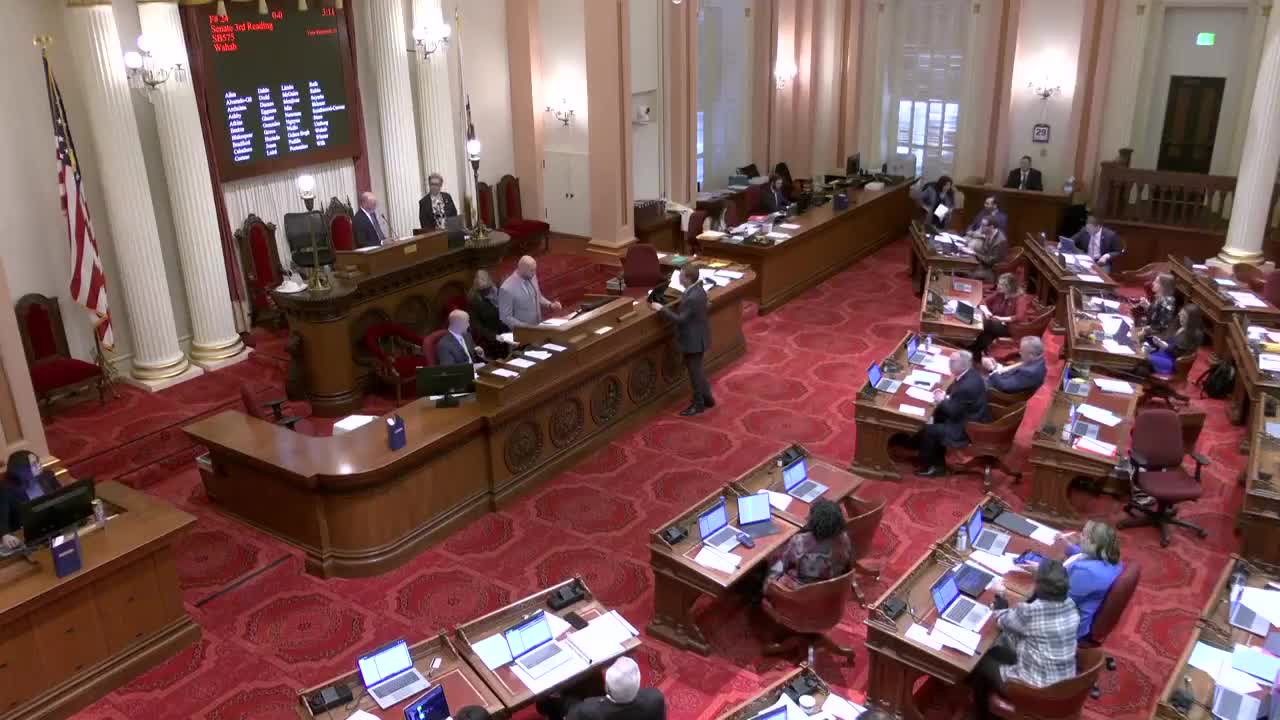 13MIN
Senate Floor
 26MIN
Senate Standing Committee on Natural Resources and Water
Bill Author

Bill Co-Author(s):
