SB 632: Vehicles: off-highway recreation: Red Rock Canyon State Park.
- Session Year: 2023-2024
- House: Senate
- Latest Version Date: 2024-09-25
Current Status:
Passed
(2024-09-25: Chaptered by Secretary of State. Chapter 592, Statutes of 2024.)
Introduced
In Committee
First Chamber
In Committee
Second Chamber
Enacted
Existing law authorizes an off-highway motor vehicle that has been issued a plate or device to be operated or driven upon a highway under certain circumstances. Existing law authorizes various public entities, and the Director of Parks and Recreation, to designate a highway, or portion thereof, for the combined use of regular vehicular traffic and off-highway motor vehicles if certain requirements are met, including a prohibition on a designation of greater than 3 miles.
Existing law, until January 1, 2025, authorizes the County of Inyo to operate a pilot project that exempts specified combined-use highways in the unincorporated area in the County of Inyo from this prohibition to link together existing roads in the unincorporated portion of the county to existing trails and trailheads on federal Bureau of Land Management or United States Forest Service lands in order to provide a unified linkage of trail systems for off-highway motor vehicles, as prescribed. Existing law requires the County of Inyo to prepare and submit to the Legislature reports evaluating the effectiveness and environmental impacts of the pilot project, as specified.
This bill would authorize the Department of Parks and Recreation, until January 1, 2030, to implement a similar pilot program at Red Rock Canyon State Park. The bill would also require the department, in conjunction with specified state agencies, to prepare and submit to the Legislature reports evaluating the effectiveness and environmental impacts of the pilot project by January 1, 2029, as specified.
Existing law allows certain candidates for state or federal elective office, as specified, to purchase space to place a statement in the voter information portion of the sample ballot that does not exceed 250 words.This bill would allow the statement to include the party affiliation of the candidate and the candidates membership or activity in partisan political organizations. The bill would require the Secretary of State or the office of the elections official to notify a candidate for statewide elective office, State Senate, or Assembly who files a statement with the Secretary of State or the elections official whether the statement was approved or rejected, as specified. By imposing additional duties on local elections officials, this bill would impose a state-mandated local program.The Political Reform Act of 1974, an initiative measure, provides that the Legislature may amend the act to further the acts purposes upon a 2/3 vote of each house of the Legislature and compliance with specified procedural requirements.This bill would declare that it furthers the purposes of the act.The California Constitution requires the state to reimburse local agencies and school districts for certain costs mandated by the state. Statutory provisions establish procedures for making that reimbursement.This bill would provide that, if the Commission on State Mandates determines that the bill contains costs mandated by the state, reimbursement for those costs shall be made pursuant to the statutory provisions noted above.Existing law allows a candidate for State Senate or Assembly who accepts voluntary expenditure limits, certain candidates for state or federal elective office, as specified, to purchase space to place a statement in the voter information portion of the sample ballot that does not exceed 250 words.
This bill would allow the statement to include the party affiliation of the candidate and the candidates membership or activity in partisan political organizations. The bill would require the Secretary of State or the office of the elections official to notify a candidate for statewide elective office, State Senate, or Assembly who files a statement with the Secretary of State or the elections official whether the statement was approved or rejected, as specified. By imposing additional duties on local elections officials, this bill would impose a state-mandated local program.
The Political Reform Act of 1974, an initiative measure, provides that the Legislature may amend the act to further the acts purposes upon a 2/3 vote of each house of the Legislature and compliance with specified procedural requirements.
This bill would declare that it furthers the purposes of the act.
The California Constitution requires the state to reimburse local agencies and school districts for certain costs mandated by the state. Statutory provisions establish procedures for making that reimbursement.
This bill would provide that, if the Commission on State Mandates determines that the bill contains costs mandated by the state, reimbursement for those costs shall be made pursuant to the statutory provisions noted above.
Existing law allows a candidate for State Senate or Assembly who accepts voluntary expenditure limits, as specified, to purchase space to place a statement in the voter information portion of the sample ballot that does not exceed 250 words.
This bill would allow the statement to include the party affiliation of the candidate and the candidates membership or activity in partisan political organizations. The bill would require the office of the elections official to notify a candidate who files a statement with the elections official whether the statement was approved or rejected, as specified. By imposing additional duties on local elections officials, this bill would impose a state-mandated local program.
The Political Reform Act of 1974, an initiative measure, provides that the Legislature may amend the act to further the acts purposes upon a 2/3 vote of each house of the Legislature and compliance with specified procedural requirements.
This bill would declare that it furthers the purposes of the act.
The California Constitution requires the state to reimburse local agencies and school districts for certain costs mandated by the state. Statutory provisions establish procedures for making that reimbursement.
This bill would provide that, if the Commission on State Mandates determines that the bill contains costs mandated by the state, reimbursement for those costs shall be made pursuant to the statutory provisions noted above.
Existing law requires a candidate running for elective office in a multicounty district who desires to have a candidate statement printed in a county voter information guide to submit the statement in a manner that complies with both state and local requirements for the county publishing the voter information guide.This bill would allow a candidate running for United States Representative or State Senate or Assembly in a multicounty district to submit their candidate statement to the Secretary of State for review and approval based on the statements conformance with state law, as specified. If the candidate receives approval from the Secretary of State for their candidate statement and submits the statement to the county elections official in the manner specified, the county elections official would be required to accept the statement and would be prohibited from requiring any modification to the approved language. The county elections official would be permitted to make formatting changes to candidate statements approved by the Secretary of State. The bill would require a candidate running for United States Representative or State Senate or Assembly in a multicounty district who chooses to use a statement approved by the Secretary of State in one county to use the same statement in any other county where the candidate submits a candidate statement. The bill would also make related conforming changes. By requiring local elections officials to perform additional duties, this bill would impose a state-mandated local program.This bills provisions would become operative on July 1, 2025.The California Constitution requires the state to reimburse local agencies and school districts for certain costs mandated by the state. Statutory provisions establish procedures for making that reimbursement.This bill would provide that, if the Commission on State Mandates determines that the bill contains costs mandated by the state, reimbursement for those costs shall be made pursuant to the statutory provisions noted above.Existing law requires a candidate running for elective office in a multicounty district who desires to have a candidate statement printed in a county voter information guide to submit the statement in a manner that complies with both state and local requirements for the county publishing the voter information guide.
This bill would allow a candidate running for elective office United States Representative or State Senate or Assembly in a multicounty district to submit their candidate statement to the Secretary of State for review and approval based on the statements conformance with state law, as specified. If the candidate receives approval from the Secretary of State for their candidate statement and submits the statement to the county elections official in the manner specified, the county elections official would be required to accept the statement and would be prohibited from requiring any modification to the approved language. The county elections official would be permitted to make formatting changes to candidate statements approved by the Secretary of State. The bill would require a candidate running for elective office United States Representative or State Senate or Assembly in a multicounty district who chooses to use a statement approved by the Secretary of State in one county to use the same statement in any other county where the candidate submits a candidate statement. The bill would also make related conforming changes. By requiring local elections officials to perform additional duties, this bill would impose a state-mandated local program.
This bills provisions would become operative on July 1, 2025.
The California Constitution requires the state to reimburse local agencies and school districts for certain costs mandated by the state. Statutory provisions establish procedures for making that reimbursement.
This bill would provide that, if the Commission on State Mandates determines that the bill contains costs mandated by the state, reimbursement for those costs shall be made pursuant to the statutory provisions noted above.
Existing law requires a candidate running for elective office in a multicounty district who desires to have a candidate statement printed in a county voter information guide to submit the statement in a manner that complies with both state and local requirements for the county publishing the voter information guide.
This bill would allow a candidate running for elective office in a multicounty district to submit their candidate statement to the Secretary of State for review and approval based on the statements conformance with state law, as specified. If the candidate receives approval from the Secretary of State for their candidate statement and submits the statement to the county elections official in the manner specified, the county elections official would be required to accept the statement and would be prohibited from requiring any modification to the approved language. The bill would require a candidate running for elective office in a multicounty district who chooses to use a statement approved by the Secretary of State in one county to use the same statement in any other county where the candidate submits a candidate statement. The bill would also make related conforming changes. By requiring local elections officials to perform additional duties, this bill would impose a state-mandated local program.
This bills provisions would become operative on July 1, 2025.
The California Constitution requires the state to reimburse local agencies and school districts for certain costs mandated by the state. Statutory provisions establish procedures for making that reimbursement.
This bill would provide that, if the Commission on State Mandates determines that the bill contains costs mandated by the state, reimbursement for those costs shall be made pursuant to the statutory provisions noted above.
Under existing law, candidates for certain elected offices may prepare and file candidate statements in the office of the county elections official to be included in the county voter information guide sent to each voter by the elections official.This bill would state the intent of the Legislature to enact legislation to require a county elections official to accept any candidate statement preapproved by the Secretary of State without requiring any additional modification or amendment to the preapproved candidate statement.Under existing law, candidates for certain elected offices may prepare and file candidate statements in the office of the county elections official to be included in the county voter information guide sent to each voter by the elections official.
This bill would state the intent of the Legislature to enact legislation to require a county elections official to accept any candidate statement preapproved by the Secretary of State without requiring any additional modification or amendment to the preapproved candidate statement.
(a)In addition to Section 38025 and after complying with subdivision (c) of this section, if a local authority, an agency of the federal government, or the Director of Parks and Recreation finds that a highway, or a portion of a highway, under the jurisdiction of the authority, agency, or the director, as the case may be, is located in a manner that provides a connecting link between off-highway motor vehicle trail segments, between an off-highway motor vehicle recreational use area and necessary service facilities, or between lodging facilities and an off-highway motor vehicle recreational facility and if it is found that the highway is designed and constructed so as to safely permit the use of regular vehicular traffic and also the driving of off-highway motor vehicles on that highway, the local authority, by resolution or ordinance, agency of the federal government, or the Director of Parks and Recreation, as the case may be, may designate that highway, or a portion of a highway, for combined use and shall prescribe rules and regulations therefor. A highway, or portion of a highway, shall not be so designated for a distance of more than three miles, except as provided in Sections 38026.1, 38026.2, and 38026.3. A freeway shall not be designated under this section.
(b)The Off-Highway Motor Vehicle Recreation Commission may propose highway segments for consideration by local authorities, an agency of the federal government, or the Director of Parks and Recreation for combined use.
(c)Prior to designating a highway or portion of a highway on the motion of the local authority, an agency of the federal government, or the Director of Parks and Recreation, or as a recommendation of the Off-Highway Motor Vehicle Recreation Commission, a local authority, an agency of the federal government, or the Director of Parks and Recreation shall notify the Commissioner of the California Highway Patrol, and shall not designate any segment pursuant to subdivision (a) which, in the opinion of the commissioner, would create a potential traffic safety hazard.
(d)(1)A designation of a highway, or a portion of a highway, under subdivision (a) shall become effective upon the erection of appropriate signs of a type approved by the Department of Transportation on and along the highway, or portion of the highway.
(2)The cost of the signs shall be reimbursed from the Off-Highway Vehicle Trust Fund, when appropriated by the Legislature, or by expenditure of funds from a grant or cooperative agreement made pursuant to Section 5090.50 of the Public Resources Code.
SEC. 2.Section 38026.3 is added to the Vehicle Code, to read:38026.3.(a)Except as provided in subdivision (d), the Department of Parks and Recreation may establish a pilot project to designate combined-use highways on roads in Red Rock Canyon State Park for no more than 10 miles so that the combined-use highways can be used to link existing off-highway motor vehicle trails and trailheads on federal Bureau of Land Management or United States Forest Service lands, and to link off-highway motor vehicle recreational-use areas with necessary service and lodging facilities, in order to provide a unified system of trails for off-highway motor vehicles, preserve traffic safety, improve natural resource protection, and reduce off-highway vehicle trespass on private land.
(b)A pilot project established pursuant to this section shall do all of the following:
(1)Prescribe a procedure for highway, road, or route selection and designation. The procedure shall be approved by the director of the department.
(2)Prescribe a procedure for the department to remove a combined-use designation, including a designation that is removed as a result of the conclusion of the pilot project.
(3)In cooperation with the Department of Transportation, establish uniform specifications and symbols for signs, markers, and traffic control devices to control off-highway motor vehicles, including, but not limited to, all of the following:
(A)Devices to warn of dangerous conditions, obstacles, or hazards.
(B)Designations of the right-of-way for regular vehicular traffic and off-highway motor vehicles.
(C)A description of the nature and destination of the off-highway motor vehicle trail.
(D)Warning signs for pedestrians and motorists of the presence of off-highway motor vehicle traffic.
(4)Require that off-highway motor vehicles subject to the pilot project meet the safety requirements of federal and state law regarding proper drivers licensing, helmet usage, and the requirements specified in Section 38026.5.
(5)Prohibit off-highway motor vehicles from traveling faster than 35 miles per hour on highways designated under this section.
(6)(A)Prohibit a combined-use highway road segment designated under this section from exceeding 10 miles.
(B)Notwithstanding subparagraph (A), two or more combined-use highway road segments may share a common starting point or ending point and may partially overlap as long as the resulting network of the highway road segments does not include more than three distinct locations of shared starting or ending points, or both.
(7)Include an opportunity for public comment at a public hearing held by the department in order to evaluate the pilot project.
(c)A pilot project established pursuant to this section may include use of a state highway, subject to the approval of the Department of Transportation, or any crossing of a highway designated pursuant to Section 38025.
(d)The department shall not designate a highway for combined use pursuant to this section unless the Commissioner of the Department of the California Highway Patrol finds that designating the highway for combined use would not create a potential traffic safety hazard.
(e)(1)Not later than January 1, 2029, the department, in consultation with the Department of the California Highway Patrol and the Department of Transportation, shall prepare and submit to the Legislature a report evaluating the pilot project that contains all of the following:
(A)A description of the road segments designated to allow combined use for over three miles.
(B)An evaluation of the overall safety and effectiveness of the pilot project, including its impact on traffic flows, safety, off-highway vehicle usage on existing trails, incursions into areas not designated for off-highway vehicle usage, and nonmotorized recreation.
(C)A description of the public comments received at a public hearing held by the department in regards to an evaluation of the pilot project.
(2)The report required by this subdivision shall be submitted in compliance with Section 9795 of the Government Code.
(f)This section shall remain in effect only until January 1, 2030, and as of that date is repealed, unless a later enacted statute that is enacted before January 1, 2030, deletes or extends that date.
SEC. 3.Section 38026.5 of the Vehicle Code is amended to read:38026.5.(a) In accordance with subdivision (c) of Section 4000, a motor vehicle issued a plate or device pursuant to Section 38160 may be operated or driven on a local highway, or a portion of the local highway, that is designated pursuant to Section 38026, 38026.1, 38026.2, or 38026.3 if the operation is in conformance with this code and the vehicle complies with off-highway vehicle equipment requirements specified in this division.
(b)Notwithstanding subdivision (a), it is unlawful for a person using an off-highway vehicle on a combined-use highway to do any of the following:
(1)Operate an off-highway motor vehicle on the highway during the hours of darkness.
(2)Operate a vehicle on the highway that does not have an operational stoplight.
(3)Operate a vehicle on the highway that does not have rubber tires.
(4)Operate a vehicle without a valid drivers license of the appropriate class for the vehicle operation in possession.
(5)Operate a vehicle on the highway without complying with Article 2 (commencing with Section 16020) of Chapter 1 of Division 7.
(a)In addition to Section 38025 and after complying with subdivision (c) of this section, if a local authority, an agency of the federal government, or the Director of Parks and Recreation finds that a highway, or a portion of a highway, under the jurisdiction of the authority, agency, or the director, as the case may be, is located in a manner that provides a connecting link between off-highway motor vehicle trail segments, between an off-highway motor vehicle recreational use area and necessary service facilities, or between lodging facilities and an off-highway motor vehicle recreational facility and if it is found that the highway is designed and constructed so as to safely permit the use of regular vehicular traffic and also the driving of off-highway motor vehicles on that highway, the local authority, by resolution or ordinance, agency of the federal government, or the Director of Parks and Recreation, as the case may be, may designate that highway, or a portion of a highway, for combined use and shall prescribe rules and regulations therefor. A highway, or portion of a highway, shall not be so designated for a distance of more than three miles, except as provided in Sections 38026.1 and 38026.2. 38026.1, 38026.2, and 38026.3. A freeway shall not be designated under this section.
(b)The Off-Highway Motor Vehicle Recreation Commission may propose highway segments for consideration by local authorities, an agency of the federal government, or the Director of Parks and Recreation for combined use.
(c)Prior to designating a highway or portion of a highway on the motion of the local authority, an agency of the federal government, or the Director of Parks and Recreation, or as a recommendation of the Off-Highway Motor Vehicle Recreation Commission, a local authority, an agency of the federal government, or the Director of Parks and Recreation shall notify the Commissioner of the California Highway Patrol, and shall not designate any segment pursuant to subdivision (a) which, in the opinion of the commissioner, would create a potential traffic safety hazard.
(d)(1)A designation of a highway, or a portion of a highway, under subdivision (a) shall become effective upon the erection of appropriate signs of a type approved by the Department of Transportation on and along the highway, or portion of the highway.
(2)The cost of the signs shall be reimbursed from the Off-Highway Vehicle Trust Fund, when appropriated by the Legislature, or by expenditure of funds from a grant or cooperative agreement made pursuant to Section 5090.50 of the Public Resources Code.
SEC. 2.Section 38026.3 is added to the Vehicle Code, to read:38026.3.(a)Except as provided in subdivision (d), the Department of Parks and Recreation may establish a pilot project to designate combined-use highways on roads in Red Rock Canyon State Park for no more than 10 miles so that the combined-use highways can be used to link existing off-highway motor vehicle trails and trailheads on federal Bureau of Land Management or United States Forest Service lands, and to link off-highway motor vehicle recreational-use areas with necessary service and lodging facilities, in order to provide a unified system of trails for off-highway motor vehicles, preserve traffic safety, improve natural resource protection, and reduce off-highway vehicle trespass on private land.
(b)A pilot project established pursuant to this section shall do all of the following:
(1)Prescribe a procedure for highway, road, or route selection and designation. The procedure shall be approved by the director of the department.
(2)Prescribe a procedure for the department to remove a combined-use designation, including a designation that is removed as a result of the conclusion of the pilot project.
(3)In cooperation with the Department of Transportation, establish uniform specifications and symbols for signs, markers, and traffic control devices to control off-highway motor vehicles, including, but not limited to, all of the following:
(A)Devices to warn of dangerous conditions, obstacles, or hazards.
(B)Designations of the right-of-way for regular vehicular traffic and off-highway motor vehicles.
(C)A description of the nature and destination of the off-highway motor vehicle trail.
(D)Warning signs for pedestrians and motorists of the presence of off-highway motor vehicle traffic.
(4)Require that off-highway motor vehicles subject to the pilot project meet the safety requirements of federal and state law regarding proper drivers licensing, helmet usage, and the requirements specified in Section 38026.5.
(5)Prohibit off-highway motor vehicles from traveling faster than 35 miles per hour on highways designated under this section.
(6)(A)Prohibit a combined-use highway road segment designated under this section from exceeding 10 miles.
(B)Notwithstanding subparagraph (A), two or more combined-use highway road segments may share a common starting point or ending point and may partially overlap as long as the resulting network of the highway road segments does not include more than three distinct locations of shared starting or ending points, or both.
(7)Include an opportunity for public comment at a public hearing held by the department in order to evaluate the pilot project.
(c)A pilot project established pursuant to this section may include use of a state highway, subject to the approval of the Department of Transportation, or any crossing of a highway designated pursuant to Section 38025.
(d)The department shall not designate a highway for combined use pursuant to this section unless the Commissioner of the Department of the California Highway Patrol finds that designating the highway for combined use would not create a potential traffic safety hazard.
(e)(1)Not later than January 1, 2029, the department, in consultation with the Department of the California Highway Patrol and the Department of Transportation, shall prepare and submit to the Legislature a report evaluating the pilot project that contains all of the following:
(A)A description of the road segments designated to allow combined use for over three miles.
(B)An evaluation of the overall safety and effectiveness of the pilot project, including its impact on traffic flows, safety, off-highway vehicle usage on existing trails, incursions into areas not designated for off-highway vehicle usage, and nonmotorized recreation.
(C)A description of the public comments received at a public hearing held by the department in regards to an evaluation of the pilot project.
(2)The report required by this subdivision shall be submitted in compliance with Section 9795 of the Government Code.
(f)This section shall remain in effect only until January 1, 2030, and as of that date is repealed, unless a later enacted statute that is enacted before January 1, 2030, deletes or extends that date.
SEC. 3.Section 38026.5 of the Vehicle Code is amended to read:38026.5.(a) In accordance with subdivision (c) of Section 4000, a motor vehicle issued a plate or device pursuant to Section 38160 may be operated or driven on a local highway, or a portion of the local highway, that is designated pursuant to Section 38026, 38026.1, or 38026.2 38026.2, or 38026.3 if the operation is in conformance with this code and the vehicle complies with off-highway vehicle equipment requirements specified in this division.
(b)Notwithstanding subdivision (a), it is unlawful for a person using an off-highway vehicle on a combined-use highway to do any of the following:
(1)Operate an off-highway motor vehicle on the highway during the hours of darkness.
(2)Operate a vehicle on the highway that does not have an operational stoplight.
(3)Operate a vehicle on the highway that does not have rubber tires.
(4)Operate a vehicle without a valid drivers license of the appropriate class for the vehicle operation in possession.
(5)Operate a vehicle on the highway without complying with Article 2 (commencing with Section 16020) of Chapter 1 of Division 7.
SECTION 1.Section 9084 of the Elections Code is amended to read:9084.The state voter information guide shall contain all of the following:(a)A complete copy of each state measure.(b)(1)Except as provided in paragraph (2), before each state measure, a conspicuous notice that identifies the location on the Secretary of States internet website of the specific constitutional or statutory provision that the state measure would repeal or revise.(2)The text of a measure relating to debts and liabilities, including a bond measure, shall be printed in the state voter information guide as required by Section 1 of Article XVI of the California Constitution.(c)A copy of the arguments and rebuttals for and against each state measure.(d)A copy of the analysis of each state measure.(e)Tables of contents, indexes, art work, graphics, and other materials that the Secretary of State determines will make the state voter information guide easier to understand or more useful for the average voter.(f)A notice, conspicuously printed on the cover of the state voter information guide, indicating that additional copies of the state voter information guide will be mailed by the county elections official upon request.(g)A written explanation of the judicial retention procedure as required by Section 9083.(h)The Voter Bill of Rights pursuant to Section 2300.(i)If the ballot contains an election for the office of United States Senator, information on candidates for United States Senator. A candidate for United States Senator may purchase the space to place a statement in the state voter information guide that does not exceed 250 words. The statement shall not make any reference to any opponent of the candidate. The statement may include the party affiliation of the candidate and membership or activity in partisan political organizations. The statement shall be submitted in accordance with timeframes and procedures set forth by the Secretary of State for the preparation of the state voter information guide.(j)If the ballot contains a question on the confirmation or retention of a justice of the Supreme Court, information on justices of the Supreme Court who are subject to confirmation or retention.(k)If the ballot contains an election for the offices of President and Vice President of the United States, a notice that refers voters to the Secretary of States internet website for information about candidates for the offices of President and Vice President of the United States.(l)A written explanation of the appropriate election procedures for party-nominated, voter-nominated, and nonpartisan offices as required by Section 9083.5.(m)A written explanation of the top 10 contributor lists required by Section 84223 of the Government Code, including a description of the internet websites where those lists are available to the public.SEC. 2.Section 13307.5 of the Elections Code is amended to read:13307.5.A candidate for United States Representative may purchase the space to place a statement in the voter information portion of the county voter information guide that does not exceed 250 words. The statement shall not refer to any opponent of the candidate. The statement may include the party affiliation of the candidate and membership or activity in partisan political organizations. The statement shall be submitted in accordance with the timeframes and procedures set forth in this code for the preparation of the voter information portion of the county voter information guide.SEC. 3.Section 85601 of the Government Code is amended to read:85601.(a)A candidate for statewide elective office, as defined in Section 82053, who accepts the voluntary expenditure limits set forth in Section 85400 may purchase the space to place a statement in the state ballot pamphlet that does not exceed 250 words. The statement may not make any reference to any opponent of the candidate. Except for a statement submitted by a candidate for the office of Superintendent of Public Instruction, the statement may include the party affiliation of the candidate and membership or activity in partisan political organizations. The statement shall be submitted in accordance with timeframes and procedures set forth by the Secretary of State for the preparation of the state ballot pamphlets.(b)Notwithstanding subdivision (e) of Section 88001 of this code or subdivision (e) of Section 9084 of the Elections Code, on and after November 6, 2002, the Secretary of State may not include in the state ballot pamphlet a statement from a candidate who has not voluntarily agreed to the expenditure limitations set forth in Section 85400.(c)A candidate for State Senate or Assembly who accepts the voluntary expenditure limits set forth in Section 85400 may purchase the space to place a statement in the voter information portion of the sample ballot that does not exceed 250 words. The statement may not make any reference to any opponent of the candidate. The statement shall be submitted in accordance with the timeframes and procedures set forth in the Elections Code for the preparation of the voter information portion of the sample ballot. The statement may include the party affiliation of the candidate, and membership or activity in partisan political organizations.(d)The Secretary of State or the office of the elections official shall notify a candidate if the statement has been approved or rejected upon filing if the statement is filed with the Secretary of State or with the office of the elections official, as applicable. If the statement is filed electronically, the Secretary of State or the office of the elections official, as applicable, shall notify the candidate if the statement has been approved or rejected within one business day of the statement being filed in the same manner by which the statement was submitted to the Secretary of State or the office of the elections official.SEC. 4.The Legislature finds and declares that this bill furthers the purposes of the Political Reform Act of 1974 within the meaning of subdivision (a) of Section 81012 of the Government Code.SEC. 5.If the Commission on State Mandates determines that this act contains costs mandated by the state, reimbursement to local agencies and school districts for those costs shall be made pursuant to Part 7 (commencing with Section 17500) of Division 4 of Title 2 of the Government Code.The state voter information guide shall contain all of the following:
(a)A complete copy of each state measure.
(b)(1)Except as provided in paragraph (2), before each state measure, a conspicuous notice that identifies the location on the Secretary of States internet website of the specific constitutional or statutory provision that the state measure would repeal or revise.
(2)The text of a measure relating to debts and liabilities, including a bond measure, shall be printed in the state voter information guide as required by Section 1 of Article XVI of the California Constitution.
(c)A copy of the arguments and rebuttals for and against each state measure.
(d)A copy of the analysis of each state measure.
(e)Tables of contents, indexes, art work, graphics, and other materials that the Secretary of State determines will make the state voter information guide easier to understand or more useful for the average voter.
(f)A notice, conspicuously printed on the cover of the state voter information guide, indicating that additional copies of the state voter information guide will be mailed by the county elections official upon request.
(g)A written explanation of the judicial retention procedure as required by Section 9083.
(h)The Voter Bill of Rights pursuant to Section 2300.
(i)If the ballot contains an election for the office of United States Senator, information on candidates for United States Senator. A candidate for United States Senator may purchase the space to place a statement in the state voter information guide that does not exceed 250 words. The statement shall not make any reference to any opponent of the candidate. The statement may include the party affiliation of the candidate and membership or activity in partisan political organizations. The statement shall be submitted in accordance with timeframes and procedures set forth by the Secretary of State for the preparation of the state voter information guide.
(j)If the ballot contains a question on the confirmation or retention of a justice of the Supreme Court, information on justices of the Supreme Court who are subject to confirmation or retention.
(k)If the ballot contains an election for the offices of President and Vice President of the United States, a notice that refers voters to the Secretary of States internet website for information about candidates for the offices of President and Vice President of the United States.
(l)A written explanation of the appropriate election procedures for party-nominated, voter-nominated, and nonpartisan offices as required by Section 9083.5.
(m)A written explanation of the top 10 contributor lists required by Section 84223 of the Government Code, including a description of the internet websites where those lists are available to the public.
SEC. 2.Section 13307.5 of the Elections Code is amended to read:13307.5.A candidate for United States Representative may purchase the space to place a statement in the voter information portion of the county voter information guide that does not exceed 250 words. The statement shall not refer to any opponent of the candidate. The statement may include the party affiliation of the candidate and membership or activity in partisan political organizations. The statement shall be submitted in accordance with the timeframes and procedures set forth in this code for the preparation of the voter information portion of the county voter information guide.
SECTION 1.SEC. 3.Section 85601 of the Government Code is amended to read:85601.(a)A candidate for statewide elective office, as defined in Section 82053, who accepts the voluntary expenditure limits set forth in Section 85400 may purchase the space to place a statement in the state ballot pamphlet that does not exceed 250 words. The statement may not make any reference to any opponent of the candidate. Except for a statement submitted by a candidate for the office of Superintendent of Public Instruction, the statement may include the party affiliation of the candidate and membership or activity in partisan political organizations. The statement shall be submitted in accordance with timeframes and procedures set forth by the Secretary of State for the preparation of the state ballot pamphlets.
(b)Notwithstanding subdivision (e) of Section 88001 of this code or subdivision (e) of Section 9084 of the Elections Code, on and after November 6, 2002, the Secretary of State may not include in the state ballot pamphlet a statement from a candidate who has not voluntarily agreed to the expenditure limitations set forth in Section 85400.
(c)A candidate for State Senate or Assembly who accepts the voluntary expenditure limits set forth in Section 85400 may purchase the space to place a statement in the voter information portion of the sample ballot that does not exceed 250 words. The statement may not make any reference to any opponent of the candidate. The statement shall be submitted in accordance with the timeframes and procedures set forth in the Elections Code for the preparation of the voter information portion of the sample ballot. The statement may include the party affiliation of the candidate, and membership or activity in partisan political organizations.
(d)The Secretary of State or the office of the elections official shall notify a candidate if the statement has been approved or rejected upon filing if the statement is filed in with the Secretary of State or with the office of the elections official. official, as applicable. If the statement is filed electronically, the Secretary of State or the office of the elections official official, as applicable, shall notify the candidate if the statement has been approved or rejected within 24 hours one business day of the statement being filed in the same manner by which the statement was submitted to the Secretary of State or the office of the elections official.
SEC. 2.SEC. 4.The Legislature finds and declares that this bill furthers the purposes of the Political Reform Act of 1974 within the meaning of subdivision (a) of Section 81012 of the Government Code.
SEC. 3.SEC. 5.If the Commission on State Mandates determines that this act contains costs mandated by the state, reimbursement to local agencies and school districts for those costs shall be made pursuant to Part 7 (commencing with Section 17500) of Division 4 of Title 2 of the Government Code.
(a)A candidate for statewide elective office, as defined in Section 82053, who accepts the voluntary expenditure limits set forth in Section 85400 may purchase the space to place a statement in the state ballot pamphlet that does not exceed 250 words. The statement may not make any reference to any opponent of the candidate. The statement shall be submitted in accordance with timeframes and procedures set forth by the Secretary of State for the preparation of the state ballot pamphlets.
(b)Notwithstanding subdivision (e) of Section 88001 of this code or subdivision (e) of Section 9084 of the Elections Code, on and after November 6, 2002, the Secretary of State may not include in the state ballot pamphlet a statement from a candidate who has not voluntarily agreed to the expenditure limitations set forth in Section 85400.
(c)A candidate for State Senate or Assembly who accepts the voluntary expenditure limits set forth in Section 85400 may purchase the space to place a statement in the voter information portion of the sample ballot that does not exceed 250 words. The statement may not make any reference to any opponent of the candidate. The statement shall be submitted in accordance with the timeframes and procedures set forth in the Elections Code for the preparation of the voter information portion of the sample ballot. The statement may include the party affiliation of the candidate, and membership or activity in partisan political organizations.
(d)The office of the elections official shall notify a candidate if the statement has been approved or rejected upon filing if the statement is filed in the office of the elections official. If the statement is filed electronically, the office of the elections official shall notify the candidate if the statement has been approved or rejected within 24 hours of the statement being filed in the same manner by which the statement was submitted to the office of the elections official.
SEC. 2.The Legislature finds and declares that this bill furthers the purposes of the Political Reform Act of 1974 within the meaning of subdivision (a) of Section 81012 of the Government Code.
SEC. 3.If the Commission on State Mandates determines that this act contains costs mandated by the state, reimbursement to local agencies and school districts for those costs shall be made pursuant to Part 7 (commencing with Section 17500) of Division 4 of Title 2 of the Government Code.
SECTION 1.Section 13307.7 of the Elections Code is amended to read:13307.7.(a)If the elections official posts the form to be used by a candidate to submit a candidate statement pursuant to Section 13307, Section 13307.5, or subdivision (c) of Section 85601 of the Government Code, on the elections officials internet website, the elections official shall accept the electronic submission of that form if it is submitted in accordance with the times and procedures set forth in this code for the preparation of the voter information portion of the county voter information guide. If the candidate is running in a multicounty district, the elections official of each county shall accept the form from the candidates county of residence; however, the candidate shall provide a hard copy of the candidate statement form and payment of the requisite fee to each county. The elections official shall not require the candidate to submit any additional forms as a means of correcting internet website posting errors made by the elections official.(b)Notwithstanding subdivision (a), an elections official may require a candidate to provide additional information that the official needs to comply with state law and county voter information guide requirements.(c)This section shall become inoperative on July 1, 2025, and, as of January 1, 2026, is repealed.SEC. 2.Section 13307.7 is added to the Elections Code, to read:13307.7.(a)If the elections official posts the form to be used by a candidate to submit a candidate statement pursuant to Section 13307, Section 13307.5, or subdivision (c) of Section 85601 of the Government Code, on the elections officials internet website the elections official shall accept the electronic submission of that form if it is submitted in accordance with the times and procedures set forth in this code for the preparation of the voter information portion of the county voter information guide. If the candidate is running in a multicounty district, the elections official of each county shall accept the form from the candidates county of residence or the candidates statement text approved by the Secretary of State pursuant to Section 13307.9; however, the candidate shall provide a hard copy of the candidate statement form and payment of the requisite fee to each county. If using a statement approved by the Secretary of State pursuant to Section 13307.9, the candidate shall include an electronic copy of the Secretary of States approval with the electronic submission of the candidates statement. The elections official shall not require the candidate to submit any additional forms as a means of correcting internet website posting errors made by the elections official.(b)Notwithstanding subdivision (a), unless the candidates statement has been approved by the Secretary of State, an elections official may require a candidate to provide additional information that the official needs to comply with state law and county voter information guide requirements.(c)This section shall become operative on July 1, 2025.SEC. 3.Section 13307.9 is added to the Elections Code, to read:13307.9.(a)A candidate running in a multicounty district for United States Representative or State Senate or Assembly may submit their candidate statement, as permitted under Section 13307.5 or subdivision (c) of Section 85601 of the Government Code, to the Secretary of State for approval no later than 118 days before the election.(b)If the candidate receives approval from the Secretary of State for their candidate statement pursuant to subsection (a) before the submission deadline of the county elections official as set forth in this chapter and the candidate statement is submitted in accordance with the times and procedures set forth in this chapter for the preparation of the voter information portion of the county voter information guide, the elections official of each county shall accept the candidate statement approved by the Secretary of State and shall not require any modification to the approved language. The elections official may modify the formatting of the approved candidate statement. The candidate shall provide a hard copy of the candidate statement form with a copy of the Secretary of States approval and payment of the requisite fee to each county.(c)The Secretary of State shall review a candidate statement submitted by a candidate for United States Representative or State Senate or Assembly running in a multicounty district, if such candidate is permitted to submit a candidate statement for publishing in a county voter information guide pursuant to Section 13307.5 or subdivision (c) of Section 85601 of the Government Code. The Secretary of State shall approve the candidate statement if it conforms to the standards set forth in this chapter and subdivision (c) of Section 85601 of the Government Code, if applicable. The Secretary of State shall notify the candidate in writing of the approval or rejection of the candidates statement within ____ days of receipt of the candidates statement by the Secretary of State. The Secretary of States approval shall be valid for a single election.(d)(1) If a candidate running for United States Representative or State Senate or Assembly in a multicounty district uses a candidate statement approved by the Secretary of State in accordance with this section, the same statement shall be used in all counties where the candidate submits a statement for inclusion in the county voter information guide.(2)A candidate described in subdivision (a) who does not submit a statement approved by the Secretary of State in accordance with this section may choose to submit different candidate statements to different counties.(e)This section shall become operative on July 1, 2025.SEC. 4.Section 13311 of the Elections Code is amended to read:13311.(a)Notwithstanding the California Public Records Act (Division 10 (commencing with Section 7920.000) of Title 1 of the Government Code), the statements filed pursuant to Section 13307 shall remain confidential until the expiration of the filing deadline.(b)This section shall become inoperative on July 1, 2025, and, as of January 1, 2026, is repealed.SEC. 5.Section 13311 is added to the Elections Code, to read:13311.(a)Notwithstanding the California Public Records Act (Division 10 (commencing with Section 7920.000) of Title 1 of the Government Code), the statements filed pursuant to Sections 13307 and 13307.9 shall remain confidential until the expiration of the filing deadline.(b)This section shall become operative on July 1, 2025.SEC. 6.If the Commission on State Mandates determines that this act contains costs mandated by the state, reimbursement to local agencies and school districts for those costs shall be made pursuant to Part 7 (commencing with Section 17500) of Division 4 of Title 2 of the Government Code.(a)If the elections official posts the form to be used by a candidate to submit a candidate statement pursuant to Section 13307, Section 13307.5, or subdivision (c) of Section 85601 of the Government Code, on the elections officials Internet Web site, internet website, the elections official shall accept the electronic submission of that form if it is submitted in accordance with the times and procedures set forth in this code for the preparation of the voter information portion of the county voter information guide. If the candidate is running in a multicounty district, the elections official of each county shall accept the form from the candidates county of residence; however, the candidate shall provide a hard copy of the candidate statement form and payment of the requisite fee to each county. The elections official shall not require the candidate to submit any additional forms as a means of correcting Internet Web site internet website posting errors made by the elections official.
(b)Notwithstanding subdivision (a), an elections official may require a candidate to provide additional information that the official needs to comply with state law and county voter information guide requirements.
(c)This section shall become inoperative on July 1, 2025, and, as of January 1, 2026, is repealed.
SEC. 2.Section 13307.7 is added to the Elections Code, to read:13307.7.(a)If the elections official posts the form to be used by a candidate to submit a candidate statement pursuant to Section 13307, Section 13307.5, or subdivision (c) of Section 85601 of the Government Code, on the elections officials Internet Web site, internet website the elections official shall accept the electronic submission of that form if it is submitted in accordance with the times and procedures set forth in this code for the preparation of the voter information portion of the county voter information guide. If the candidate is running in a multicounty district, the elections official of each county shall accept the form from the candidates county of residence or the candidates statement text approved by the Secretary of State; State pursuant to Section 13307.9; however, the candidate shall provide a hard copy of the candidate statement form and payment of the requisite fee to each county. If using a statement approved by the Secretary of State, State pursuant to Section 13307.9, the candidate shall include an electronic copy of the Secretary of States approval with the electronic submission of the candidates statement. The elections official shall not require the candidate to submit any additional forms as a means of correcting Internet Web site internet website posting errors made by the elections official.
(b)Notwithstanding subdivision (a), unless the candidates statement has been approved by the Secretary of State, an elections official may require a candidate to provide additional information that the official needs to comply with state law and county voter information guide requirements.
(c)This section shall become operative on July 1, 2025.
SEC. 3.Section 13307.9 is added to the Elections Code, to read:13307.9.(a)A candidate running in a multicounty district for United States Representative or State Senate or Assembly may submit their candidate statement, as permitted under Section 13307, Section 13307.5, Section 13307.5 or subdivision (c) of Section 85601 of the Government Code, to the Secretary of State for approval no later than 118 days before the election.
(b)If the candidate running in a multicounty district receives approval from the Secretary of State for their candidate statement pursuant to subsection (a) prior to before the submission deadline of the county elections official as set forth in this chapter and the candidate statement is submitted in accordance with the times and procedures set forth in this chapter for the preparation of the voter information portion of the county voter information guide, the elections official of each county shall accept the candidate statement approved by the Secretary of State and shall not require any modification to the approved language. The elections official may modify the formatting of the approved candidate statement. The candidate shall provide a hard copy of the candidate statement form with a copy of the Secretary of States approval and payment of the requisite fee to each county.
(c)The Secretary of State shall review a candidate statement submitted by a candidate for United States Representative or State Senate or Assembly running in a multicounty district, if such candidate is permitted to submit a candidate statement for publishing in a county voter information guide pursuant to Section 13307, Section 13307.5, Section 13307.5 or subdivision (c) of Section 85601 of the Government Code. The Secretary of State shall approve the candidate statement if it conforms with to the standards set forth in this chapter and subdivision (c) of Section 85601 of the Government Code, if applicable. The Secretary of State shall notify the candidate in writing of the approval or rejection of the candidates statement within ____ days of receipt of the candidates statement by the Secretary of State. The Secretary of States approval shall be valid for a single election.
(d)This section does not apply to candidate statements prepared pursuant to subdivision (c) of Section 13307.(e)(d)(1) If a candidate running for United States Representative or State Senate or Assembly in a multicounty district uses a candidate statement approved by the Secretary of State in accordance with this section, the same statement shall be used in all counties where the candidate submits a statement for inclusion in the county voter information guide.
(2)A candidate described in subdivision (a) who does not submit a statement approved by the Secretary of State in accordance with this section may choose to submit different candidate statements to different counties.
(f)This section does not apply to a candidate for statewide elective office.(g)(e)This section shall become operative on July 1, 2025.
SEC. 4.Section 13311 of the Elections Code is amended to read:13311.(a)Notwithstanding the California Public Records Act (Division 10 (commencing with Section 7920.000) of Title 1 of the Government Code), the statements filed pursuant to Section 13307 shall remain confidential until the expiration of the filing deadline.
(b)This section shall become inoperative on July 1, 2025, and, as of January 1, 2026, is repealed.
SEC. 5.Section 13311 is added to the Elections Code, to read:13311.(a)Notwithstanding the California Public Records Act (Division 10 (commencing with Section 7920.000) of Title 1 of the Government Code), the statements filed pursuant to Sections 13307 and 13307.9 shall remain confidential until the expiration of the filing deadline.
(b)This section shall become operative on July 1, 2025.
SEC. 6.If the Commission on State Mandates determines that this act contains costs mandated by the state, reimbursement to local agencies and school districts for those costs shall be made pursuant to Part 7 (commencing with Section 17500) of Division 4 of Title 2 of the Government Code.
(a)If the elections official posts the form to be used by a candidate to submit a candidate statement pursuant to Section 13307, Section 13307.5, or subdivision (c) of Section 85601 of the Government Code, on the elections officials Internet Web site, the elections official shall accept the electronic submission of that form if it is submitted in accordance with the times and procedures set forth in this code for the preparation of the voter information portion of the county voter information guide. If the candidate is running in a multicounty district, the elections official of each county shall accept the form from the candidates county of residence; however, the candidate shall provide a hard copy of the candidate statement form and payment of the requisite fee to each county. The elections official shall not require the candidate to submit any additional forms as a means of correcting Internet Web site posting errors made by the elections official.
(b)Notwithstanding subdivision (a), an elections official may require a candidate to provide additional information that the official needs to comply with state law and county voter information guide requirements.
(c)This section shall become inoperative on July 1, 2025, and, as of January 1, 2026, is repealed.
SEC. 2.Section 13307.7 is added to the Elections Code, to read:13307.7.(a)If the elections official posts the form to be used by a candidate to submit a candidate statement pursuant to Section 13307, Section 13307.5, or subdivision (c) of Section 85601 of the Government Code, on the elections officials Internet Web site, the elections official shall accept the electronic submission of that form if it is submitted in accordance with the times and procedures set forth in this code for the preparation of the voter information portion of the county voter information guide. If the candidate is running in a multicounty district, the elections official of each county shall accept the form from the candidates county of residence or the candidates statement text approved by the Secretary of State; however, the candidate shall provide a hard copy of the candidate statement form and payment of the requisite fee to each county. If using a statement approved by the Secretary of State, the candidate shall include an electronic copy of the Secretary of States approval with the electronic submission of the candidates statement. The elections official shall not require the candidate to submit any additional forms as a means of correcting Internet Web site posting errors made by the elections official.
(b)Notwithstanding subdivision (a), unless the candidates statement has been approved by the Secretary of State, an elections official may require a candidate to provide additional information that the official needs to comply with state law and county voter information guide requirements.
(c)This section shall become operative on July 1, 2025.
SEC. 3.Section 13307.9 is added to the Elections Code, to read:13307.9.(a)A candidate running in a multicounty district may submit their candidate statement, as permitted under Section 13307, Section 13307.5, or subdivision (c) of Section 85601 of the Government Code, to the Secretary of State for approval no later than 118 days before the election.
(b)If the candidate running in a multicounty district receives approval from the Secretary of State for their candidate statement prior to the submission deadline of the county elections official as set forth in this chapter and the candidate statement is submitted in accordance with the times and procedures set forth in this chapter for the preparation of the voter information portion of the county voter information guide, the elections official of each county shall accept the candidate statement approved by the Secretary of State and shall not require any modification to the approved language. The candidate shall provide a hard copy of the candidate statement form with a copy of the Secretary of States approval and payment of the requisite fee to each county.
(c)The Secretary of State shall review a candidate statement submitted by a candidate running in a multicounty district, if such candidate is permitted to submit a candidate statement for publishing in a county voter information guide pursuant to Section 13307, Section 13307.5, or subdivision (c) of Section 85601 of the Government Code. The Secretary of State shall approve the candidate statement if it conforms with the standards set forth in this chapter and subdivision (c) of Section 85601 of the Government Code, if applicable. The Secretary of State shall notify the candidate in writing of the approval or rejection of the candidates statement within ____ days of receipt of the candidates statement by the Secretary of State. The Secretary of States approval shall be valid for a single election.
(d)This section does not apply to candidate statements prepared pursuant to subdivision (c) of Section 13307.
(e)If a candidate running in a multicounty district uses a candidate statement approved by the Secretary of State in accordance with this section, the same statement shall be used in all counties where the candidate submits a statement for inclusion in the county voter information guide.
(f)This section does not apply to a candidate for statewide elective office.
(g)This section shall become operative on July 1, 2025.
SEC. 4.Section 13311 of the Elections Code is amended to read:13311.(a)Notwithstanding the California Public Records Act (Division 10 (commencing with Section 7920.000) of Title 1 of the Government Code), the statements filed pursuant to Section 13307 shall remain confidential until the expiration of the filing deadline.
(b)This section shall become inoperative on July 1, 2025, and, as of January 1, 2026, is repealed.
SEC. 5.Section 13311 is added to the Elections Code, to read:13311.(a)Notwithstanding the California Public Records Act (Division 10 (commencing with Section 7920.000) of Title 1 of the Government Code), the statements filed pursuant to Sections 13307 and 13307.9 shall remain confidential until the expiration of the filing deadline.
(b)This section shall become operative on July 1, 2025.
SEC. 6.If the Commission on State Mandates determines that this act contains costs mandated by the state, reimbursement to local agencies and school districts for those costs shall be made pursuant to Part 7 (commencing with Section 17500) of Division 4 of Title 2 of the Government Code.
SECTION 1.It is the intent of the Legislature to enact legislation to require a county elections official to accept any candidate statement preapproved by the Secretary of State without requiring any additional modification or amendment to the preapproved candidate statement.It is the intent of the Legislature to enact legislation to require a county elections official to accept any candidate statement preapproved by the Secretary of State without requiring any additional modification or amendment to the preapproved candidate statement.
|
Date
|
Status
|
|---|---|
| Sep 25, 2024 | Chaptered by Secretary of State. Chapter 592, Statutes of 2024. |
| Sep 25, 2024 | Approved by the Governor. |
| Sep 10, 2024 | Enrolled and presented to the Governor at 4 p.m. |
| Aug 30, 2024 | Assembly amendments concurred in. (Ayes 40. Noes 0. Page 5746.) Ordered to engrossing and enrolling. |
| Aug 29, 2024 | Ordered to special consent calendar. |
| Aug 28, 2024 | Set for hearing August 28. |
| Aug 28, 2024 | From committee: That the Assembly amendments be concurred in. (Ayes 10. Noes 0. Page 5622.) |
| Aug 26, 2024 | Re-referred to Com. on RLS pursuant to Senate Rule 29.10(d). |
| Aug 26, 2024 | From committee: Be re-referred to Com. on N.R. & W. pursuant to Senate Rule 29.10(d). (Ayes 5. Noes 0. Page 5416.) Re-referred to Com. on N.R. & W. |
| Aug 26, 2024 | In Senate. Concurrence in Assembly amendments pending. |
| Aug 26, 2024 | Read third time. Passed. (Ayes 75. Noes 0. Page 6518.) Ordered to the Senate. |
| Aug 19, 2024 | Read second time. Ordered to third reading. |
| Aug 15, 2024 | From committee: Do pass. (Ayes 14. Noes 0.) (August 15). |
| Aug 7, 2024 | August 7 set for first hearing. Placed on suspense file. |
| Jul 2, 2024 | From committee: Do pass and re-refer to Com. on APPR. with recommendation: To consent calendar. (Ayes 15. Noes 0.) (July 1). Re-referred to Com. on APPR. |
| Jun 25, 2024 | From committee: Do pass and re-refer to Com. on TRANS. (Ayes 13. Noes 0.) (June 25). Re-referred to Com. on TRANS. |
| May 28, 2024 | Read third time and amended. |
| May 28, 2024 | Re-referred to Coms. on W., P., & W. and TRANS. pursuant to Assembly Rule 77.2. |
| May 28, 2024 | Ordered to third reading. |
| May 22, 2024 | Ordered to third reading. |
| May 22, 2024 | From inactive file. |
| May 21, 2024 | Notice of intention to remove from inactive file given by Assembly Member Blanca Rubio. |
| Sep 11, 2023 | Ordered to inactive file on request of Assembly Member Blanca Rubio. |
| Aug 28, 2023 | Ordered to third reading. |
| Aug 28, 2023 | From consent calendar on motion of Assembly Member Bryan. |
| Aug 24, 2023 | Read second time. Ordered to consent calendar. |
| Aug 23, 2023 | From committee: Do pass. Ordered to consent calendar. (Ayes 15. Noes 0.) (August 23). |
| Jul 11, 2023 | Read second time and amended. Re-referred to Com. on APPR. |
| Jul 10, 2023 | From committee: Do pass as amended and re-refer to Com. on APPR. (Ayes 7. Noes 0.) (July 5). |
| Jun 27, 2023 | From committee with author's amendments. Read second time and amended. Re-referred to Com. on ELECTIONS. |
| Jun 12, 2023 | June 21 set for first hearing canceled at the request of author. |
| Jun 8, 2023 | Referred to Com. on ELECTIONS. |
| May 31, 2023 | In Assembly. Read first time. Held at Desk. |
| May 30, 2023 | Read third time. Passed. (Ayes 40. Noes 0. Page 1365.) Ordered to the Assembly. |
| May 26, 2023 | Ordered to special consent calendar. |
| May 22, 2023 | Read second time. Ordered to third reading. |
| May 18, 2023 | Read second time and amended. Ordered to second reading. |
| May 18, 2023 | From committee: Do pass as amended. (Ayes 7. Noes 0. Page 1178.) (May 18). |
| May 12, 2023 | Set for hearing May 18. |
| May 1, 2023 | May 1 hearing: Placed on APPR suspense file. |
| Apr 21, 2023 | Set for hearing May 1. |
| Apr 19, 2023 | From committee: Do pass and re-refer to Com. on APPR. (Ayes 7. Noes 0. Page 792.) (April 18). Re-referred to Com. on APPR. |
| Apr 3, 2023 | Set for hearing April 18. |
| Mar 29, 2023 | Re-referred to Com. on E. & C.A. |
| Mar 21, 2023 | From committee with author's amendments. Read second time and amended. Re-referred to Com. on RLS. |
| Mar 1, 2023 | Referred to Com. on RLS. |
| Feb 17, 2023 | From printer. May be acted upon on or after March 19. |
| Feb 16, 2023 | Introduced. Read first time. To Com. on RLS. for assignment. To print. |
|
Date
|
Description
|
Location
|
Votes
|
|
|---|---|---|---|---|
| Aug 30, 2024 | Special Consent SB632 Caballero et al. | Senate Floor |
Passed |
|
| Aug 28, 2024 | That the Assembly amendments be concurred in | Senate Standing Committee on Natural Resources and Water |
Passed |
|
| Aug 26, 2024 | SB 632 Caballero Senate Third Reading By Lackey | Assembly Floor |
Passed |
|
| Aug 15, 2024 | Do pass. | Assembly Standing Committee on Appropriations |
Passed |
|
| Jul 1, 2024 | Do pass and be re-referred to the Committee on [Appropriations] with recommendation: To Consent Calendar | Assembly Standing Committee on Transportation |
Passed |
|
| Jun 25, 2024 | Do pass and be re-referred to the Committee on [Transportation] | Assembly Standing Committee on Water, Parks, and Wildlife |
Passed |
|
| Aug 23, 2023 | Do pass. To Consent Calendar. | Assembly Standing Committee on Appropriations |
Passed |
|
| Jul 5, 2023 | Do pass as amended and be re-referred to the Committee on [Appropriations] | Assembly Standing Committee on Elections |
Passed |
|
| May 30, 2023 | Special Consent SB632 Caballero | Senate Floor |
Passed |
|
| May 18, 2023 | Do pass as amended | Senate Standing Committee on Appropriations |
Passed |
|
| May 1, 2023 | Placed on suspense file | Senate Standing Committee on Appropriations |
Passed |
|
| Apr 18, 2023 | Do pass, but first be re-referred to the Committee on [Appropriations] | Senate Standing Committee on Elections and Constitutional Amendments |
Passed |
This list shows positions taken on this bill by organizations on the date displayed, which is linked to the original source.
Positions by individuals are not included.
|
Organization
|
Position
|
Date
|
|---|---|---|
| California Association Of Clerks Election Officials | * Against | Jul 5, 2023 |
| California Off Road Vehicle Association | * Support | Jun 25, 2024 |
| California Young Democrats | * Support | Apr 18, 2023 |
| Friends Of Jawbone | ** Support | |
| Off Road Vehicle Legislative Coalition | ** Support |
SENATE RULES COMMITTEE Office of Senate Floor Analyses (916) 651-1520 Fax: (916) 327-4478 | SB 632 |
UNFINISHED BUSINESS
Bill No: SB 632
Author: Caballero (D), et al.
Amended: 5/28/24
Vote: 21
SENATE NATURAL RES. & WATER COMMITTEE: 10-0, 8/28/24
AYES: Min, Seyarto, Allen, Dahle, Eggman, Grove, Laird, Limón, Padilla, Stern
NO VOTE RECORDED: Hurtado
ASSEMBLY FLOOR: 75-0, 8/26/24 - See last page for vote
SUBJECT: Vehicles: off-highway recreation: Red Rock Canyon State Park
SOURCE: Author
DIGEST:
This bill authorizes the Department of Parks and Recreation (State Parks), through January 1, 2030, to establish a pilot project to designate combined-use highways on roads in Red Rock Canyon State Park in order to link existing off-highway motor vehicle (OHV) trails, trailheads, and recreational-use areas on federal Bureau of Land Management (BLM) or United States Forest Service (USFS) lands.
Assembly Amendments
created a new bill.
ANALYSIS:
Existing law:
- Establishes State Parks to administer and manage the state park system, including state vehicular recreation areas, which provide OHV recreation opportunities. (Public Resources Code (PRC) §501, §5001, §5008, and §5090.43)
- Generally defines “off-highway motor vehicle” to include motorcycles, snowmobiles, sand buggies, dune buggies, all-terrain vehicles, jeeps, and recreational OHVs. (Vehicle Code (VEH) §38012)
- Generally prohibits operation of an OHV on public streets, except if:
- The use is to cross a highway, under specific circumstances.
- The highway is closed for snow.
- The highway is designated for combined use for no more than three miles. VEH §38025 and §38026.
- Authorizes a local authority, a federal government agency, or the State Parks director, for highways under their respective jurisdictions, to designate a highway segment for the combined use of regular traffic and OHVs if the segment is no longer than three miles and the segment meets one the following:
- Provides a connecting link between OHV trail segments;
- Links an OHV recreational use area and necessary service facilities; or
- Connects lodging facilities with an OHV recreational facility. VEH §38026.
- Prohibits designation of a highway for the combined use of regular traffic and OHVs if the California Highway Patrol (CHP) Commissioner believes the combined use would create a potential traffic safety hazard. VEH §38026.
- Requires signs approved by the Department of Transportation (Caltrans) on designated combined-use highways before the designation can become effective. VEH §38026.
- Prohibits operation of an OHV on a designated combined-use highway after dark or without a valid license appropriate for the class of vehicle being operated, proof of insurance, a working spotlight, and rubber tires. VEH §38026.5.
- Authorizes Inyo County, until January 1, 2025, to establish a pilot project to designate combined-use highways on unincorporated county roads up to 10 miles in order to provide a unified system of trails for OHVs. VEH §38026.1.
- Authorizes the City of Needles, until January 1, 2028, to establish a pilot project to designate combined-use highways on roads in the city up to 10 miles in order to provide a unified system of trails for OHVs. (VEH §38026.2)
This bill:
- Authorizes State Parks, through January 1, 2030, to establish a pilot project to designate combined-use highways up to 10 miles on roads in Red Rock Canyon State Park in order to link existing OHV trails, trailheads, and recreational-use areas on federal BLM or USFS lands.
- Imposes requirements on the pilot project, including, among others, requirements to:
- Establish appropriate signage and traffic control devices in cooperation with Caltrans.
- Require OHVs subject to the pilot to meet specified federal and state safety requirements, including licensing and helmet usage.
- Prohibit OHVs from traveling faster than 35 miles per hour on highways designated under this bill.
- Include an opportunity for public comment on the pilot project at a public hearing held by State Parks.
- Allows the pilot project to include the use of a state highway, subject to Caltrans’ approval, or any crossing of a highway.
- Prohibits State Parks from designating a highway for combined use unless the CHP Commissioner finds that designating the highway for combined use would not create a potential traffic safety hazard.
- Requires State Parks, in consultation with CHP and Caltrans, to submit a report to the Legislature evaluating the pilot project, as specified, by January 1, 2029.
- Sunsets the pilot project authority on January 1, 2030.
- Makes other conforming changes.
Background
Red Rock Canyon State Park (Red Rock or park). This park encompasses approximately 25,000 acres located between Bakersfield and the Mojave Desert, where the southernmost tip of the Sierra Nevada converge with the El Paso Range. The park features scenic desert cliffs, buttes, and rock formations. Red Rock was initially classified as a State Recreation Area in 1973. In 1980, State Parks recommended reclassifying Red Rock as a State Park in recognition of the statewide significance of resource values in the unit and the original intent of preserving the area. Under this classification, vehicle use is appropriate only for normal ingress, egress, and parking, and when it does not significantly impair or detract from the area’s natural setting or quality, which has been determined to be of primary importance. Therefore, unrestricted OHV recreation is not allowed.
In 1994, BLM transferred federal properties to Red Rock, which tripled the size of the park. These lands were popular destinations for a variety of forms of recreation, including OHV uses. Further, Red Rock is situated near other OHV riding areas, including Dove Springs OHV area to the northwest and Jawbone Canyon OHV area to the southwest, which are owned and managed by BLM, as well as Eastern Kern County Onyx Ranch State Vehicular Recreation Area to the west.
Red Rock General Plan and OHV uses. Generally, only vehicles that meet requirements to operate on highways, including street legal OHVs, are allowed on designated primitive roads within Red Rock. In March 2023, the State Park and Recreation Commission updated Red Rock’s General Plan, which considered OHV uses in the park. The update recognized the value of opening Sierra View Road, a road within the park, to both vehicular traffic and OHV use to connect OHV areas.
However, existing law limits authority to designate a highway for combined uses like this (for both vehicles and OHVs) to highway segments less than three miles in length with the purpose of connecting OHV trail segments and recreational areas. Sierra View Road exceeds three miles in length. The State Park and Recreation Commission recommended State Parks develop a legislative proposal to authorize combined-use in Red Rock on roads that exceed three miles.
Comments
Previous OHV pilot projects. The Legislature previously has authorized pilot projects that allow OHVs on combined-use highways in the County of Inyo and the City of Needles. The Inyo County pilot project is set to expire January 1, 2025, and the Needles pilot project is set to expire January 1, 2028.
Inyo County submitted a report to the Legislature in December 2018 on the pilot project in consultation with CHP, Caltrans, and State Parks. The report notes that seven combined-use routes were approved for the pilot project with three opening in 2015 and the remaining four opening in 2017. The system involves combined-use totaling approximately 45 miles. Regarding safety, the report indicated no accidents occurred or citations were issued on the seven roads studied in the project. With respect to ridership, the seven roads did not experience an increase in OHV use in comparison to other maintained roads. The report also stated the pilot project has not affected non-motorized recreation, such as equestrian trails. Regarding road monitoring, the report notes several instances where OHVs were operating on the road shoulder. Ultimately, the report found that only a small number of OHVs were driving on the roads designated for combined use.
Inyo County submitted an interim report required under the pilot project in March 2022, in consultation with the California Department of Fish and Wildlife and the Great Basin Unified Air Pollution Control District. The report assess the operation and impacts of the combined-use system, including on neighboring land. This report states, “There is no indication that OHV usage of combined use trails has caused impacts to cultural resources, streambeds or to water quality. Staff has received no complaints from the public, local agencies, or landowners regarding impacts to habitat, and native plants and wildlife.” Further, “Regarding particulate pollution, one comment was received citing dust pollution because of driving an OHV on the shoulder of a combined use route at excessive speed. Regarding traffic, the three complaints directly related to combined-use routes cite a lack of awareness of surrounding vehicular traffic and driving on the wrong side of the shared road. No complaints were received regarding noise impacts on the combined-use routes.”
An updated report released on January 1, 2024, in consultation with CHP, Caltrans, State Parks, Los Angeles Department of Water and Power (LADWP), and the BLM, noted that no accidents occurred and no citations were issued on the seven routes included in the pilot project since 2018. Caltrans analysis of the combined-use routes did not reveal any safety concerns or disturbances to the State Highway System. Further, the BLM and LADWP reported no safety, resource, or operational problems on its land relating to the pilot project. The City of Needles must submit a report to the Legislature evaluating the effectiveness and environmental impacts of the pilot project by January 1, 2027.
This bill is modeled on the above pilot projects. It would authorize a pilot project to designate combined-use highways on roads in Red Rock for no more than 10 miles. This bill includes requirements for signage, safety, and public input, as well as reporting on both safety and environmental impacts to the Legislature.
FISCAL EFFECT: Appropriation: No Fiscal Com.: Yes Local: No
According to the Assembly Appropriations Committee, “State Parks, Caltrans and CHP each estimate the costs to implement this bill’s requirements to be minor and absorbable within each department’s existing resources. Nonetheless, consistent with the committee’s rules and practice, this bill is a candidate for the committee’s suspense file because it creates a pilot project.”
SUPPORT: (Verified 8/28/24)
Friends of Jawbone
Off Road Vehicle Legislative Coalition
OPPOSITION: (Verified 8/28/24)
None received
ARGUMENTS IN SUPPORT: According to the author, “Consistent with other pilot projects authorized by the Legislature, SB 632 would allow for the evaluation of a combined use highway to connect Red Rock Canyon State Park to surrounding and adjacent federal lands authorized for OHV recreation. This pilot will link recreation sites in remote, rural areas, providing a unified trail system while also preserving traffic safety, reducing OHV trespass on private lands, and improving natural and cultural resource protection.”
ASSEMBLY FLOOR: 75-0, 8/26/24
AYES: Addis, Aguiar-Curry, Alanis, Alvarez, Arambula, Bains, Bennett, Berman, Boerner, Bonta, Bryan, Calderon, Juan Carrillo, Wendy Carrillo, Chen, Connolly, Megan Dahle, Davies, Dixon, Essayli, Flora, Mike Fong, Friedman, Gabriel, Gallagher, Garcia, Gipson, Grayson, Haney, Hart, Holden, Hoover, Irwin, Jackson, Jones-Sawyer, Kalra, Lackey, Lee, Low, Lowenthal, Maienschein, Mathis, McCarty, McKinnor, Stephanie Nguyen, Pacheco, Papan, Jim Patterson, Joe Patterson, Pellerin, Petrie-Norris, Quirk-Silva, Ramos, Rendon, Reyes, Luz Rivas, Rodriguez, Blanca Rubio, Sanchez, Santiago, Schiavo, Soria, Ta, Ting, Valencia, Villapudua, Waldron, Wallis, Ward, Weber, Wicks, Wilson, Wood, Zbur, Robert Rivas
NO VOTE RECORDED: Bauer-Kahan, Cervantes, Muratsuchi, Ortega
Prepared by: Catherine Baxter / N.R. & W. / (916) 651-4116
8/28/24 12:17:01
**** END ****
SENATE COMMITTEE ON NATURAL RESOURCES AND WATER
Senator Dave Min, Chair
2023 - 2024 Regular
Bill No: SB 632 Hearing Date: August 28, 2024
Author: | |||
Version: | Amended | ||
Urgency: | Fiscal: | ||
Consultant: | |||
Subject: Vehicles: off-highway recreation: Red Rock Canyon State Park
SUMMARY
This bill authorizes the Department of Parks and Recreation (State Parks), through January 1, 2030, to establish a pilot project to designate combined-use highways on roads in Red Rock Canyon State Park in order to link existing off-highway motor vehicle (OHV) trails, trailheads, and recreational-use areas on federal Bureau of Land Management (BLM) or United States Forest Service (USFS) lands.
BACKGROUND AND EXISTING LAW
Background
Red Rock Canyon State Park (Red Rock or park). This park encompasses approximately 25,000 acres located between Bakersfield and the Mojave Desert, where the southernmost tip of the Sierra Nevada converge with the El Paso Range. The park features scenic desert cliffs, buttes, and rock formations. Red Rock was initially classified as a State Recreation Area in 1973. In 1980, State Parks recommended reclassifying Red Rock as a State Park in recognition of the statewide significance of resource values in the unit and the original intent of preserving the area. Under this classification, vehicle use is appropriate only for normal ingress, egress, and parking, and when it does not significantly impair or detract from the area’s natural setting or quality, which has been determined to be of primary importance. Therefore, unrestricted OHV recreation is not allowed.
In 1994, BLM transferred federal properties to Red Rock, which tripled the size of the park. These lands were popular destinations for a variety of forms of recreation, including OHV uses. Further, Red Rock is situated near other OHV riding areas, including Dove Springs OHV area to the northwest and Jawbone Canyon OHV area to the southwest, which are owned and managed by BLM, as well as Eastern Kern County Onyx Ranch State Vehicular Recreation Area to the west.
Red Rock General Plan and OHV uses. Generally, only vehicles that meet requirements to operate on highways, including street legal OHVs, are allowed on designated primitive roads within Red Rock. In March 2023, the State Park and Recreation Commission updated Red Rock’s General Plan, which considered OHV uses in the park. The update recognized the value of opening Sierra View Road, a road within the park, to both vehicular traffic and OHV use to connect OHV areas.
However, existing law limits authority to designate a highway for combined uses like this (for both vehicles and OHVs) to highway segments less than three miles in length with the purpose of connecting OHV trail segments and recreational areas. Sierra View Road exceeds three miles in length. The State Park and Recreation Commission recommended State Parks develop a legislative proposal to authorize combined-use in Red Rock on roads that exceed three miles.
Existing law:
- Establishes State Parks to administer and manage the state park system, including state vehicular recreation areas, which provide OHV recreation opportunities. Public Resources Code (PRC) §501, §5001, §5008, and §5090.43.
- Generally defines “off-highway motor vehicle” to include motorcycles, snowmobiles, sand buggies, dune buggies, all-terrain vehicles, jeeps, and recreational OHVs. Vehicle Code (VEH) §38012.
- Generally prohibits operation of an OHV on public streets, except if:
- The use is to cross a highway, under specific circumstances.
- The highway is closed for snow.
- The highway is designated for combined use for no more than three miles. VEH §38025 and §38026.
- Authorizes a local authority, a federal government agency, or the State Parks director, for highways under their respective jurisdictions, to designate a highway segment for the combined use of regular traffic and OHVs if the segment is no longer than three miles and the segment meets one the following:
- Provides a connecting link between OHV trail segments;
- Links an OHV recreational use area and necessary service facilities; or
- Connects lodging facilities with an OHV recreational facility. VEH §38026.
- Prohibits designation of a highway for the combined use of regular traffic and OHVs if the California Highway Patrol (CHP) Commissioner believes the combined use would create a potential traffic safety hazard. VEH §38026.
- Requires signs approved by the Department of Transportation (Caltrans) on designated combined-use highways before the designation can become effective. VEH §38026.
- Prohibits operation of an OHV on a designated combined-use highway after dark or without a valid license appropriate for the class of vehicle being operated, proof of insurance, a working spotlight, and rubber tires. VEH §38026.5.
- Authorizes Inyo County, until January 1, 2025, to establish a pilot project to designate combined-use highways on unincorporated county roads up to 10 miles in order to provide a unified system of trails for OHVs. VEH §38026.1.
- Authorizes the City of Needles, until January 1, 2028, to establish a pilot project to designate combined-use highways on roads in the city up to 10 miles in order to provide a unified system of trails for OHVs. VEH §38026.2.
PROPOSED LAW
This bill would:
- Authorize State Parks, through January 1, 2030, to establish a pilot project to designate combined-use highways up to 10 miles on roads in Red Rock in order to link existing OHV trails, trailheads, and recreational-use areas on federal BLM or USFS lands.
- Impose requirements on the pilot project, including, among others to:
- Establish appropriate signage and traffic control devices in cooperation with Caltrans.
- Require OHVs subject to the pilot to meet specified federal and state safety requirements, including licensing and helmet usage.
- Prohibit OHVs from traveling faster than 35 miles per hour on highways designated under this bill.
- Include an opportunity for public comment on the pilot project at a public hearing held by State Parks.
- Allow the pilot project to include the use of a state highway, subject to Caltrans’ approval, or any crossing of a highway.
- Prohibit State Parks from designating a highway for combined use unless the CHP Commissioner finds that designating the highway for combined use would not create a potential traffic safety hazard.
- Require State Parks, in consultation with CHP and Caltrans, to submit a report to the Legislature evaluating the pilot project, as specified, by January 1, 2029.
- Sunset the pilot project authority on January 1, 2030.
- Make other conforming changes.
ARGUMENTS IN SUPPORT
According to the author, “Consistent with other pilot projects authorized by the Legislature, SB 632 would allow for the evaluation of a combined use highway to connect Red Rock Canyon State Park to surrounding and adjacent federal lands authorized for OHV recreation. This pilot will link recreation sites in remote, rural areas, providing a unified trail system while also preserving traffic safety, reducing OHV trespass on private lands, and improving natural and cultural resource protection”.
According to Friends of Jawbone, the Greater Jawbone Canyon area “encompasses approximately 1.25 million acres of land, 80 percent of which constitute public lands. In the center of this vast region lies Red Rock Canyon State Park, whose motorized, combined use route network has allowed Off-Highway Vehicle recreationists to enjoy connectivity throughout all of the Greater Jawbone Canyon Area by both street legal and non-street legal vehicles for more than 50 years.”
“However, this historic connectivity for OHV’s was limited by Red Rock Canyon State Park's 2023 management plan revision which closed all but one road to OHV’s. Sierra View Road was to remain open to non-street legal vehicles to preserve some degree of connectivity to the recreation areas and trail systems that surround the Park.”
“Unfortunately, this solution for Sierra View Road is threatened by a statutory limit on the length of non-street legal routes within State Parks. As such, connectivity within this vast region will be greatly curtailed with the closing of the only combined use route in Red Rock Canyon State Park.”
“Fortunately, your bill SB 632 proposes, in part, the authorization of a pilot program at Red Rock Canyon State Park to evaluate the use of Off-Highway Vehicles on specified combined use highways. SB 632's proposed extension of combined use highways up to 10 miles in length allows Sierra View Road to provide connectivity within the Greater Jawbone Canyon Area without violating existing statutes that limit combined use routes to 3 miles in total length. Moreover, Sierra View Road's status as a combined use highway will limit the impacts of unofficial trail use within Red Rock Canyon State Park by providing OHV users with legal, designated routes to take through the Park.”
ARGUMENTS IN OPPOSITION
None received.
COMMENTS
Previous OHV pilot projects. The Legislature previously has authorized pilot projects that allow OHVs on combined-use highways in the County of Inyo and the City of Needles. The Inyo County pilot project is set to expire January 1, 2025, and the Needles pilot project is set to expire January 1, 2028.
Inyo County submitted a report to the Legislature in December 2018 on the pilot project in consultation with CHP, Caltrans, and State Parks. The report notes that seven combined-use routes were approved for the pilot project with three opening in 2015 and the remaining four opening in 2017. The system involves combined-use totaling approximately 45 miles. Regarding safety, the report indicated no accidents occurred or citations were issued on the seven roads studied in the project. With respect to ridership, the seven roads did not experience an increase in OHV use in comparison to other maintained roads. The report also stated the pilot project has not affected non-motorized recreation, such as equestrian trails. Regarding road monitoring, the report notes several instances where OHVs were operating on the road shoulder. Ultimately, the report found that only a small number of OHVs were driving on the roads designated for combined use.
Inyo County submitted an interim report required under the pilot project in March 2022, in consultation with the California Department of Fish and Wildlife and the Great Basin Unified Air Pollution Control District. The report assess the operation and impacts of the combined-use system, including on neighboring land. This report states, “There is no indication that OHV usage of combined use trails has caused impacts to cultural resources, streambeds or to water quality. Staff has received no complaints from the public, local agencies, or landowners regarding impacts to habitat, and native plants and wildlife.” Further, “Regarding particulate pollution, one comment was received citing dust pollution because of driving an OHV on the shoulder of a combined use route at excessive speed. Regarding traffic, the three complaints directly related to combined-use routes cite a lack of awareness of surrounding vehicular traffic and driving on the wrong side of the shared road. No complaints were received regarding noise impacts on the combined-use routes.”
An updated report released on January 1, 2024, in consultation with CHP, Caltrans, State Parks, Los Angeles Department of Water and Power (LADWP), and the BLM, noted that no accidents occurred and no citations were issued on the seven routes included in the pilot project since 2018. Caltrans analysis of the combined-use routes did not reveal any safety concerns or disturbances to the State Highway System. Further, the BLM and LADWP reported no safety, resource, or operational problems on its land relating to the pilot project.
The City of Needles must submit a report to the Legislature evaluating the effectiveness and environmental impacts of the pilot project by January 1, 2027.
This bill is modeled on the above pilot projects. It would authorize a pilot project to designate combined-use highways on roads in Red Rock for no more than 10 miles. This bill includes requirements for signage, safety, and public input, as well as reporting on both safety and environmental impacts to the Legislature.
Related legislation.
AB 2152 (Smith, Chapter 185, Statutes of 2022) authorizes the City of Needles, through January 1, 2028, to establish a pilot project to designate combined-use highways on roads in the city for no more than 10 miles in order to link existing OHV trails and trailheads, as specified.
SB 402 (Borgeas, Chapter 211, Statutes of 2019) extends the sunset date to January 1, 2025, for the Inyo County pilot project to designate combined-use roadway segments in order to connect OHV trails and trailheads, as specified.
SB 1345 (Berryhill, Chapter 217, Statutes of 2016) extended the sunset to January 1, 2020, for the Inyo County pilot project to designate combined-use roadway segments in order to connect OHV trails and trailheads, as specified.
AB 628 (Conway, Chapter 532, Statutes of 2011) authorized Inyo County, through January 1, 2017, to conduct a pilot project to designate combined-use highways on unincorporated county roads in the county for no more than 10 miles in order to link existing OHV trails and trailheads, as specified.
SUPPORT
Friends of Jawbone
Off Road Vehicle Legislative Coalition
OPPOSITION
None Received
-- END --
SENATE THIRD READING
STR Bill Id:SB 632
Author:(Caballero)
As Amended Ver:May 28, 2024
Majority vote
SUMMARY
Authorizes the Department of Parks and Recreation (State Parks), through January 1, 2030, to establish a pilot project to designate combined-use highways on roads in Red Rock Canyon State Park (Red Rock Park) to link existing off-highway vehicle (OHV) trails on Bureau of Land Management (BLM) or U.S. Forest Service Lands, and to link OHV recreational use areas with necessary services and lodging facilities.
Major Provisions
- Requires the pilot project to:
- Prescribe the procedure for highway, road, or route selection and designation and that the procedure be approved by the director of State Parks;
- Prescribe a procedure for State Parks to remove a combined-use designation;
- Establish appropriate signage and traffic control devices in cooperation with the Department of Transportation (CalTrans);
- Require OHVs subject to the pilot to meet specified federal and state safety requirements including licensing and helmet usage;
- Prohibit OHVs from traveling faster than 35 miles per hour on highways designated under this bill;
- Prohibit a combined-use segment from exceeding 10 miles; and
- Include an opportunity for public comment on the pilot at a public hearing held by State Parks.
- Requires State Parks to obtain approval from CalTrans before including the use of a state highway or crossing of that highway and prohibit State Parks from designating a combined-use highway unless the California Highway Patrol (CHP) Commissioner finds it safe.
- Requires State Parks, in consultation with CHP and CalTrans, to report to the Legislature on the road segments designated under this bill, the safety and effectiveness of the pilot project, and public comments received no later than January 1, 2029.
COMMENTS
Red Rock Park is an approximately 25,000-acre area within the Mojave Sector of the Great Basin District of the California State Park System. Red Rock Park was initially classified as a State Recreation Area in 1973 because of historic OHV recreation use. In 1980, State Parks recommended the Red Rock Park unit be reclassified from a State Recreation Area to a State Park in recognition of the statewide significance of resource values in the unit and the original intent of preserving the area. Under the state park classification, vehicle use is appropriate only for normal ingress, egress, and parking and when it does not significantly impair or detract from its natural setting or quality determined to be of primary importance. Therefore, unrestricted OHV recreation is no longer allowed.
In 1994, BLM transferred federal properties to Red Rock Park, which tripled the size of the park. These lands were popular destinations for a variety of forms of recreation, including OHV. Red Rock Park is situated near other OHV riding areas: Dove Springs OHV area to the northwest and Jawbone Canyon OHV area to the southwest, which are owned and managed by BLM, and Eastern Kern County Onyx Ranch State Vehicular Recreation Area to the west.
OHV per the general plan. At the end of 2022, State Parks revised the General Plan for Red Rock Park and the associated Environmental Impact Report (EIR) as required by the California Environmental Quality Act. The General Plan update included consideration of the use of OHVs in Red Rock Park. Generally, only vehicles that meet the requirements to operate on highways, including street legal OHVs, are allowed on designated primitive roads within Red Rock Park.
The General Plan proposed to allow non-street licensed vehicles registered as OHVs on two primitive roads to allow for connection between existing OHV trails and riding areas outside of Red Rock Park through the authority in Vehicle Code Section 38026:
- Red Rock Wash from the Ricardo Campground to the Dove Springs OHV Area for park ingress and egress; and
- Sierra View Road connecting EP 465 to the Dove Springs OHV Area for BLM OHV Area and Onyx Ranch SVRA connectivity.
Red Rock Wash is around 1.6 miles so it can be converted to combined-used under Vehicle Code Section 38026. However, it was recently discovered that Sierra View Road is 3.86 miles—therefore requiring an amendment to the General Plan and EIR as well as additional authority to permit combined-use (this bill). The EIR did not identify any significant impacts resulting from General Plan implementation, including continued vehicle travel on Sierra View Road.
Looks familiar. This bill creates the same pilot program authority for State Parks that has previously been granted to both the City of Needles and Inyo County. The deadline for the reporting requirement for the City of Needles is not until January 1, 2027. Inyo County, however, has released a report in 2022 pursuant to its obligation in Vehicle Code Section 38026.1 (f) and had previously submitted a report the Legislature in December 2018.
According to the Author
According to the author, "Consistent with other pilot projects authorized by the Legislature, [this bill] would allow for the evaluation of a combined-use highway to connect [Red Rock Park] to surrounding and adjacent federal lands authorized for OHV recreation. This pilot will link recreation sites in remote, rural areas, providing a unified trail system while also preserving traffic safety, reducing OHV trespass on private lands, and improving natural and cultural resource protection."
Arguments in Support
Two OHV groups write in support. The Off Road Vehicle Legislative Coalition writes regarding the need for this bill. "Roads on the perimeter of [Red Rock] Park have provided an important linkage between designated off-road areas managed by [BLM] and California State Parks for many years. These perimeter roads allow for travel between the designated areas while protecting private property adjacent to the Park and sensitive environmental areas in the interior of the park." Friends of Jawbone explain that this bill will allow "Sierra View Road to provide connectivity within the Greater Jawbone Canyon Area without violating existing statutes that limit combined-use routes to [three] miles in total length. Moreover, Sierra View Road's status as a combined-use highway will limit the impacts of unofficial trail use within [Red Rock Park] by providing OHV users with legal, designated routes to take through the park."
Arguments in Opposition
None on file.
FISCAL COMMENTS
According to the Assembly Appropriations Committee, "State Parks, CalTrans and CHP each estimate the costs to implement this bill's requirements to be minor and absorbable within each department's existing resources.
Nonetheless, consistent with the committee's rules and practice, this bill is a candidate for the committee's suspense file because it creates a pilot project."
VOTES
SENATE FLOOR: 40-0-0
YES: Allen, Alvarado-Gil, Archuleta, Ashby, Atkins, Becker, Blakespear, Bradford, Caballero, Cortese, Dahle, Dodd, Durazo, Eggman, Glazer, Gonzalez, Grove, Hurtado, Jones, Laird, Limón, McGuire, Menjivar, Min, Newman, Nguyen, Niello, Ochoa Bogh, Padilla, Portantino, Roth, Rubio, Seyarto, Skinner, Smallwood-Cuevas, Stern, Umberg, Wahab, Wiener, Wilk
ASM ELECTIONS: 7-0-1
YES: Pellerin, Lackey, Bennett, Lee, Low, Blanca Rubio, Bryan
ABS, ABST OR NV: Essayli
ASM APPROPRIATIONS: 15-0-1
YES: Holden, Megan Dahle, Bryan, Calderon, Wendy Carrillo, Dixon, Mike Fong, Hart, Mathis, Papan, Pellerin, Sanchez, Soria, Weber, Wilson
ABS, ABST OR NV: McCarty
ASM WATER, PARKS, AND WILDLIFE: 13-0-2
YES: Papan, Addis, Alanis, Alvarez, Bennett, Gallagher, Davies, Garcia, Hart, Luz Rivas, Schiavo, Villapudua, Weber
ABS, ABST OR NV: Mathis, Bonta
ASM TRANSPORTATION: 15-0-0
YES: Wilson, Davies, Aguiar-Curry, Berman, Juan Carrillo, Hart, Hoover, Jackson, Lowenthal, Papan, Sanchez, Ting, Wallis, Ward, Wicks
ASM APPROPRIATIONS: 14-0-1
YES: Wicks, Sanchez, Arambula, Bryan, Calderon, Wendy Carrillo, Dixon, Mike Fong, Grayson, Haney, Hart, Pellerin, Ta, Villapudua
ABS, ABST OR NV: Jim Patterson
UPDATED
VERSION: May 28, 2024
CONSULTANT: Stephanie Mitchell / W., P., & W. / (916) 319-2096 FN: 0003942
Date of Hearing: August 7, 2024
ASSEMBLY COMMITTEE ON APPROPRIATIONS
Buffy Wicks, Chair
SBPCA Bill Id:SB 632
Author:(Caballero) – As Amended Ver:May 28, 2024
Policy Committee: | Elections | Vote: | (not relevant) |
Water, Parks and Wildlife | 13 - 0 | ||
Transportation | 15 - 0 |
Urgency: No State Mandated Local Program: No Reimbursable: No
SUMMARY:
This bill authorizes the Department of Parks and Recreation (State Parks) to establish a pilot project to designate combined-use highways on roads in Red Rock Canyon State Park to link to existing off-highway vehicle (OHV) trails on Bureau of Land Management (BLM) or U.S. Forest Service lands, and to link OHV recreational use areas with necessary services and lodging facilities.
State Parks is to design the pilot project to, among other things, not allow OHVs to travel faster than 35 miles per hour (MPH) and limit a combined-use highway road segment from exceeding 10 miles in length.
The bill requires State Parks, in consultation with the Department of Transportation (Caltrans) and the California Highway Patrol (CHP), to submit a report to the Legislature evaluating the pilot project on all of the following: (a) a description of the road segments designated to allow combined use for over three miles; (b) an evaluation of the overall safety and effectiveness of the pilot project, including its impact on traffic flows, safety, off-highway vehicle usage on existing trails, incursions into areas not designated for off-highway vehicle usage and nonmotorized recreation; and (c) a description of the public comments received at a public hearing held by State Parks in regards to evaluation of the pilot project.
The bill repeals its provisions as of January 1, 2030.
FISCAL EFFECT:
State Parks, Caltrans and CHP each estimate the costs to implement this bill’s requirements to be minor and absorbable within each department’s existing resources.
Nonetheless, consistent with the committee’s rules and practice, this bill is a candidate for the committee’s suspense file because it creates a pilot project.
COMMENTS:
- Purpose. The author intends this bill to allow OHVs to have combined trail and highway access, on a trial basis, on roads in Red Rock Canyon State Park that connect to other OHV trails in other jurisdictions, which the author describes as “consistent with other pilot projects authorized by the Legislature.” As the author describes it, “This pilot will link recreation sites in remote, rural areas, providing a unified trail system while also preserving traffic safety, reducing OHV trespass on private lands, and improving natural and cultural resource protection.”
- Background. Red Rock Canyon State Park is a roughly 25,000-acre park near Bakersfield and the Mojave Desert where the Sierra Nevada Mountains converge with the El Paso Range. The park is next to lands not under State Parks jurisdiction but under State Parks management, per agreements between State Parks and the federal government that allow OHV use. These park-adjacent lands have long been popular with OHV riders. However, OHV use is not allowed in the park, except as follows, as described by State Parks:
All licensed vehicles (street legal and OHV with green stickers) may travel on the primitive (dirt) road system within the park. All drivers of vehicles (street legal and OHVs) within the park must be licensed. Please watch for Closed Route signs and check maps for open routes (please do not create new routes). Drinking and driving laws apply both on the paved and primitive dirt roads.
In March 2023, the State Park and Recreation Commission approved the Red Rock Canyon State Park General Plan. The revision recommended expanding allowable use of park roads by OHVs, as described in a State Parks staff report on the revision:
This General Plan proposes to authorize nonstreet-legal vehicles registered as off-highway motor vehicles…on Sierra View Road and Red Rock Wash…[Existing law] allows State Parks to designate a section of a highway within a state park that provides a connecting link between OHV trail segments that meet certain distance requirements for combined use. Red Rock Wash will provide ingress and egress between the Ricardo Campground loop trail and BLM OHV area routes, and the Onyx Ranch [State Vehicular Recreation Area]. Sierra View Road will provide ingress, egress, and connectivity between popular BLM OHV areas that adjoin the park.
The commission’s recommendation notwithstanding, state law prohibits a governing body from designating a highway segment for combined use of OHVs and other traffic if the segment is longer than three miles, among other things. The Sierra View Road segment the commission recommends be opened to combined use is approximately 4.8 miles long, but otherwise seems to meet statutory requirements that would allow State Parks to designate it for combined use. This bill temporarily authorizes State Parks to allow combined use of roadways in Red Rock Canyon State Park, so long as the road segment is not longer than 10 miles, among other requirements.
The state has authorized pilot projects to allow combined use of highways in two areas of the state. Specifically, state law temporarily allows both the City of Inyo and the City of Needles to provide a unified system of trails for OHVs by designating combined-use highways on unincorporated county roads for segments of no more than 10 miles.
There is no opposition to this bill
Analysis Prepared by: Jay Dickenson / APPR. / (916) 319-2081
Date of Hearing: June 25, 2024
ASSEMBLY COMMITTEE ON WATER, PARKS, AND WILDLIFE
Diane Papan, Chair
SBPCA Bill Id:SB 632
Author:(Caballero) – As Amended Ver:May 28, 2024
SENATE VOTE: 40-0
SUBJECT: Vehicles: off-highway recreation: Red Rock Canyon State Park
SUMMARY: Authorizes the Department of Parks and Recreation (State Parks), through January 1, 2030, to establish a pilot project to designate combined-use highways on roads in Red Rock Canyon State Park (the Park) to link existing off-highway vehicle (OHV) trails on Bureau of Land Management (BLM) or U.S. Forest Service Lands, and to link OHV recreational use areas with necessary services and lodging facilities. Specifically, this bill:
- Requires the pilot project to:
- Prescribe the procedure for highway, road, or route selection and designation and that the procedure be approved by the director of State Parks;
- Prescribe a procedure for State Parks to remove a combined-use designation;
- Establish appropriate signage and traffic control devices in cooperation with the Department of Transportation (CalTrans);
- Require OHVs subject to the pilot to meet specified federal and state safety requirements including licensing and helmet usage;
- Prohibit OHVs from traveling faster than 35 miles per hour on highways designated under this bill;
- Prohibit a combined-use segment from exceeding 10 miles; and
- Include an opportunity for public comment on the pilot at a public hearing held by State Parks.
- Requires State Parks to obtain approval from CalTrans before including the use of a state highway or crossing of that highway and prohibit State Parks from designating a combined-use highway unless the California Highway Patrol (CHP) Commissioner finds it safe.
- Requires State Parks, in consultation with CHP and CalTrans, to report to the Legislature a description of the road segments designated under this bill, evaluation of the safety and effectiveness of the pilot project, and a description of the public comments received, no later than January 1, 2029.
- Sunsets the pilot on January 1, 2030.
- Makes other conforming changes.
EXISTING LAW:
- Establishes the State Parks to administer and manage the state park system, including state vehicular recreation areas, which provide OHV recreation opportunities [Public Resources Code (PRC) §§ 501, 5001, 5008, and 5090.43].
- Lists the limitations of motor vehicles in the state park system including that use in a state park is confined to paved areas and other areas specifically designated and maintained for normal ingress, egress, and parking (PRC § 5001.8).
- Generally defines “off-highway motor vehicle” to include motorcycles, snowmobiles, sand buggies, dune buggies, all-terrain vehicles, jeeps, and recreation OHVs [Vehicle Code (VEH) § 38012].
- Generally prohibits a vehicle registered as an OHV from being operated on public streets, except if the use is to cross a highway, under specific circumstances; when the highway is closed for snow; or, when the highway is designated for combined use (VEH § 38025 and § 38026).
- Defines “highway” and “street” (VEH § 360 and § 590, respectively).
- Allows a local authority, a federal government agency, or the State Parks director, for highways under their respective jurisdictions, to designate a highway segment for combined use of OHVs and regular traffic. The combined-use highway segment cannot be longer than three miles and must meet one the following:
- Provides a connecting link between OHV trails segments;
- Links an OHV recreational use area and necessary service facilities; or
- Connects lodging facilities with an OHV recreational facility (VEH § 38026).
- Prohibits a highway from being designated for the combined use of regular traffic and OHVs if it is the opinion of the CHP Commissioner that the combined use would create a potential traffic safety hazard (VEH § 38026).
- Prohibits a freeway from being designated for the combined use of regular traffic and OHVs (VEH § 38026).
- Requires signs approved by CalTrans on designated combined-use highways before the designation can become effective (VEH § 38026).
- Prohibits operation of an OHV on a designated combined use highway after dark or without a valid license appropriate for the class of vehicle being operated, proof of insurance, a working spotlight, and rubber tires (VEH § 38026.5).
- Authorizes Inyo County, until January 1, 2025, to conduct a pilot project to provide a unified system of trails for OHVs by designating combined-use highways on unincorporated county roads for segments of no more than 10 miles (VEH § 38026.1).
- Authorizes the City of Needles, until January 1, 2028, to conduct a pilot project to provide a unified system of trails for OHVs by designating combined-use highways on unincorporated county roads for segments of no more than 10 miles (VEH § 38026.1).
FISCAL EFFECT: Unknown. This bill is keyed fiscal.
COMMENTS:
- Purpose of this bill. This bill creates a pilot project to allow State Parks to designate an OHV combined-use highway that exceeds the three mile limit established in law, but is no longer than 10 miles. According to the author, “Consistent with other pilot projects authorized by the Legislature, [this bill] would allow for the evaluation of a combined-use highway to connect [the Park] to surrounding and adjacent federal lands authorized for OHV recreation. This pilot will link recreation sites in remote, rural areas, providing a unified trail system while also preserving traffic safety, reducing OHV trespass on private lands, and improving natural and cultural resource protection.”
- Background. The Park is an approximately 25,000-acre area within the Mojave Sector of the Great Basin District of the California State Park System. The Park was initially classified as a State Recreation Area in 1973 because of historic OHV recreation use. In 1980, State Parks recommended the Park unit be reclassified from a State Recreation Area to a State Park in recognition of the statewide significance of resource values in the unit and the original intent of preserving the area. Under the State Park classification, vehicle use is appropriate only for normal ingress, egress, and parking and when it does not significantly impair or detract from its natural setting or quality determined to be of primary importance. Therefore, unrestricted OHV recreation is no longer allowed.
In 1994, BLM transferred federal properties to the Park, which tripled the size of the park. These lands were popular destinations for a variety of forms of recreation, including OHV. The Park is situated near other OHV riding areas: Dove Springs OHV area to the northwest and Jawbone Canyon OHV area to the southwest, which are owned and managed by BLM, and Eastern Kern County Onyx Ranch State Vehicular Recreation Area to the west.
OHV per the general plan. At the end of 2022, State Parks revised the General Plan for the Park and the associated Environmental Impact Report (EIR) as required by the California Environmental Quality Act. The General Plan update included consideration of the use of OHVs in the Park. Generally, only vehicles that meet the requirements to operate on highways, including street legal OHVs, are allowed on designated primitive roads within the Park.
The General Plan proposed to allow non-street licensed vehicles registered as OHVs on two primitive roads to allow for connection between existing OHV trails and riding areas outside of the Park through the authority in VEH § 38026:
- Red Rock Wash from the Ricardo Campground to the Dove Springs OHV Area for Park ingress and egress; and
- Sierra View Road connecting EP 465 to the Dove Springs OHV Area for BLM OHV Area and Onyx Ranch SVRA connectivity.
Red Rock Wash is around 1.6 miles so it can be converted to combined-used under VEH § 38026. However, it was recently discovered that Sierra View Road is 3.86 miles—therefore requiring an amendment to the General Plan and EIR as well as additional authority to permit combined-use (this bill). The EIR did not identify any significant impacts resulting from General Plan implementation, including continued vehicle travel on Sierra View Road.
Looks familiar. This bill creates the same pilot program authority for State Parks that has previously been granted to both the City of Needles and Inyo County (see Existing Law #9 and #10). The deadline for the reporting requirement for the City of Needles is not until January 1, 2027. Inyo County, however, has released a report in 2022 pursuant to its obligation in VEH § 38026.1 (f) and had previously submitted a report the Legislature in December 2018.
- Arguments in support. Two OHV groups write in support. The Off Road Vehicle Legislative Coalition writes regarding the need for this bill. “Roads on the perimeter of the Park have provided an important linkage between designated off-road areas managed by [BLM] and California State Parks for many years. These perimeter roads allow for travel between the designated areas while protecting private property adjacent to the Park and sensitive environmental areas in the interior of the park.” Friends of Jawbone explain that this bill will allow “Sierra View Road to provide connectivity within the Greater Jawbone Canyon Area without violating existing statutes that limit combined-use routes to [three] miles in total length. Moreover, Sierra View Road's status as a combined-use highway will limit the impacts of unofficial trail use within [the Park] by providing OHV users with legal, designated routes to take through the Park.”
- Double referral. This bill has also been referred to the Assembly Transportation Committee.
- Related legislation. AB 2152 (Smith), Chapter 185, Statutes of 2022, authorizes the City of Needles to designate road segments up to 10 miles in length for combined use on a pilot basis.
SB 402 (Borgeas), Chapter 211, Statutes of 2019, extends the sunset date to January 1, 2025 for the Inyo County pilot program to designate combined-use roadways segments to connect OHV facilities.
SB 1345 (Berryhill), Chapter 217, Statutes of 2016, extends the sunset date to January 1, 2020, for the Inyo County pilot program to designate combined-use roadways segments to connect OHV facilities.
AB 628 (Conway), Chapter 532, Statutes of 2011, authorizes Inyo County to designate road segments up to 10 miles in length for combined use on a pilot basis.
REGISTERED SUPPORT / OPPOSITION:
Support
Friends of Jawbone
Off Road Vehicle Legislative Coalition
Opposition
None on file
Analysis Prepared by: Stephanie Mitchell / W., P., & W. / (916) 319-2096
Date of Hearing: July 1, 2024
ASSEMBLY COMMITTEE ON TRANSPORTATION
Lori D. Wilson, Chair
SBPCA Bill Id:SB 632
Author:(Caballero) – As Amended Ver:May 28, 2024
SENATE VOTE: 40-0
SUBJECT: Vehicles: off-highway recreation: Red Rock Canyon State Park
SUMMARY: Allows the Department of Parks and Recreation (Parks) to establish a pilot project, of 10 miles or less, to designate combined-use highways on roads in Red Rock Canyon State Park that can be used to link existing off-highway motor vehicle (OHV) trails, trailheads, and recreational-use areas on federal Bureau of Land Management or United States Forest Service lands to provide a unified system of trails. Specifically, this bill:
- Establishes a pilot project and requires all of the following:
- Prescribe a procedure for highway, road, or route selection and designation, as approved by Parks;
- Prescribe a procedure for Parks to remove a combined-use designation, including a designation that is removed as a result of the conclusion of the pilot project;
- In cooperation with the Department of Transportation (Caltrans), establish uniform specifications and symbols for signs, markers, and traffic control devices to control OHVs;
- OHVs meet the safety requirements of federal and state law regarding proper drivers’ licensing and helmet usage;
- Prohibit OHVs from traveling faster than 35 miles per hour on highways designated under this section;
- Prohibit a combined-use highway road segment designated under this section from exceeding 10 miles;
- Allows two or more combined-use highway road segments to share a common starting point or ending point and partially overlap as long as the resulting network of the highway road segments does not include more than three distinct locations of shared starting or ending points; and,
- Include an opportunity for public comment at a public hearing held by Parks in order to evaluate the pilot project.
- Allows the pilot project to include the use of a state highway, subject to the approval of Caltrans, or any crossing of a highway.
- Prohibits Caltrans from designating a highway for combined use unless the Commissioner of the Department of the California Highway Patrol (CHP) finds that designating the highway for combined use would not create a potential traffic safety hazard.
- Requires a report to the Legislature by January 1, 2029, prepared by Parks, in consultation with CHP and Caltrans, evaluating the pilot project.
- Provisions included shall be repealed January 1, 2030.
EXISTING LAW:
- Allows a local or state entity to designate a highway or a portion of a highway of three miles or less for combined use, and to prescribe rules and regulations, signage, and incompliance with CHP safety regulations. (Vehicle Code (VEH) 38026)
- Establishes a pilot project in the County of Inyo to designate combined-use highways on unincorporated county roads for no more than 10 miles so that the combined-use highways can be used to link existing OHV trails, trailheads, and services on federal Bureau of Land Management or United States Forest Service lands. (VEH 38026.1)
- Establishes a pilot project the City of Needles to designate combined-use highways on unincorporated county roads for no more than 10 miles so that the combined-use highways can be used to link existing OHV trails, trailheads, and services on federal Bureau of Land Management or United States Forest Service lands. (VEH 38062.2)
- Establishes it is unlawful for a person using an OHV on a combined-use highway to operate an OHV:
- On the highway during the hours of darkness;
- On the highway that does not have an operational stoplight;
- Operate a vehicle on the highway that does not have rubber tires; and,
- Operate a vehicle without a valid driver’s license of the appropriate class for the vehicle operation in possession. (VEH 38026.5)
FISCAL EFFECT: Unknown.
COMMENTS: OHVs encompass a variety of vehicle types, including motorcycles, snowmobiles, sand buggies, dune buggies, all-terrain vehicles (ATVs), jeeps, and recreational utility vehicles (also known as utility terrain vehicles or side-by-sides), that are intended to be operated or used exclusively off roads. They are therefore not subject to the same registration and safety equipment requirements as vehicles that are routinely used on public roads.
Red Rock Canyon State Park is located between Bakersfield and the Mojave Desert and features scenic desert cliffs, buttes and rock formations. The park is located where the southernmost tip of the Sierra Nevada converge with the El Paso Range.
In March of 2023, the Red Rock Canyon State Park General Plan was approved by the State Park and Recreation Commission. The Plan recognized the value of opening Sierra View Road to both vehicular traffic and OHV use, as use that is not consistent with existing law which limits such routes to three miles. The Commission further recommended that Parks develop a legislative proposal to extend the route length authority to accommodate this portion of road, which is roughly 4.8 miles in length.
This bill, modeled on similar pilot projects in Inyo County and the City of Needles, would authorize a pilot project to evaluate a combined use highway, up to 10 miles on Sierra View Road within Red Rock Canyon State Park, and would include responsible monitoring and a report to the Legislature evaluating the pilot project.
Previous OHV pilots. The Legislature has authorized pilot programs which allow OHVs on combined-use highways in the County of Inyo and the City of Needles. This bill mirrors the requirements of previous pilots. The Inyo County pilot is set to expire January 1, 2025, and the Needles pilot is set to expire January 1, 2028.
Inyo County submitted a report to the Legislature in December 2018 on the pilot program in consultation with CHP, Caltrans, and Parks. The report notes that seven combined-use routes were approved for the pilot program with three opening in 2015 and the remaining four opening up in 2017. The system now involves combined use totaling approximately 45 miles. Regarding safety, the report indicated no accidents occurred or citations were issued on the seven roads studied in the program. With respect to ridership, the seven roads did not experience an increase in OHV use in comparison to other maintained roads. The report also stated the pilot has not affected non-motorized recreation such as equestrian trails. Regarding road monitoring, the report notes several instances where OHVs were operating on the road shoulder. Ultimately, the report found that only a small number of OHVs were driving on the combined-use designated roads. The next report is due January 1, 2024, a year before the sunset.
Inyo County submitted the interim report required under the pilot in March 2022, in consultation with DFW and the Great Basin Unified Air Pollution Control District. The report assess the operation and impacts of the combined-use system, including on neighboring land. This report states, “There is no indication that OHV usage of combined use trails has caused impacts to cultural resources, streambeds or to water quality. Staff has received no complaints from the public, local agencies, or landowners regarding impacts to habitat, and native plants and wildlife.
Regarding particulate pollution, one comment was received citing dust pollution because of driving and OHV on the shoulder of a combined use route at excessive speed. Regarding traffic, the three complaints directly related to combined-use routes cite a lack of awareness of surrounding vehicular traffic and driving on the wrong side of the shared road. No complaints were received regarding noise impacts on the combined use routes.”
The City of Needles must submit a report to the Legislature evaluating the effectiveness and environmental impacts of the pilot project by January 1, 2027.
The intent of previous pilots, and this bill, is to link existing OHV trails and trailheads, mostly on federal land, to OHV recreational use areas with service and lodging facilities. This would create a unified linkage of trail systems for OHV users.
According to the author, “Consistent with other pilot projects authorized by the Legislature, SB 632 would allow for the evaluation of a combined use highway to connect Red Rock Canyon State Park to surrounding and adjacent federal lands authorized for OHV recreation. This pilot will link recreation sites in remote, rural areas, providing a unified trail system while also preserving traffic safety, reducing OHV trespass on private lands, and improving natural and cultural resource protection”.
In support, the Off Road Vehicle Legislative Coalition writes, “SB 632 is an important bill that seeks to authorize California State Parks (Department) to administer a pilot program at Red Rock Canyon State Park to evaluate the use of Off Highway Vehicles (OHV) on specified combined use highways, until 2030, with a report due to the legislature on the efficacy and safety of the program by January 1, 2029.”
Previous legislation. AB 2152 (Smith) Chapter 185, Statutes of 2022 authorizes the City of Needles (Needles), through January 1, 2028, to establish a pilot project to designate combined-use highways on roads in Needles to link existing OHV trails and to link OHV recreational use areas with necessary services and lodging facilities.
SB 402 (Borgeas), Chapter 211, Statutes of 2019 extends the sunset date to January 2025 for the Inyo County pilot program to designate combined-use roadways segments to connect OHV facilities.
SB 1345 (Berryhill), Chapter 217, Statutes of 2016, extends the sunset date to January 1, 2020, for the Inyo County pilot program to designate combined-use roadways segments to connect OHV facilities.
AB 628 (Conway), Chapter 532, Statutes of 2011, authorizes Inyo County to designate road segments up to 10 miles in length for combined-use on a pilot basis.
Double referral. This bill was heard in the Assembly Committee on Water, Parks, and Wildlife, and passed 13-0.
REGISTERED SUPPORT / OPPOSITION:
Support
Friends of Jawbone
Off Road Vehicle Legislative Coalition
Opposition
None on file
Analysis Prepared by: Julia Kingsley / TRANS. / (916) 319-2093
SENATE THIRD READING
STR Bill Id:SB 632
Author:(Caballero)
As Amended Ver:July 11, 2023
2/3 vote
SUMMARY
Clarifies the information that a candidate for statewide elective office, State Senate, or Assembly may include in a candidate statement that appears in the voter information guide. Requires an elections office to notify a candidate within one business day whether their candidate statement has been approved or rejected, as specified.
Major Provisions
- Clarifies that a candidate for statewide elective office, State Senate, or Assembly may include the party affiliation of the candidate, and the candidate's membership or activity in partisan political organizations, in a statement that the candidate pays to place in the voter information guide.
- Requires the office of an elections official to notify a candidate if a candidate statement has been approved or rejected upon filing if the statement is filed in the office of the elections official. Requires the office of an elections official, if the candidate statement is filed electronically, to notify the candidate if the statement has been approved or rejected within one business day of the statement being filed.
COMMENTS
Existing law establishes voluntary spending limits for candidates for elective state office (ranging from $727,000 to $18.181 million, depending on the office and whether the election is a primary or a general election). As an incentive for candidates to accept the voluntary spending limits, candidates for state office who agree to abide by the voluntary spending limits are allowed to pay to place a candidate statement in the state or county voter information guide. To accept the spending limits, candidates running for statewide office or state Senate or state Assembly, must file a Candidate Statement of Intention (Form 501) with the Secretary of State's (SOS) office indicating whether they intend to abide by the spending limits prior to submitting a candidate statement.
Because state law does not impose voluntary spending limits for campaigns for local office, or for United States (US) Senate or US House of Representatives, candidates for those offices generally have the option of submitting a candidate statement that will appear in the state or local voter information guide without the need to agree to abide by such limits. Candidates for US Senate and US House of Representatives must pay to have their candidate statements included in official election materials, while local jurisdictions have the discretion to decide whether or not to require candidates for local elective office to pay to have their candidate statements included in the local voter information guide.
California voters passed an initiative, Proposition 9, in 1974 that created the Fair Political Practices Commission and codified significant restrictions and prohibitions on candidates, officeholders and lobbyists. That initiative is commonly known as the PRA. Amendments to the Political Reform Act (PRA) that are not submitted to the voters, such as those contained in this bill, must further the purposes of the initiative and require a two-thirds vote of both houses of the Legislature.
Please see the policy committee analysis for a full discussion on this bill.
According to the Author
"California is a geographically large and populous state, which plays a significant role in how the district boundaries for public offices are shaped. As a result, Assembly and Senate Districts races cover large geographic areas, often encompassing multiple counties. Running for an elected office is often a daunting task, especially in districts with multiple county election offices that may have separate rules, guidelines, and procedures for filing the appropriate candidate documents.
"Candidate statements are filed with each county election office to be published in county voter information guides and serve as a critical component to inform voters about a candidate's intentions, details about their past experience that inform their ideas, priorities they wish to accomplish should they be elected, and organizations that support their cause. Current law allows each county election office to determine whether a candidate statement meets the guidelines, and provides them the ability to reject a statement unless changed. While this is an important part of the process, it creates a major hurdle for campaigns that are managing several county elections offices if timely notice is not given to candidates. SB 632 creates a timeline for county election offices to notify candidates if their candidate statements has been rejected or approved. By doing so, candidates can ensure they have sufficient time to modify their statement."
Arguments in Support
None received.
Arguments in Opposition
With an oppose position, the California Association of Clerks and Election Officials (CACEO) write: "CACEO's opposition is due to the financial impact of the proposed deadlines for county elections officials to approve the candidate statements of candidates for State Senate and Assembly. SB 632 proposes to amend section 85601 of the Government Code, adding a subsection (d) which would require the county elections official to 'notify a candidate if the statement has been approved or rejected upon filing if the statement is filed' within the office of the elections official or within one business day of the statement is filed electronically.
"While counties accept the filing of a candidate statement when the candidate is standing at the counter, this acceptance is based primarily on the completion of a word count and a review of compliance with local formatting rules. Some counties may also preliminarily scan the statement at the counter for obvious prohibited content, such as an attack on the candidate's opponent.
But a thorough review of the content of the statement is completed later, at which point the county elections official may notify the candidate that certain language in the statement is not appropriate and must be removed or amended. To complete a thorough content review at the counter would require many counties to hire and train additional staff during an election, increasing labor costs by up to $50 per candidate statement and the amount of time serving each candidate or their representative by up to 30 minutes. Additional time would be needed if the county elections official requests amendments to the statement and those changes must be submitted that same day."
FISCAL COMMENTS
According to the Assembly Appropriations Committee:
- Ongoing per-election costs of approximately $3,000 to the SOS by imposing a new time sensitive notification requirement during a time of year when SOS staff is already fully engaged in other elections requirements, necessitating overtime payments (General Fund (GF)).
- By requiring a county elections official to provide notifications, this bill likely creates a state-mandated local program. If the Commission on State Mandates determines the provisions of this bill create a new program or impose a higher level of service for which the state must reimburse local costs, counties could claim reimbursement from the state (GF). However, individual counties estimate minor per-election costs, similar to the SOS.
VOTES
SENATE FLOOR: 40-0-0
YES: Allen, Alvarado-Gil, Archuleta, Ashby, Atkins, Becker, Blakespear, Bradford, Caballero, Cortese, Dahle, Dodd, Durazo, Eggman, Glazer, Gonzalez, Grove, Hurtado, Jones, Laird, Limón, McGuire, Menjivar, Min, Newman, Nguyen, Niello, Ochoa Bogh, Padilla, Portantino, Roth, Rubio, Seyarto, Skinner, Smallwood-Cuevas, Stern, Umberg, Wahab, Wiener, Wilk
ASM ELECTIONS: 7-0-1
YES: Pellerin, Lackey, Bennett, Lee, Low, Blanca Rubio, Bryan
ABS, ABST OR NV: Essayli
ASM APPROPRIATIONS: 15-0-1
YES: Holden, Megan Dahle, Bryan, Calderon, Wendy Carrillo, Dixon, Mike Fong, Hart, Mathis, Papan, Pellerin, Sanchez, Soria, Weber, Wilson
ABS, ABST OR NV: McCarty
UPDATED
VERSION: July 11, 2023
CONSULTANT: Nichole Becker / ELECTIONS / (916) 319-2094 FN: 0001373
Date of Hearing: August 23, 2023
ASSEMBLY COMMITTEE ON APPROPRIATIONS
Chris Holden, Chair
SBPCA Bill Id:SB 632
Author:(Caballero) – As Amended Ver:July 11, 2023
Policy Committee: | Elections | Vote: | 7 - 0 |
|
| ||
|
|
Urgency: No State Mandated Local Program: Yes Reimbursable: Yes
SUMMARY:
This bill requires the Secretary of State (SOS) or the county elections official to promptly notify a candidate for statewide office, State Senate, or Assembly whether the candidate’s ballot statement was approved or rejected for inclusion in the voter information guide.
The notification must be provided upon filing, if the statement is filed in person, or within one business day, if the statement is filed electronically. This bill also allows a federal or state candidate’s ballot statement to include the party affiliation of the candidate and the candidate’s membership or activity in partisan political organizations.
FISCAL EFFECT:
- Ongoing per-election costs of approximately $3,000 to the SOS by imposing a new time sensitive notification requirement during a time of year when SOS staff is already fully engaged in other elections requirements, necessitating overtime payments (General Fund (GF)).
- By requiring a county elections official to provide notifications, this bill likely creates a state-mandated local program. If the Commission on State Mandates determines the provisions of this bill create a new program or impose a higher level of service for which the state must reimburse local costs, counties could claim reimbursement from the state (GF). However, individual counties estimate minor per-election costs, similar to the SOS.
COMMENTS:
- Purpose. According to the author:
Current law allows each county election office to determine whether a candidate statement meets the guidelines, and provides them the ability to reject a statement unless changed. While this is an important part of the process, it creates a major hurdle for campaigns that are managing several county elections offices if timely notice is not given to candidates.
Prior to being heard in the Assembly Elections Committee, this bill’s earlier contents were deleted and the current provisions were amended into the bill. There is no registered support or opposition on file for this bill.
- Voter Information Guide. Existing law allows candidates for elective state office who accept voluntary spending limits to pay to place a candidate statement in the state or county voter information guide. Since state law does not impose voluntary spending limits for local or federal offices, candidates for those offices just need to pay to have their statements included. This bill clarifies that federal and state candidates may include information about their party affiliation and membership in partisan political organizations in their candidate statements. According to the author’s staff, some elections officials have sought to apply restrictions on candidates for local nonpartisan offices to all candidate statements. This bill also requires an elections official to notify a candidate for state office, but not federal office, if their candidate statement has been approved or rejected upon filing the statement in person, or within 24 hours upon electronic filing.
- Related Legislation. AB 773 (Pellerin) requires all county elections officials to post and accept online candidate statement forms, amongst other provisions. AB 773 is pending on the Senate Third Reading File.
Analysis Prepared by: Irene Ho / APPR. / (916) 319-2081
Date of Hearing: July 5, 2023
ASSEMBLY COMMITTEE ON ELECTIONS
Gail Pellerin, Chair
SBPCA Bill Id:SB 632
Author:(Caballero) – As Amended Ver:June 27, 2023
SENATE VOTE: (vote not relevant)
SUBJECT: Political Reform Act of 1974: Candidate statements.
SUMMARY: Clarifies the information that a candidate for State Senate or Assembly may include in a candidate statement that appears in the voter information guide. Requires an elections office to notify a candidate within 24 hours whether their candidate statement has been approved or rejected, as specified. Specifically, this bill:
- Clarifies that a candidate for State Senate or Assembly may include the party affiliation of the candidate, and the candidate’s membership or activity in partisan political organizations, in a statement that the candidate pays to place in the voter information guide.
- Requires the office of an elections official to notify a candidate if a candidate statement has been approved or rejected upon filing if the statement is filed in the office of the elections official. Requires the office of an elections official, if the candidate statement is filed electronically, to notify the candidate if the statement has been approved or rejected within 24 hours of the statement being filed. Requires the notification to be made in the same manner by which the statement was submitted to the office of the elections official.
EXISTING LAW:
- Requires the elections official to send each voter a sample ballot and a voter information guide which contains the written statements of each candidate. (Elections Code §§13307, 13307.5; Government Code §85601)
- Creates the Fair Political Practices Commission (FPPC) and makes it responsible for the impartial, effective administration and implementation of the Political Reform Act (PRA). (Government Code §§83100, 83111)
- Establishes, pursuant to the PRA, the following voluntary expenditure limits for candidates for elective state office:
- For a candidate for Assembly, $727,000 in a primary or special election and $1,273,000 in a general or special runoff election;
- For a candidate for Senate, $1,091,000 in a primary or special election and $1,636,000 in a general or special runoff election;
- For a candidate for Board of Equalization (BOE), $1,818,000 in a primary or special election and $2,727,000 in a general or special runoff election;
- For a candidate for Lieutenant Governor, Attorney General, Insurance Commissioner, Controller, Secretary of State (SOS), Superintendent of Public Instruction, or Treasurer, $7,272,000 in a primary or special election and $10,908,000 in a general or special runoff election; and,
- For a candidate for Governor, $10,908,000 in a primary or special election and $18,181,000 in a general or special runoff election. (Government Code §85400; 2 Code of California Regulations §18545)
- Allows a candidate for elective state office who accepts voluntary expenditure limits detailed above to pay to place a candidate statement in official election materials that are sent to voters, as specified. Prohibits a candidate statement from making any reference to any opponent of the candidate. Requires any such statement to be submitted in accordance with timeframes and procedures set forth by the SOS for the preparation of the state ballot pamphlet. (Government Code §85601)
- Permits each candidate for United States (US) House of Representatives to purchase space to have a candidate statement appear in the county voter information guide, as specified. Prohibits a candidate statement from making any reference to any opponent of the candidate. (Elections Code §13307.5)
- Permits each candidate for US Senate to purchase space to have a candidate statement appear in the state voter information guide, as specified. Prohibits a candidate statement from making any reference to any opponent of the candidate. (Elections Code §9084)
- Permits each candidate for local nonpartisan elective office to submit a candidate statement to appear in the county voter information guide, subject to specified procedures. Prohibits a candidate statement from including the party affiliation of the candidate, or membership or activity in partisan political organizations. (Elections Code §13307)
FISCAL EFFECT: Unknown. State-mandated local program; contains reimbursement direction.
COMMENTS:
- New Bill: This bill recently was amended at the request of the author to delete its prior contents and add the current provisions. As a result, prior votes and analyses are not relevant. The current version of this bill proposes policy changes that have not been heard in an Assembly or Senate policy committee during this legislative session.
- Purpose of the Bill: According to the author:
California is a geographically large and populous state, which plays a significant role in how the district boundaries for public offices are shaped. As a result, Assembly and Senate Districts races cover large geographic areas, often encompassing multiple counties. Running for an elected office is often a daunting task, especially in districts with multiple county election offices that may have separate rules, guidelines, and procedures for filing the appropriate candidate documents.
Candidate statements are filed with each county election office to be published in county voter information guides and serve as a critical component to inform voters about a candidate’s intentions, details about their past experience that inform their ideas, priorities they wish to accomplish should they be elected, and organizations that support their cause. Current law allows each county election office to determine whether a candidate statement meets the guidelines, and provides them the ability to reject a statement unless changed. While this is an important part of the process, it creates a major hurdle for campaigns that are managing several county elections offices if timely notice is not given to candidates. SB 632 creates a timeline for county election offices to notify candidates if their candidate statements has been rejected or approved. By doing so, candidates can ensure they have sufficient time to modify their statement. SB 632 will allow candidates and elections staff [to] spend more time on what matters – a successful elections cycle.
- Voluntary Spending Limits and Candidate Statements: As detailed above, existing law establishes voluntary spending limits for candidates for elective state office (ranging from $727,000 to $18.181 million, depending on the office and whether the election is a primary or a general election). As an incentive for candidates to accept the voluntary spending limits, candidates for state office who agree to abide by the voluntary spending limits are allowed to pay to place a candidate statement in the state or county voter information guide. To accept the spending limits, candidates running for statewide office or state Senate or state Assembly, must file a Candidate Statement of Intention (Form 501) with the SOS’s office indicating whether they intend to abide by the spending limits prior to submitting a candidate statement.
Because state law does not impose voluntary spending limits for campaigns for local office, or for US Senate or US House of Representatives, candidates for those offices generally have the option of submitting a candidate statement that will appear in the state or local voter information guide without the need to agree to abide by such limits. Candidates for US Senate and US House of Representatives must pay to have their candidate statements included in official election materials, while local jurisdictions have the discretion to decide whether or not to require candidates for local elective office to pay to have their candidate statements included in the local voter information guide.
- Candidate Statements in Multi-County Races and Previous Legislation: A majority of Assembly Districts and about a third of Senate Districts include only one county, so candidates in those districts only need to submit a candidate statement to a single county elections official in order to have that statement sent to all the voters in the district. Candidates who are running in districts that include multiple counties, however, must work individually with each county if they want their candidate statement to appear in the voter information guide in every county in the district. Each county elections office has the authority to request changes to a statement before the candidate statement is approved for inclusion in the voter information guide. (A candidate in a multi-county district can choose to submit a candidate statement only in certain counties in the district.)
For instance, if a candidate in Assembly District 1 wanted to have a candidate statement that appeared in the voter information guide for all of the voters in the district, that candidate would need to submit candidate statements (and the required payment) to 11 different counties. Similarly, a candidate in Senate District 4 would need to work with 13 different county elections officials to ensure that their candidate statement was sent to all the voters in the district. Because each county may have its own candidate statement form, and because each county sets its own costs for having a candidate statement included in the voter information guide, the process for submitting a candidate statement will vary from county to county.
In an effort to address these concerns and provide greater ease in the candidate filing process for candidates that file in multiple counties, the Legislature approved and Governor Brown signed AB 666 (Aguiar-Curry), Chapter 160, Statutes of 2018, which requires a county elections official, if they post a form on the Internet that candidates may use to submit their candidate statement, to accept that form if it is submitted in accordance with timelines and procedures in state law. Additionally, AB 666 requires an elections official to accept an electronic candidate statement form from a candidate's county of residence for candidates who are running in multicounty districts. However, under existing law a candidate is still required to provide a hard copy of the candidate statement form and pay the required fee to each county in-person.
According to the author, because each county election office has discretion to determine whether a candidate statement complies with the applicable laws and guidelines it can be challenging for a candidate to manage several different county elections offices if timely notice is not given to candidates on whether or not their candidate statement has been approved or rejected. To address this challenge, this bill clarifies the information a candidate for state Senate or Assembly may include in their candidate statement, and establishes a specific timeline for when an elections office must notify a candidate that their statement has been approved or rejected. Specifically, this bill requires notification upon filing if the statement is filed in-person in the office of the elections official, and within 24 hours if the statement is filed electronically. According to the author, establishing a uniform timeline will ensure timely notice is provided which is particularly helpful for state Senate and Assembly candidates running in districts that include multiple counties. Additionally, according to the author, streamlining the candidate statement process and clarifying timelines will ensure first-time candidates have a fair opportunity at informing the voters about their priorities.
- Timeline Concerns: The provisions of this bill require an elections official to notify a candidate if the candidate statement has been approved or rejected upon filing in-person, and within 24 hours if the statement is filed electronically. Requiring an elections office to review and approve or reject a candidate statement within this short timeframe may be challenging for an elections office to implement. For instance, if a candidate statement was filed electronically on a Saturday, this bill would require the elections official to approve or reject it on Sunday, when elections officials’ offices generally are closed.
Unfortunately, as stated above, the current provisions of this bill were recently added giving committee staff limited time to assess and evaluate the policy proposed. Further consultation and collaboration with county elections officials will be essential in determining whether the provisions of this bill can be implemented effectively. - Candidate Statement Content and Suggested Amendments: This bill clarifies that candidates for state Senate or Assembly may include information about their party affiliation and membership in partisan political organizations in their candidate statements. While existing law does not expressly prohibit that type of information from being included in the candidate statements of candidates for those offices, it does prohibit that type of information in the statements of candidates for local nonpartisan office. According to the author’s staff, some elections officials have sought to apply those restrictions to all candidate statements.
While this bill provides clarification as it relates to statements from candidates for state Senate and Assembly, it does not clarify the law as it relates to other elective offices. To provide clarity and ensure consistent operation of the law, committee staff recommends that this bill be amended to similarly clarify the information that may be included in a candidate statement submitted by a candidate for statewide elective office and for US Senate and US House of Representatives. - Related Legislation: AB 773 (Pellerin) requires a county elections official to post and accept an electronic submission of a form to be used by a candidate to submit a candidate statement for inclusion in the voter information guide, among other provisions. AB 773 passed out of this committee on an 8-0 vote, was approved by a vote of 70-0 on the Assembly Floor, and is pending on the Senate Floor.
SB 409 (Newman) requires the SOS to establish a pilot program that allows a candidate for elective state office to include in their candidate statement a quick response (QR) code link to a video statement, as specified. SB 409 passed out of this committee on a 7-0 vote, and is pending the Assembly Appropriations Committee. - Political Reform Act of 1974: California voters passed an initiative, Proposition 9, in 1974 that created the FPPC and codified significant restrictions and prohibitions on candidates, officeholders and lobbyists. That initiative is commonly known as the PRA. Amendments to the PRA that are not submitted to the voters, such as those contained in this bill, must further the purposes of the initiative and require a two-thirds vote of both houses of the Legislature.
REGISTERED SUPPORT / OPPOSITION:
Support
None on file.
Opposition
None on file.
Analysis Prepared by: Nichole Becker / ELECTIONS / (916) 319-2094
SENATE RULES COMMITTEE Office of Senate Floor Analyses (916) 651-1520 Fax: (916) 327-4478 | SB 632 |
THIRD READING
Bill No: SB 632
Author: Caballero (D)
Amended: 5/18/23
Vote: 21
SENATE ELECTIONS & C.A. COMMITTEE: 7-0, 4/18/23
AYES: Glazer, Nguyen, Allen, McGuire, Menjivar, Newman, Umberg
SENATE APPROPRIATIONS COMMITTEE: 7-0, 5/18/23
AYES: Portantino, Jones, Ashby, Bradford, Seyarto, Wahab, Wiener
SUBJECT: Candidate statements
SOURCE: Author
DIGEST:
This bill permits a candidate running for United States Representative or State Senate or Assembly in a multicounty district to submit their candidate statement to the Secretary of State (SOS) for review and approval. If approved by the SOS, this bill also requires each county official to accept the approved statement, as specified.
ANALYSIS:
Existing law:
- Authorizes a candidate for State Senate, State Assembly, or statewide elective office who accepts the voluntary expenditure limits, and a candidate for United States Representative to purchase the space to place a statement in the voter information portion of the county voter information guide, as specified.
- Requires, if an elections official posts a form on their internet website to be used by candidates to submit candidate statements, as specified, that the official accept the electronic submission of that form if it is submitted in accordance with the times and procedures set forth in the Elections Code for the preparation of the voter information guide.
- Requires the elections official of each county to accept the form from the candidate’s county of residence if the candidate seeks office in a multicounty district, provided the candidate submits a hard copy of the candidate statement form and payment of the requisite fee to each county.
- Prohibits the county elections official from requiring a candidate to submit any additional forms as a means of correcting internet website posting errors made by the elections official. Permits the elections official to require a candidate to provide additional information that the official needs to comply with state law and county voter information guide requirements.
This bill:
- Allows a candidate running for United States Representative or State Senate or Assembly in a multicounty district to submit their candidate statement to the SOS for review and approval based on the statement’s conformance with state law, as specified.
- Provides that if the candidate receives approval from the SOS for their candidate statement and submits the statement to the county elections official in the manner specified, then the county elections official is required to accept the statement and is prohibited from requiring any modification to the approved language. Permits the county elections official to make formatting changes to candidate statements approved by the SOS.
- Requires a candidate running for elective office in a multicounty district who chooses to use a statement approved by the SOS in one county to use the same statement in any other county where the candidate submits a candidate statement.
- Clarifies that a candidate, who does not submit a statement approved by the SOS in accordance with the process allowed by this bill, may choose to submit different candidate statements to different counties.
- Makes related conforming changes.
- Makes these provisions operative on July 1, 2025.
Background
Current Process. Candidates who run for an elected office in a multicounty district must file a candidate statement in each county within the district. For example, California Senate District 1 is made up of 11 counties. Other multicounty offices include special districts, congressional races, and state representatives. Each county election office has the authority to request changes to a statement before the candidate statement is approved for inclusion in the voter information guide.
Related/Prior Legislation
SB 248 (Newman, 2023) requires, on or after April 1, 2024, a candidate for elective office to include with a statement of intention to be a candidate for a specific office, a form disclosing the candidate’s prior education and work history, and history of military service, if any. Requires the SOS to create a form for this purpose, and post on its website a copy of completed forms submitted by candidates.
SB 409 (Newman, 2023) creates a SOS/county pilot program that would allow a candidate to include in the voter information guide a QR code link to a video statement.
AB 666 (Aguiar-Curry, Chapter 160, Statutes of 2018) required county elections officials to accept a candidate statement form electronically and accept the form used by a candidate from the candidate’s home county if certain conditions are met.
AB 894 (Frazier, 2017) would have increased the maximum fine for knowingly making a false statement of a material fact in a candidate's statement from $1,000 to $5,000. AB 894 was vetoed by Governor Brown. In the Governor’s veto message, Governor Brown stated the following, “I am not convinced this is a widespread problem in California elections or that this bill would be much of a deterrent. The conventional response to resume puffing is exposure by the press or political attack by the opposition.”
AB 2010 (Ridley-Thomas, Chapter 128, Statutes of 2016) permitted local agencies to allow candidates for local, nonpartisan elective office to submit candidate statements that are electronically distributed, but are not included in the voter's pamphlets that accompany the sample ballots.
FISCAL EFFECT: Appropriation: No Fiscal Com.: Yes Local: Yes
According to the Senate Appropriations Committee:
- SOS indicates that it would incur annual costs in the hundreds of thousands of dollars to implement the provisions of the bill (General Fund).
- By changing local elections officials’ workload, this bill creates a state-mandated local program. To the extent the Commission on State Mandates determines that the provisions of this bill create a new program or impose a higher level of service on local agencies, local agencies could claim reimbursement of those costs (General Fund). The magnitude of the costs, however, is likely to be minor.
SUPPORT: (Verified 5/19/23)
None received
OPPOSITION: (Verified 5/19/23)
California Association of Clerks and Election Officials
ARGUMENTS IN SUPPORT: According to the author, California is a geographically large and populous state, which plays a significant role in how the district boundaries for public offices are shaped. As a result, many elected offices from Assembly and Senate Districts to Congressional races cover large geographic areas, often encompassing multiple counties. Running for an elected office is often a daunting task, especially in districts with multiple county election offices that may have separate rules, guidelines, and procedures for filing the appropriate candidate papers such as nomination forms or other filing documents. Candidate statements are filed with each county election office to be published in county voter information guides and serve as a critical component to inform voters about a candidate’s intentions, details about their past experience that inform their ideas, priorities they wish to accomplish should they be elected, and organizations that support their cause. Current law allows each county election office to determine whether or not a candidate statement meets their guidelines, and provides them the ability to reject a statement unless changed. While this is an important part of the process, it creates a major hurdle for campaigns that are managing several different county elections offices, SB 632 will provide relief to not only candidates, but county election officials by creating a new streamlined candidate statement approval tool in partnership with the Secretary of State. Under SB 632, candidates that run in an election that covers more than one county, may submit their candidate statement for approval by the Secretary of State. Once approved, that candidate statement may be shared with all county election offices without the need for further revisions. SB 632 is a simple tool that will help allow candidates and elections staff spend more time on what matters – a successful elections cycle.
ARGUMENTS IN OPPOSITION: In a letter opposing SB 632, the California Association of Clerks and Elections Officials (CACEO) stated, in part, the following:
CACEO’s opposition is due to two things: 1) ambiguities contained in SB 632 regarding the administration of the proposed statutory changes; and, 2) elements contained in SB 632 will financially impact counties. Additionally, SB 632 creates a deadline for multidistrict candidates to file their candidate statement with the Secretary of State that is five days before the candidate nomination period officially opens, thus creating a potential confusing for candidates on the timing of things.
Prepared by: Karen French / E. & C.A. / (916) 651-4106
5/23/23 13:10:26
**** END ****
SENATE COMMITTEE ON
Senator Anthony Portantino, Chair
2023 - 2024 Regular Session
SB 632 (Caballero) - Candidate statements
Version: | Policy Vote: |
Urgency: | Mandate: |
Hearing Date: | Consultant: |
Bill Summary:
SB 632 would permit a candidate running for elective office in a multicounty district to submit their candidate statement to the Secretary of State (SOS) for review and approval. If approved by SOS, each county elections officials would be (1) required to accept the approved statement, and (2) prohibited from requiring any modification to the approved language.
*********** ANALYSIS ADDENDUM – SUSPENSE FILE ***********
The following information is revised to reflect amendments
adopted by the committee on May 18, 2023
Fiscal Impact:
- SOS indicates that it would incur annual costs in the hundreds of thousands of dollars to implement the provisions of the bill (General Fund).
- By changing local elections officials’ workload, this bill creates a state-mandated local program. To the extent the Commission on State Mandates determines that the provisions of this bill create a new program or impose a higher level of service on local agencies, local agencies could claim reimbursement of those costs (General Fund). The magnitude of the costs, however, is likely to be minor.
Author Amendments:
Narrow the bill to candidates running for the Senate, the Assembly and the U.S. House of Representatives, and permit county elections officials to make formatting changes to candidate statements approved by SOS.
-- END --
SENATE COMMITTEE ON
Senator Anthony Portantino, Chair
2023 - 2024 Regular Session
SB 632 (Caballero) - Candidate statements
Version: | Policy Vote: |
Urgency: | Mandate: |
Hearing Date: | Consultant: |
Bill Summary:
SB 632 would permit a candidate running for elective office in a multicounty district to submit their candidate statement to the Secretary of State (SOS) for review and approval. If approved by SOS, each county elections officials would be (1) required to accept the approved statement, and (2) prohibited from requiring any modification to the approved language.
Fiscal Impact:
- SOS indicates that it would incur first-year costs of $749,000, and $724,000 annually thereafter, to implement the provisions of the bill (General Fund).
- By changing local elections officials’ workload, this bill creates a state-mandated local program. To the extent the Commission on State Mandates determines that the provisions of this bill create a new program or impose a higher level of service on local agencies, local agencies could claim reimbursement of those costs (General Fund). The magnitude of the costs, however, is likely to be minor.
Background:
Candidates who run for an elected office in a multicounty district must file a candidate statement in each county within the district. For example, California Senate District 1 comprises parts of 11 counties. Other multicounty offices include special districts, congressional districts, Board of Equalization districts and State Assembly districts. Each county election office has the authority to request changes to a statement before the candidate statement is approved for inclusion in its voter information guide.
Proposed Law:
This bill would, effective July 1, 2025, do the following:
- Allow a candidate running for elective office in a multicounty district to submit their candidate statement to SOS for review and approval based on the statement’s conformance with state law, as specified.
- If the candidate’s statement receives approval from SOS and is submitted to county elections officials in the manner specified, county elections officials would be required to accept the statement and would be prohibited from requiring any modification to the approved language.
- Require a candidate running for elective office in a multicounty district who chooses to use a statement approved by SOS in one county to use the same statement in any other county where the candidate submits a candidate statement.
Related Legislation:
- SB 248 (Newman) would require, on or after April 1, 2024, a candidate for elective office to include with a statement of intention to be a candidate for a specific office, a form disclosing the candidate’s prior education and work history, and history of military service, if any. SOS would be required to create a form for this purpose, and post on its website a copy of completed forms submitted by candidates. The bill is currently pending in this Committee.
- SB 409 (Newman) would create a SOS/four county pilot program that would allow a candidate to include in the voter information guide a QR code link to a video statement. The bill also would require, subject to the Americans with Disabilities Act, a candidate who is submitting a statement for a voter information guide to physically write the statement without reference to any outside materials at specified locations, and requires a statement verifying the accuracy of information under penalty of perjury. The bill is currently pending in this Committee.
- AB 894 (Frazier, 2017) would have increased the maximum fine for knowingly making a false statement of a material fact in a candidate's statement from $1,000 to $5,000. The bill was vetoed by the Governor.
Staff Comments:
As noted above, this bill would task SOS with new duties that are currently performed at the county level, in an effort to coordinate submission, review, approval and dissemination of statements by candidates running for elective office in a multicounty district. SOS estimates that there are 96 total multi-county districts for U.S. Representative, State Assembly, and State Senate in California. The number of special districts crossing county lines has yet to be determined. For the 2022 Primary Election, there were 284 candidates from these multi-county districts who were potentially qualified to submit a candidate statement.
SOS anticipates requiring five new positions to perform the bill’s requirements, including (1) establishing new policies and procedures for intake, review, and approval/rejection of candidate statement submissions from individuals multicounty districts, and (2) reviewing a potentially large number of candidate statements for candidates in multi-county districts. In addition, SOS anticipates that the bill would result in increased litigation regarding candidate statements.
-- END --
SENATE COMMITTEE ON
ELECTIONS AND CONSTITUTIONAL AMENDMENTS
Senator Steven Glazer, Chair
2023 - 2024 Regular
Bill No: 632 Hearing Date: 4/18/23
Author: | Caballero | ||
Version: |
| ||
Urgency: | Fiscal: | ||
Consultant: | |||
Subject:
DIGEST
This bill permits a candidate running for elective office in a multicounty district to submit their candidate statement to the Secretary of State (SOS) for review and approval. If approved by the SOS, each county official is required to accept the approved statement and is prohibited from requiring any modification to the approved language. The candidate is required to use the same statement in each county.
ANALYSIS
Existing Law:
- Authorizes a candidate for State Senate, State Assembly, or statewide elective office who accepts the voluntary expenditure limits, or the United States House of Representatives to purchase the space to place a statement in the voter information portion of the county voter information guide, as specified.
- Requires a candidate running for elective office in a multicounty district who desires to have a candidate statement printed in a county voter information guide to submit the statement in a manner that complies with both state and local requirements for the county publishing the voter information guide.
- Requires an elections official to accept the electronic transmission of a form used by a candidate to submit a candidate statement if the elections official posts the form on the elections official’s internet website.
- Provides if the candidate is running in a multicounty district, the elections official of each county accept the form from the candidate’s county of residence, however, the candidate shall provide a hard copy of the candidate statement form and payment of the requisite fee to each county. The elections official shall not require the candidate form if it is submitted in accordance with the times and procedures set forth in the code for the preparation of the voter information portion of the county voter information guide.
- The elections official shall not require the candidate to submit any additional forms as a means of correcting internet website posting errors made by the elections official. Permits an elections official to require a candidate to provide additional information that the official needs to comply with state law and county voter information guide requirements.
This bill:
- Allows a candidate running for elective office in a multicounty district to submit their candidate statement to the SOS for review and approval based on the statement’s conformance with state law, as specified.
- If the candidate receives approval from the SOS for their candidate statement and submits the statement to the county elections official in the manner specified, the county elections official would be required to accept the statement and would be prohibited from requiring any modification to the approved language.
- Requires a candidate running for elective office in a multicounty district who chooses to use a statement approved by the SOS in one county to use the same statement in any other county where the candidate submits a candidate statement.
- Makes related conforming changes.
- Makes these provisions operative on July 1, 2025.
BACKGROUND
Current Process. Candidates who run for an elected office in a multicounty district must file a candidate statement in each county within the district. For example, California Senate District 1 is made up of 11 counties. Other multicounty offices include special districts, congressional races, and state representatives. Each county election office has the authority to request changes to a statement before the candidate statement is approved for inclusion in the voter information guide.
COMMENTS
- According to the author: California is a geographically large and populous state, which plays a significant role in how the district boundaries for public offices are shaped. As a result, many elected offices from Assembly and Senate Districts, Special Districts, to Appellate Judicial Districts and the Board of Equalization cover large geographic areas, often encompassing multiple counties. Running for an elected office is often a daunting task, especially in districts with multiple county election offices that may have separate rules, guidelines, and procedures for filing the appropriate candidate papers such as nomination forms or other filing documents. Current law allows each county election office to determine whether or not a candidate statement meets their guidelines, and provides them the ability to reject a statement unless changed. While this is an important part of the process, it creates a major hurdle for campaigns that are navigating several county elections offices.
SB 632 will provide relief to not only candidates, but county election officials by creating a new streamlined candidate statement approval tool in partnership with the Secretary of State. SB 632 is a simple tool that will help allow candidates and elections staff spend more time on what matters – a successful elections cycle.”
- Potential Concerns. The SOS has not indicated whether the office can perform the functions required by this bill to approve candidate statements which are then required to be accepted by county elections officials for multicounty elective offices.
RELATED/PRIOR LEGISLATION
SB 248 (Newman) of 2023 requires, on or after April 1, 2024, a candidate for elective office to include with a statement of intention to be a candidate for a specific office, a form disclosing the candidate’s prior education and work history, and history of military service, if any. Requires the SOS to create a form for this purpose, and post on its website a copy of completed forms submitted by candidates. SB 248 is set for hearing by this committee on April 18, 2023.
SB 409 (Newman) of 2023 creates a SOS/four county pilot program that would allow a candidate to include in the voter information guide a QR code link to a video statement. The bill also requires, subject to the Americans with Disabilities Act, a candidate who is submitting a statement for a voter information guide to physically write the statement without reference to any outside materials at specified locations, and requires a statement verifying the accuracy of information under penalty of perjury. SB 409 is set for hearing by this committee on April 18, 2023.
AB 894 (Frazier) of 2017 would have increased the maximum fine for knowingly making a false statement of a material fact in a candidate's statement from $1,000 to $5,000. AB 894 was vetoed by Governor Brown. In the Governor’s veto message, Governor Brown stated the following, “I am not convinced this is a widespread problem in California elections or that this bill would be much of a deterrent. The conventional response to resume puffing is exposure by the press or political attack by the opposition.”
AB 2010 (Ridley-Thomas), Chapter 128, Statutes of 2016, permitted local agencies to allow candidates for local, nonpartisan elective office to submit candidate statements that are electronically distributed, but are not included in the voter's pamphlets that accompany the sample ballots.
POSITIONS
Sponsor: Author
Support: None received
Oppose: None received
-- END --
Discussed in Hearing
 2MIN
Senate Standing Committee on Natural Resources and Water
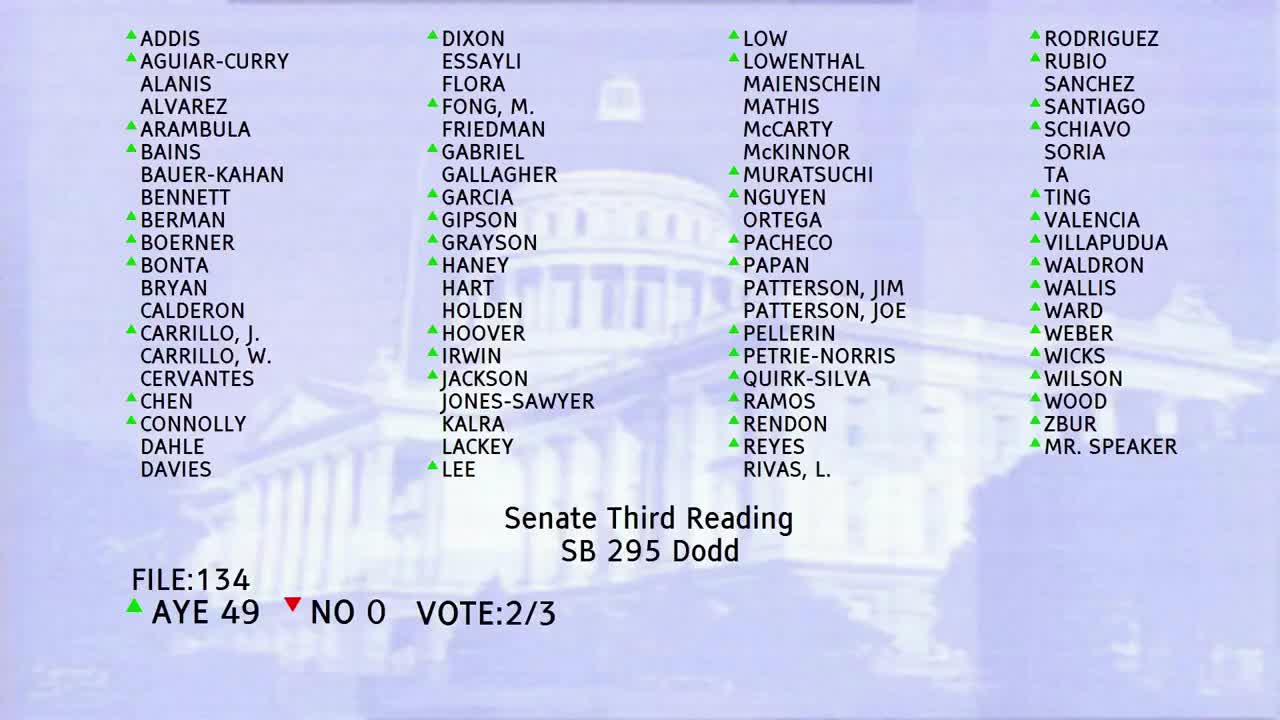 2MIN
Assembly Floor
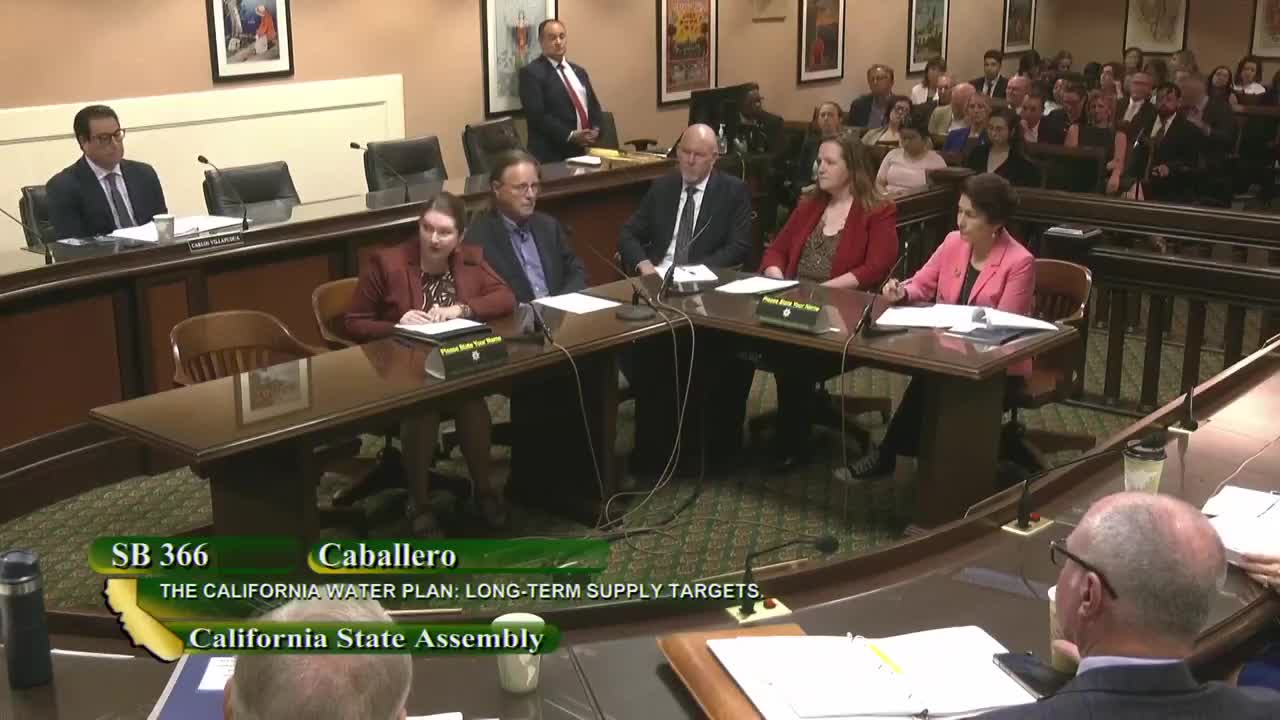 3MIN
Assembly Standing Committee on Water, Parks, and Wildlife
 46SEC
Assembly Floor
 12MIN
Assembly Standing Committee on Elections
 7MIN
Senate Standing Committee on Elections and Constitutional Amendments
Bill Author

Bill Co-Author(s):
