SB 739: Construction manager at-risk construction contracts: City of Elk Grove: zoo project.
- Session Year: 2023-2024
- House: Senate
- Latest Version Date: 2024-09-25
Current Status:
Passed
(2024-09-25: Chaptered by Secretary of State. Chapter 593, Statutes of 2024.)
Introduced
In Committee
First Chamber
In Committee
Second Chamber
Enacted
What does this bill do?
This bill lets the City of Elk Grove use construction manager at-risk contracts—a method where a construction manager guarantees the project cost and manages bidding and construction—for the new zoo, and allows awards by the lowest responsible bidder or on “best value” while requiring bonding and insurance. It requires the manager and subcontractors doing trades that use apprentices to commit to a skilled, trained workforce unless a project labor agreement or the city’s 2023 workforce agreement applies, and it caps retention at 5% when a payment bond is required.
The summary is provided by generative AI which can make mistakes. For original language, please view the details in the table below.
Existing law authorizes a county, until January 1, 2029, with approval of the board of supervisors, to utilize construction manager at-risk construction contracts for the erection, construction, alteration, repair, or improvement of infrastructure, excluding roads, and including, among other things, buildings, subject to certain requirements and limitations.
This bill would authorize the City of Elk Grove, with the approval of the city council, to utilize construction manager at-risk construction contracts for a zoo project, as defined, subject to certain requirements.
This bill would make legislative findings and declarations as to the necessity of a special statute for the City of Elk Grove.
This bill would declare that it is to take effect immediately as an urgency statute.
Existing law authorizes a county, until January 1, 2029, with approval of the board of supervisors, to utilize construction manager at-risk construction contracts for the erection, construction, alteration, repair, or improvement of infrastructure, excluding roads, and including, among other things, buildings, owned or leased by the county, subject to certain requirements.
This bill would authorize the City of Elk Grove, with the approval of the city council, to utilize construction manager at-risk construction contracts for a zoo project, as defined, subject to certain requirements.
This bill would make legislative findings and declarations as to the necessity of a special statute for the City of Elk Grove.
The Charter Schools Act of 1992 authorizes the establishment and operation of charter schools. Existing law authorizes a chartering authority to renew the approval of a charter school petition under specified procedures. Existing law authorizes a charter to be granted by a chartering authority under designated provisions for a period not to exceed 5 years, except that existing law required all charter schools whose term expires on or between January 1, 2022, and June 30, 2025, inclusive, to have their term extended by 2 years.This bill, notwithstanding the renewal process and criteria effective July 1, 2021, would require all charter schools whose term expires on or between January 1, 2024, and June 30, 2027, inclusive, to have their term extended by one additional year.By imposing new duties on local educational agencies acting as chartering authorities, this bill would impose a state-mandated local program.The California Constitution requires the state to reimburse local agencies and school districts for certain costs mandated by the state. Statutory provisions establish procedures for making that reimbursement.This bill would provide that, if the Commission on State Mandates determines that the bill contains costs mandated by the state, reimbursement for those costs shall be made pursuant to the statutory provisions noted above.The Charter Schools Act of 1992 authorizes the establishment and operation of charter schools. Existing law prohibits a chartering authority from renewing a charter school if the charter school has not met certain performance goals for the 2 consecutive years immediately preceding the renewal decision unless the charter school can demonstrate increases in pupil performance or strong postsecondary outcomes using verified data, as provided.
This bill would clarify that a chartering authority is only required to consider verified data if it is provided by the charter school.Existing law requires a chartering authority to consider pupil performance schoolwide and among all subgroups of pupils when making the decision on whether to renew a charter school, and requires the chartering authority to consider verified data for this decision until January 1, 2026.This bill would require a chartering authority to instead consider verified data only if provided by the charter school and would indefinitely extend the operation of this requirement.Existing law authorizes a chartering authority to renew the approval of a charter school petition under specified procedures. Existing law authorizes a charter to be granted by a chartering authority under designated provisions for a period not to exceed 5 years, except that existing law required all charter schools whose term expires on or between January 1, 2022, and June 30, 2025, inclusive, to have their term extended by 2 years.
This bill, notwithstanding the renewal process and criteria effective July 1, 2021, would require all charter schools whose term expires on or between January 1, 2024, and June 30, 2027, inclusive, to have their term extended by an one additional 2 years. year.
By imposing new duties on local educational agencies acting as chartering authorities, this bill would impose a state-mandated local program.
The California Constitution requires the state to reimburse local agencies and school districts for certain costs mandated by the state. Statutory provisions establish procedures for making that reimbursement.
This bill would provide that, if the Commission on State Mandates determines that the bill contains costs mandated by the state, reimbursement for those costs shall be made pursuant to the statutory provisions noted above.
The Charter Schools Act of 1992 authorizes the establishment and operation of charter schools. Existing law prohibits a chartering authority from renewing a charter school if the charter school has not met certain performance goals for the 2 consecutive years immediately preceding the renewal decision unless the charter school can demonstrate increases in pupil performance or strong postsecondary outcomes using verified data, as provided.
This bill would clarify that a chartering authority is only required to consider verified data if it is provided by the charter school.
Existing law requires a chartering authority to consider pupil performance schoolwide and among all subgroups of pupils when making the decision on whether to renew a charter school, and requires the chartering authority to consider verified data for this decision until January 1, 2026.
This bill would require a chartering authority to instead consider verified data only if provided by the charter school and would indefinitely extend the operation of this requirement.
Existing law authorizes a chartering authority to renew the approval of a charter school petition under specified procedures. Existing law authorizes a charter to be granted by a chartering authority under designated provisions for a period not to exceed 5 years, except that existing law required all charter schools whose term expires on or between January 1, 2022, and June 30, 2025, inclusive, to have their term extended by 2 years.
This bill, notwithstanding the renewal process and criteria effective July 1, 2021, would require all charter schools whose term expires on or between January 1, 2024, and June 30, 2027, inclusive, to have their term extended by an additional 2 years.
By imposing new duties on local educational agencies acting as chartering authorities, this bill would impose a state-mandated local program.
The California Constitution requires the state to reimburse local agencies and school districts for certain costs mandated by the state. Statutory provisions establish procedures for making that reimbursement.
This bill would provide that, if the Commission on State Mandates determines that the bill contains costs mandated by the state, reimbursement for those costs shall be made pursuant to the statutory provisions noted above.
Existing law establishes a single system for providing support to local educational agencies and schools, known as the statewide system of support, to build the capacity of local educational agencies to perform certain activities. Existing law requires the State Department of Education to develop and maintain the California School Dashboard for publicly reporting local educational agency performance data. Existing law prohibits the department from publishing the California School Dashboard in 2020 and 2021 and from identifying a local educational agency during the 202021 or 202122 school year for the technical assistance or intervention process based on the performance criteria used for the California School Dashboard.This bill would declare the Legislatures intent to enact subsequent legislation to implement revisions to the state K12 education accountability system to address data and performance gaps resulting from the COVID-19 pandemic.Existing law establishes a single system for providing support to local educational agencies and schools, known as the statewide system of support, to build the capacity of local educational agencies to perform certain activities. Existing law requires the State Department of Education to develop and maintain the California School Dashboard for publicly reporting local educational agency performance data. Existing law prohibits the department from publishing the California School Dashboard in 2020 and 2021 and from identifying a local educational agency during the 202021 or 202122 school year for the technical assistance or intervention process based on the performance criteria used for the California School Dashboard.
This bill would declare the Legislatures intent to enact subsequent legislation to implement revisions to the state K12 education accountability system to address data and performance gaps resulting from the COVID-19 pandemic.
(a)Notwithstanding any other law, the City of Elk Grove, with approval of the city council, may utilize construction manager at-risk construction contracts for the citys zoo project. A construction manager at-risk construction contract may be awarded using either the lowest responsible bidder or best value method to a construction manager at-risk entity that possesses or that obtains sufficient bonding to cover the contract amount for construction services and risk and liability insurance as may be required by the city. Any payment or performance bond written for the purposes of this section shall be written using a bond form developed by the city.
(b)(1)A construction manager at-risk entity shall not be prequalified or shortlisted or awarded a contract unless the entity provides an enforceable commitment to the city that the entity and its subcontractors at every tier will use a skilled and trained workforce to perform all work on the zoo project or contract that falls within an apprenticeable occupation in the building and construction trades, in accordance with Chapter 2.9 (commencing with Section 2600) of Part 1.
(2)This subdivision shall not apply if any of the following conditions are met:
(A)The city has entered into a project labor agreement that will bind all contractors and subcontractors performing work on the project or contract to use a skilled and trained workforce and the entity agrees to be bound by that project labor agreement.
(B)The project or contract is being performed under the City of Elk Grove Community Workforce and Training Agreement executed in January 2023, or an extension or renewal of that agreement.
(C)The entity has entered into a project labor agreement that will bind the entity and all its subcontractors at every tier performing the project or contract to use a skilled and trained workforce.
(c)Subcontractors that were not listed by a construction manager at-risk entity as partners, general partners, or association members in a partnership, limited partnership, or association in the entitys construction manager at-risk bid submission shall be awarded by the construction manager at-risk entity in accordance with the process set forth by the city. All subcontractors bidding on contracts pursuant to this section shall be afforded the protections contained in Chapter 4 (commencing with Section 4100) of Part 1. The construction manager at-risk entity shall do both of the following:
(1)Provide public notice of the availability of work to be subcontracted in accordance with the publication requirements applicable to the competitive bidding process of the city.
(2)Provide a fixed date and time on which the subcontracted work will be awarded in accordance with the procedure established pursuant to this section.
(d)If the city elects to proceed under this section and uses a construction manager at-risk contract for a construction project, it shall make a copy of the contract available for public inspection on its internet website.
(e)(1)If the city elects to award a project pursuant to this section, retention proceeds withheld by the city from the construction manager at-risk entity shall not exceed 5 percent if a performance and payment bond issued by an admitted surety insurer is required in the solicitation of bids.
(2)In a contract between the construction manager at-risk entity and any subcontractor, and in a contract between a subcontractor and any subcontractor thereunder, the percentage of the retention proceeds withheld shall not exceed the percentage specified in the contract between the city and the construction manager at-risk entity. If the construction manager at-risk entity provides written notice to any subcontractor that is not a member of the construction manager at-risk entity, before or at the time the bid is requested, that a bond may be required, and the subcontractor subsequently is unable or refuses to furnish a bond to the construction manager at-risk entity, then the construction manager at-risk entity may withhold retention proceeds in excess of the percentage specified in the contract between the city and the construction manager at-risk entity from any payment made by the construction manager at-risk entity to the subcontractor.
(f)As used in this section:
(1)Best value means a value determined by objective criteria related to the experience of the entity and project personnel, project plan, financial strength of the entity, safety record of the entity, and price.
(2)City means the City of Elk Grove.
(3)Construction manager at-risk contract means one or a successive combination of competitively procured contracts entered into by the city with an individual, partnership, joint venture, corporation, or other recognized legal entity, that is appropriately licensed in this state, including holding a contractors license issued by the Contractors State License Board, and that guarantees the cost of a project and furnishes construction management services, including, but not limited to, preparation and coordination of bid packages, scheduling, cost control, value engineering, evaluation, preconstruction services, and construction administration.
(4)Project labor agreement means a prehire collective bargaining agreement covering employees in the building and construction industry that establishes terms and conditions of employment for the project or contract.
(5)Zoo project or project means the new zoo proposed to be relocated from the City of Sacramento and constructed over time, with buildings, including repair of structures, landscaping, habitat, site work, and flatwork, in the City of Elk Grove and its associated public infrastructure, including, but not limited to, roadway in the vicinity of the new zoo, excluding any roadway owned and maintained by the State of California through the Department of Transportation, and utility improvements in any way associated with the new zoo.
SEC. 2.The Legislature finds and declares that a special statute is necessary and that a general statute cannot be made applicable within the meaning of Section 16 of Article IV of the California Constitution because of the unique conditions in the City of Elk Grove that make it necessary to grant the city the authority to utilize the contracting methods described in this act.
SEC. 3.This act is an urgency statute necessary for the immediate preservation of the public peace, health, or safety within the meaning of Article IV of the California Constitution and shall go into immediate effect. The facts constituting the necessity are:
In order to authorize the use of the construction manager at-risk contract method as quickly as possible, and thereby, for the benefit of the public, minimize the duration of the process of relocating the Sacramento Zoo to the City of Elk Grove, it is necessary for this act to take effect immediately.
(a)Notwithstanding any other law, the City of Elk Grove, with approval of the city council, may utilize construction manager at-risk construction contracts for the citys zoo project. A construction manager at-risk construction contract may be awarded using either the lowest responsible bidder or best value method to a construction manager at-risk entity that possesses or that obtains sufficient bonding to cover the contract amount for construction services and risk and liability insurance as may be required by the city. Any payment or performance bond written for the purposes of this section shall be written using a bond form developed by the city.
(b)(1)A construction manager at-risk entity shall not be prequalified or shortlisted or awarded a contract unless the entity provides an enforceable commitment to the city that the entity and its subcontractors at every tier will use a skilled and trained workforce to perform all work on the zoo project or contract that falls within an apprenticeable occupation in the building and construction trades, in accordance with Chapter 2.9 (commencing with Section 2600) of Part 1.
(2)This subdivision shall not apply if any of the following conditions are met:
(A)The city has entered into a project labor agreement, community workforce training agreement, or similar document agreement that will bind all contractors and subcontractors performing work on the project or contract to use a skilled and trained workforce and specifies minimum training or experience qualifications for employment, and the entity agrees to be bound by that project labor agreement, community workforce training agreement, or similar document. agreement.
(B)The project or contract is being performed under the City of Elk Grove Community Workforce and Training Agreement executed in January 2023, or an extension or renewal of a project labor agreement, community workforce training agreement, or similar document that was entered into by the city. that agreement.
(C)The entity has entered into a project labor agreement, community workforce training agreement, or similar document agreement that will bind the entity and all its subcontractors at every tier performing the project or contract to use a skilled and trained workforce and will specify minimum training or experience qualifications for employment. workforce.
(c)Subcontractors that were not listed by a construction manager at-risk entity as partners, general partners, or association members in a partnership, limited partnership, or association in the entitys construction manager at-risk bid submission shall be awarded by the construction manager at-risk entity in accordance with the process set forth by the city. All subcontractors bidding on contracts pursuant to this section shall be afforded the protections contained in Chapter 4 (commencing with Section 4100) of Part 1. The construction manager at-risk entity shall do both of the following:
(1)Provide public notice of the availability of work to be subcontracted in accordance with the publication requirements applicable to the competitive bidding process of the city.
(2)Provide a fixed date and time on which the subcontracted work will be awarded in accordance with the procedure established pursuant to this section.
(d)If the city elects to proceed under this section and uses a construction manager at-risk contract for a construction project, it shall make a copy of the contract available for public inspection on its internet website.
(e)(1)If the city elects to award a project pursuant to this section, retention proceeds withheld by the city from the construction manager at-risk entity shall not exceed 5 percent if a performance and payment bond issued by an admitted surety insurer is required in the solicitation of bids.
(2)In a contract between the construction manager at-risk entity and any subcontractor, and in a contract between a subcontractor and any subcontractor thereunder, the percentage of the retention proceeds withheld shall not exceed the percentage specified in the contract between the city and the construction manager at-risk entity. If the construction manager at-risk entity provides written notice to any subcontractor that is not a member of the construction manager at-risk entity, before or at the time the bid is requested, that a bond may be required, and the subcontractor subsequently is unable or refuses to furnish a bond to the construction manager at-risk entity, then the construction manager at-risk entity may withhold retention proceeds in excess of the percentage specified in the contract between the city and the construction manager at-risk entity from any payment made by the construction manager at-risk entity to the subcontractor.
(f)As used in this section:
(1)Best value means a value determined by objective criteria related to the experience of the entity and project personnel, project plan, financial strength of the entity, safety record of the entity, and price.
(2)City means the City of Elk Grove.
(3)Construction manager at-risk contract means one or a successive combination of competitively procured contracts entered into by the city with an individual, partnership, joint venture, corporation, or other recognized legal entity, that is appropriately licensed in this state, including holding a contractors license issued by the Contractors State License Board, and that guarantees the cost of a project and furnishes construction management services, including, but not limited to, preparation and coordination of bid packages, scheduling, cost control, value engineering, evaluation, preconstruction services, and construction administration.
(4)Project labor agreement, community workforce training agreement, or similar document agreement means a prehire collective bargaining agreement covering employees in the building and construction industry that establishes terms and conditions of employment for the project or contract.
(5)Zoo project or project means the new zoo proposed to be relocated from the City of Sacramento and constructed over time, with buildings, including repair of structures, landscaping, habitat, site work, and flatwork, in the City of Elk Grove and its associated public infrastructure, including, but not limited to, roadway in the vicinity of the new zoo, excluding any roadway owned and maintained by the State of California through the Department of Transportation, and utility improvements in any way associated with the new zoo.
SEC. 2.The Legislature finds and declares that a special statute is necessary and that a general statute cannot be made applicable within the meaning of Section 16 of Article IV of the California Constitution because of the unique conditions in the City of Elk Grove that make it necessary to grant the city the authority to utilize the contracting methods described in this act.
SEC. 3.This act is an urgency statute necessary for the immediate preservation of the public peace, health, or safety within the meaning of Article IV of the California Constitution and shall go into immediate effect. The facts constituting the necessity are:
In order to authorize the use of the construction manager at-risk contract method as quickly as possible, and thereby, for the benefit of the public, minimize the duration of the process of relocating the Sacramento Zoo to the City of Elk Grove, it is necessary for this act to take effect immediately.
(a)Notwithstanding any other law, the City of Elk Grove, with approval of the city council, may utilize construction manager at-risk construction contracts for the citys zoo project. A construction manager at-risk construction contract may be awarded using either the lowest responsible bidder or best value method to a construction manager at-risk entity that possesses or that obtains sufficient bonding to cover the contract amount for construction services and risk and liability insurance as may be required by the city. Any payment or performance bond written for the purposes of this section shall be written using a bond form developed by the city.
(b)(1)A construction manager at-risk entity shall not be prequalified or shortlisted or awarded a contract unless the entity provides an enforceable commitment to the city that the entity and its subcontractors at every tier will use a skilled and trained workforce to perform all work on the zoo project or contract that falls within an apprenticeable occupation in the building and construction trades, in accordance with Chapter 2.9 (commencing with Section 2600) of Part 1.
(2)This subdivision shall not apply if any of the following conditions are met:
(A)The city has entered into a project labor agreement, community workforce training agreement, or similar document that will bind all contractors and subcontractors performing work on the project or contract to use a skilled and trained workforce and specifies minimum training or experience qualifications for employment, and the entity agrees to be bound by that project labor agreement, community workforce training agreement, or similar document.
(B)The project or contract is being performed under the extension or renewal of a project labor agreement, community workforce training agreement, or similar document that was entered into by the city.
(C)The entity has entered into a project labor agreement, community workforce training agreement, or similar document that will bind the entity and all its subcontractors at every tier performing the project or contract to use a skilled and trained workforce and will specify minimum training or experience qualifications for employment.
(c)Subcontractors that were not listed by a construction manager at-risk entity as partners, general partners, or association members in a partnership, limited partnership, or association in the entitys construction manager at-risk bid submission shall be awarded by the construction manager at-risk entity in accordance with the process set forth by the city. All subcontractors bidding on contracts pursuant to this section shall be afforded the protections contained in Chapter 4 (commencing with Section 4100) of Part 1. The construction manager at-risk entity shall do both of the following:
(1)Provide public notice of the availability of work to be subcontracted in accordance with the publication requirements applicable to the competitive bidding process of the city.
(2)Provide a fixed date and time on which the subcontracted work will be awarded in accordance with the procedure established pursuant to this section.
(d)If the city elects to proceed under this section and uses a construction manager at-risk contract for a construction project, it shall make a copy of the contract available for public inspection on its internet website.
(e)(1)If the city elects to award a project pursuant to this section, retention proceeds withheld by the city from the construction manager at-risk entity shall not exceed 5 percent if a performance and payment bond issued by an admitted surety insurer is required in the solicitation of bids.
(2)In a contract between the construction manager at-risk entity and any subcontractor, and in a contract between a subcontractor and any subcontractor thereunder, the percentage of the retention proceeds withheld shall not exceed the percentage specified in the contract between the city and the construction manager at-risk entity. If the construction manager at-risk entity provides written notice to any subcontractor that is not a member of the construction manager at-risk entity, before or at the time the bid is requested, that a bond may be required, and the subcontractor subsequently is unable or refuses to furnish a bond to the construction manager at-risk entity, then the construction manager at-risk entity may withhold retention proceeds in excess of the percentage specified in the contract between the city and the construction manager at-risk entity from any payment made by the construction manager at-risk entity to the subcontractor.
(f)As used in this section:
(1)Best value means a value determined by objective criteria related to the experience of the entity and project personnel, project plan, financial strength of the entity, safety record of the entity, and price.
(2)City means the City of Elk Grove.
(3)Construction manager at-risk contract means one or a successive combination of competitively procured contracts entered into by the city with an individual, partnership, joint venture, corporation, or other recognized legal entity, that is appropriately licensed in this state, including holding a contractors license issued by the Contractors State License Board, and that guarantees the cost of a project and furnishes construction management services, including, but not limited to, preparation and coordination of bid packages, scheduling, cost control, value engineering, evaluation, preconstruction services, and construction administration.
(4)Project labor agreement, community workforce training agreement, or similar document means a prehire collective bargaining agreement covering employees in the building and construction industry that establishes terms and conditions of employment for the project or contract.
(5)Zoo project or project means the new zoo proposed to be relocated from the City of Sacramento and constructed over time, with buildings, including repair of structures, landscaping, habitat, site work, and flatwork, in the City of Elk Grove and its associated public infrastructure, including, but not limited to, roadway in the vicinity of the new zoo, excluding any roadway owned and maintained by the State of California through the Department of Transportation, and utility improvements in any way associated with the new zoo.
SEC. 2.The Legislature finds and declares that a special statute is necessary and that a general statute cannot be made applicable within the meaning of Section 16 of Article IV of the California Constitution because of the unique conditions in the City of Elk Grove that make it necessary to grant the city the authority to utilize the contracting methods described in this act.
SECTION 1.Section 47607.4 of the Education Code is amended to read:47607.4.Notwithstanding the renewal process and criteria established in Sections 47605.9, 47607, and 47607.2 or any other law, effective July 1, 2021, all charter schools whose term expires on or between January 1, 2022, and June 30, 2025, inclusive, shall have their term extended by two years, and all charter schools whose term expires on or between January 1, 2024, and June 30, 2027, inclusive, shall have their term extended by one additional year.SEC. 2.If the Commission on State Mandates determines that this act contains costs mandated by the state, reimbursement to local agencies and school districts for those costs shall be made pursuant to Part 7 (commencing with Section 17500) of Division 4 of Title 2 of the Government Code.Notwithstanding the renewal process and criteria established in Sections 47605.9, 47607, and 47607.2 or any other law, effective July 1, 2021, all charter schools whose term expires on or between January 1, 2022, and June 30, 2025, inclusive, shall have their term extended by two years, and all charter schools whose term expires on or between January 1, 2024, and June 30, 2027, inclusive, shall have their term extended by an one additional two years. year.
SEC. 4.SEC. 2.If the Commission on State Mandates determines that this act contains costs mandated by the state, reimbursement to local agencies and school districts for those costs shall be made pursuant to Part 7 (commencing with Section 17500) of Division 4 of Title 2 of the Government Code.
(a)(1)The chartering authority shall not renew a charter if either of the following apply for two consecutive years immediately preceding the renewal decision:
(A)The charter school has received the two lowest performance levels schoolwide on all the state indicators included in the evaluation rubrics adopted pursuant to Section 52064.5 for which it receives performance levels.
(B)For all measurements of academic performance, the charter school has received performance levels schoolwide that are the same or lower than the state average and, for a majority of subgroups performing statewide below the state average in each respective year, received performance levels that are lower than the state average.
(2)Notwithstanding paragraph (1), if the two consecutive years immediately preceding the renewal decision include the 201920 or 202021 school year, the chartering authority shall not renew a charter if either of the following apply for two of the most recent years for which state data is available preceding the renewal decision:
(A)The charter school has received the two lowest performance levels schoolwide on all the state indicators included in the evaluation rubrics adopted pursuant to Section 52064.5 for which it receives performance levels.
(B)For all measurements of academic performance, the charter school has received performance levels schoolwide that are the same or lower than the state average and, for a majority of subgroups performing statewide below the state average in each respective year, received performance levels that are lower than the state average.
(3)A charter school that meets the criteria established by this subdivision and paragraph (2) of subdivision (c) of Section 47607 shall only qualify for treatment under this subdivision.
(4)The chartering authority shall consider the following factors, and may renew a charter that meets the criteria in paragraph (1) or (2) only upon making both of the following written factual findings, specific to the particular petition, setting forth specific facts to support the findings:
(A)The charter school is taking meaningful steps to address the underlying cause or causes of low performance, and those steps are reflected, or will be reflected, in a written plan adopted by the governing body of the charter school.
(B)There is clear and convincing evidence showing either of the following:
(i)The school achieved measurable increases in academic achievement, as defined by at least one years progress for each year in school.
(ii)Strong postsecondary outcomes, as defined by college enrollment, persistence, and completion rates equal to similar peers.
(C)Clauses (i) and (ii) of subparagraph (B) shall be demonstrated by verified data, as defined in subdivision (c).
(5)Verified data, as defined in subdivision (c), shall be considered by the chartering authority until June 30, 2025, for a charter school pursuant to this subdivision, operating on or before June 30, 2020, only for the charter schools next two subsequent renewals. authority, if provided by the charter school.
(6)For a charter renewed pursuant to this subdivision, the chartering authority may grant a renewal for a period of two years.
(b)(1)For all charter schools for which paragraph (2) of subdivision (c) of Section 47607 and subdivision (a) of this section do not apply, the chartering authority shall consider the schoolwide performance and performance of all subgroups of pupils served by the charter school on the state indicators included in the evaluation rubrics adopted pursuant to Section 52064.5 and the performance of the charter school on the local indicators included in the evaluation rubrics adopted pursuant to Section 52064.5.
(2)The chartering authority shall provide greater weight to performance on measurements of academic performance in determining whether to grant a charter renewal.
(3)In addition to the state and local indicators, the chartering authority shall consider clear and convincing evidence showing either of the following:
(A)The school achieved measurable increases in academic achievement, as defined by at least one years progress for each year in school.
(B)Strong postsecondary outcomes, as defined by college enrollment, persistence, and completion rates equal to similar peers.
(4)Subparagraphs (A) and (B) of paragraph (3) shall be demonstrated by verified data, as defined in subdivision (c). (c), if provided by the charter school.
(5)Verified data, as defined in subdivision (c), shall be considered by the chartering authority for the next two subsequent renewals until January 1, 2026, for a charter school pursuant to this paragraph.(6)(5)The chartering authority may deny a charter renewal pursuant to this subdivision only upon making written findings, setting forth specific facts to support the findings, that the charter school has failed to meet or make sufficient progress toward meeting standards that provide a benefit to the pupils of the school, that closure of the charter school is in the best interest of pupils and, if applicable pursuant to paragraphs (2) and (3), that its decision provided greater weight to performance on measurements of academic performance.
(7)(6)For a charter renewed pursuant to this subdivision, the chartering authority shall grant a renewal for a period of five years.
(c)(1)For purposes of this section, verified data means data derived from nationally recognized, valid, peer-reviewed, and reliable sources that are externally produced. Verified data shall include measures of postsecondary outcomes.
(2)By January 1, 2021, the state board shall establish criteria to define verified data and identify an approved list of valid and reliable assessments that shall be used for this purpose.
(3)No data sources other than those adopted by the state board pursuant to paragraph (2) shall be used as verified data.
(4)Notwithstanding paragraph (3), a charter school under consideration for renewal before the state boards adoption pursuant to paragraph (2) may present data consistent with this subdivision.
(5)Adoption of the criteria pursuant to this subdivision shall not be subject to the requirements of the Administrative Procedure Act (Chapter 3.5 (commencing with Section 11340) of Part 1 of Division 3 of Title 2 of the Government Code).
(6)The state board may adopt and make necessary revisions to the criteria in accordance with the requirements of the Bagley-Keene Open Meeting Act (Article 9 (commencing with Section 11120) of Chapter 1 of Part 1 of Division 3 of Title 2 of the Government Code).
(7)Upon adoption of a pupil-level academic growth measure for English language arts and mathematics, the state board may reconsider criteria adopted pursuant to this subdivision.
(d)This section shall remain in effect only until January 1, 2026, and as of that date is repealed.SEC. 3.Section 47607.4 of the Education Code is amended to read:47607.4.Notwithstanding the renewal process and criteria established in Sections 47605.9, 47607, and 47607.2 or any other law, effective July 1, 2021, all charter schools whose term expires on or between January 1, 2022, and June 30, 2025, inclusive, shall have their term extended by two years. years, and all charter schools whose term expires on or between January 1, 2024, and June 30, 2027, inclusive, shall have their term extended by an additional two years.
SEC. 4.If the Commission on State Mandates determines that this act contains costs mandated by the state, reimbursement to local agencies and school districts for those costs shall be made pursuant to Part 7 (commencing with Section 17500) of Division 4 of Title 2 of the Government Code.
SECTION 1. It is the intent of the Legislature to enact subsequent legislation to implement revisions to the state K12 education accountability system to address data and performance gaps resulting from the COVID-19 pandemic.It is the intent of the Legislature to enact subsequent legislation to implement revisions to the state K12 education accountability system to address data and performance gaps resulting from the COVID-19 pandemic.
|
Date
|
Status
|
|---|---|
| Sep 25, 2024 | Chaptered by Secretary of State. Chapter 593, Statutes of 2024. |
| Sep 25, 2024 | Approved by the Governor. |
| Aug 23, 2024 | Enrolled and presented to the Governor at 2 p.m. |
| Aug 19, 2024 | Urgency clause adopted. |
| Aug 19, 2024 | Assembly amendments concurred in. (Ayes 40. Noes 0. Page 5198.) Ordered to engrossing and enrolling. |
| Jul 3, 2024 | From committee: That the Assembly amendments be concurred in. (Ayes 7. Noes 0. Page 4943.) |
| Jun 27, 2024 | Re-referred to Com. on RLS pursuant to Senate Rule 29.10(d). |
| Jun 27, 2024 | From committee: Be re-referred to Com. on L. GOV. pursuant to Senate Rule 29.10(d). (Ayes 5. Noes 0. Page 4831.) Re-referred to Com. on L. GOV. |
| Jun 27, 2024 | Set for hearing July 3. |
| Jun 25, 2024 | In Senate. Concurrence in Assembly amendments pending. |
| Jun 24, 2024 | Read third time. Urgency clause adopted. Passed. (Ayes 76. Noes 0. Page 5991.) Ordered to the Senate. |
| Jun 20, 2024 | Read third time and amended. |
| Jun 20, 2024 | Ordered to third reading. |
| Jun 10, 2024 | Read second time. Ordered to third reading. |
| Jun 6, 2024 | Read second time and amended. Ordered to second reading. |
| Jun 5, 2024 | From committee: Do pass as amended. (Ayes 9. Noes 0.) (June 5). |
| May 28, 2024 | Re-referred to Com. on L. GOV. pursuant to Assembly Rule 96. |
| Feb 29, 2024 | Re-referred to Com. on RLS. pursuant to Assembly Rule 96. |
| Feb 20, 2024 | From committee with author's amendments. Read second time and amended. Re-referred to Com. on ED. |
| Jun 15, 2023 | Referred to Com. on ED. |
| Jun 1, 2023 | In Assembly. Read first time. Held at Desk. |
| May 31, 2023 | Read third time. Passed. (Ayes 28. Noes 0. Page 1384.) Ordered to the Assembly. |
| May 16, 2023 | Read second time. Ordered to third reading. |
| May 15, 2023 | From committee: Be ordered to second reading pursuant to Senate Rule 28.8. |
| May 5, 2023 | Set for hearing May 15. |
| May 3, 2023 | Read second time and amended. Re-referred to Com. on APPR. |
| May 2, 2023 | From committee: Do pass as amended and re-refer to Com. on APPR. (Ayes 5. Noes 1. Page 935.) (April 26). |
| Apr 11, 2023 | Set for hearing April 26. |
| Mar 29, 2023 | Re-referred to Com. on ED. |
| Mar 21, 2023 | From committee with author's amendments. Read second time and amended. Re-referred to Com. on RLS. |
| Mar 1, 2023 | Referred to Com. on RLS. |
| Feb 21, 2023 | From printer. May be acted upon on or after March 20. |
| Feb 17, 2023 | Introduced. Read first time. To Com. on RLS. for assignment. To print. |
|
Date
|
Description
|
Location
|
Votes
|
|
|---|---|---|---|---|
| Aug 19, 2024 | Unfinished Business SB739 Ashby Urgency Clause Concurrence | Senate Floor |
Passed |
|
| Jul 3, 2024 | That the Assembly amendments be concurred in | Senate Standing Committee on Local Government |
Passed |
|
| Jun 24, 2024 | SB 739 Ashby Third Reading Urgency By Stephanie Nguyen | Assembly Floor |
Passed |
|
| Jun 5, 2024 | Do pass as amended. | Assembly Standing Committee on Local Government |
Passed |
|
| May 31, 2023 | Senate 3rd Reading SB739 Alvarado-Gil | Senate Floor |
Passed |
|
| Apr 26, 2023 | Do pass as amended, but first amend, and re-refer to the Committee on [Appropriations] | Senate Standing Committee on Education |
Passed |
This list shows positions taken on this bill by organizations on the date displayed, which is linked to the original source.
Positions by individuals are not included.
|
Organization
|
Position
|
Date
|
|---|---|---|
| Achieve Charter School | ** Support | |
| Alameda County Office Of Education | ** Against | |
| Alder Grove Charter School | ** Support | |
| Alliance College-Ready Public Schools | * Support | Apr 26, 2023 |
| Alma Fuerte Public School | * Support | Apr 26, 2023 |
| Alta Public Schools | ** Support | |
| APEX Academy | ** Support | |
| Aplus The Association Of Personalized Learning Schools Services | * Support | Apr 26, 2023 |
| Aplus+ | ** Support | |
| Arts and Action Community Charter Schools | * Support | Apr 26, 2023 |
| Aspire Public Schools | ** Support | |
| Associated General Contractors | ** Support | |
| Association Of California School Administrators | ** Against | |
| Aveson Schools | ** Support | |
| Bella Mente Montessori Academy | ** Support | |
| Bert Corona Charter School | * Support | Apr 26, 2023 |
| Birmingham Community Charter High School | ** Support | |
| Bruce Dennis, Trustee, Riverside County Board of Education | ** Support | |
| Bullis Charter School | ** Support | |
| California Asian Pacific Chamber Of Commerce | ** Support | |
| California Charter Schools Association | ** Support | |
| California Connections Academy | ** Support | |
| California Creative Learning Academy | ** Support | |
| California Federation Of Teachers | ** Against | |
| California Hispanic Chambers Of Commerce | ** Support | |
| California Pacific Charter Schools | ** Support | |
| California School Employees Association | ** Against | |
| California State Building Construction Trades Council | * Support | Jul 3, 2024 |
| California Teachers Association | ** Against | |
| Camino Nuevo Charter Academy | ** Support | |
| Castro Valley Unified School District | * Against | Apr 26, 2023 |
| CEMENT MASONS LOCAL 400 | ** Support | |
| Center for Advanced Learning | ** Support | |
| Center for Advanced Learning Charter School | * Support | Apr 26, 2023 |
| Children Now | * Support | Apr 26, 2023 |
| Chime Institute | ** Support | |
| Chino Valley Unified School District | * Against | Apr 26, 2023 |
| Citizens of the World Charter Schools - Los Angeles | ** Support | |
| City of Elk Grove | ** Support | |
| Clovis Global Academy | ** Support | |
| Collegiate Charter High School of Los Angeles | ** Support | |
| Connecting Waters Charter Schools | * Support | Apr 26, 2023 |
| Cosumnes Community Services District | ** Support | |
| Discovery Charter Preparatory School | ** Support | |
| Dodson Middle School | * Against | Apr 26, 2023 |
| East Side Union High School District | * Against | Apr 26, 2023 |
| Echo Class Academy | * Support | Apr 26, 2023 |
| Ednovate | ** Support | |
| Ednovate Schools | * Support | Apr 26, 2023 |
| Ednovate Schools | * Support | Apr 26, 2023 |
| Edward B. Cole SR Academy | ** Support | |
| Eel River Charter School | ** Support | |
| El Camino Real Charter High School | * Against | Apr 26, 2023 |
| El Sol Science and Arts Academy | ** Support | |
| Eleanor Roosevelt Community Learning Center | ** Support | |
| Environmental Charter Schools | ** Support | |
| Equitas Academy Charter Schools | ** Support | |
| Excel Academy Charter School | ** Support | |
| Excelsior Charter Schools | ** Support | |
| Extera Public Schools | ** Support | |
| Fairfax Lasuna Unified School | * Against | Apr 26, 2023 |
| Families in Action for Quality Schools Oakland | * Support | Apr 26, 2023 |
| Gabriella Charter Schools | * Support | Apr 26, 2023 |
| Garvey Allen STEAM Academy | * Support | Apr 26, 2023 |
| Gateway Community Charters | ** Support | |
| Gilbane | ** Support | |
| Girls Athletic Leadership School Los Angeles | ** Support | |
| Girls Athletic Leadership Schools | ** Support | |
| Global Education Collaborative | ** Support | |
| Goethe International Charter School | ** Support | |
| Granada Hills Charter High School | ** Support | |
| Green Dot Public Schools California | ** Support | |
| Guajome Schools | ** Support | |
| Hawking Steam Charter School | ** Support | |
| High Tech High | ** Support | |
| High Tech Los Angeles | ** Support | |
| Highlands Community Charter And Technical Schools | ** Support | |
| HJ Sims | ** Support | |
| Hopeville Unified School District | * Against | Apr 26, 2023 |
| ICEF Public Schools | ** Support | |
| Ilead Charter Schools | ** Support | |
| iLEAD Charter Schools | * Support | Apr 26, 2023 |
| Ingenium Schools | ** Support | |
| Innovations Academy | ** Support | |
| Integrity Charter School | ** Support | |
| Ivy Academia Charter School | * Support | Apr 26, 2023 |
| Ivy Academia Entrepreneurial Charter School | ** Support | |
| Ivy Bound Academy | * Support | Apr 26, 2023 |
| Ivy Bound Academy Charter Middle School | ** Support | |
| Ivy Bound Academy of Math, Science, and Technology Charter Middle School | ** Support | |
| JCS Family of Charter Schools | ** Support | |
| JCS Inc. Family of Schools | ** Support | |
| John Muir Charter Schools | ** Support | |
| Julia Lee Performing Arts Academy | ** Support | |
| Kavod Charter School | ** Support | |
| Kid Street Learning Center Charter School | ** Support | |
| KIPP Bay Area Public Schools | ** Support | |
| KIPP Norcal | ** Support | |
| Kipp Socal Public Schools | ** Support | |
| L.a. Coalition for Excellent Public Schools | ** Support | |
| LA Verne Elementary Preparatory Academy | ** Support | |
| Larchmont Charter School | ** Support | |
| Lashon Academy | ** Support | |
| Lashon Academy Charter School | * Support | Apr 26, 2023 |
| Leadership Public Schools | ** Support | |
| learn4life | ** Support | |
| Lighthouse Community Public Schools | ** Support | |
| Local 16 Heat and Frost Insulators | * Support | Jun 5, 2024 |
| Lodi Unified School District | * Against | Apr 26, 2023 |
| Los Angeles Academy of Arts and Enterprise | ** Support | |
| Los Angeles Coalition for Excellent Public Schools | ** Support | |
| Los Angeles College Prep Academy | ** Support | |
| Los Angeles Leadership Academy | ** Support | |
| Los Angeles Unified School District | * Against | Apr 26, 2023 |
| Magnolia Public Schools | ** Support | |
| Matrix for Success Academy | ** Support | |
| Meadows Arts and Technology Elementary School | ** Support | |
| Method Schools | ** Support | |
| Montague Charter Academy | ** Support | |
| Multicultural Learning Center | ** Support | |
| Museum School | ** Support | |
| New Horizons Charter Academy | ** Support | |
| New Los Angeles Charter Schools | ** Support | |
| New West Charter | * Support | Apr 26, 2023 |
| New West Charter School | ** Support | |
| North Valley Military Institute | ** Support | |
| Northern California Construction Training | ** Support | |
| Oakland Unified School District | ** Against | |
| Odyssey Charter School | * Support | Apr 26, 2023 |
| Orange County Academy of Science and Arts Charter School | * Support | Apr 26, 2023 |
| Orange County Academy Of Sciences And Arts | ** Support | |
| Palisades Charter High School | ** Support | |
| Para Los Niños | ** Support | |
| Pathways Charter School | ** Support | |
| Public Safety Academy of San Bernardino | * Support | Apr 26, 2023 |
| Puente Charter School | ** Support | |
| Reach Leadership Steam Academy | ** Support | |
| Renaissance Art Academy | ** Support | |
| Renaissance Art Academy | * Support | Apr 26, 2023 |
| River Charter Schools | ** Support | |
| Riverside County Board of Education | ** Support | |
| Rocklin Academy Family of Schools | ** Support | |
| Sac Zoo | ** Support | |
| Sacramento Area Council Of Governments | ** Support | |
| Sacramento Regional Transit District | ** Support | |
| Sacramento Transportation Authority | ** Support | |
| Sacramento Zoological Society | * Support | Jun 5, 2024 |
| Sacramento-Sierra's Building and Construction Trades Council | * Support | Jun 5, 2024 |
| Sage Oak Charter Schools | ** Support | |
| Samueli Academy | ** Support | |
| San Diego Cooperative Charter School | ** Support | |
| San Diego Unified School District | ** Against | |
| San Jose Charter Academy | ** Support | |
| Santa Monica Malibu Unified School | * Against | Apr 26, 2023 |
| Saugus Union School District | * Support | Apr 26, 2023 |
| Scholarship Prep Charter School | ** Support | |
| Sebastopol Independent Charter | ** Support | |
| Sherman Thomas Charter School | ** Support | |
| Sherwood Montessori | ** Support | |
| Small School Districts Association | ** Support | |
| Springs Charter Schools | ** Support | |
| Stem Prep Schools | ** Support | |
| Sycamore Academy of Science and Cultural Arts | ** Support | |
| Sycamore Creek Community Charter School | ** Support | |
| Synergy Academies | ** Support | |
| Synergy Academies | * Support | Apr 26, 2023 |
| The Accelerated Schools | ** Support | |
| The Classical Academies | ** Support | |
| The Language Academy of Sacramento | ** Support | |
| The O’Farrell Charter Schools | ** Support | |
| The School of Arts and Enterprise | ** Support | |
| Tierra Del Sol Continuation High School | * Against | Apr 26, 2023 |
| Tree Of Life Charter School | ** Support | |
| Tustin Unified School District | * Against | Apr 26, 2023 |
| Twin Rivers Unified School District | * Against | Apr 26, 2023 |
| Valley Charter School | ** Support | |
| Vaughn Next Century Learning Center | ** Support | |
| Vibrant Minds Charter School | ** Support | |
| Village Charter Academy | ** Support | |
| Vista Charter Public Schools | ** Support | |
| Vox Collegiate | * Support | Apr 26, 2023 |
| Vox Collegiate of Los Angeles | ** Support | |
| Western Electrical Contractors Association | ** Against | |
| Wilder's Preparatory Academy Charter School | * Support | Apr 26, 2023 |
| Woodward Learning Academy | ** Support | |
| Ypi Charter Schools | ** Support |
SENATE RULES COMMITTEE Office of Senate Floor Analyses (916) 651-1520 Fax: (916) 327-4478 | SB 739 |
UNFINISHED BUSINESS
Bill No: SB 739
Author: Ashby (D)
Amended: 6/20/24
Vote: 27 - Urgency
PRIOR SENATE VOTES NOT RELEVANT
SENATE LOCAL GOVERNMENT COMMITTEE: 7-0, 7/3/24 (Pursuant to Senate Rule 29.10)
AYES: Durazo, Seyarto, Dahle, Glazer, Skinner, Wahab, Wiener
ASSEMBLY FLOOR: 76-0, 6/24/24 - See last page for vote
SUBJECT: Construction manager at-risk construction contracts: City of Elk Grove: zoo project
SOURCE: Author
DIGEST:
This bill allows the City of Elk Grove to use the construction manager at-risk contracting method on construction contracts for the city's zoo project.
Assembly Amendments
remove the contents of the bill and insert the provisions relating to the City of Elk Grove.
ANALYSIS:
Existing law:
- Requires, generally, pursuant to the Local Agency Public Construction Act (LAPC Act), local officials to invite bids for construction projects and then award contracts to the lowest responsible bidder under the traditional design-bid-build project delivery system.
- Authorizes, until January 1, 2029, counties and dependent special districts of counties to use Construction Manager at Risk (CMAR) for infrastructure projects costing more than $1 million (excluding roads) and to award CMAR contracts to the lowest responsible bidder or by the best value method, as specified.
This bill:
- Allows the City of Elk Grove to use CMAR for construction contracts for the city's zoo project and to award these contracts using either the lowest responsible bidder or best value method to a CMAR entity that possesses or obtains sufficient bonding to cover the contract amount for construction services and risk and liability insurance as may be required by the city.
- Defines “zoo project” or “project” to mean the new zoo proposed to be relocated from the City of Sacramento and constructed over time, with buildings, including repair of structures, landscaping, habitat, site work, and flatwork, in the City of Elk Grove and its associated public infrastructure, including roadway in the vicinity of the new zoo, excluding any roadway owned and maintained by the State of California through the Department of Transportation, and utility improvements in any way associated with the new zoo.
- Prohibits a CMAR entity from being prequalified or shortlisted or awarded a contract unless the entity provides an enforceable commitment to the city that the entity and its subcontractors will use a skilled and trained workforce to perform all work on the zoo project or contract that falls within an apprenticeable occupation in the building and construction trades. However, this requirement does not apply if any of the following conditions are met:
- The city has entered into a project labor agreement (PLA) that will bind all contractors and subcontractors to use a skilled and trained workforce, and the entity agrees to be bound by that PLA;
- The project or contract is being performed under the City of Elk Grove Community Workforce and Training Agreement executed in January 2023, or an extension or renewal of that agreement; or
- The entity has entered into a PLA that will bind the entity and all its subcontractors to use a skilled and trained workforce, as specified.
- Requires the city, if it chooses to use the provisions of this bill, to make copies of CMAR contracts available for public inspection on its internet website. Provides a number of protections for subcontractors, including public noticing requirements, and sets forth details regarding retention proceeds.
- Defines additional terms.
- Declares the measure an urgency measure and makes findings and declarations to support its purposes.
Background
The LAPC Act generally requires local agencies to invite bids for construction projects and award contracts to the lowest responsible bidder. Local agencies typically use the traditional design-bid-build method for constructing public works. This approach splits construction projects into two distinct phases: design and construction. During the design phase, the local agency prepares detailed project plans and specifications using its own employees or by hiring outside architects and engineers. Once project designs are complete, local agencies invite bids from the construction community and awards the contract to the lowest responsible bidder. Over the last couple of decades, the Legislature has gradually expanded local agencies’ authority to complete construction projects using various alternatives to the design-bid-build project delivery method.
Construction Manager At-Risk (CMAR). CMAR is a process that allows the client of a project to choose the construction manager (CM) before the design stage is complete. The CM is chosen based on qualifications, and then the entire operation is centralized under a single contract. The architect and CM work together to cultivate and assess the design. Then, the CM gives the client a guaranteed maximum price, and coordinates all subcontract work. The architect/engineer (A/E) is hired separately from the CMAR and the traditional client – A/E relationship is maintained. However, A/Es can generally perform the CM role, with various restrictions imposed based on state. The Legislature has allowed the California Administrative Office of the Courts, the University of California, the California State University System, school districts, counties and some cities to use CMAR.
Elk Grove Zoo Project. On May 8, 2024, the Elk Grove city council approved the relocation of the Sacramento Zoo to the City of Elk Grove. According to the staff report on the action:
In 1927, the City of Sacramento consolidated several public and private animal collections and established the Sacramento Zoo in Land Park. Over the following decades, the facility was expanded from an initial 4.2 acres to the current 14.7 acres. The existing facility hosts more than 500,000 visitors annually and, as of 2024, includes 380 animals across 94 species. In 1997, the City of Sacramento transferred operation of the facility to the non-profit Sacramento Zoological Society (the Society).
The New Zoo at Elk Grove Project (SP0009) (the ‘Project’), involves the construction of a new zoological park and associated facilities and activities on an approximately 103-acre site at the northwest corner of Kammerer Road and Lotz Parkway. The zoological park would include various facilities and buildings to be developed in phases. The main facility would be on approximately 65 acres and would be designed to support an average annual attendance of between 1.1 and 1.6 million visitors at buildout…
Should the City Council ultimately approve the Project, the following next steps would occur:
- A Financing/Cost Sharing Agreement between the City and Society would be brought back for approval consistent with the term sheet provided in Attachment 6.
- Master services agreements would be prepared and executed with the design teams and the City would take over management of the consultant activities for all design services. Task orders for the next round of design services would then be executed and construction design work would commence. The contracts would be brought back for Council consideration at a future Council Meeting.
- Upon adoption of pending State legislation (Senate Bill 739) the City would release a Request for Proposals for a Construction Manager At Risk (CMAR) firm to serve as the overall construction manager and general contractor for the Project.
- An agreement between the City and the Society would be prepared and brought back to the City Council for consideration, addressing long-term operation of the Project by the Society, including responsibilities for maintenance of the improvements, management of the collection, and other topics.
As the design contracts are finalized and the community partnership funding becomes available, staff will be able to prepare a more concrete project schedule. Staff is working with the design team, and in the future will work with the CMAR firm, to identify opportunities for streamlining and accelerated delivery to the extent that it does not impact the Project costs or the integrity of the Project.
The City of Elk Grove wants the Legislature to give it the authority to use CMAR for the construction of the new zoo.
Comments
Purpose of the bill. According to the author, “Under a typical delivery process (called Design Bid-Build), a city is required to complete all construction drawings and bid the work of an entire project as a comprehensive package, which lengthens the design time and construction duration, ultimately increasing the fiscal cost of the project. It also requires extensive staff oversight and coordination. However, the Construction Manager At-Risk (CMAR) model is a process where a city can hire a construction manager early in the process. This alternative process streamlines the delivery methodology, cost estimating, and quickly delivers construction-related recommendations.
“SB 739 simply seeks to allow the City of Elk Grove to utilize a CMAR model during the construction of the zoo project, estimating time and cost savings for the City. Full buildout of the Zoo will feature nearly 65 acres of animal habitat and visitor experiences, with an additional 35 acres of parking and other public infrastructure – making it the largest public capital project ever initiated in Elk Grove. SB 739 is a crucial step towards bringing this economic opportunity to Senate District 8.”
FISCAL EFFECT: Appropriation: No Fiscal Com.: No Local: No
SUPPORT: (Verified 7/23/24)
Associated General Contractors
Cement Masons Local 400
City of Elk Grove
Cosumnes Community Services District
Gilbane
Northern California Construction Training
Sac Zoo
Sacramento Area Council of Governments
Sacramento Regional Transit District
Sacramento Transportation Authority
OPPOSITION: (Verified 7/23/24)
Western Electrical Contractors Association
ASSEMBLY FLOOR: 76-0, 6/24/24
AYES: Addis, Aguiar-Curry, Alanis, Alvarez, Arambula, Bains, Bauer-Kahan, Bennett, Berman, Boerner, Bonta, Bryan, Calderon, Juan Carrillo, Wendy Carrillo, Cervantes, Chen, Connolly, Megan Dahle, Davies, Dixon, Essayli, Flora, Mike Fong, Friedman, Gabriel, Gallagher, Garcia, Grayson, Haney, Hart, Holden, Hoover, Irwin, Jackson, Kalra, Lackey, Lee, Low, Lowenthal, Maienschein, McCarty, McKinnor, Muratsuchi, Stephanie Nguyen, Ortega, Pacheco, Papan, Jim Patterson, Joe Patterson, Pellerin, Petrie-Norris, Quirk-Silva, Ramos, Rendon, Reyes, Luz Rivas, Rodriguez, Blanca Rubio, Sanchez, Santiago, Schiavo, Soria, Ta, Ting, Valencia, Villapudua, Waldron, Wallis, Ward, Weber, Wicks, Wilson, Wood, Zbur, Robert Rivas
NO VOTE RECORDED: Gipson, Jones-Sawyer, Mathis
Prepared by: Anton Favorini-Csorba / L. GOV. / (916) 651-4119
7/31/24 15:31:02
**** END ****
SENATE COMMITTEE ON LOCAL GOVERNMENT
Senator María Elena Durazo, Chair
2023 - 2024 Regular
Bill No: | SB 739 | Hearing Date: | 7/3/24 |
Author: | Ashby | Fiscal: | No |
Version: | 6/20/24 | Consultant: | Favorini-Csorba |
Construction manager at-risk construction contracts: City of Elk Grove: zoo project
Allows the City of Elk Grove to use the construction manager at-risk contracting method on construction contracts for the city's zoo project.
Background
The Local Agency Public Construction Act generally requires local agencies to invite bids for construction projects and award contracts to the lowest responsible bidder. Local agencies typically use the traditional design-bid-build method for constructing public works. This approach splits construction projects into two distinct phases: design and construction. During the design phase, the local agency prepares detailed project plans and specifications using its own employees or by hiring outside architects and engineers. Once project designs are complete, local agencies invite bids from the construction community and awards the contract to the lowest responsible bidder. Over the last couple of decades, the Legislature has gradually expanded local agencies’ authority to complete construction projects using various alternatives to the design-bid-build project delivery method.
Design-Build. California law allows local agencies to use the design-build method, in which a single contract covers the design and construction of a project with a single company or consortium that acts as both the project designer and builder. Existing law generally limits the use of design-build by local agencies to specified types of projects, but with a number of narrow exceptions over the years. It also contains a number of details regarding how design-build projects must progress.
Progressive Design-Build. Progressive design-build is a more recent variant on traditional design-build contracting. The progressive design-build model generally includes two phases. In the first phase, the awarding authority uses a best value process to select a design-build entity that completes preliminary plans and preconstruction services necessary to provide a cost estimate and final design proposal. The project then “progresses” to the second phase, where the awarding authority and the design-build entity agree to a final design, project cost, and schedule. If they cannot agree, there is an “off ramp” between the two phases when the awarding authority can pursue other options, but still benefit from having the first phase of work complete. This is different from traditional design-build, where the awarding entity contracts with a single entity to design and construct a project at a set price before design work begins, and without a similar off ramp.
AB 2551 (Gallagher, 2016) authorized local agencies to use a number of alternative procurement methods, including progressive design-build, for any surface storage project that receives specified funding for water storage projects. Some charter cities have implemented their own progressive design-build process, relying on their Constitutional authority to control their own “municipal affairs.”
SB 991 (Newman, 2022) authorized a county, city, or special district that produces, stores, supplies, treats, or distributes water to use progressive design-build for up to 15 public works projects in excess of $5 million each that treat, pump, store, or convey water, wastewater, recycled water, advanced treated water, or supporting facilities. SB 991 outlined extensive requirements for the procurement process that must be followed, including provisions for the use of a skilled and trained workforce, protections for subcontractors, and other requirements. SB 991 required, no later than January 1, 2028, a local agency that uses the progressive design-build process authorized by the bill to submit a report to the Legislature on the use of the progressive design-build process, and specified the contents of that report. SB 617 (Newman, 2023) expanded on SB 991 to allow transit agencies and regional transportation planning agencies to utilize progressive design-build. Most recently, SB 706 (Caballero, 2023) authorized, until January 1, 2030, a city, county, or special district to use the progressive design-build process for up to 10 public works projects in excess of $5 million.
Construction Manager/General Contractor (CM/GC). The CM/GC project-delivery method allows an agency to engage a construction manager during the design process to provide assistance to the design team, which can ultimately lead to a more constructible project. When design is nearly complete, the agency and the construction manager negotiate a guaranteed maximum price for the construction of the project based on the defined scope and schedule. If this price is acceptable to both parties, they execute a contract for construction services, and the construction manager becomes the general contractor. CM/GC can lead to less costly and more expediently delivered projects because of the construction manager’s involvement in the design process. AB 1845 (Calderon, 2022) authorized the Metropolitan Water District of Southern California to use design-build, progressive design-build, and CM/GC project delivery methods for a regional water recycling project or a drought response project, also with specified requirements.
Construction Manager At-Risk (CMAR). CMAR is a process that allows the client of a project to choose the construction manager (CM) before the design stage is complete. The CM is chosen based on qualifications, and then the entire operation is centralized under a single contract. The architect and CM work together to cultivate and assess the design. Then, the CM gives the client a guaranteed maximum price, and coordinates all subcontract work. The architect/engineer (A/E) is hired separately from the CMAR and the traditional client – A/E relationship is maintained. However, A/Es can generally perform the CM role, with various restrictions imposed based on state. The Legislature has allowed the California Administrative Office of the Courts, the University of California, the California State University System, school districts, counties and some cities to use CMAR.
Design-sequencing. Design-sequencing is a method of construction contracting that enables the sequencing of design activities to permit each project construction phase to commence when design for that phase is complete, rather than requiring design for the entire project to be completed before commencing construction. SB 1549 (Vargas, 2012) allows the San Diego Association of Governments to utilize alternative project delivery methods, including design-sequencing, for public transit projects within its jurisdiction.
Elk Grove Zoo Project. On May 8, 2024, the Elk Grove city council approved the relocation of the Sacramento Zoo to the City of Elk Grove. According to the staff report on the action:
“In 1927, the City of Sacramento consolidated several public and private animal collections and established the Sacramento Zoo in Land Park. Over the following decades, the facility was expanded from an initial 4.2 acres to the current 14.7 acres. The existing facility hosts more than 500,000 visitors annually and, as of 2024, includes 380 animals across 94 species. In 1997, the City of Sacramento transferred operation of the facility to the non-profit Sacramento Zoological Society (the Society).
“The New Zoo at Elk Grove Project (SP0009) (the ‘Project’), involves the construction of a new zoological park and associated facilities and activities on an approximately 103-acre site at the northwest corner of Kammerer Road and Lotz Parkway. The zoological park would include various facilities and buildings to be developed in phases. The main facility would be on approximately 65 acres and would be designed to support an average annual attendance of between 1.1 and 1.6 million visitors at buildout…
“Should the City Council ultimately approve the Project, the following next steps would occur:
- A Financing/Cost Sharing Agreement between the City and Society would be brought back for approval consistent with the term sheet provided in Attachment 6.
- Master services agreements would be prepared and executed with the design teams and the City would take over management of the consultant activities for all design services. Task orders for the next round of design services would then be executed and construction design work would commence. The contracts would be brought back for Council consideration at a future Council Meeting.
- Upon adoption of pending State legislation (Senate Bill 739) the City would release a Request for Proposals for a Construction Manager At Risk (CMAR) firm to serve as the overall construction manager and general contractor for the Project.
- An agreement between the City and the Society would be prepared and brought back to the City Council for consideration, addressing long-term operation of the Project by the Society, including responsibilities for maintenance of the improvements, management of the collection, and other topics.
“As the design contracts are finalized and the community partnership funding becomes available, staff will be able to prepare a more concrete project schedule. Staff is working with the design team, and in the future will work with the CMAR firm, to identify opportunities for streamlining and accelerated delivery to the extent that it does not impact the Project costs or the integrity of the Project.”
The City of Elk Grove wants the Legislature to give it the authority to use CMAR for the construction of the new zoo.
Proposed Law
Senate Bill 739 allows the City of Elk Grove to use CMAR for construction contracts for the city's zoo project. Specifically, SB 739 allows the city, with approval of the city council, to utilize CMAR construction contracts for the city's zoo project and to award these contracts using either the lowest responsible bidder or best value method to a CMAR entity that possesses or obtains sufficient bonding to cover the contract amount for construction services and risk and liability insurance as may be required by the city.
The bill defines “zoo project” or “project” to mean the new zoo proposed to be relocated from the City of Sacramento and constructed over time, with buildings, including repair of structures, landscaping, habitat, site work, and flatwork, in the City of Elk Grove and its associated public infrastructure, including roadway in the vicinity of the new zoo, excluding any roadway owned and maintained by the State of California through the Department of Transportation, and utility improvements in any way associated with the new zoo.
No CMAR entity can be prequalified or shortlisted or awarded a contract unless the entity provides an enforceable commitment to the city that the entity and its subcontractors will use a skilled and trained workforce to perform all work on the zoo project or contract that falls within an apprenticeable occupation in the building and construction trades. However, this requirement does not apply if any of the following conditions are met:
- The city has entered into a project labor agreement (PLA) that will bind all contractors and subcontractors to use a skilled and trained workforce, and the entity agrees to be bound by that PLA;
- The project or contract is being performed under the City of Elk Grove Community Workforce and Training Agreement executed in January 2023, or an extension or renewal of that agreement; or
- The entity has entered into a PLA that will bind the entity and all its subcontractors to use a skilled and trained workforce, as specified.
SB 739 requires the city, if it chooses to use the provisions of this bill, to make copies of CMAR contracts available for public inspection on its internet website. The bill also provides a number of protections for subcontractors, including public noticing requirements, and sets forth details regarding retention proceeds.
SB 739 defines its terms and makes findings and declarations to support its purposes.
Comments
1. Purpose of the bill. According to the author, “Under a typical delivery process (called Design Bid-Build), a city is required to complete all construction drawings and bid the work of an entire project as a comprehensive package, which lengthens the design time and construction duration, ultimately increasing the fiscal cost of the project. It also requires extensive staff oversight and coordination. However, the Construction Manager At-Risk (CMAR) model is a process where a city can hire a construction manager early in the process. This alternative process streamlines the delivery methodology, cost estimating, and quickly delivers construction-related recommendations.
“SB 739 simply seeks to allow the City of Elk Grove to utilize a CMAR model during the construction of the zoo project, estimating time and cost savings for the City. Full buildout of the Zoo will feature nearly 65 acres of animal habitat and visitor experiences, with an additional 35 acres of parking and other public infrastructure – making it the largest public capital project ever initiated in Elk Grove. SB 739 is a crucial step towards bringing this economic opportunity to Senate District 8.”
2. Urgent! As an urgency statute, SB 739 must be approved by a two-thirds vote of each house of the Legislature. Regular legislation takes effect on January 1 following its passage, but urgency bills take effect as soon as they are passed, signed, and chaptered.
3. Special legislation. Section 16 of Article IV of the California Constitution prohibits special legislation when a general law can apply. SB 739 contains findings and declarations explaining the need for legislation that applies only to the City of Elk Grove because of the unique conditions in the City of Elk Grove.
4. Gut and amend. As introduced and approved by the Senate, SB 739 required all charter schools whose term expires between January 1, 2024, and June 30, 2027, to have their term extended by one year. The author subsequently amended the bill in the Assembly to delete those provisions, replacing them with bill’s current contents relating to the City of Elk Grove. Because the amendments create a new bill, the Senate Rules Committee referred the amended bill under Senate Rule 29.10(d) for a hearing on the Assembly’s amendments. Under this rule, the Committee can:
- Hold the bill; or
- Return it to the Senate Floor.
Assembly Actions
Assembly Local Government Committee: 9-0
Assembly Floor: 76-0
Support and Opposition
(6/28/24)
Support: Associated General Contractors
Cement Masons Local 400
City of Elk Grove
Cosumnes Community Services District
Gilbane
Northern California Construction Training
Sac Zoo
Sacramento Area Council of Governments
Sacramento Regional Transit District
Sacramento Transportation Authority
Opposition: Western Electrical Contractors Association
-- END --
SENATE THIRD READING
STR Bill Id:SB 739
Author:(Ashby)
As Amended Ver:June 20, 2024
2/3 vote. Urgency
SUMMARY
Allows the City of Elk Grove (city) to utilize construction manager at-risk (CMAR) construction contracts for the city's zoo project.
Major Provisions
- Allows the city, with approval of the city council, to utilize CMAR construction contracts for the city's zoo project and to award these contracts using either the lowest responsible bidder or best value method to a CMAR entity that possesses or obtains sufficient bonding to cover the contract amount for construction services and risk and liability insurance as may be required by the city.
- Defines "zoo project" or "project" to mean the new zoo proposed to be relocated from the City of Sacramento and constructed over time, with buildings, including repair of structures, landscaping, habitat, site work, and flatwork, in the City of Elk Grove and its associated public infrastructure, including, but not limited to, roadway in the vicinity of the new zoo, excluding any roadway owned and maintained by the State of California through the Department of Transportation, and utility improvements in any way associated with the new zoo.
- Provides that any CMAR entity shall not be prequalified or shortlisted or awarded a contract unless the entity provides an enforceable commitment to the city that the entity and its subcontractors will use a skilled and trained workforce to perform all work on the zoo project or contract that falls within an apprenticeable occupation in the building and construction trades. However, this requirement does not apply if any of the following conditions are met:
- The city has entered into a project labor agreement (PLA) that will bind all contractors and subcontractors to use a skilled and trained workforce, and the entity agrees to be bound by that PLA.
- The project or contract is being performed under the City of Elk Grove Community Workforce and Training Agreement executed in January 2023, or an extension or renewal of that agreement.
- The entity has entered into a PLA that will bind the entity and all its subcontractors to use a skilled and trained workforce, as specified.
- Requires the city, if it chooses to use the provisions of this bill, to make a copy of CMAR contracts available for public inspection on its internet website. The bill also provides a number of protections for subcontractors, including public noticing requirements, and sets forth details regarding retention proceeds.
COMMENTS
According to the American Institute of Architects, "Construction management at-risk is a process that allows the client of a project to choose the construction manager (CM) before the design stage is complete. The CM is chosen based on qualifications, and then the entire operation is centralized under a single contract. The architect and CM work together in order to cultivate and assay the design. Then, the CM gives the client a guaranteed maximum price, and coordinates all subcontract work. The architect/engineer (A/E) is hired separately from the CM at-risk and the traditional client - A/E relationship is maintained. However, A/Es can generally perform the CM role, with various restrictions imposed based on state."
Because CMAR allows the project owner to establish separate contracts simultaneously, it facilitates collaboration between the design team and the construction manager. In addition, under CMAR, the construction manager is responsible for delivering the project within the agreed upon price, thereby assuming the risk for cost-overruns. Under the CMAR method, project delivery can occur in sequential or concurrent phases. Projects that have multiple components lend themselves to this method because the design and construction of different aspects of the project can occur at different times. In effect, the overall project can be broken into multiple components, which the construction manager then bids to subcontractors.
Existing law allows counties and dependent special districts of counties to use CMAR for infrastructure projects costing more than $1 million (excluding roads) and to award CMAR contracts to the lowest responsible bidder or by the best value method, until January 1, 2029.
The city council approved the zoo project on May 8, 2024. According to the staff report for this city council meeting, "The New Zoo at Elk Grove Project (SP0009) (the 'Project'), involves the construction of a new zoological park and associated facilities and activities on an approximately 103-acre site at the northwest corner of Kammerer Road and Lotz Parkway. The zoological park would include various facilities and buildings to be developed in phases. The main facility would be on approximately 65 acres and would be designed to support an average annual attendance of between 1.1 and 1.6 million visitors at buildout…
"In 1927, the City of Sacramento consolidated several public and private animal collections and established the Sacramento Zoo in Land Park. Over the following decades, the facility was expanded from an initial 4.2 acres to the current 14.7 acres. The existing facility hosts more than 500,000 visitors annually and, as of 2024, includes 380 animals across 94 species. In 1997, the City of Sacramento transferred operation of the facility to the non-profit Sacramento Zoological Society (the Society). The facilities (e.g., buildings) continue to be owned by the City of Sacramento; much of the animal collection is on loan from other zoos across the country or is owned by the Society, while a small number of animals are owned by the City of Sacramento.
"The Zoo operates as an accredited institution under the Association of Zoos & Aquariums (AZA). The Zoo is at risk of losing its AZA accreditation, as many of the animal habitats do not conform with modern design standards. Multiple species have been transferred out of the facility so that existing habitats can be merged or reconfigured…"
According to information provided by the city, the estimated timeline for the project is as follows:
- Off Site Infrastructure
- Design – June 2024 through late 2025
- Construction – Early 2026 through mid-2027
- On Site Zoo Facilities
- Design – June 2024 through late 2026
- Construction – Early 2027 through early 2030
According to the Author
Under a typical delivery process (called Design Bid-Build), a city is required to complete all construction drawings and bid the work of an entire project as a comprehensive package, which lengthens the design time and construction duration, ultimately increasing the fiscal cost of the project. It also requires extensive staff oversight and coordination. However, the Construction Manager At-Risk (CMAR) model is a process where a city can hire a construction manager early in the process. This alternative process streamlines the delivery methodology, cost estimating, and quickly delivers construction-related recommendations.
SB 739 simply seeks to allow the City of Elk Grove to utilize a CMAR model during the construction of the zoo project, estimating time and cost savings for the City. Full buildout of the Zoo will feature nearly 65 acres of animal habitat and visitor experiences, with an additional 35 acres of parking and other public infrastructure – making it the largest public capital project ever initiated in Elk Grove. SB 739 is a crucial step towards bringing this economic opportunity to Senate District 8.
Arguments in Support
The City of Elk Grove, sponsor of this bill, writes, "Allowing the City of Elk Grove to utilize the Construction Manager At-Risk project delivery method is the best approach for such a complex and critical regional project. Construction Manager At-Risk (CMAR) is a process where the City could hire a construction manager early in the process to review constructability, delivery methodology, cost estimating, and other construction-related recommendations.
"On May 8th 2024 the City of Elk Grove approved a world-class zoo project that will be a transformative opportunity for the City and the region. Under a normal delivery process (called Design-Bid-Build), the City would need to complete all construction drawings and bid the work as a comprehensive package. While this could be broken down into phases or packages of similar types of work, this approach presents several problems, including extended design and construction duration and requiring extensive City staff oversight and coordination across multiple construction contracts. SB 739 creates the following benefits:
- Project delivery within a guaranteed maximum price, thereby saving public funds.
- Hiring a construction manager early in the project's design phase allows for streamlined project delivery, shorter construction timelines and fewer change orders and delays.
- Enhanced collaboration between the City and designer to provide cost estimating, constructability analysis and value engineering (preconstruction services).
- Increased cost and schedule control compared to traditional design-bid-build.
- Greater flexibility to accommodate changes.
- Significant reduction in potential claims and lawsuits.
"The construction of the New Zoo will generate not only a short-term economic impact from its construction but would also deliver ongoing economic benefits that would support the regional economy. This project is estimated to produce 2,400 jobs and have $425 million total economic impact over the first 5 years. The City has a Community Workforce Training Agreement with local union trades; the New Zoo Project would be subject to the agreement. SB 739 would not create any burden for the State of California."
Arguments in Opposition
The Western Electrical Contractors Association (WECA) writes, "WECA does not oppose alternative delivery mechanisms like CMAR. They do oppose language like that in SB 739 that exempts construction projects covered by a Project Labor Agreement (PLA) from requirements that a "skilled and trained workforce … perform all work on the zoo project or contract that falls within an apprenticeable occupation in the building and construction trades."
"Public Contract Code Section 2600 et. seq. is a crucial tool establishing substantial financial penalties and possible debarment for failure to use a skilled and trained workforce. However, the language in SB 739 gives contractors 'a pass' under a PLA from these penalties. WECA firmly believes that Section 2600 should apply irrespective of a PLA, as it is vital for maintaining industry standards and ensuring worker safety.
"WECA, as a Merit Shop Employer Association, espouses a fair and equal approach to contracting. WECA members believe in rewarding employees based on performance and encouraging them to reach their highest level of achievement. Contracts are awarded based on safety, quality, and value, regardless of labor affiliation."
FISCAL COMMENTS
None.
VOTES
SENATE FLOOR: 28-0-12
YES: Allen, Alvarado-Gil, Archuleta, Ashby, Atkins, Becker, Bradford, Caballero, Dahle, Dodd, Glazer, Grove, Hurtado, Jones, McGuire, Menjivar, Newman, Nguyen, Niello, Ochoa Bogh, Padilla, Portantino, Roth, Rubio, Seyarto, Umberg, Wiener, Wilk
ABS, ABST OR NV: Blakespear, Cortese, Durazo, Eggman, Gonzalez, Laird, Limón, Min, Skinner, Smallwood-Cuevas, Stern, Wahab
ASM LOCAL GOVERNMENT: 9-0-0
YES: Juan Carrillo, Waldron, Essayli, Haney, Kalra, Pacheco, Ramos, Ward, Wilson
UPDATED
VERSION: June 20, 2024
CONSULTANT: Angela Mapp / L. GOV. / (916) 319-3958 FN: 0003554
SENATE THIRD READING
STR Bill Id:SB 739
Author:(Ashby)
As Amended Ver:June 6, 2024
2/3 vote. Urgency
SUMMARY
Allows the City of Elk Grove (city) to utilize construction manager at-risk (CMAR) construction contracts for the city's zoo project.
Major Provisions
- Allows the city, with approval of the city council, to utilize CMAR construction contracts for the city's zoo project and to award these contracts using either the lowest responsible bidder or best value method to a CMAR entity that possesses or obtains sufficient bonding to cover the contract amount for construction services and risk and liability insurance as may be required by the city.
- Defines "zoo project" or "project" to mean the new zoo proposed to be relocated from the City of Sacramento and constructed over time, with buildings, including repair of structures, landscaping, habitat, site work, and flatwork, in the City of Elk Grove and its associated public infrastructure, including, but not limited to, roadway in the vicinity of the new zoo, excluding any roadway owned and maintained by the State of California through the Department of Transportation, and utility improvements in any way associated with the new zoo.
- Provides that any CMAR entity shall not be prequalified or shortlisted or awarded a contract unless the entity provides an enforceable commitment to the city that the entity and its subcontractors will use a skilled and trained workforce to perform all work on the zoo project or contract that falls within an apprenticeable occupation in the building and construction trades. However, this requirement does not apply under any of the following conditions:
- The city has entered into a PLA, community workforce training agreement, or similar document that will bind all contractors and subcontractors to use a skilled and trained workforce and specifies minimum training or experience qualifications for employment, and the entity agrees to be bound by that PLA, community workforce training agreement, or similar document.
- The project or contract is being performed under the extension or renewal of a PLA, community workforce training agreement, or similar document that was entered into by the city.
- The entity has entered into a PLA, community workforce training agreement, or similar document that will bind the entity and all its subcontractors to use a skilled and trained workforce and will specify minimum training or experience qualifications for employment.
- Requires the city, if it chooses to use the provisions of this bill, to make a copy of CMAR contracts available for public inspection on its internet website. The bill also provides a number of protections for subcontractors, including public noticing requirements, and sets forth details regarding retention proceeds.
COMMENTS
According to the American Institute of Architects, "Construction management at-risk is a process that allows the client of a project to choose the CM (construction manager) before the design stage is complete. The CM is chosen based on qualifications, and then the entire operation is centralized under a single contract. The architect and CM work together in order to cultivate and assay the design. Then, the CM gives the client a guaranteed maximum price, and coordinates all subcontract work. The architect/engineer (A/E) is hired separately from the CM at-risk and the traditional client - A/E relationship is maintained. However, A/Es can generally perform the CM role, with various restrictions imposed based on state."
Because CMAR allows the project owner to establish separate contracts simultaneously, it facilitates collaboration between the design team and the construction manager. In addition, under CMAR, the construction manager is responsible for delivering the project within the agreed upon price, thereby assuming the risk for cost-overruns. Under the CMAR method, project delivery can occur in sequential or concurrent phases. Projects that have multiple components lend themselves to this method because the design and construction of different aspects of the project can occur at different times. In effect, the overall project can be broken into multiple components, which the construction manager then bids to subcontractors.
Existing law allows counties and dependent special districts of counties to use CMAR for infrastructure projects costing more than $1 million (excluding roads) and to award CMAR contracts to the lowest responsible bidder or by the best value method, until January 1, 2029.
The city council approved the zoo project on May 8, 2024. According to the staff report for this city council meeting, "The New Zoo at Elk Grove Project (SP0009) (the 'Project'), involves the construction of a new zoological park and associated facilities and activities on an approximately 103-acre site at the northwest corner of Kammerer Road and Lotz Parkway. The zoological park would include various facilities and buildings to be developed in phases. The main facility would be on approximately 65 acres and would be designed to support an average annual attendance of between 1.1 and 1.6 million visitors at buildout…
"In 1927, the City of Sacramento consolidated several public and private animal collections and established the Sacramento Zoo in Land Park. Over the following decades, the facility was expanded from an initial 4.2 acres to the current 14.7 acres. The existing facility hosts more than 500,000 visitors annually and, as of 2024, includes 380 animals across 94 species. In 1997, the City of Sacramento transferred operation of the facility to the non-profit Sacramento Zoological Society (the Society). The facilities (e.g., buildings) continue to be owned by the City of Sacramento; much of the animal collection is on loan from other zoos across the country or is owned by the Society, while a small number of animals are owned by the City of Sacramento.
"The Zoo operates as an accredited institution under the Association of Zoos & Aquariums (AZA). The Zoo is at risk of losing its AZA accreditation, as many of the animal habitats do not conform with modern design standards. Multiple species have been transferred out of the facility so that existing habitats can be merged or reconfigured…"
According to information provided by the city, the estimated timeline for the project is as follows:
- Off Site Infrastructure
- Design – June 2024 through late 2025
- Construction – Early 2026 through mid-2027
- On Site Zoo Facilities
- Design – June 2024 through late 2026
- Construction – Early 2027 through early 2030
According to the Author
Under a typical delivery process (called Design Bid-Build), a city is required to complete all construction drawings and bid the work of an entire project as a comprehensive package, which lengthens the design time and construction duration, ultimately increasing the fiscal cost of the project. It also requires extensive staff oversight and coordination. However, the Construction Manager At-Risk (CMAR) model is a process where a city can hire a construction manager early in the process. This alternative process streamlines the delivery methodology, cost estimating, and quickly delivers construction-related recommendations.
SB 739 simply seeks to allow the City of Elk Grove to utilize a CMAR model during the construction of the zoo project, estimating time and cost savings for the City. Full buildout of the Zoo will feature nearly 65 acres of animal habitat and visitor experiences, with an additional 35 acres of parking and other public infrastructure – making it the largest public capital project ever initiated in Elk Grove. SB 739 is a crucial step towards bringing this economic opportunity to Senate District 8.
Arguments in Support
The City of Elk Grove, sponsor of this bill, writes, "Allowing the City of Elk Grove to utilize the Construction Manager At-Risk project delivery method is the best approach for such a complex and critical regional project. Construction Manager At-Risk (CMAR) is a process where the City could hire a construction manager early in the process to review constructability, delivery methodology, cost estimating, and other construction-related recommendations.
"On May 8th 2024 the City of Elk Grove approved a world-class zoo project that will be a transformative opportunity for the City and the region. Under a normal delivery process (called Design-Bid-Build), the City would need to complete all construction drawings and bid the work as a comprehensive package. While this could be broken down into phases or packages of similar types of work, this approach presents several problems, including extended design and construction duration and requiring extensive City staff oversight and coordination across multiple construction contracts. SB 739 creates the following benefits:
- Project delivery within a guaranteed maximum price, thereby saving public funds.
- Hiring a construction manager early in the project's design phase allows for streamlined project delivery, shorter construction timelines and fewer change orders and delays.
- Enhanced collaboration between the City and designer to provide cost estimating, constructability analysis and value engineering (preconstruction services).
- Increased cost and schedule control compared to traditional design-bid-build.
- Greater flexibility to accommodate changes.
- Significant reduction in potential claims and lawsuits.
"The construction of the New Zoo will generate not only a short-term economic impact from its construction but would also deliver ongoing economic benefits that would support the regional economy. This project is estimated to produce 2,400 jobs and have $425 million total economic impact over the first 5 years. The City has a Community Workforce Training Agreement with local union trades; the New Zoo Project would be subject to the agreement. SB 739 would not create any burden for the State of California."
Arguments in Opposition
The Western Electrical Contractors Association (WECA) writes, "WECA does not oppose alternative delivery mechanisms like CMAR. They do oppose language like that in SB 739 that exempts construction projects covered by a Project Labor Agreement (PLA) from requirements that a "skilled and trained workforce … perform all work on the zoo project or contract that falls within an apprenticeable occupation in the building and construction trades."
"Public Contract Code Section 2600 et. seq. is a crucial tool establishing substantial financial penalties and possible debarment for failure to use a skilled and trained workforce. However, the language in SB 739 gives contractors 'a pass' under a PLA from these penalties. WECA firmly believes that Section 2600 should apply irrespective of a PLA, as it is vital for maintaining industry standards and ensuring worker safety.
"WECA, as a Merit Shop Employer Association, espouses a fair and equal approach to contracting. WECA members believe in rewarding employees based on performance and encouraging them to reach their highest level of achievement. Contracts are awarded based on safety, quality, and value, regardless of labor affiliation. Please feel free to contact me for additional information on this bill and my client's position."
FISCAL COMMENTS
None.
VOTES
SENATE FLOOR: 28-0-12
YES: Allen, Alvarado-Gil, Archuleta, Ashby, Atkins, Becker, Bradford, Caballero, Dahle, Dodd, Glazer, Grove, Hurtado, Jones, McGuire, Menjivar, Newman, Nguyen, Niello, Ochoa Bogh, Padilla, Portantino, Roth, Rubio, Seyarto, Umberg, Wiener, Wilk
ABS, ABST OR NV: Blakespear, Cortese, Durazo, Eggman, Gonzalez, Laird, Limón, Min, Skinner, Smallwood-Cuevas, Stern, Wahab
ASM LOCAL GOVERNMENT: 9-0-0
YES: Juan Carrillo, Waldron, Essayli, Haney, Kalra, Pacheco, Ramos, Ward, Wilson
UPDATED
VERSION: June 6, 2024
CONSULTANT: Angela Mapp / L. GOV. / (916) 319-3958 FN: 0003503
Date of Hearing: June 5, 2024
ASSEMBLY COMMITTEE ON LOCAL GOVERNMENT
Juan Carrillo, Chair
SBPCA Bill Id:SB 739
Author:(Ashby) – As Amended Ver:February 20, 2024
SENATE VOTE: 28-0
SUBJECT: Construction manager at-risk construction contracts: City of Elk Grove: zoo project.
SUMMARY: Allows the City of Elk Grove (city) to utilize construction manager at-risk (CMAR) construction contracts for the city’s zoo project. Specifically, this bill:
- Allows the city, with approval of the city council, to utilize CMAR construction contracts for the city’s zoo project.
- Allows a CMAR construction contract specified above to be awarded using either the lowest responsible bidder or best value method to a CMAR entity that possesses or that obtains sufficient bonding to cover the contract amount for construction services and risk and liability insurance as may be required by the city. Any payment or performance bond written for the purposes of this bill shall be written using a bond form developed by the city.
- Provides that a CMAR entity shall not be prequalified or shortlisted or awarded a contract unless the entity provides an enforceable commitment to the city that the entity and its subcontractors at every tier will use a skilled and trained workforce to perform all work on the zoo project or contract that falls within an apprenticeable occupation in the building and construction trades, in accordance with specified existing law governing skilled and trained workforce requirements for public agencies. This requirement shall not apply if any of the following conditions are met:
- The city has entered into a project labor agreement (PLA), community workforce training agreement, or similar document that will bind all contractors and subcontractors performing work on the project or contract to use a skilled and trained workforce and specifies minimum training or experience qualifications for employment, and the entity agrees to be bound by that project labor agreement, community workforce training agreement, or similar document.
- The project or contract is being performed under the extension or renewal of a PLA, community workforce training agreement, or similar document that was entered into by the city.
- The entity has entered into a PLA, community workforce training agreement, or similar document that will bind the entity and all its subcontractors at every tier performing the project or contract to use a skilled and trained workforce and will specify minimum training or experience qualifications for employment.
- Requires subcontractors that were not listed by a CMAR entity as partners, general partners, or association members in a partnership, limited partnership, or association in the entity’s CMAR bid submission to be awarded by the CMAR entity in accordance with the process set forth by the city.
- Requires all subcontractors bidding on contracts pursuant to this bill to be afforded the protections contained in the Subletting and Subcontracting Fair Practices Act, and requires the CMAR entity to do both of the following:
- Provide public notice of the availability of work to be subcontracted in accordance with the publication requirements applicable to the competitive bidding process of the city.
- Provide a fixed date and time on which the subcontracted work will be awarded in accordance with the procedure established pursuant to this section.
- Requires the city, if it elects to proceed under this bill and uses a CMAR contract for a construction project, to make a copy of the contract available for public inspection on its internet website.
- Provides, if the city elects to award a project pursuant to this bill, retention proceeds withheld by the city from the CMAR entity shall not exceed 5% if a performance and payment bond issued by an admitted surety insurer is required in the solicitation of bids.
- Provides, in a contract between the CMAR entity and any subcontractor, and in a contract between a subcontractor and any subcontractor thereunder, the percentage of the retention proceeds withheld shall not exceed the percentage specified in the contract between the city and the CMAR entity. If the CMAR entity provides written notice to any subcontractor that is not a member of the CMAR entity, before or at the time the bid is requested, that a bond may be required, and the subcontractor subsequently is unable or refuses to furnish a bond to the CMAR entity, then the CMAR entity may withhold retention proceeds in excess of the percentage specified in the contract between the city and the CMAR entity from any payment made by the CMAR entity to the subcontractor.
- Provides the following definitions:
- “Best value” means a value determined by objective criteria related to the experience of the entity and project personnel, project plan, financial strength of the entity, safety record of the entity, and price.
- “City” means the City of Elk Grove.
- “Construction manager at-risk contract” means one or a successive combination of competitively procured contracts entered into by the city with an individual, partnership, joint venture, corporation, or other recognized legal entity, that is appropriately licensed in this state, including holding a contractor’s license issued by the Contractors State License Board, and that guarantees the cost of a project and furnishes construction management services, including, but not limited to, preparation and coordination of bid packages, scheduling, cost control, value engineering, evaluation, preconstruction services, and construction administration.
- “Project labor agreement, community workforce training agreement, or similar document” means a prehire collective bargaining agreement covering employees in the building and construction industry that establishes terms and conditions of employment for the project or contract.
- “Zoo project” or “project” means the new zoo proposed to be relocated from the City of Sacramento and constructed over time, with buildings, including repair of structures, landscaping, habitat, site work, and flatwork, in the City of Elk Grove and its associated public infrastructure, including, but not limited to, roadway in the vicinity of the new zoo, excluding any roadway owned and maintained by the State of California through the Department of Transportation, and utility improvements in any way associated with the new zoo.
- Finds and declares that a special statute is necessary and that a general statute cannot be made applicable within the meaning of Section 16 of Article IV of the California Constitution because of the unique conditions in the City of Elk Grove that make it necessary to grant the city the authority to utilize the contracting methods described in this bill.
EXISTING LAW:
- Generally requires, pursuant to the Local Agency Public Construction Act (LAPC Act), local officials to invite bids for construction projects and then award contracts to the lowest responsible bidder under the traditional design-bid-build project delivery system. [Public Contract Code (PCC) Sections 20100 - 20929]
- Authorizes, until January 1, 2029, counties and dependent special districts of counties to use CMAR for infrastructure projects costing more than $1 million (excluding roads) and to award CMAR contracts to the lowest responsible bidder or by the best value method, as specified. (PCC Section 20146)
FISCAL EFFECT: None
COMMENTS:
- Author’s Statement. According to the author, “Under a typical delivery process (called Design Bid-Build), a city is required to complete all construction drawings and bid the work of an entire project as a comprehensive package, which lengthens the design time and construction duration, ultimately increasing the fiscal cost of the project. It also requires extensive staff oversight and coordination. However, the Construction Manager At-Risk (CMAR) model is a process where a city can hire a construction manager early in the process. This alternative process streamlines the delivery methodology, cost estimating, and quickly delivers construction-related recommendations.
“SB 739 simply seeks to allow the City of Elk Grove to utilize a CMAR model during the construction of the zoo project, estimating time and cost savings for the City. Full buildout of the Zoo will feature nearly 65 acres of animal habitat and visitor experiences, with an additional 35 acres of parking and other public infrastructure – making it the largest public capital project ever initiated in Elk Grove. SB 739 is a crucial step towards bringing this economic opportunity to Senate District 8.”
- Local Government Contracting. The LAPC Act requires local officials to invite bids for construction projects and then award contracts to the lowest responsible bidder. This design-bid-build method is the traditional, and most widely-used, approach to public works construction. This approach splits construction projects into two distinct phases: design and construction. During the design phase, the local agency prepares detailed project plans and specifications using its own employees or by hiring outside architects and engineers. Once project designs are complete, local officials invite bids from the construction community and award the contract to the lowest responsible bidder. However, many local public agencies have grown frustrated with the traditional method of project delivery, design-bid-build, arguing that it is slower and more costly than other procurement methods. In response, the Legislature has adopted several bills over the years to give explicit authority to use alternative methods, such as CMAR.
- Construction Manager At-Risk (CMAR). According to the American Institute of Architects, “Construction management at-risk is a process that allows the client of a project to choose the CM (construction manager) before the design stage is complete. The CM is chosen based on qualifications, and then the entire operation is centralized under a single contract. The architect and CM work together in order to cultivate and assay the design. Then, the CM gives the client a guaranteed maximum price, and coordinates all subcontract work. The architect/engineer (A/E) is hired separately from the CM at-risk and the traditional client - A/E relationship is maintained. However, A/Es can generally perform the CM role, with various restrictions imposed based on state.
“Proponents have cited many advantages to construction management at-risk over traditional methods of procurement. These advantages are:
- Increases the speed of the project and can also strengthen coordination between the A/E and the CM;
- The client hires the CM based on qualifications, thus better ensuring a CM with a strong allegiance to the client, because their business relies on references and repeat work;
- CMs, A/Es, and the client all collaborate. This creates enhanced synergies throughout the process; and,
- Transparency is enhanced, because all costs and fees are in the open, which diminishes adversarial relationships between components working on the project, while at the same time eliminating bid shopping.”
Because CMAR allows the project owner to establish separate contracts simultaneously, it facilitates collaboration between the design team and the construction manager. In addition, under CMAR, the construction manager is responsible for delivering the project within the agreed upon price, thereby assuming the risk for cost-overruns. Under the CMAR method, project delivery can occur in sequential or concurrent phases. Projects that have multiple components lend themselves to this method because the design and construction of different aspects of the project can occur at different times. In effect, the overall project can be broken into multiple components, which the construction manager then bids to subcontractors.
Existing law allows counties and dependent special districts of counties to use CMAR for infrastructure projects costing more than $1 million (excluding roads) and to award CMAR contracts to the lowest responsible bidder or by the best value method, until January 1, 2029.
- Elk Grove Zoo Project. The city council approved the zoo project on May 8, 2024. According to the staff report for this city council meeting, “The New Zoo at Elk Grove Project (SP0009) (the ‘Project’), involves the construction of a new zoological park and associated facilities and activities on an approximately 103-acre site at the northwest corner of Kammerer Road and Lotz Parkway. The zoological park would include various facilities and buildings to be developed in phases. The main facility would be on approximately 65 acres and would be designed to support an average annual attendance of between 1.1 and 1.6 million visitors at buildout…
“In 1927, the City of Sacramento consolidated several public and private animal collections and established the Sacramento Zoo in Land Park. Over the following decades, the facility was expanded from an initial 4.2 acres to the current 14.7 acres. The existing facility hosts more than 500,000 visitors annually and, as of 2024, includes 380 animals across 94 species. In 1997, the City of Sacramento transferred operation of the facility to the non-profit Sacramento Zoological Society (the Society). The facilities (e.g., buildings) continue to be owned by the City of Sacramento; much of the animal collection is on loan from other zoos across the country or is owned by the Society, while a small number of animals are owned by the City of Sacramento. The Zoo operates as an accredited institution under the Association of Zoos & Aquariums (AZA). The Zoo is at risk of losing its AZA accreditation, as many of the animal habitats do not conform with modern design standards. Multiple species have been transferred out of the facility so that existing habitats can be merged or reconfigured…
“On multiple occasions, the City of Sacramento and the Society have studied expansion of the existing facility or relocation to other sites within the City of Sacramento. Expansion of the Land Park site has been deemed infeasible due to impacts to other facilities in the park, compatibility with the adjoining residential neighborhood, and availability of parking. No alternative site has been selected by the City of Sacramento. Without a viable relocation or expansion of the existing Zoo, the facility would most likely lose its accreditation or would be forced to continue relocating animals, thereby reducing the number of animal species, and impacting the visitor attraction and viability of the operation.
“Following relocation discussions with the City of Sacramento in 2020, the Society approached the City of Elk Grove (City) to discuss opportunities that may exist for the Zoo in Elk Grove. In September 2021, the City and the Society executed an Exclusive Negotiation Agreement (ENA), requiring the two parties to only work with each other relative to relocation of the Zoo. Additionally, the City began investigating approximately ±100-acres along the north side of Kammerer Road and west of Lotz Parkway as a potential Zoo site, with the City Council directing acquisition…of the site in February 2022. On April 8, 2022, the City acquired the property…
“In March 2022, the City Council received a Feasibility Study, along with a Financial Impact Analysis, for the development of a Zoo in Elk Grove, replacing the Land Park facility. The Study and Analysis concluded that development of a Zoo in Elk Grove was potentially viable, subject to the financial assumptions and site program considered in the reports. Based upon these results, the Council directed staff to continue working with the Society on the Project. In May 2022, the City and the Society entered into…a Memorandum of Understanding, outlining the activities, responsibilities, and outcomes of the next phase of work: developing a design plan for the potential zoo, along with a financing plan and environmental impact report. At the conclusion of this phase, the City Council would consider approving the Project, allowing it to move forward to construction, pending the terms of the Financing Plan… City staff believes that the Financing Plan, as presented, is a realistic and viable approach to completing the Project…
“Should the City Council ultimately approve the Project, the following next steps would occur:
- A Financing/Cost Sharing Agreement between the City and Society would be brought back for approval consistent with the term sheet provided in Attachment 6.
- Master services agreements would be prepared and executed with the design teams and the City would take over management of the consultant activities for all design services. Task orders for the next round of design services would then be executed and construction design work would commence. The contracts would be brought back for Council consideration at a future Council Meeting.
- Upon adoption of pending State legislation (Senate Bill 739) the City would release a Request for Proposals for a Construction Manager At Risk (CMAR) firm to serve as the overall construction manager and general contractor for the Project.
- An agreement between the City and the Society would be prepared and brought back to the City Council for consideration, addressing long-term operation of the Project by the Society, including responsibilities for maintenance of the improvements, management of the collection, and other topics.
“As the design contracts are finalized and the community partnership funding becomes available, staff will be able to prepare a more concrete project schedule. Staff is working with the design team, and in the future will work with the CMAR firm, to identify opportunities for streamlining and accelerated delivery to the extent that it does not impact the Project costs or the integrity of the Project.”
According to information provided by the city, the estimated timeline for the project is as follows:
- Off Site Infrastructure
- Design – June 2024 through late 2025
• Construction – Early 2026 through mid-2027
- On Site Zoo Facilities
• Design – June 2024 through late 2026
• Construction – Early 2027 through early 2030
- Potential Economic Benefits. A March 2024 economic and revenue impact analysis, which anticipates opening of Phase 1A and 1B of the zoo in 2029, states, “The operations of the Zoo in Elk Grove detailed in this analysis provide significant economic and educational benefits to the region. The assumptions regarding future zoo operations on which this economic impact is based were provided by the Sacramento Zoo and the city of Elk Grove.
- Based on projected annual attendance of more than 935,000 visitors per year in the opening year, and stabilized long-term attendance of 850,000 people per year, the new zoo could create a total economic impact of $249 million in the city over the next five years.
- Zoo employment at the new facility is estimated at 140 to 144 people with an annual payroll of $11 million to $12 million, which represents a 37% increase over current employment levels. In addition, there could be 75 to 80 third-party employees of food and retail concession operators with an annual payroll of $3 million.
- Through vendor purchases, employee spending, and visitor spending, the zoo could support 176 indirect and induced jobs and $7.9 million in labor income each year at other businesses in Elk Grove, as well as 215 jobs and $9.1 million in annual payroll in other parts of the metro area. Some of these impacts represent existing economic activity associated with the zoo that would simply shift to a new location, but a portion of the impacts would be new given the projected expansion of the zoo at the new site.
- There could be one-time construction impacts associated with the zoo relocation that are estimated at $425 million along with 2,405 total jobs and $171 million in labor income in Elk Grove and throughout the metro area during the construction period.
- Visitor and employee spending associated with the relocated zoo could generate an estimated $4.0 million in city sales and transient lodging tax revenues, and $9.4 million in county and state sales taxes over the next five years. Not all of the revenues to the county and state are net new, given the zoo’s existing operations in Sacramento, but all of the city tax revenue would be new to Elk Grove.
- Bill Summary. This bill allows the city, with approval of the city council, to utilize CMAR construction contracts for the city’s zoo project and to award these contracts using either the lowest responsible bidder or best value method to a CMAR entity that possesses or obtains sufficient bonding to cover the contract amount for construction services and risk and liability insurance as may be required by the city.
This bill defines “zoo project” or “project” to mean the new zoo proposed to be relocated from the City of Sacramento and constructed over time, with buildings, including repair of structures, landscaping, habitat, site work, and flatwork, in the City of Elk Grove and its associated public infrastructure, including, but not limited to, roadway in the vicinity of the new zoo, excluding any roadway owned and maintained by the State of California through the Department of Transportation, and utility improvements in any way associated with the new zoo.
Any CMAR entity shall not be prequalified or shortlisted or awarded a contract unless the entity provides an enforceable commitment to the city that the entity and its subcontractors will use a skilled and trained workforce to perform all work on the zoo project or contract that falls within an apprenticeable occupation in the building and construction trades. However, this requirement does not apply under any of the following conditions:
- The city has entered into a PLA, community workforce training agreement, or similar document that will bind all contractors and subcontractors to use a skilled and trained workforce and specifies minimum training or experience qualifications for employment, and the entity agrees to be bound by that PLA, community workforce training agreement, or similar document.
- The project or contract is being performed under the extension or renewal of a PLA, community workforce training agreement, or similar document that was entered into by the city.
- The entity has entered into a PLA, community workforce training agreement, or similar document that will bind the entity and all its subcontractors to use a skilled and trained workforce and will specify minimum training or experience qualifications for employment.
If the city chooses to use the provisions of this bill, it must make a copy of CMAR contracts available for public inspection on its internet website. The bill also provides a number of protections for subcontractors, including public noticing requirements, and sets forth details regarding retention proceeds.
This bill is sponsored by the City of Elk Grove.
- Amendment for Urgency Clause. The author has requested the Committee accept an amendment to add an urgency clause to this bill.
- Previous Legislation. AB 1932 (Daly), Chapter 435, Statutes of 2022, extended the sunset date on the authority of counties to enter into CMAR contracts until January 1, 2029.
SB 914 (Dodd), Chapter 108, Statutes of 2018, expanded county authority to use CMAR contracting for all infrastructure projects, except roads, and extended CMAR authority to dependent special districts where the county board of supervisors is the governing body of the district.
AB 851 (Caballero and Gloria), Chapter 821, Statutes of 2017, extended the sunset date on the authority of counties to use CMAR contracting until January 1, 2023, and extended CMAR contracting authority to the City of San Diego for specified projects in excess of $25 million, until January 1, 2023.
SB 328 (Knight), Chapter 517, Statutes of 2013, authorized counties to use CMAR contracts for projects in excess of $1 million on county-owned or leased buildings until January 1, 2018.
- Arguments in Support. The City of Elk Grove, sponsor of this bill, writes, “Allowing the City of Elk Grove to utilize the Construction Manager At-Risk project delivery method is the best approach for such a complex and critical regional project. Construction Manager At-Risk (CMAR) is a process where the City could hire a construction manager early in the process to review constructability, delivery methodology, cost estimating, and other construction-related recommendations.
“On May 8th 2024 the City of Elk Grove approved a world-class zoo project that will be a transformative opportunity for the City and the region. Under a normal delivery process (called Design-Bid-Build), the City would need to complete all construction drawings and bid the work as a comprehensive package. While this could be broken down into phases or packages of similar types of work, this approach presents several problems, including extended design and construction duration and requiring extensive City staff oversight and coordination across multiple construction contracts. SB 739 creates the following benefits:
• Project delivery within a guaranteed maximum price, thereby saving public funds.
• Hiring a construction manager early in the project’s design phase allows for streamlined project delivery, shorter construction timelines and fewer change orders and delays.
• Enhanced collaboration between the City and designer to provide cost estimating, constructability analysis and value engineering (preconstruction services).
• Increased cost and schedule control compared to traditional design-bid-build.
• Greater flexibility to accommodate changes.
• Significant reduction in potential claims and lawsuits.
“The construction of the New Zoo will generate not only a short-term economic impact from its construction but would also deliver ongoing economic benefits that would support the regional economy. This project is estimated to produce 2,400 jobs and have $425 million total economic impact over the first 5 years. The City has a Community Workforce Training Agreement with local union trades; the New Zoo Project would be subject to the agreement. SB 739 would not create any burden for the State of California.”
- Arguments in Opposition. The Western Electrical Contractors Association (WECA) writes, “WECA does not oppose alternative delivery mechanisms like CMAR. They do oppose language like that in SB 739 that exempts construction projects covered by a Project Labor Agreement (PLA) from requirements that a “skilled and trained workforce … perform all work on the zoo project or contract that falls within an apprenticeable occupation in the building and construction trades.”
“Public Contract Code §2600 et. seq. is a crucial tool establishing substantial financial penalties and possible debarment for failure to use a skilled and trained workforce. However, the language in SB 739 gives contractors ‘a pass’ under a PLA from these penalties. WECA firmly believes that §2600 should apply irrespective of a PLA, as it is vital for maintaining industry standards and ensuring worker safety.
“WECA, as a Merit Shop Employer Association, espouses a fair and equal approach to contracting. WECA members believe in rewarding employees based on performance and encouraging them to reach their highest level of achievement. Contracts are awarded based on safety, quality, and value, regardless of labor affiliation. Please feel free to contact me for additional information on this bill and my client’s position.”
REGISTERED SUPPORT / OPPOSITION:
Support
City of Elk Grove [SPONSOR]
Cosumnes Community Services District
Gilbane Building Company
Sacramento Area Council of Governments
Sacramento Regional Transit District
Sacramento Transportation Authority
Sacramento Zoological Society
Opposition
Western Electrical Contractors Association
Analysis Prepared by: Angela Mapp / L. GOV. / (916) 319-3958
SENATE RULES COMMITTEE Office of Senate Floor Analyses (916) 651-1520 Fax: (916) 327-4478 | SB 739 |
THIRD READING
Bill No: SB 739
Author: Alvarado-Gil (D)
Amended: 5/3/23
Vote: 21
SENATE EDUCATION COMMITTEE: 5-1, 4/26/23
AYES: Newman, Ochoa Bogh, Glazer, McGuire, Wilk
NOES: Smallwood-Cuevas
NO VOTE RECORDED: Cortese
SENATE APPROPRIATIONS COMMITTEE: Senate Rule 28.8
SUBJECT: School accountability: charter schools: term of operation
SOURCE: California Charter Schools Association
DIGEST:
This bill requires all charter schools whose term expires between January 1, 2024, and June 30, 2027, to have their term extended by one year.
ANALYSIS:
Existing law:
- Establishes the Charter Schools Act of 1992 which authorizes a school district governing board or county board of education to approve or deny a petition for a charter school to operate independently from the existing school district structure as a method of accomplishing, among other things, improved pupil learning, increased learning opportunities for all pupils, with special emphasis on expanded learning experiences for pupils who are identified as academically low achieving, holding charter schools accountable for meeting measurable pupil outcomes, and providing the schools with a method to change from rule-based to performance-based accountability systems.
- Establishes a process for the submission of a petition for the establishment of a charter school. Authorizes a petition, identifying a single charter school to operate within the geographical boundaries of the school district, to be submitted to the school district. Authorizes, if the governing board of a school district denies a petition for the establishment of a charter school, the petitioner to elect to submit the petition to the county board of education. Authorizes, if the county board of education denies the charter, the petitioner to submit the petition to the State Board of Education (SBE) only if the petitioner demonstrates that the school district governing board or county board of education abused its discretion in denying the charter school. Authorizes a school that serves a countywide purpose to submit the charter petition directly to the county office of education.
- Requires, upon renewal, a charter school to be identified as either low performing, middle performing or high performing based on the California School Dashboard (Dashboard) data. Requires that low performing charter schools be denied, however, the school may be renewed for a two-year period if the authorizer is presented with verified data that meet specified criteria and the authorizer finds it compelling. Authorizes middle performing charter schools to be renewed for five years. Authorizes high performing charter schools to be renewed for between five and seven years.
- Defines “verified data” as data derived from nationally recognized, valid, peer-reviewed, and reliable sources that are externally produced. Verified data shall include measures of postsecondary outcomes. Requires the SBE, by January 1, 2021, to establish criteria to define verified data and identify an approved list of valid and reliable assessments that shall be used for this purpose. Allows the SBE to reconsider the criteria upon adopting a pupil-level academic growth measure for English language arts and mathematics.
- Requires a chartering authority to consider pupil performance schoolwide and among all subgroups of pupils when making the decision on whether to renew a charter school, and requires the chartering authority to consider verified data for this decision until January 1, 2026.
- Authorizes a charter to be granted by a chartering authority under designated provisions for a period not to exceed five years, except that all charter schools whose term expires on or between January 1, 2022, and June 30, 2025, inclusive, shall have their term extended by two years.
This bill requires all charter schools whose term expires between January 1, 2024, and June 30, 2027, to have their term extended by one year.
Comments
- Need for the bill. According to the author, “Results from the 2021-22 California Assessment of Student Performance and Progress (CAASPP) confirm that the pandemic had a profound impact on student learning. Students not only lost ground in math and reading; their mental, physical, and social-emotional well-being also suffered immensely.
“Under current law, charter schools are required to be renewed periodically based on specific metrics of school performance on the Dashboard over time. As the education sector continues to address the challenges and setbacks caused by the pandemic, policymakers and school leaders must focus the spotlight on student improvement.
“The data gaps and testing suspensions caused by the pandemic upended our system, especially for high-stakes accountability such as charter renewals. The data necessary to implement the statutory framework for charter renewal decisions simply do not exist.
“Subjecting charter schools to a renewal process based on a system fractured by the pandemic is misaligned to the state’s commitment to continuous evaluation and improvement. To support the nearly 700,000 students that attend charter public schools, many of whom are low-income, it is vital that the state should only resume charter renewals based only on assessment of post-pandemic data and improvement of comparable and valid Dashboard indicators over time. Absent reliable data, benchmarks, and comparability, the renewal process will be fraught with uncertainty for students, families, and teachers alike.
“Pandemic-related data delays upend the statutory construct for charter renewals, and coupled with the immediate need to focus on pandemic recovery, an extension of charter renewal terms is necessary.”
- Background on charter schools. Charter schools are public schools that provide instruction in any combination of grades kindergarten through 12. In 1992, the state enacted legislation allowing charter schools in California to offer parents an alternative to traditional public schools and encourage local leaders to experiment with new educational programs. Except where specifically noted otherwise, California law exempts charter schools from many of the statutes and regulations that apply to school districts. Generally, all charter schools must (a) provide nonsectarian instruction, (b) charge no tuition, and (c) admit all interested students up to school capacity. To both open and continue operating, a charter school must have an approved charter setting forth a comprehensive vision for the school.
There are over 1,000 charter schools in California with an enrollment of around 700,000 pupils. Most charter schools are small, compared to traditional public schools, and located in urban areas. The median charter school enrolls about 250 students, whereas the median traditional public school enrolls about 525 students. Together, nine Bay Area counties, Los Angeles County, and San Diego County account for more than 60 percent of all charter schools and charter school enrollment in the state.
Charter schools can be conversions of existing public schools or new startup schools. About 15 percent of charter schools are conversions, with the remaining 85 percent being startups. Of these, about 80 percent offer traditional, classroom-based instruction and 20 percent offer some form of independent study, such as distance learning or home study.
- Recent changes to the charter renewal process. Since inception of the California Charter Schools Act of 1992, charter schools have been required by law to renew their charter term by seeking approval from the entity that originally approved the charter petition for a period not to exceed five years. As part of the state’s transition to a new standards-based assessment, the SBE suspended the calculation of the Academic Performance Index (API) in March 2014, and the Legislature later repealed the requirement for the API to be calculated.
In determining whether or not to grant a charter renewal, a charter authorizer must consider increases in pupil academic achievement for all groups of pupils served by the charter school as the most important factor. Several factors for determining pupil academic achievement were based on the old API, rendering them inoperative for charter renewals for several years.
In 2019, AB 1505, (O’Donnell Chapter 486, Statutes of 2019) established charter school renewal criteria based on state and local indicators under the state’s K-12 accountability system—specifically the evaluation rubric as displayed by the Dashboard.
While updating the charter renewal criteria was long overdue, using the state’s accountability system as the basis for determining whether a charter school will be renewed or forced to close down was a significant departure from how the school accountability system had been characterized previously. Since its inception, the stated goal of the school accountability system had been to use a more comprehensive set of student performance measures in a way that is focused on innovation, continuous improvement, and support.
- Alternative schools can apply for a unique designation under the state’s school accountability system. In recognition that student outcomes for alternative schools and traditional schools may not be comparable, existing law required the Superintendent of Public Instruction (SPI), with approval of the SBE, to develop a separate accountability system for alternative schools. In June 2017, the SBE approved criteria for alternative schools to apply for participation in the Dashboard Alternative School Status (DASS) program. Schools are identified as alternative through one of two methods—the school is defined as an alternative school in statute or the school serves high-risk students even though not explicitly required to do so by law. Schools serving high-risk students applying for the DASS program must have an unduplicated pupil count of at least 70 percent of the school’s total enrollment and be comprised of specified high-risk student groups. The SBE approved high-risk student groups are not codified in statute even though they are used to determine DASS eligibility by the Department of Education.
- The California School Dashboard. California’s accountability and continuous improvement system is called the Dashboard. It provides information about how districts and schools are meeting the needs of California’s diverse student population based on multiple measures. The Dashboard shows performance of districts, schools, and student groups on a set of state and local measures that assist in identifying strengths, weaknesses, and areas in need of improvement.
Performance data for each measure on the Dashboard is based on two factors: (a) current data on the measure, and (b) improvement or lack of improvement from prior year results. The calculations are done for each measure and intersect on a five-by-five grid, with current year data levels displayed in the left column, while the difference between current year and prior year data levels are displayed in the top row. The performance level, or color, is determined by the point at which these two levels intersect.
- Data from the Dashboard is used to place charter schools into one of three student performance categories. Charter schools that are up for renewal, who are not identified as DASS, are evaluated on student outcomes over the prior two years. To evaluate their performance, overall schoolwide performance, academic achievement of student groups, and state and local indicators are used, along with other data.
Based on the data, non-DASS charter schools are placed into one of three categories. Staff notes that DASS charter schools have their own renewal criteria and are not eligible to be placed in a performance category. The three performance categories are as follows:
- High Performing – Presumptive renewal if the charter school meets the established renewal criteria.
- Middle Performing – These schools will be evaluated using additional data.
- Low Performing – Presumptive non-renewal if the charter school meets the non-renewal criteria. However, the law allows for a second review opportunity.
- Other “verified data” is used to evaluate charter school effectiveness until student growth model data is available. In the absence of statewide data, charter authorizers are required to consider clear and convincing evidence of measurable increases in academic achievement and strong post-secondary outcomes, demonstrated through “verified data”, when evaluating a petition for renewal. For all renewals under these criteria:
- Greater weight is on academic performance.
- The charter renewal shall be for a five-year term, if renewed.
- Use of verified data and postsecondary outcomes sunsets on January 1, 2026.
Statute defines “verified data” as data derived from nationally recognized, valid, peer-reviewed, and reliable sources that are externally produced, including measures of postsecondary outcomes. By January 1, 2021, the SBE was required to establish criteria to define verified data and identify an approved list of valid and reliable assessments. The SBE has adopted 14 academic progress indicators and 6 postsecondary indicators—including Measures of Academic Progress by Northwest Evaluation Association, the SAT suite, iReady by Curriculum Associates, and Star Assessments by Renaissance.
- The COVID-19 pandemic caused a two-year suspension of the Dashboard, which has delayed implementation of the new charter renewal process. Since the initial implementation of AB 1505 in 2020, provisions related to the determination of performance categories for charter schools have been on hold due to the global COVID-19 pandemic crises. Specifically, the U.S. Department of Education and the State waived the requirements to report state indicators on the Dashboard in 2020 and 2021 that would have been used in the charter school renewal process.
Due to the suspension of the Dashboard in 2020 and 2021, charter schools were not able to be placed into performance categories. As a result, charter schools whose term expires on or between January 1, 2022, and June 30, 2025, will have their terms extended by two years. These schools will now have terms expiring on or between January 1, 2024, and June 30, 2027,—seven years after their initial charter approval or most recent charter renewal.
This bill proposes to extend the terms of these charter schools for one additional year. These schools would have terms expiring on or between January 1, 2025, and June 30, 2028,—eight years after their initial charter approval or most recent charter renewal.
- When will sufficient Dashboard and charter performance category data be available for charter renewal purposes? Central to evaluating the necessity for this bill is a clear understanding of the data that is available for charter schools seeking renewal between January 1, 2024, and June 30, 2027. The 2022 Dashboard results are the first available student performance metrics coming out of the pandemic. Because there is no ability for California Department of Education (CDE) to look back at 2021 data to assess year-over-year changes, the 2022 Dashboard does not include colors, has been characterized as “status-only”, and cannot be used to place charter schools into performance categories in 2022.
The 2023 Dashboard will be the first year in which the use of colors, using two years of data, will be reported. The CDE reports that the 2023 Dashboard will be published in December 2023. From this data, charter schools will be placed into performance categories in March 2024. This is the date by which sufficient Dashboard and charter performance category data will be available to implement the charter renewal process.
FISCAL EFFECT: Appropriation: No Fiscal Com.: Yes Local: Yes
SUPPORT: (Verified 5/16/23)
California Charter Schools Association (source)
Achieve Charter Schools
Alder Grove Charter School
Alta Public Schools
Apex Academy
APLUS+
Aspire Public Schools
Aveson Schools
Bella Mente Montessori Academy
Birmingham Community Charter High School
Bullis Charter School
California Asian Pacific Chamber of Commerce
California Connections Academy
California Creative Learning Academy
California Hispanic Chambers of Commerce
California Pacific Charter Schools
Camino Nuevo Charter Academy
Center for Advanced Learning
Chime Institute
Citizens of the World Charter Schools - Los Angeles
Clovis Global Academy
Collegiate Charter High School of Los Angeles
Discovery Charter Preparatory School
EdNovate
Edward B. Cole Sr. Academy
Eel River Charter School
El Sol Science and Arts Academy
Eleanor Roosevelt Community Learning Center
Environmental Charter Schools
Equitas Academy Charter Schools
Excel Academy Charter School
Excelsior Charter Schools
Extera Public Schools
Gateway Community Charters
Girls Athletic Leadership Schools
Global Education Collaborative
Goethe International Charter School
Granada Hills Charter High School
Green Dot Public Schools California
Guajome Schools
Hawking STEAM Charter School
High Tech High
High Tech Los Angeles
Highlands Community Charter and Technical Schools
HJ Sims
ICEF Public Schools
iLead Charter Schools
Ingenium Schools
Innovations Academy
Integrity Charter School
Ivy Academia Entrepreneurial Charter School
Ivy Bound Academy of Math, Science, and Technology Charter Middle School
JCS Family of Charter Schools
John Muir Charter Schools
Julia Lee Performing Arts Academy
Kavod Charter School
Kid Street Learning Center Charter School
KIPP Bay Area Public Schools
KIPP NorCal
KIPP SoCal Public Schools
LA Coalition for Excellent Public Schools
Larchmont Charter School
Lashon Academy
Laverne Elementary Preparatory Academy
Leadership Public Schools
Learn4Life
Lighthouse Community Public Schools
Los Angeles Academy of Arts and Enterprise
Los Angeles Coalition for Excellent Public Schools
Los Angeles College Prep Academy
Los Angeles Leadership Academy
Magnolia Public Schools
Matrix for Success Academy
Meadows Arts and Technology Elementary School
Method Schools
Montague Charter Academy
Multicultural Learning Center
Museum School
New Horizons Charter Academy
New Los Angeles Charter Schools
New West Charter School
North Valley Military Institute
Orange County Academy of Sciences and Arts
Palisades Charter High School
Para Los Niños
Pathways Charter School
Puente Charter School
Reach Leadership Steam Academy
Renaissance Arts Academy
River Charter School
Riverside County Board of Education
Rocklin Academy Family of Schools
Sage Oak Charter Schools
Samueli Academy
San Diego Cooperative Charter Schools
San Jose Charter Academy
Scholarship Prep Charter School
Sebastopol Independent Charter
Sherman Thomas Charter School
Sherwood Montessori
Small School Districts Association
Springs Charter Schools
STEM Prep Schools
Sycamore Academy of Science and Cultural Arts
Sycamore Creek Community Charter School
Synergy Academies
The Accelerated Schools
The Classical Academies
The Language Academy of Sacramento
The O’Farrell Charter Schools
The School of Arts and Enterprise
Tree of Life Charter School
Valley Charter School
Vaughn Next Century Learning Center
Vibrant Minds Charter School
Village Charter Academy
Vista Charter Public Schools
Vox Collegiate of Los Angeles
Woodward Learning Academy
YPI Charter Schools
OPPOSITION: (Verified 5/16/23)
Alameda County Office of Education
Association of California School Administrators
California Federation of Teachers
California School Employees Association
California Teachers Association
Oakland Unified School District
San Diego Unified School District
Prepared by: Ian Johnson / ED. / (916) 651-4105
5/17/23 15:09:42
**** END ****
SENATE COMMITTEE ON EDUCATION
Senator Josh Newman, Chair
2023 - 2024 Regular
Bill No: SB 739 Hearing Date: April 26, 2023
Author: | |||
Version: | March 21, 2023 | ||
Urgency: | No | Fiscal: | Yes |
Consultant: | Ian Johnson | ||
Subject: School accountability: charter schools: renewal
SUMMARY
This bill would require all charter schools whose term expires between January 1, 2024 and June 30, 2027 to have their term extended by an additional two years and indefinitely allow charter schools to submit verified data as part of the charter renewal process.
BACKGROUND
Existing law:
- Establishes the Charter Schools Act of 1992 which authorizes a school district governing board or county board of education to approve or deny a petition for a charter school to operate independently from the existing school district structure as a method of accomplishing, among other things, improved pupil learning, increased learning opportunities for all pupils, with special emphasis on expanded learning experiences for pupils who are identified as academically low achieving, holding charter schools accountable for meeting measurable pupil outcomes, and providing the schools with a method to change from rule-based to performance-based accountability systems.
- Establishes a process for the submission of a petition for the establishment of a charter school. Authorizes a petition, identifying a single charter school to operate within the geographical boundaries of the school district, to be submitted to the school district. Authorizes, if the governing board of a school district denies a petition for the establishment of a charter school, the petitioner to elect to submit the petition to the county board of education. Authorizes, if the county board of education denies the charter, the petitioner to submit the petition to the State Board of Education (SBE) only if the petitioner demonstrates that the school district governing board or county board of education abused its discretion in denying the charter school. Authorizes a school that serves a countywide purpose to submit the charter petition directly to the county office of education.
- Requires, upon renewal, a charter school to be identified as either low performing, middle performing or high performing based on the California School Dashboard (Dashboard) data. Requires that low performing charter schools be denied, however, the school may be renewed for a two year period if the authorizer is presented with verified data that meet specified criteria and the authorizer finds it compelling. Authorizes middle performing charter schools to be renewed for five years. Authorizes high performing charter schools to be renewed for between five and seven years.
- Defines “verified data” as data derived from nationally recognized, valid, peer-reviewed, and reliable sources that are externally produced. Verified data shall include measures of postsecondary outcomes. Requires the SBE, by January 1, 2021, to establish criteria to define verified data and identify an approved list of valid and reliable assessments that shall be used for this purpose. Allows the SBE to reconsider the criteria upon adopting a pupil-level academic growth measure for English language arts and mathematics.
- Requires a chartering authority to consider pupil performance schoolwide and among all subgroups of pupils when making the decision on whether to renew a charter school, and requires the chartering authority to consider verified data for this decision until January 1, 2026.
- Authorizes a charter to be granted by a chartering authority under designated provisions for a period not to exceed five years, except that all charter schools whose term expires on or between January 1, 2022, and June 30, 2025, inclusive, shall have their term extended by two years.
ANALYSIS
This bill:
- Clarifies that a chartering authority is only required to consider “verified data” if it is provided by the charter school.
- Requires a chartering authority to consider “verified data” only if provided by the charter school and indefinitely extends the operation of this requirement.
- Requires all charter schools whose term expires on or between January 1, 2024, and June 30, 2027, inclusive, to have their term extended by an additional two years.
STAFF COMMENTS
- Need for the bill. According to the author, “SB 739 would extend the current terms of charter schools by two years to accommodate the gap in student data caused by the pandemic, and to reflect the state’s priority to focus efforts on supporting students in recovering from pandemic impacts within a stable learning environment. Under this bill, charter schools would remain accountable during this time through ongoing authorizer oversight and participation in the state’s broader accountability system.
“Results from the 2021-22 California Assessment of Student Performance and Progress (CAASPP) confirm that the pandemic had a profound impact on student learning. Students not only lost ground in math and reading; their mental, physical, and social-emotional well-being also suffered immensely.
“Under current law, charter schools are required to be renewed periodically based on specific metrics of school performance on the Dashboard over time. As the education sector continues to address the challenges and setbacks caused by the pandemic, policymakers and school leaders must focus the spotlight on student improvement.
“The data gaps and testing suspensions caused by the pandemic upended our system, especially for high-stakes accountability such as charter renewals. The data necessary to implement the statutory framework for charter renewal decisions simply do not exist.
“Subjecting charter schools to a renewal process based on a system fractured by the pandemic is misaligned to the state’s commitment to continuous evaluation and improvement. To support the nearly 700,000 students that attend charter public schools, many of whom are low-income, it is vital that the state should only resume charter renewals based only on assessment of post-pandemic data and improvement of comparable and valid Dashboard indicators over time. Absent reliable data, benchmarks, and comparability, the renewal process will be fraught with uncertainty for students, families, and teachers alike.
“Pandemic-related data delays upend the statutory construct for charter renewals, and coupled with the immediate need to focus on pandemic recovery, an extension of charter renewal terms is necessary.”
- Background on charter schools. Charter schools are public schools that provide instruction in any combination of grades kindergarten through 12. In 1992, the state enacted legislation allowing charter schools in California to offer parents an alternative to traditional public schools and encourage local leaders to experiment with new educational programs. Except where specifically noted otherwise, California law exempts charter schools from many of the statutes and regulations that apply to school districts. Generally, all charter schools must (1) provide nonsectarian instruction, (2) charge no tuition, and (3) admit all interested students up to school capacity. To both open and continue operating, a charter school must have an approved charter setting forth a comprehensive vision for the school.
There are over 1,000 charter schools in California with an enrollment of around 700,000 pupils. Most charter schools are small, compared to traditional public schools, and located in urban areas. The median charter school enrolls about 250 students, whereas the median traditional public school enrolls about 525 students. Together, nine Bay Area counties, Los Angeles County, and San Diego County account for more than 60 percent of all charter schools and charter school enrollment in the state.
Charter schools can be conversions of existing public schools or new startup schools. About 15 percent of charter schools are conversions, with the remaining 85 percent being startups. Of these, about 80 percent offer traditional, classroom-based instruction and 20 percent offer some form of independent study, such as distance learning or home study.
- Recent changes to the charter renewal process. Since inception of the California Charter Schools Act of 1992, charter schools have been required by law to renew their charter term by seeking approval from the entity that originally approved the charter petition for a period not to exceed five years. As part of the state’s transition to a new standards-based assessment, the SBE suspended the calculation of the Academic Performance Index (API) in March 2014, and the Legislature later repealed the requirement for the API to be calculated.
In determining whether or not to grant a charter renewal, a charter authorizer must consider increases in pupil academic achievement for all groups of pupils served by the charter school as the most important factor. Several factors for determining pupil academic achievement were based on the old API, rendering them inoperative for charter renewals for several years.
In 2019, AB 1505, (O’Donnell) Chapter 486, Statutes of 2019 established charter school renewal criteria based on state and local indicators under the state’s K-12 accountability system—specifically the evaluation rubric as displayed by the Dashboard.
While updating the charter renewal criteria was long overdue, using the state’s accountability system as the basis for determining whether a charter school will be renewed or forced to close down was a significant departure from how the school accountability system had been characterized previously. Since its inception, the stated goal of the school accountability system had been to use a more comprehensive set of student performance measures in a way that is focused on innovation, continuous improvement, and support.
- Alternative schools can apply for a unique designation under the state’s school accountability system. In recognition that student outcomes for alternative schools and traditional schools may not be comparable, existing law required the Superintendent of Public Instruction (SPI), with approval of the SBE, to develop a separate accountability system for alternative schools. In June 2017, the SBE approved criteria for alternative schools to apply for participation in the Dashboard Alternative School Status (DASS) program. Schools are identified as alternative through one of two methods—the school is defined as an alternative school in statute or the school serves high-risk students even though not explicitly required to do so by law. Schools serving high-risk students applying for the DASS program must have an unduplicated pupil count of at least 70 percent of the school’s total enrollment and be comprised of specified high-risk student groups. The SBE approved high-risk student groups are not codified in statute even though they are used to determine DASS eligibility by the Department of Education.
- The California School Dashboard. California’s accountability and continuous improvement system is called the Dashboard. It provides information about how districts and schools are meeting the needs of California’s diverse student population based on multiple measures. The Dashboard shows performance of districts, schools, and student groups on a set of state and local measures that assist in identifying strengths, weaknesses, and areas in need of improvement.
Performance data for each measure on the Dashboard is based on two factors: (1) current data on the measure, and (2) improvement or lack of improvement from prior year results. The calculations are done for each measure and intersect on a five-by-five grid, with current year data levels displayed in the left column, while the difference between current year and prior year data levels are displayed in the top row. The performance level, or color, is determined by the point at which these two levels intersect.
In the example above, the district’s current year data is at the “high” level and it maintained, meaning there was no significant increase or decrease in results from the prior year. “High” and “Maintained” meet for an overall performance level of green. As shown below, red is the lowest performance level, then orange, then yellow, then green, and blue is the highest.
- Data from the Dashboard is used to place charter schools into one of three student performance categories. Charter schools that are up for renewal, who are not identified as Dashboard Alternative Schools Status (DASS), are evaluated on student outcomes over the prior two years. To evaluate their performance, overall schoolwide performance, academic achievement of student groups, and state and local indicators are used, along with other data.
Based on the data, non-DASS charter schools are placed into one of three categories. Staff notes that DASS charter schools have their own renewal criteria and are not eligible to be placed in a performance category. The three performance categories are as follows:
- High Performing – Presumptive renewal if the charter school meets the established renewal criteria.
- Middle Performing – These schools will be evaluated using additional data.
- Low Performing – Presumptive non-renewal if the charter school meets the non-renewal criteria. However, the law allows for a second review opportunity.
- Other “verified data” is used to evaluate charter school effectiveness until student growth model data is available. In the absence of statewide data, charter authorizers are required to consider clear and convincing evidence of measurable increases in academic achievement and strong post-secondary outcomes, demonstrated through “verified data”, when evaluating a petition for renewal. For all renewals under these criteria:
- Greater weight is on academic performance.
- The charter renewal shall be for a five-year term, if renewed.
- Use of verified data and postsecondary outcomes sunsets on January 1, 2026.
Statute defines “verified data” as data derived from nationally recognized, valid, peer-reviewed, and reliable sources that are externally produced, including measures of postsecondary outcomes. By January 1, 2021, the SBE was required to establish criteria to define verified data and identify an approved list of valid and reliable assessments. The SBE has adopted 14 academic progress indicators and 6 postsecondary indicators—including Measures of Academic Progress by Northwest Evaluation Association, the SAT suite, iReady by Curriculum Associates, and Star Assessments by Renaissance.
Staff notes that the use of verified data was originally intended to serve as an intermediary step until sufficient statewide data became available to implement a student growth model (Growth Model). The Growth Model is a way of measuring the growth of students’ assessment scores year to year based on their statewide assessment scores in English language arts and mathematics. Growth is different from achievement. Achievement—such as a single assessment score—shows how much students know at the time of the assessment. Growth shows how much students' scores grew from one grade level to the next. In an accountability system, aggregate student growth can provide a picture of average growth for students within a school, LEA, or student group.
Since 2015, California has invested significant time and effort in developing a student growth model that is valid, reliable, and fair. After conducting a model selection process, the SBE approved a student-level growth model in May 2021. The most recent timeline for release of the Growth Model is shown below. Due to the suspension of statewide assessments in 2019–20 no data is available. Additionally, testing participation in 2020–21 varied due to COVID-19 so the results cannot be used as part of the model.
1st Year of Testing | 2nd Year of Testing | 3rd Year of Testing | Release of Growth Data |
2016–17 | 2017–18 | 2018–19 | [growth model calculation adopted in May 2021 - historical data released in September 2021] |
2017–18 | 2018–19 | Not applicable | n/a - Missing third year of data |
2018–19 | Not applicable | Not applicable | n/a - Missing 2 years of data |
Not applicable | Not applicable | 2021–2022 | n/a - Missing 2 years of data |
Not applicable | 2021–22 | 2022–2023 | n/a - Missing third year of data |
2021–22 | 2022–23 | 2023–2024 | Fall 2024 |
2022-23 | 2023–24 | 2024–2025 | Fall 2025 |
This bill proposes to require charter school authorizers to consider verified data in perpetuity, but only if the charter school elects to provide it as part of their renewal petition. Given that the Growth Model data will be released by Fall 2024 it is unclear why allowing the verified data requirement to sunset would be problematic.
- The COVID-19 pandemic caused a two-year suspension of the Dashboard, which has delayed implementation of the new charter renewal process. Since the initial implementation of AB 1505 in 2020, provisions related to the determination of performance categories for charter schools have been on hold due to the global COVID-19 pandemic crises. Specifically, the U.S. Department of Education and the State waived the requirements to report state indicators on the Dashboard in 2020 and 2021 that would have been used in the charter school renewal process.
Due to the suspension of the Dashboard in 2020 and 2021, charter schools were not able to be placed into performance categories. As a result, charter schools whose term expires on or between January 1, 2022 and June 30, 2025 will have their terms extended by two years. These schools will now have terms expiring on or between January 1, 2024 and June 30, 2027—seven years after their initial charter approval or most recent charter renewal.
This bill proposes to extend the terms of these charter schools for another two years. These schools would have terms expiring on or between January 1, 2026 and June 30, 2029—nine years after their initial charter approval or most recent charter renewal.
- When should the Dashboard and charter performance category data be deemed usable for charter renewal purposes? Central to evaluating the necessity for this bill is a clear understanding of the data that is available for charter schools seeking renewal between January 1, 2024 and June 30, 2027. The 2022 Dashboard results are the first available student performance metrics coming out of the pandemic. Because there is no ability for CDE to look back at 2021 data to assess year-over-year changes, the 2022 Dashboard does not include colors, has been characterized as “status-only”, and cannot be used to place charter schools into performance categories in 2022.
The 2023 Dashboard will be the first year in which the use of colors, using two years of data, will be reported. The CDE reports that the 2023 Dashboard will be published in December 2023. From this data, charter schools will be placed into performance categories in March 2024.
- Committee amendments.
- Reduce the proposed charter school extension for charter schools whose term expires on or between January 1, 2024, and June 30, 2027, inclusive, from two years to one year. A one-year extension is sufficient for charter schools currently set to expire as early as January 1, 2024 to have Dashboard data from 2022 and 2023 (released December 2022 and December 2023, respectively) and their charter performance category (released March 2024) in time for submitting their renewal petition.
- Strike all proposed changes related to verified data. It is premature to extend the use of verified data in perpetuity and CDE has confirmed that the Growth Model will be ready for release by Fall 2024.
SUPPORT
California Charter Schools Association (Sponsor)
Achieve Charter Schools
Alder Grove Charter School
Alta Public Schools
Apex Academy
APLUS+
Aspire Public Schools
Aveson Schools
Bella Mente Montessori Academy
Birmingham Community Charter High School
Bruce Dennis, Trustee, Riverside County Board of Education
Bullis Charter School
California Asian Pacific Chamber of Commerce
California Connections Academy
California Creative Learning Academy
California Hispanic Chambers of Commerce
California Pacific Charter Schools
Camino Nuevo Charter Academy
Center for Advanced Learning
Chime Institute
Citizens of The World Charter School
Clovis Global Academy
Collegiate Charter High School of Los Angeles
Discovery Charter Preparatory School
Ednovate
Edward B. Cole SR Academy
Eel River Charter School
El Sol Science and Arts Academy
Eleanor Roosevelt Community Learning Center
Environmental Charter Schools
Equitas Academy Charter Schools
Excel Academy Charter School
Excelsior Charter Schools
Extera Public Schools
Gateway Community Charters
Girls Athletic Leadership Schools Los Angeles
Global Education Collaborative
Goethe International Charter School
Granada Hills Charter High School
Green DOT Public Schools California
Guajome Schools
Hawking Steam Charter School
High Tech High
High Tech Los Angeles
HJ Sims
Icef Public Schools
Ilead Charter Schools
Ingenium Schools
Innovations Academy
Integrity Charter School
Ivy Academia Entrepreneurial Charter School
Ivy Bound Academy Charter Middle School
JCS Inc. Family of Schools
John Muir Charter Schools
Julia Lee Performing Arts Academy
Kavod Charter School
Kid Street Learning Center Charter School
KIPP Bay Area Public Schools
KIPP Norcal
KIPP Socal Public Schools
LA Coalition for Excellent Public Schools
LA Verne Elementary Preparatory Academy
Larchmont Charter School
Lashon Academy
Leadership Public Schools
Learn4life
Lighthouse Community Public Schools
Los Angeles Academy of Arts and Enterprise
Los Angeles College Prep Academy
Los Angeles Leadership Academy
Magnolia Public Schools
Meadows Arts and Technology Elementary School
Method Schools
Montague Charter Academy
Multicultural Learning Center
Museum School
New Horizons Charter Academy
New Los Angeles Charter Schools
New West Charter
North Valley Military Institute
Orange County Academy of Sciences and Arts
Palisades Charter High School
Para Los Niños
Pathways Charter School
Puente Charter School
Reach Leadership Steam Academy
Renaissance Arts Academy
River Charter School
Rocklin Academy Family of Schools
Sage Oak Charter Schools
Samueli Academy
San Diego Cooperative Charter Schools
San Jose Charter Academy
Scholarship Prep Charter School
Sebastopol Independent Charter
Sherman Thomas Charter School
Sherwood Montessori
Small School Districts Association
Springs Charter Schools
Stem Prep Schools
Sycamore Academy of Science and Cultural Arts
Sycamore Creek Community Charter School
Synergy Academies
The Accelerated Schools
The Classical Academies
The Language Academy of Sacramento
The O’Farrell Charter Schools
The School of Arts and Enterprise
Tree of Life Charter School
Valley Charter School
Vaughn Next Century Learning Center
Vibrant Minds Charter School
Village Charter Academy
Vista Charter Public Schools
Vox Collegiate of Los Angeles
Woodward Learning Academy
YPI Charter Schools
OPPOSITION
Alameda County Office of Education
Association of California School Administrators
California Federation of Teachers
California School Employees Association
California Teachers Association
San Diego Unified School District
-- END --
Discussed in Hearing
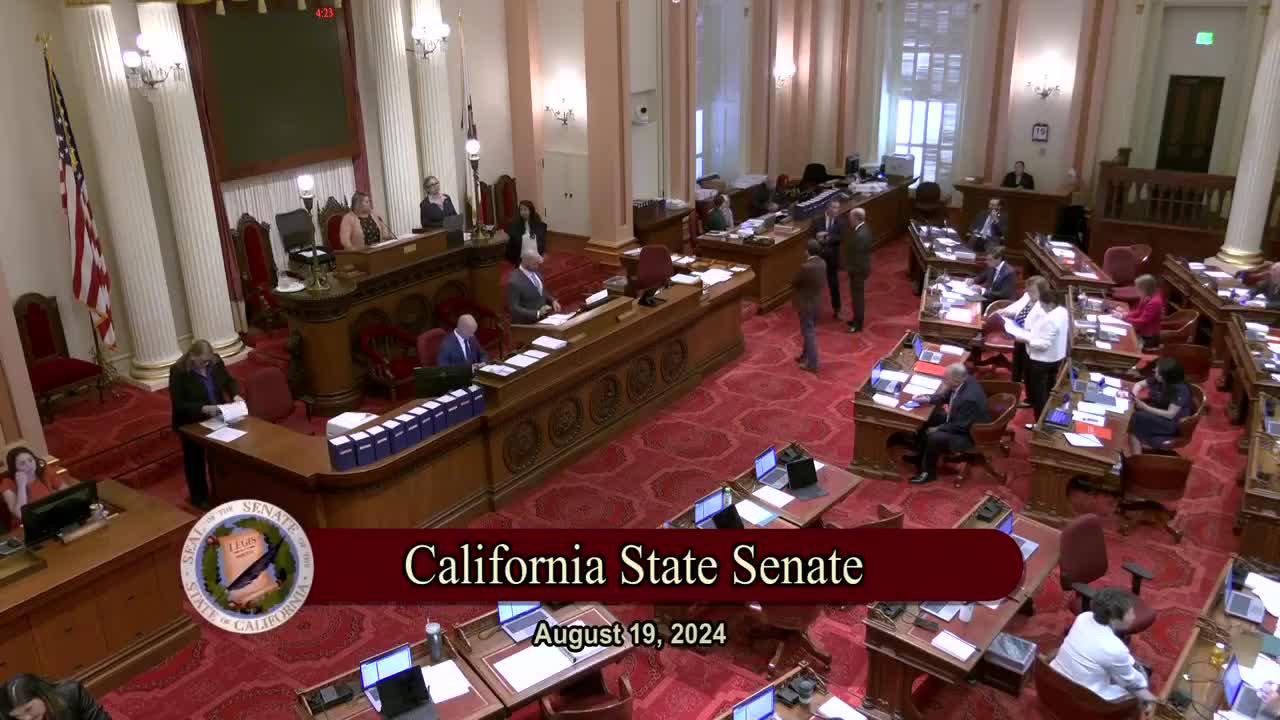 2MIN
Senate Floor
 6MIN
Senate Standing Committee on Local Government
 1MIN
Assembly Floor
 1MIN
Assembly Floor
 12MIN
Assembly Standing Committee on Local Government
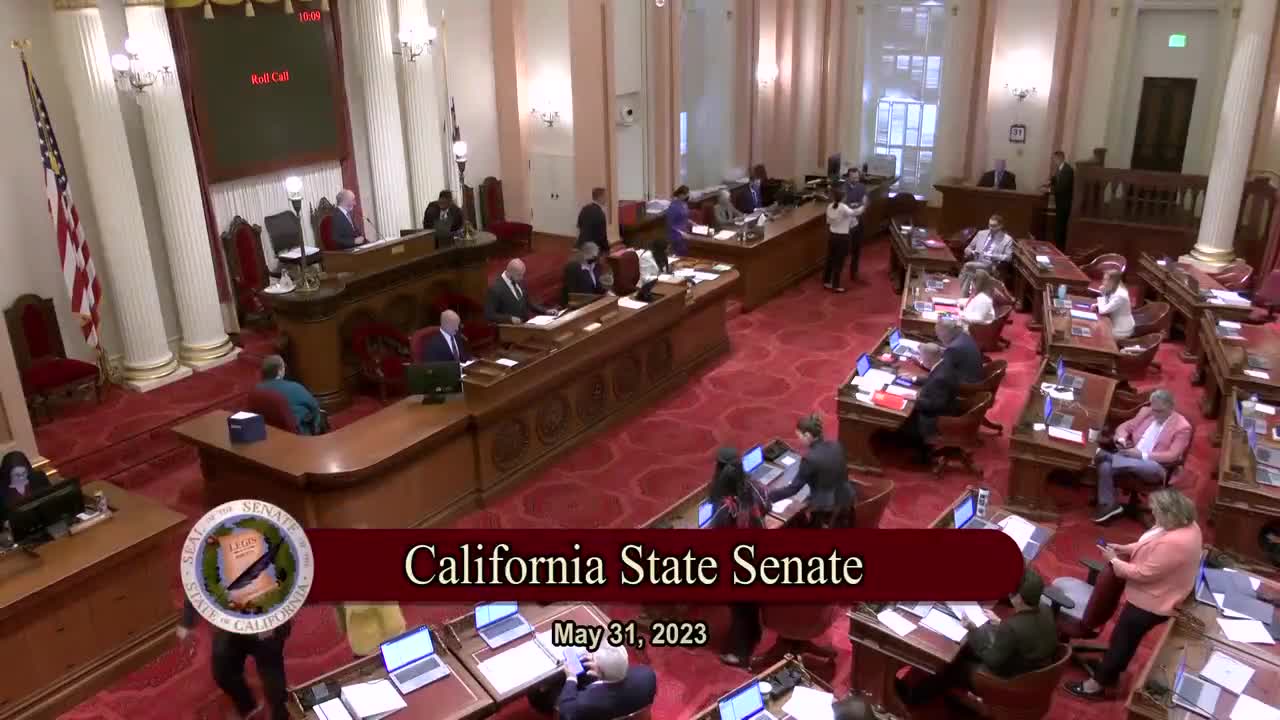 2MIN
Senate Floor
 1H
Senate Standing Committee on Education


Bill Co-Author(s):