SB 764: Minors: online platforms.
- Session Year: 2023-2024
- House: Senate
- Latest Version Date: 2024-09-26
Current Status:
Passed
(2024-09-26: Chaptered by Secretary of State. Chapter 611, Statutes of 2024.)
Introduced
In Committee
First Chamber
In Committee
Second Chamber
Enacted
What does this bill do?
The bill requires parents, guardians, or family members who create paid vlogs that substantially feature a child under 18 to set aside part of the vlog’s gross earnings in a trust for that child and to keep and provide records about views, time featured, and deposits. It defines when a minor is “engaged in vlogging” by appearance and earnings thresholds, requires the adult vlogger to give a signed written statement with trust details (false statements may be perjury), and lets the minor sue to recover money and fees if the rules are broken.
The summary is provided by generative AI which can make mistakes. For original language, please view the details in the table below.
Existing law regulates certain contracts for artistic employment between an unemancipated minor and third parties, including employment as an actor, dancer, musician, comedian, singer, stuntperson, voice-over artist, or other performer or entertainer, or sports participant. Existing law provides for the establishment of a trust for the purpose of preserving for the benefit of the minor 15% of the minors gross earnings.
This bill would require a vlogger, as defined, to compensate a minor under 18 years of age if the minor is engaged in the work of vlogging, as specified. The bill would require the vlogger to set aside gross earnings on the content in a trust account to be preserved for the benefit of the minor, as specified. The bill would also require the vlogger to prepare a written statement, under penalty of perjury, that includes specified information relating to the trust account. By expanding the scope of the crime of perjury, the bill would impose a state-mandated local program.
This bill would require the vlogger to maintain records, including, among others, the number of vlogs that generated compensation and the amount deposited into the trust account, and to provide them to the minor upon request. The bill would authorize the minor to enforce these provisions in court.
The bill would require that these provisions do not apply to a contract for vlogging services between a minor and their parent or guardian only if a court approves the contract, as specified.
The California Constitution requires the state to reimburse local agencies and school districts for certain costs mandated by the state. Statutory provisions establish procedures for making that reimbursement.
This bill would provide that no reimbursement is required by this act for a specified reason.
Existing law regulates certain contracts for artistic employment between an unemancipated minor and third parties, including employment as an actor, dancer, musician, comedian, singer, stuntperson, voice-over artist, or other performer or entertainer, or sports participant. Existing law provides for the establishment of a trust for the purpose of preserving for the benefit of the minor 15% of the minors gross earnings.
This bill would require a vlogger, as defined, to compensate a minor under 18 years of age if the minor is engaged in the work of vlogging, as specified. The bill would require the vlogger to set aside gross earnings on the content in a trust account to be preserved for the benefit of the minor, as specified. The bill would also require the vlogger to prepare a written statement, under penalty of perjury, that includes specified information relating to the trust account. By expanding the scope of the crime of perjury, the bill would impose a state-mandated local program.
This bill would require the vlogger to maintain records, including, among others, the number of vlogs that generated compensation and the amount deposited into the trust account, and to provide them to the minor once per month. The bill would authorize the minor to enforce these provisions in court.
The California Constitution requires the state to reimburse local agencies and school districts for certain costs mandated by the state. Statutory provisions establish procedures for making that reimbursement.
This bill would provide that no reimbursement is required by this act for a specified reason.
Existing law, the California Age-Appropriate Design Code Act, which, commencing July 1, 2024, requires a business that provides an online service, product, or feature likely to be accessed by children to comply with specified requirements. The act prohibits a business that provides an online service, product, or feature likely to be accessed by children from taking proscribed action, including using the personal information of any child in a way that the business knows, or has reason to know, is materially detrimental to the physical health, mental health, or well-being of a child. The act authorizes the Attorney General to seek an injunction or civil penalty against any business that violates its provisions and holds violators liable for a civil penalties, as specified. The act defines various terms for these purposes.This bill would prohibit a social media platform, as defined, from adopting or implementing a policy or practice related to the targeting of content to minors that prioritizes user engagement, as defined, of minor users with the platform over the safety, health, and well-being of the minor users if the social media platform knows or, in the exercise or ordinary care, should know that prioritizing the user engagement of minor users with the platform over the safety, health, and well-being of the minor users has caused harm to minor users or it is reasonably foreseeable that it will cause harm to minor users. The bill would make a knowing violation of these provisions punishable by civil penalty of not more than $100,000,000 per minor user of the social media platform, and any other violation of these provisions punishable by a civil penalty of not more than $250,000 per minor user of the social media platform, with any penalties, fees, and expenses recovered in these actions to be deposited in the General Fund. The bill would require these civil penalties to be assessed and recovered only in a civil action brought in the name of the people of the State of California by the Attorney General. In an action under these provisions, the bill would authorize a court, at the Attorney Generals request, to order regular inspection of a social media platform found to have violated these provisions, as specified.Existing law, the California Age-Appropriate Design Code Act, which, commencing July 1, 2024, requires a business that provides an online service, product, or feature likely to be accessed by children to comply with specified requirements. The act prohibits a business that provides an online service, product, or feature likely to be accessed by children from taking proscribed action, including using the personal information of any child in a way that the business knows, or has reason to know, is materially detrimental to the physical health, mental health, or well-being of a child. The act authorizes the Attorney General to seek an injunction or civil penalty against any business that violates its provisions and holds violators liable for a civil penalties, as specified. The act defines various terms for these purposes.
This bill would prohibit a social media platform, as defined, from adopting or implementing a policy or practice related to the targeting of content to minors that prioritizes user engagement, as defined, of minor users with the platform over the safety, health, and well-being of the minor users if the social media platform knows or, in the exercise or ordinary care, should know that prioritizing the user engagement of minor users with the platform over the safety, health, and well-being of the minor users has caused harm to minor users or it is reasonably foreseeable that it will cause harm to minor users. The bill would make a knowing violation of these provisions punishable by civil penalty of not more than $100,000,000 per minor user of the social media platform, and any other violation of these provisions punishable by a civil penalty of not more than $250,000 per minor user of the social media platform, with any penalties, fees, and expenses recovered in these actions to be deposited in the General Fund. The bill would require these civil penalties to be assessed and recovered only in a civil action brought in the name of the people of the State of California by the Attorney General. In an action under these provisions, the bill would authorize a court, at the Attorney Generals request, to order regular inspection of a social media platform found to have violated these provisions, as specified.
Existing law provides for the licensure and regulation of various professions and vocations by boards within the Department of Consumer Affairs. Existing law authorizes the appointing authority to remove from office any member of any board within the department appointed by them for continued neglect of duties, incompetence, or unprofessional or dishonorable conduct. Existing law authorizes the Governor to remove a member of a board or other licensing entity in the department from office if it is shown that the member has knowledge of the specific questions to be asked on the licensing entity's next examination and directly or indirectly discloses those questions in advance of or during the examination to any exam applicant.This bill would instead authorize the appointing authority to remove a member that discloses questions in advance of or during an examination, as described above.Existing law provides for the licensure and regulation of various professions and vocations by boards within the Department of Consumer Affairs. Existing law authorizes the appointing authority to remove from office any member of any board within the department appointed by them for continued neglect of duties, incompetence, or unprofessional or dishonorable conduct. Existing law authorizes the Governor to remove a member of a board or other licensing entity in the department from office if it is shown that the member has knowledge of the specific questions to be asked on the licensing entity's next examination and directly or indirectly discloses those questions in advance of or during the examination to any exam applicant.
This bill would instead authorize the appointing authority to remove a member that discloses questions in advance of or during an examination, as described above.
For the purposes of this part, all of the following definitions apply:
(a)Age of majority means 18 years of age or older.
(b)Content has the same meaning as defined in subdivision (b) of Section 22675 of the Business and Professions Code.
(c)Family means a group of persons related by blood or marriage, including civil partnerships, or whose close relationship with each other is considered equivalent to a family relationship by the individuals.
(d)Minor means an individual who is under 18 years of age.
(e)Online platform means any public-facing internet website, web application, or digital application, including a mobile application. Online platform includes a social media platform, as defined in Section 22675 of the Business and Professions Code, advertising network, mobile operating system, search engine, email service, or internet access service.
(f)Reporting period means a given month for which a parent, legal guardian, or family must set aside compensation for a minor pursuant to subdivision (a) of Section 6651.
(g)Vlog means content shared on an online platform in exchange for compensation.
(h)Vlogger means a parent, legal guardian, or family residing in California that creates image or video content that is performed in California in exchange for compensation. Vlogger does not include any person under 18 years of age who produces their own content.
(i)Vlogging means the act of sharing content on an online platform in exchange for compensation.
6651.A minor is considered engaged in the work of vlogging when the following are met at any time during a given month:
(a)(1)At least 30 percent of the vloggers compensated video content or the vloggers compensated image content includes the likeness, name, or photograph of the minor.
(2)The percentage pursuant to paragraph (1) is measured by the amount of time the likeness, name, or photograph of the minor visually appears or is the subject of an oral narrative in a video segment, as compared to the total length of the segment.
(b)The number of views received per image or video segment on any online platform met the online platforms threshold for compensation or the vlogger received actual compensation for image or video content equal to or greater than ten cents ($0.10) per view.
(c)The vlogger received actual compensation for image or video content of at least one thousand two hundred fifty dollars ($1,250) in the month.
6652.All vloggers whose content features a minor engaged in the work of vlogging, as described in subdivision (a) of Section 6651, shall maintain, and make available to the minor upon request, all of the following records:
(a)Documentary proof of the minors age when they started vlogging, as described in subdivision (a) of Section 6651.
(b)The number of vlogs that generated compensation, as described in Section 6651 during each reporting period.
(c)The total number of minutes of the vlogs that the vlogger received compensation for during each reporting period.
(d)The total number of minutes each minor was included in, as described in paragraph (1) of subdivision (a) of Section 6651, vlogs during each reporting period.
(e)The total compensation generated from vlogs featuring the minor during the reporting period.
(f)The amount deposited for the reporting period into the trust account for the benefit of the minor engaged in vlogging pursuant to Section 6653. This amount shall be calculated by multiplying the percentage of total minutes in subdivision (c) in which the minor is featured in subdivision (d) by the total compensation in subdivision (e) multiplied by .65.
6653.(a)A minor satisfying the requirements of subdivision (a) of Section 6651 shall be compensated by the vlogger, pursuant to the terms of this section. The vlogger shall set aside gross earnings on the image or video content meeting the requirements of Section 6651 in a trust account to be preserved for the benefit of the minor upon reaching the age of majority according to the following distribution:
(1)When only one minor meets the content threshold described in Section 6651, the minor shall receive a percentage of total gross earnings on any image or video segment, meeting the requirements of Section 6651, that is in proportion to the minors appearances in vlogging content during an applicable reporting period.
(2)When more than one minor meets the content threshold described in Section 6651 and an image or video segment includes more than one of those minors, the percentage described in paragraph (1) for all minors in any segment shall be equally divided between the minors, regardless of the differences in percentage of content provided by the individual minors. Each minor shall have their own trust account.
(b)(1)The vlogger shall establish the trust within 60 business days after the minor first meets the criteria in subdivision (a) of Section 6651. The vlogger shall establish a trust for each qualifying minor.
(2)The vlogger shall establish the trust in California either with a financial institution that is and remains insured at all times by the Federal Deposit Insurance Corporation, the Securities Investor Protection Corporation, or the National Credit Union Share Insurance Fund or their respective successors, or with a company that is and remains registered under the Investment Company Act of 1940. The trustee or trustees of the trust shall be the only individual, individuals, entity, or entities with the obligation or duty to ensure that the funds remain in trust, in an account or other savings plan insured in accordance with this section, or with a company that is and remains registered under the Investment Company Act of 1940 as authorized by this section.
(3)The vlogger shall, within 10 business days of establishing the trust, prepare a written statement, under penalty of perjury, that shall include the name, address, and telephone number of the financial institution, the name of the account, the number of the account, the name of the minor beneficiary, the name of the trustee or trustees of the account, and any additional information needed by the vlogger to deposit into the account the portion of the minors gross earnings prescribed by subdivision (a). The trustee or trustees shall attach to the written statement a true and accurate photocopy of any information received from the financial institution confirming the creation of the account, such as an account agreement, account terms, passbook, or other similar writings.
(4)The funds in the account shall be available only to the beneficiary of the trust. The vlogger shall deposit the funds into the account no less than once every three months.
(5)Except as otherwise provided in this section, prior to the date on which the beneficiary of the trust attains the age of majority or the issuance of a declaration of emancipation of the minor pursuant to Section 7122, a withdrawal by the beneficiary or any other individual, individuals, entity, or entities shall not be made for the funds deposited in trust. Upon reaching the age of majority, the beneficiary may withdraw the funds on deposit in the trust only after providing a certified copy of the beneficiarys birth certificate to the financial institution where the trust is located.
(c)Upon application by the trustee or trustees, the trust funds shall be handled by the financial institution or company in which the trust is held in one or more of the following methods:
(1)The financial institution or company may transfer funds to another account or other savings plan at the same financial institution or company, provided that the funds transferred shall continue to be held in trust, and subject to this part.
(2)The financial institution or company may transfer funds to another financial institution or company, provided that the funds transferred shall continue to be held in trust, and subject to this part and that the transferring financial institution or company has provided written notice to the financial institution or company to which the funds will be transferred that the funds are subject to this section and written notice of the requirements of this part.
(3)The financial institution or company may use all or a part of the funds to purchase, in the name of and for the benefit of the minor, either of the following:
(A)Investment funds offered by a company registered under the Investment Company Act of 1940, provided that if the underlying investments are equity securities, the investment fund is a broad-based index fund or invests broadly across the domestic or a foreign regional economy, is not a sector fund, and has assets under management of at least two hundred fifty million dollars ($250,000,000).
(B)Government securities and bonds, certificates of deposit, money market instruments, money market accounts, or mutual funds investing solely in those government securities and bonds, certificates, instruments, and accounts that are available at the financial institution where the trust fund or other savings plan is held, provided that the funds shall continue to be held in trust and subject to this part, those purchases shall have a maturity date on or before the date upon which the minor will attain the age of majority, and any proceeds accruing from those purchases shall be redeposited into that account or accounts or used to further purchase any of those or similar securities, bonds, certificates, instruments, funds, or accounts.
6654.If a vlogger knowingly violates this part or should have known they were in violation of this part, a minor satisfying the criteria described in subdivision (a) of Section 6651 may commence an action to enforce the provisions of this part. The court may award, to a minor who prevails in any action brought in accordance with this part, any of the following damages:
(a)Actual damages.
(b)Punitive damages.
(c)Cost of the action, including attorneys fees and litigation costs.
6655.(a)This part does not affect a right or remedy available under any other law of the state.
(b)This part does not have any effect on a minor who produces their own content.
6656.This part shall not apply to a contract for vlogging services between a minor and their parent or guardian only if a court approves the contract pursuant to subdivision (a) of Section 6751. In determining whether to approve such a contract, the court shall consider whether the terms of the contract are at least as beneficial to the minor as the compensation the minor would otherwise receive under this part.
SEC. 2.No reimbursement is required by this act pursuant to Section 6 of Article XIIIB of the California Constitution because the only costs that may be incurred by a local agency or school district will be incurred because this act creates a new crime or infraction, eliminates a crime or infraction, or changes the penalty for a crime or infraction, within the meaning of Section 17556 of the Government Code, or changes the definition of a crime within the meaning of Section 6 of Article XIIIB of the California Constitution.
For the purposes of this part, all of the following definitions apply:
(a)Age of majority means 18 years of age or older.
(b)Content has the same meaning as defined in subdivision (b) of Section 22675 of the Business and Professions Code.
(c)Family means a group of persons related by blood or marriage, including civil partnerships, or whose close relationship with each other is considered equivalent to a family relationship by the individuals.
(d)Minor means an individual who is under 18 years of age.
(e)Online platform means any public-facing internet website, web application, or digital application, including a mobile application. Online platform includes a social media platform, as defined in Section 22675 of the Business and Professions Code, advertising network, mobile operating system, search engine, email service, or internet access service.
(f)Reporting period means a given month for which a parent, legal guardian, or family must set aside compensation for a minor pursuant to subdivision (a) of Section 6651.
(g)Vlog means content shared on an online platform in exchange for compensation.
(h)Vlogger means a parent, legal guardian, or family residing in California that creates image or video content that is performed in California in exchange for compensation. Vlogger does not include any person under 18 years of age who produces their own content.
(i)Vlogging means the act of sharing content on an online platform in exchange for compensation.
6651.A minor is considered engaged in the work of vlogging when the following are met at any time during a given month:
(a)(1)At least 30 percent of the vloggers compensated video content or the vloggers compensated image content includes the likeness, name, or photograph of the minor.
(2)The percentage pursuant to paragraph (1) is measured by the amount of time the likeness, name, or photograph of the minor visually appears or is the subject of an oral narrative in a video segment, as compared to the total length of the segment.
(b)The number of views received per image or video segment on any online platform met the online platforms threshold for compensation or the vlogger received actual compensation for image or video content equal to or greater than ten cents ($0.10) per view.
(c)The vlogger received actual compensation for image or video content of at least one thousand two hundred fifty dollars ($1,250) in the month.
6652.All vloggers whose content features a minor engaged in the work of vlogging, as described in subdivision (a) of Section 6651, shall maintain, and make available to the minor upon request, all of the following records:
(a)Documentary proof of the minors age when they started vlogging, as described in subdivision (a) of Section 6651.
(b)The number of vlogs that generated compensation, as described in Section 6651 during each reporting period.
(c)The total number of minutes of the vlogs that the vlogger received compensation for during each reporting period.
(d)The total number of minutes each minor was included in, as described in paragraph (1) of subdivision (a) of Section 6651, vlogs during each reporting period.
(e)The total compensation generated from vlogs featuring the minor during the reporting period.
(f)The amount deposited for the reporting period into the trust account for the benefit of the minor engaged in vlogging pursuant to Section 6653. This amount shall be calculated by multiplying the percentage of total minutes in subdivision (c) in which the minor is featured in subdivision (d) by the total compensation in subdivision (e). (e) multiplied by .65.
6653.(a)A minor satisfying the requirements of subdivision (a) of Section 6651 shall be compensated by the vlogger, pursuant to the terms of this section. The vlogger shall set aside gross earnings on the image or video content meeting the requirements of Section 6651 in a trust account to be preserved for the benefit of the minor upon reaching the age of majority according to the following distribution:
(1)When only one minor meets the content threshold described in Section 6651, the minor shall receive a percentage of total gross earnings on any image or video segment, meeting the requirements of Section 6651, that is in proportion to the minors appearances in vlogging content during an applicable reporting period.
(2)When more than one minor meets the content threshold described in Section 6651 and an image or video segment includes more than one of those minors, the percentage described in paragraph (1) for all minors in any segment shall be equally divided between the minors, regardless of the differences in percentage of content provided by the individual minors. Each minor shall have their own trust account.
(b)(1)The vlogger shall establish the trust within 60 business days after the minor first meets the criteria in subdivision (a) of Section 6651. The vlogger shall establish a trust for each qualifying minor.
(2)The vlogger shall establish the trust in California either with a financial institution that is and remains insured at all times by the Federal Deposit Insurance Corporation, the Securities Investor Protection Corporation, or the National Credit Union Share Insurance Fund or their respective successors, or with a company that is and remains registered under the Investment Company Act of 1940. The trustee or trustees of the trust shall be the only individual, individuals, entity, or entities with the obligation or duty to ensure that the funds remain in trust, in an account or other savings plan insured in accordance with this section, or with a company that is and remains registered under the Investment Company Act of 1940 as authorized by this section.
(3)The vlogger shall, within 10 business days of establishing the trust, prepare a written statement, under penalty of perjury, that shall include the name, address, and telephone number of the financial institution, the name of the account, the number of the account, the name of the minor beneficiary, the name of the trustee or trustees of the account, and any additional information needed by the vlogger to deposit into the account the portion of the minors gross earnings prescribed by subdivision (a). The trustee or trustees shall attach to the written statement a true and accurate photocopy of any information received from the financial institution confirming the creation of the account, such as an account agreement, account terms, passbook, or other similar writings.
(4)The funds in the account shall be available only to the beneficiary of the trust. The vlogger shall deposit the funds into the account no less than once every three months.
(5)Except as otherwise provided in this section, prior to the date on which the beneficiary of the trust attains the age of majority or the issuance of a declaration of emancipation of the minor pursuant to Section 7122, a withdrawal by the beneficiary or any other individual, individuals, entity, or entities shall not be made for the funds deposited in trust. Upon reaching the age of majority, the beneficiary may withdraw the funds on deposit in the trust only after providing a certified copy of the beneficiarys birth certificate to the financial institution where the trust is located.
(c)Upon application by the trustee or trustees, the trust funds shall be handled by the financial institution or company in which the trust is held in one or more of the following methods:
(1)The financial institution or company may transfer funds to another account or other savings plan at the same financial institution or company, provided that the funds transferred shall continue to be held in trust, and subject to this part.
(2)The financial institution or company may transfer funds to another financial institution or company, provided that the funds transferred shall continue to be held in trust, and subject to this part and that the transferring financial institution or company has provided written notice to the financial institution or company to which the funds will be transferred that the funds are subject to this section and written notice of the requirements of this part.
(3)The financial institution or company may use all or a part of the funds to purchase, in the name of and for the benefit of the minor, either of the following:
(A)Investment funds offered by a company registered under the Investment Company Act of 1940, provided that if the underlying investments are equity securities, the investment fund is a broad-based index fund or invests broadly across the domestic or a foreign regional economy, is not a sector fund, and has assets under management of at least two hundred fifty million dollars ($250,000,000).
(B)Government securities and bonds, certificates of deposit, money market instruments, money market accounts, or mutual funds investing solely in those government securities and bonds, certificates, instruments, and accounts that are available at the financial institution where the trust fund or other savings plan is held, provided that the funds shall continue to be held in trust and subject to this part, those purchases shall have a maturity date on or before the date upon which the minor will attain the age of majority, and any proceeds accruing from those purchases shall be redeposited into that account or accounts or used to further purchase any of those or similar securities, bonds, certificates, instruments, funds, or accounts.
6654.If a vlogger knowingly violates this part or should have known they were in violation of this part, a minor satisfying the criteria described in subdivision (a) of Section 6651 may commence an action to enforce the provisions of this part. The court may award, to a minor who prevails in any action brought in accordance with this part, any of the following damages:
(a)Actual damages.
(b)Punitive damages.
(c)Cost of the action, including attorneys fees and litigation costs.
6655.(a)This part does not affect a right or remedy available under any other law of the state.
(b)This part does not have any effect on a minor who produces their own content.
6656.This part shall not apply to a contract for vlogging services between a minor and their parent or guardian only if a court approves the contract pursuant to subdivision (a) of Section 6751. In determining whether to approve such a contract, the court shall consider whether the terms of the contract are at least as beneficial to the minor as the compensation the minor would otherwise receive under this part.
SEC. 2.No reimbursement is required by this act pursuant to Section 6 of Article XIIIB of the California Constitution because the only costs that may be incurred by a local agency or school district will be incurred because this act creates a new crime or infraction, eliminates a crime or infraction, or changes the penalty for a crime or infraction, within the meaning of Section 17556 of the Government Code, or changes the definition of a crime within the meaning of Section 6 of Article XIIIB of the California Constitution.
For the purposes of this part, all of the following definitions apply:
(a)Age of majority has the same meaning as defined in Section 6502. means 18 years of age or older.
(b)Content has the same meaning as defined in subdivision (b) of Section 22675 of the Business and Professions Code.
(b)(c)Family means a group of persons related by blood or marriage, including civil partnerships, or whose close relationship with each other is considered equivalent to a family relationship by the individuals.
(c)(d)Minor has the same meaning as defined in Section 6500. means an individual who is under 18 years of age.
(d)(e)Online platform means any public-facing internet website, web application, or digital application, including a mobile application. Online platform includes a social media platform, as defined in Section 22675 of the Business and Professions Code, advertising network, mobile operating system, search engine, email service, or internet access service.
(f)Reporting period means a given month for which a parent, legal guardian, or family must set aside compensation for a minor pursuant to subdivision (a) of Section 6651.
(e)(g)Vlog means content shared on an online platform in exchange for compensation.
(f)(h)Vlogger means a parent, legal guardian, or family residing in California that creates image or video content that is performed in California in exchange for compensation. Vlogger does not include any person under 18 years of age who produces their own content.
(g)(i)Vlogging means the act of sharing content on an online platform in exchange for compensation.
(h)Content has the same meaning as laid out in Section 22675 of the Business and Professions Code.6651.A minor under 18 years of age is considered engaged in the work of vlogging when the following are met at any time during the previous 12-month period: a given month:
(a)(1)At least 30 percent of the vloggers compensated video content or the vloggers compensated image content that is produced within a 30-day period in the last 12 months, including includes the likeness, name, or photograph of the minor.
(2)The percentage pursuant to paragraph (1) is measured by the amount of time the likeness, name, or photograph of the minor visually appears or is the subject of an oral narrative in a video segment, as compared to the total length of the segment.
(b)The number of views received per image or video segment on any online platform met the online platforms threshold for the generation of compensation or the vlogger received actual compensation for image or video content equal to or greater than ten cents ($0.10) per view.
(c)The vlogger received actual compensation for image or video content of at least fifteen thousand dollars ($15,000) in the prior 12-month period. one thousand two hundred fifty dollars ($1,250) in the month.
6652.All vloggers whose content features a minor under 18 years of age engaged in the work of vlogging, as described in subdivision (a) of Section 6651, shall maintain maintain, and make available to the minor upon request, all of the following records and shall provide them to the minor once per month: records:
(a)Documentary proof of the minors age when they started vlogging, as described in subdivision (a) of Section 6651.
(b)The number of vlogs that generated compensation, as described in Section 6651 during the each reporting period.
(c)The total number of minutes of the vlogs that the vlogger received compensation for during the each reporting period.
(d)The total number of minutes each minor was included in, as described in paragraph (1) of subdivision (a) of Section 6651, vlogs during the each reporting period.
(e)The total compensation generated from vlogs featuring the minor during the reporting period.
(f)The amount deposited for the reporting period into the trust account for the benefit of the minor engaged in vlogging pursuant to Section 6653. This amount shall be calculated by multiplying the percentage of total minutes in subdivision (c) in which the minor is featured in subdivision (d) by the total compensation in subdivision (e).
6653.(a)A minor satisfying the requirements of subdivision (a) of Section 6651 shall be compensated by the vlogger, pursuant to the terms of this section. The vlogger shall set aside gross earnings on the image or video content meeting the requirements of Section 6651 in a trust account to be preserved for the benefit of the minor upon reaching the age of majority according to the following distribution:
(1)When only one minor meets the content threshold described in Section 6651, the minor shall receive a percentage of total gross earnings on any image or video segment, meeting the requirements of Section 6651, that is in proportion to the minors appearance. appearances in vlogging content during an applicable reporting period.
(2)When more than one minor meets the content threshold described in Section 6651 and an image or video segment includes more than one of those minors, the percentage described in paragraph (1) for all minors in any segment shall be equally divided between the minors, regardless of the differences in percentage of content provided by the individual minors. Each minor shall have their own trust account.
(b)(1)The vlogger shall establish the trust within seven 60 business days after the minor first meets the criteria in subdivision (a) of Section 6651. The vlogger shall establish a trust for each qualifying minor.
(2)The vlogger shall establish the trust in California either with a financial institution that is and remains insured at all times by the Federal Deposit Insurance Corporation, the Securities Investor Protection Corporation, or the National Credit Union Share Insurance Fund or their respective successors, or with a company that is and remains registered under the Investment Company Act of 1940. The trustee or trustees of the trust shall be the only individual, individuals, entity, or entities with the obligation or duty to ensure that the funds remain in trust, in an account or other savings plan insured in accordance with this section, or with a company that is and remains registered under the Investment Company Act of 1940 as authorized by this section.
(3)The vlogger shall, within 10 business days of establishing the trust, prepare a written statement, under penalty of perjury, that shall include the name, address, and telephone number of the financial institution, the name of the account, the number of the account, the name of the minor beneficiary, the name of the trustee or trustees of the account, and any additional information needed by the vlogger to deposit into the account the portion of the minors gross earnings prescribed by subdivision (a). The trustee or trustees shall attach to the written statement a true and accurate photocopy of any information received from the financial institution confirming the creation of the account, such as an account agreement, account terms, passbook, or other similar writings.
(4)The funds in the account shall be available only to the beneficiary of the trust. The vlogger shall deposit the funds into the account no less than once every three months.
(5)Except as otherwise provided in this section, prior to the date on which the beneficiary of the trust attains the age of majority or the issuance of a declaration of emancipation of the minor pursuant to Section 7122, a withdrawal by the beneficiary or any other individual, individuals, entity, or entities shall not be made for the funds deposited in trust. Upon reaching the age of majority, the beneficiary may withdraw the funds on deposit in the trust only after providing a certified copy of the beneficiarys birth certificate to the financial institution where the trust is located.
(c)Upon application by the trustee or trustees, the trust funds shall be handled by the financial institution or company in which the trust is held in one or more of the following methods:
(1)The financial institution or company may transfer funds to another account or other savings plan at the same financial institution or company, provided that the funds transferred shall continue to be held in trust, and subject to this part.
(2)The financial institution or company may transfer funds to another financial institution or company, provided that the funds transferred shall continue to be held in trust, and subject to this part and that the transferring financial institution or company has provided written notice to the financial institution or company to which the funds will be transferred that the funds are subject to this section and written notice of the requirements of this part.
(3)The financial institution or company may use all or a part of the funds to purchase, in the name of and for the benefit of the minor, either of the following:
(A)Investment funds offered by a company registered under the Investment Company Act of 1940, provided that if the underlying investments are equity securities, the investment fund is a broad-based index fund or invests broadly across the domestic or a foreign regional economy, is not a sector fund, and has assets under management of at least two hundred fifty million dollars ($250,000,000).
(B)Government securities and bonds, certificates of deposit, money market instruments, money market accounts, or mutual funds investing solely in those government securities and bonds, certificates, instruments, and accounts that are available at the financial institution where the trust fund or other savings plan is held, provided that the funds shall continue to be held in trust and subject to this part, those purchases shall have a maturity date on or before the date upon which the minor will attain the age of majority, and any proceeds accruing from those purchases shall be redeposited into that account or accounts or used to further purchase any of those or similar securities, bonds, certificates, instruments, funds, or accounts.
6654.If a vlogger knowingly violates this part or should have known they were in violation of this part, a minor satisfying the criteria described in subdivision (a) of Section 6651 may commence an action to enforce the provisions of this part. The court may award, to a minor who prevails in any action brought in accordance with this part, any of the following damages:
(a)Actual damages.
(b)Punitive damages.
(c)Cost of the action, including attorneys fees and litigation costs.
6655.(a)This part does not affect a right or remedy available under any other law of the state.
(b)This part does not have any effect on a minor who produces their own content.
SEC. 2.No reimbursement is required by this act pursuant to Section 6 of Article XIIIB of the California Constitution because the only costs that may be incurred by a local agency or school district will be incurred because this act creates a new crime or infraction, eliminates a crime or infraction, or changes the penalty for a crime or infraction, within the meaning of Section 17556 of the Government Code, or changes the definition of a crime within the meaning of Section 6 of Article XIIIB of the California Constitution.
REVISIONS: HeadingLine 4.For the purposes of this part, all of the following definitions apply:
(a)Age of majority has the same meaning as defined in Section 6502.
(b)Family means a group of persons related by blood or marriage, including civil partnerships, or whose close relationship with each other is considered equivalent to a family relationship by the individuals.
(c)Minor has the same meaning as defined in Section 6500.
(d)Online platform means any public-facing internet website, web application, or digital application, including a mobile application. Online platform includes a social network, media platform, as defined in Section 22675 of the Business and Professions Code, advertising network, mobile operating system, search engine, email service, or internet access service.
(e)Vlog means content shared on an online platform in exchange for compensation.
(f)Vlogger means a parent, legal guardian, or family residing in California that creates image or video content that is performed in California in exchange for compensation. Vlogger does not include any person under 18 years of age who produces their own content.
(g)Vlogging means the act of sharing content on an online platform in exchange for compensation.
(h)Content has the same meaning as laid out in Section 22675 of the Business and Professions Code.
6651.A minor under 18 years of age is considered engaged in the work of vlogging when both of the following are met at any time during the previous 12-month period:
(a)(1)At least 30 percent of the vloggers compensated video content or the vloggers compensated image content that is produced within a 30-day period in the last 12 months, including the likeness, name, or photograph of the minor.
(2)The percentage pursuant to paragraph (1) is measured by the amount of time the likeness, name, or photograph of the minor visually appears or is the subject of an oral narrative in a video segment, as compared to the total length of the segment.
(b)The number of views received per image or video segment on any online platform met the online platforms threshold for the generation of compensation or the vlogger received actual compensation for image or video content equal to or greater than ten cents ($0.10) per view.
(c)The vlogger received actual compensation for image or video content of at least fifteen thousand dollars ($15,000) in the prior 12-month period.
6652.All vloggers whose content features a minor under 18 years of age engaged in the work of vlogging, as described in subdivision (a) of Section 6651, shall maintain all of the following records and shall provide them to the minor once per month:
(a)Documentary proof of the minors age when they started vlogging, as described in subdivision (a) of Section 6651.
(b)The number of vlogs that generated compensation, as described in Section 6651 during the reporting period.
(c)The total number of minutes of the vlogs that the vlogger received compensation for during the reporting period.
(d)The total number of minutes each minor was included in, as described in paragraph (1) of subdivision (a) of Section 6651, vlogs during the reporting period.
(e)The total compensation generated from vlogs featuring the minor during the reporting period.
(f)The amount deposited into the trust account for the benefit of the minor engaged in vlogging pursuant to Section 6653.
6653.(a)A minor satisfying the requirements of subdivision (a) of Section 6651 shall be compensated by the vlogger, pursuant to the terms of this section. The vlogger shall set aside gross earnings on the image or video content meeting the requirements of Section 6651 in a trust account to be preserved for the benefit of the minor upon reaching the age of majority according to the following distribution:
(1)When only one minor meets the content threshold described in Section 6651, the minor shall receive a percentage of total gross earnings on any image or video segment, meeting the requirements of Section 6651, that is in proportion to the minors appearance.
(2)When more than one minor meets the content threshold described in Section 6651 and an image or video segment includes more than one of those minors, the percentage described in paragraph (1) for all minors in any segment shall be equally divided between the minors, regardless of the differences in percentage of content provided by the individual minors.
(b)(1)The vlogger shall establish the trust within seven business days after the minor first meets the criteria in subdivision (a) of Section 6651.
(2)The vlogger shall establish the trust in California either with a financial institution that is and remains insured at all times by the Federal Deposit Insurance Corporation, the Securities Investor Protection Corporation, or the National Credit Union Share Insurance Fund or their respective successors, or with a company that is and remains registered under the Investment Company Act of 1940. The trustee or trustees of the trust shall be the only individual, individuals, entity, or entities with the obligation or duty to ensure that the funds remain in trust, in an account or other savings plan insured in accordance with this section, or with a company that is and remains registered under the Investment Company Act of 1940 as authorized by this section.
(3)The vlogger shall, within 10 business days of establishing the trust, prepare a written statement, under penalty of perjury, that shall include the name, address, and telephone number of the financial institution, the name of the account, the number of the account, the name of the minor beneficiary, the name of the trustee or trustees of the account, and any additional information needed by the vlogger to deposit into the account the portion of the minors gross earnings prescribed by subdivision (a). The trustee or trustees shall attach to the written statement a true and accurate photocopy of any information received from the financial institution confirming the creation of the account, such as an account agreement, account terms, passbook, or other similar writings.
(4)The funds in the account shall be available only to the beneficiary of the trust.
(5)Except as otherwise provided in this section, prior to the date on which the beneficiary of the trust attains the age of majority or the issuance of a declaration of emancipation of the minor pursuant to Section 7122, a withdrawal by the beneficiary or any other individual, individuals, entity, or entities shall not be made for the funds deposited in trust. Upon reaching the age of majority, the beneficiary may withdraw the funds on deposit in the trust only after providing a certified copy of the beneficiarys birth certificate to the financial institution where the trust is located.
(c)Upon application by the trustee or trustees, the trust funds shall be handled by the financial institution or company in which the trust is held in one or more of the following methods:
(1)The financial institution or company may transfer funds to another account or other savings plan at the same financial institution or company, provided that the funds transferred shall continue to be held in trust, and subject to this part.
(2)The financial institution or company may transfer funds to another financial institution or company, provided that the funds transferred shall continue to be held in trust, and subject to this part and that the transferring financial institution or company has provided written notice to the financial institution or company to which the funds will be transferred that the funds are subject to this section and written notice of the requirements of this part.
(3)The financial institution or company may use all or a part of the funds to purchase, in the name of and for the benefit of the minor, either of the following:
(A)Investment funds offered by a company registered under the Investment Company Act of 1940, provided that if the underlying investments are equity securities, the investment fund is a broad-based index fund or invests broadly across the domestic or a foreign regional economy, is not a sector fund, and has assets under management of at least two hundred fifty million dollars ($250,000,000).
(B)Government securities and bonds, certificates of deposit, money market instruments, money market accounts, or mutual funds investing solely in those government securities and bonds, certificates, instruments, and accounts that are available at the financial institution where the trust fund or other savings plan is held, provided that the funds shall continue to be held in trust and subject to this part, those purchases shall have a maturity date on or before the date upon which the minor will attain the age of majority, and any proceeds accruing from those purchases shall be redeposited into that account or accounts or used to further purchase any of those or similar securities, bonds, certificates, instruments, funds, or accounts.
6654.If a vlogger knowingly violates this part or should have known they were in violation of this part, a minor satisfying the criteria described in subdivision (a) of Section 6651 may commence an action to enforce the provisions of this part. The court may award, to a minor who prevails in any action brought in accordance with this part, any of the following damages:
(a)Actual damages.
(b)Punitive damages.
(c)Cost of the action, including attorneys fees and litigation costs.
6655.(a)This part does not affect a right or remedy available under any other law of the state.
(b)This part does not have any effect on a minor who produces their own content.
SEC. 2.No reimbursement is required by this act pursuant to Section 6 of Article XIIIB of the California Constitution because the only costs that may be incurred by a local agency or school district will be incurred because this act creates a new crime or infraction, eliminates a crime or infraction, or changes the penalty for a crime or infraction, within the meaning of Section 17556 of the Government Code, or changes the definition of a crime within the meaning of Section 6 of Article XIIIB of the California Constitution.
For the purposes of this part, all of the following definitions apply:
(a)Age of majority has the same meaning as defined in Section 6502.
(b)Family means a group of persons related by blood or marriage, including civil partnerships, or whose close relationship with each other is considered equivalent to a family relationship by the individuals.
(c)Minor has the same meaning as defined in Section 6500.
(d)Online platform means any public-facing internet website, web application, or digital application, including a mobile application. Online platform includes a social network, advertising network, mobile operating system, search engine, email service, or internet access service.
(e)Vlog means content shared on an online platform in exchange for compensation.
(f)Vlogger means a parent, legal guardian, or family residing in California that creates image or video content that is performed in California in exchange for compensation. Vlogger does not include any person under 18 years of age who produces their own content.
(g)Vlogging means the act of sharing content on an online platform in exchange for compensation.
6651.A minor under 18 years of age is considered engaged in the work of vlogging when both of the following are met at any time during the previous 12-month period:
(a)(1)At least 30 percent of the vloggers compensated video content or the vloggers compensated image content that is produced within a 30-day period in the last 12 months, including the likeness, name, or photograph of the minor.
(2)The percentage pursuant to paragraph (1) is measured by the amount of time the likeness, name, or photograph of the minor visually appears or is the subject of an oral narrative in a video segment, as compared to the total length of the segment.
(b)The number of views received per image or video segment on any online platform met the online platforms threshold for the generation of compensation or the vlogger received actual compensation for image or video content equal to or greater than ten cents ($0.10) per view.
6652.All vloggers whose content features a minor under 18 years of age engaged in the work of vlogging, as described in subdivision (a) of Section 6651, shall maintain all of the following records and shall provide them to the minor once per month:
(a)Documentary proof of the minors age when they started vlogging, as described in subdivision (a) of Section 6651.
(b)The number of vlogs that generated compensation, as described in Section 6651 during the reporting period.
(c)The total number of minutes of the vlogs that the vlogger received compensation for during the reporting period.
(d)The total number of minutes each minor was included in, as described in paragraph (1) of subdivision (a) of Section 6651, vlogs during the reporting period.
(e)The total compensation generated from vlogs featuring the minor during the reporting period.
(f)The amount deposited into the trust account for the benefit of the minor engaged in vlogging pursuant to Section 6653.
6653.(a)A minor satisfying the requirements of subdivision (a) of Section 6651 shall be compensated by the vlogger, pursuant to the terms of this section. The vlogger shall set aside gross earnings on the image or video content meeting the requirements of Section 6651 in a trust account to be preserved for the benefit of the minor upon reaching the age of majority according to the following distribution:
(1)When only one minor meets the content threshold described in Section 6651, the minor shall receive a percentage of total gross earnings on any image or video segment, meeting the requirements of Section 6651, that is in proportion to the minors appearance.
(2)When more than one minor meets the content threshold described in Section 6651 and an image or video segment includes more than one of those minors, the percentage described in paragraph (1) for all minors in any segment shall be equally divided between the minors, regardless of the differences in percentage of content provided by the individual minors.
(b)(1)The vlogger shall establish the trust within seven business days after the minor first meets the criteria in subdivision (a) of Section 6651.
(2)The vlogger shall establish the trust in California either with a financial institution that is and remains insured at all times by the Federal Deposit Insurance Corporation, the Securities Investor Protection Corporation, or the National Credit Union Share Insurance Fund or their respective successors, or with a company that is and remains registered under the Investment Company Act of 1940. The trustee or trustees of the trust shall be the only individual, individuals, entity, or entities with the obligation or duty to ensure that the funds remain in trust, in an account or other savings plan insured in accordance with this section, or with a company that is and remains registered under the Investment Company Act of 1940 as authorized by this section.
(3)The vlogger shall, within 10 business days of establishing the trust, prepare a written statement, under penalty of perjury, that shall include the name, address, and telephone number of the financial institution, the name of the account, the number of the account, the name of the minor beneficiary, the name of the trustee or trustees of the account, and any additional information needed by the vlogger to deposit into the account the portion of the minors gross earnings prescribed by subdivision (a). The trustee or trustees shall attach to the written statement a true and accurate photocopy of any information received from the financial institution confirming the creation of the account, such as an account agreement, account terms, passbook, or other similar writings.
(4)The funds in the account shall be available only to the beneficiary of the trust.
(5)Except as otherwise provided in this section, prior to the date on which the beneficiary of the trust attains the age of majority or the issuance of a declaration of emancipation of the minor pursuant to Section 7122, a withdrawal by the beneficiary or any other individual, individuals, entity, or entities shall not be made for the funds deposited in trust. Upon reaching the age of majority, the beneficiary may withdraw the funds on deposit in the trust only after providing a certified copy of the beneficiarys birth certificate to the financial institution where the trust is located.
(c)Upon application by the trustee or trustees, the trust funds shall be handled by the financial institution or company in which the trust is held in one or more of the following methods:
(1)The financial institution or company may transfer funds to another account or other savings plan at the same financial institution or company, provided that the funds transferred shall continue to be held in trust, and subject to this part.
(2)The financial institution or company may transfer funds to another financial institution or company, provided that the funds transferred shall continue to be held in trust, and subject to this part and that the transferring financial institution or company has provided written notice to the financial institution or company to which the funds will be transferred that the funds are subject to this section and written notice of the requirements of this part.
(3)The financial institution or company may use all or a part of the funds to purchase, in the name of and for the benefit of the minor, either of the following:
(A)Investment funds offered by a company registered under the Investment Company Act of 1940, provided that if the underlying investments are equity securities, the investment fund is a broad-based index fund or invests broadly across the domestic or a foreign regional economy, is not a sector fund, and has assets under management of at least two hundred fifty million dollars ($250,000,000).
(B)Government securities and bonds, certificates of deposit, money market instruments, money market accounts, or mutual funds investing solely in those government securities and bonds, certificates, instruments, and accounts that are available at the financial institution where the trust fund or other savings plan is held, provided that the funds shall continue to be held in trust and subject to this part, those purchases shall have a maturity date on or before the date upon which the minor will attain the age of majority, and any proceeds accruing from those purchases shall be redeposited into that account or accounts or used to further purchase any of those or similar securities, bonds, certificates, instruments, funds, or accounts.
6654.If a vlogger knowingly violates this part or should have known they were in violation of this part, a minor satisfying the criteria described in subdivision (a) of Section 6651 may commence an action to enforce the provisions of this part. The court may award, to a minor who prevails in any action brought in accordance with this part, any of the following damages:
(a)Actual damages.
(b)Punitive damages.
(c)Cost of the action, including attorneys fees and litigation costs.
6655.(a)This part does not affect a right or remedy available under any other law of the state.
(b)This part does not have any effect on a minor who produces their own content.
SEC. 2.No reimbursement is required by this act pursuant to Section 6 of Article XIIIB of the California Constitution because the only costs that may be incurred by a local agency or school district will be incurred because this act creates a new crime or infraction, eliminates a crime or infraction, or changes the penalty for a crime or infraction, within the meaning of Section 17556 of the Government Code, or changes the definition of a crime within the meaning of Section 6 of Article XIIIB of the California Constitution.
SECTION 1.Section 1714.12 is added to the Civil Code, to read:1714.12.(a)A social media platform shall not adopt or implement a policy or practice related to the targeting of content to minors that prioritizes user engagement of minor users with the platform over the safety, health, and well-being of the minor users if the social media platform knows or, in the exercise of ordinary care, should know that prioritizing the user engagement of minor users with the platform over the safety, health, and well-being of the minor users has caused harm to minor users or it is reasonably foreseeable that it will cause harm to minor users.(b)A social media platform that knowingly violates subdivision (a) shall be liable for a civil penalty of not more than one million dollars ($1,000,000) per minor user of the social media platform.(c)A social media platform that violates subdivision (a) other than knowingly shall be liable for a civil penalty of not more than two hundred fifty thousand dollars ($250,000) per minor user of the social media platform.(d)A civil penalty under this section shall be assessed and recovered only in a civil action brought in the name of the people of the State of California by the Attorney General.(e)In an action under this section, the court may, at the Attorney Generals request, order regular inspections of a social media platform found to have violated subdivision (a) by an independent auditor appointed by the Attorney General to monitor and validate the social media platforms compliance with subdivision (a).(f)Any penalties, fees, and expenses recovered in an action under this section shall be deposited in the General Fund.(g)For purposes of this section, the following definitions apply:(1)Social media platform has the same meaning as defined in Section 22675 of the Business and Professions Code.(2)User engagement means a measure of how much users are actively participating with the platform, including, but not limited to, clicking or tapping on links, leaving comments, time spent on the platform, and sharing content.(a)A social media platform shall not adopt or implement a policy or practice related to the targeting of content to minors that prioritizes user engagement of minor users with the platform over the safety, health, and well-being of the minor users if the social media platform knows or, in the exercise of ordinary care, should know that prioritizing the user engagement of minor users with the platform over the safety, health, and well-being of the minor users has caused harm to minor users or it is reasonably foreseeable that it will cause harm to minor users.
(b)A social media platform that knowingly violates subdivision (a) shall be liable for a civil penalty of not more than one million dollars ($1,000,000) per minor user of the social media platform.
(c)A social media platform that violates subdivision (a) other than knowingly shall be liable for a civil penalty of not more than two hundred fifty thousand dollars ($250,000) per minor user of the social media platform.
(d)A civil penalty under this section shall be assessed and recovered only in a civil action brought in the name of the people of the State of California by the Attorney General.
(e)In an action under this section, the court may, at the Attorney Generals request, order regular inspections of a social media platform found to have violated subdivision (a) by an independent auditor appointed by the Attorney General to monitor and validate the social media platforms compliance with subdivision (a).
(f)Any penalties, fees, and expenses recovered in an action under this section shall be deposited in the General Fund.
(g)For purposes of this section, the following definitions apply:
(1)Social media platform has the same meaning as defined in Section 22675 of the Business and Professions Code.
(2)User engagement means a measure of how much users are actively participating with the platform, including, but not limited to, clicking or tapping on links, leaving comments, time spent on the platform, and sharing content.
SECTION 1.Section 106.5 of the Business and Professions Code is amended to read:106.5.Notwithstanding any other provision of law, the appointing authority may remove from office a member of a board or other licensing entity in the department if it is shown that the member has knowledge of the specific questions to be asked on the licensing entitys next examination and directly or indirectly discloses the question or questions in advance of or during the examination to any applicant for that examination.The proceedings for removal shall be conducted in accordance with the provisions of Chapter 5 of Part 1 of Division 3 of Title 2 of the Government Code, and the appointing authority shall have all the powers granted therein.Notwithstanding any other provision of law, the Governor appointing authority may remove from office a member of a board or other licensing entity in the department if it is shown that such the member has knowledge of the specific questions to be asked on the licensing entitys next examination and directly or indirectly discloses any such the question or questions in advance of or during the examination to any applicant for that examination.
The proceedings for removal shall be conducted in accordance with the provisions of Chapter 5 of Part 1 of Division 3 of Title 2 of the Government Code, and the Governor appointing authority shall have all the powers granted therein.
|
Date
|
Status
|
|---|---|
| Sep 26, 2024 | Chaptered by Secretary of State. Chapter 611, Statutes of 2024. |
| Sep 26, 2024 | Approved by the Governor. |
| Sep 9, 2024 | Enrolled and presented to the Governor at 3 p.m. |
| Aug 29, 2024 | Assembly amendments concurred in. (Ayes 38. Noes 0. Page 5629.) Ordered to engrossing and enrolling. |
| Aug 26, 2024 | In Senate. Concurrence in Assembly amendments pending. |
| Aug 26, 2024 | Read third time. Passed. (Ayes 77. Noes 0. Page 6518.) Ordered to the Senate. |
| Aug 22, 2024 | Ordered to third reading. |
| Aug 22, 2024 | Read third time and amended. |
| Aug 19, 2024 | Read second time. Ordered to third reading. |
| Aug 15, 2024 | From committee: Do pass. (Ayes 14. Noes 0.) (August 15). |
| Aug 15, 2024 | Coauthors revised. |
| Jul 2, 2024 | July 2 set for first hearing. Placed on suspense file. |
| Jun 25, 2024 | From committee: Do pass and re-refer to Com. on APPR. (Ayes 11. Noes 0.) (June 25). Re-referred to Com. on APPR. |
| Jun 20, 2024 | Read second time and amended. Re-referred to Com. on JUD. |
| Jun 19, 2024 | From committee: Do pass as amended and re-refer to Com. on JUD. (Ayes 11. Noes 0.) (June 18). |
| May 13, 2024 | Referred to Coms. on P. & C.P. and JUD. |
| Jan 29, 2024 | In Assembly. Read first time. Held at Desk. |
| Jan 29, 2024 | Read third time. Passed. (Ayes 34. Noes 0. Page 3051.) Ordered to the Assembly. |
| Jan 22, 2024 | Read second time. Ordered to third reading. |
| Jan 18, 2024 | From committee: Do pass. (Ayes 5. Noes 0. Page 3012.) (January 18). |
| Jan 17, 2024 | Set for hearing January 18. |
| Jan 16, 2024 | January 16 hearing: Placed on APPR suspense file. |
| Jan 12, 2024 | Set for hearing January 16. |
| Jan 11, 2024 | From committee: Do pass and re-refer to Com. on APPR. (Ayes 8. Noes 1. Page 2980.) (January 11). Re-referred to Com. on APPR. |
| Jan 11, 2024 | From committee with author's amendments. Read second time and amended. Re-referred to Com. on APPR. |
| Jan 3, 2024 | Set for hearing January 11. |
| Jan 3, 2024 | From committee with author's amendments. Read second time and amended. Re-referred to Com. on JUD. |
| Apr 14, 2023 | April 25 set for first hearing canceled at the request of author. |
| Apr 12, 2023 | Set for hearing April 25. |
| Mar 29, 2023 | Re-referred to Com. on JUD. |
| Mar 23, 2023 | Withdrawn from committee. |
| Mar 23, 2023 | Re-referred to Com. on RLS. |
| Mar 22, 2023 | From committee with author's amendments. Read second time and amended. Re-referred to Com. on B., P. & E. D. |
| Mar 1, 2023 | Referred to Com. on B., P. & E. D. |
| Feb 21, 2023 | From printer. May be acted upon on or after March 20. |
| Feb 17, 2023 | Introduced. Read first time. To Com. on RLS. for assignment. To print. |
|
Date
|
Description
|
Location
|
Votes
|
|
|---|---|---|---|---|
| Aug 29, 2024 | Unfinished Business SB764 Padilla et al. Concurrence | Senate Floor |
Passed |
|
| Aug 26, 2024 | SB 764 Padilla Senate Third Reading By McKinnor | Assembly Floor |
Passed |
|
| Aug 15, 2024 | Do pass. | Assembly Standing Committee on Appropriations |
Passed |
|
| Jun 25, 2024 | Do pass and be re-referred to the Committee on [Appropriations] | Assembly Standing Committee on Judiciary |
Passed |
|
| Jun 18, 2024 | Do pass as amended and be re-referred to the Committee on [Judiciary] | Assembly Standing Committee on Privacy and Consumer Protection |
Passed |
|
| Jan 29, 2024 | Senate 3rd Reading SB764 Padilla et al. | Senate Floor |
Passed |
|
| Jan 18, 2024 | Do pass | Senate Standing Committee on Appropriations |
Passed |
|
| Jan 16, 2024 | Placed on suspense file | Senate Standing Committee on Appropriations |
Passed |
|
| Jan 11, 2024 | Do pass, but first be re-referred to the Committee on [Appropriations] | Senate Standing Committee on Judiciary |
Passed |
This list shows positions taken on this bill by organizations on the date displayed, which is linked to the original source.
Positions by individuals are not included.
|
Organization
|
Position
|
Date
|
|---|---|---|
| Childrens Advocacy Institute | * Support | Jun 25, 2024 |
| Children’s Advocacy Institute at the University of San Diego School of Law | ** Support | |
| Quit Clicking Kids | ** Support | |
| Tech Net | * Support | Jun 26, 2024 |
| UC Merced | * Support | Jun 18, 2024 |
SENATE RULES COMMITTEE Office of Senate Floor Analyses (916) 651-1520 Fax: (916) 327-4478 | SB 764 |
UNFINISHED BUSINESS
Bill No: SB 764
Author: Padilla (D), et al.
Amended: 8/22/24
Vote: 21
SENATE JUDICIARY COMMITTEE: 8-1, 1/11/24
AYES: Umberg, Allen, Ashby, Caballero, Gonzalez, Laird, Min, Wiener
NOES: Wilk
NO VOTE RECORDED: Niello, Stern
SENATE APPROPRIATIONS COMMITTEE: 5-0, 1/18/24
AYES: Portantino, Jones, Bradford, Wahab, Wiener
NO VOTE RECORDED: Ashby, Seyarto
SENATE FLOOR: 34-0, 1/29/24
AYES: Allen, Alvarado-Gil, Archuleta, Ashby, Atkins, Becker, Blakespear, Bradford, Caballero, Cortese, Dodd, Durazo, Eggman, Glazer, Grove, Hurtado, Jones, Laird, Limón, McGuire, Menjivar, Min, Newman, Ochoa Bogh, Padilla, Portantino, Roth, Rubio, Skinner, Smallwood-Cuevas, Stern, Umberg, Wahab, Wiener
NO VOTE RECORDED: Dahle, Gonzalez, Nguyen, Niello, Seyarto, Wilk
ASSEMBLY FLOOR: 77-0, 8/26/24 - See last page for vote
SUBJECT: Minors: online platforms
SOURCE: Author
DIGEST:
This bill provides protections to children performing in “vlogs,” monetized content appearing on online platforms, as specified. This includes the establishment of trust accounts for the benefit of those minors and specified accounting practices.
Assembly Amendments
modify definitions, loosen timelines, lower the compensation rate, and clarify the bill’s interaction with Coogan’s Law.
ANALYSIS:
Existing law:
- Regulates the following contracts entered into between an unemancipated minor and a third party:
- A contract pursuant to which a minor is employed or agrees to render artistic or creative services, either directly or through a third party. “Artistic or creative services” includes services as an actor, actress, dancer, musician, comedian, singer, stuntperson, voice-over artist, or other performer or entertainer, or as a songwriter, musical producer or arranger, writer, director, producer, production executive, choreographer, composer, conductor, or designer.
- A contract pursuant to which a minor agrees to purchase, or otherwise secure, sell, lease, license, or otherwise dispose of literary, musical, or dramatic properties, or use of a person’s likeness, voice recording, performance, or story of or incidents in the person’s life, either tangible or intangible, or any rights therein for use in motion pictures, television, the production of sound recordings in any format now known or hereafter devised, the legitimate or living stage, or otherwise in the entertainment field.
- A contract pursuant to which a minor is employed or agrees to render services as a participant or player in a sport. (Fam. Code § 6750.)
- Requires the court, in an order approving the above contracts, to require that 15 percent of the minor’s gross earnings pursuant to the contract be set aside by the minor’s employer, except as provided. These amounts shall be held in trust, in an account or other savings plan, and preserved for the benefit of the minor. The minor’s employer shall deposit or disburse the 15 percent of the minor’s gross earnings within 15 business days of receipt of specified documentation. However, pending receipt of these documents, the minor’s employer shall hold, for the benefit of the minor, the 15 percent of the minor’s gross earnings pursuant to the contract. (Fam. Code § 6752.)
- Details the trustee’s responsibilities with regard to the above Coogan trust accounts, and requires that a trust account be established in designated California financial institutions. (Fam. Code § 6753.)
This bill:
- Defines the following terms:
- “Online platform” means any public-facing internet website, web application, or digital application, including a mobile application. “Online platform” includes a social media platform, advertising network, mobile operating system, search engine, email service, or internet access service.
- “Vlog” means content shared on an online platform in exchange for compensation.
- “Vlogger” means a parent, legal guardian, or family residing in California that creates image or video content that is performed in California in exchange for compensation. “Vlogger” does not include any person under 18 years of age who produces their own content.
- “Vlogging” means the act of sharing content on an online platform in exchange for compensation.
- Provides that a minor is considered “engaged in the work of vlogging” when the following are met at any time during a given month:
- At least 30 percent of the vlogger’s compensated video content or the vlogger’s compensated image content includes the likeness, name, or photograph of the minor. The percentage is measured by the amount of time the likeness, name, or photograph of the minor visually appears or is the subject of an oral narrative in a video segment, as compared to the total length of the segment.
- The number of views received per image or video segment on any online platform met the online platform’s threshold for compensation or the vlogger received actual compensation for image or video content equal to or greater than ten cents per view.
- The vlogger received actual compensation for image or video content of at least $1,250 in the month.
- Requires vloggers whose content features a minor engaged in the work of vlogging to compensate the minor. The vlogger is required to set aside gross earnings on the relevant content in a trust account preserved for the benefit of the minor, as specified. The bill details obligations and restrictions with regard to the trust account and the funds therein, including that the funds be made available only to the beneficiary of the trust.
- Requires vloggers whose content features a minor engaged in the work of vlogging to maintain specified records, including the number of vlogs that generated compensation, the total compensation generated from vlogs featuring the minor during the reporting period, and the amount deposited into the trust account for the benefit of the minor engaged in vlogging.
- Provides that if a vlogger knowingly violates the above provisions, or should have known they were in violation, a minor satisfying the criteria above may commence an action to enforce those provisions. A court may award a prevailing minor any of the following damages:
- Actual damages.
- Punitive damages.
- Costs of the action, including attorney’s fees and litigation costs.
- Clarifies that it does not affect a right or remedy available under any other law of the state or have any effect on a minor who produces their own content.
Background
California was a pioneer in enacting laws protecting child actors over 80 years ago. California’s “Coogan law” requires funds to be set aside in specified trusts for the benefit of minor actors. Similar protections have been created in other states. However, these protections do not extend to minors appearing in content posted on online platforms.
The dramatic rise of content created and monetized by social media influencers, and specifically content heavily featuring minors, has drawn attention to a gap in these laws. A series of infamous examples of family members exploiting minors appearing in their content has raised calls for legislation to protect the interests of these children. Mirroring a law recently enacted in Illinois, this bill places obligations on adult “vloggers,” creators of online content for compensation, whose online content features minors “engaging in vlogging” to set aside a certain amount of gross earnings in a trust account to be established in a California financial institution. A child is “engaged in vlogging” when a certain percentage of the content includes the minor and the related compensation reaches a certain threshold. Such vloggers are also required to maintain and share records related to the amount of relevant content produced and the compensation received therefrom.
This bill is author-sponsored. It is supported by the Children’s Advocacy Institute at the University of San Diego School of Law. There is no known opposition.
Comments
Coogan Law. California’s Coogan Law was passed in 1938 in response to Jackie Coogan’s plight:
The Coogan Law is named for famous child actor Jackie Coogan. Coogan was discovered in 1919 by Charlie Chaplin and soon after cast in the comedian’s famous film, The Kid. Jackie-mania was in full force during the 1920s, spawning a wave of merchandise dedicated to his image. It wasn’t until his 21st birthday after the death of his father and the dwindling of his film career that Jackie realized he was left with none of the earnings he had [worked] so hard for as a child. Under California law at the time, the earnings of the minor belonged solely to the parent.[1]
The Coogan Law was enacted to preserve a portion of a minor’s earnings under an employment contract for creative or artistic services, for the minor’s use when the minor reaches the age of majority. The law requires 15 percent of a minor’s earnings to be set aside and deposited into a “Coogan trust” account, invested in low-risk financial vehicles, and blocked from use until the minor is emancipated or reaches age 18. To enforce the set-aside, Coogan Law imposed a duty on the employer to make the deposit directly into the minor’s Coogan trust account, which a parent or guardian is required to open at an insured financial institution and to invest in a manner consistent with that of a trustee. Annual accounting is required, and court supervision of trust accounts for minors with court-approved contracts continues until the minor turns 18.
The rise of children social media influencers. Eerily similar to the plight of Jackie Coogan and other child actors, a number of examples of child performers being exploited have arisen, this time involving performances on online platforms.
The rapid rise of social media influencers has brought in a number of legal issues. Relevant here is the involvement of child influencers, often referred to as “kidfluencers.” A Harris Poll found that influencing has become an aspirational path for many children, revealing that children ages 8 to 12 are three times as interested in being a “YouTuber” as they are in being an astronaut.[2]
The relevant concern here is how are these children protected from exploitation when the money being earned is in the hands of their family members:
A few other states have their own versions of California’s [Coogan] law, but barring one exception, these laws do not extend to children who are making their names on Instagram, TikTok, YouTube or any of the other major social media platforms.
“They’re working,” Karen North, a professor of digital social media at the University of Southern California Annenberg School for Communication and Journalism, said of child influencers. “They’re being told how to act and told what to say and do for their parents’ pay and profit, but there are no restrictions the way there would be for a movie or a TV show.”
Even if child influencers produce their own content and are not managed by their parents, they are at risk of being exploited by adults in their lives. On popular social media websites, children under 13 cannot run their own accounts; parents have to open and manage them. And in most states children cannot open a bank account independently until they are 17.
Now, politicians are starting to catch up, motivated in part by civic-minded teenagers who have watched as popular family vloggers like Machelle Hobson and Ruby Franke have been exposed for abusing and exploiting their children, mostly behind the scenes, but sometimes on camera.[3]
Extending similar protections to children performing in “vlogs”. According to the author:
In 1939, California led the nation protecting the financial interests of children in the film industry with the Coogan Act, which would go on to form the foundation of national legislation. Over 80 years later, these safeguards have secured the financial future of countless child performers, but the fast paced nature of entertainment leaves children in new forms of media unprotected.
SB 764 establishes similar financial protections in the Coogan Act to help children who are filmed by their parents. By requiring parents or guardians who make money from featuring their children in their content set aside money for the minor to access when they reach adulthood, California can continue to protect children from financial abuse.
It is long past time we put protections in place for child influencers and prevent them from being exploited.
This bill is modeled off a bill passed in August 2023 in Illinois. SB 1782 (2023 Ill. Laws 556) responded to the above concerns and is the first of its kind in the United States. The law applies to “vlogs,” content shared on an online platform in exchange for compensation, and “vloggers,” individuals or families that create video content, performed in Illinois, in exchange for compensation. It requires adults who use “the likeness, name or photograph” of a minor in paid online content to set aside a portion of the earnings in a trust. How much parents should set aside is based on how much the child appears in the content. Child influencers have the right to pursue legal action under the law.[4]
Using similar definitions to those in the Illinois law, this bill regulates vlogging involving minors, when certain thresholds are met. It requires vloggers whose content features a minor “engaged in the work of vlogging,” as defined, to maintain specified records regarding that content. This includes records of the number of vlogs generating compensation, the number of minutes the minor was included, and the total compensation generated.
Vloggers are also required to set aside specified portions of their gross earnings for content including minors according to a distribution rubric laid out in this bill. The monies are to be deposited in a trust account to be preserved for the benefit of the minor upon reaching the age of majority. This bill establishes the threshold at which these obligations attach, specifies the timeline for establishing the accounts, and mandates that the accounts must be established in specified financial institutions within California.
A qualifying minor is authorized to bring an action against a vlogger that knowingly violates these provisions, or that should have known they were in violation. The minor may seek actual or punitive damages, as well as the costs of the action, including attorneys’ fees.
FISCAL EFFECT: Appropriation: No Fiscal Com.: Yes Local: Yes
According to the Senate Appropriations Committee:
Unknown, potentially significant court workload cost pressures to adjudicate court filings generated by the provisions of this bill (Trial Court Trust Fund, General Fund). While the courts are not funded on a workload basis, an increase in workload could result in delayed court services and would put pressure on the General Fund to fund additional staff and resources.
According to the Assembly Appropriations Committee:
Cost pressures (Trial Court Trust Fund, General Fund) of an unknown but potentially significant amount to the courts to adjudicate cases filed under the new cause of action created by this bill. Actual costs will depend on the number of cases filed and the amount of court time needed to resolve each case. It generally costs approximately $1,000 to operate a courtroom for one hour. Although courts are not funded on the basis of workload, increased pressure on the Trial Court Trust Fund may create a need for increased funding for courts from the General Fund. The 2024-25 state budget provides $37.27 million ongoing General Fund to backfill declining revenue to the Trial Court Trust Fund.
According to the Legislative Analyst’s Office, the General Fund faces a structural deficit in the tens of billions of dollars over the next several fiscal years.
SUPPORT: (Verified 8/26/24)
Children’s Advocacy Institute at the University of San Diego School of Law
Quit Clicking Kids
OPPOSITION: (Verified 8/26/24)
None received
ARGUMENTS IN SUPPORT: The Children’s Advocacy Institute writes:
SB 764 is critical to extending longstanding – and now, uncontroversial -- protection to children who are performing in traditional media to social media. Without the protection offered by this bill, children will be exploited for profit. This bill is part of a broader and much-needed effort to ensure that current laws that protect children apply with at least equal force to the challenges posed by social media.
ASSEMBLY FLOOR: 77-0, 8/26/24
AYES: Addis, Aguiar-Curry, Alanis, Alvarez, Arambula, Bains, Bauer-Kahan, Bennett, Berman, Boerner, Bonta, Bryan, Calderon, Juan Carrillo, Wendy Carrillo, Chen, Connolly, Megan Dahle, Davies, Dixon, Essayli, Flora, Mike Fong, Friedman, Gabriel, Gallagher, Garcia, Gipson, Grayson, Haney, Hart, Holden, Hoover, Irwin, Jackson, Jones-Sawyer, Kalra, Lackey, Lee, Low, Lowenthal, Maienschein, Mathis, McCarty, McKinnor, Muratsuchi, Stephanie Nguyen, Pacheco, Papan, Jim Patterson, Joe Patterson, Pellerin, Petrie-Norris, Quirk-Silva, Ramos, Rendon, Reyes, Luz Rivas, Rodriguez, Blanca Rubio, Sanchez, Santiago, Schiavo, Soria, Ta, Ting, Valencia, Villapudua, Waldron, Wallis, Ward, Weber, Wicks, Wilson, Wood, Zbur, Robert Rivas
NO VOTE RECORDED: Cervantes, Ortega
Prepared by: Christian Kurpiewski / JUD. / (916) 651-4113
8/26/24 21:34:23
**** END ****
Coogan Law, SAG-AFTRA, https://www.sagaftra.org/membership-benefits/young-performers/coogan-law. All internet citations are current as of January 18, 2024. ↑
LEGO Group Kicks Off Global Program To Inspire The Next Generation Of Space Explorers As NASA Celebrates 50 Years Of Moon Landing (July 16, 2019) The Harris Poll, https://theharrispoll.com/briefs/lego-group-kicks-off-global-program-to-inspire-the-next-generation-of-space-explorers-as-nasa-celebrates-50-years-of-moon-landing/. ↑
Ibid. ↑
A similar, but broader, law was introduced in Washington State, but has not been passed by their Legislature. ↑
SENATE THIRD READING
STR Bill Id:SB 764
Author:(Padilla)
As Amended Ver:August 22, 2024
Majority vote
SUMMARY
Provides financial protections for children performing in "vlogs"—monetized content appearing on online platforms—by 1) establishing a compensation scheme based on the proportion of compensated content in which the child is featured, and 2) requiring the vlogging parent or guardian to hold 65% of that compensation in trust.
Major Provisions
- Defines the following terms:
- "Online platform" means any public-facing internet website, web application, or digital application, including a mobile application. "Online platform" includes a social network, advertising network, mobile operating system, search engine, email service, or internet access service.
- "Vlog" means content shared on an online platform in exchange for compensation.
- "Vlogger" means a parent, legal guardian, or family residing in California that creates image or video content that is performed in California in exchange for compensation. "Vlogger" does not include any person under 18 years of age who produces their own content.
- "Vlogging" means the act of sharing content on an online platform in exchange for compensation.
- Provides that a minor is considered "engaged in the work of vlogging" when all of the following are met at any time during a given month:
- At least 30% of the vlogger's compensated video content or the vlogger's compensated image content, includes the likeness, name, or photograph of the minor. The percentage is measured by the amount of time the likeness, name, or photograph of the minor visually appears or is the subject of an oral narrative in a video segment, as compared to the total length of the segment;
- The number of views received per image or video segment on any online platform met the online platform's threshold for compensation or the vlogger received actual compensation for image or video content equal to or greater than ten cents per view; and
- The vlogger received actual compensation for image or video content of at least $1,250 in the month.
- Requires vloggers whose content features a minor engaged in the work of vlogging to compensate the minor. The vlogger is required to set aside 65% of gross earnings in a trust account preserved for the benefit of the minor as follows:
- When only one minor meets the content threshold, the minor shall receive a percentage of total gross earnings on any image or video segment, meeting the requirements, that is in proportion to the minor's appearances in vlogging content during the applicable reporting period.
- When more than one minor meets the content threshold and an image or video segment includes more than one of those minors, the percentage for all minors in any segment must be equally divided between the minors, as provided.
- Requires the vlogger to establish the trust in specified financial institutions within California within 60 business days after the minor first meets the relevant criteria. The bill details obligations and restrictions with regard to the trust account and the funds therein, including that the funds be made available only to the beneficiary of the trust.
- Requires vloggers whose content features a minor engaged in the work of vlogging to maintain, and make available upon request, specified records.
- Provides that if a vlogger knowingly violates the above provisions, or should have known they were in violation, a minor satisfying the criteria above may commence an action to enforce those provisions.
- Clarifies that it does not affect a right or remedy available under any other law of the state or have any effect on a minor who produces their own content.
- Provides that the bill's provisions do not apply to contracts for vlogging services between minors and their parents or guardians only if a court approves the contract pursuant to existing provisions governing employment contracts for child performers.
COMMENTS
"Family vlogging"—the practice of posting videos documenting a family's daily life, including their children, on social media—is undergoing a cultural and legal reckoning. A number of state legislatures have proposed to regulate this practice following a series of recent articles in the New York Times and Cosmopolitan that have exposed the murky ethics of monetizing a child's intimate, formative moments—raising concerns over privacy, safety, and financial exploitation.
This bill takes aim at the latter. In the mold of California's Coogan Law—named after child actor Jackie Coogan, whose parents legally squandered his millions—the bill, like legislation recently adopted in Illinois, would require "vlogger" parents to hold in trust 65 of earnings derived from posting online content featuring their children. Thus, if the parent grossed $10,000 from vlogging during a given month, and the child was featured in 50% of the vlogging content, the child would be owed $5,000, $3,250 of which must be held in trust.
According to the Author
Social media has provided people with tremendous opportunities to create content and connect with others at an immense scale. However, with this advent includes the same forms of exploitation of minors and financial abuse that we have seen in our past. Over 100 years ago, the Coogan Act was created to protect minors exploited in the film industry. Children today deserve these same protections with the new social media influencer industry.
Arguments in Support
The Children's Advocacy Institute at the University of San Diego School of Law writes:
SB 764 is critical to extending longstanding – and now, uncontroversial -- protection to children who are performing in traditional media to social media. Without the protection offered by this bill, children will be exploited for profit. This bill is part of a broader and much-needed effort to ensure that current laws that protect children apply with at least equal force to the challenges posed by social media.
So-called "family vloggers" have exploded in popularity, many earning views and therefore ad profit by filming their daily lives, including their children. This is a form of exploiting children for "reality show"-like money.
SB 764 would acknowledge the obvious: that children, whose likeness is used by their parents on social media for profit, deserve similar kinds of financial protection and compensation as if the identical video featuring them had been shown on (for example) television. This bill will require parents or guardians who are compensated for featuring minors in at least 30% of their content to set aside a proportionate percentage of total gross earnings in a trust account the minor can access when they reach adulthood.
Arguments in Opposition
None.
FISCAL COMMENTS
According to the Assembly Appropriations Committee:
Cost pressures (Trial Court Trust Fund, General Fund) of an unknown but potentially significant amount to the courts to adjudicate cases filed under the new cause of action created by this bill. Actual costs will depend on the number of cases filed and the amount of court time needed to resolve each case. It generally costs approximately $1,000 to operate a courtroom for one hour. Although courts are not funded on the basis of workload, increased pressure on the Trial Court Trust Fund may create a need for increased funding for courts from the General Fund. The 2024-25 state budget provides $37.27 million ongoing General Fund to backfill declining revenue to the Trial Court Trust Fund.
According to the Legislative Analyst's Office, the General Fund faces a structural deficit in the tens of billions of dollars over the next several fiscal years.
VOTES
SENATE FLOOR: 34-0-6
YES: Allen, Alvarado-Gil, Archuleta, Ashby, Atkins, Becker, Blakespear, Bradford, Caballero, Cortese, Dodd, Durazo, Eggman, Glazer, Grove, Hurtado, Jones, Laird, Limón, McGuire, Menjivar, Min, Newman, Ochoa Bogh, Padilla, Portantino, Roth, Rubio, Skinner, Smallwood-Cuevas, Stern, Umberg, Wahab, Wiener
ABS, ABST OR NV: Dahle, Gonzalez, Nguyen, Niello, Seyarto, Wilk
ASM PRIVACY AND CONSUMER PROTECTION: 11-0-0
YES: Bauer-Kahan, Joe Patterson, Bryan, Dixon, Hoover, Irwin, Lowenthal, Ortega, Ward, Wicks, Wilson
ASM JUDICIARY: 11-0-1
YES: Kalra, Dixon, Bauer-Kahan, Bryan, Connolly, Haney, Maienschein, McKinnor, Pacheco, Reyes, Sanchez
ABS, ABST OR NV: Joe Patterson
ASM APPROPRIATIONS: 14-0-1
YES: Wicks, Sanchez, Arambula, Bryan, Calderon, Wendy Carrillo, Dixon, Mike Fong, Grayson, Haney, Hart, Pellerin, Ta, Villapudua
ABS, ABST OR NV: Jim Patterson
UPDATED
VERSION: August 22, 2024
CONSULTANT: Josh Tosney / P. & C.P. / (916) 319-2200 FN: 0004467
SENATE THIRD READING
STR Bill Id:SB 764
Author:(Padilla)
As Amended Ver:June 20, 2024
Majority vote
SUMMARY
This bill provides financial protections for children performing in "vlogs"—monetized content appearing on online platforms.
Major Provisions
- Defines the following terms:
- "Online platform" means any public-facing internet website, web application, or digital application, including a mobile application. "Online platform" includes a social network, advertising network, mobile operating system, search engine, email service, or internet access service.
- "Vlog" means content shared on an online platform in exchange for compensation.
- "Vlogger" means a parent, legal guardian, or family residing in California that creates image or video content that is performed in California in exchange for compensation. "Vlogger" does not include any person under 18 years of age who produces their own content.
- "Vlogging" means the act of sharing content on an online platform in exchange for compensation.
- Provides that a minor is considered "engaged in the work of vlogging" when all of the following are met at any time during a given month:
- At least 30% of the vlogger's compensated video content or the vlogger's compensated image content, includes the likeness, name, or photograph of the minor. The percentage is measured by the amount of time the likeness, name, or photograph of the minor visually appears or is the subject of an oral narrative in a video segment, as compared to the total length of the segment;
- The number of views received per image or video segment on any online platform met the online platform's threshold for compensation or the vlogger received actual compensation for image or video content equal to or greater than ten cents per view; and
- The vlogger received actual compensation for image or video content of at least $1,250 in the month.
- Requires vloggers whose content features a minor engaged in the work of vlogging to compensate the minor. The vlogger is required to set aside gross earnings in a trust account preserved for the benefit of the minor as follows:
- When only one minor meets the content threshold, the minor shall receive a percentage of total gross earnings on any image or video segment, meeting the requirements, that is in proportion to the minor's appearances in vlogging content during the applicable reporting period.
- When more than one minor meets the content threshold and an image or video segment includes more than one of those minors, the percentage for all minors in any segment must be equally divided between the minors, as provided.
- Requires the vlogger to establish the trust in specified financial institutions within California within 60 business days after the minor first meets the relevant criteria. The bill details obligations and restrictions with regard to the trust account and the funds therein, including that the funds be made available only to the beneficiary of the trust.
- Requires vloggers whose content features a minor engaged in the work of vlogging to maintain, and make available upon request, specified records.
- Provides that if a vlogger knowingly violates the above provisions, or should have known they were in violation, a minor satisfying the criteria above may commence an action to enforce those provisions.
- Clarifies that it does not affect a right or remedy available under any other law of the state or have any effect on a minor who produces their own content.
COMMENTS
"Family vlogging"—the practice of posting videos documenting a family's daily life, including their children, on social media—is undergoing a cultural and legal reckoning. A number of state legislatures have proposed to regulate this practice following a series of recent articles in the New York Times and Cosmopolitan that have exposed the murky ethics of monetizing a child's intimate, formative moments—raising concerns over privacy, safety, and financial exploitation.
This bill takes aim at the latter. In the mold of California's Coogan Law—named after child actor, Jackie Coogan, whose parents legally squandered his millions—the bill, like legislation that was recently adopted in Illinois, would require "vlogger" parents to hold in trust a proportionate percentage of their earnings derived from posting online content featuring their children.
According to the Author
Social media has provided people with tremendous opportunities to create content and connect with others at an immense scale. However, with this advent includes the same forms of exploitation of minors and financial abuse that we have seen in our past. Over 100 years ago, the Coogan Act was created to protect minors exploited in the film industry. Children today deserve these same protections with the new social media influencer industry.
Arguments in Support
The Children's Advocacy Institute at the University of San Diego School of Law writes:
SB 764 is critical to extending longstanding – and now, uncontroversial -- protection to children who are performing in traditional media to social media. Without the protection offered by this bill, children will be exploited for profit. This bill is part of a broader and much-needed effort to ensure that current laws that protect children apply with at least equal force to the challenges posed by social media.
So-called "family vloggers" have exploded in popularity, many earning views and therefore ad profit by filming their daily lives, including their children. This is a form of exploiting children for "reality show"-like money.
SB 764 would acknowledge the obvious: that children, whose likeness is used by their parents on social media for profit, deserve similar kinds of financial protection and compensation as if the identical video featuring them had been shown on (for example) television. This bill will require parents or guardians who are compensated for featuring minors in at least 30% of their content to set aside a proportionate percentage of total gross earnings in a trust account the minor can access when they reach adulthood.
Arguments in Opposition
None.
FISCAL COMMENTS
According to the Assembly Appropriations Committee:
Cost pressures (Trial Court Trust Fund, General Fund) of an unknown but potentially significant amount to the courts to adjudicate cases filed under the new cause of action created by this bill. Actual costs will depend on the number of cases filed and the amount of court time needed to resolve each case. It generally costs approximately $1,000 to operate a courtroom for one hour. Although courts are not funded on the basis of workload, increased pressure on the Trial Court Trust Fund may create a need for increased funding for courts from the General Fund. The 2024-25 state budget provides $37.27 million ongoing General Fund to backfill declining revenue to the Trial Court Trust Fund.
According to the Legislative Analyst's Office, the General Fund faces a structural deficit in the tens of billions of dollars over the next several fiscal years
VOTES
SENATE FLOOR: 34-0-6
YES: Allen, Alvarado-Gil, Archuleta, Ashby, Atkins, Becker, Blakespear, Bradford, Caballero, Cortese, Dodd, Durazo, Eggman, Glazer, Grove, Hurtado, Jones, Laird, Limón, McGuire, Menjivar, Min, Newman, Ochoa Bogh, Padilla, Portantino, Roth, Rubio, Skinner, Smallwood-Cuevas, Stern, Umberg, Wahab, Wiener
ABS, ABST OR NV: Dahle, Gonzalez, Nguyen, Niello, Seyarto, Wilk
ASM PRIVACY AND CONSUMER PROTECTION: 11-0-0
YES: Bauer-Kahan, Joe Patterson, Bryan, Dixon, Hoover, Irwin, Lowenthal, Ortega, Ward, Wicks, Wilson
ASM JUDICIARY: 11-0-1
YES: Kalra, Dixon, Bauer-Kahan, Bryan, Connolly, Haney, Maienschein, McKinnor, Pacheco, Reyes, Sanchez
ABS, ABST OR NV: Joe Patterson
ASM APPROPRIATIONS: 14-0-1
YES: Wicks, Sanchez, Arambula, Bryan, Calderon, Wendy Carrillo, Dixon, Mike Fong, Grayson, Haney, Hart, Pellerin, Ta, Villapudua
ABS, ABST OR NV: Jim Patterson
UPDATED
VERSION: June 20, 2024
CONSULTANT: Josh Tosney / P. & C.P. / (916) 319-2200 FN: 0004064
Date of Hearing: July 2, 2024
ASSEMBLY COMMITTEE ON APPROPRIATIONS
Buffy Wicks, Chair
SBPCA Bill Id:SB 764
Author:(Padilla) – As Amended Ver:June 20, 2024
Policy Committee: | Privacy and Consumer Protection | Vote: | 11 - 0 |
Judiciary | 11 - 0 | ||
|
|
Urgency: No State Mandated Local Program: Yes Reimbursable: No
SUMMARY:
This bill establishes financial and legal protections for a minor featured in monetized online content by mandating that their parent or guardian set aside a percentage of the minor’s earnings in trust accounts. The bill permits an affected minor to file a civil lawsuit to enforce a violation of these protections.
Specifically, this bill:
- Defines “vlogging” as the act of sharing content on an online platform in exchange for compensation.
- Defines “vlogger” as a parent, legal guardian, or family residing in California that creates image or video content that is performed in California in exchange for compensation. The definition excludes a person under 18 years of age who produces their own content.
- Establishes factors used to determine whether a minor must be compensated for their involvement in content, including the percentage of compensated content that includes the minor, the number of views received by the content, and the vlogger’s actual compensation for the content.
- Requires a vlogger to set aside gross earnings on content that meets the factors described in 3, above, in a trust account to be preserved for the benefit of the minor upon reaching the age of majority, as specified.
- Requires a vlogger to maintain and provide detailed records of the minor’s involvement in monetized content, including information about compensation generated by content featuring the minor and deposits into the minor’s trust account.
- Authorizes an affected minor to bring a civil action to enforce the bill’s provisions if a vlogger knowingly violates the provisions or should have known they were in violation. Permits a court to award actual damages, punitive damages, costs from the action to a prevailing minor.
FISCAL EFFECT:
Cost pressures (Trial Court Trust Fund, General Fund) of an unknown but potentially significant amount to the courts to adjudicate cases filed under the new cause of action created by this bill. Actual costs will depend on the number of cases filed and the amount of court time needed to resolve each case. It generally costs approximately $1,000 to operate a courtroom for one hour. Although courts are not funded on the basis of workload, increased pressure on the Trial Court Trust Fund may create a need for increased funding for courts from the General Fund. The 2024-25 state budget provides $37.27 million ongoing General Fund to backfill declining revenue to the Trial Court Trust Fund.
According to the Legislative Analyst’s Office, the General Fund faces a structural deficit in the tens of billions of dollars over the next several fiscal years.
COMMENTS:
- Purpose. According to the author:
Social media has provided people with tremendous opportunities to create content and connect with others at an immense scale. However, with this advent includes the same forms of exploitation of minors and financial abuse that we have seen in our past. Over 100 years ago, the Coogan Act was created to protect minors exploited in the film industry. Children today deserve these same protections with the new social media influencer industry.
- Background. The widespread use of social media has spawned a growing industry of vloggers and influencers who are compensated for content they post online. Some of this content features children. Although existing law includes workplace regulations and financial protections for child actors in television and movies, those protections do not extend to minors who are featured in online content. This bill establishes a framework for determining when a minor featured in vlogged content must be compensated, how a vlogger must set aside appropriate compensation, and how an affected minor can enforce a violation of the protections established by the bill.
- Related Legislation. AB 1880 (Alanis) expands the Coogan Act, which provides protections to minors who provide artistic or creative services, to include child influencers in paid online content or internet websites, social networks, and social media. AB 1880 is pending on the Senate floor.
Analysis Prepared by: Annika Carlson / APPR. / (916) 319-2081
Date of Hearing: June 25, 2024
ASSEMBLY COMMITTEE ON JUDICIARY
Ash Kalra, Chair
SBPCA Bill Id:SB 764
Author:(Padilla) – As Amended Ver:June 20, 2024
SENATE VOTE: 34-0
SUBJECT: Minors: online platforms
KEY ISSUE: SHOULD VLOGGERS who utilize minors in social media influence campaigns be required to follow FINANCIAL AND RECORD-KEEPING guidelines, INCLUDING SETTING ASIDE A PERCENTAGE OF EARNINGS FOR MINORS FEATURED IN MONETIZED ONLINE CONTENT?
SYNOPSIS
The rapid growth of social media in the last 20 years has given rise to a new form of advertisement through the use of social media influencers. These influencers use short videos and other digital means to promote products and services, in return for compensation. As a result of the near-constant presence of influencers on social media, one study suggested 30 percent of children want to become influencers as a profession. Indeed, child influencers, or kidfluencers, are some of the most popular figures in the influencer world. However, dozens of reports have highlighted the abusive practices that have impacted some child influencers.
This bill addresses the need for financial protections for minors featured in monetized online content, commonly known as "vlogs." The bill mandates that a portion of earnings generated from content featuring minors must be set aside in trust accounts, ensuring these minors receive financial benefits when they reach adulthood. The bill defines key terms such as "vlogger" and "vlogging," outlines criteria for determining when a minor is engaged in the work of vlogging, and specifies the requirements for establishing and managing trust accounts. Additionally, it permits a qualifying minor under this bill to bring an action against a vlogger who violates these provisions. The minor may seek actual or punitive damages, as well as the costs of the action, including attorneys’ fees. The bill aims to extend protections similar to those found in California's Coogan Law, traditionally applied to child actors, to minors involved in modern digital content creation.
This noncontroversial bill is supported by child advocacy organizations and technology providers including Children’s Advocacy Institute at the University of San Diego School of Law, Quit Clicking Kids, and TechNet with no opposition received. The proponents of this measure highlight the deficiencies in existing law that leave minors creating content online vulnerable for financial exploitation. This measure has no registered opposition and was previously heard and approved by the Committee on Privacy and Consumer Protection by a vote of 11 to zero.
SUMMARY: Establishes financial and legal protections for minors featured in monetized online content, commonly known as “vlogs”, by mandating that a parent or guardian set aside a percentage of the minor’s earnings in trust accounts. Specifically, this bill:
- Defines the following terms for the purpose of this bill:
- “Age of majority” means 18 years of age or older;
- “Content” means statements or comments made by users and media that are created, posted, shared, or otherwise interacted with by users on an internet-based service or application;
- “Family” means a group of persons related by blood or marriage, including civil partnerships, or whose close relationship with each other is considered equivalent to a family relationship by the individuals;
- “Minor” means 17 years of age or younger
- “Online platform” means any public-facing internet website, web application, or digital application, including a mobile application. “Online platform” includes a social network, advertising network, mobile operating system, search engine, email service, or internet access service;
- “Reporting period” means a given calendar month for which a parent, legal guardian, or family must set aside compensation for a minor;
- “Vlog” means content shared on an online platform in exchange for compensation;
- “Vlogger” means a parent, legal guardian, or family residing in California that creates image or video content that is performed in California in exchange for compensation. “Vlogger” does not include any person under 18 years of age who produces their own content; and
- “Vlogging” means the act of sharing content on an online platform in exchange for compensation.
- Establishes that a minor is considered engaged in the work of vlogging if, during a given month:
- At least thirty percent of the vlogger’s compensated content includes the minor’s likeness, name, or photograph.
- The content received sufficient views to merit compensation from an online platform and the vlogger receives actual compensation for the content equal to or greater than ten cents per view; or
- The vlogger received actual compensation for image or video content of at least one thousand two hundred and fifty ($1,250) in the given month.
- Requires a vlogger, upon a minor meeting the criteria to be deemed to be engaged in the work of vlogging pursuant to 2), to set aside gross earnings on the image or video content that triggered the minor’s status as being engaged in the work of vlogging in a trust account to be preserved for the benefit of the minor upon reaching the age of majority according to the following distributions:
- When only one minor meets the content threshold described in 2) the minor is to receive a percentage of the total gross earnings, that is in proportion to the minor’s appearances in vlogging content during an applicable reporting period; or
- When more than one minor meets the content threshold described in 2) and an image or video segment includes more than one of those minors, the percentage described in a) is to be equally divided between the minors, regardless of the differences in percentage of content provided by the individual minors.
- Requires the compensation provided to a minor in accordance with 3) be placed into a trust account that must be established within 60 business days after the minor first meets the engagement criteria.
- Provides that if multiple minors meet the content threshold described in 2) each minor is to be provided an individual trust account.
- Requires that the minor’s trust account be established with specified financial institutions in California and subject to deposit insurance, as specified.
- Specifies how trust funds are to be handled by financial institutions, including transferring funds, purchasing investment funds, or government securities for the benefit of the minor.
- Requires a vlogger, within ten days of establishing a trust account for a minor engaged in the work of vlogging, to prepare a written statement that includes the name, address, and telephone number of the financial institution, the name of the account, the number of the account, the name of the minor beneficiary, and the name of the trustee or trustees of the account, as specified.
- Requires funds in a trust account for a minor engaged in the work of vlogging to be available only to the beneficiary of the trust.
- Requires funds to be deposited into a trust account for a minor engaged in the work of vlogging no less than every three months.
- Permits a minor engaged in the work of vlogging to access the funds in the trust account upon turning 18 or upon the issuance of a declaration of emancipation of the minor, as specified.
- Requires vloggers to maintain and provide detailed records of the minor’s involvement in monetized content, including:
- Documentary proof of the minor’s age when they started vlogging.
- Number of vlogs generating compensation during each reporting period.
- Total number of minutes of the vlogs that received compensation.
- Total number of minutes each minor was featured in compensated vlogs.
- Total compensation generated from vlogs featuring the minor.
- Amount deposited into the trust account for the minor’s benefit.
- Provides that if a vlogger knowingly violates the provisions or should have known they were in violation, a minor can bring a civil action to enforce the provisions.
- Provides that in a civil action brought in accordance with 13) the court may award actual damages, punitive damages, and the costs of the action, including attorney’s fees.
- Clarifies that the provisions of this bill do not affect any right or remedy available under other state laws or impact minors who produce their own content.
EXISTING LAW:
- Regulates contracts entered into between an unemancipated minor and a third party, including the following:
- A contract pursuant to which a minor is employed or agrees to render artistic or creative services, either directly or through a third party including services as an actor, actress, dancer, musician, comedian, singer, stuntperson, voice-over artist, or other performer or entertainer, or as a songwriter, musical producer or arranger, writer, director, producer, production executive, choreographer, composer, conductor, or designer (Family Code Section 6750);
- A contract pursuant to which a minor agrees to purchase, or otherwise secure, sell, lease, license, or otherwise dispose of literary, musical, or dramatic properties, or use of a person’s likeness, voice recording, performance, or story of or incidents in the person’s life, either tangible or intangible, or any rights therein for use in motion pictures, television, the production of sound recordings in any format, the legitimate or living stage, or otherwise in the entertainment field (Family Code Section 6750); and
- A contract pursuant to which a minor is employed or agrees to render services as a participant or player in a sport. (Family Code Section 6750.)
- Requires, in the contracts outline in 1), that 15 percent of a minor’s gross earnings pursuant to the contract be set aside by the minor’s employer, except as provided, and held in trust (known as a Coogan trust), in an account or other savings plan, and preserved for the benefit of the minor. (Family Code Section 6752.)
- Requires a minor’s employer to deposit or disburse the 15 percent of the minor’s gross earnings within 15 business days of receipt of specified documentation, and that pending receipt of these documents, the minor’s employer must hold, for the benefit of the minor, the 15 percent of the minor’s gross earnings pursuant to the contract. (Ibid.)
- Details the trustee’s responsibilities with regard to the above Coogan trust accounts, and requires that a trust account be established in designated California financial institutions. (Family Code Section 6753.)
- Establishes various protections for child labor, including school attendance requirements, work permits, wages, hours of work, minimum ages, restrictions on certain occupations, and employer requirements. (Labor Code Sections 1197, 1286, 1299, 1391; Education Code Sections 49112, 49113, 49116.)
- Prohibits a business from selling or sharing the personal information of a child that is 16 years of age or younger, if the business has actual knowledge of the child’s age, unless the child, or the child’s parent or guardian in the case of children less than 13 years old has affirmatively authorized the sharing or selling of the personal information. (Civil Code Section 1798.120 (c).)
FISCAL EFFECT: As currently in print this bill is keyed fiscal.
COMMENTS: As social media has matured, a growing number of applications permit users to post quirky videos of themselves and others. As a result a growing industry of “influencers” now dominate social media sites like YouTube and TikTok. Given how lucrative being a social media influencer can be, it is unsurprising that 30 percent of child surveyed expressed a desire to be a YouTube creator. (Taylor Lorenz, Camps Teaching Kids to be YouTubers are Cropping Up Across the County, The Washington Post (Nov. 7, 2023) available at: https://www.washingtonpost.com/technology/2023/11/07/kids-youtuber-influencer-camps-creators-learn-how/.) This bill seeks to better regulate minors engaged in social media content creation, or vlogging, involving minors. It requires vloggers whose content features a minor “engaged in the work of vlogging,” as defined, to maintain specified records regarding that content and to provide those records to the minor upon request. This includes records of the number of vlogs generating compensation, the number of minutes the minor was included, and the total compensation generated. Once specified income thresholds are met, vloggers are also required to set aside specified portions of their gross earnings for content including minors based on the percentage of compensated content in which they are featured.
In support of this bill, the author writes:
Social media has provided people with tremendous opportunities to create content and connect with others at an immense scale. However, with this advent includes the same forms of exploitation of minors and financial abuse that we have seen in our past. Over 100 years ago, the Coogan Act was created to protect minors exploited in the film industry. Children today deserve these same protections with the new social media influencer industry.
The vulnerability of online child influencers in today’s social media landscape can lead to further exploitation. For some children, their online presence begins before birth with parents sharing content about pregnancy, including ultrasound photos and childbirth vlogs. Families with child influencers can amass millions of subscribers by documenting daily activities, such as morning routines and holiday traditions, and even visits to the emergency room. (Dana D. Joss, Notes: Likes, Camera, Action: Safeguarding ‘Child Influencers’ through Expanded Coogan Protections and Increased Regulation of Social Media, 15 Wm. & Mary Bus. L. Rev. 441, 450 (2024).)
This practice can be highly lucrative. Child influencers can earn substantial incomes from monthly subscriptions and interactions with followers. Some can charge $3,000 for a single post. Large followings impress brands and increase the chances of receiving discounts, products, and other financial incentives, and platforms reward these accounts with greater visibility. (Jennifer Valentino-DeVries and Michael H. Keller, Five Takeaways from the Times’s Investigation into Child Influencers, New York Times (Feb. 22, 2024) available at: https://www.nytimes.com/2024/02/22/us/takeaways-instagram-child-influencers.html.)
Notable examples include Anastasia Radzinskaya, a 9-year-old YouTube star, who generates over 100 million views a day and earns tens of millions of dollars annually by sharing videos of playing with toys, cooking, and traveling. Ryan Kaji, a 13-year-old, earns millions through his YouTube channel, "Ryan’s World," which includes a line of toys sold at major retailers. (Emma Grey Ellis, Child Stars Don't Need Hollywood. They Have YouTube, Wired (Feb. 6, 2019) available at: https://www.wired.com/story/age-of-kidfluencers/.).
Cosmopolitan's series on “Sharenting” highlighted the lack of legal protection for children in this $21 billion industry. One girl described how she filmed videos, edited social media posts, and participated in brand deals, only to find out at 18 that none of her earnings had been set aside for her. Creating content was a full-time job from a young age, involving sponsored posts for various brands throughout her childhood. (Fortesta Latifi, “What’s the Price of a Childhood Turned Into Content?” Cosmopolitan (Mar 12, 2024) available at: https://www.cosmopolitan.com/lifestyle/a60125272/sharenting-parenting-influencer-cost-children/.)
Current law protects child actors but does not currently protect children in the social media industry. Jackie Coogan was a popular child actor in the 1920s and 1930s, getting his “big break” starring alongside Charlie Chaplin in the 1921 film The Kid. When Coogan reached adulthood, he found out that his mother and stepfather had squandered his millions of dollars of earnings, and did so legally. In response to Coogan’s story, the Legislature, in 1938, enacted the Coogan Law. (Family Code, Section 6750 et seq.) In accordance with the Coogan Law, courts must approve contracts in which a minor is employed or agrees to render artistic, creative, or athletic services, and the employer must set aside 15% of the minor’s gross earnings in a trust that is typically administered by one of the child’s parents or legal guardians. (Id.) While groundbreaking at the time, the Coogan Law did not stop all abuse of child stars. Indeed, a recent court decision noted that, “Inadequacies in the statutory scheme, however, resulted in additional abuses of the finances of such child actors as Shirley Temple, Macaulay Culkin, Lee Aaker, and Gary Coleman—all of whose parents left the minors with at best only a small percentage of what they earned during their careers.” (Phillips v. Bank of America, N.A. (2015) 236 Cal.App.4th 217, 225.)
Furthermore, the Coogan Law focuses on the contractual employment of a minor and imposes conditions on the employer to set aside a portion of the minor’s gross earnings. As a result the law neither applies, nor readily extends, to kidfluencers, as most influencers do not have set contracts with employers. Furthermore, any contractual agreement that does existing typically treats the influencers as an independent contractor and pays the performer by the click or by the view and not a set income. Absent the formal contractual arrangement child actors appearing in movie and television possess, the Coogan Law leaves kidfluencers little recourse should their earnings be absconded by a manager, parent, or guardian.
This bill recognizes and protects minors involved in vlog production when specific thresholds are met and obligates the vlogger(s) who are financially benefiting from said vlogs to adhere to this bill’s requirements. It requires vloggers whose content features a minor “engaged in the work of vlogging,” as defined in the bill, to maintain specified records regarding that content and to provide those records to the minor on a monthly basis. This includes records of the number of vlogs generating compensation, the number of minutes the minor was included, and the total compensation generated.
In the event a vlogger triggers specified view or income generation levels, the vlogger is legally responsible for depositing the child influencer’s earnings into a trust account (similar to a Coogan trust) that can only be accessed by the child upon reaching the age of majority. The bill specifies how the funds within the trust are to be handled by financial institutions, including permitting the funds to be invested in safe, low-risk investments to preserve the principal and ensure steady growth. This provision is designed to protect the financial interests of the minor, guaranteeing that the earnings generated from their participation in monetized online content are preserved and accessible when they become adults.
Finally, the bill provides that if any of these provisions are violated, the qualifying minor may seek actual or punitive damages, as well as the costs of the action, including attorneys’ fees.
The bill solves one of the most egregious abuses of child influencers. Unfortunately, as noted above, the child influencer industry is rife with abuses. The lawsuit against Tiffany Smith, the mother of child influencer Piper Rockelle, illustrates the extent of these issues, including allegations of sexual and emotional abuse, financial exploitation, and retaliatory actions against minors who attempted to leave the influencer group. (Sawyer S., a minor by and through his GAL, Angela Sharbino, et al. v. Tiffany Rockelle Smith, an individual, et al., No. 22STCV01351, Los Angeles County Superior Court (filed Jan. 12, 2022).) Additionally, there are widespread concerns about the invasion of privacy for minors whose lives are shared online without their consent, as well as the emotional toll and potential long-term psychological effects of growing up in the public eye. These incidents and concerns highlight the potential need for comprehensive regulations to protect child influencers. However, as evidenced by the Tiffany Smith lawsuit, existing law may provide some relief for child influencers to address other aspects of the abuse in the industry. (Alexandra Del Rosario, Piper Rockelle and the murky world of YouTube’s child stars, Los Angeles Times (Dec. 18, 2022), https://www.latimes.com/entertainment-arts/story/2022-12-18/piper-rockelle-youtube-child-labor-lawsuit.)
Accordingly, this measure addresses one of the most pressing and unaddressed areas of abuse in the child influencer industry: financial abuse. The tools provided by this bill should enable child influencers to protect their earnings.
ARGUMENTS IN SUPPORT: Quit Clicking Kids writes in support of this bill:
Social media has paved the way for a new, unregulated form of child entertainment. As the state that created Coogan protections for child actors, California needs to step up and be a leader for the next generation of child performers. Most parents will act in their child’s best interests without legal prompting. However, as Jackie Coogan’s story illustrates, not all parents have their child’s best interests at heart. Legislative protections could ensure that children everywhere in California have access to the revenue that they help generate on their family’s social media account.
The Children’s Advocacy Institute at the University of San Diego School of Law supporting this bill writes:
SB 764 is critical to extending longstanding – and now, uncontroversial -- protection to children who are performing in traditional media to social media. Without the protection offered by this bill, children will be exploited for profit. This bill is part of a broader and much-needed effort to ensure that current laws that protect children apply with at least equal force to the challenges posed by social media.
So-called “family vloggers” have exploded in popularity, many earning views and therefore ad profit by filming their daily lives, including their children. This is a form of exploiting children for “reality show”-like money.
SB 764 would acknowledge the obvious: that children, whose likeness is used by their parents on social media for profit, deserve similar kinds of financial protection and compensation as if the identical video featuring them had been shown on (for example) television. This bill will require parents or guardians who are compensated for featuring minors in at least 30% of their content to set aside a proportionate percentage of total gross earnings in a trust account the minor can access when they reach adulthood.
REGISTERED SUPPORT / OPPOSITION:
Support
Children’s Advocacy Institute at the University of San Diego School of Law
Quit Clicking Kids
Technet
Opposition
None on file
Analysis Prepared by: Nicholas Liedtke / JUD. / (916) 319-2334
Date of Hearing: June 18, 2024
ASSEMBLY COMMITTEE ON PRIVACY AND CONSUMER PROTECTION
Rebecca Bauer-Kahan, Chair
SBPCA Bill Id:SB 764
Author:(Padilla) – As Amended Ver:January 11, 2024
SENATE VOTE: 34-0
SUBJECT: Minors: online platforms
SYNOPSIS
“Family vlogging”—the practice of posting videos documenting a family’s daily life, including their children, on social media—is undergoing a cultural and legal reckoning. A number of state legislatures have proposed to regulate this practice following a series of recent articles in the New York Times and Cosmopolitan that have exposed the murky ethics of monetizing a child’s intimate, formative moments—raising concerns over privacy, safety, and financial exploitation.
This bill takes aim at the latter. In the mold of California’s Coogan Law—named after child actor, Jackie Coogan, whose parents legally squandered his millions—the bill, like legislation that was recently adopted in Illinois, would require “vlogger” parents to hold in trust a proportionate percentage of their earnings derived from posting online content featuring their children.
The bill is supported by Children’s Advocacy Institute at the University of San Diego School of Law, Quit Clicking Kids, and TechNet. Committee amendments clarify the compensation scheme and make other technical changes. Should it pass this Committee, it will next be heard in the Judiciary Committee.
SUMMARY: This bill provides financial protections to children performing in “vlogs”—monetized content appearing on online platforms. Specifically, this bill:
- Defines the following terms:
- “Online platform” means any public-facing internet website, web application, or digital application, including a mobile application. “Online platform” includes a social network, advertising network, mobile operating system, search engine, email service, or internet access service.
- “Vlog” means content shared on an online platform in exchange for compensation.
- “Vlogger” means a parent, legal guardian, or family residing in California that creates image or video content that is performed in California in exchange for compensation. “Vlogger” does not include any person under 18 years of age who produces their own content.
- “Vlogging” means the act of sharing content on an online platform in exchange for compensation.
- Provides that a minor is considered “engaged in the work of vlogging” when both of the following are met at any time during the previous 12-month period:
- At least 30 percent of the vlogger’s compensated video content or the vlogger’s compensated image content that is produced within a 30-day period in the last 12 months, includes the likeness, name, or photograph of the minor. The percentage is measured by the amount of time the likeness, name, or photograph of the minor visually appears or is the subject of an oral narrative in a video segment, as compared to the total length of the segment; and
- The number of views received per image or video segment on any online platform met the online platform’s threshold for the generation of compensation or the vlogger received actual compensation for image or video content equal to or greater than ten cents per view.
- The vlogger received actual compensation for image or video content of at least $15,000 in the prior 12-month period.
- Requires vloggers whose content features a minor under 18 years of age engaged in the work of vlogging to compensate the minor. The vlogger is required to set aside gross earnings on the relevant content in a trust account preserved for the benefit of the minor as follows:
- When only one minor meets the content threshold, the minor shall receive a percentage of total gross earnings on any image or video segment, meeting the requirements, that is in proportion to the minor’s appearance.
- When more than one minor meets the content threshold and an image or video segment includes more than one of those minors, the percentage for all minors in any segment shall be equally divided between the minors, as provided.
- Requires the vlogger to establish the trust in specified financial institutions within California within seven business days after the minor first meets the relevant criteria. The bill details obligations and restrictions with regard to the trust account and the funds therein, including that the funds be made available only to the beneficiary of the trust.
- Requires vloggers whose content features a minor under 18 years of age engaged in the work of vlogging to maintain specified records and to provide them to the minor at least once per month.
- Provides that if a vlogger knowingly violates the above provisions, or should have known they were in violation, a minor satisfying the criteria above may commence an action to enforce those provisions.
- Clarifies that it does not affect a right or remedy available under any other law of the state or have any effect on a minor who produces their own content.
EXISTING LAW:
- Regulates the following contracts entered into between an unemancipated minor and a third party:
- A contract pursuant to which a minor is employed or agrees to render artistic or creative services, either directly or through a third party. “Artistic or creative services” includes services as an actor, actress, dancer, musician, comedian, singer, stuntperson, voice-over artist, or other performer or entertainer, or as a songwriter, musical producer or arranger, writer, director, producer, production executive, choreographer, composer, conductor, or designer.
- A contract pursuant to which a minor agrees to purchase, or otherwise secure, sell, lease, license, or otherwise dispose of literary, musical, or dramatic properties, or use of a person’s likeness, voice recording, performance, or story of or incidents in the person’s life, either tangible or intangible, or any rights therein for use in motion pictures, television, the production of sound recordings in any format now known or hereafter devised, the legitimate or living stage, or otherwise in the entertainment field.
- A contract pursuant to which a minor is employed or agrees to render services as a participant or player in a sport. (Fam. Code § 6750.)
- Requires the court, in an order approving the above contracts, to require that 15 percent of the minor’s gross earnings pursuant to the contract be set aside by the minor’s employer, except as provided. These amounts shall be held in trust, in an account or other savings plan, and preserved for the benefit of the minor. The minor’s employer shall deposit or disburse the 15 percent of the minor’s gross earnings within 15 business days of receipt of specified documentation. However, pending receipt of these documents, the minor’s employer shall hold, for the benefit of the minor, the 15 percent of the minor’s gross earnings pursuant to the contract. (Fam. Code § 6752.)
- Details the trustee’s responsibilities with regard to the above Coogan trust accounts, and requires that a trust account be established in designated California financial institutions. (Fam. Code § 6753.)
- Establishes various protections for child labor, including school attendance requirements, work permits, wages, hours of work, minimum ages, restrictions on certain occupations, and employer requirements. (See e.g. Lab. Code §§ 1197, 1286, 1299, 1391; Ed. Code §§ 49112, 49113, 49116.)
- Prohibits a business from selling or sharing the personal information of a child that is 16 years of age or younger, if the business has actual knowledge of the child’s age, unless the child, or the child’s parent or guardian in the case of children less than 13 years old has affirmatively authorized the sharing or selling of the personal information. (Civ. Code § 1798.120(c).)
FISCAL EFFECT: As currently in print, the bill is keyed nonfiscal.
COMMENTS:
1) The Coogan law. After childhood star Jackie Coogan found out that his mother and stepfather had squandered his millions—legally—the Legislature, in 1938, enacted the Coogan law.[1] Courts must approve contracts in which a minor is employed or agrees to render artistic, creative, or athletic services, and the employer must set aside 15% of the minor’s gross earnings in a trust that is typically administered by one of the child’s parents or legal guardians.[2] “Inadequacies in the statutory scheme, however, resulted in additional abuses of the finances of such child actors as Shirley Temple, Macauly Culkin, Lee Aaker, and Gary Coleman—all of whose parents left the minors with at best only a small percentage of what they earned during their careers.”[3] Consequently, the Legislature has continued to refine the scheme, most recently in 2013.[4] Because it governs contractual employment of a minor and imposes conditions on the employer to set aside a portion of the minor’s gross earnings, this law neither applies, nor readily extends, to a new form of child stardom that is itself ripe for abuse: child social media influencers.
2) Vlogging. “For some children, their online footprint starts before they are even born when parents post and create content about pregnancy. This content often includes doctors’ visits, photos of ultrasounds, and even vlogs at the hospital during childbirth. Indeed, some child influencers have their very first moments on earth posted on YouTube for millions of subscribers to view.”[5] Some families with child influencers “have amassed millions of subscribers, chronicling their children’s morning routines, holiday traditions, and even visits to the emergency room.”[6]
This can be quite lucrative. According to a New York Times article: “The child influencers can earn six-figure incomes from monthly subscriptions and other interactions with followers, according to interviews. Some can demand $3,000 from companies for a single post. Big followings look impressive to brands and bolster chances of getting discounts, products and other financial incentives, and the accounts themselves are rewarded by [the platform’s] algorithm with greater visibility on the platform.”[7] A handful of vloggers have achieved international celebrity. Anastasia Radzinskaya, the 9-year-old star of the YouTube channel “Like Nastya,” generates over a 100 million views a day and tens of millions of dollars a year.[8] In videos that beam out to 108 million subscribers, Anastasia plays with toys, cooks, travels, and engages in educational activities. Ryan Kaji is a 13-year-old that earns millions of dollars playing with toys, conducting science experiments, and making crafts on his YouTube channel, Ryan’s World. He has a line of toys sold at Target and Walmart.[9]
In a series of articles on “Sharenting,” Cosmopolitan detailed how children are legally unprotected from exploitation in an industry valued at $21 billion in 2023. One girl interviewed “filmed videos, edited social media posts, and participated in brand deals with companies like Disney-plus, she wrote and starred in content for the blog that became her mother’s—and subsequently, her family’s—livelihood. When she turned 18, it turned out that not a single dollar from these efforts had been put aside for her.” Creating content was “a full-time job—and then some.” As a toddler, she created content for Huggies and Hasbro. “When she reached puberty and began menstruating, her mother had her do sponsored posts for sanitary pads.”[10]
Vlogging also has substantial implications for privacy, as parental or guardian consent for children under age 13 overrides many of the protections enshrined in the California Consumer Privacy Act.[11] “[T]hose of us who were introduced to social media during adulthood were still able to carve out our online presence from scratch, whether it be as an anonymous lurker on Reddit or a brazen oversharer on Instagram. The next generation are not afforded this freedom of choice; they simply have to lie in utero and pray that the first thing they see upon exiting isn’t the glare of a smartphone camera lens, set to an ear-splitting shriek of, ‘Don’t forget to like and subscribe!’”[12]
A New York Times investigation found that the online parental commodification of children poses particular risks for young girls. In addition to the already toxic dynamic that drives negative feelings of self-worth in young girls, kidfluencer accounts expose young girls to sexual predators. “What often starts as a parent’s effort to jump-start a child’s modeling career, or win favors from clothing brands, can quickly descend into a dark underworld dominated by adult men, many of whom openly admit on other platforms to being sexually attracted to children.” The investigation found, among other things that some parents “offer the sale of photos, exclusive chat sessions and even the girls’ worn leotards to mostly unknown male followers.”[13]
State legislatures have responded in kind. In the last two years, 10 states have considered legislation to protect influencer kids. Some bills have sought to protect the privacy of these kids by giving them a “right to be forgotten” by enabling them to require platforms to permanently delete posts in which they are featured.[14] In August 2023, Illinois became the first state to adopt legislation ensuring that children in vlogging have financial protections—the model for this bill.
3) Author’s statement. The author writes:
Social media has provided people with tremendous opportunities to create content and connect with others at an immense scale. However, with this advent includes the same forms of exploitation of minors and financial abuse that we have seen in our past. Over 100 years ago, the Coogan Act was created to protect minors exploited in the film industry. Children today deserve these same protections with the new social media influencer industry.
4) What this bill does. This bill regulates vlogging involving minors, when certain thresholds are met. It requires vloggers whose content features a minor “engaged in the work of vlogging,” as defined, to maintain specified records regarding that content and to provide those records to the minor on a monthly basis. This includes records of the number of vlogs generating compensation, the number of minutes the minor was included, and the total compensation generated.
So long as they earn over $15,000 annually, vloggers are also required to set aside specified portions of their gross earnings for content including minors based on the percentage of compensated content in which they are featured. Funds must be deposited in a trust account for the benefit of the minor upon reaching the age of majority. The bill establishes the threshold at which these obligations attach, specifies the timeline for establishing the accounts, and mandates that the accounts must be established in specified financial institutions within California.
Under the bill, a qualifying minor can bring an action against a vlogger that knowingly violates these provisions, or that should have known they were in violation. The minor may seek actual or punitive damages, as well as the costs of the action, including attorneys’ fees.
5) Committee amendments. To clarify the compensation scheme under the bill, the author has agreed to amendments to align the timeframes that trigger the bill’s requirements. For every calendar month in which the minor is featured in 30 percent or more of compensated content, the parent or guardian must deposit into a trust an amount that is proportionate to the percentage of content in which the minor was featured. The amendments also clarify that siblings in a vlogging family must have separate trusts and require that deposits be made into the trust quarterly. Finally, the amendments make a number of clarifying and technical changes.
The amendments are as follows:
6650. For the purposes of this part, all of the following definitions apply:
(a) “Age of majority” has the same meaning as defined in Section 6502. means 18 years of age or older.
(b) “Content” has the same meaning as laid out in Section 22675 of the Business and Professions Code.
(c) “Family” means a group of persons related by blood or marriage, including civil partnerships, or whose close relationship with each other is considered equivalent to a family relationship by the individuals.
(c)
(d) “Minor” has the same meaning as defined in Section 6500. means 17 years of age or younger.
(d)
(e) “Online platform” means any public-facing internet website, web application, or digital application, including a mobile application. “Online platform” includes a social media platform, as defined in Section 22675 of the Business and Professions Code, advertising network, mobile operating system, search engine, email service, or internet access service.
(f) “Reporting period” means a given calendar month for which a parent, legal guardian, or family must set aside compensation for a minor pursuant to subdivision (a) of Section 6651.
(e)
(g) “Vlog” means content shared on an online platform in exchange for compensation.
(f)
(h) “Vlogger” means a parent, legal guardian, or family residing in California that creates image or video content that is performed in California in exchange for compensation. “Vlogger” does not include any person under 18 years of age who produces their own content.
(g)
(i) “Vlogging” means the act of sharing content on an online platform in exchange for compensation.
(h)
“Content” has the same meaning as laid out in Section 22675 of the Business and Professions Code.
6651. A minor under 18 years of age is considered engaged in the work of vlogging when the following are met at any time during the previous 12-month period: a given month:
(a) (1) At least 30 percent of the vlogger’s compensated video content or the vlogger’s compensated image content that is produced within a 30-day period in the last 12 months, during the month, including the likeness, name, or photograph of the minor.
(2) The percentage pursuant to paragraph (1) is measured by the amount of time the likeness, name, or photograph of the minor visually appears or is the subject of an oral narrative in a video segment, as compared to the total length of the segment.
(b) The number of views received per image or video segment on any online platform met the online platform’s threshold for the generation of compensation or the vlogger received actual compensation for image or video content equal to or greater than ten cents ($0.10) per view.
(c) The vlogger received actual compensation for image or video content of at least fifteen thousand dollars ($15,000) in the prior 12-month period. one thousand two hundred and fifty dollars ($1,250) in the month.
6652. All vloggers whose content features a minor under 18 years of age engaged in the work of vlogging, as described in subdivision (a) of Section 6651, shall maintain, and make available to the minor upon request, all of the following records and shall provide them to the minor once per month: records:
(a) Documentary proof of the minor’s age when they started vlogging, as described in subdivision (a) of Section 6651.
(b) The number of vlogs that generated compensation, as described in Section 6651 during the each reporting period.
(c) The total number of minutes of the vlogs that the vlogger received compensation for during the each reporting period.
(d) The total number of minutes each minor was included in, as described in paragraph (1) of subdivision (a) of Section 6651, vlogs during the each reporting period.
(e) The total compensation generated from vlogs featuring the minor during the reporting period.
(f) The amount deposited for the reporting period into the trust account for the benefit of the minor engaged in vlogging pursuant to Section 6653. This amount shall be calculated by multiplying the percentage of total minutes in subdivision (c) in which the minor is featured in subdivision (d) by the total compensation in subdivision (e).
6653. (a) A minor satisfying the requirements of subdivision (a) of Section 6651 shall be compensated by the vlogger, pursuant to the terms of this section. The vlogger shall set aside gross earnings on the image or video content meeting the requirements of Section 6651 in a trust account to be preserved for the benefit of the minor upon reaching the age of majority according to the following distribution:
(1) When only one minor meets the content threshold described in Section 6651, the minor shall receive a percentage of total gross earnings on any image or video segment, meeting the requirements of Section 6651, that is in proportion to the minor’s appearance. appearances in vlogging content during an applicable reporting period.
(2) When more than one minor meets the content threshold described in Section 6651 and an image or video segment includes more than one of those minors, the percentage described in paragraph (1) for all minors in any segment shall be equally divided between the minors, regardless of the differences in percentage of content provided by the individual minors. Each minor shall have their own trust account.
(b) (1) The vlogger shall establish the trust within seven 60 business days after the minor first meets the criteria in subdivision (a) of Section 6651. The vlogger shall establish a trust for each qualifying minor.
(2) The vlogger shall establish the trust in California either with a financial institution that is and remains insured at all times by the Federal Deposit Insurance Corporation, the Securities Investor Protection Corporation, or the National Credit Union Share Insurance Fund or their respective successors, or with a company that is and remains registered under the Investment Company Act of 1940. The trustee or trustees of the trust shall be the only individual, individuals, entity, or entities with the obligation or duty to ensure that the funds remain in trust, in an account or other savings plan insured in accordance with this section, or with a company that is and remains registered under the Investment Company Act of 1940 as authorized by this section.
(3) The vlogger shall, within 10 business days of establishing the trust, prepare a written statement, under penalty of perjury, that shall include the name, address, and telephone number of the financial institution, the name of the account, the number of the account, the name of the minor beneficiary, the name of the trustee or trustees of the account, and any additional information needed by the vlogger to deposit into the account the portion of the minor’s gross earnings prescribed by subdivision (a). The trustee or trustees shall attach to the written statement a true and accurate photocopy of any information received from the financial institution confirming the creation of the account, such as an account agreement, account terms, passbook, or other similar writings.
(4) The funds in the account shall be available only to the beneficiary of the trust. The vlogger shall deposit the funds into the account no less than once every three months.
(5) Except as otherwise provided in this section, prior to the date on which the beneficiary of the trust attains the age of majority or the issuance of a declaration of emancipation of the minor pursuant to Section 7122, a withdrawal by the beneficiary or any other individual, individuals, entity, or entities shall not be made for the funds deposited in trust. Upon reaching the age of majority, the beneficiary may withdraw the funds on deposit in the trust only after providing a certified copy of the beneficiary’s birth certificate to the financial institution where the trust is located.
(c) Upon application by the trustee or trustees, the trust funds shall be handled by the financial institution or company in which the trust is held in one or more of the following methods:
(1) The financial institution or company may transfer funds to another account or other savings plan at the same financial institution or company, provided that the funds transferred shall continue to be held in trust, and subject to this part.
(2) The financial institution or company may transfer funds to another financial institution or company, provided that the funds transferred shall continue to be held in trust, and subject to this part and that the transferring financial institution or company has provided written notice to the financial institution or company to which the funds will be transferred that the funds are subject to this section and written notice of the requirements of this part.
(3) The financial institution or company may use all or a part of the funds to purchase, in the name of and for the benefit of the minor, either of the following:
(A) Investment funds offered by a company registered under the Investment Company Act of 1940, provided that if the underlying investments are equity securities, the investment fund is a broad-based index fund or invests broadly across the domestic or a foreign regional economy, is not a sector fund, and has assets under management of at least two hundred fifty million dollars ($250,000,000).
(B) Government securities and bonds, certificates of deposit, money market instruments, money market accounts, or mutual funds investing solely in those government securities and bonds, certificates, instruments, and accounts that are available at the financial institution where the trust fund or other savings plan is held, provided that the funds shall continue to be held in trust and subject to this part, those purchases shall have a maturity date on or before the date upon which the minor will attain the age of majority, and any proceeds accruing from those purchases shall be redeposited into that account or accounts or used to further purchase any of those or similar securities, bonds, certificates, instruments, funds, or accounts.
[. . .]
ARGUMENTS IN SUPPORT:
Quit Clicking Kids writes:
Social media has paved the way for a new, unregulated form of child entertainment. As the state that created Coogan protections for child actors, California needs to step up and be a leader for the next generation of child performers. Most parents will act in their child’s best interests without legal prompting. However, as Jackie Coogan’s story illustrates, not all parents have their child’s best interests at heart. Legislative protections could ensure that children everywhere in California have access to the revenue that they help generate on their family’s social media account.
The Children’s Advocacy Institute at the University of San Diego School of Law writes:
SB 764 is critical to extending longstanding – and now, uncontroversial -- protection to children who are performing in traditional media to social media. Without the protection offered by this bill, children will be exploited for profit. This bill is part of a broader and much-needed effort to ensure that current laws that protect children apply with at least equal force to the challenges posed by social media.
So-called “family vloggers” have exploded in popularity, many earning views and therefore ad profit by filming their daily lives, including their children. This is a form of exploiting children for “reality show”-like money.
SB 764 would acknowledge the obvious: that children, whose likeness is used by their parents on social media for profit, deserve similar kinds of financial protection and compensation as if the identical video featuring them had been shown on (for example) television. This bill will require parents or guardians who are compensated for featuring minors in at least 30% of their content to set aside a proportionate percentage of total gross earnings in a trust account the minor can access when they reach adulthood.
REGISTERED SUPPORT / OPPOSITION:
Support
Center for Public Interest Law/children's Advocacy Institute/university of San Diego
Quit Clicking Kids
Opposition
None on file.
Analysis Prepared by: Josh Tosney / P. & C.P. / (916) 319-2200
Fam. Code § 6750 et seq. ↑
§ 6752. ↑
Phillips v. Bank of America, N.A. (2015) 236 Cal.App.4th 217, 225, citations omitted. ↑
Stats. 2013, ch. 102, § 1. ↑
Dana D. Joss “Notes: Likes, Camera, Action: Safeguarding ‘Child Influencers’ through Expanded Coogan Protections and Increased Regulation of Social Media (2024) 15 Wm. & Mary Bus. L. Rev. 441, 450. ↑
Ellen Walker, “Nothing Is Protecting Child Influencers From Exploitation” (Aug. 25, 2022) Wired, https://www.wired.com/story/child-influencers-exploitation-legal-protection/. ↑
Jennifer Valentino-DeVries and Michael H. Keller “Five Takeaways From The Times’s Investigation Into Child Influencers” (Feb. 22, 2024) New York Times, https://www.nytimes.com/2024/02/22/us/takeaways-instagram-child-influencers.html. ↑
Valeriya Safronova, Child Influencers Make Big Money. Who Gets It? (October 10, 2023) The New York Times, https://www.nytimes.com/2023/10/10/style/children-influencers-money.html. ↑
Emma Grey Ellis, “Child Stars Don't Need Hollywood. They Have YouTube” (Feb. 6, 2019) Wired https://www.wired.com/story/age-of-kidfluencers/. ↑
Fortesta Latifi, “What’s the Price of a Childhood Turned Into Content?” (Mar 12, 2024) Cosmopolitan, https://www.cosmopolitan.com/lifestyle/a60125272/sharenting-parenting-influencer-cost-children/ ↑
Civ. Code § 1798.120(c). ↑
Ellen Walker, “Nothing Is Protecting Child Influencers From Exploitation” (Aug. 25, 2022) Wired, https://www.wired.com/story/child-influencers-exploitation-legal-protection/. ↑
Jennifer Valentino-DeVries and Michael H. Keller “Five Takeaways From The Times’s Investigation Into Child Influencers” (Feb. 22, 2024) New York Times, https://www.nytimes.com/2024/02/22/us/takeaways-instagram-child-influencers.html. ↑
Fortesta Latifi, “What’s the Price of a Childhood Turned Into Content?” (Mar 12, 2024) Cosmopolitan, https://www.cosmopolitan.com/lifestyle/a60125272/sharenting-parenting-influencer-cost-children/. ↑
SENATE RULES COMMITTEE Office of Senate Floor Analyses (916) 651-1520 Fax: (916) 327-4478 | SB 764 |
THIRD READING
Bill No: SB 764
Author: Padilla (D), et al.
Amended: 1/11/24
Vote: 21
SENATE JUDICIARY COMMITTEE: 8-1, 1/11/24
AYES: Umberg, Allen, Ashby, Caballero, Gonzalez, Laird, Min, Wiener
NOES: Wilk
NO VOTE RECORDED: Niello, Stern
SENATE APPROPRIATIONS COMMITTEE: 5-0, 1/18/24
AYES: Portantino, Jones, Bradford, Wahab, Wiener
NO VOTE RECORDED: Ashby, Seyarto
SUBJECT: Minors: online platforms
SOURCE: Author
DIGEST:
This bill provides protections to children performing in “vlogs,” monetized content appearing on online platforms, as specified. This includes the establishment of trust accounts for the benefit of those minors and specified accounting practices.
ANALYSIS:
Existing law:
- Regulates the following contracts entered into between an unemancipated minor and a third party:
- A contract pursuant to which a minor is employed or agrees to render artistic or creative services, either directly or through a third party. “Artistic or creative services” includes services as an actor, actress, dancer, musician, comedian, singer, stuntperson, voice-over artist, or other performer or entertainer, or as a songwriter, musical producer or arranger, writer, director, producer, production executive, choreographer, composer, conductor, or designer.
- A contract pursuant to which a minor agrees to purchase, or otherwise secure, sell, lease, license, or otherwise dispose of literary, musical, or dramatic properties, or use of a person’s likeness, voice recording, performance, or story of or incidents in the person’s life, either tangible or intangible, or any rights therein for use in motion pictures, television, the production of sound recordings in any format now known or hereafter devised, the legitimate or living stage, or otherwise in the entertainment field.
- A contract pursuant to which a minor is employed or agrees to render services as a participant or player in a sport. (Fam. Code § 6750.)
- Requires the court, in an order approving the above contracts, to require that 15 percent of the minor’s gross earnings pursuant to the contract be set aside by the minor’s employer, except as provided. These amounts shall be held in trust, in an account or other savings plan, and preserved for the benefit of the minor. The minor’s employer shall deposit or disburse the 15 percent of the minor’s gross earnings within 15 business days of receipt of specified documentation. However, pending receipt of these documents, the minor’s employer shall hold, for the benefit of the minor, the 15 percent of the minor’s gross earnings pursuant to the contract. (Fam. Code § 6752.)
- Details the trustee’s responsibilities with regard to the above Coogan trust accounts, and requires that a trust account be established in designated California financial institutions. (Fam. Code § 6753.)
This bill:
- Defines the following terms:
- “Online platform” means any public-facing internet website, web application, or digital application, including a mobile application. “Online platform” includes a social media platform, advertising network, mobile operating system, search engine, email service, or internet access service.
- “Vlog” means content shared on an online platform in exchange for compensation.
- “Vlogger” means a parent, legal guardian, or family residing in California that creates image or video content that is performed in California in exchange for compensation. “Vlogger” does not include any person under 18 years of age who produces their own content.
- “Vlogging” means the act of sharing content on an online platform in exchange for compensation.
- Provides that a minor is considered “engaged in the work of vlogging” when the following are met at any time during the previous 12-month period:
- At least 30 percent of the vlogger’s compensated video content or the vlogger’s compensated image content that is produced within a 30-day period in the last 12 months, includes the likeness, name, or photograph of the minor. The percentage is measured by the amount of time the likeness, name, or photograph of the minor visually appears or is the subject of an oral narrative in a video segment, as compared to the total length of the segment.
- The number of views received per image or video segment on any online platform met the online platform’s threshold for the generation of compensation or the vlogger received actual compensation for image or video content equal to or greater than ten cents per view.
- The vlogger received actual compensation for image or video content of at least $15,000 in the prior 12-month period.
- Requires vloggers whose content features a minor under 18 years of age engaged in the work of vlogging to compensate the minor. The vlogger is required to set aside gross earnings on the relevant content in a trust account preserved for the benefit of the minor as follows:
- When only one minor meets the content threshold, the minor shall receive a percentage of total gross earnings on any image or video segment, meeting the requirements, that is in proportion to the minor’s appearance.
- When more than one minor meets the content threshold and an image or video segment includes more than one of those minors, the percentage for all minors in any segment shall be equally divided between the minors, as provided.
- Requires the vlogger to establish the trust in specified financial institutions within California within seven business days after the minor first meets the relevant criteria. This bill details obligations and restrictions with regard to the trust account and the funds therein, including that the funds be made available only to the beneficiary of the trust.
- Requires vloggers whose content features a minor under 18 years of age engaged in the work of vlogging to maintain specified records and to provide them to the minor at least once per month, including the number of vlogs that generated compensation, the total compensation generated from vlogs featuring the minor during the reporting period, and the amount deposited into the trust account for the benefit of the minor engaged in vlogging.
- Provides that if a vlogger knowingly violates the above provisions, or should have known they were in violation, a minor satisfying the criteria above may commence an action to enforce those provisions. A court may award a prevailing minor any of the following damages:
- Actual damages.
- Punitive damages.
- Costs of the action, including attorney’s fees and litigation costs.
- Clarifies that it does not affect a right or remedy available under any other law of the state or have any effect on a minor who produces their own content.
Background
California was a pioneer in enacting laws protecting child actors over 80 years ago. California’s “Coogan law” requires funds to be set aside in specified trusts for the benefit of minor actors. Similar protections have been created in other states. However, these protections do not extend to minors appearing in content posted on online platforms.
The dramatic rise of content created and monetized by social media influencers, and specifically content heavily featuring minors, has drawn attention to a gap in these laws. A series of infamous examples of family members exploiting minors appearing in their content has raised calls for legislation to protect the interests of these children. Mirroring a law recently enacted in Illinois, this bill places obligations on adult “vloggers,” creators of online content for compensation, whose online content features minors “engaging in vlogging” to set aside a certain amount of gross earnings in a trust account to be established in a California financial institution. A child is “engaged in vlogging” when a certain percentage of the content includes the minor and the related compensation reaches a certain threshold. Such vloggers are also required to maintain and share records related to the amount of relevant content produced and the compensation received therefrom.
This bill is author-sponsored. It is supported by the Children’s Advocacy Institute at the University of San Diego School of Law. There is no known opposition.
Comments
Coogan Law. California’s Coogan Law was passed in 1938 in response to Jackie Coogan’s plight:
The Coogan Law is named for famous child actor Jackie Coogan. Coogan was discovered in 1919 by Charlie Chaplin and soon after cast in the comedian’s famous film, The Kid. Jackie-mania was in full force during the 1920s, spawning a wave of merchandise dedicated to his image. It wasn’t until his 21st birthday after the death of his father and the dwindling of his film career that Jackie realized he was left with none of the earnings he had [worked] so hard for as a child. Under California law at the time, the earnings of the minor belonged solely to the parent.[1]
The Coogan Law was enacted to preserve a portion of a minor’s earnings under an employment contract for creative or artistic services, for the minor’s use when the minor reaches the age of majority. The law requires 15 percent of a minor’s earnings to be set aside and deposited into a “Coogan trust” account, invested in low-risk financial vehicles, and blocked from use until the minor is emancipated or reaches age 18. To enforce the set-aside, Coogan Law imposed a duty on the employer to make the deposit directly into the minor’s Coogan trust account, which a parent or guardian is required to open at an insured financial institution and to invest in a manner consistent with that of a trustee. Annual accounting is required, and court supervision of trust accounts for minors with court-approved contracts continues until the minor turns 18.
The rise of children social media influencers. Eerily similar to the plight of Jackie Coogan and other child actors, a number of examples of child performers being exploited have arisen, this time involving performances on online platforms.
The rapid rise of social media influencers has brought in a number of legal issues. Relevant here is the involvement of child influencers, often referred to as “kidfluencers.” A Harris Poll found that influencing has become an aspirational path for many children, revealing that children ages 8 to 12 are three times as interested in being a “YouTuber” as they are in being an astronaut.[2]
The relevant concern here is how are these children protected from exploitation when the money being earned is in the hands of their family members:
A few other states have their own versions of California’s [Coogan] law, but barring one exception, these laws do not extend to children who are making their names on Instagram, TikTok, YouTube or any of the other major social media platforms.
“They’re working,” Karen North, a professor of digital social media at the University of Southern California Annenberg School for Communication and Journalism, said of child influencers. “They’re being told how to act and told what to say and do for their parents’ pay and profit, but there are no restrictions the way there would be for a movie or a TV show.”
Even if child influencers produce their own content and are not managed by their parents, they are at risk of being exploited by adults in their lives. On popular social media websites, children under 13 cannot run their own accounts; parents have to open and manage them. And in most states children cannot open a bank account independently until they are 17.
Now, politicians are starting to catch up, motivated in part by civic-minded teenagers who have watched as popular family vloggers like Machelle Hobson and Ruby Franke have been exposed for abusing and exploiting their children, mostly behind the scenes, but sometimes on camera.[3]
Extending similar protections to children performing in “vlogs”. According to the author:
In 1939, California led the nation protecting the financial interests of children in the film industry with the Coogan Act, which would go on to form the foundation of national legislation. Over 80 years later, these safeguards have secured the financial future of countless child performers, but the fast paced nature of entertainment leaves children in new forms of media unprotected.
SB 764 establishes similar financial protections in the Coogan Act to help children who are filmed by their parents. By requiring parents or guardians who make money from featuring their children in their content set aside money for the minor to access when they reach adulthood, California can continue to protect children from financial abuse.
It is long past time we put protections in place for child influencers and prevent them from being exploited.
This bill is modeled off a bill passed in August 2023 in Illinois. SB 1782 (2023 Ill. Laws 556) responded to the above concerns and is the first of its kind in the United States. The law applies to “vlogs,” content shared on an online platform in exchange for compensation, and “vloggers,” individuals or families that create video content, performed in Illinois, in exchange for compensation. It requires adults who use “the likeness, name or photograph” of a minor in paid online content to set aside a portion of the earnings in a trust. How much parents should set aside is based on how much the child appears in the content. Child influencers have the right to pursue legal action under the law.[4]
Using similar definitions to those in the Illinois law, this bill regulates vlogging involving minors, when certain thresholds are met. It requires vloggers whose content features a minor “engaged in the work of vlogging,” as defined, to maintain specified records regarding that content and to provide those records to the minor on a monthly basis. This includes records of the number of vlogs generating compensation, the number of minutes the minor was included, and the total compensation generated.
Vloggers are also required to set aside specified portions of their gross earnings for content including minors according to a distribution rubric laid out in this bill. The monies are to be deposited in a trust account to be preserved for the benefit of the minor upon reaching the age of majority. This bill establishes the threshold at which these obligations attach, specifies the timeline for establishing the accounts, and mandates that the accounts must be established in specified financial institutions within California.
A qualifying minor is authorized to bring an action against a vlogger that knowingly violates these provisions, or that should have known they were in violation. The minor may seek actual or punitive damages, as well as the costs of the action, including attorneys’ fees.
FISCAL EFFECT: Appropriation: No Fiscal Com.: Yes Local: Yes
SUPPORT: (Verified 1/18/24)
Children’s Advocacy Institute at the University of San Diego School of Law
Quit Clicking Kids
OPPOSITION: (Verified 1/18/24)
None received
ARGUMENTS IN SUPPORT: The Children’s Advocacy Institute at the University of San Diego School of Law writes in support:
SB 764 is critical to extending longstanding – and now, uncontroversial -- protection to children who are performing in traditional media to social media. Without the protection offered by this bill, children will be exploited for profit. This bill is part of a broader and much-needed effort to ensure that current laws that protect children apply with at least equal force to the challenges posed by social media.
Prepared by: Christian Kurpiewski / JUD. / (916) 651-4113
1/22/24 15:22:49
**** END ****
Coogan Law, SAG-AFTRA, https://www.sagaftra.org/membership-benefits/young-performers/coogan-law. All internet citations are current as of January 18, 2024. ↑
LEGO Group Kicks Off Global Program To Inspire The Next Generation Of Space Explorers As NASA Celebrates 50 Years Of Moon Landing (July 16, 2019) The Harris Poll, https://theharrispoll.com/briefs/lego-group-kicks-off-global-program-to-inspire-the-next-generation-of-space-explorers-as-nasa-celebrates-50-years-of-moon-landing/. ↑
Ibid. ↑
A similar, but broader, law was introduced in Washington State, but has not been passed by their Legislature. ↑
SENATE COMMITTEE ON
Senator Anthony Portantino, Chair
2023 - 2024 Regular Session
SB 764 (Padilla) - Minors: online platforms
Version: | Policy Vote: |
Urgency: | Mandate: |
Hearing Date: | Consultant: Agnes Lee |
Bill Summary:
SB 764 would provide protections to children performing in “vlogs,” monetized content appearing on online platforms, including the establishment of trust accounts for the benefit of those minors.
Fiscal Impact:
Unknown, potentially significant court workload cost pressures to adjudicate court filings generated by the provisions of this bill (Trial Court Trust Fund, General Fund). While the courts are not funded on a workload basis, an increase in workload could result in delayed court services and would put pressure on the General Fund to fund additional staff and resources.
Background:
Current state law regulates the following contracts entered into between an unemancipated minor and a third party:
a) A contract pursuant to which a minor is employed or agrees to render artistic or creative services, either directly or through a third party. “Artistic or creative services” includes services as an actor, actress, dancer, musician, comedian, singer, stuntperson, voice-over artist, or other performer or entertainer, or as a songwriter, musical producer or arranger, writer, director, producer, production executive, choreographer, composer, conductor, or designer.
b) A contract pursuant to which a minor agrees to purchase, or otherwise secure, sell, lease, license, or otherwise dispose of literary, musical, or dramatic properties, or use of a person’s likeness, voice recording, performance, or story of or incidents in the person’s life, either tangible or intangible, or any rights therein for use in motion pictures, television, the production of sound recordings in any format now known or hereafter devised, the legitimate or living stage, or otherwise in the entertainment field.
c) A contract pursuant to which a minor is employed or agrees to render services as a participant or player in a sport.
Current law also requires the court, in an order approving the above contracts, to require that 15 percent of the minor’s gross earnings pursuant to the contract be set aside by the minor’s employer, except as provided; and that these amounts be held in trust, in an account or other savings plan, and preserved for the benefit of the minor, as specified.
Proposed Law:
Specific provisions of the bill would:
- Define “vlogger” as a parent, legal guardian, or family residing in California that creates image or video content that is performed in California in exchange for compensation; “vlogger” would not include any person under 18 years of age who produces their own content.
- Define “vlogging” as the act of sharing content on an online platform in exchange for compensation.
- Provide that a minor is considered “engaged in the work of vlogging” when the following are met at any time during the previous 12-month period:
a) At least 30 percent of the vlogger’s compensated video content or the vlogger’s compensated image content that is produced within a 30-day period in the last 12 months, includes the likeness, name, or photograph of the minor. The percentage is measured by the amount of time the likeness, name, or photograph of the minor visually appears or is the subject of an oral narrative in a video segment, as compared to the total length of the segment.
b) The number of views received per image or video segment on any online platform met the online platform’s threshold for the generation of compensation or the vlogger received actual compensation for image or video content equal to or greater than ten cents per view.
c) The vlogger received actual compensation for image or video content of at least $15,000 in the prior 12-month period.
- Require vloggers whose content features a minor under 18 years of age engaged in the work of vlogging to compensate the minor, as specified; and require the vlogger to set aside gross earnings on the relevant content in a trust account preserved for the benefit of the minor, as specified.
- Require vloggers whose content features a minor under 18 years of age engaged in the work of vlogging to maintain certain records and to provide them to the minor once per month.
- Provide that if a vlogger knowingly violates the above provisions, or should have known they were in violation, a minor may commence an action to enforce those provisions; and provide that a court may award a prevailing minor any of the following damages:
- Actual damages.
- Punitive damages.
- Costs of the action, including attorney’s fees and litigation costs.
-- END --
Senator Thomas Umberg, Chair
2023-2024 Regular Session
Bill No: SB 764 (Author:Padilla)
Version: January 3, 2024
Hearing Date: January 11, 2024
Fiscal: Yes
Urgency: No
Consultant: CK
SUBJECT
Social media platforms: minor users: civil penalties
DIGEST
This bill provides protections to children performing in “vlogs,” monetized content appearing on online platforms, as specified. This includes the establishment of trust accounts for the benefit of those minors and specified accounting practices.
EXECUTIVE SUMMARY
California was a pioneer in enacting laws protecting child actors over 80 years ago. California’s “Coogan law” requires funds to be set aside in specified trusts for the benefit of minor actors. Similar protections have been created in other states. However, these protections do not extend to minors appearing in content posted on online platforms.
The dramatic rise of content created and monetized by social media influencers, and specifically content heavily featuring minors, has drawn attention to a gap in these laws. A series of infamous examples of family members exploiting minors appearing in their content has raised calls for legislation to protect the interests of these children. Mirroring a law recently enacted in Illinois, this bill places obligations on adult “vloggers,” creators of online content for compensation, whose online content features minors “engaging in vlogging” to set aside a certain amount of gross earnings in a trust account to be established in a California financial institution. A child is “engaged in vlogging” when a certain percentage of the content includes the minor and the related compensation reaches a certain threshold. Such vloggers are also required to maintain and share records related to the amount of relevant content produced and the compensation received therefrom.
This bill is author-sponsored. It is supported by the Children’s Advocacy Institute at the University of San Diego School of Law. There is no known opposition.
PROPOSED CHANGES TO THE LAW
Existing law:
- Regulates the following contracts entered into between an unemancipated minor and a third party:
- A contract pursuant to which a minor is employed or agrees to render artistic or creative services, either directly or through a third party. “Artistic or creative services” includes services as an actor, actress, dancer, musician, comedian, singer, stuntperson, voice-over artist, or other performer or entertainer, or as a songwriter, musical producer or arranger, writer, director, producer, production executive, choreographer, composer, conductor, or designer.
- A contract pursuant to which a minor agrees to purchase, or otherwise secure, sell, lease, license, or otherwise dispose of literary, musical, or dramatic properties, or use of a person’s likeness, voice recording, performance, or story of or incidents in the person’s life, either tangible or intangible, or any rights therein for use in motion pictures, television, the production of sound recordings in any format now known or hereafter devised, the legitimate or living stage, or otherwise in the entertainment field.
- A contract pursuant to which a minor is employed or agrees to render services as a participant or player in a sport. (Fam. Code § 6750.)
- Requires the court, in an order approving the above contracts, to require that 15 percent of the minor’s gross earnings pursuant to the contract be set aside by the minor’s employer, except as provided. These amounts shall be held in trust, in an account or other savings plan, and preserved for the benefit of the minor. The minor’s employer shall deposit or disburse the 15 percent of the minor’s gross earnings within 15 business days of receipt of specified documentation. However, pending receipt of these documents, the minor’s employer shall hold, for the benefit of the minor, the 15 percent of the minor’s gross earnings pursuant to the contract. (Fam. Code § 6752.)
- Details the trustee’s responsibilities with regard to the above Coogan trust accounts, and requires that a trust account be established in designated
California financial institutions. (Fam. Code § 6753.)
This bill:
- Defines the following terms:
- “Online platform” means any public-facing internet website, web application, or digital application, including a mobile application. “Online platform” includes a social network, advertising network, mobile operating system, search engine, email service, or internet access service.
- “Vlog” means content shared on an online platform in exchange for compensation.
- “Vlogger” means a parent, legal guardian, or family residing in California that creates image or video content that is performed in California in exchange for compensation. “Vlogger” does not include any person under 18 years of age who produces their own content.
- “Vlogging” means the act of sharing content on an online platform in exchange for compensation.
- Provides that a minor is considered “engaged in the work of vlogging” when both of the following are met at any time during the previous 12-month period:
- At least 30 percent of the vlogger’s compensated video content or the vlogger’s compensated image content that is produced within a 30-day period in the last 12 months, includes the likeness, name, or photograph of the minor. The percentage is measured by the amount of time the likeness, name, or photograph of the minor visually appears or is the subject of an oral narrative in a video segment, as compared to the total length of the segment; and
- The number of views received per image or video segment on any online platform met the online platform’s threshold for the generation of compensation or the vlogger received actual compensation for image or video content equal to or greater than ten cents per view.
- Requires vloggers whose content features a minor under 18 years of age engaged in the work of vlogging to compensate the minor. The vlogger is required to set aside gross earnings on the relevant content in a trust account preserved for the benefit of the minor as follows:
- When only one minor meets the content threshold, the minor shall receive a percentage of total gross earnings on any image or video segment, meeting the requirements, that is in proportion to the minor’s appearance.
- When more than one minor meets the content threshold and an image or video segment includes more than one of those minors, the percentage for all minors in any segment shall be equally divided between the minors, as provided.
- Requires the vlogger to establish the trust in specified financial institutions within California within seven business days after the minor first meets the relevant criteria. The bill details obligations and restrictions with regard to the trust account and the funds therein, including that the funds be made available only to the beneficiary of the trust.
- Requires vloggers whose content features a minor under 18 years of age engaged in the work of vlogging to maintain all of the following records and to provide them to the minor at least once per month:
- Documentary proof of the minor’s age when they started vlogging.
- The number of vlogs that generated compensation.
- The total number of minutes of the vlogs that the vlogger received compensation for.
- The total number of minutes each minor was included in the vlogs;
- The total compensation generated from vlogs featuring the minor during the reporting period.
- The amount deposited into the trust account for the benefit of the minor engaged in vlogging.
- Provides that if a vlogger knowingly violates the above provisions, or should have known they were in violation, a minor satisfying the criteria above may commence an action to enforce those provisions. A court may award a prevailing minor any of the following damages:
- Actual damages.
- Punitive damages.
- Costs of the action, including attorney’s fees and litigation costs.
- Clarifies that it does not affect a right or remedy available under any other law of the state or have any effect on a minor who produces their own content.
COMMENTS
- Coogan Law
California’s Coogan Law was passed in 1938 in response to Jackie Coogan’s plight:
The Coogan Law is named for famous child actor Jackie Coogan. Coogan was discovered in 1919 by Charlie Chaplin and soon after cast in the comedian’s famous film, The Kid. Jackie-mania was in full force during the 1920s, spawning a wave of merchandise dedicated to his image. It wasn’t until his 21st birthday after the death of his father and the dwindling of his film career that Jackie realized he was left with none of the earnings he had [worked] so hard for as a child. Under California law at the time, the earnings of the minor belonged solely to the parent.[1]
The Coogan law was enacted to preserve a portion of a minor’s earnings under an employment contract for creative or artistic services, for the minor’s use when the minor reaches the age of majority.
Despite its ambitious reach, the original law was riddled with loopholes. SB 1162 (Burton, Ch. 940, Stats. 1999) overhauled the Coogan Law. Applicable to both court-approved and non court-approved minors’ contracts for creative or artistic employment, SB 1162 required 15 percent of a minor’s earnings to be set aside and deposited into a “Coogan trust” account, invested in low-risk financial vehicles, and blocked from use until the minor is emancipated or reaches age 18. To enforce the set-aside, SB 1162 imposed a duty on the employer to make the deposit directly into the minor’s Coogan trust account, which a parent or guardian is required to open at an insured financial institution and to invest in a manner consistent with that of a trustee. Annual accounting is required, and court supervision of trust accounts for minors with court-approved contracts continues until the minor turns 18. SB 210 (Burton, Ch. 667, Stats. 2003) further bolstered the Coogan Law by, among other things, requiring the establishment of a default trust account into which employers can deposit the minors’ set-aside earnings, if there is no Coogan trust established for the minor, and by tying approval of minor’s work permits to the establishment of a trust account.
- The rise of children social media influencers
Eerily similar to the plight of Jackie Coogan and other child actors, a number of examples of child performers being exploited have arisen, this time involving performances on online platforms.
The rapid rise of social media influencers has brought in a number of legal issues. Relevant here is the involvement of child influencers, often referred to as “kidfluencers.” A Harris Poll found that influencing has become an aspirational path for many children, revealing that children ages 8 to 12 are three times as interested in being a “YouTuber” as they are in being an astronaut.[2]
Massive success has been found by a handful of kidfluencers with some, like Anastasia Radzinskaya, the 9-year-old star of the YouTube channel Like Nastya, making millions of dollars.[3] In videos shared with 108 million subscribers, Anastasia spends time with her parents and friends, and demonstrates the risks of overeating sugar as well as the benefits of washing hands. Ryan Kaji is a 13-year-old that earns millions of dollars playing with toys, conducting science experiments, and making crafts on his YouTube channel, Ryan’s World. He has a line of toys sold at Target and Walmart. Many more children earn hefty profits on social media sites, such as Instagram, where “nano-influencers” with smaller followings still pull in about $600 per post, while large accounts can earn $10,000 or $20,000. However, many other children are featured in content created by their parents or other family members.
The relevant concern here is how are these children protected from exploitation when the money being earned is in the hands of their family members:
A few other states have their own versions of California’s [Coogan] law, but barring one exception, these laws do not extend to children who are making their names on Instagram, TikTok, YouTube or any of the other major social media platforms.
“They’re working,” Karen North, a professor of digital social media at the University of Southern California Annenberg School for Communication and Journalism, said of child influencers. “They’re being told how to act and told what to say and do for their parents’ pay and profit, but there are no restrictions the way there would be for a movie or a TV show.”
Even if child influencers produce their own content and are not managed by their parents, they are at risk of being exploited by adults in their lives. On popular social media websites, children under 13 cannot run their own accounts; parents have to open and manage them. And in most states children cannot open a bank account independently until they are 17.
Now, politicians are starting to catch up, motivated in part by civic-minded teenagers who have watched as popular family vloggers like Machelle Hobson and Ruby Franke have been exposed for abusing and exploiting their children, mostly behind the scenes, but sometimes on camera.[4]
- Extending similar protections to children performing in “vlogs”
According to the author:
In 1939, California led the nation protecting the financial interests of children in the film industry with the Coogan Act, which would go on to form the foundation of national legislation. Over 80 years later, these safeguards have secured the financial future of countless child performers, but the fast paced nature of entertainment leaves children in new forms of media unprotected.
SB 764 establishes similar financial protections in the Coogan Act to help children who are filmed by their parents. By requiring parents or guardians who make money from featuring their children in their content set aside money for the minor to access when they reach adulthood, California can continue to protect children from financial abuse.
It is long past time we put protections in place for child influencers and prevent them from being exploited.
The bill is modeled off a bill passed in August 2023 in Illinois. SB 1782 (2023 Ill. Laws 556) responded to the above concerns and is the first of its kind in the United States. The law applies to “vlogs,” content shared on an online platform in exchange for compensation, and “vloggers,” individuals or families that create video content, performed in Illinois, in exchange for compensation. It requires adults who use “the likeness, name or photograph” of a minor in paid online content to set aside a portion of the earnings in a trust. How much parents should set aside is based on how much the child appears in the content. Child influencers have the right to pursue legal action under the law.[5]
Using similar definitions to those in the Illinois law, this bill regulates vlogging involving minors, when certain thresholds are met. It requires vloggers whose content features a minor “engaged in the work of vlogging,” as defined, to maintain specified records regarding that content and to provide those records to the minor on a monthly basis. This includes records of the number of vlogs generating compensation, the number of minutes the minor was included, and the total compensation generated.
Vloggers are also required to set aside specified portions of their gross earnings for content including minors according to a distribution rubric laid out in the bill. The monies are to be deposited in a trust account to be preserved for the benefit of the minor upon reaching the age of majority. The bill establishes the threshold at which these obligations attach, specifies the timeline for establishing the accounts, and mandates that the accounts must be established in specified financial institutions within California.
A qualifying minor is authorized to bring an action against a vlogger that knowingly violates these provisions, or that should have known they were in violation. The minor may seek actual or punitive damages, as well as the costs of the action, including attorneys’ fees.
In response to concerns raised, the author has agreed to hone the definitions in the bill to track with definitions in existing California law, namely the definition of “social media platform.” In addition, the author has agreed to place a minimum gross earnings threshold to ensure the bill does not apply to extremely small vloggers with minimal qualifying content. Due to timing constraints, these amendments will be processed in the Senate Appropriations Committee.
The Children’s Advocacy Institute at the University of San Diego School of Law writes in support:
SB 764 is critical to extending longstanding – and now, uncontroversial -- protection to children who are performing in traditional media to social media. Without the protection offered by this bill, children will be exploited for profit. This bill is part of a broader and much-needed effort to ensure that current laws that protect children apply with at least equal force to the challenges posed by social media.
SUPPORT
Children’s Advocacy Institute at the University of San Diego School of Law
Quit Clicking Kids
OPPOSITION
None received
RELATED LEGISLATION
Pending Legislation: None known.
Prior Legislation: None known.
**************
Coogan Law, SAG-AFTRA, https://www.sagaftra.org/membership-benefits/young-performers/coogan-law. All internet citations are current as of December 28, 2023. ↑
LEGO Group Kicks Off Global Program To Inspire The Next Generation Of Space Explorers As NASA Celebrates 50 Years Of Moon Landing (July 16, 2019) The Harris Poll, https://theharrispoll.com/briefs/lego-group-kicks-off-global-program-to-inspire-the-next-generation-of-space-explorers-as-nasa-celebrates-50-years-of-moon-landing/. ↑
Valeriya Safronova, Child Influencers Make Big Money. Who Gets It? (October 10, 2023) The New York Times, https://www.nytimes.com/2023/10/10/style/children-influencers-money.html#:~:text=How%20much%20parents%20should%20set,earnings%20must%20be%20set%20aside. ↑
Ibid. ↑
A similar, but broader, law was introduced in Washington State, but has not been passed by their Legislature. ↑
Discussed in Hearing
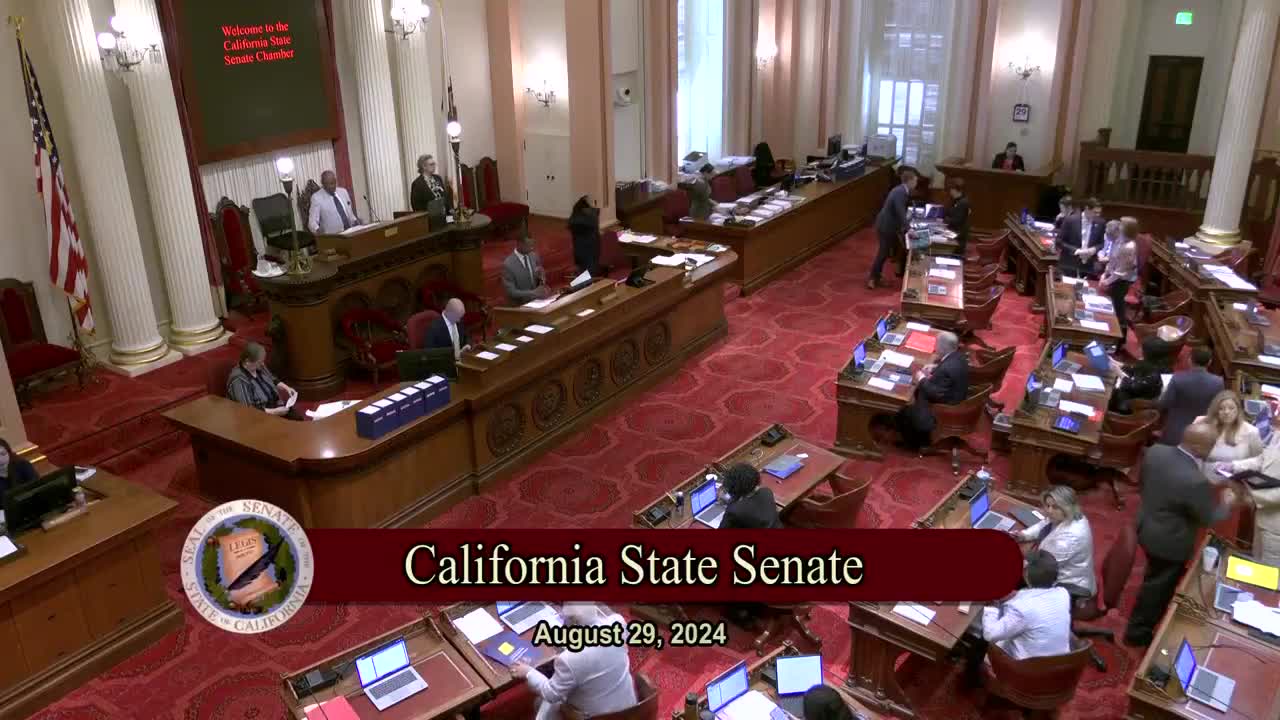 3MIN
Senate Floor
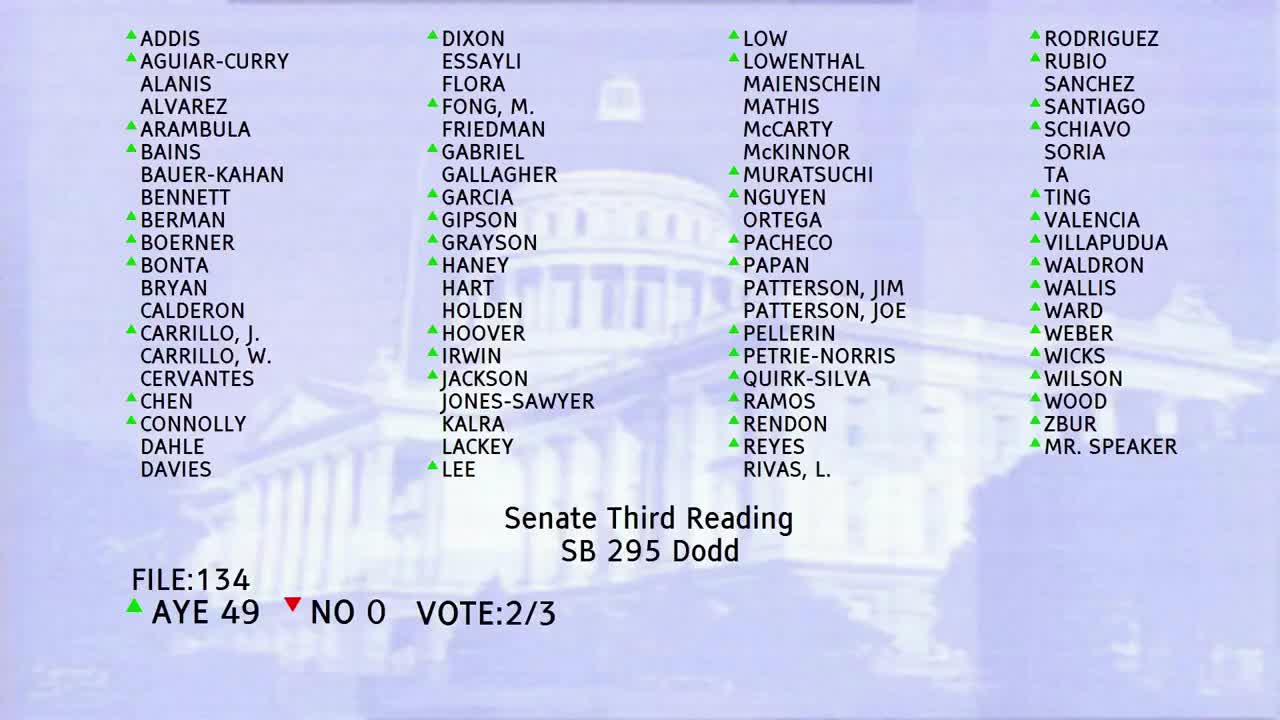 2MIN
Assembly Floor
 27SEC
Assembly Floor
 5MIN
Assembly Standing Committee on Judiciary
 8MIN
Assembly Standing Committee on Privacy and Consumer Protection
 3MIN
Senate Floor
 10MIN
Senate Standing Committee on Judiciary
Bill Author

Bill Co-Author(s):