SB 908: Fentanyl: child deaths.
- Session Year: 2023-2024
- House: Senate
- Latest Version Date: 2024-09-28
Current Status:
Passed
(2024-09-28: Chaptered by Secretary of State. Chapter 867, Statutes of 2024.)
Introduced
In Committee
First Chamber
In Committee
Second Chamber
Enacted
What does this bill do?
The bill requires the State Department of Public Health to use its overdose data to monitor and identify trends in fentanyl-related deaths among children ages 0 to 5 and to create guidance and awareness to help prevent child exposure. It also directs the department to share its findings and guidance each year with local health departments, county boards of supervisors, and the Legislature, though local agencies would not be required to follow that guidance.
The summary is provided by generative AI which can make mistakes. For original language, please view the details in the table below.
Existing law establishes the State Department of Public Health to implement and administer various programs relating to public health. The department administers the California Overdose Surveillance Dashboard that provides data on state- and local-level drug-related overdose outcomes for California, including, among other data, the number of deaths related to fentanyl overdoses. Existing law requires the department to update the dashboard to reflect additional information, as specified.
This bill would require the department to use best efforts to utilize all of its relevant data regarding overdoses in the state to monitor and identify current trends of fentanyl-related deaths of children 0 to 5 years of age, inclusive. The bill would require the department to develop guidance and spread awareness of the trends to protect and prevent children from fentanyl exposure. The bill would require the department, on or before January 1, 2026, to annually distribute its findings and guidance to local health departments, county boards of supervisors, and the Legislature. The bill would repeal these provisions on January 1, 2029.
Existing law establishes the State Department of Public Health to implement and administer various programs relating to public health. The department administers the California Overdose Surveillance Dashboard that provides data on state- and local-level drug-related overdose outcomes for California, including, among other data, the number of deaths related to fentanyl overdoses. Existing law requires the department to update the dashboard to reflect additional information, as specified.
This bill would require the department to use best efforts to utilize all of its relevant data regarding overdoses in the state to monitor and identify current trends of fentanyl-related deaths of children 0 to 5 years of age, inclusive. The bill would require the department to develop guidance and spread awareness of the trends to protect and prevent children from fentanyl exposure. The bill would require the department, on or before June 1, 2025, January 1, 2026, to annually distribute its findings and guidance to local health departments, county boards of supervisors, and the Legislature. The bill would repeal these provisions on January 1, 2031. 2029.
Existing law establishes the State Department of Public Health to implement and administer various programs relating to public health. The department administers the California Overdose Surveillance Dashboard that provides data on state- and local-level drug-related overdose outcomes for California, including, among other data, the number of deaths related to fentanyl overdoses. Existing law requires the department to update the dashboard to reflect additional information, as specified.
This bill would require the department to use best efforts to utilize all of its relevant data regarding overdoses in the state to monitor and identify current trends of fentanyl-related deaths of children 0 to 5 years of age, inclusive. The bill would require the department to develop guidance and spread awareness of the trends to protect and prevent children from fentanyl exposure. The bill would require the department, on or before June 1, 2025, to annually distribute its findings and guidance to local health departments, county boards of supervisors, and the Legislature. The bill would repeal these provisions on January 1, 2031.
Existing law establishes the State Department of Public Health to implement and administer various programs relating to public health. The department administers the California Overdose Surveillance Dashboard that provides data on state- and local-level drug-related overdose outcomes for California, including, among other data, the number of deaths related to fentanyl overdoses. Existing law requires the department to update the dashboard to reflect additional information, as specified.
This bill would require the department to utilize its data use best efforts to utilize all of its relevant data regarding overdoses in the state to monitor and identify current trends of fentanyl-related deaths of children 0 to 5 years of age, inclusive. The bill would require the department to develop guidance and spread awareness of the trends to protect and prevent children from fentanyl exposure. The bill would require the department, on or before June 1, 2025, to annually distribute its findings and guidance to county public local health departments, county boards of supervisors, and the Legislature. The bill would repeal these provisions on January 1, 2031.
Existing law establishes the State Department of Public Health to implement and administer various programs relating to public health. The department administers the California Overdose Surveillance Dashboard that provides data on state- and local-level drug-related overdose outcomes for California, including, among other data, the number of deaths related to fentanyl overdoses. Existing law requires the department to update the dashboard to reflect additional information, as specified.
This bill would require the department to utilize its data to monitor and identify current trends of fentanyl-related deaths of children 0 to 5 years of age, inclusive. The bill would require the department to develop guidance and spread awareness of the trends to protect and prevent children from fentanyl exposure. The bill would require the department, on or before June 1, 2025, to annually distribute its findings and guidance to county public health departments, county boards of supervisors, and the Legislature. The bill would repeal these provisions on January 1, 2031.
(1)The California Public Records Act requires a state or local agency to make public records available for public inspection, except as specified. Under existing law, a public record includes any writing containing information relating to the conduct of the publics business prepared, owned, used, or retained by a state or local agency regardless of physical form or characteristics.This bill would prohibit an elected or appointed official or employee of a public agency from creating or sending a public record using a nonofficial electronic messaging system unless the official or employee sends a copy of the public record to an official electronic messaging system, as specified. By imposing additional duties on local agencies, the bill would create a state-mandated local program.(2)The Legislative Open Records Act requires that legislative records be open to inspection at all times during normal business hours of the Legislature and that any person has the right to inspect any legislative record, except as specified. Existing law defines legislative records to mean any writing prepared on or after December 2, 1974, that contains information relating to the conduct of the publics business prepared, owned, used, or retained by the Legislature.This bill would prohibit a Member of the Legislature, legislative officer, standing, joint, or select committee or subcommittee of the Senate and Assembly, or agency or employee of the Legislature from creating or sending a legislative record using a nonofficial electronic messaging system unless the Member of the Legislature, legislative officer, standing, joint, or select committee or subcommittee of the Senate and Assembly, or agency or employee of the Legislature sends a copy of the legislative record to an official electronic messaging system, as specified.(3)The California Constitution requires local agencies, for the purpose of ensuring public access to the meetings of public bodies and the writings of public officials and agencies, to comply with a statutory enactment that amends or enacts laws relating to public records or open meetings and contains findings demonstrating that the enactment furthers the constitutional requirements relating to this purpose.This bill would make a legislative finding to that effect.(4)The California Constitution requires the state to reimburse local agencies and school districts for certain costs mandated by the state. Statutory provisions establish procedures for making that reimbursement.This bill would provide that no reimbursement is required by this act for a specified reason.(1)The California Public Records Act requires a state or local agency to make public records available for public inspection, except as specified. Under existing law, a public record includes any writing containing information relating to the conduct of the publics business prepared, owned, used, or retained by a state or local agency regardless of physical form or characteristics.
This bill would prohibit an elected or appointed official or employee of a public agency from creating or sending a public record using a nonofficial electronic messaging system unless the official or employee sends a copy of the public record to an official electronic messaging system, as specified. By imposing additional duties on local agencies, the bill would create a state-mandated local program.
(2)The Legislative Open Records Act requires that legislative records be open to inspection at all times during normal business hours of the Legislature and that any person has the right to inspect any legislative record, except as specified. Existing law defines legislative records to mean any writing prepared on or after December 2, 1974, that contains information relating to the conduct of the publics business prepared, owned, used, or retained by the Legislature.
This bill would prohibit a Member of the Legislature, legislative officer, standing, joint, or select committee or subcommittee of the Senate and Assembly, or agency or employee of the Legislature from creating or sending a legislative record using a nonofficial electronic messaging system unless the Member of the Legislature, legislative officer, standing, joint, or select committee or subcommittee of the Senate and Assembly, or agency or employee of the Legislature sends a copy of the legislative record to an official electronic messaging system, as specified.
(3)The California Constitution requires local agencies, for the purpose of ensuring public access to the meetings of public bodies and the writings of public officials and agencies, to comply with a statutory enactment that amends or enacts laws relating to public records or open meetings and contains findings demonstrating that the enactment furthers the constitutional requirements relating to this purpose.
This bill would make a legislative finding to that effect.
(4)The California Constitution requires the state to reimburse local agencies and school districts for certain costs mandated by the state. Statutory provisions establish procedures for making that reimbursement.
This bill would provide that no reimbursement is required by this act for a specified reason.
(a)The department shall use best efforts to utilize all of its relevant data regarding overdoses in the state to monitor and identify current trends of fentanyl-related deaths of children zero to five years of age, inclusive.
(b)The department shall develop guidance and spread awareness of the trends to protect and prevent children from fentanyl exposure.
(c)On or before January 1, 2026 the department shall annually distribute its findings and guidance to local health departments, county boards of supervisors, and the Legislature.
(d)A local health department or county board of supervisors may, but is not required to, adhere to guidance distributed by the department pursuant to this section.
(e)A report to be submitted to the Legislature pursuant to subdivision (c) shall be submitted in compliance with Section 9795 of the Government Code.
(f)Notwithstanding Section 10231.5 of the Government Code, this section shall remain in effect until January 1, 2029, and as of that date is repealed.
(a)The department shall use best efforts to utilize all of its relevant data regarding overdoses in the state to monitor and identify current trends of fentanyl-related deaths of children zero to five years of age, inclusive.
(b)The department shall develop guidance and spread awareness of the trends to protect and prevent children from fentanyl exposure.
(c)On or before June 1, 2025, January 1, 2026 the department shall annually distribute its findings and guidance to local health departments, county boards of supervisors, and the Legislature.
(d)A local health department or county board of supervisors may, but is not required to, adhere to guidance distributed by the department pursuant to this section.
(e)A report to be submitted to the Legislature pursuant to subdivision (c) shall be submitted in compliance with Section 9795 of the Government Code.
(f)Notwithstanding Section 10231.5 of the Government Code, this section shall remain in effect until January 1, 2031, 2029, and as of that date is repealed.
(a)The department shall use best efforts to utilize all of its relevant data regarding overdoses in the state to monitor and identify current trends of fentanyl-related deaths of children zero to five years of age, inclusive.
(b)The department shall develop guidance and spread awareness of the trends to protect and prevent children from fentanyl exposure.
(c)On or before June 1, 2025, the department shall annually distribute its findings and guidance to local health departments, county boards of supervisors, and the Legislature. A
(d)A local health department or county board of supervisors may, but is not required to, adhere to guidance distributed by the department pursuant to this section.
(d)(e) A report to be submitted to the Legislature pursuant to subdivision (c) shall be submitted in compliance with Section 9795 of the Government Code.
(e)(f) Notwithstanding Section 10231.5 of the Government Code, this section shall remain in effect until January 1, 2031, and as of that date is repealed.
REVISIONS: HeadingLine 2.(a)The department shall use best efforts to utilize all of its relevant data regarding overdoses in the state to monitor and identify current trends of fentanyl-related deaths of children zero to five years of age, inclusive.
(b)The department shall develop guidance and spread awareness of the trends to protect and prevent children from fentanyl exposure.
(c)On or before June 1, 2025, the department shall annually distribute its findings and guidance to county public local health departments, county boards of supervisors, and the Legislature. A county public local health department or county board of supervisors may, but is not required to, adhere to guidance distributed by the department pursuant to this section.
(d) A report to be submitted to the Legislature pursuant to subdivision (c) shall be submitted in compliance with Section 9795 of the Government Code.
(e) Notwithstanding Section 10231.5 of the Government Code, this section shall remain in effect until January 1, 2031, and as of that date is repealed.
(a)The department shall utilize its data to monitor and identify current trends of fentanyl-related deaths of children zero to five years of age, inclusive.
(b)The department shall develop guidance and spread awareness of the trends to protect and prevent children from fentanyl exposure.
(c)On or before June 1, 2025, the department shall annually distribute its findings and guidance to county public health departments, county boards of supervisors, and the Legislature. A county public health department or county board of supervisors may, but is not required to, adhere to guidance distributed by the department pursuant to this section.
(d) A report to be submitted to the Legislature pursuant to subdivision (c) shall be submitted in compliance with Section 9795 of the Government Code.
(e) Notwithstanding Section 10231.5 of the Government Code, this section shall remain in effect until January 1, 2031, and as of that date is repealed.
SECTION 1.The Legislature finds and declares all of the following:(a)It is a fundamental and necessary right of every person in this state to have access to information concerning the conduct of the peoples business, as set forth in the California Public Records Act (Division 10 (commencing with Section 7920.000) of Title 1 of the Government Code) and the Legislative Open Records Act (Article 3.5 (commencing with Section 9070) of Chapter 1.5 of Part 1 of Division 2 of Title 2 of the Government Code).(b)Many public employees and officials communicate about public business using private electronic devices. The California Supreme Court has held that the mere use of a private electronic device does not transform what would otherwise be a public record into a private record.(c)As the California Supreme Court explained in City of San Jose v. Superior Court (2017) 2 Cal.5th 608, certain federal laws (See Section 2911 of Title 44 of the United States Code and Section 1236.22 of Title 36 of the Code of Federal Regulations) prohibit the use of personal electronic accounts for official business unless messages are copied or forwarded to an official account.(d)It is the intent of this act to effectuate the peoples right to access information concerning the conduct of the peoples business, including the conduct of the peoples business done on private electronic devices, pursuant to the California Public Records Act and paragraph (1) of subdivision (b) of Section 3 of Article I of the California Constitution.SEC. 2.Article 6 (commencing with Section 7928.500) is added to Chapter 14 of Part 5 of Division 10 of Title 1 of the Government Code, to read:6.Electronic Communication by Agency Officials and Employees7928.500.(a)An elected or appointed official or employee of a public agency shall not create or send a public record using a nonofficial electronic messaging system unless the official or employee sends a copy of the public record to an official electronic messaging system within 20 days of the original creation or sending of the public record.(b)This section may be enforced pursuant to Part 4 (commencing with Section 7923.000).(c)(1)This section does not limit the disclosure of a public record that is otherwise subject to disclosure under this division.(2)This section does not require the disclosure of a public record that is not otherwise subject to disclosure under this division.(d)For the purposes of this section, the following terms shall have the following meanings:(1)Electronic message means an email or a text message.(2)Electronic messaging system means a person, including an internet service provider, that is an intermediary in sending or receiving an electronic message or that provides to end users the ability to send or receive an electronic message.(3)Official electronic messaging system means an electronic messaging system designated by a public agency to be used by an elected or appointed official or employee of a public agency for the official business of the public agency.(4)Public record has the same meaning as defined in Section 7920.530.SEC. 3.Section 9081 is added to the Government Code, immediately following Section 9080, to read:9081.(a)A Member of the Legislature, legislative officer, standing, joint, or select committee or subcommittee of the Senate and Assembly, or agency or employee of the Legislature shall not create or send a legislative record using a nonofficial electronic messaging system unless the Member of the Legislature, legislative officer, standing, joint, or select committee or subcommittee of the Senate and Assembly, or agency or employee of the Legislature sends a copy of the legislative record to an official electronic messaging system within 20 days of the original creation or sending of the legislative record.(b)This section may be enforced pursuant to Sections 9076, 9077, 9078, and 9079.(c)(1)This section does not limit the disclosure of a legislative record that is otherwise subject to disclosure under this article.(2)This section does not require the disclosure of a legislative record that is not otherwise subject to disclosure under this article.(d)For the purposes of this section, the following terms shall have the following meanings:(1)Electronic message means an email or a text message.(2)Electronic messaging system means a person, including an internet service provider, that is an intermediary in sending or receiving an electronic message or that provides to end users the ability to send or receive an electronic message.(3)Legislative record has the same meaning as defined in subdivision (c) of Section 9072.(4)Official electronic messaging system means an electronic messaging system designated by the Legislature to be used by a Member of the Legislature, legislative officer, or employee of the Legislature for the official business of the Legislature.SEC. 4.The Legislature finds and declares that Section 2 of this act, which adds Article 6 (commencing with Section 7928.500) to Chapter 14 of Part 5 of Division 10 of Title 1 of the Government Code, furthers, within the meaning of paragraph (7) of subdivision (b) of Section 3 of Article I of the California Constitution, the purposes of that constitutional section as it relates to the right of public access to the meetings of local public bodies or the writings of local public officials and local agencies. Pursuant to paragraph (7) of subdivision (b) of Section 3 of Article I of the California Constitution, the Legislature makes the following finding:This act furthers the right of public access to the writings of public officials and agencies by ensuring public access to a public record sent using a nonofficial electronic messaging system.SEC. 5.No reimbursement is required by this act pursuant to Section 6 of Article XIII B of the California Constitution because the only costs that may be incurred by a local agency or school district under this act would result from a legislative mandate that is within the scope of paragraph (7) of subdivision (b) of Section 3 of Article I of the California Constitution.The Legislature finds and declares all of the following:
(a)It is a fundamental and necessary right of every person in this state to have access to information concerning the conduct of the peoples business, as set forth in the California Public Records Act (Division 10 (commencing with Section 7920.000) of Title 1 of the Government Code) and the Legislative Open Records Act (Article 3.5 (commencing with Section 9070) of Chapter 1.5 of Part 1 of Division 2 of Title 2 of the Government Code).
(b)Many public employees and officials communicate about public business using private electronic devices. The California Supreme Court has held that the mere use of a private electronic device does not transform what would otherwise be a public record into a private record.
(c)As the California Supreme Court explained in City of San Jose v. Superior Court (2017) 2 Cal.5th 608, certain federal laws (See Section 2911 of Title 44 of the United States Code and Section 1236.22 of Title 36 of the Code of Federal Regulations) prohibit the use of personal electronic accounts for official business unless messages are copied or forwarded to an official account.
(d)It is the intent of this act to effectuate the peoples right to access information concerning the conduct of the peoples business, including the conduct of the peoples business done on private electronic devices, pursuant to the California Public Records Act and paragraph (1) of subdivision (b) of Section 3 of Article I of the California Constitution.
SEC. 2.Article 6 (commencing with Section 7928.500) is added to Chapter 14 of Part 5 of Division 10 of Title 1 of the Government Code, to read:6.Electronic Communication by Agency Officials and Employees7928.500.(a)An elected or appointed official or employee of a public agency shall not create or send a public record using a nonofficial electronic messaging system unless the official or employee sends a copy of the public record to an official electronic messaging system within 20 days of the original creation or sending of the public record.
(b)This section may be enforced pursuant to Part 4 (commencing with Section 7923.000).
(c)(1)This section does not limit the disclosure of a public record that is otherwise subject to disclosure under this division.
(2)This section does not require the disclosure of a public record that is not otherwise subject to disclosure under this division.
(d)For the purposes of this section, the following terms shall have the following meanings:
(1)Electronic message means an email or a text message.
(2)Electronic messaging system means a person, including an internet service provider, that is an intermediary in sending or receiving an electronic message or that provides to end users the ability to send or receive an electronic message.
(3)Official electronic messaging system means an electronic messaging system designated by a public agency to be used by an elected or appointed official or employee of a public agency for the official business of the public agency.
(4)Public record has the same meaning as defined in Section 7920.530.
SEC. 3.Section 9081 is added to the Government Code, immediately following Section 9080, to read:9081.(a)A Member of the Legislature, legislative officer, standing, joint, or select committee or subcommittee of the Senate and Assembly, or agency or employee of the Legislature shall not create or send a legislative record using a nonofficial electronic messaging system unless the Member of the Legislature, legislative officer, standing, joint, or select committee or subcommittee of the Senate and Assembly, or agency or employee of the Legislature sends a copy of the legislative record to an official electronic messaging system within 20 days of the original creation or sending of the legislative record.
(b)This section may be enforced pursuant to Sections 9076, 9077, 9078, and 9079.
(c)(1)This section does not limit the disclosure of a legislative record that is otherwise subject to disclosure under this article.
(2)This section does not require the disclosure of a legislative record that is not otherwise subject to disclosure under this article.
(d)For the purposes of this section, the following terms shall have the following meanings:
(1)Electronic message means an email or a text message.
(2)Electronic messaging system means a person, including an internet service provider, that is an intermediary in sending or receiving an electronic message or that provides to end users the ability to send or receive an electronic message.
(3)Legislative record has the same meaning as defined in subdivision (c) of Section 9072.
(4)Official electronic messaging system means an electronic messaging system designated by the Legislature to be used by a Member of the Legislature, legislative officer, or employee of the Legislature for the official business of the Legislature.
SEC. 4.The Legislature finds and declares that Section 2 of this act, which adds Article 6 (commencing with Section 7928.500) to Chapter 14 of Part 5 of Division 10 of Title 1 of the Government Code, furthers, within the meaning of paragraph (7) of subdivision (b) of Section 3 of Article I of the California Constitution, the purposes of that constitutional section as it relates to the right of public access to the meetings of local public bodies or the writings of local public officials and local agencies. Pursuant to paragraph (7) of subdivision (b) of Section 3 of Article I of the California Constitution, the Legislature makes the following finding:
This act furthers the right of public access to the writings of public officials and agencies by ensuring public access to a public record sent using a nonofficial electronic messaging system.
SEC. 5.No reimbursement is required by this act pursuant to Section 6 of Article XIII B of the California Constitution because the only costs that may be incurred by a local agency or school district under this act would result from a legislative mandate that is within the scope of paragraph (7) of subdivision (b) of Section 3 of Article I of the California Constitution.
|
Date
|
Status
|
|---|---|
| Sep 28, 2024 | Chaptered by Secretary of State. Chapter 867, Statutes of 2024. |
| Sep 28, 2024 | Approved by the Governor. |
| Sep 4, 2024 | Enrolled and presented to the Governor at 4 p.m. |
| Aug 28, 2024 | Assembly amendments concurred in. (Ayes 39. Noes 0. Page 5612.) Ordered to engrossing and enrolling. |
| Aug 27, 2024 | Ordered to special consent calendar. |
| Aug 26, 2024 | In Senate. Concurrence in Assembly amendments pending. |
| Aug 26, 2024 | Read third time. Passed. (Ayes 77. Noes 0. Page 6519.) Ordered to the Senate. |
| Aug 20, 2024 | Read third time and amended. |
| Aug 20, 2024 | Ordered to third reading. |
| Aug 19, 2024 | Read second time. Ordered to third reading. |
| Aug 15, 2024 | From committee: Do pass. (Ayes 14. Noes 0.) (August 15). |
| Jun 19, 2024 | June 19 set for first hearing. Placed on suspense file. |
| Jun 5, 2024 | From committee: Do pass and re-refer to Com. on APPR. with recommendation: To consent calendar. (Ayes 15. Noes 0.) (June 4). Re-referred to Com. on APPR. |
| Jun 5, 2024 | Coauthors revised. |
| May 28, 2024 | Referred to Com. on HEALTH. |
| May 23, 2024 | In Assembly. Read first time. Held at Desk. |
| May 22, 2024 | Read third time. Passed. (Ayes 38. Noes 0. Page 4136.) Ordered to the Assembly. |
| May 20, 2024 | Read second time. Ordered to third reading. |
| May 16, 2024 | Read second time and amended. Ordered to second reading. |
| May 16, 2024 | From committee: Do pass as amended. (Ayes 7. Noes 0. Page 3963.) (May 16). |
| May 10, 2024 | Set for hearing May 16. |
| May 6, 2024 | May 6 hearing: Placed on APPR suspense file. |
| Apr 30, 2024 | Set for hearing May 6. |
| Apr 29, 2024 | Read second time and amended. Re-referred to Com. on APPR. |
| Apr 25, 2024 | From committee: Do pass as amended and re-refer to Com. on APPR with recommendation: To consent calendar. (Ayes 11. Noes 0. Page 3754.) (April 24). |
| Apr 5, 2024 | Set for hearing April 24. |
| Apr 3, 2024 | Re-referred to Com. on HEALTH. |
| Mar 20, 2024 | From committee with author's amendments. Read second time and amended. Re-referred to Com. on RLS. |
| Mar 20, 2024 | Referred to Com. on RLS. |
| Jan 9, 2024 | From printer. May be acted upon on or after February 8. |
| Jan 8, 2024 | Introduced. Read first time. To Com. on RLS. for assignment. To print. |
|
Date
|
Description
|
Location
|
Votes
|
|
|---|---|---|---|---|
| Aug 28, 2024 | Special Consent SB908 Cortese et al. | Senate Floor |
Passed |
|
| Aug 26, 2024 | SB 908 Cortese Senate Third Reading By Arambula | Assembly Floor |
Passed |
|
| Aug 15, 2024 | Do pass. | Assembly Standing Committee on Appropriations |
Passed |
|
| Jun 4, 2024 | Do pass and be re-referred to the Committee on [Appropriations] with recommendation: To Consent Calendar | Assembly Standing Committee on Health |
Passed |
|
| May 22, 2024 | Senate 3rd Reading SB908 Cortese et al. | Senate Floor |
Passed |
|
| May 16, 2024 | Do pass as amended | Senate Standing Committee on Appropriations |
Passed |
|
| May 6, 2024 | Placed on suspense file | Senate Standing Committee on Appropriations |
Passed |
|
| Apr 24, 2024 | Do pass as amended, but first amend, and re-refer to the Committee on [Appropriations] with the recommendation: To Consent Calendar | Senate Standing Committee on Health |
Passed |
This list shows positions taken on this bill by organizations on the date displayed, which is linked to the original source.
Positions by individuals are not included.
|
Organization
|
Position
|
Date
|
|---|---|---|
| American Academy Of Pediatrics, California | ** Support | |
| City of Bakersfield | ** Support | |
| Ella Baker Center For Human Rights | ** Support | |
| First 5 Santa Clara County | ** Support | |
| Steinberg Institute | ** Support | |
| Todd Gloria, Mayor, City of San Diego | ** Support |
SENATE RULES COMMITTEE Office of Senate Floor Analyses (916) 651-1520 Fax: (916) 327-4478 | SB 908 |
UNFINISHED BUSINESS
Bill No: SB 908
Author: Cortese (D), et al.
Amended: 8/20/24
Vote: 21
SENATE HEALTH COMMITTEE: 11-0, 4/24/24
AYES: Roth, Nguyen, Glazer, Gonzalez, Grove, Hurtado, Limón, Menjivar, Rubio, Smallwood-Cuevas, Wiener
SENATE APPROPRIATIONS COMMITTEE: 7-0, 5/16/24
AYES: Caballero, Jones, Ashby, Becker, Bradford, Seyarto, Wahab
SENATE FLOOR: 38-0, 5/22/24
AYES: Alvarado-Gil, Ashby, Atkins, Becker, Blakespear, Bradford, Caballero, Cortese, Dahle, Dodd, Durazo, Eggman, Glazer, Gonzalez, Grove, Hurtado, Jones, Laird, Limón, McGuire, Menjivar, Min, Newman, Nguyen, Niello, Ochoa Bogh, Padilla, Portantino, Roth, Rubio, Seyarto, Skinner, Smallwood-Cuevas, Stern, Umberg, Wahab, Wiener, Wilk
NO VOTE RECORDED: Allen, Archuleta
ASSEMBLY FLOOR: 77-0, 8/26/24 - See last page for vote
SUBJECT: Fentanyl: child deaths
SOURCE: Author
DIGEST:
This bill requires the California Department of Public Health (CDPH), until January 1, 2029, to use best efforts to utilize all of its relevant data regarding current trends of fentanyl-related deaths of children up to five years of age.
Assembly Amendments
extend the date by six months by which CDPH is required to distribute its findings and guidance to local entities, and sunset the provisions in this bill two years earlier than previously proposed.
ANALYSIS:
Existing law:
- Establishes the California Department of Public Health (CDPH) to be vested with all the duties, powers, purposes, functions, responsibilities, and jurisdiction as they relate to public health, as specified. [HSC §131050]
- Requires a county coroner to inquire into and determine the circumstances, manner, and cause of certain deaths, including all violent, sudden, or unusual deaths, and deaths due to drug addiction, among other types of deaths. [GOV §27491]
- Permits a county Board of Supervisors to abolish the office of coroner and provide instead for the office of medical examiner, as specified, and requires the medical examiner to be a licensed physician qualified as a specialist in pathology. [GOV §24010]
- States the intent of the Legislature that fatal drug overdose information be used for the purpose of making decisions regarding the allocation of public health and educational resources to communities adversely impacted by the use of drugs that lead to overdoses. [HSC §11758.02]
- Requires a coroner or medical examiner who evaluates an individual who died, in the coroner or medical examiner’s expert opinion, as the result of an overdose as a contributing factor, to report the incident to the Overdose Detection Mapping Application Program (ODMAP) managed by the Washington/Baltimore High Intensity Drug Trafficking Area program. [HSC §11758.04]
This bill:
- Requires CDPH to use best efforts to utilize all of its relevant data regarding current trends of fentanyl-related deaths of children up to five years of age.
- Requires CDPH to develop guidance and spread awareness of the trends to protect and prevent children from fentanyl exposure.
- Requires CDPH, on or before January 1, 2026, to distribute annually its findings and guidance to local health departments, county boards of supervisors, and the Legislature. Permits a local health departments or county board of supervisors, but is not required to, adhere to guidance distributed by CDPH related to child death data from fentanyl exposure.
- Sunsets the provisions in this bill on January 1, 2029.
Comments
- Author’s statement. According to the author, “In California, 25 children younger than five died between 2019 and 2022 from fentanyl poisoning. With the distressing increase in fentanyl-related fatalities among the state's youngest residents, this bill takes steps to mitigate exposure risks for infants and toddlers. Over the last two decades, more than 100 infants younger than age one have died from fentanyl poisoning. And just last year, three infants died from fentanyl poisoning in the author’s district. The author states that although the numbers aren’t as staggering as other age groups, it is a significant spike compared to years prior. The author is asking CDPH to shine a light specifically on children up to five years of age who cannot accidentally or intentionally overdose without exposure from an older person; who cannot form an addiction on their own accord; nor, who choose to consume drugs. This bill addresses the critical need for a standardized public health response to the fentanyl crisis by mandating CDPH to track and analyze trends in fentanyl poisonings of children aged zero to five, develop preventative guidelines, and annually disseminate the findings to counties, local officials, and the Legislature.”
- Media reports on infant/child overdoses related to fentanyl. A San Jose Mercury News article published March 23, 2024, cites its previous reporting on three Bay Area infant and toddler deaths as the inspiration for this bill. In the article, the author is cited as suggesting delaying the reunification of children younger than age five with parents who have a substance use disorder (SUD). The article notes that from 1999 to 2021, just over 340 children under age five nationally were killed by fentanyl, including 105 who were younger than one year old. However, some experts noted that the state already does a decent job providing policy guidance to counties on how to handle tricky child abuse cases and that the recent deaths were due to dysfunctional county policies and practices, not faulty state guidance. Other experts were cautious about any state policy that automatically delayed the reunification of children with parents suffering from SUD. Experts also said a problem with releasing this data on child fatalities is that there are few recorded, about a dozen or fewer statewide each year, and publishing these statistics could present privacy concerns.
The Oregon Health & Science University noted in a story on its website on March 7, 2024, that its poison center managed 16 cases of illicit fentanyl exposure in children younger than six years old in 2023, an increase from just two in 2021 and none in 2020. It notes this trend is mirrored nationally when researchers examined data from all U.S. Poison Centers. Just ten cases of fentanyl exposures in children under six years old were reported to U.S. Poison Centers in 2016. By 2020, that number jumped to 120, and by 2023, there were 539 cases of illicit fentanyl exposure in children under 6 years old—a 449% increase in three years and a 5,390% increase since 2016. National data revealed that most children exposed to fentanyl experienced severe effects including losing consciousness, stopping breathing, and brain injury. Naloxone was administered to 63% of the children. Most children were two years of age or younger. The study found that 82% of pediatric unintentional exposures to illicit fentanyl occurred in the child’s home. Among Oregon children, 93% of the children were exposed in their homes, highlighting the need for education and awareness about preventing unintentional drug exposures where children live. The poison center offers important tips when it comes to fentanyl, whether prescription or illicit: lock up medication (such as using a cabinet lock or medicine lock box); carry multiple doses of naloxone; know the signs of overdose (such as pinpoint pupils, shallow breathing, and sleepiness or losing consciousness); and, call 9-1-1 right away if someone is unconscious, not breathing, or if naloxone has been given.
- ODMAP. In 1988, Congress created the High Intensity Drug Trafficking Areas (HIDTA) program to provide assistance to federal, state, local, and tribal law enforcement agencies operating in areas determined to be critical drug-trafficking regions of the U.S. There are currently 33 HIDTAs, including four in California: Central Valley, Northern California, Los Angeles, and San Diego/Imperial Valley. In January of 2017, the Washington/Baltimore HIDTA launched ODMAP as a response to the lack of a consistent methodology to track overdoses, which limited the ability to understand and mobilize against the crisis. According to the Washington/Baltimore HIDTA, ODMAP is an overdose-mapping tool that allows first responders to log an overdose in real time into a centralized database in order to support public safety and public health efforts to mobilize an immediate response to a sudden increase, or spike, in overdose events. ODMAP is only available to government agencies serving the interest of public safety and health, and each agency wishing to use the system must sign a participation agreement designed to protect the data within the system, which currently serves more than 3,700 agencies with more than 28,000 users in all 50 states, and has logged 850,000 overdose events.
FISCAL EFFECT: Appropriation: No Fiscal Com.: Yes Local: No
According to the Assembly Appropriations Committee, CDPH estimates annual staffing costs of $259,000 until January 1, 2031 to implement the provisions of this bill (General Fund).
SUPPORT: (Verified 8/26/24)
American Academy of Pediatrics, California
City of Bakersfield
Ella Baker Center for Human Rights
FIRST 5 Santa Clara County
Steinberg Institute
Todd Gloria, Mayor, City of Sand Diego
OPPOSITION: (Verified 8/26/24)
None received
ARGUMENTS IN SUPPORT: FIRST 5 Santa Clara County and other supporters state the opioid epidemic remains a public health and safety crisis in California. According to CDPH, since 2015, the potency of synthetic opioids, including fentanyl, has increased substantially resulting in an extraordinary increase of drug-related overdose deaths. With the distressing increase in fentanyl-related fatalities among the state’s youngest residents, this bill takes steps to mitigate exposure risks by codifying the analysis of data already being collected by the CDPH. This information will inform and educate elected officials, health departments, and families about a standardized public health response to ensure this trend does not continue to rise. The Steinberg Institute states that CDPH’s Substance and Addiction Prevention Branch, through initiatives such as the Overdose Prevention Initiative and the Statewide Overdose Safety Workgroup, has laid a solid foundation for tackling the complex nature of the drug overdose epidemic. This bill seeks to leverage this existing infrastructure to better analyze data trends, develop targeted guidelines, and significantly amplify awareness efforts to protect our children from the deadly reach of fentanyl. Such dissemination of knowledge as required in this bill is crucial for informing policy decisions and empowering families with the information they need to prevent these avoidable tragedies.
ASSEMBLY FLOOR: 77-0, 8/26/24
AYES: Addis, Aguiar-Curry, Alanis, Alvarez, Arambula, Bains, Bauer-Kahan, Bennett, Berman, Boerner, Bonta, Bryan, Calderon, Juan Carrillo, Wendy Carrillo, Chen, Connolly, Megan Dahle, Davies, Dixon, Essayli, Flora, Mike Fong, Friedman, Gabriel, Gallagher, Garcia, Gipson, Grayson, Haney, Hart, Holden, Hoover, Irwin, Jackson, Jones-Sawyer, Kalra, Lackey, Lee, Low, Lowenthal, Maienschein, Mathis, McCarty, McKinnor, Muratsuchi, Stephanie Nguyen, Pacheco, Papan, Jim Patterson, Joe Patterson, Pellerin, Petrie-Norris, Quirk-Silva, Ramos, Rendon, Reyes, Luz Rivas, Rodriguez, Blanca Rubio, Sanchez, Santiago, Schiavo, Soria, Ta, Ting, Valencia, Villapudua, Waldron, Wallis, Ward, Weber, Wicks, Wilson, Wood, Zbur, Robert Rivas
NO VOTE RECORDED: Cervantes, Ortega
Prepared by: Reyes Diaz / HEALTH / (916) 651-4111
8/27/24 12:08:03
**** END ****
SENATE THIRD READING
STR Bill Id:SB 908
Author:(Cortese)
As Amended Ver:August 20, 2024
Majority vote
SUMMARY
Requires the Department of Public Health (DPH) to use best efforts to utilize all of its relevant data to monitor and identify current trends of fentanyl-related deaths of children up to five years of age.
Major Provisions
COMMENTS
California is facing an overdose epidemic. According to a 2022 California Health Care Foundation report "Substance Use in California: Prevalence and Treatment," 9% of Californians have met the criteria for a substance use disorder (SUD). While the health care system is moving toward acknowledging SUDs as a chronic illness, only about 10% of people with a SUD within the last year received treatment. Overdose deaths from both opioids and psychostimulants (such as amphetamines), are soaring. This issue, compounded by the increased availability of fentanyl, has resulted in a 10-fold increase in fentanyl related deaths between 2015 and 2019.
- Fentanyl. Fentanyl is a potent synthetic opioid drug approved by the United States Food and Drug Administration for use as an analgesic and anesthetic. It is approximately 50 times stronger than heroin and 100 times stronger than morphine. First developed in 1959, it was introduced in the 1960's as an intravenous anesthetic. Fentanyl is legally manufactured and distributed in the US; however, there are two types of fentanyl: pharmaceutical fentanyl and illicitly manufactured fentanyl. Both are considered synthetic opioids. Pharmaceutical fentanyl is prescribed by doctors to treat severe pain, especially after surgery and for advanced-stage cancer. Most recently, cases of fentanyl-related overdoses are linked to illicitly manufactured fentanyl that is distributed through illegal drug markets for its heroin-like effect. It is often added to other drugs because of its extreme potency, which makes drugs cheaper, more powerful, more addictive, and more dangerous.
- DPH Overdose Dashboard. As part of DPH's Opioid Prevention Initiative, DPH maintains the California Overdose Surveillance Dashboard (Dashboard). The Dashboard tracks deaths related to any opioid overdose, deaths related specifically to fentanyl, emergency department (ED) visits related to any opioid overdose, and the number of prescriptions issued for opioids in California. The data can be broken down by County, sex, age, race/ethnicity, or a specified time frame. The Dashboard reported there were 10 fentanyl-related overdose deaths and 15 fentanyl-related overdose ED visits, and 35 fentanyl-related overdose hospitalizations among children under five years of age in 2022.
- Overdose Detection Mapping Application Program (ODMAP). In 1988, Congress created the High Intensity Drug Trafficking Areas (HIDTA) program to provide assistance to federal, state, local, and tribal law enforcement agencies operating in areas determined to be critical drug-trafficking regions of the United States. There are currently 33 HIDTAs, including four in California: Central Valley, Northern California, Los Angeles, and San Diego/Imperial Valley.
In January of 2017, the Washington/Baltimore HIDTA launched ODMAP as a response to the lack of a consistent methodology to track overdoses, which limited the ability to understand and mobilize against the crisis. ODMAP is a free, web-based tool that provides near real-time suspected overdose surveillance data across jurisdictions to support public safety and public health efforts to mobilize an immediate response to a sudden increase, or spike in overdose events. For over five years, ODMAP has been available to government agencies serving the interests of public safety and health. Each agency wishing to participate signs a data-sharing agreement that is designed to protect the data within the system. Once signed, they can begin uploading data and have access to the National Map feature which allows users to view nationwide data and built-in analytical tools. Additionally, once an agency is approved, they can set up county-level spike alerts.
Currently, there are almost 4,000 agencies in all 50 states, the District of Columbia, and Puerto Rico who are utilizing the tool. To date more than 850,000 overdose events have been entered.
According to the Author
Twenty five children younger than five died between 2019 and 2022 from fentanyl poisoning in California. The author argues that with the distressing increase in fentanyl-related fatalities among the state's youngest residents, this bill takes steps to mitigate exposure risks for infants and toddlers. The author concludes that this bill addresses the critical need for a standardized public health response to the fentanyl crisis by mandating DPH to track and analyze trends in fentanyl poisonings of children aged zero to five, develop preventative guidelines, and annually disseminate the findings to counties, local officials, and the Legislature.
Arguments in Support
First 5 Santa Clara County supports this bill, stating that over the last two decades more than 100 infants younger than age one died from fentanyl poisoning. In California alone, 25 children younger than five died between 2019 and 2022. First 5 Santa Clara County continues that with the distressing increase in fentanyl-related fatalities among the state's youngest residents, this bill takes steps to mitigate exposure risks by codifying the analysis of data already being collected by DPH. First 5 Santa Clara County argues that this information will inform and educate elected officials, health departments, and families about a standardized public health response to ensure this trend does not continue to rise.
Arguments in Opposition
None on file.
FISCAL COMMENTS
According to the Assembly Appropriations Committee, DPH estimates annual staffing costs of $259,000 until January 1, 2031 to implement the provisions of this bill (General Fund).
According to the Legislative Analyst's Office, the General Fund faces a structural deficit in the tens of billions of dollars over the next several fiscal years.
VOTES
SENATE FLOOR: 38-0-2
YES: Alvarado-Gil, Ashby, Atkins, Becker, Blakespear, Bradford, Caballero, Cortese, Dahle, Dodd, Durazo, Eggman, Glazer, Gonzalez, Grove, Hurtado, Jones, Laird, Limón, McGuire, Menjivar, Min, Newman, Nguyen, Niello, Ochoa Bogh, Padilla, Portantino, Roth, Rubio, Seyarto, Skinner, Smallwood-Cuevas, Stern, Umberg, Wahab, Wiener, Wilk
ABS, ABST OR NV: Allen, Archuleta
ASM HEALTH: 15-0-1
YES: Bonta, Aguiar-Curry, Arambula, Wendy Carrillo, Flora, Haney, Jones-Sawyer, Maienschein, McCarty, Joe Patterson, Rodriguez, Sanchez, Santiago, Schiavo, Weber
ABS, ABST OR NV: Waldron
ASM APPROPRIATIONS: 14-0-1
YES: Wicks, Sanchez, Arambula, Bryan, Calderon, Wendy Carrillo, Dixon, Mike Fong, Grayson, Haney, Hart, Pellerin, Ta, Villapudua
ABS, ABST OR NV: Jim Patterson
UPDATED
VERSION: August 20, 2024
CONSULTANT: Riana King / HEALTH / (916) 319-2097 FN: 0004207
SENATE THIRD READING
STR Bill Id:SB 908
Author:(Cortese)
As Amended Ver:May 16, 2024
Majority vote
SUMMARY
Requires the Department of Public Health (DPH) to use best efforts to utilize all of its relevant data to monitor and identify current trends of fentanyl-related deaths of children up to five years of age.
Major Provisions
COMMENTS
California is facing an overdose epidemic. According to a 2022 California Health Care Foundation report "Substance Use in California: Prevalence and Treatment," 9% of Californians have met the criteria for a substance use disorder (SUD). While the health care system is moving toward acknowledging SUDs as a chronic illness, only about 10% of people with a SUD within the last year received treatment. Overdose deaths from both opioids and psychostimulants (such as amphetamines), are soaring. This issue, compounded by the increased availability of fentanyl, has resulted in a ten-fold increase in fentanyl related deaths between 2015 and 2019.
- Fentanyl. Fentanyl is a potent synthetic opioid drug approved by the United States Food and Drug Administration for use as an analgesic and anesthetic. It is approximately 50 times stronger than heroin and 100 times stronger than morphine. First developed in 1959, it was introduced in the 1960's as an intravenous anesthetic. Fentanyl is legally manufactured and distributed in the US; however, there are two types of fentanyl: pharmaceutical fentanyl and illicitly manufactured fentanyl. Both are considered synthetic opioids. Pharmaceutical fentanyl is prescribed by doctors to treat severe pain, especially after surgery and for advanced-stage cancer. Most recently, cases of fentanyl-related overdoses are linked to illicitly manufactured fentanyl that is distributed through illegal drug markets for its heroin-like effect. It is often added to other drugs because of its extreme potency, which makes drugs cheaper, more powerful, more addictive, and more dangerous.
- DPH Overdose Dashboard. As part of DPH's Opioid Prevention Initiative, DPH maintains the California Overdose Surveillance Dashboard (Dashboard). The Dashboard tracks deaths related to any opioid overdose, deaths related specifically to fentanyl, emergency department (ED) visits related to any opioid overdose, and the number of prescriptions issued for opioids in California. The data can be broken down by County, sex, age, race/ethnicity, or a specified time frame. The Dashboard reported there were 10 fentanyl-related overdose deaths and 15 fentanyl-related overdose ED visits, and 35 fentanyl-related overdose hospitalizations among children under five years of age in 2022.
- Overdose Detection Mapping Application Program (ODMAP). In 1988, Congress created the High Intensity Drug Trafficking Areas (HIDTA) program to provide assistance to federal, state, local, and tribal law enforcement agencies operating in areas determined to be critical drug-trafficking regions of the United States. There are currently 33 HIDTAs, including four in California: Central Valley, Northern California, Los Angeles, and San Diego/Imperial Valley.
In January of 2017, the Washington/Baltimore HIDTA launched ODMAP as a response to the lack of a consistent methodology to track overdoses, which limited the ability to understand and mobilize against the crisis. ODMAP is a free, web-based tool that provides near real-time suspected overdose surveillance data across jurisdictions to support public safety and public health efforts to mobilize an immediate response to a sudden increase, or spike in overdose events. For over five years, ODMAP has been available to government agencies serving the interests of public safety and health. Each agency wishing to participate signs a data-sharing agreement that is designed to protect the data within the system. Once signed, they can begin uploading data and have access to the National Map feature which allows users to view nationwide data and built-in analytical tools. Additionally, once an agency is approved, they can set up county-level spike alerts.
Currently, there are almost 4,000 agencies in all 50 states, the District of Columbia, and Puerto Rico who are utilizing the tool. To date more than 850,000 overdose events have been entered.
According to the Author
Twenty five children younger than five died between 2019 and 2022 from fentanyl poisoning in California. The author argues that with the distressing increase in fentanyl-related fatalities among the state's youngest residents, this bill takes steps to mitigate exposure risks for infants and toddlers. The author concludes that this bill addresses the critical need for a standardized public health response to the fentanyl crisis by mandating DPH to track and analyze trends in fentanyl poisonings of children aged zero to five, develop preventative guidelines, and annually disseminate the findings to counties, local officials, and the Legislature.
Arguments in Support
First 5 Santa Clara County supports this bill, stating that over the last two decades more than 100 infants younger than age one died from fentanyl poisoning. In California alone, 25 children younger than five died between 2019 and 2022. First 5 Santa Clara County continues that with the distressing increase in fentanyl-related fatalities among the state's youngest residents, this bill takes steps to mitigate exposure risks by codifying the analysis of data already being collected by DPH. First 5 Santa Clara County argues that this information will inform and educate elected officials, health departments, and families about a standardized public health response to ensure this trend does not continue to rise.
Arguments in Opposition
None on file.
FISCAL COMMENTS
According to the Assembly Appropriations Committee, DPH estimates annual staffing costs of $259,000 until January 1, 2031 to implement the provisions of this bill (General Fund).
According to the Legislative Analyst's Office, the General Fund faces a structural deficit in the tens of billions of dollars over the next several fiscal years.
VOTES
SENATE FLOOR: 38-0-2
YES: Alvarado-Gil, Ashby, Atkins, Becker, Blakespear, Bradford, Caballero, Cortese, Dahle, Dodd, Durazo, Eggman, Glazer, Gonzalez, Grove, Hurtado, Jones, Laird, Limón, McGuire, Menjivar, Min, Newman, Nguyen, Niello, Ochoa Bogh, Padilla, Portantino, Roth, Rubio, Seyarto, Skinner, Smallwood-Cuevas, Stern, Umberg, Wahab, Wiener, Wilk
ABS, ABST OR NV: Allen, Archuleta
ASM HEALTH: 15-0-1
YES: Bonta, Aguiar-Curry, Arambula, Wendy Carrillo, Flora, Haney, Jones-Sawyer, Maienschein, McCarty, Joe Patterson, Rodriguez, Sanchez, Santiago, Schiavo, Weber
ABS, ABST OR NV: Waldron
ASM APPROPRIATIONS: 14-0-1
YES: Wicks, Sanchez, Arambula, Bryan, Calderon, Wendy Carrillo, Dixon, Mike Fong, Grayson, Haney, Hart, Pellerin, Ta, Villapudua
ABS, ABST OR NV: Jim Patterson
UPDATED
VERSION: May 16, 2024
CONSULTANT: Riana King / HEALTH / (916) 319-2097 FN: 0004033
Date of Hearing: June 19, 2024
ASSEMBLY COMMITTEE ON APPROPRIATIONS
Buffy Wicks, Chair
SBPCA Bill Id:SB 908
Author:(Cortese) – As Amended Ver:May 16, 2024
Policy Committee: | Health | Vote: | 15 - 0 |
|
| ||
|
|
Urgency: No State Mandated Local Program: No Reimbursable: No
SUMMARY:
This bill requires the California Department of Public Health (CDPH) to monitor and identify trends in fentanyl-related deaths of children age five years and under and to develop guidance to raise awareness about trends in child fentanyl deaths. The bill also requires CDPH to annually disseminate its findings and guidance to local health departments, county boards of supervisors, and the Legislature.
FISCAL EFFECT:
CDPH estimates annual staffing costs of $259,000 until January 1, 2031 to implement the provisions of this bill (General Fund).
According to the Legislative Analyst’s Office, the General Fund faces a structural deficit in the tens of billions of dollars over the next several fiscal years.
COMMENTS:
- Purpose. According to the author:
In California, 25 children younger than five died between 2019 and 2022 from fentanyl poisoning. With the distressing increase in fentanyl-related fatalities among the state's youngest residents, SB 908 takes steps to mitigate exposure risks for infants and toddlers. This bill addresses the critical need for a standardized public health response to the fentanyl crisis by mandating the California Department of Public Health to track and analyze trends in fentanyl poisonings of children aged zero to five, develop preventative guidelines, and annually disseminate the findings to counties, local officials, and the Legislature.
- Background.
Child Fentanyl Overdose Deaths. According to reporting by the San Jose Mercury News, from 1999 to 2021, nationally, over 340 children under age five died from fentanyl exposure, including 105 who were younger than one year old. The death of a baby named Phoenix and subsequent reporting led to calls for an overhaul of Santa Clara County’s Department of Children and Family Services and the prosecution of Phoenix’s father on felony child endangerment charges. The article quotes the author of this bill as stating the deaths of three Bay Area infants and toddlers, including Phoenix, inspired the bill.
The article also reports some experts say the state already does a decent job providing policy guidance to counties on how to handle tricky child abuse cases and that the recent deaths were due to dysfunctional county policies and practices, not faulty state guidance.
CDPH Overdose Dashboard. CDPH maintains the California Overdose Surveillance Dashboard (Dashboard), which includes data on deaths related to any opioid overdose, fentanyl, other specified drugs, including opioids, and specified combinations of drugs. The Dashboard also includes data on hospitalizations and emergency department (ED) visits related to opioid and other drug overdoses, and enables a Dashboard user to obtain county-specific reports of deaths, hospitalizations, and ED visits for fentanyl overdoses in California. The Dashboard also allows a user to view data by age group, sex, race/ethnicity, or a specified time frame. According to the Dashboard, there were 10 fentanyl-related overdose deaths and 15 fentanyl-related overdose ED visits, and 35 fentanyl-related overdose hospitalizations among children under five years of age in 2022.
- Related Legislation. AB 2871 (Maienschein) authorizes a county to establish an interagency overdose fatality review team to assist local agencies in identifying and reviewing overdose fatalities, facilitate communication among persons and agencies involved in overdose fatalities, and integrate local overdose prevention efforts through strategic planning, data dissemination, and community collaboration. AB 2871 is currently pending in the Senate Rules Committee.
Analysis Prepared by: Allegra Kim / APPR. / (916) 319-2081
Date of Hearing: June 4, 2024
ASSEMBLY COMMITTEE ON HEALTH
Mia Bonta, Chair
SBPCA Bill Id:SB 908
Author:(Cortese) – As Amended Ver:May 16, 2024
SENATE VOTE: 38-0
SUBJECT: Fentanyl: child deaths.
SUMMARY: Requires the Department of Public Health (DPH) to use best efforts to utilize all of its relevant data to monitor and identify current trends of fentanyl-related deaths of children up to five years of age. Specifically, this bill:
- Requires DPH to use best efforts to utilize all of its relevant data to monitor and identify current trends of fentanyl-related deaths of children up to five years of age.
- Requires DPH to develop guidance and spread awareness of the trends to protect and prevent children from fentanyl exposure.
- Requires DPH, commencing June 1, 2025, to annually distribute findings and guidance to local health departments, county boards of supervisors, and the Legislature.
- Permits, but does not require, a local health department or county board of supervisors to adhere to guidance distributed by DPH.
- Repeals the provisions of this bill on January 1, 2031.
EXISTING LAW:
- Establishes DPH, directed by a state Public Health Officer (PHO), to be vested with all the duties, powers, purposes, functions, responsibilities, and jurisdiction as they relate to public health disease prevention, as specified. Gives the PHO, broad authority to detect, monitor, and prevent the spread of communicable disease in the state. [Health & Safety Code (HSC) §131050 and §120130, et seq.]
- Requires a county coroner to inquire into and determine the circumstances, manner, and cause of certain deaths, including all violent, sudden, or unusual deaths, and deaths due to drug addiction, among other types of deaths. [Government Code (GOV) §27491]
- Permits a county Board of Supervisors to abolish the office of coroner and provide instead for the office of medical examiner, as specified, and requires the medical examiner to be a licensed physician qualified as a specialist in pathology. [GOV §24010]
- States the intent of the Legislature that fatal drug overdose information be used for the purpose of making decisions regarding the allocation of public health and educational resources to communities adversely impacted by the use of drugs that lead to overdoses. [HSC §11758.02]
- Requires a coroner or medical examiner who evaluates an individual who died, in the coroner or medical examiner’s expert opinion, as the result of an overdose as a contributing factor, to report the incident to the Overdose Detection Mapping Application Program (ODMAP) managed by the Washington/Baltimore High Intensity Drug Trafficking Area program. [HSC §11758.04]
FISCAL EFFECT: According to the Senate Appropriations Committee, DPH estimates General Fund costs of $259,000 per year until January 1, 2031, for staffing resources.
COMMENTS:
- PURPOSE OF THIS BILL. According to the author, 25 children younger than five died between 2019 and 2022 from fentanyl poisoning in California. The author argues that with the distressing increase in fentanyl-related fatalities among the state's youngest residents, this bill takes steps to mitigate exposure risks for infants and toddlers. The author concludes that this bill addresses the critical need for a standardized public health response to the fentanyl crisis by mandating DPH to track and analyze trends in fentanyl poisonings of children aged zero to five, develop preventative guidelines, and annually disseminate the findings to counties, local officials, and the Legislature.
- BACKGROUND. California is facing an overdose epidemic. According to a 2022 California Health Care Foundation report “Substance Use in California: Prevalence and Treatment,” 9% of Californians have met the criteria for a substance use disorder (SUD). While the health care system is moving toward acknowledging SUDs as a chronic illness, only about 10% of people with a SUD within the last year received treatment. Overdose deaths from both opioids and psychostimulants (such as amphetamines), are soaring. This issue, compounded by the increased availability of fentanyl, has resulted in a 10-fold increase in fentanyl related deaths between 2015 and 2019.
- Fentanyl. Fentanyl is a potent synthetic opioid drug approved by the United States Food and Drug Administration for use as an analgesic and anesthetic. It is approximately 50 times stronger than heroin and 100 times stronger than morphine. First developed in 1959, it was introduced in the 1960’s as an intravenous anesthetic. Fentanyl is legally manufactured and distributed in the US; however, there are two types of fentanyl: pharmaceutical fentanyl and illicitly manufactured fentanyl. Both are considered synthetic opioids. Pharmaceutical fentanyl is prescribed by doctors to treat severe pain, especially after surgery and for advanced-stage cancer. Most recently, cases of fentanyl-related overdoses are linked to illicitly manufactured fentanyl that is distributed through illegal drug markets for its heroin-like effect. It is often added to other drugs because of its extreme potency, which makes drugs cheaper, more powerful, more addictive, and more dangerous.
- DPH Overdose Dashboard. As part of DPH’s Opioid Prevention Initiative, DPH maintains the California Overdose Surveillance Dashboard (Dashboard). The Dashboard tracks deaths related to any opioid overdose, deaths related specifically to fentanyl, emergency department (ED) visits related to any opioid overdose, and the number of prescriptions issued for opioids in California. The data can be broken down by County, sex, age, race/ethnicity, or a specified time frame. The Dashboard reported there were 10 fentanyl-related overdose deaths and 15 fentanyl-related overdose ED visits, and 35 fentanyl-related overdose hospitalizations among children under five years of age in 2022.
- ODMAP. In 1988, Congress created the High Intensity Drug Trafficking Areas (HIDTA) program to provide assistance to federal, state, local, and tribal law enforcement agencies operating in areas determined to be critical drug-trafficking regions of the United States. There are currently 33 HIDTAs, including four in California: Central Valley, Northern California, Los Angeles, and San Diego/Imperial Valley.
In January of 2017, the Washington/Baltimore HIDTA launched ODMAP as a response to the lack of a consistent methodology to track overdoses, which limited the ability to understand and mobilize against the crisis. ODMAP is a free, web-based tool that provides near real-time suspected overdose surveillance data across jurisdictions to support public safety and public health efforts to mobilize an immediate response to a sudden increase, or spike in overdose events. For over five years, ODMAP has been available to government (state, local, federal, or tribal) agencies serving the interests of public safety and health. Each agency wishing to participate signs a data-sharing agreement that is designed to protect the data within the system. Once signed, they can begin uploading data and have access to the National Map feature which allows users to view nationwide data and built-in analytical tools (i.e., filters, pre-built charts, and adding additional data layers). Additionally, once an agency is approved, they can set up county-level spike alerts.
Currently, there are almost 4,000 agencies in all 50 states, the District of Columbia, and Puerto Rico who are utilizing the tool. To date more than 850,000 overdose events have been entered.
- Media coverage of infant overdose deaths. Since 2020, the San Jose Mercury News has covered the fentanyl-related deaths of five children under the age of two in the Bay Area. In a subsequent story published on March 23, 2024, the author is cited as saying this bill was inspired by this ongoing reporting. The author is also cited as suggesting delaying the reunification of children younger than age five with parents who have a SUD. The article notes that from 1999 to 2021, just over 340 children under age five nationally were killed by fentanyl, including 105 who were younger than one year old. However, some experts noted in the article that the state already does a decent job providing policy guidance to counties on how to handle tricky child abuse cases and that the recent deaths were due to dysfunctional county policies and practices, not faulty state guidance. Other experts were cautious about any state policy that automatically delayed the reunification of children with parents suffering from SUD. Experts also said a problem with releasing this data on child fatalities is that there are few recorded, about a dozen or fewer statewide each year, and publishing these statistics could present privacy concerns.
- SUPPORT. First 5 Santa Clara County supports this bill, stating that over the last two decades more than 100 infants younger than age one died from fentanyl poisoning. In California alone, 25 children younger than five died between 2019 and 2022. First 5 Santa Clara County continues that with the distressing increase in fentanyl-related fatalities among the state's youngest residents, this bill takes steps to mitigate exposure risks by codifying the analysis of data already being collected by DPH. First 5 Santa Clara County argues that this information will inform and educate elected officials, health departments, and families about a standardized public health response to ensure this trend does not continue to rise.
- RELATED LEGISLATION.
- AB 1859 (Alanis) requires a coroner to test the bodily fluid of a deceased person for the presence of xylazine if the coroner reasonably suspects the person died from an accidental or intentional opioid overdose or if the person was administered an overdose intervention drug prior to death and was unresponsive to the drug. AB 1859 is currently pending in the Senate Rules Committee.
- AB 2871 (Maienschein) authorizes a county to establish an interagency overdose fatality review team to assist local agencies in identifying and reviewing overdose fatalities, facilitate communication among persons and agencies involved in overdose fatalities, and integrate local overdose prevention efforts through strategic planning, data dissemination, and community collaboration. AB 2871 is currently pending in the Senate Rules Committee.
- PREVIOUS LEGISLATION. SB 67 (Seyarto), Chapter 859, Statutes of 2023, requires coroners and medical examiners to report actual or suspected overdoses to the Emergency Medical Services Agency, which is then required to submit this data to the ODMAP.
REGISTERED SUPPORT / OPPOSITION:
Support
Mayor Todd Gloria, City of San Diego
American Academy of Pediatrics, California
Ella Baker Center for Human Rights
First 5 California
First 5 Santa Clara County
Steinberg Institute
Opposition
None on file.
Analysis Prepared by: Riana King / HEALTH / (916) 319-2097
SENATE RULES COMMITTEE Office of Senate Floor Analyses (916) 651-1520 Fax: (916) 327-4478 | SB 908 |
THIRD READING
Bill No: SB 908
Author: Cortese (D), et al.
Amended: 5/16/24
Vote: 21
SENATE HEALTH COMMITTEE: 11-0, 4/24/24
AYES: Roth, Nguyen, Glazer, Gonzalez, Grove, Hurtado, Limón, Menjivar, Rubio, Smallwood-Cuevas, Wiener
SENATE APPROPRIATIONS COMMITTEE: 7-0, 5/16/24
AYES: Caballero, Jones, Ashby, Becker, Bradford, Seyarto, Wahab
SUBJECT: Fentanyl: child deaths
SOURCE: Author
DIGEST:
Requires the California Department of Public Health to use best efforts to utilize all of its relevant data regarding current trends of fentanyl-related deaths of children up to five years of age.
ANALYSIS:
Existing law:
- Establishes the California Department of Public Health (CDPH) to be vested with all the duties, powers, purposes, functions, responsibilities, and jurisdiction as they relate to public health, as specified. [HSC §131050]
- Requires a county coroner to inquire into and determine the circumstances, manner, and cause of certain deaths, including all violent, sudden, or unusual deaths, and deaths due to drug addiction, among other types of deaths. [GOV §27491]
- Permits a county Board of Supervisors to abolish the office of coroner and provide instead for the office of medical examiner, as specified, and requires the medical examiner to be a licensed physician qualified as a specialist in pathology. [GOV §24010]
- States the intent of the Legislature that fatal drug overdose information be used for the purpose of making decisions regarding the allocation of public health and educational resources to communities adversely impacted by the use of drugs that lead to overdoses. [HSC §11758.02]
- Requires a coroner or medical examiner who evaluates an individual who died, in the coroner or medical examiner’s expert opinion, as the result of an overdose as a contributing factor, to report the incident to the Overdose Detection Mapping Application Program (ODMAP) managed by the Washington/Baltimore High Intensity Drug Trafficking Area program. [HSC §11758.04]
This bill:
- Requires CDPH to use best efforts to utilize all of its relevant data regarding current trends of fentanyl-related deaths of children up to five years of age.
- Requires CDPH to develop guidance and spread awareness of the trends to protect and prevent children from fentanyl exposure.
- Requires CDPH, on or before June 1, 2025, to distribute annually its findings and guidance to local health departments, county boards of supervisors, and the Legislature. Permits a local health departments or county board of supervisors, but is not required to, adhere to guidance distributed by CDPH related to child death data from fentanyl exposure.
COMMENTS:
- Author’s statement. According to the author:
In California, 25 children younger than five died between 2019 and 2022 from fentanyl poisoning. With the distressing increase in fentanyl-related fatalities among the state's youngest residents, this bill takes steps to mitigate exposure risks for infants and toddlers. Over the last two decades, more than 100 infants younger than age one have died from fentanyl poisoning. And just last year, three infants died from fentanyl poisoning in the author’s district. The author states that although the numbers aren’t as staggering as other age groups, it is a significant spike compared to years prior. The author is asking CDPH to shine a light specifically on children up to five years of age who cannot accidentally or intentionally overdose without exposure from an older person; who cannot form an addiction on their own accord; nor, who choose to consume drugs. This bill addresses the critical need for a standardized public health response to the fentanyl crisis by mandating CDPH to track and analyze trends in fentanyl poisonings of children aged zero to five, develop preventative guidelines, and annually disseminate the findings to counties, local officials, and the Legislature.
- Media reports on infant/child overdoses related to fentanyl. A San Jose Mercury News article published March 23, 2024, cites its previous reporting on three Bay Area infant and toddler deaths as the inspiration for this bill. In the article, the author is cited as suggesting delaying the reunification of children younger than age five with parents who have a substance use disorder (SUD). The article notes that from 1999 to 2021, just over 340 children under age five nationally were killed by fentanyl, including 105 who were younger than one year old. However, some experts noted that the state already does a decent job providing policy guidance to counties on how to handle tricky child abuse cases and that the recent deaths were due to dysfunctional county policies and practices, not faulty state guidance. Other experts were cautious about any state policy that automatically delayed the reunification of children with parents suffering from SUD. Experts also said a problem with releasing this data on child fatalities is that there are few recorded, about a dozen or fewer statewide each year, and publishing these statistics could present privacy concerns.
The Oregon Health & Science University noted in a story on its website on March 7, 2024, that its poison center managed 16 cases of illicit fentanyl exposure in children younger than six years old in 2023, an increase from just two in 2021 and none in 2020. It notes this trend is mirrored nationally when researchers examined data from all U.S. Poison Centers. Just ten cases of fentanyl exposures in children under six years old were reported to U.S. Poison Centers in 2016. By 2020, that number jumped to 120, and by 2023, there were 539 cases of illicit fentanyl exposure in children under 6 years old—a 449% increase in three years and a 5,390% increase since 2016. National data revealed that most children exposed to fentanyl experienced severe effects including losing consciousness, stopping breathing, and brain injury. Naloxone was administered to 63% of the children. Most children were two years of age or younger. The study found that 82% of pediatric unintentional exposures to illicit fentanyl occurred in the child’s home. Among Oregon children, 93% of the children were exposed in their homes, highlighting the need for education and awareness about preventing unintentional drug exposures where children live. The poison center offers important tips when it comes to fentanyl, whether prescription or illicit: lock up medication (such as using a cabinet lock or medicine lock box); carry multiple doses of naloxone; know the signs of overdose (such as pinpoint pupils, shallow breathing, and sleepiness or losing consciousness); and, call 9-1-1 right away if someone is unconscious, not breathing, or if naloxone has been given.
- ODMAP. In 1988, Congress created the High Intensity Drug Trafficking Areas (HIDTA) program to provide assistance to federal, state, local, and tribal law enforcement agencies operating in areas determined to be critical drug-trafficking regions of the U.S. There are currently 33 HIDTAs, including four in California: Central Valley, Northern California, Los Angeles, and San Diego/Imperial Valley. In January of 2017, the Washington/Baltimore HIDTA launched ODMAP as a response to the lack of a consistent methodology to track overdoses, which limited the ability to understand and mobilize against the crisis. According to the Washington/Baltimore HIDTA, ODMAP is an overdose-mapping tool that allows first responders to log an overdose in real time into a centralized database in order to support public safety and public health efforts to mobilize an immediate response to a sudden increase, or spike, in overdose events. ODMAP is only available to government agencies serving the interest of public safety and health, and each agency wishing to use the system must sign a participation agreement designed to protect the data within the system, which currently serves more than 3,700 agencies with more than 28,000 users in all 50 states, and has logged 850,000 overdose events.
FISCAL EFFECT: Appropriation: No Fiscal Com.: Yes Local: No
According to the Senate Appropriations Committee:
CDPH estimates General Fund costs of $259,000 per year until January 1, 2031, for staffing resources.
SUPPORT: (Verified 5/14/24)
American Academy of Pediatrics, California
FIRST 5 Santa Clara County
Steinberg Institute
OPPOSITION: (Verified 5/14/24)
None received
ARGUMENTS IN SUPPORT: FIRST 5 Santa Clara County and other supporters state the opioid epidemic remains a public health and safety crisis in California. According to CDPH, since 2015, the potency of synthetic opioids, including fentanyl, has increased substantially resulting in an extraordinary increase of drug-related overdose deaths. With the distressing increase in fentanyl-related fatalities among the state’s youngest residents, this bill takes steps to mitigate exposure risks by codifying the analysis of data already being collected by the CDPH. This information will inform and educate elected officials, health departments, and families about a standardized public health response to ensure this trend does not continue to rise. The Steinberg Institute states that CDPH’s Substance and Addiction Prevention Branch, through initiatives such as the Overdose Prevention Initiative and the Statewide Overdose Safety Workgroup, has laid a solid foundation for tackling the complex nature of the drug overdose epidemic. This bill seeks to leverage this existing infrastructure to better analyze data trends, develop targeted guidelines, and significantly amplify awareness efforts to protect our children from the deadly reach of fentanyl. Such dissemination of knowledge as required in this bill is crucial for informing policy decisions and empowering families with the information they need to prevent these avoidable tragedies.
Prepared by: Reyes Diaz / HEALTH / (916) 651-4111
5/18/24 12:26:48
**** END ****
SENATE COMMITTEE ON
Senator Anna Caballero, Chair
2023 - 2024 Regular Session
SB 908 (Cortese) - Fentanyl: child deaths
Version: | Policy Vote: |
Urgency: | Mandate: |
Hearing Date: | Consultant: |
Bill Summary:
SB 908 would require the California Department of Public Health (CDPH) to monitor and identify current trends of fentanyl-related deaths of children zero to five years of age, as specified.
*********** ANALYSIS ADDENDUM – SUSPENSE FILE ***********
The following information is revised to reflect amendments
adopted by the committee on May 16, 2024
Fiscal Impact:
The CDPH estimates General Fund costs of $259,000 per year until January 1, 2031, for staffing resources.
Committee Amendments:
Add a co-author.
-- END --
SENATE COMMITTEE ON APPROPRIATIONS
Senator Anna Caballero, Chair
2023 - 2024 Regular Session
SB 908 (Cortese) - Fentanyl: child deaths
Version: April 29, 2024 | Policy Vote: HEALTH 11 - 0 |
Urgency: No | Mandate: No |
Hearing Date: May 6, 2024 | Consultant: Agnes Lee |
Bill Summary:
SB 908 would require the California Department of Public Health (CDPH) to monitor and identify current trends of fentanyl-related deaths of children zero to five years of age, as specified.
Fiscal Impact:
The CDPH estimates General Fund costs of $259,000 per year until January 1, 2031, for staffing resources.
Background:
The CDPH’s Vital Records Registration Branch is charged with maintaining a uniform, comprehensive, and continuous index for all birth, death, fetal death, and marriage vital events which occur in California. Certified copies of vital records are available from CDPH, 58 county recorders, and 61 local health jurisdictions. Local health officers serve as the local registrars for their respective health jurisdictions, and perform all the related duties. Local registrars either send the original birth or death certificate to the county recorder, who makes a special county record and forwards the original to the State Registrar, or the local registrar sends the county recorder a copy of the certificate at the same time they forward the original to the State Registrar. Current law requires a certificate of death to include specific information, including the decedent’s date of birth and age at death.
The CDPH also maintains the California Overdose Surveillance Dashboard which provides data on state and local level drug-related overdose outcomes for California, including deaths, emergency department visits, and hospitalizations, as well as opioid and select other drug prescription data.
Proposed Law:
Specific provisions of the bill would:
- Require CDPH to use best efforts to utilize all of its relevant data regarding overdoses in the state to monitor and identify current trends of fentanyl-related deaths of children zero to five years of age, inclusive.
- Require CDPH to develop guidance and spread awareness of the trends to protect and prevent children from fentanyl exposure.
- Require CDPH to annually distribute its findings and guidance to local health departments, county boards of supervisors, and the Legislature.
- Sunset the bill’s provisions on January 1, 2031.
-- END --
SENATE COMMITTEE ON HEALTH
Senator Richard Roth, Chair
BILL NO: SB 908
AUTHOR: | Cortese | ||
VERSION: | March 20, 2024 | ||
HEARING DATE: | April 24, 2024 | ||
CONSULTANT: | Reyes Diaz | ||
SUBJECT: Fentanyl: child deaths
SUMMARY:
Requires the California Department of Public Health to utilize its data to monitor and identify current trends of fentanyl-related deaths of children up to five years of age.
Existing law:
- Establishes the California Department of Public Health (CDPH) to be vested with all the duties, powers, purposes, functions, responsibilities, and jurisdiction as they relate to public health, as specified. [HSC §131050]
- Requires a county coroner to inquire into and determine the circumstances, manner, and cause of certain deaths, including all violent, sudden, or unusual deaths, and deaths due to drug addiction, among other types of deaths. [GOV §27491]
- Permits a county Board of Supervisors to abolish the office of coroner and provide instead for the office of medical examiner, as specified, and requires the medical examiner to be a licensed physician qualified as a specialist in pathology. [GOV §24010]
- States the intent of the Legislature that fatal drug overdose information be used for the purpose of making decisions regarding the allocation of public health and educational resources to communities adversely impacted by the use of drugs that lead to overdoses. [HSC §11758.02]
- Requires a coroner or medical examiner who evaluates an individual who died, in the coroner or medical examiner’s expert opinion, as the result of an overdose as a contributing factor, to report the incident to the Overdose Detection Mapping Application Program (ODMAP) managed by the Washington/Baltimore High Intensity Drug Trafficking Area program. [HSC §11758.04]
This bill:
- Requires CDPH to utilize its data to monitor and identify current trends of fentanyl-related deaths of children up to five years of age.
- Requires CDPH to develop guidance and spread awareness of the trends to protect and prevent children from fentanyl exposure.
- Requires CDPH, on or before June 1, 2025, to distribute annually its findings and guidance to county public health departments, county boards of supervisors, and the Legislature. Permits a county public health department or county board of supervisors, but is not required to, adhere to guidance distributed by CDPH related to child death data from fentanyl exposure.
FISCAL EFFECT:
This bill has not been analyzed by a fiscal committee.
COMMENTS:
- Author’s statement. According to the author, in California, 25 children younger than five died between 2019 and 2022 from fentanyl poisoning. With the distressing increase in fentanyl-related fatalities among the state's youngest residents, this bill takes steps to mitigate exposure risks for infants and toddlers. Over the last two decades, more than 100 infants younger than age one have died from fentanyl poisoning. And just last year, three infants died from fentanyl poisoning in the author’s district. The author states that although the numbers aren’t as staggering as other age groups, it is a significant spike compared to years prior. The author is asking CDPH to shine a light specifically on children up to five years of age who cannot accidentally or intentionally overdose without exposure from an older person; who cannot form an addiction on their own accord; nor, who choose to consume drugs. This bill addresses the critical need for a standardized public health response to the fentanyl crisis by mandating CDPH to track and analyze trends in fentanyl poisonings of children aged zero to five, develop preventative guidelines, and annually disseminate the findings to counties, local officials, and the Legislature.
- Media reports on infant/child overdoses related to fentanyl. A San Jose Mercury News article published March 23, 2024, cites its previous reporting on three Bay Area infant and toddler deaths as the inspiration for this bill. In the article, the author is cited as suggesting delaying the reunification of children younger than age five with parents who have a substance use disorder (SUD). The article notes that from 1999 to 2021, just over 340 children under age five nationally were killed by fentanyl, including 105 who were younger than one year old. However, some experts noted that the state already does a decent job providing policy guidance to counties on how to handle tricky child abuse cases and that the recent deaths were due to dysfunctional county policies and practices, not faulty state guidance. Other experts were cautious about any state policy that automatically delayed the reunification of children with parents suffering from SUD. Experts also said a problem with releasing this data on child fatalities is that there are few recorded, about a dozen or fewer statewide each year, and publishing these statistics could present privacy concerns.
The Oregon Health & Science University noted in a story on its website on March 7, 2024, that its poison center managed 16 cases of illicit fentanyl exposure in children younger than six years old in 2023, an increase from just two in 2021 and none in 2020. It notes this trend is mirrored nationally when researchers examined data from all U.S. Poison Centers. Just ten cases of fentanyl exposures in children under six years old were reported to U.S. Poison Centers in 2016. By 2020, that number jumped to 120, and by 2023, there were 539 cases of illicit fentanyl exposure in children under 6 years old—a 449% increase in three years and a 5,390% increase since 2016. National data revealed that most children exposed to fentanyl experienced severe effects including losing consciousness, stopping breathing, and brain injury. Naloxone was administered to 63% of the children. Most children were two years of age or younger. The study found that 82% of pediatric unintentional exposures to illicit fentanyl occurred in the child’s home. Among Oregon children, 93% of the children were exposed in their homes, highlighting the need for education and awareness about preventing unintentional drug exposures where children live. The poison center offers important tips when it comes to fentanyl, whether prescription or illicit: lock up medication (such as using a cabinet lock or medicine lock box); carry multiple doses of naloxone; know the signs of overdose (such as pinpoint pupils, shallow breathing, and sleepiness or losing consciousness); and, call 9-1-1 right away if someone is unconscious, not breathing, or if naloxone has been given.
- ODMAP. In 1988, Congress created the High Intensity Drug Trafficking Areas (HIDTA) program to provide assistance to federal, state, local, and tribal law enforcement agencies operating in areas determined to be critical drug-trafficking regions of the U.S. There are currently 33 HIDTAs, including four in California: Central Valley, Northern California, Los Angeles, and San Diego/Imperial Valley. In January of 2017, the Washington/Baltimore HIDTA launched ODMAP as a response to the lack of a consistent methodology to track overdoses, which limited the ability to understand and mobilize against the crisis. According to the Washington/Baltimore HIDTA, ODMAP is an overdose-mapping tool that allows first responders to log an overdose in real time into a centralized database in order to support public safety and public health efforts to mobilize an immediate response to a sudden increase, or spike, in overdose events. ODMAP is only available to government agencies serving the interest of public safety and health, and each agency wishing to use the system must sign a participation agreement designed to protect the data within the system, which currently serves more than 3,700 agencies with more than 28,000 users in all 50 states, and has logged 850,000 overdose events.
- Related legislation. AB 1859 (Alanis) requires a coroner to test the bodily fluid of a deceased person for the presence of xylazine if the coroner reasonably suspects the person died from an accidental or intentional opioid overdose or if the person was administered an overdose intervention drug prior to death and was unresponsive to the drug. AB 1859 is pending on the Assembly Committee on Appropriations suspense file.
AB 2871 (Maienschein) permits a county to establish an interagency overdose fatality review team to assist local agencies in identifying and reviewing overdose fatalities, facilitate communication among persons and agencies involved in overdose fatalities, and integrate local overdose prevention efforts through strategic planning, data dissemination, and community collaboration. AB 2871 pending in the Assembly Appropriations Committee.
- Prior legislation. SB 67 (Seyarto, Chapter 859, Statutes of 2023), among other things, implemented current law requiring a coroner or medical examiner to report deaths that are a result of an overdose to ODMAP.
- Support. FIRST 5 Santa Clara County and other supporters state the opioid epidemic remains a public health and safety crisis in California. According to CDPH, since 2015, the potency of synthetic opioids, including fentanyl, has increased substantially resulting in an extraordinary increase of drug-related overdose deaths. With the distressing increase in fentanyl-related fatalities among the state’s youngest residents, this bill takes steps to mitigate exposure risks by codifying the analysis of data already being collected by the CDPH. This information will inform and educate elected officials, health departments, and families about a standardized public health response to ensure this trend does not continue to rise. The Steinberg Institute states that CDPH’s Substance and Addiction Prevention Branch, through initiatives such as the Overdose Prevention Initiative and the Statewide Overdose Safety Workgroup, has laid a solid foundation for tackling the complex nature of the drug overdose epidemic. This bill seeks to leverage this existing infrastructure to better analyze data trends, develop targeted guidelines, and significantly amplify awareness efforts to protect our children from the deadly reach of fentanyl. Such dissemination of knowledge as required in this bill is crucial for informing policy decisions and empowering families with the information they need to prevent these avoidable tragedies.
- Technical amendments. The author may wish to consider the following technical amendments to provide clarity to the intent of this bill:
- Require CDPH to “use best efforts to utilize all of its relevant data regarding overdoses in the state,” rather than “utilize its data,” to monitor and identify trends in fentanyl-related deaths of children up to five years of age.
- Replace “county public health departments” with “local health departments.”
SUPPORT AND OPPOSITION:
Support: American Academy of Pediatrics, California
FIRST 5 Santa Clara County
Steinberg Institute
Oppose: None received
-- END --
Discussed in Hearing
View Older Hearings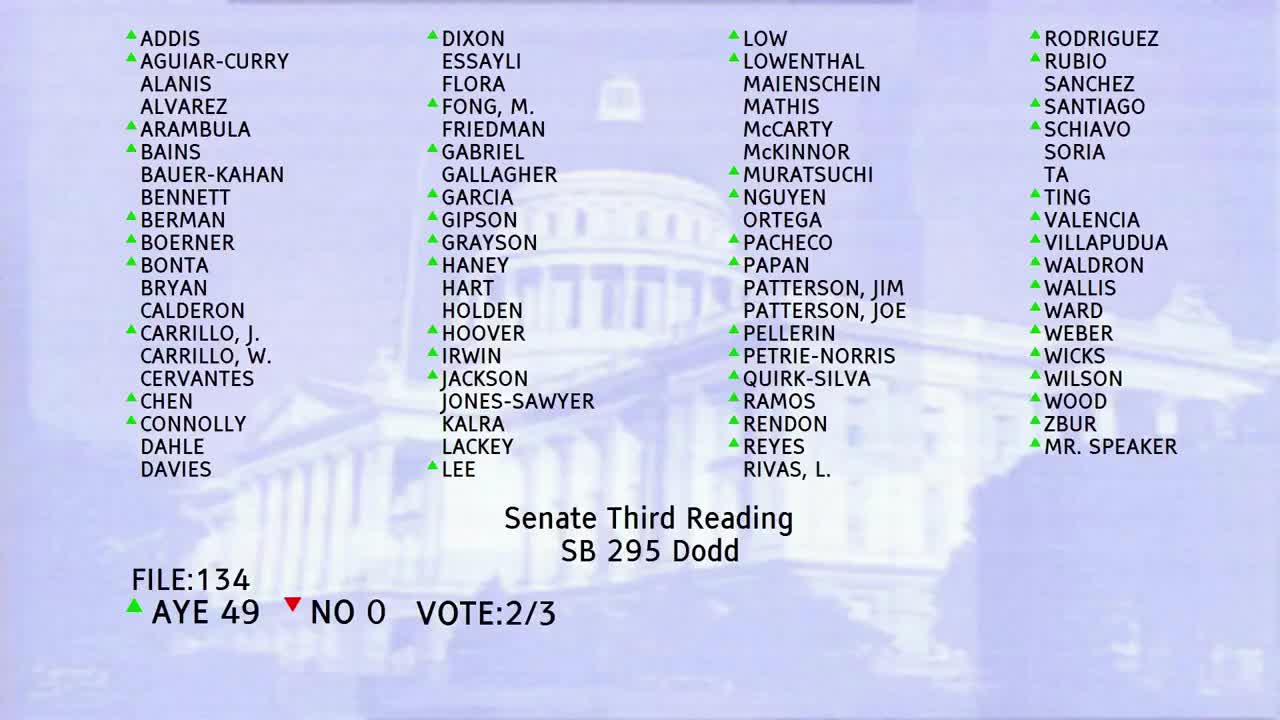
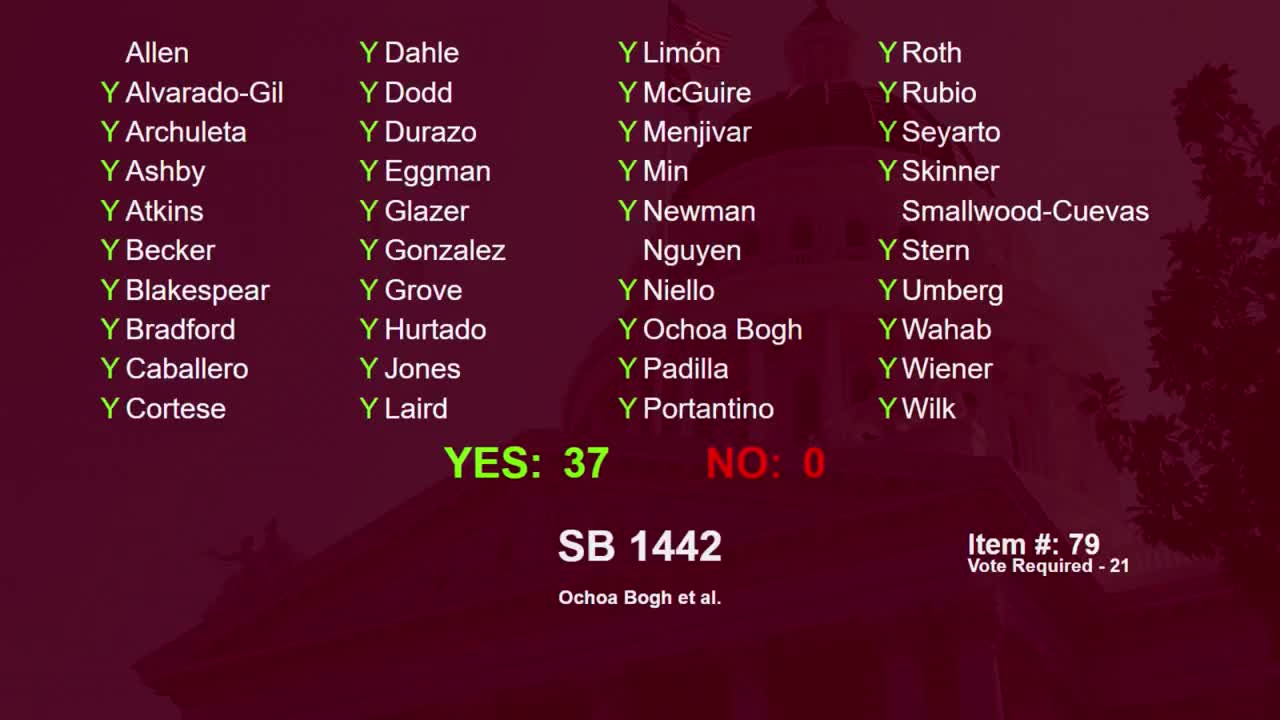
Bill Author