SB 946: Personal Income Tax Law: Corporation Tax Law: exclusions: wildfire mitigation payments.
- Session Year: 2023-2024
- House: Senate
- Latest Version Date: 2024-09-29
Current Status:
Passed
(2024-09-29: Chaptered by Secretary of State. Chapter 987, Statutes of 2024.)
Introduced
In Committee
First Chamber
In Committee
Second Chamber
Enacted
What does this bill do?
For tax years beginning in 2024 through 2028, amounts a residential property owner receives from the California Wildfire Mitigation Financial Assistance Program to pay for wildfire risk‑reduction work are excluded from taxable income. The bill also requires the program’s joint powers authority to report aggregate funds distributed and recipient counts and allows the Franchise Tax Board to share limited taxpayer data with that authority for that reporting.
The summary is provided by generative AI which can make mistakes. For original language, please view the details in the table below.
The Personal Income Tax Law and the Corporation Tax Law, in conformity with federal income tax law, generally defines gross income as income from whatever source derived, except as specifically excluded, and provides various exclusions from gross income.
This bill would, for taxable years beginning on or after January 1, 2024, and before January 1, 2029, provide an exclusion from gross income for amounts received by a qualified taxpayer, as defined, as a California qualified wildfire loss mitigation payment, as defined.
Existing law requires a bill authorizing a new tax expenditure to contain, among other things, specific goals the tax expenditure will achieve, detailed performance indicators, and data collection requirements.
This bill would include additional information required for any bill authorizing a new tax expenditure. The bill would authorize the Franchise Tax Board to provide specified data requested by the joint powers authority, as defined, and would make taxpayer information received by the joint powers authority subject to limitations on the collection and use of that information. By expanding the scope of a crime, this bill would impose a state-mandated local program.
The California Constitution requires the state to reimburse local agencies and school districts for certain costs mandated by the state. Statutory provisions establish procedures for making that reimbursement.
This bill would provide that no reimbursement is required by this act for a specified reason.
This bill would take effect immediately as a tax levy.
The Personal Income Tax Law and the Corporation Tax Law, in conformity with federal income tax law, generally defines gross income as income from whatever source derived, except as specifically excluded, and provides various exclusions from gross income.
This bill would, for taxable years beginning on or after January 1, 2024, and before January 1, 2029, provide an exclusion from gross income for amounts received by a qualified taxpayer, as defined, as a California qualified wildfire loss mitigation payment, as defined.
Existing law requires a bill authorizing a new tax expenditure to contain, among other things, specific goals the tax expenditure will achieve, detailed performance indicators, and data collection requirements.
This bill would include additional information required for any bill authorizing a new tax expenditure.
This bill would take effect immediately as a tax levy.
The Personal Income Tax Law and the Corporation Tax Law, in conformity with federal income tax law, generally defines gross income as income from whatever source derived, except as specifically excluded, and provides various exclusions from gross income.
This bill would, for taxable years beginning on or after January 1, 2024, and before January 1, 2029, provide an exclusion from gross income for amounts received as a California qualified wildfire loss mitigation payment, as defined.
Existing law requires a bill authorizing a new tax expenditure to contain, among other things, specific goals the tax expenditure will achieve, detailed performance indicators, and data collection requirements.
This bill would include additional information required for any bill authorizing a new tax expenditure.
This bill would take effect immediately as a tax levy.
Existing law requires the Office of the State Fire Marshal to establish the Community Wildfire Mitigation Assistance Program to coordinate regional and local efforts with state policies, strategies, and programs for community wildfire mitigation in order to improve wildfire preparedness and prevention, with an emphasis on the most vulnerable communities. Existing law requires the program to, among other things, provide technical assistance to local jurisdictions with community wildfire preparedness and prevention services and identify funding opportunities and best practices, including, but not necessarily limited to, defensible space, structure hardening, fuel reduction around communities, wildland building code standards, and land use planning.This bill would state the intent of the Legislature to enact subsequent legislation related to community hardening to address risks resulting from wildfires.Existing law requires the Office of the State Fire Marshal to establish the Community Wildfire Mitigation Assistance Program to coordinate regional and local efforts with state policies, strategies, and programs for community wildfire mitigation in order to improve wildfire preparedness and prevention, with an emphasis on the most vulnerable communities. Existing law requires the program to, among other things, provide technical assistance to local jurisdictions with community wildfire preparedness and prevention services and identify funding opportunities and best practices, including, but not necessarily limited to, defensible space, structure hardening, fuel reduction around communities, wildland building code standards, and land use planning.
This bill would state the intent of the Legislature to enact subsequent legislation related to community hardening to address risks resulting from wildfires.
(a)For taxable years beginning on or after January 1, 2024, and before January 1, 2029, gross income shall not include any amount received by a qualified taxpayer as a California qualified wildfire loss mitigation payment.
(b)For purposes of this section, the following definitions apply:
(1)California qualified wildfire loss mitigation payment means any amount which is received through the California Wildfire Mitigation Financial Assistance Program under Article 16.5 (commencing with Section 8654.2) of Chapter 7 of Division 1 of Title 2 of the Government Code for the benefit of a residential property owner or occupant with expenses paid, or obligations incurred, for wildfire loss mitigation.
(2)Qualified taxpayer means a taxpayer that owns the structure for which a California qualified wildfire loss mitigation payment was received.
(3)Wildfire loss mitigation means an activity that reduces wildfire risks to a residential structure or its contents, or both.
(c)(1)For the purpose of complying with Section 41, as it relates to the tax exclusion provided by this section and Section 24308.10, the Legislature finds and declares the following:
(A)The specific goal, purpose, and objective of the tax exclusion is to provide relief to qualifying property owners in high fire areas who participate in the California Wildfire Mitigation Financial Assistance Program pursuant to Section 8654.2 of the Government Code.
(B)The performance indicators for the Legislature to use in determining if the exclusion achieves the stated goal, purpose, and objective shall be the number of qualified taxpayers that may be eligible to exclude qualified amounts from gross income, and the aggregate amount of funds distributed from the California Wildfire Mitigation Financial Assistance Program.
(2)(A)No later than December 1, 2029, the joint powers authority created pursuant to Section 8654.4 of the Government Code shall submit a report to the Legislature, in compliance with Section 9795 of the Government Code, detailing, to the extent data is available, the aggregate amount of funds distributed from the California Wildfire Mitigation Financial Assistance Program, and the number of individuals who accepted funds from the program who may be eligible to exclude the income pursuant to this section and Section 24308.10.
(B)Notwithstanding Section 19542, the Franchise Tax Board may provide data related to amounts excluded from gross income pursuant to this section and Section 24308.10, requested by the joint powers authority, to the extent that data is available. Taxpayer information received by the joint powers authority pursuant to this section is subject to Section 19542.
(d)This section shall remain in effect only until December 1, 2029, and as of that date is repealed.
SEC. 2.Section 24308.10 is added to the Revenue and Taxation Code, to read:24308.10.(a)For taxable years beginning on or after January 1, 2024, and before January 1, 2029, gross income shall not include any amount received by a qualified taxpayer as a California qualified wildfire loss mitigation payment.
(b)For purposes of this section, the following definitions apply:
(1)California qualified wildfire loss mitigation payment means any amount which is received through the California Wildfire Mitigation Financial Assistance Program under Article 16.5 (commencing with Section 8654.2) of Chapter 7 of Division 1 of Title 2 of the Government Code for the benefit of a residential property owner or occupant with expenses paid, or obligations incurred, for wildfire loss mitigation.
(2)Qualified taxpayer means a taxpayer that owns the structure for which a California qualified wildfire loss mitigation payment was received.
(3)Wildfire loss mitigation means an activity that reduces wildfire risks to a residential structure or its contents, or both.
(c)This section shall remain in effect only until December 1, 2029, and as of that date is repealed.
SEC. 3.No reimbursement is required by this act pursuant to Section 6 of Article XIIIB of the California Constitution because the only costs that may be incurred by a local agency or school district will be incurred because this act creates a new crime or infraction, eliminates a crime or infraction, or changes the penalty for a crime or infraction, within the meaning of Section 17556 of the Government Code, or changes the definition of a crime within the meaning of Section 6 of Article XIIIB of the California Constitution.
SEC. 4.This act provides for a tax levy within the meaning of Article IV of the California Constitution and shall go into immediate effect.
(a)For taxable years beginning on or after January 1, 2024, and before January 1, 2029, gross income shall not include any amount received by a qualified taxpayer as a California qualified wildfire loss mitigation payment.
(b)For purposes of this section, the following definitions apply:
(1)California qualified wildfire loss mitigation payment means any amount which is received through the California Wildfire Mitigation Financial Assistance Program under Article 16.5 (commencing with Section 8654.2) of Chapter 7 of Division 1 of Title 2 of the Government Code for the benefit of a residential property owner or occupant with expenses paid, or obligations incurred, for wildfire loss mitigation.
(2)Qualified taxpayer means a taxpayer that owns the structure for which a California qualified wildfire loss mitigation payment was received.
(3)Wildfire loss mitigation means an activity that reduces wildfire risks to a residential structure or its contents, or both.
(c)(1)For the purpose of complying with Section 41, as it relates to the tax exclusion provided by this section and Section 24308.10, the Legislature finds and declares the following:
(A)The specific goal, purpose, and objective of the tax exclusion is to provide relief to qualifying property owners in high fire areas who participate in the California Wildfire Mitigation Financial Assistance Program pursuant to Section 8654.2 of the Government Code.
(B)The performance indicators for the Legislature to use in determining if the exclusion achieves the stated goal, purpose, and objective shall be the number of qualified taxpayers that excluded may be eligible to exclude qualified amounts from gross income, and the aggregate amount of funds distributed from the California Wildfire Mitigation Financial Assistance Program.
(2)(A)No later than December 1, 2029, the joint powers authority created pursuant to Section 8654.4 of the Government Code shall submit a report to the Legislature, in compliance with Section 9795 of the Government Code, detailing, to the extent data is available, the number of qualified taxpayers that excluded amounts from gross income pursuant to this section and Section 24308.10, and the aggregate amount of funds distributed from the California Wildfire Mitigation Financial Assistance Program. Program, and the number of individuals who accepted funds from the program who may be eligible to exclude the income pursuant to this section and Section 24308.10.
(B)Notwithstanding Section 19542, the Franchise Tax Board may provide data related to amounts excluded from gross income pursuant to this section and Section 24308.10, requested by the joint powers authority, to the extent that data is available. Taxpayer information received by the joint powers authority pursuant to this section is subject to Section 19542.
(d)This section shall remain in effect only until December 1, 2029, and as of that date is repealed.
SEC. 2.Section 24308.10 is added to the Revenue and Taxation Code, to read:24308.10.(a)For taxable years beginning on or after January 1, 2024, and before January 1, 2029, gross income shall not include any amount received by a qualified taxpayer as a California qualified wildfire loss mitigation payment.
(b)For purposes of this section, the following definitions apply:
(1)California qualified wildfire loss mitigation payment means any amount which is received through the California Wildfire Mitigation Financial Assistance Program under Article 16.5 (commencing with Section 8654.2) of Chapter 7 of Division 1 of Title 2 of the Government Code for the benefit of a residential property owner or occupant with expenses paid, or obligations incurred, for wildfire loss mitigation.
(2)Qualified taxpayer means a taxpayer that owns the structure for which a California qualified wildfire loss mitigation payment was received.
(3)Wildfire loss mitigation means an activity that reduces wildfire risks to a residential structure or its contents, or both.
(c)This section shall remain in effect only until December 1, 2029, and as of that date is repealed.
SEC. 3.No reimbursement is required by this act pursuant to Section 6 of Article XIIIB of the California Constitution because the only costs that may be incurred by a local agency or school district will be incurred because this act creates a new crime or infraction, eliminates a crime or infraction, or changes the penalty for a crime or infraction, within the meaning of Section 17556 of the Government Code, or changes the definition of a crime within the meaning of Section 6 of Article XIIIB of the California Constitution.
SEC. 4.This act provides for a tax levy within the meaning of Article IV of the California Constitution and shall go into immediate effect.
(a)For taxable years beginning on or after January 1, 2024, and before January 1, 2029, gross income shall not include any amount received by a qualified taxpayer as a California qualified wildfire loss mitigation payment.
(b)For purposes of this section, the following definitions apply:
(1)California qualified wildfire loss mitigation payment means any amount which is received through the California Wildfire Mitigation Financial Assistance Program under Article 16.5 (commencing with Section 8654.2) of Chapter 7 of Division 1 of Title 2 of the Government Code for the benefit of a residential property owner or occupant with expenses paid, or obligations incurred, for wildfire loss mitigation.
(2)Qualified taxpayer means a taxpayer that owns a structure on real property located in a designated wildfire hazard area, as defined in Section 8654.6 of the Government Code, if the California Wildfire Mitigation Financial Assistance Program performs wildfire loss mitigation on that property. the structure for which a California qualified wildfire loss mitigation payment was received.
(3)Wildfire loss mitigation means an activity that reduces wildfire risks to a residential structure or its contents, or both.
(c)(1)For the purpose of complying with Section 41, as it relates to the tax exclusion provided by this section and Section 24308.10, the Legislature finds and declares the following:
(A)The specific goal, purpose, and objective of the tax exclusion is to provide relief to qualifying property owners in high fire areas who participate in the California Wildfire Mitigation Financial Assistance Program pursuant to Section 8654.2 of the Government Code.
(B)The performance indicators for the Legislature to use in determining if the exclusion achieves the stated goal, purpose, and objective shall be the number of qualified taxpayers that excluded qualified amounts from gross income, and the aggregate amount of funds distributed from the California Wildfire Mitigation Financial Assistance Program.
(2)(A)No later than December 1, 2029, the joint powers authority created pursuant to Section 8654.4 of the Government Code shall submit a report to the Legislature, in compliance with Section 9795 of the Government Code, detailing, to the extent data is available, the number of qualified taxpayers that excluded amounts from gross income pursuant to this section and Section 24308.10, and the aggregate amount of funds distributed from the California Wildfire Mitigation Financial Assistance Program.
(B)The disclosure provisions of this paragraph shall be treated as an exception to Section 19542. Notwithstanding Section 19542, the Franchise Tax Board may provide data related to amounts excluded from gross income pursuant to this section and Section 24308.10, requested by the joint powers authority, to the extent that data is available. Taxpayer information received by the joint powers authority pursuant to this section is subject to Section 19542.
(d)This section shall remain in effect only until December 1, 2029, and as of that date is repealed.
SEC. 2.Section 24308.10 is added to the Revenue and Taxation Code, to read:24308.10.(a)For taxable years beginning on or after January 1, 2024, and before January 1, 2029, gross income shall not include any amount received by a qualified taxpayer as a California qualified wildfire loss mitigation payment.
(b)For purposes of this section, the following definitions apply:
(1)California qualified wildfire loss mitigation payment means any amount which is received through the California Wildfire Mitigation Financial Assistance Program under Article 16.5 (commencing with Section 8654.2) of Chapter 7 of Division 1 of Title 2 of the Government Code for the benefit of a residential property owner or occupant with expenses paid, or obligations incurred, for wildfire loss mitigation.
(2)Qualified taxpayer means a taxpayer that owns a structure on real property located in a designated wildfire hazard area, as defined in Section 8654.6 of the Government Code, if the California Wildfire Mitigation Financial Assistance Program performs wildfire loss mitigation on that property. the structure for which a California qualified wildfire loss mitigation payment was received.
(3)Wildfire loss mitigation means an activity that reduces wildfire risks to a residential structure or its contents, or both.
(c)This section shall remain in effect only until December 1, 2029, and as of that date is repealed.
SEC. 3.No reimbursement is required by this act pursuant to Section 6 of Article XIIIB of the California Constitution because the only costs that may be incurred by a local agency or school district will be incurred because this act creates a new crime or infraction, eliminates a crime or infraction, or changes the penalty for a crime or infraction, within the meaning of Section 17556 of the Government Code, or changes the definition of a crime within the meaning of Section 6 of Article XIIIB of the California Constitution.
SEC. 3.SEC. 4.This act provides for a tax levy within the meaning of Article IV of the California Constitution and shall go into immediate effect.
(a)For taxable years beginning on or after January 1, 2024, and before January 1, 2029, gross income shall not include any amount received by a qualified taxpayer as a California qualified wildfire loss mitigation payment.
(b)For purposes of this section, the following definitions apply:
(1)California qualified wildfire loss mitigation payment means any amount which is received through the California Wildfire Mitigation Financial Assistance Program under Article 16.5 (commencing with Section 8654.2) of Chapter 7 of Division 1 of Title 2 of the Government Code for the benefit of a residential property owner or occupant with expenses paid, or obligations incurred, for wildfire loss mitigation.
(2)Qualified taxpayer means a taxpayer that owns a structure on real property located in a designated wildfire hazard area, as defined in Section 8654.6 of the Government Code, if the California Wildfire Mitigation Financial Assistance Program performs wildfire loss mitigation on that property.
(2)(3)Wildfire loss mitigation means an activity that reduces wildfire risks to a residential structure or its contents, or both.
(c)(1)For the purpose of complying with Section 41, as it relates to the tax exclusion provided by this section and Section 24308.10, the Legislature finds and declares the following:
(A)The specific goal, purpose, and objective of the tax exclusion is to provide relief to qualifying property owners in high fire areas who participate in the California Wildfire Mitigation Financial Assistance Program pursuant to Section 8654.2 of the Government Code.
(B)The performance indicators for the Legislature to use in determining if the exclusion achieves the stated goal, purpose, and objective shall be the number of qualified taxpayers that excluded qualified amounts from gross income, and the aggregate amount of funds distributed from the California Wildfire Mitigation Financial Assistance Program.
(2)(A)No later than December 1, 2029, the Franchise Tax Board joint powers authority created pursuant to Section 8654.4 of the Government Code shall submit a report to the Legislature, in compliance with Section 9795 of the Government Code, detailing, to the extent data is available, the number of qualified taxpayers that excluded amounts from gross income pursuant to this section and Section 24308.10, and the aggregate amount of funds distributed from the California Wildfire Mitigation Financial Assistance Mitigation Program.
(B)The disclosure provisions of this paragraph shall be treated as an exception to Section 19542.
(d)This section shall remain in effect only until December 1, 2029, and as of that date is repealed.
SEC. 2.Section 24308.10 is added to the Revenue and Taxation Code, to read:24308.10.(a)For taxable years beginning on or after January 1, 2024, and before January 1, 2029, gross income shall not include any amount received by a qualified taxpayer as a California qualified wildfire loss mitigation payment.
(b)For purposes of this section, the following definitions apply:
(1)California qualified wildfire loss mitigation payment means any amount which is received through the California Wildfire Mitigation Financial Assistance Program under Article 16.5 (commencing with Section 8654.2) of Chapter 7 of Division 1 of Title 2 of the Government Code for the benefit of a residential property owner or occupant with expenses paid, or obligations incurred, for wildfire loss mitigation.
(2)Qualified taxpayer means a taxpayer that owns a structure on real property located in a designated wildfire hazard area, as defined in Section 8654.6 of the Government Code, if the California Wildfire Mitigation Financial Assistance Program performs wildfire loss mitigation on that property.
(2)(3)Wildfire loss mitigation means an activity that reduces wildfire risks to a residential structure or its contents, or both.
(c)This section shall remain in effect only until December 1, 2029, and as of that date is repealed.
SEC. 3.This act provides for a tax levy within the meaning of Article IV of the California Constitution and shall go into immediate effect.
(a)For taxable years beginning on or after January 1, 2024, and before January 1, 2029, gross income shall not include any amount received as a California qualified wildfire loss mitigation payment.
(b)For purposes of this section, the following definitions apply:
(1)California qualified wildfire loss mitigation payment means any amount which is received through the California Wildfire Mitigation Financial Assistance Program under Article 16.5 (commencing with Section 8654.2) of Chapter 7 of Division 1 of Title 2 of the Government Code for the benefit of a residential property owner or occupant with expenses paid, or obligations incurred, for wildfire loss mitigation.
(2)Wildfire loss mitigation means an activity that reduces wildfire risks to a residential structure or its contents, or both.
(c)(1)For the purpose of complying with Section 41, as it relates to the tax exclusion provided by this section and Section 24308.10, the Legislature finds and declares the following:
(A)The specific goal, purpose, and objective of the tax exclusion is to provide relief to qualifying property owners in high fire areas who participate in the California Wildfire Mitigation Financial Assistance Program pursuant to Section 8654.2 of the Government Code.
(B)The performance indicators for the Legislature to use in determining if the exclusion achieves the stated goal, purpose, and objective shall be the number of qualified taxpayers that excluded qualified amounts from gross income, and the aggregate amount of funds distributed from the California Wildfire Mitigation Financial Assistance Program.
(2)(A)No later than December 1, 2029, the Franchise Tax Board shall submit a report to the Legislature, in compliance with Section 9795 of the Government Code, detailing, to the extent data is available, the number of qualified taxpayers that excluded amounts from gross income pursuant to this section and Section 24308.10, and the aggregate amount of funds distributed from the California Wildfire Financial Assistance Mitigation Program.
(B)The disclosure provisions of this paragraph shall be treated as an exception to Section 19542.
(d)This section shall remain in effect only until December 1, 2029, and as of that date is repealed.
SEC. 2.Section 24308.10 is added to the Revenue and Taxation Code, to read:24308.10.(a)For taxable years beginning on or after January 1, 2024, and before January 1, 2029, gross income shall not include any amount received as a California qualified wildfire loss mitigation payment.
(b)For purposes of this section, the following definitions apply:
(1)California qualified wildfire loss mitigation payment means any amount which is received through the California Wildfire Mitigation Financial Assistance Program under Article 16.5 (commencing with Section 8654.2) of Chapter 7 of Division 1 of Title 2 of the Government Code for the benefit of a residential property owner or occupant with expenses paid, or obligations incurred, for wildfire loss mitigation.
(2)Wildfire loss mitigation means an activity that reduces wildfire risks to a residential structure or its contents, or both.
(c)This section shall remain in effect only until December 1, 2029, and as of that date is repealed.
SEC. 3.This act provides for a tax levy within the meaning of Article IV of the California Constitution and shall go into immediate effect.
SECTION 1.It is the intent of the Legislature to enact subsequent legislation related to community hardening to address risks resulting from wildfires.It is the intent of the Legislature to enact subsequent legislation related to community hardening to address risks resulting from wildfires.
|
Date
|
Status
|
|---|---|
| Sep 29, 2024 | Chaptered by Secretary of State. Chapter 987, Statutes of 2024. |
| Sep 29, 2024 | Approved by the Governor. |
| Sep 4, 2024 | Enrolled and presented to the Governor at 4 p.m. |
| Aug 28, 2024 | Assembly amendments concurred in. (Ayes 39. Noes 0. Page 5612.) Ordered to engrossing and enrolling. |
| Aug 27, 2024 | Ordered to special consent calendar. |
| Aug 26, 2024 | In Senate. Concurrence in Assembly amendments pending. |
| Aug 26, 2024 | Read third time. Passed. (Ayes 77. Noes 0. Page 6521.) Ordered to the Senate. |
| Aug 22, 2024 | Read third time and amended. |
| Aug 22, 2024 | Ordered to third reading. |
| Aug 22, 2024 | Assembly Rule 69(b)(1) suspended. |
| Aug 19, 2024 | Read second time. Ordered to third reading. |
| Aug 15, 2024 | From committee: Do pass. (Ayes 14. Noes 0.) (August 15). |
| Aug 7, 2024 | August 7 set for first hearing. Placed on suspense file. |
| Jul 3, 2024 | Read second time and amended. Re-referred to Com. on APPR. |
| Jul 2, 2024 | From committee: Do pass as amended and re-refer to Com. on APPR. (Ayes 6. Noes 0.) (July 1). |
| Jul 1, 2024 | July 1 set for first hearing. Placed on REV. & TAX. suspense file. |
| Jun 3, 2024 | Referred to Com. on REV. & TAX. |
| May 24, 2024 | In Assembly. Read first time. Held at Desk. |
| May 23, 2024 | Read third time. Passed. (Ayes 37. Noes 0. Page 4177.) Ordered to the Assembly. |
| May 20, 2024 | Ordered to special consent calendar. |
| May 16, 2024 | Read second time. Ordered to third reading. |
| May 16, 2024 | From committee: Do pass. (Ayes 7. Noes 0. Page 3965.) (May 16). |
| May 14, 2024 | Set for hearing May 16. |
| May 13, 2024 | May 13 hearing: Placed on APPR suspense file. |
| May 9, 2024 | Set for hearing May 13. |
| May 8, 2024 | From committee: Do pass and re-refer to Com. on APPR with recommendation: To consent calendar. (Ayes 6. Noes 0. Page 3865.) (May 8). Re-referred to Com. on APPR. |
| Apr 29, 2024 | From committee with author's amendments. Read second time and amended. Re-referred to Com. on REV. & TAX. |
| Apr 3, 2024 | Re-referred to Com. on REV. & TAX. |
| Mar 14, 2024 | From committee with author's amendments. Read second time and amended. Re-referred to Com. on RLS. |
| Feb 14, 2024 | Referred to Com. on RLS. |
| Jan 19, 2024 | From printer. May be acted upon on or after February 18. |
| Jan 18, 2024 | Introduced. Read first time. To Com. on RLS. for assignment. To print. |
|
Date
|
Description
|
Location
|
Votes
|
|
|---|---|---|---|---|
| Aug 28, 2024 | Special Consent SB946 McGuire | Senate Floor |
Passed |
|
| Aug 26, 2024 | SB 946 McGuire Senate Third Reading By Wood | Assembly Floor |
Passed |
|
| Aug 15, 2024 | Do pass. | Assembly Standing Committee on Appropriations |
Passed |
|
| Jul 1, 2024 | Do pass as amended and be re-referred to the Committee on [Appropriations] | Assembly Standing Committee on Revenue and Taxation |
Passed |
|
| May 23, 2024 | Special Consent SB946 McGuire | Senate Floor |
Passed |
|
| May 16, 2024 | Do pass | Senate Standing Committee on Appropriations |
Passed |
|
| May 13, 2024 | Placed on suspense file | Senate Standing Committee on Appropriations |
Passed |
|
| May 8, 2024 | Do pass, but first be re-referred to the Committee on [Appropriations] with the recommendation: To Consent Calendar | Senate Standing Committee on Revenue and Taxation |
Passed |
This list shows positions taken on this bill by organizations on the date displayed, which is linked to the original source.
Positions by individuals are not included.
|
Organization
|
Position
|
Date
|
|---|---|---|
| Buildstrong America | ** Support | |
| Cal Fire Local 2881 | ** Support | |
| California Builders Alliance | ** Support | |
| California Department of Insurance | ** Support | |
| California Professional Firefighters | ** Support | |
| City of Santa Rosa | ** Support | |
| County Of San Diego | ** Support | |
| Insurance Commissioner Ricardo Lara | ** Support | |
| Rural County Representatives of California | ** Support | |
| Sacramento Regional Builders Exchange | ** Support |
SENATE RULES COMMITTEE Office of Senate Floor Analyses (916) 651-1520 Fax: (916) 327-4478 | SB 946 |
UNFINISHED BUSINESS
Bill No: SB 946
Author: McGuire (D)
Amended: 8/22/24
Vote: 21- Urgency
SENATE REVENUE AND TAXATION COMMITTEE: 6-0, 5/8/24
AYES: Glazer, Dahle, Blakespear, Bradford, Dodd, Skinner
NO VOTE RECORDED: Padilla
SENATE APPROPRIATIONS COMMITTEE: 7-0, 5/16/24
AYES: Caballero, Jones, Ashby, Becker, Bradford, Seyarto, Wahab
SENATE FLOOR: 37-0, 5/23/24
AYES: Alvarado-Gil, Ashby, Atkins, Becker, Blakespear, Bradford, Caballero, Cortese, Dahle, Dodd, Durazo, Eggman, Glazer, Gonzalez, Grove, Hurtado, Jones, Laird, Limón, McGuire, Menjivar, Min, Nguyen, Niello, Ochoa Bogh, Padilla, Portantino, Roth, Rubio, Seyarto, Skinner, Smallwood-Cuevas, Stern, Umberg, Wahab, Wiener, Wilk
NO VOTE RECORDED: Allen, Archuleta, Newman
ASSEMBLY FLOOR: 77-0, 8/26/24 - See last page for vote
SUBJECT: Personal Income Tax Law: Corporation Tax Law: exclusions: wildfire mitigation payments
SOURCE: Author
DIGEST:
This bill excludes from income for Personal Income and Corporation Tax purposes any amount received by a qualified taxpayer as a California qualified wildfire loss mitigation payment through the California Wildfire Mitigation Financial Assistance Program.
Assembly Amendments
(1) Modify the definition of “qualified taxpayer,” (2) Alter the bill’s legislative findings and declarations to comply with Section 41 of the Revenue and Taxation Code to allow the Franchise Tax Board (FTB) to share data regarding any amounts excluded under the bill with the Joint Powers Agency responsible for reporting to the Legislature, (3) Further alter the measure’s Section 41 requirements to require the report to the Legislature to detail “the number of individuals who accepted funds from the program who may be eligible to exclude the income” instead of “the number of qualified taxpayers that excluded amounts from gross income,” (4) Move the bill’s provisions to new code sections to avoid conflicts with SB 1004 (Wilk), and (5) Make technical and conforming changes.
ANALYSIS:
Existing law:
- Allows various income tax credits, deductions, exemptions, and exclusions.
- Includes, in conformity with federal law, as gross income all income from any source, including compensation for services, business income, gains from property, interest, dividends, rents, and royalties, unless specifically excluded.
- Excludes from gross income amounts received as a gift or inheritance, certain compensation for injuries and sickness, qualified scholarships, educational assistance programs, foster care payments, and interest received on certain state or federal obligations.
- Excludes any amount an individual receives as a qualified disaster payment when the payment is used to reimburse or pay reasonable and necessary personal, family, living, or funeral expenses the individual incurred because of a qualified disaster.
- Excludes any amount an individual receives as a qualified disaster payment when the payment is used to reimburse or pay reasonable and necessary expenses the individual incurred for the repair or rehabilitation of a personal residence or repair or replacement of its contents.
- Requires the Office of Emergency Services to enter into a joint powers agreement with the Department of Forestry and Fire Protection to develop and administer a comprehensive wildfire mitigation program to provide financial assistance to create fire-resistant homes, businesses, and public buildings and facilitate vegetation management (AB 38, Wood, Chapter 391, Statutes of 2019).
- Does not specifically exclude from gross income amounts received from wildfire loss mitigation payment through the California Wildfire Mitigation Financial Assistance Program.
This bill:
- Excludes from income for Personal Income and Corporation Tax purposes any amount received by a qualified taxpayer as a California-approved wildfire loss mitigation payment through the California Wildfire Mitigation Financial Assistance Program.
- Applies to taxable years beginning on or after January 1, 2024, and before January 1, 2029, and repeals its provisions on December 1, 2029.
- The measure defines several terms, and makes legislative findings and declarations to comply with Section 41 of the Revenue and Taxation Code.
Background
California Wildfire Mitigation Financial Assistance Program. Through a joint powers agreement, AB 38 created the California Wildfire Mitigation Program (CWMP), which provides funding to local administrators to provide home hardening, vegetation management, defensible space, and other fuel modification activities provide neighborhood or community-wide benefits against wildfire.
Property owners who agree to an assessment can apply for financial assistance. Currently in the pilot phase, the Program accepts applications from property owners in four areas:
- Whitmore in Shasta County (96096 ZIP Code)
- Dulzura in San Diego County (91917 ZIP Code)
- Kelseyville-Riviera in Lake County (95451 ZIP Code)
- Mt. Shasta areas in Siskiyou County (96067 ZIP Code) defensible space only
The programs seeks to assist 500 homes in each pilot area by leveraging funds provided by the Federal Emergency Management Agency (FEMA). The state provides 25% of funding, while FEMA provides 75%.
FISCAL EFFECT: Appropriation: No Fiscal Com.: Yes Local: Yes
According to Assembly Appropriations:
- General Fund (GF) revenue loss of an unknown, but likely significant, amount. FTB notes the magnitude of the potential GF impact depends on the number of qualifying property owners and the total amount of CWMP funds to be distributed, which FTB does not know. However, FTB assumes approximately $1.5 million in GF revenue loss for every $50 million of CWMP payments (applying an average tax rate of 3%). By decreasing PIT and CT revenue, this bill also likely decreases Proposition 98 GF spending by approximately 40% of the revenue loss (the exact amount depends on the specific amount of the annual Proposition 98 guarantee).
- Minor costs to FTB to administer the exclusion.
- Minor and absorbable costs to the Office of Emergency Services (OES), which leads the JPA, to report specified data. OES notes this bill would likely encourage greater participation in the CWMP, but the magnitude of the increase is not easily forecast.
SUPPORT: (Verified 8/27/24)
Insurance Commissioner Ricardo Lara
Buildstrong America
Cal Fire Local 2881
California Builders Alliance
California Department of Insurance
California Professional Firefighters
City of Santa Rosa
County of San Diego
Rural County Representatives of California
Sacramento Regional Builders Exchange
OPPOSITION: (Verified 8/27/24)
None received
ARGUMENTS IN SUPPORT: According to the author, “SB 946 is a common sense piece of legislation that will help the Golden State’s most vulnerable homeowners and communities take proactive measures to protect their homes from catastrophic wildfires. Tens of thousands of Californians have lost their homes and businesses to catastrophic wildfires in just the last nine years. The California Wildfire Mitigation Program (CWMP) was created in 2019 to assist homeowners in making fire resilient improvements to their homes by offering them grants to conduct home hardening projects and vegetation management on their property. However, these grants, which currently are provided to low-income residents and seniors, are considered taxable income under state law. SB 946 ensures Californians who receive home hardening grants through the CWMP would not pay state income tax on those grants.”
ASSEMBLY FLOOR: 77-0, 8/26/24
AYES: Addis, Aguiar-Curry, Alanis, Alvarez, Arambula, Bains, Bauer-Kahan, Bennett, Berman, Boerner, Bonta, Bryan, Calderon, Juan Carrillo, Wendy Carrillo, Chen, Connolly, Megan Dahle, Davies, Dixon, Essayli, Flora, Mike Fong, Friedman, Gabriel, Gallagher, Garcia, Gipson, Grayson, Haney, Hart, Holden, Hoover, Irwin, Jackson, Jones-Sawyer, Kalra, Lackey, Lee, Low, Lowenthal, Maienschein, Mathis, McCarty, McKinnor, Muratsuchi, Stephanie Nguyen, Pacheco, Papan, Jim Patterson, Joe Patterson, Pellerin, Petrie-Norris, Quirk-Silva, Ramos, Rendon, Reyes, Luz Rivas, Rodriguez, Blanca Rubio, Sanchez, Santiago, Schiavo, Soria, Ta, Ting, Valencia, Villapudua, Waldron, Wallis, Ward, Weber, Wicks, Wilson, Wood, Zbur, Robert Rivas
NO VOTE RECORDED: Cervantes, Ortega
Prepared by: Haley Summers / REV. & TAX. / (916) 651-4117
8/27/24 12:23:11
**** END ****
SENATE THIRD READING
STR Bill Id:SB 946
Author:(McGuire)
As Amended Ver:August 22, 2024
Majority vote. Tax Levy
SUMMARY
Excludes from gross income, under the Personal Income Tax (PIT) Law and the Corporation Tax (CT) Law, amounts received by participants in the California Wildfire Mitigation Financial Assistance Program, as specified.
Major Provisions
- Excludes from gross income, for taxable years beginning on or after January 1, 2024, and before January 1, 2029, amounts received by a "qualified taxpayer" as a "California qualified wildfire loss mitigation payment".
- Defines the following terms:
- "California qualified wildfire loss mitigation payment" is any amount that is received through the California Wildfire Mitigation Financial Assistance Program for the benefit of a residential property owner or occupant with expenses paid, or obligations incurred, for wildfire loss mitigation;
- "Qualified taxpayer" is a taxpayer that the structure for which a California qualified wildfire loss mitigation payment was received; and,
- "Wildfire loss mitigation" is an activity that reduces wildfire risks to a residential structure or its contents, or both.
- Finds and declares the following for purposes of satisfying the requirements of Revenue and Taxation Code (R&TC) Section 41:
- The specific goals, purposes, and objectives of this bill are to provide relief to qualifying property owners in high fire areas who participate in the California Wildfire Mitigation Financial Assistance Program.
- To measure whether this bill achieves its intended purpose, the California Wildfire Mitigation Program (CWMP), a joint powers authority comprised of the Governor's Office of Emergency Services (Cal OES) and the Department of Forestry and Fire Protection (Cal Fire), shall prepare a report on the following:
- The number of individuals who accepted funds from the program who may be eligible to exclude the income pursuant to this bill; and,
- The aggregate amount of funds distributed from the California Wildfire Mitigation Financial Assistance Program.
- Requires the CWMP, established pursuant to Government Code Section 8654.4, to provide the report required under this bill to the Legislature on or before November 1, 2029, in compliance with Government Code Section 9795.
COMMENTS
Gross Income. Existing law generally defines gross income as income from whatever source derived, including compensation for services, rent, and gains from property, unless specifically excluded. Thus, various gross income exclusions have been enacted over the years, such as those allowing a taxpayer to exclude a payment received from a government grant program. For example, allocations received under the Small Business and Nonprofit COVID-19 Relief Grant Program are excluded from gross income under PIT and CT Law.
CWMP. AB 38 (Wood), Chapter 391, Statutes of 2019, created the CWMP to develop and administer a comprehensive wildfire mitigation program to encourage cost-effective structure hardening and retrofitting in high-risk, socially vulnerable communities and provide financial assistance for low- and moderate-income households, thus creating more fire-resistant homes, businesses, and public buildings. The Budget Act of 2020 provided $21.9 million GF to match federal Hazard Mitigation Grant Program funds earmarked for the CWMP. Homeowners can receive up to $40,000 for home hardening and defensible space projects. After conducting a statewide assessment of regions with elevated wildfire threat and social vulnerability, six counties were chosen as initial pilot sites for the CWMP: Lake, Siskiyou, Tuolumne, Shasta, and San Diego. The CWMP is set to sunset on July 1, 2025.
This bill excludes a CWMP payment received by a taxpayer from gross income. Absent this bill, a taxpayer who benefits from improvements to their home through the CWMP may face a large and unexpected increase in their state income tax liability. However, this bill would allow an exclusion for payments resulting in wildfire loss mitigation expenditures that may simultaneously increase the value of the property. As noted by the FTB's analysis of this bill, "Providing both an exclusion and allowing the expenditure amount to be added to the basis of the property would have the effect of providing a double benefit for the same item."
Related Legislation. AB 2469 extends the CWMP sunset date by five years. AB 2469 is pending in the Senate Appropriations Committee.
According to the Author
The author has provided the following statement in support of the bill:
SB 946 is a common sense piece of legislation that will help the Golden State's most vulnerable homeowners and communities take proactive measures to protect their homes from catastrophic wildfires. Tens of thousands of Californians have lost their homes and businesses to catastrophic wildfires in just the last nine years. The California Wildfire Mitigation Program (CWMP) was created in 2019 to assist homeowners in making fire resilient improvements to their homes by offering them grants to conduct home hardening projects and vegetation management on their property. However, these grants, which currently are provided to low-income residents and seniors, are considered taxable income under state law. SB 946 ensures Californians who receive home hardening grants through the CWMP would not pay state income tax on those grants.
Arguments in Support
In support of this bill, Insurance Commissioner Ricardo Lara notes, in part:
Created in 2019, CWMP provides grants and educational resources to support homeowners in making fire-resilient improvements to their homes. Funded through a combination of state and federal sources, CWMP financial assistance is currently a pilot program operating in El Dorado, Lake, Shasta, San Diego, Siskiyou, and Tuolumne Counties. Under the program, financial assistance is specifically aimed at the most vulnerable residents, including those with disabilities or language barriers, senior citizens, individuals facing poverty, and those without access to a car. As a result of SB 946, these homeowners would be able to use the whole of funding they receive from CWMP for home hardening projects without worrying about incurring state taxes on these essential improvements.
Arguments in Opposition
None on file.
FISCAL COMMENTS
According to the Assembly Committee on Appropriations:
- General Fund (GF) revenue loss of an unknown, but likely significant, amount. FTB notes the magnitude of the potential GF impact depends on the number of qualifying property owners and the total amount of CWMP funds to be distributed, which FTB does not know. However, FTB assumes approximately $1.5 million in GF revenue loss for every $50 million of CWMP payments (applying an average tax rate of 3%). By decreasing PIT and CT revenue, this bill also likely decreases Proposition 98 GF spending by approximately 40% of the revenue loss (the exact amount depends on the specific amount of the annual Proposition 98 guarantee).
- Minor costs to FTB to administer the exclusion.
- Minor and absorbable costs to the Office of Emergency Services (OES), which leads the JPA, to report specified data. OES notes this bill would likely encourage greater participation in the CWMP, but the magnitude of the increase is not easily forecast.
VOTES
SENATE FLOOR: 37-0-3
YES: Alvarado-Gil, Ashby, Atkins, Becker, Blakespear, Bradford, Caballero, Cortese, Dahle, Dodd, Durazo, Eggman, Glazer, Gonzalez, Grove, Hurtado, Jones, Laird, Limón, McGuire, Menjivar, Min, Nguyen, Niello, Ochoa Bogh, Padilla, Portantino, Roth, Rubio, Seyarto, Skinner, Smallwood-Cuevas, Stern, Umberg, Wahab, Wiener, Wilk
ABS, ABST OR NV: Allen, Archuleta, Newman
ASM REVENUE AND TAXATION: 6-0-1
YES: Irwin, Ta, Bains, Gipson, Grayson, Luz Rivas
ABS, ABST OR NV: Jim Patterson
ASM APPROPRIATIONS: 14-0-1
YES: Wicks, Sanchez, Arambula, Bryan, Calderon, Wendy Carrillo, Dixon, Mike Fong, Grayson, Haney, Hart, Pellerin, Ta, Villapudua
ABS, ABST OR NV: Jim Patterson
UPDATED
VERSION: August 22, 2024
CONSULTANT: Wesley Whitaker / REV. & TAX. / (916) 319-2098 FN: 0004450
SENATE THIRD READING
STR Bill Id:SB 946
Author:(McGuire)
As Amended Ver:July 3, 2024
Majority vote
SUMMARY
Excludes from gross income, under the Personal Income Tax (PIT) Law and the Corporation Tax (CT) Law, amounts received by participants in the California Wildfire Mitigation Financial Assistance Program, as specified.
Major Provisions
- Excludes from gross income, for taxable years beginning on or after January 1, 2024, and before January 1, 2029, amounts received by a "qualified taxpayer" as a "California qualified wildfire loss mitigation payment".
- Defines the following terms:
- "California qualified wildfire loss mitigation payment" is any amount that is received through the California Wildfire Mitigation Financial Assistance Program for the benefit of a residential property owner or occupant with expenses paid, or obligations incurred, for wildfire loss mitigation;
- "Qualified taxpayer" is a taxpayer that the structure for which a California qualified wildfire loss mitigation payment was received; and,
- "Wildfire loss mitigation" is an activity that reduces wildfire risks to a residential structure or its contents, or both.
- Finds and declares the following for purposes of satisfying the requirements of Revenue and Taxation Code (R&TC) Section 41:
- The specific goals, purposes, and objectives of this bill are to provide relief to qualifying property owners in high fire areas who participate in the California Wildfire Mitigation Financial Assistance Program.
- To measure whether this bill achieves its intended purpose, the California Wildfire Mitigation Program (CWMP), a joint powers authority comprised of the Governor's Office of Emergency Services (Cal OES) and the Department of Forestry and Fire Protection (Cal Fire), shall prepare a report on the following:
- The number of taxpayers that excluded qualified amounts from their gross income; and,
- The aggregate amount of funds distributed from the California Wildfire Mitigation Financial Assistance Program.
- Requires the CWMP, established pursuant to Government Code Section 8654.4, to provide the report required under this bill to the Legislature on or before November 1, 2029, in compliance with Government Code Section 9795.
COMMENTS
Gross Income. Existing law generally defines gross income as income from whatever source derived, including compensation for services, rent, and gains from property, unless specifically excluded. Thus, various gross income exclusions have been enacted over the years, such as those allowing a taxpayer to exclude a payment received from a government grant program. For example, allocations received under the Small Business and Nonprofit COVID-19 Relief Grant Program are excluded from gross income under PIT and CT Law.
CWMP. AB 38 (Wood), Chapter 391, Statutes of 2019, created the CWMP to develop and administer a comprehensive wildfire mitigation program to encourage cost-effective structure hardening and retrofitting in high-risk, socially vulnerable communities and provide financial assistance for low- and moderate-income households, thus creating more fire-resistant homes, businesses, and public buildings. The Budget Act of 2020 provided $21.9 million GF to match federal Hazard Mitigation Grant Program funds earmarked for the CWMP. Homeowners can receive up to $40,000 for home hardening and defensible space projects. After conducting a statewide assessment of regions with elevated wildfire threat and social vulnerability, six counties were chosen as initial pilot sites for the CWMP: Lake, Siskiyou, Tuolumne, Shasta, and San Diego. The CWMP is set to sunset on July 1, 2025.
This bill excludes a CWMP payment received by a taxpayer from gross income. Absent this bill, a taxpayer who benefits from improvements to their home through the CWMP may face a large and unexpected increase in their state income tax liability. However, this bill would allow an exclusion for payments resulting in wildfire loss mitigation expenditures that may simultaneously increase the value of the property. As noted by the FTB's analysis of this bill, "Providing both an exclusion and allowing the expenditure amount to be added to the basis of the property would have the effect of providing a double benefit for the same item."
Related Legislation. AB 2469 extends the CWMP sunset date by five years. AB 2469 is pending in the Senate Appropriations Committee.
According to the Author
The author has provided the following statement in support of the bill:
SB 946 is a common sense piece of legislation that will help the Golden State's most vulnerable homeowners and communities take proactive measures to protect their homes from catastrophic wildfires. Tens of thousands of Californians have lost their homes and businesses to catastrophic wildfires in just the last nine years. The California Wildfire Mitigation Program (CWMP) was created in 2019 to assist homeowners in making fire resilient improvements to their homes by offering them grants to conduct home hardening projects and vegetation management on their property. However, these grants, which currently are provided to low-income residents and seniors, are considered taxable income under state law. SB 946 ensures Californians who receive home hardening grants through the CWMP would not pay state income tax on those grants.
Arguments in Support
In support of this bill, Insurance Commissioner Ricardo Lara notes, in part:
Created in 2019, CWMP provides grants and educational resources to support homeowners in making fire-resilient improvements to their homes. Funded through a combination of state and federal sources, CWMP financial assistance is currently a pilot program operating in El Dorado, Lake, Shasta, San Diego, Siskiyou, and Tuolumne Counties. Under the program, financial assistance is specifically aimed at the most vulnerable residents, including those with disabilities or language barriers, senior citizens, individuals facing poverty, and those without access to a car. As a result of SB 946, these homeowners would be able to use the whole of funding they receive from CWMP for home hardening projects without worrying about incurring state taxes on these essential improvements.
Arguments in Opposition
None on file.
FISCAL COMMENTS
According to the Assembly Committee on Appropriations:
- General Fund (GF) revenue loss of an unknown, but likely significant, amount. FTB notes the magnitude of the potential GF impact depends on the number of qualifying property owners and the total amount of CWMP funds to be distributed, which FTB does not know. However, FTB assumes approximately $1.5 million in GF revenue loss for every $50 million of CWMP payments (applying an average tax rate of 3%). By decreasing PIT and CT revenue, this bill also likely decreases Proposition 98 GF spending by approximately 40% of the revenue loss (the exact amount depends on the specific amount of the annual Proposition 98 guarantee).
- Minor costs to FTB to administer the exclusion.
- Minor and absorbable costs to the Office of Emergency Services (OES), which leads the JPA, to report specified data. OES notes this bill would likely encourage greater participation in the CWMP, but the magnitude of the increase is not easily forecast.
VOTES
SENATE FLOOR: 37-0-3
YES: Alvarado-Gil, Ashby, Atkins, Becker, Blakespear, Bradford, Caballero, Cortese, Dahle, Dodd, Durazo, Eggman, Glazer, Gonzalez, Grove, Hurtado, Jones, Laird, Limón, McGuire, Menjivar, Min, Nguyen, Niello, Ochoa Bogh, Padilla, Portantino, Roth, Rubio, Seyarto, Skinner, Smallwood-Cuevas, Stern, Umberg, Wahab, Wiener, Wilk
ABS, ABST OR NV: Allen, Archuleta, Newman
ASM REVENUE AND TAXATION: 6-0-1
YES: Irwin, Ta, Bains, Gipson, Grayson, Luz Rivas
ABS, ABST OR NV: Jim Patterson
ASM APPROPRIATIONS: 14-0-1
YES: Wicks, Sanchez, Arambula, Bryan, Calderon, Wendy Carrillo, Dixon, Mike Fong, Grayson, Haney, Hart, Pellerin, Ta, Villapudua
ABS, ABST OR NV: Jim Patterson
UPDATED
VERSION: July 3, 2024
CONSULTANT: Wesley Whitaker / REV. & TAX. / (916) 319-2098 FN: 0003973
Date of Hearing: August 7, 2024
ASSEMBLY COMMITTEE ON APPROPRIATIONS
Buffy Wicks, Chair
SBPCA Bill Id:SB 946
Author:(McGuire) – As Amended Ver:July 3, 2024
Policy Committee: | Revenue and Taxation | Vote: | 6 - 0 |
|
| ||
|
|
Urgency: No State Mandated Local Program: Yes Reimbursable: No
SUMMARY:
This bill excludes from gross income, under the Personal Income Tax (PIT) Law and Corporation Tax (CT) Law, payment amounts received by a qualified taxpayer through the California Wildfire Mitigation Program (CWMP).
Specifically, this bill enacts the exclusion for taxable years beginning on or after January 1, 2024, and before January 1, 2029. This bill declares the goal of the new exclusion and requires, by December 1, 2029, the joint powers authority (JPA) administering the CWMP to report specified taxpayer and program data to the Legislature. The Franchise Tax Board (FTB) may provide related taxpayer data to the JPA.
FISCAL EFFECT:
- General Fund (GF) revenue loss of an unknown, but likely significant, amount. FTB notes the magnitude of the potential GF impact depends on the number of qualifying property owners and the total amount of CWMP funds to be distributed, which FTB does not know. However, FTB assumes approximately $1.5 million in GF revenue loss for every $50 million of CWMP payments (applying an average tax rate of 3%). By decreasing PIT and CT revenue, this bill also likely decreases Proposition 98 GF spending by approximately 40% of the revenue loss (the exact amount depends on the specific amount of the annual Proposition 98 guarantee).
- Minor costs to FTB to administer the exclusion.
- Minor and absorbable costs to the Office of Emergency Services (OES), which leads the JPA, to report specified data. OES notes this bill would likely encourage greater participation in the CWMP, but the magnitude of the increase is not easily forecast.
According to the Legislative Analyst’s Office, the GF faces a structural deficit in the tens of billions of dollars over the next several fiscal years.
COMMENTS:
- Purpose. The author notes that CWMP grants are provided to low-income residents and seniors to help them make fire resilient improvements to their homes through home hardening projects and vegetation management. By excluding grant amounts from state income tax, the author intends this bill to “help the Golden State’s most vulnerable homeowners and communities take proactive measures to protect their homes from catastrophic wildfires.” This bill is supported by Insurance Commissioner Ricardo Lara, the California Professional Firefighters, and builder groups.
- Background.
Gross Income. Existing law generally defines gross income as income from whatever source derived, including compensation for services, rent, and gains from property, unless specifically excluded. Thus, various gross income exclusions have been enacted over the years, such as those allowing a taxpayer to exclude a payment received from a government grant program. For example, allocations received under the Small Business and Nonprofit COVID-19 Relief Grant Program are excluded from gross income under PIT and CT Law.
CWMP. AB 38 (Wood), Chapter 391, Statutes of 2019, created the CWMP to develop and administer a comprehensive wildfire mitigation program to encourage cost-effective structure hardening and retrofitting in high-risk, socially vulnerable communities and provide financial assistance for low- and moderate-income households, thus creating more fire-resistant homes, businesses, and public buildings. The Budget Act of 2020 provided $21.9 million GF to match federal Hazard Mitigation Grant Program funds earmarked for the CWMP. Homeowners can receive up to $40,000 for home hardening and defensible space projects. After conducting a statewide assessment of regions with elevated wildfire threat and social vulnerability, six counties were chosen as initial pilot sites for the CWMP: Lake, Siskiyou, Tuolumne, Shasta, and San Diego. The CWMP is set to sunset on July 1, 2025.
This bill excludes a CWMP payment received by a taxpayer from gross income. Absent this bill, a taxpayer who benefits from improvements to their home through the CWMP may face a large and unexpected increase in their state income tax liability. However, this bill would allow an exclusion for payments resulting in wildfire loss mitigation expenditures that may simultaneously increase the value of the property. As noted by the FTB’s analysis of this bill, “Providing both an exclusion and allowing the expenditure amount to be added to the basis of the property would have the effect of providing a double benefit for the same item.”
- Related Legislation. AB 2469 extends the CWMP sunset date by five years. AB 2469 is pending in the Senate Appropriations Committee.
Analysis Prepared by: Irene Ho / APPR. / (916) 319-2081
Date of Hearing: July 1, 2024
ASSEMBLY COMMITTEE ON REVENUE AND TAXATION
Jacqui Irwin, Chair
SBPCA Bill Id:SB 946
Author:(McGuire) – As Amended Ver:April 29, 2024
Majority vote. Tax levy. Fiscal committee.
SENATE VOTE: 37-0
SUBJECT: Personal Income Tax Law: Corporation Tax Law: exclusions: wildfire mitigation payments
SUMMARY: Excludes from gross income, under the Personal Income Tax (PIT) Law and the Corporation Tax (CT) Law, amounts received by participants in the California Wildfire Mitigation Financial Assistance Program, as specified. Specifically, this bill:
- Excludes from gross income, for taxable years beginning on or after January 1, 2024, and before January 1, 2029, amounts received by a "qualified taxpayer" as a "California qualified wildfire loss mitigation payment".
- Defines the following terms:
- "California qualified wildfire loss mitigation payment" is any amount that is received through the California Wildfire Mitigation Financial Assistance Program for the benefit of a residential property owner or occupant with expenses paid, or obligations incurred, for wildfire loss mitigation;
- "Qualified taxpayer" is a taxpayer that owns a structure on real property located in a designated wildfire hazard area, as defined in Government Code Section 8654.6, if the California Wildfire Mitigation Financial Assistance Program performs wildfire loss mitigation on that property; and,
- "Wildfire loss mitigation" is an activity that reduces wildfire risks to a residential structure or its contents, or both.
- Finds and declares the following for purposes of satisfying the requirements of Revenue and Taxation Code (R&TC) Section 41:
- The specific goals, purposes, and objectives of this bill are to provide relief to qualifying property owners in high fire areas who participate in the California Wildfire Mitigation Financial Assistance Program.
- To measure whether this bill achieves its intended purpose, the California Wildfire Mitigation Program (CWMP), a joint powers authority comprised of the Governor's Office of Emergency Services (Cal OES) and the Department of Forestry and Fire Protection (Cal Fire), shall prepare a report on the following:
- The number of taxpayers that excluded qualified amounts from their gross income; and,
- The aggregate amount of funds distributed from the California Wildfire Mitigation Financial Assistance Program.
- Requires the CWMP, established pursuant to Government Code Section 8654.4, to provide the report required under this bill to the Legislature on or before November 1, 2029, in compliance with Government Code Section 9795.
- Provides that the disclosure requirements of this bill shall be treated as an exception to R&TC Section 19542.
- Takes immediate effect as a tax levy.
- Sunsets the exclusion's statutory provisions on December 1, 2029.
EXISTING LAW:
- Generally defines gross income as income from whatever source derived, except as specifically excluded. (R&TC Section 17131 et seq.)
- Requires any bill authorizing a new tax expenditure to contain all of the following:
- Specific goals, purposes, and objectives that the tax expenditure will achieve;
- Detailed performance indicators for the Legislature to use when measuring whether the tax expenditure meets the goals, purposes, and objectives stated in the bill; and,
- Data collection requirements to enable the Legislature to determine whether the tax expenditure is meeting, failing to meet, or exceeding those specific goals, purposes, and objectives. The requirements shall include the specific data and baseline measurements to be collected and remitted in each year the expenditure is in effect, for the Legislature to measure the change in performance indicators, and the specific taxpayers, state agencies, or other entities required to collect and remit data. (R&TC Section 41.)
- Establishes the California Wildfire Mitigation Financial Assistance Program, which requires Cal OES to enter into a joint powers agreement with Cal Fire to develop and administer a comprehensive wildfire mitigation program that does both of the following:
- Encourages cost-effective structure hardening and retrofitting that creates fire-resistant homes, businesses, and public buildings; and,
- Facilitates vegetation management, the creation and maintenance of defensible space, and other fuel modification activities that provide neighborhood or communitywide benefits against wildfire. (Government Code Section 8654.4.)
- Provides that the designated wildfire hazard areas eligible for financial assistance under the wildfire mitigation program includes the following:
- Local responsibility areas located within a very high fire hazard severity zone, as designated pursuant to Government Code Section 51179, subdivisions (a) and (b);
- State responsibility areas located within any fire hazard severity zone, as indicated on maps adopted by Cal Fire pursuant to Public Resources Code Section 4202; and,
- Any other lands designated by the joint powers authority. (Government Code Section 8654.6.)
FISCAL EFFECT: Unknown, however, for every $100 million of payments received by qualified taxpayers, the FTB estimates a General Fund revenue loss of approximately $3 million.
COMMENTS:
- The author has provided the following statement in support of this bill:
SB 946 is a common sense piece of legislation that will help the Golden State's most vulnerable homeowners and communities take proactive measures to protect their homes from catastrophic wildfires. Tens of thousands of Californians have lost their homes and businesses to catastrophic wildfires in just the last nine years. The California Wildfire Mitigation Program (CWMP) was created in 2019 to assist homeowners in making fire resilient improvements to their homes by offering them grants to conduct home hardening projects and vegetation management on their property. However, these grants, which currently are provided to low-income residents and seniors, are considered taxable income under state law. SB 946 ensures Californians who receive home hardening grants through the CWMP would not pay state income tax on those grants.
- In support of this bill, Insurance Commissioner Ricardo Lara notes, in part:
Created in 2019, CWMP provides grants and educational resources to support homeowners in making fire-resilient improvements to their homes. Funded through a combination of state and federal sources, CWMP financial assistance is currently a pilot program operating in El Dorado, Lake, Shasta, San Diego, Siskiyou, and Tuolumne Counties. Under the program, financial assistance is specifically aimed at the most vulnerable residents, including those with disabilities or language barriers, senior citizens, individuals facing poverty, and those without access to a car. As a result of SB 946, these homeowners would be able to use the whole of funding they receive from CWMP for home hardening projects without worrying about incurring state taxes on these essential improvements.
- Committee Staff Comments:
- What is a "tax expenditure"? Existing law provides various credits, deductions, exclusions, and exemptions for particular taxpayer groups. In the late 1960s, U.S. Treasury officials began arguing that these features of the tax law should be referred to as "expenditures" since they are generally enacted to accomplish some governmental purpose and there is a determinable cost associated with each (in the form of foregone revenues).
As the Department of Finance notes in its annual Tax Expenditure Report, there are several key differences between tax expenditures and direct expenditures. First, tax expenditures are typically reviewed less frequently than direct expenditures. Second, there is generally no control over the amount of revenue losses associated with any given tax expenditure. Finally, it should also be noted that, once enacted, it takes a two-thirds vote to rescind an existing tax expenditure absent a sunset date. This effectively results in a "one-way ratchet" whereby tax expenditures can be conferred by majority vote, but cannot be rescinded, irrespective of their efficacy or cost, without a supermajority vote. Impact of wildfires in California: Wildfires occur every year in California and are a source of significant anxiety for Californians who live and work in high fire hazard severity zones. California experienced record-breaking wildfires in 2020 and 2021. In 2020 alone, over 4.3 million acres burned in the state as a result of 8,648 fires.[1] In 2021, California experienced more than 8,800 fires that burned over 2.5 million acres, damaging and/or destroying roughly 3,600 structures and causing thousands of evacuations.[2] According to a KQED and CalMatters investigation in 2020, about 2 million people aged 65 and older live in areas where wildfire is a serious threat.[3] The average age of the people who died during the 2017 fires in Sonoma and Napa Counties was 73 and the average age of the people who died in the 2018 Camp fire was 72.
- The California Wildfire Mitigation Financial Assistance Program: Created as part of
AB 38 (Wood), Chapter 391, Statutes of 2019, the California Wildfire Mitigation Financial Assistance Program was created to assist homeowners in making fire resilient improvements to their homes. The program provides financial assistance through grants and education to support home hardening work for homeowners in high fire severity zones. The program is funded through a mixture of state and federal funding, where homeowners could receive up to $40,000 for home hardening and defensible space projects. Currently, Lake, Siskiyou, Tuolumne, Shasta, and San Diego Counties are prioritized as demonstration counties by identifying the overlap of high wildfire risk and high social vulnerability at the parcel and census-tract level. Counties were ranked on 14 different factors, which resulted in a risk rating and a vulnerability rating for each county. Wildfire risk and social vulnerability factors were calculated based only on the part of each county in a Fire Hazard Severity Zone. - What problem is this bill attempting to solve? Existing law provides that gross income includes all income, from whatever source derived, including compensation for services, business income, gains from property, interest, dividends, rents, and royalties, unless specifically excluded. Examples of items specifically excluded are amounts received as a gift or inheritance, certain compensation for injuries or sickness, and foster care payments. While not codified in federal law, the Internal Revenue Service has also applied the "general welfare doctrine" to provide that gross income does not include certain payments made to or on behalf of individuals by governmental units under governmentally provided social benefit programs based on need. Consistent with this treatment for federal tax purposes, this bill creates an explicit income exclusion for qualified taxpayers that benefit from the California Wildfire Mitigation Financial Assistance Program. Absent this change in law, residents who benefit from improvements to their residences through this program may face a large and unexpected increase in their state income tax liability.
- Committee's tax expenditure policy: Both R&TC Section 41 and Committee policy require any tax expenditure bill to outline specific goals, purposes, and objectives that the tax expenditure will achieve, along with detailed performance indicators for the Legislature to use when measuring whether the tax expenditure meets those stated goals, purposes, and objectives. A tax expenditure bill will not be eligible for a Committee vote unless it has complied with these requirements.
This bill states that the income exclusion is designed to provide relief to qualifying property owners in high fire areas who participate in the California Wildfire Mitigation Financial Assistance Program. In addition, this bill provides that the exclusion's effectiveness shall be measured by the number of taxpayers excluding income received as part of their participation in the California Wildfire Mitigation Financial Assistance Program.
- What is a "tax expenditure"? Existing law provides various credits, deductions, exclusions, and exemptions for particular taxpayer groups. In the late 1960s, U.S. Treasury officials began arguing that these features of the tax law should be referred to as "expenditures" since they are generally enacted to accomplish some governmental purpose and there is a determinable cost associated with each (in the form of foregone revenues).
In addition to the R&TC Section 41 requirements, this Committee's policy also requires that all tax expenditure proposals contain an appropriate sunset provision to be eligible for a vote. According to the policy, an "appropriate sunset provision" means five years, except in the case of a tax expenditure measure providing relief to California veterans, in which case "appropriate sunset provision" means ten years. This bill complies with the Committee's policy on sunset dates.
- Technical amendments:
- Consistent definitions: As currently drafted, this bill defines both "California qualified wildfire loss mitigation payment" and "qualified taxpayer". In order to better reflect the author's intent of restricting this income exclusion to those who participate in the California Wildfire Mitigation Financial Assistance Program, the author has agreed to amend the definition of "qualified taxpayer" as follows:
- Technical amendments:
"Qualified taxpayer" means a taxpayer that owns the structure for which a California qualified wildfire loss mitigation payment was received.
- Ensure taxpayer privacy: As currently drafted, this bill provides an exception to R&TC Section 19542, which makes it a misdemeanor for any officer or employee of the state to disclose individual taxpayer information, except as otherwise provided. Because Cal OES and Cal Fire, through their joint powers agreement, are responsible for providing the information and report required by this bill to the Legislature, the author has agreed to replace Section 17138.7(c)(2)(B) with the following language:
Notwithstanding Section 19542 of the Revenue and Taxation Code, the Franchise Tax Board may provide data related to amounts excluded from gross income pursuant to this section and section 24308.10, requested by the joint power authority, to the extent that data is available. Taxpayer information received by the joint power authority pursuant to this section is subject to Section 19542 of the Revenue and Taxation Code.
- Related legislation:
- AB 1973 (Lackey) would exclude from gross income settlement amounts received by qualifying taxpayers related to the Bobcat Fire. AB 1973 is pending hearing by the Senate Committee on Appropriations.
- SB 1004 (Wilk) excludes from gross income settlement amounts received by qualifying taxpayers related to a wildfire in California. SB 1004 is currently pending on this Committee's Suspense File.
- AB 294 (Petrie-Norris) would have excluded from gross income settlement amounts received by qualifying taxpayers related to a wildfire in California for a period of five years. AB 294 was held on the Assembly Appropriations Committee's Suspense File.
- AB 582 (Connolly) would have provided a tax credit for seniors residing in high or very high-risk fire zones, as specified, who incur "qualified expenses" relating to fire-resistant home improvements. AB 582 held on the Assembly Appropriations Committee's Suspense File.
- Prior legislation:
- SB 131 (Committee on Budget and Fiscal Review), Chapter 55, Statutes of 2023, excluded from gross income, under the PIT Law and the CT Law, settlement amounts received by qualifying taxpayers related to the Kincade or Zogg Fires.
- SB 1246 (Stern), Chapter 841, Statutes of 2022, excluded from gross income, under the PIT Law and the CT Law, settlement amounts received by qualifying taxpayers related to the Thomas or Woolsey Fires.
- AB 1249 (Gallagher), Chapter 749, Statutes of 2022, excluded from gross income, under the PIT Law and the CT Law, settlement amounts disbursed from the Fire Victims Trust to qualified taxpayers related to the Butte Fire, North Bay Fires, or the Camp Fire.
- AB 324 (Choi), of the 2021-22 Legislative Session, allowed a tax credit for qualified taxpayers that install an attic vent closure in a residential property, as specified. AB 324 was held on the Assembly Appropriations Committee's Suspense File.
- AB 266 (Choi), of the 2019-20 Legislative Session, substantially similar to AB 324, was held on the Assembly Appropriations Committee's Suspense File.
- SB 84 (Committee on Budget and Fiscal Review), Chapter 25, Statutes of 2016, excluded from gross income an amount received as a loan, loan forgiveness, grant, credit, rebate, voucher, or incentive from the California Residential Mitigation Program or the California Earthquake Authority to assist a residential property owner or occupant with expenses or obligations incurred for earthquake loss mitigation, as defined.
- Related legislation:
REGISTERED SUPPORT / OPPOSITION:
Support
Buildstrong America
Cal Fire Local 2881
California Builders Alliance
California Professional Firefighters
Insurance Commissioner Ricardo Lara / California Department of Insurance
Rural County Representatives of California (RCRC)
Sacramento Regional Builders Exchange
San Diego; County of
Opposition
None on file
Analysis Prepared by: Wesley Whitaker / REV. & TAX. / (916) 319-2098
2020 Wildfire Activity Statistics, California Department of Forestry and Fire Protection. https://www.fire.ca.gov/our-impact/statistics. ↑
2021 Annual Report, California Department of Forestry and Fire Protection. https://bof.fire.ca.gov/media/j3obcuoq/final-2021-bof-annual-report.pdf. ↑
Benichou, Millions of Older Californians Live Where Wildfire Threatens. Mostly, They're on Their Own, KQED (August 14, 2020). https://www.kqed.org/science/1968417/millions-of-older-californians-live-where-wildfire-threatens-mostly-theyre-on-their-own. ↑
SENATE RULES COMMITTEE Office of Senate Floor Analyses (916) 651-1520 Fax: (916) 327-4478 | SB 946 |
THIRD READING
Bill No: SB 946
Author: McGuire (D)
Amended: 4/29/24
Vote: 21
SENATE REVENUE AND TAXATION COMMITTEE: 6-0, 5/8/24
AYES: Glazer, Dahle, Blakespear, Bradford, Dodd, Skinner
NO VOTE RECORDED: Padilla
SENATE APPROPRIATIONS COMMITTEE: 7-0, 5/16/24
AYES: Caballero, Jones, Ashby, Becker, Bradford, Seyarto, Wahab
SUBJECT: Personal Income Tax Law: Corporation Tax Law: exclusions: wildfire mitigation payments
SOURCE: Author
DIGEST:
This bill excludes from income for Personal Income and Corporation Tax purposes any amount received by a qualified taxpayer as a California qualified wildfire loss mitigation payment through the California Wildfire Mitigation Financial Assistance Program.
ANALYSIS:
Existing law:
- Allows various income tax credits, deductions, exemptions, and exclusions.
- Includes, in conformity with federal law, as gross income all income from any source, including compensation for services, business income, gains from property, interest, dividends, rents, and royalties, unless specifically excluded.
- Excludes from gross income amounts received as a gift or inheritance, certain compensation for injuries and sickness, qualified scholarships, educational assistance programs, foster care payments, and interest received on certain state or federal obligations.
- Excludes any amount an individual receives as a qualified disaster payment when the payment is used to reimburse or pay reasonable and necessary personal, family, living, or funeral expenses the individual incurred because of a qualified disaster.
- Excludes any amount an individual receives as a qualified disaster payment when the payment is used to reimburse or pay reasonable and necessary expenses the individual incurred for the repair or rehabilitation of a personal residence or repair or replacement of its contents.
- Requires the Office of Emergency Services to enter into a joint powers agreement with the Department of Forestry and Fire Protection to develop and administer a comprehensive wildfire mitigation program to provide financial assistance to create fire-resistant homes, businesses, and public buildings and facilitate vegetation management (AB 38, Wood, Chapter 391, Statutes of 2019).
- Does not specifically exclude from gross income amounts received from wildfire loss mitigation payment through the California Wildfire Mitigation Financial Assistance Program.
This bill:
- Excludes from income for Personal Income and Corporation Tax Purposes any amount received by a qualified taxpayer as a California-approved wildfire loss mitigation payment through the California Wildfire Mitigation Financial Assistance Program.
- The exclusion applies beginning in the 2024 taxable year, and ends after the 2028 taxable year.
- The measure defines several terms, and makes legislative findings and declarations to comply with Section 41 of the Revenue and Taxation Code.
Background
California Wildfire Mitigation Financial Assistance Program. Through a joint powers agreement, AB 38 created the California Wildfire Mitigation Program, which provides funding to local administrators to provide home hardening, vegetation management, defensible space, and other fuel modification activities provide neighborhood or community-wide benefits against wildfire.
Property owners who agree to an assessment can apply for financial assistance. Currently in the pilot phase, the Program accepts applications from property owners in four areas:
- Whitmore in Shasta County (96096 ZIP Code)
- Dulzura in San Diego County (91917 ZIP Code)
- Kelseyville-Riviera in Lake County (95451 ZIP Code)
- Mt. Shasta areas in Siskiyou County (96067 ZIP Code) defensible space only
The programs seeks to assist 500 homes in each pilot area by leveraging funds provided by the Federal Emergency Management Agency (FEMA). The state provides 25% of funding, while FEMA provides 75%.
FISCAL EFFECT: Appropriation: No Fiscal Com.: Yes Local: No
According to the Senate Appropriations Committee:
FTB estimates that for every $100 million in qualified settlement income received, the General Fund revenue loss would be approximately $3 million. FTB’s costs to implement the bill have yet to be identified.
SUPPORT: (Verified 5/15/24)
Cal Fire Local 2881
California Professional Firefighters
County of San Diego
Rural County Representatives of California
OPPOSITION: (Verified 5/15/24)
None received
ARGUMENTS IN SUPPORT: According to the author:
“SB 946 is a common sense piece of legislation that will help the Golden State’s most vulnerable homeowners and communities take proactive measures to protect their homes from catastrophic wildfires. Tens of thousands of Californians have lost their homes and businesses to catastrophic wildfires in just the last nine years. The California Wildfire Mitigation Program (CWMP) was created in 2019 to assist homeowners in making fire resilient improvements to their homes by offering them grants to conduct home hardening projects and vegetation management on their property. However, these grants, which currently are provided to low-income residents and seniors, are considered taxable income under state law. SB 946 ensures Californians who receive home hardening grants through the CWMP would not pay state income tax on those grants.”
Click here to enter text.
Prepared by: Haley Summers / REV. & TAX. / (916) 651-4117
5/17/24 11:56:20
**** END ****
SENATE COMMITTEE ON APPROPRIATIONS
Senator Anna Caballero, Chair
2023 - 2024 Regular Session
SB 946 (McGuire) - Personal Income Tax Law: Corporation Tax Law: exclusions: wildfire mitigation payments
Version: April 29, 2024 | Policy Vote: REV. & TAX. 6 - 0 |
Urgency: No | Mandate: No |
Hearing Date: May 13, 2024 | Consultant: Robert Ingenito |
Bill Summary:
SB 946 would enact personal income and corporation tax exclusions for amounts received by a qualified taxpayer as a California qualified wildfire loss mitigation payment through the California Wildfire Mitigation Financial Assistance Program.
Fiscal Impact:
The Franchise Tax Board (FTB) estimates that for every $100 million in qualified settlement income received, the General Fund revenue loss would be approximately $3 million. FTB’s costs to implement the bill have yet to be identified.
Background:
Tax expenditure programs (TEPs) are special tax provisions that reduce the amount of revenues the “basic” tax system would otherwise generate in order to provide (1) benefits to certain groups of taxpayers, and/or (2) incentives to encourage certain types of behavior and activities, such as charitable giving. Specifically, current law provides for, among other things, various income and corporation tax credits and deductions, as well as exemptions from the sales and use tax. The Department of Finance is required to publish a list of TEPs (currently totaling several hundred), which currently exceed $87 billion annually.
Federal and state law generally allows taxpayers to exclude income from settlements from gross income if the amount received resulted from a personal physical injury or physical sickness. Additionally, payments received as a reimbursement of costs, such as those paid to rebuild a destroyed home, are excluded from gross income. However, amounts resulting from emotional distress are included when calculating gross income, unless the emotional distress is the result of physical injury or sickness. In some cases, federal and state law requires inclusion of attorney's fees resulting from a settlement in the calculation of gross income. To the extent that any settlement payment exceeds costs incurred or paid in connection with the event that caused the settlement, that income may be taxable.
The California Wildfire Mitigation Financial Assistance Program, created in 2019, provides funding to local administrators to provide home hardening, vegetation management, defensible space, and other fuel modification activities provide neighborhood or community-wide benefits against wildfire. Property owners who agree to an assessment can apply for financial assistance. The Program is currently accepts applications from property owners in four areas: (1) Whitmore (Shasta County), (2) Dulzura (San Diego County), (3) Kelseyville-Riviera (Lake County), and (4) Mt. Shasta areas (Siskiyou County) defensible space only.
The Program is still in the pilot phase, and seeks to assist 500 homes in each pilot area by leveraging funds provided by the Federal Emergency Management Agency (FEMA). The State provides 25 percent of funding, while FEMA provides the remainder.
The Program makes improvements to a homeowner’s property; under current law, those improvements may be considered taxable income to the homeowner.
Proposed Law:
This bill would, for taxable years 2024 through 2028, exclude from income for personal income and corporation tax purposes any amount received by a qualified taxpayer as a California-approved wildfire loss mitigation payment through the California Wildfire Mitigation Financial Assistance Program.
Related Legislation:
- AB 294 (Petri-Norris) would have provided a qualified taxpayer an exclusion from gross income for amounts received from a settlement entity for a wildfire. The bill held under submission on the Suspense File of the Assembly Appropriations Committee.
- AB 1973 (Lackey) would provide a qualified taxpayer an exclusion from gross income for any amount received from a settlement entity in connection with the 2020 Bobcat Fire. This bill is currently pending in the Assembly Appropriations Committee.
- SB 542 (Dahle) would provide a qualified taxpayer an exclusion from gross income for amounts received from a settlement entity to replace property damaged or destroyed in connection with the 2021 Dixie Fire or the 2022 Mill Fire. This bill is currently pending in the Assembly Appropriations Committee.
- SB 952 (Dahle) would allow two home fire safety tax credits for qualified home hardening and qualified vegetation management, collectively known as the Fire Safe Home Tax Credits Act. This bill is currently pending in this Committee.
- SB 927 (Dahle) would provide a qualified taxpayer an exclusion from gross income for qualified amounts received from a settlement entity to replace property damaged or destroyed in a natural disaster declared a state of emergency by the Governor and the President of the United States. This bill is currently pending in this Committee.
- SB 1004 (Wilk, 2023/2024) would provide a qualified taxpayer an exclusion from gross income for amounts received from a settlement entity for a wildfire. This bill is currently pending in this Committee.
- SB 131 (Committee on Budget and Fiscal Review, Chapter 55, Statutes of 2023) among other things provides an exclusion from gross income for amounts received for settlement payments as a result of the 2019 Kincade Fire and 2020 Zogg fire.
- AB 1249 (Gallagher, Chapter 749, Statutes of 2022) provides an exclusion from gross income for amounts received in settlement under the order of the United States Bankruptcy Court for the Northern District of California dated June 20, 2020, case number 19-30088, docket number 8053.
- SB 1246 (Stern, Chapter 841, Statutes of 2022) provides an exclusion from gross income for amounts received from Southern California Edison in settlement for claims relating to the 2017 Thomas Fire or the 2018 Woolsey Fire and allow refunds of tax previously paid on those amounts.
Staff Comments:
FTB notes that, to determine the magnitude of the bill’s potential revenue loss, both the number of qualifying residential property owners and the amount of funds distributed from the California Wildlife Mitigation Financial Assistance Program must be known. Because it is difficult to predict both, FTB indicates that the revenue impact to the General Fund is unknown. However, using an average tax rate of 3 percent, FTB assumes that for every $100 million in qualified settlement income received, the estimated revenue loss would be approximately $3 million.
-- END --
SENATE COMMITTEE ON REVENUE AND TAXATION
Senator Steven Glazer, Chair
2023 - 2024 Regular
Bill No: | SB 946 | Hearing Date: | 5/8/24 |
Author: | McGuire | Tax Levy: | Yes |
Version: | 4/29/24 Amended | Fiscal: | Yes |
Consultant: | Grinnell | ||
Personal Income Tax Law: Corporation Tax Law: exclusions: wildfire mitigation payments
Excludes from income for Personal Income and Corporation Tax purposes any amount received by a qualified taxpayer as a California qualified wildfire loss mitigation payment through the California Wildfire Mitigation Financial Assistance Program.
Background
Tax expenditures. California law allows various income tax credits, deductions, exemptions, and exclusions. The Legislature enacts such tax incentives either to compensate taxpayers for incurring certain expenses, such as child adoption, or to influence certain behavior, such as charitable giving. The Legislature uses tax incentives to encourage taxpayers to do something that but for the tax credit, they would otherwise not do. The Department of Finance is required annually to publish a list of tax expenditures, currently totaling around $87 billion per year.
Income. Existing federal and state laws provide that gross income includes all income from any source, including compensation for services, business income, gains from property, interest, dividends, rents, and royalties, unless specifically excluded. Existing federal and state laws provide that certain types of income are excluded from gross income, such as amounts received as a gift or inheritance, certain compensation for injuries and sickness, and qualified scholarships, among others. Federal and state law additionally exclude any amount an individual receives as a qualified disaster payment; however, this exclusion only applies to payments to:
- Reimburse or pay reasonable and necessary personal, family, living, or funeral expenses the individual incurred because of a qualified disaster; or
- Reimburse or pay reasonable and necessary expenses the individual incurred for the repair or rehabilitation of a personal residence or repair or replacement of its contents, to the extent the need for such repair, rehabilitation, or replacement is attributable to a qualified disaster.
California Wildfire Mitigation Financial Assistance Program. In 2019, the Legislature required the Office of Emergency Services (OES) to enter into a joint powers agreement with the Department of Forestry and Fire Protection (CAL FIRE) to develop and administer a comprehensive wildfire mitigation program to provide financial assistance to create fire-resistant homes, businesses, and public buildings and facilitate vegetation management (AB 38, Wood, 2019). Known as the California Wildfire Mitigation Program, it provides funding to local administrators to provide home hardening, vegetation management, defensible space, and other fuel modification activities provide neighborhood or community-wide benefits against wildfire. Property owners who agree to an assessment can apply for financial assistance. Currently in the pilot phase, the Program accepts applications from property owners in four areas:
- Whitmore in Shasta County (96096 ZIP Code)
- Dulzura in San Diego County (91917 ZIP Code)
- Kelseyville-Riviera in Lake County (95451 ZIP Code)
- Mt. Shasta areas in Siskiyou County (96067 ZIP Code) defensible space only
The programs seeks to assist 500 homes in each pilot area by leveraging funds provided by the Federal Emergency Management Agency (FEMA). The state provides 25% of funding, while FEMA provides 75%.
Because the Program makes improvements to a homeowner’s property, those improvements may be considered taxable income to the homeowner. The author wants to exclude amounts used to benefit a residential property owner or occupant for taking wildfire loss mitigation measures from being classified as taxable income.
Proposed Law
Senate Bill 946 excludes from income for Personal Income and Corporation Tax Purposes any amount received by a qualified taxpayer as a California-approved wildfire loss mitigation payment through the California Wildfire Mitigation Financial Assistance Program. The exclusion applies beginning in the 2024 taxable year, and ends after the 2028 taxable year. The measure defines several terms, and makes legislative findings and declarations to comply with Section 41 of the Revenue and Taxation Code.
State Revenue Impact
The Franchise Tax Board estimates that for each $100 million of payments, the estimated revenue loss is $3 million.
Comments
1. Purpose of the bill. According to the author, “SB 946 is a common sense piece of legislation that will help the Golden State’s most vulnerable homeowners and communities take proactive measures to protect their homes from catastrophic wildfires. Tens of thousands of Californians have lost their homes and businesses to catastrophic wildfires in just the last nine years. The California Wildfire Mitigation Program (CWMP) was created in 2019 to assist homeowners in making fire resilient improvements to their homes by offering them grants to conduct home hardening projects and vegetation management on their property. However, these grants, which currently are provided to low-income residents and seniors, are considered taxable income under state law. SB 946 ensures Californians who receive home hardening grants through the CWMP would not pay state income tax on those grants.”
2. Revenue loss. Existing tax law provides various credits, deductions, exclusions, and exemptions for certain taxpayers. Since these items are enacted to accomplish some governmental purpose and determined to have a cost — in the form of foregone revenues — state law refers to them as "tax expenditures." This bill would create a new tax expenditure, costing the General Fund in foregone revenue. As a result, the state will have to reduce spending or increase taxes to match the foregone revenue.
3. No conformity. While following several precedents in state law, this bill creates an income exclusion not allowed for federal taxes unless and until Congress acts to enact a similar exclusion. As a result, taxpayers may have to include the same income for federal purposes that they would exclude for state purposes, which can create confusion for taxpayers.
4. Section 41. Section 41 of the Revenue and Taxation Code requires any bill enacting a new tax expenditure to contain, among other things, specific goals, purposes, and objectives that the tax expenditure will achieve and detailed performance indicators, along with data collection and reporting requirements (SB 1335, Leno, 2014). To satisfy these requirements SB 946 sets as its goal, purpose, and objective to provide relief to qualifying property owners in high fire areas who participate in the California Wildfire Mitigation Financial Assistance Program. The bill identifies as its performance indicator the number of qualified taxpayers that excluded qualified amounts from gross income, and the aggregate amount of funds distributed from the California Wildfire Mitigation Financial Assistance Program. The bill then directs the administrators of the program to detail, to the extent data is available, the number of qualified taxpayers that excluded amounts from gross income due to the bill, and the aggregate amount of funds distributed from the California Wildfire Financial Assistance Mitigation Program
Support and Opposition
(5/6/24)
Support: Cal Fire Local 2881
California Professional Firefighters
County of San Diego
Rural County Representatives of California (RCRC)
Opposition: None submitted.
-- END --
Discussed in Hearing
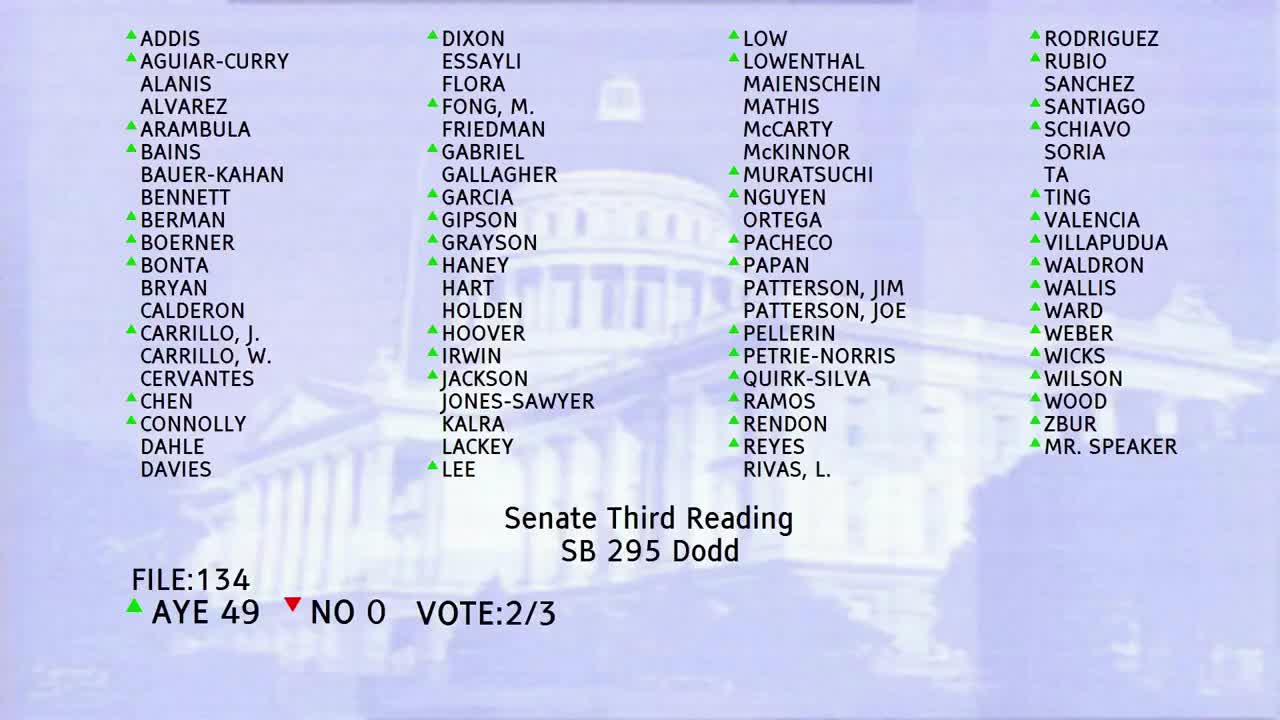 1MIN
Assembly Floor
 3MIN
Assembly Standing Committee on Revenue and Taxation
Bill Author

Bill Co-Author(s):