SB 961: Vehicles: safety equipment.
- Session Year: 2023-2024
- House: Senate
- Latest Version Date: 2024-09-05
Current Status:
Failed
(2024-09-28: In Senate. Consideration of Governor's veto pending.)
Introduced
In Committee
First Chamber
In Committee
Second Chamber
Enacted
What does this bill do?
Starting with the 2030 model year, most new passenger cars, trucks, and buses sold or leased in California must include a built‑in passive intelligent speed assistance system that detects the road’s speed limit and gives a brief visual and audio alert whenever the driver goes more than 10 miles per hour over the limit. The requirement exempts emergency vehicles, motorcycles, mopeds, heavy trucks with certain federal speed controls, and passenger vehicles lacking GPS or a front-facing camera; manufacturers must be able to fully disable the system for emergency use, and the system must apply the higher speed if limits conflict.
The summary is provided by generative AI which can make mistakes. For original language, please view the details in the table below.
Existing law prohibits a person from driving a vehicle upon a highway at a speed greater than the speed limit. Existing law also prohibits a person from driving a vehicle upon a highway at a speed greater than is reasonable or prudent having due regard for weather, visibility, the traffic on, and the surface and width of, the highway, and in no event at a speed that endangers the safety of persons or property.
This bill would require, commencing with the 2030 model year, every passenger vehicle, motortruck, and bus manufactured, sold as new, or leased as new in the state to be equipped with a passive intelligent speed assistance system, as specified, that would utilize a brief, one-time, visual and audio signal to alert the driver each time the speed of the vehicle is more than 10 miles per hour over the speed limit. The bill would exempt emergency vehicles, certain motortrucks, motorcycles, motorized bicycles, mopeds, and certain passenger vehicles from this requirement. The bill would require the system to be capable of being fully disabled, by the manufacturer or a franchisee, for emergency vehicles. The bill would require the system, if the system receives conflicting speed limits for the same area, to apply the higher speed limit.
A violation of the above requirements would be punishable as a crime.
By creating a new criminal offense, this bill would impose a state-mandated local program.
The California Constitution requires the state to reimburse local agencies and school districts for certain costs mandated by the state. Statutory provisions establish procedures for making that reimbursement.
This bill would provide that no reimbursement is required by this act for a specified reason.
Existing law prohibits a person from driving a vehicle upon a highway at a speed greater than the speed limit. Existing law also prohibits a person from driving a vehicle upon a highway at a speed greater than is reasonable or prudent having due regard for weather, visibility, the traffic on, and the surface and width of, the highway, and in no event at a speed that endangers the safety of persons or property.
This bill would require, commencing with the 2030 model year, certain new vehicles every passenger vehicle, motortruck, and bus manufactured, sold as new, or leased as new in the state to be equipped with a passive intelligent speed assistance system, as specified, that would utilize a brief, one-time, visual and audio signal to alert the driver each time the speed of the vehicle is more than 10 miles per hour over the speed limit. The bill would exempt emergency vehicles, certain motortrucks, motorcycles, motorized bicycles, mopeds, and certain passenger vehicles from this requirement. The bill would require all specified vehicles to be capable of having the system fully disabled, the system to be capable of being fully disabled, by the manufacturer or a franchisee, as specified. for emergency vehicles. The bill would require the system, if the system receives conflicting speed limits for the same area, to apply the higher speed limit. The bill would exempt emergency vehicles and certain passenger vehicles from this requirement.
A violation of the above requirements would be punishable as a crime.
By creating a new criminal offense, this bill would impose a state-mandated local program.
The California Constitution requires the state to reimburse local agencies and school districts for certain costs mandated by the state. Statutory provisions establish procedures for making that reimbursement.
This bill would provide that no reimbursement is required by this act for a specified reason.
Existing law prohibits a person from driving a vehicle upon a highway at a speed greater than the speed limit. Existing law also prohibits a person from driving a vehicle upon a highway at a speed greater than is reasonable or prudent having due regard for weather, visibility, the traffic on, and the surface and width of, the highway, and in no event at a speed that endangers the safety of persons or property.
This bill would require, commencing with the 2030 model year, certain new vehicles to be equipped with a passive intelligent speed assistance system, as specified, that would utilize a brief, one-time, visual and audio signal to alert the driver each time the speed of the vehicle is more than 10 miles per hour over the speed limit. The bill would require all specified vehicles to be capable of having the system fully disabled, by the manufacturer or a franchisee, as specified. The bill would require the system, if the system receives conflicting speed limits for the same area, to apply the higher speed limit. The bill would exempt emergency vehicles and certain passenger vehicles from this requirement.
A violation of the above requirements would be punishable as a crime.
By creating a new criminal offense, this bill would impose a state-mandated local program.
The California Constitution requires the state to reimburse local agencies and school districts for certain costs mandated by the state. Statutory provisions establish procedures for making that reimbursement.
This bill would provide that no reimbursement is required by this act for a specified reason.
Existing law prohibits a person from driving a vehicle upon a highway at a speed greater than the speed limit. Existing law also prohibits a person from driving a vehicle upon a highway at a speed greater than is reasonable or prudent having due regard for weather, visibility, the traffic on, and the surface and width of, the highway, and in no event at a speed that endangers the safety of persons or property.
This bill would require 50% of certain vehicles, require, commencing with the 2029 2030 model year, certain vehicles to be equipped with a passive intelligent speed assistance system, as specified, that would utilize a brief, one-time, visual and audio signal to alert the driver each time the speed of the vehicle is more than 10 miles per hour over the speed limit. The bill would require all specified vehicles, commencing with the 2032 model year, to be equipped in the above-described manner. vehicles to be capable of having the system fully disabled, by the manufacturer or a franchisee, as specified. The bill would require the system, if the system receives conflicting speed limits for the same area, to apply the higher speed limit. The bill would exempt emergency vehicles and certain passenger vehicles from this requirement.
A violation of the above requirements would be punishable as a crime.
By creating a new criminal offense, this bill would impose a state-mandated local program.
The California Constitution requires the state to reimburse local agencies and school districts for certain costs mandated by the state. Statutory provisions establish procedures for making that reimbursement.
This bill would provide that no reimbursement is required by this act for a specified reason.
Existing law prohibits a person from driving a vehicle upon a highway at a speed greater than the speed limit. Existing law also prohibits a person from driving a vehicle upon a highway at a speed greater than is reasonable or prudent having due regard for weather, visibility, the traffic on, and the surface and width of, the highway, and in no event at a speed that endangers the safety of persons or property.
This bill would require 50% of certain vehicles, commencing with the 2029 model year, to be equipped with a passive intelligent speed assistance system, as specified, that would utilize a brief, one-time, visual and audio signal to alert the driver each time the speed of the vehicle is more than 10 miles per hour over the speed limit. The bill would require all specified vehicles, commencing with the 2032 model year, to be equipped in the above-described manner. The bill would require the system, if the system receives conflicting speed limits for the same area, to apply the higher speed limit. The bill would exempt emergency vehicles from this requirement and would authorize the Commissioner of the California Highway Patrol to authorize the permanent disabling of the system on other vehicles based on specified criteria. requirement.
A violation of the above requirements would be punishable as a crime.
By creating a new criminal offense, this bill would impose a state-mandated local program.
Existing law authorizes the Director of General Services to perform certain duties, including, among others, developing specialized consideration of all traffic problems of the state.This bill would require the Office of Fleet and Asset Management, within the Department of General Services, to establish a pilot program that equips state vehicles with an active intelligent speed system, as defined. The bill would require the department to equip the designated vehicles with the system for a minimum of 12 months, and collect certain data. The bill would require the office, on or before January 1, 2027, and each January 1 thereafter until 2030, to report the impact of the program to the Legislature. The bill would authorize the department to discontinue the program if the department determines that it is not technologically feasible to meet the needs of the state while fulfilling the requirements of the program.The California Constitution requires the state to reimburse local agencies and school districts for certain costs mandated by the state. Statutory provisions establish procedures for making that reimbursement.
This bill would provide that no reimbursement is required by this act for a specified reason.
Existing law prohibits a person from driving a vehicle upon a highway at a speed greater than the speed limit. Existing law also prohibits a person from driving a vehicle upon a highway at a speed greater than is reasonable or prudent having due regard for weather, visibility, the traffic on, and the surface and width of, the highway, and in no event at a speed that endangers the safety of persons or property.
This bill would require 50% of certain vehicles, commencing with the 2029 model year, to be equipped with a passive intelligent speed assistance system, as specified, that would utilize a brief, one-time, visual and audio signals signal to alert the driver if each time the speed of the vehicle is more than 5 10 miles per hour over the speed limit. The bill would require all specified vehicles, commencing with the 2032 model year, to be equipped in the above-described manner. The bill would require the system, if the system receives conflicting speed limits for the same area, to apply the higher speed limit. The bill would exempt emergency vehicles from this requirement and would authorize the Commissioner of the California Highway Patrol to authorize the permanent disabling of the system on other vehicles based on specified criteria.
A violation of the above requirements would be punishable as a crime.
By creating a new criminal offense, this bill would impose a state-mandated local program.
Existing law authorizes the Director of General Services to perform certain duties, including, among others, developing specialized consideration of all traffic problems of the state.
This bill would require the Office of Fleet and Asset Management, within the Department of General Services, to establish a pilot program that equips state vehicles with an active intelligent speed system, as defined. The bill would require the department to equip the designated vehicles with the system for a minimum of 12 months, and collect certain data. The bill would require the office, on or before January 1, 2027, and each January 1 thereafter until 2030, to report the impact of the program to the Legislature. The bill would authorize the department to discontinue the program if the department determines that it is not technologically feasible to meet the needs of the state while fulfilling the requirements of the program.
The California Constitution requires the state to reimburse local agencies and school districts for certain costs mandated by the state. Statutory provisions establish procedures for making that reimbursement.
This bill would provide that no reimbursement is required by this act for a specified reason.
Under existing law, the Department of the California Highway Patrol regulates the safe operation of specified vehicles, including motortrucks of 3 or more axles that are more than 10,000 pounds, truck tractors, trailers, semitrailers, and buses. Existing federal law regulates required safety equipment on vehicles, including rear impact guards on certain large trucks to prevent rear underrides in collisions with passenger vehicles.
This bill would require certain trucks and trailers to also be equipped with side guards, as specified. The bill would also require the department to adopt rules and regulations requiring driver inspections of side guards and requiring the department to inspect side guards that have been involved in collisions.
Existing law prohibits a person from driving a vehicle upon a highway at a speed greater than the speed limit.
This bill would require 50% of certain vehicles, commencing with the 2027 2029 model year, to be equipped with an a passive intelligent speed limiter, assistance system, as specified, that would limit utilize visual and audio signals to alert the driver if the speed of the vehicle to 10 is more than 5 miles per hour over the speed limit. The bill would require all specified vehicles, commencing with the 2032 model year, to be equipped in the above-described manner. The bill would require the system, if the system receives conflicting speed limits for the same area, to apply the higher speed limit. The bill would exempt emergency vehicles from this requirement and would authorize the Commissioner of the California Highway Patrol to authorize the permanent disabling of the system on other vehicles based on specified criteria.
A violation of either of these prohibitions the above requirements would be punishable as a crime.
By creating a new criminal offense, this bill would impose a state-mandated local program.
Existing law authorizes the Director of General Services to perform certain duties, including, among others, developing specialized consideration of all traffic problems of the state.
This bill would require the Office of Fleet and Asset Management, within the Department of General Services, to establish a pilot program that equips state vehicles with an active intelligent speed system, as defined. The bill would require the department to equip the designated vehicles with the system for a minimum of 12 months, and collect certain data. The bill would require the office, on or before January 1, 2027, and each January 1 thereafter until 2030, to report the impact of the program to the Legislature. The bill would authorize the department to discontinue the program if the department determines that it is not technologically feasible to meet the needs of the state while fulfilling the requirements of the program.
The California Constitution requires the state to reimburse local agencies and school districts for certain costs mandated by the state. Statutory provisions establish procedures for making that reimbursement.
This bill would provide that no reimbursement is required by this act for a specified reason.
Under existing law, the Department of the California Highway Patrol regulates the safe operation of specified vehicles, including motortrucks of 3 or more axles that are more than 10,000 pounds, truck tractors, trailers, semitrailers, and buses. Existing federal law regulates required safety equipment on vehicles, including rear impact guards on certain large trucks to prevent rear underrides in collisions with passenger vehicles.
This bill would require certain trucks and trailers to also be equipped with side guards, as specified. The bill would also require the department to adopt rules and regulations requiring driver inspections of side guards and requiring the department to inspect side guards that have been involved in collisions.
Existing law prohibits a person from driving a vehicle upon a highway at a speed greater than the speed limit.
This bill would require certain vehicles, commencing with the 2027 model year, to be equipped with an intelligent speed limiter, as specified, that would limit the speed of the vehicle to 10 miles per hour over the speed limit. The bill would exempt emergency vehicles from this requirement and would authorize the Commissioner of the California Highway Patrol to authorize the disabling of the system on other vehicles based on specified criteria.
A violation of either of these prohibitions would be punishable as a crime.
By creating a new criminal offense, this bill would impose a state-mandated local program.
The California Constitution requires the state to reimburse local agencies and school districts for certain costs mandated by the state. Statutory provisions establish procedures for making that reimbursement.
This bill would provide that no reimbursement is required by this act for a specified reason.
(a)As used in this article, passive intelligent speed assistance system means an integrated vehicle system that determines the speed limit of the roadway that the vehicle is traveling on, and utilizes a brief, one-time visual and audio signal to alert the driver each time they exceed the speed limit by more than 10 miles per hour.
(b)If an intelligent speed assistance system receives conflicting speed limits for the same area, the system shall utilize the higher speed limit.
(c)This article does not preclude a manufacturer from implementing any of the following:
(1)Providing alternative types of feedback to the driver, including, but not limited to, vibrations or pedal resistance.
(2)Providing repetitive, successive, or ongoing warnings each time a vehicle exceeds the speed threshold as described in subdivision (a).
(3)Providing additional warnings or feedback to the driver in either of the following circumstances:
(A)The driver is traveling at a threshold lower than 10 miles per hour above the speed limit.
(B)The driver is traveling at a threshold greater than 10 miles per hour above the speed limit.
(4)Adding supplemental or additional warnings that differ from the system requirement described in subdivision (a).
28171.(a)Commencing with the 2030 model year, every passenger vehicle, motortruck, and bus manufactured, sold as new, or leased as new in the state shall be equipped with a passive intelligent speed assistance system.
(b)Subdivision (a) does not apply to any of the following:
(1)A motortruck with a gross vehicle weight rating greater than 8,500 pounds for which a federal motor vehicle safety standard of any kind or character exists requiring either the passive or active control of speed.
(2)A passenger vehicle that is not equipped with at least one of the following:
(A)A Global Positioning System (GPS).
(B)A front-facing camera.
(3)A motorcycle, as defined in Section 400.
(4)A motorized bicycle or moped, as defined in Section 406.
(c)A passive intelligent speed assistance system shall be capable of being fully disabled by the manufacturer or a franchisee, for the purpose described in Section 28172.
28172.Section 28171 does not apply to any vehicle purchased, sold, or used as an authorized emergency vehicle, as defined in Section 165.
SEC. 2.No reimbursement is required by this act pursuant to Section 6 of Article XIIIB of the California Constitution because the only costs that may be incurred by a local agency or school district will be incurred because this act creates a new crime or infraction, eliminates a crime or infraction, or changes the penalty for a crime or infraction, within the meaning of Section 17556 of the Government Code, or changes the definition of a crime within the meaning of Section 6 of Article XIIIB of the California Constitution.
(a)As used in this article, passive intelligent speed assistance system means an integrated vehicle system that determines the speed limit of the roadway that the vehicle is traveling on, and utilizes a brief, one-time visual and audio signal to alert the driver each time they exceed the speed limit by more than 10 miles per hour.
(b)If an intelligent speed assistance system receives conflicting speed limits for the same area, the system shall utilize the higher speed limit.
(c)This article does not preclude a manufacturer from implementing any of the following:
(1)Providing alternative types of feedback to the driver, including, but not limited to, vibrations or pedal resistance.
(2)Providing repetitive, successive, or ongoing warnings each time a vehicle exceeds the speed threshold as described in subdivision (a).
(3)Providing additional warnings or feedback to the driver in either of the following circumstances:
(A)The driver is traveling at a threshold lower than 10 miles per hour above the speed limit.
(B)The driver is traveling at a threshold greater than 10 miles per hour above the speed limit.
(4)Adding supplemental or additional warnings that differ from the system requirement described in subdivision (a).
28171.(a)Commencing with the 2030 model year, every sold as new passenger vehicle, motortruck, and bus manufactured or sold manufactured, sold as new, or leased as new in the state shall be equipped with a passive intelligent speed assistance system. This subdivision does not apply to motortrucks
(b)Subdivision (a) does not apply to any of the following:
(1)A motortruck with a gross vehicle weight rating greater than 8,500 pounds for which a federal motor vehicle safety standard of any kind or character exists requiring either the passive or active control of speed.
(b)(2)A passive intelligent speed assistance system is not required on a passenger vehicle that is not equipped with either a GPS or front-facing camera. at least one of the following:
(A)A Global Positioning System (GPS).
(B)A front-facing camera.
(3)A motorcycle, as defined in Section 400.
(4)A motorized bicycle or moped, as defined in Section 406.
(c)A passive intelligent speed assistance system shall be capable of being fully disabled by the manufacturer or a franchisee, for the purpose described in Section 28172.
28172.Section 28171 does not apply to any vehicle purchased or sold purchased, sold, or used as an authorized emergency vehicle. vehicle, as defined in Section 165.
SEC. 2.No reimbursement is required by this act pursuant to Section 6 of Article XIIIB of the California Constitution because the only costs that may be incurred by a local agency or school district will be incurred because this act creates a new crime or infraction, eliminates a crime or infraction, or changes the penalty for a crime or infraction, within the meaning of Section 17556 of the Government Code, or changes the definition of a crime within the meaning of Section 6 of Article XIIIB of the California Constitution.
(a)As used in this article, passive intelligent speed assistance system means an integrated vehicle system that uses, at minimum, the Global Positioning System (GPS) location of the vehicle compared with a database of posted speed limits, to determine determines the speed limit, limit of the roadway that the vehicle is traveling on, and utilizes a brief, one-time visual and audio signal to alert the driver each time they exceed the speed limit by more than 10 miles per hour.
(b)If an intelligent speed assistance system receives conflicting speed limits for the same area, the system shall utilize the higher speed limit.
(c)This article does not preclude a manufacturer from implementing any of the following:
(1)Providing alternative types of feedback to the driver, including, but not limited to, vibrations or pedal resistance.
(2)Providing repetitive, successive, or ongoing warnings each time a vehicle exceeds the speed threshold as described in subdivision (a).
(3)Providing additional warnings or feedback to the driver in either of the following circumstances:
(A)The driver is traveling at a threshold lower than 10 miles per hour above the speed limit.
(B)The driver is traveling at a threshold greater than 10 miles per hour above the speed limit.
(4)Adding supplemental or additional warnings that differ from the system requirement described in subdivision (a).
28171.(a)Commencing with the 2030 model year, every sold as new passenger vehicle, motortruck, or and bus manufactured or sold in the state shall be equipped with a passive intelligent speed assistance system. This subdivision does not apply to motortrucks with a gross vehicle weight rating greater than 8,500 pounds for which a federal motor vehicle safety standard of any kind or character exists requiring either the passive or active control of speed.
(b)A passive intelligent speed assistance system is not required on a passenger vehicle that is not equipped with either a GPS or front-facing camera.
(c)A passive intelligent speed assistance system shall be capable of being fully disabled by the manufacturer or a franchisee, for the purpose described in Section 28172.
28172.Section 28171 does not apply to any vehicle purchased or sold as an authorized emergency vehicle.
SEC. 2.No reimbursement is required by this act pursuant to Section 6 of Article XIIIB of the California Constitution because the only costs that may be incurred by a local agency or school district will be incurred because this act creates a new crime or infraction, eliminates a crime or infraction, or changes the penalty for a crime or infraction, within the meaning of Section 17556 of the Government Code, or changes the definition of a crime within the meaning of Section 6 of Article XIIIB of the California Constitution.
(a)As used in this article, passive intelligent speed assistance system means an integrated vehicle system that uses, at minimum, the GPS Global Positioning System (GPS) location of the vehicle compared with a database of posted speed limits, to determine the speed limit, and utilizes a brief, one-time visual and audio signal to alert the driver each time they exceed the speed limit by more than 10 miles per hour.
(b)If an intelligent speed assistance system receives conflicting speed limits for the same area, the system shall utilize the higher speed limit.
28171.(a)Commencing with the 2029 2030 model year, 50 percent of passenger vehicles, motortrucks, and buses every passenger vehicle, motortruck, or bus manufactured or sold in the state shall be equipped with a passive intelligent speed assistance system. This subdivision does not apply to motortrucks with a gross vehicle weight rating greater than 8,500 pounds for which a federal motor vehicle safety standard of any kind or character exists requiring either the passive or active control of speed.
(b)Commencing with the 2032 model year, every passenger vehicle, motortruck, and bus manufactured or sold in the state shall be equipped with a passive intelligent speed assistance system.
(b)A passive intelligent speed assistance system is not required on a passenger vehicle that is not equipped with either a GPS or front-facing camera.
(c)A passive intelligent speed assistance system shall be capable of being fully disabled by the manufacturer or a franchisee, but only as provided for the purpose described in Section 28172.
28172.Section 28171 does not apply to any vehicle sold as an authorized emergency vehicle.
SEC. 2.No reimbursement is required by this act pursuant to Section 6 of Article XIIIB of the California Constitution because the only costs that may be incurred by a local agency or school district will be incurred because this act creates a new crime or infraction, eliminates a crime or infraction, or changes the penalty for a crime or infraction, within the meaning of Section 17556 of the Government Code, or changes the definition of a crime within the meaning of Section 6 of Article XIIIB of the California Constitution.
(a)As used in this article, passive intelligent speed assistance system means an integrated vehicle system that uses, at minimum, the GPS location of the vehicle compared with a database of posted speed limits, to determine the speed limit, and utilizes a brief, one-time visual and audio signal to alert the driver each time they exceed the speed limit by more than 10 miles per hour.
(b)If an intelligent speed assistance system receives conflicting speed limits for the same area, the system shall utilize the higher speed limit.
28171.(a)Commencing with the 2029 model year, 50 percent of passenger vehicles, motortrucks, and buses manufactured or sold in the state shall be equipped with a passive intelligent speed assistance system.
(b)Commencing with the 2032 model year, every passenger vehicle, motortruck, and bus manufactured or sold in the state shall be equipped with a passive intelligent speed assistance system.
(c)A passive intelligent speed assistance system shall be capable of being fully disabled by the manufacturer or a franchisee, but only as provided in Section 28172.
28172.(a)Section 28171 does not apply to any vehicle sold as an authorized emergency vehicle.
(b)A passive intelligent speed assistance system may be permanently disabled on any authorized emergency vehicle or any vehicle for which written authorization has been received by the commissioner.(c)The commissioner may, in the commissioners discretion, authorize the disabling of a passive intelligent speed assistance system in any vehicle if, based on the specialized usage of the vehicle, the disabling of the system is reasonable, practical, and would not pose a risk to public safety.SEC. 3.SEC. 2.No reimbursement is required by this act pursuant to Section 6 of Article XIIIB of the California Constitution because the only costs that may be incurred by a local agency or school district will be incurred because this act creates a new crime or infraction, eliminates a crime or infraction, or changes the penalty for a crime or infraction, within the meaning of Section 17556 of the Government Code, or changes the definition of a crime within the meaning of Section 6 of Article XIIIB of the California Constitution.
(a)As used in this section, active intelligent speed assistance system means a vehicle system that uses, at minimum, the GPS location of the vehicle compared with a database of posted speed limits, to determine the speed limit, and prevents throttle input once a vehicle exceeds a specified speed threshold related to the speed limit. An active intelligent speed assistance system shall be capable of being temporarily disabled by the driver of the vehicle.
(b)The Office of Fleet and Asset Management (OFAM) within the Department of General Services shall establish a pilot program that equips a set of vehicles in the state vehicle fleet with an active intelligent speed system.
(c)The department shall determine the size of the set of vehicles in its fleet to equip with the active intelligent speed assistance system. The department shall install the active intelligent speed assistance system in at least a sufficient number of vehicles to ensure a statistically valid sample.
(d)The department shall equip the vehicles with the active intelligent speed assistance technology for at least 12 months.
(e)The department shall collect and analyze data regarding the safety, efficacy, and maintenance of the equipped vehicles. At a minimum, data regarding vehicle speed, instances of hard braking or rapid acceleration, and the number of instances that the active intelligent speed assistance system is engaged, shall be collected and analyzed.
(f)By January 1, 2027, and annually thereafter until January 1, 2030, OFAM shall prepare and submit, consistent with Section 9795, a report to the Legislature on the impact of the pilot program on safety, efficacy, and vehicle maintenance.
(g)If the department determines that it is not technologically feasible to meet the needs of the state while fulfilling the requirements of this section, the department shall hold a public hearing to make that finding, notify the Secretary of State of the finding, and cease to implement this section.
SEC. 2.Article 19 (commencing with Section 28170) is added to Chapter 5 of Division 12 of the Vehicle Code, to read:19.Speed Assistance Technology28170.(a)As used in this article, passive intelligent speed assistance system means an integrated vehicle system that uses, at minimum, the GPS location of the vehicle compared with a database of posted speed limits, to determine the speed limit, and utilizes a brief, one-time visual and audio signals signal to alert the driver while each time they are exceeding exceed the speed limit by more than five 10 miles per hour.
(b)If an intelligent speed assistance system receives conflicting speed limits for the same area, the system shall utilize the higher speed limit.
28171.(a)Commencing with the 2029 model year, 50 percent of passenger vehicles, motortrucks, and buses manufactured or sold in the state shall be equipped with a passive intelligent speed assistance system.
(b)Commencing with the 2032 model year, every passenger vehicle, motortruck, and bus manufactured or sold in the state shall be equipped with a passive intelligent speed assistance system.
(c)A passive intelligent speed assistance system shall be capable of being fully disabled by the manufacturer or a franchisee, but only as provided in Section 28172.
28172.(a)Section 28171 does not apply to any vehicle sold as an authorized emergency vehicle.
(b)A passive intelligent speed assistance system may be permanently disabled on any authorized emergency vehicle or any vehicle for which written authorization has been received by the commissioner.
(c)The commissioner may, in the commissioners discretion, authorize the disabling of a passive intelligent speed assistance system in any vehicle if, based on the specialized usage of the vehicle, the disabling of the system is reasonable, practical, and would not pose a risk to public safety.
SEC. 3.Section 34512 is added to the Vehicle Code, to read:34512.(a)Except as provided in subdivision (d), every motortruck, trailer, or semitrailer, having a gross vehicle weight rating exceeding 10,000 pounds, that is manufactured, sold, or registered in the state shall be equipped with functional side guards on both lateral sides of the vehicle.(b)The department shall adopt rules and regulations as follows:(1)To require inspection by the department of the side guards of any vehicle involved in a collision impacting the side guards.(2)To require drivers of vehicles equipped with side guards to conduct regular inspections of side guards for damage and functionality and to repair or replace damaged units as necessary.(c)As used in this section, side guard means a lateral protection system that meets both of the following requirements:(1)Is able to provide vehicle crash protection for a midsize car to prevent the intrusion of the occupant survival space when struck at any location and from any angle at any speed up to 40 miles per hour.(2)Physically covers and protects any exposed space between the front and rear wheels of the motortruck, trailer, or semitrailer.(d)This section does not apply to a pickup truck as defined in Section 471, but notwithstanding Section 471, including a pickup truck equipped with a utility body.SEC. 4.SEC. 3.No reimbursement is required by this act pursuant to Section 6 of Article XIIIB of the California Constitution because the only costs that may be incurred by a local agency or school district will be incurred because this act creates a new crime or infraction, eliminates a crime or infraction, or changes the penalty for a crime or infraction, within the meaning of Section 17556 of the Government Code, or changes the definition of a crime within the meaning of Section 6 of Article XIIIB of the California Constitution.
(a)As used in this section, active intelligent speed assistance system means a vehicle system that uses, at minimum, the GPS location of the vehicle compared with a database of posted speed limits, to determine the speed limit, and prevents throttle input once a vehicle exceeds a specified speed threshold related to the speed limit. An active intelligent speed assistance system shall be capable of being temporarily disabled by the driver of the vehicle.
(b)The Office of Fleet and Asset Management (OFAM) within the Department of General Services shall establish a pilot program that equips a set of vehicles in the state vehicle fleet with an active intelligent speed system.
(c)The department shall determine the size of the set of vehicles in its fleet to equip with the active intelligent speed assistance system. The department shall install the active intelligent speed assistance system in at least a sufficient number of vehicles to ensure a statistically valid sample.
(d)The department shall equip the vehicles with the active intelligent speed assistance technology for at least 12 months.
(e)The department shall collect and analyze data regarding the safety, efficacy, and maintenance of the equipped vehicles. At a minimum, data regarding vehicle speed, instances of hard braking or rapid acceleration, and the number of instances that the active intelligent speed assistance system is engaged, shall be collected and analyzed.
(f)By January 1, 2027, and annually thereafter until January 1, 2030, OFAM shall prepare and submit, consistent with Section 9795, a report to the Legislature on the impact of the pilot program on safety, efficacy, and vehicle maintenance.
(g)If the department determines that it is not technologically feasible to meet the needs of the state while fulfilling the requirements of this section, the department shall hold a public hearing to make that finding, notify the Secretary of State of the finding, and cease to implement this section.
SECTION 1.SEC. 2.Article 19 (commencing with Section 28170) is added to Chapter 5 of Division 12 of the Vehicle Code, to read:19.Speed Limiter Assistance Technology28170.(a)As used in this article, intelligent speed limiter system passive intelligent speed assistance system means an integrated vehicle system that uses, at minimum, the GPS location of the vehicle compared with a database of posted speed limits, to determine the speed limit, and electronically limits the speed of the vehicle to prevent the driver from exceeding the speed limit by more than 10 miles per hour. utilizes visual and audio signals to alert the driver while they are exceeding the speed limit by more than five miles per hour.
(b)If an intelligent speed assistance system receives conflicting speed limits for the same area, the system shall utilize the higher speed limit.
28171.(a)Commencing with the 2027 2029 model year, every passenger vehicle, motortruck, and bus 50 percent of passenger vehicles, motortrucks, and buses manufactured or sold in the state shall be equipped with an a passive intelligent speed limiter assistance system.
(b)An intelligent speed limiter system required by this section shall operate passively and shall only be capable of being temporarily disabled by the driver of the vehicle.(b)Commencing with the 2032 model year, every passenger vehicle, motortruck, and bus manufactured or sold in the state shall be equipped with a passive intelligent speed assistance system.
(c)An A passive intelligent speed limiter assistance system shall be capable of being fully disabled by the manufacturer or a franchisee, but only as provided in Section 28172.
28172.(a)Section 28171 does not apply to any vehicle sold as an authorized emergency vehicle.
(b)An A passive intelligent speed limiter assistance system may be permanently disabled on any authorized emergency vehicle or any vehicle for which written authorization has been received by the commissioner.
(c)The commissioner may, in the commissioners discretion, authorize the disabling of an a passive intelligent speed limiter assistance system in any vehicle if, based on the specialized usage of the vehicle, the disabling of the system is reasonable, practical, and would not pose a risk to public safety.
SEC. 2.SEC. 3.Section 34512 is added to the Vehicle Code, to read:34512.(a)Every Except as provided in subdivision (d), every motortruck, trailer, or semitrailer, having a gross vehicle weight rating exceeding 10,000 pounds, that is manufactured, sold, or registered in the state shall be equipped with functional side guards on both lateral sides of the vehicle.
(b)The department shall adopt rules and regulations as follows:
(1)To require inspection by the department of the side guards of any vehicle involved in a collision impacting the side guards.
(2)To require drivers of vehicles equipped with side guards to conduct regular inspections of side guards for damage and functionality and to repair or replace damaged units as necessary.
(c)As used in this section, side guard means a lateral protection system that meets both of the following requirements:
(1)Is able to provide vehicle crash protection for a midsize car to prevent the intrusion of the occupant survival space when struck at any location and from any angle ay at any speed up to 40 miles per hour.
(2)Physically covers and protects any exposed space between the front and rear wheels of the motortruck, trailer, or semitrailer.
(d)This section does not apply to a pickup truck as defined in Section 471, but notwithstanding Section 471, including a pickup truck equipped with a utility body.
SEC. 3.SEC. 4.No reimbursement is required by this act pursuant to Section 6 of Article XIIIB of the California Constitution because the only costs that may be incurred by a local agency or school district will be incurred because this act creates a new crime or infraction, eliminates a crime or infraction, or changes the penalty for a crime or infraction, within the meaning of Section 17556 of the Government Code, or changes the definition of a crime within the meaning of Section 6 of Article XIIIB of the California Constitution.
As used in this article, intelligent speed limiter system means an integrated vehicle system that uses, at minimum, the GPS location of the vehicle compared with a database of posted speed limits, to determine the speed limit, and electronically limits the speed of the vehicle to prevent the driver from exceeding the speed limit by more than 10 miles per hour.
28171.(a)Commencing with the 2027 model year, every passenger vehicle, motortruck, and bus manufactured or sold in the state shall be equipped with an intelligent speed limiter system.
(b)An intelligent speed limiter system required by this section shall operate passively and shall only be capable of being temporarily disabled by the driver of the vehicle.
(c)An intelligent speed limiter system shall be capable of being fully disabled by the manufacturer or a franchisee, but only as provided in Section 28172.
28172.(a)Section 28171 does not apply to any vehicle sold as an authorized emergency vehicle.
(b)An intelligent speed limiter system may be disabled on any authorized emergency vehicle or any vehicle for which written authorization has been received by the commissioner.
(c)The commissioner may, in the commissioners discretion, authorize the disabling of an intelligent speed limiter system in any vehicle if, based on the specialized usage of the vehicle, the disabling of the system is reasonable, practical, and would not pose a risk to public safety.
SEC. 2.Section 34512 is added to the Vehicle Code, to read:34512.(a)Every motortruck, trailer, or semitrailer, having a gross vehicle weight rating exceeding 10,000 pounds, that is manufactured, sold, or registered in the state shall be equipped with functional side guards on both lateral sides of the vehicle.
(b)The department shall adopt rules and regulations as follows:
(1)To require inspection by the department of the side guards of any vehicle involved in a collision impacting the side guards.
(2)To require drivers of vehicles equipped with side guards to conduct regular inspections of side guards for damage and functionality and to repair or replace damaged units as necessary.
(c)As used in this section, side guard means a lateral protection system that meets both of the following requirements:
(1)Is able to provide vehicle crash protection for a midsize car to prevent the intrusion of the occupant survival space when struck at any location and from any angle ay any speed up to 40 miles per hour.
(2)Physically covers and protects any exposed space between the front and rear wheels of the motortruck, trailer, or semitrailer.
SEC. 3.No reimbursement is required by this act pursuant to Section 6 of Article XIIIB of the California Constitution because the only costs that may be incurred by a local agency or school district will be incurred because this act creates a new crime or infraction, eliminates a crime or infraction, or changes the penalty for a crime or infraction, within the meaning of Section 17556 of the Government Code, or changes the definition of a crime within the meaning of Section 6 of Article XIIIB of the California Constitution.
|
Date
|
Status
|
|---|---|
| Sep 28, 2024 | In Senate. Consideration of Governor's veto pending. |
| Sep 28, 2024 | Vetoed by the Governor. |
| Sep 11, 2024 | Enrolled and presented to the Governor at 3 p.m. |
| Aug 31, 2024 | Assembly amendments concurred in. (Ayes 26. Noes 9. Page 5798.) Ordered to engrossing and enrolling. |
| Aug 31, 2024 | In Senate. Concurrence in Assembly amendments pending. |
| Aug 31, 2024 | Read third time. Passed. (Ayes 47. Noes 17. Page 7104.) Ordered to the Senate. |
| Aug 15, 2024 | Read third time and amended. |
| Aug 15, 2024 | Ordered to third reading. |
| Aug 8, 2024 | Read second time. Ordered to third reading. |
| Aug 7, 2024 | From committee: Do pass. (Ayes 9. Noes 4.) (August 7). |
| Jul 3, 2024 | From committee: Do pass and re-refer to Com. on APPR. (Ayes 8. Noes 3.) (July 2). Re-referred to Com. on APPR. |
| Jun 21, 2024 | From committee with author's amendments. Read second time and amended. Re-referred to Com. on P. & C.P. |
| Jun 19, 2024 | Read second time and amended. Re-referred to Com. on P. & C.P. |
| Jun 18, 2024 | From committee: Do pass as amended and re-refer to Com. on P. & C.P. (Ayes 9. Noes 4.) (June 17). |
| Jun 3, 2024 | Referred to Coms. on TRANS. and P. & C.P. |
| May 22, 2024 | In Assembly. Read first time. Held at Desk. |
| May 21, 2024 | Read third time. Passed. (Ayes 22. Noes 13. Page 4061.) Ordered to the Assembly. |
| May 14, 2024 | Read second time. Ordered to third reading. |
| May 13, 2024 | From committee: Be ordered to second reading pursuant to Senate Rule 28.8. |
| May 8, 2024 | From committee with author's amendments. Read second time and amended. Re-referred to Com. on APPR. |
| May 3, 2024 | Set for hearing May 13. |
| May 2, 2024 | May 6 set for first hearing canceled at the request of author. |
| Apr 30, 2024 | From committee with author's amendments. Read second time and amended. Re-referred to Com. on APPR. |
| Apr 26, 2024 | Set for hearing May 6. |
| Apr 24, 2024 | From committee: Do pass and re-refer to Com. on APPR. (Ayes 8. Noes 4. Page 3732.) (April 23). Re-referred to Com. on APPR. |
| Apr 16, 2024 | From committee with author's amendments. Read second time and amended. Re-referred to Com. on TRANS. |
| Apr 4, 2024 | Set for hearing April 23. |
| Apr 3, 2024 | April 9 set for first hearing canceled at the request of author. |
| Feb 28, 2024 | Set for hearing April 9. |
| Feb 14, 2024 | Referred to Com. on TRANS. |
| Jan 24, 2024 | From printer. May be acted upon on or after February 23. |
| Jan 23, 2024 | Introduced. Read first time. To Com. on RLS. for assignment. To print. |
|
Date
|
Description
|
Location
|
Votes
|
|
|---|---|---|---|---|
| Aug 31, 2024 | SB 961 Wiener Senate Third Reading By Lowenthal | Assembly Floor |
Passed |
|
| Aug 31, 2024 | Unfinished Business SB961 Wiener et al. Concurrence | Senate Floor |
Passed |
|
| Aug 7, 2024 | Do pass. | Assembly Standing Committee on Appropriations |
Passed |
|
| Jul 2, 2024 | Do pass and be re-referred to the Committee on [Appropriations] | Assembly Standing Committee on Privacy and Consumer Protection |
Passed |
|
| Jun 17, 2024 | Do pass as amended and be re-referred to the Committee on [Privacy and Consumer Protection] | Assembly Standing Committee on Transportation |
Passed |
|
| May 21, 2024 | Senate 3rd Reading SB961 Wiener | Senate Floor |
Passed |
|
| Apr 23, 2024 | Do pass, but first be re-referred to the Committee on [Appropriations] | Senate Standing Committee on Transportation |
Passed |
This list shows positions taken on this bill by organizations on the date displayed, which is linked to the original source.
Positions by individuals are not included.
|
Organization
|
Position
|
Date
|
|---|---|---|
| AAA Northern California, Nevada & Utah | ** Support | |
| Abate of California - Motorcyclists Rights & Safety Organization | ** Against | |
| Alameda Contra Costa Transit District | * Neutral | Jul 2, 2024 |
| Alliance For Automotive Innovation | ** Against | |
| America Walks | ** Support | |
| American Academy Of Pediatrics, California | ** Support | |
| American Honda Motor Company | * Against | Jun 18, 2024 |
| Associated General Contractors, California Chapters | ** Against | |
| Automobile Club of Southern California | ** Support | |
| Bicycle Advisory Committee | * Support | Jul 2, 2024 |
| Bicycle Commuter Services | * Support | Jul 2, 2024 |
| Bike East Bay | ** Support | |
| Bike LA | ** Support | |
| BMW Group | * Against | Apr 23, 2024 |
| California Bicycle Coalition | ** Support | |
| California Chamber Of Commerce | ** Against | |
| CALIFORNIA CONSTRUCTION & INDUSTRIAL MATERIALS ASSOCIATION | ** Against | |
| California Contract Cities Association | ** Against | |
| California Four Wheel Drive Association | ** Against | |
| California Fuels And Convenience Alliance | ** Against | |
| California Manufacturers & Technology Association | ** Against | |
| California Manufacturers And Technology Association | ** Against | |
| California Motorcycle Industry Council | * Against Unless Amend | Apr 23, 2024 |
| California New Car Dealers Association | ** Against | |
| California Trucking Association | * Against Unless Amend | Jun 18, 2024 |
| Car-Lite Long Beach | ** Support | |
| Ccaej | ** Support | |
| Center Community Action & Environmental Justice | ** Support | |
| cleanearth4kids.org | ** Support | |
| CMDA-California Motorcycle Dealers Association | ** Against | |
| Conor Lynch Foundation | ** Support | |
| Costa Mesa Alliance for Better Streets | ** Support | |
| East Bay for Everyone | ** Support | |
| Electronic Frontier Foundation | ** Against | |
| Everybody's Long Beach | ** Support | |
| Families for Safe Streets USA | ** Support | |
| Fia Foundation | ** Support | |
| Ford Motor Company | * Against | Apr 23, 2024 |
| Goleta City Of | ** Support | |
| Institute of International Container Lessors | ** Against | |
| Institute of International Container Lessors | * Against | Apr 23, 2024 |
| Kid Safe San Francisco | * Support | Apr 23, 2024 |
| Long Beach Bike Co-op | ** Support | |
| Los Angeles Walks | ** Support | |
| Marin County Bicycle Coalition | ** Support | |
| Marin County Safe Routes to Schools | * Support | Jul 2, 2024 |
| Mercedes-Benz | * Against | Jun 17, 2024 |
| Motorcycle Industry Council | * Against Unless Amend | Jul 2, 2024 |
| Move LA | ** Support | |
| National Association of City Transportation Officials | ** Support | |
| National Coalition of Motorcyclists | ** Against | |
| National Safety Council | ** Support | |
| National Transportation Safety Board | ** Support | |
| Oakland Privacy | ** Against | |
| Pacific Merchant Shipping Association | * Against Unless Amend | Apr 23, 2024 |
| Peace Officers Research Association Of California | ** Against | |
| Pedal Movement | ** Support | |
| Physicians for Social Responsibility | ** Support | |
| Physicians for Social Responsibility-San Francisco Bay Area Chapter | ** Support | |
| Political Solutions Inc. | * Against | Jun 18, 2024 |
| Safe Routes Partnership | ** Support | |
| Safer Streets LA | ** Against | |
| San Francisco Bay Area Families for Safe Streets | ** Support | |
| San Francisco Bay Area Physicians for Social Responsibility | ** Support | |
| San Francisco Bicycle Coalition | ** Support | |
| Shasta County Of | ** Against | |
| Skinny Labs INC | ** Support | |
| Socal Families for Safe Streets | ** Support | |
| Specialty Equipment Market Association | ** Against | |
| SPUR | * Support | Apr 23, 2024 |
| Streets Are For Everyone | ** Support | |
| Streets for All | ** Support | |
| the League of American Cyclists | ** Support | |
| Toyota Motor North America, Inc. | * Indeterminate | Jun 17, 2024 |
| Transbay Coalition | ** Support | |
| Transform | ** Support | |
| Truck And Engine Manufacturers Association | ** Against | |
| United Motor Vehicle Coalition of California | ** Against | |
| VALLEY INDUSTRY AND COMMERCE ASSOCIATION | ** Against | |
| Vision Zero Network | ** Support | |
| Vision Zero Network | * Support | Jul 2, 2024 |
| Walk San Francisco | * Support | Jul 2, 2024 |
| Walk SF | ** Support | |
| Youth Climate Strike Los Angeles | ** Support |
SENATE RULES COMMITTEE Office of Senate Floor Analyses (916) 651-1520 Fax: (916) 327-4478 | SB 961 |
VETO
Bill No: SB 961
Author: Wiener (D), et al.
Enrolled: 9/5/24
Vote: 27
SENATE TRANSPORTATION COMMITTEE: 8-4, 4/23/24
AYES: Cortese, Allen, Blakespear, Gonzalez, Laird, Limón, Newman, Portantino
NOES: Niello, Dahle, Nguyen, Seyarto
NO VOTE RECORDED: Archuleta, Dodd, Umberg
SENATE APPROPRIATIONS COMMITTEE: Senate Rule 28.8
SENATE FLOOR: 22-13, 5/21/24
AYES: Ashby, Atkins, Blakespear, Bradford, Caballero, Cortese, Durazo, Glazer, Gonzalez, Hurtado, Laird, Limón, Menjivar, Newman, Padilla, Portantino, Rubio, Skinner, Smallwood-Cuevas, Stern, Wahab, Wiener
NOES: Alvarado-Gil, Becker, Dahle, Eggman, Grove, Jones, Min, Nguyen, Niello, Ochoa Bogh, Seyarto, Umberg, Wilk
NO VOTE RECORDED: Allen, Archuleta, Dodd, McGuire, Roth
SENATE FLOOR: 26-9, 8/31/24
AYES: Allen, Archuleta, Ashby, Atkins, Becker, Blakespear, Bradford, Caballero, Cortese, Dodd, Durazo, Eggman, Glazer, Gonzalez, Hurtado, Laird, Limón, Menjivar, Newman, Portantino, Rubio, Skinner, Smallwood-Cuevas, Stern, Wahab, Wiener
NOES: Alvarado-Gil, Dahle, Grove, Jones, Min, Nguyen, Niello, Ochoa Bogh, Seyarto
NO VOTE RECORDED: McGuire, Padilla, Roth, Umberg, Wilk
ASSEMBLY FLOOR: 47-17, 8/31/24 - See last page for vote
SUBJECT: Vehicles: safety equipment
SOURCE: California Bicycle Coalition
Streets are for Everyone
Streets for All
Walk SF
DIGEST:
This bill requires, beginning with the 2030 model year, every passenger vehicle, motor truck, and bus manufactured, sold as new, or leased as new in the state to be equipped with a passive intelligent speed assistance system that provides a brief one-time signal to alert a drive each time they exceed the speed limit by more than ten miles per hour.
ANALYSIS: Existing federal law prohibits, through the National Traffic and Motor Vehicle Safety Act of 1966, states from imposing vehicle safety standards that differ from existing federal standards, unless the vehicle is obtained for its own use and the standard is a higher performance requirement than that required by federal standards. (49 United States Code (USC) Chapter 301, §30103)
Existing state law:
- Imposes safety requirements for motor vehicle equipment including specifications for headlights, brakes, windshields, mirrors, horns, and tires. (Vehicle Code (VEH) §§24000-28160)
- Defines:
- “Passenger vehicle” as any motor vehicle, other than a motor truck, truck tractor, or a bus that is used or maintained in the transportation of persons;
- “Motor truck” as a motor vehicle designed, used, or maintained primarily for the transportation of property; and
- “Bus” as any vehicle design, used, or maintained for carrying more than 15 persons including the driver, or 10 persons if used to transport persons for compensation or profit.
- Prohibits driving a vehicle upon a highway at a speed greater than is reasonable or prudent having due regard for weather, visibility, and traffic. (VEH §22350)
This bill:
- Defines, for the purposes of this legislation, “Passive intelligent speed assistance system” as an integrated vehicle system that determines the speed limit of the roadway that the vehicle is traveling on, and utilizes a brief, one-time visual and audio signal to alert the driver each time they exceed the speed limit by more than 10 miles per hour. If the system receives conflicting speed limits for an area the system shall utilize the higher speed limit.
- Requires that, commencing with the 2030 model year, every passenger vehicle, motor truck, and bus manufactured, sold as new, or leased as new in the state shall be equipped with a passive intelligent speed assistance system.
- Exempts from this requirement:
- Authorized emergency vehicles;
- A motor truck with a gross vehicle weight rating greater than 8.5--- pounds for which a federal motor vehicle safety standard exists that requires passive or active control of speed;
- Motorcycles;
- Motorized bicycles or mopeds; and
- A passenger vehicle that lacks a global positioning system and a font facing camera.
- Specifies that this requirement shall not preclude a manufacturer from implementing additional and alternative types of intelligent speed assistance including alternative modes of feedback, additional or ongoing warnings, and providing alerts at additional speed thresholds.
Comments
- Purpose of bill. According to the author, “traffic fatalities have risen alarmingly in California and across the nation, with speeding being a significant contributor to this public health crisis. Technologies exist that can help reduce speeding in vehicles, including passive intelligent speed assistance systems recommended by the National Transportation Safety Board to warn drivers when they are exceeding the speed limit. California should do everything it can to improve traffic safety and prevent fatalities on our roads - that includes improving vehicle safety standards in the face of federal inaction. By requiring a phased-in implementation of passive intelligent speed assistance technology on all passenger vehicles manufactured or sold in California, SB 961 works to tackle the traffic safety crisis.”
- Speeding kills. Speed is one of the basic risk factors in traffic. Higher speeds provide less time to process and react to sudden changes on the roadway and increases the distance required to bring a vehicle to a stop. This decreases the ability for a driver to avoid a potential collision, increasing collision rates. Higher speeds also result in more severe crashes because of the greater forces involved.
Last summer the National Highway and Traffic Safety Administration (NHSTA) released new data on speeding in 2021 from which they estimated 10 percent of all police-reported traffic crashes were speeding-related. Speeding-related crashes were disproportionally dangerous, accounting for 28% of fatal crashes. Speeding behavior is also becoming more common. Speeding related fatalities increased by 8% from 2020 to 2021. Speeding-related traffic fatalities are particularly prevalent in California, which suffered the second highest number of speeding-related fatalities in the U.S. (1,509 or 35% of Californian traffic fatalities).
- Intelligent speed assistance (ISA). ISA technologies are systems of hardware and software that use sensors such as GPS or cameras to monitor a vehicle's speed and provide real-time feedback or intervention to ensure adherence to speed limits. “Active” ISA methods include providing accelerator resistance to make speeding more difficult or automatically preventing speeding above the limit. “Passive” ISA methods include providing drivers with basic information about the posted speed limit or providing a visual or audible warning when the limit is exceeded. It is this latter functionality that this bill would require to be installed on all new vehicles.
ISA technology has been explored in various forms for over two decades and research generally shows that ISA systems offer clear safety benefits such as reducing overall driving speed, speed variability, and the proportion of time the speed limit was exceeded.
In 1999, the Swedish National Road Administration conducted a three-year trial of ISA technologies in urban areas. Thousands of vehicles were equipped with different ISA systems, some active and some passive. Participants used these devices for over a year and researchers observed reductions in speeding violations for all participants and no change in travel times in urban areas. The researchers estimated that if all drivers had ISA systems road injuries in urban areas could be reduced by as much as 20%. They also found that there was very little difference in the benefits between the types of system used.
A more recent study performed in 2010 by the Dutch Ministry of Infrastructure equipped the vehicles of 50 serious speed offenders with either an active or passive ISA system for four months. For these participants, the distance driven above the speed limit reduced from 28% to 9% with the alert-only passive ISA system and from 26% to 5% with the speed-prevention active ISA system.
- Limitations of ISA technologies. No ISA technology is without its flaws. Systems that use GPS to determine the speed and speed limit also need accurate digital maps in order to match vehicle speed with the correct limit. These maps may not include local roads or update in a timely manner if a speed limit changes, resulting in unnecessarily low or excessively high speeds being set. This bill makes no particular provisions about the state’s role in generating these maps, leaving them up to manufacturers to develop and keep updated. Other systems instead use cameras to detect the limit by reading posted signage. This has the advantage of being able to better adapt to local conditions, like road work zones, but the disadvantage of being limited by visibility and presence of signage. This can particularly be an issue when exiting a side road onto a main road, as the vehicle may not pass a speed sign to update the higher speed for a significant distance. According to the Alliance for Automotive Innovation, camera based ISA systems may also fail because of the wider variety and fewer number of speed limit signs in the U.S. relative to Europe. ISAs are also limited in their ability to react to local conditions. Road features such as curves, weather conditions that limit visibility, or unusual behavior by others on the road may all warrant lower speed limits than the posted limit.
For the passive ISA systems required under this bill such malfunctions, while annoying, will likely not cause a safety issue the same way a malfunctioning active ISA could.
- ISA implementation in other jurisdictions. Various governments have begun enacting policies to require the use of ISA technology. The broadest of these requirements was established by Regulation (EU) 2019/2144 of the European Parliament. This regulation mandates all new motor vehicles introduced to the market in the EU to be equipped with ISA systems beginning in July of 2022 and all new vehicles sold in the EU after 2024. These regulations provide for a more flexible definition of ISA than provided for in this bill. Under the EU regulations these systems must:
- Automatically turn on each time the vehicle is started.
- Alert drivers through accelerator control or through dedicated and appropriate feedback that the applicable speed limit is exceeded
- Be able to be switched off by the driver for as long as necessary and to be easily switched back on by the driver.
- May continue to provide information about the speed limit even when switched off.
In the United States, the federal government does not currently have any requirements for vehicles to be equipped with speed assistance. The National Traffic Safety Board (NTSB) has called on the National Highways Safety and Traffic Administration (NHSTA) to require ISA systems that, at a minimum, warn a driver when a vehicle is speeding and incentivize adoption of ISA through the New Car Assessment Program. In 2016, NHSTA issued a joint notice of proposed rulemaking with the Federal Motor Carrier Safety Administration (FMCSA) regarding requiring (non-intelligent) speed limiters to be placed on commercial motor vehicles. On January 28th of this year FMCSA stated that it intends to prepare a supplemental notice of proposed rulemaking to be released in May. On April 3rd NHSTA sent a letter to the NTSB responding to their request to require passive intelligent speed assistance systems on all new vehicles. In that letter, NHSTA stated they are currently working on two ISA research projects this year. The studies will assess the capabilities and limitations of technologies and assess consumer acceptance and effectiveness of the technology.
Absent action from federal regulators, states and local governments have also begun experimenting with their own policies. New York City’s Department of Citywide Administrative Services began a pilot program in August of 2022 outfitting city fleet vehicles with ISA technology. Since the launch of that program the 50 fleet vehicles utilizing ISA have driven over 133,400 miles and traveled within speed limit parameters 99% of the time. They also experienced a 36% reduction in hard braking events, an indicator of unsafe driving.
- California cars. This bill only applies to vehicles sold in California, which could create an unfortunate incentive for individuals near the border of the state to go to another state to purchase a cheaper vehicle and then bring it back into the state for registration and use. However, establishing a California-specific production line for vehicles would be extremely costly and impractical, so auto manufacturers are much more likely to simply overhaul the production of all American vehicles to comply with this bill. In effect, the author is attempting to leverage the purchasing power of the state to create a new standard for nationwide industry; something the state has done several times before on subjects like regulating toxic compounds in products or establishing minimum living conditions for animals used to produce food products.
Setting minimum motor vehicle design standards as a state is generally unprecedented with one notable exception: vehicle emission standards. In order to do this California had to seek an explicit waiver of federal preemption as described in the Clean Air Act, which it obtained because of the state’s historically severe air pollution problems. Even with that waiver the Legislature hasn’t directly set zero-emission targets for manufacturers. Instead the Legislature set greenhouse gas emission goals and then the California Air Resources Board (CARB) set emission standards to meet those targets through an extensive rulemaking process that allowed time for their expert staff to work with stakeholders to determine an ambitious and feasible implementation timeline. CARB is also responsible for overseeing and enforcing those standards. The importance of this oversight mechanism has been demonstrated by the several cases where CARB discovered the use of illegal defeat devices or software used to cheat emissions testing.
Unfortunately, there is no equivalent state agency with the authority and expertise to test and regulate vehicle design safety. Such regulation is performed only at the federal level through NHSTA. Without an enforcement and oversight body, the impact of this regulation may be more limited. Additionally, without federal action, other states may pass their own, conflicting, design requirements.
- Preemption concerns. The National Traffic Motor Safety Act of 1996 prohibits states from imposing vehicle safety standards that differ from existing federal standards. This generally prevents states from requiring vehicle manufacturers to comply with safety criteria for their vehicles. The supporters of this bill argue that as there are currently no rules from NHSTA regarding intelligent speed assistance technology, states are free to act as they wish in requiring those technologies. However, FMCSA is planning on publishing a draft rule for an electronic, though not intelligent, speed limiter for commercial vehicles in May. NHSTA currently is researching intelligent speed technology in order to evaluate potential rulemaking in response to requests from NTSB. If these rules become finalized, they may preempt major provisions of this bill.
FISCAL EFFECT: Appropriation: No Fiscal Com.: Yes Local: Yes
According to the Assembly Appropriations Committee, this bill would result in no state costs.
SUPPORT: (Verified 8/28/2024)
California Bicycle Coalition (co-source)
Streets are for Everyone (co-source)
Streets for All (co-source)
Walk SF (co-source)
AAA Northern California, Nevada & Utah
America Walks
American Academy of Pediatrics, California
Automobile Club of Southern California
Bike East Bay
Bike LA
Car-lite Long Beach
Ccaej
Cleanearth4kids.org
Conor Lynch Foundation
Costa Mesa Alliance for Better Streets
East Bay for Every One
East Bay for Everyone
Everybody's Long Beach
Families for Safe Streets USA
Fia Foundation
Goleta; City of
Long Beach Bike Co-op
Los Angeles Walks
Marin County Bicycle Coalition
Move LA
National Association of City Transportation Officials
National Safety Council
National Transportation Safety Board
Pedal Movement
Physicians for Social Responsibility
Physicians for Social Responsibility - San Francisco Bay Area Chapter
Safe Routes Partnership
San Francisco Bay Area Families for Safe Streets
San Francisco Bay Area Physicians for Social Responsibility
San Francisco Bicycle Coalition
Skinny Labs INC
Socal Families for Safe Streets
The League of American Bicyclists
Transbay Coalition
Transform
Vision Zero Network
Youth Climate Strike Los Angeles
OPPOSITION: (Verified 8/28/24)
Alliance for Automotive Innovation
Associated General Contractors, California Chapters
California Chamber of Commerce
California Construction & Industrial Materials Association
California Contract Cities Association
California Four Wheel Drive Association
California Fuels and Convenience Alliance
California Manufacturers & Technology Association
California Manufacturers and Technology Association
California New Car Dealers Association
Electronic Frontier Foundation
Institute of International Container Lessors
National Coalition of Motorcyclists
Oakland Privacy
Safer Streets LA
Shasta; County of
Specialty Equipment Market Association
Truck and Engine Manufacturers Association
United Motor Vehicle Coalition of California
Valley Industry and Commerce Association
ARGUMENTS IN SUPPORT: According to the National Transportation Safety Board “By passing and implementing SB 961, California would demonstrate that it prioritizes safety by requiring an active system in all new vehicles to save lives on its roads… One of our most recent investigations, a multivehicle collision in North Las Vegas, Nevada, that resulted in nine fatalities, led the NTSB to issue a new recommendation for NHTSA to require ISA technology in all new vehicles that, at a minimum, warns the driver when the vehicle exceeds the speed limit... Broad deployment of intelligent speed assistance would reduce the frequency of speeding and speeding-related crashes like this one, saving lives and preventing injuries…
Although this technology may sound too new to require in all new vehicles, it is already an option offered by many US manufacturers for passenger vehicles and has been used in European countries for years, and ISA will become mandatory in all vehicles sold in the European Union later this year.
“The NTSB believes that the only acceptable number of deaths on our roads is zero, and it has been our charge since our founding to determine how to eliminate transportation fatalities. Education and enforcement are important tools to prevent speeding. Vehicle technologies need to be part of the solution, as well. ISA is a proven countermeasure that, if widely deployed, will save lives on California’s roads, and we applaud you for pursuing this policy.”
ARGUMENTS IN OPPOSITION: According to the Alliance for Automotive Innovation “the Alliance for Automotive Innovation (Auto Innovators) and the California New Car Dealers Association must respectfully take an Oppose position on this bill for the following reasons:
• Federal regulators are already addressing this issue and, to address pedestrian safety, have recently mandated automatic emergency braking (AEB) systems on vehicles beginning in 2029.
• Unlike the EU, California’s road infrastructure does not enable the technology mandated by this bill to be effectively implemented.
• Automatically limiting vehicle speed does not, in and of itself, improve pedestrian safety
SB 961 will not necessarily improve safety. Indeed, increasing pedestrian safety requires a suite of solutions including, but not limited to: Enforcement of speeding laws and driver education, [i]mplementation of a transportation infrastructure that supports advanced vehicle safety tech, and [r]ules to enable automated driving systems that comply with speed limits.”
GOVERNOR'S VETO MESSAGE:
This bill would require, beginning with the 2030 model year, that every new passenger vehicle, motor truck, and bus sold or leased in California be equipped with a passive intelligent speed assistance system to alert drivers when they exceed the speed limit by more than 10 miles per hour.
While I appreciate the intent to improve traffic safety, this bill presents several challenges. Federal law, as implemented by the National Highway Traffic Safety Administration (NHTSA), already regulates vehicle safety standards, and adding California-specific requirements would create a patchwork of regulations that undermines this longstanding federal framework. NHTSA is also actively evaluating intelligent speed assistance systems, and imposing state-level mandates at this time risks disrupting these ongoing federal assessments.
For these reasons, I cannot sign this bill.
ASSEMBLY FLOOR: 47-17, 8/31/24
AYES: Addis, Aguiar-Curry, Alvarez, Bauer-Kahan, Bennett, Berman, Boerner, Bonta, Juan Carrillo, Wendy Carrillo, Cervantes, Connolly, Mike Fong, Friedman, Gabriel, Garcia, Gipson, Grayson, Haney, Hart, Holden, Irwin, Jackson, Jones-Sawyer, Kalra, Lee, Low, Lowenthal, McCarty, McKinnor, Muratsuchi, Stephanie Nguyen, Pacheco, Pellerin, Petrie-Norris, Rendon, Reyes, Santiago, Schiavo, Ting, Villapudua, Ward, Weber, Wicks, Wood, Zbur, Robert Rivas
NOES: Alanis, Bains, Chen, Megan Dahle, Davies, Dixon, Essayli, Gallagher, Hoover, Lackey, Mathis, Jim Patterson, Joe Patterson, Sanchez, Ta, Waldron, Wallis
NO VOTE RECORDED: Arambula, Bryan, Calderon, Flora, Maienschein, Ortega, Papan, Quirk-Silva, Ramos, Luz Rivas, Rodriguez, Blanca Rubio, Soria, Valencia, Wilson
Prepared by: Jacob O'Connor / TRANS. / (916) 651-4121
10/16/24 14:11:54
**** END ****
SENATE RULES COMMITTEE Office of Senate Floor Analyses (916) 651-1520 Fax: (916) 327-4478 | SB 961 |
UNFINISHED BUSINESS
Bill No: SB 961
Author: Wiener (D), et al.
Amended: 8/15/24
Vote: 21
SENATE TRANSPORTATION COMMITTEE: 8-4, 4/23/24
AYES: Cortese, Allen, Blakespear, Gonzalez, Laird, Limón, Newman, Portantino
NOES: Niello, Dahle, Nguyen, Seyarto
NO VOTE RECORDED: Archuleta, Dodd, Umberg
SENATE APPROPRIATIONS COMMITTEE: Senate Rule 28.8
SENATE FLOOR: 22-13, 5/21/24
AYES: Ashby, Atkins, Blakespear, Bradford, Caballero, Cortese, Durazo, Glazer, Gonzalez, Hurtado, Laird, Limón, Menjivar, Newman, Padilla, Portantino, Rubio, Skinner, Smallwood-Cuevas, Stern, Wahab, Wiener
NOES: Alvarado-Gil, Becker, Dahle, Eggman, Grove, Jones, Min, Nguyen, Niello, Ochoa Bogh, Seyarto, Umberg, Wilk
NO VOTE RECORDED: Allen, Archuleta, Dodd, McGuire, Roth
ASSEMBLY FLOOR: 42-12, 8/31/24 – Roll call vote not available
SUBJECT: Vehicles: safety equipment
SOURCE: California Bicycle Coalition
Streets are for Everyone
Streets for All
Walk SF
DIGEST:
This bill requires, beginning with the 2030 model year, every passenger vehicle, motor truck, and bus manufactured, sold as new, or leased as new in the state to be equipped with a passive intelligent speed assistance system that provides a brief one-time signal to alert a drive each time they exceed the speed limit by more than ten miles per hour.
Assembly Amendments
Changed the implementation of the requirement from phasing in across two different years to a single implementation year, added a variety of exemptions to the bill, and clarified that the bill also applied to new leased vehicles.
ANALYSIS:
Existing federal law:
- The National Traffic and Motor Vehicle Safety Act of 1966, prohibits states from imposing vehicle safety standards that differ from existing federal standards, unless the vehicle is obtained for its own use and the standard is a higher performance requirement than that required by federal standards. (49 United States Code (USC) Chapter 301, §30103)
Existing state law:
- Imposes safety requirements for motor vehicle equipment including specifications for headlights, brakes, windshields, mirrors, horns, and tires. (Vehicle Code (VEH) §§24000-28160)
- Defines:
- “Passenger vehicle” as any motor vehicle, other than a motor truck, truck tractor, or a bus that is used or maintained in the transportation of persons;
- “Motor truck” as a motor vehicle designed, used, or maintained primarily for the transportation of property; and
- “Bus” as any vehicle design, used, or maintained for carrying more than 15 persons including the driver, or 10 persons if used to transport persons for compensation or profit.
- Prohibits driving a vehicle upon a highway at a speed greater than is reasonable or prudent having due regard for weather, visibility, and traffic. (VEH §22350)
This bill:
- Defines, for the purposes of this legislation, “Passive intelligent speed assistance system” as an integrated vehicle system that determines the speed limit of the roadway that the vehicle is traveling on, and utilizes a brief, one-time visual and audio signal to alert the driver each time they exceed the speed limit by more than 10 miles per hour. If the system receives conflicting speed limits for an area the system shall utilize the higher speed limit.
- Requires that, commencing with the 2030 model year, every passenger vehicle, motor truck, and bus manufactured, sold as new, or leased as new in the state shall be equipped with a passive intelligent speed assistance system.
- Exempts from this requirement:
- Authorized emergency vehicles;
- A motor truck with a gross vehicle weight rating greater than 8.5--- pounds for which a federal motor vehicle safety standard exists that requires passive or active control of speed;
- Motorcycles;
- Motorized bicycles or mopeds; and
- A passenger vehicle that lacks a global positioning system and a font facing camera.
- Specifies that this requirement shall not preclude a manufacturer from implementing additional and alternative types of intelligent speed assistance including alternative modes of feedback, additional or ongoing warnings, and providing alerts at additional speed thresholds.
Comments
- Purpose of bill. According to the author, “traffic fatalities have risen alarmingly in California and across the nation, with speeding being a significant contributor to this public health crisis. Technologies exist that can help reduce speeding in vehicles, including passive intelligent speed assistance systems recommended by the National Transportation Safety Board to warn drivers when they are exceeding the speed limit. California should do everything it can to improve traffic safety and prevent fatalities on our roads - that includes improving vehicle safety standards in the face of federal inaction. By requiring a phased-in implementation of passive intelligent speed assistance technology on all passenger vehicles manufactured or sold in California, SB 961 works to tackle the traffic safety crisis.”
- Speeding kills. Speed is one of the basic risk factors in traffic. Higher speeds provide less time to process and react to sudden changes on the roadway and increases the distance required to bring a vehicle to a stop. This decreases the ability for a driver to avoid a potential collision, increasing collision rates. Higher speeds also result in more severe crashes because of the greater forces involved.
Last summer the National Highway and Traffic Safety Administration (NHSTA) released new data on speeding in 2021 from which they estimated 10 percent of all police-reported traffic crashes were speeding-related. Speeding-related crashes were disproportionally dangerous, accounting for 28% of fatal crashes. Speeding behavior is also becoming more common. Speeding related fatalities increased by 8% from 2020 to 2021. Speeding-related traffic fatalities are particularly prevalent in California, which suffered the second highest number of speeding-related fatalities in the U.S. (1,509 or 35% of Californian traffic fatalities).
- Intelligent speed assistance (ISA). ISA technologies are systems of hardware and software that use sensors such as GPS or cameras to monitor a vehicle's speed and provide real-time feedback or intervention to ensure adherence to speed limits. “Active” ISA methods include providing accelerator resistance to make speeding more difficult or automatically preventing speeding above the limit. “Passive” ISA methods include providing drivers with basic information about the posted speed limit or providing a visual or audible warning when the limit is exceeded. It is this latter functionality that this bill would require to be installed on all new vehicles.
ISA technology has been explored in various forms for over two decades and research generally shows that ISA systems offer clear safety benefits such as reducing overall driving speed, speed variability, and the proportion of time the speed limit was exceeded.
In 1999, the Swedish National Road Administration conducted a three-year trial of ISA technologies in urban areas. Thousands of vehicles were equipped with different ISA systems, some active and some passive. Participants used these devices for over a year and researchers observed reductions in speeding violations for all participants and no change in travel times in urban areas. The researchers estimated that if all drivers had ISA systems road injuries in urban areas could be reduced by as much as 20%. They also found that there was very little difference in the benefits between the types of system used.
A more recent study performed in 2010 by the Dutch Ministry of Infrastructure equipped the vehicles of 50 serious speed offenders with either an active or passive ISA system for four months. For these participants, the distance driven above the speed limit reduced from 28% to 9% with the alert-only passive ISA system and from 26% to 5% with the speed-prevention active ISA system.
- Limitations of ISA technologies. No ISA technology is without its flaws. Systems that use GPS to determine the speed and speed limit also need accurate digital maps in order to match vehicle speed with the correct limit. These maps may not include local roads or update in a timely manner if a speed limit changes, resulting in unnecessarily low or excessively high speeds being set. This bill makes no particular provisions about the state’s role in generating these maps, leaving them up to manufacturers to develop and keep updated. Other systems instead use cameras to detect the limit by reading posted signage. This has the advantage of being able to better adapt to local conditions, like road work zones, but the disadvantage of being limited by visibility and presence of signage. This can particularly be an issue when exiting a side road onto a main road, as the vehicle may not pass a speed sign to update the higher speed for a significant distance. According to the Alliance for Automotive Innovation, camera based ISA systems may also fail because of the wider variety and fewer number of speed limit signs in the U.S. relative to Europe. ISAs are also limited in their ability to react to local conditions. Road features such as curves, weather conditions that limit visibility, or unusual behavior by others on the road may all warrant lower speed limits than the posted limit.
For the passive ISA systems required under this bill such malfunctions, while annoying, will likely not cause a safety issue the same way a malfunctioning active ISA could.
- ISA implementation in other jurisdictions. Various governments have begun enacting policies to require the use of ISA technology. The broadest of these requirements was established by Regulation (EU) 2019/2144 of the European Parliament. This regulation mandates all new motor vehicles introduced to the market in the EU to be equipped with ISA systems beginning in July of 2022 and all new vehicles sold in the EU after 2024. These regulations provide for a more flexible definition of ISA than provided for in this bill. Under the EU regulations these systems must:
- Automatically turn on each time the vehicle is started.
- Alert drivers through accelerator control or through dedicated and appropriate feedback that the applicable speed limit is exceeded
- Be able to be switched off by the driver for as long as necessary and to be easily switched back on by the driver.
- May continue to provide information about the speed limit even when switched off.
In the United States, the federal government does not currently have any requirements for vehicles to be equipped with speed assistance. The National Traffic Safety Board (NTSB) has called on the National Highways Safety and Traffic Administration (NHSTA) to require ISA systems that, at a minimum, warn a driver when a vehicle is speeding and incentivize adoption of ISA through the New Car Assessment Program. In 2016, NHSTA issued a joint notice of proposed rulemaking with the Federal Motor Carrier Safety Administration (FMCSA) regarding requiring (non-intelligent) speed limiters to be placed on commercial motor vehicles. On January 28th of this year FMCSA stated that it intends to prepare a supplemental notice of proposed rulemaking to be released in May. On April 3rd NHSTA sent a letter to the NTSB responding to their request to require passive intelligent speed assistance systems on all new vehicles. In that letter, NHSTA stated they are currently working on two ISA research projects this year. The studies will assess the capabilities and limitations of technologies and assess consumer acceptance and effectiveness of the technology.
Absent action from federal regulators, states and local governments have also begun experimenting with their own policies. New York City’s Department of Citywide Administrative Services began a pilot program in August of 2022 outfitting city fleet vehicles with ISA technology. Since the launch of that program the 50 fleet vehicles utilizing ISA have driven over 133,400 miles and traveled within speed limit parameters 99% of the time. They also experienced a 36% reduction in hard braking events, an indicator of unsafe driving.
- California cars. This bill only applies to vehicles sold in California, which could create an unfortunate incentive for individuals near the border of the state to go to another state to purchase a cheaper vehicle and then bring it back into the state for registration and use. However, establishing a California-specific production line for vehicles would be extremely costly and impractical, so auto manufacturers are much more likely to simply overhaul the production of all American vehicles to comply with this bill. In effect, the author is attempting to leverage the purchasing power of the state to create a new standard for nationwide industry; something the state has done several times before on subjects like regulating toxic compounds in products or establishing minimum living conditions for animals used to produce food products.
Setting minimum motor vehicle design standards as a state is generally unprecedented with one notable exception: vehicle emission standards. In order to do this California had to seek an explicit waiver of federal preemption as described in the Clean Air Act, which it obtained because of the state’s historically severe air pollution problems. Even with that waiver the Legislature hasn’t directly set zero-emission targets for manufacturers. Instead the Legislature set greenhouse gas emission goals and then the California Air Resources Board (CARB) set emission standards to meet those targets through an extensive rulemaking process that allowed time for their expert staff to work with stakeholders to determine an ambitious and feasible implementation timeline. CARB is also responsible for overseeing and enforcing those standards. The importance of this oversight mechanism has been demonstrated by the several cases where CARB discovered the use of illegal defeat devices or software used to cheat emissions testing.
Unfortunately, there is no equivalent state agency with the authority and expertise to test and regulate vehicle design safety. Such regulation is performed only at the federal level through NHSTA. Without an enforcement and oversight body, the impact of this regulation may be more limited. Additionally, without federal action, other states may pass their own, conflicting, design requirements.
- Preemption concerns. The National Traffic Motor Safety Act of 1996 prohibits states from imposing vehicle safety standards that differ from existing federal standards. This generally prevents states from requiring vehicle manufacturers to comply with safety criteria for their vehicles. The supporters of this bill argue that as there are currently no rules from NHSTA regarding intelligent speed assistance technology, states are free to act as they wish in requiring those technologies. However, FMCSA is planning on publishing a draft rule for an electronic, though not intelligent, speed limiter for commercial vehicles in May. NHSTA currently is researching intelligent speed technology in order to evaluate potential rulemaking in response to requests from NTSB. If these rules become finalized, they may preempt major provisions of this bill.
FISCAL EFFECT: Appropriation: No Fiscal Com.: Yes Local: Yes
According to the Assembly Appropriations Committee, this bill would result in no state costs.
SUPPORT: (Verified 8/28/2024)
California Bicycle Coalition (co-source)
Streets are for Everyone (co-source)
Streets for All (co-source)
Walk SF (co-source)
AAA Northern California, Nevada & Utah
America Walks
American Academy of Pediatrics, California
Automobile Club of Southern California
Bike East Bay
Bike LA
Car-lite Long Beach
Ccaej
Cleanearth4kids.org
Conor Lynch Foundation
Costa Mesa Alliance for Better Streets
East Bay for Every One
East Bay for Everyone
Everybody's Long Beach
Families for Safe Streets USA
Fia Foundation
Goleta; City of
Long Beach Bike Co-op
Los Angeles Walks
Marin County Bicycle Coalition
Move LA
National Association of City Transportation Officials
National Safety Council
National Transportation Safety Board
Pedal Movement
Physicians for Social Responsibility
Physicians for Social Responsibility - San Francisco Bay Area Chapter
Safe Routes Partnership
San Francisco Bay Area Families for Safe Streets
San Francisco Bay Area Physicians for Social Responsibility
San Francisco Bicycle Coalition
Skinny Labs INC
Socal Families for Safe Streets
The League of American Bicyclists
Transbay Coalition
Transform
Vision Zero Network
Youth Climate Strike Los Angeles
OPPOSITION: (Verified 8/28/24)
Alliance for Automotive Innovation
Associated General Contractors, California Chapters
California Chamber of Commerce
California Construction & Industrial Materials Association
California Contract Cities Association
California Four Wheel Drive Association
California Fuels and Convenience Alliance
California Manufacturers & Technology Association
California Manufacturers and Technology Association
California New Car Dealers Association
Electronic Frontier Foundation
Institute of International Container Lessors
National Coalition of Motorcyclists
Oakland Privacy
Safer Streets LA
Shasta; County of
Specialty Equipment Market Association
Truck and Engine Manufacturers Association
United Motor Vehicle Coalition of California
Valley Industry and Commerce Association
ARGUMENTS IN SUPPORT: According to the National Transportation Safety Board “By passing and implementing SB 961, California would demonstrate that it prioritizes safety by requiring an active system in all new vehicles to save lives on its roads… One of our most recent investigations, a multivehicle collision in North Las Vegas, Nevada, that resulted in nine fatalities, led the NTSB to issue a new recommendation for NHTSA to require ISA technology in all new vehicles that, at a minimum, warns the driver when the vehicle exceeds the speed limit... Broad deployment of intelligent speed assistance would reduce the frequency of speeding and speeding-related crashes like this one, saving lives and preventing injuries…
Although this technology may sound too new to require in all new vehicles, it is already an option offered by many US manufacturers for passenger vehicles and has been used in European countries for years, and ISA will become mandatory in all vehicles sold in the European Union later this year.
“The NTSB believes that the only acceptable number of deaths on our roads is zero, and it has been our charge since our founding to determine how to eliminate transportation fatalities. Education and enforcement are important tools to prevent speeding. Vehicle technologies need to be part of the solution, as well. ISA is a proven countermeasure that, if widely deployed, will save lives on California’s roads, and we applaud you for pursuing this policy.”
ARGUMENTS IN OPPOSITION: According to the Alliance for Automotive Innovation “he Alliance for Automotive Innovation (Auto Innovators) and the California New Car Dealers Association must respectfully take an Oppose position on this bill for the following reasons:
• Federal regulators are already addressing this issue and, to address pedestrian safety, have recently mandated automatic emergency braking (AEB) systems on vehicles beginning in 2029.
• Unlike the EU, California’s road infrastructure does not enable the technology mandated by this bill to be effectively implemented.
• Automatically limiting vehicle speed does not, in and of itself, improve pedestrian safety
SB 961 will not necessarily improve safety. Indeed, increasing pedestrian safety requires a suite of solutions including, but not limited to: Enforcement of speeding laws and driver education, [i]mplementation of a transportation infrastructure that supports advanced vehicle safety tech, and [r]ules to enable automated driving systems that comply with speed limits.”
Prepared by: Jacob O'Connor / TRANS. / (916) 651-4121
8/31/24 23:10:17
**** END ****
SENATE THIRD READING
STR Bill Id:SB 961
Author:(Wiener)
As Amended Ver:August 15, 2024
Majority vote
SUMMARY
Requires that every passenger vehicle, truck, and bus manufactured, sold as new, or leased as new, in the state commencing with the 2030 model year be equipped with a passive intelligent speed assistance (ISA) system, with certain exceptions.
Major Provisions
- Defines "passive intelligent speed assistance system" as an integrated vehicle system that determines the speed limit of the roadway the vehicle is traveling on, and utilizes a brief, one-time visual and audio signal to alert the driver each time they exceed the speed limit by more than 10 miles per hour (mph).
- Specifies that if an ISA receives conflicting speed limits for the same area, the system shall utilize the higher speed limit.
- Does not preclude a manufacturer from implementing alternative types of feedback to the driver, providing repetitive, successive or ongoing warnings, providing additional warnings at thresholds (either below or above the threshold of 10 miles per hour above the speed limit), or adding supplemental warnings that differ from the brief, one-time visual and audio signal.
- Exempts a vehicle from the requirements of this section if the vehicle is:
- purchased, sold or used as an authorized emergency vehicle.
- a motortruck with a gross vehicle weight rating greater than 8,500 pounds for which a federal motor vehicle safety standard of any kind or character exists requiring either the passive or active control of speed.
- a passenger vehicle that is not equipped with at least one of a global positioning system (GPS) and front-facing camera.
- Exempts motorcycles, motorized bicycles, and mopeds, as defined in the Vehicle Code, from the requirements of this section.
COMMENTS
Federal Regulation and Field Preemption. In 1966, the National Traffic and Motor Vehicle Safety Act (NTMVSA) established the National Highway Safety Bureau (later to be succeeded by the National Highway Traffic Safety Administration (NHTSA)), which was granted the authority to mandate uniform safety standards on vehicles. NHTSA promulgates Federal Motor Vehicle Safety Standards (FMVSSs), regulating automotive design, construction and performance. Under FMVSSs, auto manufacturers have implemented many safety features (e.g., shoulder-lap belts, collapsible steering columns, shatter proof windshields, and back-up cameras) that are considered standard equipment in today's vehicles.
The NTMVSA expressly prohibits states from imposing vehicle safety requirements that are not identical to existing federal law. The law permits a state to prescribe a higher performance standard than federal law dictates, but only if the motor vehicle or vehicle equipment is obtained for the state's own use. In the absence of an explicit federal law or regulation that would override or conflict with a state law, state laws may still be impliedly preempted by federal law due to the federal government's "occupation of the field" (also known as field preemption)—that is, if a pervasive scheme of federal regulation implicitly precludes supplementary state regulation, or where states attempt to regulate a field where there is clearly a dominant federal interest.
Speeding kills. According to the National Safety Council, vehicle miles traveled dropped 13% in 2020, but the mileage death rate went up 24%, the highest estimated year-over-year jump in 96 years. Over 42,000 Americans lost their lives to traffic collisions in 2020, and an estimated 4.8 million road users were seriously injured in 2022. According to the National Transportation Safety Board (NTSB), 4,407 people in California died in a traffic collision in 2022. Speeding was a factor in 35% of these traffic fatalities.
Intelligent speed assistance (ISA). ISA technologies use sensors such as GPS or cameras to monitor a vehicle's speed and provide real-time feedback or intervention to ensure adherence to speed limits. "Active" ISA technologies include accelerator resistance to make speeding more difficult or engine management systems that automatically preventing speeding above the limit. "Passive" ISA methods include providing drivers with basic information about the posted speed limit or providing a visual, audible, and/or haptic feedback warning when the limit is exceeded.
ISA technology has been explored in various forms for over two decades. Research generally shows that ISA systems offer clear safety benefits such as reducing overall driving speed, speed variability, and the proportion of time the speed limit was exceeded.
Limitations of ISA technologies. All ISAs share the same flaw of being limited in their ability to react to local conditions. For example, GPS-based ISA systems may not include local roads or detect accurate speeds. Alternatively, camera-based systems, which detect the limit by reading posted signage, have the advantage of being able to better adapt to local conditions, e.g., road work zones, but the disadvantage of being limited by visibility and presence of signage. According to the Alliance for Automotive Innovation, camera-based ISA systems may also fail because of the wider variety and fewer number of speed limit signs in the U.S. relative to Europe, and the absence of a standardized database for posted speed limits. In order to address these limitations active ISA systems generally come equipped with some kind of override option, though the exact features vary between systems. These overrides also are designed to address concerns about rare moments when increased speed may be necessary for safety, such as when passing a vehicle or avoiding a sudden hazard.
ISA implementation in other jurisdictions. Various governments have begun requiring the use of ISA technology. The European Parliament has established the broadest requirement, mandating all new models/motor vehicle types introduced to the market in the EU to be equipped with ISA systems beginning in July of 2022 and all new vehicles sold in the EU after 2024. These regulations provide for a more flexible definition of ISA than provided for in this bill. Unlike the EU regulations, which permit either active or passive ISA systems and further allow a driver to deactivate the ISA system, this bill would require at minimum a passive ISA system that cannot be deactivated, unless certain exempting conditions are met.
In the United States, the federal government does not currently have any requirements for vehicles to be equipped with ISA systems. In 2016, NHSTA issued a joint notice of proposed rulemaking with the Federal Motor Carrier Safety Administration (FMCSA) regarding requiring (non-intelligent) speed limiters to be placed on commercial motor vehicles. On January 28 of this year FMCSA stated that it intended to prepare a supplemental notice of proposed rulemaking to be released in May 2024; the FMSCA now projects release of the supplemental notice in May 2025. The NTSB has called on NHSTA to require ISA systems that, at a minimum, warn a driver when a vehicle is speeding and to incentivize adoption of ISA through the New Car Assessment Program (NCAP). On April 3 NHTSA responded to NTSB's request stating they are currently working on two ISA research projects this year. The studies will assess the capabilities and limitations of technologies and assess consumer acceptance and effectiveness of the technology.
Manufacturer adoption, consumer acceptance, and cost. On the whole, increasing numbers of vehicles are equipped passive ISA systems and the drivers are more accepting of them in their vehicles. Several automobile manufacturers have responded to the NTSB's recommendation to require ISA systems in new vehicles, broadly indicating current and/or planned voluntary inclusion of ISA systems. A recent June 2024 survey conducted by the Insurance Institute for Highway and Safety found that more than 60% of drivers would find it acceptable if their vehicle provided an audible and visual warning when they exceeded the speed limit; the percentage of drivers who agreed that a passive ISA increased to 80% if it only intervened at 10 mph over the posted limit.
Although most vehicles in the near future will likely incorporate some form of GPS capability or camera equipment, there are concerns this equipment adding to the cost of base models of vehicles and the impact on lower-income households.
This bill requires certain new vehicles manufactured, sold as new, or leased as new in the state to include a passive ISA system, with some exemptions.
Federal rules determine what safety features new cars manufactured and sold in the U.S. must have, and state law is preempted by federal law. This generally prevents states from requiring vehicle manufacturers to comply with safety criteria that otherwise might differ from state to state. The federal government has not explicitly enacted regulations regarding the inclusion of ISA systems, active or passive. The supporters of this bill argue that, as there are currently no NHSTA rules regarding ISA technology, states are free to act as they wish in requiring those technologies. Moreover, proponents express concerns that NHTSA may take upwards of decades to enact ISA standards. However, NHSTA currently is researching intelligent speed technology in order to evaluate potential rulemaking in response to requests from NTSB. Furthermore, the FMCSA is planning on publishing a draft rule for an electronic, though not intelligent, speed limiter for commercial vehicles in 2025. Recognizing FMCSA's ongoing work to publish a draft rule, the bill has been amended to include exemptions around certain motortrucks.
Consumers and manufacturers appear to be moving towards adoption of passive ISA systems in the absence of state or federal mandates. Moreover, it appears that many automobile manufacturers are currently, and voluntarily, moving towards inclusion of passive ISA systems. While there are concerns around costs of these ISA systems to lower-income consumers, this bill exempts passenger vehicles from the requirements to include a passive ISA system if the vehicle does not have either a GPS or a front-facing camera. As amended, this exemption provision would apply to vehicles manufactured, sold as new, or leased as new if they did not include at least one of the two following: GPS or a front-facing camera.
This bill has been further amended to exempt motorcycles, motorized bicycles and mopeds from the requirement to include a passive ISA system. This exemption arises in recognition of the following reasons and concerns: 1) Neither the NTSB recommendation nor EU regulations apply to motorcycles; 2) it may be more difficult and potentially more expensive to equip vehicles with the foundational technologies needed for passive ISA, like GPS or front-facing cameras; and 3) visual and audio warnings may be less effective for motorcyclists due to external riding conditions, such as wind, etc.
According to the Author
"Traffic fatalities have risen alarmingly in California and across the nation, with speeding being a significant contributor to this public health crisis. Technologies exist that can help reduce speeding in vehicles, including passive intelligent speed assistance systems that warn drivers when they are exceeding a specified speed threshold above the posted speed limit. These technologies are recommended by the National Transportation Safety Board, supported by the American Automobile Association, and are already being widely implemented by many American auto manufacturers. California should do everything it can to improve traffic safety and prevent fatalities on our roads - that includes improving vehicle safety standards in the face of federal inaction. By requiring a phased-in implementation of passive intelligent speed assistance technology on all passenger vehicles manufactured or sold in California, SB 961 works to tackle the traffic safety crisis."
Arguments in Support
A coalition of proponents, including co-sponsors California Bicycle Coalition, Streets for All, and Walk SF, state: "The National Association of City Transportation Officials (NACTO) notes that "A person hit by a car traveling at 35 [mph] is five times more likely to die than a person hit by a car traveling at 20 [mph]." Despite the clearly established relationship between speed and collision severity and the implementation of speed-limiting technology in less deadly scooters and bicycles, cars are still easily able to exceed even the highest speed limits in the state and speed-related passenger fatalities continue to rise. … For these reasons, we strongly support SB 961."
Arguments in Opposition
In opposition, the Alliance for Automotive Innovation states: "NHTSA is already addressing this issue at the federal level and should be allowed to continue their work without state interference." The Alliance for Automotive Innovation goes on to write: "ISA systems rely on clear and visible speed limit signs placed at regular intervals to function properly. That sort of infrastructure is in place in Europe, but it is severely lacking in the U.S. As a result, many/most intelligent speed assist systems are glitchy and unreliable in the U.S. Based on U.S. customer feedback, some manufacturers disable the intelligent speed assist systems in their European-made cars before they are sent to the U.S. because they just won't function here."
FISCAL COMMENTS
According to the Assembly Appropriations Committee, no direct state costs.
VOTES
SENATE FLOOR: 22-13-5
YES: Ashby, Atkins, Blakespear, Bradford, Caballero, Cortese, Durazo, Glazer, Gonzalez, Hurtado, Laird, Limón, Menjivar, Newman, Padilla, Portantino, Rubio, Skinner, Smallwood‑Cuevas, Stern, Wahab, Wiener
NO: Alvarado-Gil, Becker, Dahle, Eggman, Grove, Jones, Min, Nguyen, Niello, Ochoa Bogh, Seyarto, Umberg, Wilk
ABS, ABST OR NV: Allen, Archuleta, Dodd, McGuire, Roth
ASM TRANSPORTATION: 9-4-2
YES: Wilson, Aguiar-Curry, Berman, Juan Carrillo, Jackson, Lowenthal, Ting, Ward, Wicks
NO: Davies, Hoover, Sanchez, Wallis
ABS, ABST OR NV: Hart, Papan
ASM PRIVACY AND CONSUMER PROTECTION: 8-3-0
YES: Bauer-Kahan, Bryan, Irwin, Lowenthal, Ortega, Ward, Wicks, Wilson
NO: Joe Patterson, Dixon, Hoover
ASM APPROPRIATIONS: 9-4-2
YES: Wicks, Arambula, Bryan, Wendy Carrillo, Mike Fong, Grayson, Haney, Hart, Pellerin
NO: Sanchez, Dixon, Jim Patterson, Ta
ABS, ABST OR NV: Calderon, Villapudua
UPDATED
VERSION: August 15, 2024
CONSULTANT: Stephanie Choing / TRANS. / (916) 319-2093 FN: 0003893
SENATE THIRD READING
STR Bill Id:SB 961
Author:(Wiener)
As Amended Ver:June 21, 2024
Majority vote
SUMMARY
Requires that every passenger vehicle, truck, and bus sold as new in the state commencing with the 2030 model year be equipped with a passive intelligent speed assistance (ISA) system, with certain exceptions.
Major Provisions
- Defines "passive intelligent speed assistance system" as an integrated vehicle system that determines the speed limit of the roadway the vehicle is traveling on, and utilizes a brief, one-time visual and audio signal to alert the driver each time they exceed the speed limit by more than 10 miles per hour (mph).
- Clarifies that if an ISA receives conflicting speed limits for the same area, the system shall utilize the higher speed limit.
- Does not preclude a manufacturer from implementing alternative types of feedback to the driver, providing repetitive, successive or ongoing warnings, providing additional warnings at thresholds (either below or above the threshold of 10 miles per hour above the speed limit), or adding supplemental warnings that differ from the brief, one-time visual and audio signal.
- Exempts a vehicle from the requirements of this section if the vehicle is:
- purchased, sold or used as an authorized emergency vehicle;
- a motortuck with a gross vehicle weight rating greater than 8,500 pounds for which a federal motor vehicle safety standard of any kind or character exists requiring either the passive or active control of speed; and,
- a passenger vehicle that is not equipped with at least one of a global positioning system (GPS) and front-facing camera.
COMMENTS
Federal Regulation and Field Preemption. In 1966, the National Traffic and Motor Vehicle Safety Act (NTMVSA) established the National Highway Safety Bureau (later to be succeeded by the National Highway Traffic Safety Administration (NHTSA)), which was granted the authority to mandate uniform safety standards on vehicles. NHTSA promulgates Federal Motor Vehicle Safety Standards (FMVSSs), regulating automotive design, construction and performance. Under FMVSSs, auto manufacturers have implemented many safety features (e.g., shoulder-lap belts, collapsible steering columns, shatter proof windshields, and back-up cameras) that are considered standard equipment in today's vehicles.
The NTMVSA expressly prohibits states from imposing vehicle safety requirements that are not identical to existing federal law. The law permits a state to prescribe a higher performance standard than federal law dictates, but only if the motor vehicle or vehicle equipment is obtained for the state's own use. In the absence of an explicit federal law or regulation that would override or conflict with a state law, state laws may still be impliedly preempted by federal law due to the federal government's "occupation of the field" (also known as field preemption)—that is, if a pervasive scheme of federal regulation implicitly precludes supplementary state regulation, or where states attempt to regulate a field where there is clearly a dominant federal interest.
Speeding kills. According to the National Safety Council, vehicle miles traveled dropped 13% in 2020, but the mileage death rate went up 24%, the highest estimated year-over-year jump in 96 years. Over 42,000 Americans lost their lives to traffic collisions in 2020, and an estimated 4.8 million road users were seriously injured in 2022. According to the National Transportation Safety Board (NTSB), 4,407 people in California died in a traffic collision in 2022. Speeding was a factor in 35% of these traffic fatalities.
Intelligent speed assistance (ISA). ISA technologies use sensors such as GPS or cameras to monitor a vehicle's speed and provide real-time feedback or intervention to ensure adherence to speed limits. "Active" ISA technologies include accelerator resistance to make speeding more difficult or engine management systems that automatically preventing speeding above the limit. "Passive" ISA methods include providing drivers with basic information about the posted speed limit or providing a visual, audible, and/or haptic feedback warning when the limit is exceeded.
ISA technology has been explored in various forms for over two decades. Research generally shows that ISA systems offer clear safety benefits such as reducing overall driving speed, speed variability, and the proportion of time the speed limit was exceeded.
Limitations of ISA technologies. All ISAs share the same flaw of being limited in their ability to react to local conditions. For example, GPS-based ISA systems may not include local roads or detect accurate speeds. Alternatively, camera-based systems, which detect the limit by reading posted signage, have the advantage of being able to better adapt to local conditions, e.g., road work zones, but the disadvantage of being limited by visibility and presence of signage. According to the Alliance for Automotive Innovation, camera-based ISA systems may also fail because of the wider variety and fewer number of speed limit signs in the U.S. relative to Europe, and the absence of a standardized database for posted speed limits. In order to address these limitations active ISA systems generally come equipped with some kind of override option, though the exact features vary between systems. These overrides also are designed to address concerns about rare moments when increased speed may be necessary for safety, such as when passing a vehicle or avoiding a sudden hazard.
ISA implementation in other jurisdictions. Various governments have begun requiring the use of ISA technology. The European Parliament has established the broadest requirement, mandating all new models/motor vehicle types introduced to the market in the EU to be equipped with ISA systems beginning in July of 2022 and all new vehicles sold in the EU after 2024. These regulations provide for a more flexible definition of ISA than provided for in this bill. Unlike the EU regulations, which permit either active or passive ISA systems and further allow a driver to deactivate the ISA system, this bill would require at minimum a passive ISA system that cannot be deactivated, unless certain exempting conditions are met.
In the United States, the federal government does not currently have any requirements for vehicles to be equipped with ISA systems. In 2016, NHSTA issued a joint notice of proposed rulemaking with the Federal Motor Carrier Safety Administration (FMCSA) regarding requiring (non-intelligent) speed limiters to be placed on commercial motor vehicles. On January 28th of this year FMCSA stated that it intends to prepare a supplemental notice of proposed rulemaking to be released in May. The NTSB has called on NHSTA to require ISA systems that, at a minimum, warn a driver when a vehicle is speeding and to incentivize adoption of ISA through the New Car Assessment Program (NCAP). On April 3rd NHTSA responded to NTSB's request stating they are currently working on two ISA research projects this year. The studies will assess the capabilities and limitations of technologies and assess consumer acceptance and effectiveness of the technology.
Manufacturer adoption, consumer acceptance, and cost. On the whole, increasing numbers of vehicles are equipped passive ISA systems and the drivers are more accepting of them in their vehicles. Several automobile manufacturers have responded to the NTSB's recommendation to require ISA systems in new vehicles, broadly indicating current and/or planned voluntary inclusion of ISA systems. A recent June 2024 survey conducted by the Insurance Institute for Highway and Safety found that more than 60% of drivers would find it acceptable if their vehicle provided an audible and visual warning when they exceeded the speed limit; the percentage of drivers who agreed that a passive ISA increased to 80% if it only intervened at 10 mph over the posted limit.
Although most vehicles in the near future will likely incorporate some form of GPS capability or camera equipment, there are concerns this equipment adding to the cost of base models of vehicles and the impact on lower-income households.
This bill requires certain new vehicles manufactured, or sold as new, in the state to include a passive ISA system, with some exemptions.
Federal rules determine what safety features new cars manufactured and sold in the U.S. must have, and state law is preempted by federal law. This generally prevents states from requiring vehicle manufacturers to comply with safety criteria that otherwise might differ from state to state. The federal government has not explicitly enacted regulations regarding the inclusion of ISA systems, active or passive. The supporters of this bill argue that, as there are currently no NHSTA rules regarding ISA technology, states are free to act as they wish in requiring those technologies. Moreover, proponents express concerns that NHTSA may take upwards of decades to enact ISA standards. However, NHSTA currently is researching intelligent speed technology in order to evaluate potential rulemaking in response to requests from NTSB. Furthermore, the FMCSA is planning on publishing a draft rule for an electronic, though not intelligent, speed limiter for commercial vehicles in 2024. Recognizing FMCSA's ongoing work to publish a draft rule, the bill has been amended to include exemptions around certain motortrucks.
Consumers and manufacturers appear to be moving towards adoption of passive ISA systems in the absence of state or federal mandates. Moreover, it appears that many automobile manufacturers are currently, and voluntarily, moving towards inclusion of passive ISA systems.
According to the Author
"Traffic fatalities have risen alarmingly in California and across the nation, with speeding being a significant contributor to this public health crisis. Technologies exist that can help reduce speeding in vehicles, including passive intelligent speed assistance systems that warn drivers when they are exceeding a specified speed threshold above the posted speed limit. These technologies are recommended by the National Transportation Safety Board, supported by the American Automobile Association, and are already being widely implemented by many American auto manufacturers. California should do everything it can to improve traffic safety and prevent fatalities on our roads - that includes improving vehicle safety standards in the face of federal inaction. By requiring a phased-in implementation of passive intelligent speed assistance technology on all passenger vehicles manufactured or sold in California, SB 961 works to tackle the traffic safety crisis."
Arguments in Support
A coalition of proponents, including co-sponsors California Bicycle Coalition, Streets for All, and Walk SF, state: "The National Association of City Transportation Officials (NACTO) notes that "A person hit by a car traveling at 35 [mph] is five times more likely to die than a person hit by a car traveling at 20 [mph]." Despite the clearly established relationship between speed and collision severity and the implementation of speed-limiting technology in less deadly scooters and bicycles, cars are still easily able to exceed even the highest speed limits in the state and speed-related passenger fatalities continue to rise. … For these reasons, we strongly support SB 961."
Arguments in Opposition
A coalition comprising the Specialty Equipment Market Association, California Manufacturers and Technology Association, California Trucking Association, California Motorcycle Dealers Association, ABATE of California, California Fuels and Convenience Alliance, Truck & Engine Manufactures Association, and Associated General Contractors (California Chapters), writes that: "Through the National Highway Traffic Safety Administration (NHTSA) and the National Traffic and Motor Vehicle Safety Act, federal law establishes comprehensive safety standards for all vehicles sold in the United States. … SB 961 risks setting a dangerous precedent for state-level intervention, potentially creating a patchwork of conflicting regulations across the country. This could ultimately harm both consumer choice and industry stability."
FISCAL COMMENTS
According to the Assembly Appropriations Committee, no direct state costs.
VOTES
SENATE FLOOR: 22-13-5
YES: Ashby, Atkins, Blakespear, Bradford, Caballero, Cortese, Durazo, Glazer, Gonzalez, Hurtado, Laird, Limón, Menjivar, Newman, Padilla, Portantino, Rubio, Skinner, Smallwood‑Cuevas, Stern, Wahab, Wiener
NO: Alvarado-Gil, Becker, Dahle, Eggman, Grove, Jones, Min, Nguyen, Niello, Ochoa Bogh, Seyarto, Umberg, Wilk
ABS, ABST OR NV: Allen, Archuleta, Dodd, McGuire, Roth
ASM TRANSPORTATION: 9-4-2
YES: Wilson, Aguiar-Curry, Berman, Juan Carrillo, Jackson, Lowenthal, Ting, Ward, Wicks
NO: Davies, Hoover, Sanchez, Wallis
ABS, ABST OR NV: Hart, Papan
ASM PRIVACY AND CONSUMER PROTECTION: 8-3-0
YES: Bauer-Kahan, Bryan, Irwin, Lowenthal, Ortega, Ward, Wicks, Wilson
NO: Joe Patterson, Dixon, Hoover
ASM APPROPRIATIONS: 9-4-2
YES: Wicks, Arambula, Bryan, Wendy Carrillo, Mike Fong, Grayson, Haney, Hart, Pellerin
NO: Sanchez, Dixon, Jim Patterson, Ta
ABS, ABST OR NV: Calderon, Villapudua
UPDATED
VERSION: June 21, 2024
CONSULTANT: Stephanie Choing / TRANS. / (916) 319-2093 FN: 0003781
Date of Hearing: August 7, 2024
ASSEMBLY COMMITTEE ON APPROPRIATIONS
Buffy Wicks, Chair
SBPCA Bill Id:SB 961
Author:(Wiener) – As Amended Ver:June 21, 2024
Policy Committee: | Transportation | Vote: | 9 - 4 |
Privacy and Consumer Protection | 8 - 3 | ||
|
|
Urgency: No State Mandated Local Program: Yes Reimbursable: No
SUMMARY:
This bill requires every sold-as-new passenger vehicle, truck and bus, commencing with the 2030 model year, sold in the state, with certain exceptions, be equipped with a passive intelligent speed assistance system. The bill defines a passive intelligent speed assistance system to mean an integrated vehicle system that determines the speed limit of the roadway the vehicle is traveling on, and utilizes a brief, one-time visual and audio signal to alert the driver each time the driver exceeds the speed limit by more than 10 miles per hour.
FISCAL EFFECT:
No direct state costs.
COMMENTS:
- Purpose. The author intends this bill to reduce the speed at which drivers operate their vehicles, thereby savings lives and reducing injuries. According to the author:
Traffic fatalities have risen alarmingly in California and across the nation, with speeding being a significant contributor to this public health crisis. Technologies exist that can help reduce speeding in vehicles, including passive intelligent speed assistance systems that warn drivers when they are exceeding a specified speed threshold above the posted speed limit. These technologies are recommended by the National Transportation Safety Board, supported by the American Automobile Association, and are already being widely implemented by many American auto manufacturers. California should do everything it can to improve traffic safety and prevent fatalities on our roads - that includes improving vehicle safety standards in the face of federal inaction. By requiring a phased-in implementation of passive intelligent speed assistance technology on all passenger vehicles manufactured or sold in California, SB 961 works to tackle the traffic safety crisis.
- Background. As noted in the author’s statement, drivers are driving faster than they used to. As a result, the number of motor vehicle-related injuries and deaths has risen dramatically, as detailed in the Assembly Transportation Committee analysis of this bill.
Federal law grants the National Highway Traffic Safety Administration (NHTSA) authority to require uniform safety standards on vehicles. Under federal law, when NHTSA has established a motor vehicle safety standard, California generally may establish a motor vehicle safety standard only if the standard is identical to the NHTSA standard, unless the state standard applies to a motor vehicle or motor vehicle equipment is obtained for the state’s own use.
The National Transportation Safety Board has called on NHTSA to require installation of intelligent speed assistance systems in motor vehicles. NHTSA is considering such a requirement but, to date, has not adopted a safety standard to require installation of passive intelligent speed assistance systems in vehicle. This bill requires installation of such a system in every vehicle newly sold in California, not just vehicles obtained for the state’s own use. Arguably, it seems, California is prohibited by federal law from imposing this requirement. The author disagrees, asserting that the absence of a NHTSA standard leaves the state free to enact its own standard.
Notably, a paragraph heading in a letter submitted jointly by opponents of the bill—the California Chamber of Commerce and the California Truck and Engine Manufacturers Association, among others—definitively asserts that “federal law preempts state standards related to vehicle safety.” However, the supporting text of the letter is measured, arguing that SB 961 “risks setting a dangerous precedent for state-level intervention, potentially creating a patchwork of conflicting regulations across the country” and that the bill “poses significant federal preemption issues.”
The bill is also opposed, unless amended, by the Motorcycle Industry Council, which requests the bill not apply to motorcycles because, the council contends, compliance would be costly and burdensome while the potential benefit is reduced, considering the large gap in the population and miles traveled of motorcycles compared to cars. The council notes the European Union, which does mandate installation of speed assistance system in motor vehicles, but not on motorcycles.
Analysis Prepared by: Jay Dickenson / APPR. / (916) 319-2081
Date of Hearing: July 2, 2024
ASSEMBLY COMMITTEE ON PRIVACY AND CONSUMER PROTECTION
Rebecca Bauer-Kahan, Chair
SBPCA Bill Id:SB 961
Author:(Wiener) – As Amended Ver:June 21, 2024
SENATE VOTE: 22-13
SUBJECT: Vehicles: safety equipment
SYNOPSIS
According to UC Berkeley’s Safe Transportation Research and Education Center, in 2021, 35 percent of all motor vehicle fatalities in California were speeding-related. There is a clearly established relationship between speed and collision propensity and severity. Currently, neither state nor federal law nor vehicle safety standards require motor vehicles to be equipped with intelligent speed assistance (ISA) technologies. The author argues that while such technologies are employed in some passenger vehicles and truck fleets, requiring the technology in all new vehicles manufactured or sold in California would greatly improve safety by reducing instances of speeding. The purpose of this bill is to decrease the number of vehicle-related fatalities by alerting drivers through a brief, one-time visual and audio signal when they are exceeding the posted speed limit.
ISA technologies use sensors such as GPS or cameras to monitor a vehicle's speed and provide real-time feedback or intervention to ensure adherence to speed limits. “Active” ISA technologies include accelerator resistance to make speeding more difficult or engine management systems that automatically prevent speeding above the limit. “Passive” ISA methods include providing drivers with basic information about the posted speed limit or providing a visual, audible, and/or haptic feedback warning when the limit is exceeded.
Considerations related to the impact of requiring ISA systems in vehicles on improving traffic safety are under the purview of the Transportation Committee. Concerns about that policy are discussed at length in their analysis.
Under the jurisdiction of this Committee are the potential privacy risks associated with requiring ISA systems to be installed in vehicles. Given that the vast majority, if not all, of new cars are already equipped with GPS technology that is capable of monitoring the location and speed of the vehicle, along with a myriad of other devices in the car that monitor and surveil the driver, passengers, and passersby, it seems that repurposing some of the information collected for use in an ISA system is unlikely to further erode the privacy of the driver and passengers.
This bill is co-sponsored by the California Bicycle Coalition, Streets for All, and Walk San Francisco and supported by a number of traffic safety organizations. Registered opposition to the bill comes from the California Chamber of Commerce, the New Car Dealers Association, the Alliance for Automotive Innovation, and a number of other industry organizations. The bill passed the Transportation Committee on a 9-4-2 vote.
SUMMARY: Requires that all new passenger vehicles, motortrucks, and buses commencing with the model year 2030 that are manufactured or sold in the state be equipped with a passive intelligent speed assistance (ISA) system. Specifically, this bill:
- Defines “passive intelligent speed assistance system” as an integrated vehicle system that determines the speed limit on the roadway the vehicle is traveling on, and utilizes a brief, one-time visual and audio signal to alert the driver each time they exceed the speed limit by more than 10 miles per hour (mph).
- Clarifies that if an ISA receives conflicting speed limits for the same area, the system shall utilize the higher speed limit.
- States that the bill does not preclude a manufacturer from implementing any of the following:
- Providing alternative types of feedback to the driver, including vibrations or pedal resistance.
- Providing repetitive, successive, or on-going warnings each time the vehicle exceeds the speed limit.
- Providing additional warnings or feedback to the driver if the driver is travelling less than 10 miles per hour above the speed limit and/or greater than 10 miles an hour above the speed limit.
- Addition supplemental or additional warnings that differ from the system required in 1).
- Exempts passenger vehicles that are not equipped with either GPS or a front-facing camera.
- Exempts authorized emergency vehicles from these provisions and requires that passive ISA systems are capable of being fully disabled by the manufacturer or franchisee but only in vehicles sold as authorized emergency vehicles.
EXISTING LAW:
- Defines a “motor vehicle” as a vehicle that is self-propelled, excluding wheelchairs, motorized tricycles, or motorized quadricycles, if operated by a person who, by reason of physical disability, is otherwise unable to move about as a pedestrian. (Veh. Code § 415(a).)
- A “new vehicle” is defined as a vehicle constructed entirely from new parts that has never been the subject of a retail sale, or registered with the department, or registered with the appropriate agency or authority of any other state, District of Columbia, territory or possession of the United States, or foreign state, province, or country. (Veh. Code § 430)
- Imposes safety requirements for motor vehicle equipment including specifications for headlights, brakes, windshields, mirrors, horns, and tires. (Veh. Code §§ 24000-28160)
- Preempts a State or a political subdivision from prescribing a motor vehicle safety standard that is not identical to existing federal law, unless a federal motor vehicle safety standard is in effect, in which case, a State or a political subdivision may impose a higher performance requirement than that required by the otherwise applicable federal standard on a motor vehicle or equipment for the State’s own use. (49 U.S.C. §301)
FISCAL EFFECT: As currently in print, this bill is keyed fiscal.
COMMENTS:
1) Background. Intelligent speed assistance (ISA) technologies use sensors such as GPS or cameras to monitor a vehicle's speed and provide real-time feedback or intervention to ensure adherence to speed limits. “Active” ISA technologies include accelerator resistance to make speeding more difficult or engine management systems that automatically preventing speeding above the limit. “Passive” ISA methods include providing drivers with basic information about the posted speed limit or providing a visual, audible, and/or haptic feedback warning when the limit is exceeded.
ISA technology has been explored in various forms for over two decades. Research generally shows that ISA systems offer clear safety benefits such as reducing overall driving speed, speed variability, and the proportion of time the speed limit was exceeded.
According to the Transportation Committee analysis of this bill:
In the United States, the federal government does not currently have any requirements for vehicles to be equipped with ISA systems. The National Traffic Safety Board (NTSB) has called on NHSTA to require ISA systems that, at a minimum, warn a driver when a vehicle is speeding and to incentivize adoption of ISA through the New Car Assessment Program (NCAP). In 2016, NHSTA issued a joint notice of proposed rulemaking with the Federal Motor Carrier Safety Administration (FMCSA) regarding requiring (non-intelligent) speed limiters to be placed on commercial motor vehicles. On January 28th of this year FMCSA stated that it intends to prepare a supplemental notice of proposed rulemaking to be released in May. On April 3rd NHSTA sent a letter to the NTSB responding to their request to require passive intelligent speed assistance systems on all new vehicles. In that letter, NHSTA stated they are currently working on two ISA research projects this year. The studies will assess the capabilities and limitations of technologies and assess consumer acceptance and effectiveness of the technology.
Absent action from federal regulators, states and local governments have also begun experimenting with their own policies. New York City’s Department of Citywide Administrative Services began a pilot program in August of 2022, equipping city fleet vehicles with ISA technology. Since the launch of that program the 50 fleet vehicles utilizing ISA have driven over 133,400 miles and traveled within speed limit parameters 99% of the time. They also observed a 36% reduction in hard braking events, an indicator of unsafe driving.
In January 2024, Washington, D.C.’s city council instituted an ISA program that would allow its DMV to install ISA systems in the cars of drivers whose license was suspended or revoked for excessive speeding. The bill must still undergo congressional review before being enacted.
2) Purpose of the bill. According to UC Berkeley’s Safe Transportation Research and Education Center, in 2021, 35 percent of all motor vehicle fatalities in California were speeding-related.[1] There is a clearly established relationship between speed and collision severity. Currently, neither state nor federal law nor vehicle safety standards require motor vehicles to be equipped with intelligent speed assistance technologies. The author argues that while such technologies are employed in some passenger vehicles and truck fleets, requiring the technology in all new vehicles manufactured or sold in California would greatly improve safety by reducing instances of speeding. The purpose of this bill is to decrease the number of vehicle-related fatalities by alerting drivers through a one-time, visual and audio signal when they are exceeding the posted speed limit.
3) Author’s statement. According to the author:
Traffic fatalities have risen alarmingly in California and across the nation, with speeding being a significant contributor to this public health crisis. Technologies exist that can help reduce speeding in vehicles, including passive intelligent speed assistance systems that warn drivers when they are exceeding a specified speed threshold above the posted speed limit. These technologies are recommended by the National Transportation Safety Board, supported by the American Automobile Association, and are already being widely implemented by many American auto manufacturers. California should do everything it can to improve traffic safety and prevent fatalities on our roads - that includes improving vehicle safety standards in the face of federal inaction. By requiring a phased-in implementation of passive intelligent speed assistance technology on all passenger vehicles manufactured or sold in California, SB 961 works to tackle the traffic safety crisis.
4) Analysis. Considerations related to the impact of requiring ISA systems in vehicles on improving traffic safety are under the purview of the Transportation Committee. Concerns about that policy are discussed at length in their analysis.
Under the jurisdiction of this Committee are the potential privacy risks associated with requiring ISA systems to be installed in vehicles. Given that the vast majority, if not all, of new cars are already equipped with GPS technology that is capable of monitoring the location and speed of the vehicle and the speed at which it is travelling, along with a myriad of other devices in the car that are monitoring and surveilling the driver, passengers, and passersby, arguably it seems that repurposing some of the information collected for use in an ISA system is unlikely to further erode the privacy of the driver and passengers.
5) Related legislation. SB 1313 (Ashby, 2024) prohibits vehicles from being equipped with a device that is designed for, or being used for, neutralizing, disabling, or otherwise interfering with a direct driver monitoring system. That bill is scheduled to be heard in this Committee on the same day as this bill.
SB 1379 (Min, 2024) requires a vehicle manufacturer to separate access to remote vehicle technology from a vehicle no later than two days after receiving a separation request from a survivor of domestic violence. That bill is scheduled to be heard in this Committee on the same day as this bill.
ARGUMENTS IN SUPPORT: A coalition of supporters that includes the co-sponsors for the bill, California Bicycle Coalition, Streets for All, and Walk San Francisco, argue:
SB 961 addresses California’s traffic safety crisis by requiring – by model year 2032 – every passenger vehicle, truck, and bus manufactured or sold in the state to be equipped with Passive ISA – defined as a vehicle system that uses, at a minimum, the GPS location of a vehicle to determine the speed limit of the roadway segment the vehicle is traveling on and provide and audio and visual alerts while the vehicle is exceeding the speed limit by 10 miles per hour. SB 961 includes a phase-in requirement for 50% of all such vehicles manufactured or sold in the state by model year 2029 to be equipped with Passive ISA. SB 961 also requires the State’s Office of Fleet and Asset Management (OFAM) to establish a pilot program that equips state vehicles with Active ISA – a system that would limit the ability of a vehicle to accelerate beyond a specified threshold related to the speed limit. SB 961 requires OFAM to equip the vehicles with Active ISA for a minimum of 12 months, and report the results of the pilot program to the legislature by January 1, 2027, and annually thereafter until 2030. This pilot program will help advance understanding of the Active ISA while implementing Passive ISA throughout the state, helping address our traffic safety crisis.
ARGUMENTS IN OPPOSITION: Arguing in opposition to the bill, a coalition that includes the California Chamber of Commerce, states:
Through the National Highway Traffic Safety Administration (NHTSA) and the National Traffic and Motor Vehicle Safety Act, federal law establishes comprehensive safety standards for all vehicles sold in the United States. By mandating its own specific speed notification system, SB 961 risks setting a dangerous precedent for state-level intervention, potentially creating a patchwork of conflicting regulations across the country. This could ultimately harm both consumer choice and industry stability.
Furthermore, NHTSA currently regulates the use of intelligent speed assistance systems, and while it has not yet mandated them, it is actively evaluating the technology's safety and feasibility. Imposing California-specific requirements now could hinder these ongoing federal assessments and disrupt the nation’s long-established regulatory framework for motor vehicle safety features.
REGISTERED SUPPORT / OPPOSITION:
Support
CalBike (co-sponsor)
Streets For All (co-sponsor)
Walk SF (co-sponsor)
AAA Northern California, Nevada & Utah
America Walks
American Academy of Pediatrics, California
Automobile Club of Southern California
Bike East Bay
Bike LA
Car-Lite Long Beach
Center Community Action & Environmental Justice
City of Goleta
Cleanearth4kids.org
Conor Lynch Foundation
East Bay for Everyone
Everybody's Long Beach
Families for Safe Streets USA
Long Beach Bike Co-op
Los Angeles Walks
Marin County Bicycle Coalition
Move LA
National Safety Council
Pedal Movement
Physicians for Social Responsibility
Safe Routes Partnership
San Francisco Bay Area Families for Safe Streets
San Francisco Bicycle Coalition
SoCal Families for Safe Streets
Streets are For Everyone (SAFE) (UNREG)
The League of American Bicyclists
Transbay Coalition
Transform
Vision Zero Network
Youth Climate Strike Los Angeles
Support If Amended
Alameda-Contra Costa Transit District (AC Transit)
Opposition
Abate of California - Motorcyclists Rights & Safety Organization
Alliance for Automotive Innovation
California Chamber of Commerce
California Fuels and Convenience Alliance
California Manufacturers & Technology Association
California Manufacturers and Technology Association
California New Car Dealers Association
CMDA-California Motorcycle Dealers Association
Oakland Privacy
Shasta; County of
Specialty Equipment Market Association (SEMA)
Truck and Engine Manufacturers Association
Oppose Unless Amended
Motorcycle Industry Council
Analysis Prepared by: Julie Salley / P. & C.P. / (916) 319-2200
UC Berkeley - Safe Transportation Research and Education Center. 2023 SafeTREC Traffic Safety Facts: Speeding-Related and Other Crashes, https://safetrec.berkeley.edu/2023-safetrec-traffic-safety-facts-speeding-related-and-other-crashes. ↑
Date of Hearing: June 17, 2024
ASSEMBLY COMMITTEE ON TRANSPORTATION
Lori D. Wilson, Chair
SB 961
Author:(Wiener) – As Amended Ver:May 8, 2024
SENATE VOTE: 22-13
SUBJECT: Vehicles: safety equipment
SUMMARY: Requires that 50% of new passenger vehicles, motortrucks, and buses commencing with the model year (MY) 2029, and 100% starting MY 2032 onwards, that are manufactured or sold in the state be equipped with a passive intelligent speed assistance (ISA) system. Specifically, this bill:
- Defines “passive intelligent speed assistance system” as an integrated vehicle system that uses, at minimum, the global positioning system (GPS) location of the vehicle compared with a database of posted speed limits, to determine the speed limit, and utilizes a brief, one-time visual and audio signal to alert the driver each time they exceed the speed limit by more than 10 miles per hour (mph).
- Clarifies that if an ISA receives conflicting speed limits for the same area, the system shall utilize the higher speed limit.
- Exempts authorized emergency vehicles from these provisions and requires that passive ISA systems are capable of being fully disabled by the manufacturer or franchisee but only in vehicles sold as authorized emergency vehicles.
EXISTING LAW:
- Preempts a State or a political subdivision from prescribing a motor vehicle safety standard that is not identical to existing federal law, unless a federal motor vehicle safety standard is in effect, in which case, a State or a political subdivision may impose a higher performance requirement than that required by the otherwise applicable federal standard on a motor vehicle or equipment for the State’s own use. (National Traffic and Motor Vehicle Safety Act of 1966; 49 United States Code (U.S.C.) §301)
- Defines a “motor vehicle” as a vehicle that is self-propelled, excluding wheelchairs, motorized tricycles, or motorized quadricycles, if operated by a person who, by reason of physical disability, is otherwise unable to move about as a pedestrian. (Vehicle Code (VEH 415 (a))
- A “new vehicle” is defined as a vehicle constructed entirely from new parts that has never been the subject of a retail sale, or registered with the department, or registered with the appropriate agency or authority of any other state, District of Columbia, territory or possession of the United States, or foreign state, province, or country. (VEH 430)
- Imposes safety requirements for motor vehicle equipment including specifications for headlights, brakes, windshields, mirrors, horns, and tires. (VEH 24000-28160)
FISCAL EFFECT: According to the Senate Appropriations Committee, pursuant to Senate Rule 28.8, negligible state costs.
COMMENTS: In 1965, Ralph Nader published “Unsafe at Any Speed”, which focused on alleged defects of the Chevrolet Corvair. His book, coupled with automobile accidents being the leading cause of death of Americans under the age of 44, at that time, led to a series of congressional oversight hearings on automobile safety.
Federal Regulation and Field Preemption. By the end of 1966, Congress had passed and President Lyndon B. Johnson had signed the National Traffic and Motor Vehicle Safety Act (NTMVSA). That law established the National Highway Safety Bureau (later to be succeeded by the National Highway Traffic Safety Administration (NHTSA)), which was granted the authority to mandate uniform safety standards on vehicles. NHTSA promulgates Federal Motor Vehicle Safety Standards (FMVSSs), regulating automotive design, construction and performance. Over several decades, and under the dicta of FMVSSs, auto manufacturers have implemented many safety features (e.g., shoulder-lap belts, collapsible steering columns, shatter proof windshields, and back-up cameras) that are considered standard equipment in today’s vehicles.
The NTMVSA expressly prohibits states from imposing vehicle safety requirements that are not identical to existing federal law. The law permits a state to prescribe a higher performance standard than federal law dictates, but only if the motor vehicle or vehicle equipment is obtained for the state’s own use. Specifically, the Act states:
“When a motor vehicle safety standard is in effect under this chapter, a State or a political subdivision of a State may prescribe or continue in effect a standard applicable to the same aspect of performance of a motor vehicle or motor vehicle equipment only if the standard is identical to the standard prescribed under this chapter. However, the United States Government, a State, or a political subdivision of a State may prescribe a standard for a motor vehicle or motor vehicle equipment obtained for its own use that imposes a higher performance requirement than that required by the otherwise applicable standard under this chapter.” (49 U.S.C. §301(b)(1), emphasis added)
In the absence of an explicit federal law or regulation that would override or conflict with a state law, state laws may still be impliedly preempted by federal law due to the federal government’s “occupation of the field” (also known as field preemption)—that is, if a pervasive scheme of federal regulation implicitly precludes supplementary state regulation, or where states attempt to regulate a field where there is clearly a dominant federal interest.
Speeding kills. Between 2000 and 2018, over 660,000 people were killed in vehicle collisions. According to the National Safety Council, vehicle miles traveled dropped 13% in 2020, but the mileage death rate went up 24%, the highest estimated year-over-year jump in 96 years. Over 42,000 Americans lost their lives to traffic collisions in 2020, and an estimated 4.8 million road users were seriously injured in 2022. According to the Governors Highway Safety Association, the number of pedestrian fatalities in the United States has grown sharply. Between 2009 and 2018, pedestrian fatalities increased 53%. This is during a time when all other traffic-related deaths increased by 2%. In 2018, 17% of all traffic fatalities were pedestrians, compared to 12% in 2009.
According to the National Transportation Safety Board (NTSB), from 2005-14, crashes in which a law enforcement officer indicated a vehicle's speed was a factor resulted in 112,580 fatalities, representing 31% of all traffic fatalities. NTSB is an independent federal agency charged by Congress with investigating accidents, crashes, and other events in the aviation, highway, marine, pipeline, and railroad transportation modes, and providing recommendations to improve transportation safety in the nation. According to NTSB, 4,407 people in California died in a traffic collision in 2022. Speeding was a factor in 35% of these traffic fatalities.
Intelligent speed assistance (ISA). ISA technologies use sensors such as GPS or cameras to monitor a vehicle's speed and provide real-time feedback or intervention to ensure adherence to speed limits. “Active” ISA technologies include accelerator resistance to make speeding more difficult or engine management systems that automatically preventing speeding above the limit. “Passive” ISA methods include providing drivers with basic information about the posted speed limit or providing a visual, audible, and/or haptic feedback warning when the limit is exceeded.
ISA technology has been explored in various forms for over two decades. Research generally shows that ISA systems offer clear safety benefits such as reducing overall driving speed, speed variability, and the proportion of time the speed limit was exceeded.
In 1999, the Swedish National Road Administration conducted a three year trial of ISA technologies in urban areas. Thousands of vehicles were equipped with different ISA systems, some active and some passive. Participants used these devices for over a year and researchers observed reductions in speeding violations for all participants and no change in travel times in urban areas. The researchers estimated that if all drivers had ISA systems road injuries in urban areas could be reduced by as much as 20%. They also found that there was very little difference in the benefits between the types of system used.
In a 2010 study, the Dutch Ministry of Infrastructure equipped the vehicles of 50 serious speed offenders with either an active or passive ISA system for four months. For these participants, the distance driven above the speed limit reduced from 28% to 9% with the alert-only passive ISA system and from 26% to 5% with the speed-prevention active ISA system. Unfortunately, once ISA systems were removed, participants were observed to resume their original driving habits.
Limitations of ISA technologies. No ISA technology is without its flaws. For example, GPS-based ISA systems may not include local roads or detect accurate speeds. Alternatively, camera-based systems, which detect the limit by reading posted signage, have the advantage of being able to better adapt to local conditions, e.g., road work zones, but the disadvantage of being limited by visibility and presence of signage. This can particularly be an issue when exiting a side road onto a main road, as the vehicle may not pass a speed sign to update the higher speed for a significant distance. According to the Alliance for Automotive Innovation, camera-based ISA systems may also fail because of the wider variety and fewer number of speed limit signs in the U.S. relative to Europe, and the absence of a standardized database for posted speed limits.
All ISAs share the same flaw of being limited in their ability to react to local conditions. Road features such as curves, weather conditions that limit visibility, or unusual behavior by others on the road may all warrant lower speed limits than the posted limit. In order to address these limitations active ISA systems generally come equipped with some kind of override option, though the exact features vary between systems. These overrides also are designed to address concerns about rare moments when increased speed may be necessary for safety, such as when passing a vehicle or avoiding a sudden hazard.
ISA implementation in other jurisdictions. Various governments have begun requiring the use of ISA technology. The European Parliament has established the broadest requirement, mandating all new models/motor vehicle types introduced to the market in the EU to be equipped with ISA systems beginning in July of 2022 and all new vehicles sold in the EU after 2024. These regulations provide for a more flexible definition of ISA than provided for in this bill. Under the EU regulations these systems must:
- Automatically turn on each time the vehicle is started.
- Alert drivers through accelerator control or through dedicated and appropriate feedback that the applicable speed limit is exceeded.
- Be able to be switched off by the driver for as long as necessary and to be easily switched back on by the driver.
- May continue to provide information about the speed limit even when switched off.
The EU regulations authorize two active and two passive ISA systems: (1) haptic feedback through the acceleration pedal; (2) automatic speed control through engine management; (3) an optical signal, followed by an acoustic warning; or (4) an optical signal, followed by vibration of the pedal. In the two passive ISA systems, the combined warnings will ultimately time-out. Unlike the EU regulations, which permit either active or passive ISA systems and further allow a driver to deactivate the ISA system, this bill proposes a single type of passive ISA that cannot be deactivated.
In the United States, the federal government does not currently have any requirements for vehicles to be equipped with ISA systems. The National Traffic Safety Board (NTSB) has called on NHSTA to require ISA systems that, at a minimum, warn a driver when a vehicle is speeding and to incentivize adoption of ISA through the New Car Assessment Program (NCAP). In 2016, NHSTA issued a joint notice of proposed rulemaking with the Federal Motor Carrier Safety Administration (FMCSA) regarding requiring (non-intelligent) speed limiters to be placed on commercial motor vehicles. On January 28th of this year FMCSA stated that it intends to prepare a supplemental notice of proposed rulemaking to be released in May. On April 3rd NHSTA sent a letter to the NTSB responding to their request to require passive intelligent speed assistance systems on all new vehicles. In that letter, NHSTA stated they are currently working on two ISA research projects this year. The studies will assess the capabilities and limitations of technologies and assess consumer acceptance and effectiveness of the technology.
Absent action from federal regulators, states and local governments have also begun experimenting with their own policies. New York City’s Department of Citywide Administrative Services began a pilot program in August of 2022, equipping city fleet vehicles with ISA technology. Since the launch of that program the 50 fleet vehicles utilizing ISA have driven over 133,400 miles and traveled within speed limit parameters 99% of the time. They also observed a 36% reduction in hard braking events, an indicator of unsafe driving.
In January 2024, Washington, D.C.’s city council instituted an ISA program that would allow its DMV to install ISA systems in the cars of drivers whose license was suspended or revoked for excessive speeding. The bill must still undergo congressional review before being enacted.
Manufacturer adoption, consumer acceptance, and cost. On the whole, increasing numbers of vehicles are equipped passive ISA systems and the drivers are more accepting of them in their vehicles. Several automobile manufacturers have responded to the NTSB’s recommendation to require ISA systems in new vehicles, broadly indicating current and/or planned voluntary inclusion of ISA systems. A recent June 2024 survey conducted by the Insurance Institute for Highway and Safety found that more than 60% of drivers would find it acceptable if their vehicle provided an audible and visual warning when they exceeded the speed limit; the percentage of drivers who agreed that a passive ISA increased to 80% if it only intervened at 10 mph over the posted limit.
Although most vehicles in the near future will likely incorporate some form of GPS capability or camera equipment, there are concerns this equipment adding to the cost of base models of vehicles and the impact on lower-income households. However, a 2017 report completed for the European Commission on cost-effectiveness of vehicle safety measures estimated a cost per vehicle of “€47–62 (Camera-based system that shares technology between four systems: [autonomous emergency braking (AEB), lane keeping assist, ISA, AEB for pedestrians and cyclists]. The total cost for components (camera, ECU, brackets, trim, wiring) and original equipment manufacturer (OEM) design and development, tooling costs, etc. was estimated at €186–249, based on individual costs extracted from (NHTSA, 2012).” (Current exchange rate, €1.00 = $1.08, as of June 9, 2024) In fact, most vehicles will be required under recent federal regulation to include some form of AEB sensing equipment (camera or radar, but more commonly both) by September 2029. Camera-and-radar AEB systems may account for different scenarios better, but one study by PSA Groupe showed that the cost-benefit was better for a camera system only, and camera systems could be used for many other safety features, thereby defraying costs.
According to the author, “Traffic fatalities have risen alarmingly in California and across the nation, with speeding being a significant contributor to this public health crisis. Technologies exist that can help reduce speeding in vehicles, including passive intelligent speed assistance systems that warn drivers when they are exceeding a specified speed threshold above the posted speed limit. These technologies are recommended by the National Transportation Safety Board, supported by the American Automobile Association, and are already being widely implemented by many American auto manufacturers. California should do everything it can to improve traffic safety and prevent fatalities on our roads - that includes improving vehicle safety standards in the face of federal inaction. By requiring a phased-in implementation of passive intelligent speed assistance technology on all passenger vehicles manufactured or sold in California, SB 961 works to tackle the traffic safety crisis.”
Writing in support, a coalition of proponents, including co-sponsors California Bicycle Coalition, Streets for All, and Walk SF, state: “The National Association of City Transportation Officials (NACTO) notes that “A person hit by a car traveling at 35 [mph] is five times more likely to die than a person hit by a car traveling at 20 [mph].” Despite the clearly established relationship between speed and collision severity and the implementation of speed-limiting technology in less deadly scooters and bicycles, cars are still easily able to exceed even the highest speed limits in the state and speed-related passenger fatalities continue to rise. … For these reasons, we strongly support SB 961.”
In opposition, a coalition comprising the Specialty Equipment Market Association, California Manufacturers and Technology Association, California Trucking Association, California Motorcycle Dealers Association, ABATE of California, California Fuels and Convenience Alliance, Truck & Engine Manufactures Association, and Associated General Contractors (California Chapters), writes that: “Through the National Highway Traffic Safety Administration (NHTSA) and the National Traffic and Motor Vehicle Safety Act, federal law establishes comprehensive safety standards for all vehicles sold in the United States. … SB 961 risks setting a dangerous precedent for state-level intervention, potentially creating a patchwork of conflicting regulations across the country. This could ultimately harm both consumer choice and industry stability.”
Committee comments: This bill requires certain new vehicles manufactured or sold in the state to include a passive ISA system.
The federal government has not explicitly enacted regulations regarding the inclusion of ISA systems, active or passive. However, federal rules determine what safety features new cars manufactured and sold in the U.S. must have, and state law is preempted by federal law. This generally prevents states from requiring vehicle manufacturers to comply with safety criteria that otherwise might differ from state to state.
The supporters of this bill argue that, as there are currently NHSTA rules regarding ISA technology, states are free to act as they wish in requiring those technologies. Moreover, proponents argue that waiting for NHTSA to act may take upwards of decades, and may result in ineffectual standards as in the case of NHTSA’s development of rear impact guard (underride) standards. However, NHSTA currently is researching intelligent speed technology in order to evaluate potential rulemaking in response to requests from NTSB. While the bill has provoked nationwide conversation on ISAs, it is not assured that the bill, in its current, narrowed scope, will pressure NHTSA to promulgate “more stringent” regulations than they otherwise might have, absent SB 961.
Furthermore, the FMCSA is planning on publishing a draft rule for an electronic, though not intelligent, speed limiter for commercial vehicles in 2024. If these rules become finalized, they may preempt major provisions of this bill. It remains unclear how this bill would interact with the FMCSA’s draft rule, and whether a commercial vehicle would have to comply with both federal requirement for an electronic active speed limiter and this bill’s proposed requirement in to be equipped with a passive ISA system.
Federal preemption concerns and the status of FMCSA and NHTSA’s tentative rulemaking aside, the question remains whether the requirement to equip new vehicles with a passive ISA, as proposed by this bill, will deter speeding in a significant and meaningful way to save lives.
The passive ISA system proposed by the bill utilizes a brief, one-time visual and audio signal to alert the driver each time they exceed the speed limit by more than 10 mph. While this may be a more reasonable, albeit still unlawful, threshold for an interstate highway, such a threshold is could be life-threatening for a pedestrian or cyclist in a residential or school zone. Further, the brief, onetime alert is unlikely to deter egregious speed violators from repeat offenses or from excessive speeds.
Lastly and importantly, the bill also overlooks other viable feedback modalities for passive ISA or control technologies for active ISA, such as those permitted in the EU. Moreover, it appears that many automobile manufacturers are currently moving towards inclusion of passive ISA systems. This bill may hamper auto manufacturers that are already working on implementing ISA systems that are excluded by this bill, and impede the natural market adoption of ISA technology that is already occurring.
Proposed Committee Amendments. Consumers and manufacturers appear to be moving towards adoption of passive ISA systems in the absence of state or federal mandates. Phased introduction of passive ISA systems may be overly convoluted and unnecessary, when most new vehicles can be expected to have at least some form of front-facing camera capabilities with automatic emergency braking requirements by 2030.
In order to address concerns related to the phased introduction of passive ISA systems, cost burdens to consumers, and the interaction with FMCSA’s draft rule, the committee proposes to amend the bill as follows:
- Remove the phased deadlines for implementation, and require all new vehicles to be equipped with passive ISA systems by 2030; and
- Exempt passenger vehicles that do not include either GPS or a front-facing camera from the requirement to be equipped with passive ISA.
- Specify that the provisions of the bill shall not apply a motortruck with gross vehicle weight rating of 8,501 lbs or more for which a FMVSS exists requiring either passive or active speed control.
Specifically, the proposed amendments are to:
- (a) At VEH 28171, subparagraph (a), strike out “2029 model year, 50 percent of passenger vehicles, motortrucks and buses” and insert “2030 model year, every passenger vehicle, motor truck, or bus”
(b) At VEH 21717, subparagraph (b), strike out “Commencing with the 2032 model year, every passenger vehicle, motortruck, and bus manufactured or sold in the state shall be equipped with a passive intelligent speed assistance system”.
- At VEH 21717, subparagraph (b), insert “A passive intelligent speed assistance system shall not be required if the passenger vehicle is not equipped with either a Global Positioning System (GPS) or a front-facing camera.”
- After VEH 28171, subparagraph (a), insert “(1) Subparagraph (a) shall not apply to those motortrucks with a gross vehicle weight rating of 8,501 pounds or more for which a federal motor vehicle safety standard of any kind or character exists requiring either the passive or active control of speed.”
Double Referral: This bill is double-referred to the Assembly Committee on Privacy and Consumer Protection, and will be heard as it relates to issues under its jurisdiction.
REGISTERED SUPPORT / OPPOSITION:
Support
Alameda-Contra Costa Transit District (support if amended)
American Academy of Pediatrics, CA
Bike East Bay
Calbike
Car-Lite Long Beach
Center Community Action & Environmental Justice
City of Goleta
Cleanearth4kids.org
Conor Lynch Foundation
East Bay for Everyone
Everybody’s Long Beach
Long Beach Bike Co-Op
Los Angeles Walks
Marin County Bicycle Coalition
Pedal Movement
Physicians for Social Responsibility
Safe Routes Partnership
San Francisco Bay Area Families for Safe Streets
San Francisco Bicycle Coalition
So-Cal Families for Safe Streets
Streets are For Everyone
Streets for All
Transbay Coalition
Transform
Walk San Francisco
Youth Climate Strike Los Angles
Opposition
Abate of California
Alliance for Automotive Innovation
California Chamber of Commerce
California Fuels and Convenience Alliance
California Manufacturers & Technology Association
California Motorcycle Dealers Association
California Trucking Association (unless amended)
Motorcycle Industry Council (unless amended)
National Coalition of Motorcyclists
Specialty Equipment Market Association
Truck and Engine Manufacturers Association
Analysis Prepared by: Stephanie Choing / TRANS. / (916) 319-2093
SENATE RULES COMMITTEE Office of Senate Floor Analyses (916) 651-1520 Fax: (916) 327-4478 | SB 961 |
THIRD READING
Bill No: SB 961
Author: Wiener (D)
Amended: 5/8/24
Vote: 21
SENATE TRANSPORTATION COMMITTEE: 8-4, 4/23/24
AYES: Cortese, Allen, Blakespear, Gonzalez, Laird, Limón, Newman, Portantino
NOES: Niello, Dahle, Nguyen, Seyarto
NO VOTE RECORDED: Archuleta, Dodd, Umberg
SENATE APPROPRIATIONS COMMITTEE: Senate Rule 28.8
SUBJECT: Vehicles: safety equipment
SOURCE: California Bicycle Coalition
Streets are for Everyone
Streets for All
Walk SF
DIGEST:
This bill requires 50% of vehicles of model year 2029 or later and 100% of model year 2032 or later to be equipped with a passive intelligent speed assistance system.
ANALYSIS: Existing federal law prohibits, through the National Traffic and Motor Vehicle Safety Act of 1966, States from imposing vehicle safety standards that differ from existing federal standards, unless the vehicle is obtained for its own use and the standard is a higher performance requirement than that required by federal standards. (49 USC Ch. 301, §30103)
Existing state law:
- Imposes safety requirements for motor vehicle equipment including specifications for headlights, brakes, windshields, mirrors, horns, and tires. (VEH §§24000-28160)
- Defines:
- “Passenger vehicle” as any motor vehicle, other than a motor truck, truck tractor, or a bus that is used or maintained in the transportation of persons;
- “Motor truck” as a motor vehicle designed, used, or maintained primarily for the transportation of property; and
- “Bus” as any vehicle design, used, or maintained for carrying more than 15 persons including the driver, or 10 persons if used to transport persons for compensation or profit.
- Prohibits driving a vehicle upon a highway at a speed greater than is reasonable or prudent having due regard for weather, visibility, and traffic. (VEH §22350)
This bill:
- Defines, for the purposes of this legislation, “Passive intelligent speed assistance system” as an integrated vehicle system that uses, at minimum, the GPS location of the vehicle compared with a database of posted speed limits, to determine the speed limit, and utilizes a brief, one-time visual and audio signals to alert the driver each time they exceed the speed limit by more than ten miles per hour (mph). If the system receives conflicting speed limits for the same area it shall utilize the higher speed limit.
- Requires, commencing with 2029 model year, 50% of passenger vehicles, motor trucks, and buses manufactured or sold in the state to be equipped with a passive intelligent speed assistance system.
- Requires, commencing with 2032 model year, every passenger vehicle, motor truck, and bus manufactured or sold in the state to be equipped with a passive intelligent speed assistance system.
- Requires passive intelligent speed assistant systems to be capable of being fully disabled by the manufacturer or franchisee.
- Exempts vehicles sold as authorized emergency vehicles from this requirement.
Comments
- Purpose of bill. According to the author, “traffic fatalities have risen alarmingly in California and across the nation, with speeding being a significant contributor to this public health crisis. Technologies exist that can help reduce speeding in vehicles, including passive intelligent speed assistance systems recommended by the National Transportation Safety Board to warn drivers when they are exceeding the speed limit. California should do everything it can to improve traffic safety and prevent fatalities on our roads - that includes improving vehicle safety standards in the face of federal inaction. By requiring a phased-in implementation of passive intelligent speed assistance technology on all passenger vehicles manufactured or sold in California, SB 961 works to tackle the traffic safety crisis.”
- Speeding kills. Speed is one of the basic risk factors in traffic. Higher speeds provide less time to process and react to sudden changes on the roadway and increases the distance required to bring a vehicle to a stop. This decreases the ability for a driver to avoid a potential collision, increasing collision rates. Higher speeds also result in more severe crashes because of the greater forces involved. Despite the clear link between speed and collisions risk, it is very difficult to precisely determine the number of crashes in which too fast a speed was the main cause as there are usually various other factors involved.
Last summer the National Highway and Traffic Safety Administration (NHSTA) released new data on speeding in 2021 from which they estimated 10 percent of all police-reported traffic crashes were speeding-related. Speeding-related crashes were disproportionally dangerous, accounting for 28% of fatal crashes. Speeding behavior is also becoming more common. Speeding related fatalities increased by 8% from 2020 to 2021. Speeding-related traffic fatalities are particularly prevalent in California, which suffered the second highest number of speeding-related fatalities in the U.S. (1,509 or 35% of Californian traffic fatalities).
- Intelligent speed assistance (ISA). ISA technologies are systems of hardware and software that use sensors such as GPS or cameras to monitor a vehicle's speed and provide real-time feedback or intervention to ensure adherence to speed limits. “Active” ISA methods include providing accelerator resistance to make speeding more difficult or automatically preventing speeding above the limit. “Passive” ISA methods include providing drivers with basic information about the posted speed limit or providing a visual or audible warning when the limit is exceeded. It is this latter functionality that this bill would require to be installed on all new vehicles.
ISA technology has been explored in various forms for over two decades and research generally shows that ISA systems offer clear safety benefits such as reducing overall driving speed, speed variability, and the proportion of time the speed limit was exceeded.
In 1999, the Swedish National Road Administration conducted a three-year trial of ISA technologies in urban areas. Thousands of vehicles were equipped with different ISA systems, some active and some passive. Participants used these devices for over a year and researchers observed reductions in speeding violations for all participants and no change in travel times in urban areas. The researchers estimated that if all drivers had ISA systems road injuries in urban areas could be reduced by as much as 20%. They also found that there was very little difference in the benefits between the types of system used.
A more recent study performed in 2010 by the Dutch Ministry of Infrastructure equipped the vehicles of 50 serious speed offenders with either an active or passive ISA system for four months. For these participants, the distance driven above the speed limit reduced from 28% to 9% with the alert-only passive ISA system and from 26% to 5% with the speed-prevention active ISA system. Unfortunately, once the ISA systems were removed the participants were observed to return to their original driving habits.
- Limitations of ISA technologies. No ISA technology is without its flaws. Systems that use GPS to determine the speed and speed limit also need accurate digital maps in order to match vehicle speed with the correct limit. These maps may not include local roads or update in a timely manner if a speed limit changes, resulting in unnecessarily low or excessively high speeds being set. This bill makes no particular provisions about the state’s role in generating these maps, leaving them up to manufacturers to develop and keep updated. Other systems instead use cameras to detect the limit by reading posted signage. This has the advantage of being able to better adapt to local conditions, like road work zones, but the disadvantage of being limited by visibility and presence of signage. This can particularly be an issue when exiting a side road onto a main road, as the vehicle may not pass a speed sign to update the higher speed for a significant distance. According to the Alliance for Automotive Innovation, camera based ISA systems may also fail because of the wider variety and fewer number of speed limit signs in the U.S. relative to Europe. ISAs are also limited in their ability to react to local conditions. Road features such as curves, weather conditions that limit visibility, or unusual behavior by others on the road may all warrant lower speed limits than the posted limit.
For the passive ISA systems required under this bill such malfunctions, while annoying, will likely not cause a safety issue the same way a malfunctioning active ISA could.
- ISA implementation in other jurisdictions. Various governments have begun enacting policies to require the use of ISA technology. The broadest of these requirements was established by Regulation (EU) 2019/2144 of the European Parliament. This regulation mandates all new motor vehicles introduced to the market in the EU to be equipped with ISA systems beginning in July of 2022 and all new vehicles sold in the EU after 2024. These regulations provide for a more flexible definition of ISA than provided for in this bill. Under the EU regulations these systems must:
- Automatically turn on each time the vehicle is started.
- Alert drivers through accelerator control or through dedicated and appropriate feedback that the applicable speed limit is exceeded
- Be able to be switched off by the driver for as long as necessary and to be easily switched back on by the driver.
- May continue to provide information about the speed limit even when switched off.
In the United States, the federal government does not currently have any requirements for vehicles to be equipped with speed assistance. The National Traffic Safety Board (NTSB) has called on the NHSTA to require ISA systems that, at a minimum, warn a driver when a vehicle is speeding and incentivize adoption of ISA through the New Car Assessment Program. In 2016, NHSTA issued a joint notice of proposed rulemaking with the Federal Motor Carrier Safety Administration (FMCSA) regarding requiring (non-intelligent) speed limiters to be placed on commercial motor vehicles. On January 28th of this year FMCSA stated that it intends to prepare a supplemental notice of proposed rulemaking to be released in May. On April 3rd NHSTA sent a letter to the NTSB responding to their request to require passive intelligent speed assistance systems on all new vehicles. In that letter, NHSTA stated they are currently working on two ISA research projects this year. The studies will assess the capabilities and limitations of technologies and assess consumer acceptance and effectiveness of the technology.
Absent action from federal regulators, states and local governments have also begun experimenting with their own policies. New York City’s Department of Citywide Administrative Services began a pilot program in August of 2022 outfitting city fleet vehicles with ISA technology. Since the launch of that program the 50 fleet vehicles utilizing ISA have driven over 133,400 miles and traveled within speed limit parameters 99% of the time. They also experienced a 36% reduction in hard braking events, an indicator of unsafe driving.
In January of this year Washington D.C.’s city council instituted an Intelligent Speed Assistance program that would allow its DMV to install ISA systems in the cars of drivers whose license was suspended or revoked for excessive speeding. The law was approved by Congress on May 3rd.
- Big brother. This bill requires all vehicles to be outfitted with devices that carry GPS systems in order to function. This bill makes no particular provisions about how the data being collected by these systems can or cannot be used. Most cars today are already outfitted with navigational technology that is able to track the vehicle’s movements and many drivers utilize smartphones or other devices that provide this tracking data. However, these devices are not mandatory and theoretically, a consumer could take steps to avoid, remove, or disable these tracking systems if they had concerns about their privacy. The devices under this bill would be required on all passenger motor vehicles.
- California cars. This bill only applies to vehicles sold in California, which could create an unfortunate incentive for individuals near the border of the state to go to another state to purchase a cheaper vehicle and then bring it back into the state for registration and use. However, establishing a California-specific production line for vehicles would be extremely costly and impractical, so auto manufacturers are much more likely to simply overhaul the production of all American vehicles to comply with this bill. In effect, the author is attempting to leverage the purchasing power of the state to create a new standard for nationwide industry; something the state has done several times before on subjects like regulating toxic compounds in products or establishing minimum living conditions for animals used to produce food products.
Setting minimum motor vehicle design standards as a state is generally unprecedented with one notable exception: vehicle emission standards. In order to do this California had to seek an explicit waiver of federal preemption as described in the Clean Air Act, which it obtained because of the state’s historically severe air pollution problems. Even with that waiver the Legislature hasn’t directly set zero-emission targets for manufacturers. Instead the Legislature set greenhouse gas emission goals and then the California Air Resources Board (CARB) set emission standards to meet those targets through an extensive rulemaking process that allowed time for their expert staff to work with stakeholders to determine an ambitious and feasible implementation timeline. CARB is also responsible for overseeing and enforcing those standards. The importance of this oversight mechanism has been demonstrated by the several cases where CARB discovered the use of illegal defeat devices or software used to cheat emissions testing.
Unfortunately, there is no equivalent state agency with the authority and expertise to test and regulate vehicle design safety. Such regulation is performed only at the federal level through NHSTA. Without an enforcement and oversight body, the impact of this regulation may be more limited. Additionally, without federal action, other states may pass their own, conflicting, design requirements.
- Preemption concerns. The National Traffic Motor Safety Act of 1996 prohibits states from imposing vehicle safety standards that differ from existing federal standards. This generally prevents states from requiring vehicle manufacturers to comply with safety criteria for their vehicles. The supporters of this bill argue that as there are currently no rules from NHSTA regarding intelligent speed assistance technology, states are free to act as they wish in requiring those technologies. However, FMCSA is planning on publishing a draft rule for an electronic, though no intelligent, speed limiter for commercial vehicles in May. NHSTA currently is researching intelligent speed technology in order to evaluate potential rulemaking in response to requests from NTSB. If these rules become finalized, they may preempt major provisions of this bill.
FISCAL EFFECT: Appropriation: No Fiscal Com.: Yes Local: Yes
SUPPORT: (Verified 5/14/24)
California Bicycle Coalition (co-source)
Streets are for Everyone (co-source)
Streets for All (co-source)
Walk SF (co-source)
AAA Northern California, Nevada & Utah
America Walks
American Academy of Pediatrics, California
Automobile Club of Southern California
Bike East Bay
Bike LA
Car-lite Long Beach
Ccaej
Cleanearth4kids.org
Conor Lynch Foundation
East Bay for Every One
East Bay for Everyone
Everybody's Long Beach
Fia Foundation
Long Beach Bike Co-op
Los Angeles Walks
Marin County Bicycle Coalition
Move LA
National Transportation Safety Board
Pedal Movement
Physicians for Social Responsibility - San Francisco Bay Area Chapter
Safe Routes Partnership
San Francisco Bay Area Families for Safe Streets
San Francisco Bay Area Physicians for Social Responsibility
Socal Families for Safe Streets
The League of American Bicyclists
Transbay Coalition
Transform
Vision Zero Network
Youth Climate Strike Los Angeles
OPPOSITION: (Verified 5/14/24)
Abate of California - Motorcyclists Rights & Safety Organization
Alliance for Automotive Innovation
Associated General Contractors, California Chapters
California Chamber of Commerce
California Construction & Industrial Materials Association
California Contract Cities Association
California Four Wheel Drive Association
California Fuels and Convenience Alliance
California Manufacturers & Technology Association
California Trucking Association
California Motorcycle Dealers Association
Electronic Frontier Foundation
Oakland Privacy
Peace Officers Research Association of California
Safer Streets LA
Shasta; County of
Specialty Equipment Market Association
Truck and Engine Manufacturers Association
Valley Industry and Commerce Association
ARGUMENTS IN SUPPORT: According to the National Transportation Safety Board “By passing and implementing SB 961, California would demonstrate that it prioritizes safety by requiring an active system in all new vehicles to save lives on its roads… One of our most recent investigations, a multivehicle collision in North Las Vegas, Nevada, that resulted in nine fatalities, led the NTSB to issue a new recommendation for NHTSA to require ISA technology in all new vehicles that, at a minimum, warns the driver when the vehicle exceeds the speed limit... Broad deployment of intelligent speed assistance would reduce the frequency of speeding and speeding-related crashes like this one, saving lives and preventing injuries…
Although this technology may sound too new to require in all new vehicles, it is already an option offered by many US manufacturers for passenger vehicles and has been used in European countries for years, and ISA will become mandatory in all vehicles sold in the European Union later this year.
“The NTSB believes that the only acceptable number of deaths on our roads is zero, and it has been our charge since our founding to determine how to eliminate transportation fatalities. Education and enforcement are important tools to prevent speeding. Vehicle technologies need to be part of the solution, as well. ISA is a proven countermeasure that, if widely deployed, will save lives on California’s roads, and we applaud you for pursuing this policy.”
ARGUMENTS IN OPPOSITION: According to a coalition letter submitted by the Specialty Equipment Market Association and other groups, “While we are aligned with the objective of enhancing road safety, we harbor significant concerns regarding the technological feasibility, potential federal preemption issues, and the ultimate efficacy of this bill in achieving its intended goals. We believe that the passage of this legislation could lead to numerous unintended consequences. Thus, we strongly advocate for allocating resources toward comprehensive scientific studies within California. These studies would serve as invaluable tools for informing proper policy-making on this crucial issue, with a particular focus on the well-being of Californians and visitors to our state.
Through the National Highway Traffic Safety Administration (NHTSA) and the National Traffic and Motor Vehicle Safety Act, federal law establishes comprehensive safety standards for all vehicles sold in the United States. By mandating its own specific speed limiter and underride guard technology, SB 961 risks setting a dangerous precedent for state-level intervention, potentially creating a patchwork of conflicting regulations across the country. This could ultimately harm both consumer choice and industry stability. …
We urge the California legislature to adopt a more prudent approach, emphasizing:
• Open dialogue and collaboration with stakeholders from the automotive industry, safety organizations, and NHTSA to find evidence-based, practical solutions.
• Support for NHTSA's ongoing research before considering state-level mandates.
• Focus on proven safety measures such as driver education and infrastructure improvements.”
Click here to enter text.
Prepared by: Jacob O'Connor / TRANS. / (916) 651-4121
5/14/24 11:56:09
**** END ****
SENATE COMMITTEE ON TRANSPORTATION
Senator Dave Cortese, Chair
2023 - 2024 Regular
Bill No: SB 961 Hearing Date: 4/23/2024
Author: | Wiener | ||
Version: | 4/16/2024 Amended | ||
Urgency: | No | Fiscal: | Yes |
Consultant: | Jacob O'Connor | ||
SUBJECT: Vehicles: safety equipment
DIGEST: This bill would require 50% of passenger vehicles, motortrucks, and buses manufactured or sold in the state of model year 2029 or later and 100% of model year 2032 or later to be equipped with a passive intelligent speed assistance system. This bill requires the Office of Fleet and Asset Management to establish a pilot program studying the effect of installing active intelligent speed assistance systems on a set of vehicles in the state vehicle fleet. This bill also requires every truck weighing over 10,000 pounds that is registered, manufactured, or sold in the state to be equipped with functional side guards on the lateral sides of the vehicle capable of providing vehicle crash protection for a midsize car.
ANALYSIS:
Existing federal law:
- The National Traffic and Motor Vehicle Safety Act of 1966, prohibits states from imposing vehicle safety standards that differ from existing federal standards, unless the vehicle is obtained for its own use and the standard is a higher performance requirement than that required by federal standards. (49 USC Ch. 301, §30103)
- Sets standards for rear impact guards to protect the occupants of compact and subcompact passenger cars affecting the rear of trailers. (49 CFR 571 §571.223)
Existing state law:
- Imposes safety requirements for motor vehicle equipment including specifications for headlights, brakes, windshields, mirrors, horns, and tires. (VEH §§24000-28160)
- Exempts autonomous vehicles from certain standards and requirements for equipment provided that the exemption is consistent with or authorized by applicable federal law or regulation. (VEH §24011.3, §24017, §24408, §24603, §26700, §26706, §26709, §26712, §27150)
- Defines:
- “Passenger vehicle” as any motor vehicle, other than a motor truck, truck tractor, or a bus that is used or maintained in the transportation of persons;
- “Motor truck” as a motor vehicle designed, used, or maintained primarily for the transportation of property; and
- “Bus” as any vehicle design, used, or maintained for carrying more than 15 persons including the driver, or 10 persons if used to transport persons for compensation or profit.
- Requires the California Highway Patrol (CHP) to regulate the safe operations of specified vehicles including motor trucks of more than 10,000 pounds, truck tractors, buses, and trailers. (VEH §34500)
- Establishes the Basic Inspection of Terminals (BIT) Program, which regulates the safe operation of regulated vehicles by motor carriers. BIT requires the CHP to inspect terminals on a performance-based inspection selection system. (VEH §34501.12)
This bill:
- Defines, for the purposes of this legislation:
- “Active intelligent speed assistance system” as a vehicle system that uses, at minimum, the GPS location of the vehicle compared with a database of posted speed limits, to determine the speed limit, and prevents throttle input once a vehicle exceeds a specified speed threshold related to the speed limit. If the system receives conflicting speed limits for the same area it shall utilize the higher speed limit. The system shall be capable of being temporarily disabled by the driver of the vehicle.
- “Passive intelligent speed assistance system” as an integrated vehicle system that uses, at minimum, the GPS location of the vehicle compared with a database of posted speed limits, to determine the speed limit, and utilizes visual and audio signals to alert the driver while they are exceeding the speed limit by more than five miles per hour (mph). If the system receives conflicting speed limits for the same area it shall utilize the higher speed limit.
- “Side guard” as a lateral protection system that physically covers and protects any exposed space between the front and rear wheels of the vehicle and is able to provide crash protection for a midsize car to prevent the intrusion of the occupant survival space when struck at any location and from any angle.
- Requires, commencing with 2029 model year, 50% of passenger vehicles, motor trucks, and buses manufactured or sold in the state to be equipped with a passive intelligent speed assistance system.
- Requires, commencing with 2032 model year, every passenger vehicle, motor truck, and bus manufactured or sold in the state to be equipped with a passive intelligent speed assistance system.
- Requires passive intelligent speed assistant systems to be capable of being fully disabled by the manufacturer or franchisee.
- Exempts emergency vehicles from the provisions of this bill and provides that the passive intelligent speed assistance systems may be disabled on any authorized emergency vehicle or any vehicle for which written authorization has been received by the Commissioner of the CHP.
- Authorizes the Commissioner to authorize the disabling of a passive intelligent speed assistance system in any vehicle if the disabling is reasonable, practical, and would not pose a risk to public safety.
- Requires the Office of Fleet and Asset Management (OFAM) within Department of General Services (DGS) to establish a pilot program that equips a set of vehicles in the state vehicle fleet with an active intelligent speed assistance system. DGS shall determine the size of the set of vehicles to equip but shall ensure that enough are equipped to ensure a statistically valid sample.
- Requires DGS to equip the vehicles with the active intelligent speed assistance technology for at least 12 months.
- Requires DGS to collect data regarding the safety, efficacy, and maintenance of the equipped vehicles. At minimum, this shall include data regarding vehicle speed, instances of hard braking or rapid acceleration, and the number of instances that the system was engaged.
- Requires by January 1, 2026, and annually thereafter until January 1, 2030, OFAM to prepare and submit a report to the Legislature on the impact of the pilot program on safety, efficacy, and vehicle maintenance.
- Allows DGS to not implement this pilot program if they make a finding at a public hearing that it is not technologically feasible.
- Requires every motortruck, (except pickup trucks) trailer, or semitrailer with a gross vehicle weight greater than 10,000 pounds that is manufactured, sold, or registered in the state to be equipped with functional side guards on both lateral sides of the vehicle.
- Requires the CHP to adopt rules and regulations to require inspection by CHP of the side guards of any vehicle involved in a collision impacting the side guards and to require drivers to conduct regular inspections of the side guards for damage and functionality and to repair or replace damaged guards.
COMMENTS:
- Purpose of bill. According to the author, “Traffic fatalities have risen alarmingly in California and across the nation, with speeding being a significant contributor to this public health crisis. Technologies exist that can help reduce speeding in vehicles, including passive intelligent speed assistance systems recommended by the National Transportation Safety Board to warn drivers when they are exceeding the speed limit. Further, common-sense regulations to require trucks be outfitted with side underride guards capable of preventing vulnerable road users or passenger vehicle occupants from being killed in underride collisions with truck trailers would greatly improve road user safety. California should do everything it can to improve traffic safety and prevent fatalities on our roads - that includes improving vehicle safety standards in the face of federal inaction. By requiring a phased-in implementation of passive intelligent speed assistance technology on all passenger vehicles manufactured or sold in California, requiring the State’s Office of Fleet and Asset Management to pilot active intelligent speed assistance technology on vehicles in the state vehicle fleet, and requiring side underride guards on large trucks, SB 961 works to tackle the traffic safety crisis.”
- Speeding kills. Speed is one of the basic risk factors in traffic. Higher driven speeds provide less time to process and react to sudden changes on the roadway and increases the distance required to bring a vehicle to a stop. This decreases the ability for a driver to avoid a potential collision, increasing collision rates. Higher speeds also result in more sever crashes because of the greater forces involved. Despite the clear link between speed and collisions risk, it is very difficult to precisely determine the number of crashes in which too fast a speed was the main cause as there are usually various other factors involved.
Last summer the National Highway and Traffic Safety Administration (NHSTA) released new data on speeding in 2021 from which they estimated 10 percent of all police-reported traffic crashes were speeding-related. Speeding-related crashes were disproportionally dangerous, accounting for 28% of fatal crashes. Speeding behavior is also becoming more common. Speeding related fatalities increased by 8% from 2020 to 2021. Speeding-related traffic fatalities are particularly prevalent in California, which suffered the second highest number of speeding-related fatalities in the U.S. (1,509 or 35% of Californian traffic fatalities).
- Intelligent speed assistance (ISA). ISA technologies are systems of hardware and software that use sensors such as GPS or cameras to monitor a vehicle's speed and provide real-time feedback or intervention to ensure adherence to speed limits. “Active” ISA methods include providing accelerator resistance to make speeding more difficult or automatically preventing speeding above the limit. “Passive” ISA methods include providing drivers with basic information about the posted speed limit or providing a visual or audible warning when the limit is exceeded. It is this latter functionality that this bill would require to be installed on all new vehicles.
ISA technology has been explored in various forms for over two decades and research generally shows that ISA systems offer clear safety benefits such as reducing overall driving speed, speed variability, and the proportion of time the speed limit was exceeded.
In 1999 the Swedish National Road Administration conducted a three year trial of ISA technologies in urban areas. Thousands of vehicles were equipped with different ISA systems, some active and some passive. Participants used these devices for over a year and researchers observed reductions in speeding violations for all paticipants and no change in travel times in urban areas. The researchers estimated that if all drivers had ISA systems road injuries in urban areas could be reduced by as much as 20%. They also found that there was very little difference in the benefits between the types of system used.
A more recent study performed in 2010 by the Dutch Ministry of Infrastructure equipped the vehicles of 50 serious speed offenders with either an active or passive ISA system for four months. For these participants, the distance driven above the speed limit reduced from 28% to 9% with the alert-only passive ISA system and from 26% to 5% with the speed-prevention active ISA system. Unfortunately, once the ISA systems were removed the participants were observed to return to their original driving habits.
- Limitations of ISA technologies. No ISA technology is without its flaws. Systems that use GPS to determine the speed and speed limit also need accurate digital maps in order to match vehicle speed with the correct limit. These maps may not include local roads or update in a timely manner if a speed limit changes, resulting in unnecessarily low or excessively high speeds being set. This bill makes no particular provisions about the state’s role in generating these maps, leaving them up to manufacturers to develop and keep updated. Other systems instead use cameras to detect the limit by reading posted signage. This has the advantage of being able to better adapt to local conditions, like road work zones, but the disadvantage of being limited by visibility and presence of signage. This can particularly be an issue when exiting a side road onto a main road, as the vehicle may not pass a speed sign to update the higher speed for a significant distance. According to the Alliance for Automotive Innovation, camera based ISA systems may also fail because of the wider variety and fewer number of speed limit signs in the U.S. relative to Europe.
All ISAs share the same flaw of being limited in their ability to react to local conditions. Road features such as curves, weather conditions that limit visibility, or unusual behavior by others on the road may all warrant lower speed limits than the posted limit. In order to address these limitations active ISA systems generally come equipped with some kind of override option, though the exact features vary between systems. These overrides also are designed to address concerns about rare moments when increased speed may be necessary for safety, such as when passing a vehicle or avoiding a sudden hazard.
For the passive ISA systems required under this bill such malfunctions, while annoying, will likely not cause a safety issue the same way a malfunctioning active ISA possibly could. The pilot study this bill establishes would allow the opportunity to explore how effective active ISA systems are on Californian roads. For these systems, the bill allows the active ISAs to be temporarily disabled by the driver.
- ISA implementation in other jurisdictions. Various governments have begun enacting policies to require the use of ISA technology. The broadest of these requirements was established by Regulation (EU) 2019/2144 of the European Parliament. This regulation mandates all new motor vehicles introduced to the market in the EU to be equipped with ISA systems beginning in July of 2022 and all new vehicles sold in the EU after 2024. These regulations provide for a more flexible definition of ISA than provided for in this bill. Under the EU regulations these systems must:
- Automatically turn on each time the vehicle is started.
- Alert drivers through accelerator control or through dedicated and appropriate feedback that the applicable speed limit is exceeded
- Be able to be switched off by the driver for as long as necessary and to be easily switched back on by the driver.
- May continue to provide information about the speed limit even when switched off.
In the United States, the federal government does not currently have any requirements for vehicles to be equipped with speed assistance. The National Traffic Safety Board (NTSB) has called on the National Highways Safety and Traffic Administration (NHSTA) to require ISA systems that, at a minimum, warn a driver when a vehicle is speeding and incentivize adoption of ISA through the New Car Assessment Program. In 2016 NHSTA issued a joint notice of proposed rulemaking with the Federal Motor Carrier Safety Administration (FMCSA) regarding requiring (non-intelligent) speed limiters to be placed on commercial motor vehicles. On January 28th of this year FMCSA stated that it intends to prepare a supplemental notice of proposed rulemaking to be released in May. On April 3rd NHSTA sent a letter to the NTSB responding to their request to require passive intelligent speed assistance systems on all new vehicles. In that letter, NHSTA stated they are currently working on two ISA research projects this year. The studies will assess the capabilities and limitations of technologies and assess consumer acceptance and effectiveness of the technology.
Absent action from federal regulators, states and local governments have also begun experimenting with their own policies. New York City’s Department of Citywide Administrative Services began a pilot program in August of 2022 outfitting city fleet vehicles with ISA technology. Since the launch of that program the 50 fleet vehicles utilizing ISA have driven over 133,400 miles and traveled within speed limit parameters 99% of the time. They also experienced a 36% reduction in hard braking events, an indicator of unsafe driving. This bill establishes a very similar pilot program for California.
In January of this year Washington D.C.’s city council instituted an Intelligent Speed Assistance program that would allow its DMV to install ISA systems in the cars of drivers whose license was suspended or revoked for excessive speeding. The bill must still undergo congressional review before being enacted.
- Big brother. This bill will require all vehicles to be outfitted with devices that carry GPS systems in order to function. This bill makes no particular provisions about how the data being collected by these systems can or cannot be used. Most cars today are already outfitted with navigational technology that is able to track the vehicle’s movements and many drivers utilize smartphones or other devices that provide this tracking data. However these devices are not mandatory and theoretically a consumer could take steps to avoid, remove, or disable these tracking systems if they had concerns about their privacy. The devices under this bill would be required on all passenger motor vehicles.
- Lateral side guards. The “lateral side guards” described in this bill appear to be a combination of two devices: lateral protective devices (LPDs) and side underride guards. These devices are generally long metal sheets affixed to the sides of heavy duty vehicles that are designed to prevent humans from being caught underneath the trailer of the vehicle (“underride crash”) and being crushed during a side-on collision. According to the U.S. Government Accountability Office, from 2008 through 2017, an average of about 219 fatalities from underride crashes involving large trucks were reported annually, representing less than 1 percent of total traffic fatalities and about 5% of large truck fatalities over that time frame. However, these fatalities are likely underreported due to variability in state and local data collection. The devices required by this bill specifically focus on side-underride collisions which are an even smaller subset of underride collisions.
LPDs are specifically designed to keep pedestrian, bicyclists, motorcyclists and other vulnerable road users from being run over by a large truck’s rear wheels in a side-impact collision. According to the U.S. Department of Transportation Volpe’s Center during a recent five-year period 556 pedestrians and bicyclists were killed in the U.S. after side-impacts with trucks. Following a national lateral protective device mandate in the UK, there was a 61 percent drop in cyclist fatalities and a 20 percent drop in pedestrian fatalities in relevant side-collisions with trucks. A side underride guard fulfills a similar function but is designed to protect passengers of motor vehicles from being crushed by a truck in the event of a collision and so must be designed to withstand significantly stronger forces.
Side underride guards are actively being considered for rulemaking by the federal government. As part of this proposed rulemaking NHSTA performed an analysis of the potential effects of a requirement for side underride guards on new trailers and semitrailers. In that report NHSTA estimates that 17.2 lives would be saved and 69 serious injuries would be prevented annually when all trailers in the nation are equipped with side underride guards. They also predict that the costs to the national fleet would range between $970 million and $1.2
billion. When accounting for the savings from the reduced injuries NHSTA estimates the cost per equivalent life saved is in the range of $73.5 million to $103.7 million.
- Terminal complaints. The provisions of the underride guard requirement exempt pickup trucks, as they are not suitable for installation of these guards. Some opponents of the bill have come forward asking for additional exemptions from the underride guard requirements. In particular, the Pacific Merchants Shipping Association has argued that the requirement for their intermodal equipment, the chassis on which containers are loaded and unloaded, would not be compatible with this equipment. The guards are also incompatible with undercarriage mountings of transportation refrigeration units, requiring retrofits of vehicles designed to carry agricultural products. The author may wish to consider working with industry groups to identify legitimate conflicts such as these and including exemptions to the requirement where appropriate.
- California cars. This bill only applies to vehicles sold in California, which could create an unfortunate incentive for individuals near the border of the state to go to another state to purchase a cheaper vehicle and then bring it back into the state for registration and use. However, establishing a California-specific production line for vehicles would be extremely costly and impractical, so auto manufacturers are much more likely to simply overhaul the production of all American vehicles to comply with this bill. In effect, the author is attempting to leverage the purchasing power of the state to create a new standard for nationwide industry, something the state has done several times before on subjects like regulating toxic compounds in products or establishing minimum living conditions for animals used to produce food products.
Setting minimum motor vehicle design standards as a state is generally unprecedented with one notable exception: vehicle emission standards. In order to do this California had to seek an explicit waiver of federal preemption as described in the Clean Air Act, which it obtained because of the state’s historically severe air pollution problems. Even with that waiver the Legislature hasn’t directly set zero-emission targets for manufacturers. Instead the Legislature set greenhouse gas emission goals and then the California Air Resources Board (CARB) set emission standards to meet those targets through an extensive rulemaking process that allowed time for their expert staff to work with stakeholders to determine an ambitious and feasible implementation timeline. CARB is also responsible for overseeing and enforcing those standards. The importance of this oversight mechanism has been demonstrated by the several cases where CARB discovered the use of illegal defeat devices or software used to cheat emissions testing.
Unfortunately there is no equivalent state agency with the authority and expertise to test and regulate vehicle design safety. Such regulation is performed only at the federal level through NHSTA. Without an enforcement and oversight body, the impact of this regulation may be more limited. Additionally, without federal action, it is possible that other states may pass their own, conflicting, design requirements.
- Inspecting gadgets. While this bill makes no provisions for agency oversight of the design of vehicles it does require the CHP to perform inspections of the underride guards required by this bill if the vehicle endures a collision impacting the guard. The CHP already maintains two major inspection roles for vehicles. Firstly, the CHP manages roadside vehicle inspections for all commercial vehicles. Secondly, they manage the BIT, an inspection program for truck terminals designed to ensure motor carriers are complying with safety regulations. This bill does not utilize either of those existing inspection models and instead asks the CHP to perform inspections of these classes of vehicles when those vehicles are involved in a collision. The author may wish to work with the CHP to amend the bill so that the inspection requirements better align with existing inspection processes.
- Preemption concerns. The National Traffic Motor Safety Act of 1996 prohibits states from imposing vehicle safety standards that differ from existing federal standards. This generally prevents states from requiring vehicle manufacturers to comply with safety criteria for their vehicles. The supporters of this bill argue that as there are currently no rules from NHSTA regarding intelligent speed assistance technology, states are free to act as they wish in requiring those technologies. The General Motor Carrier Safety Administration currently is planning on publishing a draft rule for an electronic speed limiter for commercial vehicles in May. As previously mentioned, NHSTA currently is researching intelligent speed technology in order to evaluate potential rulemaking in response to requests from NTSB. NHSTA also has a notice of proposed rulemaking requiring side underride guards. If these rules become finalized they will preempt major provisions of this bill.
Related Legislation:
SB 898 (Skinner) would require selected vehicle types of model year 2032 or later be equipped with windows that filter out specified amounts of ultraviolet solar radiation. The bill is set to be heard in this committee.
FISCAL EFFECT: Appropriation: Fiscal Com.: Local:
POSITIONS: (Communicated to the committee before noon on Wednesday,
April 17th.)
SUPPORT:
America Walks
American Academy of Pediatrics, California
Bike East Bay
Bike LA
Calbike
Car-lite Long Beach
Ccaej
Cleanearth4kids.org
Conor Lynch Foundation
East Bay for Everyone
Everybody's Long Beach
Fia Foundation
Long Beach Bike Co-op
Los Angeles Walks
Marin County Bicycle Coalition
Move LA
National Transportation Safety Board
Pedal Movement
Safe Routes Partnership
San Francisco Bay Area Families for Safe Streets
San Francisco Bay Area Physicians for Social Responsibility
Socal Families for Safe Streets
Streets for All (co-sponsor)
The League of American Bicyclists
Transbay Coalition
Transform
Vision Zero Network
Walk San Francisco (co-sponsor)
Youth Climate Strike Los Angeles
OPPOSITION:
Abate of California - Motorcyclists Rights & Safety Organization
Alliance for Automotive Innovation
Associated General Contractors, California Chapters
California Chamber of Commerce
California Construction & Industrial Materials Association
California Contract Cities Association
California Fuels and Convenience Alliance
California Manufacturers & Technology Association
California Trucking Association
Cmda-california Motorcycle Dealers Association
Electronic Frontier Foundation
Institute of International Container Lessors
Oakland Privacy
Pacific Merchant Shipping Association
Peace Officers Research Association of California (PORAC)
Safer Streets LA
Shasta; County of
Specialty Equipment Market Association (SEMA)
Truck and Engine Manufacturers Association
Valley Industry and Commerce Association (VICA)
ARGUMENTS IN SUPPORT: According to the National Transportation Safety Board “The NTSB has long supported ISA and, since 2012, has recommended the adoption of this technology, that, at a minimum, warns drivers when their vehicles exceed the speed limit. By passing and implementing SB 961, California would demonstrate that it prioritizes safety by requiring an active system in all new vehicles to save lives on its roads…
One of our most recent investigations, a multivehicle collision in North Las
Vegas, Nevada, that resulted in nine fatalities, led the NTSB to issue a new recommendation for NHTSA to require ISA technology in all new vehicles that, at a minimum, warns the driver when the vehicle exceeds the speed limit... Broad deployment of intelligent speed assistance would reduce the frequency of speeding and speeding-related crashes like this one, saving lives and preventing injuries. As a result of this investigation, the NTSB also issued a recommendation to passenger vehicle manufacturers to implement ISA as standard equipment in new vehicles…
Although this technology may sound too new to require in all new vehicles, it is already an option offered by many US manufacturers for passenger vehicles and has been used in European countries for years, and ISA will become mandatory in all vehicles sold in the European Union later this year.
The NTSB believes that the only acceptable number of deaths on our roads is zero, and it has been our charge since our founding to determine how to eliminate transportation fatalities. Education and enforcement are important tools to prevent speeding. Vehicle technologies need to be part of the solution, as well. ISA is a proven countermeasure that, if widely deployed, will save lives on California’s roads, and we applaud you for pursuing this policy.”
ARGUMENTS IN OPPOSITION: According to a coalition letter submitted by the Specialty Equipment Market Association and other groups, “While we are aligned with the objective of enhancing road safety, we harbor significant concerns regarding the technological feasibility, potential federal preemption issues, and the ultimate efficacy of this bill in achieving its intended goals. We believe that the passage of this legislation could lead to numerous unintended consequences. Thus, we strongly advocate for allocating resources toward comprehensive scientific studies within California. These studies would serve as invaluable tools for informing proper policy-making on this crucial issue, with a particular focus on the well-being of Californians and visitors to our state.
Through the National Highway Traffic Safety Administration (NHTSA) and the National Traffic and Motor Vehicle Safety Act, federal law establishes comprehensive safety standards for all vehicles sold in the United States. By mandating its own specific speed limiter and underride guard technology, SB 961 risks setting a dangerous precedent for state-level intervention, potentially creating a patchwork of conflicting regulations across the country. This could ultimately harm both consumer choice and industry stability. …
We urge the California legislature to adopt a more prudent approach, emphasizing:
• Open dialogue and collaboration with stakeholders from the automotive industry, safety organizations, and NHTSA to find evidence-based, practical solutions.
• Support for NHTSA's ongoing research before considering state-level mandates.
• Focus on proven safety measures such as driver education and infrastructure improvements.”
-- END --
Discussed in Hearing
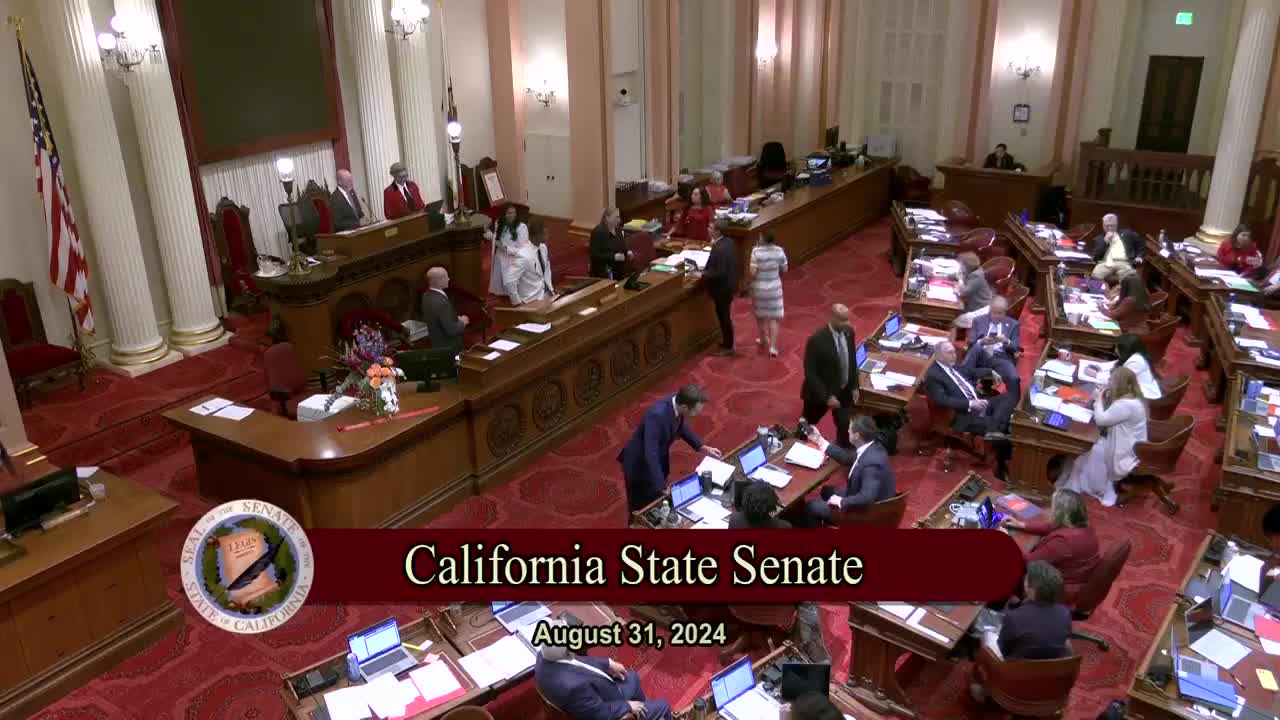 1MIN
Senate Floor
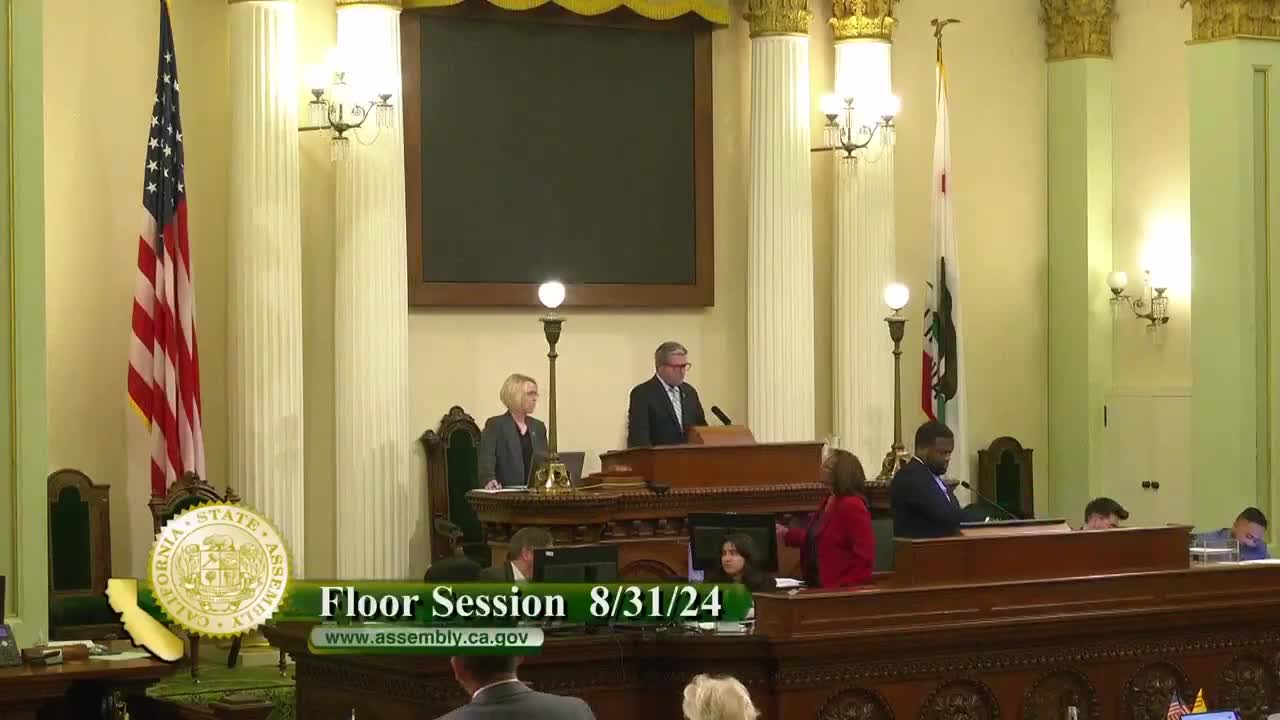 22MIN
Assembly Floor
 5MIN
Assembly Standing Committee on Appropriations
 17MIN
Assembly Standing Committee on Privacy and Consumer Protection
 20MIN
Assembly Standing Committee on Transportation
 3MIN
Senate Floor
 15MIN
Senate Standing Committee on Transportation
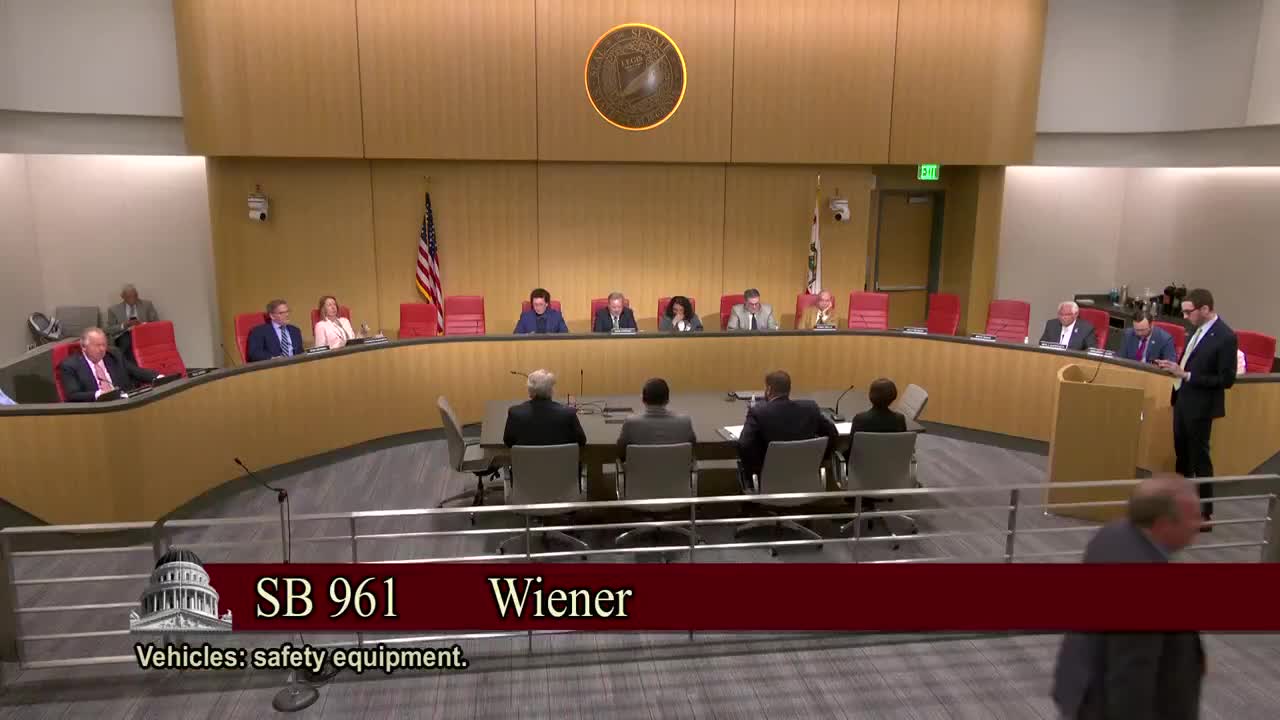 30MIN
Senate Standing Committee on Transportation
Bill Author

Bill Co-Author(s):