SB 969: Alcoholic beverages: entertainment zones: consumption.
- Session Year: 2023-2024
- House: Senate
- Latest Version Date: 2024-09-28
Current Status:
Passed
(2024-09-28: Chaptered by Secretary of State. Chapter 869, Statutes of 2024.)
Introduced
In Committee
First Chamber
In Committee
Second Chamber
Enacted
The Alcoholic Beverage Control Act contains various provisions regulating the application for, the issuance of, the suspension of, and the conditions imposed upon alcoholic beverage licenses by the Department of Alcoholic Beverage Control. Existing law defines entertainment zone for purposes of the act as a zone created by ordinance on or after January 1, 2024, in the City and County of San Francisco, that authorizes consumption of one or more types of alcoholic beverages on public streets, sidewalks, or public rights-of-way adjacent to and during a special event permitted or licensed by the department. Existing law authorizes the City and County of San Francisco to establish an entertainment zone, subject to certain requirements, including providing specified information relating to the entertainment zone to the department and establishing a process or procedure by which persons in possession of alcoholic beverages in the entertainment zone may be readily identifiable as being 21 years of age or older.
This bill would, instead, define entertainment zone as a zone created by a city, county, or city and county ordinance on or after January 1, 2025, that authorizes consumption of one or more types of alcoholic beverages on public streets, sidewalks, or public rights-of-way. The bill would additionally authorize any city, county, or city and county to establish an entertainment zone, subject to the above-described requirements. Before enacting an ordinance to establish or modify an entertainment zone, the bill would require a city, county, or city and county to notify local law enforcement and request feedback about specific information, including, among others, the entertainment zones proposed boundaries and days and hours of operation. The bill would require a city, county, or city and county that establishes an entertainment zone, or its designated subordinate officer or body, to review the operation of the entertainment zone every 2 years following the adoption of the entertainment zone, as specified, and to make any reports produced during the review available to the department upon request.
Existing law authorizes a licensed beer manufacturer, a licensed winegrower, and any on-sale licensee to permit consumers to leave the premises with open containers of alcoholic beverages for consumption off the premises within an entertainment zone, subject to certain conditions. Existing law specifies that a licensed beer manufacturer, a licensed winegrower, and any on-sale licensee whose privileges are restricted due to operating conditions or other statutory restrictions may be prohibited from exercising entertainment zone privileges that are contrary to their operating conditions. For this purpose, existing law requires any restrictions on the exercise of off-sale privileges to apply to the removal of alcoholic beverages from the licensed premises for consumption in the entertainment zone.
This bill would, instead, prohibit any restrictions on the exercise of off-sale privileges from applying to the removal of open alcoholic beverages from the licensed premises for consumption in the entertainment zone.
This bill would incorporate additional changes to Section 23358 of the Business and Professions Code proposed by AB 2177 to be operative only if this bill and AB 2177 are enacted and this bill is enacted last.
The Alcoholic Beverage Control Act contains various provisions regulating the application for, the issuance of, the suspension of, and the conditions imposed upon alcoholic beverage licenses by the Department of Alcoholic Beverage Control. Existing law defines entertainment zone for purposes of the act as a zone created by ordinance on or after January 1, 2024, in the City and County of San Francisco, that authorizes consumption of one or more types of alcoholic beverages on public streets, sidewalks, or public rights-of-way adjacent to and during a special event permitted or licensed by the department. Existing law authorizes the City and County of San Francisco to establish an entertainment zone, subject to certain requirements, including providing specified information relating to the entertainment zone to the department and establishing a process or procedure by which persons in possession of alcoholic beverages in the entertainment zone may be readily identifiable as being 21 years of age or older.
This bill would, instead, define entertainment zone as a zone created by a city, county, or city and county ordinance on or after January 1, 2025, that authorizes consumption of one or more types of alcoholic beverages on public streets, sidewalks, or public rights-of-way. The bill would additionally authorize any city, county, or city and county to establish an entertainment zone, subject to the above-described requirements. Before enacting an ordinance to establish or modify an entertainment zone, the bill would require a city, county, or city and county to notify local law enforcement and request feedback about specific information, including, among others, the entertainment zones proposed boundaries and days and hours of operation. The bill would require a city, county, or city and county that establishes an entertainment zone, or its designated subordinate officer or body, to review the operation of the entertainment zone every 2 years following the adoption of the entertainment zone, as specified, and to make any reports produced during the review available to the department upon request.
Existing law authorizes a licensed beer manufacturer, a licensed winegrower, and any on-sale licensee to permit consumers to leave the premises with open containers of alcoholic beverages for consumption off the premises within an entertainment zone, subject to certain conditions. Existing law specifies that a licensed beer manufacturer, a licensed winegrower, and any on-sale licensee whose privileges are restricted due to operating conditions or other statutory restrictions may be prohibited from exercising entertainment zone privileges that are contrary to their operating conditions. For this purpose, existing law requires any restrictions on the exercise of off-sale privileges to apply to the removal of alcoholic beverages from the licensed premises for consumption in the entertainment zone.
This bill would, instead, prohibit any restrictions on the exercise of off-sale privileges from applying to the removal of open alcoholic beverages from the licensed premises for consumption in the entertainment zone.
The Alcoholic Beverage Control Act contains various provisions regulating the application for, the issuance of, the suspension of, and the conditions imposed upon alcoholic beverage licenses by the Department of Alcoholic Beverage Control. Existing law defines entertainment zone for purposes of the act as a zone created by ordinance on or after January 1, 2024, in the City and County of San Francisco, that authorizes consumption of one or more types of alcoholic beverages on public streets, sidewalks, or public rights-of-way adjacent to and during a special event permitted or licensed by the department. Existing law authorizes the City and County of San Francisco to establish an entertainment zone, subject to certain requirements, including providing specified information relating to the entertainment zone to the department and establishing a process or procedure by which persons in possession of alcoholic beverages in the entertainment zone may be readily identifiable as being 21 years of age or older.
This bill would, instead, define entertainment zone as a zone created by a city, county, or city and county ordinance on or after January 1, 2025, that authorizes consumption of one or more types of alcoholic beverages on public streets, sidewalks, or public rights-of-way. The bill would additionally authorize any city, county, or city and county to establish an entertainment zone, subject to the above-described requirements. Before enacting an ordinance to establish an entertainment zone, the bill would require a city, county, or city and county to notify local law enforcement and request feedback about specific information, including, among others, the entertainment zones proposed boundaries and days and hours of operation. The bill would require a city, county, or city and county that establishes an entertainment zone, or its designated subordinate officer or body, to review the operation of the entertainment zone every 2 years following the adoption of the entertainment zone, as specified, and to make any reports produced during the review available to the department upon request.
Existing law authorizes a licensed beer manufacturer, a licensed winegrower, and any on-sale licensee to permit consumers to leave the premises with open containers of alcoholic beverages for consumption off the premises within an entertainment zone, subject to certain conditions. Existing law specifies that a licensed beer manufacturer, a licensed winegrower, and any on-sale licensee whose privileges are restricted due to operating conditions or other statutory restrictions may be prohibited from exercising entertainment zone privileges that are contrary to their operating conditions. For this purpose, existing law requires any restrictions on the exercise of off-sale privileges to apply to the removal of alcoholic beverages from the licensed premises for consumption in the entertainment zone.
This bill would, instead, prohibit any restrictions on the exercise of off-sale privileges from applying to the removal of open alcoholic beverages from the licensed premises for consumption in the entertainment zone.
Entertainment zone means a zone created by a city, county, or city and county ordinance on or after January 1, 2025, that authorizes consumption of one or more types of alcoholic beverages on public streets, sidewalks, or public rights-of-way.
SEC. 2.Section 23357 of the Business and Professions Code is amended to read:23357.(a)A licensed beer manufacturer may, at the licensed premises of production, sell to consumers for consumption off the premises beer that is produced and bottled by, or produced and packaged for, that manufacturer. Licensed beer manufacturers may also exercise any of the following privileges:
(1)Sell that beer to any person holding a license authorizing the sale of beer.
(2)Sell that beer to consumers for consumption on the manufacturers licensed premises or on premises owned by the manufacturer that are contiguous to the licensed premises and which are operated by and for the manufacturer.
(3)Sell beer and wine, regardless of source, to consumers for consumption at a bona fide public eating place on the manufacturers licensed premises or at a bona fide public eating place on premises owned by the manufacturer which are contiguous to the licensed premises and which are operated by and for the manufacturer.
(4)(A)Permit consumers to leave the premises with open containers of alcoholic beverages for consumption off the premises within an entertainment zone if all of the following conditions are satisfied:
(i)The premises is located within the entertainment zone.
(ii)Consumption of that type of alcoholic beverage is authorized by the ordinance creating the entertainment zone.
(iii)Open alcohol containers only leave the premises during the hours allowed by the ordinance establishing the entertainment zone.
(iv)Patrons with open containers exit the premises directly into an entertainment zone.
(v)All alcoholic beverages in the entertainment zone are purchased only at a licensed premises located within the entertainment zone.
(vi)The premises expressly prohibits open containers or closed containers of alcoholic beverages acquired outside their premises.
(vii)Delivery of alcoholic beverages to consumers within the entertainment zone by the licensee or by any third-party delivery service is expressly prohibited unless the delivery is to a residential building or private business that is not a licensee.
(viii)No alcoholic beverages purchased at the licensed premises may leave the premises in an open glass or metal container for consumption in an entertainment zone.
(ix)The licensee annually submits their notice of intent to participate in an open container entertainment zone to the department.
(B)This paragraph does not require a licensee to sell any alcoholic beverage for consumption off the premises within an entertainment zone.
(C)Licensees whose privileges are restricted due to operating conditions or other statutory restrictions may be prohibited from exercising entertainment zone privileges that are contrary to their operating conditions. For purposes of this paragraph, any restrictions on the exercise of off-sale privileges shall not apply to the removal of open alcoholic beverages from the licensed premises for consumption in the entertainment zone.
(b)Notwithstanding any other provision of this division, licensed beer manufacturers and holders of out-of-state beer manufacturers certificates may be issued and may hold retail package off-sale beer and wine licenses. Alcoholic beverage products sold at or from the off-sale premises that are not produced and bottled by, or produced and packaged for, the beer manufacturer shall be purchased by the beer manufacturer only from a licensed wholesaler.
(c)Notwithstanding any other provision of this division, a licensed beer manufacturer may manufacture cider or perry at the licensed premises of production and may sell cider or perry to any licensee authorized to sell wine. For purposes of this subdivision, cider and perry have the meanings provided in Section 4.21(e)(8) of Title 27 of the Code of Federal Regulations. This subdivision does not alter or amend the classification of cider or perry as wine for any purpose other than that provided by this section.
(d)A beer manufacturer may also have upon the licensed premises, or on premises owned by the manufacturer that are contiguous to the licensed premises and are operated by and for the manufacturer all beers and wines, regardless of source, for sale or service only to guests during private events or private functions not open to the general public. Alcoholic beverage products sold at the premises that are not produced and bottled by, or produced and packaged for, the beer manufacturer shall be purchased by the beer manufacturer only from a licensed wholesaler. All alcoholic beverages sold or served shall be produced by a licensee authorized to manufacture the product.
SEC. 3.Section 23358 of the Business and Professions Code is amended to read:23358.(a)Licensed winegrowers, notwithstanding any other provisions of this division, may also exercise the following privileges:
(1)Sell wine and brandy to any person holding a license authorizing the sale of wine or brandy.
(2)Sell wine and brandy to consumers for consumption off the premises where sold.
(3)Sell wine to consumers for consumption on the premises.
(4)Sell all beers, wines, and brandies, regardless of source, to consumers for consumption on the premises in a bona fide eating place as defined in Section 23038, which is located on the licensed premises or on premises owned by the licensee that are contiguous to the licensed premises and which is operated by and for the licensee. At such a bona fide public eating place, beer, wine, and brandy may be used in the preparation of food and beverages to be consumed on the premises.
(5)(A)Permit consumers to leave the premises with open containers of alcoholic beverages for consumption off the premises within an entertainment zone if all of the following conditions are satisfied:
(i)The premises is located within the entertainment zone.
(ii)Consumption of that type of alcoholic beverage is authorized by the ordinance creating the entertainment zone.
(iii)Open alcohol containers only leave the premises during the hours allowed by the ordinance establishing the entertainment zone.
(iv)Patrons with open containers exit the premises directly into an entertainment zone.
(v)All alcoholic beverages in the entertainment zone are purchased only at a licensed premises located within the entertainment zone.
(vi)The premises expressly prohibits open containers or closed containers of alcoholic beverages acquired outside their premises.
(vii)Delivery of alcoholic beverages to consumers within the entertainment zone by the licensee or by any third-party delivery service is expressly prohibited unless the delivery is to a residential building or private business that is not a licensee.
(viii)No alcoholic beverages purchased at the licensed premises may leave the premises in an open glass or metal container for consumption in an entertainment zone.
(ix)The licensee annually submits their notice of intent to participate in an open container entertainment zone to the department.
(B)This paragraph does not require a licensee to sell any alcoholic beverage for consumption off the premises within an entertainment zone.
(C)Licensees whose privileges are restricted due to operating conditions or other statutory restrictions may be prohibited from exercising entertainment zone privileges that are contrary to their operating conditions. For purposes of this paragraph, any restrictions on the exercise of off-sale privileges shall not apply to the removal of open alcoholic beverages from the licensed premises for consumption in the entertainment zone.
(6)Produce spirits of wine and blend those spirits of wine into wine produced by the winegrower or sell those spirits of wine to an industrial alcohol dealer or a distilled spirits manufacturer.
(b)A winegrower may also have upon the premises all beers, wines, and brandies, regardless of source, for sale or service only to guests during private events or private functions not open to the general public. Alcoholic beverage products sold at the premises that are not produced and bottled by, or produced and packaged for, the winegrower shall be purchased by the winegrower only from a licensed wholesaler.
(c)A winegrower shall actually produce on the winegrowers licensed premises by conversion of grapes, berries, or other fruit, into wine, not less than 50 percent of all wines sold to consumers on the winegrowers licensed premises and any licensed branch premises.
(d)The department may, if it shall determine for good cause that the granting of any such privilege would be contrary to public welfare or morals, deny the right to exercise any on-sale privilege authorized by this section in either a bona fide eating place the main entrance to which is within 200 feet of a school or church, or on the licensed winery premises, or both.
(e)Nothing in this section or in Section 23390 is intended to alter, diminish, replace, or eliminate the authority of a county, city, or city and county from exercising land use regulatory authority by law to the extent the authority may restrict, but not eliminate, privileges afforded by these sections.
SEC. 3.5.Section 23358 of the Business and Professions Code is amended to read:23358.(a)Licensed winegrowers, notwithstanding any other provisions of this division, may also exercise the following privileges:
(1)Sell wine and brandy to any person holding a license authorizing the sale of wine or brandy.
(2)Sell wine and brandy to consumers for consumption off the premises where sold.
(3)Sell wine to consumers for consumption on the premises.
(4)Sell all beers, wines, and brandies, regardless of source, to consumers for consumption on the premises in a bona fide eating place as defined in Section 23038, which is located on the licensed premises or on premises owned by the licensee that are contiguous to the licensed premises and which is operated by and for the licensee. At such a bona fide public eating place, beer, wine, and brandy may be used in the preparation of food and beverages to be consumed on the premises.
(5)(A)Permit consumers to leave the premises with open containers of alcoholic beverages for consumption off the premises within an entertainment zone if all of the following conditions are satisfied:
(i)The premises is located within the entertainment zone.
(ii)Consumption of that type of alcoholic beverage is authorized by the ordinance creating the entertainment zone.
(iii)Open alcohol containers only leave the premises during the hours allowed by the ordinance establishing the entertainment zone.
(iv)Patrons with open containers exit the premises directly into an entertainment zone.
(v)All alcoholic beverages in the entertainment zone are purchased only at a licensed premises located within the entertainment zone.
(vi)The premises expressly prohibits open containers or closed containers of alcoholic beverages acquired outside their premises.
(vii)Delivery of alcoholic beverages to consumers within the entertainment zone by the licensee or by any third-party delivery service is expressly prohibited unless the delivery is to a residential building or private business that is not a licensee.
(viii)No alcoholic beverages purchased at the licensed premises may leave the premises in an open glass or metal container for consumption in an entertainment zone.
(ix)The licensee annually submits their notice of intent to participate in an open container entertainment zone to the department.
(B)This paragraph does not require a licensee to sell any alcoholic beverage for consumption off the premises within an entertainment zone.
(C)Licensees whose privileges are restricted due to operating conditions or other statutory restrictions may be prohibited from exercising entertainment zone privileges that are contrary to their operating conditions. For purposes of this paragraph, any restrictions on the exercise of off-sale privileges shall not apply to the removal of open alcoholic beverages from the licensed premises for consumption in the entertainment zone.
(6)Produce spirits of wine and blend those spirits of wine into wine produced by the winegrower or sell those spirits of wine to an industrial alcohol dealer or any person holding a license authorizing the manufacture or rectification of distilled spirits.
(b)A winegrower may also have upon the premises all beers, wines, and brandies, regardless of source, for sale or service only to guests during private events or private functions not open to the general public. Alcoholic beverage products sold at the premises that are not produced and bottled by, or produced and packaged for, the winegrower shall be purchased by the winegrower only from a licensed wholesaler.
(c)A winegrower shall actually produce on the winegrowers licensed premises by conversion of grapes, berries, or other fruit, into wine, not less than 50 percent of all wines sold to consumers on the winegrowers licensed premises and any licensed branch premises.
(d)The department may, if it shall determine for good cause that the granting of any such privilege would be contrary to public welfare or morals, deny the right to exercise any on-sale privilege authorized by this section in either a bona fide eating place the main entrance to which is within 200 feet of a school or church, or on the licensed winery premises, or both.
(e)Nothing in this section or in Section 23390 is intended to alter, diminish, replace, or eliminate the authority of a county, city, or city and county from exercising land use regulatory authority by law to the extent the authority may restrict, but not eliminate, privileges afforded by these sections.
SEC. 4.Section 23396 of the Business and Professions Code is amended to read:23396.(a)Any on-sale license authorizes the sale of the alcoholic beverage specified in the license for consumption on the premises where sold. No alcoholic beverages, other than beers, may be sold or served in any bona fide public eating place for which an on-sale license has been issued unless the premises comply with the requirements prescribed in Section 23038, 23038.1, 23038.2, or 23038.3.
(b)(1)In addition to the privilege in subdivision (a), any on-sale license for a premises located in an entertainment zone authorizes the licensee to permit consumers to leave the licensed premises with open containers of alcoholic beverages for consumption off the premises within the entertainment zone if all of the following conditions are satisfied:
(A)The alcoholic beverage is specified in both the license and the ordinance creating the entertainment zone.
(B)Open alcohol containers only leave the premises during the hours allowed by the ordinance establishing the entertainment zone.
(C)Patrons with open containers exit the licensed premises directly into an entertainment zone.
(D)All alcoholic beverages in the entertainment zone are purchased only at a licensed premises located within the entertainment zone.
(E)The premises expressly prohibits open containers or closed containers of alcoholic beverages acquired outside their premises.
(F)Delivery of alcoholic beverages to consumers within the entertainment zone by the licensee or by any third-party delivery service is expressly prohibited unless the delivery is to a residential building or private business that is not a licensee.
(G)No alcoholic beverages purchased at the licensed premises may leave the premises in an open glass or metal container for consumption in an entertainment zone.
(H)The licensee annually submits their notice of intent to participate in an open container entertainment zone to the department.
(2)This subdivision does not require a licensee to sell any alcoholic beverage for consumption off the premises within an entertainment zone.
(3)Licensees whose privileges are restricted due to operating conditions or other statutory restrictions may be prohibited from exercising entertainment zone privileges that are contrary to their operating conditions. For purposes of this paragraph, any restrictions on the exercise of off-sale privileges shall not apply to the removal of open alcoholic beverages from the licensed premises for consumption in the entertainment zone.
SEC. 5.Section 25690 of the Business and Professions Code is amended to read:25690.A city, county, or city and county that establishes an entertainment zone shall do both of the following:
(a)Establish a process or procedure by which persons in possession of alcoholic beverages in the entertainment zone may be readily identifiable as being 21 years of age or older.
(b)Upon establishing or modifying the entertainment zone, provide all of the following to the department:
(1)A copy of the ordinance establishing or modifying the entertainment zone.
(2)Information as may be necessary to identify the boundaries of the entertainment zone.
(3)The days and hours of operation of the entertainment zone.
(4)The types of alcoholic beverages permitted within the entertainment zone.
(5)The approved nonglass and nonmetal containers in which alcoholic beverages may be authorized.
SEC. 6.Section 25691 is added to the Business and Professions Code, to read:25691.(a)An ordinance establishing or modifying an entertainment zone shall not authorize consumption of alcoholic beverages during the hours in which sales of alcoholic beverages are prohibited under Section 25631.
(b)An ordinance establishing or modifying an entertainment zone may only authorize consumption of alcoholic beverages during the hours in which at least one licensee within the boundaries of the entertainment zone is permitted to sell alcoholic beverages for consumption on the premises.
SEC. 7.Section 25692 is added to the Business and Professions Code, to read:25692.(a)Before enacting an ordinance to establish or modify an entertainment zone, a city, county, or city and county shall notify local law enforcement and request feedback about both of the following:
(1)Potential health and safety impacts that might be generated by the entertainment zone and strategies to mitigate those impacts.
(2)The entertainment zones proposed boundaries, days and hours of operation, types of alcoholic beverages permitted, and approved nonglass and nonmetal containers.
(b)A city, county, or city and county that establishes an entertainment zone, or its designated subordinate officer or body, shall review the operation of the entertainment zone every two years following the adoption of the entertainment zone to ensure that the entertainment zone is being maintained in a manner that protects the health and safety of the general public. This review shall be conducted in consultation with local law enforcement agencies and any reports produced during the review shall be made available to the department upon request.
SEC. 8.Section 3.5 of this bill incorporates amendments to Section 23358 of the Business and Professions Code proposed by both this bill and Assembly Bill 2177. That section of this bill shall only become operative if (1) both bills are enacted and become effective on or before January 1, 2025, (2) each bill amends Section 23358 of the Business and Professions Code, and (3) this bill is enacted after Assembly Bill 2177, in which case Section 3 of this bill shall not become operative.
Entertainment zone means a zone created by a city, county, or city and county ordinance on or after January 1, 2025, that authorizes consumption of one or more types of alcoholic beverages on public streets, sidewalks, or public rights-of-way.
SEC. 2.Section 23357 of the Business and Professions Code is amended to read:23357.(a)A licensed beer manufacturer may, at the licensed premises of production, sell to consumers for consumption off the premises beer that is produced and bottled by, or produced and packaged for, that manufacturer. Licensed beer manufacturers may also exercise any of the following privileges:
(1)Sell that beer to any person holding a license authorizing the sale of beer.
(2)Sell that beer to consumers for consumption on the manufacturers licensed premises or on premises owned by the manufacturer that are contiguous to the licensed premises and which are operated by and for the manufacturer.
(3)Sell beer and wine, regardless of source, to consumers for consumption at a bona fide public eating place on the manufacturers licensed premises or at a bona fide public eating place on premises owned by the manufacturer which are contiguous to the licensed premises and which are operated by and for the manufacturer.
(4)(A)Permit consumers to leave the premises with open containers of alcoholic beverages for consumption off the premises within an entertainment zone if all of the following conditions are satisfied:
(i)The premises is located within the entertainment zone.
(ii)Consumption of that type of alcoholic beverage is authorized by the ordinance creating the entertainment zone.
(iii)Open alcohol containers only leave the premises during the hours allowed by the ordinance establishing the entertainment zone.
(iv)Patrons with open containers exit the premises directly into an entertainment zone.
(v)All alcoholic beverages in the entertainment zone are purchased only at a licensed premises located within the entertainment zone.
(vi)The premises expressly prohibits open containers or closed containers of alcoholic beverages acquired outside their premises.
(vii)Delivery of alcoholic beverages to consumers within the entertainment zone by the licensee or by any third-party delivery service is expressly prohibited unless the delivery is to a residential building or private business that is not a licensee.
(viii)No alcoholic beverages purchased at the licensed premises may leave the premises in an open glass or metal container for consumption in an entertainment zone.
(ix)The licensee annually submits their notice of intent to participate in an open container entertainment zone to the department.
(B)This paragraph does not require a licensee to sell any alcoholic beverage for consumption off the premises within an entertainment zone.
(C)Licensees whose privileges are restricted due to operating conditions or other statutory restrictions may be prohibited from exercising entertainment zone privileges that are contrary to their operating conditions. For purposes of this paragraph, any restrictions on the exercise of off-sale privileges shall not apply to the removal of open alcoholic beverages from the licensed premises for consumption in the entertainment zone.
(b)Notwithstanding any other provision of this division, licensed beer manufacturers and holders of out-of-state beer manufacturers certificates may be issued and may hold retail package off-sale beer and wine licenses. Alcoholic beverage products sold at or from the off-sale premises that are not produced and bottled by, or produced and packaged for, the beer manufacturer shall be purchased by the beer manufacturer only from a licensed wholesaler.
(c)Notwithstanding any other provision of this division, a licensed beer manufacturer may manufacture cider or perry at the licensed premises of production and may sell cider or perry to any licensee authorized to sell wine. For purposes of this subdivision, cider and perry have the meanings provided in Section 4.21(e)(8) of Title 27 of the Code of Federal Regulations. This subdivision does not alter or amend the classification of cider or perry as wine for any purpose other than that provided by this section.
(d)A beer manufacturer may also have upon the licensed premises, or on premises owned by the manufacturer that are contiguous to the licensed premises and are operated by and for the manufacturer all beers and wines, regardless of source, for sale or service only to guests during private events or private functions not open to the general public. Alcoholic beverage products sold at the premises that are not produced and bottled by, or produced and packaged for, the beer manufacturer shall be purchased by the beer manufacturer only from a licensed wholesaler. All alcoholic beverages sold or served shall be produced by a licensee authorized to manufacture the product.
SEC. 3.Section 23358 of the Business and Professions Code is amended to read:23358.(a)Licensed winegrowers, notwithstanding any other provisions of this division, may also exercise the following privileges:
(1)Sell wine and brandy to any person holding a license authorizing the sale of wine or brandy.
(2)Sell wine and brandy to consumers for consumption off the premises where sold.
(3)Sell wine to consumers for consumption on the premises.
(4)Sell all beers, wines, and brandies, regardless of source, to consumers for consumption on the premises in a bona fide eating place as defined in Section 23038, which is located on the licensed premises or on premises owned by the licensee that are contiguous to the licensed premises and which is operated by and for the licensee. At such a bona fide public eating place place, beer, wine, and brandy may be used in the preparation of food and beverages to be consumed on the premises.
(5)(A)Permit consumers to leave the premises with open containers of alcoholic beverages for consumption off the premises within an entertainment zone if all of the following conditions are satisfied:
(i)The premises is located within the entertainment zone.
(ii)Consumption of that type of alcoholic beverage is authorized by the ordinance creating the entertainment zone.
(iii)Open alcohol containers only leave the premises during the hours allowed by the ordinance establishing the entertainment zone.
(iv)Patrons with open containers exit the premises directly into an entertainment zone.
(v)All alcoholic beverages in the entertainment zone are purchased only at a licensed premises located within the entertainment zone.
(vi)The premises expressly prohibits open containers or closed containers of alcoholic beverages acquired outside their premises.
(vii)Delivery of alcoholic beverages to consumers within the entertainment zone by the licensee or by any third-party delivery service is expressly prohibited unless the delivery is to a residential building or private business that is not a licensee.
(viii)No alcoholic beverages purchased at the licensed premises may leave the premises in an open glass or metal container for consumption in an entertainment zone.
(ix)The licensee annually submits their notice of intent to participate in an open container entertainment zone to the department.
(B)This paragraph does not require a licensee to sell any alcoholic beverage for consumption off the premises within an entertainment zone.
(C)Licensees whose privileges are restricted due to operating conditions or other statutory restrictions may be prohibited from exercising entertainment zone privileges that are contrary to their operating conditions. For purposes of this paragraph, any restrictions on the exercise of off-sale privileges shall not apply to the removal of open alcoholic beverages from the licensed premises for consumption in the entertainment zone.
(6)Produce spirits of wine and blend those spirits of wine into wine produced by the winegrower or sell those spirits of wine to an industrial alcohol dealer or a distilled spirits manufacturer.
(b)A winegrower may also have upon the premises all beers, wines, and brandies, regardless of source, for sale or service only to guests during private events or private functions not open to the general public. Alcoholic beverage products sold at the premises that are not produced and bottled by, or produced and packaged for, the winegrower shall be purchased by the winegrower only from a licensed wholesaler.
(c)A winegrower shall actually produce on the winegrowers licensed premises by conversion of grapes, berries, or other fruit, into wine, not less than 50 percent of all wines sold to consumers on the winegrowers licensed premises and any licensed branch premises.
(d)The department may, if it shall determine for good cause that the granting of any such privilege would be contrary to public welfare or morals, deny the right to exercise any on-sale privilege authorized by this section in either a bona fide eating place the main entrance to which is within 200 feet of a school or church, or on the licensed winery premises, or both.
(e)Nothing in this section or in Section 23390 is intended to alter, diminish, replace, or eliminate the authority of a county, city, or city and county from exercising land use regulatory authority by law to the extent the authority may restrict, but not eliminate, privileges afforded by these sections.
SEC. 3.5.Section 23358 of the Business and Professions Code is amended to read:23358.(a)Licensed winegrowers, notwithstanding any other provisions of this division, may also exercise the following privileges:
(1)Sell wine and brandy to any person holding a license authorizing the sale of wine or brandy.
(2)Sell wine and brandy to consumers for consumption off the premises where sold.
(3)Sell wine to consumers for consumption on the premises.
(4)Sell all beers, wines, and brandies, regardless of source, to consumers for consumption on the premises in a bona fide eating place as defined in Section 23038, which is located on the licensed premises or on premises owned by the licensee that are contiguous to the licensed premises and which is operated by and for the licensee. At such a bona fide public eating place place, beer, wine, and brandy may be used in the preparation of food and beverages to be consumed on the premises.
(5)(A)Permit consumers to leave the premises with open containers of alcoholic beverages for consumption off the premises within an entertainment zone if all of the following conditions are satisfied:
(i)The premises is located within the entertainment zone.
(ii)Consumption of that type of alcoholic beverage is authorized by the ordinance creating the entertainment zone.
(iii)Open alcohol containers only leave the premises during the hours allowed by the ordinance establishing the entertainment zone.
(iv)Patrons with open containers exit the premises directly into an entertainment zone.
(v)All alcoholic beverages in the entertainment zone are purchased only at a licensed premises located within the entertainment zone.
(vi)The premises expressly prohibits open containers or closed containers of alcoholic beverages acquired outside their premises.
(vii)Delivery of alcoholic beverages to consumers within the entertainment zone by the licensee or by any third-party delivery service is expressly prohibited unless the delivery is to a residential building or private business that is not a licensee.
(viii)No alcoholic beverages purchased at the licensed premises may leave the premises in an open glass or metal container for consumption in an entertainment zone.
(ix)The licensee annually submits their notice of intent to participate in an open container entertainment zone to the department.
(B)This paragraph does not require a licensee to sell any alcoholic beverage for consumption off the premises within an entertainment zone.
(C)Licensees whose privileges are restricted due to operating conditions or other statutory restrictions may be prohibited from exercising entertainment zone privileges that are contrary to their operating conditions. For purposes of this paragraph, any restrictions on the exercise of off-sale privileges shall not apply to the removal of open alcoholic beverages from the licensed premises for consumption in the entertainment zone.
(6)Produce spirits of wine and blend those spirits of wine into wine produced by the winegrower or sell those spirits of wine to an industrial alcohol dealer or a distilled spirits manufacturer. any person holding a license authorizing the manufacture or rectification of distilled spirits.
(b)A winegrower may also have upon the premises all beers, wines, and brandies, regardless of source, for sale or service only to guests during private events or private functions not open to the general public. Alcoholic beverage products sold at the premises that are not produced and bottled by, or produced and packaged for, the winegrower shall be purchased by the winegrower only from a licensed wholesaler.
(c)A winegrower shall actually produce on the winegrowers licensed premises by conversion of grapes, berries, or other fruit, into wine, not less than 50 percent of all wines sold to consumers on the winegrowers licensed premises and any licensed branch premises.
(d)The department may, if it shall determine for good cause that the granting of any such privilege would be contrary to public welfare or morals, deny the right to exercise any on-sale privilege authorized by this section in either a bona fide eating place the main entrance to which is within 200 feet of a school or church, or on the licensed winery premises, or both.
(e)Nothing in this section or in Section 23390 is intended to alter, diminish, replace, or eliminate the authority of a county, city, or city and county from exercising land use regulatory authority by law to the extent the authority may restrict, but not eliminate, privileges afforded by these sections.
SEC. 4.Section 23396 of the Business and Professions Code is amended to read:23396.(a)Any on-sale license authorizes the sale of the alcoholic beverage specified in the license for consumption on the premises where sold. No alcoholic beverages, other than beers, may be sold or served in any bona fide public eating place for which an on-sale license has been issued unless the premises comply with the requirements prescribed in Section 23038, 23038.1, 23038.2, or 23038.3.
(b)(1)In addition to the privilege in subdivision (a), any on-sale license for a premises located in an entertainment zone authorizes the licensee to permit consumers to leave the licensed premises with open containers of alcoholic beverages for consumption off the premises within the entertainment zone if all of the following conditions are satisfied:
(A)The alcoholic beverage is specified in both the license and the ordinance creating the entertainment zone.
(B)Open alcohol containers only leave the premises during the hours allowed by the ordinance establishing the entertainment zone.
(C)Patrons with open containers exit the licensed premises directly into an entertainment zone.
(D)All alcoholic beverages in the entertainment zone are purchased only at a licensed premises located within the entertainment zone.
(E)The premises expressly prohibits open containers or closed containers of alcoholic beverages acquired outside their premises.
(F)Delivery of alcoholic beverages to consumers within the entertainment zone by the licensee or by any third-party delivery service is expressly prohibited unless the delivery is to a residential building or private business that is not a licensee.
(G)No alcoholic beverages purchased at the licensed premises may leave the premises in an open glass or metal container for consumption in an entertainment zone.
(H)The licensee annually submits their notice of intent to participate in an open container entertainment zone to the department.
(2)This subdivision does not require a licensee to sell any alcoholic beverage for consumption off the premises within an entertainment zone.
(3)Licensees whose privileges are restricted due to operating conditions or other statutory restrictions may be prohibited from exercising entertainment zone privileges that are contrary to their operating conditions. For purposes of this paragraph, any restrictions on the exercise of off-sale privileges shall not apply to the removal of open alcoholic beverages from the licensed premises for consumption in the entertainment zone.
SEC. 5.Section 25690 of the Business and Professions Code is amended to read:25690.A city, county, or city and county that establishes an entertainment zone shall do both of the following:
(a)Establish a process or procedure by which persons in possession of alcoholic beverages in the entertainment zone may be readily identifiable as being 21 years of age or older.
(b)Upon establishing or modifying the entertainment zone, provide all of the following to the department:
(1)A copy of the ordinance establishing or modifying the entertainment zone.
(2)Information as may be necessary to identify the boundaries of the entertainment zone.
(3)The days and hours of operation of the entertainment zone.
(4)The types of alcoholic beverages permitted within the entertainment zone.
(5)The approved nonglass and nonmetal containers in which alcoholic beverages may be authorized.
SEC. 6.Section 25691 is added to the Business and Professions Code, to read:25691.(a)An ordinance establishing or modifying an entertainment zone shall not authorize consumption of alcoholic beverages during the hours in which sales of alcoholic beverages are prohibited under Section 25631.
(b)An ordinance establishing or modifying an entertainment zone may only authorize consumption of alcoholic beverages during the hours in which at least one licensee within the boundaries of the entertainment zone is permitted to sell alcoholic beverages for consumption on the premises.
SEC. 7.Section 25692 is added to the Business and Professions Code, to read:25692.(a)Before enacting an ordinance to establish or modify an entertainment zone, a city, county, or city and county shall notify local law enforcement and request feedback about both of the following:
(1)Potential health and safety impacts that might be generated by the entertainment zone and strategies to mitigate those impacts.
(2)The entertainment zones proposed boundaries, days and hours of operation, types of alcoholic beverages permitted, and approved nonglass and nonmetal containers.
(b)A city, county, or city and county that establishes an entertainment zone, or its designated subordinate officer or body, shall review the operation of the entertainment zone every two years following the adoption of the entertainment zone to ensure that the entertainment zone is being maintained in a manner that protects the health and safety of the general public. This review shall be conducted in consultation with local law enforcement agencies and any reports produced during the review shall be made available to the department upon request.
SEC. 8.Section 3.5 of this bill incorporates amendments to Section 23358 of the Business and Professions Code proposed by both this bill and Assembly Bill 2177. That section of this bill shall only become operative if (1) both bills are enacted and become effective on or before January 1, 2025, (2) each bill amends Section 23358 of the Business and Professions Code, and (3) this bill is enacted after Assembly Bill 2177, in which case Section 3 of this bill shall not become operative.
Entertainment zone means a zone created by a city, county, or city and county ordinance on or after January 1, 2025, that authorizes consumption of one or more types of alcoholic beverages on public streets, sidewalks, or public rights-of-way.
SEC. 2.Section 23357 of the Business and Professions Code is amended to read:23357.(a)A licensed beer manufacturer may, at the licensed premises of production, sell to consumers for consumption off the premises beer that is produced and bottled by, or produced and packaged for, that manufacturer. Licensed beer manufacturers may also exercise any of the following privileges:
(1)Sell that beer to any person holding a license authorizing the sale of beer.
(2)Sell that beer to consumers for consumption on the manufacturers licensed premises or on premises owned by the manufacturer that are contiguous to the licensed premises and which are operated by and for the manufacturer.
(3)Sell beer and wine, regardless of source, to consumers for consumption at a bona fide public eating place on the manufacturers licensed premises or at a bona fide public eating place on premises owned by the manufacturer which are contiguous to the licensed premises and which are operated by and for the manufacturer.
(4)(A)Permit consumers to leave the premises with open containers of alcoholic beverages for consumption off the premises within an entertainment zone if all of the following conditions are satisfied:
(i)The premises is located within the entertainment zone.
(ii)Consumption of that type of alcoholic beverage is authorized by the ordinance creating the entertainment zone.
(iii)Open alcohol containers only leave the premises during the hours allowed by the ordinance establishing the entertainment zone.
(iv)Patrons with open containers exit the premises directly into an entertainment zone.
(v)All alcoholic beverages in the entertainment zone are purchased only at a licensed premises located within the entertainment zone.
(vi)The premises expressly prohibits open containers or closed containers of alcoholic beverages acquired outside their premises.
(vii)Delivery of alcoholic beverages to consumers within the entertainment zone by the licensee or by any third-party delivery service is expressly prohibited unless the delivery is to a residential building or private business that is not a licensee.
(viii)No alcoholic beverages purchased at the licensed premises may leave the premises in an open glass or metal container for consumption in an entertainment zone.
(ix)The licensee annually submits their notice of intent to participate in an open container entertainment zone to the department.
(B)This paragraph does not require a licensee to sell any alcoholic beverage for consumption off the premises within an entertainment zone.
(C)Licensees whose privileges are restricted due to operating conditions or other statutory restrictions may be prohibited from exercising entertainment zone privileges that are contrary to their operating conditions. For purposes of this paragraph, any restrictions on the exercise of off-sale privileges shall not apply to the removal of open alcoholic beverages from the licensed premises for consumption in the entertainment zone.
(b)Notwithstanding any other provision of this division, licensed beer manufacturers and holders of out-of-state beer manufacturers certificates may be issued and may hold retail package off-sale beer and wine licenses. Alcoholic beverage products sold at or from the off-sale premises that are not produced and bottled by, or produced and packaged for, the beer manufacturer shall be purchased by the beer manufacturer only from a licensed wholesaler.
(c)Notwithstanding any other provision of this division, a licensed beer manufacturer may manufacture cider or perry at the licensed premises of production and may sell cider or perry to any licensee authorized to sell wine. For purposes of this subdivision, cider and perry have the meanings provided in Section 4.21(e)(8) of Title 27 of the Code of Federal Regulations. This subdivision does not alter or amend the classification of cider or perry as wine for any purpose other than that provided by this section.
(d)A beer manufacturer may also have upon the licensed premises, or on premises owned by the manufacturer that are contiguous to the licensed premises and are operated by and for the manufacturer all beers and wines, regardless of source, for sale or service only to guests during private events or private functions not open to the general public. Alcoholic beverage products sold at the premises that are not produced and bottled by, or produced and packaged for, the beer manufacturer shall be purchased by the beer manufacturer only from a licensed wholesaler. All alcoholic beverages sold or served shall be produced by a licensee authorized to manufacture the product.
SEC. 3.Section 23358 of the Business and Professions Code is amended to read:23358.(a)Licensed winegrowers, notwithstanding any other provisions of this division, may also exercise the following privileges:
(1)Sell wine and brandy to any person holding a license authorizing the sale of wine or brandy.
(2)Sell wine and brandy to consumers for consumption off the premises where sold.
(3)Sell wine to consumers for consumption on the premises.
(4)Sell all beers, wines, and brandies, regardless of source, to consumers for consumption on the premises in a bona fide eating place as defined in Section 23038, which is located on the licensed premises or on premises owned by the licensee that are contiguous to the licensed premises and which is operated by and for the licensee. At such a bona fide public eating place beer, wine, and brandy may be used in the preparation of food and beverages to be consumed on the premises.
(5)(A)Permit consumers to leave the premises with open containers of alcoholic beverages for consumption off the premises within an entertainment zone if all of the following conditions are satisfied:
(i)The premises is located within the entertainment zone.
(ii)Consumption of that type of alcoholic beverage is authorized by the ordinance creating the entertainment zone.
(iii)Open alcohol containers only leave the premises during the hours allowed by the ordinance establishing the entertainment zone.
(iv)Patrons with open containers exit the premises directly into an entertainment zone.
(v)All alcoholic beverages in the entertainment zone are purchased only at a licensed premises located within the entertainment zone.
(vi)The premises expressly prohibits open containers or closed containers of alcoholic beverages acquired outside their premises.
(vii)Delivery of alcoholic beverages to consumers within the entertainment zone by the licensee or by any third-party delivery service is expressly prohibited unless the delivery is to a residential building or private business that is not a licensee.
(viii)No alcoholic beverages purchased at the licensed premises may leave the premises in an open glass or metal container for consumption in an entertainment zone.
(ix)The licensee annually submits their notice of intent to participate in an open container entertainment zone to the department.
(B)This paragraph does not require a licensee to sell any alcoholic beverage for consumption off the premises within an entertainment zone.
(C)Licensees whose privileges are restricted due to operating conditions or other statutory restrictions may be prohibited from exercising entertainment zone privileges that are contrary to their operating conditions. For purposes of this paragraph, any restrictions on the exercise of off-sale privileges shall not apply to the removal of open alcoholic beverages from the licensed premises for consumption in the entertainment zone.
(6)Produce spirits of wine and blend those spirits of wine into wine produced by the winegrower or sell those spirits of wine to an industrial alcohol dealer or a distilled spirits manufacturer.
(b)A winegrower may also have upon the premises all beers, wines, and brandies, regardless of source, for sale or service only to guests during private events or private functions not open to the general public. Alcoholic beverage products sold at the premises that are not produced and bottled by, or produced and packaged for, the winegrower shall be purchased by the winegrower only from a licensed wholesaler.
(c)A winegrower shall actually produce on the winegrowers licensed premises by conversion of grapes, berries, or other fruit, into wine, not less than 50 percent of all wines sold to consumers on the winegrowers licensed premises and any licensed branch premises.
(d)The department may, if it shall determine for good cause that the granting of any such privilege would be contrary to public welfare or morals, deny the right to exercise any on-sale privilege authorized by this section in either a bona fide eating place the main entrance to which is within 200 feet of a school or church, or on the licensed winery premises, or both.
(e)Nothing in this section or in Section 23390 is intended to alter, diminish, replace, or eliminate the authority of a county, city, or city and county from exercising land use regulatory authority by law to the extent the authority may restrict, but not eliminate, privileges afforded by these sections.
SEC. 4.Section 23396 of the Business and Professions Code is amended to read:23396.(a)Any on-sale license authorizes the sale of the alcoholic beverage specified in the license for consumption on the premises where sold. No alcoholic beverages, other than beers, may be sold or served in any bona fide public eating place for which an on-sale license has been issued unless the premises comply with the requirements prescribed in Section 23038, 23038.1, 23038.2, or 23038.3.
(b)(1)In addition to the privilege in subdivision (a), any on-sale license for a premises located in an entertainment zone authorizes the licensee to permit consumers to leave the licensed premises with open containers of alcoholic beverages for consumption off the premises within the entertainment zone if all of the following conditions are satisfied:
(A)The alcoholic beverage is specified in both the license and the ordinance creating the entertainment zone.
(B)Open alcohol containers only leave the premises during the hours allowed by the ordinance establishing the entertainment zone.
(C)Patrons with open containers exit the licensed premises directly into an entertainment zone.
(D)All alcoholic beverages in the entertainment zone are purchased only at a licensed premises located within the entertainment zone.
(E)The premises expressly prohibits open containers or closed containers of alcoholic beverages acquired outside their premises.
(F)Delivery of alcoholic beverages to consumers within the entertainment zone by the licensee or by any third-party delivery service is expressly prohibited unless the delivery is to a residential building or private business that is not a licensee.
(G)No alcoholic beverages purchased at the licensed premises may leave the premises in an open glass or metal container for consumption in an entertainment zone.
(H)The licensee annually submits their notice of intent to participate in an open container entertainment zone to the department.
(2)This subdivision does not require a licensee to sell any alcoholic beverage for consumption off the premises within an entertainment zone.
(3)Licensees whose privileges are restricted due to operating conditions or other statutory restrictions may be prohibited from exercising entertainment zone privileges that are contrary to their operating conditions. For purposes of this paragraph, any restrictions on the exercise of off-sale privileges shall not apply to the removal of open alcoholic beverages from the licensed premises for consumption in the entertainment zone.
SEC. 5.Section 25690 of the Business and Professions Code is amended to read:25690.A city, county, or city and county that establishes an entertainment zone shall do both of the following:
(a)Establish a process or procedure by which persons in possession of alcoholic beverages in the entertainment zone may be readily identifiable as being 21 years of age or older.
(b)Provide Upon establishing or modifying the entertainment zone, provide all of the following to the department:
(1)A copy of the ordinance establishing or modifying the entertainment zone.
(2)Information as may be necessary to identify the boundaries of the entertainment zone.
(3)The days and hours of operation of the entertainment zone.
(4)The types of alcoholic beverages permitted within the entertainment zone.
(5)The approved nonglass and nonmetal containers in which alcoholic beverages may be authorized.
SEC. 6.Section 25691 is added to the Business and Professions Code, to read:25691.(a)An ordinance establishing or modifying an entertainment zone shall not authorize consumption of alcoholic beverages during the hours in which sales of alcoholic beverages are prohibited under Section 25631.
(b)An ordinance establishing or modifying an entertainment zone may only authorize consumption of alcoholic beverages during the hours in which at least one licensee within the boundaries of the entertainment zone is permitted to sell alcoholic beverages for consumption on the premises.
SEC. 7.Section 25692 is added to the Business and Professions Code, to read:25692.(a)Before enacting an ordinance to establish or modify an entertainment zone, a city, county, or city and county shall notify local law enforcement and request feedback about both of the following:
(1)Potential health and safety impacts that might be generated by the entertainment zone and strategies to mitigate those impacts.
(2)The entertainment zones proposed boundaries, days and hours of operation, types of alcoholic beverages permitted, and approved nonglass and nonmetal containers.
(b)A city, county, or city and county that establishes an entertainment zone, or its designated subordinate officer or body, shall review the operation of the entertainment zone every two years following the adoption of the entertainment zone to ensure that the entertainment zone is being maintained in a manner that protects the health and safety of the general public. This review shall be conducted in consultation with local law enforcement agencies and any reports produced during the review shall be made available to the department upon request.
Entertainment zone means a zone created by a city, county, or city and county ordinance on or after January 1, 2024, in the City and County of San Francisco 2025, that authorizes consumption of one or more types of alcoholic beverages on public streets, sidewalks, or public rights-of-way adjacent to and during a special event permitted or licensed by the department. rights-of-way.
SEC. 2.Section 23357 of the Business and Professions Code is amended to read:23357.(a)A licensed beer manufacturer may, at the licensed premises of production, sell to consumers for consumption off the premises beer that is produced and bottled by, or produced and packaged for, that manufacturer. Licensed beer manufacturers may also exercise any of the following privileges:
(1)Sell that beer to any person holding a license authorizing the sale of beer.
(2)Sell that beer to consumers for consumption on the manufacturers licensed premises or on premises owned by the manufacturer that are contiguous to the licensed premises and which are operated by and for the manufacturer.
(3)Sell beer and wine, regardless of source, to consumers for consumption at a bona fide public eating place on the manufacturers licensed premises or at a bona fide public eating place on premises owned by the manufacturer which are contiguous to the licensed premises and which are operated by and for the manufacturer.
(4)(A)Permit consumers to leave the premises with open containers of alcoholic beverages for consumption off the premises within an entertainment zone if all of the following conditions are satisfied:
(i)The premises is located within the entertainment zone.
(ii)Consumption of that type of alcoholic beverage is authorized by the ordinance creating the entertainment zone.
(iii)Open alcohol containers only leave the premises during the hours allowed by the ordinance establishing the entertainment zone.
(iv)Patrons with open containers exit the premises directly into an entertainment zone.
(v)All alcoholic beverages in the entertainment zone are purchased only at a licensed premises located within the entertainment zone.
(vi)The premises expressly prohibits open containers or closed containers of alcoholic beverages acquired outside their premises.
(vii)Delivery of alcoholic beverages to consumers within the entertainment zone by the licensee or by any third-party delivery service is expressly prohibited unless the delivery is to a residential building or private business that is not a licensee.
(viii)No alcoholic beverages purchased at the licensed premises may leave the premises in an open glass or metal container for consumption in an entertainment zone.
(ix)The licensee annually submits their notice of intent to participate in an open container entertainment zone to the department.
(B)This paragraph does not require a licensee to sell any alcoholic beverage for consumption off the premises within an entertainment zone.
(C)Licensees whose privileges are restricted due to operating conditions or other statutory restrictions may be prohibited from exercising entertainment zone privileges that are contrary to their operating conditions. For purposes of this paragraph, any restrictions on the exercise of off-sale privileges shall not apply to the removal of open alcoholic beverages from the licensed premises for consumption in the entertainment zone.
(b)Notwithstanding any other provision of this division, licensed beer manufacturers and holders of out-of-state beer manufacturers certificates may be issued and may hold retail package off-sale beer and wine licenses. Alcoholic beverage products sold at or from the off-sale premises that are not produced and bottled by, or produced and packaged for, the beer manufacturer shall be purchased by the beer manufacturer only from a licensed wholesaler.
(c)Notwithstanding any other provision of this division, a licensed beer manufacturer may manufacture cider or perry at the licensed premises of production and may sell cider or perry to any licensee authorized to sell wine. For purposes of this subdivision, cider and perry have the meanings provided in Section 4.21(e)(8) of Title 27 of the Code of Federal Regulations. This subdivision does not alter or amend the classification of cider or perry as wine for any purpose other than that provided by this section.
(d)A beer manufacturer may also have upon the licensed premises, or on premises owned by the manufacturer that are contiguous to the licensed premises and are operated by and for the manufacturer all beers and wines, regardless of source, for sale or service only to guests during private events or private functions not open to the general public. Alcoholic beverage products sold at the premises that are not produced and bottled by, or produced and packaged for, the beer manufacturer shall be purchased by the beer manufacturer only from a licensed wholesaler. All alcoholic beverages sold or served shall be produced by a licensee authorized to manufacture the product.
SEC. 3.Section 23358 of the Business and Professions Code is amended to read:23358.(a)Licensed winegrowers, notwithstanding any other provisions of this division, may also exercise the following privileges:
(1)Sell wine and brandy to any person holding a license authorizing the sale of wine or brandy.
(2)Sell wine and brandy to consumers for consumption off the premises where sold.
(3)Sell wine to consumers for consumption on the premises.
(4)Sell all beers, wines, and brandies, regardless of source, to consumers for consumption on the premises in a bona fide eating place as defined in Section 23038, which is located on the licensed premises or on premises owned by the licensee that are contiguous to the licensed premises and which is operated by and for the licensee. At such a bona fide public eating place beer, wine, and brandy may be used in the preparation of food and beverages to be consumed on the premises.
(5)(A)Permit consumers to leave the premises with open containers of alcoholic beverages for consumption off the premises within an entertainment zone if all of the following conditions are satisfied:
(i)The premises is located within the entertainment zone.
(ii)Consumption of that type of alcoholic beverage is authorized by the ordinance creating the entertainment zone.
(iii)Open alcohol containers only leave the premises during the hours allowed by the ordinance establishing the entertainment zone.
(iv)Patrons with open containers exit the premises directly into an entertainment zone.
(v)All alcoholic beverages in the entertainment zone are purchased only at a licensed premises located within the entertainment zone.
(vi)The premises expressly prohibits open containers or closed containers of alcoholic beverages acquired outside their premises.
(vii)Delivery of alcoholic beverages to consumers within the entertainment zone by the licensee or by any third-party delivery service is expressly prohibited unless the delivery is to a residential building or private business that is not a licensee.
(viii)No alcoholic beverages purchased at the licensed premises may leave the premises in an open glass or metal container for consumption in an entertainment zone.
(ix)The licensee annually submits their notice of intent to participate in an open container entertainment zone to the department.
(B)This paragraph does not require a licensee to sell any alcoholic beverage for consumption off the premises within an entertainment zone.
(C)Licensees whose privileges are restricted due to operating conditions or other statutory restrictions may be prohibited from exercising entertainment zone privileges that are contrary to their operating conditions. For purposes of this paragraph, any restrictions on the exercise of off-sale privileges shall not apply to the removal of open alcoholic beverages from the licensed premises for consumption in the entertainment zone.
(6)Produce spirits of wine and blend those spirits of wine into wine produced by the winegrower or sell those spirits of wine to an industrial alcohol dealer or a distilled spirits manufacturer.
(b)A winegrower may also have upon the premises all beers, wines, and brandies, regardless of source, for sale or service only to guests during private events or private functions not open to the general public. Alcoholic beverage products sold at the premises that are not produced and bottled by, or produced and packaged for, the winegrower shall be purchased by the winegrower only from a licensed wholesaler.
(c)A winegrower shall actually produce on the winegrowers licensed premises by conversion of grapes, berries, or other fruit, into wine, not less than 50 percent of all wines sold to consumers on the winegrowers licensed premises and any licensed branch premises.
(d)The department may, if it shall determine for good cause that the granting of any such privilege would be contrary to public welfare or morals, deny the right to exercise any on-sale privilege authorized by this section in either a bona fide eating place the main entrance to which is within 200 feet of a school or church, or on the licensed winery premises, or both.
(e)Nothing in this section or in Section 23390 is intended to alter, diminish, replace, or eliminate the authority of a county, city, or city and county from exercising land use regulatory authority by law to the extent the authority may restrict, but not eliminate, privileges afforded by these sections.
SEC. 4.Section 23396 of the Business and Professions Code is amended to read:23396.(a)Any on-sale license authorizes the sale of the alcoholic beverage specified in the license for consumption on the premises where sold. No alcoholic beverages, other than beers, may be sold or served in any bona fide public eating place for which an on-sale license has been issued unless the premises comply with the requirements prescribed in Section 23038, 23038.1, 23038.2, or 23038.3.
(b)(1)In addition to the privilege in subdivision (a), any on-sale license for a premises located in an entertainment zone authorizes the licensee to permit consumers to leave the licensed premises with open containers of alcoholic beverages for consumption off the premises within the entertainment zone if all of the following conditions are satisfied:
(A)The alcoholic beverage is specified in both the license and the ordinance creating the entertainment zone.
(B)Open alcohol containers only leave the premises during the hours allowed by the ordinance establishing the entertainment zone.
(C)Patrons with open containers exit the licensed premises directly into an entertainment zone.
(D)All alcoholic beverages in the entertainment zone are purchased only at a licensed premises located within the entertainment zone.
(E)The premises expressly prohibits open containers or closed containers of alcoholic beverages acquired outside their premises.
(F)Delivery of alcoholic beverages to consumers within the entertainment zone by the licensee or by any third-party delivery service is expressly prohibited unless the delivery is to a residential building or private business that is not a licensee.
(G)No alcoholic beverages purchased at the licensed premises may leave the premises in an open glass or metal container for consumption in an entertainment zone.
(H)The licensee annually submits their notice of intent to participate in an open container entertainment zone to the department.
(2)This subdivision does not require a licensee to sell any alcoholic beverage for consumption off the premises within an entertainment zone.
(3)Licensees whose privileges are restricted due to operating conditions or other statutory restrictions may be prohibited from exercising entertainment zone privileges that are contrary to their operating conditions. For purposes of this paragraph, any restrictions on the exercise of off-sale privileges shall not apply to the removal of open alcoholic beverages from the licensed premises for consumption in the entertainment zone.
SEC. 5.Section 25690 of the Business and Professions Code is amended to read:25690.(a)If the City and County of San Francisco A city, county, or city and county that establishes an entertainment zone, it zone shall do both of the following:
(1)(a)Establish a process or procedure by which persons in possession of alcoholic beverages in the entertainment zone may be readily identifiable as being 21 years of age or older.
(2)(b)Provide all of the following to the department:
(A)(1)A copy of the ordinance establishing the entertainment zone.
(B)(2)Information as may be necessary to identify the boundaries of the entertainment zone.
(C)(3)The days and hours of operation of the entertainment zone.
(D)(4)The types of alcoholic beverages permitted within the entertainment zone.
(E)(5)The approved nonglass and nonmetal containers in which alcoholic beverages may be authorized.
(b)The Legislature finds and declares that a special statute is necessary and that a general statute cannot be made applicable within the meaning of Section 16 of Article IV of the California Constitution because of the unique economic circumstances in the City and County of San Francisco.SEC. 6.Section 25691 is added to the Business and Professions Code, to read:25691.(a)An ordinance establishing an entertainment zone shall not authorize consumption of alcoholic beverages during the hours in which sales of alcoholic beverages are prohibited under Section 25631.
(b)An ordinance establishing an entertainment zone may only authorize consumption of alcoholic beverages during the hours in which at least one licensee within the boundaries of the entertainment zone is permitted to sell alcoholic beverages for consumption on the premises.
SEC. 7.Section 25692 is added to the Business and Professions Code, to read:25692.(a)Before enacting an ordinance to establish an entertainment zone, a city, county, or city and county shall notify local law enforcement and request feedback about both of the following:
(1)Potential health and safety impacts that might be generated by the entertainment zone and strategies to mitigate those impacts.
(2)The entertainment zones proposed boundaries, days and hours of operation, types of alcoholic beverages permitted, and approved nonglass and nonmetal containers.
(b)A city, county, or city and county that establishes an entertainment zone, or its designated subordinate officer or body, shall review the operation of the entertainment zone every two years following the adoption of the entertainment zone to ensure that the entertainment zone is being maintained in a manner that protects the health and safety of the general public. This review shall be conducted in consultation with local law enforcement agencies and any reports produced during the review shall be made available to the department upon request.
REVISIONS: HeadingLines 2 and 3.|
Date
|
Status
|
|---|---|
| Sep 28, 2024 | Chaptered by Secretary of State. Chapter 869, Statutes of 2024. |
| Sep 28, 2024 | Approved by the Governor. |
| Sep 3, 2024 | Enrolled and presented to the Governor at 3 p.m. |
| Aug 27, 2024 | Assembly amendments concurred in. (Ayes 40. Noes 0. Page 5510.) Ordered to engrossing and enrolling. |
| Aug 26, 2024 | In Senate. Concurrence in Assembly amendments pending. |
| Aug 26, 2024 | Read third time. Passed. (Ayes 72. Noes 2. Page 6549.) Ordered to the Senate. |
| Aug 22, 2024 | Read third time and amended. |
| Aug 22, 2024 | Ordered to third reading. |
| Aug 20, 2024 | Read second time. Ordered to third reading. |
| Aug 19, 2024 | Read second time and amended. Ordered to second reading. |
| Aug 15, 2024 | From committee: Do pass as amended. (Ayes 11. Noes 0.) (August 15). |
| Jul 2, 2024 | July 2 set for first hearing. Placed on suspense file. |
| Jun 20, 2024 | Coauthors revised. |
| Jun 20, 2024 | From committee: Do pass and re-refer to Com. on APPR. (Ayes 18. Noes 1.) (June 19). Re-referred to Com. on APPR. |
| Jun 3, 2024 | Referred to Com. on G.O. |
| May 24, 2024 | In Assembly. Read first time. Held at Desk. |
| May 23, 2024 | Read third time. Passed. (Ayes 37. Noes 0. Page 4178.) Ordered to the Assembly. |
| May 20, 2024 | Ordered to special consent calendar. |
| May 16, 2024 | Read second time. Ordered to third reading. |
| May 16, 2024 | From committee: Do pass. (Ayes 7. Noes 0. Page 3966.) (May 16). |
| May 10, 2024 | Set for hearing May 16. |
| Apr 8, 2024 | April 8 hearing: Placed on APPR suspense file. |
| Mar 28, 2024 | Set for hearing April 8. |
| Mar 12, 2024 | From committee: Do pass and re-refer to Com. on APPR. (Ayes 16. Noes 0. Page 3282.) (March 12). Re-referred to Com. on APPR. |
| Feb 28, 2024 | Set for hearing March 12. |
| Feb 14, 2024 | Referred to Com. on G.O. |
| Jan 26, 2024 | From printer. May be acted upon on or after February 25. |
| Jan 25, 2024 | Introduced. Read first time. To Com. on RLS. for assignment. To print. |
|
Date
|
Description
|
Location
|
Votes
|
|
|---|---|---|---|---|
| Aug 27, 2024 | Unfinished Business SB969 Wiener et al. Concurrence | Senate Floor |
Passed |
|
| Aug 26, 2024 | SB 969 Wiener Senate Third Reading By Haney | Assembly Floor |
Passed |
|
| Aug 15, 2024 | Do pass as amended. | Assembly Standing Committee on Appropriations |
Passed |
|
| Jun 19, 2024 | Do pass and be re-referred to the Committee on [Appropriations] | Assembly Standing Committee on Governmental Organization |
Passed |
|
| May 23, 2024 | Special Consent SB969 Wiener et al. | Senate Floor |
Passed |
|
| May 16, 2024 | Do pass | Senate Standing Committee on Appropriations |
Passed |
|
| Apr 8, 2024 | Placed on suspense file | Senate Standing Committee on Appropriations |
Passed |
|
| Mar 12, 2024 | Do pass, but first be re-referred to the Committee on [Appropriations] | Senate Standing Committee on Governmental Organization |
Passed |
This list shows positions taken on this bill by organizations on the date displayed, which is linked to the original source.
Positions by individuals are not included.
|
Organization
|
Position
|
Date
|
|---|---|---|
| Alcohol Justice | ** Against | |
| Bay Area Council | ** Support | |
| CAL NIGHTS | * Support | Jun 19, 2024 |
| CAL NIGHTS | * Support | Mar 12, 2024 |
| California Alcohol Policy Alliance | ** Against | |
| California Council on Alcohol Problems | ** Against | |
| California Craft Brewers Association | * Support | Mar 12, 2024 |
| California Downtown Association | ** Support | |
| California Nightlife Association | ** Support | |
| California Nightlife Association | * Support | Jun 19, 2024 |
| California Restaurant Association | ** Support | |
| California Travel Association | ** Support | |
| Citizens for A Better Los Angeles | ** Against | |
| City and County of San Francisco | ** Support | |
| City Of Merced | ** Support | |
| City of Redding | ** Support | |
| City of San Francisco | * For If Amend | Mar 12, 2024 |
| City of San Jose | ** Support | |
| City of Santa Monica | ** Support | |
| City of Santa Rosa | ** Support | |
| County of Yolo | ** Support | |
| Darrell Steinberg, Mayor of the City of Sacramento | ** Support | |
| Diageo | ** Support | |
| Downtown Berkeley Association | ** Support | |
| Downtown Long Beach Alliance | ** Support | |
| downtown sacramento partnership | ** Support | |
| Downtown Santa Monica, Inc. | ** Support | |
| Golden Gate Restaurant Association | ** Support | |
| North Park Main Street | ** Support | |
| Playhouse Village Association | ** Support | |
| San Francisco Travel Association | ** Support | |
| San Jose Downtown Association | ** Support | |
| Santa Monica Chamber of Commerce | ** Support | |
| Sheng Thao, Mayor, City of Oakland | ** Support | |
| The East Cut Community Benefit District | ** Support | |
| Union Square Alliance | ** Support |
SENATE RULES COMMITTEE Office of Senate Floor Analyses (916) 651-1520 Fax: (916) 327-4478 | SB 969 |
UNFINISHED BUSINESS
Bill No: SB 969
Author: Wiener (D), et al.
Amended: 8/22/24
Vote: 21
SENATE GOVERNMENTAL ORG. COMMITTEE: 16-0, 3/12/24
AYES: Dodd, Wilk, Alvarado-Gil, Archuleta, Ashby, Bradford, Glazer, Jones, Nguyen, Ochoa Bogh, Padilla, Portantino, Roth, Rubio, Seyarto, Smallwood-Cuevas
SENATE APPROPRIATIONS COMMITTEE: 7-0, 5/16/24
AYES: Caballero, Jones, Ashby, Becker, Bradford, Seyarto, Wahab
SENATE FLOOR: 37-0, 5/23/24
AYES: Alvarado-Gil, Ashby, Atkins, Becker, Blakespear, Bradford, Caballero, Cortese, Dahle, Dodd, Durazo, Eggman, Glazer, Gonzalez, Grove, Hurtado, Jones, Laird, Limón, McGuire, Menjivar, Min, Nguyen, Niello, Ochoa Bogh, Padilla, Portantino, Roth, Rubio, Seyarto, Skinner, Smallwood-Cuevas, Stern, Umberg, Wahab, Wiener, Wilk
NO VOTE RECORDED: Allen, Archuleta, Newman
ASSEMBLY FLOOR: 72-2, 8/26/24 - See last page for vote
SUBJECT: Alcoholic beverages: entertainment zones: consumption
SOURCE: California Nightlife Association
City and County of San Francisco
City of San Jose
DIGEST:
This bill authorizes specified licensees to allow consumers to leave the licensed premises with open containers of alcoholic beverages for consumption off the premises within an entertainment zone, as specified
Assembly Amendments
require a city, county, or city and county, upon modifying an entertainment zone, to (1) provide specified information to the Department of Alcoholic Beverage Control (ABC), and notify local law enforcement and request feedback. Assembly Amendments also add chaptering out language.
ANALYSIS:
Existing law:
- Establishes the Department of ABC and grants it exclusive authority to administer the provisions of the ABC Act in accordance with laws enacted by the Legislature. This involves licensing individuals and businesses associated with the manufacture, importation, and sale of alcoholic beverages and the collection of license fees for this purpose.
- Provides, under the ABC Act, for the issuance of various alcoholic beverage licenses, including the imposition of fees, conditions, and restrictions in connection with the issuance of those licenses.
- Authorizes the City and County of San Francisco to establish an entertainment zone, subject to certain requirements, including providing specified information relating to the entertainment zone to the Department of ABC and establishing a process or procedure by which persons in possession of alcoholic beverages in the entertainment zone may be readily identifiable as being 21 years of age or older.
- Defines “entertainment zone” for the purpose of the ABC Act to mean a zone created by ordinance on or after January1, 2024, in the City and County of San Francisco, that authorizes consumption of one or more types of alcoholic beverages on public streets, sidewalks, or public rights-of-way adjacent to and during a special event permitted or licensed by the Department of ABC.
- Authorizes a licensed beer manufacturer, a licensed winegrower, and any on-sale licensee to permit consumers to leave the premises with open containers of alcoholic beverages for consumption off the premises within an entertainment zone and only in the City and County of San Francisco, subject to certain conditions.
- Provides that a licensed beer manufacturer, a licensed winegrower, and any on-sale licensee whose privileges are restricted due to operating conditions or other statutory restrictions may be prohibited from exercising entertainment zone privileges that are contrary to their operating conditions. For this purpose, existing law requires any restrictions on the exercise of off-sale privileges to apply to the removal of alcoholic beverages from the licensed premises for consumption in the entertainment zone.
- Provides that any person possessing an open container of an alcoholic beverage in any city, county, or city and county owned public place or any regional park or recreation and park district, is guilty of an infraction if the city or county has enacted an ordinance that prohibits the possession of those containers or the consumption of alcoholic beverages in those areas, except as specified.
- Authorizes, under the Planning and Zoning Law, the legislative body of any city or county to adopt ordinances regulating zoning within its jurisdiction, as specified.
- Defines an “on-sale” license as authorizing the sale of all types of alcoholic beverages: namely, beer, wine, and distilled spirits, for consumption on the premises (such as at a restaurant or bar). An “off-sale” license authorizes the sale of all types of alcoholic beverages for consumption off the premises in original, sealed containers.
This bill:
- Redefines the definition of an “entertainment zone” to mean a zone created by a city, county, or city and county ordinance on or after January 1, 2025, that authorizes consumption of one or more types of alcoholic beverages on public streets, sidewalks, or public rights-of-way.
- Requires a city, county, or city and county that establishes an entertainment zone to establish a process or procedure by which persons in possession of alcoholic beverages in the entertainment zone may be readily identifiable as being 21 years of age or older.
- Requires a city, county, or city and county that establishes or modifies an entertainment zone to provide all of the following to the Department of ABC:
- A copy of the ordinance establishing or modifying an entertainment zone.
- Information as may be necessary to identify the boundaries of the entertainment zone.
- The days and hours of operation of the entertainment zone.
- The types of alcoholic beverages permitted within the entertainment zone.
- The approved nonglass and nonmetal containers in which alcoholic beverages may be authorized.
- Prohibits any restrictions on the exercise of off-sale privileges from applying to the removal of open alcoholic beverages from the licensed premises for consumption in the entertainment zone.
- Provides that an ordinance establishing or modifying an entertainment zone shall not authorize consumption of alcoholic beverages during the hours in which sales of alcoholic beverages are prohibited, as specified.
- Provides that an ordinance establishing an entertainment zone may only authorize consumption of alcoholic beverages during the hours in which at least one licensee within the boundaries of the entertainment zone is permitted to sell alcoholic beverages for consumption on the premises.
- Requires a city, county, or city and county, before enacting or modifying an ordinance to establish an entertainment zone, to notify local law enforcement and request feedback about both of the following:
- Potential health and safety impacts that might be generated by the entertainment zone and strategies to mitigate those impacts.
- The entertainment zone’s proposed boundaries, days, and hours of operation, types of alcoholic beverages permitted, and approved nonglass and nonmetal containers.
- Requires a city, county, or city and county that establishes an entertainment zone, to review the operation of the entertainment zone every two years to ensure that the entertainment zone is being maintained in a manner that protects the health and safety of the general public. This review shall be conducted in consultation with local law enforcement agencies and any reports produced during the review shall be made available to the Department of ABC upon request.
Background
Author Statement. According to the author’s office, “Senate Bill 969 will allow local governments to designate ‘Entertainment Zones,’ where restaurants and bars will be able to sell alcoholic beverages for consumption in a specified zone. Under current law, cities can designate temporary open container zones for festivals, parades, etc., but only outside vendors are allowed to sell alcohol in the zone — local brick and mortar restaurants and bars are prohibited from doing so. This bill ends this inequity by allowing local restaurants and bars inside entertainment zones to sell alcohol. SB 969 further allows municipalities to create Entertainment Zones that allow neighborhood businesses to participate on equal footing with outside vendors and to engage in novel activations that cities can plan more permanently in order to aid their economic recovery. Cities require all possible tools to address the needs of their commercial areas.”
State v. Local Control of Alcohol Policy. The Department of ABC is vested with the exclusive authority to license and regulate the manufacture, distribution, and sale of alcoholic beverages within California. Existing law requires the Department of ABC to notify specified local officials of an application for the issuance or transfer of a liquor license and prohibits the Department of ABC from issuing or transferring a license until at least 30 days after these notices are provided. Local officials are also allowed to file a protest against the issuing of the license.
Over the years, local governments have petitioned the Legislature for greater authority to directly regulate establishments that sell alcohol in their respective communities. Much of this activity has been centered on local government’s use of zoning laws and conditional use permits that place operating conditions on new businesses that sell alcohol.
This bill authorizes any on-sale licensee, a licensed beer manufacturer, a licensed winegrower, and a music venue licensee to sell alcoholic beverages for consumption off the premises as long as the licensed premises are within an entertainment zone. Unlike open container zones, which are ultimately the responsibility of local governments, this bill contains standards for entertainment zones and restrictions for licensees seeking to participate in entertainment zones.
This bill does not require any local governments to create such zones, establish a process for the creation of such zones, or require any licensee to participate in any event at an entertainment zone. Rather, this bill simply authorizes specified alcohol licensees to sell alcoholic beverages for consumption off their licensed premises under specified conditions. Currently, even if a city or county were to create such zones, licensees could be in violation of the ABC Act since their license might only allow for the sale of alcoholic beverages for consumption on the licensed premises.
SB 76 (Wiener, Chapter 700, Statutes of 2023). Last year, Governor Newsom signed SB 76 (Wiener, Chapter 700, Statutes of 2023) which allows specified licensees in the City and County of San Francisco to allow consumers to leave the licensed premises with open containers of alcoholic beverages for consumption in an entertainment zone. If the City and County of San Francisco establishes an entertainment zone, it is required to establish a process by which individuals in possession of alcoholic beverages in the entertainment zone may be readily identifiable as being 21 years of age or older. According to supporters of the bill, while San Francisco has yet to establish an entertainment zone, they expect an ordinance to be introduced this month that would create such an entertainment zone in San Francisco.
As passed by this committee, SB 76 was applicable statewide and would have allowed specified licensees in any city or county in California to allow consumers to leave the licensed premises with open containers of alcoholic beverages for consumption in an entertainment zone. The bill was amended in the Assembly to only be applicable to the City and County of San Francisco.
This bill expands the provisions of last year’s SB 76 to allow specified licensees in any city and county in California to allow consumers to leave the licensed premises with open containers for consumption in an entertainment zone. Unlike last year’s bill, this bill requires a city or county, before enacting or modifying an ordinance, to notify local law enforcement and request feedback on the potential health and safety impacts that might be generated by the entertainment zone and strategies to mitigate those impacts.
Related/Prior Legislation
SB 76 (Wiener, Chapter 700, Statutes of 2023) authorized specified licensees in the City and County of San Francisco to allow consumers to leave the licensed premises with open containers of alcoholic beverages for consumption off the premises within an entertainment zone, as specified.
FISCAL EFFECT: Appropriation: No Fiscal Com.: Yes Local: No
According to the Assembly Appropriations Committee, cost of an unknown, but potentially significant, amount to ABC to provide enforcement of licensees selling alcohol within an entertainment zone, especially if many expansive zones are established, thus encompassing a large number of licensees exercising a new privilege (Alcohol Beverage Control Fund). ABC notes any entertainment zone would be established and regulated by the local jurisdiction, not ABC, so ABC cannot predict the volume of local jurisdictions that may authorize a zone, how many zones may be created, and the size and rules of those zones.
ABC also anticipates one-time information technology costs of approximately $40,000 to build a portal on its website for licensees to annually provide notice to ABC about the licensee’s intent to participate in an entertainment zone.
SUPPORT: (Verified 8/20/24)
California Nightlife Association (Co-source)
City and County of San Francisco (Co-source)
City of San Jose (Co-source)
Bay Area Council
California Downtown Association
California Restaurant Association
California Travel Association
City of Merced
City of Redding
City of Santa Monica
City of Santa Rosa
County of Yolo
Darrell Steinberg, Mayor of the City of Sacramento
DIAGEO
Downtown Berkeley Association
Downtown Long Beach Alliance
Downtown Santa Monica, Inc.
Downtown Sacramento Partnership
Golden Gate Restaurant Association
The East Cut Community Benefit District
North Park Main Street
Playhouse Village Association
San Jose Downtown Association
San Francisco Travel Association
Santa Monica Chamber of Commerce
Sheng Thao, Mayor, City of Oakland
Union Square Alliance
OPPOSITION: (Verified 8/20/24)
Alcohol Justice
California Alcohol Policy Alliance
California Council on Alcohol Problems
Citizens for a Better Los Angeles
ARGUMENTS IN SUPPORT: According to the California Nightlife Association, “SB 969 will aid the recovery of downtown small businesses by removing barriers to brick and mortar business participating in nearby outdoor events, like street fairs and festivals. It will allow municipalities to create entertainment zones that allow neighborhood businesses – which are currently barred from selling alcoholic beverages to-go during festivals – to participate on equal footing with outside vendors and to engage in new types of events structured around entertainment zones.”
ARGUMENTS IN OPPOSITION: According to California Alcohol Policy Alliance, “it is not cynical to say the extra dollars are the sole intention of this policy. Streets full of drunk partygoers do not benefit after-school care centers, or senior centers. To turn blocks and blocks into ersatz Bourbon Street assumes that alcohol is the sole economic motivator for a neighborhood, and actively drives out conflicting businesses. This is at odds with many best practices, up to and including the ideals of mixed-used neighborhoods.”
ASSEMBLY FLOOR: 72-2, 8/26/24
AYES: Addis, Aguiar-Curry, Alanis, Alvarez, Arambula, Bauer-Kahan, Bennett, Berman, Boerner, Bonta, Bryan, Calderon, Juan Carrillo, Wendy Carrillo, Chen, Connolly, Megan Dahle, Davies, Dixon, Essayli, Flora, Mike Fong, Friedman, Gabriel, Gallagher, Garcia, Gipson, Grayson, Haney, Hart, Holden, Hoover, Irwin, Jackson, Jones-Sawyer, Kalra, Lackey, Lee, Low, Lowenthal, Maienschein, Mathis, McCarty, McKinnor, Muratsuchi, Stephanie Nguyen, Pacheco, Papan, Jim Patterson, Joe Patterson, Pellerin, Petrie-Norris, Quirk-Silva, Rendon, Luz Rivas, Blanca Rubio, Sanchez, Santiago, Schiavo, Soria, Ta, Ting, Valencia, Villapudua, Waldron, Wallis, Weber, Wicks, Wilson, Wood, Zbur, Robert Rivas
NOES: Bains, Ward
NO VOTE RECORDED: Cervantes, Ortega, Ramos, Reyes, Rodriguez
Click here to enter text.
Prepared by: Felipe Lopez / G.O. / (916) 651-1530
8/27/24 12:56:30
**** END ****
SENATE THIRD READING
STR Bill Id:SB 969
Author:(Wiener)
As Amended Ver:August 22, 2024
Majority vote
SUMMARY
This bill extends an authorization by ordinance to all cities and counties on or after January 1, 2025 for specified Department of Alcoholic Beverage Control (ABC) licensees (on-sale licensees, Beer manufacturers, and winegrowers) to allow consumers to leave the licensed premises with open containers of alcoholic beverages for consumption off the premises (public streets, sidewalks, and public rights-of-ways) within an "entertainment zone", as specified.
Major Provisions
- Redefines the definition of an "entertainment zone" to mean a zone created by a city, county, or city and county ordinance on or after January 1, 2025, that authorizes consumption of one or more types of alcoholic beverages on public streets, sidewalks, or public rights-of-way.
- Requires a city, county, or city and county that establishes an entertainment zone to establish a process or procedure by which persons in possession of alcoholic beverages in the entertainment zone may be readily identifiable as being 21 years of age or older.
- Requires a city, county, or city and county that establishes or modifies an entertainment zone to provide all of the following to the ABC:
- A copy of the ordinance establishing or modifying the entertainment zone.
- Information as may be necessary to identify the boundaries of the entertainment zone.
- The days and hours of operation of the entertainment zone.
- The types of alcoholic beverages permitted within the entertainment zone.
- The approved nonglass and nonmetal containers in which alcoholic beverages may be authorized.
- Prohibits any restrictions on the exercise of off-sale privileges from applying to the removal of open alcoholic beverages from the licensed premises for consumption in the entertainment zone, as specified.
- Provides that an ordinance establishing or modifying an entertainment zone shall not authorize consumption of alcoholic beverages during the hours in which sales of alcoholic beverages are prohibited, as specified.
- Provides that an ordinance establishing or modifying an entertainment zone may only authorize consumption of alcoholic beverages during the hours in which at least one licensee within the boundaries of the entertainment zone is permitted to sell alcoholic beverages for consumption on the premises.
- Requires a city, county, or city and county, before enacting an ordinance to establish or modify an entertainment zone, to notify local law enforcement and request feedback about both of the following:
- Potential health and safety impacts that might be generated by the entertainment zone and strategies to mitigate those impacts.
- The entertainment zone's proposed boundaries, days, and hours of operation, types of alcoholic beverages permitted, and approved non-glass and nonmetal containers.
- Requires a city, county, or city and county that establishes an entertainment zone, to review the operation of the entertainment zone every two years to ensure that the entertainment zone is being maintained in a manner that protects the health and safety of the general public. This review shall be conducted in consultation with local law enforcement agencies and any reports produced during the review shall be made available to the ABC upon request.
- Incorporate additional changes to Section 23358 of the Business and Professions Code proposed by AB 2177 to be operative only if this bill and AB 2177 are enacted and this bill is enacted last.
COMMENTS
Background.
Last year, Governor Newsom signed SB 76 (Wiener) Chapter 700, Statutes of 2023 that allowed specified licensees in the City and County of San Francisco to allow consumers to leave the licensed premises with open containers of alcoholic beverages for consumption in an "entertainment zone" during the hours of alcohol service at a special event permitted by ABC. Before an entertainment zone becomes operable, the City and County of San Francisco must adopt an ordinance on or after January 1, 2024, that establishes a process or procedure by which persons in possession of alcoholic beverages in entertainment zones may be readily identifiable as being 21 years of age or older, among other specified requirements. All alcoholic beverages in the entertainment zone shall be purchased only at a licensed premises located within the entertainment zone.
On June 25, 2024, the San Francisco Board of Supervisors approved legislation proposed by Mayor London N. Breed to create the city's first entertainment zone, which enables three bars along Front Street to sell open beverages for consumption during special events in the zone. The bars and partnering entities are working to launch a new recurring street closure on the block that could involve live entertainment and other activities during the zone's operation.
This bill would expand the provisions of last year's SB 76 of 2023 to allow specified licensees in any city and county in California to allow consumers to leave the licensed premises with open containers for consumption in an entertainment zone. Furthermore, SB 969 removes last year's restriction that the off-site consumption could only occur at a special event that is licensed by the ABC.
Unlike last year's bill, this bill also requires a city or county, before enacting an ordinance, to notify local law enforcement and request feedback on the potential health and safety impacts that might be generated by the entertainment zone and strategies to mitigate those impacts
On-sale and off-sale licenses. The ABC issues a number of alcohol licenses that are available to individuals seeking to operate businesses that sell alcoholic beverages. Each license establishes specific responsibilities and privileges especially when it comes to "on-sale" and "off-sale" privileges. Alcohol licenses are deemed "on-sale" if the license authorizes the sale of alcoholic beverages but requires that they are consumed on the premises. Some examples of "on-sale" businesses include bars and restaurants although restaurants do have some "off-sale" privileges. For example, under existing law restaurants are authorized to sell both wine and beer to customers for "off-sale" consumption and have those drinks delivered. On the other hand, alcohol licenses are deemed "off-sale" if the business sells alcoholic beverages sold at the establishment but are required to be consumed offsite. Some examples of "off-sale" businesses include liquor stores or grocery stores that sell alcoholic beverages. In addition, some licenses include both "on-sale" and "off-sale" privileges. Some examples are wineries and craft distilleries.
Since 1939 the number of certain retail licenses has been limited. At present, the ratio is one on-sale general license for each 2,000 persons in the county in which the premises are situated and one off-sale general license for each 2,500 persons.
State v. local control of alcohol policy. ABC is vested with the exclusive authority to license and regulate the manufacture, distribution, and sale of alcoholic beverages in California. ABC issues licenses in California for the legal manufacture and sale of alcoholic beverages. There are more than 80 different types of ABC licenses authorized in California. Each license has its own set of privileges and obligations specific to the category of license involved. The privileges of a license are expressly limited to those conferred by the specific type of license involved for the premises and time period covered by the license. For instance, the privilege of selling distilled spirits to-go comes only with an off-sale general license, as defined.
Existing law requires ABC to notify specified local officials of an application for the issuance or transfer of a liquor license and prohibits the department from issuing or transferring a license until at least 30 days after they provide these notices. Local officials are also allowed to file a protest against the issuing of the license.
Over the years, local governments have often petitioned the Legislature for greater authority to regulate establishments that sell alcohol in respective communities. Much of this activity has been centered on local government's use of zoning laws and conditional use permits that place operating conditions on new businesses that sell alcohol.
Under existing law, it is generally illegal for any licensed business to sell alcohol or have any type of alcohol on their premise that is not included in that license type. For example, if a restaurant obtains a license for beer and wine sales, the presence of distilled spirits on-site would be illegal. The law presumes that all alcoholic beverages found at licensed premises belong to the licensee, and therefore the person who obtained the license would be guilty of a misdemeanor. While this is normally not a problem, given the fact that most alcohol licensees don't share their licensed premises with any other licensees, over the years new types of businesses have begun to include a number of alcohol licensees under the same roof. Many times, these businesses include a large common area where customers have the ability to enjoy food and beverages from a number of different vendors.
This bill allows any on-sale licensee, a licensed beer manufacturer, and a licensed winegrower to permit consumers to leave the premises with open containers of alcoholic beverages for consumption off the premises within an entertainment zone, subject to defined conditions. Similar to open container zones, which are generally the responsibility of local governments, this bill would define "entertainment zone" for purposes of the Act as a zone created by a city, county, or city and county ordinance on or after January 1, 2025, that authorizes consumption of one or more types of alcoholic beverages on public streets, sidewalks, or public rights-of-way in that zone.
This bill does not require local governments to create such zones, establish a process for the creation of such zones, or even establish minimal standards that such zones must meet. Instead, the bill authorizes designated ABC license holders to sell alcoholic beverages for consumption outside their licensed premises under certain conditions prescribed by the ABC Act and an adopted ordinance.
What about other States? Entertainment districts have become very popular across the country. In general, an entertainment district is a designated area for businesses with alcohol licenses to allow drinks to be taken off premises within the district's boundaries and during certain hours. States such as Alabama, Arkansas, Colorado, Kentucky, Louisiana, Michigan, Mississippi, Missouri, Nebraska, New Jersey, Texas, and Tennessee—have statutes that allow for common consumption areas or locations in specified entertainment districts or areas. Entertainment districts or zones have been established in parts of suburban neighborhoods, small towns, and downtown areas. Entertainment districts have been designed to generally make an area more appealing and walkable to residents and tourists. If not well planned, managed and policed, allowing an open container policy in an entertainment district may intensify existing challenges to public safety and quality of life, as well as create additional risks.
For instance, a New Orleans municipal ordinance permits the possession and consumption of alcohol beverages, particularly in the French Quarter, as long as it is not consumed from an open glass container. In Birmingham, Alabama, the local municipality allows participating businesses with alcohol licenses to sell alcohol to be consumed off-premises within the boundaries of the entertainment district and within its hours of operation. In Nevada, the city of Las Vegas, as well as unincorporated Clark County and Paradise, which includes the Strip, allows adults over the age of 21 to carry an open container of alcohol in certain areas. It is illegal to carry a glass container of alcohol on the Strip. On Fremont Street, drinking alcohol from glass containers or aluminum cans is prohibited.
ABC penalties. It is the stated policy of the ABC to impose administrative, non-punitive penalties in a consistent and uniform manner, with the goal of encouraging and reinforcing voluntary compliance with the law. Any person licensed by the ABC, and their employees, must abide by all California laws. If the ABC has evidence of a violation involving a licensee or a licensed premise, it will file an administrative complaint, called an accusation. An accusation, if proven, will lead to the suspension or revocation of the license. An accusation is in addition to, and not a substitute for, possible criminal and civil penalties that local city and district attorneys may bring against the licensee or employee who committed the violation. Criminal penalties can result from violations that are criminal offenses.
According to the Author
According to the author's office, "SB 969 will allow local governments to designate 'Entertainment Zones,' where restaurants and bars will be able to sell alcoholic beverages for consumption in a specified zone. Under current law, cities can designate temporary open container zones for festivals, parades, etc., but only outside vendors are allowed to sell alcohol in the zone —local brick and mortar restaurants and bars are prohibited from doing so. This bill ends this inequity by allowing local restaurants and bars inside entertainment zones to sell alcohol. SB 969 further allows municipalities to create Entertainment Zones that allow neighborhood businesses to participate on equal footing with outside vendors and to engage in novel activations that cities can plan more permanently in order to aid their economic recovery. Cities require all possible tools to address the needs of their commercial areas."
Arguments in Support
According to the California Nightlife Association, "this bill will aid the recovery of downtown small businesses by removing barriers to brick and mortar business participating in nearby outdoor events, like street fairs and festivals. It will allow municipalities to create entertainment zones that allow neighborhood businesses – which are currently barred from selling alcoholic beverages to-go during festivals – to participate on equal footing with outside vendors and to engage in new types of events structured around entertainment zones."
The City of Santa Rosa writes, "SB 969 will aid the recovery of downtown small businesses by removing barriers to brick and mortar businesses participating in nearby outdoor events, like street fairs and festivals. The City of Santa Rosa has a growing downtown with a courthouse square at the center of our downtown core. This square is a community meeting location where numerous local events and gatherings are hosted each year. SB 969 would enable local restaurants in downtown Santa Rosa to participate more fully in events in the square."
Arguments in Opposition
This bill is opposed by groups against the expansion of alcohol laws, with Alcohol Justice arguing, "These proposed entertainment zones throw open the door to a litany of potential harms, liability entanglements, and unwanted and uncontrollable neighborhood disruptions."
The According to California Alcohol Policy Alliance states, "It is not cynical to say the extra dollars are the sole intention of this policy. Streets full of drunk partygoers do not benefit after-school care centers, or senior centers. To turn blocks and blocks into ersatz Bourbon Street assumes that alcohol is the sole economic motivator for a neighborhood, and actively drives out conflicting businesses. This is at odds with many best practices, up to and including the ideals of mixed-used neighborhoods."
FISCAL COMMENTS
According to the Assembly Appropriations Committee analysis, "Costs of an unknown, but potentially significant, amount to ABC to provide enforcement of licensees selling alcohol within an entertainment zone, especially if many expansive zones are established, thus encompassing a large number of licensees exercising a new privilege (ABC Fund). ABC notes any entertainment zone would be established and regulated by the local jurisdiction, not ABC, so ABC cannot predict the volume of local jurisdictions that may authorize a zone, how many zones may be created, and the size and rules of those zones.
ABC also anticipates one-time information technology costs of approximately $40,000 to build a portal on its website for licensees to annually provide notice to ABC about the licensee's intent to participate in an entertainment zone."
VOTES
SENATE FLOOR: 37-0-3
YES: Alvarado-Gil, Ashby, Atkins, Becker, Blakespear, Bradford, Caballero, Cortese, Dahle, Dodd, Durazo, Eggman, Glazer, Gonzalez, Grove, Hurtado, Jones, Laird, Limón, McGuire, Menjivar, Min, Nguyen, Niello, Ochoa Bogh, Padilla, Portantino, Roth, Rubio, Seyarto, Skinner, Smallwood-Cuevas, Stern, Umberg, Wahab, Wiener, Wilk
ABS, ABST OR NV: Allen, Archuleta, Newman
ASM GOVERNMENTAL ORGANIZATION: 18-1-3
YES: Blanca Rubio, Lackey, Addis, Bryan, Cervantes, Davies, Dixon, Gabriel, Gipson, Low, McKinnor, Pacheco, Papan, Jim Patterson, Soria, Ta, Valencia, Wallis
NO: Bains
ABS, ABST OR NV: Haney, Jones-Sawyer, Ramos
ASM APPROPRIATIONS: 11-0-4
YES: Wicks, Arambula, Bryan, Calderon, Wendy Carrillo, Mike Fong, Grayson, Haney, Hart, Pellerin, Villapudua
ABS, ABST OR NV: Sanchez, Dixon, Jim Patterson, Ta
UPDATED
VERSION: August 22, 2024
CONSULTANT: Eric Johnson / G.O. / (916) 319-2531 FN: 0004475
SENATE THIRD READING
STR Bill Id:SB 969
Author:(Wiener)
As Amended Ver:August 19, 2024
Majority vote
SUMMARY
This bill extends an authorization by ordinance to all cities and counties on or after January 1, 2025 for specified Department of Alcoholic Beverage Control (ABC) licensees (on-sale licensees, Beer manufacturers, and winegrowers) to allow consumers to leave the licensed premises with open containers of alcoholic beverages for consumption off the premises (public streets, sidewalks, and public rights-of-ways) within an "entertainment zone", as specified.
Major Provisions
- Redefines the definition of an "entertainment zone" to mean a zone created by a city, county, or city and county ordinance on or after January 1, 2025, that authorizes consumption of one or more types of alcoholic beverages on public streets, sidewalks, or public rights-of-way.
- Requires a city, county, or city and county that establishes an entertainment zone to establish a process or procedure by which persons in possession of alcoholic beverages in the entertainment zone may be readily identifiable as being 21 years of age or older.
- Requires a city, county, or city and county that establishes or modifies an entertainment zone to provide all of the following to the ABC:
- A copy of the ordinance establishing or modifying the entertainment zone.
- Information as may be necessary to identify the boundaries of the entertainment zone.
- The days and hours of operation of the entertainment zone.
- The types of alcoholic beverages permitted within the entertainment zone.
- The approved nonglass and nonmetal containers in which alcoholic beverages may be authorized.
- Prohibits any restrictions on the exercise of off-sale privileges from applying to the removal of open alcoholic beverages from the licensed premises for consumption in the entertainment zone, as specified.
- Provides that an ordinance establishing or modifying an entertainment zone shall not authorize consumption of alcoholic beverages during the hours in which sales of alcoholic beverages are prohibited, as specified.
- Provides that an ordinance establishing or modifying an entertainment zone may only authorize consumption of alcoholic beverages during the hours in which at least one licensee within the boundaries of the entertainment zone is permitted to sell alcoholic beverages for consumption on the premises.
- Requires a city, county, or city and county, before enacting an ordinance to establish or modify an entertainment zone, to notify local law enforcement and request feedback about both of the following:
- Potential health and safety impacts that might be generated by the entertainment zone and strategies to mitigate those impacts.
- The entertainment zone's proposed boundaries, days, and hours of operation, types of alcoholic beverages permitted, and approved non-glass and nonmetal containers.
- Requires a city, county, or city and county that establishes an entertainment zone, to review the operation of the entertainment zone every two years to ensure that the entertainment zone is being maintained in a manner that protects the health and safety of the general public. This review shall be conducted in consultation with local law enforcement agencies and any reports produced during the review shall be made available to the ABC upon request.
COMMENTS
Background.
Last year, Governor Newsom signed SB 76 (Wiener) Chapter 700, Statutes of 2023 that allowed specified licensees in the City and County of San Francisco to allow consumers to leave the licensed premises with open containers of alcoholic beverages for consumption in an "entertainment zone" during the hours of alcohol service at a special event permitted by ABC. Before an entertainment zone becomes operable, the City and County of San Francisco must adopt an ordinance on or after January 1, 2024, that establishes a process or procedure by which persons in possession of alcoholic beverages in entertainment zones may be readily identifiable as being 21 years of age or older, among other specified requirements. All alcoholic beverages in the entertainment zone shall be purchased only at a licensed premises located within the entertainment zone.
On June 25, 2024, the San Francisco Board of Supervisors approved legislation proposed by Mayor London N. Breed to create the city's first entertainment zone, which enables three bars along Front Street to sell open beverages for consumption during special events in the zone. The bars and partnering entities are working to launch a new recurring street closure on the block that could involve live entertainment and other activities during the zone's operation.
This bill would expand the provisions of last year's SB 76 of 2023 to allow specified licensees in any city and county in California to allow consumers to leave the licensed premises with open containers for consumption in an entertainment zone. Furthermore, SB 969 removes last year's restriction that the off-site consumption could only occur at a special event that is licensed by the ABC.
Unlike last year's bill, this bill also requires a city or county, before enacting an ordinance, to notify local law enforcement and request feedback on the potential health and safety impacts that might be generated by the entertainment zone and strategies to mitigate those impacts
On-sale and off-sale licenses. The ABC issues a number of alcohol licenses that are available to individuals seeking to operate businesses that sell alcoholic beverages. Each license establishes specific responsibilities and privileges especially when it comes to "on-sale" and "off-sale" privileges. Alcohol licenses are deemed "on-sale" if the license authorizes the sale of alcoholic beverages but requires that they are consumed on the premises. Some examples of "on-sale" businesses include bars and restaurants although restaurants do have some "off-sale" privileges. For example, under existing law restaurants are authorized to sell both wine and beer to customers for "off-sale" consumption and have those drinks delivered. On the other hand, alcohol licenses are deemed "off-sale" if the business sells alcoholic beverages sold at the establishment but are required to be consumed offsite. Some examples of "off-sale" businesses include liquor stores or grocery stores that sell alcoholic beverages. In addition, some licenses include both "on-sale" and "off-sale" privileges. Some examples are wineries and craft distilleries.
Since 1939 the number of certain retail licenses has been limited. At present, the ratio is one on-sale general license for each 2,000 persons in the county in which the premises are situated and one off-sale general license for each 2,500 persons.
State v. local control of alcohol policy. ABC is vested with the exclusive authority to license and regulate the manufacture, distribution, and sale of alcoholic beverages in California. ABC issues licenses in California for the legal manufacture and sale of alcoholic beverages. There are more than 80 different types of ABC licenses authorized in California. Each license has its own set of privileges and obligations specific to the category of license involved. The privileges of a license are expressly limited to those conferred by the specific type of license involved for the premises and time period covered by the license. For instance, the privilege of selling distilled spirits to-go comes only with an off-sale general license, as defined.
Existing law requires ABC to notify specified local officials of an application for the issuance or transfer of a liquor license and prohibits the department from issuing or transferring a license until at least 30 days after they provide these notices. Local officials are also allowed to file a protest against the issuing of the license.
Over the years, local governments have often petitioned the Legislature for greater authority to regulate establishments that sell alcohol in respective communities. Much of this activity has been centered on local government's use of zoning laws and conditional use permits that place operating conditions on new businesses that sell alcohol.
Under existing law, it is generally illegal for any licensed business to sell alcohol or have any type of alcohol on their premise that is not included in that license type. For example, if a restaurant obtains a license for beer and wine sales, the presence of distilled spirits on-site would be illegal. The law presumes that all alcoholic beverages found at licensed premises belong to the licensee, and therefore the person who obtained the license would be guilty of a misdemeanor. While this is normally not a problem, given the fact that most alcohol licensees don't share their licensed premises with any other licensees, over the years new types of businesses have begun to include a number of alcohol licensees under the same roof. Many times, these businesses include a large common area where customers have the ability to enjoy food and beverages from a number of different vendors.
This bill allows any on-sale licensee, a licensed beer manufacturer, and a licensed winegrower to permit consumers to leave the premises with open containers of alcoholic beverages for consumption off the premises within an entertainment zone, subject to defined conditions. Similar to open container zones, which are generally the responsibility of local governments, this bill would define "entertainment zone" for purposes of the Act as a zone created by a city, county, or city and county ordinance on or after January 1, 2025, that authorizes consumption of one or more types of alcoholic beverages on public streets, sidewalks, or public rights-of-way in that zone.
This bill does not require local governments to create such zones, establish a process for the creation of such zones, or even establish minimal standards that such zones must meet. Instead, the bill authorizes designated ABC license holders to sell alcoholic beverages for consumption outside their licensed premises under certain conditions prescribed by the ABC Act and an adopted ordinance.
What about other States? Entertainment districts have become very popular across the country. In general, an entertainment district is a designated area for businesses with alcohol licenses to allow drinks to be taken off premises within the district's boundaries and during certain hours. States such as Alabama, Arkansas, Colorado, Kentucky, Louisiana, Michigan, Mississippi, Missouri, Nebraska, New Jersey, Texas, and Tennessee—have statutes that allow for common consumption areas or locations in specified entertainment districts or areas. Entertainment districts or zones have been established in parts of suburban neighborhoods, small towns, and downtown areas. Entertainment districts have been designed to generally make an area more appealing and walkable to residents and tourists. If not well planned, managed and policed, allowing an open container policy in an entertainment district may intensify existing challenges to public safety and quality of life, as well as create additional risks.
For instance, a New Orleans municipal ordinance permits the possession and consumption of alcohol beverages, particularly in the French Quarter, as long as it is not consumed from an open glass container. In Birmingham, Alabama, the local municipality allows participating businesses with alcohol licenses to sell alcohol to be consumed off-premises within the boundaries of the entertainment district and within its hours of operation. In Nevada, the city of Las Vegas, as well as unincorporated Clark County and Paradise, which includes the Strip, allows adults over the age of 21 to carry an open container of alcohol in certain areas. It is illegal to carry a glass container of alcohol on the Strip. On Fremont Street, drinking alcohol from glass containers or aluminum cans is prohibited.
ABC penalties. It is the stated policy of the ABC to impose administrative, non-punitive penalties in a consistent and uniform manner, with the goal of encouraging and reinforcing voluntary compliance with the law. Any person licensed by the ABC, and their employees, must abide by all California laws. If the ABC has evidence of a violation involving a licensee or a licensed premise, it will file an administrative complaint, called an accusation. An accusation, if proven, will lead to the suspension or revocation of the license. An accusation is in addition to, and not a substitute for, possible criminal and civil penalties that local city and district attorneys may bring against the licensee or employee who committed the violation. Criminal penalties can result from violations that are criminal offenses.
According to the Author
According to the author's office, "SB 969 will allow local governments to designate 'Entertainment Zones,' where restaurants and bars will be able to sell alcoholic beverages for consumption in a specified zone. Under current law, cities can designate temporary open container zones for festivals, parades, etc., but only outside vendors are allowed to sell alcohol in the zone —local brick and mortar restaurants and bars are prohibited from doing so. This bill ends this inequity by allowing local restaurants and bars inside entertainment zones to sell alcohol. SB 969 further allows municipalities to create Entertainment Zones that allow neighborhood businesses to participate on equal footing with outside vendors and to engage in novel activations that cities can plan more permanently in order to aid their economic recovery. Cities require all possible tools to address the needs of their commercial areas."
Arguments in Support
According to the California Nightlife Association, "this bill will aid the recovery of downtown small businesses by removing barriers to brick and mortar business participating in nearby outdoor events, like street fairs and festivals. It will allow municipalities to create entertainment zones that allow neighborhood businesses – which are currently barred from selling alcoholic beverages to-go during festivals – to participate on equal footing with outside vendors and to engage in new types of events structured around entertainment zones."
The City of Santa Rosa writes, "SB 969 will aid the recovery of downtown small businesses by removing barriers to brick and mortar businesses participating in nearby outdoor events, like street fairs and festivals. The City of Santa Rosa has a growing downtown with a courthouse square at the center of our downtown core. This square is a community meeting location where numerous local events and gatherings are hosted each year. SB 969 would enable local restaurants in downtown Santa Rosa to participate more fully in events in the square."
Arguments in Opposition
This bill is opposed by groups against the expansion of alcohol laws, with Alcohol Justice arguing, "These proposed entertainment zones throw open the door to a litany of potential harms, liability entanglements, and unwanted and uncontrollable neighborhood disruptions."
The According to California Alcohol Policy Alliance states, "It is not cynical to say the extra dollars are the sole intention of this policy. Streets full of drunk partygoers do not benefit after-school care centers, or senior centers. To turn blocks and blocks into ersatz Bourbon Street assumes that alcohol is the sole economic motivator for a neighborhood, and actively drives out conflicting businesses. This is at odds with many best practices, up to and including the ideals of mixed-used neighborhoods."
FISCAL COMMENTS
According to the Assembly Appropriations Committee analysis, "Costs of an unknown, but potentially significant, amount to ABC to provide enforcement of licensees selling alcohol within an entertainment zone, especially if many expansive zones are established, thus encompassing a large number of licensees exercising a new privilege (ABC Fund). ABC notes any entertainment zone would be established and regulated by the local jurisdiction, not ABC, so ABC cannot predict the volume of local jurisdictions that may authorize a zone, how many zones may be created, and the size and rules of those zones.
ABC also anticipates one-time information technology costs of approximately $40,000 to build a portal on its website for licensees to annually provide notice to ABC about the licensee's intent to participate in an entertainment zone."
VOTES
SENATE FLOOR: 37-0-3
YES: Alvarado-Gil, Ashby, Atkins, Becker, Blakespear, Bradford, Caballero, Cortese, Dahle, Dodd, Durazo, Eggman, Glazer, Gonzalez, Grove, Hurtado, Jones, Laird, Limón, McGuire, Menjivar, Min, Nguyen, Niello, Ochoa Bogh, Padilla, Portantino, Roth, Rubio, Seyarto, Skinner, Smallwood-Cuevas, Stern, Umberg, Wahab, Wiener, Wilk
ABS, ABST OR NV: Allen, Archuleta, Newman
ASM GOVERNMENTAL ORGANIZATION: 18-1-3
YES: Blanca Rubio, Lackey, Addis, Bryan, Cervantes, Davies, Dixon, Gabriel, Gipson, Low, McKinnor, Pacheco, Papan, Jim Patterson, Soria, Ta, Valencia, Wallis
NO: Bains
ABS, ABST OR NV: Haney, Jones-Sawyer, Ramos
ASM APPROPRIATIONS: 11-0-4
YES: Wicks, Arambula, Bryan, Calderon, Wendy Carrillo, Mike Fong, Grayson, Haney, Hart, Pellerin, Villapudua
ABS, ABST OR NV: Sanchez, Dixon, Jim Patterson, Ta
UPDATED
VERSION: August 19, 2024
CONSULTANT: Eric Johnson / G.O. / (916) 319-2531 FN: 0004098
Date of Hearing: July 2, 2024
ASSEMBLY COMMITTEE ON APPROPRIATIONS
Buffy Wicks, Chair
SBPCA Bill Id:SB 969
Author:(Wiener) – As Introduced Ver:January 25, 2024
Policy Committee: | Governmental Organization | Vote: | 18 - 1 |
|
| ||
|
|
Urgency: No State Mandated Local Program: No Reimbursable: No
SUMMARY:
This bill expands the definition of an “entertainment zone” to allow creation of a zone by any city or county, not just the City and County of San Francisco, and authorize off-premises consumption of alcoholic beverages in such zones generally, not just during a special event permitted or licensed by the Department of Alcoholic Beverage Control (ABC).
Specifically, this bill:
- Provides that a city, county, or city and county may create an “entertainment zone” via ordinance and repeals the limitation that public consumption of alcoholic beverages in an entertainment zone only occur during an ABC-permitted special event in San Francisco.
- Provides that an entertainment zone ordinance may authorize consumption only during times when at least one licensee within the entertainment zone is permitted to sell alcohol.
- Requires, prior to enacting an entertainment zone ordinance, a local jurisdiction to notify law enforcement and request feedback regarding the potential health and safety impacts generated by the entertainment zone.
- Requires, in consultation with local law enforcement, a local jurisdiction to review the operation of an established entertainment zone every two years. Any reports produced during the review must be available to ABC upon request.
FISCAL EFFECT:
Costs of an unknown, but potentially significant, amount to ABC to provide enforcement of licensees selling alcohol within an entertainment zone, especially if many expansive zones are established, thus encompassing a large number of licensees exercising a new privilege (Alcohol Beverage Control Fund). ABC notes any entertainment zone would be established and regulated by the local jurisdiction, not ABC, so ABC cannot predict the volume of local jurisdictions that may authorize a zone, how many zones may be created, and the size and rules of those zones.
ABC also anticipates one-time information technology costs of approximately $40,000 to build a portal on its website for licensees to annually provide notice to ABC about the licensee’s intent to participate in an entertainment zone.
COMMENTS:
- Purpose. According to the author:
Under current law, cities can designate temporary open container zones for festivals, parades, etc., but only outside vendors are allowed to sell alcohol in the zone – local brick and mortar restaurants and bars are prohibited from doing so. This bill ends this inequity by allowing local restaurants and bars inside entertainment zones to sell alcohol.
- Support and Opposition. This bill is sponsored by the City and County of San Francisco and the City of San Jose, with the former arguing that removing the restriction that “entertainment zones only operate adjacent to and during special events…will improve the City’s ability to designate zones that meet local needs and will lower permitting barriers for restaurants and bars looking to create and participate in these zones.” This bill is also supported by various cities and local chambers of commerce, as well as downtown, travel, and nightlife industry associations.
This bill is opposed by groups against the expansion of alcohol laws, with Alcohol Justice arguing, “These proposed entertainment zones throw open the door to a litany of potential harms, liability entanglements, and unwanted and uncontrollable neighborhood disruptions.”
- Background.
State vs. Local Control. ABC has the exclusive authority to license and regulate the manufacturing, distribution, and sale of alcoholic beverages within the state. Over the years, however, local governments have requested increased authority to directly regulate establishments that sell alcohol in their respective communities, especially regarding zoning laws and conditional use permits.
Existing law prohibits a licensee from having any type of alcohol on the licensee’s premise not included in the license type and generally prohibits a consumer from leaving the licensed premises with an open container of alcohol. Recently, as shared space dining concepts have grown in popularity, adjustments to the Alcoholic Beverage Control Act have been made to increasingly allow a customer to order food and types of alcoholic beverages from different vendors for consumption in a common area. Some other states have statutes that allow for common consumption in specified entertainment districts or areas, notably the French Quarter in New Orleans and the Las Vegas Strip.
San Francisco’s Entertainment Zone. SB 76 (Wiener), Chapter 700, Statutes of 2023, allowed the City and County of San Francisco to establish an entertainment zone, where consumption of alcoholic beverages is authorized on public streets, sidewalks, or public rights-of-way adjacent to and during a special event permitted or licensed by ABC. SB 76 required the entertainment zone ordinance to include specified rules, such as how to readily identify the age of a person in an entertainment zone. On June 25, 2024, the San Francisco Board of Supervisors approved legislation proposed by Mayor London N. Breed to create the city’s first entertainment zone, which enables three bars along Front Street to sell open beverages for consumption during special events in the zone. The bars and partnering entities are working to launch a new recurring street closure on the block that could involve live entertainment and other activities during the zone’s operation.
Prior to amendments adopted by this committee that limited SB 76’s application to San Francisco and ABC-permitted special events, SB 76 was substantially similar to this bill. This bill allows any local government to designate an entertainment zone where specified licensees can permit a consumer to leave the premises with an open container of alcohol for off-premises consumption on public streets, sidewalks or public rights-of-way within the zone. The local ordinance must follow specified statutory requirements, but operation of the zone would not be contingent on an ABC-permitted special event.
- Prior Legislation. SB 793 (Wiener), Chapter 468, Statutes of 2022, prior to being signed into law, also included entertainment zone provisions substantially similar to this bill. However, those provisions were stricken from SB 793 following the bill’s passage from this committee’s suspense file.
SB 1315 (Cortese), of the 2021-22 Legislative Session, would have authorized ABC to issue a consumption area permit to the Santana Row complex in the City of San Jose, allowing off-premises consumption of alcohol within the permitted area. SB 1315 was held on this committee’s suspense file.
Analysis Prepared by: Irene Ho / APPR. / (916) 319-2081
Date of Hearing: June 19, 2024
ASSEMBLY COMMITTEE ON GOVERNMENTAL ORGANIZATION
Blanca Rubio, Chair
SBPCA Bill Id:SB 969
Author:(Wiener) – As Introduced Ver:January 25, 2024
SENATE VOTE: 37-0
SUBJECT: Alcoholic beverages: entertainment zones: consumption
SUMMARY: This bill extends an authorization by ordinance to all cities and counties on or after January 1, 2025 for specified Department of Alcoholic Beverage Control (ABC) licensees (on-sale licensees, Beer manufacturers, and winegrowers) to allow consumers to leave the licensed premises with open containers of alcoholic beverages for consumption off the premises (public streets, sidewalks, and public rights-of-ways) within an “entertainment zone”, as specified. Specifically, this bill:
1) Redefines the definition of an “entertainment zone” to mean a zone created by a city, county, or city and county ordinance on or after January 1, 2025, that authorizes consumption of one or more types of alcoholic beverages on public streets, sidewalks, or public rights-of-way.
2) Requires a city, county, or city and county that establishes an entertainment zone to establish a process or procedure by which persons in possession of alcoholic beverages in the entertainment zone may be readily identifiable as being 21 years of age or older.
3) Requires a city, county, or city and county that establishes an entertainment zone to provide all of the following to the ABC:
- A copy of the ordinance establishing an entertainment zone.
- Information as may be necessary to identify the boundaries of the entertainment zone.
- The days and hours of operation of the entertainment zone.
- The types of alcoholic beverages permitted within the entertainment zone.
- The approved non-glass and nonmetal containers in which alcoholic beverages may be authorized.
4) Prohibits any restrictions on the exercise of off-sale privileges from applying to the removal of open alcoholic beverages from the licensed premises for consumption in the entertainment zone, as specified.
5) Provides that an ordinance establishing an entertainment zone shall not authorize consumption of alcoholic beverages during the hours in which sales of alcoholic beverages are prohibited, as specified.
6) Provides that an ordinance establishing an entertainment zone may only authorize consumption of alcoholic beverages during the hours in which at least one licensee within the boundaries of the entertainment zone is permitted to sell alcoholic beverages for consumption on the premises.
7) Requires a city, county, or city and county, before enacting an ordinance to establish an entertainment zone, to notify local law enforcement and request feedback about both of the following:
- Potential health and safety impacts that might be generated by the entertainment zone and strategies to mitigate those impacts.
- The entertainment zone’s proposed boundaries, days, and hours of operation, types of alcoholic beverages permitted, and approved non-glass and nonmetal containers.
8) Requires a city, county, or city and county that establishes an entertainment zone, to review the operation of the entertainment zone every two years to ensure that the entertainment zone is being maintained in a manner that protects the health and safety of the general public. This review shall be conducted in consultation with local law enforcement agencies and any reports produced during the review shall be made available to the ABC upon request.
EXISTING LAW:
1) The enactment of the 21st Amendment to the United States Constitution in 1933 repealed the 18th Amendment and ended the era of Prohibition. Accordingly, states were granted the authority to establish alcoholic beverage laws and administrative structures to regulate the sale and distribution of alcoholic beverages.
2) Establishes the ABC and grants it exclusive authority to administer the provisions of the Act in accordance with laws enacted by the Legislature. This involves licensing individuals and businesses associated with the manufacture, importation, and sale of alcoholic beverages in this state and the collection of license fees.
3) Provides that any on-sale or off-sale licensee, or agent or employee of the licensee, who sells, gives or delivers to any person any alcoholic beverage between the hours of 2 a.m. and 6 a.m. of the same day, and any person who knowingly purchases any alcoholic beverages between those hours, is guilty of a misdemeanor. (Business and Professions Code Section 25632)
4) Provides that any person possessing an open container of an alcoholic beverage in any city, county, or city and county owned public place or any regional park or recreation and park district, is guilty of an infraction if the city or county has enacted an ordinance that prohibits the possession of those containers or the consumption of alcoholic beverages in those areas, except as specified.
5) Authorizes, under the Planning and Zoning Law, the legislative body of any city or county to adopt ordinances regulating zoning within its jurisdiction, as specified.
6) Defines an “on-sale” license as authorizing the sale of all types of alcoholic beverages: namely, beer, wine, and distilled spirits, for consumption on the premises (such as at a restaurant or bar). An “off-sale” license authorizes the sale of all types of alcoholic beverages for consumption off the premises in original, sealed containers.
7) Defines "bona fide public eating place" as a licensed premises that are maintained in good faith and used for the regular service of meals to patrons. The premises must have suitable kitchen facilities and supply an assortment of foods commonly ordered at various hours of the day. There are no restrictions regarding minors entering or remaining on premises licensed and maintained and operated as a bona fide public eating-place.
8) Prohibits, generally, a licensee from having upon its licensed premises any alcoholic beverages other than the alcoholic beverages for which the licensee is authorized to sell at the premises under his or her license, and provides that a violation of this prohibition is punishable as a misdemeanor and authorizes the ABC to seize any alcoholic beverages found in violation of this prohibition.
9) Authorizes the City and County of San Francisco to create “entertainment zones” by ordinance where people may carry and consume alcoholic beverages on public streets, sidewalks, and public rights-of-way adjacent to and during special events licensed by ABC. Beer manufacturers, winegrowers, and on-sale licensees located in entertainment zones would be authorized to sell open alcoholic beverages for consumption off the premises within the local jurisdiction-approved entertainment zone if certain conditions are satisfied:
- The premises is located within the entertainment zone.
- Persons in possession of alcoholic beverages in entertainment zones may be readily identifiable as being 21 years of age or older
- Open alcohol containers for consumption in the entertainment zone only leave the premises during the hours allowed by the ordinance establishing the entertainment zone (and only during the hours of alcohol service at the special event licensed by ABC).
- Patrons with open containers exit the premises directly into an entertainment zone.
- All alcoholic beverages in the entertainment zone are purchased only at a licensed premises located within the entertainment zone.
- The premises expressly prohibits open containers or closed containers of alcoholic beverages acquired outside their premises.
- No alcoholic beverages purchased at the licensed premises may leave the premises in an open glass or metal container for consumption in an entertainment zone.
- In order to participate, the licensee must annually notify ABC; those with restricted privileges due to operating conditions or statutory restrictions may be prohibited from exercising entertainment zone privileges that are contrary to their operating conditions. For purposes of this provision, any restrictions on the exercise of off-sale privileges would apply to the removal of alcoholic beverages from the licensed premises for consumption in an entertainment zone.
FISCAL EFFECT: This bill is keyed fiscal by Legislative Counsel.
COMMENTS:
Purpose of the bill. According to the author’s office, “SB 969 will allow local governments to designate ‘Entertainment Zones,’ where restaurants and bars will be able to sell alcoholic beverages for consumption in a specified zone. Under current law, cities can designate temporary open container zones for festivals, parades, etc., but only outside vendors are allowed to sell alcohol in the zone —local brick and mortar restaurants and bars are prohibited from doing so. This bill ends this inequity by allowing local restaurants and bars inside entertainment zones to sell alcohol. SB 969 further allows municipalities to create Entertainment Zones that allow neighborhood businesses to participate on equal footing with outside vendors and to engage in novel activations that cities can plan more permanently in order to aid their economic recovery. Cities require all possible tools to address the needs of their commercial areas.”
Background.
Last year, Governor Newsom signed SB 76 (Wiener, Chapter 700, Statutes of 2023) that allows specified licensees in the City and County of San Francisco to allow consumers to leave the licensed premises with open containers of alcoholic beverages for consumption in an entertainment zone during the hours of alcohol service at a special event licensed by ABC. Before an entertainment zone becomes operable, the City and County of San Francisco must adopt an ordinance on or after January 1, 2024, that establishes a process or procedure by which persons in possession of alcoholic beverages in entertainment zones may be readily identifiable as being 21 years of age or older, among other specified requirements. All alcoholic beverages in the entertainment zone shall be purchased only at a licensed premises located within the entertainment zone.
In May 2024, Mayor London N. Breed announced proposed legislation that will establish a framework for the designation of future entertainment zones, revises local open container laws to permit the operation of these zones, and designates Front Street, between California Street and Sacramento Street, as the City’s first entertainment zone. If approved, this zone will allow local bars and restaurants to operate and sell alcoholic beverages as part of organized outdoor events that take place on the designated block.
As passed by this committee in 2023, SB 76 was applicable statewide and would have allowed specified licensees in any city or county in California to allow consumers to leave the licensed premises with open containers of alcoholic beverages for consumption in an entertainment zone. The bill was amended in the Assembly Committee on Appropriations to only be applicable to the City and County of San Francisco and specified that the activity may only take place during a special event permitted or licensed by the department.
This bill would expand the provisions of last year’s SB 76 to allow specified licensees in any city and county in California to allow consumers to leave the licensed premises with open containers for consumption in an entertainment zone. Furthermore, SB 969 removes last year’s restriction that the off-site consumption could only occur at a special event that is licensed by the ABC.
Unlike last year’s bill, this bill also requires a city or county, before enacting an ordinance, to notify local law enforcement and request feedback on the potential health and safety impacts that might be generated by the entertainment zone and strategies to mitigate those impacts
On-sale and off-sale licenses. The ABC issues a number of alcohol licenses that are available to individuals seeking to operate businesses that sell alcoholic beverages. Each license establishes specific responsibilities and privileges especially when it comes to “on-sale” and “off-sale” privileges. Alcohol licenses are deemed “on-sale” if the license authorizes the sale of alcoholic beverages but requires that they are consumed on the premises. Some examples of “on-sale” businesses include bars and restaurants although restaurants do have some “off-sale” privileges. For example, under existing law restaurants are authorized to sell both wine and beer to customers for “off-sale” consumption and have those drinks delivered. On the other hand, alcohol licenses are deemed “off-sale” if the business sells alcoholic beverages sold at the establishment but are required to be consumed offsite. Some examples of “off-sale” businesses include liquor stores or grocery stores that sell alcoholic beverages. In addition, some licenses include both “on-sale” and “off-sale” privileges. Some examples are wineries and craft distilleries.
Since 1939 the number of certain retail licenses has been limited. At present, the ratio is one on-sale general license for each 2,000 persons in the county in which the premises are situated and one off-sale general license for each 2,500 persons.
State v. local control of alcohol policy. ABC is vested with the exclusive authority to license and regulate the manufacture, distribution, and sale of alcoholic beverages in California. ABC issues licenses in California for the legal manufacture and sale of alcoholic beverages. There are more than 80 different types of ABC licenses authorized in California. Each license has its own set of privileges and obligations specific to the category of license involved. The privileges of a license are expressly limited to those conferred by the specific type of license involved for the premises and time period covered by the license. For instance, the privilege of selling distilled spirits to-go comes only with an off-sale general license, as defined.
Existing law requires ABC to notify specified local officials of an application for the issuance or transfer of a liquor license and prohibits the department from issuing or transferring a license until at least 30 days after they provide these notices. Local officials are also allowed to file a protest against the issuing of the license.
Over the years, local governments have often petitioned the Legislature for greater authority to regulate establishments that sell alcohol in respective communities. Much of this activity has been centered on local government’s use of zoning laws and conditional use permits that place operating conditions on new businesses that sell alcohol.
Under existing law, it is generally illegal for any licensed business to sell alcohol or have any type of alcohol on their premise that is not included in that license type. For example, if a restaurant obtains a license for beer and wine sales, the presence of distilled spirits on-site would be illegal. The law presumes that all alcoholic beverages found at licensed premises belong to the licensee, and therefore the person who obtained the license would be guilty of a misdemeanor. While this is normally not a problem, given the fact that most alcohol licensees don’t share their licensed premises with any other licensees, over the years new types of businesses have begun to include a number of alcohol licensees under the same roof. Many times, these businesses include a large common area where customers have the ability to enjoy food and beverages from a number of different vendors.
This bill allows any on-sale licensee, a licensed beer manufacturer, and a licensed winegrower to permit consumers to leave the premises with open containers of alcoholic beverages for consumption off the premises within an entertainment zone, subject to defined conditions. Similar to open container zones, which are generally the responsibility of local governments, this bill would define “entertainment zone” for purposes of the Act as a zone created by a city, county, or city and county ordinance on or after January 1, 2025, that authorizes consumption of one or more types of alcoholic beverages on public streets, sidewalks, or public rights-of-way in that zone.
SB 969 does not require local governments to create such zones, establish a process for the creation of such zones, or even establish minimal standards that such zones must meet. Instead, the bill authorizes designated ABC license holders to sell alcoholic beverages for consumption outside their licensed premises under certain conditions prescribed by the ABC Act and an adopted ordinance.
What about other States? Entertainment districts have become very popular across the country. In general, an entertainment district is a designated area for businesses with alcohol licenses to allow drinks to be taken off premises within the district’s boundaries and during certain hours. States such as Alabama, Arkansas, Colorado, Kentucky, Louisiana, Michigan, Mississippi, Missouri, Nebraska, New Jersey, Texas, and Tennessee—have statutes that allow for common consumption areas or locations in specified entertainment districts or areas. Entertainment districts or zones have been established in parts of suburban neighborhoods, small towns, and downtown areas. Entertainment districts have been designed to generally make an area more appealing and walkable to residents and tourists. If not well planned, managed and policed, allowing an open container policy in an entertainment district may intensify existing challenges to public safety and quality of life, as well as create additional risks.
For instance, a New Orleans municipal ordinance permits the possession and consumption of alcohol beverages, particularly in the French Quarter, as long as it is not consumed from an open glass container. In Birmingham, Alabama, the local municipality allows participating businesses with alcohol licenses to sell alcohol to be consumed off-premises within the boundaries of the entertainment district and within its hours of operation. In Nevada, the city of Las Vegas, as well as unincorporated Clark County and Paradise, which includes the Strip, allows adults over the age of 21 to carry an open container of alcohol in certain areas. It is illegal to carry a glass container of alcohol on the Strip. On Fremont Street, drinking alcohol from glass containers or aluminum cans is prohibited.
ABC penalties. It is the stated policy of the ABC to impose administrative, non-punitive penalties in a consistent and uniform manner, with the goal of encouraging and reinforcing voluntary compliance with the law. Any person licensed by the ABC, and their employees, must abide by all California laws. If the ABC has evidence of a violation involving a licensee or a licensed premise, it will file an administrative complaint, called an accusation. An accusation, if proven, will lead to the suspension or revocation of the license. An accusation is in addition to, and not a substitute for, possible criminal and civil penalties that local city and district attorneys may bring against the licensee or employee who committed the violation. Criminal penalties can result from violations that are criminal offenses. For example, the sale or service of alcoholic beverages to a minor is not only grounds for an accusation but constitutes a criminal offense. Thus, the seller could be arrested, charged with a crime, face a fine, community service work or imprisonment in the county jail.
In support. According to the California Nightlife Association, “this bill will aid the recovery of downtown small businesses by removing barriers to brick and mortar business participating in nearby outdoor events, like street fairs and festivals. It will allow municipalities to create entertainment zones that allow neighborhood businesses – which are currently barred from selling alcoholic beverages to-go during festivals – to participate on equal footing with outside vendors and to engage in new types of events structured around entertainment zones.”
The City of Santa Rosa writes, “SB 969 will aid the recovery of downtown small businesses by removing barriers to brick and mortar businesses participating in nearby outdoor events, like street fairs and festivals. The City of Santa Rosa has a growing downtown with a courthouse square at the center of our downtown core. This square is a community meeting location where numerous local events and gatherings are hosted each year. SB 969 would enable local restaurants in downtown Santa Rosa to participate more fully in events in the square.”
In opposition. The According to California Alcohol Policy Alliance states, “It is not cynical to say the extra dollars are the sole intention of this policy. Streets full of drunk partygoers do not benefit after-school care centers, or senior centers. To turn blocks and blocks into ersatz Bourbon Street assumes that alcohol is the sole economic motivator for a neighborhood, and actively drives out conflicting businesses. This is at odds with many best practices, up to and including the ideals of mixed-used neighborhoods.”
Related legislation. AB 3195 (Haney) of 2024. This bill, beginning January 1, 2025, would allow an on-sale licensee, or their agent or employee, to sell or give alcoholic beverages until 4 a.m. on Fridays, Saturdays, and certain holidays if the licensee holds an additional serving hours license that the bill would create, as specified. The bill would authorize the ABC to issue an additional serving hours license if the local governing body of the city in which the licensed premises is located adopts an ordinance that meets certain requirements, as specified. (Assembly Committee on Governmental Organization - Hearing canceled at the request of author)
AB 3206 (McKinnor) of 2024. This bill allows, until January 1, 2030, the sale of alcoholic beverages between 2 a.m. and 4 a.m. at a specified location within Intuit Dome in the City of Inglewood if specified requirements are completed. (Pending in the Senate Committee on Appropriations)
SB 495 (Dodd) of 2024. This bill would authorize the ABC to issue a consumer delivery service permit, which would allow the permittee to deliver alcoholic beverages on behalf of an alcohol licensee, as specified. In addition, this bill removes certain requirements related to cocktails to-go including the requirement that the order be picked up by the consumer. (Pending in the Assembly Committee on Governmental Organization)
Prior legislation. SB 76 (Wiener), Chapter 700, Statutes of 2023. Authorized the City and County of San Francisco to create “entertainment zones” where people may carry and consume alcoholic beverages on public streets, sidewalks, and public rights-of-way adjacent to and during special events licensed by ABC. Beer manufacturers, winegrowers, and on-sale licensees located in entertainment zones would be authorized to sell open alcoholic beverages for consumption off the premises within the local jurisdiction-approved entertainment zone, if defined conditions are satisfied.
AB 1217 (Gabriel), Chapter 569, Statutes of 2023. Delayed the expiration of COVID-19 Temporary Catering Authorizations from February 28, 2024, to July 1, 2026. This bill also eliminates the authority of the ABC to continue a COVID-19 Temporary Catering Authorization beyond its expiration if the licensee has a pending application with the department for a premises expansion. As such, all COVID-19 Temporary Catering Authorizations are scheduled to expire July 1, 2026, unless otherwise extended by the Legislature.
SB 793 (Wiener), Chapter 468, Statutes of 2022. Established a “music venue license” (designated as a Type 90 license) to be issued by the ABC to a music entertainment facility that may be open to all ages and provide alcoholic beverage service only to adults, including beer, wine, and distilled spirits. Alcoholic beverages may only be consumed on the premises during the time period from two hours before a live performance at the venue until one hour after the live performance. This bill establishes fees in connection with the license and creates a license exchange program that allows a Type 47 or Type 48 license to be exchanged for a Type 90 license.
SB 930 (Wiener) of 2022. This bill, beginning January 1, 2025, and before January 2, 2028, would require the ABC) to conduct a pilot program that issues an additional hours license to an on-sale licensee located in a qualified city (cities of Palm Springs, West Hollywood and the City and County of San Francisco), authorizing the licensee to serve alcoholic beverages at the licensed premises between the hours of 2 a.m. and 4 a.m. on Saturdays and Sundays and specified holidays, and between the hours of 2 a.m. and 3 a.m. on all other days, upon completion of specified requirements. (Failed passage on the Assembly floor)
SB 846 (Dodd) of 2022. Would have established a new license type issued by ABC for a consumer delivery service permit (Type 95), allowing a licensee with off-sale retail privileges or a permit holder, on the licensee’s behalf, to deliver alcoholic beverages to a consumer. This bill also adds the holder of an on-sale general license (generally, a bar) to the list of licensees authorized to sell alcoholic beverages for offsite consumption and repeals the requirement that such sales be picked up (not delivered to) a consumer and done in conjunction with a bona fide meal. (Held in Assembly Committee on Appropriations)
SB 1315 (Cortese) of 2022. Would have authorized the ABC to issue a consumption area permit to a person in the City of San Jose who owns, operates or manages a privately owned commercial area of a specified size (Santana Row), which allows a consumer to leave a licensed premises with alcoholic beverages for consumption in a specified area. (Held in Assembly Appropriations Committee)
AB 61 (Gabriel) of 2020, Chapter 651, Statutes of 2021. Authorized ABC, for 365 days from the date the Covid-19 pandemic state of emergency proclaimed by the Governor is lifted, to allow licensees to continue to exercise license privileges in an expanded licensed area authorized pursuant to a COVID-19 Temporary Catering Authorization, as provided. In addition, the bill authorizes a permitted food facility to prepare and serve food as a temporary satellite food service without obtaining a separate permit for up to one year after the end of the state of emergency declared in response to the COVID-19 pandemic or until January 1, 2024, whichever comes first.
SB 314 (Wiener), Chapter 656, Statutes of 2021. Authorized ABC to, for 365 days from the date the Covid-19 state of emergency is lifted, allow licensees to continue to exercise license privileges in an expanded licensed area authorized pursuant to a Covid-19 temporary catering permit, as provided. In addition, the bill allowed a licensed manufacturer to share a common licensed area with multiple licensed retailers, as specified. Further, the bill extended from 30 to 90 days by which a licensee must apply to the ABC for specified event, which permits specified licensees to provide their own alcohol free of charge at an invitation only event. Finally, the bill increased the number of times, from 24 to 52 in a calendar year, that the ABC can issue a caterer’s permit for use at any one location.
SB 389 (Dodd), Chapter 657, Statutes of 2021. Authorized, until December 31, 2026, specified on-sale licensees that operate a bona fide public eating place to sell distilled spirits for off-sale consumption for which their license permits on-sale consumption if the beverages are in manufacturer-prepackaged containers, and ordered and picked up by the consumer. This bill authorizes a licensee to sell the alcoholic beverages, except beer, for off-sale consumption for which their license permits on-sale consumption when the beverages are not in manufacturer-prepackaged containers if specified conditions are met.
SB 58 (Wiener) of 2019. Would have authorized ABC to create a pilot program, beginning January 1, 2022, and before January 2, 2027, to issue an additional hours license to an on-sale licensee in a qualified city (Cathedral City, Coachella, Fresno, Long Beach, Los Angeles, Oakland, Palm Springs, Sacramento, San Francisco, and West Hollywood) that would allow the selling, giving, or purchasing of alcoholic beverages at the licensed premises between the hours of 2 a.m. and 3 a.m., upon completion of specified requirements. (Failed passage on the Assembly floor)
SB 905 (Weiner) of 2018. The bill, beginning January 1, 2021, and before January 2, 2026, would have required ABC to conduct a pilot program to allow the department to issue an additional hours license to an on-sale licensee located in a qualified city (Cathedral City,
Coachella, Long Beach, Los Angeles, Oakland, Palm Springs, Sacramento, San Francisco, and West Hollywood) to sell, give, or purchase alcoholic beverages at the licensed premises between the hours of 2 a.m. and 4 a.m., as defined. (Vetoed by Governor Brown)
SB 384 (Weiner) of 2017. Would have established a process whereby an on-sale licensee would have been able to apply to the ABC for the privilege of extending hours of alcohol sales from 2 a.m. to 4 a.m., in any city where the local government approved and certified a local plan, and submitted the plan to ABC. (In the Assembly Appropriations Committee, the bill was gutted and amended to require ABC, on or before April 1, 2018, to convene and appoint members to an Extended Hours for Alcohol Sales Task Force that would be required to provide a report to the Legislature regarding the potential community, fiscal, health or safety impact of extending the hours of alcohol sales to 4 a.m.)
REGISTERED SUPPORT / OPPOSITION:
Support
Bay Area Council
California Downtown Association
California Nightlife Association (CALNIGHT)
California Travel Association (CALTRAVEL)
City and County of San Francisco
City of Merced
City of Oakland, Mayor Sheng Thao
City of Redding
City of San Jose
City of Santa Rosa
City of Santa Monica
County of Yolo
Darrell Steinberg, Mayor of Sacramento
Diageo
Downtown Berkeley Association
Downtown Long Beach Alliance
Downtown Santa Monica, Inc.
Downtown Sacramento Partnership
Golden Gate Restaurant Association (GGRA)
Playhouse Village
San Francisco Travel Association
San Jose Downtown Association
Santa Monica Chamber of Commerce
The East CA
Union Square Alliance
Oppose
Alcohol Justice
California Alcohol Policy Alliance
California Council on Alcohol Problems (CCAP)
Citizens for A Better Los Angeles
Analysis Prepared by: Eric Johnson / G.O. / (916) 319-2531
Date of Hearing: June 19, 2024
ASSEMBLY COMMITTEE ON GOVERNMENTAL ORGANIZATION
Blanca Rubio, Chair
SBPCA Bill Id:SB 969
Author:(Wiener) – As Introduced Ver:January 25, 2024
SENATE VOTE: 37-0
SUBJECT: Alcoholic beverages: entertainment zones: consumption
SUMMARY: This bill extends an authorization by ordinance to all cities and counties on or after January 1, 2025 for specified Department of Alcoholic Beverage Control (ABC) licensees (on-sale licensees, Beer manufacturers, and winegrowers) to allow consumers to leave the licensed premises with open containers of alcoholic beverages for consumption off the premises (public streets, sidewalks, and public rights-of-ways) within an “entertainment zone”, as specified. Specifically, this bill:
1) Redefines the definition of an “entertainment zone” to mean a zone created by a city, county, or city and county ordinance on or after January 1, 2025, that authorizes consumption of one or more types of alcoholic beverages on public streets, sidewalks, or public rights-of-way.
2) Requires a city, county, or city and county that establishes an entertainment zone to establish a process or procedure by which persons in possession of alcoholic beverages in the entertainment zone may be readily identifiable as being 21 years of age or older.
3) Requires a city, county, or city and county that establishes an entertainment zone to provide all of the following to the ABC:
- A copy of the ordinance establishing an entertainment zone.
- Information as may be necessary to identify the boundaries of the entertainment zone.
- The days and hours of operation of the entertainment zone.
- The types of alcoholic beverages permitted within the entertainment zone.
- The approved non-glass and nonmetal containers in which alcoholic beverages may be authorized.
4) Prohibits any restrictions on the exercise of off-sale privileges from applying to the removal of open alcoholic beverages from the licensed premises for consumption in the entertainment zone, as specified.
5) Provides that an ordinance establishing an entertainment zone shall not authorize consumption of alcoholic beverages during the hours in which sales of alcoholic beverages are prohibited, as specified.
6) Provides that an ordinance establishing an entertainment zone may only authorize consumption of alcoholic beverages during the hours in which at least one licensee within the boundaries of the entertainment zone is permitted to sell alcoholic beverages for consumption on the premises.
7) Requires a city, county, or city and county, before enacting an ordinance to establish an entertainment zone, to notify local law enforcement and request feedback about both of the following:
- Potential health and safety impacts that might be generated by the entertainment zone and strategies to mitigate those impacts.
- The entertainment zone’s proposed boundaries, days, and hours of operation, types of alcoholic beverages permitted, and approved non-glass and nonmetal containers.
8) Requires a city, county, or city and county that establishes an entertainment zone, to review the operation of the entertainment zone every two years to ensure that the entertainment zone is being maintained in a manner that protects the health and safety of the general public. This review shall be conducted in consultation with local law enforcement agencies and any reports produced during the review shall be made available to the ABC upon request.
EXISTING LAW:
1) The enactment of the 21st Amendment to the United States Constitution in 1933 repealed the 18th Amendment and ended the era of Prohibition. Accordingly, states were granted the authority to establish alcoholic beverage laws and administrative structures to regulate the sale and distribution of alcoholic beverages.
2) Establishes the ABC and grants it exclusive authority to administer the provisions of the Act in accordance with laws enacted by the Legislature. This involves licensing individuals and businesses associated with the manufacture, importation, and sale of alcoholic beverages in this state and the collection of license fees.
3) Provides that any on-sale or off-sale licensee, or agent or employee of the licensee, who sells, gives or delivers to any person any alcoholic beverage between the hours of 2 a.m. and 6 a.m. of the same day, and any person who knowingly purchases any alcoholic beverages between those hours, is guilty of a misdemeanor. (Business and Professions Code Section 25632)
4) Provides that any person possessing an open container of an alcoholic beverage in any city, county, or city and county owned public place or any regional park or recreation and park district, is guilty of an infraction if the city or county has enacted an ordinance that prohibits the possession of those containers or the consumption of alcoholic beverages in those areas, except as specified.
5) Authorizes, under the Planning and Zoning Law, the legislative body of any city or county to adopt ordinances regulating zoning within its jurisdiction, as specified.
6) Defines an “on-sale” license as authorizing the sale of all types of alcoholic beverages: namely, beer, wine, and distilled spirits, for consumption on the premises (such as at a restaurant or bar). An “off-sale” license authorizes the sale of all types of alcoholic beverages for consumption off the premises in original, sealed containers.
7) Defines "bona fide public eating place" as a licensed premises that are maintained in good faith and used for the regular service of meals to patrons. The premises must have suitable kitchen facilities and supply an assortment of foods commonly ordered at various hours of the day. There are no restrictions regarding minors entering or remaining on premises licensed and maintained and operated as a bona fide public eating-place.
8) Prohibits, generally, a licensee from having upon its licensed premises any alcoholic beverages other than the alcoholic beverages for which the licensee is authorized to sell at the premises under his or her license, and provides that a violation of this prohibition is punishable as a misdemeanor and authorizes the ABC to seize any alcoholic beverages found in violation of this prohibition.
9) Authorizes the City and County of San Francisco to create “entertainment zones” by ordinance where people may carry and consume alcoholic beverages on public streets, sidewalks, and public rights-of-way adjacent to and during special events licensed by ABC. Beer manufacturers, winegrowers, and on-sale licensees located in entertainment zones would be authorized to sell open alcoholic beverages for consumption off the premises within the local jurisdiction-approved entertainment zone if certain conditions are satisfied:
- The premises is located within the entertainment zone.
- Persons in possession of alcoholic beverages in entertainment zones may be readily identifiable as being 21 years of age or older
- Open alcohol containers for consumption in the entertainment zone only leave the premises during the hours allowed by the ordinance establishing the entertainment zone (and only during the hours of alcohol service at the special event licensed by ABC).
- Patrons with open containers exit the premises directly into an entertainment zone.
- All alcoholic beverages in the entertainment zone are purchased only at a licensed premises located within the entertainment zone.
- The premises expressly prohibits open containers or closed containers of alcoholic beverages acquired outside their premises.
- No alcoholic beverages purchased at the licensed premises may leave the premises in an open glass or metal container for consumption in an entertainment zone.
- In order to participate, the licensee must annually notify ABC; those with restricted privileges due to operating conditions or statutory restrictions may be prohibited from exercising entertainment zone privileges that are contrary to their operating conditions. For purposes of this provision, any restrictions on the exercise of off-sale privileges would apply to the removal of alcoholic beverages from the licensed premises for consumption in an entertainment zone.
FISCAL EFFECT: This bill is keyed fiscal by Legislative Counsel.
COMMENTS:
Purpose of the bill. According to the author’s office, “SB 969 will allow local governments to designate ‘Entertainment Zones,’ where restaurants and bars will be able to sell alcoholic beverages for consumption in a specified zone. Under current law, cities can designate temporary open container zones for festivals, parades, etc., but only outside vendors are allowed to sell alcohol in the zone —local brick and mortar restaurants and bars are prohibited from doing so. This bill ends this inequity by allowing local restaurants and bars inside entertainment zones to sell alcohol. SB 969 further allows municipalities to create Entertainment Zones that allow neighborhood businesses to participate on equal footing with outside vendors and to engage in novel activations that cities can plan more permanently in order to aid their economic recovery. Cities require all possible tools to address the needs of their commercial areas.”
Background.
Last year, Governor Newsom signed SB 76 (Wiener, Chapter 700, Statutes of 2023) that allows specified licensees in the City and County of San Francisco to allow consumers to leave the licensed premises with open containers of alcoholic beverages for consumption in an entertainment zone during the hours of alcohol service at a special event licensed by ABC. Before an entertainment zone becomes operable, the City and County of San Francisco must adopt an ordinance on or after January 1, 2024, that establishes a process or procedure by which persons in possession of alcoholic beverages in entertainment zones may be readily identifiable as being 21 years of age or older, among other specified requirements. All alcoholic beverages in the entertainment zone shall be purchased only at a licensed premises located within the entertainment zone.
In May 2024, Mayor London N. Breed announced proposed legislation that will establish a framework for the designation of future entertainment zones, revises local open container laws to permit the operation of these zones, and designates Front Street, between California Street and Sacramento Street, as the City’s first entertainment zone. If approved, this zone will allow local bars and restaurants to operate and sell alcoholic beverages as part of organized outdoor events that take place on the designated block.
As passed by this committee in 2023, SB 76 was applicable statewide and would have allowed specified licensees in any city or county in California to allow consumers to leave the licensed premises with open containers of alcoholic beverages for consumption in an entertainment zone. The bill was amended in the Assembly Committee on Appropriations to only be applicable to the City and County of San Francisco and specified that the activity may only take place during a special event permitted or licensed by the department.
This bill would expand the provisions of last year’s SB 76 to allow specified licensees in any city and county in California to allow consumers to leave the licensed premises with open containers for consumption in an entertainment zone. Furthermore, SB 969 removes last year’s restriction that the off-site consumption could only occur at a special event that is licensed by the ABC.
Unlike last year’s bill, this bill also requires a city or county, before enacting an ordinance, to notify local law enforcement and request feedback on the potential health and safety impacts that might be generated by the entertainment zone and strategies to mitigate those impacts
On-sale and off-sale licenses. The ABC issues a number of alcohol licenses that are available to individuals seeking to operate businesses that sell alcoholic beverages. Each license establishes specific responsibilities and privileges especially when it comes to “on-sale” and “off-sale” privileges. Alcohol licenses are deemed “on-sale” if the license authorizes the sale of alcoholic beverages but requires that they are consumed on the premises. Some examples of “on-sale” businesses include bars and restaurants although restaurants do have some “off-sale” privileges. For example, under existing law restaurants are authorized to sell both wine and beer to customers for “off-sale” consumption and have those drinks delivered. On the other hand, alcohol licenses are deemed “off-sale” if the business sells alcoholic beverages sold at the establishment but are required to be consumed offsite. Some examples of “off-sale” businesses include liquor stores or grocery stores that sell alcoholic beverages. In addition, some licenses include both “on-sale” and “off-sale” privileges. Some examples are wineries and craft distilleries.
Since 1939 the number of certain retail licenses has been limited. At present, the ratio is one on-sale general license for each 2,000 persons in the county in which the premises are situated and one off-sale general license for each 2,500 persons.
State v. local control of alcohol policy. ABC is vested with the exclusive authority to license and regulate the manufacture, distribution, and sale of alcoholic beverages in California. ABC issues licenses in California for the legal manufacture and sale of alcoholic beverages. There are more than 80 different types of ABC licenses authorized in California. Each license has its own set of privileges and obligations specific to the category of license involved. The privileges of a license are expressly limited to those conferred by the specific type of license involved for the premises and time period covered by the license. For instance, the privilege of selling distilled spirits to-go comes only with an off-sale general license, as defined.
Existing law requires ABC to notify specified local officials of an application for the issuance or transfer of a liquor license and prohibits the department from issuing or transferring a license until at least 30 days after they provide these notices. Local officials are also allowed to file a protest against the issuing of the license.
Over the years, local governments have often petitioned the Legislature for greater authority to regulate establishments that sell alcohol in respective communities. Much of this activity has been centered on local government’s use of zoning laws and conditional use permits that place operating conditions on new businesses that sell alcohol.
Under existing law, it is generally illegal for any licensed business to sell alcohol or have any type of alcohol on their premise that is not included in that license type. For example, if a restaurant obtains a license for beer and wine sales, the presence of distilled spirits on-site would be illegal. The law presumes that all alcoholic beverages found at licensed premises belong to the licensee, and therefore the person who obtained the license would be guilty of a misdemeanor. While this is normally not a problem, given the fact that most alcohol licensees don’t share their licensed premises with any other licensees, over the years new types of businesses have begun to include a number of alcohol licensees under the same roof. Many times, these businesses include a large common area where customers have the ability to enjoy food and beverages from a number of different vendors.
This bill allows any on-sale licensee, a licensed beer manufacturer, and a licensed winegrower to permit consumers to leave the premises with open containers of alcoholic beverages for consumption off the premises within an entertainment zone, subject to defined conditions. Similar to open container zones, which are generally the responsibility of local governments, this bill would define “entertainment zone” for purposes of the Act as a zone created by a city, county, or city and county ordinance on or after January 1, 2025, that authorizes consumption of one or more types of alcoholic beverages on public streets, sidewalks, or public rights-of-way in that zone.
SB 969 does not require local governments to create such zones, establish a process for the creation of such zones, or even establish minimal standards that such zones must meet. Instead, the bill authorizes designated ABC license holders to sell alcoholic beverages for consumption outside their licensed premises under certain conditions prescribed by the ABC Act and an adopted ordinance.
What about other States? Entertainment districts have become very popular across the country. In general, an entertainment district is a designated area for businesses with alcohol licenses to allow drinks to be taken off premises within the district’s boundaries and during certain hours. States such as Alabama, Arkansas, Colorado, Kentucky, Louisiana, Michigan, Mississippi, Missouri, Nebraska, New Jersey, Texas, and Tennessee—have statutes that allow for common consumption areas or locations in specified entertainment districts or areas. Entertainment districts or zones have been established in parts of suburban neighborhoods, small towns, and downtown areas. Entertainment districts have been designed to generally make an area more appealing and walkable to residents and tourists. If not well planned, managed and policed, allowing an open container policy in an entertainment district may intensify existing challenges to public safety and quality of life, as well as create additional risks.
For instance, a New Orleans municipal ordinance permits the possession and consumption of alcohol beverages, particularly in the French Quarter, as long as it is not consumed from an open glass container. In Birmingham, Alabama, the local municipality allows participating businesses with alcohol licenses to sell alcohol to be consumed off-premises within the boundaries of the entertainment district and within its hours of operation. In Nevada, the city of Las Vegas, as well as unincorporated Clark County and Paradise, which includes the Strip, allows adults over the age of 21 to carry an open container of alcohol in certain areas. It is illegal to carry a glass container of alcohol on the Strip. On Fremont Street, drinking alcohol from glass containers or aluminum cans is prohibited.
ABC penalties. It is the stated policy of the ABC to impose administrative, non-punitive penalties in a consistent and uniform manner, with the goal of encouraging and reinforcing voluntary compliance with the law. Any person licensed by the ABC, and their employees, must abide by all California laws. If the ABC has evidence of a violation involving a licensee or a licensed premise, it will file an administrative complaint, called an accusation. An accusation, if proven, will lead to the suspension or revocation of the license. An accusation is in addition to, and not a substitute for, possible criminal and civil penalties that local city and district attorneys may bring against the licensee or employee who committed the violation. Criminal penalties can result from violations that are criminal offenses. For example, the sale or service of alcoholic beverages to a minor is not only grounds for an accusation but constitutes a criminal offense. Thus, the seller could be arrested, charged with a crime, face a fine, community service work or imprisonment in the county jail.
In support. According to the California Nightlife Association, “this bill will aid the recovery of downtown small businesses by removing barriers to brick and mortar business participating in nearby outdoor events, like street fairs and festivals. It will allow municipalities to create entertainment zones that allow neighborhood businesses – which are currently barred from selling alcoholic beverages to-go during festivals – to participate on equal footing with outside vendors and to engage in new types of events structured around entertainment zones.”
The City of Santa Rosa writes, “SB 969 will aid the recovery of downtown small businesses by removing barriers to brick and mortar businesses participating in nearby outdoor events, like street fairs and festivals. The City of Santa Rosa has a growing downtown with a courthouse square at the center of our downtown core. This square is a community meeting location where numerous local events and gatherings are hosted each year. SB 969 would enable local restaurants in downtown Santa Rosa to participate more fully in events in the square.”
In opposition. The According to California Alcohol Policy Alliance states, “It is not cynical to say the extra dollars are the sole intention of this policy. Streets full of drunk partygoers do not benefit after-school care centers, or senior centers. To turn blocks and blocks into ersatz Bourbon Street assumes that alcohol is the sole economic motivator for a neighborhood, and actively drives out conflicting businesses. This is at odds with many best practices, up to and including the ideals of mixed-used neighborhoods.”
Related legislation. AB 3195 (Haney) of 2024. This bill, beginning January 1, 2025, would allow an on-sale licensee, or their agent or employee, to sell or give alcoholic beverages until 4 a.m. on Fridays, Saturdays, and certain holidays if the licensee holds an additional serving hours license that the bill would create, as specified. The bill would authorize the ABC to issue an additional serving hours license if the local governing body of the city in which the licensed premises is located adopts an ordinance that meets certain requirements, as specified. (Assembly Committee on Governmental Organization - Hearing canceled at the request of author)
AB 3206 (McKinnor) of 2024. This bill allows, until January 1, 2030, the sale of alcoholic beverages between 2 a.m. and 4 a.m. at a specified location within Intuit Dome in the City of Inglewood if specified requirements are completed. (Pending in the Senate Committee on Appropriations)
SB 495 (Dodd) of 2024. This bill would authorize the ABC to issue a consumer delivery service permit, which would allow the permittee to deliver alcoholic beverages on behalf of an alcohol licensee, as specified. In addition, this bill removes certain requirements related to cocktails to-go including the requirement that the order be picked up by the consumer. (Pending in the Assembly Committee on Governmental Organization)
Prior legislation. SB 76 (Wiener), Chapter 700, Statutes of 2023. Authorized the City and County of San Francisco to create “entertainment zones” where people may carry and consume alcoholic beverages on public streets, sidewalks, and public rights-of-way adjacent to and during special events licensed by ABC. Beer manufacturers, winegrowers, and on-sale licensees located in entertainment zones would be authorized to sell open alcoholic beverages for consumption off the premises within the local jurisdiction-approved entertainment zone, if defined conditions are satisfied.
AB 1217 (Gabriel), Chapter 569, Statutes of 2023. Delayed the expiration of COVID-19 Temporary Catering Authorizations from February 28, 2024, to July 1, 2026. This bill also eliminates the authority of the ABC to continue a COVID-19 Temporary Catering Authorization beyond its expiration if the licensee has a pending application with the department for a premises expansion. As such, all COVID-19 Temporary Catering Authorizations are scheduled to expire July 1, 2026, unless otherwise extended by the Legislature.
SB 793 (Wiener), Chapter 468, Statutes of 2022. Established a “music venue license” (designated as a Type 90 license) to be issued by the ABC to a music entertainment facility that may be open to all ages and provide alcoholic beverage service only to adults, including beer, wine, and distilled spirits. Alcoholic beverages may only be consumed on the premises during the time period from two hours before a live performance at the venue until one hour after the live performance. This bill establishes fees in connection with the license and creates a license exchange program that allows a Type 47 or Type 48 license to be exchanged for a Type 90 license.
SB 930 (Wiener) of 2022. This bill, beginning January 1, 2025, and before January 2, 2028, would require the ABC) to conduct a pilot program that issues an additional hours license to an on-sale licensee located in a qualified city (cities of Palm Springs, West Hollywood and the City and County of San Francisco), authorizing the licensee to serve alcoholic beverages at the licensed premises between the hours of 2 a.m. and 4 a.m. on Saturdays and Sundays and specified holidays, and between the hours of 2 a.m. and 3 a.m. on all other days, upon completion of specified requirements. (Failed passage on the Assembly floor)
SB 846 (Dodd) of 2022. Would have established a new license type issued by ABC for a consumer delivery service permit (Type 95), allowing a licensee with off-sale retail privileges or a permit holder, on the licensee’s behalf, to deliver alcoholic beverages to a consumer. This bill also adds the holder of an on-sale general license (generally, a bar) to the list of licensees authorized to sell alcoholic beverages for offsite consumption and repeals the requirement that such sales be picked up (not delivered to) a consumer and done in conjunction with a bona fide meal. (Held in Assembly Committee on Appropriations)
SB 1315 (Cortese) of 2022. Would have authorized the ABC to issue a consumption area permit to a person in the City of San Jose who owns, operates or manages a privately owned commercial area of a specified size (Santana Row), which allows a consumer to leave a licensed premises with alcoholic beverages for consumption in a specified area. (Held in Assembly Appropriations Committee)
AB 61 (Gabriel) of 2020, Chapter 651, Statutes of 2021. Authorized ABC, for 365 days from the date the Covid-19 pandemic state of emergency proclaimed by the Governor is lifted, to allow licensees to continue to exercise license privileges in an expanded licensed area authorized pursuant to a COVID-19 Temporary Catering Authorization, as provided. In addition, the bill authorizes a permitted food facility to prepare and serve food as a temporary satellite food service without obtaining a separate permit for up to one year after the end of the state of emergency declared in response to the COVID-19 pandemic or until January 1, 2024, whichever comes first.
SB 314 (Wiener), Chapter 656, Statutes of 2021. Authorized ABC to, for 365 days from the date the Covid-19 state of emergency is lifted, allow licensees to continue to exercise license privileges in an expanded licensed area authorized pursuant to a Covid-19 temporary catering permit, as provided. In addition, the bill allowed a licensed manufacturer to share a common licensed area with multiple licensed retailers, as specified. Further, the bill extended from 30 to 90 days by which a licensee must apply to the ABC for specified event, which permits specified licensees to provide their own alcohol free of charge at an invitation only event. Finally, the bill increased the number of times, from 24 to 52 in a calendar year, that the ABC can issue a caterer’s permit for use at any one location.
SB 389 (Dodd), Chapter 657, Statutes of 2021. Authorized, until December 31, 2026, specified on-sale licensees that operate a bona fide public eating place to sell distilled spirits for off-sale consumption for which their license permits on-sale consumption if the beverages are in manufacturer-prepackaged containers, and ordered and picked up by the consumer. This bill authorizes a licensee to sell the alcoholic beverages, except beer, for off-sale consumption for which their license permits on-sale consumption when the beverages are not in manufacturer-prepackaged containers if specified conditions are met.
SB 58 (Wiener) of 2019. Would have authorized ABC to create a pilot program, beginning January 1, 2022, and before January 2, 2027, to issue an additional hours license to an on-sale licensee in a qualified city (Cathedral City, Coachella, Fresno, Long Beach, Los Angeles, Oakland, Palm Springs, Sacramento, San Francisco, and West Hollywood) that would allow the selling, giving, or purchasing of alcoholic beverages at the licensed premises between the hours of 2 a.m. and 3 a.m., upon completion of specified requirements. (Failed passage on the Assembly floor)
SB 905 (Weiner) of 2018. The bill, beginning January 1, 2021, and before January 2, 2026, would have required ABC to conduct a pilot program to allow the department to issue an additional hours license to an on-sale licensee located in a qualified city (Cathedral City,
Coachella, Long Beach, Los Angeles, Oakland, Palm Springs, Sacramento, San Francisco, and West Hollywood) to sell, give, or purchase alcoholic beverages at the licensed premises between the hours of 2 a.m. and 4 a.m., as defined. (Vetoed by Governor Brown)
SB 384 (Weiner) of 2017. Would have established a process whereby an on-sale licensee would have been able to apply to the ABC for the privilege of extending hours of alcohol sales from 2 a.m. to 4 a.m., in any city where the local government approved and certified a local plan, and submitted the plan to ABC. (In the Assembly Appropriations Committee, the bill was gutted and amended to require ABC, on or before April 1, 2018, to convene and appoint members to an Extended Hours for Alcohol Sales Task Force that would be required to provide a report to the Legislature regarding the potential community, fiscal, health or safety impact of extending the hours of alcohol sales to 4 a.m.)
REGISTERED SUPPORT / OPPOSITION:
Support
Bay Area Council
California Downtown Association
California Nightlife Association (CALNIGHT)
California Travel Association (CALTRAVEL)
City and County of San Francisco
City of Merced
City of Oakland, Mayor Sheng Thao
City of Redding
City of San Jose
City of Santa Rosa
County of Yolo
Darrell Steinberg, Mayor of Sacramento
Diageo
Golden Gate Restaurant Association (GGRA)
San Francisco Travel Association
San Jose Downtown Association
Santa Monica Chamber of Commerce
City of Santa Monica
Oppose
Alcohol Justice
California Alcohol Policy Alliance
California Council on Alcohol Problems (CCAP)
Citizens for A Better Los Angeles
Analysis Prepared by: Eric Johnson / G.O. / (916) 319-2531
SENATE RULES COMMITTEE Office of Senate Floor Analyses (916) 651-1520 Fax: (916) 327-4478 | SB 969 |
THIRD READING
Bill No: SB 969
Author: Wiener (D), et al.
Introduced: 1/25/24
Vote: 21
SENATE GOVERNMENTAL ORG. COMMITTEE: 16-0, 3/12/24
AYES: Dodd, Wilk, Alvarado-Gil, Archuleta, Ashby, Bradford, Glazer, Jones, Nguyen, Ochoa Bogh, Padilla, Portantino, Roth, Rubio, Seyarto, Smallwood-Cuevas
SENATE APPROPRIATIONS COMMITTEE: 7-0, 5/16/24
AYES: Caballero, Jones, Ashby, Becker, Bradford, Seyarto, Wahab
SUBJECT: Alcoholic beverages: entertainment zones: consumption
SOURCE: California Nightlife Association
City and County of San Francisco
City of San Jose
DIGEST: This bill authorizes specified licensees to allow consumers to leave the licensed premises with open containers of alcoholic beverages for consumption off the premises within an entertainment zone, as specified
ANALYSIS:
Existing law:
- Establishes the Department of Alcoholic Beverage Control (ABC) and grants it exclusive authority to administer the provisions of the ABC Act in accordance with laws enacted by the Legislature. This involves licensing individuals and businesses associated with the manufacture, importation, and sale of alcoholic beverages and the collection of license fees for this purpose.
- Provides, under the ABC Act, for the issuance of various alcoholic beverage licenses, including the imposition of fees, conditions, and restrictions in connection with the issuance of those licenses.
- Authorizes the City and County of San Francisco to establish an entertainment zone, subject to certain requirements, including providing specified information relating to the entertainment zone to the Department of ABC and establishing a process or procedure by which persons in possession of alcoholic beverages in the entertainment zone may be readily identifiable as being 21 years of age or older.
- Defines “entertainment zone” for the purpose of the ABC Act to mean a zone created by ordinance on or after January1, 2024, in the City and County of San Francisco, that authorizes consumption of one or more types of alcoholic beverages on public streets, sidewalks, or public rights-of-way adjacent to and during a special event permitted or licensed by the Department of ABC.
- Authorizes a licensed beer manufacturer, a licensed winegrower, and any on-sale licensee to permit consumers to leave the premises with open containers of alcoholic beverages for consumption off the premises within an entertainment zone and only in the City and County of San Francisco, subject to certain conditions.
- Provides that a licensed beer manufacturer, a licensed winegrower, and any on-sale licensee whose privileges are restricted due to operating conditions or other statutory restrictions may be prohibited from exercising entertainment zone privileges that are contrary to their operating conditions. For this purpose, existing law requires any restrictions on the exercise of off-sale privileges to apply to the removal of alcoholic beverages from the licensed premises for consumption in the entertainment zone.
- Provides that any person possessing an open container of an alcoholic beverage in any city, county, or city and county owned public place or any regional park or recreation and park district, is guilty of an infraction if the city or county has enacted an ordinance that prohibits the possession of those containers or the consumption of alcoholic beverages in those areas, except as specified.
- Authorizes, under the Planning and Zoning Law, the legislative body of any city or county to adopt ordinances regulating zoning within its jurisdiction, as specified.
- Defines an “on-sale” license as authorizing the sale of all types of alcoholic beverages: namely, beer, wine, and distilled spirits, for consumption on the premises (such as at a restaurant or bar). An “off-sale” license authorizes the sale of all types of alcoholic beverages for consumption off the premises in original, sealed containers.
This bill:
- Redefines the definition of an “entertainment zone” to mean a zone created by a city, county, or city and county ordinance on or after January 1, 2025, that authorizes consumption of one or more types of alcoholic beverages on public streets, sidewalks, or public rights-of-way.
- Requires a city, county, or city and county that establishes an entertainment zone to establish a process or procedure by which persons in possession of alcoholic beverages in the entertainment zone may be readily identifiable as being 21 years of age or older.
- Requires a city, county, or city and county that establishes an entertainment zone to provide all of the following to the Department of ABC:
- A copy of the ordinance establishing an entertainment zone.
- Information as may be necessary to identify the boundaries of the entertainment zone.
- The days and hours of operation of the entertainment zone.
- The types of alcoholic beverages permitted within the entertainment zone.
- The approved nonglass and nonmetal containers in which alcoholic beverages may be authorized.
- Prohibits any restrictions on the exercise of off-sale privileges from applying to the removal of open alcoholic beverages from the licensed premises for consumption in the entertainment zone.
- Provides that an ordinance establishing an entertainment zone shall not authorize consumption of alcoholic beverages during the hours in which sales of alcoholic beverages are prohibited, as specified.
- Provides that an ordinance establishing an entertainment zone may only authorize consumption of alcoholic beverages during the hours in which at least one licensee within the boundaries of the entertainment zone is permitted to sell alcoholic beverages for consumption on the premises.
- Requires a city, county, or city and county, before enacting an ordinance to establish an entertainment zone, to notify local law enforcement and request feedback about both of the following:
- Potential health and safety impacts that might be generated by the entertainment zone and strategies to mitigate those impacts.
- The entertainment zone’s proposed boundaries, days, and hours of operation, types of alcoholic beverages permitted, and approved nonglass and nonmetal containers.
- Requires a city, county, or city and county that establishes an entertainment zone, to review the operation of the entertainment zone every two years to ensure that the entertainment zone is being maintained in a manner that protects the health and safety of the general public. This review shall be conducted in consultation with local law enforcement agencies and any reports produced during the review shall be made available to the Department of ABC upon request.
Background
Author Statement. According to the author’s office, “Senate Bill 969 will allow local governments to designate ‘Entertainment Zones,’ where restaurants and bars will be able to sell alcoholic beverages for consumption in a specified zone. Under current law, cities can designate temporary open container zones for festivals, parades, etc., but only outside vendors are allowed to sell alcohol in the zone — local brick and mortar restaurants and bars are prohibited from doing so. This bill ends this inequity by allowing local restaurants and bars inside entertainment zones to sell alcohol. SB 969 further allows municipalities to create Entertainment Zones that allow neighborhood businesses to participate on equal footing with outside vendors and to engage in novel activations that cities can plan more permanently in order to aid their economic recovery. Cities require all possible tools to address the needs of their commercial areas.”
State v. Local Control of Alcohol Policy. The Department of ABC is vested with the exclusive authority to license and regulate the manufacture, distribution, and sale of alcoholic beverages within California. Existing law requires the Department of ABC to notify specified local officials of an application for the issuance or transfer of a liquor license and prohibits the Department of ABC from issuing or transferring a license until at least 30 days after these notices are provided. Local officials are also allowed to file a protest against the issuing of the license.
Over the years, local governments have petitioned the Legislature for greater authority to directly regulate establishments that sell alcohol in their respective communities. Much of this activity has been centered on local government’s use of zoning laws and conditional use permits that place operating conditions on new businesses that sell alcohol.
This bill authorizes any on-sale licensee, a licensed beer manufacturer, a licensed winegrower, and a music venue licensee to sell alcoholic beverages for consumption off the premises as long as the licensed premises are within an entertainment zone. Unlike open container zones, which are ultimately the responsibility of local governments, this bill contains standards for entertainment zones and restrictions for licensees seeking to participate in entertainment zones.
This bill does not require any local governments to create such zones, establish a process for the creation of such zones, or require any licensee to participate in any event at an entertainment zone. Rather, this bill simply authorizes specified alcohol licensees to sell alcoholic beverages for consumption off their licensed premises under specified conditions. Currently, even if a city or county were to create such zones, licensees could be in violation of the ABC Act since their license might only allow for the sale of alcoholic beverages for consumption on the licensed premises.
SB 76 (Wiener, Chapter 700, Statutes of 2023). Last year, Governor Newsom signed SB 76 (Wiener, Chapter 700, Statutes of 2023) which allows specified licensees in the City and County of San Francisco to allow consumers to leave the licensed premises with open containers of alcoholic beverages for consumption in an entertainment zone. If the City and County of San Francisco establishes an entertainment zone, it is required to establish a process by which individuals in possession of alcoholic beverages in the entertainment zone may be readily identifiable as being 21 years of age or older. According to supporters of the bill, while San Francisco has yet to establish an entertainment zone, they expect an ordinance to be introduced this month that would create such an entertainment zone in San Francisco.
As passed by this committee, SB 76 was applicable statewide and would have allowed specified licensees in any city or county in California to allow consumers to leave the licensed premises with open containers of alcoholic beverages for consumption in an entertainment zone. The bill was amended in the Assembly to only be applicable to the City and County of San Francisco.
This bill would expand the provisions of last year’s SB 76 to allow specified licensees in any city and county in California to allow consumers to leave the licensed premises with open containers for consumption in an entertainment zone. Unlike last year’s bill, this bill requires a city or county, before enacting an ordinance, to notify local law enforcement and request feedback on the potential health and safety impacts that might be generated by the entertainment zone and strategies to mitigate those impacts.
Related/Prior Legislation
SB 76 (Wiener, Chapter 700, Statutes of 2023) authorizes specified licensees in the City and County of San Francisco to allow consumers to leave the licensed premises with open containers of alcoholic beverages for consumption off the premises within an entertainment zone, as specified.
FISCAL EFFECT: Appropriation: No Fiscal Com.: Yes Local: No
According to the Senate Appropriations Committee:
Unknown potentially significant ongoing fiscal impact to the Department of ABC for increased enforcement activities related to licensees’ activities in established entertainment zones, the number of zones established, and the number of licensed premises located within each zone.
Additionally, one-time cost of approximately $40,000 for the Department of ABC to build a page on its webpage to allow licensees to notify the department prior to participating in an entertainment zone and provide all of the required information specified in the bill (Alcohol Beverage Control Fund). The department notes these costs are not absorbable within existing IT maintenance resources.
SUPPORT: (Verified 5/15/2024)
California Nightlife Association (Co-source)
City and County of San Francisco (Co-source)
City of San Jose (Co-source)
Bay Area Council
California Downtown Association
California Travel Association
City of Merced
City of Redding
City of Santa Monica
City of Santa Rosa
County of Yolo
Darrell Steinberg, Mayor of the City of Sacramento
Downtown Berkeley Association
Downtown Long Beach Alliance
Downtown Santa Monica, Inc.
Downtown Sacramento Partnership
Golden Gate Restaurant Association
The East Cut Community Benefit District
North Park Main Street
Playhouse Village Association
San Jose Downtown Association
San Francisco Travel Association
Santa Monica Chamber of Commerce
Union Square Alliance
OPPOSITION: (Verified 5/15/2024)
Alcohol Justice
California Alcohol Policy Alliance
California Council on Alcohol Problems
Citizens for a Better Los Angeles
ARGUMENTS IN SUPPORT: According to the California Nightlife Association:
“SB 969 will aid the recovery of downtown small businesses by removing barriers to brick and mortar business participating in nearby outdoor events, like street fairs and festivals. It will allow municipalities to create entertainment zones that allow neighborhood businesses – which are currently barred from selling alcoholic beverages to-go during festivals – to participate on equal footing with outside vendors and to engage in new types of events structured around entertainment zones.”
ARGUMENTS IN OPPOSITION: According to California Alcohol Policy Alliance:
“it is not cynical to say the extra dollars are the sole intention of this policy. Streets full of drunk partygoers do not benefit after-school care centers, or senior centers. To turn blocks and blocks into ersatz Bourbon Street assumes that alcohol is the sole economic motivator for a neighborhood, and actively drives out conflicting businesses. This is at odds with many best practices, up to and including the ideals of mixed-used neighborhoods.”
Prepared by: Felipe Lopez / G.O. / (916) 651-1530
5/17/24 10:09:12
**** END ****
SENATE COMMITTEE ON
Senator Anna Caballero, Chair
2023 - 2024 Regular Session
SB 969 (Wiener) - Alcoholic beverages: entertainment zones: consumption
Version: | Policy Vote: |
Urgency: | Mandate: |
Hearing Date: | Consultant: |
Bill Summary:
SB 969 extends the authorization to create an entertainment zone by ordinance to all cities and counties after January 1, 2025 on public streets, sidewalks, and public rights-of-ways, as specified.
Fiscal Impact:
- Unknown potentially significant ongoing fiscal impact to the Department of Alcoholic Beverage Control (ABC) for increased enforcement activities related to licensees’ activities in established entertainment zones. Actual enforcement workload to the department will depend on the number of local jurisdictions that will authorize and establish entertainment zones, the number of zones established, and the number of licensed premises located within each zone.
- One-time cost of approximately $40,000 for the Department of ABC to build a page on its webpage to allow licensees to notify the department prior to participating in an entertainment zone and provide all of the required information specified in the bill (Alcohol Beverage Control Fund). The department notes these costs are not absorbable within existing IT maintenance resources.
Background:
The Department of ABC is vested with the exclusive authority to license and regulate the manufacture, distribution, and sale of alcoholic beverages within California. Existing law requires the Department of ABC to notify specified local officials of an application for the issuance or transfer of a liquor license and prohibits the Department of ABC from issuing or transferring a license until at least 30 days after these notices are provided. Local officials are also allowed to file a protest against the issuing of the license.
Over the years, local governments have petitioned the Legislature for greater authority to directly regulate establishments that sell alcohol in their respective communities. Much of this activity has been centered on local government’s use of zoning laws and conditional use permits that place operating conditions on new businesses that sell alcohol.
Proposed Law:
- Extends the authorization to create an entertainment zone by ordinance to all cities, counties, and cities and counties after January 1, 2025 on public streets, sidewalks, and public rights-of-ways, not just those areas adjacent to and during special events permitted or licensed by the department.
- Provides that an ordinance establishing an entertainment zone shall not authorize consumption of alcoholic beverages during the hours in which sales of alcoholic beverages are prohibited.
- Before enacting an ordinance to establish an entertainment zone, requires a city, county, or city and county to notify local law enforcement and request feedback on potential health and safety impacts and the entertainment zones proposed boundaries, days and hours of operation, types of alcoholic beverages permitted, and approved nonglass and nonmetal containers.
- Requires a city, county, or city and county that establishes an entertainment zone to review the operation of the entertainment zone every two years following the adoption of the zone.
- Makes conforming changes.
Related Legislation:
SB 76 (Wiener, Chapter 700, Statutes of 2023) authorizes specified licensees in the City and County of San Francisco to allow consumers to leave the licensed premises with open containers of alcoholic beverages for consumption in an entertainment zone. SB 76 specifies that entertainment zones are limited only to areas adjacent to and during a special event already licensed by the department.
Staff Comments:
The Department of ABC’s activities are funded by regulatory and license fees and generally the department does not receive support from the General Fund. New legislative mandates may in totality create new cost pressures and impact the department’s operating costs and future budget requests.
-- END --
SENATE COMMITTEE ON GOVERNMENTAL ORGANIZATION
Senator Bill Dodd
Chair
2023 - 2024 Regular
Bill No: 969 Hearing Date: 3/12/2024
Author: | , et al. | ||
Version: | 1/25/2024 Introduced | ||
Urgency: | No | Fiscal: | Yes |
Consultant: | Felipe Lopez | ||
SUBJECT: Alcoholic beverages: entertainment zones: consumption
DIGEST: This bill authorizes specified licensees to allow consumers to leave the licensed premises with open containers of alcoholic beverages for consumption off the premises within an entertainment zone, as specified
ANALYSIS:
Existing law:
- Establishes the Department of Alcoholic Beverage Control (ABC) and grants it exclusive authority to administer the provisions of the ABC Act in accordance with laws enacted by the Legislature. This involves licensing individuals and businesses associated with the manufacture, importation, and sale of alcoholic beverages and the collection of license fees for this purpose.
- Provides, under the ABC Act, for the issuance of various alcoholic beverage licenses, including the imposition of fees, conditions, and restrictions in connection with the issuance of those licenses.
- Authorizes the City and County of San Francisco to establish an entertainment zone, subject to certain requirements, including providing specified information relating to the entertainment zone to the Department of ABC and establishing a process or procedure by which persons in possession of alcoholic beverages in the entertainment zone may be readily identifiable as being 21 years of age or older.
- Defines “entertainment zone” for the purpose of the ABC Act to mean a zone created by ordinance on or after January1, 2024, in the City and County of San Francisco, that authorizes consumption of one or more types of alcoholic beverages on public streets, sidewalks, or public rights-of-way adjacent to and during a special event permitted or licensed by the Department of ABC.
- Authorizes a licensed beer manufacturer, a licensed winegrower, and any on-sale licensee to permit consumers to leave the premises with open containers of alcoholic beverages for consumption off the premises within an entertainment zone and only in the City and County of San Francisco, subject to certain conditions.
- Provides that a licensed beer manufacturer, a licensed winegrower, and any on-sale licensee whose privileges are restricted due to operating conditions or other statutory restrictions may be prohibited from exercising entertainment zone privileges that are contrary to their operating conditions. For this purpose, existing law requires any restrictions on the exercise of off-sale privileges to apply to the removal of alcoholic beverages from the licensed premises for consumption in the entertainment zone.
- Provides that any person possessing an open container of an alcoholic beverage in any city, county, or city and county owned public place or any regional park or recreation and park district, is guilty of an infraction if the city or county has enacted an ordinance that prohibits the possession of those containers or the consumption of alcoholic beverages in those areas, except as specified.
- Authorizes, under the Planning and Zoning Law, the legislative body of any city or county to adopt ordinances regulating zoning within its jurisdiction, as specified.
- Defines an “on-sale” license as authorizing the sale of all types of alcoholic beverages: namely, beer, wine, and distilled spirits, for consumption on the premises (such as at a restaurant or bar). An “off-sale” license authorizes the sale of all types of alcoholic beverages for consumption off the premises in original, sealed containers.
This bill:
- Redefines the definition of an “entertainment zone” to mean a zone created by a city, county, or city and county ordinance on or after January 1, 2025, that authorizes consumption of one or more types of alcoholic beverages on public streets, sidewalks, or public rights-of-way.
- Requires a city, county, or city and county that establishes an entertainment zone to establish a process or procedure by which persons in possession of alcoholic beverages in the entertainment zone may be readily identifiable as being 21 years of age or older.
- Requires a city, county, or city and county that establishes an entertainment zone to provide all of the following to the Department of ABC:
- A copy of the ordinance establishing an entertainment zone.
- Information as may be necessary to identify the boundaries of the entertainment zone.
- The days and hours of operation of the entertainment zone.
- The types of alcoholic beverages permitted within the entertainment zone.
- The approved nonglass and nonmetal containers in which alcoholic beverages may be authorized.
- Prohibits any restrictions on the exercise of off-sale privileges from applying to the removal of open alcoholic beverages from the licensed premises for consumption in the entertainment zone.
- Provides that an ordinance establishing an entertainment zone shall not authorize consumption of alcoholic beverages during the hours in which sales of alcoholic beverages are prohibited, as specified.
- Provides that an ordinance establishing an entertainment zone may only authorize consumption of alcoholic beverages during the hours in which at least one licensee within the boundaries of the entertainment zone is permitted to sell alcoholic beverages for consumption on the premises.
- Requires a city, county, or city and county, before enacting an ordinance to establish an entertainment zone, to notify local law enforcement and request feedback about both of the following:
- Potential health and safety impacts that might be generated by the entertainment zone and strategies to mitigate those impacts.
- The entertainment zone’s proposed boundaries, days, and hours of operation, types of alcoholic beverages permitted, and approved nonglass and nonmetal containers.
- Requires a city, county, or city and county that establishes an entertainment zone, to review the operation of the entertainment zone every two years to ensure that the entertainment zone is being maintained in a manner that protects the health and safety of the general public. This review shall be conducted in consultation with local law enforcement agencies and any reports produced during the review shall be made available to the Department of ABC upon request.
Background
Author Statement. According to the author’s office, “Senate Bill 969 will allow local governments to designate ‘Entertainment Zones,’ where restaurants and bars will be able to sell alcoholic beverages for consumption in a specified zone. Under current law, cities can designate temporary open container zones for festivals, parades, etc., but only outside vendors are allowed to sell alcohol in the zone — local brick and mortar restaurants and bars are prohibited from doing so. This bill ends this inequity by allowing local restaurants and bars inside entertainment zones to sell alcohol. SB 969 further allows municipalities to create Entertainment Zones that allow neighborhood businesses to participate on equal footing with outside vendors and to engage in novel activations that cities can plan more permanently in order to aid their economic recovery. Cities require all possible tools to address the needs of their commercial areas.”
State v. Local Control of Alcohol Policy. The Department of ABC is vested with the exclusive authority to license and regulate the manufacture, distribution, and sale of alcoholic beverages within California. Existing law requires the Department of ABC to notify specified local officials of an application for the issuance or transfer of a liquor license and prohibits the Department of ABC from issuing or transferring a license until at least 30 days after these notices are provided. Local officials are also allowed to file a protest against the issuing of the license.
Over the years, local governments have petitioned the Legislature for greater authority to directly regulate establishments that sell alcohol in their respective communities. Much of this activity has been centered on local government’s use of zoning laws and conditional use permits that place operating conditions on new businesses that sell alcohol.
This bill authorizes any on-sale licensee, a licensed beer manufacturer, a licensed winegrower, and a music venue licensee to sell alcoholic beverages for consumption off the premises as long as the licensed premises are within an entertainment zone. Unlike open container zones, which are ultimately the responsibility of local governments, this bill contains standards for entertainment zones and restrictions for licensees seeking to participate in entertainment zones.
This bill does not require any local governments to create such zones, establish a process for the creation of such zones, or require any licensee to participate in any event at an entertainment zone. Rather, this bill simply authorizes specified alcohol licensees to sell alcoholic beverages for consumption off their licensed premises under specified conditions. Currently, even if a city or county were to create such zones, licensees could be in violation of the ABC Act since their license might only allow for the sale of alcoholic beverages for consumption on the licensed premises.
SB 76 (Wiener, Chapter 700, Statutes of 2023). Last year, Governor Newsom signed SB 76 (Wiener, Chapter 700, Statutes of 2023) which allows specified licensees in the City and County of San Francisco to allow consumers to leave the licensed premises with open containers of alcoholic beverages for consumption in an entertainment zone. If the City and County of San Francisco establishes an entertainment zone, it is required to establish a process by which individuals in possession of alcoholic beverages in the entertainment zone may be readily identifiable as being 21 years of age or older. According to supporters of the bill, while San Francisco has yet to establish an entertainment zone, they expect an ordinance to be introduced this month that would create such an entertainment zone in San Francisco.
As passed by this committee, SB 76 was applicable statewide and would have allowed specified licensees in any city or county in California to allow consumers to leave the licensed premises with open containers of alcoholic beverages for consumption in an entertainment zone. The bill was amended in the Assembly to only be applicable to the City and County of San Francisco.
This bill would expand the provisions of last year’s SB 76 to allow specified licensees in any city and county in California to allow consumers to leave the licensed premises with open containers for consumption in an entertainment zone. Unlike last year’s bill, this bill requires a city or county, before enacting an ordinance, to notify local law enforcement and request feedback on the potential health and safety impacts that might be generated by the entertainment zone and strategies to mitigate those impacts.
Prior/Related Legislation
SB 76 (Wiener, Chapter 700, Statutes of 2023) authorizes specified licensees in the City and County of San Francisco to allow consumers to leave the licensed premises with open containers of alcoholic beverages for consumption off the premises within an entertainment zone, as specified.
SB 495 (Dodd, 2023) authorizes the Department of ABC to issue a consumer delivery service permit, which would allow the permittee to deliver alcoholic beverages on behalf of an alcohol licensee, as specified. In addition, the bill removes certain requirements related to cocktails to-go, including the requirement that the order be picked up by the consumer. (Pending in the Assembly Governmental Organization Committee)
SB 793 (Wiener, Chapter 468, Statutes of 2022) authorizes the Department of ABC to issue a music venue license that would allow the licensee to sell beer, wine, and distilled spirits for consumption on the premises in a music entertainment facility, as defined.
SB 314 (Wiener, Chapter 656, Statutes of 2021) authorized the Department of ABC to, for 365 days from the date the Covid-19 state of emergency is lifted, allow licensees to continue to exercise license privileges in an expanded licensed area authorized pursuant to a Covid-19 temporary catering permit, as provided. In addition, the bill allowed a licensed manufacturer to share a common licensed area with multiple licensed retailers, as specified. Further, the bill extended from 30 to 90 days by which a licensee must apply to the Department of ABC for specified event, which permits specified licensees to provide their own alcohol free of charge at an invitation only event. Finally, the bill increased the number of times, from 24 to 52 in a calendar year, that the Department of ABC can issue a caterer’s permit for use at any one location.
SB 389 (Dodd, Chapter 657, Statutes of 2021) authorizes, until December 31, 2026, specified on-sale licensees that operate a bona fide public eating place to sell distilled spirits for off-sale consumption for which their license permits on-sale consumption if the beverages are in manufacturer-prepackaged containers, and ordered and picked up by the consumer. This bill authorizes a licensee to sell the alcoholic beverages, except beer, for off-sale consumption for which their license permits on-sale consumption when the beverages are not in manufacturer-prepackaged containers if specified conditions are met.
SB 58 (Wiener, 2019) would have authorized the Department of ABC to create a pilot program to issue an additional hours license to an on-sale licensee in a qualified city that would allow the selling, giving, or purchasing of alcoholic beverages at the licensed premises between the hours of 2 a.m. and 3 a.m., upon completion of specified requirements. (Died on the Assembly Floor)
FISCAL EFFECT: Appropriation: Fiscal Com.: Local:
SUPPORT:
California Nightlife Association (Co-source)
City and County of San Francisco (Co-source)
City of San Jose (Co-source)
Bay Area Council
California Downtown Association
City of Redding
City of Santa Monica
North Park Main Street
OPPOSITION:
Alcohol Justice
California Alcohol Policy Alliance
California Council on Alcohol Problems
ARGUMENTS IN SUPPORT: According to the California Nightlife Association, “SB 969 will aid the recovery of downtown small businesses by removing barriers to brick and mortar business participating in nearby outdoor events, like street fairs and festivals. It will allow municipalities to create entertainment zones that allow neighborhood businesses – which are currently barred from selling alcoholic beverages to-go during festivals – to participate on equal footing with outside vendors and to engage in new types of events structured around entertainment zones.”
ARGUMENTS IN OPPOSITION: According to California Alcohol Policy Alliance, “it is not cynical to say the extra dollars are the sole intention of this policy. Streets full of drunk partygoers do not benefit after-school care centers, or senior centers. To turn blocks and blocks into ersatz Bourbon Street assumes that alcohol is the sole economic motivator for a neighborhood, and actively drives out conflicting businesses. This is at odds with many best practices, up to and including the ideals of mixed-used neighborhoods.”
Discussed in Hearing
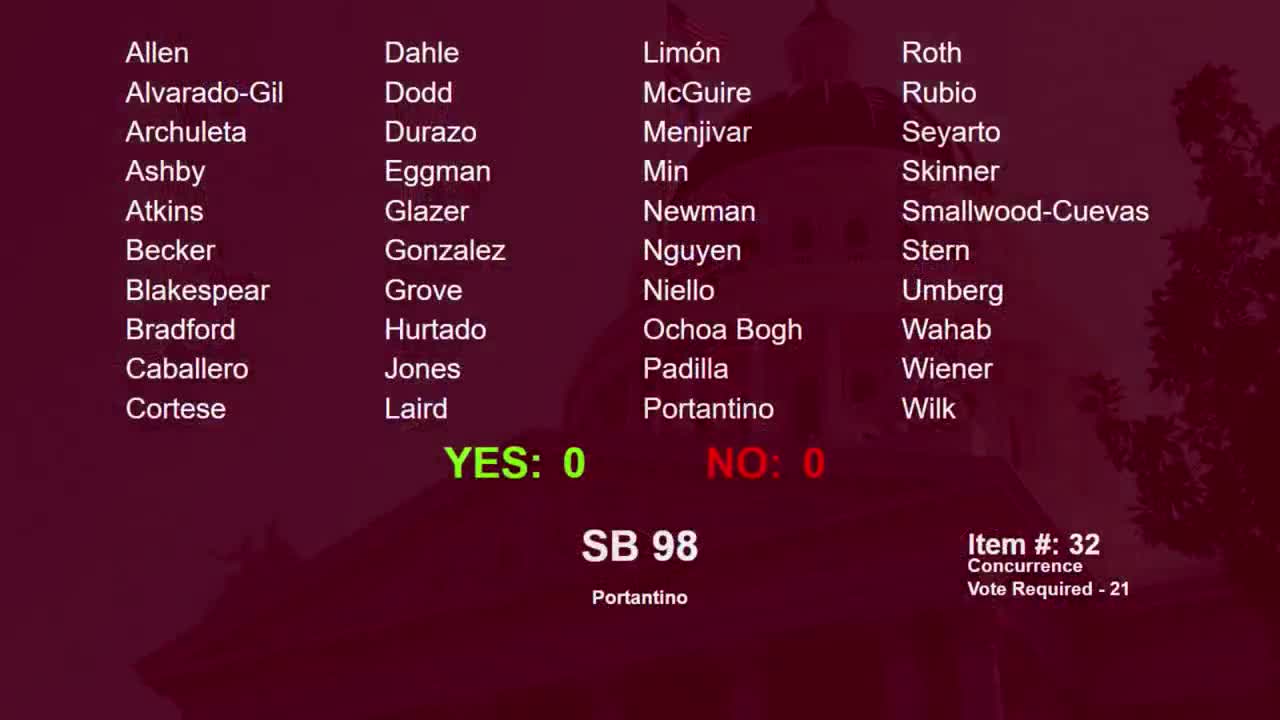 37SEC
Senate Floor
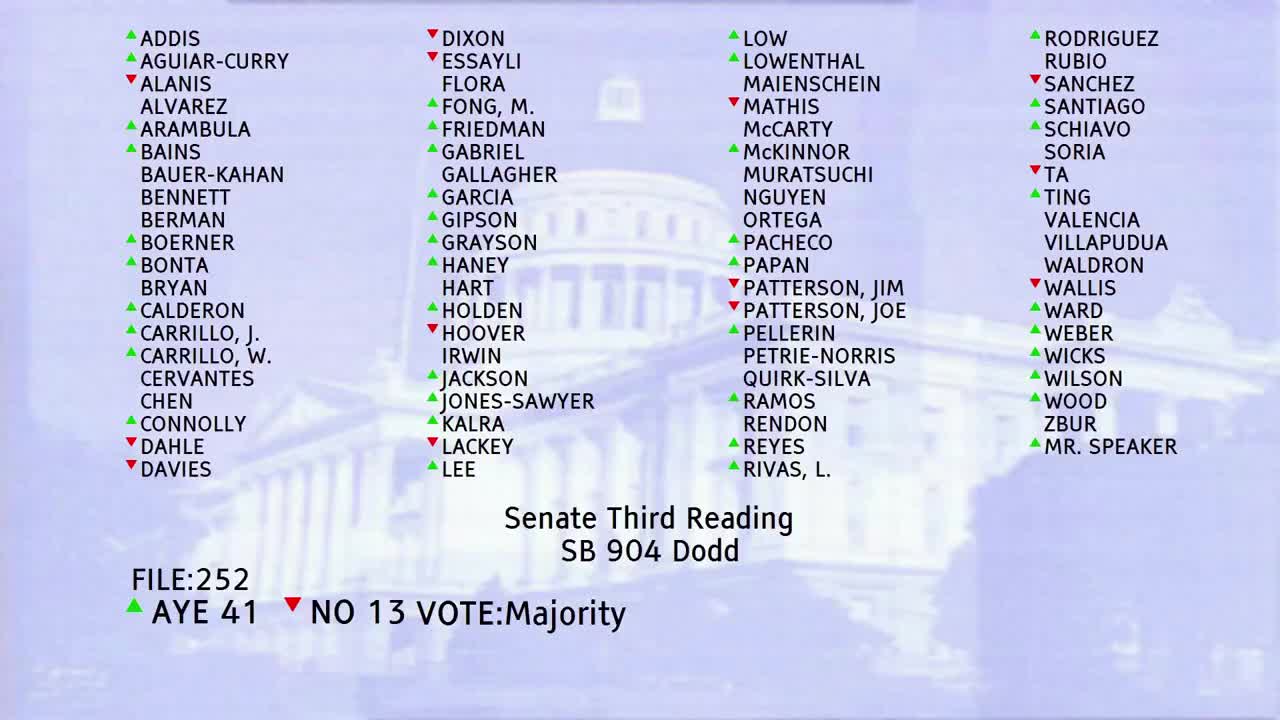 1MIN
Assembly Floor
 14MIN
Assembly Standing Committee on Governmental Organization
 28MIN
Senate Standing Committee on Governmental Organization
Bill Author



