SB 982: Crimes: organized theft.
- Session Year: 2023-2024
- House: Senate
- Latest Version Date: 2024-08-16
Current Status:
Passed
(2024-08-16: Chaptered by Secretary of State. Chapter 171, Statutes of 2024.)
Introduced
In Committee
First Chamber
In Committee
Second Chamber
Enacted
What does this bill do?
This bill makes California’s organized retail theft law permanent. It keeps criminal penalties, including possible jail time, for people who work together to steal, buy, receive, or sell stolen merchandise, act as an agent in an organized theft plan, or recruit, direct, or finance others to commit retail theft.
The summary is provided by generative AI which can make mistakes. For original language, please view the details in the table below.
Existing law, until January 1, 2026, makes a person guilty of organized retail theft, punishable as a misdemeanor or a felony, as specified, if the person acts in concert with one or more persons to steal merchandise from one or more merchants premises or online marketplaces with the intent to sell or return the merchandise for value, acts in concert with 2 or more persons to receive, purchase, or possess merchandise knowing or believing it to have been stolen, acts as an agent of another to steal merchandise from one or more merchants premises or online marketplaces as part of an organized plan to commit theft, or recruits, coordinates, organizes, supervises, directs, manages, or finances another to undertake acts of theft.
This bill would extend the operation of the crime of organized retail theft indefinitely. By extending the operation of an existing crime, this bill would impose a state-mandated local program.
The California Constitution requires the state to reimburse local agencies and school districts for certain costs mandated by the state. Statutory provisions establish procedures for making that reimbursement.
This bill would provide that no reimbursement is required by this act for a specified reason.
Existing law, until January 1, 2026, makes a person guilty of organized retail theft, punishable as a misdemeanor or a felony, as specified, if the person acts in concert with one or more persons to steal merchandise from one or more merchants premises or online marketplaces with the intent to sell or return the merchandise for value, acts in concert with 2 or more persons to receive, purchase, or possess merchandise knowing or believing it to have been stolen, acts as an agent of another to steal merchandise from one or more merchants premises or online marketplaces as part of an organized plan to commit theft, or recruits, coordinates, organizes, supervises, directs, manages, or finances another to undertake acts of theft.
This bill would extend the operation of the crime of organized retail theft indefinitely, unless a specified initiative is approved by the voters. indefinitely. By extending the operation of an existing crime, this bill would impose a state-mandated local program.
The California Constitution requires the state to reimburse local agencies and school districts for certain costs mandated by the state. Statutory provisions establish procedures for making that reimbursement.
This bill would provide that no reimbursement is required by this act for a specified reason.
This bill would declare that it is to take effect immediately as an urgency statute.Existing law, until January 1, 2026, makes a person guilty of organized retail theft, punishable as a misdemeanor or a felony, as specified, if the person acts in concert with one or more persons to steal merchandise from one or more merchants premises or online marketplaces with the intent to sell or return the merchandise for value, acts in concert with 2 or more persons to receive, purchase, or possess merchandise knowing or believing it to have been stolen, acts as an agent of another to steal merchandise from one or more merchants premises or online marketplaces as part of an organized plan to commit theft, or recruits, coordinates, organizes, supervises, directs, manages, or finances another to undertake acts of theft.
This bill would extend the operation of the crime of organized retail theft indefinitely. indefinitely, unless a specified initiative is approved by the voters. By extending the operation of an existing crime, this bill would impose a state-mandated local program.
The California Constitution requires the state to reimburse local agencies and school districts for certain costs mandated by the state. Statutory provisions establish procedures for making that reimbursement.
This bill would provide that no reimbursement is required by this act for a specified reason.
This bill would declare that it is to take effect immediately as an urgency statute.
Existing law, until January 1, 2026, makes a person guilty of organized retail theft, punishable as a misdemeanor or a felony, as specified, if the person acts in concert with one or more persons to steal merchandise from one or more merchants premises or online marketplaces with the intent to sell or return the merchandise for value, acts in concert with 2 or more persons to receive, purchase, or possess merchandise knowing or believing it to have been stolen, acts as an agent of another to steal merchandise from one or more merchants premises or online marketplaces as part of an organized plan to commit theft, or recruits, coordinates, organizes, supervises, directs, manages, or finances another to undertake acts of theft.
This bill would extend the operation of the crime of organized retail theft indefinitely. By extending the operation of an existing crime, this bill would impose a state-mandated local program.
The California Constitution requires the state to reimburse local agencies and school districts for certain costs mandated by the state. Statutory provisions establish procedures for making that reimbursement.
This bill would provide that no reimbursement is required by this act for a specified reason.
Existing law, until January 1, 2026, makes a person guilty of organized retail theft, punishable as a misdemeanor or a felony, as specified, if the person acts in concert with one or more persons to steal merchandise from one or more merchants premises or online marketplaces with the intent to sell or return the merchandise for value, acts in concert with 2 or more persons to receive, purchase, or possess merchandise knowing or believing it to have been stolen, acts as an agent of another to steal merchandise from one or more merchants premises or online marketplaces as part of an organized plan to commit theft, or recruits, coordinates, organizes, supervises, directs, manages, or finances another to undertake acts of theft.
This bill would extend the operation of the crime of organized retail theft indefinitely. By extending the operation of an existing crime, this bill would impose a state-mandated local program.
The California Constitution requires the state to reimburse local agencies and school districts for certain costs mandated by the state. Statutory provisions establish procedures for making that reimbursement.
This bill would provide that no reimbursement is required by this act for a specified reason.
(a)A person who commits any of the following acts is guilty of organized retail theft and shall be punished pursuant to subdivision (b):
(1)Acts in concert with one or more persons to steal merchandise from one or more merchants premises or online marketplace with the intent to sell, exchange, or return the merchandise for value.
(2)Acts in concert with two or more persons to receive, purchase, or possess merchandise described in paragraph (1), knowing or believing it to have been stolen.
(3)Acts as an agent of another individual or group of individuals to steal merchandise from one or more merchants premises or online marketplaces as part of an organized plan to commit theft.
(4)Recruits, coordinates, organizes, supervises, directs, manages, or finances another to undertake any of the acts described in paragraph (1) or (2) or any other statute defining theft of merchandise.
(b)Organized retail theft is punishable as follows:
(1)If violations of paragraph (1), (2), or (3) of subdivision (a) are committed on two or more separate occasions within a 12-month period, and if the aggregated value of the merchandise stolen, received, purchased, or possessed within that 12-month period exceeds nine hundred fifty dollars ($950), the offense is punishable by imprisonment in a county jail not exceeding one year or pursuant to subdivision (h) of Section 1170.
(2)Any other violation of paragraph (1), (2), or (3) of subdivision (a) that is not described in paragraph (1) of this subdivision is punishable by imprisonment in a county jail not exceeding one year.
(3)A violation of paragraph (4) of subdivision (a) is punishable by imprisonment in a county jail not exceeding one year or pursuant to subdivision (h) of Section 1170.
(c)For the purpose of determining whether the defendant acted in concert with another person or persons in any proceeding, the trier of fact may consider any competent evidence, including, but not limited to, all of the following:
(1)The defendant has previously acted in concert with another person or persons in committing acts constituting theft, or any related offense, including any conduct that occurred in counties other than the county of the current offense, if relevant to demonstrate a fact other than the defendants disposition to commit the act.
(2)That the defendant used or possessed an artifice, instrument, container, device, or other article capable of facilitating the removal of merchandise from a retail establishment without paying the purchase price and use of the artifice, instrument, container, or device or other article is part of an organized plan to commit theft.
(3)The property involved in the offense is of a type or quantity that would not normally be purchased for personal use or consumption, and the property is intended for resale.
(d)In a prosecution under this section, the prosecutor shall not be required to charge any other coparticipant of the organized retail theft.
(e)Upon conviction of an offense under this section, the court shall consider ordering, as a condition of probation, that the defendant stay away from retail establishments with a reasonable nexus to the crime committed.
SEC. 2.No reimbursement is required by this act pursuant to Section 6 of Article XIIIB of the California Constitution because the only costs that may be incurred by a local agency or school district will be incurred because this act creates a new crime or infraction, eliminates a crime or infraction, or changes the penalty for a crime or infraction, within the meaning of Section 17556 of the Government Code, or changes the definition of a crime within the meaning of Section 6 of Article XIIIB of the California Constitution.
(a)A person who commits any of the following acts is guilty of organized retail theft and shall be punished pursuant to subdivision (b):
(1)Acts in concert with one or more persons to steal merchandise from one or more merchants premises or online marketplace with the intent to sell, exchange, or return the merchandise for value.
(2)Acts in concert with two or more persons to receive, purchase, or possess merchandise described in paragraph (1), knowing or believing it to have been stolen.
(3)Acts as an agent of another individual or group of individuals to steal merchandise from one or more merchants premises or online marketplaces as part of an organized plan to commit theft.
(4)Recruits, coordinates, organizes, supervises, directs, manages, or finances another to undertake any of the acts described in paragraph (1) or (2) or any other statute defining theft of merchandise.
(b)Organized retail theft is punishable as follows:
(1)If violations of paragraph (1), (2), or (3) of subdivision (a) are committed on two or more separate occasions within a 12-month period, and if the aggregated value of the merchandise stolen, received, purchased, or possessed within that 12-month period exceeds nine hundred fifty dollars ($950), the offense is punishable by imprisonment in a county jail not exceeding one year or pursuant to subdivision (h) of Section 1170.
(2)Any other violation of paragraph (1), (2), or (3) of subdivision (a) that is not described in paragraph (1) of this subdivision is punishable by imprisonment in a county jail not exceeding one year.
(3)A violation of paragraph (4) of subdivision (a) is punishable by imprisonment in a county jail not exceeding one year or pursuant to subdivision (h) of Section 1170.
(c)For the purpose of determining whether the defendant acted in concert with another person or persons in any proceeding, the trier of fact may consider any competent evidence, including, but not limited to, all of the following:
(1)The defendant has previously acted in concert with another person or persons in committing acts constituting theft, or any related offense, including any conduct that occurred in counties other than the county of the current offense, if relevant to demonstrate a fact other than the defendants disposition to commit the act.
(2)That the defendant used or possessed an artifice, instrument, container, device, or other article capable of facilitating the removal of merchandise from a retail establishment without paying the purchase price and use of the artifice, instrument, container, or device or other article is part of an organized plan to commit theft.
(3)The property involved in the offense is of a type or quantity that would not normally be purchased for personal use or consumption, and the property is intended for resale.
(d)In a prosecution under this section, the prosecutor shall not be required to charge any other coparticipant of the organized retail theft.
(e)Upon conviction of an offense under this section, the court shall consider ordering, as a condition of probation, that the defendant stay away from retail establishments with a reasonable nexus to the crime committed.
(f)If the proposed initiative measure titled The Homelessness, Drug Addiction, and Theft Reduction Act (Initiative 23-0017A1) is approved by the voters at the statewide general election on November 5, 2024, this section shall become inoperative on January 1, 2026, and as of that date is repealed. SEC. 2.No reimbursement is required by this act pursuant to Section 6 of Article XIIIB of the California Constitution because the only costs that may be incurred by a local agency or school district will be incurred because this act creates a new crime or infraction, eliminates a crime or infraction, or changes the penalty for a crime or infraction, within the meaning of Section 17556 of the Government Code, or changes the definition of a crime within the meaning of Section 6 of Article XIIIB of the California Constitution.
SEC. 3.This act is an urgency statute necessary for the immediate preservation of the public peace, health, or safety within the meaning of Article IV of the California Constitution and shall go into immediate effect. The facts constituting the necessity are:To address the increase in community-based crime and retail theft and to provide broader public safety, it is necessary that this act take effect immediately.(a)A person who commits any of the following acts is guilty of organized retail theft and shall be punished pursuant to subdivision (b):
(1)Acts in concert with one or more persons to steal merchandise from one or more merchants premises or online marketplace with the intent to sell, exchange, or return the merchandise for value.
(2)Acts in concert with two or more persons to receive, purchase, or possess merchandise described in paragraph (1), knowing or believing it to have been stolen.
(3)Acts as an agent of another individual or group of individuals to steal merchandise from one or more merchants premises or online marketplaces as part of an organized plan to commit theft.
(4)Recruits, coordinates, organizes, supervises, directs, manages, or finances another to undertake any of the acts described in paragraph (1) or (2) or any other statute defining theft of merchandise.
(b)Organized retail theft is punishable as follows:
(1)If violations of paragraph (1), (2), or (3) of subdivision (a) are committed on two or more separate occasions within a 12-month period, and if the aggregated value of the merchandise stolen, received, purchased, or possessed within that 12-month period exceeds nine hundred fifty dollars ($950), the offense is punishable by imprisonment in a county jail not exceeding one year or pursuant to subdivision (h) of Section 1170.
(2)Any other violation of paragraph (1), (2), or (3) of subdivision (a) that is not described in paragraph (1) of this subdivision is punishable by imprisonment in a county jail not exceeding one year.
(3)A violation of paragraph (4) of subdivision (a) is punishable by imprisonment in a county jail not exceeding one year or pursuant to subdivision (h) of Section 1170.
(c)For the purpose of determining whether the defendant acted in concert with another person or persons in any proceeding, the trier of fact may consider any competent evidence, including, but not limited to, all of the following:
(1)The defendant has previously acted in concert with another person or persons in committing acts constituting theft, or any related offense, including any conduct that occurred in counties other than the county of the current offense, if relevant to demonstrate a fact other than the defendants disposition to commit the act.
(2)That the defendant used or possessed an artifice, instrument, container, device, or other article capable of facilitating the removal of merchandise from a retail establishment without paying the purchase price and use of the artifice, instrument, container, or device or other article is part of an organized plan to commit theft.
(3)The property involved in the offense is of a type or quantity that would not normally be purchased for personal use or consumption, and the property is intended for resale.
(d)In a prosecution under this section, the prosecutor shall not be required to charge any other coparticipant of the organized retail theft.
(e)Upon conviction of an offense under this section, the court shall consider ordering, as a condition of probation, that the defendant stay away from retail establishments with a reasonable nexus to the crime committed.
(f)If the proposed initiative measure titled The Homelessness, Drug Addiction, and Theft Reduction Act (Initiative 23-0017A1) is approved by the voters at the statewide general election on November 5, 2024, this section shall become inoperative on January 1, 2026, and as of that date is repealed.
SEC. 2.No reimbursement is required by this act pursuant to Section 6 of Article XIIIB of the California Constitution because the only costs that may be incurred by a local agency or school district will be incurred because this act creates a new crime or infraction, eliminates a crime or infraction, or changes the penalty for a crime or infraction, within the meaning of Section 17556 of the Government Code, or changes the definition of a crime within the meaning of Section 6 of Article XIIIB of the California Constitution.
SEC. 3.This act is an urgency statute necessary for the immediate preservation of the public peace, health, or safety within the meaning of Article IV of the California Constitution and shall go into immediate effect. The facts constituting the necessity are:
To address the increase in community-based crime and retail theft and to provide broader public safety, it is necessary that this act take effect immediately.
(a)A person who commits any of the following acts is guilty of organized retail theft, theft and shall be punished pursuant to subdivision (b):
(1)Acts in concert with one or more persons to steal merchandise from one or more merchants premises or online marketplace with the intent to sell, exchange, or return the merchandise for value.
(2)Acts in concert with two or more persons to receive, purchase, or possess merchandise described in paragraph (1), knowing or believing it to have been stolen.
(3)Acts as an agent of another individual or group of individuals to steal merchandise from one or more merchants premises or online marketplaces as part of an organized plan to commit theft.
(4)Recruits, coordinates, organizes, supervises, directs, manages, or finances another to undertake any of the acts described in paragraph (1) or (2) or any other statute defining theft of merchandise.
(b)Organized retail theft is punishable as follows:
(1)If violations of paragraph (1), (2), or (3) of subdivision (a) are committed on two or more separate occasions within a 12-month period, and if the aggregated value of the merchandise stolen, received, purchased, or possessed within that 12-month period exceeds nine hundred fifty dollars ($950), the offense is punishable by imprisonment in a county jail not exceeding one year or pursuant to subdivision (h) of Section 1170.
(2)Any other violation of paragraph (1), (2), or (3) of subdivision (a) that is not described in paragraph (1) of this subdivision is punishable by imprisonment in a county jail not exceeding one year.
(3)A violation of paragraph (4) of subdivision (a) is punishable by imprisonment in a county jail not exceeding one year or pursuant to subdivision (h) of Section 1170.
(c)For the purpose of determining whether the defendant acted in concert with another person or persons in any proceeding, the trier of fact may consider any competent evidence, including, but not limited to, all of the following:
(1)The defendant has previously acted in concert with another person or persons in committing acts constituting theft, or any related offense, including any conduct that occurred in counties other than the county of the current offense, if relevant to demonstrate a fact other than the defendants disposition to commit the act.
(2)That the defendant used or possessed an artifice, instrument, container, device, or other article capable of facilitating the removal of merchandise from a retail establishment without paying the purchase price and use of the artifice, instrument, container, or device or other article is part of an organized plan to commit theft.
(3)The property involved in the offense is of a type or quantity that would not normally be purchased for personal use or consumption, and the property is intended for resale.
(d)In a prosecution under this section, the prosecutor shall not be required to charge any other coparticipant of the organized retail theft.
(e)Upon conviction of an offense under this section, the court shall consider ordering, as a condition of probation, that the defendant stay away from retail establishments with a reasonable nexus to the crime committed.
SEC. 2.No reimbursement is required by this act pursuant to Section 6 of Article XIIIB of the California Constitution because the only costs that may be incurred by a local agency or school district will be incurred because this act creates a new crime or infraction, eliminates a crime or infraction, or changes the penalty for a crime or infraction, within the meaning of Section 17556 of the Government Code, or changes the definition of a crime within the meaning of Section 6 of Article XIIIB of the California Constitution.
REVISIONS: HeadingLines 1, 2, and 3.(a)A person who commits any of the following acts is guilty of organized retail theft, and shall be punished pursuant to subdivision (b):
(1)Acts in concert with one or more persons to steal merchandise from one or more merchants premises or online marketplace with the intent to sell, exchange, or return the merchandise for value.
(2)Acts in concert with two or more persons to receive, purchase, or possess merchandise described in paragraph (1), knowing or believing it to have been stolen.
(3)Acts as an agent of another individual or group of individuals to steal merchandise from one or more merchants premises or online marketplaces as part of an organized plan to commit theft.
(4)Recruits, coordinates, organizes, supervises, directs, manages, or finances another to undertake any of the acts described in paragraph (1) or (2) or any other statute defining theft of merchandise.
(b)Organized retail theft is punishable as follows:
(1)If violations of paragraph (1), (2), or (3) of subdivision (a) are committed on two or more separate occasions within a 12-month period, and if the aggregated value of the merchandise stolen, received, purchased, or possessed within that 12-month period exceeds nine hundred fifty dollars ($950), the offense is punishable by imprisonment in a county jail not exceeding one year or pursuant to subdivision (h) of Section 1170.
(2)Any other violation of paragraph (1), (2), or (3) of subdivision (a) that is not described in paragraph (1) of this subdivision is punishable by imprisonment in a county jail not exceeding one year.
(3)A violation of paragraph (4) of subdivision (a) is punishable by imprisonment in a county jail not exceeding one year or pursuant to subdivision (h) of Section 1170.
(c)For the purpose of determining whether the defendant acted in concert with another person or persons in any proceeding, the trier of fact may consider any competent evidence, including, but not limited to, all of the following:
(1)The defendant has previously acted in concert with another person or persons in committing acts constituting theft, or any related offense, including any conduct that occurred in counties other than the county of the current offense, if relevant to demonstrate a fact other than the defendants disposition to commit the act.
(2)That the defendant used or possessed an artifice, instrument, container, device, or other article capable of facilitating the removal of merchandise from a retail establishment without paying the purchase price and use of the artifice, instrument, container, or device or other article is part of an organized plan to commit theft.
(3)The property involved in the offense is of a type or quantity that would not normally be purchased for personal use or consumption consumption, and the property is intended for resale.
(d)In a prosecution under this section, the prosecutor shall not be required to charge any other coparticipant of the organized retail theft.
(e)Upon conviction of an offense under this section, the court shall consider ordering, as a condition of probation, that the defendant stay away from retail establishments with a reasonable nexus to the crime committed.
SEC. 2.No reimbursement is required by this act pursuant to Section 6 of Article XIIIB of the California Constitution because the only costs that may be incurred by a local agency or school district will be incurred because this act creates a new crime or infraction, eliminates a crime or infraction, or changes the penalty for a crime or infraction, within the meaning of Section 17556 of the Government Code, or changes the definition of a crime within the meaning of Section 6 of Article XIIIB of the California Constitution.
(a)A person who commits any of the following acts is guilty of organized retail theft, and shall be punished pursuant to subdivision (b):
(1)Acts in concert with one or more persons to steal merchandise from one or more merchants premises or online marketplace with the intent to sell, exchange, or return the merchandise for value.
(2)Acts in concert with two or more persons to receive, purchase, or possess merchandise described in paragraph (1), knowing or believing it to have been stolen.
(3)Acts as an agent of another individual or group of individuals to steal merchandise from one or more merchants premises or online marketplaces as part of an organized plan to commit theft.
(4)Recruits, coordinates, organizes, supervises, directs, manages, or finances another to undertake any of the acts described in paragraph (1) or (2) or any other statute defining theft of merchandise.
(b)Organized retail theft is punishable as follows:
(1)If violations of paragraph (1), (2), or (3) of subdivision (a) are committed on two or more separate occasions within a 12-month period, and if the aggregated value of the merchandise stolen, received, purchased, or possessed within that 12-month period exceeds nine hundred fifty dollars ($950), the offense is punishable by imprisonment in a county jail not exceeding one year or pursuant to subdivision (h) of Section 1170.
(2)Any other violation of paragraph (1), (2), or (3) of subdivision (a) that is not described in paragraph (1) of this subdivision is punishable by imprisonment in a county jail not exceeding one year.
(3)A violation of paragraph (4) of subdivision (a) is punishable by imprisonment in a county jail not exceeding one year or pursuant to subdivision (h) of Section 1170.
(c)For the purpose of determining whether the defendant acted in concert with another person or persons in any proceeding, the trier of fact may consider any competent evidence, including, but not limited to, all of the following:
(1)The defendant has previously acted in concert with another person or persons in committing acts constituting theft, or any related offense, including any conduct that occurred in counties other than the county of the current offense, if relevant to demonstrate a fact other than the defendants disposition to commit the act.
(2)That the defendant used or possessed an artifice, instrument, container, device, or other article capable of facilitating the removal of merchandise from a retail establishment without paying the purchase price and use of the artifice, instrument, container, or device or other article is part of an organized plan to commit theft.
(3)The property involved in the offense is of a type or quantity that would not normally be purchased for personal use or consumption and the property is intended for resale.
(d)In a prosecution under this section, the prosecutor shall not be required to charge any other coparticipant of the organized retail theft.
(e)Upon conviction of an offense under this section, the court shall consider ordering, as a condition of probation, that the defendant stay away from retail establishments with a reasonable nexus to the crime committed.
(f)This section shall remain in effect only until January 1, 2026, and as of that date is repealed.SEC. 2.No reimbursement is required by this act pursuant to Section 6 of Article XIIIB of the California Constitution because the only costs that may be incurred by a local agency or school district will be incurred because this act creates a new crime or infraction, eliminates a crime or infraction, or changes the penalty for a crime or infraction, within the meaning of Section 17556 of the Government Code, or changes the definition of a crime within the meaning of Section 6 of Article XIIIB of the California Constitution.
|
Date
|
Status
|
|---|---|
| Aug 16, 2024 | Chaptered by Secretary of State. Chapter 171, Statutes of 2024. |
| Aug 16, 2024 | Approved by the Governor. |
| Aug 15, 2024 | Enrolled and presented to the Governor at 11:45 a.m. |
| Aug 12, 2024 | Assembly amendments concurred in. (Ayes 38. Noes 0. Page 5038.) Ordered to engrossing and enrolling. |
| Aug 8, 2024 | In Senate. Concurrence in Assembly amendments pending. |
| Aug 8, 2024 | Read third time. Passed. (Ayes 72. Noes 0. Page 6244.) Ordered to the Senate. |
| Jul 1, 2024 | Read third time and amended. |
| Jul 1, 2024 | Ordered to third reading. |
| Jul 1, 2024 | Assembly Rule 69 suspended. (Ayes 54. Noes 15. Page 6106.) |
| Jun 24, 2024 | Read second time. Ordered to third reading. |
| Jun 20, 2024 | Read second time and amended. Ordered to second reading. |
| Jun 19, 2024 | From committee: Do pass as amended. (Ayes 9. Noes 4.) (June 19). |
| Jun 11, 2024 | From committee: Do pass and re-refer to Com. on APPR. (Ayes 8. Noes 0.) (June 11). Re-referred to Com. on APPR. |
| Jun 11, 2024 | Coauthors revised. |
| Jun 3, 2024 | Referred to Com. on PUB. S. |
| May 23, 2024 | In Assembly. Read first time. Held at Desk. |
| May 22, 2024 | Read third time. Passed. (Ayes 39. Noes 0. Page 4133.) Ordered to the Assembly. |
| May 20, 2024 | Read second time. Ordered to third reading. |
| May 16, 2024 | Read second time and amended. Ordered to second reading. |
| May 16, 2024 | From committee: Do pass as amended. (Ayes 7. Noes 0. Page 3966.) (May 16). |
| May 10, 2024 | Set for hearing May 16. |
| Apr 8, 2024 | April 8 hearing: Placed on APPR suspense file. |
| Mar 28, 2024 | Set for hearing April 8. |
| Mar 12, 2024 | From committee: Do pass and re-refer to Com. on APPR. (Ayes 5. Noes 0. Page 3283.) (March 12). Re-referred to Com. on APPR. |
| Mar 5, 2024 | From committee with author's amendments. Read second time and amended. Re-referred to Com. on PUB S. |
| Feb 28, 2024 | Set for hearing March 12. |
| Feb 27, 2024 | March 19 set for first hearing canceled at the request of author. |
| Feb 27, 2024 | Set for hearing March 19. |
| Feb 14, 2024 | Referred to Com. on PUB S. |
| Jan 30, 2024 | From printer. May be acted upon on or after February 29. |
| Jan 29, 2024 | Introduced. Read first time. To Com. on RLS. for assignment. To print. |
|
Date
|
Description
|
Location
|
Votes
|
|
|---|---|---|---|---|
| Aug 12, 2024 | Unfinished Business SB982 Wahab et al. Concurrence | Senate Floor |
Passed |
|
| Aug 8, 2024 | SB 982 Wahab Senate Third Reading By Jones-Sawyer | Assembly Floor |
Passed |
|
| Jun 19, 2024 | Do pass as amended. | Assembly Standing Committee on Appropriations |
Passed |
|
| Jun 11, 2024 | Do pass and be re-referred to the Committee on [Appropriations] | Assembly Standing Committee on Public Safety |
Passed |
|
| May 22, 2024 | Senate 3rd Reading SB982 Wahab et al. | Senate Floor |
Passed |
|
| May 16, 2024 | Do pass as amended | Senate Standing Committee on Appropriations |
Passed |
|
| Apr 8, 2024 | Placed on suspense file | Senate Standing Committee on Appropriations |
Passed |
|
| Mar 12, 2024 | Do pass, but first be re-referred to the Committee on [Appropriations] | Senate Standing Committee on Public Safety |
Passed |
This list shows positions taken on this bill by organizations on the date displayed, which is linked to the original source.
Positions by individuals are not included.
|
Organization
|
Position
|
Date
|
|---|---|---|
| America First Policy Institute - California | ** Support | |
| Arcadia Police Officers' Association | ** Support | |
| Buena Park City Of | ** Support | |
| Burbank Police Officers' Association | ** Support | |
| California Association Of Highway Patrolmen | ** Support | |
| California District Attorneys Association | ** Support | |
| California Hispanic Chamber Of Commerce | ** Support | |
| California Narcotic Officers' Association | ** Support | |
| California Police Chiefs Association | ** Support | |
| California Problem Solvers Caucus | ** Support | |
| California Reserve Peace Officers Association | ** Support | |
| California Retailers Association | ** Support | |
| Chief Probation Officers Of California | ** Support | |
| City of Agoura Hills | ** Support | |
| City of Artesia | ** Support | |
| City of Buena Park | ** Support | |
| city of Cypress | ** Support | |
| City of El Cerrito | ** Support | |
| City of Fontana | ** Support | |
| City of Fountain Valley | ** Support | |
| City of Grand Terrace | ** Support | |
| City of La Mirada | ** Support | |
| City of La Verne | ** Support | |
| City of Lakeport | ** Support | |
| City of Lakewood CA | ** Support | |
| City of Los Alamitos | ** Support | |
| City of Manteca | ** Support | |
| City of Moorpark | ** Support | |
| City Of Oakdale | ** Support | |
| city of paramount | ** Support | |
| City of Port Hueneme | ** Support | |
| City of Rancho Palos Verdes | * Support | Jun 11, 2024 |
| City of Rohnert Park | ** Support | |
| City of Rolling Hills Estates | ** Support | |
| City of Rosemead | ** Support | |
| City of San Luis Obispo | ** Support | |
| City of Santa Clarita | ** Support | |
| City of Soledad | ** Support | |
| City of Stanton | ** Support | |
| City of Stockton | * Support | Jun 12, 2024 |
| City of Vista | ** Support | |
| City of Whittier | ** Support | |
| CLAREMONT POLICE OFFICERS ASSOCIATION | ** Support | |
| Corona Police Officers Association | ** Support | |
| Culver City Police Officers' Association | ** Support | |
| Deputy Sheriffs Association of Monterey County | ** Support | |
| Fullerton City Of | ** Support | |
| Fullerton Police Officers' Association | ** Support | |
| League Of California Cities | ** Support | |
| Los Angeles Area Chamber Of Commerce | * Support | Apr 8, 2024 |
| Los Angeles City Attorney'S Office | ** Support | |
| Los Angeles City Attorney's Office | * Support | Apr 8, 2024 |
| Los Angeles County District Attorney'S Office | ** Support | |
| Los Angeles County Sheriff'S Department | ** Support | |
| Los Angeles County Sherriff's Department | * Support | Jun 11, 2024 |
| Mission Viejo City Of | ** Support | |
| Murrieta Police Officers' Association | ** Support | |
| Newport Beach Police Association | ** Support | |
| Novato Police Officers Association | ** Support | |
| Palos Verdes Police Officers Association | ** Support | |
| PLACER COUNTY DEPUTY SHERIFFS ASSOCIATION | ** Support | |
| Pomona Police Officers' Association | ** Support | |
| Riverside County Sheriff's Office | * Support | Mar 12, 2024 |
| RIVERSIDE POLICE OFFICERS ASSOCIATION | ** Support | |
| Riverside Sheriffs' Association | ** Support | |
| San Francisco Public Defender | ** Against | |
| Santa Ana Police Officers Association | ** Support | |
| Target Corporation | ** Support | |
| Town of Apple Valley | ** Support | |
| Underground Scholars Initiative - UC Berkeley | ** Against | |
| Upland Police Officers Association | ** Support | |
| Vera Institute Of Justice | ** Against |
SENATE RULES COMMITTEE Office of Senate Floor Analyses (916) 651-1520 Fax: (916) 327-4478 | SB 982 |
UNFINISHED BUSINESS
Bill No: SB 982
Author: Wahab (D), et al.
Amended: 7/1/24 in Assembly
Vote: 21
SENATE PUBLIC SAFETY COMMITTEE: 5-0, 3/12/24
AYES: Wahab, Seyarto, Bradford, Skinner, Wiener
SENATE APPROPRIATIONS COMMITTEE: 7-0, 5/16/24
AYES: Caballero, Jones, Ashby, Becker, Bradford, Seyarto, Wahab
SENATE FLOOR: 39-0, 5/22/24
AYES: Alvarado-Gil, Archuleta, Ashby, Atkins, Becker, Blakespear, Bradford, Caballero, Cortese, Dahle, Dodd, Durazo, Eggman, Glazer, Gonzalez, Grove, Hurtado, Jones, Laird, Limón, McGuire, Menjivar, Min, Newman, Nguyen, Niello, Ochoa Bogh, Padilla, Portantino, Roth, Rubio, Seyarto, Skinner, Smallwood-Cuevas, Stern, Umberg, Wahab, Wiener, Wilk
NO VOTE RECORDED: Allen
ASSEMBLY FLOOR: 72-0, 8/8/24 - See last page for vote
SUBJECT: Crimes: organized theft
SOURCE: Author
DIGEST:
This bill removes the sunset date on the provision of law that criminalizes organized retail theft, thereby making the operation of the law permanent.
Assembly Amendments
make nonsubstantive changes.
ANALYSIS:
Existing law:
- Creates, until January 1, 2026, the crime of organized retail theft which is defined as:
- Acting in concert with one or more persons to steal merchandise from one or more merchant’s premises or online marketplace with the intent to sell, exchange, or return the merchandise for value.
- Acting in concert with two or more persons to receive, purchase, or possess merchandise knowing or believing it to have been stolen.
- Acting as the agent of another individual or group of individuals to steal merchandise from one or more merchant’s premises or online marketplaces as part of a plan to commit theft.
- Recruiting, coordinating, organizing, supervising, directing, managing, or financing another to undertake acts of theft. (Penal Code, § 490.4, subd. (a))
- Punishes, until January 1, 2026, organized retail theft as follows:
- If violations, except the recruiting, coordinating, organizing, supervising, directing, managing, or financing another provision, are committed on two or more separate occasions within a one-year period, and if the aggregated value of the merchandise stolen, received, purchased, or possessed within that period exceeds $950 the offense is punishable as either a misdemeanor by imprisonment in a county jail not exceeding one year or as a jail-eligible felony.
- Any other violation, except the recruiting, coordinating, organizing, supervising, directing, managing, or financing another provision, is punishable as a misdemeanor by imprisonment in a county jail not exceeding one year.
- A violation of the recruiting, coordinating, organizing, supervising, directing, managing, or financing another provision is punishable as either a misdemeanor by imprisonment in a county jail not exceeding one year or as a jail-eligible felony. (Penal Code, § 490.1, subd. (b))
This bill removes the sunset date of January 1, 2026 on the organized retail theft statute making the law permanent.
Background
Proposition 47, also known as the Safe Neighborhoods and Schools Act, was approved by the voters in November 2014. Proposition 47 reduced the penalties for certain drug and property crimes and directed that the resulting state savings be directed to mental health and substance abuse treatment, truancy and dropout prevention, and victims’ services. Specifically, the initiative reduced the penalties for possession for personal use of most illegal drugs to misdemeanors. The initiative also reduced the penalties for theft, shoplifting, receiving stolen property, writing bad checks, and check forgery valued at $950 or less from alternate felony-misdemeanors to straight misdemeanors. Among the crimes reduced to misdemeanors by Proposition 47 “are certain second degree burglaries where the defendant enters a commercial establishment with the intent to steal. Such offense is now characterized as shoplifting as defined in new [Penal Code] section 459.5.” (People v. Sherow (2015) 239 Cal.App.4th 875, 879.) The measure limited the reduced penalties to offenders who do not have designated prior convictions for serious or violent felonies and who are not required to register as sex offenders. (See Legislative Analyst's Office analysis of Proposition 47 <http://www.lao.ca.gov/ballot/2014/prop-47-110414.pdf .)
Prior to Proposition 47, most theft offenses had to meet the $950 threshold in order to be charged as a felony. However, this threshold did not apply to certain offenses such as receiving stolen property, fraud and forgery which were punishable as either a felony or misdemeanor, also known as “wobblers.” Also, in cases of retail theft, prosecutors had the option of charging a person with second degree burglary, which was punishable as a wobbler without having to reach the $950 threshold. However, the provisions of Proposition 47 specifically required that the crime of “shoplifting” be punished as a misdemeanor. “Shoplifting” was defined by the initiative as “entering a commercial establishment with intent to commit larceny while that establishment is open during regular business hours, where the value of the property that is taken or intended to be taken does not exceed $950.” (Penal Code, section 459.5; Proposition 47, approved by California voters on Nov. 4, 2014.)
Because Proposition 47 reduced the number of crimes that can be punished as felonies, it reduced the number of people that could be sentenced to state prison. Proposition 47 requires that the estimated annual savings to the state resulting from Proposition 47’s sentencing changes be spent on mental health and substance use services, truancy and dropout prevention, and victim services. According to the Legislative Analyst’s Office, last year, the estimated state savings was about $113 million. (https://lao.ca.gov/ballot/2023/230474.pdf [as of Mar. 1, 2024].)
After the passage of Proposition 47, opponents of the measure argued that because shoplifting had to be charged as a misdemeanor unless the amount stolen exceeds $950, repeat offenders and those who work in concert with others in an organized retail theft ring were not being appropriately punished. (Grocery stores are pushing California to be tougher on crime, LA Times < https://www.latimes.com/business/story/2020-09-16/california-grocery-industry-supports-tougher-crime-laws [as of Mar. 1, 2024].)
In 2018, a coalition of law enforcement and victims’ advocate groups started gathering signatures to put a new initiative on the ballot that would undo some of the changes made by Proposition 47. That measure, Proposition 20, would have allowed thefts of property worth $250 or more to be punished as felonies and would have created the crime of serial theft and organized retail theft. Proposition 20 qualified to be placed on the ballot for the November 2020 general election and was ultimately rejected by California voters.
Also in 2018, the Legislature passed AB 1065 (Jones-Sawyer), Chapter 803, Statutes of 2018, which created the crime of organized retail theft and allowed the crime to be punished as a wobbler, along with several other provisions related to the prosecution of the new crime and the creation of the CHP property crimes task force to assist local efforts to combat organized property crimes. That law contained a sunset date of January 1, 2021. Since the passage of the organized retail theft law, the sunset has been extended several times. (See AB 94 (Committee on Budget and Fiscal Rev.), Chapter 25, Statutes of 2019 and AB 331 (Jones-Sawyer), Chapter 113, Statutes of 2021)
The current sunset date is January 1, 2026. This bill removes the sunset date making the operation of the crime of organized retail theft permanent.
FISCAL EFFECT: Appropriation: No Fiscal Com.: Yes Local: Yes
According to the Assembly Appropriations Committee:
- Cost pressures (Trial Court Trust Fund, General Fund) of an unknown but significant amount to the courts to adjudicate criminal charges for organized retail theft. A defendant charged with a misdemeanor or felony is entitled to a jury trial and, if the defendant is indigent, legal representation provided by the government. Actual court costs will depend on the number of cases brought and the amount of court time needed to adjudicate each case. Although courts are not funded on the basis of workload, increased pressure on the Trial Court Trust Fund may create a need for increased funding for courts from the General Fund. The Governor’s 2024-25 budget proposes $83.1 million ongoing from the General Fund to backfill declining revenue to the Trial Court Trust Fund.
- Costs (local funds, General Fund) to the counties and the Department of Corrections and Rehabilitation (CDCR) to incarcerate people convicted of organized retail theft, likely in the millions to tens of millions of dollars annually. Actual incarceration costs will depend on the number of convictions, the length of each sentence, and whether each sentence must be served in county jail or state prison. The average annual cost to incarcerate one person in county jail is approximately $29,000. The Legislative Analyst’s Office (LAO) estimates the average annual cost to incarcerate one person in state prison is $133,000. In 2023, CDCR admitted 25 people into custody whose primary conviction was for organized retail theft; collectively, their incarceration will cost approximately $3.3 million General Fund annually. Although county incarceration costs are generally not considered reimbursable state mandates pursuant to Proposition 30 (2012), overcrowding in county jails creates cost pressure on the General Fund because the state has historically granted new funding to counties to offset overcrowding resulting from 2011 public safety realignment.
According to the Legislative Analyst’s Office, the General Fund faces a structural deficit in the tens of billions of dollars over the next several fiscal years.
SUPPORT: (Verified 7/3/24)
America First Policy Institute - California
Arcadia Police Officers' Association
Buena Park; City of
Burbank Police Officers' Association
California Association of Highway Patrolmen
California District Attorneys Association
California Hispanic Chamber of Commerce
California Narcotic Officers' Association
California Police Chiefs Association
California Reserve Peace Officers Association
California Retailers Association
City of Agoura Hills
City of Artesia
City of Buena Park
City of Cypress
City of El Cerrito
City of Fontana
City of Fountain Valley
City of Grand Terrace
City of La Mirada
City of La Verne
City of Lakeport
City of Lakewood CA
City of Los Alamitos
City of Manteca
City of Moorpark
City of Oakdale
City of Paramount
City of Port Hueneme
City of Rohnert Park
City of Rolling Hills Estates
City of Rosemead
City of San Luis Obispo
City of Santa Clarita
City of Soledad
City of Stanton
City of Vista
City of Whittier
Claremont Police Officers Association
Corona Police Officers Association
Culver City Police Officers' Association
Deputy Sheriffs' Association of Monterey County
Fullerton Police Officers' Association
Fullerton; City of
League of California Cities
Los Angeles City Attorney's Office
Los Angeles County District Attorney's Office
Los Angeles County Sheriff's Department
Mission Viejo; City of
Murrieta Police Officers' Association
Newport Beach Police Association
Novato Police Officers Association
Palos Verdes Police Officers Association
Placer County Deputy Sheriffs' Association
Pomona Police Officers' Association
Riverside Police Officers Association
Riverside Sheriffs' Association
Santa Ana Police Officers Association
Target Corporation
Town of Apple Valley
Upland Police Officers Association
OPPOSITION: (Verified 7/3/24)
San Francisco Public Defender
Underground Scholars Initiative at UC Berkeley
Prepared by: Stella Choe / PUB. S. /
8/9/24 16:38:03
**** END ****
SENATE THIRD READING
STR Bill Id:SB 982
Author:(Wahab)
As Amended Ver:July 1, 2024
Majority vote
SUMMARY
Eliminates the sunset date for the crime of organized retail theft and for the existence of a taskforce established by the California Highway Patrol to analyze organized retail theft and vehicle burglary and to assist local law enforcement in counties identified as having elevated property crime.
Major Provisions
COMMENTS
According to the Author
"While we must always create pathways for restorative justice and rehabilitation, we must also hold people accountable as they violate the rights of others. With the rise of retail theft and robberies in our communities, we must provide prosecutors the necessary tools to address the lawlessness that is threatening our quality of life."
Arguments in Support
According to America First Policy Institute-California, "Organized retail theft poses a significant threat to the economic stability and public safety of our communities. Existing law, which remains in place until January 1, 2026, has made strides in addressing this issue, but its temporary nature leaves room for future vulnerability. It is incumbent on the legislature to rectify this by ensuring that the crime of organized retail theft remains an adequately punishable offense, thereby deterring individuals from engaging in such criminal activities."
Arguments in Opposition
According to The Vera Institute of Justice, ""When we blame the wrong problems, we miss the right solutions. While sensational claims about organized retail theft have been debunked and data shows that retail theft is not rising statewide, the legislature should respond to concerns from the community and local businesses with evidence-backed solutions.
"Increasing penalties for non-violent offenses like retail theft will do little to make our communities safer. Study after study has shown that neither lengthening sentences nor increasing charges and punishments based on a second or third offense meaningfully deters crime. Finally, evidence indicates that SB 982 is likely to worsen racial disparities in California's criminal system by sending more Black and Latinx people to prison. And unlike the community-based programs funded by Proposition 47, which have reduced recidivism, sending people to jail and prison makes them more likely to reoffend, while costing taxpayers dearly amid a budget deficit." (internal citations omitted)
FISCAL COMMENTS
According to the Assembly Appropriations Committee:
- Cost pressures (Trial Court Trust Fund, General Fund) of an unknown but significant amount to the courts to adjudicate criminal charges for organized retail theft. A defendant charged with a misdemeanor or felony is entitled to a jury trial and, if the defendant is indigent, legal representation provided by the government. Actual court costs will depend on the number of cases brought and the amount of court time needed to adjudicate each case. Although courts are not funded on the basis of workload, increased pressure on the Trial Court Trust Fund may create a need for increased funding for courts from the General Fund. The Governor's 2024-25 budget proposes $83.1 million ongoing from the General Fund to backfill declining revenue to the Trial Court Trust Fund.
- Costs (local funds, General Fund) to the counties and the Department of Corrections and Rehabilitation (CDCR) to incarcerate people convicted of organized retail theft, likely in the millions to tens of millions of dollars annually. Actual incarceration costs will depend on the number of convictions, the length of each sentence, and whether each sentence must be served in county jail or state prison. The average annual cost to incarcerate one person in county jail is approximately $29,000. The Legislative Analyst's Office (LAO) estimates the average annual cost to incarcerate one person in state prison is $133,000. In 2023, CDCR admitted 25 people into custody whose primary conviction was for organized retail theft; collectively, their incarceration will cost approximately $3.3 million General Fund annually. Although county incarceration costs are generally not considered reimbursable state mandates pursuant to Proposition 30 (2012), overcrowding in county jails creates cost pressure on the General Fund because the state has historically granted new funding to counties to offset overcrowding resulting from 2011 public safety realignment.
According to the Legislative Analyst's Office, the General Fund faces a structural deficit in the tens of billions of dollars over the next several fiscal years.
VOTES
SENATE FLOOR: 39-0-1
YES: Alvarado-Gil, Archuleta, Ashby, Atkins, Becker, Blakespear, Bradford, Caballero, Cortese, Dahle, Dodd, Durazo, Eggman, Glazer, Gonzalez, Grove, Hurtado, Jones, Laird, Limón, McGuire, Menjivar, Min, Newman, Nguyen, Niello, Ochoa Bogh, Padilla, Portantino, Roth, Rubio, Seyarto, Skinner, Smallwood-Cuevas, Stern, Umberg, Wahab, Wiener, Wilk
ABS, ABST OR NV: Allen
ASM PUBLIC SAFETY: 8-0-0
YES: McCarty, Alanis, Lackey, Stephanie Nguyen, Reyes, Ting, Wilson, Zbur
ASM APPROPRIATIONS: 9-4-2
YES: Wicks, Arambula, Calderon, Berman, Mike Fong, Haney, Hart, Pellerin, Aguiar-Curry
NO: Sanchez, Dixon, Jim Patterson, Ta
ABS, ABST OR NV: Bryan, Grayson
UPDATED
VERSION: July 1, 2024
CONSULTANT: Elizabeth Potter / PUB. S. / (916) 319-3744 FN: 0003680
SENATE THIRD READING
STR Bill Id:SB 982
Author:(Wahab)
As Amended Ver:June 20, 2024
2/3 vote. Urgency
SUMMARY
Eliminates the sunset date for the crime of organized retail theft and for the existence of a taskforce established by the California Highway Patrol to analyze organized retail theft and vehicle burglary and to assist local law enforcement in counties identified as having elevated property crime.
Major Provisions
COMMENTS
According to the Author
"While we must always create pathways for restorative justice and rehabilitation, we must also hold people accountable as they violate the rights of others. With the rise of retail theft and robberies in our communities, we must provide prosecutors the necessary tools to address the lawlessness that is threatening our quality of life."
Arguments in Support
According to America First Policy Institute-California, "Organized retail theft poses a significant threat to the economic stability and public safety of our communities. Existing law, which remains in place until January 1, 2026, has made strides in addressing this issue, but its temporary nature leaves room for future vulnerability. It is incumbent on the legislature to rectify this by ensuring that the crime of organized retail theft remains an adequately punishable offense, thereby deterring individuals from engaging in such criminal activities."
Arguments in Opposition
According to The Vera Institute of Justice, ""When we blame the wrong problems, we miss the right solutions. While sensational claims about organized retail theft have been debunked and data shows that retail theft is not rising statewide, the legislature should respond to concerns from the community and local businesses with evidence-backed solutions.
"Increasing penalties for non-violent offenses like retail theft will do little to make our communities safer. Study after study has shown that neither lengthening sentences nor increasing charges and punishments based on a second or third offense meaningfully deters crime. Finally, evidence indicates that SB 982 is likely to worsen racial disparities in California's criminal system by sending more Black and Latinx people to prison. And unlike the community-based programs funded by Proposition 47, which have reduced recidivism, sending people to jail and prison makes them more likely to reoffend, while costing taxpayers dearly amid a budget deficit." (internal citations omitted)
FISCAL COMMENTS
According to the Assembly Appropriations Committee:
- Cost pressures (Trial Court Trust Fund, General Fund) of an unknown but significant amount to the courts to adjudicate criminal charges for organized retail theft. A defendant charged with a misdemeanor or felony is entitled to a jury trial and, if the defendant is indigent, legal representation provided by the government. Actual court costs will depend on the number of cases brought and the amount of court time needed to adjudicate each case. Although courts are not funded on the basis of workload, increased pressure on the Trial Court Trust Fund may create a need for increased funding for courts from the General Fund. The Governor's 2024-25 budget proposes $83.1 million ongoing from the General Fund to backfill declining revenue to the Trial Court Trust Fund.
- Costs (local funds, General Fund) to the counties and the Department of Corrections and Rehabilitation (CDCR) to incarcerate people convicted of organized retail theft, likely in the millions to tens of millions of dollars annually. Actual incarceration costs will depend on the number of convictions, the length of each sentence, and whether each sentence must be served in county jail or state prison. The average annual cost to incarcerate one person in county jail is approximately $29,000. The Legislative Analyst's Office (LAO) estimates the average annual cost to incarcerate one person in state prison is $133,000. In 2023, CDCR admitted 25 people into custody whose primary conviction was for organized retail theft; collectively, their incarceration will cost approximately $3.3 million General Fund annually. Although county incarceration costs are generally not considered reimbursable state mandates pursuant to Proposition 30 (2012), overcrowding in county jails creates cost pressure on the General Fund because the state has historically granted new funding to counties to offset overcrowding resulting from 2011 public safety realignment.
According to the Legislative Analyst's Office, the General Fund faces a structural deficit in the tens of billions of dollars over the next several fiscal years.
VOTES
SENATE FLOOR: 39-0-1
YES: Alvarado-Gil, Archuleta, Ashby, Atkins, Becker, Blakespear, Bradford, Caballero, Cortese, Dahle, Dodd, Durazo, Eggman, Glazer, Gonzalez, Grove, Hurtado, Jones, Laird, Limón, McGuire, Menjivar, Min, Newman, Nguyen, Niello, Ochoa Bogh, Padilla, Portantino, Roth, Rubio, Seyarto, Skinner, Smallwood-Cuevas, Stern, Umberg, Wahab, Wiener, Wilk
ABS, ABST OR NV: Allen
ASM PUBLIC SAFETY: 8-0-0
YES: McCarty, Alanis, Lackey, Stephanie Nguyen, Reyes, Ting, Wilson, Zbur
ASM APPROPRIATIONS: 9-4-2
YES: Wicks, Arambula, Calderon, Berman, Mike Fong, Haney, Hart, Pellerin, Aguiar-Curry
NO: Sanchez, Dixon, Jim Patterson, Ta
ABS, ABST OR NV: Bryan, Grayson
UPDATED
VERSION: June 20, 2024
CONSULTANT: Elizabeth Potter / PUB. S. / (916) 319-3744 FN: 0003550
Date of Hearing: June 19, 2024
ASSEMBLY COMMITTEE ON APPROPRIATIONS
Buffy Wicks, Chair
SBPCA Bill Id:SB 982
Author:(Wahab) – As Amended Ver:May 16, 2024
Policy Committee: | Public Safety | Vote: | 8 - 0 |
|
| ||
|
|
Urgency: No State Mandated Local Program: Yes Reimbursable: No
SUMMARY:
This bill eliminates the sunset date on the crime of organized retail theft.
FISCAL EFFECT:
- Cost pressures (Trial Court Trust Fund, General Fund) of an unknown but significant amount to the courts to adjudicate criminal charges for organized retail theft. A defendant charged with a misdemeanor or felony is entitled to a jury trial and, if the defendant is indigent, legal representation provided by the government. Actual court costs will depend on the number of cases brought and the amount of court time needed to adjudicate each case. Although courts are not funded on the basis of workload, increased pressure on the Trial Court Trust Fund may create a need for increased funding for courts from the General Fund. The Governor’s 2024-25 budget proposes $83.1 million ongoing from the General Fund to backfill declining revenue to the Trial Court Trust Fund.
- Costs (local funds, General Fund) to the counties and the Department of Corrections and Rehabilitation (CDCR) to incarcerate people convicted of organized retail theft, likely in the millions to tens of millions of dollars annually. Actual incarceration costs will depend on the number of convictions, the length of each sentence, and whether each sentence must be served in county jail or state prison. The average annual cost to incarcerate one person in county jail is approximately $29,000. The Legislative Analyst’s Office (LAO) estimates the average annual cost to incarcerate one person in state prison is $133,000. In 2023, CDCR admitted 25 people into custody whose primary conviction was for organized retail theft; collectively, their incarceration will cost approximately $3.3 million General Fund annually. Although county incarceration costs are generally not considered reimbursable state mandates pursuant to Proposition 30 (2012), overcrowding in county jails creates cost pressure on the General Fund because the state has historically granted new funding to counties to offset overcrowding resulting from 2011 public safety realignment.
According to the Legislative Analyst’s Office, the General Fund faces a structural deficit in the tens of billions of dollars over the next several fiscal years.
COMMENTS:
- Purpose. According to the author:
While we must always create pathways for restorative justice and rehabilitation, we must also hold people accountable as they violate the rights of others. With the rise of retail theft and robberies in our communities, we must provide prosecutors the necessary tools to address the lawlessness that is threatening our quality of life.
- Background. If a group of people work in coordination to steal merchandise, receive stolen merchandise, or commit other specified acts in support of the coordinated theft of merchandise, they may be convicted of organized retail theft. Depending on the type and frequency of a defendant’s conduct, organized retail theft is punishable as a misdemeanor by imprisonment in county jail for up to one year or as a felony by imprisonment in county jail for 16 months, two years, or three years. If a defendant has certain prior convictions, organized retail theft is punishable by a term in state prison.
This bill eliminates the sunset date for the organized retail theft statute, allowing prosecution of organized retail theft to continue indefinitely.
- Proposed Amendments. This bill has been proposed to be amended to contain an urgency clause, allowing the bill’s provisions to take effect immediately upon approval of the Governor. Amendments have also been proposed to add an inoperability clause stating that its provisions will become inoperative if the proposed initiative measure titled “The Homelessness, Drug Addiction, and Theft Reduction Act” (Initiative 23-0017A1) is approved by the voters at the statewide general election on November 5, 2024.
- Related Legislation. AB 1802 (Jones-Sawyer) eliminates the sunset dates on the crime of organized retail theft and the statute that authorizes the regional property crimes task force convened by the California Highway Patrol. AB 1802 is pending in the Senate Appropriations Committee.
Analysis Prepared by: Annika Carlson / APPR. / (916) 319-2081
Date of Hearing: June 11, 2024
Consultant: Elizabeth Potter
ASSEMBLY COMMITTEE ON PUBLIC SAFETY
Kevin McCarty, Chair
SBPCA Bill Id:SB 982
Author:(Wahab) – As Amended Ver:May 16, 2024
As Proposed to be Amended in Committee
SUMMARY: Eliminates the sunset date for the crime of organized retail theft and for the existence of a taskforce established by the California Highway Patrol to analyze organized retail theft and vehicle burglary and to assist local law enforcement in counties identified as having elevated property crime unless voters approve the proposed initiative measure titled “The Homelessness, Drug Addiction, and Theft Reduction Act” (Initiative 23-0017A1).
EXISTING LAW:
- Establishes that a person who commits any of the following acts is guilty of organized retail theft:
- Acts in concert with one or more persons to steal merchandise from one or more merchant’s premises or online marketplace with the intent to sell, exchange, or return the merchandise for value.
- Acts in concert with two or more persons to receive, purchase, or possess merchandise as described, knowing or believing it to have been stolen.
- Acts as an agent of another individual or group of individuals to steal merchandise from one or more merchant’s premises or online marketplaces as part of an organized plan to commit theft.
- Recruits, coordinates, organizes, supervises, directs, manages, or finances another to undertake any of the acts described, or any other statute defining theft of merchandise. (Pen. Code, § 490.4, subd. (a)(1)-(4).)
- Acts in concert with one or more persons to steal merchandise from one or more merchant’s premises or online marketplace with the intent to sell, exchange, or return the merchandise for value.
- Provides that organized retail theft is punishable as follows:
- If a person acts in concert or as an agent and commits violations on two or more separate occasions within a 12-month period, and if the aggregated value of the merchandise stolen, received, purchased, or possessed within that 12-month period exceeds nine hundred fifty dollars ($950), the offense is punishable by imprisonment in a county jail not exceeding one year or pursuant to subdivision (h) of Penal Code section 1170.
- Any other violation when a person acts in concert or as an agent that is not described in paragraph (1) of this subdivision is punishable by imprisonment in a county jail not exceeding one year.
- A violation of organized retail theft by act of recruiting, coordinating, organizing, supervising, directing, managing, or financing another to commit acts of organized retail theft is punishable by imprisonment in a county jail not exceeding one year, or as a felony pursuant to subdivision (h) of Penal Code section 1170. (Pen. Code, § 490.4, subd. (b)(1)-(3).)
- If a person acts in concert or as an agent and commits violations on two or more separate occasions within a 12-month period, and if the aggregated value of the merchandise stolen, received, purchased, or possessed within that 12-month period exceeds nine hundred fifty dollars ($950), the offense is punishable by imprisonment in a county jail not exceeding one year or pursuant to subdivision (h) of Penal Code section 1170.
- States that, for the purpose of determining whether the defendant acted in concert with another person or persons in any proceeding, the trier of fact may consider any competent evidence, including, but not limited to, all of the following:
- The defendant has previously acted in concert with another person or persons in committing acts constituting theft, or any related offense, including any conduct that occurred in counties other than the county of the current offense, if relevant to demonstrate a fact other than the defendant’s disposition to commit the act;
- That the defendant used or possessed an artifice, instrument, container, device, or other article capable of facilitating the removal of merchandise from a retail establishment without paying the purchase price and use of the artifice, instrument, container, or device or other article is part of an organized plan to commit theft; or,
- The property involved in the offense is of a type or quantity that would not normally be purchased for personal use or consumption and the property is intended for resale. (Pen. Code, § 490.4, subd. (c).)
- The defendant has previously acted in concert with another person or persons in committing acts constituting theft, or any related offense, including any conduct that occurred in counties other than the county of the current offense, if relevant to demonstrate a fact other than the defendant’s disposition to commit the act;
- States that, in a prosecution for the crime of organized retail theft, the prosecutor shall not be required to charge any other co-participant of the organized retail theft. (Pen. Code, § 490.4, subd. (d).)
- Provides that, upon conviction for organized retail theft, the court shall consider ordering, as a condition of probation, that the defendant stay away from retail establishments with a reasonable nexus to the crime committed. (Pen. Code, § 490.4, subd. (e).)
- Repeals this crime on January 1, 2026. (Pen. Code, § 490.4, subd. (f).)
- Requires the Department of the California Highway Patrol (CHP) to, in coordination with the Department of Justice, convene a regional property crimes task force to assist local law enforcement in counties identified by the CHP as having elevated levels of property crime, including, but not limited to, organized retail theft and vehicle burglary. The task force shall provide local law enforcement in the identified region with logistical support and other law enforcement resources, including, but not limited to, personnel and equipment, as determined to be appropriate by the Commissioner of the California Highway Patrol in consultation with task force members. (Pen. Code, § 13899.)
- Repeals the property crimes task force on January 1, 2026. (Pen. Code, § 13899.1.)
FISCAL EFFECT: Unknown.
COMMENTS:
- Author's Statement: According to the author, “While we must always create pathways for restorative justice and rehabilitation, we must also hold people accountable as they violate the rights of others. With the rise of retail theft and robberies in our communities, we must provide prosecutors the necessary tools to address the lawlessness that is threatening our quality of life.”
- Retail Theft in California: A report by the Public Policy Institute of California (PPIC), (see <Retail Theft and Robbery Rates Have Risen across California - Public Policy Institute of California (ppic.org)> [as of April 3, 2024]) took a look at the problem of retail theft and robbery across the state by examining changes and differences across 15 large counties. The report states in part, “the 2022 data shows that while California’s shoplifting rate jumped notably in 2022, it remains lower than it was at any point in the decade before the pandemic. The commercial burglary rate, however, reached its highest level since 2008, and the commercial robbery rate rose to roughly where it was in 2017. The challenges of retail theft and robbery appear to be widespread, but they vary across the state.
“Organized retail theft is frequently cited as a driver of recent trends across the country, but particularly in California. Like many other states, California has launched efforts to curb organized retail theft. AB 331 (2021) toughens penalties and includes funding for a California Highway Patrol task force to identify trouble spots and assist local law enforcement. In June 2023, Attorney General Bonta, announced an information-sharing partnership with a number of large retailers.
“The impact of these efforts will depend partly on the extent to which organized retail theft is actually driving recent trends. It will be important to continue monitoring retail theft and robbery rates and examining other possible contributing factors.”
This bill would eliminate the sunset date of the organized retail theft code unless voters approve the proposed initiative measure titled “The Homelessness, Drug Addiction, and Theft Reduction Act” (Initiative 23-0017A1). - Proposed Committee Amendments: This bill will be amended to contain an urgency clause, allowing the bill’s provisions to take effect immediately upon approval of the Governor. This bill will also be amended to contain an inoperability clause stating that its provisions will become inoperative if the proposed initiative measure titled, “The Homelessness, Drug Addition, and Theft Reduction Act” (Initiative 23-0017A1) is approved by the voters at the statewide general election on November 5, 2024.
- Argument in Support: According to America First Policy Institute-California, “Organized retail theft poses a significant threat to the economic stability and public safety of our communities. Existing law, which remains in place until January 1, 2026, has made strides in addressing this issue, but its temporary nature leaves room for future vulnerability. It is incumbent on the legislature to rectify this by ensuring that the crime of organized retail theft remains an adequately punishable offense, thereby deterring individuals from engaging in such criminal activities.”
- Argument in Opposition: According to The Vera Institute of Justice, ““When we blame the wrong problems, we miss the right solutions. While sensational claims about organized retail theft have been debunked and data shows that retail theft is not rising statewide, the legislature should respond to concerns from the community and local businesses with evidence-backed solutions.
“Increasing penalties for non-violent offenses like retail theft will do little to make our communities safer. Study after study has shown that neither lengthening sentences nor increasing charges and punishments based on a second or third offense meaningfully deters crime. Finally, evidence indicates that SB 982 is likely to worsen racial disparities in California’s criminal system by sending more Black and Latinx people to prison. And unlike the community-based programs funded by Proposition 47, which have reduced recidivism, sending people to jail and prison makes them more likely to reoffend, while costing taxpayers dearly amid a budget deficit.” (internal citations omitted) - Related Legislation:
- AB 1772 (Ramos), would require the DOJ to submit a report to the Legislature regarding the number of retail theft convictions during the COVID-19 State of Emergency, as specified. AB 1772 was held on the Assembly Committee on Appropriations Suspense file.
- AB 1779 (Irwin), would allow, a prosecutor to bring a case in any county where theft offenses occurred for offenses that occur in multiple jurisdictions, as specified. AB 1779 is pending hearing in the Senate Public Safety Committee.
- AB 1787 (Villapudua), would among other things, repeal the sunset provision in the organized retail theft statute, thereby extending the crime indefinitely. AB 1787 is pending in this Committee.
- AB 1794 (McCarty), would clarify the standard for aggregating multiple thefts to charge grand theft, and establishes CAL-Fast Pass Program, authorizing district attorney's offices to operate a program allowing retailers to submit details of alleged retail theft directly to the district attorney through an online portal to determine whether to further investigate and file charges. AB 1794 is pending hearing in the Senate Public Safety Committee.
- AB 1802 (Jones-Sawyer), eliminates the sunset date for organized retail theft. AB 1802 is pending in the Senate Public Safety Committee.
- AB 1845 (Alanis), would establish the Identifying, Apprehending, and Prosecuting of Resale of Stolen Property Grant Program (IAPRSP Grant Program). AB 1845 was held on the Assembly Committee on Appropriations Suspense file.
- AB 1972 (Alanis) would include the railroad police and cargo theft in CHP’s regional property crimes task force. AB 1972 is pending hearing in the Senate Public Safety Committee.
- AB 1960 (Soria) would reenact sentence enhancement for theft offenses when the loss exceeds specified dollar amounts. AB 1960 is pending hearing in the Senate Public Safety Committee.
- AB 1990 (W. Carrillo) would authorize peace officers to make a warrantless arrest for misdemeanor shoplifting, as specified. AB 1990 is pending referral in the Senate Rules Committee.
- AB 2406 (Davies) would make it a felony, punishable by imprisonment in state prison, to use two or more minors to engage in theft related offenses. AB 2406 was returned to the Assembly Desk.
- AB 2438 (Petrie-Norris) would make any person who acts in concert with two or more persons to take, attempt to take, damage, or destroy any property in the commission or attempted commission of a felony punishable by an additional and consecutive term of imprisonment of one, two or three years. AB 2438 was returned to the Assembly Desk.
- AB 2790 (Pacheco) would define organized retail theft to include acting in concert with one or more persons to steal specified types of merchandise, including infant formula, baby food, over-the-counter medications, and blood glucose testing strips, with the intent to sell those items. AB 2790 is pending in this Committee.
- AB 2943 (Zbur) would, among other things, extend the organized retail theft statute until January 2031, and make it a crime for any person to possess property unlawfully that was acquired through one or more acts of shoplifting, theft, or burglary from a retail business, if the property is not possessed for personal use and the person has intent to sell, exchange, or return the merchandise for value, or the intent to act in concert with one or more persons to sell, exchange, or return the merchandise for value, and the value of the possessed property exceeds $950. AB 2943 is pending in the Senate Public Safety Committee.
- SB 923 (Archuleta) would revise the definition of shoplifting to require an intent to steal retail property or merchandise and would require a person convicted of petty theft or shoplifting, if the person has two or more prior convictions for specified theft-related offenses, to be punished by imprisonment in the county jail for up to one year, or for 16 months, or two or three years. SB 923 is pending in the Senate Public Safety Committee.
- SB 928 (Niello) would remove the sunset date for organized retail theft. SB 928 is pending in Senate Public Safety Committee.
- SB 1416 (Newman) would create sentencing enhancements for selling, exchanging, or returning for value, or attempting to sell, exchange, or return for value, any property acquired through one or more acts of shoplifting, theft, or burglary from a retail business, if the property value exceeds specified amounts and would make these enhancements apply to any person acting in concert with another person to commit these offenses. SB 1416 is pending in this committee.
- AB 1772 (Ramos), would require the DOJ to submit a report to the Legislature regarding the number of retail theft convictions during the COVID-19 State of Emergency, as specified. AB 1772 was held on the Assembly Committee on Appropriations Suspense file.
- Prior Legislation:
- AB 23 (Muratsuchi), of the 2023-2024 Legislative Session, would have decreased the threshold amount for grand theft from $950 to $400. The hearing on AB 23 was canceled the request of the author.
- AB 75 (Hoover), of the 2023-2024 Legislative Session, would have reinstated the offense of petty theft with a prior as it existed before it was eliminated by Prop. 47 and makes it applicable to the offense of shoplifting created by Prop.47, subject to approval by the voters. AB 75 failed passage in this committee.
- AB 329 (Ta), of the 2023-2024 Legislative Session, would have expanded the territorial jurisdiction in which the Attorney General can prosecute specified theft offenses and associated offenses connected together in their commission to include cargo theft. AB 329 failed passage in this Committee.
- AB 335 (Alanis), of the 2023-2024 Legislative Session, would have required the Little Hoover Commission to submit a report to the Legislature describing the reported retail thefts, as specified. AB 335 was held under submission in Assembly Appropriations Committee.
- AB 2294 (Jones-Sawyer), Chapter 856, Statutes of 2022, authorized the misdemeanor arrest of a person that has a prior arrest, citation or conviction for theft, as specified, and authorized a city or county prosecuting authority or county probation department to create a diversion or deferred entry of judgment program for persons who commit a theft offense or repeat theft offenses.
- AB 2356 (Rodriguez), Chapter 22, Statues of 2022, expanded the definition of “grand theft” where the aggregate amount taken by all participants exceeds $950.
- SB 101 (Senate Committee on Budget), Chapter 12, Statutes of 2023, allocated 85,000,000 million dollars for a grant program to combat organized retail theft that law enforcement agencies could apply and compete for; and 10,000,000 million dollars for a grant program for organized retail theft vertical prosecution that district attorneys could apply and compete for; and for both grant programs to be administered by BSCCC. This budget bill also included other programs and budget allocations relating to Budget Act of 2023.
- SB 316 (Niello), of the 2023-2024 Legislative Session, would have reinstated the offense of “petty theft with a prior” as it existed prior to the passage Proposition 47 and includes shoplifting in the list of eligible prior crimes.
- AB 331 (Jones-Sawyer), Chapter 113, Statutes of 2021, extended the sunset date for organized retail theft through January 1, 2026.
- AB 1597 (Waldron), of the 2021-2022 Legislative Session, would have amended Proposition 47 by reinstating the offense of petty theft with a prior. AB 1597 failed passage in this Committee.
- AB 1599 (Kiley), of the 2021-2022 Legislative Session, would have repealed the changes made by Proposition 47, except those related to reducing the penalty for possession of concentrated cannabis, subject to approval of the voters. AB 1599 failed passage in this Committee.
- AB 1603 (Salas), of the 2021-2022 Legislative Session, would have amended Proposition 47 by reducing the threshold amount for petty theft and shoplifting to be punished as a misdemeanor from $950 to $400. AB 1603 failed passage in this Committee.
- AB 2390 (Muratsuchi), of the 2021-2022 Legislative Session, would have amended Proposition 47 by authorizing the aggregation of the value of property from one or more acts of theft or shoplifting, as specified. AB 2390 failed passage in this Committee.
- SB 1108 (Bates), of the 2021-2022 Legislative Session, would have amended Proposition 47 by reinstating the offense of petty theft with a prior. SB 1108 failed passage in Senate Public Safety Committee.
- AB 3234 (Ting), Chapter 334, Statutes of 2020, created a court-initiated misdemeanor diversion program.
- AB 1810 (Budget Committee), Chapter 34, Statutes of 2018, allows trial courts to divert mentally ill defendants into pre-existing treatment programs, where the proposed program is consistent with the needs of the defendant and the safety of the community.
- AB 1065 (Jones-Sawyer), Chapter 803, Statutes of 2018, created the crime of organized retail theft and expanded jurisdiction to prosecute cases of theft or receipt of stolen merchandise.
- AB 2369 (Patterson), of the 2015-2016 Legislative Session, would have amended Proposition 47 by making persons convicted of crimes reduced to misdemeanors eligible for felony prosecution and sentencing if convicted of specified offenses two times within a three-year period. AB 2369 failed passage in this Committee.
- SB 1227 (Hancock), Chapter 658, Statutes of 2013, created a diversion program for veterans who commit misdemeanors or county jail-eligible felonies and who are suffering from service-related trauma or substance abuse.
- AB 994 (Lowenthal), of the 2013-2014 Legislative Session, would have required each county to establish and maintain a pretrial diversion program, to be administered by the district attorney of that county, and authorizes either the district attorney or the superior court to offer diversion to a defendant. AB 994 was vetoed.
- AB 1844 (Fletcher), Chapter 219, Statutes of 2010, amended petty theft with a prior to require three prior theft-related convictions.
- AB 23 (Muratsuchi), of the 2023-2024 Legislative Session, would have decreased the threshold amount for grand theft from $950 to $400. The hearing on AB 23 was canceled the request of the author.
REGISTERED SUPPORT / OPPOSITION:
Support
America First Policy Institute - California
Arcadia Police Officers' Association
Buena Park; City of
Burbank Police Officers' Association
California Association of Highway Patrolmen
California Coalition of School Safety Professionals
California District Attorneys Association
California Downtown Association
California Hispanic Chamber of Commerce
California Narcotic Officers' Association
California Police Chiefs Association
California Problem Solvers Caucus
California Reserve Peace Officers Association
California Retailers Association
Chief Probation Officers' of California (CPOC)
City of Agoura Hills
City of Artesia
City of Buena Park
City of Citrus Heights
City of Cypress
City of El Cerrito
City of Fontana
City of Fountain Valley
City of Fremont
City of Grand Terrace
City of La Mirada
City of La Verne
City of Lakeport
City of Lakewood CA
City of Los Alamitos
City of Manteca
City of Moorpark
City of Oakdale
City of Paramount
City of Port Hueneme
City of Rancho Palos Verdes
City of Rohnert Park
City of Rolling Hills Estates
City of Rosemead
City of San Jose
City of San Luis Obispo
City of Santa Clarita
City of Soledad
City of Stanton
City of Union City
City of Vista
City of Whittier
Claremont Police Officers Association
Corona Police Officers Association
Culver City Police Officers' Association
Deputy Sheriffs' Association of Monterey County
Downtown Santa Monica
Fullerton Police Officers' Association
Fullerton; City of
League of California Cities
Los Angeles City Attorney's Office
Los Angeles County District Attorney's Office
Los Angeles County Sheriff's Department
Los Angeles School Police Management Association
Los Angeles School Police Officers Association
Mission Viejo; City of
Murrieta Police Officers' Association
Newport Beach Police Association
Novato Police Officers Association
Palos Verdes Police Officers Association
Placer County Deputy Sheriffs' Association
Pomona Police Officers' Association
Riverside Police Officers Association
Riverside Sheriffs' Association
Santa Ana Police Officers Association
Target Corporation
Town of Apple Valley
Upland Police Officers Association
Oppose
San Francisco Public Defender
Underground Scholars Initiative At UC Berkeley
Vera Institute of Justice
Analysis Prepared by: Elizabeth Potter / PUB. S. / (916) 319-3744
SENATE RULES COMMITTEE Office of Senate Floor Analyses (916) 651-1520 Fax: (916) 327-4478 | SB 982 |
THIRD READING
Bill No: SB 982
Author: Wahab (D) and Niello (R), et al.
Amended: 5/16/24
Vote: 21
SENATE PUBLIC SAFETY COMMITTEE: 5-0, 3/12/24
AYES: Wahab, Seyarto, Bradford, Skinner, Wiener
SENATE APPROPRIATIONS COMMITTEE: 7-0, 5/16/24
AYES: Caballero, Jones, Ashby, Becker, Bradford, Seyarto, Wahab
SUBJECT: Crimes: organized theft
SOURCE: Author
DIGEST:
This bill removes the sunset date on the provision of law that criminalizes organized retail theft, thereby making the operation of the law permanent.
ANALYSIS:
Existing law:
- Creates, until January 1, 2026, the crime of organized retail theft which is defined as:
- Acting in concert with one or more persons to steal merchandise from one or more merchant’s premises or online marketplace with the intent to sell, exchange, or return the merchandise for value;
- Acting in concert with two or more persons to receive, purchase, or possess merchandise knowing or believing it to have been stolen;
- Acting as the agent of another individual or group of individuals to steal merchandise from one or more merchant’s premises or online marketplaces as part of a plan to commit theft; or,
- Recruiting, coordinating, organizing, supervising, directing, managing, or financing another to undertake acts of theft. (Pen. Code, § 490.4, subd. (a).)
- Punishes, until January 1, 2026, organized retail theft as follows:
- If violations, except the recruiting, coordinating, organizing, supervising, directing, managing, or financing another provision, are committed on two or more separate occasions within a one-year period, and if the aggregated value of the merchandise stolen, received, purchased, or possessed within that period exceeds $950 the offense is punishable as either a misdemeanor by imprisonment in a county jail not exceeding one year or as a jail-eligible felony;
- Any other violation, except the recruiting, coordinating, organizing, supervising, directing, managing, or financing another provision, is punishable as a misdemeanor by imprisonment in a county jail not exceeding one year; and,
- A violation of the recruiting, coordinating, organizing, supervising, directing, managing, or financing another provision is punishable as either a misdemeanor by imprisonment in a county jail not exceeding one year or as a jail-eligible felony. (Pen. Code, § 490.1, subd. (b).)
This bill:
Removes the sunset date of January 1, 2026 on the organized retail theft statute making the law permanent.
Background
Proposition 47, also known as the Safe Neighborhoods and Schools Act, was approved by the voters in November 2014. Proposition 47 reduced the penalties for certain drug and property crimes and directed that the resulting state savings be directed to mental health and substance abuse treatment, truancy and dropout prevention, and victims’ services. Specifically, the initiative reduced the penalties for possession for personal use of most illegal drugs to misdemeanors. The initiative also reduced the penalties for theft, shoplifting, receiving stolen property, writing bad checks, and check forgery valued at $950 or less from alternate felony-misdemeanors to straight misdemeanors. Among the crimes reduced to misdemeanors by Proposition 47 “are certain second degree burglaries where the defendant enters a commercial establishment with the intent to steal. Such offense is now characterized as shoplifting as defined in new [Penal Code] section 459.5.” (People v. Sherow (2015) 239 Cal.App.4th 875, 879.) The measure limited the reduced penalties to offenders who do not have designated prior convictions for serious or violent felonies and who are not required to register as sex offenders. (See Legislative Analyst's Office analysis of Proposition 47 <http://www.lao.ca.gov/ballot/2014/prop-47-110414.pdf .)
Prior to Proposition 47, most theft offenses had to meet the $950 threshold in order to be charged as a felony. However, this threshold did not apply to certain offenses such as receiving stolen property, fraud and forgery which were punishable as either a felony or misdemeanor, also known as “wobblers.” Also, in cases of retail theft, prosecutors had the option of charging a person with second degree burglary, which was punishable as a wobbler without having to reach the $950 threshold. However, the provisions of Proposition 47 specifically required that the crime of “shoplifting” be punished as a misdemeanor. “Shoplifting” was defined by the initiative as “entering a commercial establishment with intent to commit larceny while that establishment is open during regular business hours, where the value of the property that is taken or intended to be taken does not exceed $950.” (Pen. Code, § 459.5; Proposition 47, approved by California voters on Nov. 4, 2014.)
Because Proposition 47 reduced the number of crimes that can be punished as felonies, it reduced the number of people that could be sentenced to state prison. Proposition 47 requires that the estimated annual savings to the state resulting from Proposition 47’s sentencing changes be spent on mental health and substance use services, truancy and dropout prevention, and victim services. According to the Legislative Analyst’s Office, last year, the estimated state savings was about $113 million. (https://lao.ca.gov/ballot/2023/230474.pdf [as of Mar. 1, 2024].)
After the passage of Proposition 47, opponents of the measure argued that because shoplifting had to be charged as a misdemeanor unless the amount stolen exceeds $950, repeat offenders and those who work in concert with others in an organized retail theft ring were not being appropriately punished. (Grocery stores are pushing California to be tougher on crime, LA Times < https://www.latimes.com/business/story/2020-09-16/california-grocery-industry-supports-tougher-crime-laws [as of Mar. 1, 2024].)
In 2018, a coalition of law enforcement and victims’ advocate groups started gathering signatures to put a new initiative on the ballot that would undo some of the changes made by Proposition 47. That measure, Proposition 20, would have allowed thefts of property worth $250 or more to be punished as felonies and would have created the crime of serial theft and organized retail theft. Proposition 20 qualified to be placed on the ballot for the November 2020 general election and was ultimately rejected by California voters.
Also in 2018, the Legislature passed AB 1065 (Jones-Sawyer), Chapter 803, Statutes of 2018, which created the crime of organized retail theft and allowed the crime to be punished as a wobbler, along with several other provisions related to the prosecution of the new crime and the creation of the CHP property crimes task force to assist local efforts to combat organized property crimes. That law contained a sunset date of January 1, 2021. Since the passage of the organized retail theft law, the sunset has been extended several times. (See AB 94 (Committee on Budget and Fiscal Review.), Chapter 25, Statutes of 2019 and AB 331 (Jones-Sawyer), Chapter 113, Statutes of 2021.)
The current sunset date is January 1, 2026. This bill removes the sunset date making the operation of the crime of organized retail theft permanent.
FISCAL EFFECT: Appropriation: No Fiscal Com.: Yes Local: Yes
According to the Senate Appropriations Committee:
The Department of Justice (DOJ): The department reports first-year costs of $2.8 million, and $2.7 million annually thereafter, to address ongoing workload in investigating and prosecuting organized retail theft. (General Fund)
Prisons: Unknown, potential increase in state costs for new commitments to state prison that otherwise would not have resulted in a felony crime absent this measure. The 2023-24 per capita cost to detain a person in a state prison is $132,000, with an annual marginal rate per person of $15,000. The actual costs would depend on how many defendants are sentenced to prison. (General Fund)
Courts: Unknown, potentially significant workload cost pressures to the courts to adjudicate new organized retail theft charges brought against defendants. While the superior courts are not funded on a workload basis, an increase in workload could result in delayed court services and would put pressure on the General Fund to increase the amount appropriated to backfill for trial court operations. For illustrative purposes, the Governor’s 2024-25 Budget proposes $83 million from the General Fund for insufficient revenue for trial court operations. (General Fund*)
*Trial Court Trust Fund
SUPPORT: (Verified 5/16/24)
America First Policy Institute - California
Arcadia Police Officers' Association
Buena Park; City of
Burbank Police Officers' Association
California Association of Highway Patrolmen
California District Attorneys Association
California Hispanic Chamber of Commerce
California Narcotic Officers' Association
California Police Chiefs Association
California Problem Solvers Caucus
California Reserve Peace Officers Association
California Retailers Association
Chief Probation Officers' of California (CPOC)
City of Buena Park
City of Cypress
City of El Cerrito
City of Fountain Valley
City of Fullerton
City of Grand Terrace
City of La Mirada
City of La Verne
City of Lakewood CA
City of Los Alamitos
City of Manteca
City of Mission Viejo
City of Moorpark
City of Oakdale
City of Port Hueneme
City of Rohnert Park
City of Rolling Hills Estates
City of Rosemead
City of San Luis Obispo
City of Santa Clarita
City of Soledad
City of Stanton
City of Vista
City of Whittier
Claremont Police Officers Association
Corona Police Officers Association
Culver City Police Officers' Association
Deputy Sheriffs' Association of Monterey County
Fullerton Police Officers' Association
League of California Cities
Los Angeles City Attorney's Office
Los Angeles County District Attorney's Office
Los Angeles County Sheriff's Department
Murrieta Police Officers' Association
Newport Beach Police Association
Novato Police Officers Association
Palos Verdes Police Officers Association
Placer County Deputy Sheriffs' Association
Pomona Police Officers' Association
Riverside Police Officers Association
Riverside Sheriffs' Association
Santa Ana Police Officers Association
Target Corporation
Town of Apple Valley
Upland Police Officers Association
OPPOSITION: (Verified 5/16/24)
San Francisco Public Defender
Underground Scholars Initiative at UC Berkeley
Vera Institute of Justice
Prepared by: Stella Choe / PUB. S. /
5/18/24 16:20:45
**** END ****
SENATE COMMITTEE ON APPROPRIATIONS
Senator Anna Caballero, Chair
2023 - 2024 Regular Session
SB 982 (Wahab) - Crimes: organized theft
Version: March 5, 2024 | Policy Vote: PUB. S. 5 - 0 |
Urgency: No | Mandate: Yes |
Hearing Date: May 16, 2024 | Consultant: Robert Ingenito |
Bill Summary:
SB 982 would remove the January 1, 2026 sunset date on the provision of law that criminalizes organized retail theft.
*********** ANALYSIS ADDENDUM – SUSPENSE FILE ***********
The following information is revised to reflect amendments
adopted by the committee on May 16, 2024
Fiscal Impact:
- The Department of Justice (DOJ): The department reports first-year costs of $2.8 million, and $2.7 million annually thereafter, to address ongoing workload in investigating and prosecuting organized retail theft. (General Fund)
- Prisons: Unknown, potential increase in state costs for new commitments to state prison that otherwise would not have resulted in a felony crime absent this measure. The 2023-24 per capita cost to detain a person in a state prison is $132,000, with an annual marginal rate per person of $15,000. The actual costs would depend on how many defendants are sentenced to prison. (General Fund)
- Courts: Unknown, potentially significant workload cost pressures to the courts to adjudicate new organized retail theft charges brought against defendants. While the superior courts are not funded on a workload basis, an increase in workload could result in delayed court services and would put pressure on the General Fund to increase the amount appropriated to backfill for trial court operations. For illustrative purposes, the Governor’s 2024-25 Budget proposes $83 million from the General Fund for insufficient revenue for trial court operations. (General Fund*)
*Trial Court Trust Fund
Author Amendments:
Add coauthors.
Committee Amendments:
Add a coauthor.
-- END --
SENATE COMMITTEE ON APPROPRIATIONS
Senator Anna Caballero, Chair
2023 - 2024 Regular Session
SB 982 (Wahab) - Crimes: organized theft
Version: March 5, 2024 | Policy Vote: PUB. S. 5 - 0 |
Urgency: No | Mandate: Yes |
Hearing Date: April 8, 2024 | Consultant: Robert Ingenito |
Bill Summary:
SB 982 would remove the January 1, 2026 sunset date on the provision of law that criminalizes organized retail theft.
Fiscal Impact:
- The Department of Justice (DOJ): The department reports first-year costs of $2.8 million, and $2.7 million annually thereafter, to address ongoing workload in investigating and prosecuting organized retail theft. (General Fund)
- Prisons: Unknown, potential increase in state costs for new commitments to state prison that otherwise would not have resulted in a felony crime absent this measure. The 2023-24 per capita cost to detain a person in a state prison is $132,000, with an annual marginal rate per person of $15,000. The actual costs would depend on how many defendants are sentenced to prison. (General Fund)
- Courts: Unknown, potentially significant workload cost pressures to the courts to adjudicate new organized retail theft charges brought against defendants. While the superior courts are not funded on a workload basis, an increase in workload could result in delayed court services and would put pressure on the General Fund to increase the amount appropriated to backfill for trial court operations. For illustrative purposes, the Governor’s 2024-25 Budget proposes $83 million from the General Fund for insufficient revenue for trial court operations. (General Fund*)
*Trial Court Trust Fund
Background:
The Safe Neighborhoods and Schools Act, enacted by the voters through Proposition 47 (2014), classified the crime of shoplifting, which is defined as entering a commercial establishment with the intent to commit larceny where the property taken is valued at less than $950, as a straight misdemeanor. The Act requires that law enforcement and the prosecution charge shoplifting as such and prohibits a person who is charged with shoplifting from being charged with burglary or theft of the same property.
In 2018, the Legislature established the crime of organized retail theft, which encompasses each of the following conduct:
- Acting in concert with one or more persons to steal merchandise from one or more merchant’s premises or online marketplace with the intent to sell, exchange, or return the merchandise for value.
- Acting in concert with two or more persons to receive, purchase, or possess merchandise knowing or believing it to have been stolen.
- Acting as the agent of another individual or group of individuals to steal merchandise from one or more merchant’s premises or online marketplaces as part of a plan to commit theft.
- Recruiting, coordinating, organizing, supervising, directing, managing, or financing another to undertake acts of theft.
Organized retail theft, either (1) as described in the first three bullet points above (a) if committed on two or more separate occasions in a 12-month period and (b) if the aggregate value of the items involved exceeded $950 or (2) as described in the fourth bullet point above, was an alternate felony-misdemeanor that was punishable by incarceration in county jail for up to one year or pursuant to the 2011 Realignment Legislation for 16 months, two years, or three years. All other violations of organized retail theft was a misdemeanor that was punishable by up to one year of incarceration in county jail. The crime of organized retail theft expired on July 1, 2021; however, theft, which is divided into grand and petty, still remains a crime.
A person who is arrested for a misdemeanor generally must be released on written notice to appear in court. A peace officer is allowed to keep a person in custody on an arrest for a misdemeanor, however, if, among other reasons, there are one or more outstanding arrest warrants for the person, there is reason to believe the person will not appear in court, or there is a reasonable likelihood that the offense will continue or resume. Additionally, a person who has been arrested for a misdemeanor if there are unresolved failures to appear in court on previous misdemeanor citations or if the person has been cited, arrested, or convicted for misdemeanor or felony theft from a store or from a vehicle two or more times in the last twelve months may be detained by law enforcement.
Generally, when a public offense is committed partly in one county and partly in another county, or the acts constituting or required to consummate the offense occur in two or more counties, the charges may be prosecuted in any competent court within any of the affected counties. The jurisdiction of a criminal action for theft, organized retail theft, or receipt of stolen property, specifically, lies in any of the following:
- The county where an offense involving the theft or receipt of the stolen merchandise occurred.
- The county in which the merchandise was recovered, or the county where any act was done by the defendant in instigating, procuring, promoting, or aiding in the commission of the offense.
For multiple offenses of theft or other specified crimes all involving the same defendant or defendants and the same merchandise or the same defendant or defendants and the scheme or substantially similar activity occur in multiple counties, any of those counties is a proper jurisdiction for all of the offenses.
Proposed Law:
This bill would remove the January 1, 2026 sunset date on the provision of law that criminalizes organized retail theft.
Related Legislation:
- AB 1065 (Jones-Sawyer, Chapter 803, Statutes of 2018) established the crime of organized retail theft and required the California Highway Patrol (CHP) to convene a regional property crimes task force. AB 1065 included provisions to sunset the crime and task force on January 1, 2021. SB 94 (Committee on Budget and Fiscal Review, Ch. 25, Stats. 2019) extended the sunset date for the crime and the task force to July 1, 2021.
- AB 331 (Jones-Sawyer, Chapter 113, Statutes of 2021) extended the sunset until January 1, 2026.
Staff Comments:
The fiscal impact of this bill to the courts or the state prison system cannot be known with certainty, as the actual impact would be dependent on numerous factors, including, but not limited to, judicial and prosecutorial discretion, the criminal history of the defendant, and the factors unique to each case. As organized retail theft would continue to be punishable as an alternate felony-misdemeanor with the potential for incarceration, certain rights to the defendants are attached to the proceedings, including the right to a jury trial and the right to counsel (at public expense if the defendants are unable to afford the costs of representation) which could lead to lengthier and more complex court proceedings with attendant workload and resource costs to the courts. As indicated above, while courts are not funded on a workload basis, an increase in workload could result in delayed services and would create pressure to increase the backfill amount appropriated from the General Fund for trial court operations. Moreover, if 10 individuals with a felony organized retail theft conviction are sentenced to prison, state incarceration costs of this bill would be in the millions of dollars annually.
In January, 2024, the Governor called for legislation to crack down on large scale property crimes committed by organized groups who profit from resale of stolen goods. The proposals include (1) creating new penalties targeting those engaged in retail theft to resell, and those that resell the stolen property, (2) clarifying existing arrest authority so that police can arrest suspects of retail theft, even if they didn’t witness the crime in progress, (3) clarifying that theft amounts may be aggregated to reach the grand theft threshold, (4) creating new penalties for professional auto burglary, increasing penalties for the possession of items stolen from a vehicle with intent to resell, regardless of whether the vehicle was locked, (5) eliminating the sunset date for the organized retail crime statute, and (6) increasing penalties for large-scale resellers of stolen goods. The Senate and the Assembly both have announced legislative packages that include parts of the Governor’s proposals.
Any local government costs resulting from the mandate in this measure are not state-reimbursable because the mandate only involves the definition of a crime or the penalty for conviction of a crime.
-- END --
SENATE COMMITTEE ON PUBLIC SAFETY
Senator Aisha Wahab, Chair
2023 - 2024 Regular
Bill No: SB 982 Hearing Date: March 12, 2024
Author: | Wahab and Niello | ||
Version: | March 5, 2024 | ||
Urgency: | No | Fiscal: | Yes |
Consultant: | SC | ||
Subject: Crimes: organized theft
HISTORY
Source: Author
Prior Legislation: AB 331 (Jones-Sawyer), Ch. 113, Stats. 2021
AB 94 (Comm. on Budget and Fiscal Rev.), Ch. 25, Stats. 2019
AB 1065 (Jones-Sawyer), Ch. 803, Stats. 2018
Support: Arcadia Police Officers' Association; Burbank Police Officers' Association; California Narcotic Officers' Association; California Reserve Peace Officers Association; Claremont Police Officers Association; Corona Police Officers Association; California Problem Solvers Caucus; Culver City Police Officers' Association; Deputy Sheriffs' Association of Monterey County; Fullerton Police Officers' Association; Murrieta Police Officers' Association; Newport Beach Police Association; Novato Police Officers Association; Palos Verdes Police Officers Association; Placer County Deputy Sheriffs' Association; Pomona Police Officers' Association; Riverside Police Officers Association; Riverside Sheriffs' Association; Santa Ana Police Officers Association; Upland Police Officers Association
Opposition: Vera Institute of Justice
PURPOSE
The purpose of this bill is to remove the sunset date on the provision of law that criminalizes organized retail theft, thereby making the operation of the law permanent.
Existing law, until January 1, 2026, creates the crime of organized retail theft which is defined as:
- Acting in concert with one or more persons to steal merchandise from one or more merchant’s premises or online marketplace with the intent to sell, exchange, or return the merchandise for value;
- Acting in concert with two or more persons to receive, purchase, or possess merchandise knowing or believing it to have been stolen;
- Acting as the agent of another individual or group of individuals to steal merchandise from one or more merchant’s premises or online marketplaces as part of a plan to commit theft; or,
- Recruiting, coordinating, organizing, supervising, directing, managing, or financing another to undertake acts of theft. (Pen. Code, § 490.4, subd. (a).)
Existing law, until January 1, 2026, punishes organized retail theft as follows:
- If violations of the above provisions, except the recruiting, coordinating, organizing, supervising, directing, managing, or financing another provision, are committed on two or more separate occasions within a one-year period, and if the aggregated value of the merchandise stolen, received, purchased, or possessed within that period exceeds $950 the offense is punishable as either a misdemeanor by imprisonment in a county jail not exceeding one year or as a jail-eligible felony;
- Any other violation of the above provisions, except the recruiting, coordinating, organizing, supervising, directing, managing, or financing another provision, is punishable as a misdemeanor by imprisonment in a county jail not exceeding one year; and,
- A violation of the recruiting, coordinating, organizing, supervising, directing, managing, or financing another provision is punishable as either a misdemeanor by imprisonment in a county jail not exceeding one year or as a jail-eligible felony. (Pen. Code, § 490.1, subd. (b).)
Existing law, until January 1, 2026, provides that for the purpose of determining whether the defendant acted in concert with another person or persons in any proceeding, the trier of fact may consider any competent evidence, including, but not limited to, all of the following:
- The defendant has previously acted in concert with another person or persons in committing acts constituting theft, or any related offense, including any conduct that occurred in counties other than the county of the current offense, if relevant to demonstrate a fact other than the defendant’s disposition to commit the act;
- That the defendant used or possessed an artifice, instrument, container, device, or other article capable of facilitating the removal of merchandise from a retail establishment without paying the purchase price and use of the artifice, instrument, container, or device or other article is part of an organized plan to commit theft; or,
- The property involved in the offense is of a type or quantity that would not normally be purchased for personal use or consumption and the property is intended for resale. (Pen. Code, § 490.4, subd. (c).)
Existing law, until January 1, 2026, clarifies that in a prosecution for organized retail theft, the prosecutor shall not be required to charge any other coparticipant of the organized retail theft. (Pen. Code, § 490.4, subd. (d).)
Existing law, until January 1, 2026, states that upon a conviction for organized retail theft, the court shall consider ordering, as a condition of probation, that the defendant stay away from retail establishments with a reasonable nexus to the crime committed. (Pen. Code § 490.4, subd. (e).)
This bill removes the sunset date of January 1, 2026 making the organized retail theft crime law permanent.
COMMENTS
- Need for This Bill
According to the author of this bill:
While we must always create pathways for restorative justice and rehabilitation, we must also hold people accountable as they violate the rights of others. With the rise of retail theft and robberies in our communities, we must provide prosecutors the necessary tools to address the lawlessness that is threatening our quality of life.
- Organized Retail Theft Law: Response to Proposition 47 (2014)
Proposition 47, also known as the Safe Neighborhoods and Schools Act, was approved by the voters in November 2014. Proposition 47 reduced the penalties for certain drug and property crimes and directed that the resulting state savings be directed to mental health and substance abuse treatment, truancy and dropout prevention, and victims’ services. Specifically, the initiative reduced the penalties for possession for personal use of most illegal drugs to misdemeanors. The initiative also reduced the penalties for theft, shoplifting, receiving stolen property, writing bad checks, and check forgery valued at $950 or less from alternate felony-misdemeanors to straight misdemeanors. Among the crimes reduced to misdemeanors by Proposition 47 “are certain second degree burglaries where the defendant enters a commercial establishment with the intent to steal. Such offense is now characterized as shoplifting as defined in new [Penal Code] section 459.5.” (People v. Sherow (2015) 239 Cal.App.4th 875, 879.) The measure limited the reduced penalties to offenders who do not have designated prior convictions for serious or violent felonies and who are not required to register as sex offenders. (See Legislative Analyst's Office analysis of Proposition 47 <http://www.lao.ca.gov/ballot/2014/prop-47-110414.pdf>.)
Prior to Proposition 47, most theft offenses had to meet the $950 threshold in order to be charged as a felony. However, this threshold did not apply to certain offenses such as receiving stolen property, fraud and forgery which were punishable as either a felony or misdemeanor, also known as “wobblers.” Also, in cases of retail theft, prosecutors had the option of charging a person with second degree burglary, which was punishable as a wobbler without having to reach the $950 threshold. However, the provisions of Proposition 47 specifically required that the crime of “shoplifting” be punished as a misdemeanor. “Shoplifting” was defined by the initiative as “entering a commercial establishment with intent to commit larceny while that establishment is open during regular business hours, where the value of the property that is taken or intended to be taken does not exceed $950.” (Pen. Code, § 459.5; Proposition 47, approved by California voters on Nov. 4, 2014.)
Because Proposition 47 reduced the number of crimes that can be punished as felonies, it reduced the number of people that could be sentenced to state prison. Proposition 47 requires that the estimated annual savings to the state resulting from Proposition 47’s sentencing changes be spent on mental health and substance use services, truancy and dropout prevention, and victim services. According to the Legislative Analyst’s Office, last year, the estimated state savings was about $113 million. (https://lao.ca.gov/ballot/2023/230474.pdf [as of Mar. 1, 2024].)
After the passage of Proposition 47, opponents of the measure argued that because shoplifting had to be charged as a misdemeanor unless the amount stolen exceeds $950, repeat offenders and those who work in concert with others in an organized retail theft ring were not being appropriately punished. (Grocery stores are pushing California to be tougher on crime, LA Times < https://www.latimes.com/business/story/2020-09-16/california-grocery-industry-supports-tougher-crime-laws > [as of Mar. 1, 2024].)
In 2018, a coalition of law enforcement and victims’ advocate groups started gathering signatures to put a new initiative on the ballot that would undo some of the changes made by Proposition 47. That measure, Proposition 20, would have allowed thefts of property worth $250 or more to be punished as felonies and would have created the crime of serial theft and organized retail theft. Proposition 20 qualified to be placed on the ballot for the November 2020 general election and was ultimately rejected by California voters.
Also in 2018, the Legislature passed AB 1065 (Jones-Sawyer), Ch. 803, Stats. 2018, which created the crime of organized retail theft and allowed the crime to be punished as a wobbler, along with several other provisions related to the prosecution of the new crime and the creation of the CHP property crimes task force to assist local efforts to combat organized property crimes. That law contained a sunset date of January 1, 2021. Since the passage of the organized retail theft law, the sunset has been extended several times. (See AB 94 (Committee on Budget and Fiscal Rev.), Ch. 25, Stats. 2019 and AB 331 (Jones-Sawyer), Ch. 113, Stats. 2021.)
The current sunset date is January 1, 2026. This bill removes the sunset date making the operation of the crime of organized retail theft permanent.
- Renewed Efforts to Combat Property Crimes
“The Homelessness, Drug Addition, and Theft Reduction Act” is a new initiative that would make specific changes to laws enacted by Proposition 47. Specifically, the initiative would reenact felony sentencing for petty theft with two prior thefts, allow multiple petty thefts to be aggregated to meet the $950 threshold without a showing that the acts were connected, and create new enhancements depending on the amount of property stolen or damaged. The initiative would also increase penalties for certain drug crimes, mandate treatment for certain offenders, and require courts to warn people convicted of drug distribution that they may be charged with murder in the future if someone dies after taking an illegal drug provided by that person. (https://ballotpedia.org/California_Drug_and_Theft_Crime_Penalties_and_Treatment-Mandated_Felonies_Initiative_(2024) [as of Mar. 1, 2024].) The initiative is supported by various law enforcement, public officials, district attorneys, and retail corporations. (Id.) To qualify for the November 2024 ballot, the law requires 546,651 valid signatures by June 27, 2024; as of January 25, 2024, the campaign had notified the Secretary of State that 25% of the required signatures had been collected. (Id.)
On January 9, 2024, Governor Newsom called for legislation to crack down on large scale property crimes committed by organized groups who profit from resale of stolen goods. (https://www.gov.ca.gov/2024/01/09/property-crime-framework/ [as of Mar. 1, 2024).) The proposals include: 1) creating new penalties targeting those engaged in retail theft to resell, and those that resell the stolen property; 2) clarifying existing arrest authority so that police can arrest suspects of retail theft, even if they didn’t witness the crime in progress; 3) clarifying that theft amounts may be aggregated to reach the grand theft threshold; 4) creating new penalties for professional auto burglary, increasing penalties for the possession of items stolen from a vehicle with intent to resell, regardless of whether the vehicle was locked; 5) eliminating the sunset date for the organized retail crime statute; and 6) increasing penalties for large-scale resellers of stolen goods.
Both houses of the Legislature have announced legislative packages that include parts of the Governor’s proposals. (See https://www.latimes.com/california/story/2024-02-26/senate-leaders-respond-to-states-fentanyl-crisis-and-organized-retail-theft-problem-with-new-legislation [as of Mar. 1, 2024) and https://www.latimes.com/california/story/2024-02-15/democratic-lawmakers-introduce-legislation-to-target-organized-retail-theft-online-resellers#:~:text=If%20passed%2C%20the%20bill%20would,if%20there%20were%20separate%20victims [as of Mar. 1, 2024].)
- Argument in Support
According to the Riverside Sheriffs’ Association:
Despite the likelihood of underreported retail theft, especially low-value theft, data shows a 29% jump in reported retail theft from 2019 to 2022. Aside from big retailers, many small businesses are suffering the consequences of organized retail theft, and often times, do not have the same resources to protect themselves. Further, when retailers are affected by these crimes, they typically make up those losses by raising prices, reducing hours or closing their stores, ultimately impacting other consumers.
SB 982 will ensure “organized theft” remains a crime to give prosecutors and law enforcement the effective tools they need to combat organized theft. This bill also has bi-partisan co-authors from the Senate and the Assembly.
- Argument in Opposition
According to Vera Institute of Justice:
Every Californian deserves to live in a safe, livable community, where families and residents can go about their day-to-day lives without concern for their wellbeing. And as retail theft has become a high-profile issue, with drug stores and chains shuttering or locking up everyday items, the legislature has a right to be concerned. However, while retailers claim that retail theft is a massive and urgent crisis, experts and journalists have repeatedly noted that false and inflated claims are driving an exaggerated sense of panic, while retailers are struggling with other issues more responsible for financial challenges. In particular, many concerns around “organized retail crime” have been driven by the National Retail Federation’s now-redacted claim that it was responsible for half of all inventory losses in 2021, which was based on incorrect data.
Further, California’s current theft laws are in fact already harsher than those in many other states. For example, in South Carolina and Texas, states not known for being “soft on crime,” theft cannot be charged as a felony unless the amount of loss is at least $2,000 or $2,500 respectively. SB 982 would make our current theft laws even harsher by making permanent the definition of organized retail theft established by AB 331, which in turn allows for felony charges for coordinated retail theft—or retail theft on multiple occasions. When we blame the wrong problems, we miss the right solutions. While sensational claims about organized retail theft have been debunked and data shows that retail theft is not rising statewide, the legislature should respond to concerns from the community and local businesses with evidence-backed solutions.
-- END –
SENATE COMMITTEE ON PUBLIC SAFETY
Senator Aisha Wahab, Chair
2023 - 2024 Regular
Bill No: SB 982 Hearing Date: March 12, 2024
Author: | Wahab and Niello | ||
Version: | March 5, 2024 | ||
Urgency: | No | Fiscal: | Yes |
Consultant: | SC | ||
Subject: Crimes: organized theft
HISTORY
Source: Author
Prior Legislation: AB 331 (Jones-Sawyer), Ch. 113, Stats. 2021
AB 94 (Comm. on Budget and Fiscal Rev.), Ch. 25, Stats. 2019
AB 1065 (Jones-Sawyer), Ch. 803, Stats. 2018
Support: Arcadia Police Officers' Association; Burbank Police Officers' Association; California Narcotic Officers' Association; California Reserve Peace Officers Association; Claremont Police Officers Association; Corona Police Officers Association; Culver City Police Officers' Association; Deputy Sheriffs' Association of Monterey County; Fullerton Police Officers' Association; Murrieta Police Officers' Association; Newport Beach Police Association; Novato Police Officers Association; Palos Verdes Police Officers Association; Placer County Deputy Sheriffs' Association; Pomona Police Officers' Association; Riverside Police Officers Association; Riverside Sheriffs' Association; Santa Ana Police Officers Association; Upland Police Officers Association
Opposition: Vera Institute of Justice
PURPOSE
The purpose of this bill is to remove the sunset date on the provision of law that criminalizes organized retail theft, thereby making the operation of the law permanent.
Existing law, until January 1, 2026, creates the crime of organized retail theft which is defined as:
- Acting in concert with one or more persons to steal merchandise from one or more merchant’s premises or online marketplace with the intent to sell, exchange, or return the merchandise for value;
- Acting in concert with two or more persons to receive, purchase, or possess merchandise knowing or believing it to have been stolen;
- Acting as the agent of another individual or group of individuals to steal merchandise from one or more merchant’s premises or online marketplaces as part of a plan to commit theft; or,
- Recruiting, coordinating, organizing, supervising, directing, managing, or financing another to undertake acts of theft. (Pen. Code, § 490.4, subd. (a).)
Existing law, until January 1, 2026, punishes organized retail theft as follows:
- If violations of the above provisions, except the recruiting, coordinating, organizing, supervising, directing, managing, or financing another provision, are committed on two or more separate occasions within a one-year period, and if the aggregated value of the merchandise stolen, received, purchased, or possessed within that period exceeds $950 the offense is punishable as either a misdemeanor by imprisonment in a county jail not exceeding one year or as a jail-eligible felony;
- Any other violation of the above provisions, except the recruiting, coordinating, organizing, supervising, directing, managing, or financing another provision, is punishable as a misdemeanor by imprisonment in a county jail not exceeding one year; and,
- A violation of the recruiting, coordinating, organizing, supervising, directing, managing, or financing another provision is punishable as either a misdemeanor by imprisonment in a county jail not exceeding one year or as a jail-eligible felony. (Pen. Code, § 490.1, subd. (b).)
Existing law, until January 1, 2026, provides that for the purpose of determining whether the defendant acted in concert with another person or persons in any proceeding, the trier of fact may consider any competent evidence, including, but not limited to, all of the following:
- The defendant has previously acted in concert with another person or persons in committing acts constituting theft, or any related offense, including any conduct that occurred in counties other than the county of the current offense, if relevant to demonstrate a fact other than the defendant’s disposition to commit the act;
- That the defendant used or possessed an artifice, instrument, container, device, or other article capable of facilitating the removal of merchandise from a retail establishment without paying the purchase price and use of the artifice, instrument, container, or device or other article is part of an organized plan to commit theft; or,
- The property involved in the offense is of a type or quantity that would not normally be purchased for personal use or consumption and the property is intended for resale. (Pen. Code, § 490.4, subd. (c).)
Existing law, until January 1, 2026, clarifies that in a prosecution for organized retail theft, the prosecutor shall not be required to charge any other coparticipant of the organized retail theft. (Pen. Code, § 490.4, subd. (d).)
Existing law, until January 1, 2026, states that upon a conviction for organized retail theft, the court shall consider ordering, as a condition of probation, that the defendant stay away from retail establishments with a reasonable nexus to the crime committed. (Pen. Code § 490.4, subd. (e).)
This bill removes the sunset date of January 1, 2026 making the organized retail theft crime law permanent.
COMMENTS
- Need for This Bill
According to the author of this bill:
While we must always create pathways for restorative justice and rehabilitation, we must also hold people accountable as they violate the rights of others. With the rise of retail theft and robberies in our communities, we must provide prosecutors the necessary tools to address the lawlessness that is threatening our quality of life.
- Organized Retail Theft Law: Response to Proposition 47 (2014)
Proposition 47, also known as the Safe Neighborhoods and Schools Act, was approved by the voters in November 2014. Proposition 47 reduced the penalties for certain drug and property crimes and directed that the resulting state savings be directed to mental health and substance abuse treatment, truancy and dropout prevention, and victims’ services. Specifically, the initiative reduced the penalties for possession for personal use of most illegal drugs to misdemeanors. The initiative also reduced the penalties for theft, shoplifting, receiving stolen property, writing bad checks, and check forgery valued at $950 or less from alternate felony-misdemeanors to straight misdemeanors. Among the crimes reduced to misdemeanors by Proposition 47 “are certain second degree burglaries where the defendant enters a commercial establishment with the intent to steal. Such offense is now characterized as shoplifting as defined in new [Penal Code] section 459.5.” (People v. Sherow (2015) 239 Cal.App.4th 875, 879.) The measure limited the reduced penalties to offenders who do not have designated prior convictions for serious or violent felonies and who are not required to register as sex offenders. (See Legislative Analyst's Office analysis of Proposition 47 <http://www.lao.ca.gov/ballot/2014/prop-47-110414.pdf>.)
Prior to Proposition 47, most theft offenses had to meet the $950 threshold in order to be charged as a felony. However, this threshold did not apply to certain offenses such as receiving stolen property, fraud and forgery which were punishable as either a felony or misdemeanor, also known as “wobblers.” Also, in cases of retail theft, prosecutors had the option of charging a person with second degree burglary, which was punishable as a wobbler without having to reach the $950 threshold. However, the provisions of Proposition 47 specifically required that the crime of “shoplifting” be punished as a misdemeanor. “Shoplifting” was defined by the initiative as “entering a commercial establishment with intent to commit larceny while that establishment is open during regular business hours, where the value of the property that is taken or intended to be taken does not exceed $950.” (Pen. Code, § 459.5; Proposition 47, approved by California voters on Nov. 4, 2014.)
Because Proposition 47 reduced the number of crimes that can be punished as felonies, it reduced the number of people that could be sentenced to state prison. Proposition 47 requires that the estimated annual savings to the state resulting from Proposition 47’s sentencing changes be spent on mental health and substance use services, truancy and dropout prevention, and victim services. According to the Legislative Analyst’s Office, last year, the estimated state savings was about $113 million. (https://lao.ca.gov/ballot/2023/230474.pdf [as of Mar. 1, 2024].)
After the passage of Proposition 47, opponents of the measure argued that because shoplifting had to be charged as a misdemeanor unless the amount stolen exceeds $950, repeat offenders and those who work in concert with others in an organized retail theft ring were not being appropriately punished. (Grocery stores are pushing California to be tougher on crime, LA Times < https://www.latimes.com/business/story/2020-09-16/california-grocery-industry-supports-tougher-crime-laws > [as of Mar. 1, 2024].)
In 2018, a coalition of law enforcement and victims’ advocate groups started gathering signatures to put a new initiative on the ballot that would undo some of the changes made by Proposition 47. That measure, Proposition 20, would have allowed thefts of property worth $250 or more to be punished as felonies and would have created the crime of serial theft and organized retail theft. Proposition 20 qualified to be placed on the ballot for the November 2020 general election and was ultimately rejected by California voters.
Also in 2018, the Legislature passed AB 1065 (Jones-Sawyer), Ch. 803, Stats. 2018, which created the crime of organized retail theft and allowed the crime to be punished as a wobbler, along with several other provisions related to the prosecution of the new crime and the creation of the CHP property crimes task force to assist local efforts to combat organized property crimes. That law contained a sunset date of January 1, 2021. Since the passage of the organized retail theft law, the sunset has been extended several times. (See AB 94 (Committee on Budget and Fiscal Rev.), Ch. 25, Stats. 2019 and AB 331 (Jones-Sawyer), Ch. 113, Stats. 2021.)
The current sunset date is January 1, 2026. This bill removes the sunset date making the operation of the crime of organized retail theft permanent.
- Renewed Efforts to Combat Property Crimes
“The Homelessness, Drug Addition, and Theft Reduction Act” is a new initiative that would make specific changes to laws enacted by Proposition 47. Specifically, the initiative would reenact felony sentencing for petty theft with two prior thefts, allow multiple petty thefts to be aggregated to meet the $950 threshold without a showing that the acts were connected, and create new enhancements depending on the amount of property stolen or damaged. The initiative would also increase penalties for certain drug crimes, mandate treatment for certain offenders, and require courts to warn people convicted of drug distribution that they may be charged with murder in the future if someone dies after taking an illegal drug provided by that person. (https://ballotpedia.org/California_Drug_and_Theft_Crime_Penalties_and_Treatment-Mandated_Felonies_Initiative_(2024) [as of Mar. 1, 2024].) The initiative is supported by various law enforcement, public officials, district attorneys, and retail corporations. (Id.) To qualify for the November 2024 ballot, the law requires 546,651 valid signatures by June 27, 2024; as of January 25, 2024, the campaign had notified the Secretary of State that 25% of the required signatures had been collected. (Id.)
On January 9, 2024, Governor Newsom called for legislation to crack down on large scale property crimes committed by organized groups who profit from resale of stolen goods. (https://www.gov.ca.gov/2024/01/09/property-crime-framework/ [as of Mar. 1, 2024).) The proposals include: 1) creating new penalties targeting those engaged in retail theft to resell, and those that resell the stolen property; 2) clarifying existing arrest authority so that police can arrest suspects of retail theft, even if they didn’t witness the crime in progress; 3) clarifying that theft amounts may be aggregated to reach the grand theft threshold; 4) creating new penalties for professional auto burglary, increasing penalties for the possession of items stolen from a vehicle with intent to resell, regardless of whether the vehicle was locked; 5) eliminating the sunset date for the organized retail crime statute; and 6) increasing penalties for large-scale resellers of stolen goods.
Both houses of the Legislature have announced legislative packages that include parts of the Governor’s proposals. (See https://www.latimes.com/california/story/2024-02-26/senate-leaders-respond-to-states-fentanyl-crisis-and-organized-retail-theft-problem-with-new-legislation [as of Mar. 1, 2024) and https://www.latimes.com/california/story/2024-02-15/democratic-lawmakers-introduce-legislation-to-target-organized-retail-theft-online-resellers#:~:text=If%20passed%2C%20the%20bill%20would,if%20there%20were%20separate%20victims [as of Mar. 1, 2024].)
- Argument in Support
According to the Riverside Sheriffs’ Association:
Despite the likelihood of underreported retail theft, especially low-value theft, data shows a 29% jump in reported retail theft from 2019 to 2022. Aside from big retailers, many small businesses are suffering the consequences of organized retail theft, and often times, do not have the same resources to protect themselves. Further, when retailers are affected by these crimes, they typically make up those losses by raising prices, reducing hours or closing their stores, ultimately impacting other consumers.
SB 982 will ensure “organized theft” remains a crime to give prosecutors and law enforcement the effective tools they need to combat organized theft. This bill also has bi-partisan co-authors from the Senate and the Assembly.
- Argument in Opposition
According to Vera Institute of Justice:
Every Californian deserves to live in a safe, livable community, where families and residents can go about their day-to-day lives without concern for their wellbeing. And as retail theft has become a high-profile issue, with drug stores and chains shuttering or locking up everyday items, the legislature has a right to be concerned. However, while retailers claim that retail theft is a massive and urgent crisis, experts and journalists have repeatedly noted that false and inflated claims are driving an exaggerated sense of panic, while retailers are struggling with other issues more responsible for financial challenges. In particular, many concerns around “organized retail crime” have been driven by the National Retail Federation’s now-redacted claim that it was responsible for half of all inventory losses in 2021, which was based on incorrect data.
Further, California’s current theft laws are in fact already harsher than those in many other states. For example, in South Carolina and Texas, states not known for being “soft on crime,” theft cannot be charged as a felony unless the amount of loss is at least $2,000 or $2,500 respectively. SB 982 would make our current theft laws even harsher by making permanent the definition of organized retail theft established by AB 331, which in turn allows for felony charges for coordinated retail theft—or retail theft on multiple occasions. When we blame the wrong problems, we miss the right solutions. While sensational claims about organized retail theft have been debunked and data shows that retail theft is not rising statewide, the legislature should respond to concerns from the community and local businesses with evidence-backed solutions.
-- END –
Discussed in Hearing
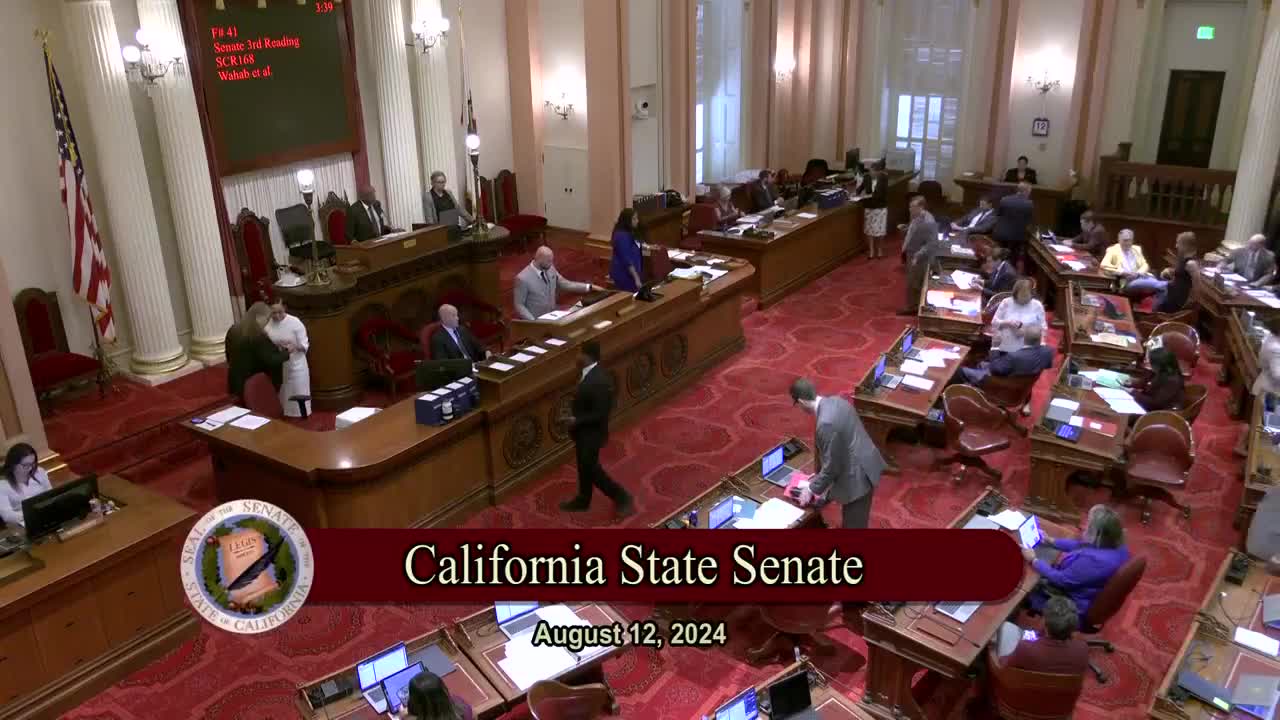 1MIN
Senate Floor
 1MIN
Assembly Floor
 43SEC
Assembly Floor
 7MIN
Assembly Standing Committee on Appropriations
 6MIN
Assembly Standing Committee on Public Safety
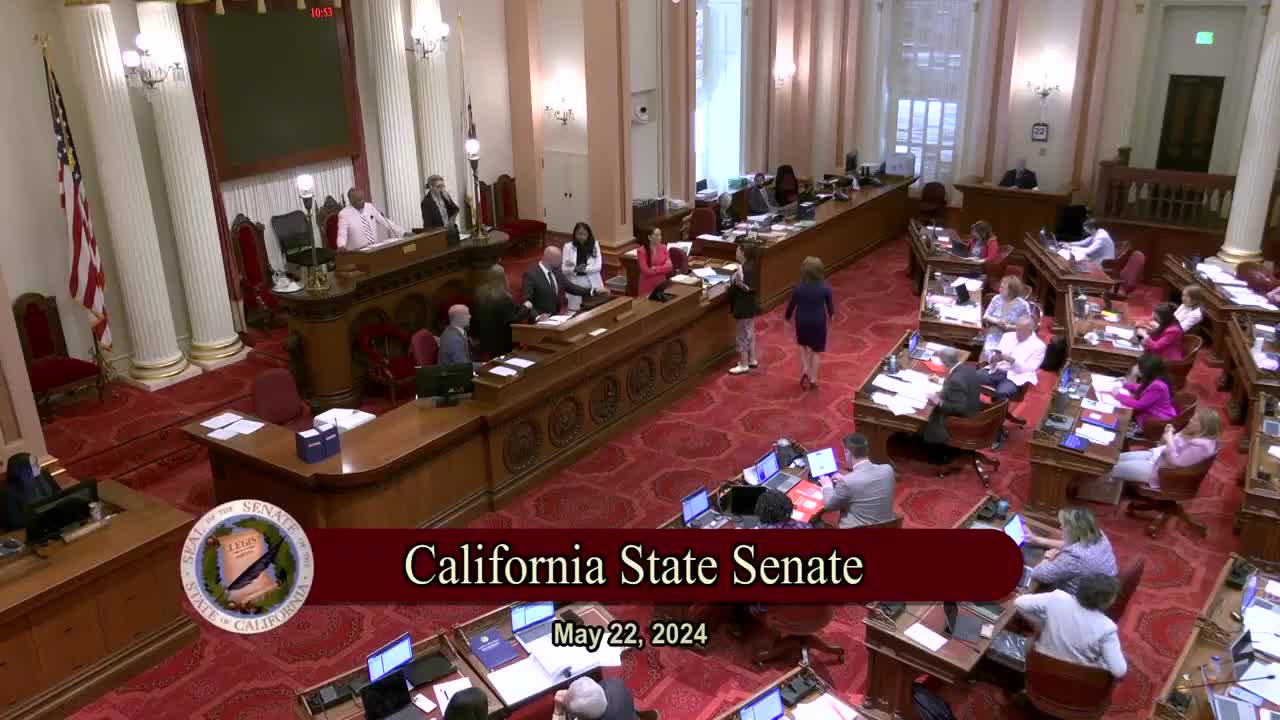 2MIN
Senate Floor
 1MIN
Senate Standing Committee on Appropriations
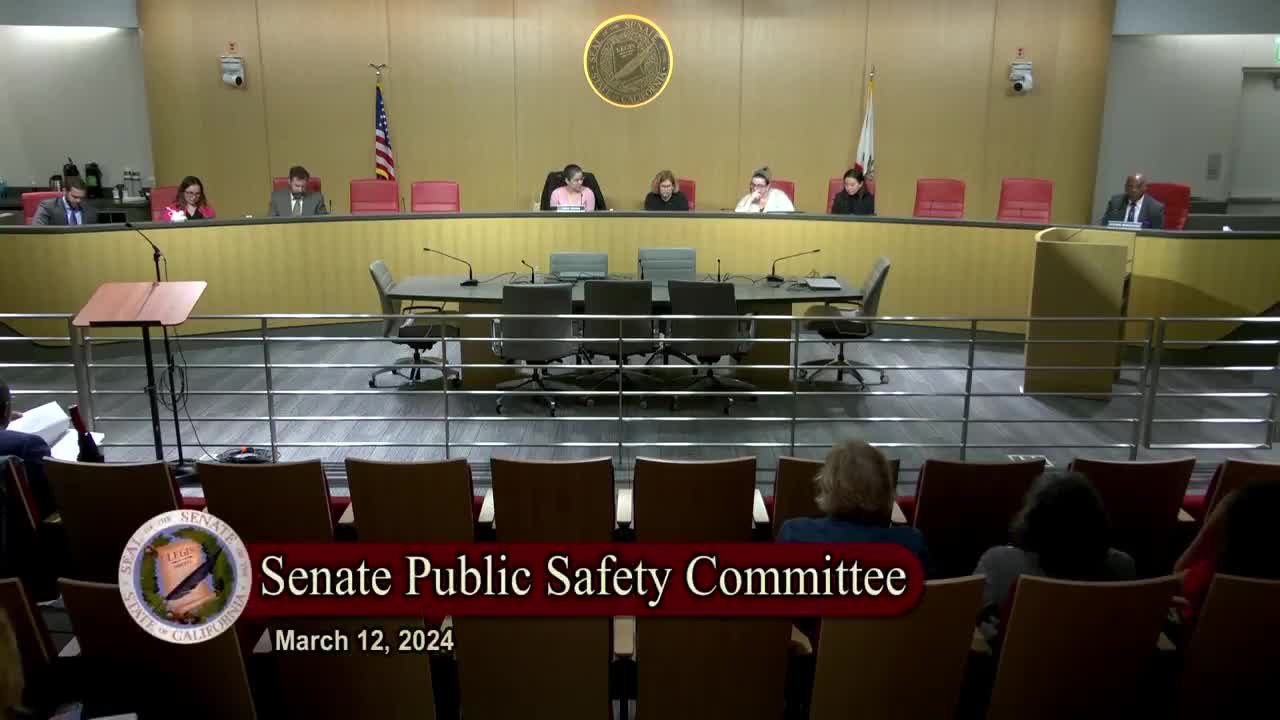 8MIN