AB 1251: Job postings.
- Session Year: 2025-2026
- House: Assembly
- Latest Version Date: 2025-06-26
Current Status:
In Progress
(2025-08-29: In committee: Held under submission.)
Introduced
In Committee
Awaiting First Chamber Vote
Passed First Chamber
In Committee
Awaiting Second Chamber Vote
Passed Second Chamber
Enacted
Existing law establishes the Division of Labor Standards Enforcement, under the direction of the Labor Commissioner, within the Department of Industrial Relations to enforce various labor laws. Existing law requires certain employers to disclose certain salary information in job postings.
This bill would require a private employer who publicly advertises a job posting to include in the posting a statement disclosing whether the posting is for a vacancy for the advertised position or not. The bill would make a violation of those provisions unfair competition. not, as specified.
Existing law establishes the Division of Labor Standards Enforcement, under the direction of the Labor Commissioner, within the Department of Industrial Relations to enforce various labor laws. Existing law requires certain employers to disclose certain salary information in job postings.
This bill would require a private employer who publicly advertises a job posting to include in the posting a statement disclosing whether the posting is for a vacancy for the advertised position or not. The bill would require the Labor Commissioner to investigate complaints and to order an employer to pay a civil penalty of no less than $100 and no more than $10,000 per violation. The bill would require the penalties to be deposited into the Labor Enforcement and Compliance Fund, to be distributed to the Division of Labor Standards Enforcement upon appropriation by the Legislature to administer and enforce the bills provisions. The bill would also make a violation of those provisions unfair competition.
Existing law establishes the Division of Labor Standards Enforcement, under the direction of the Labor Commissioner, within the Department of Industrial Relations to enforce various labor laws. Existing law requires certain employers to disclose certain salary information in job postings.
This bill would require a private employer who publicly advertises a job posting to include in the posting a statement disclosing whether the posting is for an existing a vacancy or not. The bill would require the Labor Commissioner to investigate complaints and to order an employer to pay a civil penalty of no less than $100 and no more than $10,000 per violation. The bill would require the penalties to be deposited into the Labor Enforcement and Compliance Fund, to be distributed to the Division of Labor Standards Enforcement upon appropriation by the Legislature to administer and enforce the bills provisions. The bill would also make a violation of those provisions unfair competition, and would grant to the California Privacy Protection Agency the authority to enforce those provisions and to issue an order to pay an unspecified administrative fine or to cease and desist from violating the bills provisions. competition.
Existing law establishes the Division of Labor Standards Enforcement, under the direction of the Labor Commissioner, within the Department of Industrial Relations to enforce various labor laws. Existing law requires certain employers to disclose certain salary information in job postings.
This bill would express the intent of the Legislature to enact legislation addressing ghost job postings. require a private employer who publicly advertises a job posting to include in the posting a statement disclosing whether the posting is for an existing vacancy or not. The bill would make a violation of those provisions unfair competition, and would grant to the California Privacy Protection Agency the authority to enforce those provisions and to issue an order to pay an unspecified administrative fine or to cease and desist from violating the bills provisions.
Existing law establishes the Division of Labor Standards Enforcement, under the direction of the Labor Commissioner, within the Department of Industrial Relations to enforce various labor laws.
This bill would express the intent of the Legislature to enact legislation addressing ghost job postings.
(a)Every private employer who publicly advertises a job posting shall include in the posting a statement disclosing whether the posting is for a vacancy for the advertised position or not. The statement shall be clear, conspicuous, and written in a legible font.
(b)A violation of this section constitutes unfair competition, which includes unfair, deceptive, untrue, or misleading advertising under Section 17200 of the Business and Professions Code.(a)Every private employer who publicly advertises a job posting shall include in the posting a statement disclosing whether the posting is for a vacancy for the advertised position or not. The statement shall be clear, conspicuous, and written in a legible font.
(b)A violation of this section constitutes unfair competition, which includes unfair, deceptive, untrue, or misleading advertising under Section 17200 of the Business and Professions Code.
(c)(1)A person who claims to be aggrieved by a violation of this section may file a written complaint with the Labor Commissioner within one year after the date the person learned of the violation. The complaint shall state the name and address of the employer and shall provide a detailed account of the alleged violation, as may be required by the Labor Commissioner.(2)The Labor Commissioner shall promptly investigate complaints alleging a violation of this section.(3)Upon finding that an employer has violated this section, the Labor Commissioner may order the employer to pay a civil penalty of no less than one hundred dollars ($100) and no more than ten thousand dollars ($10,000) per violation. The Labor Commissioner shall determine the amount of the penalty based on the totality of the circumstances, including, but not limited to, whether the employer has previously violated this section. For a first violation of subdivision (a), no penalty shall be assessed upon demonstration by the employer that all job postings have been updated to include the statement required by subdivision (a).(d)All civil penalties collected pursuant to this section shall be deposited into the Labor Enforcement and Compliance Fund for distribution to the Division of Labor Standards Enforcement. Upon appropriation by the Legislature, these funds may be expended by the division to cover reasonable ongoing costs of administering and enforcing this section.(a)Every private employer who publicly advertises a job posting shall include in the posting a statement disclosing whether the posting is for a vacancy for the advertised position or not. The statement shall be clear, conspicuous, and written in a legible font.
(b)A violation of this section constitutes unfair competition, which includes unfair, deceptive, untrue, or misleading advertising under Section 17200 of the Business and Professions Code.
(c)(1)A person who claims to be aggrieved by a violation of this section may file a written complaint with the Labor Commissioner within one year after the date the person learned of the violation. The complaint shall state the name and address of the employer and shall provide a detailed account of the alleged violation, as may be required by the Labor Commissioner.
(2)The Labor Commissioner shall promptly investigate complaints alleging a violation of this section.
(3)Upon finding that an employer has violated this section, the Labor Commissioner may order the employer to pay a civil penalty of no less than one hundred dollars ($100) and no more than ten thousand dollars ($10,000) per violation. The Labor Commissioner shall determine the amount of the penalty based on the totality of the circumstances, including, but not limited to, whether the employer has previously violated this section. For a first violation of subdivision (a), no penalty shall be assessed upon demonstration by the employer that all job postings have been updated to include the statement required by subdivision (a).
(d)All civil penalties collected pursuant to this section shall be deposited into the Labor Enforcement and Compliance Fund for distribution to the Division of Labor Standards Enforcement. Upon appropriation by the Legislature, these funds may be expended by the division to cover reasonable ongoing costs of administering and enforcing this section.
SECTION 1.Title 2.92 (commencing with Section 1812.560) is added to Part 4 of Division 3 of the Civil Code, to read:2.92.Job Postings1812.560.(a)Every private employer who publicly advertises a job posting shall include in the posting a statement disclosing whether the posting is for an existing vacancy or not. The statement shall be clear, conspicuous, and written in a legible font.(b)Any violation of this section constitutes unfair competition, which includes unfair, deceptive, untrue, or misleading advertising under Section 17200 of the Business and Professions Code.(c)The California Privacy Protection Agency shall have authority to enforce this section. When the agency determines that any person is violating or has violated this section, the agency may issue an order to that person to pay an administrative fine, to cease and desist from violating the section, or both.(a)Every private employer who publicly advertises a job posting shall include in the posting a statement disclosing whether the posting is for an existing vacancy or not. The statement shall be clear, conspicuous, and written in a legible font.
(b)Any violation of this section constitutes unfair competition, which includes unfair, deceptive, untrue, or misleading advertising under Section 17200 of the Business and Professions Code.
(c)The California Privacy Protection Agency shall have authority to enforce this section. When the agency determines that any person is violating or has violated this section, the agency may issue an order to that person to pay an administrative fine, to cease and desist from violating the section, or both.
SECTION 1.It is the intent of the Legislature to enact legislation addressing ghost job postings.It is the intent of the Legislature to enact legislation addressing ghost job postings.
|
Date
|
Status
|
|---|---|
| Aug 29, 2025 | In committee: Held under submission. |
| Jul 14, 2025 | In committee: Referred to APPR. suspense file. |
| Jun 30, 2025 | Withdrawn from committee. |
| Jun 30, 2025 | Re-referred to Com. on APPR. |
| Jun 30, 2025 | In committee: Hearing postponed by committee. |
| Jun 26, 2025 | In committee: Set, first hearing. Hearing canceled at the request of author. |
| Jun 26, 2025 | From committee chair, with author's amendments: Amend, and re-refer to committee. Read second time, amended, and re-referred to Com. on JUD. |
| Jun 18, 2025 | From committee: Do pass and re-refer to Com. on JUD. (Ayes 4. Noes 1.) (June 18). Re-referred to Com. on JUD. |
| Jun 11, 2025 | Referred to Coms. on L., P.E. & R., JUD. and APPR. |
| Jun 3, 2025 | In Senate. Read first time. To Com. on RLS. for assignment. |
| Jun 2, 2025 | Read third time. Passed. Ordered to the Senate. (Ayes 62. Noes 9. Page 1918.) |
| May 27, 2025 | Read second time. Ordered to third reading. |
| May 23, 2025 | Read second time and amended. Ordered returned to second reading. |
| May 23, 2025 | From committee: Amend, and do pass as amended. (Ayes 11. Noes 2.) (May 23). |
| May 23, 2025 | Assembly Rule 63 suspended. (Ayes 51. Noes 16. Page 1644.) |
| May 7, 2025 | In committee: Set, first hearing. Referred to APPR. suspense file. |
| Apr 10, 2025 | Re-referred to Com. on P. & C.P. |
| Apr 10, 2025 | Re-referred to Com. on APPR. pursuant to Assembly Rule 96. |
| Apr 9, 2025 | From committee chair, with author's amendments: Amend, and re-refer to Com. on P. & C.P. Read second time and amended. |
| Apr 3, 2025 | From committee: Do pass and re-refer to Com. on P. & C.P. (Ayes 7. Noes 0.) (April 2). Re-referred to Com. on P. & C.P. |
| Mar 25, 2025 | Re-referred to Com. on L. & E. |
| Mar 24, 2025 | Referred to Coms. on L. & E. and P. & C.P. |
| Mar 24, 2025 | From committee chair, with author's amendments: Amend, and re-refer to Com. on L. & E. Read second time and amended. |
| Feb 24, 2025 | Read first time. |
| Feb 22, 2025 | From printer. May be heard in committee March 24. |
| Feb 21, 2025 | Introduced. To print. |
|
Date
|
Description
|
Location
|
Votes
|
|
|---|---|---|---|---|
| Jul 14, 2025 | Placed on suspense file | Senate Standing Committee on Appropriations |
Passed |
|
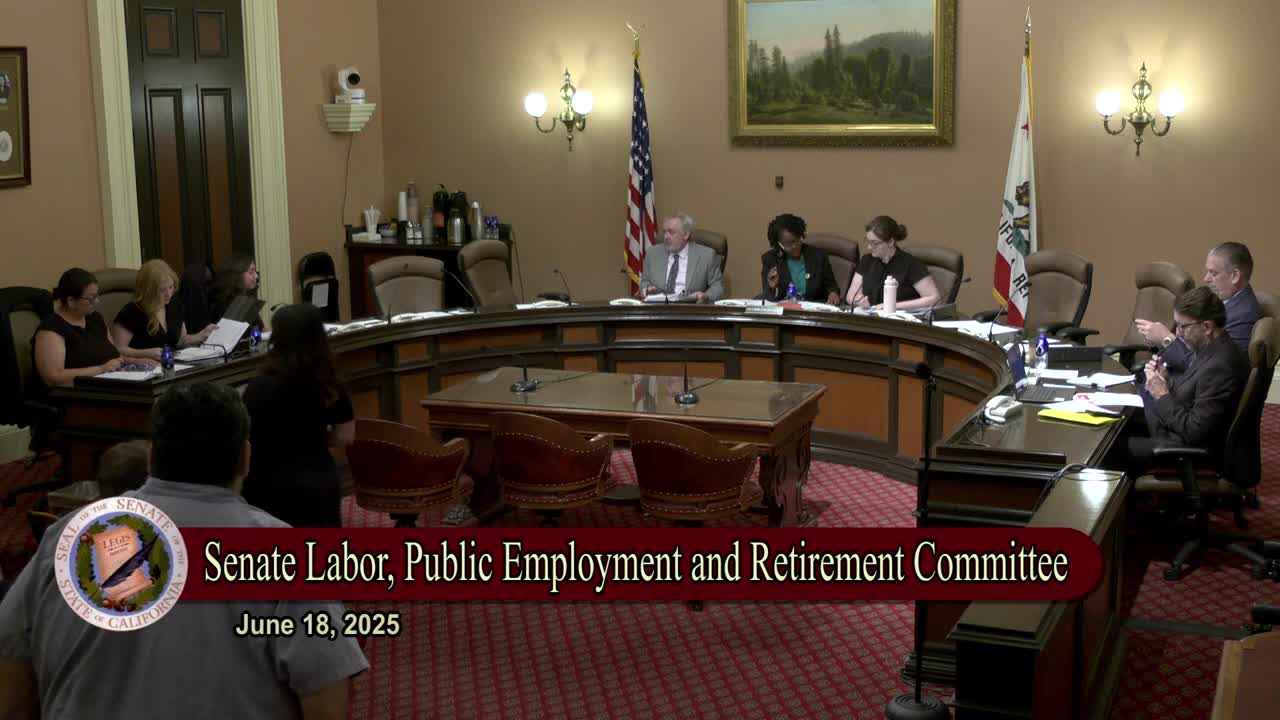
| Jun 18, 2025 | Do pass, but first be re-referred to the Committee on [Judiciary] | Senate Standing Committee on Labor, Public Employment and Retirement |
Passed |
|
| Jun 2, 2025 | AB 1251 Berman Assembly Third Reading | Assembly Floor |
Passed |
|
| May 23, 2025 | Do pass as amended. | Assembly Standing Committee on Appropriations |
Passed |
|
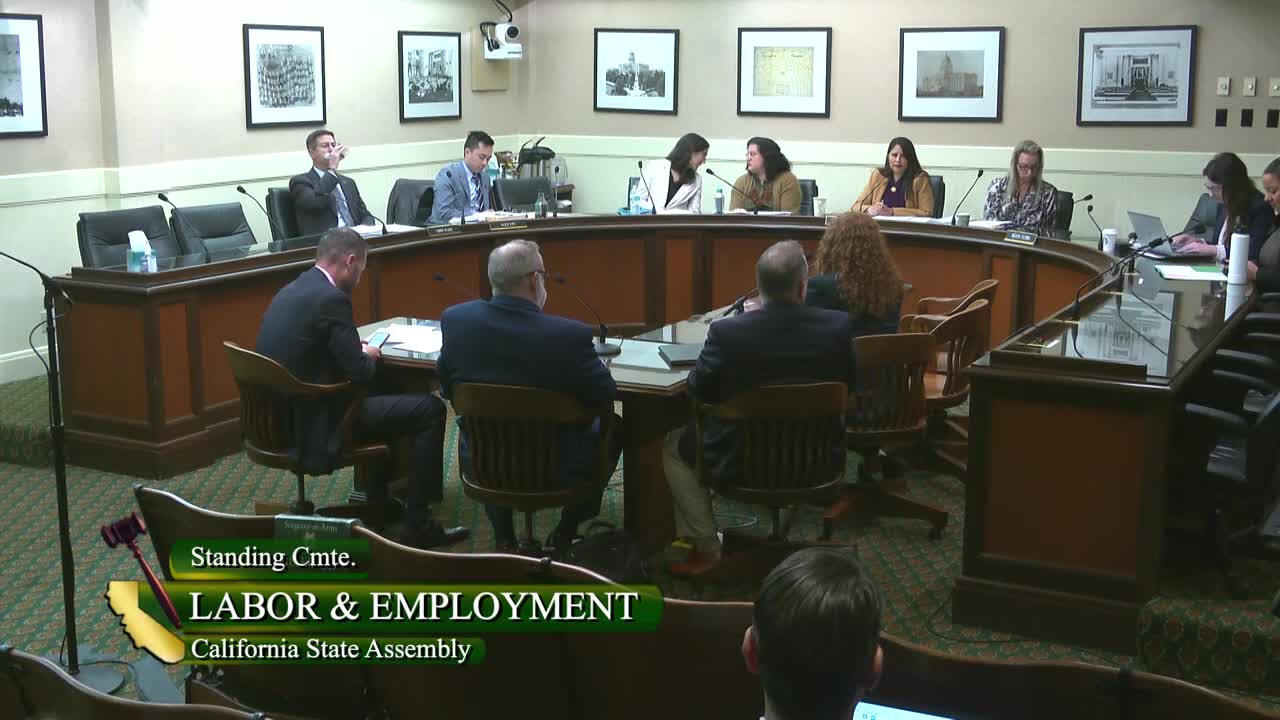
| Apr 2, 2025 | Do pass and be re-referred to the Committee on [Privacy and Consumer Protection] | Assembly Standing Committee on Labor and Employment |
Passed |
This list shows positions taken on this bill by organizations on the date displayed, which is linked to the original source.
Positions by individuals are not included.
|
Organization
|
Position
|
Date
|
|---|---|---|
| Church State Council | ** Support | |
| Consumer Federation Of California | ** Support | |
| Tri-County Chamber Alliance, San Luis Obispo/Santa Barbara/Ventura | ** Against |
SENATE COMMITTEE ON
Senator Anna Caballero, Chair
2025 - 2026 Regular Session
AB 1251 (Berman) - Job postings
Version: | Policy Vote: |
Urgency: | Mandate: |
Hearing Date: | Consultant: |
Bill Summary:
AB 1251 would (1) require private employers who publicly advertise a job posting to include in the posting a statement disclosing whether the posting is for an existing vacancy or not, and (2) make a violation of this requirement an unfair competition.
Fiscal Impact:
- The Department of Industrial Relations (DIR) indicates that it would incur first-year costs of $2.9 million, and $2.7 million annually thereafter, to implement the provisions of the bill (Labor Enforcement and Compliance Fund).
- This bill would result in potential cost pressures of unknown magnitude to the Department of Justice (DOJ) (Unfair Competition Law Fund). DOJ’s Consumer Protection Section could see an increase in workload in investigating and prosecuting of violations of the Unfair Competition Law (UCL) under this bill, requiring additional attorneys and legal support staff.
- By creating a new employer requirement enforceable under the UCL, this bill could result in an increased number of civil actions. Consequently, the bill could result in potentially significant cost pressures to the courts; the magnitude is unknown (Trial Court Trust Fund (TCTF)). The specific number of new actions that could be filed under the bill also is unknown; however, it generally costs about $10,500 to operate a courtroom for an eight-hour day. Courts are not funded on the basis of workload, and increased pressure on TCTF may create a need for increased funding for courts from the General Fund. The enacted 2025-26 budget includes $38 million in support from the General Fund to continue to backfill TCTF for revenue declines.
Background:
Ghost job postings are online postings for positions that a company has no real intention of filling or that may not actually be available. According to one survey provided to the Committee, hiring managers of approximately 650 companies were asked about their use of this practice; 40 percent reported posting a fake job listing that year. In addition, 39 percent of the hiring managers also reported contacting candidates for the fake job. According to the survey, companies posted fake job listings for the following reasons: (1) to make it appear the company is open to external talent (67 percent), (2) to act like the company is growing (66 percent), (3) to make employees believe their workload would be alleviated by new workers (63 percent), (4) to have employees feel replaceable (62 percent), and (5) to collect resumes and keep them on file for a later date (59 percent). Nothing in current law prohibits such job postings.
Proposed Law:
This bill, among other things, would (1) require every private employer who publicly advertises a job posting to include in the posting a statement disclosing whether the posting is for an existing vacancy for the advertised position or not, and (2) provide that a violation constitutes unfair competition, which includes unfair, deceptive, untrue, or misleading advertising as specified under Section 17200 of the Business and Professions Code.
Staff Comments:
The Office of the Legislative Counsel has keyed this bill “non-fiscal.” However, the purview of this Committee, pursuant to Joint Rule 10.5, is to review and analyze bills that would, among other things, result in a substantial expenditure of state money. Thus, even though the bill was keyed “non-fiscal,” the Committee requested the bill to examine the extent to which it might potentially increase costs to the State.
As noted above, in additional to various cost pressures, this bill would result in enforcement costs to DIR’s Labor Commissioner (LC). The LC’s primary mission is enforcement of the state’s wage and hour laws and protecting workers from related retaliation. This bill would result increased investigation and adjudication workload.
-- END --
SENATE COMMITTEE ON LABOR, PUBLIC EMPLOYMENT AND RETIREMENT
Senator Lola Smallwood-Cuevas, Chair
2025 - 2026 Regular
Bill No: AB 1251 Hearing Date: June 18, 2025
Author: | Berman | ||
Version: | May 23, 2025 | ||
Urgency: | No | Fiscal: | No |
Consultant: | Alma Perez-Schwab | ||
SUBJECT: Job postings
KEY ISSUE
This bill requires private employers who publicly advertise a job posting to include in the posting a statement disclosing whether the posting is for an existing vacancy or not and makes a violation of this requirement an unfair competition.
ANALYSIS
Existing law:
- Establishes within the Department of Industrial Relations, various entities including the Division of Labor Standards Enforcement (DLSE) under the direction of the Labor Commissioner (LC), and empowers the LC with ensuring a just day’s pay and promotes economic justice through robust enforcement of labor laws. (Labor Code §79-107)
- Under the California Equal Pay Act, prohibits an employer from paying any of its employees at wage rates less than the rates paid to employees of the opposite sex or another race or ethnicity for substantially similar work, when viewed as a composite of skill, effort, and responsibility, and performed under similar working conditions, except where the employer demonstrates a wage differential based on one or more factors, as specified. (Labor Code §1197.5)
- Prohibits an employer from relying on the salary history information of an applicant for employment as a factor in determining whether to offer employment to an applicant or what salary to offer an applicant. Additionally, prohibits an employer from, orally or in writing, personally or through an agent, seeking salary history information, including compensation and benefits, about an applicant for employment. (Labor Code §432.3)
- Requires an employer, upon reasonable request, to provide the pay scale for a position to an applicant applying for employment or to an employee that is currently employed. Additionally, requires an employer with 15 or more employees to include the pay scale for a position in any job posting. A violation of these provisions authorizes an aggrieved person to file a complaint with the LC, bring a civil action for injunctive relief, and imposes civil penalties upon the employer, as specified. (Labor Code §432.3)
- Defines, for purposes of the pay scale provisions described above, “pay scale” to mean the salary or hourly wage range that the employer reasonably expects to pay for the position. (Labor Code §432.3)
- Requires an employer to maintain records of a job title and wage rate history for each employee for the duration of the employment plus three years after the end of the employment in order for the LC to determine if there is a pattern of wage discrepancy. (Labor Code §432.3)
- Authorizes persons aggrieved by an employers’ violation of the pay history or pay scale posting provisions described above, to file a claim with the LC and authorizes the LC to order a civil penalty of no less than one hundred dollars ($100) and no more than ten thousand dollars ($10,000) per violation, as specified. (Labor Code §432.3)
- Defines “unfair competition” to mean and include any unlawful, unfair or fraudulent business act or practice and unfair, deceptive, untrue or misleading advertising and any act prohibited under the false advertising provisions of the Business and Professions Code. (Business and Professions Code §17200)
- Provides specific or preventive relief, including, among others, injunctive relief and civil penalties that may be granted to enforce a penalty, forfeiture, or penal law in a case of unfair competition. (Business and Professions Code §17202-17209)
This bill:
- Requires every private employer who publicly advertises a job posting to include in the posting a statement disclosing whether the posting is for an existing vacancy for the advertised position or not.
- Requires that the statement be clear, conspicuous, and written in a legible font.
- Provides that a violation of these provisions constitutes unfair competition, which includes unfair, deceptive, untrue, or misleading advertising as specified under Section 17200 of the Business and Professions Code.
COMMENTS
1. Background:
Ghost job postings:
Ghost job postings are online postings for positions that a company has no real intention of filling or that may not actually be available. According to a 2024 survey by Resume Builder, hiring managers of approximately 650 companies were asked about their use of this practice and 39 percent reported posting a fake job listing that year.[1] In addition, 39 percent of the hiring managers also reported contacting candidates for the fake job.[2]
According to the survey, companies posted fake job listings to make it appear the company is open to external talent (67 percent), to act like the company is growing (66 percent), to make employees believe their workload would be alleviated by new workers (63%), to have employees feel replaceable (62 percent), and to collect resumes and keep them on file for a later date (59 percent).[3]
The deceptive practice of ghost job posting, aside from being frustrating and wasting job seekers’ time during already stressful circumstances, may also contribute to inaccurate jobs reports that look at job openings when calculating on the status of the job market. Nothing in existing law prohibits this practice.
This bill:
This bill attempts to curve this practice by requiring every private employer who publicly advertises a job posting to include in the posting a statement disclosing whether the posting is for an existing vacancy or not. Violations of this requirement would constitute unfair competition as defined under the Business and Professions Code.
Enforcement of an unfair competition claim may include injunctive relief and civil penalties in actions brought in court by the Attorney General, a district attorney, county counsel, or a city attorney, as specified, in the name of the people of State of California upon their own complaint or upon the complaint of a board, officer, person, corporation, or association, or by a person who has suffered injury in fact and has lost money or property as a result of the unfair competition.
2. Need for this bill?
According to the author:
“A constituent who had faced a job loss due to layoffs and then struggled to find a new job after more than four months shared the term ‘ghost jobs’ and a SF Gate article that deeply resonated with him based on his personal experience.
‘Ghost jobs,’ or fake positions that do not exist, are a disturbing trend and growing problem in the job market. In the SF Gate article, recruiters and career coaches warned that these ghost jobs posted by real companies serve multiple, sometimes insidious purposes.[4]…
Further, NPR did a story on ghost jobs and highlighted that Revelio Labs, a jobs analytics firm, looked at ghost jobs by analyzing how many job postings actually result in a hire.[5] They found that since 2018, the number of hires has dropped compared to job postings. Their chief economist stated, ’We've actually seen that that trend has really exacerbated over the past five years or so.’ NPR also explained that the ratio of job openings to unemployed people is a metric that the Federal Reserve looks at to make sure the job market is healthy. Ghost job postings could make it less clear and accurate.
The Ontario province of Canada recently passed legislation to shine a light on ghost job postings by requiring companies to disclose whether a position actually exists.[6]
Looking for a job is already an arduous, time-consuming, anxiety-ridden, and potentially demoralizing process: searching for desirable job postings, drafting cover letters, tailoring resumes, submitting applications, and then interviewing. Sometimes hundreds of applicants or even more are competing for the same position, which can be stressful especially for those who are currently unemployed. A ghost job posting is just that – a job posting for a position that does not actually exist. These postings unnecessarily add another layer of worry and frustration for those looking for a job….By providing transparency, AB 1251 ensures that Californians seeking employment will no longer be misled by ghost job postings.”
3. Proponent Arguments:
The Consumer Federation of California is in support and writes:
“Although many companies find these practices as beneficial for their bottom line, they hurt consumers, leading to frustration and burn out, as well as harming the overall economy, by preventing us from seeing the true condition of the labor market. This is especially true for the tech industry in California, as a recent collaborative document revealed that many tech employers were guilty of posting jobs they had no true intention of hiring for. Thousands of job seekers report submitting hundreds of applications, some even reaching a thousand, without hearing anything back, leaving them feeling devastated and discouraged in an economy that is already straining many households. These practices are anti-consumer, and California, being one of the top economies in the world, should establish guardrails to ensure that job seekers are protected from practices that seek to take advantage of them at such a vulnerable time.
AB 1251 would add much-needed transparency by requiring every private employer to include, in a publicly advertised job posting, a statement in a clear, conspicuous, and legible font disclosing whether the posting is for a vacancy. Additionally, based on existing unfair competition law, a violation of this bill would also constitute unfair competition, which includes unfair, deceptive, untrue, or misleading advertising.”
4. Opponent Arguments:
The Tri-County Chamber Alliance is opposed to the measure, although their letter points to provisions no longer found in the bill as the reason for their opposition. They write:
“While transparency in hiring is important, AB 1251’s enforcement provisions are unnecessarily punitive and duplicative of existing labor laws. The bill threatens employers with civil penalties and regulatory scrutiny from both the Labor Commissioner and the California Privacy Protection Agency. Its burdensome compliance requirements are particularly concerning for small employers with limited human resources capabilities.”
The bill has been amended several times and the provisions regarding Labor Commissioner and CPPA enforcement are no longer in the bill.
5. Double Referral:
This bill has been double referred and if approved by this Committee today, will be sent to Senate Judiciary Committee for a hearing.
SUPPORT
Church State Council
Consumer Federation of California
OPPOSITION
Tri-County Chamber Alliance, San Luis Obispo/Santa Barbara/Ventura
-- END --
ASSEMBLY THIRD READING
ATR Bill Id:AB 1251
Author:(Berman)
As Amended Ver:May 23, 2025
Majority vote
SUMMARY
Requires every private employer who publicly advertises a job posting to include in the posting a statement disclosing whether the posting is for a vacancy for the advertised position or not. The statement shall be clear, conspicuous, and written in a legible font. A violation of this requirement constitutes unfair competition, which includes unfair, deceptive, untrue, or misleading advertising.
Major Provisions
See the above summary.
COMMENTS
The practice of posting "ghost jobs" is on the rise. In a 2024 survey by Resume Builder, hiring managers of approximately 650 companies were asked about their use of this practice and 39% reported posting a fake job listing that year.[1] In addition, 39% of the hiring managers also reported contacting candidates for the fake job.[2] The reported reasons for engaging in this practice were many, but perhaps the most startling reason, to make current employees feel replaceable (62% gave this reason).[3]
According to the Author
According to the author, "Looking for a job is already an arduous, time-consuming, and potentially demoralizing process: searching for desirable job postings, drafting cover letters, tailoring resumes, submitting applications, and then interviewing. Sometimes hundreds of applicants or even more are competing for the same position, which can be stressful especially for those who are currently unemployed. Ghost or fake job postings unnecessarily add another layer of worry and frustration for those looking for a job.
In response to the disturbing and growing trend of ghost job postings, AB 1251 would add much needed transparency. Specifically, this bill would require every private employer to include in job postings a statement disclosing whether the posting is for an existing vacancy or not. Californians deserve to know whether the job they are spending the time and energy to apply for is actually real."
Arguments in Support
The Consumer Federation of California is in support and states, "…a recent collaborative document revealed that many tech employers were guilty of posting jobs they had no true intention of hiring for. Thousands of job seekers report submitting hundreds of applications, some even reaching a thousand, without hearing anything back, leaving them devastated and discouraged in an economy already straining many households. These practices are anti-consumer, and California, being one of the top economies in the world, should establish guardrails to ensure that job seekers are protected from practices that seek to take advantage of them at such a vulnerable time.
AB 1251 would add much-needed transparency by requiring every private employer to include, in a publicly advertised job posting, a statement in a clear, conspicuous, and legible font disclosing whether the posting is for an existing vacancy…"
Arguments in Opposition
Note: Opposition arguments may not reflect recent amendments to the bill
The Tri-County Chamber Alliance is opposed and states that AB 1251 "would require job postings to specify whether the position is an actual vacancy and expose employers to penalties and private rights of action for minor errors.
While transparency in hiring is important, AB 1251's enforcement provisions are unnecessarily punitive and duplicative of existing labor laws."
FISCAL COMMENTS
According to the Assembly Appropriations Committee:
- Annual cost pressures (General Fund (GF) or Trial Court Trust Fund) of an unknown amount, potentially up to $150,000, to the courts in additional workload by creating a new employer requirement enforceable under the UCL. In addition to a public prosecutor, a person has standing to bring a UCL claim if the person lost money or property as the result of the unlawful conduct. It is unclear how many actions may be filed statewide, but the estimated workload cost of one hour of court time is $1,000. Although courts are not funded on the basis of workload, increased pressure on staff and the TCTF may create a demand for increased court funding from the GF to perform existing duties. The Budget Act of 2024 included $37.3 million ongoing GF to backfill declining TCTF revenue.
VOTES
ASM LABOR AND EMPLOYMENT: 7-0-0
YES: Ortega, Flora, Chen, Elhawary, Kalra, Lee, Ward
ASM APPROPRIATIONS: 11-2-2
YES: Wicks, Arambula, Calderon, Caloza, Elhawary, Fong, Mark González, Hart, Pacheco, Pellerin, Solache
NO: Dixon, Tangipa
ABS, ABST OR NV: Sanchez, Ta
UPDATED
VERSION: May 23, 2025
CONSULTANT: Megan Lane / L. & E. / (916) 319-2091 FN: 0000774
Date of Hearing: May 7, 2025
ASSEMBLY COMMITTEE ON APPROPRIATIONS
Buffy Wicks, Chair
ABPCA Bill Id:AB 1251
Author:(Berman) – As Amended Ver:April 9, 2025
Policy Committee: | Labor and Employment | Vote: | 7 - 0 |
|
| ||
|
|
Urgency: No State Mandated Local Program: No Reimbursable: No
SUMMARY:
This bill requires a private employer that publicly advertises a job posting to include in the posting whether or not the posting is for a vacant position.
This bill authorizes a person to file a written complaint with the Labor Commissioner (LC) within one year after the person learned of a violation. The LC must promptly investigate a complaint and may order an employer found to be in violation to pay a civil penalty of $100 to $10,000 per violation. The LC must determine the penalty amount based on the totality of the circumstances, with a penalty prohibited for a first-time violator upon demonstration by the employer that the job posting is updated to comply with the law. This bill requires all civil penalties be deposited into the Labor Enforcement and Compliance Fund, which the Division of Labor Standards Enforcement (also known as the LC) may expend, upon appropriation, to cover reasonable ongoing administrative and enforcement costs.
This bill also makes a violation subject to enforcement under the Unfair Competition Law (UCL).
FISCAL EFFECT:
- Costs of an unknown, but potentially significant amount, in excess of $150,000, to the LC to provide enforcement, with some costs partially offset by penalty revenue (Labor Enforcement and Compliance Fund). The LC’s primary mission is enforcement of the state’s wage and hour laws and protecting workers from related retaliation. Thus, the LC would likely need to establish a different investigation and adjudication process to provide the type of enforcement specified by this bill.
- Annual cost pressures (General Fund (GF) or Trial Court Trust Fund) of an unknown amount, potentially up to $150,000, to the courts in additional workload by creating a new employer requirement enforceable under the UCL. In addition to a public prosecutor, a person has standing to bring a UCL claim if the person lost money or property as the result of the unlawful conduct. It is unclear how many actions may be filed statewide, but the estimated workload cost of one hour of court time is $1,000. Although courts are not funded on the basis of workload, increased pressure on staff and the TCTF may create a demand for increased court funding from the GF to perform existing duties. The Budget Act of 2024 included $37.3 million ongoing GF to backfill declining TCTF revenue.
COMMENTS:
- Purpose. According to the author, this bill requires a job posting to include a “statement disclosing whether the posting is for an existing vacancy or not. Californians deserve to know whether the job they are spending the time and energy to apply for is actually real.”
- Ghost Jobs. A “ghost job” is a job posting for a position that either does not exist or has already been filled, but remains posted for alternative reasons, such as to publicly project corporate growth or to make current employees feel replaceable. A 2024 survey by Resume Builder asked approximately 650 companies about their use of this hiring practice, and 39% of hiring managers reported having posted a fake job listing that year. This bill requires a private employer that publicly advertises a job posting to disclose whether the posting is for a vacant position and allows this requirement to be enforced by the LC or through the UCL.
As noted in the Assembly Labor and Employment Committee’s analysis of this bill, enforcement of this bill’s requirement may trigger a “lengthy and labor intensive investigation” that would likely include having to “contact the employer’s [human resources] department, request or even subpoena personnel materials, and potentially interview employees with knowledge of current staffing levels.” This bill provides that the LC must “promptly investigate” complaints alleging a violation, which may necessitate significant resources and exacerbate the LC’s backlog of existing wage theft claims.
- Support and Opposition. This bill is supported by the Consumer Federation of California, which argues this bill “protects job seekers from being misled by ‘ghost’ or fake jobs.”
There is no registered opposition on file to this bill. However, the California Chamber of Commerce expressed concerns that this bill’s requirement would be enforced by the California Privacy Protection Agency (CPPA). Recent author amendments to this bill address this concern by shifting enforcement from the CPPA to the LC.
Analysis Prepared by: Irene Ho / APPR. / (916) 319-2081
Date of Hearing: April 2, 2025
ASSEMBLY COMMITTEE ON LABOR AND EMPLOYMENT
Liz Ortega, Chair
ABPCA Bill Id:AB 1251 (
Author:Berman) – As Amended Ver:March 24, 2025
SUBJECT: Job postings
SUMMARY: Requires private employers that publicly advertise a job posting to include in the posting a conspicuous statement disclosing whether the posting is for an existing vacancy or not. The California Privacy Protection Agency (CPPA) may issue an administrative fine or cease and desist order for violations of this provision. Specifically, this bill:
- Requires every private employer who publicly advertises a job posting to include in the posting a statement disclosing whether the posting is for an existing vacancy or not. The statement shall be clear, conspicuous, and written in a legible font.
- States that any violation of 1) above constitutes unfair competition, which includes unfair, deceptive, untrue, or misleading advertising.
- States that the CPPA shall have authority to enforce these provisions.
- Authorizes, when the CPPA determines that any person is violating or has violated these provisions, the CPPA to issue an order to that person to pay an administrative fine, to cease and desist from violating the section, or both.
EXISTING LAW:
- Establishes the CPPA which is vested with full administrative power, authority and jurisdiction to implement and enforce the California Consumer Privacy Act of 2018. Civil Code §1798.199.10.
- Defines unfair competition to mean and include any unlawful, unfair or fraudulent business act or practice and unfair, deceptive, untrue or misleading advertising and any act prohibited under the false advertising provisions of the Business and Professions Code. B&P Code §17200.
- Requires an employer with 15 or more employees that engages a third party to announce, post, publish, or otherwise make known a job posting to provide the pay scale to the third party. The third party shall include the pay scale in the job posting. Labor Code §432.3(c)(5).
- Authorizes a person who claims to be aggrieved by a violation of 3) above to file a written complaint with the Labor Commissioner (LC) within one year after the date the person learned of the violation. Labor Code §432.3(d)(1).
- Requires the LC to promptly investigate complaints alleging a violation of 3) above. Labor Code §432.3(d)(3).
FISCAL EFFECT: Unknown
COMMENTS: Note: This bill is double-referred to the Assembly Privacy and Consumer Protection Committee upon passage out of this Committee.
The practice of posting “ghost jobs” is on the rise. In a 2024 survey by Resume Builder, hiring managers of approximately 650 companies were asked about their use of this practice and 39% reported posting a fake job listing that year.[1] In addition, 39% of the hiring managers also reported contacting candidates for the fake job.[2] The reported reasons for engaging in this practice were many, but perhaps the most startling reason, to make current employees feel replaceable (62% gave this reason).[3]
According to the author, “Looking for a job is already an arduous, time-consuming, and potentially demoralizing process: searching for desirable job postings, drafting cover letters, tailoring resumes, submitting applications, and then interviewing. Sometimes hundreds of applicants or even more are competing for the same position, which can be stressful especially for those who are currently unemployed. Ghost or fake job postings unnecessarily add another layer of worry and frustration for those looking for a job.
In response to the disturbing and growing trend of ghost job postings, AB 1251 would add much needed transparency. Specifically, this bill would require every private employer to include in job postings a statement disclosing whether the posting is for an existing vacancy or not. Californians deserve to know whether the job they are spending the time and energy to apply for is actually real.”
The author continues, “Providing transparency to ghost job postings would benefit all Californians seeking employment including those from underserved and marginalized communities. This bill recognizes that looking for a job especially when an individual is unemployed is already an arduous, time-consuming, and potentially demoralizing process. Therefore, AB 1251 ensures that Californians looking for a job will no longer be misled by ghost job postings, removing the concern that the job may not be real.”
Committee Comments
Committee staff recommends that the author may wish to consider in the future changing the enforcement agency specified in the bill. The state Labor Commissioner, as opposed to the CPPA, already enforces the law requiring that job postings include a salary scale, and receives and investigates written complaints.
Committee staff is also concerned that the bill, as written, may require a lengthy and labor intensive investigation. If the CPPA learns of an alleged violation where an employer states that there was a vacancy, when there actually wasn’t one, the CPPA would likely have to contact the employer’s HR department, request or even subpoena personnel materials, and potentially interview employees with knowledge of current staffing levels.
Arguments in Support
The Consumer Federation of California is in support and states, “…a recent collaborative document revealed that many tech employers were guilty of posting jobs they had no true intention of hiring for. Thousands of job seekers report submitting hundreds of applications, some even reaching a thousand, without hearing anything back, leaving them devastated and discouraged in an economy already straining many households. These practices are anti-consumer, and California, being one of the top economies in the world, should establish guardrails to ensure that job seekers are protected from practices that seek to take advantage of them at such a vulnerable time.
AB 1251 would add much-needed transparency by requiring every private employer to include, in a publicly advertised job posting, a statement in a clear, conspicuous, and legible font disclosing whether the posting is for an existing vacancy. Under AB 1251, the California Privacy Protection Agency would have the authority to enforce this bill and may issue an order for a violator to pay an administrative fine, to cease and desist from violating AB 1251, or both. Additionally, based on existing unfair competition law, a violation of this bill would also constitute unfair competition, which includes unfair, deceptive, untrue, or misleading advertising.”
Arguments in Opposition
The California Chamber of Commerce, in a letter of concern, states, “The bill provides that the California Privacy Protection Agency (CPPA) is responsible for enforcing AB 1251’s provisions. Presently, job posting-related requirements are enforced either by the Labor and Workforce Development Agency (LWDA) or Civil Rights Department (CRD). The LWDA, for example, enforces requirements related to pay ranges that must be included in job postings. The CRD enforces laws such as the Fair Chance Act, which prohibits job postings from including language stating that a criminal history will disqualify an applicant from employment prior to application. We are concerned about introducing yet another agency to enforce job postings content.”
REGISTERED SUPPORT / OPPOSITION:
Support
Consumer Federation of California
Other
Calchamber
Analysis Prepared by: Megan Lane / L. & E. /
Discussed in Hearing
 7MIN
Senate Standing Committee on Labor, Public Employment and Retirement
 1MIN
Assembly Floor
 4MIN
Assembly Standing Committee on Labor and Employment
Bill Author

Bill Co-Author(s):