AB 1020: County Employees Retirement Law of 1937: disability retirement: medical conditions: employment-related presumption.
- Session Year: 2023-2024
- House: Assembly
- Latest Version Date: 2023-10-08
Current Status:
Passed
(2023-10-08: Chaptered by Secretary of State - Chapter 554, Statutes of 2023.)
Introduced
In Committee
First Chamber
In Committee
Second Chamber
Enacted
What does this bill do?
The bill lets many county and other public safety workers qualify more easily for disability retirement by treating certain illnesses and injuries as work‑related unless evidence shows otherwise. Covered conditions include PTSD, tuberculosis, meningitis, skin cancer, Lyme disease, lower‑back impairments, hernia, pneumonia, and heart trouble; each presumption applies while in service and generally continues after leaving the job for three months per year of service up to 60 months. The PTSD presumption is temporary and set to expire on Jan 1, 2025 unless another law extends that date to Jan 1, 2032.
The summary is provided by generative AI which can make mistakes. For original language, please view the details in the table below.
Existing law, the County Employees Retirement Law of 1937, prescribes the rights, benefits, and duties of members of the retirement systems established pursuant to its provisions.
Existing law requires, if a safety member, a firefighter member, or a member in active law enforcement who has completed 5 years or more of service develops heart trouble, that the heart trouble be presumed to arise out of and in the course of employment.
This bill would require the presumption that the members heart trouble arose out of and in the course of employment to be extended following termination of service for a prescribed length of time not to exceed 60 months.
Existing law provides that participants in certain membership categories may be entitled to special benefits if the injury that causes their disability arises in the course of their employment. Existing law creates a presumption, for purposes of qualification for disability retirement benefits for specified members, that certain injuries, including, but not limited to, a bloodborne infectious disease or a methicillin-resistant Staphylococcus aureus skin infection, arose out of and in the course of employment. Existing law authorizes the presumption to be rebutted by evidence to the contrary, but unless controverted, the applicable governing board of a public retirement system is required to find in accordance with the presumption.
This bill would expand the scope of this presumption to include additional injuries, including post-traumatic stress disorder, tuberculosis, skin cancer, lower back impairments, Lyme disease, hernia, pneumonia, and meningitis, if the injury develops or manifests while a member, as defined, is in a specified job classification, or additionally if the injury develops or manifests within a prescribed length of time following the termination of the members employment in the specified job classification. With respect to skin cancer, this bill would additionally require the member to have worked for 3 consecutive months in a calendar year in a specified position for the presumption to apply. With respect to lower back impairments, this bill would additionally require the member to have worked at least 5 years in a specified position that required the member to wear a duty belt as a condition of employment for the presumption to apply. This bill would authorize the presumption relating to these additional injuries to be rebutted by evidence to the contrary, but unless controverted, the applicable governing board of a public retirement system is required to find in accordance with the presumption. The bill would repeal the provisions related to post-traumatic stress disorder on January 1, 2025.
The bill would, contingent upon the enactment of SB 623 of the 202324 Regular Session, as specified, repeal the provisions related to post-traumatic stress disorder on January 1, 2032.
Existing law, the County Employees Retirement Law of 1937, prescribes the rights, benefits, and duties of members of the retirement systems established pursuant to its provisions.
Existing law requires, if a safety member, a firefighter member, or a member in active law enforcement who has completed 5 years or more of service develops heart trouble, that the heart trouble be presumed to arise out of and in the course of employment.
This bill would additionally require, if a safety member, firefighter, or member in active law enforcement who has completed 5 years or more of service develops hernia or pneumonia, that the hernia or pneumonia be presumed to arise require the presumption that the members heart trouble arose out of and in the course of employment. employment to be extended following termination of service for a prescribed length of time not to exceed 60 months.
Existing law provides that participants in certain membership categories may be entitled to special benefits if the injury that causes their disability arises in the course of their employment. Existing law creates a presumption, for purposes of qualification for disability retirement benefits for specified members, that certain injuries, including, but not limited to, a bloodborne infectious disease or a methicillin-resistant Staphylococcus aureus skin infection, arose out of and in the course of employment. Existing law authorizes the presumption to be rebutted by evidence to the contrary, but unless controverted, the applicable governing board of a public retirement system is required to find in accordance with the presumption.
This bill would expand the scope of this presumption to include additional injuries, including post-traumatic stress disorder, tuberculosis, skin cancer, lower back impairments, Lyme disease, hernia, pneumonia, and meningitis, if the injury develops or manifests while a member member, as defined, is in a specified membership classification or job classification. classification, or additionally if the injury develops or manifests within a prescribed length of time following the termination of the members employment in the specified job classification. With respect to skin cancer, this bill would additionally require the member to have worked for 3 consecutive months in a calendar year in a specified position for the presumption to apply. With respect to lower back impairments, this bill would additionally require the member to have worked at least 5 years in a specified position that required the member to wear a duty belt as a condition of employment for the presumption to apply. This bill would authorize the presumption relating to these additional injuries to be rebutted by evidence to the contrary, but unless controverted, the applicable governing board of a public retirement system is required to find in accordance with the presumption. The bill would repeal the provisions related to post-traumatic stress disorder on January 1, 2025.
Existing law, the County Employees Retirement Law of 1937, prescribes the rights, benefits, and duties of members of the retirement systems established pursuant to its provisions. Existing
Existing law requires, if a safety member, a firefighter member, or a member in active law enforcement who has completed 5 years or more of service develops heart trouble, that the heart trouble be presumed to arise out of and in the course of employment.
This bill would make nonsubstantive changes to those provisions.This bill would additionally require, if a safety member, firefighter, or member in active law enforcement who has completed 5 years or more of service develops hernia or pneumonia, that the hernia or pneumonia be presumed to arise out of and in the course of employment.
Existing law provides that participants in certain membership categories may be entitled to special benefits if the injury that causes their disability arises in the course of their employment. Existing law creates a presumption, for purposes of qualification for disability retirement benefits for specified members, that certain injuries, including, but not limited to, a bloodborne infectious disease or a methicillin-resistant Staphylococcus aureus skin infection, arose out of and in the course of employment. Existing law authorizes the presumption to be rebutted by evidence to the contrary, but unless controverted, the applicable governing board of a public retirement system is required to find in accordance with the presumption.
This bill would expand the scope of this presumption to include additional injuries, including post-traumatic stress disorder, tuberculosis, and meningitis, if the injury develops or manifests while a member is in a specified membership classification or job classification. This bill would authorize the presumption relating to these additional injuries to be rebutted by evidence to the contrary, but unless controverted, the applicable governing board of a public retirement system is required to find in accordance with the presumption.
Existing law, the County Employees Retirement Law of 1937, prescribes the rights, benefits, and duties of members of the retirement systems established pursuant to its provisions. Existing law requires, if a safety member, a firefighter member, or a member in active law enforcement who has completed 5 years or more of service develops heart trouble, that the heart trouble be presumed to arise out of and in the course of employment.
This bill would make nonsubstantive changes to those provisions.
(a)If a safety member, a firefighter member, or a member in active law enforcement who has completed five years or more of service under a pension system established pursuant to Chapter 4 (commencing with Section 31900) or under a pension system established pursuant to Chapter 5 (commencing with Section 32200) or both or under this retirement system or under the State Employees Retirement System or under a retirement system established under this chapter in another county, and develops heart trouble, that heart trouble developing or manifesting itself in those cases shall be presumed to arise out of and in the course of employment. That heart trouble developing or manifesting itself in those cases shall in no case be attributed to any disease existing prior to such development or manifestation.
(b)The presumption described in subdivision (a) is rebuttable by other evidence. Unless so rebutted, the board is bound to find in accordance with the presumption.
(c)As used in this section, firefighter member includes a member engaged in active fire suppression who is not classified as a safety member.
(d)As used in this section, member in active law enforcement includes a member engaged in active law enforcement who is not classified as a safety member.
(e)The presumption described in subdivision (a) shall additionally apply to a firefighter member or member in active law enforcement following termination of service for a period of 3 calendar months for each full year of the requisite service, but shall not exceed 60 months regardless of the members length of service, commencing with the last date that member actually worked as a firefighter member or member in active law enforcement.
SEC. 2.Section 31720.91 is added to the Government Code, to read:31720.91.(a)For purposes of a member who retires for disability from a system established under this chapter on the basis of being permanently incapacitated from the performance of their usual and customary duties because of an injury, as described in paragraph (1) of subdivision (c), it shall be presumed that the disability arose out of, or in the course of, the members employment.
(b)The presumption described in subdivision (a) may be rebutted by evidence to the contrary, but unless controverted, the board shall be bound to find in accordance with the presumption.
(c)For purposes of this section:
(1)Injury means post-traumatic stress disorder, as diagnosed according to the most recent edition of the Diagnostic and Statistical Manual of Mental Disorders published by the American Psychiatric Association and that develops or manifests itself during a period while a member is in the service of a department, office, or unit, consistent with paragraph (2).
(2)Member means a member of a public retirement system, established under this chapter, whose job classification is listed in Section 3212.15 of the Labor Code.
(d)The presumption described in subdivision (a) shall additionally apply to a member following termination of service for a period of 3 calendar months for each full year of the requisite service, but shall not to exceed 60 months regardless of the members length of service, commencing with the last date the member actually worked in the classification specified in paragraph (2) of subdivision (c).
(e)This section shall remain in effect only until January 1, 2025, and as of that date is repealed.
SEC. 2.5.Section 31720.91 is added to the Government Code, to read:31720.91.(a)For purposes of a member who retires for disability from a system established under this chapter on the basis of being permanently incapacitated from the performance of their usual and customary duties because of an injury, as described in paragraph (1) of subdivision (c), it shall be presumed that the disability arose out of, or in the course of, the members employment.
(b)The presumption described in subdivision (a) may be rebutted by evidence to the contrary, but unless controverted, the board shall be bound to find in accordance with the presumption.
(c)For purposes of this section:
(1)Injury means post-traumatic stress disorder, as diagnosed according to the most recent edition of the Diagnostic and Statistical Manual of Mental Disorders published by the American Psychiatric Association and that develops or manifests itself during a period while a member is in the service of a department, office, or unit, consistent with paragraph (2).
(2)Member means a member of a public retirement system, established under this chapter, whose job classification is listed in Section 3212.15 of the Labor Code.
(d)The presumption described in subdivision (a) shall additionally apply to a member following termination of service for a period of three calendar months for each full year of the requisite service, but shall not to exceed 60 months regardless of the members length of service, commencing with the last date the member actually worked in the classification specified in paragraph (2) of subdivision (c).
(e)This section shall remain in effect only until January 1, 2032, and as of that date is repealed.
SEC. 3.Section 31720.92 is added to the Government Code, to read:31720.92.(a)For purposes of a member who retires for disability from a system established under this chapter on the basis of being permanently incapacitated from the performance of their usual and customary duties because of an injury, as described in paragraph (1) of subdivision (c), it shall be presumed that the disability arose out of, or in the course of, the members employment.
(b)The presumption described in subdivision (a) may be rebutted by evidence to the contrary, but unless controverted, the board shall be bound to find in accordance with the presumption.
(c)For purposes of this section:
(1)Injury means tuberculosis that develops or manifests itself during a period while a member is in the service of a department, office, or unit, consistent with paragraph (2).
(2)Member means a member of a public retirement system, established under this chapter, whose job classification is listed in Section 3212.6 of the Labor Code.
(d)The presumption described in subdivision (a) shall additionally apply to a member following termination of service for a period of 3 calendar months for each full year of the requisite service, but shall not exceed 60 months regardless of the members length of service, commencing with the last date the member actually worked in the classification specified in paragraph (2) of subdivision (c).
SEC. 4.Section 31720.93 is added to the Government Code, to read:31720.93.(a)For purposes of a member who retires for disability from a system established under this chapter on the basis of being permanently incapacitated from the performance of their usual and customary duties because of an injury, as described in paragraph (1) of subdivision (c), it shall be presumed that the disability arose out of, or in the course of, the members employment.
(b)The presumption described in subdivision (a) may be rebutted by evidence to the contrary, but unless controverted, the board shall be bound to find in accordance with the presumption.
(c)For the purpose of this section:
(1)Injury means meningitis that develops or manifests itself during a period while a member is in the service of a department, office, or unit, consistent with paragraph (2).
(2)Member means a member of a public retirement system, established under this chapter, whose job classification is listed in Section 3212.9 of the Labor Code.
(d)The presumption described in subdivision (a) shall additionally apply to a member following termination of service for a period of 3 calendar months for each full year of the requisite service, but shall not exceed 60 months regardless of the members length of service, commencing with the last date the member actually worked in the classification specified in paragraph (2) of subdivision (c).
SEC. 5.Section 31720.94 is added to the Government Code, to read:31720.94.(a)For purposes of a member who retires for disability from a system established under this chapter on the basis of being permanently incapacitated from the performance of their usual and customary duties because of an injury, as described in paragraph (1) of subdivision (c), it shall be presumed that the disability arose out of, or in the course of, the members employment.
(b)The presumption described in subdivision (a) may be rebutted by evidence to the contrary, but unless controverted, the board shall be bound to find in accordance with the presumption.
(c)For the purpose of this section:
(1)Injury means skin cancer that develops or manifests itself during a period while a member is in the service of that department, office, or unit, consistent with paragraph (2).
(2)Member means a member of a public retirement system, established under this chapter, whose job classification is listed in Section 3212.11 of the Labor Code.
(d)This section shall only apply to a member employed for 3 consecutive months in a calendar year in a job classification listed in paragraph (2) of subdivision (c).
(e)The presumption described in subdivision (a) shall additionally apply to a member following termination of service for a period of 3 calendar months for each full year of the requisite service, but shall not exceed 60 months regardless of the members length of service, commencing with the last date the member actually worked in the classification specified in paragraph (2) of subdivision (c).
SEC. 6.Section 31720.95 is added to the Government Code, to read:31720.95.(a)For purposes of a member who retires for disability from a system established under this chapter on the basis of being permanently incapacitated from the performance of their usual and customary duties because of an injury, as described in paragraph (1) of subdivision (c), it shall be presumed that the disability arose out of, or in the course of, the members employment.
(b)The presumption described in subdivision (a) may be rebutted by evidence to the contrary, but unless controverted, the board shall be bound to find in accordance with the presumption.
(c)For the purpose of this section:
(1)Injury means Lyme disease that develops or manifests itself during a period while a member is in the service of a department, office, or unit, consistent with paragraph (2).
(2)Member means a member of a public retirement system, established under this chapter, whose job classification is listed in Section 3212.12 of the Labor Code.
(d)The presumption described in subdivision (a) shall additionally apply to a member following termination of service for a period of 3 calendar months for each full year of the requisite service, but shall not exceed 60 months regardless of the members length of service, commencing with the last date the member actually worked in the classification specified in paragraph (2) of subdivision (c).
SEC. 7.Section 31720.96 is added to the Government Code, to read:31720.96.(a)For purposes of a member who retires for disability from a system established under this chapter on the basis of being permanently incapacitated from the performance of their usual and customary duties because of an injury, as described in paragraph (1) of subdivision (c), it shall be presumed that the disability arose out of, or in the course of, the members employment.
(b)The presumption described in subdivision (a) may be rebutted by evidence to the contrary, but unless controverted, the board shall be bound to find in accordance with the presumption.
(c)For the purpose of this section:
(1)Injury means lower back impairments that develop or manifest itself during a period while a member is in the service of a department, office, or unit, consistent with paragraph (2).
(2)Member means a member of a public retirement system, established under this chapter, whose job classification is listed in Section 3213.2 of the Labor Code.
(d)This section shall apply to a member who has been employed for at least five years on a full-time basis in the classification specified in paragraph (2) of subdivision (c) and has been required to wear a duty belt as a condition of employment.
(e)This presumption shall additionally apply to a member following termination of service for a period of 3 calendar months for each full year of the requisite service, but shall not exceed 60 months regardless of the members length of service, commencing with the last date the member actually worked in the classification specified in paragraph (2) of subdivision (c).
SEC. 8.Section 31720.97 is added to the Government Code, to read:31720.97.(a)For purposes of a member who retires for disability from a system established under this chapter on the basis of being permanently incapacitated from the performance of their usual and customary duties because of an injury, as described in paragraph (1) of subdivision (c), it shall be presumed that the disability arose out of, or in the course of, the members employment.
(b)The presumption described in subdivision (a) may be rebutted by evidence to the contrary, but unless controverted, the board shall be bound to find in accordance with the presumption.
(c)For the purpose of this section:
(1)Injury means hernia or pneumonia.
(2)Member means a member of a public retirement system, established under this chapter, whose job classification is listed in Section 3212 of the Labor Code.
(d)This presumption shall additionally apply to a member following termination of service for a period of 3 calendar months for each full year of the requisite service, but shall not exceed 60 months regardless of the members length of service, commencing with the last date the member actually worked in the classification specified in paragraph (2) of subdivision (c).
SEC. 9.Section 2.5 of this bill shall become operative only if (1) this bill and Senate Bill 623 of the 202324 Regular Session are enacted and become effective on or before January 1, 2024, and (2) Senate Bill 623 of the 202324 Regular Session extends the repeal provisions of Section 3212.15 of the Labor Code to January 1, 2032, in which case Section 2 of this bill shall not become operative. Section 2 of this bill shall become operative only if (1) Senate Bill 623 of the 202324 is not enacted or does not become effective on or before January 1, 2024, or (2) Senate Bill 623 of the 202324 Regular Session does not extend the repeal provisions of Section 3212.15 of the Labor Code to January 1, 2032, in which case Section 2.5 of this bill shall not become operative.
(a)If a safety member, a firefighter member, or a member in active law enforcement who has completed five years or more of service under a pension system established pursuant to Chapter 4 (commencing with Section 31900) or under a pension system established pursuant to Chapter 5 (commencing with Section 32200) or both or under this retirement system or under the State Employees Retirement System or under a retirement system established under this chapter in another county, and develops heart trouble, hernia, or pneumonia, that heart trouble, hernia, or pneumonia trouble developing or manifesting itself in those cases shall be presumed to arise out of and in the course of employment. That heart trouble, hernia, or pneumonia trouble developing or manifesting itself in those cases shall in no case be attributed to any disease existing prior to such development or manifestation.
(b)The presumption described in subdivision (a) is rebuttable by other evidence. Unless so rebutted, the board is bound to find in accordance with the presumption.
(c)As used in this section, firefighter member includes a member engaged in active fire suppression who is not classified as a safety member.
(d)As used in this section, member in active law enforcement includes a member engaged in active law enforcement who is not classified as a safety member.
(e)The presumption described in subdivision (a) shall additionally apply to a firefighter member or member in active law enforcement following termination of service for a period of 3 calendar months for each full year of the requisite service, but shall not exceed 60 months regardless of the members length of service, commencing with the last date that member actually worked as a firefighter member or member in active law enforcement.
SEC. 2.Section 31720.91 is added to the Government Code, to read:31720.91.(a)For purposes of a member who retires for disability from a system established under this chapter on the basis, in whole or in part, basis of being permanently incapacitated from the performance of their usual and customary duties because of an injury, as described in paragraph (1) of subdivision (c), it shall be presumed that the disability arose out of, or in the course of, the members employment.
(b)The presumption described in subdivision (a) may be rebutted by evidence to the contrary, but unless controverted, the board shall be bound to find in accordance with the presumption.
(c)For purposes of this section:
(1)Injury means post-traumatic stress disorder, as diagnosed according to the most recent edition of the Diagnostic and Statistical Manual of Mental Disorders published by the American Psychiatric Association and that develops or manifests itself during a period while a member is in the service of a department, office, or unit, consistent with paragraph (2).
(2)Member means a member of a public retirement system system, established under this chapter, whose job classification is listed in Section 3212.15 of the Labor Code.
(3)Public retirement system means any public employee retirement system that is subject to the California Public Employees Pension Reform Act of 2013 (Article 4 (commencing with Section 7522) of Chapter 21 of Division 7 of Title 1).(d)The presumption described in subdivision (a) shall additionally apply to a member following termination of service for a period of 3 calendar months for each full year of the requisite service, but shall not to exceed 60 months regardless of the members length of service, commencing with the last date the member actually worked in the classification specified in paragraph (2) of subdivision (c).
(e)This section shall remain in effect only until January 1, 2025, and as of that date is repealed.
SEC. 3.Section 31720.92 is added to the Government Code, to read:31720.92.(a)For purposes of a member who retires for disability from a system established under this chapter on the basis, in whole or in part, basis of being permanently incapacitated from the performance of their usual and customary duties because of an injury, as described in paragraph (1) of subdivision (c), it shall be presumed that the disability arose out of, or in the course of, the members employment.
(b)The presumption described in subdivision (a) may be rebutted by evidence to the contrary, but unless controverted, the board shall be bound to find in accordance with the presumption.
(c)For purposes of this section:
(1)Injury means tuberculosis that develops or manifests itself during a period while a member is in the service of a department, office, or unit, consistent with paragraph (2).
(2)Member means a member of a public retirement system system, established under this chapter, whose job classification is listed in Section 3212.6 of the Labor Code.
(3)Public retirement system means any public employee retirement system that is subject to the California Public Employees Pension Reform Act of 2013 (Article 4 (commencing with Section 7522) of Chapter 21 of Division 7 of Title 1).(d)The presumption described in subdivision (a) shall additionally apply to a member following termination of service for a period of 3 calendar months for each full year of the requisite service, but shall not exceed 60 months regardless of the members length of service, commencing with the last date the member actually worked in the classification specified in paragraph (2) of subdivision (c).
SEC. 4.Section 31720.93 is added to the Government Code, to read:31720.93.(a)For purposes of a member who retires for disability from a system established under this chapter on the basis, in whole or in part, basis of being permanently incapacitated from the performance of their usual and customary duties because of an injury, as described in paragraph (1) of subdivision (c), it shall be presumed that the disability arose out of, or in the course of, the members employment.
(b)The presumption described in subdivision (a) may be rebutted by evidence to the contrary, but unless controverted, the board shall be bound to find in accordance with the presumption.
(c)For the purpose of this section:
(1)Injury means meningitis that develops or manifests itself during a period while a member is in the service of a department, office, or unit, consistent with paragraph (2).
(2)Member means a member of a public retirement system system, established under this chapter, whose job classification is listed in Section 3212.9 of the Labor Code.
(3)Public retirement system means any public employee retirement system that is subject to the California Public Employees Pension Reform Act of 2013 (Article 4 (commencing with Section 7522) of Chapter 21 of Division 7 of Title 1).(d)The presumption described in subdivision (a) shall additionally apply to a member following termination of service for a period of 3 calendar months for each full year of the requisite service, but shall not exceed 60 months regardless of the members length of service, commencing with the last date the member actually worked in the classification specified in paragraph (2) of subdivision (c).
SEC. 5.Section 31720.94 is added to the Government Code, to read:31720.94.(a)For purposes of a member who retires for disability from a system established under this chapter on the basis, in whole or in part, basis of being permanently incapacitated from the performance of their usual and customary duties because of an injury, as described in paragraph (1) of subdivision (c), it shall be presumed that the disability arose out of, or in the course of, the members employment.
(b)The presumption described in subdivision (a) may be rebutted by evidence to the contrary, but unless controverted, the board shall be bound to find in accordance with the presumption.
(c)For the purpose of this section:
(1)Injury means skin cancer that develops or manifests itself during a period while a member is in the service of that department, office, or unit, consistent with paragraph (2).
(2)Member means a member of a public retirement system system, established under this chapter, whose job classification is listed in Section 3212.11 of the Labor Code.
(3)Public retirement system means any public employee retirement system that is subject to the California Public Employees Pension Reform Act of 2013 (Article 4 (commencing with Section 7522) of Chapter 21 of Division 7 of Title 1).(d)This section shall only apply to a member employed for 3 consecutive months in a calendar year in a job classification listed in paragraph (2) of subdivision (c).
(e)The presumption described in subdivision (a) shall additionally apply to a member following termination of service for a period of 3 calendar months for each full year of the requisite service, but shall not exceed 60 months regardless of the members length of service, commencing with the last date the member actually worked in the classification specified in paragraph (2) of subdivision (c).
SEC. 6.Section 31720.95 is added to the Government Code, to read:31720.95.(a)For purposes of a member who retires for disability from a system established under this chapter on the basis, in whole or in part, basis of being permanently incapacitated from the performance of their usual and customary duties because of an injury, as described in paragraph (1) of subdivision (c), it shall be presumed that the disability arose out of, or in the course of, the members employment.
(b)The presumption described in subdivision (a) may be rebutted by evidence to the contrary, but unless controverted, the board shall be bound to find in accordance with the presumption.
(c)For the purpose of this section:
(1)Injury means Lyme disease that develops or manifests itself during a period while a member is in the service of a department, office, or unit, consistent with paragraph (2).
(2)Member means a member of a public retirement system system, established under this chapter, whose job classification is listed in Section 3212.12 of the Labor Code.
(3)Public retirement system means any public employee retirement system that is subject to the California Public Employees Pension Reform Act of 2013 (Article 4 (commencing with Section 7522) of Chapter 21 of Division 7 of Title 1).(d)The presumption described in subdivision (a) shall additionally apply to a member following termination of service for a period of 3 calendar months for each full year of the requisite service, but shall not exceed 60 months regardless of the members length of service, commencing with the last date the member actually worked in the classification specified in paragraph (2) of subdivision (c).
SEC. 7.Section 31720.96 is added to the Government Code, to read:31720.96.(a)For purposes of a member who retires for disability from a system established under this chapter on the basis, in whole or in part, basis of being permanently incapacitated from the performance of their usual and customary duties because of an injury, as described in paragraph (1) of subdivision (c), it shall be presumed that the disability arose out of, or in the course of, the members employment.
(b)The presumption described in subdivision (a) may be rebutted by evidence to the contrary, but unless controverted, the board shall be bound to find in accordance with the presumption.
(c)For the purpose of this section:
(1)Injury means lower back impairments that develop or manifest itself during a period while a member is in the service of a department, office, or unit, consistent with paragraph (2).
(2)Member means a member of a public retirement system system, established under this chapter, whose job classification is listed in Section 3213.2 of the Labor Code.
(3)Public retirement system means any public employee retirement system that is subject to the California Public Employees Pension Reform Act of 2013 (Article 4 (commencing with Section 7522) of Chapter 21 of Division 7 of Title 1).(d)This section shall apply to a member who has been employed for at least five years on a full-time basis in the classification specified in paragraph (2) of subdivision (c) and has been required to wear a duty belt as a condition of employment.
(e)This presumption shall additionally apply to a member following termination of service for a period of 3 calendar months for each full year of the requisite service, but shall not exceed 60 months regardless of the members length of service, commencing with the last date the member actually worked in the classification specified in paragraph (2) of subdivision (c).
SEC. 8.Section 31720.97 is added to the Government Code, to read:31720.97.(a)For purposes of a member who retires for disability from a system established under this chapter on the basis of being permanently incapacitated from the performance of their usual and customary duties because of an injury, as described in paragraph (1) of subdivision (c), it shall be presumed that the disability arose out of, or in the course of, the members employment.
(b)The presumption described in subdivision (a) may be rebutted by evidence to the contrary, but unless controverted, the board shall be bound to find in accordance with the presumption.
(c)For the purpose of this section:
(1)Injury means hernia or pneumonia.
(2)Member means a member of a public retirement system, established under this chapter, whose job classification is listed in Section 3212 of the Labor Code.
(d)This presumption shall additionally apply to a member following termination of service for a period of 3 calendar months for each full year of the requisite service, but shall not exceed 60 months regardless of the members length of service, commencing with the last date the member actually worked in the classification specified in paragraph (2) of subdivision (c).
(a)If a safety member, a firefighter member, or a member in active law enforcement who has completed five years or more of service under a pension system established pursuant to Chapter 4 (commencing with Section 31900) or under a pension system established pursuant to Chapter 5 (commencing with Section 32200) or both or under this retirement system or under the State Employees Retirement System or under a retirement system established under this chapter in another county, and develops heart trouble, hernia, or pneumonia, that heart trouble trouble, hernia, or pneumonia developing or manifesting itself in those cases shall be presumed to arise out of and in the course of employment. That heart trouble trouble, hernia, or pneumonia developing or manifesting itself in those cases shall in no case be attributed to any disease existing prior to such development or manifestation.
(b)The presumption described in subdivision (a) is rebuttable by other evidence. Unless so rebutted, the board is bound to find in accordance with the presumption.
(c)As used in this section, firefighter member includes a member engaged in active fire suppression who is not classified as a safety member.
(d)As used in this section, member in active law enforcement includes a member engaged in active law enforcement who is not classified as a safety member.
SEC. 2.Section 31720.91 is added to the Government Code, to read:31720.91.(a)For purposes of a member who retires for disability on the basis, in whole or in part, of an injury, as described in paragraph (1) of subdivision (c), it shall be presumed that the disability arose out of, or in the course of, the members employment.
(b)The presumption described in subdivision (a) may be rebutted by evidence to the contrary, but unless controverted, the board shall be bound to find in accordance with the presumption.
(c)For purposes of this section:
(1)Injury means post-traumatic stress disorder, as diagnosed according to the most recent edition of the Diagnostic and Statistical Manual of Mental Disorders published by the American Psychiatric Association and that develops or manifests itself during a period while a member is in the service of a department, office, or unit, consistent with paragraph (2).
(2)Member means a member of a public retirement system whose job classification is listed in Section 3212.15 of the Labor Code.
(3)Public retirement system means any public employee retirement system that is subject to the California Public Employees Pension Reform Act of 2013 (Article 4 (commencing with Section 7522) of Chapter 21 of Division 7 of Title 1).
SEC. 3.Section 31720.92 is added to the Government Code, to read:31720.92.(a)For purposes of a member who retires for disability on the basis, in whole or in part, of an injury, as described in paragraph (1) of subdivision (c), it shall be presumed that the disability arose out of, or in the course of, the members employment.
(b)The presumption described in subdivision (a) may be rebutted by evidence to the contrary, but unless controverted, the board shall be bound to find in accordance with the presumption.
(c)For purposes of this section:
(1)Injury means tuberculosis that develops or manifests itself during a period while a member is in the service of a department, office, or unit, consistent with paragraph (2).
(2)Member means a member of a public retirement system whose job classification is listed in Section 3212.6 of the Labor Code.
(3)Public retirement system means any public employee retirement system that is subject to the California Public Employees Pension Reform Act of 2013 (Article 4 (commencing with Section 7522) of Chapter 21 of Division 7 of Title 1).
SEC. 4.Section 31720.93 is added to the Government Code, to read:31720.93.(a)For purposes of a member who retires for disability on the basis, in whole or in part, of an injury, as described in paragraph (1) of subdivision (c), it shall be presumed that the disability arose out of, or in the course of, the members employment.
(b)The presumption described in subdivision (a) may be rebutted by evidence to the contrary, but unless controverted, the board shall be bound to find in accordance with the presumption.
(c)For the purpose of this section:
(1)Injury means meningitis that develops or manifests itself during a period while a member is in the service of a department, office, or unit, consistent with paragraph (2).
(2)Member means a member of a public retirement system whose job classification is listed in Section 3212.9 of the Labor Code.
(3)Public retirement system means any public employee retirement system that is subject to the California Public Employees Pension Reform Act of 2013 (Article 4 (commencing with Section 7522) of Chapter 21 of Division 7 of Title 1).
SEC. 5.Section 31720.94 is added to the Government Code, to read:31720.94.(a)For purposes of a member who retires for disability on the basis, in whole or in part, of an injury, as described in paragraph (1) of subdivision (c), it shall be presumed that the disability arose out of, or in the course of, the members employment.
(b)The presumption described in subdivision (a) may be rebutted by evidence to the contrary, but unless controverted, the board shall be bound to find in accordance with the presumption.
(c)For the purpose of this section:
(1)Injury means skin cancer that develops or manifests itself during a period while a member is in the service of that department, office, or unit, consistent with paragraph (2).
(2)Member means a member of a public retirement system whose job classification is listed in Section 3212.11 of the Labor Code.
(3)Public retirement system means any public employee retirement system that is subject to the California Public Employees Pension Reform Act of 2013 (Article 4 (commencing with Section 7522) of Chapter 21 of Division 7 of Title 1).
SEC. 6.Section 31720.95 is added to the Government Code, to read:31720.95.(a)For purposes of a member who retires for disability on the basis, in whole or in part, of an injury, as described in paragraph (1) of subdivision (c), it shall be presumed that the disability arose out of, or in the course of, the members employment.
(b)The presumption described in subdivision (a) may be rebutted by evidence to the contrary, but unless controverted, the board shall be bound to find in accordance with the presumption.
(c)For the purpose of this section:
(1)Injury means Lyme disease that develops or manifests itself during a period while a member is in the service of a department, office, or unit, consistent with paragraph (2).
(2)Member means a member of a public retirement system whose job classification is listed in Section 3212.12 of the Labor Code.
(3)Public retirement system means any public employee retirement system that is subject to the California Public Employees Pension Reform Act of 2013 (Article 4 (commencing with Section 7522) of Chapter 21 of Division 7 of Title 1).
SEC. 7.Section 31720.96 is added to the Government Code, to read:31720.96.(a)For purposes of a member who retires for disability on the basis, in whole or in part, of an injury, as described in paragraph (1) of subdivision (c), it shall be presumed that the disability arose out of, or in the course of, the members employment.
(b)The presumption described in subdivision (a) may be rebutted by evidence to the contrary, but unless controverted, the board shall be bound to find in accordance with the presumption.
(c)For the purpose of this section:
(1)Injury means lower back impairments that develop or manifest itself during a period while a member is in the service of a department, office, or unit, consistent with paragraph (2).
(2)Member means a member of a public retirement system whose job classification is listed in Section 3213.2 of the Labor Code.
(3)Public retirement system means any public employee retirement system that is subject to the California Public Employees Pension Reform Act of 2013 (Article 4 (commencing with Section 7522) of Chapter 21 of Division 7 of Title 1).
(a)If a safety member, a fireman firefighter member, or a member in active law enforcement who has completed five years or more of service under a pension system established pursuant to Chapter 4 (commencing with Section 31900) or under a pension system established pursuant to Chapter 5 (commencing with Section 32200) or both or under this retirement system or under the State Employees Retirement System or under a retirement system established under this chapter in another county, and develops heart trouble, that heart trouble developing or manifesting itself in those cases shall be presumed to arise out of and in the course of employment. That heart trouble developing or manifesting itself in those cases shall in no case be attributed to any disease existing prior to such development or manifestation.
(b)The presumption described in subdivision (a) is rebuttable by other evidence. Unless so rebutted, the board is bound to find in accordance with the presumption.
(c)As used in this section, fireman firefighter member includes a member engaged in active fire suppression who is not classified as a safety member.
(d)As used in this section, member in active law enforcement includes a member engaged in active law enforcement who is not classified as a safety member.
|
Date
|
Status
|
|---|---|
| Oct 8, 2023 | Chaptered by Secretary of State - Chapter 554, Statutes of 2023. |
| Oct 8, 2023 | Approved by the Governor. |
| Sep 14, 2023 | Enrolled and presented to the Governor at 4:30 p.m. |
| Sep 7, 2023 | Senate amendments concurred in. To Engrossing and Enrolling. (Ayes 79. Noes 0. Page 3042.). |
| Sep 7, 2023 | Assembly Rule 77 suspended. (Page 3011.) |
| Sep 6, 2023 | In Assembly. Concurrence in Senate amendments pending. May be considered on or after September 8 pursuant to Assembly Rule 77. |
| Sep 6, 2023 | Read third time. Passed. Ordered to the Assembly. (Ayes 40. Noes 0. Page 2391.). |
| Jul 12, 2023 | Read second time. Ordered to third reading. |
| Jul 11, 2023 | Read third time and amended. Ordered to second reading. |
| Jun 15, 2023 | Read second time. Ordered to third reading. |
| Jun 14, 2023 | From committee: Do pass. (Ayes 5. Noes 0.) (June 14). |
| May 30, 2023 | From committee chair, with author's amendments: Amend, and re-refer to committee. Read second time, amended, and re-referred to Com. on L., P.E. & R. |
| May 3, 2023 | Referred to Com. on L., P.E. & R. |
| Apr 20, 2023 | In Senate. Read first time. To Com. on RLS. for assignment. |
| Apr 20, 2023 | Read third time. Passed. Ordered to the Senate. (Ayes 76. Noes 0. Page 1269.) |
| Apr 13, 2023 | Read second time. Ordered to third reading. |
| Apr 12, 2023 | From committee: Do pass. (Ayes 7. Noes 0.) (April 12). |
| Mar 14, 2023 | Re-referred to Com. on P.E. & R. |
| Mar 13, 2023 | From committee chair, with author's amendments: Amend, and re-refer to Com. on P.E. & R. Read second time and amended. |
| Mar 9, 2023 | Referred to Com. on P.E. & R. |
| Feb 16, 2023 | From printer. May be heard in committee March 18. |
| Feb 15, 2023 | Read first time. To print. |
|
Date
|
Description
|
Location
|
Votes
|
|
|---|---|---|---|---|
| Sep 7, 2023 | AB 1020 Grayson Concurrence in Senate Amendments | Assembly Floor |
Passed |
|
| Sep 6, 2023 | Assembly 3rd Reading AB1020 Grayson By Laird | Senate Floor |
Passed |
|
| Jun 14, 2023 | Do pass | Senate Standing Committee on Labor, Public Employment and Retirement |
Passed |
|
| Apr 20, 2023 | AB 1020 Grayson Assembly Third Reading | Assembly Floor |
Passed |
|
| Apr 12, 2023 | Do pass. | Assembly Standing Committee on Public Employment and Retirement |
Passed |
This list shows positions taken on this bill by organizations on the date displayed, which is linked to the original source.
Positions by individuals are not included.
|
Organization
|
Position
|
Date
|
|---|---|---|
| Association Of Orange County Deputy Sheriffs | ** Support | |
| Cal Fire Local 2881 | * Support | Apr 12, 2023 |
| California Fraternal Order of Police | ** Support | |
| California Labor Federation | * Support | Jun 14, 2023 |
| California Professional Firefighters | ** Support | |
| California State Association Of Counties | ** Against | |
| California Statewide Law Enforcement Association | ** Support | |
| Contra Costa County Professional Firefighters Local 1230 | ** Support | |
| Kern County Firefighters Local 1301 Union | ** Support | |
| LA County Fire Dept. | * Support | Apr 12, 2023 |
| Long Beach Police Officers Association | ** Support | |
| Los Angeles County Firefighters Local 1014 | ** Support | |
| Marin County Board of Supervisors | ** Against | |
| Marin Professional Firefighters Local 1775 | ** Support | |
| Orange County Professional Firefighters Association, Local 3631 | ** Support | |
| Peace Officers Research Association Of California | ** Support | |
| Rural County Representatives of California | ** Against | |
| Sacramento Area Firefighters Local 522 | ** Support | |
| Sacramento County Deputy Sheriffs' Association | ** Support | |
| San Bernardino County Firefighters Local 935 | ** Support | |
| san bernardino county sheriff's employees' benefit association | ** Support | |
| Urban Counties of California | ** Against | |
| Ventura County Professional Firefighters Association Local 1364 | ** Support |
CONCURRENCE IN SENATE AMENDMENTS
CSA1 Bill Id:AB 1020
Author:(Grayson)
As Amended Ver:July 11, 2023
Majority vote
SUMMARY
Expands the scope of rebuttable presumptions to include the following additional injuries: post-traumatic stress disorder (PTSD), tuberculosis (TB), skin cancer, lower back impairments, Lyme disease, and meningitis, for purposes of qualifying for a disability retirement under the County Employees Retirement Law (CERL) of 1937.
Senate Amendments
- Relating to the presumption for heart trouble under existing law, clarify that a presumption for this injury also applies to a firefighter member or member in active law enforcement.
- Relating to PTSD:
- Clarify that if a CERL member retires for disability on the basis of being permanently incapacitated from the performance of their usual and customary duties because of PTSD, it must be presumed that the disability arose out of, or in the course of the, the member's employment.
- Repeal, contingent upon the enactment of Senate Bill 623 (Laird) during the 2023-24 Regular Session, as provided, provision relating to PTSD on January 1, 2032.
- Relating to TB, meningitis, skin cancer, Lyme disease, lower back impairments, hernia or pneumonia, clarify that if a CERL member retires for disability on the basis of being permanently incapacitated from the performance of their usual and customary duties because of these injuries, it must be presumed that the disability arose out of, or in the course of the, the member's employment.
- Clarify as to each of the above-described disability retirement presumptions that these they also apply following termination of service for a period of three calendar months for each full year of requisite service, but not to exceed 60 months regardless of the member's length of service, beginning with the last date that the member actually worked as a member in certain classification, a firefighter member, or a member in active law enforcement.
- Clarify as to lower back impairment, that this presumption applies to a member who has been employed for at least five years on a full-time basis in a prescribed classification and has been required to wear a duty belt as a condition of employment.
- Limit the application of the above-described presumptions to the CERL, CERL systems, and their respective members by removing provisions that broadly applied its application to all public retirement systems subject to the Public Employees' Pension Reform Act (PEPRA) of 2013.
- Make other technical, clarifying, or conforming changes for these purposes.
COMMENTS
- Background
It is common knowledge that, at times, injuries happen at work. Public employers take great care to adequately and appropriately train employees and establish guidelines to reduce, if not eliminate, the risk of a workplace injury. However, workplace injuries can and do occur even under the greatest of care by the employer and employee.
For certain public employees, the risk of physical or psychological injury, exposure to an unknown and transmissible medical illness from individuals with whom they come into contact, or exposure to chemicals or other hazards in an environment, is especially acute given the inherent nature of the work that these personnel perform, also even when the greatest of care is taken to reduce or eliminate the risk of personal harm.
The public employees covered by this bill may be exposed to hazards and prone to injuries that vary based on the classification due to the nature of work performed. The inherent nature of the work, the unique requirements to perform specific duties of that work, the necessity for certain skills or special skills, and the known and unknown environments or situations that may arise that are also inherent with those jobs, may expose these public employees to individuals or environments that differ among the classifications which can be contributing factors to a workplace injury.
This bill seeks to provide some consistency and alignment or uniformity within the CERL relating to disability retirement presumptions and the workers' compensation body of law.
2) Contingent Enactment Provision
As amended in the Senate, this bill includes a contingent enactment provision relating to PTSD, and SB 623 (Laird) of the current legsislative session.
SB 623 extends, by seven years, to January 1, 2032, the rebuttable presumption under the workers' compensation system for a diagnosis of PTSD in safety officers, and expands the presumption to cover additional firefighters, peace officers, and public safety dispatchers. The expanded presumption applies to injuries occurring on or after January 1, 2024, in firefighting members of the Department of State Hospitals, Department of Developmental Services, Military Department, and Department of Veteran Affairs; security officers of the Department of Justice; peace officers of a state hospital; and public safety dispatchers and telecommunicators, and emergency response communication employees.
If Senate Bill 623 is enacted, the provisions of this bill relating to PTSD would be repealed on January 1, 2032.
3) Equity Solutions and Maximizing Benefits for Underserved and Marginalized Communities
Pursuant to HR 39 (Gipson) of 2021 to continue the Assembly's commitment to investing in equity solutions and maximizing benefits for underserved and marginalized communities, legislative analyses of the Assembly must discuss the equity impact that a bill will, or may, have on such communities, if any.
This bill does not present a particular focus towards addressing equity in relation to maximizing benefits for underserved or marginalized communities as articulated in HR 39.
4) Please see the policy committee analysis for a full discussion of this bill.
According to the Author
"Industrial disability retirement (IDR) is a type of retirement benefit available to employees who are unable to perform their usual job duties as a result of work-related injury or illness. In particular, firefighters facing retirement because of an IDR fall under one of two retirement systems. CalPERS or County Employees Retirement Law of 1937 (CERL). Due to the difference in presumptions between the two retirement systems, firefighters are faced with a difficult and burdensome process when simply seeking retirement benefits they deserve. [This bill] will bring uniformity and fix inconsistencies with the presumptions that govern workers comp disability retirement for firefighters. No public servant who has dedicated their livelihood to the protection of our state should be forced to repeatedly fight for the retirement that they have earned. This bill will create a streamlined process and grant equal protection to all retirees."
Arguments in Support
Various supporters express, among other things, that this bill would establish uniformity among the CERL's disability retirement presumptions and the workers' compensation laws for purposes of consistency and efficiency in eligibility determinations.
Arguments in Opposition
Among other things, various opponents express that this bill would expand medical conditions eligible for a disability retirement presumption, which would add considerable new and long-term costs for local government employers.
FISCAL COMMENTS
None. This bill is non-fiscal.
VOTES:
ASM PUBLIC EMPLOYMENT AND RETIREMENT: 7-0-0
YES: McKinnor, Lackey, Addis, Vince Fong, Haney, Stephanie Nguyen, Schiavo
ASSEMBLY FLOOR: 76-0-4
YES: Addis, Aguiar-Curry, Alanis, Alvarez, Arambula, Bains, Bauer-Kahan, Bennett, Berman, Boerner Horvath, Bonta, Bryan, Calderon, Juan Carrillo, Wendy Carrillo, Cervantes, Chen, Connolly, Megan Dahle, Davies, Dixon, Essayli, Flora, Mike Fong, Vince Fong, Friedman, Gipson, Grayson, Haney, Hart, Holden, Hoover, Irwin, Jackson, Jones-Sawyer, Kalra, Lackey, Lee, Low, Lowenthal, Maienschein, Mathis, McCarty, McKinnor, Muratsuchi, Stephanie Nguyen, Ortega, Pacheco, Papan, Jim Patterson, Joe Patterson, Pellerin, Petrie-Norris, Quirk- Silva, Ramos, Reyes, Luz Rivas, Robert Rivas, Rodriguez, Blanca Rubio, Sanchez, Santiago, Schiavo, Soria, Ta, Ting, Villapudua, Waldron, Wallis, Ward, Weber, Wicks, Wilson, Wood, Zbur, Rendon
ABS, ABST OR NV: Gabriel, Gallagher, Garcia, Valencia
SENATE FLOOR: 40-0-0
YES: Allen, Alvarado-Gil, Archuleta, Ashby, Atkins, Becker, Blakespear, Bradford, Caballero, Cortese, Dahle, Dodd, Durazo, Eggman, Glazer, Gonzalez, Grove, Hurtado, Jones, Laird, Limón, McGuire, Menjivar, Min, Newman, Nguyen, Niello, Ochoa Bogh, Padilla, Portantino, Roth, Rubio, Seyarto, Skinner, Smallwood-Cuevas, Stern, Umberg, Wahab, Wiener, Wilk
UPDATED
VERSION: July 11, 2023
CONSULTANT: Michael Bolden / P. E. & R. / (916) 319-3957 FN: 0001831
SENATE RULES COMMITTEE Office of Senate Floor Analyses (916) 651-1520 Fax: (916) 327-4478 | AB 1020 |
THIRD READING
Bill No: AB 1020
Author: Grayson (D)
Amended: 7/11/23 in Senate
Vote: 21
SENATE LABOR, PUB. EMP. & RET. COMMITTEE: 5-0, 6/14/23
AYES: Cortese, Wilk, Durazo, Laird, Smallwood-Cuevas
ASSEMBLY FLOOR: 76-0, 4/20/23 - See last page for vote
SUBJECT: County Employees Retirement Law of 1937: disability retirement: medical conditions: employment-related presumption
SOURCE: California Professional Firefighters
DIGEST:
This bill adds post-traumatic stress, tuberculosis, meningitis, skin cancer, Lyme disease, lower back impairments, and hernia or pneumonia to the ailments for which there is a rebuttable presumption for specified County Employees Retirement Law of 1937 (‘37 Act) county retirement system members that the condition arose out the member’s employment for purposes of qualifying for a county retirement system disability retirement.
Senate Floor Amendments of 7/11/23 align AB 1020’s sunset date of the Disability Retirement rebuttable presumption for post-traumatic stress disorder for firefighters and peace officers with SB 623 (Laird, 2023)’s sunset date of Workers’ Compensation rebuttable presumption for post-traumatic stress disorder for firefighters and peace officers.
ANALYSIS:
Existing law:
- Establishes the ‘37 Act, administered by 20 independent County Public Employee Retirement Associations, in which its statutory purpose is to recognize a public obligation to county and district employees who become incapacitated by age or long service in public employment and its accompanying physical disabilities by making provision for retirement compensation and death benefits as additional elements of compensation for future services, and to provide a means by which public employees who become incapacitated may be replaced by more capable employees to the betterment of public service without prejudice and without inflicting a hardship upon the employees removed. (Government Code (GC) § 31450 et seq.)
- Provides a system of industrial death and disability benefits for safety officers and firefighters who are injured, die, or develop an illness directly related to the performance of their duties. (GC § 31720 et seq.)
- Requires that, when a safety member, firefighter, or member in active law enforcement who has been employed for five or more years develops heart trouble, the heart trouble will be presumed to have arisen out of, and in the course of, the member’s employment, therefore making the illness industrial and qualifying the member for related industrial benefits. (GC § 31720.5 et seq.)
- Establishes that any safety member, firefighter member, or member active in law enforcement who is permanently incapacitated for the performance of duty as a result of cancer must receive a service-connected disability retirement, if the member demonstrates that they were exposed to a known carcinogen as a result of performing job duties; and, unless controverted, the board must find in accordance with the presumption. (GC § 31720.6)
- Establishes industrial causation presumptions for cancer, blood-borne infectious diseases, and illness due to exposure to biochemical substances for safety officers, and states that these presumptions may be rebutted by presenting evidence to the contrary; but, unless rebutted, the retirement board must find that the illness was industrial. (GC § 31720.6 - 31720.9)
- Establishes a similar presumption for members of a public retirement system relating to COVID-19, as provided. (GC § 7523)
- Provides for workers’ compensation which provides benefits to employees for purposes of medical treatment and lost wages that arise from a work-related injury or illness. (Labor Code § 3200 et seq.)
This bill:
- Expands existing rebuttable presumptions in the ‘37 Act law related to when a county retirement system member qualifies for a disability retirement pension to:
- Include specified members who terminate service up to five years after termination based on the member’s years of service; and
- Include presumptions for additional specified ailments by which the ailment is presumed to be a disability caused by an injury that arose out of or in the course of the member’s employment.
- Expands coverage of the existing “heart trouble” presumption to cover injuries that manifest for specified members for up to five years after termination based on their years of service.
- Adds the following ailments that would generate a presumption (and which under the Labor Code are presumed to have been work related injuries for purposes of Workers’ Compensation): post-traumatic stress disorder, tuberculosis, meningitis, skin cancer, Lyme disease, lower back impairments, and hernia or pneumonia and cover injuries that manifest for specified members for up to five years after termination based on their years of service.
- Provides that this bill’s sunset date of the post-traumatic stress disorder rebuttable presumption for Disability Retirement benefits for a firefighter or peace officer will be the same as SB 623 (Laird, 2023)’s sunset date for the post-traumatic stress disorder rebuttable presumption for Workers’ Compensation benefits for a firefighter or peace officer. (SB 623 extends the Workers’ Compensation presumption from January 1, 2025, to January 1, 2032. If that bill becomes law, this bill will make AB 1020’s Disability Retirement presumption effective until 2032 also. If SB 623 does not become law, then AB 1020’s presumption will be effective until 2025, in accordance with existing law for the Worker’s Compensation presumption.)
Comments
Need for this bill? According to the author, industrial disability retirement (IDR) is a type of retirement benefit available to employees who are unable to perform their usual job duties as a result of work-related injury or illness. In particular, firefighters facing retirement because of an IDR fall under one of two retirement systems. CalPERS or County Employees Retirement Law of 1937. Due to the difference in presumptions between the two retirement systems, firefighters are faced with a difficult and burdensome process when simply seeking retirement benefits they deserve. AB 1020 will bring uniformity and fix inconsistencies with the presumptions that govern workers comp disability retirement for firefighters. No public servant who has dedicated their livelihood to the protection of our state should be forced to repeatedly fight for the retirement that they have earned. This bill will create a streamlined process and grant equal protection to all retirees.
Related/Prior Legislation
SB 623 (Laird, 2023) extends the Workers’ Compensation Post Traumatic Stress Injury rebuttable presumption for peace officers to additional categories of peace officers, investigators, security officers, and dispatchers. The bill is currently in the Assembly Appropriations Committee.
AB 1145 (Maienschein, 2023) extends an industrial injury rebuttable presumption for a diagnosis of a post-traumatic stress disorder to certain state nurses, psychiatric technicians, and various medical social services specialists. The bill is in the Senate Appropriations Committee.
FISCAL EFFECT: Appropriation: No Fiscal Com.: No Local: No
SUPPORT: (Verified 7/12/23)
California Professional Firefighters (source)
Association of Orange County Deputy Sheriffs
California Fraternal Order of Police
California Statewide Law Enforcement Association
Contra Costa County Professional Firefighters, Local 1230
Kern County Firefighters, Local 1301 Union
Long Beach Police Officers Association
Los Angeles County Firefighters, Local 1014
Marin Professional Firefighters, Local 1775
Orange County Professional Firefighters Association, Local 3631
Peace Officers Research Association of California
Sacramento Area Firefighters, Local 522
Sacramento County Deputy Sheriffs' Association
San Bernardino County Firefighters, Local 935
San Bernardino County Sheriff's Employees' Benefit Association
Ventura County Professional Firefighters Association, Local 1364
OPPOSITION: (Verified 7/12/23)
California State Association of Counties
Marin County Board of Supervisors
Rural County Representatives of California
Urban Counties of California
ARGUMENTS IN SUPPORT: According to the sponsor, firefighters diagnosed with career-ending illnesses or injuries face inconsistent standards as they move through the Workers’ Compensation system, CalPERS, and individual county retirement systems on the path to their disability retirement.
The sponsor argues that, “By establishing parity across retirement systems, AB 1020 will ensure that all public safety employees who have sustained career-ending injuries in the course of their work are able to retire with care and dignity. No public servant who has dedicated their livelihood to the protection of our state should be forced to repeatedly fight for the retirement they have earned, and this bill will create a streamlined process and grant equal protection to all retirees.”
ARGUMENTS IN OPPOSITION: According to the California State Association of Counties, Rural County Representatives of California, and the Urban Counties of California, “We believe these employees are currently provided with fair access to the workers’ compensation system for injuries, and therefore, AB 1020 is unnecessary. We reject the unproven assertion that a presumption is needed for these workers to fairly access benefits. In addition, we are not aware of any objective analysis that substantiates a need for the massive expansion of applicability of presumptions, as proposed by AB 1020.”
ASSEMBLY FLOOR: 76-0, 4/20/23
AYES: Addis, Aguiar-Curry, Alanis, Alvarez, Arambula, Bains, Bauer-Kahan, Bennett, Berman, Boerner Horvath, Bonta, Bryan, Calderon, Juan Carrillo, Wendy Carrillo, Cervantes, Chen, Connolly, Megan Dahle, Davies, Dixon, Essayli, Flora, Mike Fong, Vince Fong, Friedman, Gipson, Grayson, Haney, Hart, Holden, Hoover, Irwin, Jackson, Jones-Sawyer, Kalra, Lackey, Lee, Low, Lowenthal, Maienschein, Mathis, McCarty, McKinnor, Muratsuchi, Stephanie Nguyen, Ortega, Pacheco, Papan, Jim Patterson, Joe Patterson, Pellerin, Petrie-Norris, Quirk-Silva, Ramos, Reyes, Luz Rivas, Robert Rivas, Rodriguez, Blanca Rubio, Sanchez, Santiago, Schiavo, Soria, Ta, Ting, Villapudua, Waldron, Wallis, Ward, Weber, Wicks, Wilson, Wood, Zbur, Rendon
NO VOTE RECORDED: Gabriel, Gallagher, Garcia, Valencia
Prepared by: Glenn Miles / L., P.E. & R. / (916) 651-1556
7/12/23 16:03:28
SENATE RULES COMMITTEE Office of Senate Floor Analyses (916) 651-1520 Fax: (916) 327-4478 | AB 1020 |
THIRD READING
Bill No: AB 1020
Author: Grayson (D)
Amended: 5/30/23 in Senate
Vote: 21
SENATE LABOR, PUB. EMP. & RET. COMMITTEE: 5-0, 6/14/23
AYES: Cortese, Wilk, Durazo, Laird, Smallwood-Cuevas
ASSEMBLY FLOOR: 76-0, 4/20/23 - See last page for vote
SUBJECT: County Employees Retirement Law of 1937: disability retirement: medical conditions: employment-related presumption
SOURCE: California Professional Firefighters
DIGEST:
This bill adds post-traumatic stress, tuberculosis, meningitis, skin cancer, Lyme disease, lower back impairments, and hernia or pneumonia to the ailments for which there is a rebuttable presumption for specified ‘37 Act county retirement system members that the condition arose out the member’s employment for purposes of qualifying for a county retirement system disability retirement.
ANALYSIS:
Existing law:
- Establishes the CERL, commonly referred to the “1937 Act,” or “37 Act,” administered by 20 independent County Public Employee Retirement Associations, in which its statutory purpose is to recognize a public obligation to county and district employees who become incapacitated by age or long service in public employment and its accompanying physical disabilities by making provision for retirement compensation and death benefits as additional elements of compensation for future services, and to provide a means by which public employees who become incapacitated may be replaced by more capable employees to the betterment of public service without prejudice and without inflicting a hardship upon the employees removed. (Government Code (GC) § 31450 et seq.)
- Provides a system of industrial death and disability benefits for safety officers and firefighters who are injured, die, or develop an illness directly related to the performance of their duties. (GC § 31720 et seq.)
- Requires that when a safety member, firefighter, or member in active law enforcement who has been employed for five or more years develops heart trouble, the heart trouble will be presumed to have arisen out of, and in the course of, the member’s employment, therefore making the illness industrial and qualifying the member for related industrial benefits. (GC § 31720.5 et seq.)
- Establishes that any safety member, firefighter member, or member active in law enforcement who is permanently incapacitated for the performance of duty as a result of cancer must receive a service-connected disability retirement, if the member demonstrates that they were exposed to a known carcinogen as a result of performing job duties; and, unless controverted, the board must find in accordance with the presumption. (GC § 31720.6)
- Establishes industrial causation presumptions for cancer, blood-borne infectious diseases, and illness due to exposure to biochemical substances for safety officers, and states that these presumptions may be rebutted by presenting evidence to the contrary, but unless rebutted, the retirement board must find that the illness was industrial. (GC § 31720.6 - 31720.9)
- Establishes a similar presumption for members of a public retirement system relating to COVID-19, as provided. (GC § 7523)
- Provides for workers’ compensation which provides benefits to employees for purposes of medical treatment and lost wages that arise from a work-related injury or illness. (Labor Code § 3200 et seq.)
This bill expands existing rebuttable presumptions in the 37 Act Law related to when a county retirement system member qualifies for a disability retirement pension to: 1) include specified members who terminate service up to five years after termination based on the member’s years of service; and 2) include presumptions for additional specified ailments by which the ailment is presumed to be a disability caused by an injury that arose out of or in the course of the member’s employment.
- Expands coverage of the existing “heart trouble” presumption to cover injuries that manifest for specified members for up to five years after termination based on their years of service.
- Adds the following ailments that would generate a presumption (and which under the Labor Code are presumed to have been work related injuries for purposes of Workers’ Compensation): post-traumatic stress, tuberculosis, meningitis, skin cancer, Lyme disease, lower back impairments, and hernia or pneumonia and cover injuries that manifest for specified members for up to five years after termination based on their years of service.
Comments
- Need for this bill? According to the author,
Industrial disability retirement (IDR) is a type of retirement benefit available to employees who are unable to perform their usual job duties as a result of work-related injury or illness. In particular, firefighters facing retirement because of an IDR fall under one of two retirement systems. CalPERS or County Employees Retirement Law of 1937 (CERL). Due to the difference in presumptions between the two retirement systems, firefighters are faced with a difficult and burdensome process when simply seeking retirement benefits they deserve. AB 1020 will bring uniformity and fix inconsistencies with the presumptions that govern workers comp disability retirement for firefighters. No public servant who has dedicated their livelihood to the protection of our state should be forced to repeatedly fight for the retirement that they have earned. This bill will create a streamlined process and grant equal protection to all retirees.
Related/Prior Legislation
SB 623 (Laird, 2023) extends the Workers’ Compensation Post Traumatic Stress Injury (PTSI) rebuttable presumption for peace officers to additional categories of peace officers, investigators, security officers, and dispatchers. The bill is in the Assembly Committee on Insurance.
AB 1145 (Maienschein, 2023) extends an industrial injury rebuttable presumption for a diagnosis of a post-traumatic stress disorder (PTSD) to certain state nurses, psychiatric technicians, and various medical social services specialists. The bill is in the Senate Labor, Public Employment and Retirement Committee.
FISCAL EFFECT: Appropriation: No Fiscal Com.: No Local: No
SUPPORT: (Verified 6/14/23)
California Professional Firefighters (source)
Association of Orange County Deputy Sheriffs
California Fraternal Order of Police
California Statewide Law Enforcement Association
Contra Costa County Professional Firefighters, Local 1230
Kern County Firefighters, Local 1301 Union
Long Beach Police Officers Association
Los Angeles County Firefighters, Local 1014
Marin Professional Firefighters, Local 1775
Orange County Professional Firefighters Association, Local 3631
Peace Officers Research Association of California
Sacramento Area Firefighters, Local 522
Sacramento County Deputy Sheriffs' Association
San Bernardino County Firefighters, Local 935
San Bernardino County Sheriff's Employees' Benefit Association
Ventura County Professional Firefighters Association, Local 1364
OPPOSITION: (Verified 6/14/23)
California State Association of Counties
Rural County Representatives of California
Urban Counties of California
ARGUMENTS IN SUPPORT: According to the sponsor, firefighters diagnosed with career-ending illnesses or injuries face inconsistent standards as they move through the Workers’ Compensation system, CalPERS, and individual county retirement systems on the path to their disability retirement.
“By establishing parity across retirement systems, AB 1020 will ensure that all public safety employees who have sustained career-ending injuries in the course of their work are able to retire with care and dignity. No public servant who has dedicated their livelihood to the protection of our state should be forced to repeatedly fight for the retirement they have earned, and this bill will create a streamlined process and grant equal protection to all retirees.”
ARGUMENTS IN OPPOSITION: According to the California State Association of Counties, Rural County Representatives of California, and the Urban Counties of California, “We believe these employees are currently provided with fair access to the workers’ compensation system for injuries, and therefore, AB 1020 is unnecessary. We reject the unproven assertion that a presumption is needed for these workers to fairly access benefits. In addition, we are not aware of any objective analysis that substantiates a need for the massive expansion of applicability of presumptions, as proposed by AB 1020.”
ASSEMBLY FLOOR: 76-0, 4/20/23
AYES: Addis, Aguiar-Curry, Alanis, Alvarez, Arambula, Bains, Bauer-Kahan, Bennett, Berman, Boerner Horvath, Bonta, Bryan, Calderon, Juan Carrillo, Wendy Carrillo, Cervantes, Chen, Connolly, Megan Dahle, Davies, Dixon, Essayli, Flora, Mike Fong, Vince Fong, Friedman, Gipson, Grayson, Haney, Hart, Holden, Hoover, Irwin, Jackson, Jones-Sawyer, Kalra, Lackey, Lee, Low, Lowenthal, Maienschein, Mathis, McCarty, McKinnor, Muratsuchi, Stephanie Nguyen, Ortega, Pacheco, Papan, Jim Patterson, Joe Patterson, Pellerin, Petrie-Norris, Quirk-Silva, Ramos, Reyes, Luz Rivas, Robert Rivas, Rodriguez, Blanca Rubio, Sanchez, Santiago, Schiavo, Soria, Ta, Ting, Villapudua, Waldron, Wallis, Ward, Weber, Wicks, Wilson, Wood, Zbur, Rendon
NO VOTE RECORDED: Gabriel, Gallagher, Garcia, Valencia
Prepared by: Glenn Miles / L., P.E. & R. / (916) 651-1556
6/16/23 13:16:54
**** END ****
SENATE COMMITTEE ON LABOR, PUBLIC EMPLOYMENT AND RETIREMENT
Senator Dave Cortese, Chair
2023 - 2024 Regular
Bill No: AB 1020 Hearing Date: June 14, 2023
Author: | Grayson | ||
Version: | May 30, 2023 | ||
Urgency: | No | Fiscal: | No |
Consultant: | Glenn Miles | ||
SUBJECT: County Employees Retirement Law of 1937: disability retirement: medical conditions: employment-related presumption
KEY ISSUE
Should the state add post-traumatic stress, tuberculosis, meningitis, skin cancer, Lyme disease, lower back impairments, and hernia or pneumonia to the ailments for which there is a rebuttable presumption for specified ‘37 Act county retirement system members that the condition arose out the member’s employment for purposes of qualifying for a county retirement system disability retirement?
ANALYSIS
Existing law:
- Establishes the CERL, commonly referred to the “1937 Act,” or “37 Act,” administered by 20 independent County Public Employee Retirement Associations, in which its statutory purpose is to recognize a public obligation to county and district employees who become incapacitated by age or long service in public employment and its accompanying physical disabilities by making provision for retirement compensation and death benefits as additional elements of compensation for future services, and to provide a means by which public employees who become incapacitated may be replaced by more capable employees to the betterment of public service without prejudice and without inflicting a hardship upon the employees removed. (Government Code (GC) § 31450 et seq.)
- Provides a system of industrial death and disability benefits for safety officers and firefighters who are injured, die, or develop an illness directly related to the performance of their duties. (GC § 31720 et seq.)
- Requires that when a safety member, firefighter, or member in active law enforcement who has been employed for five or more years develops heart trouble, the heart trouble will be presumed to have arisen out of, and in the course of, the member’s employment, therefore making the illness industrial and qualifying the member for related industrial benefits. (GC § 31720.5 et seq.)
- Establishes that any safety member, firefighter member, or member active in law enforcement who is permanently incapacitated for the performance of duty as a result of cancer must receive a service-connected disability retirement, if the member demonstrates that they were exposed to a known carcinogen as a result of performing job duties; and, unless controverted, the board must find in accordance with the presumption. (GC § 31720.6)
- Establishes industrial causation presumptions for cancer, blood-borne infectious diseases, and illness due to exposure to biochemical substances for safety officers, and states that these presumptions may be rebutted by presenting evidence to the contrary, but unless rebutted, the retirement board must find that the illness was industrial. (GC § 31720.6 - 31720.9)
- Establishes a similar presumption for members of a public retirement system relating to COVID-19, as provided. (GC § 7523)
- Provides for workers’ compensation which provides benefits to employees for purposes of medical treatment and lost wages that arise from a work-related injury or illness. (Labor Code § 3200 et seq.)
This bill:
- Expands existing rebuttable presumptions in the 37 Act Law related to when a county retirement system member qualifies for a disability retirement pension to: 1) include specified members who terminate service up to five years after termination based on the member’s years of service; and 2) include presumptions for additional specified ailments by which the ailment is presumed to be a disability caused by an injury that arose out of or in the course of the member’s employment.
- The bill expands coverage of the existing “heart trouble” presumption to cover injuries that manifest for specified members for up to five years after termination based on their years of service.
- The newly added ailments that would generate a presumption (and which under the Labor Code are presumed to have been work related injuries for purposes of Workers’ Compensation) are the following: post-traumatic stress, tuberculosis, meningitis, skin cancer, Lyme disease, lower back impairments, and hernia or pneumonia and cover injuries that manifest for specified members for up to five years after termination based on their years of service.
COMMENTS
1. Need for this bill?
According to the author,
“Industrial disability retirement (IDR) is a type of retirement benefit available to employees who are unable to perform their usual job duties as a result of work-related injury or illness. In particular, firefighters facing retirement because of an IDR fall under one of two retirement systems. CalPERS or County Employees Retirement Law of 1937 (CERL). Due to the difference in presumptions between the two retirement systems, firefighters are faced with a difficult and burdensome process when simply seeking retirement benefits they deserve. AB 1020 will bring uniformity and fix inconsistencies with the presumptions that govern workers comp disability retirement for firefighters. No public servant who has dedicated their livelihood to the protection of our state should be forced to repeatedly fight for the retirement that they have earned. This bill will create a streamlined process and grant equal protection to all retirees.”
2. Proponent Arguments
According to the sponsor, firefighters diagnosed with career-ending illnesses or injuries face inconsistent standards as they move through the Workers’ Compensation system, CalPERS, and individual county retirement systems on the path to their disability retirement.
“By establishing parity across retirement systems, AB 1020 will ensure that all public safety employees who have sustained career-ending injuries in the course of their work are able to retire with care and dignity. No public servant who has dedicated their livelihood to the protection of our state should be forced to repeatedly fight for the retirement they have earned, and this bill will create a streamlined process and grant equal protection to all retirees.”
3. Opponent Arguments:
According to the California State Association of Counties, Rural County Representatives of California, and the Urban Counties of California,
“We believe these employees are currently provided with fair access to the workers’ compensation system for injuries, and therefore, AB 1020 is unnecessary. We reject the unproven assertion that a presumption is needed for these workers to fairly access benefits. In addition, we are not aware of any objective analysis that substantiates a need for the massive expansion of applicability of presumptions, as proposed by AB 1020.”
4. Prior/ Related Legislation:
SB 623 (Laird) bill would extend the Workers’ Compensation Post Traumatic Stress Injury (PTSI) rebuttable presumption for peace officers to additional categories of peace officers, investigators, security officers, and dispatchers. The bill is in the Assembly Committee on Insurance.
AB 1145 (Maienschein) would extend an industrial injury rebuttable presumption for a diagnosis of a post-traumatic stress disorder (PTSD) to certain state nurses, psychiatric technicians, and various medical social services specialists. The bill is in the Senate Labor, Public Employment and Retirement Committee.
SUPPORT
California Professional Firefighters (Sponsor)
Association of Orange County Deputy Sheriffs
California Fraternal Order of Police
California Statewide Law Enforcement Association
Contra Costa County Professional Firefighters, Local 1230
Kern County Firefighters, Local 1301 Union
Long Beach Police Officers Association
Los Angeles County Firefighters, Local 1014
Marin Professional Firefighters, Local 1775
Orange County Professional Firefighters Association, Local 3631
Peace Officers Research Association of California (PORAC)
Sacramento Area Firefighters, Local 522
Sacramento County Deputy Sheriffs' Association
San Bernardino County Firefighters, Local 935
San Bernardino County Sheriff's Employees' Benefit Association
Ventura County Professional Firefighters Association, Local 1364
OPPOSITION
California State Association of Counties
Rural County Representatives of California (RCRC)
Urban Counties of California (UCC)
-- END --
ASSEMBLY THIRD READING
ATR Bill Id:AB 1020
Author:(Grayson)
As Amended Ver:March 13, 2023
Majority vote
SUMMARY
Makes changes to the County Employees Retirement Law of 1937 (CERL) to expand the scope of medical conditions and presumptions relating to a service-connected disability for purposes of an industrial disability retirement, among other provisions.
Major Provisions
- Amend existing law to add hernia and pneumonia to the medical conditions and employment-related presumptions for a disability retirement that apply to a safety member, firefighter, or member in active law enforcement who has completed five or more years of service, and that arise out of and in the course of employment.
- Expand the scope of medical conditions and presumptions relating to a service-connected disability retirement by adding:
- Post-traumatic stress disorder (PTSD), as diagnosed according to the most recent edition of the Diagnostic and Statistical Manual of the Mental Disorders published by the American Psychiatric Association, and that manifests itself during a period while the member is in service of the department, office, or unit, as provided; and,
- Tuberculosis (also known as "TB"), meningitis, skin cancer, Lyme disease, and lower back impairments that manifest during a period while a member is in the service of a department, office, or unit, as provided.
- Establish that for purposes of a CERL member, as provided, who retires for disability on the basis, in whole or in part, of an aforementioned injury, there is a mandatory presumption that the disability arose out of, or in the course of, the member's employment.
- Establish that the presumption for PTSD, TB, meningitis, skin cancer, Lyme disease, and lower back ailments is rebuttable based on evidence to the contrary, but unless controverted, the retirement board must be bound to find in accordance with the presumption.
- Define "injury," "member," and "public retirement system" for these purposes.
COMMENTS
- Workers' Compensation and Public Employee Industrial Disability Retirement
The Workers' Compensation body of law is within various sections of the Labor Code, and are specific to certain public employment classifications, and also as to the type of injury relating to those classifications. These include hernia, heart trouble, pneumonia, cancer (including leukemia), PTSD, tuberculosis, blood-borne infectious diseases and methicillin-resistant Staphylococcus, biochemical exposures, meningitis, and COVID-19.
This bill incorporates by reference, several sections of the Labor Code for other injuries relating to worker's compensation and applies them to the CERL and other public employee retirement systems that are subject to the PEPRA, for purposes of presumptions and an industrial disability retirement.
- Equity Solutions and Maximizing Benefits for Underserved and Marginalized Communities
Pursuant to House Resolution (HR) 39 (Gipson, 2021), to continue the Assembly's commitment to investing in equity solutions and maximizing benefits for underserved and marginalized communities, legislative analyses of the Assembly must discuss the equity impact that a bill will, or may, have on such communities, if any.
This bill does not present a particular focus towards addressing equity in relation to maximizing benefits for underserved or marginalized communities as articulated in HR 39.
- Please see the policy committee analysis for a full discussion of this bill
According to the Author
"This bill will ensure that all public safety employees who have sustained career ending injuries in the course of their work are able to retire with care and dignity. No public servant who has dedicated their livelihood to the protection of our state should be forced to repeatedly fight for the retirement that they have earned. This bill will create a streamlined process and grant equal protection to all retirees."
Arguments in Support
The California Professional Firefighters (CPF) state in part that, "[w]ithin the Labor Code, workers' compensation presumptions have been established for injuries and illnesses that have been shown to have a direct correlation to employment. These presumptions shift the burden of proof for the injury from the worker to the employer, stating that the injury must be proven to not have been caused by the employee's work. For public safety workers who face high exposure to these industrial injuries on the job, presumptions are a key factor in being able to receive treatment quickly and return to work."
The CPF further states that, "[t]he injuries and illnesses covered by the presumptions in the workers' compensation system are debilitating and, in most cases, life-threatening." In addition, the CPF adds the since CalPERS is not responsible for making the determination, but has mirrored the presumptions for the approval process for an industrial disability retirement, the same provisions are not uniform in the CERL; therefore, this bill establishes parity across retirement systems.
The Association of Orange County Deputy Sheriffs, the Fraternal Order of Police, the Long Beach Peace Officers Association, the Sacramento County Deputy Sheriffs' Association, and the San Bernardino County Sheriff's Employees Benefit Association state in part that, "[w]orkers' compensation presumptions have been established for injuries that have been shown to have a direct correlation to employment. These presumptions shift the burden of proof regarding the injury from the worker to the employer, stating that the injury must be proven to have not been caused by the employee's work. Due to the nature of their occupations, public safety members face high exposure to many serious injuries on the job, some of which are life-threatening and career-ending.
"By expanding the presumptive disability requirements included in the [CERL], public safety employees who have sustained career-ending injuries in the course of their employment will be able to retire with greater ease. [This bill] provides the protection our public safety employees deserve upon completion of a career spent in service."
Arguments in Opposition
None on file.
FISCAL COMMENTS
None.
VOTES
ASM PUBLIC EMPLOYMENT AND RETIREMENT: 7-0-0
YES: McKinnor, Lackey, Addis, Vince Fong, Haney, Stephanie Nguyen, Schiavo
UPDATED
VERSION: March 13, 2023
CONSULTANT: Michael Bolden / P. E. & R. / (916) 319-3957 FN: 0000199
Date of Hearing: April 12, 2023
ASSEMBLY COMMITTEE ON PUBLIC EMPLOYMENT AND RETIREMENT
Tina S. McKinnor, Chair
ABPCA Bill Id:AB 1020 (
Author:Grayson) – As Amended Ver:March 13, 2023
SUBJECT: County Employees Retirement Law of 1937: disability retirement: medical conditions: employment-related presumption
SUMMARY: Makes changes to the County Employees Retirement Law of 1937 (CERL) to expand the scope of medical conditions and presumptions relating to a service-connected disability for purposes of a disability retirement, among other provisions. Specifically, this bill:
- Amends existing law to add hernia and pneumonia to the medical conditions and employment-related presumptions for a disability retirement that apply to a safety member, firefighter, or member in active law enforcement who has completed five or more years of service, and that arise out of and in the course of employment.
- Expands the scope of medical conditions and presumptions relating to a service-connected disability retirement by adding:
- Post-traumatic stress disorder (PTSD), as diagnosed according to the most recent edition of the Diagnostic and Statistical Manual of the Mental Disorders published by the American Psychiatric Association, and that manifests itself during a period while the member is in service of the department, office, or unit, as provided; and,
- Tuberculosis (also known as “TB”), meningitis, skin cancer, Lyme disease, and lower back impairments that manifest during a period while a member is in the service of a department, office, or unit, as provided.
- Establishes that for purposes of a CERL member, as provided, who retires for disability on the basis, in whole or in part, of an aforementioned injury, there is a mandatory presumption that the disability arose out of, or in the course of, the member’s employment.
- Establishes that the presumption for PTSD, tuberculosis, meningitis, skin cancer, Lyme disease, and lower back ailments is rebuttable based on evidence to the contrary, but unless controverted, the CERL board must be bound to find in accordance with the presumption.
- Defines the following terms:
- “Injury” as applied to each respectively aforementioned ailment or medical conditions, as provided.
- “Member” to mean a member of a public employee retirement system whose job classification is listed in specific sections of the Labor Code as follows:
- Section 3212.15 relating to specified firefighters, peace officers, and fire and rescue services coordinators, as applied to the presumption of PTSD.
- Section 3212.6 relating to specified peace officers and other public safety members, as applied to the presumption of tuberculosis.
- Section 3212.9 relating to specified peace officers and other public safety members, as specified, as applied to the presumption for meningitis.
- Section 3212.11 relating to specified lifeguards, as applied to the presumption for skin cancer.
- Section 3212.12 relating to specified peace officers and other public safety members, as applied to Lyme disease.
- Section 3213.2 relating to specified law enforcement personnel, as applied to lower back impairments.
- “Public retirement system” to mean any public employee retirement system that is subject to the Public Employees’ Pension Reform Act (PEPRA) of 2013.
EXISTING LAW:
- Establishes the CERL, commonly referred to the “1937 Act,” or “’37 Act,” administered by 20 independent County Public Employee Retirement Associations, in which its statutory purpose is to recognize a public obligation to county and district employees who become incapacitated by age or long service in public employment and its accompanying physical disabilities by making provision for retirement compensation and death benefits as additional elements of compensation for future services, and to provide a means by which public employees who become incapacitated may be replaced by more capable employees to the betterment of public service without prejudice and without inflicting a hardship upon the employees removed.[1]
- Provides a system of industrial death and disability benefits for safety officers and firefighters who are injured, die, or develop an illness directly related to the performance of their duties.[2]
- Requires that when a safety member, firefighter, or member in active law enforcement who has been employed for five or more years develops heart trouble, the heart trouble will be presumed to have arisen out of, and in the course of, the member’s employment, therefore making the illness industrial and qualifying the member for related industrial benefits.[3]
- Establishes that any safety member, firefighter member, or member active in law enforcement who is permanently incapacitated for the performance of duty as a result of cancer must receive a service-connected disability retirement, if the member demonstrates that they were exposed to a known carcinogen as a result of performing job duties; and, unless controverted, the board must find in accordance with the presumption.[4]
- Establishes industrial causation presumptions for cancer, blood-borne infectious diseases, and illness due to exposure to biochemical substances for safety officers, and states that these presumptions may be rebutted by presenting evidence to the contrary, but unless rebutted, the retirement board must find that the illness was industrial.[5]
- Establishes a similar presumption for members of a public retirement system relating to COVID-19, as provided.[6]
- Provides for workers’ compensation which provides benefits to employees for purposes of medical treatment and lost wages that arise from a work-related injury or illness.[7]
- Establishes the PEPRA – a comprehensive reform of public employee retirement that, among other things, increased contributions towards retirement, decreased benefit formulas, and increased the age of retirement that apply to new members of the system first hired on or after January 1, 2013, and made changes that apply to all members towards resolving unfunded liabilities, manipulation of compensation for purposes of calculating a retirement allowance (i.e., pensions spiking), double-dipping, and other prescribed best practice measures.[8]
FISCAL EFFECT: None. This bill is keyed nonfiscal by Legislative Counsel.
COMMENTS: Information provided by the author states that, “[t]he injuries and illnesses covered by presumptions in the workers’ compensation system are debilitating and, in most cases, life threatening. In recognition of the severity of these injuries as well as the lengthy and thorough nature of the workers’ compensation approval process, the California Public Employees’ Retirement System (CalPERS) has mirrored the presumptions for the approval process for an industrial disability retirement.
“Given that CalPERS is a retirement agency and not the body responsible for determination of whether or not an injury was sustained in the course of duty, the system is bound to accept the determination of the employer and award an industrial disability retirement upon the acceptance of an applicable workers’ compensation claim. However, these same provisions are not uniform within [the] CERL, leaving injured members to prove once again that their injuries were caused through the course of their employment. Several critical presumptions, including hernia, pneumonia, PTSI, and meningitis, are not included in the corresponding sections of the Government Code, leaving members without recourse if their accepted workers’ compensation claim is not accepted as a valid injury for an industrial disability retirement.
“By establishing parity across retirement systems, [this bill] will ensure that all public safety employees who have sustained career ending injuries in the course of their work are able to retire with care and dignity….”
For these purposes, the author states that, “[this bill] will ensure that all public safety employees who have sustained career ending injuries in the course of their work are able to retire with care and dignity. No public servant who has dedicated their livelihood to the protection of our state should be forced to repeatedly fight for the retirement that they have earned. This bill will create a streamlined process and grant equal protection to all retirees.”
- The Labor Code: Workers’ Compensation and This Bill
The Workers’ Compensation body of law is within various sections of the Labor Code, and are specific to certain public employment classifications, and also as to the type of injury relating to those classifications. These include hernia, heart trouble, pneumonia, cancer (including leukemia), PTSD, tuberculosis, blood-borne infectious diseases and methicillin-resistant Staphylococcus, biochemical exposures, meningitis, and COVID-19.[9]
This bill incorporates by reference, several sections of the Labor Code relating to worker’s compensation and applies them to the CERL and other public employee retirement systems that are subject to the PEPRA, for purposes of a disability retirement
- The Various Sections of the Labor Code Incorporated by Reference in This Bill
Several of the disability retirement injury presumptions proposed by this bill apply to some, but not all, classifications of public employees who are members of CERL- or PEPRA-covered public employee retirement system. As proposed, this bill would apply these presumptions as follows, based on various sections of the Labor Code that are incorporated by reference in this bill:
- Injury: PTSD
As to the presumption for PTSD, section 3212.15 of the Labor Code is incorporated by reference in the definition of “member” in this bill.
Specifically, this section of the Labor Code applies to active paid or volunteer firefighter members who work in a fire department of a city, county, city and county, district, or other public or municipal corporation or political subdivision of the state; the respective fire departments of the University of California (UC) and the California State University (CSU); the Department of Forestry and Fire Protection (CAL FIRE); a county forestry and firefighting department or unit; active firefighter members of a fire department that serves a National Aeronautics and Space Administration (NASA) installation, as specified; peace officers primarily engaged in active law enforcement activities, as specified; and, fire and rescue services coordinators who work for the Office of Emergency Services (OES).
- Injury: Tuberculosis
As to the presumption for tuberculosis, section 3212.6 of the Labor Code is incorporated by reference in the definition of “member” in this bill.
Here, this section of the Labor Code applies to members of a police department of a city or county, or county sheriff’s office; California Highway Patrol (CHP); inspector or investigator of a district attorney’s office of a county whose duties consist of active law enforcement service, or a prison or jail guard or correctional officer employed by a public agency, as specified; members of fire departments, including CAL FIRE, as specified, among a few others.
- Injury: Meningitis
As to the presumption for meningitis, section 3212.9 of the Labor Code is incorporated by reference in the definition of “member” in this bill.
This section of the Labor Code applies to members of city, county, or city and county, police department; county sheriff’s office; CHP; county probation officer; inspector or investigator of a district attorney’s office of a county whose duties consist of active law enforcement service, as specified; a fire department of any city, county, district, or other public or municipal corporation of political subdivision; and, county forestry or firefighting department or unit, as specified, among a few others.
- Injury: Skin Cancer
Regarding the presumption for skin cancer, section 3212.11 of the Labor code is incorporated by reference in the definition of “member” in this bill.
Here, this section of the Labor Code applies to active lifeguards employed by a city, county, city and county, district, or other public or municipal corporation or political subdivision, and active lifeguards employed by the Department of Parks and Recreation.
- Injury: Lyme Disease
As to this presumption, section 3212.12 of the Labor code is incorporated by reference in the definition of “member” in this bill.
Specifically, this section of the Labor Code applies to certain specified peace officers; corpsmembers, as defined; and, the classifications of Backcountry Trails Camp Supervisor, Conservationist I and II, respectively, and Conservationist II (Nursery) employed by the California Conservation Corps.
- Injury: Lower Back Impairments
Regarding the presumption of a lower back injury, section 3213.2 of the Labor Code is incorporated by reference in the definition of “member” in this bill.
Here, this section of the Labor Code applies to a member of a police department of a city, county, city and county; county sheriff’s office; and, peace officer employed by the CHP or UC, as specified.
- The Differences in the Definition of “Member” as Applied to the Various Injuries
It is common knowledge that, at times, injuries happen at work. Public employers take great care to adequately and appropriately train employees and establish guidelines to reduce, if not eliminate, the risk of a workplace injury. However, workplace injuries can and do occur even under the greatest of care by the employer and employee.
For public safety personnel, the risk of physical or psychological injury, exposure to an unknown and transmissible medical illness from individuals with whom they come into contact, or exposure to chemicals or other hazards in an environment, is especially acute given the inherent nature of the work that these personnel perform, also even when the greatest of care is taken to reduce or eliminate the risk of personal harm.
The public employees covered by this bill may be exposed to hazards and prone to injuries that vary based on the classification due to the nature of work performed. The inherent nature of the work, the unique requirements to perform specific duties of that work, the necessity for certain skills or special skills, and the known and unknown environments or situations that may arise that are also inherent with those jobs, may expose these public employees to individuals or environments that differ among the classifications which can be contributing factors to a workplace injury.
- Judicial Decision Regarding Health or Medical Condition Presumptions and Determination of Service-Connected Disability for Purposes of Retirement
A firefighter argued their heart attack and back conditions were both service-connected within the meaning of existing law.[10] The court concluded that, because the firefighter qualified for a service-connected disability retirement based on a statutory presumption in Section 31720.5 of the Gov. Code, that the firefighter’s heart condition arose out of their employment; the Kern County Employees Retirement’ Association (KCERA) did not rebut the presumption, and it could not at the same time make the finding that the firefighter’s employment did not substantially contribute to their disability. Because the employee established the applicability of the statutory presumption, the KCERA had to either rebut the presumption or find the disability to be service-connected. Those were the only statutory options.
The Fifth Court of Appeals reversed the trial court’s judgment with respect to the firefighter’s heart condition, and the matter was remanded. The trial court was directed to set aside its finding that the firefighter’s heart disability was not shown to be service-connected and to enter an order awarding the firefighter a service-connected disability retirement for the heart condition.[11]
- Equity Solutions and Maximizing Benefits for Underserved and Marginalized Communities
Pursuant to House Resolution (HR) 39 (Gipson, 2021), to continue the Assembly’s commitment to investing in equity solutions and maximizing benefits for underserved and marginalized communities, legislative analyses of the Assembly must discuss the equity impact that a bill will, or may, have on such communities, if any.
This bill does not present a particular focus towards addressing equity in relation to maximizing benefits for underserved or marginalized communities as articulated in HR 39.
- Comments by Supporters
The California Professional Firefighters (CPF) state in part that, “[w]ithin the Labor Code, workers’ compensation presumptions have been established for injuries and illnesses that have been shown to have a direct correlation to employment. These presumptions shift the burden of proof for the injury from the worker to the employer, stating that the injury must be proven to not have been caused by the employee’s work. For public safety workers who face high exposure to these industrial injuries on the job, presumptions are a key factor in being able to receive treatment quickly and return to work.
“These presumptions extend beyond the workers’ compensation system as well. Government Code Section 211151 in the Public Employees’ Retirement Law that governs the CalPERS states that any safety member that has been incapacitated from the performance of their duty as the result of an industrial disability shall be awarded an industrial disability retirement. As CalPERS does not make the decision whether or not an injury has occurred in the line of duty, the system is bound to follow the determination of the workers’ compensation system.”
The CPF further states that, “[t]he injuries and illnesses covered by the presumptions in the workers’ compensation system are debilitating and, in most cases, life-threatening.” In addition, the CPF adds the since CalPERS is not responsible for making the determination, but has mirrored the presumptions for the approval process for an industrial disability retirement, the same provisions are not uniform in the CERL; therefore, this bill establishes parity across retirement systems.
The Association of Orange County Deputy Sheriffs, the Fraternal Order of Police, the Long Beach Peace Officers Association, the Sacramento County Deputy Sheriffs’ Association, and the San Bernardino County Sheriff’s Employees Benefit Association state in part that, “[w]orkers’ compensation presumptions have been established for injuries that have been shown to have a direct correlation to employment. These presumptions shift the burden of proof regarding the injury from the worker to the employer, stating that the injury must be proven to have not been caused by the employee’s work. Due to the nature of their occupations, public safety members face high exposure to many serious injuries on the job, some of which are life-threatening and career-ending.
“By expanding the presumptive disability requirements included in the [CERL], public safety employees who have sustained career-ending injuries in the course of their employment will be able to retire with greater ease. [This bill] provides the protection our public safety employees deserve upon completion of a career spent in service.”
- Prior or Related Legislation
Chapter 792, Statutes of 2012 (Senate Bill 996, Committee on Public Employment and Retirement) clarified that in the case of heart trouble, that presumption may be rebutted, but absent evidence to the contrary, the retirement board must find that the heart trouble was industrial.
REGISTERED SUPPORT / OPPOSITION:
Support
California Professional Firefighters (Sponsor)
Association of Orange County Deputy Sheriffs
California Fraternal Order of Police
California Statewide Law Enforcement Association
Contra Costa County Professional Firefighters, Local 1230
Kern County Firefighters, Local 1301 Union
Long Beach Police Officers Association
Los Angeles County Firefighters, Local 1014
Marin Professional Firefighters, Local 1775
Orange County Professional Firefighters Association, Local 3631
Sacramento Area Firefighters, Local 522
Sacramento County Deputy Sheriffs' Association
San Bernardino County Firefighters, Local 935
San Bernardino County Sheriff's Employees' Benefit Association
Ventura County Professional Firefighters Association, Local 1364
Opposition
None on file.
Analysis Prepared by: Michael Bolden / P. E. & R. / (916) 319-3957
Sections 31450 et seq. of the Government (Gov.) Code. ↑
Sections 31720 et seq. of the Gov. Code. ↑
Section 31720.5 of the Gov. Code. ↑
Section 31720.6, ibid. ↑
Sections 31720.6 through 31720.9, inclusive, of the Gov. Code. ↑
Section 7523 of the Gov. Code. ↑
Sections 3200 et seq. of the Gov. Code. ↑
Sections 7522.02 et seq. of the Gov. Code. ↑
Sections 3212, 3212.1, 3212.15, 3212.6, 3212.8, 3212.85, 3212.9, respectively, and 3212.86, 3212.87, and 3212.88 relating to COVID-19, of the Labor Code. ↑
Section 31720 of the Gov. Code. ↑
Pellerin v. Kern County Employees’ Retirement Assn. (2006) 145 Cal.App.4th 1099. ↑
Discussed in Hearing
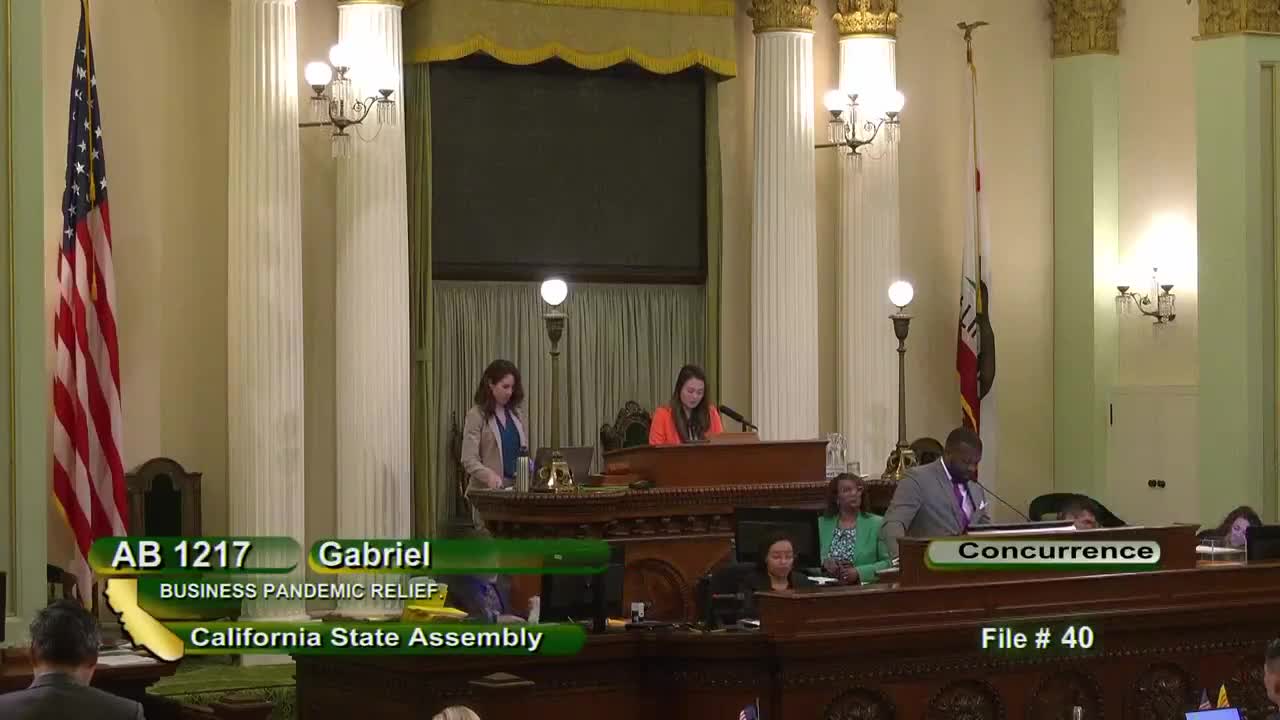 35SEC
Assembly Floor
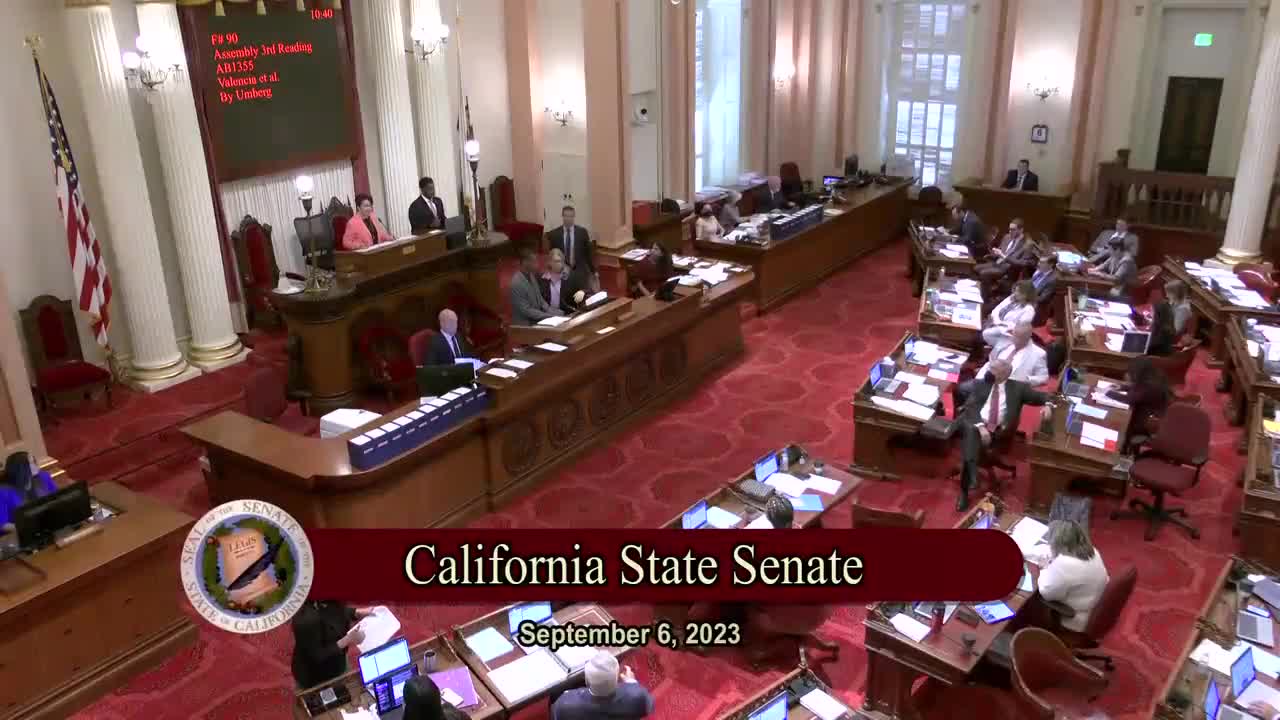 43SEC
Senate Floor
 6MIN
Senate Standing Committee on Labor, Public Employment and Retirement
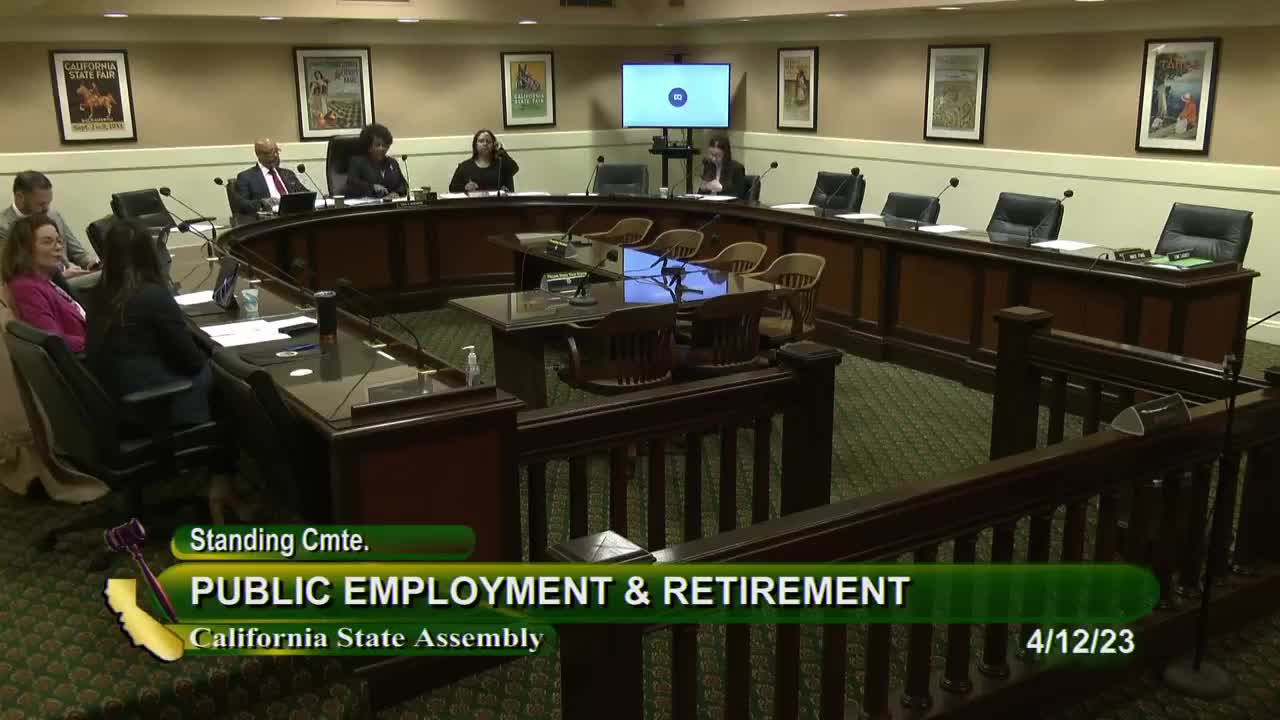 7MIN
Assembly Standing Committee on Public Employment and Retirement
Bill Author

Bill Co-Author(s):