AB 1021: Controlled substances: rescheduling.
- Session Year: 2023-2024
- House: Assembly
- Latest Version Date: 2023-09-30
Current Status:
Passed
(2023-09-30: Chaptered by Secretary of State - Chapter 274, Statutes of 2023.)
Introduced
In Committee
First Chamber
In Committee
Second Chamber
Enacted
Existing law, the California Uniform Controlled Substances Act, classifies controlled substances into 5 schedules and places the greatest restrictions and penalties on the use of those substances placed in Schedule I. Existing law restricts the prescription, furnishing, possession, sale, and use of controlled substances and makes a violation of those laws a crime, except as specified.
Existing law, if one of specified changes in federal law regarding the controlled substance cannabidiol occurs, deems a physician, pharmacist, or other healing arts licensee who prescribes, furnishes, or dispenses a product composed of cannabidiol, in accordance with federal law, to be in compliance with state law governing those acts and provides that, upon the effective date of one of those changes in federal law, the prescription, furnishing, dispensing, transfer, transportation, possession, or use of that product in accordance with federal law is for a legitimate medical purpose and is authorized pursuant to state law.
This bill, if one of specified changes in federal law regarding controlled substances occurs, would deem a physician, pharmacist, or other authorized healing arts licensee who prescribes, furnishes, or dispenses a product composed of one of these substances, in accordance with federal law, to be in compliance with state law governing those acts. The bill would also provide that upon the effective date of one of those changes in federal law regarding these substances, the prescription, furnishing, dispensing, transfer, transportation, possession, or use of that product in accordance with federal law is for a legitimate medical purpose and is authorized pursuant to state law.
(a)Notwithstanding any other law, if a substance listed in Schedule I of Section 11054 is excluded from Schedule I of the federal Controlled Substances Act and placed on a schedule of the act other than Schedule I, or if a product composed of one of these substances is approved by the federal Food and Drug Administration and either placed on a schedule of the act other than Schedule I, or exempted from one or more provisions of the act, so as to permit a physician, pharmacist, or other authorized healing arts licensee acting within their scope of practice, to prescribe, furnish, or dispense that product, the physician, pharmacist, or other authorized healing arts licensee who prescribes, furnishes, or dispenses that product in accordance with federal law shall be deemed to be in compliance with state law governing those acts.
(b)For purposes of this chapter, upon the effective date of any of the changes in federal law described in subdivision (a), notwithstanding any other state law, a product composed of the excluded substance may be prescribed, furnished, dispensed, transferred, transported, possessed, or used in accordance with federal law and is authorized pursuant to state law.
(c)This section does not apply to cannabis or a cannabis product, as defined in Section 26001 of the Business and Professions Code. However, cannabis or cannabis products may be authorized pursuant to Section 11150.2.
(a)Notwithstanding any other law, if a substance listed in Schedule I of Section 11054 is excluded from Schedule I of the federal Controlled Substances Act and placed on a schedule of the act other than Schedule I, or if a product composed of one of these substances is approved by the federal Food and Drug Administration and either placed on a schedule of the act other than Schedule I, or exempted from one or more provisions of the act, so as to permit a physician, pharmacist, or other authorized healing arts licensee acting within their scope of practice, to prescribe, furnish, or dispense that product, the physician, pharmacist, or other authorized healing arts licensee who prescribes, furnishes, or dispenses that product in accordance with federal law shall be deemed to be in compliance with state law governing those acts.
(b)For purposes of this chapter, upon the effective date of any of the changes in federal law described in subdivision (a), notwithstanding any other state law, a product composed of the excluded substance may be prescribed, furnished, dispensed, transferred, transported, possessed, or used in accordance with federal law and is authorized pursuant to state law.
(c)This section does not apply to cannabis or a cannabis product, as defined in Section 26001 of the Business and Professions Code, that is regulated by Section 11150.2. Code. However, cannabis or cannabis products may be authorized pursuant to Section 11150.2.
(a)Notwithstanding any other law, if a substance listed in Schedule I of Section 11054 is excluded from Schedule I of the federal Controlled Substances Act and placed on a schedule of the act other than Schedule I, or if a product composed of one of these substances is approved by the federal Food and Drug Administration and either placed on a schedule of the act other than Schedule I, or exempted from one or more provisions of the act, so as to permit a physician, pharmacist, or other authorized healing arts licensee acting within their scope of practice, to prescribe, furnish, or dispense that product, the physician, pharmacist, or other authorized healing arts licensee who prescribes, furnishes, or dispenses that product in accordance with federal law shall be deemed to be in compliance with state law governing those acts.
(b)For purposes of this chapter, upon the effective date of any of the changes in federal law described in subdivision (a), notwithstanding any other state law, a product composed of the excluded substance may be prescribed, furnished, dispensed, transferred, transported, possessed, or used in accordance with federal law and is authorized pursuant to state law.
(c)This section does not apply to cannabis or a cannabis product, as defined in Section 26001 of the Business and Professions Code, that is regulated by Section 11150.2.
(a)Notwithstanding any other law, if a substance listed in Schedule I of Section 11054 is excluded from Schedule I of the federal Controlled Substances Act and placed on a schedule of the act other than Schedule I, or if a product composed of one of these substances is approved by the federal Food and Drug Administration and either placed on a schedule of the act other than Schedule I, or exempted from one or more provisions of the act, so as to permit a physician, pharmacist, or other authorized healing arts licensee acting within their scope of practice, to prescribe, furnish, or dispense that product, the physician, pharmacist, or other authorized healing arts licensee who prescribes, furnishes, or dispenses that product in accordance with federal law shall be deemed to be in compliance with state law governing those acts.
(b)For purposes of this chapter, upon the effective date of any of the changes in federal law described in subdivision (a), notwithstanding any other state law, a product composed of the excluded substance may be prescribed, furnished, dispensed, transferred, transported, possessed, or used in accordance with federal law and is authorized pursuant to state law.
|
Date
|
Status
|
|---|---|
| Sep 30, 2023 | Chaptered by Secretary of State - Chapter 274, Statutes of 2023. |
| Sep 30, 2023 | Approved by the Governor. |
| Sep 14, 2023 | Enrolled and presented to the Governor at 4:30 p.m. |
| Sep 7, 2023 | Senate amendments concurred in. To Engrossing and Enrolling. (Ayes 69. Noes 0. Page 3067.). |
| Sep 5, 2023 | In Assembly. Concurrence in Senate amendments pending. May be considered on or after September 7 pursuant to Assembly Rule 77. |
| Sep 5, 2023 | Read third time. Passed. Ordered to the Assembly. (Ayes 34. Noes 2. Page 2356.). |
| Jul 5, 2023 | Read second time. Ordered to third reading. |
| Jul 3, 2023 | From committee: Be ordered to second reading pursuant to Senate Rule 28.8. |
| Jun 20, 2023 | From committee: Do pass and re-refer to Com. on APPR. (Ayes 5. Noes 0.) (June 20). Re-referred to Com. on APPR. |
| Jun 12, 2023 | From committee: Do pass and re-refer to Com. on PUB S. (Ayes 9. Noes 0.) (June 12). Re-referred to Com. on PUB S. |
| Jun 6, 2023 | From committee chair, with author's amendments: Amend, and re-refer to committee. Read second time, amended, and re-referred to Com. on B., P. & E. D. |
| May 24, 2023 | Referred to Coms. on B., P. & E. D. and PUB S. |
| May 16, 2023 | In Senate. Read first time. To Com. on RLS. for assignment. |
| May 15, 2023 | Read third time. Passed. Ordered to the Senate. (Ayes 69. Noes 1. Page 1546.) |
| Apr 27, 2023 | Read second time. Ordered to third reading. |
| Apr 26, 2023 | From committee: Do pass. (Ayes 13. Noes 0.) (April 26). |
| Apr 17, 2023 | Re-referred to Com. on APPR. |
| Apr 12, 2023 | Read second time and amended. |
| Apr 11, 2023 | From committee: Amend, and do pass as amended and re-refer to Com. on APPR. (Ayes 13. Noes 1.) (April 11). |
| Mar 2, 2023 | Referred to Com. on B. & P. |
| Feb 16, 2023 | From printer. May be heard in committee March 18. |
| Feb 15, 2023 | Read first time. To print. |
|
Date
|
Description
|
Location
|
Votes
|
|
|---|---|---|---|---|
| Sep 7, 2023 | AB 1021 Wicks Concurrence in Senate Amendments | Assembly Floor |
Passed |
|
| Sep 5, 2023 | Assembly 3rd Reading AB1021 Wicks et al. By Ashby | Senate Floor |
Passed |
|
| Jun 20, 2023 | Do pass, but first be re-referred to the Committee on [Appropriations] | Senate Standing Committee on Public Safety |
Passed |
|
| Jun 12, 2023 | Do pass, but first be re-referred to the Committee on [Public Safety] | Senate Standing Committee on Business, Professions and Economic Development |
Passed |
|
| May 15, 2023 | AB 1021 Wicks Assembly Third Reading | Assembly Floor |
Passed |
|
| Apr 26, 2023 | Do pass. | Assembly Standing Committee on Appropriations |
Passed |
|
| Apr 11, 2023 | Do pass as amended and be re-referred to the Committee on [Appropriations] | Assembly Standing Committee on Business and Professions |
Passed |
This list shows positions taken on this bill by organizations on the date displayed, which is linked to the original source.
Positions by individuals are not included.
|
Organization
|
Position
|
Date
|
|---|---|---|
| California Medical Association | ** Support | |
| Kaiser Permanente | ** Support | |
| Maps Public Benefit Corporation | ** Support |
CONCURRENCE IN SENATE AMENDMENTS
CSA1 Bill Id:AB 1021
Author:(Wicks)
As Amended Ver:June 6, 2023
Majority vote
SUMMARY
Provides that if any Schedule I controlled substance is federally rescheduled or exempted from the Controlled Substances Act, it will automatically become lawful for health professionals to prescribe, furnish, or dispense under California law.
Senate Amendments
Clarifies the exemption for cannabis products regulated under the Medical and Adult Use Cannabis Regulation and Safety Act (MAUCRSA) by allowing cannabis or cannabis products currently rescheduled under existing law to remain authorized.
COMMENTS
Federal vs. State Controlled Substances Scheduling. The federal Controlled Substances Act classifies a number of drugs and chemicals into one of five schedules. Drugs falling within Schedules II through V may be prescribed only by health practitioners in possession of a DEA registration and are ranked according to the drug's potential for abuse, with lower numbered schedules representing drugs with a higher risk of abuse or dependence. Schedule I drugs have been determined to have no currently accepted medical use and a high potential for abuse. Schedule I drugs may not be prescribed by any health practitioner in the United States. Examples of Schedule I drugs include cannabis, LSD, peyote, heroin, and ecstasy.
California also has its own schedule of controlled substances under the Uniform Controlled Substances Act. While the federal and state schedules are typically aligned in regards to how medications are classified, there have been conflicts between the federal and state acts, typically when the federal government reschedules a substance or exempts a specific drug from the Controlled Substances Act. When this occurs, statute in California typically must be legislatively amended to reconcile the differences.
For example, cannabis is currently listed as a Schedule I drug both federally and under California law. While MAUCRSA allows for cannabis to be cultivated, manufactured, and sold by licensees of the Department of Cannabis Control, it generally remains ineligible to be prescribed, furnished, or dispensed. However, in 2018, the federal Food and Drug Administration (FDA) approved a drug called Epidiolex, an epilepsy medication containing highly-purified CBD from the cannabis plant. Advocates for the epileptic community actively championed the FDA's approval of Epidiolex, leading to it becoming the first federally approved drug containing cannabinoids. Prior legislation in California was subsequently enacted to ensure that the drug would also be legal in California. When the FDA later approved additional drugs containing other cannabinoids, the law was further amended to automatically make it lawful to prescribe, furnish, and dispense any FDA-approved drug containing cannabinoids.
Potential Approval of Hallucinogenic Therapies. Beyond cannabis, other controlled substances currently listed as Schedule I both federally in California have been the subject of research into whether they could have effective medical use. In the May 2020 issue of the American Journal of Psychiatry, an evidenced-based summary of literature entitled "Psychedelics and Psychedelic-Assisted Psychotherapy" provided a literature review on the clinical application of psychedelic drugs in psychiatric disorders. A total of 1,603 articles were identified and screened. Articles that did not contain the terms "clinical trial," "therapy," or "imaging" in the title or abstract were filtered out. The remaining 161 articles were reviewed by two or more authors and 14 article were identified as reporting on well-designed clinical trials investigating the efficacy of LSD, MDMA, psilocybin, and ayahuasca for the treatment of mood and anxiety disorder, trauma and stress-related disorders and substance related and addictive disorders as well as end-of-life care.
The most significant database exists for MDMA and psilocybin, which have been designated by the FDA as "breakthrough therapies" for PTSD and treatment-resistant depression, respectively. The research on LSD and ayahuasca is observational, but available evidence suggests that these agents may have therapeutic effects in specific psychiatric disorders. The literature review concluded that while randomized clinical trials support the efficacy of MDMA in the treatment of PTSD and psilocybin in the treatment of depression and cancer-related anxiety, the research to support the use of LSD and ayahuasca (DMT) in the treatment of psychiatric disorders is preliminary, although promising. Overall, the database has been insufficient for FDA approval of any psychedelic compound for routine clinical use in psychiatric disorders at this time; however continue research on the efficacy of psychedelics for the treatment of psychiatric disorders is warranted.
On April 5, 2023, MAPS Public Benefit Corporation—the sponsor of this bill—announced its preliminary findings from an observational study, Long-Term Safety and Persistence of Effectiveness of Manualized MDMA-Assisted Therapy for the Treatment of Posttraumatic Stress Disorder. According to MAPS Public Benefit Corporation, these preliminary findings "show that participants in this study demonstrated a durable response at least six months, and in some cases a year or more, after their final MDMA-assisted therapy session during the Phase 3 study." The preliminary findings further suggest that therapies utilizing hallucinogenic controlled substances could receive federal approval in the future.
In the event that MDMA, psilocybin, or other Schedule I controlled substances are either federally rescheduled or exempted from the Controlled Substances Act following FDA approval, the author of this bill believes that California should immediately allow health professionals to prescribe, furnish, and dispense those substances as part of federally lawful treatment. This bill would apply if any Schedule I controlled substance is excluded from Schedule I of the federal Controlled Substances Act and placed on a schedule of the act other than Schedule I, or if a product composed of one of these substances is approved by the FDA and either placed on a rescheduled or exempted from the Act. In that instance, California-licensed physicians, pharmacists, and other healing arts licensees would be immediately considered allowed to prescribe, furnish, and dispense those drugs, regardless of their classification within the California Uniform Controlled Substances Act.
Nothing in this bill would legalize any controlled substance that is currently prohibited. For any Schedule I drug to become lawfully prescribed in California, researchers and activists must first successfully advocate for federal laws to be changed. In the event that those efforts are successful, this bill would ensure that California's implementation of the approval is not delayed by misalignment between state and federal drug scheduling.
According to the Author
"The bill seeks to resolve a predictable future ambiguity for professional, licensed healing arts practitioners by creating a pathway for prescribing substances containing a Schedule I substance, only after the federal government schedules a new drug product containing the same chemical entity. Specifically, AB 1021 will allow relevant licensed healing arts professionals in California to appropriately prescribe and dispense FDA-approved drug products that contain substances controlled in Schedule I. This effort does not decriminalize or legalize any controlled substance for any non-medical use. It specifically applies to prescription medicines approved by the FDA for medical use. This is a necessary step to prevent a gap in access to potentially life-saving legal medications in the State and to eliminate any 'gray area' for licensed healthcare providers and patients in California."
Arguments in Support
This bill is sponsored by MAPS Public Benefit Corporation, which writes: "Well over half of US states already have processes that establish automatic or near-automatic parity with federal government scheduling. California is among 19 states and the District of Columbia that do not have a mechanized process in their legislative or regulatory frameworks to address this issue. This effort does not decriminalize or legalize any controlled substance for any non-medical use. It specifically applies to prescription medicines approved by the FDA for medical use. This is a necessary step to prevent a gap in access to potentially life-saving legal medications in the State and to eliminate any "gray area" for licensed healthcare providers and patients in California."
Arguments in Opposition
None on file.
FISCAL COMMENTS
According to the Senate Appropriations Committee, pursuant to Senate Rule 28.8, negligible state costs.
VOTES:
ASM BUSINESS AND PROFESSIONS: 13-1-4
YES: Berman, Flora, Alvarez, Chen, Gipson, Grayson, Jackson, Lee, Lowenthal, McCarty, McKinnor, Stephanie Nguyen, Ting
NO: Alanis
ABS, ABST OR NV: Bonta, Dixon, Irwin, Joe Patterson
ASM APPROPRIATIONS: 13-0-3
YES: Holden, Bryan, Calderon, Wendy Carrillo, Mike Fong, Hart, Lowenthal, Mathis, Papan, Pellerin, Robert Rivas, Weber, Wilson
ABS, ABST OR NV: Megan Dahle, Dixon, Sanchez
ASSEMBLY FLOOR: 69-1-10
YES: Addis, Aguiar-Curry, Alvarez, Arambula, Bains, Bauer-Kahan, Bennett, Berman, Boerner, Bonta, Bryan, Juan Carrillo, Wendy Carrillo, Cervantes, Chen, Connolly, Megan Dahle, Flora, Mike Fong, Gabriel, Gallagher, Garcia, Gipson, Grayson, Haney, Holden, Hoover, Irwin, Jackson, Jones-Sawyer, Kalra, Lackey, Lee, Low, Lowenthal, Maienschein, Mathis, McCarty, McKinnor, Muratsuchi, Stephanie Nguyen, Ortega, Pacheco, Papan, Joe Patterson, Pellerin, Quirk-Silva, Ramos, Reyes, Luz Rivas, Robert Rivas, Rodriguez, Blanca Rubio, Sanchez, Santiago, Schiavo, Soria, Ta, Ting, Valencia, Villapudua, Wallis, Ward, Weber, Wicks, Wilson, Wood, Zbur, Rendon
NO: Alanis
ABS, ABST OR NV: Calderon, Davies, Dixon, Essayli, Vince Fong, Friedman, Hart, Jim Patterson, Petrie-Norris, Waldron
SENATE FLOOR: 35-2-3
YES: Allen, Archuleta, Ashby, Atkins, Becker, Blakespear, Bradford, Caballero, Cortese, Dahle, Dodd, Durazo, Eggman, Glazer, Gonzalez, Grove, Laird, Limón, McGuire, Menjivar, Min, Newman, Niello, Ochoa Bogh, Portantino, Roth, Rubio, Seyarto, Skinner, Smallwood‑Cuevas, Stern, Umberg, Wahab, Wiener, Wilk
NO: Alvarado-Gil, Hurtado
ABS, ABST OR NV: Jones, Nguyen, Padilla
UPDATED
VERSION: June 6, 2023
CONSULTANT: Robert Sumner / B. & P. / (916) 319-3301 FN: 0001735
SENATE RULES COMMITTEE Office of Senate Floor Analyses (916) 651-1520 Fax: (916) 327-4478 | AB 1021 |
THIRD READING
Bill No: AB 1021
Author: Wicks (D), et al.
Amended: 6/6/23 in Senate
Vote: 21
SENATE BUS., PROF. & ECON. DEV. COMMITTEE: 9-0, 6/12/23
AYES: Roth, Archuleta, Ashby, Becker, Dodd, Glazer, Niello, Smallwood-Cuevas, Wahab
NO VOTE RECORDED: Nguyen, Alvarado-Gil, Eggman, Wilk
SENATE PUBLIC SAFETY COMMITTEE: 5-0, 6/20/23
AYES: Wahab, Ochoa Bogh, Bradford, Skinner, Wiener
SENATE APPROPRIATIONS COMMITTEE: Senate Rule 28.8
ASSEMBLY FLOOR: 69-1, 5/15/23 - See last page for vote
SUBJECT: Controlled substances: rescheduling
SOURCE: MAPS Public Benefit Corporation
DIGEST:
This bill provides that if any Schedule I controlled substance, other than cannabis and cannabis products currently regulated in California, is federally rescheduled or exempted from the Controlled Substances Act, it will automatically become lawful for health professionals to prescribe, furnish, or dispense under California law.
ANALYSIS:
Existing law:
- Establishes various practice acts in the Business and Professions Code (BPC) governed by various boards within the Department of Consumer Affairs (DCA) which provide for the licensing and regulation of health care professionals including: physicians and surgeons (under the Medical Practice Act), dentists (under the Dental Practice Act), veterinarians (under the Veterinary Medicine Practice Act); registered nurses, nurse practitioners (NP) and certified nurse-midwives (CNM) (under the Nursing Practice Act); physician assistants (PA) (under the Physician Assistant Practice Act); osteopathic physicians and surgeons (under the Osteopathic Medical Practice Act); naturopathic doctors (ND) (under the Naturopathic Doctors Act); optometrists (under the Optometry Practice Act); doctors of podiatric medicine (under the Podiatric Act) and; pharmacies, pharmacists and wholesalers of dangerous drugs or devices (under the Pharmacy Law). (Business and Professions Code (BPC)§§ 500 et seq.)
- Specifies certain requirements regarding the dispensing and furnishing of dangerous drugs and devices, and prohibits a person from furnishing any dangerous drug or device except upon the prescription of a physician, dentist, podiatrist, optometrist, veterinarian or ND. (BPC § 4059)
- Establishes the Uniform Controlled Substances Act, which regulates controlled substances and defines an opiate as any substance having an addiction-forming or addiction-sustaining liability similar to morphine or being capable of conversion into a drug having addiction-forming or addiction-sustaining liability. (Health and Safety Code (HSC) § 11020)
- Classifies controlled substances into five schedules according to their danger and potential for abuse. (HSC §§ 11054-11058)
- Prohibits any person other than a physician, dentist, podiatrist, veterinarian, ND (according to certain supervision and protocol requirements), pharmacist (according to certain authorization and according to certain policies and procedures), CNM (if furnished or ordered incidentally to the provision of family planning services, routine health care or perinatal care, or care rendered consistent with the CNM’s practice; occurs under physician and surgeon supervision; and is in accordance with standardized procedures or protocols as specified), NP (if it is consistent with a NP’s educational preparation or for which clinical competency has been established and maintained; occurs under physician and surgeon supervision; and is in accordance with standardized procedures or protocols as specified); a pharmacist or registered nurse or PA acting within the scope of an experimental health workforce project authorized by the Office of Statewide Health Planning and Development (HSC §§ 128125 et seq.); an optometrist licensed under the Optometry Practice Act, or an out-of-state prescriber acting in an emergency situation from writing or issuing a prescription for a controlled substance. (HSC § 11150)
- States that a prescription for a controlled substance shall only be issued for a legitimate medical purpose by an individual practitioner acting in the usual course of his or her professional practice, and that the responsibility for the proper prescribing and dispensing of controlled substances is upon the prescribing practitioner, but a corresponding responsibility rests with the pharmacist who fills the prescription. (HSC § 11153)
- Establishes CURES, a prescription drug management program maintained by the Department of Justice for the purpose of collecting records of dispensed controlled substances for review by licensed prescribers and dispensers, regulatory investigators, law enforcement, and statistical researchers. Requires health care practitioners to consult the CURES database to review a patient’s controlled substance history before prescribing a Schedule II, Schedule III, or Schedule IV controlled substance to the patient for the first time and at least once every six months thereafter if the substance remains part of the treatment of the patient. Provides numerous exemptions from the duty to consult CURES for certain patient populations and under various circumstances. (HSC §§11165(a) and 11165.4)
- Enacts the Compassionate Use Act of 1996, which first allowed patients to engage in the medical use of cannabis, and for patients and their primary caregivers to cultivate and possess medicinal cannabis, without being subject to criminal prosecution or punishment. (HSC §§ 11362.5 et seq.)
- Establishes the Medicinal and Adult-Use Cannabis Regulation and Safety Act (MAUCRSA) to regulate the cultivation, distribution, transport, storage, manufacturing, processing, and sale of both medicinal cannabis and adult-use cannabis. (BPC) § 26000)
- Establishes the Department of Cannabis Control (DCC) to administer and regulate provisions of MAUCRSA. (BPC § 26010)
- Provides that if any non-hemp cannabinoid is federally rescheduled or otherwise made a lawfully prescribed controlled substance, it shall also be deemed legal to prescribe under state law upon the effective date of the change in federal law. (HSC § 11150.2)
- Specifies that cases that involve repeated acts of clearly excessive recommending of cannabis to patients for medical purposes, or repeated acts of recommending cannabis to patients for medical purposes without a good faith prior examination of the patient and a medical reason for the recommendation be given the highest priority by the Medical Board of California and California Board of Podiatric Medicines. Specifies that recommending medical cannabis to a patient for a medical purpose without an appropriate prior examination and a medical indication constitutes unprofessional conduct. (BPC §§ 2220.05 and 2525.2)
This bill:
- Provides that if any substance listed in Schedule I of the Uniform Controlled Substances Act in California is excluded from Schedule I of the federal Controlled Substances Act, other than cannabis or a cannabis product regulated under MAUCRSA and either rescheduled or exempted from one or more provisions of the Act, a physician, pharmacist, or other healing arts licensee who prescribes, furnishes, or dispenses that product in accordance with federal law shall be deemed to be in compliance with applicable California law.
- Provides that a product composed of the excluded substance may be prescribed, furnished, dispensed, transferred, transported, possessed, or used in accordance with federal law upon the effective date of the change in federal law.
Background
Federal vs. State Controlled Substances Scheduling. The federal Controlled Substances Act classifies a number of drugs and chemicals into one of five schedules. Drugs falling within Schedules II through V may be prescribed only by health practitioners in possession of a DEA registration and are ranked according to the drug’s potential for abuse, with lower numbered schedules representing drugs with a higher risk of abuse or dependence. Schedule I drugs have been determined to have no currently accepted medical use and a high potential for abuse. Schedule I drugs may not be prescribed by any health practitioner in the United States. Examples of Schedule I drugs include cannabis, LSD, peyote, heroin, and ecstasy.
California also has its own schedule of controlled substances under the Uniform Controlled Substances Act. While the federal and state schedules are typically aligned in regards to how medications are classified, there have been conflicts between the federal and state acts, typically when the federal government reschedules a substance or exempts a specific drug from the Controlled Substances Act. When this occurs, statute in California typically must be legislatively amended to reconcile the differences. For example, cannabis is currently listed as a Schedule I drug both federally and under California law. While MAUCRSA allows for cannabis to be cultivated, manufactured, and sold by licensees of the Department of Cannabis Control, it generally remains ineligible to be prescribed, furnished, or dispensed. However, in 2018, the federal Food and Drug Administration (FDA) approved a drug called Epidiolex, an epilepsy medication containing highly-purified CBD from the cannabis plant. Advocates for the epileptic community actively championed the FDA’s approval of Epidiolex, leading to it becoming the first federally approved drug containing cannabinoids. Prior legislation in California was subsequently enacted to ensure that the drug would also be legal in California. When the FDA later approved additional drugs containing other cannabinoids, the law was further amended to automatically make it lawful to prescribe, furnish, and dispense any FDA-approved drug containing cannabinoids.
Potential Approval of Hallucinogenic Therapies. Beyond cannabis, other controlled substances currently listed as Schedule I both federally in California have been the subject of research into whether they could have effective medical use. In the May 2020 issue of the American Journal of Psychiatry, an evidenced-based summary of literature entitled “Psychedelics and Psychedelic-Assisted Psychotherapy” provided a literature review on the clinical application of psychedelic drugs in psychiatric disorders. A total of 1,603 articles were identified and screened. Articles that did not contain the terms “clinical trial,” “therapy,” or “imaging” in the title or abstract were filtered out. The remaining 161 articles were reviewed by two or more authors and 14 article were identified as reporting on well-designed clinical trials investigating the efficacy of LSD, MDMA, psilocybin, and ayahuasca for the treatment of mood and anxiety disorder, trauma and stress-related disorders and substance related and addictive disorders as well as end-of-life care.
The most significant database exists for MDMA and psilocybin, which have been designated by the FDA as “breakthrough therapies” for PTSD and treatment-resistant depression, respectively. The research on LSD and ayahuasca is observational, but available evidence suggests that these agents may have therapeutic effects in specific psychiatric disorders. The literature review concluded that while randomized clinical trials support the efficacy of MDMA in the treatment of PTSD and psilocybin in the treatment of depression and cancer-related anxiety, the research to support the use of LSD and ayahuasca (DMT) in the treatment of psychiatric disorders is preliminary, although promising. Overall, the database has been insufficient for FDA approval of any psychedelic compound for routine clinical use in psychiatric disorders at this time; however continue research on the efficacy of psychedelics for the treatment of psychiatric disorders is warranted.
On April 5, 2023, MAPS Public Benefit Corporation—the sponsor of this bill—announced its preliminary findings from an observational study, Long-Term Safety and Persistence of Effectiveness of Manualized MDMA-Assisted Therapy for the Treatment of Posttraumatic Stress Disorder. According to MAPS Public Benefit Corporation, these preliminary findings “show that participants in this study demonstrated a durable response at least six months, and in some cases a year or more, after their final MDMA-assisted therapy session during the Phase 3 study.” The preliminary findings further suggest that therapies utilizing hallucinogenic controlled substances could receive federal approval in the future.
In the event that MDMA, psilocybin, or other Schedule I controlled substances are either federally rescheduled or exempted from the Controlled Substances Act following FDA approval, the author of this bill believes that California should immediately allow health professionals to prescribe, furnish, and dispense those substances as part of federally lawful treatment. This bill would apply if any Schedule I controlled substance is excluded from Schedule I of the federal Controlled Substances Act and placed on a schedule of the act other than Schedule I, or if a product composed of one of these substances is approved by the FDA and either placed on a rescheduled or exempted from the Act. In that instance, California-licensed physicians, pharmacists, and other healing arts licensees would be immediately considered allowed to prescribe, furnish, and dispense those drugs, regardless of their classification within the California Uniform Controlled Substances Act. Nothing in this bill would legalize any controlled substance that is currently prohibited.
FISCAL EFFECT: Appropriation: No Fiscal Com.: Yes Local: No
SUPPORT: (Verified 7/5/23)
Maps Public Benefit Corporation (source)
California Medical Association
Kaiser Permanente
OPPOSITION: (Verified 7/5/23)
None received
ARGUMENTS IN SUPPORT: Supporters argue that this bill would prevent a situation in which the federal government reschedules a drug out of Schedule 1, but it still cannot be legally prescribed and dispensed in California until the state legislature acts by passing legislation to reschedule the specific drug.
ASSEMBLY FLOOR: 69-1, 5/15/23
AYES: Addis, Aguiar-Curry, Alvarez, Arambula, Bains, Bauer-Kahan, Bennett, Berman, Boerner, Bonta, Bryan, Juan Carrillo, Wendy Carrillo, Cervantes, Chen, Connolly, Megan Dahle, Flora, Mike Fong, Gabriel, Gallagher, Garcia, Gipson, Grayson, Haney, Holden, Hoover, Irwin, Jackson, Jones-Sawyer, Kalra, Lackey, Lee, Low, Lowenthal, Maienschein, Mathis, McCarty, McKinnor, Muratsuchi, Stephanie Nguyen, Ortega, Pacheco, Papan, Joe Patterson, Pellerin, Quirk-Silva, Ramos, Reyes, Luz Rivas, Robert Rivas, Rodriguez, Blanca Rubio, Sanchez, Santiago, Schiavo, Soria, Ta, Ting, Valencia, Villapudua, Wallis, Ward, Weber, Wicks, Wilson, Wood, Zbur, Rendon
NOES: Alanis
NO VOTE RECORDED: Calderon, Davies, Dixon, Essayli, Vince Fong, Friedman, Hart, Jim Patterson, Petrie-Norris, Waldron
Prepared by: Sarah Mason / B., P. & E.D. /
7/5/23 16:22:21
**** END ****
SENATE COMMITTEE ON PUBLIC SAFETY
Senator Aisha Wahab, Chair
2023 - 2024 Regular
Bill No: AB 1021 Hearing Date: June 20, 2023
Author: | Wicks | ||
Version: | June 6, 2023 | ||
Urgency: | No | Fiscal: | Yes |
Consultant: | SJ | ||
Subject: Controlled substances: rescheduling
HISTORY
Source: MAPS Public Benefit Corporation
Prior Legislation: AB 527 (Wood), Ch. 618, Stats. 2021
AB 710 (Wood), Ch. 72, Stats. 2018
AB 2783 (O’Donnell), Ch. 589, Stats. 2018
Support: California Medical Association; California State Association of Psychiatrists
Opposition: None known
Assembly Floor Vote: 69 - 1
PURPOSE
The purpose of this bill is to provide that if any Schedule I controlled substance, other than cannabis and cannabis products currently regulated in California, is federally rescheduled or exempted from the Controlled Substances Act, it will automatically become lawful for health professionals to prescribe, furnish, or dispense under California law.
Existing law establishes the California Uniform Controlled Substances Act which regulates controlled substances. (Health & Saf. Code, §§ 11000 et seq.)
Existing law classifies controlled substances into five schedules according to their danger and potential for abuse. (Health & Saf. Code, §§ 11054-11058.)
Existing law provides that if any non-hemp cannabinoid is federally rescheduled or otherwise made a lawfully prescribed controlled substance, it shall also be deemed legal to prescribe under state law upon the effective date of the change in federal law. (Health & Saf. Code, § 11150.2.)
Existing law places cannabis, mescaline, 3,4-methylenedioxy amphetamine (MDMA), peyote, psilocybin, and tetrahydrocannabinols (THC) on Schedule I, among other controlled substances, within the classification of hallucinogenic substances. (Health & Saf. Code, § 11054.)
Existing law establishes various practice acts in the Business and Professions Code governed by various boards within the Department of Consumer Affairs (DCA) which provide for the licensing and regulation of health care professionals. (Bus. & Prof. Code, §§ 500 et seq.)
Existing law specifies certain requirements regarding the dispensing and furnishing of dangerous drugs and devices, and prohibits a person from furnishing any dangerous drug or device except upon the prescription of specified health care professionals. (Bus. & Prof. Code, § 4059.)
Existing law prohibits any person other than specified health care professionals from writing or issuing a prescription for a controlled substance. (Health & Saf. Code, § 11150.)
Existing law provides that a prescription for a controlled substance shall only be issued for a legitimate medical purpose by an individual practitioner acting in the usual course of their professional practice, and that the responsibility for the proper prescribing and dispensing of controlled substances is upon the prescribing practitioner, but a corresponding responsibility rests with the pharmacist who fills the prescription. (Health & Saf. Code, § 11153.)
Existing law establishes the Controlled Substance Utilization Review and Evaluation System (CURES), for the purposes of collecting records of dispensed Schedule II, III, IV, and V controlled substances. (Health & Saf. Code, § 11165.)
Existing law enacts the Compassionate Use Act of 1996, which first allowed patients to engage in the medical use of cannabis, and for patients and their primary caregivers to cultivate and possess medicinal cannabis, without being subject to criminal prosecution or punishment. (Health & Saf. Code, §§ 11362.5 et seq.)
Existing law enacts the Medicinal and Adult-Use Cannabis Regulation and Safety Act (MAUCRSA) to provide for a comprehensive regulatory framework for the cultivation, distribution, transport, storage, manufacturing, processing, and sale of medicinal and adult-use cannabis. (Bus. & Prof. Code, §§ 26000 et seq.)
Existing law establishes the Department of Cannabis Control (DCC) to administer and regulate provisions of MAUCRSA. (Bus. & Prof. Code, § 26010.)
This bill provides, notwithstanding any other law, if a substance listed in Schedule I of Section 11054 is excluded from Schedule I of the federal Controlled Substances Act and placed on a schedule of the act other than Schedule I, or if a product composed of one of these substances is approved by the federal Food and Drug Administration and either placed on a schedule of the act other than Schedule I, or exempted from one or more provisions of the act, so as to permit a physician, pharmacist, or other authorized healing arts licensee acting within their scope of practice, to prescribe, furnish, or dispense that product, the physician, pharmacist, or other authorized healing arts licensee who prescribes, furnishes, or dispenses that product in accordance with federal law shall be deemed to be in compliance with state law governing those acts.
This bill specifies that if the above changes to federal law occur, the proscribed changes to state law will occur automatically.
This bill specifies that its provisions do not apply to cannabis or a cannabis product, as defined in Section 26001 of the Business and Professions Code. Provides that cannabis or cannabis products may be authorized pursuant to Section 11150.2.
COMMENTS
- Need For This Bill
According to the author:
AB 1021 eliminates confusion for prescribers and pharmacists in California, and prevents a gap in access to potentially life-saving legal medications. Upon FDA approval and subsequent DEA [re]scheduling, California medical professionals acting under all applicable laws and regulations of the state, would be authorized to prescribe legal medications approved by the Federal Government. AB 1021 allows for federal parity after extensive policy and law enforcement review. This effort does not decriminalize or legalize any controlled substance for any non-medical use. It specifically—and only—applies to prescription medicines approved by the FDA for medical use.
- Controlled Substances Scheduling
The federal Controlled Substances Act classifies a number of drugs and chemicals into one of five schedules. Drugs falling within Schedules II through V may be prescribed only by health practitioners in possession of a DEA registration and are ranked according to the drug’s potential for abuse, with lower numbered schedules representing drugs with a higher risk of abuse or dependence. Schedule I drugs have been determined to have no currently accepted medical use and a high potential for abuse. Schedule I drugs may not be prescribed by any health practitioner in the United States. Examples of Schedule I drugs include cannabis, LSD, peyote, heroin, and ecstasy.
California also has its own schedule of controlled substances under the Uniform Controlled Substances Act. While the federal and state schedules are typically aligned in regards to how medications are classified, there have been conflicts between the federal and state acts. This has typically occurred when the federal government reschedules a substance or exempts a specific drug from the Controlled Substances Act. When this occurs, California law generally must be amended to reconcile the differences. For example, cannabis is currently listed as a Schedule I drug both federally and under California law. While MAUCRSA allows for cannabis to be cultivated, manufactured, and sold by licensees of the Department of Cannabis Control, it generally remains ineligible to be prescribed, furnished, or dispensed. However, in 2018, the federal Food and Drug Administration (FDA) approved a drug called Epidiolex, an epilepsy medication containing highly-purified CBD from the cannabis plant. Advocates for the epileptic community actively championed the FDA’s approval of Epidiolex, leading to it becoming the first federally approved drug containing cannabinoids. Prior legislation in California was subsequently enacted to ensure that the drug would also be legal in California. When the FDA later approved additional drugs containing other cannabinoids, the law was further amended to automatically make it lawful to prescribe, furnish, and dispense any FDA-approved drug containing cannabinoids.
- Potential Approval of Hallucinogenic Therapies
Beyond cannabis, other controlled substances currently listed as Schedule I both federally in California have been the subject of research into whether they could have effective medical use. In the May 2020 issue of the American Journal of Psychiatry, an evidenced-based summary of literature entitled “Psychedelics and Psychedelic-Assisted Psychotherapy” provided a literature review on the clinical application of psychedelic drugs in psychiatric disorders. A total of 1,603 articles were identified and screened. Articles that did not contain the terms “clinical trial,” “therapy,” or “imaging” in the title or abstract were filtered out. The remaining 161 articles were reviewed by two or more authors and 14 article were identified as reporting on well-designed clinical trials investigating the efficacy of LSD, MDMA, psilocybin, and ayahuasca for the treatment of mood and anxiety disorder, trauma and stress-related disorders and substance related and addictive disorders as well as end-of-life care.
The most significant database exists for MDMA and psilocybin, which have been designated by the FDA as “breakthrough therapies” for PTSD and treatment-resistant depression, respectively. The research on LSD and ayahuasca is observational, but available evidence suggests that these agents may have therapeutic effects in specific psychiatric disorders. The literature review concluded that while randomized clinical trials support the efficacy of MDMA in the treatment of PTSD and psilocybin in the treatment of depression and cancer-related anxiety, the research to support the use of LSD and ayahuasca (DMT) in the treatment of psychiatric disorders is preliminary, although promising. Overall, the database has been insufficient for FDA approval of any psychedelic compound for routine clinical use in psychiatric disorders at this time; however, continued research on the efficacy of psychedelics for the treatment of psychiatric disorders is warranted.
On April 5, 2023, MAPS Public Benefit Corporation, the sponsor of this bill, announced its preliminary findings from an observational study, Long-Term Safety and Persistence of Effectiveness of Manualized MDMA-Assisted Therapy for the Treatment of Posttraumatic Stress Disorder. According to MAPS Public Benefit Corporation, these preliminary findings “show that participants in this study demonstrated a durable response at least six months, and in some cases a year or more, after their final MDMA-assisted therapy session during the Phase 3 study.” The preliminary findings further suggest that therapies utilizing hallucinogenic controlled substances could receive federal approval in the future.
In the event that MDMA, psilocybin, or other Schedule I controlled substances are either federally rescheduled or exempted from the Controlled Substances Act following FDA approval, the proponents of this bill contend that California should immediately allow health professionals to prescribe, furnish, and dispense those substances given that it would be lawful to do so under federal law. This bill would apply if any Schedule I controlled substance is excluded from Schedule I of the federal Controlled Substances Act and placed on a schedule of the act other than Schedule I, or if a product composed of one of these substances is approved by the FDA and either placed on a rescheduled or exempted from the Act. In that instance, California-licensed physicians, pharmacists, and other healing arts licensees would be immediately considered allowed to prescribe, furnish, and dispense those drugs, regardless of their classification within the state’s Uniform Controlled Substances Act. Nothing in this bill would legalize any controlled substance that is currently prohibited.
- Argument in Support
The California State Association of Psychiatrists supports this bill writing:
This bill seeks to resolve a future predictable ambiguity for professionals by creating a pathway for prescribing substances containing a Schedule I substance, only after the federal government schedules a new drug product containing the same chemical entity. Specifically, AB 1021 will allow relevant licensed healing arts professionals in California to appropriately prescribe and dispense FDA-approved drug products that contain controlled substances controlled in Schedule I.
This effort does not decriminalize or legalize any controlled substance for any non-medical use. It specifically applies to prescription medicines approved by the FDA for medical use. This is a necessary step to prevent a gap in access to potentially life-saving legal medications in the State and to eliminate any “gray area” for licensed healthcare providers or patients in California.
-- END --
SENATE COMMITTEE ON
BUSINESS, PROFESSIONS AND ECONOMIC DEVELOPMENT
Senator Richard Roth, Chair
2023 - 2024 Regular
Bill No: Hearing Date: June 12, 2023
Author: | |||
Version: | June 6, 2023 | ||
Urgency: | No | Fiscal: | Yes |
Consultant: | Sarah Mason | ||
Subject:
SUMMARY:
Provides that if any Schedule I controlled substance, other than cannabis and cannabis products currently regulated in California, is federally rescheduled or exempted from the Controlled Substances Act, it will automatically become lawful for health professionals to prescribe, furnish, or dispense under California law.
NOTE: This bill is double referred to the Senate Committee on Public Safety, second.
Existing law:
- Establishes various practice acts in the Business and Professions Code (BPC) governed by various boards within the Department of Consumer Affairs (DCA) which provide for the licensing and regulation of health care professionals including: physicians and surgeons (under the Medical Practice Act), dentists (under the Dental Practice Act), veterinarians (under the Veterinary Medicine Practice Act); registered nurses, nurse practitioners (NP) and certified nurse-midwives (CNM) (under the Nursing Practice Act); physician assistants (PA) (under the Physician Assistant Practice Act); osteopathic physicians and surgeons (under the Osteopathic Medical Practice Act); naturopathic doctors (ND) (under the Naturopathic Doctors Act); optometrists (under the Optometry Practice Act); doctors of podiatric medicine (under the Podiatric Act) and; pharmacies, pharmacists and wholesalers of dangerous drugs or devices (under the Pharmacy Law). (Business and Professions Code (BPC) §§ 500 et seq.)
- Specifies certain requirements regarding the dispensing and furnishing of dangerous drugs and devices, and prohibits a person from furnishing any dangerous drug or device except upon the prescription of a physician, dentist, podiatrist, optometrist, veterinarian or ND. (BPC § 4059)
- Establishes the Uniform Controlled Substances Act which regulates controlled substances and defines an opiate as any substance having an addiction-forming or addiction-sustaining liability similar to morphine or being capable of conversion into a drug having addiction-forming or addiction-sustaining liability. (Health and Safety Code (HSC) § 11020)
- Classifies controlled substances into five schedules according to their danger and potential for abuse. (HSC §§ 11054-11058)
- Prohibits any person other than a physician, dentist, podiatrist, veterinarian, ND (according to certain supervision and protocol requirements), pharmacist (according to certain authorization and according to certain policies and procedures), CNM (if furnished or ordered incidentally to the provision of family planning services, routine health care or perinatal care, or care rendered consistent with the CNM’s practice; occurs under physician and surgeon supervision; and is in accordance with standardized procedures or protocols as specified), NP (if it is consistent with a NP’s educational preparation or for which clinical competency has been established and maintained; occurs under physician and surgeon supervision; and is in accordance with standardized procedures or protocols as specified); a pharmacist or registered nurse or PA acting within the scope of an experimental health workforce project authorized by the Office of Statewide Health Planning and Development (HSC §§ 128125 et seq.); an optometrist licensed under the Optometry Practice Act, or an out-of-state prescriber acting in an emergency situation from writing or issuing a prescription for a controlled substance.
(HSC § 11150) - States that a prescription for a controlled substance shall only be issued for a legitimate medical purpose by an individual practitioner acting in the usual course of his or her professional practice, and that the responsibility for the proper prescribing and dispensing of controlled substances is upon the prescribing practitioner, but a corresponding responsibility rests with the pharmacist who fills the prescription. (HSC § 11153)
- Establishes CURES, a prescription drug management program maintained by the Department of Justice for the purpose of collecting records of dispensed controlled substances for review by licensed prescribers and dispensers, regulatory investigators, law enforcement, and statistical researchers. Requires health care practitioners to consult the CURES database to review a patient’s controlled substance history before prescribing a Schedule II, Schedule III, or Schedule IV controlled substance to the patient for the first time and at least once every six months thereafter if the substance remains part of the treatment of the patient. Provides numerous exemptions from the duty to consult CURES for certain patient populations and under various circumstances. (HSC §§11165(a) and 11165.4)
- Enacts the Compassionate Use Act of 1996, which first allowed patients to engage in the medical use of cannabis, and for patients and their primary caregivers to cultivate and possess medicinal cannabis, without being subject to criminal prosecution or punishment. (HSC §§ 11362.5 et seq.)
- Establishes the Medicinal and Adult-Use Cannabis Regulation and Safety Act (MAUCRSA) to regulate the cultivation, distribution, transport, storage, manufacturing, processing, and sale of both medicinal cannabis and adult-use cannabis. (Business and Professions Code (BPC) § 26000)
- Establishes the Department of Cannabis Control (DCC) to administer and regulate provisions of MAUCRSA. (BPC § 26010)
- Provides that if any non-hemp cannabinoid is federally rescheduled or otherwise made a lawfully prescribed controlled substance, it shall also be deemed legal to prescribe under state law upon the effective date of the change in federal law. (HSC § 11150.2)
- Specifies that cases that involve repeated acts of clearly excessive recommending of cannabis to patients for medical purposes, or repeated acts of recommending cannabis to patients for medical purposes without a good faith prior examination of the patient and a medical reason for the recommendation be given the highest priority by the Medical Board of California and California Board of Podiatric Medicines. Specifies that recommending medical cannabis to a patient for a medical purpose without an appropriate prior examination and a medical indication constitutes unprofessional conduct. (BPC §§ 2220.05 and 2525.2)
This bill:
- Provides that if any substance listed in Schedule I of the Uniform Controlled Substances Act in California is excluded from Schedule I of the federal Controlled Substances Act, other than cannabis or a cannabis product regulated under MAUCRSA and either rescheduled or exempted from one or more provisions of the Act, a physician, pharmacist, or other healing arts licensee who prescribes, furnishes, or dispenses that product in accordance with federal law shall be deemed to be in compliance with applicable California law.
- Additionally provides that a product composed of the excluded substance may be prescribed, furnished, dispensed, transferred, transported, possessed, or used in accordance with federal law upon the effective date of the change in federal law.
FISCAL EFFECT:
This bill is keyed fiscal by Legislative Counsel. According to the Author,
COMMENTS:
- Purpose. This bill is sponsored by MAPS Public Benefit Corporation. According to the Author, the measure “seeks to resolve a predictable future ambiguity for professional, licensed healing arts practitioners by creating a pathway for prescribing substances containing a Schedule I substance, only after the federal government schedules a new drug product containing the same chemical entity.”
The Author notes that “California has no mechanized law or process that clearly permits healing arts licensees to prescribe, furnish, or dispense a drug that contains a substance currently in California’s Schedule I when a drug product containing such a substance has been approved by the FDA for a medical use and that drug product has been subsequently federally classified in a schedule other than the federal Schedule I (or exempted from scheduling). Federal preemption of the drug product scheduling is also not clear from a State policy perspective. Clear action from the legislature will alleviate confusion and prevent delays in patient access to potentially life-saving FDA approved treatments.
If a medicinal product composed of a Schedule I substance is approved by the FDA and either placed on a schedule of the federal Controlled Substances Act or exempted from one or more provisions of that act, AB 1021 would deem a physician, pharmacist, or other authorized healing arts licensee who prescribes, furnishes, or dispenses a product composed of a Schedule I controlled substance, in accordance with federal law, to be in compliance with state law governing those acts and provides that, upon the effective date of one of the changes in federal law, the prescription, dispensing, transfer, transportation, possession, or use of that product in accordance with federal law is for a legitimate medical purpose and is authorized pursuant to state law.”
- Background.
Federal vs. State Controlled Substances Scheduling. The federal Controlled Substances Act classifies a number of drugs and chemicals into one of five schedules. Drugs falling within Schedules II through V may be prescribed only by health practitioners in possession of a DEA registration and are ranked according to the drug’s potential for abuse, with lower numbered schedules representing drugs with a higher risk of abuse or dependence. Schedule I drugs have been determined to have no currently accepted medical use and a high potential for abuse. Schedule I drugs may not be prescribed by any health practitioner in the United States. Examples of Schedule I drugs include cannabis, LSD, peyote, heroin, and ecstasy.
California also has its own schedule of controlled substances under the Uniform Controlled Substances Act. While the federal and state schedules are typically aligned in regards to how medications are classified, there have been conflicts between the federal and state acts, typically when the federal government reschedules a substance or exempts a specific drug from the Controlled Substances Act. When this occurs, statute in California typically must be legislatively amended to reconcile the differences. For example, cannabis is currently listed as a Schedule I drug both federally and under California law. While MAUCRSA allows for cannabis to be cultivated, manufactured, and sold by licensees of the Department of Cannabis Control, it generally remains ineligible to be prescribed, furnished, or dispensed. However, in 2018, the federal Food and Drug Administration (FDA) approved a drug called Epidiolex, an epilepsy medication containing highly-purified CBD from the cannabis plant. Advocates for the epileptic community actively championed the FDA’s approval of Epidiolex, leading to it becoming the first federally approved drug containing cannabinoids. Prior legislation in California was subsequently enacted to ensure that the drug would also be legal in California. When the FDA later approved additional drugs containing other cannabinoids, the law was further amended to automatically make it lawful to prescribe, furnish, and dispense any FDA-approved drug containing cannabinoids.
Potential Approval of Hallucinogenic Therapies. Beyond cannabis, other controlled substances currently listed as Schedule I both federally in California have been the subject of research into whether they could have effective medical use. In the May 2020 issue of the American Journal of Psychiatry, an evidenced-based summary of literature entitled “Psychedelics and Psychedelic-Assisted Psychotherapy” provided a literature review on the clinical application of psychedelic drugs in psychiatric disorders. A total of 1,603 articles were identified and screened. Articles that did not contain the terms “clinical trial,” “therapy,” or “imaging” in the title or abstract were filtered out. The remaining 161 articles were reviewed by two or more authors and 14 article were identified as reporting on well-designed clinical trials investigating the efficacy of LSD, MDMA, psilocybin, and ayahuasca for the treatment of mood and anxiety disorder, trauma and stress-related disorders and substance related and addictive disorders as well as end-of-life care.
The most significant database exists for MDMA and psilocybin, which have been designated by the FDA as “breakthrough therapies” for PTSD and treatment-resistant depression, respectively. The research on LSD and ayahuasca is observational, but available evidence suggests that these agents may have therapeutic effects in specific psychiatric disorders. The literature review concluded that while randomized clinical trials support the efficacy of MDMA in the treatment of PTSD and psilocybin in the treatment of depression and cancer-related anxiety, the research to support the use of LSD and ayahuasca (DMT) in the treatment of psychiatric disorders is preliminary, although promising. Overall, the database has been insufficient for FDA approval of any psychedelic compound for routine clinical use in psychiatric disorders at this time; however continue research on the efficacy of psychedelics for the treatment of psychiatric disorders is warranted.
On April 5, 2023, MAPS Public Benefit Corporation—the sponsor of this bill—announced its preliminary findings from an observational study, Long-Term Safety and Persistence of Effectiveness of Manualized MDMA-Assisted Therapy for the Treatment of Posttraumatic Stress Disorder. According to MAPS Public Benefit Corporation, these preliminary findings “show that participants in this study demonstrated a durable response at least six months, and in some cases a year or more, after their final MDMA-assisted therapy session during the Phase 3 study.” The preliminary findings further suggest that therapies utilizing hallucinogenic controlled substances could receive federal approval in the future.
In the event that MDMA, psilocybin, or other Schedule I controlled substances are either federally rescheduled or exempted from the Controlled Substances Act following FDA approval, the author of this bill believes that California should immediately allow health professionals to prescribe, furnish, and dispense those substances as part of federally lawful treatment. This bill would apply if any Schedule I controlled substance is excluded from Schedule I of the federal Controlled Substances Act and placed on a schedule of the act other than Schedule I, or if a product composed of one of these substances is approved by the FDA and either placed on a rescheduled or exempted from the Act. In that instance, California-licensed physicians, pharmacists, and other healing arts licensees would be immediately considered allowed to prescribe, furnish, and dispense those drugs, regardless of their classification within the California Uniform Controlled Substances Act. Nothing in this bill would legalize any controlled substance that is currently prohibited.
- Arguments in Support. Supporters note that this bill would prevent a situation in which the federal government reschedules a drug out of Schedule 1, but it still cannot be legally prescribed and dispensed in California until the state legislature acts by passing legislation to reschedule the specific drug.
SUPPORT AND OPPOSITION:
Support:
California Medical Association
Kaiser Permanente
Maps Public Benefit Corporation
Opposition:
None received
-- END --
ASSEMBLY THIRD READING
ATR Bill Id:AB 1021
Author:(Wicks)
As Amended Ver:April 12, 2023
Majority vote
SUMMARY
Provides that if any Schedule I controlled substance is federally rescheduled or exempted from the Controlled Substances Act, it will automatically become lawful for health professionals to prescribe, furnish, or dispense under California law.
Major Provisions
- Provides that if any substance listed in Schedule I of the Uniform Controlled Substances Act in California is excluded from Schedule I of the federal Controlled Substances Act and either rescheduled or exempted from one or more provisions of the act, a physician, pharmacist, or other healing arts licensee who prescribes, furnishes, or dispenses that product in accordance with federal law shall be deemed to be in compliance with applicable California law.
- Additionally provides that a product composed of the excluded substance may be prescribed, furnished, dispensed, transferred, transported, possessed, or used in accordance with federal law upon the effective date of the change in federal law.
- Excludes certain cannabis and cannabis products from its provisions.
COMMENTS
Federal vs. State Controlled Substances Scheduling. The federal Controlled Substances Act classifies a number of drugs and chemicals into one of five schedules. Drugs falling within Schedules II through V may be prescribed only by health practitioners in possession of a Drug Enforcement Agency (DEA) registration and are ranked according to the drug's potential for abuse, with lower numbered schedules representing drugs with a higher risk of abuse or dependence. Schedule I drugs have been determined to have no currently accepted medical use and a high potential for abuse. Schedule I drugs may not be prescribed by any health practitioner in the United States. Examples of Schedule I drugs include cannabis, LSD, peyote, heroin, and ecstasy.
California also has its own schedule of controlled substances under the Uniform Controlled Substances Act. While the federal and state schedules are typically aligned in regards to how medications are classified, there have been conflicts between the federal and state acts, typically when the federal government reschedules a substance or exempts a specific drug from the Controlled Substances Act. When this occurs, statute in California typically must be legislatively amended to reconcile the differences.
For example, cannabis is currently listed as a Schedule I drug both federally and under California law. While MAUCRSA allows for cannabis to be cultivated, manufactured, and sold by licensees of the Department of Cannabis Control, it generally remains ineligible to be prescribed, furnished, or dispensed. However, in 2018, the federal Food and Drug Administration (FDA) approved a drug called Epidiolex, an epilepsy medication containing highly-purified CBD from the cannabis plant. Advocates for the epileptic community actively championed the FDA's approval of Epidiolex, leading to it becoming the first federally approved drug containing cannabinoids. Prior legislation in California was subsequently enacted to ensure that the drug would also be legal in California. When the FDA later approved additional drugs containing other cannabinoids, the law was further amended to automatically make it lawful to prescribe, furnish, and dispense any FDA-approved drug containing cannabinoids.
Potential Approval of Hallucinogenic Therapies. Beyond cannabis, other controlled substances currently listed as Schedule I both federally in California have been the subject of research into whether they could have effective medical use. In the May 2020 issue of the American Journal of Psychiatry, an evidenced-based summary of literature entitled "Psychedelics and Psychedelic-Assisted Psychotherapy" provided a literature review on the clinical application of psychedelic drugs in psychiatric disorders. A total of 1,603 articles were identified and screened. Articles that did not contain the terms "clinical trial," "therapy," or "imaging" in the title or abstract were filtered out. The remaining 161 articles were reviewed by two or more authors and 14 article were identified as reporting on well-designed clinical trials investigating the efficacy of LSD, MDMA, psilocybin, and ayahuasca for the treatment of mood and anxiety disorder, trauma and stress-related disorders and substance related and addictive disorders as well as end-of-life care.
The most significant database exists for MDMA and psilocybin, which have been designated by the FDA as "breakthrough therapies" for PTSD and treatment-resistant depression, respectively. The research on LSD and ayahuasca is observational, but available evidence suggests that these agents may have therapeutic effects in specific psychiatric disorders. The literature review concluded that while randomized clinical trials support the efficacy of MDMA in the treatment of PTSD and psilocybin in the treatment of depression and cancer-related anxiety, the research to support the use of LSD and ayahuasca (DMT) in the treatment of psychiatric disorders is preliminary, although promising. Overall, the database has been insufficient for FDA approval of any psychedelic compound for routine clinical use in psychiatric disorders at this time; however continue research on the efficacy of psychedelics for the treatment of psychiatric disorders is warranted.
On April 5, 2023, MAPS Public Benefit Corporation – the sponsor of this bill – announced its preliminary findings from an observational study, Long-Term Safety and Persistence of Effectiveness of Manualized MDMA-Assisted Therapy for the Treatment of Posttraumatic Stress Disorder. According to MAPS Public Benefit Corporation, these preliminary findings "show that participants in this study demonstrated a durable response at least six months, and in some cases a year or more, after their final MDMA-assisted therapy session during the Phase 3 study." The preliminary findings further suggest that therapies utilizing hallucinogenic controlled substances could receive federal approval in the future.
In the event that MDMA, psilocybin, or other Schedule I controlled substances are either federally rescheduled or exempted from the Controlled Substances Act following FDA approval, the author of this bill believes that California should immediately allow health professionals to prescribe, furnish, and dispense those substances as part of federally lawful treatment. This bill would apply if any Schedule I controlled substance is excluded from Schedule I of the federal Controlled Substances Act and placed on a schedule of the act other than Schedule I, or if a product composed of one of these substances is approved by the FDA and either placed on a rescheduled or exempted from the Act. In that instance, California-licensed physicians, pharmacists, and other healing arts licensees would be immediately considered allowed to prescribe, furnish, and dispense those drugs, regardless of their classification within the California Uniform Controlled Substances Act.
Nothing in this bill would legalize any controlled substance that is currently prohibited. For any Schedule I drug to become lawfully prescribed in California, researchers and activists must first successfully advocate for federal laws to be changed. In the event that those efforts are successful, this bill would ensure that California's implementation of the approval is not delayed by misalignment between state and federal drug scheduling.
According to the Author
"The bill seeks to resolve a predictable future ambiguity for professional, licensed healing arts practitioners by creating a pathway for prescribing substances containing a Schedule I substance, only after the federal government schedules a new drug product containing the same chemical entity. Specifically, AB 1021 will allow relevant licensed healing arts professionals in California to appropriately prescribe and dispense FDA-approved drug products that contain substances controlled in Schedule I. This effort does not decriminalize or legalize any controlled substance for any non-medical use. It specifically applies to prescription medicines approved by the FDA for medical use. This is a necessary step to prevent a gap in access to potentially life-saving legal medications in the State and to eliminate any 'gray area' for licensed healthcare providers and patients in California."
Arguments in Support
This bill is sponsored by MAPS Public Benefit Corporation, which writes: "Well over half of US states already have processes that establish automatic or near-automatic parity with federal government scheduling. California is among 19 states and the District of Columbia that do not have a mechanized process in their legislative or regulatory frameworks to address this issue. This effort does not decriminalize or legalize any controlled substance for any non-medical use. It specifically applies to prescription medicines approved by the FDA for medical use. This is a necessary step to prevent a gap in access to potentially life-saving legal medications in the State and to eliminate any "gray area" for licensed healthcare providers and patients in California."
Arguments in Opposition
None on file.
FISCAL COMMENTS
According to the Assembly Appropriations Committee, no state costs.
VOTES
ASM BUSINESS AND PROFESSIONS: 13-1-4
YES: Berman, Flora, Alvarez, Chen, Gipson, Grayson, Jackson, Lee, Lowenthal, McCarty, McKinnor, Stephanie Nguyen, Ting
NO: Alanis
ABS, ABST OR NV: Bonta, Dixon, Irwin, Joe Patterson
ASM APPROPRIATIONS: 13-0-3
YES: Holden, Bryan, Calderon, Wendy Carrillo, Mike Fong, Hart, Lowenthal, Mathis, Papan, Pellerin, Robert Rivas, Weber, Wilson
ABS, ABST OR NV: Megan Dahle, Dixon, Sanchez
UPDATED
VERSION: April 12, 2023
CONSULTANT: Robert Sumner / B. & P. / (916) 319-3301 FN: 0000252
Date of Hearing: April 26, 2023
ASSEMBLY COMMITTEE ON APPROPRIATIONS
Chris Holden, Chair
ABPCA Bill Id:AB 1021
Author:(Wicks) – As Amended Ver:April 12, 2023
Policy Committee: | Business and Professions | Vote: | 13 - 1 |
|
| ||
|
|
Urgency: No State Mandated Local Program: No Reimbursable: No
SUMMARY:
If any substance is removed from Schedule I of the federal Controlled Substances Act (Act), or exempted from the Act, or if a product composed of one of these substances is approved by the federal Food and Drug Administration (FDA) and either placed on a schedule of the Act other than Schedule I, or exempted from the Act, this bill deems it lawful under California law for an authorized professional to prescribe, furnish, or dispense this substance or product. This bill exempts cannabis and cannabis products from the above provision.
FISCAL EFFECT:
No state costs.
COMMENTS:
- Purpose. According to the author:
[This] bill seeks to resolve a predictable future ambiguity for professional, licensed healing arts practitioners by creating a pathway for prescribing substances containing a Schedule I substance, only after the federal government schedules a new drug product containing the same chemical entity. Specifically, AB 1021 will allow relevant licensed healing arts professionals in California to appropriately prescribe and dispense FDA-approved drug products that contain substances controlled in Schedule I. This effort does not decriminalize or legalize any controlled substance for any non-medical use. It specifically applies to prescription medicines approved by the FDA for medical use. This is a necessary step to prevent a gap in access to potentially life-saving legal medications in the State and to eliminate any “gray area” for licensed healthcare providers and patients in California.
- Federal vs. State Controlled Substances Schedules. The federal Act classifies a number of drugs and chemicals into one of five schedules. Drugs falling within Schedules II through V may be prescribed only by health practitioners in possession of a Drug Enforcement Administration (DEA) registration and are ranked according to the drug’s potential for abuse, with lower numbered schedules representing drugs having a higher risk of abuse or dependence. Schedule I drugs have no currently accepted medical use and a high potential for abuse, and may not be prescribed by any health practitioner in the United States. Examples of Schedule I drugs include cannabis, LSD, heroin, and MDMA (“ecstasy”).
California also has its own schedule of controlled substances under the Uniform Controlled Substances Act. While the federal and state schedules are typically aligned with respect to how medications are classified, there have been conflicts between the federal and state acts. Typically, when the federal government reschedules a substance or exempts a specific drug from the Act, California typically must amend statutes to reconcile the differences. - Potential Application to Treatment of Posttraumatic Stress Disorder (PTSD). On April 5, 2023, MAPS Public Benefit Corporation, the sponsor of this bill, announced preliminary findings from an observational study of the use of MDMA-assisted therapy to treat PTSD: “participants in this study demonstrated a durable response at least six months, and in some cases a year or more, after their final MDMA-assisted therapy session during the Phase 3 study.” The preliminary findings further suggest that therapies utilizing hallucinogenic controlled substances could receive federal approval in the future. In the event that MDMA, psilocybin, or other Schedule I controlled substances are either federally rescheduled or exempted from the Controlled Substances Act following FDA approval, the author of this bill believes California should immediately allow health professionals to prescribe, furnish, and dispense those substances as part of federally lawful treatment.
- Prior Legislation.
- AB 527 (Wood), Chapter 618, Statutes of 2021, provides that if any cannabinoids are federally rescheduled or otherwise made a legally prescribed controlled substance, they will also be legal to prescribe under state law.
- AB 710 (Wood), Chapter 72, Statutes of 2018, provides that if cannabidiol is federally rescheduled or otherwise made a legally prescribed controlled substance, it shall also be legal to prescribe under state law.
- AB 2783 (O’Donnell), Chapter 589, Statutes of 2018, aligned state and federal law regarding the scheduling of hydrocodone combination products.
- SB 519 (Wiener), of the 2021-22 Legislative Session, would have legalized the facilitated or supportive use of specified controlled substances classified as hallucinogens. SB 519 died on the inactive file on the Assembly Floor.
- AB 527 (Wood), Chapter 618, Statutes of 2021, provides that if any cannabinoids are federally rescheduled or otherwise made a legally prescribed controlled substance, they will also be legal to prescribe under state law.
Analysis Prepared by: Allegra Kim / APPR. / (916) 319-2081
Date of Hearing:
ASSEMBLY COMMITTEE ON BUSINESS AND PROFESSIONS
Marc Berman, Chair
ABPCA Bill Id:AB 1021
Author:(Wicks) – As Introduced Ver:February 15, 2023
SUBJECT: Controlled substances: rescheduling.
SUMMARY: Provides that if any Schedule I controlled substance is federally rescheduled or exempted from the Controlled Substances Act, it will automatically become lawful for health professionals to prescribe, furnish, or dispense under California law.
EXISTING LAW:
- Establishes the Uniform Controlled Substances Act in California, which divides controlled substances into five schedules ranging with the most serious and heavily controlled substances, classified as Schedule I, to the least serious and most lightly controlled substances, classified as Schedule V. (Health & Safety Code (HSC) §§ 11053 – 11058)
- Provides that if any non-hemp cannabinoid is federally rescheduled or otherwise made a lawfully prescribed controlled substance, it shall also be deemed legal to prescribe under state law upon the effective date of the change in federal law. (HSC § 11150.2)
- Places cannabis, mescaline, 3,4-methylenedioxy amphetamine (MDMA), peyote, psilocybin, and tetrahydrocannabinols (THC) on Schedule I of the state’s Uniform Controlled Substances Act, among other drugs, within the classification of hallucinogenic substances. (HSC § 11054)
- Prohibits the possession of specified controlled substances, including mescaline, peyote, and THC. (HSC § 11350)
- Makes it unlawful to possess any device, contrivance, instrument, or paraphernalia used for unlawfully injecting or smoking specified controlled substances, including mescaline, peyote, and THC. (HSC § 11364)
- Makes it unlawful to visit or be in any room or place where specified controlled substances are being unlawfully smoked or used, including mescaline, peyote, and THC. (HSC § 11365)
- Criminalizes the opening or maintenance of any place for the purpose of unlawfully selling, giving away, or using specified controlled substances, including cannabis, mescaline, peyote, and THC. (HSC § 11366)
- Makes it unlawful for a person who, with the intent to produce psilocybin or psilocyn, cultivates any spores or mycelium capable of producing mushrooms or other material which contains such a controlled substance. (HSC § 11390)
- Makes it unlawful to transport, import, sell, furnish, give away, or offer to transport, import, sell, furnish, or give away any spores or mycelium capable of producing mushrooms or other material which contain psilocybin or psilocyn. (HSC § 11391)
- Makes it unlawful to use or be under the influence of specified controlled substances, including mescaline and peyote. (HSC § 11550)
- States that a prescription for a controlled substance shall only be issued for a legitimate medical purpose by an individual practitioner acting in the usual course of their professional practice, and that the responsibility for the proper prescribing and dispensing of controlled substances is upon the prescribing practitioner, but a corresponding responsibility rests with the pharmacist who fills the prescription. (HSC § 11153)
- Establishes the Controlled Substance Utilization Review and Evaluation System (CURES), for the purposes of collecting records of dispensed Schedule II, III, IV, and V controlled substances. (HSC § 11165)
- Enacts the Compassionate Use Act of 1996, which first allowed patients to engage in the medical use of cannabis, and for patients and their primary caregivers to cultivate and possess medicinal cannabis, without being subject to criminal prosecution or punishment. (HSC §§ 11362.5 et seq.)
- Enacts the Medicinal and Adult-Use Cannabis Regulation and Safety Act (MAUCRSA) to provide for a comprehensive regulatory framework for the cultivation, distribution, transport, storage, manufacturing, processing, and sale of medicinal and adult-use cannabis. (Business and Professions Code (BPC) §§ 26000 et seq.)
- Defines “medicinal cannabis” or “medicinal cannabis product” as goods intended to be sold or donated for use pursuant to the Compassionate Use Act by a medicinal cannabis patient who possesses a physician’s recommendation, or in compliance with any compassionate use, equity, or other similar program administered by a local jurisdiction. (BPC § 26001)
THIS BILL:
- Provides that if any substance listed in Schedule I of the Uniform Controlled Substances Act in California is excluded from Schedule I of the federal Controlled Substances Act and either rescheduled or exempted from one or more provisions of the act, a physician, pharmacist, or other healing arts licensee who prescribes, furnishes, or dispenses that product in accordance with federal law shall be deemed to be in compliance with applicable California law.
- Additionally provides that a product composed of the excluded substance may be prescribed, furnished, dispensed, transferred, transported, possessed, or used in accordance with federal law upon the effective date of the change in federal law.
FISCAL EFFECT: Unknown; this bill is keyed fiscal by the Legislative Counsel.
COMMENTS:
Purpose. This bill is sponsored by MAPS Public Benefit Corporation. According to the author:
“The bill seeks to resolve a predictable future ambiguity for professional, licensed healing arts practitioners by creating a pathway for prescribing substances containing a Schedule I substance, only after the federal government schedules a new drug product containing the same chemical entity. Specifically, AB 1021 will allow relevant licensed healing arts professionals in California to appropriately prescribe and dispense FDA-approved drug products that contain substances controlled in Schedule I. This effort does not decriminalize or legalize any controlled substance for any non-medical use. It specifically applies to prescription medicines approved by the FDA for medical use. This is a necessary step to prevent a gap in access to potentially life-saving legal medications in the State and to eliminate any ‘gray area’ for licensed healthcare providers and patients in California.”
Background.
Federal vs. State Controlled Substances Scheduling. The federal Controlled Substances Act classifies a number of drugs and chemicals into one of five schedules. Drugs falling within Schedules II through V may be prescribed only by health practitioners in possession of a DEA registration and are ranked according to the drug’s potential for abuse, with lower numbered schedules representing drugs with a higher risk of abuse or dependence. Schedule I drugs have been determined to have no currently accepted medical use and a high potential for abuse. Schedule I drugs may not be prescribed by any health practitioner in the United States. Examples of Schedule I drugs include cannabis, LSD, peyote, heroin, and ecstasy.
California also has its own schedule of controlled substances under the Uniform Controlled Substances Act. While the federal and state schedules are typically aligned in regards to how medications are classified, there have been conflicts between the federal and state acts, typically when the federal government reschedules a substance or exempts a specific drug from the Controlled Substances Act. When this occurs, statute in California typically must be legislatively amended to reconcile the differences.
For example, cannabis is currently listed as a Schedule I drug both federally and under California law. While MAUCRSA allows for cannabis to be cultivated, manufactured, and sold by licensees of the Department of Cannabis Control, it generally remains ineligible to be prescribed, furnished, or dispensed. However, in 2018, the federal Food and Drug Administration (FDA) approved a drug called Epidiolex, an epilepsy medication containing highly-purified CBD from the cannabis plant. Advocates for the epileptic community actively championed the FDA’s approval of Epidiolex, leading to it becoming the first federally approved drug containing cannabinoids. Prior legislation in California was subsequently enacted to ensure that the drug would also be legal in California. When the FDA later approved additional drugs containing other cannabinoids, the law was further amended to automatically make it lawful to prescribe, furnish, and dispense any FDA-approved drug containing cannabinoids.
Potential Approval of Hallucinogenic Therapies. Beyond cannabis, other controlled substances currently listed as Schedule I both federally in California have been the subject of research into whether they could have effective medical use. In the May 2020 issue of the American Journal of Psychiatry, an evidenced-based summary of literature entitled “Psychedelics and Psychedelic-Assisted Psychotherapy” provided a literature review on the clinical application of psychedelic drugs in psychiatric disorders. A total of 1,603 articles were identified and screened. Articles that did not contain the terms “clinical trial,” “therapy,” or “imaging” in the title or abstract were filtered out. The remaining 161 articles were reviewed by two or more authors and 14 article were identified as reporting on well-designed clinical trials investigating the efficacy of LSD, MDMA, psilocybin, and ayahuasca for the treatment of mood and anxiety disorder, trauma and stress-related disorders and substance related and addictive disorders as well as end-of-life care.
The most significant database exists for MDMA and psilocybin, which have been designated by the FDA as “breakthrough therapies” for PTSD and treatment-resistant depression, respectively. The research on LSD and ayahuasca is observational, but available evidence suggests that these agents may have therapeutic effects in specific psychiatric disorders. The literature review concluded that while randomized clinical trials support the efficacy of MDMA in the treatment of PTSD and psilocybin in the treatment of depression and cancer-related anxiety, the research to support the use of LSD and ayahuasca (DMT) in the treatment of psychiatric disorders is preliminary, although promising. Overall, the database has been insufficient for FDA approval of any psychedelic compound for routine clinical use in psychiatric disorders at this time; however continue research on the efficacy of psychedelics for the treatment of psychiatric disorders is warranted.
On April 5, 2023, MAPS Public Benefit Corporation—the sponsor of this bill—announced its preliminary findings from an observational study, Long-Term Safety and Persistence of Effectiveness of Manualized MDMA-Assisted Therapy for the Treatment of Posttraumatic Stress Disorder. According to MAPS Public Benefit Corporation, these preliminary findings “show that participants in this study demonstrated a durable response at least six months, and in some cases a year or more, after their final MDMA-assisted therapy session during the Phase 3 study.” The preliminary findings further suggest that therapies utilizing hallucinogenic controlled substances could receive federal approval in the future.
In the event that MDMA, psilocybin, or other Schedule I controlled substances are either federally rescheduled or exempted from the Controlled Substances Act following FDA approval, the author of this bill believes that California should immediately allow health professionals to prescribe, furnish, and dispense those substances as part of federally lawful treatment. This bill would apply if any Schedule I controlled substance is excluded from Schedule I of the federal Controlled Substances Act and placed on a schedule of the act other than Schedule I, or if a product composed of one of these substances is approved by the FDA and either placed on a rescheduled or exempted from the Act. In that instance, California-licensed physicians, pharmacists, and other healing arts licensees would be immediately considered allowed to prescribe, furnish, and dispense those drugs, regardless of their classification within the California Uniform Controlled Substances Act.
Nothing in this bill would legalize any controlled substance that is currently prohibited. For any Schedule I drug to become lawfully prescribed in California, researchers and activists must first successfully advocate for federal laws to be changed. In the event that those efforts are successful, this bill would ensure that California’s implementation of the approval is not delayed by misalignment between state and federal drug scheduling.
Prior Related Legislation. SB 519 (Wiener) from 2021 would have made it lawful for the facilitated or supportive use of specified controlled substances classified as hallucinogens. This bill died on the inactive file on the Assembly Floor.
AB 527 (Wood, Chapter 618, Statutes of 2021) provided that if any cannabinoids are federally rescheduled or otherwise made a legally prescribed controlled substance, they shall also be legal to prescribe under state law, and reconciled conflicts between state and federal controlled substance schedules.
AB 710 (Wood, Chapter 72, Statutes of 2018) provided that if cannabidiol is federally rescheduled or otherwise made a legally prescribed controlled substance, it shall also be legal to prescribe under state law.
AB 2783 (O’Donnell, Chapter 589, Statutes of 2018) aligned state and federal law regarding the scheduling of hydrocodone combination products.
ARGUMENTS IN SUPPORT:
This bill is sponsored by MAPS Public Benefit Corporation, which writes: “Well over half of US states already have processes that establish automatic or near-automatic parity with federal government scheduling. California is among 19 states and the District of Columbia that do not have a mechanized process in their legislative or regulatory frameworks to address this issue. This effort does not decriminalize or legalize any controlled substance for any non-medical use. It specifically applies to prescription medicines approved by the FDA for medical use. This is a necessary step to prevent a gap in access to potentially life-saving legal medications in the State and to eliminate any “gray area” for licensed healthcare providers and patients in California.”
ARGUMENTS IN OPPOSITION:
None on file.
IMPLEMENTATION ISSUES:
This bill is intended to address the potential approval of promising therapies using Schedule I controlled substances such as MDMA, psilocybin, LSD, and ayahuasca. However, there are also ongoing advocacy efforts to reschedule or deschedule cannabis federally, which is also currently a Schedule I controlled substance. Through the enactment of MAUCRSA, California has implemented a rigorous regulatory program for the cultivation, manufacture, distribution, testing, and sale or both medicinal and adult-use cannabis, despite the fact that cannabis cannot currently be lawfully prescribed, furnished, or dispensed by health professionals.
If cannabis’s Schedule I status were to be substantially changed at the federal level, it is likely that complex questions would arise. Discussion would likely be required as to how to reconcile the requirements of MAUCRSA with state and federal laws governing the prescription and dispensation of controlled substances. In order to ensure that California would have time to resolve those outstanding questions prior to treating cannabis as rescheduled under the state’s Uniform Controlled Substances Act in California, the author may wish to exclude that substance from the provisions of this bill.
AMENDMENTS:
To exempt cannabis and cannabis products currently regulated in California through MAUCRSA from becoming automatically lawful to prescribe, furnish, or dispense under the provisions of this bill, a new subdivision (c) should be added as follows:
(c) This section shall not apply to cannabis or any cannabis product, as defined by Section 26001 of the Business and Professions Code, that is regulated by Section 11150.2.
REGISTERED SUPPORT:
MAPS Public Benefit Corporation (Sponsor)
Kaiser Permanente
REGISTERED OPPOSITION:
None on file.
Analysis Prepared by: Robert Sumner / B. & P. / (916) 319-3301
Discussed in Hearing
 1MIN
Assembly Floor
 2MIN
Senate Floor
 2MIN
Senate Standing Committee on Public Safety
 7MIN
Senate Standing Committee on Business, Professions and Economic Development
 1MIN
Assembly Floor
 40SEC
Assembly Standing Committee on Appropriations
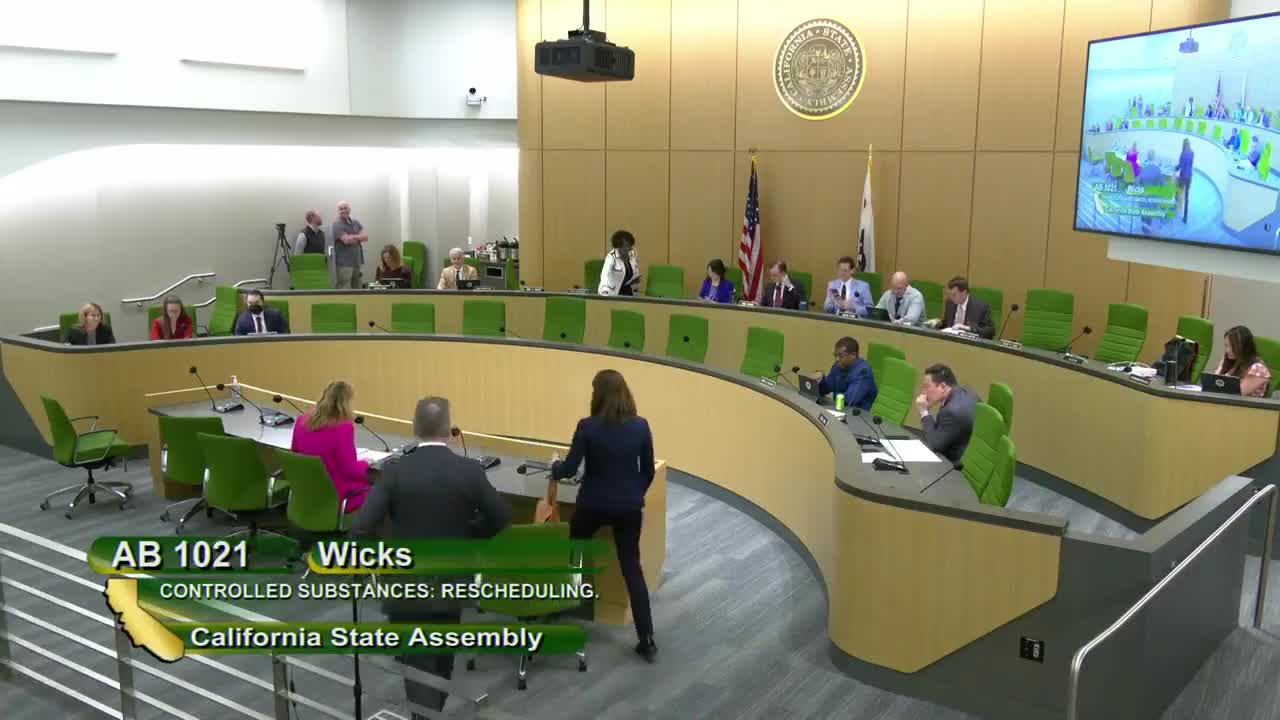 5MIN
Assembly Standing Committee on Business and Professions
Bill Author


