AB 1025: County government: contract legal counsel: elected treasurer-tax collector.
- Session Year: 2023-2024
- House: Assembly
- Latest Version Date: 2023-10-13
Current Status:
Passed
(2023-10-13: Chaptered by Secretary of State - Chapter 823, Statutes of 2023.)
Introduced
In Committee
First Chamber
In Committee
Second Chamber
Enacted
What does this bill do?
This bill lets elected county treasurers-tax collectors, like assessors, auditors and sheriffs, ask the board of supervisors to hire outside legal counsel when the county counsel or district attorney has a conflict of interest. If the board disagrees, the officer can ask a judge to decide whether a conflict exists and whether separate counsel or an "ethical wall" (keeping lawyers separate) is needed; the rule can apply to matters that arose while the officer was in office even after they leave.
The summary is provided by generative AI which can make mistakes. For original language, please view the details in the table below.
(1)Existing law requires a county board of supervisors, upon request of the county assessor, auditor-controller, or sheriff, to contract with legal counsel to assist the assessor, auditor-controller, or sheriff with duties that the district attorney or county counsel would have a conflict of interest in representing the assessor, auditor-controller, or sheriff. In the event the board of supervisors does not concur with the assessor, auditor-controller, or sheriff that a conflict of interest exists, existing law authorizes the county assessor, auditor-controller, or sheriff to initiate an ex parte proceeding before the presiding judge of the superior court, as provided.
This bill would extend these provisions to additionally require the board of supervisors to contract with legal counsel to assist the elected treasurer-tax collector, as described above. By adding to the duties of county boards of supervisors with respect to contracts for legal counsel, this bill would impose a state-mandated local program.
This bill would also update an obsolete cross-reference.
(2)The California Constitution requires the state to reimburse local agencies and school districts for certain costs mandated by the state. Statutory provisions establish procedures for making that reimbursement.
This bill would provide that, if the Commission on State Mandates determines that the bill contains costs mandated by the state, reimbursement for those costs shall be made pursuant to the statutory provisions noted above.
(1)Existing law requires a county board of supervisors, upon request of the county assessor, auditor-controller, or sheriff, to contract with legal counsel to assist the assessor, auditor-controller, or sheriff with duties that the district attorney or county counsel would have a conflict of interest in representing the assessor, auditor-controller, or sheriff. In the event the board of supervisors does not concur with the assessor, auditor-controller, or sheriff that a conflict of interest exists, existing law authorizes the county assessor, auditor-controller, or sheriff to initiate an ex parte proceeding before the presiding judge of the superior court, as provided.
This bill would extend these provisions to additionally require the board of supervisors to contract with legal counsel to assist the elected treasurer-tax collector, as described above. By adding to the duties of county boards of supervisors with respect to contracts for legal counsel, this bill would impose a state-mandated local program.
This bill would also update an obsolete cross-reference.
(2)The California Constitution requires the state to reimburse local agencies and school districts for certain costs mandated by the state. Statutory provisions establish procedures for making that reimbursement.
This bill would provide that, if the Commission on State Mandates determines that the bill contains costs mandated by the state, reimbursement for those costs shall be made pursuant to the statutory provisions noted above.
(1)Existing law requires a county board of supervisors, upon request of the county assessor or sheriff, to contract with legal counsel to assist the assessor, auditor-controller, or sheriff with duties for which the district attorney or county counsel would have a conflict of interest in representing the assessor, auditor-controller, or sheriff. In the event the board of supervisors does not concur with the assessor, auditor-controller, or sheriff that a conflict of interest exists, existing law authorizes the county assessor, auditor-controller, or sheriff to initiate an ex parte proceeding before the presiding judge of the superior court, as provided.
This bill would extend these provisions to additionally require the board of supervisors to contract with legal counsel to assist the elected treasurer-tax collector, as described above. By adding to the duties of county boards of supervisors with respect to contracts for legal counsel, this bill would impose a state-mandated local program.
This bill would also update an obsolete cross-reference.
(2)The California Constitution requires the state to reimburse local agencies and school districts for certain costs mandated by the state. Statutory provisions establish procedures for making that reimbursement.
This bill would provide that, if the Commission on State Mandates determines that the bill contains costs mandated by the state, reimbursement for those costs shall be made pursuant to the statutory provisions noted above.
(a)Upon request of the assessor, auditor-controller, sheriff, or elected treasurer-tax collector of the county, the board of supervisors shall contract with and employ legal counsel to assist the assessor, auditor-controller, sheriff, or elected treasurer-tax collector in the performance of their duties in any case where the county counsel or the district attorney would have a conflict of interest in representing the assessor, auditor-controller, sheriff, or elected treasurer-tax collector.
(b)In the event that the board of supervisors does not concur with the assessor, auditor-controller, sheriff, or elected treasurer-tax collector that a conflict of interest exists, the assessor, auditor-controller, sheriff, or elected treasurer-tax collector, after giving notice to the county counsel or the district attorney, may initiate an ex parte proceeding before the presiding judge of the superior court. The county counsel or district attorney may file an affidavit in the proceeding in opposition to, or in support of, the assessors, auditor-controllers, sheriffs, or elected treasurer-tax collectors position.
(c)The presiding superior court judge that determines in any ex parte proceeding that a conflict actually exists, must, if requested by one of the parties, also rule whether representation by the county counsel or district attorney through the creation of an ethical wall is appropriate. The factors to be considered in this determination of whether an ethical wall should be created are: (1) equal representation, (2) level of support, (3) access to resources, (4) zealous representation, or (5) any other consideration that relates to proper representation.
(d)If a court determines that the action brought by the assessor, auditor-controller, sheriff, or elected treasurer-tax collector is frivolous and in bad faith, the assessors office, auditor-controllers office, sheriffs office, or elected treasurer-tax collectors office shall pay their own legal costs and all costs incurred in the action by the opposing party. As used in this section, bad faith and frivolous have the meaning given in Section 128.5 of the Code of Civil Procedure.
(e)If the presiding judge determines that a conflict of interest does exist, and that representation by the county counsel or district attorney through the creation of an ethical wall is inappropriate, the board of supervisors shall immediately employ legal counsel selected by the presiding judge to assist the assessor, the auditor-controller, sheriff, or elected treasurer-tax collector. The assessor, the auditor-controller, sheriff, or elected treasurer-tax collector may recommend specific legal counsel for selection by the presiding judge. The board of supervisors may also separately recommend specific legal counsel for selection by the presiding judge. When selecting counsel pursuant to this section, the presiding judge shall consider the counsel compensation rates prevailing in the county for similar work.
(f)As used in this section, conflict of interest means a conflict of interest as defined in Rule 1.7 of the Rules of Professional Conduct of the State Bar of California, as construed for public attorneys.
(g)This section shall also apply to any matter brought after an assessor, auditor-controller, sheriff, or elected treasurer-tax collector leaves office if the matter giving rise to the need for independent legal counsel was within the scope of the duties of the assessor, auditor-controller, sheriff, or elected treasurer-tax collector while in office, and the assessor, auditor-controller, sheriff, or elected treasurer-tax collector would have been authorized under this section to request the appointment of independent legal counsel.
SEC. 2.If the Commission on State Mandates determines that this act contains costs mandated by the state, reimbursement to local agencies and school districts for those costs shall be made pursuant to Part 7 (commencing with Section 17500) of Division 4 of Title 2 of the Government Code.
(a)Upon request of the assessor, auditor-controller, sheriff, or elected treasurer-tax collector of the county, the board of supervisors shall contract with and employ legal counsel to assist the assessor, auditor-controller, sheriff, or elected treasurer-tax collector in the performance of their duties in any case where the county counsel or the district attorney would have a conflict of interest in representing the assessor, auditor-controller, sheriff, or elected treasurer-tax collector.
(b)In the event that the board of supervisors does not concur with the assessor, auditor-controller, sheriff, or elected treasurer-tax collector that a conflict of interest exists, the assessor, auditor-controller, sheriff, or elected treasurer-tax collector, after giving notice to the county counsel or the district attorney, may initiate an ex parte proceeding before the presiding judge of the superior court. The county counsel or district attorney may file an affidavit in the proceeding in opposition to, or in support of, the assessors, auditor-controllers, sheriffs, or elected treasurer-tax collectors position.
(c)The presiding superior court judge that determines in any ex parte proceeding that a conflict actually exists, must, if requested by one of the parties, also rule whether representation by the county counsel or district attorney through the creation of an ethical wall is appropriate. The factors to be considered in this determination of whether an ethical wall should be created are: (1) equal representation, (2) level of support, (3) access to resources, (4) zealous representation, or (5) any other consideration that relates to proper representation.
(d)If a court determines that the action brought by the assessor, auditor-controller, sheriff, or elected treasurer-tax collector is frivolous and in bad faith, the assessors office, auditor-controllers office, sheriffs office, or elected treasurer-tax collectors office shall pay their own legal costs and all costs incurred in the action by the opposing party. As used in this section, bad faith and frivolous have the meaning given in Section 128.5 of the Code of Civil Procedure.
(e)If the presiding judge determines that a conflict of interest does exist, and that representation by the county counsel or district attorney through the creation of an ethical wall is inappropriate, the board of supervisors shall immediately employ legal counsel selected by the presiding judge to assist the assessor, the auditor-controller, sheriff, or elected treasurer-tax collector. The assessor, the auditor-controller, sheriff, or elected treasurer-tax collector may recommend specific legal counsel for selection by the presiding judge. The board of supervisors may also separately recommend specific legal counsel for selection by the presiding judge. When selecting counsel pursuant to this section, the presiding judge shall consider the counsel compensation rates prevailing in the county for similar work.
(f)As used in this section, conflict of interest means a conflict of interest as defined in Rule 1.7 of the Rules of Professional Conduct of the State Bar of California, as construed for public attorneys.
(g)This section shall also apply to any matter brought after an assessor, auditor-controller, sheriff, or elected treasurer-tax collector leaves office if the matter giving rise to the need for independent legal counsel was within the scope of the duties of the assessor, auditor-controller, sheriff, or elected treasurer-tax collector while in office, and the assessor, auditor-controller, sheriff, or elected treasurer-tax collector would have been authorized under this section to request the appointment of independent legal counsel.
SEC. 2.If the Commission on State Mandates determines that this act contains costs mandated by the state, reimbursement to local agencies and school districts for those costs shall be made pursuant to Part 7 (commencing with Section 17500) of Division 4 of Title 2 of the Government Code.
(a)Upon request of the assessor, auditor-controller, or the sheriff sheriff, or elected treasurer-tax collector of the county, the board of supervisors shall contract with and employ legal counsel to assist the assessor, auditor-controller, or the sheriff sheriff, or elected treasurer-tax collector in the performance of his or her their duties in any case where the county counsel or the district attorney would have a conflict of interest in representing the assessor, auditor-controller, or the sheriff. sheriff, or elected treasurer-tax collector.
(b)In the event that the board of supervisors does not concur with the assessor, auditor-controller, or the sheriff sheriff, or elected treasurer-tax collector that a conflict of interest exists, the assessor, auditor-controller, or the sheriff, sheriff, or elected treasurer-tax collector, after giving notice to the county counsel or the district attorney, may initiate an ex parte proceeding before the presiding judge of the superior court. The county counsel or district attorney may file an affidavit in the proceeding in opposition to, or in support of, the assessors, auditor-controllers, or the sheriffs sheriffs, or elected treasurer-tax collectors position.
(c)The presiding superior court judge that determines in any ex parte proceeding that a conflict actually exists, must, if requested by one of the parties, also rule whether representation by the county counsel or district attorney through the creation of an ethical wall is appropriate. The factors to be considered in this determination of whether an ethical wall should be created are: (1) equal representation, (2) level of support, (3) access to resources, (4) zealous representation, or (5) any other consideration that relates to proper representation.
(d)If a court determines that the action brought by the assessor, auditor-controller, or sheriff sheriff, or elected treasurer-tax collector is frivolous and in bad faith, the assessors office, auditor-controllers office, or sheriffs office sheriffs office, or elected treasurer-tax collectors office shall pay their own legal costs and all costs incurred in the action by the opposing party. As used in this section, bad faith and frivolous have the meaning given in Section 128.5 of the Code of Civil Procedure.
(e)If the presiding judge determines that a conflict of interest does exist, and that representation by the county counsel or district attorney through the creation of an ethical wall is inappropriate, the board of supervisors shall immediately employ legal counsel selected by the presiding judge to assist the assessor, the auditor-controller, or the sheriff. sheriff, or elected treasurer-tax collector. The assessor, the auditor-controller, or the sheriff sheriff, or elected treasurer-tax collector may recommend specific legal counsel for selection by the presiding judge. The board of supervisors may also separately recommend specific legal counsel for selection by the presiding judge. When selecting counsel pursuant to this section, the presiding judge shall consider the counsel compensation rates prevailing in the county for similar work.
(f)As used in this section, conflict of interest means a conflict of interest as defined in Rule 3-310 1.7 of the Rules of Professional Conduct of the State Bar of California, as construed for public attorneys.
(g)This section shall also apply to any matter brought after an assessor, auditor-controller, or sheriff sheriff, or elected treasurer-tax collector leaves office if the matter giving rise to the need for independent legal counsel was within the scope of the duties of the assessor, auditor-controller, or sheriff sheriff, or elected treasurer-tax collector while in office, and the assessor, auditor-controller, or sheriff sheriff, or elected treasurer-tax collector would have been authorized under this section to request the appointment of independent legal counsel.
SEC. 2.If the Commission on State Mandates determines that this act contains costs mandated by the state, reimbursement to local agencies and school districts for those costs shall be made pursuant to Part 7 (commencing with Section 17500) of Division 4 of Title 2 of the Government Code.
|
Date
|
Status
|
|---|---|
| Oct 13, 2023 | Chaptered by Secretary of State - Chapter 823, Statutes of 2023. |
| Oct 13, 2023 | Approved by the Governor. |
| Sep 19, 2023 | Enrolled and presented to the Governor at 4 p.m. |
| Sep 12, 2023 | In Assembly. Ordered to Engrossing and Enrolling. |
| Sep 12, 2023 | Read third time. Passed. Ordered to the Assembly. (Ayes 39. Noes 0. Page 2687.). |
| Sep 8, 2023 | Ordered to special consent calendar. |
| Sep 5, 2023 | Read second time. Ordered to third reading. |
| Sep 1, 2023 | From committee: Do pass. (Ayes 7. Noes 0.) (September 1). |
| Aug 14, 2023 | In committee: Referred to APPR suspense file. |
| Jul 6, 2023 | From committee: Do pass and re-refer to Com. on APPR with recommendation: To Consent Calendar. (Ayes 11. Noes 0.) (July 6). Re-referred to Com. on APPR. |
| Jun 28, 2023 | From committee: Do pass and re-refer to Com. on JUD. with recommendation: To Consent Calendar. (Ayes 8. Noes 0.) (June 28). Re-referred to Com. on JUD. |
| Jun 14, 2023 | Referred to Coms. on GOV. & F. and JUD. |
| Jun 1, 2023 | In Senate. Read first time. To Com. on RLS. for assignment. |
| May 31, 2023 | Read third time. Passed. Ordered to the Senate. (Ayes 79. Noes 0. Page 2076.) |
| May 18, 2023 | Read second time. Ordered to third reading. |
| May 18, 2023 | From committee: Do pass. (Ayes 15. Noes 0.) (May 18). |
| Apr 19, 2023 | In committee: Set, first hearing. Referred to APPR. suspense file. |
| Mar 29, 2023 | From committee: Do pass and re-refer to Com. on APPR. (Ayes 8. Noes 0.) (March 29). Re-referred to Com. on APPR. |
| Mar 2, 2023 | Referred to Com. on L. GOV. |
| Feb 16, 2023 | From printer. May be heard in committee March 18. |
| Feb 15, 2023 | Read first time. To print. |
|
Date
|
Description
|
Location
|
Votes
|
|
|---|---|---|---|---|
| Sep 12, 2023 | Special Consent AB1025 Dixon | Senate Floor |
Passed |
|
| Sep 1, 2023 | Do pass | Senate Standing Committee on Appropriations |
Passed |
|
| Aug 14, 2023 | Placed on suspense file | Senate Standing Committee on Appropriations |
Passed |
|
| Jul 6, 2023 | Do pass, but first be re-referred to the Committee on [Appropriations] with the recommendation: To Consent Calendar | Senate Standing Committee on Judiciary |
Passed |
|
| Jun 28, 2023 | Do pass, but first be re-referred to the Committee on [Judiciary] with the recommendation: To Consent Calendar | Senate Standing Committee on Governance and Finance |
Passed |
|
| May 31, 2023 | AB 1025 Dixon Assembly Third Reading | Assembly Floor |
Passed |
|
| May 18, 2023 | Do pass. | Assembly Standing Committee on Appropriations |
Passed |
|
| Mar 29, 2023 | Do pass and be re-referred to the Committee on [Appropriations] | Assembly Standing Committee on Local Government |
Passed |
This list shows positions taken on this bill by organizations on the date displayed, which is linked to the original source.
Positions by individuals are not included.
|
Organization
|
Position
|
Date
|
|---|---|---|
| ACLU Action | * Support | Jun 18, 2024 |
| California Association of County Treasurer-Tax Collectors | ** Support | |
| California Judges Association | * Support | Jun 18, 2024 |
| California Public Defenders Association | * Support | Jun 18, 2024 |
| California State Association Of County Auditors | ** Support | |
| California State Association of Psychiatrists | * Support | Jun 18, 2024 |
| County of Lakeport | * Support | Mar 29, 2023 |
| County Of Placer | * Support | Mar 29, 2023 |
| General Public | * Support | Jun 18, 2024 |
| Initiate Justice | * Support | Jun 18, 2024 |
| Psychiatric Physicians Alliance of California | * Support | Jun 18, 2024 |
| Sierra County Auditor-Treasurer-Tax Collector Van Maddox | ** Support | |
| Smart Justice California | * Support | Jun 18, 2024 |
| State Association Of County Auditors | ** Support | |
| Steinberg Institute | * Support | Jun 18, 2024 |
| Tehama County | * Support | Mar 29, 2023 |
| Vera California | * Support | Jun 18, 2024 |
| Veterans Transition Center | * Support | Jun 18, 2024 |
SENATE RULES COMMITTEE Office of Senate Floor Analyses (916) 651-1520 Fax: (916) 327-4478 | AB 1025 |
THIRD READING
Bill No: AB 1025
Author: Dixon (R)
Introduced: 2/15/23
Vote: 21
SENATE GOVERNANCE & FIN. COMMITTEE: 8-0, 6/28/23
AYES: Caballero, Seyarto, Blakespear, Dahle, Durazo, Glazer, Skinner, Wiener
SENATE JUDICIARY COMMITTEE: 11-0, 7/6/23
AYES: Umberg, Wilk, Allen, Ashby, Caballero, Durazo, Laird, Min, Niello, Stern, Wiener
SENATE APPROPRIATIONS COMMITTEE: 7-0, 9/1/23
AYES: Portantino, Jones, Ashby, Bradford, Seyarto, Wahab, Wiener
ASSEMBLY FLOOR: 79-0, 5/31/23 - See last page for vote
SUBJECT: County government: contract legal counsel: elected treasurer-tax collector
SOURCE: California Association of County Treasurer-Tax Collectors
DIGEST:
This bill allows elected treasurer-tax collectors to require the board of supervisors to contract with outside legal counsel upon request if there is a conflict of interest on the part of the county counsel or district attorney.
ANALYSIS:
Existing law:
- Divides the state into counties and tasks the Legislature with developing uniform procedures for their formation, consolidation, and boundary changes (California Constitution, Article XI, Section One).
- Requires the Legislature to establish general laws providing for county powers, an elected county sheriff, an elected district attorney, an elected assessor, and an elected governing body in each county (California Constitution, Article XI, Section One)
- Provides that each general law county is governed by a five-member board of supervisor; however, counties that adopt their own charters may increase the number of supervisors on the board, create additional officers, and assign different powers to those officers. California Constitution, Article XI, Section Four)
- Provides that the Board of Supervisors supervises the official conduct of all county officers, particularly as their activities pertain to the management and disbursement of public funds.
- Assigns to county tax collectors the duty to collect all taxes, including real and personal property taxes, school and special district taxes, and taxes on business licenses.
- Creates additional county officers, including a county auditor, and, if appointed by the board of supervisors, a county counsel, which is the chief legal advisor to the county and is appointed by the board of supervisors for a four-year term.
- Requires the board of supervisors, at the request of the sheriff or assessor, to hire outside counsel where a conflict of interest exists, which the Legislature extended to the auditor-controller (AB 3068, Daly, Chapter 307, Statutes of 2018).
- Allows the board to ask a court to rule if a conflict actually exists; if an “ethical wall” may instead be established; and if the request by the sheriff, assessor, or auditor-controller was brought frivolously.
- Provides that if the request was frivolous, the sheriff or assessor must pay their own legal costs.
This bill:
- Adds an elected treasurer-tax collector to provisions of existing law that require the board of supervisors to contract with outside legal counsel upon request of the sheriff, assessor, or auditor-controller if there is a conflict of interest on the part of the county counsel or district attorney.
- Adds an elected treasurer-tax collector into additional existing procedures for determining whether an actual conflict of interest exists.
- Requires the presiding judge to select the counsel if a conflict exists.
- Adds an elected treasurer-tax collector to the list of county officials who can recommend specific legal counsel to the presiding judge.
Background
Conflicts of interest. Under the Rules of Professional Conduct, a county counsel must represent the interests of the entire county, and state law specifically requires county counsel to prosecute or defend any action brought by or against the auditor-controller contesting the validity of a payment if the interest of the county is not adverse. The county counsel is bound by their duty to act as the legal advisor to the board of supervisors where the county counsel has an actual conflict of interest because they cannot ethically represent both sides in a disagreement between the board and county officers that have authority to act independently of the board.
Before AB 3068, the only county officials who could compel the board of supervisors to contract with legal counsel in case the county counsel or district attorney had a conflict were the only other two the California Constitution requires to be elected – the assessor and the sheriff. These officials can act to some degree independently of the board, though situations can arise where they may need outside legal counsel because they’re independently elected. Treasurer-tax collectors asked to be included in AB 3068 to no avail. AB 1025 ensures that treasurer-tax collectors, who perform vital functions on behalf of counties and other local governments, can get independent legal representation when they need it.
FISCAL EFFECT: Appropriation: No Fiscal Com.: Yes Local: Yes
According to the Senate Appropriations Committee:
- Unknown, potentially significant reimbursable county costs to provide outside counsel to an elected treasurer-tax collector, to the extent that the Commission on State Mandates determines that this measure imposes a state-mandated local program. Actual costs in a given year would depend upon the number of instances in which independent counsel must be hired by counties, the complexity of the issues, the length of the services required, and whether or not the matters include litigation. (General Fund)
SUPPORT: (Verified 9/1/23)
California Association of County Treasurer-Tax Collectors (source)
Sierra County Auditor-Treasurer-Tax Collector Van Maddox
State Association of County Auditors
OPPOSITION: (Verified 9/1/23)
None received
ARGUMENTS IN SUPPORT: According to the author, “Treasurer-Tax Collectors do not have authorization through Government Code to request outside legal counsel when a conflict of interest exists in representation. This exclusion leaves those elected officeholders in the position of facing enormous personal financial burden if they need to hire an attorney to represent them when County Counsel cannot provide representation due to a conflict. Historically, Treasurer-tax Collectors have either had to hire outside counsel or had to represent themselves (and were not attorneys) because they did not have outside counsel. Rare conflicts do arise. Should the Legislature wait until the next conflict before acting, it could be too late for the affected individual elected official. AB 1025 will authorize outside legal representation to be approved by the Board of Supervisors to assist the Treasurer-Tax Collector in the performance of their duties in any case where the County Counsel/County Attorney or District Attorney would have a conflict of interest in representing the Treasurer-Tax Collector.”
ASSEMBLY FLOOR: 79-0, 5/31/23
AYES: Addis, Aguiar-Curry, Alanis, Alvarez, Arambula, Bains, Bauer-Kahan, Bennett, Berman, Boerner, Bonta, Bryan, Calderon, Juan Carrillo, Wendy Carrillo, Cervantes, Chen, Connolly, Megan Dahle, Davies, Dixon, Essayli, Flora, Mike Fong, Vince Fong, Friedman, Gallagher, Garcia, Gipson, Grayson, Haney, Hart, Holden, Hoover, Irwin, Jackson, Jones-Sawyer, Kalra, Lackey, Lee, Low, Lowenthal, Maienschein, Mathis, McCarty, McKinnor, Muratsuchi, Stephanie Nguyen, Ortega, Pacheco, Papan, Jim Patterson, Joe Patterson, Pellerin, Petrie-Norris, Quirk-Silva, Ramos, Reyes, Luz Rivas, Robert Rivas, Rodriguez, Blanca Rubio, Sanchez, Santiago, Schiavo, Soria, Ta, Ting, Valencia, Villapudua, Waldron, Wallis, Ward, Weber, Wicks, Wilson, Wood, Zbur, Rendon
NO VOTE RECORDED: Gabriel
Prepared by: Colin Grinnell / GOV. & F. / (916) 651-4119
9/4/23 11:33:16
**** END ****
SENATE COMMITTEE ON APPROPRIATIONS
Senator Anthony Portantino, Chair
2023 - 2024 Regular Session
AB 1025 (Dixon) - County government: contract legal counsel: elected treasurer-tax collector
Version: February 15, 2023 | Policy Vote: GOV. & F. 8 - 0, JUD. 11 - 0 |
Urgency: No | Mandate: Yes |
Hearing Date: August 14, 2023 | Consultant: Mark McKenzie |
Bill Summary:
AB 1025 would require a county board of supervisors to contract with legal counsel to assist the elected treasurer-tax collector with duties for which the district attorney or county counsel would have a conflict of interest in representing the treasurer-tax collector.
Fiscal Impact:
- Unknown, potentially significant reimbursable county costs to provide outside counsel to an elected treasurer-tax collector, to the extent that the Commission on State Mandates determines that this measure imposes a state-mandated local program. Actual costs in a given year would depend upon the number of instances in which independent counsel must be hired by counties, the complexity of the issues, the length of the services required, and whether or not the matters include litigation. (General Fund)
Background:
Both county treasurers and county tax collectors administer aspects of county finances. County treasurers typically receive and keep safely all money belonging to the county and all other money directed by law to be paid to them. If delegated to the treasurer by the board of supervisors, the treasurer may invest or reinvest the funds of the county and the funds of other depositors in the county treasury.
Existing law assigns to county tax collectors the duty to collect all taxes, including real and personal property taxes, school and special district taxes, and taxes on business licenses. As part of these duties, tax collectors administer the billing and collections process for property taxes, determining delinquency and default, and administering the sale of tax-defaulted property.
Most treasurers and tax collectors are elected officials, although some are appointed by the board of supervisors. County supervisors have the authority to combine all of the following offices: treasurer and tax collector, treasurer and recorder, treasurer and assessor, and treasurer and public administrator. According to the California Association of County Treasurers and Tax Collectors, “there are six consolidated, elected offices of Auditor-Controller-Treasurer-Tax Collector in California; there are thirteen appointed treasurer-tax collectors; there are thirty-nine elected treasurer-tax collectors in this State.”
Existing law requires a county board of supervisors, upon request of the county assessor, auditor-controller, or sheriff of the county, to contract with and employ legal counsel to assist the assessor, auditor-controller, or sheriff in the performance of their duties in any case where the district attorney or county counsel would have a conflict of interest in representing the assessor, auditor-controller, or sheriff. In the event the board of supervisors does not concur with the assessor, auditor-controller, or sheriff that a conflict of interests exists, existing law authorizes the county assessor, auditor-controller, or sheriff to initiate an ex parte proceeding before the presiding judge of the superior court, as provided. If the judge determines that a conflict exists through an ex parte proceeding, he or she may rule that representation may be provided by the district attorney or county counsel through an “ethical wall,” as provided, or order the board of supervisors to employ outside legal counsel.
Proposed Law:
AB 1025 would add an elected treasurer-tax collector to provisions of existing law that require the board of supervisors to contract with outside legal counsel upon request of the sheriff, assessor, or auditor-controller if there is a conflict of interest on the part of the county counsel or district attorney. It also adds an elected treasurer-tax collector into additional existing procedures for determining whether an actual conflict of interest exists, as well as the process for a presiding judge to select the counsel to be employed by the board of supervisors if a conflict exists, and adds an elected treasurer-tax collector to the list of county officials who can recommend specific legal counsel to the presiding judge.
Related Legislation:
AB 3068 (Daly), Chap. 307/2018, required a county board of supervisors, upon request of the auditor-controller, to contract with legal counsel to assist the auditor-controller with duties for which the district attorney or county counsel would have a conflict of interest in representing the auditor-controller.
AB 1579 (Kehoe), Chap.41/2001, required each county board of supervisors to provide the county sheriff with independent legal counsel when a conflict of interest arises with county counsel or the district attorney, as specified.
Staff Comments:
This bill is intended to address instances in which a conflict arises between a treasurer-tax collector and a board of supervisors, and the county counsel or district attorney could not fairly represent the treasurer-tax collector in a dispute because those legal officials are directly accountable to the board of supervisors. Examples of potential conflicts include circumstances around managing funds for the countywide pool, school bond issuance, or tax sales if the positions of the board of supervisors and treasurer-tax collector differ. While these circumstances may be rare, any expenses incurred by a county to contract for outside counsel if there is a conflict of interest could be deemed as state-reimbursable expenses, subject to a determination by the Commission on State Mandates. Staff notes that there have been no known cases in which a county has submitted a claim for reimbursement from the Commission based on the conflict of interest provisions in existing law that apply to sheriffs, county assessors, or auditor-controllers.
-- END --
Senator Thomas Umberg, Chair
2023-2024 Regular Session
Bill No: AB 1025 (Author:Dixon)
Version: February 15, 2023
Hearing Date: July 6, 2023
Fiscal: Yes
Urgency: No
Consultant: ME
SUBJECT
County government: contract legal counsel: elected treasurer-tax collector
DIGEST
In any case where the county counsel or the district attorney would have a conflict of interest in representing the treasurer-tax collector, this bill requires, that upon request of the county treasurer-tax collector, the county board of supervisors must contract with and employ legal counsel to assist the treasurer-tax collector in the performance of their duties. The law currently requires the county board of supervisors to contract with and employ legal counsel to assist the assessor, auditor-controller, or the sheriff when such a conflict arises.
EXECUTIVE SUMMARY
This bill would require the county board of supervisors to provide the treasurer-tax collector with legal counsel when there is a conflict of interest that precludes the district attorney or county counsel from representing them. A process currently exists in the law to provide the county assessor, auditor-controller, or the sheriff with legal counsel when a conflict exists. The court is involved in the process when the county board of supervisors does not agree to provide conflict counsel. The court determines whether it is appropriate for county counsel to erect an ethical wall or more appropriate to require the county board of supervisors to provide independent counsel.
This bill is sponsored by the California Association of County Treasurers and Tax Collectors and supported by the California State Association of County Auditors,
Sierra County Auditor-Controller/Treasurer Tax Collector Office, and the State Association of County Auditors. There is no known opposition to the bill. This bill passed out of the Senate Governance and Finance Committee on a vote of 8 to 0.
PROPOSED CHANGES TO THE LAW
Existing law:
- Provides that, except as otherwise provided, the county officers to be elected by the people are the treasurer, county clerk, auditor, sheriff, tax collector, district attorney, recorder, assessor, public administrator, and coroner. (Gov. Code § 24009.)
- Specifies that, except the board of supervisors, sheriff, district attorney, and assessor, any county office that is required to be elective may become an appointive office. In order to change an office from elective to appointive, a proposal shall be presented to the voters of the county and approved by a majority of the votes cast on the proposition. Any county office changed from elective to appointive may be changed back from appointive to elective in the same manner. (Gov. Code § 24009.)
- Provides that, by ordinance, the board of supervisors may consolidate the duties of certain of the county offices in one or more combination, including treasurer and tax collector, treasurer and recorder, treasurer and assessor, and treasurer, and public administrator. (Gov. Code § 24300.).
- Specifies that, in addition to 3) above, the board of supervisors may consolidate the office of auditor, controller, treasurer, tax collector, and director of finance. (Gov. Code § 24300.5)
- Provides that upon request of the assessor, auditor-controller, or the sheriff of the county, the board of supervisors shall contract with and employ legal counsel to assist the assessor, auditor-controller, or the sheriff in the performance of their duties in any case where the county counsel or the district attorney would have a conflict of interest in representing the assessor, auditor-controller, or the sheriff. (Gov. Code § 31000.6 (a).)
- Specifies that in the event that the board of supervisors does not concur with the assessor, auditor-controller, or the sheriff that a conflict of interest exists, the assessor, auditor-controller, or the sheriff, after giving notice to the county counsel or the district attorney, may initiate an ex parte proceeding before the presiding judge of the superior court. The county counsel or district attorney may file an affidavit in the proceeding in opposition to, or in support of, the assessor’s, auditor-controller’s, or the sheriff’s position. (Gov. Code § 31000.6 (b).)
- Provides that the presiding superior court judge that determines in any ex parte proceeding that a conflict actually exists, must, if requested by one of the parties, also rule whether representation by the county counsel or district attorney through the creation of an “ethical wall” is appropriate. (Gov. Code § 31000.6 (c).)
- Specifies that the factors the presiding judge must consider in determining whether an ethical wall should be created are: (1) equal representation, (2) level of support, (3) access to resources, (4) zealous representation, or (5) any other consideration that relates to proper representation. (Gov. Code § 31000.6 (c).)
- Provides that if a court determines that the action brought by the assessor, auditor-controller, or sheriff is frivolous and in bad faith, as defined, the assessor’s office, auditor-controller’s office, or sheriff’s office shall pay their own legal costs and all costs incurred in the action by the opposing party. (Gov. Code § 31000.6 (d).)
- Provides that if the presiding judge determines that a conflict of interest does exist, and that representation by the county counsel or district attorney through the creation of an ethical wall is inappropriate, the board of supervisors shall immediately employ legal counsel selected by the presiding judge to assist the assessor, the auditor-controller, or the sheriff. (Gov. Code § 31000.6 (e).)
- Provides that the assessor, the auditor-controller, or the sheriff may recommend specific legal counsel for selection by the presiding judge and that the board of supervisors may also separately recommend specific legal counsel for selection by the presiding judge. (Gov. Code § 31000.6 (e).)
- Requires the presiding judge to consider the counsel compensation rates prevailing in the county for similar work when selecting the counsel. (Gov. Code § 31000.6 (e).)
- Defines, “conflict of interest” as a conflict of interest as defined in Rule 3-310 of the Rules of Professional Conduct of the State Bar of California, as construed for public attorneys. (Gov. Code § 31000.6 (f).)
- Provides that these 5)-13) above also apply to any matter brought after an assessor, auditor-controller, or sheriff leaves office if the matter giving rise to the need for independent legal counsel was within the scope of the duties of the assessor, auditor-controller, or sheriff while in office, and the assessor, auditor-controller, or sheriff would have been authorized under this section to request the appointment of independent legal counsel. (Gov. Code § 31000.6 (g).)
This bill adds a county’s treasurer-tax collector to the code section, described in paragraphs 5) through 14) above, that currently enables an assessor, auditor-controller, or sheriff to obtain legal counsel if the county counsel or the district attorney would have a conflict of interest in representing the treasurer-tax collector.
COMMENTS
- Stated need for this bill
According to the author:
Treasurer-Tax Collectors do not have authorization through Government Code to request outside legal counsel when a conflict of interest exists in representation. This exclusion leaves those elected officeholders in the position of facing enormous personal financial burden if they need to hire an attorney to represent them when County Counsel cannot provide representation due to a conflict. Historically, Treasurer-tax Collectors have either had to hire outside counsel or had to represent themselves (and were not attorneys) because they did not have outside counsel. Rare conflicts do arise. Should the Legislature wait until the next conflict before acting, it could be too late for the affected individual elected official. AB 1025 will authorize outside legal representation to be approved by the Board of Supervisors to assist the Treasurer-Tax Collector in the performance of their duties in any case where the County Counsel/County Attorney or District Attorney would have a conflict of interest in representing the Treasurer-Tax Collector.
2. Role of the elected treasurer-tax collector
The California Constitution divides the state into counties and tasks the Legislature with developing uniform procedures for their formation, consolidation, and boundary changes. It also requires the Legislature to establish general laws providing for county powers, an elected county sheriff, an elected district attorney, an elected assessor, and an elected governing body in each county. State law provides that each general law county is governed by a five-member board of supervisors. Counties that adopt their own charters may increase the number of supervisors on the board, create additional officers, and assign different powers to those officers.
The board of supervisors controls the exercise of the county’s powers and the conduct of its officers. Under state law, the powers of a county can only be exercised by the board of supervisors or through officers acting under the authority of the board or authority conferred by law. The board also supervises the official conduct of all county officers, particularly as their activities pertain to the management and disbursement of public funds. The board of supervisors is additionally vested with the constitutional authority to provide for the number, compensation, tenure, and appointment of employees (Cal. Const., Article XI, Section One).
As described in the Senate Committee on Governance and Finance analysis of this bill:
California law assigns to county tax collectors the duty to collect all taxes, including real and personal property taxes, school and special district taxes, and taxes on business licenses. As part of these duties, tax collectors administer the billing and collections process for property taxes, determining delinquency and default, and administering the sale of tax-defaulted property.
Most treasurers and tax collectors are elected officials, although some are appointed by the board of supervisors. County supervisors have the authority to combine all of the following offices: treasurer and tax collector, treasurer and recorder, treasurer and assessor, and treasurer and public administrator. [… ]
State law creates additional county officers, including a county auditor, and, if appointed by the board of supervisors, a county counsel. The county counsel is the chief legal advisor to the county and is appointed by the board of supervisors for a four-year term. A county counsel may only be removed by a grand jury or the board of supervisors for cause, such as for misconduct, malfeasance, or failing to perform his or her duty.
[A] county counsel must represent the interests of the entire county, and state law specifically requires county counsel to prosecute or defend any action brought by or against the auditor-controller contesting the validity of a payment if the interest of the county is not adverse. [ . . . ] [T]he county counsel is bound by its duty to act as the legal advisor to the board of supervisors.
The Government Code provides a process for the assessor, auditor-controller, or the sheriff to follow in order to gain legal representation when a conflict arises that would preclude the county counsel or district attorney from representing them in a legal matter that arises from the performance of their duties. Under Government Codes section 31000.6, upon request of the assessor, auditor-controller, or the sheriff of the county, the board of supervisors must contract with and employ legal counsel to assist the assessor, auditor-controller, or the sheriff in the performance of their duties in any case where the county counsel or the district attorney would have a conflict of interest in representing the assessor, auditor-controller, or the sheriff. If the supervisors do not agree that a conflict of interest exists, the assessor, auditor-controller, or the sheriff, after giving notice to the county counsel or the district attorney, may initiate an ex parte proceeding before the presiding judge of the superior court. The county counsel or district attorney may file an affidavit in the proceeding in opposition to, or in support of, the assessor’s, auditor-controller’s, or the sheriff’s position. The presiding superior court judge that determines that a conflict actually exists, must, if requested by one of the parties, also rule whether representation by the county counsel or district attorney through the creation of an “ethical wall” is appropriate. If a court determines that the action brought by the assessor, auditor-controller, or sheriff is frivolous and in bad faith, the assessor’s office, auditor-controller’s office, or sheriff’s office shall pay their own legal costs and all costs incurred in the action by the opposing party. If the presiding judge determines that a conflict of interest does exist, and that representation by the county counsel or district attorney through the creation of an ethical wall is inappropriate, the board of supervisors shall immediately employ legal counsel selected by the presiding judge to assist the assessor, the auditor-controller, or the sheriff. The assessor, the auditor-controller, or the sheriff may recommend specific legal counsel for selection by the presiding judge. The board of supervisors may also separately recommend specific legal counsel for selection by the presiding judge. The presiding judge must also consider the counsel compensation rates prevailing in the county for similar work when selecting the counsel.
This Committee unanimously passed AB 3068 (Daly, 2018) to add auditor-controller to the list of county officials who could avail themselves of conflict counsel pursuant to Government Code section 31000.6. Prior to the enactment of AB 3068 only the sheriff and assessor could obtain legal counsel through Government Code section 31000.6.
The California Association of County Treasurer-Tax Collectors, sponsors of this bill, argue that treasurer-tax collectors should also be covered by Government Code section 31000.6. They write:
The need for this protection only exists in the rare circumstance that County Counsel faces a conflict of interest in representing that county-wide elected official. This is because County Counsel is accountable directly to the Board of Supervisors, not to any county department head or county-wide elected official.
[ . . . ]
In rare circumstances, such as with regard to County Pool participants which include schools and some special districts, the County Treasurer-Tax Collector must represent all pool participants, and not just the County’s own funds. If there were legal challenges associated with a pool management issue, a conflict will arise. Another example is when a Board of Supervisors differs from the Tax Collector on a tax sale matter in potential litigation; the County Counsel may not be able to represent both the Board and the Tax Collector in such situations. Ensuring the Treasurer-Tax Collectors can make prudent and fair decisions in their administration of the tax collection and treasury management duties, without fear of personal financial hardship due to the need to avail themselves of outside counsel at their own expense, legislation is needed to ensure a process is in place for the Board to concur there is a conflict and make administrative and budgeting arrangements in order to secure outside counsel for the Treasurer-Tax Collector. Of note, the protection being proposed in AB 1025 only covers the need for outside counsel in the case of a conflict when the Treasurer-Tax Collector has been acting to administer their statutory duties; in no event would this protection apply to cases where a Treasurer-Tax Collector has acted illegally or criminally in the course of the work.
It is important to note that the vast majority of the time when counsel is needed, County Treasurer-Tax Collectors concur that County Counsel is more than capable of providing this critical legal service to their office. In fact, there is no current known circumstance where a Treasurer-Tax Collector is incurring personal expense to represent themselves in a legal proceeding regarding their administration of duties. However, when a conflict of interest arises, it is a matter of fairness and equity that, when appropriate, a County Board can hire outside counsel to mitigate a conflict of interest under Rule 1.7 of the State Bar of California.
In support, the State Association of County Auditors writes:
Current law specifically states that the county counsel is the legal advisor of the board of supervisors, the county sheriff, and the county auditor, yet the county treasurer may not hire outside counsel without the consent of the board of supervisors. This creates a conflict of interest when it is the board of supervisors presenting an illegal charge or claim to the county treasurer.
AB 1025 fixes this conflict of interest by allowing a county treasurer to obtain legal counsel for matters and actions falling within the duties of his or her office. [ . . . ] These conflicts are infrequent, but it is critical to ensure the integrity of the process by providing independent counsel.
The examples highlighted by the author and sponsor arguably provide justification for adding the treasurer-tax collector to Government Code section 31000.6. Ultimately the determination of whether a conflict exists and whether to provide conflict counsel to the treasurer-tax collector and at what rate would rest with the court.
SUPPORT
California Association of County Treasurers and Tax Collectors (sponsor)
California State Association of County Auditors
Sierra County Auditor-Controller/Treasurer Tax Collector Office
State Association of County Auditors
OPPOSITION
None known
RELATED LEGISLATION
Pending Legislation: None known.
Prior Legislation:
AB 3068 (Daly, Ch. 307, Stats. 2018) required county boards of supervisors to obtain independent legal counsel to assist a county auditor-controller if a county counsel or district attorney would have a conflict of interest in representing the auditor-controller.
SB 292 (Bates, 2017) was substantially similar to AB 3068. The bill died in the Assembly Committee on Appropriations.
AB 1579 (Kehoe, Ch. 41, Stats. 2001), required each county board of supervisors to provide the county sheriff with independent legal counsel when a conflict of interest arises with county counsel or the district attorney.
PRIOR VOTES:
Senate Governance and Finance Committee (Ayes 8, Noes 0)
Assembly Floor (Ayes 79, Noes 0)
Assembly Appropriations Committee (Ayes 15, Noes 0)
Assembly Local Government Committee (Ayes 8, Noes 0)
**************
SENATE COMMITTEE ON GOVERNANCE AND FINANCE
Senator Anna M. Caballero, Chair
2023 - 2024 Regular
Bill No: | AB 1025 | Hearing Date: | 6/28/23 |
Author: | Dixon | Tax Levy: | No |
Version: | 2/15/23 | Fiscal: | Yes |
Consultant: | Grinnell | ||
County government: contract legal counsel: elected treasurer-tax collector
Allows elected treasurer-tax collectors to require the board of supervisors to contract with outside legal counsel upon request if there is a conflict of interest on the part of the county counsel or district attorney.
Background
County governance. The California Constitution divides the state into counties and tasks the Legislature with developing uniform procedures for their formation, consolidation, and boundary changes. It also requires the Legislature to establish general laws providing for county powers, an elected county sheriff, an elected district attorney, an elected assessor, and an elected governing body in each county. State law provides that each general law county is governed by a five-member board of supervisors. Counties that adopt their own charters may increase the number of supervisors on the board, create additional officers, and assign different powers to those officers.
The board of supervisors controls the exercise of the county’s powers and the conduct of its officers. Under state law, the powers of a county can only be exercised by the board of supervisors or through officers acting under the authority of the board or authority conferred by law. The board also supervises the official conduct of all county officers, particularly as their activities pertain to the management and disbursement of public funds. The board of supervisors is additionally vested with the constitutional authority to provide for the number, compensation, tenure, and appointment of employees (Article XI, Section One).
County Treasurer-Tax Collectors. Additionally, California law assigns to county tax collectors the duty to collect all taxes, including real and personal property taxes, school and special district taxes, and taxes on business licenses. As part of these duties, tax collectors administer the billing and collections process for property taxes, determining delinquency and default, and administering the sale of tax-defaulted property.
Most treasurers and tax collectors are elected officials, although some are appointed by the board of supervisors. County supervisors have the authority to combine all of the following offices: treasurer and tax collector, treasurer and recorder, treasurer and assessor, and treasurer and public administrator. According to the California Association of County Treasurers and Tax Collectors (CACTTC), “there are six consolidated, elected offices of Auditor-Controller-Treasurer-Tax Collector in California; there are thirteen appointed treasurer-tax collectors; there are thirty-nine elected treasurer-tax collectors in this State. Of note, twenty-one of those elected officeholders are women.”
County counsel. State law creates additional county officers, including a county auditor, and, if appointed by the board of supervisors, a county counsel. The county counsel is the chief legal advisor to the county and is appointed by the board of supervisors for a four-year term. A county counsel may only be removed by a grand jury or the board of supervisors for cause, such as for misconduct, malfeasance, or failing to perform his or her duty.
Under the Rules of Professional Conduct, a county counsel must represent the interests of the entire county, and state law specifically requires county counsel to prosecute or defend any action brought by or against the auditor-controller contesting the validity of a payment if the interest of the county is not adverse. Where the county counsel has an actual conflict of interest because he or she cannot ethically represent both sides in a disagreement between the board and county officers that have authority to act independently of the board—typically the constitutionally-created offices of sheriff and assessor—the county counsel is bound by its duty to act as the legal advisor to the board of supervisors.
In addition, the Government Code specifically requires the board of supervisors, at the request of the sheriff or assessor, to hire outside counsel where a conflict of interest exists. In 2018, the Legislature added the auditor-controller into this statute (AB 3068, Daly). The board may ask a court to rule on: (1) if a conflict actually exists, (2) if an “ethical wall” may instead be established, and (3) if the request by the sheriff, assessor, or auditor-controller was brought frivolously. If the request was frivolous, the sheriff or assessor must pay their own legal costs.
Concerned that potential conflicts may arise from managing funds for the countywide pool, school bond issuance, or tax sales, the California Association of County Treasurer-Tax Collectors wants to add treasurer-tax collectors onto the list of officials where the board of supervisors must appoint outside counsel in the event of a conflict of interest.
Proposed Law
Assembly Bill 1025 adds an elected treasurer-tax collector to provisions of existing law that require the board of supervisors to contract with outside legal counsel upon request of the sheriff, assessor, or auditor-controller if there is a conflict of interest on the part of the county counsel or district attorney. It also adds an elected treasurer-tax collector into additional existing procedures for determining whether an actual conflict of interest exists. AB 1025 requires the presiding judge to select the counsel to be employed by the board of supervisors if a conflict exists. The bill adds an elected treasurer-tax collector to the list of county officials who can recommend specific legal counsel to the presiding judge.
State Revenue Impact
No estimate.
Comments
1. Purpose of the bill. According to the author, “Treasurer-Tax Collectors do not have authorization through Government Code to request outside legal counsel when a conflict of interest exists in representation. This exclusion leaves those elected officeholders in the position of facing enormous personal financial burden if they need to hire an attorney to represent them when County Counsel cannot provide representation due to a conflict. Historically, Treasurer-tax Collectors have either had to hire outside counsel or had to represent themselves (and were not attorneys) because they did not have outside counsel. Rare conflicts do arise. Should the Legislature wait until the next conflict before acting, it could be too late for the affected individual elected official. AB 1025 will authorize outside legal representation to be approved by the Board of Supervisors to assist the Treasurer-Tax Collector in the performance of their duties in any case where the County Counsel/County Attorney or District Attorney would have a conflict of interest in representing the Treasurer-Tax Collector.”
2. Don’t you forget about me. Before AB 3068, the only county officials who could compel the board of supervisors to contract with legal counsel in case the county counsel or district attorney had a conflict were the only other two the California Constitution requires to be elected – the assessor and the sheriff. These officials can act to some degree independently of the board, though situations can arise where they may need outside legal counsel because they’re independently elected. Treasurer-tax collectors asked to be included in AB 3068 to no avail. AB 1025 ensures that treasurer-tax collectors, who perform vital functions on behalf of counties and other local governments, can get independent legal representation when they need it.
3. Mandate. The California Constitution requires the state to reimburse local governments for the costs of new or expanded state mandated local programs. Because AB 1025 imposes additional duties on county boards of supervisors with respect to contracts for legal counsel, Legislative Counsel says that it imposes a new state mandate. AB 1025 requires the state to reimburse local agencies if the Commission on State Mandates determines that the bill imposes a reimbursable mandate.
4. Double referral. The Senate Rules Committee has ordered a double-referral of AB 1025—first to the Senate Governance & Finance Committee, which has jurisdiction over bills relating to the powers and duties of county auditors, and then to the Senate Judiciary Committee, which has jurisdiction over bills relating to judges.
Assembly Actions
Assembly Local Government Committee: 8-0
Assembly Appropriations Committee: 15-0
Assembly Floor: 79-0
Support and Opposition
(6/23/23)
Support: California Association of County Treasurers & Tax Collectors (Sponsor)
State Association of County Auditors
Opposition: None submitted.
-- END --
ASSEMBLY THIRD READING
ATR Bill Id:AB 1025
Author:(Dixon)
As Introduced Ver:February 15, 2023
Majority vote
SUMMARY
Requires county boards of supervisors to obtain legal counsel to assist an elected treasurer-tax collector who requests such assistance, if a county counsel or district attorney would have a conflict of interest in representing the elected treasurer-tax collector.
Major Provisions
- Specifies that, upon request of the elected treasurer-tax collector of the county, the board of supervisors shall contract with and employ legal counsel to assist the elected treasurer-tax collector in the performance of their duties in any case where the county counsel or the district attorney would have a conflict of interest in representing the elected treasurer-tax collector.
- Specifies that, in the event the board of supervisors does not concur with the elected treasurer-tax collector that a conflict of interest exists, the elected treasurer-tax collector, after giving notice to the county counsel or the district attorney, may initiate an ex parte proceeding before the presiding judge of the superior court. The county counsel or districts attorney may file an affidavit in the proceeding in opposition to, or in support of, the elected treasurer-tax collector's position.
- Requires a presiding superior court judge that determines in an ex parte proceeding that a conflict actually exists between the board of supervisors and the elected treasurer-tax collector to also rule on whether representation by the county counsel or district attorney through the creation of an "ethical wall" is appropriate, if requested by one of the parties. The factors to be considered in this determination of whether an "ethical wall" should be created are: equal representation; level of support; access to resources; zealous representation; or, any other consideration that relates to proper representation.
- Provides that, if a court determines that the action brought by the elected treasurer-tax collector is frivolous and in bad faith, the elected treasurer-tax collector's office shall pay their own legal costs and all costs incurred in the action by the opposing party.
- Specifies that, if the presiding judge determines that a conflict of interest does exist, and that representation by the county counsel or district attorney through the creation of an ethical wall is inappropriate, the board of supervisors shall immediately employ legal counsel selected by the presiding judge to assist the elected treasurer-tax collector. The elected treasurer-tax collector may, in addition to the board of supervisors, separately recommend specific legal counsel for selection by the presiding judge.
- Provides that this bill shall also apply to any matter brought after an elected treasurer-tax collector leaves office if the matter giving rise to the need for independent legal counsel was within the scope of the duties of the elected treasurer-tax collector while in office, and the elected treasurer-tax collector would have been authorized to request the appointment of independent legal counsel.
- Defined "conflict of interest" to mean a conflict of interest as defined in Rule 1.7 of the Rules of Professional Conduct of the State Bar of California, as construed for public attorneys.
COMMENTS
- County Governance. Existing law provides for county powers and governance, including an elected county board of supervisors, an elected county sheriff, an elected district attorney, and an elected assessor. The powers of a county can only be exercised by the board of supervisors or through officers acting under the authority of the board or authority conferred by law. The board supervises the official conduct of all county officers, particularly as their activities pertain to the management and disbursement of public funds. The board of supervisors is also vested with the constitutional authority to provide for the number, compensation, tenure, and appointment of employees.
- County Counsel. State law creates additional county officers, including a treasurer and tax collector, and, if appointed by the board of supervisors, a county counsel. The county counsel is appointed by the board of supervisors and may only be removed by a grand jury or the board of supervisors for cause, such as for misconduct, malfeasance, or failing to perform their duty.
Existing law defines "conflict of interest" as a conflict of interest specified in the Rules of Professional Conduct of the State Bar of California, as construed for public attorneys. Specifically, Rule 1.7 says the following:
- A lawyer shall not, without informed written consent from each client, represent a client if the representation is directly adverse to another client in the same or a separate matter, unless otherwise specified.
- A lawyer shall not, without informed written consent from each affected client, represent a client if there is a significant risk the lawyer's representation of the client will be materially limited by the lawyer's responsibilities to or relationships with another client, a former client or a third person, or by the lawyer's own interests, unless otherwise specified.
- County Treasurer/Tax Collector. County treasurers typically receive and keep safely all money belonging to the county and all other money directed by law to be paid to them and pay it out, rendering the account as required. If delegated to the treasurer by the board of supervisors, the treasurer may invest or reinvest the funds of the county and the funds of other depositors in the county treasury. The treasurer must then assume full responsibility for those transactions until the board of supervisors either revokes its delegation of authority or decides not to renew the annual delegation. State law often dictates which types of investments can be made and requires the treasurer to meet certain educational, professional and training criteria.
California law assigns to county tax collectors the duty to collect all taxes, including real and personal property taxes, school and special district taxes, and taxes on business licenses. As part of these duties, tax collectors administer the billing and collections process for property taxes, determining delinquency and default, and administering the sale of tax-defaulted property, among other obligations.
Most treasurers and tax collectors are elected officials, although some are appointed by the board of supervisors. County supervisors have the authority to combine all of the following offices: treasurer and tax collector, treasurer and recorder, treasurer and assessor, and treasurer, and public administrator. According to the California Association of County Treasurers and Tax Collectors (CACTTC), "there are six consolidated, elected offices of Auditor-Controller-Treasurer-Tax Collector in California; there are thirteen appointed treasurer-tax collectors; there are thirty-nine elected treasurer-tax collectors in this State. Of note, twenty-one of those elected officeholders are women."
According to the Author
According to the author, "Treasurer-Tax Collectors do not have authorization through Government Code to request outside legal counsel when a conflict of interest exists in representation. This exclusion leaves those elected officeholders in the position of facing enormous personal financial burden if they need to hire an attorney to represent them when County Counsel cannot provide representation due to a conflict. Historically, Treasurer-tax Collectors have either had to hire outside counsel or had to represent themselves (and were not attorneys) because they did not have outside counsel. Rare conflicts do arise. Should the Legislature wait until the next conflict before acting, it could be too late for the affected individual elected official. AB 1025 will authorize outside legal representation to be approved by the Board of Supervisors to assist the Treasurer-Tax Collector in the performance of their duties in any case where the County Counsel/County Attorney or District Attorney would have a conflict of interest in representing the Treasurer-Tax Collector."
Arguments in Support
The California Associations of County Treasurers and Tax Collectors proclaim that, "In rare circumstances, such as with regard to County Pool participants which include schools and some special districts, the County Treasurer-Tax Collector must represent all pool participants, and not just the County's own funds. If there were legal challenges associated with a pool management issue, a conflict will arise. Another example is when a Board of Supervisors differs from the Tax Collector on a tax sale matter in potential litigation; the County Counsel may not be able to represent both the Board and the Tax Collector in such situations. Ensuring the Treasurer-Tax Collectors can make prudent and fair decisions in their administration of the tax collection and treasury management duties, without fear of personal financial hardship due to the need to avail themselves of outside counsel at their own expense, legislation is needed to ensure a process is in place for the Board to concur there is a conflict and make administrative and budgeting arrangements in order to secure outside counsel for the Treasurer-Tax Collector. Of note, the protection being proposed in AB 1025 only covers the need for outside counsel in the case of a conflict when the Treasurer-Tax Collector has been acting to administer their statutory duties; in no event would this protection apply to cases where a Treasurer-Tax Collector has acted illegally or criminally in the course of the work.
"It is important to note that the vast majority of the time when counsel is needed, County Treasurer-Tax Collectors concur that County Counsel is more than capable of providing this critical legal service to their office. In fact, there is no current known circumstance where a Treasurer-Tax Collector is incurring personal expense to represent themselves in a legal proceeding regarding their administration of duties. However, when a conflict of interest arises, it is a matter of fairness and equity that, when appropriate, a County Board can hire outside counsel to mitigate a conflict of interest under Rule 1.7 of the State Bar of California.
Arguments in Opposition
None on file.
FISCAL COMMENTS
According to the Assembly Appropriations Committee, unknown, potentially significant costs to counties to provide outside counsel to elected treasurer-tax collectors. These costs are potentially reimbursable, subject to a determination by the Commission on State Mandates. The extent to which the bill's requirement would be triggered is unknown, but if there were two to three cases statewide annually, the costs could surpass $150,000, depending on the complexity of the issues, the length of the services required, and whether the matters include litigation.
VOTES
ASM LOCAL GOVERNMENT: 8-0-0
YES: Aguiar-Curry, Dixon, Boerner Horvath, Pacheco, Ramos, Robert Rivas, Waldron, Wilson
ASM APPROPRIATIONS: 15-0-1
YES: Holden, Megan Dahle, Bryan, Calderon, Wendy Carrillo, Dixon, Mike Fong, Hart, Lowenthal, Mathis, Papan, Pellerin, Sanchez, Weber, Ortega
ABS, ABST OR NV: Robert Rivas
UPDATED
VERSION: February 15, 2023
CONSULTANT: Jimmy MacDonald / L. GOV. / (916) 319-3958 FN: 0000437
Date of Hearing: April 19, 2023
ASSEMBLY COMMITTEE ON APPROPRIATIONS
Chris Holden, Chair
ABPCA Bill Id:AB 1025
Author:(Dixon) – As Introduced Ver:February 15, 2023
Policy Committee: | Local Government | Vote: | 8 - 0 |
|
| ||
|
|
Urgency: No State Mandated Local Program: Yes Reimbursable: Yes
SUMMARY:
This bill requires a county board of supervisors to obtain independent legal counsel to assist an elected county treasurer-tax collector who requests such assistance, if a county counsel or district attorney would have a conflict of interest in representing the treasurer-tax collector.
FISCAL EFFECT:
Unknown, potentially significant costs to counties to provide outside counsel to elected treasurer-tax collectors. These costs are potentially reimbursable, subject to a determination by the Commission on State Mandates. The extent to which the bill’s requirement would be triggered is unknown, but if there were two to three cases statewide annually, the costs could surpass $150,000, depending on the complexity of the issues, the length of the services required, and whether the matters include litigation.
COMMENTS:
- Purpose. According to the California Association of County Treasurers and Tax Collectors, sponsors of the bill:
Ensuring the Treasurer-Tax Collectors can make prudent and fair decisions in their administration of the tax collection and treasury management duties, without fear of personal financial hardship due to the need to avail themselves of outside counsel at their own expense, legislation is needed to ensure a process is in place for the Board to concur there is a conflict and make administrative and budgeting arrangements in order to secure outside counsel for the Treasurer-Tax Collector.
- Background. Both county treasurers and county tax collectors administer aspects of county finances. County treasurers typically receive and keep safely all money belonging to the county and all other money directed by law to be paid to them. If delegated to the treasurer by the board of supervisors, the treasurer may invest or reinvest the funds of the county and the funds of other depositors in the county treasury. County tax collectors collect all taxes, including real and personal property taxes, school and special district taxes, and taxes on business licenses. Additionally, county tax collectors administer the billing and collections process for property taxes, determining delinquency and default, and administering the sale of tax-defaulted property, among other obligations.
Most treasurers and tax collectors are elected officials, although some are appointed by the board of supervisors. State law permits counties to consolidate the following into one office: treasurer and tax collector, treasurer and recorder, treasurer and assessor, and treasurer and public administrator. According to CACTTC, “there are six consolidated, elected offices of auditor-controller-treasurer-tax collector in California; thirteen appointed treasurer-tax collectors; thirty-nine elected treasurer-tax collectors in this State. Of note, twenty-one of those elected officeholders are women.”
Existing law requires a county board of supervisors, upon request of the county assessor, auditor-controller, or sheriff, to contract with legal counsel to assist the assessor or sheriff with duties for which the district attorney or county counsel would have a conflict of interest in representing the assessor, auditor-controller or sheriff. In the event the board of supervisors does not concur that a conflict of interest exists, existing law authorizes the county assessor, auditor-controller, or sheriff to initiate an ex parte proceeding before the presiding judge of the superior court. If the judge determines a conflict exists the judge may order the board of supervisors to employ outside legal counsel.
This bill extends this protection to an elected county treasurer-tax collector.
- Prior Legislation. AB 3068 (Daly), Chapter 307, Statutes of 2018, required a county board of supervisors to obtain independent legal counsel to assist a county auditor-controller if a county counsel or district attorney would have a conflict of interest in representing the auditor-controller.
Analysis Prepared by: Jennifer Swenson / APPR. / (916) 319-2081
Date of Hearing: March 29, 2023
ASSEMBLY COMMITTEE ON LOCAL GOVERNMENT
Cecilia Aguiar-Curry, Chair
ABPCA Bill Id:AB 1025 (
Author:Dixon) – As Introduced Ver:February 15, 2023
SUBJECT: County government: contract legal counsel: elected treasurer-tax collector.
SUMMARY: Requires county boards of supervisors to obtain legal counsel to assist an elected treasurer-tax collector who requests such assistance, if a county counsel or district attorney would have a conflict of interest in representing the elected treasurer-tax collector. Specifically, this bill:
- Specifies that, upon request of the elected treasurer-tax collector of the county, the board of supervisors shall contract with and employ legal counsel to assist the elected treasurer-tax collector in the performance of their duties in any case where the county counsel or the district attorney would have a conflict of interest in representing the elected treasurer-tax collector.
- Specifies that, in the event the board of supervisors does not concur with the elected treasurer-tax collector that a conflict of interest exists, the elected treasurer-tax collector, after giving notice to the county counsel or the district attorney, may initiate an ex parte proceeding before the presiding judge of the superior court. The county counsel or districts attorney may file an affidavit in the proceeding in opposition to, or in support of, the elected treasurer-tax collector’s position.
- Requires a presiding superior court judge that determines in an ex parte proceeding that a conflict actually exists between the board of supervisors and the elected treasurer-tax collector to also rule on whether representation by the county counsel or district attorney through the creation of an "ethical wall" is appropriate, if requested by one of the parties. The factors to be considered in this determination of whether an "ethical wall" should be created are: equal representation; level of support; access to resources; zealous representation; or, any other consideration that relates to proper representation.
- Provides that, if a court determines that the action brought by the elected treasurer-tax collector is frivolous and in bad faith, the elected treasurer-tax collector’s office shall pay their own legal costs and all costs incurred in the action by the opposing party.
- Specifies that, if the presiding judge determines that a conflict of interest does exist, and that representation by the county counsel or district attorney through the creation of an ethical wall is inappropriate, the board of supervisors shall immediately employ legal counsel selected by the presiding judge to assist the elected treasurer-tax collector. The elected treasurer-tax collector may, in addition to the board of supervisors, separately recommend specific legal counsel for selection by the presiding judge.
- Provides that this bill shall also apply to any matter brought after an elected treasurer-tax collector leaves office if the matter giving rise to the need for independent legal counsel was within the scope of the duties of the elected treasurer-tax collector while in office, and the elected treasurer-tax collector would have been authorized to request the appointment of independent legal counsel.
- Defined “conflict of interest” to mean a conflict of interest as defined in Rule 1.7 of the Rules of Professional Conduct of the State Bar of California, as construed for public attorneys.
- Specifies that if the Commission on State Mandates determines that this act contains costs mandated by the state, reimbursement to local agencies and school districts for those costs shall be made.
- Makes other technical and conforming changes.
EXISTING LAW:
- Requires a county board of supervisors, at the request of the county assessor, auditor-controller, or sheriff, to obtain legal counsel if the county counsel or the district attorney would have a conflict of interest in representing the county assessor, auditor-controller, or sheriff, among other related provisions. [Government Code (GC) § 31000.6]
- Provides that, except as otherwise provided, the county officers to be elected by the people are the treasurer, county clerk, auditor, sheriff, tax collector, district attorney, recorder, assessor, public administrator, and coroner. (GC § 24009)
- Specifies that, except the board of supervisors, sheriff, district attorney, and assessor, any county office that is required to be elective may become an appointive office. In order to change an office from elective to appointive, a proposal shall be presented to the voters of the county and approved by a majority of the votes cast on the proposition. Any county office changed from elective to appointive may be changed back from appointive to elective in the same manner. (GC § 24009)
- Provides that, by ordinance, the board of supervisors may consolidate the duties of certain of the county offices in one or more combination, including treasurer and tax collector, treasurer and recorder, treasurer and assessor, and treasurer, and public administrator. (GC § 24300).
- Specifies that, in addition to 4) above, the board of supervisors may consolidate the office of auditor, controller, treasurer, tax collector, and director of finance. (GC § 24300.5)
FISCAL EFFECT: This bill is keyed fiscal and contains a state mandated local program.
COMMENTS:
- County Governance. Existing law provides for county powers and governance, including an elected county board of supervisors, an elected county sheriff, an elected district attorney, and an elected assessor. The powers of a county can only be exercised by the board of supervisors or through officers acting under the authority of the board or authority conferred by law. The board supervises the official conduct of all county officers, particularly as their activities pertain to the management and disbursement of public funds. The board of supervisors is also vested with the constitutional authority to provide for the number, compensation, tenure, and appointment of employees.
- County Counsel. State law creates additional county officers, including a treasurer and tax collector, and, if appointed by the board of supervisors, a county counsel. The county counsel is appointed by the board of supervisors and may only be removed by a grand jury or the board of supervisors for cause, such as for misconduct, malfeasance, or failing to perform their duty.
Existing law defines “conflict of interest” as a conflict of interest specified in the Rules of Professional Conduct of the State Bar of California, as construed for public attorneys. Specifically, Rule 1.7 says the following:
- A lawyer shall not, without informed written consent from each client, represent a client if the representation is directly adverse to another client in the same or a separate matter, unless otherwise specified.
- A lawyer shall not, without informed written consent from each affected client, represent a client if there is a significant risk the lawyer’s representation of the client will be materially limited by the lawyer’s responsibilities to or relationships with another client, a former client or a third person, or by the lawyer’s own interests, unless otherwise specified.
- A lawyer shall not, without informed written consent from each client, represent a client if the representation is directly adverse to another client in the same or a separate matter, unless otherwise specified.
- County Treasurer/Tax Collector. County treasurers typically receive and keep safely all money belonging to the county and all other money directed by law to be paid to them and pay it out, rendering the account as required. If delegated to the treasurer by the board of supervisors, the treasurer may invest or reinvest the funds of the county and the funds of other depositors in the county treasury. The treasurer must then assume full responsibility for those transactions until the board of supervisors either revokes its delegation of authority or decides not to renew the annual delegation. State law often dictates which types of investments can be made and requires the treasurer to meet certain educational, professional and training criteria.
California law assigns to county tax collectors the duty to collect all taxes, including real and personal property taxes, school and special district taxes, and taxes on business licenses. As part of these duties, tax collectors administer the billing and collections process for property taxes, determining delinquency and default, and administering the sale of tax-defaulted property, among other obligations.
Most treasurers and tax collectors are elected officials, although some are appointed by the board of supervisors. County supervisors have the authority to combine all of the following offices: treasurer and tax collector, treasurer and recorder, treasurer and assessor, and treasurer, and public administrator. According to the California Association of County Treasurers and Tax Collectors (CACTTC), “there are six consolidated, elected offices of Auditor-Controller-Treasurer-Tax Collector in California; there are thirteen appointed treasurer-tax collectors; there are thirty-nine elected treasurer-tax collectors in this State. Of note, twenty-one of those elected officeholders are women.”
- Bill Summary and Author’s Statement. This bill requires county boards of supervisors to obtain independent legal counsel to assist an elected county treasurer-tax collector if a county counsel or district attorney would have a conflict of interest in representing the elected treasurer-tax collector. This bill also conforms related provisions. CACTTC is the sponsor of this bill.
According to the author, “Treasurer-Tax Collectors do not have authorization through Government Code to request outside legal counsel when a conflict of interest exists in representation. This exclusion leaves those elected officeholders in the position of facing enormous personal financial burden if they need to hire an attorney to represent them when County Counsel cannot provide representation due to a conflict. Historically, Treasurer-tax Collectors have either had to hire outside counsel or had to represent themselves (and were not attorneys) because they did not have outside counsel. Rare conflicts do arise. Should the Legislature wait until the next conflict before acting, it could be too late for the affected individual elected official. AB 1025 will authorize outside legal representation to be approved by the Board of Supervisors to assist the Treasurer-Tax Collector in the performance of their duties in any case where the County Counsel/County Attorney or District Attorney would have a conflict of interest in representing the Treasurer-Tax Collector.”
Previous Legislation. AB 1579 (Kehoe), Chapter 41, Statutes of 2001, required each county board of supervisors to provide the county sheriff with independent legal counsel when a conflict of interest arises with county counsel or the district attorney.
SB 292 (Bates) of 2017 would have required county boards of supervisors to obtain independent legal counsel to assist a county auditor-controller who requests such assistance, if a county counsel or district attorney would have a conflict of interest in representing the auditor-controller. SB 292 was held in the Assembly Appropriations Committee.
AB 3068 (Daly), Chapter 307, Statutes of 2018, required county boards of supervisors to obtain independent legal counsel to assist a county auditor-controller if a county counsel or district attorney would have a conflict of interest in representing the auditor-controller.
- Arguments in Support. The California Associations of County Treasurers and Tax Collectors proclaim that, “In rare circumstances, such as with regard to County Pool participants which include schools and some special districts, the County Treasurer-Tax Collector must represent all pool participants, and not just the County’s own funds. If there were legal challenges associated with a pool management issue, a conflict will arise. Another example is when a Board of Supervisors differs from the Tax Collector on a tax sale matter in potential litigation; the County Counsel may not be able to represent both the Board and the Tax Collector in such situations. Ensuring the Treasurer-Tax Collectors can make prudent and fair decisions in their administration of the tax collection and treasury management duties, without fear of personal financial hardship due to the need to avail themselves of outside counsel at their own expense, legislation is needed to ensure a process is in place for the Board to concur there is a conflict and make administrative and budgeting arrangements in order to secure outside counsel for the Treasurer-Tax Collector. Of note, the protection being proposed in AB 1025 only covers the need for outside counsel in the case of a conflict when the Treasurer-Tax Collector has been acting to administer their statutory duties; in no event would this protection apply to cases where a Treasurer-Tax Collector has acted illegally or criminally in the course of the work.
“It is important to note that the vast majority of the time when counsel is needed, County Treasurer-Tax Collectors concur that County Counsel is more than capable of providing this critical legal service to their office. In fact, there is no current known circumstance where a Treasurer-Tax Collector is incurring personal expense to represent themselves in a legal proceeding regarding their administration of duties. However, when a conflict of interest arises, it is a matter of fairness and equity that, when appropriate, a County Board can hire outside counsel to mitigate a conflict of interest under Rule 1.7 of the State Bar of California.
- Arguments in Opposition. None on file.
REGISTERED SUPPORT / OPPOSITION:
Support
California Association of County Treasurers and Tax Collectors [SPONSOR]
California State Association of County Auditors
Sierra County Auditor-Controller/Treasurer Tax Collector, Van Maddox
Opposition
None on file
Analysis Prepared by: Jimmy MacDonald / L. GOV. / (916) 319-3958
Discussed in Hearing
 8MIN
Assembly Standing Committee on Public Safety
 37SEC
Senate Standing Committee on Appropriations
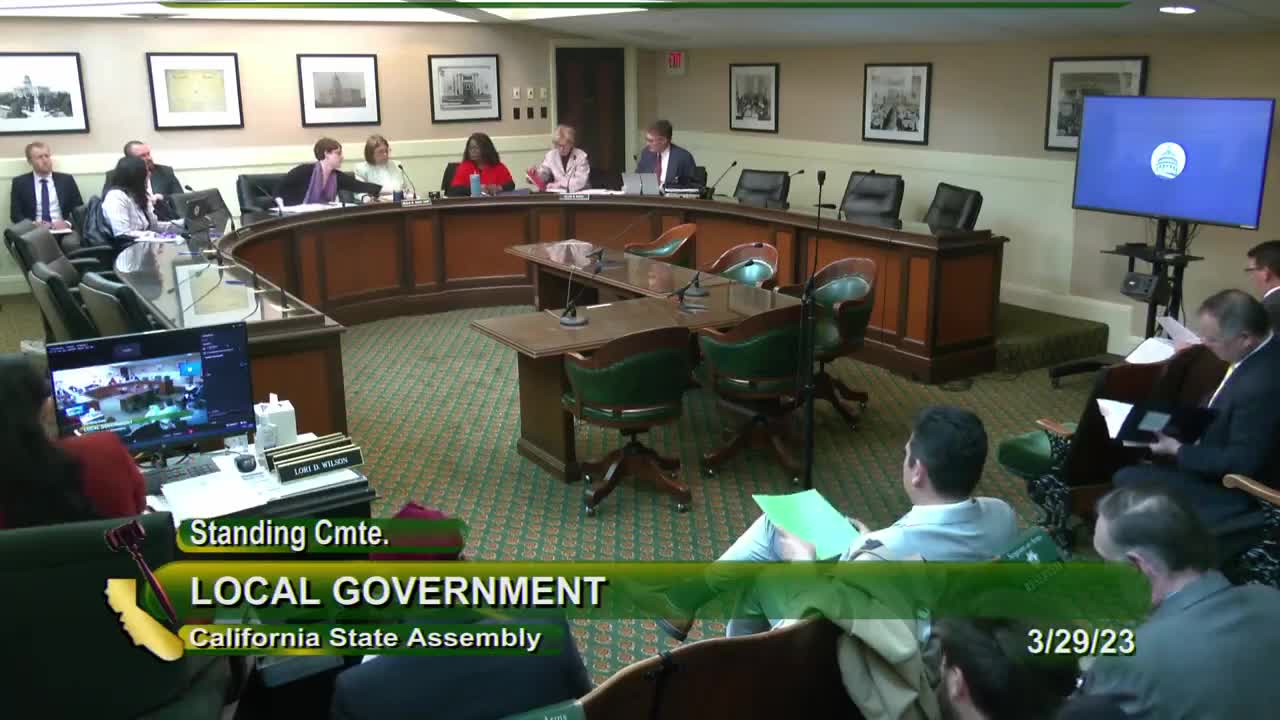 8MIN
Assembly Standing Committee on Local Government
Bill Author

Bill Co-Author(s):