AB 1052: Sacramento Regional Transit District: taxes.
- Session Year: 2023-2024
- House: Assembly
- Latest Version Date: 2023-10-10
Current Status:
Passed
(2023-10-10: Chaptered by Secretary of State - Chapter 674, Statutes of 2023.)
Introduced
In Committee
First Chamber
In Committee
Second Chamber
Enacted
What does this bill do?
This bill lets the Sacramento Regional Transit District impose property taxes, voter‑approved special taxes, and local sales taxes in the whole district or only in specified parts, affecting residents, property owners, and buyers in those areas. If only part is taxed, each city (and any touching cities) must be either fully included or excluded and the district’s unincorporated area (county parts outside cities) must be wholly in or out, and only voters in the taxed area vote on the measure. Tax money must be spent for transportation in the taxed area; special taxes must be applied uniformly (unimproved land may be taxed at a lower rate), and sales taxes are set in 1/8% increments.
The summary is provided by generative AI which can make mistakes. For original language, please view the details in the table below.
Existing law, the Sacramento Regional Transit District Act, creates the Sacramento Regional Transit District, with specified powers and duties relative to providing transit services in the Sacramento region. Existing law authorizes the district to levy or collect a property tax within any city or the unincorporated area, or any part thereof, in the district, upon the approval by a 2/3 vote of the electorate, as provided. Existing law authorizes the board of directors of the district to adopt a retail transactions and use tax ordinance, subject to the approval of 2/3 of the electors at a special election.
This bill would revise and recast those provisions related to the imposition of property taxes and retail transactions and use taxes by the district, by, among other things, explicitly authorizing the district to impose a property tax or retail transactions and use tax in the entirety of, or a portion of, the incorporated and unincorporated territory. If the tax only applies to a portion of an area of the district, the bill would require the incorporated area of each city and of contiguous cities within the district to be either wholly included within or wholly excluded from that portion that is taxed and would require the entire unincorporated area of the district to be either wholly included within or wholly excluded from that portion that is taxed.
Existing law specifies a procedure for the legislative body of a city, county, or district to propose to the voters an ordinance or resolution to adopt a special tax and, upon the approval of 2/3 of the votes cast by voters voting upon the proposition, the city, county, or district may impose the tax.
This bill would authorize the district to impose a special tax pursuant to those procedures. The bill would authorize the district to impose the special tax in the entirety of, or a portion of, the incorporated and unincorporated territory. The bill would require the incorporated area of each city and of contiguous cities within the district to be either wholly included within or wholly excluded from that portion that is taxed and would require the entire unincorporated area of the district to be either wholly included within or wholly excluded from that portion that is taxed.
This bill would require the district, in exercising the property tax, special tax, and retail transactions and use tax authority described above, to use the tax proceeds for public transportation purposes, as provided, in those areas taxed. The bill would explicitly state that the elections to impose the property tax, special tax, and retail transactions and use tax shall only include the voters of those areas of the district in which the taxes will be imposed.
(a)In addition to revenues and receipts from other sources, the board may levy and collect a property tax in the entirety of, or a portion of, the incorporated and unincorporated territory. The board may impose different rates of taxation in areas within the district. Authority exercised pursuant to this subdivision shall be subject to any applicable constitutional requirements.
(b)If the tax only applies to a portion of an area of the district, both of the following shall apply to the imposition of the tax:
(1)The incorporated area of each city and of contiguous cities within the district shall be either wholly included within that portion or wholly excluded from that portion. For purposes of this paragraph, contiguous cities means two or more cities with shared borders.
(2)The entire unincorporated area of the district shall either be wholly included within that portion or wholly excluded from that portion.
(c)The proceeds of the property tax shall be used to provide, within the areas taxed, for the improvement or acquisition of any real property needed for transportation purposes.
(d)An election to impose a property tax as described in this section shall only include the voters of those portions of the area of the district in which the property tax will be imposed.
SEC. 2.Section 102332 of the Public Utilities Code is amended to read:102332.The district shall not levy or collect a property tax within any city or within the unincorporated area of the district until:
(a)The legislative body of the city or county adopts a resolution declaring there is need for the district to operate and levy a tax within the city or the unincorporated area of the district.
(b)Two-thirds of the voters of the city or the unincorporated area, following the adoption of the resolution under subdivision (a), voting on the question at an election called for that purpose, approves the operation of the district, and the levy of a property tax by the district, within the city or within the unincorporated area of the district.
SEC. 3.Section 102333 of the Public Utilities Code is amended to read:102333.The district may conduct a single election in an area comprising the area of a city and the unincorporated area of the district, or any combination of those areas, with the approval of the cities and the unincorporated area of the district concerned, in which event two-thirds of the voters voting at the election shall be sufficient to approve the proposition submitted for the entire area included in the election. Where more than one election will be held, the approval of the voters in one election pertaining to an area may be conditioned upon the approval of voters in one or more other elections pertaining to other areas.
SEC. 4.Section 102336 is added to the Public Utilities Code, to read:102336.(a)The district board may impose a special tax pursuant to Article 3.5 (commencing with Section 50075) of Chapter 1 of Part 1 of Division 1 of Title 5 of the Government Code, subject to any applicable constitutional requirements. The special taxes shall be applied uniformly to all taxpayers or all real property within the district, or any portion of the district, except that unimproved property may be taxed at a lower rate than improved property.
(b)If the tax only applies to a portion of an area of the district, both of the following shall apply to the imposition of the tax:
(1)The incorporated area of each city and of contiguous cities within the district shall be either wholly included within that portion or wholly excluded from that portion. For purposes of this paragraph, contiguous cities means two or more cities with shared borders.
(2)The entire unincorporated area of the district shall either be wholly included within that portion or wholly excluded from that portion.
(c)The proceeds of the special tax shall be used to provide, within the area taxed, for the operation, maintenance, or acquisition of any public improvement or utility for transportation purposes.
(d)An election to impose a special tax as described in this section shall only include the voters of those portions of the area of the district in which the special tax will be imposed.
SEC. 5.Section 102350 of the Public Utilities Code is amended to read:102350.(a)A retail transactions and use tax ordinance may be adopted by the board in accordance with the provisions of Part 1.6 (commencing with Section 7251) of Division 2 of the Revenue and Taxation Code, provided two-thirds of the electors voting on the measure vote to authorize its enactment at a special election called for that purpose by the board, subject to any applicable constitutional requirements.
(b)The board, in the ordinance, shall state the nature of the tax to be imposed, the tax rate or the maximum tax rate, the purposes for which the revenue derived from the tax will be used, the portion of the area of the board to which the tax would apply, and may set a term during which the tax will be imposed. The purposes for which the tax revenues may be used shall be limited to public transit purposes serving the area of jurisdiction of the district, as determined by the board, including the administration of this part and legal actions related thereto. These purposes include expenditures for planning, environmental reviews, engineering and design costs, and related right-of-way acquisition.
(c)As used in this section, public transit purposes includes the public transit responsibilities under the jurisdiction of the district as well as any repair, redesign, or ongoing maintenance of a right-of-way upon which transit is intended to travel, or any bikeway, bicycle path, sidewalk, trail, pedestrian access, or pedestrian accessway.
SEC. 6.Section 102351 of the Public Utilities Code is amended to read:102351.(a)The retail transactions and use tax ordinance shall provide for a rate of one-eighth of 1 percent or a multiple thereof. The ordinance shall provide for the tax to be imposed on the entirety of, or a portion of, the incorporated and unincorporated territory within the boundaries of the district, as defined in Section 102052.5. The ordinance shall be subject to voter approval by the electors in those portions of the district to which the tax applies and shall be consistent with Section 102350.
(b)The portion of the area of the board to which the tax would apply shall be determined by the board before the electors vote on the measure.
(c)If the tax only applies to a portion of an area of the district, all of the following shall apply to the imposition of the tax:
(1)The incorporated area of each city and of contiguous cities within the district shall be either wholly included within that portion or wholly excluded from that portion. For purposes of this paragraph, contiguous cities means two or more cities with shared borders.
(2)The entire unincorporated area of the district shall either be wholly included within that portion or wholly excluded from that portion.
(3)The revenues derived from the tax shall be spent within, or for the benefit of, the portion of the area of the district to which the tax applies, and shall be spent only on allowable transportation and transit infrastructure and services.
(d)Any revenues derived from the tax shall supplement, and not supplant, other transportation revenues available to the portion of the area of the board to which the tax applies.
(a)In addition to revenues and receipts from other sources, the board may levy and collect a property tax in the entirety of, or a portion of, the incorporated and unincorporated territory. The board may impose different rates of taxation in areas within the district. Authority exercised pursuant to this subdivision shall be subject to any applicable constitutional requirements.
(b)If the tax only applies to a portion of an area of the district, both of the following shall apply to the imposition of the tax:
(1)The incorporated area of each city and of contiguous cities within the district shall be either wholly included within that portion or wholly excluded from that portion. For purposes of this paragraph, contiguous cities means two or more cities with shared borders.
(2)The entire unincorporated area of the district shall either be wholly included within that portion or wholly excluded from that portion.
(c)The proceeds of the property tax shall be used to provide, within the areas taxed, for the operation, maintenance, or acquisition of any public improvement or utility acquisition of any real property needed for transportation purposes.
(d)An election to impose a property tax as described in this section shall only include the voters of those portions of the area of the district in which the property tax will be imposed.
SEC. 2.Section 102332 of the Public Utilities Code is amended to read:102332.The district shall not levy or collect a property tax within any city or within the unincorporated area of the district until:
(a)The legislative body of the city or county adopts a resolution declaring there is need for the district to operate and levy a tax within the city or the unincorporated area of the district.
(b)Two-thirds of the voters of the city or the unincorporated area, following the adoption of the resolution under subdivision (a), voting on the question at an election called for that purpose, approves the operation of the district, and the levy of a property tax by the district, within the city or within the unincorporated area of the district.
SEC. 3.Section 102333 of the Public Utilities Code is amended to read:102333.The district may conduct a single election in an area comprising the area of a city and the unincorporated area of the district, or any combination of those areas, with the approval of the cities and the unincorporated area of the district concerned, in which event two-thirds of the voters voting at the election shall be sufficient to approve the proposition submitted for the entire area included in the election. Where more than one election will be held, the approval of the voters in one election pertaining to an area may be conditioned upon the approval of voters in one or more other elections pertaining to other areas.
SEC. 4.Section 102336 is added to the Public Utilities Code, to read:102336.(a)The district board may impose a special tax pursuant to Article 3.5 (commencing with Section 50075) of Chapter 1 of Part 1 of Division 1 of Title 5 of the Government Code. Code, subject to any applicable constitutional requirements. The special taxes shall be applied uniformly to all taxpayers or all real property within the district, or any portion of the district, except that unimproved property may be taxed at a lower rate than improved property.
(b)If the tax only applies to a portion of an area of the district, both of the following shall apply to the imposition of the tax:
(1)The incorporated area of each city and of contiguous cities within the district shall be either wholly included within that portion or wholly excluded from that portion. For purposes of this paragraph, contiguous cities means two or more cities with shared borders.
(2)The entire unincorporated area of the district shall either be wholly included within that portion or wholly excluded from that portion.
(c)The proceeds of the special tax shall be used to provide, within the area taxed, for the operation, maintenance, or acquisition of any public improvement or utility for transportation purposes.
(d)An election to impose a special tax as described in this section shall only include the voters of those portions of the area of the district in which the special tax will be imposed.
SEC. 5.Section 102350 of the Public Utilities Code is amended to read:102350.(a)A retail transactions and use tax ordinance may be adopted by the board in accordance with the provisions of Part 1.6 (commencing with Section 7251) of Division 2 of the Revenue and Taxation Code, provided two-thirds of the electors voting on the measure vote to authorize its enactment at a special election called for that purpose by the board. board, subject to any applicable constitutional requirements.
(b)The board, in the ordinance, shall state the nature of the tax to be imposed, the tax rate or the maximum tax rate, the purposes for which the revenue derived from the tax will be used, the portion of the area of the board to which the tax would apply, and may set a term during which the tax will be imposed. The purposes for which the tax revenues may be used shall be limited to public transit purposes serving the area of jurisdiction of the district, as determined by the board, including the administration of this part and legal actions related thereto. These purposes include expenditures for planning, environmental reviews, engineering and design costs, and related right-of-way acquisition.
(c)As used in this section, public transit purposes includes the public transit responsibilities under the jurisdiction of the district as well as any repair, redesign, or ongoing maintenance of a right-of-way upon which transit is intended to travel, or any bikeway, bicycle path, sidewalk, trail, pedestrian access, or pedestrian accessway.
SEC. 6.Section 102351 of the Public Utilities Code is amended to read:102351.(a)The retail transactions and use tax ordinance shall provide for a rate of one-eighth of 1 percent or a multiple thereof. The ordinance shall provide for the tax to be imposed on the entirety of, or a portion of, the incorporated and unincorporated territory within the boundaries of the district, as defined in Section 102052.5. The ordinance shall be subject to voter approval by the electors in those portions of the district to which the tax applies and shall be consistent with Section 102350.
(b)The portion of the area of the board to which the tax would apply shall be determined by the board before the electors vote on the measure.
(c)If the tax only applies to a portion of an area of the district, all of the following shall apply to the imposition of the tax:
(1)The incorporated area of each city and of contiguous cities within the district shall be either wholly included within that portion or wholly excluded from that portion. For purposes of this paragraph, contiguous cities means two or more cities with shared borders.
(2)The entire unincorporated area of the district shall either be wholly included within that portion or wholly excluded from that portion.
(3)The revenues derived from the tax shall be spent within, or for the benefit of, the portion of the area of the district to which the tax applies, and shall be spent only on allowable transportation and transit infrastructure and services.
(d)Any revenues derived from the tax shall supplement, and not supplant, other transportation revenues available to the portion of the area of the board to which the tax applies.
(a)In addition to revenues and receipts from other sources, the board may levy and collect a property tax. tax in the entirety of, or a portion of, the incorporated and unincorporated territory. The board may impose different rates of taxation in areas within the district.
(b)If the tax only applies to a portion of an area of the district, both of the following shall apply to the imposition of the tax:
(1)The incorporated area of each city and of contiguous cities within the district shall be either wholly included within that portion or wholly excluded from that portion. For purposes of this paragraph, contiguous cities means two or more cities with shared borders.
(2)The entire unincorporated area of the district shall either be wholly included within that portion or wholly excluded from that portion.
(c)The proceeds of the property tax shall be used to provide, within the areas taxed, for the operation, maintenance, or acquisition of any public improvement or utility for transportation purposes.
(d)An election to impose a property tax as described in this section shall only include the voters of those portions of the area of the district in which the property tax will be imposed.
SEC. 2.Section 102332 of the Public Utilities Code is amended to read:102332.The district shall not levy or collect a property tax within any city or within all or any part of the unincorporated area of any county the district until:
(a)The legislative body of the city or county adopts a resolution declaring there is need for the district to operate and levy a tax within the city or the unincorporated area, or part thereof, area of the county. district.
(b)Two-thirds of the voters of the city or the unincorporated area, or part thereof, area, following the adoption of the resolution under subdivision (a), voting on the question at an election called for that purpose, approves the operation of the district, and the levy of a property tax by the district, within the city or within the unincorporated area, or part thereof, area of the county. district.
SEC. 3.Section 102333 of the Public Utilities Code is amended to read:102333.The district may conduct a single election in an area comprising the area of a city and the unincorporated area of a county or more than one unincorporated area of a county or counties, area of the district, or any combination of those areas, with the approval of the cities and counties the unincorporated area of the district concerned, in which event two-thirds of the voters voting at the election shall be sufficient to approve the proposition submitted for the entire area included in the election. Where more than one election will be held, the approval of the voters in one election pertaining to an area may be conditioned upon the approval of voters in one or more other elections pertaining to other areas.
SEC. 4.Section 102336 is added to the Public Utilities Code, to read:102336.(a)The district board may impose a special tax pursuant to Article 3.5 (commencing with Section 50075) of Chapter 1 of Part 1 of Division 1 of Title 5 of the Government Code. The special taxes shall be applied uniformly to all taxpayers or all real property within the district, or any portion of the district, except that unimproved property may be taxed at a lower rate than improved property.
(b)If the tax only applies to a portion of an area of the district, both of the following shall apply to the imposition of the tax:
(1)The incorporated area of each city and of contiguous cities within the district shall be either wholly included within that portion or wholly excluded from that portion. For purposes of this paragraph, contiguous cities means two or more cities with shared borders.
(2)The entire unincorporated area of the district shall either be wholly included within that portion or wholly excluded from that portion.
(c)The proceeds of the special tax shall be used to provide, within the area taxed, for the operation, maintenance, or acquisition of any public improvement or utility for transportation purposes.
(d)An election to impose a special tax as described in this section shall only include the voters of those portions of the area of the district in which the special tax will be imposed.
SEC. 5.Section 102350 of the Public Utilities Code is amended to read:102350.(a)A retail transactions and use tax ordinance may be adopted by the board in accordance with the provisions of Part 1.6 (commencing with Section 7251) of Division 2 of the Revenue and Taxation Code, provided two-thirds of the electors voting on the measure vote to authorize its enactment at a special election called for that purpose by the board.
(b)The board, in the ordinance, shall state the nature of the tax to be imposed, the tax rate or the maximum tax rate, the purposes for which the revenue derived from the tax will be used, the portion of the area of the board to which the tax would apply, and may set a term during which the tax will be imposed. The purposes for which the tax revenues may be used shall be limited to public transit purposes serving the area of jurisdiction of the district, as determined by the board, including the administration of this part and legal actions related thereto. These purposes include expenditures for planning, environmental reviews, engineering and design costs, and related right-of-way acquisition.
(c)As used in this section, public transit purposes includes the public transit responsibilities under the jurisdiction of the district as well as any repair, redesign, or ongoing maintenance of a right-of-way upon which transit is intended to travel, or any bikeway, bicycle path, sidewalk, trail, pedestrian access, or pedestrian accessway.
SEC. 6.Section 102351 of the Public Utilities Code is amended to read:102351.(a)The retail transactions and use tax ordinance shall provide for a rate of one-eighth of 1 percent or a multiple thereof. The ordinance shall provide for the tax to be imposed on the entirety of, or a portion of, the incorporated and unincorporated territory within the boundaries of the district, as defined in Section 102052.5. The ordinance shall be subject to voter approval by the electors in those designated boundaries portions of the district to which the tax applies and shall be consistent with Section 102350.
(b)The portion of the area of the board to which the tax would apply shall be determined by the board before the electors vote on the measure.
(c)If the tax only applies to a portion of an area of the district, all of the following shall apply to the imposition of the tax:
(1)The incorporated area of each city and of contiguous cities within the district shall be either wholly included within that portion or wholly excluded from that portion. For purposes of this paragraph, contiguous cities means two or more cities with shared borders.
(2)The entire unincorporated area of the district shall either be wholly included within that portion or wholly excluded from that portion.
(3)The revenues derived from the tax shall be spent within, or for the benefit of, the portion of the area of the district to which the tax applies, and shall be spent only on allowable transportation and transit infrastructure and services.
(d)Any revenues derived from the tax shall supplement, and not supplant, other transportation revenues available to the portion of the area of the board to which the tax applies.
|
Date
|
Status
|
|---|---|
| Oct 10, 2023 | Chaptered by Secretary of State - Chapter 674, Statutes of 2023. |
| Oct 10, 2023 | Approved by the Governor. |
| Sep 13, 2023 | Enrolled and presented to the Governor at 3 p.m. |
| Sep 6, 2023 | In Assembly. Ordered to Engrossing and Enrolling. |
| Sep 6, 2023 | Read third time. Passed. Ordered to the Assembly. (Ayes 31. Noes 9. Page 2391.). |
| Jul 13, 2023 | Read second time. Ordered to third reading. |
| Jul 12, 2023 | From committee: Do pass. (Ayes 12. Noes 4.) (July 11). |
| Jul 6, 2023 | From committee: Do pass and re-refer to Com. on TRANS. (Ayes 6. Noes 2.) (July 5). Re-referred to Com. on TRANS. |
| Jun 14, 2023 | Referred to Coms. on GOV. & F. and TRANS. |
| Jun 1, 2023 | In Senate. Read first time. To Com. on RLS. for assignment. |
| May 31, 2023 | Read third time. Passed. Ordered to the Senate. (Ayes 58. Noes 17. Page 1955.) |
| May 8, 2023 | Read second time. Ordered to third reading. |
| May 4, 2023 | Read second time and amended. Ordered returned to second reading. |
| May 3, 2023 | From committee: Amend, and do pass as amended. (Ayes 6. Noes 2.) (May 3). |
| Mar 2, 2023 | Referred to Com. on L. GOV. |
| Feb 16, 2023 | From printer. May be heard in committee March 18. |
| Feb 15, 2023 | Read first time. To print. |
|
Date
|
Description
|
Location
|
Votes
|
|
|---|---|---|---|---|
| Sep 6, 2023 | Assembly 3rd Reading AB1052 McCarty By Ashby | Senate Floor |
Passed |
|
| Jul 11, 2023 | Do pass | Senate Standing Committee on Transportation |
Passed |
|
| Jul 5, 2023 | Do pass, but first be re-referred to the Committee on [Transportation] | Senate Standing Committee on Governance and Finance |
Passed |
|
| May 31, 2023 | AB 1052 McCarty Assembly Third Reading | Assembly Floor |
Passed |
|
| May 3, 2023 | Do pass as amended. | Assembly Standing Committee on Local Government |
Passed |
This list shows positions taken on this bill by organizations on the date displayed, which is linked to the original source.
Positions by individuals are not included.
|
Organization
|
Position
|
Date
|
|---|---|---|
| City Of Sacramento | ** Support | |
| Environmental Council of Sacramento | ** Support | |
| Environmental Council of Sacramento | * Support | Jul 5, 2023 |
| Greater Sacramento Urban League | * Support | Jul 5, 2023 |
| Howard Jarvis Taxpayers Association | ** Against | |
| Placer County Transportation Planning Agency | * Support | Jul 5, 2023 |
| Sacramento Metro Advocates for Rail and Transit | ** Support | |
| Sacramento Regional Transit District | ** Support | |
| Sacramento Transit Advocates and Writers | * Support | Jul 5, 2023 |
SENATE RULES COMMITTEE Office of Senate Floor Analyses (916) 651-1520 Fax: (916) 327-4478 | AB 1052 |
THIRD READING
Bill No: AB 1052
Author: McCarty (D)
Amended: 5/4/23 in Assembly
Vote: 21
SENATE GOVERNANCE & FIN. COMMITTEE: 6-2, 7/5/23
AYES: Caballero, Blakespear, Durazo, Glazer, Skinner, Wiener
NOES: Seyarto, Dahle
SENATE TRANSPORTATION COMMITTEE: 12-4, 7/11/23
AYES: Gonzalez, Allen, Archuleta, Becker, Blakespear, Cortese, Durazo, Laird, Limón, McGuire, Newman, Umberg
NOES: Niello, Dahle, Nguyen, Seyarto
ASSEMBLY FLOOR: 58-17, 5/31/23 - See last page for vote
SUBJECT: Sacramento Regional Transit District: taxes
SOURCE: Sacramento Regional Transit District
DIGEST:
This bill expands Sacramento Regional Transit (RT) District’s taxing authority to allow it to impose qualified special taxes, including within portions of its jurisdiction, and to impose district taxes within portions of its jurisdiction, under specified circumstances.
ANALYSIS:
Existing law:
- Imposes the sales tax on every retailer engaged in business in this state that sells tangible personal property, and requires them to collect the appropriate tax from the purchase and remit the amount to the California Department of Tax and Fee Administration.
- Applies whenever a retail sale is made, which is basically any sale other than one for resale in the regular course of business.
- Provides that unless the person pays the sales tax to the retailer, he or she is liable for the use tax, which is imposed on any person consuming tangible personal property in the state. The use tax rate is the same rate as the sales tax rate, and must be remitted on or before the last day of the month following the quarterly period in which the person made the purchase.
- Levies the sales and use tax at a current rate of 7.25%.
- States that taxes levied by local governments are either general taxes, subject to majority approval of its voters, or special taxes, subject to two-third vote (California Constitution, Article XIII C).
- Allows cities, counties, and specified special districts, including the San Francisco Bay Area Rapid Transit District and the Santa Cruz County Metropolitan Transit District, to increase the sales and use tax applied within their jurisdictions, also known as district or transactions and use taxes, for either specific or general purposes pursuant to the California Constitution’s voter approval requirements.
- Allows counties to impose a district tax solely in the unincorporated area of a county (AB 2119, Stone, Chapter 148, Statutes of 2014).
- Authorizes local transportation authorities in Placer, Solano, and San Diego counties to levy district taxes in a portion of their jurisdictions, with voter approval, subject to specific requirements (AB 1413, Gloria, Chapter 758, Statutes of 2019), including:
- The Placer County Transportation Authority can only exclude the Tahoe Basin, which is not part of its jurisdiction.
- The Solano County Transportation Improvement Agency can only impose its sub-jurisdictional tax in the following areas:
- The Cities of Benicia and Vallejo.
- The Cities of Benicia and Vallejo and the entire unincorporated area of the County of Solano.
- The Cities of Fairfield and Suisun.
- The Cities of Fairfield and Suisun and the entire unincorporated area of the County of Solano.
- The North County Transit District (NCTD), the Metropolitan Transportation System (MTS), or the San Diego Area Association of Governments (SANDAG) can impose a tax in only some portion of their jurisdictions. However, it cannot enter into a construction contract over $1 million financed by a tax imposed only in a portion of the county unless the contract includes an enforceable commitment that the contractor and its subcontractors at every tier will use a skilled and trained workforce to perform all work on the project, or a contract that falls within an apprenticeship occupation in the building and construction trades.
- Permits school and community college districts, as well as other specified local agencies, to impose qualified special taxes – also known as parcel taxes - that apply uniformly to all taxpayers or real property within the district.
- Authorizes, specifically, the Alameda-Contra Costa Transit District (AC Transit), which provides transit services in Alameda and Contra Costa counties, to impose qualified special taxes, including within the boundaries of a city or contiguous cities in the district.
- Establishes the RT District, which is governed by an 11-member governing board, composed of four members of the Sacramento City Council, three members of the Sacramento County Board of Supervisors, and one member each from the Cities of Citrus Heights, Elk Grove, Folsom, and Rancho Cordova.
- Sets RT’s boundaries to include the unincorporated area of Sacramento County within the urban services boundary, as well as any city that chooses to annex to the district.
- Authorizes RT to impose a district tax at a rate of one-eighth of 1% or multiple thereof within its boundaries, subject to voter approval.
This bill:
- Allows the RT Board to impose a district tax that applies in a portion of the incorporated and unincorporated territory, if:
- The board determines the portion of the area before the electors vote.
- The incorporated areas of each city and of contiguous cities within the district are either wholly included or wholly excluded from that portion.
- The entire unincorporated area of the district is either wholly included within that portion or wholly excluded from that portion.
- The revenues derived from the tax are spent within, or for the benefit of, the portion of the area of the district to which the tax applies, and are spent only on allowable transportation and transit infrastructure and services.
- Any revenues derived from the tax supplement, and not supplant, other transportation revenues available to the portion of the area of the board to which the tax applies.
- Requires the RT board to state the nature of the tax to be imposed, the tax rate or the maximum tax rate, as well as the purposes for which the tax revenue will be used, the portion of the district to which the tax would apply, and any term during which the tax will be imposed.
- Limits the use of tax revenues to public transit purposes serving the area of jurisdiction of the district, as determined by the board, including administration and legal actions, as well as expenditures for planning, environmental reviews, engineering and design costs, and related right-of-way acquisition.
- Allows, additionally, RT to impose qualified special taxes, also known as parcel taxes, including only with a portion of the district, under the same requirements the bill sets for district taxes.
- Makes technical and conforming changes.
- Defines several terms.
Comments
Pick and Choose. Generally, local agencies serve all of the citizens within their jurisdictions equally, to whom they are accountable when electing the public officials who lead the local agency. Cities, counties, and special districts apply taxes evenly across their jurisdictions, and seek to ensure all its citizens have equal access to public services. AB 1052 departs from this principle to allow RT to impose district or qualified special taxes in some places, but not others. However, two-third voter approval can be difficult to obtain in some areas, especially when including citizens in unincorporated areas who generally rely mostly on cars for transportation due to subpar transit services and transportation infrastructure, which results in traffic congestion. RT may also want to propose a tax to pay for a specific improvement in only some part of its service territory, but voters who won’t benefit from that improvement may resist the tax needed to pay for it. But allowing RT to pick and choose the voters it believes are most favorable to vote to tax themselves is inconsistent with the mission to serve all citizens equally. While this bill requires RT to spend resulting revenues within the area subject to the tax, are there practical ways that transit and transportation agencies can ensure residents in untaxed areas do not ride busses, trains, or other regional infrastructure funded by the tax? If RT excludes the City of Folsom from a tax, how can it ensure that its residents don’t benefit from new light rail cars and paratransit vans, or better bus service in Rancho Cordova? If not, this bill provides free benefits to individuals solely by virtue of their residence in cities less likely to vote to tax themselves.
FISCAL EFFECT: Appropriation: No Fiscal Com.: No Local: No
SUPPORT: (Verified 7/31/23)
Sacramento Regional Transit District (source)
City of Sacramento
Environmental Council of Sacramento
Sacramento Metro Advocates for Rail and Transit
OPPOSITION: (Verified 7/31/23)
Howard Jarvis Taxpayers Association
ARGUMENTS IN SUPPORT: According to the author, “AB 1052 simply gives Sacramento Regional Transit Agency (SacRT) the flexibility to place measures on the ballot for a public vote using a specific portion of the region with SacRT services. The option of placing a measure on the ballot that asks only the affected portion of voters makes better sense.”
ARGUMENTS IN OPPOSITION: According to the Howard Jarvis Taxpayers Association, “Local government agencies and municipalities shouldn’t be able to pick and choose among their tax base to make it easier to increase taxes. Gerrymandering is bad enough when done for the purpose of protecting incumbents. It’s even worse when done for the purpose of crafting the boundaries of a district to maximize a desired result.”
ASSEMBLY FLOOR: 58-17, 5/31/23
AYES: Addis, Aguiar-Curry, Alvarez, Arambula, Bains, Bauer-Kahan, Bennett, Berman, Boerner, Bonta, Bryan, Calderon, Juan Carrillo, Wendy Carrillo, Cervantes, Connolly, Mike Fong, Friedman, Gabriel, Garcia, Gipson, Grayson, Haney, Hart, Holden, Jackson, Jones-Sawyer, Kalra, Lee, Low, Lowenthal, Maienschein, McCarty, McKinnor, Muratsuchi, Stephanie Nguyen, Ortega, Pacheco, Papan, Pellerin, Ramos, Reyes, Luz Rivas, Robert Rivas, Rodriguez, Blanca Rubio, Santiago, Soria, Ting, Valencia, Villapudua, Ward, Weber, Wicks, Wilson, Wood, Zbur, Rendon
NOES: Alanis, Chen, Megan Dahle, Davies, Dixon, Essayli, Vince Fong, Gallagher, Irwin, Lackey, Mathis, Jim Patterson, Joe Patterson, Sanchez, Ta, Waldron, Wallis
NO VOTE RECORDED: Flora, Hoover, Petrie-Norris, Quirk-Silva, Schiavo
Prepared by: Colin Grinnell / GOV. & F. / (916) 651-4119
8/7/23 13:32:16
**** END ****
SENATE COMMITTEE ON TRANSPORTATION
Senator Lena Gonzalez, Chair
2023 - 2024 Regular
Bill No: AB 1052 Hearing Date: 7/11/2023
Author: | McCarty | ||
Version: | 5/4/2023 Amended | ||
Urgency: | No | Fiscal: | No |
Consultant: | Melissa White | ||
SUBJECT: Sacramento Regional Transit District: taxes
DIGEST: This bill makes changes to the taxing authority for the Sacramento Regional Transit District (SacRT) by allowing it to impose qualified special taxes within portions of its jurisdiction.
ANALYSIS:
Existing law:
- Establishes the SacRT Act, which governs the powers and functions of SacRT; establishes SacRT's territory, and planning duties; and, authorizes SacRT to issue general obligation bonds and revenue bonds, as specified.
- Authorizes SacRT to levy or collect a property tax within any city or the unincorporated area, or any part thereof, in the district, upon the approval by a 2/3 vote of the electorate, as provided.
- Authorizes the Board of Directors of the district to adopt a retail transactions and use tax ordinance, subject to the approval of 2/3 of the electors at a special election.
- Specifies a procedure for the legislative body of a city, county, or district to propose to the voters an ordinance or resolution to adopt a special tax and, upon the approval of 2/3 of the votes cast by voters voting upon the proposition, the city, county, or district may impose the tax.
This bill:
- Specifies that SacRT may levy and collect a property tax in the entirety of, or a portion of, the incorporated and unincorporated territory.
- Requires the authority exercised pursuant to this bill be subject to any applicable constitutional requirements.
- Specifies that if the property tax only applies to a portion of an area of SacRT, both of the following shall apply to the imposition of the tax:
- The incorporated area of each city and of contiguous cities within SacRT shall be either wholly included within that potion or wholly excluded from that portion. “Contiguous cities” means two or more cities with shared borders.
- The entire unincorporated area of the district shall either be wholly included within that portion or wholly excluded from that portion.
- Requires the proceeds of the property tax to be used to provide, within the areas taxed, for improvement or acquisition of any real property needed for transportation purposes.
- Provides that an election to impose a property tax shall only include the voters of those portions of the area of the district in which the property tax will be imposed.
- Authorizes SacRT to impose a special tax pursuant to existing law governing the imposition of special taxes, subject to any applicable constitutional requirements. The special taxes shall be applied uniformly to all taxpayers or all real property within the district, or any portion of the district, except that unimproved property may be taxed at a lower rate than improved property.
- Provides that, if the special tax only applies to a portion of an area of the district, both of the following shall apply to the imposition of the tax:
- The incorporated area of each city and of contiguous cities within SacRT shall be either wholly included within that portion or wholly excluded from that portion. “Contiguous cities” means two or more cities with shared borders.
- The entire unincorporated area of SacRT shall either be wholly included within that portion or wholly excluded from that portion.
- Specifies that the proceeds of the special tax shall be used to provide, within the area taxed, for the operation, maintenance, or acquisition of any public improvement or utility for transportation purposes.
- Requires an election to impose a special tax described in 6) above, to only include the voters of those portions of the area of the district in which the special tax will be imposed.
- Requires SacRT, in the ordinance to adopt a retail transactions and use tax or district tax, to state the nature of the tax imposed, the tax rate or the maximum tax rate, the purposes for which the revenue derived from the tax will be used, the portion of the area of SacRT to which the tax would apply, and may set a term during which the tax will be imposed. The purposes for which the tax revenues may be used shall be limited to public transit purposes serving the area of jurisdiction of SacRT, as determined by SacRT, as specified. These purposes include expenditures for planning, environmental review, engineering and design costs, and related right-of-way acquisition.
- Provides, for district tax, that “public transit purposes” includes the public transit responsibilities under the jurisdiction of SacRT as well as any repair, redesign, or ongoing maintenance of a right-of-way upon which transit is intended to travel, or any bikeway, bicycle path, sidewalk, trail, pedestrian access, or pedestrian accessway.
- Specifies that the district tax may be imposed on the entirety of, or a portion of, the incorporated and unincorporated territory within the boundaries of SacRT.
- Provides that the portion of the area of SacRT to which the district tax would apply shall be determined by SacRT before the electors vote on the measure.
- Specifies that if the retail district tax only applies to a portion of an area of the district, all of the following shall apply to the imposition of the tax:
- The incorporated area of each city and of contiguous cities within SacRT shall be either wholly included within that portion or wholly excluded from that portion. “Contiguous cities” means two or more cities with shared boarders.
- The entire unincorporated area of the district shall either be wholly included within that portion or wholly excluded from that portion.
- The revenues derived from the district tax shall be spent within, or for the benefit of, the portion of the area of the district to which the tax applies, and shall be spent only on allowable transportation and transit infrastructure and services.
- Provides that any revenues derived from the district tax shall supplement, and not supplant, other transportation revenues available to the portion of the area of SacRT to which the district tax applies.
- Makes other technical and conforming changes.
COMMENTS:
- Purpose of the bill. According to the author, “AB 1052 simply gives Sacramento Regional Transit Agency (SacRT) the flexibility to place measures on the ballot for a public vote using a specific portion of the region with SacRT services. The option of placing a measure on the ballot that asks only the affected portion of voters makes better sense.”
- SacRT. SacRT serves the Cities of Sacramento, Citrus Heights, Elk Grove, Folsom, and Rancho Cordova. It operates 82 bus routes and 43 miles of light rail serving 53 light rail stations and ADA paratransit services across a 440 square-mile service area, among other services. Currently, SacRT is governed by an 11-member Board of Directors comprised of directors that are appointed by the annexed jurisdictions, which are "member entities," including three members by Sacramento County, four members from City of Sacramento, one member each from the cities of Citrus Heights, Elk Grove, Folsom, and Rancho Cordova.
SacRT currently has authority to impose a district tax at a rate of 1/8th of 1% or multiple thereof but only in the City of Sacramento and the unincorporated territory of the County of Sacramento. The SacRT Board must approve the tax by a 2/3 vote of its governing board.
- Property Taxes. Article XIII of the California Constitution provides that all property is taxable at the same percentage of fair market value unless explicitly exempted by the Constitution or federal law. The Constitution limits the maximum amount of any ad valorem tax on real property at 1% of full cash value, plus any to pay locally-authorized bonded indebtedness for the acquisition or improvement of real property approved on or after July 1, 1978 by two-thirds of the votes cast by the voters voting on the proposition (for non-school entities).
- Special (parcel) Taxes. The California Constitution states that taxes local governments levy are either general taxes, subject to majority voter approval, or special taxes, subject to 2/3 vote (Article XIII C), which local agencies use for specified purposes. Proposition 13 (1978) required a 2/3 vote of each house of the Legislature for state tax increases, and 2/3 vote of local voters for local special taxes. One of the most common forms of a special tax is a parcel tax. Parcel taxes are not ad valorem or assessed based on the value of a property; instead they are generally a flat rate assessed per parcel regardless of its size, or on a per square foot rate. Agencies can use revenues in almost any way that serves local needs, such as ongoing expenses, programs, or buildings. Counties collect parcel taxes with property taxes, and then remit funds to the agency imposing the tax. Property tax law generally guides parcel tax collection.
- Sales and Use Taxes. State law imposes the sales tax on every retailer “engaged in business in this state” that sells tangible personal property, and requires them to register with the California Department of Tax and Fee Administration (CDTFA), as well as collect the appropriate tax at purchase and remit the amount to CDFTA. Sales tax applies whenever a retail sale occurs, which is generally any sale other than one for resale in the regular course of business. The current rate is 7.25% as shown in the table below.
Rate | Jurisdiction | Purpose/Authority | |
|---|---|---|---|
3.9375% | State (General Fund) | State general purposes | |
1.0625% |
| Local governments to fund local public safety services | |
0.50% | State (1991 Realignment) | Local governments to fund health and welfare programs | |
0.50% | State (Proposition 172 - 1993) | Local governments to fund public safety services | |
1.25% | Local (City/County) |
| |
7.25% | Total Statewide Rate |
Unless the purchaser pays the sales tax to the retailer, he or she is liable for the use tax, which the law imposes on any person consuming tangible personal property in the state. The use tax is the same rate as the sales tax, and also like the sales tax, must be remitted on or before the last day of the month following the quarterly period in which the person made the purchase.
- District Taxes. State law allows cities, counties, and specified special districts to increase the sales and use tax applicable in their jurisdiction, also known as district taxes. Prior to 2003, cities lacked the ability to place district taxes before their voters without first obtaining approval by the Legislature to bring an ordinance before the city council, and, if approved at the council level, to the voters. This was remedied by SB 566 (Scott), Chapter 709, Statutes of 2003. SB 566 also contained provisions to increase a county's district cap because of the possibility that certain counties were going to run out of room under their caps, if cities within those counties approved district taxes.
Generally, the combined district tax rate imposed within a local jurisdiction cannot exceed 2%. To determine whether a county has reached this rate limitation, all countywide taxes and the highest combined rate imposed by a city within the county are counted towards the county's rate limit. For example, if a county imposes three 0.5% countywide taxes and two cities within the county each impose a 0.5% tax, the combined rate in those two cities would be 2%. In such a circumstance, the two cities could not impose another district tax, and the county could not impose another countywide district tax, absent special authority to exceed the rate limitation.
As of April 1, 2023, local jurisdictions impose a combined 411 district taxes for general or special purposes. Generally, district taxes are levied throughout the entire area of a single county, the entire unincorporated area within a single county, or a single incorporated city, except for those imposed by the Bay Area Rapid Transit (BART) District (Alameda, Contra Costa, and San Francisco counties) and the Sonoma-Marin Rail Transit District (Sonoma and Marin counties). Of the 411 district taxes, 67 are imposed countywide, four are imposed in unincorporated county areas, and 340 are imposed citywide. SacRT does not currently impose a district tax.
- AB 1052 allows SacRT to pick the areas that vote. AB 1052 allows the SacRT Board to impose a district tax that applies in a portion of the incorporated and unincorporated territory, if:
- The board determines the portion of the area before the electors vote.
- The incorporated areas of each city and of contiguous cities within the district are either wholly included or wholly excluded from that portion.
- The entire unincorporated area of the district is either wholly included within that portion or wholly excluded from that portion.
- The revenues derived from the tax are spent within, or for the benefit of, the portion of the area of the district to which the tax applies, and are spent only on allowable transportation and transit infrastructure and services.
- Any revenues derived from the tax supplement, and not supplant, other transportation revenues available to the portion of the area of the board to which the tax applies.
The SacRT Board must state the nature of the tax to be imposed, the tax rate or the maximum tax rate, as well as the purposes for which the tax revenue will be used, the portion of the district to which the tax would apply, and any term during which the tax will be imposed. The bill limits the use of tax revenues to public transit purposes serving the area of jurisdiction of the district, as determined by the board, including administration and legal actions, as well as expenditures for planning, environmental reviews, engineering and design costs, and related right-of-way acquisition.
AB 1052 also allows RT to impose qualified special taxes, also known as parcel taxes. While the measure requires these taxes to be applied uniformly to all taxpayers or all real property within the district, unimproved property may be taxed at a lower rate than improved property, and RT may apply the tax only with a portion of the district, under the same requirements the bill sets for district taxes.
- We’ve done this before. AB 1413 (Gloria), Chapter 758, Statutes of 2019, was similar to this bill and authorized local transportation authorities in Placer, Solano, and San Diego Counties to levy a district tax in a portion of its jurisdiction with voter approval. Specifically, AB 1413 did the following:
- Authorized the Placer County Transportation Planning Agency to impose a district tax applicable to the entirety, or a portion, of the County of Placer in conformity with the law at a rate of no more than 1% if certain requirements are met, including a requirement that the ordinance proposing the district tax be submitted to, and approved by, the voters. It could only exclude the Tahoe Basin, which is not part of its jurisdiction.
- Provided the same abovementioned district tax authority to the Solano Transportation Improvement Agency for certain portions of Solano County.
- Authorized the San Diego Association of Governments (SANDAG), San Diego Metropolitan Transit System (MTS) and the North County Transit District to levy a district tax in a portion of their jurisdictions, with voter approval, and required revenues derived from the district tax to be spent only on transportation and transit infrastructure and services.
None of the jurisdictions authorized by AB 1413 to impose a tax solely within a portion of their jurisdictions have yet to impose such a tax.
- Building back ridership requires more stable funding. Transit ridership has improved since 2020, but is still far below pre-pandemic levels. In January of 2021, transit ridership nationally was at 48% of what it was prior to the pandemic. By the start of 2023 national ridership has returned to 73% of where it was pre-pandemic. The Pacific region of the United States has seen a smaller return to transit ridership than national trends, with ridership hovering at 67% of where it was pre-pandemic.
In 2022, UC ITS surveyed 44 transit agencies across California regarding the impacts on of COVID-19. Of that, 72% of the agencies anticipated some financial shortfalls once federal pandemic relief funding expires, with 44% foreseeing minor shortfalls and 28% forecasting major shortfalls.
The California Transit Association estimates that, “California transit agencies statewide require at least $6 billion from FY 2023-24 to FY 2027-28 to address pandemic-induced operating deficits that threaten transit service and jobs statewide, undermine transit agencies’ work to support the state’s environmental and mobility objectives, and stymie transit agencies’ – and our most vulnerable communities’ – recovery from the pandemic.”
In its December 2022 Ridership Report, SacRT reported a 32% gain in ridership from FY 2022 to FY 2023, but still well below pre-COVID levels.
- State provides fiscal relief, with accountability. In June 2023, the Legislature passed and Governor Newsom signed into law the 2023-24 state budget providing $5.1 billion for transit agencies to use for both capital and operating expenditures. $4 billion (General Fund) of this was approved as part of last year’s state budget and will be allocated to RTPAs through a population-based formula. The additional $1.1 billion (GGRF), will be allocated via the existing STA formula and is available for the purchase of zero-emission buses or overall operating costs. SB 125 (Committee on Budget and Fiscal Review), outlines a so-called accountability framework for transit operators and RTPAs to access the funding. Specifically, the RTPAs are required to provide a regional short term financial plan detailing immediate service retentions strategies for the transit agencies in their region to California State Transportation Agency (CalSTA) by December 31, 2023, to receive first year funding. An updated plan will be required for second year funding. And finally, a long term plan is due in 2026 that addresses transit agencies approach to sustain transit operations, including implementation of ridership retention strategies; and a five year forecast of operating funding needs and all potential sources of funding. And to support long term reform, the bill creates the Transit Transformation Task Force, led by CalSTA to look at ridership growth strategies, operation innovations, and the reform of TDA.
The Legislature made clear that the funding provided by SB 125 is “to provide one-time multiyear bridge funding for transit operators to address operational costs until long-term transit sustainability solutions are identified.” One of those options is for transit agencies to raise revenue locally. As mentioned, SacRT has not utilized its existing authority to raise revenue itself through various taxing options, although it has supported and benefited from countywide transportation tax initiatives. AB 1052 would provide SacRT with even more flexibility in raising revenue locally that could help fund its operations and capital program. AB 1052 dos not specify when SacRT may bring a new tax initiative to the ballot.
- Measure A would have provided needed capital and operations funding. Measure A, the Sacramento County Transportation, Maintenance, Safety and Congestion Relief Act of 2022, would have imposed a district tax measure of one half of one percent for transportation purposes for 40 years in Sacramento County. It appeared on the 2022 ballot, but failed 55% to 44%. Measure A would have generated roughly $213 million annually for transportation and transit projects. Measure A included an expenditure plan, which identified projects and programs that would be funded from the measure. The expenditure plan included a variety of multi-modal projects, including improvements to SacRT. Specifically, Measure A would have allocated 25.11% of all annual net tax revenues to SacRT to be used for light rail and bus vehicle replacement, operations and maintenance of existing services, operations and maintenance for new services, improved access for the senior and disabled populations, fare reduction for transit-dependent riders, and the implementation of innovative services that will improve transit connections and encourage increased ridership. An additional 10.85% would have gone to SacRT for transit and rail capital projects to relieve congestion.
- Bonus Funding. State policy encourages local efforts to fund transportation. SB 1, the Road Repair and Accountability Act of 2017, established the Local Partnership Program (LPP) with the specific intent to encourage local transportation taxes. The LPP is a $200 million annual program which provides funding to local jurisdictions that have approved local transportation taxes. If SacRT voters approve a transportation tax it will become eligible for funding from the LPP.
- Arguments in support. Writing as the sponsor, SacRT notes, “AB 1052 would clarify SacRT’s authority to place a sales, use, or property tax measure before voters in one or more specific cities within its district, or, conceivably, only within the unincorporated areas of its district, or a combination thereof. Any such measure must cover the entire city or cities, and all or none of the unincorporated area. It does not allow for a tax that would apply to only a part of a city, or a part of the unincorporated areas. Any such measure would still require a two-thirds vote for approval of the affected electorate.
“SacRT provides transit services to the majority of Sacramento County, offering bus, light rail, micro- transit, and ADA paratransit options to the Capital region of the fifth largest economy in the world. Two recent ballot measures to provide additional sales tax funding to SacRT failed, partially because they would have increased the sales tax on voters who did not feel they would directly benefit from the transit projects the revenue was intended to support. This bill will give us the ability to ask only a subset of the voters within the SacRT’s service area to increase their taxes to help pay for transit services in that specific area.”
- Arguments in opposition. Writing in opposition, the Howard Jarvis Taxpayers Association state, “AB 1052 would authorize the district to impose a property tax, retail transactions and use tax, or a special tax in the entirety of, or a portion of, the incorporated and unincorporated territory. Local government agencies and municipalities shouldn’t be able to pick and choose among their tax base to make it easier to increase taxes. Gerrymandering is bad enough when done for the purpose of protecting incumbents. It’s even worse when done for the purpose of crafting the boundaries of a district to maximize a desired result.”
- Double referral. This bill was approved by the Senate Governance and Finance Committee on July 5, 2023 by a vote of 6 to 2. For a full discussion of the tax imposition provisions and implications of AB 1052, please see the Senate Governance and Finance analysis.
Related/PREVIOUS Legislation:
AB 354 (Nguyen, 2023) -- Authorizes the City of Elk Grove to appoint two members, instead of one, to the Sacramento Regional Transit District (SacRT) Board of Directors. AB 354 is enrolled and pending in the Assembly.
AB 2015 (Cooley, Chapter 182, Statutes of 2022) – Made various changes to the SacRT Act, including clarified that each member entity that is annexed after the initial formulation of the transit district is entitled to make one appointment to the Board of Directors and requires that all official acts of the SacRT Board shall require the affirmative vote of a majority of all members of the Board, unless a higher threshold is required by law.
AB 1196 (Cooley, Chapter 272, Statutes of 2021) – Changed the voting structure for SacRT from a weighted voting structure to a “one member, one vote” voting structure. This bill also removed the code sections pertaining to the weighted voting structure and made other technical and clarifying changes.
AB 1413 (Gloria, Chapter 758, Statutes of 2019), -- Authorized local transportation authorities in Placer, Solano, and San Diego Counties to levy a TUT in a portion of its jurisdiction with voter approval.
AB 709 (McCarty, Chapter 522, Statutes of 2018) – Made numerous changes to the SacRT Act, including clarifying SacRT’s geographic area and adding a one eighth of one percent sales tax-rate increment to SacRT’s taxation authority.
AB 1324 (Gloria, 2018) -- Would have authorized a local transportation authority, which has existing TUT authority, to levy a TUT in any portion of its jurisdiction, with voter approval. This bill was held on the Assembly Floor.
AB 2137 (Niello, Chapter 272, Statutes, 2006) — Created SacRTs weighted voting structure.
FISCAL EFFECT: Appropriation: Fiscal Com.: Local:
POSITIONS: (Communicated to the committee before noon on Wednesday,
July 5, 2023.)
SUPPORT:
Sacramento Regional Transit District (sponsor)
Environmental Council of Sacramento (ECOS)
Sacramento Metro Advocates for Rail and Transit (SMART)
OPPOSITION:
Howard Jarvis Taxpayers Association (HJTA)
-- END --
SENATE COMMITTEE ON GOVERNANCE AND FINANCE
Senator Anna M. Caballero, Chair
2023 - 2024 Regular
Bill No: | AB 1052 | Hearing Date: | 7/5/23 |
Author: | McCarty | Tax Levy: | No |
Version: | 5/4/23 | Fiscal: | No |
Consultant: | Grinnell | ||
Sacramento Regional Transit District: taxes
Changes the Sacramento Regional Transit (RT) District’s authority to impose a district tax by allowing it to impose qualified special taxes within portions of its jurisdiction.
Background
Sales and Use Taxes. State law imposes the sales tax on every retailer “engaged in business in this state” that sells tangible personal property, and requires them to register with the California Department of Tax and Fee Administration (CDTFA), as well as collect the appropriate tax at purchase and remit the amount to CDFTA. Sales tax applies whenever a retail sale occurs, which is generally any sale other than one for resale in the regular course of business. The current rate is 7.25% as shown in the table below.
Rate | Jurisdiction | Purpose/Authority | |
|---|---|---|---|
3.9375% | State (General Fund) | State general purposes | |
1.0625% |
| Local governments to fund local public safety services | |
0.50% | State (1991 Realignment) | Local governments to fund health and welfare programs | |
0.50% | State (Proposition 172 - 1993) | Local governments to fund public safety services | |
1.25% | Local (City/County) 1.00% City and County | City and county general operations. Dedicated to county transportation purposes | |
7.25% | Total Statewide Rate |
Unless the purchaser pays the sales tax to the retailer, he or she is liable for the use tax, which the law imposes on any person consuming tangible personal property in the state. The use tax is the same rate as the sales tax, and also like the sales tax, must be remitted on or before the last day of the month following the quarterly period in which the person made the purchase.
District Taxes. The California Constitution states taxes levied by local governments are either general taxes, subject to majority approval of its voters, or special taxes, subject to 2/3 vote (Article XIII C). Proposition 13 (1978) required a 2/3 vote of each house of the Legislature for state tax increases, and 2/3 vote for local special taxes. Proposition 62 (1986) prohibited local agencies from imposing general taxes without majority approval of local voters, and a 2/3 vote for special taxes. Proposition 218 (1996) extended those vote thresholds to charter cities and limited local agencies’ powers to levy new assessments, fees, and taxes. Local agencies generally propose to increase taxes by adopting an ordinance or a resolution at a public hearing. Any tax must be submitted to “the electorate” of the local government.
State law allows cities, counties, and specified special districts to increase the sales and use tax applicable in their jurisdiction, also known as district or transactions and use taxes. Generally, local agencies impose these taxes throughout the entire area of a single county, the entire unincorporated area within a single county, or a single incorporated city, except for those imposed by the Bay Area Rapid Transit (BART) District (which covers Alameda, Contra Costa, and the City and County of San Francisco) and the Sonoma-Marin Rail Transit District (which includes Sonoma and Marin counties). As of April 1, 2023, local agencies impose 411 district taxes for general or special purposes – Sixty-seven are imposed countywide, 4 are imposed in unincorporated county areas, and 340 are imposed citywide.
State law caps the total rate for any county at 2%. The cap applies countywide, so if one agency imposes a district tax, it limits the ability of another agency that shares the jurisdiction to do so to the remaining room under 2%. For example, if a city imposes a 1% tax, the county in which the city is located or a special district serving that city could not impose one above 1%.
AB 1413 (Gloria, 2019). Before 2019, cities, counties, and special districts could only apply taxes evenly across their jurisdictions, and could not choose to exclude the residents of some parts of their jurisdictions from being subject to a tax or from receiving services paid for by that tax. In that year, the Legislature enacted AB 1413 (Gloria) which authorized local transportation authorities in Placer, Solano, and San Diego counties to levy district taxes in a portion of their jurisdictions, with voter approval, subject to specific requirements. AB 1413 contained different limitations on each entity’s authority to apply taxes to portions of their jurisdictions:
- The Placer County Transportation Authority, could only exclude the Tahoe Basin, which is not part of its jurisdiction.
- The Solano County Transportation Improvement Agency could only impose its tax in the following areas:
- The Cities of Benicia and Vallejo.
- The Cities of Benicia and Vallejo and the entire unincorporated area of the County of Solano.
- The Cities of Fairfield and Suisun.
- The Cities of Fairfield and Suisun and the entire unincorporated area of the County of Solano
AB 1413 did not geographically limit the North County Transit District (NCTD), the Metropolitan Transportation System (MTS), or the San Diego Area Association of Governments (SANDAG) authority to impose a tax in only some portion of their jurisdictions. However, it prohibited each from entering into a construction contract over $1,000,000 financed by a tax applicable to only a portion of the county unless the contract includes an enforceable commitment that the contractor and its subcontractors at every tier will use a skilled and trained workforce to perform all work on the project, or a contract that falls within an apprenticeship occupation in the building and construction trades.
None of the jurisdictions authorized by AB 1413 to impose a tax solely within a portion of their jurisdictions has yet imposed such a tax.
Parcel taxes. One common form of local tax is the parcel tax, which can be imposed by cities, counties, or special districts, like school districts. Parcel taxes are not ad valorem or assessed based on the value of a property like property taxes; instead they are generally a flat rate assessed per parcel regardless of its size, or per square foot of a parcel or its improvements. Agencies can use revenues in almost any way that serves local needs, such as ongoing expenses, programs, or buildings. Counties collect parcel taxes with property taxes, and then remit funds to the agency imposing the tax. Property tax law generally guides parcel tax collection.
Prior to Proposition 62, school districts imposed parcel taxes to fund education; however, the initiative prompted school districts to seek specific legislative authorization to ratify the existing taxes, and clarify the authority to impose new ones. The Legislature allowed school and community college districts to impose qualified special taxes that applied uniformly, to all taxpayers or real property within the district, but allowed districts to exempt persons over the age of 65 from the tax (AB 1440, Hannigan, 1988). In 1991, the Legislature additionally allowed 15 types of local agencies to impose similar taxes; however, the measure allowed local agencies to tax unimproved property at a lower rate than improved property, and contained no other exemptions (SB 158, Committee on Local Government, 1991). SB 158 authorized AC Transit, which provides transit services in Alameda and Contra Costa counties, to impose parcel taxes. The Legislature then allowed AC transit to do so within the boundaries of a city or contiguous cities in the district (SB 908, Lee, 1997).
Sacramento Regional Transit District. The Sacramento Regional Transit District (RT) serves cities of Sacramento, Citrus Heights, Elk Grove, Folsom, and Rancho Cordova, by operating over 82 bus routes, 43 miles of light rail serving 53 light rail stations and paratransit services all within a 440-square-mile service area throughout Sacramento County. RT is governed by an 11-member governing board, composed of four members of the Sacramento City Council, three members of the Sacramento County Board of Supervisors, and one member each from the cities of Citrus Heights, Elk Grove, Folsom, and Rancho Cordova. RT’s boundaries include the unincorporated area of Sacramento County within the urban services boundary, as well as any city that chooses to annex to the district. The cities of Galt and Isleton have not annexed to RT.
The Sacramento Regional Transit District currently has authority to impose a district tax at a rate of 1/8th of 1% or multiple thereof but only in the City of Sacramento and the unincorporated territory of the County of Sacramento. The RT Board must approve the tax by a 2/3 vote of its governing board.
Seeking additional flexibility to raise revenues, RT wants similar authority that AB 1413 granted to SANDAG, MTS, and NCTD to impose a tax in only a portion of its jurisdiction, as well as the authority AC transit has to impose qualified special or parcel taxes only within the boundaries of a city or contiguous cities in the district.
Proposed Law
Assembly Bill 1052 allows the RT Board to impose a district tax that applies in a portion of the incorporated and unincorporated territory, if:
- The board determines the portion of the area before the electors vote.
- The incorporated areas of each city and of contiguous cities within the district are either wholly included or wholly excluded from that portion.
- The entire unincorporated area of the district is either wholly included within that portion or wholly excluded from that portion.
- The revenues derived from the tax are spent within, or for the benefit of, the portion of the area of the district to which the tax applies, and are spent only on allowable transportation and transit infrastructure and services.
- Any revenues derived from the tax supplement, and not supplant, other transportation revenues available to the portion of the area of the board to which the tax applies.
The RT Board must state the nature of the tax to be imposed, the tax rate or the maximum tax rate, as well as the purposes for which the tax revenue will be used, the portion of the district to which the tax would apply, and any term during which the tax will be imposed. The bill limits the use of tax revenues to public transit purposes serving the area of jurisdiction of the district, as determined by the board, including administration and legal actions, as well as expenditures for planning, environmental reviews, engineering and design costs, and related right-of-way acquisition.
AB 1052 also allows RT to impose qualified special taxes, also known as parcel taxes. While the measure requires these taxes to be applied uniformly to all taxpayers or all real property within the district, unimproved property may be taxed at a lower rate than improved property, and RT may apply the tax only with a portion of the district, under the same requirements the bill sets for district taxes.
The bill makes technical and conforming changes to RT’s taxing authority, and defines several terms.
State Revenue Impact
No estimate.
Comments
1. Purpose of the bill. According to the author, “AB 1052 simply gives Sacramento Regional Transit Agency (SacRT) the flexibility to place measures on the ballot for a public vote using a specific portion of the region with SacRT services. The option of placing a measure on the ballot that asks only the affected portion of voters makes better sense.”
2. Pick and choose. Generally, local agencies serve all of the citizens within their jurisdictions equally, to whom they are accountable when electing the public officials who lead the local agency. Cities, counties, and special districts apply taxes evenly across their jurisdictions, and seek to ensure all its citizens have equal access to public services. AB 1052 departs from this principle to allow RT to impose district or qualified special taxes in some places, but not others. However, 2/3 voter approval can be difficult to obtain in some areas, especially when including citizens in unincorporated areas who generally rely mostly on cars for transportation due to subpar transit services and transportation infrastructure, which results in traffic congestion. RT may also want to propose a tax to pay for a specific improvement in only some part of its service territory, but voters who won’t benefit from that improvement may resist the tax needed to pay for it. But allowing RT to pick and choose the voters it believes are most favorable to vote to tax themselves is inconsistent with the mission to serve all citizens equally. While the bill requires RT to spend resulting revenues within the area subject to the tax, are there practical ways that transit and transportation agencies can ensure residents in untaxed areas do not ride busses, trains, or other regional infrastructure funded by the tax? If RT excludes the City of Folsom from a tax, how can it ensure that its residents don’t benefit from new light rail cars and paratransit vans, or better bus service in Rancho Cordova? If not, the measure provides free benefits to individuals solely by virtue of their residence in cities less likely to vote to tax themselves.
3. Competitive advantage. Retailers collect the sales tax portion of the district tax from consumers when making a sale, remit the amount to CDTFA, who in turn distributes proceeds back to the local agency where the retailer makes the sale. Cities, counties, and special districts with district taxes therefore charge higher rates at the cash register. Higher tax rates can nudge consumers toward jurisdictions without district taxes for more expensive items like cars, or when a business buys items in bulk. The use tax portion seeks to compensate for this advantage by requiring purchasers to remit the margin between the sales tax paid at the cash register and the tax due in the jurisdiction where they use the purchased item, but such a payment rarely occurs. AB 1052 allows voters to approve a higher district tax rate in some areas of a county and some cities, but not others, which will enhance the competitive advantage retailers have in parts of the jurisdiction that RT excludes because RT doesn’t think voters in that area will vote for the tax. The Committee may wish to consider whether the competitive advantage AB 1052 would create is fair.
4. Kitchen sink. AB 1052 not only allows RT to impose a tax only in some parts of its jurisdiction, but also allows RT to impose qualified special (parcel) taxes, an authority currently only afforded to one transit district – AC Transit. If AB 1052 is enacted, RT could uniquely use either AB 1413’s district tax authority in portions of its district, or do the same with parcel taxes. Additionally, AB 1413’s authority was either geographically limited to specific areas in the case of Placer and Solano counties, or subject to enforceable commitments to use a skilled and trained workforce for the San Diego entities, neither of which AB 1052 applies to RT. If the Legislature grants RT these authorities, other transit districts and transportation authorities will likely seek the same.
5. What does “electorate” mean? An ambiguity in the California Constitution may make it difficult for the Legislature to allow a district tax to be approved only by some voters, but not others. The Constitution states that local agencies cannot impose taxes “unless and until the tax is submitted to the electorate and approved” by majority or 2/3 vote as applicable. But is the electorate just the voters selected by the district under AB 1413, or all voters in the district? Statutory language cannot override voter-approved provisions of Propositions 62 and 218. As a result, regardless of what AB 1052 says, it will be left to individual counties, and perhaps the courts, to ultimately decide whether a county tax can be approved by only a portion of the county-wide electorate.
6. Double referred. The Senate Rules Committee ordered a double referral for AB 1052: first, to the Committee on Governance and Finance, and second to the Committee on Transportation.
Assembly Actions
Assembly Local Government Committee: 6-2
Assembly Floor: 58-17
Support and Opposition
(6/30/23)
Support: Sacramento Regional Transit District (Sponsor)
Environmental Council of Sacramento
Opposition: Howard Jarvis Taxpayers Association (HJTA)
-- END --
ASSEMBLY THIRD READING
ATR Bill Id:AB 1052
Author:(McCarty)
As Amended Ver:May 4, 2023
Majority vote
SUMMARY
Makes changes to the taxing authority for the Sacramento Regional Transit District (SacRT).
Major Provisions
- Specifies that SacRT may levy and collect a property tax in the entirety of, or a portion of, the incorporated and unincorporated territory.
- Specifies that if the property tax only applies to a portion of an area of SacRT, both of the following shall apply to the imposition of the tax:
- The incorporated area of each city and of contiguous cities within SacRT shall be either wholly included within that potion or wholly excluded from that portion. "Contiguous cities" means two or more cities with shared borders.
- The entire unincorporated area of the district shall either be wholly included within that portion or wholly excluded from that portion.
- Requires the proceeds of the property tax to be used to provide, within the areas taxed, for the improvement or acquisition of any real property needed for transportation purposes.
- Provides that an election to impose a property tax shall only include the voters of those portions of the area of the district in which the property tax will be imposed.
- Authorizes SacRT to impose a special tax pursuant to existing law governing the imposition of special taxes, subject to any applicable constitutional requirements. The special taxes shall be applied uniformly to all taxpayers or all real property within the district, or any portion of the district, except that unimproved property may be taxed at a lower rate than improved property.
- Provides that, if the special tax only applies to a portion of an area of the district, both of the following shall apply to the imposition of the tax:
- The incorporated area of each city and of contiguous cities within SacRT shall be either wholly included within that portion or wholly excluded from that portion. "Contiguous cities" means two or more cities with shared borders.
- The entire unincorporated area of SacRT shall either be wholly included within that portion or wholly excluded from that portion.
- Specifies that the proceeds of the special tax shall be used to provide, within the area taxed, for the operation, maintenance, or acquisition of any public improvement or utility for transportation purposes.
- Requires an election to impose a special tax described in 5), above, to only include the voters of those portions of the area of the district in which the special tax will be imposed.
- Requires SacRT, in the ordinance to adopt a retail transactions and use tax (TUT), to state the nature of the tax imposed, the tax rate or the maximum tax rate, the purposes for which the revenue derived from the tax will be used, the portion of the area of SacRT to which the tax would apply, and may set a term during which the tax will be imposed. The purposes for which the tax revenues may be used shall be limited to public transit purposes serving the area of jurisdiction of SacRT, as determined by SacRT, as specified. These purposes include expenditures for planning, environmental review, engineering and design costs, and related right-of-way acquisition.
- Provides, for 9), above, that "public transit purposes" includes the public transit responsibilities under the jurisdiction of SacRT as well as any repair, redesign, or ongoing maintenance of a right-of-way upon which transit is intended to travel, or any bikeway, bicycle path, sidewalk, trail, pedestrian access, or pedestrian accessway.
- Specifies that the retail TUT may be imposed on the entirety of, or a portion of, the incorporated and unincorporated territory within the boundaries of SacRT.
- Provides that the portion of the area of SacRT to which the TUT would apply shall be determined by SacRT before the electors vote on the measure.
- Specifies that if the retail TUT only applies to a portion of an area of the district, all of the following shall apply to the imposition of the tax:
- The incorporated area of each city and of contiguous cities within SacRT shall be either wholly included within that portion or wholly excluded from that portion. "Contiguous cities" means two or more cities with shared boarders.
- The entire unincorporated area of the district shall either be wholly included within that portion or wholly excluded from that portion.
- The revenues derived from the TUT shall be spent within, or for the benefit of, the portion of the area of the district to which the tax applies, and shall be spent only on allowable transportation and transit infrastructure and services.
- Provides that any revenues derived from the TUT shall supplement, and not supplant, other transportation revenues available to the portion of the area of SacRT to which the TUT applies.
- Makes other technical and conforming changes.
COMMENTS
- Property Tax. Article XIII of the California Constitution (CONS) provides that all property is taxable at the same percentage of fair market value unless explicitly exempted by the Constitution or federal law. The Constitution limits the maximum amount of any ad valorem tax on real property at 1% of full cash value, plus any to pay locally-authorized bonded indebtedness for the acquisition or improvement of real property approved on or after July 1, 1978 by two-thirds of the votes cast by the voters voting on the proposition (for non-school entities).
- Special Taxes. The California Constitution states that taxes local governments levy are either general taxes, subject to majority voter approval, or special taxes, subject to two-thirds vote (CONS XIII C), which local agencies use for specified purposes. Proposition 13 (1978) required a two-thirds vote of each house of the Legislature for state tax increases, and two-thirds vote of local voters for local special taxes. One of the most common forms of a special tax is a parcel tax. Parcel taxes are not ad valorem or assessed based on the value of a property; instead they are generally a flat rate assessed per parcel regardless of its size, or on a per square foot rate. Agencies can use revenues in almost any way that serves local needs, such as ongoing expenses, programs, or buildings. Counties collect parcel taxes with property taxes, and then remit funds to the agency imposing the tax. Property tax law generally guides parcel tax collection.
- Transactions and Use Taxes. State law allows cities, counties, and specified special districts to increase the sales and use tax applicable in their jurisdiction, also known as district taxes or TUTs. Prior to 2003, cities lacked the ability to place TUTs before their voters without first obtaining approval by the Legislature to bring an ordinance before the city council, and, if approved at the council level, to the voters. This was remedied by SB 566 (Scott), Chapter 709, Statutes of 2003. SB 566 also contained provisions to increase a county's TUT cap because of the possibility that certain counties were going to run out of room under their caps, if cities within those counties approved TUTs.
Generally, the combined TUT tax rate imposed within a local jurisdiction cannot exceed 2%. To determine whether a county has reached this rate limitation, all countywide taxes and the highest combined rate imposed by a city within the county are counted towards the county's rate limit. For example, if a county imposes three 0.5% countywide taxes and two cities within the county each impose a 0.5% tax, the combined rate in those two cities would be 2%. In such a circumstance, the two cities could not impose another TUT, and the county could not impose another countywide TUT, absent special authority to exceed the rate limitation.
- AB 1413. AB 1413 (Gloria), Chapter 758, Statutes of 2019, was similar to this bill and authorized local transportation authorities in Placer, Solano, and San Diego Counties to levy a TUT in a portion of its jurisdiction with voter approval, as specified.
- Sacramento Regional Transit District. SacRT was established by SB 1477 (Rodda), Chapter 1374, Statutes of 1971. SacRT serves citizens in the County of Sacramento and the Cities of Sacramento, Citrus Heights, Elk Grove, Folsom, and Rancho Cordova, by operating over 80 bus routes and 43 miles of light rail across an approximately 400 square-mile service area, among other services.
SacRT is governed by an 11-member Board of Directors comprised of directors that are appointed by the different jurisdictions: three members by Sacramento County, four members by the City of Sacramento, and one member each from the cities of Citrus Heights, Elk Grove, Folsom, and Rancho Cordova.
According to the Author
According to the author, "AB 1052 simply gives Sacramento Regional Transit Agency (SacRT) the flexibility to place measures on the ballot for a public vote using a specific portion of the region with SacRT services. The option of placing a measure on the ballot that asks only the affected portion of voters makes better sense."
Arguments in Support
According to SacRT, "While we strongly believe that a robust, efficient, and cost-effective transit system benefits all people within the service area of that system, we also recognize that some projects do provide more benefits to a subset of the residents of the district. However, currently, if SacRT wants to place a measure on the local ballot to increase a sales or use tax, or property tax, that measure must cover our entire service territory.
"AB 1052 would clarify SacRT's authority to place a sales, use, or property tax measure before voters in one or more specific cities within its district, or, conceivably, only within the unincorporated areas of its district, or a combination thereof. Any such measure must cover the entire city or cities, and all or none of the unincorporated area. It does not allow for a tax that would apply to only a part of a city, or a part of the unincorporated areas. Any such measure would still require a two-thirds vote for approval of the affected electorate.
"SacRT provides transit services to the majority of Sacramento County, offering, bus, light rail, micro transit, and ADA paratransit options to the Capital region of the fourth largest economy in the world. Two recent ballot measures to provide additional sales tax funding to SacRT failed, partially because they increased the sales tax on voters who did not feel they would directly benefit from the transit projects the revenue was intended to support. This bill will give us the ability to ask only a subset of the voters within the SacRT's service area to increase their taxes to help pay for transit services in that specific area."
Arguments in Opposition
According to the Howard Jarvis Taxpayers Association, "AB 1052 would authorize the district to impose a property tax, retail transactions and use tax, or a special tax in the entirety of, or a portion of, the incorporated and unincorporated territory. Local government agencies and municipalities shouldn't be able to pick and choose among their tax base to make it easier to increase taxes. Gerrymandering is bad enough when done for the purpose of protecting incumbents. It's even worse when done for the purpose of crafting the boundaries of a district to maximize a desired result."
FISCAL COMMENTS
None.
VOTES
ASM LOCAL GOVERNMENT: 6-2-0
YES: Aguiar-Curry, Boerner, Pacheco, Ramos, Robert Rivas, Wilson
NO: Dixon, Waldron
UPDATED
VERSION: May 4, 2023
CONSULTANT: Jimmy MacDonald / L. GOV. / (916) 319-3958 FN: 0000318
Date of Hearing: May 3, 2023
ASSEMBLY COMMITTEE ON LOCAL GOVERNMENT
Cecilia Aguiar-Curry, Chair
ABPCA Bill Id:AB 1052 (
Author:McCarty) – As Introduced Ver:February 15, 2023
SUBJECT: Sacramento Regional Transit District: taxes.
SUMMARY: Makes changes to the taxing authority for the Sacramento Regional Transit District (SacRT). Specifically, this bill:
- Specifies that SacRT may levy and collect a property tax in the entirety of, or a portion of, the incorporated and unincorporated territory.
- Specifies that if the property tax only applies to a portion of an area of SacRT, both of the following shall apply to the imposition of the tax:
- The incorporated area of each city and of contiguous cities within SacRT shall be either wholly included within that potion or wholly excluded from that portion. “Contiguous cities” means two or more cities with shared borders.
- The entire unincorporated area of the district shall either be wholly included within that portion or wholly excluded from that portion.
- Requires the proceeds of the property tax to be used to provide, within the areas taxed, for the operation, maintenance, or acquisition of any public improvement or utility for transportation purposes.
- Provides that an election to impose a property tax shall only include the voters of those portions of the area of the district in which the property tax will be imposed.
- Authorizes SacRT to impose a special tax pursuant to existing law governing the imposition of special taxes. The special taxes shall be applied uniformly to all taxpayers or all real property within the district, or any portion of the district, except that unimproved property may be taxed at a lower rate than improved property.
- Provides that, if the special tax only applies to a portion of an area of the district, both of the following shall apply to the imposition of the tax:
- The incorporated area of each city and of contiguous cities within SacRT shall be either wholly included within that portion or wholly excluded from that portion. “Contiguous cities” means two or more cities with shared borders.
- The entire unincorporated area of SacRT shall either be wholly included within that portion or wholly excluded from that portion.
- Specifies that the proceeds of the special tax shall be used to provide, within the area taxed, for the operation, maintenance, or acquisition of any public improvement or utility for transportation purposes.
- Requires an election to impose a special tax described in 5) above, to only include the voters of those portions of the area of the district in which the special tax will be imposed.
- Requires SacRT, in the ordinance to adopt a retail transactions and use tax (TUT), to state the nature of the tax imposed, the tax rate or the maximum tax rate, the purposes for which the revenue derived from the tax will be used, the portion of the area of SacRT to which the tax would apply, and may set a term during which the tax will be imposed. The purposes for which the tax revenues may be used shall be limited to public transit purposes serving the area of jurisdiction of SacRT, as determined by SacRT, as specified. These purposes include expenditures for planning, environmental review, engineering and design costs, and related right-of-way acquisition.
- Provides, for 9) above, that “public transit purposes” includes the public transit responsibilities under the jurisdiction of SacRT as well as any repair, redesign, or ongoing maintenance of a right-of-way upon which transit is intended to travel, or any bikeway, bicycle path, sidewalk, trail, pedestrian access, or pedestrian accessway.
- Specifies that the retail TUT may be imposed on the entirety of, or a portion of, the incorporated and unincorporated territory within the boundaries of SacRT.
- Provides that the portion of the area of SacRT to which the TUT would apply shall be determined by SacRT before the electors vote on the measure.
- Specifies that if the retail TUT only applies to a portion of an area of the district, all of the following shall apply to the imposition of the tax:
- The incorporated area of each city and of contiguous cities within SacRT shall be either wholly included within that portion or wholly excluded from that portion. “Contiguous cities” means two or more cities with shared boarders.
- The entire unincorporated area of the district shall either be wholly included within that portion or wholly excluded from that portion.
- The revenues derived from the TUT shall be spent within, or for the benefit of, the portion of the area of the district to which the tax applies, and shall be spent only on allowable transportation and transit infrastructure and services.
- Provides that any revenues derived from the TUT shall supplement, and not supplant, other transportation revenues available to the portion of the area of SacRT to which the TUT applies.
- Makes other technical and conforming changes.
FISCAL EFFECT: None.
COMMENTS:
- Bill Summary and Author’s Statement. This bill revises and recasts provisions related to the imposition of property taxes and TUTs by SacRT, by explicitly stipulating that SacRT has the authority to impose a property tax or TUT in the entirety of, or a portion of, the incorporated and unincorporated territory, as specified. This bill would explicitly authorize SacRT to impose a special tax pursuant to existing law. The special taxes must be applied uniformly to all taxpayers or all real property within SacRT, or any portion of SacRT, except unimproved property, which may be taxed at a lower rate than improved property. SacRT is the sponsor of this bill.
According to the author, “AB 1052 simply gives Sacramento Regional Transit Agency (SacRT) the flexibility to place measures on the ballot for a public vote using a specific portion of the region with SacRT services. The option of placing a measure on the ballot that asks only the affected portion of voters makes better sense.”
- Property Tax. Article XIII of the California Constitution provides that all property is taxable at the same percentage of fair market value unless explicitly exempted by the Constitution or federal law. The Constitution limits the maximum amount of any ad valorem tax on real property at 1% of full cash value, plus any to pay locally-authorized bonded indebtedness for the acquisition or improvement of real property approved on or after July 1, 1978 by two-thirds of the votes cast by the voters voting on the proposition (for non-school entities).
- Special Taxes. The California Constitution states that taxes local governments levy are either general taxes, subject to majority voter approval, or special taxes, subject to 2/3 vote (Article XIII C), which local agencies use for specified purposes. Proposition 13 (1978) required a 2/3 vote of each house of the Legislature for state tax increases, and 2/3 vote of local voters for local special taxes. One of the most common forms of a special tax is a parcel tax. Parcel taxes are not ad valorem or assessed based on the value of a property; instead they are generally a flat rate assessed per parcel regardless of its size, or on a per square foot rate. Agencies can use revenues in almost any way that serves local needs, such as ongoing expenses, programs, or buildings. Counties collect parcel taxes with property taxes, and then remit funds to the agency imposing the tax. Property tax law generally guides parcel tax collection.
- Sales and Use Taxes. State law imposes the sales tax on every retailer “engaged in business in this state” that sells tangible personal property, and requires them to register with the California Department of Tax and Fee Administration (CDTFA), as well as collect the appropriate tax at purchase and remit the amount to CDFTA. Sales tax applies whenever a retail sale occurs, which is generally any sale other than one for resale in the regular course of business. The current rate is 7.25% as shown in the table below.
Rate | Jurisdiction | Purpose/Authority | |
|---|---|---|---|
3.9375% | State (General Fund) | State general purposes | |
1.0625% |
| Local governments to fund local public safety services | |
0.50% | State (1991 Realignment) | Local governments to fund health and welfare programs | |
0.50% | State (Proposition 172 - 1993) | Local governments to fund public safety services | |
1.25% | Local (City/County) |
| |
7.25% | Total Statewide Rate |
Unless the purchaser pays the sales tax to the retailer, he or she is liable for the use tax, which the law imposes on any person consuming tangible personal property in the state. The use tax is the same rate as the sales tax, and also like the sales tax, must be remitted on or before the last day of the month following the quarterly period in which the person made the purchase.
- Transactions and Use Taxes. State law allows cities, counties, and specified special districts to increase the sales and use tax applicable in their jurisdiction, also known as district taxes or TUTs. Prior to 2003, cities lacked the ability to place TUTs before their voters without first obtaining approval by the Legislature to bring an ordinance before the city council, and, if approved at the council level, to the voters. This was remedied by SB 566 (Scott), Chapter 709, Statutes of 2003. SB 566 also contained provisions to increase a county's TUT cap because of the possibility that certain counties were going to run out of room under their caps, if cities within those counties approved TUTs.
Generally, the combined TUT tax rate imposed within a local jurisdiction cannot exceed 2%. To determine whether a county has reached this rate limitation, all countywide taxes and the highest combined rate imposed by a city within the county are counted towards the county's rate limit. For example, if a county imposes three 0.5% countywide taxes and two cities within the county each impose a 0.5% tax, the combined rate in those two cities would be 2%. In such a circumstance, the two cities could not impose another TUT, and the county could not impose another countywide TUT, absent special authority to exceed the rate limitation.
As of April 1, 2023, local jurisdictions impose a combined 411 TUTs for general or special purposes. Generally, TUTs are levied throughout the entire area of a single county, the entire unincorporated area within a single county, or a single incorporated city, except for those imposed by the Bay Area Rapid Transit (BART) District (Alameda, Contra Costa, and San Francisco counties) and the Sonoma-Marin Rail Transit District (Sonoma and Marin counties). Of the 411 TUTs, 67 are imposed countywide, four are imposed in unincorporated county areas, and 340 are imposed citywide. SacRT does not currently impose a TUT.
- AB 1413. AB 1413 (Gloria), Chapter 758, Statutes of 2019, was similar to this bill and authorized local transportation authorities in Placer, Solano, and San Diego Counties to levy a TUT in a portion of its jurisdiction with voter approval. Specifically, AB 1413 did the following:
- Authorized the Placer County Transportation Planning Agency to impose a TUT applicable to the entirety, or a portion, of the County of Placer in conformity with TUT Law at a rate of no more than 1% if certain requirements are met, including a requirement that the ordinance proposing the TUT be submitted to, and approved by, the voters.
- Provided the same abovementioned TUT authority to the Solano Transportation Improvement Agency for certain portions of Solano County.
- Authorized the San Diego Regional Transportation Commission, San Diego Association of Governments, San Diego Metropolitan Transit System and the North County Transit District to levy a TUT in a portion of their jurisdictions, with voter approval, and required revenues derived from the TUT to be spent only on transportation and transit infrastructure and services.
A similar bill, AB 1324 (Gloria) of 2018 would have authorized a local transportation authority, which has existing TUT authority, to levy a TUT in any portion of its jurisdiction, with voter approval. This bill was held on the Assembly Floor.
- Sacramento Regional Transit District. SacRT was established by SB 1477 (Rodda), Chapter 1374, Statutes of 1971. SacRT serves citizens in the County of Sacramento and the Cities of Sacramento, Citrus Heights, Elk Grove, Folsom, and Rancho Cordova, by operating over 80 bus routes and 43 miles of light rail across an approximately 400 square-mile service area, among other services.
SacRT is governed by an 11-member Board of Directors comprised of directors that are appointed by the different jurisdictions: three members by Sacramento County, four members by the City of Sacramento, and one member each from the cities of Citrus Heights, Elk Grove, Folsom, and Rancho Cordova.
- Policy Consideration. The Committee may wish to consider the following:
- Pick and Choose. Cities, counties, and special districts generally apply taxes evenly across their jurisdictions. This bill departs from this principle to allow SacRT to impose taxes on some residents, but not others. Two-thirds voter approval can be difficult to obtain in some areas, especially when including citizens in unincorporated areas who generally rely mostly on cars for transportation. However, transportation needs do not necessarily align evenly with jurisdictional boundaries. While the bill requires SacRT to spend resulting tax revenues within the area subject to the tax, the Committee may wish to consider if residents in untaxed areas may unfairly benefit from taxes collected in other areas.
- Local Taxing Limitations. Local taxing authority is complex and often directed by the California Constitution. Multiple propositions over the last 45 years have dictated many of the limitations and requirements local agencies must follow when imposing taxes. Because of these constitutional requirements, statutory law often references these constitutional provisions to avoid conflict and potential confusion. The Committee may wish to consider if additional clarification is needed.
- Committee amendments. In order to address the considerations above, the Committee may wish to amend the bill as follows:
102331. (a) In addition to revenues and receipts from other sources, the board may levy and collect a property tax in the entirety of, or a portion of, the incorporated and unincorporated territory. The board may impose different rates of taxation in areas within the district. Authority exercised pursuant to this subdivision shall be subject to any applicable constitutional requirements.
(b) If the tax only applies to a portion of an area of the district, both of the following shall apply to the imposition of the tax:
(1) The incorporated area of each city and of contiguous cities within the district shall be either wholly included within that portion or wholly excluded from that portion. For purposes of this paragraph, “contiguous cities” means two or more cities with shared borders.
(2) The entire unincorporated area of the district shall either be wholly included within that portion or wholly excluded from that portion.
(c) The proceeds of the property tax shall be used to provide, within the areas taxed, for the operation, maintenance, or acquisition of any public improvement or utility acquisition of any real property needed for transportation purposes.
102336. (a) The district board may impose a special tax pursuant to Article 3.5 (commencing with Section 50075) of Chapter 1 of Part 1 of Division 1 of Title 5 of the Government Code, subject to any applicable constitutional requirements. The special taxes shall be applied uniformly to all taxpayers or all real property within the district, or any portion of the district, except that unimproved property may be taxed at a lower rate than improved property.
102350. (a) A retail transactions and use tax ordinance may be adopted by the board in accordance with the provisions of Part 1.6 (commencing with Section 7251) of Division 2 of the Revenue and Taxation Code, provided two-thirds of the electors voting on the measure vote to authorize its enactment at a special election called for that purpose by the board, subject to any applicable constitutional requirements.
- Arguments in Support. According to SacRT, “While we strongly believe that a robust, efficient, and cost-effective transit system benefits all people within the service area of that system, we also recognize that some projects do provide more benefits to a subset of the residents of the district. However, currently, if SacRT wants to place a measure on the local ballot to increase a sales or use tax, or property tax, that measure must cover our entire service territory.
“AB 1052 would clarify SacRT’s authority to place a sales, use, or property tax measure before voters in one or more specific cities within its district, or, conceivably, only within the unincorporated areas of its district, or a combination thereof. Any such measure must cover the entire city or cities, and all or none of the unincorporated area. It does not allow for a tax that would apply to only a part of a city, or a part of the unincorporated areas. Any such measure would still require a two-thirds vote for approval of the affected electorate.
“SacRT provides transit services to the majority of Sacramento County, offering, bus, light rail, micro transit, and ADA paratransit options to the Capital region of the fourth largest economy in the world. Two recent ballot measures to provide additional sales tax funding to SacRT failed, partially because they increased the sales tax on voters who did not feel they would directly benefit from the transit projects the revenue was intended to support. This bill will give us the ability to ask only a subset of the voters within the SacRT’s service area to increase their taxes to help pay for transit services in that specific area.”
- Arguments in Opposition. None on file.
REGISTERED SUPPORT / OPPOSITION:
Support
Sacramento Regional Transit District
Opposition
None on file
Analysis Prepared by: Jimmy MacDonald / L. GOV. / (916) 319-3958
Discussed in Hearing
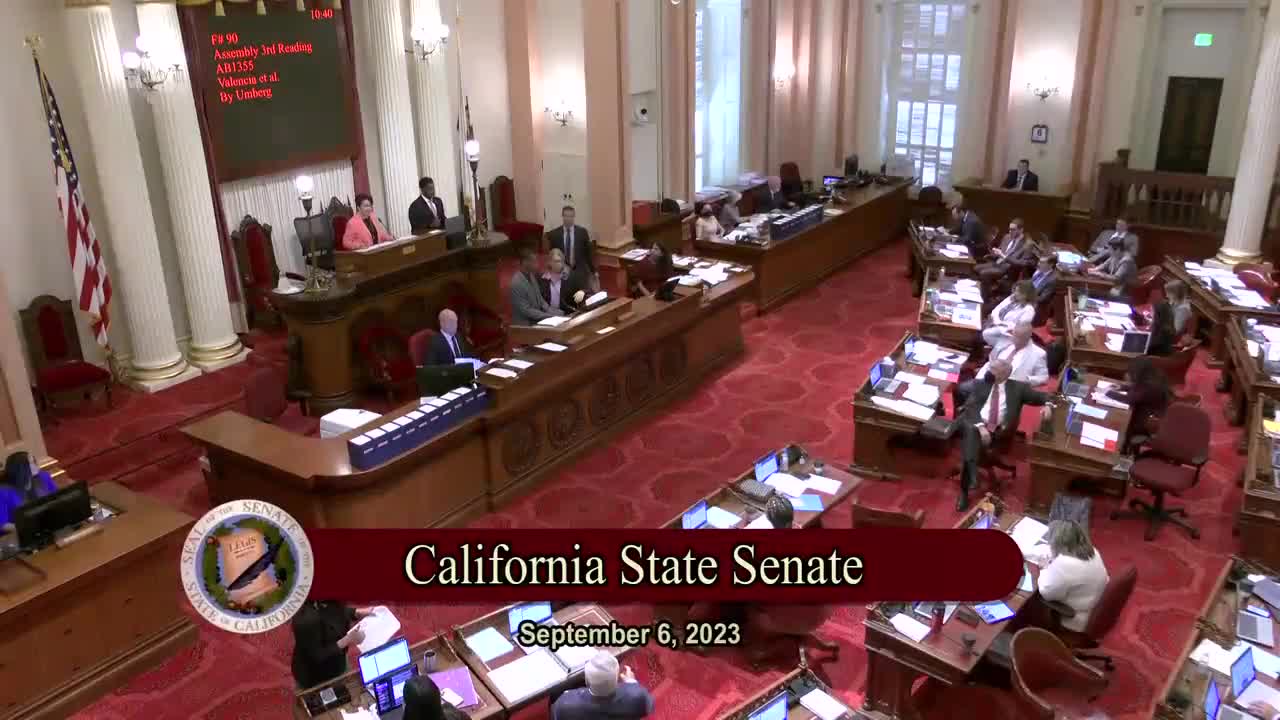 2MIN
Senate Floor
 5MIN
Senate Standing Committee on Transportation
 22MIN
Senate Standing Committee on Governance and Finance
 1MIN
Assembly Floor
 7MIN
Assembly Standing Committee on Local Government
Bill Author

Bill Co-Author(s):