AB 1136: State Athletic Commission: mixed martial arts: retirement benefit.
- Session Year: 2023-2024
- House: Assembly
- Latest Version Date: 2023-10-08
Current Status:
Passed
(2023-10-08: Chaptered by Secretary of State - Chapter 466, Statutes of 2023.)
Introduced
In Committee
First Chamber
In Committee
Second Chamber
Enacted
Existing law, the Boxing Act, also known as the State Athletic Commission Act, creates within the Department of Consumer Affairs the State Athletic Commission. Under existing law, the commission has sole direction, management, control of, and jurisdiction over all professional and amateur boxing and kickboxing, all forms and combinations of full contact martial arts contests, including mixed martial arts, and matches or exhibits conducted, held, or given within California. Existing law authorizes the commission to license professional and amateur boxers, professional and amateur martial arts fighters, booking agents, managers of professional boxers and professional martial arts fighters, trainers, chief seconds, and seconds of each. Existing law prohibits a person from participating in any contest, or serving in the capacity of a booking agent, manager, trainer, or second, unless the person has been licensed for that purpose by the commission.
Existing law establishes the Boxers Pension Fund, a retirement fund under the exclusive control of the commission, that is funded by an assessment on tickets that is transferred to the commission following a contest or wrestling exhibition, as prescribed, and by contributions by boxers, managers, promoters, or any one or more of these persons. Existing law requires all moneys in the Boxers Pension Fund to be continuously appropriated to be used exclusively for the purposes and administration of the pension fund. Existing law prohibits any moneys with the Boxers Pension Fund from being deposited or transferred to the general fund.
This bill would, among other things, require the commission to establish the Mixed Martial Arts Retirement Benefit Fund (MMA Fund) and would continuously appropriate the moneys in the MMA Fund to be used exclusively for the purposes and administration of the MMA Fund. The bill would require the commission to establish a method for financing the MMA Fund, including by a specified assessment on tickets to events under the commissions jurisdiction, by revenue generated through the sale of special interest license plates and other commission-branded items, including, but not limited to, sport paraphernalia and souvenirs, and by contributions from mixed martial artists, managers, promoters, or any one or more of these persons. The bill would require a participating martial artist, as defined, to become vested in the amount credited to the participating martial artists regular account in the MMA Fund when the participating martial artist has fought in at least 39 scheduled rounds in a commission-sanctioned professional mixed martial art contest held in the state and would prohibit a participating martial artist from being entitled to distribution of the funds held in the participating martial artists regular account until the participating martial artist is at least 50 years of age. The bill would require contributions to finance the MMA Fund to be allocated to each participating martial artists regular account on the last day of the MMA Fund year, as specified. The bill would authorize the commission to award an early retirement benefit to a participating martial artist, who has vested in the MMA Fund but is younger than 50 years of age, for vocational, education, training, or medical need in the amount contained in the participating martial artists regular account, as specified. The bill would require information submitted by or to a participating martial artist pursuant to that early retirement benefit provision to be confidential and not subject to public disclosure unless, among other things, the participating martial artist, in writing, waives the confidentiality of information submitted to the commission. The bill would also authorize a participating martial artist to designate one or more beneficiaries of the martial artists benefits from the MMA Fund upon the death of the participating martial artist, as prescribed. The bill would require a form submitted by a participating martial artist to the commission or its designee pursuant to that provision, including a beneficiary designation, to be confidential and not subject to public disclosure, except as specified.
This bill would require the commission to notify any participating martial artist eligible to receive benefits from the MMA Fund of certain information when the right to receive those benefits vests in that martial artist, including the date upon which the martial artist will first be able to claim benefits from the MMA Fund or will first be able to convert all, or a portion of, those benefits to an early medical or early vocational retirement benefit.
This bill would include a change in state statute that would result in a taxpayer paying a higher tax within the meaning of Section 3 of Article XIIIA of the California Constitution, and thus would require for passage the approval of 2/3 of the membership of each house of the Legislature.
Existing constitutional provisions require that a statute that limits the right of access to the meetings of public bodies or the writings of public officials and agencies be adopted with findings demonstrating the interest protected by the limitation and the need for protecting that interest.
This bill would make legislative findings to that effect.
Existing law, the Boxing Act, also known as the State Athletic Commission Act, creates within the Department of Consumer Affairs the State Athletic Commission. Under existing law, the commission has sole direction, management, control of, and jurisdiction over all professional and amateur boxing and kickboxing, all forms and combinations of full contact martial arts contests, including mixed martial arts, and matches or exhibits conducted, held, or given within California. Existing law authorizes the commission to license professional and amateur boxers, professional and amateur martial arts fighters, and booking agents, managers of professional boxers and professional martial arts fighters, trainers, chief seconds, and seconds of each. Existing law prohibits a person from participating in any contest, or serving in the capacity of a booking agent, manager, trainer, or second, unless they have been licensed for that purpose by the commission.
Existing law establishes the Boxers Pension Fund, a retirement fund under the exclusive control of the commission, that is funded by an assessment on tickets that is transferred to the commission following a contest or wrestling exhibition, as prescribed, and by contributions by boxers, managers, promoters, or any one or more of these persons. Existing law requires all moneys in the Boxers Pension Fund to be continuously appropriated to be used exclusively for the purposes and administration of the pension fund. Existing law prohibits any moneys with the Boxers Pension Fund from being deposited or transferred to the general fund.
This bill would would, among other things, require the commission to establish, similar to the Boxers Pension Fund, establish the Mixed Martial Arts (MMA) Pension Retirement Benefit Fund (MMA Fund) and would continuously appropriate the moneys in the MMA Pension Fund to be used exclusively for the purposes of and administration of a pension plan for martial artists, as defined. The bill would give the commission exclusive control of all funds in the MMA Pension Fund, prohibit any funds from being deposited or transferred to the General Fund, and require the funds to be invested as prescribed. the MMA Fund. The bill would authorize require the commission to establish a method for financing the pension plan for martial artists, MMA Fund, including by a specified assessment on tickets to events under the commissions jurisdiction, by revenue generated through the sale of special interest license plates and other commission-branded items, including, but not limited to, sport paraphernalia and souvenirs, and by contributions from mixed martial artists, managers, promoters, or any one or more of these persons. The bill would require a participating martial artist, as defined, to become vested in the amount credited to the participating martial artists regular account in the MMA Fund when the participating martial artist has fought in at least 39 scheduled rounds in a commission-sanctioned professional mixed martial art contest held in the state and would prohibit a participating martial artist from being entitled to distribution of the funds held in the participating martial artists regular account until the participating martial artist is at least 50 years of age. The bill would require contributions to finance the MMA Fund to be allocated to each participating martial artists regular account on the last day of the MMA Fund year, as specified. The bill would authorize the commission to award an early pension retirement benefit to a participating martial artist, who has vested in the MMA Fund but is younger than 50 years of age, for vocational, education, training, or medical need in the amount contained in the covered participating martial artists pension plan regular account, as specified. The bill would make related findings and declarations. The bill would require information submitted by or to a participating martial artist pursuant to that early retirement benefit provision to be confidential and not subject to public disclosure unless, among other things, the participating martial artist, in writing, waives the confidentiality of information submitted to the commission. The bill would also authorize a participating martial artist to designate one or more beneficiaries of the martial artists benefits from the MMA Fund upon the death of the participating martial artist, as prescribed. The bill would require a form submitted by a participating martial artist to the commission or its designee pursuant to that provision, including a beneficiary designation, to be confidential and not subject to public disclosure, except as specified.
This bill would require the commission to, on or before July 1, 2024, adopt emergency regulations to, among other things, establish procedures by which the commission will to notify any participating martial artist eligible to receive benefits from the pension plan created pursuant to the bill MMA Fund of certain information when the right to receive those benefits vests in that martial artist, including the date upon which the martial artist will first be able to claim benefits from the pension plan MMA Fund or will first be able to convert all, or a portion of, those benefits to an early medical or early vocational retirement benefit.
This bill would include a change in state statute that would result in a taxpayer paying a higher tax within the meaning of Section 3 of Article XIIIA of the California Constitution, and thus would require for passage the approval of 2/3 of the membership of each house of the Legislature.
Existing constitutional provisions require that a statute that limits the right of access to the meetings of public bodies or the writings of public officials and agencies be adopted with findings demonstrating the interest protected by the limitation and the need for protecting that interest.
This bill would make legislative findings to that effect.
Existing law, the Boxing Act, also known as the State Athletic Commission Act, creates within the Department of Consumer Affairs the State Athletic Commission. Under existing law, the commission has sole direction, management, control of, and jurisdiction over all professional and amateur boxing and kickboxing, all forms and combinations of full contact martial arts contests, including mixed martial arts, and matches or exhibits conducted, held, or given within California. Existing law authorizes the commission to license professional and amateur boxers, professional and amateur martial arts fighters, and booking agents, managers of professional boxers and professional martial arts fighters, trainers, chief seconds, and seconds of each. Existing law prohibits a person from participating in any contest, or serving in the capacity of a booking agent, manager, trainer, or second, unless they have been licensed for that purpose by the commission.
Existing law establishes the Boxers Pension Fund, a retirement fund under the exclusive control of the commission, that is funded by an assessment on tickets that is transferred to the commission following a contest or wrestling exhibition, as prescribed, and by contributions by boxers, managers, promoters, or any one or more of these persons. Existing law requires all moneys in the Boxers Pension Fund to be continuously appropriated to be used exclusively for the purposes and administration of the pension fund. Existing law prohibits any moneys with the Boxers Pension Fund from being deposited or transferred to the general fund.
This bill would require the commission to establish, similar to the Boxers Pension Fund, the Mixed Martial Arts (MMA) Pension Fund and would continuously appropriate the moneys in the MMA Pension Fund for purposes of administration of a pension plan for martial artists, as defined. The bill would give the commission exclusive control of all funds in the MMA Pension Fund, prohibit any funds from being deposited or transferred to the General Fund, and require the funds to be invested as prescribed. The bill would authorize the commission to establish a method for financing the pension plan for martial artists, including by assessment on tickets to events under the commissions jurisdiction, by revenue generated through the sale of special interest license plates and other commission-branded items, including, but not limited to, sport paraphernalia and souvenirs, and by contributions from mixed martial artists, managers, promoters, or any one or more of these persons. The bill would authorize the commission to award an early pension benefit for vocational, education, training, or medical need in the amount contained in the covered martial artists pension plan account, as specified. The bill would make related findings and declarations.
This bill would require the commission to, on or before July 1, 2024, adopt emergency regulations to, among other things, establish procedures by which the commission will notify any martial artist eligible to receive benefits from the pension plan created pursuant to the bill of certain information when the right to receive those benefits vests in that martial artist, including the date upon which the martial artist will first be able to claim benefits from the pension plan or will first be able to convert all, or a portion of, those benefits to an early medical or early vocational retirement benefit.
This bill would include a change in state statute that would result in a taxpayer paying a higher tax within the meaning of Section 3 of Article XIIIA of the California Constitution, and thus would require for passage the approval of 2/3 of the membership of each house of the Legislature.
Existing law, the Boxing Act, also known as the State Athletic Commission Act, creates within the Department of Consumer Affairs the State Athletic Commission. Under existing law, the commission has sole direction, management, control of, and jurisdiction over all professional and amateur boxing and kickboxing, all forms and combinations of full contact martial arts contests, including mixed martial arts, and matches or exhibits conducted, held, or given within California. Existing law authorizes the commission to license professional and amateur boxers, professional and amateur martial arts fighters, and booking agents, managers of professional boxers and professional martial arts fighters, trainers, chief seconds, and seconds of each. Existing law prohibits a person from participating in any contest, or serving in the capacity of a booking agent, manager, trainer, or second, unless they have been licensed for that purpose by the commission.
Existing law establishes the Boxers Pension Fund, a retirement fund under the exclusive control of the commission, that is funded by an assessment on tickets that is transferred to the commission following a contest or wrestling exhibition, as prescribed, and by contributions by boxers, managers, promoters, or any one or more of these persons. Existing law requires all moneys in the Boxers Pension Fund to be continuously appropriated to be used exclusively for the purposes and administration of the pension fund. Existing law prohibits any moneys with the Boxers Pension Fund from being deposited or transferred to the general fund.
This bill would require the commission to establish, similar to the Boxers Pension Fund, the Mixed Martial Arts (MMA) Pension Fund and would continuously appropriate the moneys in the MMA Pension Fund for purposes of administration of a pension plan for martial artists, as defined. The bill would give the commission exclusive control of all funds in the MMA Pension Fund, prohibit any funds from being deposited or transferred to the General Fund, and require the funds to be invested as prescribed. The bill would authorize the commission to establish a method for financing the pension plan for martial artists, including by assessment on tickets to events under the commissions jurisdiction, by revenue generated through the sale of special interest license plates and other commission-branded items, including, but not limited to, sport paraphernalia and souvenirs, and by contributions from mixed martial artists, managers, promoters, or any one or more of these persons. The bill would authorize the commission to award an early pension benefit for vocational, education, training, or medical need in the amount contained in the covered martial artists pension plan account, as specified. The bill would make related findings and declarations.
This bill would include a change in state statute that would result in a taxpayer paying a higher tax within the meaning of Section 3 of Article XIIIA of the California Constitution, and thus would require for passage the approval of 2/3 of the membership of each house of the Legislature.
Existing law, the Boxing Act, also known as the State Athletic Commission Act, creates within the Department of Consumer Affairs the State Athletic Commission. Under existing law, the commission has sole direction, management, control of, and jurisdiction over all professional and amateur boxing and kickboxing, all forms and combinations of full contact martial arts contests, including mixed martial arts, and matches or exhibits conducted, held, or given within California. Existing law authorizes the commission to license professional and amateur boxers, professional and amateur martial arts fighters, and booking agents, managers of professional boxers and professional martial arts fighters, trainers, chief seconds, and seconds of each. Existing law prohibits a person from participating in any contest, or serving in the capacity of a booking agent, manager, trainer, or second, unless they have been licensed for that purpose by the commission.
Existing law establishes the Boxers Pension Fund, a retirement fund under the exclusive control of the commission, that is funded by an assessment on tickets that is transferred to the commission following a contest or wrestling exhibition, as prescribed, and by contributions by boxers, managers, promoters, or any one or more of these persons. Existing law requires all moneys in the Boxers Pension Fund to be continuously appropriated to be used exclusively for the purposes and administration of the pension fund. Existing law prohibits any moneys with the Boxers Pension Fund from being deposited or transferred to the general fund.
This bill would require the commission to establish, similar to the Boxers Pension Fund, the Mixed Martial Arts (MMA) Pension Fund and would continuously appropriate the moneys in the MMA Pension Fund for purposes of administration of a pension plan for martial artists. artists, as defined. The bill would give the commission exclusive control of all funds in the MMA Pension Fund, prohibit any funds from being deposited or transferred to the General Fund, and require the funds to be invested as prescribed. The bill would authorize the commission to establish a method for financing the pension plan for martial artists, including by assessment on tickets to events under the commissions jurisdiction, by revenue generated through the sale of sport paraphernalia and souvenirs, and by contributions from mixed martial artists, managers, promoters, or any one or more of these persons. The bill would authorize the commission to award an early pension benefit for vocational, education, training, or medical need in the amount contained in the covered martial artists pension plan account, as specified. The bill would make related findings and declarations.
This bill would include a change in state statute that would result in a taxpayer paying a higher tax within the meaning of Section 3 of Article XIIIA of the California Constitution, and thus would require for passage the approval of 2/3 of the membership of each house of the Legislature.
Existing law, the Boxing Act, also known as the State Athletic Commission Act, creates within the Department of Consumer Affairs the State Athletic Commission. Under existing law, the commission has sole direction, management, control of, and jurisdiction over all professional and amateur boxing and kickboxing, all forms and combinations of full contact martial arts contests, including mixed martial arts, and matches or exhibits conducted, held, or given within California. Existing law authorizes the commission to license professional and amateur boxers, professional and amateur martial arts fighters, and booking agents, managers of professional boxers and professional martial arts fighters, trainers, chief seconds, and seconds of each. Existing law prohibits a person from participating in any contest, or serving in the capacity of a booking agent, manager, trainer, or second, unless they have been licensed for that purpose by the commission.
Existing law establishes the Boxers Pension Fund, a retirement fund under the exclusive control of the commission, that is funded by an assessment on tickets that is transferred to the commission following a contest or wrestling exhibition, as prescribed, and by contributions by boxers, managers, promoters, or any one or more of these persons. Existing law requires all moneys in the Boxers Pension Fund to be continuously appropriated to be used exclusively for the purposes and administration of the pension fund. Existing law prohibits any moneys with the Boxers Pension Fund from being deposited or transferred to the general fund.
This bill would require the commission to establish, similar to the Boxers Pension Fund, the Mixed Martial Arts (MMA) Pension Fund and would continuously appropriate the moneys in the MMA Pension Fund for purposes of administration of a pension plan for martial artists. The bill would give the commission exclusive control of all funds in the MMA Pension Fund, prohibit any funds from being deposited or transferred to the General Fund, and require the funds to be invested as prescribed. The bill would authorize the commission to establish a method for financing the pension plan for martial artists, including by assessment on tickets to events under the commissions jurisdiction, by revenue generated through the sale of sport paraphernalia and souvenirs, and by contributions from mixed martial artists, managers, promoters, or any one or more of these persons. The bill would authorize the commission to award an early pension benefit for vocational, education, training, or medical need in the amount contained in the covered martial artists pension plan account, as specified. The bill would make related findings and declarations.
This bill would include a change in state statute that would result in a taxpayer paying a higher tax within the meaning of Section 3 of Article XIIIA of the California Constitution, and thus would require for passage the approval of 2/3 of the membership of each house of the Legislature.
The Legislature finds and declares all of the following:
(a)Many Californians find a need, purpose, and great benefit in participating in combat sports.
(b)That professional athletes licensed under this chapter, as a group, for many reasons, do not retain their earnings, and are often injured or destitute, or both, and unable to take proper care of themselves, whether financially or otherwise, and that the enactment of this article is to serve a public purpose by making provisions for a needy group to insure a modicum of financial security for professional athletes.
(c)Athletes licensed under this chapter may suffer extraordinary disabilities in the normal course of their trade. These may include acute and chronic traumatic brain injuries, resulting from multiple concussions as well as from repeated exposure to a large number of subconcussive punches and kicks, eye injuries, including retinal tears, holes, and detachments, and other neurological impairments.
(d)The retirement benefit plan of the commission is part of the states health and safety regulatory scheme, designed to protect professional athletes, including mixed martial artists, licensed under this chapter from the health-related hazards of their trade. The retirement benefit plan addresses those health and safety needs, recognizing the disability and health maintenance expenses those needs may require.
(e)The regulatory system of California is interrelated with the conduct of the trade in every jurisdiction. Athletes licensed under this chapter participate in contests in other states and many athletes who are based in those other jurisdictions may participate in California on a single-event basis.
(f)The outcomes and natures of fights in other jurisdictions are relevant to California regulatory jurisdiction and are routinely monitored for health and safety reasons, so that, for example, a knockout of an athlete licensed under this chapter in another jurisdiction is paid appropriate heed with respect to establishing a waiting period before that athlete may commence fighting in California.
(g)The monitoring of other jurisdictions is an integral part of the health and safety of California athletes licensed under this chapter due to the interstate nature of the trade, and therefore the regulatory scheme for contests and athletes under this chapter should reflect this accordingly.
18888.1.For purposes of this article:
(a)Beneficiary means a person entitled under this article to receive benefits after the death of a participating martial artist.
(b)Martial artist means a licensed professional mixed martial artist, licensed professional kickboxer, licensed professional Muay Thai fighter, or athlete licensed by the commission other than a boxer.
(c)Mixed martial arts contest shall mean a professional martial arts contest approved by the commission, including kickboxing and Muay Thai, other than boxing.
(d)MMA Fund means the Mixed Martial Arts Retirement Benefit Fund created pursuant to Section 18888.2.
(e)Participating martial artist means a martial artist who participates in a commission-sanctioned contest in the state on or after January 1, 2024, and who is, or may become, eligible to receive a benefit under this article or whose beneficiary may be eligible to receive that benefit.
(f)Regular account means the account maintained by the commission, or its designee, on the records of the MMA Fund for each participating martial artist representing allocations of contributions, adjusted for withdrawals, income, expenses, and released and unrealized gains and losses attributable thereto.
18888.2.(a)The commission shall, consistent with the purposes of this article, establish the Mixed Martial Arts Retirement Benefit Fund for martial artists who engage in mixed martial arts contests in this state.
(b)(1)The commission shall, consistent with the purposes of this article, establish the method by which the MMA Fund will be financed, including those who shall contribute to the financing of the MMA Fund.
(2)The method of financing the MMA Fund shall include any of the following:
(A)(i)An assessment in the amount of one dollar ($1) on each ticket sold for a professional mixed martial arts contest held in the state.
(ii)The commission may raise, by regulation, the assessment authorized by this subparagraph to an amount not greater than two dollars ($2) per ticket.
(B)Revenue through the sale of special interest license plates and other commission-branded items, including, but not limited to, sport paraphernalia and souvenirs.
(C)Contributions by martial artists, managers, promoters, or any one or more of these persons, in an amount sufficient to finance the MMA Fund.
(c)The MMA Fund shall be actuarially sound.
18888.3.(a)At the time of payment of the fee required by Section 18824, a promoter shall pay to the commission all amounts scheduled for contribution to the MMA Fund. If the commission, in its discretion, requires, pursuant to Section 18888.2, that contributions to the MMA Fund be made by the martial artist and the martial artists manager, those contributions shall be made at the time and in the manner prescribed by the commission.
(b)All contributions to finance the MMA Fund shall be deposited in the State Treasury and credited to the Mixed Martial Arts Retirement Benefit Fund, which is hereby created. Notwithstanding Section 13340 of the Government Code, all moneys in the MMA Fund are continuously appropriated to be used exclusively for the purposes and administration of the MMA Fund.
(c)Contributions to finance the MMA Fund shall be allocated to each participating martial artists regular account on the last day of the MMA Fund year pursuant to both of the following requirements:
(1)Fifty percent of the contributions for the MMA Fund year shall be allocated among the regular accounts of participating martial artists as of the last day of the MMA Fund year in the proportion that each martial artists scheduled rounds fought for the MMA Fund year bears to the total scheduled rounds fought in the MMA Fund year.
(2)Fifty percent of the contributions for the MMA Fund year shall be allocated among the regular accounts of participating martial artists as of the last day of the MMA Fund year in the proportion that each martial artists total purses for the MMA Fund years bears to the total purses for all fights fought by participating martial artists in the MMA Fund year.
(d)If a participating martial artist fails to become vested in the amount credited to the participating martial artists regular account before the participating martial artists death, the regular account shall be forfeited and reallocated to each participating martial artists regular account on the last day of the MMA Fund year pursuant to both of the following:
(1)Fifty percent of the allocable forfeiture account shall be allocated among all regular accounts as of the last day of the MMA Fund year in the proportion that each regular account bears to the total regular accounts.
(2)Fifty percent of the allocable forfeiture account shall be added to the contributions for the MMA Fund year and shall be allocated among the regular accounts of participating martial artists who have fought in the current MMA Fund year according to the formula prescribed in subdivision (c).
(e)The MMA Fund is a retirement fund, and moneys within it shall not be deposited or transferred to the General Fund.
(f)The commission has exclusive control of all funds in the MMA Fund. A transfer or disbursement in any amount from the MMA Fund shall not be made except upon the authorization of the commission and for the purpose and administration of the MMA Fund.
(g)Except as otherwise provided in this subdivision, the commission or its designee shall invest the money contained in the MMA Fund according to the same standard of care as provided in Section 16040 of the Probate Code. The commission has exclusive control over the investment of all moneys in the MMA Fund. Except as otherwise prohibited or restricted by law, the commission may invest the moneys in the MMA Fund through the purchase, holding, or sale of any investment, financial instrument, or financial transaction that the commission in its informed opinion determines is prudent.
(h)The administrative costs associated with investing, managing, and distributing the MMA Fund shall be limited to no more than 2 percent of the corpus of the MMA Fund. Diligence shall be exercised by administrators in order to lower the MMA Funds expense ratio as far below 2 percent as feasible and appropriate. The commission shall report to the Legislature on the impact of this provision during the next regularly scheduled sunset review.
18888.4.(a)A promoter may, but is not required to, add to the price of each ticket sold for a professional mixed martial arts contest an amount specifically designated on the ticket for contribution or as a donation, either or both, to the MMA Fund. The additional amount shall not be subject to the admissions tax required by Section 18824 or any other deductions. This subdivision does not authorize the addition of those amounts to less than all the tickets sold for the professional mixed martial arts contest involved. The promoter shall pay additional contributions collected in accordance with Section 18888.2.
(b)Any additional contributions received pursuant to this section shall not be considered to offset any of the contributions required by the commission under Section 18888.2.
18888.5.(a)After the participating martial artist has vested in the MMA Fund, the participating martial artist shall not be entitled to distribution of the funds held in the participating martial artists regular account until the participating martial artist is at least 50 years of age.
(b)(1)Notwithstanding subdivision (a), the commission may, in its discretion, award to a participating martial artist, who has vested in the MMA Fund but is younger than 50 years old, an early retirement benefit for vocational, education, training, or medical need in the amount contained in the participating martial artists regular account at the time the commission makes this award and in the manner provided in the regulations governing the MMA Fund.
(2)Upon distribution of the early retirement benefit authorized by paragraph (1) to the participating martial artist, the participating martial artists regular account shall be closed, and the participating martial artist shall not receive, or otherwise be eligible for, any further contributions to the regular account or retirement benefits from the MMA Fund.
(3)Notwithstanding any other law, information submitted by or to a participating martial artist pursuant to this subdivision shall be confidential and not subject to public disclosure unless any of the following applies:
(A)The martial artist, in writing, waives the confidentiality of information submitted to the commission.
(B)The information is disclosed pursuant to a lawfully issued subpoena.
(C)The information is disclosed pursuant to a written request from a government agency responsible for the enforcement of civil or criminal laws or the professional licensing of individuals that is conducting an investigation about the person who submitted the information to the commission.
18888.6.(a)At the time of initial licensure pursuant to Article 3 (commencing with Section 18640), the commission shall notify the licensee of the licensees enrollment in the MMA Fund.
(b)A participating martial artist shall become vested in the amount credited to the participating martial artists regular account when the participating martial artist has fought in at least 39 scheduled rounds in a commission-sanctioned professional mixed martial arts contest held in the state.
(c)(1)The commission shall determine the eligibility of a martial artist to receive benefits from the MMA Fund based upon information gathered for the commission by the commission staff.
(2)A determination made pursuant to this subdivision shall be conclusive and binding on all persons.
(3)A misrepresentation by a martial artist, manager, promoter, or beneficiary shall be grounds for the denial, suspension, or discontinuance of benefits, in whole or in part, or for the cancellation or recovery of benefit payments made due to the commissions reliance on the misrepresentation.
(d)The commission, or its designee, shall notify any participating martial artist of all of the following when the right to receive benefits from the MMA Fund vests in that martial artist:
(1)The date upon which the right to receive the benefits from the MMA Fund vests in the participating martial artist and the dollar amount of the benefits that have accrued as of that date.
(2)The date upon which the participating martial artist will first be able to receive benefits from the MMA Fund or will first be able to convert all, or a portion of, those benefits to an early medical or early vocational retirement benefit.
(3)The procedure by which the participating martial artist will be able to claim benefits from the MMA Fund.
(4)The procedure by which the participating martial artist will be annually notified of the value of the accrued benefits beginning after the date upon which the right to receive the benefits from the MMA Fund vests in the martial artist.
(5)The ability of the participating martial artist to designate, pursuant to subdivision (e), one or more beneficiaries of the martial artists benefits from the MMA Fund upon the death of the martial artist.
(e)(1)(A)A participating martial artist may designate one or more beneficiaries of the martial artists benefits from the MMA Fund upon the death of the participating martial artist.
(B)A married participating martial artist and that persons spouse shall both designate any nonspouse beneficiary or beneficiaries.
(2)A beneficiary designation made pursuant to this subdivision shall be made in writing on a form provided by the commission, or its designee, and shall include the beneficiarys name, date of birth, address, telephone number, and relationship to the martial artist.
(3)A participating martial artist shall be responsible for updating the martial artists and beneficiarys personal information before distribution of a retirement benefit pursuant to this article.
(f)If a participating martial artist fails to become vested in the amount credited to the participating martial artists regular account before the participating martial artists death, the regular account shall be forfeited and reallocated in accordance with subdivision (d) of Section 18888.3.
(g)(1)(A)Except as otherwise specifically permitted by law, the assets and benefits of the MMA Fund shall not be subject to anticipation, alienation, sale, transfer, assignment, pledge, encumbrance, or charge.
(B)An anticipation, alienation, sale, transfer, assignment, pledge, encumbrance, or charge made in violation of this paragraph shall be null and void.
(2)The assets and benefits of the MMA Fund shall not be subject to the debts, contracts, liabilities, or torts of the person entitled to those benefits.
(h)(1)Notwithstanding any other law, except as provided in paragraph (2), a form submitted by a participating martial artist to the commission or its designee pursuant to this section, including a beneficiary designation, shall be confidential and not subject to public disclosure unless the martial artist, in writing, waives the confidentiality.
(2)A form described by paragraph (1), or information contained therein, may be disclosed in response to any of the following:
(A)A lawfully issued subpoena.
(B)A written request from a government agency responsible for the enforcement of civil or criminal laws or the professional licensing of individuals that is conducting an investigation about the person who submitted the form to the commission.
(C)A request for information made pursuant to subdivision (a) of Section 1798.24 of the Civil Code from an individual whose personal information is provided in the form.
18888.7.(a)(1)The commission may, in its discretion, hold a hearing, or assign the matter to an administrative law judge for a hearing, for the purpose of determining a question presented to it involving a right, benefit, or obligation of a person under this article.
(2)Paragraph (1) does not apply to an eligibility determination made pursuant to subdivision (c) of Section 18888.6.
(b)If a hearing is held pursuant to this section, the proceedings shall be conducted in accordance with Chapter 5 (commencing with Section 11500) of Part 1 of Division 3 of Title 2 of the Government Code, except that Section 11508 of the Government Code shall not apply, and the hearing shall be held at the time and place determined by the commission.
18888.8.A claim by a participating martial artist against the commission arising from the administration of the MMA Fund shall be brought in the County of Sacramento and shall be subject to the Government Claims Act (Part 1 (commencing with Section 810) of Division 3.6 of Title 1 of the Government Code).
18888.9.The commission may adopt regulations to implement, interpret, or make specific this article.
18888.10.(a)The administration of the MMA Fund shall be contingent upon the availability of funds collected pursuant to paragraph (2) of subdivision (b) of Section 18888.2, which do not divert or detract from funds currently utilized to fund existing functions of the commission.
(b)In the absence of funding adequate to meet the requirements of this article, this article does not impose any obligations upon the department, the commission, or the MMA Fund.
18888.11.This article shall not be construed to create a liability on the General Fund, and the General Fund shall not be used to offset or fund any liabilities attributed to the operation of the MMA Fund.
18888.12.Moneys collected pursuant to this article shall not be used to fund boxer benefits under Article 16 (commencing with Section 18880).
SEC. 2.The Legislature finds and declares that Section 1 of this act, which adds Sections 18888.5 and 18888.6 to the Business and Professions Code, imposes a limitation on the publics right of access to the meetings of public bodies or the writings of public officials and agencies within the meaning of Section 3 of Article I of the California Constitution. Pursuant to that constitutional provision, the Legislature makes the following findings to demonstrate the interest protected by this limitation and the need for protecting that interest:
Making confidential records regarding early retirement benefits or retirement benefit forms submitted by a martial artist to the commission, or its designee, protects the individuals right to privacy in that persons vocational, education, training, or medical needs or retirement planning, including designation of beneficiaries, and the personal information included within those records, documents, or forms.
The Legislature finds and declares all of the following:
(a)Many Californians find a need, purpose, and great benefit in participating in combat sports.
(b)That professional athletes licensed under this chapter, as a group, for many reasons, do not retain their earnings, and are often injured or destitute, or both, and unable to take proper care of themselves, whether financially or otherwise, and that the enactment of this article is to serve a public purpose by making provisions for a needy group to insure a modicum of financial security for professional athletes.
(c)Athletes licensed under this chapter may suffer extraordinary disabilities in the normal course of their trade. These may include acute and chronic traumatic brain injuries, resulting from multiple concussions as well as from repeated exposure to a large number of subconcussive punches and kicks, eye injuries, including retinal tears, holes, and detachments, and other neurological impairments.
(d)The pension retirement benefit plan of the commission is part of the states health and safety regulatory scheme, designed to protect professional athletes, including mixed martial artists, licensed under this chapter from the health-related hazards of their trade. The pension retirement benefit plan addresses those health and safety needs, recognizing the disability and health maintenance expenses those needs may require.
(e)The regulatory system of California is interrelated with the conduct of the trade in every jurisdiction. Athletes licensed under this chapter participate in contests in other states and many athletes who are based in those other jurisdictions may participate in California on a single-event basis.
(f)The outcomes and natures of fights in other jurisdictions are relevant to California regulatory jurisdiction and are routinely monitored for health and safety reasons, so that, for example, a knockout of an athlete licensed under this chapter in another jurisdiction is paid appropriate heed with respect to establishing a waiting period before that athlete may commence fighting in California.
(g)The monitoring of other jurisdictions is an integral part of the health and safety of California athletes licensed under this chapter due to the interstate nature of the trade, and therefore the regulatory scheme for contests and athletes under this chapter should reflect this accordingly.
18888.1.For purposes of this article:
(a)Beneficiary means a person entitled under this article to receive benefits after the death of a participating martial artist.
(a)(b)Martial artist means a licensed professional mixed martial artist, licensed professional kickboxer, licensed professional Muay Thai fighter, or athlete licensed by the commission other than a boxer.
(b)(c)Mixed martial arts contest shall mean a professional martial arts contest approved by the commission, including kickboxing and Muay Thai, other than boxing.
(d)MMA Fund means the Mixed Martial Arts Retirement Benefit Fund created pursuant to Section 18888.2.
(e)Participating martial artist means a martial artist who participates in a commission-sanctioned contest in the state on or after January 1, 2024, and who is, or may become, eligible to receive a benefit under this article or whose beneficiary may be eligible to receive that benefit.
(f)Regular account means the account maintained by the commission, or its designee, on the records of the MMA Fund for each participating martial artist representing allocations of contributions, adjusted for withdrawals, income, expenses, and released and unrealized gains and losses attributable thereto.
18888.2.(a)The commission shall, consistent with the purposes of this article, establish a pension plan the Mixed Martial Arts Retirement Benefit Fund for martial artists who engage in mixed martial arts contests in this state.
(b)(1)The commission shall, consistent with the purposes of this article, establish the method by which the pension plan MMA Fund will be financed, including those who shall contribute to the financing of the pension plan. MMA Fund.
(2)The method of financing the pension plan may include, but is not limited to, all MMA Fund shall include any of the following:
(A)Assessments on tickets.(A)(i)An assessment in the amount of one dollar ($1) on each ticket sold for a professional mixed martial arts contest held in the state.
(ii)The commission may raise, by regulation, the assessment authorized by this subparagraph to an amount not greater than two dollars ($2) per ticket.
(B)Revenue through the sale of special interest license plates and other commission-branded items, including, but not limited to, sport paraphernalia and souvenirs.
(C)Contributions by martial artists, managers, promoters, or any one or more of these persons, in an amount sufficient to finance the pension plan. MMA Fund.
(c)Any pension plan established by the commission The MMA Fund shall be actuarially sound.
18888.3.(a)At the time of payment of the fee required by Section 18824, a promoter shall pay to the commission all amounts scheduled for contribution to the pension plan for martial artists. MMA Fund. If the commission, in its discretion, requires, pursuant to Section 18888.2, that contributions to the pension plan MMA Fund be made by the martial artist and the martial artists manager, those contributions shall be made at the time and in the manner prescribed by the commission.
(b)All contributions to finance the pension plan for martial artists MMA Fund shall be deposited in the State Treasury and credited to the Mixed Martial Arts (MMA) Pension Retirement Benefit Fund, which is hereby created. Notwithstanding the provisions of Section 13340 of the Government Code, all moneys in the MMA Pension Fund MMA Fund are hereby continuously appropriated to be used exclusively for the purposes and administration of the pension plan. MMA Fund.
(c)Contributions to finance the MMA Fund shall be allocated to each participating martial artists regular account on the last day of the MMA Fund year pursuant to both of the following requirements:
(1)Fifty percent of the contributions for the MMA Fund year shall be allocated among the regular accounts of participating martial artists as of the last day of the MMA Fund year in the proportion that each martial artists scheduled rounds fought for the MMA Fund year bears to the total scheduled rounds fought in the MMA Fund year.
(2)Fifty percent of the contributions for the MMA Fund year shall be allocated among the regular accounts of participating martial artists as of the last day of the MMA Fund year in the proportion that each martial artists total purses for the MMA Fund years bears to the total purses for all fights fought by participating martial artists in the MMA Fund year.
(d)If a participating martial artist fails to become vested in the amount credited to the participating martial artists regular account before the participating martial artists death, the regular account shall be forfeited and reallocated to each participating martial artists regular account on the last day of the MMA Fund year pursuant to both of the following:
(1)Fifty percent of the allocable forfeiture account shall be allocated among all regular accounts as of the last day of the MMA Fund year in the proportion that each regular account bears to the total regular accounts.
(2)Fifty percent of the allocable forfeiture account shall be added to the contributions for the MMA Fund year and shall be allocated among the regular accounts of participating martial artists who have fought in the current MMA Fund year according to the formula prescribed in subdivision (c).
(c)(e)The MMA Pension Fund MMA Fund is a retirement fund, and no moneys within it shall not be deposited or transferred to the General Fund.
(d)(f)The commission has exclusive control of all funds in the MMA Pension Fund. No A transfer or disbursement in any amount from this fund the MMA Fund shall not be made except upon the authorization of the commission and for the purpose and administration of the pension plan. MMA Fund.
(e)(g)Except as otherwise provided in this subdivision, the commission or its designee shall invest the money contained in the MMA Pension Fund according to the same standard of care as provided in Section 16040 of the Probate Code. The commission has exclusive control over the investment of all moneys in the MMA Pension Fund. Except as otherwise prohibited or restricted by law, the commission may invest the moneys in the fund MMA Fund through the purchase, holding, or sale of any investment, financial instrument, or financial transaction that the commission in its informed opinion determines is prudent.
(f)(h)The administrative costs associated with investing, managing, and distributing the MMA Pension Fund shall be limited to no more than 2 percent of the corpus of the fund. MMA Fund. Diligence shall be exercised by administrators in order to lower the funds MMA Funds expense ratio as far below 2 percent as feasible and appropriate. The commission shall report to the Legislature on the impact of this provision during the next regularly scheduled sunset review.
18888.4.(a)A promoter may, but is not required to, add to the price of each ticket sold for a professional mixed martial arts contest an amount specifically designated on the ticket for contribution or as a donation, either or both, to the pension plan established pursuant to Section 18888.2. MMA Fund. The additional amount shall not be subject to the admissions tax required by Section 18824 or any other deductions. Nothing in this section shall This subdivision does not authorize the addition of those amounts to less than all the tickets sold for the professional mixed martial arts contest involved. The promoter shall pay additional contributions collected in accordance with Section 18888.2.
(b)Any additional contributions received pursuant to this section shall not be considered to offset any of the contributions required by the commission under Section 18888.2.
18888.5.In addition to any other form in which retirement benefits may be distributed under the pension plan,18888.5.(a)After the participating martial artist has vested in the MMA Fund, the participating martial artist shall not be entitled to distribution of the funds held in the participating martial artists regular account until the participating martial artist is at least 50 years of age.
(b)(1)Notwithstanding subdivision (a), the commission may, in its discretion, award to a covered participating martial artist artist, who has vested in the MMA Fund but is younger than 50 years old, an early pension retirement benefit for vocational, education, training, or medical need in the amount contained in the covered participating martial artists pension plan regular account at the time the commission makes this award and in the manner provided in the regulations governing the martial artists pension plan. This benefit shall be in lieu of a pension. MMA Fund.
(2)Upon distribution of the early retirement benefit authorized by paragraph (1) to the participating martial artist, the participating martial artists regular account shall be closed, and the participating martial artist shall not receive, or otherwise be eligible for, any further contributions to the regular account or retirement benefits from the MMA Fund.
(3)Notwithstanding any other law, information submitted by or to a participating martial artist pursuant to this subdivision shall be confidential and not subject to public disclosure unless any of the following applies:
(A)The martial artist, in writing, waives the confidentiality of information submitted to the commission.
(B)The information is disclosed pursuant to a lawfully issued subpoena.
(C)The information is disclosed pursuant to a written request from a government agency responsible for the enforcement of civil or criminal laws or the professional licensing of individuals that is conducting an investigation about the person who submitted the information to the commission.
18888.6.(a)The commission shall, on or before July 1, 2024, adopt emergency regulations to comply with subdivision (b) and to implement, interpret, or make specific this article. The adoption of those regulations shall be deemed an emergency and necessary to avoid serious harm to the public peace, health, safety, or general welfare within the meaning of Section 11342.545 of the Government Code, and the commission need not make a written finding of emergency as required by Section 11346.1 of the Government Code. Notwithstanding subdivisions (e) and (h) of Section 11346.1 of the Government Code, the commission may annually readopt any emergency regulation authorized by this section that is the same as or substantially equivalent to an emergency regulation previously adopted pursuant to this section until January 1, 2026.18888.6.(a)At the time of initial licensure pursuant to Article 3 (commencing with Section 18640), the commission shall notify the licensee of the licensees enrollment in the MMA Fund.
(b)A participating martial artist shall become vested in the amount credited to the participating martial artists regular account when the participating martial artist has fought in at least 39 scheduled rounds in a commission-sanctioned professional mixed martial arts contest held in the state.
(c)(1)The commission shall determine the eligibility of a martial artist to receive benefits from the MMA Fund based upon information gathered for the commission by the commission staff.
(2)A determination made pursuant to this subdivision shall be conclusive and binding on all persons.
(3)A misrepresentation by a martial artist, manager, promoter, or beneficiary shall be grounds for the denial, suspension, or discontinuance of benefits, in whole or in part, or for the cancellation or recovery of benefit payments made due to the commissions reliance on the misrepresentation.
(b)(d)The commission shall, by means of emergency regulations adopted pursuant to subdivision (a), establish procedures by which the commission will commission, or its designee, shall notify any participating martial artist eligible to receive benefits from the pension plan created pursuant to this article of all of the following when the right to receive those benefits from the MMA Fund vests in that martial artist:
(1)The date upon which the right to receive the benefits from the pension plan created pursuant to this article MMA Fund vests in the participating martial artist and the dollar amount of the benefits that have accrued as of that date.
(2)The date upon which the participating martial artist will first be able to receive benefits from the pension plan created pursuant to this article MMA Fund or will first be able to convert all, or a portion of, those benefits to an early medical or early vocational retirement benefit.
(3)The procedure by which the participating martial artist will be able to claim benefits from the pension plan created pursuant to this article. MMA Fund.
(4)The procedure by which the participating martial artist will be annually notified of the value of the accrued benefits beginning after the date upon which the right to receive the benefits from the pension plan created pursuant to this article MMA Fund vests in the martial artist.
(5)The ability of the participating martial artist to designate, pursuant to subdivision (e), one or more beneficiaries of the martial artists benefits from the MMA Fund upon the death of the martial artist.
(e)(1)(A)A participating martial artist may designate one or more beneficiaries of the martial artists benefits from the MMA Fund upon the death of the participating martial artist.
(B)A married participating martial artist and that persons spouse shall both designate any nonspouse beneficiary or beneficiaries.
(2)A beneficiary designation made pursuant to this subdivision shall be made in writing on a form provided by the commission, or its designee, and shall include the beneficiarys name, date of birth, address, telephone number, and relationship to the martial artist.
(3)A participating martial artist shall be responsible for updating the martial artists and beneficiarys personal information before distribution of a retirement benefit pursuant to this article.
(f)If a participating martial artist fails to become vested in the amount credited to the participating martial artists regular account before the participating martial artists death, the regular account shall be forfeited and reallocated in accordance with subdivision (d) of Section 18888.3.
(g)(1)(A)Except as otherwise specifically permitted by law, the assets and benefits of the MMA Fund shall not be subject to anticipation, alienation, sale, transfer, assignment, pledge, encumbrance, or charge.
(B)An anticipation, alienation, sale, transfer, assignment, pledge, encumbrance, or charge made in violation of this paragraph shall be null and void.
(2)The assets and benefits of the MMA Fund shall not be subject to the debts, contracts, liabilities, or torts of the person entitled to those benefits.
(h)(1)Notwithstanding any other law, except as provided in paragraph (2), a form submitted by a participating martial artist to the commission or its designee pursuant to this section, including a beneficiary designation, shall be confidential and not subject to public disclosure unless the martial artist, in writing, waives the confidentiality.
(2)A form described by paragraph (1), or information contained therein, may be disclosed in response to any of the following:
(A)A lawfully issued subpoena.
(B)A written request from a government agency responsible for the enforcement of civil or criminal laws or the professional licensing of individuals that is conducting an investigation about the person who submitted the form to the commission.
(C)A request for information made pursuant to subdivision (a) of Section 1798.24 of the Civil Code from an individual whose personal information is provided in the form.
18888.7.(a)(1)The commission may, in its discretion, hold a hearing, or assign the matter to an administrative law judge for a hearing, for the purpose of determining a question presented to it involving a right, benefit, or obligation of a person under this article.
(2)Paragraph (1) does not apply to an eligibility determination made pursuant to subdivision (c) of Section 18888.6.
(b)If a hearing is held pursuant to this section, the proceedings shall be conducted in accordance with Chapter 5 (commencing with Section 11500) of Part 1 of Division 3 of Title 2 of the Government Code, except that Section 11508 of the Government Code shall not apply, and the hearing shall be held at the time and place determined by the commission.
18888.8.A claim by a participating martial artist against the commission arising from the administration of the MMA Fund shall be brought in the County of Sacramento and shall be subject to the Government Claims Act (Part 1 (commencing with Section 810) of Division 3.6 of Title 1 of the Government Code).
18888.9.The commission may adopt regulations to implement, interpret, or make specific this article.
18888.10.(a)The administration of the MMA Fund shall be contingent upon the availability of funds collected pursuant to paragraph (2) of subdivision (b) of Section 18888.2, which do not divert or detract from funds currently utilized to fund existing functions of the commission.
(b)In the absence of funding adequate to meet the requirements of this article, this article does not impose any obligations upon the department, the commission, or the MMA Fund.
18888.11.This article shall not be construed to create a liability on the General Fund, and the General Fund shall not be used to offset or fund any liabilities attributed to the operation of the MMA Fund.
18888.12.Moneys collected pursuant to this article shall not be used to fund boxer benefits under Article 16 (commencing with Section 18880).
SEC. 2.The Legislature finds and declares that Section 1 of this act, which adds Sections 18888.5 and 18888.6 to the Business and Professions Code, imposes a limitation on the publics right of access to the meetings of public bodies or the writings of public officials and agencies within the meaning of Section 3 of Article I of the California Constitution. Pursuant to that constitutional provision, the Legislature makes the following findings to demonstrate the interest protected by this limitation and the need for protecting that interest:
Making confidential records regarding early retirement benefits or retirement benefit forms submitted by a martial artist to the commission, or its designee, protects the individuals right to privacy in that persons vocational, education, training, or medical needs or retirement planning, including designation of beneficiaries, and the personal information included within those records, documents, or forms.
The Legislature finds and declares all of the following:
(a)Many Californians find a need, purpose, and great benefit in participating in combat sports.
(b)That professional athletes licensed under this chapter, as a group, for many reasons, do not retain their earnings, and are often injured or destitute, or both, and unable to take proper care of themselves, whether financially or otherwise, and that the enactment of this article is to serve a public purpose by making provisions for a needy group to insure a modicum of financial security for professional athletes.
(c)Athletes licensed under this chapter may suffer extraordinary disabilities in the normal course of their trade. These may include acute and chronic traumatic brain injuries, resulting from multiple concussions as well as from repeated exposure to a large number of subconcussive punches and kicks, eye injuries, including retinal tears, holes, and detachments, and other neurological impairments.
(d)The pension plan of the commission is part of the states health and safety regulatory scheme, designed to protect professional athletes, including mixed martial artists, licensed under this chapter from the health-related hazards of their trade. The pension plan addresses those health and safety needs, recognizing the disability and health maintenance expenses those needs may require.
(e)The regulatory system of California is interrelated with the conduct of the trade in every jurisdiction. Athletes licensed under this chapter participate in contests in other states and many athletes who are based in those other jurisdictions may participate in California on a single-event basis.
(f)The outcomes and natures of fights in other jurisdictions are relevant to California regulatory jurisdiction and are routinely monitored for health and safety reasons, so that, for example, a knockout of an athlete licensed under this chapter in another jurisdiction is paid appropriate heed with respect to establishing a waiting period before that athlete may commence fighting in California.
(g)The monitoring of other jurisdictions is an integral part of the health and safety of California athletes licensed under this chapter due to the interstate nature of the trade, and therefore the regulatory scheme for contests and athletes under this chapter should reflect this accordingly.
18888.1.For purposes of this article:
(a)Martial artist means a licensed professional mixed martial artist, licensed professional kickboxer, licensed professional Muay Thai fighter, or athlete licensed by the commission other than a boxer.
(b)Mixed martial arts contest shall mean a professional martial arts contest approved by the commission, including kickboxing and Muay Thai, other than boxing.
18888.2.(a)The commission shall, consistent with the purposes of this article, establish a pension plan for martial artists who engage in mixed martial arts contests in this state.
(b)(1)The commission shall, consistent with the purposes of this article, establish the method by which the pension plan will be financed, including those who shall contribute to the financing of the pension plan.
(2)The method of financing the pension plan may include, but is not limited to, all of the following:
(A)Assessments on tickets.
(B)Revenue through the sale of special interest license plates and other commission-branded items, including, but not limited to, sport paraphernalia and souvenirs.
(C)Contributions by martial artists, managers, promoters, or any one or more of these persons, in an amount sufficient to finance the pension plan.
(c)Any pension plan established by the commission shall be actuarially sound.
18888.3.(a)At the time of payment of the fee required by Section 18824, a promoter shall pay to the commission all amounts scheduled for contribution to the pension plan for martial artists. If the commission, in its discretion, requires, pursuant to Section 18888.2, that contributions to the pension plan be made by the martial artist and the martial artists manager, those contributions shall be made at the time and in the manner prescribed by the commission.
(b)All contributions to finance the pension plan for martial artists shall be deposited in the State Treasury and credited to the Mixed Martial Arts (MMA) Pension Fund, which is hereby created. Notwithstanding the provisions of Section 13340 of the Government Code, all moneys in the MMA Pension Fund are hereby continuously appropriated to be used exclusively for the purposes and administration of the pension plan.
(c)The MMA Pension Fund is a retirement fund, and no moneys within it shall be deposited or transferred to the General Fund.
(d)The commission has exclusive control of all funds in the MMA Pension Fund. No transfer or disbursement in any amount from this fund shall be made except upon the authorization of the commission and for the purpose and administration of the pension plan.
(e)Except as otherwise provided in this subdivision, the commission or its designee shall invest the money contained in the MMA Pension Fund according to the same standard of care as provided in Section 16040 of the Probate Code. The commission has exclusive control over the investment of all moneys in the MMA Pension Fund. Except as otherwise prohibited or restricted by law, the commission may invest the moneys in the fund through the purchase, holding, or sale of any investment, financial instrument, or financial transaction that the commission in its informed opinion determines is prudent.
(f)The administrative costs associated with investing, managing, and distributing the MMA Pension Fund shall be limited to no more than 2 percent of the corpus of the fund. Diligence shall be exercised by administrators in order to lower the funds expense ratio as far below 2 percent as feasible and appropriate. The commission shall report to the Legislature on the impact of this provision during the next regularly scheduled sunset review.
18888.4.(a)A promoter may, but is not required to, add to the price of each ticket sold for a professional mixed martial arts contest an amount specifically designated on the ticket for contribution or as a donation, either or both, to the pension plan established pursuant to Section 18888.2. The additional amount shall not be subject to the admissions tax required by Section 18824 or any other deductions. Nothing in this section shall authorize the addition of those amounts to less than all the tickets sold for the professional mixed martial arts contest involved. The promoter shall pay additional contributions collected in accordance with Section 18888.2.
(b)Any additional contributions received pursuant to this section shall not be considered to offset any of the contributions required by the commission under Section 18888.2.
18888.5.In addition to any other form in which retirement benefits may be distributed under the pension plan, the commission may, in its discretion, award to a covered martial artist an early pension benefit for vocational, education, training, or medical need in the amount contained in the covered martial artists pension plan account at the time the commission makes this award and in the manner provided in the regulations governing the martial artists pension plan. This benefit shall be in lieu of a pension.
18888.6.(a)The commission shall shall, on or before July 1, 2024, adopt emergency regulations to comply with subdivision (b) and to implement, interpret, or make specific this article no later than July 1, 2024. article. The adoption of those regulations shall be deemed an emergency and necessary to avoid serious harm to the public peace, health, safety, or general welfare within the meaning of Section 11342.545 of the Government Code, and the commission need not make a written finding of emergency as required by Section 11346.1 of the Government Code. Notwithstanding subdivisions (e) and (h) of Section 11346.1 of the Government Code, the commission may annually readopt any emergency regulation authorized by this section that is the same as or substantially equivalent to an emergency regulation previously adopted pursuant to this section until January 1, 2026.
(b)The commission shall, by means of emergency regulations adopted pursuant to subdivision (a), establish procedures by which the commission will notify any martial artist eligible to receive benefits from the pension plan created pursuant to this article of all of the following when the right to receive those benefits vests in that martial artist:
(1)The date upon which the right to receive the benefits from the pension plan created pursuant to this article vests in the martial artist and the dollar amount of the benefits that have accrued as of that date.
(2)The date upon which the martial artist will first be able to receive benefits from the pension plan created pursuant to this article or will first be able to convert all, or a portion of, those benefits to an early medical or early vocational retirement benefit.
(3)The procedure by which the martial artist will be able to claim benefits from the pension plan created pursuant to this article.
(4)The procedure by which the martial artist will be annually notified of the value of the accrued benefits beginning after the date upon which the right to receive the benefits from the pension plan created pursuant to this article vests in the martial artist.
The Legislature finds and declares all of the following:
(a)Many Californians find a need, purpose, and great benefit in participating in combat sports.
(b)That professional athletes licensed under this chapter, as a group, for many reasons, do not retain their earnings, and are often injured or destitute, or both, and unable to take proper care of themselves, whether financially or otherwise, and that the enactment of this article is to serve a public purpose by making provisions for a needy group to insure a modicum of financial security for professional athletes.
(c)Athletes licensed under this chapter may suffer extraordinary disabilities in the normal course of their trade. These may include acute and chronic traumatic brain injuries, resulting from multiple concussions as well as from repeated exposure to a large number of subconcussive punches and kicks, eye injuries, including retinal tears, holes, and detachments, and other neurological impairments.
(d)The pension plan of the commission is part of the states health and safety regulatory scheme, designed to protect professional athletes, including mixed martial artists, licensed under this chapter from the health-related hazards of their trade. The pension plan addresses those health and safety needs, recognizing the disability and health maintenance expenses those needs may require.
(e)The regulatory system of California is interrelated with the conduct of the trade in every jurisdiction. Athletes licensed under this chapter participate in contests in other states and many athletes who are based in those other jurisdictions may participate in California on a single-event basis.
(f)The outcomes and natures of fights in other jurisdictions are relevant to California regulatory jurisdiction and are routinely monitored for health and safety reasons, so that, for example, a knockout of an athlete licensed under this chapter in another jurisdiction is paid appropriate heed with respect to establishing a waiting period before that athlete may commence fighting in California.
(g)The monitoring of other jurisdictions is an integral part of the health and safety of California athletes licensed under this chapter due to the interstate nature of the trade, and therefore the regulatory scheme for contests and athletes under this chapter should reflect this accordingly.
18888.1.For purposes of this article:
(a)Martial artist means a licensed professional mixed martial artist, licensed professional kickboxer, licensed professional Muay Thai fighter, or athlete licensed by the commission other than a boxer.
(b)Mixed martial arts contest shall mean a professional martial arts contest approved by the commission, including kickboxing and Muay Thai, other than boxing.
18888.2.(a)The commission shall, consistent with the purposes of this article, establish a pension plan for martial artists who engage in mixed martial arts contests in this state.
(b)(1)The commission shall, consistent with the purposes of this article, establish the method by which the pension plan will be financed, including those who shall contribute to the financing of the pension plan. The method of financing the pension plan may include, but is not limited to, assessments on tickets, revenue through the sale of sport paraphernalia and souvenirs, and contributions by martial artists, managers, promoters, or any one or more of these persons, in an amount sufficient to finance the pension plan.
(2)The method of financing the pension plan may include, but is not limited to, all of the following:
(A)Assessments on tickets.
(B)Revenue through the sale of special interest license plates and other commission-branded items, including, but not limited to, sport paraphernalia and souvenirs.
(C)Contributions by martial artists, managers, promoters, or any one or more of these persons, in an amount sufficient to finance the pension plan.
(c)Any pension plan established by the commission shall be actuarially sound.
18888.3.(a)At the time of payment of the fee required by Section 18824, a promoter shall pay to the commission all amounts scheduled for contribution to the pension plan for martial artists. If the commission, in its discretion, requires, pursuant to Section 18888.2, that contributions to the pension plan be made by the martial artist and the martial artists manager, those contributions shall be made at the time and in the manner prescribed by the commission.
(b)All contributions to finance the pension plan for martial artists shall be deposited in the State Treasury and credited to the Mixed Martial Arts (MMA) Pension Fund, which is hereby created. Notwithstanding the provisions of Section 13340 of the Government Code, all moneys in the MMA Pension Fund are hereby continuously appropriated to be used exclusively for the purposes and administration of the pension plan.
(c)The MMA Pension Fund is a retirement fund, and no moneys within it shall be deposited or transferred to the General Fund.
(d)The commission has exclusive control of all funds in the MMA Pension Fund. No transfer or disbursement in any amount from this fund shall be made except upon the authorization of the commission and for the purpose and administration of the pension plan.
(e)Except as otherwise provided in this subdivision, the commission or its designee shall invest the money contained in the MMA Pension Fund according to the same standard of care as provided in Section 16040 of the Probate Code. The commission has exclusive control over the investment of all moneys in the MMA Pension Fund. Except as otherwise prohibited or restricted by law, the commission may invest the moneys in the fund through the purchase, holding, or sale of any investment, financial instrument, or financial transaction that the commission in its informed opinion determines is prudent.
(f)The administrative costs associated with investing, managing, and distributing the MMA Pension Fund shall be limited to no more than 2 percent of the corpus of the fund. Diligence shall be exercised by administrators in order to lower the funds expense ratio as far below 2 percent as feasible and appropriate. The commission shall report to the Legislature on the impact of this provision during the next regularly scheduled sunset review.
18888.4.(a)A promoter may, but is not required to, add to the price of each ticket sold for a professional mixed martial arts contest an amount specifically designated on the ticket for contribution or as a donation, either or both, to the pension plan established pursuant to Section 18888.2. The additional amount shall not be subject to the admissions tax required by Section 18824 or any other deductions. Nothing in this section shall authorize the addition of those amounts to less than all the tickets sold for the professional mixed martial arts contest involved. The promoter shall pay additional contributions collected in accordance with Section 18888.2.
(b)Any additional contributions received pursuant to this section shall not be considered to offset any of the contributions required by the commission under Section 18888.2.
18888.5.In addition to any other form in which retirement benefits may be distributed under the pension plan, the commission may, in its discretion, award to a covered martial artist an early pension benefit for vocational, education, training, or medical need in the amount contained in the covered martial artists pension plan account at the time the commission makes this award and in the manner provided in the regulations governing the martial artists pension plan. This benefit shall be in lieu of a pension.
18888.6.The commission shall adopt emergency regulations to implement, interpret, or make specific this article no later than July 1, 2024. The adoption of regulations shall be deemed an emergency and necessary to avoid serious harm to the public peace, health, safety, or general welfare within the meaning of Section 11342.545 of the Government Code, and the commission need not make a written finding of emergency as required by Section 11346.1 of the Government Code. Notwithstanding subdivisions (e) and (h) of Section 11346.1 of the Government Code, the commission may annually readopt any emergency regulation authorized by this section that is the same as or substantially equivalent to an emergency regulation previously adopted pursuant to this section until January 1, 2026.
The Legislature finds and declares all of the following:
(a)Many Californians find a need, purpose, and great benefit in participating in combat sports.
(b)That professional athletes licensed under this chapter, as a group, for many reasons, do not retain their earnings, and are often injured or destitute, or both, and unable to take proper care of themselves, whether financially or otherwise, and that the enactment of this article is to serve a public purpose by making provisions for a needy group to insure a modicum of financial security for professional athletes.
(c)Athletes licensed under this chapter may suffer extraordinary disabilities in the normal course of their trade. These may include acute and chronic traumatic brain injuries, resulting from multiple concussions as well as from repeated exposure to a large number of subconcussive punches and kicks, eye injuries, including retinal tears, holes, and detachments, and other neurological impairments.
(d)The pension plan of the commission is part of the states health and safety regulatory scheme, designed to protect professional athletes, including mixed martial artists, licensed under this chapter from the health-related hazards of their trade. The pension plan addresses those health and safety needs, recognizing the disability and health maintenance expenses those needs may require.
(e)The regulatory system of California is interrelated with the conduct of the trade in every jurisdiction. Athletes licensed under this chapter participate in contests in other states and many athletes who are based in those other jurisdictions may participate in California on a single-event basis.
(f)The outcomes and natures of fights in other jurisdictions are relevant to California regulatory jurisdiction and are routinely monitored for health and safety reasons, so that, for example, a knockout of an athlete licensed under this chapter in another jurisdiction is paid appropriate heed with respect to establishing a waiting period before that athlete may commence fighting in California.
(g)The monitoring of other jurisdictions is an integral part of the health and safety of California athletes licensed under this chapter due to the interstate nature of the trade, and therefore the regulatory scheme for contests and athletes under this chapter should reflect this accordingly.
18888.1.For purposes of this article, martial artist shall mean a licensed professional mixed martial artist, licensed professional kickboxer, licensed professional Muay Thai fighter, or athlete licensed by the commission other than a boxer. article:
(a)Martial artist means a licensed professional mixed martial artist, licensed professional kickboxer, licensed professional Muay Thai fighter, or athlete licensed by the commission other than a boxer.
(b)Mixed martial arts contest shall mean a professional martial arts contest approved by the commission, including kickboxing and Muay Thai, other than boxing.
18888.2.(a)The commission shall, consistent with the purposes of this article, establish a pension plan for martial artists who engage in mixed martial arts contests in this state.
(b)The commission shall, consistent with the purposes of this article, establish the method by which the pension plan will be financed, including those who shall contribute to the financing of the pension plan. The method of financing the pension plan may include, but is not limited to, assessments on tickets, revenue through the sale of sport paraphernalia and souvenirs, and contributions by martial artists, managers, promoters, or any one or more of these persons, in an amount sufficient to finance the pension plan.
(c)Any pension plan established by the commission shall be actuarially sound.
18888.3.(a)At the time of payment of the fee required by Section 18824, a promoter shall pay to the commission all amounts scheduled for contribution to the pension plan for martial artists. If the commission, in its discretion, requires requires, pursuant to Section 18888.2, that contributions to the pension plan be made by the martial artist and their the martial artists manager, those contributions shall be made at the time and in the manner prescribed by the commission.
(b)All contributions to finance the pension plan for martial artists shall be deposited in the State Treasury and credited to the Mixed Martial Arts (MMA) Pension Fund, which is hereby created. Notwithstanding the provisions of Section 13340 of the Government Code, all moneys in the MMA Pension Fund are hereby continuously appropriated to be used exclusively for the purposes and administration of the pension plan.
(c)The MMA Pension Fund is a retirement fund, and no moneys within it shall be deposited or transferred to the General Fund.
(d)The commission has exclusive control of all funds in the MMA Pension Fund. No transfer or disbursement in any amount from this fund shall be made except upon the authorization of the commission and for the purpose and administration of the pension plan.
(e)Except as otherwise provided in this subdivision, the commission or its designee shall invest the money contained in the MMA Pension Fund according to the same standard of care as provided in Section 16040 of the Probate Code. The commission has exclusive control over the investment of all moneys in the MMA Pension Fund. Except as otherwise prohibited or restricted by law, the commission may invest the moneys in the fund through the purchase, holding, or sale of any investment, financial instrument, or financial transaction that the commission in its informed opinion determines is prudent.
(f)The administrative costs associated with investing, managing, and distributing the MMA Pension Fund shall be limited to no more than 2 percent of the corpus of the fund. Diligence shall be exercised by administrators in order to lower the funds expense ratio as far below 2 percent as feasible and appropriate. The commission shall report to the Legislature on the impact of this provision during the next regularly scheduled sunset review.
18888.4.(a)A promoter may, but is not required to, add to the price of each ticket sold for a professional mixed martial arts contest an amount specifically designated on the ticket for contribution or as a donation, either or both, to the pension plan established pursuant to Section 18888.2. The additional amount shall not be subject to the admissions tax required by Section 18824 or any other deductions. Nothing in this section shall authorize the addition of those amounts to less than all the tickets sold for the professional mixed martial arts contest involved. The promoter shall pay additional contributions collected in accordance with Section 18888.2.
(b)Any additional contributions received pursuant to this section shall not be considered to offset any of the contributions required by the commission under Section 18888.2.
18888.5.In addition to any other form in which retirement benefits may be distributed under the pension plan, the commission may, in its discretion, award to a covered martial artist an early pension benefit for vocational, education, training, or medical need in the amount contained in the covered martial artists pension plan account at the time the commission makes this award and in the manner provided in the regulations governing the martial artists pension plan. This benefit shall be in lieu of a pension.
18888.6.The commission shall adopt emergency regulations to implement, interpret, or make specific this article no later than July 1, 2024. The adoption of regulations shall be deemed an emergency and necessary to avoid serious harm to the public peace, health, safety, or general welfare within the meaning of Section 11342.545 of the Government Code, and the commission need not make a written finding of emergency as required by Section 11346.1 of the Government Code. Notwithstanding subdivisions (e) and (h) of Section 11346.1 of the Government Code, the commission may annually readopt any emergency regulation authorized by this section that is the same as or substantially equivalent to an emergency regulation previously adopted pursuant to this section until January 1, 2026.
The Legislature finds and declares all of the following:
(a)Many Californians find a need, purpose, and great benefit in participating in combat sports.
(b)That professional athletes licensed under this chapter, as a group, for many reasons, do not retain their earnings, and are often injured or destitute, or both, and unable to take proper care of themselves, whether financially or otherwise, and that the enactment of this article is to serve a public purpose by making provisions for a needy group to insure a modicum of financial security for professional athletes.
(c)Athletes licensed under this chapter may suffer extraordinary disabilities in the normal course of their trade. These may include acute and chronic traumatic brain injuries, resulting from multiple concussions as well as from repeated exposure to a large number of subconcussive punches and kicks, eye injuries, including retinal tears, holes, and detachments, and other neurological impairments.
(d)The pension plan of the commission is part of the states health and safety regulatory scheme, designed to protect professional athletes, including mixed martial artists, licensed under this chapter from the health-related hazards of their trade. The pension plan addresses those health and safety needs, recognizing the disability and health maintenance expenses those needs may require.
(e)The regulatory system of California is interrelated with the conduct of the trade in every jurisdiction. Athletes licensed under this chapter participate in contests in other states and many athletes who are based in those other jurisdictions may participate in California on a single-event basis.
(f)The outcomes and natures of fights in other jurisdictions are relevant to California regulatory jurisdiction and are routinely monitored for health and safety reasons, so that, for example, a knockout of an athlete licensed under this chapter in another jurisdiction is paid appropriate heed with respect to establishing a waiting period before that athlete may commence fighting in California.
(g)The monitoring of other jurisdictions is an integral part of the health and safety of California athletes licensed under this chapter due to the interstate nature of the trade, and therefore the regulatory scheme for contests and athletes under this chapter should reflect this accordingly.
18888.1.For purposes of this article, martial artist shall mean a licensed professional mixed martial artist, licensed professional kickboxer, licensed professional Muay Thai fighter, or athlete licensed by the commission other than a boxer.
18888.2.(a)The commission shall, consistent with the purposes of this article, establish a pension plan for martial artists who engage in mixed martial arts contests in this state.
(b)The commission shall, consistent with the purposes of this article, establish the method by which the pension plan will be financed, including those who shall contribute to the financing of the pension plan. The method of financing the pension plan may include, but is not limited to, assessments on tickets, revenue through the sale of sport paraphernalia and souvenirs, and contributions by martial artists, managers, promoters, or any one or more of these persons, in an amount sufficient to finance the pension plan.
(c)Any pension plan established by the commission shall be actuarially sound.
18888.3.(a)At the time of payment of the fee required by Section 18824, a promoter shall pay to the commission all amounts scheduled for contribution to the pension plan for martial artists. If the commission, in its discretion, requires pursuant to Section 18888.2, that contributions to the pension plan be made by the martial artist and their manager, those contributions shall be made at the time and in the manner prescribed by the commission.
(b)All contributions to finance the pension plan for martial artists shall be deposited in the State Treasury and credited to the Mixed Martial Arts (MMA) Pension Fund, which is hereby created. Notwithstanding the provisions of Section 13340 of the Government Code, all moneys in the MMA Pension Fund are hereby continuously appropriated to be used exclusively for the purposes and administration of the pension plan.
(c)The MMA Pension Fund is a retirement fund, and no moneys within it shall be deposited or transferred to the General Fund.
(d)The commission has exclusive control of all funds in the MMA Pension Fund. No transfer or disbursement in any amount from this fund shall be made except upon the authorization of the commission and for the purpose and administration of the pension plan.
(e)Except as otherwise provided in this subdivision, the commission or its designee shall invest the money contained in the MMA Pension Fund according to the same standard of care as provided in Section 16040 of the Probate Code. The commission has exclusive control over the investment of all moneys in the MMA Pension Fund. Except as otherwise prohibited or restricted by law, the commission may invest the moneys in the fund through the purchase, holding, or sale of any investment, financial instrument, or financial transaction that the commission in its informed opinion determines is prudent.
(f)The administrative costs associated with investing, managing, and distributing the MMA Pension Fund shall be limited to no more than 2 percent of the corpus of the fund. Diligence shall be exercised by administrators in order to lower the funds expense ratio as far below 2 percent as feasible and appropriate. The commission shall report to the Legislature on the impact of this provision during the next regularly scheduled sunset review.
18888.4.(a)A promoter may, but is not required to, add to the price of each ticket sold for a professional mixed martial arts contest an amount specifically designated on the ticket for contribution or as a donation, either or both, to the pension plan established pursuant to Section 18888.2. The additional amount shall not be subject to the admissions tax required by Section 18824 or any other deductions. Nothing in this section shall authorize the addition of those amounts to less than all the tickets sold for the professional mixed martial arts contest involved. The promoter shall pay additional contributions collected in accordance with Section 18888.2.
(b)Any additional contributions received pursuant to this section shall not be considered to offset any of the contributions required by the commission under Section 18888.2.
18888.5.In addition to any other form in which retirement benefits may be distributed under the pension plan, the commission may, in its discretion, award to a covered martial artist an early pension benefit for vocational, education, training, or medical need in the amount contained in the covered martial artists pension plan account at the time the commission makes this award and in the manner provided in the regulations governing the martial artists pension plan. This benefit shall be in lieu of a pension.
18888.6.The commission shall adopt emergency regulations to implement, interpret, or make specific this section article no later than July 1, 2024. The adoption of regulations shall be deemed an emergency and necessary to avoid serious harm to the public peace, health, safety, or general welfare within the meaning of Section 11342.545 of the Government Code, and the commission need not make a written finding of emergency as required by Section 11346.1 of the Government Code. Notwithstanding subdivisions (e) and (h) of Section 11346.1 of the Government Code, the board commission may annually readopt any emergency regulation authorized by this section that is the same as or substantially equivalent to an emergency regulation previously adopted pursuant to this section until January 1, 2026.
The Legislature finds and declares all of the following:
(a)Many Californians find a need, purpose, and great benefit in participating in combat sports.
(b)That professional athletes licensed under this chapter, as a group, for many reasons, do not retain their earnings, and are often injured or destitute, or both, and unable to take proper care of themselves, whether financially or otherwise, and that the enactment of this article is to serve a public purpose by making provisions for a needy group to insure a modicum of financial security for professional athletes.
(c)Athletes licensed under this chapter may suffer extraordinary disabilities in the normal course of their trade. These may include acute and chronic traumatic brain injuries, resulting from multiple concussions as well as from repeated exposure to a large number of subconcussive punches and kicks, eye injuries, including retinal tears, holes, and detachments, and other neurological impairments.
(d)The pension plan of the commission is part of the states health and safety regulatory scheme, designed to protect professional athletes, including mixed martial artists, licensed under this chapter from the health-related hazards of their trade. The pension plan addresses those health and safety needs, recognizing the disability and health maintenance expenses those needs may require.
(e)The regulatory system of California is interrelated with the conduct of the trade in every jurisdiction. Athletes licensed under this chapter participate in contests in other states and many athletes who are based in those other jurisdictions may participate in California on a single-event basis.
(f)The outcomes and natures of fights in other jurisdictions are relevant to California regulatory jurisdiction and are routinely monitored for health and safety reasons, so that, for example, a knockout of an athlete licensed under this chapter in another jurisdiction is paid appropriate heed with respect to establishing a waiting period before that athlete may commence fighting in California.
(g)The monitoring of other jurisdictions is an integral part of the health and safety of California athletes licensed under this chapter due to the interstate nature of the trade, and therefore the regulatory scheme for contests and athletes under this chapter should reflect this accordingly.
18888.1.For purposes of this article, martial artist shall mean a licensed professional mixed martial artist, licensed professional kickboxer, licensed professional Muay Thai fighter, or athlete licensed by the commission other than a boxer.
18888.2.(a)The commission shall, consistent with the purposes of this article, establish a pension plan for martial artists who engage in mixed martial arts contests in this state.
(b)The commission shall, consistent with the purposes of this article, establish the method by which the pension plan will be financed, including those who shall contribute to the financing of the pension plan. The method of financing the pension plan may include, but is not limited to, assessments on tickets, revenue through the sale of sport paraphernalia and souvenirs, and contributions by martial artists, managers, promoters, or any one or more of these persons, in an amount sufficient to finance the pension plan.
(c)Any pension plan established by the commission shall be actuarially sound.
18888.3.(a)At the time of payment of the fee required by Section 18824, a promoter shall pay to the commission all amounts scheduled for contribution to the pension plan for martial artists. If the commission, in its discretion, requires pursuant to Section 18888.2, that contributions to the pension plan be made by the martial artist and their manager, those contributions shall be made at the time and in the manner prescribed by the commission.
(b)All contributions to finance the pension plan for martial artists shall be deposited in the State Treasury and credited to the Mixed Martial Arts (MMA) Pension Fund, which is hereby created. Notwithstanding the provisions of Section 13340 of the Government Code, all moneys in the MMA Pension Fund are hereby continuously appropriated to be used exclusively for the purposes and administration of the pension plan.
(c)The MMA Pension Fund is a retirement fund, and no moneys within it shall be deposited or transferred to the General Fund.
(d)The commission has exclusive control of all funds in the MMA Pension Fund. No transfer or disbursement in any amount from this fund shall be made except upon the authorization of the commission and for the purpose and administration of the pension plan.
(e)Except as otherwise provided in this subdivision, the commission or its designee shall invest the money contained in the MMA Pension Fund according to the same standard of care as provided in Section 16040 of the Probate Code. The commission has exclusive control over the investment of all moneys in the MMA Pension Fund. Except as otherwise prohibited or restricted by law, the commission may invest the moneys in the fund through the purchase, holding, or sale of any investment, financial instrument, or financial transaction that the commission in its informed opinion determines is prudent.
(f)The administrative costs associated with investing, managing, and distributing the MMA Pension Fund shall be limited to no more than 2 percent of the corpus of the fund. Diligence shall be exercised by administrators in order to lower the funds expense ratio as far below 2 percent as feasible and appropriate. The commission shall report to the Legislature on the impact of this provision during the next regularly scheduled sunset review.
18888.4.(a)A promoter may, but is not required to, add to the price of each ticket sold for a professional mixed martial arts contest an amount specifically designated on the ticket for contribution or as a donation, either or both, to the pension plan established pursuant to Section 18888.2. The additional amount shall not be subject to the admissions tax required by Section 18824 or any other deductions. Nothing in this section shall authorize the addition of those amounts to less than all the tickets sold for the professional mixed martial arts contest involved. The promoter shall pay additional contributions collected in accordance with Section 18888.2.
(b)Any additional contributions received pursuant to this section shall not be considered to offset any of the contributions required by the commission under Section 18888.2.
18888.5.In addition to any other form in which retirement benefits may be distributed under the pension plan, the commission may, in its discretion, award to a covered martial artist an early pension benefit for vocational, education, training, or medical need in the amount contained in the covered martial artists pension plan account at the time the commission makes this award and in the manner provided in the regulations governing the martial artists pension plan. This benefit shall be in lieu of a pension.
18888.6.The commission shall adopt emergency regulations to implement, interpret, or make specific this section no later than July 1, 2024. The adoption of regulations shall be deemed an emergency and necessary to avoid serious harm to the public peace, health, safety, or general welfare within the meaning of Section 11342.545 of the Government Code, and the commission need not make a written finding of emergency as required by Section 11346.1 of the Government Code. Notwithstanding subdivisions (e) and (h) of Section 11346.1 of the Government Code, the board may annually readopt any emergency regulation authorized by this section that is the same as or substantially equivalent to an emergency regulation previously adopted pursuant to this section until January 1, 2026.
|
Date
|
Status
|
|---|---|
| Oct 8, 2023 | Chaptered by Secretary of State - Chapter 466, Statutes of 2023. |
| Oct 8, 2023 | Approved by the Governor. |
| Sep 19, 2023 | Enrolled and presented to the Governor at 4 p.m. |
| Sep 12, 2023 | Senate amendments concurred in. To Engrossing and Enrolling. (Ayes 76. Noes 0. Page 3246.). |
| Sep 12, 2023 | Assembly Rule 77 suspended. (Page 3228.) |
| Sep 11, 2023 | In Assembly. Concurrence in Senate amendments pending. May be considered on or after September 13 pursuant to Assembly Rule 77. |
| Sep 11, 2023 | Read third time. Passed. Ordered to the Assembly. (Ayes 34. Noes 0. Page 2559.). |
| Sep 5, 2023 | Read second time. Ordered to third reading. |
| Sep 1, 2023 | Read second time and amended. Ordered returned to second reading. |
| Sep 1, 2023 | From committee: Amend, and do pass as amended. (Ayes 5. Noes 0.) (September 1). |
| Aug 14, 2023 | In committee: Referred to APPR suspense file. |
| Jul 12, 2023 | From committee: Do pass and re-refer to Com. on APPR. (Ayes 5. Noes 0.) (July 12). Re-referred to Com. on APPR. |
| Jul 10, 2023 | From committee: Do pass and re-refer to Com. on L., P.E. & R. (Ayes 13. Noes 0.) (July 10). Re-referred to Com. on L., P.E. & R. |
| Jun 14, 2023 | Referred to Coms. on B., P. & E. D. and L., P.E. & R. |
| Jun 1, 2023 | In Senate. Read first time. To Com. on RLS. for assignment. |
| May 31, 2023 | Read third time. Passed. Ordered to the Senate. (Ayes 74. Noes 0. Page 1952.) |
| May 22, 2023 | Read third time and amended. Ordered to third reading. (Page 1683.) |
| May 11, 2023 | Read third time and amended. Ordered to third reading. (Page 1521.) |
| Apr 27, 2023 | Read second time. Ordered to third reading. |
| Apr 26, 2023 | From committee: Do pass. (Ayes 15. Noes 0.) (April 26). |
| Apr 11, 2023 | From committee: Do pass and re-refer to Com. on APPR. (Ayes 6. Noes 0.) (April 11). Re-referred to Com. on APPR. |
| Mar 30, 2023 | Re-referred to Com. on A., E., S., & T. |
| Mar 29, 2023 | Read second time and amended. |
| Mar 28, 2023 | From committee: Amend, and do pass as amended and re-refer to Com. on A., E., S., & T. (Ayes 17. Noes 0.) (March 28). |
| Mar 22, 2023 | Re-referred to Com. on B. & P. |
| Mar 21, 2023 | From committee chair, with author's amendments: Amend, and re-refer to Com. on B. & P. Read second time and amended. |
| Mar 2, 2023 | Referred to Coms. on B. & P. and A., E., S., & T. |
| Feb 16, 2023 | From printer. May be heard in committee March 18. |
| Feb 15, 2023 | Read first time. To print. |
|
Date
|
Description
|
Location
|
Votes
|
|
|---|---|---|---|---|
| Sep 12, 2023 | AB 1136 Haney Concurrence in Senate Amendments | Assembly Floor |
Passed |
|
| Sep 11, 2023 | Assembly 3rd Reading AB1136 Haney et al. By Archuleta | Senate Floor |
Passed |
|
| Sep 1, 2023 | Do pass as amended | Senate Standing Committee on Appropriations |
Passed |
|
| Aug 14, 2023 | Placed on suspense file | Senate Standing Committee on Appropriations |
Passed |
|
| Jul 12, 2023 | Do pass, but first be re-referred to the Committee on [Appropriations] | Senate Standing Committee on Labor, Public Employment and Retirement |
Passed |
|
| Jul 10, 2023 | Do pass, but first be re-referred to the Committee on [Labor, Public Employment and Retirement ] | Senate Standing Committee on Business, Professions and Economic Development |
Passed |
|
| May 31, 2023 | AB 1136 Haney Assembly Third Reading | Assembly Floor |
Passed |
|
| Apr 26, 2023 | Do pass. | Assembly Standing Committee on Appropriations |
Passed |
|
| Apr 11, 2023 | Do pass and be re-referred to the Committee on [Appropriations] | Assembly Standing Committee on Arts, Entertainment, Sports, and Tourism |
Passed |
|
| Mar 28, 2023 | Do pass as amended and be re-referred to the Committee on [Arts, Entertainment, Sports, and Tourism] | Assembly Standing Committee on Business and Professions |
Passed |
This list shows positions taken on this bill by organizations on the date displayed, which is linked to the original source.
Positions by individuals are not included.
|
Organization
|
Position
|
Date
|
|---|---|---|
| Association of Boxing Commissions and Combative Sports | ** Support | |
| Bash Boxing | ** Support | |
| Bellator MMA | * Support | Jul 10, 2023 |
| California Amateur Mixed Martial Arts Organization, INC. | ** Support | |
| California State Athletic Commission | ** Support | |
| Englebrecht Promotions & Events | ** Support | |
| FightOpinion.com | ** Against | |
| Iconos Fight Entertainment | ** Support | |
| International Sport Kickboxing Assocation | ** Support | |
| MMA | * Support | Mar 28, 2023 |
| MMA | * Support | Mar 28, 2023 |
| MMA | * Support | Apr 11, 2023 |
| MMA | * Support | Apr 11, 2023 |
| North American Boxing Federation | ** Support | |
| Urijah Faber’s A1 Combat | ** Support |
CONCURRENCE IN SENATE AMENDMENTS
CSA1 Bill Id:AB 1136
Author:(Haney)
As Amended Ver:September 1, 2023
2/3 vote
SUMMARY
Requires the California State Athletic Commission to establish a retirement benefit fund for licensed martial artists who engage in mixed martial arts (MMA) contests in California and requires the Commission to establish the method by which the benefit will be financed.
Senate Amendments
- Rename the MMA Pension Fund the MMA Retirement Benefit Fund (MMA Fund) and make conforming changes related to the retirement benefit plan in lieu of the pension plan.
- Establish additional definitions for purposes of MMA Fund administration and disbursement.
- Specify a $1 minimum and $2 maximum assessment on each ticket sold for a professional MMA contest in the methods for financing the MMA Fund.
- Specify requirements for MMA Fund allocation to each participating martial artist’s regular account.
- Establish a process for the forfeiture and reallocation of funds in the event that a participating martial artist fails to become vested.
- Provide that a martial artist vested in the MMA Fund is not entitled to the distribution of the funds until the martial artist is at least 50 years of age.
- Establish various requirements and processes related to the notification to a martial artist’s enrollment into the MMA Fund and for participating martial artists to designate beneficiaries.
- Specify a participating martial artist vests in the MMA Fund after participating in at least 39 scheduled rounds in a commission-sanctioned professional MMA contest in California. Require the Commission to determine eligibility, as specified.
- Provide that MMA Fund assets and benefits are not subject to debts, contracts, liabilities or torts of the person entitled to those benefits.
- Specify the administration of the MMA Fund is contingent upon the availability of collected funds, and in the absence of adequate funding, does not impose any obligations on the Department of Consumer Affairs, the Commission, the MMA Fund, or the General Fund, as specified.
- Prohibits money collected for the MMA Fund from being used to fund the Boxers Pension Fund.
- Make other technical, clarifying, and conforming changes.
COMMENTS
Background. California, through the California State Athletic Commission, regulates most forms of professional and amateur combative sporting events, such as boxing and martial arts events, including MMA events. Specifically, the commission regulates events where the use of full contact may result in physical harm to an opponent, including amateur contests where full contact may be unintentionally used.
The need for regulation is the inherent risk of harm in combative sporting contests, particularly when held for the entertainment of viewers. Left unregulated, contests may lack safety equipment, mismatch contestants, or, in the case of professionals, fail to pay the contestants. To that end, the commission is tasked with ensuring that contestants who wish to participate in these sports may do so safely and fairly. This is done through the licensing of the fighters themselves, as well as the managers, corners, matchmakers, trainers, promoters, and officials.
Many professional fighters also compete full-time, potentially putting off other career or employment opportunities in the meantime. They also compete on a contractual basis, which may leave them without the usual employer-sponsored benefits one may receive in other sectors, such as retirement benefits.
Acknowledging this issue, California has established a pension plan for boxers under the Boxing Act, finding and declaring that:
That professional athletes licensed [to box], as a group, for many reasons, do not retain their earnings, and are often injured or destitute, or both, and unable to take proper care of themselves, whether financially or otherwise, and that the enactment of [these laws] is to serve a public purpose by making provisions for a needy group to insure a modicum of financial security for professional athletes.
Athletes licensed [to box] may suffer extraordinary disabilities in the normal course of their trade. These may include acute and chronic traumatic brain injuries, resulting from multiple concussions as well as from repeated exposure to a large number of subconcussive punches, eye injuries, including retinal tears, holes, and detachments, and other neurological impairments.
The pension plan of the commission is part of the state's health and safety regulatory scheme, designed to protect boxers licensed under this chapter from the health-related hazards of their trade. The pension plan addresses those health and safety needs, recognizing the disability and health maintenance expenses those needs may require.
However, the plan does not include other licensed martial artists regulated by the commission, including MMA fighters, kickboxers, and Muay Thai fighters. The question of whether the boxing plan should be expanded to include other licensees has been raised during each of the commission's Sunset Review hearings since 2013.
This bill would instead require the commission to establish a requirement benefit plan and associated fund for martial artists. According to the commission, "This [fund] would ensure MMA fighters have a modicum source of income after they've reached the peak of their fighting career or suffered from an unexpected injury that shortened their career."
According to the Author
"This [fund] allows these athletes to save money for their retirement and creates a financial safety net to pay for medical bills. It's the first of its kind in the world of MMA and it's an important step to support these athletes who make MMA one of the fastest-growing sports in the world."
Arguments in Support
The Association of Boxing Commissions and Combative Sports (ABC) writes in support:
[ABC] is the federally created agency founded to oversee safety and prevent exploitation of fighters in the industry. Title 15, Section 89 empowers the ABC with several duties, and among those is the creation and maintenance of a charity to support retired fighters.
California is a leader among our members, and Mr. Andy Foster chairs several Committees and speaks at our annual Conference on a variety of issues. Due to California's size and the number of high level mixed martial arts competitions held each year in your state, passage of a pension fund dedicated to the MMA community would be a huge benefit to the fight community as a whole.
The Retired Fighter Charity maintained by the ABC exists solely on donations and we are very proud of the gifts we have made over the years. However, the way you have structured [this bill] looks as if it would benefit MMA participants far beyond what our 501 (c) (3) organization will ever be able to do.
Arguments in Opposition
None on file
FISCAL COMMENTS
According to the Senate Appropriations Committee:
- Unknown, potentially significant contracting costs for MMA Retirement Benefit Fund (MMA Fund) management and investment services. As specified in the bill, all administrative costs would be capped at two percent or less of the amount of the MMA Fund. The Commission notes that although only investment services would be immediately required, fund management is not needed for several years because the fund would need to grow first before this service is required.
- The Commission may require a future appropriation to stand up the retirement benefit plan until monies in the MMA Fund are sufficient to cover its administrative costs. However, this amount is unquantifiable at this time.
- Unknown, increased workload to the Commission to administer the MMA Fund. Activities may include tracking eligible martial artists, sending notifications, conducting outreach, monitoring and providing reports on the fiscal health of the MMA Fund, collecting and distributing monies, and responding to inquiries from the public and licensees. Actual workload increases to the Commission would vary, and depend on among other things, the number of martial artists who would be eligible for the retirement benefit plan and timeframe for when eligible martial artists may seek to claim their benefits.
- Absorbable costs for the Commission to establish emergency regulations and establish new accounting codes.
VOTES:
ASM BUSINESS AND PROFESSIONS: 17-0-2
YES: Berman, Flora, Alanis, Alvarez, Bains, Bonta, Chen, Dixon, Gipson, Grayson, Irwin, Jackson, Lee, Lowenthal, McKinnor, Stephanie Nguyen, Ting
ABS, ABST OR NV: McCarty, Joe Patterson
ASM ARTS, ENTERTAINMENT, SPORTS, AND TOURISM: 6-0-1
YES: Quirk-Silva, Wallis, Mike Fong, Friedman, Hart, Valencia
ABS, ABST OR NV: Lackey
ASM APPROPRIATIONS: 15-0-1
YES: Holden, Megan Dahle, Bryan, Calderon, Wendy Carrillo, Dixon, Mike Fong, Hart, Lowenthal, Mathis, Papan, Pellerin, Robert Rivas, Weber, Wilson
ABS, ABST OR NV: Sanchez
ASSEMBLY FLOOR: 74-0-6
YES: Addis, Aguiar-Curry, Alanis, Alvarez, Arambula, Bains, Bauer-Kahan, Bennett, Berman, Boerner, Bonta, Bryan, Calderon, Juan Carrillo, Wendy Carrillo, Cervantes, Chen, Connolly, Megan Dahle, Davies, Dixon, Flora, Mike Fong, Friedman, Gabriel, Gallagher, Garcia, Gipson, Grayson, Haney, Hart, Holden, Hoover, Irwin, Jackson, Jones-Sawyer, Kalra, Lee, Low, Lowenthal, Maienschein, Mathis, McCarty, McKinnor, Muratsuchi, Stephanie Nguyen, Ortega, Pacheco, Papan, Joe Patterson, Pellerin, Petrie-Norris, Quirk-Silva, Ramos, Reyes, Luz Rivas, Robert Rivas, Rodriguez, Blanca Rubio, Santiago, Schiavo, Soria, Ting, Valencia, Villapudua, Waldron, Wallis, Ward, Weber, Wicks, Wilson, Wood, Zbur, Rendon
ABS, ABST OR NV: Essayli, Vince Fong, Lackey, Jim Patterson, Sanchez, Ta
SENATE FLOOR: 34-0-6
YES: Allen, Alvarado-Gil, Archuleta, Ashby, Atkins, Becker, Blakespear, Bradford, Cortese, Dodd, Durazo, Eggman, Glazer, Gonzalez, Hurtado, Jones, Laird, Limón, McGuire, Menjivar, Min, Niello, Ochoa Bogh, Padilla, Portantino, Roth, Rubio, Skinner, Smallwood-Cuevas, Stern, Umberg, Wahab, Wiener, Wilk
ABS, ABST OR NV: Caballero, Dahle, Grove, Newman, Nguyen, Seyarto
UPDATED
VERSION: September 1, 2023
CONSULTANT: Vincent Chee / B. & P. / (916) 319-3301 FN: 0002348
SENATE RULES COMMITTEE Office of Senate Floor Analyses (916) 651-1520 Fax: (916) 327-4478 | AB 1136 |
THIRD READING
Bill No: AB 1136
Author: Haney (D), et al.
Amended: 9/1/23 in Senate
Vote: 27
SENATE BUS., PROF. & ECON. DEV. COMMITTEE: 13-0, 7/10/23
AYES: Roth, Nguyen, Alvarado-Gil, Archuleta, Ashby, Becker, Dodd, Eggman, Glazer, Niello, Smallwood-Cuevas, Wahab, Wilk
SENATE LABOR, PUB. EMP. & RET. COMMITTEE: 5-0, 7/12/23
AYES: Cortese, Wilk, Durazo, Laird, Smallwood-Cuevas
SENATE APPROPRIATIONS COMMITTEE: 5-0, 9/1/23
AYES: Portantino, Ashby, Bradford, Wahab, Wiener
NO VOTE RECORDED: Jones, Seyarto
ASSEMBLY FLOOR: 74-0, 5/31/23 - See last page for vote
SUBJECT: State Athletic Commission: mixed martial arts: retirement benefit
SOURCE: California State Athletic Commission
DIGEST:
This bill requires the California State Athletic Commission (Commission or CSAC) to establish a retirement benefit for martial artists (MMA Retirement Fund) who engage in mixed martial arts (MMA) contests in California and requires the Commission to establish the method by which the benefit will be financed.
ANALYSIS:
Existing law:
- Specifies the following related to boxer pension benefits:
- Requires the Commission to establish a pension plan for professional boxers (Boxers’ Pension Plan) who engage in boxing contests in this state. Requires the Commission to establish the method by which the Boxers’ Pension Plan will be financed, including those who must contribute to the financing of the pension plan. Requires any Boxers’ Pension Plan established by the Commission to be actuarially sound. (BPC § 18881)
- Creates the Boxers’ Pension Fund, requires contributions to finance the pension plan to be deposited in the State Treasury and credited to the fund, and continuously appropriates all moneys in the Boxers’ Pension Fund to be used exclusively for the purposes and administration of the Boxers’ Pension Plan. Specifies that the Boxers’ Pension Fund is a retirement fund and no moneys within it may be deposited or transferred to the General Fund. Allows a promoter to add to the price of each ticket sold for a professional boxing contest an amount specifically designated on the ticket for contribution as a donation to the Boxers’ Pension Plan. (BPC § 18882)
- Authorizes the Commission to contract with a private or public entity for the administration of the Boxers’ Pension Plan. (4 California Codes of Regulations (CCR) § 400)
- Requires a promoter to contribute $.88 on every ticket, excluding a working complimentary ticket, up to a maximum contribution of $4,600 per show. (4 CCR § 402)
- Specifies that a participating boxer shall become vested in the amount credited to the participating boxer's regular account when the participating boxer has fought in at least ten scheduled rounds per calendar year during each of four calendar years without an intervening break in service and has fought in at least 75 scheduled rounds without a break in service. (4 CCR § 405)
This bill:
- Requires the Commission to establish a MMA Retirement Fund for martial artists (defined as a licensed professional mixed martial artist, licensed professional kickboxer, licensed professional Muay Thai fighter, or athlete licensed by the Commission other than a boxer) who engage in MMA contests in this state that must be actuarially sound.
- Specifies that financing the MMA Retirement Fund shall include: a $1 assessment on each ticket sold for a professional MMA contest which may be raised by regulation to up to $2; revenue through the sale of special interest license plates and other Commission-branded items, including, but not limited to, sport paraphernalia and souvenirs and; contributions by martial artists, managers, promoters, or any one or more of these persons, in an amount sufficient to finance the MMA Retirement Fund.
- Establishes the MMA Retirement Fund in the State Treasury, continuously appropriated to be used exclusively for the purposes and administration of the pension plan and establishes the MMA Retirement Fund as a retirement fund, moneys from which are prohibited from deposit or transfer to the General Fund. Specifies how contributions to finance the MMA Retirement Fund must be allocated to each participating MMA athlete’s regular account. Specifies that after the participating MMA athlete has vested in the MMA Retirement Fund, they shall not be entitled to distribution until they are at least 50 but authorizes the Commission to, in its discretion, award an early retirement benefit for vocational education, training, or medical need.
- Affirms that information submitted by or to a participating MMA athlete is confidential and not subject to public disclosure unless the MMA athlete waives confidentiality or the information is disclosed pursuant to a subpoena or the information is disclosure pursuant to a written request from a government agency responsible for enforcing civil or criminal laws or professional licensure.
- Requires the Commission, at the time of initial licensure, to inform the MMA athlete of their enrollment in the MMA Retirement Fund. Specifies that a MMA athlete is vested in the amount credited to their account when they have fought in at least 39 scheduled rounds in a Commission-sanctioned professional MMA contest held in California. Provides that a misrepresentation by a MMA athlete, manager, promoter, or beneficiary is grounds for the denial, suspension, or discontinuance of benefits. Requires the Commission notify participating MMA athletes of specified information related to the ability and timeframe to receive benefits and designate beneficiaries.
- Specifies that the administration of the MMA Retirement Fund is contingent upon the availability of funds and the absence of adequate funding does not impose any obligations on the Department of Consumer Affairs, Commission, or MMA Retirement Fund.
- Makes various findings and declarations.
Background
The Commission is responsible for protecting the health and safety of its licensees: boxers, kickboxers, and other martial arts athletes. Concerned with athlete injuries and death, the public established the Commission by initiative in 1924. The Commission is responsible for implementation and enforcement of the Federal Muhammad Ali Boxing Reform Act (Federal Boxing Act) and the California Boxing Act or State Athletic Commission Act (State Act). Federal Law, the Muhammad Ali Boxing Reform Act (Boxing Act) prohibits events from taking place in a state without a regulatory commission unless the fight is regulated either by another state’s commission or on sovereign tribal land. Regulated events can provide higher levels of protection for fighters than unauthorized or illegal events, and potentially provide revenue for the state and the local economy where events take place.
The Commission provides direction, management, and control for professional and amateur boxing, professional and amateur kickboxing, and all forms and combinations of full contact martial arts contests, including mixed martial arts (MMA) and matches or exhibitions conducted, held or given in California. The Commission has four main functions: licensing, enforcement, regulating events and administering the Professional Boxers’ Pension Fund (Pension Fund).
The most important work of the Commission happens on the ground level, managing and overseeing events and promoting the well-being of the competitors participating in combat sporting events in California.
As a special fund entity, the Commission does not receive General Fund support, relying solely on fees set in statute and collected from regulatory and license fees. For each event held in California that the Commission regulates, the Commission collects a “gate fee” from the event promoter, which is a 5% fee on gross ticket sales for that event, not to exceed $100,000. The Commission also collects a “TV fee” from the event promoter if the event is broadcast on television, which is a 5% fee on the revenue a promoter collects from broadcasting rights, not to exceed $35,000. The Commission receives over 70% of its revenue from the fees above, however, unlike other program under DCA, the Commission cannot rely on a predictable funding source such as license fees, when forecasting its revenue and projecting its ability to fund expenditures far in the future, given the fluid nature of the Commission licensing revenues and fluctuations in the sports that dictate when events do or do not take place. The “gate fee” and “TV fee” can fluctuate greatly from year to year and are significantly influenced by market conditions, as promoters may not opt to hold the same number of fights in California during an economic downturn, among other economic factors.
Boxers’ Pension Fund: The Model for a MMA Pension Fund. The Commission administers a Boxers’ Pension Plan, which was originally established in 1982 aimed at providing monetary resources to retired professional boxers. In 2005, the Bureau of State Audits (BSA) found that the fund was poorly administered and very few boxers have or would receive benefits from the Boxers’ Pension Fund. The Auditor noted that from 2001-2004, total benefits paid to boxers were $36,000, while administrative costs were six times greater. Further, the Auditor also noted that, as of 2003, only 14 percent of licensed boxers were vested and their accounts were very low. On December 31, 2005, only 43 participants were eligible for retirement benefits totaling just $430,000. BSA recommended reducing vesting requirements and increasing the gate fees used to fund the plan. According to a report issued by BSA in January 2011, these recommendations from 2005 remained unresolved. The Commission responded to BSA’s recommendation by stating that it would conduct a study on the impact of reducing vesting requirements and pursue changes in statute or regulation or an increase in gate fees.
During the 2013 sunset review oversight of the Commission, the Committee noted that the Commission had improved its outreach efforts to ensure that athletes know they are eligible for benefits but also noted that the administration of the fund (as well as costs to administer it that are paid to a third party plan administrator) as well as the potential that the monetary amounts received by a vulnerable fighter population may not serve their health and welfare needs continued to call the Boxers’ Pension Fund’s existence into question. Questions were raised as to whether a lump sum payment was a proper benefit to a fighter, or whether there were potentially more appropriate means by which to assist these athletes like providing health insurance benefits, connecting fighters to coverage for medical services, or directing retired boxers to medical coverage options like Covered California so they are able to receive ongoing, consistent medical treatment that is not likely covered by a one-time payment.
During the 2018 sunset review oversight of the Commission, it noted that it had “increased Pension Plan distributions to qualified retired boxers, despite the obstacles in locating potential claimants. The Commission’s outreach efforts regarding the Pension Plan have improved over the past several years, however, remains limited in further efforts to locate eligible boxers.” At the time, there were almost 300 covered boxers and almost $3.8 million in fund assets, with 11 boxers paid just over $176,000 in 2018. The Commission advised that establishing a MMA Pension Plan was outlined in its Strategic Plan but questions were raised at the time about how a MMA Pension Plan would be structured, given its specificity for boxers, as well as the general challenges associated with underfunded pensions.
At its March 2023 meeting, it was reported that the Commission had deposited $65,597.14 to the Boxers’ Pension Fund in the current fiscal year and that the Fund has approximately $4.658 million as of the beginning of 2023.
A May 2023 Los Angeles Times article, "California created the nation's only pension for aging boxers. But it's failing many of them", found that the pension plan does not have enough money to pay all unclaimed pensions without reducing the amount of money received by fighters who become eligible in future years - with just $294,000 set aside for the $2.1 million owed to boxers who haven't been paid. Many boxers have not claimed them because, in many cases according to the article, they were unaware that they were even eligible for a pension. While the Commission has made recent efforts to advertise this benefit to boxers, the article states that the Commission has waited until a boxer turns 50 before attempting to contact them for the first time, and by then, the vast majority of addresses are no longer current. The article found that approximately 200 boxers could have claimed a pension last year, but only 12 of them did so. The article also noted that the Commission's contracted pension administrator, Benefit Resources, has raised alarms in the past about the impact of too many boxers coming forward with late claims in the same year which creates uncertainty and instability in the fund.
FISCAL EFFECT: Appropriation: Yes Fiscal Com.: Yes Local: No
According to the Senate Appropriations Committee, this bill will result in unknown, potentially significant contracting costs for MMA Fund management and investment services. The Commission may require a future appropriation to stand up the retirement benefit plan until monies in the MMA Fund are sufficient to cover its administrative costs. However, this amount is unquantifiable at this time. The bill will also result in unknown, increased workload to the Commission to administer the MMA Fund. Activities may include tracking eligible martial artists, sending notifications, conducting outreach, monitoring and providing reports on the fiscal health of the MMA Fund, collecting and distributing monies, and responding to inquiries from the public and licensees. Actual workload increases to the Commission would vary, and depend on among other things, the number of martial artists who would be eligible for the retirement benefit plan and timeframe for when eligible martial artists may seek to claim their benefits. The bill would also result in absorbable costs for the Commission to establish emergency regulations and establish new accounting codes.
SUPPORT: (Verified 9/1/23)
California State Athletic Commission (source)
Association of Boxing Commissions and Combative Sports
Bash Boxing
California Amateur Mixed Martial Arts Organization, Inc.
Englebrecht Promotions & Events
International Sport Kickboxing Association
North American Boxing Federation
Urijah Faber’s A1 Combat
OPPOSITION: (Verified 9/1/23)
None received
ARGUMENTS IN SUPPORT: The Commission notes that “Despite the hard work and dedication put forth by these athletes, many are left struggling financially after their fighting careers come to an end…MMA fighters do not have a pension fund, although professional boxers do. This leaves MMA fighters vulnerable to financial insecurity especially as hospital bills for their injuries continue to affect them post-retirement. As professional athletes, they undertake immense physical and psychological training and endure injuries and risks—yet they have no guaranteed pension plan for their commitment to this physically taxing combat sport.” Supporters believe a benefit dedicated to MMA athletes would be a community to the fight community as a whole and that this bill will incentivize athletes to fight in California.
ASSEMBLY FLOOR: 74-0, 5/31/23
AYES: Addis, Aguiar-Curry, Alanis, Alvarez, Arambula, Bains, Bauer-Kahan, Bennett, Berman, Boerner, Bonta, Bryan, Calderon, Juan Carrillo, Wendy Carrillo, Cervantes, Chen, Connolly, Megan Dahle, Davies, Dixon, Flora, Mike Fong, Friedman, Gabriel, Gallagher, Garcia, Gipson, Grayson, Haney, Hart, Holden, Hoover, Irwin, Jackson, Jones-Sawyer, Kalra, Lee, Low, Lowenthal, Maienschein, Mathis, McCarty, McKinnor, Muratsuchi, Stephanie Nguyen, Ortega, Pacheco, Papan, Joe Patterson, Pellerin, Petrie-Norris, Quirk-Silva, Ramos, Reyes, Luz Rivas, Robert Rivas, Rodriguez, Blanca Rubio, Santiago, Schiavo, Soria, Ting, Valencia, Villapudua, Waldron, Wallis, Ward, Weber, Wicks, Wilson, Wood, Zbur, Rendon
NO VOTE RECORDED: Essayli, Vince Fong, Lackey, Jim Patterson, Sanchez, Ta
Prepared by: Sarah Mason / B., P. & E.D. /
9/2/23 9:51:47
**** END ****
SENATE COMMITTEE ON
Senator Anthony Portantino, Chair
2023 - 2024 Regular Session
AB 1136 (Haney) - State Athletic Commission: mixed martial arts: pension fund
Version: | Policy Vote: |
Urgency: | Mandate: |
Hearing Date: | Consultant: |
Bill Summary:
AB 1136 requires the California State Athletic Commission to establish a pension plan for martial artists who engage in mixed martial arts (MMA) contests in California, as specified.
*********** ANALYSIS ADDENDUM – SUSPENSE FILE ***********
The following information is revised to reflect amendments
adopted by the committee on September 1, 2023
Fiscal Impact:
- Unknown, potentially significant contracting costs for MMA Retirement Benefit Fund (MMA Fund) management and investment services. As specified in the bill, all administrative costs would be capped at two percent or less of the amount of the MMA Fund. The Commission notes that although only investment services would be immediately required, fund management is not needed for several years because the fund would need to grow first before this service is required.
The Commission may require a future appropriation to stand up the retirement benefit plan until monies in the MMA Fund are sufficient to cover its administrative costs. However, this amount is unquantifiable at this time.
- Unknown, increased workload to the Commission to administer the MMA Fund. Activities may include tracking eligible martial artists, sending notifications, conducting outreach, monitoring and providing reports on the fiscal health of the MMA Fund, collecting and distributing monies, and responding to inquiries from the public and licensees. Actual workload increases to the Commission would vary, and depend on among other things, the number of martial artists who would be eligible for the retirement benefit plan and timeframe for when eligible martial artists may seek to claim their benefits.
- Absorbable costs for the Commission to establish emergency regulations and establish new accounting codes.
Author Amendments:
- Rename the MMA Pension Fund the MMA Retirement Benefit Fund (MMA Fund) and make conforming changes related to the retirement benefit plan in lieu of the pension plan.
- Establish additional definitions for purposes of MMA Fund administration and disbursement.
- Specify a $1 minimum and $2 maximum assessment on each ticket sold for a professional MMA contest in the methods for financing the MMA Fund.
- Specify requirements for MMA Fund allocation to each participating martial artist’s regular account.
- Establish a process for the forfeiture and reallocation of funds in the event that a participating martial artist fails to become vested.
- Provide that a martial artist vested in the MMA Fund is not entitled to the distribution of the funds until the martial artist is at least 50 years of age.
- Establish various requirements and processes related to the notification to a martial artist’s enrollment into the MMA Fund and for participating martial artists to designate beneficiaries.
- Specify a participating martial artist vests in the MMA Fund after participating in at least 39 scheduled rounds in a commission-sanctioned professional MMA contest in California. Require the Commission to determine eligibility, as specified.
- Provide that MMA Fund assets and benefits are not subject to debts, contracts, liabilities or torts of the person entitled to those benefits.
- Specify the administration of the MMA Fund is contingent upon the availability of collected funds, and in the absence of adequate funding, does not impose any obligations on the Department of Consumer Affairs, the Commission, the MMA Fund, or the General Fund, as specified.
- Prohibits money collected for the MMA Fund from being used to fund the Boxers Pension Fund.
- Make other technical, clarifying, and conforming changes.
-- END --
SENATE COMMITTEE ON
Senator Anthony Portantino, Chair
2023 - 2024 Regular Session
AB 1136 (Haney) - State Athletic Commission: mixed martial arts: pension fund
Version: | Policy Vote: |
Urgency: | Mandate: |
Hearing Date: | Consultant: |
Bill Summary:
AB 1136 requires the California State Athletic Commission to establish a pension plan for martial artists who engage in mixed martial arts (MMA) contests in California, as specified.
Fiscal Impact:
- Unknown, potentially significant contracting costs for MMA Pension Fund management and investment services. As specified in the bill, all administrative costs would be capped at two percent or less of the amount of the MMA Pension Fund. The Commission notes that although only investment services would be immediately required, fund management is not needed for several years because the fund would need to grow first before this service is required.
The Commission may require a future appropriation to stand up the pension plan until monies in the fund are sufficient to cover its administrative costs. However, this amount is unquantifiable at this time.
- Unknown, increased workload to the Commission to administer the MMA Pension Fund. Activities may include tracking eligible martial artists, sending notifications, conducting outreach, monitoring and providing reports on the fiscal health of the MMA Pension Fund, collecting and distributing monies, and responding to inquiries from the public and licensees. Actual workload increases to the Commission would vary, and depend on among other things, the number of martial artists who would be eligible for the pension plan and timeframe for when eligible martial artists may seek to claim their benefits.
- Absorbable costs for the Commission to establish emergency regulations and establish new accounting codes.
Background:
The Commission is responsible for protecting the health and safety of its licensees: boxers, kickboxers, and other martial arts athletes. The Commission provides direction, management, and control for professional and amateur boxing, professional and amateur kickboxing, and all forms and combinations of full contact martial arts contests, including MMA and matches or exhibitions conducted, held or given in California. The Commission has four main functions: licensing, enforcement, regulating events and administering the Professional Boxers’ Pension Fund.
As a special fund entity, the Commission does not receive General Fund support, relying solely on fees set in statute and collected from regulatory and license fees. For each event held in California that the Commission regulates, the Commission collects a “gate fee” from the event promoter, which is a 5% fee on gross ticket sales for that event, not to exceed $100,000. The Commission also collects a “TV fee” from the event promoter if the event is broadcast on television, which is a 5% fee on the revenue a promoter collects from broadcasting rights, not to exceed $35,000.
The Commission receives over 70% of its revenue from the fees above, however, unlike other program under the Department of Consumer Affairs (DCA), the Commission cannot rely on a predictable funding source such as license fees, when forecasting its revenue and projecting its ability to fund expenditures far in the future, given the fluid nature of the Commission licensing revenues and fluctuations in the sports that dictate when events do or do not take place.
The “gate fee” and “TV fee” can fluctuate greatly from year to year and are significantly influenced by market conditions, as promoters may not opt to hold the same number of fights in California during an economic downturn, among other economic factors.
Proposed Law:
- Requires the Commission to establish a pension plan for martial artists who engage in MMA contests in this state.
- Defines “martial artist” as a licensed professional mixed martial artist, licensed professional kickboxer, licensed professional Muay Thai fighter, or athlete licensed by the Commission other than a boxer.
- Requires the Commission to establish the method by which the pension plan will be financed, including those who will be required to contribute to the financing of the plan.
- Specifies the pension plan must be actuarially sound, and that financing may include, but is not limited to: assessments on tickets; revenue through the sale of special interest license plates and other commission-branded items, including, but not limited to, sport paraphernalia and souvenirs and; contributions by martial artists, managers, promoters, or any one or more of these persons.
- Requires a promoter to pay the Commission all amounts scheduled for contribution to the pension plan at the time they pay Commission fees. Specifies that if the Commission requires contributions to the pension plan to be made by the martial artist and the martial artist's manager, those contributions shall be made at a time and manner prescribed by the Commission.
- Establishes the MMA Pension Fund in the State Treasury, to be continuously appropriated and used exclusively for the purposes and administration of the pension plan. Establishes the MMA Pension Fund as a retirement fund, and prohibits moneys in the fund from deposit or transfer to the General Fund.
- Grants the Commission exclusive control of all funds in the MMA Pension Fund and specifies that no transfer or disbursement in any amount shall be made except upon the authorization of the Commission and for the purpose and administration of the fund.
- Grants the Commission exclusive control over the investment of all moneys in the MMA Pension Fund.
- Specifies that the administrative costs associated with investing, managing, and distributing the MMA Pension Fund shall be limited to no more than 2 percent of the corpus of the fund and requires diligence to be exercised by administrators in order to lower the fund's expense ratio as far below 2 percent as feasible and appropriate.
- Requires the Commission to report to the Legislature on the impact of this provision during the next regularly scheduled sunset review.
- Allows a promoter to add to the price of each ticket sold for a professional MMA contest an amount specifically designated on the ticket for contribution or as a donation to the pension plan.
- Specifies that the additional amount is not subject to the admissions tax or any other deductions. Specifies that this does not authorize the addition of amounts less than all the tickets sold for the professional boxing contest involved, and requires the promoter to pay additional contributions collected in accordance with the pension plan.
- Requires the Commission, on or before July 1, 2024, to adopt emergency regulations, including establishing procedures by which the Commission will notify any martial artist eligible to receive benefits from the pension plan of all of the following:
- The date upon which the right to receive the benefits from the pension plan vests in the martial artists and the dollar amount of the benefits that have accrued as of that date.
- The date upon which the martial artist will first be able to receive benefits or will first be able to convert all, or a portion of, those benefits to an early medical or early vocational retirement benefit.
- The procedure by which the martial artist will be able to claim benefits, and the procedure by which the martial artist will be annually notified of the value of the accrued benefits beginning after the date upon which the right to receive the benefits vests in the martial artist.
- States legislative findings and declarations.
Related Legislation:
AB 1703 (Carrillo, 2023) increases the cap on the amount of admissions revenue that promoters must report to the Commission from $2,000,000 to $4,000,000 and increases the cap on the admissions revenue fee paid to the Commission from $100,000 to $200,000. AB 1703 is pending in this committee.
Staff Comments:
The boards and bureaus within the DCA are special fund agencies whose activities are funded by regulatory and license fees and generally receive no support from the General Fund. New legislative mandates, even those modest in scope, may in totality create new cost pressures and impact the entity’s operating costs, future budget requests, or license fees.
-- END --
SENATE COMMITTEE ON LABOR, PUBLIC EMPLOYMENT AND RETIREMENT
Senator Dave Cortese, Chair
2023 - 2024 Regular
Bill No: AB 1136 Hearing Date: July 12, 2023
Author: | Haney | ||
Version: | May 22, 2023 | ||
Urgency: | No | Fiscal: | Yes |
Consultant: | Glenn Miles | ||
SUBJECT: State Athletic Commission: mixed martial arts: pension fund
KEY ISSUE
Should the California Athletic Commission (Commission) establish a pension plan for martial artists who engage in mixed martial arts contests in this state?
ANALYSIS
Existing law:
- Regulates and licenses combat sports under the Boxing Act, or State Athletic Commission Act, administered by the Commission. (Business and Professions Code (BPC) §§ 18600-18887)
2) Defines a professional or amateur boxer or martial arts fighter as one who engages in a boxing or martial arts contest and who possesses fundamental skills in their respective sport. (BPC § 18623)
3) Defines “contest” and “match” synonymously to mean professional and amateur boxing, kickboxing, and martial arts exhibitions, and mean a fight, prizefight, boxing contest, pugilistic contest, kickboxing contest, martial arts contest, or sparring match, between two or more persons, where full contact is used or intended that may result or is intended to result in physical harm to the opponent. (BPC § 18625(a))
4) Defines “martial arts” as any form of karate, kung fu, tae kwon do, kickboxing or any combination of full contact martial arts, including mixed martial arts, or self-defense conducted on a full contact basis where a weapon is not used. Defines “kickboxing” as any form of boxing in which blows are delivered with the hand and any part of the leg below the hip, including the foot. Defines “full contact” as the use of physical force in a martial arts contest that may result or is intended to result in physical harm to the opponent, including any contact that does not meet the definition of light contact or noncontact. (BPC §18627)
5) Requires every promoter who conducts a boxing or martial arts contest or wrestling exhibition and charges admission to, within 72 hours after the determination of the contest or exhibition, give the Commission the following:
- A written report showing the amount of the gross receipts, not to exceed $2,000,000, and the gross price for (1) the contest or exhibition charged directly or indirectly and (2) the price for the sale, lease, or other exploitation of broadcasting and television rights of the contest or wrestling exhibition without any deductions, except as specified. (BPC § 18824(a)(1))
- A fee of 5 percent of the amount paid for admission to the contest or wrestling exhibition, but no more than $100,000. The commission shall report to the Legislature on the fiscal impact of the $100,000 limit on fees collected by the commission for admissions revenues during its next sunset review. (BPC § 18824(a)(2))
- A fee of up to 5 percent of the gross price for the sale, lease, or other exploitation of broadcasting or television rights, but no less than $1,000 or more than $35,000. (BPC § 18824(a)(3))
6) Specifies that, if the fee on admissions for a boxing contest exceeds $70,000, the amount in excess of $70,000 shall be paid one-half to the Commission and one-half to the Boxers’ Pension Fund. (BPC § 18824(a)(2)(B))
7) Specifies the following related to boxer pension benefits:
a) Requires the Commission to establish a pension plan for professional boxers (Boxers’ Pension Plan) who engage in boxing contests in this state. (BPC § 18881(a))
b) Requires the Commission to establish the method by which the Boxers’ Pension Plan will be financed, including those who must contribute to the financing of the pension plan. Specifies that the method of financing the Boxers’ Pension Plan may include, but is not limited to, assessments on tickets and contributions by boxers, managers, promoters, or any one or more of these persons, in an amount sufficient to finance the Boxers’ Pension Plan, as specified. (BPC § 18881(b))
c) Requires any Boxers’ Pension Plan established by the Commission to be actuarially sound. (BPC § 18881(c))
8) Specifies the following related to the pension funds:
a) Creates the Boxers’ Pension Fund, requires contributions to finance the pension plan to be deposited in the State Treasury and credited to the fund, and continuously appropriates all moneys in the Boxers’ Pension Fund to be used exclusively for the purposes and administration of the pension plan. (BPC § 18882(b))
b) Specifies that the Boxers’ Pension Fund is a retirement fund and no moneys within it may be deposited or transferred to the General Fund. (BPC § 18882(c))
c) Specifies that the Commission has exclusive control of all funds in the Boxers’ Pension Fund and prohibits transfers or disbursements in any amount from the fund except upon the authorization of the commission and for the purpose and administration of the pension plan. (BPC § 18882(d))
d) Requires the Commission or its designee to invest the money contained in the Boxers’ Pension Fund according to the same standard of care as a trustee, specifies that the commission has exclusive control over the investment of all moneys in the Boxers’ Pension Fund, and authorizes the commission to invest the moneys in the fund through the purchase, holding, or sale of any investment, financial instrument, or financial transaction that the commission in its informed opinion determines is prudent, except as otherwise prohibited or restricted by law. (BPC § 18882(e))
e) Limits the administrative costs associated with investing, managing, and distributing the Boxers’ Pension Fund to be limited to no more than 2 percent of the corpus of the fund, requires diligence to be exercised by administrators in order to lower the fund’s expense ratio as far below 2 percent as feasible and appropriate, and requires the commission to report to the Legislature on the impact of this limitation during the next regularly scheduled sunset review. (BPC § 18882(f))
f) Allows a promoter to add to the price of each ticket sold for a professional boxing contest an amount specifically designated on the ticket for contribution as a donation to the Boxers’ Pension Plan, specifies that the additional amount is not subject to the admissions tax or any other deductions, specifies that this does not authorize the addition of amounts less than all the tickets sold for the professional boxing contest involved, and requires the promoter to pay additional contributions collected in accordance with the Boxers’ Pension Plan. (BPC § 18884(a))
g) Authorizes, in addition to any other form in which retirement benefits may be distributed under the Boxers’ Pension Plan, the Commission to, in lieu of a pension, award to a covered boxer a medical early retirement benefit in the amount contained in the covered Boxers’ Pension Plan account at the time the commission makes this award and in the manner provided in the regulations governing the Boxers’ Pension Plan. (BPC § 18887)
9) Authorizes the Commission to contract with a private or public entity for the administration of the Boxers’ Pension Plan. (4 California Codes of Regulations (CCR) § 400)
10) Provides that any boxer who fights in a Commission-approved contest must have contributions made to the must sign a waiver of privacy rights to the extent necessary to enable the Commission to locate the boxer in order to assure the boxer's receipt of benefits under the Boxers’ Pension Plan. Provides that any boxer who incurs a break in service prior to becoming a covered boxer shall cease to be a participating boxer in the Boxers’ Pension Plan and requires the Commission to determine the eligibility of each boxer for participation in the Boxers’ Pension Plan, with any misrepresentation by a boxer, manager, promoter, or beneficiary as grounds for the denial, suspension or discontinuance of benefits, in whole or in part, or for the cancellation or recovery of benefit payments. (4 CCR § 402)
11) Requires a promoter to contribute $.88 on every ticket, excluding a working complimentary ticket, up to a maximum contribution of $4,600 per show. (4 CCR § 402)
12) Specifies that a participating boxer shall become vested in the amount credited to the participating boxer's regular account when the participating boxer has fought in at least ten scheduled rounds per calendar year during each of four calendar years without an intervening break in service and has fought in at least 75 scheduled rounds without a break in service. (4 CCR § 405)
13) Authorizes the Commission to do one or a combination of the following:
a) Pay benefits directly from the Boxers’ Pension Fund in a lump sum or installments;
b) Invest the amount of the accrued benefit in an installment contract or annuity for the benefit of the covered boxer or the participating boxer's beneficiary by conversion of existing contracts or otherwise. Such installment contract, endorsed as nontransferable, may be distributed to the covered boxer or the covered boxer's beneficiary;
c) Distribute to the covered boxer the contracts on the covered boxer's life; in such event, if the vested interest of the covered boxer is less than the value of contracts to be distributed, then the Commission may reduce their net value to the amount of the vested interest by making a policy loan or allowing the participating boxer to purchase the excess contract value. (4 CCR § 406)
14) Charges the Commission the duties of the general administration of the Boxers’ Pension Plan, including, but not limited to, the following:
a) The discretion to determine questions relating to the eligibility of boxers to participate or remain a participating boxer or a covered boxer hereunder and to receive benefits under the Boxers’ Pension Plan;
b) To compute, certify, and direct the amount and the kind of benefits to which any covered boxer shall be entitled;
c) To maintain all necessary records for the administration of the Boxers’ Pension Plan;
- To determine the size and type of any contract to be purchased from any insurer, if any, and to designate the insurer from which such contract shall be purchased;
- To prepare and distribute information to participating boxers concerning their rights and obligations, including a summary description stating the requirements and benefits of the Boxers’ Pension Plan in English and Spanish, using commonly spoken language to the extent possible, which shall be sent to each manager and to each boxer at appropriate times, including at the time of initial licensure and renewal.
- To place the funds in the Boxers’ Pension Plan in trust and to select a trustee to invest and administer the funds. (4 CCR § 408)
This bill:
- Requires the Commission to establish a MMA Pension Plan for martial artists (defined as a licensed professional mixed martial artist, licensed professional kickboxer, licensed professional Muay Thai fighter, or athlete licensed by the Commission other than a boxer) who engage in MMA contests in this state that must be actuarially sound and requires the Commission to establish the method by which the MMA Pension Plan will be financed, including those who shall contribute to the financing of the MMA Pension Plan.
- Specifies that financing the MMA Pension Plan may include, but is not limited to: assessments on tickets; revenue through the sale of special interest license plates and other commission-branded items, including, but not limited to, sport paraphernalia and souvenirs and; contributions by martial artists, managers, promoters, or any one or more of these persons, in an amount sufficient to finance the MMA Pension Plan.
- Requires a promoter to pay the Commission all amounts scheduled for contribution to the MMA Pension Plan at the time they pay, a promoter shall pay Commission fees. Specifies that if the Commission requires contributions to the MMA Pension Plan to be made by the martial artist and the martial artist's manager, those contributions shall be made at a time and manner prescribed by the Commission.
- Establishes the MMA Pension Fund in the State Treasury, continuously appropriated to be used exclusively for the purposes and administration of the pension plan and establishes the MMA Pension Fund as a retirement fund, moneys from which are prohibited from deposit or transfer to the General Fund. Grants the Commission exclusive control of all funds in the MMA Pension Fund and specifies that no transfer or disbursement in any amount shall be made except upon the authorization of the Commission and for the purpose and administration of the MMA Pension Fund. Grants the Commission exclusive control over the investment of all moneys in the MMA Pension Fund. Specifies that the administrative costs associated with investing managing, and distributing the MMA Pension Fund shall be limited to no more than 2 percent of the corpus of the fund and requires diligence to be exercised by administrators in order to lower the fund's expense ratio as far below 2 percent as feasible and appropriate. Requires the Commission to report to the Legislature on the impact of this provision during the next regularly scheduled sunset review.
- Allows a promoter to add to the price of each ticket sold for a professional MMA contest an amount specifically designated on the ticket for contribution or as a donation to the MMA Pension Plan, specifies that the additional amount is not subject to the admissions tax or any other deductions, specifies that this does not authorize the addition of amounts less than all the tickets sold for the professional boxing contest involved, and requires the promoter to pay additional contributions collected in accordance with the MMA Pension Plan.
- Requires the Commission, on or before July 1, 2024, to adopt emergency regulations to implement the bill, including establishing procedures by which the Commission will notify any martial artist eligible to receive benefits from the MMA Pension Plan of the date the right to receive the benefits vests and the dollar amount of the benefits that have accrued as of that date; notify them of the date upon which the martial artist will first be able to receive benefits or will first be able to convert all, or a portion of, those benefits to an early medical or early vocational retirement benefit; notify them of the procedure by which the martial artist will be able to claim benefits, and the procedure by which the martial artist will be annually notified of the value of the accrued benefits beginning after the date upon which the right to receive the benefits vests in the martial artist.
- Makes the following findings and declarations:
- Many Californians find a need, purpose, and great benefit in participating in combat sports.
b) That professional athletes licensed under this chapter, as a group, for many reasons, do not retain their earnings, and are often injured or destitute, or both, and unable to take proper care of themselves, whether financially or otherwise, and that the enactment of this article is to serve a public purpose by making provisions for a needy group to insure a modicum of financial security for professional athletes.
c) Athletes licensed under this chapter may suffer extraordinary disabilities in the normal course of their trade. These may include acute and chronic traumatic brain injuries, resulting from multiple concussions as well as from repeated exposure to a large number of subconcussive punches and kicks, eye injuries, including retinal tears, holes, and detachments, and other neurological impairments.
d) The pension plan of the commission is part of the state’s health and safety regulatory scheme, designed to protect professional athletes, including mixed martial artists, licensed under this chapter from the health-related hazards of their trade. The pension plan addresses those health and safety needs, recognizing the disability and health maintenance expenses those needs may require.
e) The regulatory system of California is interrelated with the conduct of the trade in every jurisdiction. Athletes licensed under this chapter participate in contests in other states and many athletes who are based in those other jurisdictions may participate in California on a single-event basis.
f) The outcomes and natures of fights in other jurisdictions are relevant to California regulatory jurisdiction and are routinely monitored for health and safety reasons, so that, for example, a knockout of an athlete licensed under this chapter in another jurisdiction is paid appropriate heed with respect to establishing a waiting period before that athlete may commence fighting in California.
g) The monitoring of other jurisdictions is an integral part of the health and safety of California athletes licensed under this chapter due to the interstate nature of the trade, and therefore the regulatory scheme for contests and athletes under this chapter should reflect this accordingly.
COMMENTS
1. Need for this bill?
According to the author,
“Licensed professional MMA fighters currently do not have a pension fund, although boxers do. This leaves MMA fighters vulnerable to financial insecurity especially as hospital bills for their injuries continue to affect them post-retirement. As professional athletes, they undertake immense physical and psychological training and endure injuries and risks— yet they have no guaranteed pension plan for their commitment to this physically taxing combat sport.”
2. Background According to the Senate Business, Professions and Economic Development Committee:
The Commission administers a Boxers’ Pension Plan, which was originally established in 1982 aimed at providing monetary resources to retired professional boxers. In 2005, the Bureau of State Audits (BSA) found that the fund was poorly administered and very few boxers have or would receive benefits from the Boxers’ Pension Fund. The Auditor noted that from 2001-2004, total benefits paid to boxers were $36,000, while administrative costs were six times greater. Further, the Auditor also noted that, as of 2003, only 14 percent of licensed boxers were vested and their accounts were very low. On December 31, 2005, only 43 participants were eligible for retirement benefits totaling just $430,000. BSA recommended reducing vesting requirements and increasing the gate fees used to fund the plan. According to a report issued by BSA in January 2011, these recommendations from 2005 remained unresolved.
The Commission responded to BSA’s recommendation by stating that it would
conduct a study on the impact of reducing vesting requirements and pursue
changes in statute or regulation or an increase in gate fees. During the 2013 sunset review oversight of the Commission, the Committee noted that the Commission had improved its outreach efforts to ensure that athletes know they are eligible for benefits but also noted that the administration of the fund (as well as costs to administer it that are paid to a third party plan administrator) as well as the potential that the monetary amounts received by a vulnerable fighter population may not serve their health and welfare needs continued to call the Boxers’ Pension Fund’s existence into question. Questions were raised as to whether a lump sum payment was a proper benefit to a fighter, or whether there were potentially more appropriate means by which to assist these athletes like providing health insurance benefits, connecting fighters to coverage for medical services, or directing retired boxers to medical coverage options like Covered California so they are able to receive ongoing, consistent medical treatment that is not likely covered by a one-time payment.
During the 2018 sunset review oversight of the Commission, it noted that it had “increased Pension Plan distributions to qualified retired boxers, despite the obstacles in locating potential claimants. The Commission’s outreach efforts regarding the Pension Plan have improved over the past several years, however, remains limited in further efforts to locate eligible boxers.” At the time, there were almost 300 covered boxers and almost $3.8 million in fund assets, with 11 boxers paid just over $176,000 in 2018. The Commission advised that establishing an MMA Pension Plan was outlined in its Strategic Plan but questions were raised at the time about how an MMA Pension Plan would be structured, given its specificity for boxers, as well as the general challenges associated with underfunded pensions. At its March 2023 meeting, it was reported that the Commission had deposited $65,597.14 to the Boxers’ Pension Fund in the current fiscal year and that the Fund has approximately $4.658 million as of the beginning of 2023.
A May 2023 Los Angeles Times article, "California created the nation's only pension for aging boxers. But it's failing many of them", found that the pension plan does not have enough money to pay all unclaimed pensions without reducing the amount of money received by fighters who become eligible in future years - with just $294,000 set aside for the $2.1 million owed to boxers who haven't been paid. Many boxers have not claimed them because, in many cases according to the article, they were unaware that they were even eligible for a pension. While the Commission has made recent efforts to advertise this benefit to boxers, the article states that the Commission has waited until a boxer turns 50 before attempting to contact them for the first time, and by then, the vast majority of addresses are no longer current. The article found that approximately 200 boxers could have claimed a pension last year, but only 12 of them did so. The article also noted that the Commission's contracted pension administrator, Benefit Resources, has raised alarms in the past about the impact of too many boxers coming forward with late claims in the same year which creates uncertainty and instability in the fund.
3. Committee Concerns
The committee appreciates the sponsor’s intention to provide a pension to former MMA fighters. However, several aspects about this bill are concerning:
- Given the trouble that the existing Boxers Pension Fund, upon which the proposed MMA Pension Fund is modeled, has in distributing pensions to eligible Boxers, why should the state replicate this model?
- Is the intended pension plan a qualified plan under IRS code?
- Who is the plan sponsor for the pension plan? Who is the plan administrator? How is the plan administrator selected? What are the terms for administering the plan? The committee understands that like this bill, the Boxer Pension fund statute authorized a maximum fee of 2 percent but raised that fee to up to 20 percent. What is the current fee for administering the Boxer Pension Fund? Does the Commission intend to use the same plan administrator for this new MMA pension fund? The committee understands that the Boxer Pension Fund has a substantial unfunded liability. How is the Commission addressing that fund’s unfunded liability? How will it prohibit MMA contributions from being used to subsidize the Boxers Pension Fund? How will it ensure that the MMA fund does not incur a similar unfunded liability?
- Since the state established the Boxer Pension Fund decades ago, it has established the CalSAVERS’ program, which has been thoroughly vetted and in which individuals can easily enroll. Why not require as part of licensing with the Commission, that an MMA prove they have a 401K or IRA plan or, if not, require registering with CalSAVERS? The Commission could work with CalSAVERS to establish a method for making direct contributions from the Commission to an MMA’s CalSAVERS account. The committee would be more favorably disposed to legislation for that method, if needed, than to the current proposal.
- The bill appears to give to the Commission complete authority over the plan including over benefit payments and investment decisions with few, if any, oversight mechanisms. Whereas CalSAVERS and other public pension fund boards usually include several members dedicated to financial oversight and are generally well staffed with investment professionals, the Commission does not appear to have that expertise. Under the proposed plan, could the Commission or the plan administer invest in the companies that sponsor or promote the MMA contests? How will the Commission prevent such self-dealing?
- Could sponsoring a pension plan establish an employer – employee relationship between the state and MMAs? What is the employment relationship between the plan sponsor and the plan beneficiary? The committee understands that MMAs are licensed independent contractors. It is very unusual for the state or any employer to provide pensions for independent contractors. Given the fluctuating state of the law regarding when someone is an employee versus when they are independent contractors, does the state risk becoming the employer of record for MMAs?
- Although federal case law under Howard Jarvis Taxpayers Association et al., v. California Secure Choice Retirement Savings Program currently mitigates our concern that the plan could be subject to ERISA, the evolving position from the U.S. Department of Labor in that case suggests caution in establishing further expansion of pension plans administered by the state for non-public employees.
- Could a plan beneficiary have a cause of action against the state for failing to administer the plan in accordance with any fiduciary duties? The committee is concerned to what extent the proposed MMA Pension could expose the state to common law or state breach of fiduciary duty claims that would otherwise be preempted if the plan were subject to ERISA. This raises further questions. Does the Legislation create a fiduciary duty to the plan beneficiaries? It seems it does. Who owes that duty? The Commission? The State? The Plan Administrator? If Commission staff or plan administrators violate that duty and the fund’s assets disappear or become insufficient to pay benefits, does the State have an obligation to restore benefits to the plan beneficiaries?
- Since the proposed plan would cover nonresident MMAs, to what extent is the state exposed to civil suits in other jurisdictions? Should the bill at least contain a forum selection clause?
- Why would we stop at pension plans for these two sports? Why shouldn’t the state extend this plan to other sports?
Because of the timing between the drafting of this analysis and the short turn-around between this bill’s hearing in Senate Business, Professions and Economic Development and its hearing in this committee, it is difficult to assess the bill given our understanding that some amendments will be offered or taken in the former. We look forward to working with the author and sponsor to see that key issues and concerns continue to be addressed going forward.
4. Proponent Arguments
According to the Association of Boxing Commissions and Combative Sports,
“Due to California’s size and the number of high level mixed martial arts competitions held each year in your state, passage of a pension fund dedicated to the MMA community would be a huge benefit to the fight community as a whole.”
According to Bash Boxing,
“Most MMA fighters leave the sport in poor physical health due to years of intense training and performance, and with little to not financial security or sources of income for the future. Unlike other professional athletes in other sports, including boxers in California, MMA fighters do not have pension plans or other retirement benefits to help them when they become older.”
According to the California Amateur Mixed Martial Arts Organization, Inc. (CAMO),
“We believe that AB 1136 is a milestone initiative that incentivizes California athletes to fight in California, offering pension benefits to California athletes that is unrivaled by any other state. We believe that this bill will also support California promoter stakeholders who will benefit from a competitive advantage in attracting talent and athletes. California local promoters drive millions of dollars of economic impact with their athletic events and as we support local promoters, we
support our local communities.”
5. Opponent Arguments:
According to Fightopinion.com,
“The same administrative problems for the boxing pension fund will end up happening with a Mixed Martial Arts pension fund. Administrators come and go. You cannot rely on the promise of one or two people to run the pension properly when there is zero guarantee that they will be the administrators 10 or 15 years from now.”
“Instead of creating a separate pension for MMA fighters, the current Boxing Pension Fund should be amended to include all licensees. It would stop any Equal Protection violations by the Athletic Commission. Additionally, the money that currently exists in the Boxing Pension Fund (Investments Account) can be leveraged to increase cash flow right away as opposed to starting from scratch with a whole new system for a different class of athletic licensees. It financially, administratively, and legally makes little sense to create another pension.”
6. Dual Referral: The Senate Rules Committee referred this bill to the Senate Committee on Business, Professions and Economic Development and to the Senate Committee on Labor, Public Employment and Retirement.
7. Related / Prior Legislation:
AB 1703 (Carrillo) would increase the cap on the amount of admissions revenue that promoters must report to the Commission from $2,000,000 to $4,000,000 and increases the cap on the admissions revenue fee paid to the Commission from $100,000 to $200,000. This bill is pending in the Senate Committee on Appropriations.
SB 1126 (Cortese, Chapter 192, Statutes of 2022) expanded the CalSavers’ program from covering eligible employers that have five or more employees to covering those that have one or more employees; and 2) mandated that all eligible employers to participate in CalSavers by December 31, 2025, unless the board extends that date.
AB 102 (Committee on Budget, Chapter 21, Statutes of 2020), transferred authority from EDD to the CalSavers board to enforce, via FTB, employer compliance with the CalSavers program; allowed cannabis-regulating agencies to share data with CalSavers for its licensed cannabis businesses; changed other technical aspects and investment limitations of the program; and renamed the program from California Secure Choice to CalSavers.
SB 1042 (Pan, 2020) would have required state regulatory licensing authorities of marijuana related businesses to furnish the CalSavers board specified employer contact information with respect to licenses issued. This bill died in the Senate Labor, Public Employment and Retirement Committee.
SB 1234 (De León, Chapter 804, Statutes of 2016) provided legislative approval for the California Secure Choice Retirement Savings Program (SCRSP) and set forth recommendations and requirements for the design and implementation of that program.
SB 1234 (De León, Chapter 734, Statutes of 2012) created the initial statutory
framework for SCRSP and required the SCRAP Board to perform a market analysis and
feasibility study to determine if SCRSP could be implemented and to publish its
findings and bring a recommendation to the Legislature for approval.
AB 2940 (De León , 2008) would have created the California Employee Savings Program (CalESP), under the administration of the California Public Employees Retirement System (CalPERS) to provide retirement savings opportunities to California's private sector employees, and would have authorized CalPERS to offer deferred compensation programs to state employees. This bill died in the Senate Appropriations Committee. SUPPORT
SB 247 (Perata, Chapter 465, Statutes of 2006) among other changes, raised the amount from 2 to 20 percent of the average annual contribution made to the fund in the previous two years, not including any investment income derived from the corpus of the fund that could be used for administrative costs associated with investing, managing, and distributing the Boxers’ Pension Fund.
AB 286 (Cedillo, Chapter 776, Statutes of 2001) changed the name of the Boxers Pension Account to the Boxers Pension Fund, established the Fund in the State Treasury, authorized the continuous appropriation of the funds deposited in the Fund to be used exclusively for the purposes and administration of the pension plan, and specified that the State Athletic Commission has exclusive control over the moneys in the fund.
SUPPORT
CA State Athletic Commission (Sponsor)
Association of Boxing Commissions and Combative Sports
Bash Boxing
California Amateur Mixed Martial Arts Organization, INC. (CAMO)
Englebrecht Promotions & Events
Iconos Fight Entertainment
International Sport Kickboxing Association
North American Boxing Federation
Urijah Faber’s A1 Combat
OPPOSITION
FightOpinion.com
-- END --
SENATE COMMITTEE ON
BUSINESS, PROFESSIONS AND ECONOMIC DEVELOPMENT
Senator Richard Roth, Chair
2023 - 2024 Regular
Bill No: Hearing Date: July 10, 2023
Author: | |||
Version: | May 22, 2023 | ||
Urgency: | No | Fiscal: | Yes |
Consultant: | Sarah Mason | ||
Subject:
SUMMARY:
Requires the California State Athletic Commission (Commission or CSAC) to establish a pension plan for martial artists (MMA Pension Plan) who engage in mixed martial arts (MMA) contests in California and requires the Commission to establish the method by which the pension plan will be financed.
NOTE: This bill is double-referred to the Senate Labor, Public Employment and Retirement Committee, second.
Existing law:
- Regulates and licenses combat sports under the Boxing Act, or State Athletic Commission Act, administered by the Commission (Business and Professions Code (BPC) §§ 18600-18887)
- Defines a professional or amateur boxer or martial arts fighter as one who engages in a boxing or martial arts contest and who possesses fundamental skills in their respective sport. (BPC § 18623)
- Defines “contest” and “match” synonymously to mean professional and amateur boxing, kickboxing, and martial arts exhibitions, and mean a fight, prizefight, boxing contest, pugilistic contest, kickboxing contest, martial arts contest, or sparring match, between two or more persons, where full contact is used or intended that may result or is intended to result in physical harm to the opponent. (BPC § 18625(a))
- Defines “martial arts” as any form of karate, kung fu, tae kwon do, kickboxing or any combination of full contact martial arts, including mixed martial arts, or self-defense conducted on a full contact basis where a weapon is not used. Defines “kickboxing” as any form of boxing in which blows are delivered with the hand and any part of the leg below the hip, including the foot. Defines “full contact” as the use of physical force in a martial arts contest that may result or is intended to result in physical harm to the opponent, including any contact that does not meet the definition of light contact or noncontact. (BPC §18627)
- Requires every promoter who conducts a boxing or martial arts contest or wrestling exhibition and charges admission to, within 72 hours after the determination of the contest or exhibition, give the Commission the following:
- A written report showing the amount of the gross receipts, not to exceed $2,000,000, and the gross price for (1) the contest or exhibition charged directly or indirectly and (2) the price for the sale, lease, or other exploitation of broadcasting and television rights of the contest or wrestling exhibition without any deductions, except as specified. (BPC § 18824(a)(1))
- A fee of 5% of the amount paid for admission to the contest or wrestling exhibition, but no more than $100,000. The commission shall report to the Legislature on the fiscal impact of the $100,000 limit on fees collected by the commission for admissions revenues during its next sunset review. (BPC § 18824(a)(2))
- A fee of up to 5% of the gross price for the sale, lease, or other exploitation of broadcasting or television rights, but no less than $1,000 or more than $35,000. BPC § 18824(a)(3))
- Specifies that, if the fee on admissions for a boxing contest exceeds $70,000, the amount in excess of $70,000 shall be paid one-half to the Commission and one-half to the Boxers’ Pension Fund. (BPC § 18824(a)(2)(B))
- Specifies the following related to boxer pension benefits:
- Requires the Commission to establish a pension plan for professional boxers (Boxers’ Pension Plan) who engage in boxing contests in this state. (BPC § 18881(a))
- Requires the Commission to establish the method by which the Boxers’ Pension Plan will be financed, including those who must contribute to the financing of the pension plan. Specifies that the method of financing the Boxers’ Pension Plan may include, but is not limited to, assessments on tickets and contributions by boxers, managers, promoters, or any one or more of these persons, in an amount sufficient to finance the Boxers’ Pension Plan, as specified. (BPC § 18881(b))
- Requires any Boxers’ Pension Plan established by the Commission to be actuarially sound. (BPC § 18881(c))
- Specifies the following related to the pension funds:
- Creates the Boxers’ Pension Fund, requires contributions to finance the pension plan to be deposited in the State Treasury and credited to the fund, and continuously appropriates all moneys in the Boxers’ Pension Fund to be used exclusively for the purposes and administration of the pension plan. (BPC § 18882(b))
- Specifies that the Boxers’ Pension Fund is a retirement fund and no moneys within it may be deposited or transferred to the General Fund. (BPC § 18882(c))
- Specifies that the Commission has exclusive control of all funds in the Boxers’ Pension Fund and prohibits transfers or disbursements in any amount from the fund except upon the authorization of the commission and for the purpose and administration of the pension plan. (BPC § 18882(d))
- Requires the Commission or its designee to invest the money contained in the Boxers’ Pension Fund according to the same standard of care as a trustee, specifies that the commission has exclusive control over the investment of all moneys in the Boxers’ Pension Fund, and authorizes the commission to invest the moneys in the fund through the purchase, holding, or sale of any investment, financial instrument, or financial transaction that the commission in its informed opinion determines is prudent, except as otherwise prohibited or restricted by law. (BPC § 18882(e))
- Limits the administrative costs associated with investing, managing, and distributing the Boxers’ Pension Fund to be limited to no more than 2 percent of the corpus of the fund, requires diligence to be exercised by administrators in order to lower the fund’s expense ratio as far below 2 percent as feasible and appropriate, and requires the commission to report to the Legislature on the impact of this limitation during the next regularly scheduled sunset review. (BPC § 18882(f))
- Allows a promoter to add to the price of each ticket sold for a professional boxing contest an amount specifically designated on the ticket for contribution as a donation to the Boxers’ Pension Plan, specifies that the additional amount is not subject to the admissions tax or any other deductions, specifies that this does not authorize the addition of amounts less than all the tickets sold for the professional boxing contest involved, and requires the promoter to pay additional contributions collected in accordance with the Boxers’ Pension Plan. (BPC § 18884(a))
- Authorizes, in addition to any other form in which retirement benefits may be distributed under the Boxers’ Pension Plan, the Commission to, in lieu of a pension, award to a covered boxer a medical early retirement benefit in the amount contained in the covered Boxers’ Pension Plan account at the time the commission makes this award and in the manner provided in the regulations governing the Boxers’ Pension Plan. (BPC § 18887)
- Authorizes the Commission to contract with a private or public entity for the administration of the Boxers’ Pension Plan. (4 California Codes of Regulations (CCR) § 400)
- Provides that any boxer who fights in a Commission-approved contest must have contributions made to the must sign a waiver of privacy rights to the extent necessary to enable the Commission to locate the boxer in order to assure the boxer's receipt of benefits under the Boxers’ Pension Plan. Provides that any boxer who incurs a break in service prior to becoming a covered boxer shall cease to be a participating boxer in the Boxers’ Pension Plan and requires the Commission to determine the eligibility of each boxer for participation in the Boxers’ Pension Plan, with any misrepresentation by a boxer, manager, promoter, or beneficiary as grounds for the denial, suspension or discontinuance of benefits, in whole or in part, or for the cancellation or recovery of benefit payments. (4 CCR § 402)
- Requires a promoter to contribute $.88 on every ticket, excluding a working complimentary ticket, up to a maximum contribution of $4,600 per show. (4 CCR § 402)
- Specifies that a participating boxer shall become vested in the amount credited to the participating boxer's regular account when the participating boxer has fought in at least ten scheduled rounds per calendar year during each of four calendar years without an intervening break in service and has fought in at least 75 scheduled rounds without a break in service. (4 CCR § 405)
- Authorizes the Commission to do one or a combination of the following:
- Pay benefits directly from the Boxers’ Pension Fund in a lump sum or installments;
- Invest the amount of the accrued benefit in an installment contract or annuity for the benefit of the covered boxer or the participating boxer's beneficiary by conversion of existing contracts or otherwise. Such installment contract, endorsed as nontransferable, may be distributed to the covered boxer or the covered boxer's beneficiary;
- Distribute to the covered boxer the contracts on the covered boxer's life; in such event, if the vested interest of the covered boxer is less than the value of contracts to be distributed, then the Commission may reduce their net value to the amount of the vested interest by making a policy loan or allowing the participating boxer to purchase the excess contract value (4 CCR § 406)
- Charges the Commission the duties of the general administration of the Boxers’ Pension Plan, including, but not limited to, the following:
- The discretion to determine questions relating to the eligibility of boxers to participate or remain a participating boxer or a covered boxer hereunder and to receive benefits under the Boxers’ Pension Plan;
- To compute, certify, and direct the amount and the kind of benefits to which any covered boxer shall be entitled;
- To maintain all necessary records for the administration of the Boxers’ Pension Plan;
- To determine the size and type of any contract to be purchased from any insurer, if any, and to designate the insurer from which such contract shall be purchased;
- To prepare and distribute information to participating boxers concerning their rights and obligations, including a summary description stating the requirements and benefits of the Boxers’ Pension Plan in English and Spanish, using commonly spoken language to the extent possible, which shall be sent to each manager and to each boxer at appropriate times, including at the time of initial licensure and renewal.
- To place the funds in the Boxers’ Pension Plan in trust and to select a trustee to invest and administer the funds. (4 CCR § 408)
This bill:
- Requires the Commission to establish a MMA Pension Plan for martial artists (defined as a licensed professional mixed martial artist, licensed professional kickboxer, licensed professional Muay Thai fighter, or athlete licensed by the Commission other than a boxer) who engage in MMA contests in this state that must be actuarially sound and requires the Commission to establish the method by which the MMA Pension Plan will be financed, including those who shall contribute to the financing of the MMA Pension Plan.
- Specifies that financing the MMA Pension Plan may include, but is not limited to: assessments on tickets; revenue through the sale of special interest license plates and other commission-branded items, including, but not limited to, sport paraphernalia and souvenirs and; contributions by martial artists, managers, promoters, or any one or more of these persons, in an amount sufficient to finance the MMA Pension Plan.
- Requires a promoter to pay the Commission all amounts scheduled for contribution to the MMA Pension Plan at the time they pay, a promoter shall pay Commission fees. Specifies that if the Commission requires contributions to the MMA Pension Plan to be made by the martial artist and the martial artist's manager, those contributions shall be made at a time and manner prescribed by the Commission.
- Establishes the MMA Pension Fund in the State Treasury, continuously appropriated to be used exclusively for the purposes and administration of the pension plan and establishes the MMA Pension Fund as a retirement fund, moneys from which are prohibited from deposit or transfer to the General Fund. Grants the Commission exclusive control of all funds in the MMA Pension Fund and specifies that no transfer or disbursement in any amount shall be made except upon the authorization of the Commission and for the purpose and administration of the MMA Pension Fund. Grants the Commission exclusive control over the investment of all moneys in the MMA Pension Fund. Specifies that the administrative costs associated with investing, managing, and distributing the MMA Pension Fund shall be limited to no more than 2 percent of the corpus of the fund and requires diligence to be exercised by administrators in order to lower the fund's expense ratio as far below 2 percent as feasible and appropriate. Requires the Commission to report to the Legislature on the impact of this provision during the next regularly scheduled sunset review.
- Allows a promoter to add to the price of each ticket sold for a professional MMA contest an amount specifically designated on the ticket for contribution or as a donation to the MMA Pension Plan, specifies that the additional amount is not subject to the admissions tax or any other deductions, specifies that this does not authorize the addition of amounts less than all the tickets sold for the professional boxing contest involved, and requires the promoter to pay additional contributions collected in accordance with the MMA Pension Plan.
- Requires the Commission, on or before July 1, 2024, to adopt emergency regulations to implement the bill, including establishing procedures by which the Commission will notify any martial artist eligible to receive benefits from the MMA Pension Plan of the date the right to receive the benefits vests and the dollar amount of the benefits that have accrued as of that date; notify them of the date upon which the martial artist will first be able to receive benefits or will first be able to convert all, or a portion of, those benefits to an early medical or early vocational retirement benefit; notify them of the procedure by which the martial artist will be able to claim benefits, and the procedure by which the martial artist will be annually notified of the value of the accrued benefits beginning after the date upon which the right to receive the benefits vests in the martial artist.
- Makes the following findings and declarations:
- Many Californians find a need, purpose, and great benefit in participating in combat sports.
- That professional athletes licensed under this chapter, as a group, for many reasons, do not retain their earnings, and are often injured or destitute, or both, and unable to take proper care of themselves, whether financially or otherwise, and that the enactment of this article is to serve a public purpose by making provisions for a needy group to insure a modicum of financial security for professional athletes.
- Athletes licensed under this chapter may suffer extraordinary disabilities in the normal course of their trade. These may include acute and chronic traumatic brain injuries, resulting from multiple concussions as well as from repeated exposure to a large number of subconcussive punches and kicks, eye injuries, including retinal tears, holes, and detachments, and other neurological impairments.
- The pension plan of the commission is part of the state’s health and safety regulatory scheme, designed to protect professional athletes, including mixed martial artists, licensed under this chapter from the health-related hazards of their trade. The pension plan addresses those health and safety needs, recognizing the disability and health maintenance expenses those needs may require.
- The regulatory system of California is interrelated with the conduct of the trade in every jurisdiction. Athletes licensed under this chapter participate in contests in other states and many athletes who are based in those other jurisdictions may participate in California on a single-event basis.
- The outcomes and natures of fights in other jurisdictions are relevant to California regulatory jurisdiction and are routinely monitored for health and safety reasons, so that, for example, a knockout of an athlete licensed under this chapter in another jurisdiction is paid appropriate heed with respect to establishing a waiting period before that athlete may commence fighting in California
- The monitoring of other jurisdictions is an integral part of the health and safety of California athletes licensed under this chapter due to the interstate nature of the trade, and therefore the regulatory scheme for contests and athletes under this chapter should reflect this accordingly.
FISCAL EFFECT:
This bill is keyed fiscal by Legislative Counsel. According to the Assembly Committee on Appropriations, the bill will result in minor and absorbable initial costs to the Commission for the collection and deposit of monies in the newly established MMA Pension Fund but because administrative costs are capped at 2% of the amount of the fund, the Commission may require a future appropriation of an undetermined amount to cover costs that exceed the 2% cap for either potential future ongoing costs for increased workload and potential future costs to the Commission to contract for MMA Pension Fund management and investment services, similar to the Boxers’ Pension Fund.
COMMENTS:
- Purpose. The Commission is the Sponsor of this bill. According to the Author, “licensed professional MMA fighters currently do not have a pension fund, although boxers do. This leaves MMA fighters vulnerable to financial insecurity especially as hospital bills for their injuries continue to affect them post-retirement. As professional athletes, they undertake immense physical and psychological training and endure injuries and risks— yet they have no guaranteed pension plan for their commitment to this physically taxing combat sport.”
- Background. The Commission is responsible for protecting the health and safety of its licensees: boxers, kickboxers, and other martial arts athletes. Concerned with athlete injuries and death, the public established the Commission by initiative in 1924. The Commission is responsible for implementation and enforcement of the Federal Muhammad Ali Boxing Reform Act (Federal Boxing Act) and the California Boxing Act or State Athletic Commission Act (State Act). Federal Law, the Muhammad Ali Boxing Reform Act (Boxing Act) prohibits events from taking place in a state without a regulatory commission unless the fight is regulated either by another state’s commission or on sovereign tribal land. Regulated events can provide higher levels of protection for fighters than unauthorized or illegal events, and potentially provide revenue for the state and the local economy where events take place.
The Commission provides direction, management, and control for professional and amateur boxing, professional and amateur kickboxing, and all forms and combinations of full contact martial arts contests, including mixed martial arts (MMA) and matches or exhibitions conducted, held or given in California. The Commission has four main functions: licensing, enforcement, regulating events and administering the Professional Boxers’ Pension Fund (Pension Fund).
Specifically, the Commission establishes requirements for licensure, issues and renews licenses, approves and regulates events, assigns ringside officials, investigates complaints received, and enforces applicable laws by issuing fines and suspending or revoking licenses. The Commission licenses a number of individuals related to the participation in, oversight for, and management of events in California. The Commission does not require any formal education requirements for licensure of fighters, promoters, managers, seconds, matchmakers, referees, judges and timekeepers. However, licensees must possess a minimum level of skill to enable them to safely compete against one another and demonstrate their ability to perform. Licensees who do not fall into the combatant category such as referees, judges, timekeepers and ringside physicians (who are approved by the Commission) must have adequate knowledge of laws and rules so as not to jeopardize the health and safety of athletes. Many of the Commission’s licensees must also pass competency exams provided by the Commission unless they are licensed in other jurisdictions. Fighters must also pass medical examinations that determine whether his or her health or safety may be compromised by licensure and participation in an event.
The Commission’s enforcement activity differs greatly from the scope, methods and procedures used by other programs within the DCA. While other entities at the DCA are subject to the Administrative Procedures Act (APA), due to the nature of the Commission regulated sports and the profession of fighters within these sports, the Commission is not subject to APA. Instead, it has direct disciplinary authority to issue immediate suspensions and fines to ensure violations by Commission licensees are handled and reported quickly. The Commission also has the ability to issue cease and desist orders for unauthorized, illegal events in addition to the suspensions and license revocations for violations of the State Act and accompanying Commission regulations and rules. The Commission partners with the Office of the Attorney General when license revocations, suspension or application denials are appealed. The Commission also conducts arbitrations for its licensees when disputes arise within either the boxer-manager or boxer-promoter agreements and has sole authority over these arbitration proceedings. The Commission’s citation and fine option allows the Commission to penalize licensees rather than pursue formal discipline for less serious offenses, or offenses where probation or license revocation is not appropriate.
The most important work of the Commission happens on the ground level, managing and overseeing events and promoting the well-being of the competitors participating in combat sporting events in California.
As a special fund entity, the Commission does not receive General Fund support, relying solely on fees set in statute and collected from regulatory and license fees. For each event held in California that the Commission regulates, the Commission collects a “gate fee” from the event promoter, which is a 5% fee on gross ticket sales for that event, not to exceed $100,000. The Commission also collects a “TV fee” from the event promoter if the event is broadcast on television, which is a 5% fee on the revenue a promoter collects from broadcasting rights, not to exceed $35,000.
The Commission receives over 70% of its revenue from the fees above, however, unlike other program under DCA, the Commission cannot rely on a predictable funding source such as license fees, when forecasting its revenue and projecting its ability to fund expenditures far in the future, given the fluid nature of the Commission licensing revenues and fluctuations in the sports that dictate when events do or do not take place.
The “gate fee” and “TV fee” can fluctuate greatly from year to year and are significantly influenced by market conditions, as promoters may not opt to hold the same number of fights in California during an economic downturn, among other economic factors.
- Boxers’ Pension Fund: The Model for a MMA Pension Fund. The Commission administers a Boxers’ Pension Plan, which was originally established in 1982 aimed at providing monetary resources to retired professional boxers. In 2005, the Bureau of State Audits (BSA) found that the fund was poorly administered and very few boxers have or would receive benefits from the Boxers’ Pension Fund. The Auditor noted that from 2001-2004, total benefits paid to boxers were $36,000, while administrative costs were six times greater. Further, the Auditor also noted that, as of 2003, only 14 percent of licensed boxers were vested and their accounts were very low. On December 31, 2005, only 43 participants were eligible for retirement benefits totaling just $430,000. BSA recommended reducing vesting requirements and increasing the gate fees used to fund the plan. According to a report issued by BSA in January 2011, these recommendations from 2005 remained unresolved. The Commission responded to BSA’s recommendation by stating that it would conduct a study on the impact of reducing vesting requirements and pursue changes in statute or regulation or an increase in gate fees.
During the 2013 sunset review oversight of the Commission, the Committee noted that the Commission had improved its outreach efforts to ensure that athletes know they are eligible for benefits but also noted that the administration of the fund (as well as costs to administer it that are paid to a third party plan administrator) as well as the potential that the monetary amounts received by a vulnerable fighter population may not serve their health and welfare needs continued to call the Boxers’ Pension Fund’s existence into question. Questions were raised as to whether a lump sum payment was a proper benefit to a fighter, or whether there were potentially more appropriate means by which to assist these athletes like providing health insurance benefits, connecting fighters to coverage for medical services, or directing retired boxers to medical coverage options like Covered California so they are able to receive ongoing, consistent medical treatment that is not likely covered by a one-time payment.
During the 2018 sunset review oversight of the Commission, it noted that it had “increased Pension Plan distributions to qualified retired boxers, despite the obstacles in locating potential claimants. The Commission’s outreach efforts regarding the Pension Plan have improved over the past several years, however, remains limited in further efforts to locate eligible boxers.” At the time, there were almost 300 covered boxers and almost $3.8 million in fund assets, with 11 boxers paid just over $176,000 in 2018. The Commission advised that establishing a MMA Pension Plan was outlined in its Strategic Plan but questions were raised at the time about how a MMA Pension Plan would be structured, given its specificity for boxers, as well as the general challenges associated with underfunded pensions.
At its March 2023 meeting, it was reported that the Commission had deposited $65,597.14 to the Boxers’ Pension Fund in the current fiscal year and that the Fund has approximately $4.658 million as of the beginning of 2023.
A May 2023 Los Angeles Times article, "California created the nation's only pension for aging boxers. But it's failing many of them", found that the pension plan does not have enough money to pay all unclaimed pensions without reducing the amount of money received by fighters who become eligible in future years - with just $294,000 set aside for the $2.1 million owed to boxers who haven't been paid. Many boxers have not claimed them because, in many cases according to the article, they were unaware that they were even eligible for a pension. While the Commission has made recent efforts to advertise this benefit to boxers, the article states that the Commission has waited until a boxer turns 50 before attempting to contact them for the first time, and by then, the vast majority of addresses are no longer current. The article found that approximately 200 boxers could have claimed a pension last year, but only 12 of them did so. The article also noted that the Commission's contracted pension administrator, Benefit Resources, has raised alarms in the past about the impact of too many boxers coming forward with late claims in the same year which creates uncertainty and instability in the fund.
- Related Legislation. AB 1703 (Carrillo) increases the cap on the amount of admissions revenue that promoters must report to the Commission from $2,000,000 to $4,000,000 and increases the cap on the admissions revenue fee paid to the Commission from $100,000 to $200,000. (Status: This bill is pending in the Senate Committee on Appropriations.)
- Arguments in Support. The California State Athletic Commission states: “We stand in solidarity with mixed martial arts fighters and are writing to express our strong support for the creation of a mixed martial arts pension fund. As avid followers of the sport, we have witnessed the immense physical and mental strain that mixed martial artists endure, both during training and in the ring. Despite the hard work and dedication put forth by these athletes, many are left struggling financially after their fighting careers come to an end…MMA fighters do not have a pension fund, although professional boxers do. This leaves MMA fighters vulnerable to financial insecurity especially as hospital bills for their injuries continue to affect them post-retirement. As professional athletes, they undertake immense physical and psychological training and endure injuries and risks—yet they have no guaranteed pension plan for their commitment to this physically taxing combat sport.”
The Association of Boxing Commissions and Combative Sports writes in support: “Due to California’s size and the number of high level mixed martial arts competitions held each year in your state, passage of a pension fund dedicated to the MMA community would be a huge benefit to the fight community as a whole.”
Bash Boxing writes in support: “Most MMA fighters leave the sport in poor physical health due to years of intense training and performance, and with little to not financial security or sources of income for the future. Unlike other professional athletes in other sports, including boxers in California, MMA fighters do not have pension plans or other retirement benefits to help them when they become older.”
The California Amateur Mixed Martial Arts Organization, Inc. (CAMO) writes in support: “We believe that AB 1136 is a milestone initiative that incentivizes California athletes to fight in California, offering pension benefits to California athletes that is unrivaled by any other state. We believe that this bill will also support California promoter stakeholders who will benefit from a competitive advantage in attracting talent and athletes. California local promoters drive millions of dollars of economic impact with their athletic events and as we support local promoters, we support our local communities.”
Englebrecht Promotions and Events writes in support: “Presently almost all of my show are hybrid show featuring both pro boxing and pro MMA bouts on the same card, but I only pay into the pension fund for boxers, while the MMA fighters compete just as hard. To me this just doesn’t seem right.”
International Sport Kickboxing Association writes in support: “The goal is a noble one, as stated, to “ensure MMA fighters have a source of income after they’ve reached the peak of their fighting career or have suffered from an unexpected injury that shortened their career…We believe that the proposed long-term method for funding the pension plan is viable as evidenced by the pre-existing Boxer’s fund. And we hope that the MMA Fighter Pension Fund will serve to provide a valuable safety net for the athletes whose courage and commitment forms the very foundation for our sport.”
North American Boxing Federation writes in support: “For years I have witnessed so many fighters that are left with nothing when they enter retirement. We urge The State of California to pass this bill which will aid so many fighters in their retirement.”
Urijah Faber’s A1 Combat writes in support: “On behalf of our Professional MMA promotion I am in favor and support AB 1136 as it has been presented. We support our athletes and the benefits AB 1136 will provide them.”
- Policy Question: Why Now? The Commission is subject to the joint sunset review oversight process beginning later this year and extending throughout next year, as the Legislature determines whether Commission operations should continue and what changes are necessary to ensure the effective functions of the organization, as well as necessary updates to the Act and various statutes aimed at supporting the safety and well-being of combat sport athletes. These discussions will certainly, as they have during every prior Commission review, focus on the current Boxers’ Pension Fund and what reforms are necessary to achieve the goal of the state providing retired professional fighters monetary benefits. Given that multiple aspects of establishing a state-agency administered benefit to non-employees, including but not limited to determining the source of MMA Pension Fund revenue, ensuring MMA Pension Fund solvency, and myriad aspects of MMA Pension Plan administration, would be able to be more fully evaluated as the Legislature reviews the entirety of Commission operations and responsibilities, strong consideration should be given to including the important discussion about creating a MMA Pension Plan in the upcoming comprehensive review of the Commission.
SUPPORT AND OPPOSITION:
Support:
Association of Boxing Commissions and Combative Sports
Bash Boxing
California Amateur Mixed Martial Arts Organization, Inc.
California State Athletic Commission
Englebrecht Promotions & Events
International Sport Kickboxing Association
North American Boxing Federation
Urijah Faber’s A1 Combat
Opposition:
None received
-- END --
SENATE COMMITTEE ON
BUSINESS, PROFESSIONS AND ECONOMIC DEVELOPMENT
Senator Richard Roth, Chair
2023 - 2024 Regular
Bill No: AB 1136 Hearing Date: July 10, 2023
Author: | Haney | ||
Version: |
| ||
Urgency: | Fiscal: | ||
Consultant: | |||
Subject: State Athletic Commission: mixed martial arts: pension fund
SUMMARY:
Requires the California State Athletic Commission (Commission or CSAC) to establish a pension plan for martial artists (MMA Pension Plan) who engage in mixed martial arts (MMA) contests in California and requires the Commission to establish the method by which the pension plan will be financed.
NOTE: This bill is double-referred to the Senate Labor, Public Employment and Retirement Committee, second.
Existing law:
- Regulates and licenses combat sports under the Boxing Act, or State Athletic Commission Act, administered by the Commission (Business and Professions Code (BPC) §§ 18600-18887)
- Defines a professional or amateur boxer or martial arts fighter as one who engages in a boxing or martial arts contest and who possesses fundamental skills in their respective sport. (BPC § 18623)
- Defines “contest” and “match” synonymously to mean professional and amateur boxing, kickboxing, and martial arts exhibitions, and mean a fight, prizefight, boxing contest, pugilistic contest, kickboxing contest, martial arts contest, or sparring match, between two or more persons, where full contact is used or intended that may result or is intended to result in physical harm to the opponent. (BPC § 18625(a))
- Defines “martial arts” as any form of karate, kung fu, tae kwon do, kickboxing or any combination of full contact martial arts, including mixed martial arts, or self-defense conducted on a full contact basis where a weapon is not used. Defines “kickboxing” as any form of boxing in which blows are delivered with the hand and any part of the leg below the hip, including the foot. Defines “full contact” as the use of physical force in a martial arts contest that may result or is intended to result in physical harm to the opponent, including any contact that does not meet the definition of light contact or noncontact. (BPC §18627)
- Requires every promoter who conducts a boxing or martial arts contest or wrestling exhibition and charges admission to, within 72 hours after the determination of the contest or exhibition, give the Commission the following:
- A written report showing the amount of the gross receipts, not to exceed $2,000,000, and the gross price for (1) the contest or exhibition charged directly or indirectly and (2) the price for the sale, lease, or other exploitation of broadcasting and television rights of the contest or wrestling exhibition without any deductions, except as specified. (BPC § 18824(a)(1))
- A fee of 5% of the amount paid for admission to the contest or wrestling exhibition, but no more than $100,000. The commission shall report to the Legislature on the fiscal impact of the $100,000 limit on fees collected by the commission for admissions revenues during its next sunset review. (BPC § 18824(a)(2))
- A fee of up to 5% of the gross price for the sale, lease, or other exploitation of broadcasting or television rights, but no less than $1,000 or more than $35,000. BPC § 18824(a)(3))
- Specifies that, if the fee on admissions for a boxing contest exceeds $70,000, the amount in excess of $70,000 shall be paid one-half to the Commission and one-half to the Boxers’ Pension Fund. (BPC § 18824(a)(2)(B))
- Specifies the following related to boxer pension benefits:
- Requires the Commission to establish a pension plan for professional boxers (Boxers’ Pension Plan) who engage in boxing contests in this state. (BPC § 18881(a))
- Requires the Commission to establish the method by which the Boxers’ Pension Plan will be financed, including those who must contribute to the financing of the pension plan. Specifies that the method of financing the Boxers’ Pension Plan may include, but is not limited to, assessments on tickets and contributions by boxers, managers, promoters, or any one or more of these persons, in an amount sufficient to finance the Boxers’ Pension Plan, as specified. (BPC § 18881(b))
- Requires any Boxers’ Pension Plan established by the Commission to be actuarially sound. (BPC § 18881(c))
- Specifies the following related to the pension funds:
- Creates the Boxers’ Pension Fund, requires contributions to finance the pension plan to be deposited in the State Treasury and credited to the fund, and continuously appropriates all moneys in the Boxers’ Pension Fund to be used exclusively for the purposes and administration of the pension plan. (BPC § 18882(b))
- Specifies that the Boxers’ Pension Fund is a retirement fund and no moneys within it may be deposited or transferred to the General Fund. (BPC § 18882(c))
- Specifies that the Commission has exclusive control of all funds in the Boxers’ Pension Fund and prohibits transfers or disbursements in any amount from the fund except upon the authorization of the commission and for the purpose and administration of the pension plan. (BPC § 18882(d))
- Requires the Commission or its designee to invest the money contained in the Boxers’ Pension Fund according to the same standard of care as a trustee, specifies that the commission has exclusive control over the investment of all moneys in the Boxers’ Pension Fund, and authorizes the commission to invest the moneys in the fund through the purchase, holding, or sale of any investment, financial instrument, or financial transaction that the commission in its informed opinion determines is prudent, except as otherwise prohibited or restricted by law. (BPC § 18882(e))
- Limits the administrative costs associated with investing, managing, and distributing the Boxers’ Pension Fund to be limited to no more than 2 percent of the corpus of the fund, requires diligence to be exercised by administrators in order to lower the fund’s expense ratio as far below 2 percent as feasible and appropriate, and requires the commission to report to the Legislature on the impact of this limitation during the next regularly scheduled sunset review. (BPC § 18882(f))
- Allows a promoter to add to the price of each ticket sold for a professional boxing contest an amount specifically designated on the ticket for contribution as a donation to the Boxers’ Pension Plan, specifies that the additional amount is not subject to the admissions tax or any other deductions, specifies that this does not authorize the addition of amounts less than all the tickets sold for the professional boxing contest involved, and requires the promoter to pay additional contributions collected in accordance with the Boxers’ Pension Plan. (BPC § 18884(a))
- Authorizes, in addition to any other form in which retirement benefits may be distributed under the Boxers’ Pension Plan, the Commission to, in lieu of a pension, award to a covered boxer a medical early retirement benefit in the amount contained in the covered Boxers’ Pension Plan account at the time the commission makes this award and in the manner provided in the regulations governing the Boxers’ Pension Plan. (BPC § 18887)
- Authorizes the Commission to contract with a private or public entity for the administration of the Boxers’ Pension Plan. (4 California Codes of Regulations (CCR) § 400)
- Provides that any boxer who fights in a Commission-approved contest must have contributions made to the must sign a waiver of privacy rights to the extent necessary to enable the Commission to locate the boxer in order to assure the boxer's receipt of benefits under the Boxers’ Pension Plan. Provides that any boxer who incurs a break in service prior to becoming a covered boxer shall cease to be a participating boxer in the Boxers’ Pension Plan and requires the Commission to determine the eligibility of each boxer for participation in the Boxers’ Pension Plan, with any misrepresentation by a boxer, manager, promoter, or beneficiary as grounds for the denial, suspension or discontinuance of benefits, in whole or in part, or for the cancellation or recovery of benefit payments. (4 CCR § 402)
- Requires a promoter to contribute $.88 on every ticket, excluding a working complimentary ticket, up to a maximum contribution of $4,600 per show. (4 CCR § 402)
- Specifies that a participating boxer shall become vested in the amount credited to the participating boxer's regular account when the participating boxer has fought in at least ten scheduled rounds per calendar year during each of four calendar years without an intervening break in service and has fought in at least 75 scheduled rounds without a break in service. (4 CCR § 405)
- Authorizes the Commission to do one or a combination of the following:
- Pay benefits directly from the Boxers’ Pension Fund in a lump sum or installments;
- Invest the amount of the accrued benefit in an installment contract or annuity for the benefit of the covered boxer or the participating boxer's beneficiary by conversion of existing contracts or otherwise. Such installment contract, endorsed as nontransferable, may be distributed to the covered boxer or the covered boxer's beneficiary;
- Distribute to the covered boxer the contracts on the covered boxer's life; in such event, if the vested interest of the covered boxer is less than the value of contracts to be distributed, then the Commission may reduce their net value to the amount of the vested interest by making a policy loan or allowing the participating boxer to purchase the excess contract value (4 CCR § 406)
- Charges the Commission the duties of the general administration of the Boxers’ Pension Plan, including, but not limited to, the following:
- The discretion to determine questions relating to the eligibility of boxers to participate or remain a participating boxer or a covered boxer hereunder and to receive benefits under the Boxers’ Pension Plan;
- To compute, certify, and direct the amount and the kind of benefits to which any covered boxer shall be entitled;
- To maintain all necessary records for the administration of the Boxers’ Pension Plan;
- To determine the size and type of any contract to be purchased from any insurer, if any, and to designate the insurer from which such contract shall be purchased;
- To prepare and distribute information to participating boxers concerning their rights and obligations, including a summary description stating the requirements and benefits of the Boxers’ Pension Plan in English and Spanish, using commonly spoken language to the extent possible, which shall be sent to each manager and to each boxer at appropriate times, including at the time of initial licensure and renewal.
- To place the funds in the Boxers’ Pension Plan in trust and to select a trustee to invest and administer the funds. (4 CCR § 408)
This bill:
- Requires the Commission to establish a MMA Pension Plan for martial artists (defined as a licensed professional mixed martial artist, licensed professional kickboxer, licensed professional Muay Thai fighter, or athlete licensed by the Commission other than a boxer) who engage in MMA contests in this state that must be actuarially sound and requires the Commission to establish the method by which the MMA Pension Plan will be financed, including those who shall contribute to the financing of the MMA Pension Plan.
- Specifies that financing the MMA Pension Plan may include, but is not limited to: assessments on tickets; revenue through the sale of special interest license plates and other commission-branded items, including, but not limited to, sport paraphernalia and souvenirs and; contributions by martial artists, managers, promoters, or any one or more of these persons, in an amount sufficient to finance the MMA Pension Plan.
- Requires a promoter to pay the Commission all amounts scheduled for contribution to the MMA Pension Plan at the time they pay, a promoter shall pay Commission fees. Specifies that if the Commission requires contributions to the MMA Pension Plan to be made by the martial artist and the martial artist's manager, those contributions shall be made at a time and manner prescribed by the Commission.
- Establishes the MMA Pension Fund in the State Treasury, continuously appropriated to be used exclusively for the purposes and administration of the pension plan and establishes the MMA Pension Fund as a retirement fund, moneys from which are prohibited from deposit or transfer to the General Fund. Grants the Commission exclusive control of all funds in the MMA Pension Fund and specifies that no transfer or disbursement in any amount shall be made except upon the authorization of the Commission and for the purpose and administration of the MMA Pension Fund. Grants the Commission exclusive control over the investment of all moneys in the MMA Pension Fund. Specifies that the administrative costs associated with investing, managing, and distributing the MMA Pension Fund shall be limited to no more than 2 percent of the corpus of the fund and requires diligence to be exercised by administrators in order to lower the fund's expense ratio as far below 2 percent as feasible and appropriate. Requires the Commission to report to the Legislature on the impact of this provision during the next regularly scheduled sunset review.
- Allows a promoter to add to the price of each ticket sold for a professional MMA contest an amount specifically designated on the ticket for contribution or as a donation to the MMA Pension Plan, specifies that the additional amount is not subject to the admissions tax or any other deductions, specifies that this does not authorize the addition of amounts less than all the tickets sold for the professional boxing contest involved, and requires the promoter to pay additional contributions collected in accordance with the MMA Pension Plan.
- Requires the Commission, on or before July 1, 2024, to adopt emergency regulations to implement the bill, including establishing procedures by which the Commission will notify any martial artist eligible to receive benefits from the MMA Pension Plan of the date the right to receive the benefits vests and the dollar amount of the benefits that have accrued as of that date; notify them of the date upon which the martial artist will first be able to receive benefits or will first be able to convert all, or a portion of, those benefits to an early medical or early vocational retirement benefit; notify them of the procedure by which the martial artist will be able to claim benefits, and the procedure by which the martial artist will be annually notified of the value of the accrued benefits beginning after the date upon which the right to receive the benefits vests in the martial artist.
- Makes the following findings and declarations:
- Many Californians find a need, purpose, and great benefit in participating in combat sports.
- That professional athletes licensed under this chapter, as a group, for many reasons, do not retain their earnings, and are often injured or destitute, or both, and unable to take proper care of themselves, whether financially or otherwise, and that the enactment of this article is to serve a public purpose by making provisions for a needy group to insure a modicum of financial security for professional athletes.
- Athletes licensed under this chapter may suffer extraordinary disabilities in the normal course of their trade. These may include acute and chronic traumatic brain injuries, resulting from multiple concussions as well as from repeated exposure to a large number of subconcussive punches and kicks, eye injuries, including retinal tears, holes, and detachments, and other neurological impairments.
- The pension plan of the commission is part of the state’s health and safety regulatory scheme, designed to protect professional athletes, including mixed martial artists, licensed under this chapter from the health-related hazards of their trade. The pension plan addresses those health and safety needs, recognizing the disability and health maintenance expenses those needs may require.
- The regulatory system of California is interrelated with the conduct of the trade in every jurisdiction. Athletes licensed under this chapter participate in contests in other states and many athletes who are based in those other jurisdictions may participate in California on a single-event basis.
- The outcomes and natures of fights in other jurisdictions are relevant to California regulatory jurisdiction and are routinely monitored for health and safety reasons, so that, for example, a knockout of an athlete licensed under this chapter in another jurisdiction is paid appropriate heed with respect to establishing a waiting period before that athlete may commence fighting in California
- The monitoring of other jurisdictions is an integral part of the health and safety of California athletes licensed under this chapter due to the interstate nature of the trade, and therefore the regulatory scheme for contests and athletes under this chapter should reflect this accordingly.
FISCAL EFFECT:
This bill is keyed fiscal by Legislative Counsel. According to the Assembly Committee on Appropriations, the bill will result in minor and absorbable initial costs to the Commission for the collection and deposit of monies in the newly established MMA Pension Fund but because administrative costs are capped at 2% of the amount of the fund, the Commission may require a future appropriation of an undetermined amount to cover costs that exceed the 2% cap for either potential future ongoing costs for increased workload and potential future costs to the Commission to contract for MMA Pension Fund management and investment services, similar to the Boxers’ Pension Fund.
COMMENTS:
- Purpose. The Commission is the Sponsor of this bill. According to the Author, “licensed professional MMA fighters currently do not have a pension fund, although boxers do. This leaves MMA fighters vulnerable to financial insecurity especially as hospital bills for their injuries continue to affect them post-retirement. As professional athletes, they undertake immense physical and psychological training and endure injuries and risks— yet they have no guaranteed pension plan for their commitment to this physically taxing combat sport.”
- Background. The Commission is responsible for protecting the health and safety of its licensees: boxers, kickboxers, and other martial arts athletes. Concerned with athlete injuries and death, the public established the Commission by initiative in 1924. The Commission is responsible for implementation and enforcement of the Federal Muhammad Ali Boxing Reform Act (Federal Boxing Act) and the California Boxing Act or State Athletic Commission Act (State Act). Federal Law, the Muhammad Ali Boxing Reform Act (Boxing Act) prohibits events from taking place in a state without a regulatory commission unless the fight is regulated either by another state’s commission or on sovereign tribal land. Regulated events can provide higher levels of protection for fighters than unauthorized or illegal events, and potentially provide revenue for the state and the local economy where events take place.
The Commission provides direction, management, and control for professional and amateur boxing, professional and amateur kickboxing, and all forms and combinations of full contact martial arts contests, including mixed martial arts (MMA) and matches or exhibitions conducted, held or given in California. The Commission has four main functions: licensing, enforcement, regulating events and administering the Professional Boxers’ Pension Fund (Pension Fund).
Specifically, the Commission establishes requirements for licensure, issues and renews licenses, approves and regulates events, assigns ringside officials, investigates complaints received, and enforces applicable laws by issuing fines and suspending or revoking licenses. The Commission licenses a number of individuals related to the participation in, oversight for, and management of events in California. The Commission does not require any formal education requirements for licensure of fighters, promoters, managers, seconds, matchmakers, referees, judges and timekeepers. However, licensees must possess a minimum level of skill to enable them to safely compete against one another and demonstrate their ability to perform. Licensees who do not fall into the combatant category such as referees, judges, timekeepers and ringside physicians (who are approved by the Commission) must have adequate knowledge of laws and rules so as not to jeopardize the health and safety of athletes. Many of the Commission’s licensees must also pass competency exams provided by the Commission unless they are licensed in other jurisdictions. Fighters must also pass medical examinations that determine whether his or her health or safety may be compromised by licensure and participation in an event.
The Commission’s enforcement activity differs greatly from the scope, methods and procedures used by other programs within the DCA. While other entities at the DCA are subject to the Administrative Procedures Act (APA), due to the nature of the Commission regulated sports and the profession of fighters within these sports, the Commission is not subject to APA. Instead, it has direct disciplinary authority to issue immediate suspensions and fines to ensure violations by Commission licensees are handled and reported quickly. The Commission also has the ability to issue cease and desist orders for unauthorized, illegal events in addition to the suspensions and license revocations for violations of the State Act and accompanying Commission regulations and rules. The Commission partners with the Office of the Attorney General when license revocations, suspension or application denials are appealed. The Commission also conducts arbitrations for its licensees when disputes arise within either the boxer-manager or boxer-promoter agreements and has sole authority over these arbitration proceedings. The Commission’s citation and fine option allows the Commission to penalize licensees rather than pursue formal discipline for less serious offenses, or offenses where probation or license revocation is not appropriate.
The most important work of the Commission happens on the ground level, managing and overseeing events and promoting the well-being of the competitors participating in combat sporting events in California.
As a special fund entity, the Commission does not receive General Fund support, relying solely on fees set in statute and collected from regulatory and license fees. For each event held in California that the Commission regulates, the Commission collects a “gate fee” from the event promoter, which is a 5% fee on gross ticket sales for that event, not to exceed $100,000. The Commission also collects a “TV fee” from the event promoter if the event is broadcast on television, which is a 5% fee on the revenue a promoter collects from broadcasting rights, not to exceed $35,000.
The Commission receives over 70% of its revenue from the fees above, however, unlike other program under DCA, the Commission cannot rely on a predictable funding source such as license fees, when forecasting its revenue and projecting its ability to fund expenditures far in the future, given the fluid nature of the Commission licensing revenues and fluctuations in the sports that dictate when events do or do not take place.
The “gate fee” and “TV fee” can fluctuate greatly from year to year and are significantly influenced by market conditions, as promoters may not opt to hold the same number of fights in California during an economic downturn, among other economic factors.
- Boxers’ Pension Fund: The Model for a MMA Pension Fund. The Commission administers a Boxers’ Pension Plan, which was originally established in 1982 aimed at providing monetary resources to retired professional boxers. In 2005, the Bureau of State Audits (BSA) found that the fund was poorly administered and very few boxers have or would receive benefits from the Boxers’ Pension Fund. The Auditor noted that from 2001-2004, total benefits paid to boxers were $36,000, while administrative costs were six times greater. Further, the Auditor also noted that, as of 2003, only 14 percent of licensed boxers were vested and their accounts were very low. On December 31, 2005, only 43 participants were eligible for retirement benefits totaling just $430,000. BSA recommended reducing vesting requirements and increasing the gate fees used to fund the plan. According to a report issued by BSA in January 2011, these recommendations from 2005 remained unresolved. The Commission responded to BSA’s recommendation by stating that it would conduct a study on the impact of reducing vesting requirements and pursue changes in statute or regulation or an increase in gate fees.
During the 2013 sunset review oversight of the Commission, the Committee noted that the Commission had improved its outreach efforts to ensure that athletes know they are eligible for benefits but also noted that the administration of the fund (as well as costs to administer it that are paid to a third party plan administrator) as well as the potential that the monetary amounts received by a vulnerable fighter population may not serve their health and welfare needs continued to call the Boxers’ Pension Fund’s existence into question. Questions were raised as to whether a lump sum payment was a proper benefit to a fighter, or whether there were potentially more appropriate means by which to assist these athletes like providing health insurance benefits, connecting fighters to coverage for medical services, or directing retired boxers to medical coverage options like Covered California so they are able to receive ongoing, consistent medical treatment that is not likely covered by a one-time payment.
During the 2018 sunset review oversight of the Commission, it noted that it had “increased Pension Plan distributions to qualified retired boxers, despite the obstacles in locating potential claimants. The Commission’s outreach efforts regarding the Pension Plan have improved over the past several years, however, remains limited in further efforts to locate eligible boxers.” At the time, there were almost 300 covered boxers and almost $3.8 million in fund assets, with 11 boxers paid just over $176,000 in 2018. The Commission advised that establishing a MMA Pension Plan was outlined in its Strategic Plan but questions were raised at the time about how a MMA Pension Plan would be structured, given its specificity for boxers, as well as the general challenges associated with underfunded pensions.
At its March 2023 meeting, it was reported that the Commission had deposited $65,597.14 to the Boxers’ Pension Fund in the current fiscal year and that the Fund has approximately $4.658 million as of the beginning of 2023.
A May 2023 Los Angeles Times article, "California created the nation's only pension for aging boxers. But it's failing many of them", found that the pension plan does not have enough money to pay all unclaimed pensions without reducing the amount of money received by fighters who become eligible in future years - with just $294,000 set aside for the $2.1 million owed to boxers who haven't been paid. Many boxers have not claimed them because, in many cases according to the article, they were unaware that they were even eligible for a pension. While the Commission has made recent efforts to advertise this benefit to boxers, the article states that the Commission has waited until a boxer turns 50 before attempting to contact them for the first time, and by then, the vast majority of addresses are no longer current. The article found that approximately 200 boxers could have claimed a pension last year, but only 12 of them did so. The article also noted that the Commission's contracted pension administrator, Benefit Resources, has raised alarms in the past about the impact of too many boxers coming forward with late claims in the same year which creates uncertainty and instability in the fund.
- Related Legislation. AB 1703 (Carrillo) increases the cap on the amount of admissions revenue that promoters must report to the Commission from $2,000,000 to $4,000,000 and increases the cap on the admissions revenue fee paid to the Commission from $100,000 to $200,000. (Status: This bill is pending in the Senate Committee on Appropriations.)
- Arguments in Support. The Association of Boxing Commissions and Combative Sports writes in support: “Due to California’s size and the number of high level mixed martial arts competitions held each year in your state, passage of a pension fund dedicated to the MMA community would be a huge benefit to the fight community as a whole.”
Bash Boxing writes in support: “Most MMA fighters leave the sport in poor physical health due to years of intense training and performance, and with little to not financial security or sources of income for the future. Unlike other professional athletes in other sports, including boxers in California, MMA fighters do not have pension plans or other retirement benefits to help them when they become older.”
The California Amateur Mixed Martial Arts Organization, Inc. (CAMO) writes in support: “We believe that AB 1136 is a milestone initiative that incentivizes California athletes to fight in California, offering pension benefits to California athletes that is unrivaled by any other state. We believe that this bill will also support California promoter stakeholders who will benefit from a competitive advantage in attracting talent and athletes. California local promoters drive millions of dollars of economic impact with their athletic events and as we support local promoters, we support our local communities.”
Englebrecht Promotions and Events writes in support: “Presently almost all of my show are hybrid show featuring both pro boxing and pro MMA bouts on the same card, but I only pay into the pension fund for boxers, while the MMA fighters compete just as hard. To me this just doesn’t seem right.”
International Sport Kickboxing Association writes in support: “The goal is a noble one, as stated, to “ensure MMA fighters have a source of income after they’ve reached the peak of their fighting career or have suffered from an unexpected injury that shortened their career…We believe that the proposed long-term method for funding the pension plan is viable as evidenced by the pre-existing Boxer’s fund. And we hope that the MMA Fighter Pension Fund will serve to provide a valuable safety net for the athletes whose courage and commitment forms the very foundation for our sport.”
North American Boxing Federation writes in support: “For years I have witnessed so many fighters that are left with nothing when they enter retirement. We urge The State of California to pass this bill which will aid so many fighters in their retirement.”
Urijah Faber’s A1 Combat writes in support: “On behalf of our Professional MMA promotion I am in favor and support AB 1136 as it has been presented. We support our athletes and the benefits AB 1136 will provide them.”
- Policy Question: Why Now? The Commission is subject to the joint sunset review oversight process beginning later this year and extending throughout next year, as the Legislature determines whether Commission operations should continue and what changes are necessary to ensure the effective functions of the organization, as well as necessary updates to the Act and various statutes aimed at supporting the safety and well-being of combat sport athletes. These discussions will certainly, as they have during every prior Commission review, focus on the current Boxers’ Pension Fund and what reforms are necessary to achieve the goal of the state providing retired professional fighters monetary benefits. Given that multiple aspects of establishing a state-agency administered benefit to non-employees, including but not limited to determining the source of MMA Pension Fund revenue, ensuring MMA Pension Fund solvency, and myriad aspects of MMA Pension Plan administration, would be able to be more fully evaluated as the Legislature reviews the entirety of Commission operations and responsibilities, strong consideration should be given to including the important discussion about creating a MMA Pension Plan in the upcoming comprehensive review of the Commission.
SUPPORT AND OPPOSITION:
Support:
Association of Boxing Commissions and Combative Sports
Bash Boxing
California Amateur Mixed Martial Arts Organization, Inc.
Englebrecht Promotions & Events
International Sport Kickboxing Association
North American Boxing Federation
Urijah Faber’s A1 Combat
Opposition:
None received
-- END --
ASSEMBLY THIRD READING
ATR Bill Id:AB 1136
Author:(Haney)
As Amended Ver:May 22, 2023
2/3 vote
SUMMARY
Requires the California State Athletic Commission to establish a pension plan for licensed martial artists who compete in martial arts contests.
Major Provisions
- Makes findings and declarations regarding the necessity of a pension plan for martial artists.
- Defines "martial artist" shall mean a licensed professional mixed martial artist, licensed professional kickboxer, licensed professional Muay Thai fighter, or athlete licensed by the commission other than a boxer.
- Requires the commission to establish a pension plan for martial artists who engage in martial arts contests in this state, as specified.
- Requires the commission to adopt emergency regulations, as specified.
COMMENTS
Background. California, through the California State Athletic Commission, regulates most forms of professional and amateur combative sporting events, such as boxing and martial arts events, including MMA events. Specifically, the commission regulates events where the use of full contact may result in physical harm to an opponent, including amateur contests where full contact may be unintentionally used.
The need for regulation is the inherent risk of harm in combative sporting contests, particularly when held for the entertainment of viewers. Left unregulated, contests may lack safety equipment, mismatch contestants, or, in the case of professionals, fail to pay the contestants. To that end, the commission is tasked with ensuring that contestants who wish to participate in these sports may do so safely and fairly. This is done through the licensing of the fighters themselves, as well as the managers, corners, matchmakers, trainers, promoters, and officials.
Many professional fighters also compete full-time, potentially putting off other career or employment opportunities in the meantime. They also compete on a contractual basis, which may leave them without the usual employer-sponsored benefits one may receive in other sectors, such as retirement benefits.
Acknowledging this issue, California has established a pension plan for boxers under the Boxing Act, finding and declaring that:
That professional athletes licensed [to box], as a group, for many reasons, do not retain their earnings, and are often injured or destitute, or both, and unable to take proper care of themselves, whether financially or otherwise, and that the enactment of [these laws] is to serve a public purpose by making provisions for a needy group to insure a modicum of financial security for professional athletes.
Athletes licensed [to box] may suffer extraordinary disabilities in the normal course of their trade. These may include acute and chronic traumatic brain injuries, resulting from multiple concussions as well as from repeated exposure to a large number of subconcussive punches, eye injuries, including retinal tears, holes, and detachments, and other neurological impairments.
The pension plan of the commission is part of the state's health and safety regulatory scheme, designed to protect boxers licensed under this chapter from the health-related hazards of their trade. The pension plan addresses those health and safety needs, recognizing the disability and health maintenance expenses those needs may require.
However, the plan does not include other licensed martial artists regulated by the commission, including MMA fighters, kickboxers, and Muay Thai fighters. The question of whether the boxing plan should be expanded to include other licensees has been raised during each of the commission's Sunset Review hearings since 2013.
This bill would instead require the commission to establish a substantially similar pension plan for martial artists. According to the commission, "This pension fund would ensure MMA fighters have a modicum source of income after they've reached the peak of their fighting career or suffered from an unexpected injury that shortened their career."
According to the Author
"This pension fund allows these athletes to save money for their retirement and creates a financial safety net to pay for medical bills. It's the first of its kind in the world of MMA and it's an important step to support these athletes who make MMA one of the fastest-growing sports in the world."
Arguments in Support
The Association of Boxing Commissions and Combative Sports (ABC) writes in support:
[ABC] is the federally created agency founded to oversee safety and prevent exploitation of fighters in the industry. Title 15, Section 89 empowers the ABC with several duties, and among those is the creation and maintenance of a charity to support retired fighters.
California is a leader among our members, and Mr. Andy Foster chairs several Committees and speaks at our annual Conference on a variety of issues. Due to California's size and the number of high level mixed martial arts competitions held each year in your state, passage of a pension fund dedicated to the MMA community would be a huge benefit to the fight community as a whole.
The Retired Fighter Charity maintained by the ABC exists solely on donations and we are very proud of the gifts we have made over the years. However, the way you have structured [this bill] looks as if it would benefit MMA participants far beyond what our 501 (c) (3) organization will ever be able to do.
Arguments in Opposition
None on file
FISCAL COMMENTS
According to the Assembly Appropriations Committee:
- Minor and absorbable initial costs to the Commission for the collection and deposit of monies in the newly established fund.
- Because administrative costs are capped at 2% of the amount of the fund, the Commission may require a future appropriation of an amount that is unquantifiable at this time to cover costs that exceed the 2% cap for either or both of the following:
- Potential future ongoing costs (special fund) of an unknown amount to the Commission for increased workload. The Commission indicates these impacts would not result for several years, until MMA fighters reach the time to collect.
- Potential future costs to the Commission to contract for MMA Pension Fund management and investment services, similar to the Boxers' Pension Fund. Fund management is not needed for several years, until deposits begin to accrue.
VOTES
ASM BUSINESS AND PROFESSIONS: 17-0-2
YES: Berman, Flora, Alanis, Alvarez, Bains, Bonta, Chen, Dixon, Gipson, Grayson, Irwin, Jackson, Lee, Lowenthal, McKinnor, Stephanie Nguyen, Ting
ABS, ABST OR NV: McCarty, Joe Patterson
ASM ARTS, ENTERTAINMENT, SPORTS, AND TOURISM: 6-0-1
YES: Quirk-Silva, Wallis, Mike Fong, Friedman, Hart, Valencia
ABS, ABST OR NV: Lackey
ASM APPROPRIATIONS: 15-0-1
YES: Holden, Megan Dahle, Bryan, Calderon, Wendy Carrillo, Dixon, Mike Fong, Hart, Lowenthal, Mathis, Papan, Pellerin, Robert Rivas, Weber, Wilson
ABS, ABST OR NV: Sanchez
UPDATED
VERSION: May 22, 2023
CONSULTANT: Vincent Chee / B. & P. / (916) 319-3301 FN: 0000970
ASSEMBLY THIRD READING
ATR Bill Id:AB 1136
Author:(Haney)
As Amended Ver:May 11, 2023
2/3 vote
SUMMARY
Requires the California State Athletic Commission to establish a pension plan for licensed martial artists who compete in martial arts contests.
Major Provisions
- Makes findings and declarations regarding the necessity of a pension plan for martial artists.
- Defines "martial artist" shall mean a licensed professional mixed martial artist, licensed professional kickboxer, licensed professional Muay Thai fighter, or athlete licensed by the commission other than a boxer.
- Requires the commission to establish a pension plan for martial artists who engage in martial arts contests in this state, as specified.
- Requires the commission to adopt emergency regulations, as specified.
COMMENTS
Background. California, through the California State Athletic Commission, regulates most forms of professional and amateur combative sporting events, such as boxing and martial arts events, including mixed martial arts (MMA) events. Specifically, the commission regulates events where the use of full contact may result in physical harm to an opponent, including amateur contests where full contact may be unintentionally used.
The need for regulation is the inherent risk of harm in combative sporting contests, particularly when held for the entertainment of viewers. Left unregulated, contests may lack safety equipment, mismatch contestants, or, in the case of professionals, fail to pay the contestants. To that end, the commission is tasked with ensuring that contestants who wish to participate in these sports may do so safely and fairly. This is done through the licensing of the fighters themselves, as well as the managers, corners, matchmakers, trainers, promoters, and officials.
Many professional fighters also compete full-time, potentially putting off other career or employment opportunities in the meantime. They also compete on a contractual basis, which may leave them without the usual employer-sponsored benefits one may receive in other sectors, such as retirement benefits.
Acknowledging this issue, California has established a pension plan for boxers under the Boxing Act, finding and declaring that:
That professional athletes licensed [to box], as a group, for many reasons, do not retain their earnings, and are often injured or destitute, or both, and unable to take proper care of themselves, whether financially or otherwise, and that the enactment of [these laws] is to serve a public purpose by making provisions for a needy group to insure a modicum of financial security for professional athletes.
Athletes licensed [to box] may suffer extraordinary disabilities in the normal course of their trade. These may include acute and chronic traumatic brain injuries, resulting from multiple concussions as well as from repeated exposure to a large number of subconcussive punches, eye injuries, including retinal tears, holes, and detachments, and other neurological impairments.
The pension plan of the commission is part of the state's health and safety regulatory scheme, designed to protect boxers licensed under this chapter from the health-related hazards of their trade. The pension plan addresses those health and safety needs, recognizing the disability and health maintenance expenses those needs may require.
However, the plan does not include other licensed martial artists regulated by the commission, including MMA fighters, kickboxers, and Muay Thai fighters. The question of whether the boxing plan should be expanded to include other licensees has been raised during each of the commission's Sunset Review hearings since 2013.
This bill would instead require the commission to establish a substantially similar pension plan for martial artists. According to the commission, "This pension fund would ensure MMA fighters have a modicum source of income after they've reached the peak of their fighting career or suffered from an unexpected injury that shortened their career."
According to the Author
"This pension fund allows these athletes to save money for their retirement and creates a financial safety net to pay for medical bills. It's the first of its kind in the world of MMA and it's an important step to support these athletes who make MMA one of the fastest-growing sports in the world."
Arguments in Support
The Association of Boxing Commissions and Combative Sports (ABC) writes in support:
[ABC] is the federally created agency founded to oversee safety and prevent exploitation of fighters in the industry. Title 15, Section 89 empowers the ABC with several duties, and among those is the creation and maintenance of a charity to support retired fighters.
California is a leader among our members, and Mr. Andy Foster chairs several Committees and speaks at our annual Conference on a variety of issues. Due to California's size and the number of high level mixed martial arts competitions held each year in your state, passage of a pension fund dedicated to the MMA community would be a huge benefit to the fight community as a whole.
The Retired Fighter Charity maintained by the ABC exists solely on donations and we are very proud of the gifts we have made over the years. However, the way you have structured [this bill] looks as if it would benefit MMA participants far beyond what our 501 (c) (3) organization will ever be able to do.
Arguments in Opposition
None on file.
FISCAL COMMENTS
According to the Assembly Appropriations Committee:
- Minor and absorbable initial costs to the Commission for the collection and deposit of monies in the newly established fund.
- Because administrative costs are capped at 2% of the amount of the fund, the Commission may require a future appropriation of an amount that is unquantifiable at this time to cover costs that exceed the 2% cap for either or both of the following:
- Potential future ongoing costs (special fund) of an unknown amount to the Commission for increased workload. The Commission indicates these impacts would not result for several years, until MMA fighters reach the time to collect.
- Potential future costs to the Commission to contract for MMA Pension Fund management and investment services, similar to the Boxers' Pension Fund. Fund management is not needed for several years, until deposits begin to accrue.
VOTES
ASM BUSINESS AND PROFESSIONS: 17-0-2
YES: Berman, Flora, Alanis, Alvarez, Bains, Bonta, Chen, Dixon, Gipson, Grayson, Irwin, Jackson, Lee, Lowenthal, McKinnor, Stephanie Nguyen, Ting
ABS, ABST OR NV: McCarty, Joe Patterson
ASM ARTS, ENTERTAINMENT, SPORTS, AND TOURISM: 6-0-1
YES: Quirk-Silva, Wallis, Mike Fong, Friedman, Hart, Valencia
ABS, ABST OR NV: Lackey
ASM APPROPRIATIONS: 15-0-1
YES: Holden, Megan Dahle, Bryan, Calderon, Wendy Carrillo, Dixon, Mike Fong, Hart, Lowenthal, Mathis, Papan, Pellerin, Robert Rivas, Weber, Wilson
ABS, ABST OR NV: Sanchez
UPDATED
VERSION: May 11, 2023
CONSULTANT: Vincent Chee / B. & P. / (916) 319-3301 FN: 0000327
ASSEMBLY THIRD READING
ATR Bill Id:AB 1136
Author:(Haney)
As Amended Ver:March 29, 2023
2/3 vote
SUMMARY
Requires the California State Athletic Commission to establish a pension plan for licensed martial artists who compete in martial arts contests.
Major Provisions
- Makes findings and declarations regarding the necessity of a pension plan for martial artists.
- Defines "martial artist" shall mean a licensed professional mixed martial artist, licensed professional kickboxer, licensed professional Muay Thai fighter, or athlete licensed by the commission other than a boxer.
- Requires the commission to establish a pension plan for martial artists who engage in martial arts contests in this state, as specified.
- Requires the commission to adopt emergency regulations, as specified.
COMMENTS
Background. California, through the California State Athletic Commission, regulates most forms of professional and amateur combative sporting events, such as boxing and martial arts events, including MMA events. Specifically, the commission regulates events where the use of full contact may result in physical harm to an opponent, including amateur contests where full contact may be unintentionally used.
The need for regulation is the inherent risk of harm in combative sporting contests, particularly when held for the entertainment of viewers. Left unregulated, contests may lack safety equipment, mismatch contestants, or, in the case of professionals, fail to pay the contestants. To that end, the commission is tasked with ensuring that contestants who wish to participate in these sports may do so safely and fairly. This is done through the licensing of the fighters themselves, as well as the managers, corners, matchmakers, trainers, promoters, and officials.
Many professional fighters also compete full-time, potentially putting off other career or employment opportunities in the meantime. They also compete on a contractual basis, which may leave them without the usual employer-sponsored benefits one may receive in other sectors, such as retirement benefits.
Acknowledging this issue, California has established a pension plan for boxers under the Boxing Act, finding and declaring that:
That professional athletes licensed [to box], as a group, for many reasons, do not retain their earnings, and are often injured or destitute, or both, and unable to take proper care of themselves, whether financially or otherwise, and that the enactment of [these laws] is to serve a public purpose by making provisions for a needy group to insure a modicum of financial security for professional athletes.
Athletes licensed [to box] may suffer extraordinary disabilities in the normal course of their trade. These may include acute and chronic traumatic brain injuries, resulting from multiple concussions as well as from repeated exposure to a large number of subconcussive punches, eye injuries, including retinal tears, holes, and detachments, and other neurological impairments.
The pension plan of the commission is part of the state's health and safety regulatory scheme, designed to protect boxers licensed under this chapter from the health-related hazards of their trade. The pension plan addresses those health and safety needs, recognizing the disability and health maintenance expenses those needs may require.
However, the plan does not include other licensed martial artists regulated by the commission, including MMA fighters, kickboxers, and Muay Thai fighters. The question of whether the boxing plan should be expanded to include other licensees has been raised during each of the commission's Sunset Review hearings since 2013.
This bill would instead require the commission to establish a substantially similar pension plan for martial artists. According to the commission, "This pension fund would ensure MMA fighters have a modicum source of income after they've reached the peak of their fighting career or suffered from an unexpected injury that shortened their career."
According to the Author
"This pension fund allows these athletes to save money for their retirement and creates a financial safety net to pay for medical bills. It's the first of its kind in the world of MMA and it's an important step to support these athletes who make MMA one of the fastest-growing sports in the world."
Arguments in Support
The Association of Boxing Commissions and Combative Sports (ABC) writes in support, "[ABC] is the federally created agency founded to oversee safety and prevent exploitation of fighters in the industry. Title 15, Section 89 empowers the ABC with several duties, and among those is the creation and maintenance of a charity to support retired fighters.
California is a leader among our members, and Mr. Andy Foster chairs several Committees and speaks at our annual Conference on a variety of issues. Due to California's size and the number of high level mixed martial arts competitions held each year in your state, passage of a pension fund dedicated to the MMA community would be a huge benefit to the fight community as a whole.
The Retired Fighter Charity maintained by the ABC exists solely on donations and we are very proud of the gifts we have made over the years. However, the way you have structured [this bill] looks as if it would benefit MMA participants far beyond what our 501 (c) (3) organization will ever be able to do.
Arguments in Opposition
None on file
FISCAL COMMENTS
According to the Assembly Appropriations Committee:
- Minor and absorbable initial costs to the Commission for the collection and deposit of monies in the newly established fund.
- Because administrative costs are capped at 2% of the amount of the fund, the Commission may require a future appropriation of an amount that is unquantifiable at this time to cover costs that exceed the 2% cap for either or both of the following:
- Potential future ongoing costs (special fund) of an unknown amount to the Commission for increased workload. The Commission indicates these impacts would not result for several years, until MMA fighters reach the time to collect.
- Potential future costs to the Commission to contract for MMA Pension Fund management and investment services, similar to the Boxers' Pension Fund. Fund management is not needed for several years, until deposits begin to accrue.
VOTES
ASM BUSINESS AND PROFESSIONS: 17-0-2
YES: Berman, Flora, Alanis, Alvarez, Bains, Bonta, Chen, Dixon, Gipson, Grayson, Irwin, Jackson, Lee, Lowenthal, McKinnor, Stephanie Nguyen, Ting
ABS, ABST OR NV: McCarty, Joe Patterson
ASM ARTS, ENTERTAINMENT, SPORTS, AND TOURISM: 6-0-1
YES: Quirk-Silva, Wallis, Mike Fong, Friedman, Hart, Valencia
ABS, ABST OR NV: Lackey
ASM APPROPRIATIONS: 15-0-1
YES: Holden, Megan Dahle, Bryan, Calderon, Wendy Carrillo, Dixon, Mike Fong, Hart, Lowenthal, Mathis, Papan, Pellerin, Robert Rivas, Weber, Wilson
ABS, ABST OR NV: Sanchez
UPDATED
VERSION: March 29, 2023
CONSULTANT: Vincent Chee / B. & P. / (916) 319-3301 FN: 0000256
Date of Hearing: April 26, 2023
ASSEMBLY COMMITTEE ON APPROPRIATIONS
Chris Holden, Chair
ABPCA Bill Id:AB 1136
Author:(Haney) – As Amended Ver:March 29, 2023
Policy Committee: | Business and Professions | Vote: | 17 - 0 |
Arts, Entertainment, Sports, and Tourism | 6 - 0 | ||
|
|
Urgency: No State Mandated Local Program: No Reimbursable: No
SUMMARY:
This bill requires the California State Athletic Commission (Commission) to establish a pension plan for licensed martial artists who compete in mixed martial arts (MMA) contests in the state.
Among its provisions, this bill:
- Requires the Commission to establish a pension plan for martial artists who engage in MMA contests in this state and to establish the method by which the pension plan will be financed, including those who will contribute to the financing of the pension plan.
- Specifies the method of financing the pension plan may include, but is not limited to, assessments on tickets, revenue through the sale of sport paraphernalia and souvenirs, and contributions by martial artists, managers, promoters, or any one or more of these persons, in an amount sufficient to finance the pension plan.
- Creates the MMA Pension Fund and requires all contributions to finance the pension plan for martial artists be deposited in the State Treasury and credited to the fund.
- Specifies the MMA Pension Fund is a retirement fund, and no moneys within it may be deposited or transferred to the General Fund.
- Grants the Commission exclusive control of all funds in the MMA Pension Fund and specifies that no transfer or disbursement in any amount from the fund may be made except upon the authorization of the commission and for the purpose and administration of the pension plan.
- Limits the administrative costs associated with investing, managing, and distributing the MMA Pension Fund to no more than 2% of the amount of the fund.
- Requires the Commission to adopt emergency regulations to implement, interpret, or make specific this article no later than July 1, 2024.
- Defines “martial artist” as a licensed professional mixed martial artist, licensed professional kickboxer, licensed professional Muay Thai fighter, or athlete licensed by the commission other than a boxer.
FISCAL EFFECT:
- Minor and absorbable initial costs to the Commission for the collection and deposit of monies in the newly established fund.
- Because administrative costs are capped at 2% of the amount of the fund, the Commission may require a future appropriation of an amount that is unquantifiable at this time to cover costs that exceed the 2% cap for either or both of the following:
- Potential future ongoing costs (special fund) of an unknown amount to the Commission for increased workload. The Commission indicates these impacts would not result for several years, until MMA fighters reach the time to collect.
- Potential future costs to the Commission to contract for MMA Pension Fund management and investment services, similar to the Boxers’ Pension Fund. Fund management is not needed for several years, until deposits begin to accrue.
COMMENTS:
- Purpose. This bill is sponsored by the Commission. According to the author:
This pension fund allows these athletes to save money for their retirement and creates a financial safety net to pay for medical bills. It's the first of its kind in the world of MMA and it's an important step to support these athletes who make MMA one of the fastest-growing sports in the world.
- Background. Existing law regulates and licenses combat sports under the Boxing Act, also known as the State Athletic Commission Act, and establishes the Commission within the Department of Consumer Affairs (DCA). Through the Commission, California regulates most forms of professional and amateur combative sporting events, such as boxing and martial arts events, including MMA events. Specifically, the Commission regulates events where the use of full contact may result in physical harm to an opponent, including amateur contests where full contact may be unintentionally used.
Many professional fighters compete full-time, potentially putting off other career or employment opportunities in the meantime. They also compete on a contractual basis, which may leave them without the usual employer-sponsored benefits one may receive in other sectors, such as retirement benefits. In response to these concerns, California established a pension plan for boxers under the Boxing Act. The pension plan does not include other licensed martial artists regulated by the Commission, including MMA fighters, kickboxers, and Muay Thai fighters. This bill requires the Commission to establish a substantially similar pension plan for martial artists.
- Boxing pension plan. In 1982, the Legislature created the boxing pension plan and the Boxers’ Pension Fund. The Commission oversees the plan and the fund and contracts with private sector entities to administer the pension fund and manage the fund investments. The pension plan is funded through assessments on tickets and gate fees. Covered boxers who reach the age of 50 may be paid in a lump sum, installments, or as a vocational education benefit. The Pension Investment account has a balance of approximately $4.7 million as of January 31, 2023. In fiscal year 2021-22, the commission paid $371,283 in lump sum payments to 11 retired boxers.
- Related Legislation. AB 1703 (Reyes) increases the cap on the dollar amount of admissions revenue fee (gate fee) a combative sports promoter must transfer to the Commission, from $100,000 to $200,000. AB 1703 is pending in this committee.
Analysis Prepared by: Jennifer Swenson / APPR. / (916) 319-2081
Date of Hearing: April 11, 2023
ASSEMBLY COMMITTEE ON ARTS, ENTERTAINMENT, SPORTS, AND TOURISM
Sharon Quirk-Silva, Chair
ABPCA Bill Id:AB 1136 (
Author:Haney) – As Amended Ver:March 29, 2023
SUBJECT: State Athletic Commission: mixed martial arts: pension fund
SUMMARY: Requires the California State Athletic Commission to establish a pension plan for licensed martial artists who compete in mixed martial arts (MMA) contests.
Specifically, this bill:
- Makes findings and declarations regarding the necessity of a pension plan for martial artists.
- Defines “martial artist” to mean a licensed professional mixed martial artist, licensed professional kickboxer, licensed professional Muay Thai fighter, or athlete licensed by the commission other than a boxer.
- Defines “mixed martial arts contest” to mean a professional martial arts contest approved by the commission, including kickboxing and Muay Thai, other than boxing.
- Specifies the following related to the pension plan:
- Requires the commission to establish a pension plan for martial artists who engage in mixed martial arts contests in this state.
- Requires the commission to establish the method by which the pension plan will be financed, including those who will contribute to the financing of the pension plan.
- Specifies that the method of financing the pension plan may include, but is not limited to, assessments on tickets, revenue through the sale of sport paraphernalia and souvenirs, and contributions by martial artists, managers, promoters, or any one or more of these persons, in an amount sufficient to finance the pension plan.
- Requires any pension plan established by the commission to be actuarially sound.
- Requires, at the time of payment of the post-contest fees required under the Boxing Act, a promoter to pay to the commission all amounts scheduled for contribution to the pension plan for martial artists.
- Requires, if the commission, in its discretion, requires, pursuant to the pension plan, that contributions to the pension plan be made by the martial artist and the martial artist’s manager, the contributions to be made at the time and in the manner prescribed by the commission.
- Creates the MMA Pension Fund and requires all contributions to finance the pension plan for martial artists shall be deposited in the State Treasury and credited to the fund.
- Continuously appropriates all moneys in the MMA Pension Fund to be used exclusively for the purposes and administration of the pension plan.
- Specifies that the MMA Pension Fund is a retirement fund, and no moneys within it may be deposited or transferred to the General Fund.
- Grants the commission exclusive control of all funds in the MMA Pension Fund and specifies that no transfer or disbursement in any amount from the fund may be made except upon the authorization of the commission and for the purpose and administration of the pension plan.
- Requires the commission or its designee to invest the money contained in the MMA Pension Fund according to the same standard of care as a trustee, grants the commission exclusive control over the investment of all moneys in the MMA Pension Fund, and authorizes the commission to invest the moneys in the fund through the purchase, holding, or sale of any investment, financial instrument, or financial transaction that the commission in its informed opinion determines is prudent, except as otherwise prohibited or restricted by law.
- Limits the administrative costs associated with investing, managing, and distributing the MMA Pension Fund to no more than 2 percent of the corpus of the fund, requires diligence to be exercised by administrators in order to lower the fund’s expense ratio as far below 2 percent as feasible and appropriate, and requires the commission to report to the Legislature on the impact of these requirements during the next regularly scheduled sunset review.
- Authorizes a promoter to add to the price of each ticket sold for a professional mixed martial arts contest an amount specifically designated on the ticket for contribution or as a donation, either or both, to the pension plan.
- Specifies that any amount added by the promoter is not subject to the admissions tax required by the State Athletic Commission Act or any other deductions.
- Specifies that the authority to add to the price of tickets does not authorize the addition of those amounts to less than all the tickets sold for the professional mixed martial arts contest involved, and requires the promoter to pay additional contributions collected in accordance with the pension plan.
- Specifies that any additional contributions received from price added may not be considered to offset any of the contributions required by the commission under the pension plan.
- Authorizes, in addition to any other form in which retirement benefits may be distributed under the pension plan, the commission to, in lieu of a pension, award to a covered martial artist an early pension benefit for vocational, education, training, or medical need in the amount contained in the covered martial artist’s pension plan account at the time the commission makes this award and in the manner provided in the regulations governing the martial artist’s pension plan.
- Requires the commission to adopt emergency regulations to implement, interpret, or make specific this article no later than July 1, 2024, deems the adoption of regulations to be an emergency and necessary to avoid serious harm to the public peace, health, safety, or general welfare, specifies that the commission need not make a written finding of emergency, and authorizes the commission to annually readopt emergency regulations that is the same as or substantially equivalent to the previously adopted emergency regulations until January 1, 2026.
EXISTING LAW:
- Regulates and licenses combat sports under the Boxing Act, which is also called the State Athletic Commission Act. (Business and Professions Code (BPC) Section 18600-18887)
- Establishes the State Athletic Commission within the Department of Consumer Affairs (DCA) to administer and enforce the Boxing Act. (BPC 18602)
- Defines “club” and “promoter” synonymously to mean a corporation, partnership, association, individual, or other organization which conducts, holds, or gives a boxing or martial arts contest, match, or exhibition. (BPC 18622)
- Defines a professional or amateur boxer or martial arts fighter as one who engages in a boxing or martial arts contest and who possesses fundamental skills in their respective sport. (BPC 18623)
- Defines “contest” and “match” synonymously to mean professional and amateur boxing, kickboxing, and martial arts exhibitions, and mean a fight, prizefight, boxing contest, pugilistic contest, kickboxing contest, martial arts contest, or sparring match, between two or more persons, where full contact is used or intended that may result or is intended to result in physical harm to the opponent. (BPC 18625(a))
- Defines an amateur contest or match to include a contest or match where full contact is used, even if unintentionally. (BPC 18625(b)(1))
- Provides that an amateur contest or match does not include light contact karate, tae kwon do, judo, or any other light contact martial arts as approved by the commission and recognized by the International Olympic Committee as an Olympic sport. (BPC 18625(b)(2))
- Defines “martial arts” as any form of karate, kung fu, tae kwon do, kickboxing or any combination of full contact martial arts, including mixed martial arts, or self-defense conducted on a full contact basis where a weapon is not used. (BPC 18627(a))
- Defines “kickboxing” as any form of boxing in which blows are delivered with the hand and any part of the leg below the hip, including the foot. (BPC 18627(b))
- Defines “full contact” as the use of physical force in a martial arts contest that may result or is intended to result in physical harm to the opponent, including any contact that does not meet the definition of light contact or noncontact. (BPC 18627(c))
- Defines “manager” as any person who does any of the following:
- By contract, agreement, or other arrangement with any person, undertakes or has undertaken to represent in any way the interest of any professional boxer, or martial arts fighter in procuring, or with respect to the arrangement or conduct of, any professional contest in which the boxer or fighter is to participate as a contestant; except that the term “manager” shall not be construed to mean any attorney licensed to practice in this state whose participation in these activities is restricted to representing the legal interests of a professional boxer or fighter as a client. Otherwise, an attorney shall be licensed as a manager in order to engage in any of the activities described in this section. (BPC 18628(a))
- Directs or controls the professional boxing or martial arts activities of any professional boxer or martial arts fighter. (BPC 18628(b))
- Receives or is entitled to receive more than 10 percent of the gross purse of any professional boxer or martial arts fighter for any services relating to such person’s participation in a professional contest. (BPC 18628(c))
- Is an officer, director, shareholder, or member of any corporation or organization which receives, or is entitled to receive more than 10 percent of the gross purse of any professional boxer or martial arts fighter for any services relating to the person’s participation in a professional contest. (BPC 18628(d))
- Specifies the following related to boxer pension benefits:
- Requires the commission to establish a pension plan for professional boxers who engage in boxing contests in this state. (BPC 18881(a))
- Requires the commission to establish the method by which the pension plan will be financed, including those who must contribute to the financing of the pension plan. The method of financing the pension plan may include, but is not limited to, assessments on tickets and contributions by boxers, managers, promoters, or any one or more of these persons, in an amount sufficient to finance the pension plan, as specified. (BPC 18881(b))
- Requires any pension plan established by the commission to be actuarially sound. (BPC 18881(c))
- Requires a promoter to pay the commission all amounts scheduled for contribution to the pension plan at the time of payment of the post-contest fees required under the Boxing Act and requires, if the commission, in its discretion, requires pursuant to the pension plan, that contributions to the pension plan be made by the boxer and the manager, those contributions to be made at the time and in the manner prescribed by the commission. (BPC 18882(a))
- Specifies the following related to the pension funds:
- Creates the Boxers’ Pension Fund, requires contributions to finance the pension plan to be deposited in the State Treasury and credited to the fund, and continuously appropriates all moneys in the Boxers’ Pension Fund to be used exclusively for the purposes and administration of the pension plan. (BPC 18882(b))
- Specifies that the Boxers’ Pension Fund is a retirement fund and no moneys within it may be deposited or transferred to the General Fund. (BPC 18882(c))
- Specifies that the commission has exclusive control of all funds in the Boxers’ Pension Fund and prohibits transfers or disbursements in any amount from the fund except upon the authorization of the commission and for the purpose and administration of the pension plan. (BPC 18882(d))
- Requires the commission or its designee to invest the money contained in the Boxers’ Pension Fund according to the same standard of care as a trustee, specifies that the commission has exclusive control over the investment of all moneys in the Boxers’ Pension Fund, and authorizes the commission to invest the moneys in the fund through the purchase, holding, or sale of any investment, financial instrument, or financial transaction that the commission in its informed opinion determines is prudent, except as otherwise prohibited or restricted by law. (BPC 18882(e))
- Limits the administrative costs associated with investing, managing, and distributing the Boxers’ Pension Fund to be limited to no more than 2 percent of the corpus of the fund, requires diligence to be exercised by administrators in order to lower the fund’s expense ratio as far below 2 percent as feasible and appropriate, and requires the commission to report to the Legislature on the impact of this limitation during the next regularly scheduled sunset review. (BPC 18882(f))
- Allows a promoter to add to the price of each ticket sold for a professional boxing contest an amount specifically designated on the ticket for contribution as a donation to the pension plan, specifies that the additional amount is not subject to the admissions tax or any other deductions, specifies that this does not authorize the addition of amounts less than all the tickets sold for the professional boxing contest involved, and requires the promoter to pay additional contributions collected in accordance with the pension plan. (BPC 18884(a))
- Specifies that any additional contributions received as an added price may not be considered to offset any of the contributions required by the commission under the pension plan. (BPC 18884(b))
- Authorizes, in addition to any other form in which retirement benefits may be distributed under the pension plan, the commission to, in lieu of a pension, award to a covered boxer a medical early retirement benefit in the amount contained in the covered boxers’ pension plan account at the time the commission makes this award and in the manner provided in the regulations governing the boxers’ pension plan. (BPC 18887)
FISCAL EFFECT: Unknown. This measure has been keyed fiscal by the Legislative Counsel.
COMMENTS:
- Author’s Statement. According to the author, “This pension fund allows these athletes to save money for their retirement and creates a financial safety net to pay for medical bills. It's the first of its kind in the world of MMA and it's an important step to support these athletes who make MMA one of the fastest-growing sports in the world.”
- Background. California, through the California State Athletic Commission, regulates most forms of professional and amateur combative sporting events, such as boxing and martial arts events, including MMA events. Specifically, the commission regulates events where the use of full contact may result in physical harm to an opponent, including amateur contests where full contact may be unintentionally used.
The need for regulation is the inherent risk of harm in combative sporting contests, particularly when held for the entertainment of viewers. Left unregulated, contests may lack safety equipment, mismatch contestants, or, in the case of professionals, fail to pay the contestants. To that end, the commission is tasked with ensuring that contestants who wish to participate in these sports may do so safely and fairly. This is done through the licensing of the fighters themselves, as well as the managers, corners, matchmakers, trainers, promoters, and officials.
Many professional fighters also compete full-time, potentially putting off other career or employment opportunities in the meantime. They also compete on a contractual basis, which may leave them without the usual employer-sponsored benefits one may receive in other sectors, such as retirement benefits.
Acknowledging this issue, California has established a pension plan for boxers under the Boxing Act, finding and declaring that:
That professional athletes licensed [to box], as a group, for many reasons, do not retain their earnings, and are often injured or destitute, or both, and unable to take proper care of themselves, whether financially or otherwise, and that the enactment of [these laws] is to serve a public purpose by making provisions for a needy group to insure a modicum of financial security for professional athletes.
Athletes licensed [to box] may suffer extraordinary disabilities in the normal course of their trade. These may include acute and chronic traumatic brain injuries, resulting from multiple concussions as well as from repeated exposure to a large number of subconcussive punches, eye injuries, including retinal tears, holes, and detachments, and other neurological impairments.
The pension plan of the commission is part of the state’s health and safety regulatory scheme, designed to protect boxers licensed under this chapter from the health-related hazards of their trade. The pension plan addresses those health and safety needs, recognizing the disability and health maintenance expenses those needs may require.
However, the plan does not include other licensed martial artists regulated by the commission, including MMA fighters, kickboxers, and Muay Thai fighters. The question of whether the boxing plan should be expanded to include other licensees has been raised during each of the commission’s Sunset Review hearings since 2013.
This bill would require the commission to establish a substantially similar pension plan for martial artists. According to the commission, “This pension fund would ensure MMA fighters have a modicum source of income after they’ve reached the peak of their fighting career or suffered from an unexpected injury that shortened their career.”
This bill is modeled on the laws establishing the boxing pension plan and the Boxer's Pension Fund. The plan and the fund were created in 1982 to help provide support for boxers in their later years. The plan is funded through assessments on tickets and gate fees. Covered boxers who reach the age of 50 may be paid in a lump sum, installments, or as a vocational education benefit.
To vest in the fund, a boxer must meet both of the following qualifications:
- Fought in at least 10 rounds a year for four years in California with no more than a three-year break.
- Fought in at least 75 scheduled professional rounds in California with no more than a three-year break.
The commission oversees the plan and the fund, and it has established a Boxers Pension Plan Subcommittee to make any needed changes to regulatory language and to review the investments and pension accounting to ensure proper processes are followed and contract scope is adhered to. The commission contracts with Benefit Resources, Inc. to administer the pension plan and Raymond James Financial Services Advisors, Inc. to manage the fund investments.
Early on, and as recently as 2015, there were significant questions as to whether the pension fund was functional or sustainable. Since then, the fund appears relatively stable. There were also, and arguably still are, significant hurdles in locating boxers who qualify for a payment. According to the investment fund statement for December 30, 2022, to January 31, 2023, the Pension Investment account has approximately $4.658 million dollars as of January 31, 2023.
- Arguments in support. According to the Association of Boxing Commissions and Combative Sports, “California is a leader among our members, and Mr. Andy Foster chairs several Committees and speaks at our annual Conference on a variety of issues. Due to California’s size and the number of high level mixed martial arts competitions held each year in your state, passage of a pension fund dedicated to the MMA community would be a huge benefit to the fight community as a whole.”
- Double-referral. This measure was referred to the Assembly Committee on Business and Professions and to the Assembly Committee on Arts, Entertainment, Sports, and Tourism. This measure passed the Assembly Committee on Business and Professions on a 17 to 0 vote.
REGISTERED SUPPORT / OPPOSITION:
Support
Association of Boxing Commissions and Combative Sports
Bash Boxing
California Amateur Mixed Martial Arts Organization, INC. (CAMO)
Englebrecht Promotions & Events
Iconos Fight Entertainment
International Sport Kickboxing Assocation
North American Boxing Federation
Urijah Faber’s A1 Combat
Opposition
There is no opposition on file.
Analysis Prepared by: Brian Anderson / A.,E.,S., & T. / (916) 319-3450
Date of Hearing: March 28, 2023
ASSEMBLY COMMITTEE ON BUSINESS AND PROFESSIONS
Marc Berman, Chair
ABPCA Bill Id:AB 1136
Author:(Haney) – As Introduced Ver:February 15, 2023
SUBJECT: State Athletic Commission: mixed martial arts: pension fund.
SUMMARY: Requires the California State Athletic Commission to establish a pension plan for licensed martial artists who compete in mixed martial arts (MMA) contests.
EXISTING LAW:
- Regulates and licenses combat sports under the Boxing Act, which is also called the State Athletic Commission Act. (Business and Professions Code (BPC) §§ 18600-18887)
- Establishes the State Athletic Commission within the Department of Consumer Affairs (DCA) to administer and enforce the Boxing Act. (BPC § 18602)
- Defines “club” and “promoter” synonymously to mean a corporation, partnership, association, individual, or other organization which conducts, holds, or gives a boxing or martial arts contest, match, or exhibition. (BPC § 18622)
- Defines a professional or amateur boxer or martial arts fighter as one who engages in a boxing or martial arts contest and who possesses fundamental skills in their respective sport. (BPC § 18623)
- Defines “contest” and “match” synonymously to mean professional and amateur boxing, kickboxing, and martial arts exhibitions, and mean a fight, prizefight, boxing contest, pugilistic contest, kickboxing contest, martial arts contest, or sparring match, between two or more persons, where full contact is used or intended that may result or is intended to result in physical harm to the opponent. (BPC § 18625(a))
- Defines an amateur contest or match to include a contest or match where full contact is used, even if unintentionally. (BPC § 18625(b)(1))
- Provides that an amateur contest or match does not include light contact karate, tae kwon do, judo, or any other light contact martial arts as approved by the commission and recognized by the International Olympic Committee as an Olympic sport. (BPC § 18625(b)(2))
- Defines “martial arts” as any form of karate, kung fu, tae kwon do, kickboxing or any combination of full contact martial arts, including mixed martial arts, or self-defense conducted on a full contact basis where a weapon is not used. (BPC §18627(a))
- Defines “kickboxing” as any form of boxing in which blows are delivered with the hand and any part of the leg below the hip, including the foot. (BPC § 18627(b))
- Defines “full contact” as the use of physical force in a martial arts contest that may result or is intended to result in physical harm to the opponent, including any contact that does not meet the definition of light contact or noncontact. (BPC § 18627(c))
- Defines “manager” as any person who does any of the following:
- By contract, agreement, or other arrangement with any person, undertakes or has undertaken to represent in any way the interest of any professional boxer, or martial arts fighter in procuring, or with respect to the arrangement or conduct of, any professional contest in which the boxer or fighter is to participate as a contestant; except that the term “manager” shall not be construed to mean any attorney licensed to practice in this state whose participation in these activities is restricted to representing the legal interests of a professional boxer or fighter as a client. Otherwise, an attorney shall be licensed as a manager in order to engage in any of the activities described in this section. (BPC § 18628(a))
- Directs or controls the professional boxing or martial arts activities of any professional boxer or martial arts fighter. (BPC § 18628(b))
- Receives or is entitled to receive more than 10 percent of the gross purse of any professional boxer or martial arts fighter for any services relating to such person’s participation in a professional contest. (BPC § 18628(c))
- Is an officer, director, shareholder, or member of any corporation or organization which receives, or is entitled to receive more than 10 percent of the gross purse of any professional boxer or martial arts fighter for any services relating to the person’s participation in a professional contest. (BPC § 18628(d))
- Specifies the following related to boxer pension benefits:
- Requires the commission to establish a pension plan for professional boxers who engage in boxing contests in this state. (BPC § 18881(a))
- Requires the commission to establish the method by which the pension plan will be financed, including those who must contribute to the financing of the pension plan. The method of financing the pension plan may include, but is not limited to, assessments on tickets and contributions by boxers, managers, promoters, or any one or more of these persons, in an amount sufficient to finance the pension plan, as specified. (BPC § 18881(b))
- Requires any pension plan established by the commission to be actuarially sound. (BPC § 18881(c))
- Requires a promoter to pay the commission all amounts scheduled for contribution to the pension plan at the time of payment of the post-contest fees required under the Boxing Act and requires, if the commission, in its discretion, requires pursuant to the pension plan, that contributions to the pension plan be made by the boxer and the manager, those contributions to be made at the time and in the manner prescribed by the commission. (BPC § 18882(a))
- Specifies the following related to the pension funds:
- Creates the Boxers’ Pension Fund, requires contributions to finance the pension plan to be deposited in the State Treasury and credited to the fund, and continuously appropriates all moneys in the Boxers’ Pension Fund to be used exclusively for the purposes and administration of the pension plan. (BPC § 18882(b))
- Specifies that the Boxers’ Pension Fund is a retirement fund and no moneys within it may be deposited or transferred to the General Fund. (BPC § 18882(c))
- Specifies that the commission has exclusive control of all funds in the Boxers’ Pension Fund and prohibits transfers or disbursements in any amount from the fund except upon the authorization of the commission and for the purpose and administration of the pension plan. (BPC § 18882(d))
- Requires the commission or its designee to invest the money contained in the Boxers’ Pension Fund according to the same standard of care as a trustee, specifies that the commission has exclusive control over the investment of all moneys in the Boxers’ Pension Fund, and authorizes the commission to invest the moneys in the fund through the purchase, holding, or sale of any investment, financial instrument, or financial transaction that the commission in its informed opinion determines is prudent, except as otherwise prohibited or restricted by law. (BPC § 18882(e))
- Limits the administrative costs associated with investing, managing, and distributing the Boxers’ Pension Fund to be limited to no more than 2 percent of the corpus of the fund, requires diligence to be exercised by administrators in order to lower the fund’s expense ratio as far below 2 percent as feasible and appropriate, and requires the commission to report to the Legislature on the impact of this limitation during the next regularly scheduled sunset review. (BPC § 18882(f))
- Allows a promoter to add to the price of each ticket sold for a professional boxing contest an amount specifically designated on the ticket for contribution as a donation to the pension plan, specifies that the additional amount is not subject to the admissions tax or any other deductions, specifies that this does not authorize the addition of amounts less than all the tickets sold for the professional boxing contest involved, and requires the promoter to pay additional contributions collected in accordance with the pension plan. (BPC § 18884(a))
- Specifies that any additional contributions received as an added price may not be considered to offset any of the contributions required by the commission under the pension plan. (BPC § 18884(b))
- Authorizes, in addition to any other form in which retirement benefits may be distributed under the pension plan, the commission to, in lieu of a pension, award to a covered boxer a medical early retirement benefit in the amount contained in the covered boxers’ pension plan account at the time the commission makes this award and in the manner provided in the regulations governing the boxers’ pension plan. (BPC § 18887)
THIS BILL:
- Makes findings and declarations regarding the necessity of a pension plan for martial artists.
- Defines “martial artist” shall mean a licensed professional mixed martial artist, licensed professional kickboxer, licensed professional Muay Thai fighter, or athlete licensed by the commission other than a boxer.
- Specifies the following related to the pension plan:
- Requires the commission to establish a pension plan for martial artists who engage in mixed martial arts contests in this state.
- Requires the commission to establish the method by which the pension plan will be financed, including those who will contribute to the financing of the pension plan.
- Specifies that the method of financing the pension plan may include, but is not limited to, assessments on tickets, revenue through the sale of sport paraphernalia and souvenirs, and contributions by martial artists, managers, promoters, or any one or more of these persons, in an amount sufficient to finance the pension plan.
- Requires any pension plan established by the commission to be actuarially sound.
- Requires, at the time of payment of the post-contest fees required under the Boxing Act, a promoter to pay to the commission all amounts scheduled for contribution to the pension plan for martial artists.
- Requires, if the commission, in its discretion, requires pursuant to the pension plan, that contributions to the pension plan be made by the martial artist and their manager, the contributions to be made at the time and in the manner prescribed by the commission.
- Creates the Mixed Martial Arts (MMA) Pension Fund and requires all contributions to finance the pension plan for martial artists shall be deposited in the State Treasury and credited to the fund.
- Continuously appropriates all moneys in the MMA Pension Fund to be used exclusively for the purposes and administration of the pension plan.
- Specifies that the MMA Pension Fund is a retirement fund, and no moneys within it may be deposited or transferred to the General Fund.
- Grants the commission exclusive control of all funds in the MMA Pension Fund and specifies that no transfer or disbursement in any amount from the fund may be made except upon the authorization of the commission and for the purpose and administration of the pension plan.
- Requires the commission or its designee to invest the money contained in the MMA Pension Fund according to the same standard of care as a trustee, grants the commission exclusive control over the investment of all moneys in the MMA Pension Fund, and authorizes the commission to invest the moneys in the fund through the purchase, holding, or sale of any investment, financial instrument, or financial transaction that the commission in its informed opinion determines is prudent, except as otherwise prohibited or restricted by law.
- Limits the administrative costs associated with investing, managing, and distributing the MMA Pension Fund to no more than 2 percent of the corpus of the fund, requires diligence to be exercised by administrators in order to lower the fund’s expense ratio as far below 2 percent as feasible and appropriate, and requires the commission to report to the Legislature on the impact of these requirements during the next regularly scheduled sunset review.
- Authorizes a promoter to add to the price of each ticket sold for a professional mixed martial arts contest an amount specifically designated on the ticket for contribution or as a donation, either or both, to the pension plan.
- Specifies that any amount added by the promoter is not subject to the admissions tax required by the State Athletic Commission Act or any other deductions.
- Specifies that the authority to add to the price of tickets does not authorize the addition of those amounts to less than all the tickets sold for the professional mixed martial arts contest involved, and requires the promoter to pay additional contributions collected in accordance with the pension plan.
- Specifies that any additional contributions received from price added may not be considered to offset any of the contributions required by the commission under the pension plan.
- Authorizes, in addition to any other form in which retirement benefits may be distributed under the pension plan, the commission to, in lieu of a pension, award to a covered martial artist an early pension benefit for vocational, education, training, or medical need in the amount contained in the covered martial artist’s pension plan account at the time the commission makes this award and in the manner provided in the regulations governing the martial artist’s pension plan.
- Requires the commission to adopt emergency regulations to implement, interpret, or make specific this article no later than July 1, 2024, deems the adoption of regulations to be an emergency and necessary to avoid serious harm to the public peace, health, safety, or general welfare, specifies that the commission need not make a written finding of emergency, and authorizes the commission to annually readopt emergency regulations that is the same as or substantially equivalent to the previously adopted emergency regulations until January 1, 2026.
FISCAL EFFECT: Unknown. This bill is keyed fiscal by the Legislative Counsel.
COMMENTS:
Purpose. This bill is sponsored by the California State Athletic Commission. According to the author, “This pension fund allows these athletes to save money for their retirement and creates a financial safety net to pay for medical bills. It's the first of its kind in the world of MMA and it's an important step to support these athletes who make MMA one of the fastest-growing sports in the world.”
Background. California, through the California State Athletic Commission, regulates most forms of professional and amateur combative sporting events, such as boxing and martial arts events, including MMA events. Specifically, the commission regulates events where the use of full contact may result in physical harm to an opponent, including amateur contests where full contact may be unintentionally used.
The need for regulation is the inherent risk of harm in combative sporting contests, particularly when held for the entertainment of viewers. Left unregulated, contests may lack safety equipment, mismatch contestants, or, in the case of professionals, fail to pay the contestants. To that end, the commission is tasked with ensuring that contestants who wish to participate in these sports may do so safely and fairly. This is done through the licensing of the fighters themselves, as well as the managers, corners, matchmakers, trainers, promoters, and officials.
Many professional fighters also compete full-time, potentially putting off other career or employment opportunities in the meantime. They also compete on a contractual basis, which may leave them without the usual employer-sponsored benefits one may receive in other sectors, such as retirement benefits.
Acknowledging this issue, California has established a pension plan for boxers under the Boxing Act, finding and declaring that:
That professional athletes licensed [to box], as a group, for many reasons, do not retain their earnings, and are often injured or destitute, or both, and unable to take proper care of themselves, whether financially or otherwise, and that the enactment of [these laws] is to serve a public purpose by making provisions for a needy group to insure a modicum of financial security for professional athletes.
Athletes licensed [to box] may suffer extraordinary disabilities in the normal course of their trade. These may include acute and chronic traumatic brain injuries, resulting from multiple concussions as well as from repeated exposure to a large number of subconcussive punches, eye injuries, including retinal tears, holes, and detachments, and other neurological impairments.
The pension plan of the commission is part of the state’s health and safety regulatory scheme, designed to protect boxers licensed under this chapter from the health-related hazards of their trade. The pension plan addresses those health and safety needs, recognizing the disability and health maintenance expenses those needs may require.
However, the plan does not include other licensed martial artists regulated by the commission, including MMA fighters, kickboxers, and Muay Thai fighters. The question of whether the boxing plan should be expanded to include other licensees has been raised during each of the commission’s Sunset Review hearings since 2013.[1]
This bill would require the commission to establish a substantially similar pension plan for martial artists. According to the commission, “This pension fund would ensure MMA fighters have a modicum source of income after they’ve reached the peak of their fighting career or suffered from an unexpected injury that shortened their career.”
California Boxer Benefits. This bill is modeled on the laws establishing the boxing pension plan and the Boxer's Pension Fund. The plan and the fund were created in 1982 to help provide support for boxers in their later years. The plan is funded through assessments on tickets and gate fees. Covered boxers who reach the age of 50 may be paid in a lump sum, installments, or as a vocational education benefit.
To vest in the fund, a boxer must meet both of the following qualifications:
- Fought in at least 10 rounds a year for four years in California with no more than a three-year break.
- Fought in at least 75 scheduled professional rounds in California with no more than a three-year break.
The commission oversees the plan and the fund, and it has established a Boxers Pension Plan Subcommittee to make any needed changes to regulatory language and to review the investments and pension accounting to ensure proper processes are followed and contract scope is adhered to. The commission contracts with Benefit Resources, Inc. to administer the pension plan and Raymond James Financial Services Advisors, Inc. to manage the fund investments.
Boxer Pension Administration. Early on, and as recently as 2015, there were significant questions as to whether the pension fund was functional or sustainable. Since then, the fund appears relatively stable. There were also, and arguably still are, significant hurdles in locating boxers who qualify for a payment.
According to the investment fund statement for December 30, 2022, to January 31, 2023, the Pension Investment account has approximately $4.658 million dollars as of January 31, 2023. The statement, available in the commission’s March 6, 2023, meeting materials, also shows the following value over time:

In Fiscal Year 2021-22, the commission paid $371,283 in lump sum payments to 11 retired boxers. The following chart, available in the commission’s March 6, 2023, meeting materials, also shows the following value over time:

IMPLEMENTATION ISSUES:
Lack of Structure. This bill, as with the boxing pension laws, is silent on the details of eligibility for the MMA pension plan. And, as noted in numerous past sunset reviews, the boxing plan experienced numerous issues, including significant hurdles in locating boxers who qualify for a payment.
It will be up to the commission to determine in regulation the details of the plan. While the MMA plan will be modeled after the boxing plan, the commission notes there will be some differences. In terms of funding, the commission’s current plan to assess $1 for every ticket sold to go towards the MMA Fighters Pension Fund.
There are significant differences in the number of rounds between boxing and other martial arts, and the vesting formula for MMA will have to reflect that. According to the commission, elite MMA fighters have an average career length of 10 years, or on average 20 fights before retiring. Currently, the commission is planning to allow vesting between 12-14 fights, which is around 39 scheduled rounds at commission regulated MMA events.
ARGUMENTS IN SUPPORT:
None on file
ARGUMENTS IN OPPOSITION:
None on file
AMENDMENTS:
Definition of Mixed Martial Arts Contest. This bill specifies that martial artists who compete in “mixed martial arts contests” may become eligible for the pension plan. However, is no definition of mixed martial arts in the Boxing Act, except that it is defined as a component or type of martial arts under BPC § 18627(a). This may exclude kickboxing, Muay Thai, and other types of full-contact martial arts. To clarify that all martial artists except boxers are included, the bill should be amended as follows:
On page 4 of the bill, after line 2:
18888.1. For purposes of this article, the following apply: “martial
(a) “Martial artist” shall mean a licensed professional mixed martial artist, licensed professional kickboxer, licensed professional Muay Thai fighter, or athlete licensed by the commission other than a boxer.
(b) “Mixed martial arts contest” shall mean any professional martial arts contest approved by the commission, including kickboxing and Muay Thai, other than boxing.
REGISTERED SUPPORT:
California State Athletic Commission (sponsor)
REGISTERED OPPOSITION:
None on file
Analysis Prepared by: Vincent Chee / B. & P. / (916) 319-3301
The sunset review process provides an opportunity for the DCA, the Legislature, the boards, and interested parties and stakeholders to discuss the performance of the boards, and make recommendations for improvements. Each year, the Assembly Business and Professions Committee and the Senate Business, Professions, and Economic Development Committee hold joint sunset review oversight hearings to review the boards and bureaus. For more information on the commission’s Sunset Review, see the background papers for the 2013, 2015, and 2019 Joint Sunset Review Oversight Hearings, accessible at: https://abp.assembly.ca.gov/jointsunsethearings. ↑
Discussed in Hearing
 1MIN
Assembly Floor
 3MIN
Senate Floor
 1MIN
Senate Standing Committee on Appropriations
 17MIN
Senate Standing Committee on Labor, Public Employment and Retirement
 18MIN
Senate Standing Committee on Business, Professions and Economic Development
 2MIN
Assembly Floor
 1MIN
Assembly Floor
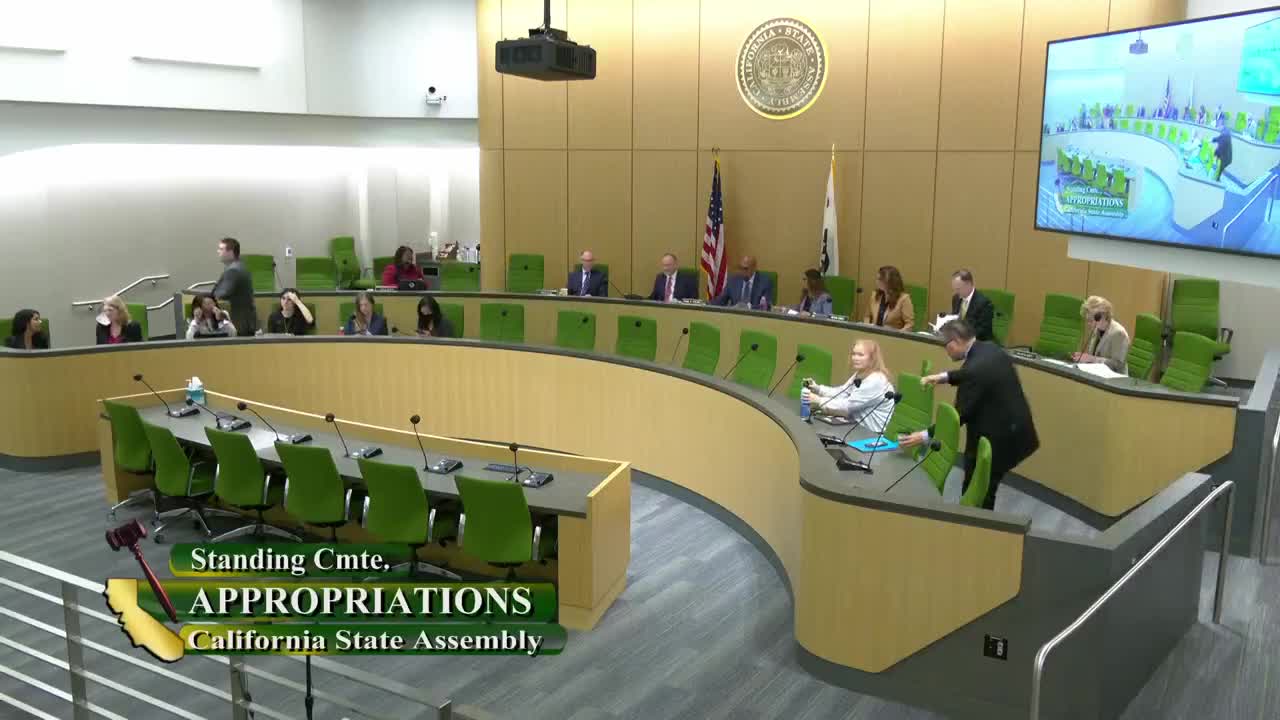 11MIN
Assembly Standing Committee on Appropriations
Bill Author