AB 1145: Workers’ compensation.
- Session Year: 2023-2024
- House: Assembly
- Latest Version Date: 2023-09-12
Current Status:
Failed
(2024-01-25: Consideration of Governor's veto stricken from file.)
Introduced
In Committee
First Chamber
In Committee
Second Chamber
Enacted
What does this bill do?
This bill lets certain state health and social services workers — such as nurses, psychiatric technicians, and related staff at the Departments of Corrections and Rehabilitation, Developmental Services, and State Hospitals — have post‑traumatic stress disorder (PTSD) treated as a work injury for workers’ compensation. If PTSD is diagnosed using the American Psychiatric Association’s manual, it is presumed to be work‑related unless other evidence disagrees, entitling the worker to medical, disability, and death benefits; workers must generally have six months of service unless the PTSD was caused by a sudden, extraordinary job event, and the rule is temporary through 2030.
The summary is provided by generative AI which can make mistakes. For original language, please view the details in the table below.
Under existing law, a person injured in the course of employment is generally entitled to receive workers compensation on account of that injury. Existing law, until January 1, 2025, provides that, in the case of certain state and local firefighting personnel and peace officers, the term injury includes post-traumatic stress disorder that developed or manifested during a period while the member is in the service of the department or unit, and establishes a disputable presumption in this regard.
This bill would provide, only until January 1, 2030, that in the case of certain state nurses, psychiatric technicians, and various medical and social services specialists, the term injury also includes post-traumatic stress that develops or manifests itself during a period in which the injured person is in the service of the department or unit. The bill would apply to injuries occurring on or after January 1, 2024. The bill would prohibit compensation from being paid for a claim of injury unless the member has performed services for the department or unit for at least 6 months, unless the injury is caused by a sudden and extraordinary employment condition.
(a)This section applies to all of the following employed at the Department of Corrections and Rehabilitation, the State Department of Developmental Services, and the State Department of State Hospitals:
(1)All classifications covered in State Bargaining Unit 17.
(2)All classifications covered in State Bargaining Unit 18.
(3)All classifications covered in State Bargaining Unit 20.
(b)In the case of a person described in subdivision (a), the term injury, as used in this division, includes post-traumatic stress disorder, as diagnosed according to the most recent edition of the Diagnostic and Statistical Manual of Mental Disorders published by the American Psychiatric Association and that develops or manifests itself during a period in which any member described in subdivision (a) is in the service of the department or unit.
(c)For an injury that is diagnosed as specified in subdivision (b):
(1)The compensation that is awarded shall include full hospital, surgical, medical treatment, disability indemnity, and death benefits, as provided by this division.
(2)The injury so developing or manifesting itself in these cases shall be presumed to arise out of and in the course of the employment. This presumption is disputable and may be controverted by other evidence, but unless so controverted, the appeals board is bound to find in accordance with the presumption. This presumption shall be extended to a member following termination of service for a period of 3 calendar months for each full year of the requisite service, but not to exceed 60 months in any circumstance, commencing with the last date actually worked in the specified capacity.
(d)Compensation shall not be paid pursuant to this section for a claim of injury unless the member has performed services for the department or unit for at least six months. The six months of employment need not be continuous. This subdivision does not apply if the injury is caused by a sudden and extraordinary employment condition.
(e)This section applies to injuries occurring on or after January 1, 2024.
(f)This section shall remain in effect only until January 1, 2030, and as of that date is repealed.
|
Date
|
Status
|
|---|---|
| Jan 25, 2024 | Consideration of Governor's veto stricken from file. |
| Jan 3, 2024 | Consideration of Governor's veto pending. |
| Oct 8, 2023 | Vetoed by Governor. |
| Sep 15, 2023 | Enrolled and presented to the Governor at 4 p.m. |
| Sep 11, 2023 | In Assembly. Ordered to Engrossing and Enrolling. |
| Sep 11, 2023 | Read third time. Passed. Ordered to the Assembly. (Ayes 33. Noes 3. Page 2555.). |
| Sep 5, 2023 | Read second time. Ordered to third reading. |
| Sep 1, 2023 | From committee: Do pass. (Ayes 5. Noes 0.) (September 1). |
| Jul 10, 2023 | In committee: Referred to APPR. suspense file. |
| Jun 28, 2023 | From committee: Do pass and re-refer to Com. on APPR. (Ayes 5. Noes 0.) (June 28). Re-referred to Com. on APPR. |
| Jun 7, 2023 | Referred to Com. on L., P.E. & R. |
| May 26, 2023 | In Senate. Read first time. To Com. on RLS. for assignment. |
| May 25, 2023 | Read third time. Passed. Ordered to the Senate. (Ayes 76. Noes 0. Page 1762.) |
| May 18, 2023 | Read second time. Ordered to third reading. |
| May 18, 2023 | From committee: Do pass. (Ayes 14. Noes 0.) (May 18). |
| Apr 26, 2023 | In committee: Set, first hearing. Referred to APPR. suspense file. |
| Apr 12, 2023 | From committee: Do pass and re-refer to Com. on APPR. (Ayes 13. Noes 0.) (April 12). Re-referred to Com. on APPR. |
| Mar 2, 2023 | Referred to Com. on INS. |
| Feb 17, 2023 | From printer. May be heard in committee March 19. |
| Feb 16, 2023 | Read first time. To print. |
|
Date
|
Description
|
Location
|
Votes
|
|
|---|---|---|---|---|
| Sep 11, 2023 | Assembly 3rd Reading AB1145 Maienschein By Laird | Senate Floor |
Passed |
|
| Sep 1, 2023 | Do pass | Senate Standing Committee on Appropriations |
Passed |
|
| Jul 10, 2023 | Placed on suspense file | Senate Standing Committee on Appropriations |
Passed |
|
| Jun 28, 2023 | Do pass, but first be re-referred to the Committee on [Appropriations] | Senate Standing Committee on Labor, Public Employment and Retirement |
Passed |
|
| May 25, 2023 | AB 1145 Maienschein Assembly Third Reading | Assembly Floor |
Passed |
|
| May 18, 2023 | Do pass. | Assembly Standing Committee on Appropriations |
Passed |
|
| Apr 12, 2023 | Do pass and be re-referred to the Committee on [Appropriations] | Assembly Standing Committee on Insurance |
Passed |
This list shows positions taken on this bill by organizations on the date displayed, which is linked to the original source.
Positions by individuals are not included.
|
Organization
|
Position
|
Date
|
|---|---|---|
| Afscme | * Support | Jun 28, 2023 |
| American Property Casualty Insurance Association | ** Against | |
| Association Of California State Supervisors | ** Support | |
| California Association Of Joint Powers Authorities | ** Against | |
| California Association Of Psychiatric Technicians | ** Support | |
| California Coalition On Workers Compensation | ** Against | |
| California Labor Federation | * Support | Jun 28, 2023 |
| California Nurses Association | ** Support | |
| Deputy Sheriffs Association of Monterey County | ** Support | |
| Placer County Deputy Sheriffs’ Association | ** Support | |
| Riverside Sheriffs Association | ** Support | |
| SEIU Local 1000 | ** Support |
GOVERNOR'S VETO
GV Bill Id:AB 1145
Author:(Maienschein)
As Enrolled Ver:September 12, 2023
2/3 vote
SUMMARY
Extends an industrial injury rebuttable presumption for a diagnosis of a post-traumatic stress disorder (PTSD) to certain state nurses, psychiatric technicians, and various medical social services specialists.
Major Provisions
- Extends a PTSD presumption to employees at the Department of Corrections and Rehabilitation, the State Department of Developmental Services, and the State Department of State Hospitals covered in State Bargaining Units 17, 18, and 20.
- Provides that the compensation that is awarded shall include full hospital, surgical, medical treatment, disability indemnity, and death benefits, as provided.
- Extends the presumption following termination of service for a period of three months for each full year of service, not to exceed 60 months, commencing on the last date actually worked in the specified capacity. The covered employee must have been on the job for at least six months for the presumption to apply.
- Provides that the bill's provisions shall be applied to claims filed on or after January 1, 2024, regardless of whether the claim was denied or is on appeal.
- Provides that these provisions shall only remain in effect until January 1, 2030.
Governor's Veto Message
This bill would establish a statutory post-traumatic stress disorder (PTSD) presumption for certain state nurses, psychiatric technicians, and various medical and social services specialists employed by the Department of Corrections and Rehabilitation (CDCR), the State Department of Developmental Services (DDS), and the State Department of State Hospitals (DSH), who provide direct care to prison inmates and state hospital patients.
I am a firm supporter of the ability of individuals to seek treatment for mental health conditions and my Administration has initiated multiple programs to provide our valued workforce with mental wellness support during times of trauma. Additionally, the Posttraumatic Stress Disorder and Acute Stress Disorder Guideline was adopted in 2019.
PTSD is compensable under the workers compensation system. However, altering the burden of proof through a presumption should be provided sparingly and based upon the unique hazards or proven difficulty of establishing a direct relationship between a disease or injury and the employee's work. Although well-intentioned, the need for the presumption envisioned by this bill must be supported by clear and compelling evidence.
COMMENTS
Generally, in order to establish that a new presumption ought to be adopted, proponents must provide data that shows that the injury is most likely to be job-related and has a high incidence rate among the workers seeking the presumption. The data should also show that the injury is difficult to prove as being job-related. Finally, the proponents of the presumption must also show that when claims are filed, they are denied for lack of proof that the injury is job-related.
The author of this bill has provided limited data showing that nearly half the PTSD claims submitted by psychiatric technicians (State Bargaining Unit 18) employed by the Department of State Hospitals are initially rejected. However, this alone does not provide clear evidence that a new presumption is needed and this data only applies to a limited number of employees that would be covered by this bill. Specifically, this bill would apply to about 16,750 nurses, psychiatric technicians, and medical and social services specialists who work in state prisons, state veteran's homes, state developmental centers, and state hospitals. Therefore, the author of this bill has also committed to requesting a study from CHSWC to be completed at a point where the data from the presumption proposed in this bill would be more readily available, but before the provisions of this bill sunset on January 1, 2030.
Presumptions have never been intended to create work related injuries when, in fact, the injuries in question are not work related. Rather, presumptions of compensability have been adopted, some many decades ago, to reflect unique circumstances where injuries or illnesses appear to logically be work related, but it is difficult for the safety officer to prove it is work related.
There has clearly been some slippage over time from a rigorous application of this rationale, but it remains the underlying premise of presuming injuries or illnesses to be work related. With very narrow exceptions for privately employed firefighters for public facilities, presumptions of compensability have been granted only to public safety officers – fire and peace officer employees.
According to the Author
AB 1145 would establish a rebuttable presumption that post-traumatic stress disorder (PTSD) suffered by nursing staff who provide direct care to prison inmates and state hospital patients is a workplace injury. These state nurses, psychiatric technicians, social service specialists and various medical specialists provide direct care to inmate and patient populations that have committed serious and violent felonies or have severe mental illnesses that make them a danger to themselves or others.
This nursing staff is most often the direct recipient of assaultive behavior. Each day likely involves repetitive verbal and emotional abuse, physical threats, and witnessing or being the target of horrific violent assaults. This toll on their psychological and physical health from these traumatic experiences can undoubtedly produce psychological injury, including PTSD. Unfortunately, the burden falls upon the nurse to prove their psychological injury resulted from a workplace injury.
These nurses deserve to receive the benefits of Workers' Compensation without undue burden so they can heal from psychological trauma they may endure doing their job.
Arguments in Support
The California Association of Psychiatric Technicians (CAPT), the sponsor of this bill, argues the bill is needed because without a presumption the burden falls upon the employee to prove their PTSD resulted from a workplace occurrence, which "places an undue hardship on the victim of a workplace incident simply struggling to heal."
Arguments in Opposition
The California Coalition on Workers' Compensation opposes this bill, arguing that "It is clear that AB 1145 would drive up costs for struggling public entities in a time of budget deficits, but it's not at all clear that a presumption is needed for these workers to fairly access the workers' compensation system."
FISCAL COMMENTS
According to the Assembly Appropriations Committee:
- General Fund costs of an unknown amount, but likely in the millions of dollars, to CDCR, DDS, and DSH for additional workers' compensation claims and staff workload to process the increase in claims. CDCR, DDS, and DSH estimate approximately 8,500, 1,100 and 6,000 employees, respectively, would be eligible for this bill's presumption.
- Minor and absorbable costs to DWC to monitor administration of these claims. Although employers have the opportunity to rebut a presumption and establish an injury is not the result of employment, data shows presumptions are rarely rebutted.
VOTES
ASM INSURANCE: 13-0-1
YES: Calderon, Essayli, Berman, Cervantes, Chen, Vince Fong, Gipson, Grayson, Jones‑Sawyer, Ortega, Rodriguez, Valencia, Wood
ABS, ABST OR NV: Soria
ASM APPROPRIATIONS: 14-0-2
YES: Holden, Megan Dahle, Bryan, Calderon, Wendy Carrillo, Mike Fong, Hart, Lowenthal, Mathis, Papan, Pellerin, Sanchez, Weber, Ortega
ABS, ABST OR NV: Dixon, Robert Rivas
ASSEMBLY FLOOR: 76-0-4
YES: Addis, Alanis, Alvarez, Arambula, Bains, Bauer-Kahan, Bennett, Berman, Boerner, Bonta, Bryan, Calderon, Juan Carrillo, Wendy Carrillo, Cervantes, Chen, Connolly, Megan Dahle, Davies, Essayli, Flora, Mike Fong, Vince Fong, Friedman, Gabriel, Gallagher, Garcia, Gipson, Grayson, Haney, Hart, Holden, Hoover, Irwin, Jackson, Jones-Sawyer, Kalra, Lackey, Lee, Low, Lowenthal, Maienschein, McCarty, McKinnor, Muratsuchi, Stephanie Nguyen, Ortega, Pacheco, Jim Patterson, Joe Patterson, Pellerin, Petrie-Norris, Quirk‑Silva, Ramos, Reyes, Luz Rivas, Robert Rivas, Rodriguez, Blanca Rubio, Sanchez, Santiago, Schiavo, Soria, Ta, Ting, Valencia, Villapudua, Waldron, Wallis, Ward, Weber, Wicks, Wilson, Wood, Zbur, Rendon
ABS, ABST OR NV: Aguiar-Curry, Dixon, Mathis, Papan
SENATE FLOOR: 33-3-4
YES: Allen, Alvarado-Gil, Archuleta, Ashby, Atkins, Becker, Blakespear, Bradford, Cortese, Dahle, Dodd, Durazo, Eggman, Gonzalez, Hurtado, Laird, Limón, McGuire, Menjivar, Min, Newman, Ochoa Bogh, Padilla, Portantino, Roth, Rubio, Skinner, Smallwood-Cuevas, Stern, Umberg, Wahab, Wiener, Wilk
NO: Grove, Nguyen, Niello
ABS, ABST OR NV: Caballero, Glazer, Jones, Seyarto
UPDATED
VERSION: September 12, 2023
CONSULTANT: Claire Wendt / INS. / (916) 319-2086 FN: 0002500
SENATE RULES COMMITTEE Office of Senate Floor Analyses (916) 651-1520 Fax: (916) 327-4478 | AB 1145 |
THIRD READING
Bill No: AB 1145
Author: Maienschein (D)
Introduced: 2/16/23
Vote: 21
SENATE LABOR, PUB. EMP. & RET. COMMITTEE: 5-0, 6/28/23
AYES: Cortese, Wilk, Durazo, Laird, Smallwood-Cuevas
SENATE APPROPRIATIONS COMMITTEE: 5-0, 9/1/23
AYES: Portantino, Ashby, Bradford, Wahab, Wiener
NO VOTE RECORDED: Jones, Seyarto
ASSEMBLY FLOOR: 76-0, 5/25/23 - See last page for vote
SUBJECT: Workers’ compensation
SOURCE: California Association of Psychiatric Technicians
DIGEST:
This bill adds specified state registered nurses, psychiatric technicians, and medical and social services specialists to the existing workers’ compensation post-traumatic stress injury rebuttable presumption.
ANALYSIS:
Existing law:
- Establishes a workers’ compensation (WC) system that provides benefits to an employee who suffers from an injury or illness that arises out of and in the course of employment, regardless of fault. This system requires all employers to secure payment of benefits by either securing the consent of the Department of Industrial Relations (DIR) to self-insure or by securing insurance against liability from an insurance company authorized by the state.
- Creates a series of rebuttable presumptions of an occupational injury for peace and safety officers for the purposes of the WC system. These presumptions include heart disease, hernias, pneumonia, cancer, meningitis, tuberculosis, and biochemical illness. The compensation awarded for the injury or malady must include full hospital, surgical, medical treatment, disability indemnity, and death benefits, as provided by WC law.
- Provides that a psychiatric injury can be considered compensable within the WC system if:
- The mental disorder causes disability or need for medical treatment, and it is diagnosed using the terminology and criteria of the American Psychiatric Association’s Diagnostic and Statistical Manual of Mental Disorders, Third Edition-Revised, or the terminology and diagnostic criteria of other psychiatric diagnostic manuals generally approved and accepted nationally by practitioners in the field of psychiatric medicine.
- The employee can demonstrate by a preponderance of the evidence that actual events of employment were predominant as to all causes combined of the psychiatric injury.
- In the case of employees whose injuries resulted from being a victim of a violent act or from direct exposure to a significant violent act, the employee shall be required to demonstrate by a preponderance of the evidence that actual events of employment were a substantial cause of the injury. “Substantial cause” is defined as 35-40 percent of the causation from all sources combined.
- The employee worked for the employer for at least a total of six months unless the employee’s psychiatric injury is caused by a sudden and extraordinary employment condition.
- Creates, until January 1, 2025, a rebuttable presumption that a mental health condition or mental disability that results in a diagnosis of post-traumatic stress or mental health disorder is an occupational injury for peace officers who are primarily engaged in active law enforcement activities.
This bill:
- Adds the following employees to the existing rebuttable presumption that post-traumatic stress developed or manifested during the course of service of the Department of Corrections and Rehabilitation, the State Department of Developmental Services, and the State Department of Hospitals:
- Registered nurses covered by Bargaining Unit 17;
- Psychiatric technicians covered by Bargaining Unit 18; and
- Medical and social services specialists covered by Bargaining Unit 20.
- Provides the presumption would apply to injuries occurring on or after January1, 2024, and make the provisions of this bill inoperative on January 1, 2030.
- Prohibits compensation from being paid for a claim of post-traumatic stress injury unless the member has performed services for the applicable department or unit for at least six months unless the injury is caused by a sudden and extraordinary employment condition.
- Provides that, following termination of service, the presumption would cover a period of three calendar months for each full year of service, not to exceed 60months.
Background
California employs approximately 17,000 registered nurses, psychiatric technicians, and medical and social services specialists who work in state prisons, state veterans’ homes, state developmental centers, and state hospitals and who are members of Bargaining Units 17, 18, and 20. These predominantly female occupations provide direct care to inmates and patients who have either been deemed incompetent to stand trial, are not guilty by reason of insanity, are sexually violent, or have a severe mental illness. These state employees have suffered severe physical and psychological injuries at the hands of those who are incarcerated and institutionalized.
Existing law authorizes an injured employee to apply for WC due to injury acquired in the workplace. The burden falls upon the employee to prove their psychological injury resulted from a workplace occurrence. Typically, the Legislature has afforded exceptions to relieve the employee of this burden through presumptions when data supports a presumption is reasonable. Presumptions are a departure from the normal WC process and relieve the injured employee of the burden to prove that the injury is work-related.
In September 2019, the Chair of the Assembly Insurance Committee sent a letter to the Commission on Health and Safety and Workers’ Compensation (CHSWC) requesting a study related to the PTSI presumption for police and firefighters was created by SB 542 (Stern, Chapter 390, Statutes of 2019). A report was commissioned from RAND, which conducted the research using a mixed-methods approach to address a range of questions about mental health of first responders who are covered by SB 542 and how those with mental health conditions were treated in the WC system. The study authors noted further research is needed to better understand the effectiveness of the PTSI presumption.
Comments
Purpose of the bill. According to the author, “AB 1145 would establish a rebuttable presumption that post-traumatic stress disorder (PTSD) suffered by nursing staff who provide direct care to prison inmates and state hospital patients is a workplace injury. These state nurses, psychiatric technicians, social service specialists and various medical specialists provide direct care to inmate and patient populations that have committed serious and violent felonies or have severe mental illnesses that make them a danger to themselves or others.
“This nursing staff is most often the direct recipient of assaultive behavior. Each day likely involves repetitive verbal and emotional abuse, physical threats, and witnessing or being the target of horrific violent assaults. This toll on their psychological and physical health from these traumatic experiences can undoubtedly produce psychological injury, including PTSD. Unfortunately, the burden falls upon the nurse to prove their psychological injury resulted from a workplace injury.
“These nurses deserve to receive the benefits of Workers’ Compensation without undue burden so they can heal from psychological trauma they may endure doing their job.”
Related/Prior Legislation
AB 597 (Rodriguez, 2023), for injuries occurring on and after January 1, 2024, makes WC rebuttable presumption for PTSI applicable to emergency medical technicians and paramedics. The bill was referred to the Assembly Committee on Insurance.
AB 1107 (Mathis, 2023), for injuries occurring on or after January 1, 2024, makes WC rebuttable presumption for PTSI applicable to additional members and employees of the Department of Corrections and Rehabilitation. The bill was referred to the Assembly Committee on Insurance.
SB 623 (Laird, 2023) extends the existing rebuttable presumption for specified peace officers that a diagnosis of PTSI is occupational, and therefore covered by WC and make it applicable to more classes of public servants.
SB 284 (Stern, 2022) would have expanded the PTSI presumption to cover additional firefighters, peace officers, and public safety dispatchers. The bill was vetoed by Governor Newsom.
SB 542 (Stern, Chapter 390, Statutes of 2019) created a rebuttable presumption for specified peace officers and firefighters that a diagnosis of post-traumatic stress injury is occupational and therefore covered by WC.
FISCAL EFFECT: Appropriation: No Fiscal Com.: Yes Local: No
According to the Senate Appropriations Committee:
- Extending coverage of presumptive injuries would likely result in increased General Fund workers compensation costs until January 1, 2030. The magnitude is unknown, and would depend on the frequency of PTSI claims that become compensable as a result of the presumption’s expansion. Total annual costs across all affected departments, including staff time to process the increase in claims, would likely be in the millions of dollars.
- The DIR Division of Workers Compensation would incur minor and absorbable costs to monitor administration of these claims. Although employers have the opportunity to rebut a presumption and establish an injury is not the result of employment, available data indicate that presumptions are rarely rebutted.
SUPPORT: (Verified 9/1/23)
California Association of Psychiatric Technicians (source)
Association of California State Supervisors
California Nurses Association
Deputy Sheriffs’ Association of Monterey County
Placer County Deputy Sheriffs’ Association
Riverside Sheriffs’ Association
SEIU Local 1000
OPPOSITION: (Verified 9/1/23)
American Property Casualty Insurance Association
California Association of Joint Powers Authorities
California Coalition on Workers Compensation
ARGUMENTS IN SUPPORT: The California Association of Psychiatric Technicians states:
CAPT members are the largest direct level-of-care providers representing over 3,600 staff at the Department of State Hospitals. In 2020-2021 alone, there were 2,700 patient-on-staff assaults. Additionally, that same year, Psych Techs filed 1,251 non-COVID related worker’s compensation claims, 33 of which resulted in cases where the injured nurse could not return to the profession.
The female-dominated nursing profession, including Psychiatric Technicians, Registered Nurses, and Licensed Vocational Nurses, have suffered severe injuries at the hands of the incarcerated and institutionalized. For our members, each workday represents a potential 16- hour mandate that will likely involve repetitive verbal and emotional abuse, physical threats, and witnessing or being the target of a horrific violent assault or incident. This toll on their psychological and physical health is insurmountable, especially when their workplace settings submit them to experiences that shock the mind and soul, traumatic experiences that undoubtedly produce psychological injury, including PTSD…Given such a horrific context, the Workers’ Compensation system generally approves these PTSD claims. But unfortunately, the burden falls upon the nurse to prove their psychological injury resulted from a workplace occurrence. This burden places an undue hardship on the victim of a workplace incident simply struggling to heal. Furthermore, the burden of proof is counterintuitive. The burden of proof isn’t going to change the outcome. Instead, it neglects the obvious presumption, delays benefits, and impedes the victim’s recovery and healing.
When first responders report to a tragic scene, the tragedy and acts of heroism are captured for public consumption by personal cell phones, news cameras, and journalists. This is not the case for nurses in state hospitals or prisons. Their trauma and acts of heroism are unseen, endured behind the closed and locked doors of our state institutions.
The nursing staff in our state institutions are not armed with batons, pepper spray, or defensive tactics training to protect themselves when attacked. The inmates and patients that our nurses care for have criminogenic behaviors as well as psychosis making them incredibly dangerous and challenging to treat.
The nursing professionals in these institutions endure trauma, behind lock and key, as a condition of employment. These nurses deserve to receive the benefits of Workers' Compensation without undue burden so they can heal from their psychological scars with dignity.
ARGUMENTS IN OPPOSITION: According to the California Coalition on Workers’ Compensation:
There is no evidence that normal operation of our workers’ compensation system is failing to provide benefits to the workers covered by AB 1145 or that a presumption is needed to secure those benefits. AB 1145 sets aside key protections for taxpayer funded public entities and expands the PTSD presumption without any evidence.
California’s workers’ compensation system treats psychiatric injuries somewhat differently than physical injuries or illnesses, and that is because the rules acknowledge that psychiatric injury tends to be far more complex in terms of causation. While work can be a stressor in the life of an employee, far more of our lives are lived outside of the workplace and psychiatric injuries are subjective in terms of causation. Because of this, California law requires that “the actual events of employment” be the predominant cause (51%) of psychiatric injury. If the psychiatric injury is the result of violence or a violent event in the workplace, then the threshold is lower (35-40%). California law also protects employers from claims of psychiatric injury if a good faith, nondiscriminatory personnel action (bad review, termination, etc.) was largely responsible for the psychiatric injury. Psychiatric injuries have been repeatedly used as a center of fraud and abuse in California’s workers’ compensation system, and the protections in existing law are there for a reason. Undermining those protections with a presumption without any evidence of a problem only serves to open the door to abuse and fraud.
California law already contains a presumption for PTSD that applies to certain peace officers and firefighters. This was established by the passage of SB 542 (Stern, 2019) despite a complete lack of data or analysis objectively demonstrating that California’s employer-funded system of no-fault workers’ compensation – a system required to be “liberally construed” by judges when a dispute arises – had any problems with respect to these types of claims. The legislature adopted this legislation on the strength of anecdotal claims from the labor unions who sponsored and supported the bill, but the sunset was added to the bill in the Assembly Insurance Committee so that the legislature could collect objective evidence related to the policy and reconsider the situation when sunset required legislative action to reauthorize.”
ASSEMBLY FLOOR: 76-0, 5/25/23
AYES: Addis, Alanis, Alvarez, Arambula, Bains, Bauer-Kahan, Bennett, Berman, Boerner, Bonta, Bryan, Calderon, Juan Carrillo, Wendy Carrillo, Cervantes, Chen, Connolly, Megan Dahle, Davies, Essayli, Flora, Mike Fong, Vince Fong, Friedman, Gabriel, Gallagher, Garcia, Gipson, Grayson, Haney, Hart, Holden, Hoover, Irwin, Jackson, Jones-Sawyer, Kalra, Lackey, Lee, Low, Lowenthal, Maienschein, McCarty, McKinnor, Muratsuchi, Stephanie Nguyen, Ortega, Pacheco, Jim Patterson, Joe Patterson, Pellerin, Petrie-Norris, Quirk-Silva, Ramos, Reyes, Luz Rivas, Robert Rivas, Rodriguez, Blanca Rubio, Sanchez, Santiago, Schiavo, Soria, Ta, Ting, Valencia, Villapudua, Waldron, Wallis, Ward, Weber, Wicks, Wilson, Wood, Zbur, Rendon
NO VOTE RECORDED: Aguiar-Curry, Dixon, Mathis, Papan
Prepared by: Dawn Clover / L., P.E. & R. / (916) 651-1556
9/2/23 15:01:35
**** END ****
SENATE COMMITTEE ON
Senator Anthony Portantino, Chair
2023 - 2024 Regular Session
AB 1145 (Maienschein) - Workers’ compensation
Version: | Policy Vote: |
Urgency: | Mandate: |
Hearing Date: | Consultant: |
Bill Summary:
AB 1145 would add specified state registered nurses, psychiatric technicians, and medical and social services specialists to the existing workers compensation post-traumatic stress injury (PTSI) rebuttable presumption.
Fiscal Impact:
- Extending coverage of presumptive injuries would likely result in increased General Fund workers compensation costs until January 1, 2030. The magnitude is unknown, and would depend on the frequency of PTSI claims that become compensable as a result of the presumption’s expansion. Total annual costs across all affected departments, including staff time to process the increase in claims, would likely be in the millions of dollars (See Staff Comments).
- The Department of Industrial Relations’ (DIR) Division of Workers Compensation would incur minor and absorbable costs to monitor administration of these claims. Although employers have the opportunity to rebut a presumption and establish an injury is not the result of employment, available data indicate that presumptions are rarely rebutted.
Background:
Current law establishes a workers’ compensation system that provides benefits to an employee who suffers from an injury or illness that arises out of and in the course of employment, irrespective of fault. This system requires all employers to secure payment of benefits by either securing the consent of DIR to self-insure or by securing insurance against liability from an insurance company duly authorized by the state.
Current law also creates presumptions to reflect unique circumstances where injuries or illnesses appear to be logically work-related, but it is difficult for the safety officer to prove so. Presumptions are rebuttable, but given that many injuries for which presumptions exist can have a variety of causes, it is difficult to prove they are not work-related. Consequently, employers rarely attempt to rebut presumptions. These presumptions include: (1) heart disease, (2) hernias, (3) pneumonia, (4) cancer, (5) meningitis, (6) tuberculosis, and (7) bio-chemical illness. The absence of a presumption does not mean an employee does not qualify for workers' compensation benefits, but that an employee must prove an injury is work-related in order to qualify.
AB 542 (Stern, 2019) provides, until January 1, 2025, a disputable presumption that a diagnosis of PTSI for specified peace officers and firefighters, including those employed by the Department of Forestry and Fire Protection, the Office of Emergency Services, the University of California, and California State University, is an occupational injury, running for up to five years. The benefit includes full hospital, surgical, medical treatment, disability indemnity, and death benefits, but only applies to peace officers who have served at least six months.
The State employs several thousand registered nurses, psychiatric technicians, and medical and social services specialists who work in state prisons, state veterans’ homes, state developmental centers, and state hospitals and who are members of Bargaining Units 17, 18, and 20. These predominantly female occupations provide direct care to inmates and patients within these facilities who have either been deemed incompetent to stand trial, are not guilty by reason of insanity, are sexually violent, or have a severe mental illness. These state employees have suffered severe physical and psychological injuries at the hands of those who are incarcerated and institutionalized
In September 2019, then-Chair of the Assembly Insurance Committee sent a letter to the Commission on Health and Safety and Workers’ Compensation requesting a study related to the PTSI presumption for police and firefighters was created by SB 542. A report was commissioned from RAND, which conducted the research using a mixed-methods approach to address a range of questions about mental health of first responders who are covered by SB 542 and how those with mental health conditions were treated in the workers compensation system. The study authors noted further research is needed to better understand the effectiveness of the PTSI presumption.
Proposed Law:
This bill would, until January 1, 2030, do the following:
- Add the following employees to the existing rebuttable presumption that post-traumatic stress developed or manifested during the course of service of the California Department of Corrections and Rehabilitation (CDCR), the Department of Developmental Services (DDS), and the Department of Hospitals (DSH): (1) registered nurses covered by Bargaining Unit 17, (2) psychiatric technicians covered by Bargaining Unit 18, and (3) medical and social services specialists covered by Bargaining Unit 20.
- Provide the presumption would apply to injuries occurring on or after January 1, 2024.
- Prohibit compensation from being paid for a claim of PTSI unless the member has performed services for the applicable department or unit for at least six months unless the injury is caused by a sudden and extraordinary employment condition.
- Provide that, following termination of service, the presumption would cover a period of three calendar months for each full year of service, not to exceed 60 months.
Related Legislation:
- AB 597 (Rodriguez) would, for injuries occurring on and after January 1, 2024, make workers’ compensation rebuttable presumption for PTSI applicable to emergency medical technicians and paramedics. This bill is currently pending in the Assembly Committee on Insurance.
- AB 1107 (Mathis) would, for injuries occurring on or after January 1, 2024, make workers’ compensation rebuttable presumption for PTSI applicable to additional members and employees of the Department of Corrections and Rehabilitation. This is currently pending in the Assembly Committee on Insurance.
- SB 623 (Laird) would extend the existing rebuttable presumption for specified peace officers that a diagnosis of PTSI is occupational, and therefore covered by workers’ compensation and make it applicable to more classes of public servants. This bill is pending in the Assembly Committee on Appropriations.
- SB 284 (Stern, 2022) would have expanded the PTSI presumption to cover additional firefighters, peace officers, and public safety dispatchers. This bill was vetoed by the Governor.
- SB 542 (Stern, Chapter 390, Statutes of 2019) created a rebuttable presumption for specified peace officers and firefighters that a diagnosis of post-traumatic stress injury is occupational and therefore covered by workers’ compensation.
Staff Comments:
As noted above, this bill would impact CDCR, DDS, and DSH. These departments estimate roughly 8,500, 1,100 and 6,000 employees, respectively, would be eligible for this bill’s presumption. Total state costs would likely be in the millions of dollars, potentially reaching the low tens of millions of dollars, for additional workers compensation claims and staffing resources to process them.
-- END --
SENATE COMMITTEE ON LABOR, PUBLIC EMPLOYMENT AND RETIREMENT
Senator Dave Cortese, Chair
2023 - 2024 Regular
Bill No: AB 1145 Hearing Date: June 28, 2023
Author: | Maienschein | ||
Version: | February 16, 2023 | ||
Urgency: | No | Fiscal: | Yes |
Consultant: | Dawn Clover | ||
SUBJECT: Workers’ compensation
KEY ISSUE
Should the Legislature add specified state registered nurses, psychiatric technicians, and medical and social services specialists to the existing workers’ compensation post-traumatic stress injury rebuttable presumption?
ANALYSIS
Existing law:
- Establishes a workers’ compensation system that provides benefits to an employee who suffers from an injury or illness that arises out of and in the course of employment, regardless of fault. This system requires all employers to secure payment of benefits by either securing the consent of the Department of Industrial Relations to self-insure or by securing insurance against liability from an insurance company authorized by the state. (Labor Code §§3200)
- Creates a series of rebuttable presumptions of an occupational injury for peace and safety officers for the purposes of the workers’ compensation system. These presumptions include heart disease, hernias, pneumonia, cancer, meningitis, tuberculosis, and biochemical illness. The compensation awarded for the injury or malady must include full hospital, surgical, medical treatment, disability indemnity, and death benefits, as provided by workers compensation law. (Labor Code §3212 - 3213.2)
- Provides that a psychiatric injury can be considered compensable within the workers’ compensation system if:
- The mental disorder causes disability or need for medical treatment, and it is diagnosed using the terminology and criteria of the American Psychiatric Association’s Diagnostic and Statistical Manual of Mental Disorders, Third Edition-Revised, or the terminology and diagnostic criteria of other psychiatric diagnostic manuals generally approved and accepted nationally by practitioners in the field of psychiatric medicine.
- The employee can demonstrate by a preponderance of the evidence that actual events of employment were predominant as to all causes combined of the psychiatric injury.
- In the case of employees whose injuries resulted from being a victim of a violent act or from direct exposure to a significant violent act, the employee shall be required to demonstrate by a preponderance of the evidence that actual events of employment were a substantial cause of the injury. “Substantial cause” is defined as 35-40 percent of the causation from all sources combined.
- The employee worked for the employer for at least a total of six months unless the employee’s psychiatric injury is caused by a sudden and extraordinary employment condition. (Labor Code §3208.3)
- The mental disorder causes disability or need for medical treatment, and it is diagnosed using the terminology and criteria of the American Psychiatric Association’s Diagnostic and Statistical Manual of Mental Disorders, Third Edition-Revised, or the terminology and diagnostic criteria of other psychiatric diagnostic manuals generally approved and accepted nationally by practitioners in the field of psychiatric medicine.
- Creates, until January 1, 2025, a rebuttable presumption that a mental health condition or mental disability that results in a diagnosis of post-traumatic stress or mental health disorder is an occupational injury for the following peace officers who are primarily engaged in active law enforcement activities:
- Active firefighting members, whether volunteers, partly paid, or fully paid, of a local government or county, University of California, California State University, or the Department of Forestry and Fire Protection.
- Active firefighting members of a fire department that serves a United States Department of Defense installation and who are certified by the Department of Defense as meeting its standards for firefighters.
- Active firefighting members of a fire department that serves a National Aeronautics and Space Administration installation.
- Sheriffs, undersheriffs, deputy sheriffs, police chiefs, police officers, and municipal law enforcement inspectors.
- Attorney General and special agents and investigators of the Department of Justice.
- Members of the California Highway Patrol, University of California Police Department, and California State University Police Department.
- Members of a community college police department and school district police departments.
- Members of an arson investigation unit.
- Parole officers and correctional officers.
- Fire and rescue services coordinators who work for the Office of Emergency Services. (Labor Code §3212.15)
- Active firefighting members, whether volunteers, partly paid, or fully paid, of a local government or county, University of California, California State University, or the Department of Forestry and Fire Protection.
This bill:
- Adds the following employees to the existing rebuttable presumption that post-traumatic stress developed or manifested during the course of service of the Department of Corrections and Rehabilitation, the State Department of Developmental Services, and the State Department of Hospitals:
- Registered nurses covered by Bargaining Unit 17;
- Psychiatric technicians covered by Bargaining Unit 18; and
- Medical and social services specialists covered by Bargaining Unit 20.
- Registered nurses covered by Bargaining Unit 17;
- Provides the presumption would apply to injuries occurring on or after January 1, 2024, and make the provisions of this bill inoperative on January 1, 2030.
- Prohibits compensation from being paid for a claim of post-traumatic stress injury unless the member has performed services for the applicable department or unit for at least six months unless the injury is caused by a sudden and extraordinary employment condition.
- Provides that, following termination of service, the presumption would cover a period of three calendar months for each full year of service, not to exceed 60 months.
COMMENTS
1. Background
California employs less than 20,000 registered nurses, psychiatric technicians, and medical and social services specialists who work in state prisons, state veterans’ homes, state developmental centers, and state hospitals and who are members of Bargaining Units 17, 18, and 20. These predominantly female occupations provide direct care to inmates and patients within these facilities who have either been deemed incompetent to stand trial, are not guilty by reason of insanity, are sexually violent, or have a severe mental illness. These state employees have suffered severe physical and psychological injuries at the hands of those who are incarcerated and institutionalized.
Existing law authorizes an injured employee to apply for WC due to injury acquired in the workplace. The burden falls upon the employee to prove their psychological injury resulted from a workplace occurrence. Typically, the Legislature has afforded exceptions to relieve the employee of this burden through presumptions when data supports a presumption is reasonable. Presumptions are a departure from the normal WC process and relieve the injured employee of the burden to prove that the injury is work-related.
In September 2019, then-Chair of the Assembly Insurance Committee sent a letter to the Commission on Health and Safety and Workers’ Compensation (CHSWC) requesting a study related to the PTSI presumption for police and firefighters was created by SB 542 (Stern – Chapter 390, States of 2019). A report was commissioned from RAND, which conducted the research using a mixed-methods approach to address a range of questions about mental health of first responders who are covered by SB 542 and how those with mental health conditions were treated in the WC system. The study authors noted further research is needed to better understand the effectiveness of the PTSI presumption.
2. Need for this bill?
According to the author, “AB 1145 would establish a rebuttable presumption that post-traumatic stress disorder (PTSD) suffered by nursing staff who provide direct care to prison inmates and state hospital patients is a workplace injury. These state nurses, psychiatric technicians, social service specialists and various medical specialists provide direct care to inmate and patient populations that have committed serious and violent felonies or have severe mental illnesses that make them a danger to themselves or others.
This nursing staff is most often the direct recipient of assaultive behavior. Each day likely involves repetitive verbal and emotional abuse, physical threats, and witnessing or being the target of horrific violent assaults. This toll on their psychological and physical health from these traumatic experiences can undoubtedly produce psychological injury, including PTSD. Unfortunately, the burden falls upon the nurse to prove their psychological injury resulted from a workplace injury.
These nurses deserve to receive the benefits of Workers’ Compensation without undue burden so they can heal from psychological trauma they may endure doing their job.”
2. Proponent Arguments
According to the California Association of Psychiatric Technicians, “CAPT members are the largest direct level-of-care providers representing over 3,600 staff at the Department of State Hospitals. In 2020-2021 alone, there were 2,700 patient-on-staff assaults. Additionally, that same year, Psych Techs filed 1,251 non-COVID related worker’s compensation claims, 33 of which resulted in cases where the injured nurse could not return to the profession.
The female-dominated nursing profession, including Psychiatric Technicians, Registered Nurses, and Licensed Vocational Nurses, have suffered severe injuries at the hands of the incarcerated and institutionalized. For our members, each workday represents a potential 16-hour mandate that will likely involve repetitive verbal and emotional abuse, physical threats, and witnessing or being the target of a horrific violent assault or incident. This toll on their psychological and physical health is insurmountable, especially when their workplace settings submit them to experiences that shock the mind and soul, traumatic experiences that undoubtedly produce psychological injury, including PTSD. For instance, on March 9, 2019, prison staff at Corcoran State Prison made the shocking discovery of a heinous crime committed by Jaime Osuna. The prisoner decapitated and dissected his cellmate’s body and fashioned a necklace made from his victim’s organs. It took the psych tech 18 months to get the work comp claim approved as it was the nurse’s burden to prove the injury occurred on the job.
Given such a horrific context, the Workers’ Compensation system generally approves these PTSD claims. But unfortunately, the burden falls upon the nurse to prove their psychological injury resulted from a workplace occurrence. This burden places an undue hardship on the victim of a workplace incident simply struggling to heal. Furthermore, the burden of proof is counterintuitive. The burden of proof isn’t going to change the outcome. Instead, it neglects the obvious presumption, delays benefits, and impedes the victim’s recovery and healing.
When first responders report to a tragic scene, the tragedy and acts of heroism are captured for public consumption by personal cell phones, news cameras, and journalists. This is not the case for nurses in state hospitals or prisons. Their trauma and acts of heroism are unseen, endured behind the closed and locked doors of our state institutions.
The nursing staff in our state institutions are not armed with batons, pepper spray, or defensive tactics training to protect themselves when attacked. The inmates and patients that our nurses care for have criminogenic behaviors as well as psychosis making them incredibly dangerous and challenging to treat.
The nursing professionals in these institutions endure trauma, behind lock and key, as a condition of employment. These nurses deserve to receive the benefits of Workers' Compensation without undue burden so they can heal from their psychological scars with dignity.”
3. Opponent Arguments:
According to the California Coalition on Workers’ Compensation “There is no evidence that normal operation of our workers’ compensation system is failing to provide benefits to the workers covered by AB 1145 or that a presumption is needed to secure those benefits. AB 1145 sets aside key protections for taxpayer funded public entities and expands the PTSD presumption without any evidence.
California’s workers’ compensation system treats psychiatric injuries somewhat differently than physical injuries or illnesses, and that is because the rules acknowledge that psychiatric injury tends to be far more complex in terms of causation. While work can be a stressor in the life of an employee, far more of our lives are lived outside of the workplace and psychiatric injuries are subjective in terms of causation. Because of this, California law requires that “the actual events of employment” be the predominant cause (51%) of psychiatric injury. If the psychiatric injury is the result of violence or a violent event in the workplace, then the threshold is lower (35-40%). California law also protects employers from claims of psychiatric injury if a good faith, nondiscriminatory personnel action (bad review, termination, etc.) was largely responsible for the psychiatric injury. Psychiatric injuries have been repeatedly used as a center of fraud and abuse in California’s workers’ compensation system, and the protections in existing law are there for a reason. Undermining those protections with a presumption without any evidence of a problem only serves to open the door to abuse and fraud.
California law already contains a presumption for PTSD that applies to certain peace officers and firefighters. This was established by the passage of SB 542 (Stern, 2019) despite a complete lack of data or analysis objectively demonstrating that California’s employer-funded system of no-fault workers’ compensation – a system required to be “liberally construed” by judges when a dispute arises – had any problems with respect to these types of claims. The legislature adopted this legislation on the strength of anecdotal claims from the labor unions who sponsored and supported the bill, but the sunset was added to the bill in the Assembly Insurance Committee so that the legislature could collect objective evidence related to the policy and reconsider the situation when sunset required legislative action to reauthorize.
Retired Assemblymember Tom Daly, then Chair of the Assembly Insurance Committee, penned a letter (attached) to the Executive Director of the Commission on Health and Safety and Workers’ Compensation (CHSWC) asking for extensive analysis be completed about this bill and noting that “presumptions should be narrowly tailored on the basis of sound empirical data”. The Commission did attempt to study this issue and even sought public comment on a draft study from the Rand Corporation. The study, which showed significant cost but little in the way of need for a presumption, was ultimately shelved by the Commission.
It is simply premature to propose any expansion of the current presumption until the analysis has been completed on the original legislation. There is no objective basis to evaluate the operation of current law, the need for this expansion, or the impact of stripping away protections for taxpayer-funded public entities. It is clear that AB 1145 would drive up costs for struggling public entities in a time of budget deficits, but it’s not at all clear that a presumption is needed for these workers to fairly access the workers’ compensation system.”
4. Prior Legislation:
AB 597 (Rodriguez, 2023) would, for injuries occurring on and after January 1, 2024, make workers’ compensation rebuttable presumption for PTSI applicable to emergency medical technicians and paramedics. This bill was referred to the Assembly Committee on Insurance.
AB 1107 (Mathis, 2023) would, for injuries occurring on or after January 1, 2024, make workers’ compensation rebuttable presumption for PTSI applicable to additional members and employees of the Department of Corrections and Rehabilitation. This bill was referred to the Assembly Committee on Insurance.
SB 623 (Laird, 2023) would extend the existing rebuttable presumption for specified peace officers that a diagnosis of PTSI is occupational, and therefore covered by workers’ compensation and make it applicable to more classes of public servants. This bill was referred to the Assembly Committee on Insurance.
SB 284 (Stern, 2022) would have expanded the PTSI presumption to cover additional firefighters, peace officers, and public safety dispatchers. This bill was vetoed by the Governor, who stated “Expanding coverage of the PTSD injury presumption to significant classes of employees before any studies have been conducted on the existing class for whom the presumption is temporarily in place could set a dangerous precedent that has the potential to destabilize the workers’ compensation system going forward, as stakeholders push for similarly unsubstantiated presumptions.”
SB 542 (Stern – Chapter 390, States of 2019) created a rebuttable presumption for specified peace officers and firefighters that a diagnosis of post-traumatic stress injury is occupational and therefore covered by workers’ compensation.
SUPPORT
California Association of Psychiatric Technicians (Sponsor)
California Nurses Association
Deputy Sheriffs’ Association of Monterey County
Placer County Deputy Sheriffs’ Association
Riverside Sheriffs’ Association
SEIU Local 1000
OPPOSITION
American Property Casualty Insurance Association
California Association of Joint Powers Authorities
California Coalition on Workers Compensation
-- END --
ASSEMBLY THIRD READING
ATR Bill Id:AB 1145
Author:(Maienschein)
As Introduced Ver:February 16, 2023
Majority vote
SUMMARY
Extends an industrial injury rebuttable presumption for a diagnosis of a post-traumatic stress disorder (PTSD) to certain state nurses, psychiatric technicians, and various medical social services specialists.
Major Provisions
- Extends a PTSD presumption to employees at the Department of Corrections and Rehabilitation, the State Department of Developmental Services, and the State Department of State Hospitals covered in State Bargaining Units 17, 18, and 20.
- Provides that the compensation that is awarded shall include full hospital, surgical, medical treatment, disability indemnity, and death benefits, as provided.
- Extends the presumption following termination of service for a period of three months for each full year of service, not to exceed 60 months, commencing on the last date actually worked in the specified capacity. The covered employee must have been on the job for at least six months for the presumption to apply.
- Provides that the bill’s provisions shall be applied to claims filed on or after January 1, 2024, regardless of whether the claim was denied or is on appeal.
- Provides that these provisions shall only remain in effect until January 1, 2030.
COMMENTS
Generally, in order to establish that a new presumption ought to be adopted, proponents must provide data that shows that the injury is most likely to be job-related and has a high incidence rate among the workers seeking the presumption. The data should also show that the injury is difficult to prove as being job-related. Finally, the proponents of the presumption must also show that when claims are filed, they are denied for lack of proof that the injury is job-related.
The author of this bill has provided limited data showing that nearly half the PTSD claims submitted by psychiatric technicians (State Bargaining Unit 18) employed by the Department of State Hospitals are initially rejected. However, this alone does not provide clear evidence that a new presumption is needed and this data only applies to a limited number of employees that would be covered by this bill. Specifically, this bill would apply to about 16,750 nurses, psychiatric technicians, and medical and social services specialists who work in state prisons, state veteran’s homes, state developmental centers, and state hospitals. Therefore, the author of this bill has also committed to requesting a study from CHSWC to be completed at a point where the data from the presumption proposed in this bill would be more readily available, but before the provisions of this bill sunset on January 1, 2030.
Presumptions have never been intended to create work related injuries when, in fact, the injuries in question are not work related. Rather, presumptions of compensability have been adopted, some many decades ago, to reflect unique circumstances where injuries or illnesses appear to logically be work related, but it is difficult for the safety officer to prove it is work related.
There has clearly been some slippage over time from a rigorous application of this rationale, but it remains the underlying premise of presuming injuries or illnesses to be work related. With very narrow exceptions for privately employed firefighters for public facilities, presumptions of compensability have been granted only to public safety officers – fire and peace officer employees.
According to the Author
AB 1145 would establish a rebuttable presumption that post-traumatic stress disorder (PTSD) suffered by nursing staff who provide direct care to prison inmates and state hospital patients is a workplace injury. These state nurses, psychiatric technicians, social service specialists and various medical specialists provide direct care to inmate and patient populations that have committed serious and violent felonies or have severe mental illnesses that make them a danger to themselves or others.
This nursing staff is most often the direct recipient of assaultive behavior. Each day likely involves repetitive verbal and emotional abuse, physical threats, and witnessing or being the target of horrific violent assaults. This toll on their psychological and physical health from these traumatic experiences can undoubtedly produce psychological injury, including PTSD. Unfortunately, the burden falls upon the nurse to prove their psychological injury resulted from a workplace injury.
These nurses deserve to receive the benefits of Workers’ Compensation without undue burden so they can heal from psychological trauma they may endure doing their job.
Arguments in Support
The California Association of Psychiatric Technicians (CAPT), the sponsor of this bill, argues the bill is needed because without a presumption the burden falls upon the employee to prove their PTSD resulted from a workplace occurrence, which "places an undue hardship on the victim of a workplace incident simply struggling to heal."
Arguments in Opposition
The California Coalition on Workers’ Compensation opposes this bill, arguing that "It is clear that AB 1145 would drive up costs for struggling public entities in a time of budget deficits, but it’s not at all clear that a presumption is needed for these workers to fairly access the workers’ compensation system."
FISCAL COMMENTS
According to the Assembly Appropriations Committee:
- General Fund costs of an unknown amount, but likely in the millions of dollars, to CDCR, DDS, and DSH for additional workers’ compensation claims and staff workload to process the increase in claims. CDCR, DDS, and DSH estimate approximately 8,500, 1,100 and 6,000 employees, respectively, would be eligible for this bill’s presumption.
- Minor and absorbable costs to DWC to monitor administration of these claims. Although employers have the opportunity to rebut a presumption and establish an injury is not the result of employment, data shows presumptions are rarely rebutted.
VOTES
ASM INSURANCE: 13-0-1
YES: Calderon, Essayli, Berman, Cervantes, Chen, Vince Fong, Gipson, Grayson, Jones Sawyer, Ortega, Rodriguez, Valencia, Wood
ABS, ABST OR NV: Soria
ASM APPROPRIATIONS: 14-0-2
YES: Holden, Megan Dahle, Bryan, Calderon, Wendy Carrillo, Mike Fong, Hart, Lowenthal, Mathis, Papan, Pellerin, Sanchez, Weber, Ortega
ABS, ABST OR NV: Dixon, Robert Rivas
UPDATED
VERSION: February 16, 2023
CONSULTANT: Claire Wendt / INS. / (916) 319-2086 FN: 0000559
Date of Hearing: April 26, 2023
ASSEMBLY COMMITTEE ON APPROPRIATIONS
Chris Holden, Chair
ABPCA Bill Id:AB 1145
Author:(Maienschein) – As Introduced Ver:February 16, 2023
Policy Committee: | Insurance | Vote: | 13 - 0 |
|
| ||
|
|
Urgency: No State Mandated Local Program: No Reimbursable: No
SUMMARY:
This bill includes, until January 1, 2030, post-traumatic stress disorder (PTSD) as a workers’ compensation injury and provides a rebuttable presumption for a diagnosis that develops or manifests in state nurses, psychiatric technicians, and medical and social services specialists while serving the Department of Corrections and Rehabilitation (CDCR), Department of Developmental Services (DDS), and Department of State Hospitals (DSH).
This bill applies the presumption to injuries occurring on or after January 1, 2024. This bill prohibits compensation if the injured worker has been employed for less than six months, unless the injury is caused by a sudden and extraordinary employment condition. Following termination of service, the presumption covers a period of three calendar months for each full year of service by the worker, not to exceed 60 months.
FISCAL EFFECT:
- General Fund costs of an unknown amount, but likely in the millions of dollars, to CDCR, DDS, and DSH for additional workers’ compensation claims and staff workload to process the increase in claims. CDCR, DDS, and DSH estimate approximately 8,500, 1,100 and 6,000 employees, respectively, would be eligible for this bill’s presumption.
- Minor and absorbable costs to DWC to monitor administration of these claims. Although employers have the opportunity to rebut a presumption and establish an injury is not the result of employment, data shows presumptions are rarely rebutted.
COMMENTS:
- Purpose. According to the author, nursing staff who provide direct patient care to prison inmates and state hospital patients are “most often the direct recipient of assaultive behavior,” including verbal and emotional abuse and physical threats. The author notes the “toll on their psychological and physical health from these traumatic experiences can undoubtedly produce psychological injury, including PTSD. Unfortunately, the burden falls upon the nurse to prove their psychological injury resulted from a workplace injury.”
- Support and Opposition. This bill is sponsored by the California Association of Psychiatric Technicians, arguing “The female-dominated nursing profession, including Psychiatric Technicians, Registered Nurses, and Licensed Vocational Nurses, have suffered severe injuries at the hands of the incarcerated and institutionalized” and need this presumption “given the violent and dangerous nature of the conditions in which our nurses provide patient care.” This bill is also supported by other labor organizations.
This bill is opposed by the California Coalition on Workers’ Compensation, as well as other employer and insurer associations, arguing this bill “sets aside key protections for taxpayer funded public entities and expands the PTSD presumption without any evidence.” Opponents believe it is premature to propose expansion of the presumption until analysis of the current PTSD presumption for safety officers is complete.
- PTSD Presumption. Presumptions of compensability in the workers’ compensation system reflect unique circumstances when an injury or illness appear to logically be work-related, but is difficult for the injured worker to prove the condition is work-related. The absence of a presumption does not mean an employee does not qualify for benefits, but that the employee must prove the injury is work-related to qualify.
Existing law provides safety officers presumptions for heart disease, hernias, pneumonia, cancer, meningitis, tuberculosis and bio-chemical illness. SB 542 (Stern), Chapter 390, Statutes of 2019, added, until January 1, 2025, a rebuttable presumption for PTSD for certain state and local firefighting personnel and peace officers. This bill grants the PTSD presumption to certain nursing staff, making it easier for state nurses, psychiatric technicians, and medical and social services specialists to access workers’ compensation benefits, including hospital, surgical, medical treatment, disability indemnity, and death benefits.
- Commission on Health and Safety and Workers’ Compensation (CHSWC) Study. In September 2019, the Chair of the Assembly Insurance Committee sent a letter to CHSWC requesting a study related to the PTSD presumption created by SB 542. Study results were presented to the CHSWC board at their October 5, 2021 meeting, but many board members raised concerns over the study’s robustness. Study authors also noted further research is needed to better understand the effectiveness of the PTSD presumption.
According to the Assembly Insurance Committee’s analysis of this bill, the author provided limited data showing nearly half of PTSD claims submitted by psychiatric technicians employed by DSH are initially rejected. However, the analysis notes “this alone does not provide clear evidence that a new presumption is needed and this data only applies to a limited number of employees” covered by this bill. Thus, the author has committed to sending a letter to CHSWC requesting a new study analyzing PTSD presumption data related to this bill.
- Related Legislation. SB 623 (Laird) extends the PTSD presumption for safety officers to January 1, 2032, and expands the presumption to cover additional firefighters, peace officers, and public safety dispatchers. SB 623 is pending on the Senate Committee on Appropriations’ suspense file.
- Prior Legislation. SB 284 (Stern), of the 2021-2022 Legislative Session, would have expanded the PTSD presumption to cover additional firefighters, peace officers, and public safety dispatchers. SB 284 was vetoed by the Governor, who stated:
Expanding coverage of the PTSD injury presumption to significant classes of employees before any studies have been conducted on the existing class for whom the presumption is temporarily in place could set a dangerous precedent that has the potential to destabilize the workers’ compensation system going forward, as stakeholders push for similarly unsubstantiated presumptions.
Analysis Prepared by: Irene Ho / APPR. / (916) 319-2081
Date of Hearing: April 12, 2023
ASSEMBLY COMMITTEE ON INSURANCE
Lisa Calderon, Chair
ABPCA Bill Id:AB 1145 (
Author:Maienschein) – As Introduced Ver:February 16, 2023
SUBJECT: Workers’ compensation
SUMMARY: Extends an industrial injury rebuttable presumption for a diagnosis of a post-traumatic stress disorder (PTSD) to certain state nurses, psychiatric technicians, and various medical social services specialists. Specifically, this bill:
- Extends a PTSD presumption to employees at the Department of Corrections and Rehabilitation, the State Department of Developmental Services, and the State Department of State Hospitals covered in State Bargaining Units 17, 18, and 20.
- Provides that the compensation that is awarded shall include full hospital, surgical, medical treatment, disability indemnity, and death benefits, as provided.
- Extends the presumption following termination of service for a period of three months for each full year of service, not to exceed 60 months, commencing on the last date actually worked in the specified capacity. The covered employee must have been on the job for at least six months for the presumption to apply.
- Provides that the bill’s provisions shall be applied to claims filed on or after January 1, 2024, regardless of whether the claim was denied or is on appeal.
- Provides that these provisions shall only remain in effect until January 1, 2030.
EXISTING LAW:
- Establishes a workers’ compensation system that provides benefits to an employee who suffers from an injury or illness that arises out of, and in the course of, employment, irrespective of fault. This system requires all employers to secure payment of benefits by either securing the consent of the Department of Industrial Relations (DIR) to self-insure or by securing insurance against liability from an insurance company duly authorized by the state. (California Constitution Article XIV, Section 4)
- Creates a series of rebuttable presumptions of an occupational injury for peace and safety officers for the purposes of the workers’ compensation system. These presumptions include:
- Heart disease
- Hernias
- Pneumonia
- Cancer
- Meningitis
- Tuberculosis
- Bio-chemical illness
The compensation awarded for these injuries must include full hospital, surgical, medical treatment, disability indemnity, and death benefits, as provided by workers compensation law. These presumptions tend to run for 5 to 10 years commencing on their last day of employment, depending on the injury and the peace officer classification involved. Peace officers whose principal duties are clerical, such as stenographers, telephone operators, and other office workers are excluded. (Labor Code Sections 3212 to 3213.2)
- Provides, until January 1, 2025, a rebuttable presumption that a diagnosis of PTSD for specified peace officers and firefighters is an occupational injury, running for up to 5 years. The benefit includes full hospital, surgical, medical treatment, disability indemnity, and death benefits, but only applies to peace officers who have served at least 6 months. (Labor Code Section 3212.15)
- Provides that the presumptions listed above are rebuttable and may be controverted by evidence. However, unless controverted, the Workers’ Compensation Appeals Board must find in accordance with the presumption. (Labor Code Sections 3212 to 3213.2)
FISCAL EFFECT: Unknown.
COMMENTS:
- Purpose. According to the author:
AB 1145 would establish a rebuttable presumption that post-traumatic stress disorder (PTSD) suffered by nursing staff who provide direct care to prison inmates and state hospital patients is a workplace injury. These state nurses, psychiatric technicians, social service specialists and various medical specialists provide direct care to inmate and patient populations that have committed serious and violent felonies or have severe mental illnesses that make them a danger to themselves or others.
This nursing staff is most often the direct recipient of assaultive behavior. Each day likely involves repetitive verbal and emotional abuse, physical threats, and witnessing or being the target of horrific violent assaults. This toll on their psychological and physical health from these traumatic experiences can undoubtedly produce psychological injury, including PTSD. Unfortunately, the burden falls upon the nurse to prove their psychological injury resulted from a workplace injury.
These nurses deserve to receive the benefits of Workers’ Compensation without undue burden so they can heal from psychological trauma they may endure doing their job.
- Supporting Data and Prior Studies. Generally, in order to establish that a new presumption ought to be adopted, proponents must provide data that shows that the injury is most likely to be job-related and has a high incidence rate among the workers seeking the presumption. The data should also show that the injury is difficult to prove as being job-related. Finally, the proponents of the presumption must also show that when claims are filed, they are denied for lack of proof that the injury is job-related.
In September 2019, the Chair of the Assembly Insurance Committee requested that the Commission on Health and Safety and Workers’ Compensation (CHSWC) undertake a study related to the PTSD rebuttable presumption created by SB 542 (Stern), Chapter 390, Statutes of 2019. The results of that study were presented to the CHSWC board at their October 5, 2021 meeting. However, many of the board members raised concerns about the study not being very robust and the study’s authors noted that further research would be needed to better understand the effectiveness of the PTSD presumption.[1] Subsequently, SB 284 (Stern) of 2022, which would have expanded the existing PTSD presumption to cover additional firefighters, peace officers, and public safety dispatchers and telecommunicators was vetoed by the Governor largely due to a lack of data and a sufficient study indicating the need for the presumption.
The author of this bill has provided limited data showing that nearly half the PTSD claims submitted by psychiatric technicians (State Bargaining Unit 18) employed by the Department of State Hospitals are initially rejected. However, this alone does not provide clear evidence that a new presumption is needed and this data only applies to a limited number of employees that would be covered by this bill. Specifically, this bill would apply to about 16,750 nurses, psychiatric technicians, and medical and social services specialists who work in state prisons, state veteran’s homes, state developmental centers, and state hospitals. Therefore, the author of this bill has also committed to requesting a study from CHSWC to be completed at a point where the data from the presumption proposed in this bill would be more readily available, but before the provisions of this bill sunset on January 1, 2030.
- Presumptions. Presumptions have never been intended to create work related injuries when, in fact, the injuries in question are not work related. Rather, presumptions of compensability have been adopted, some many decades ago, to reflect unique circumstances where injuries or illnesses appear to logically be work related, but it is difficult for the safety officer to prove it is work related. There has clearly been some slippage over time from a rigorous application of this rationale, but it remains the underlying premise of presuming injuries or illnesses to be work related.
With very narrow exceptions for privately employed firefighters for public facilities, presumptions of compensability have been granted only to public safety officers – fire and peace officer employees. Thus, the costs of presumptions are borne only by state and local government employers, and only for the narrow class of employee, broadly referred to as public safety employees, whose jobs regularly place them in harm’s way. - Presumptions are rebuttable. As a matter of law, public employers have the opportunity to rebut the presumption, and establish that the injury or condition was not the result of employment. As a practical matter, however, presumptions are rarely rebutted. Opponents argue that the virtual impossibility of proving a negative renders the presumptions functionally conclusive. Data on the number of times a presumption has been rebutted suggests this argument is valid.
- Related Legislation.
- SB 623 (Laird) of the current legislative session, extends, until January 1, 2032, an existing industrial injury rebuttable presumption for PTSD and expands the existing presumption to apply to additional firefighters, public safety dispatchers, public safety telecommunicators, and emergency response communication employee. SB 623 is pending before the Senate Committee on Labor, Public Employment and Retirement.
- SB 284 (Stern) of 2022, expanded the existing industrial injury rebuttable presumption for PTSD to additional firefighters, public safety dispatchers, public safety telecommunicators, and emergency response communication employees. SB 284 was vetoed by the Governor.
- SB 542 (Stern), Chapter 390, Statutes of 2019 created the PTSD industrial injury presumption for firefighters and peace officers.
- Arguments in Support. The California Association of Psychiatric Technicians (CAPT), the sponsor of this bill, argues the bill is needed because without a presumption the burden falls upon the employee to prove their PTSD resulted from a workplace occurrence, which “places an undue hardship on the victim of a workplace incident simply struggling to heal.”
- Arguments in Opposition. The California Coalition on Workers’ Compensation opposes this bill, arguing that “It is clear that AB 1145 would drive up costs for struggling public entities in a time of budget deficits, but it’s not at all clear that a presumption is needed for these workers to fairly access the workers’ compensation system.”
REGISTERED SUPPORT / OPPOSITION:
Support
California Association of Psychiatric Technicians
California Nurses Association
Service Employees International Union, Local 1000
Opposition
American Property Casualty Insurance Association
California Association of Joint Powers Authorities (CAJPA)
California Coalition on Workers Compensation
Analysis Prepared by: Claire Wendt / INS. / (916) 319-2086
“Posttraumatic Stress in California’s Workers’ Compensation System: A Study of Mental Health Presumptions for Firefighters and Peace Officers under Senate Bill 542,” RAND (2021). https://www.dir.ca.gov/chswc/Meetings/2021/RAND_mentalhealth_report.pdf ↑
Discussed in Hearing
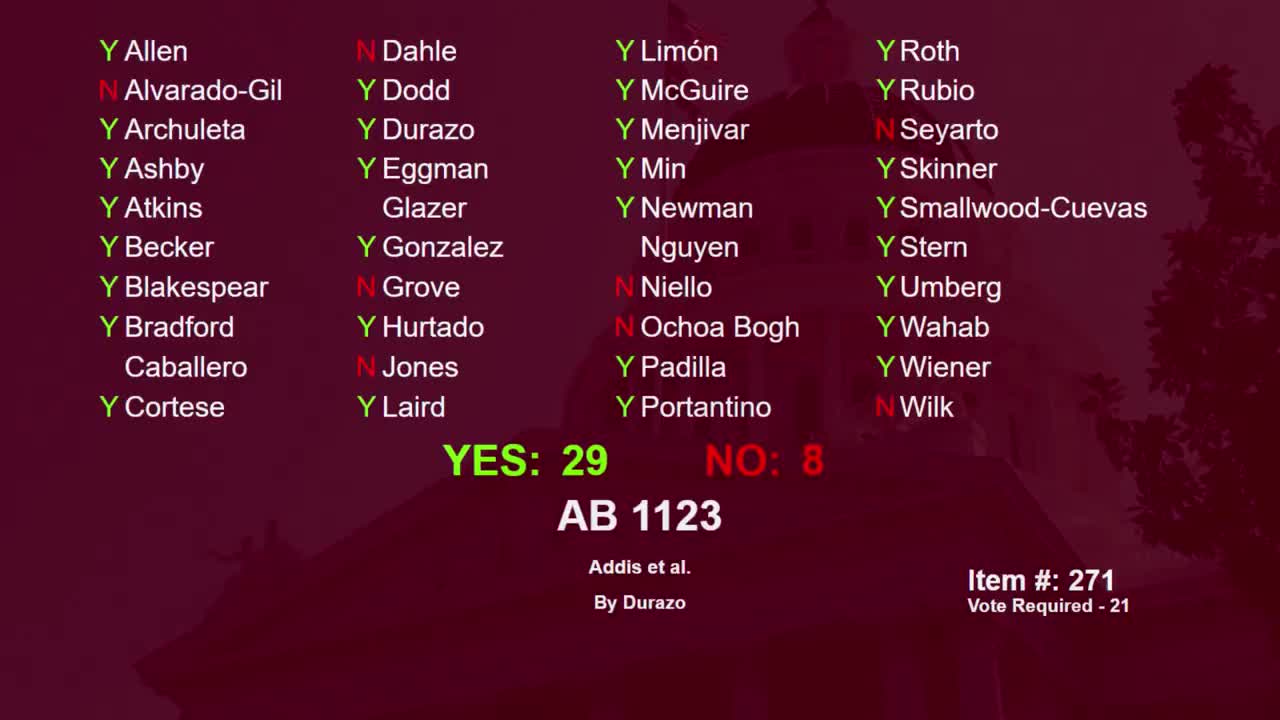 3MIN
Senate Floor
 9MIN
Senate Standing Committee on Labor, Public Employment and Retirement
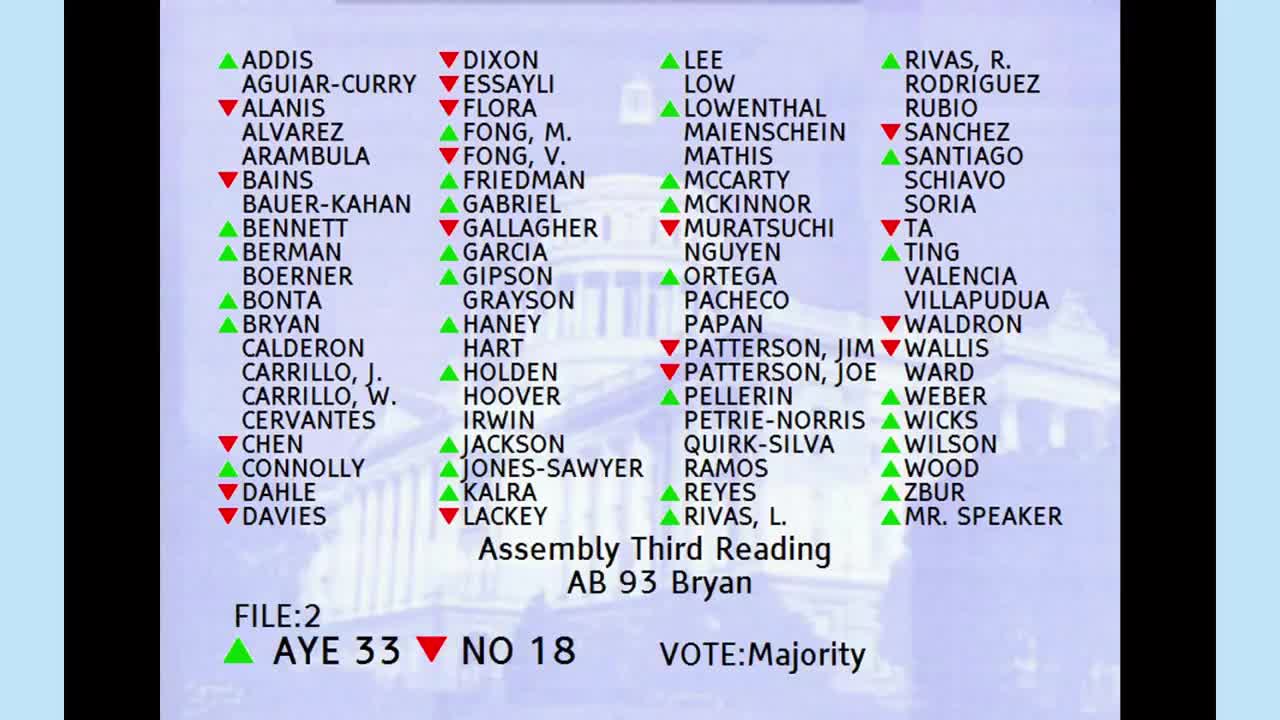 1MIN
Assembly Floor
 7MIN
Assembly Standing Committee on Insurance
Bill Author

Bill Co-Author(s):