AB 1167: Oil and gas: acquisition: bonding requirements.
- Session Year: 2023-2024
- House: Assembly
- Latest Version Date: 2023-10-07
Current Status:
Passed
(2023-10-07: Chaptered by Secretary of State - Chapter 359, Statutes of 2023.)
Introduced
In Committee
First Chamber
In Committee
Second Chamber
Enacted
Existing law requires a person who acquires the right to operate a well or production facility, whether by purchase, transfer, assignment, conveyance, exchange, or other disposition, to submit to the State Oil and Gas Supervisor or a district deputy certain materials, including either an individual indemnity bond or a blanket indemnity bond in certain amounts. A violation of this law, or any related law concerning oil and gas, is a misdemeanor.
This bill would require a person who acquires the right to operate a well or production facility, whether by purchase, transfer, assignment, conveyance, exchange, or other disposition, except a well as specified, to instead file with the supervisor an individual indemnity bond for the well or production facility, or a blanket indemnity bond for multiple wells or production facilities, in an amount determined by the supervisor to be sufficient to cover, in full, all costs of plugging and abandonment, decommissioning of the facility, and site restoration, as provided. The bill would require the person to first submit a request to the supervisor for a determination of the amount of the bond required before completing the acquisition and prohibits the completion of the acquisition until the determination is received and the bond has been filed with the supervisor. The bill would also authorize the supervisor to approve other means of financial assurance in lieu of the individual indemnity bond or the blanket indemnity bond. Because the bill would impose a new bonding requirement for the acquisition of a well or production facility, it would expand the scope of a crime and thereby impose a state-mandated local program. The bill would require the Department of Conservation to post on its internet website the information on all indemnity bond determinations made by the supervisor, and to include for each determination the bond amount and calculations used. The bill would authorize the supervisor to approve a deposit, as provided, other than a deposit of money or bearer bonds or bearer notes, in lieu of the indemnity bond. The bill would require the supervisor to maintain records of all transfers recognized as complete, including all materials required to be provided by the new operator, and to make those records available on the Geologic Energy Management Divisions internet website.
The California Constitution requires the state to reimburse local agencies and school districts for certain costs mandated by the state. Statutory provisions establish procedures for making that reimbursement.
This bill would provide that no reimbursement is required by this act for a specified reason.
Existing law requires a person who acquires the right to operate a well or production facility, whether by purchase, transfer, assignment, conveyance, exchange, or other disposition, to submit to the State Oil and Gas Supervisor or a district deputy certain materials, including either an individual indemnity bond or a blanket indemnity bond in certain amounts. A violation of this law, or any related law concerning oil and gas, is a misdemeanor.
This bill would require a person who acquires the right to operate a well or production facility, whether by purchase, transfer, assignment, conveyance, exchange, or other disposition, to instead file with the supervisor a an individual indemnity bond for the well or production facility facility, or a blanket indemnity bond for multiple wells or production facilities, in an amount determined by the supervisor to be sufficient to cover, in full, all costs of plugging and abandonment abandonment, decommissioning of the facility, and site restoration, as provided. The bill would require the person to first submit a request to the supervisor for a determination of the amount of the bond required before completing the acquisition and prohibits the completion of the acquisition until the determination is received and the bond has been filed with the supervisor. Because the bill would change the impose a new bonding requirement for the acquisition of a well or production facility, and, thereby would change the scope of a crime, this bill would it would expand the scope of a crime and thereby impose a state-mandated local program. The bill would require the Department of Conservation to post on its internet website the information on all indemnity bond determinations made by the supervisor, and to include for each determination the bond amount and calculations used. The bill would authorize the supervisor to approve a deposit, as provided, other than a deposit of money or bearer bonds or bearer notes, in lieu of the indemnity bond. The bill would require the supervisor to maintain records of all transfers recognized as complete, including all materials required to be provided by the new operator, and to make those records available in a searchable and aggregable format on the Geologic Energy Management Divisions internet website.
The California Constitution requires the state to reimburse local agencies and school districts for certain costs mandated by the state. Statutory provisions establish procedures for making that reimbursement.
This bill would provide that no reimbursement is required by this act for a specified reason.
Existing law requires a person who acquires the right to operate a well or production facility, whether by purchase, transfer, assignment, conveyance, exchange, or other disposition, to submit to the State Oil and Gas Supervisor or a district deputy certain materials, including either an individual indemnity bond or a blanket indemnity bond in certain amounts.
This bill would require a person who acquires the right to operate a well or production facility, whether by purchase, transfer, assignment, conveyance, exchange, or other disposition, to instead file with the supervisor a bond for the well or production facility in an amount determined by the supervisor to be sufficient to cover, in full, all costs of plugging and abandonment and site restoration, as provided. Because the bill would change the bonding requirement for the acquisition of a well or production facility, and, thereby would change the scope of a crime, this bill would impose a state-mandated local program. The bill would require the supervisor to maintain records of all transfers recognized as complete, including all materials required to be provided by the new operator, and to make those records available in a searchable and aggregable format on the Geologic Energy Management Divisions internet website.
The California Constitution requires the state to reimburse local agencies and school districts for certain costs mandated by the state. Statutory provisions establish procedures for making that reimbursement.
This bill would provide that no reimbursement is required by this act for a specified reason.
The Legislature finds and declares all of the following:
(a)As California transitions to a decarbonized economy, an increasing number of oil producing wells are becoming idle. There are approximately 107,000 active and idle oil and gas wells in the state, all of which will at some point end their productive life and will require plugging and abandonment and site restoration under existing law.
(b)Analysis performed in 2018 by the California Council on Science and Technology found that more than 5,000 wells in the state may already either be orphaned without a responsible party who can pay for plugging and abandonment, or be at high risk of being orphaned, resulting in a potential net liability to the state of $500,000,000. The councils analysis further found that more than 69,000 additional wells are economically marginal or idle, and hence could become orphaned wells in the future as their production declines or as they are acquired by financially weaker operators, or both.
(c)Well owners, including those who own idle and marginally producing wells, frequently transfer those wells to less solvent entities. These transfers increase the likelihood that public funds will be needed to pay for plugging and abandonment of those wells, because funds available through existing bonds are inadequate to pay the cost of plugging and abandonment of those wells. The councils analysis concluded that while the average cost to remediate an onshore well is close to $68,000, the average bond funding available per well is close to $1,000.
SEC. 2.Section 3017 is added to the Public Resources Code, to read:3017.(a)It is the intent of the Legislature that the oil and gas industry pay for all necessary costs of plugging and abandonment and site restoration of oil and gas wells.
(b)It is the intent of the legislature that, to minimize the risk that the state will be liable for costs of plugging and abandonment, no well be transferred to another owner until and unless a bond has been filed that would cover the full cost of plugging and abandonment and site restoration.
SEC. 3.Section 3202 of the Public Resources Code is amended to read:3202.(a)A person who acquires the right to operate a well or production facility, whether by purchase, transfer, assignment, conveyance, exchange, or other disposition, shall, as soon as it is reasonably possible, but not later than the date when the acquisition of the well or production facility becomes final, notify the supervisor or the district deputy, in writing, of the persons operation. The acquisition of a well or production facility shall not be recognized as complete by the supervisor or the district deputy until the new operator provides all of the following material:
(1)The name and address of the person from whom the well or production facility was acquired.
(2)The name and location of the well or production facility, and a description of the land upon which the well or production facility is situated.
(3)The date when the acquisition becomes final.
(4)The date when possession was or will be acquired.
(5)An indemnity bond for each well as required pursuant to Section 3204, 3205, or 3205.8, as applicable.
(b)(1)Upon request of the supervisor, the new operator shall, within 15 days, provide to the division copies of the documents recorded with a governmental office involving the sale, assignment, transfer, conveyance, exchange, or other disposition of the well or production facility.
(2)If after reviewing the documents submitted pursuant to paragraph (1) the division determines additional documentation is needed to validate the sale, assignment, transfer, conveyance, exchange, or other disposition of the well or production facility, the division shall notify the new operator.
(3)Upon receiving notice pursuant to paragraph (2), the new operator shall, within 30 days, provide to the division documents necessary to identify the operator of the well or production facility. If the documents are not otherwise publicly available, the new operator may redact information from the documents before submitting them to the division if the division agrees the information is not relevant to identification of the current operator of the well or production facility.
(c)After notice is given pursuant to subdivision (a) and until another person acquires the well or production facility, the new operator shall notify the supervisor whether any of the rights have changed. That notification shall be in writing and occur every other year by July 1.
(d)The new operator shall also notify the supervisor within 30 days of any quitclaim of a well or production facility.
(e)The supervisor shall maintain records of all transfers recognized as complete pursuant to subdivision (a), including all materials required to be provided by the new operator under that subdivision, and shall make those records available on the divisions internet website.
SEC. 4.Section 3204 of the Public Resources Code is amended to read:3204.(a)An operator who, on or after January 1, 2018, engages in the drilling, redrilling, deepening, or in any operation permanently altering the casing, of a well, shall file with the supervisor an individual indemnity bond for each well so drilled, redrilled, deepened, or permanently altered in the following amount:
(1)Twenty-five thousand dollars ($25,000) for each well that is less than 10,000 feet deep.
(2)Forty thousand dollars ($40,000) for each well that is 10,000 or more feet deep.
(b)The bond shall be filed with the supervisor at the time of the filing of the notice of intention to perform work on the well, as provided in Section 3203, or at the time of acquisition of the well, as provided in Section 3202. The bond shall be executed by the operator, as principal, and by an authorized surety company, as surety, on the condition that the principal named in the bond shall faithfully comply with all the provisions of this chapter, in drilling, redrilling, deepening, or permanently altering the casing in any well or wells covered by the bond, and shall secure the state against all losses, charges, and expenses incurred by it to obtain the compliance by the principal named in the bond.
(c)The conditions of the bond shall be stated in substantially the following language: If the ____, the above bounden principal, shall well and truly comply with all the provisions of Division 3 (commencing with Section 3000) of the Public Resources Code and shall obey all lawful orders of the State Oil and Gas Supervisor or the district deputy or deputies, subject to subsequent appeal as provided in that division, and shall pay all charges, costs, and expenses incurred by the supervisor or the district deputy or deputies in respect of the well or wells or the property or properties of the principal, or assessed against the well or wells or the property or properties of the principal, in pursuance of the provisions of that division, then this obligation shall be void; otherwise, it shall remain in full force and effect.
SEC. 5.Section 3205.5 of the Public Resources Code is amended to read:3205.5.In lieu of the indemnity bond required by Sections 3204, 3205, 3205.1, 3205.2, 3205.8, and 3206, a deposit may, with the written approval of the supervisor, be given pursuant to Article 7 (commencing with Section 995.710) of Chapter 2 of Title 14 of Part 2 of the Code of Civil Procedure, other than a deposit of money or bearer bonds or bearer notes.
SEC. 6.Section 3205.8 is added to the Public Resources Code, to read:3205.8.(a)(1)Notwithstanding any other provision of this chapter, a person who acquires the right to operate a well or production facility, by purchase, transfer, assignment, conveyance, exchange, or other disposition, except a well that has an average daily production level that exceeds 15 barrels of oil or 60,000 cubic feet of natural gas during the 12 months preceding the date of acquisition or a natural gas storage well, shall, as soon as possible, but not later than the date when the acquisition of the well or production facility becomes final, file with the supervisor an individual indemnity bond for the well or production facility, or a blanket indemnity bond for multiple wells or production facilities, in an amount determined by the supervisor to be sufficient to cover, in full, all costs of plugging and abandonment, decommissioning of the facility, and site restoration pursuant to Section 3208 and regulations implementing this chapter.
(2)A person who acquires the right to operate more than one well or production facility, by purchase, transfer, assignment, conveyance, exchange, or other disposition, or who operates more than one well or production facility may file with the supervisor one blanket indemnity bond to cover all the operations in any of its wells in the state in lieu of an individual indemnity bond for each operation. The blanket indemnity bond shall be executed by the operator, as principal, and by an authorized surety company, as surety, and shall be in substantially the same language and upon the same conditions as provided in Section 3204, except for the difference in the amount.
(b)A person who intends to acquire the right to operate a well or production facility, by purchase, transfer, assignment, conveyance, exchange, or other disposition, shall submit a request to the supervisor for a determination of the amount of the bond required pursuant to subdivision (a) before completing the acquisition and shall not complete the acquisition until the determination is received and the bond has been filed with the supervisor.
(c)The supervisor shall determine the amount of an individual indemnity bond required pursuant to subdivision (a) based on the supervisors determination of the full costs of plugging and abandonment, decommissioning the facility, and site restoration using any reasonable method, including, but not limited to, consideration of the factors listed in subdivision (b) of Section 3205.3, or the cost estimation criteria described in subdivision (b) of Section 3205.7, or consultation with a contractor to obtain an estimate of the cost to plug and abandon the wells, decommission the facility, and complete site restoration. The supervisor shall determine the amount of a blanket indemnity bond required pursuant to subdivision (a) based on the sum total of combining the costs from the same determinations as individual indemnity bonds for each well or production facility covered by the blanket indemnity bond.
(d)In lieu of the bond required to be provided pursuant to subdivision (a), the operator may, with the written approval of the supervisor, provide the required security through an equally effective means of financial assurance, which includes a deposit pursuant to Section 3205.5, an irrevocable letter of credit, or a fully funded trust fund, but does not include self-insurance or corporate guarantees. The required financial assurance may be obtained or funded by the transferor of the covered well.
(e)The department shall post on its internet website the information on all indemnity bond determinations made by the supervisor, and shall include for each determination the bond amount and calculations used.
SEC. 7.No reimbursement is required by this act pursuant to Section 6 of Article XIIIB of the California Constitution because the only costs that may be incurred by a local agency or school district will be incurred because this act creates a new crime or infraction, eliminates a crime or infraction, or changes the penalty for a crime or infraction, within the meaning of Section 17556 of the Government Code, or changes the definition of a crime within the meaning of Section 6 of Article XIIIB of the California Constitution.
The Legislature finds and declares all of the following:
(a)As California transitions to a decarbonized economy, an increasing number of oil producing wells are becoming idle. There are approximately 107,000 active and idle oil and gas wells in the state, all of which will at some point end their productive life and will require plugging and abandonment and site restoration under existing law.
(b)Analysis performed in 2018 by the California Council on Science and Technology found that more than 5,000 wells in the state may already either be orphaned without a responsible party who can pay for plugging and abandonment, or be at high risk of being orphaned, resulting in a potential net liability to the state of $500,000,000. The councils analysis further found that more than 69,000 additional wells are economically marginal or idle, and hence could become orphaned wells in the future as their production declines or as they are acquired by financially weaker operators, or both.
(c)Well owners, including those who own idle and marginally producing wells, frequently transfer those wells to less solvent entities. These transfers increase the likelihood that public funds will be needed to pay for plugging and abandonment of those wells, because funds available through existing bonds are inadequate to pay the cost of plugging and abandonment of those wells. The councils analysis concluded that while the average cost to remediate an onshore well is close to $68,000, the average bond funding available per well is close to $1,000.
SEC. 2.Section 3017 is added to the Public Resources Code, to read:3017.(a)It is the intent of the Legislature that the oil and gas industry pay for all necessary costs of plugging and abandonment and site restoration of oil and gas wells.
(b)It is the intent of the legislature that, to minimize the risk that the state will be liable for costs of plugging and abandonment, no well be transferred to another owner until and unless a bond has been filed that would cover the full cost of plugging and abandonment and site restoration.
SEC. 3.Section 3202 of the Public Resources Code is amended to read:3202.(a)A person who acquires the right to operate a well or production facility, whether by purchase, transfer, assignment, conveyance, exchange, or other disposition, shall, as soon as it is reasonably possible, but not later than the date when the acquisition of the well or production facility becomes final, notify the supervisor or the district deputy, in writing, of the persons operation. The acquisition of a well or production facility shall not be recognized as complete by the supervisor or the district deputy until the new operator provides all of the following material:
(1)The name and address of the person from whom the well or production facility was acquired.
(2)The name and location of the well or production facility, and a description of the land upon which the well or production facility is situated.
(3)The date when the acquisition becomes final.
(4)The date when possession was or will be acquired.
(5)An indemnity bond for each well consistent with Section 3205.8. as required pursuant to Section 3204, 3205, or 3205.8, as applicable.
(b)(1)Upon request of the supervisor, the new operator shall, within 15 days, provide to the division copies of the documents recorded with a governmental office involving the sale, assignment, transfer, conveyance, exchange, or other disposition of the well or production facility.
(2)If after reviewing the documents submitted pursuant to paragraph (1) the division determines additional documentation is needed to validate the sale, assignment, transfer, conveyance, exchange, or other disposition of the well or production facility, the division shall notify the new operator.
(3)Upon receiving notice pursuant to paragraph (2), the new operator shall, within 30 days, provide to the division documents necessary to identify the operator of the well or production facility. If the documents are not otherwise publicly available, the new operator may redact information from the documents before submitting them to the division if the division agrees the information is not relevant to identification of the current operator of the well or production facility.
(c)After notice is given pursuant to subdivision (a) and until another person acquires the well or production facility, the new operator shall notify the supervisor whether any of the rights have changed. That notification shall be in writing and occur every other year by July 1.
(d)The new operator shall also notify the supervisor within 30 days of any quitclaim of a well or production facility.
(e)The supervisor shall maintain records of all transfers recognized as complete pursuant to subdivision (a), including all materials required to be provided by the new operator under that subdivision, and shall make those records available on the divisions internet website.
SEC. 4.Section 3204 of the Public Resources Code is amended to read:3204.(a)An operator who, on or after January 1, 2018, engages in the drilling, redrilling, deepening, or in any operation permanently altering the casing, of a well, shall file with the supervisor an individual indemnity bond for each well so drilled, redrilled, deepened, or permanently altered in the following amount:
(1)Twenty-five thousand dollars ($25,000) for each well that is less than 10,000 feet deep.
(2)Forty thousand dollars ($40,000) for each well that is 10,000 or more feet deep.
(b)The bond shall be filed with the supervisor at the time of the filing of the notice of intention to perform work on the well, as provided in Section 3203, or at the time of acquisition of the well, as provided in Section 3202. The bond shall be executed by the operator, as principal, and by an authorized surety company, as surety, on the condition that the principal named in the bond shall faithfully comply with all the provisions of this chapter, in drilling, redrilling, deepening, or permanently altering the casing in any well or wells covered by the bond, and shall secure the state against all losses, charges, and expenses incurred by it to obtain the compliance by the principal named in the bond.
(c)The conditions of the bond shall be stated in substantially the following language: If the ____, the above bounden principal, shall well and truly comply with all the provisions of Division 3 (commencing with Section 3000) of the Public Resources Code and shall obey all lawful orders of the State Oil and Gas Supervisor or the district deputy or deputies, subject to subsequent appeal as provided in that division, and shall pay all charges, costs, and expenses incurred by the supervisor or the district deputy or deputies in respect of the well or wells or the property or properties of the principal, or assessed against the well or wells or the property or properties of the principal, in pursuance of the provisions of that division, then this obligation shall be void; otherwise, it shall remain in full force and effect.
SEC. 5.Section 3205.5 of the Public Resources Code is amended to read:3205.5.In lieu of the indemnity bond required by Sections 3204, 3205, 3205.1, 3205.2, 3505.8, 3205.8, and 3206, a deposit may, with the written approval of the supervisor, be given pursuant to Article 7 (commencing with Section 995.710) of Chapter 2 of Title 14 of Part 2 of the Code of Civil Procedure, other than a deposit of money or bearer bonds or bearer notes.
SEC. 6.Section 3205.8 is added to the Public Resources Code, to read:3205.8.(a)(1)Notwithstanding any other provision of this chapter, a person who acquires the right to operate a well or production facility, by purchase, transfer, assignment, conveyance, exchange, or other disposition, except a well that has an average daily production level that exceeds 15 barrels of oil or 60,000 cubic feet of natural gas during the 12 months preceding the date of acquisition or a natural gas storage well, shall, as soon as possible, but not later than the date when the acquisition of the well or production facility becomes final, file with the supervisor an individual indemnity bond for the well or production facility, or a blanket indemnity bond for multiple wells or production facilities, in an amount determined by the supervisor to be sufficient to cover, in full, all costs of plugging and abandonment, decommissioning of the facility, and site restoration pursuant to Section 3208 and regulations implementing this chapter.
(2)A person who acquires the right to operate more than one well or production facility, by purchase, transfer, assignment, conveyance, exchange, or other disposition, or who operates more than one well or production facility may file with the supervisor one blanket indemnity bond to cover all the operations in any of its wells in the state in lieu of an individual indemnity bond for each operation. The blanket indemnity bond shall be executed by the operator, as principal, and by an authorized surety company, as surety, and shall be in substantially the same language and upon the same conditions as provided in Section 3204, except for the difference in the amount.
(b)A person who intends to acquire the right to operate a well or production facility, by purchase, transfer, assignment, conveyance, exchange, or other disposition, shall submit a request to the supervisor for a determination of the amount of the bond required pursuant to subdivision (a) before completing the acquisition and shall not complete the acquisition until the determination is received and the bond has been filed with the supervisor.
(c)The supervisor shall determine the amount of an individual indemnity bond required pursuant to subdivision (a) based on the supervisors determination of the full costs of plugging and abandonment, decommissioning the facility, and site restoration using any reasonable method, including, but not limited to, consideration of the factors listed in subdivision (b) of Section 3205.3, or the cost estimation criteria described in subdivision (b) of Section 3205.7, or consultation with a contractor to obtain an estimate of the cost to plug and abandon the wells, decommission the facility, and complete site restoration. The supervisor shall determine the amount of a blanket indemnity bond required pursuant to subdivision (a) based on the sum total of combining the costs from the same determinations as individual indemnity bonds for each well or production facility covered by the blanket indemnity bond.
(d)In lieu of the bond required to be provided pursuant to subdivision (a), the operator may, with the written approval of the supervisor, provide the required security through an equally effective means of financial assurance, which includes a deposit pursuant to Section 3205.5, an irrevocable letter of credit, or a fully funded trust fund, but does not include self-insurance or corporate guarantees. The required financial assurance may be obtained or funded by the transferor of the covered well.
(d)(e)The department shall post on its internet website the information on all indemnity bond determinations made by the supervisor, and shall include for each determination the bond amount and calculations used.
SEC. 7.No reimbursement is required by this act pursuant to Section 6 of Article XIIIB of the California Constitution because the only costs that may be incurred by a local agency or school district will be incurred because this act creates a new crime or infraction, eliminates a crime or infraction, or changes the penalty for a crime or infraction, within the meaning of Section 17556 of the Government Code, or changes the definition of a crime within the meaning of Section 6 of Article XIIIB of the California Constitution.
The Legislature finds and declares all of the following:
(a)As California transitions to a decarbonized economy, an increasing number of oil producing wells are becoming idle. There are approximately 107,000 active and idle oil and gas wells in the state, all of which will at some point end their productive life and will require plugging and abandonment and site restoration under existing law.
(b)Analysis performed in 2018 by the California Council on Science and Technology found that more than 5,000 wells in the state may already either be orphaned without a responsible party who can pay for plugging and abandonment, or be at high risk of being orphaned, resulting in a potential net liability to the state of $500,000,000. The councils analysis further found that more than 69,000 additional wells are economically marginal or idle, and hence could become orphan orphaned wells in the future as their production declines or as they are acquired by financially weaker operators, or both.
(c)Well owners, including those who own idle and marginally producing wells, frequently transfer those wells to less solvent entities. These transfers increase the likelihood that public funds will be needed to pay for plugging and abandonment of those wells, because funds available through existing bonds are inadequate to pay the cost of plugging and abandonment of those wells. The councils analysis concluded that while the average cost to remediate an onshore well is close to $68,000, the average bond funding available per well is close to $1,000.
SEC. 2.Section 3017 is added to the Public Resources Code, to read:3017.(a)It is the intent of the Legislature that the oil and gas industry pay for all necessary costs of plugging and abandonment and site restoration of oil and gas wells.
(b)It is the intent of the legislature that, to minimize the risk that the state will be liable for costs of plugging and abandonment, no well be transferred to another owner until and unless a bond has been filed that would cover the full cost of plugging and abandonment and site restoration.
SEC. 3.Section 3202 of the Public Resources Code is amended to read:3202.(a)A person who acquires the right to operate a well or production facility, whether by purchase, transfer, assignment, conveyance, exchange, or other disposition, shall, as soon as it is reasonably possible, but not later than the date when the acquisition of the well or production facility becomes final, notify the supervisor or the district deputy, in writing, of the persons operation. The acquisition of a well or production facility shall not be recognized as complete by the supervisor or the district deputy until the new operator provides all of the following material:
(1)The name and address of the person from whom the well or production facility was acquired.
(2)The name and location of the well or production facility, and a description of the land upon which the well or production facility is situated.
(3)The date when the acquisition becomes final.
(4)The date when possession was or will be acquired.
(5)An indemnity bond for each well consistent with Section 3205.8.
(b)(1)Upon request of the supervisor, the new operator shall, within 15 days, provide to the division copies of the documents recorded with a governmental office involving the sale, assignment, transfer, conveyance, exchange, or other disposition of the well or production facility.
(2)If after reviewing the documents submitted pursuant to paragraph (1) the division determines additional documentation is needed to validate the sale, assignment, transfer, conveyance, exchange, or other disposition of the well or production facility, the division shall notify the new operator.
(3)Upon receiving notice pursuant to paragraph (2), the new operator shall, within 30 days, provide to the division documents necessary to identify the operator of the well or production facility. If the documents are not otherwise publicly available, the new operator may redact information from the documents before submitting them to the division if the division agrees the information is not relevant to identification of the current operator of the well or production facility.
(c)After notice is given pursuant to subdivision (a) and until another person acquires the well or production facility, the new operator shall notify the supervisor whether any of the rights have changed. That notification shall be in writing and occur every other year by July 1.
(d)The new operator shall also notify the supervisor within 30 days of any quitclaim of a well or production facility.
(e)The supervisor shall maintain records of all transfers recognized as complete pursuant to subdivision (a), including all materials required to be provided by the new operator under that subdivision, and shall make those records available in a searchable and aggregable format on the divisions internet website.
SEC. 4.Section 3204 of the Public Resources Code is amended to read:3204.(a)An operator who, on or after January 1, 2018, engages in the drilling, redrilling, deepening, or in any operation permanently altering the casing, of a well, shall file with the supervisor an individual indemnity bond for each well so drilled, redrilled, deepened, or permanently altered in the following amount:
(1)Twenty-five thousand dollars ($25,000) for each well that is less than 10,000 feet deep.
(2)Forty thousand dollars ($40,000) for each well that is 10,000 or more feet deep.
(b)The bond shall be filed with the supervisor at the time of the filing of the notice of intention to perform work on the well, as provided in Section 3203, or at the time of acquisition of the well, as provided in Section 3202. The bond shall be executed by the operator, as principal, and by an authorized surety company, as surety, on the condition that the principal named in the bond shall faithfully comply with all the provisions of this chapter, in drilling, redrilling, deepening, or permanently altering the casing in any well or wells covered by the bond, and shall secure the state against all losses, charges, and expenses incurred by it to obtain the compliance by the principal named in the bond.
(c)The conditions of the bond shall be stated in substantially the following language: If the ____, the above bounden principal, shall well and truly comply with all the provisions of Division 3 (commencing with Section 3000) of the Public Resources Code and shall obey all lawful orders of the State Oil and Gas Supervisor or the district deputy or deputies, subject to subsequent appeal as provided in that division, and shall pay all charges, costs, and expenses incurred by the supervisor or the district deputy or deputies in respect of the well or wells or the property or properties of the principal, or assessed against the well or wells or the property or properties of the principal, in pursuance of the provisions of that division, then this obligation shall be void; otherwise, it shall remain in full force and effect.
SEC. 5.Section 3205.5 of the Public Resources Code is amended to read:3205.5.In lieu of the indemnity bond required by Sections 3204, 3205, 3205.1, 3205.2, 3505.8, and 3206, a deposit may, with the written approval of the supervisor, be given pursuant to Article 7 (commencing with Section 995.710) of Chapter 2 of Title 14 of Part 2 of the Code of Civil Procedure, other than a deposit of money or bearer bonds or bearer notes.
SEC. 5.SEC. 6.Section 3205.8 is added to the Public Resources Code, to read:3205.8.(a)(1)Notwithstanding any other provision of this chapter, a person who acquires the right to operate a well or production facility, by purchase, transfer, assignment, conveyance, exchange, or other disposition, shall, as soon as possible, but not later than the date when the acquisition of the well or production facility becomes final, file with the supervisor a an individual indemnity bond for the well or production facility facility, or a blanket indemnity bond for multiple wells or production facilities, in an amount determined by the supervisor to be sufficient to cover, in full, all costs of plugging and abandonment abandonment, decommissioning of the facility, and site restoration pursuant to Section 3208 and regulations implementing this chapter.
(2)A person who acquires the right to operate more than one well or production facility, by purchase, transfer, assignment, conveyance, exchange, or other disposition, or who operates more than one well or production facility may file with the supervisor one blanket indemnity bond to cover all the operations in any of its wells in the state in lieu of an individual indemnity bond for each operation. The blanket indemnity bond shall be executed by the operator, as principal, and by an authorized surety company, as surety, and shall be in substantially the same language and upon the same conditions as provided in Section 3204, except for the difference in the amount.
(b)A person who intends to acquire the right to operate a well or production facility, by purchase, transfer, assignment, conveyance, exchange, or other disposition, shall submit a request to the supervisor for a determination of the amount of the bond required pursuant to subdivision (a) before completing the acquisition and shall not complete the acquisition until the determination is received and the bond has been filed with the supervisor.
(b)(c)The supervisor shall determine the amount of the an individual indemnity bond required pursuant to subdivision (a) based on the supervisors determination of the full costs of plugging and abandonment abandonment, decommissioning the facility, and site restoration consistent with the criteria developed pursuant to Section 3205.7. using any reasonable method, including, but not limited to, consideration of the factors listed in subdivision (b) of Section 3205.3, or the cost estimation criteria described in subdivision (b) of Section 3205.7, or consultation with a contractor to obtain an estimate of the cost to plug and abandon the wells, decommission the facility, and complete site restoration. The supervisor shall determine the amount of a blanket indemnity bond required pursuant to subdivision (a) based on the sum total of combining the costs from the same determinations as individual indemnity bonds for each well or production facility covered by the blanket indemnity bond.
(d)The department shall post on its internet website the information on all indemnity bond determinations made by the supervisor, and shall include for each determination the bond amount and calculations used.
SEC. 6.SEC. 7.No reimbursement is required by this act pursuant to Section 6 of Article XIIIB of the California Constitution because the only costs that may be incurred by a local agency or school district will be incurred because this act creates a new crime or infraction, eliminates a crime or infraction, or changes the penalty for a crime or infraction, within the meaning of Section 17556 of the Government Code, or changes the definition of a crime within the meaning of Section 6 of Article XIIIB of the California Constitution.
The Legislature finds and declares all of the following:
(a)As California transitions to a decarbonized economy, an increasing number of oil producing wells are becoming idle. There are approximately 107,000 active and idle oil and gas wells in the state, all of which will at some point end their productive life and will require plugging and abandonment and site restoration under existing law.
(b)Analysis performed in 2018 by the California Council on Science and Technology found that more than 5,000 wells in the state may already either be orphaned without a responsible party who can pay for plugging and abandonment, or be at high risk of being orphaned, resulting in a potential net liability to the state of $500,000,000. The councils analysis further found that more than 69,000 additional wells are economically marginal or idle, and hence could become orphan wells in the future as their production declines or as they are acquired by financially weaker operators, or both.
(c)Well owners, including those who own idle and marginally producing wells, frequently transfer those wells to less solvent entities. These transfers increase the likelihood that public funds will be needed to pay for plugging and abandonment of those wells, because funds available through existing bonds are inadequate to pay the cost of plugging and abandonment of those wells. The councils analysis concluded that while the average cost to remediate an onshore well is close to $68,000, the average bond funding available per well is close to $1,000.
SEC. 2.Section 3017 is added to the Public Resources Code, to read:3017.(a)It is the intent of the Legislature that the oil and gas industry pay for all necessary costs of plugging and abandonment and site restoration of oil and gas wells.
(b)It is the intent of the legislature that, to minimize the risk that the state will be liable for costs of plugging and abandonment, no well be transferred to another owner until and unless a bond has been filed that would cover the full cost of plugging and abandonment and site restoration.
SEC. 3.Section 3202 of the Public Resources Code is amended to read:3202.(a)A person who acquires the right to operate a well or production facility, whether by purchase, transfer, assignment, conveyance, exchange, or other disposition, shall, as soon as it is reasonably possible, but not later than the date when the acquisition of the well or production facility becomes final, notify the supervisor or the district deputy, in writing, of the persons operation. The acquisition of a well or production facility shall not be recognized as complete by the supervisor or the district deputy until the new operator provides all of the following material:
(1)The name and address of the person from whom the well or production facility was acquired.
(2)The name and location of the well or production facility, and a description of the land upon which the well or production facility is situated.
(3)The date when the acquisition becomes final.
(4)The date when possession was or will be acquired.
(5)An indemnity bond for each well as required under Section 3204 or 3205. consistent with Section 3205.8.
(b)(1)Upon request of the supervisor, the new operator shall, within 15 days, provide to the division copies of the documents recorded with a governmental office involving the sale, assignment, transfer, conveyance, exchange, or other disposition of the well or production facility.
(2)If after reviewing the documents submitted pursuant to paragraph (1) the division determines additional documentation is needed to validate the sale, assignment, transfer, conveyance, exchange, or other disposition of the well or production facility, the division shall notify the new operator.
(3)Upon receiving notice pursuant to paragraph (2), the new operator shall, within 30 days, provide to the division documents necessary to identify the operator of the well or production facility. If the documents are not otherwise publicly available, the new operator may redact information from the documents before submitting them to the division if the division agrees the information is not relevant to identification of the current operator of the well or production facility.
(c)After notice is given pursuant to subdivision (a) and until another person acquires the well or production facility, the new operator shall notify the supervisor whether any of the rights have changed. That notification shall be in writing and occur every other year by July 1.
(d)The new operator shall also notify the supervisor within 30 days of any quitclaim of a well or production facility.
(e)The supervisor shall maintain records of all transfers recognized as complete pursuant to subdivision (a), including all materials required to be provided by the new operator under that subdivision, and shall make those records available in a searchable and aggregable format on the divisions internet website.
SEC. 4.Section 3204 of the Public Resources Code is amended to read:3204.(a)An operator who, on or after January 1, 2018, engages in the drilling, redrilling, deepening, or in any operation permanently altering the casing, of a well, or who acquires a well, shall file with the supervisor an individual indemnity bond for each well so drilled, redrilled, deepened, or permanently altered, or acquired altered in the following amount:
(1)Twenty-five thousand dollars ($25,000) for each well that is less than 10,000 feet deep.
(2)Forty thousand dollars ($40,000) for each well that is 10,000 or more feet deep.
(b)The bond shall be filed with the supervisor at the time of the filing of the notice of intention to perform work on the well, as provided in Section 3203, or at the time of acquisition of the well, as provided in Section 3202. The bond shall be executed by the operator, as principal, and by an authorized surety company, as surety, on the condition that the principal named in the bond shall faithfully comply with all the provisions of this chapter, in drilling, redrilling, deepening, or permanently altering the casing in any well or wells covered by the bond, and shall secure the state against all losses, charges, and expenses incurred by it to obtain the compliance by the principal named in the bond.
(c)The conditions of the bond shall be stated in substantially the following language: If the ____, the above bounden principal, shall well and truly comply with all the provisions of Division 3 (commencing with Section 3000) of the Public Resources Code and shall obey all lawful orders of the State Oil and Gas Supervisor or the district deputy or deputies, subject to subsequent appeal as provided in that division, and shall pay all charges, costs, and expenses incurred by the supervisor or the district deputy or deputies in respect of the well or wells or the property or properties of the principal, or assessed against the well or wells or the property or properties of the principal, in pursuance of the provisions of that division, then this obligation shall be void; otherwise, it shall remain in full force and effect.
(d)This section shall become operative on January 1, 2018.SEC. 5.Section 3205.8 is added to the Public Resources Code, to read:3205.8.(a)Notwithstanding any other provision of this chapter, a person who acquires the right to operate a well or production facility, by purchase, transfer, assignment, conveyance, exchange, or other disposition, shall, as soon as possible, but not later than the date when the acquisition of the well or production facility becomes final, file with the supervisor a bond for the well or production facility in an amount determined by the supervisor to be sufficient to cover, in full, all costs of plugging and abandonment and site restoration pursuant to Section 3208 and regulations implementing this chapter.
(b)The supervisor shall determine the amount of the bond required pursuant to subdivision (a) based on the supervisors determination of the full costs of plugging and abandonment and site restoration consistent with the criteria developed pursuant to Section 3205.7.
SEC. 6.No reimbursement is required by this act pursuant to Section 6 of Article XIIIB of the California Constitution because the only costs that may be incurred by a local agency or school district will be incurred because this act creates a new crime or infraction, eliminates a crime or infraction, or changes the penalty for a crime or infraction, within the meaning of Section 17556 of the Government Code, or changes the definition of a crime within the meaning of Section 6 of Article XIIIB of the California Constitution.
|
Date
|
Status
|
|---|---|
| Oct 7, 2023 | Chaptered by Secretary of State - Chapter 359, Statutes of 2023. |
| Oct 7, 2023 | Approved by the Governor. |
| Sep 21, 2023 | Enrolled and presented to the Governor at 3:30 p.m. |
| Sep 14, 2023 | Senate amendments concurred in. To Engrossing and Enrolling. (Ayes 43. Noes 18. Page 3582.). |
| Sep 13, 2023 | In Assembly. Concurrence in Senate amendments pending. |
| Sep 13, 2023 | Read third time. Passed. Ordered to the Assembly. (Ayes 21. Noes 11. Page 2721.). |
| Sep 11, 2023 | Read second time. Ordered to third reading. |
| Sep 8, 2023 | Read third time and amended. Ordered to second reading. |
| Sep 6, 2023 | Read second time and amended. Ordered to third reading. |
| Sep 5, 2023 | From committee: Amend, and do pass as amended. (Ayes 4. Noes 2.) (September 1). |
| Aug 21, 2023 | In committee: Referred to APPR suspense file. |
| Jul 3, 2023 | From committee: Do pass and re-refer to Com. on APPR. (Ayes 6. Noes 2.) (July 3). Re-referred to Com. on APPR. |
| Jun 21, 2023 | In committee: Hearing postponed by committee. |
| Jun 7, 2023 | Referred to Com. on N.R. & W. |
| May 26, 2023 | In Senate. Read first time. To Com. on RLS. for assignment. |
| May 25, 2023 | Read third time. Passed. Ordered to the Senate. (Ayes 49. Noes 16. Page 1798.) |
| May 18, 2023 | Read second time. Ordered to third reading. |
| May 18, 2023 | From committee: Do pass. (Ayes 11. Noes 4.) (May 18). |
| Apr 19, 2023 | In committee: Set, first hearing. Referred to APPR. suspense file. |
| Mar 28, 2023 | From committee: Do pass and re-refer to Com. on APPR. (Ayes 8. Noes 3.) (March 27). Re-referred to Com. on APPR. |
| Mar 2, 2023 | Referred to Com. on NAT. RES. |
| Feb 17, 2023 | From printer. May be heard in committee March 19. |
| Feb 16, 2023 | Read first time. To print. |
|
Date
|
Description
|
Location
|
Votes
|
|
|---|---|---|---|---|
| Sep 14, 2023 | AB 1167 Wendy Carrillo Concurrence in Senate Amendments | Assembly Floor |
Passed |
|
| Sep 13, 2023 | Assembly 3rd Reading AB1167 Wendy Carrillo et al By Laird | Senate Floor |
Passed |
|
| Sep 1, 2023 | Do pass as amended | Senate Standing Committee on Appropriations |
Passed |
|
| Aug 21, 2023 | Placed on suspense file | Senate Standing Committee on Appropriations |
Passed |
|
| Jul 3, 2023 | Do pass, but first be re-referred to the Committee on [Appropriations] | Senate Standing Committee on Natural Resources and Water |
Passed |
|
| May 25, 2023 | AB 1167 Wendy Carrillo Assembly Third Reading | Assembly Floor |
Passed |
|
| May 18, 2023 | Do pass. | Assembly Standing Committee on Appropriations |
Passed |
|
| Mar 27, 2023 | Do pass and be re-referred to the Committee on [Appropriations] | Assembly Standing Committee on Natural Resources |
Passed |
This list shows positions taken on this bill by organizations on the date displayed, which is linked to the original source.
Positions by individuals are not included.
|
Organization
|
Position
|
Date
|
|---|---|---|
| 1000 Grandmothers for Future Generations | ** Support | |
| 350 Bay Area Action | ** Support | |
| 350 Humboldt | ** Support | |
| 350 Sacramento | ** Support | |
| 350 South Bay Los Angeles | ** Support | |
| 350 Southland Legislative Alliance | ** Support | |
| 350 Ventura County Climate Hub | ** Support | |
| Active San Gabriel Valley | ** Support | |
| Aequor INC. | ** Support | |
| American Solar Energy Society | ** Support | |
| Ban SUP | ** Support | |
| Biodiversity First! | ** Support | |
| Breast Cancer Prevention Partners | ** Support | |
| Breathe Southern Califoria | ** Support | |
| California Coastal Protection Network | ** Support | |
| California Democratic Party | ** Support | |
| California Environmental Justice Alliance Action | ** Support | |
| California Environmental Voters | ** Support | |
| California Independent Petroleum Association | ** Against | |
| California Nurses for Environmental Health and Justice | ** Support | |
| Californians for Western Wilderness | ** Support | |
| CALPIRG | ** Support | |
| Catholic Charities, Diocese of Stockton | ** Support | |
| Center For Biological Diversity | ** Support | |
| Center for Climate Change and Health | ** Support | |
| Center for Community Energy | ** Support | |
| Center on Race, Poverty & the Environment | ** Support | |
| Central California Environmental Justice Network | ** Support | |
| Central Valley Business Federation | ** Against | |
| Clean Water Action | ** Support | |
| cleanearth4kids.org | ** Support | |
| Climate Action California | ** Support | |
| Climate Action Mendocino | ** Support | |
| Climate First: Replacing Oil & Gas | ** Support | |
| Climate Reality Project – Silicon Valley Chapter | ** Support | |
| Climate Reality Project, Los Angeles Chapter | ** Support | |
| Climate Reality Project: San Fernando Valley Chapter | ** Support | |
| Department Of Finance | ** Against | |
| Earthjustice | ** Support | |
| Ecology Center | ** Support | |
| Elders Climate Action Norcal Chapter | ** Support | |
| Elders Climate Action Socal Chapter | ** Support | |
| Elected Officials to Protect America - California | ** Support | |
| Environment California | ** Support | |
| Environmental Defense Center | ** Support | |
| Environmental Defense Fund | ** Support | |
| Environmental Working Group | ** Support | |
| Equity Transit | ** Support | |
| Families Advocating for Chemical and Toxics Safety | ** Support | |
| Feminists In Action Los Angeles | ** Support | |
| Fossil Free California | ** Support | |
| Friends of Harbors, Beaches and Parks | ** Support | |
| Glendale Environmental Coalition | ** Support | |
| Greenpeace Usa | ** Support | |
| Indigenous Environmental Network | ** Support | |
| indivisible ventura | ** Support | |
| Natural Resources Defense Council | ** Support | |
| North County Climate Change Alliance | ** Support | |
| Northern California Recycling Network | ** Support | |
| Oil and Gas Action Network | ** Support | |
| Queers 4 Climate | ** Support | |
| Récolte Energy | ** Support | |
| Sacramento Area Congregations Together | ** Support | |
| Santa Cruz Climate Action Network | ** Support | |
| Sierra Club California | ** Support | |
| SoCal 350 Climate Action | ** Support | |
| Solano County Democratic Central Committee | ** Support | |
| Sunflower Alliance | ** Support | |
| Sunrise Movement Orange County | ** Support | |
| Sustainable Mill Valley | ** Support | |
| Sustainable Silicon Valley | ** Support | |
| The Climate Center | ** Support | |
| Western States Petroleum Association | ** Against |
CONCURRENCE IN SENATE AMENDMENTS
CSA1 Bill Id:AB 1167
Author:(Wendy Carrillo)
As Amended Ver:September 8, 2023
Majority vote
SUMMARY
Requires a person who acquires the right to operate a well or production facility to file with the State Oil and Gas Supervisor (supervisor) a bond for the well or production facility in an amount determined by the supervisor to be sufficient to cover, in full, all costs of plugging and abandonment and site restoration.
Senate Amendments
- Reference existing laws requiring an indemnity bond.
- Clarify that a person who acquires the right to operate a well or production facility to file with the supervisor shall file either an individual indemnity bond for the well or production facility, or a blanket indemnity bond for multiple wells or production facilities, in an amount determined by the supervisor to be sufficient to cover, in full, all costs of plugging and abandonment, decommissioning of the facility, and site restoration.
- Authorize a person who acquires the right to operate more than one well or production facility to file with the supervisor one blanket indemnity bond to cover all the operations in any of its wells in the state in lieu of an individual indemnity bond for each operation.
- Require a person who intends to acquire the right to operate a well or production facility to submit a request to the supervisor for a determination of the amount of the required bond before completing the acquisition.
- Require the supervisor to determine the amount of an individual indemnity bond based on the supervisor's determination of the full costs of plugging and abandonment, decommissioning the facility, and site restoration using any reasonable method, including, but not limited to, specified factors.
- Require the supervisor to determine the amount of a blanket indemnity bond based on the sum total of combining the costs from the same determinations as individual indemnity bonds for each well or production facility covered by the blanket indemnity bond.
- Require the California Geologic Energy Management Division (CalGEM) to post on its internet website the information on all indemnity bond determinations made by the supervisor, and include for each determination the bond amount and calculations used.
- Exempt a person who acquires a well that has an average daily production level that exceeds 15 barrels of oil or 60,000 cubic feet of natural gas during the 12 months preceding the date of acquisition or a natural gas storage well from the requirement to file with the supervisor a bond for the well in an amount determined by the supervisor to be sufficient to cover, in full, all costs of plugging and abandonment and site restoration.
- Allow, in lieu of an indemnity bond, the operator of the well, with the written approval of the supervisor, to provide the required security through an equally effective means of financial assurance, as specified.
COMMENTS
An idle well is a well that has not been used for two years or more and has not yet been properly plugged and abandoned (sealed and closed). If a well is not properly sealed and closed, it may provide a pathway for hydrocarbons or other contaminants to migrate into drinking water or to the surface. According to CalGEM, there are more than 38,000 known idle wells in California. There currently are more than 5,300 orphan wells with no responsible solvent operator to appropriately remediate the well and the associated production facilities.
Bonds required to be posted when a drilling permit is issued are intended to cover plugging and abandonment costs for idle wells that become orphaned. Operators who engage in the drilling, redrilling, deepening, or in any operation permanently altering the casing of a well to file an individual indemnity bond for each well drilled, redrilled, deepened, or permanently altered, or acquired at $25,000 for each well that is less than 10,000 feet deep, and $40,000 for each well that is 10,000 or more feet deep. Operators are also allowed to file one blanket indemnity bond to cover all the operations in any of its 20+ wells in the state in lieu of an individual indemnity bond for each operation. The amount for the blanket bonds are also specified in statute.
However, the statutorily set bond values are often not enough to fully cover the costs of plugging and decommissioning a well. A 2018 report found that while the average cost statewide to plug and abandon a well is $68,000, the average value of available bonding per well is roughly $1,000, leaving the total net difference between plugging costs and available bonds across all oil and gas wells in the state at about $9.1 billion.
To indemnify the state against the risk of an orphaned well after a transfer from a well owner to another, AB 1167 will require a person who acquires the right to operate a well or production facility to file with the supervisor a bond for the well or production facility in an amount determined by the supervisor to be sufficient to cover, in full, all costs of plugging and abandonment and site restoration. The bill also provides that CalGEM will not recognize the transfer as complete until such bond is in place.
According to the Author
AB 1167 would ensure that the State of California receives an adequate cash bond equal to the full cost of a site cleanup when an oil well is sold. This will ensure the financial responsibility of clean up and remediation falls with the oil well operators and not California tax payers in the event the well is "orphaned." As California's oil production declines, oil well owners are selling wells to companies who are less likely to be in a financial position to complete the required remediation. This bill will help mitigate environmental impacts that historically affect vulnerable communities.
Arguments in Support
Center for Biological Diversity, and a group of environmental and public health organizations, writes, "the current shortfall in bond funds leads to significant health and safety risks for people living near orphaned wells that have not been plugged or abandoned due to lack of resources. It is essential for health, safety and the environment that wells be properly closed once they have ceased operations. AB 1167 would squarely address this problem by requiring that any buyer of an oil well in California post a bond for the full cost of plugging and abandonment, ensuring that well owners cannot use sales to pass the buck for their cleanup costs to the state's taxpayers. It's the commonsense solution to a growing problem."
Arguments in Opposition
The Western States Petroleum Organization writes, "In today's oil and gas industry, purchasers of wells are often operators committed to continuing California operations and who are aware of their plugging obligations. Sellers tend to be operators who are looking to relocate, divest, or simply exit the oil and gas production business. The myriad of barriers contained in this bill to the sales oil wells in California, this bill sets an impediment to purchases. When a seller cannot find a purchaser for their well, that seller is now trapped. As other costs of operations increase, the probability increases that the owner who had wanted to sell the well or wells will become insolvent."
FISCAL COMMENTS
According to the Senate Appropriations Committee, this bill would result in unquantifiable but potentially significant costs for the Department of Justice (DOJ) for referrals from CalGEM (Legal Services Revolving Fund). These costs would be reimbursed by CalGEM. There would also be unknown ongoing costs likely in the upper hundreds of thousands of dollars annually (Oil, Gas, and Geothermal Administrative Fund) for CalGEM to implement the provisions of this bill and one-time costs, potentially in the millions of dollars, to update its system of record, WellSTAR.
VOTES:
ASM NATURAL RESOURCES: 8-3-0
YES: Luz Rivas, Addis, Friedman, Muratsuchi, Pellerin, Ward, Wood, Zbur
NO: Flora, Hoover, Mathis
ASM APPROPRIATIONS: 11-4-1
YES: Holden, Bryan, Calderon, Wendy Carrillo, Mike Fong, Hart, Lowenthal, Papan, Pellerin, Weber, Ortega
NO: Megan Dahle, Dixon, Mathis, Sanchez
ABS, ABST OR NV: Robert Rivas
ASSEMBLY FLOOR: 49-16-15
YES: Addis, Arambula, Bains, Bauer-Kahan, Bennett, Berman, Boerner, Bonta, Bryan, Calderon, Juan Carrillo, Wendy Carrillo, Connolly, Mike Fong, Friedman, Gabriel, Garcia, Gipson, Haney, Hart, Holden, Irwin, Jackson, Jones-Sawyer, Kalra, Lee, Low, Lowenthal, Maienschein, McCarty, McKinnor, Muratsuchi, Ortega, Pacheco, Pellerin, Petrie-Norris, Reyes, Luz Rivas, Robert Rivas, Santiago, Schiavo, Ting, Ward, Weber, Wicks, Wilson, Wood, Zbur, Rendon
NO: Alanis, Chen, Megan Dahle, Davies, Dixon, Essayli, Flora, Vince Fong, Gallagher, Hoover, Jim Patterson, Joe Patterson, Sanchez, Ta, Waldron, Wallis
ABS, ABST OR NV: Aguiar-Curry, Alvarez, Cervantes, Grayson, Lackey, Mathis, Stephanie Nguyen, Papan, Quirk-Silva, Ramos, Rodriguez, Blanca Rubio, Soria, Valencia, Villapudua
SENATE FLOOR: 21-11-8
YES: Allen, Archuleta, Ashby, Atkins, Becker, Blakespear, Cortese, Durazo, Gonzalez, Laird, Limón, McGuire, Menjivar, Min, Padilla, Portantino, Skinner, Smallwood-Cuevas, Stern, Wahab, Wiener
NO: Alvarado-Gil, Dahle, Eggman, Grove, Hurtado, Jones, Nguyen, Niello, Ochoa Bogh, Seyarto, Wilk
ABS, ABST OR NV: Bradford, Caballero, Dodd, Glazer, Newman, Roth, Rubio, Umberg
UPDATED
VERSION: September 8, 2023
CONSULTANT: Paige Brokaw / NAT. RES. / (916) 319-2092 FN: 0002307
SENATE RULES COMMITTEE Office of Senate Floor Analyses (916) 651-1520 Fax: (916) 327-4478 | AB 1167 |
THIRD READING
Bill No: AB 1167
Author: Wendy Carrillo (D), et al.
Amended: 9/8/23 in Senate
Vote: 21
SENATE NATURAL RES. & WATER COMMITTEE: 6-2, 7/3/23
AYES: Min, Allen, Limón, McGuire, Padilla, Stern
NOES: Seyarto, Dahle
NO VOTE RECORDED: Eggman, Grove, Hurtado
SENATE APPROPRIATIONS COMMITTEE: 4-2, 9/1/23
AYES: Portantino, Ashby, Wahab, Wiener
NOES: Jones, Seyarto
NO VOTE RECORDED: Bradford
ASSEMBLY FLOOR: 49-16, 5/25/23 - See last page for vote
SUBJECT: Oil and gas: acquisition: bonding requirements
SOURCE: Environment California
Natural Resources Defense Council
DIGEST:
This bill requires a person who acquires the right to operate a well or production facility by purchase, transfer, assignment, conveyance, exchange, or other disposition, to file with the State Oil and Gas Supervisor an individual indemnity bond for the well or production facility or a blanket indemnity bond for multiple wells or facilities in an amount determined by the supervisor to be sufficient to cover, in full, all costs of plugging and abandonment, decommissioning, and site restoration, with certain exceptions, as provided, among other provisions.
Senate Floor Amendments of 9/8/23 exempt natural gas storage wells and oil and gas wells that produced more than 15 barrels of oil or 60,000 cubic feet of gas daily on average for the preceding year; clarify the methods suitable to provide an indemnity bond; correct a typographical error; and make conforming changes.
ANALYSIS:
Existing law:
- Designates the Geologic Energy Management Division (CalGEM) in the Department of Conservation as California’s oil and gas production regulator under the direction of the State Oil and Gas Supervisor (supervisor).
- Requires an operator who engages in the drilling, redrilling, deepening, or in any operation permanently altering the casing, of a well, or who acquires a well, to file with the supervisor an individual indemnity bond for each well so drilled, redrilled, deepened, or permanently altered, or acquired at $25,000 for each well that is less than 10,000 feet deep, and $40,000 for each well that is 10,000 or more feet deep. (Public Resources Code (PRC) §3204)
- Authorizes an operator who engages in the drilling, redrilling, deepening, or in any operation permanently altering the casing of 20 or more wells at any time to file with the supervisor one blanket indemnity bond to cover all the operations in any of its wells in the state in lieu of an individual indemnity bond for each operation as required by Section 3204. (PRC §3205)
- $200,000 for 20 – 50 wells.
- $400,000 for 50 – 500 wells.
- $2,000,000 for 500 – 10,000 wells.
- $3,000,000 for more than 10,000 wells.
- Requires that all operators of oil and gas wells submit cost estimates to CalGEM for the total cost of plugging and abandonment for each of their wells and the decommissioning of all production attendant facilities. Reporting is required to start on July 1, 2022, and continue through July 1, 2026, when all operators are required to have made an initial estimate to CalGEM. (PRC §3205.7)
- Requires CalGEM to develop criteria to be used by operators for estimating costs to plug and abandon wells and decommission attendant production facilities, including site remediation. Requires the criteria to include, but not be limited to, all of the following requirements: (PRC §3205.7)
- Operators shall calculate the estimated cost to plug and abandon each well and decommission their attendant production facilities using the criteria developed by CalGEM, as specified.
- For the site of each well, attendant production facility, or lease, the operator shall calculate the estimated cost of full site remediation using criteria developed by CalGEM, as specified.
- Authorizes CalGEM to seek additional financial security, as provided, in addition to an individual indemnity or blanket indemnity bond from the operator based upon CalGEM’s evaluation of the risk that the operator will desert its well or wells and the potential threats the operator’s well or wells pose to life, health, property, and natural resources based upon certain criteria, as provided. The additional financial security is up to the cost to plug-and-abandon applicable wells, decommission applicable facilities, and any applicable site remediation, and is capped at $30 million. (PRC §3205.3)
- Requires the operator to provide the additional security in the form of an indemnity bond, other form of deposit, or any other equally effective means of financial assurance approved by CalGEM, including a letter of credit, a corporate guarantee, a trust fund, or demonstration of self-insurance. Self-insurance capability must be reviewed at least once every five years, and requires disclosure of certain financial information to CalGEM. (PRC §3205.3(f))
- Authorizes the supervisor to accept certain deposits in lieu of an indemnity bond, as specified. (PRC §3205.5)
- Authorizes the supervisor, if the supervisor is unable to determine that an operator who acquired ownership of a well after January 1, 1996, has the financial resources to fully cover the costs of plugging and abandonment of the well or decommissioning deserted production facilities, to undertake plugging and abandonment of the well or decommissioning deserted production facilities. (PRC §3237)
This bill requires a person who acquires the right to operate a well or production facility by purchase, transfer, assignment, conveyance, exchange, or other disposition, to file with the supervisor an individual indemnity bond for the well or production facility or a blanket indemnity bond for multiple wells or facilities in an amount determined by the supervisor to be sufficient to cover, in full, all costs of plugging and abandonment, decommissioning, and site restoration, with certain exceptions, as provided, among other provisions. Specifically, among other provisions, this bill:
- States the intent of the Legislature that:
- The oil and gas industry pay for all necessary costs of plugging and abandonment and site restoration of oil and gas wells.
- To minimize the risk that the state will be liable for costs of plugging and abandonment, no well be transferred to another owner until and unless a bond has been filed that would cover the full cost of plugging and abandonment and site restoration.
- Requires a person who acquires the right to operate a well or production facility, whether by purchase, transfer, assignment, conveyance, exchange, or other disposition, to, among other requirements, obtain an indemnity bond for each well, as provided.
- Requires the supervisor to maintain records of all transfers recognized as complete, including all materials required to be provided by the new operator, and to make those records available on CalGEM’s internet website.
- Authorizes the supervisor to provide written approval for a deposit in lieu of an indemnity bond for the full costs of plugging and abandonment, facility decommissioning, and site restoration, as provided.
- Requires, notwithstanding any other provision of the state’s oil and gas conservation law, a person who acquires the right to operate a well or production facility, by purchase, transfer, assignment, conveyance, exchange, or other disposition, to, as soon as possible, but not later than the date when the acquisition of the well or production facility becomes final, file with the supervisor an individual indemnity bond for the well or production facility or a blanket indemnity bond for multiple wells or facilities to cover all of the operations in an amount determined by the supervisor to be sufficient to cover, in full, all costs of plugging and abandonment, decommissioning, and site restoration, and regulations implementing this chapter, as provided.
- Natural gas storage wells and oil and gas wells that produced at least 15 barrels of oil or 60,000 cubic feet of natural gas daily on average, as specified, are exempted from this bonding requirement.
- The operator, with the supervisor’s approval, may provide the required bond through an equally effective means of financial assurance, such as an irrevocable letter of credit, as provided.
- The blanket indemnity bond shall be executed by the operator, as principal, and by an authorized surety company, as surety, and meet certain existing requirements for the execution of indemnity bonds, as specified.
- The person acquiring the right to operate a well or production facility is required to request a determination from the supervisor of the bond amount required prior to completing the acquisition, as provided. The acquisition is not complete until the supervisor’s determination has been received and the bond filed, as specified.
- The supervisor is required to determine the amount of an individual indemnity bond required based on the supervisor’s determination of the full costs of plugging and abandonment, decommissioning and site restoration using any reasonable method, as specified. A blanket indemnity bond is required to be the sum of all of the individual indemnity bonds, as provided.
- Requires the Department of Conservation to post on its internet website information related to the indemnity bond amounts, as specified.
[NOTE: Additional discussion of this bill may be found in the Senate Natural Resources and Water Committee’s bill analysis.]
FISCAL EFFECT: Appropriation: No Fiscal Com.: Yes Local: Yes
According to the Senate Appropriations Committee:
- The Department of Justice estimates unquantifiable but potentially significant costs associated with referrals from CalGEM (Legal Services Revolving Fund). These costs would be reimbursed by CalGEM.
- Unknown ongoing costs likely in the upper hundreds of thousands of dollars annually (Oil, Gas, and Geothermal Administrative Fund [OGGAF]) for CalGEM within the Department of Conservation to implement the provisions of this bill. In addition, CalGEM estimates one-time costs, potentially in the millions of dollars, to update its system of record, WellSTAR.
SUPPORT: (Verified 9/1/23)
Environment California (co-source)
Natural Resources Defense Council (co-source)
1000 Grandmothers for Future Generations
350 Bay Area Action
350 Humboldt
350 Sacramento
350 South Bay Los Angeles
350 Southland Legislative Alliance
350 Ventura County Climate Hub
Active San Gabriel Valley
Aequor Inc.
American Solar Energy Society
Ban SUP
Biodiversity First!
Breast Cancer Prevention Partners
Breathe Southern California
California Coastal Protection Network
California Democratic Party
California Environmental Justice Alliance Action
California Environmental Voters
California Nurses for Environmental Health and Justice
Californians for Western Wilderness
CALPIRG
Catholic Charities, Diocese of Stockton
Center for Biological Diversity
Center for Climate Change and Health
Center for Community Energy
Center on Race, Poverty & the Environment
Central California Environmental Justice Network
Clean Water Action
CleanEarth4Kids.org
Climate Action California
Climate Action Mendocino
Climate First: Replacing Oil & Gas
Climate Reality Project, Los Angeles Chapter
Climate Reality Project, San Fernando Valley Chapter
Climate Reality Project, Silicon Valley Chapter
Earthjustice
Ecology Center
Elders Climate Action, NorCal Chapter
Elders Climate Action, SoCal Chapter
Elected Officials to Protect America - California
Environmental Defense Center
Environmental Defense Fund
Environmental Working Group
Equity Transit
Families Advocating for Chemical and Toxics Safety
Feminists in Action Los Angeles
Fossil Free California
Friends of Harbors, Beaches and Parks
Glendale Environmental Coalition
Greenpeace USA
Indigenous Environmental Network
Indivisible Ventura
North County Climate Change Alliance
Northern California Recycling Network
Oil and Gas Action Network
Queers 4 Climate
Récolte Energy
Sacramento Area Congregations Together
Santa Cruz Climate Action Network
Sierra Club California
SoCal 350 Climate Action
Solano County Democratic Central Committee
Sunflower Alliance
Sunrise Movement Orange County
Sustainable Mill Valley
Sustainable Silicon Valley
The Climate Center
OPPOSITION: (Verified 9/1/23)
California Independent Petroleum Association
Central Valley Business Federation
Department of Finance
Western States Petroleum Association
ARGUMENTS IN SUPPORT: According to the author, “AB 1167 would ensure that the State of California receives an adequate cash bond equal to the full cost of a site cleanup when an oil well is sold. This will ensure the financial responsibility of clean up and remediation falls with the oil well operators and not California tax payers in the event the well is ‘orphaned.’ As California’s oil production declines, oil well owners are selling wells to companies who are less likely to be in a financial position to complete the required remediation. This bill will help mitigate environmental impacts that historically affect vulnerable communities.”
One of the sponsors, the Natural Resources Defense Council adds that the risk of failed operators has “already materialized into multimillion dollar liability for the state when the owner of the idle wells on Rincon Island went bankrupt in 2016, and the situation threatens to repeat itself as California’s oil production dwindles and owners increasingly seek to offload their marginal and idle wells, as Aera Energy (an Exxon/Mobil partnership) did last year.
“In addition to the financial risks to the state, the current shortfall in bond funds leads to significant health and safety risks for people living near orphaned wells that have not been plugged or abandoned due to lack of resources. It is essential for health, safety and the environment that wells be properly closed once they have ceased operation.”
ARGUMENTS IN OPPOSITION: The Western States Petroleum Association (WSPA) and California Independent Petroleum Association (CIPA), writing in a joint letter of opposition, cite the Department of Finance’s position statement, “The Department of Finance is opposed to this bill because it may not address the problem it intends to solve and could actually have unintended consequences of increasing the number of orphan wells in California, which will also resulted in increased financial liability to the state.”
WSPA and CIPA further argue, again citing the Department of Finance, that “[…] bonding companies are becoming hesitant to approve indemnity bonds due to California’s current regulator environment and future outlook for oil and gas operations, and this bill could also increase that problem.”
WSPA and CIPA additionally argue that this bill will result in “increased liability to the state,” serve as an “impediment to the sales of oil wells,” and is a “duplication of existing laws.”
In an earlier letter, CIPA adds that “if a producer sells assets to another producer that goes bankrupt, the prior owner is legally responsible to cover all costs of decommissioning,” and, only after no prior owner is found that can fund the decommissioning are public monies used.
ASSEMBLY FLOOR: 49-16, 5/25/23
AYES: Addis, Arambula, Bains, Bauer-Kahan, Bennett, Berman, Boerner, Bonta, Bryan, Calderon, Juan Carrillo, Wendy Carrillo, Connolly, Mike Fong, Friedman, Gabriel, Garcia, Gipson, Haney, Hart, Holden, Irwin, Jackson, Jones-Sawyer, Kalra, Lee, Low, Lowenthal, Maienschein, McCarty, McKinnor, Muratsuchi, Ortega, Pacheco, Pellerin, Petrie-Norris, Reyes, Luz Rivas, Robert Rivas, Santiago, Schiavo, Ting, Ward, Weber, Wicks, Wilson, Wood, Zbur, Rendon
NOES: Alanis, Chen, Megan Dahle, Davies, Dixon, Essayli, Flora, Vince Fong, Gallagher, Hoover, Jim Patterson, Joe Patterson, Sanchez, Ta, Waldron, Wallis
NO VOTE RECORDED: Aguiar-Curry, Alvarez, Cervantes, Grayson, Lackey, Mathis, Stephanie Nguyen, Papan, Quirk-Silva, Ramos, Rodriguez, Blanca Rubio, Soria, Valencia, Villapudua
Prepared by: Katharine Moore / N.R. & W. / (916) 651-4116
9/11/23 13:05:03
**** END ****
SENATE COMMITTEE ON
Senator Anthony Portantino, Chair
2023 - 2024 Regular Session
AB 1167 (Wendy Carrillo) - Oil and gas: acquisition: bonding requirements
Version: | Policy Vote: |
Urgency: | Mandate: |
Hearing Date: | Consultant: |
Bill Summary:
This bill would require a person who acquires the right to operate a well or production facility to file with the supervisor an indemnity bond for the well or production facility in an amount determined by the supervisor to be sufficient to cover, in full, all costs of plugging and abandonment and site restoration.
*********** ANALYSIS ADDENDUM – SUSPENSE FILE ***********
The following information is revised to reflect amendments
adopted by the committee on September 1, 2023
Fiscal Impact:
- The Department of Justice (DOJ) estimates unquantifiable but potentially significant costs associated with referrals from CalGEM (Legal Services Revolving Fund). These costs would be reimbursed by CalGEM.
- Unknown ongoing costs likely in the upper hundreds of thousands of dollars annually (Oil, Gas, and Geothermal Administrative Fund [OGGAF]) for the Geologic Energy Management Division (CalGEM) within the Department of Conservation to implement the provisions of this bill. In addition, CalGEM estimates one-time costs, potentially in the millions of dollars, to update its system of record, WellSTAR.
Author Amendments:
These amendments would narrow the scope and allow for additional types of financial assurance. Specifically, this bill would:
- Narrow the bonding requirement to idle and marginally producing wells, defined by the threshold of 15 barrels a day, so in any transaction outside of those parameters, the end result of CalGEM’s rulemaking process will apply.
- Allow for other methods of financial assurance in addition to indemnity bonds. Specifically, the amendments would authorize the operator, with the written approval of the supervisor, to provide the required security through an equally effective means of financial assurance.
- Specify that equally effective means of financial insurance include a deposit, an irrevocable letter of credit, or a fully funded trust fund.
- Specify that does not include self-insurance or corporate guarantees.
- Allow the required financial assurance to be obtained or funded by the transferor of the covered well.
Committee Amendments:
These amendments would allow for blanket bonds covering multiple wells or production facilities, require advanced notices of intent, add allowable methodologies for determining costs, and make other changes. Specifically, these amendments would:
- Allow a person who operates or acquires the right to operate more than one well or production facility to file with the supervisor one blanket indemnity bond to cover all the operations in any of its wells in the state in lieu of an individual indemnity bond for each operation.
- Provide that the supervisor shall determine the amount of a blanket indemnity bond based on the sum total of combining the full costs for each well or production facility covered by the blanket indemnity bond based on the same calculations, information, and methods as the individual indemnity bonds.
- Allow the supervisor to use any reasonable method to determine the costs, including, but not limited to:
- Consideration of the factors listed in subdivision (b) of PRC Section 3205.3.
- The cost estimation criteria described in subdivision (b) of PRC Section 3205.7.
- Consultation with a contractor to obtain an estimate of the cost to plug and abandon the wells and complete site restoration.
- Require CalGEM to post on its internet website information on all indemnity bond determinations made by the supervisor, and include for each one the bond amount and calculations used.
- Require a person who intends to acquire the right to operate a well or production facility, by purchase, transfer, assignment, conveyance, exchange, or other disposition, to submit a request to the supervisor for a determination of the amount of the bond required before completing the acquisition.
- Provide that the acquisition shall not be complete until the determination is received and the bond has been filed with the supervisor.
- Strike the requirement that records available on GalGEM’s website be in a searchable and aggregable format.
-- END --
SENATE COMMITTEE ON
Senator Anthony Portantino, Chair
2023 - 2024 Regular Session
AB 1167 (Wendy Carrillo) - Oil and gas: acquisition: bonding requirements
Version: | Policy Vote: |
Urgency: | Mandate: |
Hearing Date: August 21, 2023 | Consultant: |
Bill Summary:
This bill would require a person who acquires the right to operate a well or production facility to file with the supervisor an indemnity bond for the well or production facility in an amount determined by the supervisor to be sufficient to cover, in full, all costs of plugging and abandonment and site restoration.
Fiscal Impact:
- The Department of Justice (DOJ) estimates unquantifiable but potentially significant costs associated with referrals from CalGEM (Legal Services Revolving Fund). These costs would be reimbursed by CalGEM.
- The Geologic Energy Management Division (CalGEM) within the Department of Conservation estimates ongoing costs of about $706,000 in the first year and $658,000 annually thereafter (Oil, Gas, and Geothermal Administrative Fund [OGGAF]) to implement the provisions of this bill. In addition, CalGEM estimates one-time costs, potentially in the millions of dollars, to update its system of record, WellSTAR.
Background:
California is a major oil and gas producing state. According to the US Energy Information Administration, the state was 7th and 15th for oil and marketed natural gas production, respectively, among the 50 states. Oil exploration and production in California started in the 19th century. Production of oil was about 123 million barrels in 2022, and continues to decline from the 1985 peak.
There are approximately 128,300 active, new, and idle oil and gas wells in the state and related production facilities located in over 180 oil and gas fields. Of these, about 75,500 are active, and 50,500 are idle. In addition, there are on the order of 100,000 wells that have been plugged-and-abandoned in various manners.
Active wells are those currently in use that either produce or inject fluids related to hydrocarbon production. Wells are expensive to drill, and to seal when they are no longer needed (“plug and abandon”). Therefore, operators may prefer to keep wells idle – sometimes for extended periods of time. In the 2020 idle well report, the Geologic Energy Management Division (CalGEM), the state’s oil and gas regulator, reported that roughly half of all idle wells were long-term idle wells (idle for 15 years or more) and that less than 2% of idle wells returned to active status during that year.
Idle wells do not generate oil production revenue for the operator, and are more likely to become orphan wells. Orphan wells are deserted wells that the state has to address because no responsible operator has been found to do so. Orphan wells are likely to not be maintained consistently, and emissions from wells that fail or are failing may be hazardous to the surrounding environment, and public health and safety.
Over the last several years, the Legislature has passed numerous bills in an effort to revise and update several outdated elements of state law governing certain requirements imposed upon operators of oil and gas wells, and related facilities and infrastructure.
These bills include:
- SB 665 (Wolk, Chapter 315, Statutes of 2013) increased the statutory amount for certain indemnity bonds that an oil and gas well operator is required to file with the CalGEM.
- AB 2729 (Williams, Chapter 272, Statutes of 2016) substantially revised idle well requirements, and required individual indemnity bonds for oil and gas wells – or a blanket indemnity bond for multiple wells, as specified – remain in place so long as the well is not properly plugged and abandoned. AB 2729 also increased indemnity well bond amounts.
- SB 1147 (Hertzberg, Chapter 607, Statutes of 2018) required CalGEM and the State Lands Commission to determine if an additional indemnity bond or financial surety was needed for offshore wells and infrastructure.
- AB 1057 (Limón, Chapter 771, Statutes of 2019) authorized CalGEM to seek an additional indemnity bond or financial surety from operators at risk of deserting their wells with a cap of $30 million, among other provisions.
- SB 551 (Jackson, Chapter 774, Statutes of 2019) phases in the requirement that oil or gas well operators provide estimates of the cost to plug and abandon wells and decommission attendant oil and gas production facilities, as provided.
Since 1939, the Legislature has required oil and gas well operators to provide indemnity bonds or other suitable financial surety whenever an operator seeks to drill, redrill, deepen, or otherwise permanently alter a well. These indemnity bonds served to ensure that any possible environmental damage caused by the drilling can be repaired, particularly in the event that an operator becomes insolvent or otherwise does not clean up the damage caused.
Prior to 2018, CalGEM’s practice had been to return individual indemnity bonds after 6 months of successful operation, which was contrary to federal regulation applicable to most wells and ignored the risk of any well subsequently becoming orphan. To address this issue, AB 2729 reformed that practice and required that individual or blanket indemnity bonds remain in place until the applicable well is properly plugged and abandoned. Under AB 2729, an operator purchasing a “pre-2018” existing well would have to provide an appropriate indemnity bond to CalGEM. However, any pre-2018 existing well that was not re-worked or transferred, would remain without an indemnity bond unless the operator had provided a blanket indemnification bond.
By multiple estimates, the orphan well problem the state faces already is on the order of billions of dollars. While recent reforms at CalGEM have resulted in operators plugging and abandoning more wells and long-term idle wells, CalGEM recently estimated a total cost of almost $1 billion to plug and abandon about 5,400 orphaned, deserted, and potentially deserted wells. According to a 2020 study by the California Council on Science and Technology (CCST) the difference between the cost to plug and abandon potentially orphan oil and gas wells and related decommissioning costs and the value of the indemnity bonds held by the state was on the order of $9 billion. CCST found that the state held about $1,000 on average in indemnification for each well.
Recently, in 2023, the Carbon Tracker Initiative estimated that the state’s onshore oil sector has at least $13.2 billion in decommissioning liability costs, and that this estimate increases to as much as $21 billion when incorporating site remediation and inflation in the estimates. The oil industry has provided only approximately $106 million in financial assurances to the state against these estimated costs. An additional concerning finding is that projected industry profits from those wells is on the order of $6.3 billion, suggesting at least an almost $7 billion shortfall if future profits from these wells available to help pay for decommissioning costs. Of course, any individual operator may have already set aside funds to help pay for any decommissioning costs.
Existing indemnity bonding requirements are recognized to be inadequate to cover the potential costs to the state of plugging and abandoning wells, and any additional facility decommissioning and site remediation. CalGEM data from 2019 show the average cost to abandon any well was $87,075, $86,983, $98,423, and $231,052 for the Coastal, Inland, Northern, and Southern CalGEM districts, respectively. The maximum individual indemnity bond is $40,000 – less than half of these reported costs – and blanket indemnity bonds provide less per well. In general, the more urban and older a well – the more it costs to plug and abandon it. For example, the plugging and abandonment of two older leaking wells in Los Angeles a few years ago cost approximately $1 million each.
A review of well transfers within the state recently released by the Fraktracker Alliance confirms the “observation of the trend of larger operators divesting wells at the end of their productive lifespan to smaller operators.” Fraktracker found that almost all of the well transfers studied were to allow a company to divest its state holdings (about 78%). Additional well transfers stemmed from the bankruptcy. Fraktracker also found that some operators sold productive wells while their financial position became more precarious thus increasing the likelihood that any remaining idle wells would become orphan.
Governor Newsom in Executive Order N-79-20 directed the State Air Resources Board to evaluate how to phase out oil extraction by 2045 through the climate change scoping plan, the state’s comprehensive, multi-year regulatory and programmatic plan to achieve required reductions in greenhouse gas emissions.
Proposed Law:
This bill would require a person who acquires the right to operate a well or production facility to file with the supervisor an indemnity bond for the well or production facility in an amount determined by the supervisor to be sufficient to cover, in full, all costs of plugging and abandonment and site restoration. Specifically, this bill would:
- State the intent of the Legislature that:
- The oil and gas industry pay for all necessary costs of plugging and abandonment and site restoration of oil and gas wells.
- To minimize the risk that the state will be liable for costs of plugging and abandonment, no well be transferred to another owner until and unless a bond has been filed that would cover the full cost of plugging and abandonment and site restoration.
- Instead of requiring an individual indemnity bond or blanket indemnity bond, require a person who acquires the right to operate a well or production facility, whether by purchase, transfer, assignment, conveyance, exchange, or other disposition, to, among other requirements, obtain an indemnity bond for each well consistent with the full cost of plugging-and-abandonment, decommissioning, and site restoration.
- Require the supervisor to maintain records of all transfers recognized as complete, including all materials required to be provided by the new operator, and to make those records available in a searchable and aggregable format on CalGEM’s internet website.
- Require, notwithstanding any other provision of the state’s oil and gas conservation law, a person who acquires the right to operate a well or production facility, by purchase, transfer, assignment, conveyance, exchange, or other disposition, to, as soon as possible, but not later than the date when the acquisition of the well or production facility becomes final, file with the supervisor an indemnity bond for the well or production facility in an amount determined by the supervisor to be sufficient to cover, in full, all costs of plugging and abandonment and site restoration and regulations implementing this chapter.
- The supervisor is required to determine the amount of the indemnity bond required based on the supervisor’s determination of the full costs of plugging and abandonment and site restoration consistent with the criteria developed, as specified.
Related Legislation:
AB 631 (Hart, 2023) would provide additional and enhanced enforcement authority to CalGEM for violations of the state’s oil and gas conservation laws, as provided.
SB 1295 (Limón, Chapter 844, Statutes of 2022) provided for an industry match for General Fund expenditures of up to $7.5 million in addition to the OGGAF maximum amount for plugging-and-abandonment of wells, as provided.
SB 1125 (Grove, 2022) would have altered existing bonding requirements for oil and gas wells. It failed to pass out of Senate Natural Resources and Water committee.
SB 406 (Stern, Chapter 727, Statutes of 2021) requires increased public transparency at CalGEM, among other things.
SB 84 (Hurtado, Chapter 758, Statutes of 2021) instituted additional reporting requirements at CalGEM related to certain idle well reports, among other things.
SB 47 (Limón, Chapter 238, Statutes of 2021) increased the cap on the Administration Fund, which is funded by fees paid by oil and gas well operators based upon the amount of oil and/or natural gas they produce annually to $5 million annually starting with FY 2022-2023.
AB 896 (Bennett, Chapter 707, Statutes of 2021) gave CalGEM authority to impose a claim and lien upon the real property owned by any operator or responsible party of an oil or gas well to recoup costs.
AB 1057 (Limón, Chapter 771, Statutes of 2019) authorized CalGEM to seek additional financial surety from at risk operators, among other things.
SB 551 (Jackson, Chapter 774, Statutes of 2019) directed CalGEM to develop criteria to be used by operators for estimating costs to plug and abandon wells and decommission attendant production facilities, including site remediation, among other provisions.
SB 724 (Lara, Chapter 652, Statutes of 2017) substantially revised CalGEM’s processes for addressing hazardous and deserted wells and facilities, and temporarily increased the annual cap on expenditures for plugging and abandoning wells such as these to $3 million annually for 4 years.
AB 2756 (Thurmond, Chapter 274, Statutes of 2016) substantially enhanced CalGEM’s penalty and investigative authority and allowed certain civil penalties to be spent on environmentally beneficial projects, among other things.
AB 2729 (Williams, Chapter 272, Statutes of 2016) increased annual idle well fees, based on the amount of time each well has been idle. The law also requires the operator of any idle well, even if that idle well is already bonded, to either pay the annual fee or file an Idle Well Management Plan to manage or eliminate their long-term idle wells.
Staff Comments:
OGGAF provides $5 million annually to address orphan wells. In addition, fees paid by the industry to the Hazardous and Idle Well Abatement Fund (HIDWAF) in the last few years have provided approximately $10 million annually to CalGEM that may also be used to plug and abandon orphan and hazardous wells and related decommissioning costs.
In fiscal years 2022/2023 and 2023/2024, the Legislature appropriated $50 million from the General Fund – state taxpayer dollars – to CalGEM to plug and abandon orphan and deserted wells, for a total of $100 million dollars over the two years. Per the terms of SB 1295 (Limón, Chapter 844, Statutes of 2022), the industry will match up to $7.5 million of those General Fund monies in those fiscal years (from an additional appropriation from OGGAF).
In August 2022, the federal government's orphan well program awarded the state $25 million in initial grant funding from the bipartisan Infrastructure Investment and Jobs Act. California is eligible for potentially an additional $140 million in future federal grants.
However, as noted by the Assembly Natural Resources Committee, even with those industry-funded fees and state and federal appropriations, these monies fall far short of what is need to plug and abandon all of the known 5,400 orphan wells (estimated to be approximately $1 billion, as noted above) within a reasonable time period, much less any wells that become orphaned in the future.
As noted by the federal Bureau of Ocean Energy Management in a recent filing in the Federal Register[1] related to the development of offshore oil regulation:
Recent corporate bankruptcies in the offshore oil and gas industry have underscored the need for regulatory reform. If BOEM holds insufficient financial assurance at the time of bankruptcy, the government may end up having to perform the decommissioning, with the cost being borne by the American taxpayer. Delays in decommissioning can lead to environmental damage and other risks.
Further, in its letter, WSPA argues that the CCST estimates are out-of-date and do not reflect improvements since CalGEM’s idle well management reforms were implemented in the last few years. It is true that this reform has spurred the plugging and abandonment of idle and long-term idle wells by existing operators. However, the outstanding liability remains in the billions of dollars, as recently determined by Carbon Tracker Initiative – which still far exceeds the indemnity bonds the state holds.
-- END --
85 FR 65904, October 16, 2020. ↑
SENATE COMMITTEE ON NATURAL RESOURCES AND WATER
Senator Dave Min, Chair
2023 - 2024 Regular
Bill No: AB 1167 Hearing Date: July 3, 2023
Author: | |||
Version: | Introduced | ||
Urgency: | Fiscal: | ||
Consultant: | |||
Subject: Oil and gas: acquisition: bonding requirements
BACKGROUND AND EXISTING LAW
California is a major oil and gas producing state. According to the US Energy Information Administration, the state was 7th and 15th for oil and marketed natural gas production, respectively, among the 50 states[1]. Oil exploration and production in California started in the 19th century. Production of oil was about 123 million barrels in 2022, and continues to decline from the 1985 peak.
There are approximately 128,300 active, new, and idle oil and gas wells in the state and related production facilities located in over 180 oil and gas fields[2]. Of these, about 75,500 are active, and 50,500 are idle[3]. In addition, there are on the order of 100,000 wells that have been plugged-and-abandoned in various manners.
Active wells are those currently in use that either produce or inject fluids related to hydrocarbon production. Wells are expensive to drill, and to seal when they are no longer needed (“plug and abandon”). Therefore, operators may prefer to keep wells idle – sometimes for extended periods of time. In the 2020 idle well report, the Geologic Energy Management Division (CalGEM), the state’s oil and gas regulator, reported that roughly half of all idle wells were long-term idle wells (idle for 15 years or more) and that less than 2% of idle wells returned to active status during that year.
Idle wells do not generate oil production revenue for the operator, and are more likely to become orphan wells. Orphan wells are deserted wells that the state has to address because no responsible operator has been found to do so. Orphan wells are likely to not be maintained consistently, and emissions from wells that fail or are failing may be hazardous to the surrounding environment, and public health and safety.
Over the last several years, the Legislature has passed numerous bills in an effort to revise and update several outdated elements of state law governing certain requirements imposed upon operators of oil and gas wells, and related facilities and infrastructure.
These bills include:
- SB 665 (Wolk, Chapter 315, Statutes of 2013) increased the statutory amount for certain indemnity bonds that an oil and gas well operator is required to file with the CalGEM.
- AB 2729 (Williams, Chapter 272, Statutes of 2016) substantially revised idle well requirements, and required individual indemnity bonds for oil and gas wells – or a blanket indemnity bond[4] for multiple wells, as specified – remain in place so long as the well is not properly plugged and abandoned. AB 2729 also increased indemnity well bond amounts.
- SB 1147 (Hertzberg, Chapter 607, Statutes of 2018) required CalGEM and the State Lands Commission to determine if an additional indemnity bond or financial surety was needed for offshore wells and infrastructure.
- AB 1057 (Limón, Chapter 771, Statutes of 2019) authorized CalGEM to seek an additional indemnity bond or financial surety from operators at risk of deserting their wells with a cap of $30 million, among other provisions.
- SB 551 (Jackson, Chapter 774, Statutes of 2019) phases in the requirement that oil or gas well operators provide estimates of the cost to plug and abandon wells and decommission attendant oil and gas production facilities, as provided.
Since 1939, the Legislature has required oil and gas well operators to provide indemnity bonds or other suitable financial surety whenever an operator seeks to drill, redrill, deepen, or otherwise permanently alter a well. These indemnity bonds served to ensure that any possible environmental damage caused by the drilling can be repaired, particularly in the event that an operator becomes insolvent or otherwise does not clean up the damage caused.
Prior to 2018, CalGEM’s practice had been to return individual indemnity bonds after 6 months of successful operation, which was contrary to federal regulation applicable to most wells and ignored the risk of any well subsequently becoming orphan. To address this issue, AB 2729 reformed that practice and required that individual or blanket indemnity bonds remain in place until the applicable well is properly plugged and abandoned. Under AB 2729, an operator purchasing a “pre-2018” existing well would have to provide an appropriate indemnity bond to CalGEM. However, any pre-2018 existing well that was not re-worked or transferred, would remain without an indemnity bond unless the operator had provided a blanket indemnification bond.
By multiple estimates, the orphan well problem the state faces already is on the order of billions of dollars. While recent reforms at CalGEM have resulted in operators plugging and abandoning more wells and long-term idle wells, CalGEM recently estimated a total cost of almost $1 billion to plug and abandon about 5,400 orphaned, deserted, and potentially deserted wells. According to a 2020 study by the California Council on Science and Technology (CCST) the difference between the cost to plug and abandon potentially orphan oil and gas wells and related decommissioning costs and the value of the indemnity bonds held by the state was on the order of $9 billion. CCST found that the state held about $1,000 on average in indemnification for each well.
Recently, in 2023, the Carbon Tracker Initiative estimated that the state’s onshore oil sector has at least $13.2 billion in decommissioning liability costs, and that this estimate increases to as much as $21 billion when incorporating site remediation and inflation in the estimates. The oil industry has provided only approximately $106 million in financial assurances to the state against these estimated costs. An additional concerning finding is that projected industry profits from those wells is on the order of $6.3 billion, suggesting at least an almost $7 billion shortfall if future profits from these wells available to help pay for decommissioning costs. Of course, any individual operator may have already set aside funds to help pay for any decommissioning costs.
Existing indemnity bonding requirements are recognized to be inadequate to cover the potential costs to the state of plugging and abandoning wells, and any additional facility decommissioning and site remediation. CalGEM data from 2019 show the average cost to abandon any well was $87,075, $86,983, $98,423, and $231,052 for the Coastal, Inland, Northern, and Southern CalGEM districts, respectively. The maximum individual indemnity bond is $40,000 – less than half of these reported costs – and blanket indemnity bonds provide less per well. In general, the more urban and older a well – the more it costs to plug and abandon it. For example, the plugging and abandonment of two older leaking wells in Los Angeles a few years ago cost approximately $1 million each.
A review of well transfers within the state recently released by the Fraktracker Alliance confirms the “observation of the trend of larger operators divesting wells at the end of their productive lifespan to smaller operators.” Fraktracker found that almost all of the well transfers studied were to allow a company to divest its state holdings (about 78%). Additional well transfers stemmed from the bankruptcy. Fraktracker also found that some operators sold productive wells while their financial position became more precarious thus increasing the likelihood that any remaining idle wells would become orphan.
Governor Newsom in Executive Order N-79-20 directed the State Air Resources Board to evaluate how to phase out oil extraction by 2045 through the climate change scoping plan, the state’s comprehensive, multi-year regulatory and programmatic plan to achieve required reductions in greenhouse gas emissions.
Existing law:
- Designates the Geologic Energy Management Division (CalGEM) in the Department of Conservation as California’s oil and gas production regulator under the direction of the State Oil and Gas Supervisor (supervisor).
- Requires an operator who engages in the drilling, redrilling, deepening, or in any operation permanently altering the casing, of a well, or who acquires a well, to file with the supervisor an individual indemnity bond for each well so drilled, redrilled, deepened, or permanently altered, or acquired at $25,000 for each well that is less than 10,000 feet deep, and $40,000 for each well that is 10,000 or more feet deep. (Public Resources Code (PRC) §3204)
- Authorizes an operator who engages in the drilling, redrilling, deepening, or in any operation permanently altering the casing of 20 or more wells at any time to file with the supervisor one blanket indemnity bond to cover all the operations in any of its wells in the state in lieu of an individual indemnity bond for each operation as required by Section 3204. (PRC §3205)
- $200,000 for 20 – 50 wells[5].
- $400,000 for 50 – 500 wells.
- $2,000,000 for 500 – 10,000 wells.
- $3,000,000 for more than 10,000 wells.
- Institutes indemnity bond requirements for offshore wells and commercial oil and gas wastewater disposal wells. (PRC §3205.1, §3205.2)
- Requires that all operators of oil and gas wells submit cost estimates to CalGEM for the total cost of plugging and abandonment for each of their wells and the decommissioning of all production attendant facilities. Reporting is required to start on July 1, 2022 and continue through July 1, 2026 when all operators are required to have made an initial estimate to CalGEM. (PRC §3205.7)
- Requires CalGEM to develop criteria to be used by operators for estimating costs to plug and abandon wells and decommission attendant production facilities, including site remediation. Requires the criteria to include, but not be limited to, all of the following requirements: (PRC §3205.7)
- Operators shall calculate the estimated cost to plug and abandon each well and decommission their attendant production facilities using the criteria developed by CalGEM.
- For the site of each well, attendant production facility, or lease, the operator shall calculate the estimated cost of full site remediation using criteria developed by CalGEM.
- Calculations of estimated costs shall be determined in accordance with generally accepted accounting principles issued by the Financial Accounting Standards Board.
- Authorizes CalGEM to seek additional financial security, as provided, in addition to an individual indemnity or blanket indemnity bond from the operator based upon CalGEM’s evaluation of the risk that the operator will desert its well or wells and the potential threats the operator’s well or wells pose to life, health, property, and natural resources based upon certain criteria, as provided. The additional financial security is up to the cost to plug-and-abandon applicable wells, decommission applicable facilities, and any applicable site remediation, and is capped at $30,000,000. (PRC §3205.3)
- Requires the operator to provide the additional security in the form of an indemnity bond, other form of deposit, or any other equally effective means of financial assurance approved by CalGEM, including a letter of credit, a corporate guarantee, a trust fund, or demonstration of self-insurance. Self-insurance capability must be reviewed at least once every five years, and requires disclosure of certain financial information to CalGEM. (PRC §3205.3(f))
- Authorizes the supervisor to accept certain deposits in lieu of an indemnity bond, as specified. (PRC §3205.5)
- Establishes the Oil, Gas, and Geothermal Administrative Fund (OGGAF) in the State Treasury for expenditure by certain public entities in connection with various activities relating to oil and gas operations, as specified. Requires CalGEM to administer and manage the Oil and Gas Environmental Remediation Account (OGER account) in OGGAF. Requires moneys in the OGER account to be used, upon appropriation by the Legislature, to plug and abandon oil and gas wells, decommission attendant facilities, or otherwise remediate sites that the supervisor determines could pose a danger to life, health, water quality, wildlife, or natural resources, as specified. (PRC §3261)
- Prohibits CalGEM from expending more than $5 million from OGGAF for purposes related to hazardous wells, idle-deserted wells, hazardous facilities, and deserted facilities, and reserves unspent funds to be returned to the OGER account, as provided. (PRC §3258)
- Authorizes the supervisor, if the supervisor is unable to determine that an operator who acquired ownership of a well after January 1, 1996, has the financial resources to fully cover the costs of plugging and abandonment of the well or decommissioning deserted production facilities, to undertake plugging and abandonment of the well or decommissioning deserted production facilities. (PRC §3237)
PROPOSED LAW
This bill would require a person who acquires the right to operate a well or production facility to file with the supervisor an indemnity bond for the well or production facility in an amount determined by the supervisor to be sufficient to cover, in full, all costs of plugging and abandonment and site restoration. Specifically, this bill would:
- State the intent of the Legislature that:
- The oil and gas industry pay for all necessary costs of plugging and abandonment and site restoration of oil and gas wells.
- To minimize the risk that the state will be liable for costs of plugging and abandonment, no well be transferred to another owner until and unless a bond has been filed that would cover the full cost of plugging and abandonment and site restoration.
- Instead of requiring an individual indemnity bond or blanket indemnity bond, require a person who acquires the right to operate a well or production facility, whether by purchase, transfer, assignment, conveyance, exchange, or other disposition, to, among other requirements, obtain an indemnity bond for each well consistent with the full cost of plugging-and-abandonment, decommissioning, and site restoration.
- Require the supervisor to maintain records of all transfers recognized as complete, including all materials required to be provided by the new operator, and to make those records available in a searchable and aggregable format on CalGEM’s internet website.
- Require, notwithstanding any other provision of the state’s oil and gas conservation law, a person who acquires the right to operate a well or production facility, by purchase, transfer, assignment, conveyance, exchange, or other disposition, to, as soon as possible, but not later than the date when the acquisition of the well or production facility becomes final, file with the supervisor an indemnity bond for the well or production facility in an amount determined by the supervisor to be sufficient to cover, in full, all costs of plugging and abandonment and site restoration and regulations implementing this chapter.
- The supervisor is required to determine the amount of the indemnity bond required based on the supervisor’s determination of the full costs of plugging and abandonment and site restoration consistent with the criteria developed, as specified.
ARGUMENTS IN SUPPORT
According to the author, “AB 1167 would ensure that the State of California receives an adequate cash bond equal to the full cost of a site cleanup when an oil well is sold. This will ensure the financial responsibility of clean up and remediation falls with the oil well operators and not California tax payers in the event the well is ‘orphaned.’ As California’s oil production declines, oil well owners are selling wells to companies who are less likely to be in a financial position to complete the required remediation. This bill will help mitigate environmental impacts that historically affect vulnerable communities.”
One of the sponsors, the Natural Resources Defense Council adds that the risk of failed operators has “already materialized into multimillion dollar liability for the state when the owner of the idle wells on Rincon Island went bankrupt in 2016, and the situation threatens to repeat itself as California’s oil production dwindles and owners increasingly seek to offload their marginal and idle wells, as Aera Energy (an Exxon/Mobil partnership) did last year.”
“In addition to the financial risks to the state, the current shortfall in bond funds leads to significant health and safety risks for people living near orphaned wells that have not been plugged or abandoned due to lack of resources. It is essential for health, safety and the environment that wells be properly closed once they have ceased operation.”
ARGUMENTS IN OPPOSITION
The Western States Petroleum Association, writing in opposition, states, “We share your concern about limiting the state’s liability for plugging wells that an operator does not plug at the end of the wells’ useful lives. However, AB 1167 is duplicative of many existing statutory provisions that prevent such liability from falling to the State of California. In addition, by creating a new financial barrier to the transfer of a well, AB 1167 could exacerbate the problem the bill intends to solve.”
They continue, “AB 1167 will place an impediment to the sale of oil and gas wells to operators who are willing and capable of posting blanket bonds, as currently allowed, but who are less inclined to purchase wells if they must incur the higher costs of individuals bonds. This will force operators who might want to sell their wells so they can exist the industry to instead hold them because they can find no buyers. With no ability to sell and diminishing interest in production, the risk of those wells becoming orphans increase.”
The California Independent Petroleum Association further notes that “if a producer sells assets to another producer that goes bankrupt, the prior owner is legally responsible to cover all costs of decommissioning,” and, only after no prior owner is found that can fund the decommissioning are public monies used.
COMMENTS
Duplicative? While the oil industry argues that this proposal is duplicative of existing requirements, CalGEM has applied the AB 1057 requirements to only one onshore well operator to Committee staff’s knowledge. In addition, should CalGEM seek additional financial surety from an operator under AB 1057, CalGEM would be required to take into account any indemnity bonds or other financial surety already provided by the operator to the state. This proposal explicitly incorporates provisions of the recent AB 1057 and SB 551 reforms.
Are ample readily-available public and industry funds available to pay for orphan well decommissioning costs? OGGAF provides $5 million annually to address orphan wells. In addition, fees paid by the industry to the Hazardous and Idle Well Abatement Fund (HIDWAF) in the last few years have provided approximately $10 million annually to CalGEM that may also be used to plug and abandon orphan and hazardous wells and related decommissioning costs.
In fiscal years 2022/2023 and 2023/2024, the Legislature appropriated $50 million from the General Fund – state taxpayer dollars – to CalGEM to plug and abandon orphan and deserted wells, for a total of $100 million dollars over the two years. Per the terms of SB 1295 (Limón, Chapter 844, Statutes of 2022), the industry will match up to $7.5 million of those General Fund monies in those fiscal years (from an additional appropriation from OGGAF).
In August 2022, the federal government's orphan well program awarded the state $25 million in initial grant funding from the bipartisan Infrastructure Investment and Jobs Act. California is eligible for potentially an additional $140 million in future federal grants.
However, as noted by the Assembly Natural Resources Committee, even with those industry-funded fees and state and federal appropriations, these monies fall far short of what is need to plug and abandon all of the known 5,400 orphan wells (estimated to be approximately $1 billion, as noted above) within a reasonable time period, much less any wells that become orphaned in the future.
As noted by the federal Bureau of Ocean Energy Management in a recent filing in the Federal Register[6] related to the development of offshore oil regulation:
Recent corporate bankruptcies in the offshore oil and gas industry have underscored the need for regulatory reform. If BOEM holds insufficient financial assurance at the time of bankruptcy, the government may end up having to perform the decommissioning, with the cost being borne by the American taxpayer. Delays in decommissioning can lead to environmental damage and other risks.
Further, in its letter, WSPA argues that the CCST estimates are out-of-date and do not reflect improvements since CalGEM’s idle well management reforms were implemented in the last few years. It is true that this reform has spurred the plugging and abandonment of idle and long-term idle wells by existing operators. However, the outstanding liability remains in the billions of dollars, as recently determined by Carbon Tracker Initiative – which still far exceeds the indemnity bonds the state holds.
Risks from orphan wells. According to the Assembly Natural Resources Committee, orphan wells without proper remediation can result in negative environmental, health, and safety impacts. For example, deserted wells can leak oil and other injected fluids used for oil and gas extraction, which can contaminate nearby sources of water. In addition, deserted wells can release benzene and methane, among other air pollutants, polluting local air quality. These environmental impacts can pose health hazards, such as harm to the respiratory health of residents in nearby communities. Just last year, U.S. News reported that explosive levels of methane are leaking 370 feet from an elementary school and homes in Bakersfield. Deserted wells can also present physical safety concerns, potentially endangering unsuspecting people and wildlife.
The state’s oil industry. The general practice of the oil industry has been for large oil companies to develop resources and then sell to smaller operators when the return on investment falls. In addition, it is far cheaper to leave a well “idle” rather than to plug and abandon it. There are about 1,400 operators in California responsible for at least one active or idle well[7]. Of those 1,400 operators, only 130 operate 20 or more wells and are eligible for a blanket indemnity bond. Of these, only 10 operators own 1,000 or more wells. The seven largest operators own about 80% of active wells and 70% of the idle wells. The industry is dominated in number by small operators with a well or two who do not have access to blanket bonds. As the state’s oil fields are old and have been in production for decades, many of the active wells are effectively stripper wells and produce less than 15 barrels of oil daily on average.
The AB 2729 reforms were meant to decrease the state’s potential liability by increasing the number and value of bonds held by the state. CalGEM tracks where indemnity bonds are required due to the purchase or transfer of pre-2018 wells. However, as noted above, an existing pre-2018 well would have to change ownership for a bond to be required or be re-worked. In the event the operator acquiring the pre-2018 well was eligible for a blanket bond, there would be no increase in any bond amount set aside. The biggest impact from AB 2729 was on those operators who sought to acquire a pre-2018 well but were not eligible for a blanket bond.
There are alternatives approved for indemnity bonds. Under existing law, CalGEM is required to accept cash or other investment accounts, including certificates of deposit, in lieu of an indemnity bond. The supervisor – for the additional financial surety potentially required under AB 1057 – is additionally authorized to accept “other effective methods” such as self-insurance and letters of credit, among other financial instruments, subject to the supervisor’s approval and additional terms and conditions. AB 1057 requires that any approved self-insurance be reviewed at least every five years. However, as the national coal industry has shown, the financial health of even a large and apparently robust company can change materially over much shorter time frames. It is unknown if the supervisor has approved self-insurance under AB 1057 which, again, does not appear to have yet been widely implemented onshore.
January 1, 1996. The supervisor is authorized to go back to January 1, 1996 “seriatim” to find previous operators to pay for plugging-and-abandoning the well if the operator of record deserts the well[8]. However, if none of the previous operators remain in business or have sufficient assets, the limited industry-supplied funds in OGGAF, HIDWAF or the OGER account[9] or public funds would have to be used to address the orphan wells. It is Committee staff’s understanding that federal bankruptcy laws allow an operator to discharge an outstanding liability associated with a well or facility.
Related recent activities at CalGEM. CalGEM is currently developing regulations establishing criteria to be used for cost estimates to assess operator liability. The statute underlying these regulations is referenced in this bill. On April 4, 2022, CalGEM released a pre-rulemaking Discussion Draft for the purpose of receiving public input on these proposed regulations for cost estimates for oil and gas operations. The public comment period closed approximately one year ago, and there does not appear to be any updates on CalGEM’s website to this rulemaking effort.
In addition, CalGEM released a final orphan well prioritization methodology in February 2023. This methodology ranks and prioritizes the state’s 5,300+ orphan, deserted, and potentially deserted wells for potential state abandonments. The methodology scores wells to emphasize the risk based on each of the following: (1) impact on disadvantaged communities; (2) proximity to communities and sensitive environments; and, (3) well condition. Data released in February show the wells ranked into four tiers with a substitute ranking of “inaccessible,” where applicable.
Recent related legislation
AB 631 (Hart, 2023) would provide additional and enhanced enforcement authority to CalGEM for violations of the state’s oil and gas conservation laws, as provided. (This bill is pending before the Senate Public Safety Committee.)
SB 1295 (Limón, Chapter 844, Statutes of 2022) provided for an industry match for General Fund expenditures of up to $7.5 million in addition to the OGGAF maximum amount for plugging-and-abandonment of wells, as provided.
SB 1125 (Grove, 2022) would have altered existing bonding requirements for oil and gas wells. (This bill failed in this Committee.)
SB 406 (Stern, Chapter 727, Statutes of 2021) requires increased public transparency at CalGEM, among other things.
SB 84 (Hurtado, Chapter 758, Statutes of 2021) instituted additional reporting requirements at CalGEM related to certain idle well reports, among other things.
SB 47 (Limón, Chapter 238, Statutes of 2021) increased the cap on the Administration Fund, which is funded by fees paid by oil and gas well operators based upon the amount of oil and/or natural gas they produce annually to $5 million annually starting with FY 2022-2023.
AB 896 (Bennett, Chapter 707, Statutes of 2021) gave CalGEM authority to impose a claim and lien upon the real property owned by any operator or responsible party of an oil or gas well to recoup costs.
AB 1057 (Limón, Chapter 771, Statutes of 2019) authorized CalGEM to seek additional financial surety from at risk operators, among other things.
SB 551 (Jackson, Chapter 774, Statutes of 2019) directed CalGEM to develop criteria to be used by operators for estimating costs to plug and abandon wells and decommission attendant production facilities, including site remediation, among other provisions.
SB 724 (Lara, Chapter 652, Statutes of 2017) substantially revised CalGEM’s processes for addressing hazardous and deserted wells and facilities, and temporarily increased the annual cap on expenditures for plugging and abandoning wells such as these to $3 million annually for 4 years.
AB 2756 (Thurmond, Chapter 274, Statutes of 2016) substantially enhanced CalGEM’s penalty and investigative authority and allowed certain civil penalties to be spent on environmentally beneficial projects, among other things.
AB 2729 (Williams, Chapter 272, Statutes of 2016) increased annual idle well fees, based on the amount of time each well has been idle. The law also requires the operator of any idle well, even if that idle well is already bonded, to either pay the annual fee or file an Idle Well Management Plan to manage or eliminate their long-term idle wells.
SUGGESTED AMENDMENTS: none
SUPPORT
Environment California (co-sponsor)
Natural Resources Defense Council (co-sponsor)
1000 Grandmothers for Future Generations
350 Bay Area Action
350 Humboldt
350 Sacramento
350 South Bay Los Angeles
350 Southland Legislative Alliance
350 Ventura County Climate Hub
Active San Gabriel Valley
Aequor INC.
American Solar Energy Society
Ban SUP
Biodiversity First!
Breathe Southern California
Breast Cancer Prevention Partners
California Coastal Protection Network
California Environmental Justice Alliance Action
California Environmental Voters
California Nurses for Environmental Health and Justice
Californians for Western Wilderness
CALPIRG
Catholic Charities, Diocese of Stockton
Center for Biological Diversity
Center for Climate Change and Health
Center for Community Energy
Center on Race, Poverty & the Environment
Central California Environmental Justice Network
Clean Water Action
CleanEarth4Kids.org
Climate Action California
Climate Action Mendocino
Climate First: Replacing Oil & Gas
Climate Reality Project, Los Angeles Chapter
Climate Reality Project, San Fernando Valley Chapter
Climate Reality Project, Silicon Valley Chapter
Earthjustice
Ecology Center
Elders Climate Action, NorCal Chapter
Elders Climate Action, SoCal Chapter
Elected Officials to Protect America - California
Environmental Defense Center
Environmental Defense Fund
Environmental Working Group
Equity Transit
Families Advocating for Chemical and Toxics Safety
Feminists in Action Los Angeles
Fossil Free California
Friends of Harbors, Beaches and Parks
Glendale Environmental Coalition
Greenpeace USA
Indigenous Environmental Network
Indivisible Ventura
North County Climate Change Alliance
Northern California Recycling Network
Oil and Gas Action Network
Queers 4 Climate
Récolte Energy
Sacramento Area Congregations Together
Santa Cruz Climate Action Network
Sierra Club California
SoCal 350 Climate Action
Sunflower Alliance
Sunrise Movement Orange County
Sustainable Mill Valley
Sustainable Silicon Valley
The Climate Center
One individual
OPPOSITION
California Independent Petroleum Association
Central Valley Business Federation
Western State Petroleum Association
-- END --
Ranking based upon 2021 data. ↑
Oil and gas well data from 2022. ↑
Compiled well data obtained from CalGEM’s website by Committee staff and aggregated well information reported by CalGEM in various documents do not always appear to be entirely consistent, even while making allowance for varying reporting periods. ↑
A blanket indemnification bond is where a set amount is applicable to multiple active or idle wells. Operators with 20 or more wells are eligible under existing law to use blanket indemnification bonds. ↑
The well total does not include wells that have been properly plugged and abandoned. ↑
85 FR 65904, October 16, 2020. ↑
2022 CalGEM data ↑
PRC §3237(c) ↑
The OGER account has to date had much more limited monies available than either OGGAF or HIDWAF. ↑
ASSEMBLY THIRD READING
ATR Bill Id:AB 1167
Author:(Wendy Carrillo)
As Introduced Ver:February 16, 2023
Majority vote
SUMMARY
Requires a person who acquires the right to operate a well or production facility to file with the State Oil and Gas Supervisor (supervisor) a bond for the well or production facility in an amount determined by the supervisor to be sufficient to cover, in full, all costs of plugging and abandonment and site restoration.
Major Provisions
- Requires a person who acquires the right to operate a well or production facility, whether by purchase, transfer, assignment, conveyance, exchange, or other disposition, to, among other requirements, obtain an indemnity bond for each well consistent with specified requirements.
- Requires the supervisor to maintain records of all transfers recognized as complete, including all materials required to be provided by the new operator, and to make those records available in a searchable and agreeable format on the California Geologic Energy Management Division's (CalGEM) internet website.
- Requires, notwithstanding any other provision of this chapter, a person who acquires the right to operate a well or production facility, by purchase, transfer, assignment, conveyance, exchange, or other disposition, to, as soon as possible, but not later than the date when the acquisition of the well or production facility becomes final, file with the supervisor a bond for the well or production facility in an amount determined by the supervisor to be sufficient to cover, in full, all costs of plugging and abandonment and site restoration and regulations implementing this chapter.
- Requires the supervisor to determine the amount of the indemnity bond required based on the supervisor's determination of the full costs of plugging and abandonment and site restoration consistent with the criteria developed.
COMMENTS
An idle well is a well that has not been used for two years or more and has not yet been properly plugged and abandoned (sealed and closed). Plugging and abandonment involves permanently sealing the well with a cement plug to isolate the hydrocarbon-bearing formation from water sources and prevent leakage to the surface. If a well is not properly sealed and closed, it may provide a pathway for hydrocarbons or other contaminants to migrate into drinking water or to the surface. According to CalGEM, there are more than 37,000 known idle wells in California. There currently are more than 5,500 orphan wells with no responsible solvent operator to appropriately remediate the well and the associated production facilities.
Bonds required to be posted when a drilling permit is issued are intended to cover plugging and abandonment costs for idle wells that become orphaned. Operators who engage in the drilling, redrilling, deepening, or in any operation permanently altering the casing of a well to file an individual indemnity bond for each well drilled, redrilled, deepened, or permanently altered, or acquired at $25,000 for each well that is less than 10,000 feet deep, and $40,000 for each well that is 10,000 or more feet deep. Operators are also allowed to file one blanket indemnity bond to cover all the operations in any of its 20+ wells in the state in lieu of an individual indemnity bond for each operation. The amount for the blanket bonds are also specified in statute.
However, the statutorily set bond values are often not enough to fully cover the costs of plugging and decommissioning a well. A 2018 report found that while the average cost statewide to plug and abandon a well is $68,000, the average value of available bonding per well is roughly $1,000, leaving the total net difference between plugging costs and available bonds across all oil and gas wells in the state at about $9.1 billion.
To indemnify the state against the risk of an orphaned well after a transfer from a well owner to another, AB 1167 will require a person who acquires the right to operate a well or production facility to file with the supervisor a bond for the well or production facility in an amount determined by the supervisor to be sufficient to cover, in full, all costs of plugging and abandonment and site restoration. The bill also provides that CalGEM will not recognize the transfer as complete until such bond is in place.
According to the Author
AB 1167 would ensure that the State of California receives an adequate cash bond equal to the full cost of a site cleanup when an oil well is sold. This will ensure the financial responsibility of clean up and remediation falls with the oil well operators and not California tax payers in the event the well is "orphaned." As California's oil production declines, oil well owners are selling wells to companies who are less likely to be in a financial position to complete the required remediation. This bill will help mitigate environmental impacts that historically affect vulnerable communities.
Arguments in Support
Center for Biological Diversity, and a group of environmental and public health organizations, writes, "the current shortfall in bond funds leads to significant health and safety risks for people living near orphaned wells that have not been plugged or abandoned due to lack of resources. It is essential for health, safety and the environment that wells be properly closed once they have ceased operations. AB 1167 would squarely address this problem by requiring that any buyer of an oil well in California post a bond for the full cost of plugging and abandonment, ensuring that well owners cannot use sales to pass the buck for their cleanup costs to the state's taxpayers. It's the commonsense solution to a growing problem."
Arguments in Opposition
The Western States Petroleum Organization writes, "AB 1167 will place an impediment to the sale of oil and gas wells to operators who are willing and capable of posting blanket bonds, as currently allowed, but who are less inclined to purchase wells if they must incur the higher costs of individual bonds. This will force operators who might want to sell their wells so they can exit the industry to instead hold them because they can find no buyers. With no ability to sell and diminishing interest in production, the risk of those wells becoming orphans increases."
FISCAL COMMENTS
According to the Assembly Appropriations Committee, this bill would result in costs of an unknown but potentially significant amount for CalGEM, in excess of $150,000, to make records available in a searchable and agreeable format on CalGEM's website. These costs would be paid for through increases in the annual assessment paid by operators into the Oil, Gas, and Geothermal Administrative Fund (OGGA Fund).
VOTES
ASM NATURAL RESOURCES: 8-3-0
YES: Luz Rivas, Addis, Friedman, Muratsuchi, Pellerin, Ward, Wood, Zbur
NO: Flora, Hoover, Mathis
ASM APPROPRIATIONS: 11-4-1
YES: Holden, Bryan, Calderon, Wendy Carrillo, Mike Fong, Hart, Lowenthal, Papan, Pellerin, Weber, Ortega
NO: Megan Dahle, Dixon, Mathis, Sanchez
ABS, ABST OR NV: Robert Rivas
UPDATED
VERSION: February 16, 2023
CONSULTANT: Paige Brokaw / NAT. RES. / (916) 319-2092 FN: 0000767
Date of Hearing: April 19, 2023
ASSEMBLY COMMITTEE ON APPROPRIATIONS
Chris Holden, Chair
ABPCA Bill Id:AB 1167
Author:(Wendy Carrillo) – As Introduced Ver:February 16, 2023
Policy Committee: | Natural Resources | Vote: | 8 - 3 |
|
| ||
|
|
Urgency: No State Mandated Local Program: Yes Reimbursable: No
SUMMARY:
This bill requires a person who acquires the right to operate a well or production facility to file with the State Oil and Gas Supervisor (supervisor) a bond for the well or production facility in an amount determined by the supervisor to be sufficient to cover, in full, all costs of plugging and abandonment and site restoration.
Specifically, this bill, among other things.
- Requires the supervisor to maintain records of all transfers recognized as complete, including all materials required to be provided by the new operator, and to make those records available in a searchable and aggregable format on California Geologic Energy Management Division’s (CalGEM) website.
- Requires a person who acquires the right to operate a well or production facility, by purchase, transfer, assignment, conveyance, exchange, or other disposition, to, as soon as possible, but not later than the date when the acquisition of the well or production facility becomes final, file with the supervisor a bond for the well or production facility in an amount determined by the supervisor to be sufficient to cover, in full, all costs of plugging and abandonment and site restoration.
- Requires the supervisor to determine the amount of the indemnity bond required based on the supervisor’s determination of the full costs of plugging and abandonment and site restoration consistent with specified criteria.
FISCAL EFFECT:
CalGEM estimates costs of an unknown but potentially significant amount, in excess of $150,000, to make records available in a searchable and aggregable format on CalGEM’s website. Making records available in a searchable and aggregable format is not a current capability within CalGEM’s Well Statewide Tracking and Reporting System (WellSTAR); therefore CalGEM would need additional resources to investigate and devise system solutions or modifications to meet the requirements of this bill. These costs would be paid for through increases in the annual assessment paid by operators into the Oil, Gas, and Geothermal Administrative Fund (OGGA Fund).
COMMENTS:
1) Purpose. According to the author:
AB 1167 would ensure that the State of California receives an adequate cash bond equal to the full cost of a site cleanup when an oil well is sold. This will ensure the financial responsibility of clean up and remediation falls with the oil well operators and not California tax payers in the event the well is “orphaned.” As California’s oil production declines, oil well owners are selling wells to companies who are less likely to be in a financial position to complete the required remediation. This bill will help mitigate environmental impacts that historically affect vulnerable communities.
2) Orphan Oil and Gas Wells. Oil and gas production in California has decreased over the past several decades. At some point, the productive life of every well will end and the operator of such a well will need to carefully plug the well with cement and decommission the production facilities, restoring the well site to its prior condition. There is a large population of nonproductive wells in the state, known as idle wells, which have not produced oil and gas for at least two years and have not been plugged and decommissioned. Idle wells can become orphan wells if they are deserted by insolvent operators. When this happens, the responsibility and cost of decommissioning the wells often fall to the state. According to CalGEM, there are approximately 36,000 known idle wells and over 5,000 wells that are orphan, deserted, or potentially deserted. In February 2023, CalGEM released a final orphan well prioritization methodology, which ranks and prioritizes the state’s orphan, deserted, and potentially deserted wells for potential state abandonments.
3) Funding to Plug and Abandon Wells. The state has access to a few different funding sources to plug and abandon wells. The OGGA Fund is funded by operator assessment fees and is capped at $5 million per year, with an additional $7.5 million available annually in fiscal year (FY) 2022-23 and FY 2023-24. Since FY 2016-17, CalGEM has expended over $9 million from the OGGA Fund to depressurize 21 wells and plug and abandon 102 wells and three facilities, and allocated an additional $4.2 million for contracts to plug and abandon facilities, pipelines, and appurtenances.
The Hazardous and Idle-Deserted Well Abatement Fund (HIDWAF) is funded by operator idle well fees and continuously appropriated to CalGEM to plug and abandon wells deserted by operators subject to idle well fees after 2017, meaning these funds cannot be spent on legacy wells. As of April 4, 2023, the HIDWAF balance was approximately $23 million. According to CalGEM, it is developing an expenditure plan for this funding. CalGEM has spent approximately $3.6 million from the HIDWAF to plug and abandon wells and for site cleanup for 11 wells and 143 facilities and pipelines over the last five years.
The FY 2022-23 budget allocated an additional $100 million (General Fund) to CalGEM over two years to plug and abandon orphan and deserted wells. In August 2022, California was awarded $25 million in initial grant funding from the federal government's orphan well program authorized in the Infrastructure Investment and Jobs Act. California is potentially eligible for an additional $140 million in future federal grants. In FY 2022-23, CalGEM awarded a $34.7 million contract to plug and abandon 171 wells that were owned by a now-bankrupt company, HVI Cat Canyon. This funding includes $2.9 million from the OGGA Fund, $22.5 million in federal grant funds, and $9.4 million from the General Fund.
4) Bonding and Transfers. According to the Natural Resources Defense Council, one of the co-sponsors of this bill:
Current law requires that anyone drilling a well post a bond to cover plugging and abandonment, but the bonding amounts fall far short of what’s necessary to pay for that process. The California Council on Science and Technology has estimated the average cost of plugging and abandonment per well at roughly $68,000, but required bonding amounts can be as low as a few hundred dollars per well. This bonding shortfall becomes a heightened risk for the state when well owners transfer their aging wells to potentially less solvent owners. This risk already materialized into multimillion dollar liability for the state when the owner of the idle wells on Rincon Island went bankrupt in 2016, and the situation threatens to repeat itself as California’s oil production dwindles and owners increasingly seek to offload their marginal and idle wells, as Aera Energy (an Exxon/Mobil partnership) did last year.
Shell and ExxonMobil recently agreed to sell more than 23,000 wells in California, which they owned through a joint venture called Aera Energy, to German asset management group IKAV for an estimated $4 billion. Nearly 9,000 Aera wells were idle as of early October 2022. The LAT found that California has the authority to ask for an additional $30 million in financial security from a single operator, but only requires Aera to hold a $3 million bond. As a result, Aera’s bonds cover less than half a percent of the $1.1 billion that ProPublica estimates it would cost the state to plug the wells.
The Legislature has taken steps to address this issue. For example, SB 551 (Jackson), Chapter 774, Statutes of 2019, requires CalGEM, starting July 1, 2022, to begin requiring each operator of an oil or gas well to submit a report, using criteria developed by CalGEM, that demonstrates each operator’s total liability and cost estimates to plug and abandon all of the operator’s wells and to decommission all attendant production facilities, including any needed site remediation, on a schedule determined by CalGEM. CalGEM requires well operators to complete all initial reporting by July 1, 2026, with updates at least every five years. CalGEM continues to finalize its initial rulemaking package and is aiming to complete the formal rulemaking in time for the regulations to take effect by October 2024. CalGEM anticipates proposing regulatory requirements that set the deadline for the first set of reports to be filed by January 2025, with all initial reports for active operators to be filed by the July 2026 deadline. In the meantime, CalGEM is collecting reports from operators on a voluntary basis and using its proposed cost estimation methodology to generate cost estimates for operators of wells thought to be inactive, based on lack of production.
AB 1057 (Limón), Chapter 771, Statutes of 2019, gave CalGEM discretionary authority to require an operator filing an individual or blanket indemnity bond to provide an additional amount of security acceptable to CalGEM based on CalGEM’s evaluation of the risk that the operator will desert its wells and the potential threats the operator's wells pose to life, health, property, and natural resources. CalGEM notes it requested and secured additional bonding from the California Resources Corporation in the amount of $30 million in 2021. This additional bonding is the first use of the AB 1057 authority. CalGEM notes it is developing a durable process by which all operators are being evaluated for additional bonding. CalGEM anticipates holding webinars for operators and then beginning to send notices of proposed additional security in 2023, prior to sending final notices.
To indemnify the state against the risk of an orphaned well after a transfer from one well owner to another, AB 1167 requires a person who acquires the right to operate a well or production facility to file with CalGEM a bond for the well or production facility in an amount determined by the supervisor to be sufficient to cover, in full, all costs of plugging and abandonment and site restoration. This bill also provides that CalGEM will not recognize the transfer as complete until such a bond is in place.
5) Opposition. The Western States Petroleum Association states:
In addition to AB 1167 being duplicative of existing protections, the bill also will place an impediment on the sale of wells. In today’s oil and gas industry, purchasers of wells are often operators committed to continuing California operations and who are aware of their plugging obligations. Sellers tend to be operators who are looking to relocate, divest, or simply exit the oil and gas production business. By prohibiting the use of blanket bonds to satisfy bonding requirements associated with a new acquisition, this bill sets an impediment to purchases. When a seller cannot find a purchaser for their well, that seller is now trapped. As other costs of operations increase, the probability increases that the owner who had wanted to sell the well or wells will become insolvent.
Analysis Prepared by: Nikita Koraddi / APPR. / (916) 319-2081
Date of Hearing: March 27, 2023
ASSEMBLY COMMITTEE ON NATURAL RESOURCES
Luz Rivas, Chair
ABPCA Bill Id:AB 1167 (
Author:Wendy Carrillo) – As Introduced Ver:February 16, 2023
SUBJECT: Oil and gas: acquisition: bonding requirements.
SUMMARY: Requires a person who acquires the right to operate a well or production facility to file with the State Oil and Gas Supervisor (supervisor) a bond for the well or production facility in an amount determined by the supervisor to be sufficient to cover, in full, all costs of plugging and abandonment and site restoration.
EXISTING LAW:
- Pursuant to Governor Newsom’s direction, requires the State Air Resources Board (ARB) to evaluate how to phase out oil extraction by 2045 through the climate change scoping plan, the state’s comprehensive, multi-year regulatory and programmatic plan to achieve required reductions in greenhouse gas emissions (GHG). (Executive Order N-79-20)
- Establishes the Geologic Energy Management Division (CalGEM) in the Department of Conservation under the direction of the supervisor, who is required to supervise the drilling, operation, maintenance, and abandonment of oil and gas wells. (Public Resources Code (Public Resources Code (PRC) § 3000, et seq.)
- Requires an operator who engages in the drilling, redrilling, deepening, or in any operation permanently altering the casing, of a well, or who acquires a well, to file with the supervisor an individual indemnity bond for each well so drilled, redrilled, deepened, or permanently altered, or acquired at $25,000 for each well that is less than 10,000 feet deep, and $40,000 for each well that is 10,000 or more feet deep. (PRC § 3204)
- Authorizes an operator who engages in the drilling, redrilling, deepening, or in any operation permanently altering the casing, of 20 or more wells at any time, to file with the supervisor one blanket indemnity bond to cover all the operations in any of its wells in the state in lieu of an individual indemnity bond for each operation as required by Section 3204. Specifies bond amounts. (PRC § 3205)
- Requires that all operators of oil and gas wells submit cost estimates to CalGEM for the total cost of plugging and abandonment for each of their wells and the decommissioning of all production attendant facilities. (PRC § 3205.7)
- Requires CalGEM to develop criteria to be used by operators for estimating costs to plug and abandon wells and decommission attendant production facilities, including site remediation. Requires the criteria to include, but not be limited to, all of the following requirements: (PRC § 3205.7)
- Operators shall calculate the estimated cost to plug and abandon each well and decommission attendant production facilities of the operator using the criteria developed by CalGEM.
- For the site of each well, attendant production facility, or lease, the operator shall calculate the estimated cost of full site remediation using criteria developed by CalGEM.
- Calculations of estimated costs under this subdivision shall be determined in accordance with generally accepted accounting principles issued by the Financial Accounting Standards Board.
- Authorizes the supervisor, if the supervisor is unable to determine that an operator who acquired ownership of a well after January 1, 1996, has the financial resources to fully cover the costs of plugging and abandonment of the well or decommissioning deserted production facilities, to undertake plugging and abandonment of the well or decommissioning deserted production facilities. (PRC § 3237)
- Establishes the Administrative Fund in the State Treasury for expenditure by certain public entities in connection with various activities relating to oil and gas operations, as specified. Requires CalGEM to administer and manage the Oil and Gas Environmental Remediation Account (Account) in the Administrative Fund. Requires moneys in the Account to be used, upon appropriation by the Legislature, to plug and abandon oil and gas wells, decommission attendant facilities, or otherwise remediate sites that the supervisor determines could pose a danger to life, health, water quality, wildlife, or natural resources, as specified. (PRC § 3261)
- Prohibits CalGEM from expending more than $5 million from the Administrative Fund for purposes related to hazardous wells, idle-deserted wells, hazardous facilities, and deserted facilities, and reserves unspent funds to be returned to the Administrative Fund. (PRC § 3258)
THIS BILL:
- States the intent of the Legislature that the oil and gas industry pay for all necessary costs of plugging and abandonment and site restoration of oil and gas wells.
- States the intent of the Legislature that, to minimize the risk that the state will be liable for costs of plugging and abandonment, no well be transferred to another owner until and unless a bond has been filed that would cover the full cost of plugging and abandonment and site restoration.
- Requires a person who acquires the right to operate a well or production facility, whether by purchase, transfer, assignment, conveyance, exchange, or other disposition, to, among other requirements, obtain an indemnity bond for each well consistent with specified requirements.
- Requires the supervisor to maintain records of all transfers recognized as complete, including all materials required to be provided by the new operator, and to make those records available in a searchable and aggregable format on CalGEM’s internet website.
- Requires, notwithstanding any other provision of this chapter, a person who acquires the right to operate a well or production facility, by purchase, transfer, assignment, conveyance, exchange, or other disposition, to, as soon as possible, but not later than the date when the acquisition of the well or production facility becomes final, file with the supervisor a bond for the well or production facility in an amount determined by the supervisor to be sufficient to cover, in full, all costs of plugging and abandonment and site restoration and regulations implementing this chapter.
- Requires the supervisor to determine the amount of the indemnity bond required based on the supervisor’s determination of the full costs of plugging and abandonment and site restoration consistent with the criteria developed.
- Provides that no reimbursement is required by this act pursuant to the California Constitution.
FISCAL EFFECT: Unknown.
COMMENTS:
- Need for the bill. According to the author:
AB 1167 would ensure that the State of California receives an adequate cash bond equal to the full cost of a site cleanup when an oil well is sold. This will ensure the financial responsibility of clean up and remediation falls with the oil well operators and not California tax payers in the event the well is “orphaned.” As California’s oil production declines, oil well owners are selling wells to companies who are less likely to be in a financial position to complete the required remediation. This bill will help mitigate environmental impacts that historically affect vulnerable communities.
- Oil production in California. Commercial oil production started in the middle of the 19th century from hand-dug pits and shallow wells. In 1929, at the peak of oil development in the Los Angeles Basin, California accounted for more than 22% of total world oil production. California’s oil production reached an all-time high of almost 400 million barrels in 1985 and has generally declined since then. Since California's crude oil production has declined steadily in the last few decades, the number of nonproductive, or “idle", wells throughout California has steadily increased. Furthermore, California has an ambitious plan to phase out the use of fossil fuels to meet its climate goals.
- Orphan oil and gas wells. In California, an idle well is a well that has not been used for two years or more and has not yet been properly plugged and abandoned (sealed and closed). Plugging and abandonment involves permanently sealing the well with a cement plug to isolate the hydrocarbon-bearing formation from water sources and prevent leakage to the surface. If a well is not properly sealed and closed, it may provide a pathway for hydrocarbons or other contaminants to migrate into drinking water or to the surface.
According to CalGEM, there are more than 37,000 known idle wells in California, all of which will eventually come to their end of life, and their owner/operators will be required to plug the wells with cement and decommission the production facilities, restoring the well site to its prior condition. Idle wells can become orphan wells if they are deserted by insolvent operators. When this happens, there is the risk of shifting responsibilities and costs for decommissioning the wells to the state. According to the California Council on Science and Technology (CCST), there currently are more than 5,500 orphan wells with no responsible solvent operator to appropriately remediate the well and the associated production facilities.
Orphan wells without proper remediation can result in negative environmental, health, and safety impacts. For example, deserted wells can leak oil and other injected fluids used for oil and gas extraction, which can contaminate nearby sources of water. In addition, deserted wells can release benzene and methane, among other air pollutants, polluting local air quality. These environmental impacts can pose health hazards, such as harm to respiratory health, to residents in nearby communities. Just last year, U.S. News reported that explosive levels of methane are leaking 370 feet from an elementary school and homes in Bakersfield. Deserted wells can also present physical safety concerns, potentially endangering unsuspecting people and wildlife.
- Financial impact of orphaned wells. The state has access to some industry-funded resources to cover the costs of deserted idle wells. The Administrative Fund, which is used to plug and abandon oil and gas wells, decommission attendant facilities, or otherwise remediate sites, is funded by fees paid by oil and gas well operators based upon the amount of oil and/or natural gas they produce annually and is capped at $7.5 million.
Also, if an operator does not have an Idle Well Management Plan, the operator is required to pay annual idle well fees for each of the operator’s idle wells. The fees are deposited into the Hazardous and Idle-Deserted Well Abatement Fund to help fund the permanent sealing and closure of deserted wells. The state collects about $10 million in idle well fees annually.
In the last five years, CalGEM has spent, on average, $2 million annually from the Administrative Fund and the Hazardous and Idle‑Deserted Well Abatement Fund to remediate roughly 11 deserted wells per year. CalGEM identifies deserted wells to remediate by prioritizing wells that pose the highest relative risk to public health, safety, and the environment.
In fiscal years 2022/2023 and 2023/2024, $50 million in California state General Fund dollars – taxpayer dollars – are appropriated to CalGEM to plug and abandon orphan and deserted wells – for a total of $100 million dollars over the two years.
In August 2022, California was awarded $25 million in initial grant funding from the federal government's orphan well program authorized in the bipartisan Infrastructure Investment and Jobs Act. California is eligible for potentially an additional $140 million in future grants.
Even with those industry-funded fees and state and federal appropriations, the amount fall short of what is need to plug and abandon all of the known 5,500 orphan wells.
- Bond requirements. Bonds required to be posted when a drilling permit is issued are intended to cover plugging and abandonment costs for idle wells that become orphaned. Operators who engage in the drilling, redrilling, deepening, or in any operation permanently altering the casing of a well to file an individual indemnity bond for each well drilled, redrilled, deepened, or permanently altered, or acquired at $25,000 for each well that is less than 10,000 feet deep, and $40,000 for each well that is 10,000 or more feet deep. Operators are also allowed to file one blanket indemnity bond to cover all the operations in any of its 20+ wells in the state in lieu of an individual indemnity bond for each operation. The amount for the blanket bonds are also specified in statute.
However, the statutorily set bond values are often not enough to fully cover the costs of plugging and decommissioning a well. In 2013, SB 665 (Wolk, Chapter 315, Statutes of 2013) raised indemnity bond amounts for wells after they had not been changed for 14 years. This effort was, in part, motivated by a U.S. Government Accountability Office (US GAO) report that cited the inadequacy of indemnity bond amounts and inconsistencies in their application for oil and gas wells on federal lands under the jurisdiction of the U.S. Bureau of Land Management (US BLM). The Senate Natural Resources & Water Committee notes in a past analysis that in a 2018 report, the US GAO evaluated the US BLM’s response to their earlier review. Again, the US GAO noted that oil and gas well indemnity bond minimum amounts for US BLM leased federal lands were considered by some BLM offices to be too low: $10,000 for an individual well, $25,000 for a state-wide blanket bond and $150,000 for a national bond. These amounts were established 60 – 70 years ago. Without a built-in escalator, the costs the bonds are meant to indemnify against are now much larger than the minimum bond amounts.
A 2018 CCST report, Orphan Wells in California: An Initial Assessment of the State’s Potential Liabilities to Plug and Decommission Orphan Oil and Gas Wells, found that while the average cost statewide to plug and abandon a well is $68,000, the average value of available bonding per well is roughly $1,000, leaving the total net difference between plugging costs and available bonds across all oil and gas wells in the state at about $9.1 billion.
As a step toward addressing the insufficiency of these indemnity bonds, the Legislature gave CalGEM authority, per SB 551 (Jackson, Chapter 774, Statutes of 2019), to develop criteria to be used by operators for estimating costs to plug and abandon wells and decommission attendant production facilities, including site remediation. SB 551 also required CalGEM to begin requiring each operator of an oil or gas well to submit a report to the supervisor that demonstrates the operator’s total liability to plug and abandon all wells and to decommission all attendant production facilities, including site remediation, on a schedule determined by the supervisor.
The cost estimates will be due to CalGEM beginning in 2023, and every five years thereafter. CalGEM is currently developing regulations establishing criteria to be used for cost estimates and the cost estimate approach may be improved by any operator cost data that CalGEM receives.
Further, AB 1057 (Limón, Chapter 771, Statutes of 2019) authorized CalGEM to require an operator to provide an amount of security acceptable to CalGEM based on CalGEM’s evaluation of the risk that the operator will desert its well or wells and the potential threats the operator’s well or wells pose to life, health, property, and natural resources. That law sets a floor on the amount of the reasonable costs to plug and abandon operator’s wells at $30 million.
CalGEM is developing a methodology to screen, rank, and prioritize California's orphan, deserted, and potentially deserted wells to be permanently plugged and sealed. A draft of the screening methodology was available for public comment until October 14, 2022. The draft proposes scoring wells to emphasize the risk based on each of the following: (1) impact on disadvantaged communities; (2) proximity to communities and sensitive environments; and, (3) well condition.
Once the screening methodology is finalized, CalGEM anticipates it will take several months to apply the screening process to the wells in the inventory and is making every effort to conduct public comment and finalize the screening and prioritization methodology as soon as possible.
- Sales and transfers. As the state shifts away from fossil fuels to renewable energy, many oil industry operators are selling assets to offload wells with a diminished capacity for return. Supermajors Shell and ExxonMobil recently agreed to sell more than 23,000 wells in California, which they owned through a joint venture called Aera Energy, to German asset management group IKAV for an estimated $4 billion. Aera accounts for about a quarter of California’s oil and gas production, largely from pumping in Kern and Ventura counties. The Los Angeles Times (LAT) reported that IKAV will inherit a portfolio littered with wells past their prime. Nearly 9,000 Aera wells were idle as of early October 2022, meaning about 38% of the company’s unplugged inventory isn’t producing oil or gas, according to state data.
If it’s not profitable to return wells to production, they need to be plugged. But if a company doesn’t plug its wells before walking away, wells are orphaned and the cleanup costs ultimately fall to taxpayers and current operators through fees.
The LAT found that California has the authority to ask for an additional $30 million in financial security from a single operator, but only requires Aera to hold a $3 million bond. As a result, Aera’s bonds cover less than half a percent of the $1.1 billion that ProPublica estimates it would cost the state to plug the wells based on the average cost to California for past well plugging.
- This bill. To indemnify the state against the risk of an orphaned well after a transfer from a well owner to another, AB 1167 will require a person who acquires the right to operate a well or production facility to file with the supervisor a bond for the well or production facility in an amount determined by the supervisor to be sufficient to cover, in full, all costs of plugging and abandonment and site restoration. The bill also provides that CalGEM will not recognize the transfer as complete until such bond is in place.
The Natural Resources Defense Council, sponsor of the bill, explains that the current bonding shortfall becomes a heightened risk for the state when well owners transfer their aging wells to potentially less solvent owners. They state:
This risk already materialized into multimillion dollar liability for the state when the owner of the idle wells on Rincon Island went bankrupt in 2016, and the situation threatens to repeat itself as California’s oil production dwindles and owners increasingly seek to offload their marginal and idle wells, as Aera Energy (an Exxon/Mobil partnership) did last year…
AB 1167 would squarely address this problem by requiring that any buyer of an oil well in California post a bond for the full cost of plugging and abandonment, ensuring that well owners cannot use sales to pass the buck for their cleanup costs to the state’s taxpayers.
- Relevant legislation.
- SB 1295 (Limón, Chapter 844, Statutes of 2022) eliminated the $5 million cap on the Administrative Fund to enable CalGEM to expend the state funds as needed.
- SB 1125 (Grove, 2022) would alter existing bonding requirements for oil and gas wells. This bill failed passage in the Senate Natural Resources & Water Committee.
- SB 47 (Limón, Chapter 238, Statutes of 2021) increased the amount of oil production fees used to address orphan wells to $5 million annually.
- AB 896 (Bennett, Chapter 707, Statutes of 2021) gave CalGEM authority to impose a claim and lien upon the real property can and using lien on property owned by any operator or responsible party of an oil or gas well to recoup costs.
- SB 47 (Limón, Chapter 238, Statutes of 2021) increased the cap on the Administration Fund, which is funded by fees paid by oil and gas well operators based upon the amount of oil and/or natural gas they produce annually to $5 million annually starting with FY 2022-2023.
- AB 1057 (Limón, Chapter 771, Statutes of 2019) authorized CalGEM to seek additional financial surety from at risk operators, among other things
- AB 2729 (Williams, Chapter 272, Statutes of 2016) increased annual idle well fees, based on the amount of time each well has been idle. The law also requires the operator of any idle well, even if that idle well is already bonded, to either pay the annual fee or file an Idle Well Management Plan to manage or eliminate their long-term idle wells.
- SB 724 (Lara, Chapter 652, Statutes of 2017) substantially revised CalGEM’s processes for addressing hazardous and deserted wells and facilities, and temporarily increased the annual cap on expenditures for plugging and abandoning wells such as these to $3 million annually for 4 years.
- AB 2756 (Thurmond, Chapter 274, Statutes of 2016) substantially enhanced the CalGEM’s (formerly the Division of Oil and Gas) penalty and investigative authority and allowed certain civil penalties to be spent on environmentally beneficial projects, among other things.
REGISTERED SUPPORT / OPPOSITION:
Support
1000 Grandmothers for Future Generations
350 Bay Area Action
350 Sacramento
Aequor INC.
American Solar Energy Society
Ban Sup
Biodiversity First!
Breathe Southern California
California Environmental Voters
California Nurses for Environmental Health and Justice
Californians for Western Wilderness
CALPIRG
Catholic Charities, Diocese of Stockton
Center for Biological Diversity
Center for Climate Change and Health
Center for Community Energy
Center on Race, Poverty & the Environment
Central California Environmental Justice Network
Clean Water Action
Cleanearth4kids.org
Climate Action California
Climate Action Mendocino
Climate First: Replacing Oil & Gas
Climate Reality Project, Los Angeles Chapter
Climate Reality Project, San Fernando Valley
Ecology Center
Elders Climate Action, Norcal and Socal Chapters
Elected Officials to Protect America - California
Environment California
Environmental Defense Fund
Environmental Working Group
Equity Transit
Facts: Families Advocating for Chemical & Toxics Safety
Feminists in Action Los Angeles
Fossil Free California
Friends of Harbors, Beaches and Parks
Greenpeace USA
Indigenous Environmental Network
Indivisible Ventura
Natural Resources Defense Council
North County Climate Change Alliance
Oil & Gas Action Network
Recolte Energy
Santa Cruz Climate Action Network
Sierra Club California
Socal 350 Climate Action
Sunflower Alliance
Sunrise Movement Orange County
Sustainable Mill Valley
Sustainable Silicon Valley
The Climate Center
Opposition
Western States Petroleum Association
Analysis Prepared by: Paige Brokaw / NAT. RES. /
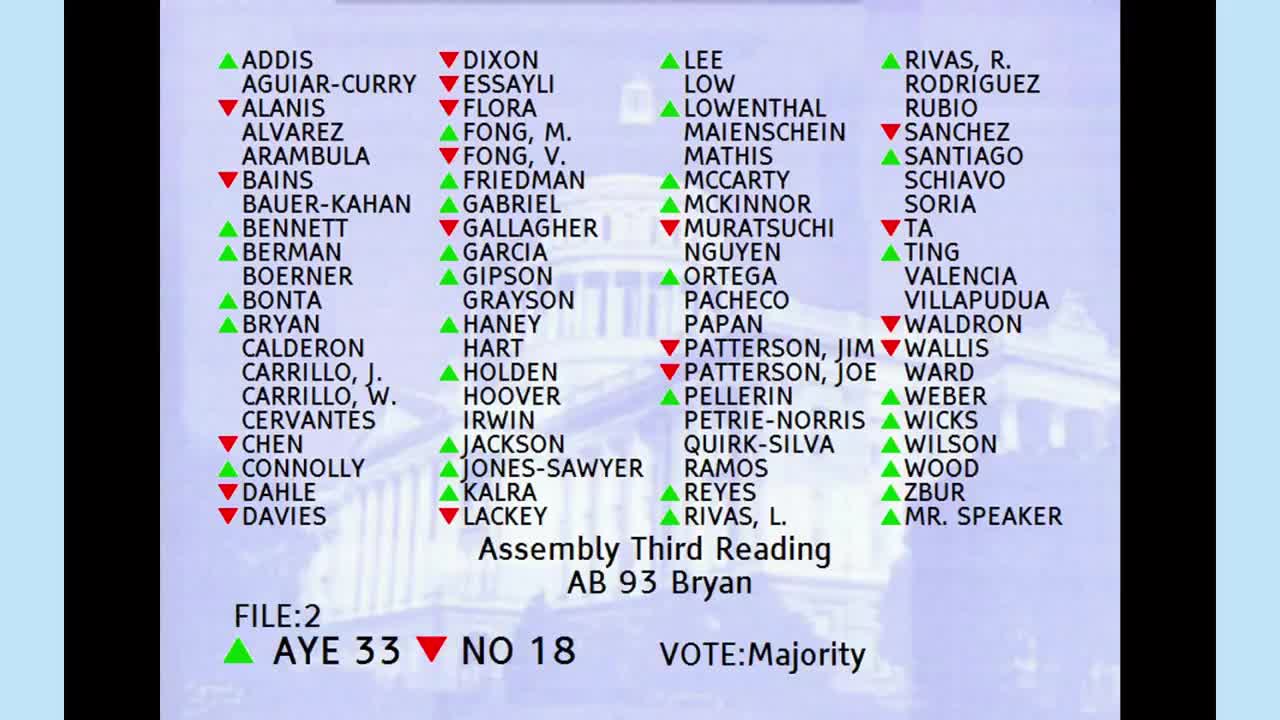
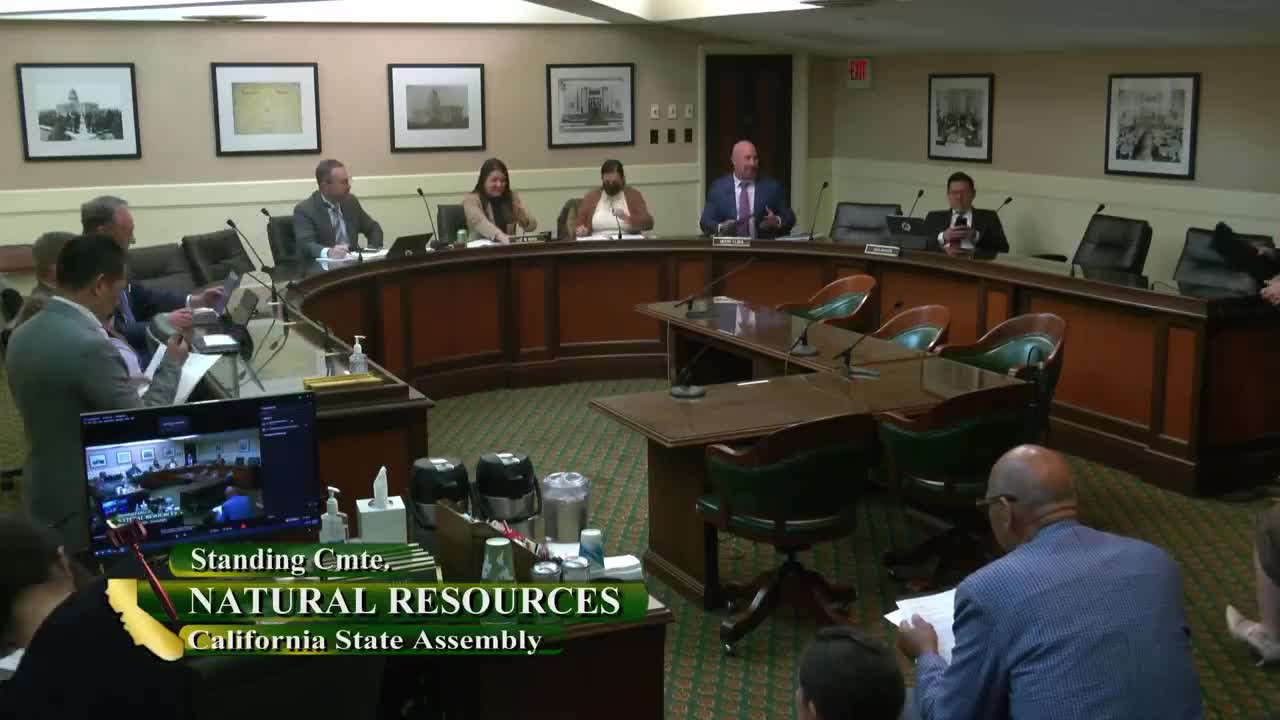
Bill Author

Bill Co-Author(s):
