AB 1284: Tribal ancestral lands and waters: cogovernance and comanagement agreements.
- Session Year: 2023-2024
- House: Assembly
- Latest Version Date: 2024-09-27
Current Status:
Passed
(2024-09-27: Chaptered by Secretary of State - Chapter 657, Statutes of 2024.)
Introduced
In Committee
First Chamber
In Committee
Second Chamber
Enacted
What does this bill do?
The bill lets the California Natural Resources Agency enter formal co‑governance and co‑management agreements with federally recognized tribes (tribes acknowledged by the federal government) to share decisionmaking and manage and conserve tribal ancestral lands and waters. It authorizes the agency secretary or a delegate to sign and negotiate those agreements and to begin talks within 90 days of a tribe’s request when staffing and budget allow. The bill also treats powers held by any nontribal public agency as common with a contracting federally recognized tribe for the purposes of these agreements.
The summary is provided by generative AI which can make mistakes. For original language, please view the details in the table below.
(1)Existing law governs various interactions between the state and federally recognized Native American tribes within the state. Existing law encourages and authorizes all state agencies, as defined, to cooperate with federally recognized California Indian tribes on matters of economic development and improvement for the tribes.
Existing law provides that the Legislature encourages the State of California and its agencies to consult on a government-to-government basis with federally recognized tribes and to consult with nonfederally recognized tribes and tribal organizations, as appropriate, in order to allow tribal officials the opportunity to provide meaningful and timely input in the development of policies, processes, programs, and projects that have tribal implications. Existing law provides that the Legislature encourages the state and its agencies to consult with a federally recognized tribe, at the tribes request for a government-to-government consultation on a specified agency action, within 60 days of the request.
This bill would provide that the Legislature encourages the Natural Resources Agency, and its departments, boards, conservancies, and commissions, to enter into cogovernance and comanagement agreements with federally recognized tribes. The bill would authorize the Secretary of the Natural Resources Agency or a delegate to enter into cogovernance and comanagement agreements with federally recognized tribes for the purposes of shared responsibility, decisionmaking, and partnership in resource management and conservation within a tribes ancestral lands and waters, and would require the secretary or a delegate to be the signatory for these agreements. The bill would authorize the secretary or a delegate, as provided, and within 90 days of a federally recognized tribes request, to begin government-to-government negotiations on cogovernance and comanagement agreements with the tribe.
(2)Existing law provides that 2 or more public agencies, by agreement, may form a joint powers authority to exercise any power common to the contracting parties, as specified.
For purposes of cogovernance and comanagement agreements entered into pursuant to the provisions described in paragraph (1), this bill would deem powers exercisable by any public agency that is not a federally recognized tribe to be common to a contracting federally recognized tribe.
(1)Existing law governs various interactions between the state and federally recognized Native American tribes within the state. Existing law encourages and authorizes all state agencies, as defined, to cooperate with federally recognized California Indian tribes on matters of economic development and improvement for the tribes.
Existing law provides that the Legislature encourages the State of California and its agencies to consult on a government-to-government basis with federally recognized tribes and to consult with nonfederally recognized tribes and tribal organizations, as appropriate, in order to allow tribal officials the opportunity to provide meaningful and timely input in the development of policies, processes, programs, and projects that have tribal implications. Existing law provides that the Legislature encourages the state and its agencies to consult with a federally recognized tribe, at the tribes request for a government-to-government consultation on a specified agency action, within 60 days of the request.
This bill would provide that the Legislature encourages the Natural Resources Agency, and its departments, boards, conservancies, and commissions, to enter into cogovernance and comanagement agreements with federally recognized tribes. The bill would authorize the Secretary of the Natural Resources Agency or a delegate to enter into cogovernance and comanagement agreements with federally recognized tribes for the purposes of shared responsibility, decisionmaking, and partnership in resource management and conservation within a tribes ancestral lands and waters, and would require the secretary or a delegate to be the signatory for the state for these agreements. The bill would authorize the secretary or a delegate, as provided, and within 90 days of a federally recognized tribes request, to begin government-to-government negotiations on cogovernance and comanagement agreements with the tribe.
(2)Existing law provides that 2 or more public agencies, by agreement, may form a joint powers authority to exercise any power common to the contracting parties, as specified.
For purposes of cogovernance and comanagement agreements entered into pursuant to the provisions described in paragraph (1), this bill would deem powers exercisable by any public agency that is not a federally recognized tribe to be common to a contracting federally recognized tribe.
Existing law governs various interactions between the state and federally recognized Native American tribes within the state. Existing law encourages and authorizes all state agencies, as defined, to cooperate with federally recognized California Indian tribes on matters of economic development and improvement for the tribes.
Existing law provides that the Legislature encourages the State of California and its agencies to consult on a government-to-government basis with federally recognized tribes and to consult with nonfederally recognized tribes and tribal organizations, as appropriate, in order to allow tribal officials the opportunity to provide meaningful and timely input in the development of policies, processes, programs, and projects that have tribal implications. Existing law provides that the Legislature encourages the state and its agencies to consult with a federally recognized tribe, at the tribes request for a government-to-government consultation on a specified agency action, within 60 days of the request.
This bill would provide that the Legislature encourages the Natural Resources Agency, and its departments, conservancies, and commissions, to enter into cogovernance and comanagement agreements with federally recognized tribes. The bill would authorize the Secretary of the Natural Resources Agency or a delegate to enter into agreements with federally recognized tribes for the purposes of shared responsibility, decisionmaking, and partnership in resource management and conservation within a tribes ancestral lands and waters, and would require the secretary or a delegate to be the signatory for the state for these agreements. The bill would authorize the secretary or a delegate, within 90 days of a federally recognized tribes request, to begin government-to-government negotiations on cogovernance and comanagement agreements with the tribe.
Existing law governs various interactions between the state and federally recognized Native American tribes within the state. Existing law encourages and authorizes all state agencies, as defined, to cooperate with federally recognized California Indian tribes on matters of economic development and improvement for the tribes.
This bill would state the intent of the Legislature to enact legislation that recognizes the Natural Resources Agencys ability to enter into cogovernance and management agreements with federally recognized Indian tribes and authorizes the agency to do so.Existing law provides that the Legislature encourages the State of California and its agencies to consult on a government-to-government basis with federally recognized tribes and to consult with nonfederally recognized tribes and tribal organizations, as appropriate, in order to allow tribal officials the opportunity to provide meaningful and timely input in the development of policies, processes, programs, and projects that have tribal implications. Existing law provides that the Legislature encourages the state and its agencies to consult with a federally recognized tribe, at the tribes request for a government-to-government consultation on a specified agency action, within 60 days of the request.
This bill would provide that the Legislature encourages the Natural Resources Agency, and its departments, conservancies, and commissions, to enter into cogovernance and comanagement agreements with federally recognized tribes. The bill would authorize the Secretary of the Natural Resources Agency to enter into agreements with federally recognized tribes for the purposes of shared responsibility, decisionmaking, and partnership in resource management and conservation within a tribes ancestral lands and waters, and would require the secretary to be the signatory for the state for these agreements. The bill would authorize the secretary or a delegate, within 90 days of a federally recognized tribes request, to begin government-to-government negotiations on cogovernance and comanagement agreements with the tribe.
Existing law governs various interactions between the state and federally recognized Native American tribes within the state. Existing law encourages and authorizes state agencies, as defined, to cooperate with federally recognized California Indian tribes on matters of economic development and improvement for the tribes.
This bill would state the intent of the Legislature to enact legislation that recognizes the Natural Resources Agencys ability to enter into cogovernance and management agreements with federally recognized Indian tribes and authorizes the agency to do so.
The Legislature finds and declares all of the following:
(a)Californias Native Americans have always been the stewards of Californias land and waters.
(b)Californias Native Americans have distinct cultural, spiritual, environmental, economic, and public health interests, and hold indigenous traditional knowledge relating to natural systems in California.
(c)Federally recognized tribes in California have the sovereign governance authority to enter into agreements with other sovereigns.
(d)Executive Order No. N-15-19 acknowledges and apologizes on behalf of the State of California for the historical violence, exploitation, dispossession and attempted destruction of tribal communities and the subsequent removal of California Native Americans from their ancestral lands.
(e)Executive Order No. N-15-19 reaffirms and incorporates by reference the principle of government-to-government engagement established by Executive Order No. B-10-11 and the states commitment to strengthening effective government-to-government relationships with tribes.
(f)Executive Order No. B-10-11 recognizes and reaffirms the inherent right of Californias Native American tribes to exercise sovereign authority over their members and territory.
(g)Governor Newsoms Statement of Administration Policy on Native American Ancestral Lands seeks opportunities to support California tribes co-management of and access to lands that are within tribal ancestral territories and under the ownership or control of the state.
(h)The purpose of the Statement of Administration Policy on Native American Ancestral Lands is to partner with tribes to, among other things, facilitate comanagement and support tribal self-determination and self-governance.
(i)Californias 30x30 Initiative is committed to strengthening tribal partnerships, including the development of opportunities for meaningful and mutually beneficial tribal management and tribal co-management within new and existing state lands, marine waters, and private lands, through formal agreements and other means.
SEC. 2.Section 6502.3 is added to the Government Code, to read:6502.3.For purposes of cogovernance and comanagement agreements entered into pursuant to Section 11019.82, powers exercisable by any public agency that is not a federally recognized tribe shall be deemed common to a contracting federally recognized tribe.
SEC. 3.Section 11019.82 is added to the Government Code, to read:11019.82.(a)This section shall be known, and may be cited, as the Tribal Cogovernance and Comanagement of Ancestral Lands and Waters Act.
(b)For purposes of this section, the following definitions apply:
(1)Ancestral lands and waters means lands, resources, and waters within a federally recognized tribes ancestral territory.
(2)Cogovernance is governance that emphasizes collaboration and shared decisionmaking on a government-to-government level.
(3)Comanagement means a collaborative effort established through an agreement in which two or more sovereigns mutually negotiate, define, and allocate amongst themselves the sharing of management functions and responsibilities for a given territory, area, or set of natural resources.
(4)Federally recognized tribe means a tribe located in the state and acknowledged by the federal government pursuant to the annual list published under the Federally Recognized Indian Tribe List Act of 1994 (25 U.S.C. Sec. 5131) in the Federal Register.
(5)Natural Resources Agency means the Natural Resources Agency and each of its departments, boards, conservancies, and commissions identified in Section 12805.
(c)The Legislature encourages the Natural Resources Agency to enter into cogovernance and comanagement agreements with federally recognized tribes.
(1)The Secretary of the Natural Resources Agency or a delegate shall be the signatory, and may enter into cogovernance and comanagement agreements with federally recognized tribes for the purposes of shared responsibility, decisionmaking, and partnership in resource management and conservation within a tribes ancestral lands and waters.
(2)The scope of cogovernance and comanagement agreements shall be limited to those areas under the jurisdiction of the Natural Resources Agency. The Natural Resources Agency may enter into a cogovernance or comanagement agreement with a federally recognized tribe without further specific legislative authorization.
(d)At the request of a federally recognized tribe, the Secretary of the Natural Resources Agency or a delegate at the appropriate department, board, conservancy, or commission may, to the extent feasible within existing staffing and budget, within 90 days of the request, begin government-to-government negotiations on cogovernance and comanagement agreements with the tribe.
The Legislature finds and declares all of the following:
(a)Californias Native Americans have always been the stewards of Californias land and waters.
(b)Californias Native Americans have distinct cultural, spiritual, environmental, economic, and public health interests, and hold indigenous traditional knowledge relating to natural systems in California.
(c)Federally recognized tribes in California have the sovereign governance authority to enter into agreements with other sovereigns.
(d)Executive Order No. N-15-19 acknowledges and apologizes on behalf of the State of California for the historical violence, exploitation, dispossession and attempted destruction of tribal communities and the subsequent removal of California Native Americans from their ancestral lands.
(e)Executive Order No. N-15-19 reaffirms and incorporates by reference the principle of government-to-government engagement established by Executive Order No. B-10-11 and the states commitment to strengthening effective government-to-government relationships with tribes.
(f)Executive Order No. B-10-11 recognizes and reaffirms the inherent right of Californias Native American tribes to exercise sovereign authority over their members and territory.
(g)Governor Newsoms Statement of Administration Policy on Native American Ancestral Lands seeks opportunities to support California tribes co-management of and access to lands that are within tribal ancestral territories and under the ownership or control of the state.
(h)The purpose of the Statement of Administration Policy on Native American Ancestral Lands is to partner with tribes to, among other things, facilitate comanagement and support tribal self-determination and self-governance.
(i)Californias 30x30 Initiative is committed to strengthening tribal partnerships, including the development of opportunities for meaningful and mutually beneficial tribal management and tribal co-management within new and existing state lands, marine waters, and private lands, through formal agreements and other means.
SEC. 2.Section 6502.3 is added to the Government Code, to read:6502.3.For purposes of cogovernance and comanagement agreements entered into pursuant to Section 11019.82, powers exercisable by any public agency that is not a federally recognized tribe shall be deemed common to a contracting federally recognized tribe.
SEC. 2.SEC. 3.Section 11019.82 is added to the Government Code, to read:11019.82.(a)This section shall be known, and may be cited, as the Tribal Cogovernance and Comanagement of Ancestral Lands and Waters Act.
(b)For purposes of this section, the following definitions apply:
(1)Ancestral lands and waters means lands, resources, and waters within a federally recognized tribes ancestral territory.
(2)Cogovernance is governance that emphasizes collaboration and shared decisionmaking on a nation-to-nation, government-to-government level.
(3)Comanagement, as adopted by the Fish and Game Commission, Comanagement means a collaborative effort established through an agreement in which two or more sovereigns mutually negotiate, define, and allocate amongst themselves the sharing of management functions and responsibilities for a given territory, area, or set of natural resources.
(4)Federally recognized tribe means a tribe located in the state and acknowledged by the federal government pursuant to the annual list published under the Federally Recognized Indian Tribe List Act of 1994 (25 U.S.C. Sec. 5131) in the Federal Register.
(5)Resources Natural Resources Agency means the Natural Resources Agency and each of its departments, boards, conservancies, and commissions. commissions identified in Section 12805.
(c)The Legislature encourages the Natural Resources Agency to enter into cogovernance and comanagement agreements with federally recognized tribes.
(1)The Secretary of the Natural Resources Agency or a delegate shall be the signatory for the state, signatory, and may enter into cogovernance and comanagement agreements with federally recognized tribes for the purposes of shared responsibility, decisionmaking, and partnership in resource management and conservation within a tribes ancestral lands and waters.
(2)The scope of cogovernance and comanagement agreements shall be limited to those areas under the jurisdiction of the Natural Resources Agency. The Natural Resources Agency may enter into a cogovernance or comanagement agreement with a federally recognized tribe without further specific legislative authorization.
(d)At the request of a federally recognized tribe, the Secretary of the Natural Resources Agency or a delegate at the appropriate department, board, conservancy, or commission may, to the extent feasible within existing staffing and budget, within 90 days of the request, begin government-to-government negotiations on cogovernance and comanagement agreements with the tribe.
The Legislature finds and declares all of the following:
(a)Californias Native Americans have always been the stewards of Californias land and waters.
(b)Californias Native Americans have distinct cultural, spiritual, environmental, economic, and public health interests, and hold indigenous traditional knowledge relating to natural systems in California.
(c)Federally recognized tribes in California have the sovereign governance authority to enter into agreements with other sovereigns.
(d)Executive Order No. N-15-19 acknowledges and apologizes on behalf of the State of California for the historical violence, exploitation, dispossession and attempted destruction of tribal communities and the subsequent removal of California Native Americans from their ancestral lands.
(e)Executive Order No. N-15-19 reaffirms and incorporates by reference the principle of government-to-government engagement established by Executive Order No. B-10-11 and the states commitment to strengthening effective government-to-government relationships with tribes.
(f)Executive Order No. B-10-11 recognizes and reaffirms the inherent right of Californias Native American tribes to exercise sovereign authority over their members and territory.
(g)Governor Newsoms Statement of Administration Policy on Native American Ancestral Lands seeks opportunities to support California tribes co-management of and access to lands that are within tribal ancestral territories and under the ownership or control of the state.
(h)The purpose of the Statement of Administration Policy on Native American Ancestral Lands is to partner with tribes to, among other things, facilitate comanagement and support tribal self-determination and self-governance.
(i)Californias 30x30 Initiative is committed to strengthening tribal partnerships, including the development of opportunities for meaningful and mutually beneficial tribal management and tribal co-management within new and existing state lands, marine waters, and private lands, through formal agreements and other means.
SEC. 2.Section 11019.82 is added to the Government Code, to read:11019.82.(a)This section shall be known, and may be cited, as the Tribal Cogovernance and Comanagement of Ancestral Lands and Waters Act.
(b)For purposes of this section, the following definitions apply:
(1)Ancestral lands and waters means lands, resources, and waters within a federally recognized tribes ancestral territory that are state owned or controlled. territory.
(2)Cogovernance is governance that emphasizes collaboration and shared decisionmaking on a nation-to-nation, government-to-government level.
(3)Comanagement, as adopted by the Fish and Game Commission, means a collaborative effort established through an agreement in which two or more sovereigns mutually negotiate, define, and allocate amongst themselves the sharing of management functions and responsibilities for a given territory, area, or set of natural resources.
(4)Federally recognized tribe means a tribe located in the state and acknowledged by the federal government pursuant to the annual list published under the Federally Recognized Indian Tribe List Act of 1994 (25 U.S.C. Sec. 5131) in the Federal Register.
(5)Resources Agency means the Natural Resources Agency and its departments, conservancies, and commissions.
(c)The Legislature encourages the Resources Agency to enter into cogovernance and comanagement agreements with federally recognized tribes. The
(1)The Secretary of the Natural Resources Agency or a delegate shall be the signatory for the state, and may enter into cogovernance and comanagement agreements with federally recognized tribes for the purposes of shared responsibility, decisionmaking, and partnership in resource management and conservation within a tribes ancestral lands and waters.
(2)The scope of cogovernance and comanagement agreements shall be limited to those areas under the jurisdiction of the Resources Agency.
(d)At the request of a federally recognized tribe, the Secretary of the Natural Resources Agency or a delegate may, within 90 days of the request, begin government-to-government negotiations on cogovernance and comanagement agreements with the tribe.
The Legislature finds and declares all of the following:
(a)Californias Native Americans have always been the stewards of Californias land and waters.
(b)Californias Native Americans have distinct cultural, spiritual, environmental, economic, and public health interests, and hold indigenous traditional knowledge relating to natural systems in California.
(c)Federally recognized tribes in California have the sovereign governance authority to enter into agreements with other sovereigns.
(d)Executive Order No. N-15-19 acknowledges and apologizes on behalf of the State of California for the historical violence, exploitation, dispossession and attempted destruction of tribal communities and the subsequent removal of California Native Americans from their ancestral lands.
(e)Executive Order No. N-15-19 reaffirms and incorporates by reference the principle of government-to-government engagement established by Executive Order No. B-10-11 and the states commitment to strengthening effective government-to-government relationships with tribes.
(f)Executive Order No. B-10-11 recognizes and reaffirms the inherent right of Californias Native American tribes to exercise sovereign authority over their members and territory.
(g)Governor Newsoms Statement of Administration Policy on Native American Ancestral Lands seeks opportunities to support California tribes co-management of and access to lands that are within tribal ancestral territories and under the ownership or control of the state.
(h)The purpose of the Statement of Administration Policy on Native American Ancestral Lands is to partner with tribes to, among other things, facilitate comanagement and support tribal self-determination and self-governance.
(i)Californias 30x30 Initiative is committed to strengthening tribal partnerships, including the development of opportunities for meaningful and mutually beneficial tribal management and tribal co-management within new and existing state lands, marine waters, and private lands, through formal agreements and other means.
SEC. 2.Section 11019.82 is added to the Government Code, to read:11019.82.(a)This section shall be known, and may be cited, as the Tribal Cogovernance and Comanagement of Ancestral Lands and Waters Act.
(b)For purposes of this section, the following definitions apply:
(1)Ancestral lands and waters means lands lands, resources, and waters within a federally recognized tribes ancestral territory that are state owned or controlled.
(2)Cogovernance is governance that emphasizes collaboration and shared decisionmaking on a nation-to-nation, government-to-government level.
(3)Comanagement, as adopted by the Fish and Game Commission, means a collaborative effort established through an agreement in which two or more sovereigns mutually negotiate, define, and allocate amongst themselves the sharing of management functions and responsibilities for a given territory, area area, or set of natural resources.
(4)Federally recognized tribe means a tribe located in the state and acknowledged by the federal government pursuant to the annual list published under the Federally Recognized Indian Tribe List Act of 1994 (25 U.S.C. Sec. 5131) in the Federal Register.
(5)Resources Agency means the Natural Resources Agency and its departments, conservancies, and commissions.
(c)The Legislature encourages the Resources Agency to enter into cogovernance and comanagement agreements with federally recognized tribes. The Secretary of the Natural Resources Agency or a delegate shall be the signatory for the state, and may enter into agreements with federally recognized tribes for the purposes of shared responsibility, decisionmaking, and partnership in resource management and conservation within a tribes ancestral lands and waters.
(d)At the request of a federally recognized tribe, the Secretary of the Natural Resources Agency or a delegate may, within 90 days of the request, begin government-to-government negotiations on cogovernance and comanagement agreements with the tribe.
The Legislature finds and declares all of the following:
(a)Californias Native Americans have always been the stewards of Californias land and waters.
(b)Californias Native Americans have distinct cultural, spiritual, environmental, economic, and public health interests, and hold indigenous traditional knowledge relating to natural systems in California.
(c)Federally recognized tribes in California have the sovereign governance authority to enter into agreements with other sovereigns.
(d)Executive Order No. N-15-19 acknowledges and apologizes on behalf of the State of California for the historical violence, exploitation, dispossession and attempted destruction of tribal communities and the subsequent removal of California Native Americans from their ancestral lands.
(e)Executive Order No. N-15-19 reaffirms and incorporates by reference the principle of government-to-government engagement established by Executive Order No. B-10-11 and the states commitment to strengthening effective government-to-government relationships with tribes.
(f)Executive Order No. B-10-11 recognizes and reaffirms the inherent right of Californias Native American tribes to exercise sovereign authority over their members and territory.
(g)Governor Newsoms Statement of Administration Policy on Native American Ancestral Lands seeks opportunities to support California tribes co-management of and access to lands that are within tribal ancestral territories and under the ownership or control of the state.
(h)The purpose of the Statement of Administration Policy on Native American Ancestral Lands is to partner with tribes to, among other things, facilitate comanagement and support tribal self-determination and self-governance.
(i)Californias 30x30 Initiative is committed to strengthening tribal partnerships, including the development of opportunities for meaningful and mutually beneficial tribal management and tribal co-management within new and existing state lands, marine waters, and private lands, through formal agreements and other means.
(j)The Fish and Game Commission has adopted the following definition of comanagement: A collaborative effort established through an agreement in which two or more sovereigns mutually negotiate, define, and allocate amongst themselves the sharing of management functions and responsibilities for a given territory, area, or set of natural resources.SEC. 2.It is the intent of the Legislature to enact legislation that recognizes the Natural Resources Agencys ability to enter into cogovernance and management agreements with federally recognized Indian tribes and authorizes the agency to do so. SEC. 2.Section 11019.82 is added to the Government Code, to read:11019.82.(a)This section shall be known, and may be cited, as the Tribal Cogovernance of Ancestral Lands and Waters Act.
(b)For purposes of this section, the following definitions apply:
(1)Ancestral lands and waters means lands and waters within a federally recognized tribes ancestral territory that are state owned or controlled.
(2)Cogovernance is governance that emphasizes collaboration and shared decisionmaking on a nation-to-nation, government-to-government level.
(3)Comanagement, as adopted by the Fish and Game Commission, means a collaborative effort established through an agreement in which two or more sovereigns mutually negotiate, define, and allocate amongst themselves the sharing of management functions and responsibilities for a given territory, area or set of natural resources.
(4)Federally recognized tribe means a tribe located in the state and acknowledged by the federal government pursuant to the annual list published under the Federally Recognized Indian Tribe List Act of 1994 (25 U.S.C. Sec. 5131) in the Federal Register.
(5)Resources Agency means the Natural Resources Agency and its departments, conservancies, and commissions.
(c)The Legislature encourages the Resources Agency to enter into cogovernance and comanagement agreements with federally recognized tribes. The Secretary of the Natural Resources Agency shall be the signatory for the state, and may enter into agreements with federally recognized tribes for the purposes of shared responsibility, decisionmaking, and partnership in resource management and conservation within a tribes ancestral lands and waters.
(d)At the request of a federally recognized tribe, the Secretary of the Natural Resources Agency or a delegate may, within 90 days of the request, begin government-to-government negotiations on cogovernance and comanagement agreements with the tribe.
REVISIONS: HeadingLine 2.The Legislature finds and declares all of the following:
(a)Californias Native Americans have always been the stewards of Californias land and waters.
(b)Californias Native Americans have distinct cultural, spiritual, environmental, economic, and public health interests, and hold indigenous traditional knowledge relating to natural systems in California.
(c)Federally recognized tribes in California have the sovereign governance authority to enter into agreements with other sovereigns.
(d)Executive Order No. N-15-19 acknowledges and apologizes on behalf of the State of California for the historical violence, exploitation, dispossession and attempted destruction of tribal communities and the subsequent removal of California Native Americans from their ancestral lands.
(e)Executive Order No. N-15-19 reaffirms and incorporates by reference the principle of government-to-government engagement established by Executive Order No. B-10-11 and the states commitment to strengthening effective government-to-government relationships with tribes.
(f)Executive Order No. B-10-11 recognizes and reaffirms the inherent right of Californias Native American tribes to exercise sovereign authority over their members and territory.
(g)Governor Newsoms Statement of Administration Policy on Native American Ancestral Lands seeks opportunities to support California tribes co-management of and access to lands that are within tribal ancestral territories and under the ownership or control of the state.
(h)The purpose of the Statement of Administration Policy on Native American Ancestral Lands is to partner with tribes to, among other things, facilitate comanagement and support tribal self-determination and self-governance.
(i)Californias 30x30 Initiative is committed to strengthening tribal partnerships, including the development of opportunities for meaningful and mutually beneficial tribal management and tribal co-management within new and existing state lands, marine waters, and private lands, through formal agreements and other means.
(j)The Fish and Game Commission has adopted the following definition of comanagement: A collaborative effort established through an agreement in which two or more sovereigns mutually negotiate, define, and allocate amongst themselves the sharing of management functions and responsibilities for a given territory, area, or set of natural resources.
SEC. 2.It is the intent of the Legislature to enact legislation that recognizes the Natural Resources Agencys ability to enter into cogovernance and management agreements with federally recognized Indian tribes and authorizes the agency to do so.
|
Date
|
Status
|
|---|---|
| Sep 27, 2024 | Chaptered by Secretary of State - Chapter 657, Statutes of 2024. |
| Sep 27, 2024 | Approved by the Governor. |
| Sep 5, 2024 | Enrolled and presented to the Governor at 4 p.m. |
| Aug 27, 2024 | Senate amendments concurred in. To Engrossing and Enrolling. (Ayes 76. Noes 0.). |
| Aug 27, 2024 | Assembly Rule 77 suspended. |
| Aug 26, 2024 | In Assembly. Concurrence in Senate amendments pending. May be considered on or after August 28 pursuant to Assembly Rule 77. |
| Aug 26, 2024 | Read third time. Passed. Ordered to the Assembly. (Ayes 40. Noes 0.). |
| Aug 21, 2024 | Read second time. Ordered to third reading. |
| Aug 20, 2024 | Read third time and amended. Ordered to second reading. |
| Aug 19, 2024 | Read second time. Ordered to third reading. |
| Aug 15, 2024 | From committee: Do pass. (Ayes 7. Noes 0.) (August 15). |
| Jul 1, 2024 | In committee: Referred to suspense file. |
| Jun 12, 2024 | Read second time and amended. Re-referred to Com. on APPR. |
| Jun 11, 2024 | From committee: Amend, and do pass as amended and re-refer to Com. on APPR. (Ayes 11. Noes 0.) (June 11). |
| May 1, 2024 | Referred to Com. on N.R. & W. |
| Jan 29, 2024 | In Senate. Read first time. To Com. on RLS. for assignment. |
| Jan 29, 2024 | Read third time. Passed. Ordered to the Senate. (Ayes 77. Noes 0. Page 3950.) |
| Jan 23, 2024 | Read second time. Ordered to third reading. |
| Jan 22, 2024 | Read second time and amended. Ordered returned to second reading. |
| Jan 18, 2024 | From committee: Amend, and do pass as amended. (Ayes 12. Noes 0.) (January 18). |
| May 18, 2023 | In committee: Hearing postponed by committee. |
| Apr 26, 2023 | In committee: Set, first hearing. Referred to APPR. suspense file. |
| Apr 11, 2023 | From committee: Do pass and re-refer to Com. on APPR. with recommendation: To Consent Calendar. (Ayes 11. Noes 0.) (April 10). Re-referred to Com. on APPR. |
| Apr 11, 2023 | Coauthors revised. |
| Mar 27, 2023 | Re-referred to Com. on NAT. RES. |
| Mar 23, 2023 | Referred to Com. on NAT. RES. |
| Mar 23, 2023 | From committee chair, with author's amendments: Amend, and re-refer to Com. on NAT. RES. Read second time and amended. |
| Feb 17, 2023 | From printer. May be heard in committee March 19. |
| Feb 16, 2023 | Read first time. To print. |
|
Date
|
Description
|
Location
|
Votes
|
|
|---|---|---|---|---|
| Aug 27, 2024 | AB 1284 Ramos Concurrence in Senate Amendments | Assembly Floor |
Passed |
|
| Aug 26, 2024 | Assembly 3rd Reading AB1284 Ramos et al. By Laird | Senate Floor |
Passed |
|
| Aug 15, 2024 | Do pass | Senate Standing Committee on Appropriations |
Passed |
|
| Jul 1, 2024 | Placed on suspense file | Senate Standing Committee on Appropriations |
Passed |
|
| Jun 11, 2024 | Do pass as amended, but first amend, and re-refer to the Committee on [Appropriations] | Senate Standing Committee on Natural Resources and Water |
Passed |
|
| Jan 29, 2024 | AB 1284 Ramos Assembly Third Reading | Assembly Floor |
Passed |
|
| Jan 18, 2024 | Do pass as amended. | Assembly Standing Committee on Appropriations |
Passed |
|
| Apr 10, 2023 | Do pass and be re-referred to the Committee on [Appropriations] with recommendation: To Consent Calendar | Assembly Standing Committee on Natural Resources |
Passed |
This list shows positions taken on this bill by organizations on the date displayed, which is linked to the original source.
Positions by individuals are not included.
|
Organization
|
Position
|
Date
|
|---|---|---|
| Aaron Read & Associates | * Support | Jun 11, 2024 |
| Association Of California Water Agencies | * Neutral | Jun 13, 2024 |
| Blue Lake Rancheria Tribe of California | ** Support | |
| California State Parks Foundation | ** Support | |
| California Tribal Business Alliance | ** Support | |
| California Tribal Chairpersons' Association | ** Support | |
| California Trout | * Support | Jun 11, 2024 |
| cher-ae heights indian community of the trinidad rancheria | ** Support | |
| Defenders Of Wildlife | ** Support | |
| Elk Valley Rancheria, California | ** Support | |
| Federated Indians Of Graton Rancheria | ** Support | Jun 11, 2024 |
| Friends of the River | ** Support | |
| Intertribal Sinkyone Wilderness Council | ** Support | |
| Jamul Indian Village of California | ** Support | |
| Junior Philanthropist Foundation | * Support | Jun 11, 2024 |
| Kaduk Tribe | * Support | Jun 11, 2024 |
| Land Trust Of Santa Cruz County | ** Support | |
| Northern California Tribal Chairmen'S Association | ** Support | |
| Ocean Conservancy | ** Support | |
| Pew Charitable Trusts, The | ** Support | |
| Pew Charitable Trusts; The | * Support | Jun 11, 2024 |
| Planning And Conservation League | ** Support | |
| Reeb Government Relations | * Against | Jun 11, 2024 |
| Resighini Rancheria | ** Support | |
| Santa Ynez Band Of Chumash Indians | ** Support | |
| Save the Redwoods League | ** Support | |
| Sempervirens Fund | ** Support | |
| Tolowa Dee-ni' Nation | ** Support | |
| Trust For Public Land, The | ** Support | |
| Tule River Tribe | * Support | Jun 11, 2024 |
| Union Of Concerned Scientists | ** Support | |
| Valley Ag Water Coalition | ** Against | |
| Yurok Tribe | * Support | Jun 11, 2024 |
CONCURRENCE IN SENATE AMENDMENTS
CSA1 Bill Id:AB 1284
Author:(Ramos)
As Amended Ver:August 20, 2024
Majority vote
SUMMARY
Establishes the Tribal Cogovernance and Comanagement of Ancestral Lands and Waters Act to encourage the state to enter into cogovernance and comanagement agreements with federally recognized tribes.
Senate Amendments
- Update definition for “comanagement.”
- Provide that, for purposes of cogovernance and comanagement agreements entered into, powers exercisable by any public agency that is not a federally recognized tribe shall be deemed common to a contracting federally recognized tribe.
- Provide that the scope of cogovernance and comanagement agreements shall be limited to those areas under the jurisdiction of the Natural Resources Agency (NRA).
- Authorize NRA to enter into a cogovernance or comanagement agreement with a federally recognized tribe without further specific legislative authorization.
COMMENTS
NRA recognizes that California Native American Tribes and tribal communities have sovereign authority over their members and territories and a unique relationship with California’s resources. All California tribes and tribal communities, regardless of federal recognition, have distinct cultural, spiritual, environmental, and economic and public health interests and unique traditional cultural knowledge about California resources.
On October 7, 2020, Governor Newsom issued Executive Order No. N-82-20, which directed NRA to collaborate with tribal partners to incorporate tribal expertise and traditional ecological knowledge to better understand our biodiversity and the threats it faces. As a result, NRA appointed an assistant Secretary for Tribal Affairs to help cultivate and ensure the participation and inclusion of tribal governments and communities within the work of NRA, supporting the effective integration of these governments’ and communities’ interests in environmental policymaking.
AB 1284 encourages NRA to enter into cogovernance and comanagement agreements with federally recognized tribes and authorizes the Secretary to enter into agreements with federally recognized tribes for the purposes of shared responsibility, decision-making, and partnership in resource management and conservation within a tribe’s ancestral lands and waters.
According to the Author
Tribes have always been the stewards of their ancestral lands and waters and have thousands of years of traditional management knowledge. Climate impacts are having devastating effects on our state. Tribal Governments have the ability to manage lands and waters in a way that is conservation focused and can address climate impacts and increase biodiversity. There is no clear authority for state agencies to enter into co-governance and co-management agreements with Tribal Governments. This lack of clear authority has resulted in piecemeal attempts for agreements that do not provide for co-management as envisioned by Tribes or the state. The Tribes in the state wish to be equitable partners with the Resources Agency in combating climate impacts, enhancing biodiversity, ensuring durable conservation, and protecting their natural and cultural resources. Ultimately, AB 1284 recognizes Tribal stewardship capabilities to manage resources in their ancestral territories and helps the state achieve its conservation goals.
Arguments in Support
The Resighini Rancheria, co-sponsor of the bill, write, “AB 1284 creates a space where Indigenous knowledge drives decision-making that results in healthy and viable communities and ecosystems for future generations.”
Arguments in Opposition
None on file for the current version of the bill.
FISCAL COMMENTS
According to the Senate Appropriations Committee:
- NRA estimates ongoing costs of roughly $2 million annually (General Fund) to support 6 positions and contracts in order to implement the provisions of this bill.
- The Department of Fish and Wildlife estimates ongoing costs of about $2.1 million (General Fund) to support 10 positions for staff to serve as regional tribal liaisons in its main program areas.
- The Department of Parks and Recreation (State Parks) estimates ongoing costs of more than $2 million annually (General Fund) to support the increase in tribal interest in pursuing co-management or co-governance agreements that it anticipates as a result of this bill.
VOTES:
ASM NATURAL RESOURCES: 11-0-0
YES: Luz Rivas, Flora, Addis, Friedman, Hoover, Mathis, Muratsuchi, Pellerin, Ward, Wood, Zbur
ASM APPROPRIATIONS: 12-0-4
YES: Holden, Arambula, Wood, Calderon, Connolly, Mike Fong, Grayson, Haney, Hart, Lowenthal, Pellerin, Villapudua
ABS, ABST OR NV: Sanchez, Megan Dahle, Dixon, Ta
ASSEMBLY FLOOR: 77-0-3
YES: Aguiar-Curry, Alanis, Alvarez, Arambula, Bains, Bauer-Kahan, Bennett, Berman, Boerner, Bonta, Bryan, Calderon, Juan Carrillo, Wendy Carrillo, Cervantes, Chen, Connolly, Davies, Dixon, Essayli, Flora, Mike Fong, Friedman, Gabriel, Gallagher, Garcia, Gipson, Grayson, Haney, Hart, Holden, Hoover, Irwin, Jackson, Jones-Sawyer, Kalra, Lackey, Lee, Low, Lowenthal, Maienschein, Mathis, McCarty, McKinnor, Muratsuchi, Stephanie Nguyen, Ortega, Pacheco, Papan, Jim Patterson, Joe Patterson, Pellerin, Petrie-Norris, Quirk-Silva, Ramos, Rendon, Reyes, Luz Rivas, Rodriguez, Blanca Rubio, Sanchez, Santiago, Schiavo, Soria, Ta, Ting, Valencia, Villapudua, Waldron, Wallis, Ward, Weber, Wicks, Wilson, Wood, Zbur, Robert Rivas
ABS, ABST OR NV: Addis, Megan Dahle, Vince Fong
SENATE FLOOR: 40-0-0
YES: Allen, Alvarado-Gil, Archuleta, Ashby, Atkins, Becker, Blakespear, Bradford, Caballero, Cortese, Dahle, Dodd, Durazo, Eggman, Glazer, Gonzalez, Grove, Hurtado, Jones, Laird, Limón, McGuire, Menjivar, Min, Newman, Nguyen, Niello, Ochoa Bogh, Padilla, Portantino, Roth, Rubio, Seyarto, Skinner, Smallwood-Cuevas, Stern, Umberg, Wahab, Wiener, Wilk
UPDATED
VERSION: August 20, 2024
CONSULTANT: Paige Brokaw / NAT. RES. / (916) 319-2092 FN: 0004744
CONCURRENCE IN SENATE AMENDMENTS
CSA1 Bill Id:AB 1284
Author:(Ramos)
As Amended Ver:August 20, 2024
Majority vote
SUMMARY
Establishes the Tribal Cogovernance and Comanagement of Ancestral Lands and Waters Act to encourage the state to enter into cogovernance and comanagement agreements with federally recognized tribes.
Senate Amendments
- Update definition for “comanagement.”
- Provide that, for purposes of cogovernance and comanagement agreements entered into, powers exercisable by any public agency that is not a federally recognized tribe shall be deemed common to a contracting federally recognized tribe.
- Provide that the scope of cogovernance and comanagement agreements shall be limited to those areas under the jurisdiction of the Natural Resources Agency (NRA).
- Authorize NRA to enter into a cogovernance or comanagement agreement with a federally recognized tribe without further specific legislative authorization.
COMMENTS
NRA recognizes that California Native American Tribes and tribal communities have sovereign authority over their members and territories and a unique relationship with California’s resources. All California tribes and tribal communities, regardless of federal recognition, have distinct cultural, spiritual, environmental, and economic and public health interests and unique traditional cultural knowledge about California resources.
On October 7, 2020, Governor Newsom issued Executive Order No. N-82-20, which directed NRA to collaborate with tribal partners to incorporate tribal expertise and traditional ecological knowledge to better understand our biodiversity and the threats it faces. As a result, NRA appointed an assistant Secretary for Tribal Affairs to help cultivate and ensure the participation and inclusion of tribal governments and communities within the work of NRA, supporting the effective integration of these governments’ and communities’ interests in environmental policymaking.
AB 1284 encourages NRA to enter into cogovernance and comanagement agreements with federally recognized tribes and authorizes the Secretary to enter into agreements with federally recognized tribes for the purposes of shared responsibility, decision-making, and partnership in resource management and conservation within a tribe’s ancestral lands and waters.
According to the Author
Tribes have always been the stewards of their ancestral lands and waters and have thousands of years of traditional management knowledge. Climate impacts are having devastating effects on our state. Tribal Governments have the ability to manage lands and waters in a way that is conservation focused and can address climate impacts and increase biodiversity. There is no clear authority for state agencies to enter into co-governance and co-management agreements with Tribal Governments. This lack of clear authority has resulted in piecemeal attempts for agreements that do not provide for co-management as envisioned by Tribes or the state. The Tribes in the state wish to be equitable partners with the Resources Agency in combating climate impacts, enhancing biodiversity, ensuring durable conservation, and protecting their natural and cultural resources. Ultimately, AB 1284 recognizes Tribal stewardship capabilities to manage resources in their ancestral territories and helps the state achieve its conservation goals.
Arguments in Support
The Resighini Rancheria, co-sponsor of the bill, write, “AB 1284 creates a space where Indigenous knowledge drives decision-making that results in healthy and viable communities and ecosystems for future generations.”
Arguments in Opposition
None on file for the current version of the bill.
FISCAL COMMENTS
According to the Senate Appropriations Committee:
- NRA estimates ongoing costs of roughly $2 million annually (General Fund) to support 6 positions and contracts in order to implement the provisions of this bill.
- The Department of Fish and Wildlife estimates ongoing costs of about $2.1 million (General Fund) to support 10 positions for staff to serve as regional tribal liaisons in its main program areas.
- The Department of Parks and Recreation (State Parks) estimates ongoing costs of more than $2 million annually (General Fund) to support the increase in tribal interest in pursuing co-management or co-governance agreements that it anticipates as a result of this bill.
VOTES:
ASM NATURAL RESOURCES: 11-0-0
YES: Luz Rivas, Flora, Addis, Friedman, Hoover, Mathis, Muratsuchi, Pellerin, Ward, Wood, Zbur
ASM APPROPRIATIONS: 12-0-4
YES: Holden, Arambula, Wood, Calderon, Connolly, Mike Fong, Grayson, Haney, Hart, Lowenthal, Pellerin, Villapudua
ABS, ABST OR NV: Sanchez, Megan Dahle, Dixon, Ta
ASSEMBLY FLOOR: 77-0-3
YES: Aguiar-Curry, Alanis, Alvarez, Arambula, Bains, Bauer-Kahan, Bennett, Berman, Boerner, Bonta, Bryan, Calderon, Juan Carrillo, Wendy Carrillo, Cervantes, Chen, Connolly, Davies, Dixon, Essayli, Flora, Mike Fong, Friedman, Gabriel, Gallagher, Garcia, Gipson, Grayson, Haney, Hart, Holden, Hoover, Irwin, Jackson, Jones-Sawyer, Kalra, Lackey, Lee, Low, Lowenthal, Maienschein, Mathis, McCarty, McKinnor, Muratsuchi, Stephanie Nguyen, Ortega, Pacheco, Papan, Jim Patterson, Joe Patterson, Pellerin, Petrie-Norris, Quirk-Silva, Ramos, Rendon, Reyes, Luz Rivas, Rodriguez, Blanca Rubio, Sanchez, Santiago, Schiavo, Soria, Ta, Ting, Valencia, Villapudua, Waldron, Wallis, Ward, Weber, Wicks, Wilson, Wood, Zbur, Robert Rivas
ABS, ABST OR NV: Addis, Megan Dahle, Vince Fong
UPDATED
VERSION: August 20, 2024
CONSULTANT: Paige Brokaw / NAT. RES. / (916) 319-2092 FN: 0004744
SENATE RULES COMMITTEE Office of Senate Floor Analyses (916) 651-1520 Fax: (916) 327-4478 | AB 1284 |
THIRD READING
Bill No: AB 1284
Author: Ramos (D), et al.
Amended: 8/20/24 in Senate
Vote: 21
SENATE NATURAL RES. & WATER COMMITTEE: 11-0, 6/11/24
AYES: Min, Seyarto, Allen, Dahle, Eggman, Grove, Hurtado, Laird, Limón, Padilla, Stern
SENATE APPROPRIATIONS COMMITTEE: 7-0, 8/15/24
AYES: Caballero, Jones, Ashby, Becker, Bradford, Seyarto, Wahab
ASSEMBLY FLOOR: 77-0, 1/29/24 - See last page for vote
SUBJECT: Tribal ancestral lands and waters: cogovernance and comanagement agreements
SOURCE: Resighini Rancheria
DIGEST:
This bill encourages the California Natural Resources Agency (CNRA) and its departments, boards, conservancies, and commissions to enter into cogovernance and comanagement agreements with federally recognized tribes for the purposes of shared responsibility, decisionmaking, and partnership in resource management and conservation within a tribe’s ancestral lands and waters, as defined.
Senate Floor Amendments of 8/20/24 specify, under the Joint Exercise of Powers Act, that powers exercisable by a public agency that is not a federally recognized tribe shall be deemed common to a contracting federally recognized tribe for purposes of cogovernance and comanagement agreements, as specified. Further, the amendments authorize CNRA to enter into a cogovernance or comanagement agreement with a federally recognized tribe without further specific legislative authorization and make technical changes.
ANALYSIS:
Existing law:
- Creates a tribal advisor to the Governor, who must be an enrolled member of a federally recognized Native American tribe in California. (Government Code (GOV) §12012.3.)
- Establishes the Government-to-Government Consultation Act, which encourages the state and its agencies to consult on a government-to-government basis with federally and nonfederally recognized tribes, as specified, to allow tribal officials the opportunity to provide meaningful and timely input in the development of policies, processes, programs, and projects that have tribal implications. (GOV §11019.81.)
- Encourages and authorizes all state agencies to cooperate with federally recognized California Indian tribes on matters of economic development and improvement for the tribes. (GOV §11019.8.)
- Establishes a goal of the state to conserve at least 30% of California’s lands and coastal waters by 2030. In implementing this goal, requires CNRA to prioritize supporting tribal engagement and leadership, among other priorities. (Public Resources Code (PRC) §71450 and §71451, respectively.)
- Establishes the Joint Exercise of Powers Act, which authorizes two or more public agencies, by agreement, to form a joint powers authority to exercise any power common to the contracting parties, as specified. (GOV §§6500 et seq.)
- Directs the Governor’s Tribal Advisor to oversee and implement effective government-to-government consultation with tribes on policies that affect California tribal communities. Directs state agencies to permit tribal representatives to provide meaningful input into the development of legislation, regulations, rules, and policies that may affect tribal communities. (Executive Order B-10-11.)
- Formally apologizes to California’s Native Americans for historical mistreatment, violence, and neglect. Establishes the Truth and Healing Council to provide Native Americans a platform to clarify the historical record and work collaboratively with the state to begin the healing process. Reaffirms and incorporates by reference the principles of government-to-government engagement established by Executive Order B-10-11. (Executive Order N-15-19.)
- Directs CNRA to collaborate with tribal partners to incorporate tribal expertise and traditional ecological knowledge to better understand our biodiversity and threats it faces. (Executive Order N-82-20.)
This bill:
- Establishes the Tribal Cogovernance and Comanagement of Ancestral Lands and Waters Act.
- Encourages CNRA and its departments, boards, conservancies, and commissions to enter into cogovernance and comanagement agreements with federally recognized tribes.
- Identifies the CNRA secretary or a delegate as the signatory.
- Authorizes the CNRA secretary or a delegate to enter into cogovernance and comanagement agreements with federally recognized tribes for the purposes of shared responsibility, decisionmaking, and partnership in resource management and conservation within a tribe’s ancestral lands and waters.
- Limits the scope of cogovernance and comanagement agreements to those areas under the jurisdiction of the CNRA and its departments, boards, conservancies, and commissions.
- Authorizes CNRA to enter into a cogovernance or comanagement agreement with a federally recognized tribe without further specific legislative authorization.
- Authorizes, at the request of a federally recognized tribe, the CNRA secretary or a delegate, as specified, to the extent feasible within existing staffing and budget, to begin government-to-government negotiations on cogovernance and comanagement agreements with the tribe within 90 days of the request,.
- Defines terms, including:
- “Ancestral lands and waters” means lands, resources, and waters within a federally recognized tribe’s ancestral territory.
- “Cogovernance” means governance that emphasizes collaboration and shared decisionmaking on a government-to-government level.
- “Comanagement” means a collaborative effort established through an agreement in which two or more sovereigns mutually negotiate, define, and allocate amongst themselves the sharing of management functions and responsibilities for a given territory, area, or set of natural resources.
- Specifies, under the Joint Exercise of Powers Act, that powers exercisable by a public agency that is not a federally recognized tribe shall be deemed common to a contracting federally recognized tribe for purposes of cogovernance and comanagement agreements, as specified.
- Makes findings and declarations.
Background
Traditional Ecological Knowledge (TEK). TEK, also known as indigenous knowledge, traditional knowledge, or native science, refers to the evolving knowledge acquired by indigenous peoples over hundreds or thousands of years through direct contact with the environment. This knowledge is specific to a location and includes the relationships between plants, animals, natural phenomena, landscapes, and timing of events that are used for lifeways, like hunting, fishing, trapping, agriculture, and forestry.
Before Euro-American contact, Native American tribes managed and stewarded California’s terrestrial and marine resources for thousands of years using TEK to maintain an environment capable of supporting large, thriving human, plant, and animal populations. Despite a long history of the state seeking to force the assimilation of Native American peoples, including by banning certain practices like cultural burning, tribes continue to use these practices, valuing ecosystem interconnectivity, respecting the carrying capacity of the land, and viewing humans as an integral part of the environment.
For example, Native Americans extensively shaped landscapes in California with fire through cultural burning practices, using fire to rejuvenate the land, sustain tribal culture, regulate fuels, recycle nutrients, manage plant and wildlife habitat for resources, provide community protection, control pests, diseases, and pathogens, modify vegetation structure, and engage in ceremony. One study suggests that prior to 1800, approximately 4.5 million acres burned annually in the state from cultural burns and fires started by lightning.
Colonialism, genocide, and the forced removal of Native people from their ancestral homelands significantly reduced the extent of cultural burning. Both the Spanish government and later the state and federal governments prohibited or criminalized cultural burning practices, and forcibly removed Native people from their lands, resulting in ongoing barriers to land access and stewardship. This, combined with other policies, lead to a century of fire exclusion in the state in areas that depend on the regular occurrence of fire, creating unhealthy, overstocked forests susceptible to disease, drought, and catastrophic wildfire.
California Native American tribes nevertheless retain their TEK related to cultural burning and have continued to refine cultural burning practices. They are now working to revitalize cultural burning across their ancestral territories as part of a broader shift toward self-governance, self-determination, and tribal leadership.
Comments
According to the author, this bill is needed because tribal governments are currently unable to enter into co-management and co-governance agreements with state agencies directly. According to the administration, CNRA and its departments have authority to enter into agreements with tribes to increase access to state lands and resources, which is not necessarily the same as co-management or co-governance. Further, the administration notes that CNRA’s departments have varying interpretations on their authority to enter into co-management agreements with tribes.
For example, the Department of Parks and Recreation (State Parks) has entered into Memoranda of Understanding (MOUs) between California Native American tribes and State Parks districts. These MOUs between tribes and State Parks establish protocols for continuous open discussions and outline the responsibilities of each party to promote successful cooperation and partnership. Through the MOU process, representatives of the tribe and State Parks develop and agree upon a set of mutually beneficial activities. Examples include tribal access to specific park areas for co-management of specific resources, vegetation gathering, and interpretive support. These mutually beneficial activities can be expanded and further refined through the duration of the MOU, which is typically five years.
That said, not all departments under CNRA are clear whether they have authority for these types of agreements. AB 1284 would clarify that authority. Also, the bill would define terms like ‘comanagement’ and ‘cogovernance’ and codify a policy on these types of agreements that would extend beyond the current administration.
FISCAL EFFECT: Appropriation: No Fiscal Com.: Yes Local: No
According to the Senate Appropriations Committee:
- CNRA estimates ongoing costs of roughly $2 million annually (General Fund) to support 6 positions and contracts in order to implement the provisions of this bill.
- The Department of Fish and Wildlife (DFW) estimates ongoing costs of about $2.1 million (General Fund) to support 10 positions for staff to serve as regional tribal liaisons in its main program areas.
- The Department of Parks and Recreation (State Parks) estimates ongoing costs of more than $2 million annually (General Fund) to support the increase in tribal interest in pursuing co-management or co-governance agreements that it anticipates as a result of this bill.
SUPPORT: (Verified 8/21/24)
Resighini Rancheria (source)
Blue Lake Rancheria Tribe of California
California State Parks Foundation
California Tribal Business Alliance
California Tribal Chairpersons' Association
Cher-Ae Heights Indian Community of the Trinidad Rancheria
Defenders of Wildlife
Elk Valley Rancheria, California
Friends of the River
Intertribal Sinkyone Wilderness Council
Jamul Indian Village of California
Land Trust of Santa Cruz County
Northern California Tribal Chairmen's Association
Ocean Conservancy
Pew Charitable Trusts, the
Planning and Conservation League
Santa Ynez Band of Chumash Indians
Save the Redwoods League
Sempervirens Fund
Tolowa Dee-ni' Nation
Trust for Public Land, the
Union of Concerned Scientists
OPPOSITION: (Verified 8/21/24)
Valley Ag Water Coalition
ARGUMENTS IN SUPPORT: According to the author, “Tribes have always been the stewards of their ancestral lands and waters and have thousands of years of traditional management knowledge. As climate impacts have become ever more devastating in their effects, Tribal Governments have been able to manage the lands and waters in a way has mitigated the damage through their focuses on conservation and expanding biodiversity. Currently, there is no clear authority for state agencies to enter into co-governance and co-management agreements with Tribal Governments. Because of the absence in guidance and authority, only piecemeal attempts for agreements have been able to be achieved, but they have not provided for the co-management envisioned by Tribes or the State. Tribal governments in the state wish to be equitable partners with the Resources Agency in combating the impacts to the environment, enhancing biodiversity, ensuring durable conservation efforts, and protecting their natural and cultural resources. Ultimately, AB 1284 recognizes Tribal stewardship capabilities to manage resources in their ancestral territories and help the state achieve its conservation goals.”
ARGUMENTS IN OPPOSITION: The Valley Ag Water Coalition (VAWC) writes with an “oppose unless amended” position, noting that, “VAWC opposes the inclusion of co-governance and co-management of waters of the state… The State Water Resources Control Board is recognized as the primacy agency for water quality under the Federal Clean Water Act. Moreover, Section 174 of the Water Code provides that the Board was established to provide for the orderly and efficient administration of the water resources of the state, and shall exercise the adjudicatory and regulatory functions of the state in the field of water resources. In 2014, the Legislature combined the water rights, water quality, and drinking water functions of the state government into the Board to provide for coordinated consideration of water rights, water quality, and safe and reliable drinking water. The Board is not in the Natural Resources Agency.
“One of the key principles included in the Pathways to 30x30 California is to engage in ‘early, often, and meaningful government-to-government consultation with California Native American tribes for the protection, care, access, and stewardship of cultural landscapes, celestial-scapes, and seascapes, as well as other sacred sites and ceremonial places, within their traditional and culturally affiliated territory.’ It is unclear, therefore, whether there is a compelling need to codify government-to-government consultation in the Government Code for such purpose. VAWC opposes AB 1284 unless the legislation is amended to delete all references to ‘waters.’”
ASSEMBLY FLOOR: 77-0, 1/29/24
AYES: Aguiar-Curry, Alanis, Alvarez, Arambula, Bains, Bauer-Kahan, Bennett, Berman, Boerner, Bonta, Bryan, Calderon, Juan Carrillo, Wendy Carrillo, Cervantes, Chen, Connolly, Davies, Dixon, Essayli, Flora, Mike Fong, Friedman, Gabriel, Gallagher, Garcia, Gipson, Grayson, Haney, Hart, Holden, Hoover, Irwin, Jackson, Jones-Sawyer, Kalra, Lackey, Lee, Low, Lowenthal, Maienschein, Mathis, McCarty, McKinnor, Muratsuchi, Stephanie Nguyen, Ortega, Pacheco, Papan, Jim Patterson, Joe Patterson, Pellerin, Petrie-Norris, Quirk-Silva, Ramos, Rendon, Reyes, Luz Rivas, Rodriguez, Blanca Rubio, Sanchez, Santiago, Schiavo, Soria, Ta, Ting, Valencia, Villapudua, Waldron, Wallis, Ward, Weber, Wicks, Wilson, Wood, Zbur, Robert Rivas
NO VOTE RECORDED: Addis, Megan Dahle, Vince Fong
Prepared by: Catherine Baxter / N.R. & W. / (916) 651-4116
8/21/24 16:12:21
**** END ****
SENATE RULES COMMITTEE Office of Senate Floor Analyses (916) 651-1520 Fax: (916) 327-4478 | AB 1284 |
THIRD READING
Bill No: AB 1284
Author: Ramos (D), et al.
Amended: 6/12/24 in Senate
Vote: 21
SENATE NATURAL RES. & WATER COMMITTEE: 11-0, 6/11/24
AYES: Min, Seyarto, Allen, Dahle, Eggman, Grove, Hurtado, Laird, Limón, Padilla, Stern
SENATE APPROPRIATIONS COMMITTEE: 7-0, 8/15/24
AYES: Caballero, Jones, Ashby, Becker, Bradford, Seyarto, Wahab
ASSEMBLY FLOOR: 77-0, 1/29/24 - See last page for vote
SUBJECT: Tribal ancestral lands and waters: cogovernance and comanagement agreements
SOURCE: Resighini Rancheria
DIGEST:
This bill encourages the California Natural Resources Agency (CNRA) and its departments, conservancies, and commissions to enter into cogovernance and comanagement agreements with federally recognized tribes. The bill designates the CNRA secretary as the state’s signatory for these agreements and authorizes the secretary to enter into these agreements with federally recognized tribes for the purposes of shared responsibility, decisionmaking, and partnership in resource management and conservation within a tribe’s ancestral lands and waters, as defined.
ANALYSIS:
Existing law:
- Creates a tribal advisor to the Governor, who must be an enrolled member of a federally recognized Native American tribe in California. Government Code (GOV) §12012.3.
- Establishes the Government-to-Government Consultation Act, which encourages the state and its agencies to consult on a government-to-government basis with federally and nonfederally recognized tribes, as specified, to allow tribal officials the opportunity to provide meaningful and timely input in the development of policies, processes, programs, and projects that have tribal implications. GOV §11019.81.
- Encourages and authorizes all state agencies to cooperate with federally recognized California Indian tribes on matters of economic development and improvement for the tribes. GOV §11019.8.
- Establishes a goal of the state to conserve at least 30% of California’s lands and coastal waters by 2030. In implementing this goal, requires CNRA to prioritize supporting tribal engagement and leadership, among other priorities. Public Resources Code (PRC) §71450 and §71451, respectively.
Via Executive Order:
- Directs the Governor’s Tribal Advisor to oversee and implement effective government-to-government consultation with tribes on policies that affect California tribal communities. Directs state agencies to permit tribal representatives to provide meaningful input into the development of legislation, regulations, rules, and policies that may affect tribal communities. Executive Order B-10-11.
- Formally apologizes to California’s Native Americans for historical mistreatment, violence, and neglect. Establishes the Truth and Healing Council to provide Native Americans a platform to clarify the historical record and work collaboratively with the state to begin the healing process. Reaffirms and incorporates by reference the principles of government-to-government engagement established by Executive Order B-10-11. Executive Order N-15-19.
- Directs CNRA to collaborate with tribal partners to incorporate tribal expertise and traditional ecological knowledge to better understand our biodiversity and threats it faces. Executive Order N-82-20.
This bill:
- Establishes the Tribal Cogovernance and Comanagement of Ancestral Lands and Waters Act.
- Encourages CNRA and its departments, conservancies, and commissions to enter into cogovernance and comanagement agreements with federally recognized tribes.
- Identifies the CNRA secretary or a delegate as the signatory for the state.
- Authorizes the CNRA secretary or a delegate to enter into cogovernance and comanagement agreements with federally recognized tribes for the purposes of shared responsibility, decisionmaking, and partnership in resource management and conservation within a tribe’s ancestral lands and waters.
- Limits the scope of cogovernance and comanagement agreements to those areas under the jurisdiction of the CNRA and its departments, conservancies, and commissions.
- At the request of a federally recognized tribe, authorizes the CNRA secretary or a delegate to, within 90 days of the request, begin government-to-government negotiations on cogovernance and comanagement agreements with the tribe.
- Defines terms, including:
- “Ancestral lands and waters” means lands, resources, and waters within a federally recognized tribe’s ancestral territory.
- “Cogovernance” means governance that emphasizes collaboration and shared decisionmaking on a nation-to-nation, government-to-government level.
- “Comanagement,” as adopted by the Fish and Game Commission, means a collaborative effort established through an agreement in which two or more sovereigns mutually negotiate, define, and allocate amongst themselves the sharing of management functions and responsibilities for a given territory, area, or set of natural resources.
- Makes findings and declarations.
Background
Traditional Ecological Knowledge (TEK). TEK, also known as indigenous knowledge, traditional knowledge, or native science, refers to the evolving knowledge acquired by indigenous peoples over hundreds or thousands of years through direct contact with the environment. This knowledge is specific to a location and includes the relationships between plants, animals, natural phenomena, landscapes, and timing of events that are used for lifeways, like hunting, fishing, trapping, agriculture, and forestry.
Before Euro-American contact, Native American tribes managed and stewarded California’s terrestrial and marine resources for thousands of years using TEK to maintain an environment capable of supporting large, thriving human, plant, and animal populations. Despite a long history of the state seeking to force the assimilation of Native American peoples, including by banning certain practices like cultural burning, tribes continue to use these practices, valuing ecosystem interconnectivity, respecting the carrying capacity of the land, and viewing humans as an integral part of the environment.
For example, Native Americans extensively shaped landscapes in California with fire through cultural burning practices, using fire to rejuvenate the land, sustain tribal culture, regulate fuels, recycle nutrients, manage plant and wildlife habitat for resources, provide community protection, control pests, diseases, and pathogens, modify vegetation structure, and engage in ceremony. One study suggests that prior to 1800, approximately 4.5 million acres burned annually in the state from cultural burns and fires started by lightning.
Colonialism, genocide, and the forced removal of Native people from their ancestral homelands significantly reduced the extent of cultural burning. Both the Spanish government and later the state and federal governments prohibited or criminalized cultural burning practices, and forcibly removed Native people from their lands, resulting in ongoing barriers to land access and stewardship. This, combined with other policies, lead to a century of fire exclusion in the state in areas that depend on the regular occurrence of fire, creating unhealthy, overstocked forests susceptible to disease, drought, and catastrophic wildfire.
California Native American tribes nevertheless retain their TEK related to cultural burning and have continued to refine cultural burning practices. They are now working to revitalize cultural burning across their ancestral territories as part of a broader shift toward self-governance, self-determination, and tribal leadership.
Comments
Need for the bill. According to the author, “this bill is needed because tribal governments are currently unable to enter into co-management and co-governance agreements with state agencies directly. According to the administration, CNRA and its departments have authority to enter into agreements with tribes to increase access to state lands and resources, which is not necessarily the same as co-management or co-governance. Further, the administration notes that CNRA’s departments have varying interpretations on their authority to enter into co-management agreements with tribes.
“For example, the Department of Parks and Recreation (State Parks) has entered into Memoranda of Understanding (MOUs) between California Native American tribes and State Parks districts. These MOUs between tribes and State Parks establish protocols for continuous open discussions and outline the responsibilities of each party to promote successful cooperation and partnership. Through the MOU process, representatives of the tribe and State Parks develop and agree upon a set of mutually beneficial activities. Examples include tribal access to specific park areas for co-management of specific resources, vegetation gathering, and interpretive support. These mutually beneficial activities can be expanded and further refined through the duration of the MOU, which is typically five years.
“That said, not all departments under CNRA are clear whether they have authority for these types of agreements. AB 1284 would clarify that authority. Also, the bill would define terms like ‘comanagement’ and ‘cogovernance’ and codify a policy on these types of agreements that would extend beyond the current administration. “
FISCAL EFFECT: Appropriation: No Fiscal Com.: Yes Local: No
According to the Senate Appropriations Committee:
- CNRA estimates ongoing costs of roughly $2 million annually (General Fund) to support 6 positions and contracts in order to implement the provisions of this bill.
- The Department of Fish and Wildlife (DFW) estimates ongoing costs of about $2.1 million (General Fund) to support 10 positions for staff to serve as regional tribal liaisons in its main program areas.
- The Department of Parks and Recreation (State Parks) estimates ongoing costs of more than $2 million annually (General Fund) to support the increase in tribal interest in pursuing co-management or co-governance agreements that it anticipates as a result of this bill.
SUPPORT: (Verified 8/15/24)
Resighini Rancheria (source)
Blue Lake Rancheria Tribe of California
California State Parks Foundation
California Tribal Business Alliance
California Tribal Chairpersons' Association
Cher-Ae Heights Indian Community of the Trinidad Rancheria
Defenders of Wildlife
Elk Valley Rancheria, California
Friends of the River
Intertribal Sinkyone Wilderness Council
Jamul Indian Village of California
Land Trust of Santa Cruz County
Northern California Tribal Chairmen's Association
Ocean Conservancy
Pew Charitable Trusts, the
Planning and Conservation League
Santa Ynez Band of Chumash Indians
Save the Redwoods League
Sempervirens Fund
Tolowa Dee-ni' Nation
Trust for Public Land, the
Union of Concerned Scientists
OPPOSITION: (Verified 8/15/24)
Valley Ag Water Coalition
ARGUMENTS IN SUPPORT: According to the author, “Tribes have always been the stewards of their ancestral lands and waters and have thousands of years of traditional management knowledge. As climate impacts have become ever more devastating in their effects, Tribal Governments have been able to manage the lands and waters in a way has mitigated the damage through their focuses on conservation and expanding biodiversity. Currently, there is no clear authority for state agencies to enter into co-governance and co-management agreements with Tribal Governments. Because of the absence in guidance and authority, only piecemeal attempts for agreements have been able to be achieved, but they have not provided for the co-management envisioned by Tribes or the State. Tribal governments in the state wish to be equitable partners with the Resources Agency in combating the impacts to the environment, enhancing biodiversity, ensuring durable conservation efforts, and protecting their natural and cultural resources. Ultimately, AB 1284 recognizes Tribal stewardship capabilities to manage resources in their ancestral territories and help the state achieve its conservation goals.”
ARGUMENTS IN OPPOSITION: The Valley Ag Water Coalition (VAWC) writes with an “oppose unless amended” position, noting that, “VAWC opposes the inclusion of co-governance and co-management of waters of the state… The State Water Resources Control Board is recognized as the primacy agency for water quality under the Federal Clean Water Act. Moreover, Section 174 of the Water Code provides that the Board was established to provide for the orderly and efficient administration of the water resources of the state, and shall exercise the adjudicatory and regulatory functions of the state in the field of water resources. In 2014, the Legislature combined the water rights, water quality, and drinking water functions of the state government into the Board to provide for coordinated consideration of water rights, water quality, and safe and reliable drinking water. The Board is not in the Natural Resources Agency.”
“One of the key principles included in the Pathways to 30x30 California is to engage in ‘early, often, and meaningful government-to-government consultation with California Native American tribes for the protection, care, access, and stewardship of cultural landscapes, celestial-scapes, and seascapes, as well as other sacred sites and ceremonial places, within their traditional and culturally affiliated territory.’ It is unclear, therefore, whether there is a compelling need to codify government-to-government consultation in the Government Code for such purpose. VAWC opposes AB 1284 unless the legislation is amended to delete all references to ‘waters.’”
ASSEMBLY FLOOR: 77-0, 1/29/24
AYES: Aguiar-Curry, Alanis, Alvarez, Arambula, Bains, Bauer-Kahan, Bennett, Berman, Boerner, Bonta, Bryan, Calderon, Juan Carrillo, Wendy Carrillo, Cervantes, Chen, Connolly, Davies, Dixon, Essayli, Flora, Mike Fong, Friedman, Gabriel, Gallagher, Garcia, Gipson, Grayson, Haney, Hart, Holden, Hoover, Irwin, Jackson, Jones-Sawyer, Kalra, Lackey, Lee, Low, Lowenthal, Maienschein, Mathis, McCarty, McKinnor, Muratsuchi, Stephanie Nguyen, Ortega, Pacheco, Papan, Jim Patterson, Joe Patterson, Pellerin, Petrie-Norris, Quirk-Silva, Ramos, Rendon, Reyes, Luz Rivas, Rodriguez, Blanca Rubio, Sanchez, Santiago, Schiavo, Soria, Ta, Ting, Valencia, Villapudua, Waldron, Wallis, Ward, Weber, Wicks, Wilson, Wood, Zbur, Robert Rivas
NO VOTE RECORDED: Addis, Megan Dahle, Vince Fong
Prepared by: Catherine Baxter / N.R. & W. / (916) 651-4116
8/18/24 8:46:09
**** END ****
SENATE COMMITTEE ON
Senator Anna Caballero, Chair
2023 - 2024 Regular Session
AB 1284 (Ramos) - Tribal ancestral lands and waters: cogovernance and comanagement agreements
Version: | Policy Vote: |
Urgency: | Mandate: |
Hearing Date: | Consultant: |
Bill Summary:
This bill would encourage the California Natural Resources Agency (CNRA) and its departments, conservancies, and commissions to enter into cogovernance and comanagement agreements with federally recognized tribes. The bill would designate the CNRA secretary as the state’s signatory for these agreements and authorize the secretary to enter into agreements with federally recognized tribes for the purposes of shared responsibility, decisionmaking, and partnership in resource management and conservation within a tribe’s ancestral lands and waters, as defined.
Fiscal Impact:
- CNRA estimates ongoing costs of roughly $2 million annually (General Fund) to support 6 positions and contracts in order to implement the provisions of this bill.
- The Department of Fish and Wildlife (DFW) estimates ongoing costs of about $2.1 million (General Fund) to support 10 positions for staff to serve as regional tribal liaisons in its main program areas.
- The Department of Parks and Recreation (State Parks) estimates ongoing costs of more than $2 million annually (General Fund) to support the increase in tribal interest in pursuing co-management or co-governance agreements that it anticipates as a result of this bill.
Background:
In recent decades, California has adopted a series of policies seeking to begin to address its history with Native Americans. Governor Brown directed state agencies via Executive Order B-10-11 to permit tribal representatives to provide meaningful input into the development of legislation, regulations, rules, and policies that may affect tribal communities. Governor Newsom adopted this policy and formally apologized to California’s Native Americans for historical mistreatment, violence, and neglect in Executive Order N-15-19. AB 923 (Ramos, Chapter 475, Statutes of 2022) expanded on this to encourage state agencies to consult on a government-to-government basis with federally and nonfederally recognized tribes, as specified, to allow tribal officials the opportunity to provide meaningful and timely input in the development of policies, processes, programs, and projects that have tribal implications.
Further, the state has taken action in recent years to reconnect Native American tribes to their ancestral lands and support the use or reintroduction of the use of TEK across the state’s natural lands. For example, the Newsom Administration committed in 2020 in its Native American Ancestral Lands Policy to partnering with tribes to facilitate tribal access, use, and co-management of state-owned or controlled natural lands. A purpose of this policy is to partner with California tribes on land management and stewardship utilizing traditional ecological knowledge. Other examples include:
- AB 642 (Friedman, Chapter 375, Statutes of 2021), which, among other things, requires the Department of Forestry and Fire Protection (CalFire) to appoint a cultural burning liaison, and, to the extent feasible, to engage in recruitment efforts with California Native American tribes, tribal organizations, and cultural fire practitioners to fill vacancies related to fuel reduction, as provided. SB 332 (Dodd, Chapter 600, Statutes of 2021) expanded upon this to provide liability protections for cultural burning.
- Pursuant to AB 1757 (Cristina Garcia and Robert Rivas, Chapter 341, Statutes of 2022), the state determined an ambitious range of targets for natural carbon sequestration and nature-based solutions. CNRA identified accelerating the rate of new access and comanagement agreements and ancestral land return projects in partnership with California Native American tribes as an important action in supporting implementation of the targets.
- AB 2022 (Ramos, Chapter 479, Statutes of 2022), which requires removal of a derogatory term associated with Native American women from all geographic features and place names in the state, as specified.
- The Tribal Nature-Based Solutions Program, which offers grant funding to return land to California Native American tribes and to support tribes in advancing multi-benefit nature-based solutions priorities for their communities.
- Under 30x30, the state’s goal to conserve at least 30% of California’s land and coastal waters by 2030, the state has committed to strengthening tribal partnerships. This includes developing opportunities for meaningful and mutually beneficial tribal management and tribal co-management within new and existing state lands, marine waters, and private lands, through formal agreements and other means.
- The state’s Climate Adaptation Strategy, which includes a policy to identify opportunities for co-management of lands and marine resources and to invite and incorporate tribal expertise, TEK, and cultural practices in the tool set for understanding and responding to climate change.
- California’s Outdoors for All initiative, which recognizes the importance of protecting cultural, ceremonial, and sacred access to outdoor spaces for California Native American tribes to honor ancestral ties. The initiative commits to partnering with California Native American tribes to increase and enhance tribal access, stewardship, restoration, and use of ancestral lands, waters, traditional foods, and natural resources.
Proposed Law:
This bill would establish the Tribal Cogovernance and Comanagement of Ancestral Lands and Waters Act, which would:
- Encourage CNRA and its departments, conservancies, and commissions to enter into cogovernance and comanagement agreements with federally recognized tribes.
- Identify the CNRA secretary or a delegate as the signatory for the state.
- Provide that the scope of cogovernance and comanagement agreements shall be limited to those areas under the jurisdiction of CNRA.
- Authorize the CNRA secretary or a delegate to enter into agreements with federally recognized tribes for the purposes of shared responsibility, decisionmaking, and partnership in resource management and conservation within a tribe’s ancestral lands and waters.
- At the request of a federally recognized tribe, authorize the CNRA secretary or a delegate to, within 90 days of the request, begin government-to-government negotiations on cogovernance and comanagement agreements with the tribe.
- Define terms, including:
- “Ancestral lands and waters” means lands, resources, and waters within a federally recognized tribe’s ancestral territory.
- “Cogovernance” means governance that emphasizes collaboration and shared decisionmaking on a nation-to-nation, government-to-government level.
- “Comanagement,” as adopted by the Fish and Game Commission, means a collaborative effort established through an agreement in which two or more sovereigns mutually negotiate, define, and allocate amongst themselves the sharing of management functions and responsibilities for a given territory, area, or set of natural resources.
Related Legislation:
SB 310 (Dodd, 2023) would provide a process whereby federally recognized tribal governments and CNRA can enter into agreements to waive various state regulatory requirements for cultural burns.
AB 2225 (Wood, 2022) would have required CNRA to adopt a policy regarding the state’s collection, acquisition, storage, and use of TEK. Further, this bill would have required CNRA’s sub-agencies to incorporate CNRA’s policy into their policies, identify regionally appropriate opportunities to partner with Native American tribes to incorporate TEK into the conservation and management of lands owned or managed by CNRA’s sub-agencies, and provide opportunities for Native American tribes to engage in formal consultation to share TEK, as specified.
AB 642 (Friedman, Chapter 375, Statutes of 2021) requires CalFire to appoint a cultural burning liaison, and, to the extent feasible, to engage in recruitment efforts with California Native American tribes, tribal organizations, and cultural fire practitioners to fill vacancies related to fuel reduction, as provided.
SB 332 (Dodd, Chapter 600, Statutes of 2021) provides liability protections for prescribed and cultural burning.
-- END --
SENATE COMMITTEE ON NATURAL RESOURCES AND WATER
Senator Dave Min, Chair
2023 - 2024 Regular
Bill No: AB Hearing Date: June 11, 2024
Author: | Ramos | ||
Version: | January 22, 2024 Amended | ||
Urgency: | No | Fiscal: | Yes |
Consultant: | Catherine Baxter | ||
Subject: Tribal ancestral lands and waters: cogovernance and comanagement agreements
SUMMARY
This bill would encourage the California Natural Resources Agency (CNRA) and its departments, conservancies, and commissions to enter into cogovernance and comanagement agreements with federally recognized tribes. The bill would designate the CNRA secretary as the state’s signatory for these agreements and authorize the secretary to enter into agreements with federally recognized tribes for the purposes of shared responsibility, decisionmaking, and partnership in resource management and conservation within a tribe’s ancestral lands and waters, as defined.
BACKGROUND AND EXISTING LAW
Background
Native Americans in California today. According to the 2020 census, more than 630,000 people who identify as American Indian and Alaska Native live in California. About 1.4 million people in California identify as American Indian alone or in combination with another race. This second, broader group makes up 3.6% of all Californians. California hosts almost 15% the United States’ American Indian and Alaska Native populations.
There are approximately 110 federally recognized tribes in California and 78 entities petitioning for recognition. Federally recognized tribes have a unique government-to-government relationship with local, state, and federal entities, and are recognized as sovereign nations. These tribes can create their own laws, governmental structure, and enrollment or membership rules for the land and citizens of their nation.
California’s history with Native Americans. In the early decades of California's statehood, the relationship between the state and Native Americans was fraught with violence, exploitation, dispossession, and the attempted destruction of tribal communities. According to a report prepared for Congress pursuant to Public Law 102-416 by the Advisory Council on California Indian Policy in 1997:
“To say that the native Indian tribes and bands of California suffered greatly with the influx of Anglo-Europeans during the mid-1800s is to grossly understate the brutality with which they were treated. The California Indian population in 1851 has been conservatively estimated at over 100,000. Thirty-nine years later, the report of the Commissioner of Indian Affairs for 1890 recorded a population of 15,293. This represents almost an 85% decline in population from the most conservative 1851 population estimates. Indian people were forced off their land, relocated away from populated areas, and often served as a source of indentured labor for the largely White population. It was not unusual during this wild period of California history for groups of lndians to be hunted down and slaughtered with impunity. Indian culture was brutally repressed and the federal government's weak attempts to protect isolated Indians from genocide (the term "extermination" was in popular usage at the time) by certain elements of the White population were largely unsuccessful.”
Traditional Ecological Knowledge (TEK). TEK, also known as indigenous knowledge, traditional knowledge, or native science, refers to the evolving knowledge acquired by indigenous peoples over hundreds or thousands of years through direct contact with the environment. This knowledge is specific to a location and includes the relationships between plants, animals, natural phenomena, landscapes, and timing of events that are used for lifeways, like hunting, fishing, trapping, agriculture, and forestry.
Before Euro-American contact, Native American tribes managed and stewarded California’s terrestrial and marine resources for thousands of years using TEK to maintain an environment capable of supporting large, thriving human, plant, and animal populations. Despite a long history of the state seeking to force the assimilation of Native American peoples, including by banning certain practices like cultural burning, tribes continue to use these practices, valuing ecosystem interconnectivity, respecting the carrying capacity of the land, and viewing humans as an integral part of the environment.
For example, Native Americans extensively shaped landscapes in California with fire through cultural burning practices, using fire to rejuvenate the land, sustain tribal culture, regulate fuels, recycle nutrients, manage plant and wildlife habitat for resources, provide community protection, control pests, diseases, and pathogens, modify vegetation structure, and engage in ceremony. One study suggests that prior to 1800, approximately 4.5 million acres burned annually in the state from cultural burns and fires started by lightning.
Colonialism, genocide, and the forced removal of Native people from their ancestral homelands significantly reduced the extent of cultural burning. Both the Spanish government and later the state and federal governments prohibited or criminalized cultural burning practices, and forcibly removed Native people from their lands, resulting in ongoing barriers to land access and stewardship. This, combined with other policies, lead to a century of fire exclusion in the state in areas that depend on the regular occurrence of fire, creating unhealthy, overstocked forests susceptible to disease, drought, and catastrophic wildfire.
California Native American tribes nevertheless retain their TEK related to cultural burning and have continued to refine cultural burning practices. They are now working to revitalize cultural burning across their ancestral territories as part of a broader shift toward self-governance, self-determination, and tribal leadership.
State policies. In recent decades, California has adopted a series of policies seeking to begin to address its history with Native Americans. Governor Brown directed state agencies via Executive Order B-10-11 to permit tribal representatives to provide meaningful input into the development of legislation, regulations, rules, and policies that may affect tribal communities. Governor Newsom adopted this policy and formally apologized to California’s Native Americans for historical mistreatment, violence, and neglect in Executive Order N-15-19. AB 923 (Ramos, Chapter 475, Statutes of 2022) expanded on this to encourage state agencies to consult on a government-to-government basis with federally and nonfederally recognized tribes, as specified, to allow tribal officials the opportunity to provide meaningful and timely input in the development of policies, processes, programs, and projects that have tribal implications.
Further, the state has taken action in recent years to reconnect Native American tribes to their ancestral lands and support the use or reintroduction of the use of TEK across the state’s natural lands. For example, the Newsom Administration committed in 2020 in its Native American Ancestral Lands Policy to partnering with tribes to facilitate tribal access, use, and co-management of state-owned or controlled natural lands. A purpose of this policy is to partner with California tribes on land management and stewardship utilizing traditional ecological knowledge. Other examples include:
- AB 642 (Friedman, Chapter 375, Statutes of 2021), which, among other things, requires the Department of Forestry and Fire Protection (CalFire) to appoint a cultural burning liaison, and, to the extent feasible, to engage in recruitment efforts with California Native American tribes, tribal organizations, and cultural fire practitioners to fill vacancies related to fuel reduction, as provided. SB 332 (Dodd, Chapter 600, Statutes of 2021) expanded upon this to provide liability protections for cultural burning.
- Pursuant to AB 1757 (Cristina Garcia and Robert Rivas, Chapter 341, Statutes of 2022), the state determined an ambitious range of targets for natural carbon sequestration and nature-based solutions. CNRA identified accelerating the rate of new access and comanagement agreements and ancestral land return projects in partnership with California Native American tribes as an important action in supporting implementation of the targets.
- AB 2022 (Ramos, Chapter 479, Statutes of 2022), which requires removal of a derogatory term associated with Native American women from all geographic features and place names in the state, as specified.
- The Tribal Nature-Based Solutions Program, which offers grant funding to return land to California Native American tribes and to support tribes in advancing multi-benefit nature-based solutions priorities for their communities.
- Under 30x30, the state’s goal to conserve at least 30% of California’s land and coastal waters by 2030, the state has committed to strengthening tribal partnerships. This includes developing opportunities for meaningful and mutually beneficial tribal management and tribal co-management within new and existing state lands, marine waters, and private lands, through formal agreements and other means.
- The state’s Climate Adaptation Strategy, which includes a policy to identify opportunities for co-management of lands and marine resources and to invite and incorporate tribal expertise, TEK, and cultural practices in the tool set for understanding and responding to climate change.
- California’s Outdoors for All initiative, which recognizes the importance of protecting cultural, ceremonial, and sacred access to outdoor spaces for California Native American tribes to honor ancestral ties. The initiative commits to partnering with California Native American tribes to increase and enhance tribal access, stewardship, restoration, and use of ancestral lands, waters, traditional foods, and natural resources.
Federal policies. Federal agencies have authority to engage federally recognized tribes in comanagement of federal lands. For instance, the Tribal Forest Protection Act allows tribes to propose specific projects to the U.S. Forest Service (USFS) or Bureau of Land Management (BLM), if such projects address fire threat on federal lands adjacent to tribal communities. Likewise, the Good Neighbor Authority authorizes tribes to implement cultural burns and other restoration projects on USFS or BLM lands, if certain conditions are met. The Traditional Gathering Policy for lands managed by the USFS and BLM also supports collaboration with tribes and traditional practitioners to restore and enhance traditionally important plant resources.
Existing law:
- Creates a tribal advisor to the Governor, who must be an enrolled member of a federally recognized Native American tribe in California. Government Code (GOV) §12012.3.
- Establishes the Government-to-Government Consultation Act, which encourages the state and its agencies to consult on a government-to-government basis with federally and nonfederally recognized tribes, as specified, to allow tribal officials the opportunity to provide meaningful and timely input in the development of policies, processes, programs, and projects that have tribal implications. GOV §11019.81.
- Encourages and authorizes all state agencies to cooperate with federally recognized California Indian tribes on matters of economic development and improvement for the tribes. GOV §11019.8.
- Establishes a goal of the state to conserve at least 30% of California’s lands and coastal waters by 2030. In implementing this goal, requires CNRA to prioritize supporting tribal engagement and leadership, among other priorities. Public Resources Code (PRC) §71450 and §71451, respectively.
Via Executive Order:
- Directs the Governor’s Tribal Advisor to oversee and implement effective government-to-government consultation with tribes on policies that affect California tribal communities. Directs state agencies to permit tribal representatives to provide meaningful input into the development of legislation, regulations, rules, and policies that may affect tribal communities. Executive Order B-10-11.
- Formally apologizes to California’s Native Americans for historical mistreatment, violence, and neglect. Establishes the Truth and Healing Council to provide Native Americans a platform to clarify the historical record and work collaboratively with the state to begin the healing process. Reaffirms and incorporates by reference the principles of government-to-government engagement established by Executive Order B-10-11. Executive Order N-15-19.
- Directs CNRA to collaborate with tribal partners to incorporate tribal expertise and traditional ecological knowledge to better understand our biodiversity and threats it faces. Executive Order N-82-20.
PROPOSED LAW
This bill would establish the Tribal Cogovernance and Comanagement of Ancestral Lands and Waters Act, which would:
- Encourage CNRA and its departments, conservancies, and commissions to enter into cogovernance and comanagement agreements with federally recognized tribes.
- Identify the CNRA secretary or a delegate as the signatory for the state.
- Authorize the CNRA secretary or a delegate to enter into agreements with federally recognized tribes for the purposes of shared responsibility, decisionmaking, and partnership in resource management and conservation within a tribe’s ancestral lands and waters.
- At the request of a federally recognized tribe, authorize the CNRA secretary or a delegate to, within 90 days of the request, begin government-to-government negotiations on cogovernance and comanagement agreements with the tribe.
- Define terms, including:
- “Ancestral lands and waters” means lands, resources, and waters within a federally recognized tribe’s ancestral territory that are state owned or controlled.
- “Cogovernance” means governance that emphasizes collaboration and shared decisionmaking on a nation-to-nation, government-to-government level.
- “Comanagement,” as adopted by the Fish and Game Commission, means a collaborative effort established through an agreement in which two or more sovereigns mutually negotiate, define, and allocate amongst themselves the sharing of management functions and responsibilities for a given territory, area, or set of natural resources.
- Make findings and declarations.
ARGUMENTS IN SUPPORT
According to the author, “Tribes have always been the stewards of their ancestral lands and waters and have thousands of years of traditional management knowledge. As climate impacts have become ever more devastating in their effects, Tribal Governments have been able to manage the lands and waters in a way has mitigated the damage through their focuses on conservation and expanding biodiversity. Currently, there is no clear authority for state agencies to enter into co-governance and co-management agreements with Tribal Governments. Because of the absence in guidance and authority, only piecemeal attempts for agreements have been able to be achieved, but they have not provided for the co-management envisioned by Tribes or the State. Tribal governments in the state wish to be equitable partners with the Resources Agency in combating the impacts to the environment, enhancing biodiversity, ensuring durable conservation efforts, and protecting their natural and cultural resources. Ultimately, AB 1284 recognizes Tribal stewardship capabilities to manage resources in their ancestral territories and help the state achieve its conservation goals.”
According to the sponsor, Resighini Rancheria, “Currently, there is no streamlined or easy approach to entering into co- governance or management agreements with the California Natural Resources Agency. The agreements that do exist are piecemeal and not true co-management in the view of many tribes, including Resighini Rancheria. True co-governance and management is shared decision-making from the very start. It is time for Tribes and the Resources Agency to be real partners in combating climate change and protecting biodiversity and our natural and cultural resources. It is time to return the management of tribal ancestral lands and waters to California’s first peoples. AB 1284 is our way forward… AB 1284 puts into law the policies of the Newsom administration and the California Natural Resources Agency related to co-management with Tribal Governments. More importantly, this legislation will survive the current administration and ensure the recognition of tribal co-governance and management for decades to come.”
According to a coalition of supporters, “This bill would enhance the government-to-government relationships between the State of California and federally recognized Tribes through the authorization of agreements for cogovernance and comanagement of ancestral Tribal lands and waters. Existing provisions for Tribal consultation have allowed Tribal officials to provide input in the development of policies, processes, programs, and projects that impact their communities. However, there is a significant opportunity to deepen this relationship by moving from consultation alone to active partnership.”
ARGUMENTS IN OPPOSITION
Valley Ag Water Coalition (VAWC) writes with an “oppose unless amended” position, noting that, “VAWC opposes the inclusion of co-governance and co-management of waters of the state. Governor Newsom’s Statement of Administration Policy on Native American Ancestral Lands released September 25, 2020, sought ‘opportunities to support California tribe’s co-management of and access to lands that are within tribal ancestral territories and under the ownership or control of the state.’ The purpose of the policy was ‘to partner with California tribes to facilitate tribal access, use, and co-management of State-owned or controlled natural lands and to work cooperatively with California tribes that are interested in acquiring natural lands in excess of State needs.’ The policy statement also includes an important savings clause that is not included in AB 1284:
‘Any action taken in accordance with this Policy shall: (i) comply with all applicable laws and regulations, including those governing surplus and excess lands; (ii) occur in consultation with California tribes pursuant to Executive Orders N-15-19 and B-10-11; and (iii) not conflict with the Governor’s stated policy priorities, such as housing and homelessness and climate action.’
Following release of that statement, California’s 30x30 Initiative included a commitment to strengthening tribal partnerships, including the development of opportunities for’“meaningful and mutually beneficial tribal management and tribal co-management within new and existing state lands, marine waters, and private lands, through formal agreements and other means.’ … The 30x30 Initiative does not include inland waters.”
“The State Water Resources Control Board is recognized as the primacy agency for water quality under the Federal Clean Water Act. Moreover, Section 174 of the Water Code provides that the Board was established to provide for the orderly and efficient administration of the water resources of the state, and shall exercise the adjudicatory and regulatory functions of the state in the field of water resources. In 2014, the Legislature combined the water rights, water quality, and drinking water functions of the state government into the Board to provide for coordinated consideration of water rights, water quality, and safe and reliable drinking water. The Board is not in the Natural Resources Agency.”
“One of the key principles included in the Pathways to 30x30 California is to engage in ‘early, often, and meaningful government-to-government consultation with California Native American tribes for the protection, care, access, and stewardship of cultural landscapes, celestial-scapes, and seascapes, as well as other sacred sites and ceremonial places, within their traditional and culturally affiliated territory.’ It is unclear, therefore, whether there is a compelling need to codify government-to-government consultation in the Government Code for such purpose. VAWC opposes AB 1284 unless the legislation is amended to delete all references to ‘waters.’”
COMMENTS
Need for the bill. According to the author, this bill is needed because tribal governments are currently unable to enter into co-management and co-governance agreements with state agencies directly. According to the administration, CNRA and its departments have authority to enter into agreements with tribes to increase access to state lands and resources, which is not necessarily the same as co-management or co-governance. Further, the administration notes that CNRA’s departments have varying interpretations on their authority to enter into co-management agreements with tribes.
For example, the Department of Parks and Recreation (State Parks) has entered into Memoranda of Understanding (MOUs) between California Native American tribes and State Parks districts. These MOUs between tribes and State Parks establish protocols for continuous open discussions and outline the responsibilities of each party to promote successful cooperation and partnership. Through the MOU process, representatives of the tribe and State Parks develop and agree upon a set of mutually beneficial activities. Examples include tribal access to specific park areas for co-management of specific resources, vegetation gathering, and interpretive support. These mutually beneficial activities can be expanded and further refined through the duration of the MOU, which is typically five years.
That said, not all departments under CNRA are clear whether they have authority for these types of agreements. AB 1284 would clarify that authority. Also, the bill would define terms like ‘comanagement’ and ‘cogovernance’ and codify a policy on these types of agreements that would extend beyond the current administration.
Committee amendments. This bill would authorize the CNRA secretary to enter into agreements with federally recognized tribes to share responsibility and decisionmaking in resource management and conservation within a tribe’s ancestral lands and waters. The bill would define “ancestral lands and waters” to mean lands, resources, and waters within a federally recognized tribe’s ancestral territory that are state owned or controlled.
It is not immediately clear what is meant by the state owning or controlling water. The state’s waters are held in trust by the state for the people of California. No state agency owns water; although it may have a right to water. The State Lands Commission has public trust responsibility for the state’s tide and submerged lands. The California Coastal Commission has regulatory authority over actions taken in coastal waters. The Department of Water Resources manages waterways and water delivery throughout the state. State Parks, the California Department of Fish and Wildlife, and the state’s conservancies control access and use of waterways through their lands. Further, the State Water Resources Control Board manages the state’s water rights and water quality laws, which could be interpreted to mean water under the state’s control. However, this board is not under CNRA’s jurisdiction and is thus outside of the scope of this bill.
The author and sponsor note that the intent is to allow tribes to enter into agreements with CNRA and its departments, conservancies, and commissions to help manage and govern the state’s fisheries and to create tribally-led marine protected areas. The intent, as understood by Committee staff, is not to affect or infringe upon water rights or water quality issues.
Therefore, should the bill move forward, the Committee may wish to amend the bill to address this issue by revising the definition of “ancestral lands and waters” and clarifying the scope of the agreements. [See Amendments 1 and 2, respectively]
Freshwater in CNRA policies. It is worth noting that Valley Ag Water Coalition registered an ‘oppose unless amended’ position, requesting the removal of the term ‘water’ from the bill. The letter notes that relevant Administration policies do not include waters of the state, implying therefore that this bill should not either. Specifically, the letter notes that the Administration’s Native American Ancestral Lands policy and the 30x30 initiative do not include inland waters.
This is not quite accurate. While the Ancestral Lands policy is primarily focused on lands, it includes language to provide opportunities for water conservation. Further, the Administration’s 30x30 strategy identifies numerous specific strategic actions aimed at conserving and managing freshwater systems to achieve 30x30. This includes:
- Managing invasive species in freshwater habitats to restore functional ecosystems.
- Supporting research to determine areas of climate refugia for freshwater species.
- Developing terrestrial-freshwater management plans at the watershed scale to increase complementary management of upper and lower watersheds.
- Reconnect wetlands to ocean tides by removing human-made barriers.
- Remove aging or obsolete barriers from waterways to restore connectivity and processes in watersheds.
- Utilize food protection tools and levee removals to restore floodplains and riparian areas.
- Incentivize restoration of upper watersheds and groundwater-surface interactions that protect California’s water security.
California’s Native American tribes could have a role in all of these strategies. This bill would provide opportunities to formalize their role.
Related legislation.
SB 310 (Dodd, 2023) would provide a process whereby federally recognized tribal governments and CNRA can enter into agreements to waive various state regulatory requirements for cultural burns. This bill is pending in the Assembly Appropriations Committee on the suspense file.
AB 2225 (Wood, 2022) would have required CNRA to adopt a policy regarding the state’s collection, acquisition, storage, and use of TEK. Further, this bill would have required CNRA’s sub-agencies to incorporate CNRA’s policy into their policies, identify regionally appropriate opportunities to partner with Native American tribes to incorporate TEK into the conservation and management of lands owned or managed by CNRA’s sub-agencies, and provide opportunities for Native American tribes to engage in formal consultation to share TEK, as specified. This bill was not heard in this Committee at the request of the author.
AB 642 (Friedman, Chapter 375, Statutes of 2021) requires CalFire to appoint a cultural burning liaison, and, to the extent feasible, to engage in recruitment efforts with California Native American tribes, tribal organizations, and cultural fire practitioners to fill vacancies related to fuel reduction, as provided.
SB 332 (Dodd, Chapter 600, Statutes of 2021) provides liability protections for prescribed and cultural burning.
SUGGESTED AMENDMENTS
AMENDMENT 1
GOV 11019.82. (b)(1) “Ancestral lands and waters” means lands, resources, and waters within a federally recognized tribe’s ancestral territory that are state owned or controlled.
AMENDMENT 2
GOV 11019.82. (c) The Legislature encourages the Resources Agency to enter into cogovernance and comanagement agreements with federally recognized tribes.
(1) The Secretary of the Natural Resources Agency or a delegate shall be the signatory for the state, and may enter into cogovernance and comanagement agreements with federally recognized tribes for the purposes of shared responsibility, decisionmaking, and partnership in resource management and conservation within a tribe’s ancestral lands and waters.
(2) The scope of cogovernance and comanagement agreements shall be limited to those areas under the jurisdiction of the Resources Agency.
SUPPORT
Resighini Rancheria (sponsor)
Blue Lake Rancheria Tribe of California
California State Parks Foundation
California Tribal Chairpersons' Association
Cher-Ae Heights Indian Community of the Trinidad Rancheria
Defenders of Wildlife
Elk Valley Rancheria, California
Friends of The River
Intertribal Sinkyone Wilderness Council
Jamul Indian Village of California
Northern California Tribal Chairmen's Association
Ocean Conservancy
Pew Charitable Trusts, the
Planning and Conservation League
Santa Ynez Band of Chumash Indians
Tolowa Dee-ni' Nation
Union of Concerned Scientists
OPPOSITION
Valley Ag Water Coalition
-- END --
ASSEMBLY THIRD READING
ATR Bill Id:AB 1284
Author:(Ramos)
As Amended Ver:January 22, 2024
Majority vote
SUMMARY
Establishes the Tribal Cogovernance and Comanagement of Ancestral Lands and Waters Act to encourage the state to enter into agreements with federally recognized tribes for the purposes of shared responsibility, decision-making, and partnership in resource management and conservation within a tribe's ancestral lands and waters.
Major Provisions
- Establishes the Tribal Cogovernance of Ancestral Lands and Waters Act.
- Defines the following terms:
- "Ancestral lands and waters" means lands, resources, and waters within a federally recognized tribe's ancestral territory that are state owned or controlled;
- "Cogovernance" is governance that emphasizes collaboration and shared decisionmaking on a nation-to-nation, government-to-government level;
- "Comanagement," as adopted by the Fish and Game Commission, means a collaborative effort established through an agreement in which two or more sovereigns mutually negotiate, define, and allocate amongst themselves the sharing of management functions and responsibilities for a given territory, area or set of natural resources; and,
- "Federally recognized tribe" means a tribe located in the state and acknowledged by the federal government pursuant to the annual list published under the Federally Recognized Indian Tribe List Act of 1994 (25 United States Code 5131) in the Federal Register.
- Encourages the California Natural Resources Agency (NRA) to enter into cogovernance and comanagement agreements with federally recognized tribes. Requires the Secretary of NRA (Secretary) or a delegate to be the signatory for the state, and authorizes the Secretary to enter into agreements with federally recognized tribes for the purposes of shared responsibility, decisionmaking, and partnership in resource management and conservation within a tribe's ancestral lands and waters.
- Authorizes, at the request of a federally recognized tribe, the Secretary or a delegate to, within 90 days of the request, begin government-to-government negotiations on cogovernance and comanagement agreements with the tribe.
COMMENTS
The Office of the Assistant Secretary Indian Affairs implements the federal procedures for federally recognizing Indian Tribes. Federal acknowledgment of tribal existence is a prerequisite to the protection, services, and benefits of the federal government available to Indian Tribes by virtue of their status as tribes. The federal acknowledgment regulations establish procedures by which a non-federally recognized group may seek federal acknowledgment as an Indian tribe, establishing a government-to-government relationship with the United States.
The NRA recognizes that California Native American Tribes and tribal communities have sovereign authority over their members and territories and a unique relationship with California's resources. All California tribes and tribal communities, regardless of federal recognition, have distinct cultural, spiritual, environmental, and economic and public health interests and unique traditional cultural knowledge about California resources.
On October 7, 2020, Governor Newsom issued Executive Order No. N-82-20, which directed NRA to collaborate with tribal partners to incorporate tribal expertise and traditional ecological knowledge to better understand our biodiversity and the threats it faces. As a result, NRA appointed an assistant Secretary for Tribal Affairs to help cultivate and ensure the participation and inclusion of tribal governments and communities within the work of NRA, supporting the effective integration of these governments' and communities' interests in environmental policymaking.
AB 1284 encourages NRA to enter into cogovernance and comanagement agreements with federally recognized tribes and authorizes the Secretary to enter into agreements with federally recognized tribes for the purposes of shared responsibility, decision-making, and partnership in resource management and conservation within a tribe's ancestral lands and waters.
According to the Author
Tribes have always been the stewards of their ancestral lands and waters and have thousands of years of traditional management knowledge. Climate impacts are having devastating effects on our state. Tribal Governments have the ability to manage lands and waters in a way that is conservation focused and can address climate impacts and increase biodiversity. There is no clear authority for state agencies to enter into co-governance and co-management agreements with Tribal Governments. This lack of clear authority has resulted in piecemeal attempts for agreements that do not provide for co-management as envisioned by Tribes or the state. The Tribes in the state wish to be equitable partners with the Resources Agency in combating climate impacts, enhancing biodiversity, ensuring durable conservation, and protecting their natural and cultural resources. Ultimately, AB 1284 recognizes Tribal stewardship capabilities to manage resources in their ancestral territories and helps the state achieve its conservation goals.
Arguments in Support
The Resighini Rancheria, co-sponsor of the bill, write, "AB 1284 creates a space where Indigenous knowledge drives decision-making that results in healthy and viable communities and ecosystems for future generations."
Arguments in Opposition
None on file
FISCAL COMMENTS
According to the Assembly Appropriations Committee, the California Department of Parks and
Recreation (State Parks) estimates annual ongoing costs of approximately $2 million for 12.5 new positions and an additional $400,000 in contract costs (General Fund) to implement the requirements of this bill. According to State Parks, these positions will support the workload resulting from the likely increase in tribal interest in pursuing co-management or co-governance agreements, as authorized by this bill. Tasks include tribal consultation, agreement development and implementation, and tribal capacity building to ensure tribes' successful participation in co-management and co-governance agreements. Additional costs of an unknown but potentially significant amount, possibly in the hundreds of thousands to low millions of dollars, for other entities within NRA to implement this bill.
VOTES
ASM NATURAL RESOURCES: 11-0-0
YES: Luz Rivas, Flora, Addis, Friedman, Hoover, Mathis, Muratsuchi, Pellerin, Ward, Wood, Zbur
ASM APPROPRIATIONS: 12-0-4
YES: Holden, Arambula, Wood, Calderon, Connolly, Mike Fong, Grayson, Haney, Hart, Lowenthal, Pellerin, Villapudua
ABS, ABST OR NV: Sanchez, Megan Dahle, Dixon, Ta
UPDATED
VERSION: January 22, 2024
CONSULTANT: Paige Brokaw / NAT. RES. / (916) 319-2092 FN: 0002591
Date of Hearing: April 26, 2023
ASSEMBLY COMMITTEE ON APPROPRIATIONS
Chris Holden, Chair
ABPCA Bill Id:AB 1284
Author:(Ramos) – As Amended Ver:March 23, 2023
Policy Committee: | Natural Resources | Vote: | 11 - 0 |
|
| ||
|
|
Urgency: No State Mandated Local Program: No Reimbursable: No
SUMMARY:
This bill encourages the California Natural Resources Agency (CNRA) and authorizes the secretary of CNRA, who shall be the signatory for the state, to enter into co-governance and co-management agreements with federally recognized tribes for the purposes of shared responsibility, decisionmaking, and partnership in resource management and conservation within a tribe’s ancestral lands and waters. This bill also requires the secretary of CNRA or a delegate, within 90 days of a request from a federally recognized tribe, to begin government-to-government negotiations on co-governance and co-management agreements with the tribe.
FISCAL EFFECT:
1) The California Department of Parks and Recreation (State Parks) estimates annual ongoing costs of approximately $2 million for 12.5 new positions and an additional $400,000 in contract costs (General Fund) to implement the requirements of this bill. According to State Parks, these positions will support the workload resulting from the likely increase in tribal interest in pursuing co-management or co-governance agreements, as authorized by this bill. Tasks include tribal consultation, agreement development and implementation, and tribal capacity building to ensure tribes’ successful participation in co-management and co-governance agreements.
2) CNRA estimates annual ongoing costs of approximately $2 million (General Fund) for five new staff to implement this bill. Currently, government-to-government negotiations on co-governance and co-management agreements take place on an ad hoc basis at the department-and project-level; however, CNRA notes this bill requires the agency to begin negotiations with a tribe upon receiving a request and the secretary of CNRA to serve as the signatory for the state, thereby expanding CNRA’s role. However, this committee notes this bill requires the secretary “or a delegate” to engage in negotiations on agreements. Presumably, the secretary of CNRA could delegate this responsibility to the appropriate department or other entity within the agency, consistent with current practice.
3) Additional costs of an unknown but potentially significant amount, possibly in the hundreds of thousands to low millions of dollars, for other entities within CNRA to implement this bill.
COMMENTS:
1) Purpose. According to the author:
Tribes have always been the stewards of their ancestral lands and waters and have thousands of years of traditional management knowledge. Climate impacts are having devastating effects on our state. Tribal Governments have the ability to manage lands and waters in a way that is conservation focused and can address climate impacts and increase biodiversity. There is no clear authority for state agencies to enter into co-governance and co-management agreements with Tribal Governments. This lack of clear authority has resulted in piecemeal attempts for agreements that do not provide for co-management as envisioned by Tribes or the state. The Tribes in the state wish to be equitable partners with the Resources Agency in combating climate impacts, enhancing biodiversity, ensuring durable conservation, and protecting their natural and cultural resources. Ultimately, AB 1284 recognizes Tribal stewardship capabilities to manage resources in their ancestral territories and helps the state achieve its conservation goals.
2) Background. There are currently 109 federally recognized tribes in California and several non-federally recognized tribes petitioning for federal recognition through the Bureau of Indian Affairs. On September 19, 2011, Governor Brown issued Executive Order (EO) B-10-11 to direct state agencies and departments to implement effective government-to-government consultation with California Native American tribes to provide meaningful input into the development of regulations, rules, policies, and activities that may affect tribal communities. The EO also sought to establish a tribal advisor under the Governor (the advisor was ultimately codified in AB 880 (Gray), Chapter 801, Statutes of 2018). Furthermore, the EO requires CNRA and its departments to identify tribes to consult at the earliest possible time in the planning process and allow a reasonable opportunity for tribes to respond and participate. On June 18, 2019, Governor Newsom issued EO N-15-19, which establishes the California Truth and Healing Council and acknowledges and apologizes on behalf of the state for the historical violence, exploitation, dispossession, and the attempted destruction of tribal communities, which dislocated California Native Americans from their ancestral land and sacred practices.
On September 25, 2020, Governor Newsom released a Statement of Administration Policy on Native American Ancestral Lands to encourage state entities to seek opportunities to support California tribes’ co-management of and access to natural lands that are within a California tribe’s ancestral land and under the ownership or control of the state, and to work cooperatively with California tribes that are interested in acquiring natural lands in excess of state needs. On October 7, 2020, Governor Newsom issued EO N-82-20, which directed CNRA to collaborate with tribal partners to incorporate tribal expertise and traditional ecological knowledge to better understand the state’s biodiversity and the threats it faces. As a result, CNRA appointed an Assistant Secretary for Tribal Affairs to help cultivate and ensure the participation and inclusion of tribal governments and communities within the work of CNRA.
According to CNRA, each entity within the agency has its own set of statutory authorities regarding its programs, management, and responsibilities, which informs how each entity partners with tribes in the development of co-management agreements. One example is the joint powers authority agreement between State Parks and the Yurok Tribe, which authorizes the tribe’s management of the Stone Lagoon Visitor Center at Humboldt Lagoons State Park. This agreement created opportunities for the tribe to inform park visitors about the rich heritage of the Yurok people. CNRA also notes it is implementing a variety of other tribal affairs policies, including early, often, and meaningful tribal consultations; integrating tribal priorities into environmental and natural resources policies and programs; funding tribal priorities (such as through the Tribal Wildfire Resilience Grant Program); increasing tribal access and co-management of public lands and natural resources; and identifying opportunities for ancestral land return. These policies are reflected in CNRA’s Natural and Working Lands Climate Smart Strategy, the Pathways to 30x30 Strategy, and the new Tribal Nature-Based Solutions program.
Analysis Prepared by: Nikita Koraddi / APPR. / (916) 319-2081
Date of Hearing: April 10, 2023
ASSEMBLY COMMITTEE ON NATURAL RESOURCES
Luz Rivas, Chair
ABPCA Bill Id:AB 1284 (
Author:Ramos) – As Amended Ver:March 23, 2023
SUBJECT: Tribal ancestral lands and waters: cogovernance and comanagement agreements
SUMMARY: Establishes the Tribal Cogovernance of Ancestral Lands and Waters Act to encourage the state to enter into agreements with federally recognized tribes for the purposes of shared responsibility, decision-making, and partnership in resource management and conservation within a tribe’s ancestral lands and waters.
EXISTING LAW:
- Requires the Office of Federal Acknowledgment (OFA) within the Office of the Assistant Secretary Indian Affairs of the Department of the Interior to implement the Procedures for Establishing that an American Indian Group Exists as an Indian Tribe. (25 Code of Federal Regulations Part 83)
- Encourages and authorizes all state agencies, as defined, to cooperate with federally recognized California Indian Tribes on matters of economic development and improvement for the tribes. (Government Code11019.8 (a))
- Provides that the Legislature encourages the State of California and its agencies to consult on a government-to-government basis with federally recognized tribes and to consult with nonfederally recognized tribes and tribal organizations, as appropriate, in order to allow tribal officials the opportunity to provide meaningful and timely input in the development of policies, processes, programs, and projects that have tribal implications.
- Provides that the Legislature encourages the state and its agencies to consult with a federally recognized tribe, at the tribe’s request for a government-to-government consultation on a specified agency action, within 60 days of the request.
THIS BILL:
- Establishes the Tribal Cogovernance of Ancestral Lands and Waters Act.
- Defines the following terms:
- “Ancestral lands and waters” means lands and waters within a federally recognized tribe’s ancestral territory that are state owned or controlled;
- “Cogovernance” is governance that emphasizes collaboration and shared decisionmaking on a nation-to-nation, government-to-government level;
- “Comanagement,” as adopted by the Fish and Game Commission, means a collaborative effort established through an agreement in which two or more sovereigns mutually negotiate, define, and allocate amongst themselves the sharing of management functions and responsibilities for a given territory, area or set of natural resources; and,
- “Federally recognized tribe” means a tribe located in the state and acknowledged by the federal government pursuant to the annual list published under the Federally Recognized Indian Tribe List Act of 1994 (25 United States Code 5131) in the Federal Register.
- Encourages the California Natural Resources Agency (NRA) to enter into cogovernance and comanagement agreements with federally recognized tribes. Requires the Secretary of NRA (Secretary) to be the signatory for the state, and authorizes the Secretary to enter into agreements with federally recognized tribes for the purposes of shared responsibility, decisionmaking, and partnership in resource management and conservation within a tribe’s ancestral lands and waters.
- Authorizes, at the request of a federally recognized tribe, the Secretary or a delegate to, within 90 days of the request, begin government-to-government negotiations on cogovernance and comanagement agreements with the tribe.
FISCAL EFFECT: Unknown
COMMENTS:
- Indigenous peoples in California. In the early decades of California’s statehood, the relationship between the state and Native Americans Tribes was fraught with violence, exploitation, dispossession, and the attempted destruction of tribal communities, as expressed by Governor McDougall in his 1851 address to the Legislature: “[t]hat a war of extermination will continue to be waged between the two races until the Indian race becomes extinct must be expected.”
Imbedded in that intrinsic racism, elitism, and greed was an inherent ignorance about the Native American Tribes and how they had sustainably lived on the land for many generations before the land was settled by Europeans, rushed for gold, and established as part of the United States. During those years, Native American Tribes were enslaved by settlers and coerced to live in hastily organized reservations that provided little in the way of support, lacking game and suitable agricultural lands and water. Despite every effort to remove them, many Native American Tribes prevailed.
The amazingly adaptive capabilities of California’s Native American Tribes has demonstrated the resiliency and genius of these much misunderstood and what the hardworking tribes can achieve under the most unfavorable of circumstances. Current state leaders have the opportunity to give them a greater voice in land management, ecosystem preservation, and co-governance to protect and restore California’s lands, and maintain the commitment to continue learning from them.
- Tribal recognition. The OFA within the Office of the Assistant Secretary Indian Affairs implements the federal procedures for federally recognizing Indian Tribes. Federal acknowledgment of tribal existence is a prerequisite to the protection, services, and benefits of the federal government available to Indian Tribes by virtue of their status as tribes. The federal acknowledgment regulations establish procedures by which a non-federally recognized group may seek federal acknowledgment as an Indian tribe, establishing a government-to-government relationship with the United States. Within the government-to-government relationship, the federal government provides services directly or through contracts, grants, or compacts to 109 federally recognized Indian Tribes in California. There are several non-federally recognized tribes petitioning for federal recognition through the Bureau of Indian Affairs.
- Land management by Indigenous peoples. Researchers are turning to what is known as traditional ecological knowledge (TEK) to fill out an understanding of the natural world. TEK is deep knowledge of a place that has been painstakingly discovered by those who have adapted to it over thousands of years and relied on this detailed knowledge for their survival. TEK has been studied as biocultural diversity, ethno-ornithology, and has been receiving more attention from scientists due to efforts to better understand the world in the face of climate change and the accelerating loss of biodiversity. One estimate suggests that while native peoples only compromise 4%-5% of the world’s population, they manage up to 11% of its forests. “In doing so, they maintain 80% of the planet’s biodiversity in, or adjacent to, 85% of the world’s protected areas,” stated Gleb Raygorodetsky, a researcher at the University of Victoria.
There are examples of TEK incorporation into land management policies around the world, from the Skolt Sami people of Finland to the Maya people of Mesoamerica. California, with its 163,696 square miles of territory and wide range of topography and geography, stands to learn so much more from the Native American Tribes that inhabit nearly every corner of the state.
- State policies on Native American inclusion. The NRA recognizes that California Native American Tribes and tribal communities have sovereign authority over their members and territories and a unique relationship with California’s resources. All California tribes and tribal communities, regardless of federal recognition, have distinct cultural, spiritual, environmental, and economic and public health interests and unique traditional cultural knowledge about California resources.
On September 19, 2011, Governor Brown issued Executive Order B-10-11 to direct state agencies and departments to implement effective government consultation with California Native American Tribes. That Executive Order also sought to establish a tribal advisor under the Governor [the advisor was ultimately codified in AB 880 (Gray, Chapter 801, Statutes of 2018)]. The purpose of the policy is to ensure effective government-to-government consultation between NRA, its departments and agencies, and Native American Tribes and tribal communities to further the mission and to provide meaningful input into the development of regulations, rules, policies, and activities that may affect tribal communities. Furthermore, the Executive Order requires NRA and its departments to identify Native American Tribes to consult at the earliest possible time in the planning process and allow a reasonable opportunity for tribes to respond and participate.
On June 18, 2019, Governor Newsom issued Executive Order N-15-19, which acknowledges and apologizes on behalf of the state for the historical “violence, exploitation, dispossession and the attempted destruction of tribal communities” which dislocated California Native Americans from their ancestral land and sacred practices and establishes the California Truth and Healing Council. The destructive impacts of this forceful separation persist today, and meaningful, reparative action from the state can begin to address these wrongs in an effort to heal its relationship with California Native Americans. In addition, Executive Order N-15-19 reaffirms and incorporates by reference the principles of government-to-government engagement established by Executive Order B-10-11.
On September 25, 2020, Governor Newsom released a Statement of Administration Policy on Native American Ancestral Lands to encourage state entities to seek opportunities to support California Tribes’ co-management of and access to natural lands that are within a California tribe’s ancestral land and under the ownership or control of the state of California, and to work cooperatively with California tribes that are interested in acquiring natural lands in excess of State needs.
On October 7, 2020, Governor Newsom issued Executive Order No. N-82-20, which directed NRA to collaborate with tribal partners to incorporate tribal expertise and traditional ecological knowledge to better understand our biodiversity and the threats it faces. As a result, NRA appointed an assistant Secretary for Tribal Affairs to help cultivate and ensure the participation and inclusion of tribal governments and communities within the work of NRA, supporting the effective integration of these governments’ and communities’ interests in environmental policymaking. The assistant also works to further support and expand the NRA’s effort to institutionalize tribal consultation practices into its program planning, development, and implementation decisions.
The NRA’s Assistant Secretary for Tribal Affairs is appointed to cultivate and ensure the participation and inclusion of tribal governments and communities within the work of NRA.
- 30x30. As part of Executive Order N-82- 20, California committed to the goal of conserving 30% of our lands and coastal waters by 2030. California’s 30x30 initiative is part of an international movement to conserve natural areas across our planet. This global initiative seeks to protect biodiversity, expand equitable access to nature and its benefits, combat climate change, and build our resilience to climate impacts.
Tribal uses of ancestral and traditional areas—including fishing, hunting, gathering, and ceremony—are central not only to tribal identity and sovereignty but also biodiversity protection and ecosystem function.
The draft Pathways to 30x30 California: Accelerating Conservation of California’s Nature provides the following principle for strengthening Tribal partnerships:
- Engage in meaningful government-to-government consultation with California Native American Tribes for the protection, care, access, and stewardship of cultural landscapes, celestial-scapes, and seascapes, as well as other sacred sites and ceremonial places.
- Author’s statement:
Tribes have always been the stewards of their ancestral lands and waters and have thousands of years of traditional management knowledge. Climate impacts are having devastating effects on our state. Tribal Governments have the ability to manage lands and waters in a way that is conservation focused and can address climate impacts and increase biodiversity. There is no clear authority for state agencies to enter into co-governance and co-management agreements with Tribal Governments. This lack of clear authority has resulted in piecemeal attempts for agreements that do not provide for co-management as envisioned by Tribes or the state. The Tribes in the state wish to be equitable partners with the Resources Agency in combating climate impacts, enhancing biodiversity, ensuring durable conservation, and protecting their natural and cultural resources. Ultimately, AB 1284 recognizes Tribal stewardship capabilities to manage resources in their ancestral territories and helps the state achieve its conservation goals.
- This bill. AB 1284 encourages NRA to enter into cogovernance and comanagement agreements with federally recognized tribes and authorizes the Secretary to enter into agreements with federally recognized tribes for the purposes of shared responsibility, decision-making, and partnership in resource management and conservation within a tribe’s ancestral lands and waters.
The Resighini Rancheria, sponsor of the bill, write, “AB 1284 creates a space where Indigenous knowledge drives decision-making that results in healthy and viable communities and ecosystems for future generations.”
REGISTERED SUPPORT / OPPOSITION:
Support
Cher-ae Heights Indian Community of The Trinidad Rancheria
Tolowa Dee-ni' Nation
Opposition
None on file
Analysis Prepared by: Paige Brokaw / NAT. RES. /
Discussed in Hearing
 1MIN
Assembly Floor
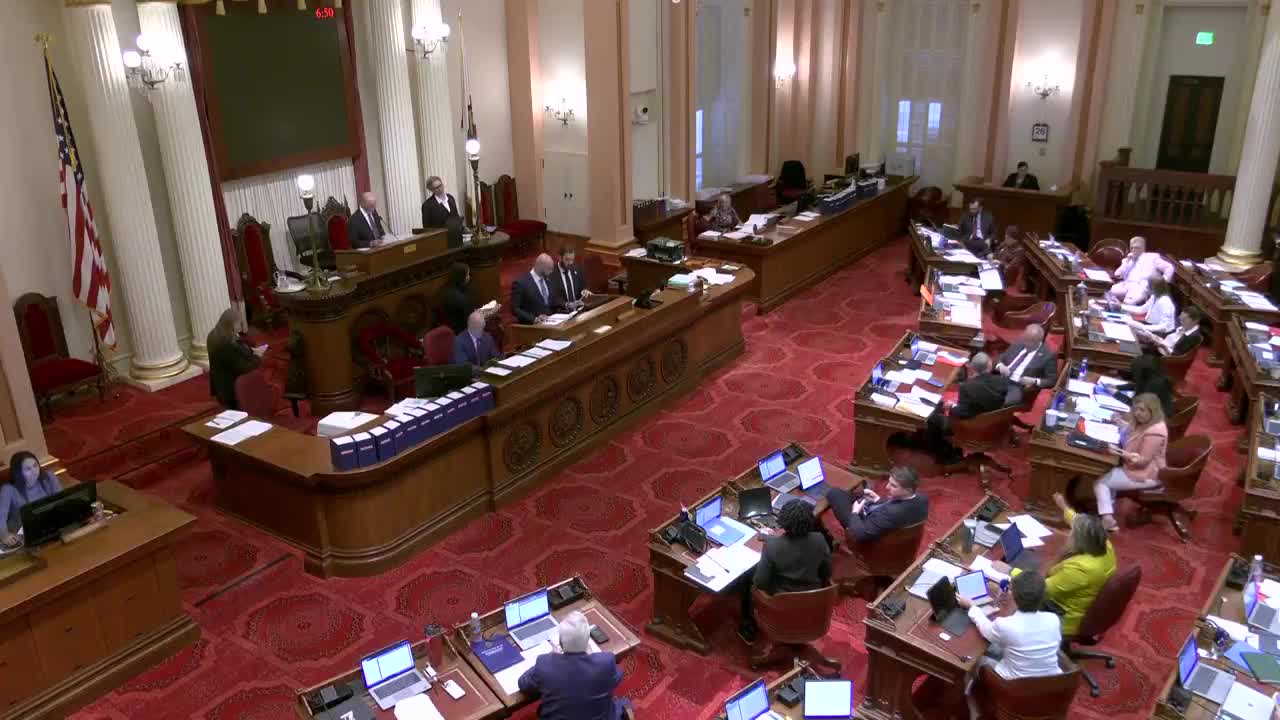 2MIN
Senate Floor
 18MIN
Senate Standing Committee on Natural Resources and Water
Bill Author
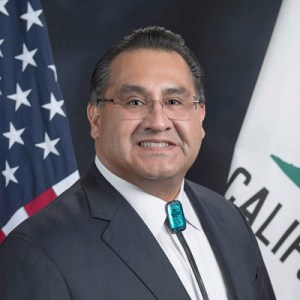
Bill Co-Author(s):
