AB 1342: California College Promise: fee waiver eligibility.
- Session Year: 2023-2024
- House: Assembly
- Latest Version Date: 2023-07-21
Current Status:
Passed
(2023-07-21: Chaptered by Secretary of State - Chapter 102, Statutes of 2023.)
Introduced
In Committee
First Chamber
In Committee
Second Chamber
Enacted
Existing law establishes the California College Promise, under the administration of the Chancellor of the California Community Colleges, to provide funding, upon appropriation by the Legislature, to each community college meeting prescribed requirements. Existing law authorizes a community college to use that funding to waive some or all of the fees for 2 academic years for first-time community college students and returning community college students, as defined, who are enrolled in 12 or more semester units or the equivalent, or less for students certified as full time, as specified, and who complete and submit either a Free Application for Federal Student Aid or a California Dream Act application, except as provided.
This bill would require that a student who enrolls in community college, after having enrolled in community college as a specified special part- or full-time student or dual enrollment high school pupil, is a first-time student for purposes of receiving this fee waiver.
(a)A community college that has been certified by the chancellor as meeting the conditions established under Section 76396.2 shall receive funding pursuant to Section 76396.
(b)(1)The community college may use funding appropriated pursuant to this article to waive some or all of the fees for first-time community college students and returning community college students who are enrolled at the college full time, and who complete and submit either a Free Application for Federal Student Aid or a California Dream Act application, except that a student who has previously earned a degree or certificate from a postsecondary educational institution is not eligible for this fee waiver. A fee waiver that a first-time community college student or returning community college student receives pursuant to this subdivision shall only be for two academic years, and fees shall only be waived for the summer term and each semester or quarter of an academic year in which the student maintains full-time status. A fee waiver provided pursuant to this subdivision shall not be available to a student who is charged a tuition fee pursuant to Section 76140.
(2)Notwithstanding paragraph (1), a student who is a member of the Armed Forces of the United States and is called to duty compelling the student to take a leave of absence pursuant to provisions of Title 10, Title 14, or Title 32 of the United States Code, or to state-funded active duty on order of the Governor, may withdraw from participation in the California College Promise and resume participation in the program upon the students return from duty without losing eligibility for the fee waiver or any other benefit of the program. The time during which the student was obliged to withdraw because of active duty shall not count toward the limit of the period of that students eligibility for participation in the California College Promise.
(3)Notwithstanding paragraph (1), a high school pupil who enrolls in community college pursuant to Section 48800, 52620, or 76004 shall be considered a first-time community college student for purposes of paragraph (1) upon the students enrollment in community college after high school graduation.
(c)For purposes of this section, the following terms have the following meanings:
(1)Academic year means the total of the summer term that immediately precedes the first semester or quarter of the fall term, and the two consecutive semesters or three quarters that immediately follow that summer term. Each semester or quarter is approximately the same length.
(2)Armed Forces of the United States means the United States Air Force, Army, Coast Guard, Marine Corps, Space Force, and Navy, and the reserve components of each of those forces, and the California National Guard, the California State Guard, and the California Naval Militia.
(3)(A)Except as provided in subparagraph (B), full time means 12 or more semester units or the equivalent.
(B)A student enrolled in fewer than 12 units may be deemed full time at the discretion of the institution if the student has been certified as full time by a staff person in the disabled student services program at the institution who is qualified to make such a designation.
(4)Returning community college student means a student who has taken a break of one or more semesters, or the equivalent quarters.
(d)It is the intent of the Legislature that funding provided to support the California College Promise be used by the community college to advance the goals outlined in Section 76396.1.
(e)On or before July 1, 2024, the chancellors office shall submit a report to the Legislature in compliance with Section 9795 of the Government Code evaluating the use of funding for the California College Promise to waive student fees. The report shall determine whether the goals outlined in Section 76396.1 are being met.
(f)The chancellors office may require community colleges and community college districts receiving funding pursuant to this article to report on an annual basis the use of these funds consistent with the conditions of Section 76396.2. Funding during the following academic year may only be distributed to those community colleges and community college districts that provided this information, if required by the chancellors office, in a timely manner during the prior academic year and demonstrated compliance with the requirements of Section 76396.2 and this subdivision.
|
Date
|
Status
|
|---|---|
| Jul 21, 2023 | Chaptered by Secretary of State - Chapter 102, Statutes of 2023. |
| Jul 21, 2023 | Approved by the Governor. |
| Jul 11, 2023 | Enrolled and presented to the Governor at 3 p.m. |
| Jun 29, 2023 | In Assembly. Ordered to Engrossing and Enrolling. |
| Jun 29, 2023 | Read third time. Passed. Ordered to the Assembly. (Ayes 39. Noes 0. Page 1829.). |
| Jun 27, 2023 | Read second time. Ordered to Consent Calendar. |
| Jun 26, 2023 | From committee: Be ordered to second reading file pursuant to Senate Rule 28.8 and ordered to Consent Calendar. |
| Jun 7, 2023 | From committee: Do pass and re-refer to Com. on APPR with recommendation: To Consent Calendar. (Ayes 7. Noes 0.) (June 7). Re-referred to Com. on APPR. |
| May 17, 2023 | Referred to Com. on ED. |
| May 4, 2023 | In Senate. Read first time. To Com. on RLS. for assignment. |
| May 4, 2023 | Read third time. Passed. Ordered to the Senate. (Ayes 75. Noes 0. Page 1463.) |
| Apr 27, 2023 | Read second time. Ordered to Consent Calendar. |
| Apr 26, 2023 | From committee: Do pass. To Consent Calendar. (Ayes 16. Noes 0.) (April 26). |
| Apr 12, 2023 | From committee: Do pass and re-refer to Com. on APPR. with recommendation: To Consent Calendar. (Ayes 12. Noes 0.) (April 11). Re-referred to Com. on APPR. |
| Mar 2, 2023 | Referred to Com. on HIGHER ED. |
| Feb 17, 2023 | From printer. May be heard in committee March 19. |
| Feb 16, 2023 | Read first time. To print. |
|
Date
|
Description
|
Location
|
Votes
|
|
|---|---|---|---|---|
| Jun 29, 2023 | Consent Calendar AB1342 Megan Dahle | Senate Floor |
Passed |
|
| Jun 7, 2023 | Do pass, but first be re-referred to the Committee on [Appropriations] with the recommendation: To Consent Calendar | Senate Standing Committee on Education |
Passed |
|
| May 4, 2023 | AB 1342 Megan Dahle Consent Calendar Second Day Regular Session | Assembly Floor |
Passed |
|
| Apr 26, 2023 | Do pass. To Consent Calendar. | Assembly Standing Committee on Appropriations |
Passed |
|
| Apr 11, 2023 | Do pass and be re-referred to the Committee on [Appropriations] with recommendation: To Consent Calendar | Assembly Standing Committee on Higher Education |
Passed |
This list shows positions taken on this bill by organizations on the date displayed, which is linked to the original source.
Positions by individuals are not included.
|
Organization
|
Position
|
Date
|
|---|---|---|
| City of Ceres Council District 2 | ** Support | |
| League Of Women Voters Of California | ** Support |
SENATE RULES COMMITTEE Office of Senate Floor Analyses (916) 651-1520 Fax: (916) 327-4478 | AB 1342 |
CONSENT
Bill No: AB 1342
Author: Megan Dahle (R)
Introduced: 2/16/23
Vote: 21
SENATE EDUCATION COMMITTEE: 7-0, 6/7/23
AYES: Newman, Ochoa Bogh, Cortese, Glazer, McGuire, Smallwood-Cuevas, Wilk
SENATE APPROPRIATIONS COMMITTEE: Senate Rule 28.8
ASSEMBLY FLOOR: 75-0, 5/4/23 (Consent) - See last page for vote
SUBJECT: California College Promise: fee waiver eligibility
SOURCE: Author
DIGEST:
This bill deems a student as a first-time community college student for purposes of qualifying for a California College Promise fee waiver, even if that student had been enrolled in a community college through a dual enrollment program in high school.
ANALYSIS:
Existing law:
- Establishes the California College Promise, under the administration of the Chancellor of the California Community Colleges (CCC), to provide funding, upon appropriation by the Legislature to each community college that:
- Partners with one or more local education agencies (LEA) to establish an Early Commitment to College Program to provide K-12 students and families ample opportunities to learn about college and the necessary step in applying to college.
- Partners with one or more LEA to support and improve high school students’ preparation for college and reduce postsecondary remediation through best practices.
- Utilizes evidence-based assessment and placement practices at the community college that include multiple measures of student performance and uses evidence-based practices to improve outcomes for underprepared students.
- Participates in the CCC Guided Pathways Grant Program.
- Maximizes students access to need-based financial aid by leveraging the Board of Governors fee waiver ensuring that students complete the Free Application for Student Aid (FASFA), Cal Grant application or the Dream Act application and participate in a federal loan program.
- Maximize resources to address students basic needs, through the provision of basic needs services and resources. Permits this subdivision to be met by the college providing a formal program to partner with the county human services agency; which may occur as a partnership between the basic needs center and the county human services agency. (Education Code (EC) Section 76396 and 76396.2)
- Authorizes a community college, who meets all the criteria of above in 1), to offer a fee waiver for two academic years to first-time or returning community college students who are California residents and enrolled at the college full-time (12 or more units) unless otherwise specified. Requires the Chancellor of the CCC to submit a report to the Legislature by July 1, 2024, evaluating the use of funding for the California College Promise to waive student fees. (EC Section 76396.3)
- Permits a highly-gifted student to undertake courses at a CCC if the Governing Board of a school district, upon recommendation of the principal of the student’s high school and with parental consent, determines a student would benefit from advanced or vocational work. The student may attend the CCC during any session or term as a special part-time or full-time student and take one or more courses of instruction offered at the CCC. Provides methods for parents to petition for students to attend CCC courses and methods for appeals in case of a denial. Includes criteria for allocating attendance and funding for high school students who attend courses at the CCC. Stipulates summer courses may be offered if a student has meet specified conditions and if the principal has not recommended summer session attendance to more than 5% of the student’s grade population in the previous year and the K-12 district adheres to reporting requirements. All physical education courses must adhere to the 5% threshold and exempts a number of courses from the 5% threshold. (EC Section 48800)
- Authorizes the governing board of a school district, which oversees an adult education program, and the governing board of a CCC district with a noncredit program to permit students, who are pursuing a high school diploma or a high school equivalency certificate, to attend CCC and take college courses, as special part-time students. Stipulates the CCC may receive state funding for the courses offered to the students if the school district is not reimbursed for the same instructional activity. (EC Section 52620)
- Authorizes a CCC district to enter into a College and Career Access Pathway (CCAP) partnership agreement, with a LEA for the purpose of offering CCC courses to K-12 students. The purpose of the partnership is to offer or expand dual enrollment opportunities for pupil who may not be college bound or who are underrepresented in higher education. Permits special part-time students participating in the CCAP partnership to receive priority enrollment, enroll in up to 15 course, and receive fee waivers for specified fees. The goal of the partnership is to offer courses which develop seamless pathways from high school to CCC for career technical education or the preparation for transfer, improve high school graduation rates, and/or help pupils achieve college and career readiness. (EC Section 76004)
The bill:
- Deems a student as a first-time community college student for purposes of qualifying for the California College Promise fee waiver, even if that student had been enrolled in community college through a dual enrollment program in high school.
- Specifies that advanced educational or training courses taken at the community college or community college courses taken under CCAP agreements are the dual enrollment programs, as described in current law, applicable to this bill’s provisions.
Comments
- Need for the bill. According to the author, “The California College Promise was established under the premise of providing two academic years of free community college for community college students. The program has since been expanded to include returning students who left college without obtaining a degree or certificate. If we are expanding the California College Promise to include returning students, we should also expand the program to include two tuition-free years at the CCC for high school students who participated in dual enrollment. We should not be penalizing students who sought academic enrichment opportunities and enrolled in dual enrollment programs while in high school. AB 1342 seeks to preserve both dual enrollment participation and the California College Promise program by ensuring high school students with dual enrollment credit are still afforded two free years of community college courses.”
- Codifies existing practice. As noted in the Assembly Appropriations Committee analysis, CCC Chancellor’s Office under its regulations already consider a student who participated in dual enrollment a first-time, full-time student for purposes of receiving a CCC fee waiver. This bill codifies this practice.
- Dual enrollment. Dual enrollment allows high school students to take college‑level courses, usually at a community college. These college-level courses can be applied toward both a high school diploma and an associate degree. Graduating high school with college credits, provides many benefits to high school students including accelerating progress toward a postsecondary degree or certificate, as well as, saving on college fees which are typically waived. Dual enrollment has various models. California’s two most widely used models are traditional dual enrollment for advanced coursework and CCAP. The provisions in this bill would only apply to the identified programs.
- Community college fees. Enrollment fees at CCCs are the lowest in the country, and are waived for almost half of students. The traditional enrollment fee waiver has existed since the inception of CCC enrollment fees, and waives the per unit enrollment fee (currently $46) for any CCC student who demonstrates financial need. Current law additionally, requires fees to be waived for surviving dependents of certain military service members and first responders.
- College Promise Program. In addition to the statute waivers described in the preceding paragraph, AB 19 (Santiago, Chapter 735, Statutes of 2017) established the California College Promise program, which authorizes but does not require CCCs to waive fees for two years of college for first-time or returning full-time students regardless of financial need. To be eligible for these waivers, students must have no prior postsecondary coursework or have taken one or more semesters off from college coursework, enroll in 12 or more units per semester, and submit an FAFSA or California Dream Act application. Under the program, colleges may also use their college program funds for a variety of other purposes, such as providing students with supplemental services. This bill clarifies that dual enrollment students are considered first-time students for purposes of the California College Promise, despite their participation in a dual enrollment program.
FISCAL EFFECT: Appropriation: No Fiscal Com.: Yes Local: No
SUPPORT: (Verified 6/27/23)
City of Ceres Council District 2
League of Women Voters of California
OPPOSITION: (Verified 6/27/23)
None received
ASSEMBLY FLOOR: 75-0, 5/4/23
AYES: Addis, Aguiar-Curry, Alanis, Alvarez, Arambula, Bains, Bauer-Kahan, Bennett, Berman, Boerner, Bonta, Bryan, Calderon, Juan Carrillo, Wendy Carrillo, Cervantes, Chen, Connolly, Megan Dahle, Davies, Dixon, Essayli, Mike Fong, Vince Fong, Friedman, Gabriel, Gallagher, Garcia, Gipson, Grayson, Haney, Hart, Holden, Hoover, Irwin, Jackson, Jones-Sawyer, Kalra, Lackey, Lee, Low, Lowenthal, Maienschein, Mathis, McCarty, Stephanie Nguyen, Ortega, Pacheco, Papan, Jim Patterson, Joe Patterson, Pellerin, Petrie-Norris, Quirk-Silva, Ramos, Reyes, Luz Rivas, Robert Rivas, Rodriguez, Blanca Rubio, Sanchez, Santiago, Schiavo, Soria, Ta, Ting, Valencia, Villapudua, Waldron, Ward, Weber, Wilson, Wood, Zbur, Rendon
NO VOTE RECORDED: Flora, McKinnor, Muratsuchi, Wallis, Wicks
Prepared by: Olgalilia Ramirez / ED. / (916) 651-4105
6/28/23 14:13:45
**** END ****
SENATE COMMITTEE ON EDUCATION
Senator Josh Newman, Chair
2023 - 2024 Regular
Bill No: Hearing Date: June 7, 2023
Author: | Megan Dahle | ||
Version: |
| ||
Urgency: | Fiscal: | ||
Consultant: | |||
Subject: .
SUMMARY
The bill deems a student as a first-time community college student for purposes of qualifying for a California College Promise fee waiver, even if that student had been enrolled in a community college through a dual enrollment program in high school.
BACKGROUND
1) Establishes the California College Promise, under the administration of the Chancellor of the California Community Colleges (CCC), to provide funding, upon appropriation by the Legislature to each community college that:
- Partners with one or more local education agencies (LEA) to establish an Early Commitment to College Program to provide K-12 students and families ample opportunities to learn about college and the necessary step in applying to college.
- Partners with one or more LEA to support and improve high school students’ preparation for college and reduce postsecondary remediation through best practices.
- Utilizes evidence-based assessment and placement practices at the community college that include multiple measures of student performance and uses evidence-based practices to improve outcomes for underprepared students.
- Participates in the CCC Guided Pathways Grant Program.
- Maximizes students access to need-based financial aid by leveraging the Board of Governors fee waiver ensuring that students complete the Free Application for Student Aid (FASFA), Cal Grant application or the Dream Act application and participate in a federal loan program.
f) Maximize resources to address students basic needs, through the provision of basic needs services and resources. Permits this subdivision to be met by the college providing a formal program to partner with the county human services agency; which may occur as a partnership between the basic needs center and the county human services agency. (Education Code (EC) Section 76396 and 76396.2)
2) Authorizes a community college, who meets all the criteria of above in 1 ), to
offer a fee waiver for two academic years to first-time or returning community college students who are California residents and enrolled at the college full-time (12 or more units) unless otherwise specified. Requires the Chancellor of the CCC to submit a report to the Legislature by July 1, 2024, evaluating the use of funding for the California College Promise to waive student fees. (EC Section 76396.3)
3) Permits a highly – gifted student to undertake courses at a CCC if the Governing Board of a school district, upon recommendation of the principal of the student’s high school and with parental consent, determines a student would benefit from advanced or vocational work. The student may attend the CCC during any session or term as a special part-time or full-time student and take one or more courses of instruction offered at the CCC. Provides methods for parents to petition for students to attend CCC courses and methods for appeals in case of a denial. Includes criteria for allocating attendance and funding for high school students who attend courses at the CCC. Stipulates summer courses may be offered if a student has meet specified conditions and if the principal has not recommended summer session attendance to more than 5% of the student’s grade population in the previous year and the K-12 district adheres to reporting requirements. All physical education courses must adhere to the 5% threshold and exempts a number of courses from the 5% threshold. (EC Section 48800)
4) Authorizes the governing board of a school district, which oversees an adult
education program, and the governing board of a CCC district with a noncredit program to permit students, who are pursuing a high school diploma or a high school equivalency certificate, to attend CCC and take college courses, as special part-time students. Stipulates the CCC may receive state funding for the courses offered to the students if the school district is not reimbursed for the same instructional activity. (EC Section 52620)
5) Authorizes a CCC district to enter into a College and Career Access Pathway (CCAP) partnership agreement, with a LEA for the purpose of offering CCC courses to K-12 students. The purpose of the partnership is to offer or expand dual enrollment opportunities for pupil who may not be college bound or who are underrepresented in higher education. Permits special part-time students participating in the CCAP partnership to receive priority enrollment, enroll in up to 15 course, and receive fee waivers for specified fees. The goal of the partnership is to offer courses which develop seamless pathways from high school to CCC for career technical education or the preparation for transfer, improve high school graduation rates, and/or help pupils achieve college and career readiness. (EC Section 76004)
ANALYSIS
The bill:
- Deems a student as a first-time community college student for purposes of qualifying for the California College Promise fee waiver, even if that student had been enrolled in community college through a dual enrollment program in high school.
- Specifies that advanced educational or training courses taken at the community college or community college courses taken under CCAP agreements are the dual enrollment programs, as described in current law, applicable to this bills provisions.
STAFF COMMENTS
- Need for the bill. According to the author, “The California College Promise was established under the premise of providing two academic years of free community college for community college students. The program has since been expanded to include returning students who left college without obtaining a degree or certificate. If we are expanding the California College Promise to include returning students, we should also expand the program to include two tuition-free years at the CCC for high school students who participated in dual enrollment. We should not be penalizing students who sought academic enrichment opportunities and enrolled in dual enrollment programs while in high school. AB 1342 seeks to preserve both dual enrollment participation and the California College Promise program by ensuring high school students with dual enrollment credit are still afforded two free years of community college courses.”
- Codifies existing practice. As noted in the Assembly Appropriations Committee analysis, CCC Chancellor’s Office under its regulations already consider a student who participated in dual enrollment a first-time, full-time student for purposes of receiving a CCC fee waiver. This bill codifies this practice.
- Dual enrollment. Dual enrollment allows high school students to take college‑level courses, usually at a community college. These college-level courses can be applied toward both a high school diploma and an associate degree. Graduating high school with college credits, provides many benefits to high school students including accelerating progress toward a postsecondary degree or certificate, as well as, saving on college fees which are typically waived. Dual enrollment has various models. California’s two most widely used models are traditional dual enrollment for advanced coursework and CCAP. The provisions in this bill would only apply to the identified programs.
- Community college fees. Enrollment fees at CCCs are the lowest in the country, and are waived for almost half of students. The traditional enrollment fee waiver has existed since the inception of CCC enrollment fees, and waives the per unit enrollment fee (currently $46) for any CCC student who demonstrates financial need. Current law additionally, requires fees to be waived for surviving dependents of certain military service members and first responders.
- College Promise Program. In addition to the statute waivers described in the preceding paragraph, AB 19 (Santiago, Chapter 735, Statutes of 2017) established the California College Promise program, which authorizes but does not require CCCs to waive fees for two years of college for first-time or returning full-time students regardless of financial need. To be eligible for these waivers, students must have no prior postsecondary coursework or have taken one or more semesters off from college coursework, enroll in 12 or more units per semester, and submit an FAFSA or California Dream Act application. Under the program, colleges may also use their college program funds for a variety of other purposes, such as providing students with supplemental services. This bill clarifies that dual enrollment students are considered first-time students for purposes of the California College Promise, despite their participation in a dual enrollment program.
SUPPORT
City of Ceres Council District 2
League of Women Voters of California
OPPOSITION
None received
-- END --
Date of Hearing: April 26, 2023
ASSEMBLY COMMITTEE ON APPROPRIATIONS
Chris Holden, Chair
ABPCA Bill Id:AB 1342
Author:(Megan Dahle) – As Introduced Ver:February 16, 2023
Policy Committee: | Higher Education | Vote: | 12 - 0 |
|
| ||
|
|
Urgency: No State Mandated Local Program: No Reimbursable: No
SUMMARY:
This bill requires a student to be considered a first-time, full-time student for purposes of receiving a California Community College (CCC) fee waiver, even if the student was enrolled in a dual enrollment program in high school.
FISCAL EFFECT:
No additional cost.
According to the CCC Chancellor’s Office, its regulations already consider a student who participated in dual enrollment a first-time, full-time student for purposes of receiving a CCC fee waiver. This bill codifies this practice.
COMMENTS:
- Purpose. According to the author:
The California College Promise was established under the premise of providing two academic years of free community college for community college students. The program has since been expanded to include returning students who left college without obtaining a degree or certificate. If we are expanding the California College Promise to include returning students, we should also expand the program to include two tuition-free years at the CCC for high school students who participated in dual enrollment. We should not be penalizing students who sought academic enrichment opportunities and enrolled in dual enrollment programs while in high school. AB 1342 seeks to preserve both dual enrollment participation and the California College Promise program by ensuring high school students with dual enrollment credit are still afforded two free years of community college courses.”
- Background. Dual enrollment provides students the opportunity to enroll in college courses and earn college credit while still enrolled in high school. Dual enrollment participation has expanded in California from 11.3% of all high school seniors in the 2015-2016 academic year, to 19.2% of all high school seniors in the 2018-2019 academic year. Currently, in California, there are four primary programs offering dual enrollment opportunities for high school students: Middle College High School Programs, Early College High School Programs, College and Career Access Pathways Partnerships, and the traditional dual enrollment pathway.
California College Promise is a fee waiver program that covers CCC tuition for the first two years of college for all first-time, full-time resident students. CCC tuition is $1,380 annually.
This bill makes clear dual enrollment students are first-time, full-time students for the purposes of the California College Promise, despite having attended college through a dual enrollment program.
Analysis Prepared by: Natasha Collins / APPR. / (916) 319-2081
Date of Hearing: April 11, 2023
ASSEMBLY COMMITTEE ON HIGHER EDUCATION
Mike Fong, Chair
ABPCA Bill Id:AB 1342 (
Author:Megan Dahle) – As Introduced Ver:February 16, 2023
SUBJECT: California College Promise: fee waiver eligibility
SUMMARY: Requires a community college to consider a high school student as a first-time student for the California College Promise program, even if the student has previously participated in dual enrollment programs. Specifically, this bill:
- Requires a community college to enroll a high school student as a first-time community college student even if the student participated in defined dual enrollment programs while in high school.
- Permits a high school student, even if they received college credit for courses while enrolled in a dual enrollment program, to receive two years of fee waivers for community college courses if the student is: enrolled full-time, completes and submits either a Free Application for Federal Student Aid, or a California Dream Act application.
- Defines dual enrollment programs as advanced scholastic or vocational courses taken at the community college by the student. The courses are either approved by the governing board of the K-12 district, as authorized in Education Code Section 48800 and 52620, for the student to take; or are part of the College and Career Access Pathways Partnerships agreement between the K-12 and community college districts, as authorized in Education Code Section 76004.
EXISTING LAW:
- Establishes the California College Promise, under the administration of the Chancellor of the California Community Colleges (CCC), to provide funding, upon appropriation by the Legislature to each community college that:
- Partners with one or more local education agencies to establish an Early Commitment to College Program to provide K-12 students and families ample opportunities to learn about college and the necessary step in applying to college; and,
- Partners with one or more local education agencies to support and improve high school students’ preparation for college and reduce postsecondary remediation through best practices; and,
- Utilizes evidence-based assessment and placement practices at the community college that include multiple measures of student performance and uses evidence-based practices to improve outcomes for underprepared students; and,
- Participates in the CCC Guided Pathways Grant Program; and,
- Maximizes students access to need-based financial aid by leveraging the Board of Governors fee waiver ensuring that students complete the Free Application for Student Aid (FASFA), Cal Grant application or the Dream Act application and participate in a federal loan program.
- Maximize resources to address students basic needs, through the provision of basic needs services and resources. Permits this subdivision to be met by the college providing a formal program to partner with the county human services agency; which may occur as a partnership between the basic needs center and the county human services agency (Education Code (EDC) Section 76396 and 76396.2).
- Authorizes a community college, who meets all the criteria of (2), to offer a fee waiver for two academic years to first-time or returning community college students who are California residents and enrolled at the college full-time (12 or more units) unless otherwise specified. Requires the Chancellor of the CCC to submit a report to the Legislature by July 1, 2024, evaluating the use of funding for the California College Promise to waive student fees (EDC Section 76396.3).
- Permits a highly – gifted student to undertake courses at a community college if the Governing Board of a school district, upon recommendation of the principal of the student’s high school and with parental consent, determines a student would benefit from advanced or vocational work. The student may attend the CCC during any session or term as a special part-time or full-time student and take one or more courses of instruction offered at the CCC. Provides methods for parents to petition for students to attend community college courses and methods for appeals in case of a denial. Includes criteria for allocating attendance and funding for high school students who attend courses at the community college. Stipulates summer courses may be offered if a student has meet specified conditions and if the principal has not recommended summer session attendance to more than 5% of the student’s grade population in the previous year and the K-12 district adheres to reporting requirements. All physical education courses must adhere to the 5% threshold and the following courses are exempt from the 5% threshold:
- Courses that are part of a College and Career Access pathway and the course is either a general education course for transfer or is a college-level occupational course;
- Courses which are lower division, college-level courses that are either a college-level course that are part of the Intersegmental General Education Transfer Curriculum or apply towards the general education requirements of the California State University (CSU) ; or,
- Courses that are college-level occupational courses, as defined.
Requires the Chancellor of the CCC to report to the Department of Finance by Marc 1 of each year the number of students who participated in college courses during the summer and received a passing grade (EDC Section 48800).
- Authorizes the governing board of a school district, which oversees an adult education program, and the governing board of a community college district with a noncredit program to permit students, who are pursuing a high school diploma or a high school equivalency certificate, to attend community college and take college courses, as special part-time students. Stipulates if the community college may receive state funding for the courses offered to the students if the school district is not reimbursed for the same instructional activity (EDC Section 52620).
- Authorizes a community college district to enter into a CCAP partnership agreement, with a governing board of a K-12 district, the governing board of a charter school, or a county office of education for the purpose of offering community college courses to K-12 students. The purpose of the partnership is to offer or expand dual enrollment opportunities for pupil who may not be college bound or who are underrepresented in higher education. Permits special part-time students participating in the CCAP partnership to receive priority enrollment, enroll in up to 15 course, and receive fee waivers for specified fees. The goal of the partnership is to offer courses which develop seamless pathways from high school to community college for career technical education or the preparation for transfer, improve high school graduation rates, and/or help pupils achieve college and career readiness. Requires the CCCCO, on or before January 1, 2021, to prepare a summary report that includes an evaluation of the CCAP partnerships, an assessment of the growth of special admits system wide and by campus, and recommendations for improving the CCAP partnerships, as specified (Education Code (EDC) Section 76004).
FISCAL EFFECT: Unknown
COMMENTS: Purpose of the bill. According to the author, “The California College Promise was established under the premise of providing two academic years of free community college for community college students. The program has since been expanded to include returning students who left college without obtaining a degree or certificate. If we are expanding the California College Promise to include returning students, we should also expand the program to include two tuition-free years at the CCC for high school students who participated in dual enrollment. We should not be penalizing students who sought academic enrichment opportunities and enrolled in dual enrollment programs while in high school. AB 1342 seeks to preserve both dual enrollment participation and the California College Promise program by ensuring high school students with dual enrollment credit are still afforded two free years of community college courses.”
Dual enrollment in California. As defined by the Public Policy Institute of California (PPIC) in a 2021 report, dual enrollment is an opportunity for high school students to take college courses and earn college credit. The benefits of dual enrollment opportunities expand beyond additional points on a student’s grade point average; a behemoth amount of research has concluded dual enrollment is an essential way to expand educational opportunities for students, improve economic mobility, and increase degree and vocational certificate attainment.
Dual enrollment participation has expanded in California from 11.3 percent of all high school seniors participating in the 2015-2016 academic year, to 19.2 percent of all high school seniors participating in the 2018-2019 academic year, as recorded in research conducted by the University of California, Davis Wheelhouse: the center for community college leadership and research (UC Davis Wheelhouse) in 2020. Currently, in California, there are four main programs that offer dual enrollment opportunities for high school students: Middle College High School Programs (MCHS), Early College High School Programs (ECHS), College and Career Access Pathways Partnerships (CCAP), and the traditional dual enrollment pathway.
MCHS are offered either on a high school campus near a CCC or on a CCC campus and provide a student the opportunity to earn a high school diploma and an associate degree. Another option is the ECHS which requires a high school to partner with a CCC, CSU, or University of California (UC) to offer college credit courses to high school students. ECHS are located on a high school campus and a participating student earns both a high school diploma and up to two years of college units in four years. There are currently 26 programs in California. According to the PPIC’s 2021 report on dual enrollment, participation in ECHSPs and MCHSPs account for 19% of all dual enrollment participation in the state.
According to the California Department of Education, a CCAP partnership is an agreement between the governing boards of a K-12 school district and a CCC district for the purpose of providing college courses to students who may not already be college bound or who are underrepresented in higher education. CCAPs are unique from other dual enrollment programs in that the community college courses can be offered on a high school campus, while participating students are not charged fees, and students can be provided priority enrollment in up to 15 units per semester. According to the PPIC report on dual enrollment, CCAP partnerships account for 11% of dual enrollment participation in the State. A traditional dual enrollment program is offered by the high school to high-achieving students who are authorized by the local K-12 district school board, on a case-by-case basis, to attend a CCC and take up to 11 units per term. Students who participate in traditional dual enrollment programs are often academically high-achieving students, who can afford the out-of-pocket tuition costs, and have transportation to and from the community college campus. According to the 2021 PPIC’s report on dual enrollment, the majority of high school students who enroll in dual enrollment courses participate in traditional dual enrollment programs.
In October 2021, the UC Davis Wheelhouse published a report on dual enrollment which found that high school students represented 14% of enrollment in all CCC courses. The same study concluded on average students who participate in dual enrollment programs earn 7.6 units by the time they graduate high school, the equivalent of roughly 2.5 courses.
California College Promise program. In 2017, the Legislature created the California College Promise program, which was inspired by tuition-free college programs in other states. The mission of the program was to support the CCC in increasing college readiness, improving student outcomes, and reducing achievement gaps. The State originally provided $46 million to the program in 2018-2019 and this was used to provide waivers to first-time, full-time students regardless of financial need during their first year of college. To be eligible, students must enroll in 12 or more units per semester, submit a Free Application for Federal Student Aid (FASFA), and have no previous postsecondary coursework.
To receive the funding allocated to the program, participating CCC must:
- Partner with school districts on college outreach efforts.
- Partner with school districts to support practices that improve college readiness and reduce the need for remediation.
- Use evidence-based practices for the assessment and placement of incoming students.
- Implement Guided Pathways to help students enter and stay on a defined academic path.
- Ensure students complete the FASFA or the California Dream Act Application.
- Participate in federal student loan programs.
In its first year, 2018-2019, the California College Promise Program was implemented at 109 of the 115 CCC statewide, and provided 12,078 students fee waivers. Capitalizing on the success of the program, the Legislature expanded the program to include a second year of free tuition to encourage students to matriculate in their degree attainment. After the COVID-19 pandemic and to encourage re-enrollment in college, the Legislature expanded the program to include returning community college students. Returning community college student is defined as a student who has taken a break of one or more semesters. On September 12, 2022, the CCC Chancellor’s Office issued a memorandum on updates to the Student Financial Aid Programs for 2022-2023. The memorandum included a definition of returning community college students as those who have not previously earned a postsecondary degree or certificate. Furthermore, the memorandum expanded the use of the Promise program dollars to address affordability issues at CCC campuses; ensuring the money is not limited to tuition waivers but can now also be used to provide direct aid to students in the form of grants. As reported by the California Community Colleges Chancellor’s Office Management Information Systems Data Mart, in the 2021-2022 academic year, 879,324 students qualified for the California College Promise Grant equating to over $3 billion in aid.
With the understanding that the California College Promise program was originally not available to students with previous postsecondary coursework, one could assume dual enrollment students who received college credit in courses at the community college would not be eligible for the waiver. One may also deduce since the California College Promise Program was expanded to include returning students, dual enrollment students would now be ensured the benefits of the program since they would be considered “returning students.” However, the definition as defined in the Education Code is a student who has taken a break for one or more semesters. Therefore, if a dual enrollment student attended a community college course in their senior year of high school, they would not be seen as qualifying since they did not take a semester off.
Furthermore, the Chancellor’s Office has suggested dual enrollment students should be seen as first-time students per the California Code of Regulations, 5 CCR 555300, definition of a first-time student. However, this definition is confined to the section of the regulations pertaining to student rights and responsibilities. Therefore, it is possible for a community college to determine that an enrolling student, who participated in a high school dual enrollment program, is neither a new nor returning student and may be deemed ineligible for the California College Promise program.
Aligned with Governor’s goals for higher education. In February 2021, the Governor’s Council for Postsecondary Education published a report on how postsecondary education institutions could emerge from the COVID-19 pandemic stronger and better positioned to serve all students with equity. One of the recommendations from the report was by 2030 that all public high schools have access to college preparatory coursework and expand early college credit opportunities while streamlining transitions between high school and postsecondary education institutions. AB 1342 (Dahle) seeks to accomplish this goal by ensuring no student who participates in a dual enrollment program is exempt from participating in the California College Promise program, or has their two years of free tuition reduced due to their participation in dual enrollment programs. In order to guarantee all high school students who participate in dual enrollment programs are eligible for the California Promise Grant program, the author may wish to expand the definitions of dual enrollment to include MCHS and ECHS as defined in Education Code Section 11302.
Arguments in support. As expressed by a Ceres City Council Member of District 2, “AB 1342 will help correct some of the many issues we are having with AB 19 and correct some of the language and barriers that are still being created in our community and for our youth. Education is one way of ending the cycle of poverty and AB 19 helped reduce the need for student loans. The 2020 Census showed less than 20% of Ceres District 2 had a college degree, approximately 830 people and 86 had a graduate degree. I fully support AB 1342 and encourage eliminating the many barriers created by institutions that prevent our students from completing their community college education due to financial constraints.”
REGISTERED SUPPORT / OPPOSITION:
Support
City of Ceres Council District 2
Opposition
None on file.
Analysis Prepared by: Ellen Cesaretti-Monroy / HIGHER ED. / (916) 319-3960
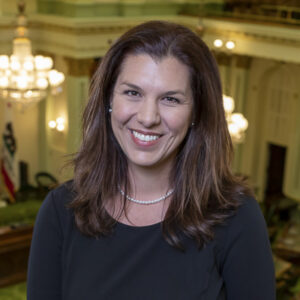
Bill Author
Bill Co-Author(s):