AB 1376: Emergency medical services: liability limitation.
- Session Year: 2023-2024
- House: Assembly
- Latest Version Date: 2023-10-08
Current Status:
Passed
(2023-10-08: Chaptered by Secretary of State - Chapter 474, Statutes of 2023.)
Introduced
In Committee
First Chamber
In Committee
Second Chamber
Enacted
The Emergency Medical Services System and the Prehospital Emergency Medical Care Personnel Act governs local emergency medical services systems. Existing law makes it a crime to violate any of the provisions of the act, and any rules, regulations, or county ordinances adopted pursuant to the act, that govern patient transfers. Existing law provides specified liability limitations to, among others, physicians, nurses, and other authorized individuals who provide assistance in emergency situations.
This bill would provide that a private provider of ambulance services, and employees of that provider, when operating in accordance with the standards, regulations, policies, and protocols of local emergency medical services agencies, shall not be criminally or civilly liable for the continued detainment of a person when that detainment is requested by a peace officer, facility staff, or other professionals authorized to detain persons in specified circumstances involving the transport and continued containment of a person who requires mental health evaluation and treatment, as specified. The bill would require a private provider of ambulance services subject to these provisions to provide care according to the policies and procedures established by the local emergency medical services agency, as specified, and the policies of the California Emergency Medical Services Authority. The bill would also prohibit a private provider of ambulance services that provides transportation to a designated facility, as defined, from requiring a person who is voluntarily agreeing to transport to be placed on an involuntary hold as a precondition to that transport. By creating a new crime under the act, this bill would impose a state-mandated local program.
The California Constitution requires the state to reimburse local agencies and school districts for certain costs mandated by the state. Statutory provisions establish procedures for making that reimbursement.
This bill would provide that no reimbursement is required by this act for a specified reason.
The Emergency Medical Services System and the Prehospital Emergency Medical Care Personnel Act governs local emergency medical services systems. Existing law makes it a crime to violate any of the provisions of the act, and any rules, regulations, or county ordinances adopted pursuant to the act, that govern patient transfers. Existing law provides specified liability limitations to, among others, physicians, nurses, and other authorized individuals who provide assistance in emergency situations.
This bill would provide that a private provider of ambulance services, and employees of that provider, when operating in accordance with the standards, regulations, policies, and protocols of local emergency medical services agencies, shall not be criminally or civilly liable for the continued detainment of a person when that detainment is requested by a peace officer, facility staff, or other professionals authorized to detain persons in specified circumstances involving the transport and continued containment of a person who requires mental health evaluation and treatment, as specified. The bill would also require a private provider of ambulance services subject to these provisions to provide care according to the policies and procedures established by the local emergency medical services agency, as specified, and the policies of the California Emergency Medical Services Authority. The bill would also prohibit a private provider of ambulance services that provides transportation to a designated facility, as defined, from requiring a person who is voluntarily agreeing to transport to be placed on an involuntary hold as a precondition to that transport. By creating a new crime under the act, this bill would impose a state-mandated local program.
The California Constitution requires the state to reimburse local agencies and school districts for certain costs mandated by the state. Statutory provisions establish procedures for making that reimbursement.
This bill would provide that no reimbursement is required by this act for a specified reason.
Existing law provides specified liability limitations to, among others, physicians, nurses, and other authorized individuals who provide assistance in emergency situations.
This bill would provide that a private provider of ambulance services, and employees of that provider, when operating in accordance with the standards, regulations, policies, and protocols of local emergency medical services agencies, shall not be criminally or civilly liable for the continued detainment of a person when that detainment is requested by a peace officer, facility staff, or other professionals authorized to detain persons in specified circumstances involving the transport and continued containment of a person who requires mental health evaluation and treatment, as specified. The bill would also require a private provider of ambulance services subject to these provisions to provide care according to the policies and procedures established by the local emergency medical services agency, as specified, and the policies of the California Emergency Medical Services Authority.
Existing law requires the State Department of Health Care Services to develop a statewide substance use disorder (SUD) workforce needs assessment report on or before July 1, 2023, as specified.Existing law authorizes the Department of Health Care Access and Information, upon an appropriation, to implement SUD workforce development programming that includes, among other specified elements, stipends to cover testing, registration, and certification costs, tuition reimbursement, or recruitment and training grants. Existing law requires the State Department of Health Care Services, upon an appropriation, to make reasonable efforts to implement those program elements, so that SUD services can be expanded to meet the needs of individuals seeking those services.This bill would make technical, nonsubstantive changes to those provisions.Existing law requires the State Department of Health Care Services to develop a statewide substance use disorder (SUD) workforce needs assessment report on or before July 1, 2023, as specified.
Existing law authorizes the Department of Health Care Access and Information, upon an appropriation, to implement SUD workforce development programming that includes, among other specified elements, stipends to cover testing, registration, and certification costs, tuition reimbursement, or recruitment and training grants. Existing law requires the State Department of Health Care Services, upon an appropriation, to make reasonable efforts to implement those program elements, so that SUD services can be expanded to meet the needs of individuals seeking those services.
This bill would make technical, nonsubstantive changes to those provisions.
(a)A private provider of ambulance services licensed by the California Highway Patrol and any employees of that provider, when operating in accordance with the standards, regulations, policies, and protocols of local emergency medical services agencies, shall not be criminally or civilly liable for the continued detainment of a person when that detainment is requested by a peace officer, facility staff, or other professionals authorized to detain persons in any of the following circumstances:
(1)Transportation, and continuing the detainment, of a person properly detained in accordance with Section 5150, 5250, or 5260 of the Welfare and Institutions Code to a facility designated by the county for evaluation and treatment.
(2)Transportation, and continuing the detainment, of a person who is detained for evaluation and treatment in a hospital or other facility to a designated facility for psychiatric treatment in accordance with Section 5150, 5250, or 5260 of the Welfare and Institutions Code.
(3)Transportation, and continuing the detainment, of a person who is in an acute care hospital, medical clinic, or other psychiatric evaluation facility to a designated facility for psychiatric treatment, if so ordered by the attending physician, a professional staff person in charge of a facility designated by the county for evaluation and treatment, a member of the attending staff, or a professional staff person designated by the county, in accordance with Section 5250 or 5260 of the Welfare and Institutions Code.
(b)A private provider of ambulance services requested to provide transportation of persons consistent with this section shall provide care according to the policies and procedures established by the local emergency medical services agency in the county that the provider operates and the policies of the California Emergency Medical Services Authority.
(c)This section does not relieve the provider of ambulance services, or any of its employees, from liability for injuries caused by negligence, gross negligence, recklessness, or willful misconduct on the part of the provider or its employees while transporting a person to a designated facility.
(d)A private provider of ambulance services that provides transportation to a designated facility, as defined in Section 5008 of the Welfare and Institutions Code, shall not require a person who is voluntarily agreeing to transport to be placed on an involuntary hold as a precondition to that transport.
SEC. 2.No reimbursement is required by this act pursuant to Section 6 of Article XIIIB of the California Constitution because the only costs that may be incurred by a local agency or school district will be incurred because this act creates a new crime or infraction, eliminates a crime or infraction, or changes the penalty for a crime or infraction, within the meaning of Section 17556 of the Government Code, or changes the definition of a crime within the meaning of Section 6 of Article XIIIB of the California Constitution.
(a)A private provider of ambulance services licensed by the California Highway Patrol and any employees of that provider, when operating in accordance with the standards, regulations, policies, and protocols of local emergency medical services agencies, shall not be criminally or civilly liable for the continued detainment of a person when that detainment is requested by a peace officer, facility staff, or other professionals authorized to detain persons in any of the following circumstances:
(1)Transportation, and continuing the detainment, of a person properly detained in accordance with Section 5150, 5250, or 5260 of the Welfare and Institutions Code to a facility designated by the county for evaluation and treatment.
(2)Transportation, and continuing the detainment, of a person who is detained for evaluation and treatment in a hospital or other facility to a designated facility for psychiatric treatment in accordance with Section 5150, 5250, or 5260 of the Welfare and Institutions Code.
(3)Transportation, and continuing the detainment, of a person who is in an acute care hospital, medical clinic, or other psychiatric evaluation facility to a designated facility for psychiatric treatment, if so ordered by the attending physician, a professional staff person in charge of a facility designated by the county for evaluation and treatment, a member of the attending staff, or a professional staff person designated by the county, in accordance with Section 5250 or 5260 of the Welfare and Institutions Code.
(b)A private provider of ambulance services requested to provide transportation of persons consistent with this section shall provide care according to the policies and procedures established by the local emergency medical services agency in the county that the provider operates and the policies of the California Emergency Medical Services Authority.
(c)This section does not relieve the provider of ambulance services, or any of its employees, from liability for injuries caused by negligence, gross negligence, recklessness, or willful misconduct on the part of the provider or its employees while transporting a person to a designated facility.
(a)A private provider of ambulance services licensed by the California Highway Patrol and any employees of that provider, when operating in accordance with the standards, regulations, policies, and protocols of local emergency medical services agencies, shall not be criminally or civilly liable for the continued detainment of a person when that detainment is requested by a peace officer, facility staff, or other professionals authorized to detain persons in any of the following circumstances:
(1)Transportation, and continuing the detainment, of a person properly detained in accordance with Section 5150, 5250, or 5260 of the Welfare and Institutions Code to a facility designated by the county for evaluation and treatment.
(2)Transportation, and continuing the detainment, of a person who is detained for evaluation and treatment in a hospital or other facility to a designated facility for psychiatric treatment in accordance with Section 5150, 5250, or 5260 of the Welfare and Institutions Code.
(3)Transportation, and continuing the detainment, of a person who is in an acute care hospital, medical clinic, or other psychiatric evaluation facility to a designated facility for psychiatric treatment, if so ordered by the attending physician, a professional staff person in charge of a facility designated by the county for evaluation and treatment, a member of the attending staff, or a professional staff person designated by the county, in accordance with Section 5250 or 5260 of the Welfare and Institutions Code.
(b)A private provider of ambulance services requested to provide transportation of persons consistent with this section shall provide care according to the policies and procedures established by the local emergency medical services agency in the county that the provider operates and the policies of the California Emergency Medical Services Authority.
SECTION 1.Section 11794.6 of the Health and Safety Code is amended to read:11794.6.(a)The Department of Health Care Access and Information may implement SUD workforce development programming, including, but not limited to, any of the following elements:(1)Paid tuition for students attending vocational education programs related to substance use disorders approved by the Bureau for Private Postsecondary Education.(2)Stipends to cover costs related to testing, registration, and certification for individuals who are seeking registration and certification with a certifying organization approved by the State Department of Health Care Services pursuant to Section 11833.(3)Stipends to cover costs of portfolio review for individuals who are seeking registration and certification with a certifying organization approved by the State Department of Health Care Services pursuant to Section 11833.(4)Tuition reimbursement for undergraduate and graduate students who complete coursework in programs related to SUDs.(5)Tuition reimbursement for licensed mental health and medical professionals to complete SUD-specific courses.(6)Grants for behavioral health organizations to recruit and train individuals representing vulnerable populations.(b)This section shall become operative only upon appropriation. Upon an appropriation by the Legislature for these purposes, the State Department of Health Care Services shall make reasonable efforts to implement the program elements specified in subdivision (a), so that SUD services can be expanded to meet the needs of those individuals seeking those services.(a)The Department of Health Care Access and Information may implement SUD workforce development programming, including, but not limited to, any of the following elements:
(1)Paid tuition for students attending vocational education programs related to substance use disorders approved by the Bureau for Private Postsecondary Education.
(2)Stipends to cover costs related to testing, registration, and certification for individuals who are seeking registration and certification with a certifying organization approved by the department State Department of Health Care Services pursuant to Section 11833.
(3)Stipends to cover costs of portfolio review for individuals who are seeking registration and certification with a certifying organization approved by the department State Department of Health Care Services pursuant to Section 11833.
(4)Tuition reimbursement for undergraduate and graduate students who complete coursework in programs related to SUDs.
(5)Tuition reimbursement for licensed mental health and medical professionals to complete SUD-specific courses.
(6)Grants for behavioral health organizations to recruit and train individuals representing vulnerable populations.
(b)This section shall become operative only upon appropriation. Upon an appropriation by the Legislature for these purposes, the department State Department of Health Care Services shall make reasonable efforts to implement the program elements specified in subdivision (a), so that SUD services can be expanded to meet the needs of those individuals seeking those services.
|
Date
|
Status
|
|---|---|
| Oct 8, 2023 | Chaptered by Secretary of State - Chapter 474, Statutes of 2023. |
| Oct 8, 2023 | Approved by the Governor. |
| Sep 21, 2023 | Enrolled and presented to the Governor at 3:30 p.m. |
| Sep 13, 2023 | Senate amendments concurred in. To Engrossing and Enrolling. (Ayes 80. Noes 0. Page 3447.). |
| Sep 12, 2023 | In Assembly. Concurrence in Senate amendments pending. |
| Sep 12, 2023 | Read third time. Passed. Ordered to the Assembly. (Ayes 39. Noes 0. Page 2689.). |
| Sep 8, 2023 | Ordered to special consent calendar. |
| Sep 5, 2023 | Read second time. Ordered to third reading. |
| Sep 1, 2023 | From committee: Do pass. (Ayes 7. Noes 0.) (September 1). |
| Aug 14, 2023 | In committee: Referred to APPR suspense file. |
| Jul 6, 2023 | From committee: Do pass and re-refer to Com. on APPR with recommendation: To Consent Calendar. (Ayes 11. Noes 0.) (July 6). Re-referred to Com. on APPR. |
| Jun 26, 2023 | Read second time and amended. Re-referred to Com. on JUD. |
| Jun 22, 2023 | From committee: Amend, and do pass as amended and re-refer to Com. on JUD. with recommendation: To Consent Calendar. (Ayes 12. Noes 0.) (June 21). |
| May 24, 2023 | Referred to Coms. on HEALTH and JUD. |
| May 11, 2023 | In Senate. Read first time. To Com. on RLS. for assignment. |
| May 11, 2023 | Read third time. Passed. Ordered to the Senate. (Ayes 66. Noes 0. Page 1522.) |
| May 4, 2023 | Read second time. Ordered to Consent Calendar. |
| May 3, 2023 | Read second time and amended. Ordered returned to second reading. |
| May 2, 2023 | From committee: Amend, and do pass as amended. To Consent Calendar. (Ayes 11. Noes 0.) (May 2). |
| Mar 20, 2023 | Re-referred to Com. on JUD. |
| Mar 16, 2023 | Referred to Com. on JUD. |
| Mar 16, 2023 | From committee chair, with author's amendments: Amend, and re-refer to Com. on JUD. Read second time and amended. |
| Feb 18, 2023 | From printer. May be heard in committee March 20. |
| Feb 17, 2023 | Read first time. To print. |
|
Date
|
Description
|
Location
|
Votes
|
|
|---|---|---|---|---|
| Sep 13, 2023 | AB 1376 Juan Carrillo Concurrence in Senate Amendments | Assembly Floor |
Passed |
|
| Sep 12, 2023 | Special Consent AB1376 Juan Carrillo By Menjivar | Senate Floor |
Passed |
|
| Sep 1, 2023 | Do pass | Senate Standing Committee on Appropriations |
Passed |
|
| Aug 14, 2023 | Placed on suspense file | Senate Standing Committee on Appropriations |
Passed |
|
| Jul 6, 2023 | Do pass, but first be re-referred to the Committee on [Appropriations] with the recommendation: To Consent Calendar | Senate Standing Committee on Judiciary |
Passed |
|
| Jun 21, 2023 | Do pass as amended, but first amend, and re-refer to the Committee on [Judiciary] with the recommendation: To Consent Calendar | Senate Standing Committee on Health |
Passed |
|
| May 11, 2023 | AB 1376 Juan Carrillo Consent Calendar Second Day | Assembly Floor |
Passed |
|
| May 2, 2023 | Do pass as amended. To Consent Calendar. | Assembly Standing Committee on Judiciary |
Passed |
This list shows positions taken on this bill by organizations on the date displayed, which is linked to the original source.
Positions by individuals are not included.
|
Organization
|
Position
|
Date
|
|---|---|---|
| California Ambulance Association | ** Support | |
| Global Medical Response | ** Support |
CONCURRENCE IN SENATE AMENDMENTS
CSA1 Bill Id:AB 1376
Author:(Juan Carrillo)
As Amended Ver:June 26, 2023
Majority vote
SUMMARY
Provides that a private provider of ambulance services, and employees of that provider, when operating in accordance with the standards, regulations, policies, and protocols of local emergency medical services agencies, shall not be criminally or civilly liable for the continued detainment of a person when that detainment is requested by a peace officer, facility staff, or other professionals authorized to detain persons, as specified.
Major Provisions
- Provides that a private provider of ambulance services licensed by the California Highway Patrol and any employees of that provider, when operating in accordance with the standards, regulations, policies, and protocols of local emergency medical services agencies, shall not be criminally or civilly liable for the continued detainment of a person when that detainment is requested by a peace officer, facility staff, or other professionals authorized to detain persons in any of the following circumstances:
- Transportation, and continuing the detainment, of a person properly detained in accordance with Welfare and Institutions Code Section 5150, 5250, or 5260 to a facility designated by the county for evaluation and treatment.
- Transportation, and continuing the detainment, of a person who is detained for evaluation and treatment in a hospital or other facility to a designated facility for psychiatric treatment in accordance with Welfare and Institutions Code Section 5150, 5250, or 5260.
- Transportation, and continuing the detainment, of a person who is in an acute care hospital, medical clinic, or other psychiatric evaluation facility to a designated facility for psychiatric treatment, if so ordered by the attending physician, a professional staff person in charge of a facility designated by the county for evaluation and treatment, a member of the attending staff, or a professional staff person designated by the county, in accordance with Welfare and Institutions Code Section 5250 or 5260.
- Specifies that a private provider of ambulance services requested to provide transportation of persons consistent with this section shall provide care according to the policies and procedures established by the local emergency medical services agency in the county that the provider operates and the policies of the California Emergency Medical Services Authority.
- Provides that nothing in the provisions of this bill shall be construed to relieve the provider of ambulance services, or any of its employees, from liability for injuries caused by negligence, gross negligence, recklessness, or willful misconduct on the part of the provider or its employees while transporting the person to a designated facility.
- Prohibits a provider of ambulance services that provides transportation to a designated facility, as defined, from requiring a person who is voluntarily agreeing to transport to be placed on an involuntary hold as a precondition to that transport.
Senate Amendments
Prohibit a private provider of ambulance services that provides transportation to a designated facility, as defined, from requiring a person who is voluntarily agreeing to transport to be placed on an involuntary hold as a precondition to that transport.
COMMENTS
This bill makes clear that an ambulance service provider, and its employees, are not subject to criminal or civil liability for the detainment of a person when that detainment is requested by a peace officer or professional authorized to detain a person under Section 5150. The bill specifies that this immunity only extends to detainment and does not immunize the ambulance service provider, or its employees, for injuries caused by negligence, gross negligence, recklessness, or willful misconduct while transporting the person to the designated facility. The bill would also prohibit a private provider of ambulance services that provides transportation to a designated facility, as defined, from requiring a person who is voluntarily agreeing to transport to be placed on an involuntary hold as a precondition to that transport.
Section 5150 holds. Under existing law, a person who is deemed "gravely disabled" or a danger to self or others as a result of mental illness is subject to involuntary detainment under Section 5150 of the Welfare and Institutions Code. A "Section 5150 hold" is typically initiated by a peace officer, a designated emergency room physician, or other professional who is authorized by statute to do so. Once one of these designated professionals determines that a person, as a result of mental illness, is gravely disabled or a threat to self and others, they may take that person into custody for a period of up to 72 hours for purposes of assessment, evaluation, crisis evaluation, or placement in a designated facility. Typically a person subjected to a 5150 hold, whether the process is initiated by a peace officer or an emergency room physician, is transported from the point of initial detainment to a designated psychiatric facility for evaluation and immediate treatment. If a peace officer does not transport the person to the designated facility, then the transportation must be provided by an ambulance service.
While existing law expressly authorizes peace officers and designated professionals to detain a person under Section 5150, the law does not expressly authorize the ambulance company or its employees to detain the person for period of transportation. Because ambulance transport has been common in these cases for many years, one can only assume that their authority to transport someone upon the request of an authorized person has been implied. Nonetheless, there have been reports in parts of the state of ambulance companies that are reluctant to provide this service for fear that they could be held civilly or criminally liable for detaining a person without legal authorization, perhaps on a theory of "false imprisonment" or some other related legal theory.
According to the Author
According to the author, "due to the vast workload of law enforcement, ambulance services are often called upon to provide the transportation from the location of detainment to an appropriate mental health facility." However, the author adds, because "ambulance workers are not explicitly listed as personnel who can detain these patients, there is ambiguity in law as to the legality of these transportations. AB 1376 provides clarity by ensuring that ambulance services who provide these transportations are doing so under the protection of law."
Arguments in Support
According to the sponsor, the California Ambulance Association (CAA), AB 1376 will "provide clarity that ambulance services are allowed to transport patients undergoing mental health episodes." According to CAA, existing law specifies the persons or entities that have the authority to detain an individual who is undergoing a mental health episode, including local law enforcement officers. "As these officers are typically consumed with other duties," CAA writes, "they will call an ambulance service to transport the detained patient to the appropriate healthcare facility. CAA contends, however, that "there is ambiguity in California law as to whether ambulance services have the authority to continue the detainment of the patient in transport to their facility. This bill clarifies this ambiguity by ensuring that ambulance services are not liable for the detainment when requested by authorized personnel."
Arguments in Opposition
No opposition on file.
FISCAL COMMENTS
According to the Senate Appropriations Committee, the Emergency Medical Services Authority (EMSA) anticipates a one-time General Fund cost of $200,000 to draft regulations necessary to implement and enforce the provisions.
VOTES:
ASM JUDICIARY: 11-0-0
YES: Maienschein, Essayli, Connolly, Dixon, Haney, Kalra, Pacheco, Papan, Reyes, Robert Rivas, Sanchez
ASSEMBLY FLOOR: 66-0-14
YES: Addis, Aguiar-Curry, Alanis, Bains, Bennett, Berman, Boerner, Bryan, Calderon, Wendy Carrillo, Chen, Connolly, Megan Dahle, Davies, Essayli, Flora, Mike Fong, Vince Fong, Friedman, Gabriel, Gallagher, Garcia, Gipson, Grayson, Haney, Holden, Hoover, Irwin, Jackson, Jones-Sawyer, Kalra, Lackey, Low, Lowenthal, Maienschein, Mathis, McKinnor, Muratsuchi, Stephanie Nguyen, Pacheco, Papan, Joe Patterson, Pellerin, Petrie-Norris, Quirk-Silva, Ramos, Reyes, Luz Rivas, Robert Rivas, Rodriguez, Blanca Rubio, Sanchez, Santiago, Schiavo, Soria, Ta, Ting, Valencia, Villapudua, Waldron, Wallis, Weber, Wicks, Wilson, Zbur, Rendon
ABS, ABST OR NV: Alvarez, Arambula, Bauer-Kahan, Bonta, Juan Carrillo, Cervantes, Dixon, Hart, Lee, McCarty, Ortega, Jim Patterson, Ward, Wood
UPDATED
VERSION: June 26, 2023
CONSULTANT: Tom Clark / JUD. / (916) 319-2334 FN: 0001978
SENATE RULES COMMITTEE Office of Senate Floor Analyses (916) 651-1520 Fax: (916) 327-4478 | AB 1376 |
THIRD READING
Bill No: AB 1376
Author: Juan Carrillo (D)
Amended: 6/26/23 in Senate
Vote: 21
SENATE HEALTH COMMITTEE: 12-0, 6/21/23
AYES: Eggman, Nguyen, Glazer, Gonzalez, Grove, Hurtado, Limón, Menjivar, Roth, Rubio, Wahab, Wiener
SENATE JUDICIARY COMMITTEE: 11-0, 7/6/23
AYES: Umberg, Wilk, Allen, Ashby, Caballero, Durazo, Laird, Min, Niello, Stern, Wiener
SENATE APPROPRIATIONS COMMITTEE: 7-0, 9/1/23
AYES: Portantino, Jones, Ashby, Bradford, Seyarto, Wahab, Wiener
ASSEMBLY FLOOR: 66-0, 5/11/23 (Consent) - See last page for vote
SUBJECT: Emergency medical services: liability limitation
SOURCE: California Ambulance Association
DIGEST:
This bill exempts a private provider of ambulance services from criminal or civil liability for the continued detainment of a person when that detainment is requested by a peace officer, facility staff, or other professionals authorized to involuntarily detain people under the Lanterman-Petris-Short (LPS) Act, for purposes of transporting the person to a designated facility.
ANALYSIS:
Existing law:
- Establishes the LPS Act to end the inappropriate, indefinite, and involuntary commitment of persons with mental health disorders, developmental disabilities, and chronic alcoholism, as well as to safeguard a person’s rights, provide prompt evaluation and treatment, and provide services in the least restrictive setting appropriate to the needs of each person. Permits involuntary detention of a person deemed to be a danger to self or others, or “gravely disabled,” as defined, for periods of up to 72 hours for evaluation and treatment, or for up-to 14 days and up-to 30 days for additional intensive treatment in county-designated facilities. [Welfare and Institutions Code (WIC) §5000, et seq.]
- Defines a “designated facility” or “facility designated by the county for evaluation and treatment” as a facility that is licensed or certified as a mental health treatment facility or a hospital, as specified, by the California Department of Public Health, and includes, but is not limited to, a licensed psychiatric hospital, a licensed psychiatric health facility, and a certified crisis stabilization unit. [WIC §5008]
- Prohibits licensed general acute care hospitals or licensed acute psychiatric hospitals that are not county-designated facilities (NDFs) for purposes of involuntarily detaining a person; licensed professional staff of those hospitals; or, any physician providing emergency medical services in those hospitals from being civilly or criminally liable for involuntarily detaining a person for more than eight hours but less than 24 hours who is gravely disabled, using the same definition of “gravely disabled” as is used in the LPS Act. [Health & Safety Code (HSC) §1799.111]
- Establishes the Emergency Medical Services System and the Prehospital Emergency Medical Care Personnel Act (EMS Act) to provide for a statewide system for emergency medical services (EMS), and establishes the Emergency Medical Services Authority (EMSA), which is responsible for the coordination and integration of all state activities concerning EMS, including the establishment of minimum standards, policies, and procedures. [HSC §1797, et seq.]
- Authorizes counties to develop an EMS program and designate a local EMS agency (LEMSA) responsible for planning and implementing an EMS system, which includes day-to-day EMS system operations. [HSC §1797.200, et seq.]
- Defines "Emergency Medical Technician-I" or "EMT-I" as an individual trained in all facets of basic life support, as specified. Defines an "Emergency Medical Technician-II," "EMT-II," "Advanced Emergency Medical Technician," or "Advanced EMT" as an EMT-I with additional training in limited advanced life support according to specified standards. Both EMT-Is and Advanced EMTs are certified at the local level. [HSC §1797.80 and §1797.82]
- Defines "Emergency Medical Technician-Paramedic," "EMT-P," "paramedic" or "mobile intensive care paramedic" as an individual whose scope of practice includes the ability to provide advanced life support, as specified, including administering specified medications. EMT-Ps are licensed and regulated at the state level through EMSA. [HSC §1797.84]
- Requires, in order to encourage the provision of emergency medical services by firefighters, police officers or other law enforcement officers, EMT-I, EMT-II, EMT-P, or registered nurses, that any one of these professionals who render emergency medical services at the scene of an emergency or during an emergency air or ground ambulance transport, to only be liable in civil damages for acts or omissions performed in a grossly negligent manner or acts or omissions not performed in good faith. [HSC §1799.106]
- Requires every 911 system to include police, firefighting, and emergency medical and ambulance services. Requires every 911 system, in those areas in which a public safety agency provides ambulance emergency services, to include such public safety agencies. Permits 911 systems to incorporate private ambulance services. [Government Code §53110]
- Permits the California Highway Patrol to issue licenses for the operation of privately owned or operated ambulances used to respond to emergency calls. Requires the California Highway Patrol to adopt an enforce reasonable regulations as necessary for the public health and safety regarding the operation, equipment and certification of drivers of all ambulances used for emergency services, and prohibits these regulations from conflicting with standards established by EMSA. Exempts, upon request of a county board of supervisors, noncommercial ambulances operated within the county from these regulations. [Vehicle Code §2501, §2512]
This bill:
- Exempts a private provider of ambulance services licensed by the California Highway Patrol and any employees of that provider, when operating in accordance with the standards, regulations, policies, and protocols of local EMS agencies, from criminal or civil liability for the continued detainment of a person when that detainment is requested by a peace officer, facility staff, or other professionals authorized to detain persons in any of the following circumstances:
- Transportation, and continuing detainment, of a person properly detained in accordance with specified provisions of existing law (described in existing law 1) above), to a facility designated by the county for evaluation and treatment;
- Transportation, and continuing detainment, of a person who is detained for evaluation and treatment in a hospital or other facility to a designated facility for psychiatric treatment in accordance with specified provisions of existing law; or,
- Transportation, and continuing the detainment, of a person who is in an acute care hospital, medical clinic, or other psychiatric evaluation facility to a designated facility for psychiatric treatment, if so ordered by the attending physician, a professional staff person in charge of a facility designated by the county for evaluation and treatment, a member of the attending staff, or a professional staff person designated by the county, in accordance with specified provisions of existing law.
- Requires a private provider of ambulance services requested to provide transportation of persons consistent with this bill to provide care according to the policies and procedures established by the local EMS agency in the county that the provider operates and the policies of EMSA.
- Specifies that this bill does not relieve the provider of ambulance services, or any of its employees, from liability for injuries caused by negligence, gross negligence, recklessness, or willful misconduct on the part of the provider or its employees while transporting a person to a designated facility.
- Prohibits a private provider of ambulance services that provides transportation to a designated facility from requiring a person who is voluntarily agreeing to transport to be placed on an involuntary hold as a precondition to that transport.
Comments
- Author’s statement. According to the author, the mental health crisis is at an all-time high. Occasionally, a mental health patient undergoing an episode may need to be detained for their safety and the safety of others. These detainments are typically conducted by law enforcement personnel. Due to the vast workload of law enforcement, ambulance services are often called upon to provide the transportation from the location of detainment to an appropriate mental health facility. This is critical for the destigmatization of mental health episodes because being placed in the back of an ambulance rather than the back of a law enforcement vehicle signifies this person is being treated as a health patient, instead of as a criminal. However, since ambulance workers are not explicitly listed as personnel who can detain these patients, there is ambiguity in law as to the legality of these transportations. This bill provides clarity by ensuring that ambulance services who provide these transportations are doing so under the protection of law.
- Background on problem being addressed. As the author points out, the authority to hold a person against their will under Section 5150 of the Welfare and Institutions Code does not extend to ambulance providers. The author states that ambulance providers are not seeking to place persons on 5150 holds, but simply to authorize the ongoing hold during transport to an approved facility. According to the author, ambulance companies can be held criminally and civilly liable for interfering with a person’s freedom, and that occasionally, a 5150 patient requests to be released from the ambulance during a transport, which can place the patient in danger, yet an ambulance provider does not have the authority to detain or restrain a 5150 patient if the patient wants out of the vehicle. The author provided several examples of this danger, including one instance in 2018 in which a patient, who was being transferred to a psychiatric facility in San Leandro, got out of her restraints, overpowered a paramedic, and jumped out of the ambulance. The patient was struck and killed by a passing car. The author provided another similar example resulting in death that occurred in Los Angeles in 2009, as well as one from Texas in 2016, and one from Arkansas in 2017.
- LPS Act involuntary detentions. The LPS Act provides for involuntary detentions for varying lengths of time for the purpose of evaluation and treatment, provided certain requirements are met, such as that an individual is taken to a county-designated facility. Typically, one first interacts with the LPS Act through a 5150 hold initiated by a peace officer or other person authorized by a county, who must determine and document that the individual meets the standard for a 5150 hold. A county-designated facility is authorized to then involuntarily detain an individual for up to 72 hours for evaluation and treatment if they are determined to be, as a result of a MH disorder, a danger to self or others, or gravely disabled. The professional person in charge of the county-designated facility is required to assess an individual to determine the appropriateness of the involuntary detention prior to admitting the individual. Subject to various conditions, a person who is found to be a danger to self or others, or gravely disabled, can be subsequently involuntarily detained for an initial up-to 14 days for intensive treatment, an additional 14 days (or up to an additional 30 days in counties that have opted to provide this additional up-to 30-day intensive treatment episode), and ultimately a conservatorship, which is typically for up to a year and may be extended as appropriate. (According to the Department of Health Care Services’ (DHCS) website, the following counties offer additional up-to 30 days of intensive treatment: Butte, El Dorado, Fresno, Humboldt, Kern, Los Angeles, Mendocino, Merced, Monterey, Orange, Placer, Plumas, Riverside, Sacramento, San Benito, San Diego, San Joaquin, San Mateo, Santa Barbara, Shasta, Tulare, Yolo and Yuba/Sutter.) Throughout this process, existing law requires specified entities to notify family members or others identified by the detained individual of various hearings, where it is determined whether a person will be further detained or released, unless the detained person requests that this information is not provided. Additionally, a person cannot be found to be gravely disabled if they can survive safely without involuntary detention with the help of responsible family, friends, or others who indicate they are both willing and able to help. A person can also be released prior to the end of intensive treatment if they are found to no longer meet the criteria or are prepared to accept treatment voluntarily.
- County-designated facilities vs. NDFs. Individual counties are responsible for determining whether general acute care hospitals, psychiatric health facilities, acute psychiatric hospitals, and other licensed facilities qualify to be designated facilities for evaluating and treating individuals placed in involuntary detentions. DHCS is responsible for the approval of designated facilities as determined by the counties. Counties generally have the discretion to implement how facilities are designated, but facilities are required to uphold proper care of the patient and a patient’s civil rights throughout the process of detention. As one example, Los Angeles County (LAC) has strict guidelines that designated facilities must meet. Every three years, facilities are re-evaluated for designation. If there are complaints about a designated facility, the county has the authority to inspect patient medical records and issue corrective action plans to the designated facilities. If designated facilities do not comply, LAC can revoke designation. While the intent of the LPS Act is for authorized individuals to take those whom have been placed on a 5150 hold to a designated facility, if one does not exist, or a person is suffering another condition that requires immediate emergency medical services, the person is transported to the nearest facility, which is often an emergency department that is an NDF. Pursuant to existing law, NDFs are permitted to involuntarily detain an individual who meets grave disability criteria, as outlined in the LPS Act, for more than eight, but less than 24, hours for evaluation and treatment, until the individual is either safely released or transferred to a designated facility.
FISCAL EFFECT: Appropriation: No Fiscal Com.: Yes Local: Yes
According to the Senate Appropriations Committee, EMSA anticipates a one-time General Fund cost of $200,000 to draft regulations necessary to implement and enforce the provisions.
SUPPORT: (Verified 9/1/23)
California Ambulance Association (source)
Global Medical Response
OPPOSITION: (Verified 9/1/23)
None received
ARGUMENTS IN SUPPORT: This bill is sponsored by the California Ambulance Association (CAA), which states that this bill provides clarity that ambulance services are allowed to transport patients undergoing mental health episodes. According to CAA, under current law, specified personnel have the authority to detain an individual who is undergoing a mental health episode. Often times, this is conducted by local law enforcement officers, who will often call an ambulance service to transport the detained patient to the appropriate healthcare facility. CAA states that this can help destigmatize mental health, as being in the back of a law enforcement vehicle can portray criminality, compared to being in the back of an ambulance which signifies that the person is a healthcare patient. However, there is ambiguity in California law as to whether ambulance services have the authority to continue the detainment of the patient in transport to their facility. CAA states that this bill clarifies this ambiguity by ensuring that ambulance services are not liable for the detained when requested by authorized personnel.
Global Medical Response states in support that transporting individuals seeking mental health treatment or evaluation has become one of the most dangerous transports for both our emergency medical crews and the patients we are transporting, and this bill helps to minimize elopement events that have resulted in serious patient injury and death.
ASSEMBLY FLOOR: 66-0, 5/11/23
AYES: Addis, Aguiar-Curry, Alanis, Bains, Bennett, Berman, Boerner, Bryan, Calderon, Wendy Carrillo, Chen, Connolly, Megan Dahle, Davies, Essayli, Flora, Mike Fong, Vince Fong, Friedman, Gabriel, Gallagher, Garcia, Gipson, Grayson, Haney, Holden, Hoover, Irwin, Jackson, Jones-Sawyer, Kalra, Lackey, Low, Lowenthal, Maienschein, Mathis, McKinnor, Muratsuchi, Stephanie Nguyen, Pacheco, Papan, Joe Patterson, Pellerin, Petrie-Norris, Quirk-Silva, Ramos, Reyes, Luz Rivas, Robert Rivas, Rodriguez, Blanca Rubio, Sanchez, Santiago, Schiavo, Soria, Ta, Ting, Valencia, Villapudua, Waldron, Wallis, Weber, Wicks, Wilson, Zbur, Rendon
NO VOTE RECORDED: Alvarez, Arambula, Bauer-Kahan, Bonta, Juan Carrillo, Cervantes, Dixon, Hart, Lee, McCarty, Ortega, Jim Patterson, Ward, Wood
Prepared by: Vincent D. Marchand / HEALTH / (916) 651-4111
9/5/23 12:40:39
**** END ****
SENATE COMMITTEE ON APPROPRIATIONS
Senator Anthony Portantino, Chair
2023 - 2024 Regular Session
AB 1376 (Juan Carrillo) - Emergency medical services: liability limitation
Version: June 26, 2023 | Policy Vote: HEALTH 12 - 0, JUD. 11 - 0 |
Urgency: No | Mandate: Yes |
Hearing Date: August 14, 2023 | Consultant: Agnes Lee |
Bill Summary:
AB 1376 would exempt a private provider of ambulance services from criminal or civil liability for the continued detainment of a person when that detainment is requested by a peace officer, facility staff, or other professionals authorized to involuntarily detain people under the Lanterman-Petris-Short Act, for purposes of transporting the person to a designated facility.
Fiscal Impact:
The Emergency Medical Services Authority (EMSA) anticipates a one-time General Fund cost of $200,000 to draft regulations necessary to implement and enforce the provisions.
Background:
Current law establishes the Emergency Medical Services (EMS) System and the Prehospital Emergency Medical Care Personnel Act to provide for a statewide system for EMS, and establishes the EMSA, which is responsible for the coordination and integration of all state activities concerning EMS. Current law authorizes counties to develop an EMS program and to designate a local EMS agency responsible for planning and implementing an EMS system.
The Lanterman-Petris-Short (LPS) Act provides for involuntary detentions for varying lengths of time for the purpose of evaluation and treatment, provided certain requirements are met, such as that an individual is taken to a county-designated facility. Typically, one first interacts with the LPS Act through a 5150 hold initiated by a peace officer or other person authorized by a county, who must determine and document that the individual meets the standard for a 5150 hold. A county-designated facility is authorized to then involuntarily detain an individual for up to 72 hours for evaluation and treatment if they are determined to be, as a result of a mental health disorder, a danger to self or others, or gravely disabled. The professional person in charge of the county-designated facility is required to assess an individual to determine the appropriateness of the involuntary detention prior to admitting the individual. Current law provides that individuals authorized to detain a person for 72-hour treatment and evaluation, or to certify a person for intensive treatment, or to file a petition for post-certification treatment for a person shall not be held either criminally or civilly liable for exercising this authority in accordance with the law.
Proposed Law:
Specific provisions of the bill would:
- Provide that a private provider of ambulance services licensed by the California Highway Patrol and any employees of that provider, when operating in accordance with the standards, regulations, policies, and protocols of local EMS agencies, is not criminally or civilly liable for the continued detainment of a person when that detainment is requested by a peace officer, facility staff, or other professionals authorized to detain persons under the LPS Act, for purposes of transporting the person to a designated facility, as specified.
- Require a private provider of ambulance services requested to provide transportation of persons to provide care according to the policies and procedures established by the local EMS agency in the county that the provider operates and the policies of the EMSA.
- Clarify that it does not relieve the provider of ambulance services, or any of its employees, from liability for injuries caused by negligence, gross negligence, recklessness, or willful misconduct on the part of the provider or its employees while transporting a person to a designated facility.
- Prohibit a private provider of ambulance services that provides transportation to a designated facility from requiring a person who is voluntarily agreeing to transport to be placed on an involuntary hold as a precondition to that transport.
-- END --
Senator Thomas Umberg, Chair
2023-2024 Regular Session
Bill No: AB 1376 (Author:Juan Carrillo)
Version: June 26, 2023
Hearing Date: July 6, 2023
Fiscal: Yes
Urgency: No
Consultant: CK
SUBJECT
Emergency medical services: liability limitation
DIGEST
This bill provides that a private provider of ambulance services, and employees of that provider, when operating in accordance with the standards, regulations, policies, and protocols of local emergency medical services agencies, shall not be criminally or civilly liable for the continued detainment of a person when that detainment is requested by a peace officer, facility staff, or other professionals authorized to detain persons, as specified.
EXECUTIVE SUMMARY
The Lanterman-Petris-Short (LPS) Act governs the involuntary detention for evaluation and mental health treatment of people who may be dangerous or gravely disabled. The Act provides for incrementally increasing involuntary holds before a person may be found to be gravely disabled and subject to a year-long confinement under a conservatorship. Typically, this process is initiated in response to an acute emergency in which county behavioral health services, mobile crisis teams, law enforcement, or medical professionals determine whether there is probable cause that the person is gravely disabled or a danger to themselves or others, in which case the person may be detained in an approved facility for up to 72 hours for further evaluation and treatment.
Given the involvement of third parties in the care that is provided to such detained persons, concerns have arisen around their exposure to liability for their part in effectuating the detention absent specific statutory authorization to do so. This bill provides immunity from liability for the detainment of a person, as specified, by a private provider of ambulance services licensed by the California Highway Patrol, and any employees of that provider. There is no known support or opposition to the bill. The bill passed out of the Senate Health Committee on a 12 to 0 vote.
PROPOSED CHANGES TO THE LAW
Existing law:
- Establishes the LPS Act, which provides for the involuntary detention for treatment and evaluation of people who are gravely disabled or a danger to self or others. (Welf. & Inst. Code § 5000 et seq.)
- Establishes a series of escalating detentions for involuntary treatment of a person who meets the criteria above, which may culminate in a renewable 1-year conservatorship for a person determined to be gravely disabled. Specifically:
- If a person is gravely disabled as a result of mental illness, or a danger to self or others, then a peace officer, staff of a designated treatment facility or crisis team, or other professional person designated by the county, may, upon probable cause, take that person into custody for a period of up to 72 hours for assessment, evaluation, crisis intervention, or placement in a designated treatment facility (known as a “5150 hold”). (Welf. & Inst. Code § 5150 (§ 5150).)
- A person who has been detained for 72 hours may be further detained for up to 14 days of intensive treatment if the person continues to pose a danger to self or others, or to be gravely disabled, and the person has been unwilling or unable to accept voluntary treatment. (Welf. & Inst. Code § 5250 (§ 5250).)
- After the 14 days, a person may be detained for an additional 30 days of intensive treatment if the person remains gravely disabled and is unwilling or unable to voluntarily accept treatment. (Welf. & Inst. Code §§ 5260 (§ 5260), 5270.15.)
- Provides that individuals authorized to detain a person for 72-hour treatment and evaluation, or to certify a person for intensive treatment, or to file a petition for post-certification treatment for a person shall not be held either criminally or civilly liable for exercising this authority in accordance with the law. (Welf. & Inst. Code § 5278.)
- Provides that authorized persons shall not be civilly or criminally liable for any action by a person after they are released pursuant to the LPS Act. (Welf. & Inst. Code §§ 5113, 5154, 5173, 5259.3, 5267, 5306.)
- Provides that every person is responsible, not only for the result of their willful acts, but also for an injury occasioned to another by the person’s want of ordinary care or skill in the management of their property or person, except so far as the latter has, willfully or by want of ordinary care, brought the injury upon themselves. (Civ. Code § 1714(a).)
- Provides that no person who, in good faith, and not for compensation, renders emergency medical or nonmedical care at the scene of an emergency shall be liable for any civil damages resulting from any act or omission. The scene of an emergency shall not include emergency departments and other places where medical care is usually offered. This applies only to medical, law enforcement, and emergency personnel, as specified. (Health & Saf. Code § 1799.102(a).)
- Extends to all other persons not covered by the above who are rendering medical or nonmedical care or other assistance in such situations immunity from civil damages resulting from any act or omission other than acts or omissions constituting gross negligence or willful or wanton misconduct. (Health & Saf. Code § 1799.102(b).)
This bill:
- Provides that a private provider of ambulance services licensed by the California Highway Patrol and any employees of that provider, when operating in accordance with the standards, regulations, policies, and protocols of local emergency medical services agencies, shall not be criminally or civilly liable for the continued detainment of a person when that detainment is requested by a peace officer, facility staff, or other professionals authorized to detain persons in transporting, and continuing the detainment, of the following:
- a person properly detained in accordance with Section 5150, 5250, or 5260 to a facility designated by the county for evaluation and treatment;
- a person who is detained for evaluation and treatment in a hospital or other facility to a designated facility for psychiatric treatment in accordance with Section 5150, 5250, or 5260; or
- a person who is in an acute care hospital, medical clinic, or other psychiatric evaluation facility to a designated facility for psychiatric treatment, if so ordered by the attending physician, a professional staff person in charge of a facility designated by the county for evaluation and treatment, a member of the attending staff, or a professional staff person designated by the county, in accordance with Section 5250 or 5260.
- Requires a private provider of ambulance services requested to provide transportation of persons to provide care according to the policies and procedures established by the local emergency medical services agency in the county that the provider operates and the policies of the California Emergency Medical Services Authority.
- Clarifies that it does not relieve the provider of ambulance services, or any of its employees, from liability for injuries caused by negligence, gross negligence, recklessness, or willful misconduct on the part of the provider or its employees while transporting a person to a designated facility.
- Prohibits a private provider of ambulance services that provides transportation to a designated facility from requiring a person who is voluntarily agreeing to transport to be placed on an involuntary hold as a precondition to that transport.
COMMENTS
- The LPS Act
The LPS Act provides for the involuntary detention for treatment and evaluation of people who are gravely disabled or a danger to self or others. (Welf. & Inst. Code, div. 5, pt. 1, §§ 5000 et seq.) The Act establishes a series of escalating detentions for involuntary treatment of a person who meets the criteria above, which may culminate in a renewable 1-year conservatorship for a person determined to be gravely disabled.
Specifically, if a person is gravely disabled as a result of mental illness, or a danger to self or others, then a peace officer, staff of a designated treatment facility or crisis team, or other professional person designated by the county, may, upon probable cause, take that person into custody for a period of up to 72 hours for assessment, evaluation, crisis intervention, or placement in a designated treatment facility (known as a “5150 hold”). (§ 5150.) A person who has been detained for 72 hours may be further detained for up to 14 days of intensive treatment if the person continues to pose a danger to self or others, or to be gravely disabled, and the person has been unwilling or unable to accept voluntary treatment. (§ 5250.) After the 14 days, a person may be detained for an additional 30 days of intensive treatment if the person remains gravely disabled and is unwilling or unable to voluntarily accept treatment. (§ 5260.)
- Providing legal cover for providers of ambulance services
As described, the LPS Act authorizes specified persons to detain or to take into custody individuals who met the criteria laid out. However, it does not extend to other providers that may be involved in the process, namely those providing ambulance services.
In many of these detentions, ambulance transport is involved at some point. Concerns have been raised by those providing ambulance services that they may be exposed to potential liability for such detentions, given they have not been granted statutory authority to do so.
This bill grants private providers of ambulance services that are licensed by the California Highway Patrol and their employees criminal and civil immunity for the continued detainment of a person when that detainment is requested by a peace officer, facility staff, or other professionals authorized to detain persons during the transportation and continuing detainment of:
- a person properly detained in accordance with Section 5150, 5250, or 5260 of the LPS Act to a facility designated by the county for evaluation and treatment;
- a person who is detained for evaluation and treatment in a hospital or other facility to a designated facility for psychiatric treatment in accordance with Section 5150, 5250, or 5260; or
- a person who is in an acute care hospital, medical clinic, or other psychiatric evaluation facility to a designated facility for psychiatric treatment, if so ordered by the attending physician, a professional staff person in charge of a facility designated by the county for evaluation and treatment, a member of the attending staff, or a professional staff person designated by the county, in accordance with Section 5250 or 5260.
This immunity is in line with immunities already granted in connection with LPS detentions. Section 5278 of the Act provides that individuals authorized to detain a person for 72-hour treatment and evaluation, or to certify a person for intensive treatment, or to file a petition for post-certification treatment for a person shall not be held either criminally or civilly liable for exercising this authority in accordance with the law.
It should be noted that this immunity is limited to the actual detention and does not relieve the companies or their employees of their other obligations. The bill specifically provides that a private provider of ambulance services requested to transport persons in these situations must provide care according to specified policies and procedures. More directly, it specifically clarifies that the bill does not relieve the provider, or its employees, from liability for injuries caused by negligence, gross negligence, recklessness, or willful misconduct on the part of the provider or its employees while transporting a person to a designated facility.
According to the author:
The mental health crisis is at an all-time high. Occasionally, a mental health patient undergoing an episode may need to be detained for their safety and the safety of others. These detainments are typically conducted by law enforcement personnel. Due to the vast workload of law enforcement, ambulance services are often called upon to provide the transportation from the location of detainment to an appropriate mental health facility. This is critical for the destigmatization of mental health episodes because being placed in the back of an ambulance rather than the back of a law enforcement vehicle signifies this person is being treated as a health patient, instead of as a criminal. However, since ambulance workers are not explicitly listed as personnel who can detain these patients, there is ambiguity in law as to the legality of these transportations. AB 1376 provides clarity by ensuring that ambulance services who provide these transportations are doing so under the protection of law.
SUPPORT
None known
OPPOSITION
None known
RELATED LEGISLATION
Pending Legislation:
SB 43 (Eggman, 2023) expands the definition of “gravely disabled,” for purposes of involuntarily detaining an individual or establishing a conservatorship under the Lanterman-Petris-Short (LPS) Act, as a condition in which a person, as a result of a mental health or substance use disorder, is at substantial risk of serious harm or is currently experiencing serious harm, as defined, to their physical or mental health; and creates an exception to the rule against hearsay that allows an expert witness to rely on the out-of-court statements of medical professionals, as defined, who treated the person who is the subject of the conservatorship petition. SB 43 is currently in the Assembly Health Committee.
SB 868 (Wilk, 2023) requires local educational agencies to equip each classroom with a trauma kit and to offer training to employees on the use of such kits. Employees who render emergency care with such kits are granted qualified immunity from civil damages, as provided. SB 868 is currently in the Assembly Education Committee.
Prior Legislation: AB 1443 (McCarty, Ch. 399, Stats. 2021) established procedures for the designation of professionals and members of mobile crisis teams to perform functions related to 72-hour detentions of individuals for mental health evaluation and treatment under the LPS Act. It provided immunity for these designated personnel in certain circumstances.
PRIOR VOTES:
Senate Health Committee (Ayes 12, Noes 0)
Assembly Floor (Ayes 66, Noes 0)
Assembly Judiciary Committee (Ayes 11, Noes 0)
**************
SENATE COMMITTEE ON HEALTH
Senator Dr. Susan Talamantes Eggman, Chair
BILL NO: AB 1376
AUTHOR: | Juan Carrillo | ||
VERSION: | May 3, 2023 | ||
HEARING DATE: | June 21, 2023 | ||
CONSULTANT: | Vincent D. Marchand | ||
SUBJECT: Emergency medical services: liability limitation
SUMMARY:
Exempts a private provider of ambulance services from criminal or civil liability for the continued detainment of a person when that detainment is requested by a peace officer, facility staff, or other professionals authorized to involuntarily detain people under the Lanterman-Petris-Short Act, for purposes of transporting the person to a designated facility.
Existing law:
- Establishes the Lanterman-Petris-Short (LPS) Act to end the inappropriate, indefinite, and involuntary commitment of persons with mental health disorders, developmental disabilities, and chronic alcoholism, as well as to safeguard a person’s rights, provide prompt evaluation and treatment, and provide services in the least restrictive setting appropriate to the needs of each person. Permits involuntary detention of a person deemed to be a danger to self or others, or “gravely disabled,” as defined, for periods of up to 72 hours for evaluation and treatment, or for up-to 14 days and up-to 30 days for additional intensive treatment in county-designated facilities. [WIC §5000, et seq.]
- Defines a “designated facility” or “facility designated by the county for evaluation and treatment” as a facility that is licensed or certified as a mental health treatment facility or a hospital, as specified, by the California Department of Public Health, and includes, but is not limited to, a licensed psychiatric hospital, a licensed psychiatric health facility, and a certified crisis stabilization unit. [WIC §5008]
- Prohibits licensed general acute care hospitals or licensed acute psychiatric hospitals that are not county-designated facilities (NDFs) for purposes of involuntarily detaining a person; licensed professional staff of those hospitals; or, any physician providing emergency medical services in those hospitals from being civilly or criminally liable for involuntarily detaining a person for more than eight hours but less than 24 hours who is gravely disabled, using the same definition of “gravely disabled” as is used in the LPS Act. [HSC §1799.111]
- Establishes the Emergency Medical Services System and the Prehospital Emergency Medical Care Personnel Act (EMS Act) to provide for a statewide system for emergency medical services (EMS), and establishes the Emergency Medical Services Authority (EMSA), which is responsible for the coordination and integration of all state activities concerning EMS, including the establishment of minimum standards, policies, and procedures. [HSC §1797, et seq.]
- Authorizes counties to develop an EMS program and designate a local EMS agency (LEMSA) responsible for planning and implementing an EMS system, which includes day-to-day EMS system operations. [HSC §1797.200, et seq.]
- Defines "Emergency Medical Technician-I" or "EMT-I" as an individual trained in all facets of basic life support, as specified. Defines an "Emergency Medical Technician-II," "EMT-II," "Advanced Emergency Medical Technician," or "Advanced EMT" as an EMT-I with additional training in limited advanced life support according to specified standards. Both EMT-Is and Advanced EMTs are certified at the local level. [HSC §1797.80 and §1797.82]
- Defines "Emergency Medical Technician-Paramedic," "EMT-P," "paramedic" or "mobile intensive care paramedic" as an individual whose scope of practice includes the ability to provide advanced life support, as specified, including administering specified medications. EMT-Ps are licensed and regulated at the state level through EMSA. [HSC §1797.84]
- Requires, in order to encourage the provision of emergency medical services by firefighters, police officers or other law enforcement officers, EMT-I, EMT-II, EMT-P, or registered nurses, that any one of these professionals who render emergency medical services at the scene of an emergency or during an emergency air or ground ambulance transport, to only be liable in civil damages for acts or omissions performed in a grossly negligent manner or acts or omissions not performed in good faith. [HSC §1799.106]
- Requires every 911 system to include police, firefighting, and emergency medical and ambulance services. Requires every 911 system, in those areas in which a public safety agency provides ambulance emergency services, to include such public safety agencies. Permits 911 systems to incorporate private ambulance services. [GOV §53110]
- Permits the California Highway Patrol to issue licenses for the operation of privately owned or operated ambulances used to respond to emergency calls. Requires the California Highway Patrol to adopt an enforce reasonable regulations as necessary for the public health and safety regarding the operation, equipment and certification of drivers of all ambulances used for emergency services, and prohibits these regulations from conflicting with standards established by EMSA. Exempts, upon request of a county board of supervisors, noncommercial ambulances operated within the county from these regulations. [VEH §2501, §2512]
This bill:
- Exempts a private provider of ambulance services licensed by the California Highway Patrol and any employees of that provider, when operating in accordance with the standards, regulations, policies, and protocols of local EMS agencies, from criminal or civil liability for the continued detainment of a person when that detainment is requested by a peace officer, facility staff, or other professionals authorized to detain persons in any of the following circumstances:
- Transportation, and continuing detainment, of a person properly detained in accordance with specified provisions of existing law (described in existing law 1) above), to a facility designated by the county for evaluation and treatment;
- Transportation, and continuing detainment, of a person who is detained for evaluation and treatment in a hospital or other facility to a designated facility for psychiatric treatment in accordance with specified provisions of existing law; or,
- Transportation, and continuing the detainment, of a person who is in an acute care hospital, medical clinic, or other psychiatric evaluation facility to a designated facility for psychiatric treatment, if so ordered by the attending physician, a professional staff person in charge of a facility designated by the county for evaluation and treatment, a member of the attending staff, or a professional staff person designated by the county, in accordance with specified provisions of existing law.
- Requires a private provider of ambulance services requested to provide transportation of persons consistent with this bill to provide care according to the policies and procedures established by the local EMS agency in the county that the provider operates and the policies of EMSA.
- Specifies that this bill does not relieve the provider of ambulance services, or any of its employees, from liability for injuries caused by negligence, gross negligence, recklessness, or willful misconduct on the part of the provider or its employees while transporting a person to a designated facility.
FISCAL EFFECT:
This bill has been keyed non-fiscal.
PRIOR VOTES:
Assembly Floor: | 66 - 0 |
Assembly Judiciary Committee: | 11 - 0 |
COMMENTS:
- Author’s statement. According to the author, the mental health crisis is at an all-time high. Occasionally, a mental health patient undergoing an episode may need to be detained for their safety and the safety of others. These detainments are typically conducted by law enforcement personnel. Due to the vast workload of law enforcement, ambulance services are often called upon to provide the transportation from the location of detainment to an appropriate mental health facility. This is critical for the destigmatization of mental health episodes because being placed in the back of an ambulance rather than the back of a law enforcement vehicle signifies this person is being treated as a health patient, instead of as a criminal. However, since ambulance workers are not explicitly listed as personnel who can detain these patients, there is ambiguity in law as to the legality of these transportations. This bill provides clarity by ensuring that ambulance services who provide these transportations are doing so under the protection of law.
- Background on problem being addressed. As the author points out, the authority to hold a person against their will under Section 5150 of the Welfare and Institutions Code does not extend to ambulance providers. The author states that ambulance providers are not seeking to place persons on 5150 holds, but simply to authorize the ongoing hold during transport to an approved facility. According to the author, ambulance companies can be held criminally and civilly liable for interfering with a person’s freedom, and that occasionally, a 5150 patient requests to be released from the ambulance during a transport, which can place the patient in danger, yet an ambulance provider does not have the authority to detain or restrain a 5150 patient if the patient wants out of the vehicle. The author provided several examples of this danger, including one instance in 2018 in which a patient, who was being transferred to a psychiatric facility in San Leandro, got out of her restraints, overpowered a paramedic, and jumped out of the ambulance. The patient was struck and killed by a passing car. The author provided another similar example resulting in death that occurred in Los Angeles in 2009, as well as one from Texas in 2016, and one from Arkansas in 2017.
- LPS Act involuntary detentions. The LPS Act provides for involuntary detentions for varying lengths of time for the purpose of evaluation and treatment, provided certain requirements are met, such as that an individual is taken to a county-designated facility. Typically, one first interacts with the LPS Act through a 5150 hold initiated by a peace officer or other person authorized by a county, who must determine and document that the individual meets the standard for a 5150 hold. A county-designated facility is authorized to then involuntarily detain an individual for up to 72 hours for evaluation and treatment if they are determined to be, as a result of a MH disorder, a danger to self or others, or gravely disabled. The professional person in charge of the county-designated facility is required to assess an individual to determine the appropriateness of the involuntary detention prior to admitting the individual. Subject to various conditions, a person who is found to be a danger to self or others, or gravely disabled, can be subsequently involuntarily detained for an initial up-to 14 days for intensive treatment, an additional 14 days (or up to an additional 30 days in counties that have opted to provide this additional up-to 30-day intensive treatment episode), and ultimately a conservatorship, which is typically for up to a year and may be extended as appropriate. (According to the Department of Health Care Services’ (DHCS) website, the following counties offer additional up-to 30 days of intensive treatment: Butte, El Dorado, Fresno, Humboldt, Kern, Los Angeles, Mendocino, Merced, Monterey, Orange, Placer, Plumas, Riverside, Sacramento, San Benito, San Diego, San Joaquin, San Mateo, Santa Barbara, Shasta, Tulare, Yolo and Sutter/Yuba.) Throughout this process, existing law requires specified entities to notify family members or others identified by the detained individual of various hearings, where it is determined whether a person will be further detained or released, unless the detained person requests that this information is not provided. Additionally, a person cannot be found to be gravely disabled if they can survive safely without involuntary detention with the help of responsible family, friends, or others who indicate they are both willing and able to help. A person can also be released prior to the end of intensive treatment if they are found to no longer meet the criteria or are prepared to accept treatment voluntarily.
- County-designated facilities vs. NDFs. Individual counties are responsible for determining whether general acute care hospitals, psychiatric health facilities, acute psychiatric hospitals, and other licensed facilities qualify to be designated facilities for evaluating and treating individuals placed in involuntary detentions. DHCS is responsible for the approval of designated facilities as determined by the counties. Counties generally have the discretion to implement how facilities are designated, but facilities are required to uphold proper care of the patient and a patient’s civil rights throughout the process of detention. As one example, Los Angeles County (LAC) has strict guidelines that designated facilities must meet. Every three years, facilities are re-evaluated for designation. If there are complaints about a designated facility, the county has the authority to inspect patient medical records and issue corrective action plans to the designated facilities. If designated facilities do not comply, LAC can revoke designation. While the intent of the LPS Act is for authorized individuals to take those whom have been placed on a 5150 hold to a designated facility, if one does not exist, or a person is suffering another condition that requires immediate emergency medical services, the person is transported to the nearest facility, which is often an emergency department that is an NDF. Pursuant to existing law, NDFs are permitted to involuntarily detain an individual who meets grave disability criteria, as outlined in the LPS Act, for more than eight, but less than 24, hours for evaluation and treatment, until the individual is either safely released or transferred to a designated facility.
- Double referral. This bill is double referred. Should it pass out of this committee, it will be referred to the Senate Judiciary Committee.
- Related legislation. SB 43 (Eggman) expands the definition of “gravely disabled,” for purposes of involuntarily detaining an individual, as a condition that will result in substantial risk of serious harm, as defined, to the physical or mental health of an individual due to a mental health or substance use disorder (MH/SUD), as specified. SB 43 prohibits the existence of a MH/SUD alone from establishing a substantial risk of serious harm, as specified, and deems statements of specified health practitioners, for purposes of an expert witness in a proceeding relating to the appointment or reappointment of a conservator, as not hearsay, as specified. SB 43 is set for hearing on June 27, 2023 in the Assembly Health Committee.
- Prior legislation. AB 2242 (Santiago, Chapter 867, Statutes of 2022) requires individuals who have been involuntarily detained for purposes of evaluation and treatment, and placed under a conservatorship, to receive a care coordination plan developed by specified entities. AB 2242 requires DHCS to convene a stakeholder group to create a model care coordination plan to be followed when discharging those held under temporary holds or a conservatorship, and permits county MH plans to pay for the provision of services for individuals placed under involuntary detentions and conservatorship using specified funds, including Mental Health Services Act funds.
AB 2275 (Wood and Stone, Chapter 960, Statutes of 2022) makes various clarifications and changes to the processes for involuntary detentions under the LPS Act, including specifying timeframes for when involuntary holds begin and for conducting certification review hearings and judicial reviews.
AB 2853 (Lackey of 2022) would have required DHCS to establish guidelines for the application of the LPS Act to ensure that it is uniformly applied by counties, including, at a minimum, an explanation of how to determine if a person meets the definition of “gravely disabled” and if a person is a danger to themselves or others. AB 2853 was not heard in the Assembly Judiciary Committee
AB 1544 (Gipson, Chapter 138, Statutes of 2020) enacted the Community Paramedicine or Triage to Alternate Destination Act of 2020, which permits LEMSAs, with approval by EMSA, to develop programs to provide community paramedic or triage to alternate destination services in one of the following specialties: (1) providing directly observed tuberculosis therapy; (2) providing case management services to frequent emergency medical services users; (3) providing hospice services to treat patients in their homes; and, (4) providing patients with transport to an alternate destination, which can either be an authorized mental health facility, or an authorized sobering center. AB 1544’s provisions sunset on January 1, 2024.
AB 1795 (Gipson of 2018) would have authorized a LEMSA to submit, as part of its EMS plan, a plan to transport specified patients who meet triage criteria to a behavioral health facility or a sobering center, as defined. AB 1795 would have authorized a city or county to designate, and contract with, a sobering center to receive patients, and would establish sobering center standards. AB 1795 was held on the Assembly Appropriations Committee suspense file.
AB 820 (Gipson of 2017) would have allowed a LEMSA to transport specified patients to a community care facility, as defined, in lieu of transportation to an acute care hospital. AB 820 was held in the Assembly Health Committee. - Support. This bill is sponsored by the California Ambulance Association (CAA), which states that this bill will provide clarity that ambulance services are allowed to transport patients undergoing mental health episodes. According to CAA, under current law, specified personnel have the authority to detain an individual who is undergoing a mental health episode. Often times, this is conducted by local law enforcement officers, who will often call an ambulance service to transport the detained patient to the appropriate healthcare facility. CAA states that this can help destigmatize mental health, as being in the back of a law enforcement vehicle can portray criminality, compared to being in the back of an ambulance which signifies that the person is a healthcare patient. However, there is ambiguity in California law as to whether ambulance services have the authority to continue the detainment of the patient in transport to their facility. CAA states that this bill clarifies this ambiguity by ensuring that ambulance services are not liable for the detained when requested by authorized personnel. Global Medical Response states in support that transporting individuals seeking mental health treatment or evaluation has become one of the most dangerous transports for both our emergency medical crews and the patients we are transporting, and this bill will help to minimize elopement events that have resulted in serious patient injury and death.
- Amendments. The author has agreed to the following amendment requested by Disability Rights California to ensure patients who are voluntarily agreeing to transport for psychiatric treatment are not unnecessarily placed on involuntary holds:
(d) A private provider of ambulance services providing transportation to a designated facility, as defined in Section 5008 of the Welfare and Institutions Code, shall not require a person be placed on an involuntary hold as a pre-condition to transport for a patient who is voluntarily agreeing to transport.
SUPPORT AND OPPOSITION:
Support: California Ambulance Association (sponsor)
Global Medical Response
Oppose: None received
-- END --
Date of Hearing: May 2, 2023
ASSEMBLY COMMITTEE ON JUDICIARY
Brian Maienschein, Chair
ABPCA Bill Id:AB 1376
Author:(Juan Carrillo) – As Amended Ver:March 16, 2023
PROPOSED CONSENT (As Proposed to be Amended)
SUBJECT: Emergency medical services: liability limitation
KEY ISSUE: should ambulance service providers who are requested by a designated authority to transport a person to a psychiatric facility pursuant to a “SECTION 5150” hold be exempt from liability for the detention?
SYNOPSIS
Under existing law, a person deemed “gravely disabled” or a danger to self or others as a result of mental illness may be subject to involuntary detainment under Section 5150 of the Welfare & Institutions Code. The law permits a peace officer, or other designated health professional, to take that person into custody for a period of up to 72 hours for assessment, evaluation, crisis evaluation, or placement in a designated facility. Typically people subject to a 5150 hold, whether the process is initiated by a peace officer or an emergency room physician, are transported from the point of initial detainment to a designated psychiatric facility for evaluation and treatment. If a peace officer does not transport the person to the designated facility, then transportation is provided by an ambulance service. While existing law expressly authorizes peace officers and designated health professionals to detain a person under Section 5150, the law does not expressly authorize the ambulance company or its employees to detain the person for the period of transport. Because ambulance transport has been common in these cases for years, one can only assume that their authority to transport someone upon the request of an authorized person has been implied. Nonetheless, there apparently have been reports that ambulance companies are sometimes reluctant to perform this service for fear that they could be held civilly or criminally liable for detaining a person without legal authorization.
The Committee is not aware of any instances in which an ambulance company has been sued for detaining a person long enough to transport them to a designated facility. However, the author is correct that existing law expressly authorizes peace officers and other professionals to detain a person and, moreover, grants them immunity from liability so long as the detention is made in accordance with law and standard regulations, policies, and protocols. This bill would clarify that an ambulance service provider shall not be criminally or civilly liable for the continued detainment of a person when the detainment is requested by a peace officer, facility staff, or other professional authorized to detain someone under Section 5150, so long as the ambulance service provider operates in accordance with the standards of emergency medical service providers.
The bill is sponsored by the California Ambulance Association. There is no known opposition. The author will take an amendment in this Committee to clarify that the immunity from liability only applies for the detention itself, and not for any harm caused by negligent transport. The amendments are reflected in the summary below and explained in the analysis.
SUMMARY: Provides that a private provider of ambulance services, and employees of that provider, when operating in accordance with the standards, regulations, policies, and protocols of local emergency medical services agencies, shall not be criminally or civilly liable for the continued detainment of a person when that detainment is requested by a peace officer, facility staff, or other professionals authorized to detain persons, as specified. Specifically, this bill:
- Provides that a private provider of ambulance services licensed by the California Highway Patrol and any employees of that provider, when operating in accordance with the standards, regulations, policies, and protocols of local emergency medical services agencies, shall not be criminally or civilly liable for the continued detainment of a person when that detainment is requested by a peace officer, facility staff, or other professionals authorized to detain persons in any of the following circumstances:
- Transportation, and continuing the detainment, of a person properly detained in accordance with Section 5150, 5250, or 5260 of the Welfare and Institutions Code to a facility designated by the county for evaluation and treatment.
- Transportation, and continuing the detainment, of a person who is detained for evaluation and treatment in a hospital or other facility to a designated facility for psychiatric treatment in accordance with Section 5150, 5250, or 5260 of the Welfare and Institutions Code.
- Transportation, and continuing the detainment, of a person who is in an acute care hospital, medical clinic, or other psychiatric evaluation facility to a designated facility for psychiatric treatment, if so ordered by the attending physician, a professional staff person in charge of a facility designated by the county for evaluation and treatment, a member of the attending staff, or a professional staff person designated by the county, in accordance with Section 5250 or 5260 of the Welfare and Institutions Code.
- Specifies that a private provider of ambulance services requested to provide transportation of persons consistent with this section shall provide care according to the policies and procedures established by the local emergency medical services agency in the county that the provider operates and the policies of the California Emergency Medical Services Authority.
- Provides that nothing in the provisions of this bill shall be construed to relieve the provider of ambulance services, or any of its employees, from liability for injuries caused by negligence, gross negligence, recklessness, or willful misconduct on the part of the provider or its employees while transporting the person to a designated facility.
EXISTING LAW:
- Establishes the Lanterman-Petris-Short (LPS) Act to end inappropriate, indefinite, and involuntary commitment of mentally disordered persons, developmentally disabled persons, and persons impaired by chronic alcoholism, and to provide prompt evaluation and treatment of those with mental health disorders or impaired by chronic alcoholism. (Welfare & Institutions Code Section 5000 et seq.)
- Defines, as a basis for involuntary commitment under the LPS Act, “grave disability” as a condition in which a person, as a result of a mental disorder, or impairment by chronic alcoholism, is unable to provide for their basic personal needs for food, clothing, or shelter, or is found to be mentally incompetent under the Penal Code. Excludes from that definition persons with intellectual disabilities by reason of that disability alone. (Welfare & Institutions Code Section 5008 (h).)
- Provides that if a person is gravely disabled as a result of mental illness, or a danger to self or others, then a peace officer, staff of a designated treatment facility or crisis team, or other professional person designated by the county, may, upon probable cause, take that person into custody for a period of up to 72 hours for assessment, evaluation, crisis intervention, or placement in a designated treatment facility. (Welfare & Institutions Code Section 5150 et seq.)
FISCAL EFFECT: As currently in print this bill is keyed non-fiscal.
COMMENTS: According to the author, “due to the vast workload of law enforcement, ambulance services are often called upon to provide the transportation from the location of detainment to an appropriate mental health facility.” However, the author adds, because “ambulance workers are not explicitly listed as personnel who can detain these patients, there is ambiguity in law as to the legality of these transportations. AB 1376 provides clarity by ensuring that ambulance services who provide these transportations are doing so under the protection of law.”
This bill would make clear that an ambulance service provider, and its employees, are not subject to criminal or civil liability for the detainment of a person when that detainment is requested by a peace officer or professional authorized to detain a person under Section 5150. As proposed to be amended in this Committee, the bill will specify that this immunity only extends to detainment and does not immunize the ambulance service provider, or its employees, for injuries caused by negligence, gross negligence, recklessness, or willful misconduct while transporting the person to the designated facility.
Section 5150 holds. Under existing law, a person who is deemed “gravely disabled” or a danger to self or others as a result of mental illness is subject to involuntary detainment under Section 5150 of the Welfare & Institutions Code. A “Section 5150 hold” is typically initiated by a peace officer, a designated emergency room physician, or other professional who is authorized by statute to do so. Once one of these designated professionals determines that a person, as a result of mental illness, is gravely disabled or a threat to self and others, they may take that person into custody for a period of up to 72 hours for purposes of assessment, evaluation, crisis evaluation, or placement in a designated facility. Typically a person subjected to a 5150 hold, whether the process is initiated by a peace officer or an emergency room physician, is transported from the point of initial detainment to a designated psychiatric facility for evaluation and immediate treatment. If a peace officer does not transport the person to the designated facility, then the transportation must be provided by an ambulance service.
While existing law expressly authorizes peace officers and designated professionals to detain a person under Section 5150, the law does not expressly authorize the ambulance company or its employees to detain the person for period of transportation. Because ambulance transport has been common in these cases for many years, one can only assume that their authority to transport someone upon the request of an authorized person has been implied. Nonetheless, there have been reports in parts of the state of ambulance companies that are reluctant to provide this service for fear that they could be held civilly or criminally liable for detaining a person without legal authorization, perhaps on a theory of “false imprisonment” or some other related legal theory.
The Committee is not aware of any instances in which an ambulance company has been sued for false imprisonment or upon any other basis related to unlawful detainment. However, the author and sponsor are correct that existing law expressly authorizes only peace officers and other professionals to detain a person under Section 5051 and, moreover, expressly grants them immunity from liability so long as the detention is made in accordance with existing law and standard regulations, policies, and protocols. This bill would, similarly, provide that a provider of ambulance service, and its employees, shall not be criminally or civilly liable for the continued detainment of a person when that detainment is requested by a peace officer, facility staff, or other professional authorized to detain persons under Section 5150, so long as the ambulance service provider operates in accordance with the standards, regulations, and protocols of emergency medical service providers and the detention is made in accordance with existing law.
Proposed author amendments. In order to clarify that the immunity from liability provided by this bill only extends to the “continued detention,” and not to any injury caused by negligence or willful misconduct while providing the transportation service, the author will take the following amendment in this Committee:
- On page 3, line 14 insert the following:
(c) Nothing in this section shall be construed to relieve the provider of ambulance services, or any of its employees, from liability for injuries caused by negligence, gross negligence, recklessness, or willful misconduct on the part of the provider or its employees while transporting the person to a designated facility.
ARGUMENTS IN SUPPORT: According to the sponsor, the California Ambulance Association (CAA), AB 1376 will “provide clarity that ambulance services are allowed to transport patients undergoing mental health episodes.” According to CAA, existing law specifies the persons or entities that have the authority to detain an individual who is undergoing a mental health episode, including local law enforcement officers. “As these officers are typically consumed with other duties,” CAA writes, “they will call an ambulance service to transport the detained patient to the appropriate healthcare facility. CAA contends, however, that “there is ambiguity in California law as to whether ambulance services have the authority to continue the detainment of the patient in transport to their facility. This bill clarifies this ambiguity by ensuring that ambulance services are not liable for the detainment when requested by authorized personnel.”
REGISTERED SUPPORT / OPPOSITION:
Support
California Ambulance Association (sponsor)
Opposition
None on file
Analysis Prepared by: Tom Clark / JUD. / (916) 319-2334
Discussed in Hearing
View Older Hearings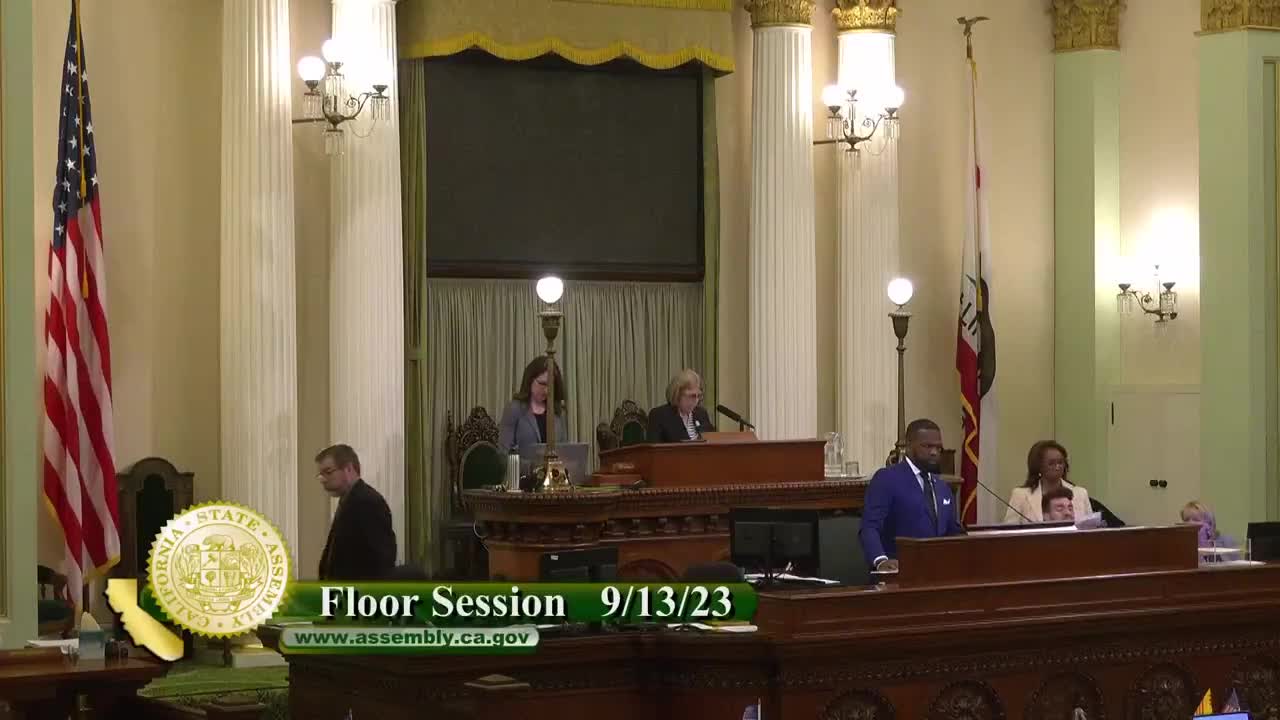
Bill Author

Bill Co-Author(s):