AB 1432: Health care coverage.
- Session Year: 2023-2024
- House: Assembly
- Latest Version Date: 2023-09-11
Current Status:
Failed
(2024-01-30: Consideration of Governor's veto stricken from file.)
Introduced
In Committee
First Chamber
In Committee
Second Chamber
Enacted
What does this bill do?
The bill requires group health plans sold or provided to California residents to follow California insurance law and to cover abortion, abortion-related services, and gender-affirming care, even if the master policy is issued outside the state. It also says out-of-state employer plans may be exempt from some other rules but must not treat same‑sex and different‑sex spouses or domestic partners differently.
The summary is provided by generative AI which can make mistakes. For original language, please view the details in the table below.
Existing law provides for the regulation of health insurers by the Department of Insurance. Existing law requires a health insurance policy to provide group coverage to the registered domestic partner of an employee, insured, or policyholder that is equal to the coverage it provides to the spouse of those persons. Existing law provides that a policy or certificate of group health insurance that is marketed, issued, or delivered to a California resident, regardless of the situs of the contract or master group policyholder, is subject to the requirements to provide equal coverage to domestic partners as is provided to spouses, notwithstanding any other provision of law.
This bill additionally would subject a policy or certificate of group health insurance that is marketed, issued, or delivered to a California resident to all provisions of the Insurance Code requiring coverage of abortion, abortion-related services, and gender-affirming care, regardless of the situs of the contract or master group policyholder.
Existing law, the Knox-Keene Health Care Service Plan Act of 1975, provides for the licensure and regulation of health care service plans and makes a willful violation of its provisions a crime. Existing law also provides for the regulation of health insurers by the Department of Insurance. Existing law requires a health care service plan and a health insurance policy to provide group coverage to the registered domestic partner of an employee, subscriber, insured, or policyholder that is equal to the coverage it provides to the spouse of those persons. Existing law provides that every group health care service plan contract and every a policy or certificate of group health insurance that is marketed, issued, or delivered to a California resident, regardless of the situs of the contract, subscriber, contract or master group policyholder, is subject to the requirements to provide equal coverage to domestic partners as is provided to spouses, notwithstanding any other provision of law.
This bill additionally would subject a group health care service plan contract, policy, policy or certificate of group health insurance that is marketed, issued, or delivered to a California resident to all provisions of the Health and Safety Code and Insurance Code requiring coverage of abortion, abortion-related services, and gender-affirming care, regardless of the situs of the contract, subscriber, contract or master group policyholder. Because a willful violation of these provisions by a health care service plan would be a crime, the bill would impose a state-mandated local program.
The California Constitution requires the state to reimburse local agencies and school districts for certain costs mandated by the state. Statutory provisions establish procedures for making that reimbursement.This bill would provide that no reimbursement is required by this act for a specified reason.Existing law, the Knox-Keene Health Care Service Plan Act of 1975, provides for the licensure and regulation of health care service plans and makes a willful violation of its provisions a crime. Existing law also provides for the regulation of health insurers by the Department of Insurance. Existing law requires a health care service plan and a health insurance policy to provide group coverage to the registered domestic partner of an employee, subscriber, insured, or policyholder that is equal to the coverage it provides to the spouse of those persons. Existing law provides that every group health care service plan contract and every policy or certificate of health insurance that is marketed, issued, or delivered to a California resident, regardless of the situs of the contract, subscriber, or master group policyholder, is subject to the requirements to provide equal coverage to domestic partners as is provided to spouses, notwithstanding any other provision of law.
This bill additionally would subject a policy group health care service plan contract, policy, or certificate of group health insurance that is marketed, issued, or delivered to a California resident to any all provisions of the Health and Safety Code and Insurance Code requiring coverage of abortion, abortion-related services, and gender-affirming care, regardless of the situs of the contract contract, subscriber, or master group policyholder. Because a willful violation of these provisions by a health care service plan would be a crime, the bill would impose a state-mandated local program.
The California Constitution requires the state to reimburse local agencies and school districts for certain costs mandated by the state. Statutory provisions establish procedures for making that reimbursement.
This bill would provide that no reimbursement is required by this act for a specified reason.
Existing law provides for the regulation of disability and health insurers by the Department of Insurance. Existing law provides that a policy or certificate of health insurance marketed, issued, or delivered to a California resident regardless of the situs of the contract or master group policyholder, is generally subject to California insurance law, except for a policy issued outside of California to an employer whose principal place of business and majority of employees are located outside of California.
Existing law requires a policy or certificate of group health insurance policy that is marketed, issued, or delivered to a California resident to provide equal coverage to domestic partners of an employee insured, or policyholder as is provided to spouses of those persons, regardless of the situs of the contract or master group policyholder. Existing law prohibits such a policy or certificate from discriminating in coverage between spouses or domestic partners of a different sex and spouses or domestic partners of the same sex.
This bill additionally would subject a policy or certificate of group health insurance that is marketed, issued, or delivered to a California resident to any provisions of the Insurance Code requiring coverage of abortion, abortion-related services, and gender-affirming care, regardless of the situs of the contract or master group policyholder.
(a)(1)Notwithstanding any other law, every policy or certificate of health insurance marketed, issued, or delivered to a resident of this state, regardless of the situs of the contract or master group policyholder, shall be subject to all provisions of this code.
(2)(A)Paragraph (1) shall not apply to a policy or certificate of health insurance that is issued outside of California to an employer whose principal place of business and majority of employees are located outside of California.
(B)Notwithstanding subparagraph (A), a policy or certificate of health insurance marketed, issued, or delivered to a resident of this state shall not discriminate in coverage between spouses or domestic partners of a different sex and spouses or domestic partners of the same sex.
(3)Subparagraph (A) of paragraph (2) shall not be construed to limit the applicability of any other provision of this code to any policy or certificate of health insurance that is issued outside of California to an employer whose principal place of business and majority of employees are located outside of California.
(b)Subject to all other provisions of this code, a policy or certificate of group health insurance marketed, issued, or delivered to a resident of this state, regardless of the situs of the contract or master group policyholder, shall be subject to both of the following:
(1)Section 10121.7.
(2)All provisions of this code requiring coverage of abortion, abortion-related services, and gender-affirming care.
(a)(1)Notwithstanding any other law, every policy or certificate of health insurance marketed, issued, or delivered to a resident of this state, regardless of the situs of the contract or master group policyholder, shall be subject to all provisions of this code.
(2)(A)Paragraph (1) shall not apply to a policy or certificate of health insurance that is issued outside of California to an employer whose principal place of business and majority of employees are located outside of California.
(B)Notwithstanding subparagraph (A), a policy or certificate of health insurance marketed, issued, or delivered to a resident of this state shall not discriminate in coverage between spouses or domestic partners of a different sex and spouses or domestic partners of the same sex.
(3)Subparagraph (A) of paragraph (2) shall not be construed to limit the applicability of any other provision of this code to any policy or certificate of health insurance that is issued outside of California to an employer whose principal place of business and majority of employees are located outside of California.
(b)Notwithstanding any other law, Subject to all other provisions of this code, a policy or certificate of group health insurance marketed, issued, or delivered to a resident of this state, regardless of the situs of the contract or master group policyholder, shall be subject to both of the following:
(1)Section 10121.7.
(2)All provisions of this code requiring coverage of abortion, abortion-related services, and gender-affirming care.
SEC. 3.No reimbursement is required by this act pursuant to Section 6 of Article XIIIB of the California Constitution because the only costs that may be incurred by a local agency or school district will be incurred because this act creates a new crime or infraction, eliminates a crime or infraction, or changes the penalty for a crime or infraction, within the meaning of Section 17556 of the Government Code, or changes the definition of a crime within the meaning of Section 6 of Article XIIIB of the California Constitution.Notwithstanding any other provision of law, every group health care service plan contract marketed, issued, or delivered to a resident of this state, regardless of the situs of the contract or the subscriber, shall be subject to Section 1374.58. both of the following:
(a)Section 1374.58.
(b)All provisions of this code requiring coverage of abortion, abortion-related services, and gender-affirming care.
SECTION 1.SEC. 2.Section 10112.5 of the Insurance Code is amended to read:10112.5.(a)(1)Notwithstanding any other law, every policy or certificate of health insurance marketed, issued, or delivered to a resident of this state, regardless of the situs of the contract or master group policyholder, shall be subject to all provisions of this code.
(2)(A)Paragraph (1) shall not apply to a policy or certificate of health insurance that is issued outside of California to an employer whose principal place of business and majority of employees are located outside of California.
(B)Notwithstanding subparagraph (A), a policy or certificate of health insurance marketed, issued, or delivered to a resident of this state shall not discriminate in coverage between spouses or domestic partners of a different sex and spouses or domestic partners of the same sex.
(3)Subparagraph (A) of paragraph (2) shall not be construed to limit the applicability of any other provision of this code to any policy or certificate of health insurance that is issued outside of California to an employer whose principal place of business and majority of employees are located outside of California.
(b)Notwithstanding any other law, a policy or certificate of group health insurance marketed, issued, or delivered to a resident of this state, regardless of the situs of the contract or master group policyholder, shall be subject to both of the following:
(1)Section 10121.7.
(2)All provisions of this code requiring coverage of abortion, abortion-related services, and gender-affirming care.
SEC. 3.No reimbursement is required by this act pursuant to Section 6 of Article XIIIB of the California Constitution because the only costs that may be incurred by a local agency or school district will be incurred because this act creates a new crime or infraction, eliminates a crime or infraction, or changes the penalty for a crime or infraction, within the meaning of Section 17556 of the Government Code, or changes the definition of a crime within the meaning of Section 6 of Article XIIIB of the California Constitution.
(a)(1)Notwithstanding any other provision of law, every policy or certificate of health insurance marketed, issued, or delivered to a resident of this state, regardless of the situs of the contract or master group policyholder, shall be subject to all provisions of this code.
(2)(A)Paragraph (1) shall not apply to a policy or certificate of health insurance that is issued outside of California to an employer whose principal place of business and majority of employees are located outside of California.
(B)Notwithstanding subparagraph (A), no a policy or certificate of health insurance marketed, issued, or delivered to a resident of this state shall not discriminate in coverage between spouses or domestic partners of a different sex and spouses or domestic partners of the same sex.
(3)Nothing in subparagraph Subparagraph (A) of paragraph (2) shall not be construed to limit the applicability of any other provision of this code to any policy or certificate of health insurance that is issued outside of California to an employer whose principal place of business and majority of employees are located outside of California.
(b)Notwithstanding any other provision of law, every law, a policy or certificate of group health insurance marketed, issued, or delivered to a resident of this state, regardless of the situs of the contract or master group policyholder, shall be subject to Section 10121.7. both of the following:
(1)Section 10121.7.
(2)All provisions of this code requiring coverage of abortion, abortion-related services, and gender-affirming care.
|
Date
|
Status
|
|---|---|
| Jan 30, 2024 | Consideration of Governor's veto stricken from file. |
| Jan 3, 2024 | Consideration of Governor's veto pending. |
| Oct 7, 2023 | Vetoed by Governor. |
| Sep 13, 2023 | Enrolled and presented to the Governor at 3 p.m. |
| Sep 7, 2023 | Senate amendments concurred in. To Engrossing and Enrolling. (Ayes 64. Noes 15. Page 3044.). |
| Sep 7, 2023 | Assembly Rule 77 suspended. (Page 3011.) |
| Sep 6, 2023 | In Assembly. Concurrence in Senate amendments pending. May be considered on or after September 8 pursuant to Assembly Rule 77. |
| Sep 6, 2023 | Read third time. Passed. Ordered to the Assembly. (Ayes 32. Noes 8. Page 2402.). |
| Aug 29, 2023 | Read second time. Ordered to third reading. |
| Aug 28, 2023 | From committee: Be ordered to second reading pursuant to Senate Rule 28.8. |
| Aug 23, 2023 | From committee chair, with author's amendments: Amend, and re-refer to committee. Read second time, amended, and re-referred to Com. on APPR. |
| Jun 22, 2023 | From committee: Do pass and re-refer to Com. on APPR. (Ayes 10. Noes 2.) (June 21). Re-referred to Com. on APPR. |
| May 31, 2023 | Referred to Com. on HEALTH. |
| May 18, 2023 | In Senate. Read first time. To Com. on RLS. for assignment. |
| May 18, 2023 | Read third time. Passed. Ordered to the Senate. (Ayes 61. Noes 13. Page 1592.) |
| May 11, 2023 | Read second time. Ordered to third reading. |
| May 10, 2023 | From committee: Do pass. (Ayes 12. Noes 3.) (May 10). |
| May 3, 2023 | In committee: Hearing postponed by committee. |
| Apr 19, 2023 | From committee: Do pass and re-refer to Com. on APPR. (Ayes 11. Noes 4.) (April 18). Re-referred to Com. on APPR. |
| Apr 4, 2023 | Re-referred to Com. on HEALTH. |
| Apr 3, 2023 | From committee chair, with author's amendments: Amend, and re-refer to Com. on HEALTH. Read second time and amended. |
| Mar 9, 2023 | Referred to Com. on HEALTH. |
| Feb 18, 2023 | From printer. May be heard in committee March 20. |
| Feb 17, 2023 | Read first time. To print. |
|
Date
|
Description
|
Location
|
Votes
|
|
|---|---|---|---|---|
| Sep 7, 2023 | AB 1432 Wendy Carrillo Concurrence in Senate Amendments | Assembly Floor |
Passed |
|
| Sep 6, 2023 | Assembly 3rd Reading AB1432 Wendy Carrillo By Menjivar | Senate Floor |
Passed |
|
| Jun 21, 2023 | Do pass, but first be re-referred to the Committee on [Appropriations] | Senate Standing Committee on Health |
Passed |
|
| May 18, 2023 | AB 1432 Wendy Carrillo Assembly Third Reading | Assembly Floor |
Passed |
|
| May 10, 2023 | Do pass. | Assembly Standing Committee on Appropriations |
Passed |
|
| Apr 18, 2023 | Do pass and be re-referred to the Committee on [Appropriations] | Assembly Standing Committee on Health |
Passed |
This list shows positions taken on this bill by organizations on the date displayed, which is linked to the original source.
Positions by individuals are not included.
|
Organization
|
Position
|
Date
|
|---|---|---|
| American Civil Liberties Union California Action | ** Support | |
| American College Of Obstetricians And Gynecologists District Ix | ** Support | |
| APLA Health | ** Support | |
| California Academy Of Family Physicians | ** Support | |
| California Catholic Conference | ** Against | |
| California Department of Insurance | ** Support | |
| California Department of Insurance, Commissioner Ricardo Lara | ** Support | |
| California Family Council | * Support | Jun 21, 2023 |
| California Legislative Women's Caucus | ** Support | |
| California Medical Association | * Support | Jun 21, 2023 |
| California Nurse-Midwives Association | ** Support | |
| California Nurses Association | ** Support | |
| California Pan-Ethnic Health Network | ** Support | |
| California State Council of Service Employees International Union | ** Support | |
| Coachman Moore and Associates | ** Support | |
| Desert AIDS Project DBA Health | ** Support | |
| Equality California | ** Support | |
| Health Access California | ** Support | |
| NARAL Pro-Choice California | ** Support | |
| National Association of Social Workers California Chapter | ** Support | |
| Planned Parenthood Affiliates Of California | ** Support | |
| Radiant Health Centers | ** Support | |
| Right to Life League | ** Against | |
| San Francisco Aids Foundation | ** Support | |
| San Francisco City Attorney Office | ** Support | |
| Trans Youth Liberation | ** Support | |
| Transfamily Support Services | ** Support |
GOVERNOR'S VETO
GV Bill Id:AB 1432
Author:(Wendy Carrillo)
As Enrolled Ver:September 11, 2023
2/3 vote
SUMMARY
Subjects an out-of-state policy, or certificate of group health insurance that is marketed, issued, or delivered to a California resident to specified provisions of the Insurance Code requiring coverage of abortion, abortion-related services, and gender-affirming care, regardless of the origin of the contract, subscriber, or master group policyholder.
Senate Amendments
Delete the provisions in the Health and Safety Code as it relates to health plan coverage.
Governor’s Veto Message
This bill would require any out-of-state health insurance plan regulated by the California Department of Insurance (CDI) that is marketed, issued, or delivered to a California resident to provide coverage for abortion, abortion-related services, and gender-affirming care.
I commend the author for working to provide additional assurances that California residents can access abortion services and gender affirming care. It is a priority of my Administration to ensure that abortion and gender-affirming care are safe, legal, and accessible. However, it is not evident that out-of-state health insurance plans serving Californians do not already cover this care.
Further, though well intentioned, this bill could invite litigation where an adverse ruling would outweigh a potential benefit.
COMMENTS
- California abortion coverage. According to the California Health Benefits Review Program, under the Reproductive Privacy Act, California law prohibits the State from denying or interfering with a woman's right to choose or obtain an abortion prior to viability of the fetus, or when medically necessary. The state defines viability as the point in a pregnancy when, in the good faith medical judgment of a physician, there is a reasonable likelihood that a fetus will survive outside the uterus without "extraordinary medical measures." Abortion is considered a basic health care service in California and, therefore, is required to be covered by commercial health insurance plans and policies. Medically necessary follow-up services to abortions that constitute basic health care services must also be covered.
- 2022 Supreme Court Decision. On Friday, June 24, 2022, the United States (U.S.) Supreme Court issued its decision in Dobbs v. Jackson Women's Health Organization, thereby overturning Roe v. Wade, the 1973 Supreme Court decision that affirmed the constitutional right to abortion. This ruling had the effect of deferring issues of abortion rights and access to the state level, allowing states to impose restrictions on abortion rights. Consequently, abortion access in the United States now diverges starkly at the state level, with some states protecting the right to abortion, some having passed laws to ban abortion, and other states imposing gestational time limits or other restrictions. Although a landmark decision nationally, the ruling did not directly affect abortion coverage in California.
- Out of state insurance. This bill requires an out of state health insurance policy (or out-of-state employer) to cover specified services, like abortion and gender affirming care, for California residents (or employees) pursuant to California law. The sponsors of this bill provided information indicating that courts have found that California may constitutionally regulate an out-of-state insurer marketing directly to a California resident. In People v. United Nat'l Life Ins. Co., the California Supreme Court reasoned that "[I]nterstate insurance transactions may properly be regulated when they have sufficient contacts with the regulating state so as to give the latter a substantial interest in the transactions." (People v. United Nat. Life Ins. Co. (1967) 66 Cal.2d 577, 589.) The Court found that out-of-state insurers directly marketing to California residents, subjected those insurers to state regulation. The Court reasoned that in all instances payment of premiums is made by California residents from funds or bank accounts located in California. It is clear that any claims made under the policies will most likely be investigated in this state and that any litigation in connection with the policies will undoubtedly be commenced in California courts. It is also foreseeable that should defendants for any reason fail to perform their obligations in accordance with the policies, California might be called upon to provide assistance for the persons within its borders who were intended to be financially assisted by the benefits under the policies. CDI writes that the Court went on to find that the defendant insurers had essentially entered the state looking for, and obtaining, business.
According to the Author
This bill would require all out-of-state healthcare insurance providers who provide coverage to California residents, to comply with California's Constitutional amendment to secure comprehensive reproductive healthcare including abortion and gender affirming care as a right. The author concludes that this bill closes a loop on coverage provided to California residents from out-of-state insurance providers who may be headquartered in states with anti-choice policies.
Arguments in Support
CDI, sponsor with Equality California, writes that this bill requires all out-of-state health care insurance policies and health care service plans that provide coverage to California residents, comply with California laws that require coverage of abortion services and gender affirming care. Under current California law, a health insurance policy or certificate and a health care service plan contract that is issued or delivered to a California resident, regardless of the location of the contract or master group policyholder, is subject to all requirements in the California Insurance Code. However, there is presently an exception for policies issued outside of California to an employer whose principal place of business and majority of employees are outside California. The sponsors write that this exception is a major concern because, since the U.S. Supreme Court overturned the five-decade-old constitutional right for a woman to obtain an abortion, there has been a wave of anti-choice legislation across the nation. At the same time, there has been a growing number of states banning gender-affirming care. Therefore, health insurance provided by employers located out-of-state with out-of-state insurance contracts or policies or health care service plan contracts to California residents may not cover abortion or gender affirming care under existing law. By strengthening the extraterritorial statute, it is clear that abortion and gender affirming care must be covered to the extent required under California law. Although no one in the state should be subjected to these discriminatory laws, California should do as much as it can to ensure that its residents and workers have access to these health care services regardless of where the health insurance policy or certificate or health care service plan contract is issued or delivered. The sponsors write that this bill is intended to respect the right to healthcare by strengthening protections for reproductive freedom and gender-affirming care.
Arguments in Opposition
Right to Life League writes that this bill is unconstitutional on its face, favoring insurance coverage for abortion over childbirth services. This bill compels insurers to cover abortion, abortion-related services but does not mandate insurers to cover prenatal and child birthing services as required by the U.S. Supreme Court's decision in Committee to Defend Reproductive Rights v. Meyers.
FISCAL COMMENTS
According to the Senate Appropriations Committee, pursuant to Senate Rule 28.8, negligible state costs.
VOTES
ASM HEALTH: 11-4-0
YES: Wood, Aguiar-Curry, Arambula, Boerner Horvath, Wendy Carrillo, Maienschein, McCarty, Rodriguez, Santiago, Villapudua, Weber
NO: Waldron, Flora, Vince Fong, Joe Patterson
ASM APPROPRIATIONS: 12-3-1
YES: Holden, Bryan, Calderon, Wendy Carrillo, Mike Fong, Addis, Lowenthal, Papan, Pellerin, Robert Rivas, Weber, Wilson
NO: Megan Dahle, Dixon, Sanchez
ABS, ABST OR NV: Mathis
ASSEMBLY FLOOR: 61-13-6
YES: Addis, Aguiar-Curry, Alanis, Alvarez, Arambula, Bains, Bauer-Kahan, Bennett, Berman, Boerner, Bonta, Bryan, Calderon, Juan Carrillo, Wendy Carrillo, Connolly, Mike Fong, Gabriel, Garcia, Gipson, Grayson, Haney, Hart, Holden, Irwin, Jackson, Jones-Sawyer, Kalra, Lee, Low, Lowenthal, Maienschein, McCarty, McKinnor, Muratsuchi, Stephanie Nguyen, Ortega, Pacheco, Papan, Pellerin, Petrie-Norris, Quirk-Silva, Ramos, Reyes, Luz Rivas, Robert Rivas, Rodriguez, Blanca Rubio, Santiago, Schiavo, Soria, Ting, Valencia, Villapudua, Wallis, Ward, Weber, Wicks, Wood, Zbur, Rendon
NO: Chen, Megan Dahle, Davies, Essayli, Flora, Gallagher, Hoover, Lackey, Mathis, Jim Patterson, Joe Patterson, Sanchez, Ta
ABS, ABST OR NV: Cervantes, Dixon, Vince Fong, Friedman, Waldron, Wilson
SENATE FLOOR: 32-8-0
YES: Allen, Alvarado-Gil, Archuleta, Ashby, Atkins, Becker, Blakespear, Bradford, Caballero, Cortese, Dodd, Durazo, Eggman, Glazer, Gonzalez, Hurtado, Laird, Limón, McGuire, Menjivar, Min, Newman, Padilla, Portantino, Roth, Rubio, Skinner, Smallwood-Cuevas, Stern, Umberg, Wahab, Wiener
NO: Dahle, Grove, Jones, Nguyen, Niello, Ochoa Bogh, Seyarto, Wilk
ASSEMBLY FLOOR: 64-15-1
YES: Addis, Aguiar-Curry, Alanis, Alvarez, Arambula, Bains, Bauer-Kahan, Bennett, Berman, Boerner, Bonta, Bryan, Calderon, Juan Carrillo, Wendy Carrillo, Cervantes, Connolly, Mike Fong, Friedman, Gabriel, Garcia, Gipson, Grayson, Haney, Hart, Holden, Irwin, Jackson, Jones-Sawyer, Kalra, Lee, Low, Lowenthal, Maienschein, McCarty, McKinnor, Muratsuchi, Stephanie Nguyen, Ortega, Pacheco, Papan, Pellerin, Petrie-Norris, Quirk-Silva, Ramos, Rendon, Reyes, Luz Rivas, Rodriguez, Blanca Rubio, Santiago, Schiavo, Soria, Ting, Valencia, Villapudua, Wallis, Ward, Weber, Wicks, Wilson, Wood, Zbur, Robert Rivas
NO: Chen, Megan Dahle, Davies, Dixon, Flora, Vince Fong, Gallagher, Hoover, Lackey, Mathis, Jim Patterson, Joe Patterson, Sanchez, Ta, Waldron
ABS, ABST OR NV: Essayli
UPDATED
VERSION: September 11, 2023
CONSULTANT: Kristene Mapile / HEALTH / (916) 319-2097 FN: 0002510
CONCURRENCE IN SENATE AMENDMENTS
CSA1 Bill Id:AB 1432
Author:(Wendy Carrillo)
As Amended Ver:August 23, 2023
Majority vote
SUMMARY
Subjects an out-of-state policy, or certificate of group health insurance that is marketed, issued, or delivered to a California resident to specified provisions of the Insurance Code requiring coverage of abortion, abortion-related services, and gender-affirming care, regardless of the origin of the contract, subscriber, or master group policyholder.
Senate Amendments
Delete the provisions in the Health and Safety Code as it relates to health plan coverage.
COMMENTS
- California abortion coverage. According to the California Health Benefits Review Program, under the Reproductive Privacy Act, California law prohibits the State from denying or interfering with a woman's right to choose or obtain an abortion prior to viability of the fetus, or when medically necessary. The state defines viability as the point in a pregnancy when, in the good faith medical judgment of a physician, there is a reasonable likelihood that a fetus will survive outside the uterus without "extraordinary medical measures." Abortion is considered a basic health care service in California and, therefore, is required to be covered by commercial health insurance plans and policies. Medically necessary follow-up services to abortions that constitute basic health care services must also be covered.
- 2022 Supreme Court Decision. On Friday, June 24, 2022, the United States (U.S.) Supreme Court issued its decision in Dobbs v. Jackson Women's Health Organization, thereby overturning Roe v. Wade, the 1973 Supreme Court decision that affirmed the constitutional right to abortion. This ruling had the effect of deferring issues of abortion rights and access to the state level, allowing states to impose restrictions on abortion rights. Consequently, abortion access in the United States now diverges starkly at the state level, with some states protecting the right to abortion, some having passed laws to ban abortion, and other states imposing gestational time limits or other restrictions. Although a landmark decision nationally, the ruling did not directly affect abortion coverage in California.
- Out of state insurance. This bill requires an out of state health insurance policy (or out-of-state employer) to cover specified services, like abortion and gender affirming care, for California residents (or employees) pursuant to California law. The sponsors of this bill provided information indicating that courts have found that California may constitutionally regulate an out-of-state insurer marketing directly to a California resident. In People v. United Nat'l Life Ins. Co., the California Supreme Court reasoned that "[I]nterstate insurance transactions may properly be regulated when they have sufficient contacts with the regulating state so as to give the latter a substantial interest in the transactions." (People v. United Nat. Life Ins. Co. (1967) 66 Cal.2d 577, 589.) The Court found that out-of-state insurers directly marketing to California residents, subjected those insurers to state regulation. The Court reasoned that in all instances payment of premiums is made by California residents from funds or bank accounts located in California. It is clear that any claims made under the policies will most likely be investigated in this state and that any litigation in connection with the policies will undoubtedly be commenced in California courts. It is also foreseeable that should defendants for any reason fail to perform their obligations in accordance with the policies, California might be called upon to provide assistance for the persons within its borders who were intended to be financially assisted by the benefits under the policies. The California Department of Insurance (CDI) writes that the Court went on to find that the defendant insurers had essentially entered the state looking for, and obtaining, business.
According to the Author
This bill would require all out-of-state healthcare insurance providers who provide coverage to California residents, to comply with California's Constitutional amendment to secure comprehensive reproductive healthcare including abortion and gender affirming care as a right. The author concludes that this bill closes a loop on coverage provided to California residents from out-of-state insurance providers who may be headquartered in states with anti-choice policies.
Arguments in Support
CDI, sponsor with Equality California, writes that this bill requires all out-of-state health care insurance policies and health care service plans that provide coverage to California residents, comply with California laws that require coverage of abortion services and gender affirming care. Under current California law, a health insurance policy or certificate and a health care service plan contract that is issued or delivered to a California resident, regardless of the location of the contract or master group policyholder, is subject to all requirements in the California Insurance Code. However, there is presently an exception for policies issued outside of California to an employer whose principal place of business and majority of employees are outside California. The sponsors write that this exception is a major concern because, since the U.S. Supreme Court overturned the five-decade-old constitutional right for a woman to obtain an abortion, there has been a wave of anti-choice legislation across the nation. At the same time, there has been a growing number of states banning gender-affirming care. Therefore, health insurance provided by employers located out-of-state with out-of-state insurance contracts or policies or health care service plan contracts to California residents may not cover abortion or gender affirming care under existing law. By strengthening the extraterritorial statute, it is clear that abortion and gender affirming care must be covered to the extent required under California law. Although no one in the state should be subjected to these discriminatory laws, California should do as much as it can to ensure that its residents and workers have access to these health care services regardless of where the health insurance policy or certificate or health care service plan contract is issued or delivered. The sponsors write that this bill is intended to respect the right to healthcare by strengthening protections for reproductive freedom and gender-affirming care.
Arguments in Opposition
Right to Life League writes that this bill is unconstitutional on its face, favoring insurance coverage for abortion over childbirth services. This bill compels insurers to cover abortion, abortion-related services but does not mandate insurers to cover prenatal and child birthing services as required by the U.S. Supreme Court's decision in Committee to Defend Reproductive Rights v. Meyers.
FISCAL COMMENTS
According to the Senate Appropriations Committee, pursuant to Senate Rule 28.8, negligible state costs.
VOTES:
ASM HEALTH: 11-4-0
YES: Wood, Aguiar-Curry, Arambula, Boerner Horvath, Wendy Carrillo, Maienschein, McCarty, Rodriguez, Santiago, Villapudua, Weber
NO: Waldron, Flora, Vince Fong, Joe Patterson
ASM APPROPRIATIONS: 12-3-1
YES: Holden, Bryan, Calderon, Wendy Carrillo, Mike Fong, Addis, Lowenthal, Papan, Pellerin, Robert Rivas, Weber, Wilson
NO: Megan Dahle, Dixon, Sanchez
ABS, ABST OR NV: Mathis
ASSEMBLY FLOOR: 61-13-6
YES: Addis, Aguiar-Curry, Alanis, Alvarez, Arambula, Bains, Bauer-Kahan, Bennett, Berman, Boerner, Bonta, Bryan, Calderon, Juan Carrillo, Wendy Carrillo, Connolly, Mike Fong, Gabriel, Garcia, Gipson, Grayson, Haney, Hart, Holden, Irwin, Jackson, Jones-Sawyer, Kalra, Lee, Low, Lowenthal, Maienschein, McCarty, McKinnor, Muratsuchi, Stephanie Nguyen, Ortega, Pacheco, Papan, Pellerin, Petrie-Norris, Quirk-Silva, Ramos, Reyes, Luz Rivas, Robert Rivas, Rodriguez, Blanca Rubio, Santiago, Schiavo, Soria, Ting, Valencia, Villapudua, Wallis, Ward, Weber, Wicks, Wood, Zbur, Rendon
NO: Chen, Megan Dahle, Davies, Essayli, Flora, Gallagher, Hoover, Lackey, Mathis, Jim Patterson, Joe Patterson, Sanchez, Ta
ABS, ABST OR NV: Cervantes, Dixon, Vince Fong, Friedman, Waldron, Wilson
SENATE FLOOR: 32-8-0
YES: Allen, Alvarado-Gil, Archuleta, Ashby, Atkins, Becker, Blakespear, Bradford, Caballero, Cortese, Dodd, Durazo, Eggman, Glazer, Gonzalez, Hurtado, Laird, Limón, McGuire, Menjivar, Min, Newman, Padilla, Portantino, Roth, Rubio, Skinner, Smallwood-Cuevas, Stern, Umberg, Wahab, Wiener
NO: Dahle, Grove, Jones, Nguyen, Niello, Ochoa Bogh, Seyarto, Wilk
UPDATED
VERSION: August 23, 2023
CONSULTANT: Kristene Mapile / HEALTH / (916) 319-2097 FN: 0001614
SENATE RULES COMMITTEE Office of Senate Floor Analyses (916) 651-1520 Fax: (916) 327-4478 | AB 1432 |
THIRD READING
Bill No: AB 1432
Author: Wendy Carrillo (D)
Amended: 8/23/23 in Senate
Vote: 21
SENATE HEALTH COMMITTEE: 10-2, 6/21/23
AYES: Eggman, Glazer, Gonzalez, Hurtado, Limón, Menjivar, Roth, Rubio, Wahab, Wiener
NOES: Nguyen, Grove
SENATE APPROPRIATIONS COMMITTEE: Senate Rule 28.8
ASSEMBLY FLOOR: 61-13, 5/18/23 - See last page for vote
SUBJECT: Health care coverage
SOURCE: California Department of Insurance, Commissioner Ricardo Lara Equality California
DIGEST:
This bill requires every policy or certificate of group health insurance marketed, issued, or delivered to a resident of California, regardless of the situs of the contract, subscriber, or master group policyholder, to be subject to all provisions of the law requiring health insurance coverage of abortion, abortion-related services, and gender affirming care.
ANALYSIS:
Existing law:
- Establishes the California Department of Insurance (CDI) to regulate health and other insurance. [INS §106, et seq.,]
- Requires a policy of group health insurance that provides hospital, medical, or surgical expense benefits to provide equal coverage to employers or guaranteed associations, as defined, for the registered domestic partner of an employee or subscriber to the same extent, and subject to the same terms and conditions, as provided to a spouse of the employee or subscriber, and to inform employers and guaranteed associations of this coverage. [INS §10121.7]
- Requires, notwithstanding any other provision of law, every policy or certificate of health insurance marketed, issued, or delivered to a resident of this state, regardless of the situs of the contract or master group policyholder to be subject to the Insurance Code, except, this does not apply to a policy or certificate of insurance that is issued outside of California to an employer whose principal place of business and majority of employees are located outside of California. [INS §10112.5]
- Prohibits, notwithstanding 3) above, a policy or certificate of health insurance marketed, issued, or delivered to a resident of this state from discriminating in coverage between spouses or domestic partners of a different sex and spouses or domestic partners of the same sex. [INS §10112.5]
- Requires, notwithstanding any other provision of law, every policy or certificate of group health insurance marketed, issued, or delivered to a resident of this state, regardless of the situs of the contract or master group policy holder to be subject to 4) above. [INS §10112.5]
- Establishes the Reproductive Privacy Act, which makes it the public policy of the State of California that every individual has the fundamental right to choose or refuse birth control; every pregnant individual or individual who may become pregnant has the fundamental right to choose to bear a child or to choose to have and to obtain an abortion except as limited by this article; and, prohibits the state from denying or interfering with the fundamental right of a pregnant individual or an individual who may become pregnant to choose to bear a child or to choose to have and to obtain an abortion, except as specifically permitted. [HSC §123462]
- Prohibits a group or individual policy or certificate of health insurance or student blanket disability insurance from imposing a deductible, coinsurance, copayment, or any other cost-sharing or utilization management requirement on coverage for all abortion and abortion-related services, including preabortion and follow-up services. [INS §10123.1961]
- Requires health plans and insurers to provide specified information about abortion and contraception benefits or services that may be available at no cost through the California Reproductive Health Equity Program to employees of a religious employer that does not include coverage and benefits for both abortion and contraception. [INS §10123.210]
- Authorizes, notwithstanding any other provision of specified law, a religious employer to request a disability insurance policy without coverage for contraceptive methods that are contrary to the religious employer’s religious tenets. Requires, if requested, a disability insurance policy to be provided without coverage for vasectomy services and procedures. The exclusion from coverage under this law does not apply to vasectomy services or procedures for purposes other than contraception. [INS §10123.1945]
- Requires an insurer that contracts with a religious employer to provide a disability insurance policy that does not include coverage and benefits for vasectomy services and procedures to notify, in writing, upon initial enrollment and annually thereafter upon renewal, each enrollee that vasectomy services and procedures are not included in the insured’s disability insurance policy. [INS §10123.1945]
- Defines a “religious employer” as an entity for which each of the following is true:
- The inculcation of religious values is the purpose of the entity;
- The entity primarily employs persons who share the religious tenets of the entity;
- The entity serves primarily persons who share the religious tenets of the entity; and,
- The entity is a nonprofit organization pursuant to Internal Revenue Code of 1986, as specified. [INS §10123.1945]
- Prohibits a health insurer, agent, or broker from employing marketing practices or benefit designs that will have the effect of discouraging the enrollment of individuals with significant health needs or discriminate based on an individual’s race, color, national origin, present or predicted disability, age, sex, gender identity, sexual orientation, expected length of life, degree of medical dependency, quality of life, or other health conditions. [INS §10965.5]
- Requires, within six months after CDI issues guidance, and not later than March 1, 2025, a insurer to include information within or accessible from the plan’s provider directory and call center that identifies which of the insurers in-network providers have affirmed that they offer and have provided gender-affirming services, as specified. Requires this information to be updated when an in-network provider requests its inclusion or exclusion as a provider that offers and provides gender affirming services. [INS §10133.14]
- Authorizes the Insurance Commissioner, whenever the Commissioner believes, from evidence satisfactory to the Commissioner, that a person is violating or about to violate the Insurance Code or an order or requirement of the commissioner issued or promulgated pursuant to authority expressly granted the Commissioner by the Insurance Code or by law, to bring an action in the name of the people of the State of California in the superior court of the State of California against the person to enjoin that person from continuing the violation or engaging therein or doing any act in furtherance thereof. [INS §12928.6]
This bill requires every policy or certificate of group health insurance marketed, issued, or delivered to a resident of this state, regardless of the situs of the contract, to be subject to all provisions of Insurance Code requiring coverage of abortion, abortion-related services, and gender affirming care.
Comments
According to the author, this bill requires all out-of-state healthcare insurance providers who provide coverage to California residents, comply with California’s Constitutional amendment to secure comprehensive reproductive healthcare including abortion and gender affirming care as a right. This bill closes a loophole on coverage provided to California residents from out-of-state insurance providers who may be headquartered in states with anti-choice policies.
Constitutional amendment. Section 1.1 to Article 1 of the California Constitution was added by Proposition 1 of 2022 which says: “The state shall not deny or interfere with an individual’s reproductive freedom in their most intimate decisions, which includes their fundamental right to choose to have an abortion and their fundamental right to choose or refuse contraceptives. This section is intended to further the constitutional right to privacy guaranteed by Section 1, and the constitutional right to not be denied equal protection guaranteed by Section 7. Nothing herein narrows or limits the right to privacy or equal protection.”
Roe v. Wade. The U.S. Supreme Court recognized the constitutional right to abortion in 1973 in Roe v. Wade, and until 2022, subsequent decisions have reaffirmed that right. The Court has held that a state cannot ban abortion before viability (the point at which a fetus can survive outside the uterus), and that any restriction on abortion after viability must contain exceptions to protect the life and health of the pregnant person. Any pre-viability abortion restriction cannot create an "undue burden" by placing a substantial obstacle in the path of a person seeking an abortion. In 2021, the State of Texas enacted a civilly enforced abortion restriction that prohibited any person from performing, or aiding and abetting, a person in obtaining an abortion after the detection of a "fetal heartbeat." That law prohibited state enforcement, and instead allows third parties to file lawsuits to enforce the law, regardless of the plaintiff's relationship to the defendant. The Texas law does not require the plaintiff to live in the state or suffer any actual harm. On December 1, 2021, the U.S. Supreme Court heard oral arguments in Dobbs v. Jackson Women's Health Organization, a case regarding a Mississippi law that would ban abortion after 15 weeks of pregnancy. This case directly challenged Roe v. Wade. The U.S. Supreme Court struck down Roe v. Wade on June 24, 2022.
Extraterritorial states. The Senate Judiciary Committee analysis of SB 757 (Lieu, Chapter 722, Statutes 2011), which established California as an extraterritorial state with respect to domestic partner coverage, indicates that for California residents who are employed by an employer whose headquarters is located in another state, the out-of-state employer generally contracts with one insurance company for all of their employees. Typically the insurance company is located within the state where the employer is incorporated or headquartered, or the state where most of its employees reside. In extraterritorial states, health insurers are required to provide benefits consistent with the state law in which an employee resides. Insurers typically include state-specific language in policy forms and certificates. Courts have found that California may constitutionally regulate an out-of-state insurer marketing directly to a California resident (People v. United Nat'l Life Ins. Co. (1967) 66 Cal.2d 577). It may be somewhat more cumbersome to regulate an out-of-state insurer who has contracted with an out-of-state company that has employees in California. However, CDI indicates that it could bring an injunction against an insurer under Insurance Code Section 12928.6 in those few circumstances where that might be necessary.
SB 757. SB 757 required every group health plan contract and every policy or certificate of group health insurance marketed, issued, or delivered to a resident of this state, regardless of the situs of the contract to comply with existing law that provides for equal coverage for registered domestic partners. Additionally, SB 757 prohibited such contracts, policies, or certificates of an employee, subscriber, insured, or policyholder from discriminating in coverage between different sex and same sex spouses and domestic partners and states that the prohibitions and requirements imposed by SB 757 are in addition to any other prohibitions and requirements imposed by other existing law.
FISCAL EFFECT: Appropriation: No Fiscal Com.: Yes Local: No
SUPPORT: (Verified 8/25/23)
California Department of Insurance, Commissioner Ricardo Lara (co-source)
Equality California (co-source)
American Civil Liberties Union California Action
American College of Obstetricians and Gynecologists District IX
APLA Health
California Academy of Family Physicians
California Legislative Women's Caucus
California Nurse-Midwives Association
California Nurses Association
California Pan-Ethnic Health Network
California State Council of Service Employees International Union
Coachman Moore and Associates
Health Access California
NARAL Pro-Choice California
National Association of Social Workers – California Chapter
Planned Parenthood Affiliates of California
Radiant Health Centers
San Francisco AIDS Foundation
San Francisco City Attorney’s Office
TransFamily Support Services
TransYouth Liberation
OPPOSITION: (Verified 8/25/23)
California Catholic Conference
Right to Life League
Two individuals
ARGUMENTS IN SUPPORT: According to one of this bill’s sponsors, California Department of Insurance, Commissioner Ricardo Lara, under current California law, a health insurance policy or certificate, and a health plan contract that is issued or delivered to a California resident, regardless of the location of the contract or master group policyholder, is subject to all requirements in the California Insurance Code. However, there is presently an exception for policies issued outside of California to an employer whose principal place of business and majority of employees are outside California. This exception is a major concern because, since the U.S. Supreme Court overturned the five-decade-old constitutional right for a woman to obtain an abortion, there has been a wave of anti-choice legislation across the nation. At the same time, there has been a growing number of states banning gender-affirming care. Therefore, health insurance provided by employers located out-of-state with out-of-state insurance contracts or policies or health plan contracts to California residents may not cover abortion or gender affirming care under existing law. The Insurance Commissioner states, we must ensure that California is ready to provide fair and equal access to reproductive health care services for all, as potential continued changes by federal courts and state law may attempt to further curtail these services. By strengthening the extraterritorial statute, we make it clear that abortion and gender affirming care must be covered to the extent required under California law. Equality California, another sponsor, writes that no one in our state should be subjected to discriminatory out-of-state laws and this bill will ensure that all California residents have access to these essential health care services regardless of where the health insurance policy or certificate is issued or delivered. This bill is intended to respect the right to health care by strengthening protections for reproductive freedom and gender-affirming care.
ARGUMENTS IN OPPOSITION: The California Catholic Conference writes Catholic employers forced to provide insurance coverage that finances the taking of unborn life and the destruction of healthy organs and body systems would violate established human rights norms, and the Christian virtues of charity, integrity, and justice. Abortion is free and ubiquitous in California – through 400 facilities, via telehealth and a dozen sources by mail. Gender transition is similarly widely available through other insurance plans and providers. The only reason to pass this bill would be to force Catholic and other faith-based employers and services to contradict their consciences, endorsing and paying for procedures they find morally abhorrent, and to shut down entities who cannot comply with violating their beliefs grounded in faith and reason. The Right to Life League writes that this bill is unconstitutional and threatens insurance providers with criminal penalties for failing to cover abortion, and abortion-related services. To cure this unconstitutional, discriminatory oversight, this bill should be amended to require coverage for rendering prenatal and OB-GYN services, including childbirth and perinatal services and should likewise criminalize insurers who fail to provide such coverage.
ASSEMBLY FLOOR: 61-13, 5/18/23
AYES: Addis, Aguiar-Curry, Alanis, Alvarez, Arambula, Bains, Bauer-Kahan, Bennett, Berman, Boerner, Bonta, Bryan, Calderon, Juan Carrillo, Wendy Carrillo, Connolly, Mike Fong, Gabriel, Garcia, Gipson, Grayson, Haney, Hart, Holden, Irwin, Jackson, Jones-Sawyer, Kalra, Lee, Low, Lowenthal, Maienschein, McCarty, McKinnor, Muratsuchi, Stephanie Nguyen, Ortega, Pacheco, Papan, Pellerin, Petrie-Norris, Quirk-Silva, Ramos, Reyes, Luz Rivas, Robert Rivas, Rodriguez, Blanca Rubio, Santiago, Schiavo, Soria, Ting, Valencia, Villapudua, Wallis, Ward, Weber, Wicks, Wood, Zbur, Rendon
NOES: Chen, Megan Dahle, Davies, Essayli, Flora, Gallagher, Hoover, Lackey, Mathis, Jim Patterson, Joe Patterson, Sanchez, Ta
NO VOTE RECORDED: Cervantes, Dixon, Vince Fong, Friedman, Waldron, Wilson
Prepared by: Teri Boughton / HEALTH / (916) 651-4111
8/31/23 11:07:58
**** END ****
SENATE COMMITTEE ON HEALTH
Senator Dr. Susan Talamantes Eggman, Chair
BILL NO: AB 1432
AUTHOR: | Wendy Carrillo | ||
VERSION: | April 3, 2023 | ||
HEARING DATE: | June 21, 2023 | ||
CONSULTANT: | Teri Boughton | ||
SUBJECT: Health care coverage
SUMMARY:
Requires every group health plan, policy or certificate of group health insurance marketed, issued, or delivered to a resident of California, regardless of the situs of the contract, subscriber, or master group policyholder, to be subject to all provisions of the law requiring health plan and health insurance coverage of abortion, abortion-related services, and gender affirming care.
Existing law:
- Establishes the Department of Managed Health Care (DMHC) to regulate health plans under the Knox-Keene Health Care Service Plan Act of 1975 (Knox-Keene Act); California Department of Insurance (CDI) to regulate health and other insurance. [HSC §1340, et seq., and INS §106, et seq.,]
- Requires every group health plan contract marketed, issued, or delivered to a resident of this state, regardless of the situs of the contract or the subscriber, to be subject to 3) below. [HSC §1367.30]
- Requires a group health plan or policy of group health insurance that provides hospital, medical, or surgical expense benefits to provide equal coverage to employers or guaranteed associations, as defined, for the registered domestic partner of an employee or subscriber to the same extent, and subject to the same terms and conditions, as provided to a spouse of the employee or subscriber, and to inform employers and guaranteed associations of this coverage. Prohibits a plan from offering or providing coverage for a registered domestic partner that is not equal to the coverage provided to the spouse of an employee or subscriber, and from discriminating in coverage between spouses or domestic partners of a different sex and spouses or domestic partners of the same sex. [HSC §1374.58 and INS §10121.7]
- Requires, notwithstanding any other provision of law, every policy or certificate of health insurance marketed, issued, or delivered to a resident of this state, regardless of the situs of the contract or master group policyholder to be subject to the Insurance Code, except, this does not apply to a policy or certificate of insurance that is issued outside of California to an employer whose principal place of business and majority of employees are located outside of California. [INS §10112.5]
- Prohibits, notwithstanding 4) above, a policy or certificate of health insurance marketed, issued, or delivered to a resident of this state from discriminating in coverage between spouses or domestic partners of a different sex and spouses or domestic partners of the same sex. [INS §10112.5]
- Requires, notwithstanding any other provision of law, every policy or certificate of group health insurance marketed, issued, or delivered to a resident of this state, regardless of the situs of the contract or master group policy holder to be subject to 3) above. [INS §10112.5]
- Establishes the Reproductive Privacy Act, which makes it the public policy of the State of California that every individual has the fundamental right to choose or refuse birth control; every pregnant individual or individual who may become pregnant has the fundamental right to choose to bear a child or to choose to have and to obtain an abortion except as limited by this article; and, prohibits the state from denying or interfering with the fundamental right of a pregnant individual or an individual who may become pregnant to choose to bear a child or to choose to have and to obtain an abortion, except as specifically permitted. [HSC §123462]
- Prohibits a health plan, group or individual policy or certificate of health insurance or student blanket disability insurance from imposing a deductible, coinsurance, copayment, or any other cost-sharing or utilization management requirement on coverage for all abortion and abortion-related services, including preabortion and follow-up services. [HSC §1367.251 and INS §10123.1961]
- Requires health plans and insurers to provide specified information about abortion and contraception benefits or services that may be available at no cost through the California Reproductive Health Equity Program to employees of a religious employer that does not include coverage and benefits for both abortion and contraception. [HSC §1367.32 and INS §10123.210]
- Prohibits a health plan, solicitor, health insurer, agent, or broker from employing marketing practices or benefit designs that will have the effect of discouraging the enrollment of individuals with significant health needs or discriminate based on an individual’s race, color, national origin, present or predicted disability, age, sex, gender identity, sexual orientation, expected length of life, degree of medical dependency, quality of life, or other health conditions. [HSC §1399.851 and INS §10965.5]
- Requires, within six months after DMHC, CDI, and the Department of Health Care Services issue guidance, and not later than March 1, 2025, a full service health plan and insurer to include information within or accessible from the plan’s provider directory and call center that identifies which of the plan’s in-network providers have affirmed that they offer and have provided gender-affirming services, as specified. Requires this information to be updated when an in-network provider requests its inclusion or exclusion as a provider that offers and provides gender affirming services. [HSC §1367.28 and INS §10133.14]
- Authorizes the Insurance Commissioner, whenever the commissioner believes, from evidence satisfactory to the commissioner, that a person is violating or about to violate the Insurance Code or an order or requirement of the commissioner issued or promulgated pursuant to authority expressly granted the commissioner by the Insurance Code or by law, to bring an action in the name of the people of the State of California in the superior court of the State of California against the person to enjoin that person from continuing the violation or engaging therein or doing any act in furtherance thereof. [INS §12928.6]
This bill: Requires every group health plan, policy or certificate of group health insurance marketed, issued, or delivered to a resident of this state, regardless of the situs of the contract, to be subject to all provisions of the Knox Keene Act and Insurance Code requiring coverage of abortion, abortion-related services, and gender affirming care.
FISCAL EFFECT:
According to the Assembly Appropriations Committee, CDI indicates no direct costs. DMHC states that if an entity licensed out-of-state refuses to provide such services to California residents and DMHC must engage in litigation, such litigation would be costly and protracted.
PRIOR VOTES:
Assembly Floor: | 61 - 13 |
Assembly Appropriations Committee: | 12 - 3 |
Assembly Health Committee: | 11 - 4 |
COMMENTS:
- Author’s statement. According to the author, this bill requires all out-of-state healthcare insurance providers who provide coverage to California residents, comply with California’s Constitutional amendment to secure comprehensive reproductive healthcare including abortion and gender affirming care as a right. This bill closes a loophole on coverage provided to California residents from out-of-state insurance providers who may be headquartered in states with anti-choice policies.
- Constitutional amendment. Section 1.1 to Article 1 of the California Constitution was added by Proposition 1 of 2022 which says: “The state shall not deny or interfere with an individual’s reproductive freedom in their most intimate decisions, which includes their fundamental right to choose to have an abortion and their fundamental right to choose or refuse contraceptives. This section is intended to further the constitutional right to privacy guaranteed by Section 1, and the constitutional right to not be denied equal protection guaranteed by Section 7. Nothing herein narrows or limits the right to privacy or equal protection.”
- Roe v. Wade. The U.S. Supreme Court recognized the constitutional right to abortion in 1973 in Roe v. Wade, and until 2022, subsequent decisions have reaffirmed that right. The Court has held that a state cannot ban abortion before viability (the point at which a fetus can survive outside the uterus), and that any restriction on abortion after viability must contain exceptions to protect the life and health of the pregnant person. Any pre-viability abortion restriction cannot create an "undue burden" by placing a substantial obstacle in the path of a person seeking an abortion. In 2021, the State of Texas enacted a civilly enforced abortion restriction that prohibited any person from performing, or aiding and abetting, a person in obtaining an abortion after the detection of a "fetal heartbeat." That law prohibited state enforcement, and instead allows third parties to file lawsuits to enforce the law, regardless of the plaintiff's relationship to the defendant. The Texas law does not require the plaintiff to live in the state or suffer any actual harm. On December 1, 2021, the U.S. Supreme Court heard oral arguments in Dobbs v. Jackson Women's Health Organization, a case regarding a Mississippi law that would ban abortion after 15 weeks of pregnancy. This case directly challenged Roe v. Wade. The U.S. Supreme Court struck down Roe v. Wade on June 24, 2022.
- Extraterritorial states. The Senate Judiciary Committee analysis of SB 757 (Lieu, Chapter 722, Statutes 2011) which established California as an extraterritorial state with respect to domestic partner coverage, indicates that for California residents who are employed by an employer whose headquarters is located in another state, the out-of-state employer generally contracts with one insurance company for all of their employees. Typically the insurance company is located within the state where the employer is incorporated or headquartered, or the state where most of its employees reside. In extraterritorial states, health insurers are required to provide benefits consistent with the state law in which an employee resides. Insurers typically include state-specific language in policy forms and certificates. Courts have found that California may constitutionally regulate an out-of-state insurer marketing directly to a California resident (People v. United Nat'l Life Ins. Co. (1967) 66 Cal.2d 577). It may be somewhat more cumbersome to regulate an out-of-state insurer who has contracted with an out-of-state company that has employees in California. However, CDI indicates that it could bring an injunction against an insurer under Insurance Code section 12928.6 in those few circumstances where that might be necessary.
- Prior legislation. SB 757 (Lieu, Chapter 722, Statutes 2011) requires every group health plan contract and every policy or certificate of group health insurance marketed, issued, or delivered to a resident of this state, regardless of the situs of the contract to comply with existing law that provides for equal coverage for registered domestic partners. Additionally, SB 757 prohibits such contracts, policies, or certificates of an employee, subscriber, insured, or policyholder from discriminating in coverage between different sex and same sex spouses and domestic partners and states that the prohibitions and requirements imposed by SB 757 are in addition to any other prohibitions and requirements imposed by other existing law.
- Support. According to one of this bill’s sponsors, Insurance Commissioner Ricardo Lara, under current California law, a health insurance policy or certificate, and a health plan contract that is issued or delivered to a California resident, regardless of the location of the contract or master group policyholder, is subject to all requirements in the California Insurance Code. However, there is presently an exception for policies issued outside of California to an employer whose principal place of business and majority of employees are outside California. This exception is a major concern because, since the U.S. Supreme Court overturned the five-decade-old constitutional right for a woman to obtain an abortion, there has been a wave of anti-choice legislation across the nation. At the same time, there has been a growing number of states banning gender-affirming care. Therefore, health insurance provided by employers located out-of-state with out-of-state insurance contracts or policies or health plan contracts to California residents may not cover abortion or gender affirming care under existing law. The Insurance Commissioner states, we must ensure that California is ready to provide fair and equal access to reproductive health care services for all, as potential continued changes by federal courts and state law may attempt to further curtail these services. By strengthening the extraterritorial statute, we make it clear that abortion and gender affirming care must be covered to the extent required under California law. Equality California, another sponsor, writes that no one in our state should be subjected to discriminatory out-of-state laws and this bill will ensure that all California residents have access to these essential health care services regardless of where the health insurance policy or certificate is issued or delivered. This bill is intended to respect the right to health care by strengthening protections for reproductive freedom and gender-affirming care.
- Opposition. The California Catholic Conference writes Catholic employers forced to provide insurance coverage that finances the taking of unborn life and the destruction of healthy organs and body systems would violate established human rights norms, and the Christian virtues of charity, integrity, and justice. Abortion is free and ubiquitous in California – through 400 facilities, via telehealth and a dozen sources by mail. Gender transition is similarly widely available through other insurance plans and providers. The only reason to pass this bill would be to force Catholic and other faith-based employers and services to contradict their consciences, endorsing and paying for procedures they find morally abhorrent, and to shut down entities who cannot comply with violating their beliefs grounded in faith and reason. The Right to Life League writes that this bill is unconstitutional and threatens insurance providers with criminal penalties for failing to cover abortion, and abortion-related services. To cure this unconstitutional, discriminatory oversight, this bill should be amended to require coverage for rendering prenatal and OB-GYN services, including childbirth and perinatal services and should likewise criminalize insurers who fail to provide such coverage.
SUPPORT AND OPPOSITION:
Support: California Department of Insurance, Commissioner Ricardo Lara (cosponsor)
Equality California (cosponsor)
American Civil Liberties Union California Action
American College of Obstetricians and Gynecologists District IX
APLA Health
California Academy of Family Physicians
California Legislative Women's Caucus
California Nurse-Midwives Association
California Nurses Association
California Pan-Ethnic Health Network
California State Council of Service Employees International Union
Health Access California
NARAL Pro-choice California
National Association of Social Workers (NASW) – California Chapter
Planned Parenthood Affiliates of California
Radiant Health Centers
San Francisco AIDS Foundation
TransFamily Support Services
TransYouth Liberation
Oppose: California Catholic Conference
Right to Life League
2 Individuals
-- END --
ASSEMBLY THIRD READING
ATR Bill Id:AB 1432
Author:(Wendy Carrillo)
As Amended Ver:April 3, 2023
Majority vote
SUMMARY
Subjects an out-of-state group health plan contract, policy, or certificate of group health insurance that is marketed, issued, or delivered to a California resident to specified provisions of the Health and Safety Code and Insurance Code requiring coverage of abortion, abortion-related services, and gender-affirming care, regardless of the origin of the contract, subscriber, or master group policyholder.
Major Provisions
COMMENTS
- California abortion coverage. According to the California Health Benefits Review Program, under the Reproductive Privacy Act, California law prohibits the State from denying or interfering with a woman's right to choose or obtain an abortion prior to viability of the fetus, or when medically necessary. The state defines viability as the point in a pregnancy when, in the good faith medical judgment of a physician, there is a reasonable likelihood that a fetus will survive outside the uterus without "extraordinary medical measures." Abortion is considered a basic health care service in California and, therefore, is required to be covered by commercial health insurance plans and policies. Medically necessary follow-up services to abortions that constitute basic health care services must also be covered.
- 2022 Supreme Court Decision. On Friday, June 24, 2022, the U.S. Supreme Court issued its decision in Dobbs v. Jackson Women's Health Organization, thereby overturning Roe v. Wade, the 1973 Supreme Court decision that affirmed the constitutional right to abortion. This ruling had the effect of deferring issues of abortion rights and access to the state level, allowing states to impose restrictions on abortion rights. Consequently, abortion access in the United States now diverges starkly at the state level, with some states protecting the right to abortion, some having passed laws to ban abortion, and other states imposing gestational time limits or other restrictions. Although a landmark decision nationally, the ruling did not directly affect abortion coverage in California.
- Out of state insurance. This bill requires an out of state health insurance policy (or out-of-state employer) to cover specified services, like abortion and gender affirming care, for California residents (or employees) pursuant to California law. The sponsors of this bill provided information indicating that courts have found that California may constitutionally regulate an out-of-state insurer marketing directly to a California resident. In People v. United Nat'l Life Ins. Co., the California Supreme Court reasoned that "[I]nterstate insurance transactions may properly be regulated when they have sufficient contacts with the regulating state so as to give the latter a substantial interest in the transactions." (People v. United Nat. Life Ins. Co. (1967) 66 Cal.2d 577, 589.) The Court found that out-of-state insurers directly marketing to California residents, subjected those insurers to state regulation. The Court reasoned that in all instances payment of premiums is made by California residents from funds or bank accounts located in California. It is clear that any claims made under the policies will most likely be investigated in this state and that any litigation in connection with the policies will undoubtedly be commenced in California courts. It is also foreseeable that should defendants for any reason fail to perform their obligations in accordance with the policies, California might be called upon to provide assistance for the persons within its borders who were intended to be financially assisted by the benefits under the policies. The California Department of Insurance (CDI) writes that the Court went on to find that the defendant insurers had essentially entered the state looking for, and obtaining, business.
According to the Author
This bill would require all out-of-state healthcare insurance providers who provide coverage to California residents, to comply with California's Constitutional amendment to secure comprehensive reproductive healthcare including abortion and gender affirming care as a right. The author concludes that this bill closes a loop on coverage provided to California residents from out-of-state insurance providers who may be headquartered in states with anti-choice policies.
Arguments in Support
California Department of Insurance (CDI), sponsor with Equality California, writes that this bill requires all out-of-state health care insurance policies and health care service plans that provide coverage to California residents, comply with California laws that require coverage of abortion services and gender affirming care. Under current California law, a health insurance policy or certificate and a health care service plan contract that is issued or delivered to a California resident, regardless of the location of the contract or master group policyholder, is subject to all requirements in the California Insurance Code. However, there is presently an exception for policies issued outside of California to an employer whose principal place of business and majority of employees are outside California. The sponsors write that this exception is a major concern because, since the U.S. Supreme Court overturned the five-decade-old constitutional right for a woman to obtain an abortion, there has been a wave of anti-choice legislation across the nation. At the same time, there has been a growing number of states banning gender-affirming care. Therefore, health insurance provided by employers located out-of-state with out-of-state insurance contracts or policies or health care service plan contracts to California residents may not cover abortion or gender affirming care under existing law. By strengthening the extraterritorial statute, it is clear that abortion and gender affirming care must be covered to the extent required under California law. Although no one in the state should be subjected to these discriminatory laws, California should do as much as it can to ensure that its residents and workers have access to these health care services regardless of where the health insurance policy or certificate or health care service plan contract is issued or delivered. The sponsors write that this bill is intended to respect the right to healthcare by strengthening protections for reproductive freedom and gender-affirming care.
Arguments in Opposition
Right to Life League writes that this bill is unconstitutional on its face, favoring insurance coverage for abortion over childbirth services. This bill compels insurers to cover abortion, abortion-related services but does not mandate insurers to cover prenatal and child birthing services as required by the U.S. Supreme Court's decision in Committee to Defend Reproductive Rights v. Meyers.
FISCAL COMMENTS
According to the Assembly Appropriations Committee, CDI indicates no direct costs. The Department of Managed Health Care (DMHC) states that if an entity licensed out-of-state refuses to provide such services to California residents and DMHC must engage in litigation, such litigation would be costly and protracted.
VOTES
ASM HEALTH: 11-4-0
YES: Wood, Aguiar-Curry, Arambula, Boerner Horvath, Wendy Carrillo, Maienschein, McCarty, Rodriguez, Santiago, Villapudua, Weber
NO: Waldron, Flora, Vince Fong, Joe Patterson
ASM APPROPRIATIONS: 12-3-1
YES: Holden, Bryan, Calderon, Wendy Carrillo, Mike Fong, Addis, Lowenthal, Papan, Pellerin, Robert Rivas, Weber, Wilson
NO: Megan Dahle, Dixon, Sanchez
ABS, ABST OR NV: Mathis
UPDATED
VERSION: April 3, 2023
CONSULTANT: Kristene Mapile / HEALTH / (916) 319-2097 FN: 0000358
Date of Hearing: May 10, 2023
ASSEMBLY COMMITTEE ON APPROPRIATIONS
Chris Holden, Chair
ABPCA Bill Id:AB 1432
Author:(Wendy Carrillo) – As Amended Ver:April 3, 2023
Policy Committee: | Health | Vote: | 11 - 4 |
|
| ||
|
|
Urgency: No State Mandated Local Program: Yes Reimbursable: No
SUMMARY:
This bill requires an out-of-state group health plan contract, policy, or certificate of group health insurance that is marketed, issued, or delivered to a California resident to cover abortion, abortion-related services, and gender-affirming care, regardless of the origin of the contract, subscriber, or master group policyholder.
FISCAL EFFECT:
No direct costs.
The Department of Managed Health Care (DMHC) states that if an entity licensed out-of-state refuses to provide such services to California residents and DMHC must engage in litigation, such litigation would be costly and protracted.
COMMENTS:
This bill is sponsored by the California Department of Insurance and Equality California (EQCA). According to the author:
Out-of-state employers with a principal place of business and a majority of employees out of state do not have to comply with California state health insurance requirements, even when a certificate covers a resident of California. This means an employer based in Texas or Utah could exclude coverage of gender affirming care or abortion from a policy that covers a California resident.
AB 1432 would require all out-of-state healthcare insurance providers who provide coverage to California residents, comply with California’s Constitutional amendment to secure comprehensive reproductive healthcare including abortion and gender affirming care as a right. AB 1432 closes a loop on coverage provided to California residents from out-of-state insurance providers who may be headquartered in states with anti-choice policies
The sponsors of this bill provided information indicating courts have found that California may constitutionally regulate an out-of-state insurer marketing directly to a California resident. The court found that out-of-state insurers directly marketing to California residents subjected those insurers to state regulation. The court reasoned that payment of premiums is made by California residents from funds or bank accounts located in California, any claims made under the policies will most likely be investigated in this state, and any litigation in connection with the policies will undoubtedly be commenced in California courts. Also, California might be called upon to provide assistance for the persons within its borders who were intended to be financially assisted by the benefits under the policies.
Analysis Prepared by: Allegra Kim / APPR. / (916) 319-2081
Date of Hearing: April 18, 2023
ASSEMBLY COMMITTEE ON HEALTH
Jim Wood, Chair
ABPCA Bill Id:AB 1432
Author:(Wendy Carrillo) – As Amended Ver:April 3, 2023
SUBJECT: Health care coverage.
SUMMARY: Subjects an out-of-state group health plan contract, policy, or certificate of group health insurance that is marketed, issued, or delivered to a California resident to specified provisions of the Health and Safety Code (HSC) and Insurance Code (Ins) requiring coverage of abortion, abortion-related services, and gender-affirming care, regardless of the origin of the contract, subscriber, or master group policyholder.
EXISTING LAW:
- Establishes the Reproductive Privacy Act, which prohibits the state from denying or interfering with a woman’s right to choose or obtain an abortion prior to viability of the fetus, or when the abortion is necessary to protect the life or health of the woman. [HSC § 123460, et seq.]
- Establishes the Department of Managed Health Care to regulate health plans and the California Department of Insurance (CDI) to regulate health insurance. [HSC § 1340, et seq.; INS § 106, et seq.]
- Requires health plans and insurers, providing health coverage in the individual and small group markets to cover, at a minimum, Essential Health Benefits (EHBs), including the 10 EHB benefit categories in the Patient Protection and Affordable Care Act (ACA), and consistent with California’s EHB benchmark plan, the Kaiser Foundation Health Plan Small Group HMO 30 plan (Kaiser benchmark), as specified.
- Requires health plans and health insurers, except for a specialized health plan contract or a specialized health insurance policy, to provide coverage for all of the following services and contraceptive methods for women:
- All Food and Drug Administration (FDA) approved contraceptive drugs, devices, and other products for women, including all FDA-approved contraceptive drugs, devices, and products available over the counter, as prescribed by the enrollee’s or insured’s provider;
- Voluntary sterilization procedures;
- Patient education and counseling on contraception; and,
- Follow-up services related to the drugs, devices, products, and procedures, including, but not limited to, management of side effects, counseling for continued adherence, and device insertion and removal. [HSC § 1367.25 and INS § 10123.196]
- Prohibits a health plan or disability insurer from imposing a deductible, coinsurance, copayment, or any other cost-sharing requirement on specified abortion services, except in the case of a grandfathered health plan. Prohibits cost sharing from being imposed on Medi-Cal beneficiaries for family planning services. [HSC § 1367.25, INS § 10123.196, Welfare and Institutions Code § 14134(a)(5)]
- Subjects group health plan contract, policy, or certificate of group health insurance that is marketed, issued, or delivered to a California resident to specified provisions of the Health and Safety Code and Insurance Code requiring coverage for registered domestic partners equal to that provided to a spouse.
FISCAL EFFECT: Unknown. This bill has not yet been analyzed by a fiscal committee.
COMMENTS:
- PURPOSE OF THIS BILL. According to the author, this bill would require all out-of-state healthcare insurance providers who provide coverage to California residents, to comply with California’s Constitutional amendment to secure comprehensive reproductive healthcare including abortion and gender affirming care as a right. The author concludes that this bill closes a loop on coverage provided to California residents from out-of-state insurance providers who may be headquartered in states with anti-choice policies.
- BACKGROUND.
- California abortion coverage. According to the California Health Benefits Review Program, under the Reproductive Privacy Act, California law prohibits the State from denying or interfering with a woman's right to choose or obtain an abortion prior to viability of the fetus, or when medically necessary. The state defines viability as the point in a pregnancy when, in the good faith medical judgment of a physician, there is a reasonable likelihood that a fetus will survive outside the uterus without "extraordinary medical measures." Abortion is considered a basic health care service in California and, therefore, is required to be covered by commercial health insurance plans and policies. Medically necessary follow-up services to abortions that constitute basic health care services must also be covered.
- 2022 Supreme Court Decision. On Friday, June 24, 2022, the U.S. Supreme Court issued its decision in Dobbs v. Jackson Women’s Health Organization, thereby overturning Roe v. Wade, the 1973 Supreme Court decision that affirmed the constitutional right to abortion. This ruling had the effect of deferring issues of abortion rights and access to the state level, allowing states to impose restrictions on abortion rights. Consequently, abortion access in the United States now diverges starkly at the state level, with some states protecting the right to abortion, some having passed laws to ban abortion, and other states imposing gestational time limits or other restrictions. Although a landmark decision nationally, the ruling did not directly affect abortion coverage in California.
- Out of state insurance. This bill requires an out of state health insurance policy (or out-of-state employer) to cover specified services, like abortion and gender affirming care, for California residents (or employees) pursuant to California law. The sponsors of this bill provided information indicating that courts have found that California may constitutionally regulate an out-of-state insurer marketing directly to a California resident. In People v. United Nat’l Life Ins. Co., the California Supreme Court reasoned that “[I]nterstate insurance transactions may properly be regulated when they have sufficient contacts with the regulating state so as to give the latter a substantial interest in the transactions.” (People v. United Nat. Life Ins. Co. (1967) 66 Cal.2d 577, 589.) The Court found that out-of-state insurers directly marketing to California residents, subjected those insurers to state regulation. The Court reasoned that [i]n all instances payment of premiums is made by California residents from funds or bank accounts located in California. It is clear that any claims made under the policies will most likely be investigated in this state and that any litigation in connection with the policies will undoubtedly be commenced in California courts. It is also foreseeable that should defendants for any reason fail to perform their obligations in accordance with the policies, California might be called upon to provide assistance for the persons within its borders who were intended to be financially assisted by the benefits under the policies. CDI writes that the Court went on to find that the defendant insurers had essentially entered the state looking for, and obtaining, business.
- SUPPORT. CDI, sponsor with Equality California, writes that this bill requires all out-of-state health care insurance policies and health care service plans that provide coverage to California residents, comply with California laws that require coverage of abortion services and gender affirming care. Under current California law, a health insurance policy or certificate and a health care service plan contract that is issued or delivered to a California resident, regardless of the location of the contract or master group policyholder, is subject to all requirements in the California Insurance Code. However, there is presently an exception for policies issued outside of California to an employer whose principal place of business and majority of employees are outside California. The sponsors write that this exception is a major concern because, since the U.S. Supreme Court overturned the five-decade-old constitutional right for a woman to obtain an abortion, there has been a wave of anti-choice legislation across the nation. At the same time, there has been a growing number of states banning gender-affirming care. Therefore, health insurance provided by employers located out-of-state with out-of-state insurance contracts or policies or health care service plan contracts to California residents may not cover abortion or gender affirming care under existing law. By strengthening the extraterritorial statute, it is clear that abortion and gender affirming care must be covered to the extent required under California law. Although no one in the state should be subjected to these discriminatory laws, California should do as much as it can to ensure that its residents and workers have access to these health care services regardless of where the health insurance policy or certificate or health care service plan contract is issued or delivered. The sponsors write that this bill is intended to respect the right to healthcare by strengthening protections for reproductive freedom and gender-affirming care.
- OPPOSITION. Right to Life League writes that this bill is unconstitutional on its face, favoring insurance coverage for abortion over childbirth services. This bill compels insurers to cover abortion, abortion-related services but does not mandate insurers to cover prenatal and child birthing services as required by the U.S. Supreme Court’s decision in Committee to Defend Reproductive Rights v. Meyers.
- RELATED LEGISLATION. AB 352 (Bauer Kahan) requires specified businesses that electronically store or maintain medical information on the provision of sensitive services, on or before July 1, 2024, to enable certain security features, including limiting user access privileges and segregating medical information related to sensitive services, as specified. Prohibits a health care provider, health care service plan, contractor, or employer from cooperating with any inquiry or investigation by, or from providing medical information to, an individual, agency, or department from another state or, to the extent permitted by federal law, to a federal law enforcement agency that would identify an individual or that is related to an individual seeking or obtaining an abortion or abortion-related services that are lawful under the laws of this state, unless authorized. AB 352 is pending in Assembly Privacy and Consumer Protection Committee.
- PREVIOUS LEGISLATION. SB 757 (Lieu), Chapter 757, Statutes of 2011, specifies that a plan or policy may not discriminate in coverage between spouses or domestic partners of a different sex and spouses or domestic partners of the same sex.
- POLICY COMMENTS. As this bill moves forward, the issue of enforcement needs to be addressed, specifically are there any legal implications in enforcing a California requirement on an insurer licensed and regulated by another state, and how California residents will be able to obtain coverage for potentially non-covered benefit from its out-of-state employer in a timely manner.
REGISTERED SUPPORT / OPPOSITION:
Support
California Department of Insurance (sponsor)
Equality Californian (sponsor)
American College of Obstetricians and Gynecologists District Ix
APLA Health
California Academy of Family Physicians
California Legislative Women's Caucus
California Nurse Midwives Association (CNMA)
California Pan - Ethnic Health Network
California State Council of Service Employees International Union (SEIU California)
Coachman Moore and Associates
Desert AIDS Project DBA Health
Health Access California
NARAL Pro-Choice California
Planned Parenthood Affiliates of California
Radiant Health Centers
San Francisco AIDS Foundation
TransFamily Support Services
TransYouth Liberation
Opposition
California Catholic Conference
Right to Life League
Analysis Prepared by: Kristene Mapile / HEALTH / (916) 319-2097
Discussed in Hearing
 48SEC
Assembly Floor
 4MIN
Senate Floor
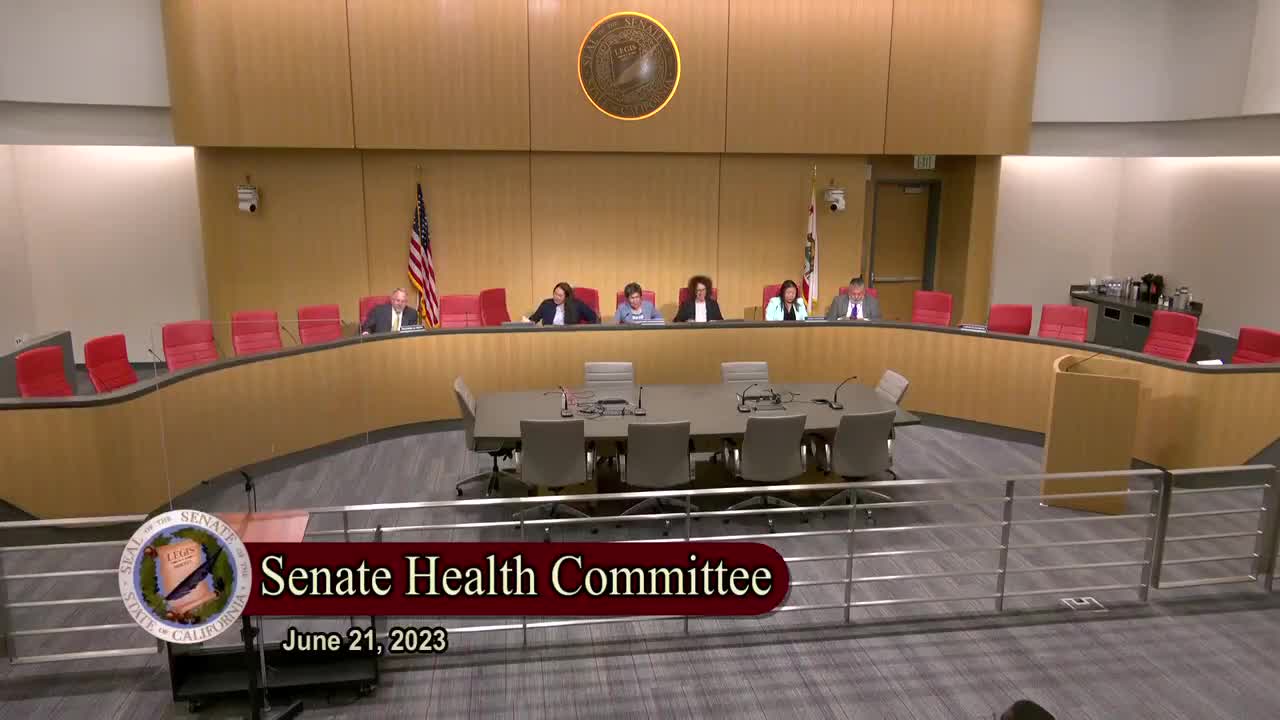 12MIN
Senate Standing Committee on Health
 1MIN
Assembly Floor
 1MIN
Assembly Standing Committee on Appropriations
 13MIN
Assembly Standing Committee on Health
Bill Author

Bill Co-Author(s):