AB 1459: State Capitol: mural honoring Native Americans.
- Session Year: 2023-2024
- House: Assembly
- Latest Version Date: 2023-10-10
Current Status:
Passed
(2023-10-10: Chaptered by Secretary of State - Chapter 690, Statutes of 2023.)
Introduced
In Committee
First Chamber
In Committee
Second Chamber
Enacted
Existing law, known as the State Capitol Building Annex Act of 2016, authorizes the Joint Rules Committee to pursue the construction of a State Capitol Building Annex or the restoration, rehabilitation, renovation, or reconstruction of the existing State Capitol Building Annex. Existing law requires any construction, restoration, rehabilitation, renovation, or reconstruction work undertaken pursuant to the act to incorporate specified elements.
This bill would require any construction, restoration, rehabilitation, renovation, or reconstruction work undertaken pursuant to the act to also incorporate a mural honoring Native Americans in California in one of the main hearing rooms in the newly constructed State Capitol Building Annex or the restored, rehabilitated, renovated, or reconstructed State Capitol Building Annex. The bill would require the mural to be designed in consultation with the Native American Heritage Commission.
Existing law, known as the State Capitol Building Annex Act of 2016, authorizes the Joint Rules Committee to pursue the construction of a state capitol building annex or the restoration, rehabilitation, renovation, or reconstruction of the existing State Capitol Building Annex. Existing law requires any construction, restoration, rehabilitation, renovation, or reconstruction work undertaken pursuant to the act to incorporate specified elements.
This bill would require any construction, restoration, rehabilitation, renovation, or reconstruction work undertaken pursuant to the act to also incorporate a mural honoring Native Americans in California in one of the main hearing rooms in the newly constructed state capitol building annex or the restored, rehabilitated, renovated, or reconstructed State Capitol Building Annex. The bill would require the mural to be designed in consultation with the Native American Heritage Commission.
(a)Any work of construction, restoration, rehabilitation, renovation, or reconstruction undertaken pursuant to Article 5.2 (commencing with Section 9112) shall do all of the following:
(1)Incorporate elements complementary to the historic State Capitol, elements to make the newly constructed state capitol building annex or the restored, rehabilitated, renovated, or reconstructed State Capitol Building Annex efficient and sustainable, and historic elements from the existing State Capitol Building Annex described in Section 9105.
(2)Integrate within its design elements that educate and impress upon visitors the rich heritage of symbolism that earlier generations of Californians made a vital part of the palette of the historic State Capitol design so as to convey the meaning of Californias self-governance and the states unique and ever-distinctive heritage.
(3)Incorporate symbolic treasures, as is befitting the heritage of symbols left by Californias founders for current and future generations to enjoy and explore, so as to ensure that the legislative and executive branch working spaces in the newly constructed state capitol building annex or the restored, rehabilitated, renovated, or reconstructed State Capitol Building Annex are no longer barren and devoid of the enriching presence of those symbols of self-governance.
(4)Incorporate a mural honoring Native Americans in California in one of the main hearing rooms in the newly constructed state capitol building annex or the restored, rehabilitated, renovated, or reconstructed State Capitol Building Annex. The mural shall be designed in consultation with the Native American Heritage Commission to ensure that it contains accurate depictions of Native Americans in California.
(b)It is the intent of the Legislature that any newly constructed state capitol building annex or the restored, rehabilitated, renovated, or reconstructed State Capitol Building Annex be designed to welcome all visitors to a safe, healthful, accessible, and working State Capitol, including historic chambers supported by needed caucusing spaces, offices for the Chief Clerk of the Assembly, the Secretary of the Senate, and the Legislative Counsel, hearing spaces to facilitate the convenient conduct of hearings during sessions, and space for the Sergeants at Arms, so that all Californians may effectively engage with their elected representatives and their state government in meaningful, participatory, and deliberative democracy.
(a)Any work of construction, restoration, rehabilitation, renovation, or reconstruction undertaken pursuant to Article 5.2 (commencing with Section 9112) shall do all of the following:
(1)Incorporate elements complementary to the historic State Capitol, elements to make the newly constructed state capitol building annex or the restored, rehabilitated, renovated, or reconstructed State Capitol Building Annex efficient and sustainable, and historic elements from the existing State Capitol Building Annex described in Section 9105.
(2)Integrate within its design elements that educate and impress upon visitors the rich heritage of symbolism that earlier generations of Californians made a vital part of the palette of the historic State Capitol design so as to convey the meaning of Californias self-governance and the states unique and ever-distinctive heritage.
(3)Incorporate symbolic treasures, as is befitting the heritage of symbols left by Californias founders for current and future generations to enjoy and explore, so as to ensure that the legislative and executive branch working spaces in the newly constructed state capitol building annex or the restored, rehabilitated, renovated, or reconstructed State Capitol Building Annex are no longer barren and devoid of the enriching presence of those symbols of self-governance.
(4)Incorporate a mural honoring Native Americans in California in one of the main hearing rooms in the newly constructed state capitol building annex or the restored, rehabilitated, renovated, or reconstructed State Capitol Building Annex. The mural shall be designed in consultation with the Native American Heritage Commission to ensure that it contains accurate depictions of Native Americans in California.
(b)It is the intent of the Legislature that any newly constructed state capitol building annex or the restored, rehabilitated, renovated, or reconstructed State Capitol Building Annex be designed to welcome all visitors to a safe, healthful, accessible, and working State Capitol, including historic chambers supported by needed caucusing spaces, offices for the Chief Clerk of the Assembly, the Secretary of the Senate, and the Legislative Counsel, hearing spaces to facilitate the convenient conduct of hearings during sessions, and space for the Sergeants at Arms Arms, so that all Californians may effectively engage with their elected representatives and their state government in meaningful, participatory, and deliberative democracy.
(a)Any work of construction, restoration, rehabilitation, renovation, or reconstruction undertaken pursuant to Article 5.2 (commencing with Section 9112) shall do all of the following:
(1)Incorporate elements complementary to the historic State Capitol, elements to make the newly constructed state capitol building annex or the restored, rehabilitated, renovated, or reconstructed State Capitol Building Annex efficient and sustainable, and historic elements from the existing State Capitol Building Annex described in Section 9105.
(2)Integrate within its design elements that educate and impress upon visitors the rich heritage of symbolism that earlier generations of Californians made a vital part of the palette of the historic State Capitol design so as to convey the meaning of Californias self-governance and the states unique and ever-distinctive heritage.
(3)Incorporate symbolic treasures, as is befitting the heritage of symbols left by Californias founders for current and future generations to enjoy and explore, so as to ensure that the legislative and executive branch working spaces in the newly constructed state capitol building annex or the restored, rehabilitated, renovated, or reconstructed State Capitol Building Annex are no longer barren and devoid of the enriching presence of those symbols of self-governance.
(4)Incorporate a mural honoring Native Americans in California in one of the main hearing rooms in the newly constructed state capitol building annex or the restored, rehabilitated, renovated, or reconstructed State Capitol Building Annex. The mural shall be designed in consultation with the Native American Heritage Commission to ensure that it contains accurate depictions of Native Americans in California.
(b)It is the intent of the Legislature that any newly constructed state capitol building annex or the restored, rehabilitated, renovated, or reconstructed State Capitol Building Annex be designed to welcome all visitors to a safe, healthful, accessible, and working State Capitol, including historic chambers supported by needed caucusing spaces, offices for the Chief Clerk of the Assembly, the Secretary of the Senate, and the Legislative Counsel; Counsel, hearing spaces to facilitate the convenient conduct of hearings during sessions, and space for the Sergeants at Arms so that all Californians may effectively engage with their elected representatives and their state government in meaningful, participatory, and deliberative democracy.
|
Date
|
Status
|
|---|---|
| Oct 10, 2023 | Chaptered by Secretary of State - Chapter 690, Statutes of 2023. |
| Oct 10, 2023 | Approved by the Governor. |
| Sep 13, 2023 | Enrolled and presented to the Governor at 3 p.m. |
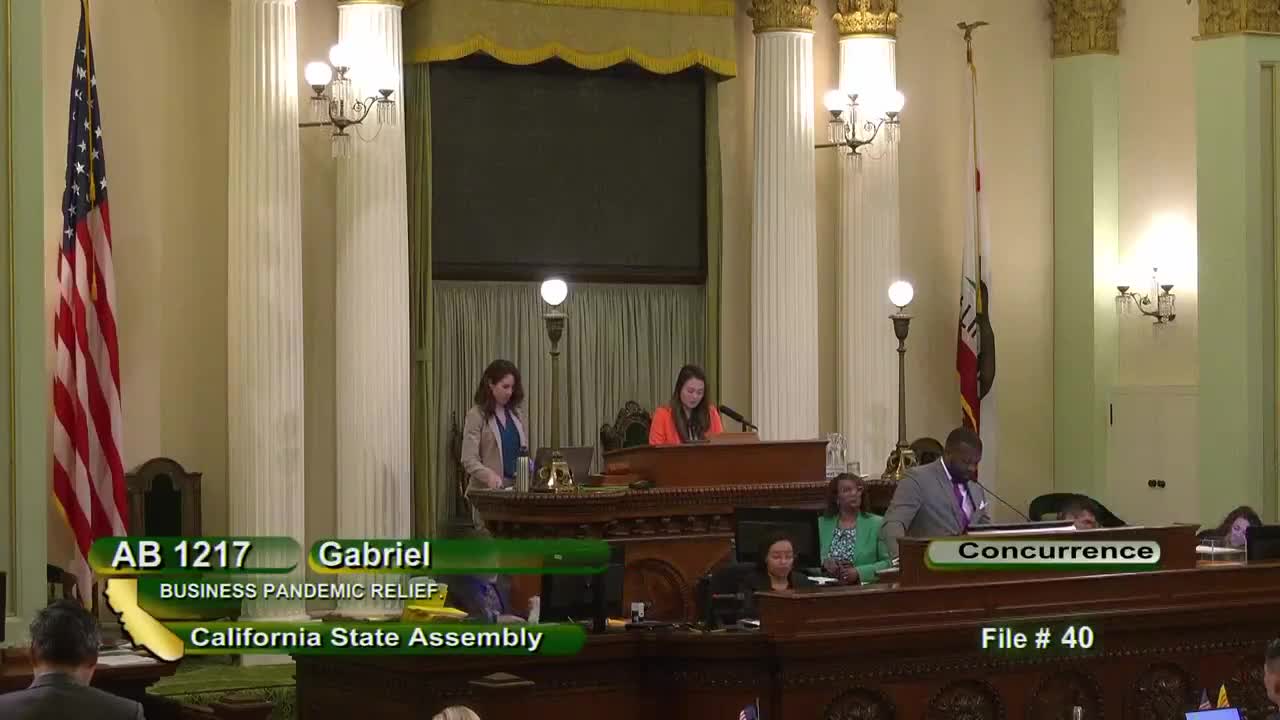
| Sep 7, 2023 | Senate amendments concurred in. To Engrossing and Enrolling. (Ayes 79. Noes 0. Page 3036.). |
| Sep 5, 2023 | In Assembly. Concurrence in Senate amendments pending. May be considered on or after September 7 pursuant to Assembly Rule 77. |
| Sep 5, 2023 | Read third time. Passed. Ordered to the Assembly. (Ayes 39. Noes 0. Page 2377.). |
| Aug 22, 2023 | Read second time. Ordered to third reading. |
| Aug 21, 2023 | From committee: Be ordered to second reading pursuant to Senate Rule 28.8. |
| Jun 19, 2023 | From committee chair, with author's amendments: Amend, and re-refer to committee. Read second time, amended, and re-referred to Com. on APPR. |
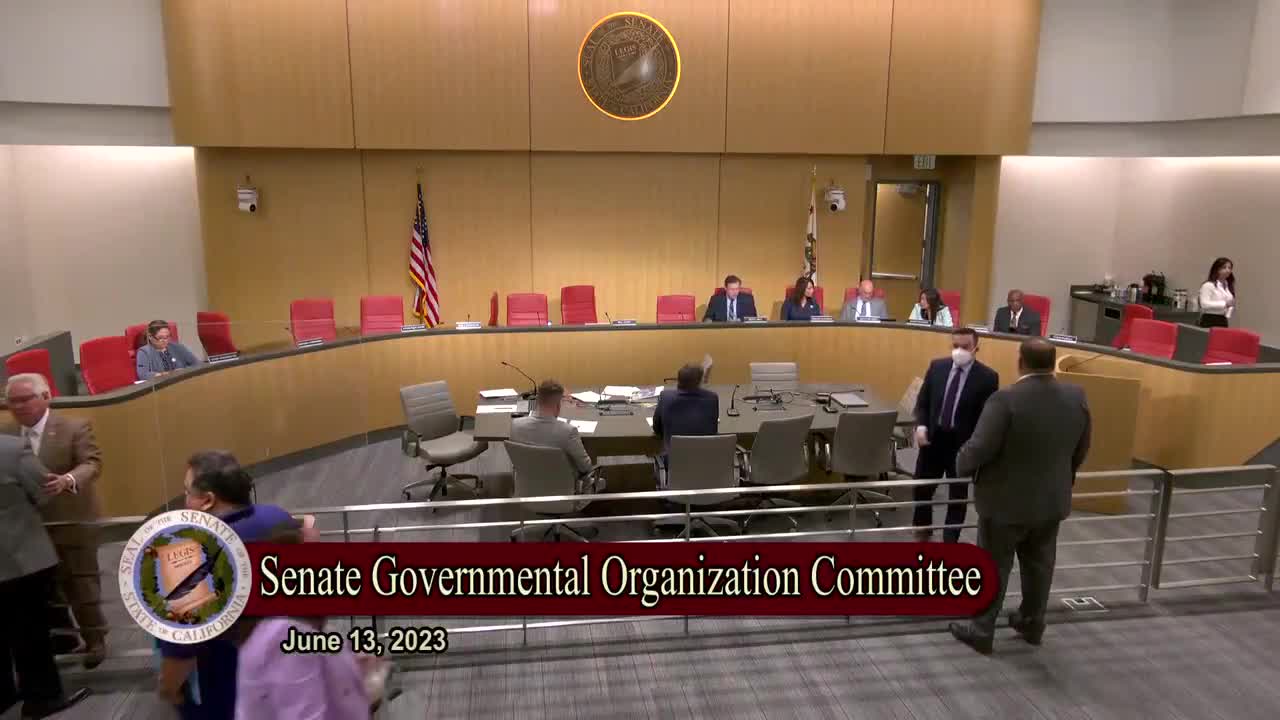
| Jun 13, 2023 | From committee: Do pass and re-refer to Com. on APPR. (Ayes 14. Noes 0.) (June 13). Re-referred to Com. on APPR. |
| May 24, 2023 | Referred to Com. on G.O. |
| May 11, 2023 | In Senate. Read first time. To Com. on RLS. for assignment. |
| May 11, 2023 | Read third time. Passed. Ordered to the Senate. (Ayes 66. Noes 0. Page 1524.) |
| May 4, 2023 | Read second time. Ordered to Consent Calendar. |
| May 3, 2023 | From committee: Do pass. To Consent Calendar. (Ayes 16. Noes 0.) (May 3). |
| Apr 20, 2023 | From committee: Do pass and re-refer to Com. on APPR. with recommendation: To Consent Calendar. (Ayes 13. Noes 0.) (April 20). Re-referred to Com. on APPR. |
| Mar 30, 2023 | Referred to Com. on RLS. |
| Feb 18, 2023 | From printer. May be heard in committee March 20. |
| Feb 17, 2023 | Read first time. To print. |
|
Date
|
Description
|
Location
|
Votes
|
|
|---|---|---|---|---|
| Sep 7, 2023 | AB 1459 Ramos Concurrence in Senate Amendments | Assembly Floor |
Passed |
|
| Sep 5, 2023 | Assembly 3rd Reading AB1459 Ramos et al. By Laird | Senate Floor |
Passed |
|
| Jun 13, 2023 | Do pass, but first be re-referred to the Committee on [Appropriations] | Senate Standing Committee on Governmental Organization |
Passed |
|
| May 11, 2023 | AB 1459 Ramos Consent Calendar Second Day Regular Session | Assembly Floor |
Passed |
|
| May 3, 2023 | Do pass. To Consent Calendar. | Assembly Standing Committee on Appropriations |
Passed |
|
| Apr 20, 2023 | Do pass and be re-referred to the Committee on [Appropriations] with recommendation: To Consent Calendar | Assembly Standing Committee on Rules |
Passed |
This list shows positions taken on this bill by organizations on the date displayed, which is linked to the original source.
Positions by individuals are not included.
CONCURRENCE IN SENATE AMENDMENTS
CSA1 Bill Id:AB 1459
Author:(Ramos)
As Amended Ver:June 19, 2023
Majority vote
SUMMARY
Requires that any construction, restoration, rehabilitation, renovation or reconstruction of the State Capitol Building Annex incorporate a mural honoring Native Americans in California in one of the main hearing rooms.
Senate Amendments
Made a technical change and added a coauthor.
COMMENTS
According to the Author
Representation matters. Having a mural honoring California Native Americans in one of the main hearing rooms at the California State Capitol showcases the rich history of California's First People to visitors from all around the world. We have waited so long on that arc of time to take our rightful place in this State Capitol, in the committee rooms, and house floors where decisions are made that directly affect us and our fellow Californians. California's First People have endured genocide, forced assimilation, denial of civil rights, and other grave injustices, but we have also survived and prevailed because we won't quit. This is the history that needs to be showcased to educate visitors and honor California's First People in one of the most historical and important locations in the State of California.
Arguments in Support
None on file
Arguments in Opposition
None on file
FISCAL COMMENTS
According to the Assembly Appropriations Committee analysis on May 3, 2023:
- Costs of an unknown amount, likely in the thousands of dollars, to commission a mural for the building (State Project Infrastructure Fund). Cost of the mural ultimately depends on size, materials, and complexity of design.
- Minor and absorbable costs to the Joint Rules Committee to identify the location for the mural, as specified.
- Minor and absorbable costs to the Native American Heritage Commission to ensure the mural contains accurate depictions of Native Americans in California.
VOTES:
ASM RULES: 13-0-0
YES: Ramos, Addis, Juan Carrillo, Essayli, Flora, Low, Ortega, Pacheco, Papan, Pellerin, Blanca Rubio, Valencia, Dixon
ASM APPROPRIATIONS: 16-0-0
YES: Holden, Megan Dahle, Bryan, Calderon, Wendy Carrillo, Dixon, Mike Fong, Hart, Lowenthal, Mathis, Papan, Pellerin, Robert Rivas, Sanchez, Weber, Wilson
ASSEMBLY FLOOR: 66-0-14
YES: Addis, Aguiar-Curry, Alanis, Bains, Bennett, Berman, Boerner, Bryan, Calderon, Wendy Carrillo, Chen, Connolly, Megan Dahle, Davies, Essayli, Flora, Mike Fong, Vince Fong, Friedman, Gabriel, Gallagher, Garcia, Gipson, Grayson, Haney, Holden, Hoover, Irwin, Jackson, Jones-Sawyer, Kalra, Lackey, Low, Lowenthal, Maienschein, Mathis, McKinnor, Muratsuchi, Stephanie Nguyen, Pacheco, Papan, Joe Patterson, Pellerin, Petrie-Norris, Quirk-Silva, Ramos, Reyes, Luz Rivas, Robert Rivas, Rodriguez, Blanca Rubio, Sanchez, Santiago, Schiavo, Soria, Ta, Ting, Valencia, Villapudua, Waldron, Wallis, Weber, Wicks, Wilson, Zbur, Rendon
ABS, ABST OR NV: Alvarez, Arambula, Bauer-Kahan, Bonta, Juan Carrillo, Cervantes, Dixon, Hart, Lee, McCarty, Ortega, Jim Patterson, Ward, Wood
SENATE FLOOR: 39-0-1
YES: Allen, Alvarado-Gil, Archuleta, Ashby, Atkins, Becker, Blakespear, Bradford, Caballero, Cortese, Dahle, Dodd, Durazo, Eggman, Glazer, Gonzalez, Grove, Hurtado, Jones, Laird, Limón, McGuire, Menjivar, Min, Newman, Nguyen, Niello, Ochoa Bogh, Portantino, Roth, Rubio, Seyarto, Skinner, Smallwood-Cuevas, Stern, Umberg, Wahab, Wiener, Wilk
ABS, ABST OR NV: Padilla
UPDATED
VERSION: June 19, 2023
CONSULTANT: Michael Erke / RLS. / (916) 319-2800 FN: 0001745
SENATE RULES COMMITTEE Office of Senate Floor Analyses (916) 651-1520 Fax: (916) 327-4478 | AB 1459 |
THIRD READING
Bill No: AB 1459
Author: Ramos (D), et al.
Amended: 6/19/23 in Senate
Vote: 21
SENATE GOVERNMENTAL ORG. COMMITTEE: 14-0, 6/13/23
AYES: Dodd, Wilk, Alvarado-Gil, Archuleta, Ashby, Bradford, Glazer, Nguyen, Ochoa Bogh, Padilla, Portantino, Roth, Rubio, Seyarto
NO VOTE RECORDED: Jones
SENATE APPROPRIATIONS COMMITTEE: Senate Rule 28.8
ASSEMBLY FLOOR: 66-0, 5/11/23 (Consent) - See last page for vote
SUBJECT: State Capitol: mural honoring Native Americans
SOURCE: Author
DIGEST:
This bill requires the incorporation of a mural honoring Native Americans in California in one of the main hearing rooms in the to-be-constructed State Capitol Building Annex (Annex) or the restored, rehabilitated, renovated, or reconstructed Annex, as specified.
ANALYSIS:
Existing law:
- Provides for various memorials and monuments within the State Capitol Building and on the State Capitol grounds, and prescribes various duties of the Department of General Services (DGS) in connection with the development and maintenance of the State Capitol Building and grounds.
- Establishes the Historic State Capitol Commission for the purposes of, among other things, reviewing and advising the Legislature on any development, improvement, or other physical change in any aspect of the historic State Capitol.
- Authorizes the Joint Rules Committee, pursuant to the State Capitol Building Annex Act of 2016, to pursue the construction of a state capitol building annex or the restoration, rehabilitation, renovation, or reconstruction of the existing Annex, and any other ancillary improvements, as specified.
- Establishes the California Native American Heritage Commission (NAHC) as the primary government agency responsible for identifying and cataloging Native American cultural resources, as specified.
This bill:
- Requires the incorporation of a mural honoring Native Americans in California in one of the main hearing rooms in the newly constructed Annex or the restored, rehabilitated, renovated, or reconstructed Annex.
- Requires that the mural be designed in consultation with the NAHC to ensure that it contains accurate depictions of Native Americans in California.
Background
- Author Statement. According to the author’s office, “representation matters. Having a mural honoring California Native Americans in one of the main hearing rooms at the California State Capitol showcases the rich history of California’s First People to visitors from all around the world. We have waited so long on that arc of time to take our rightful place in this State Capitol, in the committee rooms, and house floors where decisions are made that directly affect us and our fellow Californians. California’s First People have endured genocide, forced assimilation, denial of civil rights, and other grave injustices, but we have also survived and prevailed because we won’t quit. This is the history that needs to be showcased to educate visitors and honor California’s First People in one of the most historical and important locations in the State of California.”
- California’s First People. People have lived in what’s now California for almost 20,000 years. The enduring saga of California's First People is an intricate tapestry of cultural diversity, resiliency, and the struggle for sovereignty and recognition. It is a narrative fraught with hardship and conflict yet marked by an undying spirit of resistance and adaptability. Historically, California was a rich mosaic of indigenous cultures, with approximately 350,000 individuals representing diverse tribal affiliations, prior to contact with Europeans.
Each group developed distinct languages, social structures, and economies, profoundly tied to the land and its resources. The thriving indigenous societies embraced sustainable living, shaping their cultures and spiritual beliefs around nature and its cyclical rhythms.
The arrival of the Spanish Mission system in the late 18th century marked the beginning of a drastic socio-cultural shift. Native Californians faced forced conversions, cultural suppression, and forced labor under the mission system, which was further intensified during the Mexican Period. Devastating epidemics ravaged indigenous communities, significantly diminishing their numbers and contributing to a catastrophic demographic decline.
The Gold Rush era (1848-1855) escalated these challenges. Indigenous tribes faced brutal violence, forced displacement, and a systematic erosion of their tribal lands. In a twisted irony, treaties negotiated between the indigenous tribes and the U.S. government, promising land rights, were never ratified, leaving tribes vulnerable to non-native settlers and speculators who were attracted by the promise of gold and land. The failure of these treaties epitomizes the prevailing disregard for indigenous rights and autonomy.
The latter part of the 19th century was characterized by assimilationist policies, such as the Dawes Act of 1887, aimed at breaking down tribal structures and converting indigenous people into individual landowners. This policy resulted in significant land loss and continued marginalization of indigenous communities. However, in the face of these oppressive policies, pan-Indian movements began to emerge, representing a shift towards collective, cross-tribal resistance.
Moving into the 20th century, indigenous communities saw limited land recognitions and allotments, with certain reservations being established by executive orders. However, these were often isolated, fragmented, and excluded coastal regions, leaving many communities as landless laborers. Furthermore, the parcels of land allocated were often inadequate, leading to persistent landlessness among indigenous communities. In response, indigenous reform groups pushed for federal actions to create new reservations and secure lands, but the resulting land allocations were often far too small to be practically useful or economically viable.
The mid-20th century brought the "termination" policy, designed to end federal services to indigenous communities and transfer authority over tribal lands to the state. Termination caused enormous socio-economic disruption, triggering a severe decline in living conditions and economic stability for many tribes. Yet, it was met with profound resistance and led to political activism and increased self-determination efforts among indigenous communities.
In recent decades, indigenous communities have demonstrated remarkable resilience and adaptability, showing continued commitment to defending tribal sovereignty, retaining traditional practices, and pursuing legal avenues to reverse termination and gain federal recognition. The establishment of the NAHC in 1976 symbolizes this shift toward increased self-determination.
The narrative of California's first people is a testament to the indomitable spirit of indigenous communities in the face of relentless adversity. Despite centuries of colonization, forced assimilation, land dispossession, and discriminatory policies, these communities continue to assert their rights, champion their cultural heritage, and endeavor towards a future that acknowledges and respects their sovereignty.
- California Native American Heritage Commission. The NAHC, established by AB 4239 (Knox, Chapter 1332, Statutes of 1976), represents a pioneering effort by the state government to safeguard Native American cultural heritage. Prior to the Commission's establishment, governmental involvement in the preservation of California's Indigenous cultural resources was minimal. The NAHC, thus, emerged as the primary authority charged with identifying, cataloging, and preserving these invaluable cultural touchstones.
The NAHC has the authority to intercede to avoid damage to historic sites, ensuring their accessibility to Native American populations. When necessary, it can appeal to the courts for protective injunctions, albeit with a requirement to balance cultural preservation against demonstrated public necessity and interest.
Another key facet of the NAHC's mandate involves cataloging Native American sacred sites situated on public lands and evaluating the current statutory and administrative protections afforded to these sites. This task entails a comprehensive review process and plays an instrumental role in the ongoing struggle to protect Native American cultural heritage.
In 1982, further legislation expanded the Commission's responsibilities to include the identification of a "Most Likely Descendant" (MLD) when Native American human remains are unearthed outside of dedicated cemeteries. MLDs, given this newly granted legal authority, can make recommendations on the respectful treatment and final resting place of these remains. While such recommendations don't have the power to cease ongoing projects, they ensure a degree of respectful interaction with discovered Native American remains.
Today, the NAHC stands as a bulwark against desecration and accidental destruction of Native American human burials and skeletal remains. It provides a legal platform for Native American descendants to voice their concerns about the sensitive treatment and proper handling of Native American burials, skeletal remains, and associated burial artifacts. The NAHC's work underlines the ongoing efforts to recognize, respect, and protect the rich tapestry of Native American heritage in California.
- California State Capitol Complex. The Capitol Complex is comprised of two sections: the original west wing, completed between 1860-1874, and the attached Annex, constructed in 1952, which adjoins the east side of the historic west wing. In 2016, the complex had nearly two million visitors, including tens of thousands of grade school children. The Annex was built before the invention of a number of modern technologies or adoption of accessibility standards, and is faced with failing systems and infrastructure.
In 2016, the Legislature approved and the Governor signed the State Capitol Building Annex Act, which provides funding for a project to address deficiencies in the existing Annex. In 2017, the Joint Rules Committee contracted with an independent architectural and engineering firm to assess the current uses and further needs of the Annex, titled “The California State Capitol Annex Project Planning Study.” The findings of this study were presented at an informational hearing held by the Joint Rules Committee. Prior to 2022, the Annex was home to the Governor’s offices, 115 of California’s 120 lawmakers, and key legislative professional support offices. Today, the majority of those offices are temporarily located one block to the south of the Capitol Building in what is known as the “Swing Space,” located at 1021 O Street.
In December 2022, California’s 3rd District Court of Appeals in Sacramento found that DGS did not include a thorough analysis of the Annex project’s impact on historical resources, aesthetics, or analysis of alternatives. The ruling requires the state to collect feedback on the design of the new annex, which was decided after the first public comment periods originally closed. The public comment period for the annex project has been extended to June 15, 2023, with an additional public hearing scheduled for early June. According to new plans, construction likely will continue until at least 2026.
This bill requires the incorporation of a mural honoring Native Americans in California in one of the main hearing rooms in the newly constructed or renovated State Capitol Building Annex. This bill requires consultation with the NAHC in the design of the mural to ensure that it contains accurate depictions of Native Americans in California.
Related/Prior Legislation
SCR 47 (Glazer, 2023) designates the plaza at the center of the California State Capitol World Peace Rose Garden in Sacrament as the Chief Justice Rose Elizabeth Bird Justice for All Plaza. (Ordered to engrossing and enrolling)
AB 298 (Mathis, 2023) authorizes a nonprofit organization that represents blind veterans to plan, construct, and maintain a Braille American flag to serve as a monument to the blind veterans of California and the United States in the California State Capitol Building, as specified. (Pending on the Senate Floor)
AB 1452 (Mathis, 2023) authorizes the construction and maintenance of a monument to the veterans of the wars in Iraq, Afghanistan, and Kuwait on the grounds of the State Capitol, as specified. (Pending on the Senate Floor)
AB 338 (Ramos, Chapter 280, Statutes of 2022) authorized the construction and maintenance of a monument to the California Native people of the Sacramento, California, region on the grounds of the State Capitol, as specified. Additionally, the bill deleted the requirement that DGS erect and maintain a monument to Father Junipero Serra on the grounds of the State Capitol, as specified.
AB 2667 (Cooley, Chapter 283, Statutes of 2018) required that any construction, restoration, rehabilitation, renovation or reconstruction of the Annex incorporate elements complementary to the historic State Capitol, as specified.
SB 836 (Committee on Budget and Fiscal Review, Chapter 31, Statutes of 2016) authorized the Joint Rules Committee to pursue the construction of a state capitol building annex or the restoration, rehabilitation, renovation, or reconstruction of the State Capitol Building Annex.
AB 4239 (Knox, Chapter 1332, Statutes of 1976) established the NAHC as the primary government agency responsible for identifying and cataloging Native American cultural resources, as specified.
FISCAL EFFECT: Appropriation: No Fiscal Com.: Yes Local: No
SUPPORT: (Verified 8/21/23)
None received
OPPOSITION: (Verified 8/21/23)
None received
ASSEMBLY FLOOR: 66-0, 5/11/23
AYES: Addis, Aguiar-Curry, Alanis, Bains, Bennett, Berman, Boerner, Bryan, Calderon, Wendy Carrillo, Chen, Connolly, Megan Dahle, Davies, Essayli, Flora, Mike Fong, Vince Fong, Friedman, Gabriel, Gallagher, Garcia, Gipson, Grayson, Haney, Holden, Hoover, Irwin, Jackson, Jones-Sawyer, Kalra, Lackey, Low, Lowenthal, Maienschein, Mathis, McKinnor, Muratsuchi, Stephanie Nguyen, Pacheco, Papan, Joe Patterson, Pellerin, Petrie-Norris, Quirk-Silva, Ramos, Reyes, Luz Rivas, Robert Rivas, Rodriguez, Blanca Rubio, Sanchez, Santiago, Schiavo, Soria, Ta, Ting, Valencia, Villapudua, Waldron, Wallis, Weber, Wicks, Wilson, Zbur, Rendon
NO VOTE RECORDED: Alvarez, Arambula, Bauer-Kahan, Bonta, Juan Carrillo, Cervantes, Dixon, Hart, Lee, McCarty, Ortega, Jim Patterson, Ward, Wood
Prepared by: Brian Duke / G.O. / (916) 651-1530
8/23/23 14:22:52
**** END ****
SENATE COMMITTEE ON GOVERNMENTAL ORGANIZATION
Senator Bill Dodd
Chair
2023 - 2024 Regular
Bill No: 1459 Hearing Date: 6/13/2023
Author: | |||
Version: | 2/17/2023 Introduced | ||
Urgency: | No | Fiscal: | Yes |
Consultant: | Brian Duke | ||
SUBJECT: State Capitol: mural honoring Native Americans
DIGEST: This bill requires the incorporation of a mural honoring Native Americans in California in one of the main hearing rooms in the to-be-constructed State Capitol Building Annex (Annex) or the restored, rehabilitated, renovated, or reconstructed Annex, as specified.
ANALYSIS:
Existing law:
- Provides for various memorials and monuments within the State Capitol Building and on the State Capitol grounds, and prescribes various duties of the Department of General Services (DGS) in connection with the development and maintenance of the State Capitol Building and grounds.
- Establishes the Historic State Capitol Commission for the purposes of, among other things, reviewing and advising the Legislature on any development, improvement, or other physical change in any aspect of the historic State Capitol.
- The State Capitol Building Annex Act of 2016 authorizes the Joint Rules Committee to pursue the construction of a state capitol building annex or the restoration, rehabilitation, renovation, or reconstruction of the existing Annex, and any other ancillary improvements, as specified.
- Establishes the California Native American Heritage Commission (NAHC) as the primary government agency responsible for identifying and cataloging Native American cultural resources, as specified.
This bill:
- Requires the incorporation of a mural honoring Native Americans in California in one of the main hearing rooms in the newly constructed Annex or the restored, rehabilitated, renovated, or reconstructed Annex.
- Requires that the mural be designed in consultation with the NAHC to ensure that it contains accurate depictions of Native Americans in California.
Background
Author Statement. According to the author’s office, “representation matters. Having a mural honoring California Native Americans in one of the main hearing rooms at the California State Capitol showcases the rich history of California’s First People to visitors from all around the world. We have waited so long on that arc of time to take our rightful place in this State Capitol, in the committee rooms, and house floors where decisions are made that directly affect us and our fellow Californians. California’s First People have endured genocide, forced assimilation, denial of civil rights, and other grave injustices, but we have also survived and prevailed because we won’t quit. This is the history that needs to be showcased to educate visitors and honor California’s First People in one of the most historical and important locations in the State of California.”
California’s First People. People have lived in what’s now California for almost 20,000 years. The enduring saga of California's First People is an intricate tapestry of cultural diversity, resiliency, and the struggle for sovereignty and recognition. It is a narrative fraught with hardship and conflict yet marked by an undying spirit of resistance and adaptability. Historically, California was a rich mosaic of indigenous cultures, with approximately 350,000 individuals representing diverse tribal affiliations, prior to contact with Europeans.
Each group developed distinct languages, social structures, and economies, profoundly tied to the land and its resources. The thriving indigenous societies embraced sustainable living, shaping their cultures and spiritual beliefs around nature and its cyclical rhythms.
The arrival of the Spanish Mission system in the late 18th century marked the beginning of a drastic socio-cultural shift. Native Californians faced forced conversions, cultural suppression, and forced labor under the mission system, which was further intensified during the Mexican Period. Devastating epidemics ravaged indigenous communities, significantly diminishing their numbers and contributing to a catastrophic demographic decline.
The Gold Rush era (1848-1855) escalated these challenges. Indigenous tribes faced brutal violence, forced displacement, and a systematic erosion of their tribal lands. In a twisted irony, treaties negotiated between the indigenous tribes and the U.S. government, promising land rights, were never ratified, leaving tribes vulnerable to non-native settlers and speculators who were attracted by the promise of gold and land. The failure of these treaties epitomizes the prevailing disregard for indigenous rights and autonomy.
The latter part of the 19th century was characterized by assimilationist policies, such as the Dawes Act of 1887, aimed at breaking down tribal structures and converting indigenous people into individual landowners. This policy resulted in significant land loss and continued marginalization of indigenous communities. However, in the face of these oppressive policies, pan-Indian movements began to emerge, representing a shift towards collective, cross-tribal resistance.
Moving into the 20th century, indigenous communities saw limited land recognitions and allotments, with certain reservations being established by executive orders. However, these were often isolated, fragmented, and excluded coastal regions, leaving many communities as landless laborers. Furthermore, the parcels of land allocated were often inadequate, leading to persistent landlessness among indigenous communities. In response, indigenous reform groups pushed for federal actions to create new reservations and secure lands, but the resulting land allocations were often far too small to be practically useful or economically viable.
The mid-20th century brought the "termination" policy, designed to end federal services to indigenous communities and transfer authority over tribal lands to the state. Termination caused enormous socio-economic disruption, triggering a severe decline in living conditions and economic stability for many tribes. Yet, it was met with profound resistance and led to political activism and increased self-determination efforts among indigenous communities.
In recent decades, indigenous communities have demonstrated remarkable resilience and adaptability, showing continued commitment to defending tribal sovereignty, retaining traditional practices, and pursuing legal avenues to reverse termination and gain federal recognition. The establishment of the NAHC in 1976 symbolizes this shift toward increased self-determination.
The narrative of California's first people is a testament to the indomitable spirit of indigenous communities in the face of relentless adversity. Despite centuries of colonization, forced assimilation, land dispossession, and discriminatory policies, these communities continue to assert their rights, champion their cultural heritage, and endeavor towards a future that acknowledges and respects their sovereignty.
California Native American Heritage Commission. The NAHC, established by AB 4239 (Knox & Keene, Chapter 1332, Statutes of 1976), represents a pioneering effort by the state government to safeguard Native American cultural heritage. Prior to the Commission's establishment, governmental involvement in the preservation of California's Indigenous cultural resources was minimal. The NAHC, thus, emerged as the primary authority charged with identifying, cataloging, and preserving these invaluable cultural touchstones.
The NAHC has the authority to intercede to avoid damage to historic sites, ensuring their accessibility to Native American populations. When necessary, it can appeal to the courts for protective injunctions, albeit with a requirement to balance cultural preservation against demonstrated public necessity and interest.
Another key facet of the NAHC's mandate involves cataloging Native American sacred sites situated on public lands and evaluating the current statutory and administrative protections afforded to these sites. This task entails a comprehensive review process and plays an instrumental role in the ongoing struggle to protect Native American cultural heritage.
In 1982, further legislation expanded the Commission's responsibilities to include the identification of a "Most Likely Descendant" (MLD) when Native American human remains are unearthed outside of dedicated cemeteries. MLDs, given this newly granted legal authority, can make recommendations on the respectful treatment and final resting place of these remains. While such recommendations don't have the power to cease ongoing projects, they ensure a degree of respectful interaction with discovered Native American remains.
Today, the NAHC stands as a bulwark against desecration and accidental destruction of Native American human burials and skeletal remains. It provides a legal platform for Native American descendants to voice their concerns about the sensitive treatment and proper handling of Native American burials, skeletal remains, and associated burial artifacts. The NAHC's work underlines the ongoing efforts to recognize, respect, and protect the rich tapestry of Native American heritage in California.
California State Capitol Complex. The Capitol Complex is comprised of two sections: the original west wing, completed between 1860-1874, and the attached Annex, constructed in 1952, which adjoins the east side of the historic west wing. In 2016, the complex had nearly two million visitors, including tens of thousands of grade school children. The Annex was built before the invention of a number of modern technologies or adoption of accessibility standards, and is faced with failing systems and infrastructure.
In 2016, the Legislature approved and the Governor signed the State Capitol Building Annex Act, which provides funding for a project to address deficiencies in the existing Annex. In 2017, the Joint Rules Committee contracted with an independent architectural and engineering firm to assess the current uses and further needs of the Annex, titled “The California State Capitol Annex Project Planning Study.” The findings of this study were presented at an informational hearing held by the Joint Rules Committee. Prior to 2022, the Annex was home to the Governor’s offices, 115 of California’s 120 lawmakers, and key legislative professional support offices. Today, the majority of those offices are temporarily located one block to the south of the Capitol Building in what is known as the “Swing Space,” located at 1021 O Street.
In December 2022, California’s 3rd District Court of Appeals in Sacramento found that DGS did not include a thorough analysis of the Annex project’s impact on historical resources, aesthetics, or analysis of alternatives. The ruling requires the state to collect feedback on the design of the new annex, which was decided after the first public comment periods originally closed. The public comment period for the annex project has been extended to June 15, 2023, with an additional public hearing scheduled for early June. According to new plans, construction likely will continue until at least 2026.
This bill requires the incorporation of a mural honoring Native Americans in California in one of the main hearing rooms in the newly constructed or renovated State Capitol Building Annex. This bill requires consultation with the NAHC in the design of the mural to ensure that it contains accurate depictions of Native Americans in California.
Prior/Related Legislation
SCR 47 (Glazer, 2023) designates the plaza at the center of the California State Capitol World Peace Rose Garden in Sacrament as the Chief Justice Rose Elizabeth Bird Justice for All Plaza. (Pending Referral at the Assembly Desk)
AB 298 (Mathis, 2023) authorizes a nonprofit organization that represents blind veterans to plan, construct, and maintain a Braille American flag to serve as a monument to the blind veterans of California and the United States in the California State Capitol Building, as specified. (Pending in the Senate Governmental Organization Committee)
AB 1452 (Mathis, 2023) authorizes the construction and maintenance of a monument to the veterans of the wars in Iraq, Afghanistan, and Kuwait on the grounds of the State Capitol, as specified. (Pending in the Senate Governmental Organization Committee)
AB 338 (Ramos, Chapter 280, Statutes of 2022) authorizes the construction and maintenance of a monument to the California Native people of the Sacramento, California, region on the grounds of the State Capitol, as specified. Additionally, this bill deletes the requirement that DGS erect and maintain a monument to Father Junipero Serra on the grounds of the State Capitol, as specified.
AB 2667 (Cooley, Chapter 283, Statutes of 2018) requires that any construction, restoration, rehabilitation, renovation or reconstruction of the Annex incorporate elements complementary to the historic State Capitol, as specified.
SB 836 (Committee on Budget and Fiscal Review, Chapter 31, Statutes of 2016) authorizes the Joint Rules Committee to pursue the construction of a state capitol building annex or the restoration, rehabilitation, renovation, or reconstruction of the State Capitol Building Annex.
AB 4239 (Knox & Keene, Chapter 1332, Statutes of 1976) established the NAHC as the primary government agency responsible for identifying and cataloging Native American cultural resources, as specified.
FISCAL EFFECT: Appropriation: Fiscal Com.: Local:
SUPPORT:
None received
OPPOSITION:
None received
Date of Hearing: May 3, 2023
ASSEMBLY COMMITTEE ON APPROPRIATIONS
Chris Holden, Chair
ABPCA Bill Id:AB 1459
Author:(Ramos) – As Introduced Ver:February 17, 2023
Policy Committee: | Rules | Vote: | 13 - 0 |
|
| ||
|
|
Urgency: No State Mandated Local Program: No Reimbursable: No
SUMMARY:
This bill requires the reconstruction of the State Capitol Building Annex to incorporate in one of the main hearing rooms a mural honoring Native Americans in California, in consultation with the Native American Heritage Commission (NAHC).
FISCAL EFFECT:
- Costs of an unknown amount, likely in the thousands of dollars, to commission a mural for the building (State Project Infrastructure Fund). Cost of the mural ultimately depends on size, materials, and complexity of design.
- Minor and absorbable costs to the Joint Rules Committee to identify the location for the mural, as specified.
- Minor and absorbable costs to the Native American Heritage Commission to ensure the mural contains accurate depictions of Native Americans in California.
COMMENTS:
- Purpose. According to the author:
Representation matters. Having a mural honoring California Native Americans in one of the main hearing rooms at the California State Capitol showcases the rich history of California’s First People to visitors from all around the world. We have waited so long on that arc of time to take our rightful place in this State Capitol, in the committee rooms, and house floors where decisions are made that directly affect us and our fellow Californians.
- Monuments at the State Capitol. Aside from their role in state governance, the State Capitol building and Capitol Park are significant for the many memorials recognizing groups and individuals who have contributed to California’s history. As part of the current reconstruction of the State Capitol Building Annex, this bill requires a mural honoring Native Americans in California to be incorporated in one of the State Capitol’s main hearing rooms. The mural must be designed in consultation with the NAHC to ensure the mural contains accurate depictions of Native Americans in California.
- Related Legislation. AB 298 (Mathis) authorizes the construction and maintenance of a braille American flag in the State Capitol Building to serve as a monument to the blind veterans of California and the United States. AB 298 is pending hearing in this committee.
AB 1452 (Mathis) authorizes the construction and maintenance of a monument to veterans of the wars in Iraq, Afghanistan, and Kuwait on the grounds of the State Capitol. AB 1452 is pending hearing in this committee.
- Prior Legislation. AB 1762 (Mathis), Chapter 205, Statutes of 2022, authorized the construction and maintenance of a monument to the Gold Star Families of California on the grounds of the State Capitol.
AB 338 (Ramos), Chapter 280, Statutes of 2021, repealed the requirement for a monument to Father Junipero Serra be on the State Capitol grounds and instead authorized the construction and maintenance of a monument to the California Native people of the Sacramento, California region.
Analysis Prepared by: Irene Ho / APPR. / (916) 319-2081
Date of Hearing: April 20, 2023
ASSEMBLY COMMITTEE ON RULES
James Ramos, Chair
ABPCA Bill Id:AB 1459 (
Author:Ramos) – As Introduced Ver:February 17, 2023
SUBJECT: State Capitol: mural honoring Native Americans
SUMMARY: Requires that any construction, restoration, rehabilitation, renovation or reconstruction of the State Capitol Building Annex incorporate a mural honoring Native Americans in California in one of the main hearing rooms. Specifically, this bill:
- Requires that any work of construction, restoration, rehabilitation, renovation, or reconstruction of the State Capitol Building Annex incorporate a mural honoring Native Americans in California in one of the main hearing rooms in the newly constructed state capitol building annex or the restored, rehabilitated, renovated, or reconstructed State Capitol Building Annex.
- Requires that the mural shall be designed in consultation with the Native American Heritage Commission to ensure that it contains accurate depictions of Native Americans in California.
EXISTING LAW:
- Requires Joint Rules Committee to allocate space in the State Capitol Building Annex.
- Authorizes Joint Rules Committee to pursue the construction of a state capitol building annex or the restoration, rehabilitation, renovation, or reconstruction of the State Capitol Building Annex.
- Requires the Department of General Services to report to the Joint Rules Committee on the scope, budget, delivery method, and schedule for any space to be constructed, restored, rehabilitated, renovated, or reconstructed.
- Establishes the State Project Infrastructure Fund and continuously appropriates money in that fund for state projects, including the State Capitol Building Annex.
- Requires that any work of construction, restoration, rehabilitation, renovation, or reconstruction of the State Capitol Building Annex do all of the following:
- Incorporate elements complementary to the historic State Capitol, elements that make the annex efficient and sustainable, and historic elements from the existing State Capitol Building Annex.
- Integrate within the design elements that educate and impress upon visitors the rich heritage of symbolism that earlier generations of Californians made a vital part of the historic State Capitol design.
- Incorporate symbolic treasures to ensure the annex is no longer barren and devoid of the enriching presence of those symbols that represent California’s self-governance.
- States the intent of the Legislature that any newly constructed state capitol building annex or the existing State Capitol Building Annex, be designed to welcome all visitors to a safe, healthful, accessible, and working State Capitol.
FISCAL EFFECT: Unknown
COMMENTS:
- Purpose of the bill: In support of AB 1459, the author states:
Representation matters. Having a mural honoring California Native Americans in one of the main hearing rooms at the California State Capitol showcases the rich history of California’s First People to visitors from all around the world. We have waited so long on that arc of time to take our rightful place in this State Capitol, in the committee rooms, and house floors where decisions are made that directly affect us and our fellow Californians. California’s First People have endured genocide, forced assimilation, denial of civil rights, and other grave injustices, but we have also survived and prevailed because we won’t quit. This is the history that needs to be showcased to educate visitors and honor California’s First People in one of the most historical and important locations in the State of California.
- Prior Legislation: SB 836 (Chapter 31, Statutes of 2016) authorized the Joint Rules Committee to pursue the construction of a state capitol building annex or the restoration, rehabilitation, renovation, or reconstruction of the State Capitol Building Annex. SB 836 also established the State Project Infrastructure Fund and appropriated funds for a report and other work related to the State Capitol Building Annex.
AB 2667 (Chapter 283, Statutes of 2018) required that any construction, restoration, rehabilitation, renovation or reconstruction of the State Capitol Building Annex incorporate elements complementary to the historic State Capitol, integrate design elements that reflect the Capitol’s rich heritage of symbolism, and incorporate symbolic treasures.
AB 338 (Chapter 280, Statutes of 2022) authorized the construction and maintenance of a monument to the California Native people of the Sacramento, California, region on the grounds of the State Capitol.
REGISTERED SUPPORT / OPPOSITION:
Support
None on file
Opposition
None on file
Analysis Prepared by: Michael Erke / RLS. / (916) 319-2800
Discussed in Hearing
 53SEC
Assembly Floor
 2MIN
Senate Floor
 4MIN
Senate Standing Committee on Governmental Organization
Bill Author

Bill Co-Author(s):
