AB 1481: Medi-Cal: presumptive eligibility.
- Session Year: 2023-2024
- House: Assembly
- Latest Version Date: 2023-10-07
Current Status:
Passed
(2023-10-07: Chaptered by Secretary of State - Chapter 372, Statutes of 2023.)
Introduced
In Committee
First Chamber
In Committee
Second Chamber
Enacted
Existing law establishes the Medi-Cal program, which is administered by the State Department of Health Care Services, under which qualified low-income individuals receive health care services. The Medi-Cal program is, in part, governed and funded by federal Medicaid Program provisions. Existing federal law, as a condition of receiving federal Medicaid funds, requires states to provide health care services to specified individuals. Existing federal law authorizes states to provide presumptive eligibility to pregnant women or children, and existing state law requires the department to provide presumptive eligibility to pregnant women and children, as specified.
This bill would expand the presumptive eligibility for pregnant women to all pregnant people, renaming the program Presumptive Eligibility for Pregnant People (PE4PP). For a pregnant person covered under PE4PP who applies for full-scope Medi-Cal benefits, if the application is submitted at any time from the date of their presumptive eligibility determination through the last day of the subsequent calendar month, the bill would require the department to ensure the pregnant person is covered under PE4PP until their full-scope Medi-Cal application is approved or denied, as specified. The bill would require the department to require providers participating in the PE4PP program to provide information to pregnant persons enrolled in PE4PP on how to contact the persons county to expedite the countys determination of a Medi-Cal application.
The bill would make conforming changes to related provisions.
Because counties are required to make eligibility determinations, and this bill would expand Medi-Cal eligibility, the bill would impose a state-mandated local program.
The California Constitution requires the state to reimburse local agencies and school districts for certain costs mandated by the state. Statutory provisions establish procedures for making that reimbursement.
This bill would provide that, if the Commission on State Mandates determines that the bill contains costs mandated by the state, reimbursement for those costs shall be made pursuant to the statutory provisions noted above.
Existing law establishes the Medi-Cal program, which is administered by the State Department of Health Care Services, under which qualified low-income individuals receive health care services. The Medi-Cal program is, in part, governed and funded by federal Medicaid Program provisions. Existing federal law, as a condition of receiving federal Medicaid funds, requires states to provide health care services to specified individuals. Existing federal law authorizes states to provide presumptive eligibility to pregnant women or children, and existing state law requires the department to provide presumptive eligibility to pregnant women and children, as specified.
This bill would expand the presumptive eligibility for pregnant women to all pregnant people, renaming the program Presumptive Eligibility for Pregnant People (PE4PP). The bill would also require the department to ensure that a pregnant person receiving coverage under PE4PP who applies for full-scope Medi-Cal benefits within 60 days receives coverage For a pregnant person covered under PE4PP who applies for full-scope Medi-Cal benefits, if the application is submitted at any time from the date of their presumptive eligibility determination through the last day of the subsequent calendar month, the bill would require the department to ensure the pregnant person is covered under PE4PP until their full-scope Medi-Cal application is approved or denied, as specified. The bill would require the department to require providers participating in the PE4PP program to provide information to pregnant persons enrolled in PE4PP on how to contact the persons county to expedite the countys determination of a Medi-Cal application.
The bill would make conforming changes to related provisions.
Because counties are required to make eligibility determinations, and this bill would expand Medi-Cal eligibility, the bill would impose a state-mandated local program.
The California Constitution requires the state to reimburse local agencies and school districts for certain costs mandated by the state. Statutory provisions establish procedures for making that reimbursement.
This bill would provide that, if the Commission on State Mandates determines that the bill contains costs mandated by the state, reimbursement for those costs shall be made pursuant to the statutory provisions noted above.
Existing law establishes the Medi-Cal program, which is administered by the State Department of Health Care Services, under which qualified low-income individuals receive health care services. The Medi-Cal program is, in part, governed and funded by federal Medicaid Program provisions. Existing federal law, as a condition of receiving federal Medicaid funds, requires states to provide health care services to specified individuals. Existing federal law authorizes states to provide presumptive eligibility to pregnant women or children, and existing state law requires the department to provide presumptive eligibility to pregnant women and children, as specified.
This bill would expand the presumptive eligibility for pregnant women to all pregnant people, renaming the program Presumptive Eligibility for Pregnant People (PE4PP). The bill would also require the department to ensure that a pregnant person receiving coverage under PE4PP who applies for full-scope Medi-Cal benefits within 60 days receives coverage under PE4PP until their full-scope Medi-Cal application is approved or denied, as specified. The The bill would require the department to require providers participating in the PE4PP program to provide information to pregnant persons enrolled in PE4PP on how to contact the persons county to expedite the countys determination of a Medi-Cal application.
The bill would make conforming changes to related provisions.
Because counties are required to make eligibility determinations, and this bill would expand Medi-Cal eligibility, the bill would impose a state-mandated local program.
The California Constitution requires the state to reimburse local agencies and school districts for certain costs mandated by the state. Statutory provisions establish procedures for making that reimbursement.
This bill would provide that, if the Commission on State Mandates determines that the bill contains costs mandated by the state, reimbursement for those costs shall be made pursuant to the statutory provisions noted above.
Existing law provides for establishes the Medi-Cal program, which is administered by the State Department of Health Care Services, under which qualified low-income individuals receive health care services. The Medi-Cal program is, in part, governed and funded by federal Medicaid Program provisions. Existing federal law, as a condition of receiving federal Medicaid funds, requires states to provide health care services to specified individuals. Existing federal law authorizes states to provide presumptive eligibility to pregnant women or children, and existing state law requires the department to provide presumptive eligibility to pregnant women and children, as specified.
Under existing law, a minor may consent to pregnancy prevention or treatment services without parental consent. Under existing law, an individual under 21 years of age who qualifies for presumptive eligibility is required to go to a county welfare department office to obtain approval for presumptive eligibility.This bill would expand the presumptive eligibility for pregnant women to all pregnant people, renaming the program Presumptive Eligibility for Pregnant People (PE4PP). The bill would make a presumptively eligible pregnant person eligible for coverage of all medical care, services, prescriptions, and supplies available under the Medi-Cal program, except for inpatient services and institutional long-term care. The bill would also require the department to ensure that a pregnant person receiving coverage under PE4PP who applies for full-scope Medi-Cal benefits within 60 days receives coverage under PE4PP until their full-scope Medi-Cal application is approved or denied, as specified. The bill would make conforming changes to related provisions.
The bill would allow a pregnant individual under 26 years of age who can consent to services without parental approval to receive presumptive eligibility by a qualified hospital. The bill would also make conforming changes. BecauseBecause counties are required to make eligibility determinations, and this bill would expand Medicaid Medi-Cal eligibility, the bill would impose a state-mandated local program.
The California Constitution requires the state to reimburse local agencies and school districts for certain costs mandated by the state. Statutory provisions establish procedures for making that reimbursement.
This bill would provide that, if the Commission on State Mandates determines that the bill contains costs mandated by the state, reimbursement for those costs shall be made pursuant to the statutory provisions noted above.
Existing law provides for the Medi-Cal program, which is administered by the State Department of Health Care Services, under which qualified low-income individuals receive health care services. The Medi-Cal program is, in part, governed and funded by federal Medicaid Program provisions. Existing federal law, as a condition of receiving federal Medicaid funds, requires states to provide health care services to specified individuals. Existing federal law authorizes states to provide presumptive eligibility to pregnant women or children, and existing state law requires the department to provide presumptive eligibility to pregnant women and children, as specified.
Under existing law, a minor may consent to pregnancy prevention or treatment services without parental consent. Under existing law, an individual under 21 years of age who qualifies for presumptive eligibility is required to go to a county welfare department office to obtain approval for presumptive eligibility.
This bill would expand the presumptive eligibility for pregnant women to all pregnant people, renaming the program Presumptive Eligibility for Pregnant People (PE4PP). The bill would make a presumptively eligible pregnant person eligible for coverage of all medical care, services, prescriptions, and supplies available under the Medi-Cal program, except for inpatient services and institutional long-term care. The bill would also require the department to ensure that a pregnant person receiving coverage under PE4PP who applies for full-scope Medi-Cal benefits within 60 days receives coverage under PE4PP until their full-scope Medi-Cal application is approved or denied, as specified.
The bill would allow a pregnant individual under 26 years of age who can consent to services without parental approval to receive presumptive eligibility by a qualified hospital. The bill would also make conforming changes. Because counties are required to make eligibility determinations, and this bill would expand Medicaid eligibility, the bill would impose a state-mandated local program.
The California Constitution requires the state to reimburse local agencies and school districts for certain costs mandated by the state. Statutory provisions establish procedures for making that reimbursement.
This bill would provide that, if the Commission on State Mandates determines that the bill contains costs mandated by the state, reimbursement for those costs shall be made pursuant to the statutory provisions noted above.
Existing law establishes the Medi-Cal program, which is administered by the State Department of Health Care Services and under which qualified low-income individuals receive health care services, including comprehensive perinatal services. The Medi-Cal program is, in part, governed and funded by federal Medicaid program provisions.Under existing law, notwithstanding income eligibility or annual redetermination requirements, a pregnant individual or targeted low-income child who is eligible for, and is receiving, health care coverage under any of specified Medi-Cal programs is eligible for full-scope Medi-Cal benefits for the duration of the pregnancy and for a period of one year following the last day of the individuals pregnancy. Existing law conditions implementation of that provision on an appropriation and, except as specified, on receipt of any necessary federal approvals and the availability of federal financial participation.This bill would make technical, nonsubstantive changes to one of those provisions.Existing law establishes the Medi-Cal program, which is administered by the State Department of Health Care Services and under which qualified low-income individuals receive health care services, including comprehensive perinatal services. The Medi-Cal program is, in part, governed and funded by federal Medicaid program provisions.
Under existing law, notwithstanding income eligibility or annual redetermination requirements, a pregnant individual or targeted low-income child who is eligible for, and is receiving, health care coverage under any of specified Medi-Cal programs is eligible for full-scope Medi-Cal benefits for the duration of the pregnancy and for a period of one year following the last day of the individuals pregnancy. Existing law conditions implementation of that provision on an appropriation and, except as specified, on receipt of any necessary federal approvals and the availability of federal financial participation.
This bill would make technical, nonsubstantive changes to one of those provisions.
(a)Effective January 1, 2014, the department shall provide Medi-Cal benefits during a presumptive eligibility period to individuals who have been determined eligible on the basis of preliminary information by a qualified hospital in accordance with Section 1396a(a)(47)(B) of Title 42 of the United States Code and as set forth in this section.
(b)A hospital may only make presumptive eligibility determinations under this section if it complies with all of following:
(1)It is a participating provider under the state plan or under a federal waiver under Section 1315 of Title 42 of the United States Code.
(2)It has notified the department in writing that it has elected to be a qualified entity for the purpose of making presumptive eligibility determinations.
(3)It agrees to make presumptive eligibility determinations consistent with all applicable policies and procedures.
(4)It has not been disqualified to make presumptive eligibility determinations by the department.
(c)Qualified hospitals may only make presumptive eligibility determinations based upon income for children, pregnant people, parents and other caretaker relatives, and other adults, whose income is calculated using the applicable MAGI-based income standard or for individuals who are 65 years of age or older, blind, or disabled whose income is not calculated using the applicable MAGI-based income standard for which federal approval is obtained pursuant to subdivision (g).
(d)The department shall establish a process for determining whether a hospital should be disqualified from being able to make presumptive eligibility determinations under this section.
(e)For purposes of this section, MAGI-based income means income calculated using the financial methodologies described in Section 1396a(e)(14) of Title 42 of the United States Code, as added by the federal Patient Protection and Affordable Care Act (Public Law 111-148) and as amended by the federal Health Care and Education Reconciliation Act of 2010 (Public Law 111-152) and any subsequent amendments.
(f)Notwithstanding Chapter 3.5 (commencing with Section 11340) of Part 1 of Division 3 of Title 2 of the Government Code, the department may implement, interpret, or make specific this section by means of all-county letters, plan letters, plan or provider bulletins, or similar instructions until the time any necessary regulations are adopted. The department shall adopt regulations by July 1, 2017, in accordance with the requirements of Chapter 3.5 (commencing with Section 11340) of Part 1 of Division 3 of Title 2 of the Government Code. Beginning six months after the effective date of this section, and notwithstanding Section 10231.5 of the Government Code, the department shall provide a status report to the Legislature on a semiannual basis, in compliance with Section 9795 of the Government Code, until regulations have been adopted.
(g)This section shall be implemented only if and to the extent that federal financial participation is available and any necessary federal approvals have been obtained.
SEC. 2.Section 14148.03 of the Welfare and Institutions Code is amended to read:14148.03.(a)Pursuant to options provided in federal law and notwithstanding any other provision of law, the form used by a provider to collect information about a pregnant person pursuant to the Medi-Cal temporary benefits program under Section 14148.7 as that program is implemented on January 1, 2003, shall itself qualify as a simplified application for the Medi-Cal program for pregnant people, or, if necessary to ensure federal financial participation, the form shall be modified to add only those elements required for federal financial participation and be as simple as the department considers practicable.
(b)For purposes of this section, the department shall determine whether to grant eligibility for temporary benefits under Section 14148.7 and the county shall make the final eligibility determination for the Medi-Cal program. The department shall develop and adopt a process for transferring the application to the county and a followup process that is as simple as the department considers practicable to be used by the county if followup is necessary. Based on the departments instructions, the county shall make a determination whether followup is necessary to determine the pregnant persons final eligibility for the Medi-Cal program or to refer the pregnant person to the Medi-Cal Access Program.
(c)The department shall adopt an electronic enrollment process for pregnant people to use when applying for the Medi-Cal program from a providers office. The application form for this electronic enrollment shall use the elements of the application form described in subdivision (a) and the procedures specified in subdivision (b). This electronic enrollment process shall be known as the Prenatal Gateway. In developing the Prenatal Gateway required by this subdivision, the department shall consult with consumer, provider, county, and health plan representatives.
(d)The purpose of this section is to begin eligibility and benefits at the time of an eligible pregnant persons visit to a provider and to continue eligibility and benefits until a final eligibility determination is made without the submission of any other application form to the department, the county, or a single point of entry and to make the followup process as simple as the department considers practicable.
(e)The Prenatal Gateway may not be adopted until both of the following occur:
(1)Sufficient moneys have been deposited in the Special Funds Account of the Gateway Fund to defray the costs of developing the Prenatal Gateway.
(2)Sufficient new staff, not to exceed a total of three personnel years, is available at the department for the purposes of this section and Section 14148.04 and is funded through nonstate General Fund sources. Notwithstanding any other provision of law, the department may hire staff necessary to implement this section.
(f)The department shall implement the Prenatal Gateway within 12 months after the date upon which both of the conditions required under subdivision (e) have occurred.
(g)To implement this section, the department may contract with public or private entities, or utilize existing health care service provider enrollment and payment mechanisms, including the Medi-Cal programs fiscal intermediary, only if services provided under the program are specifically identified and reimbursed in a manner that appropriately claims federal financial reimbursement. Contracts, including the Medi-Cal fiscal intermediary contract for the Child Health and Disability Prevention Program, and including any contract amendment, any system change pursuant to a change order, and any project or systems development notice shall be exempt from Part 2 (commencing with Section 10100) of Division 2 of the Public Contract Code, former Chapter 7 (commencing with Section 11700) of Part 1 of Division 3 of Title 2 of the Government Code, Section 19130 of the Government Code, and any policies, procedures, or regulations authorized by these laws.
SEC. 3.Section 14148.1 of the Welfare and Institutions Code is amended to read:14148.1.To maximize federal financial participation, the department shall seek flexibility in implementing the requirements of Section 121 of the Immigration Reform and Control Act of 1986 (Public Law 99-603) for Medi-Cal eligible people with confirmed pregnancies.
SEC. 4.Section 14148.3 of the Welfare and Institutions Code is amended to read:14148.3.The department shall seek federal approval to implement obstetrical case management for Medi-Cal eligible pregnant people when provided through the Child Health and Disability Prevention program authorized under Article 6 (commencing with Section 124025) of Chapter 3 of Part 2 of Division 106 of the Health and Safety Code.
SEC. 5.Section 14148.7 of the Welfare and Institutions Code is amended to read:14148.7.(a)The department shall implement the federal options authorized by federal law to assist in the delivery of timely and continuing prenatal care by establishing the option of presumptive eligibility under Section 1396r-1 of Title 42 of the United States Code.
(b)The program shall be known, and may be cited, as Presumptive Eligibility for Pregnant People (PE4PP).
(c)For a pregnant person covered under PE4PP who applies for full-scope Medi-Cal benefits, if the application is submitted at any time from the date of their presumptive eligibility determination through the last day of the subsequent calendar month, the department shall ensure the pregnant person is covered under PE4PP until the pregnant person is either enrolled in full-scope Medi-Cal benefits or has received a written denial notice in response to their application for full-scope Medi-Cal benefits.
(d)The department shall require providers participating in the PE4PP program to provide information to pregnant persons enrolled in PE4PP on how to contact the persons county to expedite the countys determination of a Medi-Cal application.
SEC. 6.Section 14148.85 of the Welfare and Institutions Code is amended to read:14148.85.The department shall provide for the receipt and initial processing of Medi-Cal applications from pregnant people and from children born after September 30, 1983, who have not yet attained 19 years of age, at facilities other than the county welfare department as described in Title XIX of the Social Security Act (42 U.S.C. Sec. 1396 and following).
SEC. 7.If the Commission on State Mandates determines that this act contains costs mandated by the state, reimbursement to local agencies and school districts for those costs shall be made pursuant to Part 7 (commencing with Section 17500) of Division 4 of Title 2 of the Government Code.
(a)Effective January 1, 2014, the department shall provide Medi-Cal benefits during a presumptive eligibility period to individuals who have been determined eligible on the basis of preliminary information by a qualified hospital in accordance with Section 1396a(a)(47)(B) of Title 42 of the United States Code and as set forth in this section.
(b)A hospital may only make presumptive eligibility determinations under this section if it complies with all of following:
(1)It is a participating provider under the state plan or under a federal waiver under Section 1315 of Title 42 of the United States Code.
(2)It has notified the department in writing that it has elected to be a qualified entity for the purpose of making presumptive eligibility determinations.
(3)It agrees to make presumptive eligibility determinations consistent with all applicable policies and procedures.
(4)It has not been disqualified to make presumptive eligibility determinations by the department.
(c)Qualified hospitals may only make presumptive eligibility determinations based upon income for children, pregnant people, parents and other caretaker relatives, and other adults, whose income is calculated using the applicable MAGI-based income standard or for individuals who are 65 years of age or older, blind, or disabled whose income is not calculated using the applicable MAGI-based income standard for which federal approval is obtained pursuant to subdivision (g).
(d)The department shall establish a process for determining whether a hospital should be disqualified from being able to make presumptive eligibility determinations under this section.
(e)For purposes of this section, MAGI-based income means income calculated using the financial methodologies described in Section 1396a(e)(14) of Title 42 of the United States Code, as added by the federal Patient Protection and Affordable Care Act (Public Law 111-148) and as amended by the federal Health Care and Education Reconciliation Act of 2010 (Public Law 111-152) and any subsequent amendments.
(f)Notwithstanding Chapter 3.5 (commencing with Section 11340) of Part 1 of Division 3 of Title 2 of the Government Code, the department may implement, interpret, or make specific this section by means of all-county letters, plan letters, plan or provider bulletins, or similar instructions until the time any necessary regulations are adopted. The department shall adopt regulations by July 1, 2017, in accordance with the requirements of Chapter 3.5 (commencing with Section 11340) of Part 1 of Division 3 of Title 2 of the Government Code. Beginning six months after the effective date of this section, and notwithstanding Section 10231.5 of the Government Code, the department shall provide a status report to the Legislature on a semiannual basis, in compliance with Section 9795 of the Government Code, until regulations have been adopted.
(g)This section shall be implemented only if and to the extent that federal financial participation is available and any necessary federal approvals have been obtained.
SEC. 2.Section 14148.03 of the Welfare and Institutions Code is amended to read:14148.03.(a)Pursuant to options provided in federal law and notwithstanding any other provision of law, the form used by a provider to collect information about a pregnant person pursuant to the Medi-Cal temporary benefits program under Section 14148.7 as that program is implemented on January 1, 2003, shall itself qualify as a simplified application for the Medi-Cal program for pregnant people, or, if necessary to ensure federal financial participation, the form shall be modified to add only those elements required for federal financial participation and be as simple as the department considers practicable.
(b)For purposes of this section, the department shall determine whether to grant eligibility for temporary benefits under Section 14148.7 and the county shall make the final eligibility determination for the Medi-Cal program. The department shall develop and adopt a process for transferring the application to the county and a followup process that is as simple as the department considers practicable to be used by the county if followup is necessary. Based on the departments instructions, the county shall make a determination whether followup is necessary to determine the pregnant persons final eligibility for the Medi-Cal program or to refer the pregnant person to the Medi-Cal Access Program.
(c)The department shall adopt an electronic enrollment process for pregnant people to use when applying for the Medi-Cal program from a providers office. The application form for this electronic enrollment shall use the elements of the application form described in subdivision (a) and the procedures specified in subdivision (b). This electronic enrollment process shall be known as the Prenatal Gateway. In developing the Prenatal Gateway required by this subdivision, the department shall consult with consumer, provider, county, and health plan representatives.
(d)The purpose of this section is to begin eligibility and benefits at the time of an eligible pregnant persons visit to a provider and to continue eligibility and benefits until a final eligibility determination is made without the submission of any other application form to the department, the county, or a single point of entry and to make the followup process as simple as the department considers practicable.
(e)The Prenatal Gateway may not be adopted until both of the following occur:
(1)Sufficient moneys have been deposited in the Special Funds Account of the Gateway Fund to defray the costs of developing the Prenatal Gateway.
(2)Sufficient new staff, not to exceed a total of three personnel years, is available at the department for the purposes of this section and Section 14148.04 and is funded through nonstate General Fund sources. Notwithstanding any other provision of law, the department may hire staff necessary to implement this section.
(f)The department shall implement the Prenatal Gateway within 12 months after the date upon which both of the conditions required under subdivision (e) have occurred.
(g)To implement this section, the department may contract with public or private entities, or utilize existing health care service provider enrollment and payment mechanisms, including the Medi-Cal programs fiscal intermediary, only if services provided under the program are specifically identified and reimbursed in a manner that appropriately claims federal financial reimbursement. Contracts, including the Medi-Cal fiscal intermediary contract for the Child Health and Disability Prevention Program, and including any contract amendment, any system change pursuant to a change order, and any project or systems development notice shall be exempt from Part 2 (commencing with Section 10100) of Division 2 of the Public Contract Code, former Chapter 7 (commencing with Section 11700) of Part 1 of Division 3 of Title 2 of the Government Code, Section 19130 of the Government Code, and any policies, procedures, or regulations authorized by these laws.
SEC. 3.Section 14148.1 of the Welfare and Institutions Code is amended to read:14148.1.To maximize federal financial participation, the department shall seek flexibility in implementing the requirements of Section 121 of the Immigration Reform and Control Act of 1986 (Public Law 99-603) for Medi-Cal eligible people with confirmed pregnancies.
SEC. 4.Section 14148.3 of the Welfare and Institutions Code is amended to read:14148.3.The department shall seek federal approval to implement obstetrical case management for Medi-Cal eligible pregnant people when provided through the Child Health and Disability Prevention program authorized under Article 6 (commencing with Section 124025) of Chapter 3 of Part 2 of Division 106 of the Health and Safety Code.
SEC. 5.Section 14148.7 of the Welfare and Institutions Code is amended to read:14148.7.(a)The department shall implement the federal options authorized by federal law to assist in the delivery of timely and continuing prenatal care by establishing the option of presumptive eligibility under Section 1396r-1 of Title 42 of the United States Code.
(b)The program shall be known, and may be cited, as Presumptive Eligibility for Pregnant People (PE4PP).
(c)For a pregnant person covered under PE4PP who applies for full-scope Medi-Cal benefits within 60 days of receiving a presumptive eligibility determination, benefits, if the application is submitted at any time from the date of their presumptive eligibility determination through the last day of the subsequent calendar month, the department shall ensure the pregnant person is covered under PE4PP until the pregnant person is either enrolled in full-scope Medi-Cal benefits or has received a written denial notice in response to their application for full-scope Medi-Cal benefits.
(d)The department shall require providers participating in the PE4PP program to provide information to pregnant persons enrolled in PE4PP on how to contact the persons county to expedite the countys determination of a Medi-Cal application.
SEC. 6.Section 14148.85 of the Welfare and Institutions Code is amended to read:14148.85.The department shall provide for the receipt and initial processing of Medi-Cal applications from pregnant people and from children born after September 30, 1983, who have not yet attained 19 years of age, at facilities other than the county welfare department as described in Title XIX of the Social Security Act (42 U.S.C. Sec. 1396 and following).
SEC. 7.If the Commission on State Mandates determines that this act contains costs mandated by the state, reimbursement to local agencies and school districts for those costs shall be made pursuant to Part 7 (commencing with Section 17500) of Division 4 of Title 2 of the Government Code.
(a)Effective January 1, 2014, the department shall provide Medi-Cal benefits during a presumptive eligibility period to individuals who have been determined eligible on the basis of preliminary information by a qualified hospital in accordance with Section 1396a(a)(47)(B) of Title 42 of the United States Code and as set forth in this section.
(b)A hospital may only make presumptive eligibility determinations under this section if it complies with all of following:
(1)It is a participating provider under the state plan or under a federal waiver under Section 1315 of Title 42 of the United States Code.
(2)It has notified the department in writing that it has elected to be a qualified entity for the purpose of making presumptive eligibility determinations.
(3)It agrees to make presumptive eligibility determinations consistent with all applicable policies and procedures.
(4)It has not been disqualified to make presumptive eligibility determinations by the department.
(c)Qualified hospitals may only make presumptive eligibility determinations based upon income for children, pregnant people, parents and other caretaker relatives, and other adults, whose income is calculated using the applicable MAGI-based income standard or for individuals who are 65 years of age or older, blind, or disabled whose income is not calculated using the applicable MAGI-based income standard for which federal approval is obtained pursuant to subdivision (g).
(d)The department shall establish a process for determining whether a hospital should be disqualified from being able to make presumptive eligibility determinations under this section.
(e)For purposes of this section, MAGI-based income means income calculated using the financial methodologies described in Section 1396a(e)(14) of Title 42 of the United States Code, as added by the federal Patient Protection and Affordable Care Act (Public Law 111-148) and as amended by the federal Health Care and Education Reconciliation Act of 2010 (Public Law 111-152) and any subsequent amendments.
(f)Notwithstanding Chapter 3.5 (commencing with Section 11340) of Part 1 of Division 3 of Title 2 of the Government Code, the department may implement, interpret, or make specific this section by means of all-county letters, plan letters, plan or provider bulletins, or similar instructions until the time any necessary regulations are adopted. The department shall adopt regulations by July 1, 2017, in accordance with the requirements of Chapter 3.5 (commencing with Section 11340) of Part 1 of Division 3 of Title 2 of the Government Code. Beginning six months after the effective date of this section, and notwithstanding Section 10231.5 of the Government Code, the department shall provide a status report to the Legislature on a semiannual basis, in compliance with Section 9795 of the Government Code, until regulations have been adopted.
(g)This section shall be implemented only if and to the extent that federal financial participation is available and any necessary federal approvals have been obtained.
SEC. 2.Section 14148.03 of the Welfare and Institutions Code is amended to read:14148.03.(a)Pursuant to options provided in federal law and notwithstanding any other provision of law, the form used by a provider to collect information about a pregnant person pursuant to the Medi-Cal temporary benefits program under Section 14148.7 as that program is implemented on January 1, 2003, shall itself qualify as a simplified application for the Medi-Cal program for pregnant people, or, if necessary to ensure federal financial participation, the form shall be modified to add only those elements required for federal financial participation and be as simple as the department considers practicable.
(b)For purposes of this section, the department shall determine whether to grant eligibility for temporary benefits under Section 14148.7 and the county shall make the final eligibility determination for the Medi-Cal program. The department shall develop and adopt a process for transferring the application to the county and a followup process that is as simple as the department considers practicable to be used by the county if followup is necessary. Based on the departments instructions, the county shall make a determination whether followup is necessary to determine the pregnant persons final eligibility for the Medi-Cal program or to refer the pregnant person to the Medi-Cal Access Program.
(c)The department shall adopt an electronic enrollment process for pregnant people to use when applying for the Medi-Cal program from a providers office. The application form for this electronic enrollment shall use the elements of the application form described in subdivision (a) and the procedures specified in subdivision (b). This electronic enrollment process shall be known as the Prenatal Gateway. In developing the Prenatal Gateway required by this subdivision, the department shall consult with consumer, provider, county, and health plan representatives.
(d)The purpose of this section is to begin eligibility and benefits at the time of an eligible pregnant persons visit to a provider and to continue eligibility and benefits until a final eligibility determination is made without the submission of any other application form to the department, the county, or a single point of entry and to make the followup process as simple as the department considers practicable.
(e)The Prenatal Gateway may not be adopted until both of the following occur:
(1)Sufficient moneys have been deposited in the Special Funds Account of the Gateway Fund to defray the costs of developing the Prenatal Gateway.
(2)Sufficient new staff, not to exceed a total of three personnel years, is available at the department for the purposes of this section and Section 14148.04 and is funded through nonstate General Fund sources. Notwithstanding any other provision of law, the department may hire staff necessary to implement this section.
(f)The department shall implement the Prenatal Gateway within 12 months after the date upon which both of the conditions required under subdivision (e) have occurred.
(g)To implement this section, the department may contract with public or private entities, or utilize existing health care service provider enrollment and payment mechanisms, including the Medi-Cal programs fiscal intermediary, only if services provided under the program are specifically identified and reimbursed in a manner that appropriately claims federal financial reimbursement. Contracts, including the Medi-Cal fiscal intermediary contract for the Child Health and Disability Prevention Program, and including any contract amendment, any system change pursuant to a change order, and any project or systems development notice shall be exempt from Part 2 (commencing with Section 10100) of Division 2 of the Public Contract Code, former Chapter 7 (commencing with Section 11700) of Part 1 of Division 3 of Title 2 of the Government Code, Section 19130 of the Government Code, and any policies, procedures, or regulations authorized by these laws.
SEC. 3.Section 14148.1 of the Welfare and Institutions Code is amended to read:14148.1.To maximize federal financial participation, the department shall seek flexibility in implementing the requirements of Section 121 of the Immigration Reform and Control Act of 1986 (Public Law 99-603) for Medi-Cal eligible people with confirmed pregnancies.
SEC. 4.Section 14148.3 of the Welfare and Institutions Code is amended to read:14148.3.The department shall seek federal approval to implement obstetrical case management for Medi-Cal eligible pregnant people when provided through the Child Health and Disability Prevention program authorized under Article 6 (commencing with Section 124025) of Chapter 3 of Part 2 of Division 106 of the Health and Safety Code.
SEC. 5.Section 14148.5 of the Welfare and Institutions Code is amended to read:14148.5.(a)State funded perinatal services shall be provided under the Medi-Cal program to pregnant people and state funded medical services to infants up to one year of age in families with incomes above 185 percent, but not more than 208 percent, of the federal poverty level, in the same manner that these services are being provided to the Medi-Cal population, including eligibility requirements and integration of eligibility determinations and payment of claims. When determining eligibility under this section, an applicants or beneficiarys income and resources shall be determined, counted, and valued in accordance with the methodology set forth in Section 14005.64.(b)Services provided under this section shall not be subject to any share-of-cost requirements.(c)(1)The department, in implementing the Medi-Cal program and public health programs, in coordination with the Managed Risk Medical Insurance Boards Access for Infants and Mothers component, may provide for outreach activities in order to enhance participation and access to perinatal services. Funding received pursuant to the federal provisions shall be used to expand perinatal outreach activities. These outreach activities shall be implemented if funding is provided for this purpose by an appropriation in the annual Budget Act or other statute.(2)Those outreach activities authorized by paragraph (1) shall be targeted toward both Medi-Cal and non-Medi-Cal eligible high risk or uninsured pregnant people and infants. Outreach activities may include, but not be limited to, all of the following:(A)Education of the targeted people on the availability and importance of early prenatal care and referral to Medi-Cal and other programs.(B)Information provided through toll-free telephone numbers.(C)Recruitment and retention of perinatal providers.(d)Notwithstanding any other law, contracts required to implement the provisions of this section shall be exempt from the approval of the Director of General Services and from the provisions of the Public Contract Code.SEC. 6.SEC. 5.Section 14148.7 of the Welfare and Institutions Code is amended to read:14148.7.(a) The department shall implement the federal options authorized by federal law to assist in the delivery of timely and continuing prenatal care by establishing the option of presumptive eligibility under Section 1396r-1 of Title 42 of the United States Code.
(b)The program shall be known, and may be cited, as Presumptive Eligibility for Pregnant People (PE4PP).
(c)For a pregnant person covered under PE4PP who applies for full-scope Medi-Cal benefits within 60 days of receiving a presumptive eligibility determination, the department shall ensure the pregnant person is covered under PE4PP until the pregnant person is either enrolled in full-scope Medi-Cal benefits or has received a written denial notice in response to their application for full-scope Medi-Cal benefits.
(d)The department shall require providers participating in the PE4PP program to provide information to pregnant persons enrolled in PE4PP on how to contact the persons county to expedite the countys determination of a Medi-Cal application.
SEC. 7.SEC. 6.Section 14148.85 of the Welfare and Institutions Code is amended to read:14148.85.The department shall provide for the receipt and initial processing of Medi-Cal applications from pregnant people and from children born after September 30, 1983, who have not yet attained 19 years of age, at facilities other than the county welfare department as described in Title XIX of the Social Security Act (42 U.S.C. Sec. 1396 and following).
SEC. 8.SEC. 7.If the Commission on State Mandates determines that this act contains costs mandated by the state, reimbursement to local agencies and school districts for those costs shall be made pursuant to Part 7 (commencing with Section 17500) of Division 4 of Title 2 of the Government Code.
(a)Effective January 1, 2014, the department shall provide Medi-Cal benefits during a presumptive eligibility period to individuals who have been determined eligible on the basis of preliminary information by a qualified hospital in accordance with Section 1396a(a)(47)(B) of Title 42 of the United States Code and as set forth in this section.
(b)A hospital may only make presumptive eligibility determinations under this section if it complies with all of following:
(1)It is a participating provider under the state plan or under a federal waiver under Section 1315 of Title 42 of the United States Code.
(2)It has notified the department in writing that it has elected to be a qualified entity for the purpose of making presumptive eligibility determinations.
(3)It agrees to make presumptive eligibility determinations consistent with all applicable policies and procedures.
(4)It has not been disqualified to make presumptive eligibility determinations by the department.
(c)Qualified hospitals may only make presumptive eligibility determinations based upon income for children, including persons up to 26 years of age consenting to services as specified in former Section 14011.65b, pregnant people, parents and other caretaker relatives, and other adults, whose income is calculated using the applicable MAGI-based income standard or for individuals who are 65 years of age or older, blind, or disabled whose income is not calculated using the applicable MAGI-based income standard for which federal approval is obtained pursuant to subdivision (g).
(d)The department shall establish a process for determining whether a hospital should be disqualified from being able to make presumptive eligibility determinations under this section.
(e)For purposes of this section, MAGI-based income means income calculated using the financial methodologies described in Section 1396a(e)(14) of Title 42 of the United States Code, as added by the federal Patient Protection and Affordable Care Act (Public Law 111-148) and as amended by the federal Health Care and Education Reconciliation Act of 2010 (Public Law 111-152) and any subsequent amendments.
(f)Notwithstanding Chapter 3.5 (commencing with Section 11340) of Part 1 of Division 3 of Title 2 of the Government Code, the department may implement, interpret, or make specific this section by means of all-county letters, plan letters, plan or provider bulletins, or similar instructions until the time any necessary regulations are adopted. The department shall adopt regulations by July 1, 2017, in accordance with the requirements of Chapter 3.5 (commencing with Section 11340) of Part 1 of Division 3 of Title 2 of the Government Code. Beginning six months after the effective date of this section, and notwithstanding Section 10231.5 of the Government Code, the department shall provide a status report to the Legislature on a semiannual basis, in compliance with Section 9795 of the Government Code, until regulations have been adopted.
(g)This section shall be implemented only if and to the extent that federal financial participation is available and any necessary federal approvals have been obtained.
SEC. 6.Section 14148 of the Welfare and Institutions Code is amended to read:14148.(a)(1)(A)Except as provided in subparagraph (B), the department shall adopt the federal option provided under Section 4101 of the Omnibus Budget Reconciliation Act of 1987 (Public Law 100-203) to extend eligibility for medical assistance under Medicaid and the Medi-Cal Access Program to all pregnant individuals and infants with family incomes not in excess of 185 percent of the federal poverty level.(B)Effective January 1, 2014, the federal poverty level percentage income eligibility threshold used pursuant to subdivision (c) of Section 14005.64 to determine eligibility for medical assistance under this section pursuant to subparagraph (A) shall equal 208 percent of the federal poverty level.(C)Effective January 1, 2022, eligibility for medical assistance to pregnant individuals with family incomes not in excess of 208 percent of the federal poverty level, before the application of the 5-percent income disregard pursuant to subdivision (b) of Section 14005.64, shall be as described in Section 14005.22.(2)If a premium is imposed, the amount of the premium shall not exceed 10 percent of the amount by which the familys income, less actual child care costs, exceeds 150 percent of the federal poverty level as provided in Section 1916(c) of the federal Social Security Act (42 U.S.C. Sec. 1396o(c)) as determined, counted, and valued in accordance with the requirements of Section 14005.64. The department shall implement this section by emergency regulation.(b)Upon order of the Department of Finance, the Controller shall transfer funds from Item 4260-101-001 of the Budget Act of 1988 to Item 4260-111-001 of the Budget Act of 1988 during the 198889 fiscal year for the purpose of funding outreach efforts for perinatal services.(c)Notwithstanding subdivision (a), the state may limit implementation of this section during the 198889 fiscal year, based upon the availability of department funds. The department may use maternal and child health funds to finance the increased costs of implementing an expansion of Medi-Cal eligibility to pregnant individuals and to children with incomes of up to 185 percent of federal poverty levels if both of the following conditions exist:(1)The department has allocated for expenditure at least sixteen million dollars ($16,000,000) in funds redirected from the Medi-Cal program for that expansion.(2)If, and to the extent, the department determines that estimates of costs based on actual data indicate that the funds are needed to cover costs.(d)To assist Medi-Cal eligible pregnant individuals in receiving prenatal care promptly, all pregnant individuals applying for Medi-Cal shall be determined to have an immediate need. Counties, within existing resources, shall expedite the eligibility determination process for all pregnant individuals on the basis of their immediate needs. Upon determination of eligibility, a Medi-Cal card shall be issued immediately.(e)The amendments made to subdivision (a) by Senate Bill 508 during the 201314 Regular Session shall be implemented only if and to the extent that federal financial participation is available and any necessary federal approvals have been obtained.SEC. 7.SEC. 2.Section 14148.03 of the Welfare and Institutions Code is amended to read:14148.03.(a)Pursuant to options provided in federal law and notwithstanding any other provision of law, the form used by a provider to collect information about a pregnant person pursuant to the Medi-Cal temporary benefits program under Section 14148.7 as that program is implemented on January 1, 2003, shall itself qualify as a simplified application for the Medi-Cal program for pregnant people, or, if necessary to ensure federal financial participation, the form shall be modified to add only those elements required for federal financial participation and be as simple as the department considers practicable.
(b)For purposes of this section, the department shall determine whether to grant eligibility for temporary benefits under Section 14148.7 and the county shall make the final eligibility determination for the Medi-Cal program. The department shall develop and adopt a process for transferring the application to the county and a followup process that is as simple as the department considers practicable to be used by the county if followup is necessary. Based on the departments instructions, the county shall make a determination whether followup is necessary to determine the pregnant persons final eligibility for the Medi-Cal program or to refer the pregnant person to the Medi-Cal Access Program.
(c)The department shall adopt an electronic enrollment process for pregnant people to use when applying for the Medi-Cal program from a providers office. The application form for this electronic enrollment shall use the elements of the application form described in subdivision (a) and the procedures specified in subdivision (b). This electronic enrollment process shall be known as the Prenatal Gateway. In developing the Prenatal Gateway required by this subdivision, the department shall consult with consumer, provider, county, and health plan representatives.
(d)The purpose of this section is to begin eligibility and benefits at the time of an eligible pregnant persons visit to a provider and to continue eligibility and benefits until a final eligibility determination is made without the submission of any other application form to the department, the county, or a single point of entry and to make the followup process as simple as the department considers practicable.
(e)The Prenatal Gateway may not be adopted until both of the following occur:
(1)Sufficient moneys have been deposited in the Special Funds Account of the Gateway Fund to defray the costs of developing the Prenatal Gateway.
(2)Sufficient new staff, not to exceed a total of three personnel years, is available at the department for the purposes of this section and Section 14148.04 and is funded through nonstate General Fund sources. Notwithstanding any other provision of law, the department may hire staff necessary to implement this section.
(f)The department shall implement the Prenatal Gateway within 12 months after the date upon which both of the conditions required under subdivision (e) have occurred.
(g)To implement this section, the department may contract with public or private entities, or utilize existing health care service provider enrollment and payment mechanisms, including the Medi-Cal programs fiscal intermediary, only if services provided under the program are specifically identified and reimbursed in a manner that appropriately claims federal financial reimbursement. Contracts, including the Medi-Cal fiscal intermediary contract for the Child Health and Disability Prevention Program, and including any contract amendment, any system change pursuant to a change order, and any project or systems development notice shall be exempt from Part 2 (commencing with Section 10100) of Division 2 of the Public Contract Code, former Chapter 7 (commencing with Section 11700) of Part 1 of Division 3 of Title 2 of the Government Code, Section 19130 of the Government Code, and any policies, procedures, or regulations authorized by these laws.
SEC. 8.SEC. 3.Section 14148.1 of the Welfare and Institutions Code is amended to read:14148.1.To maximize federal financial participation, the department shall seek flexibility in implementing the requirements of Section 121 of the Immigration Reform and Control Act of 1986 (Public Law 99-603) for Medi-Cal eligible people with confirmed pregnancies.
SEC. 9.SEC. 4.Section 14148.3 of the Welfare and Institutions Code is amended to read:14148.3.The department shall seek federal approval to implement obstetrical case management for Medi-Cal eligible pregnant people when provided through the Child Health and Disability Prevention program authorized under Article 6 (commencing with Section 124025) of Chapter 3 of Part 2 of Division 106 of the Health and Safety Code.
SEC. 10.SEC. 5.Section 14148.5 of the Welfare and Institutions Code is amended to read:14148.5.(a)State funded perinatal services shall be provided under the Medi-Cal program to pregnant people and state funded medical services to infants up to one year of age in families with incomes above 185 percent, but not more than 208 percent, of the federal poverty level, in the same manner that these services are being provided to the Medi-Cal population, including eligibility requirements and integration of eligibility determinations and payment of claims. When determining eligibility under this section, an applicants or beneficiarys income and resources shall be determined, counted, and valued in accordance with the methodology set forth in Section 14005.64.
(b)Services provided under this section shall not be subject to any share-of-cost requirements.
(c)(1)The department, in implementing the Medi-Cal program and public health programs, in coordination with the Managed Risk Medical Insurance Boards Access for Infants and Mothers component, may provide for outreach activities in order to enhance participation and access to perinatal services. Funding received pursuant to the federal provisions shall be used to expand perinatal outreach activities. These outreach activities shall be implemented if funding is provided for this purpose by an appropriation in the annual Budget Act or other statute.
(2)Those outreach activities authorized by paragraph (1) shall be targeted toward both Medi-Cal and non-Medi-Cal eligible high risk or uninsured pregnant people and infants. Outreach activities may include, but not be limited to, all of the following:
(A)Education of the targeted people on the availability and importance of early prenatal care and referral to Medi-Cal and other programs.
(B)Information provided through toll-free telephone numbers.
(C)Recruitment and retention of perinatal providers.
(d)Notwithstanding any other law, contracts required to implement the provisions of this section shall be exempt from the approval of the Director of General Services and from the provisions of the Public Contract Code.
SEC. 11.SEC. 6.Section 14148.7 of the Welfare and Institutions Code is amended to read:14148.7.(a) The department shall implement the federal options authorized by federal law to assist in the delivery of timely and continuing prenatal care by establishing the option of presumptive eligibility under Section 1396r-1 of Title 42 of the United States Code.
(b)The program shall be known, and may be cited, as Presumptive Eligibility for Pregnant People (PE4PP).
(c)A presumptively eligible pregnant person is eligible for coverage of all medical care, services, prescriptions, and supplies available under the Medi-Cal program, excluding inpatient services and institutional long-term care.(d)(c)For a pregnant person covered under PE4PP who applies for full-scope Medi-Cal benefits within 60 days of receiving a presumptive eligibility determination, the department shall ensure the pregnant person is covered under PE4PP until the pregnant person is either enrolled in full-scope Medi-Cal benefits or has received a written denial notice in response to their application for full-scope Medi-Cal benefits.
SEC. 12.SEC. 7.Section 14148.85 of the Welfare and Institutions Code is amended to read:14148.85.The department shall provide for the receipt and initial processing of Medi-Cal applications from pregnant people and from children born after September 30, 1983, who have not yet attained 19 years of age, at facilities other than the county welfare department as described in Title XIX of the Social Security Act (42 U.S.C., U.S.C. Sec. 1396 and following).
SEC. 13.SEC. 8.If the Commission on State Mandates determines that this act contains costs mandated by the state, reimbursement to local agencies and school districts for those costs shall be made pursuant to Part 7 (commencing with Section 17500) of Division 4 of Title 2 of the Government Code.
(a)To the extent federal financial participation is available, the department shall exercise the option provided in Section 1920A of the federal Social Security Act (42 U.S.C. Sec. 1396r-1a) to implement a program of presumptive eligibility for any child who meets both of the following criteria:
(1)The child appears to be income eligible for full-scope Medi-Cal without a share of cost.
(2)The child is under 26 years of age at the time of application.
(b)Notwithstanding subdivision (a), a qualified hospital, pursuant to Section 14011.66, may make a determination of presumptive eligibility for a child under 26 years of age who is pregnant and who can consent to medical care as an adult or consent to medical care without parental consent pursuant to Section 6925 of the Family Code.
(c)The presumptive eligibility benefits provided under this section shall be identical to the benefits provided to children who receive full-scope Medi-Cal benefits without a share of cost, and shall only be made available through a Medi-Cal provider.
(d)The department shall commence implementation of this section on July 1, 2024, or after all necessary federal approvals are obtained, whichever date is later. Upon implementation of the presumptive eligibility program described in this section, the Director of Health Care Services shall execute a declaration, which shall be retained by the director, stating that implementation of the program has commenced. The department shall post the declaration on its internet website.
(e)Notwithstanding Chapter 3.5 (commencing with Section 11340) of Part 1 of Division 3 of Title 2 of the Government Code, the department shall, without taking any regulatory action, initially implement this section by means of all-county letters. Thereafter, the department shall adopt any necessary regulations in accordance with the requirements of Chapter 3.5 (commencing with Section 11340) of Part 1 of Division 3 of Title 2 of the Government Code.
(f)Upon the receipt of a timely and complete Medi-Cal application for a child who has coverage pursuant to the presumptive eligibility program authorized under this section, a county shall determine whether the child is eligible for Medi-Cal benefits. If the county determines that the child does not meet the eligibility requirements for participation in the Medi-Cal program, the county shall timely report this finding to the Medical Eligibility Data System so that presumptive eligibility benefits are discontinued.
SEC. 3.Section 14011.65a of the Welfare and Institutions Code is repealed.14011.65a.(a)To the extent allowed under federal law under Title XIX (42) U.S.C. 1396 et seq.) and Title XXI (42 U.S.C. 1397aa et seq.) of the Social Security Act, and only if federal financial participation is available under Title XXI (42 U.S.C. 1397aa et seq.) of the Social Security Act, the state shall administer the Medi-Cal to Healthy Families Presumptive Eligibility Program, to provide any child who meets the criteria set forth in subdivision (b) with presumptive eligibility benefits for the period described in paragraph (4) of subdivision (b).(b)(1)On the basis of an initial screen performed by the county when an application for Medi-Cal or Healthy Families Program eligibility is filed, any child who meets all of the following requirements, shall be eligible for presumptive eligibility benefits under this section:(A)The child, or his or her parent or guardian, submits an application for the Medi-Cal program or the Healthy Families Program directly to the county.(B)The childs income, as screened by the county on the basis of the application described in subparagraph (A), is not within the income levels necessary to establish no share-of-cost Medi-Cal eligibility.(C)The childs income, as screened by the county on the basis of the application described in subparagraph (A), is within the income limits established by the Healthy Families Program.(D)The child is under 19 years of age at the time of the application.(E)The child is not receiving no-cost Medi-Cal or Healthy Families benefits at the time that the application is submitted.(2)When the county performs the initial screen and determines that the child meets the criteria described in paragraph (1), the county shall establish presumptive eligibility for Healthy Families for that child. Once presumptive eligibility has been established, the county shall continue to determine childs eligibility for Medi-Cal on the basis of the filed application.(3)When the county completes the Medi-Cal eligibility determination process and determines a child ineligible for no-cost Medi-Cal and the child appears to be income eligible for the Healthy Families Program, the county shall find the child presumptively eligible for the Healthy Families Program and comply with the standards set forth in paragraph (5) if either of the following conditions are met:(A)The county determined the child eligible for Medi-Cal with a share of cost.(B)The child is not income eligible for a poverty level program and the county did not establish no-cost Medi-Cal eligibility because the child did not complete or failed to pass the resource standard or establish disability or deprivation.(4)The period of presumptive eligibility provided for under this section begins on the first day of the month that the county finds that the child meets all of the criteria described in paragraph (1) or (3), and concludes on the last day of the month of the childs effective date of coverage in the Healthy Families Program, or determination of ineligibility for the Healthy Families Program.(5)(A)For any child who meets the requirements for presumptive eligibility benefits under this section, the county shall forward to the Healthy Families Program the childs application, to determine eligibility for the Healthy Families Program. The submission of the application to the Healthy Families Program shall be accomplished using an electronic format, specified by the department provided that the department has implemented the automated interfaces necessary to accomplish electronic submission of applications from the county to the Healthy Families Program without requiring duplicative data entry by the county. If all of the eligibility criteria set forth in paragraph (1) of subdivision (b) are established at the time of application, the application to Healthy Families Program shall be forwarded in accordance with the timeframes established by the department.(B)The department shall give the Healthy Families Program a daily electronic file of all children provided presumptive eligibility benefits pursuant to this section.(6)The presumptive eligibility benefits provided under this section shall be identical to the benefits provided to children who receive full-scope Medi-Cal benefits without a share of cost and shall only be made available through a Medi-Cal provider.(c)The department, in consultation with the Managed Risk Medical Insurance Board and representatives of the local agencies that administer the Medi-Cal program, consumer advocates, and other stakeholders, shall develop and distribute the policies and procedures, including any all-county letters, necessary to implement this section.(d)Notwithstanding Chapter 3.5 (commencing with Section 11340) of Part 1 of Division 3 of Title 2 of the Government Code, the department shall implement this section by means of all-county letters or similar instructions, without taking any further regulatory action. Thereafter, the department may adopt regulations, as necessary, to implement this section in accordance with the requirements of Chapter 3.5 (commencing with Section 11340) of Part 1 of Division 3 of Title 2 of the Government Code.(e)The department shall seek approval of any amendments to the state plan necessary to implement this section, in accordance with Title XIX (42 U.S.C. Sec. 1396 et seq.) of the Social Security Act. Notwithstanding any other provision of law, only when all necessary federal approvals have been obtained shall this section be implemented.(f)Under no circumstances shall this section be implemented unless the state has sought and obtained approval of any amendments to its state plan, as described in Section 12693.50 of the Insurance Code, necessary to implement this section and obtain funding under Title XXI of the Social Security Act (42 U.S.C. Sec. 1397aa et seq.) for the provision of benefits provided under this section. Notwithstanding any other provision of law, and only when all necessary federal approvals have been obtained by the state, this section shall be implemented only to the extent federal financial participation under Title XXI of the Social Security Act (42 U.S.C. Sec. 1397aa et seq.) is available to fund benefits provided under this section.(g)The department shall commence implementation of this section on the first day of the third month following the month in which federal approval of the state plan amendment or amendments described in subdivision (f), and subdivision (b) of Section 12693.50 of the Insurance Code is received, or on August 1, 2007, whichever is later.(h)Upon implementation of the Medi-Cal to Healthy Families Presumptive Eligibility Program pursuant to this section, the director shall execute a declaration, which shall be retained by the director, stating that implementation of this section has commenced. This section shall become inoperative three years after the date that the director executes the declaration, and shall be repealed on January 1 of the year following the date upon which this section becomes inoperative.SEC. 4.Section 14011.65b of the Welfare and Institutions Code is repealed.14011.65b.(a)To the extent federal financial participation is available, the department shall exercise the option provided in Section 1920a of the federal Social Security Act (42 U.S.C. Sec. 1396r-1a) to implement a program of presumptive eligibility for any child who meets both of the following criteria:(1)He or she has been receiving, but is no longer eligible for, benefits under the Healthy Families Program.(2)He or she appears to be income-eligible for full-scope Medi-Cal without a share of cost.(b)The department shall designate the Managed Risk Medical Insurance Board or any agent designated by the Managed Risk Medical Insurance Board, including, but not limited to, the single point of entry defined in subdivision (c) of Section 14011.6, as the qualified entity for determining eligibility under this section.(c)The presumptive eligibility benefits provided under this section shall be identical to the benefits provided to children who receive full-scope Medi-Cal benefits without a share of cost, and shall only be made available through a Medi-Cal provider.(d)The department shall commence implementation of this section on July 1, 2007, or after all necessary federal approvals are obtained, whichever date is later. Upon implementation of the presumptive eligibility program described in this section, the Director of Health Care Services shall executive a declaration, which shall be retained by the director, stating that implementation of the program has commenced.(e)Notwithstanding Chapter 3.5 (commencing with Section 11340) of Part 1 of Division 3 of Title 2 of the Government Code, the department shall, without taking any regulatory action, initially implement this section by means of all-county letters. Thereafter, the department shall adopt any necessary regulations in accordance with the requirements of Chapter 3.5 (commencing with Section 11340) of Part 1 of Division 3 of Title 2 of the Government Code.(f)Upon the receipt of a timely and complete Medi-Cal application for a child who has coverage pursuant to the presumptive eligibility program authorized under this section, a county shall determine whether the child is eligible for Medi-Cal benefits. If the county determines that the child does not meet the eligibility requirements for participation in the Medi-Cal program, the county shall timely report this finding to the Medical Eligibility Data System so that presumptive eligibility benefits are discontinued.SEC. 5.Section 14011.66 of the Welfare and Institutions Code is amended to read:14011.66.(a)Effective January 1, 2014, the department shall provide Medi-Cal benefits during a presumptive eligibility period to individuals who have been determined eligible on the basis of preliminary information by a qualified hospital in accordance with Section 1396a(a)(47)(B) of Title 42 of the United States Code and as set forth in this section.
(b)A hospital may only make presumptive eligibility determinations under this section if it complies with all of following:
(1)It is a participating provider under the state plan or under a federal waiver under Section 1315 of Title 42 of the United States Code.
(2)It has notified the department in writing that it has elected to be a qualified entity for the purpose of making presumptive eligibility determinations.
(3)It agrees to make presumptive eligibility determinations consistent with all applicable policies and procedures.
(4)It has not been disqualified to make presumptive eligibility determinations by the department.
(c)Qualified hospitals may only make presumptive eligibility determinations based upon income for children, pregnant women, including persons up to 26 years of age consenting to services as specified in former Section 14011.65b, pregnant people, parents and other caretaker relatives, and other adults, whose income is calculated using the applicable MAGI-based income standard or for individuals who are 65 years of age or older, blind, or disabled whose income is not calculated using the applicable MAGI-based income standard for which federal approval is obtained pursuant to subdivision (g).
(d)The department shall establish a process for determining whether a hospital should be disqualified from being able to make presumptive eligibility determinations under this section.
(e)For purposes of this section, MAGI-based income means income calculated using the financial methodologies described in Section 1396a(e)(14) of Title 42 of the United States Code, as added by the federal Patient Protection and Affordable Care Act (Public Law 111-148) and as amended by the federal Health Care and Education Reconciliation Act of 2010 (Public Law 111-152) and any subsequent amendments.
(f)Notwithstanding Chapter 3.5 (commencing with Section 11340) of Part 1 of Division 3 of Title 2 of the Government Code, the department may implement, interpret, or make specific this section by means of all-county letters, plan letters, plan or provider bulletins, or similar instructions until the time any necessary regulations are adopted. The department shall adopt regulations by July 1, 2017, in accordance with the requirements of Chapter 3.5 (commencing with Section 11340) of Part 1 of Division 3 of Title 2 of the Government Code. Beginning six months after the effective date of this section, and notwithstanding Section 10231.5 of the Government Code, the department shall provide a status report to the Legislature on a semiannual basis, in compliance with Section 9795 of the Government Code, until regulations have been adopted.
(g)This section shall be implemented only if and to the extent that federal financial participation is available and any necessary federal approvals have been obtained.
SEC. 6.Section 14148 of the Welfare and Institutions Code is amended to read:14148.(a)(1)(A)Except as provided in subparagraph (B), the department shall adopt the federal option provided under Section 4101 of the Omnibus Budget Reconciliation Act of 1987 (Public Law 100-203) to extend eligibility for medical assistance under Medicaid and the Medi-Cal Access Program to all pregnant individuals and infants with family incomes not in excess of 185 percent of the federal poverty level.
(B)Effective January 1, 2014, the federal poverty level percentage income eligibility threshold used pursuant to subdivision (c) of Section 14005.64 to determine eligibility for medical assistance under this section pursuant to subparagraph (A) shall equal 208 percent of the federal poverty level.
(C)Effective January 1, 2022, eligibility for medical assistance to pregnant individuals with family incomes not in excess of 208 percent of the federal poverty level, before the application of the 5-percent income disregard pursuant to subdivision (b) of Section 14005.64, shall be as described in Section 14005.22.
(2)If a premium is imposed, the amount of the premium shall not exceed 10 percent of the amount by which the familys income, less actual child care costs, exceeds 150 percent of the federal poverty level as provided in Section 1916(c) of the federal Social Security Act (42 U.S.C. Sec. 1396o(c)) as determined, counted, and valued in accordance with the requirements of Section 14005.64. The department shall implement this section by emergency regulation.
(b)Upon order of the Department of Finance, the Controller shall transfer funds from Item 4260-101-001 of the Budget Act of 1988 to Item 4260-111-001 of the Budget Act of 1988 during the 198889 fiscal year for the purpose of funding outreach efforts for perinatal services.
(c)Notwithstanding subdivision (a), the state may limit implementation of this section during the 198889 fiscal year, based upon the availability of department funds. The department may use maternal and child health funds to finance the increased costs of implementing an expansion of Medi-Cal eligibility to pregnant individuals and to children with incomes of up to 185 percent of federal poverty levels if both of the following conditions exist:
(1)The department has allocated for expenditure at least sixteen million dollars ($16,000,000) in funds redirected from the Medi-Cal program for that expansion.
(2)If, and to the extent, the department determines that estimates of costs based on actual data indicate that the funds are needed to cover costs.
(d)To assist Medi-Cal eligible pregnant individuals in receiving prenatal care promptly, all pregnant individuals applying for Medi-Cal shall be determined to have an immediate need. Counties, within existing resources, shall expedite the eligibility determination process for all pregnant individuals on the basis of their immediate needs. Upon determination of eligibility, a Medi-Cal card shall be issued immediately.
(e)The amendments made to subdivision (a) by Senate Bill 508 during the 201314 Regular Session shall be implemented only if and to the extent that federal financial participation is available and any necessary federal approvals have been obtained.
SEC. 7.Section 14148.03 of the Welfare and Institutions Code is amended to read:14148.03.(a)Pursuant to options provided in federal law and notwithstanding any other provision of law, the form used by a provider to collect information about a pregnant woman person pursuant to the Medi-Cal temporary benefits program under Section 14148.7 as that program is implemented on January 1, 2003, shall itself qualify as a simplified application for the Medi-Cal program for pregnant women, people, or, if necessary to ensure federal financial participation, the form shall be modified to add only those elements required for federal financial participation and be as simple as the department considers practicable.
(b)For purposes of this section, the department shall determine whether to grant eligibility for temporary benefits under Section 14148.7 and the county shall make the final eligibility determination for the Medi-Cal program. The department shall develop and adopt a process for transferring the application to the county and a followup process that is as simple as the department considers practicable to be used by the county if followup is necessary. Based on the departments instructions, the county shall make a determination whether followup is necessary to determine the womans pregnant persons final eligibility for the Medi-Cal program or to refer the woman pregnant person to the Medi-Cal Access for Infants and Mothers (AIM) program. Program.
(c)The department shall adopt an electronic enrollment process for pregnant women people to use when applying for the Medi-Cal program from a providers office. The application form for this electronic enrollment shall use the elements of the application form described in subdivision (a) and the procedures specified in subdivision (b). This electronic enrollment process shall be known as the Prenatal Gateway. In developing the Prenatal Gateway required by this subdivision, the department shall consult with consumer, provider, county, and health plan representatives.
(d)The purpose of this section is to begin eligibility and benefits at the time of an eligible pregnant womans persons visit to a provider and to continue eligibility and benefits until a final eligibility determination is made without the submission of any other application form to the department, the county, or a single point of entry and to make the followup process as simple as the department considers practicable.
(e)The Prenatal Gateway may not be adopted until both of the following occur:
(1)Sufficient moneys have been deposited in the Special Funds Account of the Gateway Fund to defray the costs of developing the Prenatal Gateway.
(2)Sufficient new staff, not to exceed a total of three personnel years, is available at the department for the purposes of this section and Section 14148.04 and is funded through nonstate General Fund sources. Notwithstanding any other provision of law, the department may hire staff necessary to implement this section.
(f)The department shall implement the Prenatal Gateway within 12 months after the date upon which both of the conditions required under subdivision (e) have occurred.
(g)To implement this section, the department may contract with public or private entities, or utilize existing health care service provider enrollment and payment mechanisms, including the Medi-Cal programs fiscal intermediary, only if services provided under the program are specifically identified and reimbursed in a manner that appropriately claims federal financial reimbursement. Contracts, including the Medi-Cal fiscal intermediary contract for the Child Health and Disability Prevention Program, and including any contract amendment, any system change pursuant to a change order, and any project or systems development notice shall be exempt from Part 2 (commencing with Section 10100) of Division 2 of the Public Contract Code, former Chapter 7 (commencing with Section 11700) of Part 1 of Division 3 of Title 2 of the Government Code, Section 19130 of the Government Code, and any policies, procedures, or regulations authorized by these laws.
SEC. 8.Section 14148.1 of the Welfare and Institutions Code is amended to read:14148.1.To maximize federal financial participation, the department shall seek flexibility in implementing the requirements of Section 121 of the Immigration Reform and Control Act of 1986 (Public Law 99-603) for Medi-Cal eligible women people with confirmed pregnancies.
SEC. 9.Section 14148.3 of the Welfare and Institutions Code is amended to read:14148.3.The department shall seek federal approval to implement obstetrical case management for Medi-Cal eligible pregnant women people when provided through the Child Health and Disability Prevention program authorized under Article 6 (commencing with Section 124025) of Chapter 3 of Part 2 of Division 106 of the Health and Safety Code.
SEC. 10.Section 14148.5 of the Welfare and Institutions Code is amended to read:14148.5.(a)State funded perinatal services shall be provided under the Medi-Cal program to pregnant women people and state funded medical services to infants up to one year of age in families with incomes above 185 percent, but not more than 208 percent, of the federal poverty level, in the same manner that these services are being provided to the Medi-Cal population, including eligibility requirements and integration of eligibility determinations and payment of claims. When determining eligibility under this section, an applicants or beneficiarys income and resources shall be determined, counted, and valued in accordance with the methodology set forth in Section 14005.64.
(b)Services provided under this section shall not be subject to any share-of-cost requirements.
(c)(1)The department, in implementing the Medi-Cal program and public health programs, in coordination with the Managed Risk Medical Insurance Boards Access for Infants and Mothers component, may provide for outreach activities in order to enhance participation and access to perinatal services. Funding received pursuant to the federal provisions shall be used to expand perinatal outreach activities. These outreach activities shall be implemented if funding is provided for this purpose by an appropriation in the annual Budget Act or other statute.
(2)Those outreach activities authorized by paragraph (1) shall be targeted toward both Medi-Cal and non-Medi-Cal eligible high risk or uninsured pregnant women people and infants. Outreach activities may include, but not be limited to, all of the following:
(A)Education of the targeted women people on the availability and importance of early prenatal care and referral to Medi-Cal and other programs.
(B)Information provided through toll-free telephone numbers.
(C)Recruitment and retention of perinatal providers.
(d)Notwithstanding any other law, contracts required to implement the provisions of this section shall be exempt from the approval of the Director of General Services and from the provisions of the Public Contract Code.
SEC. 11.Section 14148.7 of the Welfare and Institutions Code is amended to read:14148.7.(a) The department shall implement the federal options authorized by federal law to assist in the delivery of timely and continuing prenatal care by establishing the option of presumptive eligibility under Section 1396r-1 of Title 42 of the United States Code.
(b)The program shall be known, and may be cited, as Presumptive Eligibility for Pregnant People (PE4PP).
(c)A presumptively eligible pregnant person is eligible for coverage of all medical care, services, prescriptions, and supplies available under the Medi-Cal program, excluding inpatient services and institutional long-term care.
(d)For a pregnant person covered under PE4PP who applies for full-scope Medi-Cal benefits within 60 days of receiving a presumptive eligibility determination, the department shall ensure the pregnant person is covered under PE4PP until the pregnant person is either enrolled in full-scope Medi-Cal benefits or has received a written denial notice in response to their application for full-scope Medi-Cal benefits.
SEC. 12.Section 14148.85 of the Welfare and Institutions Code is amended to read:14148.85.The department shall provide for the receipt and initial processing of Medi-Cal applications from (a) pregnant women; people and (b) from children born after September 30, 1983, who have not yet attained 19 years of age, at facilities other than the county welfare department as described in Title XIX of the Social Security Act (42 U.S.C., Sec. 1396 and following).
SEC. 13.If the Commission on State Mandates determines that this act contains costs mandated by the state, reimbursement to local agencies and school districts for those costs shall be made pursuant to Part 7 (commencing with Section 17500) of Division 4 of Title 2 of the Government Code.
SECTION 1.Section 14005.185 of the Welfare and Institutions Code is amended to read:14005.185.(a)Notwithstanding Section 15840, the income eligibility requirements specified in Section 15832, and the annual redetermination requirements described in Section 14005.37, a pregnant individual or targeted low-income child who is eligible for, and is receiving, health care coverage under a Medi-Cal program identified in subdivision (b) shall be eligible for full-scope Medi-Cal benefits for the duration of the pregnancy and for a period of one year following the last day of the individuals pregnancy.(b)For purposes of this section, Medi-Cal program refers to any of the following programs:(1)The Medi-Cal Access Program, as described in Chapter 2 (commencing with Section 15810) of Part 3.3.(2)The Medi-Cal program, as described in this article.(3)The Perinatal Services Program, as described in Article 4.7 (commencing with Section 14148).(c)The department shall seek any federal approvals, including under Titles XIX and XXI of the federal Social Security Act (42 U.S.C. Sec. 1396 et seq.), that it determines are necessary to extend coverage for eligible pregnant and postpartum individuals or targeted low-income children as described in this section.(d)(1)Except as provided in paragraph (2), coverage described in this section shall commence on April 1, 2022, or the effective date or dates reflected in any necessary federal approvals obtained by the department pursuant to subdivision (c), whichever is later.(2)Notwithstanding paragraph (1), coverage described in this section for populations authorized under Title XXI of the federal Social Security Act (42 U.S.C. Sec. 1397aa) shall be effective on the date reflected in any necessary federal approvals obtained by the department pursuant to subdivision (c).(e)Notwithstanding Chapter 3.5 (commencing with Section 11340) of Part 1 of Division 3 of Title 2 of the Government Code, the department may implement, interpret, or make specific this section by means of all-county letters, provider bulletins, or similar instructions, without taking any further regulatory action.(f)Implementation of this section is subject to an appropriation in the annual Budget Act, or any other act approved by the Legislature, for the purposes described in this section.(g)(1)Except as provided in paragraph (2), this section shall be implemented only to the extent that any necessary federal approvals are obtained and federal financial participation is available and not otherwise jeopardized.(2)With respect to coverage described in the section for populations authorized under Title XXI of the federal Social Security Act (42 U.S.C. Sec. 1397aa), the department may implement this section prior to receipt of all necessary federal approvals, so long as the department determines that federal financial participation under the Medi-Cal program is not otherwise jeopardized.(a)Notwithstanding Section 15840, the income eligibility requirements specified in Section 15832, and the annual redetermination requirements described in Section 14005.37, a pregnant individual or targeted low-income child who is eligible for for, and is receiving receiving, health care coverage under a Medi-Cal program identified in subdivision (b) shall be eligible for full-scope Medi-Cal benefits for the duration of the pregnancy and for a period of one year following the last day of the individuals pregnancy.
(b)For purposes of this section, Medi-Cal program refers to any of the following programs:
(1)The Medi-Cal Access Program, as described in Chapter 2 (commencing with Section 15810) of Part 3.3.
(2)The Medi-Cal program, as described in this article.
(3)The Perinatal Services Program, as described in Article 4.7 (commencing with Section 14148).
(c)The department shall seek any federal approvals, including under Titles XIX and XXI of the federal Social Security Act (42 U.S.C. Sec. 1396 et seq.), that it determines are necessary to extend coverage for eligible pregnant and postpartum individuals or targeted low-income children as described in this section.
(d)(1)Except as provided in paragraph (2), coverage described in this section shall commence on April 1, 2022, or the effective date or dates reflected in any necessary federal approvals obtained by the department pursuant to subdivision (c), whichever is later.
(2)Notwithstanding paragraph (1), coverage described in this section for populations authorized under Title XXI of the federal Social Security Act (42 U.S.C. Sec. 1397aa) shall be effective on the date reflected in any necessary federal approvals obtained by the department pursuant to subdivision (c).
(e)Notwithstanding Chapter 3.5 (commencing with Section 11340) of Part 1 of Division 3 of Title 2 of the Government Code, the department may implement, interpret, or make specific this section by means of all-county letters, provider bulletins, or similar instructions, without taking any further regulatory action.
(f)Implementation of this section is subject to an appropriation in the annual Budget Act, or any other act approved by the Legislature, for the purposes described in this section.
(g)(1)Except as provided in paragraph (2), this section shall be implemented only to the extent that any necessary federal approvals are obtained and federal financial participation is available and not otherwise jeopardized.
(2)With respect to coverage described in the section for populations authorized under Title XXI of the federal Social Security Act (42 U.S.C. Sec. 1397aa), the department may implement this section prior to receipt of all necessary federal approvals, so long as the department determines that federal financial participation under the Medi-Cal program is not otherwise jeopardized.
|
Date
|
Status
|
|---|---|
| Oct 7, 2023 | Chaptered by Secretary of State - Chapter 372, Statutes of 2023. |
| Oct 7, 2023 | Approved by the Governor. |
| Sep 20, 2023 | Enrolled and presented to the Governor at 4 p.m. |
| Sep 12, 2023 | Senate amendments concurred in. To Engrossing and Enrolling. (Ayes 68. Noes 2. Page 3241.). |
| Sep 12, 2023 | Assembly Rule 77 suspended. (Page 3228.) |
| Sep 11, 2023 | In Assembly. Concurrence in Senate amendments pending. May be considered on or after September 13 pursuant to Assembly Rule 77. |
| Sep 11, 2023 | Read third time. Passed. Ordered to the Assembly. (Ayes 31. Noes 3. Page 2551.). |
| Aug 29, 2023 | Read second time. Ordered to third reading. |
| Aug 28, 2023 | From committee: Be ordered to second reading pursuant to Senate Rule 28.8. |
| Aug 16, 2023 | From committee chair, with author's amendments: Amend, and re-refer to committee. Read second time, amended, and re-referred to Com. on APPR. |
| Aug 14, 2023 | In committee: Hearing postponed by committee. |
| Jul 13, 2023 | Read second time and amended. Re-referred to Com. on APPR. |
| Jul 13, 2023 | From committee: Amend, and do pass as amended and re-refer to Com. on APPR. (Ayes 10. Noes 0.) (July 12). |
| Jun 12, 2023 | In committee: Set, first hearing. Hearing canceled at the request of author. |
| Jun 7, 2023 | Referred to Com. on HEALTH. |
| May 26, 2023 | In Senate. Read first time. To Com. on RLS. for assignment. |
| May 25, 2023 | Read third time. Passed. Ordered to the Senate. (Ayes 66. Noes 1. Page 1787.) |
| May 18, 2023 | Read second time. Ordered to third reading. |
| May 18, 2023 | From committee: Do pass. (Ayes 12. Noes 0.) (May 18). |
| May 10, 2023 | In committee: Set, first hearing. Referred to APPR. suspense file. |
| Apr 26, 2023 | From committee: Do pass and re-refer to Com. on APPR. (Ayes 13. Noes 0.) (April 25). Re-referred to Com. on APPR. |
| Apr 24, 2023 | Re-referred to Com. on HEALTH. |
| Apr 20, 2023 | From committee chair, with author's amendments: Amend, and re-refer to Com. on HEALTH. Read second time and amended. |
| Mar 20, 2023 | Re-referred to Com. on HEALTH. |
| Mar 16, 2023 | Referred to Com. on HEALTH. |
| Mar 16, 2023 | From committee chair, with author's amendments: Amend, and re-refer to Com. on HEALTH. Read second time and amended. |
| Feb 18, 2023 | From printer. May be heard in committee March 20. |
| Feb 17, 2023 | Read first time. To print. |
|
Date
|
Description
|
Location
|
Votes
|
|
|---|---|---|---|---|
| Sep 12, 2023 | AB 1481 Boerner Concurrence in Senate Amendments | Assembly Floor |
Passed |
|
| Sep 11, 2023 | Assembly 3rd Reading AB1481 Boerner et al. By Skinner | Senate Floor |
Passed |
|
| Jul 12, 2023 | Do pass as amended, but first amend, and re-refer to the Committee on [Appropriations] | Senate Standing Committee on Health |
Passed |
|
| May 25, 2023 | AB 1481 Boerner Assembly Third Reading | Assembly Floor |
Passed |
|
| May 18, 2023 | Do pass. | Assembly Standing Committee on Appropriations |
Passed |
|
| Apr 25, 2023 | Do pass and be re-referred to the Committee on [Appropriations] | Assembly Standing Committee on Health |
Passed |
This list shows positions taken on this bill by organizations on the date displayed, which is linked to the original source.
Positions by individuals are not included.
|
Organization
|
Position
|
Date
|
|---|---|---|
| American College Of Obstetricians And Gynecologists District Ix | ** Support | |
| American Federation Of State, County, And Municipal Employees, Afl-Cio | ** Support | |
| Attorney General Rob Bonta | ** Support | |
| California Association Of Public Hospitals Health Systems | ** Support | |
| California Health+ Advocates | ** Support | |
| California Hospital Association | ** Support | |
| California Latinas for Reproductive Justice | * Support | Jul 12, 2023 |
| California Legislative Women's Caucus | ** Support | |
| California Medical Association | * Support | Apr 25, 2023 |
| California Nurse Midwives Association | ** Support | |
| California State Council of Service Employees International Union | ** Support | |
| NARAL Pro-Choice California | ** Support | |
| Office of Lieutenant Governor Eleni Kounalakis | ** Support | |
| Planned Parenthood Affiliates Of California | ** Support | |
| San Francisco City Attorney's Office | ** Support |
CONCURRENCE IN SENATE AMENDMENTS
CSA1 Bill Id:AB 1481
Author:(Boerner and Bauer-Kahan)
As Amended Ver:August 16, 2023
Majority vote
SUMMARY
Requires the Department of Health Care Services (DHCS), for a pregnant person covered under the Presumptive Eligibility for Pregnant Women (PE4PW) program who applies for full-scope Medi-Cal benefits in a specified time window, to ensure the pregnant person is covered under the PE4PW program until the pregnant person is either enrolled in full-scope Medi-Cal benefits or has received a written denial notice in response to their application for full-scope Medi-Cal benefits, and renames the program as Presumptive Eligibility for Pregnant People (PE4PP).
Senate Amendments
- Require DHCS to require providers participating in the PE4PP program to provide information to pregnant persons enrolled in PE4PP on how to contact the person's county to expedite the county's determination of a Medi-Cal application.
- Modify the time window wherein the above requirements apply, from one lasting 60 days, to one beginning on the date of a presumptive eligibility determination and lasting through the last day of the subsequent calendar month.
COMMENTS
- PE4PW. DHCS administers the PE4PW program, which provides immediate, temporary ambulatory prenatal health care, including abortion and miscarriage, related to pregnancy for low-income pregnant people. PE4PW is designed for California residents who believe they are pregnant and who appear eligible for and do not have Medi-Cal coverage for prenatal care. The program is designed to ensure immediate access to a limited range of services important for pregnant people. The program allows qualified providers to grant immediate, temporary Medi-Cal coverage for ambulatory prenatal care and prescription drugs for conditions related to pregnancy to low-income pregnant applicants at or below 213% of the federal poverty level, based on self-attested information collected by the provider from the applicant, pending their formal Medi-Cal application.
Providers are required to provide beneficiaries of the PE4PW Program with an insurance affordability program application, which allows them to apply for Medi-Cal or subsidized coverage through Covered California.
- California Future of Abortion (FAB) Council Report. In September 2021, more than 40 organizations, including sexual and reproductive health care providers, reproductive rights and reproductive justice advocacy organizations, legal and policy experts, and others joined together to form the FAB Council. The Council made a number of policy recommendations to improve equitable and affordable access to abortion care for Californians and all who seek care in the state.
Specific to this bill, one of the Council recommendations called to modernize the PE4PW program. According to the report, while the program does provide vital access to time-sensitive services, some aspects of the program, including eligibility requirements, coverage limitations, and a web-based enrollment system that frequently experiences technical difficulties must be updated to ensure that patients receive timely care and equitable access to services available for enrollees in full-scope Medi-Cal, and that providers are adequately reimbursed for services provided to PE4PW patients. DHCS has administrative authority to address changes to the web-based enrollment system and to add coverage of specific codes as needed to update the program to address ambulatory prenatal care services not specifically identified as covered benefits.
Current Medi-Cal policy, as communicated in a DHCS All-County Welfare Directors Letter, stipulates to the extent an insurance affordability application is submitted during the PE4PW period, a beneficiary's PE4PW coverage can be extended pending the Medi-Cal determination. However, this eligibility policy is not established in statute. This bill would establish this policy as a statutory protection and ensure continuous eligibility for all individuals who submit an application within the applicable time period.
According to the Author
This bill implements a recommendation from the FAB Council report, ensuring pregnant people who qualify for pregnancy-related presumptive eligibility for Medi-Cal retain eligibility until their application for full Medi-Cal coverage is adjudicated. The author states this bill also renames the program from PE4PW to PE4PP to make the program name more inclusive of individuals who may become pregnant but who do not identify as women.
Arguments in Support
The California Legislative Women's Caucus, California Hospital Association, California Nurse Midwives Association, Service Employees International Union California, and NARAL Pro-Choice California express support for this bill. The California Legislative Women's Caucus states PE4PW provides a pregnant person with a low-income immediate, temporary coverage while they are applying for full-scope Medi-Cal, but it often can take longer for a Medi-Cal application to be approved and, in that time, PE4PW coverage can lapse leading to a gap in coverage. The California Legislative Women's Caucus indicates many people are then left without coverage and either have to pay out of pocket for services, or forgo medical care entirely while they wait for their Medi-Cal determination. Supporters also indicate this bill would also update the program name to a gender-neutral term that is more inclusive to non-binary, transgender, and gender, non-conforming Californians.
Arguments in Opposition
There is no known opposition.
FISCAL COMMENTS
According to the Senate Appropriations Committee, pursuant to Senate Rule 28.8, negligible state costs.
VOTES:
ASM HEALTH: 13-0-2
YES: Wood, Aguiar-Curry, Arambula, Boerner, Wendy Carrillo, Flora, Vince Fong, Maienschein, McCarty, Rodriguez, Santiago, Villapudua, Weber
ABS, ABST OR NV: Waldron, Joe Patterson
ASM APPROPRIATIONS: 12-0-4
YES: Holden, Bryan, Calderon, Wendy Carrillo, Mike Fong, Hart, Lowenthal, Mathis, Papan, Pellerin, Weber, Ortega
ABS, ABST OR NV: Megan Dahle, Dixon, Robert Rivas, Sanchez
ASSEMBLY FLOOR: 66-1-13
YES: Addis, Alanis, Alvarez, Arambula, Bains, Bauer-Kahan, Bennett, Berman, Boerner, Bonta, Bryan, Calderon, Juan Carrillo, Wendy Carrillo, Cervantes, Connolly, Davies, Dixon, Flora, Mike Fong, Vince Fong, Friedman, Gabriel, Garcia, Gipson, Grayson, Haney, Hart, Holden, Irwin, Jackson, Jones-Sawyer, Kalra, Lee, Low, Lowenthal, Maienschein, McCarty, McKinnor, Muratsuchi, Stephanie Nguyen, Ortega, Pacheco, Pellerin, Petrie-Norris, Quirk-Silva, Ramos, Reyes, Luz Rivas, Robert Rivas, Rodriguez, Blanca Rubio, Santiago, Schiavo, Soria, Ting, Valencia, Villapudua, Wallis, Ward, Weber, Wicks, Wilson, Wood, Zbur, Rendon
NO: Gallagher
ABS, ABST OR NV: Aguiar-Curry, Chen, Megan Dahle, Essayli, Hoover, Lackey, Mathis, Papan, Jim Patterson, Joe Patterson, Sanchez, Ta, Waldron
SENATE FLOOR: 31-3-6
YES: Allen, Archuleta, Ashby, Atkins, Becker, Blakespear, Bradford, Cortese, Dodd, Durazo, Eggman, Glazer, Gonzalez, Hurtado, Laird, Limón, McGuire, Menjivar, Min, Newman, Padilla, Portantino, Roth, Rubio, Skinner, Smallwood-Cuevas, Stern, Umberg, Wahab, Wiener, Wilk
NO: Alvarado-Gil, Grove, Jones
ABS, ABST OR NV: Caballero, Dahle, Nguyen, Niello, Ochoa Bogh, Seyarto
UPDATED
VERSION: August 16, 2023
CONSULTANT: Lisa Murawski / HEALTH / (916) 319-2097 FN: 0001433
SENATE RULES COMMITTEE Office of Senate Floor Analyses (916) 651-1520 Fax: (916) 327-4478 | AB 1481 |
THIRD READING
Bill No: AB 1481
Author: Boerner (D) and Bauer-Kahan (D), et al.
Amended: 8/16/23 in Senate
Vote: 21
SENATE HEALTH COMMITTEE: 10-0, 7/12/23
AYES: Eggman, Glazer, Gonzalez, Hurtado, Limón, Menjivar, Roth, Rubio, Wahab, Wiener
NO VOTE RECORDED: Nguyen, Grove
SENATE APPROPRIATIONS COMMITTEE: Senate Rule 28.8
ASSEMBLY FLOOR: 66-1, 5/25/23 - See last page for vote
SUBJECT: Medi-Cal: presumptive eligibility
SOURCE: Author
DIGEST:
This bill renames the “Presumptive Eligibility for Pregnant Women (PE4PW)” program the “Presumptive Eligibility for Pregnant People (PE4PP)” program. This bill requires the Department of Health Care Services to ensure that a pregnant person receiving coverage under PE4PP who applies for full-scope Medi-Cal benefits within the presumptive eligibility period to continue receiving presumptive eligibility services until their full-scope Medi-Cal application is approved or denied.
ANALYSIS: Existing federal law authorizes a state to include in its Medicaid state plan the provision of ambulatory prenatal care to a pregnant woman during a presumptive eligibility period. [42 USC §1396r-1]
Existing state law:
- Establishes the Medi-Cal program, administered by the Department of Health Care Services (DHCS), under which qualified low-income individuals receive health care services. [WIC §14000, et seq.]
- Requires DHCS to implement the federal option to grant presumptive eligibility for a Medi-Cal temporary benefits program, PE4PW, that covers prenatal services for pregnant women. [WIC §14148.7]
- Requires a simplified form to determine eligibility for pregnant women under the PE4PW program to grant eligibility for temporary benefits when the woman visits a provider until such time a county can make the final eligibility determination for the Medi-Cal program. [WIC 14148.03]
This bill:
- Renames the PE4PW program the PE4PP program and makes conforming changes replacing “woman” or “women,” with “person” or “people.”
- Requires DHCS to ensure that a pregnant person receiving coverage under PE4PP who applies for full-scope Medi-Cal benefits at any time from the date of their presumptive eligibility determination through the last day of the subsequent calendar month to receive coverage under PE4PP until their full-scope Medi-Cal application is approved or denied.
- Requires DHCS to require providers participating in the PE4PP program to provide information to pregnant persons enrolled in PE4PP on how to contact the person’s county to expedite the county’s determination of a Medi-Cal application.
Comments
- Author’s statement. According to the author, this bill requires DHCS to ensure a pregnant person is covered under the PE4PW program until that person has either enrolled in full-scope Medi-Cal or has received a written denial notice in response to their application for full-scope Medi-Cal if that person applied for full-scope Medi-Cal within 60 days of receiving a presumptive eligibility determination. This bill also renames the PE4PW program as the PE4PP program. The program provides coverage for all pregnant patients with low-incomes, regardless of gender. The current name can seem alienating to non-binary, transgender, and gender non-conforming pregnant people and does not accurately reflect the inclusiveness of the program.
- PE4PW. According to DHCS, the PE4PW program allows qualified providers to grant immediate, temporary Medi-Cal coverage for ambulatory prenatal care (including abortion and miscarriage) and prescription drugs for conditions related to pregnancy to low-income, pregnant patients, pending their formal Medi-Cal application by submitting a simplified application through an online portal. While most doctor, clinic, and emergency room visits are covered, PE4PW does not cover hospital labor and delivery care or other hospital in-patient care. Participants must file a full Medi-Cal application for coverage of these hospital services. The PE4PW program is designed for low-income California residents who believe they are pregnant and who do not have Medi-Cal coverage for prenatal care. Applicants must be California residents with a household income below 213% of the federal poverty level, and have not already used a presumptive eligibility period during the current pregnancy.
- California Future of Abortion Council (CA FAB Council). According to the CA FAB Council website, in September 2021 it convened to identify the most pressing barriers to care for patients seeking abortion services in California. More than 40 organizations representing sexual and reproductive health care providers, reproductive rights and reproductive justice advocacy organizations, legal and policy experts, researchers, and advocates, with the support of California policymakers, joined together to recommend policy proposals supporting equitable and affordable access to abortion care for Californians and all who seek care here. The CA FAB Council initially provided 45 policy recommendations, and published an addendum in December of 2022 updating on the progress of those recommendations and adding an additional 16 recommendations. This bill seeks to implement one of those updated recommendations, specifically to modernize the PE4PW program. The report stated that while the program does provide vital access to time sensitive services, some aspects of the program, including eligibility requirements, coverage limitations, and a web-based enrollment system that frequently experiences technical difficulties, must be updated to ensure that patients receive timely care, equitable access to services available for enrollees in full-scope Medi-Cal, and that providers are adequately reimbursed for services provided to PE4PW patients. This bill addresses one particular issue in that individuals who enroll in PE4PW sometimes experience a gap in coverage once the presumptive eligibility period ends and their Medi-Cal begins.
- Support if amended. Maternal and Child Health Access write a support if amended letter expressing support for the intent of this bill in ensuring there are no gaps in coverage but stating that the bill should be expanded to include the Medi-Cal Access Program (MCAP). The Medi-Cal Access Program covers pregnant individuals with incomes between 213-322% of the poverty level. This would capture both those eligible for MCAP as well as those eligible for Medi-Cal but whose current income is verified at a higher income level due to outdated databases that are used to verify income electronically.
FICAL EFFECT: Appropriation: No Fiscal Com.: Yes Local: Yes
SUPPORT: (Verified 8/22/23)
Attorney General Rob Bonta
Office of Lieutenant Governor Eleni Kounalakis
American College of Obstetricians and Gynecologists District IX
American Federation of State, County, and Municipal Employees, AFL-CIO
California Association of Public Hospitals & Health Systems
California Health+ Advocates
California Hospital Association
California Nurse Midwives Association
California State Council of Service Employees International Union
NARAL Pro-Choice California
Planned Parenthood Affiliates of California
San Francisco City Attorney's Office
OPPOSITION: (Verified 8/22/23)
None received
ARGUMENTS IN SUPPORT: The California Hospital Association, California Nurse Midwives Association, NARAL Pro-Choice California and two unions express support for this bill. The California Hospital Association states that this bill would protect continuity of care by preventing gaps in coverage while a beneficiary who is enrolled through presumptive eligibility awaits their full eligibility determination and enrollment into the standard Medi-Cal program. The California Legislative Women's Caucus indicates many people are then left without coverage and either have to pay out of pocket for services, or forgo medical care entirely while they wait for their Medi-Cal determination. Supporters also indicate this bill would also update the program name to a gender-neutral term that is more inclusive to transgender and gender non-conforming Californians.
ASSEMBLY FLOOR: 66-1, 5/25/23
AYES: Addis, Alanis, Alvarez, Arambula, Bains, Bauer-Kahan, Bennett, Berman, Boerner, Bonta, Bryan, Calderon, Juan Carrillo, Wendy Carrillo, Cervantes, Connolly, Davies, Dixon, Flora, Mike Fong, Vince Fong, Friedman, Gabriel, Garcia, Gipson, Grayson, Haney, Hart, Holden, Irwin, Jackson, Jones-Sawyer, Kalra, Lee, Low, Lowenthal, Maienschein, McCarty, McKinnor, Muratsuchi, Stephanie Nguyen, Ortega, Pacheco, Pellerin, Petrie-Norris, Quirk-Silva, Ramos, Reyes, Luz Rivas, Robert Rivas, Rodriguez, Blanca Rubio, Santiago, Schiavo, Soria, Ting, Valencia, Villapudua, Wallis, Ward, Weber, Wicks, Wilson, Wood, Zbur, Rendon
NOES: Gallagher
NO VOTE RECORDED: Aguiar-Curry, Chen, Megan Dahle, Essayli, Hoover, Lackey, Mathis, Papan, Jim Patterson, Joe Patterson, Sanchez, Ta, Waldron
Prepared by: Jen Flory / HEALTH / (916) 651-4111
8/31/23 10:19:36
**** END ****
SENATE COMMITTEE ON HEALTH
Senator Dr. Susan Talamantes Eggman, Chair
BILL NO: AB 1481
AUTHOR: | Boerner, Bauer-Kahan | ||
VERSION: | April 20, 2023 | ||
HEARING DATE: | July 12, 2023 | ||
CONSULTANT: | Jen Flory | ||
SUBJECT: Medi-Cal: presumptive eligibility
SUMMARY:
Renames the “Presumptive Eligibility for Pregnant Women (PE4PW)” program the “Presumptive Eligibility for Pregnant People (PE4PP)” program. Requires the Department of Health Care Services to ensure that a pregnant person receiving coverage under PE4PP who applies for full-scope Medi-Cal benefits within 60 days receives coverage under PE4PP until their full-scope Medi-Cal application is approved or denied.
Existing federal law: Authorizes a state to include in its Medicaid state plan the provision of ambulatory prenatal care to a pregnant woman during a presumptive eligibility period. [42 USC §1396r-1]
Existing state law:
- Establishes the Medi-Cal program, administered by the Department of Health Care Services (DHCS), under which qualified low-income individuals receive health care services. [WIC §14000, et seq.]
- Requires DHCS to implement the federal option to grant presumptive eligibility for a Medi-Cal temporary benefits program, PE4PW, that covers prenatal services for pregnant women. [WIC §14148.7]
- Requires a simplified form to determine eligibility for pregnant women under the PE4PW program to grant eligibility for temporary benefits when the woman visits a provider until such time a county can make the final eligibility determination for the Medi-Cal program. [WIC 14148.03]
This bill:
- Renames the PE4PW program the PE4PP program and makes conforming changes replacing “woman” or “women,” with “person” or “people.”
- Requires DHCS to ensure that a pregnant person receiving coverage under PE4PP who applies for full-scope Medi-Cal benefits within 60 days receives coverage under PE4PP until their full-scope Medi-Cal application is approved or denied.
FISCAL EFFECT:
According to the Assembly Appropriations Committee, this bill has costs of an unknown amount to DHCS, likely in the hundreds of thousands to low millions of dollars, to make systems and policy changes, create and disseminate guidance to providers, and extend coverage until an applicant receives a full-scope Medi-Cal eligibility determination (General Fund, federal funds).
PRIOR VOTES:
Assembly Floor: 66 – 1
Assembly Appropriations Committee: 12 - 0
Assembly Health Committee: 13 - 0
COMMENTS:
- Author’s statement. According to the author, this bill requires DHCS to ensure a pregnant person is covered under the PE4PW program until that person has either enrolled in full-scope Medi-Cal or has received a written denial notice in response to their application for full-scope Medi-Cal if that person applied for full-scope Medi-Cal within 60 days of receiving a presumptive eligibility determination. This bill also renames the PE4PW program as the PE4PP program. The program provides coverage for all pregnant patients with low-incomes, regardless of gender. The current name can seem alienating to non-binary, transgender, and gender non-conforming pregnant people and does not accurately reflect the inclusiveness of the program.
- PE4PW. According to DHCS, the PE4PW program allows qualified providers to grant immediate, temporary Medi-Cal coverage for ambulatory prenatal care (including abortion and miscarriage) and prescription drugs for conditions related to pregnancy to low-income, pregnant patients, pending their formal Medi-Cal application by submitting a simplified application through an online portal. While most doctor, clinic, and emergency room visits are covered, PE4PW does not cover hospital labor and delivery care or other hospital in-patient care. Participants must file a full Medi-Cal application for coverage of these hospital services. The PE4PW program is designed for low-income California residents who believe they are pregnant and who do not have Medi-Cal coverage for prenatal care. Applicants must be California residents with a household income below 213% of the federal poverty level, and have not already used a presumptive eligibility period during the current pregnancy.
- California Future of Abortion Council (CA FAB Council). According to the CA FAB Council website, in September 2021 it convened to identify the most pressing barriers to care for patients seeking abortion services in California. More than 40 organizations representing sexual and reproductive health care providers, reproductive rights and reproductive justice advocacy organizations, legal and policy experts, researchers, and advocates, with the support of California policymakers, joined together to recommend policy proposals supporting equitable and affordable access to abortion care for Californians and all who seek care here. The CA FAB Council initially provided 45 policy recommendations, and published an addendum in December of 2022 updating on the progress of those recommendations and adding an additional 16 recommendations. This bill seeks to implement one of those updated recommendations, specifically to modernize the PE4PW program. The report stated that while the program does provide vital access to time sensitive services, some aspects of the program, including eligibility requirements, coverage limitations, and a web-based enrollment system that frequently experiences technical difficulties, must be updated to ensure that patients receive timely care, equitable access to services available for enrollees in full-scope Medi-Cal, and that providers are adequately reimbursed for services provided to PE4PW patients. This bill addresses one particular issue in that individuals who enroll in PE4PW sometimes experience a gap in coverage once the presumptive eligibility period ends and their Medi-Cal begins.
- Prior legislation. AB 2729 (Bauer-Kahan of 2020) had provisions identical to this bill and also clarified the scope of services in the PE4PP program and made individuals under age 26 who can consent to services without parental approval eligible to receive the services from a qualified hospital. Due to the shortened Legislative calendar brought on by the COVID-19 pandemic, AB 2729 was not set for a hearing.
SB 24 (Figueroa, Chapter 895, Statutes of 2003) simplifies the PE4PW application process and requires DHCS to adopt a process to transfer PE4PW applications to the county for the necessary follow up to complete a full Medi-Cal application.
AB 501 (Margolin, Chapter 1127, Statutes of 1992) establishes the PE4PW program with the stated intent to avoid delays in perinatal care to low-income pregnant women.
- Support. The California Legislative Women's Caucus, California Hospital Association, California Nurse Midwives Association, NARAL Pro-Choice California and two unions express support for this bill. The California Hospital Association states that this bill would protect continuity of care by preventing gaps in coverage while a beneficiary who is enrolled through presumptive eligibility awaits their full eligibility determination and enrollment into the standard Medi-Cal program. The California Legislative Women's Caucus indicates many people are then left without coverage and either have to pay out of pocket for services, or forgo medical care entirely while they wait for their Medi-Cal determination. Supporters also indicate this bill would also update the program name to a gender-neutral term that is more inclusive to transgender and gender non-conforming Californians.
- Support if amended. Maternal and Child Health Access write a support if amended letter expressing support for the intent of this bill in ensuring there are no gaps in coverage but stating that the bill should be expanded to include the Medi-Cal Access Program (MCAP). The Medi-Cal Access Program covers pregnant individuals with incomes between 213-322% of the poverty level. This would capture both those eligible for MCAP as well as those eligible for Medi-Cal but whose current income is verified at a higher income level due to outdated databases that are used to verify income electronically.
- Amendments. After meeting with DHCS regarding this bill and efforts to ensure that PE4PP enrollees have access to any Medi-Cal covered service, the author has asked that the following amendment be added to ensure that pregnant people in the PE4PP program know how to expedite their Medi-Cal applications:
(d) The department shall require providers participating in the PE4PP program to provide information to pregnant persons enrolled in PE4PP on how to contact their county to expedite a Medi-Cal application.
SUPPORT AND OPPOSITION:
Support: American College of Obstetricians and Gynecologists District IX
American Federation of State, County, and Municipal Employees, AFL-CIO
Attorney General Rob Bonta
California Association of Public Hospitals & Health Systems
California Health+ Advocates
California Hospital Association
California Legislative Women's Caucus
California Nurse Midwives Association
California State Council of Service Employees International Union
NARAL Pro-choice California
Planned Parenthood Affiliates of California
San Francisco City Attorney's Office
Oppose: None received.
-- END --
ASSEMBLY THIRD READING
ATR Bill Id:AB 1481
Author:(Boerner and Bauer-Kahan)
As Amended Ver:April 20, 2023
Majority vote
SUMMARY
Requires the Department of Health Care Services (DHCS), for a pregnant person covered under the Presumptive Eligibility for Pregnant Women (PE4PW) program who applies for full-scope Medi-Cal benefits within 60 days of receiving a presumptive eligibility determination, to ensure the pregnant person is covered under the PE4PW program until the pregnant person is either enrolled in full-scope Medi-Cal benefits or has received a written denial notice in response to their application for full-scope Medi-Cal benefits, and renames the program as Presumptive Eligibility for Pregnant People (PE4PP).
Major Provisions
COMMENTS
- PE4PW. DHCS administers the PE4PW program, which provides immediate, temporary ambulatory prenatal health care, including abortion and miscarriage, related to pregnancy for low-income pregnant people. PE4PW is designed for California residents who believe they are pregnant and who appear eligible for and do not have Medi-Cal coverage for prenatal care. The program is designed to ensure immediate access to a limited range of services important for pregnant people. The program allows qualified providers to grant immediate, temporary Medi-Cal coverage for ambulatory prenatal care and prescription drugs for conditions related to pregnancy to low-income pregnant applicants at or below 213% of the federal poverty level, based on self-attested information collected by the provider from the applicant, pending their formal Medi-Cal application.
Providers are required to provide beneficiaries of the PE4PW Program with an insurance affordability program application, which allows them to apply for Medi-Cal or subsidized coverage through Covered California. PE4PW beneficiaries must submit a completed application no later than the last day of the month following the month in which presumptive eligibility was granted.
- California Future of Abortion (FAB) Council Report. In September 2021, more than 40 organizations, including sexual and reproductive health care providers, reproductive rights and reproductive justice advocacy organizations, legal and policy experts, and others joined together to form the FAB Council. The Council made a number of policy recommendations to improve equitable and affordable access to abortion care for Californians and all who seek care in the state.
Specific to this bill, one of the Council recommendations called to modernize the PE4PW program. According to the report, while the program does provide vital access to time-sensitive services, some aspects of the program, including eligibility requirements, coverage limitations, and a web-based enrollment system that frequently experiences technical difficulties must be updated to ensure that patients receive timely care and equitable access to services available for enrollees in full-scope Medi-Cal, and that providers are adequately reimbursed for services provided to PE4PW patients. DHCS has administrative authority to address changes to the web-based enrollment system and to add coverage of specific codes as needed to update the program to address ambulatory prenatal care services not specifically identified as covered benefits. Current Medi-Cal policy, as communicated in a DHCS All-County Welfare Directors Letter, stipulates to the extent an insurance affordability application is submitted during the PE4PW period, a beneficiary’s PE4PW coverage can be extended pending the Medi-Cal determination. However, this eligibility policy is not established in statute. This bill would establish this policy as a statutory protection and ensure continuous eligibility for all individuals who submit an application within the 60-day time period.
According to the Author
This bill implements a recommendation from the FAB Council report, ensuring pregnant people who qualify for pregnancy-related presumptive eligibility for Medi-Cal retain eligibility until their application for full Medi-Cal coverage is adjudicated. The author states this bill also renames the program from PE4PW to PE4PP to make the program name more inclusive of individuals who may become pregnant but who do not identify as women.
Arguments in Support
The California Legislative Women's Caucus, California Hospital Association, California Nurse Midwives Association, Service Employees International Union California, and NARAL Pro-Choice California express support for this bill. The California Legislative Women's Caucus states PE4PW provides a pregnant person with a low-income immediate, temporary coverage for up to 60 days while they are applying for full-scope Medi-Cal, but it often can take longer than 60 days for a Medi-Cal application to be approved and, in that time, PE4PW coverage can lapse leading to a gap in coverage. The California Legislative Women's Caucus indicates many people are then left without coverage and either have to pay out of pocket for services, or forgo medical care entirely while they wait for their Medi-Cal determination. Supporters also indicate this bill would also update the program name to a gender-neutral term that is more inclusive to non-binary, transgender, and gender, non-conforming Californians.
Arguments in Opposition
There is no known opposition.
FISCAL COMMENTS
According to the Assembly Appropriations Committee this bill would have costs of an unknown amount to DHCS, likely in the hundreds of thousands to low millions of dollars, to make systems and policy changes, create and disseminate guidance to providers, and extend coverage until an applicant receives a full-scope Medi-Cal eligibility determination (General Fund, federal funds).
VOTES
ASM HEALTH: 13-0-2
YES: Wood, Aguiar-Curry, Arambula, Boerner, Wendy Carrillo, Flora, Vince Fong, Maienschein, McCarty, Rodriguez, Santiago, Villapudua, Weber
ABS, ABST OR NV: Waldron, Joe Patterson
ASM APPROPRIATIONS: 12-0-4
YES: Holden, Bryan, Calderon, Wendy Carrillo, Mike Fong, Hart, Lowenthal, Mathis, Papan, Pellerin, Weber, Ortega
ABS, ABST OR NV: Megan Dahle, Dixon, Robert Rivas, Sanchez
UPDATED
VERSION: April 20, 2023
CONSULTANT: Lisa Murawski / HEALTH / (916) 319-2097 FN: 0000833
Date of Hearing: May 10, 2023
ASSEMBLY COMMITTEE ON APPROPRIATIONS
Chris Holden, Chair
ABPCA Bill Id:AB 1481
Author:(Boerner) – As Amended Ver:April 20, 2023
Policy Committee: | Health | Vote: | 13 - 0 |
|
| ||
|
|
Urgency: No State Mandated Local Program: No Reimbursable: No
SUMMARY:
This bill expands the Presumptive Eligibility for Pregnant Women program to include pregnant people and renames the program “Presumptive Eligibility for Pregnant People” (PE4PP). This bill also requires the Department of Health Care Services (DHCS), for a pregnant person who is covered under the PE4PP program and who applies for full-scope Medi-Cal benefits within 60 days of receiving the presumptive eligibility determination, to continue to provide PE4PP coverage until their full-scope Medi-Cal application is approved or denied.
FISCAL EFFECT:
Costs of an unknown amount to DHCS, likely in the hundreds of thousands to low millions of dollars, to make systems and policy changes, create and disseminate guidance to providers, and extend coverage until an applicant receives a full-scope Medi-Cal eligibility determination (General Fund, federal funds).
COMMENTS:
- Purpose. According to the author:
Pregnant women with incomes above 138 percent up to 213 percent of the federal poverty level (FPL) are eligible for pregnancy-related Medi-Cal coverage. Under the presumptive eligibility program, low-income pregnant women have access to temporary coverage for prenatal care while their MediCal application is being processed. However, many applicants are mistakenly dropped during this period due to MediCal eligibility income verification data bases, which are often out of date for as much as a year showing their incomes falling above the 213 percent cap. AB 1481 seeks to create a “bridge” so that presumptive eligibility can continue until the correct income information for the applicant is verified.
- PE4PW. DHCS administers the PE4PW program, which provides immediate, temporary ambulatory prenatal health care, including abortion and miscarriage, related to pregnancy for low-income pregnant people. PE4PW is designed for California residents who believe they are pregnant and who appear eligible for and do not have Medi-Cal coverage for prenatal care. The program is designed to ensure immediate access to a limited range of services important for pregnant people. The program allows qualified providers to grant immediate, temporary Medi-Cal coverage for ambulatory prenatal care and prescription drugs for conditions related to pregnancy to low-income pregnant applicants at or below 213% of the federal poverty level, based on self-attested information collected by the provider from the applicant, pending their formal Medi-Cal application.
To qualify for the PE4PW Program, the applicant must be a California resident, not currently enrolled in Medi-Cal, meet the income and household composition requirements, and not have had a PE4PW enrollment for the current pregnancy. Providers are required to provide beneficiaries of the PE4PW Program with an insurance affordability program application, which allows the beneficiary to apply for Medi-Cal or subsidized coverage through Covered California. PE4PW beneficiaries must submit a completed application no later than the last day of the month following the month in which presumptive eligibility was granted.
According to information on the Medi-Cal website, as of July 18, 2016, all persons, regardless of gender identity, may request eligibility for pregnancy services when applying for Medi-Cal or other health insurance affordability programs. A doctor must submit a Treatment Authorization Request explaining that the services requested are medically necessary. - Previous Legislation. AB 2729 (Bauer-Kahan), of the 2019-20 Legislative Session, had provisions similar to this bill, but also would have made a presumptively eligible pregnant person eligible for more services under the Medi-Cal program, and allowed a pregnant individual under 26 years of age who can consent to services without parental approval to receive presumptive eligibility by a qualified hospital. Due to the shortened Legislative calendar brought on by the COVID-19 pandemic, AB 2729 was not set for a hearing.
Analysis Prepared by: Allegra Kim / APPR. / (916) 319-2081
Date of Hearing: April 25, 2023
ASSEMBLY COMMITTEE ON HEALTH
Jim Wood, Chair
ABPCA Bill Id:AB 1481
Author:(Boerner) – As AmendedVer:April 20, 2023
SUBJECT: Medi-Cal: presumptive eligibility.
SUMMARY: Requires the Department of Health Care Services (DHCS), for a pregnant person covered under the Presumptive Eligibility for Pregnant Women (PE4PW) program who applies for full-scope Medi-Cal benefits within 60 days of receiving a presumptive eligibility determination, to ensure the pregnant person is covered under the PE4PW program until the pregnant person is either enrolled in full-scope Medi-Cal benefits or has received a written denial notice in response to their application for full-scope Medi-Cal benefits, and renames the program as Presumptive Eligibility for Pregnant People (PE4PP).
EXISTING LAW:
- Establishes the Medi-Cal Program, administered by DHCS, to provide comprehensive health benefits to low-income individuals who meet specified eligibility criteria. [Welfare and Institutions Code (WIC) § 14000 et seq.]
- Requires DHCS to implement the federal option to grant presumptive eligibility for a Medi-Cal temporary benefits program that covers prenatal services for pregnant women (PE4PW). [WIC § 14148.7]
- Establishes the PE4PW option under federal law and specifies that the program covers ambulatory prenatal care. [42 U.S. Code § 1396r–1]
FISCAL EFFECT: Unknown. This bill has not yet been analyzed by a fiscal committee.
COMMENTS:
- PURPOSE OF THIS BILL. According to the author, this bill implements a recommendation from the Future of Abortion (FAB) Council report, ensuring pregnant people who qualify for pregnancy-related presumptive eligibility for Medi-Cal retain eligibility until their application for full Medi-Cal coverage is adjudicated. The author states this bill also renames the program from PE4PW to PE4PP to make the program name more inclusive of individuals who may become pregnant but who do not identify as women.
- BACKGROUND.
- PE4PW. DHCS administers the PE4PW program, which provides immediate, temporary ambulatory prenatal health care, including abortion and miscarriage, related to pregnancy for low-income pregnant people. PE4PW is designed for California residents who believe they are pregnant and who appear eligible for and do not have Medi-Cal coverage for prenatal care. The program is designed to ensure immediate access to a limited range of services important for pregnant people. The program allows qualified providers to grant immediate, temporary Medi-Cal coverage for ambulatory prenatal care and prescription drugs for conditions related to pregnancy to low-income pregnant applicants at or below 213% of the federal poverty level, based on self-attested information collected by the provider from the applicant, pending their formal Medi-Cal application.
To qualify for the PE4PW Program, the applicant must be a California resident, not currently enrolled in Medi-Cal, meet the income and household composition requirements, and not have had a PE enrollment for the current pregnancy. Providers are required to provide beneficiaries of the PE4PW Program with an insurance affordability program application, which allows them to apply for Medi-Cal or subsidized coverage through Covered California. PE4PW beneficiaries must submit a completed application no later than the last day of the month following the month in which presumptive eligibility was granted.
- California FAB Council Report. In September 2021, more than 40 organizations joined together to form the FAB Council. Sexual and reproductive health care providers, reproductive rights and reproductive justice advocacy organizations, legal and policy experts, researchers, and advocates, as well as representatives from the Office of Governor Newsom and legislative leaders, convened to identify barriers to abortion services and reproductive health care. The Council made a number of policy recommendations to improve equitable and affordable access to abortion care for Californians and all who seek care in the state. The Council cited several institutional and administrative barriers that stand in the way of reproductive freedom.
Specific to this bill, one of the Council recommendations called to modernize the PE4PW program. According to the report, while the program does provide vital access to time-sensitive services, some aspects of the program, including eligibility requirements, coverage limitations, and a web-based enrollment system that frequently experiences technical difficulties must be updated to ensure that patients receive timely care and equitable access to services available for enrollees in full-scope Medi-Cal, and that providers are adequately reimbursed for services provided to PE4PW patients. DHCS has administrative authority to address changes to the web-based enrollment system and to add coverage of specific codes as needed to update the program to address ambulatory prenatal care services not specifically identified as covered benefits. Current Medi-Cal policy, as communicated in a DHCS All-County Welfare Directors Letter, stipulates to the extent an insurance affordability application is submitted during the PE4PW period, a beneficiary’s PE4PW coverage can be extended pending the Medi-Cal determination. However, this eligibility policy is not established in statute. This bill would establish this policy as a statutory protection and ensure continuous eligibility for all individuals who submit an application within the 60-day time period.
- SUPPORT. The California Legislative Women's Caucus, California Hospital Association, California Nurse Midwives Association, and NARAL Pro-Choice California express support for this bill. The California Legislative Women's Caucus states PE4PW provides a pregnant person with a low-income immediate, temporary coverage for up to 60 days while they are applying for full-scope Medi-Cal, but it often can take longer than 60 days for a Medi-Cal application to be approved and, in that time, PE4PW coverage can lapse leading to a gap in coverage. The California Legislative Women's Caucus indicates many people are then left without coverage and either have to pay out of pocket for services, or forgo medical care entirely while they wait for their Medi-Cal determination. Supporters also indicate this bill would also update the program name to a gender-neutral term that is more inclusive to non-binary, transgender, and gender, non-conforming Californians.
- PREVIOUS LEGISLATION. AB 2729 (Bauer-Kahan) of 2020 would have expanded the presumptive eligibility for pregnant women to all pregnant people; renamed the program; made a presumptively eligible pregnant person eligible for coverage of all medical care, services, prescriptions, and supplies available under the Medi-Cal program, except for inpatient services and institutional long-term care; required DHCS to ensure that a pregnant person receiving coverage under PE4PP who applies for full-scope Medi-Cal benefits within 60 days receives coverage under PE4PP until their full-scope Medi-Cal application is approved or denied; and allowed a pregnant individual under 26 years of age who can consent to services without parental approval to receive presumptive eligibility by a qualified hospital. Due to the shortened Legislative calendar brought on by the COVID-19 pandemic, AB 2729 was not set for a hearing.
REGISTERED SUPPORT / OPPOSITION:
Support
California Hospital Association
California Legislative Women's Caucus
California Nurse Midwives Association
NARAL Pro-choice California
Opposition
None on file.
Analysis Prepared by: Lisa Murawski / HEALTH / (916) 319-2097
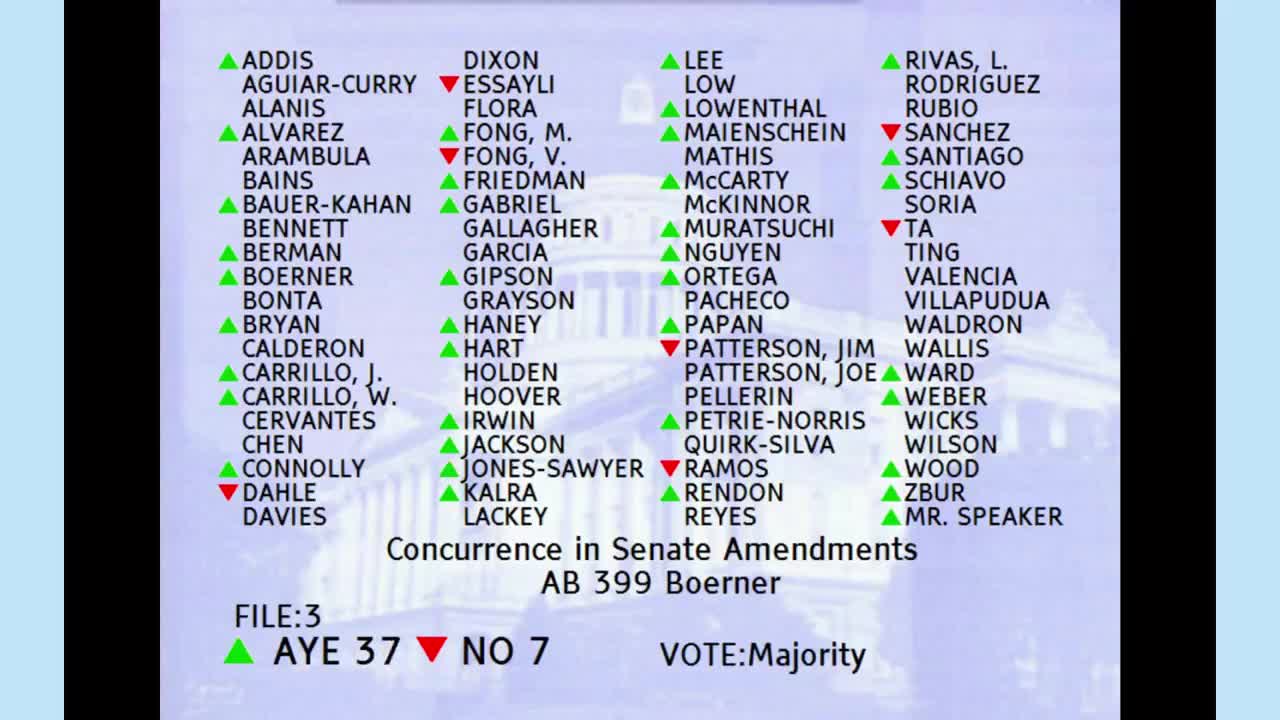



Bill Co-Author(s):
