AB 1487: Public health: Transgender, Gender Variant, and Intersex Wellness Reentry Fund.
- Session Year: 2023-2024
- House: Assembly
- Latest Version Date: 2023-10-13
Current Status:
Passed
(2023-10-13: Chaptered by Secretary of State - Chapter 845, Statutes of 2023.)
Introduced
In Committee
First Chamber
In Committee
Second Chamber
Enacted
Existing law establishes the Transgender Wellness and Equity Fund, under the administration of the State Department of Public Healths Office of Health Equity, for the purposes of funding grants to create programs, or funding existing programs, focused on coordinating trans-inclusive health care for individuals who identify as transgender, gender nonconforming, or intersex.
This bill would, upon appropriation by the Legislature, create the Transgender, Gender Variant, and Intersex Wellness Reentry Fund for purposes of funding grants to create programs, or funding existing programs, focused on reentry programming specifically to support transgender, gender variant, and intersex people who have experienced carceral systems. The bill would make legislative findings and declarations.
Existing law requires the State Department of Public Health to include specified information in any literature that it produces relating to breast cancer, including, but not limited to, information on internet websites of relevant organizations, government agencies, and research institutions where information on mammography alternatives may be obtained.This bill would make a technical, nonsubstantive change to those provisions.Existing law requires the State Department of Public Health to include specified information in any literature that it produces relating to breast cancer, including, but not limited to, information on internet websites of relevant organizations, government agencies, and research institutions where information on mammography alternatives may be obtained.
This bill would make a technical, nonsubstantive change to those provisions.
The Legislature finds and declares the following:
(a)At least 218,400 people in California identify as transgender.
(b)In California, 27 percent, or 796,000, of youth 12 to 17 years of age, inclusive, are viewed as gender variant by their peers at school.
(c)An estimated 1.7 percent of the population is born with intersex traits.
(d)High rates of mistreatment in culturally incompetent reentry settings lead to increased reincarceration of transgender, gender variant, and intersex (TGI) people in California, where 12 percent of the population under the jurisdiction of the Department of Corrections and Rehabilitation is incarcerated due to a parole violation.
(e)TGI people experience encounters with the criminal legal system at significantly high rates, particularly for reasons related to their identities.
(f)Primarily due to racial profiling, the criminalization of poverty, and lack of public awareness about TGI identities, TGI people are frequently incarcerated.
SEC. 2.Division 119.1 (commencing with Section 150925) is added to the Health and Safety Code, to read:119.1.Transgender, Gender Variant, and Intersex Wellness Reentry150925.(a)The Transgender, Gender Variant, and Intersex (TGI) Wellness Reentry Fund is established in the State Treasury.
(b)The State Department of Public Healths Office of Health Equity shall administer the TGI Wellness Reentry Fund for purposes of funding grants to create programs, or funding existing programs, focused on reentry programming specifically to support TGI people who have experienced carceral systems.
(c)Upon appropriation by the Legislature, moneys in the TGI Wellness Reentry Fund may be used to fund grants to existing and new TGI-specific reentry programs run by TGI-serving organizations. Reentry programs include, but are not limited to, emergency, transitional, or permanent housing, employment linkage and support, direct employment opportunities, workforce development and career development training, entrepreneurship opportunities, mental and general health care, identity document updating services, legal assistance, computer training, services navigation, case management, financial assistance and literacy, and other wraparound and comprehensive services.
(d)For purposes of this section, the following definitions apply:
(1)Transgender has the same meaning as defined in paragraph (3) of subdivision (f) of Section 150900.
(2)Gender Variant has the same meaning as gender nonconforming as defined in paragraph (4) of subdivision (f) of Section 150900.
(3)Intersex has the same meaning as defined in paragraph (5) of subdivision (f) of Section 150900.
(4)TGI-serving organization has the same meaning as defined in Section 150900.
The Legislature finds and declares the following:
(a)At least 218,400 people in California identify as transgender.
(b)In California, 27 percent, or 796,000, of youth 12 to 17 years of age, inclusive, are viewed as gender variant by their peers at school.
(c)An estimated 1.7 percent of the population is born with intersex traits.
(d)High rates of mistreatment in culturally incompetent reentry settings lead to increased reincarceration of transgender, gender variant, and intersex (TGI) people in California, where 12 percent of the population under the jurisdiction of the Department of Corrections and Rehabilitation is incarcerated due to a parole violation.
(e)TGI people experience encounters with the criminal legal system at significantly high rates rates, particularly for reasons related to their identities.
(f)Primarily due to racial profiling, the criminalization of poverty, and lack of public awareness about TGI identities, TGI people are frequently incarcerated.
SEC. 2.Division 119.1 (commencing with Section 150925) is added to the Health and Safety Code, to read:119.1.Transgender, Gender Variant, and Intersex Wellness Reentry150925.(a)The Transgender, Gender Variant, and Intersex (TGI) Wellness Reentry Fund is established in the State Treasury.
(b)The State Department of Public Healths Office of Health Equity shall administer the TGI Wellness Reentry Fund for purposes of funding grants to create programs, or funding existing programs, focused on reentry programming specifically to support TGI people who have experienced carceral systems.
(c)Upon appropriation by the Legislature, moneys in the TGI Wellness Reentry Fund may be used to fund grants to existing and new TGI-specific reentry programs run by TGI-serving organizations. Reentry programs include, but are not limited to, emergency, transitional, or permanent housing, employment linkage and support, direct employment opportunities, workforce development and career development training, entrepreneurship opportunities, mental and general health care, identity document updating services, legal assistance, computer training, services navigation, case management, financial assistance and literacy, and other wraparound and comprehensive services.
(d)For purposes of this section, the following definitions apply:
(1)Transgender has the same meaning as defined in paragraph (3) of subdivision (f) of Section 150900.
(2)Gender Variant has the same meaning as gender nonconforming as defined in paragraph (4) of subdivision (f) of Section 150900.
(3)Intersex has the same meaning as defined in paragraph (5) of subdivision (f) of Section 150900.
(4)TGI-serving organization has the same meaning as defined in Section 150900.
The Legislature finds and declares the following:
(a)At least 218,400 people in California identify as transgender.
(b)In California, 27 percent, or 796,000, of youth 12 to 17 years of age, inclusive, are viewed as gender variant by their peers at school.
(c)An estimated 1.7 percent of the population is born with intersex traits.
(d)High rates of mistreatment in culturally incompetent reentry settings lead to increased reincarceration of transgender, gender variant, and intersex (TGI) people in California, where 12 percent of the population under the jurisdiction of the Department of Corrections and Rehabilitation is incarcerated due to a parole violation.
(e)TGI people experience encounters with the criminal legal system at significantly high rates particularly for reasons related to their identities.
(f)Primarily due to racial profiling, the criminalization of poverty, and lack of public awareness about TGI identities, TGI people are frequently incarcerated.
SEC. 2.Division 119.1 (commencing with Section 150925) is added to the Health and Safety Code, to read:119.1.Transgender, Gender Variant, and Intersex Wellness Reentry150925.(a)The Transgender, Gender Variant, and Intersex (TGI) Wellness Reentry Fund is established in the State Treasury.
(b)The State Department of Public Healths Office of Health Equity shall administer the TGI Wellness Reentry Fund for purposes of funding grants to create programs, or funding existing programs, focused on reentry programming specifically to support TGI people who have experienced carceral systems.
(c)Upon appropriation by the Legislature, moneys in the TGI Wellness Reentry Fund may be used to fund grants to existing and new TGI-specific reentry programs run by TGI-serving organizations. Reentry programs include, but are not limited to, emergency, transitional, or permanent housing, employment linkage and support, direct employment opportunities, workforce development and career development training, entrepreneurship opportunities, mental and general health care, identity document updating services, legal assistance, computer training, services navigation, case management, financial assistance and literacy, and other wraparound and comprehensive services.
(d)For purposes of this section, the following definitions apply:
(1)Transgender has the same meaning as defined in paragraph (3) of subdivision (f) of Section 150900.
(2)Gender Variant has the same meaning as gender nonconforming as defined in paragraph (4) of subdivision (f) of Section 150900.
(3)Intersex has the same meaning as defined in paragraph (5) of subdivision (f) of Section 150900.
SECTION 1.Section 138.6 of the Health and Safety Code is amended to read:138.6.(a)The State Department of Public Health shall include in any literature that it produces regarding breast cancer information that shall include, but not be limited to, all of the following:(1)Summarized information on risk factors for breast cancer in younger women, including, but not limited to, information on the increased risk associated with a family history of the disease.(2)Summarized information regarding detection alternatives to mammography that may be available and more effective for at-risk women between the ages of 25 and 40 years.(3)Information on internet websites of relevant organizations, government agencies, and research institutions where information on mammography alternatives may be obtained.(b)The information required by subdivision (a) shall be produced consistent with the departments protocols and procedures regarding the production and dissemination of information on breast cancer, including, but not limited to, the following factors:(1)Restrictions imposed by space limitation on materials currently produced and distributed by the department.(2)Future regular production and replacement schedules.(3)Translation standards governing the number of languages and literacy levels.(4)The nature, content, and purpose of the material into which this new information will be incorporated.(c)It is the intent of the Legislature that subdivisions (a) and (b) apply to information that is distributed by any branch of the department, including, but not limited to, the Cancer Detection Section and the Office of Health Equity.(a)The State Department of Public Health shall include in any literature that it produces regarding breast cancer information that shall include, but not be limited to, all of the following:
(1)Summarized information on risk factors for breast cancer in younger women, including, but not limited to, information on the increased risk associated with a family history of the disease.
(2)Summarized information regarding detection alternatives to mammography that may be available and more effective for at-risk women between the ages of 25 and 40 years.
(3)Information on Internet Web sites internet websites of relevant organizations, government agencies, and research institutions where information on mammography alternatives may be obtained.
(b)The information required by subdivision (a) shall be produced consistent with the departments protocols and procedures regarding the production and dissemination of information on breast cancer, including, but not limited to, the following factors:
(1)Restrictions imposed by space limitation on materials currently produced and distributed by the department.
(2)Future regular production and replacement schedules.
(3)Translation standards governing the number of languages and literacy levels.
(4)The nature, content, and purpose of the material into which this new information will be incorporated.
(c)It is the intent of the Legislature that subdivisions (a) and (b) apply to information that is distributed by any branch of the department, including, but not limited to, the Cancer Detection Section and the Office of Health Equity.
|
Date
|
Status
|
|---|---|
| Oct 13, 2023 | Chaptered by Secretary of State - Chapter 845, Statutes of 2023. |
| Oct 13, 2023 | Approved by the Governor. |
| Sep 15, 2023 | Enrolled and presented to the Governor at 4 p.m. |
| Sep 11, 2023 | Senate amendments concurred in. To Engrossing and Enrolling. (Ayes 65. Noes 4. Page 3196.). |
| Sep 7, 2023 | Assembly Rule 77 suspended. (Page 3011.) |
| Sep 6, 2023 | In Assembly. Concurrence in Senate amendments pending. May be considered on or after September 8 pursuant to Assembly Rule 77. |
| Sep 6, 2023 | Read third time. Passed. Ordered to the Assembly. (Ayes 32. Noes 1. Page 2426.). |
| Sep 5, 2023 | Read second time. Ordered to third reading. |
| Sep 1, 2023 | Read second time and amended. Ordered returned to second reading. |
| Sep 1, 2023 | From committee: Amend, and do pass as amended. (Ayes 5. Noes 0.) (September 1). |
| Jul 3, 2023 | In committee: Referred to APPR suspense file. |
| Jun 22, 2023 | From committee: Do pass and re-refer to Com. on APPR. (Ayes 10. Noes 0.) (June 21). Re-referred to Com. on APPR. |
| Jun 14, 2023 | Referred to Com. on HEALTH. |
| Jun 1, 2023 | In Senate. Read first time. To Com. on RLS. for assignment. |
| Jun 1, 2023 | Read third time. Passed. Ordered to the Senate. (Ayes 66. Noes 0. Page 2127.) |
| May 18, 2023 | Read second time. Ordered to third reading. |
| May 18, 2023 | From committee: Do pass. (Ayes 11. Noes 3.) (May 18). |
| May 10, 2023 | In committee: Set, first hearing. Referred to APPR. suspense file. |
| May 3, 2023 | In committee: Hearing postponed by committee. |
| Apr 26, 2023 | In committee: Hearing postponed by committee. |
| Apr 17, 2023 | Re-referred to Com. on APPR. |
| Apr 13, 2023 | Read second time and amended. |
| Apr 12, 2023 | From committee: Amend, and do pass as amended and re-refer to Com. on APPR. (Ayes 12. Noes 0.) (April 11). |
| Mar 27, 2023 | Re-referred to Com. on HEALTH. |
| Mar 23, 2023 | Referred to Com. on HEALTH. |
| Mar 23, 2023 | From committee chair, with author's amendments: Amend, and re-refer to Com. on HEALTH. Read second time and amended. |
| Feb 18, 2023 | From printer. May be heard in committee March 20. |
| Feb 17, 2023 | Read first time. To print. |
|
Date
|
Description
|
Location
|
Votes
|
|
|---|---|---|---|---|
| Sep 11, 2023 | AB 1487 Santiago Concurrence in Senate Amendments | Assembly Floor |
Passed |
|
| Sep 6, 2023 | Assembly 3rd Reading AB1487 Santiago et al. By Menjivar | Senate Floor |
Passed |
|
| Sep 1, 2023 | Do pass as amended | Senate Standing Committee on Appropriations |
Passed |
|
| Jul 3, 2023 | Placed on suspense file | Senate Standing Committee on Appropriations |
Passed |
|
| Jun 21, 2023 | Do pass, but first be re-referred to the Committee on [Appropriations] | Senate Standing Committee on Health |
Passed |
|
| Jun 1, 2023 | AB 1487 Santiago Assembly Third Reading | Assembly Floor |
Passed |
|
| May 18, 2023 | Do pass. | Assembly Standing Committee on Appropriations |
Passed |
|
| Apr 11, 2023 | Do pass as amended and be re-referred to the Committee on [Appropriations] | Assembly Standing Committee on Health |
Passed |
This list shows positions taken on this bill by organizations on the date displayed, which is linked to the original source.
Positions by individuals are not included.
|
Organization
|
Position
|
Date
|
|---|---|---|
| Aclu California Action | ** Support | |
| Alianza Translatinx | ** Support | |
| Beyond Binary Legal | * Support | Apr 11, 2023 |
| California LGBTQ Health and Human Services Network | ** Support | |
| California Pan - Ethnic Health Network | ** Support | |
| California Transgender, Gender-Expansive, and Intersex Policy Alliance | ** Support | |
| California Transgender, Gender-nonconforming and Intersex Policy Alliance | ** Support | |
| Communities United for Restorative Youth Justice | ** Support | |
| Department Of Finance | ** Against | |
| Ella Baker Center For Human Rights | ** Support | |
| Equality California | ** Support | |
| Gays and Lesbians Living in a Transgender Society | ** Support | |
| Gender Justice LA | ** Support | |
| Glide | ** Support | |
| [email protected] | ** Support | |
| InReach | ** Support | |
| Interact: Advocates for Intersex Youth | ** Support | |
| Lavender Phoenix | ** Support | |
| Mirror Memoirs, a Project of Community Partners | ** Support | |
| National Association of Social Workers California Chapter | ** Support | |
| National Center for Lesbian Rights | ** Support | |
| Oasis Legal Services | ** Support | |
| Our Family Coalition | ** Support | |
| People's Budget Orange County | ** Support | |
| Planned Parenthood Affiliates Of California | * Support | Jun 21, 2023 |
| Positive Women's Network - USA | ** Support | |
| Proyecto Trans Latina San Diego | ** Support | |
| Sacramento LGBT Community Center | ** Support | |
| San Francisco Aids Foundation | * Support | Jun 21, 2023 |
| Showing Up For Racial Justice, Bay Area | ** Support | |
| Somos Familia Valle | ** Support | |
| St. James Infirmary | ** Support | |
| The Translatin@ Coalition | ** Support | |
| Transforming Justice Orange County | ** Support | |
| Transgender, Gender-variant and Intersex Justice Project | ** Support | |
| Viet Rainbow of Orange County | ** Support | |
| Women'S Foundation California | ** Support |
CONCURRENCE IN SENATE AMENDMENTS
CSA1 Bill Id:AB 1487
Author:(Santiago)
As Amended Ver:September 1, 2023
Majority vote
SUMMARY
Establishes the Transgender, Gender Variant, and Intersex (TGI) Wellness Reentry Fund in the State Treasury to fund grant programs focused on reentry programs to support TGI people who have experienced carceral systems.
Senate Amendments
Are technical, clarifying, and add a co-author.
COMMENTS
The Williams Institute at the University of California, Los Angeles (UCLA) School of Law, which conducts independent research on sexual orientation and gender identity law and public policy, reports there are approximately 220,000 individuals who identify as transgender in California. According to a 2017 Williams Institute policy brief:
Mental and Physical Health Indicators: Transgender adults have a higher prevalence of some mental and physical health conditions, including suicidal thoughts and behaviors. This higher prevalence is at least in part related to stress that results from stigma and discrimination, to delaying health care due to fear of discrimination, and to not receiving medically necessary transition-related health care. In the TGI community, there is a high prevalence of suicidal thoughts, higher rate of attempted suicide, and they are more likely to experience serious psychological distress.
Access to Health Care. Transgender adults are less likely to have health insurance coverage, they lack health care providers, and are more likely to experience mistreatment by health care providers. Transgender adults also have a higher rate of delaying or not getting medicines prescribed by their doctors compared to cisgender adults.
TGI in carceral systems. This bill creates a grant program to support TGI people who have experienced carceral systems. According to the California Department of Corrections and Rehabilitation (CDCR), as of March 26, 2023, there were 1,706 incarcerated people identified as transgender, non-binary, and intersex. (This number is based on incarcerated people who self-identify using the Gender Identity Questionnaire.) Housing is one of the biggest barriers for TGI/LGBTQ individuals when they get out of prison. For example, many halfway houses and organizations that exist to help formerly incarcerated people are not geared toward supporting TGI/LGBTQ people. Access to health care, especially hormone treatments and behavioral health treatment, clothing, and other gender-affirming care outside of prison are also limited which can lead to negative health outcomes and delayed care. Implicit bias, cultural bias, lack of cultural competency in programs, family rejection/disconnection, employment discrimination, and lack of safe housing/shelter are some of the main roadblocks to TGI/LGBTQ reentry.
TGI Wellness and Equity Fund. The TGI Wellness and Equity Fund (previously named TWE Fund) was established by AB 2218 (Santiago), Chapter 181, Statutes of 2020, to fund grants to create programs or fund existing programs focused on coordinating trans-inclusive health care for individuals who identify as transgender, gender nonconforming, or intersex. Moneys in the TGI Wellness and Equity Fund may be used to fund grants for the following purposes: increasing the capacity of health care professionals to effectively provide TGI health care and institute TGI-inclusive best practices; facilitating therapeutic arts programs, such as dancing, painting, or writing; and, assisting, identifying, and referring TGI people to access supportive housing. The grants are available to a hospital, health care clinic, or other medical provider that currently provides gender-affirming health care services, such as hormone therapy or gender reassignment surgery, to continue providing those services, or to a hospital, health care clinic, or other medical provider that will establish a program that offers gender-affirming health care services and has an established relationship with a TGI-serving organization that will lead in establishing the program.
Governor Newsom appropriated $13 million to the TGI Wellness and Equity Fund.
According to the Author
Lack of access to institutions of education, employment, healthcare, among others, push TGI people to the margins of society, leaving this community vulnerable to entry into the prison system. Community based re-entry services that cater to the specific needs of TGI people are scarce and necessary to prevent recidivism, support reintegration into society, and prevent harm on the basis of TGI status. This bill will create a TGI Wellness Reentry Fund for reentry programs that will address the challenges that TGI people face when being released from any type of incarceration. The author concludes this fund will build out the capacity of TGI serving organizations to provide critical and lifesaving services to TGI individuals.
Arguments in Support
The California TGI Policy Alliance, which includes various organizations advocating for TGI consumers, including Translatin@ Coalition, California TGI Intersex Policy Alliance, and TGI Justice Project, is the sponsor of this bill. They state that community based re-entry services that cater to the specific needs of TGI people are scarce and necessary to prevent recidivism, support reintegration into society, and prevent harm on the basis of TGI status. High rates of mistreatment in culturally incompetent re-entry settings lead to increased reincarceration of TGI people in California, where 12% of the population in CDCR is incarcerated due to a parole violation. This proposal advocates for legislation to create a TGI Wellness Reentry Fund and a budget request to allocate funding for re-entry programs that will address the challenges that TGI people face when being released from any type of incarceration, prison, or immigration detention. Funding should be made available to TGI serving organizations to create or expand existing TGI serving re-entry programs, which will ensure cultural competency of those programs and provide experiential insight on improving, developing, and growing reentry programs for TGI people across the state.
These programs must include rental and housing assistance, transportation support, emergency food, and wraparound services. This bill would provide direct support to the most marginalized people leaving locked facilities and allow them to be able to reintegrate themselves into society with community support. They conclude that this bill intends to build out the capacity of TGI serving organizations to be able to provide critical and lifesaving services to TGI individuals in at least four different points across the state including the Northern, Central, and Southern part of our state.
Arguments in Opposition
The Department of Finance is opposed to this measure because the additional workload associated with this bill creates new General Fund costs for the Department of Public Health (DPH) that are not included in the Administration's spending plan. Additionally, Finance opposes this measure because it may potentially be duplicative of existing efforts to support TGI-serving organizations.
FISCAL COMMENTS
According to the Senate Appropriations Committee, the amount of funding is unknown and would be subject to an appropriation. However, DPH estimates that, to implement a $5 million (General Fund) local grant program, DPH would require an additional $1.9 million (General Fund) for state staffing and contracting resources
VOTES:
ASM HEALTH: 12-0-3
YES: Wood, Waldron, Aguiar-Curry, Arambula, Boerner Horvath, Wendy Carrillo, Maienschein, McCarty, Rodriguez, Santiago, Villapudua, Weber
ABS, ABST OR NV: Flora, Vince Fong, Joe Patterson
ASM APPROPRIATIONS: 11-3-2
YES: Holden, Bryan, Calderon, Wendy Carrillo, Mike Fong, Hart, Lowenthal, Papan, Pellerin, Weber, Ortega
NO: Megan Dahle, Dixon, Mathis
ABS, ABST OR NV: Robert Rivas, Sanchez
ASSEMBLY FLOOR: 66-0-14
YES: Addis, Aguiar-Curry, Alanis, Alvarez, Arambula, Bains, Bauer-Kahan, Bennett, Berman, Boerner, Bonta, Bryan, Calderon, Juan Carrillo, Wendy Carrillo, Cervantes, Chen, Connolly, Mike Fong, Friedman, Garcia, Gipson, Grayson, Haney, Hart, Holden, Irwin, Jackson, Jones-Sawyer, Kalra, Lee, Low, Lowenthal, Maienschein, McCarty, McKinnor, Muratsuchi, Stephanie Nguyen, Ortega, Pacheco, Papan, Jim Patterson, Pellerin, Petrie-Norris, Quirk-Silva, Ramos, Reyes, Luz Rivas, Robert Rivas, Rodriguez, Blanca Rubio, Santiago, Schiavo, Soria, Ting, Valencia, Villapudua, Waldron, Wallis, Ward, Weber, Wicks, Wilson, Wood, Zbur, Rendon
ABS, ABST OR NV: Megan Dahle, Davies, Dixon, Essayli, Flora, Vince Fong, Gabriel, Gallagher, Hoover, Lackey, Mathis, Joe Patterson, Sanchez, Ta
SENATE FLOOR: 32-1-7
YES: Allen, Alvarado-Gil, Archuleta, Ashby, Atkins, Becker, Blakespear, Bradford, Caballero, Cortese, Dodd, Durazo, Eggman, Glazer, Gonzalez, Hurtado, Laird, Limón, McGuire, Menjivar, Min, Newman, Padilla, Portantino, Roth, Rubio, Skinner, Smallwood-Cuevas, Stern, Umberg, Wahab, Wiener
NO: Nguyen
ABS, ABST OR NV: Dahle, Grove, Jones, Niello, Ochoa Bogh, Seyarto, Wilk
UPDATED
VERSION: September 1, 2023
CONSULTANT: Lara Flynn / HEALTH / (916) 319-2097 FN: 0001754
SENATE RULES COMMITTEE Office of Senate Floor Analyses (916) 651-1520 Fax: (916) 327-4478 | AB 1487 |
THIRD READING
Bill No: AB 1487
Author: Santiago (D), et al.
Amended: 9/1/23 in Senate
Vote: 21
SENATE HEALTH COMMITTEE: 10-0, 6/21/23
AYES: Eggman, Glazer, Gonzalez, Hurtado, Limón, Menjivar, Roth, Rubio, Wahab, Wiener
NO VOTE RECORDED: Nguyen, Grove
SENATE APPROPRIATIONS COMMITTEE: 5-0, 9/1/23
AYES: Portantino, Ashby, Bradford, Wahab, Wiener
NO VOTE RECORDED: Jones, Seyarto
ASSEMBLY FLOOR: 66-0, 6/1/23 - See last page for vote
SUBJECT: Public health: Transgender, Gender Variant, and Intersex Wellness Reentry Fund
SOURCE: California Transgender, Gender-Expansive, and Intersex Policy Alliance
DIGEST:
This bill creates the Transgender, Gender Variant, and Intersex Wellness Reentry Fund for purposes of funding grants to create programs, or funding existing programs, focused on reentry programming specifically to support transgender, gender variant, and intersex people who have experienced carceral systems.
ANALYSIS:
Existing law:
- Requires the California Department of Public Health (CDPH) to establish the Office of Health Equity (OHE) to achieve the highest level of health and mental health for all people, work collaboratively with the Health in All Policies Task Force, advise and assist other state departments in their mission to increase access to, and the quality of, culturally and linguistically competent health and mental health care and services, and improve the health status of all populations and places. [HSC §131019.5]
- Requires OHE to administer the Transgender, Gender Nonconforming, and Intersex (TGI) Wellness and Equity Fund to fund grants to organizations serving people that identify as TGI, to create or fund TGI-specific housing programs and partnerships with hospitals, health care clinics, and other medical providers to provide TGI-focused health care and related education programs for health care providers. Requires such grants to go to TGI-serving organizations, which are defined as an organization with a mission statement that centers around serving TGI people, and where at least 65% the organization’s clients are TGI. [HSC §150900]
- Defines the following terms:
- “Transgender” means a broad and inclusive term for all gender identities different from the gender a person was assigned at birth;
- “Gender nonconforming” means an inclusive term used to describe individuals who may experience a gender that is neither exclusively male nor female or is in between or beyond both of those genders, including, but not limited to, nonbinary, gender fluid, agender (or without gender), third gender, genderqueer, gender variant, Two-Spirit, Hijra, Kathoey, Mak nyah, Muxe, Waria, Māhū, and Fa’afafine;
- “Intersex” means an umbrella term referring to people whose anatomy, hormones, or chromosomes fall outside the strict male and female binary; and,
- “TGI-serving organization” to mean either a public or nonprofit organization with a mission statement that centers around serving transgender, gender nonconforming, and intersex people, and where at least 65 percent of the clients of the organization are TGI, or a nonprofit that serves as the fiscal agent or sponsor for such an organization. [HSC §150900]
- Requires the California Department of Corrections and Rehabilitation (CDCR) to document, upon initial intake into the state prison system, and to update as necessary, an individual’s gender identity whether the individual identifies as transgender, nonbinary, or intersex. [PEN §2605]
This bill:
- Establishes a Transgender, Gender Variant, and Intersex (also “TGI”) Wellness Reentry Fund to be administered by CDPH’s OHE for purposes of funding grants to create programs, or fund existing programs, focused on reentry programming specifically to support TGI people who have experienced carceral systems.
- Authorizes, upon appropriation by the Legislature, moneys in the TGI Wellness Reentry Fund to be used to fund grants to existing and new TGI-specific reentry programs run by TGI-serving organizations. Specifies that reentry programs include, but are not limited to, emergency, transitional, or permanent housing, employment linkage and support, direct employment opportunities, workforce development and career development training, entrepreneurship opportunities, mental and general health care, identity document updating services, legal assistance, computer training, services navigation, case management, financial assistance and literacy, and other wraparound and comprehensive services.
- Cross-references the definitions of “transgender,” “intersex,” and “TGI-serving organization” to the definitions in existing law above. Defines “gender variant” as having the same meaning as “gender nonconforming” as defined in existing law above.
- Makes legislative findings that at least 218,400 people in California identify as transgender, 27% of youth age 12 to 17 are viewed as gender variant by their peers at school, and 1.7% of the population is born with intersex traits. States that high rates of mistreatment in culturally incompetent reentry settings lead to increased reincarceration of TGI people in California; TGI people experience encounters with the criminal legal system at significantly high rates, particularly for reasons related to their identities; and, that TGI people are frequently incarcerated due to racial profiling, the criminalization of poverty, and lack of public awareness about TGI identities.
Comments
- Author’s statement. According to the author, lack of access to institutions of education, employment, healthcare, among others, push TGI people to the margins of society, leaving this community vulnerable to entry into the prison system. Community-based reentry services that cater to the specific needs of TGI people are scarce and necessary to prevent recidivism, support reintegration into society, and prevent harm on the basis of TGI status. This bill will create a TGI Wellness Reentry Fund for reentry programs that will address the challenges that TGI people face when being released from any type of incarceration. This fund will build out the capacity of TGI serving organizations to provide critical and lifesaving services to TGI individuals.
- Known data on TGI populations in California. According to the Williams Institute at UCLA School of Law, which conducts independent research on sexual orientation and gender identity law and public policy, in the state of California as of 2022, at least 150,100 adults (.49% of the population) and 49,100 youth (1.93% of the population) identify as transgender. Far less is known about actual numbers of gender variant adults. According to the Williams Institute, about 11% of LGBTQ adults age 18-60 identify as nonbinary, totaling 1,209,000 adults in the U.S. Within this, 7.5% of cisgender LGBTQ adults identify as nonbinary and 32.1% of the transgender adult population identifies as nonbinary. An earlier 2017 study by the Williams Institute found that 27% of youth ages 12-17 report they are viewed by others as gender nonconforming at school. While there is no California-specific data on people born with intersex traits, according to the United Nations, approximately 1.7% of the population is born with these traits. According to the California Department of Corrections and Rehabilitation, as of May 28, 2023, there were 1,755 incarcerated people who self-identified as transgender, non-binary and intersex, which represents roughly 2% of the population of adults currently incarcerated in the state prison system. While this may seem to align with the demographic numbers given above, many people will fall into more than one category, and gender variance is currently far more common among youth than adults.
- Barriers faced by TGI individuals in reentry programs. A study published in the November 2019 issue of the academic journal Social Problems interviewed formerly incarcerated transgender individuals about their experience in reentry programs in San Francisco. The study found that the reentry housing options available were gender-segregated and relied on biology-based definitions of gender, which often barred transgender women in particular from women’s spaces where they felt safest. Such gender sanctioning posed a major problem for black transgender women in particular who were highly scrutinized once in women’s programs and harassed for any perceived deviation from gender norms. When such harassment escalated into conflict, they were expelled from programs. The article notes that during prison reentry, housing can mean the difference between setting up a new life and re-incarceration. There are no similar studies of individuals who are gender variant (other than transgender) or with intersex characteristics.
- The TGI Wellness and Equity Fund. The TGI Wellness and Equity Fund (previously named the Transgender Wellness and Equity (TWE) Fund) was established by AB 2218 (Santiago, Chapter 181, Statutes of 2020) to fund grants to create programs or fund existing programs focused on coordinating trans-inclusive health care for individuals who identify as transgender, gender nonconforming, or intersex. Moneys in the TGI Wellness and Equity Fund may be used to fund grants for the following purposes: increasing the capacity of health care professionals to effectively provide TGI health care and institute TGI-inclusive best practices; facilitating therapeutic arts programs, such as dancing, painting, or writing; and, assisting, identifying, and referring TGI people to access supportive housing. The grants are also available to a hospital, health care clinic, or other medical provider that currently provides gender-affirming health care services, such as hormone therapy or gender reassignment surgery, to continue providing those services, or to a hospital, health care clinic, or other medical provider that will establish a program that offers gender-affirming health care services. Health care facilities applying for these grants must apply in partnership with a TGI-serving organization that will lead in establishing the program. This bill is modeled on the TGI Wellness and Equity Fund, but rather than focus on medical providers, focuses on reentry providers.
FISCAL EFFECT: Appropriation: No Fiscal Com.: Yes Local: No
According to the Senate Appropriations Committee, the amount of funding is unknown and would be subject to an appropriation. However, CDPH estimates that, to implement a $5 million (General Fund) local grant program, the department would require an additional $1.9 million (General Fund) for state staffing and contracting resources.
SUPPORT: (Verified 8/22/23)
California Transgender, Gender-Expansive, and Intersex Policy Alliance (source)
ACLU California Action
Alianza Translatinx
California LGBTQ Health and Human Services Network
California Pan - Ethnic Health Network
Communities United for Restorative Youth Justice
Ella Baker Center for Human Rights
Equality California
Gays and Lesbians Living in a Transgender Society
Gender Justice LA
GLIDE
Inreach
Interact: Advocates for Intersex Youth
Lavender Phoenix
Mirror Memoirs, a Project of Community Partners
National Association of Social Workers – California Chapter
National Center for Lesbian Rights
Oasis Legal Services
Our Family Coalition
People's Budget Orange County
Positive Women's Network - USA
Proyecto Trans Latina San Diego
Sacramento LGBT Community Center
Showing Up for Racial Justice, Bay Area
Somos Familia Valle
The Translatin@ Coalition
Transforming Justice Orange County
Transgender, Gender-variant and Intersex Justice Project
Viet Rainbow of Orange County
Women's Foundation California
OPPOSITION: (Verified 8/22/23)
Department of Finance
ARGUMENTS IN SUPPORT: Sponsors, the California Transgender, Gender-Expansive, and Intersex Policy Alliance, a coalition of over 30 organizations to build the capacity and leadership of TGI people in California to effectuate policy change, write that TGI people encounter the criminal legal system at significantly high rates and experience alarmingly high rates of sexual abuse, harassment, and violence by other incarcerated persons and jail and prison staff. TGI people struggle with the trauma of being detained and face systemic challenges to reintegrate into society after being released. Reentry services that cater to the specific needs of TGI people are scarce and necessary to prevent recidivism and support reintegration into society. High rates of mistreatment in culturally incompetent reentry settings lead to increased reincarceration of TGI people, particularly as 12% of incarcerations in California are due to parole violations.
ARGUMENTS IN OPPOSITION: The Department of Finance (DOF) is opposed to this bill because the additional workload associated with this bill creates new General Fund costs for DPH that are not included in the Administration’s spending plan. Additionally, DOF opposes this bill because it may potentially be duplicative of existing efforts to support TGI-serving organizations, in particular the TGI Wellness and Equity Fund, which supports grants to TGI-serving organizations for housing assistance and health care services.
ASSEMBLY FLOOR: 66-0, 6/1/23
AYES: Addis, Aguiar-Curry, Alanis, Alvarez, Arambula, Bains, Bauer-Kahan, Bennett, Berman, Boerner, Bonta, Bryan, Calderon, Juan Carrillo, Wendy Carrillo, Cervantes, Chen, Connolly, Mike Fong, Friedman, Garcia, Gipson, Grayson, Haney, Hart, Holden, Irwin, Jackson, Jones-Sawyer, Kalra, Lee, Low, Lowenthal, Maienschein, McCarty, McKinnor, Muratsuchi, Stephanie Nguyen, Ortega, Pacheco, Papan, Jim Patterson, Pellerin, Petrie-Norris, Quirk-Silva, Ramos, Reyes, Luz Rivas, Robert Rivas, Rodriguez, Blanca Rubio, Santiago, Schiavo, Soria, Ting, Valencia, Villapudua, Waldron, Wallis, Ward, Weber, Wicks, Wilson, Wood, Zbur, Rendon
NO VOTE RECORDED: Megan Dahle, Davies, Dixon, Essayli, Flora, Vince Fong, Gabriel, Gallagher, Hoover, Lackey, Mathis, Joe Patterson, Sanchez, Ta
Prepared by: Jen Flory / HEALTH / (916) 651-4111
9/2/23 16:58:30
**** END ****
SENATE COMMITTEE ON APPROPRIATIONS
Senator Anthony Portantino, Chair
2023 - 2024 Regular Session
AB 1487 (Santiago) - Public health: Transgender, Gender Variant, and Intersex Wellness Reentry Fund
Version: April 13, 2023 | Policy Vote: HEALTH 10 - 0 |
Urgency: No | Mandate: No |
Hearing Date: September 1, 2023 | Consultant: Agnes Lee |
Bill Summary:
AB 1487 would establish the Transgender, Gender Variant, and Intersex Wellness Reentry Fund.
*********** ANALYSIS ADDENDUM – SUSPENSE FILE ***********
The following information is revised to reflect amendments
adopted by the committee on September 1, 2023
Fiscal Impact:
The amount of funding is unknown and would be subject to an appropriation. However, the California Department of Public Health (CDPH) estimates that, to implement a $5 million (General Fund) local grant program, the department would require an additional $1.9 million (General Fund) for state staffing and contracting resources.
Author Amendments:
Author amendments add a co-author.
-- END --
SENATE COMMITTEE ON
Senator Anthony Portantino, Chair
2023 - 2024 Regular Session
AB 1487 (Santiago) - Public health: Transgender, Gender Variant, and Intersex Wellness Reentry Fund
Version: | Policy Vote: |
Urgency: | Mandate: |
Hearing Date: | Consultant: |
Bill Summary:
AB 1487 would establish the Transgender, Gender Variant, and Intersex Wellness Reentry Fund.
Fiscal Impact:
The amount of funding is unknown and would be subject to an appropriation. However, the California Department of Public Health (CDPH) estimates that, to implement a $5 million (General Fund) local grant program, the department would require an additional $1.9 million (General Fund) for state staffing and contracting resources.
Background:
The CDPH oversees the Office of Health Equity (OHE), which aims to achieve the highest level of health and mental health for all people, work collaboratively with the Health in All Policies Task Force, advise and assist other state departments in their mission to increase access to, and the quality of, culturally and linguistically competent health and mental health care and services, and improve the health status of all populations and places.
Current law requires OHE to administer the Transgender, Gender Nonconforming, and Intersex (TGI) Wellness and Equity Fund to fund grants to organizations serving people that identify as TGI, to create or fund TGI-specific housing programs and partnerships with hospitals, health care clinics, and other medical providers to provide TGI-focused health care and related education programs for health care providers.
Proposed Law:
Specific provisions of the bill would:
- Establish a Transgender, Gender Variant, and Intersex Wellness Reentry Fund to be administered by CDPH’s OHE for purposes of funding grants to create programs, or fund existing programs, focused on reentry programming specifically to support TGI people who have experienced carceral systems.
- Authorize, upon appropriation by the Legislature, moneys in the TGI Wellness Reentry Fund to be used to fund grants to existing and new TGI-specific reentry programs run by TGI-serving organizations, as specified.
-- END --
SENATE COMMITTEE ON HEALTH
Senator Dr. Susan Talamantes Eggman, Chair
BILL NO: AB 1487
AUTHOR: | Santiago | ||
VERSION: | April 13, 2023 | ||
HEARING DATE: | June 21, 2023 | ||
CONSULTANT: | Jen Flory | ||
SUBJECT: Public health: Transgender, Gender Variant, and Intersex Wellness Reentry Fund
SUMMARY:
Creates the Transgender, Gender Variant, and Intersex Wellness Reentry Fund for purposes of funding grants to create programs, or funding existing programs, focused on reentry programming specifically to support transgender, gender variant, and intersex people who have experienced carceral systems.
Existing law:
- Requires the California Department of Public Health (CDPH) to establish the Office of Health Equity (OHE) to achieve the highest level of health and mental health for all people, work collaboratively with the Health in All Policies Task Force, advise and assist other state departments in their mission to increase access to, and the quality of, culturally and linguistically competent health and mental health care and services, and improve the health status of all populations and places. [HSC §131019.5]
- Requires OHE to administer the Transgender, Gender Nonconforming, and Intersex (TGI) Wellness and Equity Fund to fund grants to organizations serving people that identify as TGI, to create or fund TGI-specific housing programs and partnerships with hospitals, health care clinics, and other medical providers to provide TGI-focused health care and related education programs for health care providers. Requires such grants to go to TGI-serving organizations, which are defined as an organization with a mission statement that centers around serving TGI people, and where at least 65% the organization’s clients are TGI. [HSC §150900]
- Defines the following terms:
- “Transgender” means a broad and inclusive term for all gender identities different from the gender a person was assigned at birth;
- “Gender nonconforming” means an inclusive term used to describe individuals who may experience a gender that is neither exclusively male nor female or is in between or beyond both of those genders, including, but not limited to, nonbinary, gender fluid, agender (or without gender), third gender, genderqueer, gender variant, Two-Spirit, Hijra, Kathoey, Mak nyah, Muxe, Waria, Māhū, and Fa’afafine;
- “Intersex” means an umbrella term referring to people whose anatomy, hormones, or chromosomes fall outside the strict male and female binary; and,
- “TGI-serving organization” to mean either a public or nonprofit organization with a mission statement that centers around serving transgender, gender nonconforming, and intersex people, and where at least 65 percent of the clients of the organization are TGI, or a nonprofit that serves as the fiscal agent or sponsor for such an organization. [HSC §150900]
- Requires the California Department of Corrections and Rehabilitation (CDCR) to document, upon initial intake into the state prison system, and to update as necessary, an individual’s gender identity whether the individual identifies as transgender, nonbinary, or intersex. [PEN §2605]
This bill:
- Establishes a Transgender, Gender Variant, and Intersex (also “TGI”) Wellness Reentry Fund to be administered by CDPH’s OHE for purposes of funding grants to create programs, or fund existing programs, focused on reentry programming specifically to support TGI people who have experienced carceral systems.
- Authorizes, upon appropriation by the Legislature, moneys in the TGI Wellness Reentry Fund to be used to fund grants to existing and new TGI-specific reentry programs run by TGI-serving organizations. Specifies that reentry programs include, but are not limited to, emergency, transitional, or permanent housing, employment linkage and support, direct employment opportunities, workforce development and career development training, entrepreneurship opportunities, mental and general health care, identity document updating services, legal assistance, computer training, services navigation, case management, financial assistance and literacy, and other wraparound and comprehensive services.
- Cross-references the definitions of “transgender,” “intersex,” and “TGI-serving organization” to the definitions in existing law above. Defines “gender variant” as having the same meaning as “gender nonconforming” as defined in existing law above.
- Makes legislative findings that at least 218,400 people in California identify as transgender, 27% of youth age 12 to 17 are viewed as gender variant by their peers at school, and 1.7% of the population is born with intersex traits. States that high rates of mistreatment in culturally incompetent reentry settings lead to increased reincarceration of TGI people in California; TGI people experience encounters with the criminal legal system at significantly high rates particularly for reasons related to their identities; and, that TGI people are frequently incarcerated due to racial profiling, the criminalization of poverty, and lack of public awareness about TGI identities.
FISCAL EFFECT:
According to the Assembly Appropriations Committee, CDPH notes the bill does not specify a funding source or amount. Nonetheless, CDPH anticipates a need for funding for the size of the grant funds, as well as state operations, such as staff support, training, and technical assistance for grantees. For a grant allocation between $5 million and $20 million, CDPH anticipates an approximate appropriation of $750,000 to $2.5 million for appropriate staffing (General Fund). The sponsors indicate a desire for a $5 million appropriation for the TGI Fund (General Fund).
PRIOR VOTES:
Assembly Floor: | 66 - 0 |
Assembly Appropriations Committee: | 11 - 3 |
Assembly Health Committee: | 12 - 0 |
COMMENTS:
- Author’s statement. According to the author, lack of access to institutions of education, employment, healthcare, among others, push TGI people to the margins of society, leaving this community vulnerable to entry into the prison system. Community-based reentry services that cater to the specific needs of TGI people are scarce and necessary to prevent recidivism, support reintegration into society, and prevent harm on the basis of TGI status. This bill will create a TGI Wellness Reentry Fund for reentry programs that will address the challenges that TGI people face when being released from any type of incarceration. This fund will build out the capacity of TGI serving organizations to provide critical and lifesaving services to TGI individuals.
- Known data on TGI populations in California. According to the Williams Institute at UCLA School of Law, which conducts independent research on sexual orientation and gender identity law and public policy, in the state of California as of 2022, at least 150,100 adults (.49% of the population) and 49,100 youth (1.93% of the population) identify as transgender. Far less is known about actual numbers of gender variant adults. According to the Williams Institute, about 11% of LGBTQ adults age 18-60 identify as nonbinary, totaling 1,209,000 adults in the U.S. Within this, 7.5% of cisgender LGBTQ adults identify as nonbinary and 32.1% of the transgender adult population identifies as nonbinary. An earlier 2017 study by the Williams Institute found that 27% of youth ages 12-17 report they are viewed by others as gender nonconforming at school. While there is no California-specific data on people born with intersex traits, according to the United Nations, approximately 1.7% of the population is born with these traits. According to the California Department of Corrections and Rehabilitation, as of May 28, 2023, there were 1,755 incarcerated people who self-identified as transgender, non-binary and intersex, which represents roughly 2% of the population of adults currently incarcerated in the state prison system. While this may seem to align with the demographic numbers given above, many people will fall into more than one category, and gender variance is currently far more common among youth than adults.
- Barriers faced by TGI individuals in reentry programs. A study published in the November 2019 issue of the academic journal Social Problems interviewed formerly incarcerated transgender individuals about their experience in reentry programs in San Francisco. The study found that the reentry housing options available were gender-segregated and relied on biology-based definitions of gender, which often barred transgender women in particular from women’s spaces where they felt safest. Such gender sanctioning posed a major problem for black transgender women in particular who were highly scrutinized once in women’s programs and harassed for any perceived deviation from gender norms. When such harassment escalated into conflict, they were expelled from programs. The article notes that during prison reentry, housing can mean the difference between setting up a new life and re-incarceration. There are no similar studies of individuals who are gender variant (other than transgender) or with intersex characteristics.
- The TGI Wellness and Equity Fund. The TGI Wellness and Equity Fund (previously named the Transgender Wellness and Equity (TWE) Fund) was established by AB 2218 (Santiago, Chapter 181, Statutes of 2020) to fund grants to create programs or fund existing programs focused on coordinating trans-inclusive health care for individuals who identify as transgender, gender nonconforming, or intersex. Moneys in the TGI Wellness and Equity Fund may be used to fund grants for the following purposes: increasing the capacity of health care professionals to effectively provide TGI health care and institute TGI-inclusive best practices; facilitating therapeutic arts programs, such as dancing, painting, or writing; and, assisting, identifying, and referring TGI people to access supportive housing. The grants are also available to a hospital, health care clinic, or other medical provider that currently provides gender-affirming health care services, such as hormone therapy or gender reassignment surgery, to continue providing those services, or to a hospital, health care clinic, or other medical provider that will establish a program that offers gender-affirming health care services. Health care facilities applying for these grants must apply in partnership with a TGI-serving organization that will lead in establishing the program. This bill is modeled on the TGI Wellness and Equity Fund, but rather than focus on medical providers, focuses on reentry providers.
- Related legislation. AB 1163 (L. Rivas) would require specified state agencies and departments to revise their public-use forms, by January 1, 2025, to be more inclusive of individuals who identify as TGI and to collect certain information and about the TGI community. AB 1163 is set for hearing on June 27, 2023 in the Senate Governmental Organization Committee.
- Prior legislation. AB 2521 (Santiago, Chapter 869, Statutes of 2022), renames the TWE Fund into the TGI Wellness and Equity Fund and defines the terms transgender, gender non-conforming, and intersex.
AB 2218 (Santiago, Chapter 181, Statutes of 2020) establishes the TWE Fund within OHE, for the purpose of funding grants to organizations serving people that identify as TGI, to create or fund TGI-specific housing programs and partnerships with hospitals, health care clinics, and other medical providers to provide TGI-focused health care, as defined, and related education programs for health care providers.
SB 132 (Wiener, Chapter 182, Statutes of 2020) requires the CDCR to document upon intitial intake into the state prison system and update as necessary, the individual’s gender identity whether the individual identifies as transgender, nonbinary, or intersex, and their gender pronoun and honorific, as well as allow individuals choose the housing that corresponds with their gender identity.
AB 673 (Perez, Chapter 639, Statutes of 2011) extended the duties of the Office of Multicultural Health (now OHE) to the LGBT community.
- Support. Sponsors, the California Transgender, Gender-Expansive, and Intersex Policy Alliance, a coalition of over 30 organizations to build the capacity and leadership of TGI people in California to effectuate policy change, write that TGI people encounter the criminal legal system at significantly high rates and experience alarmingly high rates of sexual abuse, harassment, and violence by other incarcerated persons and jail and prison staff. TGI people struggle with the trauma of being detained and face systemic challenges to reintegrate into society after being released. Reentry services that cater to the specific needs of TGI people are scarce and necessary to prevent recidivism and support reintegration into society. High rates of mistreatment in culturally incompetent reentry settings lead to increased reincarceration of TGI people, particularly as 12% of incarcerations in California are due to parole violations.
SUPPORT AND OPPOSITION:
Support: California Transgender, Gender-Expansive, and Intersex Policy Alliance (sponsor)
ACLU California Action
Alianza Translatinx
California LGBTQ Health and Human Services Network
California Pan - Ethnic Health Network
Communities United for Restorative Youth Justice
Ella Baker Center for Human Rights
Equality California
Gender Justice LA
Gays and Lesbians Living in a Transgender Society
Inreach
Interact: Advocates for Intersex Youth
Lavender Phoenix
Mirror Memoirs, a Project of Community Partners
Ella Baker Center for Human Rights
National Association of Social Workers – California Chapter
National Center for Lesbian Rights
Oasis Legal Services
Our Family Coalition
People's Budget Orange County
Positive Women's Network - USA
Proyecto Trans Latina San Diego
Sacramento LGBT Community Center
Showing Up for Racial Justice, Bay Area
Somos Familia Valle
The Translatin@ Coalition
Transforming Justice Orange County
Transgender, Gender-variant and Intersex Justice Project
Viet Rainbow of Orange County
Women's Foundation California
Oppose: None received.
-- END --
ASSEMBLY THIRD READING
ATR Bill Id:AB 1487
Author:(Santiago)
As Amended Ver:April 13, 2023
Majority vote
SUMMARY
Establishes the Transgender, Gender Variant, and Intersex (TGI) Wellness Reentry Fund in the State Treasury to fund grant programs focused on reentry programs to support TGI people who have experienced carceral systems.
Major Provisions
COMMENTS
The Williams Institute at the University of California Los Angeles (UCLA) School of Law, which conducts independent research on sexual orientation and gender identity law and public policy, reports there are approximately 220,000 individuals who identify as transgender in California. According to a 2017 Williams Institute policy brief:
Mental and Physical Health Indicators: Transgender adults have a higher prevalence of some mental and physical health conditions, including suicidal thoughts and behaviors. This higher prevalence is at least in part related to stress that results from stigma and discrimination, to delaying health care due to fear of discrimination, and to not receiving medically necessary transition-related health care. In the TGI community, there is a high prevalence of suicidal thoughts, higher rate of attempted suicide, and they are more likely to experience serious psychological distress.
Access to Health Care. Transgender adults are less likely to have health insurance coverage, they lack health care providers, and are more likely to experience mistreatment by health care providers. Transgender adults also have a higher rate of delaying or not getting medicines prescribed by their doctors compared to cisgender adults.
TGI in carceral systems. This bill creates a grant program to support TGI people who have experienced carceral systems. According to the California Department of Corrections and Rehabilitation (CDCR), as of March 26, 2023, there were 1,706 incarcerated people identified as transgender, non-binary, and intersex. (This number is based on incarcerated people who self-identify using the Gender Identity Questionnaire.) Housing is one of the biggest barriers for TGI/LGBTQ individuals when they get out of prison. For example, many halfway houses and organizations that exist to help formerly incarcerated people are not geared toward supporting TGI/LGBTQ people. Access to health care, especially hormone treatments and behavioral health treatment, clothing, and other gender-affirming care outside of prison are also limited which can lead to negative health outcomes and delayed care. Implicit bias, cultural bias, lack of cultural competency in programs, family rejection/disconnection, employment discrimination, and lack of safe housing/shelter are some of the main roadblocks to TGI/LGBTQ reentry.
Transgender, Gender Nonconforming, and Intersex (TGI) Wellness and Equity Fund. The TGI Wellness and Equity Fund (previously named TWE Fund) was established by AB 2218 (Santiago), Chapter 181, Statutes of 2020, to fund grants to create programs or fund existing programs focused on coordinating trans-inclusive health care for individuals who identify as transgender, gender nonconforming, or intersex. Moneys in the TGI Wellness and Equity Fund may be used to fund grants for the following purposes: increasing the capacity of health care professionals to effectively provide TGI health care and institute TGI-inclusive best practices; facilitating therapeutic arts programs, such as dancing, painting, or writing; and, assisting, identifying, and referring TGI people to access supportive housing. The grants are available to a hospital, health care clinic, or other medical provider that currently provides gender-affirming health care services, such as hormone therapy or gender reassignment surgery, to continue providing those services, or to a hospital, health care clinic, or other medical provider that will establish a program that offers gender-affirming health care services and has an established relationship with a TGI-serving organization that will lead in establishing the program.
Governor Newsom appropriated $13 million to the TGI Wellness and Equity Fund.
According to the Author
Lack of access to institutions of education, employment, healthcare, among others, push TGI people to the margins of society, leaving this community vulnerable to entry into the prison system. Community based re-entry services that cater to the specific needs of TGI people are scarce and necessary to prevent recidivism, support reintegration into society, and prevent harm on the basis of TGI status. This bill will create a TGI Wellness Reentry Fund for reentry programs that will address the challenges that TGI people face when being released from any type of incarceration. The author concludes this fund will build out the capacity of TGI serving organizations to provide critical and lifesaving services to TGI individuals.
Arguments in Support
The California TGI Policy Alliance, which includes various organizations advocating for TGI consumers, including Translatin@ Coalition, California TGI Intersex Policy Alliance, and TGI Justice Project, is the sponsor of this bill. They state that community based re-entry services that cater to the specific needs of TGI people are scarce and necessary to prevent recidivism, support reintegration into society, and prevent harm on the basis of TGI status. High rates of mistreatment in culturally incompetent re-entry settings lead to increased reincarceration of TGI people in California, where 12% of the population in CDCR is incarcerated due to a parole violation. This proposal advocates for legislation to create a TGI Wellness Reentry Fund and a budget request to allocate funding for re-entry programs that will address the challenges that TGI people face when being released from any type of incarceration, prison, or immigration detention. Funding should be made available to TGI serving organizations to create or expand existing TGI serving re-entry programs, which will ensure cultural competency of those programs and provide experiential insight on improving, developing, and growing reentry programs for TGI people across the state.
These programs must include rental and housing assistance, transportation support, emergency food, and wraparound services. This bill would provide direct support to the most marginalized people leaving locked facilities and allow them to be able to reintegrate themselves into society with community support. They conclude that this bill intends to build out the capacity of TGI serving organizations to be able to provide critical and lifesaving services to TGI individuals in at least four different points across the state including the Northern, Central, and Southern part of our state.
Arguments in Opposition
There is no known opposition to this bill.
FISCAL COMMENTS
According to the Assembly Appropriations Committee, DPH notes the bill does not specify a funding source or amount. Nonetheless DPH anticipates a need for funding for the size of the grant funds, as well as state operations, such as staff support, training, and technical assistance for grantees. For a grant allocation between $5 million and $20 million, DPH anticipates an approximate appropriation of $750,000 to $2.5 million for appropriate staffing (General Fund (GF)).
The sponsors indicate a desire for a $5 million appropriation for the TGI Wellness Reentry Fund (GF).
VOTES
ASM HEALTH: 12-0-3
YES: Wood, Waldron, Aguiar-Curry, Arambula, Boerner Horvath, Wendy Carrillo, Maienschein, McCarty, Rodriguez, Santiago, Villapudua, Weber
ABS, ABST OR NV: Flora, Vince Fong, Joe Patterson
ASM APPROPRIATIONS: 11-3-2
YES: Holden, Bryan, Calderon, Wendy Carrillo, Mike Fong, Hart, Lowenthal, Papan, Pellerin, Weber, Ortega
NO: Megan Dahle, Dixon, Mathis
ABS, ABST OR NV: Robert Rivas, Sanchez
UPDATED
VERSION: April 13, 2023
CONSULTANT: Rosielyn Pulmano / HEALTH / (916) 319-2097 FN: 0000815
Date of Hearing: May 10, 2023
ASSEMBLY COMMITTEE ON APPROPRIATIONS
Chris Holden, Chair
ABPCA Bill Id:AB 1487
Author:(Santiago) – As Amended Ver:April 13, 2023
Policy Committee: | Health | Vote: | 12 - 0 |
|
| ||
|
|
Urgency: No State Mandated Local Program: No Reimbursable: No
SUMMARY:
This bill establishes, upon appropriation by the Legislature, the Transgender, Gender Variant, and Intersex (TGI) Wellness Reentry Fund (TGI Fund) in the State Treasury to fund grant programs focused on reentry programs to support TGI people reentering society from incarceration. This bill requires the California Department of Public Health (CDPH), Office of Health Equity to administer the grant program.
Reentry programs include emergency, transitional, or permanent housing; employment opportunities and related support; career development training; entrepreneurship opportunities; mental and general health care; legal assistance; services navigation; case management; financial assistance and literacy; and other wraparound services.
FISCAL EFFECT:
CDPH notes the bill does not specify a funding source or amount. Nonetheless CDPH anticipates a need for funding for the size of the grant funds, as well as state operations, such as staff support, training, and technical assistance for grantees. For a grant allocation between $5 million and $20 million, CDPH anticipates an approximate appropriation of $750,000 to $2.5 million for appropriate staffing (General Fund).
The sponsors indicate a desire for a $5 million appropriation for the TGI Fund (General Fund).
COMMENTS:
- Purpose. This bill is sponsored by the California Transgender, Gender Nonconforming, and Intersex Policy Alliance (CTPA). According to the author:
Lack of access to institutions of education, employment, healthcare, among others, push TGI people to the margins of society, leaving this community vulnerable to entry into the prison system. Community based re-entry services that cater to the specific needs of TGI people are scarce and necessary to prevent recidivism, support reintegration into society, and prevent harm on the basis of TGI status. AB 1487 will create a TGI Re-entry Fund for re-entry programs that will address the challenges that TGI people face when being released from any type of incarceration. This fund will build out the capacity of TGI serving organizations to provide critical and lifesaving services to TGI individuals.
- Background. AB 2218 (Santiago), Chapter 181, Statutes of 2020, established the TGI Wellness and Equity Fund (previously named TWE Fund) to fund grants to create programs or fund existing programs focused on coordinating trans-inclusive health care for individuals who identify as TGI. Moneys in the TGI Wellness and Equity Fund may be used to fund grants for the following purposes: increasing the capacity of health care professionals to effectively provide TGI health care and institute TGI-inclusive best practices; facilitating therapeutic arts programs; and assisting, identifying, and referring TGI people to access supportive housing. The grants are available to a hospital, health care clinic, or other medical provider that currently provides gender-affirming health care services, such as hormone therapy or gender reassignment surgery, or to a hospital, health clinic, or other medical provider to establish a program that offers gender-affirming health services and has an established relationship with a TGI-serving organization to lead in establishing the program. The Budget Act of 2021 appropriated $13 million to the TGI Wellness and Equity Fund.
Analysis Prepared by: Allegra Kim / APPR. / (916) 319-2081
Date of Hearing: April 11, 2023
ASSEMBLY COMMITTEE ON HEALTH
Jim Wood, Chair
ABPCA Bill Id:AB 1487
Author:(Santiago) – As Amended Ver:March 23, 2023
SUBJECT: Public health: Transgender, Gender Variant, and Intersex Wellness Reentry Fund.
SUMMARY: Establishes the Transgender, Gender Variant, and Intersex (TGI) Wellness Reentry Fund in the State Treasury to fund grant programs focused on reentry programs to support TGI people who have experienced carceral systems. Specifically, this bill:
- Establishes the TGI Wellness Reentry Fund in the State Treasury to fund TGI-specific reentry grant programs, as described in 3) below.
- Requires the Department of Public Health’s (DPH) Office of Health Equity (OHE) to administer the TGI Wellness Reentry Fund to fund grants to create programs, or fund existing programs, focused on reentry programming specifically to support TGI people who have experienced carceral systems.
- Authorizes, upon appropriation by the Legislature, moneys in the TGI Wellness Reentry Fund to be used to fund grants to existing and new TGI-specific reentry programs run by TGI-serving organizations. Specifies that reentry programs include, but are not limited to, emergency, transitional, or permanent housing, employment linkage and support, direct employment opportunities, workforce development and career development training, entrepreneurship opportunities, mental and general health care, identity document updating services, legal assistance, computer training, services navigation, case management, financial assistance and literacy, and other wraparound and comprehensive services.
EXISTING LAW:
- Requires DPH to establish OHE to achieve the highest level of health and mental health for all people, work collaboratively with the Health in All Policies Task Force, advise and assist other state departments in their mission to increase access to, and the quality of, culturally and linguistically competent health and mental health care and services, and improve the health status of all populations and places. [Health & Safety Code (HSC) §131019.5]
- Requires OHE to administer the Transgender Wellness and Equity (TWE) Fund to fund grants to organizations serving people that identify as TGI, to create or fund TGI-specific housing programs and partnerships with hospitals, health care clinics, and other medical providers to provide TGI-focused health care and related education programs for health care providers. Requires such grants to go to TGI-serving organizations, which are defined as an organization with a mission statement that centers around serving TGI people, and where at least 65% the organization’s clients are TGI. [HSC § 150900]
- Defines the following terms:
- Transgender as broad and inclusive of all gender identities different from the gender a person was assigned at birth;
- Gender nonconforming as an inclusive term used to describe individuals who may experience a gender that is neither exclusively male nor female or is in between or beyond both of those genders, including, but not limited to, nonbinary, gender fluid, agender (or without gender), third gender, genderqueer, gender variant, Two-Spirit, Hijra, Kathoey, Mak nyah, Muxe, Waria, Māhū, and Fa’afafine; and,
- Intersex as an umbrella term referring to people whose anatomy, hormones, or chromosomes fall outside the strict male and female binary. [Id.]
- Defines a “TGI-serving organization” to mean either of the following:
- A public or nonprofit organization with a mission statement that centers around serving transgender, gender nonconforming, and intersex people, and where at least 65 percent of the clients of the organization are TGI; or,
- A nonprofit that serves as the fiscal agent or sponsor for an organization, as specified. A nonprofit that is serving as a fiscal agent or sponsor shall pass all funding to the organization, but may charge a reasonable or industry standard fee for administrative costs of not more than 16%.
- A public or nonprofit organization with a mission statement that centers around serving transgender, gender nonconforming, and intersex people, and where at least 65 percent of the clients of the organization are TGI; or,
FISCAL EFFECT: Unknown. This bill has not yet been analyzed by a fiscal committee.
COMMENTS:
- PURPOSE OF THIS BILL. According to the author, lack of access to institutions of education, employment, healthcare, among others, push TGI people to the margins of society, leaving this community vulnerable to entry into the prison system. Community based re-entry services that cater to the specific needs of TGI people are scarce and necessary to prevent recidivism, support reintegration into society, and prevent harm on the basis of TGI status. This bill will create a TGI Wellness Reentry Fund for reentry programs that will address the challenges that TGI people face when being released from any type of incarceration. The author concludes this fund will build out the capacity of TGI serving organizations to provide critical and lifesaving services to TGI individuals.
- BACKGROUND. The Williams Institute at the University of California Los Angeles (UCLA) School of Law, which conducts independent research on sexual orientation and gender identity law and public policy, estimates that in the United States, 1.6 million people ages 13+ identify as transgender: 1.3 million of whom are adults and 300,000 as youth; 18% of those who identify as transgender are ages 13-17; 39% are transgender women and 36% are transgender men; 77,300 of Asian adults identify as transgender, 10,800 of Asian Youth identify as transgender; 14,500 American Indian/Alaska Native (AI/AN) adults identify as transgender, and 3,000 of AI/AN youth identify as transgender.
- California data. According to the Williams Institute, there are approximately 220,000 individuals who identify as transgender in California. According to a 2017 Williams Institute policy brief:
Mental and Physical Health Indicators: Transgender adults have a higher prevalence of some mental and physical health conditions, including suicidal thoughts and behaviors. This higher prevalence is at least in part related to stress that results from stigma and discrimination, to delaying health care due to fear of discrimination, and to not receiving medically necessary transition-related health care. In the TGI community, there is a high prevalence of suicidal thoughts, higher rate of attempted suicide, and they more likely to experience serious psychological distress.
Access to Health Care. Transgender adults are less likely to have health insurance coverage, they lack health care providers, and more likely to experience mistreatment by health care providers. Transgender adults also have a higher rate of delaying or not getting medicines prescribed by their doctors compared to cisgender adults. - TGI in carceral systems. This bill creates a grant program to support TGI people who have experienced carceral systems. According to the California Department of Corrections and Rehabilitation (CDCR), as of March 26, 2023, there were 1,706 incarcerated people identified as transgender, non-binary, and intersex. (This number is based on incarcerated people who self-identify using the Gender Identity Questionnaire.) Housing is one of the biggest barriers for TGI/LGBTQ individuals when they get out of prison. For example, many halfway houses and organizations that exist to help formerly incarcerated people are not geared toward supporting TGI/LGBTQ people. Access to health care, especially hormone treatments and behavioral health treatment, clothing, and other gender-affirming care outside of prison are also limited which can lead to negative health outcomes and delayed care. Implicit bias, cultural bias, lack of cultural competency in programs, family rejection/disconnection, employment discrimination, and lack of safe housing/shelter are some of the main roadblocks to TGI/LGBTQ reentry.
- Transgender, Gender Nonconforming, and Intersex (TGI) Wellness and Equity Fund. The TGI Wellness and Equity Fund (previously named TWE Fund) was established by AB 2218 (Santiago), Chapter 181, Statutes of 2020, to fund grants to create programs or fund existing programs focused on coordinating trans-inclusive health care for individuals who identify as transgender, gender nonconforming, or intersex. Moneys in the TGI Wellness and Equity Fund may be used to fund grants for the following purposes: increasing the capacity of health care professionals to effectively provide TGI health care and institute TGI-inclusive best practices; facilitating therapeutic arts programs, such as dancing, painting, or writing; and, assisting, identifying, and referring TGI people to access supportive housing. The grants are available to a hospital, health care clinic, or other medical provider that currently provides gender-affirming health care services, such as hormone therapy or gender reassignment surgery, to continue providing those services, or to a hospital, health care clinic, or other medical provider that will establish a program that offers gender-affirming health care services and has an established relationship with a TGI-serving organization that will lead in establishing the program.
AB 2218 also defined a TGI-serving organization to mean either of the following:- A public or nonprofit organization with a mission statement that centers around serving transgender, gender nonconforming, and intersex people, and where at least 65% of the clients of the organization are TGI; or,
- A nonprofit that serves as the fiscal agent or sponsor for an organization described in i) above. A nonprofit that is serving as a fiscal agent or sponsor to pass all funding to the organization, but may charge a reasonable or industry standard fee for administrative costs of not more than 16%.
- California data. According to the Williams Institute, there are approximately 220,000 individuals who identify as transgender in California. According to a 2017 Williams Institute policy brief:
Governor Newsom appropriated $13 million to the TGI Wellness and Equity Fund.
- SUPPORT. The California Transgender, Gender Nonconforming, and Intersex Policy Alliance, which includes various organizations advocating for TGI consumers, including Translatin@ Coalition, California Transgender, Gender-Nonconforming and Intersex Policy Alliance, and Transgender, Gender-Variant & Intersex Justice Project, is the sponsor of this bill. They state that community based re-entry services that cater to the specific needs of TGI people are scarce and necessary to prevent recidivism, support reintegration into society, and prevent harm on the basis of TGI status. High rates of mistreatment in culturally incompetent re-entry settings lead to increased reincarceration of TGI people in California, where 12% of the population in CDCR is incarcerated due to a parole violation. Through this proposal, we advocate for legislation to create a TGI Wellness Reentry Fund and a budget request to allocate funding for re-entry programs that will address the challenges that TGI people face when being released from any type of incarceration, prison, or immigration detention. Funding should be made available to TGI serving organizations to create or expand existing TGI serving re-entry programs, which will ensure cultural competency of those programs and provide experiential insight on improving, developing, and growing reentry programs for TGI people across the state.
These programs must include rental and housing assistance, transportation support, emergency food, and wraparound services. This bill would provide direct support to the most marginalized people leaving locked facilities and allow them to be able to reintegrate themselves into society with community support. They conclude that this bill intends to build out the capacity of TGI serving organizations to be able to provide critical and lifesaving services to TGI individuals in at least four different points across the state including the Northern, Central, and Southern part of our state. - PREVIOUS LEGISLATION.
- AB 2521 (Santiago), Chapter 869, Statutes of 2022, renames the TWE Fund into the TGI Wellness and Equity Fund and defines the terms transgender, gender non-conforming, and intersex.
- AB 2218 establishes the TWE Fund within OHE to fund grants to organizations serving people that identify as TGI, to create or fund TGI-specific housing programs and partnerships with hospitals, health care clinics, and other medical providers to provide TGI-focused health care, as defined, and related education programs for health care providers.
- SUGGESTED AMENDMENT. This bill permits moneys in the TGI Wellness Reentry Fund to provide grants to TGI-specific reentry programs run by TGI-serving organizations. Current law includes a definition of TGI-serving organizations and the Committee recommends adopting similar definition for purposes of this bill.
REGISTERED SUPPORT / OPPOSITION:
Support
California Transgender, Gender Nonconforming, and Intersex Policy Alliance (sponsor)
Alianza Translatinx
California LGBTQ Health and Human Services Network
California Pan - Ethnic Health Network
Communities United for Restorative Youth Justice
Ella Baker Center for Human Rights
Gender Justice LA
InReach
Interact: Advocates for Intersex Youth
Lavender Phoenix
Mirror Memoirs, a Project of Community Partners
National Association of Social Workers, California Chapter
National Center for Lesbian Rights
Oasis Legal Services
Our Family Coalition
People's Budget Orange County
Positive Women's Network - USA
Sacramento LGBT Community Center
Showing Up for Racial Justice, Bay Area
Somos Familia Valle
St. James Infirmary
The Translatin@ Coalition
Transforming Justice Orange County
Transgender, Gendervariant, Intersex Justice Project
Viet Rainbow of Orange County
Women's Foundation California
Opposition
None on file.
Analysis Prepared by: Rosielyn Pulmano / HEALTH / (916) 319-2097



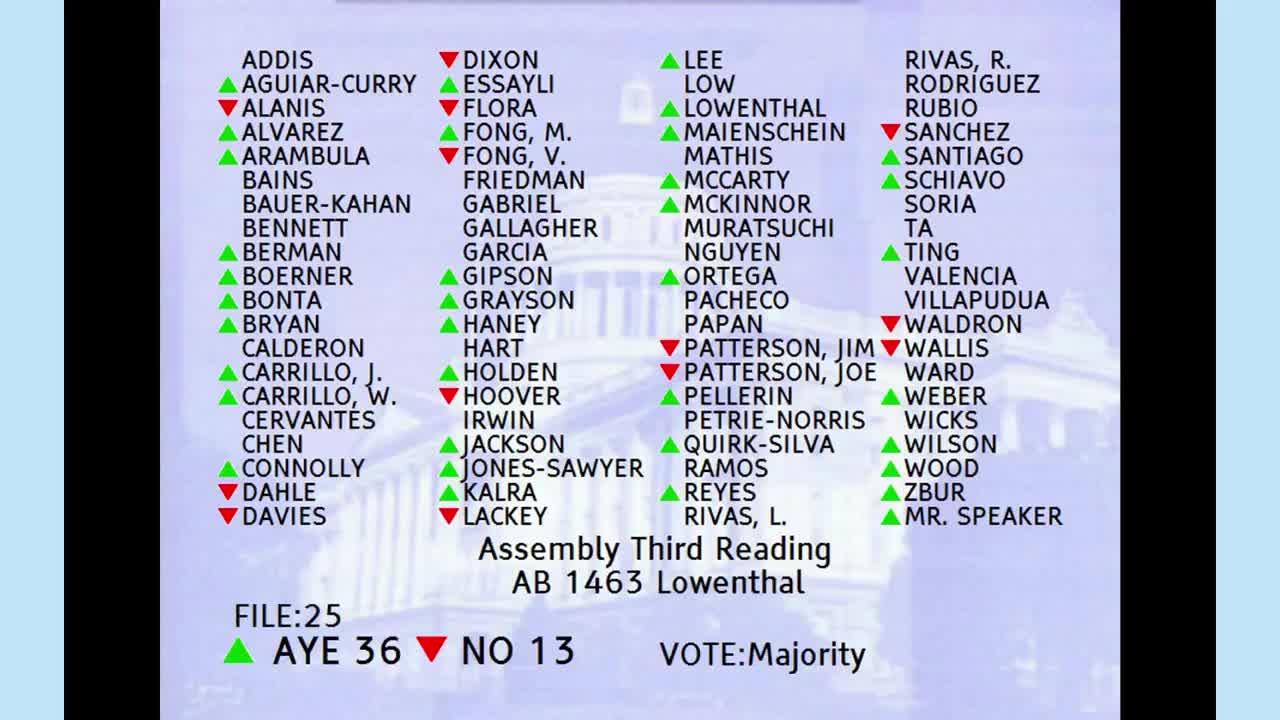

Bill Author

Bill Co-Author(s):
