AB 1528: Housing authorities: property taxation.
- Session Year: 2023-2024
- House: Assembly
- Latest Version Date: 2023-10-11
Current Status:
Passed
(2023-10-11: Chaptered by Secretary of State - Chapter 766, Statutes of 2023.)
Introduced
In Committee
First Chamber
In Committee
Second Chamber
Enacted
The California Constitution provides that all property is taxable and requires property to be taxed in proportion to its full value. The California Constitution exempts certain property from property taxation, including property owned by a local government, as specified. The California Constitution authorizes the Legislature to exempt from taxation, in whole or in part, property that is used exclusively for religious, hospital, or charitable purposes, and is owned or held in trust by a nonprofit entity.
The Housing Authorities Law establishes a public body corporate and politic, known as a housing authority, within each county and city. Upon enactment of a resolution by the county or city declaring that there is need for a housing authority to function, existing law authorizes the authority to undertake various specified activities relating to affordable housing. Existing law specifies that the property and bonds of a housing authority are exempt from taxation.
This bill would specify that property held by a nonprofit public benefit corporation that is controlled by a housing authority, as described, is exempt from taxation. The bill would require any outstanding ad valorem tax, interest, or penalty that was levied on the property of a housing authority to be canceled, and any tax, interest, or penalty levied that was paid prior to January 1, 2024, to be refunded.
The California Constitution requires the state to reimburse local agencies and school districts for certain costs mandated by the state. Statutory provisions establish procedures for making that reimbursement.
This bill would provide that, if the Commission on State Mandates determines that the bill contains costs mandated by the state, reimbursement for those costs shall be made pursuant to the statutory provisions noted above.
Existing law requires the state to reimburse local agencies annually for certain property tax revenues lost as a result of any exemption or classification of property for purposes of ad valorem property taxation.
This bill would provide that, notwithstanding those provisions, no appropriation is made and the state shall not reimburse local agencies for property tax revenues lost by them pursuant to the bill.
This bill would make findings and declarations related to a gift of public funds.
The California Constitution provides that all property is taxable and requires property to be taxed in proportion to its full value. The California Constitution exempts certain property from property taxation, including property owned by a local government, as specified. The California Constitution authorizes the Legislature to exempt from taxation, in whole or in part, property that is used exclusively for religious, hospital, or charitable purposes, and is owned or held in trust by a nonprofit entity.
The Housing Authorities Law establishes a public body corporate and politic, known as a housing authority, within each county and city. Upon enactment of a resolution by the county or city declaring that there is need for a housing authority to function, existing law authorizes the authority to undertake various specified activities relating to affordable housing. Existing law specifies that the property and bonds of a housing authority are exempt from taxation.
This bill would specify that property held by a nonprofit public benefit corporation that is controlled by a housing authority, as described, is exempt from taxation. The bill would require any outstanding ad valorem tax, interest, or penalty that was levied on the property of a housing authority to be canceled, and any tax, interest, or penalty levied that was paid prior to January 1, 2024, to be refunded.
The California Constitution requires the state to reimburse local agencies and school districts for certain costs mandated by the state. Statutory provisions establish procedures for making that reimbursement.
This bill would provide that, if the Commission on State Mandates determines that the bill contains costs mandated by the state, reimbursement for those costs shall be made pursuant to the statutory provisions noted above.
Existing law requires the state to reimburse local agencies annually for certain property tax revenues lost as a result of any exemption or classification of property for purposes of ad valorem property taxation.
This bill would provide that, notwithstanding those provisions, no appropriation is made and the state shall not reimburse local agencies for property tax revenues lost by them pursuant to the bill.
This bill would make findings and declarations related to a gift of public funds.
The California Constitution provides that all property is taxable and requires property to be taxed in proportion to its full value. The California Constitution exempts certain property from property taxation, including property owned by a local government, as specified. The California Constitution authorizes the Legislature to exempt from taxation, in whole or in part, property that is used exclusively for religious, hospital, or charitable purposes, and is owned or held in trust by a nonprofit entity.
The Housing Authorities Law establishes a public body corporate and politic, known as a housing authority, within each county and city. Upon enactment of a resolution by the county or city declaring that there is need for a housing authority to function, existing law authorizes the authority to undertake various specified activities relating to affordable housing. Existing law specifies that the property and bonds of a housing authority are exempt from taxation.
This bill would specify that property held by a nonprofit public benefit corporation that is controlled by a housing authority, as described, is exempt from taxation. The bill would require any outstanding ad valorem tax, interest, or penalty that was levied on the property of a housing authority to be canceled, and any tax, interest, or penalty levied that was paid prior to January 1, 2024, to be refunded.
The California Constitution requires the state to reimburse local agencies and school districts for certain costs mandated by the state. Statutory provisions establish procedures for making that reimbursement.
This bill would provide that, if the Commission on State Mandates determines that the bill contains costs mandated by the state, reimbursement for those costs shall be made pursuant to the statutory provisions noted above.
Existing law requires the state to reimburse local agencies annually for certain property tax revenues lost as a result of any exemption or classification of property for purposes of ad valorem property taxation.
This bill would provide that, notwithstanding those provisions, no appropriation is made and the state shall not reimburse local agencies for property tax revenues lost by them pursuant to the bill.
This bill would make findings and declarations related to a gift of public funds.
The California Constitution provides that all property is taxable and requires property to be taxed in proportion to its full value. The California Constitution exempts certain property from property taxation, including property owned by a local government, as specified. The California Constitution authorizes the Legislature to exempt from taxation, in whole or in part, property that is used exclusively for religious, hospital, or charitable purposes, and is owned or held in trust by a nonprofit entity.
The Housing Authorities Law establishes a public body corporate and politic, known as a housing authority, within each county and city. Upon enactment of a resolution by the county or city declaring that there is need for a housing authority to function, existing law authorizes the authority to undertake various specified activities relating to affordable housing. Existing law specifies that the property and bonds of a housing authority are exempt from taxation.
This bill would specify that property held by a nonprofit public benefit corporation that is controlled by a housing authority, as described, is exempt from taxation.
Existing law, the Employee Housing Act, among other things, requires that buildings used for human habitation, and buildings accessory thereto, comply with the building standards in the California Building Standards Code relating to employee housing, as defined. That act requires the Department of Housing and Community Development to maintain a file of complaints and other significant information in relation to the maintenance and operation of employee housing and requires the information to be available to local agencies, district attorneys, and the Attorney General. This bill would make a nonsubstantive change to those provisions.Existing law, the Employee Housing Act, among other things, requires that buildings used for human habitation, and buildings accessory thereto, comply with the building standards in the California Building Standards Code relating to employee housing, as defined. That act requires the Department of Housing and Community Development to maintain a file of complaints and other significant information in relation to the maintenance and operation of employee housing and requires the information to be available to local agencies, district attorneys, and the Attorney General.
This bill would make a nonsubstantive change to those provisions.
(a)The Legislature has found and declared all of the following in the Housing Authorities Law (Chapter 1 (commencing with Section 34200)) and the Housing Cooperation Law (Chapter 2 (commencing with Section 34500)):
(1)There exist in the state housing conditions which constitute a menace to the health, safety, morals, and welfare of the residents of the state.
(2)These conditions necessitate excessive and disproportionate expenditures of public funds for crime prevention and punishment, public health and safety, fire and accident prevention, and other public services and facilities.
(3)The public interest requires the remedying of these conditions by the creation of housing authorities to undertake projects for slum clearance and for providing safe and sanitary dwelling accommodations for persons who lack sufficient income to enable them to live in decent, safe, and sanitary dwellings without overcrowding.
(4)These housing projects are for public uses and purposes and are governmental functions of state concern.
(b)(1)As a matter of legislative determination, it is hereby found and declared that the property and bonds of a housing authority are of such character as shall be exempt from taxation.
(2)Property held by a nonprofit public benefit corporation that is controlled by a housing authority shall be included in the exemption from taxation described in paragraph (1).
(c)For purposes of this section, a nonprofit public benefit corporation shall be deemed to be controlled by a housing authority if both of the following conditions are met:
(1)The nonprofit public benefit corporation is organized for purposes pursuant to the Housing Authorities Law and is solely directed and managed by directors, officers, or employees of the housing authority.
(2)The organizational documents of the nonprofit public benefit corporation contain provisions that in the event of the liquidation, dissolution, or winding up of the nonprofit public benefit corporation, all assets of the nonprofit public benefit corporation revert to ownership by the housing authority.
(d)(1)It is the intent and purpose of this section to clarify subdivisions (a) and (b) of Section 3 of Article XIII of the California Constitution and, therefore, the changes made by this bill to this section do not constitute a change in, but are declaratory of, the existing law.
(2)Any outstanding ad valorem tax, interest, or penalty that was levied on the property of a housing authority that meets the requirements of this section shall be canceled, and any tax, interest, or penalty, as so levied, that was paid prior to January 1, 2024, shall be refunded.
SEC. 2.If the Commission on State Mandates determines that this act contains costs mandated by the state, reimbursement to local agencies and school districts for those costs shall be made pursuant to Part 7 (commencing with Section 17500) of Division 4 of Title 2 of the Government Code.
SEC. 3.Notwithstanding Section 2229 of the Revenue and Taxation Code, no appropriation is made by this act and the state shall not reimburse any local agency for any property tax revenues lost by it pursuant to this act.
SEC. 4.The Legislature hereby finds and declares that the refund authorized by Section 34400 of the Health and Safety Code, as amended by this act, serves the public purpose of providing safe and sanitary dwelling accommodations in the state and does not constitute a gift of public funds within the meaning of Section 6 of Article XVI of the California Constitution.
(a)The Legislature has found and declared all of the following in the Housing Authorities Law (Chapter 1 (commencing with Section 34200)) and the Housing Cooperation Law (Chapter 2 (commencing with Section 34500)):
(1)There exist in the state housing conditions which constitute a menace to the health, safety, morals, and welfare of the residents of the state.
(2)These conditions necessitate excessive and disproportionate expenditures of public funds for crime prevention and punishment, public health and safety, fire and accident prevention, and other public services and facilities.
(3)The public interest requires the remedying of these conditions by the creation of housing authorities to undertake projects for slum clearance and for providing safe and sanitary dwelling accommodations for persons who lack sufficient income to enable them to live in decent, safe, and sanitary dwellings without overcrowding.
(4)These housing projects are for public uses and purposes and are governmental functions of state concern.
(b)(1)As a matter of legislative determination, it is hereby found and declared that the property and bonds of a housing authority are of such character as shall be exempt from taxation.
(2)Property held by a nonprofit public benefit corporation that is controlled by a housing authority shall be included in the exemption from taxation described in paragraph (1).
(c)For purposes of this section, a nonprofit public benefit corporation shall be deemed to be controlled by a housing authority if both of the following conditions are met:
(1)The nonprofit public benefit corporation is organized for purposes pursuant to the Housing Authorities Law and is solely directed and managed by directors, officers, or employees of the housing authority.
(2)The organizational documents of the nonprofit public benefit corporation contain provisions that in the event of the liquidation, dissolution, or winding up of the nonprofit public benefit corporation, all assets of the nonprofit public benefit corporation revert to ownership by the housing authority.
(d)(1)It is the intent and purpose of this section to clarify subdivisions (a) and (b) of Section 3 of Article XIII of the California Constitution and, therefore, the changes made by this bill to this section do not constitute a change in, but are declaratory of, the existing law.
(2)Any outstanding ad valorem tax, interest, or penalty that was levied on the property of a housing authority that meets the requirements of this section shall be canceled, and any tax, interest, or penalty, as so levied, that was paid prior to January 1, 2024, shall be refunded.
SEC. 2.If the Commission on State Mandates determines that this act contains costs mandated by the state, reimbursement to local agencies and school districts for those costs shall be made pursuant to Part 7 (commencing with Section 17500) of Division 4 of Title 2 of the Government Code.
SEC. 3.Notwithstanding Section 2229 of the Revenue and Taxation Code, no appropriation is made by this act and the state shall not reimburse any local agency for any property tax revenues lost by it pursuant to this act.
SEC. 4.The Legislature hereby finds and declares that the refund authorized by Section 34400 of the Health and Safety Code, as amended by this act, serves the public purpose of providing safe and sanitary dwelling accommodations in the state and does not constitute a gift of public funds within the meaning of Section 6 of Article XVI of the California Constitution.
(a)The Legislature has found and declared all of the following in the Housing Authorities Law (Chapter 1 (commencing with Section 34200)) and the Housing Cooperation Law (Chapter 2 (commencing with Section 34500)):
(1)There exist in the state housing conditions which constitute a menace to the health, safety, morals morals, and welfare of the residents of the state.
(2)These conditions necessitate excessive and disproportionate expenditures of public funds for crime prevention and punishment, public health and safety, fire and accident prevention, and other public services and facilities.
(3)The public interest requires the remedying of these conditions by the creation of housing authorities to undertake projects for slum clearance and for providing safe and sanitary dwelling accommodations for persons who lack sufficient income to enable them to live in decent, safe safe, and sanitary dwellings without overcrowding.
(4)These housing projects are for public uses and purposes and are governmental functions of state concern.
(b)(1)As a matter of legislative determination, it is hereby found and declared that the property and bonds of a housing authority are of such character as shall be exempt from taxation.
(2)Property held by a nonprofit public benefit corporation that is controlled by a housing authority shall be included in the exemption from taxation described in paragraph (1).
(c)For purposes of this section, a nonprofit public benefit corporation shall be deemed to be controlled by a housing authority if both of the following conditions are met:
(1)The nonprofit public benefit corporation is organized for purposes pursuant to the Housing Authorities Law and is solely directed and managed by directors, officers, or employees of the housing authority.
(2)The organizational documents of the nonprofit public benefit corporation contain provisions that in the event of the liquidation, dissolution, or winding up of the nonprofit public benefit corporation, all assets of the nonprofit public benefit corporation revert to ownership by the housing authority.
(d)(1)It is the intent and purpose of this section to clarify subdivisions (a) and (b) of Section 3 of Article XIII of the California Constitution and, therefore, the changes made by this bill to this section do not constitute a change in, but are declaratory of, the existing law.
(2)Any outstanding ad valorem tax, interest, or penalty that was levied on the property of a housing authority that meets the requirements of this section shall be canceled, and any tax, interest, or penalty, as so levied, that was paid prior to January 1, 2024, shall be refunded.
SEC. 2.If the Commission on State Mandates determines that this act contains costs mandated by the state, reimbursement to local agencies and school districts for those costs shall be made pursuant to Part 7 (commencing with Section 17500) of Division 4 of Title 2 of the Government Code.
SEC. 3.Notwithstanding Section 2229 of the Revenue and Taxation Code, no appropriation is made by this act and the state shall not reimburse any local agency for any property tax revenues lost by it pursuant to this act.
SEC. 4.The Legislature hereby finds and declares that the refund authorized by Section 34400 of the Health and Safety Code, as amended by this act, serves the public purpose of providing safe and sanitary dwelling accommodations in the state and does not constitute a gift of public funds within the meaning of Section 6 of Article XVI of the California Constitution.
It has been found and declared (a)The Legislature has found and declared all of the following in the Housing Authorities Law (Chapter 1 (commencing with Section 34200)) and the Housing Cooperation Law (a) that there Law (Chapter 2 (commencing with Section 34500)):
(1)There exist in the State state housing conditions which constitute a menace to the health, safety, morals and welfare of the residents of the State; (b) that these state.
(2)These conditions necessitate excessive and disproportionate expenditures of public funds for crime prevention and punishment, public health and safety, fire and accident prevention, and other public services and facilities; (c) that the and facilities.
(3)The public interest requires the remedying of these conditions by the creation of housing authorities to undertake projects for slum clearance and for providing safe and sanitary dwelling accommodations for persons who lack sufficient income to enable them to live in decent, safe and sanitary dwellings without overcrowding; and (d) that such housing overcrowding.
(4)These housing projects are for public uses and purposes and are governmental functions of state concern. As
(b)(1)As a matter of legislative determination, it is hereby found and declared that the property and bonds of a housing authority are of such character as shall be exempt from taxation.
(2)Property held by a nonprofit public benefit corporation that is controlled by a housing authority shall be included in the exemption from taxation described in paragraph (1).
(c)For purposes of this section, a nonprofit public benefit corporation shall be deemed to be controlled by a housing authority if both of the following conditions are met:
(1)The nonprofit public benefit corporation is organized for purposes pursuant to the Housing Authorities Law and is solely directed and managed by directors, officers, or employees of the housing authority.
(2)The organizational documents of the nonprofit public benefit corporation contain provisions that in the event of the liquidation, dissolution, or winding up of the nonprofit public benefit corporation, all assets of the nonprofit public benefit corporation revert to ownership by the housing authority.
SECTION 1.Section 17053 of the Health and Safety Code is amended to read:17053.The department shall maintain a file of any reports of complaint or other significant information regarding employee housing maintenance and operation. Each file and information shall be available to local enforcement agencies, district attorneys, and the Attorney General. This material shall be a matter of public record.The department shall maintain a file of all any reports of complaint or other significant information regarding employee housing maintenance and operation. Each file and information shall be available to local enforcement agencies, district attorneys, and the Attorney General. This material shall be a matter of public record.
|
Date
|
Status
|
|---|---|
| Oct 11, 2023 | Chaptered by Secretary of State - Chapter 766, Statutes of 2023. |
| Oct 11, 2023 | Approved by the Governor. |
| Sep 21, 2023 | Enrolled and presented to the Governor at 3:30 p.m. |
| Sep 13, 2023 | Senate amendments concurred in. To Engrossing and Enrolling. (Ayes 80. Noes 0. Page 3450.). |
| Sep 12, 2023 | In Assembly. Concurrence in Senate amendments pending. |
| Sep 12, 2023 | Read third time. Passed. Ordered to the Assembly. (Ayes 39. Noes 0. Page 2690.). |
| Sep 8, 2023 | Ordered to special consent calendar. |
| Sep 5, 2023 | Read second time. Ordered to third reading. |
| Sep 1, 2023 | From committee: Do pass. (Ayes 7. Noes 0.) (September 1). |
| Aug 14, 2023 | In committee: Referred to APPR suspense file. |
| Jul 11, 2023 | Re-referred to Com. on APPR pursuant to Joint Rule 10.5. |
| Jul 10, 2023 | Read second time and amended. Ordered to consent calendar. |
| Jul 6, 2023 | From committee: Amend, and do pass as amended. To Consent Calendar. (Ayes 8. Noes 0.) (July 5). |
| Jun 22, 2023 | In committee: Hearing postponed by committee. |
| Jun 6, 2023 | From committee: Do pass and re-refer to Com. on GOV. & F. with recommendation: To Consent Calendar. (Ayes 11. Noes 0.) (June 6). Re-referred to Com. on GOV. & F. |
| May 17, 2023 | Referred to Coms. on HOUSING and GOV. & F. |
| May 4, 2023 | In Senate. Read first time. To Com. on RLS. for assignment. |
| May 4, 2023 | Read third time. Passed. Ordered to the Senate. (Ayes 75. Noes 0. Page 1466.) |
| May 1, 2023 | Read second time. Ordered to Consent Calendar. |
| Apr 27, 2023 | From committee: Do pass. To Consent Calendar. (Ayes 8. Noes 0.) (April 26). |
| Mar 27, 2023 | Re-referred to Com. on H. & C.D. |
| Mar 23, 2023 | Referred to Com. on H. & C.D. |
| Mar 23, 2023 | From committee chair, with author's amendments: Amend, and re-refer to Com. on H. & C.D. Read second time and amended. |
| Feb 18, 2023 | From printer. May be heard in committee March 20. |
| Feb 17, 2023 | Read first time. To print. |
|
Date
|
Description
|
Location
|
Votes
|
|
|---|---|---|---|---|
| Sep 13, 2023 | AB 1528 Gipson Concurrence in Senate Amendments | Assembly Floor |
Passed |
|
| Sep 12, 2023 | Special Consent AB1528 Gipson By Smallwood-Cuevas | Senate Floor |
Passed |
|
| Sep 1, 2023 | Do pass | Senate Standing Committee on Appropriations |
Passed |
|
| Aug 14, 2023 | Placed on suspense file | Senate Standing Committee on Appropriations |
Passed |
|
| Jul 5, 2023 | Do pass as amended, and be ordered to the Consent Calendar | Senate Standing Committee on Governance and Finance |
Passed |
|
| Jun 6, 2023 | Do pass, but first be re-referred to the Committee on [Governance and Finance] with the recommendation: To Consent Calendar | Senate Standing Committee on Housing |
Passed |
|
| May 4, 2023 | AB 1528 Gipson Consent Calendar Second Day Regular Session | Assembly Floor |
Passed |
|
| Apr 26, 2023 | Do pass. To Consent Calendar. | Assembly Standing Committee on Housing and Community Development |
Passed |
This list shows positions taken on this bill by organizations on the date displayed, which is linked to the original source.
Positions by individuals are not included.
|
Organization
|
Position
|
Date
|
|---|---|---|
| California Association Of Housing Authorities | ** Support |
CONCURRENCE IN SENATE AMENDMENTS
CSA1 Bill Id:AB 1528
Author:(Gipson)
As Amended Ver:July 10, 2023
Majority vote
SUMMARY
Makes clear that property held by a nonprofit public benefit corporation that is controlled by a public housing authority (PHA) is included in the existing exemption from taxation.
Senate Amendments
Declares that the provisions of the bill are declaratory of existing law. Requires any outstanding ad valorem tax, interest, or penalty that was levied on the property held by a nonprofit public benefit corporation that is controlled by a housing authority to be canceled, and any tax, interest, or penalty, as so levied, that was paid prior to January 1, 2024, to be refunded.
COMMENTS
Public Housing Authorities: The Housing Authorities Law creates PHAs as "corporate and politic public bodies exercising public and essential governmental functions." PHAs are independent public entities created by state law almost entirely funded by the federal government. They administer the Federal Section 8 Housing Choice Voucher program which provides rental subsidies for lower-income households. Some PHAs also own and develop affordable housing. The sponsor of this bill, the Housing Authority of the City of Los Angeles (HACLA), oversees the management of 14 public housing developments consisting of over 6,300 units located throughout the city of Los Angeles from the San Fernando Valley to San Pedro, Mar Vista, and Boyle Heights. The properties are made up of townhome-style units ranging from one to five bedrooms. HACLA recently received a tax bill for over $3 million from the Los Angeles County Assessor for several properties that had previously been treated as tax-exempt by the Assessor.
Tax Exemption: The California Constitution, Article XIII, Section 3(b), provides that property held by public entities is exempt from taxation. In addition, Health and Safety Code (HSC) Section 34400, adopted in 1953, states that property held by PHAs is exempt from taxation. According to the sponsors, this tax exemption is not carried over to the "instrumentalities" or subsidiary non-profit corporations of the PHA that holds properties. According to the California Association of Housing Authorities (CAHA), instrumentalities allow PHAs to obtain financing for housing construction and rehabilitation, manage risk, and lower insurance cost. CAHA also states that the federal government encourages and in some cases requires PHAs to hold properties in instrumentalities.
Instrumentalities: According to guidance provide by the United States Department of Housing and Urban Development, an instrumentality "is an entity related to the PHA whose assets, operations, and management are legally and effectively controlled by the PHA, through which PHA functions or policies are implemented and that utilize public housing funds or public housing assets for the purpose of carrying out public housing development functions of the PHA. For the Department's purposes, an instrumentality assumes the role of the PHA and is the PHA under the public housing requirements for purposes of implementing public housing development activities and programs. Instrumentalities must be authorized to act for and to assume such responsibilities. In addition, an instrumentality must abide by the public housing requirements that would be applicable to the PHA." Additional HUD guidance state that HUD "encourages PHAs to take innovative approaches to implementation of public housing programs including the creation of partnerships to increase the capacity and experience of the PHA. PHAs have diverse experience and skills and must evaluate what is in the interest of the PHA and its clients prior to utilizing an Affiliate or Instrumentality for development and/or the operation of public housing programs. If the PHA determines that the use of an Affiliate or Instrumentality to assist in the development of public housing and to administer and manage PHA programs is in the best interest of the PHA, the Department encourages PHAs to use Affiliates and Instrumentalities, so long as the implementation of the public housing program is consistent with the applicable public housing requirements."
Purpose of This Bill: This bill makes clear that property held by a nonprofit public benefit corporation that is controlled by a PHA is included in the existing exemption from taxation in HSC Section 34400. This clarification will serve as guidance to county assessors when determining if a property owned through an instrumentality is tax-exempt
According to the Author
"Passing this legislation will clarify existing law and provide the necessary direction to county assessors to administer the exemption equitably across all jurisdictions. Failure to pass this legislation will likely lead to continued disputes with county assessors as to how to apply existing law, and likely incentivize Public Housing Authorities to hold property directly as opposed to with instrumentalities, which would lead to increased costs and inefficiencies to PHAs with no corresponding increase in property tax revenue. California is already facing a housing crisis, and it is the responsibility of the state Legislature to help empower and support Public Housing Authorities that provide essential services to their communities and the state as a whole."
Arguments in Support
According to the California Association of Housing Authorities, instrumentalities allow PHAs access better financing for housing construction and rehabilitation, manage risk, and obtain lower insurance costs. In some cases, the federal government requires PHAs to hold properties in separate non-profit subsidiaries. PHAs should be encouraged to develop more affordable housing not taxed for doing so.
Arguments in Opposition
None on file.
FISCAL COMMENTS
According to the Senate Appropriations Committee:
- Unknown, potentially significant loss of property tax revenues related to reductions in property tax collections due to the expanded property tax exemption provided under this bill, and through refunds of any tax, interest, or penalty paid prior to January 1, 2024. Approximately 50%-60% of property tax revenues statewide accrue to schools, which generally offsets state General Fund obligations pursuant to Proposition 98 minimum funding guarantees. As such, any reductions in the school share of property tax revenues that are attributable to the bill’s expanded tax exemption and to refunds would result in a commensurate increase in General Fund costs. See staff comments.
- The Board of Equalization (BOE) indicates that it would incur minor one-time General Fund costs of approximately $12,000 to implement the provisions of the bill. (General Fund)
- By requiring a county assessor to refund specified amounts and implement an expanded property tax exemption for property held by a nonprofit public benefit corporation controlled by a housing authority, this bill creates a state-mandated local program. To the extent the Commission on State Mandates determines that the provisions of this bill create a new program or impose a higher level of service on local agencies, local agencies could claim reimbursement of those costs from the state. The magnitude is unknown, but potentially in excess of $50,000. (General Fund)
VOTES:
ASM HOUSING AND COMMUNITY DEVELOPMENT: 8-0-0
YES: Wicks, Joe Patterson, Wendy Carrillo, Gabriel, Kalra, Quirk-Silva, Sanchez, Ward
ASSEMBLY FLOOR: 75-0-5
YES: Addis, Aguiar-Curry, Alanis, Alvarez, Arambula, Bains, Bauer-Kahan, Bennett, Berman, Boerner, Bonta, Bryan, Calderon, Juan Carrillo, Wendy Carrillo, Cervantes, Chen, Connolly, Megan Dahle, Davies, Dixon, Essayli, Mike Fong, Vince Fong, Friedman, Gabriel, Gallagher, Garcia, Gipson, Grayson, Haney, Hart, Holden, Hoover, Irwin, Jackson, Jones-Sawyer, Kalra, Lackey, Lee, Low, Lowenthal, Maienschein, Mathis, McCarty, Stephanie Nguyen, Ortega, Pacheco, Papan, Jim Patterson, Joe Patterson, Pellerin, Petrie-Norris, Quirk-Silva, Ramos, Reyes, Luz Rivas, Robert Rivas, Rodriguez, Blanca Rubio, Sanchez, Santiago, Schiavo, Soria, Ta, Ting, Valencia, Villapudua, Waldron, Ward, Weber, Wilson, Wood, Zbur, Rendon
ABS, ABST OR NV: Flora, McKinnor, Muratsuchi, Wallis, Wicks
UPDATED
VERSION: July 10, 2023
CONSULTANT: Lisa Engel / H. & C.D. / (916) 319-2085 FN: 0002258
SENATE RULES COMMITTEE Office of Senate Floor Analyses (916) 651-1520 Fax: (916) 327-4478 | AB 1528 |
THIRD READING
Bill No: AB 1528
Author: Gipson (D)
Amended: 7/10/23 in Senate
Vote: 21
SENATE HOUSING COMMITTEE: 11-0, 6/6/23
AYES: Wiener, Ochoa Bogh, Blakespear, Caballero, Cortese, McGuire, Padilla, Seyarto, Skinner, Umberg, Wahab
SENATE GOVERNANCE & FIN. COMMITTEE: 8-0, 7/5/23
AYES: Caballero, Seyarto, Blakespear, Dahle, Durazo, Glazer, Skinner, Wiener
SENATE APPROPRIATIONS COMMITTEE: 7-0, 9/1/23
AYES: Portantino, Jones, Ashby, Bradford, Seyarto, Wahab, Wiener
ASSEMBLY FLOOR: 75-0, 5/4/23 (Consent) - See last page for vote
SUBJECT: Housing authorities: property taxation
SOURCE: Author
DIGEST:
This bill makes clear that property held by a nonprofit public benefit corporation that is controlled by a public housing authority (PHA) is included in the existing exemption from taxation.
ANALYSIS:
Existing law:
- Provides that property held by public entities is exempt from taxation.
- Finds and declares under Housing Authorities Law and Housing Cooperation Law that property and bonds of a public housing authority (PHA) shall be exempt from taxation.
This bill provides that property held by a nonprofit public benefit corporation that is controlled by a PHA shall be included in the existing tax exemptions for PHAs if both of the following conditions are met:
- The nonprofit public benefit corporation is organized for purposes pursuant to the Housing Authorities Law and is solely directed and managed by directors, officers, or employees of the PHA.
- The organizational documents of the nonprofit public benefit corporation contain provisions that in the event of the liquidation, dissolution, or winding up of the nonprofit public benefit corporation, all assets of the nonprofit public benefit corporation revert to ownership by the PHA.
Background
Public Housing Authorities. The Housing Authorities Law creates PHAs as public bodies exercising public and essential governmental functions. PHAs are independent public entities created by state law almost entirely funded by the federal government. They administer the Federal Section 8 Housing Choice Voucher program, which provides rental subsidies for lower-income households. Some PHAs also own and develop affordable housing.
Comments
- Author’s statement. According to the author, “Passing this legislation will clarify existing law and provide the necessary direction to county assessors to administer the exemption equitably across all jurisdictions. Failure to pass this legislation will likely lead to continued disputes with county assessors as to how to apply existing law, and likely incentivize Public Housing Authorities to hold property directly as opposed to with instrumentalities, which would lead to increased costs and inefficiencies to PHAs with no corresponding increase in property tax revenue. California is already facing a housing crisis, and it is the responsibility of the state Legislature to help empower and support Public Housing Authorities that provide essential services to their communities and the state as a whole.”
- Tax Exemptions. The California Constitution provides that property held by public entities is exempt from taxation. In addition, state law adopted in 1953 states that property held by PHAs is exempt from taxation.
According to the sponsors of the bill, the Housing Authority of the City of Los Angeles (HACLA) and the California Association of Housing Authorities (CAHA), HACLA recently received a tax bill for over $3 million from the Los Angeles County Assessor for several properties that had previously been treated as tax-exempt by the Assessor.
- Instrumentalities. According to the U.S. Department of Housing and Urban Development (HUD), an instrumentality is “an entity related to the PHA whose assets, operations, and management are legally and effectively controlled by the PHA, through which PHA functions or policies are implemented and that utilize public housing funds or public housing assets for the purpose of carrying out public housing development functions of the PHA. For HUD’s purposes, an instrumentality assumes the role of the PHA and is the PHA under the public housing requirements for purposes of implementing public housing development activities and programs. Instrumentalities must be authorized to act for and to assume such responsibilities. In addition, an instrumentality must abide by the public housing requirements that would be applicable to the PHA.”
HUD “encourages PHAs to take innovative approaches to implementation of public housing programs including the creation of partnerships to increase the capacity and experience of the PHA. PHAs have diverse experience and skills and must evaluate what is in the interest of the PHA and its clients prior to utilizing an Affiliate or Instrumentality for development and/or the operation of public housing programs. If the PHA determines that the use of an Affiliate or Instrumentality to assist in the development of public housing and to administer and manage PHA programs is in the best interest of the PHA, the HUD encourages PHAs to use Affiliates and Instrumentalities, so long as the implementation of the public housing program is consistent with the applicable public housing requirements.”
According to CAHA, instrumentalities allow PHAs to obtain financing for housing construction and rehabilitation, manage risk, and lower insurance cost. CAHA also states that the federal government encourages and in some cases requires PHAs to hold properties in instrumentalities.
- Clarifying guidance for tax assessors. This bill makes clear that property held by a nonprofit public benefit corporation—an instrumentality—that is controlled by a PHA is included in the existing exemption from taxation in state law. This clarification will serve as guidance to county assessors when determining if a property owned by a PHA through an instrumentality is tax-exempt.
Related/Prior Legislation
AB 653 (Reyes, 2023) creates, upon appropriation, a grant program for PHAs to provide landlord incentives and other housing navigation services to housing choice voucher participants. The bill was held in the Senate Appropriations Committee.
FISCAL EFFECT: Appropriation: No Fiscal Com.: Yes Local: Yes
According to the Senate Appropriations Committee:
- Unknown, potentially significant loss of property tax revenues related to reductions in property tax collections due to the expanded property tax exemption provided under this bill, and through refunds of any tax, interest, or penalty paid prior to January 1, 2024. Approximately 50%-60% of property tax revenues statewide accrue to schools, which generally offsets state General Fund obligations pursuant to Proposition 98 minimum funding guarantees. As such, any reductions in the school share of property tax revenues that are attributable to the bill’s expanded tax exemption and to refunds would result in a commensurate increase in General Fund costs.
- The Board of Equalization indicates that it would incur minor one-time General Fund costs of approximately $12,000 to implement the provisions of the bill. (General Fund)
- By requiring a county assessor to refund specified amounts and implement an expanded property tax exemption for property held by a nonprofit public benefit corporation controlled by a housing authority, this bill creates a state-mandated local program. To the extent the Commission on State Mandates determines that the provisions of this bill create a new program or impose a higher level of service on local agencies, local agencies could claim reimbursement of those costs from the state. The magnitude is unknown, but potentially in excess of $50,000. (General Fund)
SUPPORT: (Verified 9/1/23)
California Association of Housing Authorities
OPPOSITION: (Verified 9/1/23)
None received
ASSEMBLY FLOOR: 75-0, 5/4/23
AYES: Addis, Aguiar-Curry, Alanis, Alvarez, Arambula, Bains, Bauer-Kahan, Bennett, Berman, Boerner, Bonta, Bryan, Calderon, Juan Carrillo, Wendy Carrillo, Cervantes, Chen, Connolly, Megan Dahle, Davies, Dixon, Essayli, Mike Fong, Vince Fong, Friedman, Gabriel, Gallagher, Garcia, Gipson, Grayson, Haney, Hart, Holden, Hoover, Irwin, Jackson, Jones-Sawyer, Kalra, Lackey, Lee, Low, Lowenthal, Maienschein, Mathis, McCarty, Stephanie Nguyen, Ortega, Pacheco, Papan, Jim Patterson, Joe Patterson, Pellerin, Petrie-Norris, Quirk-Silva, Ramos, Reyes, Luz Rivas, Robert Rivas, Rodriguez, Blanca Rubio, Sanchez, Santiago, Schiavo, Soria, Ta, Ting, Valencia, Villapudua, Waldron, Ward, Weber, Wilson, Wood, Zbur, Rendon
NO VOTE RECORDED: Flora, McKinnor, Muratsuchi, Wallis, Wicks
Prepared by: Aiyana Cortez / HOUSING / (916) 651-4124
9/4/23 9:19:18
**** END ****
SENATE COMMITTEE ON
Senator Anthony Portantino, Chair
2023 - 2024 Regular Session
AB 1528 (Gipson) - Housing authorities: property taxation
Version: | Policy Vote: |
Urgency: | Mandate: |
Hearing Date: | Consultant: |
Bill Summary:
AB 1528 would explicitly require that property held by a nonprofit public benefit corporation that is controlled by a housing authority, as specified, is included under the property tax exemption provided to housing authorities.
Fiscal Impact:
- Unknown, potentially significant loss of property tax revenues related to reductions in property tax collections due to the expanded property tax exemption provided under this bill, and through refunds of any tax, interest, or penalty paid prior to January 1, 2024. Approximately 50%-60% of property tax revenues statewide accrue to schools, which generally offsets state General Fund obligations pursuant to Proposition 98 minimum funding guarantees. As such, any reductions in the school share of property tax revenues that are attributable to the bill’s expanded tax exemption and to refunds would result in a commensurate increase in General Fund costs. See staff comments.
- The Board of Equalization (BOE) indicates that it would incur minor one-time General Fund costs of approximately $12,000 to implement the provisions of the bill. (General Fund)
- By requiring a county assessor to refund specified amounts and implement an expanded property tax exemption for property held by a nonprofit public benefit corporation controlled by a housing authority, this bill creates a state-mandated local program. To the extent the Commission on State Mandates determines that the provisions of this bill create a new program or impose a higher level of service on local agencies, local agencies could claim reimbursement of those costs from the state. The magnitude is unknown, but potentially in excess of $50,000. (General Fund)
Background:
The California Constitution provides that all property is taxable unless explicitly exempted by the Constitution or federal law, and also generally exempts property owned by the State or property owned by a local government from taxation. Existing law, the Housing Authorities Law, creates public housing authorities in each county and city as public bodies exercising public and essential governmental functions. Public housing authorities are independent public entities that are almost entirely funded by the federal government, as they administer the Federal Section 8 Housing Choice Voucher program, which provides rental subsidies for lower-income households, and also occasionally own and manage low-income properties. Existing law, as a matter of legislative determination, finds and declares that the property and bonds of a housing authority are exempt from taxation.
Existing law provides for the creation of nonprofit public benefit corporations that are under the direction of a board of directors. Courts have generally found that public benefit corporations are not public entities because they are not owned or operated by the government, and do not possess any of the traditional incidents of sovereign authority such as the power to tax or condemn property. When public agencies transfer ownership of property into different entities, such as public benefit corporations, the property tax exemption may not apply. BOE guidance has stated with regard to charter schools, that the public benefit corporations that run them are administratively separate from state and local government entities, so the properties they own are not exempt from taxation as state and local government-owned property. BOE states the primary issue is control: when a public benefit corporation has operational independence outside government supervision, its property is not eligible for the exemption as government-owned property, even if a public agency owns all the corporation’s shares.
Some public housing authorities have subsidiary nonprofit branches, and the Housing Authority of the City of Los Angeles (HACLA) often places its properties under the ownership of instrumentalities, such as nonprofit public benefit corporations, for cost-effective reasons and subject to guidance from the U.S. Department of Housing and Urban Development (HUD) that encourages this model to ensure long-term sustainability of housing developments.
In March 2020, the Second Appellate District decided Los Angeles Leadership Academy, Inc. v. Prang (Case #B292613), which confirmed the property of a charter school owned by nonprofit public benefit corporations was not exempt from property taxation under the constitutional exemption for property owned by the State or a local government. According to the Los Angeles County Assessor’s Office, HACLA placed 135 parcels under the ownership of one of its public benefit corporations, the Housing Opportunity Corporation, in May 2020. The Assessor determined the exemption no longer applied to the properties, which have a total value of around $184.6 million.
Proposed Law:
AB 1528 would require that property held by a nonprofit public benefit corporation that is controlled by a housing authority must be included in the exemption from taxation that applies to the property of a housing authority. The bill would require a nonprofit public benefit corporation is deemed to be controlled by a housing authority if both of the following conditions are met:
- The nonprofit public benefit corporation is organized for purposes pursuant to the Housing Authorities Law and is solely directed and managed by directors, officers, or employees of the housing authority.
- The organization documents of the nonprofit public benefit corporation contain provisions specifying that all of its assets would revert to ownership by the housing authority in the event of liquidation, dissolution, or winding up of the nonprofit public benefit corporation.
AB 1528 would also state that the changes made to the property tax exemption provisions by this bill are declaratory of existing law. As such, the bill would require the cancellation of any outstanding ad valorem tax, interest, or penalty levied on the property of a housing authority that meets the requirements of this section, and require any tax, interest, or penalty paid prior to the enactment of this bill to be refunded.
Staff Comments:
The BOE notes that this bill would lead to reduced property taxes of an indeterminate amount. Specifically, BOE indicates that that several properties in Los Angeles County received tax bills for over $3 million that would be explicitly exempt under this bill, and that it is unknown if other nonprofit public benefit corporations have received possessory assessments that would be subject to the refund provisions and exempt from taxation in future years. Reductions in local property tax revenues, whether by refund or designated property tax exemptions, in turn, increase General Fund Proposition 98 spending to backfill reductions of amounts that would have otherwise been allocated to schools.
-- END --
SENATE COMMITTEE ON GOVERNANCE AND FINANCE
Senator Anna M. Caballero, Chair
2023 - 2024 Regular
Bill No: | AB 1528 | Hearing Date: | 7/5/23 |
Author: | Gipson | Tax Levy: | No |
Version: | 3/23/23 | Fiscal: | No |
Consultant: | Grinnell | ||
Housing authorities: property taxation
Clarifies that the property and bonds of a housing authority are exempt from taxation, and states the exemption applies to property held by a nonprofit public benefit corporation that is controlled by a housing authority.
Background
Bonds. When public agencies issue bonds, they essentially borrow money from investors, who provide cash in exchange for the agencies’ commitment to repay the principal amount of the bond plus interest in the future. Bonds are usually either revenue bonds, which repay investors out of revenue generated from the project the agency buys with bond proceeds or from a specific dedicated revenue source, or general obligation (GO) bonds, which the public agency pays out of general revenues and are guaranteed by its full faith and credit. Consistent with federal law, subdivision (b) of Section 26 of Article XIII of the California Constitution excludes from taxable income interest on bonds issued by the state or local governments.
Property taxation. The California Constitution provides that all property is taxable unless explicitly exempted by the Constitution or federal law (Article XIII, Section One.) The Constitution also generally exempts property owned by the State or property owned by a local government (Article XIII, Section Three).
Public Benefit Corporations. The Corporations Code provides for Nonprofit Public Benefit Corporations (PBCs), under the management of a board of directors. Courts have generally found that public benefit corporations are not public entities (Hagman v. Meher Mount Corp. (2013) 215 Cal.App.4th 82, 88) because they are not owned or operated by the government, and do not possess any of the traditional incidents of sovereign authority such as the power to tax or to condemn property.
When public agencies transfer ownership of property into different entities, such as public benefit corporations (PBCs), the property tax exemption may not apply. Board of Equalization (BOE) guidance has stated with regard to charter schools, the public benefit corporations that run them are administratively separate from state and local government entities, so the properties they own are not exempt as state and local government-owned property. BOE states the primary issue is control: when a public benefit corporation has operational independence outside government supervision, its property is not eligible for the exemption as government-owned property, even if a public agency owns all the corporation’s shares.
Housing Authorities. The Housing Authorities Law creates public housing authorities (PHAs) as public bodies exercising public and essential governmental functions. PHAs are independent public entities created by state law almost entirely funded by the federal government. They administer the Federal Section 8 Housing Choice Voucher program, which provides rental subsidies for lower-income households. Some PHAs also own and develop affordable housing.
The Housing Authority of the City of Los Angeles (HACLA) was established in 1938 by the City of Los Angeles. It receives nearly one billion dollars each year from the Department of Housing and Urban Development (HUD) in the form of an annual operating subsidy, HUD's annual Capital Fund, Section 8 administrative fees, rent from public housing residents plus other programs and capital grants from various sources.
HACLA often places its properties under the ownership of instrumentalities, such as PBCs, because of requirements imposed by lenders to ensure the assets they lend against cannot be liquidated to satisfy any judgments or debts incurred by HACLA. HACLA also states instrumentalities lead to better insurance rates, and point to guidance from HUD encouraging their use to ensure long-term sustainability of housing developments. HACLA states it maintains full operational control over its PBCs, and properties its PBCs own revert to their ownership if the instrumentality dissolves, liquidates, or winds up.
In March 2020, the Second Appellate District decided Los Angeles Leadership Academy, Inc. v. Prang (Case #B292613), which confirmed the property of a charter school owned by nonprofit PBCs was not exempt from property taxation under the constitutional exemption for property owned by the State or a local government. According to the Los Angeles County Assessor’s Office, HACLA placed 135 parcels under the ownership of one of its PBCs, the Housing Opportunity Corporation, in May 2020. The Assessor determined the exemption no longer applied to the properties, with a total value of around $184.6 million.
Arguing that existing law lacks clarity to address property owned by housing authorities placed under the ownership of fully-controlled PBCs, and that any funds spent to pay property taxes would divert funds needed to provide needed affordable housing, the author wants to clarify property tax treatment of property owned by PBCs controlled by housing authorities.
Proposed Law
Assembly Bill 1528 amends the Housing Authorities Law to provide that as a matter of legislative determination, the property and bonds of a housing authority are of such character as shall be exempt from taxation. The measure states property held by a nonprofit public benefit corporation controlled by a housing authority shall be included in the bill’s exemption, and states a corporation is deemed controlled if:
- The nonprofit public benefit corporation is organized for purposes pursuant to the Housing Authorities Law and is solely directed and managed by directors, officers, or employees of the housing authority.
- The organizational documents of the nonprofit public benefit corporation contain provisions that in the event of the liquidation, dissolution, or winding up of the nonprofit public benefit corporation, all assets of the nonprofit public benefit corporation revert to ownership by the housing authority.
The bill also makes legislative findings and declarations supporting its purposes.
State Revenue Impact
No estimate.
Comments
1. Purpose of the bill. According to the author, “Public housing authorities, or PHAs, are dealing with a serious issue which this bill seeks to address. Although existing law states that property held by a nonprofit public benefit corporation controlled by a PHA is exempt from taxation, PHAs still face such taxation despite being compliant with exemption requirements. PHAs aim to give access to affordable housing for those who do not typically have the chance to receive it. Through this legislation, we have the power to address the issues PHAs are having and help individuals who lack access to affordable housing. California is already facing a housing crisis, and we have the responsibility to help empower and support Public Housing Authorities that provide essential services to their communities and the state as a whole. The more resources PHAs have to put toward fighting the assessors, the fewer resources they have to help California’s most vulnerable populations.”
2. Control versus ownership. Corporations owning, but not controlling, subsidiaries and affiliates often has significant consequences for tax purposes. Under federal law, a company’s subsidiaries and affiliates are usually included on the same tax return when a parent company owns above a specified threshold; for state purposes, companies are usually only included on the same income tax return when they’re considered unitary, or under common control. Government entities like housing authorities generally don’t create subsidiary corporations, but when they do, it can have tax consequences. BOE guidance and case law treats PBCs as separate from state or local governments unless the PBC can show otherwise. AB 1528 continues this distinction by clarifying the property tax exemption for publicly-owned properties only applies when the corporation is solely directed and managed by directors, officers, or employees of the housing authority, and its property reverts to the authority if the corporation ceases to exist. Property owned by any other PBCs formed by the state or local governments, or even those created by Housing Authorities that operate outside their control or in partnership with non-government entities, would not be affected by AB 1528.
3. Clearing things up. AB 1528 adds its clarifications to the Housing Authority Law. However, without clear direction, its provisions may not apply to other properties that housing authorities have put under the ownership of PBCs in the past. The Committee may wish to consider amending the bill to add findings and declarations that its provisions are declaratory of existing law, and direct assessors to cancel any outstanding taxes, as well as refunding any previously paid ones.
4. Incoming! The Senate Rules Committee ordered a double referral for AB 935: first, to the Senate Housing Committee and second to the Senate Committee on Governance and Finance. On June 6th, 2023, the Senate Housing Committee approved the measure on its consent calendar by an 11-0 vote.
Assembly Actions
Assembly Housing and Community Development Committee: 8-0
Assembly Floor: 75-0
Support and Opposition
(6/30/23)
Support: California Association of Housing Authorities
Opposition: None received.
-- END --
SENATE COMMITTEE ON HOUSING
Senator Scott Wiener, Chair
2023 - 2024 Regular
Bill No: AB 1528 Hearing Date: 6/6/2023
Author: | Gipson | ||
Version: | 3/23/2023 | ||
Urgency: | No | Fiscal: | No |
Consultant: | Aiyana Cortez | ||
SUBJECT: Housing authorities: property taxation
DIGEST: This bill makes clear that property held by a nonprofit public benefit corporation that is controlled by a public housing authority (PHA) is included in the existing exemption from taxation.
ANALYSIS:
Existing law:
- Provides that property held by public entities is exempt from taxation.
- Finds and declares under Housing Authorities Law and Housing Cooperation Law that property and bonds of a public housing authority (PHA) shall be exempt from taxation.
This bill:
- Provides that property held by a nonprofit public benefit corporation that is controlled by a PHA shall be included in the existing tax exemptions for PHAs if both of the following conditions are met:
- The nonprofit public benefit corporation is organized for purposes pursuant to the Housing Authorities Law and is solely directed and managed by directors, officers, or employees of the PHA; and
- The organizational documents of the nonprofit public benefit corporation contain provisions that in the event of the liquidation, dissolution, or winding up of the nonprofit public benefit corporation, all assets of the nonprofit public benefit corporation revert to ownership by the PHA.
COMMENTS:
- Author’s statement. “Passing this legislation will clarify existing law and provide the necessary direction to county assessors to administer the exemption equitably across all jurisdictions. Failure to pass this legislation will likely lead to continued disputes with county assessors as to how to apply existing law, and likely incentivize Public Housing Authorities to hold property directly as opposed to with instrumentalities, which would lead to increased costs and inefficiencies to PHAs with no corresponding increase in property tax revenue. California is already facing a housing crisis, and it is the responsibility of the state Legislature to help empower and support Public Housing Authorities that provide essential services to their communities and the state as a whole.”
- Public Housing Authorities. The Housing Authorities Law creates PHAs as public bodies exercising public and essential governmental functions. PHAs are independent public entities created by state law almost entirely funded by the federal government. They administer the Federal Section 8 Housing Choice Voucher program, which provides rental subsidies for lower-income households. Some PHAs also own and develop affordable housing.
- Tax Exemptions. The California Constitution provides that property held by public entities is exempt from taxation. In addition, state law adopted in 1953 states that property held by PHAs is exempt from taxation.
According to the sponsors of the bill, the Housing Authority of the City of Los Angeles (HACLA) and the California Association of Housing Authorities (CAHA), HACLA recently received a tax bill for over $3 million from the Los Angeles County Assessor for several properties that had previously been treated as tax-exempt by the Assessor.
- Instrumentalities. According to the U.S. Department of Housing and Urban Development (HUD), an instrumentality is “an entity related to the PHA whose assets, operations, and management are legally and effectively controlled by the PHA, through which PHA functions or policies are implemented and that utilize public housing funds or public housing assets for the purpose of carrying out public housing development functions of the PHA. For HUD’s purposes, an instrumentality assumes the role of the PHA and is the PHA under the public housing requirements for purposes of implementing public housing development activities and programs. Instrumentalities must be authorized to act for and to assume such responsibilities. In addition, an instrumentality must abide by the public housing requirements that would be applicable to the PHA.”
HUD “encourages PHAs to take innovative approaches to implementation of public housing programs including the creation of partnerships to increase the capacity and experience of the PHA. PHAs have diverse experience and skills and must evaluate what is in the interest of the PHA and its clients prior to utilizing an Affiliate or Instrumentality for development and/or the operation of public housing programs. If the PHA determines that the use of an Affiliate or Instrumentality to assist in the development of public housing and to administer and manage PHA programs is in the best interest of the PHA, the HUD encourages PHAs to use Affiliates and Instrumentalities, so long as the implementation of the public housing program is consistent with the applicable public housing requirements.”
According to CAHA, instrumentalities allow PHAs to obtain financing for housing construction and rehabilitation, manage risk, and lower insurance cost. CAHA also states that the federal government encourages and in some cases requires PHAs to hold properties in instrumentalities.
- Clarifying guidance for tax assessors. This bill makes clear that property held by a nonprofit public benefit corporation—an instrumentality—that is controlled by a PHA is included in the existing exemption from taxation in state law. This clarification will serve as guidance to county assessors when determining if a property owned by a PHA through an instrumentality is tax-exempt.
- Double-referral. This bill was also referred to the Senate Governance & Finance Committee.
Related Legislation:
AB 653 (Reyes, 2023) — creates, upon appropriation, a grant program for PHAs to provide landlord incentives and other housing navigation services to housing choice voucher participants. This bill is pending referral in the Senate.
FISCAL EFFECT: Appropriation: No Fiscal Com.: No Local: No
POSITIONS: (Communicated to the committee before noon on Wednesday,
May 31, 2023.)
SUPPORT:
California Association of Housing Authorities
OPPOSITION:
None received.
-- END --
Date of Hearing: April 26, 2023
ASSEMBLY COMMITTEE ON HOUSING AND COMMUNITY DEVELOPMENT
Buffy Wicks, Chair
ABPCA Bill Id:AB 1528 (
Author:Gipson) – As Amended Ver:March 23, 2023
SUBJECT: Housing authorities: property taxation
SUMMARY: Provides that property held by a nonprofit public benefit corporation that is controlled by a public housing authority (PHA) is included in the existing exemption from taxation in Health and Safety Code (HSC) Section 34400. Specifically, this bill provides that a nonprofit public benefit corporation shall be deemed to be controlled by a PHA if both of the following conditions are met:
- The nonprofit public benefit corporation is organized for purposes pursuant to the Housing Authorities Law and is solely directed and managed by directors, officers, or employees of the housing authority; and
- The organizational documents of the nonprofit public benefit corporation contain provisions that in the event of the liquidation, dissolution, or winding up of the nonprofit public benefit corporation, all assets of the nonprofit public benefit corporation revert to ownership by the PHA.
EXISTING LAW:
- Provides that property held by public entities is exempt from taxation. (CA Constitution XIII Section 3)
- Finds and declares in the Housing Authorities Law and the Housing Cooperation Law:
- That there exist in the State housing conditions which constitute a menace to the health, safety, morals and welfare of the residents of the State;
- That these conditions necessitate excessive and disproportionate expenditures of public funds for crime prevention and punishment, public health and safety, fire and accident prevention, and other public services and facilities;
- That the public interest requires the remedying of these conditions by the creation of housing authorities to undertake projects for slum clearance and for providing safe and sanitary dwelling accommodations for persons who lack sufficient income to enable them to live in decent, safe and sanitary dwellings without overcrowding; and
- That such housing projects are for public uses and purposes and are governmental functions of state concern. As a matter of legislative determination, it is hereby found and declared that the property and bonds of a housing authority are of such character as shall be exempt from taxation. (HSC 34400)
FISCAL EFFECT: None.
COMMENTS:
Author’s Statement: According to the author, “Passing this legislation will clarify existing law and provide the necessary direction to county assessors to administer the exemption equitably across all jurisdictions. Failure to pass this legislation will likely lead to continued disputes with county assessors as to how to apply existing law, and likely incentivize Public Housing Authorities to hold property directly as opposed to with instrumentalities, which would lead to increased costs and inefficiencies to PHAs with no corresponding increase in property tax revenue. California is already facing a housing crisis, and it is the responsibility of the state Legislature to help empower and support Public Housing Authorities that provide essential services to their communities and the state as a whole.”
Public Housing Authorities: The Housing Authorities Law creates PHAs as “corporate and politic public bodies exercising public and essential governmental functions.” PHAs are independent public entities created by state law almost entirely funded by the federal government. They administer the Federal Section 8 Housing Choice Voucher program which provides rental subsidies for lower-income households. Some PHAs also own and develop affordable housing. The sponsor of this bill, the Housing Authority of the City of Los Angeles (HACLA), oversees the management of 14 public housing developments consisting of over 6,300 units located throughout the city of Los Angeles from the San Fernando Valley to San Pedro, Mar Vista, and Boyle Heights. The properties are made up of townhome-style units ranging from one to five bedrooms. HACLA recently received a tax bill for over $3 million from the Los Angeles County Assessor for several properties that had previously been treated as tax-exempt by the Assessor.
Tax Exemption: The California Constitution, Article XIII, § 3, subdivision (b) provides that property held by public entities is exempt from taxation. In addition, HSC Section 34400, adopted in 1953, states that property held by PHAs is exempt from taxation. According to the sponsors, this tax exemption is not carried over to the “instrumentalities” or subsidiary non-profit corporations of the PHA that holds properties. According to the California Association of Housing Authorities (CAHA), instrumentalities allow PHAs to obtain financing for housing construction and rehabilitation, manage risk, and lower insurance cost. CAHA also states that the federal government encourages and in some cases requires PHAs to hold properties in instrumentalities.
Instrumentalities: According to guidance provide by the U.S. Department of Housing and Urban Development, an instrumentality “is an entity related to the PHA whose assets, operations, and management are legally and effectively controlled by the PHA, through which PHA functions or policies are implemented and that utilize public housing funds or public housing assets for the purpose of carrying out public housing development functions of the PHA. For the Department’s purposes, an instrumentality assumes the role of the PHA and is the PHA under the public housing requirements for purposes of implementing public housing development activities and programs. Instrumentalities must be authorized to act for and to assume such responsibilities. In addition, an instrumentality must abide by the public housing requirements that would be applicable to the PHA.” Additional HUD guidance state that HUD “encourages PHAs to take innovative approaches to implementation of public housing programs including the creation of partnerships to increase the capacity and experience of the PHA. PHAs have diverse experience and skills and must evaluate what is in the interest of the PHA and its clients prior to utilizing an Affiliate or Instrumentality for development and/or the operation of public housing programs. If the PHA determines that the use of an Affiliate or Instrumentality to assist in the development of public housing and to administer and manage PHA programs is in the best interest of the PHA, the Department encourages PHAs to use Affiliates and Instrumentalities, so long as the implementation of the public housing program is consistent with the applicable public housing requirements.”
Purpose of This Bill: This bill makes clear that property held by a nonprofit public benefit corporation that is controlled by a PHA is included in the existing exemption from taxation in HSC Section 34400. This clarification will serve as guidance to county assessors when determining if a property owned through an instrumentality is tax-exempt.
Arguments in Support: According to the California Association of Housing Authorities, instrumentalities allow PHAs access better financing for housing construction and rehabilitation, manage risk, and obtain lower insurance costs. In some cases, the federal government requires PHAs to hold properties in separate non-profit subsidiaries. PHAs should be encouraged to develop more affordable housing not taxed for doing so.
Arguments in Opposition: None on file.
Related Legislation:
AB 653 (Reyes) of the current legislative session would create, upon appropriation, a grant program for PHAs to provide landlord incentives and other housing navigation services to housing choice voucher participants, and would require PHAs to undertake certain activities. This bill is pending before this committee.
REGISTERED SUPPORT / OPPOSITION:
Support
California Association of Housing Authorities
Opposition
None on file.
Analysis Prepared by: Lisa Engel / H. & C.D. / (916) 319-2085
Discussed in Hearing
View Older Hearings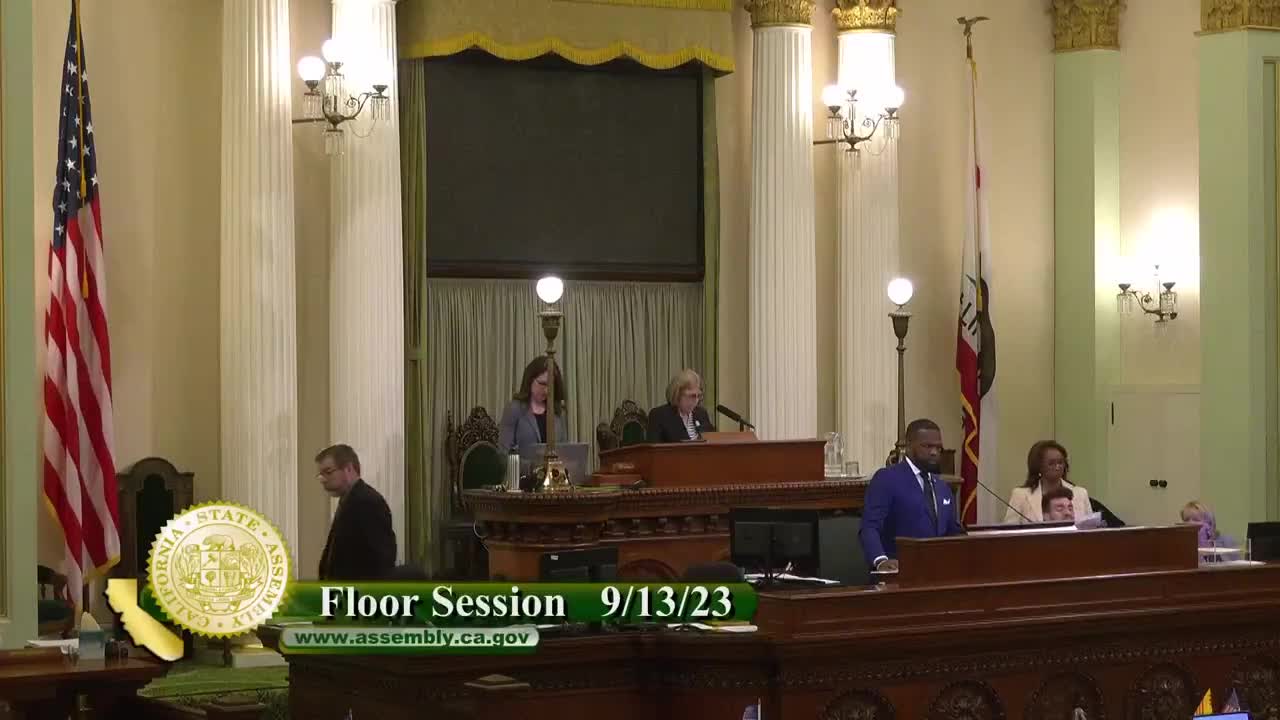
Bill Author

Bill Co-Author(s):