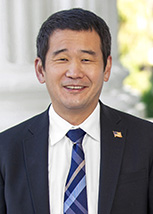
AB 1587: Financial transactions: firearms merchants: merchant category code.
- Session Year: 2023-2024
- House: Assembly
- Latest Version Date: 2023-09-26
Current Status:
Passed
(2023-09-26: Chaptered by Secretary of State - Chapter 247, Statutes of 2023.)
Introduced
In Committee
First Chamber
In Committee
Second Chamber
Enacted
Existing law, the California Financing Law, generally provides for the licensure and regulation of finance lenders, brokers, and program administrators by the Commissioner of Financial Protection and Innovation.
Existing law establishes a firearm industry standard of conduct that requires a firearm industry member to establish, implement, and enforce reasonable controls and to take responsible precautions to ensure that the member does not sell, distribute, or provide a firearm-related product to a downstream distributor or retailer of firearm-related products under specified circumstances. Existing law prohibits a firearm industry member from manufacturing, marketing, importing, offering for wholesale sale, or offering for retail sale a firearm-related product that is abnormally dangerous and likely to create an unreasonable risk of harm to public health and safety in California, as specified. Existing law authorizes, among others, the Attorney General to bring a civil action against a firearm industry member for an act or omission in violation of the firearm industry standard of conduct, as specified. Existing law defines various terms for these purposes.
This bill would, by July 1, 2024, require a payment card network to make the merchant category code for firearms and ammunition businesses established by the International Organization for Standardization on September 9, 2022, available for merchant acquirers that provide payment services for firearms merchants. The bill would, beginning May 1, 2025, require a merchant acquirer to assign to a firearms merchant that merchant category code. The bill would provide that the Attorney General has exclusive authority to enforce these provisions, and would authorize the Attorney General to bring a civil action to enforce these provisions and remedy harm caused by a violation of these provisions. The bill would require a court that determines that a person or entity has violated these provisions to award specified relief, including a civil penalty in the amount of $10,000 for each violation. The bill would define various terms for these purposes.
Existing law, the California Financing Law, generally provides for the licensure and regulation of finance lenders, brokers, and program administrators by the Commissioner of Financial Protection and Innovation.
Existing law establishes a firearm industry standard of conduct that requires a firearm industry member to establish, implement, and enforce reasonable controls and to take responsible precautions to ensure that the member does not sell, distribute, or provide a firearm-related product to a downstream distributor or retailer of firearm-related products under specified circumstances. Existing law prohibits a firearm industry member from manufacturing, marketing, importing, offering for wholesale sale, or offering for retail sale a firearm-related product that is abnormally dangerous and likely to create an unreasonable risk of harm to public health and safety in California, as specified. Existing law authorizes, among others, the Attorney General to bring a civil action against a firearm industry member for an act or omission in violation of the firearm industry standard of conduct, as specified. Existing law defines various terms for these purposes.
This bill would, by July 1, 2024, require a payment card network to make the merchant category code for firearms and ammunition businesses established by the International Organization for Standardization on September 9, 2022, available for merchant acquirers that provide payment services for firearms merchants. The bill would, beginning May 1, 2025, require a merchant acquirer to assign to a firearms merchant that merchant category code. The bill would provide that the Attorney General has exclusive authority to enforce these provisions, and would authorize the Attorney General to bring a civil action to enforce these provisions and remedy harm caused by a violation of these provisions. The bill would require a court that determines that a person or entity has violated these provisions to award specified relief, including a civil penalty in the amount of $10,000 for each violation. The bill would define various terms for these purposes.
Existing law, the California Financing Law, generally provides for the licensure and regulation of finance lenders, brokers, and program administrators by the Commissioner of Financial Protection and Innovation.
Existing law establishes a firearm industry standard of conduct that requires a firearm industry member to establish, implement, and enforce reasonable controls and to take responsible precautions to ensure that the member does not sell, distribute, or provide a firearm-related product to a downstream distributor or retailer of firearm-related products under specified circumstances. Existing law prohibits a firearm industry member from manufacturing, marketing, importing, offering for wholesale sale, or offering for retail sale a firearm-related product that is abnormally dangerous and likely to create an unreasonable risk of harm to public health and safety in California, as specified. Existing law authorizes, among others, the Attorney General to bring a civil action against a firearm industry member for an act or omission in violation of the firearm industry standard of conduct, as specified. Existing law defines various terms for these purposes.
This bill would, by July 1, 2024, require a payment card network to make the merchant category code for firearms and ammunition businesses established by the International Organization for Standardization on September 9, 2022, available for merchant acquirers that provide payment services for firearms merchants. The bill would, beginning March May 1, 2025, require a merchant acquirer to assign to a firearms merchant that merchant category code. The bill would provide that the Attorney General has exclusive authority to enforce these provisions, and would authorize the Attorney General to bring a civil action to enforce these provisions and remedy harm caused by a violation of these provisions. The bill would require a court that determines that a person or entity has violated these provisions to award specified relief, including a civil penalty in the amount of $10,000 for each violation. The bill would define various terms for these purposes.
Existing law, the California Financing Law, generally provides for the licensure and regulation of finance lenders, brokers, and program administrators by the Commissioner of Financial Protection and Innovation.
Existing law establishes a firearm industry standard of conduct that requires a firearm industry member to establish, implement, and enforce reasonable controls and to take responsible precautions to ensure that the member does not sell, distribute, or provide a firearm-related product to a downstream distributor or retailer of firearm-related products under specified circumstances. Existing law prohibits a firearm industry member from manufacturing, marketing, importing, offering for wholesale sale, or offering for retail sale a firearm-related product that is abnormally dangerous and likely to create an unreasonable risk of harm to public health and safety in California, as specified. Existing law authorizes, among others, the Attorney General to bring a civil action against a firearm industry member for an act or omission in violation of the firearm industry standard of conduct, as specified. Existing law defines various terms for these purposes.
This bill would, by July 1, 2024, require a payment card network to make the merchant category code for firearms and ammunition businesses established by the International Organization for Standardization on September 9, 2022, available for merchant acquirers that provide payment services for firearms merchants. The bill would, beginning March 1, 2025, require a merchant acquirer to assign to a firearms merchant that merchant category code. The bill would provide that the Attorney General has exclusive authority to enforce these provisions, and would authorize the Attorney General to bring a civil action to enforce these provisions and remedy harm caused by a violation of these provisions. The bill would require a court that determines that a person or entity has violated these provisions to award specified relief, including a civil penalty in the amount of $10,000 for each violation. The bill would define various terms for these purposes.
Existing law, the California Financing Law, generally provides for the licensure and regulation of finance lenders, brokers, and program administrators by the Commissioner of Financial Protection and Innovation.
Existing law establishes a firearm industry standard of conduct that requires a firearm industry member to establish, implement, and enforce reasonable controls and to take responsible precautions to ensure that the member does not sell, distribute, or provide a firearm-related product to a downstream distributor or retailer of firearm-related products under specified circumstances. Existing law prohibits a firearm industry member from manufacturing, marketing, importing, offering for wholesale sale, or offering for retail sale a firearm-related product that is abnormally dangerous and likely to create an unreasonable risk of harm to public health and safety in California, as specified. Existing law authorizes, among others, the Attorney General to bring a civil action against a firearm industry member for an act or omission in violation of the firearm industry standard of conduct, as specified. Existing law defines various terms for these purposes.
This bill would would, by July 1, 2024, require specified entities that facilitate or process a payment card transaction to assign to a firearms merchant, or require a firearms merchant to use, a payment card network to make the merchant category code for firearms and ammunition businesses established by the International Organization for Standardization on September 9, 2022. 2022, available for merchant acquirers that provide payment services for firearms merchants. The bill would prohibit specified entities involved in facilitating or processing a payment card transaction from assigning to a firearms merchant, or from requiring a firearms merchant to use, a merchant category code that classifies the firearms merchant as a general merchandise retailer or sporting goods retailer. would, beginning March 1, 2025, require a merchant acquirer to assign to a firearms merchant that merchant category code. The bill would provide that the Attorney General has exclusive authority to enforce these provisions, and would authorize the Attorney General to bring a civil action to enforce these provisions and remedy harm caused by a violation of these provisions. The bill would require a court that determines that a person or entity has violated these provisions to award specified relief, including a civil penalty in the amount of $10,000 for each violation. The bill would define various terms for these purposes.
Existing law, the California Financing Law, generally provides for the licensure and regulation of finance lenders, brokers, and program administrators by the Commissioner of Financial Protection and Innovation.
Existing law establishes a firearm industry standard of conduct that requires a firearm industry member to establish, implement, and enforce reasonable controls and to take responsible precautions to ensure that the member does not sell, distribute, or provide a firearm-related product to a downstream distributor or retailer of firearm-related products under specified circumstances. Existing law prohibits a firearm industry member from manufacturing, marketing, importing, offering for wholesale sale, or offering for retail sale a firearm-related product that is abnormally dangerous and likely to create an unreasonable risk of harm to public health and safety in California, as specified. Existing law authorizes, among others, the Attorney General to bring a civil action against a firearm industry member for an act or omission in violation of the firearm industry standard of conduct, as specified. Existing law defines various terms for these purposes.
This bill would require specified entities that facilitate or process a payment card transaction to assign to a firearms merchant, or require a firearms merchant to use, the merchant category code for firearms and ammunition businesses established by the International Organization for Standardization on September 9, 2022. The bill would prohibit specified entities involved in facilitating or processing a payment card transaction from assigning to a firearms merchant, or from requiring a firearms merchant to use, a merchant category code that classifies the firearms merchant as a general merchandise retailer or sporting goods retailer. The bill would provide that the Attorney General has exclusive authority to enforce these provisions, and would authorize the Attorney General to bring a civil action to enforce these provisions and remedy harm caused by a violation of these provisions. The bill would require a court that determines that a person or entity has violated these provisions to award specified relief, including a civil penalty in the amount of $10,000 for each violation. The bill would define various terms for these purposes.
Existing law establishes the Multifamily Housing Program, administered by the Department of Housing and Community Development. Existing law requires that funds appropriated to provide housing for individuals and families who are experiencing homelessness or who are at risk of homelessness and who are impacted by the COVID-19 pandemic be disbursed in accordance with the Multifamily Housing Program for specified uses, including as grants to cities, counties, and cities and counties. Existing law requires the department, in coordination with the Business, Consumer Services, and Housing Agency, to report to specified committees of the Legislature on the use of these funds, as provided, on or before April 1, 2021. Existing law requires the report to include specified information, including the location of any properties for which the funds are used and the number of usable housing units produced, or planned to be produced, using the funds.This bill would revise the reporting requirement described above by requiring the department to report on the use of those funds on or before July 1, 2026. The bill would additionally require that report to include the average cost and length of time to rehabilitate or convert units to long-term housing units, what services are provided to individuals, how the services are funded, and the length of time to spend the funds.Existing law establishes the Multifamily Housing Program, administered by the Department of Housing and Community Development. Existing law requires that funds appropriated to provide housing for individuals and families who are experiencing homelessness or who are at risk of homelessness and who are impacted by the COVID-19 pandemic be disbursed in accordance with the Multifamily Housing Program for specified uses, including as grants to cities, counties, and cities and counties. Existing law requires the department, in coordination with the Business, Consumer Services, and Housing Agency, to report to specified committees of the Legislature on the use of these funds, as provided, on or before April 1, 2021. Existing law requires the report to include specified information, including the location of any properties for which the funds are used and the number of usable housing units produced, or planned to be produced, using the funds.
This bill would revise the reporting requirement described above by requiring the department to report on the use of those funds on or before July 1, 2026. The bill would additionally require that report to include the average cost and length of time to rehabilitate or convert units to long-term housing units. units, what services are provided to individuals, how the services are funded, and the length of time to spend the funds.
Existing law establishes the Multifamily Housing Program, administered by the Department of Housing and Community Development. Existing law requires that funds appropriated to provide housing for individuals and families who are experiencing homelessness or who are at risk of homelessness and who are impacted by the COVID-19 pandemic be disbursed in accordance with the Multifamily Housing Program for specified uses, including as grants to cities, counties, and cities and counties. Existing law requires the department, in coordination with the Business, Consumer Services, and Housing Agency, to report to specified committees of the Legislature on the use of these funds, as provided, on or before April 1, 2021. Existing law requires the report to include specified information, including the location of any properties for which the funds are used and the number of usable housing units produced, or planned to be produced, using the funds.
This bill would revise the reporting requirement described above by requiring the department to annually report on the use of those funds. funds on or before July 1, 2026. The bill would additionally require that report to include the average cost and length of time to rehabilitate or convert units to long-term housing units.
Existing law establishes the Multifamily Housing Program, administered by the Department of Housing and Community Development. Existing law requires that funds appropriated to provide housing for individuals and families who are experiencing homelessness or who are at risk of homelessness and who are impacted by the COVID-19 pandemic be disbursed in accordance with the Multifamily Housing Program for specified uses, including as grants to cities, counties, and cities and counties. Existing law requires the department, in coordination with the Business, Consumer Services, and Housing Agency, to report to specified committees of the Legislature on the use of these funds, as provided, on or before April 1, 2021. Existing law requires the report to include specified information, including the location of any properties for which the funds are used and the number of usable housing units produced, or planned to be produced, using the funds.
This bill would revise the reporting requirement described above by requiring the department to annually report on the use of those funds. The bill would additionally require that report to include the average cost and length of time to rehabilitate or convert units to long-term housing units.
For purposes of this division, the following definitions apply:
(a)Ammunition has the same meaning as provided in subdivision (b) of Section 16150 of the Penal Code.
(b)Firearm has the same meaning as provided in subdivisions (a) and (b) of Section 16520 of the Penal Code.
(c)Firearm accessory means an attachment or device designed or adapted to be inserted into, affixed onto, or used in conjunction with a firearm that is designed, intended, or functions to alter or enhance the firing capabilities of a firearm, the lethality of the firearm, or a shooters ability to hold and use a firearm.
(d)Firearms merchant means a business licensed in California as a firearms dealer or ammunition vendor for which the highest sales value is, or is expected to be, from the combined sale in California of firearms, firearm accessories, or ammunition, as stated by the business to its merchant acquirer in the ordinary course of business.
(e)Merchant acquirer means an entity that establishes a relationship with a merchant for the purposes of processing credit, debit, or prepaid transactions.
(f)Payment card network means an entity that provides services that route transactions between bank participants to conduct debit, credit, or prepaid transactions for the purpose of authorization, clearance, or settlement.
110001.(a)By July 1, 2024, a payment card network shall make the merchant category code for firearms and ammunition businesses established by the International Organization for Standardization on September 9, 2022, available for merchant acquirers that provide payment services for firearms merchants.
(b)Beginning May 1, 2025, a merchant acquirer shall assign to a firearms merchant the merchant category code for firearms and ammunition businesses established by the International Organization for Standardization on September 9, 2022.
(c)A waiver of a provision of this division is contrary to public policy and is void and unenforceable.
110002.(a)The Attorney General has exclusive authority to enforce this division.
(b)Not later than the 30th day before bringing an action under subdivision (e), the Attorney General shall give written notice to the person or entity identifying the specific provisions of this chapter that are or were being violated.
(c)The Attorney General shall not bring an action under subdivision (e) if the person or entity who receives the notice described in subdivision (b) does both of the following:
(1)Cures the identified violation within 30 days of receiving the notice.
(2)Provides the Attorney General a written statement confirming that the person or entity has done all of the following:
(A)Cured the violation.
(B)Provided supporting documentation to show how the violation was cured.
(C)Made changes to internal policies to prevent the recurrence of violations in the future.
(d)A person or entity who violates the division and fails to cure the violation in accordance with subdivision (c) shall be liable as provided in subdivision (e).
(e)(1)The Attorney General may bring a civil action to enforce this division and remedy harm caused by a violation of this division.
(2)If a court determines that a person or entity has violated this division, the court shall award all of the following relief:
(A)A civil penalty in the amount of ten thousand dollars ($10,000) for each violation.
(B)Injunctive relief sufficient to prevent the person or entity from further violations of this division.
(C)Reasonable attorneys fees and costs incurred in investigating and bringing an action under this division.
For purposes of this division, the following definitions apply:
(a)Ammunition has the same meaning as provided in subdivision (b) of Section 16150 of the Penal Code.
(b)Firearm has the same meaning as provided in subdivisions (a) and (b) of Section 16520 of the Penal Code.
(c)Firearm accessory means an attachment or device designed or adapted to be inserted into, affixed onto, or used in conjunction with a firearm that is designed, intended, or functions to alter or enhance the firing capabilities of a firearm, the lethality of the firearm, or a shooters ability to hold and use a firearm.
(d)Firearms merchant means a business licensed in California as a firearms dealer or ammunition vendor for which the highest sales value is, or is expected to be, from the combined sale in California of firearms, firearm accessories, or ammunition, as stated by the business to its merchant acquirer in the ordinary course of business.
(e)Merchant acquirer means an entity that establishes a relationship with a merchant for the purposes of processing credit, debit, or prepaid transactions.
(f)Payment card network means an entity that provides services that route transactions between bank participants to conduct debit, credit, or prepaid transactions for the purpose of authorization, clearance, or settlement.
110001.(a)By July 1, 2024, a payment card network shall make the merchant category code for firearms and ammunition businesses established by the International Organization for Standardization on September 9, 2022, available for merchant acquirers that provide payment services for firearms merchants.
(b)Beginning May 1, 2025, a merchant acquirer shall assign to a firearms merchant the merchant category code for firearms and ammunition businesses established by the International Organization for Standardization on September 9, 2022.
(c)A waiver of a provision of this division is contrary to public policy and is void and unenforceable.
110002.(a)The Attorney General has exclusive authority to enforce this division.
(b)Not later than the 30th day before bringing an action under subdivision (e), the Attorney General shall give written notice to the person or entity identifying the specific provisions of this chapter that are or were being violated.
(c)The Attorney General shall not bring an action under subdivision (e) if the person or entity who receives the notice described in subdivision (b) does both of the following:
(1)Cures the identified violation within 30 days of receiving the notice.
(2)Provides the Attorney General a written statement confirming that the person or entity has done all of the following:
(A)Cured the violation.
(B)Provided supporting documentation to show how the violation was cured.
(C)Made changes to internal policies to prevent the recurrence of violations in the future.
(d)A person or entity who violates the division and fails to cure the violation in accordance with subdivision (c) shall be liable as provided in subdivision (e).
(e)(1)The Attorney General may bring a civil action to enforce this division and remedy harm caused by a violation of this division.
(2)If a court determines that a person or entity has violated this division, the court shall award all of the following relief:
(A)A civil penalty in the amount of ten thousand dollars ($10,000) for each violation.
(B)Injunctive relief sufficient to prevent the person or entity from further violations of this division.
(C)Reasonable attorneys fees and costs incurred in investigating and bringing an action under this division.
For purposes of this division, the following definitions apply:
(a)Ammunition has the same meaning as provided in subdivision (b) of Section 16150 of the Penal Code.
(b)Firearm has the same meaning as provided in subdivisions (a) and (b) of Section 16520 of the Penal Code.
(c)Firearm accessory means an attachment or device designed or adapted to be inserted into, affixed onto, or used in conjunction with a firearm that is designed, intended, or functions to alter or enhance the firing capabilities of a firearm, the lethality of the firearm, or a shooters ability to hold and use a firearm.
(d)Firearms merchant means a business licensed in California as a firearms dealer or ammunition vendor for which the highest sales value is, or is expected to be, from the combined sale in California of firearms, firearm accessories, or ammunition, as stated by the business to its merchant acquirer in the ordinary course of business.
(e)Merchant acquirer means an entity that establishes a relationship with a merchant for the purposes of processing credit, debit, or prepaid transactions.
(f)Payment card network means an entity that provides services that route transactions between bank participants to conduct debit, credit, or prepaid transactions for the purpose of authorization, clearance, or settlement.
110001.(a)By July 1, 2024, a payment card network shall make the merchant category code for firearms and ammunition businesses established by the International Organization for Standardization on September 9, 2022, available for merchant acquirers that provide payment services for firearms merchants.
(b)Beginning March May 1, 2025, a merchant acquirer shall assign to a firearms merchant the merchant category code for firearms and ammunition businesses established by the International Organization for Standardization on September 9, 2022.
(c)A waiver of a provision of this division is contrary to public policy and is void and unenforceable.
110002.(a)The Attorney General has exclusive authority to enforce this division.
(b)Not later than the 30th day before bringing an action under subdivision (e), the Attorney General shall give written notice to the person or entity identifying the specific provisions of this chapter that are or were being violated.
(c)The Attorney General shall not bring an action under subdivision (e) if the person or entity who receives the notice described in subdivision (b) does both of the following:
(1)Cures the identified violation within 30 days of receiving the notice.
(2)Provides the Attorney General a written statement confirming that the person or entity has done all of the following:
(A)Cured the violation.
(B)Provided supporting documentation to show how the violation was cured.
(C)Made changes to internal policies to prevent the recurrence of violations in the future.
(d)A person or entity who violates the division and fails to cure the violation in accordance with subdivision (c) shall be liable as provided in subdivision (e).
(e)(1)The Attorney General may bring a civil action to enforce this division and remedy harm caused by a violation of this division.
(2)If a court determines that a person or entity has violated this division, the court shall award all of the following relief:
(A)A civil penalty in the amount of ten thousand dollars ($10,000) for each violation.
(B)Injunctive relief sufficient to prevent the person or entity from further violations of this division.
(C)Reasonable attorneys fees and costs incurred in investigating and bringing an action under this division.
For purposes of this division, the following definitions apply:
(a)Ammunition has the same meaning as provided in subdivision (b) of Section 16150 of the Penal Code.
(b)Firearm has the same meaning as provided in subdivisions (a) and (b) of Section 16520 of the Penal Code.
(c)Firearm accessory means an attachment or device designed or adapted to be inserted into, affixed onto, or used in conjunction with a firearm that is designed, intended, or functions to alter or enhance the firing capabilities of a firearm, the lethality of the firearm, or a shooters ability to hold and use a firearm.
(d)Firearms merchant means a business licensed in California as a firearms dealer or ammunition vendor for which the highest sales value is, or is expected to be, from the combined sale in California of firearms, firearm accessories, or ammunition in aggregate, ammunition, as stated by the business to its merchant acquirer in the ordinary course of business.
(e)Merchant acquirer means an entity that establishes a relationship with a merchant for the purposes of processing credit, debit, or prepaid transactions.
(f)Payment card network means an entity that provides services that route transactions between bank participants to conduct debit, credit, or prepaid transactions for the purpose of authorization, clearance, or settlement.
110001.(a)By July 1, 2024, a payment card network shall make the merchant category code for firearms and ammunition businesses established by the International Organization for Standardization on September 9, 2022, available for merchant acquirers that provide payment services for firearms merchants.
(b)Beginning March 1, 2025, a merchant acquirer shall assign to a firearms merchant the merchant category code for firearms and ammunition businesses established by the International Organization for Standardization on September 9, 2022.
(c)A waiver of a provision of this division is contrary to public policy and is void and unenforceable.
110002.(a)The Attorney General has exclusive authority to enforce this division.
(b)Not later than the 30th day before bringing an action under subdivision (e), the Attorney General shall give written notice to the person or entity identifying the specific provisions of this chapter that are or were being violated.
(c)The Attorney General shall not bring an action under subdivision (e) if the person or entity who receives the notice described in subdivision (b) does both of the following:
(1)Cures the identified violation within 30 days of receiving the notice.
(2)Provides the Attorney General a written statement confirming that the person or entity has done all of the following:
(A)Cured the violation.
(B)Provided supporting documentation to show how the violation was cured.
(C)Made changes to internal policies to prevent the recurrence of violations in the future.
(d)A person or entity who violates the division and fails to cure the violation in accordance with subdivision (c) shall be liable as provided in subdivision (e).
(e)(1)The Attorney General may bring a civil action to enforce this division and remedy harm caused by a violation of this division.
(2)If a court determines that a person or entity has violated this division, the court shall award all of the following relief:
(A)A civil penalty in the amount of ten thousand dollars ($10,000) for each violation.
(B)Injunctive relief sufficient to prevent the person or entity from further violations of this division.
(C)Reasonable attorneys fees and costs incurred in investigating and bringing an action under this division.
For purposes of this division, the following definitions apply:
(a)Ammunition has the same meaning as provided in subdivision (b) of Section 16150 of the Penal Code.
(b)Financial institution means any institution the business of which is engaging in financial activities as described in Section 1843(k) of Title 12 of the United States Code.(c)(b)Firearm has the same meaning as provided in subdivisions (a) and (b) of Section 16520 of the Penal Code.
(c)Firearm accessory means an attachment or device designed or adapted to be inserted into, affixed onto, or used in conjunction with a firearm that is designed, intended, or functions to alter or enhance the firing capabilities of a firearm, the lethality of the firearm, or a shooters ability to hold and use a firearm.
(d)Firearms merchant means a retailer doing business in California business licensed in California as a firearms dealer or ammunition vendor for which the highest sales value is, or is expected to result from, be, from the sale in California of firearms, firearms firearm accessories, or ammunition in aggregate. aggregate, as stated by the business to its merchant acquirer in the ordinary course of business.(e)Payment card means a credit card, debit card, check card, or other card that is issued for the purpose of purchasing or obtaining goods, services, money, or any other thing of value.(f)Payment card issuer means either of the following:(1)A lender, including, but not limited to, a financial institution, that receives applications and issues payment cards to individuals.(2)A merchant that receives applications and issues payment cards to individuals.(e)Merchant acquirer means an entity that establishes a relationship with a merchant for the purposes of processing credit, debit, or prepaid transactions.
(g)(f)Payment card network means an entity that, directly or through a licensed member, processor, or agent, that provides services that do either of the following: route transactions between bank participants to conduct debit, credit, or prepaid transactions for the purpose of authorization, clearance, or settlement.
(1)Route information and data to conduct debit card or credit card transaction authorization, clearance, and settlement.(2)Allow an entity to accept as a form of payment a debit card or a credit card.(h)Payment card transaction means a transaction in which a person uses a payment card or other payment code or device issued or approved through a payment card network to debit a deposit account or use a line of credit.110001.(a)An entity, including, but not limited to, a financial institution, an acquirer, a payment card network, and a payment card issuer, that facilitates or processes a payment card transaction shall assign to a firearms merchant, or require a firearms merchant to use, By July 1, 2024, a payment card network shall make the merchant category code for firearms and ammunition businesses established by the International Organization for Standardization on September 9, 2022. 2022, available for merchant acquirers that provide payment services for firearms merchants.
(b)An entity involved in facilitating or processing a payment card transaction, including, but not limited to, a financial institution, an acquirer, a payment card network, or a payment card issuer, shall not assign to a firearms merchant, and shall not require a firearms merchant to use, a merchant category code that classifies the firearms merchant as a general merchandise retailer or sporting goods retailer.(b)Beginning March 1, 2025, a merchant acquirer shall assign to a firearms merchant the merchant category code for firearms and ammunition businesses established by the International Organization for Standardization on September 9, 2022.
(c)A waiver of a provision of this division is contrary to public policy and is void and unenforceable.
110002.(a)The Attorney General has exclusive authority to enforce this division.
(b)Not later than the 30th day before bringing an action under subdivision (e), the Attorney General shall give written notice to the person or entity identifying the specific provisions of this chapter that are or were being violated.
(c)The Attorney General shall not bring an action under subdivision (e) if the person or entity who receives the notice described in subdivision (b) does both of the following:
(1)Cures the identified violation within 30 days of receiving the notice.
(2)Provides the Attorney General a written statement confirming that the person or entity has done all of the following:
(A)Cured the violation.
(B)Provided supporting documentation to show how the violation was cured.
(C)Made changes to internal policies to prevent the recurrence of violations in the future.
(d)A person or entity who violates the division and fails to cure the violation in accordance with subdivision (c) shall be liable as provided in subdivision (e).
(e)(1) The Attorney General may bring a civil action to enforce this division and remedy harm caused by a violation of this division.
(2)If a court determines that a person or entity has violated this division, the court shall award all of the following relief:
(A)A civil penalty in the amount of ten thousand dollars ($10,000) for each violation.
(B)Injunctive relief sufficient to prevent the person or entity from further violations of this division.
(C)Reasonable attorneys attorneys fees and costs incurred in investigating and bringing an action under this division.
For purposes of this division, the following definitions apply:
(a)Ammunition has the same meaning as provided in subdivision (b) of Section 16150 of the Penal Code.
(b)Financial institution means any institution the business of which is engaging in financial activities as described in Section 1843(k) of Title 12 of the United States Code.
(c)Firearm has the same meaning as provided in subdivisions (a) and (b) of Section 16520 of the Penal Code.
(d)Firearms merchant means a retailer doing business in California for which the highest sales value is, or is expected to result from, the sale of firearms, firearms accessories, or ammunition in aggregate.
(e)Payment card means a credit card, debit card, check card, or other card that is issued for the purpose of purchasing or obtaining goods, services, money, or any other thing of value.
(f)Payment card issuer means either of the following:
(1)A lender, including, but not limited to, a financial institution, that receives applications and issues payment cards to individuals.
(2)A merchant that receives applications and issues payment cards to individuals.
(g)Payment card network means an entity that, directly or through a licensed member, processor, or agent, provides services that do either of the following:
(1)Route information and data to conduct debit card or credit card transaction authorization, clearance, and settlement.
(2)Allow an entity to accept as a form of payment a debit card or a credit card.
(h)Payment card transaction means a transaction in which a person uses a payment card or other payment code or device issued or approved through a payment card network to debit a deposit account or use a line of credit.
110001.(a)An entity, including, but not limited to, a financial institution, an acquirer, a payment card network, and a payment card issuer, that facilitates or processes a payment card transaction shall assign to a firearms merchant, or require a firearms merchant to use, the merchant category code for firearms and ammunition businesses established by the International Organization for Standardization on September 9, 2022.
(b)An entity involved in facilitating or processing a payment card transaction, including, but not limited to, a financial institution, an acquirer, a payment card network, or a payment card issuer, shall not assign to a firearms merchant, and shall not require a firearms merchant to use, a merchant category code that classifies the firearms merchant as a general merchandise retailer or sporting goods retailer.
(c)A waiver of a provision of this division is contrary to public policy and is void and unenforceable.
110002.(a)The Attorney General has exclusive authority to enforce this division.
(b)Not later than the 30th day before bringing an action under subdivision (e), the Attorney General shall give written notice to the person or entity identifying the specific provisions of this chapter that are or were being violated.
(c)The Attorney General shall not bring an action under subdivision (e) if the person or entity who receives the notice described in subdivision (b) does both of the following:
(1)Cures the identified violation within 30 days of receiving the notice.
(2)Provides the Attorney General a written statement confirming that the person or entity has done all of the following:
(A)Cured the violation.
(B)Provided supporting documentation to show how the violation was cured.
(C)Made changes to internal policies to prevent the recurrence of violations in the future.
(d)A person or entity who violates the division and fails to cure the violation in accordance with subdivision (c) shall be liable as provided in subdivision (e).
(e)(1) The Attorney General may bring a civil action to enforce this division and remedy harm caused by a violation of this division.
(2)If a court determines that a person or entity has violated this division, the court shall award all of the following relief:
(A)A civil penalty in the amount of ten thousand dollars ($10,000) for each violation.
(B)Injunctive relief sufficient to prevent the person or entity from further violations of this division.
(C)Reasonable attorneys fees and costs incurred in investigating and bringing an action under this division.
SECTION 1.Section 50675.1.1 of the Health and Safety Code is amended to read:50675.1.1.(a)Notwithstanding any other law, including subdivision (b) of Section 50675.1, funds appropriated in the 2020 Budget Act or an act related to the 2020 Budget Act, including, but not limited to, moneys received from the Coronavirus Relief Fund established by the federal Coronavirus Aid, Relief, and Economic Security (CARES) Act (Public Law 116-136), to provide housing for individuals and families who are experiencing homelessness or who are at risk of homelessness, as defined in Section 578.3 of Title 24 of the Code of Federal Regulations, and who are impacted by the COVID-19 pandemic, shall be disbursed in accordance with the Multifamily Housing Program, including as grants to cities, counties, and other local public entities, as necessary, created by this chapter for the following uses, consistent with applicable federal law and guidance:(1)Acquisition or rehabilitation of motels, hotels, or hostels.(2)Master leasing of properties.(3)Acquisition of other sites and assets, including purchase of apartments or homes, adult residential facilities, residential care facilities for the elderly, manufactured housing, and other buildings with existing residential uses that could be converted to permanent or interim housing.(4)Conversion of units from nonresidential to residential in a structure with a certificate of occupancy as a motel, hotel, or hostel.(5)The purchase of affordability covenants and restrictions for units.(6)Relocation costs for individuals who are being displaced as a result of rehabilitation of existing units.(7)Capitalized operating subsidies for units purchased, converted, or altered with funds provided by this section.(b)Where possible, the funds described in subdivision (a) shall be allocated by the department in a manner that takes into consideration all of the following:(1)Geographic needs across the state.(2)Areas with high unsheltered populations and high COVID-19 infection rates.(3)The demonstrated ability of the applicant to fund ongoing operating reserves.(4)The creation of new permanent housing options.(5)The potential for state funding for capitalized operating reserves to make additional housing units financially viable through this program.(c)Any conflict between the other requirements of the Multifamily Housing Program created by this chapter and this section shall be resolved in favor of this section, as may be set forth in the guidelines authorized by this section.(d)The Department of Housing and Community Development may adopt guidelines for the expenditure of the funds appropriated to the department. The guidelines shall not be subject to the requirements of Chapter 3.5 (commencing with Section 11340) of Part 1 of Division 3 of Title 2 of the Government Code.(e)Up to 2 percent of the funds appropriated for this section may be expended for the costs to administer this program.(f)On or before July 1, 2026, the Department of Housing and Community Development, in coordination with the Business, Consumer Services, and Housing Agency, shall report to the chairs of each fiscal committee and each relevant policy committee of the Legislature on the use of the funds described in this section. The report shall include, but not be limited to, all of the following:(1)The amount of funds expended for the uses described in this section.(2)The location of any properties for which the funds are used.(3)The number of usable housing units produced, or planned to be produced, using the funds.(4)The number of individuals housed, or likely to be housed, using the funds.(5)The number of units, and the location of those units, for which operating subsidies have been, or are planned to be, capitalized using the funds.(6)An explanation of how funding decisions were made for acquisition, conversion, or rehabilitation projects, or for capitalized operating subsidies, including what metrics were considered in making those decisions.(7)Any lessons learned from the use of the funds.(8)The average cost and length of time to rehabilitate or convert these units to long-term housing units.(9)What services are provided to individuals, how the services are funded, and the length of time to spend the funds.(g)Any project that uses funds received from the Coronavirus Relief Fund for any of the purposes specified in subdivision (a) shall be deemed consistent and in conformity with any applicable local plan, standard, or requirement, and allowed as a permitted use, within the zone in which the structure is located, and shall not be subject to a conditional use permit, discretionary permit, or to any other discretionary reviews or approvals.(h)A report to be submitted pursuant to subdivision (f) shall be submitted in compliance with Section 9795 of the Government Code.(a)Notwithstanding any other law, including subdivision (b) of Section 50675.1, funds appropriated in the 2020 Budget Act or an act related to the 2020 Budget Act, including, but not limited to, moneys received from the Coronavirus Relief Fund established by the federal Coronavirus Aid, Relief, and Economic Security (CARES) Act (Public Law 116-136), to provide housing for individuals and families who are experiencing homelessness or who are at risk of homelessness, as defined in Section 578.3 of Title 24 of the Code of Federal Regulations, and who are impacted by the COVID-19 pandemic, shall be disbursed in accordance with the Multifamily Housing Program, including as grants to cities, counties, and other local public entities, as necessary, created by this chapter for the following uses, consistent with applicable federal law and guidance:
(1)Acquisition or rehabilitation of motels, hotels, or hostels.
(2)Master leasing of properties.
(3)Acquisition of other sites and assets, including purchase of apartments or homes, adult residential facilities, residential care facilities for the elderly, manufactured housing, and other buildings with existing residential uses that could be converted to permanent or interim housing.
(4)Conversion of units from nonresidential to residential in a structure with a certificate of occupancy as a motel, hotel, or hostel.
(5)The purchase of affordability covenants and restrictions for units.
(6)Relocation costs for individuals who are being displaced as a result of rehabilitation of existing units.
(7)Capitalized operating subsidies for units purchased, converted, or altered with funds provided by this section.
(b)Where possible, the funds described in subdivision (a) shall be allocated by the department in a manner that takes into consideration all of the following:
(1)Geographic needs across the state.
(2)Areas with high unsheltered populations and high COVID-19 infection rates.
(3)The demonstrated ability of the applicant to fund ongoing operating reserves.
(4)The creation of new permanent housing options.
(5)The potential for state funding for capitalized operating reserves to make additional housing units financially viable through this program.
(c)Any conflict between the other requirements of the Multifamily Housing Program created by this chapter and this section shall be resolved in favor of this section, as may be set forth in the guidelines authorized by this section.
(d)The Department of Housing and Community Development may adopt guidelines for the expenditure of the funds appropriated to the department. The guidelines shall not be subject to the requirements of Chapter 3.5 (commencing with Section 11340) of Part 1 of Division 3 of Title 2 of the Government Code.
(e)Up to 2 percent of the funds appropriated for this section may be expended for the costs to administer this program.
(f)On or before July 1, 2026, the Department of Housing and Community Development, in coordination with the Business, Consumer Services, and Housing Agency, shall report to the chairs of each fiscal committee and each relevant policy committee of the Legislature on the use of the funds described in this section. The report shall include, but not be limited to, all of the following:
(1)The amount of funds expended for the uses described in this section.
(2)The location of any properties for which the funds are used.
(3)The number of usable housing units produced, or planned to be produced, using the funds.
(4)The number of individuals housed, or likely to be housed, using the funds.
(5)The number of units, and the location of those units, for which operating subsidies have been, or are planned to be, capitalized using the funds.
(6)An explanation of how funding decisions were made for acquisition, conversion, or rehabilitation projects, or for capitalized operating subsidies, including what metrics were considered in making those decisions.
(7)Any lessons learned from the use of the funds.
(8)The average cost and length of time to rehabilitate or convert these units to long-term housing units.
(9)What services are provided to individuals, how the services are funded, and the length of time to spend the funds.
(g)Any project that uses funds received from the Coronavirus Relief Fund for any of the purposes specified in subdivision (a) shall be deemed consistent and in conformity with any applicable local plan, standard, or requirement, and allowed as a permitted use, within the zone in which the structure is located, and shall not be subject to a conditional use permit, discretionary permit, or to any other discretionary reviews or approvals.
(h)A report to be submitted pursuant to subdivision (f) shall be submitted in compliance with Section 9795 of the Government Code.
(a)Notwithstanding any other law, including subdivision (b) of Section 50675.1, funds appropriated in the 2020 Budget Act or an act related to the 2020 Budget Act, including, but not limited to, moneys received from the Coronavirus Relief Fund established by the federal Coronavirus Aid, Relief, and Economic Security (CARES) Act (Public Law 116-136), to provide housing for individuals and families who are experiencing homelessness or who are at risk of homelessness, as defined in Section 578.3 of Title 24 of the Code of Federal Regulation, Regulations, and who are impacted by the COVID-19 pandemic, shall be disbursed in accordance with the Multifamily Housing Program, including as grants to cities, counties, and other local public entities, as necessary, created by this chapter for the following uses, consistent with applicable federal law and guidance:
(1)Acquisition or rehabilitation of motels, hotels, or hostels.
(2)Master leasing of properties.
(3)Acquisition of other sites and assets, including purchase of apartments or homes, adult residential facilities, residential care facilities for the elderly, manufactured housing, and other buildings with existing residential uses that could be converted to permanent or interim housing.
(4)Conversion of units from nonresidential to residential in a structure with a certificate of occupancy as a motel, hotel, or hostel.
(5)The purchase of affordability covenants and restrictions for units.
(6)Relocation costs for individuals who are being displaced as a result of rehabilitation of existing units.
(7)Capitalized operating subsidies for units purchased, converted, or altered with funds provided by this section.
(b)Where possible, the funds described in subdivision (a) shall be allocated by the department in a manner that takes into consideration all of the following:
(1)Need geographically Geographic needs across the state.
(2)Areas with high unsheltered populations and high COVID-19 infection rates.
(3)The demonstrated ability of the applicant to fund ongoing operating reserves.
(4)The creation of new permanent housing options.
(5)The potential for state funding for capitalized operating reserves to make additional housing units financially viable through this program.
(c)Any conflict between the other requirements of the Multifamily Housing Program created by this chapter and this section shall be resolved in favor of this section, as may be set forth in the guidelines authorized by this section.
(d)The Department of Housing and Community Development may adopt guidelines for the expenditure of the funds appropriated to the department. The guidelines shall not be subject to the requirements of Chapter 3.5 (commencing with Section 11340) of Part 1 of Division 3 of Title 2 of the Government Code.
(e)Up to 2 percent of the funds appropriated for this section may be expended for the costs to administer this program.
(f)On or before April 1 of each year, July 1, 2026, the Department of Housing and Community Development, in coordination with the Business, Consumer Services, and Housing Agency, shall report to the chairs of each fiscal committee and each relevant policy committee of the Legislature on the use of the funds described in this section. The annual report shall include, but not be limited to, all of the following:
(1)The amount of funds expended for the uses described in this section.
(2)The location of any properties for which the funds are used.
(3)The number of usable housing units produced, or planned to be produced, using the funds.
(4)The number of individuals housed, or likely to be housed, using the funds.
(5)The number of units, and the location of those units, for which operating subsidies have been, or are planned to be, capitalized using the funds.
(6)An explanation of how funding decisions were made for acquisition, conversion, or rehabilitation projects, or for capitalized operating subsidies, including what metrics were considered in making those decisions.
(7)Any lessons learned from the use of the funds.
(8)The average cost and length of time to rehabilitate or convert these units to long-term housing units.
(g)Any project that uses funds received from the Coronavirus Relief Fund for any of the purposes specified in subdivision (a) shall be deemed consistent and in conformity with any applicable local plan, standard, or requirement, and allowed as a permitted use, within the zone in which the structure is located, and shall not be subject to a conditional use permit, discretionary permit, or to any other discretionary reviews or approvals.
(h)A report to be submitted pursuant to subdivision (f) shall be submitted in compliance with Section 9795 of the Government Code.
(a)Notwithstanding any other law, including subdivision (b) of Section 50675.1, funds appropriated in the 2020 Budget Act or an act related to the 2020 Budget Act, including, but not limited to, moneys received from the Coronavirus Relief Fund established by the federal Coronavirus Aid, Relief, and Economic Security (CARES) Act (Public Law 116-136), to provide housing for individuals and families who are experiencing homelessness or who are at risk of homelessness, as defined in Section 578.3 of Title 24 of the Code of Federal Regulation, and who are impacted by the COVID-19 pandemic, shall be disbursed in accordance with the Multifamily Housing Program, including as grants to cities, counties, and other local public entities, as necessary, created by this chapter for the following uses, consistent with applicable federal law and guidance:
(1)Acquisition or rehabilitation of motels, hotels, or hostels.
(2)Master leasing of properties.
(3)Acquisition of other sites and assets, including purchase of apartments or homes, adult residential facilities, residential care facilities for the elderly, manufactured housing, and other buildings with existing residential uses that could be converted to permanent or interim housing.
(4)Conversion of units from nonresidential to residential in a structure with a certificate of occupancy as a motel, hotel, or hostel.
(5)The purchase of affordability covenants and restrictions for units.
(6)Relocation costs for individuals who are being displaced as a result of rehabilitation of existing units.
(7)Capitalized operating subsidies for units purchased, converted, or altered with funds provided by this section.
(b)Where possible, the funds described in subdivision (a) shall be allocated by the department in a manner that takes into consideration all of the following:
(1)Need geographically across the state.
(2)Areas with high unsheltered populations and high COVID-19 infection rates.
(3)The demonstrated ability of the applicant to fund ongoing operating reserves.
(4)The creation of new permanent housing options.
(5)The potential for state funding for capitalized operating reserves to make additional housing units financially viable through this program.
(c)Any conflict between the other requirements of the Multifamily Housing Program created by this chapter and this section shall be resolved in favor of this section, as may be set forth in the guidelines authorized by this section.
(d)The Department of Housing and Community Development may adopt guidelines for the expenditure of the funds appropriated to the department. The guidelines shall not be subject to the requirements of Chapter 3.5 (commencing with Section 11340) of Part 1 of Division 3 of Title 2 of the Government Code.
(e)Up to 2 percent of the funds appropriated for this section may be expended for the costs to administer this program.
(f)On or before April 1, 2021, 1 of each year, the Department of Housing and Community Development, in coordination with the Business, Consumer Services, and Housing Agency, shall report to the chairs of each fiscal committee and each relevant policy committee of the Legislature on the use of the funds described in this section. The annual report shall include, but not be limited to, all of the following:
(1)The amount of funds expended for the uses described in this section.
(2)The location of any properties for which the funds are used.
(3)The number of useable usable housing units produced, or planned to be produced, using the funds.
(4)The number of individuals housed, or likely to be housed, using the funds.
(5)The number of units, and the location of those units, for which operating subsidies have been, or are planned to be, capitalized using the funds.
(6)An explanation of how funding decisions were made for acquisition, conversion, or rehabilitation projects, or for capitalized operating subsidies, including what metrics were considered in making those decisions.
(7)Any lessons learned from the use of the funds.
(8)The average cost and length of time to rehabilitate or convert these units to long-term housing units.
(g)Any project that uses funds received from the Coronavirus Relief Fund for any of the purposes specified in subdivision (a) shall be deemed consistent and in conformity with any applicable local plan, standard, or requirement, and allowed as a permitted use, within the zone in which the structure is located, and shall not be subject to a conditional use permit, discretionary permit, or to any other discretionary reviews or approvals.
(h)A report to be submitted pursuant to subdivision (f) shall be submitted in compliance with Section 9795 of the Government Code.
|
Date
|
Status
|
|---|---|
| Sep 26, 2023 | Chaptered by Secretary of State - Chapter 247, Statutes of 2023. |
| Sep 26, 2023 | Approved by the Governor. |
| Sep 21, 2023 | Enrolled and presented to the Governor at 3:30 p.m. |
| Sep 13, 2023 | Senate amendments concurred in. To Engrossing and Enrolling. (Ayes 60. Noes 15. Page 3490.). |
| Sep 13, 2023 | From committee: That the Senate amendments be concurred in. (Ayes 7. Noes 2.) (September 13). |
| Sep 12, 2023 | Re-referred to Com. on B. & F. pursuant to Assembly Rule 77.2. |
| Sep 12, 2023 | Joint Rule 62(a), file notice suspended. (Page 3242.) |
| Sep 12, 2023 | Assembly Rule 77 suspended. (Page 3228.) |
| Sep 11, 2023 | In Assembly. Concurrence in Senate amendments pending. May be considered on or after September 13 pursuant to Assembly Rule 77. |
| Sep 11, 2023 | Read third time. Passed. Ordered to the Assembly. (Ayes 30. Noes 9. Page 2550.). |
| Aug 22, 2023 | Read second time. Ordered to third reading. |
| Aug 21, 2023 | From committee: Be ordered to second reading pursuant to Senate Rule 28.8. |
| Aug 14, 2023 | From committee chair, with author's amendments: Amend, and re-refer to committee. Read second time, amended, and re-referred to Com. on APPR. |
| Jul 13, 2023 | Read second time and amended. Re-referred to Com. on APPR. |
| Jul 12, 2023 | From committee: Amend, and do pass as amended and re-refer to Com. on APPR. (Ayes 9. Noes 2.) (July 11). |
| Jul 6, 2023 | From committee: Do pass and re-refer to Com. on JUD. (Ayes 5. Noes 2.) (July 5). Re-referred to Com. on JUD. |
| Jul 6, 2023 | From committee chair, with author's amendments: Amend, and re-refer to committee. Read second time, amended, and re-referred to Com. on JUD. |
| Jun 21, 2023 | Re-referred to Coms. on B. & F.I. and JUD. |
| Jun 14, 2023 | Withdrawn from committee. |
| Jun 14, 2023 | Re-referred to Com. on RLS. |
| Jun 13, 2023 | From committee chair, with author's amendments: Amend, and re-refer to committee. Read second time, amended, and re-referred to Com. on HOUSING. |
| Jun 7, 2023 | Referred to Com. on HOUSING. |
| May 26, 2023 | In Senate. Read first time. To Com. on RLS. for assignment. |
| May 25, 2023 | Read third time. Passed. Ordered to the Senate. (Ayes 76. Noes 0. Page 1801.) |
| May 18, 2023 | Read second time. Ordered to third reading. |
| May 18, 2023 | From committee: Do pass. (Ayes 15. Noes 0.) (May 18). |
| May 10, 2023 | In committee: Set, first hearing. Referred to APPR. suspense file. |
| Apr 27, 2023 | From committee: Do pass and re-refer to Com. on APPR. with recommendation: To Consent Calendar. (Ayes 8. Noes 0.) (April 26). Re-referred to Com. on APPR. |
| Apr 19, 2023 | In committee: Set, first hearing. Hearing canceled at the request of author. |
| Apr 18, 2023 | Re-referred to Com. on H. & C.D. |
| Apr 17, 2023 | From committee chair, with author's amendments: Amend, and re-refer to Com. on H. & C.D. Read second time and amended. |
| Apr 11, 2023 | Re-referred to Com. on H. & C.D. |
| Apr 10, 2023 | From committee chair, with author's amendments: Amend, and re-refer to Com. on H. & C.D. Read second time and amended. |
| Mar 9, 2023 | Referred to Com. on H. & C.D. |
| Feb 18, 2023 | From printer. May be heard in committee March 20. |
| Feb 17, 2023 | Read first time. To print. |
|
Date
|
Description
|
Location
|
Votes
|
|
|---|---|---|---|---|
| Sep 13, 2023 | AB 1587 Ting Concurrence in Senate Amendments | Assembly Floor |
Passed |
|
| Sep 13, 2023 | With recommendation: That Senate amendments be concurred in. | Assembly Standing Committee on Banking and Finance |
Passed |
|
| Sep 11, 2023 | Assembly 3rd Reading AB1587 Ting et al. By Limón | Senate Floor |
Passed |
|
| Jul 11, 2023 | Do pass as amended, but first amend, and re-refer to the Committee on [Appropriations] | Senate Standing Committee on Judiciary |
Passed |
|
| Jul 5, 2023 | Do pass, but first be re-referred to the Committee on [Judiciary] | Senate Standing Committee on Banking and Financial Institutions |
Passed |
|
| May 25, 2023 | AB 1587 Ting Assembly Third Reading | Assembly Floor |
Passed |
|
| May 18, 2023 | Do pass. | Assembly Standing Committee on Appropriations |
Passed |
|
| Apr 26, 2023 | Do pass and be re-referred to the Committee on [Appropriations] with recommendation: To Consent Calendar | Assembly Standing Committee on Housing and Community Development |
Passed |
This list shows positions taken on this bill by organizations on the date displayed, which is linked to the original source.
Positions by individuals are not included.
|
Organization
|
Position
|
Date
|
|---|---|---|
| California Chapters of The Brady Campaign to Prevent Gun Violence | * Support | Sep 13, 2023 |
| California Rifle And Pistol Association, Inc. | ** Against | |
| Defending Constitutional Rights | ** Against | |
| Everytown for Gun Safety | ** Support | |
| Everytown for Gun Safety Action Fund | ** Support | |
| Giffords | ** Support | |
| Gun Owners of California | * Against | Sep 13, 2023 |
| Moms Demand Action for Gun Sense in America | * Support | Jul 11, 2023 |
| National Rifle Association | * Against | Sep 13, 2023 |
| National Rifle Association - Institute For Legislative Action | ** Against | |
| National Shooting Sports Foundation, Inc. | * Against | Jul 5, 2023 |
| RMarcus Government Strategies | * Support | Jul 11, 2023 |
| Women for American Values and Ethics Action Fund | ** Support |
CONCURRENCE IN SENATE AMENDMENTS
CSA2 Bill Id:AB 1587
Author:(Ting)
As Amended Ver:August 14, 2023
Majority vote
SUMMARY
Original Committee of Reference: B. & F.
Requires financial institutions that facilitate payment card transactions to implement a merchant category code (MCC) for firearms merchants.
Senate Amendments
Current Committee Recommendation: Concur
Delete the Assembly version of this bill and instead:
- Requires, by July 1, 2024, a payment card network to make the MCC for firearms and ammunition businesses available for merchant acquirers, as defined, that provide payment services for firearms merchants.
- Requires, beginning May 1, 2025, that a merchant acquirer shall assign to a firearms merchant the MCC for firearms and ammunition businesses.
- Provides exclusive authority to the Attorney General (AG) to enforce the provisions of this bill.
- Requires the AG to provide written notice, at least 30 days prior to bringing an action, to the person or entity identifying the specific laws that are or were being violated.
- Prohibits the AG from bringing an action if the person or entity cures the identified violation within 30 days of receiving the notice and provides the AG with a written statement confirming that the person or entity has cured the violation.
- In a civil action brought by the AG, requires the court to award specified relief if the court determines that a person or entity has violated the law.
COMMENTS
AB 1587 introduces new requirements for companies involved with debit and credit card payments. The American card payment system involves four parties working together to process the transaction: the customer making the payment, the merchant accepting the payment, the customer's bank, and the merchant acquiring bank that processes transactions on behalf of the merchant. The companies that organize these four parties and operate the payment systems are known as card networks, such as Visa and MasterCard.
An MCC is a code used to designate the type of goods or services a merchant sells. These merchant-level codes are used for a variety of purposes, including to help with tax compliance, to establish the interchange rate, or to pay rewards to cardholders for certain types of expenditures. An MCC is not a product-level code (called a SKU). The International Organization for Standardization (ISO) approves any new MCC, and after a new code is approved then that MCC is incorporated by card networks. MCCs range from general to highly specific — for example, while electric razor stores, tent stores, and leather goods stores all currently have unique codes, there is no unique code for brick and mortar gun stores: gun and ammunition retail outlets are instead classified as "miscellaneous" or "sporting goods."
In September 2022, ISO adopted a new MCC for gun and ammunition stores. The effort to request the creation of an MCC for gun merchants was led by Amalgamated Bank and a coalition of gun safety advocates, elected officials, pension funds, and others interested in gun safety. The coalition believes that the new MCC will improve banks’ abilities to detect and report suspicious activities associated with gun trafficking and mass shootings. The push for a new MCC followed a number of media investigations into the role credit cards play in mass shootings. For example, a 2018 New York Times investigation found that in the mass shooting events reviewed, a majority of those attacks were funded using credit cards. As the New York Times writes, "The financial industry is uniquely positioned to see, if it chose to do so, a potential killer’s behavior in a way that retailers, law enforcement officials, concerned family members or mental health professionals cannot."
The ISO's adoption of a new MCC resulted in significant backlash in conservative states. Attorneys general in 24 states wrote a letter to banking industry leaders stating that the new MCC "unfairly singles out law-abiding merchants and consumers." The letter also warned CEOs that the attorneys general would "marshal the full scope of our lawful authority to protect our citizens and consumers from unlawful attempts to undermine their constitutional rights," States like Florida passed legislation to ban the use of an MCC that classifies firearms and ammunition, and major payment networks have since paused their plans to implement the new firearms MCC.
AB 1587 requires financial institutions that facilitate payment card transactions to implement a MCC for firearms merchants.
According to the Author
"AB 1587 requires banks and credit card companies to implement the newly developed merchant category code (MCC) by the International Organization for Standardization (ISO) to California businesses that have, or are expected to have, the highest sales volume of firearms, firearms accessories, or ammunition. The bill is in line with the State's goal to prioritize gun violence prevention by providing financial entities with a tool that can help identify suspicious behavior such as gun trafficking."
Arguments in Support
Brady California, a sponsor of this bill, writes:
"This bill is simple. It would mandate that banks and credit card companies utilize this life saving tool and attach the MCC code to California businesses that have, or are expected to have the highest sales volume, of firearms, firearms accessories, or ammunition. This is consistent with how other MCC codes are used for all other businesses in California, all over the country and all around the world. This will allow financial institutions to identify and report to law enforcement known patterns that are highly suggestive of illegal firearms trafficking — such as repetitive purchases at the same gun store or purchases at multiple gun stores with corresponding cash deposits supplying them with a critical tool to interrupt trafficking rings that flood our communities with guns and violence. This is how we can stop gun violence BEFORE it happens."
Arguments in Opposition
According to the California Rifle & Pistol Association (CRPA):
"DOJ will gain no new data that it does not already possess in the status quo through firearms and ammunition purchases. Given the fact that MCCs will not provide any additional information to solve crimes, it appears that the intent is focused on placing law-abiding citizens in harm’s way. Imagine a parent supporting their child by making a purchase of shotgun ammunition for competitive shooting at the range and having a completely unwarranted visitation by DOJ agents for doing nothing illegal."
FISCAL COMMENTS
According to the Senate Appropriations Committee, minor or absorbable fiscal impact.
VOTES
ASM HOUSING AND COMMUNITY DEVELOPMENT: 8-0-0
YES: Wicks, Joe Patterson, Wendy Carrillo, Gabriel, Kalra, Quirk-Silva, Sanchez, Ward
ASM APPROPRIATIONS: 15-0-1
YES: Holden, Megan Dahle, Bryan, Calderon, Wendy Carrillo, Dixon, Mike Fong, Hart, Lowenthal, Mathis, Papan, Pellerin, Sanchez, Weber, Ortega
ABS, ABST OR NV: Robert Rivas
ASSEMBLY FLOOR: 76-0-4
YES: Addis, Alanis, Alvarez, Arambula, Bains, Bauer-Kahan, Bennett, Berman, Boerner, Bonta, Bryan, Calderon, Juan Carrillo, Wendy Carrillo, Cervantes, Chen, Connolly, Megan Dahle, Davies, Dixon, Essayli, Flora, Mike Fong, Vince Fong, Friedman, Gabriel, Gallagher, Garcia, Gipson, Grayson, Haney, Hart, Holden, Hoover, Irwin, Jackson, Jones-Sawyer, Kalra, Lackey, Lee, Low, Lowenthal, Maienschein, McCarty, McKinnor, Muratsuchi, Stephanie Nguyen, Ortega, Pacheco, Jim Patterson, Joe Patterson, Pellerin, Petrie-Norris, Quirk-Silva, Ramos, Reyes, Luz Rivas, Robert Rivas, Rodriguez, Blanca Rubio, Santiago, Schiavo, Soria, Ta, Ting, Valencia, Villapudua, Waldron, Wallis, Ward, Weber, Wicks, Wilson, Wood, Zbur, Rendon
ABS, ABST OR NV: Aguiar-Curry, Mathis, Papan, Sanchez
SENATE FLOOR: 30-9-1
YES: Allen, Archuleta, Ashby, Atkins, Becker, Blakespear, Bradford, Cortese, Dodd, Durazo, Eggman, Glazer, Gonzalez, Hurtado, Laird, Limón, McGuire, Menjivar, Min, Newman, Padilla, Portantino, Roth, Rubio, Skinner, Smallwood-Cuevas, Stern, Umberg, Wahab, Wiener
NO: Alvarado-Gil, Dahle, Grove, Jones, Nguyen, Niello, Ochoa Bogh, Seyarto, Wilk
ABS, ABST OR NV: Caballero
ASM BANKING AND FINANCE: 7-2-3
YES: Grayson, Bauer-Kahan, Cervantes, Mike Fong, Gabriel, Petrie-Norris, Wicks
NO: Dixon, Waldron
ABS, ABST OR NV: Chen, Soria, Wilson
UPDATED
VERSION: August 14, 2023
CONSULTANT: Luke Reidenbach / B. & F. / (916) 319-3081 FN: 0002446
Date of Hearing: September 13, 2023
ASSEMBLY COMMITTEE ON BANKING AND FINANCE
Timothy Grayson, Chair
ABPCA Bill Id:AB 1587 (
Author:Ting) – As Amended Ver:August 14, 2023
SUBJECT: Financial transactions: firearms merchants: merchant category code
SUMMARY: Requires financial institutions that facilitate payment card transactions to implement a merchant category code for firearms merchants.
Specifically, this bill:
- Makes the following definitions:
- “Firearms merchant” means a business licensed in California as a firearms dealer or ammunition vendor for which the highest sales value is, or is expected to be, from the combined sale in California of firearms, firearm accessories, or ammunition, as stated by the business to its merchant acquirer in the ordinary course of business.
- “Merchant acquirer” means an entity that establishes a relationship with a merchant for the purposes of processing credit, debit, or prepaid transactions.
- “Payment card network” means an entity that provides services that route transactions between bank participants to conduct debit, credit, or prepaid transactions for the purpose of authorization, clearance, or settlement.
- Requires, by July 1, 2024, a payment card network to make the merchant category code for firearms and ammunition businesses available for merchant acquirers that provide payment services for firearms merchants.
- Requires, beginning May 1, 2025, that a merchant acquirer shall assign to a firearms merchant the merchant category code for firearms and ammunition businesses.
- Provides exclusive authority to the Attorney General (AG) to enforce the provisions of this bill.
- Requires the AG to provide written notice, at least 30 days prior to bringing an action, to the person or entity identifying the specific laws that are or were being violated.
- Prohibits the AG from bringing an action if the person or entity cures the identified violation within 30 days of receiving the notice and provides the AG with a written statement confirming that the person or entity has cured the violation.
- In a civil action brought by the AG, requires the court to award all of the following relief if the court determines that a person or entity has violated the law:
- A civil penalty of $10,000 for each violation.
- Injunctive relief sufficient to prevent the person or entity from further violations.
- Reasonable attorney’s fees and costs incurred in investigating and bringing the action.
EXISTING LAW:
- Defines “ammunition” as:
- For most purposes, one or more loaded cartridges consisting of a primed case, propellant, and with one or more projectiles, but excluding blanks. (Pen. Code, § 16150(a).)
- For purposes of persons prohibited from owning a firearm, including, but not limited to, any bullet, cartridge, magazine, clip, speed loader, autoloader, ammunition feeding device, or projectile capable of being fired from a firearm with deadly consequences, but excluding blanks. (Pen. Code, § 16150(b).)
- Defines “firearm” as:
- For purposes of part 6 of the Penal Code, a device, designed to be used as a weapon, from which is expelled through a barrel, a projectile by force of an explosion or other form of combustion. (Pen. Code, § 16520(a).)
- For purposes of various provisions relating to protective orders and firearms transactions, to include the frame or receiver of the weapon, including both a completed frame or receiver, or a firearm precursor part. (Pen. Code, § 16520(b).)
- Requires firearms to be centrally registered at the time of transfer or sale by way of transfer forms centrally compiled by the California Department of Justice (DOJ); DOJ must keep a registry of information relating to the firearm owner, the source of the firearm, and the transaction, as specified. (Pen. Code, §§ 11106.)
- Requires DOJ, upon receiving the required information regarding a firearms purchase, to examine its records to determine whether the purchaser is prohibited from possessing, receiving, owning, or purchasing a firearm under existing law. (Pen. Code, § 28220.)
- Requires the DOJ to electronically approve the purchase or transfer of ammunition pursuant to an eligibility check based on information provided at the time of purchase or transfer. (Pen. Code, §§ 30352, 30370.)
FISCAL EFFECT: Unknown. This bill is keyed Fiscal by Legislative Counsel.
COMMENTS:
- Purpose.
According to the author:
AB 1587 requires banks and credit card companies to implement the newly developed merchant category code (MCC) by the International Organization for Standardization (ISO) to California businesses that have, or are expected to have, the highest sales volume of firearms, firearms accessories, or ammunition. The bill is in line with the State’s goal to prioritize gun violence prevention by providing financial entities with a tool that can help identify suspicious behavior such as gun trafficking.
- Background on MCCs
AB 1587 introduces new requirements for companies involved with debit and credit card payments. The American card payment system involves four parties working together to process the transaction: the customer making the payment, the merchant accepting the payment, the customer’s bank, and the merchant acquiring bank that processes transactions on behalf of the merchant. The companies that organize these four parties and operate the payment systems are known as card networks, such as Visa and MasterCard.
An MCC is a code used to designate the type of goods or services a merchant sells. These merchant-level codes are used for a variety of purposes, including to help with tax compliance, to establish the interchange rate, or to pay rewards to cardholders for certain types of expenditures. An MCC is not a product-level code (called a SKU). The International Organization for Standardization (ISO) approves any new MCC, and after a new code is approved then that MCC is incorporated by card networks. MCCs range from general to highly specific — for example, while electric razor stores, tent stores, and leather goods stores all currently have unique codes, there is no unique code for brick and mortar gun stores: gun and ammunition retail outlets are instead classified as “miscellaneous” or “sporting goods.”
In September 2022, ISO adopted a new MCC for gun and ammunition stores. The effort to request the creation of an MCC for gun merchants was led by Amalgamated Bank and a coalition of gun safety advocates, elected officials, pension funds, and others interested in gun safety. The coalition believes that the new MCC will improve banks’ abilities to detect and report suspicious activities associated with gun trafficking and mass shootings. The push for a new MCC followed a number of media investigations into the role credit cards play in mass shootings. For example, a 2018 New York Times investigation found that in the mass shooting events reviewed, a majority of those attacks were funded using credit cards. As the New York Times writes, “The financial industry is uniquely positioned to see, if it chose to do so, a potential killer’s behavior in a way that retailers, law enforcement officials, concerned family members or mental health professionals cannot.”[1]
The ISO’s adoption of a new MCC resulted in significant backlash in conservative states. Attorneys general in 24 states wrote a letter to banking industry leaders stating that the new MCC “unfairly singles out law-abiding merchants and consumers.” The letter also warned CEOs that the attorneys general would “marshal the full scope of our lawful authority to protect our citizens and consumers from unlawful attempts to undermine their constitutional rights,” States like Florida passed legislation to ban the use of an MCC that classifies firearms and ammunition, and major payment networks have since paused their plans to implement the new firearms MCC.
- What this bill does.
AB 1587 requires financial institutions that facilitate payment card transactions to implement an MCC for firearms merchants. Under AB 1587, there would be two phases of implementation:
- By July 1, 2024, payment card networks must make the MCC available for merchant acquirers that provide payment services.
- By May 1, 2025, those merchant acquirers must assign the MCC to firearms merchants in California.
Importantly, AB 1587 does not require any further action from financial institutions. While supporters argue the new MCC will allow financial institution to report to law enforcement possible illegal firearms trafficking, AB 1587 imposes no requirements on institutions to do so.
- More from the author
The author’s office has provided the committee with the following about AB 1587’s potential positive impact for communities of color:
Additionally, this code could allow financial institutions to identify and report to law enforcement spending patterns that suggest unlawful straw purchasing and gun trafficking. Doing so would equip law enforcement to stop trafficking rings from flooding communities with firearms for profit. Far too many Californians, especially Black and Brown ones, bear the consequences of gun trafficking rings: either directly, through chronic gun violence, or indirectly through increased suspicion and surveillance from law enforcement, stigma, and trauma. The effect of access to trafficked weapons in these communities, primarily black and brown communities, cannot be understated. Based on data from the Centers for Disease Control: In California, Black men make up less than 4 percent of the state’s population, yet they represent over 30 percent of gun homicide victims, and Black men between the ages of 18 and 24 are more than 18 times as likely as white men of the same age to be murdered with a gun, in California. Also, black children and teens are seven times as likely as white children to be fatally shot in California. In the face of such devastating gun violence, not only from civilians but also from law enforcement, Black and Brown communities have demanded a new approach to public safety that stops violence before it starts and relies on holistic community rather than brute force. The MCC code could be a part of that change. The MCC code would not only help prevent violence before it happens but also equip law enforcement to change tactics. Rather than casting entire communities and neighborhoods with suspicion, the MCC code would allow law enforcement to better pinpoint which stores and which trafficking rings are facilitating and profiting from gun violence.
- Arguments in Support.
According to Brady California, a sponsor of the bill:
This bill is simple. It would mandate that banks and credit card companies utilize this life saving tool and attach the MCC code to California businesses that have, or are expected to have the highest sales volume, of firearms, firearms accessories, or ammunition. This is consistent with how other MCC codes are used for all other businesses in California, all over the country and all around the world. This will allow financial institutions to identify and report to law enforcement known patterns that are highly suggestive of illegal firearms trafficking — such as repetitive purchases at the same gun store or purchases at multiple gun stores with corresponding cash deposits supplying them with a critical tool to interrupt trafficking rings that flood our communities with guns and violence. This is how we can stop gun violence BEFORE it happens.
- Arguments in Opposition
According to the California Rifle & Pistol Association (CRPA):
DOJ will gain no new data that it does not already possess in the status quo through firearms and ammunition purchases. Given the fact that MCCs will not provide any additional information to solve crimes, it appears that the intent is focused on placing law-abiding citizens in harm’s way. Imagine a parent supporting their child by making a purchase of shotgun ammunition for competitive shooting at the range and having a completely unwarranted visitation by DOJ agents for doing nothing illegal.
REGISTERED SUPPORT / OPPOSITION:
Support
Brady California
Brady Campaign
Giffords
Everytown for Gun Safety Action Fund
Women for American Values and Ethics Action Fund
Opposition
California Rifle and Pistol Association, Inc.
Gun Owners of California, Inc.
National Rifle Associations
Analysis Prepared by: Luke Reidenbach / B. & F. / (916) 319-3081
https://www.nytimes.com/interactive/2018/12/24/business/dealbook/mass-shootings-credit-cards.html ↑
CONCURRENCE IN SENATE AMENDMENTS
CSA1 Bill Id:AB 1587
Author:(Ting)
As Amended Ver:August 14, 2023
Majority vote
SUMMARY
Requires financial institutions that facilitate payment card transactions to implement a merchant category code (MCC) for firearms merchants.
Senate Amendments
Delete the Assembly version of this bill and instead:
- Requires, by July 1, 2024, a payment card network to make the MCC for firearms and ammunition businesses available for merchant acquirers, as defined, that provide payment services for firearms merchants.
- Requires, beginning May 1, 2025, that a merchant acquirer shall assign to a firearms merchant the MCC for firearms and ammunition businesses.
- Provides exclusive authority to the Attorney General (AG) to enforce the provisions of this bill.
- Requires the AG to provide written notice, at least 30 days prior to bringing an action, to the person or entity identifying the specific laws that are or were being violated.
- Prohibits the AG from bringing an action if the person or entity cures the identified violation within 30 days of receiving the notice and provides the AG with a written statement confirming that the person or entity has cured the violation.
- In a civil action brought by the AG, requires the court to award specified relief if the court determines that a person or entity has violated the law.
COMMENTS
This bill introduces new requirements on companies involved with debit and credit card payments. The American card payment system involves four parties working together to process the transaction: the customer making the payment, the merchant accepting the payment, the customer's bank, and the merchant acquiring bank that processes transactions on behalf of the merchant. The companies that organize these four parties and operate the payment systems are known as card networks, such as Visa and MasterCard.
An MCC is a code used to designate the type of goods or services a merchant sells. These merchant-level codes are used for a variety of purposes, including to help with tax compliance, to establish the interchange rate, or to pay rewards to cardholders for certain types of expenditures. An MCC is not a product-level code (called a SKU). The International Organization for Standardization (ISO) approves any new MCC, and after a new code is approved then that MCC is incorporated by card networks. MCCs range from general to highly specific — for example, while electric razor stores, tent stores, and leather goods stores all currently have unique codes, there is no unique code for brick and mortar gun stores: gun and ammunition retail outlets are instead classified as "miscellaneous" or "sporting goods."
In September 2022, ISO adopted a new MCC for gun and ammunition stores. The effort to request the creation of an MCC for gun merchants was led by Amalgamated Bank and a coalition of gun safety advocates, elected officials, pension funds, and others interested in gun safety. The coalition believes that the new MCC will improve banks' abilities to detect and report suspicious activities associated with gun trafficking and mass shootings. The push for a new MCC followed a number of media investigations into the role credit cards play in mass shootings. For example, a 2018 New York Times investigation found that in the mass shooting events reviewed, a majority of those attacks were funded using credit cards. As the New York Times writes, "The financial industry is uniquely positioned to see, if it chose to do so, a potential killer's behavior in a way that retailers, law enforcement officials, concerned family members or mental health professionals cannot."
The ISO's adoption of a new MCC resulted in significant backlash in conservative states. Attorneys general in 24 states wrote a letter to banking industry leaders stating that the new MCC "unfairly singles out law-abiding merchants and consumers." The letter also warned CEOs that the attorneys general would "marshal the full scope of our lawful authority to protect our citizens and consumers from unlawful attempts to undermine their constitutional rights," States like Florida passed legislation to ban the use of an MCC that classifies firearms and ammunition, and major payment networks have since paused their plans to implement the new firearms MCC.
This bill requires financial institutions that facilitate payment card transactions to implement a MCC for firearms merchants.
According to the Author
"AB 1587 requires banks and credit card companies to implement the newly developed merchant category code (MCC) by the International Organization for Standardization (ISO) to California businesses that have, or are expected to have, the highest sales volume of firearms, firearms accessories, or ammunition. The bill is in line with the State's goal to prioritize gun violence prevention by providing financial entities with a tool that can help identify suspicious behavior such as gun trafficking."
Arguments in Support
Brady California, a sponsor of AB 1587, writes:
"This bill is simple. It would mandate that banks and credit card companies utilize this life saving tool and attach the MCC code to California businesses that have, or are expected to have the highest sales volume, of firearms, firearms accessories, or ammunition. This is consistent with how other MCC codes are used for all other businesses in California, all over the country and all around the world. This will allow financial institutions to identify and report to law enforcement known patterns that are highly suggestive of illegal firearms trafficking — such as repetitive purchases at the same gun store or purchases at multiple gun stores with corresponding cash deposits supplying them with a critical tool to interrupt trafficking rings that flood our communities with guns and violence. This is how we can stop gun violence BEFORE it happens."
Arguments in Opposition
According to the California Rifle & Pistol Association (CRPA):
"DOJ will gain no new data that it does not already possess in the status quo through firearms and ammunition purchases. Given the fact that MCCs will not provide any additional information to solve crimes, it appears that the intent is focused on placing law-abiding citizens in harm's way. Imagine a parent supporting their child by making a purchase of shotgun ammunition for competitive shooting at the range and having a completely unwarranted visitation by DOJ agents for doing nothing illegal."
FISCAL COMMENTS
According to the Senate Appropriations Committee, minor or absorbable fiscal impact.
VOTES:
ASM HOUSING AND COMMUNITY DEVELOPMENT: 8-0-0
YES: Wicks, Joe Patterson, Wendy Carrillo, Gabriel, Kalra, Quirk-Silva, Sanchez, Ward
ASM APPROPRIATIONS: 15-0-1
YES: Holden, Megan Dahle, Bryan, Calderon, Wendy Carrillo, Dixon, Mike Fong, Hart, Lowenthal, Mathis, Papan, Pellerin, Sanchez, Weber, Ortega
ABS, ABST OR NV: Robert Rivas
ASSEMBLY FLOOR: 76-0-4
YES: Addis, Alanis, Alvarez, Arambula, Bains, Bauer-Kahan, Bennett, Berman, Boerner, Bonta, Bryan, Calderon, Juan Carrillo, Wendy Carrillo, Cervantes, Chen, Connolly, Megan Dahle, Davies, Dixon, Essayli, Flora, Mike Fong, Vince Fong, Friedman, Gabriel, Gallagher, Garcia, Gipson, Grayson, Haney, Hart, Holden, Hoover, Irwin, Jackson, Jones‑Sawyer, Kalra, Lackey, Lee, Low, Lowenthal, Maienschein, McCarty, McKinnor, Muratsuchi, Stephanie Nguyen, Ortega, Pacheco, Jim Patterson, Joe Patterson, Pellerin, Petrie‑Norris, Quirk-Silva, Ramos, Reyes, Luz Rivas, Robert Rivas, Rodriguez, Blanca Rubio, Santiago, Schiavo, Soria, Ta, Ting, Valencia, Villapudua, Waldron, Wallis, Ward, Weber, Wicks, Wilson, Wood, Zbur, Rendon
ABS, ABST OR NV: Aguiar-Curry, Mathis, Papan, Sanchez
SENATE FLOOR: 30-9-1
YES: Allen, Archuleta, Ashby, Atkins, Becker, Blakespear, Bradford, Cortese, Dodd, Durazo, Eggman, Glazer, Gonzalez, Hurtado, Laird, Limón, McGuire, Menjivar, Min, Newman, Padilla, Portantino, Roth, Rubio, Skinner, Smallwood-Cuevas, Stern, Umberg, Wahab, Wiener
NO: Alvarado-Gil, Dahle, Grove, Jones, Nguyen, Niello, Ochoa Bogh, Seyarto, Wilk
ABS, ABST OR NV: Caballero
UPDATED
VERSION: August 14, 2023
CONSULTANT: Luke Reidenbach / B. & F. / (916) 319-3081 FN: 0002341
SENATE RULES COMMITTEE Office of Senate Floor Analyses (916) 651-1520 Fax: (916) 327-4478 | AB 1587 |
THIRD READING
Bill No: AB 1587
Author: Ting (D), et al.
Amended: 8/14/23 in Senate
Vote: 21
SENATE BANKING & F.I. COMMITTEE: 5-2, 7/5/23
AYES: Limón, Bradford, Caballero, Min, Portantino
NOES: Niello, Nguyen
SENATE JUDICIARY COMMITTEE: 9-2, 7/11/23
AYES: Umberg, Allen, Ashby, Caballero, Durazo, Laird, Min, Stern, Wiener
NOES: Wilk, Niello
SENATE APPROPRIATIONS COMMITTEE: Senate Rule 28.8
ASSEMBLY FLOOR: Not Relevant
SUBJECT: Financial transactions: firearms merchants: merchant category code
SOURCE: Brady California
Brady Campaign
DIGEST:
This bill requires financial institutions that facilitate payment card transactions to implement a merchant category code for firearms merchants.
ANALYSIS:
Existing law:
- Requires firearms to be centrally registered at the time of transfer or sale by way of transfer forms centrally compiled by the California Department of Justice (DOJ). The DOJ is required to keep a registry from data sent to the DOJ indicating who owns what firearm by make, model, and serial number and the date thereof. (Penal Code Section 11106)
- Requires that, upon receipt of the purchaser's information, the DOJ shall examine its records, as well as those records that it is authorized to request from the State Department of Mental Health, in order to determine if the purchaser is prohibited from purchasing a firearm because of a prior felony conviction or because they had previously purchased a handgun within the last 30 days, or because they had received inpatient treatment for a mental health disorder, as specified. (Penal Code Section 28220)
- Requires a person seeking to purchase or transfer ammunition to undergo an eligibility check and be approved by the DOJ prior to such purchase or transfer, as specified, and requires the DOJ to retain the information specified in the eligibility check in a database that may be accessed only for law enforcement purposes. (Penal Code Sections 30352 and 30370)
This bill:
- Defines the following terms, among others:
- “Firearms merchant” means a business licensed in California as a firearms dealer or ammunition vendor for which the highest sales value is, or is expected to be, from the combined sale in California of firearms, firearm accessories, or ammunition, as stated by the business to its merchant acquirer in the ordinary course of business.
- “Merchant acquirer” means an entity that establishes a relationship with a merchant for the purposes of processing credit, debit, or prepaid transactions.
- “Payment card network” means an entity that provides services that route transactions between bank participants to conduct debit, credit, or prepaid transactions for the purpose of authorization, clearance, or settlement.
- Requires that, by July 1, 2024, a payment card network to make the merchant category code for firearms and ammunition businesses available for merchant acquirers that provide payment services for firearms merchants.
- Requires, beginning May 1, 2025, that a merchant acquirer shall assign to a firearms merchant the merchant category code for firearms and ammunition businesses.
- Provides exclusive authority to the Attorney General (AG) to enforce the provisions of this bill.
- Requires the AG to provide written notice, at least 30 days prior to bringing an action, to the person or entity identifying the specific laws that are or were being violated.
- Prohibits the AG from bringing an action if the person or entity cures the identified violation within 30 days of receiving the notice and provides the AG with a written statement confirming that the person or entity has cured the violation.
- In a civil action brought by the AG, requires the court to award all of the following relief if the court determines that a person or entity has violated the law:
- A civil penalty of $10,000 for each violation.
- Injunctive relief sufficient to prevent the person or entity from further violations.
- Reasonable attorney’s fees and costs incurred in investigating and bringing the action.
Background
This bill places obligations on certain entities involved with debit and credit card payments. Debit and credit card payments are typically facilitated via a four-party system. As depicted in the diagram below, the four parties referenced are the cardholder (i.e., the person making the payment), the merchant (i.e., the business accepting the payment), the cardholder’s bank (aka “issuer”), and the merchant’s bank (aka “acquirer”).[1] The entities that organize these four parties and operate the payment systems are known as card networks. Popular card networks that operate four-party systems include Visa and MasterCard. Discover and American Express are also card networks, though unlike Visa and MasterCard, Discover and American Express issue their own cards in addition to operating a card network.

The diagram above and the “four party” moniker belie the complexity and variation in processing card payments. In addition to the four parties depicted in the model, there is an ecosystem of data processors, payment gateway providers, and merchant service providers that serve as connective tissue between the four parties. In many cases, there are intermediaries between the merchant and acquirer who carry out various activities related to accepting card payments. Additionally, processes vary depending on the type of card (i.e., debit, credit, or prepaid), the specific network over which the transaction is processed, and whether the card is physically present at the point of sale. In each of these cases, rules set by the card networks help to coordinate the activities of the actors within the payment system.
This bill places obligations on two categories of entities – the card networks and acquirers – for a narrow, specific set of activities related to merchant category codes (MCCs). An MCC is a four-digit code assigned to a merchant based on the type of goods or services the merchant sells. As illustrative examples, there are MCCs for aquariums, cosmetic stores, and towing services. Payment system participants use MCCs for a variety of reasons, including setting the fees that merchants pay to accept card payments, identifying high-risk merchants, determining tax reporting obligations, and paying rewards to cardholders.
MCCs are established by the International Organization for Standardization (ISO), after which they are incorporated by card networks through IT updates and revisions to network rules. Acquirers, who have business relationships with merchants, assign a merchant one or more MCC based on the nature of the merchant’s business and according to rules or guidance promulgated by the card network. The adoption of new MCCs by ISO and their implementation by card networks and acquirers is typically a noncontroversial and routine set of a
Comments
- Purpose. According to the author:
AB 1587 requires banks and credit card companies to implement the newly developed merchant category code (MCC) by the International Organization for Standardization (ISO) to California businesses that have, or are expected to have the highest sales volume, of firearms, firearms accessories, or ammunition. This will allow financial institutions to identify and report to law enforcement suspicious activity by identifying patterns that are suggestive of illegal firearm trafficking. AB 1587 creates a tool that currently does not exist given firearm sellers and manufacturers are typically categorized as either “sporting goods” or “other.” This bill is a critical step forward to aid in preventing gun violence activities.
- MCC for gun stores and associated politics and policy. In September 2022, ISO adopted a new MCC for gun and ammunition stores. The effort to request the creation of an MCC for gun merchants was led by Amalgamated Bank and a coalition of gun safety advocates, elected officials, pension funds, and others interested in gun safety. The coalition believes that the new MCC will improve banks’ abilities to detect and report suspicious activities associated with gun trafficking and mass shootings.
In response to the decision from ISO, a group of 24 Republican state attorneys general wrote a letter to card network CEOs, arguing against the use of the MCC and communicating thinly veiled threats of litigation if the card networks implement the code.[2] According to the author’s office, seven states have passed legislation prohibiting the use of the MCC, while no states have yet passed a law requiring the use of the MCC, as proposed by this bill. Due to the political backlash in red states, the card networks announced in March 2023 that they were pausing their implementation of the new code, which was slated to be made available to network participants in April 2023.[3]
Proponents argue that banks will be able to use transactions coded with the new MCC as a new set of data that, combined with other information the banks possess, can be analyzed to detect potential illegal activities related to gun purchases. As a relevant example, proponents point to banks’ use of algorithms that use data related to card transactions at hotels, fast food restaurants, and clothing stores, the geographic area and timing of such transactions, and coinciding cash deposits to detect potential human trafficking activities. Proponents believe similar monitoring and detecting techniques could be deployed to identify potential straw purchases of firearms, where one person purchases a gun on behalf of another person, and gun trafficking generally.
In addition to detecting potential straw purchases and gun trafficking, proponents argue that banks could use the new MCC to identify persons who intend to commit mass shootings. This argument seems specious. Given that gun and ammunitions purchases are already approved and recorded in a database administered by DOJ, the additional value of transactions coded with the gun MCC is unclear. First and foremost, MCCs cannot reveal the actual items purchased at a given merchant, only the category of goods or services sold by that merchant. This means that the transaction patterns of a person methodically building an arsenal to commit a mass shooting may be indecipherable from the transaction patterns of a gun enthusiast who regularly purchases guns, ammunition, and related products for the purposes of target shooting, hunting, or other legal purposes. Unlike the trafficking example, there would be no associated cash deposits in these cases to aid banks in detecting suspicious activity. Additionally, a person intent on committing a mass shooting could easily evade detection derived from MCC data by using cash or check as payment, by purchasing guns and ammunition from retailers who do not derive a majority of their sales from guns (e.g., Walmart or Dick’s Sporting Goods) and thus have different MCCs, or by purchasing guns and ammunition from retailers physically located in other states who ship the products to a licensed location in California for pick-up.
- This bill provides reasonable pathways for compliance. This bill provides reasonable opportunity for payments system participants to comply with this bill. This bill provides staggered implementation dates so that card networks will need to make available the new MCC by July 1, 2024, and then merchant acquirers would have until May 1, 2025, to assign the new code to any gun merchants that they have as customers. To avoid potential conflict with laws in other states that prohibit the use of this MCC, this bill narrows the scope of gun merchants to whom the code must be assigned to those merchants who are licensed in California and who derive a majority of their sales from transactions in this state. Thus, if there are any chain gun stores that operate in multiple states, including those that have passed contrary laws, this bill is unlikely to require a merchant acquirer to assign the gun-specific MCC. Lastly and importantly, this bill provides a cure provision that gives a card network the ability to make available the MCC or a merchant acquirer to correctly assign the MCC within 30 days of being notified by the CA DOJ about a potential violation. Taken together, these provisions show the intent of the author to provide reasonable pathways to comply with the law and that the law is not intended to penalize payments system entities for unintentional mistakes.
FISCAL EFFECT: Appropriation: No Fiscal Com.: Yes Local: No
SUPPORT: (Verified 8/22/23)
Brady California (co-source)
Brady Campaign (co-source)
Everytown for Gun Safety Action Fund
Giffords
Women for American Values and Ethics Action Fund
OPPOSITION: (Verified 8/22/23)
California Rifle and Pistol Association, Inc.
Defending Constitutional Rights
Gun Owners of California, Inc.
National Rifle Association - Institute for Legislative Action
ARGUMENTS IN SUPPORT: The Brady Campaign and Brady California, gun safety organizations, write in support, as sponsors:
This bill is simple. It would mandate that banks and credit card companies utilize this life saving tool and attach the MCC code to California businesses that have, or are expected to have the highest sales volume, of firearms, firearms accessories, or ammunition. This is consistent with how other MCC codes are used for all other businesses in California, all over the country and all around the world. This will allow financial institutions to identify and report to law enforcement known patterns that are highly suggestive of illegal firearms trafficking — such as repetitive purchases at the same gun store or purchases at multiple gun stores with corresponding cash deposits supplying them with a critical tool to interrupt trafficking rings that flood our communities with guns and violence. This is how we can stop gun violence BEFORE it happens.
ARGUMENTS IN OPPOSITION: The National Rifle Association - Institute for Legislative Action writes in opposition:
Collection of firearm retailer financial transaction data amounts to surveillance and registration of law-abiding gun owners. Those promoting this scheme are proponents of firearm and gun owner registration and advocate against firearm owner privacy. Therefore, it should be assumed that the goal of this program is to share all collected firearm retailer MCC data with government authorities…This in turn has the potential to create a chilling effect on the excise of constitutionally protected rights.
Prepared by: Michael Burdick / B. & F.I. /
8/23/23 15:31:18
**** END ****
The diagram is adapted from an image included in MasterCard’s 2011 annual report filed on Form 10-K with the federal Securities and Exchange Commission. ↑
https://www.tn.gov/content/dam/tn/attorneygeneral/documents/pr/2022/pr22-36-letter.pdf ↑
https://www.reuters.com/business/finance/mastercard-pause-work-new-payments-code-firearms-sellers-2023-03-09/ ↑
Senator Thomas Umberg, Chair
2023-2024 Regular Session
Bill No: AB 1587 (Author:Ting)
Version: July 6, 2023
Hearing Date: July 11, 2023
Fiscal: Yes
Urgency: No
Consultant: AWM
SUBJECT
Financial transactions: firearms merchants: merchant category code
DIGEST
This bill requires financial institutions that facilitate payment card transactions to implement a merchant category code for firearms merchants.
EXECUTIVE SUMMARY
When a merchant enters into contracts to allow it to accept credit cards, debit cards, or prepaid cards, the merchant will be assigned a merchant category code (MCC) to be used by the entities processing the card-based transactions. MCCs are a standardized set of codes used by all major U.S. financial institutions, and help the financial institutions keep track of transactions as well as categorize purchases for purposes like credit card rewards. In September 2022, the international entity that promulgates the MCCs adopted a new MCC for firearms and ammunitions merchants. In short order, several states passed laws prohibiting the use of the firearms MCC and U.S. financial institutions halted their plans to implement the MCC.
This bill requires the MCC for firearms to be used for firearms merchants located in California. The bill provides for a two-phased rollout: payment card networks shall make the MCC available to merchant acquirers by July 1, 2024, and then merchant acquirers must assign the code to firearms merchants by March 1, 2025. “Firearms merchants” are merchants whose highest sales value comes from firearms, firearm accessories, or ammunition, based on information provided to the merchant acquirer. The California Department of Justice may enforce the bill’s requirements against a noncompliant payment card network or merchant acquirer in a civil action, after providing the violator with notice and a 30-day period in which to cure the violation. According to the author and sponsors, this bill will help prevent gun violence by allowing financial institutions to recognize purchase activity that may indicate a purchaser is engaging in firearms-related crimes. The author has agreed to a minor amendment to clarify how a merchant’s sales should be tabulated to qualify as a “firearms merchant.”
This bill is sponsored by Brady California and the Brady Campaign, and is supported by Everytown for Gun Safety and Women for American Values and Ethics. This bill is opposed by the California Rifle & Pistol Association, Inc., Gun Owners of California, and the National Rifle Association. The Senate Banking and Financial Institutions Committee passed this bill with a vote of 5-2.
PROPOSED CHANGES TO THE LAW
Existing law:
- Defines “ammunition” as:
- For most purposes, one or more loaded cartridges consisting of a primed case, propellant, and with one or more projectiles, but excluding blanks. (Pen. Code, § 16150(a).)
- For purposes of persons prohibited from owning a firearm, including, but not limited to, any bullet, cartridge, magazine, clip, speed loader, autoloader, ammunition feeding device, or projectile capable of being fired from a firearm with a deadly consequences, but excluding blanks. (Pen. Code, § 16150(b).)
- Defines “firearm” as:
- For purposes of part 6 of the Penal Code, a device, designed to be used as a weapon, from which is expelled through a barrel, a projectile by force of an explosion or other form of combustion. (Pen. Code, § 16520(a).)
- For purposes of various provisions relating to protective orders and firearms transactions, to include the frame or receiver of the weapon, including both a competed frame or receiver, or a firearm precursor part. (Pen. Code, § 16520(b).)
- Requires firearms to be centrally registered at the time of transfer or sale by way of transfer forms centrally compiled by the California Department of Justice (DOJ); DOJ must keep a registry of information relating to the firearm owner, the source of the firearm, and the transaction, as specified. (Pen. Code, §§ 11106.)
- Requires DOJ, upon receiving the required information regarding a firearms purchase, to examine its records to determine whether the purchaser is prohibited from possessing, receiving, owning, or purchasing a firearm under existing law. (Pen. Code, § 28220.)
- Requires the DOJ to electronically approve the purchase or transfer of ammunition pursuant to an eligibility check based on information provided at the time of purchase or transfer. (Pen. Code, §§ 30352, 30370.)
This bill:
- Defines the following relevant terms:
- “Ammunition” has the same meaning as in Penal Code section 16150(b).
- “Firearm” has the same meaning as in Penal Code section 16520(a) and (b).
- “Firearm accessory” means an attachment or device designed or adapted to be inserted into, affixed onto, or used in conjunction with a firearm that is designed, intended, or functions to alter or enhance the firing capabilities of a firearm, the lethality of the firearm, or a shooter’s ability to hold and use a firearm.
- “Firearms merchant” means a business licensed in California as a firearms dealer or ammunition vendor, for which the highest sale value is, or is expected to result from, the sale in California of firearms, firearm accessories, or ammunition in aggregate, as stated by the business to its merchant acquirer in the ordinary course of business.
- “Merchant acquirer” means an entity that establishes a relationship with a merchant for the purposes of processing credit, debit, or prepaid transactions.
- “Payment card network” means an entity that provides services that route transactions between bank participants to conduct debit, credit, or prepaid transactions for the purpose of authorization, clearance, or settlement.
- Requires a payment card network, by July 1, 2024, to make the MCC for firearms and ammunitions businesses established by the International Organization for Standardization on September 9, 2022, available for merchant acquirers that provide payment services for firearms merchants.
- Requires a merchant acquirer, by March 1, 2025, to assign to a firearms merchant the MCC for firearms and ammunitions businesses established by the International Organization for Standardization on September 9, 2022.
- Provides that the Attorney General has the exclusive authority to enforce 2)-3), as follows:
- Not later than the 30th day before bringing an action, the Attorney General must give written notice to the person or entity identifying the violation.
- The recipient of the notice has 30 days to cure the notice and provide the Attorney General with notice that the violation was cured, including supporting documentation and confirmation that internal policies were changed to prevent a recurrence of violations in the future.
- If the recipient does not cure, the Attorney General may bring a civil action in court.
- If the court finds that the person or entity has violated the requirements, the court shall award (1) a civil penalty of $10,000 for each violation; (2) injunctive relief to prevent the person or entity from committing further violations; and (3) reasonable attorney fees and costs incurred in investigating and bringing the action.
- Provides that a waiver of 1)-4) is contrary to public policy and is void and unenforceable.
COMMENTS
- Author’s comment
According to the author:
AB 1587 requires banks and credit card companies to implement the newly developed merchant category code (MCC) by the International Organization for Standardization (ISO) to California businesses that have, or are expected to have, the highest sales volume of firearms, firearms accessories, or ammunition. The bill is in line with the State’s goal to prioritize gun violence prevention by providing financial entities with a tool that can help identify suspicious behavior such as gun trafficking.
2. What are MCCs?
The International Organization for Standardization (ISO) helpfully states on its website that they “develop and publish international standards.”[1] One of the ISO’s standardized frameworks is a set of numeric codes for that credit card companies and similar entities use to categorize the merchants from whom cardholders make purchases, known as merchant category codes (MCCs).[2] MCCs are used by U.S. credit card networks to, among other things, sort out rewards based on the category of spending—for example, a card that offers more cash back on groceries will be looking out for purchases made at stores with the MCC 5411, “Grocery Stores, Supermarkets.”[3] There are MCCs for a remarkable range of merchant types, including “Wig and Toupee Stores,”[4] “Record Stores” (which may also rent video tapes),[5] “Timeshares,”[6] and “Massage Parlors.”[7]
The analysis of the Senate Banking and Financial Institutions Committee for this bill, which is incorporated herein by reference, goes into greater detail about the specifics of credit card transactions and the complexity of how payments are actually processed. Suffice it to say here, MCCs are set by the ISO and put in place by the card networks.
3. Why are we talking about MCCs?
As the Senate Banking and Financial Institutions Committee’s analysis notes, “[t]he adoption of new MCCs by ISO and their implementation by card networks and acquirers is typically a noncontroversial and routine set of activities.” Not this time. In 2022, the ISO approved the creation of a merchant code for gun retailers.[8] Before that, firearms and ammunition were included under “Durable Goods (Not Elsewhere Classified),” along with fire extinguishers, gas lighting fixtures, and durable gravestones,[9] or under “Miscellaneous and Specialty Retail Shops,” along with, among other things, atlas and map stores, magic shops, sunglasses stores, and trophy sales.[10]
The backlash was swift. As banks began to implement the firearms MCC, attorneys general for 24 states wrote a letter to the CEOs of a number of financial institutions stating that the firearms MCC “unfairly singles out law-abiding merchants and consumers” and would “chill the exercise of a constitutional right without any concomitant benefit”; the letter also warned the CEOs that the attorneys general would “marshal the full scope of our lawful authority to protect our citizens and consumers from unlawful attempts to undermine their constitutional rights.”[11] Legislation followed; first Florida, then several other states, passed bills to prohibit the use of an MCC that specifically classifies firearms and ammunition as such.[12] In response to the outcry, major payment networks—including American Express, Mastercard, and Visa—paused their plans to implement the new firearms MCC.[13]
4. This bill requires financial entities that facilitate card payment transactions to use the MCC for firearms merchants for firearms businesses licensed in California
This bill imposes a two-phased implementation of the ISO’s firearms merchant for firearms merchants licensed in California. First, payment card networks must make the MCC available for merchant acquirers that provide payment services for firearms merchants in California by July 1, 2024. Second, merchant acquirers—the entities that establish relationships with merchants for purposes of processing credit, debit, or prepaid transactions—must assign the MCC to firearms merchants in California by March 1, 2025. The determination of who is a “firearms merchant” is based on the merchant’s own representation of its sales in the ordinary course of business and is applied only to merchants for whom their highest sales are expected to come from firearms, ammunition, or firearm accessories in the aggregate; a merchant who sells firearms as one component of a larger business, such as Wal-Mart, likely would not be assigned the firearms MCC. The author has agreed to a minor amendment to clarify how a merchant’s sales should be tabulated to qualify as a “firearms merchant.”
The bill gives the DOJ the sole authority to enforce the bill’s requirements imposed on payment card networks and merchant acquirers. The bill does not authorize the DOJ to take action against a firearms merchant. Before pursuing an action for a violation, the DOJ must give a noncompliant merchant acquirer or payment card network notice and 30 days to cure the violation. If the merchant acquirer or payment card network does not, within 30 days, cure and provide the DOJ proof of the correction—including policy changes made to prevent another violation in the future—the DOJ may file an action in court to recover a civil penalty of $10,000 per violation, injunctive relief to prevent further violations, and reasonable attorney fees and costs incurred in investigating and bringing the action.
According to the author and sponsors, the use of the firearms MCC will help prevent gun violence, such as by enabling banks to use the firearms MCC to identify persons who intend to commit mass shootings. California, of course, already requires firearm and ammunition sales to be recorded by and registered with the DOJ; given that the firearms MCC does not reveal what items are being purchased, only the nature of the merchant making the sale, the firearms MCC appears to be a less precise tool for identifying firearms transactions than those already in place. Additionally, it appears that the firearms MCC could be easily evaded through measures like going to a store that sells firearms but does not have the firearms MCC (again, such as Wal-Mart), or paying with cash.
Some of the opposition argues the application of the firearms MCC to merchants violates the Second Amendment to the United States Constitution. They do not point to anything within the text of the Second Amendment suggesting that the “right to keep and bear arms” includes the right to make secret purchases,[14] but instead suggest that the MCC will generally chill gun purchases. Again, given that California already has an extensive firearms and ammunition tracing framework, it is difficult to see how the addition of an MCC identifying firearms merchants would meaningfully change the privacy landscape. Opponents also argue that this bill could create federal preemption or interstate commerce clause issues. Given that there is no federal law on this point yet, the source of the potential preemption is unclear. With respect to interstate commerce, this bill requires only that the MCC be used for firearms merchants located within California, which appears to fall well within the State’s prerogative to govern transactions within the state.[15] And to the extent that other states’ laws prohibiting the firearms MCC purport to have extraterritorial effect and prohibit the use of the firearms MCC within California, those states’ overreach does not constrain California’s ability to govern itself.[16]
The California Constitution does include a right to own or possess a firearm, but it does protect the right to privacy.[17] For the reasons set forth above, the firearms MCC is unlikely to provide the State with any information about gun purchases it does not already receive through other means, so it does not appear that this particular bill meaningfully changes the privacy landscape. At the same time, this Committee has heard and passed several bills this session that increase consumer data privacy, even for information that the consumer provided to a particular entity.[18] Deputizing financial institutions—implicitly or explicitly—to scour consumer transaction histories for potential criminal conduct is a step in the other direction, and it is not difficult to imagine scenarios—say, involving reproductive health care—for which financial record privacy is imperative. The author correctly notes that federal law already requires financial institutions use consumer data to look for fraud, human trafficking, and terrorism activity, so it may be too late to close Pandora’s box.
5. Amendments
As noted above, the author has agreed to a clarifying amendment to make clear that a merchant should be considered a “firearms merchant” if their combined sales of firearms, firearms accessories, and ammunition constitutes, or is expected to constitute, the merchant’s highest sales value. The amendment is as follows, with additions in bold/underline and deletions in strikethrough, subject to any nonsubstantive changes the Office of Legislative Counsel may make:
Amendment
At page 3, in lines 14-20, modify the definition of “firearms merchant” to read:
(d) “Firearms merchant” means a business licensed in California as a firearms dealer or ammunition vendor for which the highest sales value is, or is expected to be, from the combined sale in California of firearms, firearm accessories, or ammunition in aggregate, as stated by the business to its merchant acquirer in the ordinary course of business.
6. Arguments in support
According to Brady California, a sponsor of the bill:
This bill is simple. It would mandate that banks and credit card companies utilize this life saving tool and attach the MCC code to California businesses that have, or are expected to have the highest sales volume, of firearms, firearms accessories, or ammunition. This is consistent with how other MCC codes are used for all other businesses in California, all over the country and all around the world. This will allow financial institutions to identify and report to law enforcement known patterns that are highly suggestive of illegal firearms trafficking — such as repetitive purchases at the same gun store or purchases at multiple gun stores with corresponding cash deposits supplying them with a critical tool to interrupt trafficking rings that flood our communities with guns and violence. This is how we can stop gun violence BEFORE it happens.
7. Arguments in opposition
According to the California Rifle & Pistol Association (CRPA):
DOJ will gain no new data that it does not already possess in the status quo through firearms and ammunition purchases. Given the fact that MCCs will not provide any additional information to solve crimes, it appears that the intent is focused on placing law-abiding citizens in harm’s way. Imagine a parent supporting their child by making a purchase of shotgun ammunition for competitive shooting at the range and having a completely unwarranted visitation by DOJ agents for doing nothing illegal.
SUPPORT
Brady California (co-sponsor)
The Brady Campaign (co-sponsor)
Everytown for Gun Safety
Women for American Values and Ethics
OPPOSITION
California Rifle & Pistol Association, Inc.
Gun Owners of California
National Rifle Association
RELATED LEGISLATION
Pending Legislation: None known.
Prior Legislation: None known.
PRIOR VOTES:
Senate Banking and Financial Institutions Committee (Ayes 5, Noes 2)
Assembly Floor (Ayes 76, Noes 0)
Assembly Appropriations Committee (Ayes 15, Noes 0)
Assembly Housing and Community Development Committee (Ayes 8, Noes 0)
**************
ISO, Home, https://www.iso.org/home.html. It’s not a typo: the ISO goes by “ISO” even though it doesn’t match the initials in its name because, as an international body, there is no way to pick an acronym without favoring a particular language; instead, they go by “ISO,” derived from the Greek “isos,” meaning “equal.” (ISO, About us, https://www.iso.org/about-us.html.) All links in this analysis are current as of July 7, 2023. ↑
ISO, Online Browsing Platform, ISO 18245:2023(en) Retail financial services—Merchant category codes, https://www.iso.org/obp/ui/en/#iso:std:iso:18245:ed-2:v1:en. ↑
See, e.g., Citi, Merchant Category Codes Manual, p. 6; Visa, Visa Merchant Data Standards Manual (Apr. 2023), p. 62. ↑
Visa Merchant Standards Manual, supra, at p. 69. ↑
Id. at p. 72. ↑
Id. at p. 86. ↑
Id. at p. 89. ↑
Kerber, Global standards body approves new merchant code for gun sellers, Reuters (Sept. 9, 2022), https://www.reuters.com/world/exclusive-global-standards-body-approves-new-merchant-code-gun-sellers-2022-09-09/. ↑
Visa Merchant Standards Manual, supra, at p. 56. ↑
Id. at p. 82. ↑
Atty. Gen. Skirmetti, et al., letter to Stephen J. Squeri, et al. (Sept. 20, 2022), available at https://www.tn.gov/content/dam/tn/attorneygeneral/documents/pr/2022/pr22-36-letter.pdf. ↑
See Fla. SB 214 (Burgess, Ch. No. 023-79); Tex. HB 2837 (passed Jun. 10, 2023); according to the author, a total of seven states have passed such bills, and four others have measures pending. ↑
Kerber, Amex, Mastercard, Visa pause work on new firearms merchant code, Reuters (Mar. 9, 2023), https://www.reuters.com/business/finance/mastercard-pause-work-new-payments-code-firearms-sellers-2023-03-09/. ↑
U.S. Const., 2d amend. ↑
See, e.g., National Pork Producers Council v. Ross (2023) 143 S.Ct. 1142, 1156. ↑
Ibid. ↑
Cal. Const., art. I, § 1. ↑
E.g., AB 1194 (Wendy Carrillo, 2023); AB 1011 (Weber, 2023); AB 254 (Bauer-Kahan, 2023). ↑
SENATE COMMITTEE ON
BANKING AND FINANCIAL INSTITUTIONS
Senator Monique Limón, Chair
2023 - 2024 Regular
Bill No: AB 1587 Hearing Date: July 5, 2023
Author: | Ting | ||
Version: | June 13, 2023 Amended | ||
Urgency: | No | Fiscal: | Yes |
Consultant: | Michael Burdick | ||
Subject: Financial transactions: firearms merchants: merchant category code
SUMMARY
This bill requires financial institutions that facilitate payment card transactions to implement a merchant category code for firearms merchants.
EXISTING LAW
- Requires firearms to be centrally registered at the time of transfer or sale by way of transfer forms centrally compiled by the California Department of Justice (DOJ). The DOJ is required to keep a registry from data sent to the DOJ indicating who owns what firearm by make, model, and serial number and the date thereof. (Penal Code Section 11106)
- Requires that, upon receipt of the purchaser's information, the DOJ shall examine its records, as well as those records that it is authorized to request from the State Department of Mental Health, in order to determine if the purchaser is prohibited from purchasing a firearm because of a prior felony conviction or because they had previously purchased a handgun within the last 30 days, or because they had received inpatient treatment for a mental health disorder, as specified. (Penal Code Section 28220)
- Requires a person seeking to purchase or transfer ammunition to undergo an eligibility check and be approved by the DOJ prior to such purchase or transfer, as specified, and requires the DOJ to retain the information specified in the eligibility check in a database that may be accessed only for law enforcement purposes. (Penal Code Sections 30352 and 30370)
THIS BILL
- Defines the following terms, among others:
- “Financial institution” means any institution the business of which is engaging in financial activities as described in Section 1843(k) of Title 12 of the United States Code.
- “Firearms merchant” means a retailer doing business in California for which the highest sales value is, or is expected to result from, the sale of firearms, firearms accessories, or ammunition in aggregate.
- “Payment card” means a credit card, debit card, check card, or other card that is issued for the purpose of purchasing or obtaining goods, services, money, or any other thing of value.
- “Payment card network” means an entity that, directly or through a licensed member, processor, or agent, provides services that do either of the following:
- Route information and data to conduct debit card or credit card transaction authorization, clearance, and settlement.
- Allow an entity to accept as a form of payment a debit card or a credit card.
- “Payment card transaction” means a transaction in which a person uses a payment card or other payment code or device issued or approved through a payment card network to debit a deposit account or use a line of credit.
- Requires an entity that facilitates or processes a payment card transaction to assign to a firearms merchant, or require a firearms merchant to use, the merchant category code for firearms and ammunition businesses established by the International Organization for Standardization on September 9, 2022.
- Prohibits an entity involved in facilitating or processing a payment card transaction from assigning to a firearms merchant, or requiring a firearms merchant to use, a merchant category code that classifies the firearms merchant as a general merchandise retailer or sporting goods retailer.
- Provides exclusive authority to the Attorney General (AG) to enforce the provisions of the bill.
- Requires the AG to provide written notice, at least 30 days prior to bringing an action, to the person or entity identifying the specific laws that are or were being violated.
- Prohibits the AG from bringing an action if the person or entity cures the identified violation within 30 days of receiving the notice and provides the AG with a written statement confirming that the person or entity has cured the violation.
- In a civil action brought by the AG, requires the court to award all of the following relief if the court determines that a person or entity has violated the law:
- A civil penalty of $10,000 for each violation.
- Injunctive relief sufficient to prevent the person or entity from further violations.
- Reasonable attorneys’ fees and costs incurred in investigating and bringing the action.
COMMENTS
- PURPOSE
According to the author:
AB 1587 requires banks and credit card companies to implement the newly developed merchant category code (MCC) by the International Organization for Standardization (ISO) to California businesses that have, or are expected to have the highest sales volume, of firearms, firearms accessories, or ammunition. This will allow financial institutions to identify and report to law enforcement suspicious activity by identifying patterns that are suggestive of illegal firearm trafficking. AB 1587 creates a tool that currently does not exist given firearm sellers and manufacturers are typically categorized as either “sporting goods” or “other.” This bill is a critical step forward to aid in preventing gun violence.
- BACKGROUND
This bill would place obligations on certain entities involved with debit and credit card payments. Debit and credit card payments are typically facilitated via a four-party system. As depicted in the diagram below, the four parties referenced are the cardholder (i.e., the person making the payment), the merchant (i.e., the business accepting the payment), the cardholder’s bank (aka “issuer”), and the merchant’s bank (aka “acquirer”).[1] The entities that organize these four parties and operate the payment systems are known as card networks. Popular card networks that operate four-party systems include Visa and MasterCard. Discover and American Express are also card networks, though unlike Visa and MasterCard, Discover and American Express issue their own cards in addition to operating a card network.
The diagram above and the “four party” moniker belie the complexity and variation in processing card payments. In addition to the four parties depicted in the model, there is an ecosystem of data processors, payment gateway providers, and merchant service providers that serve as connective tissue between the four parties. In many cases, there are intermediaries between the merchant and acquirer who carry out various activities related to accepting card payments. Additionally, processes vary depending on the type of card (i.e., debit, credit, or prepaid), the specific network over which the transaction is processed, and whether the card is physically present at the point of sale. In each of these cases, rules set by the card networks help to coordinate the activities of the actors within the payment system.
This bill, as proposed to be amended, would place obligations on two categories of entities – the card networks and acquirers – for a narrow, specific set of activities related to merchant category codes (MCCs). An MCC is a four-digit code assigned to a merchant based on the type of goods or services the merchant sells. As illustrative examples, there are MCCs for aquariums, cosmetic stores, and towing services. Payment system participants use MCCs for a variety of reasons, including setting the fees that merchants pay to accept card payments, identifying high-risk merchants, determining tax reporting obligations, and paying rewards to cardholders.
MCCs are set by the International Organization for Standardization (ISO), after which they are incorporated by card networks through IT updates and revisions to network rules. Acquirers, who have business relationships with merchants, assign a merchant one or more MCC based on the nature of the merchant’s business and according to rules or guidance promulgated by the card network. The adoption of new MCCs by ISO and their implementation by card networks and acquirers is typically a noncontroversial and routine set of activities.
- MCC FOR GUN STORES AND ASSOCIATED POLITICS AND POLICY
In September 2022, ISO adopted a new MCC for gun and ammunition stores. The effort to request the creation of an MCC for gun merchants was led by Amalgamated Bank and a coalition of gun safety advocates, elected officials, pension funds, and others interested in gun safety. The coalition believes that the new MCC will improve banks’ abilities to detect and report suspicious activities associated with gun trafficking and mass shootings.
In response to the decision from ISO, a group of 24 Republican state attorneys general wrote a letter to card network CEOs, arguing against the use of the MCC and communicating thinly veiled threats of litigation if the card networks implement the code.[2] According to the author’s office, seven states have passed legislation prohibiting the use of the MCC, while no states have yet passed a law requiring the use of the MCC, as proposed by this bill. Due to the political backlash in red states, the card networks announced in March 2023 that they were pausing their implementation of the new code, which was slated to be made available to network participants in April 2023.[3]
Setting the contentious politics aside, the committee may ask whether this MCC can be used to prevent gun violence, and if so, how? Proponents argue that banks will be able to use transactions coded with the new MCC as a new set of data that, combined with other information the banks possess, can be analyzed to detect potential illegal activities related to gun purchases. As a relevant example, proponents point to banks’ use of algorithms that use data related to card transactions at hotels, fast food restaurants, and clothing stores, the geographic area and timing of such transactions, and coinciding cash deposits to detect potential human trafficking activities. Proponents believe similar monitoring and detecting techniques could be deployed to identify potential straw purchases of firearms, where one person purchases a gun on behalf of another person, and gun trafficking generally.
In addition to detecting potential straw purchases and gun trafficking, proponents argue that banks could use the new MCC to identify persons who intend to commit mass shootings. This argument seems specious. Given that gun and ammunitions purchases are already approved and recorded in a database administered by DOJ, the additional value of transactions coded with the gun MCC is unclear. First and foremost, MCCs cannot reveal the actual items purchased at a given merchant, only the category of goods or services sold by that merchant. This means that the transaction patterns of a person methodically building an arsenal to commit a mass shooting may be indecipherable from the transaction patterns of a gun enthusiast who regularly purchases guns, ammunition, and related products for the purposes of target shooting, hunting, or other legal purposes. Unlike the trafficking example, there would be no associated cash deposits in these cases to aid banks in detecting suspicious activity. Additionally, a person intent on committing a mass shooting could easily evade detection derived from MCC data by using cash or check as payment, by purchasing guns and ammunition from retailers who do not derive a majority of their sales from guns (e.g., Walmart or Dick’s Sporting Goods) and thus have different MCCs, or by purchasing guns and ammunition from retailers physically located in other states who ship the products to a licensed location in California for pick-up.
- THIS BILL PROVIDES REASONABLE PATHWAYS FOR COMPLIANCE
As proposed to be amended, this bill provides reasonable opportunity for payments system participants to comply with the bill. The author is proposing staggered implementation dates so that card networks will need to make available the new MCC by July 1, 2024, and then merchant acquirers would have until March 1, 2025, to assign the new code to any gun merchants that they have as customers. To avoid potential conflict with laws in other states that prohibit the use of this MCC, the bill narrows the scope of gun merchants to whom the code must be assigned to those merchants who are licensed in California and who derive a majority of their sales from transactions in this state. Thus, if there are any chain gun stores that operate in multiple states, including those that have passed contrary laws, this bill is unlikely to require a merchant acquirer to assign the gun-specific MCC. Lastly and importantly, the bill provides a cure provision that gives a card network the ability to make available the MCC or a merchant acquirer to correctly assign the MCC within 30 days of being notified by the CA DOJ about a potential violation. Taken together, these provisions show the intent of the author to provide reasonable pathways to comply with the law and that the law is not intended to penalize payments system entities for unintentional mistakes.
- ARGUMENTS IN SUPPORT
Brady and Brady California, gun safety organizations, write in support, as sponsors:
This bill is simple. It would mandate that banks and credit card companies utilize this life saving tool and attach the MCC code to California businesses that have, or are expected to have the highest sales volume, of firearms, firearms accessories, or ammunition. This is consistent with how other MCC codes are used for all other businesses in California, all over the country and all around the world. This will allow financial institutions to identify and report to law enforcement known patterns that are highly suggestive of illegal firearms trafficking — such as repetitive purchases at the same gun store or purchases at multiple gun stores with corresponding cash deposits supplying them with a critical tool to interrupt trafficking rings that flood our communities with guns and violence. This is how we can stop gun violence BEFORE it happens.
- ARGUMENTS IN OPPOSITION
The National Rifle Association writes in opposition:
Collection of firearm retailer financial transaction data amounts to surveillance and registration of law-abiding gun owners. Those promoting this scheme are proponents of firearm and gun owner registration and advocate against firearm owner privacy. Therefore, it should be assumed that the goal of this program is to share all collected firearm retailer MCC data with government authorities…This in turn has the potential to create a chilling effect on the excise of constitutionally protected rights.
- AMENDMENTS
Since this bill was gut-and-amended on June 13, 2023, the author’s office, sponsor, and committee staff have worked with companies and trade associations in the payments industry to identify amendments that better align the language of the bill with the structure of payments systems, clarify the author’s intent, and allow more time for the industry to comply with the bill. The product of those conversations are reflected below in amendments proposed by the author’s office and recommended by committee staff.
- Define “firearm accessory” to have the same meaning as existing law in Civil Code Section 3273.50.
Add subdivision (d) to proposed Section 110000 of the Financial Code to read:
“Firearm accessory” means an attachment or device designed or adapted to be inserted into, affixed onto, or used in conjunction with a firearm that is designed, intended, or functions to alter or enhance the firing capabilities of a firearm, the lethality of the firearm, or a shooter’s ability to hold and use a firearm.
- Amend the definition of “firearms merchant” to narrow the scope to businesses licensed in California for which the highest sales value of covered products is generated in the state. The revised definition in Financial Code Section 110000 reads:
“Firearms merchant” means a retailer doing business in California business licensed in California as a firearms dealer or ammunition vendor for which the highest sales value is, or is expected to result from, the sale in California of firearms, firearms firearm accessories, or ammunition in aggregate, as stated by the business to its merchant acquirer in the ordinary course of business.
- Delete the definitions of “financial institution,” “payment card,” “payment card issuer,” and “payment card transaction” from the bill. As drafted and used in the current version of the bill, these terms confuse, rather than clarify, the intent of the bill.
- Add the following definition for “merchant acquirer” to Financial Code Section 110000:
“Merchant acquirer” means an entity that establishes a relationship with a merchant for the purposes of processing credit, debit, or prepaid transactions.”
- Amend the definition of “payment card network” as follows:
“Payment card network” means an entity that, directly or through a licensed member, processor, or agent, that provides services that do either of the following: route transactions between bank participants to conduct debit, credit, or prepaid transactions for the purpose of authorization, clearance, or settlement.
Route information and data to conduct debit card or credit card transaction authorization, clearance, and settlement.Allow an entity to accept as a form of payment a debit card or credit card.
- Clarify the obligations of payment card networks related to the new gun MCC.
Amend subdivision (a) of Financial Code Section 110001 to read:
An entity, including, but not limited to, a financial institution, an acquirer, a payment card network, and a payment card issuer, that facilitates or processes a payment card transaction shall assign to a firearms merchant, or require a firearms merchant to use, By July 1, 2024, a payment card network shall make the merchant category code for firearms and ammunition businesses established by the International Organization for Standardization on September 9, 2022, available for merchant acquirers that provide payment services for firearms merchants.
- Clarify the obligations of merchant acquirers related to the new gun MCC.
Replace subdivision (b) of Financial Code Section 110001 with the following language:
Beginning March 1, 2025, a merchant acquirer shall assign to a firearms merchant the merchant category code for firearms and ammunition businesses established by the International Organization for Standardization on September 9, 2022.
- DOUBLE REFERRAL
This bill is double-referred to the Judiciary Committee.
LIST OF REGISTERED SUPPORT/OPPOSITION
Support
Brady California
Brady Campaign
Everytown for Gun Safety Action Fund
Women for American Values and Ethics Action Fund
Opposition
California Rifle and Pistol Association, INC.
Gun Owners of California, INC.
National Rifle Association - Institute for Legislative Action
-- END --
The diagram is adapted from an image included in MasterCard’s 2011 annual report filed on Form 10-K with the federal Securities and Exchange Commission. ↑
https://www.tn.gov/content/dam/tn/attorneygeneral/documents/pr/2022/pr22-36-letter.pdf ↑
https://www.reuters.com/business/finance/mastercard-pause-work-new-payments-code-firearms-sellers-2023-03-09/ ↑
ASSEMBLY THIRD READING
ATR Bill Id:AB 1587
Author:(Ting)
As Amended Ver:April 17, 2023
Majority vote
SUMMARY
Requires the Department of Housing and Community Development (HCD), in coordination with Business, Consumer Services, and Housing Agency (BCSH), to report new information on the Homekey program.
Major Provisions
- The average cost and length of time to rehabilitate or convert units to long-term housing units; and
- The services provided to individuals, how the services are funded, and the length of time to spend the funds.
COMMENTS
Homekey: The Homekey program provides grant funding to local public entities to quickly acquire, rehabilitate, or master-lease a broad range of housing types for people experiencing homelessness, including hotels, motels, hostels, single-family homes and multifamily apartments, adult residential facilities, and manufactured housing, and to convert commercial properties and other existing buildings to permanent or interim housing. Homekey projects are required to have services on site. This program has housed 8,264 people, converted 6,050 units, and created 5,911 new housing units.
The 2021‑22 budget provided HCD $2.75 billion ($1.45 billion in 2021‑22 and $1.3 billion in 2022‑23) to fund additional Homekey projects. Most of the funding is federal; however, the state also provided General Fund—$250 million in 2021‑22 and $300 million in 2022‑23—to support initial operating subsidies. Recipients have until June 30, 2026 to expend the General Fund portion of Homekey awards.
Reporting Requirements: HCD is required to provide the Chairs of the fiscal committees and relevant policy committees information about the number of units created by the program, the number of people served, and an explanation of how funding decisions were made, among other data points. This bill would add to the report the average cost and length of time to rehabilitate or convert units to long-term housing units, and the services provided to individuals, how the services are funded, and the length of time to spend the funds. When applicants apply for Homekey, they are required to show that there are five years of funding for services associated with the developments. This bill will give the Legislature a better understanding of whether local service funding can be renewed after five years or if new funding sources for services will have to be identified.
According to the Author
"The state has invested millions of dollars to address the homelessness crisis. Programs like Project Homekey have been crucial to moving people off the street and into stable supportive housing. In order to continue this trajectory and house Californians, we must study and improve upon successful programs. AB 1413 builds upon reporting requirements in Project Homekey and collects information on the length of time eligible units are converted to residential units. This information is crucial to replicating key components of Homekey for future programs to effectively and efficiently house unsheltered Californians."
Arguments in Support
None on file.
Arguments in Opposition
None on file.
FISCAL COMMENTS
According to the Assembly Committee on Appropriations, HCD estimates minor and absorbable costs.
VOTES
ASM HOUSING AND COMMUNITY DEVELOPMENT: 8-0-0
YES: Wicks, Joe Patterson, Wendy Carrillo, Gabriel, Kalra, Quirk-Silva, Sanchez, Ward
ASM APPROPRIATIONS: 15-0-1
YES: Holden, Megan Dahle, Bryan, Calderon, Wendy Carrillo, Dixon, Mike Fong, Hart, Lowenthal, Mathis, Papan, Pellerin, Sanchez, Weber, Ortega
ABS, ABST OR NV: Robert Rivas
UPDATED
VERSION: April 17, 2023
CONSULTANT: Lisa Engel / H. & C.D. / (916) 319-2085 FN: 0000632
Date of Hearing: May 10, 2023
ASSEMBLY COMMITTEE ON APPROPRIATIONS
Chris Holden, Chair
ABPCA Bill Id:AB 1587
Author:(Ting) – As Amended Ver:April 17, 2023
Policy Committee: | Housing and Community Development | Vote: | 8 - 0 |
|
| ||
|
|
Urgency: No State Mandated Local Program: No Reimbursable: No
SUMMARY:
This bill requires the Department of Housing and Community Development (HCD), in coordination with the Business, Consumer Services, and Housing Agency (BCSH), to report to the Legislature additional information on the Homekey program.
Specifically, this bill:
- Extends the due date on an existing report that HCD, in coordination with BCSH, must provide to relevant committees of the Legislature, from April 1, 2021, to July 1, 2026.
- Requires the following additional information to be included in the report:
- The average cost and length of time to rehabilitate or convert units to long-term housing units.
- The services provided to individuals, how the services are funded, and the length of time to spend the funds.
FISCAL EFFECT:
HCD estimates minor and absorbable costs.
Because the existing-law report has already been issued, this bill has the practical effect of requiring a new report. It is the policy of this committee to place any bill the committee concludes has the primary purpose of creating a task force, a commission, a work group, a pilot project or a pilot project extension, a report or a study, on the committee’s suspense file, regardless of cost.
COMMENTS:
- Purpose. According to the author:
The state has invested millions of dollars to address the homelessness crisis. Programs like Project Homekey have been crucial to moving people off the street and into stable supportive housing. In order to continue this trajectory and house Californians, we must study and improve upon successful programs. [This bill] builds upon reporting requirements in Project Homekey and collects information on the length of time eligible units are converted to residential units. This information is crucial to replicating key components of Homekey for future programs to effectively and efficiently house unsheltered Californians.
- Background. Existing law establishes the Homekey program to provide housing for individuals and families who are experiencing homelessness or who are at risk of homelessness and who are impacted by the COVID-19 pandemic. The Homekey program provides grant funding to local public entities to quickly acquire, rehabilitate, or master-lease a broad range of housing types for people experiencing homelessness, including hotels, motels, hostels, single-family homes, and multifamily apartments, among others, and to convert commercial properties and other existing buildings to permanent or interim housing. Homekey projects are required to have on-site services. The program has housed 8,264 people, converted 6,050 units, and created 5,911 new housing units.
The 2021‑22 state budget provided HCD $2.75 billion ($1.45 billion in 2021‑22 and $1.3 billion in 2022‑23) to fund additional Homekey projects. Funding is primarily federal funding, but the state provided $250 million in 2021‑22, and $300 million in 2022‑23 from the General Fund to support initial operating subsidies. Recipients have until June 30, 2026, to expend the General Fund portion of Homekey awards.
Existing law requires HCD, by April 1, 2021, to provide each fiscal committee and relevant policy committee of the Legislature information about the number of units created by the program, the number of people served, and an explanation of how funding decisions were made, among other data. HCD submitted the report in April of 2021.
This bill extends the date of the existing report to July 1, 2026, and requires HCD to provide additional information regarding the average cost and length of time to rehabilitate or convert units to long-term housing units and the services provided to individuals.
Analysis Prepared by: Jennifer Swenson / APPR. / (916) 319-2081
Date of Hearing: April 26, 2023
ASSEMBLY COMMITTEE ON HOUSING AND COMMUNITY DEVELOPMENT
Buffy Wicks, Chair
ABPCA Bill Id:AB 1587 (
Author:Ting) – As Amended Ver:April 17, 2023
SUBJECT: Multifamily Housing Program: report on use of funds
SUMMARY: Requires the Department of Housing and Community Development (HCD), in coordination with Business, Consumer Services, and Housing Agency (BCSH), to report new information on the Homekey program. Specifically, this bill requires HCD in coordination with BCSH to report the following information on the Homekey program, by July 1, 2026:
- The average cost and length of time to rehabilitate or convert units to long-term housing units; and
- The services provided to individuals, how the services are funded, and the length of time to spend the funds.
EXISTING LAW:
- Establishes the Homekey Program to provide housing for individuals and families who are experiencing homelessness or who are at risk of homelessness and who are impacted by the COVID-19 pandemic, through grants to cities, counties, and other local public entities, for the following uses:
- Acquisition or rehabilitation of motels, hotels, or hostels;
- Master leasing of properties;
- Acquisition of other sites and assets, including purchase of apartments or homes, adult residential facilities, residential care facilities for the elderly, manufactured housing, and other buildings with existing residential uses that could be converted to permanent or interim housing;
- Conversion of units from nonresidential to residential in a structure with a certificate of occupancy as a motel, hotel, or hostel;
- The purchase of affordability covenants and restrictions for units;
- Relocation costs for individuals who are being displaced as a result of rehabilitation of existing units; and
- Capitalized operating subsidies for units purchased, converted, or altered with funds provided by this section.
- Requires HCD, in coordination with the Business, Consumer Services, and Housing Agency, to report to the chairs of each fiscal committee and each relevant policy committee of the Legislature all of the following:
- The amount of funds expended for the uses described in this section;
- The location of any properties for which the funds are used;
- The number of usable housing units produced, or planned to be produced, using the funds;
- The number of individuals housed, or likely to be housed, using the funds;
- The number of units, and the location of those units, for which operating subsidies have been, or are planned to be, capitalized using the funds;
- An explanation of how funding decisions were made for acquisition, conversion, or rehabilitation projects, or for capitalized operating subsidies, including what metrics were considered in making those decisions; and
- Any lessons learned from the use of the funds.
FISCAL EFFECT: Unknown.
COMMENTS:
Author’s Statement: According to the author, “The state has invested millions of dollars to address the homelessness crisis. Programs like Project Homekey have been crucial to moving people off the street and into stable supportive housing. In order to continue this trajectory and house Californians, we must study and improve upon successful programs. AB 1413 builds upon reporting requirements in Project Homekey and collects information on the length of time eligible units are converted to residential units. This information is crucial to replicating key components of Homekey for future programs to effectively and efficiently house unsheltered Californians.”
Homekey: The Homekey program provides grant funding to local public entities to quickly acquire, rehabilitate, or master-lease a broad range of housing types for people experiencing homelessness, including hotels, motels, hostels, single-family homes and multifamily apartments, adult residential facilities, and manufactured housing, and to convert commercial properties and other existing buildings to permanent or interim housing. Homekey projects are required to have services on site. This program has housed 8,264 people, converted 6,050 units, and created 5,911 new housing units.
The 2021‑22 budget provided HCD $2.75 billion ($1.45 billion in 2021‑22 and $1.3 billion in 2022‑23) to fund additional Homekey projects. Most of the funding is federal; however, the state also provided General Fund—$250 million in 2021‑22 and $300 million in 2022‑23—to support initial operating subsidies. Recipients have until June 30, 2026 to expend the General Fund portion of Homekey awards.
Reporting Requirements: HCD is required to provide the Chairs of the fiscal committees and relevant policy committees information about the number of units created by the program, the number of people served, and an explanation of how funding decisions were made, among other data points. This bill would add to the report the average cost and length of time to rehabilitate or convert units to long-term housing units, and the services provided to individuals, how the services are funded, and the length of time to spend the funds. When applicants apply for Homekey, they are required to show that there are five years of funding for services associated with the developments. This bill will give the Legislature a better understanding of whether local service funding can be renewed after five years or if new funding sources for services will have to be identified.
Arguments in Support: None on file
Arguments in Opposition: None on file.
REGISTERED SUPPORT / OPPOSITION:
Support
None on file.
Opposition
None on file.
Analysis Prepared by: Lisa Engel / H. & C.D. / (916) 319-2085
Discussed in Hearing
 20MIN
Assembly Standing Committee on Banking and Finance
 1MIN
Assembly Floor
 3MIN
Senate Floor
 6MIN
Senate Standing Committee on Judiciary
 35MIN
Senate Standing Committee on Banking and Financial Institutions
 46SEC
Assembly Floor
Bill Author

Bill Co-Author(s):