AB 1605: High schools: military services: United States Space Force.
- Session Year: 2023-2024
- House: Assembly
- Latest Version Date: 2023-09-01
Current Status:
Passed
(2023-09-01: Chaptered by Secretary of State - Chapter 142, Statutes of 2023.)
Introduced
In Committee
First Chamber
In Committee
Second Chamber
Enacted
(1)Existing law prohibits each school district offering instruction in any of grades 9 to 12, inclusive, that provides on-campus access to employers, from prohibiting access to the military services. Existing law defines military services for these purposes to include the United States Army, the United States Navy, the United States Air Force, the United States Marine Corps, the United States Coast Guard, or any reserve component of those federal forces, the National Guard, the State Guard, and the active militia.
This bill would additionally prohibit each county office of education and charter school offering instruction in any of grades 9 to 12, inclusive, that provides on-campus access to employers, from prohibiting access to the military services. The bill would expressly include the United States Space Force in that definition.
(2)Existing law ratifies the Interstate Compact on Educational Opportunity for Military Children to, among other things, facilitate the enrollment, placement, advancement, and transfer of the academic records of the children of military families for the purpose of removing barriers to their educational success due to the frequent moves and deployment of their parents. The compact defines Uniformed Services to mean the United States Army, Navy, Air Force, Marine Corps, or Coast Guard, as well as the Commissioned Corps of the National Oceanic and Atmospheric Administration and the United States Public Health Services.
This bill would include the United States Space Force in the definition of Uniformed Services for purposes of the compact. To the extent the change to the definition imposes additional duties on local educational agencies, the bill would impose a state-mandated local program.
(3)The California Constitution requires the state to reimburse local agencies and school districts for certain costs mandated by the state. Statutory provisions establish procedures for making that reimbursement.
This bill would provide that, if the Commission on State Mandates determines that the bill contains costs mandated by the state, reimbursement for those costs shall be made pursuant to the statutory provisions noted above.
(1)Existing law prohibits each school district offering instruction in any of grades 9 to 12, inclusive, that provides on-campus access to employers, from prohibiting access to the military services. Existing law defines military services for these purposes to include the United States Army, the United States Navy, the United States Air Force, the United States Marine Corps, the United States Coast Guard, or any reserve component of those federal forces, the National Guard, the State Guard, and the active militia.
This bill would expressly include the United States Space Force in that definition.
(2)Existing law ratifies the Interstate Compact on Educational Opportunity for Military Children to, among other things, facilitate the enrollment, placement, advancement, and transfer of the academic records of the children of military families for the purpose of removing barriers to their educational success due to the frequent moves and deployment of their parents. The compact defines Uniformed Services to mean the United States Army, Navy, Air Force, Marine Corps, or Coast Guard, as well as the Commissioned Corps of the National Oceanic and Atmospheric Administration and the United States Public Health Services.
This bill would include the United States Space Force in the definition of Uniformed Services for purposes of the compact. To the extent the change to the definition imposes additional duties on local educational agencies, the bill would impose a state-mandated local program.
(3)The California Constitution requires the state to reimburse local agencies and school districts for certain costs mandated by the state. Statutory provisions establish procedures for making that reimbursement.
This bill would provide that, if the Commission on State Mandates determines that the bill contains costs mandated by the state, reimbursement for those costs shall be made pursuant to the statutory provisions noted above.
Existing law prohibits each school district offering instruction in any of grades 9 to 12, inclusive, that provides on-campus access to employers, from prohibiting access to the military services. Existing law defines military services for these purposes to include the United States Army, the United States Navy, the United States Air Force, the United States Marine Corps, the United States Coast Guard, or any reserve component of those federal forces, the National Guard, the State Guard, and the active militia.
This bill would expressly include the United States Space Force in that definition.
(a)Each school district, county office of education, and charter school offering instruction in any of grades 9 to 12, inclusive, that provides on-campus access to employers, shall not prohibit access to the military services.
(b)Military services, for purposes of this section, includes the United States Army, the United States Navy, the United States Air Force, the United States Marine Corps, the United States Coast Guard, the United States Space Force, or any reserve component of those federal forces, the National Guard, the State Guard, and the active militia.
SEC. 2.Section 49701 of the Education Code is amended to read:49701.The provisions of the Interstate Compact on Educational Opportunity for Military Children are as follows:
Article I.Purpose
It is the purpose of this compact to remove barriers to educational success imposed on children of military families because of frequent moves and deployment of their parents by:
(A)Facilitating the timely enrollment of children of military families and ensuring that they are not placed at a disadvantage due to difficulty in the transfer of education records from the previous school district(s) or variations in entrance/age requirements.
(B)Facilitating the student placement process through which children of military families are not disadvantaged by variations in attendance requirements, scheduling, sequencing, grading, course content, or assessment.
(C)Facilitating the qualification and eligibility for enrollment, educational programs, and participation in extracurricular academic, athletic, and social activities.
(D)Facilitating the on-time graduation of children of military families.
(E)Providing for the promulgation and enforcement of administrative rules implementing the provisions of this compact.
(F)Providing for the uniform collection and sharing of information between and among member states, schools, and military families under this compact.
(G)Promoting coordination between this compact and other compacts affecting military children.
(H)Promoting flexibility and cooperation between the educational system, parents and the student in order to achieve educational success for the student.
Article II.Definitions
As used in this compact, unless the context clearly requires a different construction:
(A)Active duty means: full-time duty status in the active uniformed service of the United States, including members of the National Guard and Reserve on active duty orders pursuant to 10 U.S.C. Sections 1209 and 1211.
(B)Children of military families means: a school-aged child or children, enrolled in Kindergarten through Twelfth (12th) grade, in the household of an active duty member.
(C)Compact commissioner means: the voting representative of each compacting state appointed pursuant to Article VIII of this compact.
(D)Deployment means: the period one (1) month prior to the service members departure from their home station on military orders though six (6) months after return to their home station.
(E)Educational records means: those official records, files, and data directly related to a student and maintained by the school or local education agency, including, but not limited to, records encompassing all the material kept in the students cumulative folder such as general identifying data, records of attendance and of academic work completed, records of achievement and results of evaluative tests, health data, disciplinary status, test protocols, and individualized education programs.
(F)Extracurricular activities means: a voluntary activity sponsored by the school or local education agency or an organization sanctioned by the local education agency. Extracurricular activities include, but are not limited to, preparation for and involvement in public performances, contests, athletic competitions, demonstrations, displays, and club activities.
(G)Interstate Commission on Educational Opportunity for Military Children means: the commission that is created under Article IX of this compact, which is generally referred to as Interstate Commission.
(H)Local education agency means: a public authority legally constituted by the state as an administrative agency to provide control of and direction for Kindergarten through Twelfth (12th) grade public educational institutions.
(I)Member state means: a state that has enacted this compact.
(J)Military installation means: a base, camp, post, station, yard, center, homeport facility for any ship, or other activity under the jurisdiction of the Department of Defense, including any leased facility, which is located within any of the several states, the District of Columbia, the Commonwealth of Puerto Rico, the U.S. Virgin Islands, Guam, American Samoa, the Northern Marianas Islands, and any other U.S. Territory. Such term does not include any facility used primarily for civil works, rivers and harbors projects, or flood control projects.
(K)Non-member state means: a state that has not enacted this compact.
(L)Receiving state means: the state to which a child of a military family is sent, brought, or caused to be sent or brought.
(M)Rule means: a written statement by the Interstate Commission promulgated pursuant to Article XII of this compact that is of general applicability, implements, interprets, or prescribes a policy or provision of the Compact, or an organizational, procedural, or practice requirement of the Interstate Commission, and has the force and effect of statutory law in a member state, and includes the amendment, repeal, or suspension of an existing rule.
(N)Sending state means: the state from which a child of a military family is sent, brought, or caused to be sent or brought.
(O)State means: a state of the United States, the District of Columbia, the Commonwealth of Puerto Rico, the U.S. Virgin Islands, Guam, American Samoa, the Northern Marianas Islands, and any other U.S. Territory.
(P)Student means: the child of a military family for whom the local education agency receives public funding and who is formally enrolled in Kindergarten through Twelfth (12th) grade.
(Q)Transition means: 1) the formal and physical process of transferring from school to school or 2) the period of time in which a student moves from one school in the sending state to another school in the receiving state.
(R)Uniformed service(s) means: the U.S. Army, Navy, Air Force, Marine Corps, Space Force, or Coast Guard, as well as the Commissioned Corps of the National Oceanic and Atmospheric Administration and the U.S. Public Health Services.
(S)Veteran means: a person who served in the uniformed services and who was discharged or released therefrom under conditions other than dishonorable.
Article III.Applicability
(A)Except as otherwise provided in Section B, this compact shall apply to the children of:
(1)Active duty members of the uniformed services as defined in this compact, including members of the National Guard and Military Reserve on active duty orders pursuant to 10 U.S.C. Sections 1209 and 1211;
(2)Members or veterans of the uniformed services who are severely injured and medically discharged or retired for a period of one (1) year after medical discharge or retirement; and
(3)Members of the uniformed services who die on active duty or as a result of injuries sustained on active duty for a period of one (1) year after death.
(B)The provisions of this interstate compact shall only apply to local education agencies as defined in this compact.
(C)The provisions of this compact shall not apply to the children of:
(1)Inactive members of the National Guard and Military Reserve;
(2)Members of the uniformed services now retired, except as provided in Section A;
(3)Veterans of the uniformed services, except as provided in Section A; and
(4)Other U.S. Dept. of Defense personnel and other federal agency civilian and contract employees not defined as active duty members of the uniformed services.
Article IV.Educational Records and Enrollment
(A)Unofficial or hand-carried education records In the event that official education records cannot be released to the parents for the purpose of transfer, the custodian of the records in the sending state shall prepare and furnish to the parent a complete set of unofficial educational records containing uniform information as determined by the Interstate Commission to the extent feasible. Upon receipt of the unofficial education records by a school in the receiving state, the school shall enroll and appropriately place the student based on the information provided in the unofficial records pending validation by the official records, as quickly as possible.
(B)Official education records/transcripts Simultaneous with the enrollment and conditional placement of the student, the school in the receiving state shall request the students official education record from the school in the sending state. Upon receipt of this request, the school in the sending state will process and furnish the official education records to the school in the receiving state within ten (10) days or within such time as is reasonably determined under the rules promulgated by the Interstate Commission to the extent practicable in each case.
(C)Immunizations Compacting states shall give thirty (30) days from the date of enrollment or within such time as is reasonably determined under the rules promulgated by the Interstate Commission, for students to obtain any immunization(s) required by the receiving state. For a series of immunizations, initial vaccinations must be obtained within thirty (30) days or within such time as is reasonably determined under the rules promulgated by the Interstate Commission.
(D)Kindergarten and First (1st) grade entrance age Students shall be allowed to continue their enrollment at grade level in the receiving state commensurate with their grade level (including Kindergarten) from a local education agency in the sending state at the time of transition, regardless of age. A student that has satisfactorily completed the prerequisite grade level in the local education agency in the sending state shall be eligible for enrollment in the next highest grade level in the receiving state, regardless of age. A student transferring after the start of the school year in the receiving state shall enter the school in the receiving state on his or her validated level from an accredited school in the sending state.
Article V.Placement and Attendance
(A)Course placement When the student transfers before or during the school year, the receiving state school shall initially honor placement of the student in educational courses based on the students enrollment in the sending state school and/or educational assessments conducted at the school in the sending state if the courses are offered and there is space available, as determined by the school district. Course placement includes, but is not limited to, Honors, International Baccalaureate, Advanced Placement, vocational, technical and career pathways courses. Continuing the students academic program from the previous school and promoting placement in academically and career challenging courses should be paramount when considering placement. This does not preclude the school in the receiving state from performing subsequent evaluations to ensure appropriate placement and continued enrollment of the student in the course(s).
(B)Educational program placement The receiving state school shall initially honor placement of the student in educational programs based on current educational assessments conducted at the school in the sending state or participation/placement in like programs in the sending state, provided that the program exists in the school and there is space available, as determined by the school district. Such programs include, but are not limited to: 1) gifted and talented programs; and 2) English as a second language (ESL). This does not preclude the school in the receiving state from performing subsequent evaluations to ensure appropriate placement of the student.
(C)Special education services 1) In compliance with the federal requirements of the Individuals with Disabilities Education Act (IDEA), 20 U.S.C.A. Section 1400 et seq., the receiving state shall initially provide comparable services to a student with disabilities based on his/her current Individualized Education Program (IEP); and 2) In compliance with the requirements of Section 504 of the Rehabilitation Act, 29 U.S.C.A. Section 794, and with Title II of the Americans with Disabilities Act, 42 U.S.C.A. Sections 12131-12165, the receiving state shall make reasonable accommodations and modifications to address the needs of incoming students with disabilities, subject to an existing Section 504 or Title II Plan, to provide the student with equal access to education. This does not preclude the school in the receiving state from performing subsequent evaluations to ensure appropriate placement of the student.
(D)Placement flexibility Local education agency administrative officials shall have flexibility in waiving course/program prerequisites, or other preconditions for placement in courses/programs offered under the jurisdiction of the local education agency.
(E)Absence as related to deployment activities A student whose parent or legal guardian is an active duty member of the uniformed services, as defined by the compact, and has been called to duty for, is on leave from, or immediately returned from deployment to a combat zone or combat support posting, shall be granted additional excused absences at the discretion of the local education agency superintendent to visit with his or her parent or legal guardian relative to such leave or deployment of the parent or guardian.
Article VI.Eligibility
(A)Eligibility for enrollment
(1)Special power of attorney, relative to the guardianship of a child of a military family and executed under applicable law, shall be sufficient for the purposes of enrollment and all other actions requiring parental participation and consent.
(2)A local education agency shall be prohibited from charging local tuition to a transitioning military child placed in the care of a noncustodial parent or other person standing in loco parentis who lives in a jurisdiction other than that of the custodial parent.
(3)A transitioning military child, placed in the care of a noncustodial parent or other person standing in loco parentis, who lives in a jurisdiction other than that of the custodial parent, may continue to attend the school in which he/she was enrolled while residing with the custodial parent.
(B)Eligibility for extracurricular participation State and local education agencies shall facilitate the opportunity for transitioning military childrens inclusion in extracurricular activities, regardless of application deadlines, to the extent they are otherwise qualified and space is available, as determined by the school district.
Article VII.Graduation
In order to facilitate the on-time graduation of children of military families, states and local education agencies shall incorporate the following procedures:
(A)Waiver requirements Local education agency administrative officials shall use best efforts to waive specific courses required for graduation if similar coursework has been satisfactorily completed in another local education agency or shall provide reasonable justification for denial. Should a waiver not be granted to a student who would qualify to graduate from the sending school, the local education agency shall use best efforts to provide an alternative means of acquiring required coursework so that graduation may occur on time.
(B)Exit exams States shall accept: 1) exit or end-of-course exams required for graduation from the sending state; or 2) national norm-referenced achievement tests; or 3) alternative testing, in lieu of testing requirements for graduation in the receiving state; or 4) in California, the passage of the exit examination adopted pursuant to Section 60850 is required for the student to graduate if the diploma is to be issued by a California public school, as long as it is a requirement in California. In the event the above alternatives cannot be accommodated by the receiving state for a student transferring in his or her Senior year, then the provisions of Section C of this Article shall apply.
(C)Transfers during Senior year Should a military student transferring at the beginning or during his or her Senior year be ineligible to graduate from the receiving local education agency after all alternatives have been considered, the sending and receiving local education agencies shall make best efforts to ensure the receipt of a diploma from the sending local education agency, if the student meets the graduation requirements of the sending local education agency. In the event that one of the states in question is not a member of this compact, the member state shall use best efforts to facilitate the on-time graduation of the student in accordance with Sections A and B of this Article.
Article VIII.State Coordination
(A)(1)Each member state shall, through the creation of a State Council or use of an existing body or board, provide for the coordination among its agencies of government, local education agencies and military installations concerning the states participation in, and compliance with, this compact and Interstate Commission activities. While each member state may determine the membership of its own State Council, its membership must include at least: the state superintendent of education, superintendent of a school district with a high concentration of military children, representative from a military installation, one representative each from the legislative and executive branches of government, and other offices and stakeholder groups the State Council deems appropriate. A member state that does not have a school district deemed to contain a high concentration of military children may appoint a superintendent from another school district to represent local education agencies on the State Council.
(2)In California, members of the State Council shall include all of the following:
(a)The State Superintendent of Public Instruction or his or her designee.
(b)A school district superintendent or his or her designee from a school district with a high concentration of military children, selected by the State Superintendent of Public Instruction.
(c)A representative from a military installation.
(d)A member of the Senate appointed by the Senate Committee on Rules, or his or her designee, who represents a legislative district with a high concentration of military children.
(e)A member of the Assembly appointed by the Speaker of the Assembly, or his or her designee, who represents a legislative district with a high concentration of military children.
(f)The President of the State Board of Education or his or her designee.
(g)Any other persons appointed by the State Superintendent of Public Instruction.
(B)The State Council of each member state shall appoint or designate a military family education liaison to assist military families and the state in facilitating the implementation of this compact.
(C)(1)The compact commissioner responsible for the administration and management of the states participation in the compact shall be appointed by the Governor or as otherwise determined by each member state.
(2)In California, the State Superintendent of Public Instruction shall appoint the compact commissioner.
(D)The compact commissioner and the military family education liaison designated herein shall be ex-officio members of the State Council, unless either is already a full voting member of the State Council.
Article IX.Interstate Commission on Educational Opportunity for Military Children
The member states hereby create the Interstate Commission on Educational Opportunity for Military Children. The activities of the Interstate Commission are the formation of public policy and are a discretionary state function. The Interstate Commission shall:
(A)Be a body corporate and joint agency of the member states and shall have all the responsibilities, powers and duties set forth herein, and such additional powers as may be conferred upon it by a subsequent concurrent action of the respective legislatures of the member states in accordance with the terms of this compact.
(B)Consist of one Interstate Commission voting representative from each member state, who shall be that states compact commissioner.
(1)Each member state represented at a meeting of the Interstate Commission is entitled to one vote.
(2)A majority of the total member states shall constitute a quorum for the transaction of business, unless a larger quorum is required by the bylaws of the Interstate Commission.
(3)A representative shall not delegate a vote to another member state. In the event the compact commissioner is unable to attend a meeting of the Interstate Commission, the Governor or State Council may delegate voting authority to another person from their state for a specified meeting.
(4)The bylaws may provide for meetings of the Interstate Commission to be conducted by telecommunication or electronic communication.
(C)Consist of ex-officio, nonvoting representatives who are members of interested organizations. Such ex-officio members, as defined in the bylaws, may include, but not be limited to, members of the representative organizations of military family advocates, local education agency officials, parent and teacher groups, the U.S. Department of Defense, the Education Commission of the States, the Interstate Agreement on the Qualification of Educational Personnel and other interstate compacts affecting the education of children of military members.
(D)Meet at least once each calendar year. The chairperson may call additional meetings and, upon the request of a simple majority of the member states, shall call additional meetings.
(E)Establish an executive committee, whose members shall include the officers of the Interstate Commission and such other members of the Interstate Commission as determined by the bylaws. Members of the executive committee shall serve a one year term. Members of the executive committee shall be entitled to one vote each. The executive committee shall have the power to act on behalf of the Interstate Commission, with the exception of rulemaking, during periods when the Interstate Commission is not in session. The executive committee shall oversee the day-to-day activities of the administration of the compact, including enforcement and compliance with the provisions of the compact, its bylaws and rules, and other such duties as deemed necessary. The U.S. Dept. of Defense shall serve as an ex-officio, nonvoting member of the executive committee.
(F)Establish bylaws and rules that provide for conditions and procedures under which the Interstate Commission shall make its information and official records available to the public for inspection or copying. The Interstate Commission may exempt from disclosure information or official records to the extent they would adversely affect personal privacy rights or proprietary interests.
(G)Public notice shall be given by the Interstate Commission of all meetings, and all meetings shall be open to the public, except as set forth in the rules or as otherwise provided in the compact. The Interstate Commission and its committees may close a meeting, or portion thereof, where it determines by two-thirds vote that an open meeting would be likely to:
(1)Relate solely to the Interstate Commissions internal personnel practices and procedures;
(2)Disclose matters specifically exempted from disclosure by federal and state statute;
(3)Disclose trade secrets or commercial or financial information which is privileged or confidential;
(4)Involve accusing a person of a crime, or formally censuring a person;
(5)Disclose information of a personal nature where disclosure would constitute a clearly unwarranted invasion of personal privacy;
(6)Disclose investigative records compiled for law enforcement purposes; or
(7)Specifically relate to the Interstate Commissions participation in a civil action or other legal proceeding.
(H)For a meeting, or portion of a meeting, closed pursuant to this provision, the Interstate Commissions legal counsel or designee shall certify that the meeting may be closed and shall reference each relevant exemptible provision. The Interstate Commission shall keep minutes which shall fully and clearly describe all matters discussed in a meeting and shall provide a full and accurate summary of actions taken, and the reasons therefor, including a description of the views expressed and the record of a roll call vote. All documents considered in connection with an action shall be identified in such minutes. All minutes and documents of a closed meeting shall remain under seal, subject to release by a majority vote of the Interstate Commission.
(I)The Interstate Commission shall collect standardized data concerning the educational transition of the children of military families under this compact as directed through its rules which shall specify the data to be collected, the means of collection and data exchange and reporting requirements. Such methods of data collection, exchange and reporting shall, in so far as is reasonably possible, conform to current technology and coordinate its information functions with the appropriate custodian of records as identified in the bylaws and rules.
(J)The Interstate Commission shall create a process that permits military officials, education officials and parents to inform the Interstate Commission if and when there are alleged violations of the compact or its rules or when issues subject to the jurisdiction of the compact or its rules are not addressed by the state or local education agency. This section shall not be construed to create a private right of action against the Interstate Commission or any member state.
Article X.Powers and Duties of the Interstate Commission
The Interstate Commission shall have the following powers:
(A)To provide for dispute resolution among member states.
(B)To promulgate rules and take all necessary actions to effect the goals, purposes, and obligations as specifically set forth in Articles IV, V, VI, and VII of this compact. The rules shall have the force and effect of statutory law and shall be binding in the compact states to the extent and in the manner provided in this compact.
(C)To issue, upon request of a member state, advisory opinions concerning the meaning or interpretation of the interstate compact, its bylaws, rules, and actions.
(D)To enforce compliance with the compact provisions, the rules promulgated by the Interstate Commission, and the bylaws, using all necessary and proper means, including, but not limited to, the use of judicial process.
(E)To establish and maintain offices which shall be located within one or more of the member states.
(F)To purchase and maintain insurance and bonds.
(G)To borrow, accept, hire, or contract for services of personnel.
(H)To establish and appoint committees including, but not limited to, an executive committee as required by Article IX, Section E, which shall have the power to act on behalf of the Interstate Commission in carrying out its powers and duties hereunder.
(I)To elect or appoint such officers, attorneys, employees, agents, or consultants, and to fix their compensation, define their duties and determine their qualifications, and to establish the Interstate Commissions personnel policies and programs relating to conflicts of interest, rates of compensation, and qualifications of personnel.
(J)To accept any and all donations and grants of money, equipment, supplies, materials, and services, and to receive, utilize, and dispose of it.
(K)To lease, purchase, accept contributions or donations of, or otherwise to own, hold, improve or use any property, real, personal, or mixed.
(L)To sell, convey, mortgage, pledge, lease, exchange, abandon, or otherwise dispose of any property, real, personal, or mixed.
(M)To establish a budget and make expenditures.
(N)To adopt a seal and bylaws governing the management and operation of the Interstate Commission.
(O)To report annually to the legislatures, governors, judiciary, and state councils of the member states concerning the activities of the Interstate Commission during the preceding year. Such reports shall also include any recommendations that may have been adopted by the Interstate Commission.
(P)To coordinate education, training, and public awareness regarding the compact, its implementation and operation for officials and parents involved in such activity.
(Q)To establish uniform standards for the reporting, collecting, and exchanging of data.
(R)To maintain corporate books and records in accordance with the bylaws.
(S)To perform such functions as may be necessary or appropriate to achieve the purposes of this compact.
(T)To provide for the uniform collection and sharing of information between and among member states, schools, and military families under this compact.
Article XI.Organization and Operation of the Interstate Commission
(A)The Interstate Commission shall, by a majority of the members present and voting, within 12 months after the first Interstate Commission meeting, adopt bylaws to govern its conduct as may be necessary or appropriate to carry out the purposes of the compact, including, but not limited to:
(1)Establishing the fiscal year of the Interstate Commission;
(2)Establishing an executive committee, and such other committees as may be necessary;
(3)Providing for the establishment of committees and for governing any general or specific delegation of authority or function of the Interstate Commission;
(4)Providing reasonable procedures for calling and conducting meetings of the Interstate Commission, and ensuring reasonable notice of each such meeting;
(5)Establishing the titles and responsibilities of the officers and staff of the Interstate Commission;
(6)Providing a mechanism for concluding the operations of the Interstate Commission and the return of surplus funds that may exist upon the termination of the compact after the payment and reserving of all of its debts and obligations.
(7)Providing start up rules for initial administration of the compact.
(B)The Interstate Commission shall, by a majority of the members, elect annually from among its members a chairperson, a vice-chairperson, and a treasurer, each of whom shall have such authority and duties as may be specified in the bylaws. The chairperson or, in the chairpersons absence or disability, the vice-chairperson, shall preside at all meetings of the Interstate Commission. The officers so elected shall serve without compensation or remuneration from the Interstate Commission; provided that, subject to the availability of budgeted funds, the officers shall be reimbursed for ordinary and necessary costs and expenses incurred by them in the performance of their responsibilities as officers of the Interstate Commission.
(C)Executive Committee, Officers and Personnel
(1)The executive committee shall have such authority and duties as may be set forth in the bylaws, including, but not limited to:
(a)Managing the affairs of the Interstate Commission in a manner consistent with the bylaws and purposes of the Interstate Commission;
(b)Overseeing an organizational structure within, and appropriate procedures for the Interstate Commission to provide for the creation of rules, operating procedures, and administrative and technical support functions; and
(c)Planning, implementing, and coordinating communications and activities with other state, federal and local government organizations in order to advance the goals of the Interstate Commission.
(2)The executive committee may, subject to the approval of the Interstate Commission, appoint or retain an executive director for such period, upon such terms and conditions and for such compensation, as the Interstate Commission may deem appropriate. The executive director shall serve as secretary to the Interstate Commission, but shall not be a Member of the Interstate Commission. The executive director shall hire and supervise such other persons as may be authorized by the Interstate Commission.
(D)The Interstate Commissions executive director and its employees shall be immune from suit and liability, either personally or in their official capacity, for a claim for damage to or loss of property or personal injury or other civil liability caused or arising out of or relating to an actual or alleged act, error, or omission that occurred, or that such person had a reasonable basis for believing occurred, within the scope of Interstate Commission employment, duties, or responsibilities; provided, that such person shall not be protected from suit or liability for damage, loss, injury, or liability caused by the intentional or willful and wanton misconduct of such person.
(1)The liability of the Interstate Commissions executive director and employees or Interstate Commission representatives, acting within the scope of such persons employment or duties for acts, errors, or omissions occurring within such persons state, may not exceed the limits of liability set forth under the Constitution and laws of that state for state officials, employees, and agents. The Interstate Commission is considered to be an instrumentality of the states for the purposes of any such action. Nothing in this subsection shall be construed to protect such person from suit or liability for damage, loss, injury, or liability caused by the intentional or willful and wanton misconduct of such person.
(2)The Interstate Commission shall defend the executive director and its employees and, subject to the approval of the Attorney General or other appropriate legal counsel of the member state represented by an Interstate Commission representative, shall defend such Interstate Commission representative in any civil action seeking to impose liability arising out of an actual or alleged act, error or omission that occurred within the scope of Interstate Commission employment, duties or responsibilities, or that the defendant had a reasonable basis for believing occurred within the scope of Interstate Commission employment, duties, or responsibilities, provided that the actual or alleged act, error, or omission did not result from intentional or willful and wanton misconduct on the part of such person.
(3)To the extent not covered by the state involved, member state, or the Interstate Commission, the representatives or employees of the Interstate Commission shall be held harmless in the amount of a settlement or judgment, including attorneys fees and costs, obtained against such persons arising out of an actual or alleged act, error, or omission that occurred within the scope of Interstate Commission employment, duties, or responsibilities, or that such persons had a reasonable basis for believing occurred within the scope of Interstate Commission employment, duties, or responsibilities, provided that the actual or alleged act, error, or omission did not result from intentional or willful and wanton misconduct on the part of such persons.
Article XII.Rulemaking Functions of the Interstate Commission
(A)Rulemaking Authority The Interstate Commission shall promulgate reasonable rules in order to effectively and efficiently achieve the purposes of this compact, as specifically set forth in Articles IV, V, VI, and VII. Notwithstanding the foregoing, in the event the Interstate Commission exercises its rulemaking authority in a manner that is beyond the scope of the specific matters set forth in Articles IV, V, VI, and VII of this Act, or the powers granted hereunder, then such an action by the Interstate Commission shall be invalid and have no force or effect.
(B)Rulemaking Procedure Rules shall be made pursuant to a rulemaking process that substantially conforms to the Model State Administrative Procedure Act, of 1981, Uniform Laws Annotated, Vol. 15, p.1 (2000) as amended, as may be appropriate to the operations of the Interstate Commission.
(C)Not later than thirty (30) days after a rule is promulgated, any person may file a petition for judicial review of the rule; provided, that the filing of such a petition shall not stay or otherwise prevent the rule from becoming effective unless the court finds that the petitioner has a substantial likelihood of success. The court shall give deference to the actions of the Interstate Commission consistent with applicable law and shall not find the rule to be unlawful if the rule represents a reasonable exercise of the Interstate Commissions authority.
(D)If a majority of the legislatures of the compacting states rejects a Rule by enactment of a statute or resolution in the same manner used to adopt the compact, then such rule shall have no further force and effect in any compacting state.
Article XIII.Oversight, Enforcement, and Dispute Resolution
(A)Oversight
(1)The executive, legislative and judicial branches of state government in each member state shall enforce this compact, and shall take all actions necessary and appropriate to effectuate the compacts purposes and intent. The provisions of this compact and the rules promulgated hereunder shall have standing as statutory law.
(2)All courts shall take judicial notice of the compact and the rules in any judicial or administrative proceeding in a member state pertaining to the subject matter of this compact which may affect the powers, responsibilities or actions of the Interstate Commission.
(3)The Interstate Commission shall be entitled to receive all service of process in any such proceeding, and shall have standing to intervene in the proceeding for all purposes. Failure to provide service of process to the Interstate Commission shall render a judgment or order void as to the Interstate Commission, this compact or promulgated rules.
(B)Default, Technical Assistance, Suspension and Termination If the Interstate Commission determines that a member state has defaulted in the performance of its obligations or responsibilities under this compact, or the bylaws or promulgated rules, the Interstate Commission shall:
(1)Provide written notice, to the defaulting state and other member states, of the nature of the default, the means of curing the default and any action taken by the Interstate Commission. The Interstate Commission shall specify the conditions by which the defaulting state must cure its default.
(2)Provide remedial training and specific technical assistance regarding the default.
(3)If the defaulting state fails to cure the default, the defaulting state shall be terminated from the compact upon an affirmative vote of a majority of the member states and all rights, privileges and benefits conferred by this compact shall be terminated from the effective date of termination. A cure of the default does not relieve the offending state of obligations or liabilities incurred during the period of the default.
(4)Suspension or termination of membership in the compact shall be imposed only after all other means of securing compliance have been exhausted. Notice of intent to suspend or terminate shall be given by the Interstate Commission to the Governor, the majority and minority leaders of the defaulting states legislature, and each of the member states.
(5)The state which has been suspended or terminated is responsible for all assessments, obligations and liabilities incurred through the effective date of suspension or termination including obligations, the performance of which extends beyond the effective date of suspension or termination.
(6)The Interstate Commission shall not bear any costs relating to any state that has been found to be in default or which has been suspended or terminated from the compact, unless otherwise mutually agreed upon in writing between the Interstate Commission and the defaulting state.
(7)The defaulting state may appeal the action of the Interstate Commission by petitioning the U.S. District Court for the District of Columbia or the federal district where the Interstate Commission has its principal offices. The prevailing party shall be awarded all costs of such litigation including reasonable attorneys fees.
(C)Dispute Resolution
(1)The Interstate Commission shall attempt, upon the request of a member state, to resolve disputes which are subject to the compact and which may arise among member states and between member and nonmember states.
(2)The Interstate Commission shall promulgate a rule providing for both mediation and binding dispute resolution for disputes as appropriate.
(D)Enforcement
(1)The Interstate Commission, in the reasonable exercise of its discretion, shall enforce the provisions and rules of this compact.
(2)The Interstate Commission may, by majority vote of the members, initiate legal action in the United States District Court for the District of Columbia or, at the discretion of the Interstate Commission, in the federal district where the Interstate Commission has its principal offices, to enforce compliance with the provisions of the compact or its promulgated rules and bylaws against a member state in default. The relief sought may include both injunctive relief and damages. In the event judicial enforcement is necessary, the prevailing party shall be awarded all costs of such litigation including reasonable attorneys fees.
(3)The remedies herein shall not be the exclusive remedies of the Interstate Commission. The Interstate Commission may avail itself of any other remedies available under state law or the regulation of a profession.
Article XIV.Financing of the Interstate Commission
(A)The Interstate Commission shall pay, or provide for the payment of, the reasonable expenses of its establishment, organization and ongoing activities.
(B)The Interstate Commission may levy on and collect an annual assessment from each member state to cover the cost of the operations and activities of the Interstate Commission and its staff which must be in a total amount sufficient to cover the Interstate Commissions annual budget as approved each year. The aggregate annual assessment amount shall be allocated based upon a formula to be determined by the Interstate Commission, which shall promulgate a rule binding upon all member states.
(C)The Interstate Commission shall not incur obligations of any kind prior to securing the funds adequate to meet the same; nor shall the Interstate Commission pledge the credit of any of the member states, except by and with the authority of the member state.
(D)The Interstate Commission shall keep accurate accounts of all receipts and disbursements. The receipts and disbursements of the Interstate Commission shall be subject to the audit and accounting procedures established under its bylaws. However, all receipts and disbursements of funds handled by the Interstate Commission shall be audited yearly by a certified or licensed public accountant, and the report of the audit shall be included in and become part of the annual report of the Interstate Commission.
Article XV.Member, States, Effective Date and Amendment
(A)Any state is eligible to become a member state.
(B)The compact shall become effective and binding upon legislative enactment of the compact into law by no less than ten (10) of the states. The effective date shall be no earlier than December 1, 2007. Thereafter it shall become effective and binding as to any other member state upon enactment of the compact into law by that state. The governors of non-member states or their designees shall be invited to participate in the activities of the Interstate Commission on a nonvoting basis prior to adoption of the compact by all states.
(C)The Interstate Commission may propose amendments to the compact for enactment by the member states. No amendment shall become effective and binding upon the Interstate Commission and the member states unless and until it is enacted into law by unanimous consent of the member states.
Article XVI.Withdrawal and Dissolution
(A)Withdrawal
(1)Once effective, the compact shall continue in force and remain binding upon each and every member state; provided that a member state may withdraw from the compact by specifically repealing the statute which enacted the compact into law.
(2)Withdrawal from this compact shall be by the enactment of a statute repealing the same, but shall not take effect until one (1) year after the effective date of such statute and until written notice of the withdrawal has been given by the withdrawing state to the Governor of each other member jurisdiction.
(3)The withdrawing state shall immediately notify the chairperson of the Interstate Commission in writing upon the introduction of legislation repealing this compact in the withdrawing state. The Interstate Commission shall notify the other member states of the withdrawing states intent to withdraw within sixty (60) days of its receipt thereof.
(4)The withdrawing state is responsible for all assessments, obligations and liabilities incurred through the effective date of withdrawal, including obligations, the performance of which extend beyond the effective date of withdrawal.
(5)Reinstatement following withdrawal of a member state shall occur upon the withdrawing state reenacting the compact or upon such later date as determined by the Interstate Commission.
(B)Dissolution of Compact
(1)This compact shall dissolve effective upon the date of the withdrawal or default of the member state which reduces the membership in the compact to one (1) member state.
(2)Upon the dissolution of this compact, the compact becomes null and void and shall be of no further force or effect, and the business and affairs of the Interstate Commission shall be concluded and surplus funds shall be distributed in accordance with the bylaws.
Article XVII.Severability and Construction
(A)The provisions of this compact shall be severable, and if any phrase, clause, sentence or provision is deemed unenforceable, the remaining provisions of the compact shall be enforceable.
(B)The provisions of this compact shall be liberally construed to effectuate its purposes.
(C)Nothing in this compact shall be construed to prohibit the applicability of other interstate compacts to which the states are members.
Article XVIII.Binding Effect of Compact and Other Laws
(A)Other Laws
(1)Nothing herein prevents the enforcement of any other law of a member state that is not inconsistent with this compact.
(2)All member states laws conflicting with this compact are superseded to the extent of the conflict.
(B)Binding Effect of the Compact
(1)All lawful actions of the Interstate Commission, including all rules and bylaws promulgated by the Interstate Commission, are binding upon the member states.
(2)All agreements between the Interstate Commission and the member states are binding in accordance with their terms.
(3)In the event any provision of this compact exceeds the constitutional limits imposed on the legislature of any member state, such provision shall be ineffective to the extent of the conflict with the constitutional provision in question in that member state.
SEC. 3.If the Commission on State Mandates determines that this act contains costs mandated by the state, reimbursement to local agencies and school districts for those costs shall be made pursuant to Part 7 (commencing with Section 17500) of Division 4 of Title 2 of the Government Code.
(a)Each school district district, county office of education, and charter school offering instruction in any of grades 9 to 12, inclusive, that provides on-campus access to employers, shall not prohibit access to the military services.
(b)Military services, for purposes of this section, includes the United States Army, the United States Navy, the United States Air Force, the United States Marine Corps, the United States Coast Guard, the United States Space Force, or any reserve component of those federal forces, the National Guard, the State Guard, and the active militia.
SEC. 2.Section 49701 of the Education Code is amended to read:49701.The provisions of the Interstate Compact on Educational Opportunity for Military Children are as follows:
Article I.Purpose
It is the purpose of this compact to remove barriers to educational success imposed on children of military families because of frequent moves and deployment of their parents by:
(A)Facilitating the timely enrollment of children of military families and ensuring that they are not placed at a disadvantage due to difficulty in the transfer of education records from the previous school district(s) or variations in entrance/age requirements.
(B)Facilitating the student placement process through which children of military families are not disadvantaged by variations in attendance requirements, scheduling, sequencing, grading, course content, or assessment.
(C)Facilitating the qualification and eligibility for enrollment, educational programs, and participation in extracurricular academic, athletic, and social activities.
(D)Facilitating the on-time graduation of children of military families.
(E)Providing for the promulgation and enforcement of administrative rules implementing the provisions of this compact.
(F)Providing for the uniform collection and sharing of information between and among member states, schools, and military families under this compact.
(G)Promoting coordination between this compact and other compacts affecting military children.
(H)Promoting flexibility and cooperation between the educational system, parents and the student in order to achieve educational success for the student.
Article II.Definitions
As used in this compact, unless the context clearly requires a different construction:
(A)Active duty means: full-time duty status in the active uniformed service of the United States, including members of the National Guard and Reserve on active duty orders pursuant to 10 U.S.C. Sections 1209 and 1211.
(B)Children of military families means: a school-aged child or children, enrolled in Kindergarten through Twelfth (12th) grade, in the household of an active duty member.
(C)Compact commissioner means: the voting representative of each compacting state appointed pursuant to Article VIII of this compact.
(D)Deployment means: the period one (1) month prior to the service members departure from their home station on military orders though six (6) months after return to their home station.
(E)Educational records means: those official records, files, and data directly related to a student and maintained by the school or local education agency, including, but not limited to, records encompassing all the material kept in the students cumulative folder such as general identifying data, records of attendance and of academic work completed, records of achievement and results of evaluative tests, health data, disciplinary status, test protocols, and individualized education programs.
(F)Extracurricular activities means: a voluntary activity sponsored by the school or local education agency or an organization sanctioned by the local education agency. Extracurricular activities include, but are not limited to, preparation for and involvement in public performances, contests, athletic competitions, demonstrations, displays, and club activities.
(G)Interstate Commission on Educational Opportunity for Military Children means: the commission that is created under Article IX of this compact, which is generally referred to as Interstate Commission.
(H)Local education agency means: a public authority legally constituted by the state as an administrative agency to provide control of and direction for Kindergarten through Twelfth (12th) grade public educational institutions.
(I)Member state means: a state that has enacted this compact.
(J)Military installation means: a base, camp, post, station, yard, center, homeport facility for any ship, or other activity under the jurisdiction of the Department of Defense, including any leased facility, which is located within any of the several states, the District of Columbia, the Commonwealth of Puerto Rico, the U.S. Virgin Islands, Guam, American Samoa, the Northern Marianas Islands, and any other U.S. Territory. Such term does not include any facility used primarily for civil works, rivers and harbors projects, or flood control projects.
(K)Non-member state means: a state that has not enacted this compact.
(L)Receiving state means: the state to which a child of a military family is sent, brought, or caused to be sent or brought.
(M)Rule means: a written statement by the Interstate Commission promulgated pursuant to Article XII of this compact that is of general applicability, implements, interprets, or prescribes a policy or provision of the Compact, or an organizational, procedural, or practice requirement of the Interstate Commission, and has the force and effect of statutory law in a member state, and includes the amendment, repeal, or suspension of an existing rule.
(N)Sending state means: the state from which a child of a military family is sent, brought, or caused to be sent or brought.
(O)State means: a state of the United States, the District of Columbia, the Commonwealth of Puerto Rico, the U.S. Virgin Islands, Guam, American Samoa, the Northern Marianas Islands, and any other U.S. Territory.
(P)Student means: the child of a military family for whom the local education agency receives public funding and who is formally enrolled in Kindergarten through Twelfth (12th) grade.
(Q)Transition means: 1) the formal and physical process of transferring from school to school or 2) the period of time in which a student moves from one school in the sending state to another school in the receiving state.
(R)Uniformed service(s) means: the U.S. Army, Navy, Air Force, Marine Corps, Space Force, or Coast Guard, as well as the Commissioned Corps of the National Oceanic and Atmospheric Administration and the U.S. Public Health Services.
(S)Veteran means: a person who served in the uniformed services and who was discharged or released therefrom under conditions other than dishonorable.
Article III.Applicability
(A)Except as otherwise provided in Section B, this compact shall apply to the children of:
(1)Active duty members of the uniformed services as defined in this compact, including members of the National Guard and Military Reserve on active duty orders pursuant to 10 U.S.C. Sections 1209 and 1211;
(2)Members or veterans of the uniformed services who are severely injured and medically discharged or retired for a period of one (1) year after medical discharge or retirement; and
(3)Members of the uniformed services who die on active duty or as a result of injuries sustained on active duty for a period of one (1) year after death.
(B)The provisions of this interstate compact shall only apply to local education agencies as defined in this compact.
(C)The provisions of this compact shall not apply to the children of:
(1)Inactive members of the National Guard and Military Reserve;
(2)Members of the uniformed services now retired, except as provided in Section A;
(3)Veterans of the uniformed services, except as provided in Section A; and
(4)Other U.S. Dept. of Defense personnel and other federal agency civilian and contract employees not defined as active duty members of the uniformed services.
Article IV.Educational Records and Enrollment
(A)Unofficial or hand-carried education records In the event that official education records cannot be released to the parents for the purpose of transfer, the custodian of the records in the sending state shall prepare and furnish to the parent a complete set of unofficial educational records containing uniform information as determined by the Interstate Commission to the extent feasible. Upon receipt of the unofficial education records by a school in the receiving state, the school shall enroll and appropriately place the student based on the information provided in the unofficial records pending validation by the official records, as quickly as possible.
(B)Official education records/transcripts Simultaneous with the enrollment and conditional placement of the student, the school in the receiving state shall request the students official education record from the school in the sending state. Upon receipt of this request, the school in the sending state will process and furnish the official education records to the school in the receiving state within ten (10) days or within such time as is reasonably determined under the rules promulgated by the Interstate Commission to the extent practicable in each case.
(C)Immunizations Compacting states shall give thirty (30) days from the date of enrollment or within such time as is reasonably determined under the rules promulgated by the Interstate Commission, for students to obtain any immunization(s) required by the receiving state. For a series of immunizations, initial vaccinations must be obtained within thirty (30) days or within such time as is reasonably determined under the rules promulgated by the Interstate Commission.
(D)Kindergarten and First (1st) grade entrance age Students shall be allowed to continue their enrollment at grade level in the receiving state commensurate with their grade level (including Kindergarten) from a local education agency in the sending state at the time of transition, regardless of age. A student that has satisfactorily completed the prerequisite grade level in the local education agency in the sending state shall be eligible for enrollment in the next highest grade level in the receiving state, regardless of age. A student transferring after the start of the school year in the receiving state shall enter the school in the receiving state on his or her validated level from an accredited school in the sending state.
Article V.Placement and Attendance
(A)Course placement When the student transfers before or during the school year, the receiving state school shall initially honor placement of the student in educational courses based on the students enrollment in the sending state school and/or educational assessments conducted at the school in the sending state if the courses are offered and there is space available, as determined by the school district. Course placement includes, but is not limited to, Honors, International Baccalaureate, Advanced Placement, vocational, technical and career pathways courses. Continuing the students academic program from the previous school and promoting placement in academically and career challenging courses should be paramount when considering placement. This does not preclude the school in the receiving state from performing subsequent evaluations to ensure appropriate placement and continued enrollment of the student in the course(s).
(B)Educational program placement The receiving state school shall initially honor placement of the student in educational programs based on current educational assessments conducted at the school in the sending state or participation/placement in like programs in the sending state, provided that the program exists in the school and there is space available, as determined by the school district. Such programs include, but are not limited to: 1) gifted and talented programs; and 2) English as a second language (ESL). This does not preclude the school in the receiving state from performing subsequent evaluations to ensure appropriate placement of the student.
(C)Special education services 1) In compliance with the federal requirements of the Individuals with Disabilities Education Act (IDEA), 20 U.S.C.A. Section 1400 et seq., the receiving state shall initially provide comparable services to a student with disabilities based on his/her current Individualized Education Program (IEP); and 2) In compliance with the requirements of Section 504 of the Rehabilitation Act, 29 U.S.C.A. Section 794, and with Title II of the Americans with Disabilities Act, 42 U.S.C.A. Sections 12131-12165, the receiving state shall make reasonable accommodations and modifications to address the needs of incoming students with disabilities, subject to an existing Section 504 or Title II Plan, to provide the student with equal access to education. This does not preclude the school in the receiving state from performing subsequent evaluations to ensure appropriate placement of the student.
(D)Placement flexibility Local education agency administrative officials shall have flexibility in waiving course/program prerequisites, or other preconditions for placement in courses/programs offered under the jurisdiction of the local education agency.
(E)Absence as related to deployment activities A student whose parent or legal guardian is an active duty member of the uniformed services, as defined by the compact, and has been called to duty for, is on leave from, or immediately returned from deployment to a combat zone or combat support posting, shall be granted additional excused absences at the discretion of the local education agency superintendent to visit with his or her parent or legal guardian relative to such leave or deployment of the parent or guardian.
Article VI.Eligibility
(A)Eligibility for enrollment
(1)Special power of attorney, relative to the guardianship of a child of a military family and executed under applicable law, shall be sufficient for the purposes of enrollment and all other actions requiring parental participation and consent.
(2)A local education agency shall be prohibited from charging local tuition to a transitioning military child placed in the care of a noncustodial parent or other person standing in loco parentis who lives in a jurisdiction other than that of the custodial parent.
(3)A transitioning military child, placed in the care of a noncustodial parent or other person standing in loco parentis, who lives in a jurisdiction other than that of the custodial parent, may continue to attend the school in which he/she was enrolled while residing with the custodial parent.
(B)Eligibility for extracurricular participation State and local education agencies shall facilitate the opportunity for transitioning military childrens inclusion in extracurricular activities, regardless of application deadlines, to the extent they are otherwise qualified and space is available, as determined by the school district.
Article VII.Graduation
In order to facilitate the on-time graduation of children of military families, states and local education agencies shall incorporate the following procedures:
(A)Waiver requirements Local education agency administrative officials shall use best efforts to waive specific courses required for graduation if similar coursework has been satisfactorily completed in another local education agency or shall provide reasonable justification for denial. Should a waiver not be granted to a student who would qualify to graduate from the sending school, the local education agency shall use best efforts to provide an alternative means of acquiring required coursework so that graduation may occur on time.
(B)Exit exams States shall accept: 1) exit or end-of-course exams required for graduation from the sending state; or 2) national norm-referenced achievement tests; or 3) alternative testing, in lieu of testing requirements for graduation in the receiving state; or 4) in California, the passage of the exit examination adopted pursuant to Section 60850 is required for the student to graduate if the diploma is to be issued by a California public school, as long as it is a requirement in California. In the event the above alternatives cannot be accommodated by the receiving state for a student transferring in his or her Senior year, then the provisions of Section C of this Article shall apply.
(C)Transfers during Senior year Should a military student transferring at the beginning or during his or her Senior year be ineligible to graduate from the receiving local education agency after all alternatives have been considered, the sending and receiving local education agencies shall make best efforts to ensure the receipt of a diploma from the sending local education agency, if the student meets the graduation requirements of the sending local education agency. In the event that one of the states in question is not a member of this compact, the member state shall use best efforts to facilitate the on-time graduation of the student in accordance with Sections A and B of this Article.
Article VIII.State Coordination
(A)(1)Each member state shall, through the creation of a State Council or use of an existing body or board, provide for the coordination among its agencies of government, local education agencies and military installations concerning the states participation in, and compliance with, this compact and Interstate Commission activities. While each member state may determine the membership of its own State Council, its membership must include at least: the state superintendent of education, superintendent of a school district with a high concentration of military children, representative from a military installation, one representative each from the legislative and executive branches of government, and other offices and stakeholder groups the State Council deems appropriate. A member state that does not have a school district deemed to contain a high concentration of military children may appoint a superintendent from another school district to represent local education agencies on the State Council.
(2)In California, members of the State Council shall include all of the following:
(a)The State Superintendent of Public Instruction or his or her designee.
(b)A school district superintendent or his or her designee from a school district with a high concentration of military children, selected by the State Superintendent of Public Instruction.
(c)A representative from a military installation.
(d)A member of the Senate appointed by the Senate Committee on Rules, or his or her designee, who represents a legislative district with a high concentration of military children.
(e)A member of the Assembly appointed by the Speaker of the Assembly, or his or her designee, who represents a legislative district with a high concentration of military children.
(f)The President of the State Board of Education or his or her designee.
(g)Any other persons appointed by the State Superintendent of Public Instruction.
(B)The State Council of each member state shall appoint or designate a military family education liaison to assist military families and the state in facilitating the implementation of this compact.
(C)(1)The compact commissioner responsible for the administration and management of the states participation in the compact shall be appointed by the Governor or as otherwise determined by each member state.
(2)In California, the State Superintendent of Public Instruction shall appoint the compact commissioner.
(D)The compact commissioner and the military family education liaison designated herein shall be ex-officio members of the State Council, unless either is already a full voting member of the State Council.
Article IX.Interstate Commission on Educational Opportunity for Military Children
The member states hereby create the Interstate Commission on Educational Opportunity for Military Children. The activities of the Interstate Commission are the formation of public policy and are a discretionary state function. The Interstate Commission shall:
(A)Be a body corporate and joint agency of the member states and shall have all the responsibilities, powers and duties set forth herein, and such additional powers as may be conferred upon it by a subsequent concurrent action of the respective legislatures of the member states in accordance with the terms of this compact.
(B)Consist of one Interstate Commission voting representative from each member state, who shall be that states compact commissioner.
(1)Each member state represented at a meeting of the Interstate Commission is entitled to one vote.
(2)A majority of the total member states shall constitute a quorum for the transaction of business, unless a larger quorum is required by the bylaws of the Interstate Commission.
(3)A representative shall not delegate a vote to another member state. In the event the compact commissioner is unable to attend a meeting of the Interstate Commission, the Governor or State Council may delegate voting authority to another person from their state for a specified meeting.
(4)The bylaws may provide for meetings of the Interstate Commission to be conducted by telecommunication or electronic communication.
(C)Consist of ex-officio, nonvoting representatives who are members of interested organizations. Such ex-officio members, as defined in the bylaws, may include, but not be limited to, members of the representative organizations of military family advocates, local education agency officials, parent and teacher groups, the U.S. Department of Defense, the Education Commission of the States, the Interstate Agreement on the Qualification of Educational Personnel and other interstate compacts affecting the education of children of military members.
(D)Meet at least once each calendar year. The chairperson may call additional meetings and, upon the request of a simple majority of the member states, shall call additional meetings.
(E)Establish an executive committee, whose members shall include the officers of the Interstate Commission and such other members of the Interstate Commission as determined by the bylaws. Members of the executive committee shall serve a one year term. Members of the executive committee shall be entitled to one vote each. The executive committee shall have the power to act on behalf of the Interstate Commission, with the exception of rulemaking, during periods when the Interstate Commission is not in session. The executive committee shall oversee the day-to-day activities of the administration of the compact, including enforcement and compliance with the provisions of the compact, its bylaws and rules, and other such duties as deemed necessary. The U.S. Dept. of Defense shall serve as an ex-officio, nonvoting member of the executive committee.
(F)Establish bylaws and rules that provide for conditions and procedures under which the Interstate Commission shall make its information and official records available to the public for inspection or copying. The Interstate Commission may exempt from disclosure information or official records to the extent they would adversely affect personal privacy rights or proprietary interests.
(G)Public notice shall be given by the Interstate Commission of all meetings, and all meetings shall be open to the public, except as set forth in the rules or as otherwise provided in the compact. The Interstate Commission and its committees may close a meeting, or portion thereof, where it determines by two-thirds vote that an open meeting would be likely to:
(1)Relate solely to the Interstate Commissions internal personnel practices and procedures;
(2)Disclose matters specifically exempted from disclosure by federal and state statute;
(3)Disclose trade secrets or commercial or financial information which is privileged or confidential;
(4)Involve accusing a person of a crime, or formally censuring a person;
(5)Disclose information of a personal nature where disclosure would constitute a clearly unwarranted invasion of personal privacy;
(6)Disclose investigative records compiled for law enforcement purposes; or
(7)Specifically relate to the Interstate Commissions participation in a civil action or other legal proceeding.
(H)For a meeting, or portion of a meeting, closed pursuant to this provision, the Interstate Commissions legal counsel or designee shall certify that the meeting may be closed and shall reference each relevant exemptible provision. The Interstate Commission shall keep minutes which shall fully and clearly describe all matters discussed in a meeting and shall provide a full and accurate summary of actions taken, and the reasons therefor, including a description of the views expressed and the record of a roll call vote. All documents considered in connection with an action shall be identified in such minutes. All minutes and documents of a closed meeting shall remain under seal, subject to release by a majority vote of the Interstate Commission.
(I)The Interstate Commission shall collect standardized data concerning the educational transition of the children of military families under this compact as directed through its rules which shall specify the data to be collected, the means of collection and data exchange and reporting requirements. Such methods of data collection, exchange and reporting shall, in so far as is reasonably possible, conform to current technology and coordinate its information functions with the appropriate custodian of records as identified in the bylaws and rules.
(J)The Interstate Commission shall create a process that permits military officials, education officials and parents to inform the Interstate Commission if and when there are alleged violations of the compact or its rules or when issues subject to the jurisdiction of the compact or its rules are not addressed by the state or local education agency. This section shall not be construed to create a private right of action against the Interstate Commission or any member state.
Article X.Powers and Duties of the Interstate Commission
The Interstate Commission shall have the following powers:
(A)To provide for dispute resolution among member states.
(B)To promulgate rules and take all necessary actions to effect the goals, purposes, and obligations as specifically set forth in Articles IV, V, VI, and VII of this compact. The rules shall have the force and effect of statutory law and shall be binding in the compact states to the extent and in the manner provided in this compact.
(C)To issue, upon request of a member state, advisory opinions concerning the meaning or interpretation of the interstate compact, its bylaws, rules, and actions.
(D)To enforce compliance with the compact provisions, the rules promulgated by the Interstate Commission, and the bylaws, using all necessary and proper means, including, but not limited to, the use of judicial process.
(E)To establish and maintain offices which shall be located within one or more of the member states.
(F)To purchase and maintain insurance and bonds.
(G)To borrow, accept, hire, or contract for services of personnel.
(H)To establish and appoint committees including, but not limited to, an executive committee as required by Article IX, Section E, which shall have the power to act on behalf of the Interstate Commission in carrying out its powers and duties hereunder.
(I)To elect or appoint such officers, attorneys, employees, agents, or consultants, and to fix their compensation, define their duties and determine their qualifications, and to establish the Interstate Commissions personnel policies and programs relating to conflicts of interest, rates of compensation, and qualifications of personnel.
(J)To accept any and all donations and grants of money, equipment, supplies, materials, and services, and to receive, utilize, and dispose of it.
(K)To lease, purchase, accept contributions or donations of, or otherwise to own, hold, improve or use any property, real, personal, or mixed.
(L)To sell, convey, mortgage, pledge, lease, exchange, abandon, or otherwise dispose of any property, real, personal, or mixed.
(M)To establish a budget and make expenditures.
(N)To adopt a seal and bylaws governing the management and operation of the Interstate Commission.
(O)To report annually to the legislatures, governors, judiciary, and state councils of the member states concerning the activities of the Interstate Commission during the preceding year. Such reports shall also include any recommendations that may have been adopted by the Interstate Commission.
(P)To coordinate education, training, and public awareness regarding the compact, its implementation and operation for officials and parents involved in such activity.
(Q)To establish uniform standards for the reporting, collecting, and exchanging of data.
(R)To maintain corporate books and records in accordance with the bylaws.
(S)To perform such functions as may be necessary or appropriate to achieve the purposes of this compact.
(T)To provide for the uniform collection and sharing of information between and among member states, schools, and military families under this compact.
Article XI.Organization and Operation of the Interstate Commission
(A)The Interstate Commission shall, by a majority of the members present and voting, within 12 months after the first Interstate Commission meeting, adopt bylaws to govern its conduct as may be necessary or appropriate to carry out the purposes of the compact, including, but not limited to:
(1)Establishing the fiscal year of the Interstate Commission;
(2)Establishing an executive committee, and such other committees as may be necessary;
(3)Providing for the establishment of committees and for governing any general or specific delegation of authority or function of the Interstate Commission;
(4)Providing reasonable procedures for calling and conducting meetings of the Interstate Commission, and ensuring reasonable notice of each such meeting;
(5)Establishing the titles and responsibilities of the officers and staff of the Interstate Commission;
(6)Providing a mechanism for concluding the operations of the Interstate Commission and the return of surplus funds that may exist upon the termination of the compact after the payment and reserving of all of its debts and obligations.
(7)Providing start up rules for initial administration of the compact.
(B)The Interstate Commission shall, by a majority of the members, elect annually from among its members a chairperson, a vice-chairperson, and a treasurer, each of whom shall have such authority and duties as may be specified in the bylaws. The chairperson or, in the chairpersons absence or disability, the vice-chairperson, shall preside at all meetings of the Interstate Commission. The officers so elected shall serve without compensation or remuneration from the Interstate Commission; provided that, subject to the availability of budgeted funds, the officers shall be reimbursed for ordinary and necessary costs and expenses incurred by them in the performance of their responsibilities as officers of the Interstate Commission.
(C)Executive Committee, Officers and Personnel
(1)The executive committee shall have such authority and duties as may be set forth in the bylaws, including, but not limited to:
(a)Managing the affairs of the Interstate Commission in a manner consistent with the bylaws and purposes of the Interstate Commission;
(b)Overseeing an organizational structure within, and appropriate procedures for the Interstate Commission to provide for the creation of rules, operating procedures, and administrative and technical support functions; and
(c)Planning, implementing, and coordinating communications and activities with other state, federal and local government organizations in order to advance the goals of the Interstate Commission.
(2)The executive committee may, subject to the approval of the Interstate Commission, appoint or retain an executive director for such period, upon such terms and conditions and for such compensation, as the Interstate Commission may deem appropriate. The executive director shall serve as secretary to the Interstate Commission, but shall not be a Member of the Interstate Commission. The executive director shall hire and supervise such other persons as may be authorized by the Interstate Commission.
(D)The Interstate Commissions executive director and its employees shall be immune from suit and liability, either personally or in their official capacity, for a claim for damage to or loss of property or personal injury or other civil liability caused or arising out of or relating to an actual or alleged act, error, or omission that occurred, or that such person had a reasonable basis for believing occurred, within the scope of Interstate Commission employment, duties, or responsibilities; provided, that such person shall not be protected from suit or liability for damage, loss, injury, or liability caused by the intentional or willful and wanton misconduct of such person.
(1)The liability of the Interstate Commissions executive director and employees or Interstate Commission representatives, acting within the scope of such persons employment or duties for acts, errors, or omissions occurring within such persons state, may not exceed the limits of liability set forth under the Constitution and laws of that state for state officials, employees, and agents. The Interstate Commission is considered to be an instrumentality of the states for the purposes of any such action. Nothing in this subsection shall be construed to protect such person from suit or liability for damage, loss, injury, or liability caused by the intentional or willful and wanton misconduct of such person.
(2)The Interstate Commission shall defend the executive director and its employees and, subject to the approval of the Attorney General or other appropriate legal counsel of the member state represented by an Interstate Commission representative, shall defend such Interstate Commission representative in any civil action seeking to impose liability arising out of an actual or alleged act, error or omission that occurred within the scope of Interstate Commission employment, duties or responsibilities, or that the defendant had a reasonable basis for believing occurred within the scope of Interstate Commission employment, duties, or responsibilities, provided that the actual or alleged act, error, or omission did not result from intentional or willful and wanton misconduct on the part of such person.
(3)To the extent not covered by the state involved, member state, or the Interstate Commission, the representatives or employees of the Interstate Commission shall be held harmless in the amount of a settlement or judgment, including attorneys fees and costs, obtained against such persons arising out of an actual or alleged act, error, or omission that occurred within the scope of Interstate Commission employment, duties, or responsibilities, or that such persons had a reasonable basis for believing occurred within the scope of Interstate Commission employment, duties, or responsibilities, provided that the actual or alleged act, error, or omission did not result from intentional or willful and wanton misconduct on the part of such persons.
Article XII.Rulemaking Functions of the Interstate Commission
(A)Rulemaking Authority The Interstate Commission shall promulgate reasonable rules in order to effectively and efficiently achieve the purposes of this compact, as specifically set forth in Articles IV, V, VI, and VII. Notwithstanding the foregoing, in the event the Interstate Commission exercises its rulemaking authority in a manner that is beyond the scope of the specific matters set forth in Articles IV, V, VI, and VII of this Act, or the powers granted hereunder, then such an action by the Interstate Commission shall be invalid and have no force or effect.
(B)Rulemaking Procedure Rules shall be made pursuant to a rulemaking process that substantially conforms to the Model State Administrative Procedure Act, of 1981, Uniform Laws Annotated, Vol. 15, p.1 (2000) as amended, as may be appropriate to the operations of the Interstate Commission.
(C)Not later than thirty (30) days after a rule is promulgated, any person may file a petition for judicial review of the rule; provided, that the filing of such a petition shall not stay or otherwise prevent the rule from becoming effective unless the court finds that the petitioner has a substantial likelihood of success. The court shall give deference to the actions of the Interstate Commission consistent with applicable law and shall not find the rule to be unlawful if the rule represents a reasonable exercise of the Interstate Commissions authority.
(D)If a majority of the legislatures of the compacting states rejects a Rule by enactment of a statute or resolution in the same manner used to adopt the compact, then such rule shall have no further force and effect in any compacting state.
Article XIII.Oversight, Enforcement, and Dispute Resolution
(A)Oversight
(1)The executive, legislative and judicial branches of state government in each member state shall enforce this compact, and shall take all actions necessary and appropriate to effectuate the compacts purposes and intent. The provisions of this compact and the rules promulgated hereunder shall have standing as statutory law.
(2)All courts shall take judicial notice of the compact and the rules in any judicial or administrative proceeding in a member state pertaining to the subject matter of this compact which may affect the powers, responsibilities or actions of the Interstate Commission.
(3)The Interstate Commission shall be entitled to receive all service of process in any such proceeding, and shall have standing to intervene in the proceeding for all purposes. Failure to provide service of process to the Interstate Commission shall render a judgment or order void as to the Interstate Commission, this compact or promulgated rules.
(B)Default, Technical Assistance, Suspension and Termination If the Interstate Commission determines that a member state has defaulted in the performance of its obligations or responsibilities under this compact, or the bylaws or promulgated rules, the Interstate Commission shall:
(1)Provide written notice, to the defaulting state and other member states, of the nature of the default, the means of curing the default and any action taken by the Interstate Commission. The Interstate Commission shall specify the conditions by which the defaulting state must cure its default.
(2)Provide remedial training and specific technical assistance regarding the default.
(3)If the defaulting state fails to cure the default, the defaulting state shall be terminated from the compact upon an affirmative vote of a majority of the member states and all rights, privileges and benefits conferred by this compact shall be terminated from the effective date of termination. A cure of the default does not relieve the offending state of obligations or liabilities incurred during the period of the default.
(4)Suspension or termination of membership in the compact shall be imposed only after all other means of securing compliance have been exhausted. Notice of intent to suspend or terminate shall be given by the Interstate Commission to the Governor, the majority and minority leaders of the defaulting states legislature, and each of the member states.
(5)The state which has been suspended or terminated is responsible for all assessments, obligations and liabilities incurred through the effective date of suspension or termination including obligations, the performance of which extends beyond the effective date of suspension or termination.
(6)The Interstate Commission shall not bear any costs relating to any state that has been found to be in default or which has been suspended or terminated from the compact, unless otherwise mutually agreed upon in writing between the Interstate Commission and the defaulting state.
(7)The defaulting state may appeal the action of the Interstate Commission by petitioning the U.S. District Court for the District of Columbia or the federal district where the Interstate Commission has its principal offices. The prevailing party shall be awarded all costs of such litigation including reasonable attorneys fees.
(C)Dispute Resolution
(1)The Interstate Commission shall attempt, upon the request of a member state, to resolve disputes which are subject to the compact and which may arise among member states and between member and nonmember states.
(2)The Interstate Commission shall promulgate a rule providing for both mediation and binding dispute resolution for disputes as appropriate.
(D)Enforcement
(1)The Interstate Commission, in the reasonable exercise of its discretion, shall enforce the provisions and rules of this compact.
(2)The Interstate Commission may, by majority vote of the members, initiate legal action in the United States District Court for the District of Columbia or, at the discretion of the Interstate Commission, in the federal district where the Interstate Commission has its principal offices, to enforce compliance with the provisions of the compact or its promulgated rules and bylaws against a member state in default. The relief sought may include both injunctive relief and damages. In the event judicial enforcement is necessary, the prevailing party shall be awarded all costs of such litigation including reasonable attorneys fees.
(3)The remedies herein shall not be the exclusive remedies of the Interstate Commission. The Interstate Commission may avail itself of any other remedies available under state law or the regulation of a profession.
Article XIV.Financing of the Interstate Commission
(A)The Interstate Commission shall pay, or provide for the payment of, the reasonable expenses of its establishment, organization and ongoing activities.
(B)The Interstate Commission may levy on and collect an annual assessment from each member state to cover the cost of the operations and activities of the Interstate Commission and its staff which must be in a total amount sufficient to cover the Interstate Commissions annual budget as approved each year. The aggregate annual assessment amount shall be allocated based upon a formula to be determined by the Interstate Commission, which shall promulgate a rule binding upon all member states.
(C)The Interstate Commission shall not incur obligations of any kind prior to securing the funds adequate to meet the same; nor shall the Interstate Commission pledge the credit of any of the member states, except by and with the authority of the member state.
(D)The Interstate Commission shall keep accurate accounts of all receipts and disbursements. The receipts and disbursements of the Interstate Commission shall be subject to the audit and accounting procedures established under its bylaws. However, all receipts and disbursements of funds handled by the Interstate Commission shall be audited yearly by a certified or licensed public accountant, and the report of the audit shall be included in and become part of the annual report of the Interstate Commission.
Article XV.Member, States, Effective Date and Amendment
(A)Any state is eligible to become a member state.
(B)The compact shall become effective and binding upon legislative enactment of the compact into law by no less than ten (10) of the states. The effective date shall be no earlier than December 1, 2007. Thereafter it shall become effective and binding as to any other member state upon enactment of the compact into law by that state. The governors of non-member states or their designees shall be invited to participate in the activities of the Interstate Commission on a nonvoting basis prior to adoption of the compact by all states.
(C)The Interstate Commission may propose amendments to the compact for enactment by the member states. No amendment shall become effective and binding upon the Interstate Commission and the member states unless and until it is enacted into law by unanimous consent of the member states.
Article XVI.Withdrawal and Dissolution
(A)Withdrawal
(1)Once effective, the compact shall continue in force and remain binding upon each and every member state; provided that a member state may withdraw from the compact by specifically repealing the statute which enacted the compact into law.
(2)Withdrawal from this compact shall be by the enactment of a statute repealing the same, but shall not take effect until one (1) year after the effective date of such statute and until written notice of the withdrawal has been given by the withdrawing state to the Governor of each other member jurisdiction.
(3)The withdrawing state shall immediately notify the chairperson of the Interstate Commission in writing upon the introduction of legislation repealing this compact in the withdrawing state. The Interstate Commission shall notify the other member states of the withdrawing states intent to withdraw within sixty (60) days of its receipt thereof.
(4)The withdrawing state is responsible for all assessments, obligations and liabilities incurred through the effective date of withdrawal, including obligations, the performance of which extend beyond the effective date of withdrawal.
(5)Reinstatement following withdrawal of a member state shall occur upon the withdrawing state reenacting the compact or upon such later date as determined by the Interstate Commission.
(B)Dissolution of Compact
(1)This compact shall dissolve effective upon the date of the withdrawal or default of the member state which reduces the membership in the compact to one (1) member state.
(2)Upon the dissolution of this compact, the compact becomes null and void and shall be of no further force or effect, and the business and affairs of the Interstate Commission shall be concluded and surplus funds shall be distributed in accordance with the bylaws.
Article XVII.Severability and Construction
(A)The provisions of this compact shall be severable, and if any phrase, clause, sentence or provision is deemed unenforceable, the remaining provisions of the compact shall be enforceable.
(B)The provisions of this compact shall be liberally construed to effectuate its purposes.
(C)Nothing in this compact shall be construed to prohibit the applicability of other interstate compacts to which the states are members.
Article XVIII.Binding Effect of Compact and Other Laws
(A)Other Laws
(1)Nothing herein prevents the enforcement of any other law of a member state that is not inconsistent with this compact.
(2)All member states laws conflicting with this compact are superseded to the extent of the conflict.
(B)Binding Effect of the Compact
(1)All lawful actions of the Interstate Commission, including all rules and bylaws promulgated by the Interstate Commission, are binding upon the member states.
(2)All agreements between the Interstate Commission and the member states are binding in accordance with their terms.
(3)In the event any provision of this compact exceeds the constitutional limits imposed on the legislature of any member state, such provision shall be ineffective to the extent of the conflict with the constitutional provision in question in that member state.
SEC. 3.If the Commission on State Mandates determines that this act contains costs mandated by the state, reimbursement to local agencies and school districts for those costs shall be made pursuant to Part 7 (commencing with Section 17500) of Division 4 of Title 2 of the Government Code.
(a)Each school district offering instruction in any of grades 9 to 12, inclusive, that provides on-campus access to employers, shall not prohibit access to the military services.
(b)Military services, for purposes of this section, includes the United States Army, the United States Navy, the United States Air Force, the United States Marine Corps, the United States Coast Guard, the United States Space Force, or any reserve component of those federal forces, the National Guard, the State Guard, and the active militia.
|
Date
|
Status
|
|---|---|
| Sep 1, 2023 | Chaptered by Secretary of State - Chapter 142, Statutes of 2023. |
| Sep 1, 2023 | Approved by the Governor. |
| Aug 29, 2023 | Enrolled and presented to the Governor at 11:30 a.m. |
| Aug 17, 2023 | In Assembly. Ordered to Engrossing and Enrolling. |
| Aug 17, 2023 | Read third time. Passed. Ordered to the Assembly. (Ayes 38. Noes 0. Page 2140.). |
| Aug 15, 2023 | Read second time. Ordered to Consent Calendar. |
| Aug 14, 2023 | From committee: Be ordered to second reading file pursuant to Senate Rule 28.8 and ordered to Consent Calendar. |
| Jul 11, 2023 | From committee: Do pass and re-refer to Com. on APPR with recommendation: To Consent Calendar. (Ayes 5. Noes 0.) (July 10). Re-referred to Com. on APPR. |
| Jun 21, 2023 | From committee: Do pass and re-refer to Com. on M. & V.A. with recommendation: To Consent Calendar. (Ayes 7. Noes 0.) (June 21). Re-referred to Com. on M. & V.A. |
| Jun 14, 2023 | Referred to Coms. on ED. and M. & V.A. |
| Jun 1, 2023 | In Senate. Read first time. To Com. on RLS. for assignment. |
| May 31, 2023 | Read third time. Passed. Ordered to the Senate. (Ayes 78. Noes 1. Page 2034.) |
| May 18, 2023 | Read second time. Ordered to third reading. |
| May 18, 2023 | From committee: Do pass. (Ayes 15. Noes 0.) (May 18). |
| May 3, 2023 | In committee: Set, first hearing. Referred to APPR. suspense file. |
| Apr 18, 2023 | Re-referred to Com. on APPR. |
| Apr 17, 2023 | Read second time and amended. |
| Apr 13, 2023 | From committee: Amend, and do pass as amended and re-refer to Com. on APPR. (Ayes 5. Noes 1.) (April 12). |
| Mar 28, 2023 | Re-referred to Com. on ED. |
| Mar 27, 2023 | From committee chair, with author's amendments: Amend, and re-refer to Com. on ED. Read second time and amended. |
| Mar 9, 2023 | Referred to Com. on ED. |
| Feb 18, 2023 | From printer. May be heard in committee March 20. |
| Feb 17, 2023 | Read first time. To print. |
|
Date
|
Description
|
Location
|
Votes
|
|
|---|---|---|---|---|
| Aug 17, 2023 | Consent Calendar 2nd AB1605 Gallagher et al. | Senate Floor |
Passed |
|
| Jul 10, 2023 | Do pass, but first be re-referred to the Committee on [Appropriations] with the recommendation: To Consent Calendar | Senate Standing Committee on Military and Veterans Affairs |
Passed |
|
| Jun 21, 2023 | Do pass, but first be re-referred to the Committee on [Military and Veterans Affairs] with the recommendation: To Consent Calendar | Senate Standing Committee on Education |
Passed |
|
| May 31, 2023 | AB 1605 Gallagher Assembly Third Reading | Assembly Floor |
Passed |
|
| May 18, 2023 | Do pass. | Assembly Standing Committee on Appropriations |
Passed |
|
| Apr 12, 2023 | Do pass as amended and be re-referred to the Committee on [Appropriations] | Assembly Standing Committee on Education |
Passed |
This list shows positions taken on this bill by organizations on the date displayed, which is linked to the original source.
Positions by individuals are not included.
|
Organization
|
Position
|
Date
|
|---|---|---|
| American Legion, Department Of California | ** Support | |
| Amvets, Department Of California | ** Support | |
| California Association Of County Veterans Service Officers | ** Support | |
| California State Commanders Veterans Council | ** Support | |
| Military Officers Association Of America California Council Of Chapters | ** Support | |
| Vietnam Veterans of America - California State Council | ** Support |
SENATE RULES COMMITTEE Office of Senate Floor Analyses (916) 651-1520 Fax: (916) 327-4478 | AB 1605 |
CONSENT
Bill No: AB 1605
Author: Gallagher (R), et al.
Amended: 4/17/23 in Assembly
Vote: 21
SENATE EDUCATION COMMITTEE: 7-0, 6/21/23
AYES: Newman, Ochoa Bogh, Cortese, Glazer, McGuire, Smallwood-Cuevas, Wilk
SENATE MILITARY & VETERANS COMMITTEE: 5-0, 7/10/23
AYES: Archuleta, Grove, Alvarado-Gil, Menjivar, Umberg
SENATE APPROPRIATIONS COMMITTEE: Senate Rule 28.8
ASSEMBLY FLOOR: 78-1, 5/31/23 - See last page for vote
SUBJECT: High schools: military services: United States Space Force
SOURCE: Author
DIGEST:
This bill defines, further, “Uniformed Services” and “military services” to include “Space Force” and prohibits a local education agency (LEA), county office of education (COE), and charter school offering instruction in any of grades 9 to 12 that provides on-campus access to employers from excluding access to the military services.
ANALYSIS:
Existing law:
- Requires each school district to offer instruction in any of grades 9 to 12, inclusive, that provides on-campus access to employers, shall not prohibit access to the military services. (Education Code (EC) § 49603(a))
- Ratifies the Interstate Compact on Educational Opportunity for Military Children to, among other things, facilitate the enrollment, placement, advancement, and transfer of the academic records of the children of military families for removing barriers to their educational success due to the frequent moves and deployment of their parents. The compact defines “Uniformed Services” to mean the United States Army, Navy, Air Force, Marine Corps, or Coast Guard, as well as the Commissioned Corps of the National Oceanic and Atmospheric Administration and the United States Public Health Services. (EC § 49701)
- Defines “a pupil who is a child of a military family” as a school-aged child who is living in the household of an active duty service member. This is the same definition used in current law for purposes of the Interstate Compact on Educational Opportunity for Military Children. (EC § 49701, 51225.1, and 51225.2)
- Requires LEAs, including charter schools, to exempt a student of a military family who transfers between schools any time after the completion of the student’s second year of high school from all coursework and other requirements that are in excess of state graduation requirements, unless the school district makes a finding that the student is reasonably able to complete the school district’s graduation requirements in time to graduate from high school by the end of the student’s fourth year of high school. (EC § 51225.1)
- Establishes the Interstate Compact on Educational Opportunity for Military Children, which addresses educational transition issues of children of military families. (EC § 49700, et seq.)
This bill further defines “Uniformed Services” and “military services” to include “Space Force” and prohibits an LEA, COE, and charter school offering instruction in any of grades 9 to 12 that provides on-campus access to employers from excluding access to the military services.
Comments
- Need for the bill. According to the author, “AB 1605 is a common-sense bill that updates California Education Code to include the U.S. Space Force. This will ensure that California students have access to all the opportunities the military offers, including unique STEM career paths, and that military families with Space Force members can fully benefit from the military interstate compact. This is a small but important step toward supporting our military and their families.”
- What is Space Force? According to the United States Space Force (USSF) website, “The U.S. Space Force was established on Dec. 20, 2019, when the National Defense Authorization Act was signed into law, creating the first new branch of the armed services since 1947. The establishment of the USSF resulted from widespread recognition that space is a national security imperative. When combined with the growing threat posed by strategic competitors in space, it became clear that there was a need for a military service focused solely on pursuing superiority in the space domain. While the Space Force is the newest service, the U.S. Air Force has been working in the space domain since 1982, when the Air Force Space Command was activated. It provided military-focused space capabilities with a global perspective to the joint warfighting team until the standup of the Space Force. Investments in space capabilities have increased the effectiveness of operations in every other domain. The U.S. military is faster, better connected, more informed, more precise and more lethal because of its ability to harness space effectively. The Space Force organizes, trains and equips personnel in order to protect U.S. and allied interests in space and to provide space capabilities to the joint forces. To that end, the Space Force manages space launch operations at the East and West Cost Space Launch Deltas. These bases provide services, facilities and range safety control to conduct DOD, NASA and commercial space launches”
This bill updates the definition of “uniformed services” and “military services” to include “Space Force,” a new branch that was officially established on Dec. 20, 2019.
- Students of military families in California. According to the U.S. Department of the Navy, California is home to the largest number of military children, with nearly 58,000 children. Further, the United States Department of Defense states that, “As military Service members and their families move from state to state, providing smooth educational transitions for their children is key to eliminating one of the largest concerns their parents face. Military families transfer duty stations, on average, every two to four years, resulting in military children changing school systems a total of six to nine times before they graduate.”
- Interstate Compact on Educational Opportunity for Military Children. The United States Department of Defense, in collaboration with the National Center for Interstate Compacts and the Council of State Governments, developed the Interstate Compact on Educational Opportunity for Military Children (Compact) to address educational transition issues of children of military families.
The goal of the Compact is to ensure that the children of military families are afforded the same opportunities for educational success as other children, and are not penalized or delayed in achieving their educational goals. States participating in the Compact work to coordinate graduation requirements, transfer of records, course placement, and other administrative policies. According to the Department of Defense, all 50 States and the District of Columbia participate in the interstate compact. California adopted the Compact in the state’s Education Code in 2009. The Compact addresses a number of topics, including:- Timely enrollment.
- Transfer of school records.
- School placement.
- Eligibility for enrollment and participation in school programs, athletics, and extracurricular activities.
- On-time graduation.
- Timely enrollment.
The Compact does not speak generally to the right of students to remain in their schools of origin when their parents’ residence changes, but does state that a transitioning military child, placed in the care of a noncustodial parent or other person standing in loco parentis, who lives in a jurisdiction other than that of the custodial parent, may continue to attend the school in which he/she was enrolled while residing with the custodial parent.
A 2014 review of the implementation of the Compact in California by the California Department of Education (CDE) found variations in implementation across districts. The report suggested that California undertake a more comprehensive effort to ensure that school district personnel and military families are maximally familiar with the provisions of the Compact so that its provisions are applied consistently. The report also found that California’s membership in the Compact has substantially aided both school districts and military families by alleviating many of the educational difficulties military children encounter in their frequent moves from a school in one state to a school in another state.
FISCAL EFFECT: Appropriation: No Fiscal Com.: Yes Local: Yes
SUPPORT: (Verified 8/14/23)
American Legion, Department of California
AMVETS, Department of California
California Association of County Veterans Service Officers
California State Commanders Veterans Council
Military Officers Association of America - California Council of Chapters
Vietnam Veterans of America - California State Council
OPPOSITION: (Verified 8/14/23)
None received
ARGUMENTS IN SUPPORT: According to the American Legion, Department of California, “ On behalf of our clients, the American Legion-Department of California, AMVETS, Department of California, California Association of County Veterans Service Officers, California State Commanders Veterans Council, Military Officers Association of America-California Council of Chapters, and the Vietnam Veterans of America-California State Council; we are writing in support of AB 1605 which seeks to update the California Education Code to include the U.S. Space Force under definitions of “military service” and “uniformed services”.”
ASSEMBLY FLOOR: 78-1, 5/31/23
AYES: Addis, Aguiar-Curry, Alanis, Alvarez, Arambula, Bains, Bauer-Kahan, Bennett, Berman, Boerner, Bonta, Bryan, Calderon, Juan Carrillo, Wendy Carrillo, Cervantes, Chen, Connolly, Megan Dahle, Davies, Dixon, Essayli, Flora, Mike Fong, Vince Fong, Friedman, Gabriel, Gallagher, Garcia, Gipson, Grayson, Haney, Hart, Holden, Hoover, Irwin, Jackson, Jones-Sawyer, Lackey, Low, Lowenthal, Maienschein, Mathis, McCarty, McKinnor, Muratsuchi, Stephanie Nguyen, Ortega, Pacheco, Papan, Jim Patterson, Joe Patterson, Pellerin, Petrie-Norris, Quirk-Silva, Ramos, Reyes, Luz Rivas, Robert Rivas, Rodriguez, Blanca Rubio, Sanchez, Santiago, Schiavo, Soria, Ta, Ting, Valencia, Villapudua, Waldron, Wallis, Ward, Weber, Wicks, Wilson, Wood, Zbur, Rendon
NOES: Lee
NO VOTE RECORDED: Kalra
Prepared by: Kordell Hampton / ED. / (916) 651-4105
8/16/23 10:14:43
**** END ****
SENATE COMMITTEE ON MILITARY AND VETERANS AFFAIRS
Senator Bob Archuleta, Chair
2023 - 2024 Regular
Bill No: AB 1605 Hearing Date: 7/10/23
Author: | Gallagher | ||
Version: | 4/17/23 Amended | ||
Urgency: | No | Fiscal: | Yes |
Consultant: | Jenny Callison | ||
Subject: High schools: military services: United States Space Force
DESCRIPTION
Summary:
Amends the definition of “Uniformed Services” and “military services” to include “Space Force” and prohibits a local education agency (LEA), county office of education (COE), and charter school offering instruction in any of grades 9 to 12 that provides on-campus access to employers from excluding access to the military services.
Existing law:
- Requires each school district to offer instruction in any of grades 9 to 12, inclusive, that provides on-campus access to employers, shall not prohibit access to the military services.
- Ratifies the Interstate Compact on Educational Opportunity for Military Children to, among other things, facilitate the enrollment, placement, advancement, and transfer of the academic records of the children of military families for removing barriers to their educational success due to the frequent moves and deployment of their parents. The compact defines “Uniformed Services” to mean the United States Army, Navy, Air Force, Marine Corps, or Coast Guard, as well as the Commissioned Corps of the National Oceanic and Atmospheric Administration and the United States Public Health Services.
- Defines “a pupil who is a child of a military family” as a school-aged child who is living in the household of an active duty service member. This is the same definition used in current law for purposes of the Interstate Compact on Educational Opportunity for Military Children.
- Requires LEAs, including charter schools, to exempt a student of a military family who transfers between schools any time after the completion of the student’s second year of high school from all coursework and other requirements that are in excess of state graduation requirements, unless the school district makes a finding that the student is reasonably able to complete the school district’s graduation requirements in time to graduate from high school by the end of the student’s fourth year of high school.
- Establishes the Interstate Compact on Educational Opportunity for Military Children, which addresses educational transition issues of children of military families.
BACKGROUND
The U.S. Space Force (USSF) was established on Dec. 20, 2019, when the National Defense Authorization Act was signed into law, creating the first new branch of the armed services since 1947. The establishment of the USSF resulted from widespread recognition that space is a national security imperative. When combined with the growing threat posed by strategic competitors in space, it became clear that there was a need for a military service focused solely on pursuing superiority in the space domain. While the USSF is the newest service, the U.S. Air Force has been working in the space domain since 1982, when the Air Force Space Command was activated. It provided military-focused space capabilities with a global perspective to the joint warfighting team until the standup of the Space Force. Investments in space capabilities have increased the effectiveness of operations in every other domain. The U.S. military is faster, better connected, more informed, more precise and more lethal because of its ability to harness space effectively. The USSF organizes, trains and equips personnel in order to protect U.S. and allied interests in space and to provide space capabilities to the joint forces. To that end, the Space Force manages space launch operations at the East and West Cost Space Launch Deltas. These bases provide services, facilities and range safety control to conduct DOD, NASA and commercial space launches”
COMMENT
California is home to the largest number of military children, with nearly 58,000 children, according to the Department of the Navy. Further, the United States Department of Defense states that, “As military Service members and their families move from state to state, providing smooth educational transitions for their children is key to eliminating one of the largest concerns their parents face. Military families transfer duty stations, on average, every two to four years, resulting in military children changing school systems a total of six to nine times before they graduate.”
The United States Department of Defense, in collaboration with the National Center for Interstate Compacts and the Council of State Governments, developed the Interstate Compact on Educational Opportunity for Military Children (Compact) to address educational transition issues of children of military families.
The goal of the Compact is to ensure that the children of military families are afforded the same opportunities for educational success as other children, and are not penalized or delayed in achieving their educational goals. States participating in the Compact work to coordinate graduation requirements, transfer of records, course placement, and other administrative policies. According to the Department of Defense, all 50 States and the District of Columbia participate in the interstate compact. California adopted the Compact in the state’s Education Code in 2009. The Compact addresses a number of topics, including:
- Timely enrollment.
- Transfer of school records.
- School placement.
- Eligibility for enrollment and participation in school programs, athletics, and extracurricular activities.
- On-time graduation.
- Timely enrollment.
The Compact does not speak generally to the right of students to remain in their schools of origin when their parents’ residence changes, but does state that a transitioning military child, placed in the care of a noncustodial parent or other person standing in loco parentis, who lives in a jurisdiction other than that of the custodial parent, may continue to attend the school in which he/she was enrolled while residing with the custodial parent.
A 2014 review of the implementation of the Compact in California by the California Department of Education found variations in implementation across districts. The report suggested that California undertake a more comprehensive effort to ensure that school district personnel and military families are maximally familiar with the provisions of the Compact so that its provisions are applied consistently. The report also found that California’s membership in the Compact has substantially aided both school districts and military families by alleviating many of the educational difficulties military children encounter in their frequent moves from a school in one state to a school in another state.
According to the author:
“AB 1605 is a common-sense bill that updates California Education Code to include the U.S. Space Force. This will ensure that California students have access to all the opportunities the military offers, including unique STEM career paths, and that military families with Space Force members can fully benefit from the military interstate compact. This is a small but important step toward supporting our military and their families.”
Related Legislation:
AB 2949 (Gloria) Chapter 327, Statutes of 2018 requires that a student who is the child of a military family be allowed to remain in his or her school of origin and to matriculate with his or her peers in accordance with the established feeder patterns of school districts.
AB 365 (Muratsuchi) Chapter 739, Statutes of 2017 extends to students from military families certain rights regarding exemptions from local graduation requirements and acceptance of partial credit which are currently afforded to other groups of highly mobile students.
SB 455 (Newman) Chapter 239, Statutes of 2017 establishes that a student whose parent is transferred or is pending transfer to a military installation within the state while on active military duty pursuant to an official military order has complied with the residency requirements for school attendance in any school district.
AB 2306 (Frazier) Chapter 464, Statutes of 2016 requires school districts to exempt former juvenile court school students who transfer into school districts after their second year in high school from local graduation requirements that exceed those of the state and requires a COE to issue a diploma of graduation to a pupil who completes statewide coursework requirements for graduation while attending a juvenile court school.
AB 306 (Hadley) Chapter 771, Statutes of 2016, prohibits a school district of residence from prohibiting the transfer of a pupil who is a child of an active military duty parent to a school in any school district if the school district to which the parents of the pupil applies approves the application for transfer.
POSITIONS
Sponsor: Author.
Support: None on File.
Oppose: None on File.
-- END --
SENATE COMMITTEE ON EDUCATION
Senator Josh Newman, Chair
2023 - 2024 Regular
Bill No: Hearing Date: June 21, 2023
Author: | Gallagher | ||
Version: |
| ||
Urgency: | Fiscal: | ||
Consultant: | |||
Subject:
NOTE: This bill has been referred to the Committees on Education and Military and Veterans Affairs. A "do pass" motion should include a referral to the Committee on Military and Veterans Affairs.
SUMMARY
This bill further defines “Uniformed Services” and “military services” to include “Space Force” and prohibits a local education agency (LEA), county office of education (COE), and charter school offering instruction in any of grades 9 to 12 that provides on-campus access to employers from excluding access to the military services.
BACKGROUND
Existing Law:
Education Code (EC)
- Requires each school district to offer instruction in any of grades 9 to 12, inclusive, that provides on-campus access to employers, shall not prohibit access to the military services. (EC 49603(a))
- Ratifies the Interstate Compact on Educational Opportunity for Military Children to, among other things, facilitate the enrollment, placement, advancement, and transfer of the academic records of the children of military families for removing barriers to their educational success due to the frequent moves and deployment of their parents. The compact defines “Uniformed Services” to mean the United States Army, Navy, Air Force, Marine Corps, or Coast Guard, as well as the Commissioned Corps of the National Oceanic and Atmospheric Administration and the United States Public Health Services. (EC 49701)
- Defines “a pupil who is a child of a military family” as a school-aged child who is living in the household of an active duty service member. This is the same definition used in current law for purposes of the Interstate Compact on Educational Opportunity for Military Children. (EC § 49701, 51225.1, and 51225.2)
- Requires LEAs, including charter schools, to exempt a student of a military family who transfers between schools any time after the completion of the student’s second year of high school from all coursework and other requirements that are in excess of state graduation requirements, unless the school district makes a finding that the student is reasonably able to complete the school district’s graduation requirements in time to graduate from high school by the end of the student’s fourth year of high school. (EC § 51225.1)
- Establishes the Interstate Compact on Educational Opportunity for Military Children, which addresses educational transition issues of children of military families. (EC § 49700, et seq.)
ANALYSIS
This bill further defines “Uniformed Services” and “military services” to include “Space Force” and prohibits a LEA, COE, and charter school offering instruction in any of grades 9 to 12 that provides on-campus access to employers from excluding access to the military services.
STAFF COMMENTS
- Need for the bill. According to the author, “AB 1605 is a common-sense bill that updates California Education Code to include the U.S. Space Force. This will ensure that California students have access to all the opportunities the military offers, including unique STEM career paths, and that military families with Space Force members can fully benefit from the military interstate compact. This is a small but important step toward supporting our military and their families.”
- What is Space Force? According to the United States Space Force (USSF) website, “The U.S. Space Force was established on Dec. 20, 2019, when the National Defense Authorization Act was signed into law, creating the first new branch of the armed services since 1947. The establishment of the USSF resulted from widespread recognition that space is a national security imperative. When combined with the growing threat posed by strategic competitors in space, it became clear that there was a need for a military service focused solely on pursuing superiority in the space domain. While the Space Force is the newest service, the U.S. Air Force has been working in the space domain since 1982, when the Air Force Space Command was activated. It provided military-focused space capabilities with a global perspective to the joint warfighting team until the standup of the Space Force. Investments in space capabilities have increased the effectiveness of operations in every other domain. The U.S. military is faster, better connected, more informed, more precise and more lethal because of its ability to harness space effectively. The Space Force organizes, trains and equips personnel in order to protect U.S. and allied interests in space and to provide space capabilities to the joint forces. To that end, the Space Force manages space launch operations at the East and West Cost Space Launch Deltas. These bases provide services, facilities and range safety control to conduct DOD, NASA and commercial space launches”
This bill updates the definition of “uniformed services” and “military services” to include “Space Force,” a new branch that was officially established on Dec. 20, 2019.
- Students of military families in California. According to the U.S. Department of the Navy, California is home to the largest number of military children, with nearly 58,000 children. Further, the United States Department of Defense states that, “As military Service members and their families move from state to state, providing smooth educational transitions for their children is key to eliminating one of the largest concerns their parents face. Military families transfer duty stations, on average, every two to four years, resulting in military children changing school systems a total of six to nine times before they graduate.”
- Interstate Compact on Educational Opportunity for Military Children. The United States Department of Defense, in collaboration with the National Center for Interstate Compacts and the Council of State Governments, developed the Interstate Compact on Educational Opportunity for Military Children (Compact) to address educational transition issues of children of military families.
The goal of the Compact is to ensure that the children of military families are afforded the same opportunities for educational success as other children, and are not penalized or delayed in achieving their educational goals. States participating in the Compact work to coordinate graduation requirements, transfer of records, course placement, and other administrative policies. According to the Department of Defense, all 50 States and the District of Columbia participate in the interstate compact. California adopted the Compact in the state’s Education Code in 2009. The Compact addresses a number of topics, including:- Timely enrollment.
- Transfer of school records.
- School placement.
- Eligibility for enrollment and participation in school programs, athletics, and extracurricular activities.
- On-time graduation.
- Timely enrollment.
The Compact does not speak generally to the right of students to remain in their schools of origin when their parents’ residence changes, but does state that a transitioning military child, placed in the care of a noncustodial parent or other person standing in loco parentis, who lives in a jurisdiction other than that of the custodial parent, may continue to attend the school in which he/she was enrolled while residing with the custodial parent.
A 2014 review of the implementation of the Compact in California by the California Department of Education (CDE) found variations in implementation across districts. The report suggested that California undertake a more comprehensive effort to ensure that school district personnel and military families are maximally familiar with the provisions of the Compact so that its provisions are applied consistently. The report also found that California’s membership in the Compact has substantially aided both school districts and military families by alleviating many of the educational difficulties military children encounter in their frequent moves from a school in one state to a school in another state.
- Related Legislation
AB 2949 (Gloria) Chapter 327, Statutes of 2018 requires that a student who is the child of a military family be allowed to remain in his or her school of origin and to matriculate with his or her peers in accordance with the established feeder patterns of school districts.
AB 365 (Muratsuchi) Chapter 739, Statutes of 2017 extends to students from military families certain rights regarding exemptions from local graduation requirements and acceptance of partial credit which are currently afforded to other groups of highly mobile students.
SB 455 (Newman) Chapter 239, Statutes of 2017establishes that a student whose parent is transferred or is pending transfer to a military installation within the state while on active military duty pursuant to an official military order has complied with the residency requirements for school attendance in any school district.
AB 2306 (Frazier) Chapter 464, Statutes of 2016 requires school districts to exempt former juvenile court school students who transfer into school districts after their second year in high school from local graduation requirements that exceed those of the state and requires a COE to issue a diploma of graduation to a pupil who completes statewide coursework requirements for graduation while attending a juvenile court school.
AB 306 (Hadley) Chapter 771, Statutes of 2016, prohibits a school district of residence from prohibiting the transfer of a pupil who is a child of an active military duty parent to a school in any school district if the school district to which the parents of the pupil applies approves the application for transfer.
SUPPORT
None received
OPPOSITION
None received
-- END --
ASSEMBLY THIRD READING
ATR Bill Id:AB 1605
Author:(Gallagher)
As Amended Ver:April 17, 2023
Majority vote
SUMMARY
Requires each school district, county office of education (COE), and charter school offering instruction in any of grades 9 to 12, inclusive, which provides on-campus access to employers, to not prohibit access to the military services, including the United States Space Force (Space Force), and defines "uniformed services" to include the Space Force for the purpose of the Interstate Compact on Educational Opportunity for Military Children.
Major Provisions
- Requires each school district, COE, and charter school offering instruction in any of grades 9 to 12, inclusive, that provides on-campus access to employers, to not prohibit access to the military services, including United States Army, the United States Navy, the United States Air Force, the United States Marine Corps, the United States Coast Guard, the Space Force or any reserve component of those federal forces, the National Guard, the State Guard, and the active militia.
- Defines "uniformed services" to include the Space Force for the purpose of the Interstate Compact on Educational Opportunity for Military Children.
COMMENTS
Key provisions of the bill. Current law requires that if a school district provides on-campus access to employers through, for example, a job fair or other means then the school district cannot prohibit access to the military services. This bill adds the Space Force to the existing definition of military services, and adds COEs and charter schools. Further, current law ratifies the Interstate Compact on Educational Opportunity for Military Children to, facilitate the enrollment, placement, advancement, and transfer of the academic records of the children of military families for the purpose of removing barriers to their educational success due to the frequent moves and deployment of their parents. The compact defines "Uniformed Services" to mean the United States Army, Navy, Air Force, Marine Corps, or Coast Guard, as well as the Commissioned Corps of the National Oceanic and Atmospheric Administration and the United States Public Health Services. The Space Force is the newest branch of the United States (U.S.) Armed Forces, and this bill ensures that all branches of the U.S. military are included in these requirements.
The Space Force. The Space Force was established on December 20, 2019, as part of the National Defense Authorization Act. The Space Force serves as the space service branch of the U.S. Armed Forces, which also includes the Army, Marine Corp, Navy, Air Force, Coast Guard, and National Guard.
The Space Force trains, organizes and equips personnel or "Guardians" to perform global space operations that improve how U.S. joint services fight, communicate and achieve national objectives. Operations include developing and defending communication satellites, engineering global cybersecurity networks, supporting rocket launches, tracking space debris and coordinating battlefield operations across all war-fighting domains. The Space Force consists of approximately 8,000 Active Duty personnel. Unlike other military branches, the Space Force does not have a National Guard or reserve component. It consists of only full-time enlisted, officer and civilian personnel.
According to a 2020 RAND report, A Separate Space: Creating a Military Service for Space, the Space Force will need personnel with skills in space operations, space intelligence, space acquisition, and other science, technology, engineering, and mathematics disciplines relevant to space operations and acquisition. However, there will be significant challenges in building and sustaining small career fields and the Space Force will likely need to draw about half of its general officers from the Air Force or other services. The Space Force will, "need people skilled in space operations, space intelligence, space acquisition, and other STEM disciplines."
NASA and the Space Force. According to the USSF, both the National Aeronautics and Space Administration (NASA) and the Space Force work to improve our capabilities in space but with different directives. NASA is a civil agency that focuses on developing resources for education, exploration, innovation and research, while the Space Force is a military service centered on the capabilities needed to defend the United States' interests and freedom to operate in space.
Federal requirement for LEAs to provide information to military recruiters. In 2002, Congress passed two statutes that require LEAs receiving assistance under the ESEA to afford military recruiters the same access to secondary schools as they provide to postsecondary institutions or to prospective employers. These laws also generally require LEAs to provide secondary school students' names, addresses, and telephone listings to military recruiters, when requested. Under the statutes, parents may "opt out" of allowing schools to provide information about their children to military recruiters.
Fewer youth joining the U.S. Armed Forces. Annual recruitment targets are not are not being met for most branches of the armed forces. In 2002, the Army fell about 25%, or 15,000 soldiers short of its annual recruitment goal of 60,000. A Joint Advertising Market Research & Studies (JAMRS) conducted by the Department of Defense states youth perception of the military is declining due to a shrinking military footprint, years of prolonged overseas conflict, globalization, dwindling family ties, lack of knowledge, and a perception that service members are not "people like them." According to the U.S. Army Recruiting Command, in 2019 over 50% of youth admitted to knowing little to nothing about the military.
Interstate Compact on Educational Opportunity for Military Children. The Department of Defense, in collaboration with the National Center for Interstate Compacts and the Council of State Governments, has developed an interstate compact that addresses the educational transition issues of children of military families, including enrollment, placement, attendance, eligibility, and graduation. Currently all 50 States and the District of Columbia participate in the interstate compact that provide a uniform policy platform for resolving the challenges experienced by military children. AB 343 (Saldaña), Chapter 237, Statutes of 2009, joined the State of California as a member of the Compact.
It is estimated that the average military family moves three times more often than the average non-military family. These frequent moves can, for example, cause children to miss opportunities to participate in extracurricular activities or to face challenges in meeting graduation requirements. The Compact aims to ensure that the children of military families are afforded the same opportunities for educational success as other children and are not penalized or delayed in achieving their educational goals.
According to the Author
"The U.S. Space Force was established in 2019 as the first new branch of the armed services in over 70 years. Several sections of California Education Code referencing and defining military branches therefore fail to include the Space Force. The Space Force offers unique career opportunities, especially in STEM (Science, Technology, Engineering, and Mathematics) fields, and the Education Code should be updated to reflect this new and unique branch of our military."
Arguments in Support
None on file
Arguments in Opposition
None on file
FISCAL COMMENTS
According to the Assembly Appropriations Committee,
- "Potential ongoing Proposition 98 General Fund costs to county offices of education and charter schools offering instruction in any of grades nine to 12 that provides on-campus access to employers, to allow access to campus to the military services. Costs could include coordinating campus visits, providing notifications, and meeting space to military services. The state has 58 county offices of education and over 1,000 charter schools.
- Potential ongoing Proposition 98 General Fund costs to school districts, county offices of education, and charter schools offering instruction in any of grades nine to 12 that provides on-campus access to employers to allow access to the Space Force. Costs could include coordinating campus visits, providing notifications, and meeting space to military services. The state has over 1,000 school districts.
- Unknown, ongoing Proposition 98 General Fund costs to school districts, county offices of education, and charter schools to facilitate the enrollment, placement, advancement, and transfer of the academic records of the children of Space Force members for the purposes of Interstate Compact on Educational Opportunity for Military Children.
Costs would depend on the number of school-age children with parents in the Space Force. However, the number of students would likely be low, as the Space Force consists of only about 8,000 members nationwide. Costs would increase if the number of Space Force members with school-age children grows.
If the Commission on State Mandates determines the bill's requirement to change the definition of "uniformed services" for purposes of the compact imposes additional duties on local educational agencies, the state would need to reimburse these costs or provide funding through the K-12 Mandate Block Grant."
VOTES
ASM EDUCATION: 5-1-1
YES: Muratsuchi, Juan Carrillo, Hoover, McCarty, Quirk-Silva
NO: Lee
ABS, ABST OR NV: Megan Dahle
ASM APPROPRIATIONS: 15-0-1
YES: Holden, Megan Dahle, Bryan, Calderon, Wendy Carrillo, Dixon, Mike Fong, Hart, Lowenthal, Mathis, Papan, Pellerin, Sanchez, Weber, Ortega
ABS, ABST OR NV: Robert Rivas
UPDATED
VERSION: April 17, 2023
CONSULTANT: Marguerite Ries / ED. / (916) 319-2087 FN: 0000824
Date of Hearing: May 3, 2023
ASSEMBLY COMMITTEE ON APPROPRIATIONS
Chris Holden, Chair
ABPCA Bill Id:AB 1605
Author:(Gallagher) – As Amended Ver:April 17, 2023
Policy Committee: | Education | Vote: | 5 - 1 |
|
| ||
|
|
Urgency: No State Mandated Local Program: Yes Reimbursable: Yes
SUMMARY:
This bill requires a county office of education or charter school offering instruction in any of grades nine to 12 that provides on-campus access to employers to allow access to campus to the military services. In addition, the bill adds the United States Space Force to the military services a school district, county office of education, or charter school must allow on campus. Lastly, the bill defines “uniformed services” to include the Space Force for the purpose of the Interstate Compact on Educational Opportunity for Military Children.
FISCAL EFFECT:
- Potential ongoing Proposition 98 General Fund costs to county offices of education and charter schools offering instruction in any of grades nine to 12 that provides on-campus access to employers, to allow access to campus to the military services. Costs could include coordinating campus visits, providing notifications, and meeting space to military services. The state has 58 county offices of education and over 1,000 charter schools.
- Potential ongoing Proposition 98 General Fund costs to school districts, county offices of education, and charter schools offering instruction in any of grades nine to 12 that provides on-campus access to employers to allow access to the Space Force. Costs could include coordinating campus visits, providing notifications, and meeting space to military services. The state has over 1,000 school districts.
- Unknown, ongoing Proposition 98 General Fund costs to school districts, county offices of education, and charter schools to facilitate the enrollment, placement, advancement, and transfer of the academic records of the children of Space Force members for the purposes of Interstate Compact on Educational Opportunity for Military Children.
Costs would depend on the number of school-age children with parents in the Space Force. However, the number of students would likely be low, as the Space Force consists of only about 8,000 members nationwide. Costs would increase if the number of Space Force members with school-age children grows.
If the Commission on State Mandates determines the bill’s requirement to change the definition of “uniformed services” for purposes of the compact imposes additional duties on local educational agencies, the state would need to reimburse these costs or provide funding through the K-12 Mandate Block Grant.
COMMENTS:
Background. The Space Force trains, organizes and equips personnel or “guardians” to perform global space operations. Operations include developing and defending communication satellites, engineering global cybersecurity networks, supporting rocket launches, tracking space debris, and other duties.
Current law requires that if a school district provides on-campus access to employers through, for example, a job fair or other means then the school district cannot prohibit access to the military services. Current law does not include county offices of education or charter schools in this requirement. This bill adds county offices of education and charter schools to this requirements and also adds the Space Force to the existing definition of military services.
In addition, current law ratifies the Interstate Compact on Educational Opportunity for Military Children to facilitate the enrollment, placement, advancement, and transfer of the academic records of the children of military families for the purpose of removing barriers to their educational success. The compact defines “uniformed services” to mean the United States Army, Navy, Air Force, Marine Corps, or Coast Guard, Commissioned Corps of the National Oceanic and Atmospheric Administration, and the United States Public Health Services. This bill adds the Space Force to the list of uniformed services.
Analysis Prepared by: Natasha Collins / APPR. / (916) 319-2081
Date of Hearing: April 12, 2023
ASSEMBLY COMMITTEE ON EDUCATION
Al Muratsuchi, Chair
ABPCA Bill Id:AB 1605 (
Author:Gallagher) – As Amended Ver:March 27, 2023
SUBJECT: High schools: military services: United States Space Force
SUMMARY: Requires each school district offering instruction in any of grades 9 to 12, inclusive, which provides on-campus access to employers, to not prohibit access to the military services, including the United States Space Force (Space Force), and defines “uniformed services” to include the Space Force for the purpose of the Interstate Compact on Educational Opportunity for Military Children. Specifically, this bill:
- Requires each school district offering instruction in any of grades 9 to 12, inclusive, that provides on-campus access to employers, to not prohibit access to the military services, including United States Army, the United States Navy, the United States Air Force, the United States Marine Corps, the United States Coast Guard, the USSF or any reserve component of those federal forces, the National Guard, the State Guard, and the active militia.
- Defines “uniformed services” to include the Space Force for the purpose of the Interstate Compact on Educational Opportunity for Military Children.
EXISTING LAW:
- Requires each school district offering instruction in any of grades 9 to 12, inclusive, that provides on-campus access to employers, to not prohibit access to the military services, including United States Army, the United States Navy, the United States Air Force, the United States Marine Corps, the United States Coast Guard, or any reserve component of those federal forces, the National Guard, the State Guard, and the active militia. (Education Code (EC) 49603)
- Ratifies the Interstate Compact on Educational Opportunity for Military Children to, among other things, facilitate the enrollment, placement, advancement, and transfer of the academic records of the children of military families for removing barriers to their educational success due to the frequent moves and deployment of their parents. The compact defines “Uniformed Services” to mean the United States Army, Navy, Air Force, Marine Corps, or Coast Guard, as well as the Commissioned Corps of the National Oceanic and Atmospheric Administration and the United States Public Health Services. (EC 49701)
- Requires each local educational agency (LEA) receiving funds from the federal Every Student Succeeds Act, also known as the Elementary and Secondary Education Act of 1965 (ESEA), to provide, upon a request made by a military recruiter or an institution of higher education, access to the name, address, and telephone listing of each secondary school student served by the LEA, unless the parent of such student has submitted an opt-out. States that these requirements do not apply to a private secondary school that maintains a religious objection to service in the Armed Forces if the objection is verifiable through the corporate or other organizational documents or materials of that school. (20 USC §7908)
FISCAL EFFECT: Unknown
COMMENTS:
Need for the bill. According to the author, “The U.S. Space Force was established in 2019 as the first new branch of the armed services in over 70 years. Several sections of California Education Code referencing and defining military branches therefore fail to include the Space Force. The Space Force offers unique career opportunities, especially in STEM (Science, Technology, Engineering, and Mathematics) fields, and the Education Code should be updated to reflect this new and unique branch of our military.”
Key provisions of the bill. Current law requires that if a school district provides on-campus access to employers through, for example, a job fair or other means then the school district cannot prohibit access to the military services. This bill adds the Space Force to the existing definition of military services. Further, current law ratifies the Interstate Compact on Educational Opportunity for Military Children to, facilitate the enrollment, placement, advancement, and transfer of the academic records of the children of military families for the purpose of removing barriers to their educational success due to the frequent moves and deployment of their parents. The compact defines “Uniformed Services” to mean the United States Army, Navy, Air Force, Marine Corps, or Coast Guard, as well as the Commissioned Corps of the National Oceanic and Atmospheric Administration and the United States Public Health Services. The Space Force is the newest branch of the U.S. Armed Forces, and this bill ensures that all branches of the U.S. military are included in these requirements.
The Space Force. The Space Force was established on December 20, 2019, as part of the National Defense Authorization Act. The Space Force serves as the space service branch of the U.S. Armed Forces, which also includes the Army, Marine Corp, Navy, Air Force, Coast Guard, and National Guard.
The Space Force trains, organizes and equips personnel or “Guardians” to perform global space operations that improve how U.S. joint services fight, communicate and achieve national objectives. Operations include developing and defending communication satellites, engineering global cybersecurity networks, supporting rocket launches, tracking space debris and coordinating battlefield operations across all war-fighting domains. The Space Force consists of approximately 8,000 Active Duty personnel. Unlike other military branches, the Space Force does not have a National Guard or reserve component. It consists of only full-time enlisted, officer and civilian personnel.
According to a 2020 RAND report, A Separate Space: Creating a Military Service for Space, the Space Force will need personnel with skills in space operations, space intelligence, space acquisition, and other science, technology, engineering, and mathematics disciplines relevant to space operations and acquisition. However, there will be significant challenges in building and sustaining small career fields and the Space Force will likely need to draw about half of its general officers from the Air Force or other services. The Space Force will, “need people skilled in space operations, space intelligence, space acquisition, and other STEM disciplines.”
NASA and the Space Force. According to the USSF, both the National Aeronautics and Space Administration (NASA) and the Space Force work to improve our capabilities in space but with different directives. NASA is a civil agency that focuses on developing resources for education, exploration, innovation and research, while the Space Force is a military service centered on the capabilities needed to defend the United States’ interests and freedom to operate in space.
Federal requirement for LEAs to provide information to military recruiters. In 2002, Congress passed two statutes that require LEAs receiving assistance under the ESEA to afford military recruiters the same access to secondary schools as they provide to postsecondary institutions or to prospective employers. These laws also generally require LEAs to provide secondary school students’ names, addresses, and telephone listings to military recruiters, when requested. Under the statues, parents may “opt out” of allowing schools to provide information about their children to military recruiters.
Fewer youth joining the U.S. Armed Forces. Annual recruitment targets are not are not being met for most branches of the armed forces. In 2002, the Army fell about 25%, or 15,000 soldiers short of its annual recruitment goal of 60,000. A Joint Advertising Market Research & Studies (JAMRS) conducted by the Department of Defense states youth perception of the military is declining due to a shrinking military footprint, years of prolonged overseas conflict, globalization, dwindling family ties, lack of knowledge, and a perception that service members are not “people like them.” According to the U.S. Army Recruiting Command, in 2019 over 50% of youth admitted to knowing little to nothing about the military.
Interstate Compact on Educational Opportunity for Military Children. The Department of Defense, in collaboration with the National Center for Interstate Compacts and the Council of State Governments, has developed an interstate compact that addresses the educational transition issues of children of military families, including enrollment, placement, attendance, eligibility, and graduation. Currently all 50 States and the District of Columbia participate in the interstate compact that provide a uniform policy platform for resolving the challenges experienced by military children. AB 343 (Saldaña), Chapter 237, Statutes of 2009, joined the State of California as a member of the Compact.
It is estimated that the average military family moves three times more often than the average non-military family. These frequent moves can, for example, cause children to miss opportunities to participate in extracurricular activities or to face challenges in meeting graduation requirements. The Compact aims to ensure that the children of military families are afforded the same opportunities for educational success as other children and are not penalized or delayed in achieving their educational goals.
Recommended Committee Amendments. Staff recommends that this bill be amended as follows: as it relates to the school district requirement to granting on-campus access to employers and the military services, to further apply the requirement to COEs and charter schools.
Related legislation. AB 1173 (Ta) of the 2023-34 Session would require school districts or schools holding a college or career fair to notify each community college district with overlapping jurisdiction.
ACR 53 (Ward), Resolution Chapter 57, Statutes of 2021, requests the CDE to establish and manage a program designating schools as Purple Star Schools when schools support military connected students in specified ways, and requests the CDE to use the Military Child Education Coalition for resources and information regarding establishing and managing a Purple Star School Program in California.
AB 343 (Saldaña), Chapter 237, Statues of 2009, enacts the Interstate Compact on Educational Opportunity for Military Children, which addresses issues experienced by children of military families who transfer schools.
SB 400 (Craven), Chapter 666, Statutes of 1991, requires each school district offering instruction in any of grades 9 to 12, inclusive, which provides on-campus access to employers, to not prohibit access to the military services.
REGISTERED SUPPORT / OPPOSITION:
Support
None on file
Opposition
None on file
Analysis Prepared by: Marguerite Ries / ED. / (916) 319-2087
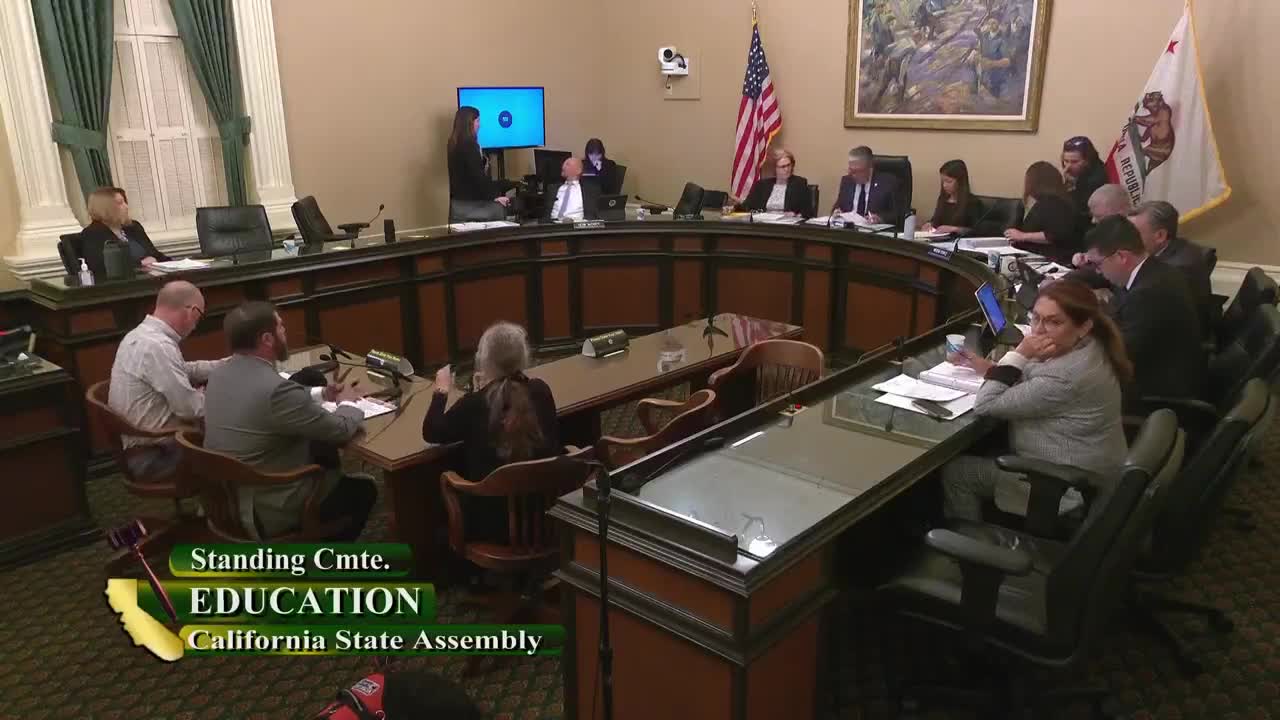
Bill Author

Bill Co-Author(s):
