AB 1673: Outdoor Advertising Act: local governmental entities: relocation.
- Session Year: 2023-2024
- House: Assembly
- Latest Version Date: 2023-10-08
Current Status:
Passed
(2023-10-08: Chaptered by Secretary of State - Chapter 590, Statutes of 2023.)
Introduced
In Committee
First Chamber
In Committee
Second Chamber
Enacted
The Outdoor Advertising Act regulates the placement of advertising displays adjacent to and within specified distances of highways that are part of the national system of interstate and defense highways and federal-aid highways. The act prohibits a governmental entity from compelling the removal of a lawfully erected advertising display within the state, or limiting its customary maintenance or use, without payment of compensation, as defined in the Eminent Domain Law, to the owner or owners of the display and the land upon which the display is located. This prohibition does not apply to an advertising display relocated by mutual agreement between the display owner and a local entity.
The act generally prohibits placing or maintaining advertising displays on Department of Transportation-owned property adjacent to landscaped freeways if the advertising display is designed to be viewed primarily by persons traveling on the landscaped freeway, but exempts (1) a county that designates where advertising displays may be placed or prohibited as part of a county land use or zoning ordinance and (2) the relocation or height increase for lawfully erected advertising displays pursuant to a relocation agreement, including the conversion of an advertising display to a message center as part of a relocation agreement.
This bill would expand the exemption described in (1) above to also include a city or city and county that designates where advertising displays may be placed or prohibited as part of the citys or city and countys land use or zoning ordinance. The bill would expand the exemption described in (2) above to include agreements, entered into for any purpose, to relocate an advertising display or to convert or replace a relocated advertising display with a message center, as specified. The bill would authorize a relocated advertising display to be placed in the same or a different city, county, or city and county, as specified.
This bill would require the department to allow any lawfully erected advertising display to be converted or replaced with a message center at its permitted location, as specified.
The Outdoor Advertising Act regulates the placement of advertising displays adjacent to and within specified distances of highways that are part of the national system of interstate and defense highways and federal-aid highways. The act prohibits a governmental entity from compelling the removal of a lawfully erected advertising display within the state, or limiting its customary maintenance or use, without payment of compensation, as defined in the Eminent Domain Law, to the owner or owners of the display and the land upon which the display is located. This prohibition does not apply to an advertising display relocated by mutual agreement between the display owner and a local entity.
The act generally prohibits placing or maintaining advertising displays on Department of Transportation-owned property adjacent to landscaped freeways if the advertising display is designed to be viewed primarily by persons traveling on the landscaped freeway, but exempts (1) a county that designates where advertising displays may be placed or prohibited as part of a county land use or zoning ordinance and (2) a relocated advertising display that is converted to a message center pursuant to a relocation agreement. the relocation or height increase for lawfully erected advertising displays pursuant to a relocation agreement, including the conversion of an advertising display to a message center as part of a relocation agreement.
This bill would also exempt other local governmental entities that designate where advertising displays may be placed or prohibited as part of a local government land use or zoning ordinance from this prohibition, expand this exemption to explicitly apply to relocations of advertising displays by local governmental entities, and exempt the use of resolutions, programs, and approvals to facilitate advertising display placement. The bill would explicitly state that a local governmental entitys sole discretion to consent, under an existing statutory requirement, to placing a new or relocated advertising display within its jurisdiction constitutes development in a planned manner without expenditure of public funds, consistent with an existing statutory statement of state policy. The bill would expand another exemption applicable to relocations and height increases for lawfully erected advertising displays and would require a relocation agreement under that exemption to be entered into between the sign owner and permit owner and the local governmental entity. The bill, instead of the exemption described in (2) above, would exempt a relocated or an existing advertising display that is converted to a message center pursuant to a relocation agreement between the display owner and permit owner and a local governmental entity that does not result in a net increase in advertising displays on landscaped freeway segments. The bill would exempt a relocation agreement that is referred to as a development agreement by the local governmental entity so long as the applicable requirements of a relocation agreement under these provisions are satisfied.This bill would expand the exemption described in (1) above to also include a city or city and county that designates where advertising displays may be placed or prohibited as part of the citys or city and countys land use or zoning ordinance. The bill would expand the exemption described in (2) above to include agreements, entered into for any purpose, to relocate an advertising display or to convert or replace a relocated advertising display with a message center, as specified. The bill would authorize a relocated advertising display to be placed in the same or a different city, county, or city and county, as specified.
This bill would require the department to allow any lawfully erected advertising display to be converted or replaced with a message center at its permitted location, as specified.
The Outdoor Advertising Act regulates the placement of advertising displays adjacent to and within specified distances of highways that are part of the national system of interstate and defense highways and federal-aid highways. The act prohibits a governmental entity from compelling the removal of a lawfully erected advertising display within the state, or limiting its customary maintenance or use, without payment of compensation, as defined in the Eminent Domain Law, to the owner or owners of the display and the land upon which the display is located. This prohibition does not apply to an advertising display relocated by mutual agreement between the display owner and a local entity.
The act generally prohibits placing or maintaining advertising displays on Department of Transportation-owned property adjacent to landscaped freeways if the advertising display is designed to be viewed primarily by persons traveling on the landscaped freeway, but exempts (1) a county that designates where advertising displays may be placed or prohibited as part of a county land use or zoning ordinance and (2) a relocated advertising display that is converted to a message center pursuant to a relocation agreement.
This bill would also exempt other local governmental entities that designate where advertising displays may be placed or prohibited as part of a local government land use or zoning ordinance from this prohibition, expand this exemption to explicitly apply to relocations of advertising displays by local governmental entities, and exempt the use of resolutions, programs, and approvals to facilitate advertising display placement. The bill would explicitly state that a local governmental entitys sole discretion to consent, under an existing statutory requirement, to placing a new or relocated advertising display within its jurisdiction constitutes development in a planned manner without expenditure of public funds, consistent with an existing statutory statement of state policy. The bill would expand another exemption applicable to relocations and height increases for lawfully erected advertising displays and would require a relocation agreement under that exemption to be entered into between the sign owner and permit owner and the local governmental entity. The bill, instead of the exemption described in (2) above, would exempt a relocated or an existing advertising display that is converted to a message center pursuant to a relocation agreement between the display owner and permit owner and a local governmental entity that does not result in a net increase in advertising displays on landscaped freeway segments. The bill would exempt a relocation agreement that is referred to as a development agreement by the local governmental entity so long as the applicable requirements of a relocation agreement under these provisions are satisfied.
The Outdoor Advertising Act regulates the placement of advertising displays adjacent to and within specified distances of highways that are part of the national system of interstate and defense highways and federal-aid highways. The act prohibits a lawfully erected advertising display within the state from being compelled to be removed or its customary maintenance or use to be limited by any governmental entity without payment of compensation, as defined in the Eminent Domain Law, to the owner or owners of the display and the owner or owners of the land upon which the display is located. This prohibition does not apply to an advertising display relocated by mutual agreement between the display owner and a local entity. The act defines relocation for these purposes to include removal of an advertising display and construction of a new display to substitute for the display removed. Existing law states that it is a policy of this state to encourage local entities and display owners to enter into relocation agreements that allow local entities to continue development in a planned manner without expenditure of public funds while allowing continued maintenance of private investment and a medium of public communication. The act does not prohibit the Department of Transportation from entering into a relocation agreement or allowing any lawfully erected display to be relocated, provided the relocation would not cause a reduction in federal aid highway funds or an increase in the number of displays within the state that does not conform to the act. The act authorizes an advertising display to be converted to a message center pursuant to a relocation agreement.This bill would define relocation, relocated display, and all related variants of the terms as used in the above-described provisions and other provisions of the act, as provided. The bill would define development in a planned manner without expenditure of public funds as used in the above-described statutory statement of policy.The Outdoor Advertising Act regulates the placement of advertising displays adjacent to and within specified distances of highways that are part of the national system of interstate and defense highways and federal-aid highways. The act prohibits a governmental entity from compelling the removal of a lawfully erected advertising display within the state, or limiting its customary maintenance or use, without payment of compensation, as defined in the Eminent Domain Law, to the owner or owners of the display and the land upon which the display is located. The act prohibits a lawfully erected advertising display within the state from being compelled to be removed or its customary maintenance or use to be limited by any governmental entity without payment of compensation, as defined in the Eminent Domain Law, to the owner or owners of the display and the owner or owners of the land upon which the display is located. This prohibition does not apply to an advertising display relocated by mutual agreement between the display owner and a local entity. The act defines relocation for these purposes to include removal of an advertising display and construction of a new display to substitute for the display removed. Existing law states that it is a policy of this state to encourage local entities and display owners to enter into relocation agreements that allow local entities to continue development in a planned manner without expenditure of public funds while allowing continued maintenance of private investment and a medium of public communication. The act does not prohibit the Department of Transportation from entering into a relocation agreement or allowing any lawfully erected display to be relocated, provided the relocation would not cause a reduction in federal aid highway funds or an increase in the number of displays within the state that does not conform to the act. The act authorizes an advertising display to be converted to a message center pursuant to a relocation agreement.
The act generally prohibits placing or maintaining advertising displays on Department of Transportation-owned property adjacent to landscaped freeways if the advertising display is designed to be viewed primarily by persons traveling on the landscaped freeway, but exempts (1) a county that designates where advertising displays may be placed or prohibited as part of a county land use or zoning ordinance and (2) a relocated advertising display that is converted to a message center pursuant to a relocation agreement.This bill would also exempt cities and other local entities that designate where advertising displays may be placed or prohibited as part of a county land use or zoning ordinance from this prohibition, expand this exemption to explicitly apply to relocations of advertising displays by local entities, and authorize those entities to also use programs and resolutions to facilitate advertising display relocations. The bill would expand this exemption from the prohibition, and another exemption applicable to relocations and height increases for lawfully erected advertising displays, to provide relief from certain other provisions generally applicable to these advertising displays. The bill would explicitly state that removal or relocation of advertising displays by specified types of local governmental action constitutes development in a planned manner without expenditure of public funds, consistent with an existing statutory statement of state policy. The bill, instead of the exemption described in (2) above, would exempt a relocated or an existing advertising display that is converted to a message center pursuant to a relocation agreement between the display owner, permit owner, or a local entity that does not result in a net increase in advertising displays on landscaped freeway segments.This bill would define relocation, relocated display, and all related variants of the terms as used in the above-described provisions and other provisions of the act, as provided. The bill would define development in a planned manner without expenditure of public funds as used in the above-described statutory statement of policy.
The Outdoor Advertising Act regulates the placement of advertising displays adjacent to and within specified distances of highways that are part of the national system of interstate and defense highways and federal-aid highways. The act prohibits a governmental entity from compelling the removal of a lawfully erected advertising display within the state, or limiting its customary maintenance or use, without payment of compensation, as defined in the Eminent Domain Law, to the owner or owners of the display and the land upon which the display is located. This prohibition does not apply to an advertising display relocated by mutual agreement between the display owner and a local entity.
The act generally prohibits placing or maintaining advertising displays on Department of Transportation-owned property adjacent to landscaped freeways if the advertising display is designed to be viewed primarily by persons traveling on the landscaped freeway, but exempts (1) a county that designates where advertising displays may be placed or prohibited as part of a county land use or zoning ordinance and (2) a relocated advertising display that is converted to a message center pursuant to a relocation agreement.
This bill would also exempt cities and other local entities that designate where advertising displays may be placed or prohibited as part of a county land use or zoning ordinance from this prohibition, expand this exemption to explicitly apply to relocations of advertising displays by local entities, and authorize those entities to also use programs and resolutions to facilitate advertising display relocations. The bill would expand this exemption from the prohibition, and another exemption applicable to relocations and height increases for lawfully erected advertising displays, to provide relief from certain other provisions generally applicable to these advertising displays. The bill would explicitly state that removal or relocation of advertising displays by specified types of local governmental action constitutes development in a planned manner without expenditure of public funds, consistent with an existing statutory statement of state policy. The bill, instead of the exemption described in (2) above, would exempt a relocated or an existing advertising display that is converted to a message center pursuant to a relocation agreement between the display owner, permit owner, or a local entity that does not result in a net increase in advertising displays on landscaped freeway segments.
Existing law requires any on-sale retail licensee that gives, sells, or otherwise dispenses draught beer to include specified information about the beer upon the faucet, spigot, or outlet from which the beer is drawn or in the place of service and consumption, as provided. This bill would exempt from these labeling requirements premises operated under a beer manufacturer license.Existing law requires any on-sale retail licensee that gives, sells, or otherwise dispenses draught beer to include specified information about the beer upon the faucet, spigot, or outlet from which the beer is drawn or in the place of service and consumption, as provided.
This bill would exempt from these labeling requirements premises operated under a beer manufacturer license.
Nothing in this article prohibits any of the following:
(a)Any city, county, or city and county from designating the districts or zones in which advertising displays may be placed or prohibited as part of a city, county, or city and county land use or zoning ordinance.
(b)(1)Any local governmental entity from entering into a relocation agreement for any purpose, including, but not limited to, those purposes provided in Section 5412, or the department from allowing any lawfully erected display to be increased in height at its permitted location or to be relocated provided the height increase or relocation would not cause a reduction in federal aid highway funds as provided in Section 131 of Title 23 of the United States Code or an increase in the number of displays within the state that does not conform to this article. Any increase in height permitted under this subdivision shall not be more than that necessary to restore the visibility of the display to the main-traveled way. Relocated displays may be placed in the same or a different city, county, or city and county, and relocation agreements shall be entered into between the sign and permit owner and the local governmental entity. An advertising display relocated pursuant to this paragraph shall be deemed a placement requiring a new permit and shall comply with all of the provisions of Article 6 (commencing with Section 5350) and Article 7 (commencing with Section 5400). A relocated display shall not result in a net increase of the number of displays adjacent to landscaped freeway segments statewide.
(2)A relocated advertising display may be converted to or replaced with a message center pursuant to a relocation agreement for any purpose, including, but not limited to, the purposes provided pursuant to Section 5412. The department shall issue a permit, without any additional consideration, for any display that is being placed pursuant to a relocation agreement with another governmental entity if the relocated display conforms with the provisions of this section. An advertising display converted or replaced with a message center pursuant to this paragraph shall be deemed a placement requiring a new permit and shall comply with all the provisions of Article 6 (commencing with Section 5350) and Article 7 (commencing with Section 5400).
SEC. 2.Section 5443.1 is added to the Business and Professions Code, to read:5443.1.The department shall allow any lawfully erected display to be converted to or replaced with a message center at its permitted location provided the conversion or replacement would not cause a reduction in federal aid highway funds as provided in Section 131 of Title 23 of the United States Code or an increase in the number of displays within the state that does not conform to this article. An advertising display converted or replaced with a message center pursuant to this section shall be deemed a placement requiring a new permit and shall comply with all of the provisions of Article 6 (commencing with Section 5350) and Article 7 (commencing with Section 5400).
Nothing in this article or Article 7 (commencing with Section 5400) prohibits any of the following:
(a)Any local governmental entity from designating the districts or zones in which advertising displays may be relocated, placed, or prohibited as part of a local governmental land use or zoning ordinance or otherwise facilitating, by resolution, program, or approval, development in a planned manner without expenditure of public funds. Development in a planned manner without expenditure of public funds, as that term is used in Section 5412, refers to a local governmental entitys sole discretion under its local land use, zoning, or other regulatory powers to consent, pursuant to subdivision (a) of Section 5354, to place a new or relocated advertising display within its jurisdiction.(a)Any city, county, or city and county from designating the districts or zones in which advertising displays may be placed or prohibited as part of a city, county, or city and county land use or zoning ordinance.
(b)(1)Any local governmental entity from entering into a relocation agreement pursuant to for any purpose, including, but not limited to, those purposes provided in Section 5412 5412, or the department from allowing any lawfully erected display to be increased in height at its permitted location or to be relocated provided the height increase or relocation would not cause a reduction in federal aid highway funds as provided in Section 131 of Title 23 of the United States Code or an increase in the number of displays within the state that does not conform to this article. Any increase in height permitted under this subdivision shall not be more than that necessary to restore the visibility of the display to the main-traveled way. Relocated displays may be placed in the same or a different city, county, or city and county, and relocation agreements shall be entered into between the sign and permit owner and the local governmental entity. An advertising display relocated pursuant to this subdivision may be placed at the same location or a different location, including a different city, county, or city or county. A relocation agreement shall be entered into between the sign owner and permit owner and the local governmental entity. An advertising display relocated pursuant to this subdivision shall exclusively paragraph shall be deemed a placement requiring a new permit and shall comply with all of the provisions of Article 6 (commencing with Section 5350). 5350) and Article 7 (commencing with Section 5400). A relocated display shall not result in a net increase of the number of displays adjacent to landscaped freeway segments statewide.
(2)A relocated or an existing advertising display may be converted to or replaced with a message center pursuant to a relocation agreement between the sign owner and permit owner and a local governmental entity that does not result in a net increase in advertising displays on landscaped freeway segments. for any purpose, including, but not limited to, the purposes provided pursuant to Section 5412. The department shall issue a permit, without any additional consideration, for any advertising display that is being placed pursuant to a relocation agreement with another governmental entity if the relocated display conforms with the provisions of this section. An advertising display converted or replaced with a message center pursuant to this paragraph shall be deemed a placement requiring a new permit and shall comply with all the provisions of Article 6 (commencing with Section 5350) and Article 7 (commencing with Section 5400).
(c)A relocation agreement from being referred to as a development agreement by a local governmental entity so long as the applicable requirements of a relocation agreement under subdivision (b) are satisfied.SEC. 2.Section 5443.1 is added to the Business and Professions Code, to read:5443.1.The department shall allow any lawfully erected display to be converted to or replaced with a message center at its permitted location provided the conversion or replacement would not cause a reduction in federal aid highway funds as provided in Section 131 of Title 23 of the United States Code or an increase in the number of displays within the state that does not conform to this article. An advertising display converted or replaced with a message center pursuant to this section shall be deemed a placement requiring a new permit and shall comply with all of the provisions of Article 6 (commencing with Section 5350) and Article 7 (commencing with Section 5400).
Nothing in this article or Article 7 (commencing with Section 5400) prohibits either any of the following:
(a)Any county local governmental entity from designating the districts or zones in which advertising displays may be placed relocated, placed, or prohibited as part of a county local governmental land use or zoning ordinance. ordinance or otherwise facilitating, by resolution, program, or approval, development in a planned manner without expenditure of public funds. Development in a planned manner without expenditure of public funds, as that term is used in Section 5412, refers to a local governmental entitys sole discretion under its local land use, zoning, or other regulatory powers to consent, pursuant to subdivision (a) of Section 5354, to place a new or relocated advertising display within its jurisdiction.
(b)(1)Any governmental entity from entering into a relocation agreement pursuant to Section 5412 or the department from allowing any lawfully erected display to be increased in height at its permitted location or to be relocated provided the height increase or relocation would not cause a reduction in federal aid highway funds as provided in Section 131 of Title 23 of the United States Code or an increase in the number of displays within the state that does not conform to this article. Any increase in height permitted under this subdivision shall not be more than that necessary to restore the visibility of the display to the main-traveled way. An advertising display relocated pursuant to this subdivision may be placed at the same location or a different location, including a different city, county, or city or county. A relocation agreement shall be entered into between the sign owner and permit owner and the local governmental entity. An advertising display relocated pursuant to this subdivision shall exclusively comply with all of the provisions of Article 6 (commencing with Section 5350).
(2)A relocated or an existing advertising display may be converted to a message center pursuant to a relocation agreement. agreement between the sign owner and permit owner and a local governmental entity that does not result in a net increase in advertising displays on landscaped freeway segments. The department shall issue a permit, without any additional consideration, for any advertising display that is being placed pursuant to a relocation agreement with another governmental entity if the relocated display conforms with the provisions of this section.
(c)A relocation agreement from being referred to as a development agreement by a local governmental entity so long as the applicable requirements of a relocation agreement under subdivision (b) are satisfied.
SECTION 1.Section 5208.7 is added to the Business and Professions Code, to read:5208.7.Development in a planned manner without expenditure of public funds means the allowance, placement, removal, prohibition, reconstruction, and relocation of advertising displays pursuant to any ordinances, resolutions, or programs, including, without limitation, any zoning ordinances, resolutions, or programs, adopted by a city, county, or city and county that the governmental entity determines is beneficial to the planning of the governmental entity.SEC. 2.Section 5220.5 is added to the Business and Professions Code, to read:5220.5.Relocation or relocated display, and in all of its variants, means (a) removal of a display and construction of a new advertising display or message center to substitute for the display removed, (b) reconstruction of a removed display, or (c) the modification or conversion of an existing display to a message center. Relocated displays may be placed at either the same or a different location, and relocation or development agreements must be entered into between the sign and permit owner and the city, county, city and county, or other local entity.Development in a planned manner without expenditure of public funds means the allowance, placement, removal, prohibition, reconstruction, and relocation of advertising displays pursuant to any ordinances, resolutions, or programs, including, without limitation, any zoning ordinances, resolutions, or programs, adopted by a city, county, or city and county that the governmental entity determines is beneficial to the planning of the governmental entity.
SEC. 2.Section 5220.5 is added to the Business and Professions Code, to read:5220.5.Relocation or relocated display, and in all of its variants, means (a) removal of a display and construction of a new advertising display or message center to substitute for the display removed, (b) reconstruction of a removed display, or (c) the modification or conversion of an existing display to a message center. Relocated displays may be placed at either the same or a different location, and relocation or development agreements must be entered into between the sign and permit owner and the city, county, city and county, or other local entity.
SECTION 1.Section 5443 of the Business and Professions Code is amended to read:5443.Nothing in this article or Article 7 (commencing with Section 5400) prohibits either of the following:(a)Any city, county, or other local entity, including without limitation a school district or water district, from designating the districts or zones in which advertising displays may be relocated, placed, or prohibited as part of a city, county, or other local entity land use or zoning ordinance or otherwise facilitating advertising display relocations through programs or resolutions, as allowed in Section 5412. Removal or relocation of an existing advertising display permitted pursuant to either of the following constitutes development in a planned manner without expenditure of public funds, as that term is used in Section 5412:(1)Any ordinance specifically designating districts or zones allowing for or prohibiting advertising displays.(2)Any programs, ordinances, or resolutions providing for the relocation of advertising displays to areas approved by the controlling local entity.(b)(1)Any governmental entity from entering into a relocation agreement pursuant to Section 5412 or the department from allowing any lawfully erected display to be increased in height at its permitted location or to be relocated provided the height increase or relocation would not cause a reduction in federal aid highway funds as provided in Section 131 of Title 23 of the United States Code or an increase in the number of displays within the state that does not conform to this article. Any increase in height permitted under this subdivision shall not be more than that necessary to restore the visibility of the display to the main-traveled way. An advertising display relocated pursuant to this subdivision shall comply with all of the provisions of Article 6 (commencing with Section 5350).(2)A relocated or an existing advertising display may be converted to a message center pursuant to a relocation agreement between the sign owner and permit owner, and a city, county, or other local entity, including without limitation a school district or water district, that does not result in a net increase in advertising displays on landscaped freeway segments. The department shall issue a permit, without any additional consideration, for any advertising display that is being placed pursuant to a relocation agreement with another governmental entity if the relocated display conforms with the provisions of this section.Nothing in this article or Article 7 (commencing with Section 5400) prohibits either of the following:
(a)Any county city, county, or other local entity, including without limitation a school district or water district, from designating the districts or zones in which advertising displays may be placed relocated, placed, or prohibited as part of a county city, county, or other local entity land use or zoning ordinance. ordinance or otherwise facilitating advertising display relocations through programs or resolutions, as allowed in Section 5412. Removal or relocation of an existing advertising display permitted pursuant to either of the following constitutes development in a planned manner without expenditure of public funds, as that term is used in Section 5412:
(1)Any ordinance specifically designating districts or zones allowing for or prohibiting advertising displays.
(2)Any programs, ordinances, or resolutions providing for the relocation of advertising displays to areas approved by the controlling local entity.
(b)(1)Any governmental entity from entering into a relocation agreement pursuant to Section 5412 or the department from allowing any lawfully erected display to be increased in height at its permitted location or to be relocated provided the height increase or relocation would not cause a reduction in federal aid highway funds as provided in Section 131 of Title 23 of the United States Code or an increase in the number of displays within the state that does not conform to this article. Any increase in height permitted under this subdivision shall not be more than that necessary to restore the visibility of the display to the main-traveled way. An advertising display relocated pursuant to this subdivision shall comply with all of the provisions of Article 6 (commencing with Section 5350).
(2)A relocated or an existing advertising display may be converted to a message center pursuant to a relocation agreement. agreement between the sign owner and permit owner, and a city, county, or other local entity, including without limitation a school district or water district, that does not result in a net increase in advertising displays on landscaped freeway segments. The department shall issue a permit, without any additional consideration, for any advertising display that is being placed pursuant to a relocation agreement with another governmental entity if the relocated display conforms with the provisions of this section.
SECTION 1.Section 25613 of the Business and Professions Code is amended to read:25613.(a)Except as provided in subdivision (b), an on-sale retail licensee who gives, sells, or otherwise dispenses any draught beer shall, upon the faucet, spigot, or outlet from which the beer is drawn, attach and keep posted a clear and legible notice, placard, or marker which shall in the English language indicate and declare the name or brand adopted by the manufacturer of the draught beer so given, sold, or dispensed by the licensee. If the faucet, spigot, or other drawing device is in a location not within the room of the place of service and consumption of the beer, there shall also be kept posted a similar notice, placard, or marker in the place of service and consumption of the beer which shall truthfully state and indicate only the kinds and brands of draught beer actually on sale in the premises of the on-sale licensee.(b)This section shall not apply to premises operated under a beer manufacturer license.Every holder of an (a)Except as provided in subdivision (b), an on-sale retail license licensee who gives, sells, or otherwise dispenses any draught beer shall, upon the faucet, spigot, or outlet from which the beer is drawn, attach and keep posted a clear and legible notice, placard, or marker which shall in the English language indicate and declare the name or brand adopted by the manufacturer of the draught beer so given, sold, or dispensed by the licensee. If the faucet, spigot, or other drawing device is in a location not within the room of the place of service and consumption of the beer, there shall also be kept posted a similar notice, placard, or marker in the place of service and consumption of the beer which shall truthfully state and indicate only the kinds and brands of draught beer actually on sale in the premises of the on-sale licensee.
(b)This section shall not apply to premises operated under a beer manufacturer license.
|
Date
|
Status
|
|---|---|
| Oct 8, 2023 | Chaptered by Secretary of State - Chapter 590, Statutes of 2023. |
| Oct 8, 2023 | Approved by the Governor. |
| Sep 20, 2023 | Enrolled and presented to the Governor at 4 p.m. |
| Sep 12, 2023 | Senate amendments concurred in. To Engrossing and Enrolling. (Ayes 79. Noes 0. Page 3274.). |
| Sep 12, 2023 | Assembly Rule 77 suspended. (Page 3228.) |
| Sep 11, 2023 | In Assembly. Concurrence in Senate amendments pending. May be considered on or after September 13 pursuant to Assembly Rule 77. |
| Sep 11, 2023 | Read third time. Passed. Ordered to the Assembly. (Ayes 39. Noes 0. Page 2563.). |
| Sep 5, 2023 | Read second time. Ordered to third reading. |
| Sep 1, 2023 | Read third time and amended. Ordered to second reading. |
| Sep 1, 2023 | Action rescinded whereby the bill was read third time, passed, and to Assembly. |
| Sep 1, 2023 | Ordered to third reading. |
| Aug 17, 2023 | In Senate. Held at Desk. |
| Aug 17, 2023 | Ordered to the Senate. |
| Jul 13, 2023 | In Assembly. Concurrence in Senate amendments pending. May be considered on or after August 11 pursuant to Assembly Rule 77. |
| Jul 13, 2023 | Read third time. Passed. Ordered to the Assembly. (Ayes 37. Noes 0. Page 2039.). |
| Jul 11, 2023 | Read second time. Ordered to Consent Calendar. |
| Jul 10, 2023 | From committee: Be ordered to second reading file pursuant to Senate Rule 28.8 and ordered to Consent Calendar. |
| Jul 3, 2023 | From committee chair, with author's amendments: Amend, and re-refer to committee. Read second time, amended, and re-referred to Com. on APPR. |
| Jun 28, 2023 | From committee: Do pass and re-refer to Com. on APPR with recommendation: To Consent Calendar. (Ayes 16. Noes 0.) (June 27). Re-referred to Com. on APPR. |
| Jun 14, 2023 | Referred to Com. on TRANS. |
| Jun 1, 2023 | In Senate. Read first time. To Com. on RLS. for assignment. |
| May 31, 2023 | Read third time. Passed. Ordered to the Senate. (Ayes 79. Noes 0. Page 2041.) |
| May 18, 2023 | Read second time. Ordered to third reading. |
| May 18, 2023 | Joint Rule 62(a), file notice suspended. (Page 1580.) |
| May 18, 2023 | From committee: Do pass. (Ayes 15. Noes 0.) (May 18). |
| May 17, 2023 | In committee: Set, first hearing. Referred to APPR. suspense file. |
| May 10, 2023 | In committee: Hearing postponed by committee. |
| Apr 27, 2023 | From committee: Do pass and re-refer to Com. on APPR. (Ayes 22. Noes 0.) (April 26). Re-referred to Com. on APPR. |
| Apr 19, 2023 | Re-referred to Com. on G.O. |
| Apr 18, 2023 | From committee chair, with author's amendments: Amend, and re-refer to Com. on G.O. Read second time and amended. |
| Apr 3, 2023 | Re-referred to Com. on G.O. |
| Mar 30, 2023 | From committee chair, with author's amendments: Amend, and re-refer to Com. on G.O. Read second time and amended. |
| Mar 9, 2023 | Referred to Com. on G.O. |
| Feb 18, 2023 | From printer. May be heard in committee March 20. |
| Feb 17, 2023 | Read first time. To print. |
|
Date
|
Description
|
Location
|
Votes
|
|
|---|---|---|---|---|
| Sep 12, 2023 | AB 1673 Pacheco Concurrence in Senate Amendments | Assembly Floor |
Passed |
|
| Sep 11, 2023 | Assembly 3rd Reading AB1673 Pacheco et al. By Rubio | Senate Floor |
Passed |
|
| Jul 13, 2023 | Consent Calendar AB1673 Pacheco et al. | Senate Floor |
Passed |
|
| Jun 27, 2023 | Do pass, but first be re-referred to the Committee on [Appropriations] with the recommendation: To Consent Calendar | Senate Standing Committee on Transportation |
Passed |
|
| May 31, 2023 | AB 1673 Pacheco Assembly Third Reading | Assembly Floor |
Passed |
|
| May 18, 2023 | Do pass. | Assembly Standing Committee on Appropriations |
Passed |
|
| Apr 26, 2023 | Do pass and be re-referred to the Committee on [Appropriations] | Assembly Standing Committee on Governmental Organization |
Passed |
This list shows positions taken on this bill by organizations on the date displayed, which is linked to the original source.
Positions by individuals are not included.
|
Organization
|
Position
|
Date
|
|---|---|---|
| California Sign Association | * Support | Apr 26, 2023 |
| California State Association Of Counties | ** Support | |
| California State Outdoor Advertising Association | ** Support | |
| Clear Channel Outdoor | * Support | Apr 26, 2023 |
| General Outdoor Advertising | * Support | Apr 26, 2023 |
| Lamar Outdoor Advertising | * Support | Apr 26, 2023 |
| League Of California Cities | ** Support | |
| OUTFRONT Media | * Indeterminate | Apr 26, 2023 |
| United Outdoor Advertising | ** Support | Apr 26, 2023 |
| Veale Outdoor Advertising | ** Support | Apr 26, 2023 |
CONCURRENCE IN SENATE AMENDMENTS
CSA1 Bill Id:AB 1673
Author:(Pacheco and Santiago)
As Amended Ver:September 1, 2023
Majority vote
SUMMARY
This bill, for the purpose of the Outdoor Advertising Act (OAA), clarifies the definition of the terms "relocation," "relocated display," and all related variants of the terms. It also explicitly allows the conversion of an advertising display to a message center (e.g. an advertising display which allows changeable ads rather than a static display). Specifically, this bill:
- Clarifies that nothing prohibits local governments from designating zones where advertising displays may be placed or relocated.
- Provides that any government entity may enter into a relocation agreement for an advertising display and that the display may be placed in the same location or a different location, including a different city or county.
- Provides that a relocated or existing advertising display may be converted to a message center pursuant to a relocation agreement between the sign owner, permit owner and a local government entity that does not result in a net increase in advertising displays on a landscaped freeway.
- Provides that nothing prevents a relocation agreement from being referred to as a "development agreement" by a local governmental entity so long as the applicable requirements of a relocation agreement are satisfied.
Senate Amendments:
- Clarify that nothing in the Article prohibits any of the following:
- Any local governmental entity from designating the districts or zones in which advertising displays may be placed or prohibited as part of a city, county, or city and county land use or zoning ordinance.
- Any government entity may enter into a relocation agreement for an advertising display and that the display may be placed in the same location or a different location, including a different city or county. An advertising display relocated shall be deemed a placement requiring a new permit and shall comply with all of the provisions, as defined. A relocated display shall not result in a net increase of the number of displays adjacent to landscaped freeway segments statewide.
- Clarify that a relocated or existing advertising display may be converted to a message center pursuant to a relocation agreement between the sign owner, permit owner and a local government entity that does not result in a net increase in advertising displays on a landscaped freeway.
- State that the California Department of Transportation (Caltrans) shall allow any lawfully erected display to be converted to or replaced with a message center at its permitted location provided the conversion or replacement would not cause a reduction in federal aid highway funds or an increase in the number of displays within the state that does not conform to this article.
- State that an advertising display converted or replaced with a message center shall be deemed a placement requiring a new permit and shall comply with all of the required provisions.
COMMENTS
Background.
The state OAA regulates the placement of advertising displays (billboards) and signs along interstate or primary highways, landscaped freeways and similar specified highways. The OAA, along with related federal law, is intended, among other things, to promote highway beautification and provide a consistent framework for the regulation of advertising displays along freeways and highways.
Caltrans is the administrator of the federal Outdoor Advertising Control program, which imposes similar restrictions as the state OAA on the size, illumination, orientation, and location of advertising displays adjacent to and within specified distances of interstate or primary highways. If the state fails to properly administer the federal program, the state is subject to a sanction reducing federal highway funding allocations by 10%.
The OAA generally prohibits a lawfully placed advertising display from being removed by a governmental entity without the payment of compensation to the owner of the display and the owner of the land upon which the display is located, unless the display is relocated by mutual agreement between the display owner and local governing entity. Existing law encourages relocation agreements that allow local entities to continue "development in a planned manner without expenditure of public funds" while allowing continued maintenance of private investment and a medium of public communication. However, Caltrans must ensure the relocation will not cause a reduction in federal highway funds or increase the number of non-OAA compliant displays.
The OAA defines "relocation" to include removal of an advertising display and construction of a new display as a substitute. This bill additionally includes in that definition the modification or conversion of an existing display to a message center and allows the relocated display to be placed at a different location, not just at the previous existing location. This bill also defines "development in a planned manner without expenditure of public funds" to push Caltrans to permit more advertising displays for which the display owner and local government have a relocation agreement.
In 2018, the Legislature passed AB 3168 (Rubio) to facilitate the relocation of existing signs by providing more flexibility in the OAA. Included in that legislation was the ability to convert existing static signs to electronic displays. Supporters of AB 1673 point out that many local governments took advantage of this streamlined process. However, a recent Caltrans opinion has narrowed the flexibility authorized by the 2018 legislation. This bill clarifies the 2018 legislation and restores the flexibility that local governments thought they had attained.
The first of the two clarifications this bill seeks are that the sign relocation can be for any public purpose. Caltrans believes existing law only allows the sign relocation if the local government is removing the sign to create space for a public project. The second clarification is that as part of the conversion a traditional sign can be upgraded to an electronic display. These two changes seem consistent with the intent of the 2018 legislation. Importantly, this bill provides that no sign may be erected if it will result in a reduction in federal highway funds.
The author's office had several conversations with Caltrans and they offered minor amendments that were accepted and amended into the current version of this bill. These amendments will not have a significant impact on the implementation of the bill.
According to the Author
According to the author, this bill seeks to define terms used in the OAA to further clarify the intent of AB 3168 (Rubio, Chapter 926 of 2018). These clarifications will help solidify the intent for local governments to exercise their zoning and planning powers to relocate permitted signage onto sections of landscaped freeway and provide a definition of relocation to include the moving of a sign rather than just the removal of a sign and putting up a new one. This bill ensures that sign relocations will not be delayed through unnecessarily costly eminent domain proceedings and to ensure that local governments realize revenue from advertising agreements.
Arguments in Support
The California State Association of Counties (CSAC), representing all 58 of the state's counties, writes, "Over the years, local cities and counties and billboard companies have worked together to establish mutually beneficial relocation agreements that, effectively, remove billboards from neighborhoods and main streets and relocate them to industrial and commercial areas alongside highways. In this process, local governments and sign companies have worked out revenue sharing arrangements that provide needed funding to cities and counties to support public programs and services. AB 1673 is needed to clarify that relocation agreements can be approved by local governments merely for the purposes of implementing planning and zoning laws, programs, and policies, as intended by AB 3168."
Arguments in Opposition
None on file.
FISCAL COMMENTS
According to the Senate Appropriations Committee, pursuant to Senate Rule 28.8, negligible state costs.
VOTES:
ASM GOVERNMENTAL ORGANIZATION: 22-0-0
YES: Santiago, Lackey, Aguiar-Curry, Berman, Bryan, Cervantes, Megan Dahle, Davies, Garcia, Gipson, Jones-Sawyer, Low, Mathis, McCarty, McKinnor, Jim Patterson, Quirk-Silva, Ramos, Robert Rivas, Blanca Rubio, Ta, Villapudua
ASM APPROPRIATIONS: 15-0-1
YES: Holden, Megan Dahle, Bryan, Calderon, Wendy Carrillo, Dixon, Mike Fong, Hart, Lowenthal, Mathis, Papan, Pellerin, Sanchez, Weber, Ortega
ABS, ABST OR NV: Robert Rivas
ASSEMBLY FLOOR: 79-0-1
YES: Addis, Aguiar-Curry, Alanis, Alvarez, Arambula, Bains, Bauer-Kahan, Bennett, Berman, Boerner, Bonta, Bryan, Calderon, Juan Carrillo, Wendy Carrillo, Cervantes, Chen, Connolly, Megan Dahle, Davies, Dixon, Essayli, Flora, Mike Fong, Vince Fong, Friedman, Gabriel, Gallagher, Garcia, Gipson, Grayson, Haney, Holden, Hoover, Irwin, Jackson, Jones-Sawyer, Kalra, Lackey, Lee, Low, Lowenthal, Maienschein, Mathis, McCarty, McKinnor, Muratsuchi, Stephanie Nguyen, Ortega, Pacheco, Papan, Jim Patterson, Joe Patterson, Pellerin, Petrie-Norris, Quirk-Silva, Ramos, Reyes, Luz Rivas, Robert Rivas, Rodriguez, Blanca Rubio, Sanchez, Santiago, Schiavo, Soria, Ta, Ting, Valencia, Villapudua, Waldron, Wallis, Ward, Weber, Wicks, Wilson, Wood, Zbur, Rendon
ABS, ABST OR NV: Hart
SENATE FLOOR: 39-0-1
YES: Allen, Alvarado-Gil, Archuleta, Ashby, Atkins, Becker, Blakespear, Bradford, Cortese, Dahle, Dodd, Durazo, Eggman, Glazer, Gonzalez, Grove, Hurtado, Jones, Laird, Limón, McGuire, Menjivar, Min, Newman, Nguyen, Niello, Ochoa Bogh, Padilla, Portantino, Roth, Rubio, Seyarto, Skinner, Smallwood-Cuevas, Stern, Umberg, Wahab, Wiener, Wilk
ABS, ABST OR NV: Caballero
SENATE FLOOR: 37-0-3
YES: Allen, Alvarado-Gil, Archuleta, Ashby, Atkins, Becker, Blakespear, Bradford, Caballero, Cortese, Dahle, Durazo, Eggman, Glazer, Gonzalez, Hurtado, Jones, Laird, Limón, McGuire, Menjivar, Min, Newman, Nguyen, Niello, Ochoa Bogh, Padilla, Roth, Rubio, Seyarto, Skinner, Smallwood-Cuevas, Stern, Umberg, Wahab, Wiener, Wilk
ABS, ABST OR NV: Dodd, Grove, Portantino
UPDATED
VERSION: September 1, 2023
CONSULTANT: Eric Johnson / G.O. / (916) 319-2531 FN: 0002346
SENATE RULES COMMITTEE Office of Senate Floor Analyses (916) 651-1520 Fax: (916) 327-4478 | AB 1673 |
THIRD READING
Bill No: AB 1673
Author: Pacheco (D) and Santiago (D)
Amended: 9/1/23 in Senate
Vote: 21
SENATE TRANSPORTATION COMMITTEE: 16-0, 6/27/23
AYES: Gonzalez, Niello, Allen, Archuleta, Becker, Blakespear, Cortese, Dahle, Dodd, Limón, McGuire, Newman, Nguyen, Seyarto, Umberg, Wahab
SENATE APPROPRIATIONS COMMITTEE: Senate Rule 28.8
SENATE FLOOR: 37-0, 7/13/23 (Consent)
AYES: Allen, Alvarado-Gil, Archuleta, Ashby, Atkins, Becker, Blakespear, Bradford, Caballero, Cortese, Dahle, Durazo, Eggman, Glazer, Gonzalez, Hurtado, Jones, Laird, Limón, McGuire, Menjivar, Min, Newman, Nguyen, Niello, Ochoa Bogh, Padilla, Roth, Rubio, Seyarto, Skinner, Smallwood-Cuevas, Stern, Umberg, Wahab, Wiener, Wilk
NO VOTE RECORDED: Dodd, Grove, Portantino
ASSEMBLY FLOOR: 79-0, 5/31/23 - See last page for vote
SUBJECT: Outdoor Advertising Act: local governmental entities: relocation
SOURCE: Author
DIGEST:
This bill, for the purpose of the Outdoor Advertising Act (OAA), clarifies the definition of the terms “relocation,” “relocated display,” and all related variants of the terms. It also explicitly allows the conversion of an advertising display to a message center (e.g. an advertising display which allows changeable ads rather than a static display).
Senate Floor Amendments of 9/1/23 incorporate clarifications proposed by Caltrans.
ANALYSIS:
Existing law:
- Provides, under the Outdoor Advertising Act (OAA), for the regulation by Caltrans of an advertising display, as defined, within view of public highways. The OAA regulates the placement of an off-premises advertising display along highways that generally advertise business conducted or services rendered or goods produced or sold at a location other than the property where the display is located.
- Prohibits the removal of a lawfully erected advertising display without compensation to the display owner and landowner. (Business and Professions Code (B&P) §5412)
- Establishes that nothing prohibits a county from designating zones where advertising displays may be placed. (B&P §5443)
- Establishes that nothing prohibits a governmental entity from entering into a relocation agreement for an advertising display. (B&P §5443)
- Provides that a relocated advertising display may be converted to a message center pursuant to a relocation agreement. (B&P §5443)
This bill:
- Clarifies that nothing prohibits local governments from designating zones where advertising displays may be placed or relocated.
- Provides that any government entity may enter into a relocation agreement for an advertising display and that the display may be placed in the same location or a different location, including a different city or county.
- Provides that a relocated or existing advertising display may be converted to a message center pursuant to a relocation agreement between the sign owner, permit owner and a local government entity that does not result in a net increase in advertising displays on a landscaped freeway.
- Provides that nothing prevents a relocation agreement from being referred to as a “development agreement” by a local governmental entity so long as the applicable requirements of a relocation agreement are satisfied.
Comments
- Author’s Statement. According to the author, this bill seeks to define terms used in the OAA to further clarify the intent of AB 3168 (Rubio, Chapter 926 of 2018). These clarifications will help solidify the intent for local governments to exercise their zoning and planning powers to relocate permitted signage onto sections of landscaped freeway and provide a definition of relocation to include the moving of a sign rather than just the removal of a sign and putting up a new one. This bill ensures that sign relocations will not be delayed through unnecessarily costly eminent domain proceedings and to ensure that local governments realize revenue from advertising agreements.
- Clarifying the Clarification. In 2018, the Legislature passed AB 3168 to facilitate the relocation of existing signs by providing more flexibility in the OAA. Included in that legislation was the ability to convert existing static signs to electronic displays. According to the California State Association of Counties, many local governments took advantage of this streamlined process. However, a recent Caltrans opinion has narrowed the flexibility authorized by the 2018 legislation. This bill clarifies the 2018 legislation to restore the flexibility that local governments thought they had achieved. The author’s office ave had several conversation with Caltrans and they offered minor amendments which were accepted last week (see Comment 4).
- Details. The first of the two clarifications this bill seeks are that the sign relocation can be for any public purpose. Caltrans believes existing law only allows the sign relocation if the local government is removing the sign to create space for a public project. The second clarification is that as part of the conversion a traditional sign can be upgraded to an electronic display. These two changes seem consistent with the intent of the 2018 legislation. Importantly, this bill provides that no sign may be erected if it will result in a reduction in federal highway funds.
- Recent Senate Amendments. This bill was recently amended with changes proposed by Caltrans to clarify terms. These amendments do not materially impact the operation of the bill.
FISCAL EFFECT: Appropriation: No Fiscal Com.: Yes Local: No
SUPPORT: (Verified 9/5/23)
California State Association of Counties
California State Outdoor Advertising Association
League of California Cities
OPPOSITION: (Verified 9/5/23)
None received
ASSEMBLY FLOOR: 79-0, 5/31/23
AYES: Addis, Aguiar-Curry, Alanis, Alvarez, Arambula, Bains, Bauer-Kahan, Bennett, Berman, Boerner, Bonta, Bryan, Calderon, Juan Carrillo, Wendy Carrillo, Cervantes, Chen, Connolly, Megan Dahle, Davies, Dixon, Essayli, Flora, Mike Fong, Vince Fong, Friedman, Gabriel, Gallagher, Garcia, Gipson, Grayson, Haney, Holden, Hoover, Irwin, Jackson, Jones-Sawyer, Kalra, Lackey, Lee, Low, Lowenthal, Maienschein, Mathis, McCarty, McKinnor, Muratsuchi, Stephanie Nguyen, Ortega, Pacheco, Papan, Jim Patterson, Joe Patterson, Pellerin, Petrie-Norris, Quirk-Silva, Ramos, Reyes, Luz Rivas, Robert Rivas, Rodriguez, Blanca Rubio, Sanchez, Santiago, Schiavo, Soria, Ta, Ting, Valencia, Villapudua, Waldron, Wallis, Ward, Weber, Wicks, Wilson, Wood, Zbur, Rendon
NO VOTE RECORDED: Hart
Prepared by: Randy Chinn / TRANS. / (916) 651-4121
9/5/23 12:40:40
**** END ****
CONCURRENCE IN SENATE AMENDMENTS
CSA1 Bill Id:AB 1673
Author:(Pacheco and Santiago)
As Amended Ver:July 3, 2023
Majority vote
SUMMARY
This bill, for the purpose of the Outdoor Advertising Act (OAA), clarifies the definition of the terms "relocation," "relocated display," and all related variants of the terms.
Senate Amendments
- Clarifies that nothing prohibits local governments from designating zones where advertising displays may be placed or relocated.
- Provides that any government entity may enter into a relocation agreement for an advertising display and that the display may be placed in the same location or a different location, including a different city or county.
- Provides that a relocated or existing advertising display may be converted to a message center pursuant to a relocation agreement between the sign owner, permit owner and a local government entity that does not result in a net increase in advertising displays on a landscaped freeway.
- Provides that nothing prevents a relocation agreement from being referred to as a "development agreement" by a local governmental entity so long as the applicable requirements of a relocation agreement are satisfied.
COMMENTS
In 2018 the Legislature passed AB 3168 (Rubio), Chapter 926, Statutes of 2018 to facilitate the relocation of existing signs by providing more flexibility in the Outdoor Advertising Act (OAA). Included in that legislation was the ability to convert existing static signs to electronic displays. According to the California State Association of Counties, many local governments took advantage of this streamlined process. However, a recent Caltrans opinion has narrowed the flexibility authorized by the 2018 legislation. This bill clarifies the 2018 legislation to restore the flexibility that local governments thought they had achieved. The author's office and sponsor have had several conversation with Caltrans and they have not raised an objection, at least so far.
The first of the two clarifications this bill seeks are that the sign relocation can be for any public purpose. Caltrans believe existing law only allows the sign relocation if the local government is removing the sign to create space for a public project. The second clarification is that as part of the conversion a traditional sign can be upgraded to an electronic display. These two changes seem consistent with the intent of the 2018 legislation.
According to the Author
According to the author, this bill seeks to define terms used in the OAA to further clarify the intent of AB 3168 (Rubio) of 2018. These clarifications will help solidify the intent for local governments to exercise their zoning and planning powers to relocate permitted signage onto sections of landscaped freeway and provide a definition of relocation to include the moving of a sign rather than just the removal of a sign and putting up a new one. AB 1673 will ensure that sign relocations will not be delayed through unnecessarily costly eminent domain proceedings and to ensure that local governments realize revenue from advertising agreements.
Arguments in Support
According to the California State Association of Counties (CSAC), "Local governments have always understood they could relocate billboards so long as there was a legitimate planning and zoning purpose for doing so, such as beautifying local neighborhoods. Limiting sign relocations to circumstances where a local government has a definite development project in mind for a property with an existing billboard will cost local governments hundreds of millions of dollars in eminent domain costs, just compensation payments, and lost revenue. It also has been questioned whether a relocation can include the conversion in place of a traditional display to an electronic display. AB 1673 is needed to clarify that relocation agreements can be approved by local governments merely for the purposes of implementing planning and zoning laws, programs, and policies, as intended by AB 3168."
Arguments in Opposition
None on file.
FISCAL COMMENTS
According to the Senate Appropriations Committee, pursuant to Senate Rule 28.8, negligible state costs.
VOTES:
ASM GOVERNMENTAL ORGANIZATION: 22-0-0
YES: Santiago, Lackey, Aguiar-Curry, Berman, Bryan, Cervantes, Megan Dahle, Davies, Garcia, Gipson, Jones-Sawyer, Low, Mathis, McCarty, McKinnor, Jim Patterson, Quirk-Silva, Ramos, Robert Rivas, Blanca Rubio, Ta, Villapudua
ASM APPROPRIATIONS: 15-0-1
YES: Holden, Megan Dahle, Bryan, Calderon, Wendy Carrillo, Dixon, Mike Fong, Hart, Lowenthal, Mathis, Papan, Pellerin, Sanchez, Weber, Ortega
ABS, ABST OR NV: Robert Rivas
ASSEMBLY FLOOR: 79-0-1
YES: Addis, Aguiar-Curry, Alanis, Alvarez, Arambula, Bains, Bauer-Kahan, Bennett, Berman, Boerner, Bonta, Bryan, Calderon, Juan Carrillo, Wendy Carrillo, Cervantes, Chen, Connolly, Megan Dahle, Davies, Dixon, Essayli, Flora, Mike Fong, Vince Fong, Friedman, Gabriel, Gallagher, Garcia, Gipson, Grayson, Haney, Holden, Hoover, Irwin, Jackson, Jones-Sawyer, Kalra, Lackey, Lee, Low, Lowenthal, Maienschein, Mathis, McCarty, McKinnor, Muratsuchi, Stephanie Nguyen, Ortega, Pacheco, Papan, Jim Patterson, Joe Patterson, Pellerin, Petrie-Norris, Quirk-Silva, Ramos, Reyes, Luz Rivas, Robert Rivas, Rodriguez, Blanca Rubio, Sanchez, Santiago, Schiavo, Soria, Ta, Ting, Valencia, Villapudua, Waldron, Wallis, Ward, Weber, Wicks, Wilson, Wood, Zbur, Rendon
ABS, ABST OR NV: Hart
SENATE FLOOR: 37-0-3
YES: Allen, Alvarado-Gil, Archuleta, Ashby, Atkins, Becker, Blakespear, Bradford, Caballero, Cortese, Dahle, Durazo, Eggman, Glazer, Gonzalez, Hurtado, Jones, Laird, Limón, McGuire, Menjivar, Min, Newman, Nguyen, Niello, Ochoa Bogh, Padilla, Roth, Rubio, Seyarto, Skinner, Smallwood-Cuevas, Stern, Umberg, Wahab, Wiener, Wilk
ABS, ABST OR NV: Dodd, Grove, Portantino
UPDATED
VERSION: July 3, 2023
CONSULTANT: Eric Johnson / G.O. / (916) 319-2531 FN: 0001227
SENATE RULES COMMITTEE Office of Senate Floor Analyses (916) 651-1520 Fax: (916) 327-4478 | AB 1673 |
CONSENT
Bill No: AB 1673
Author: Pacheco (D) and Santiago (D)
Amended: 7/3/23 in Senate
Vote: 21
SENATE TRANSPORTATION COMMITTEE: 16-0, 6/27/23
AYES: Gonzalez, Niello, Allen, Archuleta, Becker, Blakespear, Cortese, Dahle, Dodd, Limón, McGuire, Newman, Nguyen, Seyarto, Umberg, Wahab
SENATE APPROPRIATIONS COMMITTEE: Senate Rule 28.8
ASSEMBLY FLOOR: 79-0, 5/31/23 - See last page for vote
SUBJECT: Outdoor Advertising Act: definitions
SOURCE: Author
DIGEST:
This bill, for the purpose of the Outdoor Advertising Act (OAA), clarifies the definition of the terms “relocation,” “relocated display,” and all related variants of the terms.
ANALYSIS:
Existing law:
- Provides, under the Outdoor Advertising Act (OAA), for the regulation by Caltrans of an advertising display, as defined, within view of public highways. The OAA regulates the placement of an off-premises advertising display along highways that generally advertise business conducted or services rendered or goods produced or sold at a location other than the property where the display is located.
- Prohibits the removal of a lawfully erected advertising display without compensation to the display owner and landowner. (Business and Professions Code §5412)
- Establishes that nothing prohibits a county from designating zones where advertising displays may be placed. (B&P §5443)
- Establishes that nothing prohibits a governmental entity from entering into a relocation agreement for an advertising display. (B&P §5443)
- Provides that a relocated advertising display may be converted to a message center pursuant to a relocation agreement. (B&P §5443)
This bill:
- Clarifies that nothing prohibits local governments from designating zones where advertising displays may be placed or relocated.
- Provides that any government entity may enter into a relocation agreement for an advertising display and that the display may be placed in the same location or a different location, including a different city or county.
- Provides that a relocated or existing advertising display may be converted to a message center pursuant to a relocation agreement between the sign owner, permit owner and a local government entity that does not result in a net increase in advertising displays on a landscaped freeway.
- Provides that nothing prevents a relocation agreement from being referred to as a “development agreement” by a local governmental entity so long as the applicable requirements of a relocation agreement are satisfied.
Comments
- Author’s Statement. According to the author, this bill seeks to define terms used in the OAA to further clarify the intent of AB 3168 (Rubio, Chapter 926 of 2018). These clarifications will help solidify the intent for local governments to exercise their zoning and planning powers to relocate permitted signage onto sections of landscaped freeway and provide a definition of relocation to include the moving of a sign rather than just the removal of a sign and putting up a new one. AB 1673 will ensure that sign relocations will not be delayed through unnecessarily costly eminent domain proceedings and to ensure that local governments realize revenue from advertising agreements.
- Clarifying the Clarification. In 2018 the Legislature passed legislation (AB 3168, Rubio) to facilitate the relocation of existing signs by providing more flexibility in the Outdoor Advertising Act (OAA). Included in that legislation was the ability to convert existing static signs to electronic displays. According to the California State Association of Counties, many local governments took advantage of this streamlined process. However, a recent Caltrans opinion has narrowed the flexibility authorized by the 2018 legislation. This bill clarifies the 2018 legislation to restore the flexibility that local governments thought they had achieved. The author’s office and sponsor have had several conversation with Caltrans and they have not raised an objection, at least so far.
- Details. The first of the two clarifications this bill seeks are that the sign relocation can be for any public purpose. Caltrans believe existing law only allows the sign relocation if the local government is removing the sign to create space for a public project. The second clarification is that as part of the conversion a traditional sign can be upgraded to an electronic display. These two changes seem consistent with the intent of the 2018 legislation.
FISCAL EFFECT: Appropriation: No Fiscal Com.: Yes Local: No
SUPPORT: (Verified 7/11/23)
California State Association of Counties
California State Outdoor Advertising Association
League of California Cities
OPPOSITION: (Verified 7/11/23)
None received
ASSEMBLY FLOOR: 79-0, 5/31/23
AYES: Addis, Aguiar-Curry, Alanis, Alvarez, Arambula, Bains, Bauer-Kahan, Bennett, Berman, Boerner, Bonta, Bryan, Calderon, Juan Carrillo, Wendy Carrillo, Cervantes, Chen, Connolly, Megan Dahle, Davies, Dixon, Essayli, Flora, Mike Fong, Vince Fong, Friedman, Gabriel, Gallagher, Garcia, Gipson, Grayson, Haney, Holden, Hoover, Irwin, Jackson, Jones-Sawyer, Kalra, Lackey, Lee, Low, Lowenthal, Maienschein, Mathis, McCarty, McKinnor, Muratsuchi, Stephanie Nguyen, Ortega, Pacheco, Papan, Jim Patterson, Joe Patterson, Pellerin, Petrie-Norris, Quirk-Silva, Ramos, Reyes, Luz Rivas, Robert Rivas, Rodriguez, Blanca Rubio, Sanchez, Santiago, Schiavo, Soria, Ta, Ting, Valencia, Villapudua, Waldron, Wallis, Ward, Weber, Wicks, Wilson, Wood, Zbur, Rendon
NO VOTE RECORDED: Hart
Prepared by: Randy Chinn / TRANS. / (916) 651-4121
7/12/23 14:16:49
**** END ****
SENATE COMMITTEE ON TRANSPORTATION
Senator Lena Gonzalez, Chair
2023 - 2024 Regular
Bill No: Hearing Date: 6/27/2023
Author: | Pacheco | ||
Version: | 4/18/2023 amended | ||
Urgency: | No | Fiscal: | Yes |
Consultant: | Randy Chinn | ||
SUBJECT:
DIGEST: This bill, for the purpose of the Outdoor Advertising Act (OAA), clarifies the definition of the terms “relocation,” “relocated display,” and all related variants of the terms.
ANALYSIS:
Existing law:
- Provides, under the Outdoor Advertising Act (OAA), for the regulation by Caltrans of an advertising display, as defined, within view of public highways. The OAA regulates the placement of an off-premises advertising display along highways that generally advertises business conducted or services rendered or goods produced or sold at a location other than the property where the display is located.
- Prohibits the removal of a lawfully erected advertising display without compensation to the display owner and landowner. (Business and Professions Code §5412)
This bill:
- Defines “Development in a planned manner without expenditure of public funds” to mean the allowance, placement, removal, prohibition, reconstruction, and relocation of advertising displays pursuant to any ordinances, resolutions, or programs, including, without limitation, any zoning ordinances, resolutions, or programs, adopted by a city, county, or city and county that the governmental entity determines is beneficial to the planning of the governmental entity.
- Defines “Relocation” or “relocated display,” and in all of its variants, to mean (a) removal of a display and construction of a new advertising display or message center to substitute for the display removed, (b) reconstruction of a removed display, or (c) the modification or conversion of an existing display to a message center. Relocated displays may be placed at either the same or a different location, and relocation or development agreements must be entered into between the sign and permit owner and the city, county, city and county, or other local entity.
- Clarifies:
- A relocation agreement is valid if the removal or relocation of a billboard is carried out in accordance with a local ordinance, resolution, or program that authorizes the relocation of billboards to a specific area or district that has been authorized by the local jurisdiction in order to facilitate the orderly planning or beautification of a city, county, city and county, or other local entity.
- A relocation agreement does not need to identify a specific project or proposed development necessitating removal or relocation of the billboard subject to the relocation agreement, and the California Department of Transportation (Caltrans) cannot deny a permit for a relocated billboard on those grounds.
- A relocation agreement is valid even if it only involves the conversion of an existing static advertising sign into a digital or electronic sign.
COMMENTS:
Author’s Statement. According to the author, this bill seeks to define terms used in the OAA to further clarify the intent of AB 3168 (Rubio, Chapter 926 of 2018). These clarifications will help solidify the intent for local governments to exercise their zoning and planning powers to relocate permitted signage onto sections of landscaped freeway and provide a definition of relocation to include the moving of a sign rather than just the removal of a sign and putting up a new one. AB 1673 will ensure that sign relocations will not be delayed through unnecessarily costly eminent domain proceedings and to ensure that local governments realize revenue from advertising agreements.
Clarifying the Clarification. In 2018 the Legislature passed legislation (AB 3168, Rubio) to facilitate the relocation of existing signs by providing more flexibility in the Outdoor Advertising Act (OAA). Included in that legislation was the ability to convert existing static signs to electronic displays. According to the California State Association of Counties, many local governments took advantage of this streamlined process. However, a recent Caltrans opinion has narrowed the flexibility authorized by the 2018 legislation. This bill clarifies the 2018 legislation to restore the flexibility that local governments thought they had achieved. The author’s office and sponsor have had several conversation with Caltrans and they have not raised an objection, at least so far.
Details. The first of the two clarifications this bill seeks are that the sign relocation can be for any public purpose. Caltrans believe existing law only allows the sign relocation if the local government is removing the sign to create space for a public project. The second clarification is that as part of the conversion a traditional sign can be upgraded to an electronic display. These two changes seem consistent with the intent of the 2018 legislation.
Related Legislation:
AB 476 (Villapudua) of 2023. Authorizes displays on public property for noncommercial public messages and announcements, as specified. (Pending in the Senate Transportation Committee)
AB 1175 (Quirk-Silva) of 2023. Allows local governments to request from Caltrans an extension for hosting a display in a redevelopment agency project, as if it were an on-premises display. (Pending in the Senate Transportation Committee)
AB 1415 (Santiago) of 2023. Expands designated geographic areas in the City of Los Angeles as exempt from specified provisions of the Outdoor Advertising Act. (Pending in the Senate Transportation Committee)
SB 1309 (Durazo) of 2022. Extends the special provisions authorizing outdoor advertising for sports arenas to January 1, 2028, as specified, and requires the Caltrans prescreening for new advertising signs to determine compliance with federal law and California’s obligations to the Federal Highway Administration. (Vetoed by the Governor)
AB 3168 (Rubio), Chapter 926 of 2018. Revised the Outdoor Advertising Act to facilitate the relocation and conversion of advertising displays adjacent to freeways.
AB 700 (Jones-Sawyer), Chapter 337 of 2017. Extended the deadline by an additional two years (January 1, 2019 to January 1, 2021) for a sports arena advertising display to be authorized by local ordinance in order to qualify for an Outdoor Advertising Act exemption.
SB 1199 (Hall), Chapter 869 of 2016. Authorized two existing advertising displays along Interstate 405 in the City of Inglewood to be considered on premise displays, until January 1, 2023, and therefore exempt from the Outdoor Advertising Act.
AB 1373 (Santiago), Chapter 853 of 2016. Provided an exemption from the Outdoor Advertising Act for signs allowed by a City of Los Angeles ordinance in a specified area.
SB 684 (Hill), Chapter 544, Statutes of 2013. Amended the redevelopment agency exemption to the Outdoor Advertising Act to reflect the elimination of redevelopment agencies.
SB 694 (Correa), Chapter 545, Statutes of 2013. Exempted from the Outdoor Advertising Act, advertising displays at a publicly owned multimodal transit facility (MTF) that is to serve as a station for the high-speed train system, as specified, and requires revenues from the advertising display to be used to support the construction, operation, and maintenance of the MTF.
SB 31 (Padilla), Chapter 542 of 2013. Established the current authorization that allows arenas to display advertising for products, goods, or services sold on premises as well as part of a sponsorship marketing plan if the arena is on public land and has a capacity of 15,000 or more seats.
FISCAL EFFECT: Appropriation: No Fiscal Com.: Yes Local: No
From the Assembly Appropriations Committee:
Costs of an unknown, but potentially significant amount, in excess of $150,000, to the Department of Transportation (Caltrans) to permit relocated advertising displays, depending on the number of displays seeking relocation (State Highway Account).
However, Caltrans must still ensure any relocated advertising display will not cause a reduction in federal highway funds as part of the permitting approval process. Thus, this bill contains a mechanism to ensure the OAA is properly administered to preserve Federal Highway Administration (FHWA) funding.
POSITIONS: (Communicated to the committee before noon on Wednesday,
6/21/23.)
SUPPORT:
California State Association of Counties
California State Outdoor Advertising Association
League of California Cities
OPPOSITION:
None reported
-- END --
ASSEMBLY THIRD READING
ATR Bill Id:AB 1673
Author:(Pacheco and Santiago)
As Amended Ver:April 18, 2023
Majority vote
SUMMARY
For the purpose of the Outdoor Advertising Act (OAA or Act) this bill would define "relocation," "relocated display," and all related variants of the terms as used in the related provisions and other provisions of the Act, as specified. The bill would define "development in a planned manner without expenditure of public funds" as a statement of policy relating to the relocation of an advertising display by local entities.
Major Provisions
- Defines "Development in a planned manner without expenditure of public funds" to mean the allowance, placement, removal, prohibition, reconstruction, and relocation of advertising displays pursuant to any ordinances, resolutions, or programs, including, without limitation, any zoning ordinances, resolutions, or programs, adopted by a city, county, or city and county that the governmental entity determines is beneficial to the planning of the governmental entity.
- Defines "Relocation" or "relocated display," and in all of its variants, to mean a) removal of a display and construction of a new advertising display or message center to substitute for the display removed, b) reconstruction of a removed display, or c) the modification or conversion of an existing display to a message center. Relocated displays may be placed at either the same or a different location, and relocation or development agreements must be entered into between the sign and permit owner and the city, county, city and county, or other local entity.
- Clarifies:
- A relocation agreement is valid if the removal or relocation of a billboard is carried out in accordance with a local ordinance, resolution, or program that authorizes the relocation of billboards to a specific area or district that has been authorized by the local jurisdiction in order to facilitate the orderly planning or beautification of a city, county, city and county, or other local entity.
- A relocation agreement does not need to identify a specific project or proposed development necessitating removal or relocation of the billboard subject to the relocation agreement, and the California Department of Transportation (Caltrans) cannot deny a permit for a relocated billboard on those grounds.
- A relocation agreement is valid even if it only involves the conversion of an existing static advertising sign into a digital or electronic sign.
COMMENTS
Background.
The state OAA regulates the placement of advertising displays (billboards) and signs along interstate or primary highways, landscaped freeways and similar specified highways. The OAA, along with related federal provisions, is intended, among other things, to promote highway beautification and provide a consistent framework for the regulation of advertising displays along freeways and highways.
The OAA sets standards for the advertising structures, including their size, identification and location, and requires compliance with permit application procedures and conditions administered by Caltrans. In order for an outdoor advertising display application to be considered for a permit adjacent to an Interstate or primary highway designated criteria laid out by the OAA and/or regulations adopted by Caltrans must be met, as defined.
Federal Highway Beautification Act of 1965. Federal Highway Beautification Act of 1965. The Highway Beautification Act (HBA) was created to protect the public investment, promote the safety and recreational value of public travel, and to preserve the natural beauty of highways in the nation. The HBA specifies that states have the responsibility to enforce provisions regarding the placement and maintenance of outdoor advertising signs, displays and devices along the Interstate and National Highway System. The state of California enforces the provisions of federal law through a compact that was developed between the state and the federal government in 1967. Federal law also includes a penalty for states that violate HBA by reducing all federal highway transportation funds by a designated percentage.
If the state fails to properly administer the federal program, the state is subject to a sanction that would reduce its federal highway funding allocations by 10%.
Landscaped Freeways. A classified landscaped freeway is a section of freeway with ornamental vegetation planting that meets the criteria established by the California Code of Regulations, Outdoor Advertising Regulations, Title 4, Division 6. This designation is used in the control and regulation of outdoor advertising displays. The FHA generally leaves the classification of landscaped freeways up to the state, meaning declassifying or exempting stretches of landscaped freeway to place advertisements will not result in potential loss of federal highway funds. Caltrans' Outdoor Advertising Regulations (Sec. 2500-2513) define the set criteria for a freeway to be designated landscaped.
Over the years, local governments and the outdoor advertising industry have expressed concern over the classification process and the regulations that ultimately determine whether a freeway is "landscaped". They argue that the lack of specificity in the criteria makes the method used by Caltrans officials to decide classifications too subjective. Once an area is classified as a landscape area, local governments or sign operators must turn to the legislature for a one-off exemption.
Relocated Advertising Displays. The OAA generally prohibits a lawfully placed advertising display from being removed by a governmental entity without the payment of compensation to the owner of the display and the owner of the land upon which the display is located, unless the display is relocated by mutual agreement between the display owner and local governing entity. Existing law encourages relocation agreements that allow local entities to continue "development in a planned manner without expenditure of public funds" while allowing continued maintenance of private investment and a medium of public communication. However, Caltrans must ensure the relocation will not cause a reduction in federal highway funds or increase the number of non-OAA compliant displays.
The OAA defines "relocation" to include removal of an advertising display and construction of a new display as a substitute. This bill additionally includes in that definition the modification or conversion of an existing display to a message center and allows the relocated display to be placed at a different location, not just at the previous existing location. This bill also defines "development in a planned manner without expenditure of public funds" to push Caltrans to permit more advertising displays for which the display owner and local government have a relocation agreement.
This bill attempts to resolve issues with Caltrans' interpretation of state law that allows permits existing outdoor advertising signs to be relocated through mutual agreement between a local jurisdiction and an outdoor advertising company, as well as Caltrans' discretion to refuse permits for such signs.
According to the Author
According to the author's office, this bill seeks to define terms used in the OAA to further clarify the intent of AB 3168 (Rubio), Chapter 926, Statutes of 2018. These clarifications will help solidify the intent for local governments to exercise their zoning and planning powers to relocate permitted signage onto sections of landscaped freeway and provide a definition of relocation to include the moving of a sign rather than just the removal of a sign and putting up a new one. AB 1673 will ensure that sign relocations will not be delayed through unnecessarily, costly eminent domain proceedings and to ensure that local governments realize revenue from advertising agreements.
Arguments in Support
The California State Outdoor Advertising Association writes in support, "In 2018, the Legislature passed AB 3168 (Rubio) to streamline the issuance of signs that were supported by relocation agreements. The bill provided more flexibility and to make it easier to relocate a sign, provided that it complies with the OAA, and clarified that relocations can include the conversion of traditional displays to electronic displays. Many sign companies and local governments were able to take advantage of this streamlined process. However, Caltrans has recently opined that it cannot issue permits for billboard relocations unless a local government is removing signs to make way for a public project or other planned development that, essentially, would require payment of just compensation through eminent domain proceedings. Limiting sign relocations to circumstances where a local government has a definite development project in mind for a property with an existing billboard will cost local governments hundreds of millions of dollars in eminent domain costs, just compensation payments, and lost revenue. AB 1673 is needed to clarify that relocation agreements can be approved by local governments merely for the purposes of implementing planning and zoning laws, programs, and policies, as intended by AB 3168 of 2018"
Arguments in Opposition
None on file.
FISCAL COMMENTS
According to the Assembly Appropriations Committee, "Minor and absorbable costs to Caltrans to permit relocated advertising displays, depending on the number of displays seeking relocation (State Highway Account). Caltrans notes this bill clarifies existing law relating to relocation agreements that Caltrans already review for compliance with state rules. Caltrans must still ensure any relocated advertising display will not cause a reduction in federal highway funds as part of the permitting approval process. Thus, this bill contains a mechanism to ensure the OAA is properly administered to preserve FHWA funding."
VOTES
ASM GOVERNMENTAL ORGANIZATION: 22-0-0
YES: Santiago, Lackey, Aguiar-Curry, Berman, Bryan, Cervantes, Megan Dahle, Davies, Garcia, Gipson, Jones-Sawyer, Low, Mathis, McCarty, McKinnor, Jim Patterson, Quirk-Silva, Ramos, Robert Rivas, Blanca Rubio, Ta, Villapudua
ASM APPROPRIATIONS: 15-0-1
YES: Holden, Megan Dahle, Bryan, Calderon, Wendy Carrillo, Dixon, Mike Fong, Hart, Lowenthal, Mathis, Papan, Pellerin, Sanchez, Weber, Ortega
ABS, ABST OR NV: Robert Rivas
UPDATED
VERSION: April 18, 2023
CONSULTANT: Eric Johnson / G.O. / (916) 319-2531 FN: 0000801
Date of Hearing: May 17, 2023
ASSEMBLY COMMITTEE ON APPROPRIATIONS
Chris Holden, Chair
ABPCA Bill Id:AB 1673
Author:(Pacheco) – As Amended Ver:April 18, 2023
Policy Committee: | Governmental Organization | Vote: | 22 - 0 |
|
| ||
|
|
Urgency: No State Mandated Local Program: No Reimbursable: No
SUMMARY:
This bill defines “relocation,” “relocated display,” and related terms and “development in a planned manner without expenditure of public funds” under the Outdoor Advertising Act (OAA).
FISCAL EFFECT:
Costs of an unknown, but potentially significant amount, in excess of $150,000, to the Department of Transportation (Caltrans) to permit relocated advertising displays, depending on the number of displays seeking relocation (State Highway Account).
However, Caltrans must still ensure any relocated advertising display will not cause a reduction in federal highway funds as part of the permitting approval process. Thus, this bill contains a mechanism to ensure the OAA is properly administered to preserve Federal Highway Administration (FHWA) funding.
COMMENTS:
- Purpose. According to the author, this bill will help solidify the legislative intent for local governments to exercise their zoning and planning powers to relocate permitted signage by defining “relocation” to include the moving of a sign, rather than just removal of a sign and putting up a new one. The author intends to ensure sign relocations are not delayed through unnecessary, costly eminent domain proceedings, so local governments can benefit from advertising agreement revenues. This bill is supported by local government and outdoor advertising associations.
- Background.
OAA. An existing combination of federal and state law govern the placement and operation of all outdoor advertising in California. Caltrans is the administrator of the federal Outdoor Advertising Control program, which imposes similar restrictions as the state OAA on the size, illumination, orientation, and location of advertising displays adjacent to and within specified distances of interstate or primary highways. If the state fails to properly administer the federal program, the state is subject to a sanction reducing federal highway funding allocations by 10%.
Federal Audit. The July 16, 2022, audit of Caltrans by the FHWA found that displays in arenas and redevelopment agency zones may not be in compliance with federal law, which is more restrictive than state law governing advertising displays. The FHWA recommended Caltrans pursue compliance with federal law and, in some cases, pursue the removal of signs to not jeopardize losing federal highway funding.
Relocated Advertising Displays. The OAA generally prohibits a lawfully placed advertising display from being removed by a governmental entity without the payment of compensation to the owner of the display and the owner of the land upon which the display is located, unless the display is relocated by mutual agreement between the display owner and local governing entity. Existing law encourages relocation agreements that allow local entities to continue “development in a planned manner without expenditure of public funds” while allowing continued maintenance of private investment and a medium of public communication. However, Caltrans must ensure the relocation will not cause a reduction in federal highway funds or increase the number of non-OAA compliant displays.
The OAA defines “relocation” to include removal of an advertising display and construction of a new display as a substitute. This bill additionally includes in that definition the modification or conversion of an existing display to a message center and allows the relocated display to be placed at a different location, not just at the previous existing location. This bill also defines “development in a planned manner without expenditure of public funds” to push Caltrans to permit more advertising displays for which the display owner and local government have a relocation agreement. According to this bill’s supporters:
CalTrans has recently opined that it cannot issue permits for billboard relocations unless a local government is removing signs to make way for a public project or other planned development that, essentially, would require payment of just compensation through eminent domain proceedings. Local governments have always understood they could relocate billboards so long as there was a legitimate planning and zoning purpose for doing so, such as beautifying local neighborhoods. Limiting sign relocations to circumstances where a local government has a definite development project in mind for a property with an existing billboard will cost local governments hundreds of millions of dollars in eminent domain costs, just compensation payments, and lost revenue.
- Related Legislation. AB 1175 (Quirk-Silva) allows a local jurisdiction to request a five-year extension from Caltrans to treat specified advertising displays as an on-premises display. AB 1175 is pending hearing in this committee.
AB 1415 (Santiago) expands an existing OAA exemption in specified geographic areas in the City of Los Angeles for certain advertising displays. AB 1415 is pending hearing in this committee.
- Prior Legislation. SB 1309 (Durazo) would have reauthorized and revised exceptions to the OAA for specified advertising displays associated with a professional sports arena. SB 1309 was vetoed by Governor Newsom, who stated:
While I appreciate that revenues generated by these billboards provide certain local economic benefits, this bill disregards recent correspondence from the [FHWA], which indicates that the state’s transportation funding is at risk due to federal regulations restricting the use of this kind of advertisement.
Caltrans has been officially notified that the existing arena billboards do not comply with federal law and exemptions in state law do not provide Caltrans with the ability to maintain effective control of outdoor advertising. The potential impact to California of falling out of FHWA compliance could be a reduction of over $400 million of federal transportation funding annually.
Analysis Prepared by: Irene Ho / APPR. / (916) 319-2081
Date of Hearing: April 26, 2023
ASSEMBLY COMMITTEE ON GOVERNMENTAL ORGANIZATION
Miguel Santiago, Chair
ABPCA Bill Id:AB 1673 (
Author:Pacheco) – As Amended Ver:April 18, 2023
SUBJECT: Outdoor Advertising Act: definitions
SUMMARY: For the purpose of the Outdoor Advertising Act (OAA or Act) this bill would define “relocation,” “relocated display,” and all related variants of the terms as used in the related provisions and other provisions of the Act, as specified. The bill would define “development in a planned manner without expenditure of public funds” as a statement of policy relating to the relocation of an advertising display by local entities. Specifically, this bill:
1) Defines “Development in a planned manner without expenditure of public funds” to mean the allowance, placement, removal, prohibition, reconstruction, and relocation of advertising displays pursuant to any ordinances, resolutions, or programs, including, without limitation, any zoning ordinances, resolutions, or programs, adopted by a city, county, or city and county that the governmental entity determines is beneficial to the planning of the governmental entity.
2) Defines “Relocation” or “relocated display,” and in all of its variants, to mean (a) removal of a display and construction of a new advertising display or message center to substitute for the display removed, (b) reconstruction of a removed display, or (c) the modification or conversion of an existing display to a message center. Relocated displays may be placed at either the same or a different location, and relocation or development agreements must be entered into between the sign and permit owner and the city, county, city and county, or other local entity.
3) Clarifies:
a) A relocation agreement is valid if the removal or relocation of a billboard is carried out in accordance with a local ordinance, resolution, or program that authorizes the relocation of billboards to a specific area or district that has been authorized by the local jurisdiction in order to facilitate the orderly planning or beautification of a city, county, city and county, or other local entity.
b) A relocation agreement does not need to identify a specific project or proposed development necessitating removal or relocation of the billboard subject to the relocation agreement, and the California Department of Transportation (Caltrans) cannot deny a permit for a relocated billboard on those grounds.
c) A relocation agreement is valid even if it only involves the conversion of an existing static advertising sign into a digital or electronic sign.
EXISTING LAW:
1) Existing law, the OAA, provides for the regulation by Caltrans of an advertising display, as defined, within view of public highways. The Act regulates the placement of an off-premises advertising display along highways that generally advertises business conducted or services rendered or goods produced or sold at a location other than the property where the display is located.
2) The OAA regulates the placement of advertising displays adjacent to and within specified distances of highways that are part of the national system of interstate and defense highways and federal-aid highways.
3) Prohibits a governmental entity from compelling the removal of a lawfully erected advertising display within the state, or limiting its customary maintenance or use, without payment of compensation, as defined in the Eminent Domain Law, to the owner or owners of the display and the land upon which the display is located. This prohibition does not apply to an advertising display relocated by mutual agreement between the display owner and a local entity.
4) The OAA generally prohibits placing or maintaining advertising displays on Department of Transportation-owned property adjacent to landscaped freeways if the advertising display is designed to be viewed primarily by persons traveling on the landscaped freeway, but exempts (1) a county that designates where advertising displays may be placed or prohibited as part of a county land use or zoning ordinance and (2) a relocated advertising display that is converted to a message center pursuant to a relocation agreement. Requires Caltrans to issue a permit, without any additional consideration, for any display that is being placed pursuant to a relocation agreement with another governmental entity if the relocated display is allowed for under the OAA, as defined.
5) States that it is a policy of this state to encourage local entities and display owners to enter into relocation agreements that allow local entities to continue development in a planned manner without expenditure of public funds while allowing continued maintenance of private investment and a medium of public communication.
6) Defines “relocation” for these purposes to include removal of an advertising display and construction of a new display to substitute for the display removed.
7) Gives Caltrans the ability to allow any lawfully erected display to be increased in height at its permitted location, provided the height increase or conversion would not cause a reduction in federal aid highway funds or an increase in the number of displays within the state which does not conform to OAA.
8) Expands the ability of a governmental entity to enter into a relocation agreement for a lawfully erected display with Caltrans, provided the relocation would not cause a reduction in federal aid highway funds or an increase in the number of displays within the state that does not conform to OAA.
FISCAL EFFECT: This bill has been keyed fiscal by Legislative Counsel.
COMMENTS:
Purpose of this bill. According to the author’s office, this bill seeks to define terms used in the OAA to further clarify the intent of AB 3168 (Rubio, Chapter 926 of 2018). These clarifications will help solidify the intent for local governments to exercise their zoning and planning powers to relocate permitted signage onto sections of landscaped freeway and provide a definition of relocation to include the moving of a sign rather than just the removal of a sign and putting up a new one. AB 1673 will ensure that sign relocations will not be delayed through unnecessarily, costly eminent domain proceedings and to ensure that local governments realize revenue from advertising agreements.
Recent bill on this topic. The purpose of AB 3168 (Rubio, Chapter 926 of 2018) was to give cities flexibility in relocating authorized signage outside of municipal boundaries on to segments of landscaped freeways while still adhering to State and Federal regulations while preventing the addition of new signage to California's highways. The bill also aimed to resolve long-standing questions over whether plantings not visible from the freeway are adequate to constitute a "landscaped freeway" as defined in the OAA. Lastly, the bill aimed to make it clear that landscaped freeway displays could be converted to contemporary digital signs under the same conditions as other freeway billboards.
Background.
The state OAA regulates the placement of advertising displays (billboards) and signs along interstate or primary highways, landscaped freeways and similar specified highways. The OAA, along with related federal provisions, is intended, among other things, to promote highway beautification and provide a consistent framework for the regulation of advertising displays along freeways and highways.
The OAA sets standards for the advertising structures, including their size, identification and location, and requires compliance with permit application procedures and conditions administered by Caltrans. In order for an outdoor advertising display application to be considered for a permit adjacent to an Interstate or primary highway the following criteria laid out by the OAA and/or regulations adopted by Caltrans must be met:
1) Display Location:
- Must be outside the right of way of any highway.
- Must be outside of any stream or drainage channel.
- There must be an existing business activity within 1000 feet of proposed display location on either side of the highway.
- Location of property where display is to be placed must be zoned industrial or commercial.
- Must have written, current property owner consent to place the display at desired location.
- Must have written permission (building permit) from the local government having jurisdiction where the display is to be located.
- Location may not be adjacent to a landscaped freeway.
- Location may not be adjacent to a scenic highway.
- If adjacent to a bonus segment of an interstate freeway, copy, size, and spacing is more restrictive.
2) Actual Display:
- Display must be 500 feet from any other permitted display on the same side of any highway that is a freeway.
- Display must be 300 feet from any other permitted display on the same side of any primary highway that is not a freeway in an unincorporated area.
- Display must be 100 feet from any other permitted display on the same side of any primary highway that is not a freeway and is within the limits of an incorporated city.
- Display must be 500 feet from an interchange; intersection at grade or safety roadside rest if the highway is a freeway and the location is outside the limits of an incorporated city and outside the limits of an urban area.
- An electronic changeable message center display must meet the above spacing requirements and be 1000 feet from another electronic message center display.
- Maximum height for the advertising display area is 25 feet in height and 60 feet in length, not to exceed an overall maximum of 1200 square feet.
Federal Highway Beautification Act of 1965. Federal Highway Beautification Act of 1965. The Highway Beautification Act (HBA) was created to protect the public investment, promote the safety and recreational value of public travel, and to preserve the natural beauty of highways in the nation. The HBA specifies that states have the responsibility to enforce provisions regarding the placement and maintenance of outdoor advertising signs, displays and devices along the Interstate and National Highway System. The state of California enforces the provisions of federal law through a compact that was developed between the state and the federal government in 1967. Federal law also includes a penalty for states that violate HBA by reducing all federal highway transportation funds by a designated percentage.
If the state fails to properly administer the federal program, the state is subject to a sanction that would reduce its federal highway funding allocations by 10%.
Landscaped Freeways. A classified landscaped freeway is a section of freeway with ornamental vegetation planting that meets the criteria established by the California Code of Regulations, Outdoor Advertising Regulations, Title 4, Division 6. This designation is used in the control and regulation of outdoor advertising displays. The FHA generally leaves the classification of landscaped freeways up to the state, meaning declassifying or exempting stretches of landscaped freeway to place advertisements will not result in potential loss of federal highway funds. Below are Caltrans' Outdoor Advertising Regulations (Sec. 2500-2513) that set criteria for a freeway to be designated landscaped:
a) Landscaping is within State right-of-way.
b) Landscaping is continuous (no gaps of more than 200 feet).
c) Landscaping is ornamental (lawns, trees, shrubs, flowers, or other plantings designed primarily to improve the aesthetic appearance of the highway).
d) Landscaping is at least 1000 feet long.
e) Landscaping is on at least one side of the freeway.
f) Landscaping requires reasonable maintenance.
Over the years, local governments and the outdoor advertising industry have expressed concern over the classification process and the regulations that ultimately determine whether a freeway is "landscaped". They argue that the lack of specificity in the criteria makes the method used by Caltrans officials to decide classifications too subjective. Once an area is classified as a landscape area, local governments or sign operators must turn to the legislature for a one-off exemption.
What is relocation of a display? Relocation of a display means a physical change of the display from the existing permitted location to another one. A relocation display needs a new permit. A relocated display may be upgraded to a message center at its new location provided it otherwise complies with spacing and all other requirements of the OAA. The Act provides that a relocated advertising display may be converted to a message center pursuant to a relocation agreement, which involves relocating the display to another location. A display can be upgraded in its new location at the time of relocation. After the relocation is completed, the newly permitted display cannot be upgraded in place. Also, if building permits expire, the provisions of the relocation agreement expire, or subsequent amendments to the agreement compensate the display owner fully, the display cannot be upgraded.
What is a relocation agreement? A relocation agreement is the legal mechanism to move a permitted off premises advertising display to another location. When a local entity must remove or significantly impact a permitted display to accommodate development in a planned manner, it must pay the display owner fair market value. As an alternative, the local entity and the display owner can agree to relocate the affected display without expending public funds. A relocation agreement enables a local entity to continue development in a planned manner without expenditure of public funds. The development may be a "taking" to accommodate a capital project, such as a street widening, or to give effect to a local law or regulation, such as one that establishes a historic district. Either type of development would require the local entity to pay fair market value for the "taking." A development agreement can be considered as a relocation agreement, so long as it established that the relocation is to allow the local entity to continue development in a planned manner without the expenditure of public funds.
Caltrans cannot dictate the requirements or condition of a relocation agreement. The requirements are established by the OAA. The conditions (including any compensation) are negotiated by the local entity and the display owner. Local entities can enter into relocation agreements on whatever terms that are agreeable to the display owner and the local entity. Caltrans only needs to review the relocation agreement when the proposed new location of the display is in a landscaped location. This review will take place along with the review of the submitted permit application for completeness and compliance with applicable laws and regulations.
Other requirements such as spacing, displace size, bonus segments, scenic segments, etc. cannot be waived in a relocation agreement. Only the landscaped freeways prohibition can be waived in a relocation agreement. Pursuant to the Outdoor Advertising Control Federal-State Agreement of 1968, Caltrans cannot allow the placement of any display that violates any federal laws or regulations at 23 CFR Section 750 et seq. or otherwise results in the reduction of federal funds.
Caltrans does not have to approve or sign a relocation agreement between a display owner and a local entity. Caltrans does not need to review the terms of the relocation agreement. However, Caltrans will review the relocation agreement as part of the display owner's application for a permit for the relocated display. Caltrans' review is solely to verify (1) the relocation is to allow the local entity to continue development in a planned manner without the expenditure of public funds; and (2) that the new location complies with the Act (other than landscaping).
A "taking" of an outdoor advertising display is forced or compelled removal of a legally placed display by a local entity for a public purpose such as a capital project, rezoning or another official act (such as adoption of an ordinance or resolution) and would result in the local entity paying compensation to the display owner.
If an existing permitted display is blocked by a new public project, the display owner may either enter into a relocation agreement to move the display to a new location without the expenditure of public funds or increase its height at its existing location, provided that the height increase would not cause a reduction in federal highway funds. Termination of a lease agreement with a local entity alone does not establish the taking of a compensable property interest.
Caltrans does not adjudicate lease disputes between property owners (including public entities) and display owners. Caltrans evaluation of a proposed relocation is limited to whether (1) the relocation is to allow the local entity to continue development in a planned manner without the expenditure of public funds; and (2) the new location complies with the Act (other than landscaping).
When a local entity takes a legally permitted display due to a public project or to give effect to a local law or regulation, the display owner may be entitled to compensation for loss of property, business and removal costs. If the local entity must compensate the display owner, there is a qualifying "expenditure of public funds." The relocation agreement or the documentation (such as an ordinance or regulation approving/authorizing the "taking") must demonstrate that the development is being done in a planned manner (e.g., Zoning Plan, Master Plan, General Plan, etc. showing the development plans) and that the relocation of the display through the relocation agreement saves the expenditure of public funds. A relocation agreement does not have to quantify/identify the costs associated with removal. However, the relocation agreement documentation must demonstrate that in the absence of a relocation agreement, public funds would have to be spent to remove the display.
This bill attempts to resolve issues with Caltrans' interpretation of state law that allows permits existing outdoor advertising signs to be relocated through mutual agreement between a local jurisdiction and an outdoor advertising company, as well as Caltrans' discretion to refuse permits for such signs.
In support. The California State Outdoor Advertising Association writes in support, “In 2018, the Legislature passed AB 3168 (Rubio) to streamline the issuance of signs that were supported by relocation agreements. The bill provided more flexibility and to make it easier to relocate a sign, provided that it complies with the OAA, and clarified that relocations can include the conversion of traditional displays to electronic displays. Many sign companies and local governments were able to take advantage of this streamlined process. However, Caltrans has recently opined that it cannot issue permits for billboard relocations unless a local government is removing signs to make way for a public project or other planned development that, essentially, would require payment of just compensation through eminent domain proceedings. Limiting sign relocations to circumstances where a local government has a definite development project in mind for a property with an existing billboard will cost local governments hundreds of millions of dollars in eminent domain costs, just compensation payments, and lost revenue. AB 1673 is needed to clarify that relocation agreements can be approved by local governments merely for the purposes of implementing planning and zoning laws, programs, and policies, as intended by AB 3168 of 2018”
The League of California Cities writes, “This bill will clarify that relocation of billboard advertising sign displays will not be unduly restricted and that local governments realize revenue from advertising agreements. Cities utilize relocation agreements to manage and remove billboards within their jurisdictions. Over the years, local cities and counties and billboard companies have worked together to establish mutually beneficial relocation agreements that, effectively, remove billboards from neighborhoods and main streets and relocate them to industrial and commercial areas alongside highways. In this process, local governments and sign companies have worked out revenue sharing arrangements that provide needed funding to cities and counties to support public programs and services.
Related legislation. AB 476 (Villapudua) of 2023. The OAA authorizes displays on property zoned commercial or industrial, as specified. This bill would authorize displays on public property for noncommercial public messages and announcements, as specified. (Assembly Committee on Governmental Organization)
AB 1175 (Quirk-Silva) of 2023. From January 1, 2024, to January 1, 2025, the bill would allow the applicable city, county, or city and county to request from Caltrans a 10-year extension for treating a display in a redevelopment agency project, as an on-premises display if the display meets the criteria for a finding of good cause, was in use on December 31, 2022, and complies with specified provisions of the OAA, including, but not limited to, the act’s licensing and zoning requirements, as defined. (Assembly Committee on Governmental Organization)
AB 1415 (Santiago) of 2023. This bill would expand designated geographic areas in the City of Los Angeles as exempt from specified provisions of the Act. The bill would also exempt an advertising display located within those geographic areas of the city from the specified provisions of the Act, if the display was in existence and legally permitted as of January 1, 2023, regardless of whether it meets the prescribed conditions and requirements in existing law. (Pending in the Committee on Governmental Organization)
Prior legislation. SB 1309 (Durazo) of 2022. This bill would have extended the special provisions authorizing outdoor advertising for sports arenas to January 1, 2028, as specified, and requires the Caltrans prescreening for new advertising signs to determine compliance with federal law and California’s obligations to the Federal Highway Administration. (Vetoed by the Governor)
AB 3168 (Rubio), Chapter 926 of 2018. Revised the OAA to facilitate the relocation and conversion of advertising displays adjacent to freeways. Specifically, the bill narrowed the definition of landscaped freeway and allow displays to be relocated, increased in height, or converted to a message center, if there is not a net increase in the number of displays statewide or a reduction of federal highway funds.
AB 700 (Jones-Sawyer), Chapter 337 of 2017. Extended the deadline by an additional two years (January 1, 2019 to January 1, 2021) for a sports arena advertising display to be authorized by local ordinance in order to qualify for an OAA exemption.
SB 1199 (Hall), Chapter 869 of 2016. Authorized two existing advertising displays along Interstate 405 in the City of Inglewood to be considered on-premise displays, until January 1, 2023, and therefore exempt from the OAA. This authorization is valid as long as it does not cause a reduction of federal transportation funds.
AB 1373 (Santiago), Chapter 853 of 2016. Provided an exemption from regulations of the OAA for signs allowed by a City of Los Angeles ordinance in relation to the number and location of billboards in an area bounded by West 8th Street on the northeast, South Figueroa Street on the southeast, Interstate 10 on the southwest, and State Route 110 on the northwest, and a small, adjacent parcel if certain conditions are satisfied.
SB 684 (Hill), Chapter 544, Statutes of 2013. Amended the redevelopment agency exemption to OAA to reflect the elimination of redevelopment agencies.
SB 694 (Correa), Chapter 545, Statutes of 2013. Exempted, from the OAA, advertising displays at a publicly owned multimodel transit facility (MTF) that is to serve as a station for the high-speed train system, as specified, and requires revenues from the advertising display to be used to support the construction, operation, and maintenance of the MTF.
SB 31 (Padilla), Chapter 542 of 2013. Established the current authorization that allows arenas to display advertising for products, goods, or services sold on premises as well as part of a sponsorship marketing plan if the arena is on public land and has a capacity of 15,000 or more seats. The bill established the 2019 deadline for these arenas to qualify for the OAA exemption by obtaining local authorization.
AB 2756 (Blumenfield), Chapter 615, Statutes of 2010. Defines "mobile billboard advertising display" and allows a local authority to regulate these displays.
SB 2339 (Solorio), Chapter 493 of 2008. Exempted from the OAA displays advertising any products, goods, or services sold by persons on the premise of a publicly-owned sports arena located on public land if the arena had a capacity of 5,000 seats and had an advertising display in existence before January 1, 2009.
AB 762 (Núñez), Chapter 725, Statutes of 2003. Created an exemption to the OAA by allowing the National Latino Arts Council to place an advertisement on the roof of a not-for-profit educational academy.
SB 190 (Perata), Chapter 54, Statutes of 2001. Exempted from the OAA the prohibition against placing advertising displays adjacent to landscaped freeways, up to five advertising structures or signs (billboards) used to support the Oakland-Alameda County Coliseum Complex.
REGISTERED SUPPORT / OPPOSITION:
Support
California State Association of Counties
California State Outdoor Advertising Association
League of California Cities
Opposition
None on file
Analysis Prepared by: Eric Johnson / G.O. / (916) 319-2531
Discussed in Hearing
 1MIN
Assembly Floor
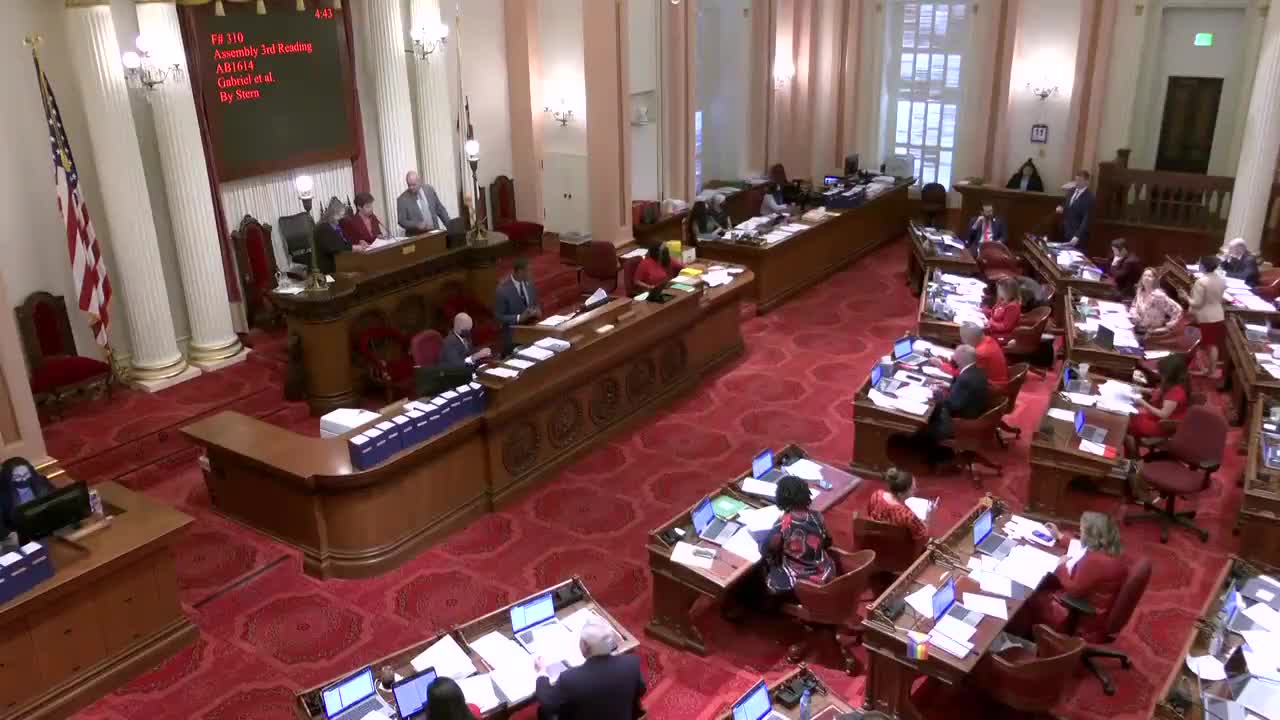 1MIN
Senate Floor
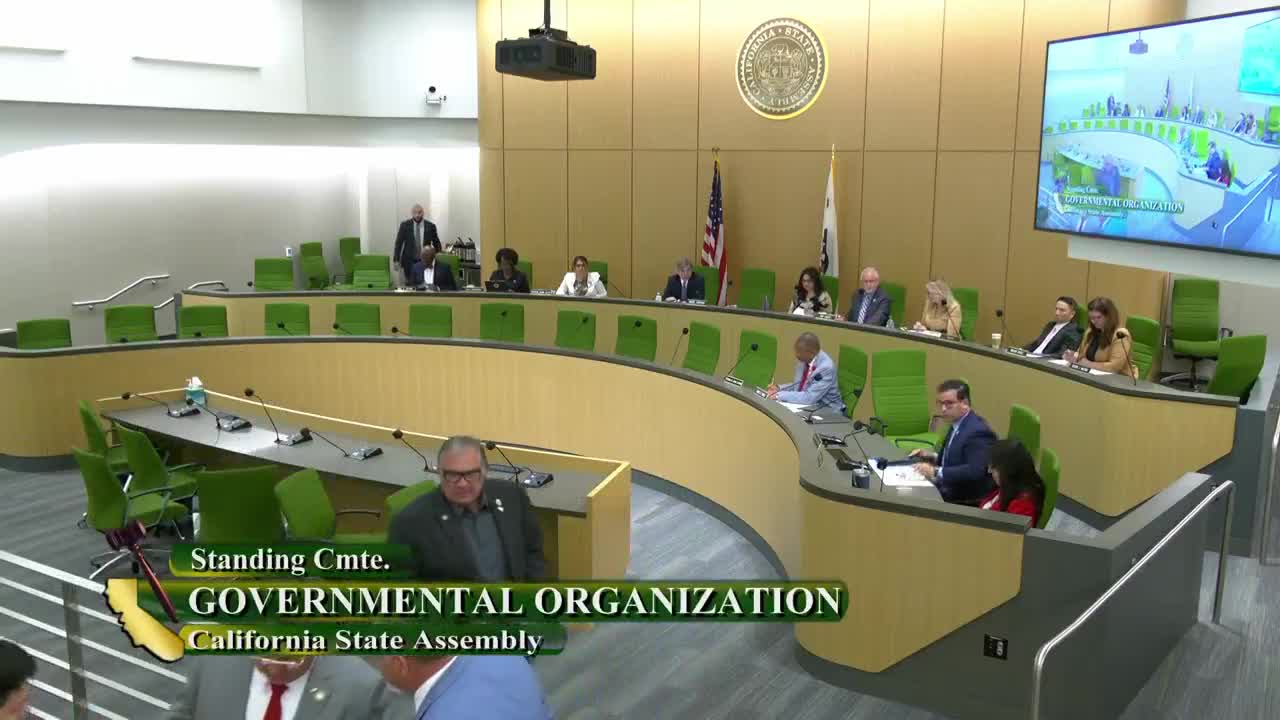 9MIN
Assembly Standing Committee on Governmental Organization


Bill Co-Author(s):