AB 1699: K–14 classified employees: part-time or full-time vacancies: public postings.
- Session Year: 2023-2024
- House: Assembly
- Latest Version Date: 2023-09-18
Current Status:
Failed
(2024-01-18: Consideration of Governor's veto stricken from file.)
Introduced
In Committee
First Chamber
In Committee
Second Chamber
Enacted
What does this bill do?
The bill gives current permanent classified staff at county, school, and community college employers the first chance to fill new part‑ or full‑time classified vacancies by posting them and holding applications for 10 business days. Employees may add hours or replace assignments, employers must adjust schedules when feasible, part‑time years count toward service, and part‑timers who total full‑time hours get the same benefits as full‑time staff. It bans retaliation, bars assignments that would create overtime or break wage laws, excludes managers and confidential employees and staff under disciplinary or improvement plans, and defers to union contracts.
The summary is provided by generative AI which can make mistakes. For original language, please view the details in the table below.
Existing law requires county offices of education and the governing boards of school districts and community college districts, except those incorporating the merit system, to employ persons for positions not requiring certification qualifications or that are not academic, as applicable, and to classify those employees and positions, and requires that they be known as the classified service, as provided.
This bill would require these governing boards and county offices, including those incorporating the merit system and including certain joint powers authorities formed by them, to offer vacancies for part-time or full-time positions, as a right of first refusal for 10 business days, with specified priorities, to current regular nonprobationary classified employees who meet the minimum job qualifications of the position or who could meet the minimum job qualifications before their start date, unless otherwise negotiated by the education employer and the exclusive representatives of the applicable employees. The bill would require these employers, referred to in the bill as education employers, to adhere to specified requirements, including, among others, that they provide all of their classified employees and their exclusive representatives notice of, and instructions for applying for, any new classified position, and that they not offer the position to any applicant until after the position has been noticed for 10 business days. The bill would authorize an employee who accepts a new assignment to elect to either add the hours for the new assignment to their current assignment, if feasible, or, if the new assignment is more hours than their current assignment, would authorize the employee to replace their current assignment with the new assignment, and would require the education employer to provide reasonable modifications to the assignment schedules to allow the employee to work both assignments, as provided. The bill would require an education employer to accept a current part-time employees number of years of service with the education employer, regardless of the capacity in which they were earned, when that part-time employee applies for an additional part-time assignment that requires a certain number of years of service. The bill would require classified employees who work part-time assignments that equal the number of hours for a full-time assignment for the same education employer to receive the same benefits as employees who work a full-time assignment. The bill would expressly prohibit retaliation against classified employees for either refusing or accepting a vacancy. The bill would prohibit applicants from being offered a vacancy if the total of the regular hours of the 2 positions would require overtime pay or otherwise violate the federal Fair Labor Standards Act of 1938 or any other state or federal law. The bill would not apply to (1) an employee who is in the process of completing a written performance improvement plan, who was previously involuntarily demoted from the same position as the vacancy, who has been suspended, or who is the subject of a pending disciplinary action for suspension or dismissal, or (2) confidential or management employees or vacancies for their positions, as provided.
Existing law requires a person laid off by a county office of education, school district, or community college district because of lack of work or funds to be eligible for reemployment for period of 39 months, as specified.
This bill would provide that its provisions do not supersede that requirement, and would also not apply to an education employer with a contravening collective bargaining agreement in effect on January 1, 2024, until the expiration or renewal of that agreement.
Existing law requires county offices of education and the governing boards of school districts and community college districts, except those incorporating the merit system, to employ persons for positions not requiring certification qualifications or that are not academic, as applicable, and to classify those employees and positions, and requires that they be known as the classified service, as provided.
This bill would require these governing boards and county offices, including those incorporating the merit system and including certain joint powers authorities formed by them, to offer vacancies for part-time or full-time positions, as a right of first refusal, refusal for 10 business days, with specified priorities, to current regular nonprobationary classified employees who meet the minimum job qualifications of the position or who could meet the minimum job qualifications after 10 or fewer hours of training, as specified, before their start date, unless otherwise negotiated by the education employer and the exclusive representatives of the applicable employees. The bill would require these employers, referred to in the bill as education employers, to adhere to specified requirements, including, among others, that they provide all of their classified employees and their exclusive representatives notice of, and instructions for applying for, any new classified position at least 10 business days before the general public is authorized to apply for the position. position, and that they not offer the position to any applicant until after the position has been noticed for 10 business days. The bill would authorize an employee who accepts a new assignment to elect to either add the hours for the new assignment to their current assignment, if feasible, or, if the new assignment is more hours than their current assignment, would authorize the employee to replace their current assignment with the new assignment, and would require the education employer to provide reasonable modifications to the assignment schedules to allow the employee to work both assignments, as provided. The bill would require an education employer to accept a current part-time employees number of years of service with the education employer, regardless of the capacity in which they were earned, when that part-time employee applies for an additional part-time assignment that requires a certain number of years of service. The bill would require classified employees who work part-time assignments that equal the number of hours for a full-time assignment for the same education employer to receive the same benefits as employees who work a full-time assignment. The bill would expressly prohibit retaliation against classified employees for either refusing or accepting a vacancy. The bill would prohibit applicants from being offered a vacancy if the total of the regular hours of the 2 positions would require overtime pay or otherwise violate the federal Fair Labor Standards Act of 1938 or any other state or federal law. The bill would not apply to (1) an employee who is in the process of completing a written performance improvement plan, who was previously involuntarily demoted from the same position as the vacancy, who has been suspended, or who is the subject of a pending disciplinary action for suspension or dismissal. dismissal, or (2) confidential or management employees or vacancies for their positions, as provided.
Existing law requires a person laid off by a county office of education, school district, or community college district because of lack of work or funds to be eligible for reemployment for period of 39 months, as specified.
This bill would provide that its provisions do not supersede that requirement, and would also not apply to an education employer with a contravening collective bargaining agreement in effect on January 1, 2024, until the expiration or renewal of that agreement.
Existing law requires county offices of education and the governing boards of school districts and community college districts districts, except those incorporating the merit system, to employ persons for positions not requiring certification qualifications or that are not academic, as applicable, and to classify those employees and positions, and requires that they be known as the classified service, as provided. Existing law also applies those provisions to county offices of education.
Existing law requires the above-described provisions to apply only to county offices of education, school districts, and community college districts, as applicable, not incorporating the merit system.This bill would, notwithstanding any other law, would require these governing boards and county offices, including those incorporating the merit system and including certain joint powers authorities formed by them, to offer vacancies for part-time or full-time positions of an education employer, as defined, to be offered positions, as a right of first refusal, with priority, as specified, specified priorities, to current regular nonprobationary classified employees who meet the minimum job qualifications of the position or who could meet the minimum job qualifications after 10 or fewer hours of paid training that is paid for by the education employer, training, as specified, unless otherwise negotiated by the education employer and the exclusive representatives of the applicable employees, and employees. The bill would require the education employer these employers, referred to in the bill as education employers, to adhere to specified requirements, including, among others, that the education employer provides all of its they provide all of their classified employees notice of, and instructions for applying for, any new classified position at least 10 business days before the general public is authorized to apply for the position. The bill would authorize an employee who accepts a new assignment to elect to either add the hours for the new assignment to their current assignment, if feasible, or, if the new assignment is more hours than their current assignment, would authorize the employee may to replace their current assignment with the new assignment, and would require the education employer to provide reasonable modifications to the assignment schedules to allow the employee to work both assignments, as provided. The bill would require an education employer to accept a current part-time employees number of years of service with the education employer, regardless of the capacity in which they were earned, when that part-time employee applies for an additional part-time assignment that requires a certain number of years of service. The bill would require classified employees who work part-time assignments that equal the number of hours for a full-time assignment for the same education employer to receive the same benefits as employees who work a full-time assignment. The bill would expressly prohibit retaliation against classified employees for either refusing or accepting a vacancy. The bill would prohibit applicants from being offered a vacancy if the total of the regular hours of the 2 positions would require overtime pay or otherwise violate the federal Fair Labor Standards Act of 1938 or any other state or federal law. The bill would not apply to an employee who is in the process of completing a written performance improvement plan, who was previously involuntarily demoted from the same position as the vacancy, who has been suspended, or who is the subject of a pending disciplinary action for suspension or dismissal.
Existing law requires a person laid off by a county office of education, school district, or community college district because of lack of work or funds to be eligible for reemployment for period of 39 months, as specified.
This bill would apply these provisions to county offices of education, school districts, community college districts, and joint powers authorities comprising county offices of education, school districts, or community college districts, as applicable, regardless of whether the county office of education, school district, community college district, or joint powers authority comprising county offices of education, school districts, or community college districts, as applicable, has adopted the merit system. provide that its provisions do not supersede that requirement, and would also not apply to an education employer with a contravening collective bargaining agreement in effect on January 1, 2024, until the expiration or renewal of that agreement.
Existing law requires the governing boards of school districts and community college districts to employ persons for positions not requiring certification qualifications or that are not academic, as applicable, and to classify those employees and positions, and requires that they be known as the classified service, as provided. Existing law also applies those provisions to county offices of education.
Existing law requires the above-described provisions to apply only to county offices of education, school districts, and community college districts, as applicable, not incorporating the merit system.
This bill would, notwithstanding any other law, require vacancies for part-time or full-time positions of an education employer, as defined, to be open only offered with priority, as specified, to current regular and hourly employees, as provided, before the vacancy may be posted publicly for the general public to apply. The bill would require an interested part-time employee who does not meet the minimum qualifications for a vacancy to be offered paid on-the-job training for that vacancy. nonprobationary classified employees who meet the minimum job qualifications of the position or who could meet the minimum job qualifications after 10 or fewer hours of paid training that is paid for by the education employer, unless otherwise negotiated by the education employer and the exclusive representatives of the applicable employees, and would require the education employer to adhere to specified requirements, including, among others, that the education employer provides all of its classified employees notice of, and instructions for applying for, any new classified position at least 10 business days before the general public is authorized to apply for the position. The bill would authorize an employee who accepts a new assignment to elect to either add the hours for the new assignment to their current assignment, if feasible, or, if the new assignment is more hours than their current assignment, the employee may replace their current assignment with the new assignment, and would require the education employer to provide reasonable modifications to the assignment schedules to allow the employee to work both assignments, as provided. The bill would require an education employer to accept a current part-time employees number of years of service with the education employer, regardless of the capacity in which they were earned, when that part-time employee applies for an additional part-time assignment that requires a certain number of years of service. The bill would require classified employees who work part-time assignments that equal the number of hours for a full-time assignment for the same education employer to receive the same benefits as employees who work a full-time assignment. The bill would expressly prohibit retaliation against classified employees for either refusing or accepting a vacancy. The bill would prohibit applicants from being offered a vacancy if the total of the 2 positions would violate the federal Fair Labor Standards Act of 1938 or any other state or federal law.
This bill would apply these provisions to county offices of education, school districts, community college districts, and joint powers authorities comprising county offices of education, school districts, or community college districts, as applicable, regardless of whether the county office of education, school district, community college district, or joint powers authority comprising county offices of education, school districts, or community college districts, as applicable, has adopted the merit system.
Existing law requires the governing boards of school districts and community college districts to employ persons for positions not requiring certification qualifications or that are not academic, as applicable, and to classify those employees and positions, and requires that they be known as the classified service, as provided. Existing law also applies those provisions to county offices of education.
Existing law requires the above-described provisions to apply only to county offices of education, school districts, and community college districts, as applicable, not incorporating the merit system.
This bill would, notwithstanding any other law, require vacancies for part-time or full-time positions of an education employer, as defined, to be open only to current regular and hourly employees, as provided, before the vacancy may be posted publicly for the general public to apply. The bill would require an interested part-time employee who does not meet the minimum qualifications for a vacancy to be offered paid on-the-job training for that vacancy. The bill would require an education employer to accept a current part-time employees number of years of service with the education employer, regardless of the capacity in which they were earned, when that part-time employee applies for an additional part-time assignment that requires a certain number of years of service. The bill would require classified employees who work part-time assignments that equal the number of hours for a full-time assignment for the same education employer to receive the same benefits as employees who work a full-time assignment. The bill would expressly prohibit retaliation against classified employees for either refusing or accepting a vacancy. The bill would prohibit applicants from being offered a vacancy if the total of the 2 positions would violate the federal Fair Labor Standards Act of 1938 or any other state or federal law.
This bill would apply these provisions to county offices of education, school districts, community college districts, and joint powers authorities comprising county offices of education, school districts, or community college districts, as applicable, regardless of whether the county office of education, school district, community college district, or joint powers authority comprising county offices of education, school districts, or community college districts, as applicable, has adopted the merit system.
(a)Notwithstanding any other law, except Section 45298, vacancies for part-time and full-time positions of an education employer shall be offered with priority to current regular nonprobationary classified employees who meet the minimum job qualifications of the position, or who could meet the minimum job qualifications before their start date, unless otherwise negotiated by the education employer and the exclusive representatives of the applicable employees. The education employer shall adhere to the following requirements:
(1)The education employer shall provide all of its classified employees and their exclusive representatives notice of, and instructions for applying for, any new classified position at least 10 business days before the general public is authorized to apply for the position. In order to qualify for the right of first refusal to that position pursuant to this section, an employee must apply for the position within 10 business days of the notice. The education employer shall not offer the position to any applicant until that 10-day period has expired, and may only award the position in accordance with the requirements of this section. If no qualified, internal candidate applies for or accepts the new position within at least 10 business days after the education employer provides notice, only then may the education employer offer the new position to an external applicant.
(2)(A)An education employer shall grant the new position as a right of first refusal to a current regular nonprobationary classified employee who applies for the position and who meets the minimum job qualifications of the position or who could meet the minimum job qualifications before their start date. If there is more than one such applicant, priority among those applicants shall be determined in the following order:
(i)By seniority among applicants currently working in the same classification as the new position for whom the new position would represent an increase in hours or wages.
(ii)If there are no qualified applicants from the same classification, then among applicants in other classifications for whom the new position would represent an increase in hours or wages, and awarding the position among those applicants according to the education employers standard method of selection.
(B)In no case, except pursuant to Section 45298, shall the education employer select someone for an open position who is not currently employed by the education employer if there is at least one current regular nonprobationary classified employee who has applied for and would accept the position, and who meets its minimum job qualifications or could meet the minimum job qualifications before their start date.
(3)An employee who accepts a new assignment may elect to either add the hours for the new assignment to their current assignment, if feasible, or, if the new assignment is more hours than their current assignment, the employee may replace their current assignment with the new assignment. If the employee elects to add the new assignment to their current assignment and the hours for the new assignment overlap with the hours for their current assignment, the education employer shall provide reasonable modifications to the assignment schedules to allow the employee to work both assignments. This paragraph shall not be construed as to require an education employer to grant additional hours that would qualify the employee for overtime pay.
(b)An education employer shall accept a current part-time employees number of years of service with the education employer, regardless of the capacity in which they were earned, when that part-time employee applies for an additional part-time assignment that requires a certain number of years of service.
(c)Classified employees who work part-time assignments that equal the number of hours for a full-time assignment for the same education employer shall receive the same benefits as employees who work a full-time assignment.
(d)Classified employees shall not be retaliated against for either refusing a vacancy or accepting a vacancy.
(e)Notwithstanding subdivision (a), applicants shall not be offered a vacancy if the total of the regular hours of the two positions would require overtime pay or otherwise violate the federal Fair Labor Standards Act of 1938 (29 U.S.C. Sec. 201 et seq.) or any other state or federal law.
(f)This section shall apply to county offices of education, school districts, and joint powers authorities comprising county offices of education or school districts, regardless of whether the county office of education, school district, or joint powers authority comprising county offices of education or school districts has adopted the merit system.
(g)For purposes of this section, education employer means a county office of education, school district, or joint powers authority comprised of county offices of education or school districts.
(h)To the extent that this section conflicts with a provision of a collective bargaining agreement entered into by an education employer and an exclusive bargaining representative pursuant to Chapter 10.7 (commencing with Section 3540) of Division 4 of Title 1 of the Government Code, and that is in effect as of January 1, 2024, this section shall not apply to the education employer until the expiration or renewal of that collective bargaining agreement.
(i)(1)This section shall not apply to an employee who is in the process of completing a written performance improvement plan, who was previously involuntarily demoted from the same position as the vacancy, who has been suspended, or who is the subject of a pending disciplinary action for suspension or dismissal.
(2)This section shall not apply to confidential or management employees, as defined pursuant to subdivisions (c) and (g), respectively, of Section 3540.1 of the Government Code, nor to vacancies for confidential or management positions.
(j)This section does not supersede the rights provided to a person pursuant Section 45298.
SEC. 2.Section 88039 is added to the Education Code, to read:88039.(a)Notwithstanding any other law, except Section 88117, vacancies for part-time and full-time positions of an education employer shall be offered with priority to current regular nonprobationary classified employees who meet the minimum job qualifications of the position, or who could meet the minimum job qualifications before their start date, unless otherwise negotiated by the education employer and the exclusive representatives of the applicable employees. The education employer shall adhere to the following requirements:
(1)The education employer shall provide all of its classified employees and their exclusive representatives notice of, and instructions for applying for, any new classified position at least 10 business days before the general public is authorized to apply for the position. In order to qualify for the right of first refusal to that position pursuant to this section, an employee must apply for the position within 10 business days of the notice. The education employer shall not offer the position to any applicant until that 10-day period has expired, and may only award the position in accordance with the requirements of this section. If no qualified, internal candidate applies for or accepts the new position within at least 10 business days after the education employer provides notice, only then may the education employer offer the new position to an external applicant.
(2)(A)An education employer shall grant the new position as a right of first refusal to a current regular nonprobationary classified employee who applies for the position and who meets the minimum job qualifications of the position or who could meet the minimum job qualifications before their start date. If there is more than one such applicant, priority among those applicants shall be determined in the following order:
(i)By seniority among applicants currently working in the same classification as the new position for whom the new position would represent an increase in hours or wages.
(ii)If there are no qualified applicants from the same classification, then among applicants in other classifications for whom the new position would represent an increase in hours or wages, and awarding the position among those applicants according to the education employers standard method of selection.
(B)In no case, except pursuant to Section 88117, shall the education employer select someone for an open position who is not currently employed by the education employer if there is at least one current regular nonprobationary classified employee who has applied for and would accept the position, and who meets its minimum job qualifications or could meet the minimum job qualifications before their start date.
(3)An employee who accepts a new assignment may elect to either add the hours for the new assignment to their current assignment, if feasible, or, if the new assignment is more hours than their current assignment, the employee may replace their current assignment with the new assignment. If the employee elects to add the new assignment to their current assignment and the hours for the new assignment overlap with the hours for their current assignment, the education employer shall provide reasonable modifications to the assignment schedules to allow the employee to work both assignments. This paragraph shall not be construed as to require an education employer to grant additional hours that would qualify the employee for overtime pay.
(b)An education employer shall accept a current part-time employees number of years of service with the education employer, regardless of the capacity in which they were earned, when that part-time employee applies for an additional part-time assignment that requires a certain number of years of service.
(c)Classified employees who work part-time assignments that equal the number of hours for a full-time assignment for the same education employer shall receive the same benefits as employees who work a full-time assignment.
(d)Classified employees shall not be retaliated against for either refusing a vacancy or accepting a vacancy.
(e)Notwithstanding subdivision (a), applicants shall not be offered a vacancy if the total of the regular hours of the two positions would require overtime pay or otherwise violate the federal Fair Labor Standards Act of 1938 (29 U.S.C. Sec. 201 et seq.) or any other state or federal law.
(f)This section shall apply to community college districts and joint powers authorities comprising community college districts, regardless of whether a community college district or joint powers authority comprising community college districts has adopted the merit system.
(g)For purposes of this section, education employer means a community college district or joint powers authority comprising community college districts.
(h)To the extent that this section conflicts with a provision of a collective bargaining agreement entered into by an education employer and an exclusive bargaining representative pursuant to Chapter 10.7 (commencing with Section 3540) of Division 4 of Title 1 of the Government Code, and that is in effect as of January 1, 2024, this section shall not apply to the education employer until the expiration or renewal of that collective bargaining agreement.
(i)(1)This section shall not apply to an employee who is in the process of completing a written performance improvement plan, who was previously involuntarily demoted from the same position as the vacancy, who has been suspended, or who is the subject of a pending disciplinary action for suspension or dismissal.
(2)This section shall not apply to confidential or management employees, as defined pursuant to subdivisions (c) and (g), respectively, of Section 3540.1 of the Government Code, nor to vacancies for confidential or management positions.
(j)This section does not supersede the rights provided to a person pursuant Section 88117.
(a)Notwithstanding any other law, except Section 45298, vacancies for part-time and full-time positions of an education employer shall be offered with priority to current regular nonprobationary classified employees who meet the minimum job qualifications of the position, or who could meet the minimum job qualifications after 10 or fewer hours of training, before their start date, unless otherwise negotiated by the education employer and the exclusive representatives of the applicable employees. The education employer shall adhere to the following requirements:
(1)The education employer shall provide all of its classified employees and their exclusive representatives notice of, and instructions for applying for, any new classified position at least 10 business days before the general public is authorized to apply for the position, and exclusive representatives of classified employees shall be given notice before the education employer posts the position publicly. position. In order to qualify for the right of first refusal to that position pursuant to this section, an employee must apply for the position within 10 business days of the notice. The education employer shall not offer the position to any applicant until that 10-day period has expired, and may only award the position in accordance with the requirements of this section. If no qualified, internal candidate applies for or accepts the new position within at least 10 business days after the education employer provides notice, only then may the education employer offer the new position to an external applicant.
(2)(A)(i)An education employer shall grant the new position as a right of first refusal to a current regular nonprobationary classified employee who applies for the position and who meets the minimum job qualifications of the position or who could meet the minimum job qualifications after 10 or fewer hours of training. before their start date. If there is more than one such applicant, priority among those applicants shall be determined in the following order:
(I)(i)By seniority among applicants currently working in the same classification as the new position for whom the new position would represent an increase in hours or wages.
(II)(ii)If there are no qualified applicants from the same classification, then among applicants in other classifications for whom the new position would represent an increase in hours or wages, and awarding the position among those applicants according to the education employers standard method of selection.
(ii)(B)In no case, except pursuant to Section 45298, shall the education employer select someone for an open position who is not currently employed by the education employer if there is at least one current regular nonprobationary classified employee who has applied for and would accept the position, and who meets its minimum job qualifications or could meet the minimum job qualifications after 10 or fewer hours of training. before their start date.
(B)For purposes of subparagraph (A), the training for qualification must be completed within 30 days of applying for the position or during the hiring period, whichever is later.(3)An employee who accepts a new assignment may elect to either add the hours for the new assignment to their current assignment, if feasible, or, if the new assignment is more hours than their current assignment, the employee may replace their current assignment with the new assignment. If the employee elects to add the new assignment to their current assignment and the hours for the new assignment overlap with the hours for their current assignment, the education employer shall provide reasonable modifications to the assignment schedules to allow the employee to work both assignments. This paragraph shall not be construed as to require an education employer to grant additional hours that would qualify the employee for overtime pay.
(b)An education employer shall accept a current part-time employees number of years of service with the education employer, regardless of the capacity in which they were earned, when that part-time employee applies for an additional part-time assignment that requires a certain number of years of service.
(c)Classified employees who work part-time assignments that equal the number of hours for a full-time assignment for the same education employer shall receive the same benefits as employees who work a full-time assignment.
(d)Classified employees shall not be retaliated against for either refusing a vacancy or accepting a vacancy.
(e)Notwithstanding subdivision (a), applicants shall not be offered a vacancy if the total of the regular hours of the two positions would require overtime pay or otherwise violate the federal Fair Labor Standards Act of 1938 (29 U.S.C. Sec. 201 et seq.) or any other state or federal law.
(f)This section shall apply to county offices of education, school districts, and joint powers authorities comprising county offices of education or school districts, regardless of whether the county office of education, school district, or joint powers authority comprising county offices of education or school districts has adopted the merit system.
(g)For purposes of this section, education employer means a county office of education, school district, or joint powers authority comprised of county offices of education or school districts.
(h)To the extent that this section conflicts with a provision of a collective bargaining agreement entered into by an education employer and an exclusive bargaining representative pursuant to Chapter 10.7 (commencing with Section 3540) of Division 4 of Title 1 of the Government Code, and that is in effect as of January 1, 2024, this section shall not apply to the education employer until the expiration or renewal of that collective bargaining agreement.
(i)(1)This section shall not apply to an employee who is in the process of completing a written performance improvement plan, who was previously involuntarily demoted from the same position as the vacancy, who has been suspended, or who is the subject of a pending disciplinary action for suspension or dismissal.
(2)This section shall not apply to confidential or management employees, as defined pursuant to subdivisions (c) and (g), respectively, of Section 3540.1 of the Government Code, nor to vacancies for confidential or management positions.
(j)This section does not supersede the rights provided to a person pursuant Section 45298.
SEC. 2.Section 88039 is added to the Education Code, to read:88039.(a)Notwithstanding any other law, except Section 88117, vacancies for part-time and full-time positions of an education employer shall be offered with priority to current regular nonprobationary classified employees who meet the minimum job qualifications of the position, or who could meet the minimum job qualifications after 10 or fewer hours of training, before their start date, unless otherwise negotiated by the education employer and the exclusive representatives of the applicable employees. The education employer shall adhere to the following requirements:
(1)The education employer shall provide all of its classified employees and their exclusive representatives notice of, and instructions for applying for, any new classified position at least 10 business days before the general public is authorized to apply for the position, and exclusive representatives of classified employees shall be given notice before the education employer posts the position publicly. position. In order to qualify for the right of first refusal to that position pursuant to this section, an employee must apply for the position within 10 business days of the notice. The education employer shall not offer the position to any applicant until that 10-day period has expired, and may only award the position in accordance with the requirements of this section. If no qualified, internal candidate applies for or accepts the new position within at least 10 business days after the education employer provides notice, only then may the education employer offer the new position to an external applicant.
(2)(A)(i)An education employer shall grant the new position as a right of first refusal to a current regular nonprobationary classified employee who applies for the position and who meets the minimum job qualifications of the position or who could meet the minimum job qualifications after 10 or fewer hours of training. before their start date. If there is more than one such applicant, priority among those applicants shall be determined in the following order:
(I)(i)By seniority among applicants currently working in the same classification as the new position for whom the new position would represent an increase in hours or wages.
(II)(ii)If there are no qualified applicants from the same classification, then among applicants in other classifications for whom the new position would represent an increase in hours or wages, and awarding the position among those applicants according to the education employers standard method of selection.
(ii)(B)In no case, except pursuant to Section 88117, shall the education employer select someone for an open position who is not currently employed by the education employer if there is at least one current regular nonprobationary classified employee who has applied for and would accept the position, and who meets its minimum job qualifications or could meet the minimum job qualifications after 10 or fewer hours of training. before their start date.
(B)For purposes of subparagraph (A), the training for qualification must be completed within 30 days of applying for the position or during the hiring period, whichever is later.(3)An employee who accepts a new assignment may elect to either add the hours for the new assignment to their current assignment, if feasible, or, if the new assignment is more hours than their current assignment, the employee may replace their current assignment with the new assignment. If the employee elects to add the new assignment to their current assignment and the hours for the new assignment overlap with the hours for their current assignment, the education employer shall provide reasonable modifications to the assignment schedules to allow the employee to work both assignments. This paragraph shall not be construed as to require an education employer to grant additional hours that would qualify the employee for overtime pay.
(b)An education employer shall accept a current part-time employees number of years of service with the education employer, regardless of the capacity in which they were earned, when that part-time employee applies for an additional part-time assignment that requires a certain number of years of service.
(c)Classified employees who work part-time assignments that equal the number of hours for a full-time assignment for the same education employer shall receive the same benefits as employees who work a full-time assignment.
(d)Classified employees shall not be retaliated against for either refusing a vacancy or accepting a vacancy.
(e)Notwithstanding subdivision (a), applicants shall not be offered a vacancy if the total of the regular hours of the two positions would require overtime pay or otherwise violate the federal Fair Labor Standards Act of 1938 (29 U.S.C. Sec. 201 et seq.) or any other state or federal law.
(f)This section shall apply to community college districts and joint powers authorities comprising community college districts, regardless of whether a community college district or joint powers authority comprising community college districts has adopted the merit system.
(g)For purposes of this section, education employer means a community college district or joint powers authority comprising community college districts.
(h)To the extent that this section conflicts with a provision of a collective bargaining agreement entered into by an education employer and an exclusive bargaining representative pursuant to Chapter 10.7 (commencing with Section 3540) of Division 4 of Title 1 of the Government Code, and that is in effect as of January 1, 2024, this section shall not apply to the education employer until the expiration or renewal of that collective bargaining agreement.
(i)(1)This section shall not apply to an employee who is in the process of completing a written performance improvement plan, who was previously involuntarily demoted from the same position as the vacancy, who has been suspended, or who is the subject of a pending disciplinary action for suspension or dismissal.
(2)This section shall not apply to confidential or management employees, as defined pursuant to subdivisions (c) and (g), respectively, of Section 3540.1 of the Government Code, nor to vacancies for confidential or management positions.
(j)This section does not supersede the rights provided to a person pursuant Section 88117.
(a)Notwithstanding any other law, except Section 45298, vacancies for part-time and full-time positions of an education employer shall be offered with priority to current regular nonprobationary classified employees who meet the minimum job qualifications of the position, or who could meet the minimum job qualifications after 10 or fewer hours of paid training that is paid for by the education employer, training, unless otherwise negotiated by the education employer and the exclusive representatives of the applicable employees. The education employer shall adhere to the following requirements:
(1)The education employer shall provide all of its classified employees notice of, and instructions for applying for, any new classified position at least 10 business days before the general public is authorized to apply for the position, and exclusive representatives of classified employees shall be given notice before the education employer posts the position publicly. If no qualified, internal candidate applies for or accepts the new position within at least 10 business days after the education employer provides notice, or if no internal candidate accepts the new position, only then may the education employer offer the new position to an external applicant.
(2)(A)(i)An education employer shall grant the new position as a right of first refusal to a current regular nonprobationary classified employee who applies for the position and who meets the minimum job qualifications of the position or who could meet the minimum job qualifications after ten 10 or fewer hours of training paid for by the education employer. Priority training. If there is more than one such applicant, priority among those applicants shall be given determined in the following order:
(A)(I)By seniority among applicants currently working in the same classification as the new position for whom the new position would represent an increase in hours or wages.
(B)By seniority(II)If there are no qualified applicants from the same classification, then among applicants in other classifications for whom the new position would represent an increase in hours or wages. wages, and awarding the position among those applicants according to the education employers standard method of selection.
(ii)In no case, except pursuant to Section 45298, shall the education employer select someone for an open position who is not currently employed by the education employer if there is at least one current regular nonprobationary classified employee who has applied for and would accept the position, and who meets its minimum job qualifications or could meet the minimum job qualifications after 10 or fewer hours of training.
(B)For purposes of subparagraph (A), the training for qualification must be completed within 30 days of applying for the position or during the hiring period, whichever is later.
(3)An employee who accepts a new assignment may elect to either add the hours for the new assignment to their current assignment, if feasible, or, if the new assignment is more hours than their current assignment, the employee may replace their current assignment with the new assignment. If the employee elects to add the new assignment to their current assignment and the hours for the new assignment overlap with the hours for their current assignment, the education employer shall provide reasonable modifications to the assignment schedules to allow the employee to work both assignments. This paragraph shall not be construed as to require an education employer to grant additional hours that would qualify the employee for overtime pay.
(b)An education employer shall accept a current part-time employees number of years of service with the education employer, regardless of the capacity in which they were earned, when that part-time employee applies for an additional part-time assignment that requires a certain number of years of service.
(c)Classified employees who work part-time assignments that equal the number of hours for a full-time assignment for the same education employer shall receive the same benefits as employees who work a full-time assignment.
(d)Classified employees shall not be retaliated against for either refusing a vacancy or accepting a vacancy.
(e)Notwithstanding subdivision (a), applicants shall not be offered a vacancy if the total of the regular hours of the two positions would require overtime pay or otherwise violate the federal Fair Labor Standards Act of 1938 (29 U.S.C. Sec. 201 et seq.) or any other state or federal law.
(f)This section shall apply to county offices of education, school districts, and joint powers authorities comprising county offices of education or school districts, regardless of whether the county office of education, school district, or joint powers authority comprising county offices of education or school districts has adopted the merit system.
(g)For purposes of this section, education employer means a county office of education, school district, or joint powers authority comprised of county offices of education or school districts.
(h)To the extent that this section conflicts with a provision of a collective bargaining agreement entered into by an education employer and an exclusive bargaining representative pursuant to Chapter 10.7 (commencing with Section 3540) of Division 4 of Title 1 of the Government Code, and that is in effect as of January 1, 2024, this section shall not apply to the education employer until the expiration or renewal of that collective bargaining agreement.
(i)This section shall not apply to an employee who is in the process of completing a written performance improvement plan, who was previously involuntarily demoted from the same position as the vacancy, who has been suspended, or who is the subject of a pending disciplinary action for suspension or dismissal.
(j)This section does not supersede the rights provided to a person pursuant Section 45298.
SEC. 2.Section 88039 is added to the Education Code, to read:88039.(a)Notwithstanding any other law, except Section 88117, vacancies for part-time and full-time positions of an education employer shall be offered with priority to current regular nonprobationary classified employees who meet the minimum job qualifications of the position, or who could meet the minimum job qualifications after 10 or fewer hours of paid training that is paid for by the education employer, training, unless otherwise negotiated by the education employer and the exclusive representatives of the applicable employees. The education employer shall adhere to the following requirements:
(1)The education employer shall provide all of its classified employees notice of, and instructions for applying for, any new classified position at least 10 business days before the general public is authorized to apply for the position, and exclusive representatives of classified employees shall be given notice before the education employer posts the position publicly. If no qualified, internal candidate applies for or accepts the new position within at least 10 business days after the education employer provides notice, or if no internal candidate accepts the new position, only then may the education employer offer the new position to an external applicant.
(2)(A)(i)An education employer shall grant the new position as a right of first refusal to a current regular nonprobationary classified employee who applies for the position and who meets the minimum job qualifications of the position or who could meet the minimum job qualifications after ten 10 or fewer hours of training paid for by the education employer. Priority training. If there is more than one such applicant, priority among those applicants shall be given determined in the following order:
(A)(I)By seniority among applicants currently working in the same classification as the new position for whom the new position would represent an increase in hours or wages.
(B)By seniority(II)If there are no qualified applicants from the same classification, then among applicants in other classifications for whom the new position would represent an increase in hours or wages. wages, and awarding the position among those applicants according to the education employers standard method of selection.
(ii)In no case, except pursuant to Section 88117, shall the education employer select someone for an open position who is not currently employed by the education employer if there is at least one current regular nonprobationary classified employee who has applied for and would accept the position, and who meets its minimum job qualifications or could meet the minimum job qualifications after 10 or fewer hours of training.
(B)For purposes of subparagraph (A), the training for qualification must be completed within 30 days of applying for the position or during the hiring period, whichever is later.
(3)An employee who accepts a new assignment may elect to either add the hours for the new assignment to their current assignment, if feasible, or, if the new assignment is more hours than their current assignment, the employee may replace their current assignment with the new assignment. If the employee elects to add the new assignment to their current assignment and the hours for the new assignment overlap with the hours for their current assignment, the education employer shall provide reasonable modifications to the assignment schedules to allow the employee to work both assignments. This paragraph shall not be construed as to require an education employer to grant additional hours that would qualify the employee for overtime pay.
(b)An education employer shall accept a current part-time employees number of years of service with the education employer, regardless of the capacity in which they were earned, when that part-time employee applies for an additional part-time assignment that requires a certain number of years of service.
(c)Classified employees who work part-time assignments that equal the number of hours for a full-time assignment for the same education employer shall receive the same benefits as employees who work a full-time assignment.
(d)Classified employees shall not be retaliated against for either refusing a vacancy or accepting a vacancy.
(e)Notwithstanding subdivision (a), applicants shall not be offered a vacancy if the total of the regular hours of the two positions would require overtime pay or otherwise violate the federal Fair Labor Standards Act of 1938 (29 U.S.C. Sec. 201 et seq.) or any other state or federal law.
(f)This section shall apply to community college districts and joint powers authorities comprising community college districts, regardless of whether a community college district or joint powers authority comprising community college districts has adopted the merit system.
(g)For purposes of this section, education employer means a community college district or joint powers authority comprising community college districts.
(h)To the extent that this section conflicts with a provision of a collective bargaining agreement entered into by an education employer and an exclusive bargaining representative pursuant to Chapter 10.7 (commencing with Section 3540) of Division 4 of Title 1 of the Government Code, and that is in effect as of January 1, 2024, this section shall not apply to the education employer until the expiration or renewal of that collective bargaining agreement.
(i)This section shall not apply to an employee who is in the process of completing a written performance improvement plan, who was previously involuntarily demoted from the same position as the vacancy, who has been suspended, or who is the subject of a pending disciplinary action for suspension or dismissal.
(j)This section does not supersede the rights provided to a person pursuant Section 88117.
(a)Notwithstanding any other law, vacancies for part-time and full-time positions of an education employer shall be open only offered with priority to current regular and hourly nonprobationary classified employees before the vacancy may be posted publicly, pursuant to all of the following: who meet the minimum job qualifications of the position, or who could meet the minimum job qualifications after 10 or fewer hours of paid training that is paid for by the education employer, unless otherwise negotiated by the education employer and the exclusive representatives of the applicable employees. The education employer shall adhere to the following requirements:
(1)If an employee currently works in the same classification, that employee shall automatically be eligible to add the new assignment to their current assignment.(2)If there is not an employee who works within the same classification who elects to take the additional assignment, the education employer shall offer the position to other classified employees for whom the position would represent an increase in hours, so long as the employee can reasonably perform the new assignment with reasonable accommodation.(3)An interested part-time employee who does not meet the minimum qualifications for a vacancy shall be offered reasonable paid on-the-job training for that vacancy. (4)If no current employees want to accept the new assignment, meet the minimum requirements, or will accept reasonable paid on-the-job training for the vacancy, only then may the job be posted for the general public to apply.(1)The education employer shall provide all of its classified employees notice of, and instructions for applying for, any new classified position at least 10 business days before the general public is authorized to apply for the position, and exclusive representatives of classified employees shall be given notice before the education employer posts the position publicly. If no qualified, internal candidate applies for the new position within at least 10 business days after the education employer provides notice, or if no internal candidate accepts the new position, only then may the education employer offer the new position to an external applicant.
(2)An education employer shall grant the new position to a current regular nonprobationary classified employee who applies for the position and who meets the minimum job qualifications of the position or who could meet the minimum job qualifications after ten or fewer hours of training paid for by the education employer. Priority among those applicants shall be given in the following order:
(A)By seniority among applicants currently working in the same classification as the new position for whom the new position would represent an increase in hours or wages.
(B)By seniority among applicants in other classifications for whom the new position would represent an increase in hours or wages.
(3)An employee who accepts a new assignment may elect to either add the hours for the new assignment to their current assignment, if feasible, or, if the new assignment is more hours than their current assignment, the employee may replace their current assignment with the new assignment. If the employee elects to add the new assignment to their current assignment and the hours for the new assignment overlap with the hours for their current assignment, the education employer shall provide reasonable modifications to the assignment schedules to allow the employee to work both assignments. This paragraph shall not be construed as to require an education employer to grant additional hours that would qualify the employee for overtime pay.
(b)An education employer shall accept a current part-time employees number of years of service with the education employer, regardless of the capacity in which they were earned, when that part-time employee applies for an additional part-time assignment that requires a certain number of years of service.
(c)Classified employees who work part-time assignments that equal the number of hours for a full-time assignment for the same education employer shall receive the same benefits as employees who work a full-time assignment.
(d)Classified employees shall not be retaliated against for either refusing a vacancy or accepting a vacancy.
(e)Education employers shall not disqualify an applicant who may need reasonable scheduling accommodations to complete more than one assignment. (f)(e)Notwithstanding subdivision (a), applicants shall not be offered a vacancy if the total of the two positions would violate the federal Fair Labor Standards Act of 1938 (29 U.S.C. Sec. 201 et seq.) or any other state or federal law.
(g)(f)This section shall apply to county offices of education, school districts, and joint powers authorities comprising county offices of education or school districts, regardless of whether the county office of education, school district, or joint powers authority comprising county offices of education or school districts has adopted the merit system.
(h)(g)For purposes of this section, education employer means a county office of education, school district, or joint powers authority comprised of county offices of education or school districts.
SEC. 2.Section 88039 is added to the Education Code, to read:88039.(a)Notwithstanding any other law, vacancies for part-time and full-time positions of an education employer shall be open only offered with priority to current regular and hourly nonprobationary employees before the vacancy may be posted publicly, pursuant to all of the following: who meet the minimum job qualifications of the position, or who could meet the minimum job qualifications after 10 or fewer hours of paid training that is paid for by the education employer, unless otherwise negotiated by the education employer and the exclusive representatives of the applicable employees. The education employer shall adhere to the following requirements:
(1)If an employee currently works in the same classification, that employee shall automatically be eligible to add the new assignment to their current assignment.(2)If there is not an employee who works within the same classification who elects to take the additional assignment, the education employer shall offer the position to other classified employees for whom the position would represent an increase in hours, so long as the employee can reasonably perform the new assignment with reasonable accommodation.(3)An interested part-time employee who does not meet the minimum qualifications for a vacancy shall be offered reasonable paid on-the-job training for that vacancy.(4)If no current employees want to accept the new assignment, meet the minimum requirements, or will accept reasonable paid on-the-job training for the vacancy, only then may the job be posted for the general public to apply.(1)The education employer shall provide all of its classified employees notice of, and instructions for applying for, any new classified position at least 10 business days before the general public is authorized to apply for the position, and exclusive representatives of classified employees shall be given notice before the education employer posts the position publicly. If no qualified, internal candidate applies for the new position within at least 10 business days after the education employer provides notice, or if no internal candidate accepts the new position, only then may the education employer offer the new position to an external applicant.
(2)An education employer shall grant the new position to a current regular nonprobationary classified employee who applies for the position and who meets the minimum job qualifications of the position or who could meet the minimum job qualifications after ten or fewer hours of training paid for by the education employer. Priority among those applicants shall be given in the following order:
(A)By seniority among applicants currently working in the same classification as the new position for whom the new position would represent an increase in hours or wages.
(B)By seniority among applicants in other classifications for whom the new position would represent an increase in hours or wages.
(3)An employee who accepts a new assignment may elect to either add the hours for the new assignment to their current assignment, if feasible, or, if the new assignment is more hours than their current assignment, the employee may replace their current assignment with the new assignment. If the employee elects to add the new assignment to their current assignment and the hours for the new assignment overlap with the hours for their current assignment, the education employer shall provide reasonable modifications to the assignment schedules to allow the employee to work both assignments. This paragraph shall not be construed as to require an education employer to grant additional hours that would qualify the employee for overtime pay.
(b)An education employer shall accept a current part-time employees number of years of service with the education employer, regardless of the capacity in which they were earned, when that part-time employee applies for an additional part-time assignment that requires a certain number of years of service.
(c)Classified employees who work part-time assignments that equal the number of hours for a full-time assignment for the same education employer shall receive the same benefits as employees who work a full-time assignment.
(d)Classified employees shall not be retaliated against for either refusing a vacancy or accepting a vacancy.
(e)Education employers shall not disqualify an applicant who may need reasonable scheduling accommodations to complete more than one assignment.(f)(e)Notwithstanding subdivision (a), applicants shall not be offered a vacancy if the total of the two positions would violate the federal Fair Labor Standards Act of 1938 (29 U.S.C. Sec. 201 et seq.) or any other state or federal law.
(g)(f)This section shall apply to community college districts and joint powers authorities comprising community college districts, regardless of whether a community college district or joint powers authority comprising community college districts has adopted the merit system.
(h)(g)For purposes of this section, education employer means a community college district or joint powers authority comprising community college districts.
(a)Notwithstanding any other law, vacancies for part-time and full-time positions of an education employer shall be open only to current regular and hourly employees before the vacancy may be posted publicly, pursuant to all of the following:
(1)If an employee currently works in the same classification, that employee shall automatically be eligible to add the new assignment to their current assignment.
(2)If there is not an employee who works within the same classification who elects to take the additional assignment, the education employer shall offer the position to other classified employees for whom the position would represent an increase in hours, so long as the employee can reasonably perform the new assignment with reasonable accommodation.
(3)An interested part-time employee who does not meet the minimum qualifications for a vacancy shall be offered reasonable paid on-the-job training for that vacancy.
(4)If no current employees want to accept the new assignment, meet the minimum requirements, or will accept reasonable paid on-the-job training for the vacancy, only then may the job be posted for the general public to apply.
(b)An education employer shall accept a current part-time employees number of years of service with the education employer, regardless of the capacity in which they were earned, when that part-time employee applies for an additional part-time assignment that requires a certain number of years of service.
(c)Classified employees who work part-time assignments that equal the number of hours for a full-time assignment for the same education employer shall receive the same benefits as employees who work a full-time assignment.
(d)Classified employees shall not be retaliated against for either refusing a vacancy or accepting a vacancy.
(e)Education employers shall not disqualify an applicant who may need reasonable scheduling accommodations to complete more than one assignment.
(f)Notwithstanding subdivision (a), applicants shall not be offered a vacancy if the total of the two positions would violate the federal Fair Labor Standards Act of 1938 (29 U.S.C. Sec. 201 et seq.) or any other state or federal law.
(g)This section shall apply to county offices of education, school districts, and joint powers authorities comprising county offices of education or school districts, regardless of whether the county office of education, school district, or joint powers authority comprising county offices of education or school districts has adopted the merit system.
(h)For purposes of this section, education employer means a county office of education, school district, or joint powers authority comprised of county offices of education or school districts.
SEC. 2.Section 88039 is added to the Education Code, to read:88039.(a)Notwithstanding any other law, vacancies for part-time and full-time positions of an education employer shall be open only to current regular and hourly employees before the vacancy may be posted publicly, pursuant to all of the following:
(1)If an employee currently works in the same classification, that employee shall automatically be eligible to add the new assignment to their current assignment.
(2)If there is not an employee who works within the same classification who elects to take the additional assignment, the education employer shall offer the position to other classified employees for whom the position would represent an increase in hours, so long as the employee can reasonably perform the new assignment with reasonable accommodation.
(3)An interested part-time employee who does not meet the minimum qualifications for a vacancy shall be offered reasonable paid on-the-job training for that vacancy.
(4)If no current employees want to accept the new assignment, meet the minimum requirements, or will accept reasonable paid on-the-job training for the vacancy, only then may the job be posted for the general public to apply.
(b)An education employer shall accept a current part-time employees number of years of service with the education employer, regardless of the capacity in which they were earned, when that part-time employee applies for an additional part-time assignment that requires a certain number of years of service.
(c)Classified employees who work part-time assignments that equal the number of hours for a full-time assignment for the same education employer shall receive the same benefits as employees who work a full-time assignment.
(d)Classified employees shall not be retaliated against for either refusing a vacancy or accepting a vacancy.
(e)Education employers shall not disqualify an applicant who may need reasonable scheduling accommodations to complete more than one assignment.
(f)Notwithstanding subdivision (a), applicants shall not be offered a vacancy if the total of the two positions would violate the federal Fair Labor Standards Act of 1938 (29 U.S.C. Sec. 201 et seq.) or any other state or federal law.
(g)This section shall apply to community college districts and joint powers authorities comprising community college districts, regardless of whether a community college district or joint powers authority comprising community college districts has adopted the merit system.
(h)For purposes of this section, education employer means a community college district or joint powers authority comprising community college districts.
REVISIONS: HeadingLine 2.|
Date
|
Status
|
|---|---|
| Jan 18, 2024 | Consideration of Governor's veto stricken from file. |
| Jan 3, 2024 | Consideration of Governor's veto pending. |
| Oct 7, 2023 | Vetoed by Governor. |
| Sep 21, 2023 | Enrolled and presented to the Governor at 3:30 p.m. |
| Sep 13, 2023 | Senate amendments concurred in. To Engrossing and Enrolling. (Ayes 58. Noes 18. Page 3479.). |
| Sep 13, 2023 | In Assembly. Concurrence in Senate amendments pending. |
| Sep 13, 2023 | Read third time. Passed. Ordered to the Assembly. (Ayes 25. Noes 10. Page 2705.). |
| Sep 11, 2023 | Read second time. Ordered to third reading. |
| Sep 7, 2023 | Read third time and amended. Ordered to second reading. |
| Sep 5, 2023 | Read second time. Ordered to third reading. |
| Sep 1, 2023 | Read second time and amended. Ordered returned to second reading. |
| Sep 1, 2023 | From committee: Amend, and do pass as amended. (Ayes 5. Noes 2.) (September 1). |
| Aug 14, 2023 | In committee: Referred to APPR suspense file. |
| Jul 13, 2023 | Re-referred to Com. on APPR. |
| Jul 13, 2023 | Read second time. Ordered to third reading. |
| Jul 12, 2023 | From committee: Do pass. (Ayes 4. Noes 1.) (July 12). |
| Jun 14, 2023 | Referred to Coms. on L., P.E. & R. and APPR. |
| Jun 1, 2023 | In Senate. Read first time. To Com. on RLS. for assignment. |
| May 31, 2023 | Read third time. Passed. Ordered to the Senate. (Ayes 60. Noes 15. Page 2019.) |
| May 22, 2023 | Read second time. Ordered to third reading. |
| May 18, 2023 | Read second time and amended. Ordered returned to second reading. |
| May 18, 2023 | From committee: Amend, and do pass as amended. (Ayes 11. Noes 4.) (May 18). |
| May 10, 2023 | In committee: Set, first hearing. Referred to APPR. suspense file. |
| Apr 26, 2023 | From committee: Do pass and re-refer to Com. on APPR. (Ayes 9. Noes 2.) (April 25). Re-referred to Com. on APPR. |
| Apr 12, 2023 | From committee: Do pass and re-refer to Com. on HIGHER ED. (Ayes 5. Noes 2.) (April 12). Re-referred to Com. on HIGHER ED. |
| Apr 12, 2023 | Coauthors revised. |
| Mar 9, 2023 | Referred to Coms. on P.E. & R. and HIGHER ED. |
| Feb 18, 2023 | From printer. May be heard in committee March 20. |
| Feb 17, 2023 | Read first time. To print. |
|
Date
|
Description
|
Location
|
Votes
|
|
|---|---|---|---|---|
| Sep 13, 2023 | AB 1699 McCarty Concurrence in Senate Amendments | Assembly Floor |
Passed |
|
| Sep 13, 2023 | Assembly 3rd Reading AB1699 McCarty et al. By Cortese | Senate Floor |
Passed |
|
| Sep 1, 2023 | Do pass as amended | Senate Standing Committee on Appropriations |
Passed |
|
| Aug 14, 2023 | Placed on suspense file | Senate Standing Committee on Appropriations |
Passed |
|
| Jul 12, 2023 | Do pass | Senate Standing Committee on Labor, Public Employment and Retirement |
Passed |
|
| May 31, 2023 | AB 1699 McCarty Assembly Third Reading | Assembly Floor |
Passed |
|
| May 18, 2023 | Do pass as amended. | Assembly Standing Committee on Appropriations |
Passed |
|
| Apr 25, 2023 | Do pass and be re-referred to the Committee on [Appropriations] | Assembly Standing Committee on Higher Education |
Passed |
|
| Apr 12, 2023 | Do pass and be re-referred to the Committee on [Higher Education] | Assembly Standing Committee on Public Employment and Retirement |
Passed |
This list shows positions taken on this bill by organizations on the date displayed, which is linked to the original source.
Positions by individuals are not included.
|
Organization
|
Position
|
Date
|
|---|---|---|
| ACHRO/EEO | ** Against | |
| Alameda County Office Of Education | ** Against | |
| Allan Hancock College | ** Against | |
| American Federation of State, County, and Municipal Employees | ** Support | |
| Anaheim Union High School District | ** Against | |
| Anderson Valley Unified School District | ** Against | |
| Ask EDD California | * Support | Jul 12, 2023 |
| Association Of California Community College Administrators | ** Against | |
| Association Of California School Administrators | ** Against | |
| Brea Olinda Unified School District | ** Against | |
| Buellton Union School District | ** Against | |
| Cajon Valley Union School District | ** Against | |
| Cal Fire Local 2881 | * Support | Apr 12, 2023 |
| Calaveras Unified School District | ** Against | |
| California Association Of School Business Officials | ** Against | |
| California Association Of Suburban School Districts | ** Against | |
| California County Superintendents | ** Against | |
| California County Superintendents Education Services Association | * Against | Jul 12, 2023 |
| California Federation Of Teachers | ** Support | |
| California High School Coalition | ** Against | |
| California Labor Federation | ** Support | |
| California School Boards Association | ** Against | |
| California School Employees Association | ** Support | |
| California School Personnel Commissioners Association | ** Against | |
| California Teachers Association | ** Support | |
| Campbell Union School District | ** Against | |
| Capistrano Unified School District | ** Against | |
| Carlsbad Unified School District | ** Against | |
| Castaic Union School District | ** Against | |
| Castro Valley Unified School District | ** Against | |
| Central Union Elementary School District | ** Against | |
| Central Valley Education Coalition | ** Against | |
| Cerritos College | ** Against | |
| Chabot Las Positas Community College District | ** Against | |
| Charter Oak Unified School District | ** Against | |
| Chowchilla Elementary School District | ** Against | |
| Chowchilla Union High School District | ** Against | |
| Citrus Community College District | ** Against | |
| Claremont Unified School District | ** Against | |
| Classified Human Resources | * Against | Jul 12, 2023 |
| CODESP | ** Against | |
| College of the Redwoods | ** Against | |
| Community College League of California | ** Against | |
| Contra Costa County Office of Education | ** Against | |
| Cypress School District | ** Against | |
| Downey Unified School District | ** Against | |
| Downey Unified School District Personnel Commission | ** Against | |
| Dublin Unified School District | ** Against | |
| El Segundo Unified School District | ** Against | |
| Elk Grove Unified School District | ** Against | |
| Folsom Cordova Unified School District | ** Against | |
| Foothill-De Anza Community College District | ** Against | |
| Fort Bragg Unified School District | ** Against | |
| Fountain Valley School District | ** Against | |
| Fresno County Superintendent of Schools | ** Against | |
| Fresno Unified School District | ** Against | |
| Fullerton School District | ** Against | |
| Garden Grove Unified School District | ** Against | |
| Gravenstein Union School District | ** Against | |
| Grossmont-Cuyamaca Community College District | ** Against | |
| Hope Elementary School District | ** Against | |
| Horicon Elementary School District | ** Against | |
| Hueneme Elementary School District | ** Against | |
| Human Resources, Santa Maria Joint Union High School District | ** Against | |
| Huntington Beach City School District | ** Against | |
| Huntington Beach Union High School District | ** Against | |
| Imperial Community College District | ** Against | |
| Irvine Unified School District | ** Against | |
| Jefferson Union High School District | ** Against | |
| Kern County Superintendent Of Schools | ** Against | |
| Keyes Union Elementary School District | ** Against | |
| Kings County Superintendent of Schools | ** Against | |
| Kingsburg Elementary Charter School District | ** Against | |
| Konocti Unified School District | ** Against | |
| LA Habra City School District | ** Against | |
| Laguna Beach Unified School District | ** Against | |
| Laguna Unified School District | ** Against | |
| Lawndale Elementary School District | * Support | Jul 12, 2023 |
| Lemoore Union Elementary School District | ** Against | |
| Liberty Union High School District | ** Against | |
| Lompoc Unified School District | ** Against | |
| Los Alamitos Unified School District | ** Against | |
| Los Angeles Community College District | ** Against | |
| Los Angeles County Office of Education, Personnel Commission | ** Against | |
| Los Angeles County Superintendent Of Schools | ** Against | |
| Los Angeles Unified School District Personnel Commission | * Against | Jul 12, 2023 |
| Manhattan Beach Unified School District | ** Against | |
| Marin County Office of Education | ** Against | |
| Mendocino County Office Of Education | ** Against | |
| Menlo Park City School District | ** Against | |
| Merced County Office Of Education | ** Against | |
| miracosta community college district | ** Against | |
| Modesto City Schools District | ** Against | |
| Morgan Hill Unified School District | * Support | Jul 12, 2023 |
| Mt. San Antonio College | ** Against | |
| Murrieta Valley Unified School District | ** Against | |
| Napa Valley College | ** Against | |
| Newhall School District | ** Against | |
| Newport-Mesa Unified School District | ** Against | |
| North Orange County Community College District | ** Against | |
| Ocean View School District | ** Against | |
| Orange County Department Of Education | ** Against | |
| Orcutt Union School District | ** Against | |
| Oxnard School District | ** Against | |
| Palmdale School District | ** Against | |
| Personnel Commission of the Los Angeles County Office of Education | ** Against | |
| Pioneer Union Elementary School District | ** Against | |
| Pittsburg Unified School District | ** Against | |
| Pleasant Valley School District | ** Against | |
| Pleasanton Unified School District | ** Against | |
| Portola Valley School District | ** Against | |
| Redondo Beach Unified School District | ** Against | |
| Riverdale Joint Unified School District | ** Against | |
| Riverside Community College District | ** Against | |
| Riverside County Office Of Education | ** Against | |
| Riverside County Superintendent of Schools | ** Against | |
| Rocklin Unified School District | ** Against | |
| Roseville Joint Union High School District | ** Against | |
| Ross Valley School District | ** Against | |
| Saddleback Valley Unified School District | ** Against | |
| Salida Union School District | ** Against | |
| San Dieguito Union High School District | ** Against | |
| San Jose-Evergreen Community College District | ** Against | |
| San Lorwnzo Unified School District | ** Against | |
| San Luis Obispo County Community College District / Cuesta College | ** Against | |
| San Mateo County Community College District | ** Against | |
| San Mateo County Office Of Education | ** Against | |
| Santa Barbara County Superintendent of Schools | ** Against | |
| Santa Monica Community College | * Against | Aug 14, 2023 |
| Santa Rosa Junior College | ** Against | |
| Saugus Union School District | ** Against | |
| Savanna School District | ** Against | |
| School Employers Association Of California | ** Against | |
| Schools Excess Liability Fund | ** Against | |
| Service Employees International Union, California State Council | ** Support | |
| Shasta College | ** Against | |
| Silver Valley Unified School District | ** Against | |
| small school districts' association | ** Against | |
| South Orange County Community College District | ** Against | |
| Southwestern Community College District | ** Against | |
| Stanislaus Union Elementary School District | ** Against | |
| Sulphur Springs Union School District | ** Against | |
| Sunnyvale School District | ** Against | |
| Superintendent of Monterey County Office of Education | ** Against | |
| Tehama County Superintendent of Schools | ** Against | |
| Thermalito Union Elementary School District | ** Against | |
| Torrance Unified School District | ** Against | |
| Travis Unified School District | ** Against | |
| Tulare County Office of Education | ** Against | |
| Tulare Joint Union High School District | ** Against | |
| Turlock Unified School District | ** Against | |
| Tustin Unified School District | ** Against | |
| Ukiah Unified School District | ** Against | |
| Vista Del Mar Union School District | ** Against | |
| West Hills Community College District | ** Against | |
| Westhillscollege.com | ** Against | |
| Westside Union School District | ** Against | |
| William S. Hart Union High School District | ** Against | |
| Yuba Community College District | ** Against |
GOVERNOR'S VETO
GV Bill Id:AB 1699
Author:(McCarty and Bonta)
As Enrolled Ver:September 18, 2023
2/3 vote
SUMMARY
Provides current nonprobationary school and community college classified employees the right of first refusal for any new classified position at their education employer, among other provisions.
Senate amendments:
- Clarify that to qualify for the right of first refusal, an employee must apply for the position within 10 business days of notice, and provide that the education employer must not offer the position to any applicant until that 10-day period has expired, and may only award the position in accordance with the provisions of this bill, as provided.
- Remove the requirement that an education employer pay for training relating to an existing regular nonprobationary classified employee who could meet minimum job qualifications for a vacancy before their start date.
- Stipulate that the training for qualification must be completed within 30 days of applying for the position or during the hiring period, whichever is later.
- Add, relating to the order to determine priority to fill vacancies, that if there is more than one such applicant, but there are no qualified applicants from the same classification, then hiring must be among applications in other classifications, as provided, and awarding the position among those applicants is based on the education employer's standard method of selection
- Establish, except for layoffs as provided, the education employer must not select someone for an open position who is not currently employed by the employer if there is at least one current regular nonprobationary classified employee who has applied for and would accept the position, and who meets the minimum job qualifications or could meet those qualifications after training, as provided.
- Clarify that applicants must not be offered a vacancy if the total of the regular hours of the two positions would require overtime pay or otherwise violate federal or state laws, as provided.
- Provide that its provisions do not apply to an education employer with a contravening collective bargaining agreement, as provided, in effect on January 1, 2024, until the expiration r renewal of that agreement.
- Exclude the applicability of these provisions to an employee who: (a) is in the process of completing a written performance improvement plan; or, (b) was previously involuntarily demoted from the same position as the vacancy; or, (c) has been suspended; (d) is the subject of a pending disciplinary action for suspension of dismissal; or (e) confidential or management employees, as those terms are currently defined in existing law, as provided, nor vacancies for confidential or management positions.
- Provide that these provisions do not supersede existing law relating to layoffs resulting from a lack of work or lack of funds, as provided, as applied to education employers that have incorporated the merit system.
- Make other technical, clarifying, or conforming for these purposes.
Governor's Veto Message
"While I support the author’s goal of seeking to provide opportunities for current classified staff to apply for other open positions, this bill may have unintended consequences that are not in the best interest of students. Educational employers and classified staff already have the ability to bargain this issue, and many already have agreements that meet the goals of this bill. Unfortunately, this bill also prohibits future bargaining agreements from implementing their own locally determined process."
COMMENTS
- Establishing a Right of First Refusal for Classified Employees Regarding Employment Opportunities
This bill would grant the right of first refusal to existing regular nonprobationary classified employees for vacant positions and who meet minimum job qualifications of the position or who could meet those qualifications, as provided. While doing so, it does not prevent an education employer from attempting to fill such vacancies after meeting the proposed requirements in this bill as applied to current employees, first.
Although there are some examples of similar provisions being collectively bargained and included in a memorandum of understanding or collective bargaining agreement between the employer and employee organization, establishing a statutory right of first refusal would more broadly apply, rather than apply based on a single employer-employee organization contract.
- Equity Solutions and Maximizing Benefits for Underserved and Marginalized Communities
Pursuant to House Resolution (HR) 39 (Gipson, 2021), to continue the Assembly's commitment to investing in equity solutions and maximizing benefits for underserved and marginalized communities, legislative analyses of the Assembly must discuss the equity impact that a bill will, or may, have on such communities, if any.
This bill does not present a particular focus towards addressing equity in relation to maximizing benefits for underserved or marginalized communities as articulated in HR 39. However, under a broader context, the author asserts that, "[c]lassified staff are employees of a school, district, or county office of education who are in a position not requiring certification. Classified staff include paraprofessionals, office/clerical staff, as well as other classified staff, such as custodians, bus drivers, and business managers. Most classified employees are considered to be members of vulnerable communities – many of them low-income and racial and ethnic minorities. The majority of classified employees work part-time, and… earn less than $30,000 per year. They are not provided enough hours to make ends meet and do not qualify for benefits like health insurance. [This bill] will be monumental in helping classified employees sustain themselves and their families," and, "…will […] directly [uplift] vulnerable communities, as it will ensure they receive better pay and benefits."
- Please see the policy committee analysis for a full discussion of this bill.
According to the Author
"A survey conducted by the National Center for Education Statistics found that nearly 50 percent of public schools nationwide are experiencing a worker crisis. This crisis is not limited to teachers, but also includes classified employees such as school bus drivers, paraeducators and custodians. Forty-nine percent of public schools reported having at least one non-teaching staff vacancy as of January 2022. Of schools reporting at least one vacancy, custodial staff was identified as the staff position with the most vacancies, with 28 percent of schools reporting this vacancy. Transportation staff and nutrition staff positions were each reported as vacant by 14 percent of schools.
"The majority of classified employees work part-time, and [many of them] earn less than $30,000 per year. They are not provided enough hours to make ends meet and do not qualify for benefits like health insurance. Part-time classified employees have very few employee protections and benefits. [This bill] will ensure that existing, qualified, and classified employees have access to better pay, benefits, and overall support."
Arguments in Support
Generally, supporters express that current law does not require most school districts to offer part-time classified school employees with additional hours of work or positions, which would allow a part-time employee to move into full-time employment. Because these employees ensure a safe and healthy learning environment, promoting current employees whom are familiar with the workplace should be offered full-time work as opportunities arise, first, which would foster loyalty and incentivize employees to remain.
Arguments in Opposition
Generally, opponents state that this bill encroaches on the autonomy of educational employers by mandating a hiring process and protocol which should be addressed in the collective bargaining process. Its provisions would make the process of filling vacancies more difficult and costly for school employers, and may have significant bargaining implications as it relates to hours and employment.
FISCAL COMMENTS
According to the Senate Appropriations Committee, this bill could result in additional, ongoing Proposition 98 General Fund costs for school and community college districts to update campus hiring policies, train administrative staff on the new policies, and offer on-the-job training to certain employees. The extent of these costs would depend on a variety of factors, most notably the number of employees that would need to be trained and the actual amount of time spent on training to ensure that the existing classified employees meet the minimum job qualifications.
The Chancellor's Office indicates that while the ongoing Proposition 98 General Fund cost for community colleges to provide the required training is unknown, it is likely to be in the tens of millions of dollars each year. Additionally, the Chancellor's Office estimates that updating campus policies can range from $1,706 to $4,037 per college, or between $196,190 and $464,255 statewide for the 115 community colleges, and the Chancellor's Office estimates General Fund costs of $32,000 to $51,000 to develop guidance and provide technical assistance to the field about creating a new policy.
VOTES
ASM PUBLIC EMPLOYMENT AND RETIREMENT: 5-2-0
YES: McKinnor, Addis, Haney, Stephanie Nguyen, Schiavo
NO: Lackey, Vince Fong
ASM HIGHER EDUCATION: 9-2-1
YES: Mike Fong, Addis, Arambula, Gabriel, Irwin, Low, Ortega, Santiago, Weber
NO: Sanchez, Wallis
ABS, ABST OR NV: Ta
ASM APPROPRIATIONS: 11-4-1
YES: Holden, Bryan, Calderon, Wendy Carrillo, Mike Fong, Hart, Lowenthal, Papan, Pellerin, Weber, Ortega
NO: Megan Dahle, Dixon, Mathis, Sanchez
ABS, ABST OR NV: Robert Rivas
ASSEMBLY FLOOR: 60-15-5
YES: Addis, Aguiar-Curry, Alvarez, Arambula, Bains, Bauer-Kahan, Bennett, Berman, Boerner, Bonta, Bryan, Calderon, Juan Carrillo, Wendy Carrillo, Cervantes, Connolly, Mike Fong, Friedman, Gabriel, Garcia, Gipson, Grayson, Haney, Hart, Holden, Irwin, Jackson, Jones‑Sawyer, Kalra, Lee, Low, Lowenthal, Maienschein, McCarty, McKinnor, Muratsuchi, Stephanie Nguyen, Ortega, Pacheco, Papan, Pellerin, Quirk-Silva, Ramos, Reyes, Luz Rivas, Robert Rivas, Rodriguez, Blanca Rubio, Santiago, Schiavo, Soria, Ting, Villapudua, Ward, Weber, Wicks, Wilson, Wood, Zbur, Rendon
NO: Alanis, Megan Dahle, Davies, Dixon, Essayli, Flora, Vince Fong, Gallagher, Hoover, Lackey, Joe Patterson, Sanchez, Ta, Waldron, Wallis
ABS, ABST OR NV: Chen, Mathis, Jim Patterson, Petrie-Norris, Valencia
SENATE FLOOR: 25-10-5
YES: Archuleta, Ashby, Atkins, Becker, Bradford, Cortese, Durazo, Eggman, Gonzalez, Hurtado, Laird, McGuire, Menjivar, Min, Newman, Padilla, Portantino, Roth, Rubio, Skinner, Smallwood-Cuevas, Stern, Umberg, Wahab, Wiener
NO: Alvarado-Gil, Dahle, Glazer, Grove, Jones, Nguyen, Niello, Ochoa Bogh, Seyarto, Wilk
ABS, ABST OR NV: Allen, Blakespear, Caballero, Dodd, Limón
ASSEMBLY FLOOR: 58-18-4
YES: Addis, Aguiar-Curry, Alvarez, Arambula, Bains, Bennett, Berman, Boerner, Bonta, Bryan, Calderon, Wendy Carrillo, Cervantes, Connolly, Mike Fong, Friedman, Gabriel, Garcia, Gipson, Grayson, Haney, Holden, Irwin, Jackson, Jones-Sawyer, Kalra, Lee, Low, Lowenthal, Maienschein, McCarty, McKinnor, Muratsuchi, Stephanie Nguyen, Ortega, Papan, Pellerin, Petrie-Norris, Quirk-Silva, Ramos, Rendon, Reyes, Luz Rivas, Rodriguez, Blanca Rubio, Santiago, Schiavo, Soria, Ting, Valencia, Villapudua, Ward, Weber, Wicks, Wilson, Wood, Zbur, Robert Rivas
NO: Alanis, Chen, Megan Dahle, Davies, Dixon, Essayli, Flora, Vince Fong, Gallagher, Hoover, Lackey, Mathis, Jim Patterson, Joe Patterson, Sanchez, Ta, Waldron, Wallis
ABS, ABST OR NV: Bauer-Kahan, Juan Carrillo, Hart, Pacheco
UPDATED
VERSION: September 18, 2023
CONSULTANT: Michael Bolden / P. E. & R. / (916) 319-3957 FN: 0002481
CONCURRENCE IN SENATE AMENDMENTS
CSA1 Bill Id:AB 1699
Author:(McCarty and Bonta)
As Amended Ver:September 7, 2023
Majority vote
SUMMARY
Provides current nonprobationary school and community college classified employees the right of first refusal for any new classified position at their education employer, among other provisions.
Senate Amendments
- Clarify that to qualify for the right of first refusal, an employee must apply for the position within 10 business days of notice, and provide that the education employer must not offer the position to any applicant until that 10-day period has expired, and may only award the position in accordance with the provisions of this bill, as provided.
- Remove the requirement that an education employer pay for training relating to an existing regular nonprobationary classified employee who could meet minimum job qualifications for a vacancy before their start date.
- Stipulate that the training for qualification must be completed within 30 days of applying for the position or during the hiring period, whichever is later.
- Add, relating to the order to determine priority to fill vacancies, that if there is more than one such applicant, but there are no qualified applicants from the same classification, then hiring must be among applications in other classifications, as provided, and awarding the position among those applicants is based on the education employer's standard method of selection
- Establish, except for layoffs as provided, the education employer must not select someone for an open position who is not currently employed by the employer if there is at least one current regular nonprobationary classified employee who has applied for and would accept the position, and who meets the minimum job qualifications or could meet those qualifications after training, as provided.
- Clarify that applicants must not be offered a vacancy if the total of the regular hours of the two positions would require overtime pay or otherwise violate federal or state laws, as provided.
- Provide that its provisions do not apply to an education employer with a contravening collective bargaining agreement, as provided, in effect on January 1, 2024, until the expiration r renewal of that agreement.
- Exclude the applicability of these provisions to an employee who: (a) is in the process of completing a written performance improvement plan; or, (b) was previously involuntarily demoted from the same position as the vacancy; or, (c) has been suspended; (d) is the subject of a pending disciplinary action for suspension of dismissal; or (e) confidential or management employees, as those terms are currently defined in existing law, as provided, nor vacancies for confidential or management positions.
- Provide that these provisions do not supersede existing law relating to layoffs resulting from a lack of work or lack of funds, as provided, as applied to education employers that have incorporated the merit system.
- Make other technical, clarifying, or conforming for these purposes.
COMMENTS
- Establishing a Right of First Refusal for Classified Employees Regarding Employment Opportunities
This bill would grant the right of first refusal to existing regular nonprobationary classified employees for vacant positions and who meet minimum job qualifications of the position or who could meet those qualifications, as provided. While doing so, it does not prevent an education employer from attempting to fill such vacancies after meeting the proposed requirements in this bill as applied to current employees, first.
Although there are some examples of similar provisions being collectively bargained and included in a memorandum of understanding or collective bargaining agreement between the employer and employee organization, establishing a statutory right of first refusal would more broadly apply, rather than apply based on a single employer-employee organization contract.
- Equity Solutions and Maximizing Benefits for Underserved and Marginalized Communities
Pursuant to House Resolution (HR) 39 (Gipson, 2021), to continue the Assembly's commitment to investing in equity solutions and maximizing benefits for underserved and marginalized communities, legislative analyses of the Assembly must discuss the equity impact that a bill will, or may, have on such communities, if any.
This bill does not present a particular focus towards addressing equity in relation to maximizing benefits for underserved or marginalized communities as articulated in HR 39. However, under a broader context, the author asserts that, "[c]lassified staff are employees of a school, district, or county office of education who are in a position not requiring certification. Classified staff include paraprofessionals, office/clerical staff, as well as other classified staff, such as custodians, bus drivers, and business managers. Most classified employees are considered to be members of vulnerable communities – many of them low-income and racial and ethnic minorities. The majority of classified employees work part-time, and… earn less than $30,000 per year. They are not provided enough hours to make ends meet and do not qualify for benefits like health insurance. [This bill] will be monumental in helping classified employees sustain themselves and their families," and, "…will […] directly [uplift] vulnerable communities, as it will ensure they receive better pay and benefits."
- Please see the policy committee analysis for a full discussion of this bill.
According to the Author
"A survey conducted by the National Center for Education Statistics found that nearly 50 percent of public schools nationwide are experiencing a worker crisis. This crisis is not limited to teachers, but also includes classified employees such as school bus drivers, paraeducators and custodians. Forty-nine percent of public schools reported having at least one non-teaching staff vacancy as of January 2022. Of schools reporting at least one vacancy, custodial staff was identified as the staff position with the most vacancies, with 28 percent of schools reporting this vacancy. Transportation staff and nutrition staff positions were each reported as vacant by 14 percent of schools.
"The majority of classified employees work part-time, and [many of them] earn less than $30,000 per year. They are not provided enough hours to make ends meet and do not qualify for benefits like health insurance. Part-time classified employees have very few employee protections and benefits. [This bill] will ensure that existing, qualified, and classified employees have access to better pay, benefits, and overall support."
Arguments in Support
Generally, supporters express that current law does not require most school districts to offer part-time classified school employees with additional hours of work or positions, which would allow a part-time employee to move into full-time employment. Because these employees ensure a safe and healthy learning environment, promoting current employees whom are familiar with the workplace should be offered full-time work as opportunities arise, first, which would foster loyalty and incentivize employees to remain.
Arguments in Opposition
Generally, opponents state that this bill encroaches on the autonomy of educational employers by mandating a hiring processes and protocols, which should be addressed in the collective bargaining process. Its provisions would make the process of filling vacancies more difficult and costly for school employers, and may have significant bargaining implications as it relates to hours and employment.
FISCAL COMMENTS
The Senate Appropriations Committee notes that this bill could result in additional, ongoing Proposition 98 General Fund costs for school and community college districts to update campus hiring policies, train administrative staff on the new policies, and offer on-the-job training to certain employees. The extent of these costs would depend on a variety of factors, most notably the number of employees that would need to be trained and the actual amount of time spent on training to ensure that the existing classified employees meet the minimum job qualifications.
The Chancellor's Office indicates that while the ongoing Proposition 98 General Fund cost for community colleges to provide the required training is unknown, it is likely to be in the tens of millions of dollars each year. Additionally, the Chancellor's Office estimates that updating campus policies can range from $1,706 to $4,037 per college, or between $196,190 and $464,255 statewide for the 115 community colleges, and the Chancellor's Office estimates General Fund costs of $32,000 to $51,000 to develop guidance and provide technical assistance to the field about creating a new policy.
VOTES:
ASM PUBLIC EMPLOYMENT AND RETIREMENT: 5-2-0
YES: McKinnor, Addis, Haney, Stephanie Nguyen, Schiavo
NO: Lackey, Vince Fong
ASM HIGHER EDUCATION: 9-2-1
YES: Mike Fong, Addis, Arambula, Gabriel, Irwin, Low, Ortega, Santiago, Weber
NO: Sanchez, Wallis
ABS, ABST OR NV: Ta
ASM APPROPRIATIONS: 11-4-1
YES: Holden, Bryan, Calderon, Wendy Carrillo, Mike Fong, Hart, Lowenthal, Papan, Pellerin, Weber, Ortega
NO: Megan Dahle, Dixon, Mathis, Sanchez
ABS, ABST OR NV: Robert Rivas
ASSEMBLY FLOOR: 60-15-5
YES: Addis, Aguiar-Curry, Alvarez, Arambula, Bains, Bauer-Kahan, Bennett, Berman, Boerner, Bonta, Bryan, Calderon, Juan Carrillo, Wendy Carrillo, Cervantes, Connolly, Mike Fong, Friedman, Gabriel, Garcia, Gipson, Grayson, Haney, Hart, Holden, Irwin, Jackson, Jones- Sawyer, Kalra, Lee, Low, Lowenthal, Maienschein, McCarty, McKinnor, Muratsuchi, Stephanie Nguyen, Ortega, Pacheco, Papan, Pellerin, Quirk-Silva, Ramos, Reyes, Luz Rivas, Robert Rivas, Rodriguez, Blanca Rubio, Santiago, Schiavo, Soria, Ting, Villapudua, Ward, Weber, Wicks, Wilson, Wood, Zbur, Rendon
NO: Alanis, Megan Dahle, Davies, Dixon, Essayli, Flora, Vince Fong, Gallagher, Hoover, Lackey, Joe Patterson, Sanchez, Ta, Waldron, Wallis
ABS, ABST OR NV: Chen, Mathis, Jim Patterson, Petrie-Norris, Valencia
UPDATED
VERSION: September 7, 2023
CONSULTANT: Michael Bolden / P. E. & R. / (916) 319-3957 FN: 0002433
SENATE RULES COMMITTEE Office of Senate Floor Analyses (916) 651-1520 Fax: (916) 327-4478 | AB 1699 |
THIRD READING
Bill No: AB 1699
Author: McCarty (D) and Bonta (D), et al.
Amended: 9/7/23 in Senate
Vote: 21
SENATE LABOR, PUB. EMP. & RET. COMMITTEE: 4-1, 7/12/23
AYES: Cortese, Durazo, Laird, Smallwood-Cuevas
NOES: Wilk
SENATE APPROPRIATIONS COMMITTEE: 5-2, 9/1/23
AYES: Portantino, Ashby, Bradford, Wahab, Wiener
NOES: Jones, Seyarto
ASSEMBLY FLOOR: 60-15, 5/31/23 - See last page for vote
SUBJECT: K–14 classified employees: part-time or full-time vacancies: public postings
SOURCE: California Federation of Teachers
California School Employees Association
Service Employees International Union, California State Council
DIGEST:
This bill provides current non-probationary school and community college employees the right of first refusal for any new classified position at their education employer, as specified.
Senate Floor Amendments of 9/7/23 clarify qualification criteria for a K-14 school or community college employee to have the right of first refusal for classified position vacancies; require the employer to provide the union notice of the vacant position 10 days prior to posting publicly; and clarify that the bill does not apply to confidential and management employees nor confidential and management position vacancies.
ANALYSIS:
Existing law:
- Requires the governing board of a school or community college district to employ persons for positions not requiring certification qualifications and classify those employees and positions, as specified. The employees and positions shall be known as the classified service. (Education Code (ED) § 45103 and § 88003)
- Authorizes school and community college districts to adopt, as specified, a civil service merit system to regulate personnel through a three-member personnel commission (college districts may have five members) and a personnel director. (ED § 45221 et seq. and ED § 88051 et seq.)
- Requires, where a district adopts a merit system, the personnel commission to classify all employees and positions within the district’s jurisdiction and designate them as the classified service. However, specified employees, including certificated employees, are exempt from the classified service. (ED § 45256 and § 88076)
- Provides for the appointment process of a personnel commission should a school or community college district adopt a merit system election. (ED § 45240 et seq. and § 88060 et seq.)
- Establishes the Educational Employment Relations Act (EERA) of 1976 providing for collective bargaining in California's public schools (K-12) and community colleges, as specified. (Government Code (GC) § 3540 et seq.)
- Limits the scope of representation for bargaining to matters relating to wages, hours of employment, and other terms and conditions of employment. (GC § 3543.2 (a))
This bill:
- Requires school and community college employers to offer any vacancies for part-time and full-time positions with priority to current regular non-probationary classified employees who meet the minimum job qualifications of the position, or who could meet the minimum job qualifications before their start date unless otherwise negotiated by the employer and the applicable union.
- Clarifies that this bill does not provide existing employees priority over former employees laid off because of lack of work or lack of funds who are on reemployment lists, as specified.
- Requires the employer to provide all of its classified employees and their union notice of, and instructions for applying for, any new classified position at least 10 business days before the general public is authorized to apply for the position.
- Requires the employee to apply for the position within 10 business days of the notice in order to qualify for the right of first refusal and prohibits the employer from offering the position to any applicant until that 10-day period has expired.
- Permits the employer to offer the new position to an external applicant only if no qualified, internal candidate applies for or accepts the new position within at least 10 business days after the employer provides notice.
- Requires the employer to grant the new position as a right of first refusal to a current regular non-probationary classified employee who applies for the position and who meets the minimum job qualifications of the position or who could meet the minimum job qualifications before the employee’s start date.
- Requires the employer, if there is more than one such applicant, to give priority among those applicants in the following order:
- By seniority among applicants currently working in the same classification as the new position for whom the new position would represent an increase in hours or wages.
- If there are no qualified same-classification applicants, then among applicants in other classifications for whom the new position would represent an increase in hours or wages, awarding the position among such applicants according to the employer’s standard method of selection.
- Provides that in no case, except for former employees laid off for lack of funds or lack of work who are on reemployment lists, may an education employer select someone for an open position if there is at least one current regular nonprobationary classified employee who has applied for and would accept the position, and who meets its minimum job qualifications before the employee’s start date.
- Authorizes an employee who accepts a new assignment to elect to add the hours for the new assignment to their current assignment, either if feasible, or, if the new assignment is more hours than their current assignment, to replace their current assignment with the new assignment.
- Requires the employer to provide reasonable modifications to the assignment schedules to allow the employee to work both assignments if the employee elects to add the new assignment to their current assignment and the hours for the new assignment overlap with the hours for their current assignment.
- Does not require an employer to grant additional hours that would qualify the employee for overtime pay.
- Requires, when a part-time employee applies for an additional part-time assignment that requires a certain number of years of service, an employer to accept the current part-time employee’s number of years of service with the employer, regardless of the capacity in which they earned those years.
- Requires classified employees who work part-time assignments that equal the number of hours for a full-time assignment for the same employer to receive the same benefits as employees who work a full-time assignment.
- Prohibits an employer from retaliating against a classified employees for either refusing a vacancy or accepting a vacancy.
- Prohibits the employer from offering a vacancy to an applicant if the total of regular hours of the two positions would require overtime pay or would otherwise violate the federal Fair Labor Standards Act of 1938 (29 U.S.C. Sec. 201 et seq.) or any other state or federal law.
- Applies this bill’s provisions, as applicable, to county offices of education, school districts, and joint powers authorities comprising county offices of education or school districts, regardless of whether the employer has adopted the merit system; or to community college districts and joint powers authorities comprising community college districts, regardless of whether the college employer has adopted the merit system.
- Defines “education employer” to mean, as applicable, a county office of education, school district, or joint powers authority comprised of county offices of education or school districts; or a community college district or joint powers authority comprising community college districts.
- Provides that, to the extent that this bill’s provisions conflict with a provision of a collective bargaining agreement entered into by a public school employer and an exclusive bargaining representative that is in effect January 1, 2024, this bill’s sections shall not apply to the public school employer until expiration or renewal of that collective bargaining agreement.
- Clarifies that the right of first refusal does not apply to employees who are in the process of completing a written performance improvement plan, were previously involuntarily demoted from the same position as the vacancy, or are subject to a pending disciplinary action of suspension or dismissal.
- Provides that this bill’s provisions do not apply to confidential or management employees nor to vacancies for confidential or management positions.
Comments
Need for this bill? According to the author:
A survey conducted by the National Center for Education Statistics found that nearly 50% of public schools nationwide are experiencing a worker crisis. This crisis is not limited to teachers, but also includes classified employees such as school bus drivers, paraeducators and custodians. Forty-nine percent of public schools reported having at least one non-teaching staff vacancy as of January 2022. Of schools reporting at least one vacancy, custodial staff was identified as the staff position with the most vacancies, with 28 percent of schools reporting this vacancy. Transportation staff and nutrition staff positions were each reported as vacant by 14 percent of schools. (NCES, 2022)
The majority of classified employees work part-time, and over half of CSEA members earn less than $30,000 per year. They are not provided enough hours to make ends meet and do not qualify for benefits like health insurance.
Part-time classified employees have very few employee protections and benefits. AB 1699 will ensure that existing, qualified, and classified employees have access to better pay, benefits, and overall support.
FISCAL EFFECT: Appropriation: No Fiscal Com.: No Local: No
According to the Senate Appropriations Committee, this bill could result in additional, ongoing Proposition 98 General Fund costs for school and community college districts to update campus hiring policies, train administrative staff on the new policies, and offer on-the-job training to certain employees. The extent of these costs would depend on a variety of factors, most notably the number of employees that would need to be trained and the actual amount of time spent on training to ensure that the existing classified employees meet the minimum job qualifications. The Chancellor’s Office indicates that while the ongoing Proposition 98 General Fund cost for community colleges to provide the required training is unknown, it is likely to be in the tens of millions of dollars each year. Additionally, the Chancellor’s Office estimates that updating campus policies can range from $1,706 to $4,037 per college, or between $196,190 and $464,255 statewide for the 115 community colleges.
The Chancellor’s Office estimates General Fund costs of $32,000 to $51,000 to develop guidance and provide technical assistance to the field about creating a new policy.
SUPPORT: (Verified 9/8/23)
California Federation of Teachers (co-source)
California School Employees Association (co-source)
Service Employees International Union, California State Council (co-source)
American Federation of State, County, and Municipal Employees
California Labor Federation
California Teachers Association
OPPOSITION: (Verified 9/8/23)
ACHRO/EEO
Alameda County Office of Education
Allan Hancock College
Anaheim Union High School District
Anderson Valley Unified School District
Association of California Community College Administrators
Association of California School Administrators
Brea Olinda Unified School District
Buellton Union School District
Cajon Valley Union School District
Calaveras Unified School District
California Association of School Business Officials
California Association of Suburban School Districts
California County Superintendents
California High School Coalition
California School Boards Association
California School Personnel Commissioners Association
Campbell Union School District
Capistrano Unified School District
Carlsbad Unified School District
Castaic Union School District
Castro Valley Unified School District
Central Union Elementary School District
Central Valley Education Coalition
Cerritos College
Chabot Las Positas Community College District
Charter Oak Unified School District
Chowchilla Elementary School District
Chowchilla Union High School District
Citrus Community College District
Claremont Unified School District
CODESP
College of the Redwoods
Community College League of California
Contra Costa County Office of Education
Cypress School District
Downey Unified School District
Downey Unified School District Personnel Commission
Dublin Unified School District
El Segundo Unified School District
Elk Grove Unified School District
Folsom Cordova Unified School District
Foothill-De Anza Community College District
Fort Bragg Unified School District
Fountain Valley School District
Fresno County Superintendent of Schools
Fresno Unified School District
Fullerton School District
Garden Grove Unified School District
Gravenstein Union School District
Grossmont-Cuyamaca Community College District
Hope Elementary School District
Horicon Elementary School District
Hueneme Elementary School District
Human Resources, Santa Maria Joint Union High School District
Huntington Beach City School District
Huntington Beach Union High School District
Imperial Community College District
Irvine Unified School District
Jefferson Union High School District
Kern County Superintendent of Schools
Keyes Union Elementary School District
Kings County Superintendent of Schools
Kingsburg Elementary Charter School District
Konocti Unified School District
LA Habra City School District
Laguna Beach Unified School District
Laguna Unified School District
Lemoore Union Elementary School District
Liberty Union High School District
Lompoc Unified School District
Los Alamitos Unified School District
Los Angeles Community College District
Los Angeles Community College District Personnel Commission
Los Angeles County Office of Education, Personnel Commission
Los Angeles County Superintendent of Schools
Manhattan Beach Unified School District
Marin County Office of Education
Mendocino Community College District
Mendocino County Office of Education
Menlo Park City School District
Merced County Office of Education
Miracosta Community College District
Modesto City Schools District
Mt. San Antonio College
Murrieta Valley Unified School District
Napa Valley College
Newhall School District
Newport-Mesa Unified School District
North Orange County Community College District
Ocean View School District
Orange County Department of Education
Orcutt Union School District
Oxnard School District
Palmdale School District
Personnel Commission of the Los Angeles County Office of Education
Pioneer Union Elementary School District
Pittsburg Unified School District
Pleasant Valley School District
Pleasanton Unified School District
Portola Valley School District
Redondo Beach Unified School District
Riverdale Joint Unified School District
Riverside Community College District
Riverside County Office of Education
Riverside County Superintendent of Schools
Rocklin Unified School District
Roseville Joint Union High School District
Ross Valley School District
Saddleback Valley Unified School District
Salida Union School District
San Dieguito Union High School District
San Jose-Evergreen Community College District
San Lorenzo Unified School District
San Luis Obispo County Community College District / Cuesta College
San Mateo County Community College District
San Mateo County Office of Education
Santa Barbara County Superintendent of Schools
Santa Clarita Community College District - College of the Canyons
Santa Rosa Junior College
Saugus Union School District
Savanna School District
School Employers Association of California
Schools Excess Liability Fund
Shasta College
Silver Valley Unified School District
Small School Districts' Association
South Orange County Community College District
Southwestern Community College District
Stanislaus Union Elementary School District
Sulphur Springs Union School District
Sunnyvale School District
Superintendent of Monterey County Office of Education
Tehama County Superintendent of Schools
Thermalito Union Elementary School District
Torrance Unified School District
Travis Unified School District
Tulare County Office of Education
Tulare Joint Union High School District
Turlock Unified School District
Tustin Unified School District
Ukiah Unified School District
Vista Del Mar Union School District
West Hills Community College District
Westhillscollege.com
Westside Union School District
William S. Hart Union High School District
Yuba Community College District
One individual
ARGUMENTS IN SUPPORT: According to the sponsors:
This bill would require all public local agencies, county offices of education, community colleges, and joint power authorities to offer any new part- or full-time classified assignments to existing classified employees who are qualified and can reasonably perform the assignment. This bill would also prohibit education employers from disqualifying candidates who may need reasonable scheduling accommodations to complete more than one assignment.”
Not only will this bill help classified employees make ends meet, but it will also ensure that more employees have access to health insurance and retirement benefits. It will also help school districts and community colleges address the education workforce’s crisis because they will be able to fill open positions quickly and efficiently with existing staff. Fully staffed schools will create a positive learning environment for our students.
ARGUMENTS IN OPPOSITION: According to a coalition of school employers, including the Association of California School Administrators and the California School Boards Association,
Unfortunately, AB 1699 could require school employers to offer positions to candidates who meet minimum qualifications that apply for a position but are not necessarily the best suited compared to other candidates. It also establishes an inequitable system by setting a higher bar for external candidates, who often must meet additional job requirements to even be considered. For merit system districts, AB 1699 directly contradicts the core goals of promoting efficiency, fairness, and impartiality in the selection, retention and promotion of classified employees.
In instances where multiple internal candidates express an interest, the most senior employee, regardless of their work experience or current classification, would be the top candidate. For example, multiple internal candidates may meet the minimum qualifications to be an instructional aide in a TK classroom, but because of seniority considerations and the right of refusal for internal candidates, AB 1699 would prevent an LEA from offering the position to the most suitable candidate. In this example, an employee who has ever only worked in an office setting or secure juvenile facility would be offered the position over a candidate with experience working with four-and five-year-olds.
ASSEMBLY FLOOR: 60-15, 5/31/23
AYES: Addis, Aguiar-Curry, Alvarez, Arambula, Bains, Bauer-Kahan, Bennett, Berman, Boerner, Bonta, Bryan, Calderon, Juan Carrillo, Wendy Carrillo, Cervantes, Connolly, Mike Fong, Friedman, Gabriel, Garcia, Gipson, Grayson, Haney, Hart, Holden, Irwin, Jackson, Jones-Sawyer, Kalra, Lee, Low, Lowenthal, Maienschein, McCarty, McKinnor, Muratsuchi, Stephanie Nguyen, Ortega, Pacheco, Papan, Pellerin, Quirk-Silva, Ramos, Reyes, Luz Rivas, Robert Rivas, Rodriguez, Blanca Rubio, Santiago, Schiavo, Soria, Ting, Villapudua, Ward, Weber, Wicks, Wilson, Wood, Zbur, Rendon
NOES: Alanis, Megan Dahle, Davies, Dixon, Essayli, Flora, Vince Fong, Gallagher, Hoover, Lackey, Joe Patterson, Sanchez, Ta, Waldron, Wallis
NO VOTE RECORDED: Chen, Mathis, Jim Patterson, Petrie-Norris, Valencia
Prepared by: Glenn Miles / L., P.E. & R. / (916) 651-1556
9/11/23 12:50:04
**** END ****
SENATE RULES COMMITTEE Office of Senate Floor Analyses (916) 651-1520 Fax: (916) 327-4478 | AB 1699 |
THIRD READING
Bill No: AB 1699
Author: McCarty (D) and Bonta (D), et al.
Amended: 9/1/23 in Senate
Vote: 21
SENATE LABOR, PUB. EMP. & RET. COMMITTEE: 4-1, 7/12/23
AYES: Cortese, Durazo, Laird, Smallwood-Cuevas
NOES: Wilk
SENATE APPROPRIATIONS COMMITTEE: 5-2, 9/1/23
AYES: Portantino, Ashby, Bradford, Wahab, Wiener
NOES: Jones, Seyarto
ASSEMBLY FLOOR: 60-15, 5/31/23 - See last page for vote
SUBJECT: K–14 classified employees: part-time or full-time vacancies: public postings
SOURCE: California Federation of Teachers
California School Employees Association
Service Employees International Union, California State Council
DIGEST:
This bill provides current non-probationary school and community college employees the right of first refusal for any new classified position at their education employer, as specified.
ANALYSIS:
Existing law:
- Requires the governing board of a school or community college district to employ persons for positions not requiring certification qualifications and classify those employees and positions, as specified. The employees and positions shall be known as the classified service. (ED § 45103 and § 88003)
- Authorizes school and community college districts to adopt, as specified, a civil service merit system to regulate personnel through a three-member personnel commission (college districts may have five members) and a personnel director (Education Code § 45221 et seq. and Education Code § 88051 et seq.).
- Requires, where a district adopts a merit system, the personnel commission to classify all employees and positions within the district’s jurisdiction and designate them as the classified service. However, specified employees, including certificated employees, are exempt from the classified service (Education Code § 45256 and § 88076).
- Provides for the appointment process of a personnel commission should a school or community college district adopt a merit system election. (EC § 45240 et seq. and § 88060 et seq.)
- Establishes the Educational Employment Relations Act (EERA) of 1976 providing for collective bargaining in California's public schools (K-12) and community colleges, as specified. (Government Code § 3540 et seq.)
- Limits the scope of representation for bargaining to matters relating to wages, hours of employment, and other terms and conditions of employment. (GC § 3543.2 (a))
This bill:
- Requires school and community college employers to offer any vacancies for part-time and full-time positions with priority to current regular non-probationary classified employees who meet the minimum job qualifications of the position, or who could meet the minimum job qualifications after 10 or fewer hours of training unless otherwise negotiated by the employer and the applicable union.
- Clarifies that this bill does not provide existing employees priority over former employees laid off because of lack of work or lack of funds who are on reemployment lists, as specified.
- Requires the employer to provide all of its classified employees notice of, and instructions for applying for, any new classified position at least 10 business days before the general public is authorized to apply for the position
- Requires the employer to give the applicable union notice before the employer posts the position publicly.
- Permits the employer to offer the new position to an external applicant only if no qualified, internal candidate applies for or accepts the new position within at least 10 business days after the employer provides notice.
- Requires the employer to grant the new position as a right of first refusal to a current regular non-probationary classified employee who applies for the position and who meets the minimum job qualifications of the position or who could meet the minimum job qualifications after ten or fewer hours of training.
- Requires the employer, if there is more than one such applicant, to give priority among those applicants in the following order:
- By seniority among applicants currently working in the same classification as the new position for whom the new position would represent an increase in hours or wages.
- If there are no qualified same-classification applicants, then among applicants in other classifications for whom the new position would represent an increase in hours or wages, awarding the position among such applicants according to the employer’s standard method of selection.
- Provides that in no case, except for former employees laid off for lack of funds or lack of work who are on reemployment lists, may an education employer select someone for an open position if there is at least one current regular nonprobationary classified employee who has applied for and would accept the position, and who meets its minimum job qualifications after 10 or fewer hours of training.
- Requires the training for qualification to be completed within thirty days of applying for the position or during the hiring period, whichever is later.
- Authorizes an employee who accepts a new assignment to elect to either add the hours for the new assignment to their current assignment, if feasible, or, if the new assignment is more hours than their current assignment, to replace their current assignment with the new assignment.
- Requires the employer to provide reasonable modifications to the assignment schedules to allow the employee to work both assignments if the employee elects to add the new assignment to their current assignment and the hours for the new assignment overlap with the hours for their current assignment.
- Does not require an employer to grant additional hours that would qualify the employee for overtime pay.
- Requires, when a part-time employee applies for an additional part-time assignment that requires a certain number of years of service, an employer to accept the current part-time employee’s number of years of service with the employer, regardless of the capacity in which they earned those years.
- Requires classified employees who work part-time assignments that equal the number of hours for a full-time assignment for the same employer to receive the same benefits as employees who work a full-time assignment.
- Prohibits an employer from retaliating against a classified employees for either refusing a vacancy or accepting a vacancy.
- Prohibits the employer from offering a vacancy to an applicant if the total of regular hours of the two positions would require overtime pay or would otherwise violate the federal Fair Labor Standards Act of 1938 (29 U.S.C. Sec. 201 et seq.) or any other state or federal law.
- Applies this bill’s provisions, as applicable, to county offices of education, school districts, and joint powers authorities comprising county offices of education or school districts, regardless of whether the employer has adopted the merit system; or to community college districts and joint powers authorities comprising community college districts, regardless of whether the college employer has adopted the merit system.
- Defines “education employer” to mean, as applicable, a county office of education, school district, or joint powers authority comprised of county offices of education or school districts; or a community college district or joint powers authority comprising community college districts.
- Provides that, to the extent that this bill’s provisions conflict with a provision of a collective bargaining agreement entered into by a public school employer and an exclusive bargaining representative that is in effect January 1, 2024, this bill’s sections shall not apply to the public school employer until expiration or renewal of that collective bargaining agreement.
- Clarifies that the right of first refusal does not apply to employees who are in the process of completing a written performance improvement plan, were previously involuntarily demoted from the same position as the vacancy, or are subject to a pending disciplinary action of suspension or dismissal.
Comments
Need for this bill? According to the author:
A survey conducted by the National Center for Education Statistics found that nearly 50% of public schools nationwide are experiencing a worker crisis. This crisis is not limited to teachers, but also includes classified employees such as school bus drivers, paraeducators and custodians. Forty-nine percent of public schools reported having at least one non-teaching staff vacancy as of January 2022. Of schools reporting at least one vacancy, custodial staff was identified as the staff position with the most vacancies, with 28 percent of schools reporting this vacancy. Transportation staff and nutrition staff positions were each reported as vacant by 14 percent of schools. (NCES, 2022)
The majority of classified employees work part-time, and over half of CSEA members earn less than $30,000 per year. They are not provided enough hours to make ends meet and do not qualify for benefits like health insurance.
Part-time classified employees have very few employee protections and benefits. AB 1699 will ensure that existing, qualified, and classified employees have access to better pay, benefits, and overall support.
FISCAL EFFECT: Appropriation: No Fiscal Com.: No Local: No
According to the Senate Appropriations Committee, this bill could result in additional, ongoing Proposition 98 General Fund costs for school and community college districts to update campus hiring policies, train administrative staff on the new policies, and offer on-the-job training to certain employees. The extent of these costs would depend on a variety of factors, most notably the number of employees that would need to be trained and the actual amount of time spent on training to ensure that the existing classified employees meet the minimum job qualifications. The Chancellor’s Office indicates that while the ongoing Proposition 98 General Fund cost for community colleges to provide the required training is unknown, it is likely to be in the tens of millions of dollars each year. Additionally, the Chancellor’s Office estimates that updating campus policies can range from $1,706 to $4,037 per college, or between $196,190 and $464,255 statewide for the 115 community colleges.
The Chancellor’s Office estimates General Fund costs of $32,000 to $51,000 to develop guidance and provide technical assistance to the field about creating a new policy.
SUPPORT: (Verified 9/1/23)
California Federation of Teachers (co-source)
California School Employees Association (co-source)
Service Employees International Union, California State Council (co-source)
American Federation of State, County, and Municipal Employees
California Labor Federation
California Teachers Association
OPPOSITION: (Verified 9/1/23)
ACHRO/EEO
Alameda County Office of Education
Allan Hancock College
Anaheim Union High School District
Anderson Valley Unified School District
Association of California Community College Administrators
Association of California School Administrators
Brea Olinda Unified School District
Buellton Union School District
Cajon Valley Union School District
Calaveras Unified School District
California Association of School Business Officials
California Association of Suburban School Districts
California County Superintendents
California High School Coalition
California School Boards Association
California School Personnel Commissioners Association
Campbell Union School District
Capistrano Unified School District
Carlsbad Unified School District
Castaic Union School District
Castro Valley Unified School District
Central Union Elementary School District
Central Valley Education Coalition
Cerritos College
Chabot Las Positas Community College District
Charter Oak Unified School District
Chowchilla Elementary School District
Chowchilla Union High School District
Citrus Community College District
Claremont Unified School District
CODESP
College of the Redwoods
Community College League of California
Contra Costa County Office of Education
Cypress School District
Downey Unified School District
Downey Unified School District Personnel Commission
Dublin Unified School District
El Segundo Unified School District
Elk Grove Unified School District
Folsom Cordova Unified School District
Foothill-De Anza Community College District
Fort Bragg Unified School District
Fountain Valley School District
Fresno County Superintendent of Schools
Fresno Unified School District
Fullerton School District
Garden Grove Unified School District
Gravenstein Union School District
Grossmont-Cuyamaca Community College District
Hope Elementary School District
Horicon Elementary School District
Hueneme Elementary School District
Human Resources, Santa Maria Joint Union High School District
Huntington Beach City School District
Huntington Beach Union High School District
Imperial Community College District
Irvine Unified School District
Jefferson Union High School District
Kern County Superintendent of Schools
Keyes Union Elementary School District
Kings County Superintendent of Schools
Kingsburg Elementary Charter School District
Konocti Unified School District
LA Habra City School District
Laguna Beach Unified School District
Laguna Unified School District
Lemoore Union Elementary School District
Liberty Union High School District
Lompoc Unified School District
Los Alamitos Unified School District
Los Angeles Community College District
Los Angeles Community College District Personnel Commission
Los Angeles County Office of Education, Personnel Commission
Los Angeles County Superintendent of Schools
Manhattan Beach Unified School District
Marin County Office of Education
Mendocino Community College District
Mendocino County Office of Education
Menlo Park City School District
Merced County Office of Education
Miracosta Community College District
Modesto City Schools District
Mt. San Antonio College
Murrieta Valley Unified School District
Napa Valley College
Newhall School District
Newport-Mesa Unified School District
North Orange County Community College District
Ocean View School District
Orange County Department of Education
Orcutt Union School District
Oxnard School District
Palmdale School District
Personnel Commission of the Los Angeles County Office of Education
Pioneer Union Elementary School District
Pittsburg Unified School District
Pleasant Valley School District
Pleasanton Unified School District
Portola Valley School District
Redondo Beach Unified School District
Riverdale Joint Unified School District
Riverside Community College District
Riverside County Office of Education
Riverside County Superintendent of Schools
Rocklin Unified School District
Roseville Joint Union High School District
Ross Valley School District
Saddleback Valley Unified School District
Salida Union School District
San Dieguito Union High School District
San Jose-Evergreen Community College District
San Lorenzo Unified School District
San Luis Obispo County Community College District / Cuesta College
San Mateo County Community College District
San Mateo County Office of Education
Santa Barbara County Superintendent of Schools
Santa Clarita Community College District - College of the Canyons
Santa Rosa Junior College
Saugus Union School District
Savanna School District
School Employers Association of California
Schools Excess Liability Fund
Shasta College
Silver Valley Unified School District
Small School Districts' Association
South Orange County Community College District
Southwestern Community College District
Stanislaus Union Elementary School District
Sulphur Springs Union School District
Sunnyvale School District
Superintendent of Monterey County Office of Education
Tehama County Superintendent of Schools
Thermalito Union Elementary School District
Torrance Unified School District
Travis Unified School District
Tulare County Office of Education
Tulare Joint Union High School District
Turlock Unified School District
Tustin Unified School District
Ukiah Unified School District
Vista Del Mar Union School District
West Hills Community College District
Westhillscollege.com
Westside Union School District
William S. Hart Union High School District
Yuba Community College District
ARGUMENTS IN SUPPORT: According to the sponsors:
This bill would require all public local agencies, county offices of education, community colleges, and joint power authorities to offer any new part- or full-time classified assignments to existing classified employees who are qualified and can reasonably perform the assignment. This bill would also prohibit education employers from disqualifying candidates who may need reasonable scheduling accommodations to complete more than one assignment.”
Not only will this bill help classified employees make ends meet, but it will also ensure that more employees have access to health insurance and retirement benefits. It will also help school districts and community colleges address the education workforce’s crisis because they will be able to fill open positions quickly and efficiently with existing staff. Fully staffed schools will create a positive learning environment for our students.
ARGUMENTS IN OPPOSITION: According to a coalition of school employers, including the Association of California School Administrators and the California School Boards Association,
Unfortunately, AB 1699 could require school employers to offer positions to candidates who meet minimum qualifications that apply for a position but are not necessarily the best suited compared to other candidates. It also establishes an inequitable system by setting a higher bar for external candidates, who often must meet additional job requirements to even be considered. For merit system districts, AB 1699 directly contradicts the core goals of promoting efficiency, fairness, and impartiality in the selection, retention and promotion of classified employees.
In instances where multiple internal candidates express an interest, the most senior employee, regardless of their work experience or current classification, would be the top candidate. For example, multiple internal candidates may meet the minimum qualifications to be an instructional aide in a TK classroom, but because of seniority considerations and the right of refusal for internal candidates, AB 1699 would prevent an LEA from offering the position to the most suitable candidate. In this example, an employee who has ever only worked in an office setting or secure juvenile facility would be offered the position over a candidate with experience working with four-and five-year-olds.
ASSEMBLY FLOOR: 60-15, 5/31/23
AYES: Addis, Aguiar-Curry, Alvarez, Arambula, Bains, Bauer-Kahan, Bennett, Berman, Boerner, Bonta, Bryan, Calderon, Juan Carrillo, Wendy Carrillo, Cervantes, Connolly, Mike Fong, Friedman, Gabriel, Garcia, Gipson, Grayson, Haney, Hart, Holden, Irwin, Jackson, Jones-Sawyer, Kalra, Lee, Low, Lowenthal, Maienschein, McCarty, McKinnor, Muratsuchi, Stephanie Nguyen, Ortega, Pacheco, Papan, Pellerin, Quirk-Silva, Ramos, Reyes, Luz Rivas, Robert Rivas, Rodriguez, Blanca Rubio, Santiago, Schiavo, Soria, Ting, Villapudua, Ward, Weber, Wicks, Wilson, Wood, Zbur, Rendon
NOES: Alanis, Megan Dahle, Davies, Dixon, Essayli, Flora, Vince Fong, Gallagher, Hoover, Lackey, Joe Patterson, Sanchez, Ta, Waldron, Wallis
NO VOTE RECORDED: Chen, Mathis, Jim Patterson, Petrie-Norris, Valencia
Prepared by: Glenn Miles / L., P.E. & R. / (916) 651-1556
9/4/23 9:28:13
**** END ****
SENATE COMMITTEE ON
Senator Anthony Portantino, Chair
2023 - 2024 Regular Session
AB 1699 (McCarty) - K–14 classified employees: part-time or full-time vacancies: public postings
Version: | Policy Vote: |
Urgency: | Mandate: |
Hearing Date: | Consultant: |
Bill Summary:
This bill requires school and community college districts to offer any new part or full-time classified assignments to existing classified employees before the assignment is publicly posted, as specified. This bill also modifies the years of service and benefits requirements for part-time classified employees.
*********** ANALYSIS ADDENDUM – SUSPENSE FILE ***********
The following information is revised to reflect amendments
adopted by the committee on September 1, 2023
Fiscal Impact:
This bill could result in additional, ongoing Proposition 98 General Fund costs for school and community college districts to update campus hiring policies, train administrative staff on the new policies, and offer on-the-job training to certain employees. The extent of these costs would depend on a variety of factors, most notably the number of employees that would need to be trained and the actual amount of time spent on training to ensure that the existing classified employees meet the minimum job qualifications. The Chancellor’s Office indicates that while the ongoing Proposition 98 General Fund cost for community colleges to provide the required training is unknown, it is likely to be in the tens of millions of dollars each year. Additionally, the Chancellor’s Office estimates that updating campus policies can range from $1,706 to $4,037 per college, or between $196,190 and $464,255 statewide for the 115 community colleges.
The Chancellor’s Office estimates General Fund costs of $32,000 to $51,000 to develop guidance and provide technical assistance to the field about creating a new policy.
Author Amendments:
Provide that the bill’s provisions do not apply to employees on performance improvement plans or employees facing suspension, and make other clarifying changes.
-- END --
SENATE COMMITTEE ON
Senator Anthony Portantino, Chair
2023 - 2024 Regular Session
AB 1699 (McCarty) - K–14 classified employees: part-time or full-time vacancies: public postings
Version: | Policy Vote: |
Urgency: | Mandate: |
Hearing Date: | Consultant: |
Bill Summary:
This bill requires school and community college districts to offer any new part or full-time classified assignments to existing classified employees before the assignment is publicly posted, as specified. This bill also modifies the years of service and benefits requirements for part-time classified employees.
Fiscal Impact:
This bill could result in additional, ongoing Proposition 98 General Fund costs for school and community college districts to update campus hiring policies, train administrative staff on the new policies, and offer on-the-job training to certain employees. The extent of these costs would depend on a variety of factors, most notably the number of employees that would need to be trained and the actual amount of time spent on training to ensure that the existing classified employees meet the minimum job qualifications. The Chancellor’s Office indicates that while the ongoing Proposition 98 General Fund cost for community colleges to provide the required training is unknown, it is likely to be in the tens of millions of dollars each year. Additionally, the Chancellor’s Office estimates that updating campus policies can range from $1,706 to $4,037 per college, or between $196,190 and $464,255 statewide for the 115 community colleges.
The Chancellor’s Office estimates General Fund costs of $32,000 to $51,000 to develop guidance and provide technical assistance to the field about creating a new policy.
Background:
Existing law requires the governing board of a school or community college district to employ persons for positions not requiring certification qualifications and classify those employees and positions, as specified. The employees and positions shall be known as the classified service.
Existing law authorizes school and community college districts to adopt, as specified, a civil service merit system to regulate personnel through a 3-member personnel commission (college districts may have 5 members) and a personnel director. Where a district adopts a merit system, existing law requires the personnel commission to classify all employees and positions within the district’s jurisdiction and designate them as the classified service. However, specified employees, including certificated employees, are exempt from the classified service.
Proposed Law:
This bill requires school and community college employers to offer any vacancies for part-time and full-time positions with priority to current regular non-probationary classified employees who meet the minimum job qualifications of the position, or who could meet the minimum job qualifications after 10 or fewer hours of training paid by the employer unless otherwise negotiated by the employer and the applicable union.
This bill requires the employer to provide all of its classified employees notice of, and instructions for applying for, any new classified position at least 10 business days before the general public is authorized to apply for the position, and the employer to give the applicable union notice before the employer posts the position publicly.
This bill permits the employer to offer the new position to an external applicant only if no qualified, internal candidate applies for the new position within at least 10 business days after the employer provides notice, or if no internal candidate accepts the new position.
This bill requires the employer to grant the new position to a current regular non-probationary classified employee who applies for the position and who meets the minimum job qualifications of the position or who could meet the minimum job qualifications after ten or fewer hours of training paid for by the employer. The bill requires the employer to give priority among those applicants in the following order: by seniority among applicants currently working in the same classification as the new position for whom the new position would represent an increase in hours or wages; and then by seniority among applicants in other classifications for whom the new position would represent an increase in hours or wages.
This bill authorizes an employee who accepts a new assignment to elect to either add the hours for the new assignment to their current assignment, if feasible, or, if the new assignment is more hours than their current assignment, to replace their current assignment with the new assignment.
This bill requires the employer to provide reasonable modifications to the assignment schedules to allow the employee to work both assignments if the employee elects to add the new assignment to their current assignment and the hours for the new assignment overlap with the hours for their current assignment. The bill does not require an employer to grant additional hours that would qualify the employee for overtime pay.
This bill requires, when a part-time employee applies for an additional part-time assignment that requires a certain number of years of service, an employer to accept the current part-time employee’s number of years of service with the employer, regardless of the capacity in which they earned those years.
This bill requires classified employees who work part-time assignments that equal the number of hours for a full-time assignment for the same employer to receive the same benefits as employees who work a full-time assignment.
This bill prohibits an employer from retaliating against a classified employees for either refusing a vacancy or accepting a vacancy, and exempts the application of the bill’s requirements if the total of the two positions would violate the federal Fair Labor Standards Act of 1938 (29 U.S.C. Sec. 201 et seq.) or any other state or federal law.
The bill’s provisions would apply to county offices of education, school districts, and joint powers authorities comprising county offices of education or school districts, regardless of whether the employer has adopted the merit system; or to community college districts and joint powers authorities comprising community college districts, regardless of whether the college employer has adopted the merit system.
Related Legislation:
AB 472 (Wicks, 2023) requires certain local educational agencies and community college districts to provide back pay to any classified employee if the employee is placed on an involuntary leave of absence, if the determination is found in favor of the employee. The bill is scheduled to be heard in this committee on August 14, 2023.
AB 1273 (Bonta, 2023) requires the California Department of Education to create a workgroup pertaining to classified employee staffing ratios. The bill is currently on the Suspense File in this committee.
-- END --
SENATE COMMITTEE ON LABOR, PUBLIC EMPLOYMENT AND RETIREMENT
Senator Dave Cortese, Chair
2023 - 2024 Regular
Bill No: AB 1699 Hearing Date: July 12, 2034
Author: | McCarty | ||
Version: | May 18, 2023 | ||
Urgency: | No | Fiscal: | No |
Consultant: | Glenn Miles | ||
SUBJECT: K–14 classified employees: part-time or full-time vacancies: public postings.
KEY ISSUE
Should current non-probationary school and community college employees have the right of first refusal for any new classified position at their education employer, as specified?
ANALYSIS
Existing law:
- Requires the governing board of a school or community college district to employ persons for positions not requiring certification qualifications and classify those employees and positions, as specified. The employees and positions shall be known as the classified service. (ED § 45103 and § 88003)
- Authorizes school and community college districts to adopt, as specified, a civil service merit system to regulate personnel through a 3-member personnel commission (college districts may have 5 members) and a personnel director (Education Code § 45221 et seq. and Education Code § 88051 et seq.).
- Where a district adopts a merit system, requires the personnel commission to classify all employees and positions within the district’s jurisdiction and designate them as the classified service. However, specified employees, including certificated employees, are exempt from the classified service (Education Code § 45256 and § 88076).
- Provides for the appointment process of a personnel commission should a school or community college district adopt a merit system election. (EC § 45240 et seq. and § 88060 et seq.)
- Establishes the Educational Employment Relations Act (EERA) of 1976 providing for collective bargaining in California's public schools (K-12) and community colleges, as specified. (Government Code § 3540 et seq.)
- Limits the scope of representation for bargaining to matters relating to wages, hours of employment, and other terms and conditions of employment. (GC § 3543.2 (a))
This bill:
- Requires school and community college employers to offer any vacancies for part-time and full-time positions with priority to current regular non-probationary classified employees who meet the minimum job qualifications of the position, or who could meet the minimum job qualifications after 10 or fewer hours of training paid by the employer unless otherwise negotiated by the employer and the applicable union.
- Requires the employer to provide all of its classified employees notice of, and instructions for applying for, any new classified position at least 10 business days before the general public is authorized to apply for the position
- Requires the employer to give the applicable union notice before the employer posts the position publicly.
- Permits the employer to offer the new position to an external applicant only if no qualified, internal candidate applies for the new position within at least 10 business days after the employer provides notice, or if no internal candidate accepts the new position.
- Requires the employer to grant the new position to a current regular non-probationary classified employee who applies for the position and who meets the minimum job qualifications of the position or who could meet the minimum job qualifications after ten or fewer hours of training paid for by the employer.
- Requires the employer to give priority among those applicants in the following order:
(A) By seniority among applicants currently working in the same classification as the new position for whom the new position would represent an increase in hours or wages.
(B) By seniority among applicants in other classifications for whom the new position would represent an increase in hours or wages.
- Authorizes an employee who accepts a new assignment to elect to either add the hours for the new assignment to their current assignment, if feasible, or, if the new assignment is more hours than their current assignment, to replace their current assignment with the new assignment.
- Requires the employer to provide reasonable modifications to the assignment schedules to allow the employee to work both assignments if the employee elects to add the new assignment to their current assignment and the hours for the new assignment overlap with the hours for their current assignment.
- Does not require an employer to grant additional hours that would qualify the employee for overtime pay.
- Requires, when a part-time employee applies for an additional part-time assignment that requires a certain number of years of service, an employer to accept the current part-time employee’s number of years of service with the employer, regardless of the capacity in which they earned those years.
- Requires classified employees who work part-time assignments that equal the number of hours for a full-time assignment for the same employer to receive the same benefits as employees who work a full-time assignment.
- Prohibits an employer from retaliating against a classified employees for either refusing a vacancy or accepting a vacancy.
- Exempts the application of the bill’s requirements if the total of the two positions would violate the federal Fair Labor Standards Act of 1938 (29 U.S.C. Sec. 201 et seq.) or any other state or federal law.
- Applies the bill’s provisions, as applicable, to county offices of education, school districts, and joint powers authorities comprising county offices of education or school districts, regardless of whether the employer has adopted the merit system; or to community college districts and joint powers authorities comprising community college districts, regardless of whether the college employer has adopted the merit system.
- Defines “education employer” to mean, as applicable, a county office of education, school district, or joint powers authority comprised of county offices of education or school districts; or a community college district or joint powers authority comprising community college districts.
COMMENTS
1. Need for this bill?
According to the author,
“A survey conducted by the National Center for Education Statistics found that nearly 50% of public schools nationwide are experiencing a worker crisis. This crisis is not limited to teachers, but also includes classified employees such as school bus drivers, paraeducators and custodians. Forty-nine percent of public schools reported having at least one non-teaching staff vacancy as of January 2022. Of schools reporting at least one vacancy, custodial staff was identified as the staff position with the most vacancies, with 28 percent of schools reporting this vacancy. Transportation staff and nutrition staff positions were each reported as vacant by 14 percent of schools. (NCES, 2022)”
“The majority of classified employees work part-time, and over half of CSEA members earn less than $30,000 per year. They are not provided enough hours to make ends meet and do not qualify for benefits like health insurance.”
“Part-time classified employees have very few employee protections and benefits. AB 1699 will ensure that existing, qualified, and classified employees have access to better pay, benefits, and overall support.”
2. Proponent Arguments
According to the sponsors,
“This bill would require all public local agencies, county offices of education, community colleges, and joint power authorities to offer any new part- or full-time classified assignments to existing classified employees who are qualified and can reasonably perform the assignment. This bill would also prohibit education employers from disqualifying candidates who may need reasonable scheduling accommodations to complete more than one assignment.”
“Not only will this bill help classified employees make ends meet, but it will also ensure that more employees have access to health insurance and retirement benefits. It will also help school districts and community colleges address the education workforce’s crisis because they will be able to fill open positions quickly and efficiently with existing staff. Fully staffed schools will create a positive learning environment for our students.”
3. Opponent Arguments:
According to a coalition of school employers, including the Association of California School Administrators and the California School Boards Association,
“Unfortunately, AB 1699 could require school employers to offer positions to candidates who meet minimum qualifications that apply for a position but are not necessarily the best suited compared to other candidates. It also establishes an inequitable system by setting a higher bar for external candidates, who often must meet additional job requirements to even be considered. For merit system districts, AB 1699 directly contradicts the core goals of promoting efficiency, fairness, and impartiality in the selection, retention and promotion of classified employees.”
In instances where multiple internal candidates express an interest, the most senior employee, regardless of their work experience or current classification, would be the top candidate. For example, multiple internal candidates may meet the minimum qualifications to be an instructional aide in a TK classroom, but because of seniority considerations and the right of refusal for internal candidates, AB 1699 would prevent an LEA from offering the position to the most suitable candidate. In this example, an employee who has ever only worked in an office setting or secure juvenile facility would be offered the position over a candidate with experience working with four-and five-year-olds.”
4. Prior Legislation:
AB 1273 (Bonta, 2023) would require the California Department of Education (CDE) to convene a workgroup on or before December 31, 2024, in consultation with the Division of Occupational Safety and Health (CalOSHA), the Department of Industrial Relations (DIR), the Labor Commissioner (LC), representatives of employee organizations, and representatives of voluntary local educational agencies for the purpose of reporting recommendations to the Legislature on or before December 31, 2025, on appropriate staffing ratios for classified school employee. This bill is currently in the Senate Appropriations Committee.
SUPPORT
California Federation of Teachers (Co-sponsor)
California School Employees Association (Co-sponsor)
Service Employees International Union, California State Council (Co-sponsor)
American Federation of State, County, and Municipal Employees
California Labor Federation
California Teachers Association
OPPOSITION
Alameda County Office of Education
Association of California Community College Administrators
Association of California School Administrators
California Association of School Business Officials
California County Superintendents
California School Boards Association
Community College League of California
Kern County Superintendent of Schools
Orange County Department of Education
Redondo Beach Unified School District
Riverside County Office of Education
Riverside County Superintendent of Schools
Schools Excess Liability Fund
Small School Districts Association
Torrance Unified School District
Individual Letters: 1
-- END --
ASSEMBLY THIRD READING
ATR Bill Id:AB 1699
Author:(McCarty)
As Amended Ver:May 18, 2023
Majority vote
SUMMARY
Requires vacancies for part- and full-time classified service positions of an education employer to be offered with priority to current regular nonprobationary classified employees who meet certain requirements, among other provisions.
Major Provisions
- Require that vacancies for part- and fill-time positions be offered with priority to current regular nonprobationary classified employees who meet minimum job qualifications of the position, or who could meet the minimum job qualifications after 10 or fewer hours of paid training paid for by the education employer, unless otherwise negotiated between the employer and the exclusive representative of the applicable employees.
- Require an education employer to adhere to the following:
- Provide all of its classified employees notice and instructions relating to any new classified position at least ten business days before the public is authorized to apply for the position, and notice to the exclusive representative before the employer publicly notices the position. However, if no qualified internal candidate applies for the position within at least 10 business days after the employer's notice, or if no internal candidate accepts the position, the employer is authorized to offer the new position to an external applicant.
- Grant the new position to a current regular nonprobationary classified employee who applies for the position and meets the minimum qualifications after ten or fewer hours of training paid for by the employer, priority must be given in the following order:
- By seniority among applicants currently working in the same classification as the new position for whom the new position would represent an increase in hours or wages.
- By seniority among applicants in other classification for whom the new position would represent an increase in hours or wages.
- Authorize an employee who accepts a new assignment to elect to either add the hours of the new assignment to their current assignment, if feasible, or if the new assignment is more hours than the current assignment, the employee may replace their current assignment with the new assignment. However, if the employee elects to add the new assignment to their current assignment and the hours of both assignments overlap, the employer must provide reasonable modifications to the assignment schedule to allow the employee to work both assignments, and provide that these provisions must not be construed as to require the employer to grant additional hours that would qualify the employee for overtime pay.
- Require an education employer to accept a current part-time employee's number of years of service with the employer regardless of the capacity in which the service was earned when that part-time employee applies for an additional part-time assignment that requires a certain number of years of service.
- Establish that classified employees who work part-time assignments that equal the number of hours for a full-time assignment for the same educational employer must receive the same benefits as employees who work a full-time assignment.
- Prohibit retaliation against a classified employee for either refusing or accepting a vacancy.
- Provide that applicants must not be offered a vacancy if the total of two positions would violate the federal Fair Labor Standards Act (FLSA), as specified, or any other state or federal law.
- Establishes that these provisions apply to county offices of education (COE); school districts; community college districts, and, joint powers authorities (JPA) comprising COEs, school districts or community college districts, as applicable, regardless of whether the COE, school district, community college district, or JPA comprising COEs, school districts, or community college districts, has adopted the merit system.
COMMENTS
- Background
In March of 2022, the National Center for Education Statistics (NCES) released survey findings, titled, "U.S. Schools Report Increased Teacher Vacancies Due to COVID-19 Pandemic." The NCES found that nearly 50 percent of public schools nationwide are experiencing a worker crisis. This crisis is not limited to teachers, but also includes classified employees such as school bus drivers, paraeducators and custodians. As of January 2022, 49 percent of public schools reported having at least one non-teaching staff vacancy. Further, of schools reporting at least one vacancy, custodial staff was identified as the staff position with the most vacancies, with 28 percent of schools-reporting this vacancy. Transportation staff and nutrition staff positions were each reported as vacant by 14 percent of schools. For schools that reported having either a teaching or staff vacancy, over 50 percent of vacancies were due to resignation. Additionally, to cover staffing vacancies, over half of the schools reported the increased need to use school staff outside of their intended duties. Lastly, 61 percent of schools that reported having at least one vacancy specifically identified the COVID-19 pandemic as a cause of increased teaching and non-teaching staff vacancies.
- Classified Service Employees: Who They Are and What They Do
Traditionally, classified employees are staff at schools, school districts, COE, or CCCs CCDs who are in a position not requiring certification. Classified staff include paraprofessionals, office and technical support staff, as well as, custodians, bus drivers, and business managers. In some instances, classified employees also may serve as paraeducators where students may require personalized educational support while the paraeducator is under the tutelage of a certificated employee (i.e., teacher).
- Equity Solutions and Maximizing Benefits for Underserved and Marginalized Communities
Pursuant to House Resolution (HR) 39 (Gipson, 2021), to continue the Assembly's commitment to investing in equity solutions and maximizing benefits for underserved and marginalized communities, legislative analyses of the Assembly must discuss the equity impact that a bill will, or may, have on such communities, if any.
This bill does not present a particular focus towards addressing equity in relation to maximizing benefits for underserved or marginalized communities as articulated in HR 39. However, under a broader context, information provided by the author states that, "[c]lassified staff are employees of a school, district, or county office of education who are in a position not requiring certification. Classified staff include paraprofessionals, office/clerical staff, as well as other classified staff, such as custodians, bus drivers, and business managers. Most classified employees are considered to be members of vulnerable communities – many of them low-income and racial and ethnic minorities. The majority of classified employees work part-time, and… earn less than $30,000 per year. They are not provided enough hours to make ends meet and do not qualify for benefits like health insurance.
- Please see the respective policy committee analyses for a full discussion of this bill.
According to the Author
"Classified employees are the backbone of our school districts and community colleges. They ensure that everything runs smoothly, from school buses arriving on time to students being fed. Despite their critical contributions to our students, low wages and lack of opportunity is driving qualified staff away. [This bill] keeps existing and qualified workers in our schools, guaranteeing them access to better pay and benefits."
Arguments in Support
The California Federation of Teachers (CFT), AFT, AFL-CIO states in part that, "[Classified employees] serve our state's most vulnerable student populations driving the students to school, ensuring safe and healthy learning environment and feeding them nutritious meals. Yet, despite serving our most vulnerable students, these [employees] may not be offered full-time work even when it's available which would benefit students. Current law does not require most school districts to offer part-time employees [with] additional hours of work, or positions which could allow a part-time employee to compile into full-time work. This monetary benefit does not assist our students to have a stable workforce or increase the support services for students or staff on campus. [This bill] provides… staff on school campus will be offered employment opportunities for which they are qualified before they are offered to non-school employees."
The California Teachers Association states in part that, "[c]urrent employees should get priority for vacant positions because they are already familiar with the school community's policies, procedures, and culture. They have already invested time and energy in the organization and have a better understanding of the job requirements. Additionally, promoting current employees creates a sense of loyalty and incentivizes employees to stay in their current roles. Current employees also have the advantage of already being up-to-date with the latest technology, processes, and trends within public education which can help them transition into the new role more quickly and efficiently. Also, this bill would prohibit education employers from disqualifying candidates who may need reasonable scheduling accommodations to complete more than one assignment. The majority of classified employees work part-time, not provided enough hours to make ends meet or qualify for benefits like health insurance. Offering any new part-time or full-time classified assignments to existing, qualified, classified employees will help classified employees sustain themselves and their families and ensure that more employees have access to health insurance and retirement benefits."
Arguments in Opposition
The Association of California Community College Administrators (ACCCA) states in part that, "ACCCA holds steadfast to the principle that local control is fundamental in establishing and operating sound programs for students and creating an infrastructure that supports all community college employees. As currently written, [this bill] would encroach on the autonomy of community college districts by mandating district hiring processes and protocols, which is an issue that should be handled in conjunction with our labor partners during the collective bargaining process. This bill will also result in significant cost implications for districts as it would overhaul the hiring process and require paid training for interested employees without providing any funding for districts to implement these provisions." Further, "…this bill would infringe upon the [collective] bargaining process and create a new costly mandate for districts who are facing tightened budgets and increased cost pressures all while the state economy is softening."
The Kern County Superintendent of Schools states in part that, "… this bill will make the already difficult task of filling vacancies more onerous, ineffective, and costly for school employers," and "…[p]rohibiting schools from publicly posting classified vacancies will limit the number of qualified candidates which of course is not in the best interests of students. [Its provisions] that requires the school district to provide 'paid on-the-job-training [OJT]' for a candidate interested in the vacancy that does not meet the qualifications..., does not take into consideration any prerequisites that may need to be satisfied prior to employee taking on a particular classified position." Further, "[r]equiring school districts to provide [OJT] is inefficient, costly, and does not serve the best interest of the students." Finally, "this bill may have significant bargaining implications as it directly relates to hours and conditions of employment…," which "…would create a domino effect of open positions, delaying the hiring process as the employer
FISCAL COMMENTS
According to the Assembly Appropriations Committee, this bill would result in the following:
- Ongoing Proposition 98 General Fund costs, of an unknown amount, to local educational entities to update campus hiring policies, train administrative staff on the new policies, and offer a certain amount of on-the-job training to certain employees, as required by this bill.
- Ongoing Proposition 98 General Fund costs, of an unknown amount, to local educational entities to update campus hiring policies, train administrative staff on the new policies, and offer a certain amount of on-the-job training to certain employees, as required by this bill.
According to the Chancellor's Office of the California Community Colleges, updating campus policies typically ranges from between $1,706 to $4,307 per college, or between $196,190 and $464,255 total for the state's 115 community college campuses.
VOTES
ASM PUBLIC EMPLOYMENT AND RETIREMENT: 5-2-0
YES: McKinnor, Addis, Haney, Stephanie Nguyen, Schiavo
NO: Lackey, Vince Fong
ASM HIGHER EDUCATION: 9-2-1
YES: Mike Fong, Addis, Arambula, Gabriel, Irwin, Low, Ortega, Santiago, Weber
NO: Sanchez, Wallis
ABS, ABST OR NV: Ta
ASM APPROPRIATIONS: 11-4-1
YES: Holden, Bryan, Calderon, Wendy Carrillo, Mike Fong, Hart, Lowenthal, Papan, Pellerin, Weber, Ortega
NO: Megan Dahle, Dixon, Mathis, Sanchez
ABS, ABST OR NV: Robert Rivas
UPDATED
VERSION: May 18, 2023
CONSULTANT: Michael Bolden / P. E. & R. / (916) 319-3957 FN: 0000618
Date of Hearing: May 10, 2023
ASSEMBLY COMMITTEE ON APPROPRIATIONS
Chris Holden, Chair
ABPCA Bill Id:AB 1699
Author:(McCarty) – As Introduced Ver:February 17, 2023
Policy Committee: | Public Employment and Retirement | Vote: | 5 - 2 |
Higher Education | 9 - 2 | ||
|
|
Urgency: No State Mandated Local Program: No Reimbursable: No
SUMMARY:
This bill requires merit and nonmerit local educational agencies and community college districts to offer any new part- or full-time classified assignments to existing classified employees before the assignment is publicly posted, with certain stipulations. In addition, the bill makes changes to years of service and benefits requirements for part-time classified workers.
Specifically, if an employee currently works in the same classification as a job posting, that employee is to be automatically eligible to add the new assignment to their current assignment. If there is not an employee who works within the same classification who elects to take the additional assignment, the employer is to offer the position to other classified employees for whom the position would represent an increase in hours, so long as the employee can reasonably perform the new assignment with a reasonable accommodation. If an interested part-time employee does not meet the minimum qualification for a vacancy, the bill requires the employer to offer reasonable paid on-the-job training for that vacancy to the employee. If no existing employee meets these conditions, the employer may post the position publicly.
In addition, an employer is to accept a current part-time employee’s number of years of service with the educational employer when that part-time employee applies for an additional part-time assignment that requires a certain number of years of service. The bill also requires an educational employer to provide the same benefits it offers to employees who work a full-time assignment to classified employees who work part-time assignments that equal the number of hours for a full-time assignment.
FISCAL EFFECT:
- Ongoing Proposition 98 General Fund costs, of an unknown but potentially significant amount, to local educational entities to update campus hiring policies, train administrative staff on the new policies, and offer on-the-job training to certain employees, as required by this bill.
- Ongoing Proposition 98 General Fund costs, of an unknown but potentially significant amount, to community college districts to update campus hiring policies, train administrative staff on the new policies, and offer on-the-job training to certain employees, as required by this bill.
According to the CCC Chancellor’s Office, updating campus policies typically ranges from between $1,706 to $4,037 per college, or between $196,190 and $464,255 total for the state’s 115 community college campuses.
COMMENTS:
- Purpose. According to the sponsor, the California State Employees Association:
Not only will this bill help classified employees make ends meet, but it will also ensure that more employees have access to health insurance and retirement benefits. It will also help school districts and community colleges address the education workforce crisis because they will be able to fill open positions quickly and efficiently with existing staff. Fully staffed schools will create a positive learning environment for our students.
- Background. Classified school employees serve at K-12 schools and community colleges in positions not requiring certification. Classified staff include bus drivers, clerical staff, instructional aids, custodial staff, workers at school district warehouses, paraeducators, and others. The California School Employee Association represents nearly 250,000 classified staff in California. CFT also represents many classified staff.
- Related Legislation. AB 472 (Wicks) of this legislative session requires certain local educational agencies and community college districts to provide back pay to any classified employee if the employee is placed on an involuntary leave of absence, if the determination is found in favor of the employee. The bill is pending on this committee’s suspense file.
AB 1273 (Bonta) of this legislative session requires the California Department of Education to create a workgroup pertaining to classified employee staffing ratios. The bill is pending on this committee’s suspense file.
Analysis Prepared by: Natasha Collins / APPR. / (916) 319-2081
Date of Hearing: April 25, 2023
ASSEMBLY COMMITTEE ON HIGHER EDUCATION
Mike Fong, Chair
ABPCA Bill Id:AB 1699 (
Author:McCarty) – As Introduced Ver:February 17, 2023
SUBJECT: K–14 classified employees: part-time or full-time vacancies: public postings.
SUMMARY: Requires vacancies for part-time or full-time classified service positions of an education employer to be open only to current regular and hourly employees before the vacancy may be publicly posted for the general public to apply. Specifically, this bill:
- Establishes that if an employee currently works in the same classification, the employee must have automatic eligibility to add the new assignment to their current assignment.
- Provides that if there is not an employee who works within the same classification who elects to take the additional assignment, the education employer must offer the position to other classified employees in which the position would increase their hours as long as the employee can reasonably perform the new assignment with reasonable accommodation.
- Establishes that an interested part-time employee who does not meet the qualifications for a vacancy must be offered reasonable paid on-the-job training for that vacancy.
- Stipulates that if no current employees want to accept the new assignment, meet the minimum requirements, or will accept reasonable paid on-the-job training for the vacancy, only then may the job be posted for the general public to apply.
- Requires an education employer to accept a current part-time employee’s number of years of service with the employer regardless of the capacity in which the service was earned when that part-time employee applies for an additional part-time assignment that requires a certain number of years of service.
- Establishes that classified employees who work part-time assignments that equal the number of hours for a full-time assignment for the same educational employer must receive the same benefits as employees who work a full-time assignment.
- Prohibits retaliation against a classified employee for either refusing a vacancy or accepting a vacancy.
- Prohibits an education employer from disqualifying an applicant who may need reasonable scheduling accommodations to complete more than one assignment.
- Provides that applicants must not be offered a vacancy if the total of two positions would violate the federal Fair Labor Standards Act (FLSA), as specified, or any other state or federal law.
- Establishes that these provisions, as provided, apply to county offices of education (COE); school districts; California Community Colleges (CCC) districts (CCDs), and, joint powers authorities (JPA) comprising COEs, school districts or CCDs, as applicable, regardless of whether the COE, school district, CCDs, or JPA comprising COEs, school districts, or CCDs, as applicable, has adopted the merit system.
- Defines “education employer” to mean a COE, school district, CCD, or JPA comprised of COEs, school districts, or CCDs.
EXISTING LAW:
- Establishes the CCC, a postsecondary education system in this state, under the administration of the Board of Governors and specifies that the CCC consist of CCDs.
Establishes the mission and function of the CCC, which, in part is to: 1) offer academic and vocational instruction at the lower division level for both younger and older students, including those persons returning to school; 2) authorizes the CCC to grant the associate in arts and the associate in science degrees; 3) requires the CCC to offer English as a Second Language instruction, adult noncredit instruction, and support services which help students succeed at the postsecondary level; and, 4) advance California’s economic growth and global competitiveness through education, training, and services that contribute to continuous work force improvement (Education Code (EC) Sections 66010.4 and 70900).
- Establishes the classified service in school districts and CCDs, as specified, and except as otherwise provided (EC Sections 45100 et seq., and 88000 et seq.).
- Defines, among other terms, the following:
- “Classification” to mean that each position in the classified service must have a designated title; a regular minimum number of assigned hours per days, days per week, and months per year; a specific statement of the duties required to be performed by the employees in the position, and regular monthly salary ranges for the position;
- “Permanent” as used in the phrase “permanent employee” to include tenure in the classification in which the employee passed the required probationary period, and all of the incidents of that classification; and,
- “Regular,” as used in the phrase “regular classified employee,” or any similar phrase, refers to a classified employee who has probationary or permanent status (EC Sections 45101 and 88001).
- Establishes the Classified Community College Employee Summer Assistance Program effective June 30, 2022. The program provides up to a dollar-for-dollar match on amounts withheld from a participating community college district’s classified employees’ monthly pay starting the 2023-2024 academic school year. The classified employees' pay withheld, and the state match funds will be paid by districts to the district’s eligible classified employees in the summer recess period (June, July, and August when regular classes are not held) following the 2023-2024 academic year. Classified employees can elect to have up to 10% of their monthly pay withheld during the academic year (EC Section 88280).
FISCAL EFFECT: Unknown. This measure is keyed non-fiscal by the Office of Legislative Counsel.
COMMENTS: Double referral. This measure was heard in the Assembly Committee on Public Employment and Retirement (P. E. & R.), where it passed with a 5-2 vote on April 12, 2023. Issues germane to the P. E. & R. Committee’s jurisdiction are referenced in that Committee’s analysis.
Need for the measure. According to the author, “California’s education workforce is in crisis. Districts across the state have countless unfilled positions while jobs are split and districts cannot attract enough applicants willing to work part-time without benefits. The crisis has also led to a revolving door of temporary and substitute workers, creating constant instability at school sites. Not surprisingly, student learning and morale has been negatively impacted.”
In March of 2022, the National Center for Education Statistics (NCES) released survey findings, titled, U.S. Schools Report Increased Teacher Vacancies Due to COVID-19 Pandemic. The NCES found that nearly 50% of public schools nationwide are experiencing a worker crisis. This crisis is not limited to teachers, but also includes classified employees such as school bus drivers, paraeducators and custodians. As of January 2022, 49% of public schools reported having at least one non-teaching staff vacancy. Further, of schools reporting at least one vacancy, custodial staff was identified as the staff position with the most vacancies, with 28% of schools-reporting this vacancy. Transportation staff and nutrition staff positions were each reported as vacant by 14% of schools. For schools who reported having either a teaching or staff vacancy, over 50% of vacancies were due to resignation. Additionally, to cover staffing vacancies, over half of the schools reported the increased need to use school staff outside of their intended duties. Lastly, 61% of schools that reported having at least one vacancy specifically identified the COVID-19 pandemic as a cause of increased teaching and non-teaching staff vacancies.
The author contends that, “AB 1699 will be monumental in helping classified employees sustain themselves and their families. It will directly uplift vulnerable communities, as it will ensure they receive better pay and benefits.”
Classified employees. Traditionally, classified employees are staff at schools, school districts, COE, or CCCs CCDs who are in a position not requiring certification. Classified staff include paraprofessionals, office and technical support staff, as well as, custodians, bus drivers, and business managers. In some instances, classified employees also may serve as paraeducators where students may require personalized educational support while the paraeducator is under the tutelage of a certificated employee (i.e., teacher).
The author states that, “most classified employees are considered to be members of vulnerable communities – many of them low-income and racial and ethnic minorities. The majority of classified employees work part-time, and over half of CSEA [California School Employees Association] members earn less than $30,000 per year. They are not provided enough hours to make ends meet and do not qualify for benefits like health insurance.”
Additionally, the author states that, “classified employees are the backbone of our TK-14 schools and community colleges, and many are leaving public education due to a lack of support, low pay, and no benefits.”
Committee comments. According to the Assembly Committee on Education, this measure appears to require that a school hire an existing part-time employee instead of a more qualified external candidate. Schools and students could benefit from further discretion in the hiring process, particularly for jobs that require interaction with students.
For example, it appears that the bill will require a school to hire an existing employee that works in a warehouse for a job as a classroom aide (paraprofessional), even if the person has never worked with children.
Moving forward, the author may wish to further preserving a school’s discretion to hire the best candidate, especially when it pertains to jobs that involve interaction with students.
Further, as currently drafted, this measure stipulates that if no current employees want to accept the new assignment, meet the minimum requirements, or will accept reasonable paid on-the-job training for the vacancy, only then may the job be posted for the general public to apply.
How long will the process take? Should there be a specified time frame for current employees to accept the job so that it does not potentially take months to backfill vacant positions, or before the job can be posted for the general public to apply?
Moving forward, the author may wish to work with the appropriate stakeholders to determine if a specified time for job acceptance and/or job posting should be included in this measure.
Arguments in support. The co-sponsors of this measure, California Federation of Teachers, CSEA, and the Service Employees International Union (California), state that, “this bill would require all public local education agencies, county offices of education, community colleges, and joint power authorities to offer any new part- or full-time classified assignments to existing classified employees who are qualified and can reasonably perform the assignment. This bill would also prohibit education employers from disqualifying candidates who may need reasonable scheduling accommodations to complete more than one assignment.”
The co-sponsors contend that, “not only will this bill help classified employees make ends meet, but it will also ensure that more employees have access to health insurance and retirement benefits. It will also help school districts and community colleges address the education workforce crisis because they will be able to fill open positions quickly and efficiently with existing staff. Fully staffed schools will create a positive learning environment for our students.”
Further, the co-sponsors state that, “this bill would fill vacancies faster because existing classified employees have already gone through the hiring process and background checks. This will help students and other school employees. Some districts already include the right to first refusal in their contracts.”
Arguments in opposition. According to a coalition of opponents, including, in part, the Association of California School Administrators, Kern County Superintendent of Schools, and California Association of School Business Officials, “we support LEAs having every suitable candidate available to fill positions. LEA efforts are in action so students do not feel the brunt of staffing shortages. LEAs look to provide existing employees with opportunities for extra hours or overtime as appropriate to support vacancies during the recruitment process. Another hiring factor that LEAs have shared is that their locally bargained agreements prevent them from starting recruitment for the next school year until just a few months before it begins.”
The coalition goes on to state that, “unfortunately, AB 1699 would further exacerbate the staffing shortages LEAs face in all regions of the state. Not only would the implementation of AB 1699 be costly and challenging due to the vague terms and protocols set forth in the measure, it would significantly delay how and when LEAs could hire needed staff. Further compounding this issue is that if the classified staff chooses to stop their on-the-job training they would still be entitled to return to their previous position, which presents its own personnel challenges.”
Further, the opponents state, that, “specifically, AB 1699 is unclear on the time period a current employee is afforded to accept or reject a position; what methods are considered adequate notice to existing employees; and how LEAs may address the scenario of an employee not being well-suited for a position even after on-the-job-training is complete. The term ‘reasonable’ is used throughout the bill. While this may be seen as creating flexibility AB 1699 is, as written, ripe for dispute. Implementation would be inequitable across different districts and regions.”
REGISTERED SUPPORT / OPPOSITION:
Support
California Federation of Teachers (Co-Sponsor)
California School Employees Association (Co-Sponsor)
Service Employees International Union, California State Council (Co-Sponsor)
American Federation of State, County, and Municipal Employees (AFSCME)
California Federation of Teachers AFL-CIO
California Teachers Association
Opposition
Association of California Community College Administrators
Association of California School Administrators
California Association of School Business Officials (CASBO)
California County Superintendents
California School Boards Association
Kern County Superintendent of Schools
Riverside County Superintendent of Schools
Schools Excess Liability Fund (SELF)
Small School Districts Association
Analysis Prepared by: Jeanice Warden / HIGHER ED. / (916) 319-3960
Date of Hearing: April 12, 2023
ASSEMBLY COMMITTEE ON PUBLIC EMPLOYMENT AND RETIREMENT
Tina S. McKinnor, Chair
ABPCA Bill Id:AB 1699 (
Author:McCarty) – As Introduced Ver:February 17, 2023
SUBJECT: K–14 classified employees: part-time or full-time vacancies: public postings
SUMMARY: Requires vacancies for part-time or full-time classified service positions of an education employer to be open only to current regular and hourly employees before the vacancy may be publicly posted for the general public to apply, among other provisions. Specifically, this bill:
- Establishes that if an employee currently works in the same classification, the employee must have automatic eligibility to add the new assignment to their current assignment.
- Provides that if there is not an employee who works within the same classification who elects to take the additional assignment, the education employer must offer the position to other classified employees in which the position would increase their hours as long as the employee can reasonably perform the new assignment with reasonable accommodation.
- Establishes that an interested part-time employee who does not meet the qualifications for a vacancy must be offered reasonable paid on-the-job training for that vacancy.
- Requires an education employer to accept a current part-time employee’s number of years of service with the employer regardless of the capacity in which the service was earned when that part-time employee applies for an additional part-time assignment that requires a certain number of years of service.
- Establishes that classified employees who work part-time assignments that equal the number of hours for a full-time assignment for the same educational employer must receive the same benefits as employees who work a full-time assignment.
- Prohibits retaliation against a classified employee for either refusing a vacancy or accepting a vacancy.
- Prohibits an education employer from disqualifying an applicant who may need reasonable scheduling accommodations to complete more than one assignment.
- Provides that applicants must not be offered a vacancy if the total of two positions would violate the federal Fair Labor Standards Act (FLSA), as specified, or any other state or federal law.
- Establishes that these provisions, as provided, apply to county offices of education (COE); school districts; community college districts, and, joint powers authorities (JPA) comprising COEs, school districts or community college districts, as applicable, regardless of whether the COE, school district, community college district, or JPA comprising COEs, school districts, or community college districts, as applicable, has adopted the merit system.
- Defines “education employer” to mean a COE, school district, community college district, or JPA comprised of COEs, school districts, or community college districts.
EXISTING LAW:
- Establishes the classified service in school and community college districts, as specified, and except as otherwise provided.[1]
- Requires the boards of a school district and community college district to employ persons for positions not requiring certification or that are not academic, and classify those positions as the classified service, as provided. This also applies to county offices of education.[2]
- Defines, among other terms, the following:
- “Classification” to mean that each position in the classified service must have a designated title; a regular minimum number of assigned hours per days, days per week, and months per year; a specific statement of the duties required to be performed by the employees in the position, and regular monthly salary ranges for the position.[3]
- “Permanent” as used in the phrase “permanent employee” to include tenure in the classification in which the employee passed the required probationary period, and all of the incidents of that classification.[4]
- “Regular,” as used in the phrase “regular classified employee,” or any similar phrase, refers to a classified employee who has probationary or permanent status.[5]
- Governs collective bargaining in the private sector under the federal National Labor Relations Act (NLRA) but leaves to the states the regulation of collective bargaining in their respective public sectors.
While the NLRA and the decisions of its National Labor Relations Board (NLRB) often provide persuasive precedent in interpreting state collective bargaining law, public employees generally have no collective bargaining rights absent specific statutory authority establishing those rights.[6]
- Provides several statutory frameworks under California law to provide public employees collective bargaining rights, govern public employer-employee relations, and limit labor strife and economic disruption in the public sector through a reasonable method of resolving disputes regarding wages, hours and other terms and conditions of employment between public employers and recognized public employee organizations or their exclusive representatives. These include the Educational Employment Relations Act (EERA), which governs employer-employee relations for the state’s K-12 public schools and community colleges, and establishes a process for determining wages, hours, and terms and conditions of employment for represented employees.[7]
- Establishes the Public Employee Relations Board (PERB), a quasi-judicial administrative agency, charged with administering the several collective bargaining statutes, including the EERA, but provides the City and County of Los Angeles a local alternative to PERB oversight.[8]
FISCAL EFFECT: None. This bill is keyed nonfiscal by Legislative Counsel.
COMMENTS: Information provided by the author states that, “California’s education workforce is in crisis. Districts across the state have countless unfilled positions while jobs are split and districts cannot attract enough applicants willing to work part-time without benefits. The crisis has also led to a revolving door of temporary and substitute workers, creating constant instability at school sites. Not surprisingly student learning and morale has been negatively impacted.
“The majority of classified employees work part-time, and over half of CSEA members earn less than $30,000 per year. They are not provided enough hours to make ends meet and do not qualify for benefits like health insurance. Classified employees are the backbone of our TK-14 schools and community colleges, and many are leaving public education due to a lack of support, low pay, and no benefits.”
For purposes of this bill, the author states that, “[c]lassified employees are the backbone of our school districts and community colleges. They ensure that everything runs smoothly, from school buses arriving on time to students being fed. Despite their critical contributions to our students, low wages and lack of opportunity is driving qualified staff away. [This bill] keeps existing and qualified workers in our schools, guaranteeing them access to better pay and benefits.”
- Dual Referral
The committee is informed that this bill is also referred to the Assembly Committee on Higher Education.
- Classified Service Employees: Who They Are and What They Do
Generally, classified employees in the state’s public education system are those who are not required to hold certain certification qualifications and provide custodial and maintenance, transportation, office and technical support, food service, and school safety services to students. Individuals in this classification provide basic needs, and help to maintain the social and emotional support of students in school districts. These employees help to keep students safe and schools operational.
In some instances, classified employees also may serve as paraeducators where students may require personalized educational support while the paraeducator is under the tutelage of a certificated employee (i.e., teacher).
- Merit System and Nonmerit System Public Education Districts
In the California public education arena, a personnel commission is an independent body authorized by the state to be responsible for certain personnel matters affecting classified school employees. Personnel commissions are responsible for such matters in educational jurisdictions that have adopted the “merit system.”
Personnel commissions establish and maintain a position classification plan which includes creating job descriptions, setting minimum qualifications, and allocating classifications to salary ranges using standards that provide equal pay for equal work. Personnel commissions also adopt guidelines to analyze jobs, develop valid employment examinations, and adopt rules and procedures to be followed concerning such employments subjects as applications, examinations, employment eligibility, hiring, promotions, discipline, and other rules necessary to carry out classified personnel administration.[9]
These systems, also commonly referred to as district “civil service systems,” are independent of the school or community college district’s governing board where the personnel commission of a merit system district is responsible for administering the hiring and retention of classified school employees through a statutory framework pursuant to the Education Code. In California, there approximately 100 of these systems that currently exist.
Merit systems derive from the late 19th and early 20th century civil service movement that sought to curtail the “spoils” resulting from political patronage in the system whereby elected political candidates rewarded their supporters with government positions. These systems arose out of a particularly egregious school board decision to discharge over 700 classified employees in the 1930s upon the new board’s election. This history strongly suggests that the Legislature intended the merit system framework as a means to protect classified employees from local political mistreatment at a time prior to public sector collective bargaining, and in which such systems continue to presently exist.
In addition and generally, California’s public education districts that have not formally adopted the merit system are commonly referred to as “nonmerit” districts. For these districts, employment matters are not addressed by a personnel commission.
- Vacancies in Non-Teaching Positions
Among other vacancies in public schools, a report by the National Center for Educational Statistics (NCES), a primary statistical agency of the United States Department of Education’s Institute of Educational Sciences, identified that retirement and resignations are the leading causes for unfilled positions in the nation’s public schools and are “not just limited to teachers, as public schools are also reporting extensive non-teaching vacancies.” In addition, “[a]bout half of public schools currently report having full- or part-time non-teaching vacancies, and vacancies are particularly pronounced among custodial, transportation, and nutritional staff.” Key findings in the report note that, “[f]orty-nine percent of public schools reported having at least one non-teaching vacancy as of January 2022,” and, “[o]f schools reporting at least one vacancy, custodial staff was identified as the staff position with the most vacancies, with 28 percent of schools reporting this vacancy. Transportation staff and nutritional staff positions were each reported as vacant by 14 percent of schools.”[10]
Among the key findings, the report noted that the COVID-19 pandemic was also cause of increased non-teaching vacancies.[11]
- This Bill Proposes to Establish a Right of First Refusal for Classified Employees Regarding Employment Opportunities
The provisions of this bill would grant the right of first refusal to existing classified employees for vacant part- and full-time classified employee positions. While doing so, it does not prevent an education employer from attempting to fill such vacancies after meeting the proposed requirements in this bill as applied to current classified employees, first.
In sum, by establishing a right of first refusal in statute, as vacancies exist or are created in the classified service, existing classified employees would be afforded the opportunity of specific work assignments, additional work assignments and hours, and naturally, additional earnings, first. However, if they do not avail themselves of the opportunity and such positions remain vacant, the education employer may publicly notice the position which would also afford those in the general public whom are interested, an employment opportunity.
- Collective Bargaining: The Concept Proposed by This Bill is Not Entirely New
Although proposed to add this concept to statute, several memoranda of understandings (MOU) or collective bargaining agreements (CBA) contain similar provisions as those proposed by this bill.
As examples, in Section 5.1.2, Article V (Hours) of an agreement between the recognized exclusive representative and the San Luis Obispo County Superintendent of Schools, similar provisions exist.[12] In Section 7.15 of an agreement between the recognized exclusive representative and the Torrance Unified School District (TUSD), similar provisions exist.[13]
- Right of First Refusal: A Negotiable Item Within the Collective Bargaining Domain?
Under the EERA collective bargaining framework, the mandatory subjects of bargaining are wages, hours, and other terms and conditions of employment, and both the employer and employee organization have a duty to bargain on these subjects in good faith.
While there are mandatory subjects of bargaining, there exists permissive subjects in which the parties may bargain over subject matters that are of mutual interest to the parties. Here, the parties do not have a duty to bargain over permissive subjects if one party declines, and such subjects cannot be insisted upon towards an impasse. Moreover, permissive subjects are not transmuted to mandatory subjects by inclusion in a MOU or CBA.
As previously discussed, some education employers have negotiated provisions in a MOU or CBA that are similar to those proposed by this bill. As such, this bill may be viewed as inappropriate legislative intrusion into the collective bargaining domain, if the subject of this bill can be a subject of bargaining. Further, because the subject of this bill relates to “hours” (which also has some bearing on, or nexus to, wages), and “other terms and condition of employment,” it also could be viewed as inappropriate legislative intrusion into the EERA’s collective bargaining framework as to the scope of representation.[14]
Alternatively, this bill may be viewed as one that warrants intrusion into the EERA collective bargaining domain towards addressing vacancies in the classified service; ensuring adequate support of students; increasing opportunities for classified employees with regard to work (including associated hours) and income that ultimately, support families, businesses, and communities, while simultaneously providing for employment opportunities for those of the general public whom are interested.
- Suggestion to the Author for Consideration
Because this bill would afford existing classified employees a right of first refusal, as provided, its provisions authorize a classified employee to avail themselves of an employment opportunity that may require them to satisfy certain prerequisites or already possess certain specialized knowledge and/or training for the position.
To the extent that this bill affords existing classified employees such opportunities over qualified external prospective employment candidates, the author is encouraged to consider addressing this issue and others that may be similar with appropriate amendments that provide some flexibility or discretion to the education employer to fill vacancies in positions that require a more immediate satisfaction of certain prerequisites for purposes of employment eligibility.
- Equity Solutions and Maximizing Benefits for Underserved and Marginalized Communities
Pursuant to House Resolution (HR) 39 (Gipson, 2021), to continue the Assembly’s commitment to investing in equity solutions and maximizing benefits for underserved and marginalized communities, legislative analyses of the Assembly must discuss the equity impact that a bill will, or may, have on such communities, if any.
This bill does not present a particular focus towards addressing equity in relation to maximizing benefits for underserved or marginalized communities as articulated in HR 39. However, under a broader context, information provided by the author states that, “[c]lassified staff are employees of a school, district, or county office of education who are in a position not requiring certification. Classified staff include paraprofessionals, office/clerical staff, as well as other classified staff, such as custodians, bus drivers, and business managers. Most classified employees are considered to be members of vulnerable communities – many of them low-income and racial and ethnic minorities. The majority of classified employees work part-time, and… earn less than $30,000 per year. They are not provided enough hours to make ends meet and do not qualify for benefits like health insurance.
“[This bill] will be monumental in helping classified employees sustain themselves and their families,” and, “…will […] directly [uplift] vulnerable communities, as it will ensure they receive better pay and benefits.”
- Prior or Related Legislation
Assembly Bill 1273 (Bonta, 2023) requires the convening of a Classified Employee Staffing Ratio Workgroup, as specified, to consider and make recommendations regarding certain aspects relating to this employment classification, among other provisions. On March 22, 2023, the Assembly Committee on Public Employment and Retirement passed this bill (6-0), and it is currently pending in the Assembly Committee on Appropriations.
- Comments by Supporters
The California Federation of Teachers (CFT), AFT, AFL-CIO states in part that, “[Classified employees] serve our state’s most vulnerable student populations driving the students to school, ensuring safe and healthy learning environment and feeding them nutritious meals. Yet, despite serving our most vulnerable students, these [employees] may not be offered full-time work even when it’s available which would benefit students. Current law does not require most school districts to offer part-time employees [with] additional hours of work, or positions which could allow a part-time employee to compile into full-time work. This monetary benefit does not assist our students to have a stable workforce or increase the support services for students or staff on campus. [This bill] provides… staff on school campus will be offered employment opportunities for which they are qualified before they are offered to non-school employees.”
The California Teachers Association states in part that, “[c]urrent employees should get priority for vacant positions because they are already familiar with the school community’s policies, procedures, and culture. They have already invested time and energy in the organization and have a better understanding of the job requirements. Additionally, promoting current employees creates a sense of loyalty and incentivizes employees to stay in their current roles. Current employees also have the advantage of already being up-to-date with the latest technology, processes, and trends within public education which can help them transition into the new role more quickly and efficiently. Also, this bill would prohibit education employers from disqualifying candidates who may need reasonable scheduling accommodations to complete more than one assignment. The majority of classified employees work part-time, not provided enough hours to make ends meet or qualify for benefits like health insurance. Offering any new part-time or full-time classified assignments to existing, qualified, classified employees will help classified employees sustain themselves and their families and ensure that more employees have access to health insurance and retirement benefits.”
- Comments by Opponents
The Association of California Community College Administrators (ACCCA) states in part that, “ACCCA holds steadfast to the principle that local control is fundamental in establishing and operating sound programs for students and creating an infrastructure that supports all community college employees. As currently written, [this bill] would encroach on the autonomy of community college districts by mandating district hiring processes and protocols, which is an issue that should be handled in conjunction with our labor partners during the collective bargaining process. This bill will also result in significant cost implications for districts as it would overhaul the hiring process and require paid training for interested employees without providing any funding for districts to implement these provisions.” Further, “…this bill would infringe upon the [collective] bargaining process and create a new costly mandate for districts who are facing tightened budgets and increased cost pressures all while the state economy is softening.”
The Kern County Superintendent of Schools states in part that, “… this bill will make the already difficult task of filling vacancies more onerous, ineffective, and costly for school employers,” and “…[p]rohibiting schools from publicly posting classified vacancies will limit the number of qualified candidates which of course is not in the best interests of students. [Its provisions] that requires the school district to provide ‘paid on-the-job-training [OJT]’ for a candidate interested in the vacancy that does not meet the qualifications..., does not take into consideration any prerequisites that may need to be satisfied prior to employee taking on a particular classified position.” Further, “[r]equiring school districts to provide [OJT] is inefficient, costly, and does not serve the best interest of the students.” Finally, “this bill may have significant bargaining implications as it directly relates to hours and conditions of employment…,” which “…would create a domino effect of open positions, delaying the hiring process as the employer seeks to provide training to ensure the interested employees meet the qualifications.”
REGISTERED SUPPORT / OPPOSITION:
Support
California Federation of Teachers (Co-sponsor)
California School Employees Association, AFL-CIO (Co-sponsor)
Service Employees International Union, California (Co-sponsor)
American Federation of State, County and Municipal Employees, AFL-CIO
California Teachers Association
Opposition
Association of California Community College Administrators
Association of California School Administrators
California County Superintendents
California School Boards Association
Kern County Superintendent of Schools
Kern County Superintendent of Schools Office
Riverside County Office of Education
Schools Excess Liability Fund
Analysis Prepared by: Michael Bolden / P. E. & R. / (916) 319-3957
Sections 45100 et seq., and 88000 et seq. of the Education (Educ.) Code, respectively. ↑
Id. ↑
Sections 45101 (a) and 88001 (a), ibid., respectively. ↑
Subdivisions (b), ibid., respectively. ↑
Subdivisions (c), ibid., respectively. ↑
Sections 151 et seq., Title 29, United States Code. ↑
Sections 3540 et seq. of the Government (Gov.) Code. ↑
Sections 3541 et seq., ibid. ↑
California School Personnel Commissioners Association. Visit: www.meritsystem.org/about-cspca/ ↑
“U.S. Schools Report Increased Teacher Vacancies Due to COVID-19 Pandemic – Resignations, retirement identified as leading causes for unfilled positions in national’s public schools.” NCES, March 3, 2022. ↑
Id. ↑
CBA between the San Luis Obispo County Superintendent of Schools and California School Employees Association (CSEA) and Its San Luis Obispo Chapter #444. (2021-24). ↑
CBA between the Bd. of Educ. of the TUDS and the CSEA Torrance Chapter 845 (July 1, 2021, through June 30, 2024). ↑
Section 3543.2 (a) (1) of the Gov. Code. ↑
Discussed in Hearing
 4MIN
Senate Floor
 1MIN
Assembly Floor
 2MIN
Senate Standing Committee on Appropriations
 30MIN
Senate Standing Committee on Labor, Public Employment and Retirement
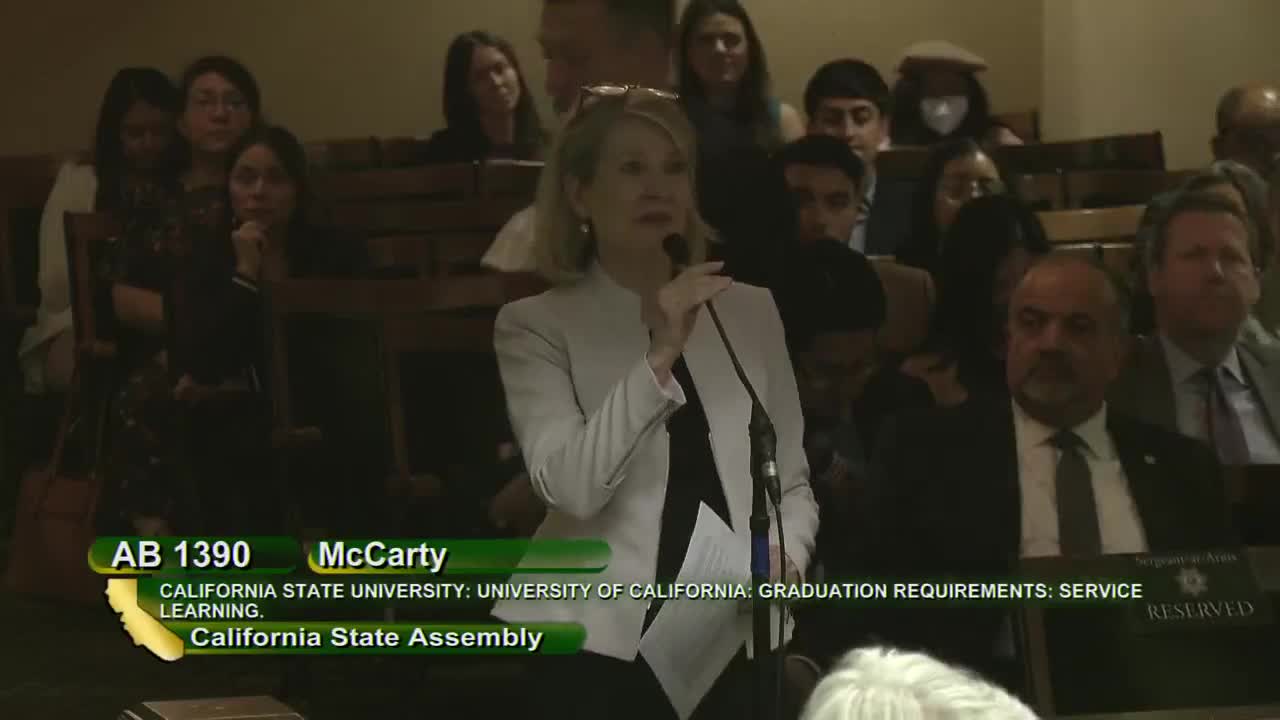 13MIN
Assembly Standing Committee on Higher Education
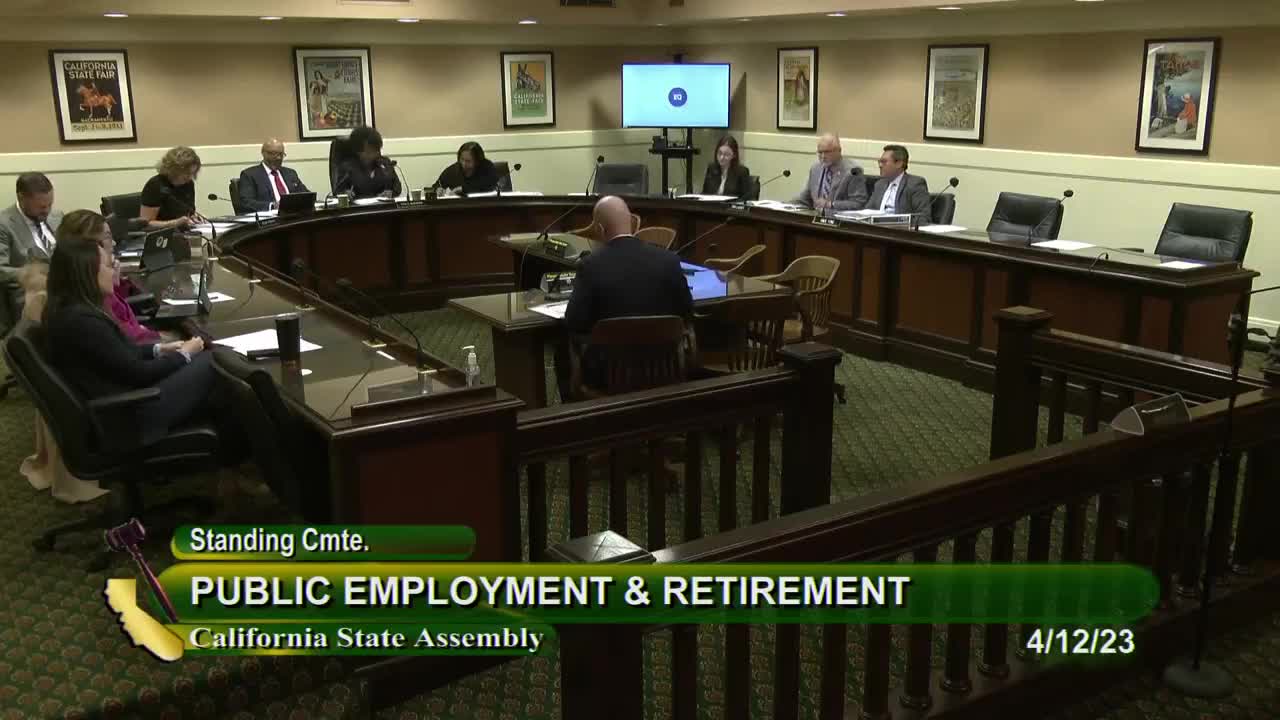 17MIN



