AB 1701: Black infant health: California Perinatal Equity Initiative.
- Session Year: 2023-2024
- House: Assembly
- Latest Version Date: 2023-09-08
Current Status:
Passed
(2023-09-08: Chaptered by Secretary of State - Chapter 174, Statutes of 2023.)
Introduced
In Committee
First Chamber
In Committee
Second Chamber
Enacted
What does this bill do?
This bill expands the California Perinatal Equity Initiative so city and city-and-county health departments, not just county health departments, can receive state funds to help reduce Black infant deaths. The funds can be used to build local Centers of Excellence and support programs like group prenatal care, home visiting, fatherhood engagement, technical help, outreach, and data collection.
The summary is provided by generative AI which can make mistakes. For original language, please view the details in the table below.
Existing law requires the State Department of Public Health, subject to an appropriation in the annual Budget Act, to establish the California Perinatal Equity Initiative to expand the scope of interventions provided under the Black Infant Health Program by fostering Community Centers of Excellence and promoting the use of interventions designed to fill gaps in current programming offered through the Black Infant Health Program. Existing law requires the department to develop a process to allocate funds to up to 15 county health departments, to work collaboratively with state and local Black Infant Health programs, for the purpose of improving Black infant birth outcomes and reducing infant mortality.
This bill would expand the program to include city health departments, as specified.
(a)The Legislature finds and declares that there continues to be a statewide gap between mortality rates for Black infants and those for other population groups. While there have been modest but statistically significant declines in infant mortality generally, including a decline in Black infant mortality, the rate of mortality among Black infants continues to be two to four times higher than the rates for other groups statewide. Furthermore, preterm birth, which is the leading cause for infant death, has increased for the third straight year in California. The social support, stress management, and empowerment model of the Black Infant Health Program is an evidence-informed intervention program designed to reduce Black infant mortality. Other interventions that show promise but do not currently receive state support would enhance the impact of current funding for Black infant health.
(b)It is the intent of the Legislature to promote the establishment of Community Centers of Excellence in perinatal health based on public health science concerning the causes of persistent inequality and current best practices to narrow the gap. It is the further intent of the Legislature to direct funding to local health jurisdictions to ensure the leadership and coordination required for widespread and lasting change in public awareness and in public health and clinical practice.
SEC. 2.Section 123260 of the Health and Safety Code is amended to read:123260.(a)Subject to an appropriation in the annual Budget Act for this purpose, the State Department of Public Health shall establish the California Perinatal Equity Initiative to expand the scope of interventions provided under the Black Infant Health Program. The initiative shall foster Community Centers of Excellence in perinatal health and promote the use of interventions designed to fill gaps in current programming offered through the Black Infant Health Program.
(b)(1)As part of the initiative described in subdivision (a), the department shall develop a process to allocate funds to up to 15 local health jurisdictions and to work collaboratively with state and local Black Infant Health programs for the purpose of improving Black infant birth outcomes and reducing infant mortality.
(2)Participation in the initiative described in subdivision (a) is optional and local health jurisdictions that participate in the program shall agree to the terms of this article.
(3)Allocations made pursuant to paragraph (1) shall be used by local health jurisdictions for any of the following purposes:
(A)Creating a local grant program to develop local Community Centers of Excellence in perinatal health. Recipients of local grants shall be hospitals, federally qualified health centers, health centers that are closely related to federally qualified health centers, womens health clinics, county clinics, clinics operated by a private nonprofit organization that qualifies under Section 501(c)(3) of the United States Internal Revenue Code, or community-based organizations that have demonstrated capacity to work with public health and health care systems as well as within the Black community. Recipients of local grants shall implement or expand at least two of the following:
(i)An evidence-based or evidence-informed group prenatal care program that has shown promise in reducing the incidence of adverse birth outcomes and that includes, but is not limited to, improvement in health provider preterm birth screening and ongoing, risk-appropriate care for Black women to better identify and prevent preterm births.
(ii)Pregnancy intentionality, preconception, and interconception care programs.
(iii)Fatherhood or partnership initiatives that support engagement of partners in pregnancy and childbearing.
(iv)Evidence-based or evidence-informed home visitation programs inclusive of case management to increase advocacy and empowerment for Black women and to ensure linkages to prenatal care, monitoring, life planning, birth spacing, infant development, and well-being.
(v)A strategy that is not described in clauses (i) to (iv), inclusive, that is justified based on local needs and resources, if a local health jurisdiction determines that the strategy combines social interventions with medical interventions, including integration of mental health services in perinatal health care and other wraparound services, including, but not limited to, assessment, personalized case management, doulas, patient navigator services that increase patient empowerment, and access to and utilization of evidence-based interventions that reduce preterm birth and infant mortality, and that the strategy is evidence-based or evidence-informed in relation to reducing adverse birth outcomes.
(B)Providing technical assistance to recipients of local grants, and coordinating with local partners, such as hospitals, federally qualified health centers, health centers that are closely related to federally qualified health centers, county clinics, and other community-based organizations.
(C)Carrying out local public awareness efforts around birth outcome inequities and the importance of preconception health, group prenatal care, evidence-based interventions to prevent preterm births, and social support during pregnancy, and to promote the role of fathers and partners as supports for women during and after pregnancy.
(D)Participating in collaborative statewide learning efforts and sharing best practices.
(E)Collecting and reporting data and information on process and outcome measures regarding the programs and activities carried out with allocated funds.
(c)The department shall, as part of implementing the initiative, consult with stakeholders, including, but not limited to, representatives of county health departments, current or former participants in the strategies described in subparagraph (A) of paragraph (3) of subdivision (b), health providers, or organizations representing health providers that provide services to improve Black infant health outcomes, advocates, and any appropriate state department or agency.
(d)Funds provided to an eligible entity pursuant to this section shall supplement, and not supplant, funds from other sources for infant health equity programs or initiatives.
(e)For purposes of this section, local health jurisdiction means a county, city, or city and county health department that meets the requirements of Chapter 3 (commencing with Section 101175) of Part 3 of Division 101.
(a)The Legislature finds and declares that there continues to be a statewide gap between mortality rates for black Black infants and those for other population groups. While there have been modest but statistically significant declines in infant mortality generally, including a decline in black Black infant mortality, the rate of mortality among black Black infants continues to be two to four times higher than the rates for other groups statewide. Furthermore, preterm birth, which is the leading cause for infant death, has increased for the third straight year in California. The social support, stress management, and empowerment model of the Black Infant Health Program is an evidence-informed intervention program designed to reduce black Black infant mortality. Other interventions that show promise but do not currently receive state support would enhance the impact of current funding for black Black infant health.
(b)It is the intent of the Legislature to promote the establishment of Community Centers of Excellence in perinatal health based on public health science concerning the causes of persistent inequality and current best practices to narrow the gap. It is the further intent of the Legislature to direct funding to local health jurisdictions to ensure the leadership and coordination required for widespread and lasting change in public awareness and in public health and clinical practice.
SEC. 2.Section 123260 of the Health and Safety Code is amended to read:123260.(a)Subject to an appropriation in the annual Budget Act for this purpose, the State Department of Public Health shall establish the California Perinatal Equity Initiative to expand the scope of interventions provided under the Black Infant Health Program. The initiative shall foster Community Centers of Excellence in perinatal health and promote the use of interventions designed to fill gaps in current programming offered through the Black Infant Health Program.
(b)(1)As part of the initiative described in subdivision (a), the department shall develop a process to allocate funds to up to 15 local health jurisdictions, jurisdictions and to work collaboratively with state and local Black Infant Health programs, programs for the purpose of improving Black infant birth outcomes and reducing infant mortality.
(2)Participation in the initiative described in subdivision (a) is optional and local health jurisdictions that participate in the program shall agree to the terms of this article.
(3)Allocations made pursuant to paragraph (1) shall be used by local health jurisdictions for any of the following purposes:
(A)Creating a local grant program to develop local Community Centers of Excellence in perinatal health. Recipients of local grants shall be hospitals, federally qualified health centers, health centers that are closely related to federally qualified health centers, womens health clinics, county clinics, clinics operated by a private nonprofit organization that qualifies under Section 501(c)(3) of the United States Internal Revenue Code, or community-based organizations that have demonstrated capacity to work with public health and health care systems as well as within the Black community. Recipients of local grants shall implement or expand at least two of the following:
(i)An evidence-based or evidence-informed group prenatal care program that has shown promise in reducing the incidence of adverse birth outcomes and that includes, but is not limited to, improvement in health provider preterm birth screening and ongoing, risk-appropriate care for Black women to better identify and prevent preterm births.
(ii)Pregnancy intentionality, preconception, and interconception care programs.
(iii)Fatherhood or partnership initiatives that support engagement of partners in pregnancy and childbearing.
(iv)Evidence-based or evidence-informed home visitation programs inclusive of case management to increase advocacy and empowerment for Black women and to ensure linkages to prenatal care, monitoring, life planning, birth spacing, infant development, and well-being.
(v)A strategy that is not described in clauses (i) to (iv), inclusive, that is justified based on local needs and resources, if a local health jurisdiction determines that the strategy combines social interventions with medical interventions, including integration of mental health services in perinatal health care and other wraparound services, including, but not limited to, assessment, personalized case management, doulas, patient navigator services that increase patient empowerment, and access to and utilization of evidence-based interventions that reduce preterm birth and infant mortality, and that the strategy is evidence-based or evidence-informed in relation to reducing adverse birth outcomes.
(B)Providing technical assistance to recipients of local grants, and coordinating with local partners, such as hospitals, federally qualified health centers, health centers that are closely related to federally qualified health centers, county clinics, and other community-based organizations.
(C)Carrying out local public awareness efforts around birth outcome inequities and the importance of preconception health, group prenatal care, evidence-based interventions to prevent preterm births, and social support during pregnancy, and to promote the role of fathers and partners as supports for women during and after pregnancy.
(D)Participating in collaborative statewide learning efforts and sharing best practices.
(E)Collecting and reporting data and information on process and outcome measures regarding the programs and activities carried out with allocated funds.
(c)The department shall, as part of implementing the initiative, consult with stakeholders, including, but not limited to, representatives of county health departments, current or former participants in the strategies described in subparagraph (A) of paragraph (3) of subdivision (b), health providers, or organizations representing health providers that provide services to improve Black infant health outcomes, advocates, and any appropriate state department or agency.
(d)Funds provided to an eligible entity pursuant to this section shall supplement, and not supplant, funds from other sources for infant health equity programs or initiatives.
(e)For purposes of this section, local health jurisdiction means a county, city, or city and county health department that meets the requirements of Chapter 3 (commencing with Section 101175) of Part 3 of Division 101.
(a)The Legislature finds and declares that there continues to be a statewide gap between mortality rates for black infants and those for other population groups. While there have been modest but statistically significant declines in infant mortality generally, including a decline in black infant mortality, the rate of mortality among black infants continues to be two to four times higher than the rates for other groups statewide. Furthermore, preterm birth, which is the leading cause for infant death, has increased for the third straight year in California. The social support, stress management, and empowerment model of the Black Infant Health Program is an evidence-informed intervention program designed to reduce black infant mortality. Other interventions that show promise but do not currently receive state support would enhance the impact of current funding for black infant health.
(b)It is the intent of the Legislature to promote the establishment of Community Centers of Excellence in perinatal health based on public health science concerning the causes of persistent inequality and current best practices to narrow the gap. It is the further intent of the Legislature to direct funding to county health departments local health jurisdictions to ensure the leadership and coordination required for widespread and lasting change in public awareness and in public health and clinical practice.
SECTION 1.SEC. 2.Section 123260 of the Health and Safety Code is amended to read:123260.(a)Subject to an appropriation in the annual Budget Act for this purpose, the State Department of Public Health shall establish the California Perinatal Equity Initiative to expand the scope of interventions provided under the Black Infant Health Program. The initiative shall foster Community Centers of Excellence in perinatal health and promote the use of interventions designed to fill gaps in current programming offered through the Black Infant Health Program.
(b)(1)As part of the initiative described in subdivision (a), the department shall develop a process to allocate funds to up to 15 local health jurisdictions, to work collaboratively with state and local Black Infant Health programs, for the purpose of improving Black infant birth outcomes and reducing infant mortality.
(2)Participation in the initiative described in subdivision (a) is optional and local health jurisdictions that participate in the program shall agree to the terms of this article.
(3)Allocations made pursuant to paragraph (1) shall be used by local health jurisdictions for any of the following purposes:
(A)Creating a local grant program to develop local Community Centers of Excellence in perinatal health. Recipients of local grants shall be hospitals, federally qualified health centers, health centers that are closely related to federally qualified health centers, womens health clinics, county clinics, clinics operated by a private nonprofit organization that qualifies under Section 501(c)(3) of the United States Internal Revenue Code, or community-based organizations that have demonstrated capacity to work with public health and health care systems as well as within the Black community. Recipients of local grants shall implement or expand at least two of the following:
(i)An evidence-based or evidence-informed group prenatal care program that has shown promise in reducing the incidence of adverse birth outcomes and that includes, but is not limited to, improvement in health provider preterm birth screening and ongoing, risk-appropriate care for Black women to better identify and prevent preterm births.
(ii)Pregnancy intentionality, preconception, and interconception care programs.
(iii)Fatherhood or partnership initiatives that support engagement of partners in pregnancy and childbearing.
(iv)Evidence-based or evidence-informed home visitation programs inclusive of case management to increase advocacy and empowerment for Black women and to ensure linkages to prenatal care, monitoring, life planning, birth spacing, infant development, and well-being.
(v)A strategy that is not described in clauses (i) to (iv), inclusive, that is justified based on local needs and resources, if a local health jurisdiction determines that the strategy combines social interventions with medical interventions, including integration of mental health services in perinatal health care and other wraparound services, including, but not limited to, assessment, personalized case management, doulas, patient navigator services that increase patient empowerment, and access to and utilization of evidence-based interventions that reduce preterm birth and infant mortality, and that the strategy is evidence-based or evidence-informed in relation to reducing adverse birth outcomes.
(B)Providing technical assistance to recipients of local grants, and coordinating with local partners, such as hospitals, federally qualified health centers, health centers that are closely related to federally qualified health centers, county clinics, and other community-based organizations.
(C)Carrying out local public awareness efforts around birth outcome inequities and the importance of preconception health, group prenatal care, evidence-based interventions to prevent preterm births, and social support during pregnancy, and to promote the role of fathers and partners as supports for women during and after pregnancy.
(D)Participating in collaborative statewide learning efforts and sharing best practices.
(E)Collecting and reporting data and information on process and outcome measures regarding the programs and activities carried out with allocated funds.
(c)The department shall, as part of implementing the initiative, consult with stakeholders, including, but not limited to, representatives of county health departments, current or former participants in the strategies described in subparagraph (A) of paragraph (3) of subdivision (b), health providers, or organizations representing health providers that provide services to improve Black infant health outcomes, advocates, and any appropriate state department or agency.
(d)Funds provided to an eligible entity pursuant to this section shall supplement, and not supplant, funds from other sources for infant health equity programs or initiatives.
(e)For purposes of this section, local health jurisdiction means a county, city, or city and county health department. department that meets the requirements of Chapter 3 (commencing with Section 101175) of Part 3 of Division 101.
(a)Subject to an appropriation in the annual Budget Act for this purpose, the State Department of Public Health shall establish the California Perinatal Equity Initiative to expand the scope of interventions provided under the Black Infant Health Program. The initiative shall foster Community Centers of Excellence in perinatal health and promote the use of interventions designed to fill gaps in current programming offered through the Black Infant Health Program.
(b)(1)As part of the initiative described in subdivision (a), the department shall develop a process to allocate funds to up to 15 county health departments, local health jurisdictions, to work collaboratively with state and local Black Infant Health programs, for the purpose of improving black Black infant birth outcomes and reducing infant mortality.
(2)Participation in the initiative described in subdivision (a) is optional and counties local health jurisdictions that participate in the program shall agree to the terms of this article.
(3)Allocations made pursuant to paragraph (1) shall be used by county health departments local health jurisdictions for any of the following purposes:
(A)Creating a local grant program to develop local Community Centers of Excellence in perinatal health. Recipients of local grants shall be hospitals, federally qualified health centers, health centers that are closely related to federally qualified health centers, womens health clinics, county clinics, clinics operated by a private nonprofit organization that qualifies under Section 501(c)(3) of the United States Internal Revenue Code, or community-based organizations that have demonstrated capacity to work with public health and health care systems as well as within the black Black community. Recipients of local grants shall implement or expand at least two of the following:
(i)An evidence-based or evidence-informed group prenatal care program that has shown promise in reducing the incidence of adverse birth outcomes and that includes, but is not limited to, improvement in health provider pre-term preterm birth screening and ongoing, risk-appropriate care for black Black women to better identify and prevent preterm births.
(ii)Pregnancy intentionality, preconception, and interconception care programs.
(iii)Fatherhood or partnership initiatives that support engagement of partners in pregnancy and childbearing.
(iv)Evidence-based or evidence-informed home visitation programs inclusive of case management to increase advocacy and empowerment for black Black women and to ensure linkages to prenatal care, monitoring, life planning, birth spacing, infant development, and well-being.
(v)A strategy that is not described in clauses (i) to (iv), inclusive, that is justified based on local needs and resources, if a county local health jurisdiction determines that the strategy combines social interventions with medical interventions, including integration of mental health services in perinatal health care and other wraparound services, including, but not limited to, assessment, personalized case management, doulas, patient navigator services that increase patient empowerment, and access to and utilization of evidence-based interventions that reduce preterm birth and infant mortality, and that the strategy is evidence-based or evidence-informed in relation to reducing adverse birth outcomes.
(B)Providing technical assistance to recipients of local grants, and coordinating with local partners, such as hospitals, federally qualified health centers, health centers that are closely related to federally qualified health centers, county clinics, and other community-based organizations.
(C)Carrying out local public awareness efforts around birth outcome inequities and the importance of preconception health, group prenatal care, evidence-based interventions to prevent preterm births, and social support during pregnancy, and to promote the role of fathers and partners as supports for women during and after pregnancy.
(D)Participating in collaborative statewide learning efforts and sharing best practices.
(E)Collecting and reporting data and information on process and outcome measures regarding the programs and activities carried out with allocated funds.
(c)The department shall, as part of implementing the initiative, consult with stakeholders, including, but not limited to, representatives of county health departments, current or former participants in the strategies described in subparagraph (A) of paragraph (3) of subdivision (b), health providers, or organizations representing health providers that provide services to improve black Black infant health outcomes, advocates, and any appropriate state department or agency.
(d)Funds provided to an eligible entity pursuant to this section shall supplement, and not supplant, funds from other sources for infant health equity programs or initiatives.
(e)For purposes of this section, local health jurisdiction means a county, city, or city and county health department.
|
Date
|
Status
|
|---|---|
| Sep 8, 2023 | Chaptered by Secretary of State - Chapter 174, Statutes of 2023. |
| Sep 8, 2023 | Approved by the Governor. |
| Aug 30, 2023 | Enrolled and presented to the Governor at 2:15 p.m. |
| Aug 24, 2023 | Senate amendments concurred in. To Engrossing and Enrolling. (Ayes 76. Noes 0. Page 2788.). |
| Aug 17, 2023 | In Assembly. Concurrence in Senate amendments pending. May be considered on or after August 19 pursuant to Assembly Rule 77. |
| Aug 17, 2023 | Read third time. Passed. Ordered to the Assembly. (Ayes 38. Noes 0. Page 2136.). |
| Jun 19, 2023 | Read second time. Ordered to third reading. |
| Jun 15, 2023 | Read third time and amended. Ordered to second reading. |
| Jun 8, 2023 | Read second time and amended. Ordered to third reading. |
| Jun 7, 2023 | From committee: Amend, and do pass as amended. (Ayes 12. Noes 0.) (June 7). |
| May 3, 2023 | Referred to Com. on HEALTH. |
| Apr 20, 2023 | In Senate. Read first time. To Com. on RLS. for assignment. |
| Apr 20, 2023 | Read third time. Passed. Ordered to the Senate. (Ayes 76. Noes 0. Page 1271.) |
| Apr 18, 2023 | Read second time. Ordered to third reading. |
| Apr 17, 2023 | Withdrawn from committee. |
| Apr 17, 2023 | Ordered to second reading. |
| Apr 12, 2023 | From committee: Do pass and re-refer to Com. on APPR. with recommendation: To Consent Calendar. (Ayes 15. Noes 0.) (April 11). Re-referred to Com. on APPR. |
| Mar 9, 2023 | Referred to Com. on HEALTH. |
| Feb 18, 2023 | From printer. May be heard in committee March 20. |
| Feb 17, 2023 | Read first time. To print. |
|
Date
|
Description
|
Location
|
Votes
|
|
|---|---|---|---|---|
| Aug 24, 2023 | AB 1701 Weber Concurrence in Senate Amendments | Assembly Floor |
Passed |
|
| Aug 17, 2023 | Assembly 3rd Reading AB1701 Weber et al. By Gonzalez | Senate Floor |
Passed |
|
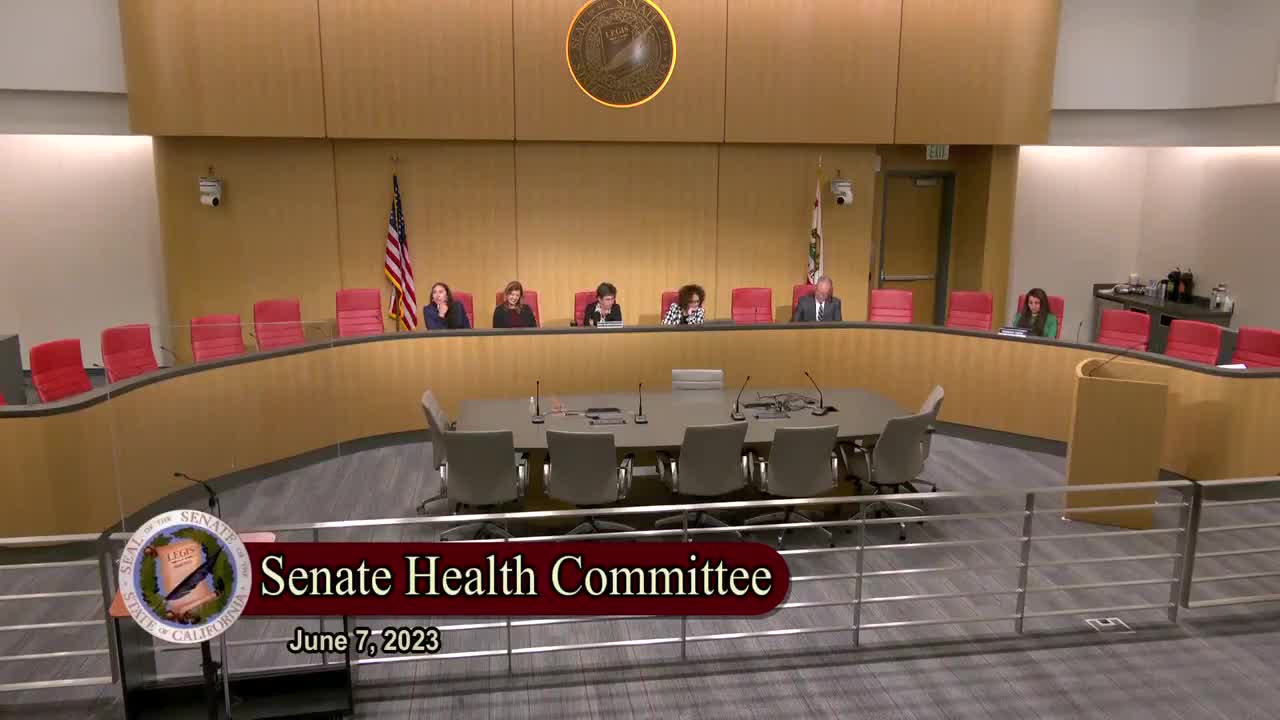
| Jun 7, 2023 | Do pass as amended | Senate Standing Committee on Health |
Passed |
|
| Apr 20, 2023 | AB 1701 Weber Assembly Third Reading | Assembly Floor |
Passed |
|
| Apr 11, 2023 | Do pass and be re-referred to the Committee on [Appropriations] with recommendation: To Consent Calendar | Assembly Standing Committee on Health |
Passed |
This list shows positions taken on this bill by organizations on the date displayed, which is linked to the original source.
Positions by individuals are not included.
|
Organization
|
Position
|
Date
|
|---|---|---|
| American College Of Obstetricians And Gynecologists District Ix | ** Support | |
| California for Equal Rights Foundation | ** Against | |
| California March Of Dimes Birth Defects Foundation | * Support | Jun 7, 2023 |
| California Nurse Midwives Association | ** Support | |
| Children Now | ** Support | |
| City of Long Beach | ** Support | |
| City of Pasadena | ** Support | |
| County Health Executives Association Of California | ** Support | |
| Junior Leagues of California State Public Affairs Committee | ** Support |
CONCURRENCE IN SENATE AMENDMENTS
CSA1 Bill Id:AB 1701
Author:(Weber)
As Amended Ver:June 15, 2023
Majority vote
SUMMARY
Expands the definition of local health jurisdictions eligible to apply for the California Perinatal Equity Initiative (PEI) to include a city or city and county.
Senate Amendments
Conform the definition of local health jurisdiction to existing law and make other technical changes.
COMMENTS
Black Infant Health (BIH) Program and PEI. The Budget Act of 2018 established the PEI within the Department of Public Health (DPH) to expand the scope of interventions provided under the BIH program, established through the Budget Act of 1989. PEI funding is intended to enhance the efforts of existing BIH program with the goal of providing a culturally supportive environment to help women have healthy babies. Existing law specifies that DPH allocate funding to up to 15 county health departments with BIH programs.
BIH funding is currently provided to city and county health departments. However, several BIH programs are not eligible to apply for the complimentary PEI funding as existing statute limits the funding to county health departments, limiting the reach of PEI. According to the author, to provide complementary services to BIH programs, PEI funding eligibility should be expanded to local health jurisdictions which encompasses both city and county health departments with a BIH.
The 2022 Budget Act provides $12.5 million ongoing augmentation to the BIH program. Of this amount, $11.25 million will be awarded to county/city health departments and $1.25 million will be retained by DPH for state operations.
According to the Author
This bill will provide equity within the distribution of funds already allocated to DPH for the BIH program by allowing both counties and cities with their own health departments to apply for the funds. The author concludes this will result in more equitable distribution of funds and increase the opportunity for more Black mothers and babies to have access to the funding within the program.
Arguments in Support
The California Nurse-Midwives Association and Children Now write in support that this bill will help address critical gaps in maternal healthcare, especially in vulnerable communities.
Arguments in Opposition
The Californians for Equal Rights Foundation opposes this bill and states "with an unambiguous focus on providing prenatal care and other health care services for pregnant women from certain racial groups, this bill clearly violates California's constitutional principle of equal treatment for all."
FISCAL COMMENTS
None.
VOTES:
ASM HEALTH: 15-0-0
YES: Wood, Waldron, Aguiar-Curry, Arambula, Boerner Horvath, Wendy Carrillo, Flora, Vince Fong, Maienschein, McCarty, Joe Patterson, Rodriguez, Santiago, Villapudua, Weber
ASSEMBLY FLOOR: 76-0-4
YES: Addis, Aguiar-Curry, Alanis, Alvarez, Arambula, Bains, Bauer-Kahan, Bennett, Berman, Boerner Horvath, Bonta, Bryan, Calderon, Juan Carrillo, Wendy Carrillo, Cervantes, Chen, Connolly, Megan Dahle, Davies, Dixon, Essayli, Flora, Mike Fong, Vince Fong, Friedman, Gipson, Grayson, Haney, Hart, Holden, Hoover, Irwin, Jackson, Jones-Sawyer, Kalra, Lackey, Lee, Low, Lowenthal, Maienschein, Mathis, McKinnor, Muratsuchi, Stephanie Nguyen, Ortega, Pacheco, Papan, Jim Patterson, Joe Patterson, Pellerin, Petrie-Norris, Quirk-Silva, Ramos, Reyes, Luz Rivas, Robert Rivas, Rodriguez, Blanca Rubio, Sanchez, Santiago, Schiavo, Soria, Ta, Ting, Valencia, Villapudua, Waldron, Wallis, Ward, Weber, Wicks, Wilson, Wood, Zbur, Rendon
ABS, ABST OR NV: Gabriel, Gallagher, Garcia, McCarty
SENATE FLOOR: 38-0-2
YES: Allen, Alvarado-Gil, Archuleta, Ashby, Atkins, Becker, Blakespear, Bradford, Caballero, Cortese, Dahle, Dodd, Durazo, Glazer, Gonzalez, Grove, Hurtado, Jones, Limón, McGuire, Menjivar, Min, Newman, Nguyen, Niello, Ochoa Bogh, Padilla, Portantino, Roth, Rubio, Seyarto, Skinner, Smallwood-Cuevas, Stern, Umberg, Wahab, Wiener, Wilk
ABS, ABST OR NV: Eggman, Laird
UPDATED
VERSION: June 15, 2023
CONSULTANT: Rosielyn Pulmano / HEALTH / (916) 319-2097 FN: 0001274
SENATE RULES COMMITTEE Office of Senate Floor Analyses (916) 651-1520 Fax: (916) 327-4478 | AB 1701 |
THIRD READING
Bill No: AB 1701
Author: Weber (D), et al.
Amended: 6/15/23 in Senate
Vote: 21
SENATE HEALTH COMMITTEE: 12-0, 6/7/23
AYES: Eggman, Nguyen, Glazer, Gonzalez, Grove, Hurtado, Limón, Menjivar, Roth, Rubio, Wahab, Wiener
ASSEMBLY FLOOR: 76-0, 4/20/23 - See last page for vote
SUBJECT: Black infant health: California Perinatal Equity Initiative
SOURCE: Author
DIGEST:
This bill expands the entities eligible to apply for funding through the California Perinatal Equity Initiative to include city health departments, in addition to county health departments.
Senate Floor Amendments of 6/15/23 make nonsubstantive amendments that add two co-authors and make a minor grammatical change.
ANALYSIS:
Existing law:
- Establishes the California Department of Public Health (CDPH), directed by a state Public Health Officer (PHO), to be vested with all the duties, powers, purposes, functions, responsibilities, and jurisdiction as they relate to public health and licensing of health facilities, as specified. Includes the Maternal, Child, and Adolescent Health program within this jurisdiction. [HSC §131050, §131051]
- Establishes the Maternal, Child and Adolescent Health program within CDPH to improve the health and well-being of women, infants, children and adolescents throughout the state. [HSC §123225-12360]
- Finds and declares that the rate of mortality among black infants continues to be two to four times higher than the rates for other groups statewide. States that the social support, stress management, and empowerment model of the Black Infant Health (BIH) program is an evidence-informed intervention program designed to reduce black infant mortality. [HSC §123259]
- Requires CDPH, subject to an appropriation in the annual Budget Act, to establish the Perinatal Equity Initiative (PEI) to expand the scope of interventions provided under the BIH program. [HSC §123260]
- Requires the PEI to foster Community Centers of Excellence in perinatal health and promote the use of interventions designed to fill gaps in current programming offered through the BIH program. [HSC §123260]
- Requires CDPH, as part of PEI, to develop a process to allocate funds to up to 15 county health departments, to work collaboratively with state and local BIH programs, to improve black infant birth outcomes and reducing infant mortality. [HSC §123260]
This bill:
- Requires CDPH, as part of PEI, to allocate funds to up to 15 “local health jurisdictions,” rather than to “county health departments.”
- Defines “local health jurisdiction” as a county, city, or city and county health department that meets the requirements to otherwise receive state financial assistance.
Comments
- Author’s statement. According to the author, this bill will provide equity within the distribution of funds already allocated to CDPH for the BIH program by allowing both counties and cities with their own health departments to apply for the funds. The author concludes this will result in more equitable distribution of funds and increase the opportunity for more Black mothers and babies to have access to the funding within the program.
- BIH program. BIH is one of the programs within CDPH’s Division of Maternal, Child, and Adolescent Health. The goal of the BIH program is to improve African-American infant and maternal health, as well as decrease black-white health inequities and social inequities for women and infants. The BIH program serves African-American women who are 18 years or older and up to 30 weeks pregnant at the time of enrollment. According to the CDPH’s BIH website, within a culturally affirming environment and honoring the unique history of African-American women, the BIH program aims to help women have healthy babies. Participants learn proven strategies to reduce stress and develop life skills. This is accomplished through a group-based approach with complementary case management. BIH services are provided by family health advocates, group facilitators, public health nurses, and social workers. BIH participants report stronger positive connections to their heritage and the African-American community, increased empowerment to make behavior changes that lead to living a healthier life, and better understanding of effective stress-reduction strategies.
- California Perinatal Equity Initiative. AB 1810 (Committee on Budget, Chapter 34, Statutes of 2018), the health trailer bill, established the PEI at CDPH and appropriated $8 million from the General Fund to expand the scope of interventions provided under the BIH program. The PEI is intended to foster Community Centers of Excellence in perinatal health and promote the use of interventions designed to fill gaps in current programming offered through BIH. According to the CDPH PEI website, while declines in infant mortality have been achieved, the statewide mortality rate for black infants continues to be two to four times higher than rates for other groups. The PEI aims to address the causes of persistent inequality and identify best practices to eliminate disparities in infant mortality.
Under the PEI, CDPH is required to allocate funds to up to 15 county health departments, to work collaboratively with state and local BIH programs, for the purposes of improving back infant birth outcomes and reducing infant mortality. The county health departments are required to use the funds to develop local Community Centers of Excellence at hospitals, federal qualified health centers, clinics, or community-based organizations that have demonstrated capacity to work with public health and health care systems as well as within the Black community. Recipients of local grants are required to implement or expand two of five types programs: evidence-based group prenatal care that has shown promise in reducing the incidence of adverse birth outcomes; pregnancy intentionality and preconception programs; fatherhood or partnership initiatives; evidence-based home visiting programs inclusive of case management to increase advocacy and empowerment for black women and to ensure linkages to prenatal care; or, a different strategy that is justified based on local needs and resources, if a county determines that the strategy is evidence-based in related to reducing adverse birth outcomes. Currently 11 counties receive funding under PEI. This bill adds three additional city health departments that would be eligible for the funds: Berkeley, Long Beach, and Pasadena.
Related/Prior Legislation
AB 1810 (Committee on Budget, Chapter 34, Statutes of 2018) established the PEI at CDPH and appropriated $8 million from the General Fund to expand the scope of interventions provided under the BIH program, among other things.
FISCAL EFFECT: Appropriation: No Fiscal Com.: No Local: No
SUPPORT: (Verified 6/15/23)
American College of Obstetricians and Gynecologists District IX
California Nurse Midwives Association
Children Now
City of Long Beach
City of Pasadena
County Health Executives Association of California
Junior Leagues of California State Public Affairs Committee
OPPOSITION: (Verified 6/15/23)
Californians for Equal Rights Foundation
ARGUMENTS IN SUPPORT: The City of Long Beach, one of the cities with a public health department, writes that PEI funds will enable its health department to strengthen and fortify a comprehensive perinatal system of care for pregnant and parenting Black women. The City of Pasadena and the County Health Executives Association of California also write in support of adding the three city health departments as eligible entities for this funding, as do Children Now and the California Nurse Midwives Association.
ARGUMENTS IN OPPOSITION: The Californians for Equal Rights Foundation writes in opposition to the PEI in general, stating that the racial disparities in maternal and infant are more readily explained by lifestyle choices and underlying chronic conditions, and that the overwhelming majority of women survive motherhood.
ASSEMBLY FLOOR: 76-0, 4/20/23
AYES: Addis, Aguiar-Curry, Alanis, Alvarez, Arambula, Bains, Bauer-Kahan, Bennett, Berman, Boerner Horvath, Bonta, Bryan, Calderon, Juan Carrillo, Wendy Carrillo, Cervantes, Chen, Connolly, Megan Dahle, Davies, Dixon, Essayli, Flora, Mike Fong, Vince Fong, Friedman, Gipson, Grayson, Haney, Hart, Holden, Hoover, Irwin, Jackson, Jones-Sawyer, Kalra, Lackey, Lee, Low, Lowenthal, Maienschein, Mathis, McKinnor, Muratsuchi, Stephanie Nguyen, Ortega, Pacheco, Papan, Jim Patterson, Joe Patterson, Pellerin, Petrie-Norris, Quirk-Silva, Ramos, Reyes, Luz Rivas, Robert Rivas, Rodriguez, Blanca Rubio, Sanchez, Santiago, Schiavo, Soria, Ta, Ting, Valencia, Villapudua, Waldron, Wallis, Ward, Weber, Wicks, Wilson, Wood, Zbur, Rendon
NO VOTE RECORDED: Gabriel, Gallagher, Garcia, McCarty
Prepared by: Jen Flory / HEALTH / (916) 651-4111
6/21/23 14:29:15
**** END ****
SENATE RULES COMMITTEE Office of Senate Floor Analyses (916) 651-1520 Fax: (916) 327-4478 | AB 1701 |
THIRD READING
Bill No: AB 1701
Author: Weber (D)
Amended: 6/8/23
Vote: 21
SENATE HEALTH COMMITTEE: 12-0, 6/7/23
AYES: Eggman, Nguyen, Glazer, Gonzalez, Grove, Hurtado, Limón, Menjivar, Roth, Rubio, Wahab, Wiener
ASSEMBLY FLOOR: 76-0, 4/20/23 - See last page for vote
SUBJECT: Black infant health: California Perinatal Equity Initiative
SOURCE: Author
DIGEST:
This bill expands the entities eligible to apply for funding through the California Perinatal Equity Initiative to include city health departments, in addition to county health departments.
ANALYSIS:
Existing law:
- Establishes the California Department of Public Health (CDPH), directed by a state Public Health Officer (PHO), to be vested with all the duties, powers, purposes, functions, responsibilities, and jurisdiction as they relate to public health and licensing of health facilities, as specified. Includes the Maternal, Child, and Adolescent Health program within this jurisdiction. [HSC §131050, §131051]
- Establishes the Maternal, Child and Adolescent Health program within CDPH to improve the health and well-being of women, infants, children and adolescents throughout the state. [HSC §123225-12360]
- Finds and declares that the rate of mortality among black infants continues to be two to four times higher than the rates for other groups statewide. States that the social support, stress management, and empowerment model of the Black Infant Health (BIH) program is an evidence-informed intervention program designed to reduce black infant mortality. [HSC §123259]
- Requires CDPH, subject to an appropriation in the annual Budget Act, to establish the Perinatal Equity Initiative (PEI) to expand the scope of interventions provided under the BIH program. [HSC §123260]
- Requires the PEI to foster Community Centers of Excellence in perinatal health and promote the use of interventions designed to fill gaps in current programming offered through the BIH program. [HSC §123260]
- Requires CDPH, as part of PEI, to develop a process to allocate funds to up to 15 county health departments, to work collaboratively with state and local BIH programs, to improve black infant birth outcomes and reducing infant mortality. [HSC §123260]
This bill:
- Requires CDPH, as part of PEI, to allocate funds to up to 15 “local health jurisdictions,” rather than to “county health departments.”
- Defines “local health jurisdiction” as a county, city, or city and county health department that meets the requirements to otherwise receive state financial assistance.
Comments
- Author’s statement. According to the author, this bill will provide equity within the distribution of funds already allocated to CDPH for the BIH program by allowing both counties and cities with their own health departments to apply for the funds. The author concludes this will result in more equitable distribution of funds and increase the opportunity for more Black mothers and babies to have access to the funding within the program.
- BIH program. BIH is one of the programs within CDPH’s Division of Maternal, Child, and Adolescent Health. The goal of the BIH program is to improve African-American infant and maternal health, as well as decrease black-white health inequities and social inequities for women and infants. The BIH program serves African-American women who are 18 years or older and up to 30 weeks pregnant at the time of enrollment. According to the CDPH’s BIH website, within a culturally affirming environment and honoring the unique history of African-American women, the BIH program aims to help women have healthy babies. Participants learn proven strategies to reduce stress and develop life skills. This is accomplished through a group-based approach with complementary case management. BIH services are provided by family health advocates, group facilitators, public health nurses, and social workers. BIH participants report stronger positive connections to their heritage and the African-American community, increased empowerment to make behavior changes that lead to living a healthier life, and better understanding of effective stress-reduction strategies.
- California Perinatal Equity Initiative. AB 1810 (Committee on Budget, Chapter 34, Statutes of 2018), the health trailer bill, established the PEI at CDPH and appropriated $8 million from the General Fund to expand the scope of interventions provided under the BIH program. The PEI is intended to foster Community Centers of Excellence in perinatal health and promote the use of interventions designed to fill gaps in current programming offered through BIH. According to the CDPH PEI website, while declines in infant mortality have been achieved, the statewide mortality rate for black infants continues to be two to four times higher than rates for other groups. The PEI aims to address the causes of persistent inequality and identify best practices to eliminate disparities in infant mortality.
Under the PEI, CDPH is required to allocate funds to up to 15 county health departments, to work collaboratively with state and local BIH programs, for the purposes of improving back infant birth outcomes and reducing infant mortality. The county health departments are required to use the funds to develop local Community Centers of Excellence at hospitals, federal qualified health centers, clinics, or community-based organizations that have demonstrated capacity to work with public health and health care systems as well as within the Black community. Recipients of local grants are required to implement or expand two of five types programs: evidence-based group prenatal care that has shown promise in reducing the incidence of adverse birth outcomes; pregnancy intentionality and preconception programs; fatherhood or partnership initiatives; evidence-based home visiting programs inclusive of case management to increase advocacy and empowerment for black women and to ensure linkages to prenatal care; or, a different strategy that is justified based on local needs and resources, if a county determines that the strategy is evidence-based in related to reducing adverse birth outcomes. Currently 11 counties receive funding under PEI. This bill adds three additional city health departments that would be eligible for the funds: Berkeley, Long Beach, and Pasadena.
Related/Prior Legislation
AB 1810 (Committee on Budget, Chapter 34, Statutes of 2018) established the PEI at CDPH and appropriated $8 million from the General Fund to expand the scope of interventions provided under the BIH program, among other things.
FISCAL EFFECT: Appropriation: No Fiscal Com.: No Local: No
SUPPORT: (Verified 6/8/23)
American College of Obstetricians and Gynecologists District IX
California Nurse Midwives Association
Children Now
City of Long Beach
City of Pasadena
County Health Executives Association of California
Junior Leagues of California State Public Affairs Committee
OPPOSITION: (Verified 6/8/23)
Californians for Equal Rights Foundation
ARGUMENTS IN SUPPORT: The City of Long Beach, one of the cities with a public health department, writes that PEI funds will enable its health department to strengthen and fortify a comprehensive perinatal system of care for pregnant and parenting Black women. The City of Pasadena and the County Health Executives Association of California also write in support of adding the three city health departments as eligible entities for this funding, as do Children Now and the California Nurse Midwives Association.
ARGUMENTS IN OPPOSITION: The Californians for Equal Rights Foundation writes in opposition to the PEI in general, stating that the racial disparities in maternal and infant are more readily explained by lifestyle choices and underlying chronic conditions, and that the overwhelming majority of women survive motherhood.
ASSEMBLY FLOOR: 76-0, 4/20/23
AYES: Addis, Aguiar-Curry, Alanis, Alvarez, Arambula, Bains, Bauer-Kahan, Bennett, Berman, Boerner Horvath, Bonta, Bryan, Calderon, Juan Carrillo, Wendy Carrillo, Cervantes, Chen, Connolly, Megan Dahle, Davies, Dixon, Essayli, Flora, Mike Fong, Vince Fong, Friedman, Gipson, Grayson, Haney, Hart, Holden, Hoover, Irwin, Jackson, Jones-Sawyer, Kalra, Lackey, Lee, Low, Lowenthal, Maienschein, Mathis, McKinnor, Muratsuchi, Stephanie Nguyen, Ortega, Pacheco, Papan, Jim Patterson, Joe Patterson, Pellerin, Petrie-Norris, Quirk-Silva, Ramos, Reyes, Luz Rivas, Robert Rivas, Rodriguez, Blanca Rubio, Sanchez, Santiago, Schiavo, Soria, Ta, Ting, Valencia, Villapudua, Waldron, Wallis, Ward, Weber, Wicks, Wilson, Wood, Zbur, Rendon
NO VOTE RECORDED: Gabriel, Gallagher, Garcia, McCarty
Prepared by: Jen Flory / HEALTH / (916) 651-4111
6/9/23 9:49:13
**** END ****
SENATE COMMITTEE ON HEALTH
Senator Dr. Susan Talamantes Eggman, Chair
BILL NO: AB 1701
AUTHOR: | Weber | ||
VERSION: | February 17, 2023 | ||
HEARING DATE: | June 7, 2023 | ||
CONSULTANT: | Jen Flory | ||
SUBJECT: Black infant health: California Perinatal Equity Initiative
SUMMARY:
Expands the entities eligible to apply for funding through the California Perinatal Equity Initiative to include city health departments, in addition to county health departments.
Existing law:
- Establishes the California Department of Public Health (CDPH), directed by a state Public Health Officer (PHO), to be vested with all the duties, powers, purposes, functions, responsibilities, and jurisdiction as they relate to public health and licensing of health facilities, as specified. Includes the Maternal, Child, and Adolescent Health program within this jurisdiction. [HSC §131050, §131051]
- Establishes the Maternal, Child and Adolescent Health program within CDPH to improve the health and well-being of women, infants, children and adolescents throughout the state. [HSC §123225-12360]
- Finds and declares that the rate of mortality among black infants continues to be two to four times higher than the rates for other groups statewide. States that the social support, stress management, and empowerment model of the Black Infant Health (BIH) program is an evidence-informed intervention program designed to reduce black infant mortality. [HSC §123259]
- Requires CDPH, subject to an appropriation in the annual Budget Act, to establish the Perinatal Equity Initiative (PEI) to expand the scope of interventions provided under the BIH program. [HSC §123260]
- Requires the PEI to foster Community Centers of Excellence in perinatal health and promote the use of interventions designed to fill gaps in current programming offered through the BIH program. [HSC §123260]
- Requires CDPH, as part of PEI, to develop a process to allocate funds to up to 15 county health departments, to work collaboratively with state and local BIH programs, to improve black infant birth outcomes and reducing infant mortality. [HSC §123260]
This bill:
- Requires CDPH, as part of PEI, to allocate funds to up to 15 “local health jurisdictions,” rather than to “county health departments.”
- Defines “local health jurisdiction” as a county, city, or city and county health department.
FISCAL EFFECT:
This bill is not keyed as fiscal.
COMMENTS:
- Author’s statement. According to the author, this bill will provide equity within the distribution of funds already allocated to CDPH for the BIH program by allowing both counties and cities with their own health departments to apply for the funds. The author concludes this will result in more equitable distribution of funds and increase the opportunity for more Black mothers and babies to have access to the funding within the program.
- BIH program. BIH is one of the programs within CDPH’s Division of Maternal, Child, and Adolescent Health. The goal of the BIH program is to improve African-American infant and maternal health, as well as decrease black-white health inequities and social inequities for women and infants. The BIH program serves African-American women who are 18 years or older and up to 30 weeks pregnant at the time of enrollment. According to the CDPH’s BIH website, within a culturally affirming environment and honoring the unique history of African-American women, the BIH program aims to help women have healthy babies. Participants learn proven strategies to reduce stress and develop life skills. This is accomplished through a group-based approach with complementary case management. BIH services are provided by family health advocates, group facilitators, public health nurses, and social workers. BIH participants report stronger positive connections to their heritage and the African-American community, increased empowerment to make behavior changes that lead to living a healthier life, and better understanding of effective stress-reduction strategies.
- California Perinatal Equity Initiative. AB 1810 (Committee on Budget, Chapter 34, Statutes of 2018), the health trailer bill, established the PEI at CDPH and appropriated $8 million from the General Fund to expand the scope of interventions provided under the BIH program. The PEI is intended to foster Community Centers of Excellence in perinatal health and promote the use of interventions designed to fill gaps in current programming offered through BIH. According to the CDPH PEI website, while declines in infant mortality have been achieved, the statewide mortality rate for black infants continues to be two to four times higher than rates for other groups. The PEI aims to address the causes of persistent inequality and identify best practices to eliminate disparities in infant mortality.
Under the PEI, CDPH is required to allocate funds to up to 15 county health departments, to work collaboratively with state and local BIH programs, for the purposes of improving back infant birth outcomes and reducing infant mortality. The county health departments are required to use the funds to develop local Community Centers of Excellence at hospitals, federal qualified health centers, clinics, or community-based organizations that have demonstrated capacity to work with public health and health care systems as well as within the Black community. Recipients of local grants are required to implement or expand two of five types programs: evidence-based group prenatal care that has shown promise in reducing the incidence of adverse birth outcomes; pregnancy intentionality and preconception programs; fatherhood or partnership initiatives; evidence-based home visiting programs inclusive of case management to increase advocacy and empowerment for black women and to ensure linkages to prenatal care; or, a different strategy that is justified based on local needs and resources, if a county determines that the strategy is evidence-based in related to reducing adverse birth outcomes. Currently 11 counties receive funding under PEI. This bill would add three additional city health departments that would be eligible for the funds: Berkeley, Long Beach, and Pasadena.
- Prior legislation. AB 1810 (Committee on Budget, Chapter 34, Statutes of 2018) established the PEI at CDPH and appropriated $8 million from the General Fund to expand the scope of interventions provided under the BIH program, among other things.
- Support. The City of Long Beach, one of the cities with a public health department, writes that PEI funds will enable its health department to strengthen and fortify a comprehensive perinatal system of care for pregnant and parenting Black women. The City of Pasadena and the County Health Executives Association of California also write in support of adding the three city health departments as eligible entities for this funding, as do Children Now and the California Nurse Midwives Association.
- Opposition. The Californians for Equal Rights Foundation writes in opposition to the PEI in general, stating that the racial disparities in maternal and infant are more readily explained by lifestyle choices and underlying chronic conditions, and that the overwhelming majority of women survive motherhood.
- Amendments. The author may want to consider modifying the codified intent language in the prior section to match the changes in this bill. The final sentence of Health & Safety Code §123259 should state “It is the further intent of the Legislature to direct funding to
county health departmentslocal health jurisdictions to ensure the leadership and coordination required for widespread and lasting change in public awareness and in public health and clinical practice.”
Additionally, CDPH has requested that a cross reference be added to the definition of local health jurisdiction in the existing language so it reads:
(e) For purposes of this section, “local health jurisdiction” means a county, city, or city and county health department that meets the requirements of Chapter 3 (commencing with Section 101175) of Part 3 of Division 101 of the Health and Safety Code.
SUPPORT AND OPPOSITION:
Support: American College of Obstetricians and Gynecologists District IX
California Nurse Midwives Association
Children Now
City of Long Beach
City of Pasadena
County Health Executives Association of California
Junior Leagues of California State Public Affairs Committee
Oppose: Californians for Equal Rights Foundation
-- END --
ASSEMBLY THIRD READING
ATR Bill Id:AB 1701
Author:(Weber)
As Introduced Ver:February 17, 2023
Majority vote
SUMMARY
Expands the definition of local health jurisdictions eligible to apply for the California Perinatal Equity Initiative (PEI) to include a city or city and county.
Major Provisions
COMMENTS
Black Infant Health (BIH) Program and PEI. The Budget Act of 2018 established the PEI within the Department of Public Health (DPH) to expand the scope of interventions provided under the BIH program, established through the Budget Act of 1989. PEI funding is intended to enhance the efforts of existing BIH program with the goal of providing a culturally supportive environment to help women have healthy babies. Existing law specifies that DPH allocate funding to up to 15 county health departments with BIH programs.
BIH funding is currently provided to city and county health departments. However, several BIH programs are not eligible to apply for the complimentary PEI funding as existing statute limits the funding to county health departments, limiting the reach of PEI. According to the author, to provide complementary services to BIH programs, PEI funding eligibility should be expanded to local health jurisdictions which encompasses both city and county health departments with a BIH.
The 2022 Budget Act provides $12.5 million ongoing augmentation to the BIH program. Of this amount, $11.25 million will be awarded to county/city health departments and $1.25 million will be retained by DPH for state operations.
According to the Author
This bill will provide equity within the distribution of funds already allocated to DPH for the BIH program by allowing both counties and cities with their own health departments to apply for the funds. The author concludes this will result in more equitable distribution of funds and increase the opportunity for more Black mothers and babies to have access to the funding within the program.
Arguments in Support
The California Nurse-Midwives Association and Children Now write in support that this bill will help address critical gaps in maternal healthcare, especially in vulnerable communities.
Arguments in Opposition
There is no known opposition to this bill.
FISCAL COMMENTS
None.
VOTES
ASM HEALTH: 15-0-0
YES: Wood, Waldron, Aguiar-Curry, Arambula, Boerner Horvath, Wendy Carrillo, Flora, Vince Fong, Maienschein, McCarty, Joe Patterson, Rodriguez, Santiago, Villapudua, Weber
UPDATED
VERSION: February 17, 2023
CONSULTANT: Rosielyn Pulmano / HEALTH / (916) 319-2097 FN: 0000206
Date of Hearing: April 11, 2023
ASSEMBLY COMMITTEE ON HEALTH
Jim Wood, Chair
ABPCA Bill Id:AB 1701
Author:(Weber) – As Introduced Ver:February 17, 2023
SUBJECT: Black infant health: California Perinatal Equity Initiative.
SUMMARY: Expands the definition of local health jurisdictions eligible to apply for the California Perinatal Equity Initiative (PEI) to include a city or city and county.
EXISTING LAW:
- Establishes the Department of Public Health (DPH), directed by a state Public Health Officer (PHO), to be vested with all the duties, powers, purposes, functions, responsibilities, and jurisdiction as they relate to public health and licensing of health facilities, as specified. Gives the PHO, broad authority to detect, monitor, and prevent the spread of communicable disease in the state. [Health & Safety Code (HSC) §131050 and §120130, et seq.]
- Requires each county board of supervisors to appoint a local health officer (LHO). Requires LHOs to enforce and observe orders and ordinances of the board of supervisors, pertaining to the public health and sanitary matters, orders, including quarantine and other regulations, prescribed by DPH, and statutes relating to public health. [HSC §101000 and §101030]
- Establishes the Maternal, Child and Adolescent Health program within DPH to improve the health and well-being of women, infants, children and adolescents throughout the state. [HSC §123225-12360]
- Finds and declares that the rate of mortality among black infants continues to be two to four times higher than the rates for other groups statewide. States that the social support, stress management, and empowerment model of the Black Infant Health (BIH) program is an evidence-informed intervention program designed to reduce black infant mortality. [HSC §123259]
- Requires DPH, subject to an appropriation in the annual Budget Act, to establish the PEI to expand the scope of interventions provided under the BIH program. [HSC §123260]
- Requires the PEI to foster Community Centers of Excellence in perinatal health and promote the use of interventions designed to fill gaps in current programming offered through the BIH program. [Id.]
- Requires DPH, as part of PEI, to develop a process to allocate funds to up to 15 county health departments, to work collaboratively with state and local BIH programs, to improve black infant birth outcomes and reducing infant mortality. [Id.]
FISCAL EFFECT: None.
COMMENTS:
- PURPOSE OF THIS BILL. According to the author, this bill will provide equity within the distribution of funds already allocated to DPH for the BIH program by allowing both counties and cities with their own health departments to apply for the funds. The author concludes this will result in more equitable distribution of funds and increase the opportunity for more Black mothers and babies to have access to the funding within the program.
- BACKGROUND. According to an issue brief published by the Kaiser Family Foundation in 2022 entitled “Racial Disparities in Maternal and Infant Health: Current Status and Efforts to Address Them,” Black and American Indian and Alaska Native (AIAN) women have higher rates of pregnancy-related death compared to White women. Pregnancy-related mortality rates among Black and AIAN women are over three and two times higher, respectively, compared to the rate for White women (41.4 and 26.2 vs. 13.7 per 100,000). Black, AIAN, and Native Hawaiian and Other Pacific Islander (NHOPI) women also have higher shares preterm births, low birthweight births, or births for which they received late or no prenatal care compared to White women. Infants born to Black, AIAN, and NHOPI people have markedly higher mortality rates than those born to White women. Maternal death rates increased during the COVID-19 pandemic and racial disparities widened for Black women.
Maternal and infant health disparities are symptoms of broader underlying social and economic inequities that are rooted in racism and discrimination. Differences in health insurance coverage and access to care play a role in driving worse maternal and infant health outcomes for people of color. However, inequities in broader social and economic factors and structural and systemic racism and discrimination are primary drivers for maternal and infant health. Notably, disparities in maternal and infant health persist even when controlling for certain underlying social and economic factors, such as education and income, pointing to the roles racism and discrimination play in driving disparities.
The increased awareness and attention to maternal and infant health have contributed to a rise in efforts and resources focused on improving health outcomes in these areas and reducing disparities. These include efforts to expand access to coverage and care, increase access to a broader array of services and providers that support maternal and infant health, diversity the health care workforce, and enhance data collection and reporting. However, addressing social and economic factors that contribute to poorer health outcomes and disparities will also be important. Moreover, the persistence of disparities in maternal health across income and education levels, points to the importance of addressing the roles of racism and discrimination within the health care system as part of efforts to improve health and advance equity.- California Data. According to the March of Dimes, infant mortality refers to death that occurs during the first year of life. Infant deaths can be further classified into neonatal (zero to 27 days) and postneonatal (28 days-under one year) periods. Neonatal mortality is typically associated with events surrounding the prenatal period and the delivery, whereas postneonatal deaths are more likely to be associated with conditions or events that arise after the delivery and may reflect environmental factors.
In 2019, 1,889 infants died before reaching their first birthday, an infant mortality rate of 4.2 per 1,000 live births. Between 2009 and 2019, the infant mortality rate in California declined more than 14%. In 2019, 69.7% of infant deaths occurred in the neonatal period, and 30.2% occurred in the postneonal period. Some of the leading causes of infant death in the United States include: birth defects, prematurity/low birth weight, sudden infant death syndrome, maternal complications of pregnancy, and respiratory distress syndrome. The rate of perinatal mortality (fetal deaths of 28 or more weeks gestation and infant deaths in the first seven days of life) in 2019 was 4.7% live births and fetal deaths. - Health Disparities. According to the BIH program, health disparities affecting Black women and babies appear to be less dependent on age, economic status or education. Poor birth outcomes persist even when Black women have a pregnancy at an optimal age, have high income or are well educated. Black women are four to six times more likely to die from pregnancy-related causes than Asian/Pacific Islander, Hispanic/Latina and White women. Black babies are twice as likely to be born with a low birth weight (less than five lbs., eight oz.) than infants of other racial or ethnic groups.
The March of Dimes states that during 2017-2019 (average), the infant mortality rate per 1,000 live births in California was highest for Black infants (8.3), followed by AIAN (6.3), Hispanics (4.4), White (3.2) and Asian/Pacific Islanders (API) (2.9). Black infants were about three times as likely as API infants to die during the first year of life during 2017-2019. - BIH Program and PEI. The Budget Act of 2018 established the PEI within DPH to expand the scope of interventions provided under the BIH program, established through the Budget Act of 1989. PEI funding is intended to enhance the efforts of existing BIH program with the goal of providing a culturally supportive environment to help women have healthy babies. Existing law specifies that DPH allocate funding to up to 15 county health departments with BIH programs.
BIH funding is currently provided to city and county health departments. However, several BIH programs are not eligible to apply for the complimentary PEI funding as existing statute limits the funding to county health departments, limiting the reach of PEI. According to the author, to provide complementary services to BIH programs, PEI funding eligibility should be expanded to local health jurisdictions which encompasses both city and county health departments with a BIH.
The 2022 Budget Act provides $12.5 million ongoing augmentation to the BIH program. Of this amount, $11.25 million will be awarded to county/city health departments and $1.25 million will be retained by DPH for state operations. - Local Health Departments. California’s local health departments, led by LHOs, play a vital role in preparing for and responding to public health emergencies. There are 58 county local health departments and three city (Berkeley, Long Beach and Pasadena) local health departments in the state. LHOs have a broad mandate to take measures necessary to preserve and protect public health. While LHOs administer many of the programs identified under DPH, LHOs have a fundamental role as the front line for delivery of public health services to California’s communities. The structure and size of LHOs vary by jurisdiction, and some include operations such as public hospitals, primary care clinics, and animal control services. Select core functions include:
- Infectious disease control. LHOs prevent and control the spread of infectious diseases through immunizations, epidemiologic surveillance, disease investigation, laboratory testing and response activities;
- Emergency preparedness and response. LHOs work to ensure communities are informed, supplies and medications are accessible, and that there is capacity to expand medical services in large events. In addition, LHOs utilize public health labs to investigate and identify potential bioterrorism threats. In the event of a disaster, LHOs may staff shelters and screen for infectious diseases and address the needs of medically fragile residents; and,
- Maternal, child, and adolescent health. LHOs work to identify, disseminate, and promote emerging and evidence-based information about early interventions in prenatal and early childhood periods that promote lifelong health, positive social-emotional development, and reduce health disparities.
- California Data. According to the March of Dimes, infant mortality refers to death that occurs during the first year of life. Infant deaths can be further classified into neonatal (zero to 27 days) and postneonatal (28 days-under one year) periods. Neonatal mortality is typically associated with events surrounding the prenatal period and the delivery, whereas postneonatal deaths are more likely to be associated with conditions or events that arise after the delivery and may reflect environmental factors.
- SUPPORT. The California Nurse-Midwives Association and Children Now write in support that this bill will help address critical gaps in maternal healthcare, especially in vulnerable communities.
REGISTERED SUPPORT / OPPOSITION:
Support
California Nurse-Midwives Association
Children Now
Opposition
None on file.
Analysis Prepared by: Rosielyn Pulmano / HEALTH / (916) 319-2097
Discussed in Hearing
View Older Hearings
Bill Author


