AB 1736: Water replenishment districts: competitive bidding.
- Session Year: 2023-2024
- House: Assembly
- Latest Version Date: 2023-10-08
Current Status:
Passed
(2023-10-08: Chaptered by Secretary of State - Chapter 592, Statutes of 2023.)
Introduced
In Committee
First Chamber
In Committee
Second Chamber
Enacted
Existing law, the Water Replenishment District Act, provides for the formation of a water replenishment district, governed by a board, with prescribed powers for the purposes of replenishing the groundwater supplies within the district. Existing law requires a district to provide notice of a contract for any improvement or work, as specified. Existing law authorizes a board to let the work to the lowest responsible bidder, reject the bids and readvertise for proposals, or proceed to construct the work under its own superintendence.
This bill would also authorize a board to negotiate a contract for the work if no bids are received.
Existing law, the Sustainable Groundwater Management Act, requires all groundwater basins designated as high- or medium-priority basins by the Department of Water Resources that are designated as basins subject to critical conditions of overdraft to be managed under a groundwater sustainability plan or coordinated groundwater sustainability plans by January 31, 2020, and requires all other groundwater basins designated as high- or medium-priority basins to be managed under a groundwater sustainability plan or coordinated groundwater sustainability plans by January 31, 2022, except as specified. The act requires the boundaries of a basin to be those identified in a specified report of the Department of Water Resources, unless other basin boundaries are established, as prescribed. This bill would make a nonsubstantive change in the provision relating to basin boundaries.Existing law, the Sustainable Groundwater Management Act, requires all groundwater basins designated as high- or medium-priority basins by the Department of Water Resources that are designated as basins subject to critical conditions of overdraft to be managed under a groundwater sustainability plan or coordinated groundwater sustainability plans by January 31, 2020, and requires all other groundwater basins designated as high- or medium-priority basins to be managed under a groundwater sustainability plan or coordinated groundwater sustainability plans by January 31, 2022, except as specified. The act requires the boundaries of a basin to be those identified in a specified report of the Department of Water Resources, unless other basin boundaries are established, as prescribed.
This bill would make a nonsubstantive change in the provision relating to basin boundaries.
(a)For any improvement or unit of work done by district personnel, the estimated cost of the work shall not exceed twenty-five thousand dollars ($25,000), except under either of the following circumstances:
(1)The work consists of maintenance work, as defined in subdivision (d) of Section 22002 of the Public Contract Code.
(2)The work consists of emergency work.
(b)Notice of a contract for any improvement or work shall be made by the district after publication pursuant to Section 6064 of the Government Code. The notice shall set forth all of the following information:
(1)Plans and specifications of the work to be done can be seen at the office of the district.
(2)The board will receive sealed bids.
(3)The contract will be let to the lowest responsible bidder.
(4)The bids will be opened in public at a given time and place.
(c)If less than the whole work provided for in the plans and specifications is to be done, the portion to be done shall be particularly described in the notice.
(d)All bids for construction work shall be presented under sealed cover and shall be accompanied by one of the following forms of bidders security:
(1)Cash.
(2)A cashiers check made payable to the district.
(3)A certified check made payable to the district.
(4)A bidders bond executed by an admitted surety insurer, made payable to the district.
(e)Upon an award to the lowest bidder, the security of an unsuccessful bidder shall be returned in a reasonable period, but in no event shall that security be held by the district beyond 60 days from the time the award is made.
(f)The board may do any of the following:
(1)Let the work to the lowest responsible bidder.
(2)Reject any or all bids and readvertise for proposals.
(3)Proceed to construct the work under its own superintendence.
(4)If no bids are received, negotiate a contract for the work.
SECTION 1.Section 10722 of the Water Code is amended to read:10722.Unless other basin boundaries are established pursuant to this chapter, the boundaries of a basin shall be as identified in Bulletin 118.Unless other basin boundaries are established pursuant to this chapter, a basins boundaries the boundaries of a basin shall be as identified in Bulletin 118.
|
Date
|
Status
|
|---|---|
| Oct 8, 2023 | Chaptered by Secretary of State - Chapter 592, Statutes of 2023. |
| Oct 8, 2023 | Approved by the Governor. |
| Sep 12, 2023 | Enrolled and presented to the Governor at 2 p.m. |
| Sep 5, 2023 | In Assembly. Ordered to Engrossing and Enrolling. |
| Sep 5, 2023 | Read third time. Passed. Ordered to the Assembly. (Ayes 25. Noes 3. Page 2366.). |
| Jun 8, 2023 | Read second time. Ordered to third reading. |
| Jun 7, 2023 | From committee: Do pass. (Ayes 7. Noes 0.) (June 7). |
| May 24, 2023 | Referred to Com. on GOV. & F. |
| May 11, 2023 | In Senate. Read first time. To Com. on RLS. for assignment. |
| May 11, 2023 | Read third time. Passed. Ordered to the Senate. (Ayes 66. Noes 0. Page 1525.) |
| May 4, 2023 | Read second time. Ordered to Consent Calendar. |
| May 3, 2023 | From committee: Do pass. To Consent Calendar. (Ayes 8. Noes 0.) (May 3). |
| Mar 13, 2023 | Re-referred to Com. on L. GOV. |
| Mar 9, 2023 | Referred to Com. on L. GOV. |
| Mar 9, 2023 | From committee chair, with author's amendments: Amend, and re-refer to Com. on L. GOV. Read second time and amended. |
| Feb 18, 2023 | From printer. May be heard in committee March 20. |
| Feb 17, 2023 | Read first time. To print. |
|
Date
|
Description
|
Location
|
Votes
|
|
|---|---|---|---|---|
| Sep 5, 2023 | Assembly 3rd Reading AB1736 Juan Carrillo By Bradford | Senate Floor |
Passed |
|
| Jun 7, 2023 | Do pass | Senate Standing Committee on Governance and Finance |
Passed |
|
| May 11, 2023 | AB 1736 Juan Carrillo Consent Calendar Second Day Regular Session | Assembly Floor |
Passed |
|
| May 3, 2023 | Do pass. To Consent Calendar. | Assembly Standing Committee on Local Government |
Passed |
This list shows positions taken on this bill by organizations on the date displayed, which is linked to the original source.
Positions by individuals are not included.
|
Organization
|
Position
|
Date
|
|---|---|---|
| California Groundwater Coalition | ** Support | |
| California State Council Of Laborers | ** Support | |
| Reeb Government Relations | * Support | Jun 7, 2023 |
| Water Replenishment District Of Southern California | ** Support |
SENATE RULES COMMITTEE Office of Senate Floor Analyses (916) 651-1520 Fax: (916) 327-4478 | AB 1736 |
THIRD READING
Bill No: AB 1736
Author: Juan Carrillo (D)
Amended: 3/9/23 in Assembly
Vote: 21
SENATE GOVERNANCE & FIN. COMMITTEE: 7-0, 6/7/23
AYES: Caballero, Seyarto, Blakespear, Dahle, Durazo, Skinner, Wiener
NO VOTE RECORDED: Glazer
ASSEMBLY FLOOR: 66-0, 5/11/23 (Consent) - See last page for vote
SUBJECT: Water replenishment districts: competitive bidding
SOURCE: Water Replenishment District of Southern California
DIGEST:
This bill allows the Water Replenishment District of Southern California to negotiate a contract for work if it receives no bids.
ANALYSIS:
Existing law:
- Requires, for any improvement or unit of work done by district personnel, the estimated cost of the work to not exceed $25,000, except under the following circumstances:
- The work consists of maintenance work, as defined.
- The work consist of emergency work.
- Specifies that notice of a contract for any improvement or work shall be made by the district after publication pursuant to existing law. The notice shall set forth all of the following information:
- Plans and specifications of the work to be done can be seen at the office of the district.
- The board will receive sealed bids.
- The contract will be let to the lowest responsible bidder.
- The bids will be opened in public at a given time and place.
- Provides that if less than the whole work provided for in the plans and specifications is to be done, the portion to be done shall be particularly described in the notice.
- Requires all bids for construction work to be presented under sealed cover and to be accompanied by one of the following forms of bidder’s security:
- Cash.
- A cashier’s check made payable to the district.
- A certified check made payable to the district.
- A bidder’s bond executed by an admitted surety insurer, made payable to the district.
- Provides that, upon an award to the lowest bidder, the security of an unsuccessful bidder shall be returned in a reasonable period, but in no event shall that security be held by the district beyond 60 days from the time the ward is made.
- Authorizes a district to do any of the following:
- Let work to the lowest responsible bidder.
- Reject any or all bids and readvertise for proposals.
- Proceed to construct the work under its own superintendence.
This bill allows WRD to negotiate a contract for work if it receives no bids.
Background
In 1959, the voters of Los Angeles County established the WRD. Created to counteract the effects of over pumping groundwater from the West Coast and Central basins, the WRD’s mission is “to provide, protect and preserve high-quality groundwater through innovative, cost-effective, and environmentally sensitive basin management practices for the benefit of residents and businesses of the Central and West Coast Basins.” The WRD is the state's sole water replenishment district. It earns revenue by charging water replenishment assessments to the agencies, utilities, and companies that pump groundwater. The district also gets property tax revenues from its share of the 1% property tax rate. The WRD uses these funds to secure water—by purchasing imported water and constructing projects that produce local water supplies—that percolates into the groundwater basin. The WRD is the most populous groundwater management agency in the state of California, managing groundwater resources for four million residents over a 420 square-mile territory, with annual revenues of over $80 million. The WRD is governed by a five-member board, with each member representing a division of the district.
The WRD has been the subject of considerable local controversy over its water rates, fund balances, capital projects, and administrative practices. A December 1999 State Auditor’s report found that WRD didn’t exercise strict fiscal controls. In response to the audit, the Legislature amended the Water Replenishment District Act to install a host of restrictions over the WRD’s finances, including limitations on the amount and usage of WRD’s reserve funds (SB 1979, Escutia, Chapter 894, Statutes of 2000). The Legislature also established rules for contracting and constructing capital projects.
In 2018, the Legislature repealed some of the limitation on WRD’s reserves and loosened audit requirements for the district (SB 963, Allen, Chapter 351, Statutes of 2018). SB 1476 (Bradford, Chapter 891, Statutes of 2022) made various changes to WRD’s contracting provisions. First, the measure repealed, until January 1, 2028, the requirement that WRD must advertise for bids any contracts of $25,000 or more. Instead, the measure requires WRD to let contracts for construction or alteration of a public structure of $25,000 or more by formal bidding procedure, consistent with applicable provisions of the Public Contract Code. Additionally, the measure required WRD to adopt specified contracting policies and procedures, which WRD adopted in January 2023. The measure restores the existing requirements to advertise for bids on January 1, 2028, among other changes.
Comments
- Purpose of the bill. According to the author, “The Water Replenishment District Act specifies substantive and procedural requirements for letting contracts for public works projects. The Act allows the WRD governing board to do any of the following: (1) let the work to the lowest responsible bidder; (2) reject any or all bids and readvertise for proposal; and (3) proceed to construct the work under its own superintendence (construct the work with its own employees). The Act is silent on the process to be taken when no bids have been received to an advertisement for proposals. The authority for WRD to construct a project with its own employees—authority granted in the 1959 law—is not of benefit to WRD because it does not employ its own construction workers. Other local agencies have the option of negotiating a public works contract after receiving no bids. AB 1736 would provide this option to WRD.”
- Necessary? In 2022, WRD advertised 18 projects for bids. According to WRD, in two cases it received no bids. AB 1736 would allow WRD to negotiate directly for a contract in cases where it does not receive any bids. On the one hand, other local agencies, including cities, counties, and some special districts, already have similar authority. Additionally, WRD believes having the authority to negotiate directly with a firm if it does not receive any bids could help it save time and money compared to readvertising the project. On the other hand, state law regulating local contracting attempts to balance the goals of accountability and efficiency. Could WRD submit a project for bids that is too big on a tight timeline so that it does not receive bids, so that it can negotiate the terms of the project instead of accepting the lowest responsible bidder? For the public to have confidence in the decisions they make, public officials must spend the public’s money in full view. Inviting bids and awarding contracts to the lowest possible bidder is a more effective method of ensuring transparency for the expenditures of public funds compared to negotiating a contract. Additionally, WRD reports not receiving bids only about 11% of the time. Should the Legislature allow WRD to negotiate a contract after it receives no bids?
- Trust but verify. Many of the contracting protections that WRD is subject to came as the result of concerns over the district’s financial controls. As recently as December 2020, WRD came under scrutiny as it considered a controversial hire for the position of interim general manager. Specifically, according to news reports, WRD’s board was set to approve—before reversing course—the hiring of a former WRD board member who was previously ordered to vacate his seat in 2018 because he held incompatible offices as the Mayor of Carson. SB 1476, which has been in effect for less than one year, added a four-year sunset to the repeal of WRD’s competitive bidding requirement for certain contracts to ensure adequate fiscal controls are in place and recent management challenges are not indicative of its ability to effectively manage contracts. Should the Legislature grant WRD more contracting flexibility before WRD has had enough time to show it can responsibly manage the flexibility that SB 1476 provided?
FISCAL EFFECT: Appropriation: No Fiscal Com.: No Local: No
SUPPORT: (Verified 6/8/23)
Water Replenishment District of Southern California (source)
California State Council of Laborers
OPPOSITION: (Verified 6/8/23)
None received
ASSEMBLY FLOOR: 66-0, 5/11/23
AYES: Addis, Aguiar-Curry, Alanis, Bains, Bennett, Berman, Boerner, Bryan, Calderon, Wendy Carrillo, Chen, Connolly, Megan Dahle, Davies, Essayli, Flora, Mike Fong, Vince Fong, Friedman, Gabriel, Gallagher, Garcia, Gipson, Grayson, Haney, Holden, Hoover, Irwin, Jackson, Jones-Sawyer, Kalra, Lackey, Low, Lowenthal, Maienschein, Mathis, McKinnor, Muratsuchi, Stephanie Nguyen, Pacheco, Papan, Joe Patterson, Pellerin, Petrie-Norris, Quirk-Silva, Ramos, Reyes, Luz Rivas, Robert Rivas, Rodriguez, Blanca Rubio, Sanchez, Santiago, Schiavo, Soria, Ta, Ting, Valencia, Villapudua, Waldron, Wallis, Weber, Wicks, Wilson, Zbur, Rendon
NO VOTE RECORDED: Alvarez, Arambula, Bauer-Kahan, Bonta, Juan Carrillo, Cervantes, Dixon, Hart, Lee, McCarty, Ortega, Jim Patterson, Ward, Wood
Prepared by: Jonathan Peterson / GOV. & F. / (916) 651-4119
6/9/23 9:49:14
**** END ****
SENATE COMMITTEE ON GOVERNANCE AND FINANCE
Senator Anna M. Caballero, Chair
2023 - 2024 Regular
Bill No: | AB 1736 | Hearing Date: | 6/7/23 |
Author: | Juan Carrillo | Tax Levy: | No |
Version: | 3/9/23 | Fiscal: | No |
Consultant: | Peterson | ||
Water replenishment districts: competitive bidding
Allows the Water Replenishment District of Southern California to negotiate a contract for work if it receives no bids.
Background
Water Replenishment District of Southern California. State law allows the formation of water replenishment districts to recharge water into groundwater basins for later withdrawal by water purveyors. In 1959, Los Angeles County voters established the Water Replenishment District of Southern California (WRD). Created to counteract the effects of over pumping groundwater from the West Coast and Central basins, WRD’s mission is “to provide, protect and preserve high-quality groundwater through innovative, cost-effective, and environmentally sensitive basin management practices for the benefit of residents and businesses of the Central and West Coast Basins.” WRD is the state's sole water replenishment district. It earns revenue by charging water replenishment assessments to the agencies, utilities, and companies that pump groundwater. The district also gets property tax revenues from its share of the 1% property tax rate. WRD uses these funds to secure water—by purchasing imported water and constructing projects that produce local water supplies—that percolates into the groundwater basin. WRD is the most populous groundwater management agency in California, managing groundwater resources for four million residents over a 420 square-mile territory, with annual revenues of over $80 million. A five-member board governs WRD, with each member representing a division of the district.
Fiscal controls. WRD has been the subject of considerable local controversy over its water rates, fund balances, capital projects, and administrative practices. A December 1999 State Auditor’s report found that WRD did not exercise strict fiscal controls. In response to the audit, the Legislature amended the Water Replenishment District Act to install a host of restrictions over the WRD’s finances, including limitations on the amount and usage of WRD’s reserve funds (SB 1979, Escutia, 2000). The Legislature also established rules for contracting and constructing capital projects. Specifically, AB 1834 (Havice, 2000) required all contracts of $25,000 or more to be advertised for bids and required WRD’s board president and secretary to sign all contracts, and established contracting procedures setting forth a specific process when WRD advertises contracts for bid, including requirements for notice, sealed bids, and security from bidders and contract recipients. After opening the sealed bids, WRD’s board of directors can (1) contract with the lowest responsible bidder, (2) reject all bids and readvertise, or (3) carry out the work on its own.
SB 883 (Escutia, 2001) tightened these requirements to require contracts totaling $25,000 for the same expenditure in the district’s annual budget to be advertised for bids, but exempted from these requirements:
- The recruitment, hiring, and dismissal of district employees and officers;
- Specified contracts with other public entities;
- Contracts for which only per diem and travel expenses are paid and there is no payment for services rendered;
- Contracts solely for the purpose of retaining expert witnesses for litigation;
- Contracts for proprietary information or systems;
- Contracts for professional services, including, but not limited to, architectural, engineering, environmental, land surveying, or construction project management services; and
- Contracts for legal services.
The Senate Local Government Committee’s omnibus bill in 2004 (SB 1165) revised the requirement that all contracts be signed by the president and secretary, and instead allowed contracts under $10,000 to be signed instead by the district manager or another district representative, so long as the same manager does not sign multiple contracts with the same entity that exceed $10,000 collectively in a single year. SB 1165 also allowed WRD’s board to delegate by resolution the ability to sign contracts for specific expenditures under $25,000 to the district manager or another representative.
AB 1834 and subsequent legislation (AB 1163, Calderon, 2002) required follow-up audits of the WRD by the State Auditor in 2002 and 2004. Those audits found that although the WRD had implemented many of the recommendations from previous audits, its reserve policies continued to raise questions. In 2018, the Legislature repealed some of the limitation on WRD’s reserves and loosened audit requirements for the district (SB 963, Allen).
SB 1476 (Bradford, 2022). Last year, SB 1476 (Bradford) made various changes to WRD’s contracting provisions. First, the measure repealed, until January 1, 2028, the requirement that WRD must advertise for bids any contracts of $25,000 or more. Instead, the measure requires WRD to:
- Let contracts for construction or alteration of a public structure of $25,000 or more by formal bidding procedure, consistent with applicable provisions of the Public Contract Code.
- Adopt policies and procedures, including formal and informal bidding requirements, governing contracts for professional services, materials, supplies, and equipment. Private architectural, landscape architectural, engineering, environmental, land surveying, or construction project management firms must be selected pursuant to existing law governing contracting for those professions.
The measure restores the existing requirements to advertise for bids on January 1, 2028. It also increases the threshold for contracts that must be approved by the WRD board from $10,000 to $40,000, but allows the board to delegate by resolution specific contracts over $40,000, up to a cap of $100,000, to be signed by the district manager and one additional district representative. SB 1476 also limited the work that can be done by district personnel to $25,000, except if the work consists of maintenance work or emergency work.
On January 2, 2023, the WRD adopted a resolution identifying the Assistant General Manager and Chief Financial Officer as the district representatives that can sign, along with the district manager, to enter into specified contracts. On January 5, 2023, the WRD board adopted a resolution that outlined WRD’s policies and procedures governing contracts to comply with SB 1476.
WRD wants to have the authority negotiate contracts if they do not receive bids for a contract.
Proposed Law
Assembly Bill 1736 allows WRD to negotiate a contract for work if it receives no bids.
State Revenue Impact
No estimate.
Comments
1. Purpose of the bill. According to the author, “The Water Replenishment District Act specifies substantive and procedural requirements for letting contracts for public works projects. The Act allows the WRD governing board to do any of the following: (1) let the work to the lowest responsible bidder; (2) reject any or all bids and readvertise for proposal; and (3) proceed to construct the work under its own superintendence (construct the work with its own employees). The Act is silent on the process to be taken when no bids have been received to an advertisement for proposals.
“The authority for WRD to construct a project with its own employees—authority granted in the 1959 law—is not of benefit to WRD because it does not employ its own construction workers. Other local agencies have the option of negotiating a public works contract after receiving no bids. AB 1736 would provide this option to WRD.”
2. Necessary? In 2022, WRD advertised 18 projects for bids. According to WRD, in two cases it received no bids. One of the projects involved constructing a maintenance warehouse building. While 24 companies downloaded the request for bids and two companies noticed their intent to bid, ultimately WRD did not receive any bids. The second project involved a drilling project. Four firms downloaded the request and attended a mandatory pre-bid meeting, but no one submitted a bid. The feedback WRD received from bidders indicated they did not have time to complete the project on the anticipated schedule, and the project was too expensive. This required WRD to revise the scope of work into two smaller phases and readvertise the bid. WRD is currently under contract for the first phase, but reports having to make up for lost time by drilling 24 hours per day, requiring additional staff resources. AB 1736 would allow WRD to negotiate directly for a contract in cases where it does not receive any bids. On the one hand, other local agencies, including cities, counties, and some special districts, already have similar authority. Additionally, WRD believes having the authority to negotiate directly with a firm if it does not receive any bids could help it save time and money compared to readvertising the project. On the other hand, state law regulating local contracting attempts to balance the goals of accountability and efficiency. Could WRD submit a project for bids that is too big on a tight timeline so that it does not receive bids, so that it can negotiate the terms of the project instead of accepting the lowest responsible bidder? For the public to have confidence in the decisions they make, public officials must spend the public’s money in full view. Inviting bids and awarding contracts to the lowest possible bidder is a more effective method of ensuring transparency for the expenditures of public funds compared to negotiating a contract. Additionally, WRD reports not receiving bids only about 11% of the time. Should the Legislature allow WRD to negotiate a contract after it receives no bids?
3. Trust but verify. Many of the contracting protections that WRD is subject to came as the result of concerns over the district’s financial controls. SB 1476 temporarily repealed the requirement that non-construction contracts be competitively bid, instead relying on WRD’s administrative code to establish bidding thresholds and other contracting practices. SB 1476 required WRD to adopt policies and procedures, including formal and informal bidding requirements, governing these contracts. WRD adopted these procedures in January 2023. While adopting these policies suggests WRD has addressed some concerns over fiscal responsibility, controversies at WRD periodically bubble up. As recently as December 2020, WRD came under scrutiny as it considered a controversial hire for the position of interim general manager. Specifically, according to news reports, WRD’s board was set to approve—before reversing course—the hiring of a former WRD board member who was previously ordered to vacate his seat in 2018 because he held incompatible offices as the Mayor of Carson. SB 1476, which has been in effect for less than one year, added a four-year sunset to the repeal of WRD’s competitive bidding requirement for certain contracts to ensure adequate fiscal controls are in place and recent management challenges are not indicative of its ability to effectively manage contracts. Should the Legislature grant WRD more contracting flexibility before WRD has had enough time to show it can responsibly manage the flexibility that SB 1476 provided?
Assembly Actions
Assembly Local Government Committee: 8-0
Assembly Floor: 66-0
Support and Opposition
(6/2/23)
Support: Water Replenishment District of Southern California (Sponsor)
Opposition: None submitted.
-- END --
Date of Hearing: May 3, 2023
ASSEMBLY COMMITTEE ON LOCAL GOVERNMENT
Cecilia Aguiar-Curry, Chair
ABPCA Bill Id:AB 1736 (
Author:Juan Carrillo) – As Amended Ver:March 9, 2023
SUBJECT: Water replenishment districts: competitive bidding.
SUMMARY: Authorizes a water replenishment district (district) to negotiate a contract for work if no bids are received, as specified.
EXISTING LAW:
- Requires, for any improvement or unit of work done by district personnel, the estimated cost of the work to not exceed $25,000, except under the following circumstances [Water Code (WC) § 60604]:
- The work consists of maintenance work, as defined.
- The work consist of emergency work.
- Specifies that notice of a contract for any improvement or work shall be made by the district after publication pursuant to existing law. The notice shall set forth all of the following information (WC § 60604):
- Plans and specifications of the work to be done can be seen at the office of the district.
- The board will receive sealed bids.
- The contract will be let to the lowest responsible bidder.
- The bids will be opened in public at a given time and place.
- Provides that if less than the whole work provided for in the plans and specifications is to be done, the portion to be done shall be particularly described in the notice (WC § 60604).
- Requires all bids for construction work to be presented under sealed cover and to be accompanied by one of the following forms of bidder’s security (WC § 60604):
- Cash.
- A cashier’s check made payable to the district.
- A certified check made payable to the district.
- A bidder’s bond executed by an admitted surety insurer, made payable to the district.
- Provides that, upon an award to the lowest bidder, the security of an unsuccessful bidder shall be returned in a reasonable period, but in no event shall that security be held by the district beyond 60 days from the time the ward is made (WC § 60604).
- Authorizes a district to do any of the following (WC § 60604):
- Let work to the lowest responsible bidder.
- Reject any or all bids and readvertise for proposals
- Proceed to construct the work under its own superintendence.
FISCAL EFFECT: None.
COMMENTS:
- Water Replenishment District of Southern California. State law allows the formation of water replenishment districts to recharge water into groundwater basins for later withdrawal by water purveyors. In 1959, the voters of Los Angeles County established the Water Replenishment District of Southern California (WRD), which is the state’s sole water replenishment district.
WRD earns revenue by charging water replenishment assessments to the agencies, utilities, and companies that pump groundwater. WRD also gets property tax revenues from its share of the 1% property tax rate. WRD uses these funds to secure water that percolates into the groundwater basin. WRD is the most populous groundwater management agency in the state of California, managing groundwater resources for approximately four million residents over a 420 square-mile territory. The 43 cities in the service area, including a portion of the City of Los Angeles, and other unincorporated parts of Los Angeles County use about 220,000 acre-feet (72 billion gallons) of groundwater annually, which accounts for nearly half of the region's water supply needs. WRD is governed by a five-member board, with each member representing a division of the district.
- Audits and Legislative Mandates. More than 20 years ago, WRD became the subject of controversy over its water rates, fund balances, capital projects, and administrative practices. A December 1999 State Auditor’s report found that WRD did not exercise strict fiscal controls. Among other issues, the State Auditor found that WRD had established an operating reserve of $20 million – twice what the Auditor estimated was necessary to ensure prudent reserves.
In response to the audit, the Legislature amended the Water Replenishment District Act to install a host of restrictions over WRD’s finances. Specifically, SB 1979 (Escutia), Chapter 894, Statutes of 2000, did the following:
- Limited WRD’s annual reserve fund to a maximum of $10 million, adjusted annually to reflect changes in the cost of purchased water. Reserves appropriated for capital improvements under construction are not subject to this limit.
- Required 80% of WRD’s reserves to go to water purchases.
- Mandated that WRD annually commission an independent, audited financial statement that lists fund balances, includes specified reports on capital projects, and records WRD’s response to any management recommendations from the State Auditor.
- Required the above financial statements to be submitted to the Governor, the Legislature, and the State Auditor annually by November 1.
The Legislature also established rules for contracting and constructing capital projects, and required follow-up audits of WRD by the State Auditor in 2002 [AB 1834, (Havice), Chapter 888, Statutes of 2000] and 2002 [AB 1163, (Calderon), Chapter 941, Statutes of 2002]. Those audits found that, although WRD had implemented many of the recommendations in previous audits, its reserve policies continued to raise questions.
In 2013, WRD sought relief from some of the fiscal controls imposed by the Legislature, arguing that these controls threatened its financial viability and prevented it from investing in local sources of water. In response, the Legislature temporarily repealed the requirement that 80% of reserves must be spent on water purchases until the 2019-20 fiscal year [SB 620, (Wright), Chapter 638, Statutes of 2013]. In order to continue some oversight of WRD’s reserves, SB 620 also required the establishment of a budget advisory committee, composed of WRD’s ratepayers. This committee was charged with reviewing and making recommendations on any replenishment assessment levied by WRD, and WRD’s operating budget and reserves. SB 620 further contained intent language that records of the recommendations from the budget advisory committee should be used to evaluate the permanent repeal of the 80% requirement. The Legislature repealed additional limitations on WRD’s reserves and loosened audit requirements for the district via SB 963 (Allen), Chapter 351, Statutes of 2018.
- SB 1476. SB 1476 (Bradford), Chapter 891, Statutes of 2022, revised non-construction contracting requirements for districts as follows:
- Repealed, until January 1, 2028, a requirement that districts advertise for bids before making any contract totaling $25,000 or more within any 12 month period and, instead, provided the following:
- Required an expenditure for the erection, construction, alteration, repair or improvement of a public structure or building of $25,000 or more to be let by contract by formal bidding procedure, consistent with the applicable provisions of the Public Contract Code.
- Required districts to adopt policies and procedures, including formal and informal bidding requirements, governing contracts for professional services, materials, supplies, and equipment.
- Provided that private architectural, landscape architectural, engineering, environmental, land surveying, or construction project management firms shall be selected pursuant to existing law governing allowable contracting practices for these types of services, as specified.
- Restores the repealed requirements to advertise for bids specified in 1), above, on January 1, 2028.
- Limited the work that can be done by district personnel to $25,000, except if the work consists of maintenance work or emergency work, as specified.
- Increased the threshold for contracts that must be approved by a district board from $10,000 to $40,000, but allowed the board to delegate by resolution specific contracts over $40,000, but not to exceed $100,000, to be signed by the district manager and one additional district representative.
- Repealed, until January 1, 2028, a requirement that districts advertise for bids before making any contract totaling $25,000 or more within any 12 month period and, instead, provided the following:
- Bill Summary and Author’s Statement. This bill allows district boards to negotiate a contract for work if no bids are received, as specified. WRD is the sponsor of this bill.
According to the author, “The Water Replenishment District Act specifies substantive and procedural requirements for letting contracts for public works projects. The Act allows the WRD governing board to do any of the following: (1) Let the work to the lowest responsible bidder; (2) Reject any or all bids and readvertise for proposal; and (3) Proceed to construct the work under its own superintendence (construct the work with its own employees). The Act is silent on the process to be taken when no bids have been received to an advertisement for proposals.
“The authority for WRD to construct a project with its own employees—authority granted in the 1959 law—is not of benefit to WRD because it does not employ its own construction workers. Other local agencies have the option of negotiating a public works contract after receiving no bids. AB 1736 would provide this option to WRD.”
- Arguments in Support. According to the sponsors, “The Water Replenishment District Act requires a district to provide notice of a contract for any improvement or work. Existing law authorizes a board to let the work to the lowest responsible bidder, reject the bids and readvertise for proposals, or proceed to construct the work under its own superintendence. AB 1736 would also authorize a board to negotiate a contract for the work if no bids are received.
“The only choices for WRD under existing law is to issue a new bid solicitation or delay construction of the project. Both choices result in additional costs to the district. Delaying construction has a negative effect on the ability of the district to carry out its duties and responsibilities, and in the present inflationary financial environment, increases construction costs. All added costs place upward pressure on WRD’s water replenishment assessment, which is reflected in commercial and residential water rates imposed by local agency water systems and water corporations.”
- Arguments in Opposition. None on file.
REGISTERED SUPPORT / OPPOSITION:
Support
Water Replenishment District of Southern California [SPONSOR]
California Groundwater Coalition
Opposition
None on file
Analysis Prepared by: Jimmy MacDonald / L. GOV. / (916) 319-3958
Discussed in Hearing
View Older Hearings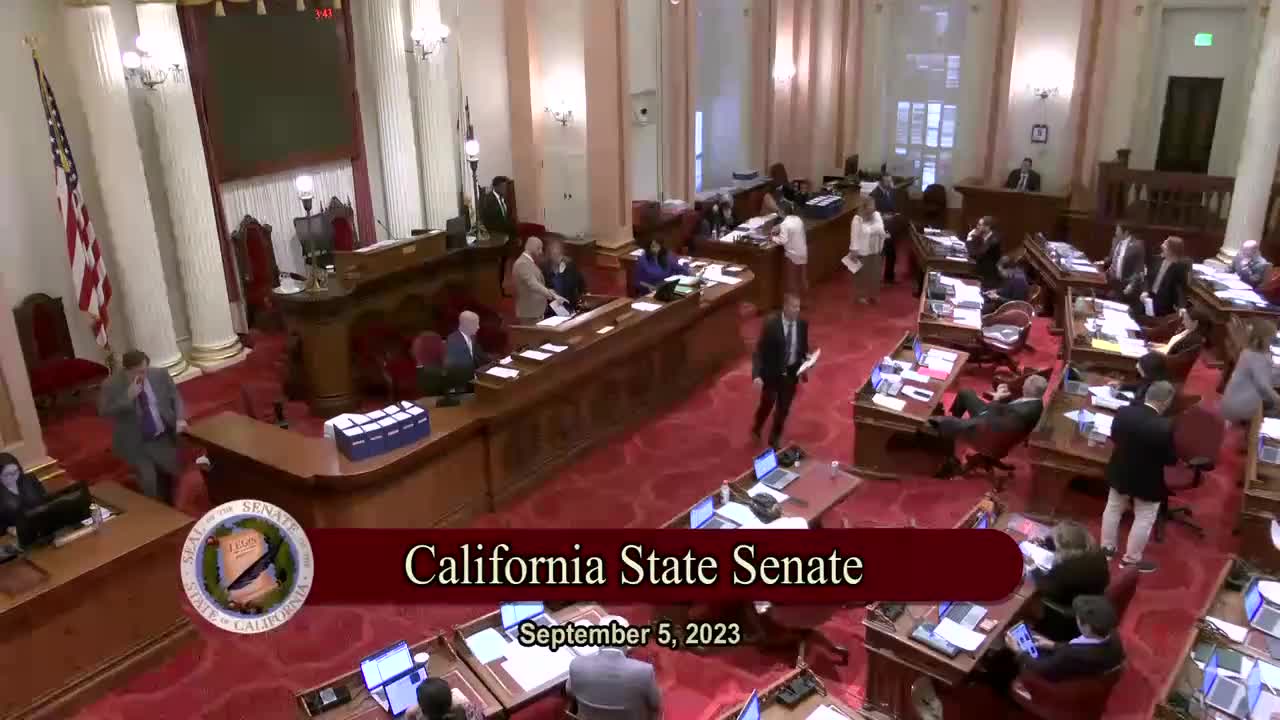
Bill Author

Bill Co-Author(s):