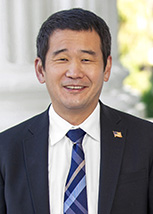
AB 1825: California Freedom to Read Act.
- Session Year: 2023-2024
- House: Assembly
- Latest Version Date: 2024-09-29
Current Status:
Passed
(2024-09-29: Chaptered by Secretary of State - Chapter 941, Statutes of 2024.)
Introduced
In Committee
First Chamber
In Committee
Second Chamber
Enacted
What does this bill do?
The bill, called the California Freedom to Read Act, requires public library systems that get state funding (but not school libraries) to adopt a public written collection policy explaining how materials are chosen and how community members can ask to have items reconsidered. It forbids library boards from banning or limiting access to materials because of topic, ideas, or the author’s or subject’s race, gender, religion, sexual orientation, disability, or other protected traits, or because materials include diverse viewpoints or sexual content (unless legally obscene), protects patrons’ privacy, and shields library staff from punishment for following the policy or refusing to remove items before review.
The summary is provided by generative AI which can make mistakes. For original language, please view the details in the table below.
Existing law establishes a public library system, including school libraries, unified school district and union high school district public libraries, municipal libraries, county free libraries, the California State Library, and library districts. Under existing law, the Legislature declares that the public library is, among other things, a source of information and inspiration to persons of all ages, cultural backgrounds, and economic statuses.
This bill would require every public library jurisdiction, as defined, that directly receives any state funding to establish, adopt, and maintain a written and publicly accessible collection development policy for its libraries by January 1, 2026, as specified. The bill would require the collection development policy to, among other things, (1) guide the selection and deselection of library materials, as defined, and (2) establish a process for community members to share their concerns regarding library materials and request materials be reconsidered for inclusion in the librarys collection.
The bill would require the adopted policy to be sent to the State Librarian, and would authorize the State Librarian or their designee to provide technical assistance to public libraries in developing their collection development policy.
The bill would prohibit the governing board or body of a public library, or any body or commission designated to review the procurement, retention, or circulation of, or access to, library materials, from (1) proscribing the circulation or procurement of, or access to, library materials in a public library because of the topic addressed by the library materials or because of the views, ideas, or opinions contained in materials or (2) creating policies or procedures that limit or restrict access to library materials offered by the public library, except as provided. The bill would also prohibit library materials in a public library from being excluded, and access to library materials from being limited, solely on the bases of (1) specified protected characteristics of a subject of the library materials, an author of the materials, the sources of the library materials, or the perceived or intended audience for the library materials, (2) that the materials contain inclusive and diverse perspectives, or (3) that the materials may include sexual content, except as provided. The bill would provide that a persons right to use a public library and its resources shall not be denied or abridged solely because of personal characteristics, age, background, or views.
The bill would prohibit a librarian, library media specialist, other employee, or contractor at a public library from being subject to termination, demotion, discipline, or retaliation for (1) refusing to remove a library material before it has been reviewed in accordance with the public librarys process for reconsideration of library materials or (2) making displays, acquisitions, or programming decisions that the employee believes, in good faith, are in accordance with the bills provisions.
The bill would provide that these provisions apply to a public library, as defined, including any public library operated on a contractual basis, or operated by a city, including a general law or charter city, county, special district, or joint powers authority, except that these provisions do not apply to any school library, as defined, or any library operated by the governing board of a school district, a county board of education, or the governing body of a charter school. To the extent these provisions impose additional duties on public libraries, the bill would create a state-mandated local program.
The bill would include findings that changes proposed by this bill address a matter of statewide concern rather than a municipal affair and, therefore, apply to all cities, including charter cities.
The California Constitution requires the state to reimburse local agencies and school districts for certain costs mandated by the state. Statutory provisions establish procedures for making that reimbursement.
This bill would provide that, if the Commission on State Mandates determines that the bill contains costs mandated by the state, reimbursement for those costs shall be made pursuant to the statutory provisions noted above.
Existing law establishes a public library system, including school libraries, unified school district and union high school district public libraries, municipal libraries, county free libraries, the California State Library, and library districts. Under existing law, the Legislature declares that the public library is, among other things, a source of information and inspiration to persons of all ages, cultural backgrounds, and economic statuses.
This bill would require each every public library jurisdiction, as defined, that directly receives any state funding to establish, adopt, and maintain a written and publicly accessible collection development policy for its libraries by January 1, 2026, as specified. The bill would require the collection development policy to, among other things, (1) guide the selection and deselection of library materials, as defined, and (2) establish a process for community members to share their concerns regarding library materials and request materials be reconsidered for inclusion in the librarys collection.
The bill would require the adopted policy to be sent to the State Librarian, and would authorize the State Librarian or their designee to provide technical assistance to public libraries in developing their collection development policy in order to ensure compliance with the bills provisions. policy.
The bill would prohibit the governing board or body of a public library, or any body or commission designated to review the procurement, retention, or circulation of, or access to, library materials, from (1) proscribing the circulation or procurement of, or access to, library materials in a public library because of the topic addressed by the library materials or because of the views, ideas, or opinions contained in materials or (2) creating policies or procedures that limit or restrict access to library materials offered by the public library, except as provided. The bill would also prohibit library materials in a public library from being excluded, and access to library materials from being limited, solely on the bases of (1) specified protected characteristics of a subject of the library materials, an author of the materials, the sources of the library materials, or the perceived or intended audience for the library materials, (2) that the materials contain inclusive and diverse perspectives, or (3) that the materials may include sexual content, except as provided. The bill would provide that a persons right to use a public library and its resources shall not be denied or abridged solely because of personal characteristics, age, background, or views.
The bill would prohibit a librarian, library media specialist, other employee, or contractor at a public library from being subject to termination, demotion, discipline, or retaliation for (1) refusing to remove a library material before it has been reviewed in accordance with the public librarys process for reconsideration of library materials or (2) making displays, acquisitions, or programming decisions that the employee believes, in good faith, are in accordance with the bills provisions.
The bill would provide that these provisions apply to a public library, as defined, including any public library operated on a contractual basis, or operated by a city, including a general law or charter city, county, special district, or joint powers authority, except that these provisions do not apply to any school library, as defined, or any library operated by the governing board of a school district, a county board of education, or the governing body of a charter school. To the extent these provisions impose additional duties on public libraries, the bill would create a state-mandated local program.
The bill would include findings that changes proposed by this bill address a matter of statewide concern rather than a municipal affair and, therefore, apply to all cities, including charter cities.
The California Constitution requires the state to reimburse local agencies and school districts for certain costs mandated by the state. Statutory provisions establish procedures for making that reimbursement.
This bill would provide that, if the Commission on State Mandates determines that the bill contains costs mandated by the state, reimbursement for those costs shall be made pursuant to the statutory provisions noted above.
Existing law establishes a public library system, including school libraries, unified school district and union high school district public libraries, municipal libraries, county free libraries, the California State Library, and library districts. Under existing law, the Legislature declares that the public library is, among other things, a source of information and inspiration to persons of all ages, cultural backgrounds, and economic statuses.
This bill would require each public library jurisdiction, as defined, that directly receives any state funding to establish, adopt, and maintain a written and publicly accessible collection development policy for its libraries by January 1, 2026, as specified. The bill would require the collection development policy to, among other things, (1) guide the selection and deselection of library materials, as defined, and (2) establish a process for community members to share their concerns regarding library materials and request materials be reconsidered for inclusion in the librarys collection and (2) establish that library materials shall not be excluded because of the origin, background, or views of those contributing to the creation of the materials, or because of the topic addressed by the materials or the views or opinions expressed in the materials. collection.
The bill would require the adopted policy to be sent to the State Librarian, and would authorize the State Librarian or their designee to provide technical assistance to public libraries in developing their collection development policy in order to ensure compliance with the bills provisions.
The bill would prohibit the governing board or body of a public library library, or any body or commission designated to review the procurement, retention, or circulation of, or access to, library materials, from (1) proscribing the circulation or procurement of books or other resources of, or access to, library materials in a public library because of the topic addressed by the library materials or because of the views, ideas, or opinions contained in those materials. materials or (2) creating policies or procedures that limit or restrict access to library materials offered by the public library, except as provided. The bill would also prohibit library materials in a public library from exercising the discretion to determine the content of library materials in a manner that discriminates against or excludes materials based on being excluded, and access to library materials from being limited, solely on the bases of (1) specified protected characteristics, on the basis characteristics of a subject of the library materials, an author of the materials, the sources of the library materials, or the perceived or intended audience for the library materials, (2) that the materials contain inclusive and diverse perspectives, or on the basis (3) that the materials may include sexual content, except as provided. The bill would provide that a persons right to use a public library and its resources shall not be denied or abridged solely because of personal characteristics, age, background, or views.
The bill would prohibit a librarian, library media specialist, other employee, or contractor at a public library from being subject to termination, demotion, discipline, or retaliation for (1) refusing to remove a library material before it has been reviewed in accordance with the public librarys process for reconsideration of library materials or (2) making displays, acquisitions, or programming decisions that the employee believes, in good faith, are in accordance with the bills provisions.
The bill would provide that these provisions apply to a public library, as defined, including any public library operated on a contractual basis, or operated by a city, including a general law or charter city, county, special district, or joint powers authority, except that these provisions do not apply to any school library, as defined, or any library operated by the governing board of a school district, a county board of education, or the governing body of a charter school. To the extent these provisions impose additional duties on public libraries, the bill would create a state-mandated local program.
The bill would include findings that changes proposed by this bill address a matter of statewide concern rather than a municipal affair and, therefore, apply to all cities, including charter cities.
The California Constitution requires the state to reimburse local agencies and school districts for certain costs mandated by the state. Statutory provisions establish procedures for making that reimbursement.
This bill would provide that, if the Commission on State Mandates determines that the bill contains costs mandated by the state, reimbursement for those costs shall be made pursuant to the statutory provisions noted above.
Existing law establishes a public library system, including school libraries, unified school district and union high school district public libraries, municipal libraries, county free libraries, the California State Library, and library districts. Under existing law, the Legislature declares that the public library is, among other things, a source of information and inspiration to persons of all ages, cultural backgrounds, and economic statuses.
This bill would require the governing board or body of each public library, library jurisdiction, as defined, including any library operated on a contractual basis for a public entity, to establish that directly receives any state funding to establish, adopt, and maintain a written and publicly accessible collection development policy, policy for its libraries by January 1, 2026, as specified. The bill would require the collection development policy to, among other things, (1) establish a process for community members to challenge library materials share their concerns regarding library materials and request materials be reconsidered for inclusion in the librarys collection and (2) establish that library materials shall not be excluded because of the origin, background, or views of those contributing to the creation of the materials, or because of the topic addressed by the materials or the views or opinions expressed in the materials. The
The bill would require the adopted policy to be sent to the State Librarian, and would authorize the State Librarian or their designee to provide technical assistance to public libraries in developing their collection development policy in order to ensure compliance with the bills provisions.
The bill would prohibit the governing board or body of a public library from proscribing the circulation or procurement of books or other resources in a public library because of the topic addressed by the materials or because of the views, ideas, or opinions contained in those materials. The bill would also prohibit a public library from exercising the discretion to determine the content of library materials in a manner that discriminates against or excludes materials based on specified protected characteristics, on the basis that the materials contain inclusive and diverse perspectives, or on the basis that the materials may include sexual content, as provided. The bill would provide that a persons right to use a public library and its resources shall not be denied or abridged solely because of personal characteristics, age, background, or views. The
The bill would prohibit a librarian, library media specialist, other employee, or contractor at a public library from being subject to termination, demotion, discipline, or retaliation for (1) refusing to remove a library material before it has been reviewed in accordance with the public librarys process for reconsideration of library materials or (2) making displays, acquisitions, or programming decisions that the employee believes, in good faith, are in accordance with the bills provisions.
The bill would provide that these provisions apply to a public library, as defined, including any public library operated on a contractual basis, or operated by a city, including a general law or charter city, county, special district, or joint powers authority, except that these provisions do not apply to any public school library, as defined, or any library operated by the governing board of a school district, a county board of education, or the governing body of a charter school. To the extent these provisions impose additional duties on public libraries, the bill would create a state-mandated local program.
The bill would include findings that changes proposed by this bill address a matter of statewide concern rather than a municipal affair and, therefore, apply to all cities, including charter cities.
The California Constitution requires the state to reimburse local agencies and school districts for certain costs mandated by the state. Statutory provisions establish procedures for making that reimbursement.
This bill would provide that, if the Commission on State Mandates determines that the bill contains costs mandated by the state, reimbursement for those costs shall be made pursuant to the statutory provisions noted above.
Existing law establishes a public library system, including school libraries, unified school district and union high school district public libraries, municipal libraries, county free libraries, the California State Library, and library districts. Under existing law, the Legislature declares that the public library is, among other things, a source of information and inspiration to persons of all ages, cultural backgrounds, and economic statuses.
This bill would require the governing board or body of each public library, as defined, including any library operated on a contractual basis for a public entity, to establish a written and publicly accessible collection development policy, as specified. The bill would require the collection development policy to, among other things, establish a process for community members to challenge library materials and establish that library materials shall not be excluded because of the origin, background, or views of those contributing to the creation of the materials, or because of the topic addressed by the materials or the views or opinions expressed in the materials. The bill would prohibit the governing board or body of a public library from proscribing the circulation or procurement of books or other resources in a public library because of the topic addressed by the materials or because of the views, ideas, or opinions contained in those materials. The bill would also prohibit a public library from exercising the discretion to determine the content of library materials in a manner that discriminates against or excludes materials based on specified protected characteristics, on the basis that the materials contain inclusive and diverse perspectives, or on the basis that the materials may include sexual content, as provided. The bill would provide that a persons right to use a public library and its resources shall not be denied or abridged solely because of personal characteristics, age, background, or views. The bill would authorize a user of a public library to commence a civil action to obtain appropriate injunctive and declaratory relief for violations of these provisions. The bill would provide that these provisions apply to a public library, as defined, including any public library operated by a city, county, special district, or joint powers authority, except that these provisions do not apply to any public library operated by the governing board of a school district, a county board of education, or the governing body of a charter school. To the extent these provisions impose additional duties on public libraries, the bill would create a state-mandated local program.
The California Constitution requires the state to reimburse local agencies and school districts for certain costs mandated by the state. Statutory provisions establish procedures for making that reimbursement.
This bill would provide that, if the Commission on State Mandates determines that the bill contains costs mandated by the state, reimbursement for those costs shall be made pursuant to the statutory provisions noted above.
Existing law establishes a public library system, including school libraries, unified school district and union high school district public libraries, municipal libraries, county free libraries, the California State Library, and library districts. Under existing law, the Legislature declares that the public library is, among other things, a source of information and inspiration to persons of all ages, cultural backgrounds, and economic statuses.
This bill would require the governing board or body of each public library, as defined, including any library, library operated on a contractual basis for a public entity, to establish a written policy for the selection of library materials and the use of library materials and facilities, and publicly accessible collection development policy, as specified. The bill would require the collection development policy to, among other things, establish a process for community members to challenge library materials and establish that library materials shall not be excluded because of the origin, background, or views of those contributing to the creation of the materials, or because of the topic addressed by the materials or the views or opinions expressed in the materials. The bill would prohibit the governing board or body of a public library from proscribing the circulation or procurement of books or other resources in a public library because of the topic addressed by the materials or because of the views, ideas, or opinions contained in those materials. The bill would also prohibit a public library from exercising the discretion to determine the content of library materials in a manner that discriminates against or excludes materials based on specified protected characteristics, on the basis that the materials contain inclusive and diverse perspectives, or on the basis that the materials may include sexual content, as provided. The bill would provide that a persons right to use a public library and its resources shall not be denied or abridged solely because of personal characteristics, age, background, or views. The bill would authorize a user of a public library to commence a civil action to obtain appropriate injunctive and declaratory relief for violations of these provisions. The bill would provide that these provisions apply to a public library, as defined, including any public library operated by a city, county, special district, or joint powers authority, except that these provisions do not apply to any public library operated by the governing board of a school district, a county board of education, or the governing body of a charter school. To the extent these provisions impose additional duties on public libraries, the bill would create a state-mandated local program.
The California Constitution requires the state to reimburse local agencies and school districts for certain costs mandated by the state. Statutory provisions establish procedures for making that reimbursement.
This bill would provide that, if the Commission on State Mandates determines that the bill contains costs mandated by the state, reimbursement for those costs shall be made pursuant to the statutory provisions noted above.
Existing law establishes a public library system, including school libraries, unified school district and union high school district public libraries, municipal libraries, county free libraries, the California State Library, and library districts. Under existing law, the Legislature declares that the public library is, among other things, a source of information and inspiration to persons of all ages, cultural backgrounds, and economic statuses.
This bill would require the governing board or body of each public library library, including any library, operated on a contractual basis for a public entity, to establish a written policy for the selection of library materials and the use of library materials and facilities in accordance with the American Library Associations Library Bill of Rights and its interpretations. facilities, as specified. The bill would require the policy to, among other things, establish that library materials shall not be excluded because of the origin, background, or views of those contributing to the creation of the materials, or because of the topic addressed by the materials or the views or opinions expressed in the materials. The bill would prohibit the governing board or body of a public library from proscribing the circulation or procurement of books or other resources in a public library because of partisan or doctrinal disapproval of the ideas the topic addressed by the materials or because of the views, ideas, or opinions contained in those materials. The bill would also prohibit a public library from exercising the discretion to determine the content of library materials in a partisan or political manner, a manner that discriminates against or excludes materials based on specified protected characteristics, or on the basis that the materials contain inclusive and diverse perspectives. perspectives, or on the basis that the materials may include sexual content, as provided. The bill would provide that a persons right to use a public library and its resources shall not be denied or abridged solely because of personal characteristics, age, background, or views. The bill would authorize a user of a public library to commence a civil action to obtain appropriate injunctive and declaratory relief for violations of these provisions. To the extent these provisions impose additional duties on public libraries, the bill would create a state-mandated local program.
The California Constitution requires the state to reimburse local agencies and school districts for certain costs mandated by the state. Statutory provisions establish procedures for making that reimbursement.
This bill would provide that, if the Commission on State Mandates determines that the bill contains costs mandated by the state, reimbursement for those costs shall be made pursuant to the statutory provisions noted above.
Existing law establishes a public library system, including school libraries, unified school district and union high school district public libraries, municipal libraries, county free libraries, the California State Library, and library districts. Under existing law, the Legislature declares that the public library is, among other things, a source of information and inspiration to persons of all ages, cultural backgrounds, and economic statuses.
This bill would declare the intent of the Legislature to enact legislation that would prevent public libraries from banning books for partisan or political reasons or in a manner that is motivated by animus based on race, gender, sexuality, religion, disability, or socioeconomic status. The bill would additionally declare the intent of the Legislature to establish procedures for removing books from public libraries, as specified.This bill would require the governing board or body of each public library to establish a written policy for the selection of library materials and the use of library materials and facilities in accordance with the American Library Associations Library Bill of Rights and its interpretations. The bill would prohibit the governing board or body of a public library from proscribing the circulation of books or other resources in a public library because of partisan or doctrinal disapproval of the ideas contained in those materials. The bill would also prohibit a public library from exercising the discretion to determine the content of library materials in a partisan or political manner, a manner based on specified protected characteristics, or on the basis that the materials contain inclusive and diverse perspectives. The bill would provide that a persons right to use a public library and its resources shall not be denied or abridged because of personal characteristics, age, background, or views. To the extent these provisions impose additional duties on public libraries, the bill would create a state-mandated local program.
The California Constitution requires the state to reimburse local agencies and school districts for certain costs mandated by the state. Statutory provisions establish procedures for making that reimbursement.
This bill would provide that, if the Commission on State Mandates determines that the bill contains costs mandated by the state, reimbursement for those costs shall be made pursuant to the statutory provisions noted above.
Existing law establishes a public library system, including school libraries, unified school district and union high school district public libraries, municipal libraries, county free libraries, the California State Library, and library districts. Under existing law, the Legislature declares that the public library is, among other things, a source of information and inspiration to persons of all ages, cultural backgrounds, and economic statuses.
This bill would declare the intent of the Legislature to enact legislation that would prevent public libraries from banning books for partisan or political reasons or in a manner that is motivated by animus based on race, gender, sexuality, religion, disability, or socioeconomic status. The bill would additionally declare the intent of the Legislature to establish procedures for removing books from public libraries, as specified.
This chapter shall be known, and may be cited, as the California Freedom to Read Act.
19801.The Legislature finds and declares all of the following:
(a)Libraries are essential for information, education, and enlightenment of all people of the community the library serves.
(b)Libraries provide access to books that offer teachable moments for readers of all ages and expand our understanding of people with different backgrounds, ideas, and beliefs.
(c)A persons right to use a library should not be denied or abridged solely because of personal characteristics, age, background, or views.
(d)Removing and banning books from public libraries are dangerous acts of government censorship and erode our countrys commitment to freedom of expression and the right to receive information.
(e)Librarians are professionals trained to not impose their own thoughts and opinions on which ideas are right, but to make knowledge and ideas available so that people have the freedom to choose what to read.
(f)Librarians and library staff receive extensive professional training to develop and curate collections to meet the broad and diverse interests of their communities, which include, but are not limited to, literary value and developmental appropriateness of material.
19802.(a)(1)Every public library jurisdiction that directly receives any state funding, including, but not limited to, state funding pursuant to this part, shall establish, adopt, and maintain a written and publicly accessible collection development policy for its public libraries by January 1, 2026, and shall submit that collection development policy to the State Librarian. The State Librarian or their designee may provide technical assistance to public libraries in developing their collection development policy. The collection development policy, at a minimum, shall do all of the following:
(A)Establish a process for community members to share their concerns regarding library materials and to request that library materials be reconsidered for inclusion in the librarys collection.
(B)Guide the selection and deselection of library materials.
(C)Acknowledge that the public librarys collection meets the broad and diverse interests of the community and respect both the librarys autonomy and their specific community needs.
(D)Establish that the public library serves as a center for voluntary inquiry and the dissemination of information and ideas.
(E)Acknowledge that library materials should be provided for the interest, information, and enlightenment of all people, and should present diverse points of view in the collection as a whole.
(F)Acknowledge the right of the public to receive access to a range of social, political, aesthetic, moral, and other ideas and experiences.
(2)A librarian, library media specialist, other employee, or contractor at a public library shall not be subject to termination, demotion, discipline, or retaliation for either of the following:
(A)Refusing to remove a library material before it has been reviewed in accordance with the public librarys process for the reconsideration of library materials established pursuant to subparagraph (A) of paragraph (1).
(B)Making displays, acquisitions, or programming decisions that the employee or contractor believes, in good faith, are in accordance with the requirements of this section.
(b)(1)The governing board or body of a public library, or any body or commission designated to review the procurement, retention, or circulation of, or access to, library materials, shall not proscribe or prohibit the circulation or procurement of, or access to, any library materials in a public library because of the topic addressed by the materials or because of the views, ideas, or opinions contained in those materials.
(2)(A)Library materials in public libraries shall not be excluded, and access to library materials shall not be limited, solely on the bases of any of the following:
(i)The race, nationality, gender identity, sexual orientation, religion, disability, political affiliation, or any other characteristic listed in subdivision (a) of Section 12940 of the Government Code, or the socioeconomic status of a subject of the library materials, an author of the library materials, the source of the library materials, or the perceived or intended audience for the library materials.
(ii)The library materials contain inclusive and diverse perspectives.
(iii)The library materials may include sexual content, unless that content qualifies as obscene under United States Supreme Court precedent.
(B)This paragraph does not apply to library materials excluded, or for which access is limited, pursuant to a library maintenance and deaccession policy.
(3)The governing board or body of a public library, or any body or commission designated to review the procurement, retention, or circulation of, or access to, library materials, shall not create policies or procedures that limit or restrict access to library materials offered by the public library unless the policies or procedures are adopted to preserve the safety or security of the library materials, are time, place, and manner restrictions not based on the content of materials, or are programs that provide for the effective management of the library and its resources to preserve access for all library users.
(c)A persons right to use a public library and its resources shall not be denied or abridged solely because of personal characteristics, age, background, or views.
(d)All people, regardless of personal characteristics, age, background, or views, possess a right to privacy and confidentiality in the materials they borrow from libraries.
(e)This section applies to a public library, as defined in Section 18015, including any public library operated on a contractual basis, or by a city, including a general law or charter city, county, special district, or joint powers authority, except that it does not apply to any school library, as defined in Section 18710, or any library operated by the governing board of a school district, a county board of education, or the governing body of a charter school.
(f)For purposes of this section, the following definitions apply:
(1)Library materials includes, but is not limited to, books, periodicals and serials, audio materials, audiovisual materials, instructional materials, maps, databases, government documents, records, photographs, and all other similar materials, whether in tangible or electronic form. Library materials does not include hardware, tools, instruments, computers, appliances, or other items that are not for the primary purpose of conveying ideas or information.
(2)Public library jurisdiction means a county, city and county, city, or any district that is authorized by law to provide public library services and that operates a public library described in subdivision (e).
SEC. 2.The Legislature finds and declares that ensuring public libraries are free of censorship is a matter of statewide concern and is not a municipal affair as that term is used in Section 5 of Article XI of the California Constitution. Therefore, Section 1 of this act adding Chapter 10 (commencing with Section 19800) to Part 11 of Division 1 of Title 1 of the Education Code applies to all cities, including charter cities.
SEC. 3.If the Commission on State Mandates determines that this act contains costs mandated by the state, reimbursement to local agencies and school districts for those costs shall be made pursuant to Part 7 (commencing with Section 17500) of Division 4 of Title 2 of the Government Code.
This chapter shall be known, and may be cited, as the California Freedom to Read Act.
19801.The Legislature finds and declares all of the following:
(a)Libraries are essential for information, education, and enlightenment of all people of the community the library serves.
(b)Libraries provide access to books that offer teachable moments for readers of all ages and expand our understanding of people with different backgrounds, ideas, and beliefs.
(c)A persons right to use a library should not be denied or abridged solely because of personal characteristics, age, background, or views.
(d)Removing and banning books from public libraries are dangerous acts of government censorship and erode our countrys commitment to freedom of expression and the right to receive information.
(e)Librarians are professionals trained to not impose their own thoughts and opinions on which ideas are right, but to make knowledge and ideas available so that people have the freedom to choose what to read.
(f)Librarians and library staff receive extensive professional training to develop and curate collections to meet the broad and diverse interests of their communities, which include, but are not limited to, literary value and developmental appropriateness of material.
19802.(a)(1)Each Every public library jurisdiction that directly receives any state funding, including, but not limited to, state funding pursuant to this part, shall establish, adopt, and maintain a written and publicly accessible collection development policy for its public libraries by January 1, 2026, and shall submit that collection development policy to the State Librarian. The State Librarian or their designee may provide technical assistance to public libraries in developing their collection development policy in order to ensure compliance with the requirements of this section. policy. The collection development policy, at a minimum, shall do all of the following:
(A)Establish a process for community members to share their concerns regarding library materials and to request that library materials be reconsidered for inclusion in the librarys collection.
(B)Guide the selection and deselection of library materials.
(C)Acknowledge that the public librarys collection meets the broad and diverse interests of the community and respect both the librarys autonomy and their specific community needs.
(D)Establish that the public library serves as a center for voluntary inquiry and the dissemination of information and ideas.
(E)Acknowledge that library materials should be provided for the interest, information, and enlightenment of all people, and should present diverse points of view in the collection as a whole.
(F)Acknowledge the right of the public to receive access to a range of social, political, aesthetic, moral, and other ideas and experiences.
(2)A librarian, library media specialist, other employee, or contractor at a public library shall not be subject to termination, demotion, discipline, or retaliation for either of the following:
(A)Refusing to remove a library material before it has been reviewed in accordance with the public librarys process for the reconsideration of library materials established pursuant to subparagraph (A) of paragraph (1).
(B)Making displays, acquisitions, or programming decisions that the employee or contractor believes, in good faith, are in accordance with the requirements of this section.
(b)(1)The governing board or body of a public library, or any body or commission designated to review the procurement, retention, or circulation of, or access to, library materials, shall not proscribe or prohibit the circulation or procurement of, or access to, any library materials in a public library because of the topic addressed by the materials or because of the views, ideas, or opinions contained in those materials.
(2)(A)Library materials in public libraries shall not be excluded, and access to library materials shall not be limited, solely on the bases of any of the following:
(i)The race, nationality, gender identity, sexual orientation, religion, disability, political affiliation, or any other characteristic listed in subdivision (a) of Section 12940 of the Government Code, or the socioeconomic status of a subject of the library materials, an author of the library materials, the source of the library materials, or the perceived or intended audience for the library materials.
(ii)The library materials contain inclusive and diverse perspectives.
(iii)The library materials may include sexual content, unless that content qualifies as obscene under United States Supreme Court precedent.
(B)This paragraph does not apply to library materials excluded, or for which access is limited, pursuant to a library maintenance and deaccession policy.
(3)The governing board or body of a public library, or any body or commission designated to review the procurement, retention, or circulation of, or access to, library materials, shall not create policies or procedures that limit or restrict access to library materials offered by the public library unless the policies or procedures are adopted to preserve the safety or security of the library materials, are time, place, and manner restrictions not based on the content of materials, or are programs that provide for the effective management of the library and its resources to preserve access for all library users.
(c)A persons right to use a public library and its resources shall not be denied or abridged solely because of personal characteristics, age, background, or views.
(d)All people, regardless of personal characteristics, age, background, or views, possess a right to privacy and confidentiality in the materials they borrow from libraries.
(e)This section applies to a public library, as defined in Section 18015, including any public library operated on a contractual basis, or by a city, including a general law or charter city, county, special district, or joint powers authority, except that it does not apply to any school library, as defined in Section 18710, or any library operated by the governing board of a school district, a county board of education, or the governing body of a charter school.
(f)For purposes of this section, the following definitions apply:
(1)Library materials includes, but is not limited to, books, periodicals and serials, audio materials, audiovisual materials, instructional materials, maps, databases, government documents, records, photographs, and all other similar materials, whether in tangible or electronic form. Library materials does not include hardware, tools, instruments, computers, appliances, or other items that are not for the primary purpose of conveying ideas or information.
(2)Public library jurisdiction means a county, city and county, city, or any district that is authorized by law to provide public library services and that operates a public library described in subdivision (e).
SEC. 2.The Legislature finds and declares that ensuring public libraries are free of censorship is a matter of statewide concern and is not a municipal affair as that term is used in Section 5 of Article XI of the California Constitution. Therefore, Section 1 of this act adding Chapter 10 (commencing with Section 19800) to Part 11 of Division 1 of Title 1 of the Education Code applies to all cities, including charter cities.
SEC. 3.If the Commission on State Mandates determines that this act contains costs mandated by the state, reimbursement to local agencies and school districts for those costs shall be made pursuant to Part 7 (commencing with Section 17500) of Division 4 of Title 2 of the Government Code.
This chapter shall be known, and may be cited, as the California Freedom to Read Act.
19801.The Legislature finds and declares all of the following:
(a)Libraries are essential for information, education, and enlightenment of all people of the community the library serves.
(b)Libraries provide access to books that offer teachable moments for readers of all ages and expand our understanding of people with different backgrounds, ideas, and beliefs.
(c)A persons right to use a library should not be denied or abridged solely because of personal characteristics, age, background, or views.
(d)Removing and banning books from public libraries are dangerous acts of government censorship and erode our countrys commitment to freedom of expression and the right to receive information.
(e)Librarians are professionals trained to not impose their own thoughts and opinions on which ideas are right, but to make knowledge and ideas available so that people have the freedom to choose what to read.
(f)Librarians and library staff receive extensive professional training to develop and curate collections to meet the broad and diverse interests of their communities, which include, but are not limited to, literary value and developmental appropriateness of material.
19802.(a)(1)Each public library jurisdiction that directly receives any state funding, including, but not limited to, state funding pursuant to this part, shall establish, adopt, and maintain a written and publicly accessible collection development policy for its public libraries by January 1, 2026, and shall submit that collection development policy to the State Librarian. The State Librarian or their designee may provide technical assistance to public libraries in developing their collection development policy in order to ensure compliance with the requirements of this section. The collection development policy, at a minimum, shall do all of the following:
(A)Establish a process for community members to share their concerns regarding library materials and to request that library materials be reconsidered for inclusion in the librarys collection.
(B)Guide the selection and deselection of printed and electronic resources. library materials.
(C)Acknowledge that the public librarys collection meets the broad and diverse interests of the community and respect both the librarys autonomy and their specific community needs.
(D)Establish that the public library serves as a center for voluntary inquiry and the dissemination of information and ideas.
(E)Establish that library materials shall not be excluded from the library collection because of the origin, background, or views of those contributing to the creation of the materials, or because of the topic addressed by the materials or the views or opinions expressed in the materials.(F)(E)Acknowledge that library materials should be provided for the interest, information, and enlightenment of all people, and should present diverse points of view in the collection as a whole.
(G)(F)Acknowledge the right of the public to receive access to a range of social, political, aesthetic, moral, and other ideas and experiences.
(2)A librarian, library media specialist, other employee, or contractor at a public library shall not be subject to termination, demotion, discipline, or retaliation for either of the following:
(A)Refusing to remove a library material before it has been reviewed in accordance with the public librarys process for the reconsideration of library materials established pursuant to subparagraph (A) of paragraph (1).
(B)Making displays, acquisitions, or programming decisions that the employee or contractor believes, in good faith, are in accordance with the requirements of this section.
(b)(1)The governing board or body of a public library library, or any body or commission designated to review the procurement, retention, or circulation of, or access to, library materials, shall not proscribe or prohibit the circulation or procurement of any book, audio, film, instructional material, or other resource of, or access to, any library materials in a public library because of the topic addressed by the materials or because of the views, ideas, or opinions contained in those materials.
(2)The discretion to determine the content of (A)Library materials in public libraries shall not be exercised in a manner that discriminates against or excludes materials based on race, excluded, and access to library materials shall not be limited, solely on the bases of any of the following:
(i)The race, nationality, gender identity, sexual orientation, religion, disability, political affiliation, or any other characteristic listed in subdivision (a) of Section 12940 of the Government Code, or the socioeconomic status, on the basis that the materials under consideration status of a subject of the library materials, an author of the library materials, the source of the library materials, or the perceived or intended audience for the library materials.
(ii)The library materials contain inclusive and diverse perspectives, or on the basis that the perspectives.
(iii)The library materials may include sexual content, unless that content qualifies as obscene under United States Supreme Court precedent.
(3)Any decision by a public library to remove a book shall conform to the requirements of the First Amendment to the United States Constitution and Section 2 of Article I of the California Constitution.(B)This paragraph does not apply to library materials excluded, or for which access is limited, pursuant to a library maintenance and deaccession policy.
(4)(3)The governing board or body of a public library library, or any body or commission designated to review the procurement, retention, or circulation of, or access to, library materials, shall not create policies or procedures that limit or restrict access to books and other resources library materials offered by the public library unless the policies or procedures are adopted to preserve the safety or security of the librarys library materials, are time, place, and manner restrictions not based on the content of materials, or are programs that provide for the effective management of the library and its resources to preserve access for all library users.
(c)A persons right to use a public library and its resources shall not be denied or abridged solely because of personal characteristics, age, background, or views.
(d)All people, regardless of personal characteristics, age, background, or views, possess a right to privacy and confidentiality in the materials they borrow from libraries.
(e)This section applies to a public library, as defined in Section 18015, including any public library operated on a contractual basis, or by a city, including a general law or charter city, county, special district, or joint powers authority, except that it does not apply to any school library, as defined in Section 18710, or any library operated by the governing board of a school district, a county board of education, or the governing body of a charter school.
(f)For purposes of this section, public the following definitions apply:
(1)Library materials includes, but is not limited to, books, periodicals and serials, audio materials, audiovisual materials, instructional materials, maps, databases, government documents, records, photographs, and all other similar materials, whether in tangible or electronic form. Library materials does not include hardware, tools, instruments, computers, appliances, or other items that are not for the primary purpose of conveying ideas or information.
(2)Public library jurisdiction means a county, city and county, city, or any district that is authorized by law to provide public library services and that operates a public library described in subdivision (e).
SEC. 2.The Legislature finds and declares that ensuring public libraries are free of censorship is a matter of statewide concern and is not a municipal affair as that term is used in Section 5 of Article XI of the California Constitution. Therefore, Section 1 of this act adding Chapter 10 (commencing with Section 19800) to Part 11 of Division 1 of Title 1 of the Education Code applies to all cities, including charter cities.
SEC. 3.If the Commission on State Mandates determines that this act contains costs mandated by the state, reimbursement to local agencies and school districts for those costs shall be made pursuant to Part 7 (commencing with Section 17500) of Division 4 of Title 2 of the Government Code.
This chapter shall be known, and may be cited, as the California Freedom to Read Act.
19801.The Legislature finds and declares all of the following:
(a)Libraries are essential for information, education, and enlightenment of all people of the community the library serves.
(b)Libraries provide access to books that offer teachable moments for readers of all ages and expand our understanding of people with different backgrounds, ideas, and beliefs.
(c)A persons right to use a library should not be denied or abridged solely because of personal characteristics, age, background, or views.
(d)Removing and banning books from public libraries are dangerous acts of government censorship and erode our countrys commitment to freedom of expression and the right to receive information.
(e)Librarians are professionals trained to not impose their own thoughts and opinions on which ideas are right, but to make knowledge and ideas available so that people have the freedom to choose what to read.
(f)Librarians and library staff receive extensive professional training to develop and curate collections to meet the broad and diverse interests of their communities, which include, but are not limited to, literary value and developmental appropriateness of material.
19802.(a)(1)The governing board or body of each public library in the state, including any library operated on a contractual basis for a public entity, shall adopt Each public library jurisdiction that directly receives any state funding, including, but not limited to, state funding pursuant to this part, shall establish, adopt, and maintain a written and publicly accessible collection development policy. policy for its public libraries by January 1, 2026, and shall submit that collection development policy to the State Librarian. The State Librarian or their designee may provide technical assistance to public libraries in developing their collection development policy in order to ensure compliance with the requirements of this section. The collection development policy, at a minimum, shall do all of the following:
(A)Establish a process for community members to challenge library materials. share their concerns regarding library materials and to request that library materials be reconsidered for inclusion in the librarys collection.
(B)Guide the selection and deselection of printed and electronic resources, and also address access, acquisition, processing, discarding, and retention of library materials. resources.
(C)Meet Acknowledge that the public librarys collection meets the broad and diverse interests of the community and respect both the librarys autonomy and their specific community needs.
(D)Establish that the public library serves as a center for voluntary inquiry and the dissemination of information and ideas.
(E)Establish that library materials shall not be excluded from the library collection because of the origin, background, or views of those contributing to the creation of the materials, or because of the topic addressed by the materials or the views or opinions expressed in the materials.
(F)Acknowledge that library materials should be provided for the interest, information, and enlightenment of all people, and should present diverse points of view in the collection as a whole.
(G)Acknowledge the right of the public to receive access to a range of social, political, aesthetic, moral, and other ideas and experiences.
(2)Copies of the adopted collection development policies shall be sent to the California State Library for review by January 1, 2026.(2)A librarian, library media specialist, other employee, or contractor at a public library shall not be subject to termination, demotion, discipline, or retaliation for either of the following:
(A)Refusing to remove a library material before it has been reviewed in accordance with the public librarys process for the reconsideration of library materials established pursuant to subparagraph (A) of paragraph (1).
(B)Making displays, acquisitions, or programming decisions that the employee or contractor believes, in good faith, are in accordance with the requirements of this section.
(b)(1)The governing board or body of a public library shall not proscribe or prohibit the circulation or procurement of any book, audio, film, instructional material, or other resource in a public library because of the topic addressed by the materials or because of the views, ideas, or opinions contained in those materials.
(2)The discretion to determine the content of materials in public libraries shall not be exercised in a manner that discriminates against or excludes materials based on race, nationality, gender identity, sexual orientation, religion, disability, political affiliation, or socioeconomic status, on the basis that the materials under consideration contain inclusive and diverse perspectives, or on the basis that the materials may include sexual content, unless that content qualifies as obscene under United States Supreme Court precedent.
(3)Any decision by a public library to remove a book shall conform to the requirements of the First Amendment to the United States Constitution and Section 2 of Article I of the California Constitution.
(4)The governing board or body of a public library shall not create policies or procedures that limit or restrict access to books and other resources offered by the public library unless the policies or procedures are adopted to preserve the safety or security of the librarys materials, are time, place, and manner restrictions not based on the content of materials, or are programs that provide for the effective management of the library and its resources to preserve access for all library users.
(c)A persons right to use a public library and its resources shall not be denied or abridged solely because of personal characteristics, age, background, or views.
(d)All people, regardless of personal characteristics, age, background, or views, possess a right to privacy and confidentiality in their use of a public library. the materials they borrow from libraries.
(e)This section applies to a public library, as defined in Section 18015, including any public library operated on a contractual basis, or by a city, including a general law or charter city, county, special district, or joint powers authority, except that it does not apply to any public school library, as defined in Section 18710, or any library operated by the governing board of a school district, a county board of education, or the governing body of a charter school.
(f)For purposes of this section, public library jurisdiction means a county, city and county, city, or any district that is authorized by law to provide public library services and that operates a public library described in subdivision (e).
SEC. 2.The Legislature finds and declares that ensuring public libraries are free of censorship is a matter of statewide concern and is not a municipal affair as that term is used in Section 5 of Article XI of the California Constitution. Therefore, Section 1 of this act adding Chapter 10 (commencing with Section 19800) to Part 11 of Division 1 of Title 1 of the Education Code applies to all cities, including charter cities.
SEC. 2.SEC. 3.If the Commission on State Mandates determines that this act contains costs mandated by the state, reimbursement to local agencies and school districts for those costs shall be made pursuant to Part 7 (commencing with Section 17500) of Division 4 of Title 2 of the Government Code.
This chapter shall be known, and may be cited, as the California Freedom to Read Act.
19801.The Legislature finds and declares all of the following:
(a)Libraries are essential for information, education, and enlightenment of all people of the community the library serves.
(b)Libraries provide access to books that offer teachable moments for readers of all ages and expand our understanding of people with different backgrounds, ideas, and beliefs.
(c)A persons right to use a library should not be denied or abridged solely because of personal characteristics, age, background, or views.
(d)Removing and banning books from public libraries are dangerous acts of government censorship and erode our countrys commitment to freedom of expression and the right to receive information.
(e)Librarians are professionals trained to not impose their own thoughts and opinions on which ideas are right, but to make knowledge and ideas available so that people have the freedom to choose what to read.
(f)Librarians and library staff receive extensive professional training to develop and curate collections to meet the broad and diverse interests of their communities, which include, but are not limited to, literary value and developmental appropriateness of material.
19802.(a)(1)The governing board or body of each public library in the state, including any library operated on a contractual basis for a public entity, shall adopt a written and publicly accessible collection development policy. The collection development policy, at a minimum, shall do all of the following:
(A)Establish a process for community members to challenge library materials.
(B)Guide the selection and deselection of printed and electronic resources, and also address access, acquisition, processing, discarding, and retention of library materials.
(C)Meet the broad and diverse interests of the community and respect both the librarys autonomy and their specific community needs.
(D)Establish that the public library serves as a center for voluntary inquiry and the dissemination of information and ideas.
(E)Establish that library materials shall not be excluded from the library collection because of the origin, background, or views of those contributing to the creation of the materials, or because of the topic addressed by the materials or the views or opinions expressed in the materials.
(F)Acknowledge that library materials should be provided for the interest, information, and enlightenment of all people, and should present diverse points of view in the collection as a whole.
(G)Acknowledge the right of the public to receive access to a range of social, political, aesthetic, moral, and other ideas and experiences.
(2)Copies of the adopted collection development policies shall be sent to the California State Library for review by January 1, 2026.
(b)(1)The governing board or body of a public library shall not proscribe or prohibit the circulation or procurement of any book, audio, film, instructional material, or other resource in a public library because of the topic addressed by the materials or because of the views, ideas, or opinions contained in those materials.
(2)The discretion to determine the content of materials in public libraries shall not be exercised in a manner that discriminates against or excludes materials based on race, nationality, gender identity, sexual orientation, religion, disability, political affiliation, or socioeconomic status, on the basis that the materials under consideration contain inclusive and diverse perspectives, or on the basis that the materials may include sexual content, unless that content qualifies as obscene under United States Supreme Court precedent.
(3)Any decision by a public library to remove a book shall conform to the requirements of the First Amendment to the United States Constitution and Section 2 of Article I of the California Constitution.
(4)The governing board or body of a public library shall not create policies or procedures that limit or restrict access to books and other resources offered by the public library unless the policies or procedures are adopted to preserve the safety or security of the librarys materials, are time, place, and manner restrictions not based on the content of materials, or are programs that provide for the effective management of the library and its resources to preserve access for all library users.
(c)A persons right to use a public library and its resources shall not be denied or abridged solely because of personal characteristics, age, background, or views.
(d)All people, regardless of personal characteristics, age, background, or views, possess a right to privacy and confidentiality in their use of a public library.
(e)A user of a public library at the time that the public library took an action, or is continuing to take an action, in violation of this section may commence a civil action to obtain appropriate injunctive and declaratory relief as determined by the court.(f)(e)This section applies to a public library, as defined in Section 18015, including any public library operated by a city, county, special district, or joint powers authority, except that it does not apply to any public library operated by the governing board of a school district, a county board of education, or the governing body of a charter school.
SEC. 2.If the Commission on State Mandates determines that this act contains costs mandated by the state, reimbursement to local agencies and school districts for those costs shall be made pursuant to Part 7 (commencing with Section 17500) of Division 4 of Title 2 of the Government Code.
This chapter shall be known, and may be cited, as the California Freedom to Read Act.
19801.The Legislature finds and declares all of the following:
(a)Libraries are essential for information, education, and enlightenment of all people of the community the library serves.
(b)Libraries provide access to books that offer teachable moments for readers of all ages and expand our understanding of people with different backgrounds, ideas, and beliefs.
(c)A persons right to use a library should not be denied or abridged solely because of personal characteristics, age, background, or views.
(d)Removing and banning books from public libraries are dangerous acts of government censorship and erode our countrys commitment to freedom of expression and the right to receive information.
(e)Librarians are professionals trained to not impose their own thoughts and opinions on which ideas are right, but to make knowledge and ideas available so that people have the freedom to choose what to read.
(f)Librarians and library staff receive extensive professional training to develop and curate collections to meet the broad and diverse interests of their communities, which include, but are not limited to, literary value and developmental appropriateness of material.
19802.(a)(1)The governing board or body of each public library in the state, including any library operated on a contractual basis for a public entity, shall establish a written policy for the selection of library materials and the use of library materials and facilities. adopt a written and publicly accessible collection development policy. The collection development policy, at a minimum, shall do all of the following:
(A)Establish a process for community members to challenge library materials.
(B)Guide the selection and deselection of printed and electronic resources, and also address access, acquisition, processing, discarding, and retention of library materials.
(C)Meet the broad and diverse interests of the community and respect both the librarys autonomy and their specific community needs.
(A)(D)Establish that the public library serves as a center for voluntary inquiry and the dissemination of information and ideas.
(B)(E)Establish that library materials shall not be excluded from the library collection because of the origin, background, or views of those contributing to the creation of the materials, or because of the topic addressed by the materials or the views or opinions expressed in the materials.
(C)(F)Acknowledge that library materials should be provided for the interest, information, and enlightenment of all people, and should present diverse points of view in the collection as a whole.
(D)(G)Acknowledge the right of the public to receive access to a range of social, political, aesthetic, moral, and other ideas and experiences.
(2)Written policies established in accordance with and acknowledging the American Library Associations Library Bill of Rights and its interpretations shall be deemed in compliance with the requirements of paragraph (1).(2)Copies of the adopted collection development policies shall be sent to the California State Library for review by January 1, 2026.
(b)(1)The governing board or body of a public library shall not proscribe or prohibit the circulation or procurement of any book, audio, film, instructional material, or other resource in a public library because of the topic addressed by the materials or because of the views, ideas, or opinions contained in those materials.
(2)The discretion to determine the content of materials in public libraries shall not be exercised in a manner that discriminates against or excludes materials based on race, nationality, gender identity, sexual orientation, religion, disability, political affiliation, or socioeconomic status, on the basis that the materials under consideration contain inclusive and diverse perspectives, or on the basis that the materials may include sexual content, unless that content qualifies as obscene under United States Supreme Court precedent.
(3)Any decision by a public library to remove a book shall conform to the requirements of the First Amendment to the United States Constitution and Section 2 of Article I of the California Constitution.
(4)The governing board or body of a public library shall not create policies or procedures that limit or restrict access to books and other resources offered by the public library unless the policies or procedures are adopted to preserve the safety or security of the librarys materials, are time, place, and manner restrictions not based on the content of materials, or are programs that provide for the effective management of the library and its resources to preserve access for all library users.
(c)A persons right to use a public library and its resources shall not be denied or abridged solely because of personal characteristics, age, background, or views.
(d)All people, regardless of personal characteristics, age, background, or views, possess a right to privacy and confidentiality in their use of a public library.
(e)A user of a public library at the time that the public library took an action, or is continuing to take an action, in violation of this section may commence a civil action to obtain appropriate injunctive and declaratory relief as determined by the court.
(f)This section applies to a public library, as defined in Section 18015, including any public library operated by a city, county, special district, or joint powers authority, except that it does not apply to any public library operated by the governing board of a school district, a county board of education, or the governing body of a charter school.
SEC. 2.If the Commission on State Mandates determines that this act contains costs mandated by the state, reimbursement to local agencies and school districts for those costs shall be made pursuant to Part 7 (commencing with Section 17500) of Division 4 of Title 2 of the Government Code.
This chapter shall be known, and may be cited, as the California Freedom to Read Act.
19801.The Legislature finds and declares all of the following:
(a)Libraries are essential for information, education, and enlightenment of all people of the community the library serves.
(b)Libraries provide access to books that offer teachable moments for readers of all ages and expand our understanding of people with different backgrounds, ideas, and beliefs.
(c)A persons right to use a library should not be denied or abridged solely because of personal characteristics, age, background, or views.
(d)Removing and banning books from public libraries is a dangerous step to are dangerous acts of government censorship and the erosion of erode our countrys commitment to freedom of expression. expression and the right to receive information.
(e)Librarians are professionals trained to not impose their own thoughts and opinions on which ideas are right, but to make knowledge and ideas available so that people have the freedom to choose what to read.
(f)Librarians receive extensive professional training to develop and curate collections to meet the broad and diverse interests of their communities, which include, but are not limited to, literary value and developmental appropriateness of material.
19802.(a)(1)The governing board or body of each public library in the state state, including any library operated on a contractual basis for a public entity, shall establish a written policy for the selection of library materials and the use of library materials and facilities in accordance with the American Library Associations Library Bill of Rights and its interpretations. facilities. The policy, at a minimum, shall do all of the following:
(A)Establish that the public library serves as a center for voluntary inquiry and the dissemination of information and ideas.
(B)Establish that library materials shall not be excluded from the library collection because of the origin, background, or views of those contributing to the creation of the materials, or because of the topic addressed by the materials or the views or opinions expressed in the materials.
(C)Acknowledge that library materials should be provided for the interest, information, and enlightenment of all people, and should present diverse points of view in the collection as a whole.
(D)Acknowledge the right of the public to receive access to a range of social, political, aesthetic, moral, and other ideas and experiences.
(2)Written policies established in accordance with and acknowledging the American Library Associations Library Bill of Rights and its interpretations shall be deemed in compliance with the requirements of paragraph (1).
(b)(1)The governing board or body of a public library shall not proscribe or prohibit the circulation or procurement of any book, audio, film, instructional material, or other resource in a public library because of partisan or doctrinal disapproval of the ideas the topic addressed by the materials or because of the views, ideas, or opinions contained in those materials.
(2)The discretion to determine the content of materials in public libraries shall not be exercised in a narrowly partisan or political manner, a manner that discriminates against or excludes materials based on race, nationality, gender identity, sexuality, sexual orientation, religion, disability, political affiliation, or socioeconomic status, or on the basis that the materials under consideration contain inclusive and diverse perspectives. perspectives, or on the basis that the materials may include sexual content, unless that content qualifies as obscene under United States Supreme Court precedent.
(3)Any decision by a public library to remove a book shall conform to the requirements of the First Amendment to the United States Constitution and Section 2 of Article I of the California Constitution.
(4)The governing board or body of a public library shall not create policies or procedures that limit or restrict access to books and other resources offered by the public library. library unless the policies or procedures are adopted to preserve the safety or security of the librarys materials, are time, place, and manner restrictions not based on the content of materials, or are programs that provide for the effective management of the library and its resources to preserve access for all library users.
(c)A persons right to use a public library and its resources shall not be denied or abridged solely because of personal characteristics, age, background, or views.
(d)All people, regardless of personal characteristics, age, background, or views, possess a right to privacy and confidentiality in their use of a public library.
(e)A user of a public library at the time that the public library took an action, or is continuing to take an action, in violation of this section may commence a civil action to obtain appropriate injunctive and declaratory relief as determined by the court.
SEC. 2.If the Commission on State Mandates determines that this act contains costs mandated by the state, reimbursement to local agencies and school districts for those costs shall be made pursuant to Part 7 (commencing with Section 17500) of Division 4 of Title 2 of the Government Code.
This chapter shall be known, and may be cited, as the California Freedom to Read Act.
19801.The Legislature finds and declares all of the following:
(a)Libraries are essential for information, education, and enlightenment of all people of the community the library serves.
(b)Libraries provide access to books that offer teachable moments for readers of all ages and expand our understanding of people with different backgrounds, ideas, and beliefs.
(c)A persons right to use a library should not be denied or abridged because of personal characteristics, age, background, or views.
(d)Removing and banning books from public libraries is a dangerous step to government censorship and the erosion of our countrys commitment to freedom of expression.
(e)Librarians are professionals trained to not impose their own thoughts and opinions on which ideas are right, but to make knowledge and ideas available so that people have the freedom to choose what to read.
(f)Librarians receive extensive professional training to develop and curate collections to meet the broad and diverse interests of their communities, which include, but are not limited to, literary value and developmental appropriateness of material.
19802.(a)The governing board or body of each public library in the state shall establish a written policy for the selection of library materials and the use of library materials and facilities in accordance with the American Library Associations Library Bill of Rights and its interpretations.
(b)(1)The governing board or body of a public library shall not proscribe or prohibit the circulation of any book, audio, film, instructional material, or other resource in a public library because of partisan or doctrinal disapproval of the ideas contained in those materials.
(2)The discretion to determine the content of materials in public libraries shall not be exercised in a narrowly partisan or political manner, a manner based on race, nationality, gender identity, sexuality, religion, disability, or socioeconomic status, or on the basis that the materials under consideration contain inclusive and diverse perspectives.
(3)Any decision by a public library to remove a book shall conform to the requirements of the First Amendment to the United States Constitution and Section 2 of Article I of the California Constitution.
(4)The governing board or body of a public library shall not create policies or procedures that limit or restrict access to books and other resources offered by the public library.
(c)A persons right to use a public library and its resources shall not be denied or abridged because of personal characteristics, age, background, or views.
(d)All people, regardless of personal characteristics, age, background, or views, possess a right to privacy and confidentiality in their use of a public library.
SEC. 2.If the Commission on State Mandates determines that this act contains costs mandated by the state, reimbursement to local agencies and school districts for those costs shall be made pursuant to Part 7 (commencing with Section 17500) of Division 4 of Title 2 of the Government Code.
SECTION 1.It is the intent of the Legislature to enact legislation that would prevent public libraries from banning books for partisan or political reasons or in a manner that is motivated by animus based on race, gender, sexuality, religion, disability, or socioeconomic status. It is further the intent of the Legislature to establish procedures for removing books from public libraries consistent with the United States Supreme Courts decision in Board of Educ., Island Trees Union Free School Dist. No. 26 v. Pico (1982) 457 U.S. 853.It is the intent of the Legislature to enact legislation that would prevent public libraries from banning books for partisan or political reasons or in a manner that is motivated by animus based on race, gender, sexuality, religion, disability, or socioeconomic status. It is further the intent of the Legislature to establish procedures for removing books from public libraries consistent with the United States Supreme Courts decision in Board of Educ., Island Trees Union Free School Dist. No. 26 v. Pico (1982) 457 U.S. 853.
|
Date
|
Status
|
|---|---|
| Sep 29, 2024 | Chaptered by Secretary of State - Chapter 941, Statutes of 2024. |
| Sep 29, 2024 | Approved by the Governor. |
| Sep 10, 2024 | Enrolled and presented to the Governor at 4:30 p.m. |
| Aug 28, 2024 | Senate amendments concurred in. To Engrossing and Enrolling. (Ayes 64. Noes 9.). |
| Aug 28, 2024 | In Assembly. Concurrence in Senate amendments pending. May be considered on or after August 30 pursuant to Assembly Rule 77. |
| Aug 28, 2024 | Assembly Rule 77 suspended. |
| Aug 27, 2024 | Read third time. Passed. Ordered to the Assembly. (Ayes 31. Noes 7.). |
| Aug 26, 2024 | Read second time. Ordered to third reading. |
| Aug 22, 2024 | Read third time and amended. Ordered to second reading. |
| Aug 6, 2024 | Read second time. Ordered to third reading. |
| Aug 5, 2024 | From committee: Be ordered to second reading pursuant to Senate Rule 28.8. |
| Jul 3, 2024 | Read second time and amended. Re-referred to Com. on APPR. |
| Jul 3, 2024 | From committee: Amend, and do pass as amended and re-refer to Com. on APPR. (Ayes 9. Noes 2.) (July 2). |
| Jun 26, 2024 | From committee: Do pass and re-refer to Com. on JUD. (Ayes 5. Noes 0.) (June 26). Re-referred to Com. on JUD. |
| Jun 18, 2024 | From committee chair, with author's amendments: Amend, and re-refer to committee. Read second time, amended, and re-referred to Com. on ED. |
| Jun 5, 2024 | Referred to Coms. on ED. and JUD. |
| May 24, 2024 | In Senate. Read first time. To Com. on RLS. for assignment. |
| May 23, 2024 | Read third time. Passed. Ordered to the Senate. (Ayes 62. Noes 3. Page 5598.) |
| May 20, 2024 | Read second time. Ordered to third reading. |
| May 16, 2024 | Read second time and amended. Ordered returned to second reading. |
| May 16, 2024 | Joint Rule 62(a), file notice suspended. (Page 5215.) |
| May 16, 2024 | From committee: Amend, and do pass as amended. (Ayes 12. Noes 1.) . |
| May 16, 2024 | Assembly Rule 63 suspended. |
| May 15, 2024 | In committee: Set, first hearing. Referred to APPR. suspense file. |
| Apr 30, 2024 | Re-referred to Com. on APPR. |
| Apr 29, 2024 | Read second time and amended. |
| Apr 25, 2024 | From committee: Amend, and do pass as amended and re-refer to Com. on APPR. (Ayes 11. Noes 0.) (April 23). |
| Apr 11, 2024 | From committee: Do pass and re-refer to Com. on JUD. (Ayes 5. Noes 1.) (April 10). Re-referred to Com. on JUD. |
| Apr 2, 2024 | Re-referred to Com. on ED. |
| Apr 1, 2024 | Re-referred to Com. on ED. |
| Apr 1, 2024 | From committee chair, with author's amendments: Amend, and re-refer to Com. on ED. Read second time and amended. |
| Mar 21, 2024 | Referred to Coms. on ED. and JUD. |
| Mar 21, 2024 | From committee chair, with author's amendments: Amend, and re-refer to Com. on ED. Read second time and amended. |
| Jan 12, 2024 | From printer. May be heard in committee February 11. |
| Jan 11, 2024 | Read first time. To print. |
|
Date
|
Description
|
Location
|
Votes
|
|
|---|---|---|---|---|
| Aug 28, 2024 | AB 1825 Muratsuchi Concurrence in Senate Amendments | Assembly Floor |
Passed |
|
| Aug 27, 2024 | Assembly 3rd Reading AB1825 Muratsuchi et al. By Min | Senate Floor |
Passed |
|
| Jul 2, 2024 | Do pass as amended, but first amend, and re-refer to the Committee on [Appropriations] | Senate Standing Committee on Judiciary |
Passed |
|
| Jun 26, 2024 | Do pass, but first be re-referred to the Committee on [Judiciary] | Senate Standing Committee on Education |
Passed |
|
| May 23, 2024 | AB 1825 Muratsuchi Assembly Third Reading | Assembly Floor |
Passed |
|
| May 16, 2024 | Do pass as amended. | Assembly Standing Committee on Appropriations |
Passed |
|
| Apr 23, 2024 | Do pass as amended and be re-referred to the Committee on [Appropriations] | Assembly Standing Committee on Judiciary |
Passed |
|
| Apr 10, 2024 | Do pass and be re-referred to the Committee on [Judiciary] | Assembly Standing Committee on Education |
Passed |
This list shows positions taken on this bill by organizations on the date displayed, which is linked to the original source.
Positions by individuals are not included.
|
Organization
|
Position
|
Date
|
|---|---|---|
| Aclu California Action | ** Support | |
| American Association Of University Women - California | ** Support | |
| Authors Against Book Bans | ** Support | |
| Beach Cities Health District | ** Support | |
| California Academy of Child and Adolescent Psychiatry | ** Support | |
| California Democratic Party | ** Support | |
| California Faculty Association | ** Support | |
| California Family Council | ** Against | |
| California Federation Of Teachers | ** Support | |
| California LGBTQ Caucus | ** Support | |
| California Library Association | ** Support | |
| California Parents Against Pervasive Vulgarity | * Against Unless Amend | Apr 10, 2024 |
| California Policy Center | * Against Unless Amend | Apr 10, 2024 |
| California State PTA | ** Support | |
| California Women's Law Center | ** Support | |
| Carlsbad | ** Against | |
| Carlsbad Citizens for Community Oversight | ** Against | |
| City Of Huntington Beach | * Support | Apr 10, 2024 |
| City of Rancho Cucamonga | ** Support | |
| Coalition of Latino Pastors | ** Against | |
| Diversify Our Narrative | ** Support | |
| El Camino College Gender Sexuality Alliance | ** Support | |
| El Camino College LGBTQIA+ Pride Center | ** Support | |
| El Camino College Pride Center | ** Support | |
| Equality California | ** Support | |
| Generation Up | ** Support | |
| League Of Women Voters Of California | ** Support | |
| Los Angeles County Democratic Party | ** Support | |
| Oakland Privacy | ** Support | |
| Our Duty | ** Against | |
| PFLAG Manhattan Beach/South Bay | ** Support | |
| Real Impact | ** Against | |
| Sikh Coalition | ** Support |
CONCURRENCE IN SENATE AMENDMENTS
CSA1 Bill Id:AB 1825
Author:(Muratsuchi)
As Amended Ver:August 22, 2024
Majority vote
SUMMARY
Requires public library jurisdictions directly receiving state funding, excluding school libraries, to adopt a written and publicly available collection development policy, and prohibits the governing board or body of a public library from proscribing or prohibiting the circulation of any materials because of the topic addressed by the materials or because of the views, ideas, or opinions contained in those materials.
Senate Amendments
- Apply the requirement to develop a collection development policy to public library jurisdictions that directly receive state funding, instead of the governing board or body of each public library in the state.
- Authorize the State Librarian to provide technical assistance to public libraries in developing collection development policies.
- Require that the collection development policy establish a process for community members to share their concerns regarding library materials and to request that they be reconsidered for inclusion in the library's collection, instead of requiring that the policy include a process to challenge library materials.
- Remove the requirement that the collection development policy address access, acquisition, processing, discarding, and retention of printed and electronic resources.
- Add a prohibition on a librarian, library media specialist, other employee, or contractor at a public library from being subject to termination, demotion, discipline, or retaliation for either of the following:
- Refusing to remove a library material before it has been reviewed in accordance with the public library's process for the reconsideration of library materials; or
- Making displays, acquisitions, or programming decisions that the employee or contractor believes, in good faith, are in accordance with the requirements of the act.
- Expand the entities prohibited from proscribing or prohibiting the circulation or procurement of materials for specified reasons to include any body or commission designated to review the procurement, retention, or circulation of library materials.
- Revise the prohibition on exclusion of library materials from the collection to prohibit library materials from being excluded, or access limited, solely on the bases of the following:
- The race, nationality, gender identity, sexual orientation, religion, disability, political affiliation, or any other characteristic listed in subdivision (a) of Section 12940 of the Government Code, or the socioeconomic status of a subject of the library materials, an author of the library materials, the source of the library materials, or the perceived or intended audience for the library materials;
- The library materials contain inclusive and diverse perspectives; or
- The library materials may include sexual content, unless that content qualifies as obscene under United States Supreme Court precedent.
- State that this prohibition does not apply to library materials excluded, or for which access is limited, pursuant to a library maintenance and deaccession policy.
- Remove a requirement that any decision by a public library to remove a book shall conform to the requirements of the First Amendment to the United States Constitution and Section 2 of Article I of the California Constitution.
- Specify that all people possess a right to privacy and confidentiality in the materials they borrow from libraries, rather than in their use of a public library.
- Apply the measure to public libraries operated on a contractual basis or by a general law or charter city.
- Add the following definitions for purposes of the measure:
- "Library materials" includes, but is not limited to, books, periodicals and serials, audio materials, audiovisual materials, instructional materials, maps, databases, government documents, records, photographs, and all other similar materials, whether in tangible or electronic form. "Library materials" does not include hardware, tools, instruments, computers, appliances, or other items that are not for the primary purpose of conveying ideas or information.
- "Public library jurisdiction" means a county, city and county, city, or any district that is authorized by law to provide public library services and that operates a public library.
- State that the Legislature finds and declares that ensuring public libraries are free of censorship is a matter of statewide concern and is not a municipal affair as that term is used in Section 5 of Article XI of the California Constitution, and that therefore the act applies to all cities, including charter cities.
COMMENTS
Current national book banning rate highest ever recorded. Since the earliest days of public library history, libraries have experienced pressure to censor materials. Research indicates that recurring themes in book bans reflect major societal issues, including race/ethnicity, sexuality, religion, politics, sexual orientation, and gender identity. (Steele, 2020)
The American Library Association (ALA) compiles data on book challenges in libraries based on reports from library professionals, and from published news stories. The ALA notes that because many book challenges are not reported or covered by the press, their data represents a snapshot of book censorship.
According to the ALA's Office for Intellectual Freedom (OIF), challenges of unique titles in the U.S increased 65% in 2023 over 2022, reaching the highest level ever documented by the ALA. The OIF documented 4,240 unique book titles targeted for censorship, as well as 1,247 demands to censor library books, materials, and resources in 2023. The OIF notes four key trends:
- Pressure groups in 2023 focused on public libraries in addition to targeting school libraries. The number of titles targeted for censorship at public libraries increased by 92% over the previous year, accounting for about 46% of all book challenges in 2023; school libraries saw an 11% increase over 2022 numbers.
- Groups and individuals demanding the censorship of multiple titles, often dozens or hundreds at a time, drove this surge.
- Titles representing the voices and lived experiences of LGBTQIA+ and Black, indigenous, people of color (BIPOC) individuals made up 47% of those targeted in censorship attempts.
- There were attempts to censor more than 100 titles in each of these 17 states: Colorado, Connecticut, Florida, Idaho, Illinois, Iowa, Kentucky, Maryland, Missouri, North Carolina, Ohio, Pennsylvania, Tennessee, Texas, Utah, Virginia, and Wisconsin.
The ALA reported that in California in 2023, there were 52 challenges to 98 titles in public libraries and school libraries. In 2022, there were 32 attempts to ban 87 titles.
According to the Author
"Libraries provide access to books that offer teachable moments for readers of all ages and expand our understanding of people with different backgrounds, ideas, and beliefs. Removing and banning books from public libraries is a dangerous step to government censorship and the erosion of our country's commitment to freedom of expression. AB 1825, the California Freedom to Read Act, protects the fundamental right of access to diverse and inclusive books and library materials."
Arguments in Support
ACLU California Action writes, "Libraries play a special role in the public's civic education and the free exchange of diverse ideas and information. Over the past year, more than 3,000 books have been banned in libraries across America. These books disproportionately feature stories about LGBTQ+ communities, people of color, and historically marginalized communities. Book bans to this effect are not only discriminatory – they are a violation of people's First Amendment right to access information."
Arguments in Opposition
The California Family Council writes, "AB 1825 undermines public libraries' ability to keep sexually explicit material out of the children's section. Exposure to such content can harm children's development, affecting their understanding of relationships and fostering inappropriate behaviors. Libraries should partner with parents to safeguard the material children have access to, respecting both community standards and parental rights. Public libraries are accountable to their communities, which include parents who are concerned about the materials their children encounter. By stripping libraries of the ability to manage the placement of sexual content, AB 1825 disregards these parental rights and community standards. Libraries could simply relocate sexual content to adult sections, maintaining accessibility for those who seek it while protecting young minds from exposure to potentially harmful material."
FISCAL COMMENTS
According to the Senate Appropriations Committee, pursuant to Senate Rule 28.8, negligible state costs.
VOTES:
ASM EDUCATION: 5-1-1
YES: Muratsuchi, Addis, Alvarez, Bonta, McCarty
NO: Hoover
ABS, ABST OR NV: Flora
ASM JUDICIARY: 11-0-1
YES: Kalra, Dixon, Bryan, Connolly, Haney, Maienschein, McKinnor, Pacheco, Reyes, Sanchez, Waldron
ABS, ABST OR NV: Bauer-Kahan
ASM APPROPRIATIONS: 12-1-2
YES: Wicks, Arambula, Bryan, Calderon, Wendy Carrillo, Mike Fong, Grayson, Haney, Hart, Jim Patterson, Pellerin, Villapudua
NO: Dixon
ABS, ABST OR NV: Sanchez, Ta
ASSEMBLY FLOOR: 62-3-15
YES: Addis, Aguiar-Curry, Alanis, Alvarez, Arambula, Bains, Bauer-Kahan, Bennett, Berman, Boerner, Bonta, Bryan, Calderon, Juan Carrillo, Wendy Carrillo, Connolly, Davies, Dixon, Mike Fong, Friedman, Gabriel, Garcia, Gipson, Grayson, Haney, Hart, Irwin, Jackson, Jones-Sawyer, Lee, Low, Lowenthal, Maienschein, McCarty, McKinnor, Muratsuchi, Stephanie Nguyen, Ortega, Pacheco, Papan, Pellerin, Petrie-Norris, Quirk-Silva, Ramos, Rendon, Reyes, Rodriguez, Santiago, Schiavo, Soria, Ting, Valencia, Villapudua, Waldron, Wallis, Ward, Weber, Wicks, Wilson, Wood, Zbur, Robert Rivas
NO: Vince Fong, Hoover, Joe Patterson
ABS, ABST OR NV: Cervantes, Chen, Megan Dahle, Essayli, Flora, Gallagher, Holden, Kalra, Lackey, Mathis, Jim Patterson, Luz Rivas, Blanca Rubio, Sanchez, Ta
SENATE FLOOR: 31-7-2
YES: Allen, Archuleta, Ashby, Atkins, Becker, Blakespear, Bradford, Caballero, Cortese, Dodd, Durazo, Eggman, Glazer, Gonzalez, Hurtado, Laird, Limón, McGuire, Menjivar, Min, Newman, Padilla, Portantino, Roth, Rubio, Skinner, Smallwood-Cuevas, Stern, Umberg, Wahab, Wiener
NO: Dahle, Grove, Jones, Niello, Ochoa Bogh, Seyarto, Wilk
ABS, ABST OR NV: Alvarado-Gil, Nguyen
UPDATED
VERSION: August 22, 2024
CONSULTANT: Tanya Lieberman / ED. / (916) 319-2087 FN: 0004834
SENATE RULES COMMITTEE Office of Senate Floor Analyses (916) 651-1520 Fax: (916) 327-4478 | AB 1825 |
THIRD READING
Bill No: AB 1825
Author: Muratsuchi (D), et al.
Amended: 8/22/24 in Senate
Vote: 21
SENATE EDUCATION COMMITTEE: 5-0, 6/26/24
AYES: Newman, Cortese, Glazer, Gonzalez, Smallwood-Cuevas
NO VOTE RECORDED: Ochoa Bogh, Wilk
SENATE JUDICIARY COMMITTEE: 9-2, 7/2/24
AYES: Umberg, Allen, Ashby, Caballero, Durazo, Laird, Roth, Stern, Wahab
NOES: Wilk, Niello
SENATE APPROPRIATIONS COMMITTEE: Senate Rule 28.8
ASSEMBLY FLOOR: 62-3, 5/23/24 - See last page for vote
SUBJECT: California Freedom to Read Act
SOURCE: Author
DIGEST:
This bill requires the governing board or body of each public library in the state, excluding school libraries, to adopt a written and publicly available collection development policy, and prohibits the governing board or body of a public library from proscribing or prohibiting the circulation of any materials in a public library because of the topic addressed by the materials or because of the views, ideas, or opinions contained in those materials.
Senate Floor Amendments of 8/22/24 clarify the State Librarian or their designee may provide technical assistance to public libraries in developing their collection development polices.
ANALYSIS:
Existing law:
- Authorizes the organization of a library district, and authorizes it to establish, equip, and maintain a public library for the dissemination of knowledge of the arts, sciences, and general literature and exercise the powers as granted or necessarily implied. (EC § 19400)
- Requires the board of library trustees to make and enforce all rules, regulations, and bylaws necessary for the administration, government, and protection of the library under its management, and all property belonging to the district. (EC § 19460)
- Requires the board of library trustees to prescribe the duties and powers of the librarian, secretary, and other officers and employees of the library, determine the number of and appoint all officers and employees, and fix their compensation. The officers and employees shall hold their offices and positions at the pleasure of the board. (EC § 19462)
- Requires every library to be forever free to the inhabitants and nonresident taxpayers of the library district, subject always to such rules, regulations, and bylaws as may be made by the board of library trustees. For violation of any rule, regulation, or bylaw a person may be fined or excluded from the privileges of the library. (EC § 19479)
This bill:
- Requires each public library jurisdiction that directly receives any state funding, including, but not limited to, state funding pursuant to this part, to adopt, and maintain a written and publicly accessible collection development policy and be sent to the California State Library for review by January 1, 2026. The collection development policy, at a minimum, must do all of the following:
- Establish a process for community members to share their concerns regarding library materials and to request that library materials be reconsidered for inclusion in the library’s collection.
- Guide the selection and deselection of library materials.
- Acknowledge that the public library’s collection meets the broad and diverse interests of the community and respect both the library’s autonomy and their specific community needs.
- Establish that the public library serves as a center for voluntary inquiry and the dissemination of information and ideas.
- Acknowledge that library materials should be provided for the interest, information, and enlightenment of all people, and should present diverse points of view in the collection as a whole.
- Acknowledge the right of the public to receive access to a range of social, political, aesthetic, moral, and other ideas and experiences.
- Allows the State Librarian or their designee to provide technical assistance to public libraries in developing their collection development policy in order to ensure compliance with the requirements above.
- Specifies a librarian, library media specialist, other employee, or contractor at a public library shall not be subject to termination, demotion, discipline, or retaliation for either:
- Refusing to remove a library material before it has been reviewed in accordance with the public library’s process for the reconsideration of library materials established.
- Making displays, acquisitions, or programming decisions that the employee or contractor believes, in good faith, as specified.
- Prohibits the governing board or body of a public library, or any body or commission designated to review the procurement, retention, or circulation of, or access to, library materials, from proscribing or prohibiting the circulation or procurement of, or access to, any library materials in a public library because of the topic addressed by the materials or because of the views, ideas, or opinions contained in those materials.
- Clarifies library materials in public libraries shall not be excluded, and access to library materials shall not be limited, solely on the basis of any of the race, nationality, gender identity, sexual orientation, religion, disability, political affiliation, or any other characteristics or the socioeconomic status of a subject of the library materials, an author of the library materials, the source of the library materials, or the perceived or intended audience for the library materials and requires the library materials to contain inclusive and diverse perspectives, and does not apply to library materials excluded, or for which access is limited, pursuant to a library maintenance and deaccession policy.
- Clarifies library materials may include sexual content, unless that content qualifies as obscene under United States Supreme Court precedent.
- Prohibits the governing board or body of a public library from creating policies or procedures that limit or restrict access to books and other resources offered by the public library unless the policies or procedures are adopted to preserve the safety or security of the library’s materials, are time, place, and manner restrictions not based on the content of materials, or are programs that provide for the effective management of the library and its resources to preserve access for all library users.
- Clarifies a person’s right to use a public library and its resources cannot be denied or abridged solely because of personal characteristics, age, background, or views.
- Clarifies all persons, regardless of personal characteristics, age, background, or views, possess a right to privacy and confidentiality in the materials they borrow from libraries.
- Clarifies a “public library” as defined in Education Code, including any public library operated by a city, county, special district, or joint powers authority, except that it does not apply to any public library operated by the governing board of a school district, a county board of education, or the governing body of a charter school.
- Defines “Library materials” includes, but is not limited to, books, periodicals and serials, audio materials, audiovisual materials, instructional materials, maps, databases, government documents, records, photographs, and all other similar materials, whether in tangible or electronic form. “Library materials” does not include hardware, tools, instruments, computers, appliances, or other items that are not for the primary purpose of conveying ideas or information.
- Defines “public library jurisdiction” to mean a county, city and county, city, or any district that is authorized by law to provide public library services and that operates a public library.
- Makes findings and declarations related to the removal and banning of books from public libraries and ensuring public libraries are free of censorship is a matter of statewide concern and is not a municipal affair as that term is used in Section 5 of Article XI of the California Constitution.
Comments
- Need for the bill. According to the author, “Libraries provide access to books that offer teachable moments for readers of all ages and expand our understanding of people with different backgrounds, ideas, and beliefs. Removing and banning books from public libraries is a dangerous step to government censorship and the erosion of our country’s commitment to freedom of expression. AB 1825, the California Freedom to Read Act, protects the fundamental right of access to diverse and inclusive books and library materials.”
- An Increase of Banned or Challenged Books. According to the American Library Association's (ALA) Office for Intellectual Freedom (OIF) has released new data documenting book challenges throughout the United States, finding that challenges of unique titles surged 65% in 2023 compared to 2022 numbers, reaching the highest level ever documented.
- What’s the Difference Between A Ban and Challenge? According to the ALA, “A challenge is an attempt to remove or restrict materials, based upon the objections of a person or group. A banning is the removal of those materials. Challenges do not simply involve a person expressing a point of view; rather, they are an attempt to remove material from the curriculum or library, thereby restricting the access of others.”
OIF documented 4,240 unique book titles targeted for censorship, as well as 1,247 demands to censor library books, materials, and resources in 2023. Four key trends emerged from the data gathered from 2023 censorship reports:
- Pressure groups in 2023 focused on public libraries in addition to targeting school libraries. The number of titles targeted for censorship at public libraries increased by 92% over the previous year, accounting for about 46% of all book challenges in 2023; school libraries saw an 11% increase over 2022 numbers.
- Groups and individuals demanding the censorship of multiple titles, often dozens or hundreds at a time, drove this surge.
- Titles representing the voices and lived experiences of LGBTQIA+ and BIPOC individuals made up 47% of those targeted in censorship attempts.
- There were attempts to censor more than 100 titles in each of these 17 states: Colorado, Connecticut, Florida, Idaho, Illinois, Iowa, Kentucky, Maryland, Missouri, North Carolina, Ohio, Pennsylvania, Tennessee, Texas, Utah, Virginia, and Wisconsin.
California is not immune to the ban or challenges in books. In 2023, there were 52 attempts to challenge 98 titles in California in both schools and public libraries, compared to 32 attempts to ban 87 titles in 2022. There were also challenges at public libraries in both Huntington Beach and Fresno County.
- First Amendment – A Right To Receive Information. According to the Assembly Judiciary Committee analysis, “The government cannot enact laws or adopt policies that “infringe” or “burden” our ability to speak or write on any matter that we choose, so long as the speech or writing does not constitute an “unprotected” category of speech such as obscenity, incitements to violence, or fraud. However, the U.S. Supreme Court has also long held that there is an important and logically necessary corollary to freedom of speech and expression: “the right to receive information and ideas.” For example, in Martin v. City of Struthers (1943), the U.S. Supreme Court overturned the conviction of a Jehovah’s Witness who had violated a local ordinance that prohibited distributing literature door-to-door. Justice Hugo Black wrote that “freedom [of speech] embraces the right to distribute literature, and necessarily protects the right to receive it.” (319 U.S. 141.) Twenty-six years later, in Stanley v. Georgia (1969), Justice Thurgood Marshall, considering a law that made possession of obscene material a crime, reasoned that the state had no business telling people what books they could read and, following City of Struthers, held that the First Amendment includes “the right to receive information and ideas.” (494 U.S. 557.) In Board of Education v Pico (1982), the U.S. Supreme Court applied this principle to a local school board’s decision to remove from its library books by Richard Wright and Kurt Vonnegut, among others, because the board claimed they were “anti-American, anti-Christian, anti-Semitic, and just plain filthy.” (494 U.S. 557.)”
FISCAL EFFECT: Appropriation: No Fiscal Com.: Yes Local: Yes
SUPPORT: (Verified 8/22/24)
American Association of University Women - California
California Academy of Child and Adolescent Psychiatry
California Faculty Association
California Federation of Teachers
California Library Association
California Women's Law Center
City of Rancho Cucamonga
Equality California
Generation Up
League of Women Voters of California
Oakland Privacy
Sikh Coalition
OPPOSITION: (Verified 8/22/24)
California Family Council
Real Impact
10 individuals
ARGUMENTS IN SUPPORT: According to the American Civil Liberties Union California Action, “Libraries play a special role in the public’s civic education and the free exchange of diverse ideas and information. Over the past year, more than 3,000 books have been banned in libraries across America.1 These books disproportionately feature stories about LGBTQ+ communities, people of color, and historically marginalized communities. Book bans to this effect are not only discriminatory – they are a violation of people’s First Amendment right to access information. In California, we have seen several municipalities pass legislation to censor books. Fresno County introduced a resolution that is an invasive and unconstitutional form of censorship that targets books based on seemingly disfavored speech, namely references to bodily autonomy, “sexual content,” and “gender identity.”2 The City of Huntington Beach introduced Resolution No. 2023-41 which would impose an unconstitutional censorship regime on the people’s right to access library books and materials protected by the First Amendment. It would prohibit any city library from allowing access to “any content of a sexual nature” for anyone under 18 years of age without consent of a parent or guardian, regardless of “whether the books or materials are intended for children or adults.”3 Speech is not unprotected merely because it contains some alleged “sexual content.” Ashcroft v. Free Speech Coal., 535 U.S. 234, 245 (2002); Reno v. ACLU, 521 U.S. 844, 874-76 (1997). Under the First Amendment, speech “cannot be suppressed solely to protect the young from ideas or images that a legislative body thinks unsuitable for them.” Erznoznik v. City of Jacksonville, 422 U.S. 205, 213–14 (1975). We must protect the fundamental First Amendment right of access to diverse and inclusive information at our public libraries.”
ARGUMENTS IN OPPOSITION: According to the California Family Council, “AB 1825 undermines public libraries' ability to keep sexually explicit material out of the children’s section. Exposure to such content can harm children's development, affecting their understanding of relationships and fostering inappropriate behaviors. Libraries should partner with parents to safeguard the material children have access to, respecting both community standards and parental rights. Public libraries are accountable to their communities, which include parents who are concerned about the materials their children encounter. By stripping libraries of the ability to manage the placement of sexual content, AB 1825 disregards these parental rights and community standards. Libraries could simply relocate sexual content to adult sections, maintaining accessibility for those who seek it while protecting young minds from exposure to potentially harmful material. It is worth noting that AB 1825’s author acknowledged this issue by amending the bill to exclude school libraries, thereby granting school districts the power to decide what sexual content children should have access to. If school libraries can protect children, why can’t public libraries? This creates a double standard. Both school and public libraries should ensure a safe environment for children. In conclusion, AB 1825 fails to protect children and respect community standards.”
ASSEMBLY FLOOR: 62-3, 5/23/24
AYES: Addis, Aguiar-Curry, Alanis, Alvarez, Arambula, Bains, Bauer-Kahan, Bennett, Berman, Boerner, Bonta, Bryan, Calderon, Juan Carrillo, Wendy Carrillo, Connolly, Davies, Dixon, Mike Fong, Friedman, Gabriel, Garcia, Gipson, Grayson, Haney, Hart, Irwin, Jackson, Jones-Sawyer, Lee, Low, Lowenthal, Maienschein, McCarty, McKinnor, Muratsuchi, Stephanie Nguyen, Ortega, Pacheco, Papan, Pellerin, Petrie-Norris, Quirk-Silva, Ramos, Rendon, Reyes, Rodriguez, Santiago, Schiavo, Soria, Ting, Valencia, Villapudua, Waldron, Wallis, Ward, Weber, Wicks, Wilson, Wood, Zbur, Robert Rivas
NOES: Vince Fong, Hoover, Joe Patterson
NO VOTE RECORDED: Cervantes, Chen, Megan Dahle, Essayli, Flora, Gallagher, Holden, Kalra, Lackey, Mathis, Jim Patterson, Luz Rivas, Blanca Rubio, Sanchez, Ta
Prepared by: Kordell Hampton / ED. / (916) 651-4105
8/25/24 12:49:25
**** END ****
SENATE RULES COMMITTEE Office of Senate Floor Analyses (916) 651-1520 Fax: (916) 327-4478 | AB 1825 |
THIRD READING
Bill No: AB 1825
Author: Muratsuchi (D), et al.
Amended: 7/3/24 in Senate
Vote: 21
SENATE EDUCATION COMMITTEE: 5-0, 6/26/24
AYES: Newman, Cortese, Glazer, Gonzalez, Smallwood-Cuevas
NO VOTE RECORDED: Ochoa Bogh, Wilk
SENATE JUDICIARY COMMITTEE: 9-2, 7/2/24
AYES: Umberg, Allen, Ashby, Caballero, Durazo, Laird, Roth, Stern, Wahab
NOES: Wilk, Niello
SENATE APPROPRIATIONS COMMITTEE: Senate Rule 28.8
ASSEMBLY FLOOR: 62-3, 5/23/24 - See last page for vote
SUBJECT: California Freedom to Read Act
SOURCE: Author
DIGEST:
This bill requires the governing board or body of each public library in the state, excluding school libraries, to adopt a written and publicly available collection development policy, and prohibits the governing board or body of a public library from proscribing or prohibiting the circulation of any materials in a public library because of the topic addressed by the materials or because of the views, ideas, or opinions contained in those materials.
ANALYSIS:
Existing law:
- Authorizes the organization of a library district, and authorizes it to establish, equip, and maintain a public library for the dissemination of knowledge of the arts, sciences, and general literature and exercise the powers as granted or necessarily implied. (EC § 19400)
- Requires the board of library trustees to make and enforce all rules, regulations, and bylaws necessary for the administration, government, and protection of the library under its management, and all property belonging to the district. (EC § 19460)
- Requires the board of library trustees to prescribe the duties and powers of the librarian, secretary, and other officers and employees of the library, determine the number of and appoint all officers and employees, and fix their compensation. The officers and employees shall hold their offices and positions at the pleasure of the board. (EC § 19462)
- Requires every library to be forever free to the inhabitants and nonresident taxpayers of the library district, subject always to such rules, regulations, and bylaws as may be made by the board of library trustees. For violation of any rule, regulation, or bylaw a person may be fined or excluded from the privileges of the library. (EC § 19479)
This bill:
- Requires each public library jurisdiction that directly receives any state funding, including, but not limited to, state funding pursuant to this part, to adopt, and maintain a written and publicly accessible collection development policy and be sent to the California State Library for review by January 1, 2026. The collection development policy, at a minimum, must do all of the following:
- Establish a process for community members to share their concerns regarding library materials and to request that library materials be reconsidered for inclusion in the library’s collection.
- Guide the selection and deselection of library materials.
- Acknowledge that the public library’s collection meets the broad and diverse interests of the community and respect both the library’s autonomy and their specific community needs.
- Establish that the public library serves as a center for voluntary inquiry and the dissemination of information and ideas.
- Acknowledge that library materials should be provided for the interest, information, and enlightenment of all people, and should present diverse points of view in the collection as a whole.
- Acknowledge the right of the public to receive access to a range of social, political, aesthetic, moral, and other ideas and experiences.
- Allows the State Librarian or their designee to provide technical assistance to public libraries in developing their collection development policy in order to ensure compliance with the requirements above.
- Specifies a librarian, library media specialist, other employee, or contractor at a public library shall not be subject to termination, demotion, discipline, or retaliation for either:
- Refusing to remove a library material before it has been reviewed in accordance with the public library’s process for the reconsideration of library materials established.
- Making displays, acquisitions, or programming decisions that the employee or contractor believes, in good faith, as specified.
- Prohibits the governing board or body of a public library, or any body or commission designated to review the procurement, retention, or circulation of, or access to, library materials, from proscribing or prohibiting the circulation or procurement of, or access to, any library materials in a public library because of the topic addressed by the materials or because of the views, ideas, or opinions contained in those materials.
- Clarifies library materials in public libraries shall not be excluded, and access to library materials shall not be limited, solely on the basis of any of the race, nationality, gender identity, sexual orientation, religion, disability, political affiliation, or any other characteristics or the socioeconomic status of a subject of the library materials, an author of the library materials, the source of the library materials, or the perceived or intended audience for the library materials and requires the library materials to contain inclusive and diverse perspectives, and does not apply to library materials excluded, or for which access is limited, pursuant to a library maintenance and deaccession policy.
- Clarifies library materials may include sexual content, unless that content qualifies as obscene under United States Supreme Court precedent.
- Prohibits the governing board or body of a public library from creating policies or procedures that limit or restrict access to books and other resources offered by the public library unless the policies or procedures are adopted to preserve the safety or security of the library’s materials, are time, place, and manner restrictions not based on the content of materials, or are programs that provide for the effective management of the library and its resources to preserve access for all library users.
- Clarifies a person’s right to use a public library and its resources cannot be denied or abridged solely because of personal characteristics, age, background, or views.
- Clarifies all persons, regardless of personal characteristics, age, background, or views, possess a right to privacy and confidentiality in the materials they borrow from libraries.
- Clarifies a “public library” as defined in Education Code, including any public library operated by a city, county, special district, or joint powers authority, except that it does not apply to any public library operated by the governing board of a school district, a county board of education, or the governing body of a charter school.
- Defines “Library materials” includes, but is not limited to, books, periodicals and serials, audio materials, audiovisual materials, instructional materials, maps, databases, government documents, records, photographs, and all other similar materials, whether in tangible or electronic form. “Library materials” does not include hardware, tools, instruments, computers, appliances, or other items that are not for the primary purpose of conveying ideas or information.
- Defines “public library jurisdiction” to mean a county, city and county, city, or any district that is authorized by law to provide public library services and that operates a public library.
- Makes findings and declarations related to the removal and banning of books from public libraries and ensuring public libraries are free of censorship is a matter of statewide concern and is not a municipal affair as that term is used in Section 5 of Article XI of the California Constitution.
Comments
- Need for the bill. According to the author, “Libraries provide access to books that offer teachable moments for readers of all ages and expand our understanding of people with different backgrounds, ideas, and beliefs. Removing and banning books from public libraries is a dangerous step to government censorship and the erosion of our country’s commitment to freedom of expression. AB 1825, the California Freedom to Read Act, protects the fundamental right of access to diverse and inclusive books and library materials.”
- An Increase of Banned or Challenged Books. According to the American Library Association's (ALA) Office for Intellectual Freedom (OIF) has released new data documenting book challenges throughout the United States, finding that challenges of unique titles surged 65% in 2023 compared to 2022 numbers, reaching the highest level ever documented.
- What’s the Difference Between A Ban and Challenge? According to the ALA, “A challenge is an attempt to remove or restrict materials, based upon the objections of a person or group. A banning is the removal of those materials. Challenges do not simply involve a person expressing a point of view; rather, they are an attempt to remove material from the curriculum or library, thereby restricting the access of others.”
OIF documented 4,240 unique book titles targeted for censorship, as well as 1,247 demands to censor library books, materials, and resources in 2023. Four key trends emerged from the data gathered from 2023 censorship reports:
- Pressure groups in 2023 focused on public libraries in addition to targeting school libraries. The number of titles targeted for censorship at public libraries increased by 92% over the previous year, accounting for about 46% of all book challenges in 2023; school libraries saw an 11% increase over 2022 numbers.
- Groups and individuals demanding the censorship of multiple titles, often dozens or hundreds at a time, drove this surge.
- Titles representing the voices and lived experiences of LGBTQIA+ and BIPOC individuals made up 47% of those targeted in censorship attempts.
- There were attempts to censor more than 100 titles in each of these 17 states: Colorado, Connecticut, Florida, Idaho, Illinois, Iowa, Kentucky, Maryland, Missouri, North Carolina, Ohio, Pennsylvania, Tennessee, Texas, Utah, Virginia, and Wisconsin.
California is not immune to the ban or challenges in books. In 2023, there were 52 attempts to challenge 98 titles in California in both schools and public libraries, compared to 32 attempts to ban 87 titles in 2022. There were also challenges at public libraries in both Huntington Beach and Fresno County.
- First Amendment – A Right To Receive Information. According to the Assembly Judiciary Committee analysis, “The government cannot enact laws or adopt policies that “infringe” or “burden” our ability to speak or write on any matter that we choose, so long as the speech or writing does not constitute an “unprotected” category of speech such as obscenity, incitements to violence, or fraud. However, the U.S. Supreme Court has also long held that there is an important and logically necessary corollary to freedom of speech and expression: “the right to receive information and ideas.” For example, in Martin v. City of Struthers (1943), the U.S. Supreme Court overturned the conviction of a Jehovah’s Witness who had violated a local ordinance that prohibited distributing literature door-to-door. Justice Hugo Black wrote that “freedom [of speech] embraces the right to distribute literature, and necessarily protects the right to receive it.” (319 U.S. 141.) Twenty-six years later, in Stanley v. Georgia (1969), Justice Thurgood Marshall, considering a law that made possession of obscene material a crime, reasoned that the state had no business telling people what books they could read and, following City of Struthers, held that the First Amendment includes “the right to receive information and ideas.” (494 U.S. 557.) In Board of Education v Pico (1982), the U.S. Supreme Court applied this principle to a local school board’s decision to remove from its library books by Richard Wright and Kurt Vonnegut, among others, because the board claimed they were “anti-American, anti-Christian, anti-Semitic, and just plain filthy.” (494 U.S. 557.)”
FISCAL EFFECT: Appropriation: No Fiscal Com.: Yes Local: Yes
SUPPORT: (Verified 8/5/24)
ACLU California Action
American Association of University Women - California
California Academy of Child and Adolescent Psychiatry
California Faculty Association
California Federation of Teachers
California Library Association
California Women's Law Center
City of Rancho Cucamonga
Equality California
Generation Up
League of Women Voters of California
Oakland Privacy
Sikh Coalition
OPPOSITION: (Verified 8/5/24)
California Family Council
Real Impact
ARGUMENTS IN SUPPORT: According to the American Civil Liberties Union California Action, “Libraries play a special role in the public’s civic education and the free exchange of diverse ideas and information. Over the past year, more than 3,000 books have been banned in libraries across America.1 These books disproportionately feature stories about LGBTQ+ communities, people of color, and historically marginalized communities. Book bans to this effect are not only discriminatory – they are a violation of people’s First Amendment right to access information. In California, we have seen several municipalities pass legislation to censor books. Fresno County introduced a resolution that is an invasive and unconstitutional form of censorship that targets books based on seemingly disfavored speech, namely references to bodily autonomy, “sexual content,” and “gender identity.”2 The City of Huntington Beach introduced Resolution No. 2023-41 which would impose an unconstitutional censorship regime on the people’s right to access library books and materials protected by the First Amendment. It would prohibit any city library from allowing access to “any content of a sexual nature” for anyone under 18 years of age without consent of a parent or guardian, regardless of “whether the books or materials are intended for children or adults.”3 Speech is not unprotected merely because it contains some alleged “sexual content.” Ashcroft v. Free Speech Coal., 535 U.S. 234, 245 (2002); Reno v. Aclu, 521 U.S. 844, 874-76 (1997). Under the First Amendment, speech “cannot be suppressed solely to protect the young from ideas or images that a legislative body thinks unsuitable for them.” Erznoznik v. City of Jacksonville, 422 U.S. 205, 213–14 (1975). We must protect the fundamental First Amendment right of access to diverse and inclusive information at our public libraries.”
ARGUMENTS IN OPPOSITION: According to the California Family Council, “AB 1825 undermines public libraries' ability to keep sexually explicit material out of the children’s section. Exposure to such content can harm children's development, affecting their understanding of relationships and fostering inappropriate behaviors. Libraries should partner with parents to safeguard the material children have access to, respecting both community standards and parental rights. Public libraries are accountable to their communities, which include parents who are concerned about the materials their children encounter. By stripping libraries of the ability to manage the placement of sexual content, AB 1825 disregards these parental rights and community standards. Libraries could simply relocate sexual content to adult sections, maintaining accessibility for those who seek it while protecting young minds from exposure to potentially harmful material. It is worth noting that AB 1825’s author acknowledged this issue by amending the bill to exclude school libraries, thereby granting school districts the power to decide what sexual content children should have access to. If school libraries can protect children, why can’t public libraries? This creates a double standard. Both school and public libraries should ensure a safe environment for children. In conclusion, AB 1825 fails to protect children and respect community standards.”
ASSEMBLY FLOOR: 62-3, 5/23/24
AYES: Addis, Aguiar-Curry, Alanis, Alvarez, Arambula, Bains, Bauer-Kahan, Bennett, Berman, Boerner, Bonta, Bryan, Calderon, Juan Carrillo, Wendy Carrillo, Connolly, Davies, Dixon, Mike Fong, Friedman, Gabriel, Garcia, Gipson, Grayson, Haney, Hart, Irwin, Jackson, Jones-Sawyer, Lee, Low, Lowenthal, Maienschein, McCarty, McKinnor, Muratsuchi, Stephanie Nguyen, Ortega, Pacheco, Papan, Pellerin, Petrie-Norris, Quirk-Silva, Ramos, Rendon, Reyes, Rodriguez, Santiago, Schiavo, Soria, Ting, Valencia, Villapudua, Waldron, Wallis, Ward, Weber, Wicks, Wilson, Wood, Zbur, Robert Rivas
NOES: Vince Fong, Hoover, Joe Patterson
NO VOTE RECORDED: Cervantes, Chen, Megan Dahle, Essayli, Flora, Gallagher, Holden, Kalra, Lackey, Mathis, Jim Patterson, Luz Rivas, Blanca Rubio, Sanchez, Ta
Prepared by: Kordell Hampton / ED. / (916) 651-4105
8/7/24 13:38:00
**** END ****
Senator Thomas Umberg, Chair
2023-2024 Regular Session
Bill No: AB 1825 (Author:Muratsuchi)
Version: June 18, 2024
Hearing Date: July 2, 2024
Fiscal: Yes
Urgency: No
Consultant: AWM
SUBJECT
California Freedom to Read Act
DIGEST
This bill requires the governing board or body of each public library in the state that receives state funding, excluding school libraries, to adopt a written and publicly available collection development policy, and prohibits the governing board or body of a public library from proscribing or prohibiting the circulation of any materials in a public library because of the topic addressed by the materials or because of the views, ideas, or opinions contained in those materials, as specified.
EXECUTIVE SUMMARY
The American Library Association, which tracks data on book bans nationwide, reports that 2023 saw a 93 percent increase over 2022 in the titles targeted for censorship at public libraries. The focus on public libraries represents a tactical shift—prior to 2023, book-banning efforts had been predominately focused on books in school libraries. The top 10 most-challenged books of 2023 mostly involve LGBTQ themes, a trend that has been consistent over the past several years. Attempted book bans are not as common in California as they are in other states, but the last few years have nevertheless seen a marked increase. Additionally, certain local governments have adopted policies to override librarians’ discretion and restrict access to books based on ill-defined community standards.
This bill is intended to preserve Californians’ First Amendment right to access a variety of opinions and ideas at public libraries, and to ensure that librarians’ professional judgment is not overridden by groups on the basis of hostility towards certain types of content. The author has agreed to amend the bill to clarify provisions of the bill and ensure that librarian discretion is preserved.
This bill is sponsored by the author and is supported by 20 organizations, including the California Library Association and the California LGBTQ Caucus. This bill is opposed by Carlsbad Citizens for Community Oversight, the Coalition of Latino Pastors, Our Duty, and Real Impact. The Senate Education Committee passed this bill with a vote of 5-0.
PROPOSED CHANGES TO THE LAW
Existing constitutional law:
- Provides that Congress shall make no law abridging the freedom of speech, or the right of the people to peaceably assemble, and to petition the government for redress of grievances. (U.S. Const., 1st amend. (the First Amendment) & 14th amends.; see Gitlow v. People of State of New York (1925) 268 U.S. 652, 666 (First Amendment guarantees apply to the states through the due process clause of the Fourteenth Amendment).)
- Provides that every person may freely speak, write, and publish their sentiments on all subjects, and that a law may not restrain or abridge liberty of speech. (Cal. Const., art. I, § 2.)
Existing state law:
- Establishes the California Library Services Act, which assists public libraries in improving service to the underserved of all ages, and by enabling public libraries to provide their users with the services and resources of all libraries in this state. (Ed. Code, tit. 1, div. 1, p. 11, ch. 4, §§ 18700 et seq.)
- Defines the following relevant terms:
- “Jurisdiction” means a county, city and county, city, or any district that is authorized by law to provide public library services and that operates a public library.
- “Public library” means a library, or two or more libraries, that is operated by a single public jurisdiction and that serves its residents free of charge. (Ed. Code, § 18710.)
- States that, in adopting the California Library Services Act, the policy shall be as follows:
- To reaffirm the principle of local control of the government and administration of public libraries, and to affirm that the provisions of this chapter apply only to libraries authorized by their jurisdictions to participate in the programs authorized by the California Library Services Act.
- To require no library, as a condition for receiving funds or services under the California Library Services Act, to acquire or exclude any specific book, periodical, film, recording, picture, or any other material, or any specific equipment, or to acquire or exclude any classification of books or other materials by author, subject matter, or type.
- To encourage the adequate financing of libraries from local sources, with state aid to be furnished to supplement, not supplant, local funds.
- To encourage service to the underserved of all ages.
- To encourage and enable the sharing of resources between libraries.
- To ensure public participation in carrying out the intent of the California Library Services Act. (Ed. Code, § 18703.)
- Authorizes the legislative body of any city in the state to establish a public library for the municipality, if there is not already a library established therein, that shall be forever free to the inhabitants and nonresident taxpayers of the municipality. (Ed. Code, tit. 1, div. 1, pt. 11, ch. 5, §§ 19400 et seq.)
- Authorizes the board of supervisors of a county to establish and maintain a county free library, which shall be under the supervision of a county librarian appointed by the board; the county librarian must both (1) be a graduate of a graduate library school program accredited by the American Library Association, and (2) demonstrate knowledge of principles and practices of public administration, including county government, and of the laws applicable to library services in this state. (Ed. Code, tit. 1, div. 1, pt. 11, ch. 6, §§ 19100 et seq.)
This bill:
- Establishes the California Freedom to Read Act (Act).
- Defines “public library jurisdiction” as a county, city and county, city, or any district that is authorized by law to provide public library services and that operates a public library.
- Provides that the Act applies to a public library, as defined, including any public library operated on a contractual basis, or by a city, including a general law or charter city, county, special district, or joint powers authority; the Act does not apply to a school library, as defined, or a library operated by the governing board of a school district, or county board of education, or the governing body of a charter school.
- States that the Legislature finds and declares all of the following:
- Libraries are essential for information, education, and enlightenment of all people of the community the library serves.
- Libraries provide access to books that offer teachable moments for readers of all ages and expand our understanding of people with different backgrounds, ideas, and beliefs.
- A person’s right to use a library should not be denied solely because of personal characteristics, age, background, or views.
- Removing and banning books from public libraries are dangerous acts of government censorship and erode our country’s commitment to freedom of expression and the right to receive information.
- Librarians are professionals trained to not impose their own thoughts and opinions on which ideas are right, but to make knowledge and ideas available so that people have the freedom to choose what to read.
- Librarians and library staff receive extensive professional training to develop and curate collections to meet the broad and diverse interests of their communities, which include, but are not limited to, literary value and developmental appropriateness of material.
- Requires every public library jurisdiction that directly receives any state funding to establish, adopt, and maintain a written and publicly accessible collection development policy for its public libraries by January 1, 2026, and to submit that collection development policy to the State Librarian; the State Librarian or their designee may provide technical assistance to public libraries in developing their collection development policy in order to ensure compliance with the Act.
- Requires a collection development policy developed under 3) to do all of the following, at a minimum:
- Establish a process for community members to share their concerns regarding library materials and to request that library materials be reconsidered for inclusion in the library’s collection.
- Guide the selection and deselection of printed and electronic resources.
- Acknowledge that the public library’s collection meets the broad and diverse interests of the community and respect both the library’s autonomy and their specific needs.
- Establish that the public library serves as a center for voluntary inquiry and the dissemination of information and ideas.
- Establish that library materials shall not be excluded from the library collection because of the origin, background, or views of those contributing to the creation of the materials, or because of the topic addressed by the materials or the views or opinions expressed in the materials.
- Acknowledge that library materials should be provided for the interest, information, and enlightenment of all people, and should present diverse points of view in the collection as a whole.
- Acknowledge the right of the public to receive access to a range of social, political, aesthetic, moral, and other ideas and experiences.
- Provides that a librarian, library media specialist, or other employee, or contractor at a public library, shall not be subject to termination, demotion, discipline, or retaliation for either of the following:
- Refusing to remove a library material before it has been reviewed in accordance with the public library’s process for the reconsideration of library materials established pursuant to 3).
- Making displays, acquisitions, or programming decisions that the employee or contractor believes, in good faith, are in accordance with the requirements of this section.
- Prohibits the governing board or body of a public library from proscribing or prohibiting the circulation or procurement of any book, audio, film, instructional, or other resource in a public library because of the topic addressed by the materials or because of the views, ideas, or opinions contained in those materials.
- Provides that the discretion to determine the content of materials in public libraries shall not be exercised in a manner that discriminates against or excludes materials based on race, nationality, gender identity, sexual orientation, religion, disability, political affiliation, or socioeconomic status, on the basis that the materials under consideration contain inclusive and diverse perspectives, or on the basis that the materials may include sexual content, unless that content qualifies as obscene under United States Supreme Court precedent.
- Requires any decision by a public library to remove a book to conform to the requirements of the First Amendment to the United States Constitution and Section 2 of Article I of the California Constitution.
- Prohibits the governing board or body of a public library from creating policies or procedures that limit or restrict access to books and other resources offered by the public library, unless the policies or procedures are adopted to preserve the safety or security of the library’s materials, are time, place, and manner restrictions not based on the content of materials, or are programs that provide for the effective management of the library and its resources to preserve access for all library users.
- Provides that a person’s right to use a public library and its resources shall not be denied or abridged solely because of personal characteristics, age, background, or views.
- Provides that all people, regardless of personal characteristics, age, background, or views, possess a right to privacy and confidentiality in the materials they borrow from libraries.
- States that the Legislature finds and declares that ensuring libraries are free of censorship is a matter of statewide concern and not a municipal affair, as defined; therefore, the Act applies to all cities, including charter cities.
COMMENTS
- Author’s comment
According to the author:
Libraries provide access to books that offer teachable moments for readers of all ages and expand our understanding of people with different backgrounds, ideas, and beliefs. Removing and banning books from public libraries is a dangerous step to government censorship and the erosion of our country’s commitment to freedom of expression. AB 1825, the California Freedom to Read Act, protects the fundamental right of access to diverse and inclusive books and library materials.
2. Public libraries are essential to our communities
Public libraries are often called “the great equalizer.” “Libraries are physical spaces belonging to a community where we gather to share information. There isn’t anywhere else that fits that description.”[1] Benjamin Franklin was behind the first public lending library in the country, and tax-supported libraries have been around since 1833.[2] The ability to access books and other reading materials for free can be literally life-changing.
Public libraries are so much more than providers of reading material—as the Sacramento Public Library puts it, “Books are just the beginning.” Local public libraries in the state provide an incredible range of services, including reading classes for adults, practice citizenship exams, power tool rentals, free COVID-19 at-home tests, cooling centers, homework help, assistance with job and permit applications, veteran services, 3-D printing, and even mobile preschool. And “[i]n times of trouble, libraries are sanctuaries. They become town squares and community centers—even blood-draw locations.”[3]
Librarians are the heart and soul of public libraries. A librarian is a “[t]echnology expert, information detective, manager, literacy expert, trainer, community programming coordinator, reader’s advisor, children’s storyteller, material reviewer, and buyer.”[4] Librarians “understand[] that books can be like medicine and therapy, and while they can’t transport you to a calmer home, they can make that home much more bearable.”[5] Librarians literally save lives: librarians now serve as first responders in the opioid crisis, administering Narcan to patrons who have overdosed.[6]
3. Book bans, and book ban demands, are on the rise
The American Library Association, which tracks data on book bans nationwide, reports that 2023 saw a 93 percent increase over 2022 in the titles targeted for censorship at public libraries.[7] The focus on public libraries represents a tactical shift—prior to 2023, book-banning efforts had been predominately focused on books in school libraries.[8] The surge in book-ban demands has come in large part from groups and individuals demanding that multiple titles, “often dozens or hundreds,” be banned at once.[9] The top 10 most-challenged books of 2023 mostly involve LGBTQ themes, a trend that has been consistent over the past several years;[10] other books that have made the top 10 in the last two decades include Margaret Atwood’s The Handmaid’s Tale, Aldous Huxley’s Brave New World, Maya Angelou’s I Know Why the Caged Bird Sings, and Dav Pilkey’s Captain Underpants series.[11] Captain Underpants is in good company: Kurt Vonnegut’s Slaughterhouse Five,[12] James Joyce’s Ulysses,[13] and, because irony is dead, George Orwell’s Nineteen Eighty-Four[14] have all been targeted for censorship.
While California is not a censorship juggernaut like Florida (33 demands attempting to restrict access to 2,672 books) or Texas (49 demands attempting to restrict access 1,470 books), California did see 52 demands to restrict access to 98 books in 2023.[15] And as noted by the author, a few locations within the state have made a concerted effort to restrict access to books. In Huntington Beach, the City Council required librarians at the Huntington Beach Central Library to place children’s books that “contain content of a sexual nature” into a restricted adult section; titles reviewed as potentially dangerous include Everyone Poops and several American Girl books.[16] The Huntington Beach City Council is also moving forward with a 21-member “community library board” to “review books for sexual content to be either removed from the children’s section or not purchased at all.”[17] Fresno County is also in the middle of establishing a “library committee” to determine which books do not comport with (yet-to-be-determined) “community standards” for books; books found guilty of heterodoxy will be inaccessible to minors—the restriction does not distinguish between 7-year-olds and 17-year-olds—except with express parental permission.[18]
The moral panic surrounding minors’ access to library books raises the question of whether, in terms of minors’ access to content, library books are the proverbial deck chairs on the Titanic. It is unclear what children will find in libraries that they could not find more easily, and probably more explicitly, online.
4. The First Amendment prohibits content-based censorship at public libraries
As noted above, most of today’s book-banning demands are centered around books accessible to minors that include LGBTQ themes or sexual content. The rationale seems to be that minors are somehow harmed if they learn about different sexualities and genders, or that sexuality exists, and the only way to protect children is to limit access to any book with a hint of suggestive content.[19] The First Amendment, however, does not countenance such sweeping restrictions.
The First Amendment protects, among other things, the right to speak.[20] A corollary to that right is “the right to receive information and ideas.”[21] This right to receive information and ideas, regardless of their social worth, is fundamental to our free society,” not to mention which is essential to the right to be free from “unwarranted governmental intrusions into one’s privacy.”[22]
Consistent with this approach, federal courts have rejected recent efforts to remove books from libraries due to their supposedly objectionable content.[23] For example, the United States Court of Appeals for the Fifth Circuit recently upheld an injunction ordering several books to be returned to the shelves after being pulled for supposedly inappropriate content.[24] The court recognized that librarians’ curation decisions “must be balanced against patrons’ First Amendment rights,” such that “a book may not be removed for the sole—or a substantial—reason that a decisionmaker does not wish patrons to be able to access the book’s viewpoint or message.”[25]
Of course, if an individual parent wishes to monitor the materials their child checks out from the library, they are free to do so on their own time. As many library policies point out, libraries do not stand in loco parentis and do not assume responsibility for parenting decisions.[26] What parents—or other adults—are not permitted to do, consistent with the First Amendment, is to force the removal of materials from a library entirely, or to restrict access to materials for everyone else’s children.
5. This bill is intended to protect libraries from attacks on the right to read
This bill is a response to efforts to remove, or restrict access to, content in public libraries. There are four main components of the bill.
First, the bill requires any public library jurisdiction that receives state funding to adopt a written, publicly available collection development policy by January 1, 2026. The policy must address specified topics, including the selection and deselection of materials, the process available for community members to share concerns regarding library materials, and acknowledge the right of the public to receive access to a range of materials and viewpoints. A library may seek technical assistance from the State Librarian in crafting the policy.
Second, the bill provides that a librarian, library media specialist, other employee of the library, or contractor may not be terminated or subjected to other adverse action for refusing to remove library material before it has been reviewed through the deselection process, or for making displays, acquisitions, or programming decisions that they believe, in good faith, comply with the requirements of this bill.
Third, this bill provides that the governing body of a library may not prescribe or prohibit the circulation of library materials on the basis of the content of those materials. Similarly, the bill provides that the discretion to determine content shall be exercised in a manner that discriminates on the bases of certain topics. The author has agreed to amendments to clarify these provisions, to ensure that they meet constitutional muster. These amendments include deleting a provision stating that a decision to remove a book shall comply with the First Amendment and the California Constitution; it goes without saying that a library or librarian cannot take unconstitutional action.
Fourth, the bill makes clear that the library’s policies do not prevent the library from making reasonable time, place, and manner restrictions, or removing materials in the normal course of business (e.g., because a book is damaged or out-of-date). The author has agreed to amendments to clarify these provisions.
As this bill has worked its way through the Legislature, the author has made amendments in response to opposition, including clarifying that the bill applies only to community public libraries, not school libraries. The author has agreed to additional amendments, set forth in Part 5, to ensure that the bill does not inadvertently constrain librarians’ discretion to select or deaccess materials, as well as to clarify that the bill does not apply to non-content items accessible at a library (tools, laptops, etc.).
6. Amendments
As noted above, the author has agreed to certain amendments to clarify the bill and protect librarian discretion. The amendments:
- Add a definition of “library materials” covered by the bill, and exclude from the definition items such as tools and equipment that are not subject to the same First Amendment protections as books or other idea-conveying materials.
- Remove provisions of the bill that will prevent librarians from selecting materials for their communities and clarify that the bill does not apply to library maintenance and deaccession policies.
- Clarify that limitations on how the governing board or body of a public library may exclude content also apply to any body or commission that has been designated to review the procurement, retention, or circulation of, or access to, library materials; and clarify the bounds of these limitations.
- Remove an unnecessary reference to the First Amendment.
7. Arguments in support
According to the California Library Association (CLA):
CLA believes in protecting intellectual freedom, and we support the right of California library patrons to have access to a diverse body of materials that educate, inspire, inform, and enlighten. As such, CLA embraces the goal of AB 1825, which seeks to prevent the banning of books by requiring the creation of library collection development policies that respect the needs and interests of communities while offering the broadest range of library materials available. The bill also allows collection development policies to contain mechanisms that will enable the public to request reconsideration of the placement of certain materials in libraries.
Recent amendments clarify that the library directors and library staff will be authorized to create the individual library collection development policies, not city councils, county boards of supervisors, or other elected and appointed bodies, as the bill had recently indicated.
Public libraries are a trusted marketplace of ideas and information in communities. AB 1825 affirms an individual’s right to view and read a diverse and unique collection of library materials. CLA thanks you for your consideration of AB 1825, as amended.
8. Arguments in opposition
According to Real Impact:
AB 1825 removes the local authority of a library's governing board by requiring all public libraries to adopt a policy modeled after the American Library Association Library Bill of Rights. The governing boards of public libraries should be encouraged to work with the surrounding community to determine what materials are appropriate for their local community. The bill states, “The discretion to determine the content of materials in public libraries shall not be exercised in a manner that discriminates against or excludes materials… on the basis that the materials may include sexual content, unless that content qualifies as obscene under United States Supreme Court precedent.” This does not allow any room for the community to provide input on library materials but imposes standards that may not align with the local community. The state should allow library boards to work with the community to determine what is best for library patrons of all ages. AB 1825 blatantly ignores the local authority that library governing boards possess.
Additionally, the amendments added on June 18, 2024, provide broad protections for librarians who may promote events or create displays that are considered inappropriate by the community of library patrons. The bill states, “A librarian, library media specialist, other employee… shall not be subject to termination, demotion, discipline, or retaliation for… making displays, acquisitions, or programming decisions that the employee or contractor believes,… are in accordance with the requirements of this section.” These protections could provide immunity to a library employee who posts library advertisements that are obscene and graphic to library patrons or parents of children who use the library.
SUPPORT
ACLU California Action
American Association of University Women of California
Authors Against Book Bans
Beach Cities Health District
California Democratic Party
California Faculty Association
California LGBTQ Caucus
California Library Association
California State PTA
California Women’s Law Center
CFT
Diversify Our Narrative
El Camino College Gender Sexuality Alliance
El Camino College LGBTQIA+ Pride Center
Equality California
Generation Up
League of Women Voters of California
Los Angeles County Democratic Party
PFLAG Manhattan Beach/South Bay
The Sikh Coalition
OPPOSITION[27]
Carlsbad Citizens for Community Oversight
Coalition of Latino Pastors
Our Duty
Real Impact
One individual
RELATED LEGISLATION
Pending legislation: SB 1435 (Ochoa Bogh, 2024) would have permitted any parent, guardian, or resident of a school district to sue a school district for injunctive and declaratory relief if a school library contained harmful materials, as defined. SB 1435 failed passage in the Senate Education Committee.
Prior Legislation:
AB 1078 (Jackson, Ch. 229, Stats. 2023) made various changes to the adoption of instructional materials for use in schools, including a provision that would prohibit a governing board from disallowing the use of an existing textbook, other instructional material, or curriculum that contains inclusive and diverse perspectives, as specified.
AB 1809 (Committee on Budget, Ch. 33, Stats. 2018) removed the sunset on the library withdrawal procedures set forth in AB 438 and AB 583 (below).
AB 583 (Gomez, Ch. 196, Stats. 2013) clarified that the requirements of AB 483 (below) apply to a city or library district prior to its withdrawal from the county system, regardless of whether it intended to privatize at the time of withdrawal.
AB 438 (Williams, Ch. 611, Stats. 2011) imposed requirements, until January 1, 2019, on a city or library district that withdraws from a county free library system and operate libraries with a private contractor that will employ library staff to achieve cost savings.
PRIOR VOTES:
Senate Education Committee (Ayes 5, Noes 0)
Assembly Floor (Ayes 62, Noes 3)
Assembly Appropriations Committee (Ayes 12, Noes 1)
Assembly Judiciary Committee (Ayes 11, Noes 0)
Assembly Education Committee (Ayes 5, Noes 1)
**************
Orlean, The Library Book (2018) p. 299. ↑
DPLA, A History of US Public Libraries: First Public Libraries, https://dp.la/exhibitions/history-us-public-libraries/beginnings/first-public-libraries. All links in this analysis are current as of June 27, 2024. ↑
Id. at pp. 76-77. ↑
American Library Association, Public Libraries, https://www.ala.org/educationcareers/libcareers/type/public. ↑
Hudson, Thank you to…the librarian who saved my life before I knew it needed saving, The Guardian (Dec. 29, 2019), https://www.theguardian.com/lifeandstyle/2019/dec/29/librarian-saved-my-life-thank-you. ↑
E.g., Freudenberger, Not Just Narcan, Library Journal (May 7, 2029), https://www.libraryjournal.com/story/Not-Just-Narcan. ↑
American Library Association, Book Ban Data, https://www.ala.org/bbooks/book-ban-data. ↑
Ibid. ↑
Ibid. ↑
See American Library Association, Top 10 Most Challenged Books of 2023, https://www.ala.org/bbooks/frequentlychallengedbooks/top10; American Library Association, Top 10 Most Challenged Books and Frequently Challenged Books Archive, https://www.ala.org/bbooks/frequentlychallengedbooks/top10/archive. ↑
American Library Association, Top 10 Most Challenged Books and Frequently Challenged Books Archive, supra. ↑
Board of Education v. Pico (1982) 457 U.S. 853, 856, fn. 3. ↑
See U.S. v. One Book Called “Ulysses” (S.D.N.Y. 1933) 5 F.Supp. 182, affd. sub. nom. U.S. v. One Book Entitled Ulysses by James Joyce (2d Cir. 1934) 72 F.2d 705. The court expressed its appreciation that the parties elected a bench trial, because “on account of the length of ‘Ulysses’ and the difficulty of reading it, a jury trial would have been an extremely unsatisfactory, if not an almost impossible method of dealing with it.” (Id. at p. 183.) ↑
See Butler University Irwin Library, Banned Books: Commonly Banned Books (last updated Jun. 12, 2024), https://libguides.butler.edu/c.php?g=34189&p=217684. ↑
American Library Association, Censorship by the Numbers, https://www.ala.org/bbooks/censorship-numbers. ↑
Szabo, Huntington Beach City Council votes down item seeking transparency in children’s book restrictions, L.A. Times (Feb. 21, 2024), available at https://www.latimes.com/socal/daily-pilot/news/story/2024-02-21/huntington-beach-city-council-votes-against-item-seeking-transparency-in-childrens-book-restriction. ↑
Slaten, Huntington Beach approves rules for children’s books review board, Orange County Register (Mar. 21, 2024), available at https://www.ocregister.com/2024/03/21/huntington-beach-approves-rules-for-childrens-book-review-board/?clearUserState=true. ↑
Parsons, At least 101 people want to be on Fresno County’s new library book review committee, fresnoland (May 17, 2024), https://fresnoland.org/2024/05/17/fresno-library-committee/. ↑
Think Helen Lovejoy meets Anita Bryant. ↑
U.S. Const., 1st amend.; see also Cal. Const., art. I, § 2. ↑
Stanley v. Georgia (1969) 394 U.S. 557, 564. ↑
Ibid. While the United States Constitution does not expressly grant a right to privacy, the California Constitution does just that. (Cal. Const., art. I, § 1.) ↑
See, e.g., GLBT Youth in Iowa Schools Task Force v. Reynolds (S.D. Iowa, Dec. 29, 2023) — F.Supp.3d — 2023 WL 9052113; Fayetteville Public Library v. Crawford County, Arkansas (W.D.Ar. 2023) 684 F.Supp.3d 879. ↑
Little v. Llano County (5th Cir., June 6, 2024) — F.4th ---, 2024 WL 2860213. The supposedly offensive material included “[s]even ‘butt and fart’ books,” “two books about the history of racism in the United States,” and Maurice Sendak’s In the Night Kitchen. (Id. at p. 2.) ↑
Id. at p. *5. ↑
E.g., Belvedere Tiburon Library, Collection Development Policy (Oct. 2023), p. 1; Ontario Library Materials Selection Policy (Apr. 2021), p. 2. ↑
With the exception of Real Impact and the individual opponent, the bill’s opponents submitted their opposition to a prior version of the bill, and their letters express concern that the bill might be interpreted to apply to school libraries as well as community public libraries. The author has since amended those provisions to clarify the bill’s scope. ↑
SENATE COMMITTEE ON EDUCATION
Senator Josh Newman, Chair
2023 - 2024 Regular
Bill No: AB 1825 Hearing Date: June 26, 2024
Author: | |||
Version: | June 18, 2024 | ||
Urgency: | No | Fiscal: | Yes |
Consultant: | Kordell Hampton | ||
Subject: California Freedom to Read Act.
NOTE: This bill has been referred to the Committees on Education and Judiciary. A “do pass” motion should include a referral to the Committee on Judiciary.
SUMMARY
This bill requires the governing board or body of each public library in the state, excluding school libraries, to adopt a written and publicly available collection development policy, and prohibits the governing board or body of a public library from proscribing or prohibiting the circulation of any materials in a public library because of the topic addressed by the materials or because of the views, ideas, or opinions contained in those materials.
BACKGROUND
Existing Law:
Education Code (EC)
- “Public library” means a library, or two or more libraries, operated as a single entity by one or more public jurisdictions and which serve the general public without distinction. (EC § 18015)
- Authorizes the organization of a library district, and authorizes it to establish, equip, and maintain a public library for the dissemination of knowledge of the arts, sciences, and general literature and exercise the powers as granted or necessarily implied. (EC § 19400)
- Requires the board of library trustees to make and enforce all rules, regulations, and bylaws necessary for the administration, government, and protection of the library under its management, and all property belonging to the district. (EC § 19460)
- Requires the board of library trustees to prescribe the duties and powers of the librarian, secretary, and other officers and employees of the library, determine the number of and appoint all officers and employees, and fix their compensation. The officers and employees shall hold their offices and positions at the pleasure of the board. (EC § 19462)
- Requires every library to be forever free to the inhabitants and nonresident taxpayers of the library district, subject always to such rules, regulations, and bylaws as may be made by the board of library trustees. For violation of any rule, regulation, or bylaw a person may be fined or excluded from the privileges of the library. (EC § 19479
ANALYSIS
This bill:
Creation of Collection Development Policies
- Requires each public library jurisdiction that directly receives any state funding, including, but not limited to, state funding pursuant to this part, to adopt, and maintain a written and publicly accessible collection development policy and be sent to the California State Library for review by January 1, 2026. The collection development policy, at a minimum, must do all of the following:
- Establish a process for community members to share their concerns regarding library materials and to request that library materials be reconsidered for inclusion in the library’s collection.
- Guide the selection and deselection of printed and electronic resources.
- Acknowledge that the public library’s collection meets the broad and diverse interests of the community and respect both the library’s autonomy and their specific community needs.
- Establish that the public library serves as a center for voluntary inquiry and the dissemination of information and ideas.
- Establish that library materials shall not be excluded from the library collection because of the origin, background, or views of those contributing to the creation of the materials, or because of the topic addressed by the materials or the views or opinions expressed in the materials.
- Acknowledge that library materials should be provided for the interest, information, and enlightenment of all people, and should present diverse points of view in the collection as a whole.
- Acknowledge the right of the public to receive access to a range of social, political, aesthetic, moral, and other ideas and experiences.
- Allows the State Librarian or their designee to provide technical assistance to public libraries in developing their collection development policy in order to ensure compliance with the requirements above.
Protections for Librarians, Library Media Specialist, Other Employees, or Contractor
- Specifies a librarian, library media specialist, other employee, or contractor at a public library shall not be subject to termination, demotion, discipline, or retaliation for either:
- Refusing to remove a library material before it has been reviewed in accordance with the public library’s process for the reconsideration of library materials established.
- Making displays, acquisitions, or programming decisions that the employee or contractor believes, in good faith, as specified.
General Provisions
- Requires that a governing board or body of a public library shall not proscribe or prohibit the circulation or procurement of any book, audio, film, instructional material, or other resource in a public library because of the topic addressed by the materials or because of the views, ideas, or opinions contained in those materials.
- Prohibits the discretion to determine the content of materials in public libraries from being exercised in a manner that discriminates against or excludes materials based on race, nationality, gender identity, sexual orientation, religion, disability, political affiliation, or socioeconomic status, on the basis that the materials under consideration contain inclusive and diverse perspectives, or on the basis that the materials may include sexual content, unless that content qualifies as obscene under United States Supreme Court precedent.
- Requires any decision to remove by a public library to remove a book to conform to the requirements of the First Amendment to the United States Constitution and Section 2 of Article I of the California Constitution.
- Prohibits the governing board or body of a public library from creating policies or procedures that limit or restrict access to books and other resources offered by the public library unless the policies or procedures are adopted to preserve the safety or security of the library’s materials, are time, place, and manner restrictions not based on the content of materials, or are programs that provide for the effective management of the library and its resources to preserve access for all library users.
- Clarifies a person’s right to use a public library and its resources cannot be denied or abridged solely because of personal characteristics, age, background, or views.
- Clarifies all persons, regardless of personal characteristics, age, background, or views, possess a right to privacy and confidentiality in the materials they borrow from libraries.
- Clarifies a “public library” as defined in Education Code, including any public library operated by a city, county, special district, or joint powers authority, except that it does not apply to any public library operated by the governing board of a school district, a county board of education, or the governing body of a charter school.
- Defines “public library jurisdiction” to mean a county, city and county, city, or any district that is authorized by law to provide public library services and that operates a public library.
- Makes findings and declarations related to the removal and banning of books from public libraries and ensuring public libraries are free of censorship is a matter of statewide concern and is not a municipal affair as that term is used in Section 5 of Article XI of the California Constitution.
STAFF COMMENTS
- Need for the bill. According to the author, “Libraries provide access to books that offer teachable moments for readers of all ages and expand our understanding of people with different backgrounds, ideas, and beliefs. Removing and banning books from public libraries is a dangerous step to government censorship and the erosion of our country’s commitment to freedom of expression. AB 1825, the California Freedom to Read Act, protects the fundamental right of access to diverse and inclusive books and library materials.”
- An Increase of Banned or Challenged Books. According to the American Library Association's (ALA) Office for Intellectual Freedom (OIF) has released new data documenting book challenges throughout the United States, finding that challenges of unique titles surged 65% in 2023 compared to 2022 numbers, reaching the highest level ever documented.
What’s the Difference Between A Ban and Challenge?
According to the ALA, “A challenge is an attempt to remove or restrict materials, based upon the objections of a person or group. A banning is the removal of those materials. Challenges do not simply involve a person expressing a point of view; rather, they are an attempt to remove material from the curriculum or library, thereby restricting the access of others.”
OIF documented 4,240 unique book titles targeted for censorship, as well as 1,247 demands to censor library books, materials, and resources in 2023. Four key trends emerged from the data gathered from 2023 censorship reports:
- Pressure groups in 2023 focused on public libraries in addition to targeting school libraries. The number of titles targeted for censorship at public libraries increased by 92% over the previous year, accounting for about 46% of all book challenges in 2023; school libraries saw an 11% increase over 2022 numbers.
- Groups and individuals demanding the censorship of multiple titles, often dozens or hundreds at a time, drove this surge.
- Titles representing the voices and lived experiences of LGBTQIA+ and BIPOC individuals made up 47% of those targeted in censorship attempts.
- There were attempts to censor more than 100 titles in each of these 17 states: Colorado, Connecticut, Florida, Idaho, Illinois, Iowa, Kentucky, Maryland, Missouri, North Carolina, Ohio, Pennsylvania, Tennessee, Texas, Utah, Virginia, and Wisconsin.
California is not immune to the ban or challenges in books. In 2023, there were 52 attempts to challenge 98 titles in California in both schools and public libraries, compared to 32 attempts to ban 87 titles in 2022. There were also challenges at public libraries in both Huntington Beach and Fresno County.
- First Amendment – A Right To Receive Information. According to the Assembly Judiciary Committee analysis, “The government cannot enact laws or adopt policies that “infringe” or “burden” our ability to speak or write on any matter that we choose, so long as the speech or writing does not constitute an “unprotected” category of speech such as obscenity, incitements to violence, or fraud. However, the U.S. Supreme Court has also long held that there is an important and logically necessary corollary to freedom of speech and expression: “the right to receive information and ideas.” For example, in Martin v. City of Struthers (1943), the U.S. Supreme Court overturned the conviction of a Jehovah’s Witness who had violated a local ordinance that prohibited distributing literature door-to-door. Justice Hugo Black wrote that “freedom [of speech] embraces the right to distribute literature, and necessarily protects the right to receive it.” (319 U.S. 141.) Twenty-six years later, in Stanley v. Georgia (1969), Justice Thurgood Marshall, considering a law that made possession of obscene material a crime, reasoned that the state had no business telling people what books they could read and, following City of Struthers, held that the First Amendment includes “the right to receive information and ideas.” (494 U.S. 557.) In Board of Education v Pico (1982), the U.S. Supreme Court applied this principle to a local school board’s decision to remove from its library books by Richard Wright and Kurt Vonnegut, among others, because the board claimed they were “anti-American, anti-Christian, anti-Semitic, and just plain filthy.” (494 U.S. 557.)”
- Related Legislation.
SB 321 (Ashby, Chapter 598, Statutes of 2023) establishes the Local Public Library Partnership Program, under the administration of the State Librarian, in order to ensure that all pupils have access to a local public library by third grade.
SB 1183 (Grove, Chapter 992, Statutes of 2022) establishes the Statewide Imagination Library Program, under the administration of the State Librarian, to provide age-appropriate books to children age birth through age five who are registered for the program, sent to the child’s home on a monthly basis at no cost to families, through Dolly Parton’s Imagination Library.
AB 1078 (Jackson, Chapter 229, Statutes of 2023) makes various changes to the requirements on local school governing boards regarding the adoption of instructional materials for use in schools, including a provision that would prohibit a governing board from disallowing the use of an existing textbook, other instructional material, or curriculum that contains inclusive and diverse perspectives, as specified.
SB 1435 (Ochoa Bogh, 2024) would have required the governing board of an LEA to exclude from schools and school libraries serving pupils in preschool, transitional kindergarten, kindergarten and grade 1 to 8, inclusive all books containing, publications, or paper that contain harmful matter, as defined by July 31, 2025, and allows a parent, guardian, or resident of a LEA to commence a civil action to obtain declaratory relief for violations, as specified, after the governing board of the school district refusal to remove any of the harmful matter required of it. This bill died in Senate Education Committee.
SUPPORT
American Association of University Women - California
California Faculty Association
California Federation of Teachers
California Library Association
California Women's Law Center
Equality California
Generation Up
League of Women Voters of California
Sikh Coalition
OPPOSITION
Real Impact
4 Individuals
-- END --
ASSEMBLY THIRD READING
ATR Bill Id:AB 1825
Author:(Muratsuchi)
As Amended Ver:May 16, 2024
Majority vote
SUMMARY
Requires the governing board or body of each public library in the state, excluding school libraries, to adopt a written and publicly available collection development policy, and prohibits the governing board or body of a public library from proscribing or prohibiting the circulation of any materials in a public library because of the topic addressed by the materials or because of the views, ideas, or opinions contained in those materials.
Major Provisions
- Requires the governing board or body of each public library in the state, including any library operated on a contractual basis for a public entity, and excluding school libraries, to adopt a written and publicly available collection development policy. Requires this collection development policy, at a minimum, to:
- Establish a process for community members to challenge library materials;
- Guide the selection and deselection of printed and electronic resources, and also address access, acquisition, processing, discarding, and retention of library materials;
- Meet the broad and diverse interests of the community and respect both the library's autonomy and their specific community needs;
- Establish that the public library serves as a center for voluntary inquiry and the dissemination of information and ideas;
- Establish that library materials shall not be excluded from the library collection because of the origin, background, or views of those contributing to its creation, or because of the topic addressed by the materials or the views or opinions expressed in the work;
- Acknowledge that library material should be provided for the interest, information, and enlightenment of all people, and should present diverse points of view in the collection as a whole; and
- Acknowledge the right of the public to receive access to a range of social, political, esthetic, moral, and other ideas and experiences.
- Requires that copies of the adopted collection development policies be sent to the California State Library for review by January 1, 2026.
- Prohibits the governing board or body of a public library from proscribing or prohibiting the circulation or procurement of any book, audio, film, instructional material, or other resource in a public library because of the topic addressed by the materials or because of the views, ideas, or opinions contained in those materials contained in those materials.
- Prohibits the exercise of discretion to determine the content of materials in public libraries in a manner that discriminates against or excludes materials based on race, nationality, gender identity, sexual orientation, religion, disability, political affiliation, or socioeconomic status, or on the basis that the materials under consideration contain inclusive and diverse perspectives, or on the basis that the materials may include sexual content, unless that content qualifies as obscene under Supreme Court precedent.
- Requires that any decision by a public library to remove a book conforms to the requirements of the First Amendment to the United States Constitution and Section 2 of Article I of the California Constitution.
- Prohibits the governing board or body of a public library from creating policies or procedures that limit or restrict access to books and other resources offered by the public library unless adopted to preserve the safety or security of the library's materials, or are time, place and manner restrictions not based on the content of materials or programs that provide for the effective management of the library and its resources that preserves access for all library users.
- States that a person's right to use a public library and its resources shall not be denied or abridged solely because of personal characteristics, age, background, or views.
- States that all people, regardless of personal characteristics, age, background, or views, possess a right to privacy and confidentiality in their use of a public library.
- States that these requirements apply to a public library, including any public library operated by a city, county, special district, or joint powers authority, except that it does not apply to any public library operated by the governing board of a school district, a county board of education, or the governing body of a charter school.
COMMENTS
Current national book banning rate highest ever recorded. Since the earliest days of public library history, libraries have experienced pressure to censor materials. Research indicates that recurring themes in book bans reflect major societal issues, including race/ethnicity, sexuality, religion, politics, sexual orientation, and gender identity. (Steele, 2020)
The American Library Association (ALA) compiles data on book challenges in libraries based on reports from library professionals, and from published news stories. The ALA notes that because many book challenges are not reported or covered by the press, their data represents a snapshot of book censorship.
According to the ALA's Office for Intellectual Freedom (OIF), challenges of unique titles in the U.S increased 65% in 2023 over 2022, reaching the highest level ever documented by the ALA. The OIF documented 4,240 unique book titles targeted for censorship, as well as 1,247 demands to censor library books, materials, and resources in 2023. The OIF notes four key trends:
- Pressure groups in 2023 focused on public libraries in addition to targeting school libraries. The number of titles targeted for censorship at public libraries increased by 92% over the previous year, accounting for about 46% of all book challenges in 2023; school libraries saw an 11% increase over 2022 numbers.
- Groups and individuals demanding the censorship of multiple titles, often dozens or hundreds at a time, drove this surge.
- Titles representing the voices and lived experiences of LGBTQIA+ and Black, indigenous, people of color (BIPOC) individuals made up 47% of those targeted in censorship attempts.
- There were attempts to censor more than 100 titles in each of these 17 states: Colorado, Connecticut, Florida, Idaho, Illinois, Iowa, Kentucky, Maryland, Missouri, North Carolina, Ohio, Pennsylvania, Tennessee, Texas, Utah, Virginia, and Wisconsin.
The ALA reported that in California in 2023, there were 52 challenges to 98 titles in public libraries and school libraries. In 2022, there were 32 attempts to ban 87 titles.
According to the Author
"Libraries provide access to books that offer teachable moments for readers of all ages and expand our understanding of people with different backgrounds, ideas, and beliefs. Removing and banning books from public libraries is a dangerous step to government censorship and the erosion of our country's commitment to freedom of expression. AB 1825, the California Freedom to Read Act, protects the fundamental right of access to diverse and inclusive books and library materials."
Arguments in Support
ACLU California Action writes, "Libraries play a special role in the public's civic education and the free exchange of diverse ideas and information. Over the past year, more than 3,000 books have been banned in libraries across America. These books disproportionately feature stories about LGBTQ+ communities, people of color, and historically marginalized communities. Book bans to this effect are not only discriminatory – they are a violation of people's First Amendment right to access information."
Arguments in Opposition
The California Library Association writes, "Libraries regularly weed and remove materials that are dated, irrelevant, in poor condition, etc. This would place the decisions to weed particular materials in the hands of city councils, county supervisors, special districts, and other potential local boards."
FISCAL COMMENTS
According to the Assembly Appropriations Committee:
- One-time General Fund costs to the California State Library, of an unknown but potentially significant cost, to review the policies developed by public libraries.
- One-time local costs to the governing boards of each public library in the state, likely in the millions of dollars, to develop policies required by this bill. This bill is not clear is each library or each library system requires a policy. If costs averaged $15,000 per library system to develop a policy, costs would be $2.7 million statewide. Costs would be significantly higher if each library developed a policy.
- One-time local cost pressure to each public library to provide staff training on the new policy at each library, potentially of $1 million statewide.
VOTES
ASM EDUCATION: 5-1-1
YES: Muratsuchi, Addis, Alvarez, Bonta, McCarty
NO: Hoover
ABS, ABST OR NV: Flora
ASM JUDICIARY: 11-0-1
YES: Kalra, Dixon, Bryan, Connolly, Haney, Maienschein, McKinnor, Pacheco, Reyes, Sanchez, Waldron
ABS, ABST OR NV: Bauer-Kahan
ASM APPROPRIATIONS: 12-1-2
YES: Wicks, Arambula, Bryan, Calderon, Wendy Carrillo, Mike Fong, Grayson, Haney, Hart, Jim Patterson, Pellerin, Villapudua
NO: Dixon
ABS, ABST OR NV: Sanchez, Ta
UPDATED
VERSION: May 16, 2024
CONSULTANT: Tanya Lieberman / ED. / (916) 319-2087 FN: 0003202
Date of Hearing: May 15, 2024
ASSEMBLY COMMITTEE ON APPROPRIATIONS
Buffy Wicks, Chair
ABPCA Bill Id:AB 1825
Author:(Muratsuchi) – As Amended Ver:April 29, 2024
Policy Committee: | Education | Vote: | 5 - 1 |
Judiciary | 11 - 0 | ||
|
|
Urgency: No State Mandated Local Program: Yes Reimbursable: Yes
SUMMARY:
This bill requires the governing board or body of each public library, excluding school libraries, in the state adopt a written and publicly accessible collection development policy and places certain restrictions on public libraries related to book bans.
Specifically, this bill requires each public library to adopt a policy that does the following:
- Establishes a process for community members to challenge library materials.
- Guides the selection and deselection of printed and electronic resources, and also address access, acquisition, processing, discarding, and retention of library materials.
- Meets the broad and diverse interests of the community and respects both the library’s autonomy and its specific community needs.
- Establishes that the public library serves as a center for voluntary inquiry and the dissemination of information and ideas.
- Establishes that library materials shall not be excluded from the library collection because of the origin, background, or views of those contributing to the creation of the materials, or because of the topic addressed by the materials or the views or opinions expressed in the materials.
- Acknowledges that library materials should be provided for the interest, information, and enlightenment of all people, and should present diverse points of view in the collection as a whole.
- Acknowledges the right of the public to receive access to a range of social, political, aesthetic, moral, and other ideas and experiences.
The bill requires the adopted policies to be sent to the California State Library for review by January 1, 2026.
The bill also prohibits a governing board or body of a public from:
- Proscribing or prohibiting the circulation or procurement of any book, audio, film, instructional material, or other resource in a public library because of the topic addressed by the materials or because of the views, ideas, or opinions contained in those materials.
- Exercising discretion to determine the content of materials in public libraries in a manner that discriminates against or excludes materials based on race, nationality, gender identity, sexual orientation, religion, disability, political affiliation, or socioeconomic status, on the basis that the materials under consideration contain inclusive and diverse perspectives, or on the basis that the materials may include sexual content, unless that content qualifies as obscene under United States Supreme Court precedent.
- Creating policies or procedures that limit or restrict access to books and other resources offered by the public library unless the policies or procedures are adopted to preserve the safety or security of the library’s materials, are time, place, and manner restrictions not based on the content of materials, or are programs that provide for the effective management of the library and its resources to preserve access for all library users.
The bill also contains a right of action by which a user of a public library may commence a civil action to obtain appropriate injunctive and declaratory relief if a public library took an action, or is continuing to take an action, in violation of these provisions.
FISCAL EFFECT:
- One-time General Fund costs to the California State Library, of an unknown but potentially significant cost, to review the policies developed by public libraries. The bill does not prescribe how the California State Library is to review the policies. The state has about 180 public library systems and about 1,000 public libraries within those systems.
- One-time local costs to the governing boards of each public library in the state, likely in the millions of dollars, to develop policies required by this bill. This bill is not clear whether each library or each library system requires a policy. If costs averaged $15,000 per library system to develop a policy, costs would be $2.7 million statewide. Costs would be significantly higher if each library developed a policy. If the Commission on State Mandates determines the bill’s requirements to be a reimbursable state mandate, the state would need to reimburse these costs to local libraries.
- One-time local cost pressure to each public library to provide staff training on the new policy. If costs of training average $1,000 per library, for staff time and materials, costs would be about $1 million statewide.
- Ongoing Trial Court Trust Fund and General Fund costs of an unknown amount to the courts to adjudicate enforcement actions filed by public prosecutors. The actual costs will depend on the number of actions filed and the amount of court time needed to resolve each case. It generally costs approximately $1,000 to operate a courtroom for one hour. Although courts are not funded on the basis of workload, increased pressure on the Trial Court Trust Fund may create a need for increased funding for courts from the General Fund. The Governor’s 2024-25 budget proposes $83.1 million ongoing from the General Fund to backfill declining revenue to the Trial Court Trust Fund.
- Ongoing General Fund cost pressures to the Department of Justice (DOJ) of an unknown but potentially significant amount if the Attorney General brings enforcement actions as authorized by this bill. Actual costs will depend on the number of violations, the number of actions filed, and whether DOJ prevails and recovers attorney’s fees. If DOJ chooses not to pursue litigation authorized by this bill, DOJ will likely not incur any costs.
According to the Legislative Analyst’s Office, the General Fund faces a structural deficit in the tens of billions of dollars over the next several fiscal years.
COMMENTS:
- Purpose. This bill is supported by ACLU California Action, Equality California, and others. According to ACLU California Action:
Over the past year, more than 3,000 books have been banned in libraries across America…In California, we have seen several municipalities pass legislation to censor books. Fresno County introduced a resolution that is an invasive and unconstitutional form of censorship… The City of Huntington Beach introduced Resolution No. 2023-41 which would impose an unconstitutional censorship regime on the people’s right to access library books and materials protected by the First Amendment...We must protect the fundamental First Amendment right of access to diverse and inclusive information at our public libraries.
- Background. In California, local libraries are organized as one of four types of jurisdiction: county libraries, city libraries, special district libraries, or joint powers authority libraries. Usually jurisdictions designate a central library to help coordinate activities among all the library branches (or sites) within the jurisdiction. Local libraries’ responsibilities include hiring staff, conducting branch oversight, and managing various programs. While the California State Library and other state departments administer some programs, such as “Lunch at the Library” programs to provide meals to children patronizing libraries, the state has a limited role in local libraries’ daily activities.
The vast majority (typically over 90%) of local library funding comes from local governments, with the remainder coming from fees, fines, donations, and state and federal funding.
- Civil Action. This bill contains a provision related to a library user taking civil action against a library. Although the author of the bill made a commitment to amend the bill to remove this provision, the bill was incorrectly amended and the provision remains.
- Opposition. The California Library Association, the organization representing the state’s public libraries, has an oppose-unless-amended position on this bill. CLA takes issue with (a) the civil action provision of the bill and (b) the provision of the bill that CLA interprets to require the governing body of a public library, which is typically a city council, county board of supervisors, or governing board of the special district, to review a library’s policy. CLA indicates its members have concerns with governing bodies having such control over a library’s policy, rather than the library’s director and staff.
In addition, several other groups are opposed, including Moms for Liberty Santa Clara County and Our Duty.
Analysis Prepared by: Natasha Collins / APPR. / (916) 319-2081
Date of Hearing: April 23, 2024
ASSEMBLY COMMITTEE ON JUDICIARY
Ash Kalra, Chair
ABPCA Bill Id:AB 1825
Author:(Muratsuchi) – As Amended Ver:April 1, 2024
As Proposed to be Amended
SUBJECT: California Freedom to Read Act
KEY ISSUE: should public libraries develop a written policy on the selection and use of library materials, and should the policy prohibit excluding materials based on the topic, views, or OPINIONS EXPRESSED in the materials, as specified?
SYNOPSIS
The past two years have witnessed efforts by local groups to remove what they consider “objectionable” reading materials from public and school libraries. Although most examples come from other states, at least two California communities – Fresno and Huntington Beach – have recently seen efforts to remove material from libraries. In light of these reports, this bill would enact the California Freedom to Read Act. The Act would require the governing board of a public library (board) to develop a written policy on the selection and use of library materials. These policies, at a minimum, must establish a process for community members to challenge library materials; guide the selection and deselection of printed and electronic resources, and ensure access to those materials; and meet the broad and diverse interests of the community while respecting the autonomy of the library. In addition, the bill would prohibit the board from excluding materials from the library collection because of the views expressed or the topics addressed. The policy may not exclude material in a way that discriminates on the basis of certain protected characteristics, or because the material contains sexual content (unless the sexual content qualifies as “obscene” under First Amendment case law). Finally, the Act declares that a person’s right to use a public library shall not be abridged solely because of that person’s personal characteristics, such as age, background, or views.
This bill recently passed out of the Assembly Education Committee on a 5-1 vote. The bill is supported by the ACLU, the League of Women Voters, and several women’s and LGBTQ groups. The bill is opposed unless amended, by the California Library Association for both technical and substantive reasons, though at least some of their objections will be addressed by amendments taken in Committee. Two other groups oppose the bill unless it is amended to exclude school libraries, and proposed amendments should address this concern. The author will take several amendments in this Committee, though it is unclear whether this will remove all of the opposition. The amendments are reflected in the bill summary below and explained in the analysis.
SUMMARY: Requires public libraries to develop written policies on the selection and use of library materials and prohibits the exclusion of library materials for specified reasons. Specifically, this bill:
- Requires the governing board of each public library, which may include a city, county, special district, or joint powers authority, and includes any library operated on a contractual basis for a public entity, and directs the public library to adopt a written, publicly accessible collection development policy. Requires the policy, at a minimum, to establish a process for community members to challenge library materials; guide the selection and deselection of printed and electronic resources, and ensure access to those materials; and meet the broad and diverse interests of the community while respecting the autonomy of the library.
- Requires the policy to prohibit the governing board of a library from excluding materials because of the origin, background, or views of those contributing to the creation of the materials, or because of the topic addressed by the materials or the views or opinions expressed in the materials.
- Requires copies of the collection development policy described in 1) and 2) above to be sent to the California State Library for review by January 1, 2026.
- Prohibits the governing board or body of a public library from proscribing the circulation or procurement of books or other resources in a public library because of the topic addressed by the materials or because of the views, ideas, or opinions contained in those materials. Also prohibits a public library from exercising the discretion to determine the content of library materials in a manner that discriminates against or excludes materials based on specified protected characteristics, or on the basis that the materials contain inclusive and diverse perspectives, or on the basis that the materials may include sexual content.
EXISTING LAW:
- Defines a public library to mean a library, or two or more libraries, operated as a single entity by one or more public jurisdictions and which serve the general public without distinction. (Education Code Section 18015. Subsequent section numbers refer to this code unless otherwise indicated.)
- Authorizes the organization of a library district, and authorizes it to establish, equip, and maintain a public library for the dissemination of knowledge of the arts, sciences, and general literature and exercise the powers as granted or necessarily implied. (Section 19400.)
- The board of library trustees shall make and enforce all rules, regulations, and bylaws necessary for the administration, government, and protection of the library under its management, and all property belonging to the district. (Section 19460.)
- States that every library shall be forever free to the inhabitants and nonresident taxpayers of the library district, subject always to such rules, regulations, and bylaws as may be made by the board of library trustees. States that, for violation of any rule, regulation, or bylaw, a person may be fined or excluded from the privileges of the library. (Section 19479.)
- Establishes the California State Library, under the direction of the State Librarian, and lists among the responsibilities of the office to purchase and maintain materials and equipment as necessary to carry out California State Library programs and services consistent with well-established library standards. (Sections 19300-19328.)
FISCAL EFFECT: As currently in print this bill is keyed fiscal.
COMMENTS: According to the author, libraries “provide access to books that offer teachable moments for readers of all ages and expand our understanding of people with different backgrounds, ideas, and beliefs. Removing and banning books from public libraries is a dangerous step to government censorship and the erosion of our country’s commitment to freedom of expression. AB 1825, the California Freedom to Read Act, protects the fundamental right of access to diverse and inclusive books and library materials.”
Specifically, this bill would require the governing board of a public library (board) to develop a written policy on the selection and use of library materials. The bill would require that policies, at a minimum, establish a process for community members to challenge library materials; guide the selection and deselection of printed and electronic resources, and ensure access to those materials; and meet the broad and diverse interests of the community while respecting the autonomy of the library. In addition, the bill would prohibit the board from excluding materials from the library collection because of the views expressed or the topics addressed. A policy may not exclude material in a way that discriminates on the basis of certain protected characteristics or because the material contains sexual content (unless the sexual content qualifies as “obscene” under First Amendment case law). Finally, the Act declares that a person’s right to use a public library shall not be abridged solely because of that person’s personal characteristics, such as age, background, or views.
The First Amendment and “the right to receive information and ideas.” We often think of the First Amendment as protecting “freedom of speech” and “freedom of expression.” The government cannot enact laws or adopt policies that “infringe” or “burden” our ability to speak or write on any matter that we choose, so long as the speech or writing does not constitute an “unprotected” category of speech such as obscenity, incitements to violence, or fraud. However, the U.S. Supreme Court has also long held that there is an important and logically necessary corollary to freedom of speech and expression: “the right to receive information and ideas.” For example, in Martin v. City of Struthers (1943), the U.S. Supreme Court overturned the conviction of a Jehovah’s Witness who had violated a local ordinance that prohibited distributing literature door-to-door. Justice Hugo Black wrote that “freedom [of speech] embraces the right to distribute literature, and necessarily protects the right to receive it.” (319 U.S. 141.) Twenty-six years later, in Stanley v. Georgia (1969), Justice Thurgood Marshall, considering a law that made possession of obscene material a crime, reasoned that the state had no business telling people what books they could read and, following City of Struthers, held that the First Amendment includes “the right to receive information and ideas.” (494 U.S. 557.) In Board of Education v Pico (1982), the U.S. Supreme Court applied this principle to a local school board’s decision to remove from its library books by Richard Wright and Kurt Vonnegut, among others, because the board claimed they were “anti-American, anti-Christian, anti-Semitic, and just plain filthy.” (494 U.S. 557.) Most or all of these cases implicated both the right to free speech and the right to receive information, and the Court made it clear that they are necessarily connected. After all, freedom of speech and freedom of press do not mean very much if the intended audience cannot hear it or read it. The free “exchange” of ideas requires both a speaker and a listener.
This bill clearly implicates, and seeks to protect, “the right to receive information and ideas.” The bill’s findings and declaration make this clear, highlighting how removing and banning books from public libraries “erode our country’s commitment to freedom of expression and the right to receive information.” [Emphasis added.]
Attempted book bans nationwide and in California. According to the American Library Association’s (ALA) Office of Intellectual Freedom, challenges to specific book titles increased by 65% between 2022 and 2023. According to ALA, pressure groups have more often targeted public libraries rather than school libraries, even though national media has tended to focus a great deal on school libraries. ALA found that the number of challenges to public libraries increased by 92% in 2023, while challenges at school libraries increased by 11%. (This divergence may also reflect that there are more school libraries than public libraries, for even though challenges at public libraries increased by 92%, public libraries accounted for only 46% of all book challenges in 2023.)
According to ALA’s numbers, in California there were 52 challenges to 98 titles in public libraries and school libraries in 2023, whereas there were 32 challenges to 87 titles in 2022. Two particularly well-reported California examples occurred in Fresno and Huntington Beach. Fresno County introduced a resolution that targeted books that had “sexual content” or referenced “gender identity.” The resolution did not call for the removal of books; rather, it required that such material be held in places where a person under 18 years of age could not access it without parental consent. (https://fresnocounty.legistar.com). The Huntington Beach resolution similarly required city libraries to prohibit anyone under 18 from accessing books with “sexual content” without parental consent. In addition, the Huntington Beach resolution called for the establishment of a “Community Parent/Guardian Review Board” that would review library materials to ensure that they met “community standards.” (https://huntingtonbeach.legistar.com). While both resolutions speak in terms of protecting “children” from “sexual content,” it is notable that they block access to anyone under 18 years of age unless they have parental consent. Certainly it is one thing to block access of a five-year old to “sexual content” without parental consent, but it is quite another to prevent a 17-year old from doing so, given that not all materials that have “sexual content” are inappropriate. It is not unreasonable to assume that the creation of a parent “review board” will only increase the number of challenges. For those who believe that our public libraries are teeming with inappropriate sexual content, an increase in challenges will no doubt be a welcome development. For those who believe that public libraries and professional librarians should have the ability to make decisions based upon professional judgement, without undue political interference, the increase in challenges will be an unwelcome development.
Public Library Concerns. The California Library Association (CLA) supports the intent of this bill, especially given that efforts to pressure public libraries to remove material undermines their members’ professional autonomy. CLA supports, as a general principle, local and professional control by the library board and trained librarians, and they fear that unless the duties of a library’s “governing body” are clearly defined, the bill may unintentionally place decisions in the hands of city councils, boards of supervisors, or special districts. Relatedly, the CLA would like greater clarification on whether the bill would allow the creation of citizen “review boards” of the type that have been suggested in Huntington Beach and elsewhere. Both the author’s office and the CLA have engaged in extensive discussions with each other and Committee staff, and it seems likely that mutual ground can be found.
Proposed author amendments. In response to concerns raised by CLA and others, the author will take a number of amendments in this Committee. Most significant, the amendments remove a provision in the bill that would have allowed any user of a public library to bring a civil action for injunctive relief, and removes references to the American Library Association “Bill of Rights” to serve as a model guideline. The other proposed amendments are primarily clarifying in nature. Specifically, the author wishes to take following amendments in this Committee:
Amendment #1: Amend subdivision (f) and add subdivision (g) in Section 19801 as follows:
(f) Librarians and library staff receive extensive professional training to develop and curate collections to meet the broad and diverse interests of their communities, which include, but are not limited to, literary value and developmental appropriateness of material.
(g) This bill applies to public libraries as defined in Section 18015 of the Education Code.
Amendment #2: Amend Section 19802 as follows:
(a) (1) The governing board or body of each public library in the state, which may include a city, county, special district, or joint powers authority and includes any library operated on a contractual basis for a public entity, shall establish a written policy for the selection of library materials and the use of library materials and facilities in accordance with the American Library Association’s Library Bill of Rights and its interpretations. Facilities direct the public library to adopt a written, publicly accessible collection development policy. The policy, at a minimum, shall do all of the following:
- Establish a process for community members to challenge library materials
- Guides the selection and deselection of printed and electronic resources and also addresses access, acquisition, processing, discarding and retention of library materials.
- Meets the broad and diverse interests of the community and respects both the library’s autonomy and their specific community needs.
(A D) Establish that the public library serves as a center for voluntary inquiry and the dissemination of information and ideas.
(B E) Establish that library materials shall not be excluded from the library collection because of the origin, background, or views of those contributing to the creation of the materials, or because of the topic addressed by the materials or the views or opinions expressed in the materials.
(C F) Acknowledge that library materials should be provided for the interest, information, and enlightenment of all people, and should present diverse points of view in the collection as a whole.
(D G) Acknowledge the right of the public to receive access to a range of social, political, aesthetic, moral, and other ideas and experiences.
(2) Copies of the collection development policies shall be sent to the California State Library for review by January 1, 2026.
(2) Written policies established in accordance with and acknowledging the American Library Association’s Library Bill of Rights and its interpretations shall be deemed in compliance with the requirements of paragraph (1).
(b) (1) The governing board or body of a public library which may include a city, county, special district, or joint powers authority shall not proscribe or prohibit the circulation or procurement of any book, audio, film, instructional material, or other resource in a public library because of partisan or doctrinal disapproval of the ideas the topic addressed by the materials or because of the views, ideas, or opinions contained in those materials.
(2) The discretion to determine the content of materials in public libraries shall not be exercised in a narrowly partisan or political manner, a manner that discriminates against or excludes materials based on race, nationality, gender identity, sexuality, sexual orientation, religion, disability, political affiliation, or socioeconomic status,, or on the basis that the materials under consideration contain inclusive and diverse perspectives. perspectives, or on the basis that the materials may include sexual content, unless that content qualifies as obscene under United States Supreme Court precedent.
(3) Any decision by a public library to remove a book shall conform to the requirements of the First Amendment to the United States Constitution and Section 2 of Article I of the California Constitution.
(4) The governing board or body of a public library which may include a city, county, special district, or joint powers authority shall not create policies or procedures that limit or restrict access to books and other resources offered by the public library. library unless the policies or procedures are adopted to preserve the safety or security of the library’s materials, are time, place, and manner restrictions not based on the content of materials, or are programs that provide for the effective management of the library and its resources to preserve access for all library users.
(c) A person’s right to use a public library and its resources shall not be denied or abridged solely because of personal characteristics, age, background, or views.
(d) All people, regardless of personal characteristics, age, background, or views, possess a right to privacy and confidentiality in their use of a public library.
(e) A user of a public library at the time that the public library took an action, or is continuing to take an action, in violation of this section may commence a civil action to obtain appropriate injunctive and declaratory relief as determined by the court.
ARGUMENTS IN SUPPORT: ACLU Action of California observes that libraries “play a special role in the public’s civic education and the free exchange of diverse ideas and information. Over the past year, more than 3,000 books have been banned in libraries across America. These books disproportionately feature stories about LGBTQ+ communities, people of color, and historically marginalized communities. Book bans to this effect are not only discriminatory – they are a violation of people’s First Amendment right to access information.” Noting that the Fresno and Huntington Beach resolutions were concerned mostly with “sexual content,” ACLU cites leading case law supporting the proposition that “speech is not unprotected merely because it contains some alleged ‘sexual content.’ [Citations omitted.] Under the First Amendment, speech ‘cannot be suppressed solely to protect the young from ideas or images that a legislative body thinks unsuitable for them.’ Erznoznik v. City of Jacksonville, 422 U.S. 205, 213–14 (1975). We must protect the fundamental First Amendment right of access to diverse and inclusive information at our public libraries.”
The League of Women Voters (LWV) supports this bill because it “supports access by all persons to public library services as a major source of knowledge and information necessary for informed, active participation in a democratic society.” LWV believes “that our democratic government depends on informed and active participation at all levels of government. Libraries provide essential resources to educate the public and promote civic engagement. Furthermore, many book bans target works that relate to issues of race, gender identity and sexuality. By stripping shelves of literature related to particular communities we erase their existence, scrub out their history, deny their representation, lose the opportunity to expand everyone’s knowledge and understanding, and participate in the marginalization of large swathes of society.”
ARGUMENTS IN OPPOSITION (UNLESS AMENDED): The California Library Association (CLA) opposes this bill unless amended to address a number of issues, both technical and substantive. Two of CLA’s concerns – the private right to action and references to the ALA Bill of Rights – are addressed in the amendments to be taken in this Committee. However, the CLA has a few remaining concerns, including adding a clearer explanation of how the “governing board” of the library would operate and whether the bill would permit citizen “review panels” that oversee library choices. Such panels, CLA notes, would be “counterintuitive to the bill’s spirit.” However, CLA’s more general concern is that public libraries “should retain local control regarding selecting, removing, and accessing materials that are responsive to community needs.”
Two groups – Our Duty and Carlsbad Citizens for Community Oversight (CCCO) – oppose AB 1825, unless amended to explicitly exclude school libraries. Our Duty, in particular, argues that if the bill includes school libraries “parent groups across the state will start protesting against this piece of legislation,” and Our Duty writes that it “will encourage school boards to file suit against the state for undermining local control.” Both Our Duty and CCCO contend that the bill would prevent parents and local school districts from keeping “harmful matter out of the children’s section.” They contend that we should “let children be children and . . . keep inappropriate and sexualized material off the children’s library shelves.”
REGISTERED SUPPORT / OPPOSITION:
Support
ACLU California Action
Beach Cities Health District
California Faculty Association
California Federation of Teachers
California Legislative LGBTQ Caucus
California Women's Law Center
Diversify Our Narrative
El Camino College Gender Sexuality Alliance
El Camino College Pride Center
Equality California
Generation Up
League of Women Voters of California
PFLAG Manhattan Beach/South Bay
Opposition unless amended
California Library Association
Carlsbad
Our Duty
Analysis Prepared by: Tom Clark / JUD. / (916) 319-2334
Date of Hearing: April 10, 2024
ASSEMBLY COMMITTEE ON EDUCATION
Al Muratsuchi, Chair
ABPCA Bill Id:AB 1825 (
Author:Muratsuchi) – As Amended Ver:April 1, 2024
[This bill was double referred to the Assembly Committee on Judiciary and will be heard by that Committee as it relates to issues in its jurisdiction.]
SUBJECT: California Freedom to Read Act
SUMMARY: Requires the governing board or body of each public library in the state to establish a written policy for the selection of library materials and the use of library materials and facilities, and prohibits the governing board or body of a public library from proscribing or prohibiting the circulation of any materials in a public library because of the topic addressed by the materials or because of the views, ideas, or opinions contained in those materials. Specifically, this bill:
- Requires the governing board or body of each public library in the state, including any library operated on a contractual basis for a public entity, to establish a written policy for the selection of library materials and the use of library materials and facilities. Requires this policy at a minimum to:
- Establish that the public library serves as a center for voluntary inquiry and the dissemination of information and ideas;
- Establish that library materials shall not be excluded from the library collection because of the origin, background, or views of those contributing to its creation, or because of the topic addressed by the materials or the views or opinions expressed in the work;
- Acknowledge that library material should be provided for the interest, information, and enlightenment of all people, and should present diverse points of view in the collection as a whole; and
- Acknowledge the right of the public to receive access to a range of social, political, esthetic, moral, and other ideas and experiences.
- States that written policies established in accordance with and acknowledging the American Library Association’s (ALA) Library Bill of Rights and its interpretations shall be deemed in compliance with these requirements.
- Prohibits the governing board or body of a public library from proscribing or prohibiting the circulation or procurement of any book, audio, film, instructional material, or other resource in a public library because of the topic addressed by the materials or because of the views, ideas, or opinions contained in those materials contained in those materials.
- Prohibits the exercise of discretion to determine the content of materials in public libraries in a manner that discriminates against or excludes materials based on race, nationality, gender identity, sexual orientation, religion, disability, political affiliation, or socioeconomic status, or on the basis that the materials under consideration contain inclusive and diverse perspectives, or on the basis that the materials may include sexual content, unless that content qualifies as obscene under Supreme Court precedent.
- Requires that any decision by a public library to remove a book conforms to the requirements of the First Amendment to the United States Constitution and Section 2 of Article I of the California Constitution.
- Prohibits the governing board or body of a public library from creating policies or procedures that limit or restrict access to books and other resources offered by the public library unless adopted to preserve the safety or security of the library’s materials, or are time, place and manner restrictions not based on the content of materials or programs that provide for the effective management of the library and its resources that preserves access for all library users.
- States that a person’s right to use a public library and its resources shall not be denied or abridged solely because of personal characteristics, age, background, or views.
- States that all people, regardless of personal characteristics, age, background, or views, possess a right to privacy and confidentiality in their use of a public library.
- Authorizes a user of the library at the time that the library took an action or is continuing to take an action in violation of this section may commence a civil action to obtain appropriate injunctive and declaratory relief as determined by the court.
EXISTING LAW:
- Defines a public library to mean a library, or two or more libraries, operated as a single entity by one or more public jurisdictions and which serve the general public without distinction. (Education Code (EC) 18015)
- Authorizes the organization of a library district, and authorizes it to establish, equip, and maintain a public library for the dissemination of knowledge of the arts, sciences, and general literature and exercise the powers as granted or necessarily implied. (EC 19400)
- The board of library trustees shall make and enforce all rules, regulations, and bylaws necessary for the administration, government, and protection of the library under its management, and all property belonging to the district. (EC 19460)
- States that every library shall be forever free to the inhabitants and nonresident taxpayers of the library district, subject always to such rules, regulations, and bylaws as may be made by the board of library trustees. States that, for violation of any rule, regulation, or bylaw, a person may be fined or excluded from the privileges of the library. (EC 19479)
- Establishes the California State Library, under the direction of the State Librarian, and lists among the responsibilities of the office to purchase and maintain materials and equipment as necessary to carry out California State Library programs and services consistent with well-established library standards. (EC 19300-19328)
FISCAL EFFECT: This bill has been keyed a possible state-mandated local program by the Office of Legislative Counsel.
COMMENTS:
Need for the bill. The author states, “Libraries provide access to books that offer teachable moments for readers of all ages and expand our understanding of people with different backgrounds, ideas, and beliefs. Removing and banning books from public libraries is a dangerous step to government censorship and the erosion of our country’s commitment to freedom of expression. AB 1825, the California Freedom to Read Act, protects the fundamental right of access to diverse and inclusive books and library materials.”
Current national book banning rate highest ever recorded. Since the earliest days of public library history, libraries have experienced pressure to censor materials. Research indicates that recurring themes in book bans reflect major societal issues, including race/ethnicity, sexuality, religion, politics, sexual orientation, and gender identity. (Steele, 2020)
The ALA compiles data on book challenges in libraries based on reports from library professionals, and from published news stories. The ALA notes that because many book challenges are not reported or covered by the press, their data represents a snapshot of book censorship.
According to the ALA's Office for Intellectual Freedom (OIF), challenges of unique titles in the U.S increased 65% in 2023 over 2022, reaching the highest level ever documented by the ALA.
The OIF documented 4,240 unique book titles targeted for censorship, as well as 1,247 demands to censor library books, materials, and resources in 2023. The OIF notes four key trends:
- Pressure groups in 2023 focused on public libraries in addition to targeting school libraries. The number of titles targeted for censorship at public libraries increased by 92% over the previous year, accounting for about 46% of all book challenges in 2023; school libraries saw an 11% increase over 2022 numbers.
- Groups and individuals demanding the censorship of multiple titles, often dozens or hundreds at a time, drove this surge.
- Titles representing the voices and lived experiences of LGBTQIA+ and Black, indigenous, people of color (BIPOC) individuals made up 47% of those targeted in censorship attempts.
- There were attempts to censor more than 100 titles in each of these 17 states: Colorado, Connecticut, Florida, Idaho, Illinois, Iowa, Kentucky, Maryland, Missouri, North Carolina, Ohio, Pennsylvania, Tennessee, Texas, Utah, Virginia, and Wisconsin.
The ALA reported that in California in 2023, there were 52 challenges to 98 titles in public libraries and school libraries. In 2022, there were 32 attempts to ban 87 titles.
American Library Association’s Library Bill of Rights. This bill requires the governing board or body of each public library to establish a written policy for the selection of library materials and the use of library materials and facilities. It states that a policy established in accordance with and acknowledging the ALA’s Library Bill of Rights and its interpretations shall be deemed in compliance with these requirements.
According to the ALA, the ALA’s Library Bill of Rights was crafted in times of looming censorship and privacy threats. First drafted in 1938, this document was a response to the “growing intolerance, suppression of free speech and censorship affecting the rights of minorities and individuals.” One year later, the revised document was adopted by the ALA. The Library Bill of Rights has since been revised to include topics such as book banning, race and gender discrimination, and exhibit spaces. Based on the First Amendment, it is intended to guide librarians in serving their communities and protecting the rights of all library patrons. The ALA Library Bill of Rights reads as follows:
The ALA affirms that all libraries are forums for information and ideas, and that the following basic policies should guide their services:
- Books and other library resources should be provided for the interest, information, and enlightenment of all people of the community the library serves. Materials should not be excluded because of the origin, background, or views of those contributing to their creation.
- Libraries should provide materials and information presenting all points of view on current and historical issues. Materials should not be proscribed or removed because of partisan or doctrinal disapproval.
- Libraries should challenge censorship in the fulfillment of their responsibility to provide information and enlightenment.
- Libraries should cooperate with all persons and groups concerned with resisting abridgment of free expression and free access to ideas.
- A person’s right to use a library should not be denied or abridged because of origin, age, background, or views.
- Libraries which make exhibit spaces and meeting rooms available to the public they serve should make such facilities available on an equitable basis, regardless of the beliefs or affiliations of individuals or groups requesting their use.
- All people, regardless of origin, age, background, or views, possess a right to privacy and confidentiality in their library use. Libraries should advocate for, educate about, and protect people’s privacy, safeguarding all library use data, including personally identifiable information.
The “interpretations” of the ALA Library Bill of Rights refer to statements concerning the application of the principles to specific library practices. These interpretations cover the following topics:
- Access to Digital Resources and Services
- Access to Library Resources and Services for Minors
- Access to Library Resources and Services Regardless of Sex, Gender Identity, Gender Expression, or Sexual Orientation
- Access to Resources and Services in the School Library
- Challenged Resources
- Diverse Collections
- Economic Barriers to Information Access
- Education and Information Literacy
- Equity, Diversity, Inclusion
- Evaluating Library Collections
- Expurgation of Library Materials
- Internet Filtering
- Intellectual Freedom Principles for Academic Libraries
- Labeling Systems
- Library-Initiated Programs and Displays as a Resource
- Meeting Rooms
- Minors and Online Activity
- Politics in American Libraries
- Prisoners' Right to Read
- Privacy
- Rating Systems
- Religion in American Libraries
- Restricted Access to Library Materials
- Services to People with Disabilities
- Universal Right to Free Expression
- User-Generated Content in Library Discovery Systems
- User-Initiated Exhibits, Displays, and Bulletin Boards
- Visual and Performing Arts in Libraries
What is a book challenge? According to the ALA, a book challenge is an attempt to remove or restrict access to materials or services based upon the objections of a person or group:
A challenge to a title may result in access to it being retained, restricted, or withdrawn entirely. Restrictions on access may include relocating the book to a section of the library intended for an older age group than the book is intended for, labeling it with a prejudicial content warning or rating, taking it out of the online catalog so it has to be requested from a staff member, removing it from open and freely browsable stacks, or requiring parental permission to check it out.
A formal challenge leads to the reconsideration of the decision to purchase the material or offer the service. This process is governed by a board-approved policy and includes review of the material as a whole to assess if it is aligned with the library or school's mission and meets the criteria delineated in its selection, display, or programming policy (as applicable).
A book is banned when it is entirely removed from a collection in response to a formal or informal challenge. Any reduction in access to library materials based on an individual or group’s belief that they are harmful or offensive is an act of censorship.
The ALA notes that it does not consider the “weeding” of an item based on criteria defined in a library or school district's policy to be a ban, nor is a temporary reduction in access resulting from the need to review materials considered a ban.
Arguments in support. ACLU California Action writes, “Libraries play a special role in the public’s civic education and the free exchange of diverse ideas and information. Over the past year, more than 3,000 books have been banned in libraries across America. These books disproportionately feature stories about LGBTQ+ communities, people of color, and historically marginalized communities. Book bans to this effect are not only discriminatory – they are a violation of people’s First Amendment right to access information.”
Related legislation. AB 438 (Williams), Chapter 611, Statutes of 2011, imposes requirements, until January 1, 2019, on a city or library district that intends to withdraw from a county free library system and operate libraries with a private contractor.
AB 1809 (Committee on Budget), Chapter 1809, Statutes of 2018, eliminated the sunset on requirements for a city or library district that intends to withdraw from a county free library system and operate libraries with a private contractor.
SB 321 (Ashby), Chapter 598, Statutes of 2023, establishes the Local Public Library Partnership Program, under the administration of the State Librarian, in order to ensure that all pupils have access to a local public library by third grade.
SB 1183 (Grove), Chapter 992, Statutes of 2023, establishes the Statewide Imagination Library Program, under the administration of the State Librarian, to provide age-appropriate books to children age birth through age five who are registered for the program, sent to the child’s home on a monthly basis at no cost to families, through Dolly Parton’s Imagination Library
AB 2064 (Irwin) would have created the Media Literacy through Critical Thinking Program at the California State Library, to support media literacy and navigation of issues of public health and representation among students and their families. This bill was held in the Assembly Appropriations Committee.
REGISTERED SUPPORT / OPPOSITION:
Support
ACLU California Action
Equality California
Generation Up
Opposition
None on file
Analysis Prepared by: Tanya Lieberman / ED. / (916) 319-2087
Date of Hearing: April 10, 2024
ASSEMBLY COMMITTEE ON EDUCATION
Al Muratsuchi, Chair
ABPCA Bill Id:AB 1825 (
Author:Muratsuchi) – As Amended Ver:April 1, 2024
SUBJECT: California Freedom to Read Act
SUMMARY: Requires the governing board or body of each public library in the state to establish a written policy for the selection of library materials and the use of library materials and facilities, and prohibits the governing board or body of a public library from proscribing or prohibiting the circulation of any materials in a public library because of the topic addressed by the materials or because of the views, ideas, or opinions contained in those materials. Specifically, this bill:
- Requires the governing board or body of each public library in the state, including any library operated on a contractual basis for a public entity, to establish a written policy for the selection of library materials and the use of library materials and facilities. Requires this policy at a minimum to:
- Establish that the public library serves as a center for voluntary inquiry and the dissemination of information and ideas;
- Establish that library materials shall not be excluded from the library collection because of the origin, background, or views of those contributing to its creation, or because of the topic addressed by the materials or the views or opinions expressed in the work;
- Acknowledge that library material should be provided for the interest, information, and enlightenment of all people, and should present diverse points of view in the collection as a whole; and
- Acknowledge the right of the public to receive access to a range of social, political, esthetic, moral, and other ideas and experiences.
- States that written policies established in accordance with and acknowledging the American Library Association’s (ALA) Library Bill of Rights and its interpretations shall be deemed in compliance with these requirements.
- Prohibits the governing board or body of a public library from proscribing or prohibiting the circulation or procurement of any book, audio, film, instructional material, or other resource in a public library because of the topic addressed by the materials or because of the views, ideas, or opinions contained in those materials contained in those materials.
- Prohibits the exercise of discretion to determine the content of materials in public libraries in a manner that discriminates against or excludes materials based on race, nationality, gender identity, sexual orientation, religion, disability, political affiliation, or socioeconomic status, or on the basis that the materials under consideration contain inclusive and diverse perspectives, or on the basis that the materials may include sexual content, unless that content qualifies as obscene under Supreme Court precedent.
- Requires that any decision by a public library to remove a book conforms to the requirements of the First Amendment to the United States Constitution and Section 2 of Article I of the California Constitution.
- Prohibits the governing board or body of a public library from creating policies or procedures that limit or restrict access to books and other resources offered by the public library unless adopted to preserve the safety or security of the library’s materials, or are time, place and manner restrictions not based on the content of materials or programs that provide for the effective management of the library and its resources that preserves access for all library users.
- States that a person’s right to use a public library and its resources shall not be denied or abridged solely because of personal characteristics, age, background, or views.
- States that all people, regardless of personal characteristics, age, background, or views, possess a right to privacy and confidentiality in their use of a public library.
- Authorizes a user of the library at the time that the library took an action or is continuing to take an action in violation of this section may commence a civil action to obtain appropriate injunctive and declaratory relief as determined by the court.
EXISTING LAW:
- Defines a public library to mean a library, or two or more libraries, operated as a single entity by one or more public jurisdictions and which serve the general public without distinction. (Education Code (EC) 18015)
- Authorizes the organization of a library district, and authorizes it to establish, equip, and maintain a public library for the dissemination of knowledge of the arts, sciences, and general literature and exercise the powers as granted or necessarily implied. (EC 19400)
- The board of library trustees shall make and enforce all rules, regulations, and bylaws necessary for the administration, government, and protection of the library under its management, and all property belonging to the district. (EC 19460)
- Permits the governing board of any school district to exclude from schools and school libraries all books, publications, or papers of a sectarian, partisan, or denominational character. (EC 18111)
- States that every library shall be forever free to the inhabitants and nonresident taxpayers of the library district, subject always to such rules, regulations, and bylaws as may be made by the board of library trustees. States that, for violation of any rule, regulation, or bylaw, a person may be fined or excluded from the privileges of the library. (EC 19479)
- Requires the governing board of each school district to provide school library services for the pupils and teachers of the district by establishing and maintaining school libraries or by contractual arrangements with another public agency. (EC 18100)
- Establishes the California State Library, under the direction of the State Librarian, and lists among the responsibilities of the office to purchase and maintain materials and equipment as necessary to carry out California State Library programs and services consistent with well-established library standards. (EC 19300-19328)
FISCAL EFFECT: This bill has been keyed a possible state-mandated local program by the Office of Legislative Counsel.
COMMENTS:
Need for the bill. The author states, “Libraries provide access to books that offer teachable moments for readers of all ages and expand our understanding of people with different backgrounds, ideas, and beliefs. Removing and banning books from public libraries is a dangerous step to government censorship and the erosion of our country’s commitment to freedom of expression. AB 1825, the California Freedom to Read Act, protects the fundamental right of access to diverse and inclusive books and library materials.”
Current national book banning rate highest ever recorded. Since the earliest days of public library history, libraries have experienced pressure to censor materials. Research indicates that recurring themes in book bans reflect major societal issues, including race/ethnicity, sexuality, religion, politics, sexual orientation, and gender identity. (Steele, 2020)
The ALA compiles data on book challenges in public libraries and school libraries based on reports from library professionals, and from published news stories. The ALA notes that because many book challenges are not reported or covered by the press, their data represents a snapshot of book censorship.
According to the ALA's Office for Intellectual Freedom (OIF), challenges of unique titles in the U.S increased 65% in 2023 over 2022, reaching the highest level ever documented by the ALA.
The OIF documented 4,240 unique book titles targeted for censorship, as well as 1,247 demands to censor library books, materials, and resources in 2023. The OIF notes four key trends:
- Pressure groups in 2023 focused on public libraries in addition to targeting school libraries. The number of titles targeted for censorship at public libraries increased by 92% over the previous year, accounting for about 46% of all book challenges in 2023; school libraries saw an 11% increase over 2022 numbers.
- Groups and individuals demanding the censorship of multiple titles, often dozens or hundreds at a time, drove this surge.
- Titles representing the voices and lived experiences of LGBTQIA+ and Black, indigenous, people of color (BIPOC) individuals made up 47% of those targeted in censorship attempts.
- There were attempts to censor more than 100 titles in each of these 17 states: Colorado, Connecticut, Florida, Idaho, Illinois, Iowa, Kentucky, Maryland, Missouri, North Carolina, Ohio, Pennsylvania, Tennessee, Texas, Utah, Virginia, and Wisconsin.
The ALA reported that in California in 2023, there were 52 challenges to 98 titles in public libraries and school libraries. In 2022, there were 32 attempts to ban 87 titles.
American Library Association’s Library Bill of Rights. This bill requires the governing board or body of each public library to establish a written policy for the selection of library materials and the use of library materials and facilities. It states that a policy established in accordance with and acknowledging the ALA’s Library Bill of Rights and its interpretations shall be deemed in compliance with these requirements.
According to the ALA, the ALA’s Library Bill of Rights was crafted in times of looming censorship and privacy threats. First drafted in 1938, this document was a response to the “growing intolerance, suppression of free speech and censorship affecting the rights of minorities and individuals.” One year later, the revised document was adopted by the ALA. The Library Bill of Rights has since been revised to include topics such as book banning, race and gender discrimination, and exhibit spaces. Based on the First Amendment, it is intended to guide librarians in serving their communities and protecting the rights of all library patrons. The ALA Library Bill of Rights reads as follows:
The ALA affirms that all libraries are forums for information and ideas, and that the following basic policies should guide their services:
- Books and other library resources should be provided for the interest, information, and enlightenment of all people of the community the library serves. Materials should not be excluded because of the origin, background, or views of those contributing to their creation.
- Libraries should provide materials and information presenting all points of view on current and historical issues. Materials should not be proscribed or removed because of partisan or doctrinal disapproval.
- Libraries should challenge censorship in the fulfillment of their responsibility to provide information and enlightenment.
- Libraries should cooperate with all persons and groups concerned with resisting abridgment of free expression and free access to ideas.
- A person’s right to use a library should not be denied or abridged because of origin, age, background, or views.
- Libraries which make exhibit spaces and meeting rooms available to the public they serve should make such facilities available on an equitable basis, regardless of the beliefs or affiliations of individuals or groups requesting their use.
- All people, regardless of origin, age, background, or views, possess a right to privacy and confidentiality in their library use. Libraries should advocate for, educate about, and protect people’s privacy, safeguarding all library use data, including personally identifiable information.
The ALA notes that, though the educational level and program of the school necessarily shapes the resources and services of a school library, the principles of the Library Bill of Rights apply equally to all libraries, including school libraries.
The “interpretations” of the ALA Library Bill of Rights refer to statements concerning the application of the principles to specific library practices. These interpretations cover the following topics:
- Access to Digital Resources and Services
- Access to Library Resources and Services for Minors
- Access to Library Resources and Services Regardless of Sex, Gender Identity, Gender Expression, or Sexual Orientation
- Access to Resources and Services in the School Library
- Challenged Resources
- Diverse Collections
- Economic Barriers to Information Access
- Education and Information Literacy
- Equity, Diversity, Inclusion
- Evaluating Library Collections
- Expurgation of Library Materials
- Internet Filtering
- Intellectual Freedom Principles for Academic Libraries
- Labeling Systems
- Library-Initiated Programs and Displays as a Resource
- Meeting Rooms
- Minors and Online Activity
- Politics in American Libraries
- Prisoners' Right to Read
- Privacy
- Rating Systems
- Religion in American Libraries
- Restricted Access to Library Materials
- Services to People with Disabilities
- Universal Right to Free Expression
- User-Generated Content in Library Discovery Systems
- User-Initiated Exhibits, Displays, and Bulletin Boards
- Visual and Performing Arts in Libraries
What is a book challenge? According to the ALA, a book challenge is an attempt to remove or restrict access to materials or services based upon the objections of a person or group:
A challenge to a title may result in access to it being retained, restricted, or withdrawn entirely. Restrictions on access may include relocating the book to a section of the library intended for an older age group than the book is intended for, labeling it with a prejudicial content warning or rating, taking it out of the online catalog so it has to be requested from a staff member, removing it from open and freely browsable stacks, or requiring parental permission to check it out.
A formal challenge leads to the reconsideration of the decision to purchase the material or offer the service. This process is governed by a board-approved policy and includes review of the material as a whole to assess if it is aligned with the library or school's mission and meets the criteria delineated in its selection, display, or programming policy (as applicable).
A book is banned when it is entirely removed from a collection in response to a formal or informal challenge. Any reduction in access to library materials based on an individual or group’s belief that they are harmful or offensive is an act of censorship.
The ALA notes that it does not consider the “weeding” of an item based on criteria defined in a library or school district's policy to be a ban, nor is a temporary reduction in access resulting from the need to review materials considered a ban.
Arguments in support. ACLU California Action writes, “Libraries play a special role in the public’s civic education and the free exchange of diverse ideas and information. Over the past year, more than 3,000 books have been banned in libraries across America. These books disproportionately feature stories about LGBTQ+ communities, people of color, and historically marginalized communities. Book bans to this effect are not only discriminatory – they are a violation of people’s First Amendment right to access information.”
Related legislation. AB 1078 (Jackson), Chapter 229, Statutes of 2023, makes various changes to the adoption of instructional materials for use in schools, including a provision that would prohibit a governing board from disallowing the use of an existing textbook, other instructional material, or curriculum that contains inclusive and diverse perspectives, as specified.
AB 535 (Irwin), of the 2023-24 Session would have required the Superintendent of Public Instruction (SPI) to select an applicant county office of education to serve as a Statewide School Library Lead to work collaboratively with the California Collaborative for Educational Excellence and to establish library and literacy services that support the statewide system of support. This bill was held on the Senate Floor.
AB 438 (Williams), Chapter 611, Statutes of 2011, imposes requirements, until January 1, 2019, on a city or library district that intends to withdraw from a county free library system and operate libraries with a private contractor.
AB 1809 (Committee on Budget), Chapter 1809, Statutes of 2018, eliminated the sunset on requirements for a city or library district that intends to withdraw from a county free library system and operate libraries with a private contractor.
SB 321 (Ashby), Chapter 598, Statutes of 2023, establishes the Local Public Library Partnership Program, under the administration of the State Librarian, in order to ensure that all pupils have access to a local public library by third grade.
SB 1183 (Grove), Chapter 992, Statutes of 2023, establishes the Statewide Imagination Library Program, under the administration of the State Librarian, to provide age-appropriate books to children age birth through age five who are registered for the program, sent to the child’s home on a monthly basis at no cost to families, through Dolly Parton’s Imagination Library
AB 2064 (Irwin) would have created the Media Literacy through Critical Thinking Program at the California State Library, to support media literacy and navigation of issues of public health and representation among students and their families. This bill was held in the Assembly Appropriations Committee.
REGISTERED SUPPORT / OPPOSITION:
Support
ACLU California Action
Equality California
Generation Up
Opposition
None on file
Analysis Prepared by: Tanya Lieberman / ED. / (916) 319-2087
Discussed in Hearing
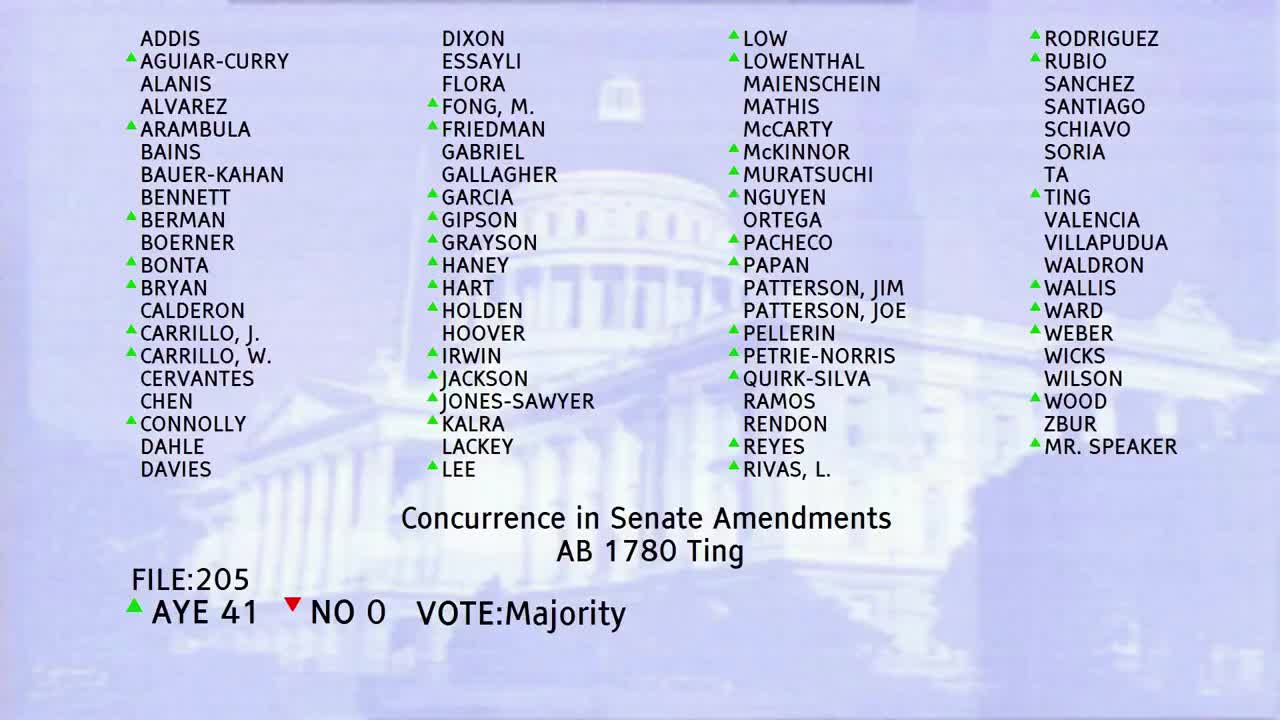 58SEC
Assembly Floor
 4MIN
Senate Floor
 14MIN
Senate Standing Committee on Judiciary
 7MIN
Senate Standing Committee on Education
 2MIN
Assembly Floor
5MIN
Assembly Floor
 7MIN
Assembly Standing Committee on Judiciary
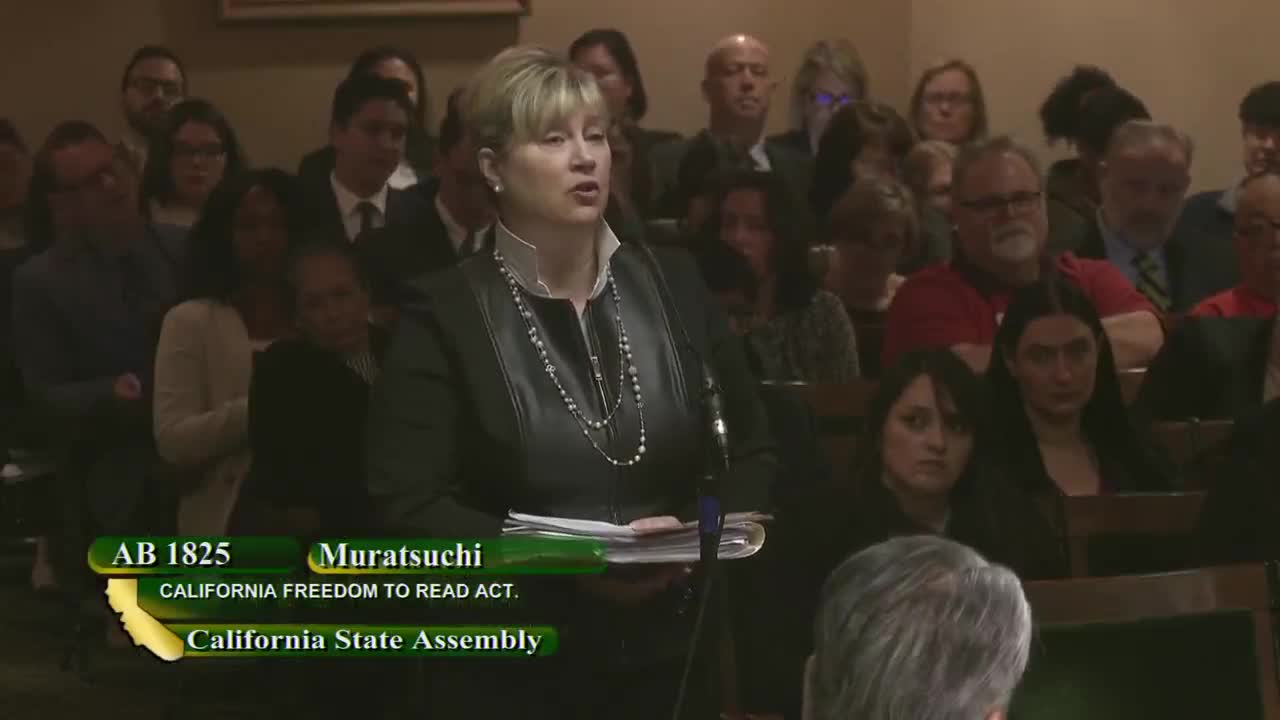 2MIN
Assembly Standing Committee on Judiciary
Bill Author