AB 1830: Corn masa flour and wet corn masa products: folic acid fortification.
- Session Year: 2023-2024
- House: Assembly
- Latest Version Date: 2024-09-28
Current Status:
Passed
(2024-09-28: Chaptered by Secretary of State - Chapter 912, Statutes of 2024.)
Introduced
In Committee
First Chamber
In Committee
Second Chamber
Enacted
Existing federal law, the Federal Food, Drug, and Cosmetic Act and the regulations adopted pursuant to that act, authorizes folic acid to be used in food as a nutrient in accordance with specified prescribed conditions, including that folic acid may be added to corn masa flour at a level not to exceed 0.7 milligrams of folic acid per pound of corn masa flour. Existing federal law also requires any state requirement for nutrition labeling of food to conform with federal law, and requires the declaration of folic acid to be included when added as a nutrient supplement, as specified.
Existing state law, the Sherman Food, Drug, and Cosmetic Law, provides for the regulation of various subjects relating to the processing, labeling, advertising, and sale of food, drugs, and cosmetics, including enriched food, under the administration and enforcement of the State Department of Public Health. Existing law provides that all food additive and food labeling regulations and any amendments to those regulations adopted pursuant to the federal law are the regulations of this state, and authorizes the department to prescribe conditions under which a food additive may be used in this state whether or not these conditions are in accordance with the regulations adopted pursuant to the federal act and to adopt additional food labeling regulations. A violation of these provisions is a crime.
This bill would, commencing January 1, 2026, require corn masa flour, as defined, that is manufactured, sold, delivered, distributed, held, offered for sale, or used as an ingredient in the manufacture of a food product to contain folic acid at a level of 0.7 milligrams of folic acid per pound of corn masa flour, as specified, and would authorize wet corn masa product that is manufactured, sold, delivered, distributed, held, offered for sale, or used as an ingredient in the manufacture of a food product to contain folic acid at a level of 0.4 milligrams of folic acid per pound of end product, as specified. The bill would require corn masa flour or a wet corn masa product to include specified information, including a declaration of folic acid on the nutrition label in accordance with applicable federal law. The bill would exempt snack foods and corn masa flour made by, or supplied to, specified types of businesses, including cottage food operations or a grocery store that also offers conforming products. The bill would make these provisions severable. By creating a new crime, this bill would impose a state-mandated local program.
The California Constitution requires the state to reimburse local agencies and school districts for certain costs mandated by the state. Statutory provisions establish procedures for making that reimbursement.
This bill would provide that no reimbursement is required by this act for a specified reason.
Existing federal law, the Federal Food, Drug, and Cosmetic Act and the regulations adopted pursuant to that act, authorizes folic acid to be used in food as a nutrient in accordance with specified prescribed conditions, including that folic acid may be added to corn masa flour at a level not to exceed 0.7 milligrams of folic acid per pound of corn masa flour. Existing federal law also requires any state requirement for nutrition labeling of food to conform with federal law, and requires the declaration of folic acid to be included when added as a nutrient supplement, as specified.
Existing state law, the Sherman Food, Drug, and Cosmetic Law, provides for the regulation of various subjects relating to the processing, labeling, advertising, and sale of food, drugs, and cosmetics, including enriched food, under the administration and enforcement of the State Department of Public Health. Existing law provides that all food additive and food labeling regulations and any amendments to those regulations adopted pursuant to the federal law are the regulations of this state, and authorizes the department to prescribe conditions under which a food additive may be used in this state whether or not these conditions are in accordance with the regulations adopted pursuant to the federal act and to adopt additional food labeling regulations. A violation of these provisions is a crime.
This bill would, commencing January 1, 2026, require corn masa flour, as defined, that is manufactured, sold, delivered, distributed, held, offered for sale, or used as an ingredient in the manufacture of a food product to contain folic acid at a level of 0.7 milligrams of folic acid per pound of corn masa flour, as specified, and would authorize wet corn masa product that is manufactured, sold, delivered, distributed, held, offered for sale, or used as an ingredient in the manufacture of a food product to contain folic acid at a level of 0.4 milligrams of folic acid per pound of wet masa dough, end product, as specified. The bill would require corn masa flour or a wet corn masa product packaged for retail sale to include specified information, depending on whether or not it contains folic acid, including a declaration of folic acid on the nutrition label in accordance with applicable federal law or that the product does not contain folic acid. law. The bill would exempt snack foods and corn masa flour made by, or supplied to, specified types of businesses, including cottage food operations or a retail food grocery store that also offers conforming products. The bill would make these provisions severable. By creating a new crime, this bill would impose a state-mandated local program.
The California Constitution requires the state to reimburse local agencies and school districts for certain costs mandated by the state. Statutory provisions establish procedures for making that reimbursement.
This bill would provide that no reimbursement is required by this act for a specified reason.
Existing federal law, the Federal Food, Drug, and Cosmetic Act and the regulations adopted pursuant to that act, authorizes folic acid to be used in food as a nutrient in accordance with specified prescribed conditions, including that folic acid may be added to corn masa flour at a level not to exceed 0.7 milligrams of folic acid per pound of corn masa flour. Existing federal law also requires any state requirement for nutrition labeling of food to conform with federal law, and requires the declaration of folic acid to be included when added as a nutrient supplement, as specified.
Existing state law, the Sherman Food, Drug, and Cosmetic Law, provides for the regulation of various subjects relating to the processing, labeling, advertising, and sale of food, drugs, and cosmetics, including enriched food, under the administration and enforcement of the State Department of Public Health. Existing law provides that all food additive and food labeling regulations and any amendments to those regulations adopted pursuant to the federal law are the regulations of this state, and authorizes the department to prescribe conditions under which a food additive may be used in this state whether or not these conditions are in accordance with the regulations adopted pursuant to the federal act and to adopt additional food labeling regulations. A violation of these provisions is a crime.
This bill would, commencing January 1, 2026, prohibit a person or entity from manufacturing, selling, delivering, or offering for sale corn masa flour, as defined, unless the corn masa flour contains require corn masa flour, as defined, that is manufactured, sold, delivered, distributed, held, offered for sale, or used as an ingredient in the manufacture of a food product to contain folic acid at a level of 0.7 milligrams of folic acid per pound of corn masa flour flour, as specified, and would prohibit a person or entity from manufacturing, selling, delivering, or offering for sale a corn masa product, as defined, unless the corn masa product contains authorize wet corn masa that is manufactured, sold, delivered, distributed, held, offered for sale, or used as an ingredient in the manufacture of a food product to contain folic acid at a level of 0.4 milligrams of folic acid per pound of end product. wet masa dough, as specified. The bill would require corn masa flour or a wet corn masa product packaged for retail sale to include specified information, depending on whether or not it contains folic acid, including a declaration of folic acid on the nutrition label in accordance with applicable federal law. The bill would exempt corn masa products sold through cottage food operations, as defined, and microenterprise home kitchen operations, as defined, from those provisions. law or that the product does not contain folic acid. The bill would exempt snack foods and corn masa flour made by, or supplied to, specified types of businesses, including cottage food operations or a retail food store that also offers conforming products. The bill would make these provisions severable. By creating a new crime, this bill would impose a state-mandated local program.
The California Constitution requires the state to reimburse local agencies and school districts for certain costs mandated by the state. Statutory provisions establish procedures for making that reimbursement.
This bill would provide that no reimbursement is required by this act for a specified reason.
Existing federal law, the Federal Food, Drug, and Cosmetic Act and the regulations adopted pursuant to that act, authorizes folic acid to be used in food as a nutrient in accordance with specified prescribed conditions, including that folic acid may be added to corn masa flour at a level not to exceed 0.7 milligrams of folic acid per pound of corn masa flour. Existing federal law also requires any state requirement for nutrition labeling of food to conform with federal law, and requires the declaration of folic acid to be included when added as a nutrient supplement, as specified.
Existing state law, the Sherman Food, Drug, and Cosmetic Law, provides for the regulation of various subjects relating to the processing, labeling, advertising, and sale of food, drugs, and cosmetics, including enriched food, under the administration and enforcement of the State Department of Public Health. Existing law provides that all food additive and food labeling regulations and any amendments to those regulations adopted pursuant to the federal law are the regulations of this state, and authorizes the department to prescribe conditions under which a food additive may be used in this state whether or not these conditions are in accordance with the regulations adopted pursuant to the federal act and to adopt additional food labeling regulations. A violation of these provisions is a crime.
This bill would, commencing January 1, 2026, prohibit a person or entity from manufacturing, selling, delivering, or offering for sale corn masa flour, as defined, unless the corn masa flour contains folic acid at a level not to exceed of 0.7 milligrams of folic acid per pound of corn masa flour and would prohibit a person or entity from manufacturing, selling, delivering, or offering for sale a corn masa product, as defined, unless the corn masa product contains folic acid at a level not to exceed of 0.4 milligrams of folic acid per pound of end product. The bill would require corn masa flour or a corn masa product to include a declaration of folic acid on the nutrition label in accordance with applicable federal law. The bill would exempt corn masa products sold through cottage food operations, as defined, and microenterprise home kitchen operations, as defined, from those provisions. The bill would make these provisions severable. By creating a new crime, this bill would impose a state-mandated local program.
The California Constitution requires the state to reimburse local agencies and school districts for certain costs mandated by the state. Statutory provisions establish procedures for making that reimbursement.
This bill would provide that no reimbursement is required by this act for a specified reason.
Existing federal law, the Federal Food, Drug, and Cosmetic Act and the regulations adopted pursuant to that act, authorizes folic acid to be used in food as a nutrient in accordance with specified prescribed conditions, including that folic acid may be added to corn masa flour at a level not to exceed 0.7 milligrams of folic acid per pound of corn masa flour. Existing federal law also requires any state requirement for nutrition labeling of food to conform with federal law, and requires the declaration of folic acid to be included when added as a nutrient supplement, as specified.
Existing state law, the Sherman Food, Drug, and Cosmetic Law, provides for the regulation of various subjects relating to the processing, labeling, advertising, and sale of food, drugs, and cosmetics, including enriched food, under the administration and enforcement of the State Department of Public Health. Existing law provides that all food additive and food labeling regulations and any amendments to those regulations adopted pursuant to the federal law are the regulations of this state, and authorizes the department to prescribe conditions under which a food additive may be used in this state whether or not these conditions are in accordance with the regulations adopted pursuant to the federal act and to adopt additional food labeling regulations. A violation of these provisions is a crime.
This bill would, commencing January 1, 2026, require a manufacturer of prohibit a person or entity from manufacturing, selling, delivering, or offering for sale corn masa flour to add flour, as defined, unless the corn masa flour contains folic acid at a level not to exceed 0.7 milligrams of folic acid per pound of corn masa flour, require a manufacturer of flour and would prohibit a person or entity from manufacturing, selling, delivering, or offering for sale a corn masa product to add product, as defined, unless the corn masa product contains folic acid at a level not to exceed 0.4 milligrams of folic acid per pound of end product, and product. The bill would require a manufacturer of corn masa flour or a corn masa product to include a declaration of folic acid on the nutrition label in accordance with applicable federal law. The bill would exempt corn masa products sold through cottage food operations, as defined, and microenterprise home kitchen operations, as defined, from those provisions. The bill would make these provisions severable. By creating a new crime, this bill would impose a state-mandated local program.
The California Constitution requires the state to reimburse local agencies and school districts for certain costs mandated by the state. Statutory provisions establish procedures for making that reimbursement.
This bill would provide that no reimbursement is required by this act for a specified reason.
Existing federal law, the Federal Food, Drug, and Cosmetic Act and the regulations adopted pursuant to that act, authorizes folic acid to be used in food as a nutrient in accordance with specified prescribed conditions, including that folic acid may be added to corn masa flour at a level not to exceed 0.7 milligrams of folic acid per pound of corn masa flour. Existing federal law also requires any state requirement for nutrition labeling of food to conform with federal law, and requires the declaration of folic acid to be included when added as a nutrient supplement, as specified.
Existing state law, the Sherman Food, Drug, and Cosmetic Law, provides for the regulation of various subjects relating to the processing, labeling, advertising, and sale of food, drugs, and cosmetics, including enriched food, under the administration and enforcement of the State Department of Public Health. Existing law provides that all food additive and food labeling regulations and any amendments to those regulations adopted pursuant to the federal law are the regulations of this state, and authorizes the department to prescribe conditions under which a food additive may be used in this state whether or not these conditions are in accordance with the regulations adopted pursuant to the federal act and to adopt additional food labeling regulations. A violation of these provisions is a crime.
This bill would, commencing January 1, 2026, require a manufacturer of corn masa flour to add folic acid at a level not to exceed 0.7 milligrams of folic acid per pound of corn masa flour and flour, require a manufacturer of a corn masa product to add folic acid at a level not to exceed 0.4 milligrams of folic acid per pound of end product, and require a manufacturer of corn masa flour or a corn masa product to include a declaration of folic acid on the nutrition label in accordance with applicable federal law. The bill would exempt cottage food operations, as defined, and microenterprise home kitchen operations, as defined, from those provisions. The bill would make these provisions severable. By creating a new crime, this bill would impose a state-mandated local program.
The California Constitution requires the state to reimburse local agencies and school districts for certain costs mandated by the state. Statutory provisions establish procedures for making that reimbursement.
This bill would provide that no reimbursement is required by this act for a specified reason.
Existing federal law, the Federal Food, Drug, and Cosmetic Act and the regulations adopted pursuant to that act, authorizes folic acid to be used in food as a nutrient in accordance with specified prescribed conditions, including that folic acid may be added to corn masa flour at a level not to exceed 0.7 milligrams of folic acid per pound of corn masa flour. Existing federal law also requires any state requirement for nutrition labeling of food to conform with federal law, and requires the declaration of folic acid to be included when added as a nutrient supplement, as specified.
Existing state law, the Sherman Food, Drug, and Cosmetic Law, provides for the regulation of various subjects relating to the processing, labeling, advertising, and sale of food, drugs, and cosmetics, including enriched food, under the administration and enforcement of the State Department of Public Health. Existing law provides that all food additive and food labeling regulations and any amendments to those regulations adopted pursuant to the federal law are the regulations of this state, and authorizes the department to prescribe conditions under which a food additive may be used in this state whether or not these conditions are in accordance with the regulations adopted pursuant to the federal act and to adopt additional food labeling regulations. A violation of these provisions is a crime.
This bill would require the department, by regulation, to would, commencing January 1, 2026, require a manufacturer of corn masa flour to add folic acid at a level not to exceed 0.7 milligrams of folic acid per pound of corn masa flour and to include a declaration of folic acid on the nutrition label in accordance with applicable federal law. The bill would make these provisions severable. By creating a new crime, this bill would impose a state-mandated local program.
The California Constitution requires the state to reimburse local agencies and school districts for certain costs mandated by the state. Statutory provisions establish procedures for making that reimbursement.
This bill would provide that no reimbursement is required by this act for a specified reason.
Existing federal law, the Federal Food, Drug, and Cosmetic Act and the regulations adopted pursuant to that act, authorizes folic acid to be used in food as a nutrient in accordance with specified prescribed conditions, including that folic acid may be added to corn masa flour at a level not to exceed 0.7 milligrams of folic acid per pound of corn masa flour. Existing federal law also requires any state requirement for nutrition labeling of food to conform with federal law, and requires the declaration of folic acid to be included when added as a nutrient supplement, as specified.
Existing state law, the Sherman Food, Drug, and Cosmetic Law, provides for the regulation of various subjects relating to the processing, labeling, advertising, and sale of food, drugs, and cosmetics, including enriched food, under the administration and enforcement of the State Department of Public Health. Existing law provides that all food additive and food labeling regulations and any amendments to those regulations adopted pursuant to the federal law are the regulations of this state, and authorizes the department to prescribe conditions under which a food additive may be used in this state whether or not these conditions are in accordance with the regulations adopted pursuant to the federal act and to adopt additional food labeling regulations. A violation of these provisions is a crime.
This bill would require the department, by regulation, to require a manufacturer of corn masa flour to add folic acid at a level not to exceed 0.7 milligrams of folic acid per pound of corn masa flour and to include a declaration of folic acid on the nutrition label in accordance with applicable federal law. The bill would make these provisions severable. By creating a new crime, this bill would impose a state-mandated local program.
The California Constitution requires the state to reimburse local agencies and school districts for certain costs mandated by the state. Statutory provisions establish procedures for making that reimbursement.
This bill would provide that no reimbursement is required by this act for a specified reason.
The Legislature finds and declares all of the following:
(a)Latino communities face a disproportionately higher risk of neural tube defects (NTDs), which are severe birth defects that occur in early pregnancy.
(b)NTDs include spina bifida, which is an opening along the spine, and anencephaly, which is a missing portion of the brain or skull. Individuals with spina bifida can experience symptoms ranging from mild nerve damage to severe paraplegia, often requiring costly and lengthy treatment. Anencephaly is fatal for infants.
(c)Daily consumption of folic acid has been shown to decrease the risk of NTDs by more than one-half. In 1998, the United States Food and Drug Administration mandated folic acid fortification of all enriched cereal grain products to provide a baseline level of folic acid to the public, which resulted in a 35-percent decrease in the occurrence of NTDs.
(d)While the American diet often relies heavily on wheat, many Central and South American cuisines depend on corn masa as a staple. Corn masa flour was omitted from the 1998 mandate without justification. The higher rate of NTDs in Latino communities is a symptom in the broader disease of health inequity.
(e)In 2016, the United States Food and Drug Administration approved voluntary folic acid fortification of corn masa flour. Because this policy is reliant on the industrys initiative, only 10 percent of corn masa flour products are fortified with folic acid in the United States.
(f)Folic acid fortification of corn masa flour and wet corn masa products can lower the rate of NTDs, saving lives and dollars.
SEC. 2.Section 110531 is added to the Health and Safety Code, to read:110531.(a)(1)Commencing January 1, 2026, corn masa flour manufactured, sold, delivered, distributed, held, offered for sale, or used as an ingredient in the manufacture of a food product shall contain folic acid at a level of 0.7 milligrams of folic acid per pound of corn masa flour within an acceptable industry standard deviation of error.
(2)Commencing January 1, 2026, wet corn masa product manufactured, sold, delivered, distributed, held, offered for sale, or used as an ingredient in the manufacture of a food product may contain folic acid at a level of 0.4 milligrams of folic acid per pound of end product within an acceptable industry standard of deviation of error.
(b)Commencing January 1, 2026, corn masa flour or a wet corn masa product shall include both of the following:
(1)A declaration of folic acid on the nutrition label in accordance with applicable federal law, including, but not limited to, Section 101.9 of Title 21 of the Code of Federal Regulations.
(2)A declaration that the product contains corn masa flour or was manufactured through a wet corn masa manufacturing process.
(c)(1)A person or entity may manufacture, sell, deliver, distribute, hold, offer for sale, or use as an ingredient in the manufacture of products corn masa flour that does not meet the requirements of paragraph (1) of subdivision (a), if they meet the definition of, or are suppliers to, any of the following:
(A)A cottage food operation as defined in Section 113758.
(B)A food facility as defined in Section 113789.
(C)A grocery store, as defined in paragraph (3) of subdivision (e) of Section 113948, that offers for retail sale corn masa flour that does not contain folic acid, so long as the grocery store also offers for retail sale corn masa flour that meets the required folic acid requirements in paragraph (1) of subdivision (a).
(2)This section shall not apply to snack foods.
(d)The provisions of this section are severable. If any provision of this section or its application is held invalid, that invalidity shall not affect other provisions or applications that can be given effect without the invalid provision or application.
(e)For purposes of this section, the following terms have the following meanings:
(1)Corn masa flour, also commonly known as masa harina, means a dry flour-type product made from corn that has been treated with slaked lime or otherwise undergoes a process known as nixtamalization.
(2)Wet corn masa product means food manufactured by using an alkali solution with corn kernels to transform them into nixtamal. Wet corn masa product does not include products made with corn masa flour.
SEC. 3.No reimbursement is required by this act pursuant to Section 6 of Article XIIIB of the California Constitution because the only costs that may be incurred by a local agency or school district will be incurred because this act creates a new crime or infraction, eliminates a crime or infraction, or changes the penalty for a crime or infraction, within the meaning of Section 17556 of the Government Code, or changes the definition of a crime within the meaning of Section 6 of Article XIIIB of the California Constitution.
The Legislature finds and declares all of the following:
(a)Latino communities face a disproportionately higher risk of neural tube defects (NTDs), which are severe birth defects that occur in early pregnancy.
(b)NTDs include spina bifida, which is an opening along the spine, and anencephaly, which is a missing portion of the brain or skull. Individuals with spina bifida can experience symptoms ranging from mild nerve damage to severe paraplegia, often requiring costly and lengthy treatment. Anencephaly is fatal for infants.
(c)Daily consumption of folic acid has been shown to decrease the risk of NTDs by more than one-half. In 1998, the United States Food and Drug Administration mandated folic acid fortification of all enriched cereal grain products to provide a baseline level of folic acid to the public, which resulted in a 35-percent decrease in the occurrence of NTDs.
(d)While the American diet often relies heavily on wheat, many Central and South American cuisines depend on corn masa as a staple. Corn masa flour was omitted from the 1998 mandate without justification. The higher rate of NTDs in Latino communities is a symptom in the broader disease of health inequity.
(e)In 2016, the United States Food and Drug Administration approved voluntary folic acid fortification of corn masa flour. Because this policy is reliant on the industrys initiative, only 10 percent of corn masa flour products are fortified with folic acid in the United States.
(f)Folic acid fortification of corn masa flour and wet corn masa products can lower the rate of NTDs, saving lives and dollars.
SEC. 2.Section 110531 is added to the Health and Safety Code, to read:110531.(a)(1)Commencing January 1, 2026, corn masa flour manufactured, sold, delivered, distributed, held, offered for sale, or used as an ingredient in the manufacture of a food product shall contain folic acid at a level of 0.7 milligrams of folic acid per pound of corn masa flour within an acceptable industry standard deviation of error.
(2)Commencing January 1, 2026, wet corn masa product manufactured, sold, delivered, distributed, held, offered for sale, or used as an ingredient in the manufacture of a food product may contain folic acid at a level of 0.4 milligrams of folic acid per pound of wet masa dough end product within an acceptable industry standard of deviation of error.
(b)Commencing January 1, 2026, corn masa flour or a wet corn masa product shall include both of the following:
(1)A declaration of folic acid on the nutrition label in accordance with applicable federal law, including, but not limited to, Section 101.9 of Title 21 of the Code of Federal Regulations.
(2)A declaration that the product contains dry corn masa flour or was manufactured through a wet corn masa manufacturing process.
(c)Commencing January 1, 2026, corn masa flour or a wet corn masa product packaged for retail sale and not containing folic acid shall include a declaration that the product does not contain folic acid.(d)(c)(1)A person or entity may manufacture, sell, deliver, distribute, hold, offer for sale, or use as an ingredient in the manufacture of products corn masa flour that does not meet the requirements of paragraph (1) of subdivision (a), if they meet the definition of, or are suppliers to, any of the following:
(A)A cottage food operation as defined in Section 113758.
(B)A microenterprise home kitchen operation as defined in Section 113825.(B)A food facility as defined in Section 113789.
(C)A retail food store grocery store, as defined in paragraph (3) of subdivision (e) of Section 113948, that offers for retail sale corn masa flour that does not contain folic acid, so long as the retail food grocery store also offers for retail sale corn masa flour that meets the required folic acid requirements in paragraph (1) of subdivision (a).
(D)Restaurants.(2)This section shall not apply to snack foods.
(e)(d)The provisions of this section are severable. If any provision of this section or its application is held invalid, that invalidity shall not affect other provisions or applications that can be given effect without the invalid provision or application.
(f)(e)For purposes of this section, the following terms have the following meanings:
(1)Corn masa flour, also commonly known as masa harina, means a dry flour-type product made from corn that has been treated with slaked lime or otherwise undergoes a process known as nixtamalization.
(2)Restaurant means restaurants, itinerant restaurants, vehicles, vending machines, or institutions, including hospitals, schools, asylums, an entity dependent on or supported by charity, and all other places where food is served to the public for consumption on the premises of sale that are not included within the definitions of the terms restaurants, itinerant restaurants, vehicles, and vending machines.(3)Retail food store means an establishment that sells food for home preparation and consumption normally displayed in a public area.(4)Retail sale means a sale directly to the end user of the product by a retail food store in the regular course of business. (5)(2)Wet corn masa product means a product food manufactured through a vertically integrated or wet masa manufacturing process. by using an alkali solution with corn kernels to transform them into nixtamal. Wet corn masa product does not include products made with corn masa flour.
SEC. 3.No reimbursement is required by this act pursuant to Section 6 of Article XIIIB of the California Constitution because the only costs that may be incurred by a local agency or school district will be incurred because this act creates a new crime or infraction, eliminates a crime or infraction, or changes the penalty for a crime or infraction, within the meaning of Section 17556 of the Government Code, or changes the definition of a crime within the meaning of Section 6 of Article XIIIB of the California Constitution.
The Legislature finds and declares all of the following:
(a)Latino communities face a disproportionately higher risk of neural tube defects (NTDs), which are severe birth defects that occur in early pregnancy.
(b)NTDs include spina bifida, which is an opening along the spine, and anencephaly, which is a missing portion of the brain or skull. Individuals with spina bifida can experience symptoms ranging from mild nerve damage to severe paraplegia, often requiring costly and lengthy treatment. Anencephaly is fatal for infants.
(c)Daily consumption of folic acid has been shown to decrease the risk of NTDs by more than one-half. In 1998, the United States Food and Drug Administration mandated folic acid fortification of all enriched cereal grain products to provide a baseline level of folic acid to the public, which resulted in a 35-percent decrease in the occurrence of NTDs.
(d)While the American diet often relies heavily on wheat, many Central and South American cuisines depend on corn masa as a staple. Corn masa flour was omitted from the 1998 mandate without justification. The higher rate of NTDs in Latino communities is a symptom in the broader disease of health inequity.
(e)In 2016, the United States Food and Drug Administration approved voluntary folic acid fortification of corn masa flour. Because this policy is reliant on the industrys initiative, only 10 percent of corn masa flour products are fortified with folic acid in the United States.
(f)Mandatory folic Folic acid fortification of corn masa flour and wet corn masa products can lower the rate of NTDs, saving lives and dollars.
SEC. 2.Section 110531 is added to the Health and Safety Code, to read:110531.(a)(1)Commencing January 1, 2026, a person or entity shall not manufacture, sell, deliver, distribute, hold, or offer for sale corn masa flour or a corn masa product unless it meets the requirements of this section.(2)Commencing110531.(a)(1)Commencing January 1, 2026, corn masa flour manufactured, sold, delivered, distributed, held, offered for sale, or used as an ingredient in the manufacture of a food product shall contain folic acid at a level of 0.7 milligrams of folic acid per pound of corn masa flour. flour within an acceptable industry standard deviation of error.
(3)(2)Commencing January 1, 2026, wet corn masa products shall manufactured, sold, delivered, distributed, held, offered for sale, or used as an ingredient in the manufacture of a food product may contain folic acid at a level of 0.4 milligrams of folic acid per pound of end product. wet masa dough within an acceptable industry standard of deviation of error.
(b)Commencing January 1, 2026, corn masa flour or a wet corn masa product shall include a both of the following:
(1)A declaration of folic acid on the nutrition label in accordance with applicable federal law, including, but not limited to, Section 101.9 of Title 21 of the Code of Federal Regulations.
(2)A declaration that the product contains dry corn masa flour or was manufactured through a wet masa manufacturing process.
(c)This section does not apply to corn masa products sold through either of the following:(c)Commencing January 1, 2026, corn masa flour or a wet corn masa product packaged for retail sale and not containing folic acid shall include a declaration that the product does not contain folic acid.
(d)(1)A person or entity may manufacture, sell, deliver, distribute, hold, offer for sale, or use as an ingredient in the manufacture of products corn masa flour that does not meet the requirements of paragraph (1) of subdivision (a), if they meet the definition of, or are suppliers to, any of the following:
(1)(A)A cottage food operation as defined in Section 113758.
(2)(B)A microenterprise home kitchen operation as defined in Section 113825.
(C)A retail food store that offers for retail sale corn masa flour that does not contain folic acid, so long as the retail food store also offers for retail sale corn masa flour that meets the required folic acid requirements in paragraph (1) of subdivision (a).
(D)Restaurants.
(2)This section shall not apply to snack foods.
(d)(e)The provisions of this section are severable. If any provision of this section or its application is held invalid, that invalidity shall not affect other provisions or applications that can be given effect without the invalid provision or application.
(e)(f)For purposes of this section, the following terms have the following meanings:
(1)Corn masa flour, also commonly known as masa harina, means a dry flour-type product made from corn that has been treated with slaked lime or otherwise undergoes a process known as nixtamalization.
(2)Restaurant means restaurants, itinerant restaurants, vehicles, vending machines, or institutions, including hospitals, schools, asylums, an entity dependent on or supported by charity, and all other places where food is served to the public for consumption on the premises of sale that are not included within the definitions of the terms restaurants, itinerant restaurants, vehicles, and vending machines.
(3)Retail food store means an establishment that sells food for home preparation and consumption normally displayed in a public area.
(4)Retail sale means a sale directly to the end user of the product by a retail food store in the regular course of business.
(2)Corn(5)Wet corn masa product means a product made with corn masa, including products made with nixtamal or cooked corn or manufactured through a vertically integrated or wet masa manufacturing process. Corn Wet corn masa product does not include products made with corn masa flour.
SEC. 3.No reimbursement is required by this act pursuant to Section 6 of Article XIIIB of the California Constitution because the only costs that may be incurred by a local agency or school district will be incurred because this act creates a new crime or infraction, eliminates a crime or infraction, or changes the penalty for a crime or infraction, within the meaning of Section 17556 of the Government Code, or changes the definition of a crime within the meaning of Section 6 of Article XIIIB of the California Constitution.
The Legislature finds and declares all of the following:
(a)Latino communities face a disproportionately higher risk of neural tube defects (NTDs), which are severe birth defects that occur in early pregnancy.
(b)NTDs include spina bifida, which is an opening along the spine, and anencephaly, which is a missing portion of the brain or skull. Individuals with spina bifida can experience symptoms ranging from mild nerve damage to severe paraplegia, often requiring costly and lengthy treatment. Anencephaly is fatal for infants.
(c)Daily consumption of folic acid has been shown to decrease the risk of NTDs by more than one-half. In 1998, the United States Food and Drug Administration mandated folic acid fortification of all enriched cereal grain products to provide a baseline level of folic acid to the public, which resulted in a 35-percent decrease in the occurrence of NTDs.
(d)While the American diet often relies heavily on wheat, many Central and South American cuisines depend on corn masa as a staple. Corn masa flour was omitted from the 1998 mandate without justification. The higher rate of NTDs in Latino communities is a symptom in the broader disease of health inequity.
(e)In 2016, the United States Food and Drug Administration approved voluntary folic acid fortification of corn masa flour. Because this policy is reliant on the industrys initiative, only 10 percent of corn masa flour products are fortified with folic acid in the United States.
(f)Mandatory folic acid fortification of corn masa flour and corn masa products can lower the rate of NTDs, saving lives and dollars.
SEC. 2.Section 110531 is added to the Health and Safety Code, to read:110531.(a)(1)Commencing January 1, 2026, a person or entity shall not manufacture, sell, deliver, distribute, hold, or offer for sale corn masa flour or a corn masa product unless it meets the requirements of this section.
(2)Commencing January 1, 2026, corn masa flour shall contain folic acid at a level not to exceed of 0.7 milligrams of folic acid per pound of corn masa flour.
(3)Commencing January 1, 2026, corn masa products shall contain folic acid at a level not to exceed of 0.4 milligrams of folic acid per pound of end product.
(b)Commencing January 1, 2026, corn masa flour or a corn masa product shall include a declaration of folic acid on the nutrition label in accordance with applicable federal law, including, but not limited to, Section 101.9 of Title 21 of the Code of Federal Regulations.
(c)This section does not apply to corn masa products sold through either of the following:
(1)A cottage food operation as defined in Section 113758.
(2)A microenterprise home kitchen operation as defined in Section 113825.
(d)The provisions of this section are severable. If any provision of this section or its application is held invalid, that invalidity shall not affect other provisions or applications that can be given effect without the invalid provision or application.
(e)For purposes of this section, the following terms have the following meanings:
(1)Corn masa flour, also commonly known as masa harina, means a dry flour-type product made from corn that has been treated with slaked lime or otherwise undergoes a process known as nixtamalization.
(2)Corn masa product means a product made with corn masa, including products made with nixtamal or cooked corn or manufactured through a wet masa manufacturing process. Corn masa product does not include products made with corn masa flour.
SEC. 3.No reimbursement is required by this act pursuant to Section 6 of Article XIIIB of the California Constitution because the only costs that may be incurred by a local agency or school district will be incurred because this act creates a new crime or infraction, eliminates a crime or infraction, or changes the penalty for a crime or infraction, within the meaning of Section 17556 of the Government Code, or changes the definition of a crime within the meaning of Section 6 of Article XIIIB of the California Constitution.
The Legislature finds and declares all of the following:
(a)Latino communities face a disproportionately higher risk of neural tube defects (NTDs), which are severe birth defects that occur in early pregnancy.
(b)NTDs include spina bifida, which is an opening along the spine, and anencephaly, which is a missing portion of the brain or skull. Individuals with spina bifida can experience symptoms ranging from mild nerve damage to severe paraplegia, often requiring costly and lengthy treatment. Anencephaly is fatal for infants.
(c)Daily consumption of folic acid has been shown to decrease the risk of NTDs by more than one-half. In 1998, the United States Food and Drug Administration mandated folic acid fortification of all enriched cereal grain products to provide a baseline level of folic acid to the public, which resulted in a 35-percent decrease in the occurrence of NTDs.
(d)While the American diet often relies heavily on wheat, many Central and South American cuisines depend on corn masa flour as a staple. Corn masa flour was omitted from the 1998 mandate without justification. The higher rate of NTDs in Latino communities is a symptom in the broader disease of health inequity.
(e)In 2016, the United States Food and Drug Administration approved voluntary folic acid fortification of corn masa flour. Because this policy is reliant on the industrys initiative, only 10 percent of corn masa flour products are fortified with folic acid in the United States.
(f)Mandatory folic acid fortification of corn masa flour and corn masa products can lower the rate of NTDs, saving lives and dollars.
SEC. 2.Section 110531 is added to the Health and Safety Code, to read:110531.(a)(1)Commencing January 1, 2026, a manufacturer of corn masa flour shall add folic acid at a level not to exceed 0.7 milligrams of folic acid per pound of corn masa flour. a person or entity shall not manufacture, sell, deliver, distribute, hold, or offer for sale corn masa flour or a corn masa product unless it meets the requirements of this section.
(2)Commencing January 1, 2026, corn masa flour shall contain folic acid at a level not to exceed 0.7 milligrams of folic acid per pound of corn masa flour.
(2)(3)Commencing January 1, 2026, a manufacturer of a corn masa product, including products made with nixtamal or cooked corn or manufactured through a wet masa manufacturing process, shall add corn masa products shall contain folic acid at a level not to exceed 0.4 milligrams of folic acid per pound of end product.
(b)Commencing January 1, 2026, a manufacturer of corn masa flour or a corn masa product shall include a declaration of folic acid on the nutrition label in accordance with applicable federal law, including, but not limited to, Section 101.9 of Title 21 of the Code of Federal Regulations.
(c)This section does not apply to a manufacturer that is corn masa products sold through either of the following:
(1)A cottage food operation as defined in Section 113758.
(2)A microenterprise home kitchen operation as defined in Section 113825.
(d)The provisions of this section are severable. If any provision of this section or its application is held invalid, that invalidity shall not affect other provisions or applications that can be given effect without the invalid provision or application.
(e)For purposes of this section, the following terms have the following meanings:
(1)Corn masa flour, also commonly known as masa harina, means a dry flour-type product made from corn that has been treated with slaked lime or otherwise undergoes a process known as nixtamalization.
(2)Corn masa product means a product made with corn masa, including products made with nixtamal or cooked corn or manufactured through a wet masa manufacturing process. Corn masa product does not include products made with corn masa flour.
SEC. 3.No reimbursement is required by this act pursuant to Section 6 of Article XIIIB of the California Constitution because the only costs that may be incurred by a local agency or school district will be incurred because this act creates a new crime or infraction, eliminates a crime or infraction, or changes the penalty for a crime or infraction, within the meaning of Section 17556 of the Government Code, or changes the definition of a crime within the meaning of Section 6 of Article XIIIB of the California Constitution.
The Legislature finds and declares all of the following:
(a)Latino communities face a disproportionately higher risk of neural tube defects (NTDs), which are severe birth defects that occur in early pregnancy.
(b)NTDs include spina bifida, which is an opening along the spine, and anencephaly, which is a missing portion of the brain or skull. Individuals with spina bifida can experience symptoms ranging from mild nerve damage to severe paraplegia, often requiring costly and lengthy treatment. Anencephaly is fatal for infants.
(c)Daily consumption of folic acid has been shown to decrease the risk of NTDs by more than one-half. In 1998, the United States Food and Drug Administration mandated folic acid fortification of all enriched cereal grain products to provide a baseline level of folic acid to the public, which resulted in a 35-percent decrease in the occurrence of NTDs.
(d)While the American diet often relies heavily on wheat, many Central and South American cuisines depend on corn masa flour as a staple. Corn masa flour was omitted from the 1998 mandate without justification. The higher rate of NTDs in Latino communities is a symptom in the broader disease of health inequity.
(e)In 2016, the United States Food and Drug Administration approved voluntary folic acid fortification of corn masa flour. Because this policy is reliant on the industrys initiative, only 10 percent of corn masa flour products are fortified with folic acid in the United States.
(f)Mandatory folic acid fortification of corn masa flour can lower the rate of NTDs, saving lives and dollars.
SEC. 2.Section 110531 is added to the Health and Safety Code, to read:110531.(a)(1)Commencing January 1, 2026, a manufacturer of corn masa flour shall add folic acid at a level not to exceed 0.7 milligrams of folic acid per pound of corn masa flour.
(2)Commencing January 1, 2026, a manufacturer of a corn masa product, including products made with nixtamal or cooked corn or manufactured through a wet masa manufacturing process, shall add folic acid at a level not to exceed 0.4 milligrams of folic acid per pound of end product.
(b)Commencing January 1, 2026, a manufacturer of corn masa flour or a corn masa product shall include a declaration of folic acid on the nutrition label in accordance with applicable federal law, including, but not limited to, Section 101.9 of Title 21 of the Code of Federal Regulations.
(c)This section does not apply to a manufacturer that is either of the following:
(1)A cottage food operation as defined in Section 113758.
(2)A microenterprise home kitchen operation as defined in Section 113825.
(c)(d)The provisions of this section are severable. If any provision of this section or its application is held invalid, that invalidity shall not affect other provisions or applications that can be given effect without the invalid provision or application.
SEC. 3.No reimbursement is required by this act pursuant to Section 6 of Article XIIIB of the California Constitution because the only costs that may be incurred by a local agency or school district will be incurred because this act creates a new crime or infraction, eliminates a crime or infraction, or changes the penalty for a crime or infraction, within the meaning of Section 17556 of the Government Code, or changes the definition of a crime within the meaning of Section 6 of Article XIIIB of the California Constitution.
The Legislature finds and declares all of the following:
(a)Latino communities face a disproportionately higher risk of neural tube defects (NTDs), which are severe birth defects that occur in early pregnancy.
(b)NTDs include spina bifida, which is an opening along the spine, and anencephaly, which is a missing portion of the brain or skull. Individuals with spina bifida can experience symptoms ranging from mild nerve damage to severe paraplegia, often requiring costly and lengthy treatment. Anencephaly is fatal for infants.
(c)Daily consumption of folic acid has been shown to decrease the risk of NTDs by more than half. one-half. In 1998, the United States Food and Drug Administration mandated folic acid fortification of all enriched cereal grain products to provide a baseline level of folic acid to the public, which resulted in a 35 percent 35-percent decrease in the occurrence of NTDs.
(d)While the American diet often relies heavily on wheat, many Central and South American cuisines depend on corn masa flour as a staple. Corn masa flour was omitted from the 1998 mandate without justification. The higher rate of NTDs in Latino communities is a symptom in the broader disease of health inequity.
(e)In 2016, the United States Food and Drug Administration approved voluntary folic acid fortification of corn masa flour. Because this policy is reliant on the industrys initiative, only 10 percent of corn masa flour products are fortified with folic acid in the United States.
(f)Mandatory folic acid fortification of corn masa flour can lower the rate of NTDs, saving lives and dollars.
SEC. 2.Section 110531 is added to the Health and Safety Code, to read:110531.(a)The department shall, by regulation, require a manufacturer of corn masa flour to Commencing January 1, 2026, a manufacturer of corn masa flour shall add folic acid at a level not to exceed 0.7 milligrams of folic acid per pound of corn masa flour.
(b)The department shall, by regulation, require a manufacturer of corn masa flour to Commencing January 1, 2026, a manufacturer of corn masa flour shall include a declaration of folic acid on the nutrition label in accordance with applicable federal law, including, but not limited to, Section 101.9 of Title 21 of the Code of Federal Regulations.
(c)The provisions of this section are severable. If any provision of this section or its application is held invalid, that invalidity shall not affect other provisions or applications that can be given effect without the invalid provision or application.
SEC. 3.No reimbursement is required by this act pursuant to Section 6 of Article XIIIB of the California Constitution because the only costs that may be incurred by a local agency or school district will be incurred because this act creates a new crime or infraction, eliminates a crime or infraction, or changes the penalty for a crime or infraction, within the meaning of Section 17556 of the Government Code, or changes the definition of a crime within the meaning of Section 6 of Article XIIIB of the California Constitution.
The Legislature finds and declares all of the following:
(a)Latino communities face a disproportionately higher risk of neural tube defects (NTDs), which are severe birth defects that occur in early pregnancy.
(b)NTDs include spina bifida, which is an opening along the spine, and anencephaly, which is a missing portion of the brain or skull. Individuals with spina bifida can experience symptoms ranging from mild nerve damage to severe paraplegia, often requiring costly and lengthy treatment. Anencephaly is fatal for infants.
(c)Daily consumption of folic acid has been shown to decrease the risk of NTDs by more than half. In 1998, the United States Food and Drug Administration mandated folic acid fortification of all enriched cereal grain products to provide a baseline level of folic acid to the public, which resulted in a 35 percent decrease in the occurrence of NTDs.
(d)While the American diet often relies heavily on wheat, many Central and South American cuisines depend on corn masa flour as a staple. Corn masa flour was omitted from the 1998 mandate without justification. The higher rate of NTDs in Latino communities is a symptom in the broader disease of health inequity.
(e)In 2016, the United States Food and Drug Administration approved voluntary folic acid fortification of corn masa flour. Because this policy is reliant on the industrys initiative, only 10 percent of corn masa flour products are fortified with folic acid in the United States.
(f)Mandatory folic acid fortification of corn masa flour can lower the rate of NTDs, saving lives and dollars.
SEC. 2.Section 110531 is added to the Health and Safety Code, to read:110531.(a)The department shall, by regulation, require a manufacturer of corn masa flour to add folic acid at a level not to exceed 0.7 milligrams of folic acid per pound of corn masa flour.
(b)The department shall, by regulation, require a manufacturer of corn masa flour to include a declaration of folic acid on the nutrition label in accordance with applicable federal law, including, but not limited to, Section 101.9 of Title 21 of the Code of Federal Regulations.
(c)The provisions of this section are severable. If any provision of this section or its application is held invalid, that invalidity shall not affect other provisions or applications that can be given effect without the invalid provision or application.
SEC. 3.No reimbursement is required by this act pursuant to Section 6 of Article XIIIB of the California Constitution because the only costs that may be incurred by a local agency or school district will be incurred because this act creates a new crime or infraction, eliminates a crime or infraction, or changes the penalty for a crime or infraction, within the meaning of Section 17556 of the Government Code, or changes the definition of a crime within the meaning of Section 6 of Article XIIIB of the California Constitution.
|
Date
|
Status
|
|---|---|
| Sep 28, 2024 | Chaptered by Secretary of State - Chapter 912, Statutes of 2024. |
| Sep 28, 2024 | Approved by the Governor. |
| Sep 3, 2024 | Enrolled and presented to the Governor at 3:30 p.m. |
| Aug 26, 2024 | Senate amendments concurred in. To Engrossing and Enrolling. (Ayes 77. Noes 0. Page 6564.). |
| Aug 21, 2024 | In Assembly. Concurrence in Senate amendments pending. May be considered on or after August 23 pursuant to Assembly Rule 77. |
| Aug 21, 2024 | Read third time. Passed. Ordered to the Assembly. (Ayes 33. Noes 0. Page 5273.). |
| Aug 15, 2024 | Read second time. Ordered to third reading. |
| Aug 14, 2024 | Read third time and amended. Ordered to second reading. |
| Aug 6, 2024 | Read second time. Ordered to third reading. |
| Aug 5, 2024 | From committee: Be ordered to second reading pursuant to Senate Rule 28.8. |
| Jun 26, 2024 | From committee: Do pass and re-refer to Com. on APPR. (Ayes 10. Noes 1.) (June 26). Re-referred to Com. on APPR. |
| Jun 17, 2024 | From committee chair, with author's amendments: Amend, and re-refer to committee. Read second time, amended, and re-referred to Com. on HEALTH. |
| May 29, 2024 | In committee: Hearing postponed by committee. |
| May 23, 2024 | From committee chair, with author's amendments: Amend, and re-refer to committee. Read second time, amended, and re-referred to Com. on HEALTH. |
| May 21, 2024 | From committee chair, with author's amendments: Amend, and re-refer to committee. Read second time, amended, and re-referred to Com. on HEALTH. |
| May 8, 2024 | From committee chair, with author's amendments: Amend, and re-refer to committee. Read second time, amended, and re-referred to Com. on HEALTH. |
| May 1, 2024 | Referred to Com. on HEALTH. |
| Apr 18, 2024 | In Senate. Read first time. To Com. on RLS. for assignment. |
| Apr 18, 2024 | Read third time. Passed. Ordered to the Senate. (Ayes 72. Noes 0.) |
| Apr 11, 2024 | Read second time. Ordered to Consent Calendar. |
| Apr 10, 2024 | From committee: Do pass. To Consent Calendar. (Ayes 14. Noes 0.) (April 10). |
| Mar 21, 2024 | Re-referred to Com. on APPR. |
| Mar 20, 2024 | Read second time and amended. |
| Mar 19, 2024 | From committee: Amend, and do pass as amended and re-refer to Com. on APPR. (Ayes 14. Noes 0.) (March 19). |
| Jan 29, 2024 | Referred to Com. on HEALTH. |
| Jan 13, 2024 | From printer. May be heard in committee February 12. |
| Jan 12, 2024 | Read first time. To print. |
|
Date
|
Description
|
Location
|
Votes
|
|
|---|---|---|---|---|
| Aug 26, 2024 | AB 1830 Arambula Concurrence in Senate Amendments | Assembly Floor |
Passed |
|
| Aug 21, 2024 | Assembly 3rd Reading AB1830 Arambula et al. By Limón | Senate Floor |
Passed |
|
| Jun 26, 2024 | Do pass, but first be re-referred to the Committee on [Appropriations] | Senate Standing Committee on Health |
Passed |
|
| Apr 18, 2024 | AB 1830 Arambula Consent Calendar Second Day Regular Session | Assembly Floor |
Passed |
|
| Apr 10, 2024 | Do pass. To Consent Calendar. | Assembly Standing Committee on Appropriations |
Passed |
|
| Mar 19, 2024 | Do pass as amended and be re-referred to the Committee on [Appropriations] | Assembly Standing Committee on Health |
Passed |
This list shows positions taken on this bill by organizations on the date displayed, which is linked to the original source.
Positions by individuals are not included.
|
Organization
|
Position
|
Date
|
|---|---|---|
| A Voice for Choice Advocacy | * Support | Jun 26, 2024 |
| Alameda County | ** Support | |
| American Academy Of Pediatrics, California | ** Support | |
| American College Of Obstetricians And Gynecologists District Ix | ** Support | |
| American Nurses Association | ** Support | |
| California Catholic Conference | ** Support | |
| California Pan-Ethnic Health Network | ** Support | |
| California Wic Association | ** Support | |
| ChildrenS Specialty Care Coalition | ** Support | |
| County Health Executives Association Of California | ** Support | |
| County Health Executives of California | ** Support | |
| County Of Los Angeles | ** Support | |
| First 5 Association Of California | ** Support | |
| First 5 Fresno County | ** Support | |
| Health Officers Association Of California | ** Support | |
| Latino Coalition for a Healthy California | ** Support | |
| Los Angeles County Board of Supervisors | * Support | Jun 26, 2024 |
| March of Dimes | * Support | Jun 26, 2024 |
| Planned Parenthood Affiliates Of California | ** Support | |
| San Francisco Black and Jewish Unity Coalition | ** Support |
CONCURRENCE IN SENATE AMENDMENTS
CSA1 Bill Id:AB 1830
Author:(Arambula)
As Amended Ver:August 14, 2024
Majority vote
SUMMARY
Requires corn masa flour (CMF) to be fortified with folic acid, with some exceptions, and requires CMF and wet corn masa products, as defined, to include a declaration of folic acid on the nutrition label. Requires CMF and wet corn masa products packaged for retail sale that do not contain folic acid to include a declaration that the product does not contain folic acid.
Senate Amendments
- Revise and recast provisions of the bill to require CMF manufactured, sold, delivered, distributed, held, offered for sale, or used as an ingredient in the manufacture of a food product to contain folic acid of 0.7 mg of folic acid per pound of CMF within an acceptable industry standard deviation of error.
- Permit, beginning January 1, 2026, wet corn masa product manufactured, sold, delivered, distributed, held, offered for sale, or used as an ingredient in the manufacture of a food product, to contain folic acid at a level of 0.4 milligrams per pound of end product within an acceptable industry standard deviation of error.
- Requires, beginning January 1, 2026, CMF and wet corn masa products to include both of the following: a) A declaration of folic acid on the nutrition label in accordance with applicable federal law, as specified; and, b) A declaration that the product contains CMF or was manufactured through a wet corn masa manufacturing process.
- Permits a person or entity to manufacture, sell, deliver, distribute, hold, offer for sale, or use as an ingredient in the manufacture of products, CMF that does not meet the folic acid fortification requirements of this bill if they meet the definition of, or are suppliers to, any of the following: a) a cottage food operation, as defined; b) a food facility, as defined; or, c) A grocery store, as defined, that offers for retail sale CMF that does not contain folic acid, so long as the grocery store also offers for retail sale CMF that meets the required folic acid requirements of this bill. Exempts snack foods from the provisions of this bill.
- Defines CMF and corn masa products, for purposes of this bill.
COMMENTS
- Background. Neural tube defects (NTDs) are severe defects in a fetus's or newborn baby's neural tube, the structure that forms the early brain and spine. The most common types of NTDs are spina bifida (1,400 U.S. births per year), which can cause mild to severe disabilities, and anencephaly (800 U.S. births per year), which results in stillbirth or infant death. Numerous scientific studies demonstrate the effectiveness of folic acid, a B vitamin, in reducing NTDs. In 1992, the U.S. Public Health Service (PHS) recommended that all women of childbearing age consume 400 μg of folic acid daily to prevent NTDs. To promote compliance, the United States Food and Drug Administration (FDA) issued a regulation in 1996 requiring that all enriched cereal-grain products be fortified with folic acid by January of 1998. Enriched cereal-grain products were required to be fortified with folic acid at levels ranging from 0.43 mg to 1.4 mg per pound. CMF was not included in the 1998 FDA fortification regulation. In response to a regulatory petition submitted by a diverse coalition of nonprofit and industry stakeholders, the FDA issued a rule in 2016 allowing folic acid to be voluntarily added to CMF.
- CMF and wet corn masa products. Corn masa undergoes a process called nixtamalization. According to a report on corn masa by the Food Fortification Initiative, to make masa, corn is soaked in a warm solution of lime and water before being washed to remove the pericarp, or hull of the corn kernel. The resulting substance is called nixtamal, which is then ground to produce corn masa. Less of the corn kernel is removed in this process than the dry corn milling process, and some nutrients become more bioavailable. From the grinding stage, the masa goes through either a wet or a dry manufacturing process. Wet masa is immediately either extruded or sheeted and cut to form the shape of tortillas or chips, which are then baked and/or fried to make the finished masa product. According to the Food Fortification Initiative, approximately 47% of corn masa in the U.S. is manufactured using this method. The other 53% of corn masa is made into CMF, also referred to as masa harina, using the dry manufacturing process, which dries, mills, and sifts the masa into different granulations. Masa products manufactured from CMF are made by adding water to reconstitute the masa flour into dough, then processing it similarly to the traditional wet method to create the finished product. Besides corn tortillas and various types of corn chips, other corn masa products include tamales, papusas, and products like enchiladas that are made with tortillas. The bill requires CMF to be fortified with folic acid and authorizes wet CMF to be fortified, as specified.
According to the Author
Daily consumption of folic acid decreases the risk of neural tube defects (NTDs), such as spina bifida and anencephaly, by more than half. Babies with spina bifida can experience symptoms ranging from mild nerve damage to severe paraplegia. Anencephaly is fatal for infants. Since NTDs occur in the earliest stages of fetal development, it can be too late to take folic acid supplements by the time a person knows they are pregnant. The author states that to address high rates of NTDs, the FDA required that all enriched cereal grain products be fortified with folic acid in 1998. While masa is a staple in many Latino cuisines, masa was omitted from the 1998 mandate. As a result, Latinos were left without a culturally appropriate avenue for obtaining folic acid in their diets through fortification. Unfortunately, Latino communities remain at a disproportionately high risk for NTDs. The higher rate of NTDs in Latino communities is a symptom in the broader disease of health inequity. The author concludes that mandatory fortification of masa prevents parents from losing children to NTDs.
Arguments in Support
The American College of Obstetricians and Gynecologists District IX (ACOG), the sponsor of this bill, states that according to the Centers for Disease Control and Prevention, and supported by ACOG, all women of reproductive age should get 400 micrograms (mcg) of folic acid each day, in addition to consuming food with folate from a varied diet, to help prevent NTDs. NTDs are major birth defects of the baby's brain (anencephaly) and spine (spina bifida). In 1998, the FDA mandated flour to be fortified with folic acid. However, masa was omitted from this mandate and the masa flour manufacturers were allowed to participate "voluntarily" without guidelines. Since the 1998 mandate to fortify enriched cereal grain products with folic acid, the U.S. has experienced a 35% decrease in the rate of NTDs. However, while rates of NTDs may have experienced an overall decline, disparities remain with Hispanic women having the highest risk of giving birth to a baby with a NTD. This may largely be attributed to Hispanic communities relying heavily on CMF as their staple. The incidence of NTDs is seven out of 1000 in Hispanics while average incidence overall in the U.S. is two out of 1000. We also know that many Hispanic communities are in areas where there is limited access to preconception counseling and healthcare in general. By requiring the same folic acid fortification to CMF that currently applies to wheat flour, this bill will help address this prevalent cultural variation and work to lower NTD's in all communities.
Arguments in Opposition
There is no known opposition.
FISCAL COMMENTS
According to the Senate Appropriations Committee, pursuant to Senate Rule 28.8, negligible state costs.
VOTES:
ASM HEALTH: 14-0-2
YES: Bonta, Waldron, Aguiar-Curry, Arambula, Wendy Carrillo, Flora, Vince Fong, Haney, Jones-Sawyer, Maienschein, Joe Patterson, Rodriguez, Schiavo, Weber
ABS, ABST OR NV: McCarty, Santiago
ASM APPROPRIATIONS: 14-0-1
YES: Wicks, Sanchez, Arambula, Bryan, Calderon, Dixon, Mike Fong, Grayson, Haney, Hart, Jim Patterson, Pellerin, Ta, Villapudua
ABS, ABST OR NV: Wendy Carrillo
ASSEMBLY FLOOR: 72-0-8
YES: Addis, Aguiar-Curry, Alanis, Alvarez, Bains, Bauer-Kahan, Bennett, Berman, Calderon, Juan Carrillo, Wendy Carrillo, Chen, Connolly, Davies, Dixon, Flora, Mike Fong, Vince Fong, Friedman, Gabriel, Gallagher, Garcia, Gipson, Grayson, Haney, Hart, Holden, Hoover, Irwin, Jackson, Jones-Sawyer, Kalra, Lackey, Lee, Low, Lowenthal, Maienschein, McCarty, McKinnor, Muratsuchi, Stephanie Nguyen, Ortega, Pacheco, Papan, Jim Patterson, Joe Patterson, Pellerin, Petrie-Norris, Quirk-Silva, Ramos, Rendon, Reyes, Luz Rivas, Rodriguez, Blanca Rubio, Sanchez, Santiago, Schiavo, Soria, Ta, Ting, Valencia, Villapudua, Waldron, Wallis, Ward, Weber, Wicks, Wilson, Wood, Zbur, Robert Rivas
ABS, ABST OR NV: Arambula, Boerner, Bonta, Bryan, Cervantes, Megan Dahle, Essayli, Mathis
SENATE FLOOR: 33-0-7
YES: Allen, Alvarado-Gil, Archuleta, Ashby, Blakespear, Caballero, Cortese, Dahle, Dodd, Durazo, Eggman, Glazer, Gonzalez, Grove, Hurtado, Jones, Laird, Limón, McGuire, Min, Newman, Nguyen, Niello, Ochoa Bogh, Padilla, Portantino, Roth, Rubio, Seyarto, Stern, Umberg, Wiener, Wilk
ABS, ABST OR NV: Atkins, Becker, Bradford, Menjivar, Skinner, Smallwood-Cuevas, Wahab
UPDATED
VERSION: August 14, 2024
CONSULTANT: Eliza Brooks / HEALTH / (916) 319-2097 FN: 0004376
SENATE RULES COMMITTEE Office of Senate Floor Analyses (916) 651-1520 Fax: (916) 327-4478 | AB 1830 |
THIRD READING
Bill No: AB 1830
Author: Arambula (D), et al.
Amended: 8/14/24 in Senate
Vote: 21
SENATE HEALTH COMMITTEE: 10-1, 6/26/24
AYES: Roth, Nguyen, Glazer, Gonzalez, Hurtado, Limón, Menjivar, Rubio, Smallwood-Cuevas, Wiener
NOES: Grove
SENATE APPROPRIATIONS COMMITTEE: Senate Rule 28.8
ASSEMBLY FLOOR: 72-0, 4/18/24 (Consent) - See last page for vote
SUBJECT: Corn masa flour and wet corn masa products: folic acid fortification
SOURCE: American College of Obstetricians and Gynecologists District IX
March of Dimes
DIGEST:
This bill requires corn masa flour to be fortified with folic acid, with some exceptions, and requires corn masa flour and wet corn masa products, as defined, to include a declaration of folic acid on the nutrition label. Requires corn masa flour and wet corn masa products packaged for retail sale that do not contain folic acid to include a declaration that the product does not contain folic acid.
Senate Floor Amendments of 8/14/24 deleted a requirement that products not containing folic acid include a declaration that the product does not contain folic acid, and revised definitions of the list of entities that are permitted to sell corn masa flour products without folic acid, and made other technical and clarifying changes.
ANALYSIS:
Existing federal law:
- Establishes the federal Food, Drug, and Cosmetic Act, to regulate the safety and efficacy of food, drugs, medical devices, and cosmetics. [21 USC §301 et seq.]
- Establishes various definitions and standards of identity for food products, including for various types of flour, with different standards for regular flour, bromated flour, enriched flour, self-rising flour, whole wheat flour, white corn flour, white corn meal, enriched corn meals, etc. For every standard and definition of an “enriched” type of flour, there is also a standard and definition of a non-enriched version of that flour. [21 CFR §137 et seq.]
- Requires the “enriched” version of various types of flours to have specified amounts of thiamin, riboflavin, niacin, and folic acid added to the product, with folic acid generally required to be 0.7 milligrams per pound, though for enriched corn flours it is a range of 0.7 to 1.0 milligrams. [21 CFR §137.165, §137.260]
- Permits folic acid to be added to certain products as specified, including to corn masa flour at a level not to exceed 0.7 milligrams of folic acid per pound of corn masa flour. [21 CFR §172.345]
Existing state law:
- Enacts the Sherman Food, Drug and Cosmetic Law, enforced by the California Department of Public Health (CDPH), which provides broad authority for CDPH to enforce food safety requirements, including that food is not adulterated, misbranded, or falsely advertised. Food labeling requirements generally adopt federal food labeling laws as the state requirement, including nutrition labeling and allergen labeling, but CDPH is permitted, by regulation, to adopt additional food labeling regulations. [HSC §109875, et seq.]
- Requires the definitions and standards of identity, quality, and fill of container, and any amendments to the definitions and standards, adopted pursuant to the federal Food, Drug and Cosmetic Act, to be the definitions and standards in this state. Permits CDPH, by regulation, to establish definitions and standards for any food whether or not the definitions and standards are in accordance with the federal regulations, when in its judgment such action will promote honesty and fair dealing in the interests of consumers. Requires CDPH, in prescribing a definition and standard of identity for any food or class of food in which optional ingredients are permitted, to designate the optional ingredients that are required to be named on the label. [HSC §110505, §110510]
- Requires, when a definition and standard of identity for an enriched food has been established pursuant to 2) above, that only the enriched form can be sold at a retail outlet in California. Permits the non-enriched form of a food identified and standardized pursuant to 2) above to be used as an ingredient of another food only if it comprises less than 25% of the total ingredients, or it comprises 25% or more of the total ingredients and vitamins and minerals have been added to make it nutritionally equivalent to the enriched form of the ingredient. [HSC §110530, §110535]
This bill:
- Requires, beginning January 1, 2026, corn masa flour manufactured, sold, delivered, distributed, held, offered for sale, or used as an ingredient in the manufacture of a food product, to contain folic acid at a level of 0.7 milligrams per pound of corn masa flour within an acceptable industry standard deviation of error.
- Permits, beginning January 1, 2026, wet corn masa product manufactured, sold, delivered, distributed, held, offered for sale, or used as an ingredient in the manufacture of a food product, to contain folic acid at a level of 0.4 milligrams per pound of end product within an acceptable industry standard deviation of error.
- Requires, beginning January 1, 2026, corn masa flour and wet corn masa products to include both of the following:
- A declaration of folic acid on the nutrition label in accordance with applicable federal law, as specified; and,
- A declaration that the product contains corn masa flour or was manufactured through a wet corn masa manufacturing process.
- Permits a person or entity to manufacture, sell, deliver, distribute, hold, offer for sale, or use as an ingredient in the manufacture of products, corn masa flour that does not meet the folic acid fortification requirements of this bill if they meet the definition of, or are suppliers to, any of the following:
- A cottage food operation, as defined;
- A food facility, as defined; or,
- A grocery store, as defined, that offers for retail sale corn masa flour that does not contain folic acid, so long as the grocery store also offers for retail sale corn masa flour that meets the required folic acid requirements of this bill.
- Exempts snack foods from the provisions of this bill.
- Defines corn masa flour and corn masa products, for purposes of this bill, as follows:
- “Corn masa flour,” also commonly known as masa harina, means a dry flour-type product made from corn that has been treated with slaked lime or otherwise undergoes a process known as nixtamalization; and,
- “Wet corn masa product” means food manufactured by using an alkali solution with corn kernels to transform them into nixtamal, but excludes products made with corn masa flour.
- Includes a severability clause so that if any provision of this bill is held invalid, that invalidity does not affect other provisions that can be given effect without the invalid provision.
- Makes various legislative findings and declarations, including that Latino communities face a disproportionately higher risk of neural tube defects (NTDs), that in 1998 the FDA mandated folic acid fortification of all enriched cereal grain products, but that corn masa flour was omitted from this mandate, and that folic acid fortification of corn masa flour and wet corn masa products can lower the rate of NTDs, saving lives and dollars.
Comments
- Author’s statement. According to the author, “daily consumption of folic acid decreases the risk of NTDs, such as spina bifida and anencephaly, by more than half. Babies with spina bifida can experience symptoms ranging from mild nerve damage to severe paraplegia. Anencephaly is fatal for infants. Since NTDs occur in the earliest stages of fetal development, it can be too late to take folic acid supplements by the time a person knows they are pregnant. To address high rates of NTDs, the FDA required that all enriched cereal grain products be fortified with folic acid in 1998. While masa is a staple in many Latino cuisines, masa was omitted from the 1998 mandate. As a result, Latinos were left without a culturally appropriate avenue for obtaining folic acid in their diets through fortification. Unfortunately, Latino communities remain at a disproportionately high risk for NTDs. The higher rate of NTDs in Latino communities is a symptom in the broader disease of health inequity. Mandatory fortification of masa through AB 1830 will right this wrong and prevent new mothers and parents from losing children to NTDs.”
- Corn masa flour and wet corn masa products. When corn is simply ground in a dry milling process, it turns into products such as corn grits, corn meal, or corn flour. Products ranging from corn flakes to Cheetos use these dry milled corn products. This bill does not affect these products. Corn masa is different, and undergoes a process called nixtamalization. According to a report on corn masa by the Food Fortification Initiative, to make masa, corn is soaked in a warm solution of lime and water before being washed to remove the pericarp, or hull of the corn kernel. The resulting substance is called nixtamal, which is then ground to produce corn masa. Less of the corn kernel is removed in this process than the dry corn milling process, and some nutrients become more bioavailable. From the grinding stage, the masa goes through either a wet or a dry manufacturing process. Wet masa is immediately either extruded or sheeted and cut to form the shape of tortillas or chips, which are then baked and/or fried to make the finished masa product. According to the Food Fortification Initiative, approximately 47% of corn masa in the U.S. is manufactured using this method. The other 53% of corn masa is made into corn masa flour, also referred to as masa harina, using the dry manufacturing process, which dries, mills, and sifts the masa into different granulations. Masa products manufactured from corn masa flour are made by adding water to reconstitute the masa flour into dough, then processing it similarly to the traditional wet method to create the finished product. Besides corn tortillas and various types of corn chips, other corn masa products include tamales, papusas, and products like enchiladas that are made with tortillas.
- Neural Tube Defects. According to the Centers for Disease Control and Prevention (CDC), NTDs are severe birth defects of the brain and spine. NTDs develop very early during pregnancy, often before the woman knows she is pregnant. The most common NTDs are spina bifida, anencephaly, and encephalocele. Spina bifida, which is when the backbone that protects the spinal cord doesn’t form and close and often results in damage to the spinal cord and nerves, affects about 1,300 babies per year in the U.S. Anencephaly is one of the most severe NTDs, where babies are born without parts of their brain, and affects 700 babies each year in the U.S. Encephalocele is a rarer NTD, affecting about 350 babies each year, and causing a sac-like protrusion of brain tissue to come out of an opening in the skull. Not all causes of NTDs are known, but researchers have identified factors in pregnant people that might increase the risk for these conditions, including low folate (vitamin B9) levels during early pregnancy, pre-existing health conditions such as diabetes that are not well controlled, certain medications such as antiseizure medications, and overheating or fever. According to the CDC, having a high enough amount of folate in your blood is important, and that taking 400 micrograms of folic acid daily before and during pregnancy can help prevent an NTD. Folic acid is the only form of folate proven to help prevent NTDs. Following the mandatory fortification of enriched cereal grain products with folic acid in 1998, NTD prevalence decreased by 36%.
- Folic acid. According to the Mayo Clinic, folate is found mainly in dark green leafy vegetables, beans, peas and nuts. It is important in red blood cell formation and for healthy cell growth and function, and is considered crucial during early pregnancy to reduce the risk of birth defects of the brain and spine. The synthetic form of folate is folic acid. The recommended daily amount of folate for adults is 400 micrograms, and women who are planning pregnancy or could become pregnant should be advised to get 400 to 1,000 micrograms of folic acid a day. People with allergies might have a reaction to folic acid supplements, which include skin rash, itching, redness, or difficulty breathing. A high folate intake can mask vitamin B-12 deficiency until its neurological effects become irreversible, which can be remedied by taking a supplement containing 100% of the daily value of both folic acid and vitamin B-12. There are possible interactions when taking folic acid with certain anticonvulsants, with folic acid possibly decreasing the concentration of these drugs in the blood, and folic acid could interfere with the effectiveness of barbiturates, methotrexate, and pyrimethamine. According to the National Institutes of Health, daily upper limits for folate from supplements and fortified foods and beverages are: 300 micrograms for children 1-3 years; 400 micrograms for children 4-8 years; 600 micrograms for children 9-13; 800 micrograms for teens 14 to 18 years; and 1,000 micrograms for adults.
FISCAL EFFECT: Appropriation: No Fiscal Com.: Yes Local: Yes
SUPPORT: (Verified 8/5/24)
American College of Obstetricians and Gynecologists District IX (co-source)
March of Dimes (co-source)
Alameda County
American Academy of Pediatrics, California
American Nurses Association
California Catholic Conference
California Pan-Ethnic Health Network
California WIC Association
Children’s Specialty Care Coalition
County Health Executives Association of California
County of Los Angeles
First 5 Association of California
First 5 Fresno County
Health Officers Association of California
Latino Coalition for a Healthy California
March of Dimes
Planned Parenthood Affiliates of California
San Francisco Black and Jewish Unity Coalition
OPPOSITION: (Verified 8/5/24)
None received
ARGUMENTS IN SUPPORT: This bill is co-sponsored by the American College of Obstetricians and Gynecologists District IX (ACOG), and the March of Dimes. According to ACOG, since the 1998 mandate to fortify enriched cereal grain products with folic acid, the US has experienced a 35% decrease in the rate of NTDs, but disparities remain with Hispanic women having the highest risk of giving birth to a baby with an NTD. By requiring the same folic acid fortification to masa flour that currently applies to wheat flour, this bill will help address this prevalent cultural variation and work to lower NTDs in all communities. The March of Dimes states that while the American diet relies heavily on wheat, many Central and South American cuisines depend on masa as a staple. However, masa was omitted from the 1998 FDA mandate to fortify flour with folic acid, and this is particularly problematic because by the time a pregnant mother knows she is pregnant, it can be too late to take folic acid supplements. The March of Dimes states that the higher rate of NTDs in Latino communities is a symptom in the broader disease of health inequity, and that mandatory fortification will right this wrong and prevent new mothers and parents from losing children to NTDs. Other supporters, including the American Academy of Pediatrics, California, the California Pan-Ethnic Health Network, and Latino Coalition for a Healthy California make similar arguments in support.
ASSEMBLY FLOOR: 72-0, 4/18/24
AYES: Addis, Aguiar-Curry, Alanis, Alvarez, Bains, Bauer-Kahan, Bennett, Berman, Calderon, Juan Carrillo, Wendy Carrillo, Chen, Connolly, Davies, Dixon, Flora, Mike Fong, Vince Fong, Friedman, Gabriel, Gallagher, Garcia, Gipson, Grayson, Haney, Hart, Holden, Hoover, Irwin, Jackson, Jones-Sawyer, Kalra, Lackey, Lee, Low, Lowenthal, Maienschein, McCarty, McKinnor, Muratsuchi, Stephanie Nguyen, Ortega, Pacheco, Papan, Jim Patterson, Joe Patterson, Pellerin, Petrie-Norris, Quirk-Silva, Ramos, Rendon, Reyes, Luz Rivas, Rodriguez, Blanca Rubio, Sanchez, Santiago, Schiavo, Soria, Ta, Ting, Valencia, Villapudua, Waldron, Wallis, Ward, Weber, Wicks, Wilson, Wood, Zbur, Robert Rivas
NO VOTE RECORDED: Arambula, Boerner, Bonta, Bryan, Cervantes, Megan Dahle, Essayli, Mathis
Prepared by: Vincent D. Marchand / HEALTH / (916) 651-4111
8/16/24 12:47:30
**** END ****
SENATE RULES COMMITTEE Office of Senate Floor Analyses (916) 651-1520 Fax: (916) 327-4478 | AB 1830 |
THIRD READING
Bill No: AB 1830
Author: Arambula (D), et al.
Amended: 6/17/24 in Senate
Vote: 21
SENATE HEALTH COMMITTEE: 10-1, 6/26/24
AYES: Roth, Nguyen, Glazer, Gonzalez, Hurtado, Limón, Menjivar, Rubio, Smallwood-Cuevas, Wiener
NOES: Grove
SENATE APPROPRIATIONS COMMITTEE: Senate Rule 28.8
ASSEMBLY FLOOR: 72-0, 4/18/24 (Consent) - See last page for vote
SUBJECT: Corn masa flour and wet corn masa products: folic acid fortification
SOURCE: American College of Obstetricians and Gynecologists District IX
March of Dimes
DIGEST:
This bill requires corn masa flour to be fortified with folic acid, with some exceptions, and requires corn masa flour and wet corn masa products, as defined, to include a declaration of folic acid on the nutrition label. Requires corn masa flour and wet corn masa products packaged for retail sale that do not contain folic acid to include a declaration that the product does not contain folic acid.
ANALYSIS:
Existing federal law:
- Establishes the federal Food, Drug, and Cosmetic Act, to regulate the safety and efficacy of food, drugs, medical devices, and cosmetics. [21 USC §301 et seq.]
- Establishes various definitions and standards of identity for food products, including for various types of flour, with different standards for regular flour, bromated flour, enriched flour, self-rising flour, whole wheat flour, white corn flour, white corn meal, enriched corn meals, etc. For every standard and definition of an “enriched” type of flour, there is also a standard and definition of a non-enriched version of that flour. [21 CFR §137 et seq.]
- Requires the “enriched” version of various types of flours to have specified amounts of thiamin, riboflavin, niacin, and folic acid added to the product, with folic acid generally required to be 0.7 milligrams per pound, though for enriched corn flours it is a range of 0.7 to 1.0 milligrams. [21 CFR §137.165, §137.260]
- Permits folic acid to be added to certain products as specified, including to corn masa flour at a level not to exceed 0.7 milligrams of folic acid per pound of corn masa flour. [21 CFR §172.345]
Existing state law:
- Enacts the Sherman Food, Drug and Cosmetic Law, enforced by the California Department of Public Health (CDPH), which provides broad authority for CDPH to enforce food safety requirements, including that food is not adulterated, misbranded, or falsely advertised. Food labeling requirements generally adopt federal food labeling laws as the state requirement, including nutrition labeling and allergen labeling, but CDPH is permitted, by regulation, to adopt additional food labeling regulations. [HSC §109875, et seq.]
- Requires the definitions and standards of identity, quality, and fill of container, and any amendments to the definitions and standards, adopted pursuant to the federal Food, Drug and Cosmetic Act, to be the definitions and standards in this state. Permits CDPH, by regulation, to establish definitions and standards for any food whether or not the definitions and standards are in accordance with the federal regulations, when in its judgment such action will promote honesty and fair dealing in the interests of consumers. Requires CDPH, in prescribing a definition and standard of identity for any food or class of food in which optional ingredients are permitted, to designate the optional ingredients that are required to be named on the label. [HSC §110505, §110510]
- Requires, when a definition and standard of identity for an enriched food has been established pursuant to 2) above, that only the enriched form can be sold at a retail outlet in California. Permits the non-enriched form of a food identified and standardized pursuant to 2) above to be used as an ingredient of another food only if it comprises less than 25% of the total ingredients, or it comprises 25% or more of the total ingredients and vitamins and minerals have been added to make it nutritionally equivalent to the enriched form of the ingredient. [HSC §110530, §110535]
This bill:
- Requires, beginning January 1, 2026, corn masa flour manufactured, sold, delivered, distributed, held, offered for sale, or used as an ingredient in the manufacture of a food product, to contain folic acid at a level of 0.7 milligrams per pound of corn masa flour within an acceptable industry standard deviation of error.
- Permits, beginning January 1, 2026, wet corn masa manufactured, sold, delivered, distributed, held, offered for sale, or used as an ingredient in the manufacture of a food product, to contain folic acid at a level of 0.4 milligrams per pound of corn masa within an acceptable industry standard deviation of error.
- Requires, beginning January 1, 2026, corn masa flour and wet corn masa products to include both of the following:
- A declaration of folic acid on the nutrition label in accordance with applicable federal law, as specified; and,
- A declaration that the product contains dry corn masa flour or was manufactured through a wet masa manufacturing process.
- Requires, beginning January 1, 2026, corn masa flour or a wet corn masa product packaged for retail sale and not containing folic acid to include a declaration that the product does not contain folic acid.
- Permits a person or entity to manufacture, sell, deliver, distribute, hold, offer for sale, or use as an ingredient in the manufacture of products, corn masa flour that does not meet the folic acid fortification requirements of this bill if they meet the definition of, or are suppliers to, any of the following:
- A cottage food operation, as defined;
- A microenterprise home kitchen operation, as defined;
- A retail food store that offers for retail sale corn masa flour that does not contain folic acid, so long as the retail food store also offers for retail sale corn masa flour that meets the required folic acid requirements of this bill; or,
- Restaurants.
- Exempts snack foods from the provisions of this bill.
- Defines corn masa flour and corn masa products, for purposes of this bill, as follows:
- “Corn masa flour,” also commonly known as masa harina, means a dry flour-type product made from corn that has been treated with slaked lime or otherwise undergoes a process known as nixtamalization;
- “Restaurant” means restaurants, itinerant restaurants, vehicles, vending machines, or institutions, including hospitals, schools, asylums, an entity dependent on or supported by charity, and all other places where food is served to the public for consumption on the premises of sale that are not included within the definitions of the terms restaurants, itinerant restaurants, vehicles, and vending machines;
- “Retail food store” means an establishment that sells food for home preparation and consumption normally displayed in a public area;
- “Retail sale” means a sale directly to the end user of the product by a retail food store in the regular course of business; and,
- “Wet corn masa product” means a product manufactured through a vertically integrated or wet masa manufacturing process, but excludes products made with corn masa flour.
- Includes a severability clause so that if any provision of this bill is held invalid, that invalidity does not affect other provisions that can be given effect without the invalid provision.
- Makes various legislative findings and declarations, including that Latino communities face a disproportionately higher risk of neural tube defects (NTDs), that in 1998 the FDA mandated folic acid fortification of all enriched cereal grain products, but that corn masa flour was omitted from this mandate, and that folic acid fortification of corn masa flour and wet corn masa products can lower the rate of NTDs, saving lives and dollars.
Comments
- Author’s statement. According to the author, “daily consumption of folic acid decreases the risk of NTDs, such as spina bifida and anencephaly, by more than half. Babies with spina bifida can experience symptoms ranging from mild nerve damage to severe paraplegia. Anencephaly is fatal for infants. Since NTDs occur in the earliest stages of fetal development, it can be too late to take folic acid supplements by the time a person knows they are pregnant. To address high rates of NTDs, the FDA required that all enriched cereal grain products be fortified with folic acid in 1998. While masa is a staple in many Latino cuisines, masa was omitted from the 1998 mandate. As a result, Latinos were left without a culturally appropriate avenue for obtaining folic acid in their diets through fortification. Unfortunately, Latino communities remain at a disproportionately high risk for NTDs. The higher rate of NTDs in Latino communities is a symptom in the broader disease of health inequity. Mandatory fortification of masa through AB 1830 will right this wrong and prevent new mothers and parents from losing children to NTDs.”
- Corn masa flour and wet corn masa products. When corn is simply ground in a dry milling process, it turns into products such as corn grits, corn meal, or corn flour. Products ranging from corn flakes to Cheetos use these dry milled corn products. This bill does not affect these products. Corn masa is different, and undergoes a process called nixtamalization. According to a report on corn masa by the Food Fortification Initiative, to make masa, corn is soaked in a warm solution of lime and water before being washed to remove the pericarp, or hull of the corn kernel. The resulting substance is called nixtamal, which is then ground to produce corn masa. Less of the corn kernel is removed in this process than the dry corn milling process, and some nutrients become more bioavailable. From the grinding stage, the masa goes through either a wet or a dry manufacturing process. Wet masa is immediately either extruded or sheeted and cut to form the shape of tortillas or chips, which are then baked and/or fried to make the finished masa product. According to the Food Fortification Initiative, approximately 47% of corn masa in the U.S. is manufactured using this method. The other 53% of corn masa is made into corn masa flour, also referred to as masa harina, using the dry manufacturing process, which dries, mills, and sifts the masa into different granulations. Masa products manufactured from corn masa flour are made by adding water to reconstitute the masa flour into dough, then processing it similarly to the traditional wet method to create the finished product. Besides corn tortillas and various types of corn chips, other corn masa products include tamales, papusas, and products like enchiladas that are made with tortillas.
- Neural Tube Defects. According to the Centers for Disease Control and Prevention (CDC), NTDs are severe birth defects of the brain and spine. NTDs develop very early during pregnancy, often before the woman knows she is pregnant. The most common NTDs are spina bifida, anencephaly, and encephalocele. Spina bifida, which is when the backbone that protects the spinal cord doesn’t form and close and often results in damage to the spinal cord and nerves, affects about 1,300 babies per year in the U.S. Anencephaly is one of the most severe NTDs, where babies are born without parts of their brain, and affects 700 babies each year in the U.S. Encephalocele is a rarer NTD, affecting about 350 babies each year, and causing a sac-like protrusion of brain tissue to come out of an opening in the skull. Not all causes of NTDs are known, but researchers have identified factors in pregnant people that might increase the risk for these conditions, including low folate (vitamin B9) levels during early pregnancy, pre-existing health conditions such as diabetes that are not well controlled, certain medications such as antiseizure medications, and overheating or fever. According to the CDC, having a high enough amount of folate in your blood is important, and that taking 400 micrograms of folic acid daily before and during pregnancy can help prevent an NTD. Folic acid is the only form of folate proven to help prevent NTDs. Following the mandatory fortification of enriched cereal grain products with folic acid in 1998, NTD prevalence decreased by 36%.
- Folic acid. According to the Mayo Clinic, folate is found mainly in dark green leafy vegetables, beans, peas and nuts. It is important in red blood cell formation and for healthy cell growth and function, and is considered crucial during early pregnancy to reduce the risk of birth defects of the brain and spine. The synthetic form of folate is folic acid. The recommended daily amount of folate for adults is 400 micrograms, and women who are planning pregnancy or could become pregnant should be advised to get 400 to 1,000 micrograms of folic acid a day. People with allergies might have a reaction to folic acid supplements, which include skin rash, itching, redness, or difficulty breathing. A high folate intake can mask vitamin B-12 deficiency until its neurological effects become irreversible, which can be remedied by taking a supplement containing 100% of the daily value of both folic acid and vitamin B-12. There are possible interactions when taking folic acid with certain anticonvulsants, with folic acid possibly decreasing the concentration of these drugs in the blood, and folic acid could interfere with the effectiveness of barbiturates, methotrexate, and pyrimethamine. According to the National Institutes of Health, daily upper limits for folate from supplements and fortified foods and beverages are: 300 micrograms for children 1-3 years; 400 micrograms for children 4-8 years; 600 micrograms for children 9-13; 800 micrograms for teens 14 to 18 years; and 1,000 micrograms for adults.
FISCAL EFFECT: Appropriation: No Fiscal Com.: Yes Local: Yes
SUPPORT: (Verified 8/5/24)
American College of Obstetricians and Gynecologists District IX (co-source)
March of Dimes (co-source)
Alameda County
American Academy of Pediatrics, California
American Nurses Association
California Catholic Conference
California Pan-Ethnic Health Network
California WIC Association
Children’s Specialty Care Coalition
County Health Executives Association of California
County of Los Angeles
First 5 Association of California
First 5 Fresno County
Health Officers Association of California
Latino Coalition for a Healthy California
March of Dimes
Planned Parenthood Affiliates of California
San Francisco Black and Jewish Unity Coalition
OPPOSITION: (Verified 8/5/24)
None received
ARGUMENTS IN SUPPORT: This bill is co-sponsored by the American College of Obstetricians and Gynecologists District IX (ACOG), and the March of Dimes. According to ACOG, since the 1998 mandate to fortify enriched cereal grain products with folic acid, the US has experienced a 35% decrease in the rate of NTDs, but disparities remain with Hispanic women having the highest risk of giving birth to a baby with an NTD. By requiring the same folic acid fortification to masa flour that currently applies to wheat flour, this bill will help address this prevalent cultural variation and work to lower NTDs in all communities. The March of Dimes states that while the American diet relies heavily on wheat, many Central and South American cuisines depend on masa as a staple. However, masa was omitted from the 1998 FDA mandate to fortify flour with folic acid, and this is particularly problematic because by the time a pregnant mother knows she is pregnant, it can be too late to take folic acid supplements. The March of Dimes states that the higher rate of NTDs in Latino communities is a symptom in the broader disease of health inequity, and that mandatory fortification will right this wrong and prevent new mothers and parents from losing children to NTDs. Other supporters, including the American Academy of Pediatrics, California, the California Pan-Ethnic Health Network, and Latino Coalition for a Healthy California make similar arguments in support.
ASSEMBLY FLOOR: 72-0, 4/18/24
AYES: Addis, Aguiar-Curry, Alanis, Alvarez, Bains, Bauer-Kahan, Bennett, Berman, Calderon, Juan Carrillo, Wendy Carrillo, Chen, Connolly, Davies, Dixon, Flora, Mike Fong, Vince Fong, Friedman, Gabriel, Gallagher, Garcia, Gipson, Grayson, Haney, Hart, Holden, Hoover, Irwin, Jackson, Jones-Sawyer, Kalra, Lackey, Lee, Low, Lowenthal, Maienschein, McCarty, McKinnor, Muratsuchi, Stephanie Nguyen, Ortega, Pacheco, Papan, Jim Patterson, Joe Patterson, Pellerin, Petrie-Norris, Quirk-Silva, Ramos, Rendon, Reyes, Luz Rivas, Rodriguez, Blanca Rubio, Sanchez, Santiago, Schiavo, Soria, Ta, Ting, Valencia, Villapudua, Waldron, Wallis, Ward, Weber, Wicks, Wilson, Wood, Zbur, Robert Rivas
NO VOTE RECORDED: Arambula, Boerner, Bonta, Bryan, Cervantes, Megan Dahle, Essayli, Mathis
Prepared by: Vincent D. Marchand / HEALTH / (916) 651-4111
8/6/24 16:10:38
**** END ****
SENATE COMMITTEE ON HEALTH
Senator Richard Roth, Chair
BILL NO: AB 1830
AUTHOR: | Arambula | ||
VERSION: | June 17, 2024 | ||
HEARING DATE: | June 26, 2024 | ||
CONSULTANT: | Vincent D. Marchand | ||
SUBJECT: Corn masa flour and wet corn masa products: folic acid fortification
SUMMARY:
Requires corn masa flour to be fortified with folic acid, with some exceptions, and requires corn masa flour and wet corn masa products, as defined, to include a declaration of folic acid on the nutrition label. Requires corn masa flour and wet corn masa products packaged for retail sale that do not contain folic acid to include a declaration that the product does not contain folic acid.
Existing state law:
- Enacts the Sherman Food, Drug and Cosmetic Law, enforced by the California Department of Public Health (CDPH), which provides broad authority for CDPH to enforce food safety requirements, including that food is not adulterated, misbranded, or falsely advertised. Food labeling requirements generally adopt federal food labeling laws as the state requirement, including nutrition labeling and allergen labeling, but CDPH is permitted, by regulation, to adopt additional food labeling regulations. [HSC §109875, et seq.]
- Requires the definitions and standards of identity, quality, and fill of container, and any amendments to the definitions and standards, adopted pursuant to the federal Food, Drug and Cosmetic Act, to be the definitions and standards in this state. Permits CDPH, by regulation, to establish definitions and standards for any food whether or not the definitions and standards are in accordance with the federal regulations, when in its judgment such action will promote honesty and fair dealing in the interests of consumers. Requires CDPH, in prescribing a definition and standard of identity for any food or class of food in which optional ingredients are permitted, to designate the optional ingredients that are required to be named on the label. [HSC §110505, §110510]
- Requires, when a definition and standard of identity for an enriched food has been established pursuant to 2) above, that only the enriched form can be sold at a retail outlet in California. Permits the non-enriched form of a food identified and standardized pursuant to 2) above to be used as an ingredient of another food only if it comprises less than 25% of the total ingredients, or it comprises 25% or more of the total ingredients and vitamins and minerals have been added to make it nutritionally equivalent to the enriched form of the ingredient. [HSC §110530, §110535]
Existing federal law:
- Establishes the federal Food, Drug, and Cosmetic Act, to regulate the safety and efficacy of food, drugs, medical devices, and cosmetics. [21 USC §301 et seq.]
- Establishes various definitions and standards of identity for food products, including for various types of flour, with different standards for regular flour, bromated flour, enriched flour, self-rising flour, whole wheat flour, white corn flour, white corn meal, enriched corn meals, etc. For every standard and definition of an “enriched” type of flour, there is also a standard and definition of a non-enriched version of that flour. [21 CFR §137 et seq.]
- Requires the “enriched” version of various types of flours to have specified amounts of thiamin, riboflavin, niacin, and folic acid added to the product, with folic acid generally required to be 0.7 milligrams per pound, though for enriched corn flours it is a range of 0.7 to 1.0 milligrams. [21 CFR §137.165, §137.260]
- Permits folic acid to be added to certain products as specified, including to corn masa flour at a level not to exceed 0.7 milligrams of folic acid per pound of corn masa flour. [21 CFR §172.345]
This bill:
- Requires, beginning January 1, 2026, corn masa flour manufactured, sold, delivered, distributed, held, offered for sale, or used as an ingredient in the manufacture of a food product, to contain folic acid at a level of 0.7 milligrams per pound of corn masa flour within an acceptable industry standard deviation of error.
- Permits, beginning January 1, 2026, wet corn masa manufactured, sold, delivered, distributed, held, offered for sale, or used as an ingredient in the manufacture of a food product, to contain folic acid at a level of 0.4 milligrams per pound of corn masa within an acceptable industry standard deviation of error.
- Requires, beginning January 1, 2026, corn masa flour and wet corn masa products to include both of the following:
- A declaration of folic acid on the nutrition label in accordance with applicable federal law, as specified; and,
- A declaration that the product contains dry corn masa flour or was manufactured through a wet masa manufacturing process.
- Requires, beginning January 1, 2026, corn masa flour or a wet corn masa product packaged for retail sale and not containing folic acid to include a declaration that the product does not contain folic acid.
- Permits a person or entity to manufacture, sell, deliver, distribute, hold, offer for sale, or use as an ingredient in the manufacture of products, corn masa flour that does not meet the folic acid fortification requirements of this bill if they meet the definition of, or are suppliers to, any of the following:
- A cottage food operation, as defined;
- A microenterprise home kitchen operation, as defined;
- A retail food store that offers for retail sale corn masa flour that does not contain folic acid, so long as the retail food store also offers for retail sale corn masa flour that meets the required folic acid requirements of this bill; or,
- Restaurants.
- Exempts snack foods from the provisions of this bill.
- Defines corn masa flour and corn masa products, for purposes of this bill, as follows:
- “Corn masa flour,” also commonly known as masa harina, means a dry flour-type product made from corn that has been treated with slaked lime or otherwise undergoes a process known as nixtamalization;
- “Restaurant” means restaurants, itinerant restaurants, vehicles, vending machines, or institutions, including hospitals, schools, asylums, an entity dependent on or supported by charity, and all other places where food is served to the public for consumption on the premises of sale that are not included within the definitions of the terms restaurants, itinerant restaurants, vehicles, and vending machines;
- “Retail food store” means an establishment that sells food for home preparation and consumption normally displayed in a public area;
- “Retail sale” means a sale directly to the end user of the product by a retail food store in the regular course of business; and,
- “Wet corn masa product” means a product manufactured through a vertically integrated or wet masa manufacturing process, but excludes products made with corn masa flour.
- Includes a severability clause so that if any provision of this bill is held invalid, that invalidity does not affect other provisions that can be given effect without the invalid provision.
- Makes various legislative findings and declarations, including that Latino communities face a disproportionately higher risk of neural tube defects (NTDs), that in 1998 the FDA mandated folic acid fortification of all enriched cereal grain products, but that corn masa flour was omitted from this mandate, and that folic acid fortification of corn masa flour and wet corn masa products can lower the rate of NTDs, saving lives and dollars.
FISCAL EFFECT:
According to the Assembly Appropriations Committee, minor and absorbable costs to CDPH to ensure manufacturer compliance through licensing requirements, inspections of manufacturers and labels, and enforcement.
PRIOR VOTES:
Assembly Floor: | 72 - 0 |
Assembly Appropriations Committee: | 14 - 0 |
Assembly Health Committee: | 14 - 0 |
COMMENTS:
- Author’s statement. According to the author, daily consumption of folic acid decreases the risk of NTDs, such as spina bifida and anencephaly, by more than half. Babies with spina bifida can experience symptoms ranging from mild nerve damage to severe paraplegia. Anencephaly is fatal for infants. Since NTDs occur in the earliest stages of fetal development, it can be too late to take folic acid supplements by the time a person knows they are pregnant. To address high rates of NTDs, the FDA required that all enriched cereal grain products be fortified with folic acid in 1998. While masa is a staple in many Latino cuisines, masa was omitted from the 1998 mandate. As a result, Latinos were left without a culturally appropriate avenue for obtaining folic acid in their diets through fortification. Unfortunately, Latino communities remain at a disproportionately high risk for NTDs. The higher rate of NTDs in Latino communities is a symptom in the broader disease of health inequity. Mandatory fortification of masa through AB 1830 will right this wrong and prevent new mothers and parents from losing children to NTDs.
- Corn masa flour and wet corn masa products. When corn is simply ground in a dry milling process, it turns into products such as corn grits, corn meal, or corn flour. Products ranging from corn flakes to Cheetos use these dry milled corn products. This bill does not affect these products. Corn masa is different, and undergoes a process called nixtamalization. According to a report on corn masa by the Food Fortification Initiative, to make masa, corn is soaked in a warm solution of lime and water before being washed to remove the pericarp, or hull of the corn kernel. The resulting substance is called nixtamal, which is then ground to produce corn masa. Less of the corn kernel is removed in this process than the dry corn milling process, and some nutrients become more bioavailable. From the grinding stage, the masa goes through either a wet or a dry manufacturing process. Wet masa is immediately either extruded or sheeted and cut to form the shape of tortillas or chips, which are then baked and/or fried to make the finished masa product. According to the Food Fortification Initiative, approximately 47% of corn masa in the U.S. is manufactured using this method. The other 53% of corn masa is made into corn masa flour, also referred to as masa harina, using the dry manufacturing process, which dries, mills, and sifts the masa into different granulations. Masa products manufactured from corn masa flour are made by adding water to reconstitute the masa flour into dough, then processing it similarly to the traditional wet method to create the finished product. Besides corn tortillas and various types of corn chips, other corn masa products include tamales, papusas, and products like enchiladas that are made with tortillas.
- Neural Tube Defects. According to the Centers for Disease Control and Prevention (CDC), NTDs are severe birth defects of the brain and spine. NTDs develop very early during pregnancy, often before the woman knows she is pregnant. The most common NTDs are spina bifida, anencephaly, and encephalocele. Spina bifida, which is when the backbone that protects the spinal cord doesn’t form and close and often results in damage to the spinal cord and nerves, affects about 1,300 babies per year in the U.S. Anencephaly is one of the most severe NTDs, where babies are born without parts of their brain, and affects 700 babies each year in the U.S. Encephalocele is a rarer NTD, affecting about 350 babies each year, and causing a sac-like protrusion of brain tissue to come out of an opening in the skull. Not all causes of NTDs are known, but researchers have identified factors in pregnant people that might increase the risk for these conditions, including low folate (vitamin B9) levels during early pregnancy, pre-existing health conditions such as diabetes that are not well controlled, certain medications such as antiseizure medications, and overheating or fever. According to the CDC, having a high enough amount of folate in your blood is important, and that taking 400 micrograms of folic acid daily before and during pregnancy can help prevent an NTD. Folic acid is the only form of folate proven to help prevent NTDs. Following the mandatory fortification of enriched cereal grain products with folic acid in 1998, NTD prevalence decreased by 36%.
- Folic acid. According to the Mayo Clinic, folate is found mainly in dark green leafy vegetables, beans, peas and nuts. It is important in red blood cell formation and for healthy cell growth and function, and is considered crucial during early pregnancy to reduce the risk of birth defects of the brain and spine. The synthetic form of folate is folic acid. The recommended daily amount of folate for adults is 400 micrograms, and women who are planning pregnancy or could become pregnant should be advised to get 400 to 1,000 micrograms of folic acid a day. People with allergies might have a reaction to folic acid supplements, which include skin rash, itching, redness, or difficulty breathing. A high folate intake can mask vitamin B-12 deficiency until its neurological effects become irreversible, which can be remedied by taking a supplement containing 100% of the daily value of both folic acid and vitamin B-12. There are possible interactions when taking folic acid with certain anticonvulsants, with folic acid possibly decreasing the concentration of these drugs in the blood, and folic acid could interfere with the effectiveness of barbiturates, methotrexate, and pyrimethamine. According to the National Institutes of Health, daily upper limits for folate from supplements and fortified foods and beverages are: 300 micrograms for children 1-3 years; 400 micrograms for children 4-8 years; 600 micrograms for children 9-13; 800 micrograms for teens 14 to 18 years; and 1,000 micrograms for adults.
- Enriched grains and the current state of folic acid fortification. There are two terms used to describe the addition of vitamins and minerals to foods: “enrichment” generally refers to the addition of vitamins and minerals to a food in order to restore those nutrients to levels that were found in the food prior to storage, handling, and processing; “fortification” is the addition of nutrients to a food that were not originally present in that food, or were present in a different amount. In the case of wheat flour, for example, modern milling practices can produce white flour that doesn’t include any of the bran or germ, which is where nutrients such as thiamin and iron are found in the wheat plant. In the 1930s and 1940s, specific deficiency disease syndromes were identified, in part because of the dominance of white flour and white bread. In 1940, what became the Food and Nutrition Board of the FDA recommended the addition of thiamin, niacin, riboflavin, and iron to flour, and established a standard of identity for this “enriched” flour. Poor nutritional status of young men enlisting for service during World War II led to a War Food Order in 1943 that required all flour sold for interstate commerce to be enriched. This order was later repealed in 1946, but the regulation that followed, which requires any product labeled as “enriched” to meet the standards of identity for enriched bread (with the addition of specified vitamins and minerals) remains current law. There is no requirement for mandatory enrichment or fortification of any food, and for every standard of identity for which there is an enriched version of a food, there is a corresponding standard of identity for a non-enriched version.
Beginning in 1998, the FDA mandated that any enriched cereal grain product must contain between 0.43 and 1.4 milligrams of folic acid per pound as a public health measure to reduce the risk of NTDs. According to the Food Fortification Initiative, this move resulted in a 35% reduction in NTDs nationwide, and a 72% reduction in severe upper lesion level spina bifida cases. Despite these efforts, Hispanic women in the U.S. continue to experience higher rates of NTDs than any other subpopulation. Because certain Hispanic cultures may consume more corn masa-based products as compared to enriched wheat flour products, and corn masa products did not fall under the 1998 standard regarding enriched cereal grains, in 2012 a coalition of non-profits and corn masa producers petitioned the FDA to allow voluntary fortification of corn masa flour with folic acid. The FDA approved the petition, allowing the addition of up to 0.7 milligrams of folic acid per pound. According to the Food Fortification Initiative, recent studies show no significant impact on NTD rates among Hispanic women in the intervening years, and that surveys of corn masa products in stores suggest there has not been widespread uptake of folic acid fortification in corn masa. The Food Fortification Initiative estimates that while 85% of the corn masa flour sold at retail is fortified, most of the corn masa products are in the form of tortillas or tortilla chips, and that virtually none of these products are fortified, so the total of all corn masa products that are fortified was estimated at 5.8%. Separately, the Center for Science in the Public Interest published a report that looked at 59 corn masa flour products from 17 different companies, and 476 corn tortilla products from 134 different companies, all sold across the U.S. between 2018 and 2022, as well as a comparison of 505 wheat flour and 865 wheat tortilla products. It found that only eight of the corn masa flour products (14%) and none of the corn tortilla products contained folic acid. By comparison, 79% of the wheat flour products and 85% of the wheat tortilla products contained folic acid. - Prior legislation. AB 418 (Gabriel, Chapter 328, Statutes of 2023) prohibits any food product, beginning on January 1, 2027, from containing the following substances: brominated vegetable oil, potassium bromate, propylparaben, or red dye 3.
AB 899 (Muratsuchi, Chapter 668, Statutes of 2023) requires manufacturers of baby food to test a representative sample of final product, as specified, and to disclose information, as specified, to consumers about the name and levels of toxic elements present in each final product. Prohibits the sale, manufacture, or distribution of products in the state that do not comply with the requirements in this bill.
SB 651 (Wieckowski of 2021) would have required food containing synthetic dyes to have the following label: SAFETY WARNING: Synthetic dyes may cause or worsen behavioral problems in children. SB 651 was not heard in the Senate Health Committee.
SB 347 (Monning of 2019) would have established the Sugar-Sweetened Beverages Health Warning Act, to be administered by CDPH, and required a safety warning on all sealed sugar-sweetened beverage containers, as specified. SB 347 would have required the warning label to be posted in a place that is easily visible at the point-of-purchase of an establishment where a beverage container is not filled by the consumer. SB 300 (Monning of 2017), SB 203 (Monning, of 2015), and SB 1000 (Monning of 2014) were all substantially similar to SB 347. SB 347 was not heard in Assembly Health Committee, SB 300 was not heard in Senate Health Committee, SB 203 failed passage in the Senate Health Committee, and SB 1000 failed passage in the Assembly Health Committee. - Support. This bill is co-sponsored by the American College of Obstetricians and Gynecologists District IX (ACOG), and the March of Dimes. According to ACOG, since the 1998 mandate to fortify enriched cereal grain products with folic acid, the US has experienced a 35% decrease in the rate of NTDs, but disparities remain with Hispanic women having the highest risk of giving birth to a baby with an NTD. By requiring the same folic acid fortification to masa flour that currently applies to wheat flour, this bill will help address this prevalent cultural variation and work to lower NTDs in all communities. The March of Dimes states that while the American diet relies heavily on wheat, many Central and South American cuisines depend on masa as a staple. However, masa was omitted from the 1998 FDA mandate to fortify flour with folic acid, and this is particularly problematic because by the time a pregnant mother knows she is pregnant, it can be too late to take folic acid supplements. The March of Dimes states that the higher rate of NTDs in Latino communities is a symptom in the broader disease of health inequity, and that mandatory fortification will right this wrong and prevent new mothers and parents from losing children to NTDs. Other supporters, including the American Academy of Pediatrics, California, the California Pan-Ethnic Health Network, and Latino Coalition for a Healthy California make similar arguments in support.
- Oppose unless amended (prior version). A Voice for Choice Advocacy (AVFCA) submitted a letter of opposition opposed to this bill unless amended, stating that while it agrees folate is extremely important for mothers to be and babies, their primary focus is to ensure those with allergies and potential adverse drug interactions have access to corn masa products. AVFCA also wants to ensure the ability to choose whether a person wants to get folic acid from fortified corn or from a different source, rather than force everyone to intake folic acid if they are eating corn masa products. AVFCA points out that when it comes to the advocacy for folic acid being added to corn masa flour on the federal level, there are a number of organizations that are moving this forward, but none of them are asking for a full 100% requirement for folic acid to be added to corn masa products. AVFCA is requesting that this bill be changed to an educational bill and incentivizing manufacturers to add it in the same way as the enrichment of flour is incentivized. Alternatively to making it an educational bill, AVFCA requests that the following be carved out of the mandate: organic products; those who make corn masa flour from scratch in-house; and sellers and distributors due to the cost of testing products. Also, AVFCA requests that large scale manufacturers should be permitted to have one sub brand that does not include folic acid, so that while their main brand would have it, there would be an option for those who cannot or do not want folic acid in their corn masa products.
SUPPORT AND OPPOSITION:
Support: American College of Obstetricians and Gynecologists District IX (co-sponsor)
March of Dimes (co-sponsor)
American Academy of Pediatrics, California
American Nurses Association
California Catholic Conference
California Pan-Ethnic Health Network
California WIC Association
Children’s Specialty Care Coalition
County Health Executives Association of California
County of Los Angeles
First 5 Association of California
First 5 Fresno County
Health Officers Association of California
Latino Coalition for a Healthy California
Planned Parenthood Affiliates of California
San Francisco Black and Jewish Unity Coalition
Oppose: A Voice for Choice Advocacy (unless amended)
-- END --
Date of Hearing: April 10, 2024
ASSEMBLY COMMITTEE ON APPROPRIATIONS
Buffy Wicks, Chair
ABPCA Bill Id:AB 1830
Author:(Arambula) – As Amended Ver:March 20, 2024
Policy Committee: | Health | Vote: | 14 - 0 |
|
| ||
|
|
Urgency: No State Mandated Local Program: Yes Reimbursable: No
SUMMARY:
This bill requires every manufacturer of corn masa flour to add up to 0.7 milligrams (mg) of folic acid per pound of corn masa flour, and to include a declaration about the folic acid fortification on the nutrition label.
FISCAL EFFECT:
Minor and absorbable costs to the California Department of Public Health (CDPH) to ensure manufacturer compliance through licensing requirements, inspections of manufacturers and labels, and enforcement.
COMMENTS:
- Purpose. According to the author:
Daily consumption of folic acid decreases the risk of neural tube defects [NTDs], such as spina bifida and anencephaly, by more than half. Babies with spina bifida can experience symptoms ranging from mild nerve damage to severe paraplegia. Anencephaly is fatal…It can be too late to take folic acid supplements [when] a person learns they are pregnant.
Mandatory fortification of masa will…prevent new mothers and parents from losing children to [NTDs].
- Background.
NTDs. NTDs are defects of the structure that forms the early brain and spine. Common NTDs are spina bifida (1,400 U.S. births per year), which can cause mild to severe disabilities, and anencephaly (800 U.S. births per year), a serious NTD in which a baby is born without parts of the brain and skull. Almost all babies with anencephaly die soon after birth.
Mandatory Folic Acid Fortification. The U.S. Food and Drug Administration (FDA) began requiring all enriched cereal grain products be fortified with folic acid in January 1998. The U.S. Centers for Disease Control and Prevention (CDC) reports that after the requirement for fortification of cereal grains with folic acid, NTDs declined by 28%. Research has also shown a lower prevalence of spina bifida in geographic regions with mandatory folic acid fortification (34 cases per 100,000 live births), compared to voluntary fortification (48 cases per 100,000 live births).
Omission of Corn Masa Flour from Folic Acid Fortification Requirement. Corn masa flour is used to make many staple foods, such as tortillas, tamales, pupusas, and empanadas, of Mexico and several other Latin American countries. Corn masa flour was not included in the 1998 FDA fortification regulation; according to the author, there was no justification for this omission. NTD rates were significantly higher in the U.S. Latino population compared to other populations, even before the 1998 folic acid fortification requirement. In 2016, FDA approved the voluntary addition of folic acid to corn masa flour, but did not require the fortification. The Center for Science in the Public Interest (CSPI) assessed uptake of the 2016 voluntary corn masa fortification rule by examining the prevalence of folic acid fortification of corn masa and found only 14% of unique corn masa flours it sampled were fortified.
Analysis Prepared by: Allegra Kim / APPR. / (916) 319-2081
Date of Hearing: March 19, 2024
ASSEMBLY COMMITTEE ON HEALTH
Mia Bonta, Chair
ABPCA Bill Id:AB 1830
Author:((Arambula) – As Introduced Ver:January 12, 2024
SUBJECT: Corn masa flour: folic acid fortification.
SUMMARY: Requires the California Department of Public Health (DPH), by regulation, to require a manufacturer of corn masa flour (CMF) to add folic acid at a level not to exceed 0.7 milligrams of folic acid per pound of CMF and to include a declaration of folic acid on the nutrition label in accordance with applicable federal law.
EXISTING LAW:
- Authorizes, through the Federal Food, Drug, and Cosmetic Act (Act) and the regulations adopted pursuant to the Act, folic acid to be used in food as a nutrient in accordance with specified prescribed conditions, folic acid is allowed to be added to corn masa flour at a level not to exceed 0.7 milligrams of folic acid per pound of corn masa flour. [Title 21 of United States Code (USC) § 341; Title 21 of the Code of Federal Regulations (CFR) § 172.345].
- Requires any state requirement for nutrition labeling of food to conform with federal law, and requires the declaration of folic acid to be included when added as a nutrient supplement, as specified. [21 USC § 343-1(a)(4); 21 CFR § 101.9(c)(8)(ii)]
- Provides, through The Sherman Food, Drug, and Cosmetic Law (the Sherman Law), for the regulation of various subjects relating to the processing, labeling, advertising, and sale of food, drugs, and cosmetics, including enriched food, under the administration and enforcement of DPH. [Health and Safety Code (HSC) § 109875-111929.4]
- Provides that all food additive and food labeling regulations and any amendments to those regulations adopted pursuant to federal law are the regulations of this state, and authorizes DPH to prescribe conditions under which a food additive is allowed to be used in this state whether or not these conditions are in accordance with the regulations adopted pursuant to the Act and to adopt additional food labeling regulations. [HSC § 110085]
- Defines the following under the Sherman Law:
- A label to mean a display of written, printed, or graphic matter upon a food, drug, device, or cosmetic or upon its immediate container. [HSC §109955]
- Manufacture to mean the preparation, compounding, propagation, processing, or fabrication of any food, drug, device, or cosmetic. The term “manufacture” includes repackaging or otherwise changing the container, wrapper, or labeling of any food, drug, device, or cosmetic in furtherance of the distribution of the food, drug, device, or cosmetic. The term “manufacture” does not include repackaging from a bulk container by a retailer at the time of sale to its ultimate consumer. [HSC §109970]
- Requires all labels of foods, drugs, devices, or cosmetics to conform to federal requirements, as specified. [HSC §110340]
- Requires that when a definition and standard of identity for an enriched food has been established pursuant to HSC § 110505, only the enriched form of the food is to be sold at retail in California. [HSC §110530]
- Authorizes the nonenriched form of a food identified and standardized pursuant to HSC § 110505 to be used as an ingredient of another food only if it comprises less than 25% of the total ingredients, or it comprises 25% or more of the total ingredients and vitamins and minerals have been added to make it nutritionally equivalent to the enriched form of the ingredient. [HSC §110535]
FISCAL EFFECT: Unknown. This bill has not yet been analyzed by a fiscal committee.
COMMENTS:
- PURPOSE OF THIS BILL. According to the author, daily consumption of folic acid decreases the risk of neural tube defects (NTDs), such as spina bifida and anencephaly, by more than half. Babies with spina bifida can experience symptoms ranging from mild nerve damage to severe paraplegia. Anencephaly is fatal for infants. Since NTDs occur in the earliest stages of fetal development, it can be too late to take folic acid supplements by the time a person knows they are pregnant. The author states that to address high rates of NTDs, the United States Food and Drug Administration (FDA) required that all enriched cereal grain products be fortified with folic acid in 1998. While masa is a staple in many Latino cuisines, masa was omitted from the 1998 mandate. As a result, Latinos were left without a culturally appropriate avenue for obtaining folic acid in their diets through fortification. Unfortunately, Latino communities remain at a disproportionately high risk for NTDs. The higher rate of NTDs in Latino communities is a symptom in the broader disease of health inequity. The author concludes that mandatory fortification of masa prevents parents from losing children to NTDs.
- BACKGROUND. NTDs are severe defects in a fetus’s or newborn baby’s neural tube, the structure that forms the early brain and spine. The most common types of NTDs are spina bifida (1,400 U.S. births per year), which can cause mild to severe disabilities, and anencephaly (800 U.S. births per year), which results in stillbirth or infant death. Numerous scientific studies demonstrate the effectiveness of folic acid, a B vitamin, in reducing NTDs. In 1992, the U.S. Public Health Service (PHS) recommended that all women of childbearing age consume 400 μg of folic acid daily to prevent NTDs. Specifically, PHS stated, “All women of childbearing age in the United States who are capable of becoming pregnant should consume 0.4 mg of folic acid per day for the purpose of reducing their risk of having a pregnancy affected with spina bifida or other NTDs. Because the effects of higher intakes are not well known but include complicating the diagnosis of vitamin B12 deficiency, care should be taken to keep total folate consumption at <1 mg per day, except under the supervision of a physician.” Despite the publicized guidelines, there was still concern that women of childbearing age were not consuming enough [folic acid] and were at risk of NTD-affected pregnancies. To promote compliance, the FDA issued a regulation in 1996 requiring that all enriched cereal-grain products be fortified with folic acid by January of 1998. Enriched cereal-grain products were required to be fortified with folic acid at levels ranging from 0.43 mg to 1.4 mg per pound. Thus, the U.S. became the first country to mandate a national folic acid food fortification program to prevent NTDs. Today, more than 80 other countries fortify cereal grains with folic acid. Per the Centers for Disease Control and Prevention (CDC) reported NTDs in the U.S. decreased from 10.8/10,000 births in 1995–1996 to 6.9/10,000 births in 2006. A systematic review (179 studies) and meta-analysis (123 studies) published in 2016 by the American Journal of Public Health which covered the prevalence of spina bifida in response to folic acid fortification status, geographic region, and study population indicated a lower prevalence of spina bifida in geographic regions with mandatory folic acid fortification (33.86 per 100,000 live births) versus voluntary fortification (48.35 per 100,000 live births). According to a study published in 2018, based on 59 countries meeting the criteria of mandatory folic acid fortification of at least 1.0 part per million, it is estimated that 50,270 spina bifida and anencephaly births were prevented out of a possible 280,500. Overall, these reports suggest that national folic acid fortification protects against NTDs.
- The omission of CMF and its potential impacts on the Latinx community. CMF is used to make many corn products such as tortillas, tamales, pupusas, and empanadas that are staples in the foodways of Mexico and several other Latin American countries. Corn masa flour was not included in the 1998 FDA fortification regulation. Before the fortification policies of 1998 rates of NTDs were significantly higher in the Latinx population. As of 2011, rates of NTDs among Latinx people in the United States were still higher, at seven NTDs per 10,000 births, compared to five NTDs per 10,000 births in white and Black populations. Researchers and advocates have proposed that adding CMF to the list of fortified foods could help increase folic acid intake and help address the elevated rate of NTDs in the U.S. Latinx population. In response to a regulatory petition submitted by a diverse coalition of nonprofit and industry stakeholders, the FDA issued a rule in 2016 allowing folic acid to be voluntarily added to CMF. In a preamble to the rule, the FDA predicted that corn masa fortification would lead to an increase in folic acid intake among Mexican American women of reproductive age from 164 mcg/d to 206 mcg/d. The Center for Science of Public Interest (CSPI) states that recent data show the predicted impact has not been realized.
- Assessment of Manufacturers’ Uptake of Voluntary Corn Masa Fortification. The CSPI conducted a study to assess the food industry’s uptake of the 2016 voluntary corn masa fortification rule by examining the prevalence of folic acid fortification of corn masa and comparing the proportion of corn masa products that contain folic acid to the proportion of wheat products that contain folic acid. The study included an examination of a large national sample of corn masa products on the market at least two years after the FDA began permitting folic acid fortification of CMF. The study found that only eight of the 59 (14%) unique CMFs included in the sample contained folic acid. CSPI also noted that compared to wheat flour and wheat tortillas, folic acid fortification of corn masa is substantially lagging.
- Challenges associated with folic acid fortification of corn masa products. According to the CSPI, in an informal poll of manufacturers conducted by a trade association and shared with CSPI via email, one manufacturer reported that they grind whole corn to make their own corn masa and have had difficulty extrapolating the FDA guideline of 0.7 mg folic acid per pound of corn masa flour to determine the right fortification level for their process. Another manufacturer reported a lack of availability of fortified corn masa from their ingredient supplier. Other manufacturers noted concerns regarding the impact of folic acid on product quality, the need for label changes, and consumer demand for simple labels with recognizable ingredients. Despite these challenges, the fortification of CMF is an important step to bridge the gap in folic acid intake and reduce NTD rates, especially among the Latinx populations with whom this flour is a main ingredient in culturally relevant foods.
- Other jurisdictions requiring folic acid fortification of CMF. Evidence of feasibility comes from Mexico, where CMF is required by law to be fortified with folic acid. Despite some ongoing issues with enforcement and uptake by smaller producers, much of the CMF and corn tortillas sold in Mexico is fortified, and corn tortillas represent the single greatest food source of folic acid in people’s diets.
- SUPPORT. The American College of Obstetricians and Gynecologists District IX (ACOG), the sponsor of this bill, states that according to the Centers for Disease Control and Prevention (CDC), and supported by ACOG, all women of reproductive age should get 400 micrograms (mcg) of folic acid each day, in addition to consuming food with folate from a varied diet, to help prevent NTDs. NTDs are major birth defects of the baby's brain (anencephaly) and spine (spina bifida). In 1998, the FDA mandated flour to be fortified with folic acid. However, masa was omitted from this mandate and the masa flour manufacturers were allowed to participate “voluntarily” without guidelines. Since the 1998 mandate to fortify enriched cereal grain products with folic acid, the U.S. has experienced a 35% decrease in the rate of NTDs. However, while rates of NTDs may have experienced an overall decline, disparities remain with Hispanic women having the highest risk of giving birth to a baby with a NTD. This may largely be attributed to Hispanic communities relying heavily on CMF as their staple. The incidence of NTDs is seven out of 1000 in Hispanics while average incidence overall in the U.S. is two out of 1000. We also know that many Hispanic communities are in areas where there is limited access to preconception counseling and healthcare in general. By requiring the same folic acid fortification to CMF that currently applies to wheat flour, this bill will help address this prevalent cultural variation and work to lower NTD’s in all communities.
- RELATED LEGISLATION.
- AB 2066 (Reyes) prohibits, commencing January 1, 2027, a person or entity from using methylene chloride in the process of decaffeinating coffee. AB 2066 makes it a violation of these provisions punishable by a civil penalty not to exceed $5,000 for a first violation and not to exceed $10,000 for each subsequent violation, upon an action brought by the Attorney General (AG), a city attorney, a county counsel, or a district attorney. AB 2066 is pending referral in the Assembly Rules Committee.
- AB 2217 (Weber) prohibits, commencing January 1, 2027, a person or entity from manufacturing, selling, delivering, distributing, holding, or offering for sale, in commerce a food product for human consumption that contains tianeptine. AB 2217 makes it a violation of these provisions punishable by a civil penalty not to exceed $5,000 for a first violation and not to exceed $10,000 for each subsequent violation, upon an action brought by the AG, a city attorney, a county counsel, or a district attorney. AB 2217 is pending referral in the Assembly Rules Committee.
- AB 2365 (Haney) states it is the intent of the Legislature to regulate kratom. AB 2365 is pending referral in the Assembly Rules Committee.
- PREVIOUS LEGISLATION.
- AB 418 (Gabriel), Chapter 328, Statutes of 2023 prohibits, commencing January 1, 2027, a person or entity from manufacturing, selling, delivering, distributing, holding, or offering for sale, in commerce a food product for human consumption that contains any specified substance, including, among others, brominated vegetable oil and red dye 3. AB 418 makes it a violation of these provisions punishable by a civil penalty not to exceed $5,000 for a first violation and not to exceed $10,000 for each subsequent violation, upon an action brought by the AG, a city attorney, a county counsel, or a district attorney.
- AB 899 (Muratsuchi), Chapter 668, Statutes of 2023, requires in-state or out-of-state manufacturers of infant formula or baby food sold or distributed in this state to: i) test their infant formula or baby food products for toxic heavy metals, including levels of lead, mercury, cadmium, and arsenic; ii) post on their website the name and level of toxic heavy metals in the final infant formula or baby food product; and, iii) include a label on the product that it has been tested.
- SUGGESTED AMENDMENTS. This bill requires DPH, by regulation, to require manufacturers to add folic acid at a level not to exceed 0.7 milligrams of folic acid per pound of CMF and to include a declaration of folic acid on the nutrition label in accordance with applicable federal law. The Committee may wish to amend this bill to directly require manufacturers, commencing January 1, 2026, to add folic acid to their corn masa products and include a declaration of folic acid on the nutrition label in accordance with applicable federal law.
REGISTERED SUPPORT / OPPOSITION:
Support
American College of Obstetricians and Gynecologists District IX
California Catholic Conference
California Pan-Ethnic Health Network
County Health Executives of California
Latino Coalition for a Healthy California
March of Dimes
Opposition
None on file.
Analysis Prepared by: Eliza Brooks / HEALTH / (916) 319-2097
Discussed in Hearing
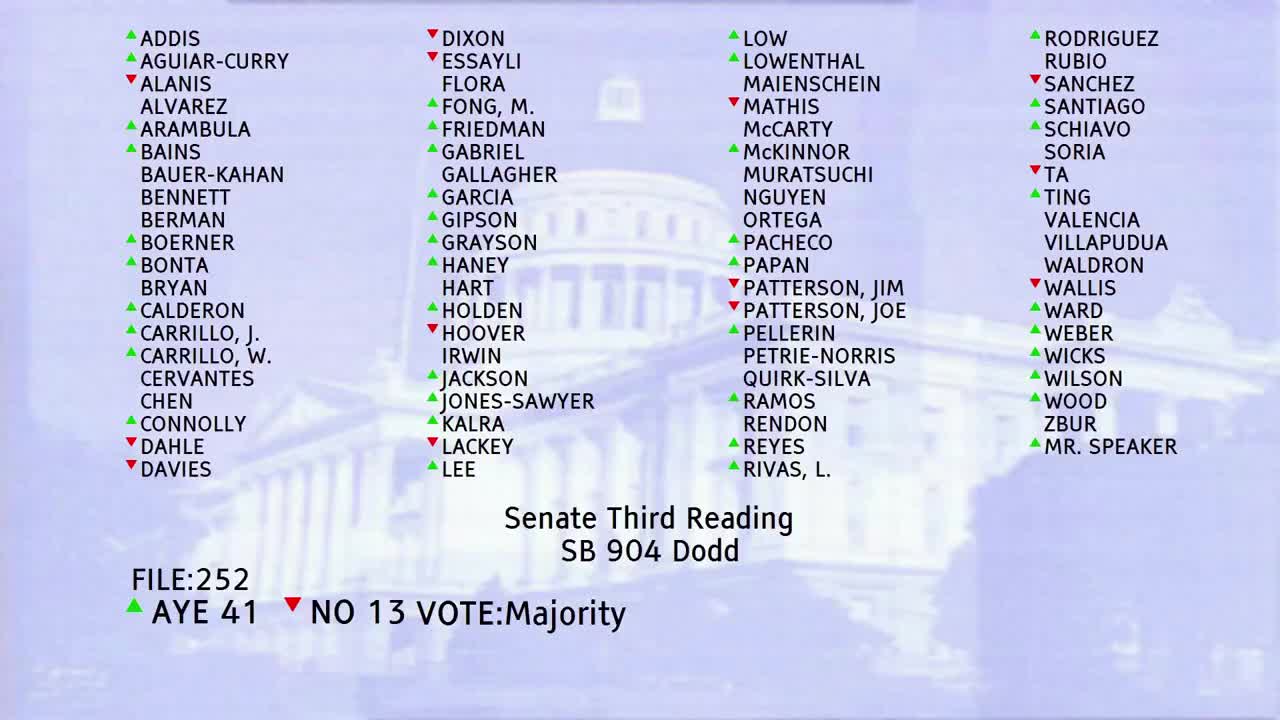 1MIN
Assembly Floor
 3MIN
Senate Floor
 7MIN
Senate Standing Committee on Health
 7MIN
Assembly Standing Committee on Health
Bill Author



