AB 1832: Civil Rights Department: Labor Trafficking Task Force.
- Session Year: 2023-2024
- House: Assembly
- Latest Version Date: 2024-09-05
Current Status:
Failed
(2024-09-27: Vetoed by Governor.)
Introduced
In Committee
First Chamber
In Committee
Second Chamber
Enacted
Existing law, the California Fair Employment and Housing Act, establishes in the Business, Consumer Services, and Housing Agency the Civil Rights Department (department), headed by the Director of Civil Rights, to protect and safeguard the right and opportunity of all persons to seek, obtain, and hold employment without discrimination or abridgment on account of race, religious creed, color, national origin, ancestry, physical disability, mental disability, medical condition, genetic information, marital status, sex, gender, gender identity, gender expression, age, sexual orientation, reproductive health decisionmaking, or military and veteran status. Existing law requires the department, among other things, to render annually to the Governor and to the Legislature a written report of its activities and recommendations.
This bill would establish within the department the Labor Trafficking Task Force, as specified. The bill would require the task force, among other things, to take steps to prevent labor trafficking, coordinate with the Labor Enforcement Task Force, the Department of Justice, and the Division of Labor Standards Enforcement within the Department of Industrial Relations to combat labor trafficking, and receive and refer complaints alleging labor trafficking to the department or other agencies, as appropriate, for potential investigation, civil action, or criminal prosecution. The bill would authorize the task force to coordinate with other relevant agencies to combat labor trafficking, support law enforcement agencies that investigate criminal actions relating to labor trafficking in coordination with specified entities, and coordinate with state or local agencies to connect survivors with available services. The bill would require the Division of Occupational Safety and Health within the Department of Industrial Relations to notify the task force when, upon investigating businesses under their purview, there is evidence of labor trafficking. The bill would require the department to include specified information in the annual report described above, including the activities of the task force, the number of complaints referred to the department, and the status or outcome of those complaints. The bill would provide that its provisions become operative only upon appropriation by the Legislature in the annual Budget Act or another measure for the purposes of the bills provisions.
Existing constitutional provisions require that a statute that limits the right of access to the meetings of public bodies or the writings of public officials and agencies be adopted with findings demonstrating the interest protected by the limitation and the need for protecting that interest.
This bill would make legislative findings to that effect.
Existing law, the California Fair Employment and Housing Act, establishes in the Business, Consumer Services, and Housing Agency the Civil Rights Department (department), headed by the Director of Civil Rights, to protect and safeguard the right and opportunity of all persons to seek, obtain, and hold employment without discrimination or abridgment on account of race, religious creed, color, national origin, ancestry, physical disability, mental disability, medical condition, genetic information, marital status, family caregiver status, sex, gender, gender identity, gender expression, age, sexual orientation, reproductive health decisionmaking, or military and veteran status. Existing law requires the department, among other things, to render annually to the Governor and to the Legislature a written report of its activities and recommendations.
This bill would establish within the department the Labor Trafficking Task Force, as specified. The bill would require the task force, among other things, to take steps to prevent labor trafficking, coordinate with the Labor Enforcement Task Force, the Department of Justice, and the Division of Labor Standards Enforcement within the Department of Industrial Relations to combat labor trafficking, and receive and refer complaints alleging labor trafficking to the department or other agencies, as appropriate, for potential investigation, civil action, or criminal prosecution. The bill would authorize the task force to coordinate with other relevant agencies to combat labor trafficking, coordinate with specified entities when investigating criminal actions related to labor trafficking, investigate criminal actions relating to labor trafficking in coordination with specified entities, and coordinate with state or local agencies to connect survivors with available services. The bill would require the Division of Occupational Safety and Health within the Department of Industrial Relations to notify the task force when, upon investigating businesses under their purview, there is evidence of labor trafficking. The bill would require the department to include specified information in the annual report described above, including the activities of the task force, the number of complaints referred to the department, and the status or outcome of those complaints. The bill would provide that its provisions become operative only upon appropriation by the Legislature in the annual Budget Act or another measure for the purposes of the bills provisions.
Existing constitutional provisions require that a statute that limits the right of access to the meetings of public bodies or the writings of public officials and agencies be adopted with findings demonstrating the interest protected by the limitation and the need for protecting that interest.
This bill would make legislative findings to that effect.
Existing law, the California Fair Employment and Housing Act, establishes in the Business, Consumer Services, and Housing Agency the Civil Rights Department (department), headed by the Director of Civil Rights, to protect and safeguard the right and opportunity of all persons to seek, obtain, and hold employment without discrimination or abridgment on account of race, religious creed, color, national origin, ancestry, physical disability, mental disability, medical condition, genetic information, marital status, family caregiver status, sex, gender, gender identity, gender expression, age, sexual orientation, reproductive health decisionmaking, or military and veteran status. Existing law requires the department, among other things, to render annually to the Governor and to the Legislature a written report of its activities and recommendations.
This bill would establish within the department the Labor Trafficking Task Force, as specified. The bill would require the task force, among other things, to take steps to prevent labor trafficking, coordinate with the Labor Enforcement Task Force, the Department of Justice, and the Division of Labor Standards Enforcement within the Department of Industrial Relations to combat labor trafficking, and refer complaints alleging labor trafficking to the department or other agencies, as appropriate, for potential investigation, civil action, or criminal prosecution, and follow protocols to ensure survivors of labor trafficking are not victimized by the process of prosecuting traffickers and are informed of the services available to them. prosecution. The bill would authorize the task force to coordinate with other relevant agencies to combat labor trafficking, coordinate with specified entities when investigating criminal actions related to labor trafficking, and coordinate with state or local agencies to connect survivors with available services. The bill would require the Division of Occupational Safety and Health within the Department of Industrial Relations to notify the task force when, upon investigating businesses under their purview, there is evidence of labor trafficking. The bill would require the department to include specified information in the annual report described above, including the activities of the task force, the number of complaints referred to the department, and the status or outcome of those complaints. The bill would provide that its provisions become operative only upon appropriation by the Legislature in the annual Budget Act or another measure for the purposes of the bills provisions.
Existing constitutional provisions require that a statute that limits the right of access to the meetings of public bodies or the writings of public officials and agencies be adopted with findings demonstrating the interest protected by the limitation and the need for protecting that interest.
This bill would make legislative findings to that effect.
Existing law, the California Fair Employment and Housing Act, establishes in the Business, Consumer Services, and Housing Agency the Civil Rights Department (department), headed by the Director of Civil Rights, to protect and safeguard the right and opportunity of all persons to seek, obtain, and hold employment without discrimination or abridgment on account of race, religious creed, color, national origin, ancestry, physical disability, mental disability, medical condition, genetic information, marital status, family caregiver status, sex, gender, gender identity, gender expression, age, sexual orientation, reproductive health decisionmaking, or military and veteran status. Existing law requires the department, among other things, to render annually to the Governor and to the Legislature a written report of its activities and recommendations.
This bill would establish within the department the Labor Trafficking Task Force, as specified. The bill would require the task force, among other things, to take steps to prevent labor trafficking, coordinate with the Labor Enforcement Task Force, the Department of Justice, and the Division of Labor Standards Enforcement within the Department of Industrial Relations to combat labor trafficking, refer complaints alleging labor trafficking to the department or other agencies, as appropriate, for potential investigation, civil action, or criminal prosecution, and follow protocols to ensure survivors of labor trafficking are not victimized by the process of prosecuting traffickers and are informed of the services available to them. The bill would authorize the task force to coordinate with other relevant agencies to combat labor trafficking, coordinate with specified entities when investigating criminal actions related to labor trafficking, and coordinate with state or local agencies to connect survivors with available services. The bill would require the Division of Occupational Safety and Health within the Department of Industrial Relations to notify the task force when, upon investigating businesses under their purview, there is evidence of labor trafficking. The bill would require the department to include specified information in the annual report described above, including the activities of the task force, the number of complaints referred to the department, and the status or outcome of those complaints. The bill would provide that its provisions become operative only upon appropriation by the Legislature in the annual Budget Act or another measure for the purposes of the bills provisions.
Existing constitutional provisions require that a statute that limits the right of access to the meetings of public bodies or the writings of public officials and agencies be adopted with findings demonstrating the interest protected by the limitation and the need for protecting that interest.
This bill would make legislative findings to that effect.
(a)(1)There is hereby established within the department the Labor Trafficking Task Force.
(2)For purposes of this section, task force means the Labor Trafficking Task Force established by paragraph (1).
(3)The task force shall be comprised of experienced investigators, mediators, attorneys, outreach workers, support staff, and other staff deemed appropriate by the department.
(b)The task force shall do all of the following:
(1)Take steps to prevent labor trafficking.
(2)Coordinate with the Labor Enforcement Task Force, the Department of Justice, and the Division of Labor Standards Enforcement within the Department of Industrial Relations to combat labor trafficking.
(3)Make information on the legal rights of victims available to survivors.
(4)Provide a list of pro bono victims rights attorneys to survivors.
(5)Receive and refer complaints alleging labor trafficking to the department or other agencies, as appropriate, for potential investigation, civil action, or criminal prosecution.
(6)Follow protocols to ensure survivors are not victimized by the process of prosecuting traffickers and are informed of the services available to them.
(c)The task force may do any of the following:
(1)Coordinate with other relevant agencies to combat labor trafficking, including, but not limited to, the California Victim Compensation Board, the Agricultural Labor Relations Board, the Department of Cannabis Control, and the State Department of Public Health.
(2)Support law enforcement agencies that investigate criminal actions relating to labor trafficking. When providing this support, the task force may coordinate with any of the following:
(A)Local law enforcement agencies.
(B)Federal law enforcement agencies.
(C)District attorneys offices.
(3)Coordinate with state or local agencies to connect survivors with available services.
(d)The Division of Occupational Safety and Health within the Department of Industrial Relations shall notify the task force when, upon investigating businesses under their purview, there is evidence of labor trafficking.
(e)(1)The departments annual report required by Section 12930 shall include all of the following information for the year of the annual report:
(A)The activities of the task force, including, but not limited to, coordination with other agencies.
(B)The number of complaints referred to the department.
(C)The number of complaints referred to the Department of Justice and other agencies.
(D)The status or outcome of the complaints described in subparagraphs (B) and (C).
(E)A discussion of the major challenges to addressing labor trafficking complaints, the ongoing efforts to address those challenges, and options to improve the states claim process.
(2)The requirement for submitting the information imposed by this subdivision is inoperative on January 1, 2036.
(f)The task force shall not be subject to the requirements of the Bagley-Keene Open Meeting Act (Article 9 (commencing with Section 11120) of Chapter 1 of Part 1 of Division 3).
(g)The provisions of this section shall become operative only upon appropriation by the Legislature in the annual Budget Act or another measure for the purposes of this section. The department shall send notice of the appropriation to the Secretary of State and the Legislative Counsel.
SEC. 2.The Legislature finds and declares that Section 1 of this act, which adds Section 12934 to the Government Code, imposes a limitation on the publics right of access to the meetings of public bodies or the writings of public officials and agencies within the meaning of Section 3 of Article I of the California Constitution. Pursuant to that constitutional provision, the Legislature makes the following findings to demonstrate the interest protected by this limitation and the need for protecting that interest:
In order to protect the privacy of potential victims, while also assisting in efforts to prevent violations of law, it is necessary to limit the disclosure of information collected by the Labor Trafficking Task Force.
(a)(1)There is hereby established within the department the Labor Trafficking Task Force.
(2)For purposes of this section, task force means the Labor Trafficking Task Force established by paragraph (1).
(3)The task force shall be comprised of experienced investigators, mediators, attorneys, outreach workers, support staff, and other staff deemed appropriate by the department.
(b)The task force shall do all of the following:
(1)Take steps to prevent labor trafficking.
(2)Coordinate with the Labor Enforcement Task Force, the Department of Justice, and the Division of Labor Standards Enforcement within the Department of Industrial Relations to combat labor trafficking.
(3)Make information on the legal rights of victims available to survivors.
(4)Provide a list of pro bono victims rights attorneys to survivors.
(5)Receive and refer complaints alleging labor trafficking to the department or other agencies, as appropriate, for potential investigation, civil action, or criminal prosecution.
(6)Follow protocols to ensure survivors are not victimized by the process of prosecuting traffickers and are informed of the services available to them.
(c)The task force may do any of the following:
(1)Coordinate with other relevant agencies to combat labor trafficking, including, but not limited to, the California Victim Compensation Board, the Agricultural Labor Relations Board, the Department of Cannabis Control, and the State Department of Public Health.
(2)Investigate Support law enforcement agencies that investigate criminal actions relating to labor trafficking. When investigating, providing this support, the task force may coordinate with any of the following:
(A)Local law enforcement agencies.
(B)Federal law enforcement agencies.
(C)District attorneys offices.
(3)Coordinate with state or local agencies to connect survivors with available services.
(d)The Division of Occupational Safety and Health within the Department of Industrial Relations shall notify the task force when, upon investigating businesses under their purview, there is evidence of labor trafficking.
(e)(1)The departments annual report required by Section 12930 shall include all of the following information for the year of the annual report:
(A)The activities of the task force, including, but not limited to, coordination with other agencies.
(B)The number of complaints referred to the department.
(C)The number of complaints referred to the Department of Justice and other agencies.
(D)The status or outcome of the complaints described in subparagraphs (B) and (C).
(E)A discussion of the major challenges to addressing labor trafficking complaints, the ongoing efforts to address those challenges, and options to improve the states claim process.
(2)The requirement for submitting the information imposed by this subdivision is inoperative on January 1, 2036.
(f)The task force shall not be subject to the requirements of the Bagley-Keene Open Meeting Act (Article 9 (commencing with Section 11120) of Chapter 1 of Part 1 of Division 3).
(g)The provisions of this section shall become operative only upon appropriation by the Legislature in the annual Budget Act or another measure for the purposes of this section. The department shall send notice of the appropriation to the Secretary of State and the Legislative Counsel.
SEC. 2.The Legislature finds and declares that Section 1 of this act, which adds Section 12934 to the Government Code, imposes a limitation on the publics right of access to the meetings of public bodies or the writings of public officials and agencies within the meaning of Section 3 of Article I of the California Constitution. Pursuant to that constitutional provision, the Legislature makes the following findings to demonstrate the interest protected by this limitation and the need for protecting that interest:
In order to protect the privacy of potential victims, while also assisting in efforts to prevent violations of law, it is necessary to limit the disclosure of information collected by the Labor Trafficking Task Force.
(a)(1)There is hereby established within the department the Labor Trafficking Task Force.
(2)For purposes of this section, task force means the Labor Trafficking Task Force established by paragraph (1).
(3)The task force shall be comprised of experienced investigators, mediators, attorneys, outreach workers, support staff, and other staff deemed appropriate by the department.
(b)The task force shall do all of the following:
(1)Take steps to prevent labor trafficking.
(2)Coordinate with the Labor Enforcement Task Force, the Department of Justice, and the Division of Labor Standards Enforcement within the Department of Industrial Relations to combat labor trafficking.
(3)Coordinate with both state and local agencies to connect survivors with available services. (4)(3)Make information on the legal rights of victims available to survivors.
(5)(4)Provide a list of pro bono victims rights attorneys to survivors.
(6)Refer(5)Receive and refer complaints alleging labor trafficking to the department or other agencies, as appropriate, for potential investigation, civil action, or criminal prosecution.
(7)(6)Follow protocols to ensure survivors are not victimized by the process of prosecuting traffickers and are informed of the services available to them.
(c)The task force may do any of the following:
(1)Coordinate with other relevant agencies to combat labor trafficking, including, but not limited to, the California Victim Compensation Board, the Agricultural Labor Relations Board, the Department of Cannabis Control, and the State Department of Public Health.
(2)When investigating criminal actions related to labor trafficking, Investigate criminal actions relating to labor trafficking. When investigating, the task force may coordinate with any of the following:
(A)Local law enforcement agencies.
(B)Federal law enforcement agencies.
(C)District attorneys offices.
(3)Coordinate with state or local agencies to connect survivors with available services.
(d)The Division of Occupational Safety and Health within the Department of Industrial Relations shall notify the task force when, upon investigating businesses under their purview, there is evidence of labor trafficking.
(e)(1)The departments annual report required by Section 12930 shall include all of the following information for the year of the annual report:
(A)The activities of the task force, including, but not limited to, coordination with other agencies.
(B)The number of complaints referred to the department.
(C)The number of complaints referred to the Department of Justice and other agencies.
(D)The status or outcome of the complaints described in subparagraphs (B) and (C).
(E)A discussion of the major challenges to addressing labor trafficking complaints, the ongoing efforts to address those challenges, and options to improve the states claim process.
(2)The requirement for submitting the information imposed by this subdivision is inoperative on January 1, 2036.
(f)The task force shall not be subject to the requirements of the Bagley-Keene Open Meeting Act (Article 9 (commencing with Section 11120) of Chapter 1 of Part 1 of Division 3).
(g)The provisions of this section shall become operative only upon appropriation by the Legislature in the annual Budget Act or another measure for the purposes of this section. The department shall send notice of the appropriation to the Secretary of State and the Legislative Counsel.
SEC. 2.The Legislature finds and declares that Section 1 of this act, which adds Section 12934 to the Government Code, imposes a limitation on the publics right of access to the meetings of public bodies or the writings of public officials and agencies within the meaning of Section 3 of Article I of the California Constitution. Pursuant to that constitutional provision, the Legislature makes the following findings to demonstrate the interest protected by this limitation and the need for protecting that interest:
In order to protect the privacy of potential victims, while also assisting in efforts to prevent violations of law, it is necessary to limit the disclosure of information collected by the Labor Trafficking Task Force.
(a)(1)There is hereby established within the department the Labor Trafficking Task Force.
(2)For purposes of this section, task force means the Labor Trafficking Task Force established by paragraph (1).
(3)The task force shall be comprised of experienced investigators, mediators, attorneys, outreach workers, support staff, and other staff deemed appropriate by the department.
(b)The task force shall do all of the following:
(1)Take steps to prevent labor trafficking.
(2)Coordinate with the Labor Enforcement Task Force, the Department of Justice, and the Division of Labor Standards Enforcement within the Department of Industrial Relations to combat labor trafficking.
(3)Follow protocols to ensure survivors are not victimized by the process of prosecuting traffickers. (4)(3)Coordinate with both state and local agencies to connect survivors with available services.
(5)Ensure that victims are informed of the services available to them. (6)(4)Make information on the legal rights of victims available to survivors.
(7)(5)Provide a list of pro bono victims rights attorneys to survivors.
(8)(6)Refer complaints alleging labor trafficking to the department or other agencies, as appropriate, for potential investigation, civil action, or criminal prosecution.
(9)(7)Follow protocols to ensure survivors are not victimized by the process of prosecuting traffickers and are informed of the services available to them.
(c)The task force may do any of the following:
(1)Coordinate with other relevant agencies to combat labor trafficking, including, but not limited to, the California Victim Compensation Board, the Agricultural Labor Relations Board, the Department of Cannabis Control, and the State Department of Public Health.
(2)When investigating criminal actions related to labor trafficking, coordinate with any of the following:
(A)Local law enforcement agencies.
(B)Federal law enforcement agencies.
(C)District attorneys offices.
(3)Coordinate with state or local agencies to connect survivors with available services.
(d)The Division of Occupational Safety and Health within the Department of Industrial Relations shall notify the task force when, upon investigating businesses under their purview, there is evidence of labor trafficking.
(e)(1)The departments annual report required by Section 12930 shall include all of the following information for the year of the annual report:
(A)The activities of the task force, including, but not limited to, coordination with other agencies.
(B)The number of complaints referred to the department.
(C)The number of complaints referred to the Department of Justice and other agencies.
(D)The status or outcome of the complaints described in subparagraphs (B) and (C).
(E)A discussion of the major challenges to addressing labor trafficking complaints, the ongoing efforts to address those challenges, and options to improve the states claim process.
(2)The requirement for submitting the information imposed by this subdivision is inoperative on January 1, 2036.
(f)The task force shall not be subject to the requirements of the Bagley-Keene Open Meeting Act (Article 9 (commencing with Section 11120) of Chapter 1 of Part 1 of Division 3).
(g)The provisions of this section shall become operative only upon appropriation by the Legislature in the annual Budget Act or another measure for the purposes of this section. The department shall send notice of the appropriation to the Secretary of State and the Legislative Counsel.
SEC. 2.The Legislature finds and declares that Section 1 of this act, which adds Section 12934 to the Government Code, imposes a limitation on the publics right of access to the meetings of public bodies or the writings of public officials and agencies within the meaning of Section 3 of Article I of the California Constitution. Pursuant to that constitutional provision, the Legislature makes the following findings to demonstrate the interest protected by this limitation and the need for protecting that interest:
In order to protect the privacy of potential victims, while also assisting in efforts to prevent violations of law, it is necessary to limit the disclosure of information collected by the Labor Trafficking Task Force.
(a)(1)There is hereby established within the department the Labor Trafficking Task Force.
(2)For purposes of this section, task force means the Labor Trafficking Task Force established by paragraph (1).
(3)The task force shall be comprised of experienced investigators, mediators, attorneys, outreach workers, support staff, and other staff deemed appropriate by the department.
(b)The task force shall do all of the following:
(1)Take steps to prevent labor trafficking.
(2)Coordinate with the Labor Enforcement Task Force, the Department of Justice, and the Division of Labor Standards Enforcement within the Department of Industrial Relations to combat labor trafficking.
(3)Follow protocols to ensure survivors are not victimized by the process of prosecuting traffickers.
(4)Coordinate with both state and local agencies to connect survivors with available services.
(5)Ensure that victims are informed of the services available to them.
(6)Make information on the legal rights of victims available to survivors.
(7)Provide a list of pro bono victims rights attorneys to survivors.
(8)Refer complaints alleging labor trafficking to the department or other agencies, as appropriate, for potential investigation, civil action, or criminal prosecution.
(9)Follow protocols to ensure survivors are not victimized by the process of prosecuting traffickers and are informed of the services available to them.
(c)The task force may do any of the following:
(1)Coordinate with other relevant agencies to combat labor trafficking, including, but not limited to, the California Victim Compensation Board, the Agricultural Labor Relations Board, the Department of Cannabis Control, and the State Department of Public Health.
(2)When investigating criminal actions related to labor trafficking, coordinate with any of the following:
(A)Local law enforcement agencies.
(B)Federal law enforcement agencies.
(C)District attorneys offices.
(3)Coordinate with state or local agencies to connect survivors with available services.
(d)The Division of Occupational Safety and Health within the Department of Industrial Relations shall notify the task force when, upon investigating businesses under their purview, there is evidence of labor trafficking.
(e)(1)The departments annual report required by Section 12930 shall include all of the following information for the year of the annual report:
(A)The activities of the task force, including, but not limited to, coordination with other agencies.
(B)The number of complaints referred to the department.
(C)The number of complaints referred to the Department of Justice and other agencies.
(D)The status or outcome of the complaints described in subparagraphs (B) and (C).
(E)A discussion of the major challenges to addressing labor trafficking complaints, the ongoing efforts to address those challenges, and options to improve the states claim process.
(2)The requirement for submitting the information imposed by this subdivision is inoperative on January 1, 2036.
(f)The task force shall not be subject to the requirements of the Bagley-Keene Open Meeting Act (Article 9 (commencing with Section 11120) of Chapter 1 of Part 1 of Division 3).
(g)The provisions of this section shall become operative only upon appropriation by the Legislature in the annual Budget Act or another measure for the purposes of this section. The department shall send notice of the appropriation to the Secretary of State and the Legislative Counsel.
SEC. 2.The Legislature finds and declares that Section 1 of this act, which adds Section 12934 to the Government Code, imposes a limitation on the publics right of access to the meetings of public bodies or the writings of public officials and agencies within the meaning of Section 3 of Article I of the California Constitution. Pursuant to that constitutional provision, the Legislature makes the following findings to demonstrate the interest protected by this limitation and the need for protecting that interest:
In order to protect the privacy of potential victims, while also assisting in efforts to prevent violations of law, it is necessary to limit the disclosure of information collected by the Labor Trafficking Task Force.
|
Date
|
Status
|
|---|---|
| Sep 27, 2024 | Vetoed by Governor. |
| Sep 12, 2024 | Enrolled and presented to the Governor at 4 p.m. |
| Aug 31, 2024 | Senate amendments concurred in. To Engrossing and Enrolling. (Ayes 77. Noes 0.). |
| Aug 30, 2024 | In Assembly. Concurrence in Senate amendments pending. |
| Aug 30, 2024 | Read third time. Passed. Ordered to the Assembly. (Ayes 40. Noes 0.). |
| Aug 26, 2024 | Ordered to special consent calendar. |
| Aug 19, 2024 | Read second time. Ordered to third reading. |
| Aug 15, 2024 | Read second time and amended. Ordered returned to second reading. |
| Aug 15, 2024 | From committee: Amend, and do pass as amended. (Ayes 7. Noes 0.) (August 15). |
| Aug 5, 2024 | In committee: Referred to APPR suspense file. |
| Jun 26, 2024 | From committee: Do pass and re-refer to Com. on APPR with recommendation: To Consent Calendar. (Ayes 5. Noes 0.) (June 26). Re-referred to Com. on APPR. |
| Jun 18, 2024 | From committee: Do pass and re-refer to Com. on L., P.E. & R. with recommendation: To Consent Calendar. (Ayes 5. Noes 0.) (June 18). Re-referred to Com. on L., P.E. & R. |
| Jun 5, 2024 | Referred to Coms. on PUB S. and L., P.E. & R. |
| May 23, 2024 | In Senate. Read first time. To Com. on RLS. for assignment. |
| May 22, 2024 | Read third time. Passed. Ordered to the Senate. (Ayes 71. Noes 0. Page 5536.) |
| May 21, 2024 | Read second time. Ordered to third reading. |
| May 20, 2024 | Read second time and amended. Ordered returned to second reading. |
| May 20, 2024 | From committee: Amend, and do pass as amended. (Ayes 11. Noes 0.) (May 16). |
| Apr 17, 2024 | In committee: Set, first hearing. Referred to APPR. suspense file. |
| Apr 3, 2024 | From committee: Do pass and re-refer to Com. on APPR. with recommendation: To Consent Calendar. (Ayes 8. Noes 0.) (April 2). Re-referred to Com. on APPR. |
| Mar 14, 2024 | From committee: Do pass and re-refer to Com. on PUB. S. with recommendation: To Consent Calendar. (Ayes 7. Noes 0.) (March 13). Re-referred to Com. on PUB. S. |
| Mar 6, 2024 | Re-referred to Com. on L. & E. |
| Mar 4, 2024 | From committee chair, with author's amendments: Amend, and re-refer to Com. on L. & E. Read second time and amended. |
| Jan 29, 2024 | Referred to Coms. on L. & E. and PUB. S. |
| Jan 13, 2024 | From printer. May be heard in committee February 12. |
| Jan 12, 2024 | Read first time. To print. |
|
Date
|
Description
|
Location
|
Votes
|
|
|---|---|---|---|---|
| Aug 31, 2024 | AB 1832 Blanca Rubio Concurrence in Senate Amendments | Assembly Floor |
Passed |
|
| Aug 30, 2024 | Special Consent AB1832 Blanca Rubio et al. By Rubio | Senate Floor |
Passed |
|
| Aug 15, 2024 | Do pass as amended | Senate Standing Committee on Appropriations |
Passed |
|
| Aug 5, 2024 | Placed on suspense file | Senate Standing Committee on Appropriations |
Passed |
|
| Jun 26, 2024 | Do pass, but first be re-referred to the Committee on [Appropriations] with the recommendation: To Consent Calendar | Senate Standing Committee on Labor, Public Employment and Retirement |
Passed |
|
| Jun 18, 2024 | Do pass, but first be re-referred to the Committee on [Labor, Public Employment and Retirement ] with the recommendation: To Consent Calendar | Senate Standing Committee on Public Safety |
Passed |
|
| May 22, 2024 | AB 1832 Blanca Rubio Assembly Third Reading | Assembly Floor |
Passed |
|
| May 16, 2024 | Do pass as amended. | Assembly Standing Committee on Appropriations |
Passed |
|
| Apr 2, 2024 | Do pass and be re-referred to the Committee on [Appropriations] with recommendation: To Consent Calendar | Assembly Standing Committee on Public Safety |
Passed |
|
| Mar 13, 2024 | Do pass and be re-referred to the Committee on [Public Safety] with recommendation: To Consent Calendar | Assembly Standing Committee on Labor and Employment |
Passed |
This list shows positions taken on this bill by organizations on the date displayed, which is linked to the original source.
Positions by individuals are not included.
|
Organization
|
Position
|
Date
|
|---|---|---|
| California State Association Of Electrical Workers | ** Support | |
| California State Pipe Trades Council | ** Support | |
| County of Santa Clara | ** Support | |
| Freedom Calling | ** Support | |
| Los Angeles County District AttorneyS Office | ** Support | |
| The Coalition to Abolish Slavery and Trafficking | ** Support | |
| Western States Council Sheet Metal, Air, Rail And Transportation | ** Support |
GOVERNOR'S VETO
GV Bill Id:AB 1832
Author:(Blanca Rubio)
As Enrolled Ver:September 5, 2024
2/3 vote
SUMMARY
Establishes within the Civil Rights Department (CRD) the Labor Trafficking Task Force (LTTF) to coordinate with other state entities to combat labor trafficking.
Senate Amendments
Provide that the LTTF may support law enforcement agencies that investigate criminal actions relating to labor trafficking rather than investigate the criminal actions itself.
Governor's Veto Message
This bill would establish the Labor Trafficking Task Force within the Civil Rights Department, which would coordinate with the Department of Industrial Relations and the Department of Justice (DOJ) to combat labor trafficking.
I share in the author's strong commitment to combat labor trafficking and signed a similar bill, AB 1888, that establishes a Labor Trafficking Unit within the DOJ that will increase leadership and coordination among state agencies to combat labor trafficking in California. In light of that ongoing work, the establishment of a separate task force would be redundant and potentially complicate efforts to address this issue.
COMMENTS
While data on the extent of labor trafficking in California is sparse and likely due to a lack of centralized case reporting, we know that more than 9,000 cases of human trafficking in the state have been reported since 2007.[1] In terms of demographics, "labor trafficking victims may be men or women, young or old, native-born citizens or immigrants. However, a few commonalities are apparent. Most victims are in the prime working years of 18 to 40. Many are immigrants who have entered the country legally to perform some kind of temporary work and become unauthorized due to their trafficking."[2]
Since 2020, the Little Hoover Commission has been studying the state's efforts to combat labor trafficking, issuing three reports and recently holding a public hearing in 2023. In its 2020 report, the Commission identified a number of challenges in California's current anti-trafficking strategy. For example, the lack of a coordinated effort to address labor trafficking is called out as a significant challenge. The Commission writes, "We have no permanent entity to coordinate the state's overall fight against human trafficking or to develop information-sharing protocols between state organizations and their local and federal partners. Twice since 2007, the Department of Justice led a temporary statewide coordinating body to investigate and propose cross-agency strategies to address human trafficking. But these bodies disbanded after issuing recommendations."[3]
According to the Author
According to the author, "Labor trafficking involves actions such as recruiting, harboring, transporting or providing a person for the purpose of providing labor or services through the use of force, fraud, or coercion. It happens all too often in California, specifically for foreign nationals who are in the U.S. without authorization, while others are lured to the U.S. with promises of legitimate work on valid visas. Labor trafficking must be acknowledged this year. This is why I aim to establish efficient communication and enhanced enforcement for labor trafficking through the Labor Trafficking Unit, while ensuring the survivors are not victimized by the process of prosecuting traffickers and are informed of the services available to them. California does not tolerate exploitation."
The author further states that the bill assists marginalized communities because "labor trafficking takes several forms, including debt bondage, involuntary servitude, domestic servitude, and forced child labor. Victims may be held against their will, may not be allowed to leave the premises, or may be housed in a closed or remote location. They may be forced to work in poor conditions for little or no pay, in urban or rural settings, alongside or within legitimate businesses, behind locked doors or hidden in plain sight. A report from Polaris found that when nationality was reported, 92% of labor trafficking survivors in the U.S. were foreign nationals and 59% reported threats of immigration were used to control them and keep them working against their will."
Arguments in Support
The Coalition to Abolish Slavery and Trafficking, sponsor of the bill, states, "Human traffickers purposefully prey on vulnerable communities such as immigrants, undocumented or formerly incarcerated individuals, low-income workers, and people of color. This bill will position the state to take a coordinated approach to the prevention and investigation of labor trafficking while working to protect these survivors from criminalization by informing them of their rights and connecting them to appropriate social and legal services. As one of the nation's oldest and largest comprehensive human trafficking service providers, we are pleased to sponsor AB 1832."
Arguments in Opposition
None on file.
FISCAL COMMENTS
According to the Senate Appropriations Committee:
- Significant ongoing state costs (General Fund) to CRD of approximately $5 million annually to implement this bill. CRD anticipates requesting 22 positions and approximately $4.2M in FY 2025-26 and ongoing. This includes $150,000 per year for operational expenses, such as expert consultants for civil actions, translation and interpretation services, bilingual pay for CRD staff, and travel expenses to visit worksites and other locations statewide where victims of human trafficking may be found. Among the 22 positions would be senior and junior attorneys to litigate civil actions and coordinate with other agencies, investigators, an experienced mediator, bilingual outreach workers, and administrative and IT support staff.
- Significant ongoing state costs (General Fund) to the Department of Justice (DOJ) of approximately $5 million annually, because of increased workload. The DOJ indicates that the Special Prosecutions Section (SPS), within the Criminal Law Division, is responsible for prosecuting labor trafficking cases. Currently, SPS receives 5-12 referrals from the Department of Industrial Relations (DIR) for potential labor trafficking allegations. SPS anticipates the number of referrals to increase, once the LTTF starts referring cases to DOJ as well. To address the increase in workload, SPS will require the following resources beginning in January 2025 and ongoing: 1.0 Supervising Deputy Attorney General (SDAG), 2.0 Deputy Attorneys General (DAG), 2.0 Senior Legal Analysts (SLA), 1.0 Associate Governmental Program Analyst (AGPA), 2.0 Investigative Auditor IV – Specialist (IA IV – Spec), 4.0 Special Investigators (SI), and 3.0 Legal Secretaries (LS). The DOJ further indicates that this bill would increase the caseload within Victim Services Unit (VSU). To ensure VSU has the capacity to provide required and optional services to labor trafficking victims and meet the requirements as prescribed by the bill, VSU will need funding to establish 1.0 AGPA Victim Advocate position, attend and develop training, traveling to provide in person support and accompaniment, and funding for publication distribution.
- The Division of Industrial Relations (DIR) anticipates minor and absorbable costs.
VOTES
ASM LABOR AND EMPLOYMENT: 7-0-0
YES: Ortega, Flora, Alanis, Wendy Carrillo, Lee, Ward, Zbur
ASM PUBLIC SAFETY: 8-0-0
YES: McCarty, Alanis, Lackey, Stephanie Nguyen, Reyes, Ting, Wilson, Zbur
ASM APPROPRIATIONS: 11-0-4
YES: Wicks, Arambula, Bryan, Calderon, Wendy Carrillo, Mike Fong, Grayson, Haney, Hart, Pellerin, Villapudua
ABS, ABST OR NV: Sanchez, Dixon, Jim Patterson, Ta
ASSEMBLY FLOOR: 71-0-9
YES: Addis, Aguiar-Curry, Alanis, Alvarez, Arambula, Bains, Bauer-Kahan, Bennett, Berman, Boerner, Bonta, Bryan, Juan Carrillo, Wendy Carrillo, Chen, Connolly, Davies, Dixon, Flora, Mike Fong, Vince Fong, Gabriel, Gallagher, Garcia, Gipson, Grayson, Haney, Hart, Hoover, Irwin, Jackson, Jones-Sawyer, Kalra, Lackey, Lee, Low, Lowenthal, Maienschein, McCarty, McKinnor, Muratsuchi, Stephanie Nguyen, Ortega, Pacheco, Papan, Jim Patterson, Pellerin, Petrie-Norris, Quirk-Silva, Ramos, Rendon, Reyes, Rodriguez, Blanca Rubio, Sanchez, Santiago, Schiavo, Soria, Ta, Ting, Valencia, Villapudua, Waldron, Wallis, Ward, Weber, Wicks, Wilson, Wood, Zbur, Robert Rivas
ABS, ABST OR NV: Calderon, Cervantes, Megan Dahle, Essayli, Friedman, Holden, Mathis, Joe Patterson, Luz Rivas
SENATE FLOOR: 40-0-0
YES: Allen, Alvarado-Gil, Archuleta, Ashby, Atkins, Becker, Blakespear, Bradford, Caballero, Cortese, Dahle, Dodd, Durazo, Eggman, Glazer, Gonzalez, Grove, Hurtado, Jones, Laird, Limón, McGuire, Menjivar, Min, Newman, Nguyen, Niello, Ochoa Bogh, Padilla, Portantino, Roth, Rubio, Seyarto, Skinner, Smallwood-Cuevas, Stern, Umberg, Wahab, Wiener, Wilk
ASSEMBLY FLOOR: 77-0-2
YES: Addis, Aguiar-Curry, Alanis, Alvarez, Arambula, Bains, Bauer-Kahan, Bennett, Berman, Boerner, Bonta, Bryan, Juan Carrillo, Wendy Carrillo, Cervantes, Chen, Connolly, Megan Dahle, Davies, Dixon, Essayli, Flora, Mike Fong, Friedman, Gabriel, Gallagher, Garcia, Gipson, Grayson, Haney, Hart, Holden, Hoover, Irwin, Jackson, Jones-Sawyer, Kalra, Lackey, Lee, Low, Lowenthal, Maienschein, Mathis, McCarty, McKinnor, Muratsuchi, Stephanie Nguyen, Pacheco, Papan, Jim Patterson, Joe Patterson, Pellerin, Petrie-Norris, Quirk-Silva, Ramos, Rendon, Reyes, Luz Rivas, Rodriguez, Blanca Rubio, Sanchez, Santiago, Schiavo, Soria, Ta, Ting, Valencia, Villapudua, Waldron, Wallis, Ward, Weber, Wicks, Wilson, Wood, Zbur, Robert Rivas
ABS, ABST OR NV: Calderon, Ortega
UPDATED
VERSION: September 5, 2024
CONSULTANT: Megan Lane / L. & E. / (916) 319-2091 FN: 0005155
CONCURRENCE IN SENATE AMENDMENTS
CSA1 Bill Id:AB 1832
Author:(Blanca Rubio)
As Amended Ver:August 15, 2024
Majority vote
SUMMARY
Establishes within the Civil Rights Department (CRD) the Labor Trafficking Task Force (LTTF) to coordinate with other state entities to combat labor trafficking.
Senate Amendments
- Provide that the LTTF may support law enforcement agencies that investigate criminal actions relating to labor trafficking rather than investigate the criminal actions itself.
COMMENTS
While data on the extent of labor trafficking in California is sparse and likely due to a lack of centralized case reporting, we know that more than 9,000 cases of human trafficking in the state have been reported since 2007.[1] In terms of demographics, "labor trafficking victims may be men or women, young or old, native-born citizens or immigrants. However, a few commonalities are apparent. Most victims are in the prime working years of 18 to 40. Many are immigrants who have entered the country legally to perform some kind of temporary work and become unauthorized due to their trafficking."[2]
Since 2020, the Little Hoover Commission has been studying the state's efforts to combat labor trafficking, issuing three reports and recently holding a public hearing in 2023. In its 2020 report, the Commission identified a number of challenges in California's current anti-trafficking strategy. For example, the lack of a coordinated effort to address labor trafficking is called out as a significant challenge. The Commission writes, "We have no permanent entity to coordinate the state's overall fight against human trafficking or to develop information-sharing protocols between state organizations and their local and federal partners. Twice since 2007, the Department of Justice led a temporary statewide coordinating body to investigate and propose cross-agency strategies to address human trafficking. But these bodies disbanded after issuing recommendations."[3]
According to the Author
According to the author, "Labor trafficking involves actions such as recruiting, harboring, transporting or providing a person for the purpose of providing labor or services through the use of force, fraud, or coercion. It happens all too often in California, specifically for foreign nationals who are in the U.S. without authorization, while others are lured to the U.S. with promises of legitimate work on valid visas. Labor trafficking must be acknowledged this year. This is why I aim to establish efficient communication and enhanced enforcement for labor trafficking through the Labor Trafficking Unit, while ensuring the survivors are not victimized by the process of prosecuting traffickers and are informed of the services available to them. California does not tolerate exploitation."
The author further states that the bill assists marginalized communities because "labor trafficking takes several forms, including debt bondage, involuntary servitude, domestic servitude, and forced child labor. Victims may be held against their will, may not be allowed to leave the premises, or may be housed in a closed or remote location. They may be forced to work in poor conditions for little or no pay, in urban or rural settings, alongside or within legitimate businesses, behind locked doors or hidden in plain sight. A report from Polaris found that when nationality was reported, 92% of labor trafficking survivors in the U.S. were foreign nationals and 59% reported threats of immigration were used to control them and keep them working against their will."
Arguments in Support
The Coalition to Abolish Slavery and Trafficking, sponsor of the bill, states, "Human traffickers purposefully prey on vulnerable communities such as immigrants, undocumented or formerly incarcerated individuals, low-income workers, and people of color. This bill will position the state to take a coordinated approach to the prevention and investigation of labor trafficking while working to protect these survivors from criminalization by informing them of their rights and connecting them to appropriate social and legal services. As one of the nation's oldest and largest comprehensive human trafficking service providers, we are pleased to sponsor AB 1832."
Arguments in Opposition
None on file.
FISCAL COMMENTS
According to the Senate Appropriations Committee:
- Significant ongoing state costs (General Fund) to CRD of approximately $5 million annually to implement this bill. CRD anticipates requesting 22 positions and approximately $4.2M in FY 2025-26 and ongoing. This includes $150,000 per year for operational expenses, such as expert consultants for civil actions, translation and interpretation services, bilingual pay for CRD staff, and travel expenses to visit worksites and other locations statewide where victims of human trafficking may be found. Among the 22 positions would be senior and junior attorneys to litigate civil actions and coordinate with other agencies, investigators, an experienced mediator, bilingual outreach workers, and administrative and IT support staff.
- Significant ongoing state costs (General Fund) to the Department of Justice (DOJ) of approximately $5 million annually, because of increased workload. The DOJ indicates that the Special Prosecutions Section (SPS), within the Criminal Law Division, is responsible for prosecuting labor trafficking cases. Currently, SPS receives 5-12 referrals from the Department of Industrial Relations (DIR) for potential labor trafficking allegations. SPS anticipates the number of referrals to increase, once the LTTF starts referring cases to DOJ as well. To address the increase in workload, SPS will require the following resources beginning in January 2025 and ongoing: 1.0 Supervising Deputy Attorney General (SDAG), 2.0 Deputy Attorneys General (DAG), 2.0 Senior Legal Analysts (SLA), 1.0 Associate Governmental Program Analyst (AGPA), 2.0 Investigative Auditor IV – Specialist (IA IV – Spec), 4.0 Special Investigators (SI), and 3.0 Legal Secretaries (LS). The DOJ further indicates that this bill would increase the caseload within Victim Services Unit (VSU). To ensure VSU has the capacity to provide required and optional services to labor trafficking victims and meet the requirements as prescribed by the bill, VSU will need funding to establish 1.0 AGPA Victim Advocate position, attend and develop training, traveling to provide in person support and accompaniment, and funding for publication distribution.
- The Division of Industrial Relations (DIR) anticipates minor and absorbable costs.
VOTES:
ASM LABOR AND EMPLOYMENT: 7-0-0
YES: Ortega, Flora, Alanis, Wendy Carrillo, Lee, Ward, Zbur
ASM PUBLIC SAFETY: 8-0-0
YES: McCarty, Alanis, Lackey, Stephanie Nguyen, Reyes, Ting, Wilson, Zbur
ASM APPROPRIATIONS: 11-0-4
YES: Wicks, Arambula, Bryan, Calderon, Wendy Carrillo, Mike Fong, Grayson, Haney, Hart, Pellerin, Villapudua
ABS, ABST OR NV: Sanchez, Dixon, Jim Patterson, Ta
ASSEMBLY FLOOR: 71-0-9
YES: Addis, Aguiar-Curry, Alanis, Alvarez, Arambula, Bains, Bauer-Kahan, Bennett, Berman, Boerner, Bonta, Bryan, Juan Carrillo, Wendy Carrillo, Chen, Connolly, Davies, Dixon, Flora, Mike Fong, Vince Fong, Gabriel, Gallagher, Garcia, Gipson, Grayson, Haney, Hart, Hoover, Irwin, Jackson, Jones-Sawyer, Kalra, Lackey, Lee, Low, Lowenthal, Maienschein, McCarty, McKinnor, Muratsuchi, Stephanie Nguyen, Ortega, Pacheco, Papan, Jim Patterson, Pellerin, Petrie-Norris, Quirk-Silva, Ramos, Rendon, Reyes, Rodriguez, Blanca Rubio, Sanchez, Santiago, Schiavo, Soria, Ta, Ting, Valencia, Villapudua, Waldron, Wallis, Ward, Weber, Wicks, Wilson, Wood, Zbur, Robert Rivas
ABS, ABST OR NV: Calderon, Cervantes, Megan Dahle, Essayli, Friedman, Holden, Mathis, Joe Patterson, Luz Rivas
UPDATED
VERSION: August 15, 2024
CONSULTANT: Megan Lane / L. & E. / (916) 319-2091 FN: 0004627
SENATE RULES COMMITTEE Office of Senate Floor Analyses (916) 651-1520 Fax: (916) 327-4478 | AB 1832 |
THIRD READING
Bill No: AB 1832
Author: Blanca Rubio (D), et al.
Amended: 8/15/24 in Senate
Vote: 21
SENATE PUBLIC SAFETY COMMITTEE: 5-0, 6/18/24
AYES: Wahab, Seyarto, Bradford, Skinner, Wiener
SENATE LABOR, PUB. EMP. & RET. COMMITTEE: 5-0, 6/26/24
AYES: Smallwood-Cuevas, Wilk, Cortese, Durazo, Laird
SENATE APPROPRIATIONS COMMITTEE: 7-0, 8/15/24
AYES: Caballero, Jones, Ashby, Becker, Bradford, Seyarto, Wahab
ASSEMBLY FLOOR: 71-0, 5/22/24 - See last page for vote
SUBJECT: Civil Rights Department: Labor Trafficking Task Force
SOURCE: The Coalition to Abolish Slavery and Trafficking
DIGEST:
This bill establishes the Labor Trafficking Task Force (LTTF) within the Civil Rights Department (CRD) and requires the LTTF to coordinate with the Labor Enforcement Task Force (LETF), the Department of Justice (DOJ), and the Division of Labor Standards Enforcement (DLSE).
ANALYSIS:
Existing law:
- Provides that any person who deprives or violates the personal liberty of another with the intent to obtain forced labor or services is guilty of human trafficking and shall be punished in the state prison for 5, 8, or 12 years and a fine of not more than $500,000. (Penal Code § 236.1 (a).)
- Provides that a victim of human trafficking may bring a civil action for damages, compensatory damages, punitive damages, injunctive relief, and combination thereof, or any other appropriate relief. (Civil Code § 52.5.)
- Provides that when the Attorney General deems it advisable or necessary in the public interest, or when directed to do so by the Governor, the Attorney General shall assist any district attorney in the discharge of the district attorney’s duties, and may, if deemed necessary, take full charge of any investigation or prosecution of violations of law of which the superior court has jurisdiction. In this respect, the Attorney General has all the powers of a district attorney. (Government Code § 12550.)
- Authorizes the CRD to receive, investigate, conciliate, mediate, and prosecute complaints alleging, and to bring civil actions for, a violation of the crime of human trafficking, as specified. (Government Code § 12930 (f)(3).)
- Establishes the LETF under the direction DIR to enforce activities regarding labor, tax, and licensing law violators operating in the underground economy. (Unemp. Ins. Code, §329.)
This bill:
- Establishes the LTTF within the CRD and requires the LTTF to coordinate with the LETF, the DOJ, and the DLSE within the Department of Industrial Relations (DIR) to take steps to prevent labor trafficking, receive and investigate complaints alleging labor trafficking.
- Requires LTTF to be comprised of experienced investigators, mediators, attorneys, outreach workers, support staff, and other staff deemed appropriate by the department.
- Requires LTTF to do all of the following:
- Take steps to prevent labor trafficking;
- Coordinate with LETF, DOJ, and the DLSE to combat labor trafficking;
- Provide information on the legal rights of available to survivors;
- Provide a list of pro bono victim’s rights attorneys to survivors;
- Receive and refer complaints alleging labor trafficking to the department or other agencies, as appropriate, for potential investigation, civil action, or criminal prosecution; and,
- Follow protocols to ensure survivors are not victimized by the process of prosecuting traffickers and are informed of the services available to them
- Take steps to prevent labor trafficking;
- Authorizes LTTF to do any of the following:
- Coordinate with other relevant agencies to combat labor trafficking, including, but not limited to, the California Victim Compensation Board, the Agricultural Labor Relations Board, the Department of Cannabis Control, and the State Department of Public Health;
- Support law enforcement agencies that investigate criminal actions related to labor trafficking and when providing this support coordinate with any of the following:
- Local law enforcement agencies;
- Federal law enforcement agencies; or,
- District Attorney’s offices.
- Local law enforcement agencies;
- Coordinate with state or local agencies to connect survivors with available services.
- Requires the Division of Occupational Safety and Health within the DIR to notify the task force when, upon investigating businesses under their purview, if there is evidence of labor trafficking.
- Requires CRD to include all of the following in their annual report, until January 1, 2036:
- The activities of the LTTF, including, but not limited to, coordination with other agencies;
- The number of complaints referred to the department;
- The number of complaints referred to the DOJ and other agencies.
- The status or outcome of the complaints to CRD, DOJ, and other agencies; and,
- A discussion of the major challenges to addressing labor trafficking complaints, the ongoing efforts to address those challenges, and options to improve the state’s claim process.
- The activities of the LTTF, including, but not limited to, coordination with other agencies;
- States that LTTF is not subject to the requirements of the Bagley-Keene Open Meeting Act, as specified.
- States that these provisions shall only become operative upon appropriation by the Legislature in the annual Budget Act or another measure, as specified
Background
Little Hoover Commission Report. The Little Hoover Commission released a new report in February 2024, regarding the status of human trafficking in California, along with updated suggestions to their previous reports from 2020. In the fall of 2020 the commission had issued three reports regarding labor trafficking in California. They included: Human Trafficking: Coordinating a California Response, (June 2020); Labor Trafficking: Strategies to Uncover this Hidden Crime, (September 2020); Labor Trafficking: Strategies to Help Victims and Bring Traffickers to Justice, (October 2020). All of these reports had a wide range of recommendations for California to combat labor trafficking. It is of note, that both sex trafficking and labor trafficking are wide spread in California, but the state’s response to labor trafficking has sorely lacked both direction and resources.
The 2024 report states, “Labor trafficking is a form of human trafficking that often is hidden, sometimes in plain sight. It can occur within homes or businesses that might otherwise be legitimate, making it challenging to detect. More often, the onus to report is placed on survivors, who, for a variety of reasons—such as fear of deportation or shame—may be resistant to come forward.” (Implementation Review: California’s Response to Labor Trafficking, Little Hoover Commission (Feb. 2024), at pp. 7-15. Available at <Report278.pdf (ca.gov) ) [as of Mar. 20, 2024]. “Finding instances of potential labor trafficking, then effectively investigating and building cases to successfully prosecute these crimes is challenging. Detecting labor trafficking can be complicated by the fact that government officials often operate in silos. Law enforcement, for instance, is typically responsible for addressing the criminal aspects of trafficking crimes, but these officials are often unfamiliar with the employment context of labor trafficking and may dismiss potential cases as employment problems. Meanwhile, several state agencies have authority to investigate criminal activities and violations inherent in labor abuses, including trafficking crimes. Yet none has a mandate to specifically investigate labor trafficking complaints.” (Id. at p. 15)
“To help bring traffickers to justice, the Commission recommended that the state empower the Department of Industrial Relations (DIR) to lead efforts to pursue labor trafficking alongside its other work to combat the underground economy.” (Id. at p. 15)
FISCAL EFFECT: Appropriation: No Fiscal Com.: Yes Local: No
According to Senate Appropriations Committee:
- Significant ongoing state costs (General Fund) to CRD of approximately $5 million annually to implement this bill. CRD anticipates requesting 22 positions and approximately $4.2M in FY 2025-26 and ongoing. This includes $150,000 per year for operational expenses, such as expert consultants for civil actions, translation and interpretation services, bilingual pay for CRD staff, and travel expenses to visit worksites and other locations statewide where victims of human trafficking may be found. Among the 22 positions would be senior and junior attorneys to litigate civil actions and coordinate with other agencies, investigators, an experienced mediator, bilingual outreach workers, and administrative and IT support staff.
- Significant ongoing state costs (General Fund) to the Department of Justice (DOJ) of approximately $5 million annually, because of increased workload. The DOJ indicates that the Special Prosecutions Section (SPS), within the Criminal Law Division, is responsible for prosecuting labor trafficking cases. Currently, SPS receives 5-12 referrals from the Department of Industrial Relations (DIR) for potential labor trafficking allegations. SPS anticipates the number of referrals to increase, once the LTTF starts referring cases to DOJ as well. To address the increase in workload, SPS will require the following resources beginning in January 2025 and ongoing: 1.0 Supervising Deputy Attorney General (SDAG), 2.0 Deputy Attorneys General (DAG), 2.0 Senior Legal Analysts (SLA), 1.0 Associate Governmental Program Analyst (AGPA), 2.0 Investigative Auditor IV – Specialist (IA IV – Spec), 4.0 Special Investigators (SI), and 3.0 Legal Secretaries (LS). The DOJ further indicates that this bill would increase the caseload within Victim Services Unit (VSU). To ensure VSU has the capacity to provide required and optional services to labor trafficking victims and meet the requirements as prescribed by the bill, VSU will need funding to establish 1.0 AGPA Victim Advocate position, attend and develop training, traveling to provide in person support and accompaniment, and funding for publication distribution.
- The Division of Industrial Relations (DIR) anticipates minor and absorbable costs
SUPPORT: (Verified 8/15/24)
The Coalition to Abolish Slavery and Trafficking (CAST) (source)
California State Association of Electrical Workers
California State Pipe Trades Council
County of Santa Clara
Los Angeles County District Attorney’s Office
Western States Council Sheet Metal, Air, Rail and Transportation
OPPOSITION: (Verified 8/15/24)
None received
ASSEMBLY FLOOR: 71-0, 5/22/24
AYES: Addis, Aguiar-Curry, Alanis, Alvarez, Arambula, Bains, Bauer-Kahan, Bennett, Berman, Boerner, Bonta, Bryan, Juan Carrillo, Wendy Carrillo, Chen, Connolly, Davies, Dixon, Flora, Mike Fong, Vince Fong, Gabriel, Gallagher, Garcia, Gipson, Grayson, Haney, Hart, Hoover, Irwin, Jackson, Jones-Sawyer, Kalra, Lackey, Lee, Low, Lowenthal, Maienschein, McCarty, McKinnor, Muratsuchi, Stephanie Nguyen, Ortega, Pacheco, Papan, Jim Patterson, Pellerin, Petrie-Norris, Quirk-Silva, Ramos, Rendon, Reyes, Rodriguez, Blanca Rubio, Sanchez, Santiago, Schiavo, Soria, Ta, Ting, Valencia, Villapudua, Waldron, Wallis, Ward, Weber, Wicks, Wilson, Wood, Zbur, Robert Rivas
NO VOTE RECORDED: Calderon, Cervantes, Megan Dahle, Essayli, Friedman, Holden, Mathis, Joe Patterson, Luz Rivas
Prepared by: Mary Kennedy / PUB. S. /
8/19/24 17:34:14
**** END ****
SENATE COMMITTEE ON
Senator Anna Caballero, Chair
2023 - 2024 Regular Session
AB 1832 (Blanca Rubio) - Civil Rights Department: Labor Trafficking Task Force
Version: | Policy Vote: |
Urgency: | Mandate: |
Hearing Date: | Consultant: |
Bill Summary:
AB 1832 establishes the Labor Trafficking Task Force (LTTF) within the Civil Rights Department (CRD).
*********** ANALYSIS ADDENDUM – SUSPENSE FILE ***********
The following information is revised to reflect amendments
adopted by the committee on August 15, 2024
Fiscal Impact:
- Significant ongoing state costs (General Fund) to CRD of approximately $5 million annually to implement this bill. CRD anticipates requesting 22 positions and approximately $4.2M in FY 2025-26 and ongoing. This includes $150,000 per year for operational expenses, such as expert consultants for civil actions, translation and interpretation services, bilingual pay for CRD staff, and travel expenses to visit worksites and other locations statewide where victims of human trafficking may be found. Among the 22 positions would be senior and junior attorneys to litigate civil actions and coordinate with other agencies, investigators, an experienced mediator, bilingual outreach workers, and administrative and IT support staff.
- Significant ongoing state costs (General Fund) to the Department of Justice (DOJ) of approximately $5 million annually, because of increased workload. The DOJ indicates that the Special Prosecutions Section (SPS), within the Criminal Law Division, is responsible for prosecuting labor trafficking cases. Currently, SPS receives 5-12 referrals from the Department of Industrial Relations (DIR) for potential labor trafficking allegations. SPS anticipates the number of referrals to increase, once the LTTF starts referring cases to DOJ as well. To address the increase in workload, SPS will require the following resources beginning in January 2025 and ongoing: 1.0 Supervising Deputy Attorney General (SDAG), 2.0 Deputy Attorneys General (DAG), 2.0 Senior Legal Analysts (SLA), 1.0 Associate Governmental Program Analyst (AGPA), 2.0 Investigative Auditor IV – Specialist (IA IV – Spec), 4.0 Special Investigators (SI), and 3.0 Legal Secretaries (LS). The DOJ further indicates that this bill would increase the caseload within Victim Services Unit (VSU). To ensure VSU has the capacity to provide required and optional services to labor trafficking victims and meet the requirements as prescribed by the bill, VSU will need funding to establish 1.0 AGPA Victim Advocate position, attend and develop training, traveling to provide in person support and accompaniment, and funding for publication distribution.
- The Division of Industrial Relations (DIR) anticipates minor and absorbable costs.
Committee Amendments:
Clarify that the CRD is authorized to support law enforcement agencies that investigate criminal actions related to labor trafficking.
-- END --
SENATE COMMITTEE ON APPROPRIATIONS
Senator Anna Caballero, Chair
2023 - 2024 Regular Session
AB 1832 (Blanca Rubio) - Civil Rights Department: Labor Trafficking Task Force
Version: May 20, 2024 | Policy Vote: PUB. S. 5 - 0, L., P.E. & R. 5 - 0 |
Urgency: No | Mandate: No |
Hearing Date: August 5, 2024 | Consultant: Liah Burnley |
Bill Summary:
AB 1832 establishes the Labor Trafficking Task Force (LTTF) within the Civil Rights Department (CRD).
Fiscal Impact:
- Significant ongoing state costs (General Fund) to CRD of approximately $5 million annually to implement this bill. CRD anticipates requesting 22 positions and approximately $4.2M in FY 2025-26 and ongoing. This includes $150,000 per year for operational expenses, such as expert consultants for civil actions, translation and interpretation services, bilingual pay for CRD staff, and travel expenses to visit worksites and other locations statewide where victims of human trafficking may be found. Among the 22 positions would be senior and junior attorneys to litigate civil actions and coordinate with other agencies, investigators, an experienced mediator, bilingual outreach workers, and administrative and IT support staff. (See Staff Comment)
- Significant ongoing state costs (General Fund) to the Department of Justice (DOJ) of approximately $5 million annually, because of increased workload. The DOJ indicates that the Special Prosecutions Section (SPS), within the Criminal Law Division, is responsible for prosecuting labor trafficking cases. Currently, SPS receives 5-12 referrals from the Department of Industrial Relations (DIR) for potential labor trafficking allegations. SPS anticipates the number of referrals to increase, once the LTTF starts referring cases to DOJ as well. To address the increase in workload, SPS will require the following resources beginning in January 2025 and ongoing: 1.0 Supervising Deputy Attorney General (SDAG), 2.0 Deputy Attorneys General (DAG), 2.0 Senior Legal Analysts (SLA), 1.0 Associate Governmental Program Analyst (AGPA), 2.0 Investigative Auditor IV – Specialist (IA IV – Spec), 4.0 Special Investigators (SI), and 3.0 Legal Secretaries (LS). The DOJ further indicates that this bill would increase the caseload within Victim Services Unit (VSU). To ensure VSU has the capacity to provide required and optional services to labor trafficking victims and meet the requirements as prescribed by the bill, VSU will need funding to establish 1.0 AGPA Victim Advocate position, attend and develop training, traveling to provide in person support and accompaniment, and funding for publication distribution.
- The Division of Industrial Relations (DIR) anticipates minor and absorbable costs.
Background:
Labor trafficking is a state prison felony, punishable by up to 12 years incarceration and a fine up to $500,000. (Pen. Code, §236.1.) Victims can also pursue civil actions for damages, compensatory damages, punitive damages, injunctive relief, and any other appropriate relief. (Civ. Code, §52.5.)
Though all forms of human trafficking are illegal in California, the state’s response to human trafficking has principally focused on combatting sex trafficking. No state agency is mandated to investigate labor trafficking in California. A February 2024 Little Hoover Commission report provides:
Finding instances of potential labor trafficking, then effectively investigating and building cases to successfully prosecute these crimes is challenging. Detecting labor trafficking can be complicated by the fact that government officials often operate in silos. Law enforcement, for instance, is typically responsible for addressing the criminal aspects of trafficking crimes, but these officials are often unfamiliar with the employment context of labor trafficking and may dismiss potential cases as employment problems. Meanwhile, several state agencies have authority to investigate criminal activities and violations inherent in labor abuses, including trafficking crimes. Yet none has a mandate to specifically investigate labor trafficking complaints.[1]
Proposed Law:
This bill would establish the LTTF within the CRD to do all of the following:
- Take steps to prevent labor trafficking;
- Coordinate with the Labor Enforcement Task Force and the Division of Labor Standards Enforcement with the Department of Industrial Relations and the Department of Justice;
- Make information on the legal rights of victims available to survivors;
- Provide a list of pro bono victim’s rights attorneys to survivors;
- Receive and refer complaints alleging labor trafficking to the department or other agencies, as appropriate, for potential investigation, civil action, or criminal prosecution;
- Follow protocols to ensure survivors are not victimized by the process of prosecuting traffickers and are informed of the services available to them;
- Coordinate with other relevant agencies to combat labor trafficking, including, but not limited to, the California Victim Compensation Board, the Agricultural Labor Relations Board, the Department of Cannabis Control, and the State Department of Public Health;
- Investigate criminal actions related to labor trafficking and when investigating coordinate with any of the following:
- Local law enforcement agencies;
- Federal law enforcement agencies; or,
- District Attorney’s offices.
- Coordinate with state or local agencies to connect survivors with available services;
This bill would also require the Division of Occupational Safety and Health to notify the LTTF when, upon investigating businesses under their purview, there is evidence of labor trafficking.
This bill would require CRD to include all of the following in their annual report, until January 1, 2036:
- The activities of the LTTF, including coordination with other agencies;
- The number of complaints referred to the department;
- The number of complaints referred to the DOJ and other agencies;
- The status or outcome of the complaints to CRD, DOJ, and other agencies; and,
- A discussion of the major challenges to addressing labor trafficking complaints, the ongoing efforts to address those challenges, and options to improve the state’s claim process.
Related Legislation:
- AB 1888 (Arambula) would establish the Labor Trafficking Unit (LTU) within the Department of Justice (DOJ). AB 1888 is pending in this Committee.
- AB 380 (Arambula, 2023) would have established the LTU within the Department of Industrial Relations (DIR). AB 380 was held on this Committee’s suspense file.
- AB 235 (B. Rubio, 2023) would have established the LTU within the CRD. AB 235 was held on the Assembly Appropriations Committee suspense file.
- AB 1820 (Arambula, 2022) would have established the LTU within the DIR. AB 1820 was vetoed.
Staff Comments:
The Little Hoover Commission recommended that the state empower the DIR to lead efforts to combat labor trafficking because he department could identify and respond to potential complaints and take a proactive role in analyzing available data to systematically detect labor trafficking. For example, the Commission envisioned DIR analyzing data from wage and hour violations and worker visa programs to identify possible trafficking hotspots among various industries or geographies in the state.[2] However, this bill would establish the LTTF within the CRD, not the DIR.
AB 1820 (Arambula), of the 2021-2022 Legislative Session, would have established a unit within the DIR to investigate labor trafficking. It should be noted that AB 1820 was vetoed by Governor Newsom, who stated:
[…] the [CRD] is the appropriate state entity to take the lead in this effort per the amendments offered by my office. [DIR] does not have authority to criminally or civilly prosecute these types of cases nor have the tools and resources necessary to assist labor trafficking survivors. [CRD] is already active in this space and could seamlessly expand its efforts to more aggressively combat labor trafficking provided it is given new resources in the budget.
Indeed, existing law authorizes the CRD to receive, investigate, conciliate, mediate, and prosecute complaints alleging, and to bring civil actions for a violation of the crime of human trafficking, as specified. (Gov. Code, §12930.)
-- END --
SENATE COMMITTEE ON LABOR, PUBLIC EMPLOYMENT AND RETIREMENT
Senator Lola Smallwood-Cuevas, Chair
2023 - 2024 Regular
Bill No: AB 1832 Hearing Date: June 26, 2024
Author: | Blanca Rubio | ||
Version: | May 20, 2024 | ||
Urgency: | No | Fiscal: | Yes |
Consultant: | Alma Perez-Schwab | ||
SUBJECT: Civil Rights Department: Labor Trafficking Task Force
KEY ISSUE
This bill establishes the Labor Trafficking Task Force (LTTF) within the Civil Rights Department (CRD) and requires the LTTF to coordinate with various specified entities to take steps to prevent labor trafficking as well as receive and investigate complaints alleging labor trafficking.
ANALYSIS
Existing law:
- Establishes the Division of Occupational Safety and Health (Cal/OSHA) within the Department of Industrial Relations (DIR), and gives Cal/OSHA the power, jurisdiction, and supervision over every place of employment in this state which is necessary to enforce and administer all laws requiring places of employment to be safe, and requiring the protection of the life, safety, and health of every employee. (Labor Code §175-176)
- Establishes the Division of Labor Standards Enforcement (DLSE) under the direction of the Labor Commissioner (LC) and authorizes the LC to investigate employee complaints and enforce labor laws, as specified. (Labor Code, §79 et seq.)
- Establishes the Labor Enforcement Task Force (LETF) under the direction of DIR to combat the underground economy in order to ensure safe working conditions and proper payment of wages for workers; to create an environment in which legitimate businesses can thrive; and to support the collection of all California taxes, fees, and penalties due from employers. (Budget Act of 2012, AB 1464, Chapter 21, Statutes of 2012)
- Establishes the Joint Enforcement Strike Force on the Underground Economy (JESF), under the direction of the Employment Development Department (EDD), to combat the underground economy by combining resources and sharing information among the state agencies that enforce tax, labor, and licensing laws. (Unemployment Insurance Code §329)
- Requires the Department of Justice (DOJ) to maintain, at a minimum, two multi-agency Tax Recovery in the Underground Economy (TRUE) Criminal Enforcement Program investigative teams to combat underground economic activities through a multi-agency collaboration and recover state revenue lost to the underground economy. (Government Code §15926)
- Establishes and authorizes the Civil Rights Department (CRD) to receive, investigate, conciliate, mediate, and prosecute complaints alleging, and to bring civil actions for a violation of the crime of human trafficking, as specified. (Government Code §12930)
- Provides that any person who deprives or violates the personal liberty of another with the intent to obtain forced labor or services is guilty of human trafficking and shall be punished in the state prison for 5, 8, or 12 years and a fine of not more than $500,000. (Penal Code §236.1(a))
- Provides that a victim of human trafficking may bring a civil action for damages, compensatory damages, punitive damages, injunctive relief, and combination thereof, or any other appropriate relief. (Civil Code §52.5)
This bill:
- Establishes the Labor Trafficking Task Force (LTTF) within the Civil Rights Department to do all of the following:
- Take steps to prevent labor trafficking.
- Coordinate with the Labor Enforcement Task Force, the Department of Justice, and the Division of Labor Standards Enforcement to combat labor trafficking.
- Make information on the legal rights of victims available to survivors.
- Provide a list of pro bono victim’s rights attorneys to survivors.
- Receive and refer complaints alleging labor trafficking to the department or other agencies, as appropriate, for potential investigation, civil action, or criminal prosecution.
- Follow protocols to ensure survivors are not victimized by the process of prosecuting traffickers and are informed of the services available to them.
- Requires the LTTF to be comprised of experienced investigators, mediators, attorneys, outreach workers, support staff, and other staff deemed appropriate by the department.
- Authorizes the LTTF to do any of the following:
- Coordinate with other relevant agencies to combat labor trafficking, including, but not limited to, the California Victim Compensation Board, the Agricultural Labor Relations Board, the Department of Cannabis Control, and the State Department of Public Health;
- Investigate criminal actions related to labor trafficking and when investigating coordinate with any of the following:
- Local law enforcement agencies;
- Federal law enforcement agencies; or
- District Attorney’s offices.
- Coordinate with state or local agencies to connect survivors with available services.
- Requires the Division of Occupational Safety and Health to notify the LTTF when, upon investigating businesses under their purview, there is evidence of labor trafficking.
- Requires CRD to include all of the following in their annual report, until January 1, 2036:
- The activities of the LTTF, including coordination with other agencies;
- The number of complaints referred to the department;
- The number of complaints referred to the DOJ and other agencies;
- The status or outcome of the complaints to CRD, DOJ, and other agencies; and,
- A discussion of the major challenges to addressing labor trafficking complaints, the ongoing efforts to address those challenges, and options to improve the state’s claim process.
- Provides that the LTTF is not subject to the requirements of the Bagley-Keene Open Meeting Act, as specified.
- Specifies that these provisions shall only become operative upon appropriation by the Legislature in the annual Budget Act or another measure, as specified.
COMMENTS
1. Background on Labor Trafficking:
The United States remains one of the widely regarded destination countries for human trafficking; federal reports estimate that 14,500 to 17,500 victims are trafficked into the US annually. This does not include trafficking victims within the United States itself and, due to the clandestine nature of the underground economy, is almost certainly an underestimate. Human trafficking can take a number of forms, but generally involves compelling or coercing a person to provide labor or services, or to engage in commercial sex acts. As highlighted by the Attorney General’s website on human trafficking, “the coercion can be subtle or overt, physical or psychological, and may involve the use of violence, threats, lies, or debt bondage.”[1]
The Attorney General’s website additionally notes, “Labor trafficking involves the recruitment, harboring, or transportation of a person for labor services, through the use of force, fraud, or coercion. It is modern day slavery. Labor trafficking arises in many situations, including domestic servitude, restaurant work, janitorial work, factory work, migrant agricultural work, and construction. It is often marked by unsanitary and overcrowded living and working conditions, nominal or no pay for work that is done, debt bondage, and document servitude. It occurs in homes and workplaces, and is often perpetrated by traffickers who are the same cultural origin and ethnicity as the victims, which allows the traffickers to use class hierarchy and cultural power to ensure the compliance of their victims. Labor traffickers often tell their victims that they will not be believed if they go to the authorities, that they will be deported from the United States, and that they have nowhere to run. Traffickers teach their victims to trust no one but the traffickers, so victims are often suspicious of genuine offers to help; they often expect that they will have to give something in return.”[2]
Though existing law provides for training, workplace postings advising employees of their rights, and harsh penalties for human trafficking, the incentives to coerce people into servitude still exist.
2. Little Hoover Commission Reports:
In 2020, the Little Hoover Commission released three reports reviewing the state’s response to labor trafficking. The Commission noted that in California and elsewhere, much of the focus of law enforcement has appropriately been on combatting sex trafficking, particularly among minors, but believes that the state can and must do more to respond to labor trafficking.
In one of the reports, Labor Trafficking: Strategies to Uncover this Hidden Crime, the Commission found that while several state agencies play a role in combatting human trafficking, there is no coordinated strategy to target the crime statewide. Government agencies operate in silos, and no state agency has a mandate to look for labor trafficking.[3] The Commission noted that while issues related to labor exploitation in California fall under the jurisdiction of the DIR, the agency does not proactively look for labor trafficking cases, in part because it does not have the authority to investigate labor trafficking cases. However, members of the Labor Enforcement Task Force – a multi-agency effort led by DIR to combat the underground economy – have observed signs of potential trafficking during inspections or received labor trafficking complaints and made 11 referrals of potential cases to the Department of Justice to investigate.[4]
While California enacted anti-trafficking laws to support victims and increase penalties, more than 15 years since the first antihuman trafficking landmark legislation was enacted, no state agency currently has a mandate to combat, prevent and address labor trafficking. Two state agencies that do have jurisdiction to prosecute trafficking crimes are the Department of Justice (DOJ) and the Civil Rights Department (CRD). Both DOJ and CRD coordinate with DIR when encountering labor trafficking cases on an as needed basis. To help bring traffickers to justice, the Commission recommended that the state empower the DIR to lead efforts to pursue labor trafficking alongside its other work to combat the underground economy.
3. Legislative Efforts to Combat Labor Trafficking in Recent Years:
A couple of bills have been introduced in recent years to address the issue of labor trafficking and move forward some of the recommendations by the Little Hoover Commission.
AB 1820 (Arambula) of 2022 would have established the Labor Trafficking Unit within the Division of Labor Standards Enforcement (within DIR) to coordinate with the Labor Enforcement Task Force, the Criminal Investigation Unit, the Department of Justice, and the Civil Rights Department to combat labor trafficking. Specifically, the bill would have required the unit to receive and investigate complaints alleging labor trafficking and take steps to prevent labor trafficking. AB 1820 was vetoed by the Governor who stated the following:
While I am strongly supportive of efforts to combat labor trafficking, the California Civil Rights Department (CCRD) (formerly DFEH) is the appropriate state entity to take the lead in this effort per the amendments offered by my office. DLSE does not have authority to criminally or civilly prosecute these types of cases nor have the tools and resources necessary to assist labor trafficking survivors. CCRD is already active in this space and could seamlessly expand its efforts to more aggressively combat labor trafficking provided it is given new resources in the budget.
AB 380 (Arambula) of 2023 was nearly identical to AB 1820 of 2022 and was held under submission in the Senate Appropriations Committee. Also in 2023, AB 235 (B. Rubio) was introduced to establish a Labor Trafficking Unit within the CRD, nearly identical to this bill (AB 1832). AB 235 was held on the Assembly Appropriations Committee suspense file.
In 2024, this bill (AB 1832) and AB 1888 (Arambula, pending before this Committee) propose to target the issue in similar but, it appears, complementary ways. AB 1888 proposes to establish the Labor Trafficking Unit (LTU) within the Department of Justice (DOJ) and requires the LTU to coordinate with various departments and agencies to investigate and combat labor trafficking. This bill (AB 1832) would require that the LTTF coordinates with the DOJ and AB 1888 requires DOJ to collaborate with CRD. It would appear that these bills could work together.
4. Need for this bill?
According to the author:
“The International Labour Organization estimates that approximately 28 million individuals are trafficked globally, with 17.3 million people experiencing forced labor in private sector industries and 6.3 million experiencing forced commercial sexual exploitation. As a heavily populated border state, California has one of the highest rates of human trafficking in the nation. Despite this, there is no specific California State entity responsible for labor trafficking according to state statute. Although certain State entities often respond to labor trafficking claims, often time’s jurisdictional issues or lack of communication occurs between the various entities. Unfortunately due to this, nothing is done to assist those being trafficked. This bill will remedy the lack of communication and enhance enforcement from the State. While doing this, AB 1832 will ensure survivors are not victimized and are made aware of their rights and the tools available to them.”
5. Proponent Arguments:
According to the sponsors of the measure, the Coalition to Abolish Slavery and Trafficking:
“Despite high rates of human trafficking in our state, there is no specific California State entity that is responsible for responding to labor trafficking. Although certain State entities can respond to labor trafficking claims, oftentimes jurisdictional issues or lack of communication between the various entities means that survivors are not protected while they navigate the criminal legal system and cases slip through the cracks. Human traffickers purposefully prey on vulnerable communities such as immigrants, undocumented or formerly incarcerated individuals, low-income workers, and people of color. This bill will position the state to take a coordinated approach to the prevention and investigation of labor trafficking while working to protect these survivors from criminalization by informing them of their rights and connecting them to appropriate social and legal services.”
6. Opponent Arguments:
None received.
7. Double Referral:
This bill has been double referred and was previously heard and passed by the Senate Public Safety Committee.
8. Prior/Related Legislation:
AB 380 (Arambula, 2023) would have established the
Labor Trafficking Unit (LTU) within DIR’s DLSE. AB 380 was held on the Senate Appropriations Committee suspense file.
AB 235 (B. Rubio, 2023) was substantially similar to this bill and would have established a Labor Trafficking Unit within the CRD. AB 235 was held on the Assembly Appropriations Committee suspense file.
AB 1149 (Grayson, 2023) would have established, until July 1, 2026, the California Multidisciplinary Alliance to Stop Trafficking Act (California MAST) to review collaborative models between governmental and nongovernmental organizations for protecting victims and survivors of trafficking, among other related duties. AB 1149 was held on the Assembly Appropriations Committee suspense file.
AB 1820 (Arambula, 2022, Vetoed) would have established the Labor Trafficking Unit within DIR’s DLSE. AB 1820 was vetoed by the Governor.
AB 2553 (Grayson, 2022) would have established the California Multidisciplinary Alliance to Stop Trafficking Act (California MAST) to examine collaborative models between governmental and nongovernmental organizations for protecting victims and survivors of trafficking. AB 2553 was held on the Senate Committee on Appropriations suspense file.
AB 2034 (Kalra, Chapter 812, Statutes of 2018) required businesses and establishments that operate in transportation or handle high volumes of traffic to train their employees in recognizing the signs of human trafficking and reporting suspected human trafficking.
SB 970 (Atkins, Chapter 842, Statutes of 2018) required that hotels and motels provide human trafficking education to employees who interact with the public.
AB 1684 (Stone, Chapter 63, Statutes of 2016) authorized the Department of Fair Employment and Housing (now the Civil Rights Department) to receive, investigate, mediate, and prosecute civil complaints on behalf of a victim of human trafficking.
SUPPORT
Coalition to Abolish Slavery and Trafficking (Sponsor)
California State Association of Electrical Workers
California State Pipe Trades Council
County of Santa Clara
Freedom Calling
Los Angeles County District Attorney's Office
Western States Council Sheet Metal, Air, Rail and Transportation
OPPOSITION
None received.
-- END --
“What is Human Trafficking?” Office of the Attorney General of California, https://oag.ca.gov/human-trafficking/what-is. ↑
Office of the Attorney General of California, https://oag.ca.gov/human-trafficking/what-is. ↑
Little Hoover Commission (September 2020, pages 3-4). Labor Trafficking: Strategies to Uncover this Hidden Crime. ↑
Little Hoover Commission (September 2020, pages 6-9). Labor Trafficking: Strategies to Uncover this Hidden Crime. ↑
SENATE COMMITTEE ON PUBLIC SAFETY
Senator Aisha Wahab, Chair
2023 - 2024 Regular
Bill No: AB 1832 Hearing Date: June 18, 2024
Author: | Blanca Rubio | ||
Version: | May 20, 2024 | ||
Urgency: | No | Fiscal: | Yes |
Consultant: | MK | ||
Subject: Civil Rights Department: Labor Trafficking Task Force
HISTORY
Source: The Coalition to Abolish Slavery and Trafficking (CAST)
Prior Legislation: None
Support: California State Association of Electrical Workers; California State Pipe Trades; County of Santa Clara; Western State Council Sheet Metal, Air, Rail and Transportation
Opposition: None known
Assembly Floor Vote: 71 - 0
PURPOSE
This bill establishes the Labor Trafficking Task Force (LTTF) within the Civil Rights Department (CRD) and requires the LTTF to coordinate with the Labor Enforcement Task Force (LETF), the Department of Justice (DOJ), and the Division of Labor Standards Enforcement (DLSE).
Existing law provides that any person who deprives or violates the personal liberty of another with the intent to obtain forced labor or services is guilty of human trafficking and shall be punished in the state prison for 5, 8, or 12 years and a fine of not more than $500,000. (Penal Code § 236.1 (a).)
Existing law provides that a victim of human trafficking may bring a civil action for damages, compensatory damages, punitive damages, injunctive relief, and combination thereof, or any other appropriate relief. (Civil Code § 52.5.)
Existing law provides that when the Attorney General deems it advisable or necessary in the public interest, or when directed to do so by the Governor, the Attorney General shall assist any district attorney in the discharge of the district attorney’s duties, and may, if deemed necessary, take full charge of any investigation or prosecution of violations of law of which the superior court has jurisdiction. In this respect, the Attorney General has all the powers of a district attorney. (Government Code § 12550.)
Existing law authorizes the CRD to receive, investigate, conciliate, mediate, and prosecute complaints alleging, and to bring civil actions for, a violation of the crime of human trafficking, as specified. (Government Code § 12930 (f)(3).)
Existing law establishes the LETF under the direction DIR to enforce activities regarding labor, tax, and licensing law violators operating in the underground economy. (Unemp. Ins. Code, §329.)
This bill establishes the LTTF within the CRD and requires the LTTF to coordinate with the LETF, the DOJ, and the DLSE within the Department of Industrial Relations (DIR) to take steps to prevent labor trafficking, receive and investigate complaints alleging labor trafficking.
This bill requires LTTF to be comprised of experienced investigators, mediators, attorneys, outreach workers, support staff, and other staff deemed appropriate by the department.
This bill requires LTTF to do all of the following:
- Take steps to prevent labor trafficking;
- Coordinate with LETF, DOJ, and the DLSE to combat labor trafficking;
- Provide information on the legal rights of available to survivors;
- Provide a list of pro bono victim’s rights attorneys to survivors;
- Receive and refer complaints alleging labor trafficking to the department or other agencies, as appropriate, for potential investigation, civil action, or criminal prosecution; and,
- Follow protocols to ensure survivors are not victimized by the process of prosecuting traffickers and are informed of the services available to them.
- Take steps to prevent labor trafficking;
This bill authorizes LTTF to do any of the following:
- Coordinate with other relevant agencies to combat labor trafficking, including, but not limited to, the California Victim Compensation Board, the Agricultural Labor Relations Board, the Department of Cannabis Control, and the State Department of Public Health;
- Coordinate with any of the following investigate criminal actions related to labor trafficking and when investigating coordinate with any of the following:
- Local law enforcement agencies;
- Federal law enforcement agencies; or,
- District Attorney’s offices.
- Local law enforcement agencies;
- Coordinate with state or local agencies to connect survivors with available services.
This bill requires the Division of Occupational Safety and Health within the DIR to notify the task force when, upon investigating businesses under their purview, if there is evidence of labor trafficking.
This bill requires CRD to include all of the following in their annual report, until January 1, 2036:
- The activities of the LTTF, including, but not limited to, coordination with other agencies;
- The number of complaints referred to the department;
- The number of complaints referred to the DOJ and other agencies.
- The status or outcome of the complaints to CRD, DOJ, and other agencies; and,
- A discussion of the major challenges to addressing labor trafficking complaints, the ongoing efforts to address those challenges, and options to improve the state’s claim process.
- The activities of the LTTF, including, but not limited to, coordination with other agencies;
This bill states that LTTF is not subject to the requirements of the Bagley-Keene Open Meeting Act, as specified.
This bill states that these provisions shall only become operative upon appropriation by the Legislature in the annual Budget Act or another measure, as specified.
COMMENTS
1. Need for This Bill
According to the author:
The International Labor Organization estimates that approximately 28 million individuals are trafficked globally, with 17.3 million people experiencing forced labor in private sector industries and 6.3 million experiencing forced commercial sexual exploitation. As a heavily populated border state, California has one of the highest rates of human trafficking in the nation. Despite this, there is no specific California State entity is responsible for labor trafficking according to state statute. Although certain State entities often respond to labor trafficking claims, often time’s jurisdictional issues or lack of communication occurs between the various entities. Unfortunately due to this, nothing is done to assist those being trafficked. According to the 2021 Federal Human Trafficking Report, forced labor accounted for 0% of convicted defendants related to human trafficking in California. A study by the Little Hoover Commission found that it is difficult to track the rate of labor trafficking in California because the government lacks the infrastructure to identify and record these instances. This bill will remedy the lack of communication and enhance enforcement from the State. While doing this, AB 1832 will ensure survivors are not victimized and are made aware of their rights and the tools available to them.
2. Labor Trafficking
According to the Attorney General’s Website: “Labor trafficking involves the recruitment, harboring, or transportation of a person for labor services, through the use of force, fraud, or coercion. It is modern day slavery. Labor trafficking arises in many situations, including domestic servitude, restaurant work, janitorial work, factory work, migrant agricultural work, and construction. It is often marked by unsanitary and overcrowded living and working conditions, nominal or no pay for work that is done, debt bondage, and document servitude. It occurs in homes and workplaces, and is often perpetrated by traffickers who are the same cultural origin and ethnicity as the victims, which allows the traffickers to use class hierarchy and cultural power to ensure the compliance of their victims. Labor traffickers often tell their victims that they will not be believed if they go to the authorities, that they will be deported from the United States, and that they have nowhere to run. Traffickers teach their victims to trust no one but the traffickers, so victims are often suspicious of genuine offers to help; they often expect that they will have to give something in return.” (What is Human Trafficking?, DOJ, available at: https://oag.ca.gov/human-trafficking/what-is. [As of March 19, 2024].)
3. Little Hoover Commission Reports
The Little Hoover Commission released a new report in February 2024, regarding the status of human trafficking in California, along with updated suggestions to their previous reports from 2020. In the fall of 2020 the commission had issued three reports regarding labor trafficking in California. They included: Human Trafficking: Coordinating a California Response, (June 2020); Labor Trafficking: Strategies to Uncover this Hidden Crime, (September 2020); Labor Trafficking: Strategies to Help Victims and Bring Traffickers to Justice, (October 2020). All of these reports had a wide range of recommendations for California to combat labor trafficking. It is of note, that both sex trafficking and labor trafficking are wide spread in California, but the state’s response to labor trafficking has sorely lacked both direction and resources.
The 2024 report states, “Labor trafficking is a form of human trafficking that often is hidden, sometimes in plain sight. It can occur within homes or businesses that might otherwise be legitimate, making it challenging to detect. More often, the onus to report is placed on survivors, who, for a variety of reasons—such as fear of deportation or shame—may be resistant to come forward.” ((Implementation Review: California’s Response to Labor Trafficking, Little Hoover Commission (Feb. 2024), at pp. 7-15. Available at <Report278.pdf (ca.gov)> ) [as of Mar. 20, 2024]. “Finding instances of potential labor trafficking, then effectively investigating and building cases to successfully prosecute these crimes is challenging. Detecting labor trafficking can be complicated by the fact that government officials often operate in silos. Law enforcement, for instance, is typically responsible for addressing the criminal aspects of trafficking crimes, but these officials are often unfamiliar with the employment context of labor trafficking and may dismiss potential cases as employment problems. Meanwhile, several state agencies have authority to investigate criminal activities and violations inherent in labor abuses, including trafficking crimes. Yet none has a mandate to specifically investigate labor trafficking complaints.” (Id. at p. 15)
“To help bring traffickers to justice, the Commission recommended that the state empower the Department of Industrial Relations (DIR) to lead efforts to pursue labor trafficking alongside its other work to combat the underground economy.” (Id. at p. 15)
4. Labor Trafficking Task Force in the Civil Rights Department
The Little Hoover Commission recommends that the best place to establish the LTTF would be within the DIR, however, this bill would establish the LTTF within the CRD and requires the LTTF to coordinate with the LETF, DOJ, and the DLSE. Is the Civil Rights Department the appropriate place for the LTTF?
5. Other Legislation
AB 1888 (Arambula) establishes the Labor Trafficking Unit (LTU) within the Department of Justice (DOJ)) and requires the LTU to coordinate with various departments and agencies to investigate and combat labor trafficking.
Because this bill requires that the LTTF coordinates with the DOJ and AB 1888 requires DOJ to collaborate with CRD, it would appear that these bills can work together.
-- END –
ASSEMBLY THIRD READING
ATR Bill Id:AB 1832
Author:(Blanca Rubio)
As Amended Ver:May 20, 2024
Majority vote
SUMMARY
Establishes within the Civil Rights Department (CRD) the Labor Trafficking Task Force (LTTF) to coordinate with other state entities to combat labor trafficking.
Major Provisions
- Establishes within the CRD the Labor Trafficking Task Force (LTTF) to be comprised of experienced investigators, mediators, attorneys, outreach workers, support staff, and other staff deemed appropriate by the department.
- Requires the LTTF to do all of the following:
- Take steps to prevent labor trafficking.
- Coordinate with the Labor Enforcement Task Force (LETF), the Department of Justice (DOJ), and the Division of Labor Standards Enforcement (DLSE) within the Department of Industrial Relations to combat labor trafficking.
- Make information on the legal rights of victims available to survivors.
- Provide a list of pro bono victim's rights attorneys to survivors.
- Receive and refer complaints alleging labor trafficking to the department or other agencies, as appropriate, for potential investigation, civil action, or criminal prosecution.
- Follow protocols to ensure survivors are not victimized by the process of prosecuting traffickers and are informed of the services available to them.
- Authorizes the LTTF to do any of the following:
- Coordinate with other relevant agencies to combat labor trafficking, including, but not limited to, the California Victim Compensation Board, the Agricultural Labor Relations Board, the Department of Cannabis Control, and the State Department of Public Health.
- Investigate criminal actions relating to labor trafficking. When investigating, the task force may coordinate with any of the following:
- Local law enforcement agencies.
- Federal law enforcement agencies.
- District attorney's offices.
- Coordinate with state or local agencies to connect survivors with available services.
- Requires the Division of Occupational Safety and Health to notify the LTTF when, upon investigating businesses under their purview, there is evidence of labor trafficking.
- Requires, until January 1, 2036, the CRD's annual report to the Governor and the Legislature to include all of the following information for the year of the annual report:
- The activities of the task force, including, but not limited to, coordination with other agencies.
- The number of complaints referred to the CRD.
- The number of complaints referred to the DOJ and other agencies.
- The status or outcome of the complaints described in subparagraphs b) and c), above.
- A discussion of the major challenges to addressing labor trafficking complaints, the ongoing efforts to address those challenges, and options to improve the state's claim process.
- States that the LTTF shall not be subject to the requirements of the Bagley-Keene Open Meeting Act.
- States that the provisions of this bill shall become operative only upon appropriation by the Legislature in the annual Budget Act or another measure for the purposes of this bill.
COMMENTS
While data on the extent of labor trafficking in California is sparse and likely due to a lack of centralized case reporting, we know that more than 9,000 cases of human trafficking in the state have been reported since 2007.[1] In terms of demographics, "labor trafficking victims may be men or women, young or old, native-born citizens or immigrants. However, a few commonalities are apparent. Most victims are in the prime working years of 18 to 40. Many are immigrants who have entered the country legally to perform some kind of temporary work and become unauthorized due to their trafficking."[2]
Since 2020, the Little Hoover Commission has been studying the state's efforts to combat labor trafficking, issuing three reports and recently holding a public hearing in 2023. In its 2020 report, the Commission identified a number of challenges in California's current anti-trafficking strategy. For example, the lack of a coordinated effort to address labor trafficking is called out as a significant challenge. The Commission writes, "We have no permanent entity to coordinate the state's overall fight against human trafficking or to develop information-sharing protocols between state organizations and their local and federal partners. Twice since 2007, the Department of Justice led a temporary statewide coordinating body to investigate and propose cross-agency strategies to address human trafficking. But these bodies disbanded after issuing recommendations."[3]
According to the Author
According to the author, "Labor trafficking involves actions such as recruiting, harboring, transporting or providing a person for the purpose of providing labor or services through the use of force, fraud, or coercion. It happens all too often in California, specifically for foreign nationals who are in the U.S. without authorization, while others are lured to the U.S. with promises of legitimate work on valid visas. Labor trafficking must be acknowledged this year. This is why I aim to establish efficient communication and enhanced enforcement for labor trafficking through the Labor Trafficking Unit, while ensuring the survivors are not victimized by the process of prosecuting traffickers and are informed of the services available to them. California does not tolerate exploitation."
The author further states that the bill assists marginalized communities because "labor trafficking takes several forms, including debt bondage, involuntary servitude, domestic servitude, and forced child labor. Victims may be held against their will, may not be allowed to leave the premises, or may be housed in a closed or remote location. They may be forced to work in poor conditions for little or no pay, in urban or rural settings, alongside or within legitimate businesses, behind locked doors or hidden in plain sight. A report from Polaris found that when nationality was reported, 92% of labor trafficking survivors in the U.S. were foreign nationals and 59% reported threats of immigration were used to control them and keep them working against their will."
Arguments in Support
The Coalition to Abolish Slavery and Trafficking, sponsor of the bill, states, "Human traffickers purposefully prey on vulnerable communities such as immigrants, undocumented or formerly incarcerated individuals, low-income workers, and people of color. This bill will position the state to take a coordinated approach to the prevention and investigation of labor trafficking while working to protect these survivors from criminalization by informing them of their rights and connecting them to appropriate social and legal services. As one of the nation's oldest and largest comprehensive human trafficking service providers, we are pleased to sponsor AB 1832."
Arguments in Opposition
None on file.
FISCAL COMMENTS
According to the Assembly Appropriations Committee,
- Annual cost pressures of approximately $4.2 million, beginning fiscal year (FY) 2025-26, to CRD for an additional 22 positions, including senior and junior attorneys to litigate civil actions and coordinate with other agencies, investigators, an experienced mediator, bilingual outreach workers, and administrative and information technology support staff (General Fund (GF)). The cost estimate also includes $150,000 annually for operational expenses, such as expert consultants for civil actions, translation and interpretation services, the bilingual pay differential for certified bilingual employees, and travel expenses to visit worksites and other locations statewide to help survivors.
- Cost pressures of approximately $1.8 million in FY 2024-25 and costs of approximately $3.2 million annually thereafter to DOJ (GF). The Criminal Law Division’s Special Prosecutions Section currently receives five to 12 labor trafficking allegations per year from DIR and anticipates this number to increase upon establishment of the Task Force, necessitating an additional 15 positions, including one supervising deputy, two deputy attorneys general, and four special investigators. DOJ also anticipates new workload for the Public Rights Division’s Civil Rights Enforcement Section, necessitating an additional two positions.
- Minor and absorbable cost pressures across the Department of Industrial Relations (DIR), which includes DLSE and LETF (coordinate with the Task Force) and Cal/OSHA (notify the Task Force of labor trafficking evidence).
- Likely minor and absorbable cost pressures to VCB, ALRB, DCC, CDPH, and other agencies to coordinate with the Task Force.
According to the Legislative Analyst’s Office, the GF faces a structural deficit in the tens of billions of dollars over the next several FYs. .
VOTES
ASM LABOR AND EMPLOYMENT: 7-0-0
YES: Ortega, Flora, Alanis, Wendy Carrillo, Lee, Ward, Zbur
ASM PUBLIC SAFETY: 8-0-0
YES: McCarty, Alanis, Lackey, Stephanie Nguyen, Reyes, Ting, Wilson, Zbur
ASM APPROPRIATIONS: 11-0-4
YES: Wicks, Arambula, Bryan, Calderon, Wendy Carrillo, Mike Fong, Grayson, Haney, Hart, Pellerin, Villapudua
ABS, ABST OR NV: Sanchez, Dixon, Jim Patterson, Ta
UPDATED
VERSION: May 20, 2024
CONSULTANT: Megan Lane / L. & E. / (916) 319-2091 FN: 0003296
Date of Hearing: April 17, 2024
ASSEMBLY COMMITTEE ON APPROPRIATIONS
Buffy Wicks, Chair
ABPCA Bill Id:AB 1832
Author:(Blanca Rubio) – As Amended Ver:March 4, 2024
Policy Committee: | Labor and Employment | Vote: | 7 - 0 |
Public Safety | 8 - 0 | ||
|
|
Urgency: No State Mandated Local Program: No Reimbursable: No
SUMMARY:
This bill establishes, upon appropriation, the Labor Trafficking Task Force (Task Force) within the Civil Rights Department (CRD).
Specifically, this bill, upon appropriation:
- Establishes the Task Force within CRD to coordinate with the Labor Enforcement Task Force (LETF), Department of Justice (DOJ), and Division of Labor Standards Enforcement (DLSE) to combat labor trafficking.
- Requires the Task Force to coordinate with state and local agencies to connect survivors with available services.
- Requires the Task Force to refer complaints alleging labor trafficking to CRD or other agencies for potential investigation, civil action, or criminal prosecution.
- Authorizes the Task Force to coordinate with other agencies, including the California Victim Compensation Board (VCB), Agricultural Labor Relations Board (ALRB), Department of Cannabis Control (DCC), and Department of Public Health (CDPH), to combat labor trafficking.
- Requires the Division of Occupational Safety and Health (Cal/OSHA) to notify the Task Force when Cal/OSHA finds evidence of labor trafficking during an investigation.
- Requires, until January 1, 2036, CRD’s existing annual report to include specified information about Task Force activities and complaints referred to CRD and other agencies, as well as discussion of efforts to resolve the challenges of addressing complaints.
FISCAL EFFECT:
- Annual cost pressures of approximately $4.2 million, beginning fiscal year (FY) 2025-26, to CRD for an additional 22 positions, including senior and junior attorneys to litigate civil actions and coordinate with other agencies, investigators, an experienced mediator, bilingual outreach workers, and administrative and information technology support staff (General Fund (GF)). The cost estimate also includes $150,000 annually for operational expenses, such as expert consultants for civil actions, translation and interpretation services, the bilingual pay differential for certified bilingual employees, and travel expenses to visit worksites and other locations statewide to help survivors.
- Cost pressures of approximately $1.8 million in FY 2024-25 and costs of approximately $3.2 million annually thereafter to DOJ (GF). The Criminal Law Division’s Special Prosecutions Section currently receives five to 12 labor trafficking allegations per year from DIR and anticipates this number to increase upon establishment of the Task Force, necessitating an additional 15 positions, including one supervising deputy, two deputy attorneys general, and four special investigators. DOJ also anticipates new workload for the Public Rights Division’s Civil Rights Enforcement Section, necessitating an additional two positions.
- Minor and absorbable cost pressures across the Department of Industrial Relations (DIR), which includes DLSE and LETF (coordinate with the Task Force) and Cal/OSHA (notify the Task Force of labor trafficking evidence).
- Likely minor and absorbable cost pressures to VCB, ALRB, DCC, CDPH, and other agencies to coordinate with the Task Force.
According to the Legislative Analyst’s Office, the GF faces a structural deficit in the tens of billions of dollars over the next several FYs.
COMMENTS:
- Purpose. According to the author:
[Labor trafficking] happens all too often in California, specifically for foreign nationals who are in the U.S. without authorization, while others are lured to the U.S. with promises of legitimate work on valid visas. Labor trafficking must be acknowledged this year. This is why I aim to establish efficient communication and enhanced enforcement for labor trafficking through the Labor Trafficking Unit, while ensuring the survivors are not victimized by the process of prosecuting traffickers and are informed of the services available to them.
This bill is sponsored by the Coalition to Abolish Slavery and Trafficking and supported by the County of Santa Clara and labor organizations.
- Background.
LHC Reports. In 2020, the LHC released three reports reviewing the state’s response to labor trafficking, noting that the state’s efforts thus far have focused mainly on sex trafficking. LHC found that, while several state agencies play a role in combatting human trafficking, there is no coordinated strategy to target the crime statewide – no state agency has a mandate to look for labor trafficking and existing agency efforts are siloed. LHC noted, while issues related to labor exploitation fall under DIR jurisdiction, DIR does not proactively look for labor trafficking cases, in part because DIR does not have the authority to investigate cases. LHC recommended the state empower DIR to lead efforts to pursue labor trafficking alongside its other work to combat the underground economy.
LETF Efforts. DIR primarily works to combat the underground economy through its LETF, additionally comprised of the Labor and Workforce Development Agency, Employment Development Department, Contractor’s State Licensing Board, Department of Insurance, State Board of Equalization, Bureau of Automotive Repair, and DOJ. LETF shares information and resources to ensure workers receive proper payment of wages and have safe working environments, while ensuring the state receives all employment taxes, fees, and penalties due from employers. The LHC found LETF members have observed signs of potential trafficking during inspections or received labor trafficking complaints, referring nearly one dozen potential cases to DOJ for investigation. This bill establishes the Task Force within CRD to coordinate with LETF, DOJ, and DLSE and requires the Task Force to refer labor trafficking complaints to CRD or other agencies for investigation, civil action, or criminal prosecution.
However, as noted in the Assembly Labor and Employment Committee’s analysis of this bill, the author should consider amending the bill “to authorize or require the task force to receive complaints of labor trafficking” so those complaints can then be referred to other agencies. The scope of the Task Force could also be further clarified in other portions of this bill. For example, this bill authorizes the Task Force to coordinate with specified local and federal entities “when investigating criminal actions related to labor trafficking,” but does not authorize or require the Task Force to investigate criminal actions. Instead, this bill requires the Task Force to refer complaints for potential investigation or action. Additionally, this bill both requires and authorizes the Task Force to coordinate with state and local agencies to connect survivors with available services.
- Prior Legislation, Related Legislation, and Competing Approaches. AB 1820 (Arambula), of the 2021-22 Legislative Session, was similar to this bill, except AB 1820 would have established the Labor Trafficking Unit (LTU) at DLSE. AB 1820 was vetoed by Governor Newsom, who stated:
While I am strongly supportive of efforts to combat labor trafficking, [CRD] is the appropriate state entity to take the lead in this effort per the amendments offered by my office. DLSE does not have authority to criminally or civilly prosecute these types of cases nor have the tools and resources necessary to assist labor trafficking survivors. [CRD] is already active in this space and could seamlessly expand its efforts to more aggressively combat labor trafficking provided it is given new resources in the budget.
AB 380 (Arambula) and AB 1888 (Arambula), both of this legislative session, are substantively similar to AB 1820, keeping the LTU at DLSE. AB 380 was held on the Senate Appropriation Committee’s suspense file and AB 1888 is pending hearing in this committee.
In contrast, this bill, similar to its predecessor in this legislative session, AB 235 (Rubio), shifts the LTU (or “Task Force”) to CRD, as suggested by the Governor. AB 235 was held on this committee’s suspense file.
Analysis Prepared by: Irene Ho / APPR. / (916) 319-2081
Date of Hearing: April 2, 2024
Consultant: Elizabeth Potter
ASSEMBLY COMMITTEE ON
Kevin McCarty, Chair
ABPCA Bill Id:
Author:() – As Ver:
SUMMARY:
Establishes the Labor Trafficking Task Force (LTTF) within the Civil Rights Department (CRD) and requires the LTTF to coordinate with the Labor Enforcement Task Force (LETF), the Department of Justice (DOJ), and the Division of Labor Standards Enforcement (DLSE). Specifically, this bill:
- Establishes the LTTF within the CRD and requires the LTTF to coordinate with the LETF, the DOJ, and the DLSE within the Department of Industrial Relations (DIR) to take steps to prevent labor trafficking, receive and investigate complaints alleging labor trafficking, and report specified data.
- Requires LTTF to be comprised of experienced investigators, mediators, attorneys, outreach workers, support staff, and other staff deemed appropriate by the department.
- Requires LTTF to do all of the following:
- Take steps to prevent labor trafficking;
- Coordinate with LETF, DOJ, and the DLSE to combat labor trafficking;
- Coordinate with both state and local agencies to connect survivors with available services;
- Provide information on the legal rights of available to survivors;
- Provide a list of pro bono victim’s rights attorneys to survivors;
- Refer complaints alleging labor trafficking to the department or other agencies, as appropriate, for potential investigation, civil action, or criminal prosecution; and,
- Follow protocols to ensure survivors are not victimized by the process of prosecuting traffickers and are informed of the services available to them.
- Take steps to prevent labor trafficking;
- Authorizes LTTF to do any of the following:
- Coordinate with other relevant agencies to combat labor trafficking, including, but not limited to, the California Victim Compensation Board, the Agricultural Labor Relations Board, the Department of Cannabis Control, and the State Department of Public Health;
- Coordinate with any of the following when investigation criminal actions related to labor trafficking:
- Local law enforcement agencies;
- Federal law enforcement agencies; or,
- District Attorney’s offices.
- Local law enforcement agencies;
- Coordinate with state or local agencies to connect survivors with available services.
- Coordinate with other relevant agencies to combat labor trafficking, including, but not limited to, the California Victim Compensation Board, the Agricultural Labor Relations Board, the Department of Cannabis Control, and the State Department of Public Health;
- Requires the Division of Occupational Safety and Health within the DIR to notify the task force when, upon investigating businesses under their purview, if there is evidence of labor trafficking.
- Requires CRD to include all of the following in their annual report, until January 1, 2036:
- The activities of the LTTF, including, but not limited to, coordination with other agencies;
- The number of complaints referred to the department;
- The number of complaints referred to the DOJ and other agencies.
- The status or outcome of the complaints to CRD, DOJ, and other agencies; and,
- A discussion of the major challenges to addressing labor trafficking complaints, the ongoing efforts to address those challenges, and options to improve the state’s claim process.
- The activities of the LTTF, including, but not limited to, coordination with other agencies;
- States that LTTF is not subject to the requirements of the Bagley-Keene Open Meeting Act, as specified.
- States that these provisions shall only become operative upon appropriation by the Legislature in the annual Budget Act or another measure, as specified.
EXISTING LAW:
- Provides that any person who deprives or violates the personal liberty of another with the intent to obtain forced labor or services is guilty of human trafficking and shall be punished in the state prison for 5, 8, or 12 years and a fine of not more than $500,000. (Pen. Code, § 236.1, subd. (a).)
- Provides that a victim of human trafficking may bring a civil action for damages, compensatory damages, punitive damages, injunctive relief, and combination thereof, or any other appropriate relief. (Civ. Code, § 52.5.)
- Provides that when the Attorney General deems it advisable or necessary in the public interest, or when directed to do so by the Governor, the Attorney General shall assist any district attorney in the discharge of the district attorney’s duties, and may, if deemed necessary, take full charge of any investigation or prosecution of violations of law of which the superior court has jurisdiction. In this respect, the Attorney General has all the powers of a district attorney. (Gov. Code, § 12550.)
- Authorizes the CRD to receive, investigate, conciliate, mediate, and prosecute complaints alleging, and to bring civil actions for, a violation of the crime of human trafficking, as specified. (Gov. Code, § 12930, subd. (f)(3).)
- Establishes the LETF under the direction DIR to enforce activities regarding labor, tax, and licensing law violators operating in the underground economy. (Unemp. Ins. Code, §329.)
FISCAL EFFECT:
Unknown
COMMENTS:
- Author's Statement: According to the author, “Labor trafficking involves actions such as recruiting, harboring, transporting or providing a person for the purpose of providing labor or services through the use of force, fraud, or coercion. It happens all too often in California, specifically for foreign nationals who are in the U.S. without authorization, while others are lured to the U.S. with promises of legitimate work on valid visas. Labor trafficking must be acknowledged this year. This is why I aim to establish efficient communication and enhanced enforcement for labor trafficking through the Labor Trafficking Unit, while ensuring the survivors are not victimized by the process of prosecuting traffickers and are informed of the services available to them. California does not tolerate exploitation.”
- Labor Trafficking: According to the Attorney General’s Website: “Labor trafficking involves the recruitment, harboring, or transportation of a person for labor services, through the use of force, fraud, or coercion. It is modern day slavery. Labor trafficking arises in many situations, including domestic servitude, restaurant work, janitorial work, factory work, migrant agricultural work, and construction. It is often marked by unsanitary and overcrowded living and working conditions, nominal or no pay for work that is done, debt bondage, and document servitude. It occurs in homes and workplaces, and is often perpetrated by traffickers who are the same cultural origin and ethnicity as the victims, which allows the traffickers to use class hierarchy and cultural power to ensure the compliance of their victims. Labor traffickers often tell their victims that they will not be believed if they go to the authorities, that they will be deported from the United States, and that they have nowhere to run. Traffickers teach their victims to trust no one but the traffickers, so victims are often suspicious of genuine offers to help; they often expect that they will have to give something in return.” (What is Human Trafficking?, DOJ, available at: https://oag.ca.gov/human-trafficking/what-is. [As of March 19, 2024].)
- Little Hoover Commission Reports: The Little Hoover Commission released a new report in February 2024, regarding the status of human trafficking in California, along with updated suggestions to their previous reports from 2020. In the fall of 2020 the commission had issued three reports regarding labor trafficking in California. They included: Human Trafficking: Coordinating a California Response, (June 2020); Labor Trafficking: Strategies to Uncover this Hidden Crime, (September 2020); Labor Trafficking: Strategies to Help Victims and Bring Traffickers to Justice, (October 2020). All of these reports had a wide range of recommendations for California to combat labor trafficking. It is of note, that both sex trafficking and labor trafficking are wide spread in California, but the state’s response to labor trafficking has sorely lacked both direction and resources.
The 2024 report states, “Labor trafficking is a form of human trafficking that often is hidden, sometimes in plain sight. It can occur within homes or businesses that might otherwise be legitimate, making it challenging to detect. More often, the onus to report is placed on survivors, who, for a variety of reasons—such as fear of deportation or shame—may be resistant to come forward.” ((Implementation Review: California’s Response to Labor Trafficking, Little Hoover Commission (Feb. 2024), at pp. 7-15. Available at <Report278.pdf (ca.gov)> ) [as of Mar. 20, 2024]. “Finding instances of potential labor trafficking, then effectively investigating and building cases to successfully prosecute these crimes is challenging. Detecting labor trafficking can be complicated by the fact that government officials often operate in silos. Law enforcement, for instance, is typically responsible for addressing the criminal aspects of trafficking crimes, but these officials are often unfamiliar with the employment context of labor trafficking and may dismiss potential cases as employment problems. Meanwhile, several state agencies have authority to investigate criminal activities and violations inherent in labor abuses, including trafficking crimes. Yet none has a mandate to specifically investigate labor trafficking complaints.” (Id. at p. 15)
“To help bring traffickers to justice, the Commission recommended that the state empower the Department of Industrial Relations (DIR) to lead efforts to pursue labor trafficking alongside its other work to combat the underground economy.” (Id. at p. 15)
While the Little Hoover Commission recommends that the best place to establish the LTTF would be within the DIR, this bill would establish the LTTF within the CRD and requires the LTTF to coordinate with the LETF, DOJ, and the DLSE. - Argument in Support: According to The Western States Council, Sheet, Metal, Air, and Transportation, “Labor trafficking takes several forms, including debt bondage, involuntary servitude, domestic servitude, and forced child labor. Victims may be held against their will, may not be allowed to leave the premises, or may be housed in a closed or remote location. They may be forced to work in poor conditions for little or no pay, in urban or rural settings, alongside or within legitimate businesses, behind locked doors or hidden in plain sight.
“Currently, there is no specific California State entity that is responsible for labor trafficking according to state statute. Similarly, there is no agency required to keep data on the number of labor trafficking cases. Labor trafficking affects many industries and is especially prevalent in areas with large populations of minorities and migrants.” - Related Legislation: AB 1888 (Arambula), is substantially similar to this bill, and would establish the Labor Trafficking Unit (LTU) within the Division of Labor Standards Enforcement (DLSE) to receive, investigate, and process complaints alleging labor trafficking and to coordinate these efforts with other state entities. AB 1888 will be heard in this committee today.
- Prior Legislation:
- AB 235 (B. Rubio), of the 2023-2024 Legislative Session, was substantially similar to this bill and would have established the Labor Trafficking Unit (LTU) within the CRD and requires the LTU to coordinate with the LETF, the DOJ, and the DLSE. AB 235 was held on the Appropriations suspense calendar, and returned to the desk without further action.
- AB 380 (Arambula), of the 2023-2024 Legislative Session, was substantially similar to AB 1888, and would have established the LTU within the DLSE)and requires the LTU to coordinate with the LETF, the DOJ, and the CRD. AB 380 was held on the Senate suspense calendar.
- AB 1149 (Grayson), of the 2023-2024 Legislative Session, would have established, until July 1, 2026, the California Multidisciplinary Alliance to Stop Trafficking Act (California MAST) to review collaborative models between governmental and nongovernmental organizations for protecting victims and survivors of trafficking, among other related duties. AB 1149 was held on the Appropriations suspense calendar, and returned to the desk without further action.
- AB 1820 (Arambula), of the 2021-2022 Legislative Session, was substantially similar to AB 380 (Arambula) and AB 1888 (Arambula) as previously mentioned. AB 1820 was vetoed by the Governor.
- AB 2553 (Grayson), of 2021-2022 Legislative Session, would have established the California MAST to examine collaborative models between governmental and nongovernmental organizations for protecting victims and survivors of trafficking. AB 2553 was held on the Senate Committee on Appropriations suspense file.
- AB 1684 (Stone), Chapter 63, Statutes of 2016, authorized the DEFH to receive, investigate, mediate, and prosecute civil complaints on behalf of a victim of human trafficking.
- AB 235 (B. Rubio), of the 2023-2024 Legislative Session, was substantially similar to this bill and would have established the Labor Trafficking Unit (LTU) within the CRD and requires the LTU to coordinate with the LETF, the DOJ, and the DLSE. AB 235 was held on the Appropriations suspense calendar, and returned to the desk without further action.
REGISTERED SUPPORT / OPPOSITION:
Support
California State Association of Electrical Workers
California State Pipe Trades Council
Coalition to Abolish Slavery and Trafficking
County of Santa Clara
Western States Council Sheet Metal, Air, Rail and Transportation
Opposition
None
Analysis Prepared by:
Date of Hearing: March 13, 2024
ASSEMBLY COMMITTEE ON LABOR AND EMPLOYMENT
Liz Ortega, Chair
ABPCA Bill Id:AB 1832 (
Author:Blanca Rubio) – As Amended Ver:March 4, 2024
SUBJECT: Civil Rights Department: Labor Trafficking Task Force
SUMMARY: Establishes within the Civil Rights Department (CRD) the Labor Trafficking Task Force (LTTF) to coordinate with other state entities to combat labor trafficking. Specifically, this bill:
- Establishes within the CRD the Labor Trafficking Task Force (LTTF) to be comprised of experienced investigators, mediators, attorneys, outreach workers, support staff, and other staff deemed appropriate by the department.
- Requires the LTTF to do all of the following:
- Take steps to prevent labor trafficking.
- Coordinate with the Labor Enforcement Task Force (LETF), the Department of Justice (DOJ), and the Division of Labor Standards Enforcement (DLSE) within the Department of Industrial Relations to combat labor trafficking.
- Coordinate with both state and local agencies to connect survivors with available services.
- Make information on the legal rights of victims available to survivors.
- Provide a list of pro bono victim’s rights attorneys to survivors.
- Refer complaints alleging labor trafficking to the department or other agencies, as appropriate, for potential investigation, civil action, or criminal prosecution.
- Follow protocols to ensure survivors are not victimized by the process of prosecuting traffickers and are informed of the services available to them.
- Authorizes the LTTF to do any of the following:
- Coordinate with other relevant agencies to combat labor trafficking, including, but not limited to, the California Victim Compensation Board, the Agricultural Labor Relations Board, the Department of Cannabis Control, and the State Department of Public Health.
- When investigating criminal actions related to labor trafficking, coordinate with any of the following:
- Local law enforcement agencies.
- Federal law enforcement agencies.
- District attorney’s offices.
- Coordinate with state or local agencies to connect survivors with available services.
- Requires the Division of Occupational Safety and Health to notify the LTTF when, upon investigating businesses under their purview, there is evidence of labor trafficking.
- Requires, until January 1, 2036, the CRD’s annual report to the Governor and the Legislature to include all of the following information for the year of the annual report:
- The activities of the task force, including, but not limited to, coordination with other agencies.
- The number of complaints referred to the CRD.
- The number of complaints referred to the DOJ and other agencies.
- The status or outcome of the complaints described in subparagraphs (b) and (c).
- A discussion of the major challenges to addressing labor trafficking complaints, the ongoing efforts to address those challenges, and options to improve the state’s claim process.
- States that the LTTF shall not be subject to the requirements of the Bagley-Keene Open Meeting Act.
- States that the provisions of this bill shall become operative only upon appropriation by the Legislature in the annual Budget Act or another measure for the purposes of this bill.
EXISTING LAW:
- Establishes DLSE under the direction of the Labor Commissioner (LC) and authorizes the LC to investigate employee complaints and enforce labor laws, as specified.
(Lab. Code, § 79 et seq.) - Establishes LETF under the direction of the Department of Industrial Relations (DIR) to combat the underground economy in order to ensure safe working conditions and proper payment of wages for workers; to create an environment in which legitimate businesses can thrive; and to support the collection of all California taxes, fees, and penalties due from employers. (Budget Act of 2012)
- Establishes the Joint Enforcement Strike Force (JESF) to combat the underground economy by combining resources and sharing information among the state agencies that enforce tax, labor, and licensing laws. (Unemp. Ins. Code, § 329.)
- Requires the DOJ to maintain, at a minimum, two multiagency Tax Recovery in the Underground Economy (TRUE) Criminal Enforcement Program investigative teams to combat underground economic activities through a multiagency collaboration and recover state revenue lost to the underground economy. (Gov. Code, § 15926.)
- Authorizes CRD to receive, investigate, conciliate, mediate, and prosecute complaints alleging, and to bring civil actions for a violation of the crime of human trafficking, as specified. (Gov. Code, § 12930 (f)(3).)
- Provides that a victim of human trafficking may bring a civil action for damages, compensatory damages, punitive damages, injunctive relief, and combination thereof, or any other appropriate relief. (Civ. Code, § 52.5.)
- Provides that any person who deprives or violates the personal liberty of another with the intent to effect or maintain specified felony prostitution-related offenses or obtain forced labor or services is guilty of human trafficking. (Pen. Code, § 236.1.)
FISCAL EFFECT: Unknown
COMMENTS: Note: This bill is double referred to the Assembly Public Safety Committee upon passage out of this Committee.
While data on the extent of labor trafficking in California is sparse and likely due to a lack of centralized case reporting, we know that more than 9,000 cases of human trafficking in the state have been reported since 2007.[1] In terms of demographics, “labor trafficking victims may be men or women, young or old, native-born citizens or immigrants. However, a few commonalities are apparent. Most victims are in the prime working years of 18 to 40. Many are immigrants who have entered the country legally to perform some kind of temporary work and become unauthorized due to their trafficking.”[2]
Since 2020, the Little Hoover Commission has been studying the state’s efforts to combat labor trafficking, issuing three reports and recently holding a public hearing in 2023. In its 2020 report, the Commission identified a number of challenges in California’s current anti-trafficking strategy. For example, the lack of a coordinated effort to address labor trafficking is called out as a significant challenge. The Commission writes, “We have no permanent entity to coordinate the state’s overall fight against human trafficking or to develop information-sharing protocols between state organizations and their local and federal partners. Twice since 2007, the Department of Justice led a temporary statewide coordinating body to investigate and propose cross-agency strategies to address human trafficking. But these bodies disbanded after issuing recommendations.”[3]
According to the author, “Labor trafficking involves actions such as recruiting, harboring, transporting or providing a person for the purpose of providing labor or services through the use of force, fraud, or coercion. It happens all too often in California, specifically for foreign nationals who are in the U.S. without authorization, while others are lured to the U.S. with promises of legitimate work on valid visas. Labor trafficking must be acknowledged this year. This is why I aim to establish efficient communication and enhanced enforcement for labor trafficking through the Labor Trafficking Unit, while ensuring the survivors are not victimized by the process of prosecuting traffickers and are informed of the services available to them. California does not tolerate exploitation.”
The author further states that the bill assists marginalized communities because “labor trafficking takes several forms, including debt bondage, involuntary servitude, domestic servitude, and forced child labor. Victims may be held against their will, may not be allowed to leave the premises, or may be housed in a closed or remote location. They may be forced to work in poor conditions for little or no pay, in urban or rural settings, alongside or within legitimate businesses, behind locked doors or hidden in plain sight. A report from Polaris found that when nationality was reported, 92% of labor trafficking survivors in the U.S. were foreign nationals and 59% reported threats of immigration were used to control them and keep them working against their will.”
Committee Comments
Committee staff recommends that the author consider amending the bill, specifically in proposed Government Code §12934(b), to authorize or require the task force to receive complaints of labor trafficking. The task force cannot refer complaints to other state agencies as written if it cannot receive them in the first place.
Arguments in Support
The Coalition to Abolish Slavery and Trafficking, sponsor of the bill, states, “Human traffickers purposefully prey on vulnerable communities such as immigrants, undocumented or formerly incarcerated individuals, low-income workers, and people of color. This bill will position the state to take a coordinated approach to the prevention and investigation of labor trafficking while working to protect these survivors from criminalization by informing them of their rights and connecting them to appropriate social and legal services. As one of the nation’s oldest and largest comprehensive human trafficking service providers, we are pleased to sponsor AB 1832.”
Arguments in Opposition
None on file.
Related and Prior Legislation
AB 1888 (Arambula) of 2024 would establish within the DLSE the Labor Trafficking Unit, which would be required to coordinate with the Criminal Investigation Unit, the Labor Enforcement Task Force, the Department of Justice, the Employment Development Department, other specified task forces, and the Civil Rights Department to combat labor trafficking. This bill is pending a hearing in this committee.
AB 235 (Rubio) of 2023 would have established the Labor Trafficking Unit (LTU) within the Civil Rights Department and would require the LTU to coordinate with the Labor Enforcement Task Force, the Department of Justice, and the DLSE to take steps to prevent labor trafficking, receive and investigate complaints alleging labor trafficking, and report specified data. This bill was held in the Assembly Appropriations Committee.
AB 380 (Arambula) of 2023 was substantially similar to AB 235 (Rubio) and was held in the Senate Appropriations Committee.
AB 1149 (Grayson) of 2023 would establish, until July 1, 2026, the California Multidisciplinary Alliance to Stop Trafficking Act (California MAST) to review collaborative models between governmental and nongovernmental organizations for protecting victims and survivors of trafficking, among other related duties. This bill died in the Assembly Appropriations Committee.
AB 1820 (Arambula) of 2022 would have established the LTU within DLSE to coordinate with LETF, DOJ, and CRD to investigate and prosecute complaints alleging labor trafficking, and report specified data. This bill was vetoed by Governor Newsom.
AB 2553 (Grayson) of 2022 would have established the California Multidisciplinary Alliance to Stop Trafficking Act (California MAST) to examine collaborative models between governmental and nongovernmental organizations for protecting victims and survivors of trafficking. This bill was held under submission in the Senate Appropriations Committee.
AB 1296 (Gonzalez) Chapter 626, Statutes of 2019 established the Tax Recovery in the Underground Economy Criminal Enforcement Program (TRUE) in the Department of Justice (DOJ) to combat underground economic activities through a multiagency collaboration.
AB 2034 (Kalra) Chapter 812, Statutes of 2018 required businesses and establishments that operate in transportation or handle high volumes of traffic to train their employees in recognizing the signs of human trafficking and reporting suspected human trafficking.
SB 970 (Atkins) Chapter 842, Statutes of 2018 required that hotels and motels provide human trafficking education to employees who interact with the public.
AB 1684 (Stone) Chapter 63, Statutes of 2016 authorized the Department of Fair Employment and Housing to receive, investigate, conciliate, mediate, and prosecute complaints alleging, and bring civil actions for, a victim of human trafficking.
REGISTERED SUPPORT / OPPOSITION:
Support
Coalition to Abolish Slavery and Trafficking (Sponsor)
California State Association of Electrical Workers
California State Pipe Trades Council
County of Santa Clara
Western States Council Sheet Metal, Air, Rail and Transportation
Opposition
None on file.
Analysis Prepared by: Megan Lane / L. & E. /
Discussed in Hearing
 42SEC
Assembly Floor
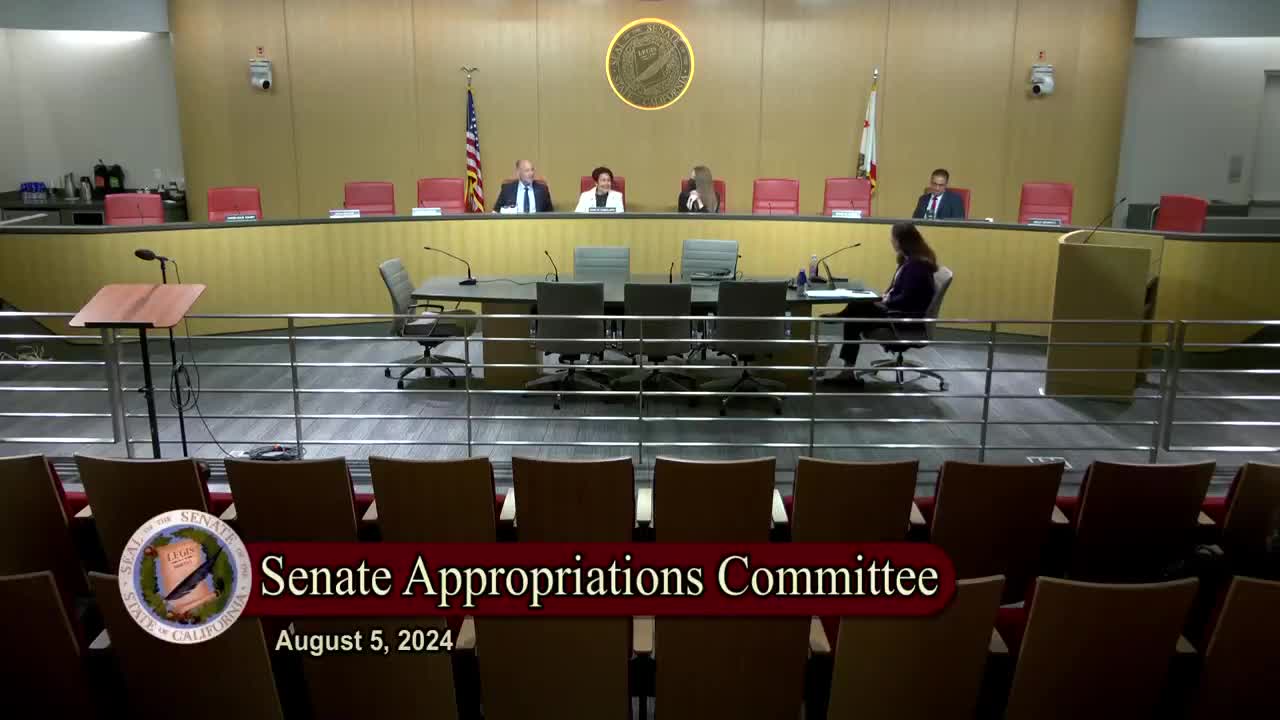 34SEC
Senate Standing Committee on Appropriations
 1MIN
Assembly Floor
Bill Author